Category: News

Latest breaking news and updates

  • Kratom makers are tweaking their ‘gas station heroin’ formulas to evade pending bans in Pa. and N.J.

    Kratom makers are tweaking their ‘gas station heroin’ formulas to evade pending bans in Pa. and N.J.

    ATLANTIC CITY — When the nation’s largest smoke shop expo descended on the convention center here earlier this spring, sales reps scrambled to offload pallets of a controversial synthetic kratom product known as “7-OH” before lawmakers in Pennsylvania and New Jersey ban their products.

    The addictive drug 7-Hydroxymitragynine, a highly concentrated lab-made compound derived from the kratom plant, flooded the bustling floor of the CHAMPS trade show.

    Yet some vendors said they weren’t worried about bills working their way through Harrisburg and Trenton.

    Their suppliers had already cooked up new recipes.

    Matt Swann, a real estate investor turned 7-OH distributor from Salt Lake City, promoted a new product called “Cori,” a four-pack of tablets wrapped in a sleek green package. Swann’s offering draws from corydalis, yet another plant from East Asia that produces similar pain-killing alkaloids to kratom — but is not the target of any proposed bans.

    “Legislation is what shuts me down,” Swann said, at his one-man expo booth in March. “This is how we stay ahead.”

    Half a dozen 7-OH sales reps told The Inquirer that companies are changing their formulas to preemptively sidestep legislation prompted by concerns over the drug widely dubbed “gas station heroin” for its promised high and addictive potential.

    Federal authorities began taking steps last summer to classify 7-OH as a controlled substance due to its widespread availability and reports of abuse. At least a dozen states have moved to outlaw the substance, and bills in Pennsylvania and New Jersey are being considered.

    But in the booming gray market for synthetic drugs — from kratom to lab-made THC to psychedelics — the difference between legal and illegal can be as small as a molecule.

    Perks’ booth at the CHAMPS B2B trade show at the Atlantic City Convention Center on March 19.

    To dodge the crackdown, some companies are swapping their active ingredient from 7-OH to a related compound called mitragynine pseudoindoxyl, or “pseudo.” Others are pivoting to 13-Hydroxy Mitragynine, or “13-OH.” Both function in similar ways, binding to opioid receptors in the brain.

    And vendors promised the variants are just as powerful.

    Some kratom advocates welcome restrictions on 7-OH and other chemically concentrated alkaloids. But they also worry that lower potency, natural kratom products will get caught up in sweeping bans.

    Swann criticized the panic around 7-OH. He described both it and his new corydalis product as safer alternatives to opioids that can help people living with chronic pain.

    Swann said he is clear with buyers about the risk of dependency. Kratom-derived pain relievers are far less fatal than opioids, whose pharmaceutical producers, he argued, are threatened by the drug’s popularity.

    “It’s the safest alternative,” he said. “Kratom is 10-fold the product.”

    Matt Swann at his Siete 7 / Coco Distro booth At the CHAMPS B2B trade show at the Atlantic City Convention Center.

    A game of molecules

    Last summer, Florida passed an emergency ban specifically targeting 7-OH. Other states, like Vermont, have banned kratom altogether, as well as any related alkaloids, preemptively cutting out alternative compounds like 13-OH or pseudo.

    New Jersey lawmakers are advancing legislation that would similarly classify 7-OH as a controlled substance, although it makes no mention of these related alkaloids.

    Another bill under consideration in Harrisburg mimics Vermont’s strategy by outlawing all products that contain over 2% 7-Hydroxymitragynine, as well as any other “synthetic, semi-synthetic, or chemically manipulated alkaloid” derived from the kratom plant.

    “They can call it whatever they want,” said Sen. Tracy Pennycuick (R., Montgomery County), the bill’s lead sponsor. “If it comes up 2%, it’s still banned.”

    Still, as written, the ban might cover new variants like “pseudo” and 13-OH but not the latest extracts from the corydalis plant.

    Meanwhile, pro-kratom lobbying groups have pushed lawmakers to create clear legal definitions between naturally sourced, low-potency kratom products and those ultra-concentrated, synthetic forms like 7-OH.

    Dallas Vasquez, CEO of Mitra9, a Florida-based company that distributes kratom and kava-infused beverages across the country, said the two products are “not equivalent from a chemistry or pharmacological standpoint.”

    He said Mitra9 does not use concentrated 7-OH to make the drinks more potent. His products contain less than 2% total kratom alkaloids, with low levels of 7-OH that occur naturally in extracts from the plant leaves, according to lab tests reported on Mitra9’s website.

    “My business is built on the bet that the responsible segment of the market will survive,” Vasquez said. “If it doesn’t, I lose too. So I have every incentive to be honest about what the products are.”

    Kratom booth at the CHAMPS B2B trade show at the Atlantic City Convention Center on March 19.

    Booming profits, clandestine makers

    The CHAMPS trade show traditionally serves as a meetup for recreational drugmakers and retailers of cannabis. That the kiosks were dominated by 7-OH vendors is a sign of kratom’s growing popularity and profitability.

    Large kratom companies pushing products with opioid-inspired names like “Opia” and “Perks” can bring in millions in revenue per month, according to Swann, the vendor from Salt Lake City.

    Many companies are supplied by a small network of kratom manufacturers that synthesize products, often on condition that the makers’ names be kept secret, according to Swann and company owners who spoke with The Inquirer. So long as the compounds remain legal at the federal level, there are labs willing to make them en masse, which sellers like Swann can distribute in states without total bans.

    For everyone involved, profits are high.

    “[Manufacturer] profit margins are in the 5 to 10% range, but they’re doing millions and millions of dollars,” Swann said. “My profit margin is closer to 200% to 300%. If I invest a quarter-million dollars, I can usually come out with a million.”

    Swann said he started his own business with $250,000 in capital and a phone call to a lab in Utah. His brand, Siete, launched within months. He estimated that his new “Cori” product had a life span of three years before it, too, would be banned.

    Camille Winans, a sales representative for a company selling new 13-OH products, argued that kratom had been demonized by lawmakers and that keeping the products on shelves amounted to “harm reduction.”

    However, medical experts say there has been an uptick in admissions to rehabs from people who got hooked on kratom, including in Pennsylvania.

    Jason Kirby, chief medical officer of Recovery Centers of America, worries that states would ban 7-OH without the necessary medical resources for people who are dependent on it. He said hospitals struggle with an influx of kratom users in states that passed sweeping bans.

    “One day it’s legal, and the next day it’s not,” he said. “So I’m going into the vape shop to refill my need, and it’s not there anymore, and I’m going to the emergency room in withdrawal.”

    Bans would also not prevent manufacturers from finding new loopholes, he said.

    “We’re gonna be dealing with a brand new synthetic substance that we’re gonna have to figure out all over again, and figure out pathways and management for,” he said. “We always have to stay ahead of them.”

    This article was supported by the Fund for Investigative Journalism.
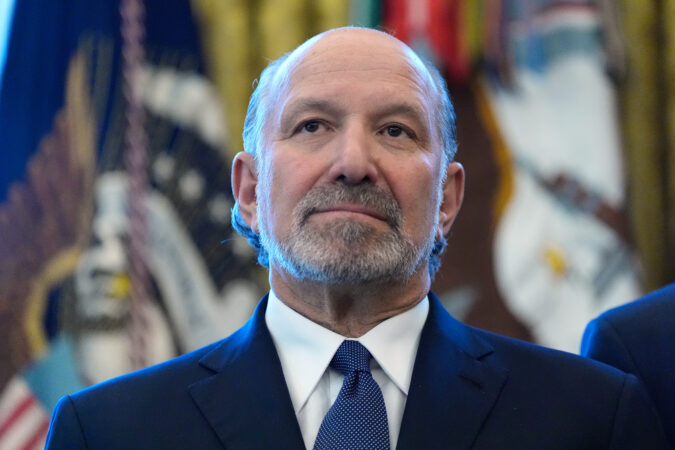
  • Haverford College president declines to consider removing Howard Lutnick’s name from the library

    Haverford College president declines to consider removing Howard Lutnick’s name from the library

    Haverford College will not consider removing U.S. Commerce Secretary and mega donor Howard Lutnick’s name from its library despite student calls to do so, the school announced Wednesday.

    President Wendy Raymond’s announcement came 30 days after the student body voted by an overwhelming majority to ask that she establish a review committee to consider removing his name. But Raymond said she will not accept the student body’s resolution.

    “I do not believe this matter meets the threshold necessary to move forward with a committee,” Raymond wrote in an email to the students’ council copresidents.

    Haverford College President Wendy Raymond announced she would not consider removing Howard Lutnick’s name from the school’s library.

    Concern has been mounting about Lutnick, the former chair of Haverford’s board of managers, since Department of Justice documents released earlier this year showed he had contact with sex offender Jeffrey Epstein as recently as 2018, long after Epstein pleaded guilty to obtaining a minor for prostitution and soliciting a prostitute.

    Raymond did not elaborate on her reasons and declined to comment through a spokesperson, but the decision was immediately panned by students.

    The council copresidents expressed their “deep disappointment” in an email to students.

    “The committee would have been a valuable step in our college’s ongoing reckoning with sexual assault,” wrote Ben Fligelman and Sarah Weill-Jones. “We hope that in the coming weeks and months, President Raymond will reevaluate her decision and understand the profound importance of convening a review committee.”

    The outside of the Lutnick Library at Haverford College.

    The Haverford Survivor Collective, which started in 2023 and is led by Haverford students and survivors of sexual assault, called the decision “disappointing, unsurprising and categorically insulting” in a statement. It is even more painful that the decision was released on Denim Day, an international day of support for survivors, the collective wrote.

    “What should have been a meaningful day of solidarity and collective support has instead become a stinging reminder of how far Haverford still has to go,” the group wrote.

    Senior English major Paeton Smith-Hiebert, co-founder of the collective, said Raymond in a meeting with some students Tuesday shared her reasoning for why the Lutnick situation did not meet the threshold.

    Raymond said, according to Smith-Hiebert, there needed to be “pretty unambiguous evidence of harm being directly committed” and that “association wasn’t enough.”

    Arshia Seth, another student who is a member of the collective board, said when pressed by those present, Raymond said the threshold would be if Lutnick had “direct ties to trafficking.”

    The president also told students she wished she had had more time to make the decision, but plenary rules require that she respond within 30 days, Smith-Hiebert said. Whether that means she will continue to weigh the matter is unclear.

    “Looking forward, … I — and future presidents — will retain the ongoing responsibility to consider the relevant facts at any given moment in time, and to act in consideration of the best interests of Haverford’s educational mission,” Raymond, who announced in November she would retire as president in June 2027, said in her statement. “…The board of managers too will remain engaged.”

    Raymond’s announcement Wednesday also said she and the college “stand in solidarity with survivors of sexual violence.”

    Raymond previously said she had heard from “a growing number” of Haverford alumni “who have written to express their dismay” about Lutnick’s ties to Epstein, which included a visit by Lutnick and his wife to Epstein’s private island. She said in February that she would consider forming a review committee.

    Lutnick’s name was put on the library after a then-record $25 million donation he and his wife made in 2014. Lutnick, a 1983 Haverford graduate, has given the school $65 million and is one of its biggest donors.

    If Raymond had established a committee, it would have kick-started a multistep process that the school follows when considering changing building names. Raymond would have considered the committee recommendation before then making her own recommendation to the external affairs committee of the board of managers, as well as to its chair and vice chair. The external affairs committee then would have made its recommendation to the full board of managers, who ultimately decide whether a building should be renamed.

    Under Haverford’s gift policy, the school can rename a building if “the continued use of the name may be deemed detrimental to the college, or if circumstances change regarding the reason for the naming.”

    The students’ vote came during their plenary session on March 29. At least 66% of the student body living on campus had to be present at the session for discussion and votes to occur, and to pass, the resolution needed to win a simple majority. That 66% represents almost 900 students.

    “Students feel harmed and hurt by the presence of his name and association on campus,” Milja Dann, a sophomore psychology major from Woodbury, N.J., said in March, after attending the session.

    The Haverford Survivor Collective had been urging the college to form a committee even before the plenary.

    “Given the gravity of this situation, survivors are among those most directly affected,” Smith-Hiebert had written to Raymond earlier this year. “Many are feeling significant harm and institutional betrayal … While I understand there are many stakeholders to consult, it is difficult to reconcile the stated commitment to engagement with the apparent absence of those most impacted.”

    The student resolution asked the college to include student representation on the review committee, along with staff from several offices, including institutional diversity, equity, and access. It also called on college leadership “to stand in solidarity with victims of assault.”

    And it asked the board of managers to consult directly with students before making final decisions to rename the library and or whom it would be named for.

    The resolution also called into question Lutnick’s leadership at Cantor Fitzgerald, the New York City financial firm where he formerly served as chairman. The Securities and Exchange Commission charged the firm in 2024 with violating laws related to regulatory disclosure, and Cantor agreed to pay a civil penalty. Cantor Gaming in 2016 agreed to pay $16.5 million in penalties to the federal government “to resolve a criminal investigation into the company’s past involvement in illegal gambling and money laundering schemes,” according to a release from the U.S. Attorney’s Office.

    During congressional testimony, Lutnick said he visited Epstein’s island with his family in 2012. Lutnick previously said he had not been in a room with Epstein, whom he found “disgusting,” since 2005.

    A Commerce Department spokesperson told The Associated Press in January that Lutnick had had “limited interactions” with Epstein, with his wife in attendance, and had not been accused of “wrongdoing.” Lutnick told lawmakers during his testimony: “I did not have any relationship with him. I barely had anything to do with him.”

    The outside of the Lutnick Library at Haverford College.

    In addition to the library, which also bears the name of Lutnick’s wife, Allison, Haverford’s indoor tennis and track center is named for his brother Gary Lutnick, a Cantor Fitzgerald employee who was killed on 9/11, and the fine arts building carries the name of his mother, Jane Lutnick, a painter. Lutnick also funded the college’s Cantor Fitzgerald Art Gallery.

    Students, however, said they were focusing on the library in the resolution because of its prominence.

    Before Raymond’s decision was announced, Adam Marcello, a Haverford student, in an opinion piece for the Haverford Clerk, the student newspaper, said students needed to keep the pressure on.

    “If students want the renaming to succeed, they will need to sustain visible, organized pressure,” Marcello wrote. “Epstein posters scattered across the library or letters tacked to the doors are not enough. We need to make inaction more costly than action.”

  • Supreme Court limits key provision of the landmark Voting Rights Act

    WASHINGTON — The Supreme Court on Wednesday sharply weakened a key provision of the landmark Voting Rights Act, a ruling that limits the consideration of race in drawing voting maps and could usher in Republican gains in the House.

    The decision is expected to touch off a scramble by Republicans to redraw majority-minority districts, especially in the South. New districts could shift the balance of power in Congress by imperiling the reelection prospects of some Black Democrats, possibly as soon as November’s midterms in some instances. Representatives of color in state legislatures and local offices could also be redistricted out.

    The court’s conservative majority found Louisiana unlawfully discriminated by race when it created a second majority-Black congressional district to comply with the VRA. But the court did not strike down the provision, known as Section 2, as unconstitutional, as many voting rights advocates had feared it would. Still, the court’s liberal justices and voting rights experts said it was effectively gutted.

    The ruling carries significant symbolic weight, scaling back the last major pillar of a 60-year-old law long considered one of the marquee achievements of the civil rights era. The Voting Rights Act bans discriminatory voting practices such as literacy tests and poll taxes, and has helped greatly increase minority representation in state and federal offices.

    In an ideologically divided 6-3 ruling, the conservative justices created a higher bar for the law’s powerful provision that allows states to use race to draw maps that help minority communities elect candidates of their choice. Section 2 is aimed at combating discriminatory gerrymandering that weakens the power of Black, Latino, Native American, and Asian voters.

    States must walk a careful line when drawing maps for voting districts. The Voting Rights Act directs states to consider race to some degree when redistricting to ensure that racial minority groups have an opportunity to elect representatives who reflect their priorities. Maps explicitly drawn along racial lines, however, violate the equal-protection clause of the 14th Amendment and the 15th Amendment’s ban on racial discrimination in voting practices.

    Justice Samuel A. Alito Jr. wrote the opinion for the majority, saying it was time to rework Section 2 given gains in ending racial discrimination, the use of VRA lawsuits for partisan purposes, and advances in technology that have made it easier to draw legislative districts that balance partisan interests and racial considerations.

    Alito wrote that going forward, plaintiffs would have to show that a state intentionally discriminated against a minority group in drawing a map, rather than simply showing that members of the minority group did not have the opportunity to elect a candidate of their choice when certain circumstances are met.

    “Section 2 of the Voting Rights Act … was designed to enforce the Constitution — not collide with it,” he wrote. “Unfortunately, lower courts have sometimes applied this Court’s [Section] 2 precedents in a way that forces States to engage in the very race-based discrimination that the Constitution forbids.”

    The decision came over the sharp objections of the court’s three liberals. Justice Elena Kagan delivered the dissent from the bench, signaling strong disagreement. In her opinion, Kagan lamented that in rulings over the last decade, the court’s conservative justices had carried out a “demolition” of the VRA that was now complete. She predicted a precipitous decline in minority representation in political office.

    “The consequences are likely to be far-reaching and grave. Today’s decision renders Section 2 all but a dead letter. In the States where that law continues to matter — the States still marked by residential segregation and racially polarized voting — minority voters can now be cracked out of the electoral process,” Kagan wrote, referring to the process of drawing maps that break up minority voting blocks.

    The decision continues a trend by the court’s conservative majority to roll back race-conscious efforts to redress discriminatory practices. It comes two years after another major decision to restrict race-based affirmative action in college admissions.

    The ruling lands as a nationwide redistricting war has broken out between Republicans and Democrats, both of which have taken the unusual step of redrawing district lines between censuses to try to secure partisan advantages in this year’s races for Congress. Republicans currently hold a slim majority.

    Professor Richard L. Hasen, an election law expert at UCLA, said Section 2 of the Voting Rights Act still stands but is all but eviscerated.

    “The opinion weakens application of the Voting Rights Act to make it a much weaker, and potentially toothless, law,” Hasen wrote on his blog. “It is hard to overstate how much this weakens the Voting Rights Act.”

    NAACP president Derrick Johnson said in a statement that the ruling was a major strike to minority political power.

    “Today’s decision is a devastating blow to what remains of the Voting Rights Act, and a license for corrupt politicians who want to rig the system by silencing entire communities,” Johnson said. “The Supreme Court betrayed Black voters, they betrayed America, and they betrayed our democracy. This ruling is a major setback for our nation and threatens to erode the hard-won victories we’ve fought, bled, and died for.”

    The Trump administration hailed the ruling in a statement.

    “This is a complete and total victory for American voters,” White House spokesperson Abigail Jackson wrote. “The color of one’s skin should not dictate which congressional district you belong in. We commend the court for putting an end to the unconstitutional abuse of the Voting Rights Act and protecting civil rights.”

    Louisiana Attorney General Liz Murrill called the ruling “seismic” and applauded it in a statement.

    “The Supreme Court has ended Louisiana’s long-running nightmare of federal courts coercing the state to draw a racially discriminatory map,” Murrill said.

    The complicated dispute over the Louisiana voting district has dragged on for years and had been before the court last term.

    The case began in 2022 when Black voters and civil rights groups sued Louisiana under Section 2, saying a new voting map drafted after the 2020 Census shortchanged African American voters. The map had only one Black-majority district out of six. African Americans make up one-third of the state’s population.

    A federal court ruled for the plaintiffs and ordered the state to draw a new map with a second Black-majority district. After further legal wrangling, the Louisiana legislature drafted one in 2024.

    The new map, which was drawn in part to protect the seats of Republican incumbents, including House Speaker Mike Johnson and House Majority Leader Steve Scalise, created a Black-majority district that meandered across the state from Baton Rouge to Shreveport.

    A group of self-described “non-Black voter[s]” sued, arguing the new map was an unconstitutional racial gerrymander that violated the equal-protection clause. A federal district court panel ruled for the non-Black plaintiffs and put a hold on the redrawn map.

    The Supreme Court eventually allowed the map with two Black-majority districts to go into effect for the 2024 congressional election. Voters chose Cleo Fields, a Black Democrat, for the new district.

    The non-Black voters brought their case to the Supreme Court once again. Last term, the justices decided to hold off on a ruling and asked both sides to address whether creation of the second Black-majority district violated the 14th and 15th Amendments, before taking up the case again this term.

    During arguments in October, Louisiana Solicitor General Benjamin Aguiñaga told the justices that any “race-based redistricting is fundamentally contradictory to our Constitution.” He also said that Louisiana had changed in recent decades, so the need for Section 2 had been obviated.

    “It requires striking enough members of the majority race to sufficiently diminish their voting strength, and it requires drawing in enough members of a minority race to sufficiently augment their voting strength,” Aguiñaga said. “Embedded within these express targets are racial stereotypes that this court has long criticized.”

    Kagan asked an attorney for Black voters in Louisiana what impact gutting Section 2 would have.

    “The results would be pretty catastrophic,” said Janai Nelson, the president of the NAACP Legal Defense Fund.

    “We only have the diversity we see across the South because of litigation” under the voting rights law, Nelson said, adding that it had been “crucial to diversifying leadership” in Louisiana and other states. She said no Black person has been elected to statewide office in Louisiana to date.

    The decision follows another by the Supreme Court involving Section 2 in 2023. In that case, the justices ruled Alabama created electoral maps that unlawfully diluted the power of Black residents. That ruling surprised many court watchers because the justices have chipped away at the VRA in recent years.

    In the most significant ruling in 2013, the justices struck down Section 5 of the VRA, which required states with a history of discriminating against minority voters to get changes to electoral law approved by the federal government or a judge. Most of the states covered by the provision are in the South.

    The latest ruling is likely to contribute to the uncertainty surrounding the nation’s electoral maps amid the unprecedented wave of mid-decade redistricting. Ordinarily, states redraw their lines at the beginning of each decade after the U.S. Census Bureau alerts states to population shifts.

    President Donald Trump, concerned Republicans could lose their fragile House majority, began pressing Republican-led states last summer to draw new lines ahead of the midterm elections. Republicans drew better lines for themselves in Ohio, Missouri, North Carolina, and Texas that could give them strong shots at picking up nine more seats.

    Florida Republicans are planning to carve up their districts to give their party up to four more districts, and were debating their plan on the floor of the state House when the court released its decision. Legislators approved the plan Wednesday afternoon.

    In response, voters in California approved a new map that will give Democrats up to five more House seats, and voters in Virginia approved a plan to redraw their map. The Supreme Court turned aside a challenge to the California map in February.

    The Supreme Court’s decision probably gives Republicans an opportunity to draw even more districts in their favor.

    The deadlines for most states to redraw their maps before the midterms have passed, but it is possible some states push to change those rules. Either way, the ruling could set Republicans up for advantages in 2028 and beyond. In the wake of the decision, Sen. Marsha Blackburn (R., Tenn.) called on lawmakers in her state to redraw maps to create an extra Republican seat in Memphis.

    This Supreme Court term is shaping up as a consequential one for election-related law.

    In one major case, the court will decide the constitutionality of counting mail-in ballots that arrive after an election, provided they are postmarked by Election Day. The justices also allowed a lawsuit by a Republican congressman from Illinois who is challenging the state’s mail-in ballot law.

    The justices heard arguments in December over whether to lift restrictions on parties spending money in coordination with candidates, which could be the latest chance for the court to curtail campaign finance limits.

    This article contains information from the Associated Press.

  • Supreme Court wrestles with Trump effort to end temporary protections for migrants

    WASHINGTON — The Supreme Court’s conservative majority on Wednesday appeared sympathetic to the Trump administration’s arguments that it can cancel temporary humanitarian protections for Haitian and Syrian immigrants living legally in the United States, hearing a pair of cases that could let the government deport hundreds of thousands of people starting this year.

    The cases test a key part of President Donald Trump’s immigration agenda, which has sought not only to deport undocumented immigrants but also to narrow the legal pathways for immigrants to reside in the United States. As he campaigned for his second presidential term, Trump vowed to revoke temporary protected status for Haitian immigrants while spreading baseless claims that Haitian residents in Springfield, Ohio, were killing and eating their neighbors’ pets.

    Several of the court’s conservative justices appeared skeptical of arguments made by immigrants’ attorneys that courts have the authority to review whether Kristi Noem, who until recently was the homeland security secretary, took the proper steps to cancel the protections. The 1990 law that created TPS says there is no “judicial review” of the secretary’s “determination.”

    “If we apply ordinary meaning of that term here, I really don’t understand how you can prevail,” Justice Samuel A. Alito Jr. told the lawyers.

    Much of the harder questioning for the Trump administration came from the court’s liberal justices, who probed Solicitor General D. John Sauer on the TPS holders’ allegations that Noem did not take the required steps in canceling the protections. Justice Ketanji Brown Jackson asked if, under the government’s theory, Noem could make a decision using a “Ouija board.

    The liberal justices also highlighted Trump’s past comments that some immigrants were “poisoning the blood” of the United States, his favoring White South African refugees over immigrants of color, and his use of expletives to disparage countries including Haiti. Such comments suggest the administration acted from racial animus, the immigrants’ attorneys have argued.

    “What about ‘poisoning the blood of Americans’?” Jackson asked, before listing other remarks.

    Sauer said the statements referred to immigrants who were criminals or depend on welfare, neither of which applied to TPS holders.

    The potential impact of the Supreme Court’s opinion, which is expected by June, extends well beyond Haitians to approximately 1.3 million immigrants from 17 countries who had temporary protected status when Trump took office. Since then, the Department of Homeland Security has sought to eliminate protections for 13 of those countries, including Haiti, Syria, and several others the State Department still considers highly dangerous.

    Congress created TPS in 1990 to protect immigrants in the United States from being deported to countries engulfed in an armed conflict, a natural disaster, or another extraordinary crisis, allowing them to work legally in the U.S. for up to 18 months. Applicants to the program cannot have serious criminal records, and they must pay fees and pass a background check.

    The U.S. government can renew the protections — and has, multiple times, drawing criticism from Trump for allowing the provisional status to last for years, even decades.

    “Keep in mind, this is temporary protected status,” Sauer told the court. “The word temporary is used again and again in the statute, including its title. And we’re looking at a situation where there have been initial designations that go back to 1991 in the case of Somalia …”

    Attorneys for the immigrants countered that they are entitled to a fair process.

    “We’re talking about the power to mass expel people who have done nothing wrong to countries that remain unsafe,” said attorney Ahilan Arulanantham. “And our view is it is unlikely that a refugee protection statute would have given that power to the secretary.”

    In February 2025, Noem made good on Trump’s promise to limit the program, kicking off the process to cancel temporary protections for more than 353,000 Haitian migrants. They had first received protections in 2010 following Haiti’s devastating 7.0-magnitude earthquake, and the protections had been extended to include those who arrived later. Haiti has faced multiple crises, including the 2021 assassination of its president and widespread gang violence.

    Although conditions in Haiti remained “concerning,” Noem said last year, she argued that Haiti was largely safe for TPS holders to return to. Even if there were safety concerns, she argued, offering protections to Haitians was no longer in the “national interest” because the program was acting as a “pull factor” for illegal immigration.

    In September, Noem terminated temporary protected status for a little more than 6,000 Syrian immigrants. They had received protections starting in 2012 amid the violent crackdown by Syria’s then-leader Bashar al-Assad. Because Assad’s regime fell in 2024 — and the country’s brutal civil war had subsided to “sporadic, isolated episodes of violence” — Noem said she had determined that Syrians also could return to their home country.

    Lawyers for the immigrants pointed to State Department advisories that warn U.S. citizens not to travel to either country because of risks of terrorism, kidnapping, and armed conflict. The advisories recommend that visitors establish “proof of life” protocols in case they are taken hostage, “to confirm that you are being held captive and alive.”

    In light of those dangers, lawyers for Haitians and Syrians sued to block the terminations, arguing that Noem did not follow requirements in the law that she assess a country’s condition before deciding whether it is safe. They said that Noem scarcely consulted with other agencies in identifying risks and that the decisions to end TPS were motivated by racial animus.

    The Trump administration denies that. Moreover, it points to the Immigration Act of 1990, a bipartisan law that established the temporary protected status program, which says terminating a country’s status is entirely the secretary’s decision and cannot be challenged in court.

    “‘[N]o judicial review’ means what it says,” the government wrote in its brief to the court.

    The conservative justices were largely sympathetic to that argument. Justice Neil M. Gorsuch said he was “struggling” with the arguments by the immigrants’ attorneys that a court acting to postpone Noem’s determinations was not an example of the judiciary stepping in.

    Geoffrey M. Pipoly, a lawyer for the Haitian TPS holders, responded, “It’s difficult for me to answer that question without pointing out —”

    “It’s difficult for me to answer the question, too,” Gorsuch cut in.

    In both cases, lower courts sided with the immigrants. In the case of the Haitians, a federal judge in D.C. found that the termination was probably motivated by racial animus, pointing to Trump’s comments about the migrants in Springfield eating dogs and cats.

    When the Supreme Court agreed to hear the cases, the justices left the lower-court orders in effect, meaning Syrian and Haitian immigrants still have valid work permits and are protected from deportation for now.

    The prospect of Haitians losing temporary protections has drawn concern from members of the caregiving industry, who say that nursing homes across the country rely heavily on nurses and nurse’s aides from that country.

    In April, House Democrats and Republicans voted to restore the temporary protections for Haitian migrants, voicing similar concerns. That legislative effort faces an uncertain fate in the Senate, however, and would need Trump’s signature to go into effect.

  • Two Jenkintown ‘psychics’ will face a county judge in $600,000 theft case

    Two Jenkintown ‘psychics’ will face a county judge in $600,000 theft case

    Two Montgomery County women, in times of personal turmoil, turned to two self-proclaimed psychics in Jenkintown for comfort and guidance.

    Instead, they testified Monday, Gina Marks and Steve Nicklas strung them along, persuaded them to hand over a combined $600,000 in money and luxury goods, and threatened to attack and blackmail them when they tried to get the items back.

    One woman said at Nicklas’ preliminary hearing that she felt compelled to work with them because they told her that her ex-wife was being targeted by “black magic” and that her life was in danger.

    “As someone who loved my wife and my family, I felt like I had no choice,” she said. “I wanted to save them.”

    District Judge R. Emmett Madden dismissed four charges against Nicklas, 41, including racketeering and dealing in unlawful proceeds, but held him for trial on theft and related crimes. Marks, his paramour and business partner, waived her preliminary hearing and will face a county judge on all of the charges.

    Marks, 53, has been convicted of similar fraud before, in Florida and Maryland, including stealing $340,000 from clients she promised to rid of “curses.”

    Nicklas’ attorney, Elizabeth Lippy, argued that Marks, not he, was the one who ran Jenkintown Psychic Visions and directed the transfer of money and high-priced items, including designer purses and watches.

    “This is not the Jenkintown mafia,” Lippy said, referencing the use of racketeering charges to disrupt organized crime rings. “This is a storefront psychic who advertised her own abilities, and giving money to Mr. Nicklas doesn’t create a corrupt organization.”

    Assistant District Attorney Christian Taffe presented evidence that between 2022 and their arrest in October, Marks and Nicklas encouraged the two women to make multiple wire transfers to bank accounts and a CashApp account operated by Nicklas. Marks also instructed them to withdraw large amounts of cash and to store the money in pillowcases as part of various rituals with supposedly paranormal purposes.

    One woman said she hired Marks in hopes that her ex-fiancé, who had called off their wedding, would reach out to her and come back into her life.

    She said Marks initially told her to keep the money in her home, but later asked her to bring it to her and Nicklas in person as part of a “marriage ritual.”

    That ritual, the woman said, also required a $6,000 Chanel purse that Marks told her to purchase after asking her to extend a higher line of credit with her bank.

    Marks, she said, promised to return both the purse and money to her.

    “She told me not to worry about money,” the woman said, “because ‘money comes and money goes.’”

    After months of cajoling Marks, the woman received a fraction of her money and the purse, which she was able to return to the store for a partial refund.

    When the women pressed for more money to be returned, she said Marks threatened to contact her ex and create fake social media accounts for her, using personal information she had shared during their psychic readings.

    The other victim said Marks placed similar demands on her: In addition to a pillowcase full of money, she was directed to buy expensive Rolex and Cartier watches, again as part of a ritual.

    When the woman tried to get her money back, Marks became irate, she testified. Nicklas would then join the conversation, telling her to “trust the process” and promising that everything would be returned to her if she completed the ritual.

    Lippy, Nicklas’ attorney, asserted that no theft had occurred. Both women, she said, believed in the paranormal and had agreed to pay for psychic services.

    “Both of these victims have free will,” she said. “When a psychic promises their services, it’s a service nonetheless.”

  • This is one of Philly’s biggest illegal dumps. Cleaning it up is a logistical nightmare.

    This is one of Philly’s biggest illegal dumps. Cleaning it up is a logistical nightmare.

    Viewed from below, the scale of the illegal dump is daunting, spanning the length and depth of a steep ravine for at least one block, spilling along before coming to a dirty halt near a clear stream.

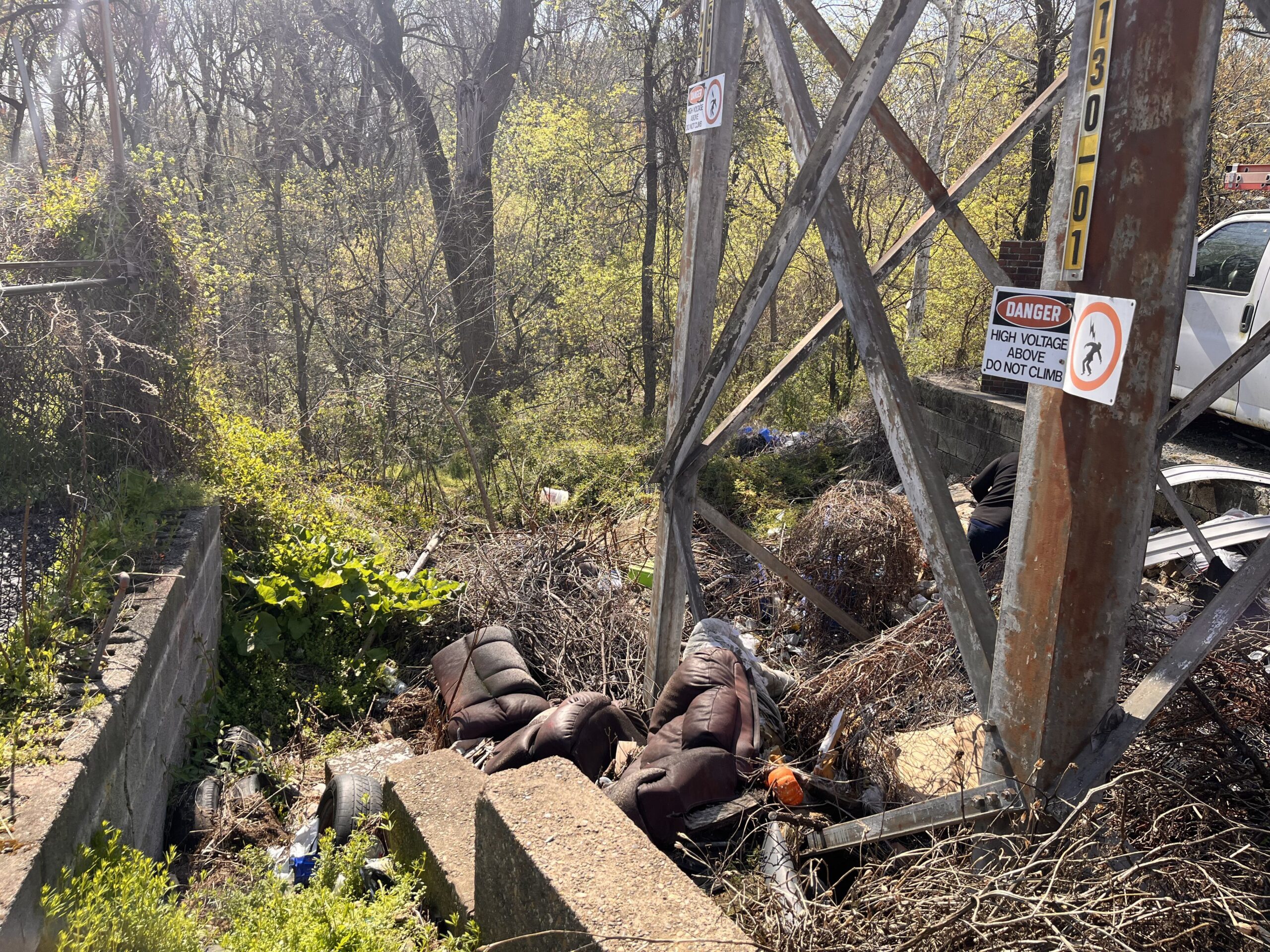
    Viewed from above, it’s a vertiginous array of broken appliances, ratty furniture, dirty toys, old tires, used mattresses, and other detritus. The rear hatch of a white Toyota RAV4 pokes through weeds. A boat is still hitched to a trailer loaded with rusting liquid propane tanks.

    City officials don’t know how long the slope off Pennway Street in Northeast Philadelphia has been the site of illegal dumping. But they know it presents a big logistical task to clean it out.

    “It’s certainly one of the larger dumps we’ve had to deal with,” said Carlton Williams, director of the city’s Clean and Green Initiatives Office.

    Williams expects that it will be far more difficult to clean than the 4,000 tires found in last April in Tacony Creek Park. Those were hauled out by city workers and 200 volunteers.

    “We’ll probably have to get cranes. And it’s going to be challenging to get equipment back there,” Williams noted. “This has been a hidden place for people to illegally dump for some time.”

    window.addEventListener(“message”,function(a){if(void 0!==a.data[“datawrapper-height”]){var e=document.querySelectorAll(“iframe”);for(var t in a.data[“datawrapper-height”])for(var r,i=0;r=e[i];i++)if(r.contentWindow===a.source){var d=a.data[“datawrapper-height”][t]+”px”;r.style.height=d}}});

    A treacherous location

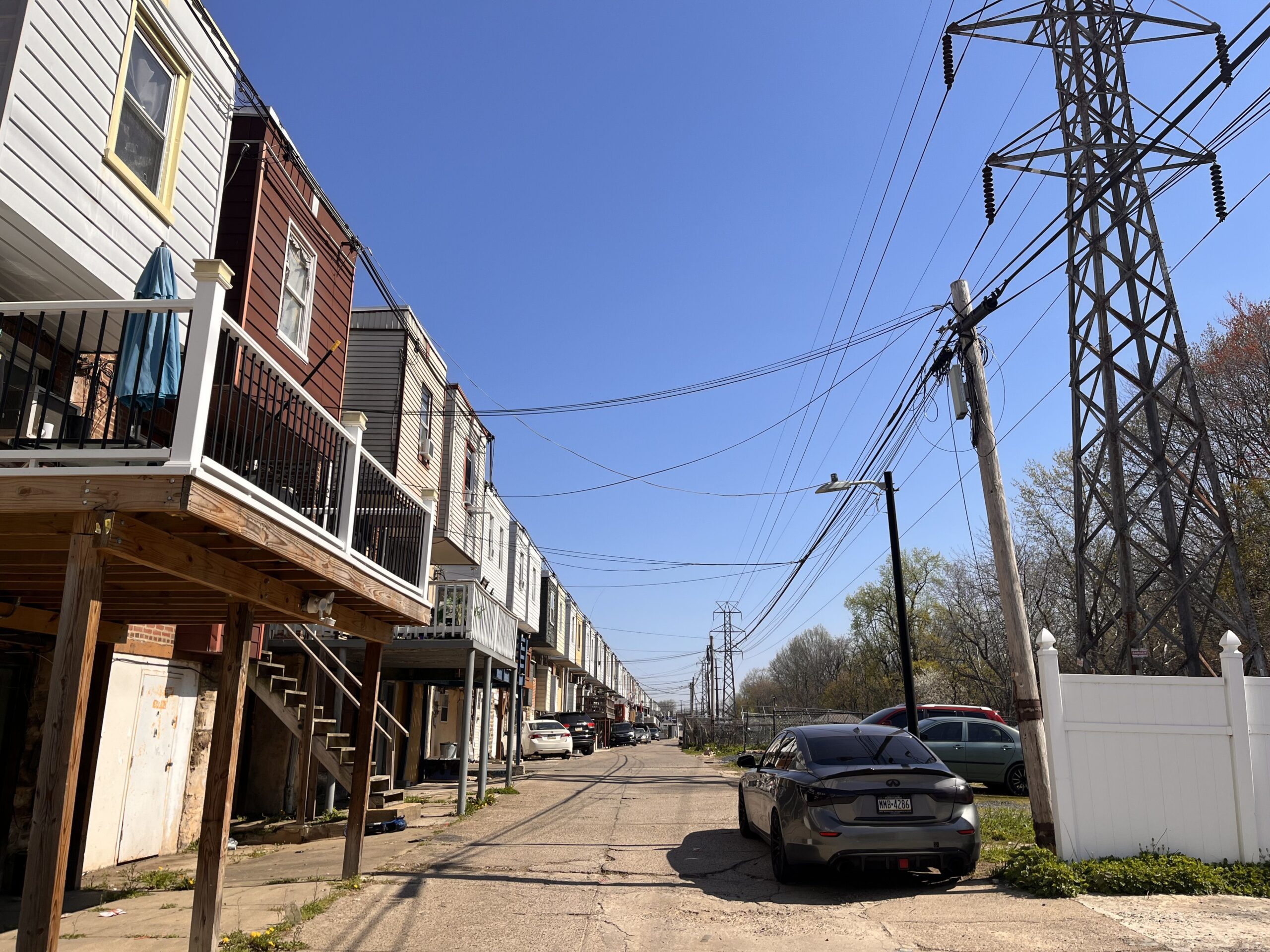
    The first obstacle to cleaning out the dump is its location. It begins at the edge of an alley under high-voltage wires. Area residents park their cars in the alley and some have erected sheds.

    The top of the slope is treacherous, filled with trash, chunks of concrete, and thickets of bramble that are easy to snag or trip on.

    A view of the top of the illegal dump under power lines off Pennway Street in Philadelphia.

    Using volunteers to haul things out is probably not practical given the potential danger, Williams said.

    From below, the dump is hidden by woods that adjoin the grounds of Friends Hospital. To view it, you have to leave a small trail, walk down a vegetation-choked embankment, ford a spring-fed tributary of Tacony Creek, and trudge through wetlands.

    There is no direct access road from the bottom.

    On a recent day, a man was picking through the rubble.

    “Looking for metal,” he mumbled.

    The top of a ravine that serves as an illegal dump off Pennway Street in Northeast Philadelphia as viewed April 10, 2026.

    Who owns the land?

    The second major obstacle will be untangling ownership of the property, sorting out responsibility, and paying for it.

    Williams said the city is currently tracking down ownership of whatever parcels might be involved.

    Peco did not respond to an Inquirer email by deadline about whether any of the dump falls on its property or easements.

    It’s not clear who is doing the dumping — construction crews, residents, or both.

    “We’re still trying to figure out a plan,” Williams said. “We need to identify the property owner. Then we have to gain access.”

    Williams also said it will be a challenge to prevent dumping in the future.

    Philadelphia already has 400 surveillance cameras used to monitor known dump sites and can tap a broader network operated by the police department and other agencies. It anticipates purchasing an additional 100 cameras.

    It has also installed bollards and gates that prevent vehicles from entering dump locations and is more aggressively pursuing and fining violators.

    The rear of Pennway Street in Northeast Philadelphia as viewed April 10, 2026.

    ‘A huge psychological impact’

    The dump was first reported to the city by the nonprofit Tookany/Tacony Frankford Watershed Partnership (TTF), which helps manage the city-owned Tacony Creek Park.

    TTF has an office at the Friends Hospital complex off Roosevelt Boulevard. The nonprofit is helping with a yet unnamed 50-acre preserve on the hospital grounds that connects to Tacony Creek Park.

    A portion of the dump is behind a broken fence at the edge of the grounds.

    The dump off Pennway Street spills to the edge of a broken fence.

    “This is one of the harder ones to tackle,” said Justin DiBerardinis, executive director of TTF. “We’re at the beginning of a journey to take care of one of the biggest dumps that a lot of us have seen.”

    DiBerardinis suspects contractors are dumping there, but also residents.

    Cleaning it up, he says, will be “extremely complex.”

    He’s also heartened by what he sees as the city’s willingness to address the logistical challenges presented by illegal landfills.

    DiBerardinis said the dump mars the landscape, and rests only yards from a tributary of Tacony Creek that serves as the edge of the 50-acre preserve.

    A spring-fed tributary of Tacony Creek flows between the illegal dump off Pennway Street in Northeast Philadelphia and the grounds of Friends Hospital as viewed April 10, 2026.

    “That stream is really clear, like spring-fed water coming from the earth,“ DiBerardinis said. ”To have that in our city is such a rare and special thing.“

    He senses growing community support for tackling litter and a backlash against dumping. Last Saturday, about 100 volunteers came to the preserve to help clean it, though the dump remained inaccessible.

    He thinks the community can play a role in the cleanup, if even for moral support and watchful eyes in the future.

    “I’m seeing people getting inspired at the possibility of the restoration and the protection of those places, and to have access for them and their children,” DiBerardinis said. “Dumping like that has a huge psychological impact on a community.”

  • Gov. Shapiro says dispute over security fence with Abington neighbors has no place in federal court

    Gov. Shapiro says dispute over security fence with Abington neighbors has no place in federal court

    While Gov. Josh Shapiro was showing the Dutch royal couple around Independence Mall this week, his general counsel was taking steps to quell a dispute that hit Pennsylvania’s first couple close to home.

    Shapiro asked a U.S. district judge to dismiss a federal lawsuit filed by his Abington neighbors over a parcel of land between their residences.

    Jeremy and Simone Mock accused the governor and his wife, Lori Shapiro, of illegally occupying part of their yard to build an eight-foot security fence last summer in what the Mocks claim in the lawsuit was an “outrageous abuse of power.”

    On the same February day the Mocks filed their lawsuit, the Shapiros sued their neighbors in Montgomery County Court, asking a judge to declare the disputed 2,900-square-foot strip of lawn as part of their property.

    The Mocks’ lawsuit has no place in federal court, Monday’s filing contends, as a controversy over a property boundary is a common matter for state courts.

    Plus, the Mocks cannot bring a lawsuit against Shapiro as governor or against the Pennsylvania State Police because the couple’s claims are against Shapiro as a property owner, not action he took in his official capacity as governor, according to the filing.

    “That the Shapiros allowed [state police] to access the disputed parcel in a manner similar to that which the Shapiros access that parcel does not magically convert this private dispute to ‘state action,’” the motion says.

    The motion also argues the state police are immune from litigation in federal court as a state agency.

    The Shapiros have lived in the sleepy Montco neighborhood for more than 23 years, with the Mocks as their neighbors for less than a decade.

    The feud began when security updates were proposed to Shapiro’s home after a man firebombed the state-owned governor’s residence in Harrisburg in April 2025 while Shapiro and his family slept inside, according to court filings.

    In response, state police proposed security upgrades to the governor’s personal residence in Abington, which included the installation of an eight-foot fence along the property’s perimeter.

    <div data-analytics-viewport="autotune" data-analytics-label="shapiroyard" id="shapiroyard__graphic" data-iframe-fallback="https://media.inquirer.com/storage/inquirer/ai2html/shapiroyard/fallback-mobile.jpg" style="width: 0; min-width: 100% !important; border: none;" data-iframe-fallback-height="643" data-iframe="https://media.inquirer.com/storage/inquirer/ai2html/shapiroyard/index.html" data-iframe-height="620.999999999999" data-iframe-resizable></div> <script type="text/javascript">(function() { var l = function() { new pym.Parent( 'shapiroyard__graphic', 'https://media.inquirer.com/storage/inquirer/ai2html/shapiroyard/index.html'); }; if(typeof(pym) === 'undefined') { var h = document.getElementsByTagName('head')[0], s = document.createElement('script'); s.type = 'text/javascript'; s.src = 'https://pym.nprapps.org/pym.v1.min.js'; s.onload = l; h.appendChild(s); } else { l(); } })(); </script>

    A land surveyor discovered in summer 2025 that the Mocks actually owned about 2,900 square feet of land that the Shapiros had believed was a part of their property since they bought the home in 2003.

    The Mocks, whose property is adjacent to the Shapiros’, say in their suit that the planned location of the fence is on their property unlawfully and would violate their rights.

    The Shapiros began planting arborvitae-type trees and other plants on the Mocks’ property, flying drones over it, threatening to remove healthy trees, and “chasing away” contractors who came to work in the Mocks’ yard, the Mocks’ suit says.

    The complaint also accuses Shapiro of directing state police to patrol the property. Troopers instructed the Mocks to leave the area of the yard multiple times, calling it a “disputed” area or “security zone,” the suit says.

    The Shapiros say they are the rightful owners of the land through adverse possession, a legal mechanism that extends a person ownership of a property they have actively used for at least 21 years.

    The governor and his wife are asking a Montgomery County Court judge to find them the “legal and equitable owners” of the area in dispute. Until the state judge makes a determination, the federal court should abstain from considering the Mocks’ federal lawsuit, the new filing says.

    Outside of court filings, Shapiro attacked the lawsuit as politically motivated.

    The Mocks are represented by Wally Zimolong, a Delaware County attorney who describes himself on his website as the “‘go-to’ lawyer in Pennsylvania for conservative causes and candidates.” Zimolong previously represented the political campaigns of President Donald Trump and U.S. Sen. Dave McCormick (R., Pa.).

    “The Governor looks forward to a swift resolution and will not be bullied by anyone trying to score cheap political points, especially at the expense of his family’s safety and well-being,” Will Simons, a spokesperson for Shapiro, a Democrat running for reelection, said in a statement in February.

    Zimolong did not comment on the new filing, but previously said the Mocks are open to resolving the dispute outside of court.

    “At base, this is a straightforward defense of the property rights of two innocent owners, who were living peacefully next to the Shapiros for over nine years,” the attorney said in a February statement.

    Staff writer Gillian McGoldrick contributed to this article.

  • Trump plans to attend Wednesday’s Supreme Court hearing on his bid to limit birthright citizenship

    WASHINGTON — President Donald Trump plans to sit in on Wednesday’s Supreme Court hearing on birthright citizenship, making him the first sitting president to attend oral arguments at the nation’s highest court.

    The Republican president’s official schedule, sent out by the White House, included a stop at the Supreme Court, where justices will hear Trump’s appeal of a lower court ruling that struck down his executive order limiting birthright citizenship.

    The order, which Trump signed on the first day of his second term, declared that children born to parents who are in the United States illegally or temporarily are not American citizens. It’s an about-face from the long-standing view that the Constitution’s 14th Amendment and federal law since 1940 confer citizenship to everyone born on American soil, with narrow exceptions.

    It’s not the first time Trump has considered showing up for a high court hearing. Last year, Trump said that he badly wanted to attend a hearing on whether he overstepped federal law with his sweeping tariffs, but he decided against it, saying it would have been a distraction.

    On Tuesday, however, Trump seemed more sure he’d be in court for Wednesday’s hearing while he spoke with reporters in the Oval Office.

    “I’m going,” Trump said, when the upcoming arguments in the birthright citizenship case were mentioned. To a follow-up question clarifying that he planned to go in person, Trump said, “I think so, I do believe.”

    Trump went to the Supreme Court in his first term for the ceremonial swearing-in of the first justice he appointed, Neil Gorsuch. Two other justices he appointed — Brett Kavanaugh and Amy Coney Barrett — also sit on the court.

    Other presidents have dealt directly with the court, but don’t appear to have done so while in office. Richard Nixon argued a case between his time as vice president and president, and William Howard Taft served as chief justice after his presidency.

    Trump, asked to whom he would be listening most closely, went on a lengthy detour Tuesday describing a court he viewed as mostly partisan, between justices appointed by Republican and Democratic presidents.

    “I love a few of them,” he said. “I don’t like some others.”

    The citizenship restrictions are a part of Trump’s broader immigration crackdown, but they have not yet taken effect anywhere in the country after being blocked by several courts.

    A definitive ruling from the Supreme Court is expected by early summer.

  • Trump voices frustration with allies as Iran war and strait closure push fuel prices higher

    Trump voices frustration with allies as Iran war and strait closure push fuel prices higher

    DUBAI, United Arab Emirates — President Donald Trump lashed out Tuesday at allies who have been unwilling to do more to support the U.S. war effort against Iran, telling them to “go get your own oil” and saying it was not America’s job to secure the Strait of Hormuz.

    The president said the military could end its offensive in two to three weeks and that the U.S. “will not have anything to do with” what happens next in the strait that has been closed by the Islamic Republic. Instead, he told reporters, the responsibility for keeping the vital waterway open will rest with countries that rely on it.

    There’s “no reason for us to do this,” Trump said after signing an executive order that seeks to restrict mail-in voting. “That’s not for us. That’ll be for France. That’ll be for whoever’s using the strait.”

    The White House said Trump would deliver a prime-time address Wednesday evening to update the public on the war.

    In other developments, the closure of the strait sent average U.S. gas prices past $4 a gallon, and U.S. strikes hit the central city of Isfahan, sending a massive fireball into the sky. Tehran attacked a fully loaded Kuwaiti oil tanker in the Persian Gulf.

    The attacks showed the intensity of the war more than a month after the U.S. and Israel launched it. The conflict has left more than 3,000 dead and caused major disruptions to the world’s supply of oil and natural gas, roiling global markets and pushing up the cost of many basic goods.

    Trump, whose comments have vacillated between talk that diplomatic progress is being made with Iran and threats to widen the war, had earlier shared footage of the attack on Isfahan.

    Fuel prices rise, rattling global markets

    Iran’s stranglehold on the strait, the waterway leading out of the Persian Gulf through which a fifth of the world’s oil is transported during peacetime, has driven up global oil prices, as have Tehran’s attacks on regional energy infrastructure.

    Spot prices of Brent crude, the international standard, hovered around $107 a barrel Tuesday, up more than 45% since the war started Feb. 28.

    In a social media post, Trump directed blame at U.S. allies such as the United Kingdom and France that have refused to enter a war with no clear endgame that they were not consulted on.

    “You’ll have to start learning how to fight for yourself, the U.S.A. won’t be there to help you anymore, just like you weren’t there for us. Iran has been, essentially, decimated. The hard part is done. Go get your own oil!” Trump wrote.

    He singled out France for not letting planes fly over French territory while taking military supplies to Israel.

    France has allowed the U.S. Air Force to use the Istres base in southern France because it had guarantees that planes landing there would not be involved in carrying out strikes.

    Allies have refused to get involved

    Spain, which has emerged as Europe’s loudest critic of the war, said Monday that it had closed its airspace for U.S. planes involved in the conflict.

    Italy recently refused to allow U.S. military assets to use the Sigonella air base in Sicily for an operation linked to the offensive, an official with knowledge of the matter said, confirming a local press report. The official spoke on condition of anonymity because they were not authorized to speak publicly.

    Italian Defense Minister Guido Crosetto wrote on X that Italy is still allowing the U.S. to use its bases, adding that there has been no cooling of relations between the two countries.

    Journalist kidnapped in Iraq identified

    An American journalist was kidnapped Tuesday in Baghdad, and Iraqi security forces are pursuing her captors, Iraqi officials said. The journalist was identified as freelancer Shelly Kittleson by Al-Monitor, one of the news outlets she worked for.

    A U.S. official blamed the Iranian-backed Iraqi militia Kataib Hezbollah.

    Two cars were involved in the kidnapping, one of which crashed, and a person inside was apprehended. The journalist was then transferred to a second car that fled the scene, according to two Iraqi security officials who spoke on condition of anonymity because they were not authorized to speak publicly about the case.

    Dylan Johnson, U.S. assistant secretary of state for public affairs, said on X that the State Department had “fulfilled our duty to warn this individual of threats against them.”

    In a statement, Al-Monitor said it stands by her “vital reporting.” Kittleson has been a longtime freelancer in the region, reporting extensively from Syria and Iraq.

    Another aircraft carrier deploys to Middle East

    The aircraft carrier USS George H. W. Bush deployed Tuesday from Norfolk, Va., and is slated to head to the Middle East, two U.S. officials said. They spoke on condition of anonymity to discuss sensitive military plans.

    It would be the third carrier sent out to support the Iran war, along with the USS Gerald R. Ford, which is now undergoing repairs, and the USS Abraham Lincoln, which arrived in the region in January.

    Trump warned this week that if a ceasefire is not reached “shortly,” and if the strait is not reopened, the U.S. would broaden its offensive, including by attacking the Kharg Island oil export hub and possibly desalination plants.

    Speaking at the Pentagon, Defense Secretary Pete Hegseth would not say if U.S. ground forces would enter the war. “We don’t want to have to do more militarily than we have to,” he said.

    A ground invasion could alienate Iranians who despise the ruling theocracy and who rose up in mass protests that were crushed earlier this year. Some could see it as an attack on Iran itself and rally around the flag.

    Since the Iran war began, 13 U.S. service members have been killed and 348 wounded, six seriously, according to a formal count provided Tuesday by Capt. Tim Hawkins, spokesman for U.S. Central Command.

    Iran hits oil tanker as Israel strikes Iran and Lebanon

    The Israeli military said early Wednesday that it had killed a senior Hezbollah commander and another senior leader in two separate strikes in the Beirut area.

    Military officials said they launched strikes targeting what they described as Hezbollah infrastructure in the Lebanese capital. Defense Minister Israel Katz said Israel plans to control the area south of the Litani River — some 20 miles north of the border.

    Israel invaded southern Lebanon after Hezbollah began launching missiles into northern Israel days after the outbreak of the wider war. Many Lebanese fear another prolonged military occupation.

    In Iran, authorities say more than 1,900 people have been killed, while 19 have been reported dead in Israel.

    Two dozen people have died in Gulf states and the occupied West Bank. In Lebanon, officials said more than 1,200 people have been killed, and more than 1 million displaced.

    Ten Israeli soldiers have died in Lebanon, including four announced Tuesday.

  • Edna B. Foa, celebrated pioneering psychologist and longtime Penn professor, has died at 88

    Edna B. Foa, celebrated pioneering psychologist and longtime Penn professor, has died at 88

    Edna B. Foa, 88, of Philadelphia, renowned clinical psychologist, pioneering mental health researcher, creator of the celebrated prolonged exposure therapy for post-traumatic stress disorder, longtime professor of clinical psychology in psychiatry at the University of Pennsylvania, lecturer, mentor, and volunteer, died Tuesday, March 24, of complications from pneumonia at Pennsylvania Hospital.

    Dr. Foa was among the first psychologists in the 1970s and ‘80s to infuse empirical case study research into existing behavior protocols to create more effective mental health treatments for victims of rape, combat trauma, childhood sexual abuse, and other ordeals. She became an expert in PTSD, obsessive-compulsive disorder, and social phobia, and her prolonged exposure therapy for PTSD and exposure and response prevention treatments for OCD are still hailed as breakthrough innovations.

    From 1971 to 1997, she was a fellow, professor, and clinical researcher in the psychiatry departments at Temple University and the old Medical College of Pennsylvania, now part of Drexel University. She joined Penn’s Department of Psychiatry in 1998 and, over more than 50 years, evaluated thousands of mental health cases to determine which behavior therapy was best for each condition.

    “Her work truly changed the field,” colleagues at the Ardmore-based Center for Hope and Health said on Instagram. They said she “spent her career doing what she believed mattered most: studying what actually helps people get better, and making those treatments more accessible.”

    She created the Center for the Treatment and Study of Anxiety at Temple in 1979 and directed it later at Penn. Colleagues at the center said on Facebook: “Through her brilliance, determination, and unwavering belief in the power of evidence-based care, she transformed the understanding and treatment of anxiety-related disorders and changed the lives of countless individuals and families around the world.”

    Other colleagues and friends called her “brilliant,” “amazing,” and “extremely influential” in online tributes. One said she was “a giant who taught the world how to conquer fear and reclaim life.”

    Dr. Foa earned grants for research and education, and taught her therapy techniques to veterans counselors in the United States and Israel, to therapists for the U.S. Army and the City of Philadelphia, and to clinicians at Women Against Rape and other groups around the world. In 2010, she was named one of Time magazine’s 100 most influential people in the world.

    To share her innovations and encourage peer review, Dr. Foa edited Failures in Behavior Therapy in 1983 and cowrote Emotional Process of Fear in 1986 and Emotional Processing of Traumatic Experiences in 2007. The hundreds of books, manuals, articles, and papers she wrote, cowrote, or edited about memory, stress, anger, depression, and guilt have been cited more than 13,000 times by other authors.

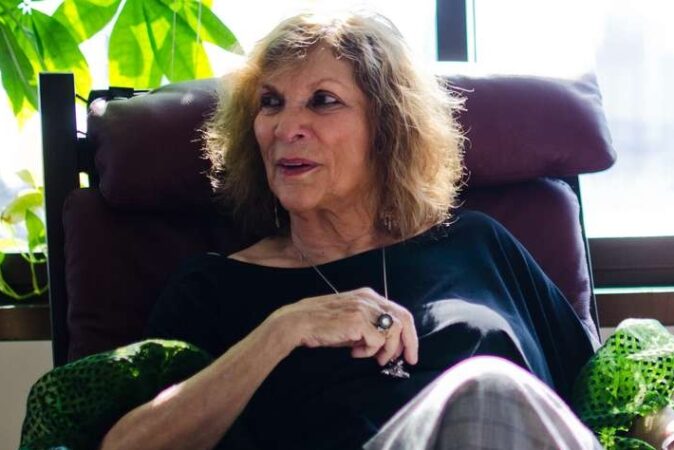
    The Daily News published this story and photos of Dr. Foa in 1993.

    She also volunteered as a consultant and supervisor at clinics and medical centers. She lectured and organized clinical workshops in the United States, Israel, and elsewhere. In 2010, she told Time magazine: “If you develop a wonderful protocol, it’s useless if nobody uses it.”

    She was affiliated with many mental health societies and associations, and earned lifetime achievement awards from the American Psychological Association, the International Society for Traumatic Stress Studies, and other groups. She was featured often in The Inquirer and the Daily News, and told the Daily News in 1993 that “everyone has little fears.” She said her little fears were of heights and swimming underwater.

    In 1970, Dr. Foa earned both a doctorate in clinical psychology and personality from the University of Missouri, and a master’s degree in clinical psychology at the University of Illinois. In 1962, she earned a bachelor’s degree in psychology and literature at Bar-Ilan University in Israel.

    She stopped working full-time at Penn in 2023 but never really retired. In April, she was scheduled to lead a workshop in prolonged exposure therapy. In 2011, she told The Inquirer: “If I die tomorrow, I think that what I have achieved is fine. If I don’t die, I don’t need to stop.”

    Edna Ben Jacob was born Dec. 28, 1937, in what is now Haifa, Israel. She became fascinated by the work of psychologist Sigmund Freud, she told the Encyclopedia of Behavior Modification and Cognitive Behavior Therapy, and she worked briefly with juvenile offenders near Tel Aviv after high school.

    In 2011, she told The Inquirer she was shattered by her own trauma in 1948 when her brother, Uri, was killed in the war and her father, Abraham, died four years later.

    She married and divorced when she was young, and met Professor Uriel Foa at Bar-Ilan. They married when she was 24, had daughter Dora, and moved to the United States in 1966. They had daughters Yael and Michelle, and lived in Illinois and Missouri before moving to Glenside and then Penn Valley. She moved to Philadelphia a few years ago.

    After a divorce, she married Penn professor Charles Kahn. Her husband and former husband died earlier.

    This photo of Dr. Foa (center) appeared in the Times Recorder in Ohio in 1978.

    Away from work, Dr. Foa enjoyed traveling, gardening, and hosting family and friends at holidays. She collected art and antiques.

    She told an interviewer she had a bad habit of deleting emails before reading them. She managed lung cancer years ago.

    “She was full of energy, vivacious, a force of nature,” said her daughter Yael. Her daughter Michelle said: “She was an extraordinary figure who lived a very rich life.”

    In addition to her daughters, Dr. Foa is survived by five grandchildren, a great-granddaughter, and other relatives.

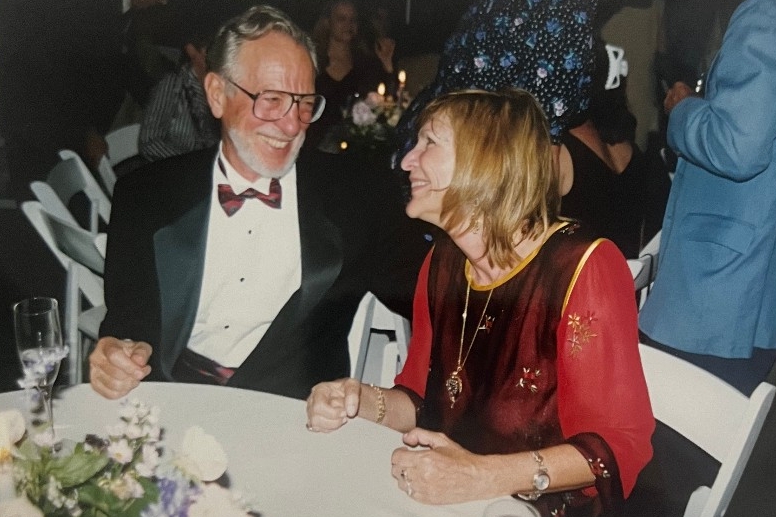
    Dr. Foa laughs with her husband, Charles Kahn.

    Private services are to be held later.

    Donations in her name may be made to the Philadelphia Museum of Art, 2600 Benjamin Franklin Parkway, Philadelphia, Pa. 19130; and the Philadelphia Orchestra, 300 S. Broad St., Philadelphia, Pa. 19102.