Category: News

Latest breaking news and updates

  • Conditions improve for some injured in massive Gloucester County explosion but the cause is still unknown

    Conditions improve for some injured in massive Gloucester County explosion but the cause is still unknown

    The investigation into the cause of a Wednesday afternoon explosion at a Logan Township, N.J., cocoa butter processor continues, though the conditions have improved for some victims injured in the blast.

    Following the explosion, which rocked Gloucester County and the surrounding area just after 2:30 p.m. on Wednesday, five people were hospitalized. Three people were transported to Cooper University Hospital, which has since treated and released one patient, and stabilized two others, who were later transported to Temple Burn Center in Philadelphia, Cooper spokesperson Wendy Marano said.

    The conditions of the other two people injured in the blast were not immediately clear Thursday. In the immediate aftermath of the explosion Wednesday, four people were in critical condition, and a fifth person in a neighboring building experienced a medical incident that required treatment, Gloucester County officials previously said.

    “This is the largest industrial accident that I can recall,” Logan Township Police Chief Joseph Flatley said at a news conference Wednesday. “It was a terrible tragedy that took place out here.”

    Emergency workers responded to an explosion at 617 Heron Drive in Logan Township at about 2:35 p.m. on Wednesday. The blast prompted a shelter-in-place order for homes and businesses within a two-mile radius of the facility, impacting roughly 7,200 people living within the affected area.

    What caused the explosion was not yet clear Thursday. Gloucester County officials and officials in the Logan Township Police Department did not immediately respond to requests for comment.

    Officials on Wednesday, however, indicated that the blast emanated from a building operated by Savita Naturals, a company that describes itself on its website as a “provider of specialty oil extractions and related services.”

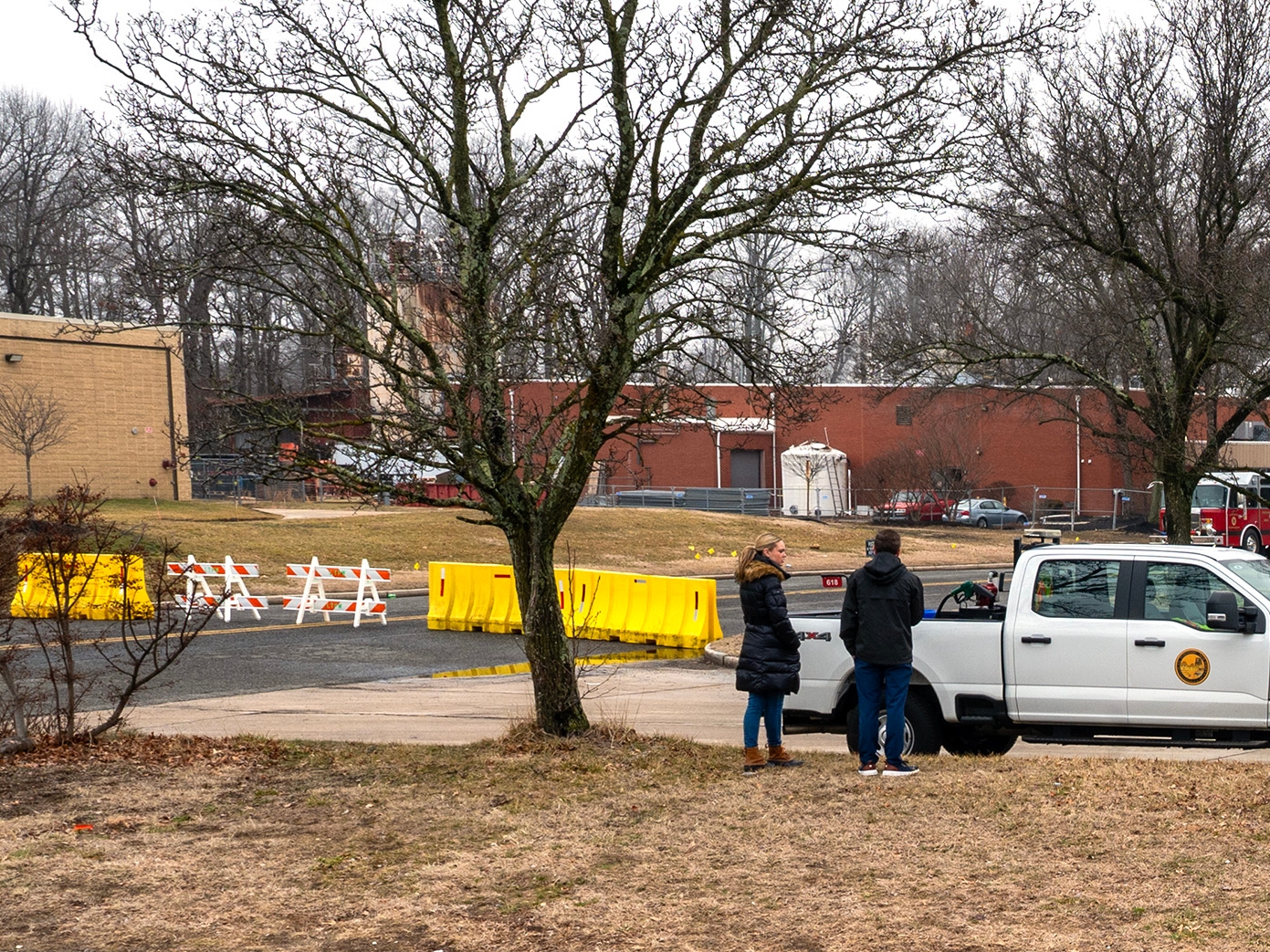
    The scene outside Savita Naturals in Logan Township, N.J. Thursday Mar. 5, 2026, where at least four people were critically injured the day before after a large explosion destroyed the commercial production facility.

    The company, Gloucester County Prosecutor’s Office spokesperson Rebecca Forand said Wednesday, serves as a processor in the cocoa and chocolate industry. As part of its work, the company utilizes propane — a highly flammable gas Savita Naturals has called its “solvent of choice” for botanical extractions.

    Propane, officials said Wednesday, was used in the company’s production processes, and a large amount of it was stored on the facility’s premises. In the aftermath of Wednesday’s blast, a ruptured propane tank could be seen burning amid the collapsed building’s wreckage.

    A highly flammable gas, propane is a commonly preferred solvent for extraction of natural compounds and oils. The chemical, Savita Naturals indicates on its website, “produces the highest yields at intermediate cost without sacrificing quality.”

    It does, however, present some dangers. In high concentrations, it can decrease the amount of oxygen in the air, according to the New Jersey Department of Health. Propane is also naturally colorless and odorless, and often has an odorant added to aid in detection. Airborne exposure can result in headaches and dizziness, as well as fainting.

    Savita Naturals could not immediately be reached for comment.

    Officials on Wednesday lifted the shelter-in-place order shortly after the explosion, noting that there were no ongoing hazards, despite ongoing monitoring efforts from emergency responders. The New Jersey Department of Environmental Protection was notified of the situation, and burn-off of remaining gas continued on-site early Thursday.

    New Jersey Gov. Mikie Sherrill indicated Wednesday that her office was informed about the situation, and was monitoring developments.

    “We are actively supporting with resource coordination and will continue to monitor the situation to ensure the safety of residents and support those impacted,” Sherrill said.

  • City funding is unclear for Zero Fare program giving SEPTA passes to low-income Philadelphians

    City funding is unclear for Zero Fare program giving SEPTA passes to low-income Philadelphians

    Just days before the release of Mayor Cherelle L. Parker’s city budget, it is unclear whether it will include money to continue Zero Fare, a program that gives free transit passes to low-income Philadelphians.

    Transit advocates and political leaders say they have not heard from the administration on the issue and are concerned it may be cut or have its funding reduced.

    A rally is scheduled for 10 a.m. Friday on the north apron of City Hall to push for Zero Fare’s survival — and for city government to continue participating in SEPTA’s Key Advantage, which provides free transit passes for municipal workers.

    Parker is scheduled to deliver her annual budget address next Thursday to a session of City Council.

    A spokesperson for the administration declined to comment.

    “We don’t care who gets the credit,” said Stephen Bronskill, coalition manager for Transit Forward Philadelphia, a nonprofit that advocates for public transportation that is organizing the event. “We want to see that this program gets funded … so people can get where they need to go.”

    City Council members, state lawmakers, activists for transit funding and service, and users of the Zero Fare passes are expected to speak Friday.

    Zero Fare, which serves about 60,000 eligible people with incomes at or below 150% of the federal poverty standard, would end June 30 unless the fiscal 2026-27 budget funds it.

    Officials also must decide whether to fund Key Advantage benefits for city workers, though SEPTA’s program provides subsidized passes free to the employees of nonprofit organizations and private businesses.

    Deja vu?

    Both programs have faced city budget uncertainty in the past.

    Last year, Parker’s budget would have eliminated funding for Zero Fare, launched in 2023 as a two-year pilot program. Money was included after public backlash, including a rare commentary from former Mayor Jim Kenney, as City Council was considering the budget.

    City officials said they had begun meeting with SEPTA to find a funding solution to continue both programs before the uproar. The administration also continued Key Advantage last year.

    “From our standpoint, they’ve both worked well, and we’d like to see them continue,” SEPTA spokesperson Andrew Busch said Thursday.

    A path forward

    Zero Fare began as a pilot, started by Kenney using $30 million of federal COVID relief money to get it off the ground. The program was nationally recognized because it proactively sent transit fare cards to Philadelphians eligible for the benefit.

    Automatic enrollment eliminated the red tape “time tax” for people who wanted to use the benefit, making it unusual on the local level, according to public policy analysts.

    .

    Councilmember Nicolas O’Rourke, who helped lead the effort to restore Zero Fare funding last year, has said he plans to push his proposed City Charter amendment to mandate 0.5% of the city budget each year be dedicated to the initiative.

    The amendment would generate about $34 million in the 2026-27 budget for Zero Fare, O’Rourke estimated last year. Enshrining it in the charter, which functions as a kind of municipal constitution, would put the program on solid ground, he said.

    “It can’t be yanked away at a moment’s notice when somebody wants to shift something around in the budget,” O’Rourke said last November at a community meeting on the proposal.

    This story has been updated to remove an outdated figure for the number of participants in Zero Fare.

  • GOP Rep. Tony Gonzales of Texas ends reelection bid after admitting to affair with aide

    GOP Rep. Tony Gonzales of Texas ends reelection bid after admitting to affair with aide

    WASHINGTON — Republican Rep. Tony Gonzales of Texas said late Thursday he was withdrawing from his reelection race, after having admitted an affair with a former staff member who later died by suicide, but he vowed to finish out his term in Congress.

    He had faced calls from GOP leadership to end his reelection bid, and from others in Congress to resign.

    “After deep reflection and with the support of my loving family, I have decided not to seek re-election,” Gonzales said in a statement posted late Thursday to X.

    The move is the latest in a quickly changing situation that stunned Capitol Hill and resulted in a House Ethics Committee investigation into his conduct. Gonzales’ decision to bow out of the race appears to clear the field. On Tuesday, he had been forced into a May runoff against Brandon Herrera, a gun manufacturer and YouTube gun-rights influencer who narrowly lost to him in the 2024 primary.

    House Speaker Mike Johnson and the GOP leadership earlier Thursday had called on Gonzales to withdraw from reelection after Gonzales, a day earlier, acknowledged a relationship that has upturned the political world in his home state and in Washington.

    “We have encouraged him to address these very serious allegations directly with his constituents and his colleagues,” said Johnson, Majority Leader Steve Scalise, Whip Tom Emmer, and GOP Conference Chairwoman Lisa McClain in a statement.

    “In the meantime, Leadership has asked Congressman Gonzales to withdraw from his race for reelection.”

    Johnson, R-La., has been under enormous pressure from his own GOP lawmakers to take action, and several Republicans have already called for Gonzales to step aside. Rep. Anna Paulina Luna, R-Fla., has introduced two resolutions to punish Gonzales. The first seeks to remove him from his assignments on the House Appropriations and Homeland Security committees, while the second seeks to censure him.

    House Democratic Leader Hakeem Jeffries of New York, meanwhile, said he would support expelling Gonzales from the House, a rare step that requires a two-thirds vote from the chamber.

    GOP leaders notably did not call for Gonzales to resign from office as they struggle to maintain their slim majority in the House, which they hold by only a handful of seats.

    Their move came after Gonzales, appearing on the “Joe Pags Show,” was asked whether he had a relationship with the aide, Regina Ann Santos-Aviles.

    Santos-Aviles, 35, died after setting herself on fire in the backyard of her home in Uvalde, Texas. The Bexar County Medical Examiner’s Office later ruled her death a suicide.

    “I made a mistake and I had a lapse in judgment, and there was a lack of faith, and I take full responsibility for those actions,” Gonzales said.

    The congressman, now in his third term, had said he would not step down in response to the allegations, telling reporters recently that there will be opportunities for all the details and facts to come out.

    Gonzales, a father of six, first won his seat in 2020 after retiring from a 20-year career in the Navy that included time in Iraq and Afghanistan.

    In the interview broadcast Wednesday, Gonzales said he had not spoken to Santos-Aviles since June 2024. She died in September 2025.

    “I had absolutely nothing to do with her tragic passing, and in fact, I was shocked just as much as everyone else,” Gonzales said.

    Gonzales went on to say he had reconciled with his wife, Angel, and has asked God to forgive him. He also said he looked forward to the Ethics Committee investigation.

    Johnson and GOP leadership urged that committee to “act expeditiously.”

    Under House ethics rules, lawmakers may not engage in a sexual relationship with any employee of the House under their supervision.

  • Chester County man arrested for allegedly assaulting child in Walmart

    Chester County man arrested for allegedly assaulting child in Walmart

    A Chester County man has been charged with unlawful contact with a child at a Walmart store in West Sadsbury Township, police said this week.

    Joseph Gerard Bouffard, a 26-year-old Glenmoore resident, was charged this week with a felony for sexual contact with a minor, along with three lesser charges. The incident occurred in January, police said.

    A Pennsylvania State Police trooper wrote in a complaint that around 11 a.m. on Jan. 24, a mother called to report that a stranger had inappropriately touched her 11-year-old daughter in the Walmart.

    An attorney representing Bouffard did not immediately return a message seeking comment.

    The child told police that the man had touched her while she was in the beverage aisle of the store, grabbing a drink her mother had asked her to get. The child said that she had noticed Bouffard earlier when he smiled at her in another aisle. After he touched her, she immediately ran to her mother. Bouffard left immediately after, police said.

    Security footage showed that Bouffard allegedly passed the victim several times in the store, looking at her repeatedly and walking close to her, police wrote in the complaint. The footage also showed Bouffard touching the child, police said.

    Bouffard had left the store before police arrived, and officers identified him using law enforcement resources and surveillance. Last week, police interviewed Bouffard, who matched the description the girl gave as well as the security footage. When asked by police if he intentionally touched the girl, Bouffard “nodded in the affirmative and agreed,” according to the affidavit.

    Bouffard was arraigned on Wednesday, and was released on $25,000 unsecured bail ahead of a preliminary hearing scheduled for March 16.

    This suburban content is produced with support from the Leslie Miller and Richard Worley Foundation and The Lenfest Institute for Journalism. Editorial content is created independently of the project donors. Gifts to support The Inquirer’s high-impact journalism can be made at inquirer.com/donate. A list of Lenfest Institute donors can be found at lenfestinstitute.org/supporters.

  • Joseph E. McGettigan III, longtime trial lawyer and celebrated former prosecutor, has died at 76

    Joseph E. McGettigan III, longtime trial lawyer and celebrated former prosecutor, has died at 76

    Joseph E. McGettigan III, 76, of Media, longtime trial lawyer and legal consultant, former Philadelphia assistant district attorney, former Pennsylvania chief deputy attorney general, former Delaware County first assistant district attorney, former assistant U.S. attorney in Philadelphia, former Philadelphia first assistant district attorney, and former Pennsylvania senior deputy attorney general, died Thursday, Dec. 31, of lung inflammation at Lankenau Medical Center.

    Born in West Philadelphia and a graduate of Temple University, Mr. McGettigan was a legal expert in sexual assault and murder cases. He litigated in hundreds of trials over more than three decades as a prosecutor for city, county, state, and federal governments, and won notable convictions in the murder case against multimillionaire philanthropist John E. du Pont in 1997 and the child sexual abuse case against then-Pennsylvania State University assistant football coach Jerry Sandusky in 2012.

    He was, then-Delaware County District Attorney Patrick L. Meehan said in 1998, like “a fascinating character in a crime novel.”

    He worked for four Philadelphia district attorneys over two stints in City Hall and spent a year in Iraq in 2008 and 2009 as a U.S. government resident legal adviser working to reestablish a criminal justice system after the fall of Saddam Hussein. For most of the last decade, he worked for the Philadelphia law firm of McAndrews Mehalick Connolly Hulse & Ryan P. C. “He was a wonderful guy, a faithful citizen, and an incredible lawyer,” Dennis McAndrews, founder of the firm, said in an online tribute.

    The grandson of a Philadelphia police officer and son of a lawyer, Mr. McGettigan prosecuted one of the first sex-abuse cases involving a priest from the Archdiocese of Philadelphia in 1985 and oversaw a state Senate absentee-ballot scam case in 1993. “I’m not shocked by much of human depravity,” he said in a 2018 video interview with lifelong friend Dom Irrera. “I’ve seen a fair amount of it.”

    In an online tribute, Judge Jack Stollsteimer of Delaware County Court called Mr. McGettigan a “legendary prosecutor, a larger-than-life personality, and an avenging hero to crime victims across our Commonwealth.” He was a favorite of the City Hall crowd, and colleagues called him “a true public servant,” “a great guy with a wonderful heart,” and “an extraordinary presence in the courtroom.”

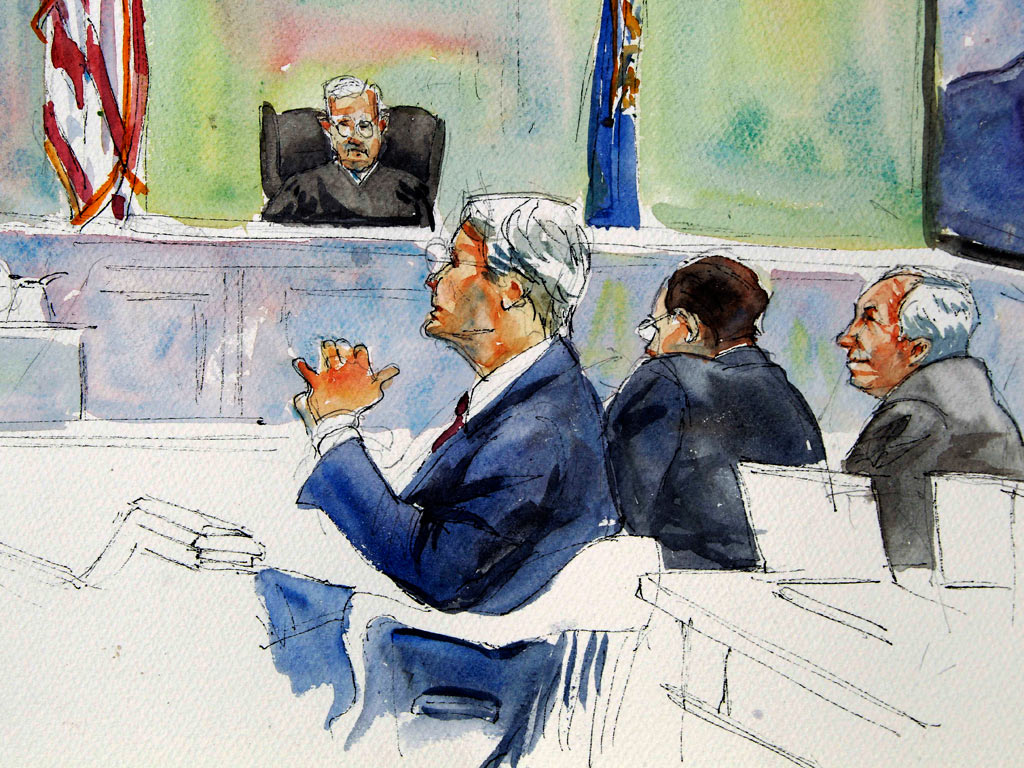
    Mr. McGettigan (foreground) is shown in this courtroom sketch during the Jerry Sandusky trial in 2012.

    Even those with whom he clashed praised Mr. McGettigan. Thomas A. Bergstrom, the Philadelphia lawyer who represented du Pont, said in 2011: “He’s a formidable adversary … very principled. If Joe doesn’t agree with you, he’ll let you know. If he’s going to hit you, it will be a punch in the nose, not a stab in the back.”

    Witty and naturally engaging, Mr. McGettigan interrupted his legal career after the du Pont case to work briefly in Hollywood as a legal content adviser for the short-lived TV series Philly. The show starred Kim Delaney as a tough defense attorney in Philadelphia, and Mr. McGettigan played a police detective, not a prosecutor, in a courtroom scene in one episode in 2002.

    He also worked briefly as a consultant and manager for a private security company in Virginia, was a legal analyst for TV talk shows, and mentored other lawyers. He graduated summa cum laude with a bachelor’s degree in English literature from Temple and earned his law degree at the University of San Diego School of Law in 1982.

    Mr. McGettigan played basketball in high school, on Philly playgrounds, and later whenever he could. Longtime college basketball coach and lifelong friend Fran O’Hanlon called him “a great friend who would do anything for you.”

    His sister Mary said: “He was complex. He appeared often to be a hard-nose tough guy. But there was a soft side to him. He wanted to help people who were vulnerable.” His sister Patty said: “He left the world a better place.”

    Joseph Edward McGettigan III was born March 5, 1949. An altar boy at church, he grew up with six sisters and a brother, and he instigated many dinner-table debates with his siblings and parents about all kinds of subjects.

    “He kept us on our toes,” his sister Mary said. “He had a strong sense of justice, of doing the right thing.”

    Mr. McGettigan (second from right) liked nothing better than playing hoops with friends.

    He married Gay Warren, and they lived in Media and Naples, Fla. “Gay was Joe’s rock,” his sister Mary said. “He was devoted to her, and she to him.”

    Mr. McGettigan loved music, reading, and writing, and told Irrera in 2018 that his favorite authors were William Shakespeare and Joseph Conrad. He was fun and funny, his siblings said, a raconteur with a large personality.

    “Joe was an outlier in a family of bookish nerds,” his sister Jeanne said. “We followed his youthful adventures with great amusement and his later accomplishments with pride and respect. His generosity changed lives for the better.”

    Mr. McGettigan spent a year in Iraq helping local officials revive their justice system.

    One time, when they were young, his brother Michael tried to lie about losing Mr. McGettigan’s football. So Mr. McGettigan grilled him about the details and eventually extracted a confession.

    “I gave it all up,” Michael McGettigan said, “the first of many malefactors to find relief in telling the whole truth and nothing but to Joseph E. McGettigan III.”

    In addition to his wife and siblings, Mr. McGettigan is survived by his mother, Ruth, and other relatives. A sister died earlier.

    Mr. McGettigan (front right) always seemed to be surrounded by friends.

    Visitation with the family is to be from 10 to 10:45 a.m. Saturday, March 7, at St. Francis de Sales Church, 4625 Springfield Ave., Philadelphia, Pa. 19143. A Funeral Mass is to follow at 11 a.m.

    Donations in his name may be made to the Tunnel to Towers Foundation, 2361 Hylan Blvd., Staten Island, N.Y. 10306.

    “Everyone wanted to be Joe’s friend,” a colleague said in a tribute. 
  • Philly Parks & Rec introduces summer camp lotto at five in-demand locations, causing headaches for some parents

    Philly Parks & Rec introduces summer camp lotto at five in-demand locations, causing headaches for some parents

    At some Philadelphia Parks and Recreation centers, a grim tradition has developed over the years amid the winter scramble to secure some sort of summer programming for kids: Parents wait in line hours before enrollment even begins to snag a first-come, first-served camp spot.

    This year, the city hopes to remedy that with the introduction of a lottery system at a handful of the most in-demand camps.

    “We’re just learning from past years, trying to be flexible and give parents more time to come in,” said Rob Jackson, the department’s deputy commissioner of programs.

    Yet some parents bemoaned what they described as a poorly communicated change, hearing about it a week before enrollment began with no explanation as to why, becoming just one more logistical quirk to navigate in the summer camp enrollment chaos.

    That’s because, as with daycare, snagging a spot in any daylong summer program can feel like building a plane midflight. Applying to multiple summer camps is a must, setting aside a pool of money for application fees is necessary, and, oh, you’ll likely have to make a quick decision on whether to accept a spot despite not having heard back from everyone.

    Even applying to the Philadelphia Parks and Recreation-run summer camps, one of the most affordable options in the city for kids ages 6 to 12, has its quirks. Because weekly rates start at $90, compared with the hundreds some other camps charge, spots in the department-run programs are some of the most coveted in the city.

    Some rec centers are so popular that parents have resorted to waiting in line for hours on enrollment day to secure a spot. It’s a system that the city has heard feels unfair to families that cannot afford to take a morning off from work to do that.

    In an attempt to make the registration process more equitable, the city rolled out a lottery system this week for potential first-time campers at some of the hardest-to-get-in sites: Fishtown, Northern Liberties, Shissler, Hancock, and Towey Recreation Centers. These sites are in the Fishtown, Northern Liberties, and South Kensington sections of the city.

    Jackson said the change was inspired by staff, who described coming into work with long lines of parents already formed. If a parent could not make it on that day, it was one less summer camp option. And because younger siblings were given priority in an attempt to keep siblings together, one family could take up multiple camp spots in one go. With the lottery system, younger siblings have the same odds as other new registrants. Jackson recognized that might mean multiple camp drop-offs for some families, but he said the change was to “accommodate as many families in the community as possible.”

    The lottery system has allowed sites like Hancock and Shissler to extend registration for new campers over the course of four days, giving all kids the same chance of snagging whatever few spots are available within the program as children age out or choose to go elsewhere.

    One Fishtown parent this week, who asked to remain anonymous so as not to hamper their kid’s chances of snagging a spot, described the change as poorly communicated. The parent was left deflated by submitting applications at various locations, paying $50 per application, unsure what the odds were for getting into any of these camps.

    Asked if the city has ever considered moving the applications online, Jackson said the city has not gotten to that point. So for now, the in-person site-by-site registration is the best the department can do for the more than 7,000 kids who attend camps across 120 to 130 host recreation centers.

    The city could not say just how many camp spots would be freeing up this year, as it depends on how many children from what are considered “returning families” claim spots.

    The summer childcare scramble

    Even if a child can secure a spot in a city-run summer camp, it does not fully solve summer childcare needs for families.

    The camps run for six weeks and have age restrictions. Parents often have to shell out hundreds more to fill in gaps in care.

    Other summer camp operators have issues of their own. This year, the Academy of Natural Sciences of Drexel University and the Penn Museum announced they will not host their popular summer camps, citing budget constraints.

    Dena Ferrara Driscoll, a mother of two who lives in South Philadelphia, has been a public advocate for more investment in summer camps and after-care programs. Her children attended city-run camps and now her son works at one in the summer.

    Driscoll was not surprised by the continued demand for camp spots. The programs are “affordable, safe, and deeply loved,” she said.

    “A lottery might change who gets a spot, but it doesn’t address the real issue: Families need more affordable camp options provided by the city, not just a new system to distribute the ones we already have,” she said.

  • Philly school officials want to close this Frankford middle and replace it with a K-8. Teachers worry programs will be lost.

    Philly school officials want to close this Frankford middle and replace it with a K-8. Teachers worry programs will be lost.

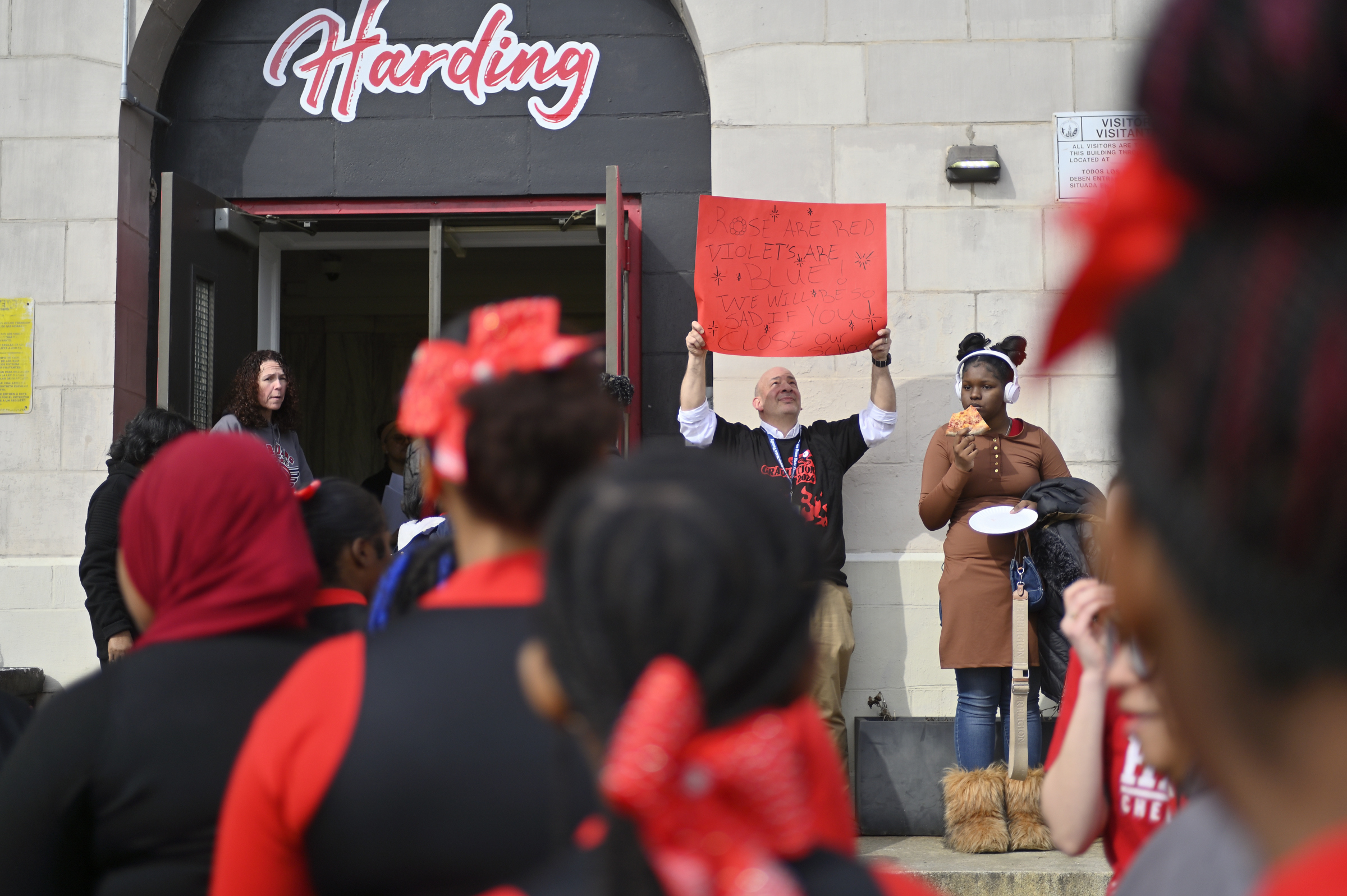
    From sports like soccer, football, and cheerleading to Model United Nations and unified programs for students with and without special needs, Harding Middle School’s offerings reflect its diverse enrollment.

    Of the Frankford school’s 570 students, more than 150 — nearly 27% — receive special-education services. About one quarter of students are English learners — with languages ranging from Spanish and Portuguese to Pashto and Ewe.

    Teachers say the school will not be able to offer the same depth of programming if the Philadelphia School District moves forward with a plan to close Harding, which serves grades six through eight. The district is proposing to move Sullivan Elementary School into the Harding building, and expand that school into a K-8 as part of a sweeping facilities plan.

    “We offer something for everybody,” said Beth Ann Dufner, a Harding teacher who coordinates the school’s English learner programs and has worked at Harding for six years.

    Because transitioning the building from a 6-8 school to a K-8 would mean fewer students per grade, Dufner said, she does not think the school’s programs for middle school kids could be replicated in the district’s plan — “not on a large scale like we have at Harding.” Teachers say students would have to travel to other schools to compete on some sports teams.

    Harding, which has capacity for 1,110 students, is one of five middle schools recommended for closure under the plan. In total, the district proposes to close 18 schools, pitching the plan as a better use of limited resources.

    Harding teachers disagree with the district’s shift away from standalone middle schools — saying that surveys did not give community members the option to voice support for the model.

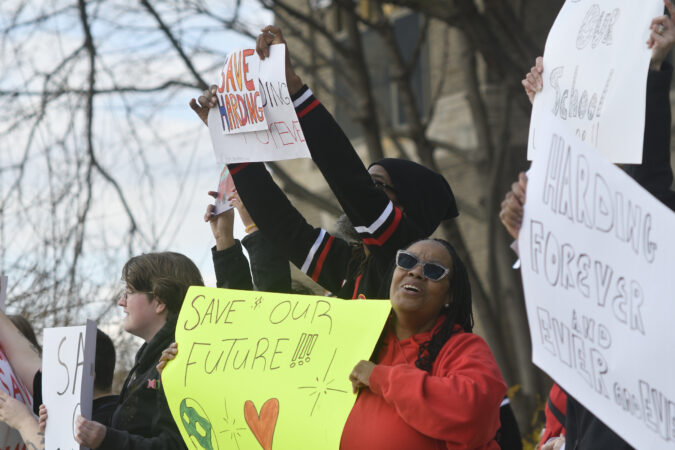
    Arianna DeJesus (front, center), 8th Grader and captain of the Harding Hawks cheerleading squad, during a rally in support of the middle school in the Frankford neighborhood last month.

    “I’ve never heard any parents we’ve had enrolled say, ‘We hate middle schools,’” said Jessica Peruso, an autistic support teacher at Harding. “That was a theme — but where did that come from?”

    A hub for special-education students

    Teachers also dispute the rationale for closing Harding specifically — questioning how the district scored Harding as “poor” for program alignment on a rubric for determining which schools to close.

    At one session, teachers were told the school did not have enough closet space, according to Dufner.

    “The things they said they based their score on — we have all of those things,” Dufner said, noting that Harding has two gyms, media and technology labs, and dedicated spaces for English learners and special-needs students.

    Like other teachers, Dufner faulted the district for Harding’s underenrollment, saying its decision to allow charter schools had drawn students away.

    But she also questioned whether Harding — which the district rated as only half utilized — was being penalized for its large population of students receiving special-education services. Autistic support classrooms, for instance, are required to have no more than eight students, far smaller than a standard class size.

    That “creates the appearance of underutilized space,” but it’s not, Dufner said.

    A district spokesperson said building utilization scores are not adjusted to account for smaller class sizes for special-needs students.

    The spokesperson, Monique Braxton, said numerous factors resulted in Harding scoring poorly on program alignment, from gym facilities in disrepair to lack of appropriate spaces for music and art classes.

    Harding serves as a hub for special-education students from a range of neighborhoods beyond the Harding catchment, teachers said. They described the school’s culture as particularly inclusive of kids with special needs.

    “That makes me the most nervous for closing,” said Peruso, who has taught at Harding since 2014 and was recently named the district’s Teacher of the Month. “I’m concerned about my kids. I’ve been teaching autistic support here forever. I don’t want them to get lost.”

    Under the district’s plan, Harding would have a phased closure, starting in the 2027-28 school year. Students previously assigned to Harding would instead attend Sullivan, John Marshall, Lawton, or Carnell schools. Meanwhile, the Harding building — rated by the district as in “unsatisfactory” condition — would receive upgrades before the expanded Sullivan school moves in.

    “You’re going to come here and fix the building for Sullivan students? Why aren’t the Harding students worth that investment?” Peruso said.

    Harding Middle School Principal Mary Sanchez stands at the front door as students, staff, community members, and elected officials rally to support the school last month in the Frankford neighborhood. It’s one of 18 the district has proposed closing.

    A ‘tight knit’ community

    While current students would not be affected by the closure, some have expressed dismay that they would not be able to return to the school and visit their teachers, said Amanda Chandler, who teaches English language arts at Harding.

    Chandler, who has taught at Harding for seven years, called it “very tight knit.” Every year, she said, former students have come back to see her or her colleagues.

    Compared with past teaching jobs, “I have never had kids more loyal to me, my well-being … than I have at Harding Middle School,” Chandler said.

    In letters shared by Peruso, several students said they wanted Harding to stay open because of its welcoming environment. “Everyone is united like a big family,” one sixth grader wrote. Another sixth grader said that teachers “let me know that I am safe and that everything will be okay.”

    Amarika Thomas, a paraprofessional at Harding who has lived in the community for 20 years, had been working in the school’s cafeteria when principal Mary Sanchez noticed her strong connections with students.

    Sanchez “pushed me to come out of the cafeteria,” said Thomas, who hopes to become a special-education teacher.

    While Thomas’ daughter attends a K-12 charter, she had hoped to possibly send her daughter to Harding for middle school, citing its array of activities.

    The district should invest in Harding, Thomas said: “Harding literally just needs a fighting chance.”

  • ICE can’t use Montgomery County’s property or resources in civil immigration operations under new resolution

    ICE can’t use Montgomery County’s property or resources in civil immigration operations under new resolution

    The Montgomery County commissioners further limited the county’s cooperation with ICE on Thursday when they passed a resolution restricting federal immigration enforcement from using county property or resources for noncriminal investigations.

    The measure approved by the Democratic-controlled board bars U.S. Customs and Immigration Enforcement from using county resources for various purposes, including as staging areas, processing locations, or operations bases related to civil immigration operations.

    “We’ve seen it elsewhere — the violence, the fear, the separation of families. We want to make sure that here in Montgomery County, we’re doing everything we can to make sure all of our residents can continue to access essential services and live their lives safely,” said Commissioner Jamila Winder, the Democrat who chairs the board.

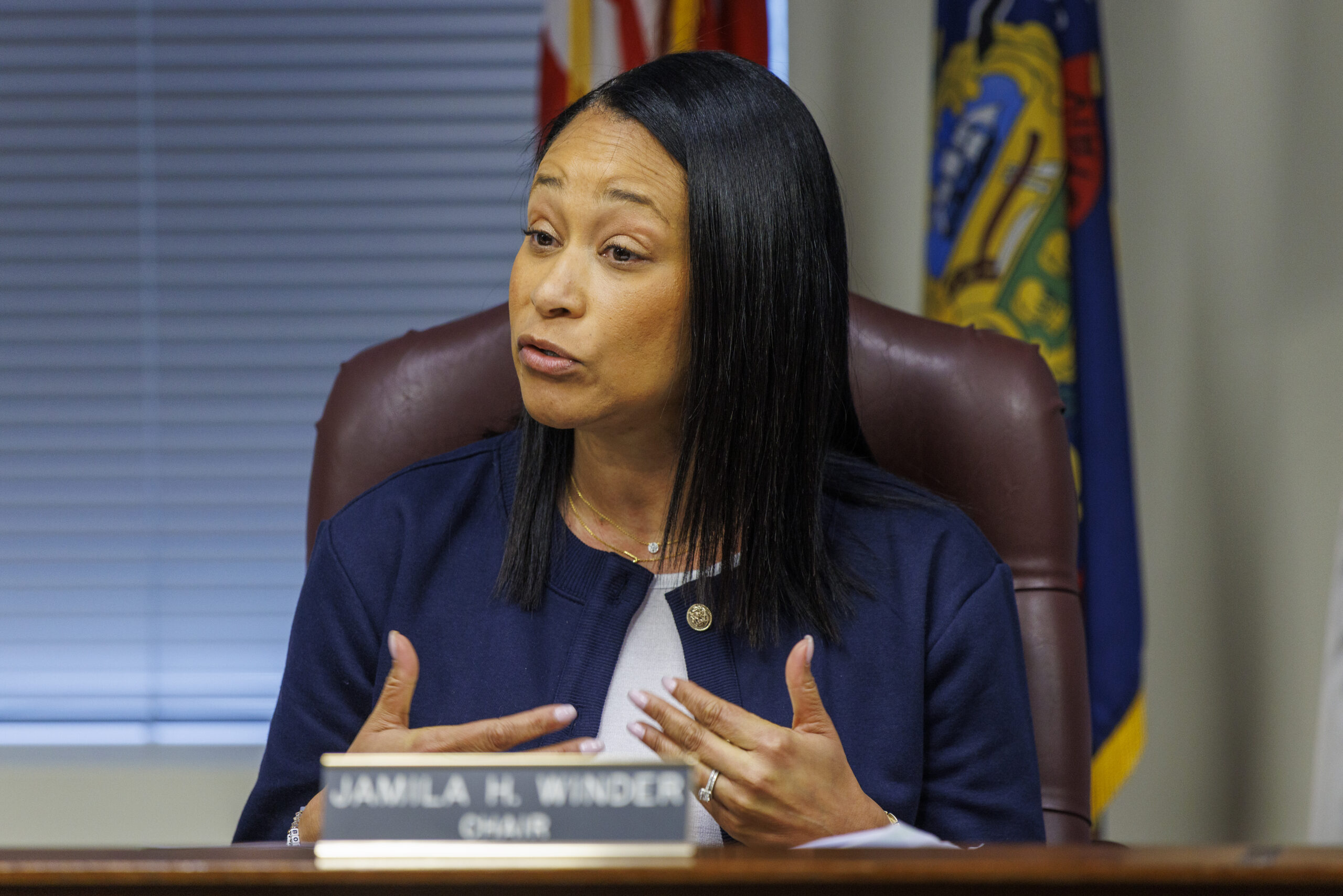
    Jamila H. Winder, Chair, Montgomery County Commissioners on Thursday, March 5, 2026.

    The resolution comes as immigration stakeholders in the county have been pushing the commissioners to take further action to protect residents from ICE enforcement as President Donald Trump’s deportation agenda continues to escalate.

    Much of the tension occurred under the leadership of Kristi Noem, the Department of Homeland Security secretary whom Trump fired Thursday.

    Calls for action escalated nationally in January after federal agents killed U.S. citizens Renee Nicole Good and Alex Pretti in Minnesota. In Montgomery County, ICE has carried out numerous operations, especially in communities with high numbers of Latino residents, such as Norristown, the county seat.

    “Let me be clear: The county does not have authority over the federal government’s actions over civil immigration enforcement, and we still do not have the authority over the courts, other elected officials, municipalities, townships, or their law enforcement officers,” Winder said. “That remains unchanged, but what has changed is the environment we’re in.”

    The policy to block ICE from using county resources passed 2-1 with Commissioner Tom DiBello, the board’s sole Republican, voting no.

    The measure codifies that the county will not enter into a 287(g) agreement, which would allow ICE to use county resources, and that county employees will not comply in federal civil immigration operations without a judicial warrant or subpoena.

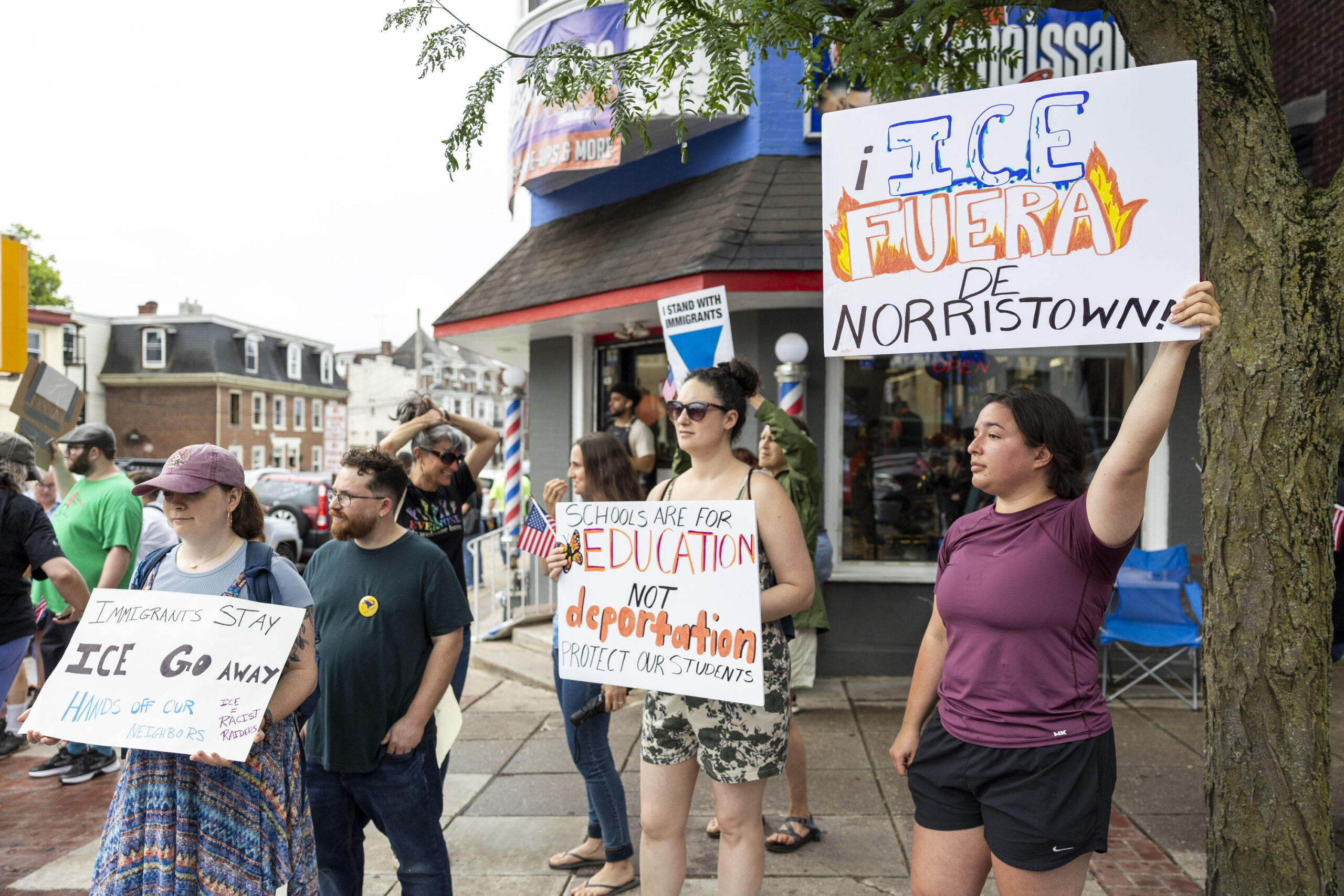
    Lydia Villalba, 27, of Souderton, Pa., (right), holds a sign saying “Ice Fuera De Norristown” meaning Ice out of Norristown, during a rally to support immigrants in Norristown, Pa., on Saturday, June 7, 2025.

    It does not prohibit ICE from purchasing warehouses for detention centers, as the agency has done in Berks and Schuylkill Counties.

    Democratic Gov. Josh Shapiro has blasted the warehouse purchases as being conducted in secret and promised to pursue avenues to block the plan from moving forward. Bucks County in February passed a unanimous resolution opposing any potential purchases there.

    Montgomery County’s resolution denying ICE access to its buildings and lands follows a national trend among Democratic-led jurisdictions. The move has both symbolic and practical impacts.

    First, it enables the county government to publicly make clear its opposition and noncooperation. And second, ICE can need big spaces to set up officers, cars, and equipment for operations; banning the use of potential staging areas can complicate the agency’s logistics.

    Montgomery County’s Department of Assets and Infrastructure will post signage on county-owned property noting that the area cannot be used for purposes not approved by the county, according to the resolution. Private property owners who wish to restrict civil immigration enforcement activity on their properties can request signs for free.

    Megan Alt, a spokesperson for the county, said the hope is that ICE will comply with county law. But if not, the county is prepared to handle violations as it would for any other instances of trespassing.

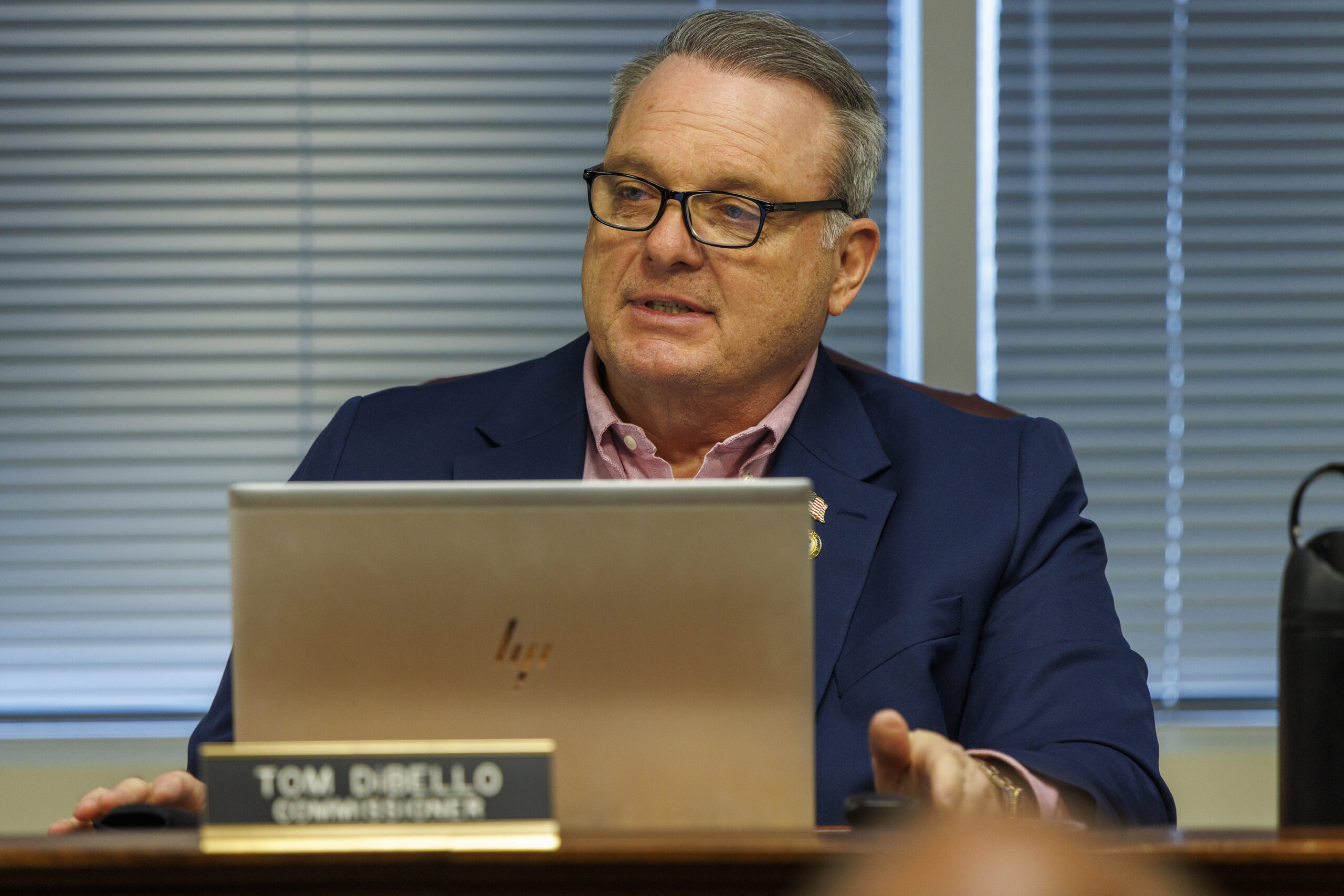
    Thomas DiBello, Commissioner, Montgomery County Commissioners on Thursday, March 5, 2026.

    DiBello, the lone GOP commissioner, said his opposition has “nothing to do with politics” and criticized the resolution’s references to ICE-related incidents that took place outside Montgomery County. He also said he was concerned that private property owners who do not post signs restricting ICE action on their properties will be targeted as a consequence.

    “What’s going to happen then? Is there doxing going to occur? Is there protests outside of businesses?” he asked.

    Commissioner Neil Makhija, the board’s vice chair, said the resolution “has nothing to with immigration policy,” but rather was about limiting cooperation with an agency that has used extreme tactics. He cited an ICE arrest last month in Lower Providence Township in which agents broke down a family’s front door.

    DiBello responded that Makhija was engaging in “political positioning.”

    In the Philadelphia region and elsewhere, ICE’s use of government property has long rankled immigration advocates, who say it amounts to cooperation on the part of local leaders.

    For instance, Philadelphia City Council is poised to consider a package of “ICE Out” legislation that would bar the agency from staging or conducting enforcement on property owned or controlled by the city — including garages, parking lots, vacant land, buses, playgrounds, and schools.

    Winder said Thursday that Montgomery County’s resolution is not some “newfound desire” to limit cooperation.

    “Yes, we have our political affiliations, but we also know the difference between right and wrong, good and evil,” she said.

  • Temple University and the Philadelphia Orchestra and Ensemble Arts have signed a deal for a new partnership

    Temple University and the Philadelphia Orchestra and Ensemble Arts have signed a deal for a new partnership

    Broadway stars and orchestral players might lead budding Philadelphia musical talent in master classes, and new college internships could open up at the city’s largest performing arts producer and presenter.

    As Temple University prepares to establish an outpost in Philadelphia’s major arts district, the school, and Philadelphia Orchestra and Ensemble Arts have signed a memorandum of understanding for a new partnership, formalizing a dream stage for joint activities already underway.

    The new arrangement is expected to benefit not only Temple University students, but also younger students of Temple Music Prep and the Philadelphia School District.

    Temple and the orchestra have long partnered on projects, but the university’s purchase of Terra Hall — near the orchestra and Kimmel Center — will allow a deeper level of involvement, leaders said.

    In the fall of 2027, for instance, about three dozen Philadelphia Orchestra current and retired musicians are expected to move their teaching studios from Temple’s main campus to Terra. Other collaborations are expected to take shape over the next year and half.

    “The gist of it is, Temple University and the Philadelphia Orchestra and Ensemble Arts are committed to working together to build a tangible partnership. It’s aspirational,” said POEA president and CEO Ryan Fleur of the memorandum of understanding, which was signed last month.

    “There’s a lot around the exchange of talent and supporting one another,” said Temple president John Fry.

    Terra Hall – shown here with other former University of the Arts buildings – is near the Academy of Music and Kimmel Center.

    For POEA, the partnership means it will no longer pursue the possibility of building an additional education wing at the Kimmel Center that had been in the early planning stages.

    “When I heard Temple was acquiring Terra Hall,” said Fleur, “the priority shifted from the idea of an education wing over the loading dock to how we could work with Temple to deploy the space in Terra Hall. Our greatest strength is not about building things, and if we unite in Terra Hall for the benefit of Philadelphia students, it’s a win for Philly.”

    An education annex at the Kimmel might have cost in the neighborhood of $100 million.

    “It was a large figure,” said Fleur. POEA is already in the process of raising hundreds of millions of dollars for a variety of needs from endowment to repairing and renovating its facilities, which include Marian Anderson Hall, the Academy of Music, and the Miller Theater.

    The Pennsylvania Academy of the Fine Arts on North Broad Street, where Temple University has established a presence in PAFA’s Hamilton building (on right).

    Temple has been establishing a series of partnerships south down Broad Street from its main North Philadelphia campus. It has leased space at the Pennsylvania Academy of the Fine Arts and is developing programs there, and is in the process of taking over the Library Company of Philadelphia, on Locust Street just east of Broad.

    It acquired Terra Hall in 2025 for $18 million after the abrupt bankruptcy and closing of the University of the Arts. Terra was already outfitted with practice rooms, a recording studio, performance space, a dance studio, and classrooms.

    Fry said that Temple is currently doing work on the Terra building, with particular attention to the foundation and elevators, and that the major part of renovations would be done by September 2027. But he said that some of the spaces will be usable this fall.

    Both POEA and Temple have existing relationships with the Philadelphia School District. Fleur said the next step is “uniting” the efforts among the three. Fry said Temple was in discussions with other arts organizations as potential partners in Terra Hall.

    “We want people to think of this as a public resource,” he said, “not a closed academic building just for Temple. Where Temple can play a role, we want to be a part of that.”

  • More than 20 states sue over new global tariffs Trump imposed after his stinging Supreme Court loss

    More than 20 states sue over new global tariffs Trump imposed after his stinging Supreme Court loss

    WASHINGTON — About two dozen states — including Pennsylvania and New Jersey — challenged President Donald Trump’s new global tariffs on Thursday, filing a lawsuit over import taxes he imposed after a stinging loss at the Supreme Court.

    The Democratic attorneys general and governors in the lawsuit argue that Trump is overstepping his power with planned 15% tariffs on much of the world.

    Trump has said the tariffs are essential to reduce America’s longstanding trade deficits. He imposed duties under Section 122 of the Trade Act of 1974 after the Supreme Court struck down tariffs he imposed last year under an emergency powers law.

    Section 122, which has never been invoked, allows the president to impose tariffs of up to 15%. They are limited to five months unless extended by Congress.

    The lawsuit is led by attorneys general from Oregon, Arizona, California, and New York.

    “The focus right now should be on paying people back, not doubling down on illegal tariffs,” said Oregon Attorney General Dan Rayfield. The suit comes a day after a judge ruled that companies who paid tariffs under Trump’s old framework should get refunds.

    The new suit argues that Trump can’t pivot to Section 122 because it was intended to be used only in specific, limited circumstances — not for sweeping import taxes. It also contends the tariffs will drive up costs for states, businesses and consumers.

    Many of those states also successfully sued over Trump’s tariffs imposed under a different law: the International Emergency Economic Powers Act (IEEPA).

    Four days after the Supreme Court struck down his sweeping IEEPA tariffs Feb. 20, Trump invoked Section 122 to slap 10% tariffs on foreign goods. Treasury Secretary Scott Bessant told CNBC on Wednesday that the administration would raise the levies to the 15% limit this week.

    The Democratic states and other critics say the president can’t use Section 122 as a replacement for the defunct tariffs to combat the trade deficit.

    The Section 122 provision is aimed at what it calls “fundamental international payments problems.’’ At issue is whether that wording covers trade deficits, the gap between what the U.S. sells other countries and what it buys from them.

    Section 122 arose from the financial crises that emerged in the 1960s and 1970s when the U.S. dollar was tied to gold. Other countries were dumping dollars in exchange for gold at a set rate, risking a collapse of the U.S. currency and chaos in financial markets. But the dollar is no longer linked to gold, so critics say Section 122 is obsolete.

    Awkwardly for Trump, his own Justice Department argued in a court filing last year that the president needed to invoke the emergency powers act because Section 122 did “not have any obvious application’’ in fighting trade deficits, which it called “conceptually distinct’’ from balance-of-payment issues.

    Still, some legal analysts say the Trump administration has a stronger case this time.

    “The legal reality is that courts will likely provide President Trump substantially more deference regarding Section 122 than they did to his previous tariffs under IEEPA,’’ Peter Harrell, visiting scholar at Georgetown University’s Institute of International Economic Law, wrote in a commentary Wednesday.

    The specialized Court of International Trade in New York, which will hear the states’ lawsuit, wrote last year in its own decision striking down the emergency-powers tariffs that Trump didn’t need them because Section 122 was available to combat trade deficits.

    Trump does have other legal authorities he can use to impose tariffs, and some have already survived court tests. Duties that Trump imposed on Chinese imports during his first term under Section 301 of the same 1974 trade act are still in place.

    Also joining the lawsuit are the attorneys general of Colorado, Connecticut, Delaware, Illinois, Maine, Maryland, Massachusetts, Michigan, Minnesota, Nevada, New Jersey, New Mexico, North Carolina, Rhode Island, Vermont, Virginia, Washington, Wisconsin, and the governors of Kentucky and Pennsylvania.