Category: News

Latest breaking news and updates

  • Temple University and the Philadelphia Orchestra and Ensemble Arts have signed a deal for a new partnership

    Temple University and the Philadelphia Orchestra and Ensemble Arts have signed a deal for a new partnership

    Broadway stars and orchestral players might lead budding Philadelphia musical talent in master classes, and new college internships could open up at the city’s largest performing arts producer and presenter.

    As Temple University prepares to establish an outpost in Philadelphia’s major arts district, the school, and Philadelphia Orchestra and Ensemble Arts have signed a memorandum of understanding for a new partnership, formalizing a dream stage for joint activities already underway.

    The new arrangement is expected to benefit not only Temple University students, but also younger students of Temple Music Prep and the Philadelphia School District.

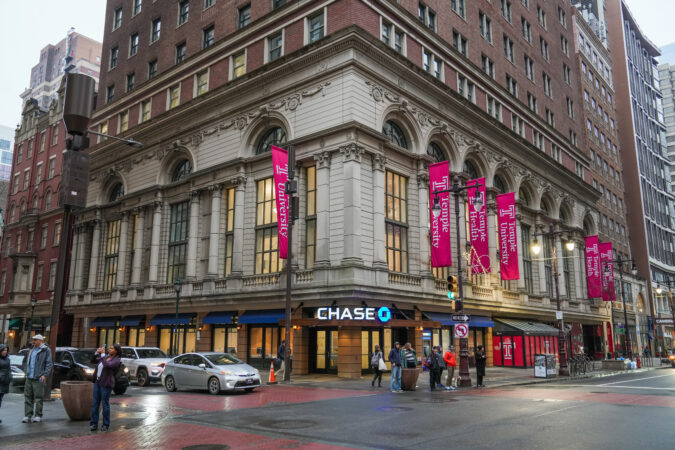
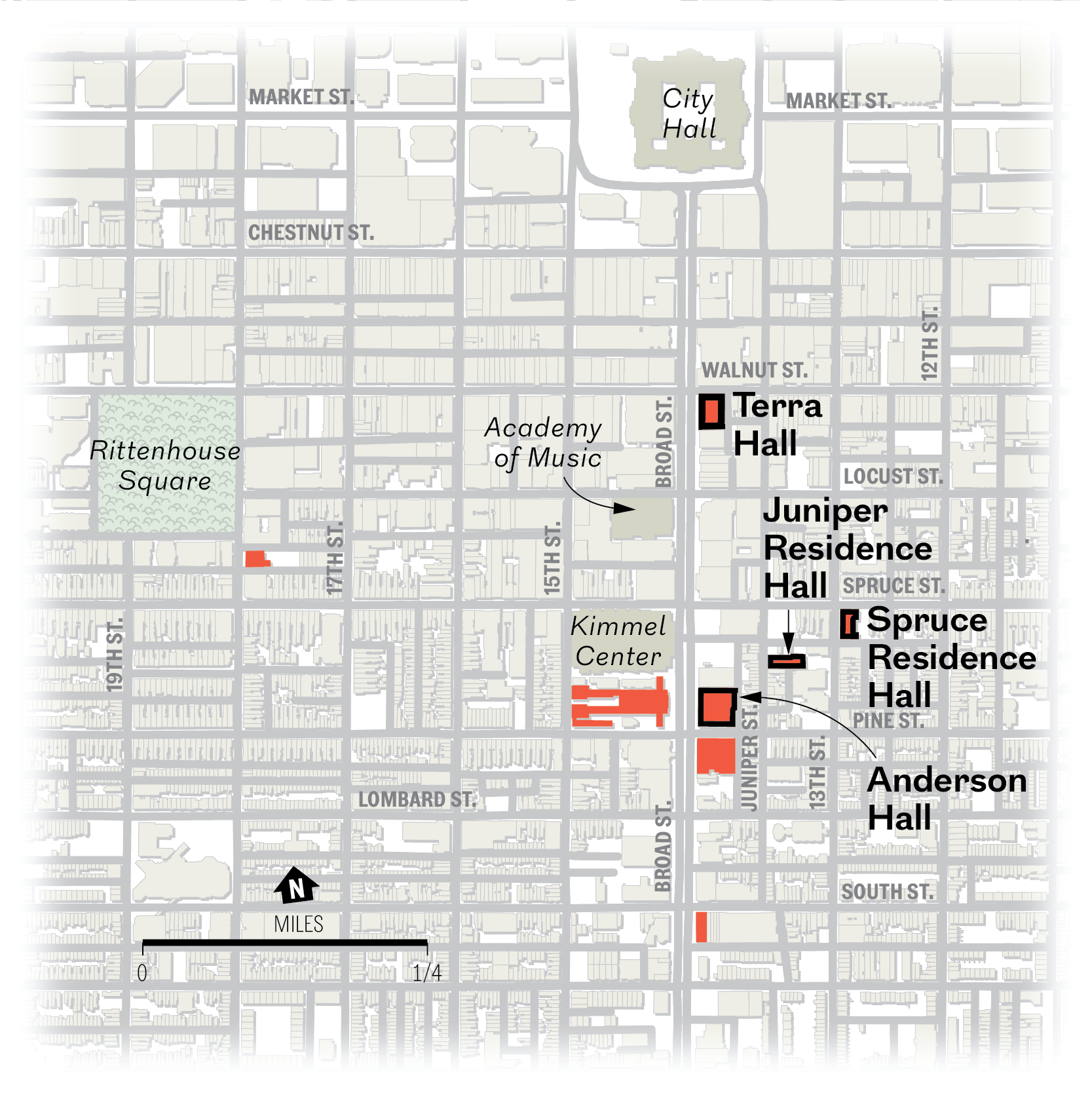
    Temple and the orchestra have long partnered on projects, but the university’s purchase of Terra Hall — near the orchestra and Kimmel Center — will allow a deeper level of involvement, leaders said.

    In the fall of 2027, for instance, about three dozen Philadelphia Orchestra current and retired musicians are expected to move their teaching studios from Temple’s main campus to Terra. Other collaborations are expected to take shape over the next year and half.

    “The gist of it is, Temple University and the Philadelphia Orchestra and Ensemble Arts are committed to working together to build a tangible partnership. It’s aspirational,” said POEA president and CEO Ryan Fleur of the memorandum of understanding, which was signed last month.

    “There’s a lot around the exchange of talent and supporting one another,” said Temple president John Fry.

    Terra Hall – shown here with other former University of the Arts buildings – is near the Academy of Music and Kimmel Center.

    For POEA, the partnership means it will no longer pursue the possibility of building an additional education wing at the Kimmel Center that had been in the early planning stages.

    “When I heard Temple was acquiring Terra Hall,” said Fleur, “the priority shifted from the idea of an education wing over the loading dock to how we could work with Temple to deploy the space in Terra Hall. Our greatest strength is not about building things, and if we unite in Terra Hall for the benefit of Philadelphia students, it’s a win for Philly.”

    An education annex at the Kimmel might have cost in the neighborhood of $100 million.

    “It was a large figure,” said Fleur. POEA is already in the process of raising hundreds of millions of dollars for a variety of needs from endowment to repairing and renovating its facilities, which include Marian Anderson Hall, the Academy of Music, and the Miller Theater.

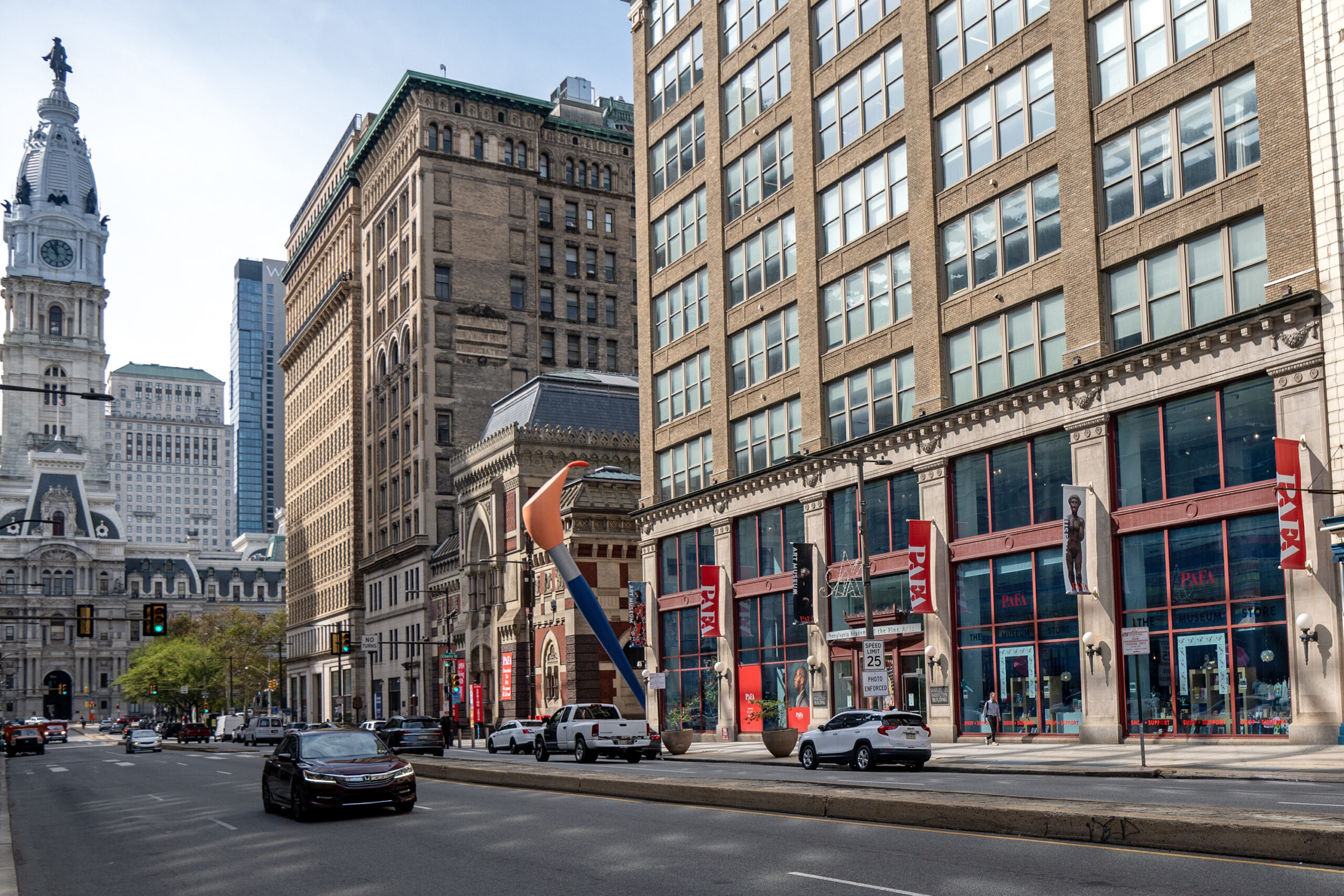
    The Pennsylvania Academy of the Fine Arts on North Broad Street, where Temple University has established a presence in PAFA’s Hamilton building (on right).

    Temple has been establishing a series of partnerships south down Broad Street from its main North Philadelphia campus. It has leased space at the Pennsylvania Academy of the Fine Arts and is developing programs there, and is in the process of taking over the Library Company of Philadelphia, on Locust Street just east of Broad.

    It acquired Terra Hall in 2025 for $18 million after the abrupt bankruptcy and closing of the University of the Arts. Terra was already outfitted with practice rooms, a recording studio, performance space, a dance studio, and classrooms.

    Fry said that Temple is currently doing work on the Terra building, with particular attention to the foundation and elevators, and that the major part of renovations would be done by September 2027. But he said that some of the spaces will be usable this fall.

    Both POEA and Temple have existing relationships with the Philadelphia School District. Fleur said the next step is “uniting” the efforts among the three. Fry said Temple was in discussions with other arts organizations as potential partners in Terra Hall.

    “We want people to think of this as a public resource,” he said, “not a closed academic building just for Temple. Where Temple can play a role, we want to be a part of that.”

  • More than 20 states sue over new global tariffs Trump imposed after his stinging Supreme Court loss

    More than 20 states sue over new global tariffs Trump imposed after his stinging Supreme Court loss

    WASHINGTON — About two dozen states — including Pennsylvania and New Jersey — challenged President Donald Trump’s new global tariffs on Thursday, filing a lawsuit over import taxes he imposed after a stinging loss at the Supreme Court.

    The Democratic attorneys general and governors in the lawsuit argue that Trump is overstepping his power with planned 15% tariffs on much of the world.

    Trump has said the tariffs are essential to reduce America’s longstanding trade deficits. He imposed duties under Section 122 of the Trade Act of 1974 after the Supreme Court struck down tariffs he imposed last year under an emergency powers law.

    Section 122, which has never been invoked, allows the president to impose tariffs of up to 15%. They are limited to five months unless extended by Congress.

    The lawsuit is led by attorneys general from Oregon, Arizona, California, and New York.

    “The focus right now should be on paying people back, not doubling down on illegal tariffs,” said Oregon Attorney General Dan Rayfield. The suit comes a day after a judge ruled that companies who paid tariffs under Trump’s old framework should get refunds.

    The new suit argues that Trump can’t pivot to Section 122 because it was intended to be used only in specific, limited circumstances — not for sweeping import taxes. It also contends the tariffs will drive up costs for states, businesses and consumers.

    Many of those states also successfully sued over Trump’s tariffs imposed under a different law: the International Emergency Economic Powers Act (IEEPA).

    Four days after the Supreme Court struck down his sweeping IEEPA tariffs Feb. 20, Trump invoked Section 122 to slap 10% tariffs on foreign goods. Treasury Secretary Scott Bessant told CNBC on Wednesday that the administration would raise the levies to the 15% limit this week.

    The Democratic states and other critics say the president can’t use Section 122 as a replacement for the defunct tariffs to combat the trade deficit.

    The Section 122 provision is aimed at what it calls “fundamental international payments problems.’’ At issue is whether that wording covers trade deficits, the gap between what the U.S. sells other countries and what it buys from them.

    Section 122 arose from the financial crises that emerged in the 1960s and 1970s when the U.S. dollar was tied to gold. Other countries were dumping dollars in exchange for gold at a set rate, risking a collapse of the U.S. currency and chaos in financial markets. But the dollar is no longer linked to gold, so critics say Section 122 is obsolete.

    Awkwardly for Trump, his own Justice Department argued in a court filing last year that the president needed to invoke the emergency powers act because Section 122 did “not have any obvious application’’ in fighting trade deficits, which it called “conceptually distinct’’ from balance-of-payment issues.

    Still, some legal analysts say the Trump administration has a stronger case this time.

    “The legal reality is that courts will likely provide President Trump substantially more deference regarding Section 122 than they did to his previous tariffs under IEEPA,’’ Peter Harrell, visiting scholar at Georgetown University’s Institute of International Economic Law, wrote in a commentary Wednesday.

    The specialized Court of International Trade in New York, which will hear the states’ lawsuit, wrote last year in its own decision striking down the emergency-powers tariffs that Trump didn’t need them because Section 122 was available to combat trade deficits.

    Trump does have other legal authorities he can use to impose tariffs, and some have already survived court tests. Duties that Trump imposed on Chinese imports during his first term under Section 301 of the same 1974 trade act are still in place.

    Also joining the lawsuit are the attorneys general of Colorado, Connecticut, Delaware, Illinois, Maine, Maryland, Massachusetts, Michigan, Minnesota, Nevada, New Jersey, New Mexico, North Carolina, Rhode Island, Vermont, Virginia, Washington, Wisconsin, and the governors of Kentucky and Pennsylvania.

  • City Council seeks new license system for loosely regulated smoke shops

    City Council seeks new license system for loosely regulated smoke shops

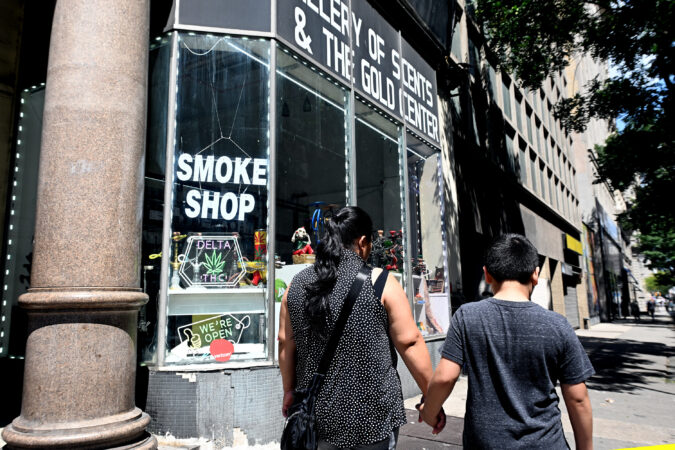
    From Bryn Mawr to Bensalem, Abington to Kensington, and West Chester to West Philly, smoke shops are everywhere. So much so that authorities who’ve grown concerned about the booming business model have struggled to track them all.

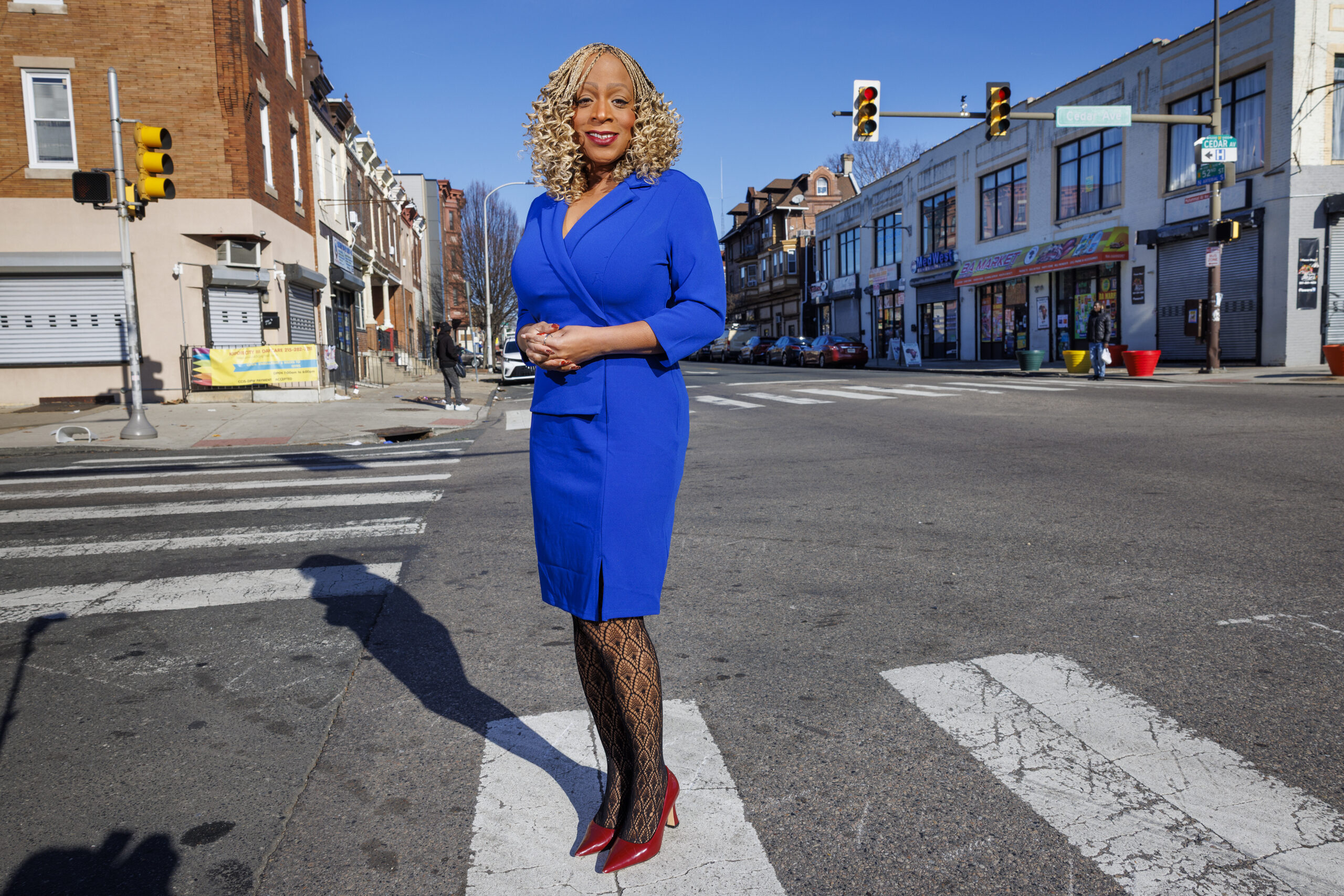
    In Philadelphia, City Councilmember Katherine Gilmore Richardson on Thursday introduced legislation that would establish a permit process, allowing the city to more closely monitor shops that sell unregulated drugs and crack down on those that flout the oft-hazy laws governing them.

    The bill would establish a new license requirement for selling “intoxicating substances,” while implementing a series of restrictions around the sale of products like hemp-based THC and kratom. It would also update the city code to define intoxicating products and establish a 21-plus age restriction for purchases.

    Gilmore Richardson proposed a second bill that would authorize the city to penalize landlords who rent space to stores selling tobacco products without a license.

    “Nine times out of ten these products are being marketed to our children,” Gilmore Richardson said. “We have to do all we can to add a new section in our code.”

    The new legislation would further require shops to have their products tested by a licensed lab in Pennsylvania and prove that the products are free from heavy metals, pesticides, solvents, mycotoxins, microbials, and other contaminants.

    An Inquirer investigation last year found that hemp products sold at smoke shops throughout the region are often rife with harmful contaminants, and many contain substances that are blatantly illegal. Some of the products The Inquirer tested were, in fact, black-market weed that was labeled as legal hemp.

    Shop owners defended the sales with lab results from the manufacturers indicating the products are both legal and toxin-free. Yet The Inquirer found that at least some of the reports were fraudulent or doctored to conceal the truth.

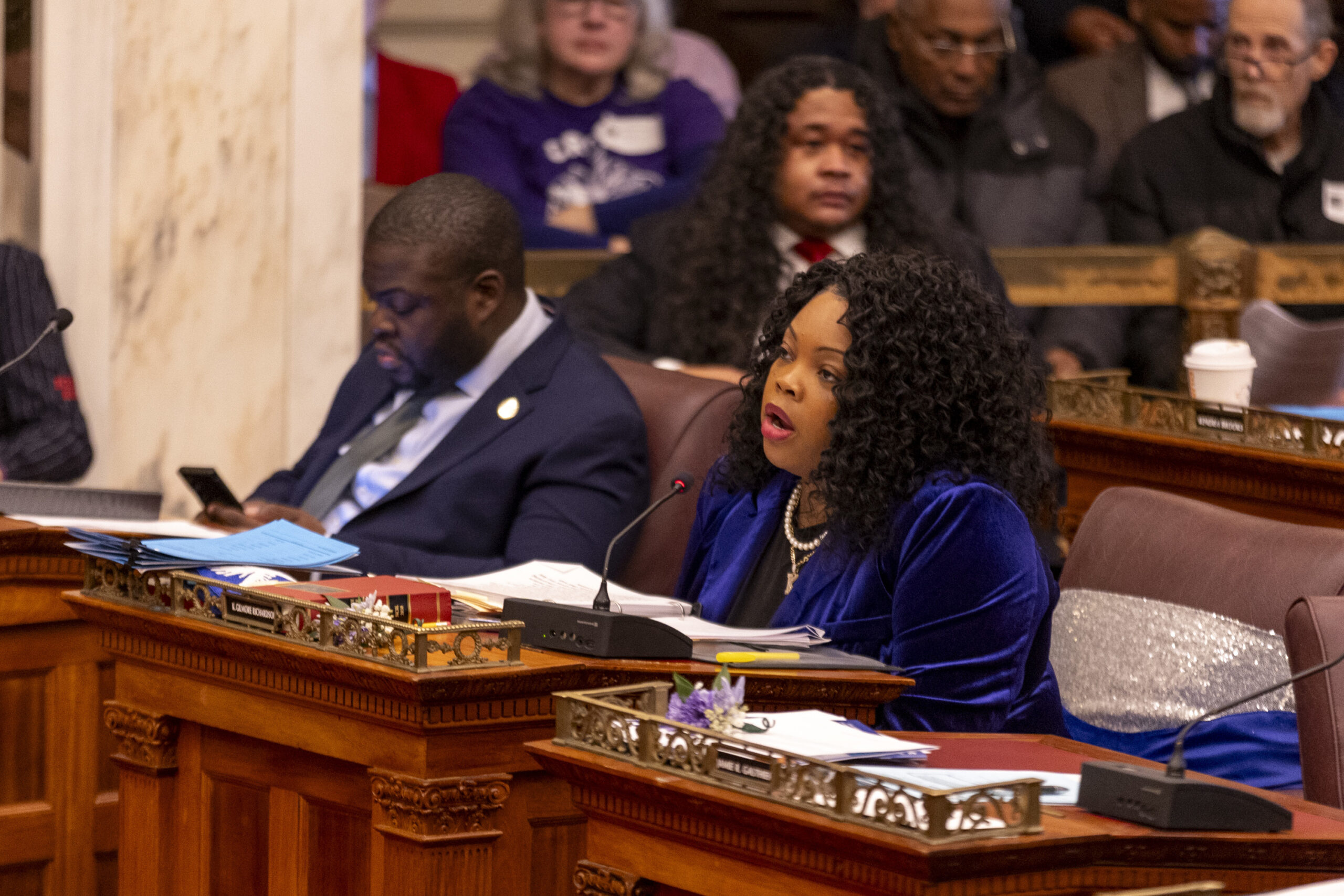
    Council member at-large Katherine Gilmore Richardson speaking at the City Council’s first session of the year in Philadelphia, Pa., on Thursday, Jan. 22, 2026.

    The bills are the latest proposals from Gilmore Richardson to rein in shops selling these products — many of which the city has labelled as nuisance businesses. Such shops have flourished since a 2018 change in federal law allowed for the over-the-counter sale of certain hemp products that are often indistinguishable from traditional marijuana.

    How the proposed new regulations would be enforced remains unclear. As written, the license system and testing requirements would only apply to products that the U.S. Food and Drug Administration has deemed “safe.” Some smoke shop products products are marketed as nutritional supplements, which the FDA does not regulate.

    Region-wide, the crackdown on smoke shops has been haphazard, with law enforcement officials often saying they are constrained by nebulous federal drug laws.

    “You discover a gray area or a loophole that folks try to exploit, and you have to do another bill to deal with that,” Gilmore Richardson said.

    A federal ban on hemp-based THC products could take effect within the next year. Meanwhile, state lawmakers in Harrisburg have done little more than explore the idea of regulating the hemp-based THC market. Other states, including neighboring New Jersey, have for years had a regulated and taxed system of recreational marijuana.

    State-issued tobacco permits are needed to sell nicotine products, but there is currently no permit required to sell hemp, kratom or similar smoke shop products in Pennsylvania. A grand jury report unsealed in Montgomery County last fall had to rely on Yelp to estimate that there are likely more than 240 smoke shops in Montco alone. That report called on Harrisburg to establish a permit system and an age restriction on hemp products containing THC.

    In Philadelphia, many shops operate under convenience store permits, even if they aren’t selling many groceries. The city’s crackdown efforts have been largely limited to citing shops for fraudulently operating under this permit.

    Gilmore Richardson said the intoxicating substances permit is a long overdue solution. The bills head to committee for review.

    The second bill introduced Thursday would grant the city power to fine landlords who “knowingly lease” commercial property to a business that sells tobacco products without a permit. Currently, only the business owners face penalties for selling cigarettes without the proper permit.

    Gilmore Richardson said she would consider expanding that legislation down the road to include the intoxicating substance permit — should it become law.

    “You can’t manage what you don’t measure,” the lawmaker said. “We need to understand where these businesses are located.”

    This article was supported by the Fund for Investigative Journalism.

  • D.C.’s cherry blossoms will peak between March 29 and April 1, Park Service says

    D.C.’s cherry blossoms will peak between March 29 and April 1, Park Service says

    The iconic cherry trees decorating the nation’s capital will hit peak bloom between March 29 and April 1, the National Park Service predicted Thursday.

    The agency declares peak bloom when 70% of the Yoshino blossoms around the Tidal Basin, the reservoir on the National Mall, have opened.

    Kevin Griess, superintendent of National Mall and Memorial Parks, said the weather could affect peak bloom, noting this winter has been colder.

    “Every spring, the National Cherry Blossom Festival does more than welcome a new season,” David Moran, chair of the board of directors for the National Cherry Blossom Festival, said at a news conference Thursday. “It brings a renewed sense of joy and vitality to our entire region.”

    The annual festival commemorates the 3,000 cherry trees Japan gifted to the United States as a symbol of friendship in 1912.

    Japan will gift an additional 250 cherry trees this year in honor of the United States’ 250th anniversary celebration, Masatsugu Odaira, minister for public affairs for the Embassy of Japan, said Thursday.

    This year’s festival will run from March 20 to April 12 and will feature an opening ceremony of traditional Japanese sword dancers, a parade along Constitution Avenue, a “pink tie” fashion show at Union Station and a street party at Navy Yard.

    The Washington Post’s Capital Weather Gang, which independently estimates peak bloom, predicted it could happen between April 3 and April 7, potentially more than a week later than last year. The last time peak bloom happened this late was April 5, 2018.

  • How a DHS shooting of a third U.S. citizen went unnoticed for months

    How a DHS shooting of a third U.S. citizen went unnoticed for months

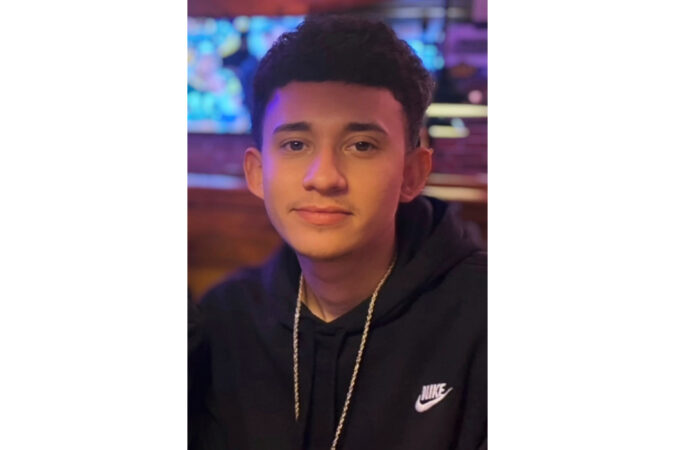
    After the Texas Ranger knocked on her door and delivered the numbing news, Rachel Reyes realized she hadn’t thought to ask who shot her son. She figured it had been another Ranger that killed Ruben Ray Martinez, 23, after he allegedly failed to comply with a law enforcement officer’s orders.

    But a week later, Reyes read an article from a local news outlet in South Padre Island that confused her. The police in that small, South Texas beach community were saying there had been an officer-involved shooting and a man was dead, but a separate, unnamed agency was responsible. Reyes called the Ranger who notified her and was now investigating the shooting: Who shot Ruben?

    A Department of Homeland Security agent assigned to immigration enforcement was responsible, the Ranger said.

    Reyes didn’t go public, instead deciding to await the results of the investigation by the Rangers, who are part of the Texas Department of Public Safety.

    The March 15, 2025, killing of Martinez, a U.S. citizen, drew almost no public attention, even as protests erupted over the January shooting deaths of two U.S. citizens in Minneapolis — Renée Good, a mother of three, and Alex Pretti, an ICU nurse. South Padre Island Police put out a news release on Martinez but did not identify the agency responsible for his death. A two-sentence police report described Martinez striking a federal agent with his vehicle but did not mention the shooting that allegedly happened a moment later.

    Texas officials, citing their ongoing investigation, declined to release footage of the incident. DHS did not publicly acknowledge that one of its agents had fatally shot Martinez until last month, when a lawsuit over a year-old public records request unearthed an internal narrative of the shooting by a Homeland Security Investigations agent. The request by American Oversight, a nonprofit government watchdog group, sought internal emails from the agency containing a variety of phrases and words, including “use of force.”

    Martinez is now the first known American citizen shot to death by federal immigration agents during President Donald Trump’s second term.

    Some Texas lawmakers are expressing alarm at the lack of transparency, demanding a public hearing and immediate release of all body-camera footage and other records. They have also raised concerns about conflicting information between DHS’s account of the shooting and a witness statement describing what happened.

    “When government uses its most serious power, the power to take a life, the facts cannot remain hidden,” said State Rep. Ray Lopez, a Democrat whose district includes the city of San Antonio, where Reyes lives. “A young Texan lost his life, and the public was left without full clarity for nearly a year. That is not about politics. It is about trust.”

    Michael Sierra-Arévalo, an associate professor at the University of Texas who studies policing and use of force, said DHS’s failure to promptly disclose the shooting to the public fits a pattern during the Trump administration, in which officials have at times taken extraordinary measures to defend and shield immigration officers who use deadly force from scrutiny.

    “This was very much known to local authorities. What they were burying was that it happened with this particular agency,” Sierra-Arévalo said. “The ability for federal law enforcement to not be subject to the same sort of oversight that local law enforcement experiences when they’re involved in these incidents in collaboration with local police underscores the danger of federal police operating with practically unchecked power.”

    Many states, including Texas, have passed laws requiring police departments to report shootings to oversight agencies, but there is no federal statute mandating a similar protocol.

    A spokesperson for U.S. Immigration and Customs Enforcement, which includes Homeland Security Investigations, said the department’s policy requires that agents report every use-of-force incident. They are then reviewed “in accordance with agency policy, procedure, and guidelines.” Shootings, the spokesperson said, are first examined by “an appropriate law enforcement agency” and then ICE conducts an internal review.

    A DHS spokesperson declined to explain why the shooting of Martinez was not publicly acknowledged by the department for 11 months. The agency documents released through the records request state that Martinez’s car struck an agent and lifted him onto the hood of Martinez’s vehicle. In a statement that followed that disclosure, a DHS spokesperson said Martinez “intentionally ran over” the agent and that another agent shot and killed him.

    Those words shocked Reyes — they seemed disconnected from the young man she raised, from the story Martinez’s friend and a witness to the shooting told her, and from the narrative the Ranger shared in her living room in San Antonio, several hours after the killing. He said Martinez had tapped an officer with his car and was shot multiple times in response. No one was injured, Reyes said the Ranger told her.

    The Texas Department of Public Safety did not respond to requests for comment on Reyes’s recollection of the Ranger’s account.

    Reyes, a 48-year-old mother of three and a nurse for a medical insurance company, said she voted for Trump in 2024 and “doesn’t have a strong position” on immigration enforcement. But she does not like how officials have handled her son’s death.

    “I don’t really have anything negative to say about Trump. He wasn’t the one who pulled the trigger — it was the department. How they’re handling it is irresponsible.”

    Conflicting narratives

    When she first learned of Martinez’s death, Reyes assumed her son had been in a car accident.

    “Ruben was really nice,” Reyes said, “and he didn’t have enemies or make enemies or get in fights, so I would never in my wildest dreams imagine that someone would want to hurt him.”

    He’d left the house at 2 p.m. without telling his mother where he was going. He’d just turned 23, and later, she realized, had likely kept his plans from her because she wouldn’t have approved of him celebrating his birthday in South Padre Island, which has a reputation for rowdy nighttime partying during spring break.

    Joshua Orta, a friend who was in the passenger seat when Martinez was killed, later told Reyes they’d gone to a bar. Driving to their next destination, they approached the scene of a traffic accident where first responders including the South Padre Police and Homeland Security agents were directing traffic. A Ranger saw an open container of alcohol in the vehicle, Orta said. The Ranger questioned the men about it, but ultimately told them to move along.

    But other officers began shouting, Orta said. Reyes said the Ranger told her that Martinez failed to follow instructions from the officers to stop his car, the car “tapped” an officer and another officer opened fire, killing Martinez.

    Reyes asked if the officer was OK. The officer was “shaken up” but not injured, the Ranger said, according to Reyes.

    Orta, in a written statement provided to lawyers for Reyes, disagreed with that account: “I was present, and I state clearly and without hesitation that Ruben did not hit anyone,” Orta wrote. “The trooper seemed to be trying to get in front of the car, like he wasn’t moving out of the way when we tried to turn around and leave like the police officer told us to do.”

    The DHS narrative paints a different picture.

    Officers and agents commanded Martinez to exit the vehicle, according to the documents released via FOIA, and Martinez “accelerated forward, striking a HSI special agent who wound up on the hood of the vehicle.” Then an agent shot Martinez through his driver’s side window.

    Martinez was transported to Valley Regional Medical Center in Brownsville, Texas, and pronounced dead, according to the documents.

    “The special agent who was struck was taken to a hospital for treatment of a knee injury and was later released,” the internal DHS report states.

    Orta had been planning to participate in the family’s legal fight for transparency and civil compensation, lawyers for Martinez’s mother said, but was killed in February in an unrelated, fiery vehicle crash in San Antonio.

    Reyes said the description of her son, paired with DHS statements following the shooting, have been difficult to stomach without seeing the evidence for herself.

    “I was told there’s no injuries and that someone was tapped. That’s completely different from being told a human was ran over,” Reyes said. “That’s upsetting. It’s hurtful and inappropriate.”

    ‘A pattern’

    For answers, and evidence, Reyes first reached out to the South Padre Island Police Department. They pointed her to the Texas Department of Public Safety, who turned her back to the Ranger handling the investigation, who said he couldn’t share any more information.

    “I was just going in circles,” Reyes said. “I just didn’t know anything because I didn’t know what I could do. I felt like I was kind of helpless. I decided to just trust the process and wait to hear from him.”

    Then a life insurance claim through Martinez’s employer was denied, citing the government’s claim that Martinez injured an officer. Reyes eventually retained a team of attorneys to investigate the case. They have been filling records requests and exploring potential civil actions against DHS.

    Meanwhile, Reyes has been watching DHS’s actions in other cities around the country and wondering if her son’s death is not part of a pattern. Trump administration officials quickly labeled Good and Pretti “domestic terrorists” before investigations were conducted. Witness videos analyzed by the Washington Post conflict with official statements regarding both incidents.

    “I thought that was callous and awful to call that woman a domestic terrorist because obviously that’s not what she was doing,” Reyes said, referring to Good. “You start to see things in a different light. There’s a pattern here of them using these statements to characterize these people, and to justify their agents’ actions, and I think that’s awful.”

    Reyes said she’s prepared to fight for accountability if the same is true for her son.

    On Feb. 25, days after news organizations broke news that a HSI agent was responsible for the killing, the Cameron County district attorney convened a grand jury to consider whether to press charges against the agent who fired at Martinez.

    The grand jury, shown video of the incident that has not yet been made public, declined to indict the agent. The Texas Department of Public Safety, which has declined to release video of the incident while the investigation is ongoing, said that its investigation is now complete and the department is completing “proper redactions” before releasing the video.

    Reyes said she won’t watch it. She plans to have people she trusts explain what happened. If video shows the government’s claims to be true, she said, “then I’ll have to live with that. I just want to know.”

    Martinez’s wake was standing room only, Reyes said. An uncle gave his eulogy, drawing from Corinthians a passage that resonated with his mother: “To be absent from the body is to be present with the Lord.”

    She considered burying his body, but opted instead to bring Martinez home, “where it’s safe,” she said. She had Martinez cremated and first set the urn on the dresser in his bedroom, then she brought him to a living room shelf to sit beside a framed picture of him smiling at her birthday dinner two years ago. Martinez never liked to hang out in his room, she said. He preferred to be with his family.

  • Federal commission delays vote on Trump’s White House ballroom project

    Federal commission delays vote on Trump’s White House ballroom project

    A federal planning commission on Thursday delayed a vote on President Donald Trump’s planned White House ballroom until next month, citing “significant public input,” including tens of thousands of comments — nearly all of them critical of the project.

    The National Capital Planning Commission had planned to review the proposal and vote on it — the final procedural hurdle for an effort to dramatically remake one of the most revered symbols of American power and democracy.

    But partway into the meeting, commission Chair Will Scharf said that he expects public comment to last five to nine hours, with over 100 people signed up to testify, which will likely require the board to recess Thursday evening and resume Friday morning. The commission will discuss and vote on the project at its April 2 meeting, he said.

    Ahead of Thursday’s hearing, the agency received more than 35,000 comments about the project, according to a Washington Post analysis of submissions posted on the commission’s website. The “vast majority” came from those who oppose the plan, commission staff said. The Washington Post found that more than 97% of comments were critical of the president’s plans. (The Post used artificial intelligence to classify the submissions and measured its accuracy against a hand-checked sample.)

    The delayed vote is a snag in Trump’s push to rush the project through the approval process so construction can be completed before the end of his second term. Securing approval at the commission’s next meeting, however, could keep the project on schedule; the White House has said it plans to begin aboveground construction as soon as next month.

    The commission’s endorsement would be the last bureaucratic obstacle in the Trump administration’s push to secure approval for the $400 million ballroom from two federal committees charged by Congress with reviewing the designs of major construction projects in Washington. Late last year, the White House laid out a strategy to complete the process within nine weeks, a plan that’s now been pushed to just over three months.

    Historic preservationists have sued to stop the project, and a federal judge is considering their challenge, which alleges that Trump is unlawfully pursuing a project that requires express authorization from Congress.

    Last week, the National Capital Planning Commission’s executive director, Marcel Acosta, recommended that the 12-member panel approve the project. In an 11-page report published Friday, Acosta said the proposed structure will provide presidents with a larger permanent event space while protecting “the historic integrity and cultural landscape of the White House.”

    Acosta’s assessment contrasts sharply with the public response. Tens of thousands of comments criticized what opponents described as a rushed approval process, insufficient public input and a design that would overshadow the main White House building.

    The president has made the building a priority of his second term, and he returns to it often in public remarks and social media posts. He clashed with the project’s previous lead architect about the size of the addition.

    Trump has made strategic moves to secure its success, including reshaping the membership of the two federal bodies that must sign off on the project: the National Capital Planning Commission and the Commission of Fine Arts. Last month, the Commission of Fine Arts, which now includes Trump’s 26-year-old executive assistant, voted unanimously to approve the project. Chair Rodney Mims Cook Jr. called it a “desperately needed” and “very beautiful structure,” whose design he credited to Trump.

    The National Capital Planning Commission is led by Will Scharf, the White House staff secretary and Trump’s former personal lawyer, whom the president appointed in July. The commission includes a pair of other White House officials, James Blair and Stuart Levenbach. It also has nine seats apportioned to sitting cabinet secretaries and other officials who have a role in overseeing Washington, although senior officials and lawmakers usually send a representative in lieu of attending themselves.

    Although federal design commissions have traditionally acted as a constraint on government construction projects — often holding extended deliberations that last for years — Trump has pressed to move the project along swiftly so it can wrap before his term concludes.

    Last year, the president ordered the rapid demolition of the East Wing annex without first seeking authorization from Congress or the review committees. Trump’s plan for a new ballroom building on the site that matches the “height and scale” of the main White House has advanced despite objections from a federal judge, architecture experts and historic preservationists, who argue that the structure would be too big, dwarfing a centuries-old American symbol.

    White House officials want the commission to approve in one fell swoop the ballroom building’s preliminary and final plans, which the body normally takes up individually at separate meetings, giving agency planners time to incorporate commission feedback before resubmitting updated plans. For example, the planning commission approved a new White House perimeter fence in three steps over seven months, starting with a conceptual design in July 2016 and ending with final plans in February 2017.

    Last week, Trump scored another victory on the ballroom front. U.S. District Judge Richard J. Leon ruled that construction on the project could proceed, citing procedural problems with a lawsuit challenging the president’s ability to unilaterally build the structure. The National Trust for Historic Preservation, a congressionally chartered organization that advocates for protecting historic sites, amended and refiled its complaint Sunday, three days after Leon’s ruling.

    Trump has repeatedly defended the project’s $400 million price tag, saying it is a benefit to taxpayers that the project will be paid for with private donations.

    “I built many a ballroom. I believe it’s going to be the most beautiful ballroom anywhere in the world,” Trump said Monday at a ceremony in which he awarded the Medal of Honor to three Army soldiers.

    Democrats and government watchdog organizations have raised concerns about those donors, which include major corporations such as Amazon, Google, and Palantir — companies that together have billions of dollars in federal contracts. Critics have questioned whether donors could receive special access or other benefits in return. (Amazon founder Jeff Bezos owns the Washington Post.) Some Democrats say improvements to the White House complex may be warranted but contend that the ballroom should be far smaller and subject to congressional oversight to ensure transparency.

    Polls have found that most Americans oppose the project. Twenty-five percent of respondents said they supported tearing down the East Wing to build the ballroom, compared with 58% who opposed doing so, according to an Economist/YouGov poll conducted last month.

  • Trump’s Iran conflict cuts the world off from a crucial energy source

    Trump’s Iran conflict cuts the world off from a crucial energy source

    Countries across Europe and Asia are facing a potential energy crisis after an Iranian drone strike shut down Qatar’s exports of liquefied natural gas this week, cutting off nations from India to Italy from a crucial energy source and potentially increasing costs for key industries in the United States.

    Qatar is a linchpin of a global energy system built on LNG, a fossil fuel less polluting than coal that many countries have embraced because it is easy to ship and store, and was sourced from generally stable countries.

    Now consumers and businesses from Seoul to Islamabad to Brussels may face steeply higher energy costs, after an Iranian drone struck Qatar’s largest gas liquefaction plant in Ras Laffan, south of Doha on Monday. The strike was part of attacks by Iran on energy infrastructure in Qatar and fellow U.S. ally Saudi Arabia.

    Qatar Energy, which produces and exports LNG, said in a statement Monday that it “ceased production” at the facility. On Wednesday, it announced it would not be able to honor export contracts.

    It is unclear how long it will take Qatar Energy to repair the plant. Analysts say returning to full production would take another two weeks after repairs are complete.

    Shipping any gas Qatar produces is another challenge, as vessel traffic through the region is halted by Iran’s attacks on tankers in the Strait of Hormuz. There are 1,000 ships idled, according to the Lloyd’s Market Association, half of them holding oil or gas. The shipping industry is trying to work out an arrangement with the U.S. government for military escorts, which President Donald Trump says will be offered.

    Countries around the world are scrambling to figure out how to backfill the abrupt halt of LNG shipments from Qatar, which accounts for one-fifth of the world’s supply. Asian spot LNG prices surged nearly 40% in the past couple of days, and a key index of future LNG prices in Europe jumped 70% since Friday.

    Analysts warn the natural gas crunch is likely to have more severe and far-reaching economic impacts than the Iran conflict’s disruption to oil markets, even if abundant gas supplies in the U.S. shield American consumers from short-term price spikes.

    “Oil is exported from practically every country in that region,” said Pavel Molchanov, an investment strategy analyst at Raymond James. “LNG more or less comes from one country there: Qatar.”

    The sudden shutoff of Qatari LNG is expected to quickly hit nations across Asia and Europe that depend on Qatari gas, with domestic energy bills likely to spike and factories at risk of shutting down.

    Some countries will likely bring mothballed coal plants back online, analysts predicted, a costly reversal that could also massively increase carbon emissions and other air pollution.

    The Business Standard, a Bangladeshi newspaper, reported Tuesday that officials at the country’s energy ministry had ordered an increase in power generation from coal. Taiwan is examining similar options, according to Argus, a firm that tracks global energy markets. Prices of Asian coal futures jumped sharply this week.

    “The first response would likely be to seek out LNG supply from other regions,” Zhi Xin Chong, head of Asia Gas Research at S&P Global Energy, said in an email.

    But producers like the U.S., Australia, and Malaysia have little extra to spare, causing prices for what is available to soar. Chong said if the fuel proves “too expensive and difficult to procure, markets like Japan, South Korea, Taiwan, India and Southeast Asia will likely pivot to coal where possible.”

    Some of the countries most dependent on Qatar for energy are also among the least able to pay the premium for emergency replacements. In some cases the economic fallout is expected to cascade back to the U.S. due to how LNG underpins other industrial sectors.

    In India, the second-largest importer of Qatari LNG, gas supplies to industrial users are being cut, according to local media reports, leading ceramics manufacturers in that country to pause operations. Utilities in Pakistan, which is even more reliant on Qatar, are also starting to cut their deliveries of gas to industrial clients, Bloomberg News reported.

    In both countries, the constraints are leading to cutbacks in fertilizer production, as natural gas is the key ingredient for making urea, the world’s most widely used nitrogen fertilizer. Molchanov said prices for urea have increased 25% since the U.S. and Israel attacked Iran.

    “That is a big deal for the agricultural sector around the world — including the United States,” he said, warning it “will potentially translate into higher food costs in the near term.”

    The global reshuffling to replace energy from Qatari LNG threatens to take a toll on the planet. Japan is currently using only about two-thirds of its 53 gigawatts of coal capacity, according to Chong. Should that country choose to tap into that capacity, millions of tons of additional carbon pollution could be released into the atmosphere within months. China has significantly more unused coal power it could tap into.

    Rachel Ziemba, an adjunct fellow at the Center for a New American Security, said as nations reassess their dependence on LNG imports some of the backsliding to coal power could become permanent.

    “This will reinforce the push to generate power domestically,” she said. “It could mean more use of coal.” That could include European countries such as Germany and Poland, which are still burning coal and produce the fuel domestically.

    The LNG shock may also drive extra investment into renewable energy. Some of the countries best prepared to ride out disruption to Qatari exports are those that have added the most clean energy to their power grids, Ziemba said.

    China, which in recent years has installed more solar and wind power than the rest of the world combined in a drive for energy independence, is well positioned to weather a gas shortage.

    France may also be able to absorb energy price shocks because of its large nuclear power capacity. And much of Europe increased its investment in solar and wind after the 2022 energy crisis on the continent precipitated by Russia’s invasion of Ukraine.

    Gas makes up just 16% of Europe’s energy mix — a sharp decrease since 2020 — and renewables now provide 47% of its power.

    “This is an example of how Europe’s climate policy supports energy security,” Molchanov of Raymond James said. “Any wind farm, any solar installation in Europe is less natural gas they have to import.”

    “Europe is the only major economy in the world using less natural gas today than they did a decade ago,” he said. It “has accelerated its diversification strategy to reduce dependence on natural gas no matter where it comes from — whether Russia, the U.S., or Qatar.”

    While Qatar’s export freeze triggers stress around the world, American gas producers are likely to benefit.

    The U.S. became the world’s largest LNG exporter in 2023. Its export terminals are currently running near maximum capacity, limiting how much additional volume the U.S. can provide to replace Qatari supplies.

    But the industry may find its commercial and political prospects are now favorable to expand. “This is going to set off another LNG project boom,” said Ira Joseph, a scholar at Columbia University’s Center on Global Energy Policy. “Not just in the U.S. but elsewhere.”

    But he added that there may also be a new drive by countries and industries around the world to reduce dependence on LNG. “The push for using more natural gas was that it is very reliable,” Joseph said. “But in the last four years you had the largest exporter in the world — Russia — cut off its pipelines. And now, the second-largest has cut off its shipments. It raises the question of how much one wants to rely on gas imports in an energy mix.”

  • Human skull and other remains found in South Jersey

    Human skull and other remains found in South Jersey

    A human skull and other skeletal remains were found this week in a wooded area of Whitesboro, Middle Township.

    The remains were found by a resident walking in the area on Tuesday, police said.

    The Middle Township Police Department was called to the scene and began a search, finding the skeletal remains that police believe belong to an adult.

    So far, it is unknown who the remains belong to. The Cape May County Prosecutor’s Office continues to investigate, with Prosecutor Jeffrey Sutherland writing on Facebook that “there is no threat to the public at this time.”

    Anyone with information can submit an anonymous tip through the prosecutor’s office website at cmcpo.tips or call the Cape May County Prosecutor’s Office at 609-465-1135.

  • Mayor Parker backs legislation to boost housing development around SEPTA stations

    Mayor Parker backs legislation to boost housing development around SEPTA stations

    Mayor Cherelle L. Parker’s administration sent City Council a bill on Thursday to encourage more apartment construction around SEPTA stations, in hopes of boosting ridership.

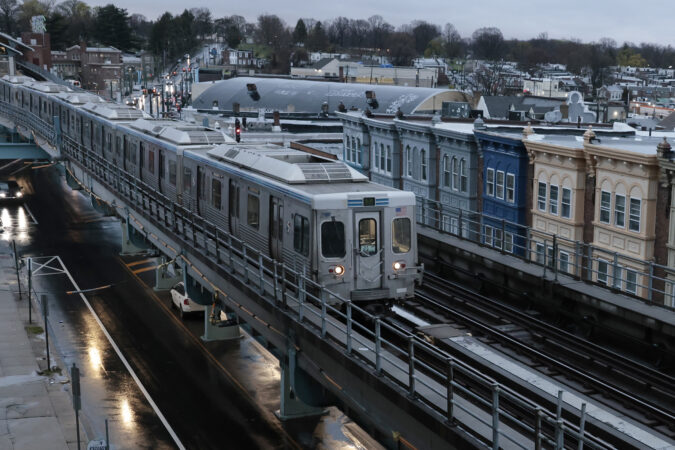
    The proposal expands an existing law. Currently, if a SEPTA station is made a “transit-oriented development” district — a designation City Council must adopt — then most properties within a 500-foot radius receive a variety of benefits that allows developers to build more housing with less parking than otherwise allowed.

    The legislation sent to Council by the Parker administration would expand that radius to 1,320 feet, or a quarter of a mile.

    The bill is part of a package of zoning legislation meant to boost Parker’s effort to build or repair 30,000 homes in the coming years.

    “Zoning is how we turn housing ambition into housing reality,” said Angela D. Brooks, chief housing and urban development officer. “These bills help us put more homes where our infrastructure can support them, near transit, near jobs, and near opportunity, while respecting the character of the neighborhoods Philadelphians already love.”

    The hope is that SEPTA will benefit from a ridership boost if more housing is built close to transit, and more people will be able to afford to live near public transportation — which, in some areas, is in more expensive and sought-after neighborhoods.

    The zoning overlay grants different types of development benefits depending on the existing zoning around transit stations.

    In a bid to avoid controversies that have undermined similar laws in other cities, land zoned for single-family housing would not be given any development advantage under the law.

    But properties already zoned for dense housing would be allowed to build many more units, with additional benefits given if they provide affordable housing or environmentally friendly design.

    “This package will also increase ridership, reduce costly trips to the [zoning board], and allow more investment in transit stations,” Brooks said. “Zoning may sound technical to some, but investments in transit are something residents can see, touch, and feel every day.”

    Projects that have benefited from the existing transit-oriented development overlay include The Noble, with 360 units, near the Spring Garden stop on the Market-Frankford Line, and a proposal for a 134-unit mixed-income development at the Frankford Transportation Center.

    Land zoned for more modest density would be allowed to build 50% more units. That means if developers could build four units under normal conditions, in a transit-oriented development district, they could build six.

    The overlay requires that the ground floor of commercially zoned buildings have active uses. Curb cuts, parking garages, and one-story buildings are not allowed.

    Parker’s bill further eases some parking requirements, although the requirement for developers building in such areas is already less than under normal zoning rules.

    The bill was circulated to City Council on Wednesday. Members wanted more time to review it before it was formally introduced.

    “In general, I’ve been a proponent of the basic concept of increasing density around our transit stops,” said Councilmember Jamie Gauthier, who chairs City Council’s housing committee.

    “It makes our neighborhoods more lively, more livable,” Gauthier said. “We have a great transit system, and we should be trying to help it be as successful as possible.”

    Because City Council must pass legislation to include transit stations in the zoning overlay, district Council members are given effective control over how many stations will be included in the law’s benefits.

    Both the Broad Street and Market-Frankford Lines run between Council districts, which means half of many stations are under one Council member’s purview while the other half are in another’s control.

    Transit advocates have long hoped for legislation that would automatically apply to all major transit stations, but that idea could prove difficult to get through City Council.

    Gauthier is one of the few Council members who have embraced transit-oriented development. All of the Market-Frankford Line stations in her district are covered by the overlay.

    No stations on the Broad Street Line are included so far.

    “I don’t want to speak about areas of the city that are not mine,” Gauthier said. But in her transit-rich West Philadelphia district, “I do think we can consider expanding that radius more. We know that less people are driving nowadays.”

    City Councilmember Jamie Gauthier is one of the most enthusiastic proponents of transit-oriented development on City Council.

    The urbanist advocacy group 5th Square says that Parker’s bill should be broader.

    The group called for the elimination of parking minimums near transit, an even larger coverage radius, and for multifamily housing to be allowed on land zoned for single-family homes near stations.

    “These bills are a welcome step toward more housing near transit, but their scope doesn’t quite address our massive housing shortage,” said Fae Ehsan, board member with 5th Square Advocacy.

    The other housing-related bill Parker sent to Council includes legislation that would make it easier to build more apartments above commercial buildings on the ends of some rowhouse blocks, which are currently allowed to have only one unit above ground-floor retail.

    The bill would allow owners to convert the ground floor to residential uses if they cannot fill the storefront. The administration believes 7,000 to 12,000 more housing units could be allowed under the change.

  • Flyers fight coach and bare-knuckle brawler Johnny ‘Cannoli’ Garbarino sparked a melee outside Barstool Sansom. It was caught on video.

    Flyers fight coach and bare-knuckle brawler Johnny ‘Cannoli’ Garbarino sparked a melee outside Barstool Sansom. It was caught on video.

    Last offseason, the Flyers brought in John Garbarino to help younger players hold their own during fights on the ice. He had an ideal resume for the job: The South Philly native is an undefeated middleweight in the Bare Knuckle Fighting Championship.

    But early Sunday morning, the fight venue was a narrow street in Center City, where the closing-time bar crowd watched Garbarino pummel the plexiglass vestibule of Barstool Sansom Street and scream obscenities at people inside.

    Garbarino, aka “Johnny Cannoli,” then destroyed an onlooker’s cell phone, sparking a seven-person fracas in the middle of the street.

    Part of the incident was captured in a two-minute video obtained by The Inquirer on Wednesday.

    The video shows that there were at least two uniformed officers at the scene, but they did not make any arrests. Instead, according to one eyewitness, an officer gave Garbarino a fist bump after the altercation.

    A police spokesperson said the incident is under investigation.

    Reached by phone Tuesday, before video of the incident surfaced, Garbarino denied hitting anyone and said that he was not the aggressor.

    “If anything, I broke it up,” he said.

    Although the police fist bump is not seen on video, Garbarino confirmed that it occurred and that the officer is a friend of his.

    Garbarino, 30, did not immediately return messages left Thursday morning about the video footage.

    After this story was published online, a Flyers spokesperson said Garbarino was retained for a one-time training last summer and was never paid by the team. “There is no ongoing relationship,” the spokesperson said.

    On Tuesday, Garbarino said that he had been a “special guest” at Barstool on Saturday night, and that he left for an hour before deciding to return “for another reason.” He declined to elaborate.

    According to a Barstool employee working that night, Garbarino and a group of associates were asked to leave the establishment at 2 a.m. because they had become unruly and it was closing time. Barstool management did not respond to a request for comment.

    The Barstool employee said once the group was outside, Garbarino and an unknown associate began violently pounding on the door to get back in — which is where video shot from across the street picks up. Garbarino can be seen unsuccessfully trying to force the door open.

    Marques Reed, who was working at a nearby bar, said people on the street started to film the two men thrashing at Barstool’s winter vestibule, causing the whole structure to shake.

    The video shows Garbarino — a former sous-chef at Del Frisco’s who later worked at Michelin-rated Alinea in Chicago — unloading on the vestibule with a half dozen punches and elbow strikes while yelling at Barstool staffers or bar patrons watching from behind wobbling plexiglass.

    After failing to break into Barstool, Garbarino stalks over to a group of onlookers.

    “Garbarino comes across the street and says, ‘I’ll knock you the f— out,’” Reed said.

    Garbarino then grabs an onlooker’s phone and spikes it onto Sansom Street, obliterating the device. That man goes after Garbarino as he is walking away, but a Garbarino associate grabs the man by the shirt collar. The man responds by throwing a punch at Garbarino’s associate.

    A third member of Garbarino’s group then punches the man whose phone was destroyed, and he falls down. He punches him again when he attempts to get up, sending him reeling backward and out of frame.

    Garbarino then appears to show restraint as he is face-to-face with a man he had shoved, and he seems to be trying to de-escalate the situation before walking away.

    Moments later, though, someone yells an obscenity at Garbarino, who reengages with the man with the broken cell phone. That man pushes Garbarino and takes a swing at him, missing. Garbarino tackles him to the ground.

    “John, don’t hurt him!” one of the men with Garbarino yells. Then, a woman with Garbarino kicks the man while he’s down.

    After they get up, Garbarino shoves another man in the face, then sucker punches the man he had tackled while he appears to be arguing with the woman.

    Garbarino on Tuesday vehemently denied throwing any punches and disputed a since-deleted Reddit post on the incident that described him as the aggressor. He said he was trying to defuse a situation he characterized as a “little scuffle.”

    “I can’t control the world,” he said. “I’m not a referee.”

    He did confirm one aspect of the Reddit post.

    “The only thing that was accurate was the fist bump from a cop,” Garbarino said. “He was a friend of mine.”

    Reed said he was troubled by the attack and the lack of action by police.

    “Why is this sanctioned bare-knuckle boxer wildin’ out at a bar, beating on a door, then beating people up? Didn’t he just have a fight not that long ago?” Reed asked.

    (He did, in fact: KnuckleMania VI, last month at the Xfinity Mobile Arena. Garbarino is now 4-0, having defeated Kaine Tomlinson Jr. by TKO in the fifth round.)

    “This dude was a maniac. He was going crazy,” one witness said of Garbarino. He asked not to be named because it could adversely affect his employment.

    The witness said he was shocked that police laughed it off and walked away.

    “Everybody was like, ‘You’re just letting him go?’” the man recalled bystanders asking police. “The cops kind of thought it was funny. That’s a very old-school Philly thing that I didn’t think was a thing anymore.”

    Eric Gripp, a police spokesperson, said that a complainant reported being assaulted shortly after 2 a.m. Sunday, and that the case is being investigated by Central Detectives. He declined to provide any additional details about the complainant or the alleged perpetrator, or comment on the police response at the scene.

    Garbarino, who grew up playing hockey, said given his “position with the Flyers” and his recent success in the Philadelphia-based Bare Knuckle Fighting Championship, he is trying to do “damage control” this week over the allegations in the Reddit post. He dismissed the claim that he knocked someone out as “a joke.”

    A representative for the Bare Knuckle Fighting Championship did not immediately respond to a request for comment.

    Garbarino said he would like to put the situation “to bed” as he pursues a world title.

    “I’m obviously a popular guy in Philly,” he said. “I know violence pretty well. Nobody got beaten severely.”