Category: News

Latest breaking news and updates

  • More than half of Pennsylvanians oppose ICE’s methods under Trump, new poll finds

    More than half of Pennsylvanians oppose ICE’s methods under Trump, new poll finds

    Pennsylvania voters broadly oppose some of President Donald Trump’s immigration enforcement tactics — but there’s a stark partisan split, according to a new statewide poll of registered voters.

    Franklin & Marshall College’s Center for Opinion Research released a wide-ranging poll Thursday that tracked registered Pennsylvania voters’ opinions on America’s 250th anniversary, ICE enforcement tactics, and other issues facing the state and nation ahead of the midterm election.

    Trump’s approval ratings have remained consistently low since returning to office last year, with a majority of Pennsylvanians disapproving of his job as president.

    Democratic Gov. Josh Shapiro maintains a 50% approval rating heading into the midterm elections later this year.

    Pollsters at Franklin & Marshall College surveyed 834 registered Pennsylvania voters, including 353 Democrats, 347 Republicans and 134 independents. The sample error is +/- 4.1 percentage points.

    Here are three takeaways from the poll of registered Pennsylvania voters, conducted Feb. 18 through March 1 by phone or online.

    Trump is consistently unpopular in Pennsylvania

    Trump’s approval ratings among registered Pennsylvania voters remain low, with 61% of voters rating him as doing a “poor” or “fair” job, according to the statewide poll, which also assessed Trump’s performance on immigration, the economy, and other issues.

    Trump maintained a net negative approval rating throughout his first term in 2017-2021 and so far in his second term, according to the poll.

    Despite winning the state in 2024, he remains divisive with 51% of respondents rating him as doing a “poor” job, and only 10% who rate him as doing a “fair” job. Approximately 39% of registered Pennsylvania voters view Trump as doing an “excellent” or “good” job, according to the poll.

    window.addEventListener(“message”,function(a){if(void 0!==a.data[“datawrapper-height”]){var e=document.querySelectorAll(“iframe”);for(var t in a.data[“datawrapper-height”])for(var r,i=0;r=e[i];i++)if(r.contentWindow===a.source){var d=a.data[“datawrapper-height”][t]+”px”;r.style.height=d}}});

    Trump’s low approval numbers could have a drag effect on Republicans’ performance in the midterm election, said Berwood Yost, the director of Franklin & Marshall’s poll.

    “While there’s still a long way to go until November, [Trump has] got to figure out a way and his party has to find a way to prevent that and earn those voters back,” Yost said.

    Trump’s low numbers align with those of former President Barack Obama or George W. Bush’s approvals at the same point in their second term, Yost added. Both of their parties lost seats in the midterms elections those years.

    However, Trump’s approval ratings are not the lowest they have been in the state. His approval ratings dropped to their lowest, 70% disapproval, during his first term in September 2017.

    Josh Shapiro is still popular

    Gov. Josh Shapiro remains popular ahead of his reelection contest this year: 50% of Pennsylvania voters say he is doing an “excellent” or “good job,” while another 44% believe he is doing a “fair” or “poor” job leading the nation’s fifth most populous state.

    Shapiro is the most popular governor since 2000, when comparing his approval ratings to those of other Pennsylvania governors at the same point during their first terms, Yost said.

    Shapiro also maintains a significant lead over his likely GOP challenger, State Treasurer Stacy Garrity. If the midterm elections were to happen today, 48% of voters said they would reelect Shapiro, while 28% said they would vote for Garrity. Another 7% of voters said they would vote for a different candidate, while 17% were undecided or refused to answer the question.

    Shapiro’s approval ratings have remained steadily high since taking office in January 2023. A Quinnipiac University poll released last month found similar public opinion toward Shapiro’s reelection, while some voters said they were unsure whether they wanted the rumored 2028 presidential candidate to run for higher office.

    Pa. voters broadly oppose some of ICE’s enforcement actions, but are split on others

    Approximately three-fourths of Pennsylvania voters believe ICE should not be able to use deadly force against protesters or enter a home without a warrant, in a major pushback to Trump’s immigration enforcement tactics.

    Pennsylvania voters’ opinions on immigration enforcement varies significantly based on a person’s political party: While nine in 10 Republicans support ICE tactics, only two in five independents and one in 10 Democrats support them.

    Protesters march up Eighth Street, towards the immigration offices, during the Philly stands with Minneapolis Ice Out For Good protest at Philadelphia’s City Hall on Friday, Jan. 23, 2026.

    Republicans support ICE’s use of unmarked vehicles to detain people and their use of masks to hide an agent’s identity at much higher rates than Democrats, while independents are split. On the use of masks, 77% of Republican voters believe agents should be able to wear them, while 40% of independents and only 10% of Democrats do.

    “There’s a lot of consensus about the fundamental principles that protect our individual rights like entering a home without a warrant or using force against protesters, whereas there’s a little more partisanship in others,” Yost said.

    window.addEventListener(“message”,function(a){if(void 0!==a.data[“datawrapper-height”]){var e=document.querySelectorAll(“iframe”);for(var t in a.data[“datawrapper-height”])for(var r,i=0;r=e[i];i++)if(r.contentWindow===a.source){var d=a.data[“datawrapper-height”][t]+”px”;r.style.height=d}}});

    There is also overwhelming support among Pennsylvania voters that non-citizens who are in the U.S. legally — whether by visa, green card, asylum or other protected statuses, or in the process of becoming a citizen — should not be targeted by Immigration and Customs Enforcement for deportation, according to the poll.

    However, a majority of Republicans and independent voters believe undocumented immigrants who have been in the United States illegally for any amount of time and have no criminal record should be targeted for deportation, while less than a quarter of Democrats believe they should.

    Pennsylvania voters want the 250th anniversary to acknowledge the positives and negatives from American history

    As Trump tries to reframe American history for the nation’s 250th anniversary, most Pennsylvanians want the celebrations to acknowledge its positive and negative parts.

    Approximately 73% of Pennsylvania voters believe any retelling of American history should include the upsides and downsides of the nation’s founding, while 24% believe only positive aspects should be celebrated.

    “Most people, they want to see historical interpretations that include the whole picture,” Yost said.

    This finding is of particular interest in Pennsylvania, following the Trump administration’s removal of an exhibit that memorialized the enslaved people who lived in George Washington’s home from the historic President’s House site in Independence National Historical Park. A federal judge ordered the restoration of the exhibit, but the Trump administration is appealing the decision.

  • Two Philly-area Jewish schools are merging, a ‘proactive’ push to remain competitive in the region’s strong academic market

    Two Philly-area Jewish schools are merging, a ‘proactive’ push to remain competitive in the region’s strong academic market

    Two prominent Jewish day schools in the Philadelphia suburbs are set to merge, a decision school leaders say will keep the institutions competitive in the region’s strong educational market.

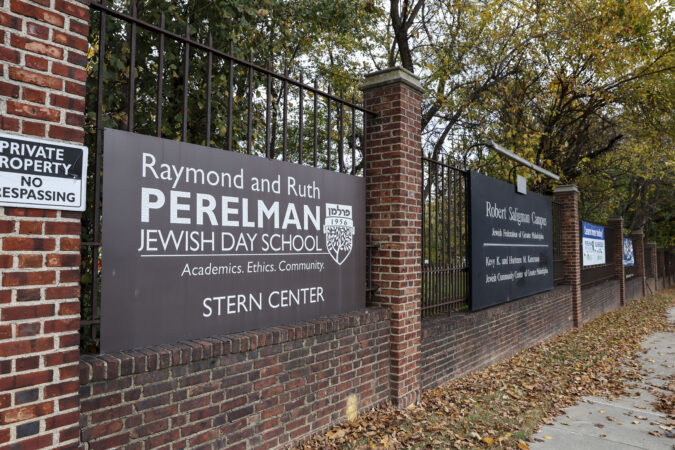
    Perelman Jewish Day School, a private Jewish pre-K and elementary school located in Melrose Park and Wynnewood, and Jack M. Barrack Hebrew Academy, a Jewish middle and high school located in Bryn Mawr, will merge next year to become the only unified pre-K through twelfth-grade Jewish day school in the Philadelphia area.

    Perelman and Barrack will maintain their current operations for the 2026-27 school year, while beginning to combine their admissions and development programs. Faculty, staff, and students will come under the unified school umbrella beginning in fall 2027. Perelman and Barrack will continue to operate on all three campuses.

    School officials say the merger will help streamline curriculum development and strategic planning while bringing more families into the Jewish day school system by offering a consistent, pre-K-through-high-school experience.

    Perelman Jewish Day School was founded in 1956 as the Solomon Schechter Day School of Greater Philadelphia. The school operates across two campuses, one in Melrose Park, which serves parts of Philadelphia County, eastern and northern Montgomery County, and Bucks County, and another in Wynnewood, which serves Center City and Philadelphia’s western suburbs.

    Jack M. Barrack Hebrew Academy, originally Akiba Hebrew Academy, was the nation’s first pluralistic Jewish secondary day school when it opened in Center City in 1946. The school moved to Merion Station in 1956, then Bryn Mawr in 2008. Barrack boasts numerous notable alumni, including Gov. Josh Shapiro and CNN anchor Jake Tapper.

    Perelman and Barrack completed a partial merger in 2012, when the schools combined their middle schools into a single sixth-through-eighth-grade program on Barrack’s campus.

    Tuition at Perelman ranges from $21,500 to $32,300 per year, and tuition at Barrack ranges from $34,900 to $42,700. Both schools offer tuition assistance. Perelman says it awards over $3 million in tuition assistance each year to families earning up to $500,000.

    School leaders say the merger will ensure Perelman and Barrack are an attractive option for families in Philadelphia’s rich educational ecosystem, where parents can choose from dozens of strong public and private schools. Often, families choosing private education are looking for continuity from pre-K through high school, something that Perelman and Barrack have not been able to provide until this point.

    The ability to have students “become part of an educational system from their earliest years and grow within that system” will be academically and socially “deeper and more impactful,” said Rabbi Marshall Lesack, Barrack’s head of school and a Barrack alumnus. Lesack will lead the unified school beginning in 2027.

    Daniel Eisenstadt, a member of the Perelman board of directors who will chair the new, combined board, said the merger will also allow for more cohesive planning. The schools will be able to align their vacation calendars, external messaging, and curriculum plans.

    Though the overwhelming majority of Perelman students already matriculate to Barrack, bringing the schools under one system will allow for more parity in what to teach and when to teach it. Elementary, middle, and high school teachers will be able to sit in the same room and plan best practices for everything from math to art to Jewish studies, considering the arc of a student from ages 5 to 18, Eisenstadt said.

    Both schools’ enrollment has been “stable to growing” in the past few years, said Eisenstadt. Both he and Lesack were clear that the merger is not in response to a souring financial outlook, as can be the case when educational institutions merge.

    “We’re both coming from a place of strength,” Lesack said.

    Barrack reported revenue of $20.9 million in 2024, an increase of $3.4 million over 2023, according to tax records. Perelman reported a revenue of $13.4 million in 2024, up $400,000 from 2023.

    However, Eisenstadt said, “there is a recognition that we operate in an environment where there are excellent other independent schools, and excellent public schools. Rather than waiting for a moment where we see a dip in enrollment or where there are challenges, I think the general feeling from a leadership point of view was, ‘Let’s be proactive.’”

    Amid rising reports of antisemitism, some Jewish day schools have seen a spike in enrollment, as families seek more opportunities for Jewish affiliation for their children.

    When it comes to growing enrollment at Barrack and Perelman, however, Eisenstadt said there’s no one cause. He is “a little bit skeptical about the generic narrative” that the Israel-Hamas war and rising antisemitism have solely driven increased interest in Jewish education. He says Perelman and Barrack can’t rest on the assumption that larger forces will inevitably push families toward the Jewish day school experience. In a “dynamic world,” the schools need to continue to evolve, he said.

    In Eisenstadt’s words, Barrack and Perelman can’t “assume that any one thing that’s occurred, any one event, or any one trend is the future.”

    Lesack and Eisenstadt said many of the merger’s details are still up in the air and will be decided by the board. However they noted that there are plans for major investments across all of Perelman and Barrack’s facilities. Plans have long been in the works to find a new home for Perelman’s Melrose Park campus. School leaders say they are committed to having a continued presence in Philly’s northern suburbs.

    Lesack and Eisenstadt acknowledged the challenges of merging two schools with different campuses and cultures. Yet there’s “an unbelievably strong foundation” upon which to build, Lesack said, citing the many families, values, and traditions that the schools already share.

    This suburban content is produced with support from the Leslie Miller and Richard Worley Foundation and The Lenfest Institute for Journalism. Editorial content is created independently of the project donors. Gifts to support The Inquirer’s high-impact journalism can be made at inquirer.com/donate. A list of Lenfest Institute donors can be found at lenfestinstitute.org/supporters.

  • Two Philly high schools are still fighting their proposed closures, even after officials tweaked plans to appease them

    Two Philly high schools are still fighting their proposed closures, even after officials tweaked plans to appease them

    Superintendent Tony B. Watlington Sr. said he heard the public outcry over his recommendations to close 20 schools.

    The Philadelphia School District leader fine-tuned his facilities plan last week, dropping the closure list down to 18 schools — and changing recommendations for Paul Robeson High School and Lankenau High School.

    Both schools would still close under the plan, which is now in the school board’s hands. Instead of merging into large neighborhood high schools, however, the small, selective-admission schools would be absorbed by magnets.

    Watlington said the tweaks would still allow the district to bring more high-quality academic and extracurricular opportunities into neighborhood schools while acknowledging the need to manage limited resources.

    But students, staff, parents — and some powerful allies at both schools — say Watlington’s counter-proposal isn’t enough. Both communities are still fighting.

    Under the revised plan, Lankenau would merge with Saul, not Roxborough, and Robeson would merge into Motivation, not Sayre.

    State Rep. Morgan Cephas (D., Phila.) recently visited the Philadelphia Flower Show, where she and other officials marveled at Lankenau students’ exhibit, which examines abundance, roots, and connections through culturally important plants. The display won a gold medal and the prestigious Alfred M. Campbell Memorial Trophy.

    The dichotomy struck Cephas, she said. Lankenau students “are at the Flower Show, and [the district] is trying to close the school?”

    On Wednesday, students, parents, lawmakers, and Philadelphia Federation of Teachers officials gathered at Lankenau to drum up support for Gov. Josh Shapiro’s budget proposal. But really, it was another save-our-school rally.

    A ‘prime example of a successful school’

    Lankenau “is a prime example of a successful school,” said Messiah Stokes, an 11th grader at the Upper Roxborough school. The school has a 100% graduation rate, and is Pennsylvania’s only three-year agriculture, food, and natural resources career and technical education program.

    The school itself sits on 17 acres, which district officials have proposed giving to the city — though a 1970s legal agreement could foil that plan. Lankenau is also adjacent to 400 more wooded acres via the Schuylkill Center for Environmental Education. The environmental center shares its land and its opportunities with students, who hold bird-watching clubs on breaks and hold classes outside when weather permits, and have abundant internship opportunities.

    “My school is a prime example of a successful school,” said Stokes.

    Watlington has said that Saul — the city’s agricultural magnet on a working farm on Henry Avenue — has a mission that’s closely aligned with Lankenau’s, but supporters say Lankenau’s success is closely tied with its wooded campus, its streams, and its ecosystems.

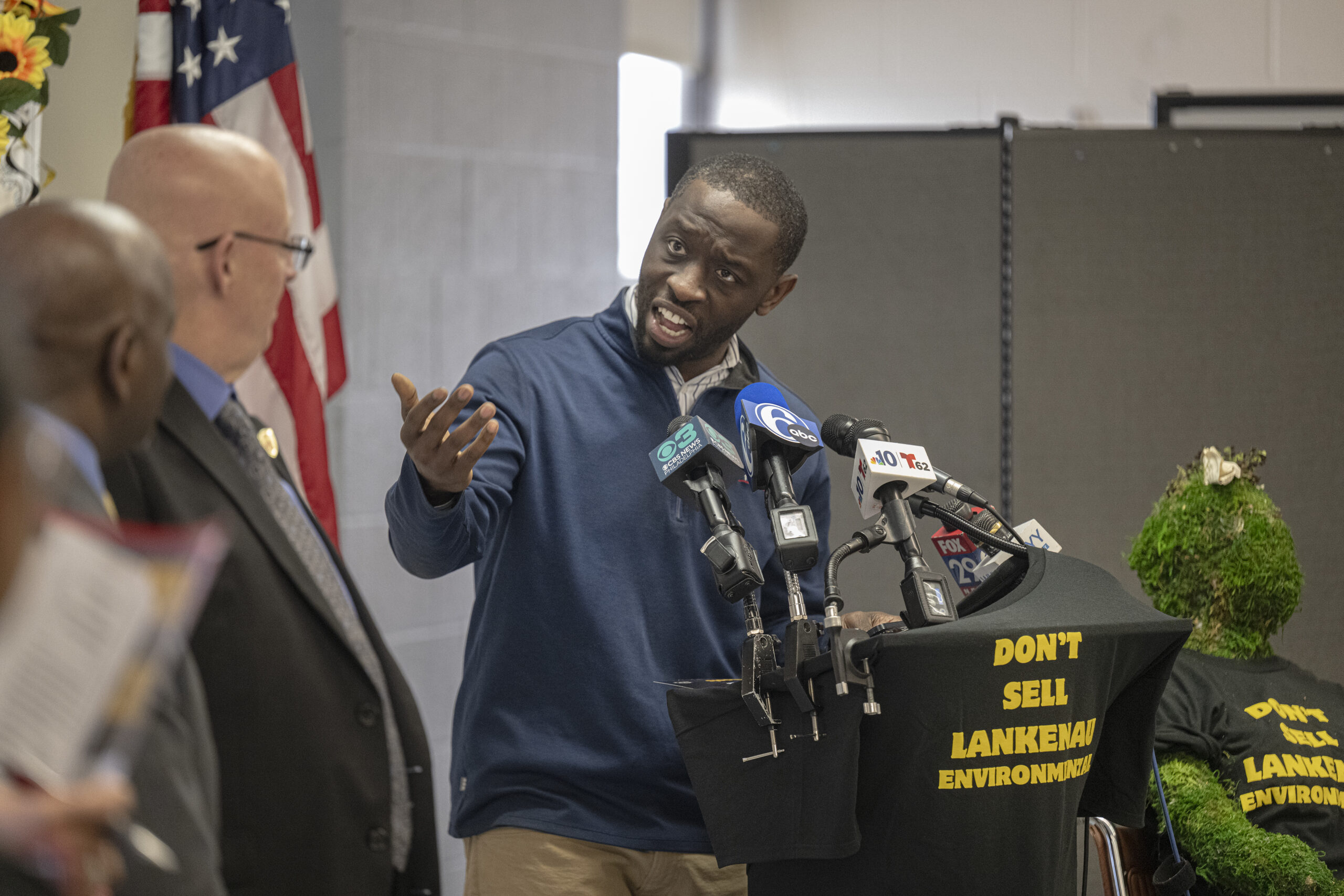
    Councilmember Isaiah Thomas speaks at Lankenau High School during a gathering to support the efforts to fight closing recommendations on Wednesday.

    Councilmember Isaiah Thomas, chair of City Council’s education committee, is incredulous that the district is attempting to close the school, which educates mostly Black students.

    “I wonder if Lankenau did everything that it currently does: graduation rate … community involvement, the educators’ participation — I wonder if Lankenau was 98% white, will we be closing Lankenau?” Thomas said.

    Lankenau enrolls 228 students; its enrollment took a hit when the district changed its special-admissions policy. District officials have said that the school system lacks the long-term funding to drive academic improvement while continuing to operate 216 schools that have 70,000 empty seats.

    Still, “small schools are worth the investment,” said Amy Szymanski, a special-education teacher at the school. “Shutting down a school doesn’t just impact one community, it shakes other schools that have to absorb the impact as well.”

    Szymanski urged district officials and decision makers to come up with different plans.

    ‘Culture is not transferable’

    Robeson did everything the district asked it to do and then some, said Elana Evans, a longtime educator at the West Philadelphia school.

    The school was heralded as a model for other Pennsylvania public schools by former Gov. Tom Wolf. It won citywide prizes and sent a student to Harvard University. Its students successfully petitioned district leaders for air-conditioning in their building. And its staff secured donations to have a major cafeteria renovation, though its building is still judged in “poor” condition by district standards.

    “Why can’t Paul Robeson have a new school?” said Evans, who previously taught at University City High, closed by the district in 2013. “Haven’t we proved ourselves, haven’t the kids sacrificed enough? Haven’t they shown what they can do and what they’re willing to do?”

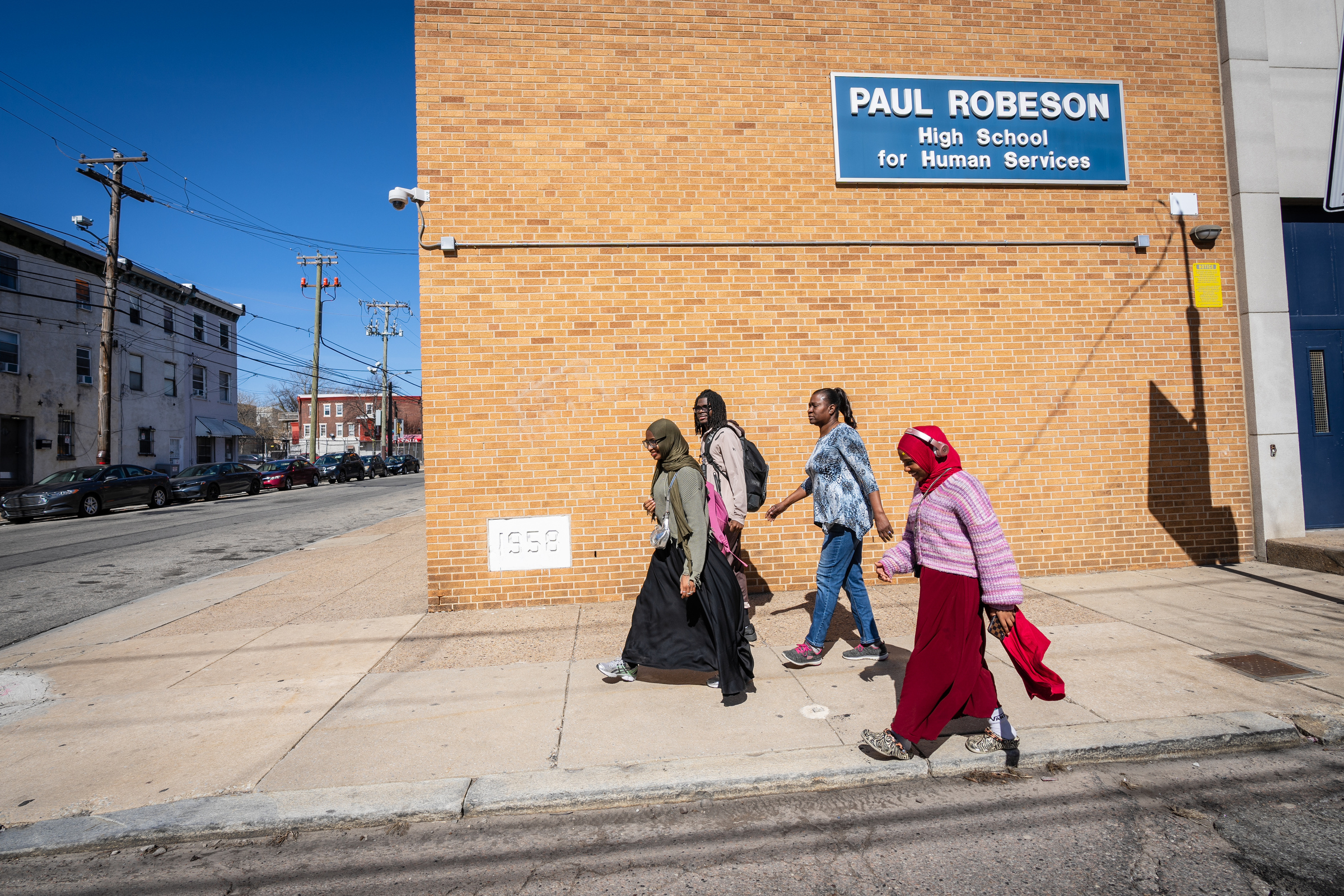
    Students walk outside Paul Robseon High School with Elana Evans, a Robeson teacher (in blue) in this 2025 file photo.

    And though moving to Motivation, in Southwest Philadelphia, may be slightly more palatable for some Robeson parents, for most, it won’t, said Evans.

    “Students would still have to go to 60th Street, traveling a distance,” said Evans. “If those parents wanted them to go to Motivation, they would have picked Motivation.”

    Motivation had initially been on the chopping block as well, but Watlington removed it from the list last week.

    The district has said it wants to preserve the successful Robeson culture, just elsewhere, but Kyana Hopkins, said that won’t work.

    “Culture is not transferable,” Hopkins said. “Make it make sense.”

    Samantha Bromfield, president of Robeson’s Home and School Association, said the district will lose families if Robeson goes away.

    “Understand that a parent like me will send my child back to being homeschooled” if Robeson closes, Bromfield said. “Your choice doesn’t fit my criteria of what I’m looking for my children.”

    Inheritance, and questions

    The Flower Show was abuzz Wednesday, with a crowd hovering around the Lankenau exhibit. “Inheritance” — a verdant wonderland showcasing plants grown from local seeds, set around a weathered wooden table — asked viewers to think of the question, “What tastes like home to you?”

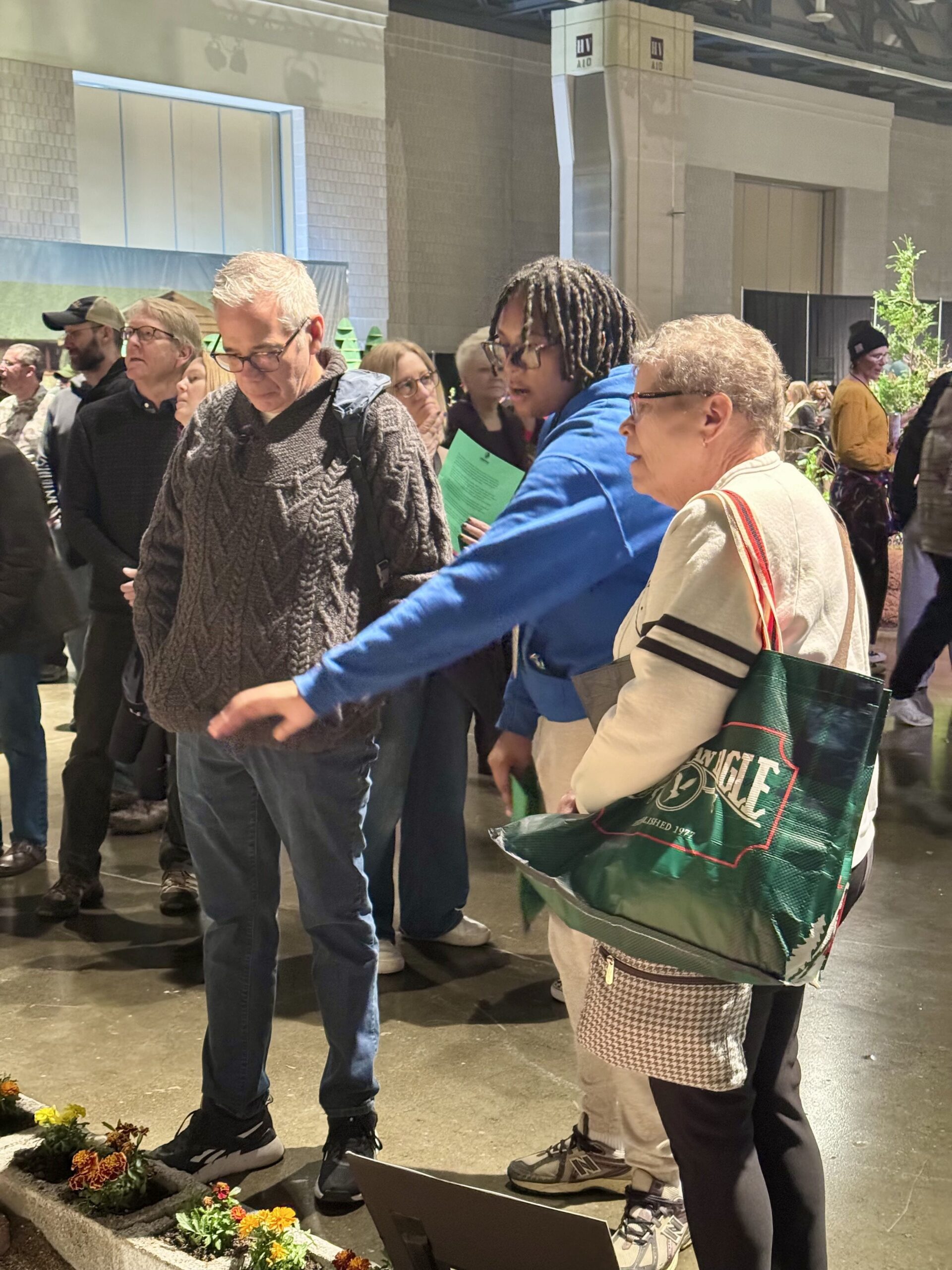
    Lankenau High senior Sasha John (blue hoodie) explains her prize-winning school’s Philadelphia Flower Show exhibit to visitors on Wednesday.

    Several Lankenau students staffed the exhibit, answering questions — and showing visitors green “Keep LANK Open” fliers, encouraging passersby to share words of support for the school with the school board and City Council.

    “It doesn’t make sense to me,” said Amelia Pennycooke, a Lankenau senior, of the proposed closing. “We have so many opportunities at Lank.”

    Lankenau High School’s exhibit, which the school’s eco art class worked on all school year, won a gold medal and the Alfred M. Campbell Memorial Trophy at the Philadelphia Flower Show. “Inheritance” examines the question “what plants taste like home to you?” It was designed and built by Lankenau students.

    Noel Alford, a Lankenau parent, said the school needs to remain open, its land not used for any other purpose. The amendment to Watlington’s plan falls short, she said.

    “Saul is a mistake,” said Alford. “Saul is an agricultural school. They are two different magnet schools.”

    While elected officials have no say in which schools close, Thomas said it’s up to them to keep pressuring the board to rethink some closures, including Lankenau’s.

    “This is a legacy moment for us as elected officials,” said Thomas. No one “wants to add that black mark on their career that says you were the person that was in charge when this injustice took place.”

  • SUV passenger killed in crash with SEPTA bus in Southwest Philly

    SUV passenger killed in crash with SEPTA bus in Southwest Philly

    A passenger in an SUV was killed and the driver was critically injured when the vehicle struck a SEPTA bus late Wednesday afternoon in Southwest Philadelphia, police said.

    Just before 4:20 p.m., a 2019 Honda HR-V heading north on Island Avenue in the area of Buist Avenue hit the rear of a SEPTA bus also traveling north on Island, police said. A third vehicle then hit the rear of the Honda.

    Medics transported the two people from the Honda to Penn Presbyterian Medical Center. The passenger, who was not identified, was pronounced dead at 5:20 p.m. The driver was listed in critical condition.

    No other injuries were reported.

    The cause of the crash was under police investigation.

  • ‘You are failing’: Residents berate Quakertown council for inaction after students’ arrest

    ‘You are failing’: Residents berate Quakertown council for inaction after students’ arrest

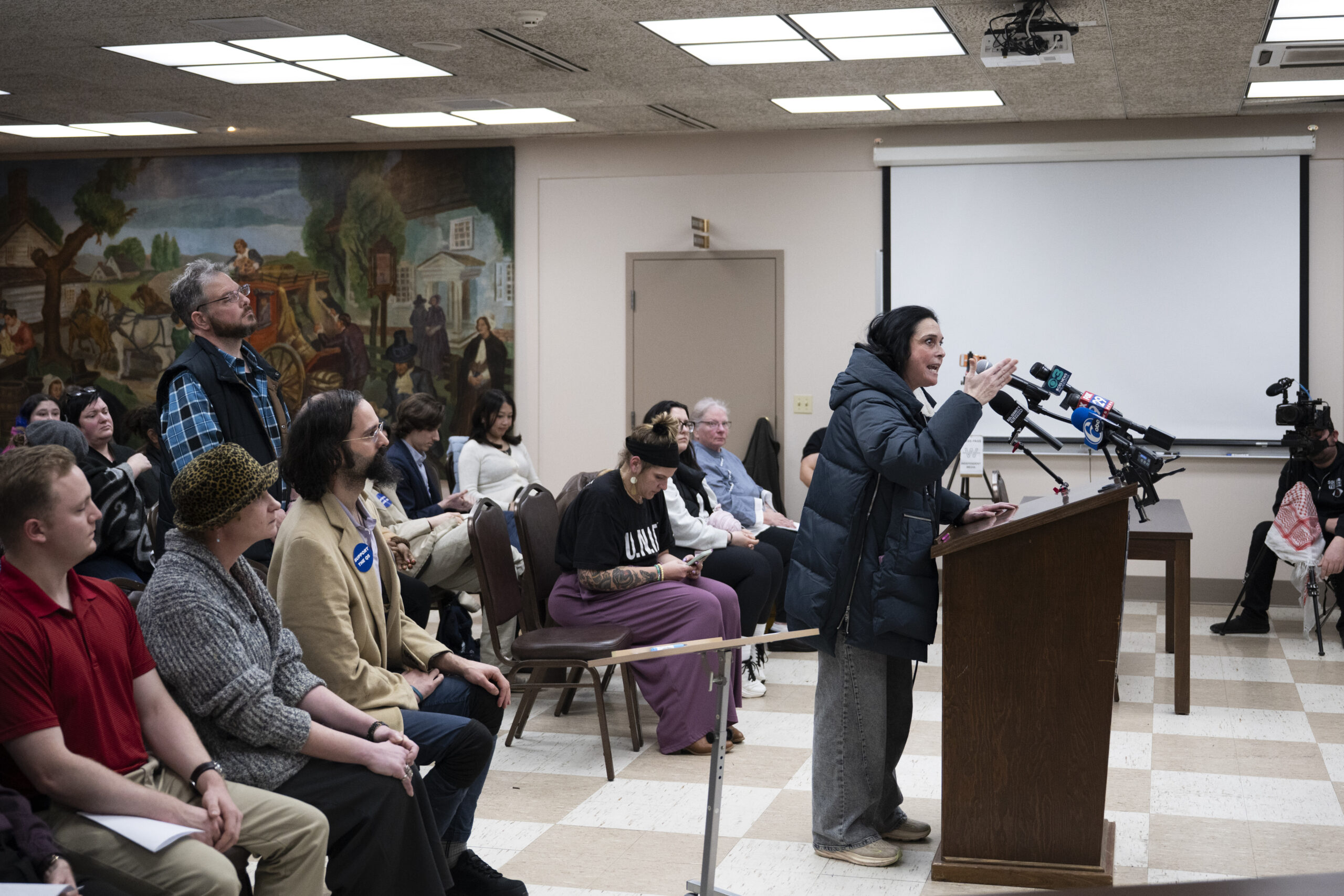
    Nearly two dozen residents and Quakertown taxpayers confronted the borough council at a public meeting Wednesday night, castigating its members for refusing to discipline the town’s police chief and demanding that they take action before leaving the room.

    The backlash was the latest fallout from a Feb. 20 student protest against federal immigration enforcement that began as a walkout from Quakertown Community High School and ended in a confrontation between Police Chief Scott McElree and a group of teenagers. The encounter, which was captured on video, led to the arrests of several teenagers and prompted an investigation by the Bucks County District Attorney’s Office.

    Wednesday’s meeting, which stretched to nearly two hours as speakers stepped to the podium one by one, laid bare a community in turmoil. Residents described fear, anger, and embarrassment that their small town had become a national flashpoint. By the end of the night, council members had made no motion and held no discussion about potential discipline for McElree.

    Council President Donald Rosenberger opened the meeting by telling the audience that the nine-member council — eight men and one woman — would not consider action against McElree or comment until the Bucks County District Attorney’s Office completes its investigation.

    McElree, 72, also serves as the borough’s manager, a role that includes overseeing the police department and managing public records.

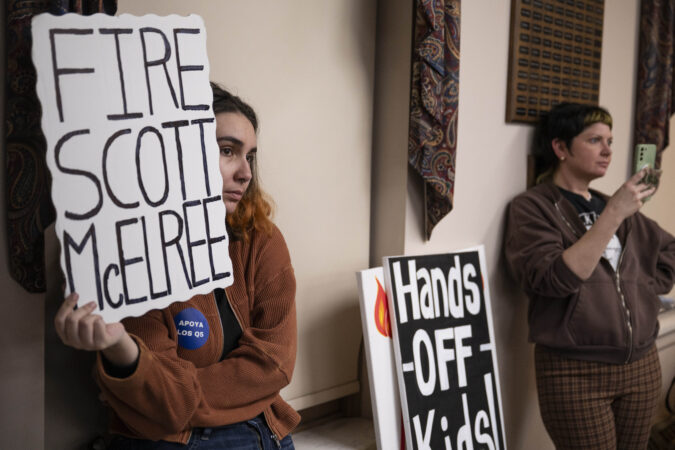
    A parent holds a sign outside the Quakertown School Board meeting on Feb. 26 in Quakertown, Pa. Critics who addressed the board accused the district of not doing enough to support the students arrested during last week’s ICE protest.

    Outside the locked doors of the borough hall before the meeting, more than three dozen people — adults and teenagers — gathered holding handmade signs. One woman had scrawled “peaceful protester” across a flattened cardboard box in black marker. Beneath it she wrote: “Don’t put me in a chokehold, mmkay?”

    Inside the crowded chamber, speakers urged council members to reckon with the national attention now focused on the town and warned that their response — or lack of one — would shape voters’ decisions in November.

    Nearly every speaker who addressed the council called for McElree to be fired and criminally charged.

    Joseph Rittenhouse, who said his niece was among those arrested after the clash, told council members that images of her bloodied face were now among the first results people see when they search for “Quakertown” online.

    “We are national news. If you’re OK with that, I don’t think any of us are going to be OK with you sitting up there” when voters go to the polls, Rittenhouse said.

    Ileana Ramos of Quakertown speaks during a council meeting as members of the community speak out against the actions of Police Chief Scott McElree on Wednesday night in Quakertown.

    A handful of people who identified themselves as immigrants or women of color said the episode had shaken their sense of safety in the community, leaving them worried about how they or their children might be treated.

    “It leaves me breathless as to how this is possible in America,” said Illeana Ramos. “Everyone is scared.”

    Laura Foster, who leads Upper Bucks United, a civic group that has organized demonstrations since the altercation, said the council’s refusal to act had forced residents to step into a role that should belong to elected leaders.

    “You are failing to act as leaders in this community,” Foster said. “I don’t need to be doing this. You should be doing this.”

    Only one resident spoke in support of McElree.

    Caroline DeVenuto said officers had been “sent on a fool’s errand” when they were called to respond to a gathering of teenagers, and blamed parents for allowing the situation to spiral.

    “It’s time for parents to grow up and discipline their children like the rest of us,” she said.

    DeVenuto also criticized news coverage of the confrontation, calling portrayals of McElree and the police department “slander and deceit.”

    Residents and advocates first called for disciplinary action against McElree at a borough council meeting three days after the Feb. 20 confrontation. By Thursday, a petition seeking his resignation had drawn more than 12,000 signatures, though it was unclear how many of the signers live in the borough.

    Videos recorded by bystanders and reviewed by The Inquirer show McElree grappling with several students, at one point wrapping his arm around a teenage girl’s neck before taking her to the ground. McElree, who was not in uniform at the time, left the scene bleeding, the videos showed.

    Five teenagers were charged with aggravated assault, a felony, and related offenses. They are on house arrest with ankle monitors, their attorneys said.

    In the affidavit of probable cause for the arrest of one of the teenagers, officers wrote that McElree had been attempting to take a student into custody when the encounter escalated. A teenage boy struck him in the ear, the affidavit said, and others hit him in the shoulder and ribs.

    The document does not mention a chokehold.

    According to the affidavit, McElree sought medical treatment for undisclosed injuries. More than a week later, he began a workers’ compensation leave, the borough’s attorney said.

    The Bucks County District Attorney’s Office is investigating the encounter and has declined to comment.

    At least three defense attorneys have asked the Pennsylvania attorney general to assume control of both the investigation and the prosecution, and to dismiss the charges.

    In an email last week, lawyer Ed Angelo wrote that the affidavit “rendered only allegations that were damning to the children, but left out the assaultive behavior of the chief of police — behavior the children fought to protect themselves from.” He called the prosecution “an obvious and unacceptable conflict of interest.”

    On Friday, the attorney general’s office declined to intervene, saying in an email that “it would be inappropriate for our office to engage” in the investigation or the case.

  • Man fatally shot in Northeast Philly

    Man fatally shot in Northeast Philly

    A 35-year-old man was fatally shot while trying to drive away from an altercation with another man Wednesday night in the Castor section of Northeast Philadelphia, police said.

    Just after 7:10 p.m., police were called to the area of Summerdale and Magee Avenues and found the victim lying on the ground next to an SUV with the engine still running, said Chief Inspector Scott Small.

    The man, who had at least one gunshot wound to his back, was transported to Jefferson Torresdale Hospital, where he was pronounced dead at 7:47 p.m., Small said.

    The SUV was parked outside a neighborhood store, and the victim and another man were inside the store when an argument occurred, Small said.

    The victim got into the driver’s seat of the SUV and the other man started shooting through the front passenger-side door, Small said.

    The shooter then ran from the scene.

    Police were told that both men were regular customers at the store, Small said.

    The victim was found lying next the front driver-side door with a handgun on the ground next to him.

    Police believe the gun belonged to the victim, Small said.

    Police recovered three spent shell casings next to the passenger door as well as three live rounds.

  • Former Bucks County man who voted twice for Trump convicted of voter fraud

    Former Bucks County man who voted twice for Trump convicted of voter fraud

    A former Bucks County man who claimed he was covered by pardons given by President Donald Trump to supporters who tried to overturn the 2020 election was found guilty Wednesday by a federal jury in Philadelphia of voting twice for Trump in 2020.

    Matthew Laiss, 32, was charged by indictment in September of one count of voting more than once in a federal election and one count of voter fraud. He is scheduled to be sentenced on June 10 and faces a maximum of five years in prison on both counts.

    Laiss, who prosecutors said is currently a resident of Bethehem, Pa., had been a resident of — and was registered to vote in — Ottsville, Bucks County, from at least 2012 to around August 2020, prosecutors said. Laiss then moved to Frostproof, Fla., where he obtained a driver’s license and registered to vote there.

    Around Oct. 31, 2020, Laiss filled out and returned a mail-in Pennsylvania ballot, then on Nov. 3, 2020, Laiss went to a polling place in Florida and voted again.

    “Today’s conviction reinforces a simple principle: our elections must be fair, secure, and lawful, ” U.S. Attorney David Metcalf said in a statement.

    “Casting a ballot in more than one jurisdiction undermines public trust and dilutes the votes of others. Our office will continue to protect the integrity of federal elections and hold accountable those who violate the law,” Metcalf said.

    The case was investigated by the FBI, with assistance from the Pennsylvania Department of State, and is being prosecuted by Assistant U.S. Attorney Mark Dubnoff.

    Federal defenders who represented Laiss could not be reached for comment Wednesday night.

    Lawyers for Laiss had argued to U.S. District Judge Joseph F. Leeson Jr. that a pardon proclamation Trump issued last year on Nov. 7 applied to Laiss, and that Laiss had accepted it.

    Laiss was not among the 77 people Trump listed when specifying who would receive relief, but Laiss’ lawyers said the proclamation’s preamble included language making it applicable to “all United States citizens” for conduct, voting, or advocacy surrounding the contest.

    His lawyers wrote that Trump allies including Rudy Giuliani, Sidney Powell, and Mark Meadows were all explicitly pardoned for “exponentially more egregious alleged conduct.” Extending relief to them while denying it to Laiss, his lawyers wrote, “would be outrageous.”

    Prosecutors said they checked with Trump’s Office of the Pardon Attorney and were told that the lawyers there did not believe the pardon proclamation applied to Laiss.

    In January, Leeson ruled against Laiss’ motion to dismiss the indictment, explaining that the court was without jurisdiction to decide the matter because Laiss had not applied to the Office of the Pardon Attorney, or had received a certificate of pardon.

  • Building explosion in Gloucester County leaves four critically injured

    Building explosion in Gloucester County leaves four critically injured

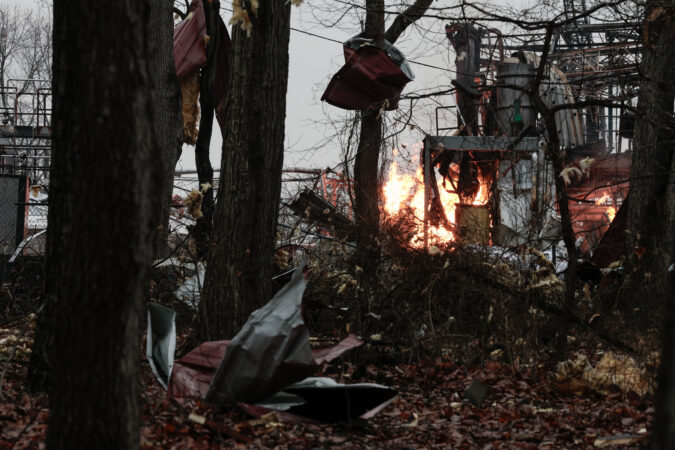
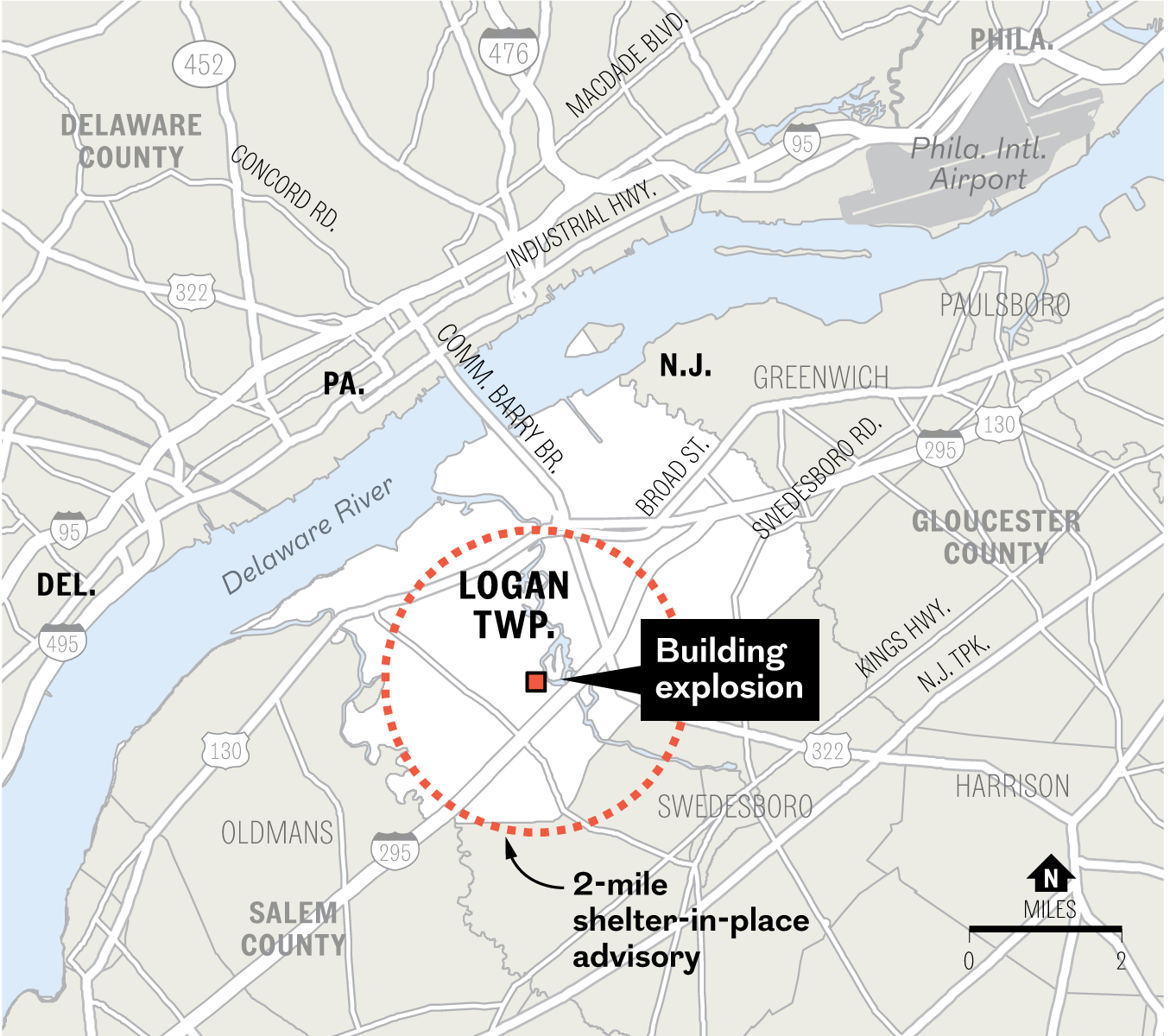
    At least four people were critically injured after a large explosion destroyed a commercial production building Wednesday afternoon in Logan Township, N.J.

    Gloucester County Emergency Management quickly asked people within a two-mile radius of the explosion at 617 Heron Dr. to shelter in place, but the request was later lifted. About 7,200 people live within two miles of the explosion.

    “It was a terrible tragedy,” Logan Township Police Chief Joseph Flatley said at an evening news conference.

    However, he added: “The community is safe. There are no ongoing hazards.”

    The explosion occurred just after 2:35 p.m. and firefighters who were first on the scene said at least two people had been severely burned, and the building had collapsed with a ruptured propane tank still burning.

    Map of building explosion in Logan Twp., Gloucester County.

    Cooper University Hospital received three patients, said Cooper spokesperson Wendy A. Marano.

    Rebecca Forand, spokesperson for the Gloucester County Prosecutor’s Office, said a total of four people were hospitalized in critical condition. A fifth person in a neighboring building experienced a medical incident, Forand said.

    It was unclear how many people were in the building, but “as far as we know, the owners of the business have told us that they believe everyone is accounted,” Forand said.

    “We are assisting in the investigation. It does not look like there’s any criminal activity,” she added.

    A large amount of propane was being stored on the facility’s premises, which she said was used in the production processes of the company that used the building, called Savita Naturals. The company describes itself on its website as a “provider of specialty oil extractions and related services.”

    The cause of the explosion, however, remains under investigation. The New Jersey Department of Environmental Protection was notified of the situation, and officials from the Bureau of Emergency Response were heading to the scene, Forand noted.

    “Fire and HazMat Units remain on location monitoring a burn off of additional fuel product stored on-site and continue to conduct air monitoring in the community,” Gloucester County Emergency Management said on social media.

    <iframe src="https://www.facebook.com/plugins/video.php?height=476&href=https%3A%2F%2Fwww.facebook.com%2Freel%2F920637570347255%2F&show_text=false&width=267&t=0" width="267" height="476" style="border:none;overflow:hidden" scrolling="no" frameborder="0" allowfullscreen="true" allow="autoplay; clipboard-write; encrypted-media; picture-in-picture; web-share" allowFullScreen="true"></iframe>

    A worker in a nearby business described the shock of the first large explosion.

    “I thought a bomb hit us,” said the worker, who asked not to be identified because his employer had not authorized him to speak to a reporter.

    He and his fellow employees were evacuated and saw the building with the explosion had been destroyed and a wall of the neighboring building had been knocked down.

    The worker said he saw a man whose clothes were on fire “rolling on the ground.” The man ripped his shirt off while other people pulled his pants off. The man then got up wearing only his underwear. His injuries didn’t appear to be serious, the worker said.

    Residents across the region said the explosion shook their houses. At Fish2Coral, a fish and aquatic supply shop in Swedesboro, things fell off the shelves, alarms went off, and part of the interior ceiling collapsed.

    “We didn’t know where it came from,” said store manager Brian Makowski. “It felt like something hit our building.”

    Fish2Coral is located only half a mile from the explosion site. “If I was outside, it probably would’ve knocked me over,” he said.

    Propane is a highly flammable gas that can decrease the amount of oxygen in the air in high concentrations, according to the New Jersey Department of Health. It is naturally colorless and odorless, but typically has an odorant added to aid in detection. Symptoms of airborne exposure may include headache and dizziness, as well as fainting, and contact with it in its liquefied gas form is capable of causing frostbite.

    The company notes online that it was founded about 35 years ago as a processor in the cocoa and chocolate industry, but has since expanded to include a range of products. Savita also indicates online that “production of cocoa butter remains our core business.”

    Among the other products for which Savita says it provides services is CBD, or cannabidiol, a non-intoxicating compound found in hemp and marijuana that has risen in prominence in recent years. An article on the company’s website from 2019 indicates that flammable solvents like butane, propane, and ethanol are popular choices in cannabis-related extractions.

    Savita notes online that propane has been its “solvent of choice” for botanical extractions since 1996, as it “produces the highest yields at intermediate cost without sacrificing quality.”

    — Staff writer Emily Bloch contributed to this article.

  • Chester County’s prison warden will move to county government as commissioners restructure administrative team

    Chester County’s prison warden will move to county government as commissioners restructure administrative team

    Chester County’s prison warden will round out a new leadership team after the county’s top official left his job earlier this week.

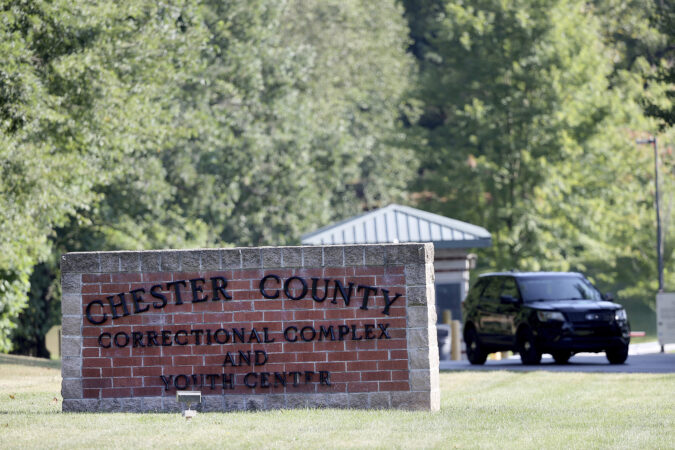
    Howard Holland, who has served as prison warden for the county since April 2024 and was its acting warden for eight months before that, has been appointed as acting deputy county administrator for operations and will complete a team of three newly named top county officials, the county announced this week.

    “I have always advocated for improved government processes, and I’ve been particularly pleased by the changes Mr. Holland has undertaken at the prison,” County Commissioner Eric Roe said in a statement. “I’m happy to have him join our leadership team, and I look forward to his continued contributions as a manager and leader at the County level.”

    The administrative team oversees 2,600 staff members and a roughly $730 million annual budget. Members are appointed by the county’s three elected commissioners.

    The change comes just days after the county’s top official, David Byerman, left the job, and a new county administrator, Erik Walschburger, was named. Holland and deputy county administrator Megan Moser, whose role was renamed this week, will work under Walschburger.

    Walschburger most recently was the county’s deputy administrator, a role he had held since 2022 overseeing internal day-to-day operations. Moser, who joined the county in 2025, has been involved with the county’s response to multiple election errors in recent months.

    The county’s announcement on Wednesday made no mention of Byerman. A county spokesperson earlier this week declined to give a reason for his departure.

    As Chester County shifts its personnel, it is reverting back to job titles it had used previously, retiring its use of “chief executive officer,” “chief operations officer,” and “chief experience officer” — a change it made roughly a year ago — for the more traditional title of county administrator and two deputies.

    Holland comes to the job after a more than 30-year career in law enforcement, working as a police officer, a special county detective, and an adviser to the county’s prison board. He was the chief of police for seven years in Downingtown.

    His most recent job came with an electric start: The day he became acting prison warden, convicted murderer Danilo Cavalcante escaped the prison, resulting in a two-week search. Since that incident, Holland made changes to limit the risk of escape, and promised to add additional security measures to the facility.

    With Holland’s move to county government, the Chester County Prison Board of Inspectors has appointed Brian Sheller as acting warden, county officials said. Sheller has been deputy warden since 2024, and served as the Parkesburg chief of police for more than 30 years.

    This suburban content is produced with support from the Leslie Miller and Richard Worley Foundation and The Lenfest Institute for Journalism. Editorial content is created independently of the project donors. Gifts to support The Inquirer’s high-impact journalism can be made at inquirer.com/donate. A list of Lenfest Institute donors can be found at lenfestinstitute.org/supporters.

  • SEPTA gets $5.5 million in federal funds to add extra service during World Cup

    SEPTA gets $5.5 million in federal funds to add extra service during World Cup

    SEPTA expects to receive about $5.5 million from a federal appropriation to offset the cost of providing transit service in Philadelphia during the FIFA World Cup.

    The regional transportation authority projects it will spend $21.5 million for additional transit runs and extended service hours during the World Cup as well as a the celebration of the nation’s 250th birthday, officials said.

    On Tuesday, the U.S. Department of Transportation announced about $100 million in funding to 11 cities and regions hosting FIFA championship matches, apportioned by formula.

    “We are going to pull out all the stops to serve those big events — while also not missing a beat for our riders who rely on SEPTA every day,“ General Manager Scott Sauer said in a statement. He thanked the region’s congressional delegation and U.S. DOT for the ”much-needed investment to support this historic year.“

    The Philadelphia region’s total grant was $8.47 million, with the remainder of the money going to government entities in New Jersey and Delaware.

    SEPTA said it would spend $18 million for overtime for transit operators and Transit Police, cleaning expenses, longer customer service hours and ambassadors to help people navigate the system.

    Other extra operating costs for the events:

    • $1 million on safety and security, for portable surveillance equipment and a communications system to send police where they’re needed most.
    • $825,000 for signage, including World Cup branded signage, website and app upgrades to help visitors get around, as well as translation services.
    • Another $1.3 million will be spent on support services, SEPTA said.

    Congress earmarked the money to help World Cup host cities and regions in this year’s federal budget, but improvements are required to benefit the general public, not just soccer fans.

    “With the world coming to Philadelphia in 2026, we have a responsibility to be ready,” U.S. Rep. Brendan Boyle (D., Pa) said.

    The federal largesse will “strengthen our transit system so it can handle the surge in ridership during the World Cup,” Boyle said. “Just as importantly, these improvements will benefit Philadelphians long after the tournament.”

    In addition to the extra spending on operations, SEPTA said it is investing about $30 million for infrastructure upgrades in advance of 2026 events, including improvements at Broad Street Line and Market-Frankford Line rail stations expected to be primary hubs for event goers.

    The projects include:

    • Roof replacement and platform resurfacing at NRG Station on the Broad Street Line, which serves Lincoln Financial Field and Citizens Bank Ballpark, where the Major League All-Star game will be held this summer.
    • Upgrades to the Second Street Station headhouse on the Market-Frankford Line.
    • Fern Rock Transportation Center lighting and painting.
    • Realignment of the fare line at City Hall Station on the BSL, as well as platform resurfacing and new LED lighting.