Category: News

Latest breaking news and updates

  • NATO chief Mark Rutte shows he’s a ‘Trump whisperer’ with Greenland diplomacy

    NATO chief Mark Rutte shows he’s a ‘Trump whisperer’ with Greenland diplomacy

    THE HAGUE, Netherlands — For days it seemed there was no way out of the latest standoff between Europe and the United States: President Donald Trump insisted he must have Greenland — and would settle for nothing short of total ownership.

    Even after he dropped the threat of force in a speech in Davos, Switzerland, on Wednesday, the impasse remained. Enter: Mark Rutte.

    The NATO secretary-general may have been instrumental in persuading Trump to scrap the threat of slapping punitive tariffs on eight European nations to press for U.S. control over Greenland — a stunning reversal shortly after insisting he wanted to get the island “including right, title and ownership.”

    In a post on his social media site, Trump said he had agreed with Rutte on a “framework of a future deal” on Arctic security at the World Economic Forum in Davos, potentially defusing tensions that had far-reaching geopolitical implications.

    Little is known about what the agreement entails or how crucial Rutte’s intervention was, and Trump could change course again. But for now, Rutte has earned his reputation as a “Trump whisperer.”

    That’s only the latest nickname for the man long known as “Teflon Mark” during his domination of Dutch politics for a dozen years.

    ‘Trump whisperer’

    Rutte’s reputation for successfully charming the U.S. president took flight last year when he referred to Donald Trump as “daddy” during an alliance summit in The Hague and sent him a flattering text message.

    Matthew Kroenig, vice president and senior director of the Atlantic Council’s Scowcroft Center for Strategy and Security, said the dramatic scenes in Davos underscored Rutte’s ability to keep NATO’s most powerful leader on board.

    “I think Secretary-General Rutte has emerged as one of Europe’s most effective diplomats and Trump whisperers,” Kroenig said. “He does seem to have a way of speaking to Trump that keeps the United States and the Trump administration engaged in NATO in a constructive way.”

    Rutte’s success in dealing with Trump appears to revolve around his willingness to use charm and flattery while revealing little of what the two leaders discuss. It’s a tactic that Rutte used to marshal coalition partners in nearly 13 years as Dutch prime minister.

    Trump himself highlighted Rutte’s effusive friendliness before he set off for Davos this week, publishing a text message from the NATO chief on his Truth Social platform. In it, Rutte addresses “Mr. President, dear Donald” and praises Trump for his diplomacy in Syria, Gaza and Ukraine.

    “I am committed to finding a way forward on Greenland. Can’t wait to see you. Yours, Mark,” the message ended.

    Teflon Mark

    Rutte became a poster boy for Dutch consensus politics while leading four often fractious ruling coalitions on his way to becoming the Netherlands’ longest-serving leader, surviving a number of domestic political scandals over the years and earning the nickname “Teflon Mark” because the fallout never seemed to stick to him for long.

    The back cover of a 2016 book about Rutte by Dutch journalist Sheila Sitalsing, who followed him when he was prime minister, calls him “a phenomenon.”

    “With indestructible cheerfulness he navigates the fragmented political landscape, recklessly forges the most extraordinary alliances and steadily works towards a new Netherlands,” it adds.

    Rutte and his government resigned in 2021 to take responsibility for a childcare allowance scandal in which thousands of parents were wrongly accused of fraud. But he bounced back to win national elections two months later with a slightly larger share of the vote and began his fourth and last term in office.

    In another scandal that he survived, Rutte said in an interview that he couldn’t recall being informed about the Dutch bombing of Hawija that killed dozens of Iraqi civilians in 2015. In 2022, he survived a no-confidence motion in parliament in a debate about deleting messages from his old-school Nokia cell phone. Critics accused him of concealing state activity — but he insisted the messages just took up too much space in his phone.

    Opposition lawmaker Attje Kuiken quipped: “It appears that the prime minister’s phone memory is used just as selectively as the prime minister’s own memory.”

    His winning smile and enduring optimism, along with his habit of riding his bicycle to work while chomping on an apple seemed to help cement his popularity in the Netherlands, where such down-to-earth behavior is prized. When his last coalition collapsed in 2023 in a dispute over reining in migration, Rutte again leaned on that image, driving an old Saab station wagon to a royal palace to hand his resignation to King Willem-Alexander.

    From The Hague to Brussels

    Just landing the NATO chief’s job showed how adept Rutte is at navigating turbulent geopolitical waters. He managed to convince entrenched doubters, including Hungarian Prime Minister Viktor Orbán and Turkish President Recep Tayyip Erdogan, to back his candidacy.

    “It took a very long time. It’s a complicated process, but it’s an honor that it appears to have happened,” Rutte told reporters after securing all the support he needed to become secretary-general.

    Rutte’s soft diplomatic skills were seen as a key asset for the leader of the 32-nation alliance as it faced Trump’s repeated criticism while navigating how to support Ukraine in the war against Russia.

    Several hours before Trump made his dramatic reversal on Greenland, Finnish President Alexander Stubb — another European leader credited with having a way with Trump — was asked during a panel discussion on European security in Davos “who or what can diffuse the tensions” over Greenland?

    “Oh, Mark Rutte,” Stubb said, to laughter in the audience and among the panel that included the Dutchman himself.
  • Three people targeted, two of them Temple University students, in armed robberies near campus this week

    Three people targeted, two of them Temple University students, in armed robberies near campus this week

    A Temple student and another individual not associated with the university were robbed by armed men near the school’s North Philadelphia campus early Thursday, according to university officials.

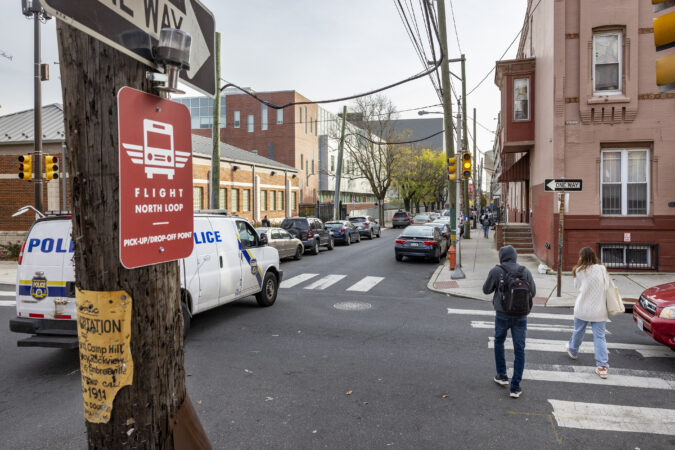
    Around 1:30 a.m., the Temple student was walking near the 1500 block of Oxford Street when two men approached with a handgun and stole the student’s phone, Jennifer Griffin, Temple’s vice president for public safety and chief of police, said in a statement.

    The men ran off and fired one shot in the air as they fled.

    Minutes earlier, in a separate incident several blocks away, those men robbed another individual, stealing that person’s phone, near the 1300 block of Carlisle Street.

    The robberies were the second instance of phone theft near Temple’s campus this week.

    Around 6:15 a.m. on Wednesday, a man with a handgun approached a Temple student walking on the 1800 block of West Montgomery Avenue and stole that person’s phone, Griffin said in an earlier statement.

    The robber fled north on 18th Street. No arrests have been made in the incidents.

    On Thursday, Griffin announced that Temple and Philadelphia police would be coordinating a concentrated presence in the area as both departments investigate the robberies.

    “Incidents like this are deeply troubling,” Griffin said.

    Later in the day, Temple’s public safety department released an image of two suspects wanted in connection with Thursday’s robberies, urging anyone who recognized them to contact Investigations@temple.edu or call 215-204-6200.

    Griffin also highlighted that students who were affected by the incidents may use the campus’ walking escort program, its nighttime fixed-route shuttle service, and the school’s personal safety app.

  • Venezuela opens debate on an oil sector overhaul as Trump seeks role for U.S. firms

    Venezuela opens debate on an oil sector overhaul as Trump seeks role for U.S. firms

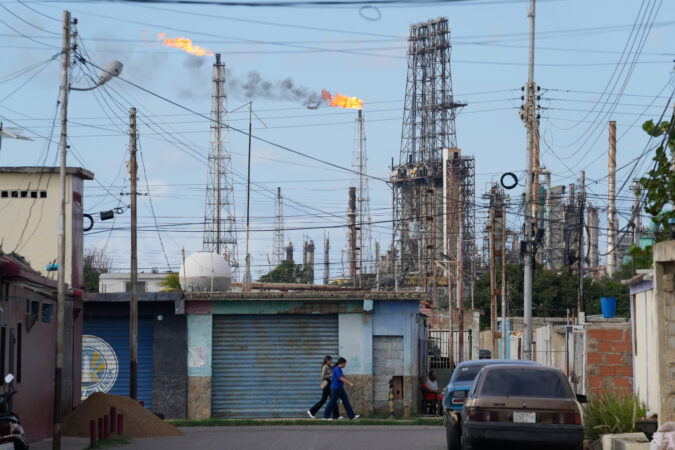
    CARACAS, Venezuela — Venezuela’s legislature opened debate Thursday on a bill to loosen state control over the country’s vast oil sector in the first major overhaul since the late socialist leader Hugo Chávez nationalized parts of the industry in 2007.

    The legislation would create new opportunities for private companies to invest in the oil industry and establish international arbitration for investment disputes.

    Following the U.S. capture of former President Nicolás Maduro earlier this month, the Trump administration has ramped up pressure on acting President Delcy Rodríguez and other allies of the ousted leader to invite greater investment from U.S. energy companies in Venezuela’s flagging oil industry.

    A draft of the proposed legislation, a copy of which was seen by The Associated Press, represents a sharp turn away from the resource nationalism of Chávez, who accused multinationals of colonial exploitation and considered the country’s oil wealth to be state property.

    In apparent response to demands from U.S. oil executives, the proposed legislation would allow private companies to independently operate oil fields, market their own crude output and collect the cash revenues despite remaining, on paper, minority partners to the state oil company.

    “The operating company shall assume the comprehensive management of the execution of the activities, at its sole cost, expense and risk,” the draft says, adding that portions of production volumes “may be directly commercialized by the operating company, once governmental obligations have been fulfilled.”

    Crucially, the bill also would let companies settle legal disputes through arbitration in international courts rather than only local courts.

    The legislation also would keep the current 30% royalty rate, but let the government cut royalties and taxes to as low as 15% for expensive or hard-to-develop oil projects, so that companies would be more willing to invest.

    The president of Venezuela’s National Assembly and the acting president’s brother, Jorge Rodríguez, told lawmakers at the start of Thursday’s debate that the bill aims to “allow an accelerated increase in production” of oil in Venezuela.

    “Oil under the ground is useless,” he said, referring to the need to boost oil production and open up new exploration opportunities.

    Pushed by Delcy Rodríguez, the bill is expected to advance swiftly through the ruling party-dominated legislature. Lawmakers concluded the initial discussion of the bill on Thursday after around two hours and advanced the legislation to a second round of debate, yet to be scheduled.

    During the session, Orlando Camacho, a lawmaker and head of Venezuela’s national Fedeindustria business association, told the assembly that the bill would ensure that Venezuela’s oil industry “remains the engine of the country.”

    The proposed legal guarantees — ensuring that foreign companies can bring claims against Venezuela before international bodies — are necessary to attract private investment, he said.

    Even as President Donald Trump looks to lure American companies to reboot Venezuela’s oil sector, many remain concerned about the financial and legal risks of pouring billions of dollars into the country.

    Plenty of investors have been burned before, their assets seized as Chávez nationalized parts of Venezuela’s lucrative oil industry in 2007. Firms like Exxon have been trying to get the Venezuelan government to compensate them for their billions of dollars in losses ever since, to no avail.

    The current political uncertainty also worries investors. There is no timeline for holding democratic elections in Venezuela after Maduro’s ouster as Rodríguez, long Maduro’s loyal second in command, seeks to consolidate control. The Trump administration also hasn’t said when it will lift the crippling sanctions imposed to weaken Maduro’s government, which further restrict foreign operations in the country’s oil sector.

  • Villanova one of several colleges hit with threats nationwide, as university declares ‘all clear’

    Villanova one of several colleges hit with threats nationwide, as university declares ‘all clear’

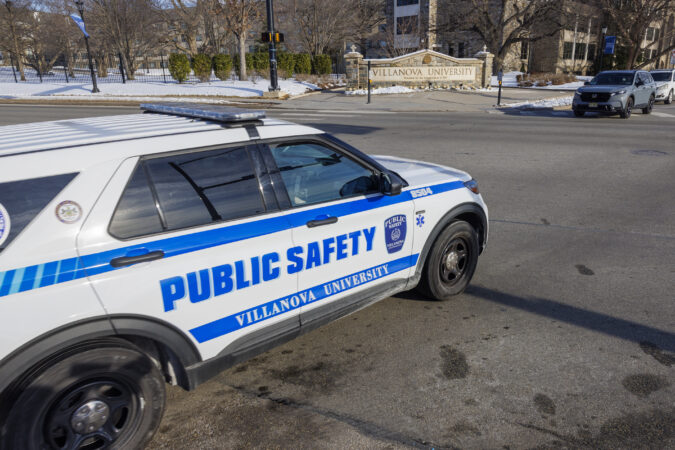
    Villanova University was one of several colleges nationwide that saw its operations disrupted Thursday by a series of hoax threats.

    The Main Line Catholic university with 6,700 undergraduates closed the campus early Thursday morning, advised students on campus to stay in their residence halls, and warned others to stay off campus while authorities investigated. The move followed an undisclosed threat about one of its academic buildings.

    By 2 p.m., the private university gave the all-clear and said while in-person classes would remain canceled, students could leave their residences and get into some buildings, including the library, main dining halls, the health center, and the Connelly Center.

    “It is safe to be out on campus,” the university said in an alert.

    The campus will resume normal operations Friday, the school said.

    For Villanova, it was the third time in less than a year that threats had upended the school.

    In August, the university went into lockdown during an orientation session after reports of an “active shooter” on campus.

    Officials later learned that it was what the university president called a “cruel hoax.” But that was not before panic spread throughout the region, with students and faculty fleeing the school in tears and Pennsylvania’s top officials, including Gov. Josh Shapiro, weighing in. And days later, Villanova experienced a second hoax threat.

    Villanova’s threats were part of a swatting pattern nationwide. In September, the Associated Press reported that about 50 college campuses had been hit with hoax calls nationwide in recent weeks. The U.S. Department of Education put out tips on how to recognize fake calls, including questions to ask callers to determine if there are inconsistencies.

    Locally, colleges including Temple, Drexel, and Villanova said in September they had taken steps in response to the spate of swatting incidents nationwide, including upgrading training on how to handle them.

    On Thursday, another wave of calls appears to have occurred. New York University received threats against two school buildings, the school announced around the same time as Villanova. One threat included mention of bombing an NYU building. NYU did not go on lockdown.

    The threats, according to Gay City News, included anti-LGBTQ+ rhetoric.

    Alcorn State University, a historically Black college in Mississippi; Dallas Baptist University; and Wiley University in Texas, which is also an HBCU, got threats as well, according to news reports. The message to Wiley was sent from outside the United States, according to KTAL news.

    The FBI’s Philadelphia Field Office said in a statement that it was aware of the threats made to universities on Thursday.

    “We continue to stay in close coordination with our law enforcement partners,” an FBI spokesperson said. “As always, the FBI encourages members of the public to remain vigilant and immediately report anything they consider suspicious to law enforcement.”

    Villanova said the FBI was investigating, alongside state and local law enforcement. There were no reports of activity posing a danger to the campus.

    In its 2 p.m. update, the schools said that classes that are fully online could continue on Thursday and that graduate courses meeting in the evening could be “offered remotely at the discretion of the professor.”

    Intramurals scheduled for Thursday evening, the school said, also would be held.

    University spokesperson Jonathan Gust declined to say which Villanova building was targeted or describe the nature of the threat, given the investigation is ongoing.

    “In an abundance of caution, the university made the decision to close,” he said earlier Thursday.

    Additional police will remain on campus, the school noted.

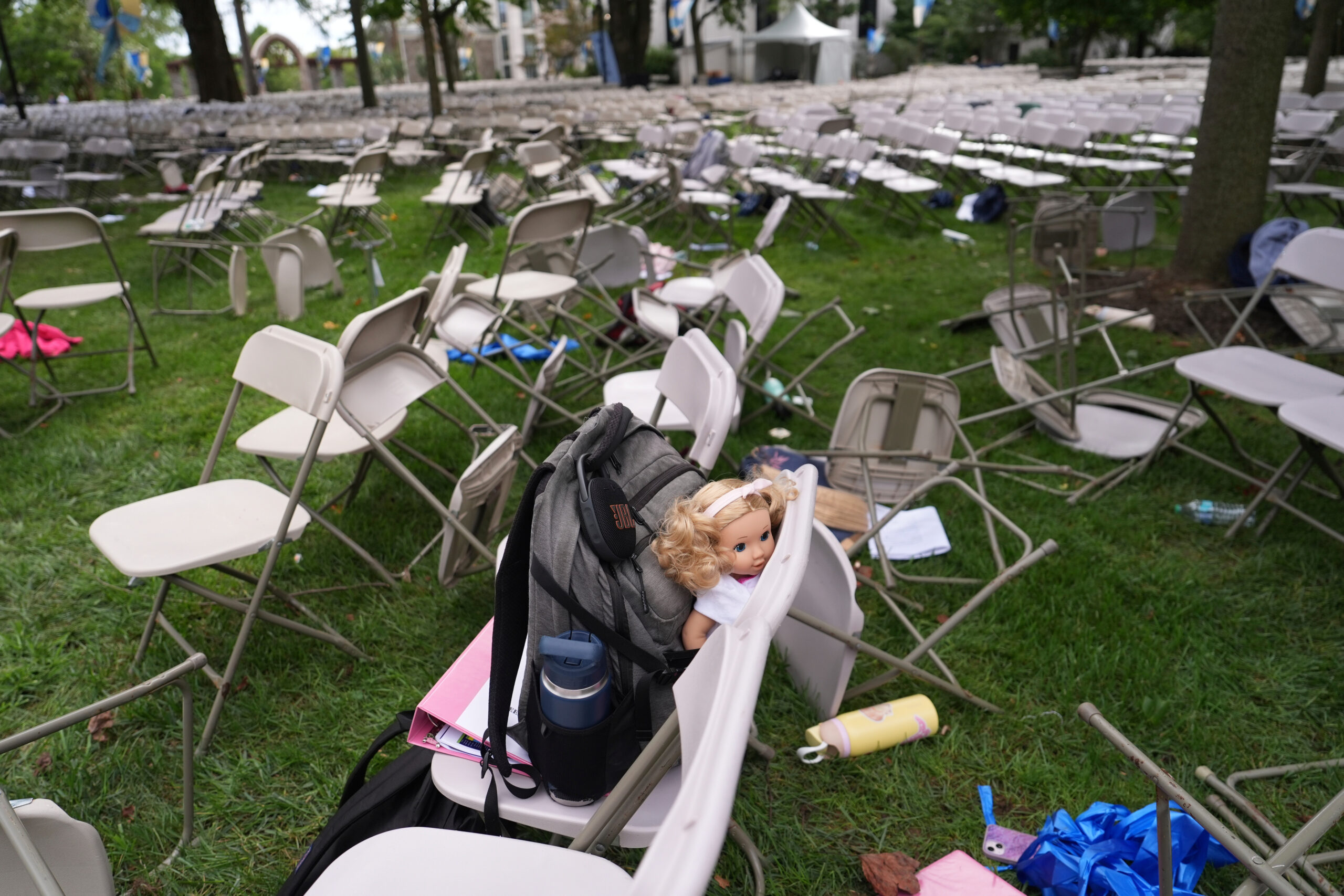
    A backpack sits around toppled chairs at the Villanova University campus where an active shooter was reported Thursday, Aug. 21, 2025, in Villanova, Pa.

    Villanova students and staff on Thursday were trying to cope with another disruption to their campus life.

    At First Watch restaurant just off campus, freshman finance major Nolan Sabel said he woke up to a university alert on his phone, warning him of “an unknown threat of violence.”

    Sabel said he was disappointed to learn that an academic building had been targeted — for the third time in a year.

    “It’s kind of crazy,” Sabel said. “You hear that Villanova is really safe. It doesn’t feel that way.”

    Now, he and his lacrosse teammates are wondering whether a scrimmage set for Thursday afternoon would be canceled.

    The university told the students they were “on lockdown,” Sabel said. But that didn’t stop them from walking just off campus to get breakfast.

    “We needed food,” he said. “We have a game today.”

    Villanova senior James Haupt said he learned of the threat and class cancellation about 7:30 a.m. He lives off campus and had not yet headed to the school for his morning class.

    “After the last incident, it’s hard to take it completely seriously when we know that was a hoax,” said Haupt, 21, a communications major from Long Island. “But it’s still a little scary knowing this can happen at any point.”

    He said he was glad that the school canceled classes.

    “It’s a great gesture by the school,” he said. “I’d rather not have to go into class and be worried.”

    Haupt had one class scheduled for Thursday and an intramural basketball game in the evening.

    While students seemed to be taking the incident in stride, parents were expressing concerns on private Villanova Facebook pages, said one staff member who was not authorized to speak to the media and asked not to be named.

    “Terrible sign of the times we live in,” one parent wrote, according to the staff member. “Thinking of everyone. These poor kids and us parents having to deal with this. Hope it’s nothing and all are safe and whoever is behind this is brought to justice.”

  • 3 people involved in a Minnesota church protest are arrested

    3 people involved in a Minnesota church protest are arrested

    MINNEAPOLIS — A prominent civil rights attorney and at least two other people involved in an anti-immigration enforcement protest that disrupted a service at a Minnesota church have been arrested, Trump administration officials said Thursday, even as a judge rebuffed related charges against journalist Don Lemon.

    The developments unfolded as Vice President JD Vance arrived in the state.

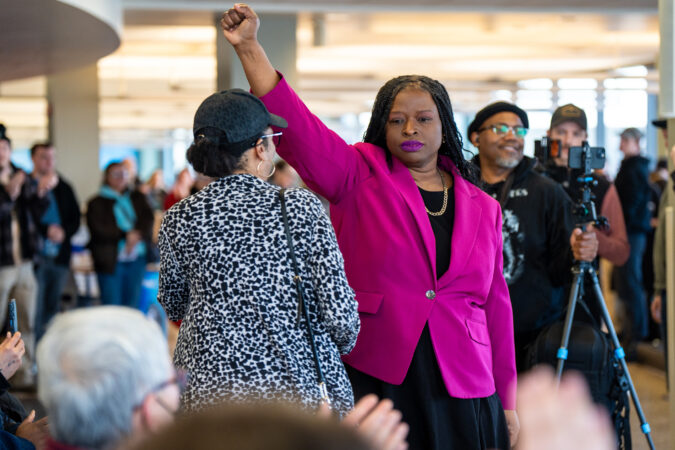
    Attorney General Pam Bondi announced the arrest of Nekima Levy Armstrong in a post on X. On Sunday, protesters entered the Cities Church in St. Paul, where a local official with U.S. Immigration and Customs Enforcement serves as a pastor. Bondi later posted on X that a second person had been arrested, followed by a third arrested announced by FBI Director Kash Patel.

    The Justice Department quickly opened a civil rights investigation after the group interrupted services by chanting “ICE out” and “Justice for Renee Good,” referring to the 37-year-old mother of three who was fatally shot by an ICE officer in Minneapolis earlier this month.

    “Listen loud and clear: WE DO NOT TOLERATE ATTACKS ON PLACES OF WORSHIP,” the attorney general wrote on X.

    Cities Church belongs to the Southern Baptist Convention and lists one of its pastors as David Easterwood, who leads the local ICE field office. Many Baptist churches have pastors who also work other jobs.

    Attorneys representing the church hailed the arrests.

    “The U.S. Department of Justice acted decisively by arresting those who coordinated and carried out the terrible crime,” said Doug Wardlow, director of litigation for True North Legal, which calls itself a public interest civil rights firm, in a statement.

    Meanwhile, a magistrate judge rejected federal prosecutors’ bid to charge Lemon related to the church protest, a person familiar with the matter said Thursday.

    The person spoke on the condition of anonymity because they were not authorized to publicly discuss the ongoing investigation.

    Lemon, a former NBC10 reporter and anchor, was among those on who entered the church. Lemon has said he is not affiliated with the protest organizers and was there chronicling as a journalist.

    “Once the protest started in the church we did an act of journalism which was report on it and talk to the people involved, including the pastor, members of the church and members of the organization,” Lemon said in a video posted on social media. “That’s it. That’s called journalism.”

    It wasn’t immediately clear what the Justice Department would do after the judge’s decision. Authorities could return to a magistrate judge to again seek a criminal complaint or an indictment against Lemon before a grand jury.

    CNN, which fired Lemon in 2023, first reported the ruling.

    Vance threatens the protesters with prison

    Levy Armstrong, a civil rights attorney and prominent local activist, had called for the pastor affiliated with ICE to resign, saying his dual role poses a “fundamental moral conflict.”

    “You cannot lead a congregation while directing an agency whose actions have cost lives and inflicted fear in our communities,” she said Tuesday. “When officials protect armed agents, repeatedly refuse meaningful investigation into killings like Renee Good’s, and signal they may pursue peaceful protesters and journalists, that is not justice — it is intimidation.”

    Prominent leaders of the Southern Baptist Convention have come to the church’s defense, arguing that compassion for migrant families affected by the crackdown cannot justify violating a sacred space during worship.

    Vance, speaking in Toledo ahead of his Minnesota visit, warned the church protesters: “Those people are going to be sent to prison so long as we have the power to do so. We’re going to do everything we can to enforce the law.”

    Arrests follow DOJ civil rights investigation

    A longtime activist in the Twin Cities metropolitan area, Levy Armstrong has helped lead local protests after the high-profile police-involved killings of Black Americans, including George Floyd, Philando Castile and Jamar Clark. She is a former president of the NAACP’s Minneapolis branch.

    Homeland Security Secretary Kristi Noem posted a photo on X of Levy Armstrong with her arms behind her back next to a person wearing a badge. Noem said she faces a charge under a statute that bars threatening or intimidating someone exercising a right.

    FBI Director Kash Patel posted on X that Chauntyll Louisa Allen, the second person Bondi said was arrested, is charged under the Freedom of Access to Clinic Entrances Act, which prohibits physically obstructing or using the threat of force to intimidate or interfere with a person seeking reproductive health services or seeking to participate in a service at a house of worship. Patel said William Kelly has also been arrested.

    It’s unclear which attorneys would represent Allen and Kelly.

    Saint Paul Public Schools, where Allen is a member of the board of education, is aware of her arrest but will not comment on pending legal matters, according to district spokesperson Erica Wacker.

    Allen and Levy Armstrong are part of a community of Black Minnesota activists who have protested the deaths of African Americans at the hands of police.

    Kelly defended the protest during a news conference Tuesday, criticizing the church for its association with a pastor who works for ICE.

    The Justice Department’s swift investigation into the church protest stands in contrast to its decision not to open a civil rights investigation into the killing of Good. Deputy Attorney General Todd Blanche said last week there was “no basis” for a civil rights investigation into her death.

    Administration officials have said the officer acted in self-defense and that the driver of the Honda was engaging in “an act of domestic terrorism” when she pulled toward him. But the decision not to have the department’s Civil Rights Division investigate marked a sharp departure from past administrations, which have moved quickly to probe shootings of civilians by law enforcement officials.

    The Justice Department has separately opened an investigation into whether Minnesota officials impeded or obstructed federal immigration enforcement though their public statements. Prosecutors this week sent subpoenas to the offices of Gov. Tim Walz, Attorney General Keith Ellison, Minneapolis Mayor Jacob Frey, St. Paul Mayor Kaohly Her and officials in Ramsey and Hennepin counties, according to a person familiar with the matter.

    VP visits Minnesota

    Vance, a Republican, arrived amid tense interactions between federal immigration law enforcement authorities and residents. State and local elected officials have opposed the crackdown that has become a major focus of Department of Homeland Security sweeps.

    His visit comes less than a month after Good was killed. He has called Good’s death a “tragedy of her own making.”

    Vance said early Thursday that the “far left” has decided the U.S. shouldn’t have a border.

    “If you want to turn down the chaos in Minneapolis, stop fighting immigration enforcement and accept that we have to have a border in this country. It’s not that hard,” Vance said.

    A federal appeals court this week suspended a decision that barred immigration officers from using tear gas or pepper spray against peaceful protesters in Minnesota. The 8th U.S. Circuit Court of Appeals froze the ruling that had barred retaliation, including detaining people who follow agents in cars.

    After the court’s stay, U.S. Border Patrol official Greg Bovino, who has commanded the administration’s big-city immigration campaign, was seen on video repeatedly warning protesters on a snowy Minneapolis street “Gas is coming!” before tossing a canister that released green smoke into the crowd.

    Bovino, speaking Thursday during a news conference, urged better cooperation from local and state officials in Minnesota, and blamed an “influx of anarchists” for the anti-ICE sentiment.

    “The current climate confronting law enforcement … is not very favorable right now in Minneapolis,” he said. The Associated Press left messages for the Minneapolis Police Department requesting its response to Bovino’s comments.

  • Jack Smith defends his Trump investigations at a public congressional hearing

    Jack Smith defends his Trump investigations at a public congressional hearing

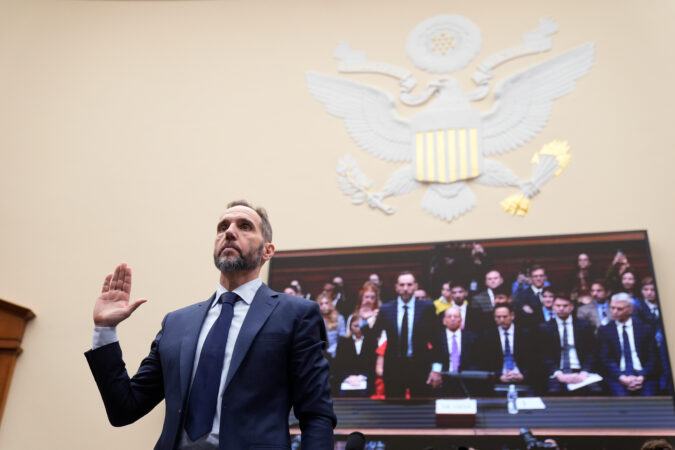
    WASHINGTON — Former Justice Department special counsel Jack Smith on Thursday defended his investigations of Donald Trump at a public congressional hearing in which he insisted that he had acted without regard to politics and had no second thoughts about the criminal charges he brought.

    “No one should be above the law in our country, and the law required that he be held to account. So that is what I did,” Smith said of Trump.

    Smith testified behind closed doors last month but returned to the House Judiciary Committee for a public hearing that provided the prosecutor with a forum to address Congress and the country more generally about the breadth of evidence he collected during investigations that shadowed Trump during the 2024 presidential campaign and resulted in indictments. The hourslong hearing immediately split along partisan lines as Republican lawmakers sought to undermine the former Justice Department official while Democrats tried to elicit damaging testimony about Trump’s conduct and accused their GOP counterparts of attempting to rewrite history.

    “It was always about politics,” said Rep. Jim Jordan of Ohio, the committee’s Republican chairman.

    “Maybe for them,” retorted Rep. Jamie Raskin, the panel’s top Democrat, during his own opening statement. “But, for us, it’s all about the rule of law.”

    The hearing was on the mind of Trump himself as he traveled back from the World Economic Forum in Davos, Switzerland, with the president posting on his Truth Social account that Smith was being “DECIMATED before Congress” — presumably reference to the Republican attacks he faced. Trump said Smith had “destroyed many lives under the guise of legitimacy.”

    Smith told lawmakers that he stood behind his decisions as special counsel to bring charges against Trump in separate cases that accused the Republican of conspiring to overturn the 2020 presidential election after he lost to Democrat Joe Biden and hoarding classified documents at his Mar-a-Lago estate in Palm Beach, Fla., after he left the White House.

    “Our investigation developed proof beyond a reasonable doubt that President Trump engaged in criminal activity,” Smith said. “If asked whether to prosecute a former president based on the same facts today, I would do so regardless of whether that president was a Republican or a Democrat.”

    Republicans, Smith spar over phone records

    Republicans from the outset sought to portray Smith as an overly aggressive, hard-charging prosecutor who had to be “reined in” by higher-ups and the courts as he investigated Trump. They also seized on revelations that the Smith team had collected and analyzed phone records of more than a half-dozen Republican lawmakers who were in contact with Trump on Jan. 6, 2021, as his supporters stormed the Capitol in a bid to halt the certification of his 2020 election loss.

    The records revealed the length and time of the calls but not the content of the communications, but Rep. Brandon Gill, a Texas Republican, said the episode showed how Smith had “walked all over the Constitution.”

    “My office didn’t spy on anyone,” Smith said, explaining that collecting phone records is a common prosecutorial tactic and necessary in this instance to help prosecutors understand the scope of the conspiracy.

    Smith describes a wide-ranging conspiracy on 2020

    Under questioning, Smith described what he said was a wide-ranging conspiracy to overturn the results of the election that Trump lost to Democrat Joe Biden and alleged how the Republican refused to listen to advisers who told him that the contest had in fact not been stolen. After he was charged, Smith said, Trump tried to silence and intimidate witnesses.

    Smith said one reason he felt confident in the strength of the case that prosecutors had prepared to take to trial was the extent to which it relied on Republican supporters of Trump.

    “Some of the most powerful witnesses were witnesses who, in fact, were fellow Republicans who had voted for Donald Trump, who had campaigned for him and who wanted him to win the election,” Smith said.

    The hearing unfolded against the backdrop of an ongoing Trump administration retribution campaign targeting the investigators who scrutinized the Republican president and amid mounting alarm that the Justice Department’s institutional independence is eroding under the sway of the president.

    In a nod to those concerns, Smith said: “I believe that if we don’t call people to account when they commit crimes in this context, it can endanger our election process, it can endanger election workers and, ultimately, our democracy.”

    Smith was appointed in 2022 by Biden’s Justice Department to oversee investigations into Trump, who has denied any wrongdoing. Both investigations produced indictments against Trump, but the cases were abandoned by Smith and his team after Trump won back the White House because of longstanding Justice Department legal opinions that say sitting presidents cannot be indicted.

    GOP says Smith wanted to wreck Trump’s White House bid

    Republicans for their part repeatedly denounced Smith, with California Rep. Kevin Kiley accusing him of seeking “maximum litigation advantage at every turn” and “circumventing constitutional limitations to the point that you had to be reined in again and again throughout the process.”

    Another Republican lawmaker, Rep. Ben Cline of Virginia, challenged Smith on his efforts to bar Trump from making incendiary comments about witnesses. Smith said the order was necessary because of Trump’s efforts to intimidate witness, but Cline asserted that it was meant to silence Trump in the heat of the presidential campaign.

    And Jordan, the committee chairman, advanced a frequent Trump talking point that the investigation was driven by a desire to derail Trump’s candidacy.

    “We should never forget what took place, what they did to the guy we the people elected twice,” Jordan said.

    Smith vigorously rejected those suggestions and said the evidence placed Trump’s actions squarely at the heart of a criminal conspiracy to undo the 2020 election.

    “The evidence here made clear that President Trump was by a large measure the most culpable and most responsible person in this conspiracy,” Smith said. “These crimes were committed for his benefit. The attack that happened at the Capitol, part of this case, does not happen without him. The other co-conspirators were doing this for his benefit.”

  • Collingswood mayor settles conflict-of-interest lawsuit as the borough’s EMS future is in flux

    Collingswood mayor settles conflict-of-interest lawsuit as the borough’s EMS future is in flux

    A month and a half after Collingswood’s mayor defiantly disagreed with a solicitor’s opinion that she should recuse herself from a vote to grant an ambulance-services contract to Virtua Health, which employs her husband, Daniela Solano-Ward signed a settlement agreement nullifying the vote and recusing herself from the matter.

    The shift followed a lawsuit filed by James Maley, who sits alongside Solano-Ward on the South Jersey borough’s three-person commissioners board, accusing the mayor of a conflict of interest. The lawsuit asked a judge to discard a Dec. 1 vote outsourcing Collingswood’s EMS services to Virtua Health.

    A Superior Court of Camden County judge, Francisco Dominguez, issued a temporary restraining order on Jan. 5 prohibiting Collingswood from executing the contract with Virtua or making changes to the borough’s EMS services.

    The borough settled the lawsuit Jan. 16, in an agreement that voided the contract with Virtua, and requires Solano-Ward to recuse herself from all EMS-related matters, according to a copy of the settlement obtained by The Inquirer.

    The settlement instructs Maley and Commissioner Amy Henderson Riley, Solano-Ward’s political ally and the borough’s director of public safety, to devise a plan to select an independent consultant to assist in deciding the future of Collingswood EMS services and a schedule for a public process.

    “Today’s settlement allows us to move forward as an elected body in a way that reflects the values of Collingswood,” Maley said in a statement. “My concerns in filing this action were rooted in two core principles: avoiding conflicts of interest under the law and ensuring that major decisions, especially those involving essential services like Fire and EMS, are made with full public awareness and engagement.”

    Solano-Ward confirmed she would limit her involvement with the EMS process moving forward, but said she trusted Henderson Riley and Maley to “roll up their sleeves and work together to find a resolution in a timely manner.”

    The catalyst for the dispute was concerns that Solano-Ward heard from the borough’s fire chief over his department’s lack of capacity to respond to the 4,000 calls it receives annually, the mayor said in a December commissioners meeting. The emergency medical services generate $450,000 a year, the lawsuit says.

    The mayor held a meeting with Collingswood’s fire chief in August, the suit says, and brought her husband, a Virtua critical-care physician, Jared Ward. He does not hold leadership positions in the South Jersey health system.

    Virtua was one of two entities that responded to a request for proposals to provide ambulance services for the borough.

    At the Dec. 1 commissioners meeting, Solano-Ward defended her husband’s involvement, saying the borough does not have a medical officer and she wanted to be sure no question went unasked.

    “We reached out to our attorney and he agreed that there could be a conflict of interest,” the mayor said in the meeting. “To which I respectfully disagree and I will be voting on the matter.”

    The commissioner’s board approved the contract in a 2-1 vote, with Maley opposing. Before the vote, the former long-time mayor, who held the position from 1997 until May, expressed outrage at the lack of transparency during the process and Solano-Ward’s participation.

    “It’s absurd, it is wrong, it’s unethical,” Maley said.

    The contentious lawsuit spilled into the January commissioners meeting, in which residents seemed divided on the issue. Some complained about the perceived lack of transparency by Solano-Ward in the decision to privatize the borough’s EMS department, while others accused Maley of neglecting the ambulance services during his tenure as mayor.

  • A massive and controversial AI data center is under construction in South Jersey

    A massive and controversial AI data center is under construction in South Jersey

    The French developer of South Jersey’s first large-scale AI data center made his case to residents on Wednesday, saying his massive under-construction facility will benefit them in ways unprecedented in the emerging industry.

    But at a contentious town hall, several residents said they’re not taking his word for it, especially given the timing at which the developer was asking for their input.

    “You couldn’t do this before the building was built?” asked one resident, who spoke during public comment but declined to give their name. “You kind of took our voice away.”

    The 2.4 million-square-foot, 300-megawatt Vineland data center was approved by city council more than a year ago. The center is already under construction, and the developer expects to complete it by November.

    Located on South Lincoln Avenue, off State Route 55, the site was formerly a private industrial park.

    DataOne, a French company that manages advanced data centers, is the owner, operator, and builder. Its client, Nebius Group, an Amsterdam-based AI-infrastructure company, will operate the center’s internal technology, which will fuel Microsoft’s AI tools.

    Located on South Lincoln Avenue, off State Route 55, the site was formerly a private industrial park. It was sold to DataOne in a private transaction, the details of which Charles-Antoine Beyney, DataOne’s founder and chief executive officer, declined to disclose.

    At city council meetings and on social media, some residents have voiced concerns about the environmental, financial, and quality-of-life impacts of the site. Prior to Wednesday’s meeting, residents were prompted to submit questions online that were then addressed in a presentation. Dozens also took to the mic afterward.

    Beyney said he understood their concerns, but they don’t apply to his center, which will use “breakthrough” technology to reduce its environmental impact.

    “Most of the data centers that are being built today suck, big time,” Beyney said Wednesday. “They consume water. They pollute. They are extremely not efficient. This is clearly not what we are building here.”

    “No freaking way am I am going to do what the entire industry is doing … just killing our communities and killing our lungs to make money,” he added.

    Developers tout promises of data centers

    Data centers house the technology needed to fuel increasingly sophisticated AI tools. In recent years, they have been proliferating across the country and the region.

    In June, Gov. Josh Shapiro announced a $20 billion investment by Amazon in Pennsylvania data centers in Salem Township and Falls Township.

    Politicians on both sides of the aisle — from Republican President Donald Trump to Democratic Pa. Gov. Josh Shapiro — have encouraged the expansion, as have certain labor and business leaders. Yet environmental activists and some neighbors of proposed data centers have pushed back.

    Across the Philadelphia region, residents have recently organized opposition to proposals for a 1.3 million-square-foot data center in East Vincent Township and a 2 million-square-foot facility near Conshohocken (that was forced to be withdrawn in November due to legal issues).

    This week, Limerick Township residents voiced concerns about the possibility of data centers being built in their community. And in Bucks County, a 2-million-square-foot data center is already under construction in Falls Township.

    Pennsylvania and New Jersey are home to more than 150 data centers of varying sizes and scopes, according to Data Center Map, a private company that tracks the facilities nationwide. But so far, the AI data center boom has largely spared South Jersey.

    A 560,000-square-foot data center is being built in Logan Township, Gloucester County, and is set to have a capacity of up to 150 megawatts once completed in early 2027, according to the website of its designer, Energy Concepts. There are also smaller, specialized data centers in Atlantic City and Pennsauken, according to Data Center Map.

    In Vineland, Beyney said his gas-powered center will have nearly net-zero emissions, not consume water while cooling the equipment, and generate 85% of its own power. He told residents: “You will not see your bill for electricity going and skyrocketing.”

    Opponents of data centers worry their electric bills will rise due to the centers. The developer in Vineland says that won’t happen in South Jersey.

    The facility will be 100% privately funded, he said, after the company turned down a nearly $6.2 million loan from the city amid resident backlash. The loan was approved at a December council meeting, and Beyney said DataOne would have paid about $450,000 in interest, money that could have gone back into the community.

    “That’s a shame,” Beyney said, “but we follow the people.”

    At a meeting next week, Vineland City Council could approve a PILOT agreement that would give DataOne tax breaks on the new construction in exchange for payments to the city.

    Beyney said DataOne plans to be a good neighbor. Across the street from the data center, he said they will build a vertical farm — which grows crops indoors using technology — and provide free fruits and vegetables to Vineland residents in need.

    Residents voice concerns about Vineland data center

    Several residents expressed skepticism, and even anger, about Beyney’s data-center promises, noting that Cumberland County already has plenty of farms.

    Regarding the data center itself, they asked how Beyney could be so confident about new technology, questioned the objectivity of his data, and accused him of taking advantage of a city where nearly 14% of residents live below the poverty line.

    Beyney denied the allegations.

    At least one resident said he was moved by Beyney’s assurances.

    “I was a really big critic of [the data center all along], but I think what you said tonight has alleviated a lot of my concerns,” said Steve Brown, who lives about a mile away from the data center. He still had one gripe, however: The noise.

    “What I hear every night when I wake up at 2, 3, 4 o’clock in the morning is this rumble off in the distance,” Brown said. “When I get out of my car every day when I get home, I hear it.”

    Brown invited Beyney and his team to come hear the noise from his kitchen or back patio. Beyney said they would do so, and promised to get the sound attenuated as soon as possible, certainly by the end of the project’s construction.

  • The decision to move ISIS prisoners from Syria to Iraq came at the request of Baghdad, officials say

    The decision to move ISIS prisoners from Syria to Iraq came at the request of Baghdad, officials say

    BAGHDAD — The decision to move prisoners of the Islamic State group from northeast Syria to detention centers in Iraq came after a request by officials in Baghdad that was welcomed by the U.S.-led coalition and the Syrian government, officials said Thursday.

    American and Iraqi officials told The Associated Press about the Iraqi request, a day after the U.S. military said that it started transferring some of the 9,000 IS detainees held in more than a dozen detention centers in northeast Syria controlled by the Kurdish-led Syrian Democratic Forces, or SDF, in northeast Syria.

    The move to start transferring the detainees came after Syrian government forces took control of the sprawling al-Hol camp — which houses thousands of mostly women and children — from the SDF, which withdrew as part of a ceasefire. Troops on Monday seized a prison in the northeastern town of Shaddadeh, where some IS detainees escaped and many were recaptured, state media reported.

    The SDF said on Thursday that government forces shelled al-Aqtan prison near the northern Syrian city of Raqqa with heavy weapons, while simultaneously imposing a siege around the prison using tanks and deploying fighters.

    Al-Aqtan prison, where some IS prisoners are held, was surrounded by government forces earlier this week and negotiations were ongoing on the future of the detention facility.

    Concerns about escapes

    With the push by government forces into northeast Syria along the border with Iraq, Baghdad became concerned that some of the detainees might become a danger to Iraq’s security, if they managed to flee from the detention centers amid the chaos.

    An Iraqi security official said that the decision to transfer the prisoners from Syria to Iraq was an Iraqi decision, welcomed by the U.S.-led coalition and the Syrian government. The official said that it was in Iraq’s security interest to detain them in Iraqi prisons rather than leaving them in Syria.

    Also Thursday, a senior U.S. military official confirmed to the AP that Iraq “offered proactively” to take the IS prisoners rather than the U.S. requesting it of them.

    A Syrian foreign ministry official said that the plan to transfer IS prisoners from Syria to Iraq had been under discussion for months before the recent clashes with the SDF.

    All three officials spoke on condition of anonymity because they weren’t authorized to comment publicly.

    Over the past several years, the SDF has handed over to Iraqi authorities foreign fighters, including French citizens, who were put on trial and received sentences.

    The SDF still controls more than a dozen detention facilities holding around 9,000 IS members, but is slated to hand the prisons over to government control under a peace process that also is supposed to eventually merge the SDF with government forces.

    U.S. Central Command said that the first transfer on Wednesday involved 150 IS members, who were taken from Syria’s northeastern province of Hassakeh to “secure locations” in Iraq. The statement said that up to 7,000 detainees could be transferred to Iraqi-controlled facilities.

    Iraq has beefed up patrols along its border with Syria. On Thursday, tanks lined up along the frontier in the northern province of Sinjar.

    Members of the Yazidi minority in Sinjar have been particularly fearful of a repeat of 2014 when IS militants overran the area and launched particularly brutal attacks on Yazidis, considered by the extremist group to be heretics. Militants killed Yazidi men and boys and sold women into sexual slavery or forced them to convert and marry militants.

    Stark warning

    IS declared a caliphate in 2014 in large parts of Syria and Iraq, attracting large numbers of fighters from around the world.

    The militant group was defeated in Iraq in 2017, and in Syria two years later, but IS sleeper cells still carry out deadly attacks in both countries. As a key U.S. ally in the region, the SDF played a major role in defeating IS.

    Also Thursday, the SDF accused the government of violating a four-day truce declared on Tuesday. It said Syrian government forces pounded the southern outskirts of the northern town of Kobani, which recently became besieged after the government’s push in the northeast over the past two weeks.

    A commander with the Kurdish women’s militia in Syria, speaking from inside Kobani, told reporters during an online news conference that living conditions there are deteriorating.

    Nesrin Abdullah of the Women’s Protection Units, or YPJ, said that if the fighting around Kobani continues, thousands of people “will be massacred.”

    She said that there was no electricity or running water in the town, which a decade ago became the symbol of resistance against IS. The militants at the time besieged it for months before being pushed back.

    “The people here are facing a genocide,” she said. “We have many people in hospitals, and hospitals cannot continue if there is no electricity.”

    U.N. Assistant Secretary-General Khaled Khiari told the U.N. Security Council Thursday that clashes were taking place in parts of Hassakeh province and also on the outskirts of Kobani, an enclave controlled by the SDF, and that the situation on the ground elsewhere was “very tense.”

  • Trump rolls out his Board of Peace, but many top U.S. allies aren’t participating

    Trump rolls out his Board of Peace, but many top U.S. allies aren’t participating

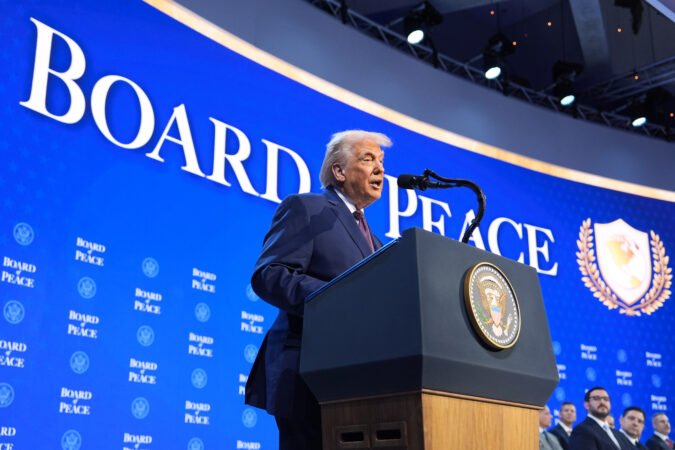
    DAVOS, Switzerland — President Donald Trump on Thursday inaugurated his Board of Peace to lead efforts at maintaining a ceasefire in Israel’s war with Hamas, insisting that “everyone wants to be a part” of the body he said could eventually rival the United Nations — despite many U.S. allies opting not to participate.

    In a speech at the World Economic Forum, Trump sought to create momentum for a project to map out a future of the war-torn Gaza Strip that has been overshadowed this week, first by his threats to seize Greenland, then by a dramatic retreat from that push.

    “This isn’t the United States, this is for the world,” he said, adding, “I think we can spread it out to other things as we succeed in Gaza.”

    The event featured Ali Shaath, the head of a new, future technocratic government in Gaza, announcing that the Rafah border crossing will open in both directions next week. But there was no confirmation of that from Israel, which said only that it would consider the matter next week.

    The Gaza side of the crossing, which runs between Gaza and Egypt, is currently under Israeli military control. Shaath, an engineer and former Palestinian Authority official from Gaza, is overseeing the Palestinian committee set to govern the territory under U.S. supervision.

    The new peace board was initially envisioned as a small group of world leaders overseeing the ceasefire, but it has morphed into something far more ambitious — and skepticism about its membership and mandate has led some countries usually closest to Washington to take a pass.

    Trump tried not to let those not participating ruin his unveiling party, saying 59 countries had signed onto the board — even though heads of state, top diplomats and other officials from only 19 countries plus the U.S. actually attended the event. He told the group, ranging from Azerbaijan to Paraguay to Hungary, “You’re the most powerful people in the world.”

    Trump has spoken about the board replacing some U.N. functions and perhaps even making that entire body obsolete one day. But he was more conciliatory in his remarks on the sidelines of the forum in the Swiss alps.

    “We’ll do it in conjunction with the United Nations,” Trump said, even as he denigrated the U.N. for doing what he said wasn’t enough to calm some conflicts around the globe.

    Secretary of State Marco Rubio said some countries’ leaders have indicated they plan to join but still require approval from their parliaments.

    Why some countries aren’t participating

    Big questions remain, however, about what the eventual board will look like.

    Russian President Vladimir Putin said his country is still consulting with Moscow’s “strategic partners” before deciding to commit. The Russian was hosting Palestinian President Mahmoud Abbas on Thursday in Moscow.

    Others are asking why Putin and other authoritarian leaders had even been invited to join. Britain’s foreign secretary, Yvette Cooper, said her country wasn’t signing on “because this is about a legal treaty that raises much broader issues.”

    “And we do also have concerns about President Putin being part of something which is talking about peace, when we have still not seen any signs from Putin that there will be a commitment to peace in Ukraine,” she told the BBC.

    Norway and Sweden have indicated they won’t participate. France declined after its officials stressed that while they support the Gaza peace plan, they were concerned the board could seek to replace the U.N.

    Canada, Ukraine, China, and the executive arm of the European Union also haven’t committed. Trump calling off the steep tariffs he threatened over Greenland could ease some allies’ reluctance, but the issue is still far from settled.

    The Kremlin said Thursday that Putin plans to discuss his proposal to send $1 billion to the Board of Peace and use it for humanitarian purposes during his talks with Abbas — if Russia can use of those assets the U.S. had previously blocked.

    Others voice reservations

    The idea for the Board of Peace was first laid out in Trump’s 20-point Gaza ceasefire plan and even was endorsed by the U.N. Security Council.

    But an Arab diplomat in a European capital said that Middle Eastern governments coordinated their response to Trump’s invitation to join the Board of Peace and that it was crafted to limit the acceptance to the Gaza plan as mandated by the U.N. Security Council.

    Speaking on the condition of anonymity to discuss the matter more freely, the diplomat said the announced acceptance is “preliminary” and that the charter presented by the U.S. administration contradicts in some parts the United Nations’ mission. The diplomat also said that other major powers are unlikely to support the board in its current form.

    Months into the ceasefire, Gaza’s more than 2 million Palestinians continue to suffer the humanitarian crisis unleashed by more than two years of war. And violence in Gaza continues.

    Key to the truce continuing to hold is the disarming of Hamas, something that the militant group that has controlled the Palestinian territory since 2007 has refused to do, despite Israel seeing it as non-negotiable. Trump on Thursday repeated his frequent warnings that the group will have to disarm or face dire consequences.

    He also said the war in Gaza “is really coming to an end” while conceding, “We have little fires that we’ll put out. But they’re little,” and they had been “giant, giant, massive fires.”

    Iran looms large

    Trump’s push for peace also comes after he threatened military action this month against Iran as it carried out a violent crackdown against some of the largest street protests in years, killing thousands of people.

    Trump, for the time being, has signaled he won’t carry out any new strikes on Iran after he said he received assurances that the Islamic government would not carry out the planned hangings of more than 800 protesters.

    But Trump also made the case that his tough approach to Tehran — including strikes on Iran’s nuclear facilities in June last year — was critical to the Israel-Hamas ceasefire deal coalescing.

    Meanwhile, Trump also spoke behind closed doors for about an hour with Ukrainian President Volodymyr Zelensky and called the discussion “very good” without mentioning major breakthroughs. Trump’s special envoy Steve Witkoff and his son-in-law Jared Kushner are expected in Moscow for talks aimed at ending Russia’s nearly 4-year-old war in Ukraine.

    Zelensky later addressed the Davos forum and said there would be two days of trilateral meetings involving the U.S., Ukraine and Russia in the United Arab Emirates starting Friday — following the U.S. talks in Moscow.

    “Russians have to be ready for compromises because, you know, everybody has to be ready, not only Ukraine, and this is important for us,” Zelensky said.