Category: Pennsylvania News

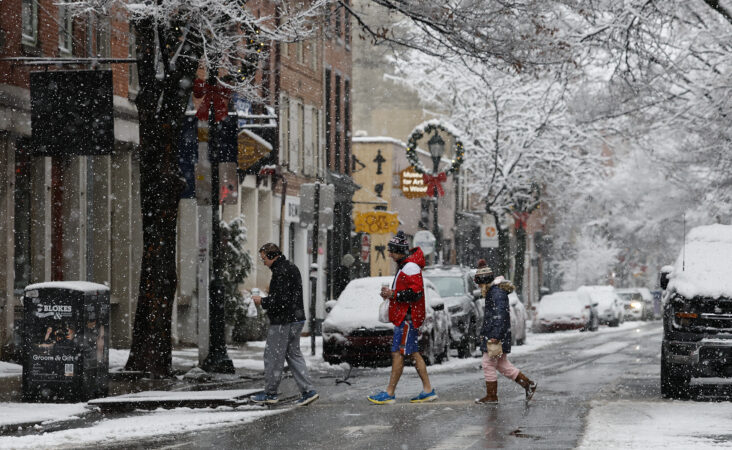
  • Snow, sleet, and rain moved into Philly overnight, with icy roads a concern on Saturday

    Snow, sleet, and rain moved into Philly overnight, with icy roads a concern on Saturday

    Friday’s snow, sleet, and rain brought a cold mix of precipitation to Philadelphia and surrounding areas, leaving behind slippery conditions Saturday.

    “Today looks quiet compared to last night, but watch out for the icy roads,” said Joseph DeSilva, a meteorologist in the National Weather Service’s Mount Holly office.

    Saturday looks to be mostly cloudy, with a high of 34 degrees, a low of 25, and no precipitation on the horizon, DeSilva said.

    While roads continue to be treated, the Pennsylvania Department of Transportation has already removed a 45 mph temporary speed-limit reduction for major highways in the five-county Philadelphia region, including on Interstates 76 and 95, as well as I-476, I-676, and I-295.

    The wintry mix of snow, sleet, and intermittent rain moved into the region overnight, with temperatures hovering in the mid-30-degree range.

    Regional accumulation totals varied, from .2 inch in Rittenhouse Square to .3 at Philadelphia International Airport, .4 in Mt. Holly and 1 inch in Skippack.

    window.addEventListener(“message”,function(a){if(void 0!==a.data[“datawrapper-height”]){var e=document.querySelectorAll(“iframe”);for(var t in a.data[“datawrapper-height”])for(var r,i=0;r=e[i];i++)if(r.contentWindow===a.source){var d=a.data[“datawrapper-height”][t]+”px”;r.style.height=d}}});

    Ray Martin, a meteorologist in the National Weather Service’s Mount Holly office said Friday that even without especially high accumulations, conditions would remain hazardous.

    Sleet tends to be more compact than snow, demanding more effort when it comes to shoveling or plowing it off sidewalks, entryways, and garages.

    For Martin, this is: “a lot of little ice balls, basically frozen raindrops, covering the ground. It will be like shoveling sand.”

    If possible, he recommended waiting to drive until later Saturday, when temperatures were expected to rise above freezing.

    In Northeast Philadelphia, icy roads have already claimed a life.

    A 45-year-old woman was killed when her car was struck head-on by a pickup truck, police said. The crash occurred around 2 a.m., when thepickup was traveling north on the 3500 block of an ice-covered Aramingo Avenue when the driver lost control of the truck, police said.

    The pickup was moving at an “unsafe speed for the wintry conditions,” police said, crossing into the southbound lanes and striking the woman’s car head-on.

    Fire Department medics transported both drivers to local hospitals. The cwoman was transferred to Temple University Hospital, where she was pronounced dead at 2:35 a.m. Meanwhile, the pickup driver is considered stable at Jefferson Hospital.

    A third person, a 29-year-old passenger in the truck, was taken to Temple University Hospital with non-life-threatening injuries.

    And the snowy, icy conditions aren’t just affecting Philadelphia.

    Accumulation totals were higher north of the area, with anywhere from 2 to 6 inches in northern New Jersey.

    window.addEventListener(“message”,function(a){if(void 0!==a.data[“datawrapper-height”]){var e=document.querySelectorAll(“iframe”);for(var t in a.data[“datawrapper-height”])for(var r,i=0;r=e[i];i++)if(r.contentWindow===a.source){var d=a.data[“datawrapper-height”][t]+”px”;r.style.height=d}}});

    Due to the slippery conditions, acting New Jersey Gov. Tahesha Way declared a state of emergency across her state Friday morning, urging people to monitor official updates, remain off the roads unless necessary, and stay safe.

    As of Saturday afternoon, 27 flights at Philadelphia International Airport were cancelled, and 164 were delayed, due to the storm. Those with holiday traveling around the corner, can track flight statuses at Philadelphia International Airport.

    The storm came ahead of the 30th anniversary of Philly’s massive 1996 snowfall, when the city registered 30.7 inches between Jan. 7 and Jan. 8.

    So far this season, Philadelphia has already seen more than half the snow last winter brought. This year’s seasonal total stands at 4.2 inches, while the city saw 8.1 inches during the entire 2024-25 winter.

    Slight melting is expected through Saturday, but refreezing will come overnight, bringing a rainy Sunday with a high of 43 and a low of 37 degrees.

    Conditions are set to improve in Philadelphia by early next week, with Monday expected to bring a high of 58 degrees and a low of 28, and the year waving farewell Wednesday with a high of 38 degrees and a low of 30, according to AccuWeather.

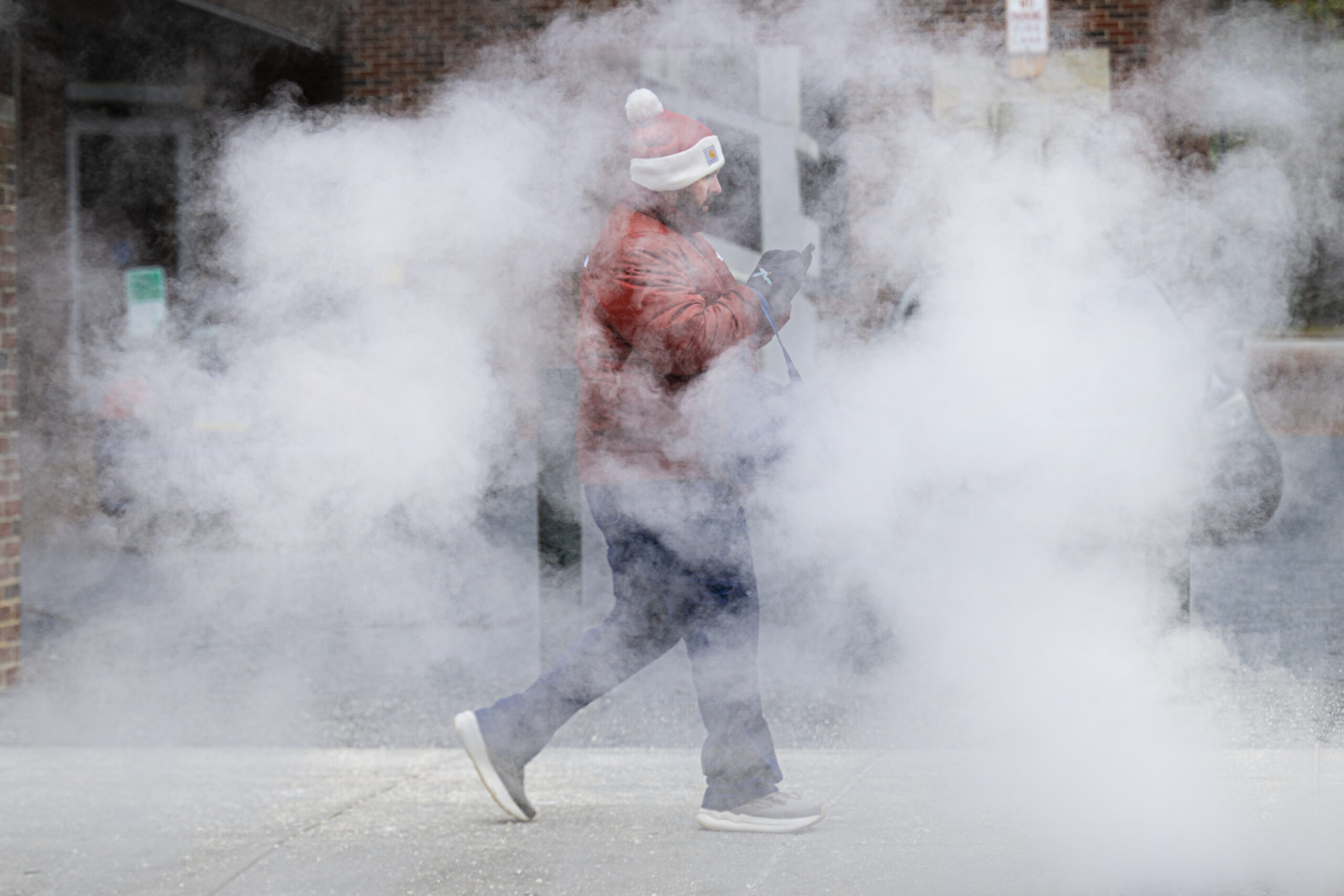
    A pedestrian walks through a cloud of steam on a cold winter day in West Philadelphia, Friday, Dec. 26, 2025, as snow and a wintry mix are forecast for the area through Saturday morning.
  • Mother killed reportedly during a post-Christmas child custody swap in Upper Darby

    Mother killed reportedly during a post-Christmas child custody swap in Upper Darby

    A woman was killed in front of her three children reportedly by their father who then shot himself during a custody transfer early Friday afternoon in Upper Darby.

    Shortly after 1 p.m., Upper Darby police posted on social media that a man and woman had been found shot. Just after 6 p.m., Upper Darby police posted an update that the double shooting at Copley Road and Locust Street was “another senseless act of domestic violence.”

    Officers responded to a 911 call for a shooting at the location and found the woman seated in the driver’s seat of a vehicle with a gunshot wound. Lifesaving measures were attempted but unsuccessful for the woman, police said.

    The man was transported to Penn Presbyterian Medical Center, where he was listed in critical condition on life support, police said.

    Police Superintendent Timothy M. Bernhardt told the Delaware County Daily Times that the woman was 34 and the man is 45. Their identities have not yet been made public.

    Bernhardt told the Daily Times: “What we know through investigation so far is that the female was there picking up children. There’s a custody order in place. The male had the children for Christmas, he walked up to the car with the children, the children got into the vehicle, there was some type of an argument, exchange of words, he pulled out a handgun and shot her … got out of the vehicle and then shot himself.”

    Three children inside the vehicle at the time of gunfire were not injured, Upper Darby police said.

    “Yesterday’s incident was a brutal act of domestic violence,“ Bernhardt said in a statement to The Inquirer. ”A mother was killed in front of her children. Those children will live with this trauma for the rest of their lives. There is no excuse for this kind of violence, and the damage it causes is permanent.”

    Staff writer Maggie Prosser contributed to this article.

  • $1 million-winning Powerball lottery ticket sold in Northeast Pa.

    $1 million-winning Powerball lottery ticket sold in Northeast Pa.

    A Powerball ticket purchased in Northeast Pennsylvania netted a $1 million prize in the lottery’s Christmas Eve drawing.

    The ticket — which matched all five of the white ball numbers, 04, 25, 31, 52, and 59, but not the Powerball number, 19 — was sold at Pittston Candy & Cigar Co. in Luzerne County, the Pennsylvania Lottery announced Friday in a news release.

    Pittston Candy & Cigar Co. could not immediately be reached by phone Friday evening.

    The lottery game’s three-month stretch ended Wednesday, after a ticket matching all six numbers was sold outside Little Rock, Ark. The $1.817 billion, or $834.9 million cash, jackpot was the second-largest in U.S. history and the largest Powerball prize of 2025, according to www.powerball.com.

    Two other big-winnings tickets, worth $100,000 each, were sold in Jefferson County, Pennsylvania, and Morris County, New Jersey.

    Nearly 335,000 Powerball tickets purchased in the commonwealth won varying dollar amounts, and 10 New Jersey players won $50,000 prizes, according to the respective lottery commissions.

    The prize followed 46 consecutive drawings in which no one matched all six numbers. Powerball’s odds of 1 in 292.2 million are designed to generate big jackpots, with prizes growing as they roll over when no one wins.

    Another $20 million, or $9.2 million cash, will be up for grabs at Powerball’s Saturday drawing.

    The Associated Press contributed to this article.

  • Iron Hill Brewery in West Chester is officially seeking a new tenant

    Iron Hill Brewery in West Chester is officially seeking a new tenant

    The search is on for a new restaurateur to take over the shuttered Iron Hill Brewery in West Chester, after the building’s owner bought the assets from the former CEO of Famous Dave’s BBQ.

    John Barry, a Massachusetts-based real estate investor who owns the building, and Jeff Crivello, the ex-CEO of Famous Dave’s, said Friday that Barry purchased the liquor license and all assets inside the former West Chester Iron Hill, one of 16 locations that closed abruptly this fall when the regional chain filed for bankruptcy.

    In November, Crivello had said he intended to revive the West Chester Iron Hill, under the same name or as a new concept, after a bankruptcy judge approved his offer to buy the assets of the location and nine others in Pennsylvania, Delaware, and South Carolina.

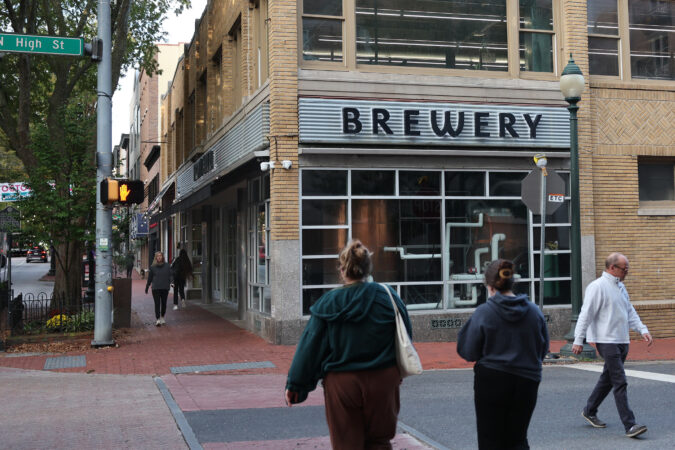
    A view from the outside looking in of the closed Iron Hill Brewery in West Chester in October.

    Both Barry and Crivello declined to disclose financial details of the West Chester deal, which was finalized on Christmas Eve. It was first reported Wednesday by Hello, West Chester, a local news website.

    “As a landlord, I was hoping to have a chance to purchase the assets,” Barry said Friday in an interview. “I wanted to buy and keep the liquor license with the building. It allows me to get a better tenant in there that is probably going to pay a little bit more in rent.”

    Iron Hill had anchored the old Woolworth’s building since 1998, when the brewery founders opened their second location there. Many local business owners credit Iron Hill with sparking a restaurant renaissance in the borough, as the brewery did in other Philadelphia suburbs.

    Situated at West Chester’s central corner of High and Gay Streets, Iron Hill had a 30-year lease, with a 15-year extension, Barry said.

    Barry, a West Chester native who now lives outside Boston, purchased the nearly 30,000-square-foot building for $8.25 million in 2022, according to Chester County property records.

    Barry said the next anchor tenant would take over a new lease for the now-vacant 10,000-square-foot space that can seat 300 people. He declined to specify what the lease terms might be.

    “It will not be reopening as Iron Hill Brewery,” said Barry, who didn’t buy the rights to the name. “My goal would be to find something similar,” though not necessarily a brewery.

    In buying the assets, Barry said the restaurant is essentially turnkey, with all the furniture and kitchen and brewing equipment still inside. A new tenant, however, may want to redesign, he said, or the space could even be subdivided for a restaurant and a retail space.

    A view from the outside looking in the now closed Iron Hill Brewery in West Chester in October.

    “It’s really important to me that we find the right tenant for the West Chester community,” Barry said. “It’ll take a little bit of time.”

    But, he added, “my hope is we get somebody in there and operating by the summer.”

    Elsewhere, Crivello said there is still hope that the Iron Hill brand could get another life.

    “We’re working with a couple buyers that want to reopen [closed breweries] as Iron Hill,” Crivello said. He declined to say which locations could be resurrected.

    In November, Crivello got the OK to acquire the assets of former Iron Hill brewpubs in Center City, Huntingdon Valley, Newtown, Wilmington, Lancaster, Hershey, and Rehoboth Beach, as well as West Chester and the two locations in South Carolina.

    Crivello said Friday that he has since sold the assets of the former Iron Hills in Columbia and Greenville, S.C., to Virginia-based Three Notch’d Brewing Co. He said plans for the other locations were still in the works.

  • At least $18.7M poured into this year’s critical Pa. Supreme Court retention races

    At least $18.7M poured into this year’s critical Pa. Supreme Court retention races

    Spotlight PA is an independent, nonpartisan, and nonprofit newsroom producing investigative and public-service journalism that holds power to account and drives positive change in Pennsylvania. Sign up for our free newsletters.

    HARRISBURG — Special interests, organizations connected to Pennsylvania’s richest man, and groups with mysterious donors broke spending records to influence the outcome of this year’s critical state Supreme Court elections.

    In all, they spent cash and provided other support worth at least $18.7 million, a Spotlight PA review found.

    Pennsylvania’s 2025 retention races are likely among the five most expensive elections of their kind in American history, according to Douglas Keith, a deputy director of the New York-based Brennan Center who tracks judicial elections.

    “A lot of the changes that we’re seeing around retention elections right now, they reflect a changing understanding of how important these courts are,” Keith told Spotlight PA. “But they also reflect some enormous changes in just how our campaigns operate in this country.”

    Almost three-fourths of the spending and support — more than $13 million — favored retention for three justices elected as Democrats: Christine Donohue, Kevin Dougherty, and David Wecht. It came from the candidates’ campaigns as well as a plethora of Democratic-aligned interest groups funded by plaintiffs’ lawyers who argue for big money verdicts, organized labor, and liberal-leaning mega donors from across the country.

    The spending opposing retention came predominantly from nonprofits tied to a network of political groups historically funded by billionaire Jeff Yass. This type of spending is often known as “dark money” because of the difficulty of tracing the money’s origins, and was enabled by the federal Citizens United ruling in 2010.

    In total, spending on these races was much higher than in 2005, the last time this kind of election was seriously contested. The two candidates reported spending under $1 million combined that year.

    Despite a determined effort to oust them through a campaign of, at times, misleading ads, all three justices were comfortably retained. In each race, roughly 800,000 more voters supported keeping them on the bench rather than kicking them off. Turnout was high for an off-year election, particularly in Philadelphia and its suburbs — areas favorable to Democrats.

    Historically, the goal and intention of the retention elections are for voters to base their decision on a judge’s performance, Deborah Gross, chief executive of advocacy group Pennsylvanians for Modern Courts, told Spotlight PA. But looking at 2025, “money has now reared its ugly head.”

    Judges, she added, are “not accountable to the public. They’re accountable to the Constitution and the rule of law, and the public shouldn’t really be influencing that. They really need to be independent.” This level of spending — and fundraising it entails — could threaten that independence, she argued.

    Added Jim McErlane, a lawyer and 2016 Republican National Convention delegate, to Spotlight PA: “Judges should not have to worry about their popularity with anybody.”

    It’s still unknown if 2025 was an aberration or a sign of things to come.

    McErlane thought it was a one-off driven by a unique opportunity for Republicans to open a path to flip the court from a majority of justices elected as Democrats. Had voters rejected any of the candidates, that seat would have been vacated and up for grabs in the next odd-year election (Donohue’s seat will be on the 2027 ballot because she is approaching the mandatory retirement age).

    While the court had delivered rulings on issues like gerrymandering and voting by mail that aligned with Democrats’ positions, that didn’t mean the justices deserved to be kicked off the bench, McErlane argued.

    “Sometimes your side’s going to win, sometimes your side’s going to lose,” he said. “I think you sort of roll with it.”

    But writing in a November op-ed, Matt Brouillette, who leads the network of Yass-funded groups, struck a defiant note, calling for GOP-aligned investment to match Democrats’ spending.

    “It’s time for the Right to recognize what’s at stake — and send in its own cavalry to win Pennsylvania,” he wrote.

    A likely incomplete total

    As money flooded into this year’s judicial races, many of the spending details weren’t clear to voters ahead of Election Day.

    Spotlight PA reported in October that the state’s process for political groups to report independent spending is full of loopholes, has minimal penalties, and is mostly self-enforced.

    To gain a better understanding of the donors and power players who shaped this year’s retention elections, Spotlight PA in mid-December analyzed three big buckets of spending. The news organization examined spending as reported by the candidates’ own committees, independent expenditures reported by outside groups, and “in-kind” contributions accepted by the candidates. Those in-kind contributions can be anything of value under state law, but typically include TV ads, mailers, and fundraiser expenses like food and drink.

    Since money sometimes moves between different groups, Spotlight PA took steps to avoid double-counting dollars. The analysis also included totals for some disclosures that appeared to lump spending on the state Supreme Court retention election with other races.

    The total could still rise. A spokesperson for the Pennsylvania Department of State told Spotlight PA in mid-December that agency officials were “still receiving some Independent Expenditure reports and are working to enter them,” with new entries entered by hand in real time.

    Brouillette’s groups, the established Commonwealth Partners and the brand new Citizens for Term Limits, paid for nearly all of the advertising opposing retention, totaling about $4.8 million, Spotlight PA’s analysis found. As both groups are nonprofits, the source of these dollars is unknown. However, Brouillette’s groups have historically been funded by Yass.

    A spokesperson for Commonwealth Partners did not respond to requests for comment.

    On the pro-retention side, Donohue, Dougherty, and Wecht — plus groups coordinating with them — spent or made “in-kind” contributions of more than $9 million.

    All three candidates also contributed to a political action committee called Vote Yes for Fair and Independent Courts, which paid for the production and placement of TV ads. Vote Yes received the majority of its funding from trial lawyers, who often argue big money personal injury, medical malpractice, and other civil suits before judges.

    At least $4 million in pro-retention spending was done independently by groups that did not coordinate with the candidates, including Planned Parenthood’s advocacy arm. A wide range of other organizations also paid for student engagement, fliers, text messages, canvassing, and other support.

    The ACLU reported spending about $914,000 to the Department of State, and online records describe the expenditures as supporting the candidates. The state and national chapters described the campaign as educational in public statements, while a spokesperson told Spotlight PA its independent expenditure report included the disclaimer that the organization “does not endorse or oppose candidates.”

    “The expenditures being reported in this filing were in support of one or more of the positions of the candidates identified on critical civil liberties issues,” the spokesperson continued.

    Other pro-retention spending was done by Pennsylvanians for Judicial Fairness, a state-level super PAC. It has poured money from unions, trial lawyers, billionaires, national super PACs, and dark money nonprofits into the commonwealth’s statewide judicial races since 2023.

    This year, more than a third of its funding came from nonprofits such as PA Alliance Action, a state-level dark money group, according to Spotlight PA’s analysis of PJF’s fundraising. Such organizations’ funding is harder to trace than that of a typical PAC, as they do not have to disclose their donors.

    PJF’s spending also shows some of the limits in how the commonwealth tracks political spending, particularly in the age of dark money.

    As of Dec. 22, it reported spending more than $780,000 on digital ads, mail, “production,” and a phone program to the Department of State as independent expenditures.

    However, the super PAC also funded at least one pro-retention TV ad, Spotlight PA previously found. The group had not reported that spending as an independent expenditure as of mid-December, though it did disclose spending about $3 million on TV buys through separate reports — campaign finance filings to the state.

    PJF did not respond to a request for comment to explain what the about $3 million was spent on — the reports describe the expenditures as TV buys and TV ad buys — and why it wasn’t reported as an independent expenditure.

    These discrepancies are “another indication of maybe some gaps in Pennsylvania’s reporting system, or at very least the way it’s presenting the data,” said Keith, of the Brennan Center.

    Whether the tsunami of money actually changed voters’ minds is hard to say.

    Sue Grice, a 41-year-old mother of four and registered independent from Montgomery County, told Spotlight PA on Election Day that she supports abortion access, but was also still frustrated by the closure of schools and churches during the COVID-19 pandemic.

    Weighing the two stances, she decided the latter was her priority and voted against retaining all three justices.

    Finding trusted, nonpartisan information on the races was a frustrating endeavor, she said, compared to the barrage of advertising.

    “I got a stupid amount of text messages,” she said, “and sent them all to spam.”

    BEFORE YOU GO … If you learned something from this article, pay it forward and contribute to Spotlight PA at spotlightpa.org/donate. Spotlight PA is funded by foundations and readers like you who are committed to accountability journalism that gets results.
  • Elder abuse agencies fail to mitigate risk as Shapiro admin defends system, touts changes

    Elder abuse agencies fail to mitigate risk as Shapiro admin defends system, touts changes

    Spotlight PA is an independent, nonpartisan, and nonprofit newsroom producing investigative and public-service journalism that holds power to account and drives positive change in Pennsylvania. Sign up for our free newsletters.

    HARRISBURG — In November, Pennsylvania Department of Aging Secretary Jason Kavulich found himself in the hot seat.

    He was testifying before a legislative committee on his department’s oversight of 52 county-based Area Agencies on Aging that protect vulnerable older adults from abuse or neglect.

    Reading from prepared remarks, Kavulich asserted that under his watch, the department has ushered in an era of modernization and change.

    He said the system his agency now uses to determine the quality of protective services is more accountable and gives real-time feedback so any problems can be speedily fixed. He also testified that the department is the most transparent it has ever been, saying that it places an unprecedented amount of data on its website about whether counties are following state requirements for quickly and efficiently investigating abuse and neglect allegations — and keeping older adults safe.

    The reality is far more nuanced.

    Over the last 18 months, a Spotlight PA investigation has revealed persistent flaws within Pennsylvania’s safety net for older adults. The reporting highlighted how delays, secrecy, and government inaction have left older Pennsylvanians vulnerable to abuse, neglect, and even death.

    Many of those older adults lack financial resources for alternative care or a network of family and friends to watch out for them — they rely on the system to remain safe.

    Protective services work is emotionally and physically taxing. Many caseworkers juggle high workloads, often for little money. Turnover is high, making it difficult to retain qualified, experienced people. Even the most hardened critics of the state’s protective services system acknowledge the difficulty of the work.

    Still, new data show that many counties continue to fail in some of the most important areas of older adult protective services.

    Critics of Kavulich’s administration, including former protective or aging services staffers at the department, believe many of his changes have relaxed oversight of the county agencies and weakened efforts to ensure they follow rules and keep older adults safe.

    These critics note that Kavulich once helmed a county aging agency and later presided over the association that represents their interests. That background, they believe, makes him sympathetic to the very agencies his department is supposed to oversee.

    At least one employee is suing him and the department, alleging retaliation for raising alarms about transparency problems and elder abuse system failures.

    Most alarmingly, hundreds of older adults continue to die while their abuse and neglect cases are actively being investigated by their local aging agency, according to data provided to Spotlight PA by state aging officials.

    “Has he made changes? Yes,” said Sheri McQuown, a former Department of Aging specialist who monitored the quality of protective services by counties, including the one Kavulich once led. “Do those changes benefit older adults? No. They benefit the [counties].”

    A new monitoring system

    Appointed by Gov. Josh Shapiro in 2023, Kavulich has repeatedly asserted that he inherited a deeply flawed system for assessing how well counties investigate abuse and neglect allegations and provide services to keep older adults safe.

    He called the system subjective, said it was riddled with inconsistencies, and claimed that it did little to help counties correct problems or improve their performance.

    This year, he replaced it with a new monitoring system, called the Comprehensive Agency Performance Evaluation, or CAPE.

    Under CAPE, counties are assessed and scored in five main categories, and those results are published online — the first time the department has made that information easily accessible.

    CAPE, Kavulich has said, allows the department to drill down on specific problems and help counties in the areas where they are struggling the most, including through training opportunities.

    “Accountability is about improvement, not punishment,” Kavulich said at a state Senate hearing in November.

    Earlier this year, Spotlight PA obtained copies of the forms and scoresheets the department used to monitor counties both before CAPE and after. Those records show the prior monitoring system assessed counties using a wide range of measures drawn from state regulations.

    For instance, it assessed counties on how quickly they met in person with an older adult suspected of being in danger of abuse or neglect. It also monitored them on how quickly the investigation was completed.

    Denise Getgen, the department’s former director of protective services, oversaw the agency’s previous monitoring system until her tenure ended in 2023 and rejected Kavulich’s assertion that it was flawed. It was “absolutely based on the law and regulations and our policy documents at the time,” she said.

    In fact, Getgen said, the department provided the county aging agencies with paperwork that cited the specific regulation, policy, or law for every point on which they were being monitored.

    Kevin Longenecker, who headed the department’s division of housing and aging services before he retired in 2021, echoed Getgen’s assessment of the legacy system. He said the assertion that it was haphazard and subjective “couldn’t be further from the truth.”

    “It was the most consistent monitoring we had,” he said.

    Former department employees interviewed by Spotlight PA assert that CAPE makes it easier for counties to receive passing grades.

    That is because in implementing CAPE, the department did away with the previous weighted scores, meaning local aging agencies are no longer graded more harshly for serious investigative failures. Under CAPE, the department equally scores relatively minor problems — such as poorly kept paperwork — and more serious deficiencies, such as failing to swiftly complete abuse and neglect investigations.

    Unlike the previous monitoring system, CAPE does not designate counties as compliant or noncompliant with state regulations. Nor does it assign them an overall score. Instead, it uses a percentage system to score the counties in each of the five main categories — they must score at least a 75% to avoid additional scrutiny from the department.

    Since CAPE went into effect earlier this year, 16 county aging agencies have been monitored. Of those, 12 received less than 75% in the “risk mitigation and safety” category, according to department data.

    It is one of the most important categories — and one that used to be weighted more heavily.

    State aging officials describe it this way on the department’s website: “Risk mitigation for the older adult involves assessing their individual needs, coordinating support services, and implementing protective actions to ensure safety. The goal of risk mitigation and safety is to enhance the older adult’s well-being and protect them from further harm.”

    In an email, department spokesperson Karen Gray said criticism that CAPE is more lenient on the counties has “no basis in fact.”

    “In fact, some AAAs have not met the department’s minimum compliance threshold of 75% in certain categories, clearly showing the new system is working and readily identifying issues — not masking them within an overall score like the previous system allowed,” she said.

    When asked whether the department was concerned that the majority of counties monitored so far were falling short in the risk mitigation category, Gray did not respond.

    More public data

    The department has made good on Kavulich’s promise to make more data about his agency’s work — as well as the work of the county aging agencies — available to the public.

    The department now publishes data on its website on how well counties are complying with state rules that mandate caseworkers make “every attempt” to meet face-to-face with an older adult within 24 hours of receiving an emergency or priority report of suspected abuse or neglect.

    That is a metric that the majority of counties have, at least since 2017, met with success.

    The agency also began posting data about whether counties complete abuse and neglect investigations — and provide services to help an at-risk older adult, if an allegation is substantiated — within 20 days of receiving a report. (Kavulich, as well as representatives of the county’s aging agencies, have asserted that the 20-day deadline is a goal. State regulations say counties “shall make all reasonable efforts” to complete investigations of reports of need in that time frame, “and, in cases of abuse and neglect, at least within 20 days of the receipt of the report.” The Office of State Inspector General has described it as a legal requirement.)

    Still, the 20-day compliance data on the department’s website exclude instances where caseworkers were unable to locate an older adult — a change from past practice, when those cases were included. That makes it difficult to determine whether counties have, as the department has asserted, made improvements. It also makes it impossible to compare their performance with past years.

    Asked about the change, Gray said the department isn’t excluding those data — instead, it is “no longer including” them in its calculations.

    But, she said, the information is still tracked. And the department has a directive that spells out multiple steps counties must take before determining someone can’t be located, including contacting the person’s family and friends and monitoring their residence and frequented locations.

    The 20-day deadline is an area in which many counties have historically fared poorly.

    A Spotlight PA analysis of compliance data between 2017 and 2024 found that, in the best year, nearly a third of total cases investigated annually by the 52 county agencies either missed the 20-day deadline or contained faulty paperwork that made it impossible to determine how they performed. Some years were far worse — nearly half didn’t meet the requirement.

    The 20-day compliance data posted on the department’s website does not permit the public to calculate the percentage of overall cases in which the deadline was missed, although it does provide overall monthly scores for each of the 52 agencies. It also doesn’t break down how many days past the deadline an investigation dragged on. Spotlight PA’s analysis found that investigations at times blew the deadline by months or even more than a year.

    The data also do not include the number of older adults who died while their abuse and neglect cases were actively being investigated. In 2018, 888 people died while counties looked into allegations they were being abused or neglected. In 2023 — the last year of complete data — that number was 1,511, a 70% increase over just five years.

    The association that represents county aging agencies has argued that those numbers don’t tell the whole story, and that the data are skewed in part by the dramatic impact of the pandemic on the well-being of older adults.

    Yet the number of deaths hasn’t dropped dramatically in the years since. Preliminary data show that 1,364 older adults died while under the care of the system in 2024.

    A whistleblower suit

    Just before Thanksgiving, a longtime employee of the state Department of Aging sued the agency and Shapiro in federal court, alleging retaliation and harassment for sounding the alarm about the state’s failures in protecting older adults from abuse and neglect.

    Aging Services Supervisor Richard Llewellyn alleges department brass thwarted his efforts to assist investigations by outside agencies, including the Office of State Inspector General, into the quality of older adult protective services around Pennsylvania.

    Llewellyn also alleges that top department officials purposely suppressed or manipulated data to shield problems when responding to public records requests, including in response to one by Spotlight PA. Llewellyn alleges that Deputy Aging Secretary Jonathan Bowman even bragged about his ability to exploit loopholes to dodge having to turn over complete and accurate data.

    Llewellyn alleges that when he objected to and later reported the alleged wrongdoing to other state officials, he was subjected to a campaign of retaliation, including targeted administrative complaints and investigations.

    He was also stripped of work duties — notably, gathering accurate information in response to Right-to-Know requests.

    In his lawsuit, Llewellyn describes a culture of intimidation and retaliation in violation of the First Amendment as well as the state’s Whistleblower Law.

    Gray said the department cannot comment on personnel matters or pending litigation.

    Llewellyn has been suspended from his position since July, the result of a human resources complaint being filed against him. In all, Llewellyn has been subjected to five complaints in the space of 13 months, and so far has been cleared of wrongdoing in two.

    In an interview, Llewellyn said he was never told who filed the complaints, but believes they are part of a concerted effort to intimidate him, hamper criticism, and prevent the system’s problems from being aired publicly.

    Llewellyn said he hopes that, as a result of his litigation, the retaliation that has upended his professional life comes to an end.

    He also said he hopes it sheds light on what he believes is “outright fraud” by department executives.

    “And I hope it helps shed light on the fact that the changes made by Secretary Kavulich benefit the [county aging agencies] and not older adults,” he said. “Because that is what is happening.”

    BEFORE YOU GO … If you learned something from this article, pay it forward and contribute to Spotlight PA at spotlightpa.org/donate. Spotlight PA is funded by foundations and readers like you who are committed to accountability journalism that gets results.

  • Big Charlie’s Saloon, a haven for Kansas City Chiefs fans, is permanently closing after the recent death of owner Paul Staico

    Big Charlie’s Saloon, a haven for Kansas City Chiefs fans, is permanently closing after the recent death of owner Paul Staico

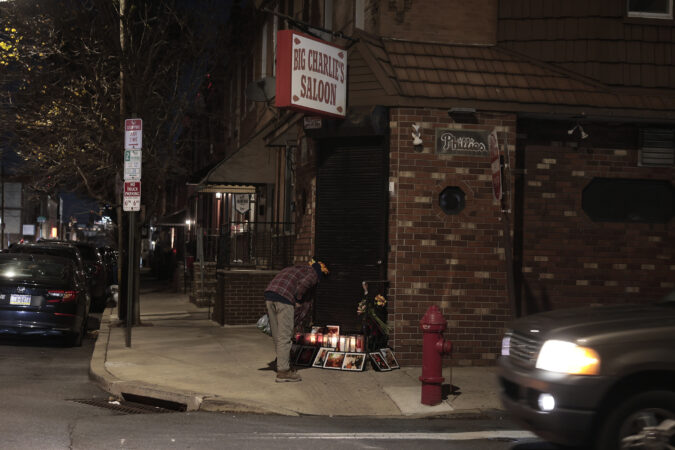
    Big Charlie’s Saloon, a South Philly haven for Kansas City Chiefs fans at 11th and McKean Streets, announced on Instagram that it has permanently closed after the recent death of owner and Philadelphia native Paul Staico.

    “While this was not how we ever imagined closing our doors, we know Big Charlie’s will never be the same without Paulie, and this is the path we must take,” according to a statement on the bar’s Instagram page.

    Staico died suddenly on Nov. 30, three days after Big Charlie’s stayed open on Thanksgiving because the Chiefs were playing. He was 59.

    “I wasn’t a Chiefs fan. I’m a Paul Staico fan,” City Councilmember Jimmy Harrity told The Inquirer earlier this month. “If I could name three players, that’s a lot. I was there cheering for him. Some are there to watch the game. But for the most part, they were there for Paul.”

    The two-room bar, with its wood paneling, jukebox, vending machine of snacks and cigarettes, and countless Chiefs memorabilia scattered about, became a local media darling in 2023 when the Eagles played — and lost — to the Chiefs in Super Bowl LVII. It was featured by NFL Films in 2003 and 2020 and in The New York Times and The Athletic on the same day in 2023. It got nearly the same treatment in February when the Eagles beat the Chiefs in Super Bowl LIX.

    And why was a South Philly bar dedicated to the Chiefs? Staico’s father, Charlie, the former owner of the place, made a bet that the Chiefs would beat the Minnesota Vikings in Super Bowl IV in 1970. When they did, Charlie bought his young son a brand new bike to celebrate. In 1986, an eternally grateful Paul Staico, the bar’s owner since 1983, bought a satellite dish so he could watch the Chiefs, his new favorite team, in every game from then on.

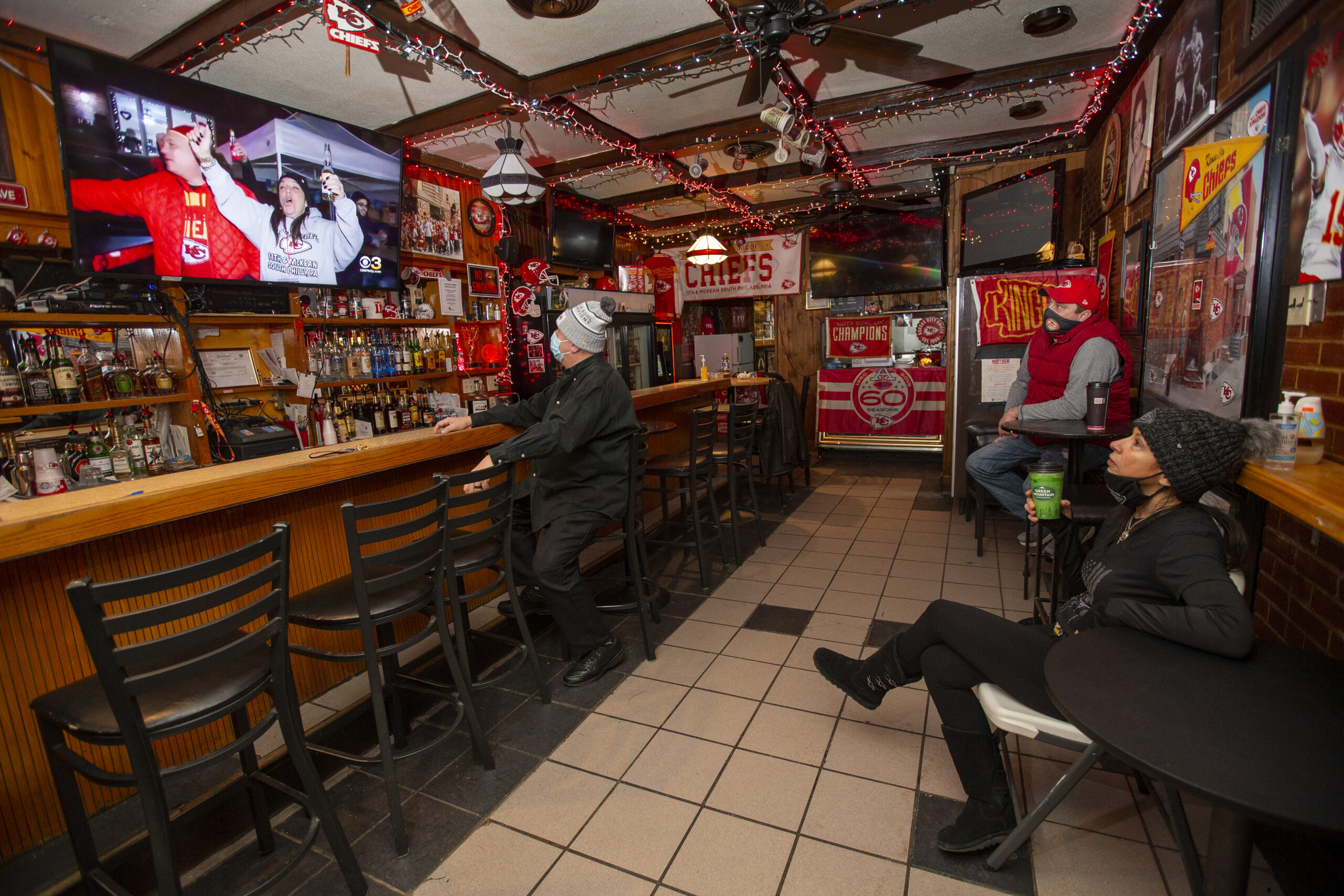
    Saloon patrons watch the Chiefs play the Tampa Bay Buccaneers in the Super Bowl in 2021.

    “We will continue to find ways to honor Paulie’s legacy and the community he built,” the Instagram post said. “This is not goodbye. This is simply see you later. …As always, go Chiefs.”

  • Two brothers and their nephew nearly died in the Bristol nursing home blast. From the hospital on Christmas, they share how they survived.

    Two brothers and their nephew nearly died in the Bristol nursing home blast. From the hospital on Christmas, they share how they survived.

    Around 2:15 p.m. Tuesday, Samuel “Bull” Thomas pushed his older brother in a wheelchair down the first floor of the Bristol Health & Rehab Center.

    As they rolled down the hallway, the 49-year-old Levittown resident smelled gas.

    “People were still in there working, and there was a gas smell,” Thomas said Thursday. “There were people sitting behind desks — people just still walking around, like they were neglecting the smell.”

    Moments later, Thomas and his brother arrived at the facility’s barbershop, where Thomas, a part-time barber, had cut his brother’s hair every two weeks. The Thomases are a close-knit family, and the nursing home had become their gathering place since Lamont “Bubs” Thomas, 59, suffered from a stroke several months ago.

    Nearby stood the brothers’ nephew, Terence Aldridge, 42, who had started a job in the facility kitchen four days prior. Their sister, Terence’s mom, was on her way.

    But within seconds, the visit turned catastrophic. As Samuel Thomas opened the door to the barbershop area and began to maneuver his brother’s wheelchair through the door, the building pancaked.

    The force of the blast knocked his work boots off. The floor collapsed beneath the men, the ceiling fell on top of them, and they were soon fighting for each other’s lives in the basement below.

    While crashing through the floor to the basement, Thomas gripped his brother’s wheelchair so tight he could feel his hands bleeding. Flames roared, while water from a burst pipe gushed around them.

    “If I would have let him go, he would have fallen on his head in the basement,” Thomas said. “All this water was pouring down on my face.”

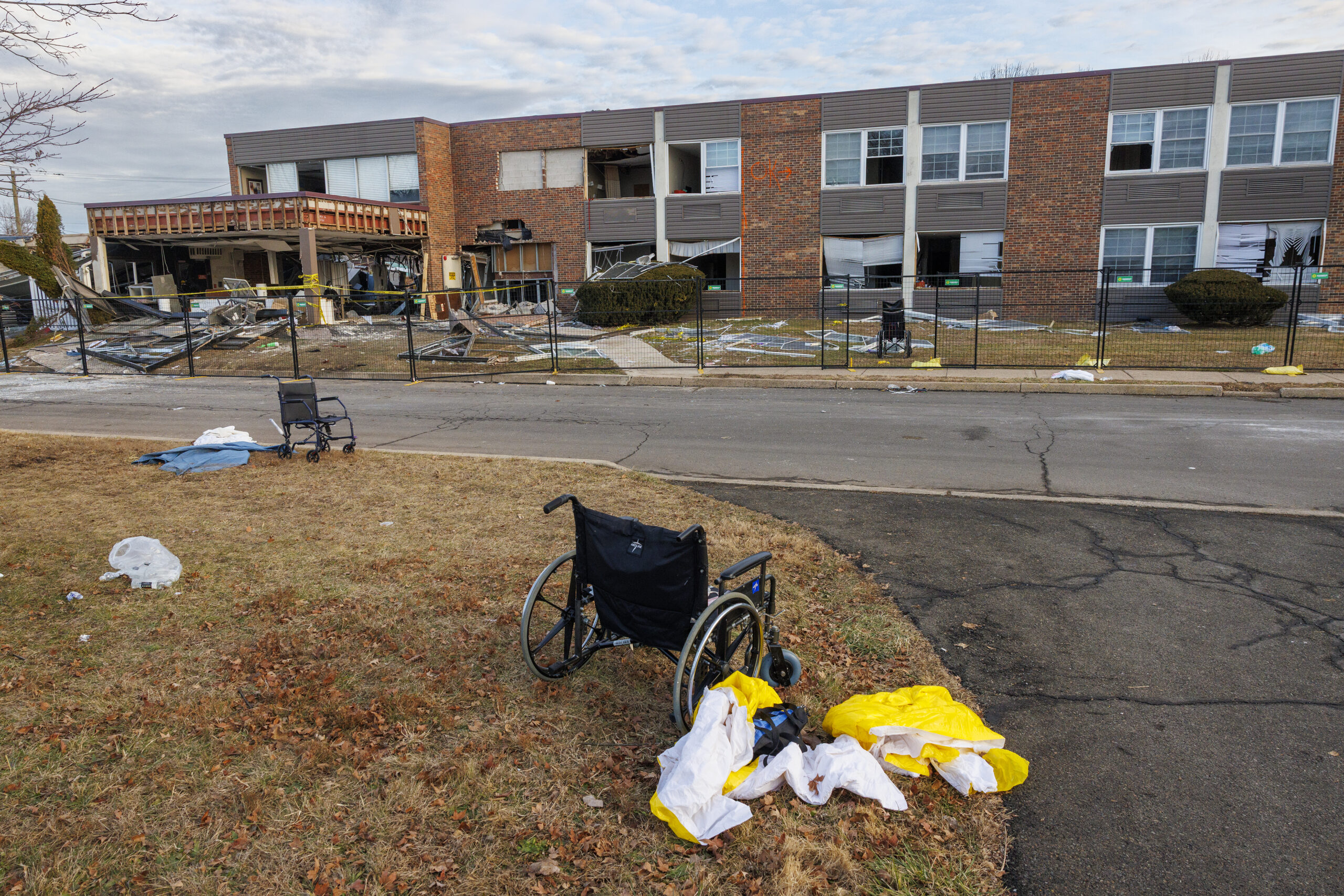
    Wheelchairs and devastation on Christmas morning at the Bristol Health & Rehab Center, two days after the fatal explosion.

    The three members of the Thomas family were among the 20 people injured in the fatal explosion that rocked the Lower Bucks County nursing facility. And while much remains unknown about what caused the blast, families of the victims like the Thomases spent the Christmas holiday gathered around hospital beds throughout the Philadelphia region, questioning the tragedy that occurred and counting their blessings.

    Muthoni Nduthu, a 52-year-old nurse at the facility and mother to three sons, was killed in the blast. A second person who was killed, a resident at the nursing home, has not been identified. Saber Healthcare Group, which took over as the nursing home operator three weeks ago, said the company is evaluating its evacuation procedures.

    “I’m alive,” Samuel Thomas said, in a Thursday interview from his bed at Lower Bucks Hospital. “That’s all I can say — I’m alive.”

    Three days ago, that wasn’t guaranteed.

    A ‘circus’ of chaos

    Helen Middlebrook, 58, was driving to the nursing home that afternoon for her daily visit with her “Bubs.” She would have been there with her brothers and son Terence when the building erupted, but by a stroke of luck, she had forgotten something at home and turned the car around.

    Back at home in Croydon, she got a panicked call.

    A violent blast. Nursing home in flames. People trapped under the wreckage.

    She rushed back to Tower Road where she was faced with a chaotic “circus.” As she scrambled to locate her brothers and son, going from ambulance to ambulance, she said she became hysterical.

    Samuel Thomas — his legs mangled — managed to drag himself and his brother to a stairwell landing, where first responders were able to rescue them, he recounted Thursday from the hospital.

    His brother, whose injuries were the most severe, was in critical condition at the scene.

    Middlebrook rejoiced when she heard her brothers were still alive. But she could not find her son.

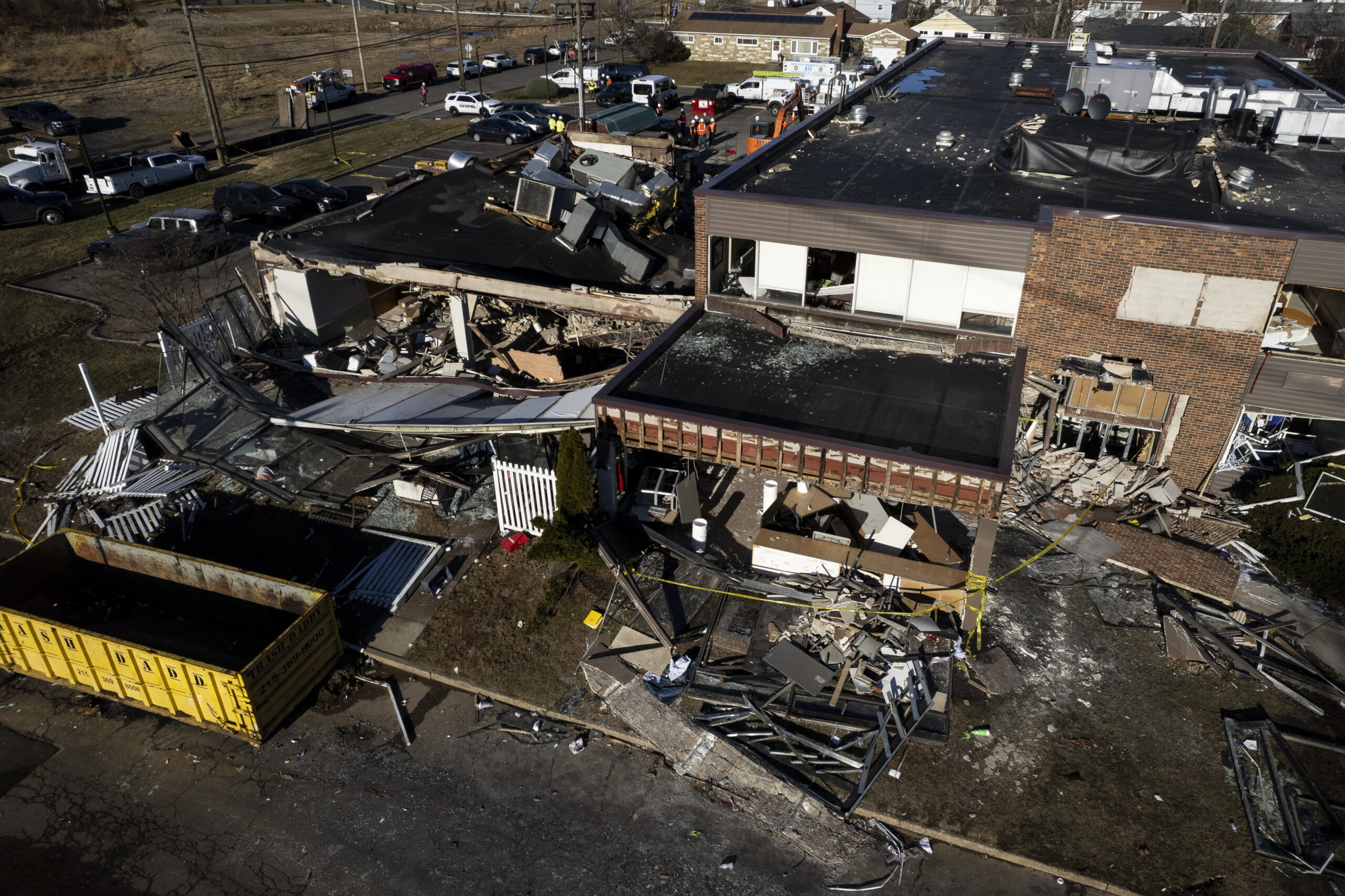
    Investigators work the scene at Bristol Health & Rehab Center on Wednesday. Two people were killed and a number were injured in the explosion on Tuesday.

    Law enforcement officials said that, in the confusion after the explosion, the injured were whisked off to numerous area hospitals. A second explosion that followed the initial blast added to the chaotic response effort.

    For four hours, Middlebrook searched emergency rooms in anguish for her “Papoose,” Terence’s family nickname.

    She braced for the worst.

    “My thought [was] that he was in the building, trapped or dead,” she said. “But God is good.”

    Middlebrook and her husband found her son at Jefferson Torresdale Hospital, safe and breathing on a ventilator. Aldridge sustained cuts all over his body and lung damage due to smoke inhalation. He is expected to recover.

    Samuel Thomas underwent surgery Wednesday on both legs, which were crushed by heavy wooden beams after the blast. He broke his right femur and fractured his ankle.

    Lamont Thomas remains in critical condition at Temple University Hospital, his family members said. His spine is broken, the bones in his face are fractured, and he suffered severe burns. He had surgery on Thursday afternoon, his family said.

    For now, Middlebrook said she would withhold speculation about who was at fault.

    “We’re just praying everything goes the way it should go,” she said, in an interview on Thursday as she rushed between hospitals to see her brothers and son on Christmas.

    “It’s a really bad situation.”

    Questions mount over blast

    On Thursday morning, the two-acre campus at Bristol Health & Rehab Center sat deserted, save for local police officers stationed around the fenced-in nursing home.

    There is no clear timeline for answers as to what caused the devastating explosion.

    A Peco technician was called to the nursing facility and was there working in the basement shortly after 2 p.m. when the blast occurred. Some experts have already questioned why residents were not evacuated at the first smell of gas, in accordance with Peco’s own directives.

    Peco referred questions to the National Transportation Safety Board (NTSB), the federal agency that is now leading the investigation.

    Bristol Health & Rehab Center, formerly the Silver Lake Health Center, was cited repeatedly for substandard healthcare and unsafe building conditions under the management of CommuniCare Health Services, according to federal and state inspection records. Saber Healthcare Group acquired the facility home three weeks ago and gave it a new name. The company said it was working to fix deficiencies prior to the explosion.

    A Saber representative said the company relocated about 120 residents to local hospitals and other assisted living facilities, while the investigators work to determine what led up to the explosion.

    Peco, in its initial statement on Tuesday, said the gas technician had been called to the nursing home that afternoon due to the odor of gas. On Wednesday, Peco changed the timeline and said technicians had, in fact, arrived at the site hours earlier.

    In a statement to The Inquirer Thursday, Peco president and CEO David Vahos said the company is committed to safety and deploys “considerable resources to inspect, maintain, and upgrade” its 14,000-mile network of gas lines.

    While the NTSB is known for investigating high-profile transit accidents involving trains and aircraft, the agency sometimes intercedes after incidents involving gas pipelines.

    An NTSB spokesperson said Wednesday that it could take days to clear a safe path in the debris and begin inspecting the gas line that fed the facility. The agency would “not determine or speculate about the cause of the accident” until the physical evidence had been gathered and analyzed from the scene.

  • Philly region is expected to get snow, sleet, and freezing rain on Friday and Saturday

    Philly region is expected to get snow, sleet, and freezing rain on Friday and Saturday

    The sunshine and relatively mild weather on Christmas in the Philadelphia region and South Jersey will likely be long gone by Friday afternoon, the National Weather Service said in its forecast on Thursday.

    Snow, likely no more than 1 or 2 inches, is expected to accumulate between 1 p.m. and midnight Friday, and become mixed with sleet and freezing rain after 4 p.m. New snow and sleet of 2 to 4 inches is possible between 1 and 4 a.m. on Saturday, forecasters said.

    “The heaviest precipitation will be the late afternoon on Friday, and it will start to wind down on Saturday,” said Nick Guzzo, meteorologist with the National Weather Service in Mount Holly.

    Temperatures are expected to range from the high 20s to low 30s both days. A mild wind of 5 to 10 mph is also expected.

    Due to the forecast, PennDot is urging drivers to avoid unnecessary travel. The agency expects vehicle restrictions to begin at 10 a.m. Friday on all interstate highways, banning school buses, commercial buses, motor coaches, motorcycles, and many types of commercial vehicles from the roads.

    Speed limits will be restricted to 45 mph. Updates will be available on the 511PA traveler information website.

    Friday could be the second measurable snowfall of the season so far. A storm that swept across the Philadelphia region on Dec. 14 left 4.2 inches of snow at Philadelphia International Airport. Some suburban communities in Bucks and Chester Counties reported more than 8 inches.

    Flying out of PHL and want to know how things are looking at the airport? Check out The Inquirer’s end-of-year PHL tracker to check for delays and cancellations.

  • Christmas Eve fire damages several rowhouses, displaces families in Chester

    Christmas Eve fire damages several rowhouses, displaces families in Chester

    No injuries were reported after a Christmas Eve fire at a rowhouse in Chester spread to neighboring homes, displacing five families, officials said.

    Shortly before 5:30 p.m. Wednesday, firefighters responded to the 900 block of West Seventh Street and found heavy fire in a rowhouse. A second alarm was struck about seven minutes later.

    Mayor Stefan Roots said three homes sustained heavy fire and water damage. He did not provide any information on what caused the fire.

    The American Red Cross responded to the scene and assisted a total of 13 people from five families who were displaced, said spokesperson Alana Mauger.