Category: Pennsylvania News

  • Lower Merion commissioners approve 8% tax hike, citing ‘looming cliff’ after 13 years of no increase

    Lower Merion commissioners approve 8% tax hike, citing ‘looming cliff’ after 13 years of no increase

    Lower Merion residents will see an 8% increase on their property tax bill in 2026, a move commissioners say is a necessary remedy to the “mistake” of keeping tax rates stagnant for over a decade.

    The township board of commissioners on Dec. 17 approved an 8% property tax increase for next year. The increase will bring the property tax millage rate from 4.462 mills to 4.819 mills. The median single-family homeowner in Lower Merion will pay around $1,386 in real estate taxes, a $103 increase from 2025.

    The 8% tax increase approved by commissioners is lower than the 9.5% increase proposed by staff and supported by board President Todd Sinai. The board landed on the 8% hike after a protracted discussion about how much of an increase residents could, and should, shoulder in 2026.

    Commissioners acknowledged the “sticker shock” of the tax hike but said years of stagnant tax revenue had put the township in an impossible position. Real estate taxes did not increase for 13 consecutive years in Lower Merion, from 2011 to 2024. The township voted to raise taxes by 6.5% for 2025, the first increase in over a decade.

    “Those years of no tax increase have proven to be a mistake, given that each year we were presented with a structural deficit and a looming cliff,” Commissioner Ray Courtney said. “By holding out on increases as long as we did, we have painted ourselves into a corner.”

    Under the proposed 9.5% tax hike, Lower Merion projected $83.8 million in general fund expenditures in 2026 against a revenue of $79.3 million. With the 8% tax hike passed by the board, revenue will be lower and the township will have to lean more heavily on its general fund reserves to cover the deficit.

    Around half of Lower Merion’s revenue comes from real estate taxes, yet township residents continue to pay taxes calculated on property values established in 1998, the last time Montgomery County conducted a property reassessment.

    The decades-old property values have kept tax revenue low, relative to the high market costs of a home in Lower Merion. The median sale price for a home in Lower Merion was $803,500 in 2024, according to data from Montgomery County.

    Notably, only 10% of Lower Merion residents’ property taxes goes to the township. Around 12% goes to Montgomery County and 78% goes to the school district.

    Montgomery County will be increasing taxes by 4% in 2026.

    In a Nov. 7 report addressed to the board of commissioners, Township Manager Ernie McNeely wrote that, while Lower Merion has weathered the post-pandemic economy with relative success, its general fund has run a deficit multiple times since 2020.

    McNeely’s report points to three major burdens on Lower Merion’s budget in 2026: healthcare premiums, staffing costs, and the Solid Waste Fund.

    The township is expected to see a 20% increase in healthcare premium costs in 2026. McNeely’s report said the increase is due, in part, to the costs associated with nondiabetic weight-loss drugs and other “specialty pharmaceuticals.”

    Lower Merion Township’s employment vacancy rate is also expected to fall in 2026. While a lower vacancy rate is good for departments needing to fill positions, each percentage-point improvement in the employment vacancy rate costs the township $520,000. On top of the falling vacancy rate, over 35% of township staff are set to receive a salary boost in 2026.

    And the town’s Solid Waste Fund is in dire straits. Even with the 5% solid waste fee rate hike planned for 2026, the fund is set to face a $700,000 deficit. Rising costs for disposal, equipment, and personnel, as well as a declining regional market of mills able to purchase paper recycling material, were identified as the main reasons for cost increases.

    The major challenges outlined by McNeely are set to the backdrop of persistent inflation, which is putting cost pressures on local governments.

    This suburban content is produced with support from the Leslie Miller and Richard Worley Foundation and The Lenfest Institute for Journalism. Editorial content is created independently of the project donors. Gifts to support The Inquirer’s high-impact journalism can be made at inquirer.com/donate. A list of Lenfest Institute donors can be found at lenfestinstitute.org/supporters.

  • Amtrak can’t fully run its new fleet of next-gen trains in 2026 due to facility upgrade delays

    Amtrak can’t fully run its new fleet of next-gen trains in 2026 due to facility upgrade delays

    Some of Amtrak’s fleet of next-generation Acela and Airo trains will likely sit idle in 2026 as the national railroad company faces delays in upgrading maintenance facilities.

    Amtrak is behind schedule on completing the necessary facilities upgrades to maintain its newest fleet of trains, inspectors told Amtrak in a new report. Delays in next-gen fleet rollouts, of which there have been several, cost the company millions in lost revenue.

    Early missteps in planning, like starting its fleet upgrade efforts in 2010 but its facilities upgrades in 2016, led to a “schedule misalignment,” inspectors said in the report.

    Amtrak is in the process of acquiring three fleets of trains from manufacturers — NextGen Acela, Airo, and Long Distance — to the tune of $8 billion. The national railroad corporation rolled out a handful of NextGen Acela trains in August. Airo trains are scheduled to roll out in 2026 and Long Distance trains in the early 2030s, according to Amtrak.

    In a recent review of the NextGen Acela trains, The Inquirer lauded the train for its smoother, faster ride, comfortable seats, and above all, its cleanliness, but lamented its infrequency and cost as the older Acela trains on Keystone and Northeast Regional services still carry the bulk of trips for a cheaper ticket.

    NextGen Acela and Airo trains offer faster travel with speeds of up to 160 mph and 125 mph, respectively, and modernized cabins featuring upgraded seats, improved Wi-Fi, and expanded dining options.

    A business-class car in the NextGen Acela in Washington on Aug. 27.

    The latest report from the Amtrak Office of Inspector General details that under its current facility construction schedule, Amtrak will only be able to operate the first 24 out of 28 NextGen Acela trains and the first 12 out of the planned 83 Airo trains hitting the tracks in 2026.

    Facilities in Philadelphia; Seattle; Boston; New York; Washington, D.C.; and Rensselaer, N.Y., are being upgraded to maintain this new fleet, which is the most substantial upgrade since Amtrak introduced the Acela in 2000. Amtrak broke ground on Philadelphia’s new $462 million facility in October 2024.

    Amtrak Acela trains sit in the Amtrak yard adjacent to 30th Street Station in Philadelphia in August 2023.

    While the company began considering plans to replace its aging trains 15 years ago, Amtrak didn’t start addressing facility upgrades until 2016 for NextGen Acela and 2021 for Airo. Additionally, Amtrak took a targeted individual site approach to facility planning instead of an “overarching” one, according to inspectors.

    Amtrak approved a new strategic fleet and facilities plan to align both efforts last month. However, inspectors found the company failed to appropriately define the scope of the six years of work that remains.

    In the report, a senior Amtrak official described the current system as “building a house without ensuring the garage fits the vehicles.”

    Amtrak officials agreed to implement a new management framework to streamline facility upgrade efforts by the end of March 2026.

  • The lower Schuylkill is up for Pennsylvania’s River of the Year. Voting is open.

    The lower Schuylkill is up for Pennsylvania’s River of the Year. Voting is open.

    The lower Schuylkill winds 36 miles from Phoenixville in Chester County to its tidal meeting point with the Delaware River at Philadelphia’s Navy Yard, sheltering more than 40 species of fish along the way.

    In Center City, the river doubles as a striking urban backdrop, bordered by a trail that can draw thousands of hikers and cyclists daily.

    This year, the waterway is vying for the title of Pennsylvania’s River of the Year, an annual competition spotlighting the state’s most significant waterways.

    Online voting, which began Dec. 9, runs through Jan. 16, giving Pennsylvanians the chance to select the 2026 winner from three contenders: Chillisquaque Creek, the Conestoga River, and the lower Schuylkill in the Philadelphia region.

    The River of the Year program is administered by the Pennsylvania Organization for Watersheds and Rivers, with funding from the Pennsylvania Department of Conservation and Natural Resources (DCNR).

    The contest is meant to draw public attention to rivers and their environmental importance. The winning river’s nominating organization receives a $15,000 DCNR grant to fund yearlong celebrations, including paddling events and community activities. The DCNR produces a commemorative poster in honor of the river.

    Jackson Quitel, river programs coordinator for the nonprofit LandHealth Institute, said his organization nominated the Schuylkill along with a plan to educate the public “in the many wonders in this unique body of water.”

    “While the Schuylkill River is widely known, not many people are aware of the immense recreational activities and ecological wonders that are present on the river today,” Quitel said.

    The LandHealth Institute helps increase awareness of the river through guided walks, fishing, and kayaking, taking more than 500 people out on the water in 2025. If the Schuylkill wins, Quitel said, it would allow the group to double its reach.

    Joe Syrnick, executive director of the nonprofit Schuylkill Development Corp., which helped develop the Schuylkill Banks trail along the river, called the river “a great asset to the region.”

    “It would be nice to see it get the recognition it deserves,” Syrnick said.

    Once a vital waterway for the Lenni-Lenape, the river later endured severe pollution from upstream coal mining and industrial waste, eventually rebounding through years of efforts, including the protections of the federal Clean Water Act.

    The Schuylkill became the nation’s first municipal‑scale water system through Fairmount Water Works and continues to provide drinking water to 1.5 million people through two intakes along its banks.

    The Schuylkill River Trail, a continuous corridor running alongside most of the lower Schuylkill, has broadened access to the river’s views for residents, giving them more insight into a river many were once cut off from.

    Most recently, the Schuylkill Banks section in Center City debuted a new $48 million cable‑stayed, pedestrian‑only bridge, anchoring a trail extension known as the Christian to Crescent Trail Connector. The 2,800‑foot segment delivers sweeping, unobstructed views of the river.

    The DCNR describes the lower Schuylkill as an “urban oasis surrounded by bustling roads and a backdrop of a gorgeous skyline.”

    Pennsylvania has 25 rivers. Of those, six are federally designated as wild and scenic and 13 are state-designated scenic rivers.

    Contest nominees can also include tributaries within river watersheds. For example, Chillisquaque Creek is a 20 mile-long tributary of the Susquehanna River’s west branch. It flows through Northumberland and Montour Counties.

    The Conestoga, meanwhile, feeds Chesapeake Bay.

    Overall, Pennsylvania has 85,000 miles of waterways, which is the highest stream density in the continental United States.

    The Delaware was the 2025 river of the year.

  • Chesco has seen ‘entrepreneurial spirit’ this year, with more new businesses to start 2026

    Chesco has seen ‘entrepreneurial spirit’ this year, with more new businesses to start 2026

    As major retailers made Chester County home in 2025, start-ups were the fastest-growing group that the Chester County Economic Development Council found itself providing support for this year.

    The region saw interest in expansions from big manufacturers — think chemical tech company Johnson Matthey, or coffee manufacturer Lavazza — and major retailers, like a Trader Joe’s in Berwyn and Exton, or even a Sheetz deep in Wawa country in Downingtown.

    But in a continued trend from the pandemic, which saw a surge in “entrepreneurial spirit,” the county has seen a continuation of new, small businesses taking shape, said Mike Grigalonis, president and COO for the county’s economic development council.

    “That’s our biggest area of growth, services that we’re providing to start-up businesses and entrepreneurs,” Grigalonis said. “That ranges from a salon, or a cafe, or a retail shop — any of those Main Street mom-and-pop businesses that you might think of — all the way to very kind of cutting-edge high tech, emerging tech — whether that be a new med device, a new drug, a new app, and everything in between.”

    The county’s wide-ranging restaurant scene saw a number of businesses planning new locations.

    Here’s a look around the county at some of the comings and goings in the final stretch of 2025.

    New local spots

    Expansions are on the menu. Stubborn Goat Brewing — which boasts craft beers, food, and a live music lineup — opened its doors this year in West Grove, and is planning an expansion into Kennett Square in 2026.

    Our Deli & Cafe, which has enjoyed four decades in Paoli, opened a second location in Phoenixville this month at 498 Nutt Road.

    The borough also recently welcomed The Local, a breakfast and lunch restaurant at 324 Bridge St.

    In West Chester, Olive & Meadow, a business focused on charcuterie boards and grazing tables, opened its brick-and-mortar location at 1388 Old Wilmington Pike this month.

    The business, which began in 2020 when Ariel LeVasseur dropped off charcuterie boards for her friends to enjoy while they chatted from afar on Zoom, grew from custom orders prepared in a commercial kitchen to a spot where customers can seek grab-and-go board items.

    “I love Chester County. I’m from Delco, but I think Chester County is so historic and beautiful,” she said. “I feel like everybody is very welcoming, and I know that a lot of people like supporting small businesses.”

    The new shop near the former Dilworthtown Inn offers all that, and everything else LeVasseur hopes will make hosting a breeze. Coming next year, she hopes to partner with local wineries and host workshops.

    “I just want them to feel like they stepped into my home, and grab some gourmet cheeses and meats and like, share the love of charcuterie that I have,” she said.

    Others close their doors

    As new businesses enter the scene, the community is also losing some favorites: Bookstore Bakery, a bookstore that offers gourmet pastries at 145 W. Gay St., will be closing its doors by the end of the year after having opened in 2024.

    LaCava Coffee, a neighbor on Gay Street, is also winding down its brick-and-mortar, but will continue selling its coffee beans online.

    “I always wanted to create something that connects my roots and that I can be connected to my home country,” said its owner, Jose Oliva, who is from Honduras. “I started the dream of creating a brand, and by 2022 we were able to accomplish a dream, and by personal efforts, we opened a very beautiful store that we ran and operated into November 2025.”

    Oliva said the increased cost of coffee, a lack of substantive foot traffic, and the initial difficulty in opening the location, which sapped his capital, ultimately led to the decision. He is eyeing a relocation to Virginia.

    “In a business if you don’t have a working capital for innovation, for development, for marketing, it is very difficult. Even so, we did it for almost two years and a few months,” he said. “We did it very successfully and with a lot of pride and we always maintain our customer service at its fullest.”

    This suburban content is produced with support from the Leslie Miller and Richard Worley Foundation and The Lenfest Institute for Journalism. Editorial content is created independently of the project donors. Gifts to support The Inquirer’s high-impact journalism can be made at inquirer.com/donate. A list of Lenfest Institute donors can be found at lenfestinstitute.org/supporters.

  • Can’t score a Longwood Gardens reservation this week? See these other festive Philly-area options.

    Can’t score a Longwood Gardens reservation this week? See these other festive Philly-area options.

    Deanna Baker made reservations for A Longwood Christmas in late summer.

    The 32-year-old Downingtown resident has been gifted a Longwood Gardens membership each of the past five years, but even the member reservations for the annual holiday light show book up well in advance. So she secures her family’s time slots while the weather is still warm.

    “Yes, it’s ridiculous this time of year,” she said of the Longwood demand at Christmastime. But “yes, it’s worth it.”

    Baker, who works in operations for Victory Brewing Co., said there is “a magical element” to the experience, whether she’s going with her toddler or her adult friends and relatives. She went once in early December and plans to return in the afternoon on Christmas Day.

    Every holiday season, hundreds of thousands of people visit A Longwood Christmas, which serves as an “economic engine” for the business communities in Kennett Square and surrounding towns, as Cheryl B. Kuhn, CEO of the Southern Chester County Chamber of Commerce, recently described it.

    Longwood Gardens’ holiday attendance has increased nearly 42% since pre-pandemic times. Last year, 650,000 people visited the gardens at Christmas, up from 609,000 the prior holiday season and from 458,000 during the 2019-2020 event (the show ends in the beginning of January).

    Many of these guests book months in advance, leaving last-minute planners few options for afternoon and nighttime visits during the holiday week.

    More than 500,000 lights shimmer at Longwood Gardens’ A Longwood Christmas through Jan. 11, 2026.

    “We open ticketing in July, and there are always a few early planners that buy tickets and make reservations then,” Longwood Gardens spokesperson Patricia Evans said in a statement. “By late Octoberish, the most desirable evening time slots on the weekends and the week of and following Christmas tend to be sold out.”

    But as of Monday, Evans noted, some tickets were available for time slots before noon and after 8:30 p.m. for the remaining days of December. Availability opens up in January, she added. The holiday lights stay on through Jan. 11.

    If nonmembers snag tickets, the experience will cost $45 a person for adults and $25 a person for kids, which Evans said is a $2-$3 per person increase from last year. Children 4 and under are free.

    window.addEventListener(“message”,function(a){if(void 0!==a.data[“datawrapper-height”]){var e=document.querySelectorAll(“iframe”);for(var t in a.data[“datawrapper-height”])for(var r,i=0;r=e[i];i++)if(r.contentWindow===a.source){var d=a.data[“datawrapper-height”][t]+”px”;r.style.height=d}}});

    Philly-area holiday attractions that have availability

    For Philly-area residents who want to enjoy a festive experience before 8 p.m., or at a slightly lower price point, other options have availability this week.

    As of Monday afternoon, the ice skating rinks at City Hall and Penn’s Landing had online reservations available for any day this week, though spokespeople said some time slots can sell out around the holidays. Both cost about $20 per person for admission and a skate rental.

    LumiNature at the Philadelphia Zoo also still had tickets available every operating night through Jan. 3 as of Monday afternoon.

    A family walked into the Philadelphia Zoo’s LumiNature holiday light display in this December 2021 file photo.

    “While tickets are available, the most popular times that guests reserve their tickets for are from 5-6 p.m., and it is likely that that particular hour will sell out on our most popular nights,” zoo spokesperson Maria Bryant said.

    Last year, LumiNature saw nearly 70,000 guests, according to Bryant, and it is on pace to exceed that number this season.

    Depending on the day, tickets cost between $25 and $29 per nonmember 12 and over, and $20 and $24 per child between the ages of 2 and 11. Younger children are free.

    Nighttime turned the Philadelphia Zoo into a wonderland of lights as LumiNature returned for its third year in December 2022.

    In the suburbs, the Elmwood Park Zoo’s Wild Lights “will not sell out,” with “plenty of tickets for each day of the rest of the event,” marketing director Kyle Gurganious said. Guests can buy at the gate, he added, or book online to save $1 per person.

    For nonmembers, online tickets are $27 per person 13 and older and $24 per child between the ages of 3 and 12. Children under 3 are free.

    Last season, the Norristown attraction brought in about 50,000 visitors, a number Gurganious said the zoo is “on track to eclipse … significantly” this year.

    Throughout the region, there also free events, such as the Wanamaker Light Show and the Comcast Holiday Spectacular. But be prepared: They can come with long lines and large crowds at popular times.

    Another holiday sellout in Philly

    A miniature Art Museum was on display in the Holiday Garden Railway at the Morris Arboretum & Gardens in 2023.

    At least one other Philly-area holiday attraction is completely sold out this week: The Holiday Garden Railway Nighttime Express at the Morris Arboretum & Gardens.

    Because it’s “so popular and because we only have a limited number of nights, the Nighttime Express sells out every year,” said Christopher Dorman, the director of visitor experience for the arboretum, which is part of the University of Pennsylvania.

    Those looking to snag tickets for next year may want to mark their calendars: Holiday tickets go on sale at the beginning of November for arboretum members and a week later for the general public.

    Added Dorman: “While the Nighttime Express is sold out, folks can still see the trains all lit up [and the rest of the garden] during normal daytime hours through Dec. 30.”

    And for those turned off by the planning — and expense — required for these paid festivities, there’s always the low-cost, low-commitment option: touring your neighborhood’s home light displays.

  • Twenty years into fracking, Pennsylvania has yet to reckon with its radioactive waste

    Twenty years into fracking, Pennsylvania has yet to reckon with its radioactive waste

    This article originally appeared on Inside Climate News, a nonprofit, nonpartisan news organization that covers climate, energy and the environment. Sign up for their newsletter here.

    When John Quigley became the secretary of the Pennsylvania Department of Environmental Protection (DEP) in 2015, he knew that he would be busy trying to keep up with the consequences of the state’s rapid increase in natural gas production. But when reports landed on his desk that trucks carrying oil and gas waste were tripping radioactivity alarms at landfills, he was especially concerned.

    “There was obviously a problem that the state was not dealing with,” Quigley said. “Which was the threat to not only public health, but to the folks driving the trucks and people handling the waste in the oil and gas industry. They were unnecessarily put at risk.”

    Ten years after the alarms first unsettled Quigley, fracking in Pennsylvania has continued to grow, generating huge volumes of oil and gas waste and wastewater in the process. Seventy-two percent of the solid waste ends up in landfills within state borders, and a truck carrying it sets off a radioactivity alarm every day on average, an Inside Climate News analysis found.

    Radioactive elements such as radium, uranium, and thorium in rocks deep underground come to the surface as a byproduct of oil and gas drilling. Experts have long worried about the potential health and environmental impacts of this waste. Radium exposure is linked to an increased risk for cancer, anemia, and cataracts.

    New research from the University of Pittsburgh suggests that the wastewater created by fracking the Marcellus formation, the ancient gas deposit beneath Pennsylvania, is far more radioactive than previously understood. And there is also evidence that some of it is getting into the environment: Researchers have found radioactive sediment downstream from some landfills’ and wastewater treatment plants’ outfalls.

    But the state has barely shifted its approach to regulating the waste. “Nothing material has been done,” said Quigley, who left in 2016. “Nothing has really changed.”

    In 2023, radioactivity alarms were triggered more than 550 times at Pennsylvania landfills because of oil and gas waste, according to an analysis of landfills’ annual operations reports conducted by Inside Climate News. The vast majority of this waste was disposed of on-site; landfills rejected the waste only 11 times. Radium-226 was the most common isotope cited as the reason for the alarm.

    DEP issued a new guidance document for solid waste facilities and well operators that handle radioactive materials in 2022, with some of the changes specifically aimed at the fracking industry. Landfills have been required to submit a Radiation Protection Action Plan to the state since 2001, covering protocols for worker safety, monitoring and detection, and records and reporting, and DEP may require sites to test regularly for the long-lasting radium-226 and radium-228 if they have received large volumes of radioactive oil and gas waste.

    But DEP has fallen behind on many other aspects of regulating this waste.

    In 2021, then-Gov. Tom Wolf said the state would require regular radium testing of landfills’ leachate, a liquid byproduct created when rainwater passes through waste, accumulating contamination. Wolf’s announcement came more than five years after DEP had recommended adding radium to leachate testing requirements. But leachate testing results from 2021 through 2024 acquired by Inside Climate News via a right-to-know request do not contain results for radium.

    In an email, DEP spokesperson Neil Shader said the agency does not currently require landfills to test for it. He did not explain why the policy has not yet been implemented.

    “DEP is still finalizing a policy around radiological material in leachate,” he said.

    Understanding the scope of the problem is difficult because Pennsylvania’s tracking of oil and gas waste and leachate remains disorganized and piecemeal, an Inside Climate News investigation found. Landfills are supposed to turn away waste that is too radioactive based on the total volume of waste they have already accepted that quarter. If the volume estimates are inaccurate or misreported, it could mean that some sites are exceeding the allowable amounts.

    Meanwhile, DEP’s last comprehensive study of radioactivity in oil and gas waste is more than nine years old, even though the agency said at the time that follow-up investigations were needed. DEP confirmed to Inside Climate News that it is studying the radioactivity of landfill leachate but offered no timeline for publication.

    The Marcellus Shale Coalition, an industry trade group, maintains that the solid waste and wastewater generated by fracking in Pennsylvania are well managed and pose no health risks to the public or workers. Landfill employees face less danger from oil and gas waste than someone getting a routine CT scan, the group argues, and landfill permits contain restrictions on how much oil and gas waste they can accept in any given year.

    In a statement to Inside Climate News, the coalition’s Patrick Henderson said there is “no greater priority” for the industry “than worker and community safety, which is delivered through recurrent trainings, development and sharing of best practices, and strict adherence to modern regulatory standards.”

    “Operators follow stringent protocols for handling, managing, and transporting waste — including radioactive screening, characterization, and reporting,” he said.

    The industry also frequently notes that DEP’s 2016 investigation into radioactivity in oil and gas waste concluded that there is “little or limited potential for radiation exposure to workers and the public” from natural gas development.

    Quigley called this study, the initial version of which was published just before he took office as DEP secretary, “the big mistake,” because in his view it falsely suggested that there was “nothing to worry about.”

    He thought that another study was warranted to investigate the true scope of the issue, but he said he was not able to push forward a new one before he left office.

    The study was limited in some ways by its size and distribution: Between 2013 and 2014, DEP sampled 38 well sites, only one in the northeast, which researchers now say is a radioactivity hot spot. Sixteen of the sampled sites were in the southwest.

    David Allard was the lead health physicist overseeing the study’s design and execution. He retired from DEP in 2022 after 23 years as the director of the Bureau of Radiation Protection, where he oversaw the management of radioactivity in the oil and gas industry. In 2001, he fought for the radiation protection plans and radioactivity monitoring at landfills that are required today.

    These rules and Pennsylvania’s rules for landfills in general are stricter than most other states’, he said. Ohio, for instance, stopped requiring landfills to report on the oil and gas waste they accept.

    Scientists learned about the radioactivity of oil and gas fields more than a century ago, not long after the discovery of radium in 1898. Waste predating the fracking era had been triggering radiation alarms in Pennsylvania landfills for years.

    But the waste created by fracking is different from conventional drilling wastes. In the 2010s, as fracking increased oil and gas waste volumes, Allard wanted to investigate how radioactive it was and what possible dangers it might pose to the public and the environment.

    The 2016 study concluded that the radioactivity levels found in the waste at the time posed little danger to truck drivers and workers. But it warned of potential radiological risks to the environment from spills, waste treatment facilities, and long-term disposal in landfills, a point that is often overlooked in summaries of the study’s contents. All of these things remain a problem today, Allard said.

    “I fought very hard to get this thing going,” he said of the study. “I will stand behind all of the science.” But he said that one of the reviewers, a political appointee, had argued for language in the synopsis that he felt obscured the nuances of the study’s conclusions: “little or limited potential for radiation exposure.”

    “It’s a true statement. But I think it did downplay the need for additional work,” he said. Variations of this phrase appear at the beginning of each bullet point in the summary. Each one is followed by caveats.

    DEP used computer modeling from Argonne National Laboratory to determine whether a closed landfill that had accepted this waste and other toxic material would still be dangerous to a farmer living on the site far into the future. Even 1,000 years from now, DEP found, a farmer digging a drinking well on top of such a site would not want to drink the water.

    “It’s not going to be pretty,” Allard said. “It’s not going to be very palatable.”

    Pennsylvania’s guidance for how much radioactive oil and gas waste a landfill can accept each year, updated a few years into the fracking boom in the 2010s, is supposed to prevent the hypothetical future farmer from being exposed to harmful levels of radiation. But this guidance is not codified into law, Allard said. It also relies on regular radioactivity monitoring and accurate tracking of waste quantities at landfills.

    Recent research from Pennsylvania State University and the University of Pittsburgh showing that radium is getting into the environment also concerned him. These radioactive discharges into waterways are unregulated, he said.

    “I think the EPA really needs to stand up,” he added. In 2020, Allard was part of a committee formed by the National Council on Radiation Protection and Measurements that highlighted the need for national, standardized regulations for oil and gas waste because the rules are so inconsistent among states.

    Road-spreading, the practice of using salty oil and gas wastewater as a dust suppressant, is another area where he says the study could have done more to figure out how much radioactivity was ending up in the environment as a result. Although the state has largely banned the practice, there is evidence that companies continue it.

    Landfills’ leachate also deserves more study, he said, and he sees testing it for radium and releasing the results to the public as an important step.

    “We tried to make it as comprehensive as possible,” Allard said of the study. “But I think it is timely to go back and visit some of these things.”

    Environmentalists have long clamored for an updated government study of radioactivity in oil and gas waste using more recent data. Pennsylvania’s fracking industry is much larger and more geographically dispersed now than it was when the information for the first study was collected.

    Forthcoming University of Pittsburgh research suggesting that oil and gas wastewater produced by fracking in Pennsylvania is more radioactive than previously thought involved samples from 561 well pads between 2012 and 2023. The wastewater contained much more radium than was found by studies early in the fracking boom.

    The median radium values were four times the level of those published by the U.S. Geological Survey in 2011 and twice that of DEP’s findings in 2016, said Daniel Bain, an associate professor of geology and environmental science at the University of Pittsburgh who was involved in the research.

    The maximum value that Bain found was above 41,000 picocuries per liter — a measure of radioactivity in a substance. For comparison, the EPA’s limit on total radium in drinking water is 5 picocuries per liter.

    Radium is a naturally occurring material, and surface and groundwater can contain between 0.01 and 25 picocuries per liter. Natural levels above 50 picocuries per liter are rare.

    “I think it necessitates a reevaluation of the kind of personal protection that specific jobs require. If you’re in contact with this waste every day, you need to be monitored,” Bain said. “They probably also have to rethink how they’re going to manage their waste streams.”

    Bain’s research also found that radioactivity was far higher in the Marcellus formation’s wastewater than in wastewater from drilling in other parts of the country, including Texas and North Dakota.

    He said that the finding echoes earlier industry realizations that the Marcellus is different from other natural gas formations. “One of the first hard lessons of the Marcellus was that it’s not like some of the Texas shales. They came up here and tried to use the methods they used in Texas, and they had issues,” he said. “They’re basically learning as they’re doing. It’s a big experiment, and sometimes you wish you could redo the experiment.”

    Marcellus wastewater has higher than expected levels of barium, strontium, and lithium, a discovery that spurred industry interest in 2024 because of lithium’s status as a critical mineral.

    Wells in the northeastern part of Pennsylvania contained much higher concentrations of radium than others, suggesting that earlier conclusions based on drilling in the state’s southwestern region might be misleading.

    Bain’s research did not focus on the radioactivity of solid oil and gas waste, the lion’s share of what Pennsylvania landfills take from the industry. But he did look at what kind of waste would be created if companies were to start treating Marcellus water with the goal of removing valuable components like lithium.

    His analysis found that this process could create a solid, highly radioactive byproduct that would exceed U.S. Department of Transportation transport limits for radium in sludge. Although questions remain about the financial viability of extracting lithium from fracking wastewater, at least one company in Pennsylvania has already tried to do so.

    In 2021, environmentalists were heartened when Wolf announced that landfills would be required to test their leachate for radium and report the results to the state quarterly. The new requirement would “improve public confidence that public drinking water and our precious natural resources are being appropriately protected,” Wolf said at the time.

    Josh Shapiro, now governor and then attorney general, commended Wolf’s announcement, which came after Shapiro’s office had “urged Gov. Wolf to direct DEP to prevent harmful radioactive materials from entering Pennsylvania waterways.”

    “The improved monitoring and promised analysis by DEP is a step in the right direction,” Shapiro said at the time. Other states with active fracking, including North Dakota, West Virginia, and Colorado, require this kind of leachate testing.

    John Stolz, a professor at Duquesne University who has studied oil and gas waste and fracking contamination for years, said he was “very disappointed” that DEP was still not requiring this testing or releasing it to the public.

    “We were told they were going to start monitoring for these additional parameters, and it just hasn’t happened,” he said.

    Stolz would like DEP to go beyond radium and require testing at landfills for other oil- and gas-related substances that could help scientists better trace fracking’s impact, such as lithium, strontium, and bromide. “They’re still only monitoring parameters that you would monitor if you were looking at a discharge from, say, a wastewater treatment facility,” he said.

    Bain, who has collaborated with Stolz on research, said he has tried without success to get DEP to rethink the issue of its testing requirements missing many key indicators for fracking.

    “If you don’t look, you don’t see,” he said. “This is really something that DEP should be doing.”

    The radium levels Stolz has discovered in testing landfill leachate are relatively low, but not when considering the millions of gallons of leachate produced every year. “That’s a lot of radium,” Stolz said. “It doesn’t seem like a lot [at first], but then you realize the volumes involved, right? It’s a huge amount of water going on for years and decades.”

    Radium’s tendency to be “sticky” and to accumulate — in stream sediment, for example — could create problems over the long term for the environment and for public health, Stolz said.

    Those most at risk from this radioactivity are the workers at landfills, wells, and treatment facilities that handle and transport large quantities of oil and gas waste. “The levels can be high,” said Sheldon Landsberger, a professor in nuclear and radiation engineering at the University of Texas at Austin who has studied the radioactivity of oil and gas waste. “I would not say that they are dangerous levels, to the tune of Chernobyl or Fukushima or anything like that. However, if you are a worker and you do work in the field, you need to be monitored.”

    Landsberger reviewed records from Pennsylvania landfills that showed radioactivity measurements for truckloads of oil and gas waste coming in and for workers exposed to those shipments. “They are definitely above background,” he said, though none of the measurements are above the legal limits for radiation exposure.

    Landsberger said it was hard to deduce much from the records about long-term impacts because there are too many unknowns about how the measurements were taken and what happened to the waste after it was disposed of in the landfill. This is why he advocates for workers wearing radiation dosimeters, which measure the radiation dose that a person receives.

    Jack Kruell lives a quarter-mile south of the Westmoreland Sanitary Landfill in Belle Vernon, a site in the southwestern part of the state that has taken hundreds of thousands of tons of oil and gas waste over the years. Stolz’s testing of the landfill’s leachate in 2019 showed that it was consistent with contamination from oil and gas operations and that it had elevated levels of radium-226, radium-228, and bromide, all likely linked to the landfill’s acceptance of that waste. (Westmoreland did not respond to requests for comment.)

    In 2012, when the fracking boom was well underway, Kruell noticed strange smells in the air. “The odors were so horrific, and it was constant. I did some work for one of the oil and gas exploration companies, and I was familiar with smells, and this was not a normal landfill smell,” he said.

    Over the next few years, he experienced medical symptoms he hadn’t before: fatigue, bone pain, respiratory reactions, mental fog. As the odors worsened, he avoided going outside. Later, when he got involved with advocating for changes at the landfill, Kruell learned about something that alarmed him even more: the radioactivity in the landfill’s liquid waste.

    “When you look at the half-life of radium-226, it’s 1,600 years,” Kruell said. “This is never going to go away.”

  • Man in Bucks County dies after getting stuck in wood chipper, police say

    Man in Bucks County dies after getting stuck in wood chipper, police say

    A man in his 60s was killed Monday afternoon when he became stuck in a wood chipper in Bucks County, police said.

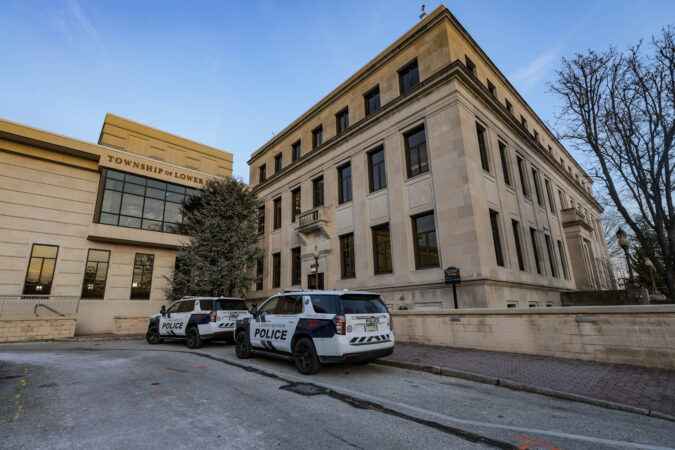
    Emergency responders were dispatched just after 4:40 p.m. to the unit block of Valley View Road in Lower Southampton Township for an industrial rescue, said Police Chief Ted Krimmel.

    The man, whose name was not released, was pronounced dead at the scene.

    “Our thoughts and prayers are with the family at this difficult time,” Krimmel said.

    Krimmel referred questions about the incident to the Bucks County Coroner’s Office, which could not be reached for comment Monday night.

  • Longtime teacher at Catholic school in Bucks County admits to child porn charges

    Longtime teacher at Catholic school in Bucks County admits to child porn charges

    A former longtime teacher at a Catholic grade school in Bucks County pleaded guilty Monday in federal court in Philadelphia to receiving and possessing child pornography, U.S. Attorney David Metcalf said.

    Richard Adamsky, 66, taught seventh and eighth grades and also served as a sports coach at Nativity of Our Lord Catholic School in Warminster. He had worked at the school for 38 years.

    His sentencing is set for April 14.

    Christopher J. Serpico, a lawyer representing Adamsky, said his client faces a mandatory minimum of five years in prison for downloading child pornography.

    Serpico said he intends to present mitigating evidence in hopes of keeping the final sentence not far beyond that minimum.

    Serpico said Adamsky had “developed an addiction” to child pornography that destroyed his career.

    However, Serpico said, “there’s no evidence that he molested any children.”

    Adamsky was arrested in June and charged in state court, then was indicted in federal court in September. His state case was withdrawn in October.

    The prosecution’s memorandum for Adamsky’s plea deal said his crimes involved images in which at least one child was a prepubescent minor or a minor under the age of 12.

    His crimes also involved more than 2,100 child pornography images, the memo said.

    When asked how long he had been engaging in his criminal conduct, he replied, “too long,” the memo said. When asked how many images he had downloaded, he stated, “too many.”

    “He was adamant that he never touched any of his students or any minors — stating that touching children was ‘a line you do not cross,’” the memo said.

  • A paralyzed New Hope man’s $1 billion verdict against Mitsubishi was erased by an appeals court

    A paralyzed New Hope man’s $1 billion verdict against Mitsubishi was erased by an appeals court

    A Pennsylvania appeals court vacated a $1 billion verdict against Japanese car manufacturer Mitsubishi Motors that was handed down by a Philadelphia jury in 2023.

    The whopping verdict was in favor of Francis Amagasu, a New Hope man who lost control of his car, which hit three trees and rolled over. Amagasu’s body was tossed in the car, though he was wearing a seat belt, and he was rendered quadriplegic. His attorneys alleged throughout the litigation that a defect in his 1992 Mitsubishi 3000GT’s seat belt caused the severe injuries.

    Through his wife, Amagasu sued Mitsubishi in 2018, and in fall 2023 a jury returned a verdict that included $800 million in punitive damages.

    The Superior Court did not assess whether the verdict was excessive, as it has been asked to do with other large verdicts. Instead the three-judge panel ordered a new trial because it said the jury was not instructed correctly by Common Pleas Court Judge Sierra Thomas Street.

    The issue at the crux of the appeal is that the seat belt defect did not cause Amagasu’s car to crash. Ahead of trial, attorneys for Mitsubishi asked Thomas Street to instruct the jury to assess what injuries Amagasu would have suffered if the seat belt was not defective, based on a legal doctrine for scenarios in which a vehicle’s defect didn’t cause the crash itself.

    The doctrine also requires proof there was a safer alternative to the defective product.

    Thomas Street, however, declined to provide those instructions. The judge told jurors that if they found that the seat belt was defective from when it was originally sold, Mitsubishi was “liable for all the harm caused by the occupant restraint system.”

    Superior Court Judge Judith Olson, who wrote the court’s opinion, said Amagasu’s attorneys never argued that a defect within the Mitsubishi 3000GT caused the crash itself.

    The appeal’s court opinion chastises Thomas Street, saying the trial court “abdicated its duty” to instruct the jury on correct legal principles.

    And the judge’s decision to deny Mitsubishi’s proposed jury instructions “was not a logical and dispassionate determination” based on the law and evidence, Olson said.

    Chip Becker, a Kline & Specter attorney who led Amagasu’s representation throughout the appeal, said in a statement that the court’s decision to vacate the verdict and order a new trial was wrong for multiple reasons.

    The jury instructions were consistent with past Pennsylvania Supreme Court precedent, Becker said. Plus, the jury found that Mitsubishi was liable because the car manufacturer failed to warn of the defect, making any other issue with the jury’s instructions “harmless.”

    “The Superior Court’s sharp criticism of Judge Street was unwarranted,” Becker said. “Mr. and Mrs. Amagasu look forward to vindicating Judge Street’s decisions in the appellate courts.”

    The car manufacturer, on the other hand, celebrated the decision.

    “Mitsubishi has always believed that the jury was not properly instructed on the applicable law,” Jeremy Barnes, a spokesperson for Mitsubishi Motors North America, said in a statement.

    Maureen McBride of Lamb McErlane and John Hare of Marshall Dennehey, who represented Mitsubishi throughout the appeal, declined to comment further.

  • A Philly charter just laid off 17 employees. Students, staff, and parents say it’s a sign of troubling changes at the school

    A Philly charter just laid off 17 employees. Students, staff, and parents say it’s a sign of troubling changes at the school

    Esperanza Academy Charter School laid off 17 employees this month — a move that officials say was necessary amid a challenging financial climate.

    But some Esperanza Academy veterans say the 4% reduction in the workforce — which came with no notice a few weeks before the holidays — is emblematic of troubling recent changes at the Hunting Park charter.

    Ten Esperanza Academy staffers, students, and parents spoke with The Inquirer and detailed concerns about changes at the school in the last year.

    Teachers say morale is low, particularly at the high school, where staff have filed paperwork to form a union for the first time in the school’s history. Student frustration bubbled over recently, with hundreds walking out to express their anger over the loss of teachers, a counselor, an administrator, and more.

    “Students are protesting,” Jarely Cruz-Ruiz, an Esperanza Academy ninth grader, wrote in a letter to the charter’s board of trustees, “because even we see the wrong being done.”

    School officials declined to be interviewed, but in a statement, CEO Evelyn Nuñez said: “Like many academic institutions across the commonwealth and nation, Esperanza Academy is navigating a challenging economic environment.”

    But, Nuñez said, the board and leadership team will ensure “the school will be a source of hope in this neighborhood for years to come.”

    An anchor, changing

    Esperanza has operated a charter school in North Philadelphia since 2000; the school has expanded to encompass grades K-12, and now serves more than 2,000 students in multiple buildings.

    The charter is part of the Nueva Esperanza organization, a sprawling nonprofit “opportunity community,” as its founder, the Rev. Luis Cortés Jr., has described it, a one-stop shop for neighborhood revitalization work, job training, legal services, and more.

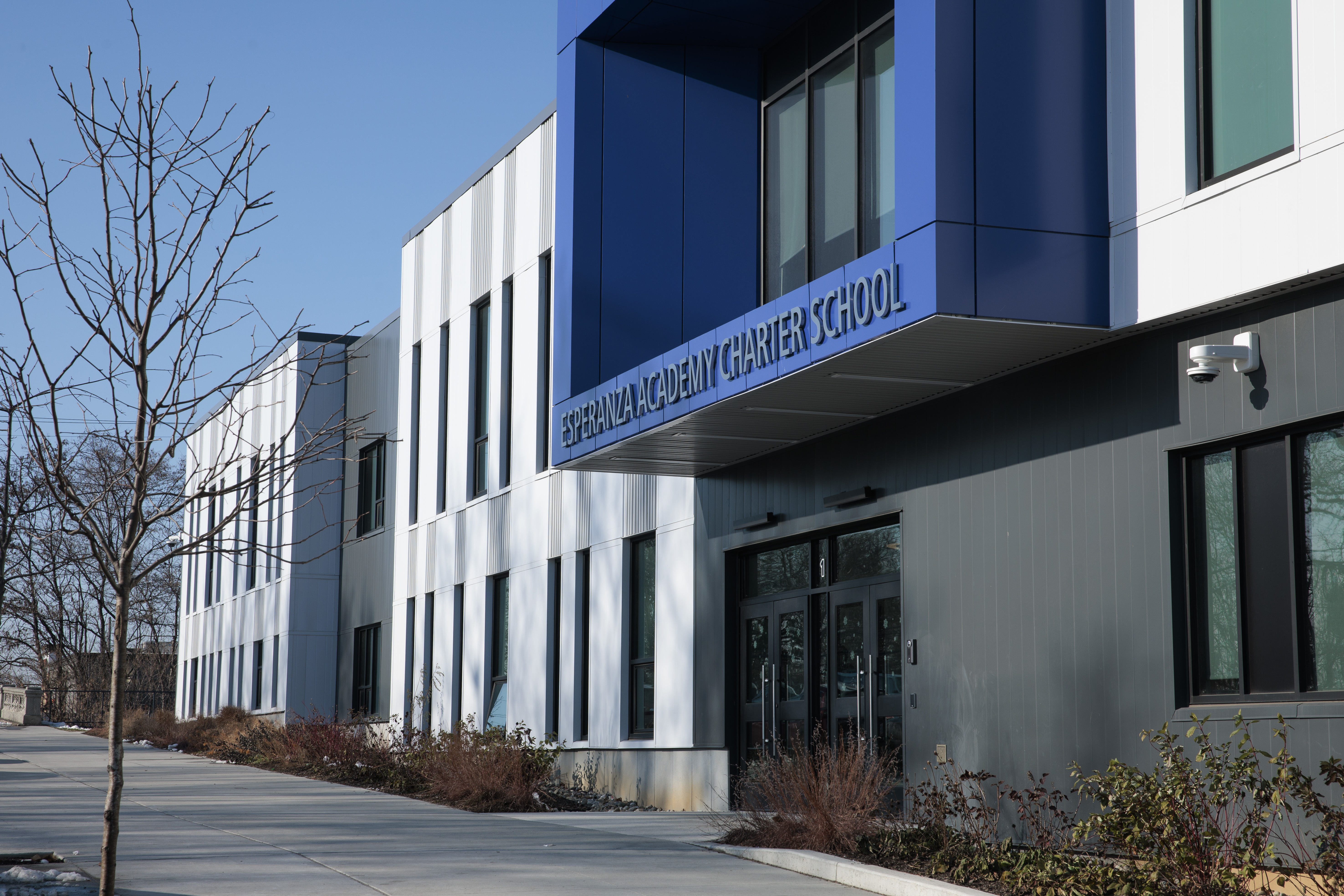
    Esperanza opened a brand-new, 73,000-square-foot elementary building on the nonprofit’s campus at the beginning of this school year. Officials, in a statement released after the student walkout, said the project was planned for many years and noted that the broader organization, not the charter school, pays for campus improvements.

    The exterior of the new Esperanza Academy Charter elementary building at 201 West Hunting Park Ave.

    Esperanza has long been an anchor in the neighborhood and the larger Latino community, a place with a one-big-family feel.

    But Daniel Montes, who came to the school as a climate control officer in 2017 and worked his way up to be a teacher, said shifts began happening about a year ago. Montes was among those staffers laid off recently.

    Nuñez came to the school from the Philadelphia School District last year to become its CEO.

    “Things started to change when we got the new CEO,” Montes said. “I don’t know if it’s when you get a new broom, it sweeps clean.”

    At a staff retreat just before the start of this school year, Cortes, Esperanza’s founder, alluded to coming financial difficulties, said one staffer, who asked not to be named for fear of reprisal.

    “He said, ‘Stuff’s happening, you have to buy in or get out,’” said another staffer, who asked not to be identified because they did not want to be targeted by leaders. “He said it was politically driven [at the national level], and that funds would be tight.”

    ‘Three strikes’

    Tensions began to simmer among high school staff.

    “There are very unilateral changes being put into effect extremely quickly,” said another teacher, who also asked not to be named for fear or reprisal. “We’ve had major changes go into effect on a Monday after a meeting on a Friday. They said, ‘We don’t have subs and you’re going to be covering classes for free.’”

    Montes and others said teachers were frustrated over new schedules, lost prep time, and the order to cover classes without compensation — Esperanza Academy had, in the past, paid teachers for covering classes.

    “It was three strikes,” said Montes.

    “We just did not feel heard,” a third teacher, who also asked not to be named for fear of retribution, said. “We’re out of paper towels, and staples for the printer. The printer’s broken, but they hired six-figure administrators.”

    Most charter schools do not have unionized staff; in October, a majority of Esperanza Academy’s high school teachers signed union authorization cards and chose to affiliate with the American Federation of Teachers.

    Layoffs came Dec. 4, a Thursday, with no warning — some of the affected staff were pulled out midclass and given notice.

    Students weren’t told what was happening, but something seemed off that day, they said. And a basketball game was canceled.

    Those who remained at Esperanza Academy’s high school were told they would be absorbing the job responsibilities of the laid-off workers, including classes, coverages, and special-education caseloads.

    Some teachers got extra classes added to their schedules — with no extra pay. Other classes were combined, with class sizes growing.

    Interventionists — those charged with working with the neediest students — were laid off, and staffers said no plan has been articulated about who will do that work.

    In every staff meeting, teachers said they are reminded that the school’s focus is increasing attendance, boosting the number of students who meet state standards, and decreasing the number of students who score at the lowest levels.

    “How are we doing that if we don’t have any interventionists?” the second teacher said.

    Student protest

    The layoffs stunned students. They mobilized and held a walkout a few days later.

    Hundreds showed up, voicing their displeasure with the cuts and their support for the lost staff. They carried homemade signs and chanted.

    Nuñez acknowledged the walkout in an email to students and families the next day, saying students demonstrated “thoughtful advocacy and respect as they honored the staff members affected by the recent reductions, and we are proud of the way they used their voices to support their school community. School leadership will continue working closely with the [student government] on how we can best support our students as we move through this transition together.”

    Cruz-Ruiz, the Esperanza Academy ninth grader, said the school no longer felt like a family.

    “In this building,” Cruz-Ruiz wrote in her letter to the board, “data matters more than people. You named this school Esperanza. Hope. But hope doesn’t live here, scores do. Reputation does. Those graphs and percentages you stare at do.”

    ‘It’s affected so many of the kids’

    Francesca Castro, mother of an Esperanza Academy 10th grader, said she’s been very pleased with the education her daughter has received since middle school.

    But the layoffs were deeply unsettling, she said.

    “It’s affected so many of the kids,” said Castro. “I’m in the corporate world — I understand sometimes you need to make cuts. But there was no preparation, and it was right around the holidays. Couldn’t we find a different way, see what else we could cut?”

    Montes and other laid-off staff were some of the most important people in the building in terms of relationships with students, Castro said.

    “What worries my daughter and some of the students and parents is: If these changes were made all of a sudden, what other changes could happen?” she said. “Are the athletes going to get less? Are the after-school programs being cut? Are they going to start cutting academics?”

    Officials said in a statement that the layoff decision was not made lightly, and “our priority throughout this process has been to preserve the high-quality learning environment and supportive services that our students and families rely on. We remain fully committed to ensuring that the school year continues with minimal disruption to classrooms, instruction, or student support.”

    Students are aware of the larger changes at the school, said teachers, parents, and staff. They can’t understand why those closest to the students were taken away.

    “We’re broke, but we have all these new administrators, and we just built a new building? Students are savvy to that stuff — they’re angry,” said the third teacher.

    What’s next?

    Wendy G. Coleman, president of the American Federation of Teachers-PA, sent Nuñez a letter Dec. 10 asking Esperanza to formally recognize an AFT-affiliated union at the school.

    The staff wants a salary scale and a voice on working conditions and class sizes, Coleman said.

    “The overwhelming majority of the staff has signed cards,” said Coleman. “That is something I hope the administration of Esperanza will voluntarily recognize so that we can collaboratively bargain their first contract.”

    Esperanza Academy leaders on Friday told the AFT they will not voluntarily recognize the union; Coleman said she will soon file paperwork with the National Labor Relations Board seeking certification.

    “I would hope that we can work together to do this as amicably as possible,” Coleman said. “The staff has spoken, and the likelihood of Esperanza avoiding a union coming is pretty slim.”