Category: Pennsylvania News

  • How the fallout from a Chester County chaplain’s sermon inspired the Trump admin to investigate ‘anti-Christian bias’

    How the fallout from a Chester County chaplain’s sermon inspired the Trump admin to investigate ‘anti-Christian bias’

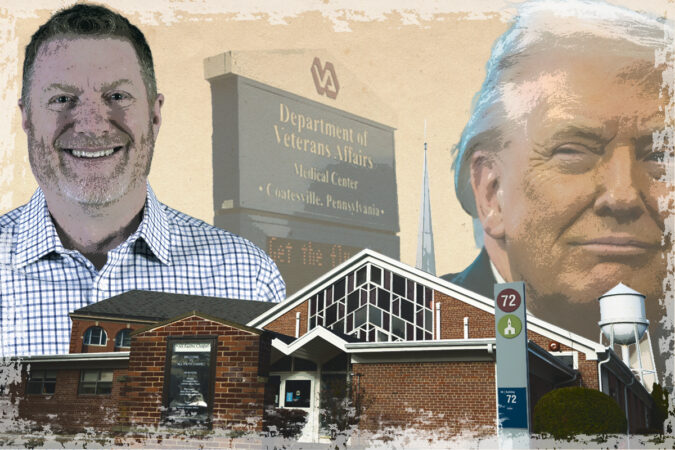
    Russell “Rusty” Trubey said he was compelled by God to preach the words that helped set off a national battle over religion at the U.S. Department of Veterans Affairs.

    Reading from a sermon titled “When Culture Excludes God,” Trubey, an Army Reserve chaplain, sermonized to a congregation of veterans at the Coatesville VA Medical Center from a Bible passage — Romans 1:23-32 — that refers to same-sex relationships as “shameful.”

    Some congregants, upset by the sermon, walked out of the June 2024 service at the Chester County facility, where Trubey has been employed for roughly 10 years. Soon after, Trubey’s lawyers said he was temporarily pulled from his assignment — and transferred to stocking supply shelves — while his supervisors investigated his conduct.

    Speaking to Truth and Liberty, a Christian group that advocates for the church to play a greater role in the public sphere, Trubey said he knows that reading the Bible verses about same-sex relationships is “100%” the reason he got in trouble.

    “Our VA celebrates — up until at least recently anyway — celebrated and expected us to fully tolerate the LGBTQ lifestyle,” Trubey, who belongs to the Assemblies of God, a Pentecostal denomination, said in March. “It’s that part of the text, obviously, that folks took issue with.”
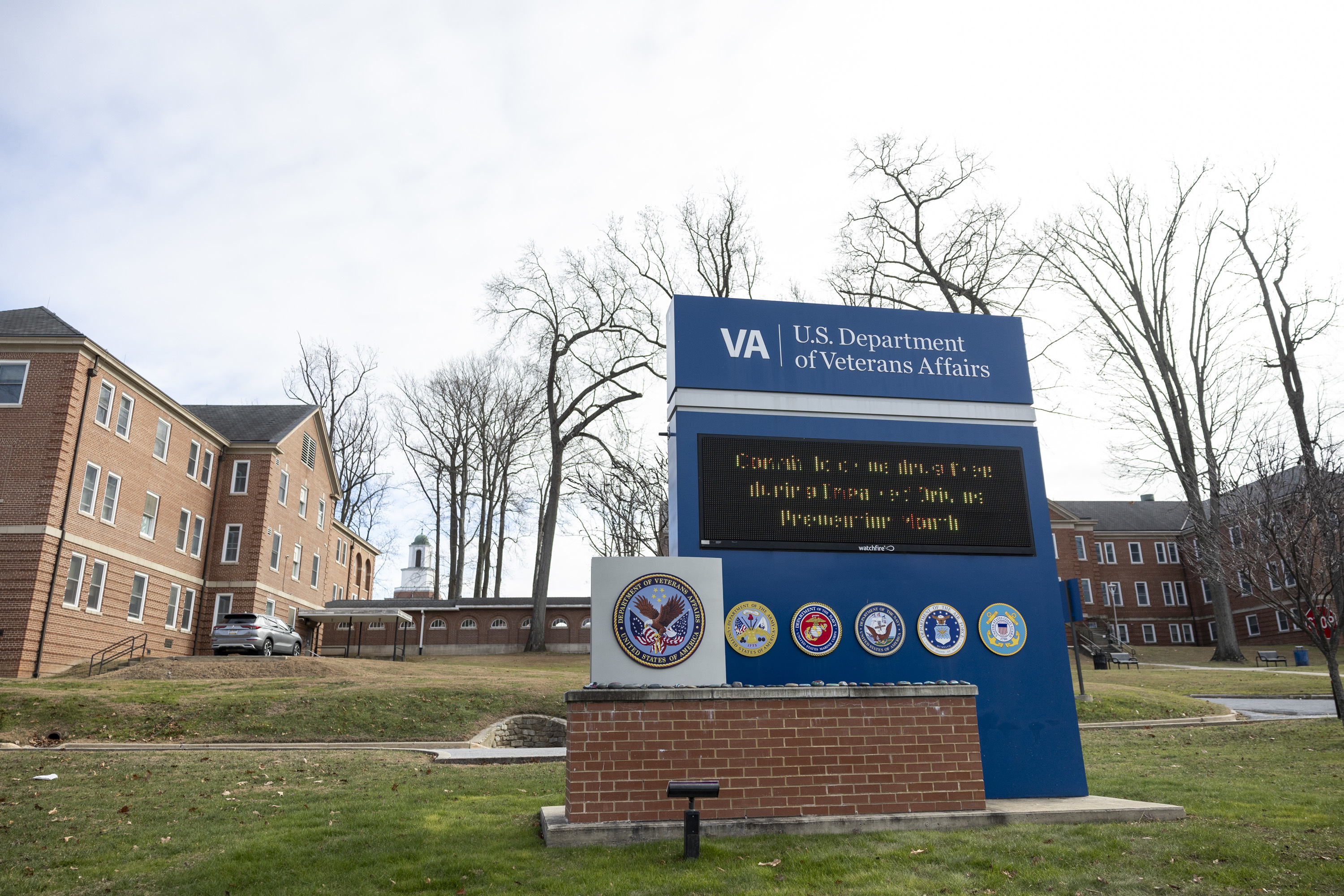
    One of the entrances leading into Coatesville VA Medical Center.

    A month earlier, Trubey’s lawyers had taken his case to the White House. In a letter sent a few weeks after President Donald Trump’s inauguration, Trubey’s lawyers asked Trump’s VA secretary, Doug Collins, to intervene on Trubey’s behalf in regard to repercussions for the sermon.

    Trubey had delivered the talk during former President Joe Biden’s administration — an environment that Trump officials allege was hostile to Christians.

    In the letter, the chaplain’s lawyers from the First Liberty Institute and Independence Law Center accused Trubey’s supervisor of wanting sermons to be screened ahead of time for pre-approval and stated that Trubey received a letter of reprimand, which would later go on to be rescinded by Coatesville VA Medical Center officials.

    Soon after the lawyers’ letter reached the new administration, the VA, one of the largest federal employers in Pennsylvania, reinstated Trubey to his position and Collins reaffirmed that chaplains’ sermons would not be censored.

    But the fallout from this incident — paired with Trump’s ongoing campaign to root out perceived prejudice against Christians and dismantle diversity, equity, and inclusion — left an undeniable mark on the VA, helping to inspire an agencywide “Anti-Christian Bias Task Force.”

    Announced to employees in April 2025, the task force asks employees to report offenses such as “reprimand issued in response to displays of Christian imagery or symbols,” per a department email reviewed by The Inquirer.

    And the VA wants names.

    In the email, the VA encouraged employees to identify colleagues and workplace practices that violate the policy and send information about the alleged offenses to a dedicated email address. The announcement was in accordance with a Trump executive order from February that ordered federal agencies to “eradicate” anti-Christian bias and create a larger White House task force composed of cabinet secretaries and chaired by Attorney General Pam Bondi.

    As of this summer, the VA received more than 1,000 reports of anti-Christian bias and reviewed 500, according to task force documents. Another report is expected in February.

    Some of the offenses the VA is on the watch for could be especially pertinent during the holiday season when workers may want their faith represented at their desks.

    One union leader at the Veterans Benefits Administration office in Philadelphia called the task force, which does not extend to biases against other religions, “McCarthyism for Christians.”

    “What they’re really doing is they’re trying to create a hostile work environment where you’re now afraid to say something because you may be reported,” said the union representative weeks after the VA’s task force announcement. The representative asked to speak anonymously out of fear of workplace retaliation.

    The VA said in a statement that the department is “grateful” for Trump’s executive order. The VA did not answer The Inquirer’s questions on an updated number of reports received through the task force, what happens to people or practices that are reported, and next steps of the task force.

    “As the EO stated, the prior administration ‘engaged in an egregious pattern of targeting peaceful Christians, while ignoring violent, anti-Christian offenses,’” said VA press secretary Pete Kasperowicz in the statement. “Under President Trump, VA will never discriminate against Veterans, families, caregivers or survivors who practice the Christian faith.”

    One of those offenses, as outlined by the VA, is “informal policies, procedures, or unofficial understandings hostile to Christian views.” Another is retaliation against chaplains’ sermons, which appears to be in response to the Trubey incident from June 2024.

    Erin Smith, associate counsel at the First Liberty Institute, who helped represent Trubey said: “If Chaplain Trubey’s story serves as inspiration to help protect the rights of all chaplains in the VA, then that is a wonderful thing to come out of a terrible situation.”

    But some VA employees disagree.

    Ira Kedson, president of AFGE Local 310, which represents employees at the Coatesville VA Medical Center, said in an interview in June that he heard some employees were “deeply troubled” by the incident with Trubey, especially those who worked in clinical settings with patients who were in attendance of the controversial sermon.

    “I was told that some of the residents were deeply hurt and deeply troubled by the situation and it took a long time for them to be able to move past it,” Kedson said.

    Religion takes center stage in the Trump administration

    Trump is leading what is arguably one of the most nonsecular presidencies in modern United States history with his embrace of a loyal, conservative Christian base.

    “We’re bringing back religion in our country,” Trump said at the Rose Garden during the National Day of Prayer in May.

    At a rally in the Poconos this month, the president declared he’s the reason people are saying “merry Christmas.”

    And efforts to elevate religion in the public sphere have gone beyond Trump’s rhetoric. For instance, the Office of Personnel Management, the federal government’s human resources agency, issued guidance that aims to protect religious expression in the workplace for all religions.

    Trump also established a 16-person religious liberty commission in May that appears to include all faiths. The Department of Justice also announced a task force to address antisemitism.

    Yet, some Christian leaders are concerned that the task force excluding biases against non-Christian faiths will actually exacerbate threats against religious freedoms.

    Most of the reports submitted to the VA focused on “denying religious accommodations for vaccines and provision of abortion services; mandating trainings inconsistent with Christian views; concealing Christian imagery; and Chaplain program and protections for Chaplains,” according to task force documents.
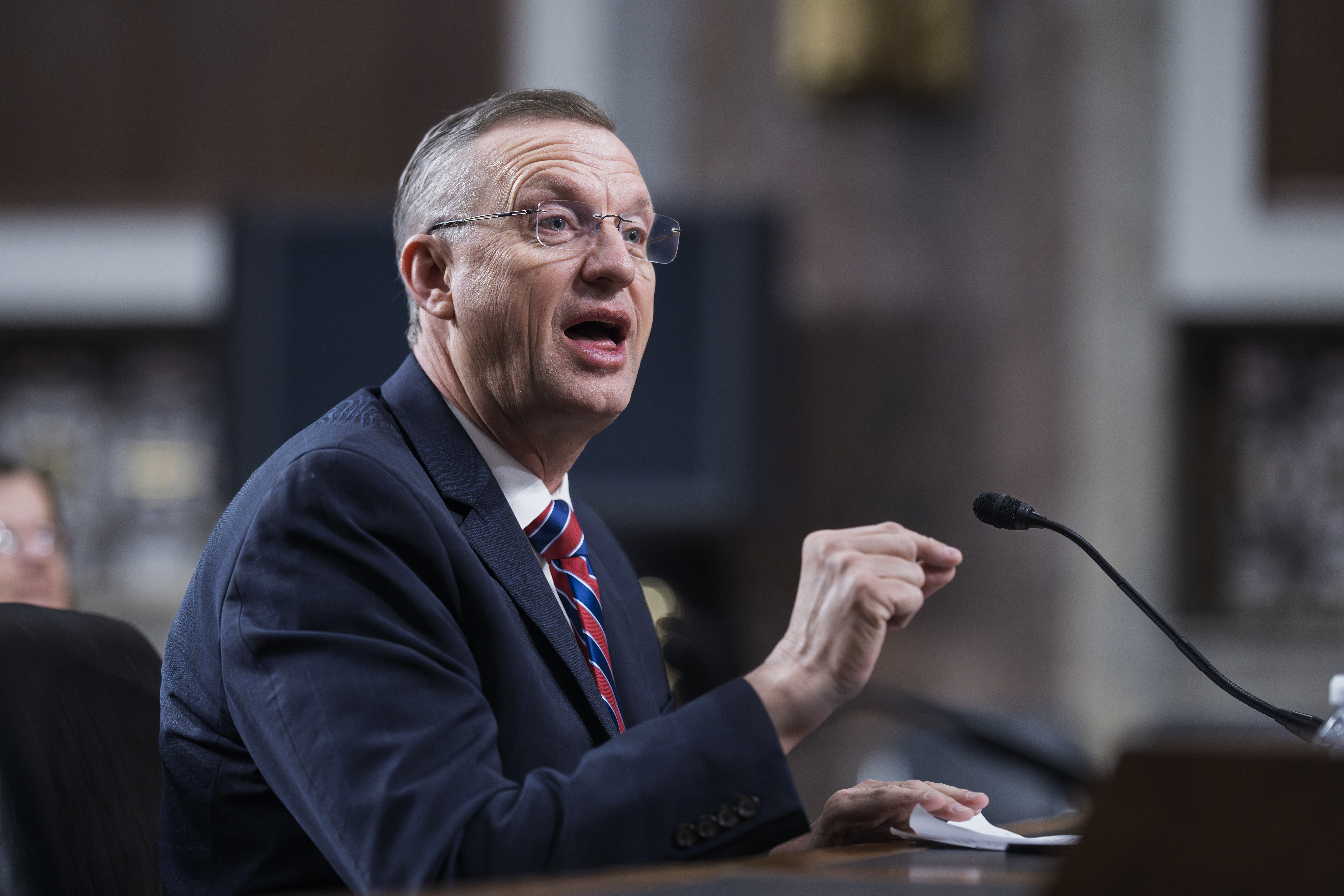
    Doug Collins at his Jan. 21 confirmation hearing before the Senate Veterans’ Affairs Committee, at the Capitol in Washington.

    Charles Haynes, senior fellow for religious liberty at the Freedom Forum, a nonpartisan organization based in Washington that promotes First Amendment rights, said while it’s not unconstitutional or unprecedented to create a faith-specific task force, “the appearance of [the Christian-bias task force], to many people, is a favoritism of the government for one group over another.”

    The White House, in a statement, said Trump has a record of defending religious liberty regardless of faith.

    “President Trump has taken unprecedented action to fight anti-Christian, anti-Semitic, and other forms of anti-religious bias while ending the weaponization of government against all people of faith,” said White House spokesperson Taylor Rogers in an email to The Inquirer.

    Furthermore, she added, that the media is doing “insane mental gymnastics to peddle a false and negative narrative about the President’s efforts on behalf of nearly 200 million Christians across the country.”

    Identifying anti-Christian bias or chasing a ‘unicorn’?

    The Trump administration has shared few details about the operations and goals of the anti-Christian bias task force, raising questions from lawmakers and other stakeholders.

    Rep. Mark Takano, the ranking member of the House Committee on Veterans’ Affairs, was in a monthslong back-and-forth with VA Secretary Collins, trying to get answers to an extensive list of questions he initially sent in May, with the California Democrat particularly concerned that the scope of the initiative is limited to bias against Christians.

    “To preserve this right to religious freedom, the Department cannot prioritize one faith over others, nor can it allow religious considerations to shape its policies in ways that may conflict with the First Amendment,” Takano wrote in May. “Further, the vagueness of the task force’s mission raises significant concerns about how it will be used and whether it is compatible with the mission of the Department.”

    Collins responded in June and did not answer most of Takano’s questions, though he did say that the task force, which reports to the secretary, will identify, strategize, and potentially alter any policies that discriminate against Christians or religious liberty.

    The lawmaker followed up a week later. Roughly four months later, in October, Collins’ responses were vague once again. Most recently, Takano is asking for both Democratic and Republican members of the House and Senate’s Veterans’ Affairs Committees to be looped in on future correspondence regarding the task force.

    The VA, according to a statement from Takano, has not fully answered their questions and has refused to host a bipartisan briefing.

    “The lack of transparency and accountability of this task force leaves me with numerous concerns for the due process and privacy of hardworking VA employees,” Takano said. “VA’s silence won’t stop us from asking the questions we are constitutionally obligated to ask.”
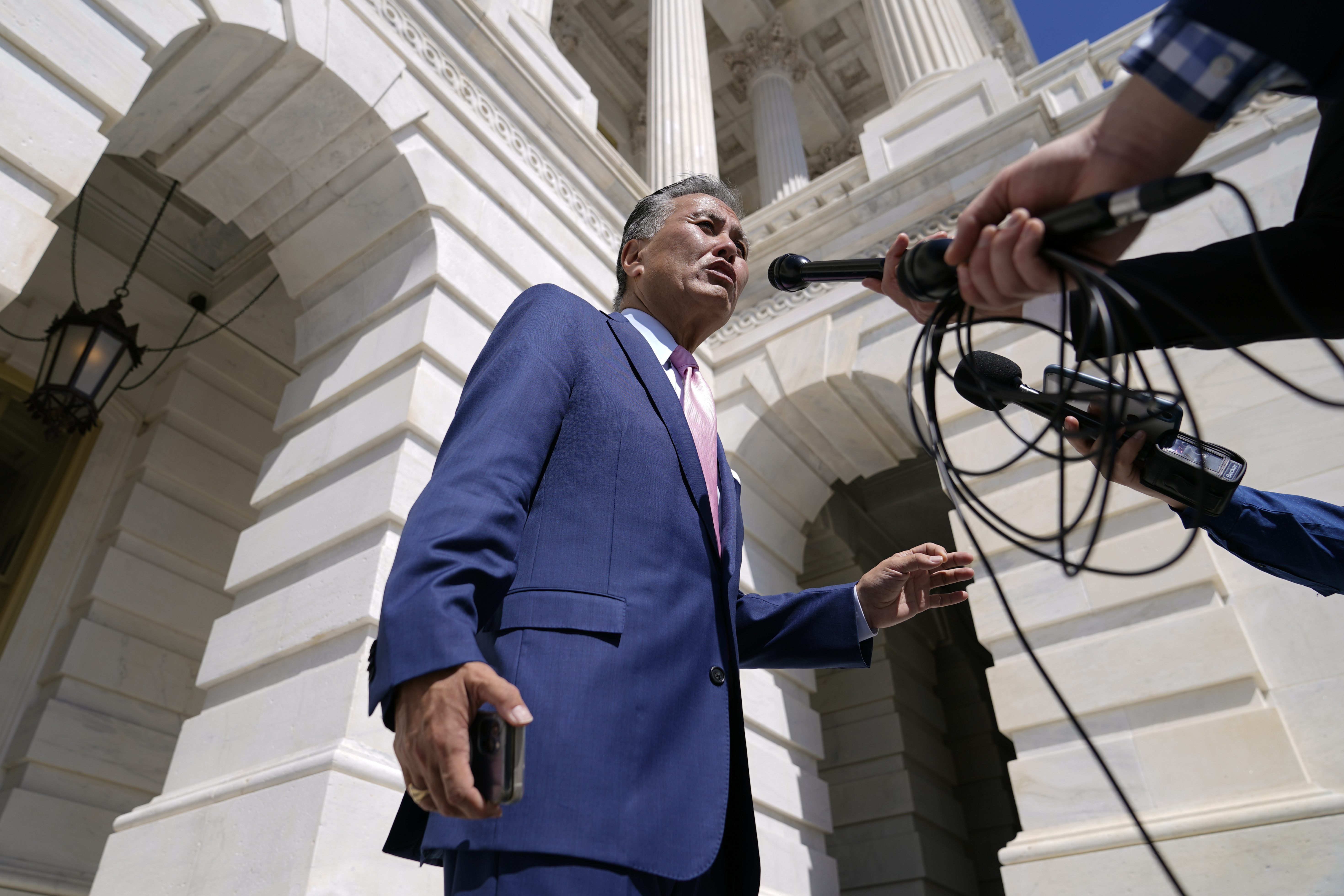
    Rep. Mark Takano (D., Calif.) in August 2022, on Capitol Hill in Washington. Takano, ranking member of the House Committee on Veterans’ Affairs, has been trying to get answers from the VA on the Anti-Christian Bias Task Force.

    Michael L. “Mikey” Weinstein, former counsel for the Reagan administration turned founder and president of the Military Religious Freedom Foundation, said his group is looking for a plaintiff to sue the government over the task force. The group has been receiving calls from VA employees concerned about it, one of whom, he said, was a senior physician at the VA Medical Center in Philadelphia.

    The physician, Weinstein said, was distraught to receive the memo about the task force. He had family in town and noted the irony of showing his family around all the historical sites that signified the birthplace of American freedoms while being asked by the federal government to partake in such a project.

    “It was like a dagger in his heart,” Weinstein said.

    Weinstein is adamant that anti-Christian bias in the federal workforce is nonexistent, like looking for a “unicorn.”

    Noticeably absent from the task force, critics say, is any effort to explore instances of discrimination against other faiths within federal agencies.

    Trump has historically espoused hateful rhetoric against Muslims, including enacting a travel ban on individuals from predominantly Muslim countries during his first term. The president has issued an executive order this term to combat antisemitism on college campuses, but he also has a history of engaging with antisemites on the political right.

    Ahmet Selim Tekelioglu, executive director of CAIR-Philadelphia, a nonprofit that aims to protect the civil rights of Muslims in the U.S., said he believes all forms of discrimination should be stamped out, but he’s concerned the task force isn’t affording those protections to everyone.

    “It focuses exclusively on alleged anti-Christian conduct within the federal agencies, and in our opinion of this, risks then entrenching preferential treatment and signaling the protections that should exist for everyone is conditional, right?” Tekelioglu said.

    There is hope, however, that this task force could lead to other future initiatives to root out hate, said Jason Holtzman, chief of Jewish Community Relations Council at the Jewish Federation of Greater Philadelphia.

    “My hope is that hopefully they’re starting with the task force on Christian bias, and then maybe they’ll initiate one on antisemitism, Islamophobia, because I think task forces need to exist on all of these different forms of hate,” said Holtzman, noting that both Trump and Biden have taken action to combat antisemitism.

    Haynes, the religious liberty expert, said anti-Christian bias is a “matter of perspective.”

    “How you see it for the conservative Christian, what others would say is just creating an inclusive, safe workplace for everyone, they see, in some respects, as being anti-Christian,” Haynes said.

    Haynes said that “anecdotal sort of stories” about prejudice against Christians pushed by conservative groups do not appear to be based in any kind of research into a widespread trend. But it only takes one story — as seen in Trubey’s case — to set off a firestorm.

    “It doesn’t take much,” Haynes said.
  • The new Delco DA talks victories, ambitions, and the importance of mentorship

    The new Delco DA talks victories, ambitions, and the importance of mentorship

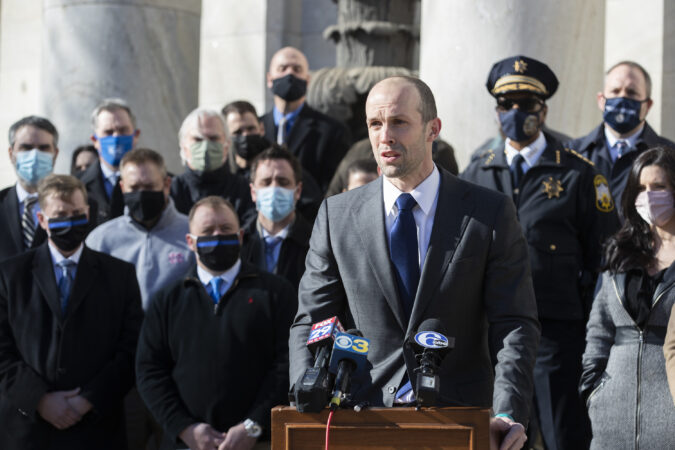
    Tanner Rouse will be Delaware County’s new top law enforcement officer, but he’s not new to the work.

    Rouse will be sworn in on Jan. 5 as district attorney after his predecessor, Jack Stollsteimer, steps down to assume the county judgeship he won in November. Rouse, 42, will finish out the final two years of Stollsteimer’s term after working as his first assistant since 2020.

    In a recent interview, Rouse discussed the strides in reducing violent crime he and his colleagues have made under Stollsteimer — the first-ever Democrat to serve as district attorney in Delaware County — as well as how he plans to continue those advances.

    The short answer: Keeping the same playbook, but “putting a personal stamp on it,” as an offensive coordinator does when he takes over as head coach, said Rouse, an avid Eagles fan and ambitious Little League coach.

    A former Philadelphia prosecutor under Seth Williams, Rouse credited the lessons he learned from investigating gun violence in the city, along with the recruitment of several former colleagues he brought over the county line, with improving the way crime is prosecuted in Delaware County.

    “We have demonstrated you can reform the criminal justice system and that it doesn’t have to come at the expense of stopping violent crime,” Rouse said. “They’re not mutually exclusive.”

    Who is Tanner Rouse?

    Rouse, a Phoenixville-area native, is the son of the late Willard Rouse III, the prominent Philadelphia developer behind One and Two Liberty Place. After graduating from the University of Wisconsin and Fordham Law School, Rouse spent seven years in the Philadelphia District Attorney’s Office, prosecuting crimes in Center City and North Philadelphia.

    Rouse left the office in 2017, months before Larry Krasner took over. He practiced civil law for a time and ran an ultimately failed campaign to unseat then-State Sen. Tom McGarrigle before Stollsteimer called and offered him the first assistant job.

    At the time, Rouse said, the offer was unexpected. But, looking back, he now considers it one of the greatest opportunities of his career.

    What is Rouse most proud of from his tenure as first assistant?

    The most notable achievement of his tenure to date in the district attorney’s office, Rouse said, is the steep reduction of gun violence in Chester. Shootings are down 75% since 2020. Rouse credits community outreach efforts for that, especially through the Chester Partnership for Safe Neighborhoods program, overseen by veteran homicide prosecutor Matt Krouse, whom Rouse worked with in Philadelphia and recruited to join him in Delaware County.

    The partnership’s fundamental philosophy is a combination of focused deterrence programs Rouse helped oversee in Philadelphia that target repeat offenders, as well as community outreach efforts run by trusted neighborhood figures.

    Rouse said he never wanted to be a faceless presence in the county and made it his priority to get out and form relationships in all of the municipalities he served, visiting community meetings, block parties, and even a few pickup basketball games.

    “I don’t do this job from behind a desk,” he said, speaking in his county courthouse office. “And I think demonstrating that commitment and that care by being more present in those communities, and not just being kind of the big, scary law enforcement agency on a hill is incredibly important.”

    Rouse said he is proud of other reforms including creating a diversionary unit in the office, revamping its drug court and instituting a special “child’s court,” created by Kristen Kemp — Rouse’s chosen first assistant and an expert in special-victims’ cases — that allows young victims to testify against adult offenders in a more comfortable environment.

    The county’s jail population is down 50% as well, something Rouse says is a result of approaching prosecuting crimes in a humane, logical way.

    What are his priorities as district attorney?

    Rouse said he plans to create a similar community outreach program in Upper Darby, a community he said is “on the verge of some big things.”

    “It’s not as if we’re saying, ‘We’re coming in here to take on Upper Darby and what goes on there,’ but more of, ‘Guys, look, we’re not just the people you pick up and call when there’s a crime.’”

    He also expressed interest in creating reciprocity agreements with his counterparts in the other collar counties around Philadelphia, specifically when it comes to handling drug cases and providing treatment to the people caught up in them.

    How has his time in Philadelphia influenced his work in Delco?

    Rouse said he cut his teeth in the city working alongside veteran prosecutors, and he’s worked to bring that environment of mentorship to Delaware County.

    He said he and his more senior deputies often sit in on trials, giving feedback to younger staff members just as his mentors did for him nearly two decades ago.

    “That’s how I got better, and that’s one of the roles I most cherish here,” he said.

  • These college journalists from Philly-area schools are working to support each other and seek funding for their work

    These college journalists from Philly-area schools are working to support each other and seek funding for their work

    Haverford College senior Jackson Juzang earlier this year had been talking to a school administrator about the need for more resources to support student journalism.

    The administrator, Chris Mills, Haverford’s associate vice president for college communications, asked if there was a network of student newspaper journalists in the region that Haverford could join and seek support from.

    There wasn’t.

    “So I decided to create one,” said Juzang, 22, an English major from Pittsburgh who serves as associate editor of the Clerk, Haverford’s student newspaper.

    Jackson Juzang explains why he started the Philadelphia Student Press Association.

    He established the Philadelphia Student Press Association as a nonprofit and created a board with student editors from 11 college news organizations around the region, including Temple, Drexel, Villanova, St. Joseph’s, La Salle, Rowan, Rutgers-Camden, Bryn Mawr, Swarthmore, Haverford, and Eastern.

    With the slogan “Rooted in Philly, Reporting for All,” the group — which collectively represents about 400 student journalists — is seeking funding from organizations to support student journalism at a time when college budgets are tight and the news industry faces challenges, including rising print costs and lower readership. The association already has held workshops with more planned next year, and its 21-member board meets monthly and discusses common issues and problems and brainstorms solutions.

    “We have so many people coming from different regions, but we are united in the sense that we are all here for the same reason,” said Claire Herquet, an editor at the La Salle Collegian.

    At a recent meeting, members talked about artificial intelligence and what to do if an editor suspects a student writer used it, Herquet said. There were two instances over the past semester when she read an article submission and thought the terminology and phrasing didn’t sound like the writer, she said.

    “If I didn’t have PSPA, I wouldn’t have people to lean on,” said Herquet, 21, a junior communications major from Camden. “It would just be me versus the problem.”

    Herquet manages communications for the association. She has been reaching out to foundations about obtaining grant funding for the association. Some college newsrooms are better funded than others and can give writers and editors stipends.

    She’s hopeful that uniting the newsrooms will result in better experiences for students and more funding.

    La Salle’s publication is only digital; there is no print version. Costs are minimal, but funding would cover professional workshops for students and costs, such as travel, associated with their reporting.

    The Whit, Rowan University’s student news site, prints a newspaper once a week and receives financial support via student government, but print costs are rising, said junior Katie Thorn, who serves as managing editor.

    “We’re trying to figure out with the budget we have if it is possible and what we are going to have to sacrifice to keep our paper printing,” Thorn said.

    Thorn, who is serving as treasurer for the association, said it’s been helpful to learn that other student organizations are facing the same challenges.

    “Journalism as a whole is such a scary world right now,” said Thorn, 20, a journalism major from Mantua, Gloucester County, “and you’re kind of throwing yourself into the fire. Am I going to find a job? Where does my future lie? Having people who support you and uplift you is a great thing.”

    Haverford’s student newspaper has received funding via the president’s office and is able to pay its writers, Juzang said. In January, the Clerk will publish its first print edition.

    But the Clerk would like resources for deeper reporting and investigative work and mentorship, he said.

    Juzang, who hopes to pursue a graduate degree in communication management next year at the University of Southern California, said he’s invested thousands of dollars of his own money to get the association started. He currently works as a research/editorial intern for NBC Sports.

    He said the association also has received support from the Philadelphia-based Foundation for Individual Rights and Expression.

    Juzang said he would like to help schools, including Widener and Lincoln, that used to have student news sites revive them. He also has begun talking to student journalists in other metro areas, including Washington, Boston, New York, and Baltimore, about starting an association for their university newsrooms, he said.

    Mills, the Haverford communications administrator, was pleased to see Juzang take that conversation the two had last March and create a mechanism for student journalists to share their experiences and learn from each other.

    “It’s really important for the students to share resources and knowledge and wisdom,” he said. “For those of us who value student journalism, it’s great to see them prioritizing this and making the time to do it.”

  • A disabled Ecuadoran immigrant faces deportation. Del. Gov. Matt Meyer hopes to stop it.

    A disabled Ecuadoran immigrant faces deportation. Del. Gov. Matt Meyer hopes to stop it.

    Delaware Gov. Matt Meyer has stepped into the case of a 52-year-old disabled Ecuadoran immigrant, telling the judge it would be “cruel” and “egregious” to deport the Seaford resident to face gang violence in his homeland.

    The man, Victor Acurio Suarez, is unable to live on his own, always cared for by his younger brother. He tried to flag down a U.S. Immigration and Customs Enforcement agent in a Lowe’s parking lot near his home in September, apparently thinking the officer could help him find work. Instead, he was arrested and placed in detention and is scheduled for an Immigration Court hearing on Jan. 16.

    “Given Mr. Suarez’s medical and functional limitations, I am concerned that he is unable to safely care for himself, effectively represent himself in legal processes, or access the necessary support without his family,” the governor wrote to Judge Dennis Ryan.

    Meyer also advocated for Acurio Suarez in a series of social media posts, saying, “I want Delawareans to know about Victor Acurio Suarez,” and calling what has happened to him “deeply disturbing.”

    Meyer’s advocacy is notable. While many elected officials have spoken out against President Donald Trump’s broader immigration policies, advocating for specific individuals has been typically reserved for high-profile cases like Kilmar Abrego Garcia, the Maryland man who was illegally deported to El Salvador’s notorious CECOT prison, returned to Moshannon Valley Processing Center, and was recently released.

    Meyer argued that with no criminal history, not even a traffic violation, Acurio Suarez “poses no threat to public safety.”

    Yet how much weight the backing of a governor carries in the immigration system remains to be seen.

    In the past, someone with Acurio Suarez’ profile might have been allowed to stay home as their case moved forward in Immigration Court.

    A medical assessment submitted for his asylum application this week said Acurio Suarez has autism and aphasia, a language disorder that affects his ability to produce or understand speech.

    Dr. David W. Baron noted Acurio Suarez can’t safely live on his own. He requires supervision to perform daily hygiene activities or cook and has a hard time communicating his needs to others, a condition made worse by being in an unfamiliar setting while in detention, where he doesn’t have access to the support needed for his neurocognitive disabilities.

    Still, as the Trump administration pursues a mass deportation agenda, undocumented immigrants without violent criminal histories are increasingly held in mandatory detention, unable to seek release on bond, as their cases play out.

    The latest federal data from November says 74% of the roughly 65,000 people in detention have no criminal convictions.

    It’s unclear what impact the governor’s letter might have. The judge on the case can only approve or deny the asylum application.

    ICE does have discretion in releases but has so far denied a September request from Acurio Suarez’ attorney, Kaley Miller-Schaeffer.

    “The letter from the governor, if anything, could maybe persuade ICE to relook at the request for release on parole,” she said, noting that Meyer’s letter brings more attention to the case.

    An ICE spokesperson said in a statement that the agency was committed to the “health, safety, and welfare of all detainees in custody.”

    “ICE’s National Detention Standards and other ICE policies require all contracted facilities to provide comprehensive medical and mental health screenings from the moment an alien arrives at a facility and throughout their entire time in custody,” the statement said.

    Miller-Schaeffer said she will still have to prove Acurio Suarez met all the strict requirements for asylum in Immigration Court. Should ICE not reconsider releasing Suarez on bond, he will remain in Moshannon Valley Processing Center until he is either granted asylum or deported.

    Deportation could be deadly, according to Acurio Suarez and his brother. In addition to lacking the necessary support to perform daily tasks, Acurio Suarez fears the gang that drove him and his brother to flee the country would find him again in an effort to recruit or kill him.

    Acurio Suarez told Baron he fled to the United States in 2021 after a group of gang members beat and kicked him with steel-toe boots, knocking out his gold front teeth and stealing them. The group was part of Los Lobos, a criminal organization with a national presence in the country, designated a foreign terrorist organization by U.S. Secretary of State Marco Rubio this year.

    Acurio Suarez said the group also set his home on fire after they learned his younger brother reported the attack to the police.

    According to the Global Initiative Against Transnational Organized Crime, gang violence has risen in Ecuador amid economic hardship and subsequent battles over the illicit economy. The Geneva-based group estimates that the country will reach about 9,100 intentional homicides in 2025, a 40% increase from the previous year.

    In his passionate defense of Acurio Suarez, Meyer said the 52-year-old is at “high risk of re-victimization by the Los Lobos gang” should he be deported.

    “If you believe compassion belongs in our immigration system, join me in calling for Victor’s release,” Meyer wrote.

  • Montgomery County school district seeks firing of principal for reported antisemitic comments

    Montgomery County school district seeks firing of principal for reported antisemitic comments

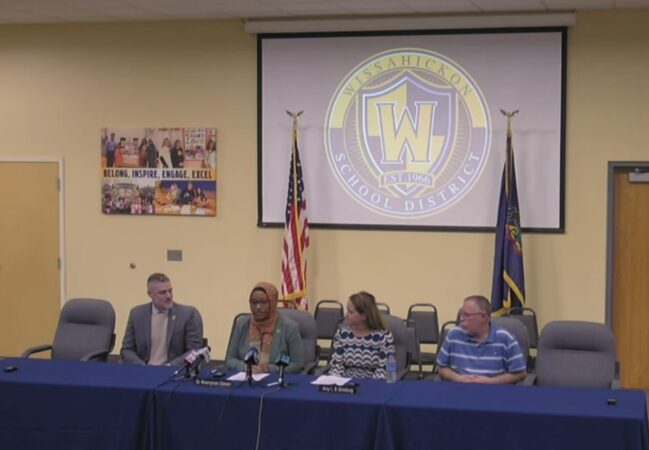
    The superintendent of the Wissahickon School District in Montgomery County said Friday that she and other district leaders are recommending that an elementary school principal be fired after he allegedly was recorded in a voicemail to a parent making antisemitic comments.

    Philip Leddy, the principal of Lower Gwynedd Elementary School, acknowledged to the district that he made the call, “thought the call had disconnected, and then continued talking,” Superintendent Mwenyewe Dawan said in a statement Friday to the Wissahickon schools community.

    “He confirmed he had made some remarks he knew were not appropriate. In the call, the principal can be heard making antisemitic comments and speaking disparagingly about the parent to another staff member who was in the office at the time,” Dawan said.

    The district leadership “moved swiftly with immediate action to start the process seeking the principal’s termination,” said Dawan, who also spoke at a news conference Friday afternoon with Amy Ginsburg, president of the district’s school board.

    “Wissahickon is no place for hate. This is a community where all students are welcomed and where safety and well-being truly is our priority,” Ginsburg said.

    “We cannot and will not allow this to divide us,” Ginsburg said later.

    Leddy, who became the principal at Lower Gwynedd in 2023, could not be reached for comment Friday.

    While the district is pursuing his termination, Leddy is required under state law to have a due-process hearing, which is scheduled for Monday, Dawan said.

    The other staff member present for Leddy’s comments and who allegedly did not report them or take any other action has been placed on administrative leave pending further investigation, Dawan said.

    “The fact that any employees entrusted with the care and well-being of students could make, or passively tolerate, such remarks raise concerns that extend beyond the conduct of a single individual. This incident underscores concerns for broader, systemic issues related to antisemitism that must be examined and addressed,” Dawan said.

    The Jewish Federation of Greater Philadelphia said in a statement Friday that in the recording, Leddy was heard saying something about “Jew money” and that “they [Jews] control the banks.” Leddy was asked if the parent was a lawyer and then remarked, “the odds probably are good.”

    “These are deeply rooted antisemitic tropes that have historically been used to demean, marginalize, and endanger Jewish people,” the federation said.

    The district must apply accountability and transparency to its investigation and response, the federation said, and engage directly with the Jewish community and commit to education and training about antisemitism.

    The district recently faced criticism from Jewish parents over a booth run by a Muslim student group at a district cultural fair in late November that included, among other things, the flag used to represent Palestinian people and the state of Palestine.

    At the time, Dawan acknowledged the concerns of the Jewish parents and also noted that some Muslim students reported feeling unsafe after the controversy gained wider attention.

    On Friday, Dawan said the district will ensure that counselors are available on Monday for students and staff. She said the district will communicate additional information in the coming weeks, including more about steps being taken and further staff training.

  • A West Philly man was convicted of first-degree murder for a fatal blaze in Delco

    A West Philly man was convicted of first-degree murder for a fatal blaze in Delco

    A West Philadelphia man who set a fatal fire in the midst of a tumultuous breakup, killing his ex-girlfriend’s disabled sister, was convicted Friday of first-degree murder.

    A Delaware County jury ruled that Aaron Clark, 20, set the the December 2022 blaze in Darby Township that killed Olivia Drasher, the wheelchair-bound sister of his ex-girlfriend, Amira Rogers. He was also found guilty of four counts of attempted murder, one each for the other occupants in the home at the time.

    The fire was set on the home’s porch, directly below Drasher’s bedroom, just after midnight. At the time, Drasher, her sister, their mother and Drasher’s full-time nurse were sleeping inside.

    Hours before the fire, Rogers ended her relationship with Clark after he choked her during an argument over his alleged infidelity, according to testimony during the five-day trial before Delaware County Court Judge Deborah Krull.

    In his closing argument, Clark’s attorney, Michael Dugan, accused prosecutors of having “tunnel vision” and building the case against Clark at the insistence of Rogers and her family.

    “This investigation began with a conclusion right from the jump,” Dugan said. “There was never any suspect, there was no investigation of anyone else, other than looking at this man.”

    Dugan urged jurors to acquit Clark of all charges, saying a lack of eyewitness evidence and inconsistent scientific rulings on whether the fire was set intentionally introduced too much reasonable doubt.

    But jurors were not swayed.

    Assistant District Attorney Danielle Gallaher challenged Dugan’s assessment, telling jurors not to let the veteran defense attorney mischaracterize the evidence.

    “This crime fits this defendant,” she said. “Arson is a very intimate crime, and it’s something a man who has been scorned would do.”

    Gallaher said Rogers ended her 10-month relationship with Clark out of fear that he would harm her further. She reported his abuse to her local police department, and even filed a complaint with the United States Postal Service, where the two worked together in Southwest Philadelphia.

    But Clark, Gallaher said, could not stand to lose Rogers.

    “He tried to kill her and everyone she loved, a family who loved each other unconditionally,” Gallaher said. “The defendant wanted to take it all away because he can’t comprehend that. He doesn’t have an ounce of compassion in him.”

    Dugan told jurors that prosecutors had falsely painted Clark as homicidal and vindictive and noted that while the couple had a nasty argument two days before the fire, they had reconciled, posing for pictures in front of a Christmas tree hours later.

    “That’s not someone who’s in fear of her life,” Dugan said of Rogers. “That’s just someone who’s in a bad relationship.”

    Dugan characterized the prosecution’s case as “full of holes.” One of Rogers’ neighbors, touted as an eyewitness, could not pick Clark out of a police lineup, he said. Arson experts said there was no evidence of any accelerant found at the crime scene.

    But Gallaher said there was more than enough evidence to connect Clark to the crime. The pants he was wearing when he was arrested tested positive for a petroleum-based accelerant, and cell-phone tower data showed he was near Rogers’ home at the time the fire was set.

    The most damning evidence, she said, were the text messages Clark sent Rogers in the hours before the fire, including telling her: “hope you don’t miss the show.”

    “He’s telling her he’s going to create a spectacle,” she said. “He wants her to know that whatever happens, he’s responsible.

    “Believe him when he says that.”

    A conviction for first-degree murder carries a mandatory sentence of life in prison. Clark will be sentenced next month.

  • CCP board approves a contract for new president

    CCP board approves a contract for new president

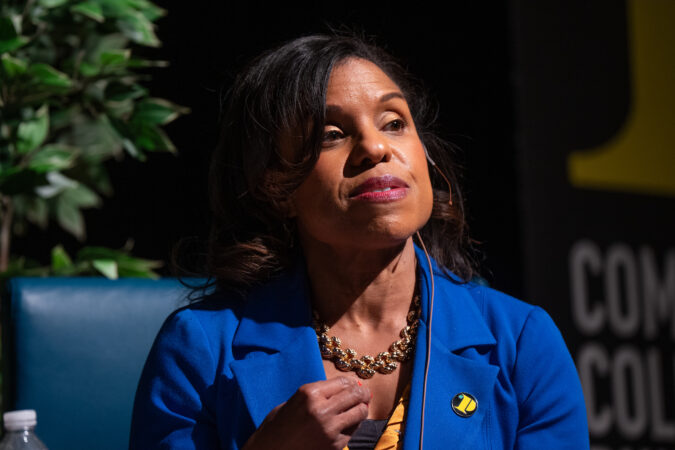
    Alycia Marshall will earn $295,000 as the new president of the Community College of Philadelphia under terms of a contract approved by the board of trustees Friday.

    Marshall, 52, had been serving as interim president since April when longtime president Donald Guy Generals was forced out. Her salary is similar to what Generals earned before he left.

    In October, the board selected Marshall for the permanent post from among four finalists and said it would negotiate a contract with her.

    The new contract, commencing Jan. 1, is for three years and six months and after that would renew on an annual basis.

    “This is a great birthday present,” Marshall said following the unanimous vote on her contract at the brief board meeting. “Today is my birthday. Thank you so much for your support. … It’s been a pleasure serving as the interim and I’m excited to move into the next chapter.”

    Under the contract, she will be eligible for a bonus of up to 15% of her base pay annually and will receive a $2,000-per-month housing allowance and a $650-per-month car allowance.

    Marshall, who has maintained a residence in Maryland, is required to move her primary residence to Philadelphia within six months under the contract terms. She would face termination if she failed to do so, the contract states. Marshall has said she intended to move to Philadelphia if she got the permanent job.

    Marshall had served as CCP’s provost and vice president for academic and student success for nearly three years before stepping into the interim role at the college, which had an enrollment of 12,400 credit students and 1,381 noncredit students last spring.

    She received her bachelor’s in mathematics from the University of Maryland Baltimore County, her master’s in teaching from Bowie State University, and her doctorate in mathematics education from the University of Maryland.

    A native of Maryland, she started her career as an adjunct professor at Anne Arundel Community College in Maryland, near Annapolis, and later became a full tenured professor and chair of the mathematics department. She was promoted to associate vice president there and founded the African American Leadership Institute and spent a total of nearly 23 years at the Maryland community college.

  • Some of Philly’s most vulnerable residents say they lost medical care without notice after millions of Pa. state agency letters went unsent

    Some of Philly’s most vulnerable residents say they lost medical care without notice after millions of Pa. state agency letters went unsent

    “Do you realize you are going to end my life by doing this?”

    Eliana Chernyakhovsky said she asked the question through an interpreter over and over again to the Pennsylvania Department of Human Services last week, after her 24-hour, state-funded care was cut off without warning. Her meal provider was also cut off. How would she feed herself? What if her oxygen tank ran out?

    “Fear had risen in my heart,” Chernyakhovsky said in Russian during an interview through an interpreter on Wednesday. “I was genuinely afraid.”

    Chernyakhovsky, 73, of Northeast Philadelphia, was born with spina bifida and has a number of physical disabilities associated with the condition, and uses a wheelchair to get around. She is among the Pennsylvania residents who say they have lost their government-funded services because a state-contracted mail vendor failed to deliver a month’s worth of agency mail.

    That breakdown resulted in 3.4 million letters never getting sent, 1.7 million of which were from the Pennsylvania Department of Human Services — the agency that oversees SNAP food assistance and Medicaid and is tasked with serving the state’s most vulnerable populations.

    Millions of letters from state agencies — including notices of health and SNAP benefit renewal, driver’s license and vehicle registration renewal invitations, vehicle registration cards, and more — were never sent by a mail presort vendor, who was contracted by the state to tray and sort agency mail in order to save money on postage. The failure went undetected for a month until early December, when Gov. Josh Shapiro’s administration fired Harrisburg-based Capitol Presort Services and hired another vendor on a $1 million emergency contract to work through the backlog.

    In Chernyakhovsky’s case, a letter dated Nov. 6 said she had failed to submit a renewal packet to continue receiving in-home care, said her attorney, Louise Hayes of Community Legal Services. Chernyakhovsky had 15 days to appeal to continue receiving services, or else her services would be shut off on Nov. 21.

    But due to the monthlong lapse in state agency mail, Chernyakhovsky did not receive the letter until last week, after funding for her in-home nurses and food services had already been cut off, she said.

    Chernyakhovsky’s home health aides opted to continue her care without pay, and with no assurance they would get paid for the time when her care was restored, because her needs are so great.

    Her services restarted last week thanks to efforts by Community Legal Services while her appeal works its way through the system. As of this week, one of her home health agencies has still not received payment from her insurance company.

    Alexander Aybinder, her day-shift nurse, said Wednesday it was still unclear when he would get paid. But he said he would still come to Chernyakhovsky’s home, no matter what.

    “I will come tomorrow, because she cannot stay without service. I will work,” he said. “She’s absolutely helpless.”

    DHS: Extended deadlines and ‘additional flexibility’

    DHS spokesperson Brandon Cwalina said in a statement Thursday the agency will extend deadlines for appeals and provide “additional flexibility for affected Pennsylvanians.” Residents affected by the mail issue will receive notice of their appeal options and deadline extensions, Cwalina said.

    Medicaid, CHIP, and TANF cash assistance recipients whose benefits were reduced or cut off during the mail delay will have their cases reopened, he added. These cases will be again reviewed to determine if the recipients received the necessary notification of a change in benefits. Renewals for the programs, originally due in December, are now due in January.

    DHS cannot extend renewal deadlines for SNAP benefits due to federal guidelines, but affected SNAP recipients who submit the necessary documentation within 30 days of losing their benefits will be able to have them reopened and backdated, Cwalina said.

    At least two dozen affected so far, with more expected

    At least two dozen Community Legal Services clients have had problems with receiving their benefits because of the mail delay, said Maripat Pileggi, a supervising attorney at CLS. The delay affected state agency letters dated Nov. 3 through Dec. 3, officials have said, and all unsent mail should be received by residents in a few days.

    And as the nonprofit legal agency has tried to help restore critical services to some of its most vulnerable clients, CLS attorney Lydia Gottesfeld said, legal advocates have struggled to reach the departments in DHS that could help them, with phone lines going unanswered or hour-long wait times.

    “It’s been very difficult to get information about these delays,” she added.

    Cwalina said Thursday that any DHS appeal hearings that were missed due to the mail disruption are being reopened and rescheduled, and the agency maintains that its callback system is accessible to recipients.

    Cases like Chernyakhovsky’s are among the first and most urgent that CLS has identified since the state said that a month’s worth of agency mail to residents from DHS and the Pennsylvania Department of Transportation was never sent. Residents like Chernyakhovsky who receive care through the Medicaid-funded home and community-based services program often have the most acute health issues and significant needs, meaning a loss in healthcare services can be catastrophic.

    Gottesfeld expects that more residents will realize in the coming weeks that they lost services — such as food assistance or health insurance — because of missed hearings or deadlines the next time they visit the doctor or grocery store.

    When people lose state-funded services, it is not usually because they suddenly no longer need them, Gottesfeld said. Rather, it is usually due to failing to submit paperwork properly, resulting in a loss of food assistance, healthcare, or other services.

    Questions remain

    It remains unclear how the state agency mail piled up for more than a month before officials noticed, how the backlog was discovered, or where the millions of agency letters were located after the vendor stopped sorting them.

    The reported loss of benefits stemming from the mail delay also comes after several tumultuous months for people who receive public benefits, following a federal government shutdown that cut food assistance, new work requirements to maintain benefits, and future uncertainty under federal cuts passed earlier this year. Shapiro was at the forefront of Democratic opposition to federal cuts to Medicaid and SNAP, and was a vocal critic when the department withheld benefits during the federal shutdown.

    On Thursday, a group of 15 state Senate Republicans, including top legislative leaders, sent a letter to the Pennsylvania Department of General Services citing The Inquirer’s reporting and requesting more information about how the mail delivery failure was discovered, why it took a month to find the backlog, and more.

    “Given the broad scope of this mail delivery failure, it is critical to ensure every effort is made to minimize the impact on our constituents and the disruption it may cause in their lives,” the senators wrote.

    Shapiro’s administration is “exploring all legal options” against the fired vendor, Capitol Presort Services, Cwalina said.

  • SEPTA’s board approves 2-year contract with transit agency’s largest union

    SEPTA’s board approves 2-year contract with transit agency’s largest union

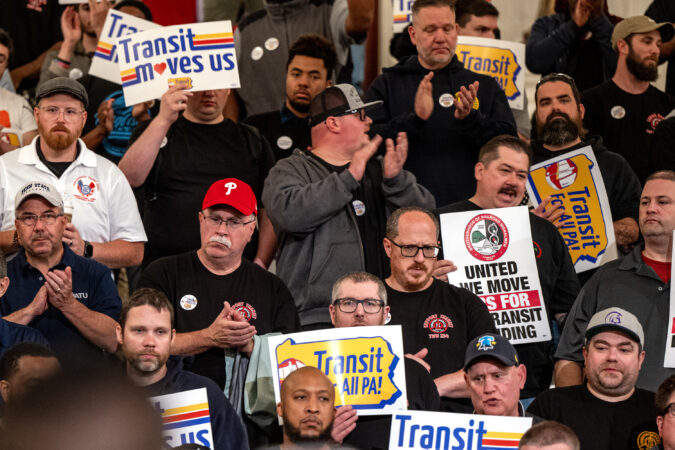
    SEPTA’s board on Thursday approved a new contract with the transit agency’s largest union, Transport Workers Union Local 234, and a second smaller union representing vehicle operators in the suburbs of Philadelphia.

    Members of TWU Local 234 voted Wednesday night to approve a two-year contract that will deliver a 3.5% pay raise, bolster the union’s pension funds, and expand health benefits for new employees.

    SMART Local 1594, which represents approximately 350 operators, reached a deal with the transit agency earlier this month.

    “These contracts are fair to our hardworking frontline employees and fiscally responsible to our riders and the taxpayers who fund SEPTA,” said SEPTA General Manager Scott A. Sauer.

    For TWU Local 234, the two-year contract disrupts a pattern of three consecutive one-year contracts. TWU president Will Vera said that with the FIFA World Cup, MLB All-Star Game, and America’s 250th birthday coming to Philadelphia in 2026, both parties agreed to a two-year contract so as not to interrupt service during these global events.

    The union represents 5,000 operators, mechanics, cashiers, maintenance people, and custodians who work on SEPTA’s buses, subways, and trolleys. Before this latest deal, TWU members were working without a contract since Nov. 7, and members voted unanimously on Nov. 16 to authorize leaders to call a strike if contract negotiations didn’t go as planned.

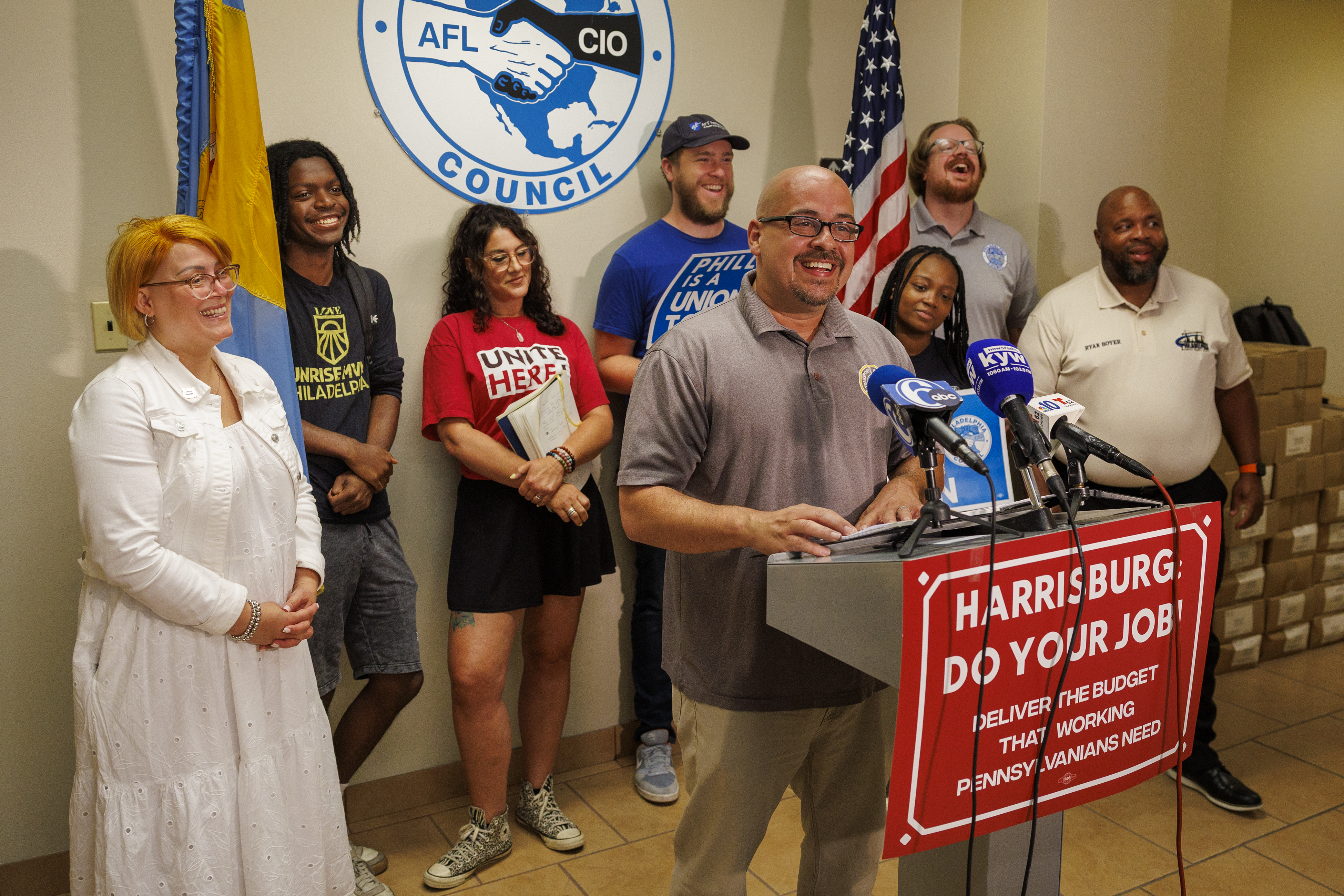
    Will Vera, vice president TWU Local 234, urged lawmakers in Harrisburg to deliver a budget during a speech in July at the AFL-CIO headquarters in Philadelphia.

    However, Vera said that this contract is a major win, especially for attracting new hires. Before this, new employees could not begin receiving dental and vision care until they completed 15 months on the job. The new contract shrinks that time down to 90 days.

    “I really got tired of explaining to the new hires for 15 months that they just have to clean their teeth,” Vera said. “I wanted this to be a retention contract, to not only keep people here, but to make this an attractive place to come work for SEPTA.”

    Philly’s transit unions don’t hesitate to strike if needs aren’t met. SEPTA unions have struck 12 times since 1975, earning SEPTA the title of one of the most strike-prone agencies in the country. Its last strike was a six-day effort in 2016 that ended one day before the presidential election.

    The negotiations come on the heels of SEPTA’s worst financial period in its history, the agency said. SEPTA isn’t alone, though. Transit agencies throughout the country are in funding crises as inflation rises, federal funding shrinks, and state subsidies fail to increase each year.

    Sauer, SEPTA’s general manager, added: “I am grateful to Governor [Josh] Shapiro and his team for their efforts to help us resolve differences and reach an agreement. Securing two-year contracts provides important stability as we approach the major events coming to Philadelphia in 2026.”

  • A state board has plans to improve college affordability and increase the number of people who complete degrees

    A state board has plans to improve college affordability and increase the number of people who complete degrees

    Pennsylvania’s fledgling State Board of Higher Education on Thursday rolled out its first strategic plan, setting goals addressing affordability, increased degree attainment, the state’s workforce and economic development needs, and the fiscal health of colleges.

    The board voted unanimously to post the 10-year plan for public comment. It will consider adoption in February.

    “The plan will strengthen partnerships, break down silos, and enable effective reinvestment in the sector,” Cynthia Shapira, chair of the board, said in a statement introducing the plan.

    It comes as the sector faces perhaps its greatest challenge in decades. Both private and public universities have been losing enrollment as the number of high school graduates falls — with another dip beginning next year and a 12% decline expected in Pennsylvania by 2037. Public trust in colleges has faltered, while concerns about cost and student debt have mounted.

    They are also facing scrutiny from President Donald Trump’s administration and a forecasted gap in workers who require a postsecondary credential in essential areas, such as healthcare, teaching, and advanced manufacturing.

    The Pennsylvania State System of Higher Education, which oversees the state’s 10 universities, endorsed the plan’s emphasis on collaboration across private and public colleges and universities.

    “Within our own system, we have learned that when universities work together, they can innovate, overcome challenges and better serve students and the Commonwealth,” the system said in a statement. Shapira is also the chair of PASSHE’s board.

    What is the board and what’s in its plan?

    The 21-member higher education board includes college presidents, administrators, legislators, and students. It was formed in 2024 by the governor and General Assembly to help public and private colleges work more cohesively and better serve students and the state’s workforce needs. The plan rollout follows public hearings that drew comments from more than 1,200 people, the board said.

    The plan outlines the challenges facing the higher education sector including another coming decline in the high school population, financial constraints, and the lack of coordination among institutions. Student debt averages more than $40,000 per student in Pennsylvania, the plan notes.

    “Multiple comparative state-level analyses … place Pennsylvania at or near the bottom in terms of affordability, attainment, and state investment per capita,” the report stated. “Adding to these challenges are a large and growing postsecondary workforce credential gap, and a range of closures and mergers that threaten to reduce access to postsecondary education.”

    In the Philadelphia region, Cabrini University and the University of the Arts closed in 2024 and Rosemont College announced earlier this year that it would cease operations in 2028 and that Villanova University would purchase its campus. Salus University was merged into Drexel University. Six of Pennsylvania’s state universities were merged into two entities in 2022, and St. Joseph’s University absorbed the University of the Sciences the same year.

    Other local colleges have struggled with enrollment declines and deficits. Temple University, for example, has gone from more than 40,000 students in 2017 to less than 30,000 this year.

    What are the specific goals in the plan?

    The new plan set six goals:

    1. Increase postsecondary attainment.
    2. Ensure affordable pathways to postsecondary credentials.
    3. Support the economic development needs of the state.
    4. Support the workforce development needs of the state.
    5. Ensure accountability and efficient use of state funds.
    6. Strengthen the fiscal health and stability of the higher education sector.

    How will the board work toward those goals?

    To meet the goals, the board proposes a “strategic communications plan” that touts the benefits of postsecondary education and how it impacts employment outcomes.

    It also emphasizes expanding funding for dual credit programs and enrollment in those programs to streamline the path from high school to college and allow students to accumulate more credits before they graduate high school. In addition, the plan proposes studying how to improve retention rates and focusing on reenrolling adults who started college but didn’t finish; there are more than 1.1 million Pennsylvanians with some college experience.

    Among its plans for addressing affordability are support of policies that “expand financial aid and forgive debt for in-demand, high-quality credentials,” take advantage of new federal Pell grants for workforce programs, and boost access to “open educational resources” to reduce the cost of course materials.

    The report also discusses the intent to “maximize the impact of research universities,” recruit out-of-state students to broaden the talent pool, and increase access to paid work experiences for students.

    To promote fiscal health, the plan recommends identifying and promoting best practices for fiscal efficiency and cost savings, and developing resources and an advisory group to help financially struggling colleges.

    “If institutions decide to close or merge, tools and expertise to assist in this process will help maximize savings, retain access to critical academic programming, and mitigate negative effects on students and communities,” the plan states.

    Another advisory group is recommended to help communities where colleges close maintain access to postsecondary education.

    What comes next?

    After the public comment period and the plan’s final adoption, the board intends to report annually on progress toward the goals and to consider revisions to the plan every five years.