Category: Pennsylvania News

  • Jean E. Corrigan, former Montgomery County manager and longtime assistant to then-State Rep. Josh Shapiro, has died at 70

    Jean E. Corrigan, former Montgomery County manager and longtime assistant to then-State Rep. Josh Shapiro, has died at 70

    Jean E. Corrigan, 70, of Roslyn, Montgomery County, retired fleet and operations manager for the Montgomery County Department of Assets and Infrastructure, onetime constituent services representative for then-State Rep. Josh Shapiro, hair salon owner and operator, disability services advocate, and award-winning volunteer, died Saturday, Nov. 22, of non-alcoholic cirrhosis of the liver at her home.

    A lifelong resident of Glenside and nearby Roslyn, Mrs. Corrigan was vice chair of the Abington-Rockledge Democratic Committee from 1995 to 2013, and served as Gov. Shapiro’s constituent service agent when he represented the 153rd Legislative District in the Pennsylvania House of Representatives from 2004 to 2012.

    “Jean was the very first volunteer on my very first campaign,” Shapiro recalled. “We knocked doors together, met our neighbors together, and, after winning, served our community together.”

    In addition to breaking down bureaucratic delays and solving all kinds of constituent problems for Shapiro, Mrs. Corrigan doggedly championed fair wages, reproductive freedom, increased funding for special education and disability services, and improved healthcare. Colleagues called her a “super volunteer” and a “campaign mom” because she helped so many candidates win elections.
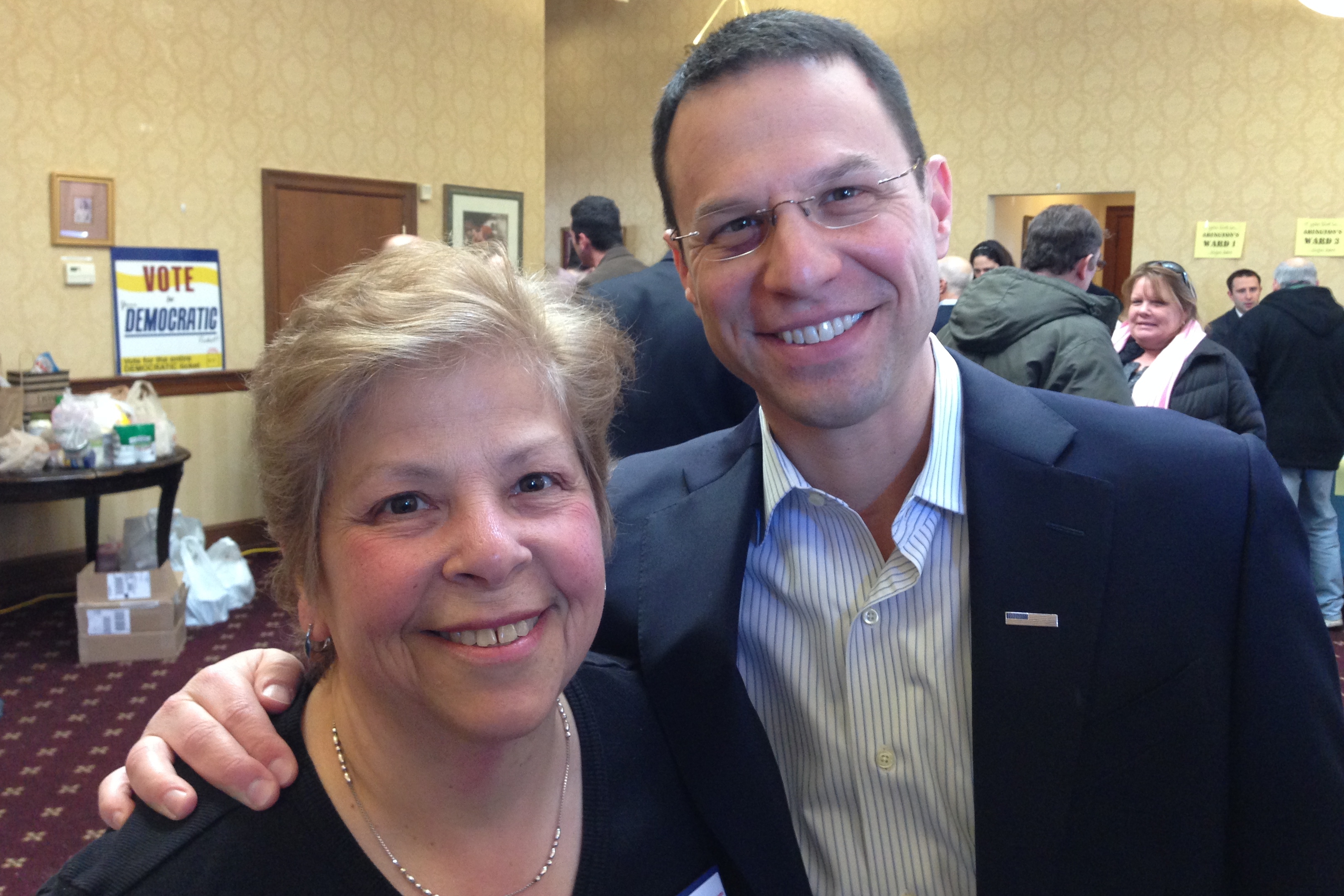
    Gov. Shapiro said Mrs. Corrigan “made her neighbors’ lives better.”

    She hosted visiting campaign workers at her home for years, took charge of distributing lawn signs and sample ballots, and organized other preelection events at her dining room table. She was named the local committee’s Democrat of the Year in 2002 and earned several awards from community service organizations.

    “Through that work, I got to see just how much of herself she gave to others,” Shapiro said. “Where there was a need in the community, she worked to address it. When someone needed help, she lent a hand. She made her neighbors’ lives better, and I will forever be grateful for her life of service.”

    In 2001, Mrs. Corrigan ran unsuccessfully for Abington Township commissioner, finishing second among three candidates and losing to a long-entrenched incumbent. In a preelection profile in The Inquirer, she listed “responsible growth” as a top value and “maintain integrity of Abington Township” as a main goal.

    “Jean was passionate about serving others,” her family said in a tribute. “She believed that politics and civic activism could make a positive difference in people’s lives.”
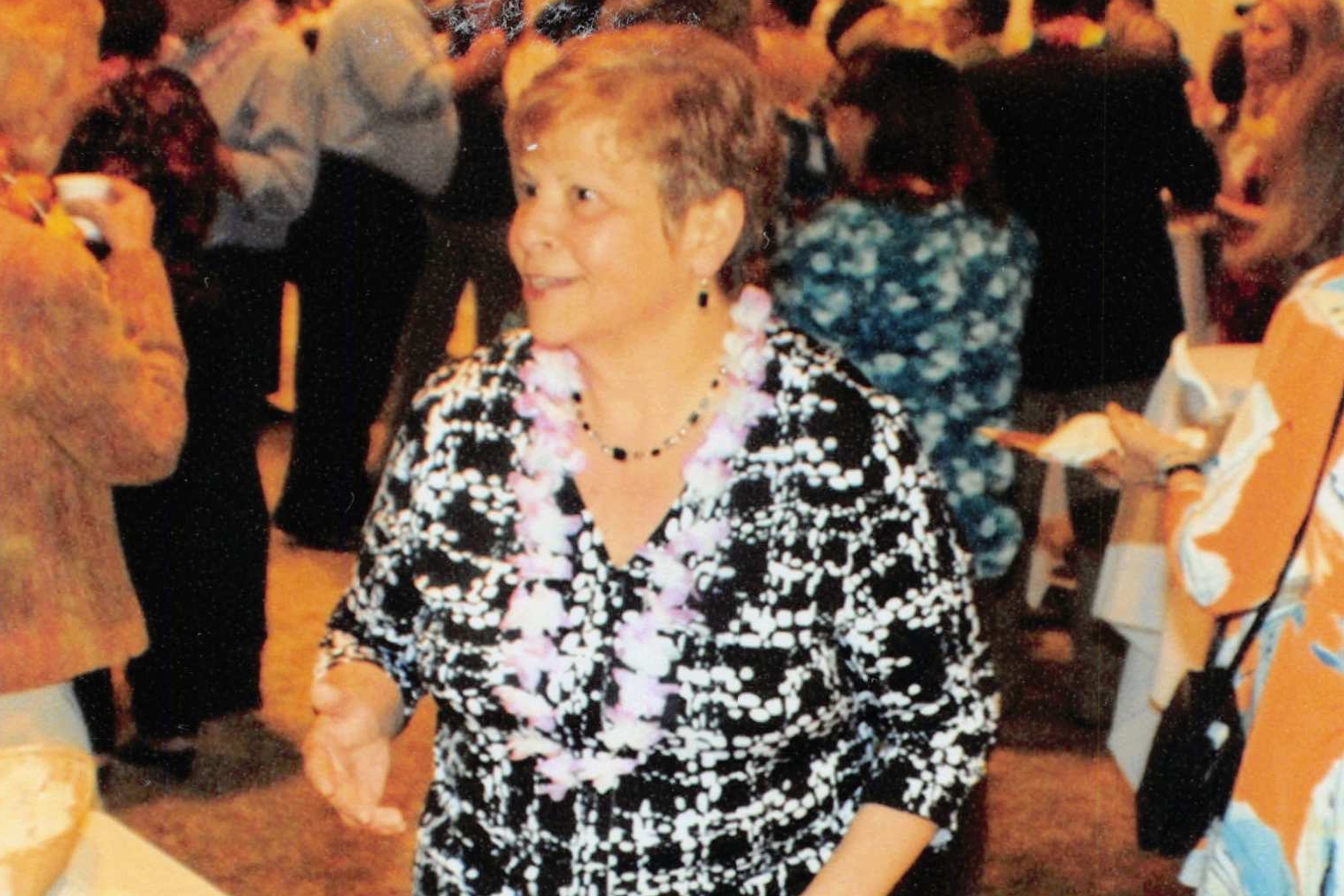
    Mrs. Corrigan was called a “super volunteer” by colleagues and friends.

    At work, Mrs. Corrigan managed Montgomery County’s fleet of vehicles from 2015 to her retirement in 2022. She joined the county’s assets and infrastructure department in 2012 as operations manager for public property and supervised the county’s building services, construction carpenters, project collaboration, and computer-aided design.

    She studied beauty science and hair styling in high school, attended the Willow Grove Beauty Academy, and ran her own salon called Shears to You from 1993 to 2001. As a volunteer, she was one-time president of the Abington School District Special Education Parent Advisory Council, copresident of the Abington Junior High School parent-teacher organization, and chair and vice chair of several Abington Township community initiatives.

    She raised funds for school events and served on the board of the Abington YMCA. “Jean was selfless, empathetic, blunt, affectionate, caring, plainspoken, honest, and incredibly hard-working,” her family said. “There was no ego, no vanity.”

    Jean Elizabeth Fanelli was born Aug. 30, 1955, in Abington Township. She grew up with a brother, Angelo, and graduated from Abington High School in 1973. She was interested in clothing design as well as beauty culture and took classes at Temple University.

    Mrs. Corrigan stands with her husband, Peter, and son David

    After a brief marriage to Bruce Cunningham was annulled, she married Peter Corrigan — an usher at her first wedding — in 1977, and they had sons Joseph and David and a daughter, Pauline. They lived in Glenside for decades, in the same house in which she grew up, and moved to Roslyn a few years ago.

    Mrs. Corrigan enjoyed shopping trips with her daughter and baking holiday cookies. She liked to entertain and cook for everybody.

    She doted on her two granddaughters and spent memorable summers near Arrowhead Lake in the Pocono Mountains. She could talk to anybody, her family said.

    “She was a wonderful mother,” her daughter said. “I learned to have respect and manners from her.”
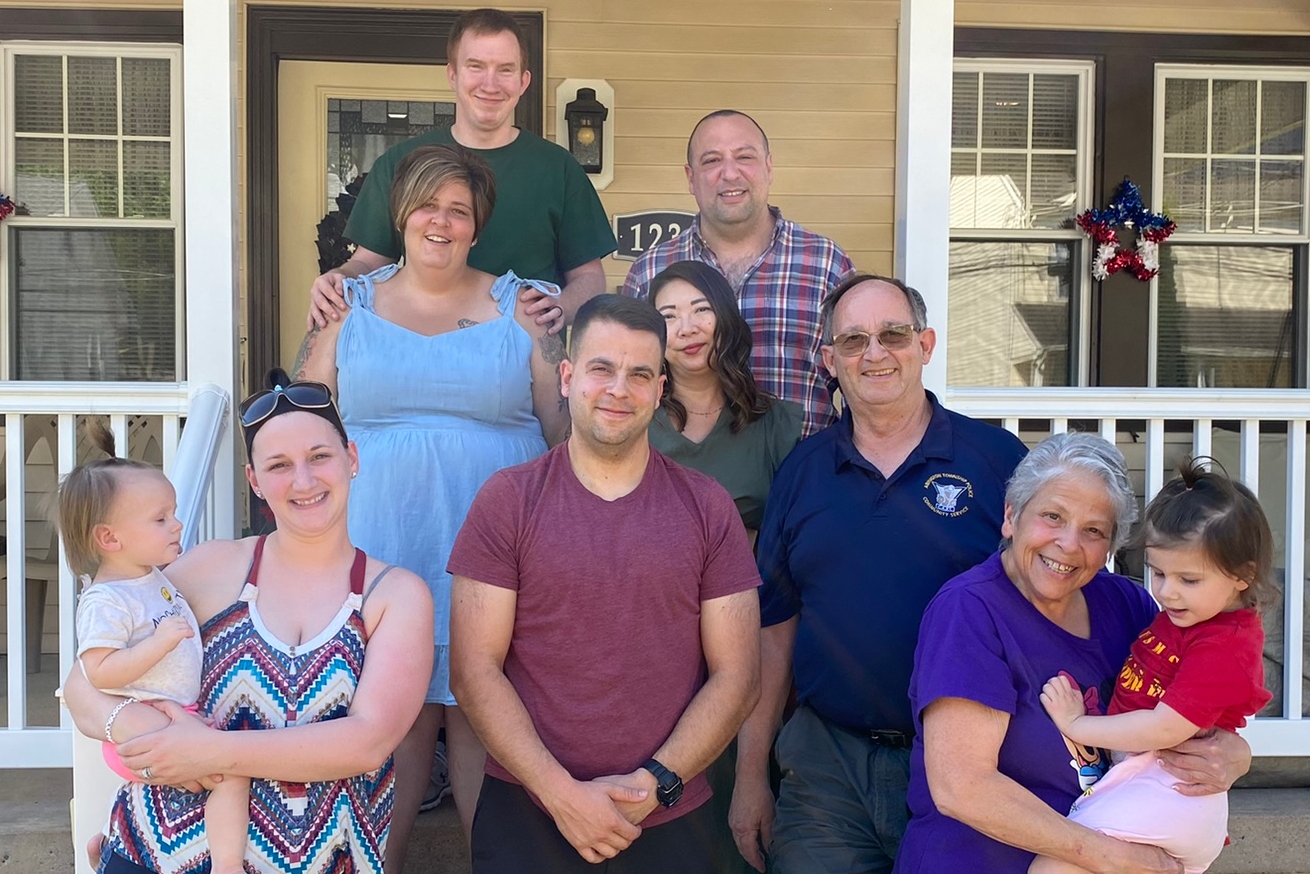
    Mrs. Corrigan (front right) enjoyed time with her family.

    Her son David said: “She taught me to be considerate and understanding of everyone I encounter, a lesson I will never forget.”

    Her son Joseph said: “She was incredibly generous with her time and resources. She could build relationships, and a theme of her life was caring for people.”

    Her husband said: “She was one of a kind.”

    In addition to her husband, children, granddaughters, and brother, Mrs. Corrigan is survived by other relatives.

    A private celebration of her life is to be held later.

    Donations in her name may be made to Hedwig House Inc., 1920 Old York Rd., Abington, Pa. 19001.
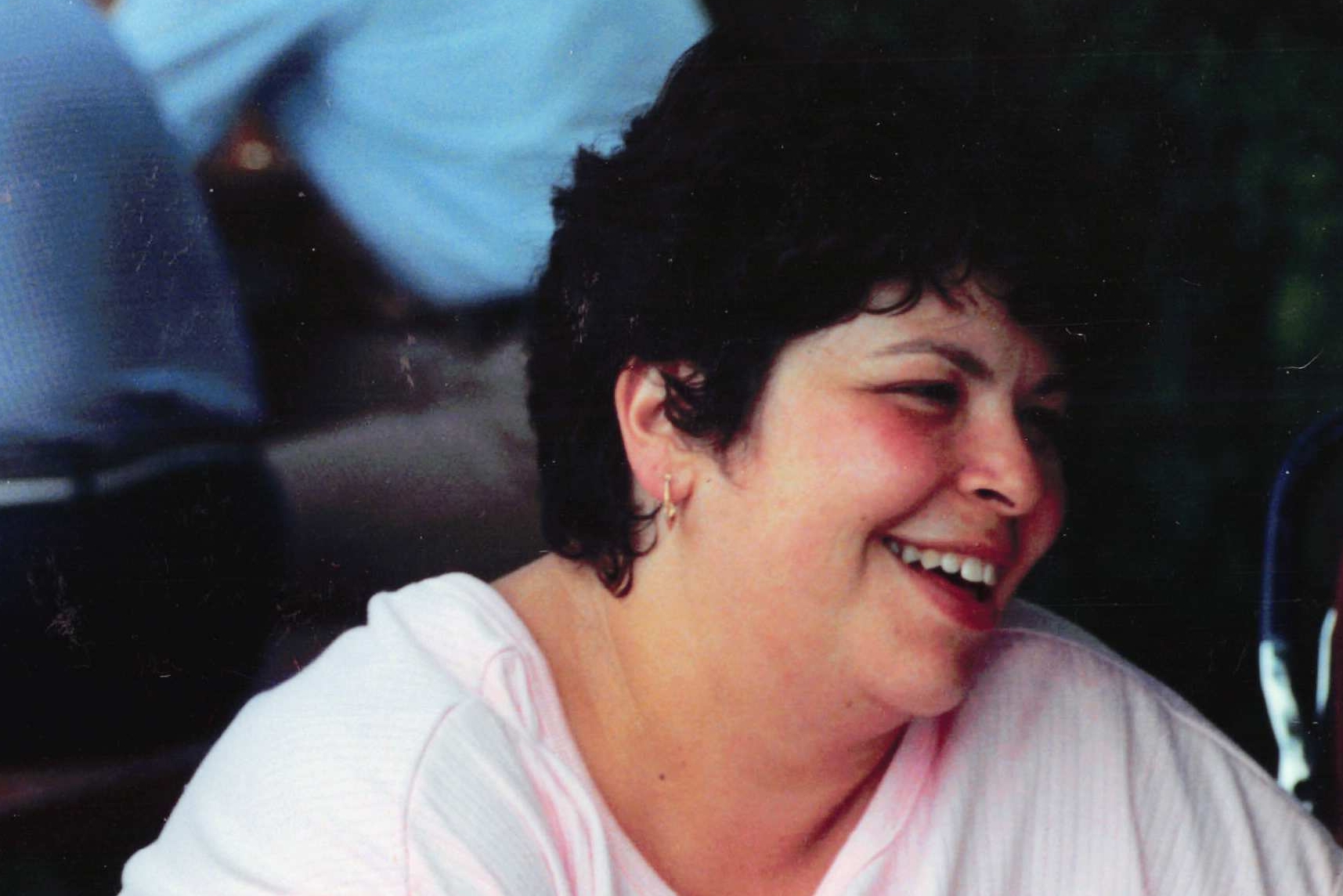
    Mrs. Corrigan’s smile could light up a room, her family said.
  • Philly wants to set its own speed limits, and other highlights of the city’s new Vision Zero report

    Philly wants to set its own speed limits, and other highlights of the city’s new Vision Zero report

    Philadelphia can’t set the speed limits on roads within its own borders. Only the state can.

    So city transportation officials want to persuade Harrisburg to give it the power to set speed limits more appropriate to the density of Philadelphia.

    That is a top action item in the city’s new Vision Zero report, released Tuesday, which will guide traffic safety efforts for the next five years.

    “We’re looking to work with the state legislature to make our roads safer,” said Christopher Puchalsky, director of policy and strategic initiatives at the Philadelphia Office of Transportation and Infrastructure Systems.

    In Pennsylvania, as in many states, speed limits are based on the 85th percentile rule. Engineers measure speeds in a study area and set the limit based on how fast 85% of the drivers there are traveling.

    “It just sort of got adopted and enshrined in law,” Puchalsky said of the principle developed from studies of rural roads in the 1950s and ’60s.

    In recent years, traffic engineers, many states, and federal agencies in charge of traffic safety have been moving away from the approach and toward speeds that help prevent injuries and deaths.

    “It’s one of those things we’ll look back on and say, ‘Why did people think that was a good method?’” Puchalsky said. “And we’ll all scratch our heads — or at least our grandchildren will scratch their heads.”

    Pennsylvania’s legislature would need to amend the state’s vehicle code to grant Philadelphia the authority.

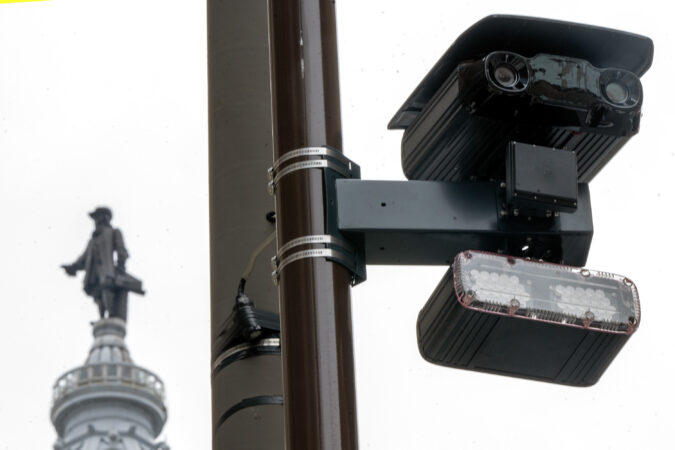
    Similarly, the city wants to expand the use of automated speed enforcement cameras and red-light enforcement cameras. That would also require legislation.

    The speed cameras on Roosevelt Boulevard are now permanent, and the city was authorized to put them on five other dangerous roads on a trial basis.

    Speed cameras also went up on most of Broad Street.

    Here are other takeaways from the Vision Zero report:

    Traffic deaths are still high in Philly

    In 2024, 120 people were killed in vehicle crashes in the city. The number of fatalities has been trending down slightly since 2020, but that figure is still 41% higher than it was in 2015, when the Vision Zero program began.

    “I think we’ve unfortunately hit a higher set-point post pandemic than we would like,” said Kelley Yemen, director of multimodal planning for the city. “We’re seeing encouraging news with this year, but we’ve got two months to go and are holding our breaths.”

    Yemen said the city has seen a 20% reduction in crashes on corridors where Vision Zero has been able to do traffic-calming projects such as installing speed cushions, implementing road diets that slow drivers, and installing separated bike lanes.

    “As we get further out from the pandemic, we’re also hoping we reset some cultural norms on our streets, whether it’s through automated speed enforcement, red-light cameras, or working with [the police department],” she said.

    The size of Philly’s problem

    Philadelphia is an old, dense city with a robust transit system, similar to New York and Boston. But its rate of traffic-related deaths per 100,000 people is many times New York’s — and most closely resembles that of Los Angeles, the Vision Zero report noted, citing federal data from 2019 through 2023.

    Philadelphia had 8.48 traffic deaths per 100,000 people, and Los Angeles had 8.11 per 100,000 residents.

    “We are still reviewing the plan, but our initial reaction is that the goals set forth are not transformational enough to address the climbing traffic death statistics,” said Jessie Amadio, an organizer with Philly Bike Action.

    “Vision Zero safety interventions work in the places they are installed,” but annual progress is too slow, she said.

    Factors that make a crash severe

    Speeding was the leading contributing factor in serious injury and fatal crashes between 2020 and 2024, present in 19%, the report said. Drivers impaired by alcohol or drugs were involved in 8% of the crashes, and 8% ran a red traffic light. Distracted driving was responsible in 4% of crashes, and running stop signs in 2%.

    People walking or using a personal mobility device were involved in 6% of crashes from 2002 through 2024 but were 40% of those who were killed, the report found.

    Thirty-eight percent of people who died were in motor vehicles.

    What were residents’ biggest concerns and asks?

    The Philadelphia Office of Transportation and Infrastructure Systems heard from about 3,000 city residents about their biggest concerns and preferred responses, said Marco Gorini, the Vision Zero program manager.

    Speeding was the topmost concern, cited by 24% of the people participating, followed by drivers running red lights and stop signs, cited by 23%.

    People were reached at roundtables involving more than 80 community groups, by online services, and through a polling firm that randomly queried 1,500 Philadelphians representative of the city’s overall population.

    Participants supported tough enforcement by automated cameras and police against those violations by wide margins.

    Infrastructure-related changes work best to protect people and change driver behavior, residents said, and they clamored for more traffic-calming measures and street redesigns, according to Gorini. They want to prioritize changes around schools, senior centers, and public parks.

    Besides enforcement and traffic-slowing infrastructure, residents expressed strong support for more safety education — instruction for high school students on safe driving (76%) and education for young students on safe walking and biking (71%).

    And another thing: People want transparency with safety efforts.

    “It’s very important that we regularly report on the state of traffic safety in Philadelphia and the results of Vision Zero interventions,” Gorini said. “This ensures accountability and helps the public understand what the issues are and how efforts to address them are going.”

    Next steps

    The city will be developing a spending plan for new safety projects for the next annual budget, due in the first quarter of 2026. And figuring how to pay for them from city funds and state and federal grants.

  • These professors say they’re part of a growing movement banning laptops from the classroom

    These professors say they’re part of a growing movement banning laptops from the classroom

    Biology professor Jody Hey was lecturing on human evolution one recent day at Temple University.

    His students vigorously took notes by hand in paper notebooks.

    There wasn’t a laptop in sight. Nor an iPhone. No student’s face was hidden by a screen.

    Hey said he stopped allowing them about a year and a half ago after seeing research that students are too often distracted when laptops are open in front of them and actually learn better when they have to distill lectures into handwritten notes.

    “The clearest sign that it’s making a difference is that students are paying attention more,” said Hey, who has taught at Temple for more than 12 years. “And they want to participate much more than before.”

    Hey is among a seemingly growing number of professors who have chosen to keep laptop and phone use out of class, with exceptions for students with disabilities who require accommodations. Several said they made the decision after seeing what some students were doing on their laptops during class.

    Temple University biology professor Jody Hey stopped allowing laptops to be used in class about a year and a half ago. He said he’s noticed improvement in student performance.

    Jessa Lingel, an associate professor of communication at the University of Pennsylvania and director of the Gender, Sexuality, and Women’s Studies Program there, stationed teaching assistants in the back of her room to observe.

    Students “were out there booking flights and Airbnbs,” Lingel said. “Fun fall cocktail recipes. They were online gambling in class. I thought, ‘This is not acceptable.’”

    She originally disallowed laptops in 2017, but decided to go easy in 2021 as students returned after the pandemic, she said. She reinforced the ban after her teaching assistants’ observations.

    “It’s a movement,” Lingel said. “More and more people are headed in this direction.”

    In Hey’s class, students have warmed up to the laptop ban.

    “At first I didn’t like it,” said Jess Nguyen, 20, a junior genomic medicine major from Broomall, “because I kind of organize all my notes on my laptop. But I feel I’ve been learning better by writing my notes.”

    When she took notes on her iPad, she sometimes got distracted and played computer games, she said. In Hey’s class, that’s not an option.

    Students said it takes more time to write notes and sometimes their hands get tired.

    “After a couple classes, you kind of get used to it,” said Sara Tedla, 22, a senior natural sciences major from Philadelphia.

    She’s on the fence about which way she prefers to take notes.

    “It’s good that for an hour and 20 minutes you can just sit down and, without any technological distractions, focus because that’s a part of your brain you can work on,” said Quinn Johnson, 20, a senior ecology major from Philadelphia. “The more you do it, the easier it becomes to focus on something for a long period of time.”

    ‘Students learn better’

    Professors say laptops are pretty ubiquitous in the classroom when they are permitted.

    Hey conducted research on laptop use and presented it at a Temple department faculty meeting earlier this year.

    “As early as 2003, a study was done contrasting the retention of lecture material by two groups of students, one who had laptops and unrestrained internet access and a second who worked without laptops,” he said. “In that study, students with laptops scored 20% lower on average in the subsequent exam.”

    Four of every five students who used laptops in a general psychology class said they checked email during lectures, another study showed, while 68% used instant messaging, 43% surfed the net, 25% played games, and 35% said they did “other” activities.

    He also cited studies showing students who took notes by hand performed better on tests. Others cited that research, too.

    Penn President emerita Amy Gutmann co-teaches a class at Penn’s Annenberg School for Communication with the dean Sarah Banet-Weiser. They don’t allow laptops or phones to be used in the classroom.

    “I read the literature on it and it really showed that students learn better when they’re taking notes rather than trying to type as fast as they can verbatim what you say,” said Amy Gutmann, Penn president emerita, who is co-teaching a class at the Annenberg School for Communication this fall.

    Gutmann and co-teacher Sarah Banet-Weiser, dean of Annenberg, do not provide students with copies of their lecture slides, either.

    “We give them time to write down what’s on the slides,” Banet-Weiser said.

    Benefits of technology

    Some professors say laptop use in class can be beneficial.

    Sudhir Kumar, a Temple biology professor, said he asks his class of 150 students to respond to questions on their laptops every 10 minutes. Their answers count toward their grades.

    “It’s constantly keeping them on their toes,” he said.

    He would not want to see everyone give up on laptop use in class.

    “We cannot fight technology,” he said. “Teachers have to embrace technology, whether it is artificial intelligence or computers. That is a standard mode of operation for most people today.”

    (Left to Right) Jess Nguyen, 20, a junior from Broomall, Allan Thomas, 22, a senior from Philly, and Sara Tedla, 22, a senior from Philly, in a class taught by Temple University biology professor Jody Hey last month.

    In Cathy Brant’s social studies methods class of 20 to 25 students at Rowan University, laptops are key. Brant, an associate professor of education, said there are lots of hands-on group projects, and she frequently asks students to check New Jersey standards online as they prepare their lessons. She also teaches them how to use AI appropriately in the classroom.

    One of her students, she said, recently handed in a paper with very detailed notes from Brant’s lecture that she probably got only because she was able to type quickly on her computer.

    “You’re responsible for paying attention in class,” she said. “Maybe it’s a little harsh, but I’m just like, ‘If you want to be on Facebook the entire time during class, that’s on you.’”

    Jordan Shapiro, an associate professor at Temple, more than a decade ago used to make a point of having his students post on Twitter, now X, during class and counted it toward classroom participation.

    Now, he tells students to put their laptops away during class.

    “I tell them I have no problem with tech or laptops,” he said. “I just think that none of us get enough time in our lives to just focus on ideas or to listen in a sustained way to the people around us.”

    He also became concerned about students doing homework during class, he said, and using artificial intelligence to supply them with questions and comments to ask in class. They were “outsourcing class participation to the robots,” he said.

    Mark Boudreau, a biology professor at Penn State Brandywine, disallowed laptops for the first time this semester.

    “I thought I would get real pushback … or people might even drop the class,” he said. “But … a lot of students have had other faculty who have this policy.”

    Exam scores in his three courses are better this year, he said.

    Hey noted student grades have gone up, too. But he can tell some students struggle with note-taking; some just listen and don’t take notes.

    “That’s better than sitting there and going on Facebook,” he said.

  • Meet the people who use Pennsylvania’s rivers to create art

    Meet the people who use Pennsylvania’s rivers to create art

    MONTOURSVILLE, Pa. — The rocky shores of Loyalsock Creek looked a bit drab to the untrained eye on a blustery, overcast November afternoon.

    There were browns and grays, along with flurries of yellow and orange leaves across the turbid water when the wind whipped through the trees.

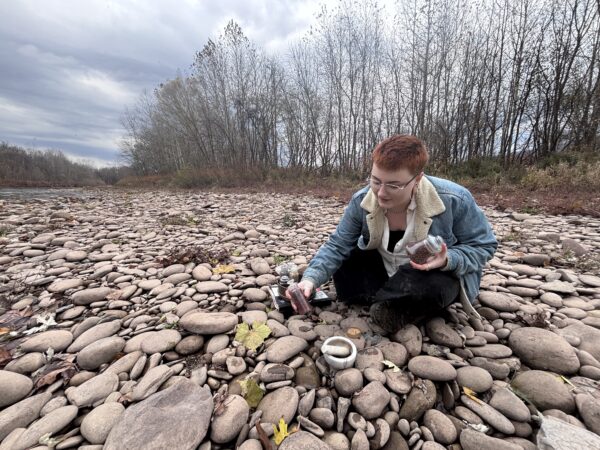
    Sierra Weir, an artist from Pittsburgh, stepped gingerly across the mud and rocks. When she got to the water’s edge, Weir saw the landscape in a completely different way.

    “It’s not as visually stunning as synthetic colors, but I would say the depth and variation within one tiny spectra is so much deeper,” she said. “I’ve gained such an appreciation for all the different ways brown can be brown.”

    Sierra Weir of Pittsburgh was an artist-in residency of the Susquehanna River Watershed.

    Weir, who has a background in biochemistry, is a pigment artist and community outreach coordinator for Three Rivers Waterkeeper, a nonprofit organization in Pittsburgh that advocates and protects the Monongahela, Allegheny, and Ohio rivers.

    In June, the Pennsylvania Environmental Council, selected Weir and two others for its new artist-in-residency program, “Reflections through Art: Inclusive Access on Water Trails in the Susquehanna Basin.”

    “It’s a new way to get people to engage with the environment,” Weir said.

    Painter Spencer Verney of Coatesville was also chosen as a resident by the PEC. He focuses on preserved lands and protected waterways in historic settings. Meg Lemieur of Port Richmond was chosen to illustrate a map for the Swatara Creek Watershed.

    “My art celebrates the diversity and amazing features of the natural world,” Lemieur told The Inquirer. “I’m definitely drawn to all the living animals, including animals of the watershed like turtles, owls, and gophers, but lately I’ve been getting more into flora and understanding plants.“

    Tali MacArthur, a senior program manager for the PEC, said the residency program was created as another way to get the public involved in watershed conservation.

    “There are people who don’t really see themselves as scientists or fishermen, but maybe they see themselves as artists, as musicians, or visual learners,” MacArthur said. “I’ve kind of been chasing this approach for some time now.”

    The residency program was funded by the National Park Service’s Chesapeake Gateways Grant Program and the Pennsylvania Department of Conservation and Natural Resources Community Conservation Partnership Program.

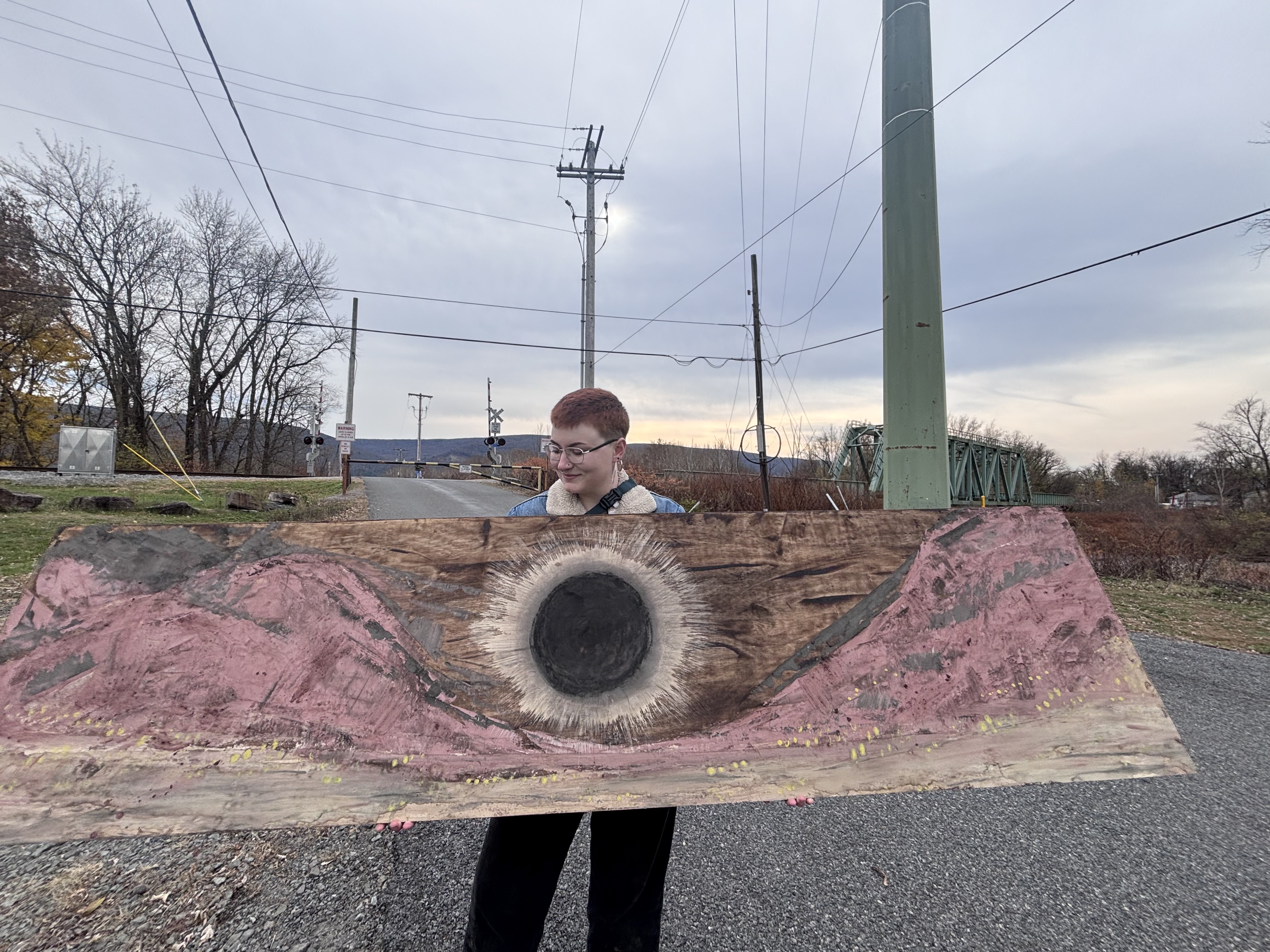
    When Weir was in college, in Ohio, she spent a year studying the pigments of Betta fish and contributed a sculpture based on the majesty of jeweled beetles. She’s also created various paintings made with natural pigments like goldenrod, black walnut, and pokeberry, which fade quickly.

    “It’s in opposition to synthetic pigments, which are made from petrochemicals, and I do a lot of work to reduce pollutants,” she said. “This was a natural fit.”

    Sierra Weir of Pittsburgh was an artist-in-residency of the Susquehanna River Watershed. She’s pictured along Loyalsock Creek in Montoursville.

    Weir, 28, said her goal of combining art and waterways was to help people hone their “noticing skills” and provide new ways to engage with the environment and, perhaps, repair broken connections to the natural world.

    “What I do is help people notice the relationship between water, earth, plants, and themselves and how inherently connected we are to this place,” Weir said. “We’re made of this same stuff, biologically and chemically.”

    Sierra Weir of Pittsburgh was an artist-in-residency of the Susquehanna River Watershed.
  • Regional Rail service snarled late into Tuesday night because of earlier disabled trains, SEPTA says

    Regional Rail service snarled late into Tuesday night because of earlier disabled trains, SEPTA says

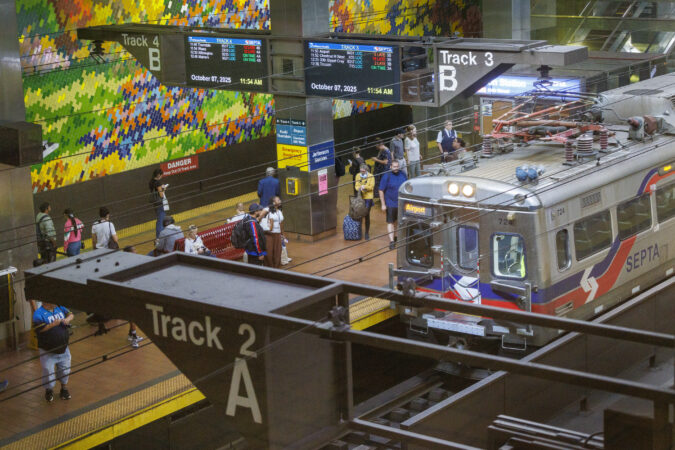
    Regional Rail service through Center City was snarled early Tuesday evening — and late into the night — because of disabled trains blocking a tunnel, SEPTA said.

    “We had a brief power outage at about 4:15 that started this. The power was back within 10 minutes, but we had three trains that could not restart,” said SEPTA spokesperson Andrew Busch.

    “We are in the process of transferring those customers to other trains, but it is causing major delays,” Busch said.

    Busch later added that the afternoon power outage originated with Amtrak.

    Shortly before 10:20 p.m., SEPTA reported on social media that service “remains significantly delayed due to earlier overhead power loss in Center City. Expect delays of up to 45 minutes.”

  • Pa. State Police ID 3 men killed in Chester County crash

    Pa. State Police ID 3 men killed in Chester County crash

    Pennsylvania State Police identified three men who were killed in a crash when the vehicle they were in allegedly fled from a traffic stop and crashed early Friday in Chester County.

    Devon Hargraves, 35, Gershad Andre, 33, and Larry Wilmer, 36, all of Wilmington, were killed in the crash, state police said this week.

    About 1:20 a.m. Friday, troopers saw a Silver Toyota sedan allegedly violate traffic laws near East Third Street and Garner Drive in New Garden Township.

    When troopers tried to conduct a traffic stop, “the vehicle failed to stop and a pursuit ensued,” state police said Friday.

    “Soon after the pursuit ensued the fleeing vehicle crashed, and the three occupants of the fleeing vehicle are deceased,” state police said.

    The crash happened in Avondale Borough.

    The Pennsylvania State Police said its investigation of the crash was ongoing.

  • SEPTA won $43 million for diesel-electric hybrid buses from the Trump administration

    SEPTA won $43 million for diesel-electric hybrid buses from the Trump administration

    Since taking office for his second term, President Donald Trump has moved to cancel tax incentives and spending for clean-energy technology and prioritized expanded production of oil and natural gas.

    But the federal government apparently is not 100% out of the green fuels business.

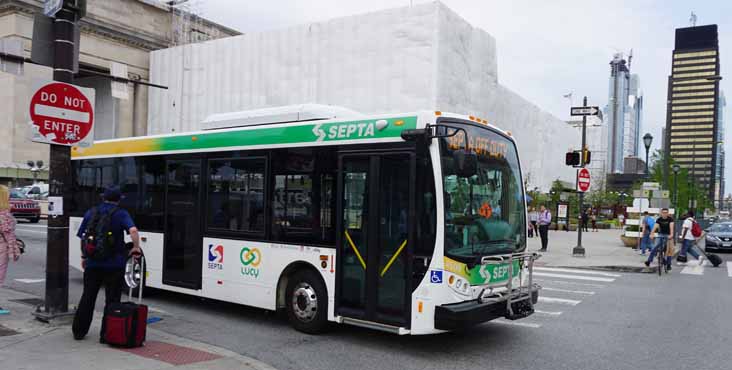
    Last week, SEPTA won a $43 million grant from the Federal Transit Administration to replace 35 diesel-powered 30-foot buses with an equal number of cleaner diesel-electric hybrid buses that are 32 feet long.

    The money comes from the FTA’s Bus Low- and No-Emission grant program.

    When the new buses are delivered, expected to be in 2028, SEPTA no longer will have diesel-only buses in its fleet.

    Most SEPTA buses are 40 feet long or 60-foot articulated models (the ones with the accordion in the middle). The shorter hybrids will be used on the LUCY Loop in University City and Routes 310, 311, 312, and Route 204, which runs from Eagleville to Paoli Station.

    “These new hybrid buses will increase operational efficiency and help ensure that SEPTA can continue to provide reliable service for customers,” general manager Scott Sauer said.

    SEPTA applied for the grant in July, a spokesperson said.

    “This is a major win for Philadelphia,” U.S. Rep. Brendan Boyle of Philadelphia said. “These new hybrid buses will mean more reliable service, a stronger transit system, and cleaner air for the hundreds of thousands of riders who depend on SEPTA every day.”

    Boyle, a Democrat, said the money came from President Joe Biden’s bipartisan infrastructure law, which Boyle helped champion. The grants were given from the fiscal year 2025 federal budget.

    “Delivering new-and-improved bus infrastructure is yet another example of how America is building again under President Trump,” U.S. Transportation Secretary Sean P. Duffy said in a statement. “More people travel by bus than any other form of public transportation.”

    SEPTA’s grant was part of $1.1 billion distributed from the fiscal year 2025 federal budget. The U.S. Department of Transportation said in the announcement that $518 million would be added to the low- and no-emission bus grant program from the fiscal 2026 budget.

  • Penn State asks Pa. Supreme Court to stop the release of internal trustee documents

    Penn State asks Pa. Supreme Court to stop the release of internal trustee documents

    Pennsylvania State University and the Pennsylvania Department of Education want the state’s highest court to overturn a recent lower court ruling that sided with Spotlight PA and stop the release of internal Board of Trustees documents.

    The case could have major implications in the state for public access to documents stored in cloud-based services.

    Last week, the university and state agency each filed a “petition for allowance of appeal,” asking the Pennsylvania Supreme Court to hear the public records case. There is no timeline for the court to decide whether it will hear the arguments, and the court denied 87% of requests to review a lower court decision in 2024, according to the court’s annual report.

    Spotlight PA is represented pro bono by the Reporters Committee for Freedom of the Press and the Cornell Law School First Amendment Clinic. Paula Knudsen Burke, the Pennsylvania attorney for RCFP, said in a statement: “The Commonwealth Court rightly made clear that Penn State trustees cannot shield certain records from the public simply by storing them in a file-sharing system or alleging they contain proprietary information. We will continue to push for access to these records on behalf of Spotlight PA so that all Pennsylvanians can better understand how a prominent state-related institution — supported with millions of dollars of public money — is operating.”

    A Penn State spokesperson told Spotlight PA in an email that the university does not comment on “pending litigation.” The state education department did not respond to a request for comment.

    In May 2023, Spotlight PA filed public records requests with Pennsylvania’s agriculture and education departments for documents the agencies’ secretaries used while serving on Penn State’s governing board. While the university is largely exempt from the state’s Right-to-Know Law due to a legal carveout, a 2013 court ruling said records that the agencies’ secretaries used as trustees could be accessed by the public.

    The Office of Open Records ruled in 2023 that some of the records the newsroom requested should be made public. Penn State and the education department appealed the decision to Commonwealth Court.

    Penn State, in legal filings and in court in September, argued the state agencies did not possess or control the records Spotlight PA sought because Penn State housed the files on Diligent, a cloud-based file-sharing service. The online system allows the university to control who can access which files and whether the records can be downloaded.

    The court sided with Spotlight PA in its decision last month, ruling that Penn State’s argument was “without merit.” Taking the university’s position, the court said, would contradict the intent of the state’s open records law for transparency and would “perversely incentivize Commonwealth agencies, local agencies, and affected third parties like Penn State to utilize remote servers and/or cloud-based services, in order to ensure that they would no longer need to disclose what would otherwise constitute public records.”

    Penn State was also ordered to unredact portions of a 2022 document given to trustees about the university’s “fiscal challenges” and altering the budget to better align with Penn State’s “priorities and values.”

    In its petition to the state Supreme Court, Penn State said the lower court wrongly determined that the agency secretaries received the records and therefore could provide them to the newsroom. By providing documents to trustees through Diligent, the university controls who can “download, print, forward, or otherwise obtain the document.”

    The file-sharing service, the university wrote, “is the electronic equivalent of a Penn State official holding a physical document in their hand and inviting the Secretaries to look at the document. Importantly, in this analogy, the Penn State official never lets go of the document, and the Secretaries never possess the document.”

    The education department, in its filing, said the lower court’s decision ignores the intent of, and improperly expands, Pennsylvania’s open records law.

    Spotlight PA, through its legal team, will file its response to the petition in the coming days.

    Earlier this year, the Penn State board settled a separate lawsuit that Spotlight PA brought against it over alleged violations of Pennsylvania’s Sunshine Act, the state law mandating transparency from governing bodies.

    As part of the settlement, the board agreed to release more information about its private meetings, including who is leading the gatherings and the topic discussed. The board also participated in a legal training in September on the open meetings law and what governing bodies must do to comply with it. The terms of the settlement will last for five years. Read the full agreement here.

    This story was produced by the State College regional bureau of Spotlight PA, an independent, nonpartisan newsroom dedicated to investigative and public-service journalism for Pennsylvania.

    SUPPORT THIS JOURNALISM and help us reinvigorate local news in north-central Pennsylvania at spotlightpa.org/donate. Spotlight PA is funded by foundations and readers like you who are committed to accountability and public-service journalism that gets results.

  • The Philly area’s most flood-prone waterways, mapped

    The Philly area’s most flood-prone waterways, mapped

    Late on a stormy September night, Katie and Anthony Young were watching a horror show. In this instance, it was also a reality show.

    A surveillance camera showed 8-foot floodwaters drowning the generator in the rear of their restaurant, Hank’s Place. The water crashed into the dining and kitchen areas, tossing around furniture and emptying the contents of refrigerators.

    The remnants of Hurricane Ida in 2021 had overwhelmed the Brandywine Creek at Chadds Ford, one of the region’s most picturesque locales, made famous by a frequent Hank’s customer, artist Andrew Wyeth.

    “I don’t think either one of us was anticipating it being that catastrophic,” Katie Young said.

    In a region where flooding is a perennial threat, an Inquirer analysis of the area’s most flood-prone waterways found the Brandywine ranks among the elite, based on available U.S. Geological Survey data.

    (function() {
    var l2 = function() {
    new pym.Parent(‘area_floods’,
    ‘https://media.inquirer.com/storage/inquirer/projects/innovation/arcgis_iframe/area_floods.html’);
    };
    if (typeof(pym) === ‘undefined’) {
    var h = document.getElementsByTagName(‘head’)[0],
    s = document.createElement(‘script’);
    s.type = ‘text/javascript’;
    s.src = ‘https://pym.nprapps.org/pym.v1.min.js’;
    s.onload = l2;
    h.appendChild(s);
    } else {
    l2();
    }
    })();

    A total of 61 major and moderate floods have occurred since 2005 at Chadds Ford and three other gages on the main stem of the Brandywine and its branches. The Brandywine East Branch near Downingtown has registered more major and moderate floods, with 33 combined, than any gage point in the region.

    No. 2 on the list was the Delaware River at Burlington, with seven major and 19 moderate floods, although that is not quite the same as stream flooding. Technically, flooding measured on the five Delaware River gages south of Trenton, including the one at Washington Avenue in South Philly, is “tidal,” since it is influenced by the behavior of the Atlantic Ocean and the Delaware Bay.

    The chaotic behavior of the atmosphere may forever be elusive; however, more flooding along the Brandywine, the Delaware, and the rest of the region’s waterways is an absolute certainty.

    Various studies have documented increases in extreme precipitation events with the warming of the planet. But humans are affecting the flood calculus immeasurably by hard-topping rain-absorbent vegetation.

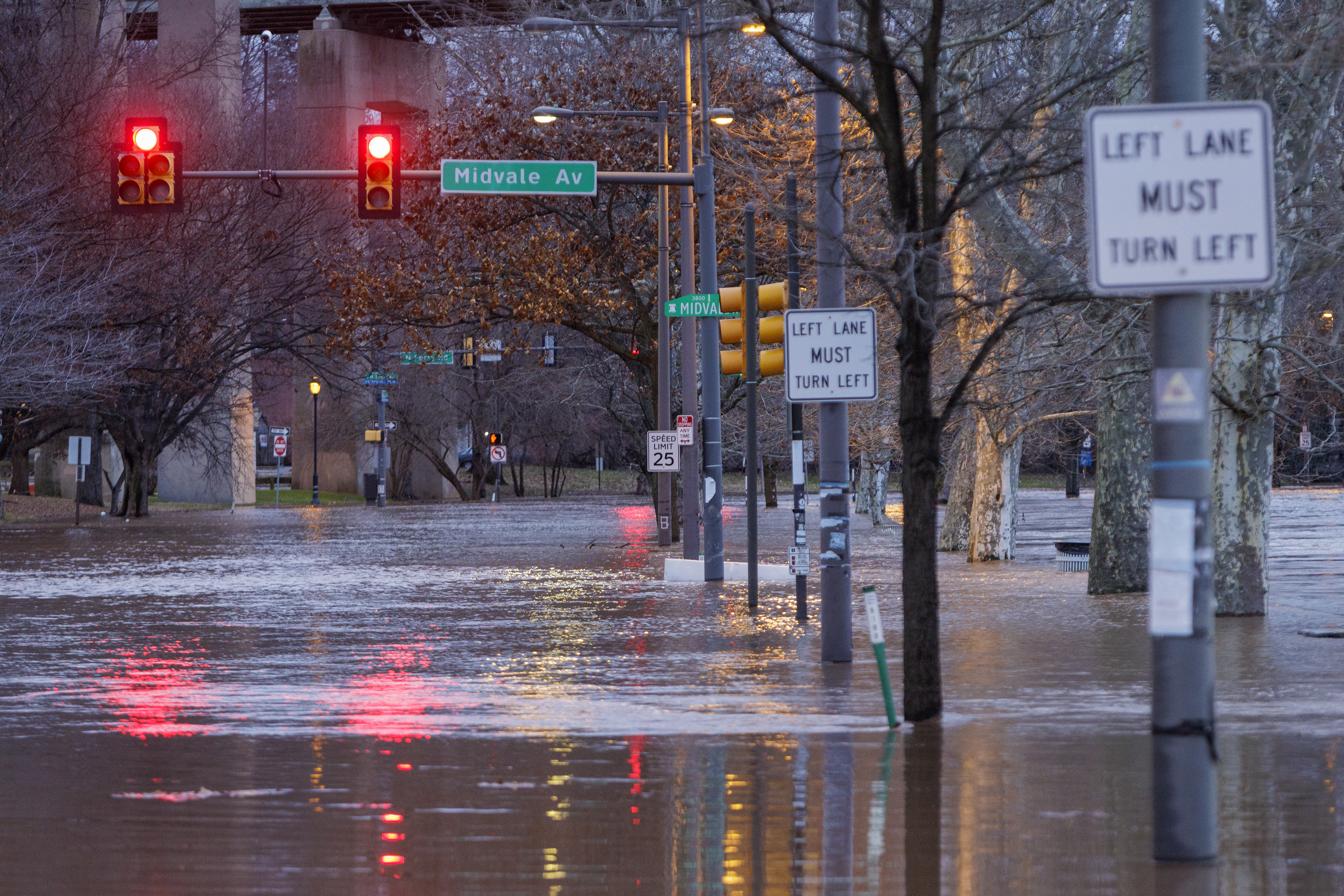
    Schuylkill River floods onto Kelly Drive at Midvale in the East Falls section of Philadelphia on Wednesday, Jan. 10, 2024.

    A comprehensive analysis of the Brandywine watershed published in April reported that impervious surfaces increased by 15% along the Great Valley’s Route 30 corridor from 2001 to 2020.

    Those increases are “significant,” said Gerald Kauffman, director of the University of Delaware’s Water Resources Center, which coauthored the study along with the Brandywine Conservancy and the Chester County Water Resources Authority.

    Municipalities welcome tax-generating development. Conversely, Kauffman said: “You get more value if you build next to a greenway. It’s the eternal debate.”

    From 2001 to 2020, the population in the Brandywine watershed grew nearly 25%, to 265,000 people, with 150,000 more expected by the end of the century. That’s a lot of rooftops and driveways feeding water into the stream, which empties into the Delaware River.

    Along the Delaware, the rising water levels of the Atlantic Ocean and the Delaware Bay are forecast to generate more flooding. The National Oceanic and Atmospheric Administration estimates that sea levels have been rising about an inch every five years.

    While the oceanic salt line — the boundary between ocean and freshwater — usually stays well south of Philly, the tidal pulses contribute to flooding in the city and areas to the north, where the channel narrows, said Amy Shallcross, water resources operations manager at the Delaware River Basin Commission.

    The five tidal gages along the Delaware from Newbold Island to Marcus Hook have registered more than 90 significant floods since 2005, according to the Inquirer analysis.

    The study was limited to the 33 USGS gages that had a period of record of at least 20 years and list designated flood stages.

    Along with the Delaware River sites, other stream gages that appeared in the top 10 list for major and moderate flooding were those on the Perkiomen, Chester, Neshaminy, and Frankford Creeks.

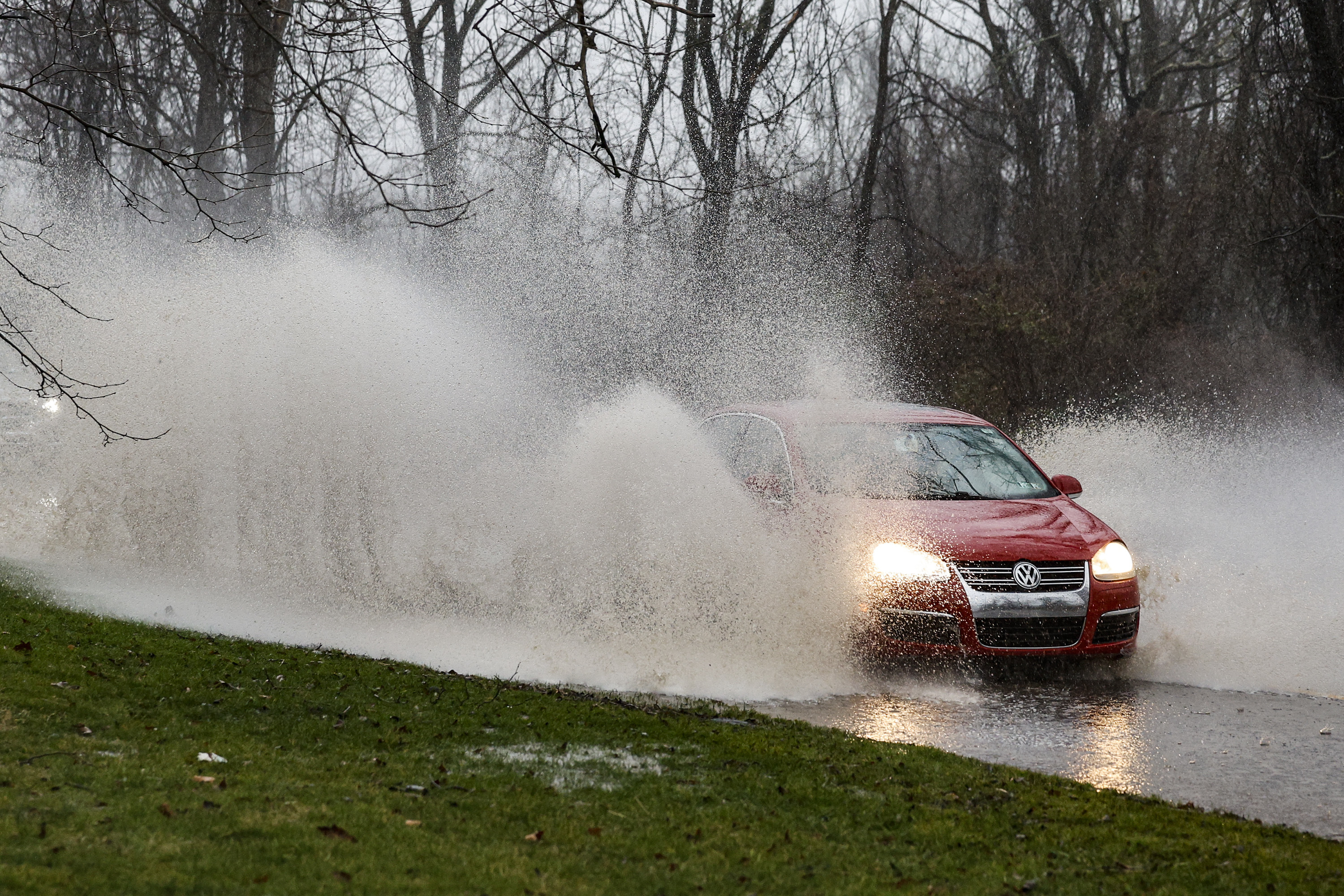
    Motorists brave the heavy rain and deep puddles along Creek Road in Chadds Ford during a nasty flood event in January 2024.

    The gage network cannot capture all the episodic flooding from the likes of thunderstorm downpours.

    Flood frequency is not the only consideration for siting a gage, said Tyler Madsen, a hydrologist with NOAA’s Middle Atlantic River Forecast Center, in State College. For example, the gages have to be located in areas free of unnatural barriers, such as bridge abutments.

    Plus, a major consideration is funding. They are costly to monitor and operate, serving multiple purposes such as measuring water quality and streamflow.

    They rely on a variety of funding sources, including state and local governments, that are not available everywhere.

    The Brandywine study’s suggested remedies included adding flood-control structures and beefing up warning systems all along the watershed, but warned: “Even with unlimited financial and technological resources, it would be impossible to eliminate all flood risks.”

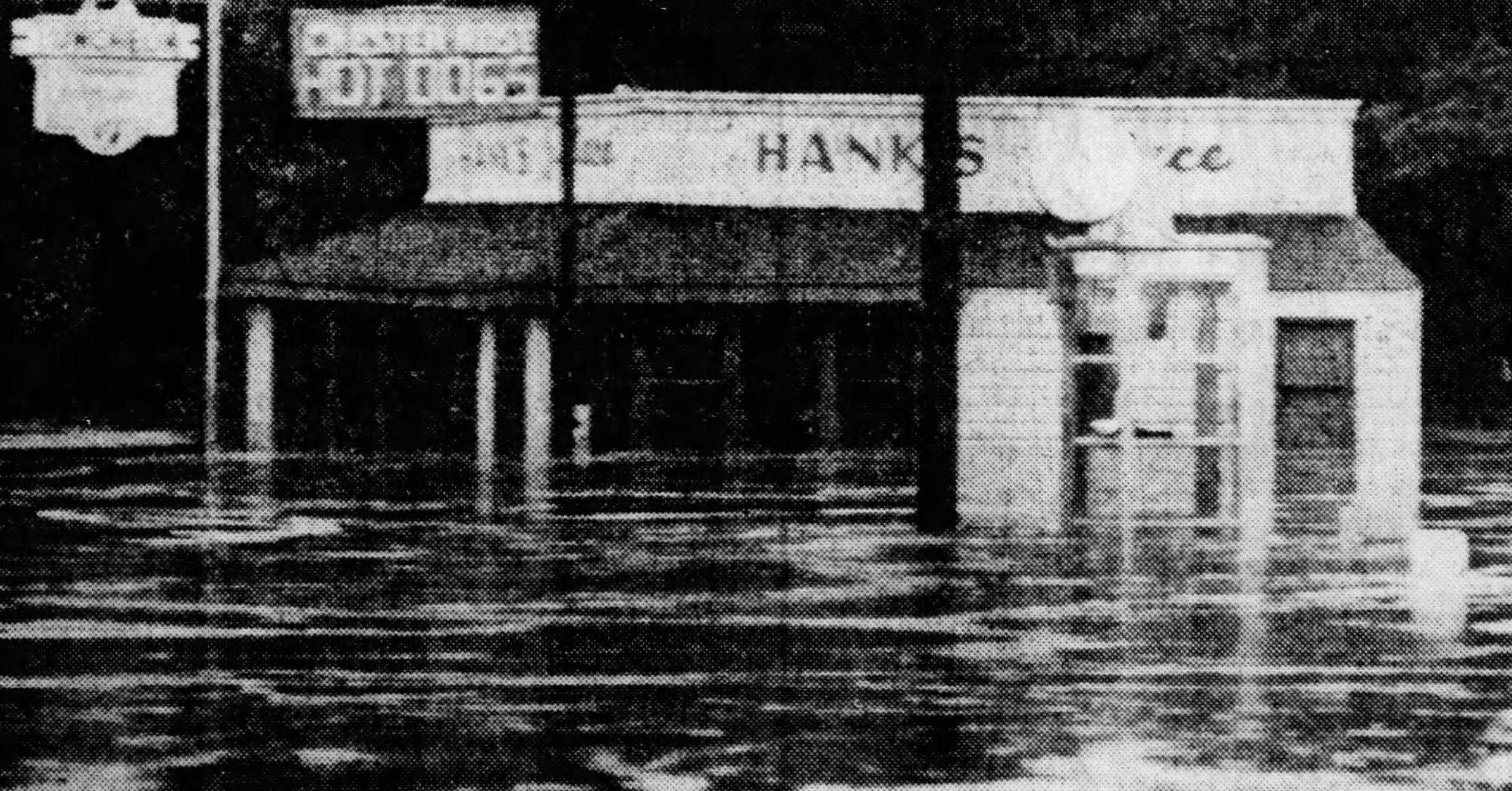
    Hank’s Place, on Routes 1 and 100 in Chadds Ford, was swamped by water from the rains of Tropical Storm Agnes in June 1972. The area has a long history of flooding, and the restaurant was reconstructed after it was flooded and damaged by Ida in 2021.

    The Youngs are prepared to live with those risks, come storms or high water.

    Said Katie Young: “Hank’s belongs here.”

  • Thirteen years after he abused  his infant son, an ex-Bensalem man is charged with the boy’s murder

    Thirteen years after he abused his infant son, an ex-Bensalem man is charged with the boy’s murder

    A former Bensalem resident who spent two years in state prison for abusing his infant son is now charged with the boy’s murder after police say complications from the injuries he inflicted more than a decade ago caused the boy’s death.

    Kyle Hinkle, 38, who now lives in Allentown, was charged Monday with third-degree murder in the death of his son, Leonardo, who was 11 when he died in August 2024.

    After the child’s death was ruled a homicide earlier this year, investigators in Bucks County spent months gathering medical records and other evidence to link it to the injuries he received as an infant.

    Hinkle remained in custody, in lieu of 10% of $2 million bail. There was no indication he had hired an attorney.

    Investigators first learned of the abuse in October 2012, when the boy was taken to Jefferson Torresdale Hospital with severe head injuries, according to the affidavit of probable cause for Hinkle’s arrest.

    Doctors there determined the injuries had been intentionally inflicted to the then-3-month-old, and a CAT scan revealed signs of similar, older injuries that were still healing, the affidavit said.

    The boy’s grandmother told detectives that on an earlier occasion, she had seen bruises on the child’s arm that matched a necklace Hinkle used to wear, indicating he may have struck the boy with it.

    In an interview with detectives, Hinkle admitted he shook the baby vigorously without supporting his head out of frustration because he would not stop crying.

    The injuries left the child wheelchair-bound, nonverbal, and reliant on a feeding tube, according to prosecutors.

    Hinkle pleaded guilty to aggravated assault and endangering the welfare of a child in 2013. He served two years in state prison, followed by three years of probation, court records show.

    In the intervening years, the boy and his mother moved to Oliver, Fayette County, southeast of Pittsburgh.

    When the child died in 2024, the Fayette County coroner ruled his death a homicide, saying, in a statement, that complications from living with Shaken Baby Syndrome directly led to his death.