An East Germantown man admitted he struck and killed a woman in a wheelchair with his car in Lower Merion last year, then fled without helping her or calling police.
Jamal McCullough, 38, pleaded guilty to accidents involving death for hitting Tracey Carey outside the Taco Bell restaurant on City Avenue in November of last year.
McCullough entered the plea Tuesday — the day he was expected to go to trial — as Carey’s relatives looked on. The family later expressed frustration at their belief that the man who killed her showed little remorse.
McCullough will serve three to six years in state prison, the mandatory minimum sentence for the crime to which he pleaded guilty.
McCullough’s attorney, Michael Parkinson, did not immediately respond to a request for comment.
McCullough struck Carey, 61, with his Toyota Camry on Nov. 11, 2024, as she attempted to cross the highway in her wheelchair. And while prosecutors noted that McCullough was not at fault in the fatal collision because Carey was crossing outside of a posted crosswalk, they said his actions after the crash constituted a crime.
Surveillance footage taken from the scene showed that McCullough hit Carey with enough force to send her body into the air and push it several feet away, according to the affidavit of probable cause for his arrest.
The collision occurred around 2:14 a.m., as McCullough was on his way to begin his shift as a sanitation worker with Waste Management. Afterward, surveillance cameras recorded him pulling into a nearby parking lot to assess the damage to his vehicle and then walking back to the scene of the crash.
Investigators said McCullough walked within feet of Carey’s body, but did not stop to help her.
Another driver who witnessed the crash called 911 and used his vehicle to block traffic and protect Carey, the affidavit said.
She was later pronounced dead at Lankenau Medical Center.
Investigators identified McCullough’s vehicle through broken pieces of the vehicle that were left at the scene, as well as the surveillance footage from the area, according to the affidavit
McCullough’s coworkers told police that in explaining the visible damage to his car, he initially said the vehicle had been hit while it was parked. After his photo was included in news reports about the crash, McCullough told his coworkers he hit a person in a wheelchair and promised to turn himself in.
When detectives came to interview him at his workplace, McCullough said he wanted to take full responsibility for his actions, the affidavit said, and was making arrangements to surrender his vehicle to police.
Lower Merion’s board of commissioners is set to put multiple new ordinances on the books next month, including policies raising parking meter rates for the first time since 1999, lowering the speed limit on parts of Lancaster Avenue, and regulating where smoke and vape shops can open in the township.
The smoke and vape shop regulation movedaheadlast month, and the commissioners advanced the parking meter and speed limit changesWednesday evening. Lower Merion’s assistant township manager, Brandon Ford, said the commissioners are poised to formally vote on all three proposals in December. Here’s everything you need to know.
Parking meter rate may go up
Commissioners on Wednesday moved forward an ordinance that would raise parking meter rates across Lower Merion for the first time in more than 25 years.
Under the proposed ordinance, parking would increase from 50 cents per hour to $1 per hour across the township, with the exception of six locations in Ardmore. Parking would go up to $1.50 per hour at Rittenhouse Place, Cricket Avenue, Cricket Terrace, and township-owned parking lots five (Cricket Terrace) and six (Schauffele Plaza). The Cricket Avenue Parking Garage would stay at 50 cents per hour.
Township staff say the proposed meter rate increase would generate around $900,000 annually and would likely drive quicker turnover in Lower Merion’s commercial corridor, generating more economic activity for local businesses.
“The rates that we are charging have not kept up with the overall cost for maintaining those parking meters, as well as our overall parking services program,” Ford said during a Nov. 5 meeting.
The ordinance, if passed, would not change how parking meter fees are collected. The township collects parking fees through meters, kiosks, and a mobile app.
Commissioner Scott Zelov, who represents Bryn Mawr, Haverford, and Gladwyne, said: “It certainly is time to do this.”
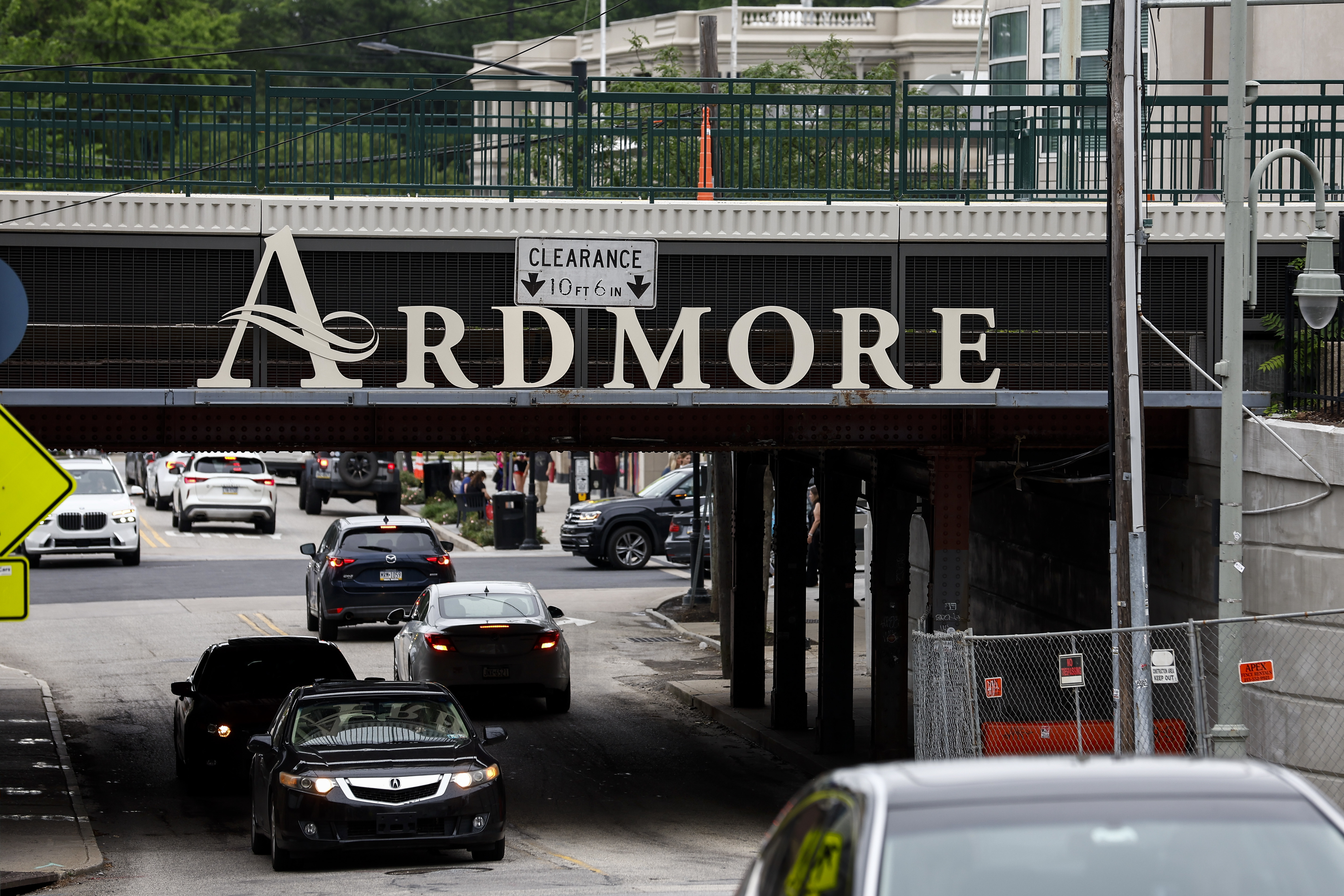
Anderson Avenue near Suburban Square on June 8. A proposed Lower Merion ordinance would increase parking meter rates across the township in hopes of raising revenue and spurring economic activity in places like downtown Ardmore.
Lancaster Avenue speed limit reduction
Lower Merion is set to reduce the speed limit on parts of Lancaster Avenue from 40 mph to 35 mph, bringing township code in compliance with an earlier speed limit change by the Pennsylvania Department of Transportation.
PennDot has already placed 35-mph speed limit signs on the selected strip of Lancaster Avenue. The board’s approval will bring the township in line with the state and allow township police to start enforcing the reduced speed limit. The speed limit change is the latest development in a major redesign of Lancaster Avenue by the state and the township.
A study conducted by PennDot earlier this year found that, out of nearly 20,000 vehicles traveling on Lancaster Avenue between Wynnewood Road and City Avenue during a 24-hour period, only 57% were driving at or below the 40-mph speed limit. PennDot considers the intersection of Lancaster Avenue and Remington Road to be a “high crash location.”
The ordinance, approved for advertisement on Wednesday, also bans right turns on red at three intersections: Lancaster Avenue and Remington Road for eastbound traffic, Lancaster Avenue and Haverford Station Road for westbound traffic, and Montgomery Avenue and Airdale Road for east-west traffic.
The township aims to place automated red-light cameras at all three intersections. The first red-light camera, at Remington Road and Lancaster Avenue, is in the process of being installed. Andy Block, Lower Merion’s superintendent of police, said the camera should be up and running by the end of the year.
Following a lengthy discussion that stretched across two meetings, the board of commissioners on Oct. 22 moved forward an ordinance that would decide where tobacco and vape shops can operate in Lower Merion.
Under the proposed ordinance, if a tobacco or vape shop wanted to open in Lower Merion, it would have to be situated at least 1,000 feet from any other tobacco or vape shop and 1,000 feet from any public or private school. The rule would also apply to hookah lounges.
Township staff said the 1,000-foot buffer would dramatically decrease the opportunity for smoke shops to operate in Lower Merion. Ford said there are currently around 1,000 properties in Lower Merion where smoke shops could operate. If the buffer ordinance were to be implemented, that number would drop to 300.
While some commissioners inquired about creating a larger buffer, officials said doing so would likely zone smoke shops out of Lower Merion entirely, which would give smoke shop owners the legal claim to build anywhere in the community.
During an Oct. 17 discussion of the ordinance, Commissioner Anthony Stevenson, who represents Ardmore and Haverford, said: “We need to avoid the continuation of making our township, and particularly in the Ardmore area, a vape central.”
This suburban content is produced with support from the Leslie Miller and Richard Worley Foundation and The Lenfest Institute for Journalism. Editorial content is created independently of the project donors. Gifts to support The Inquirer’s high-impact journalism can be made at inquirer.com/donate. A list of Lenfest Institute donors can be found at lenfestinstitute.org/supporters.
More than 2.5 million miles of fuel pipelines run under homes, farms, parks, and schools in the United States — enough steel line to circle the earth 100 times.
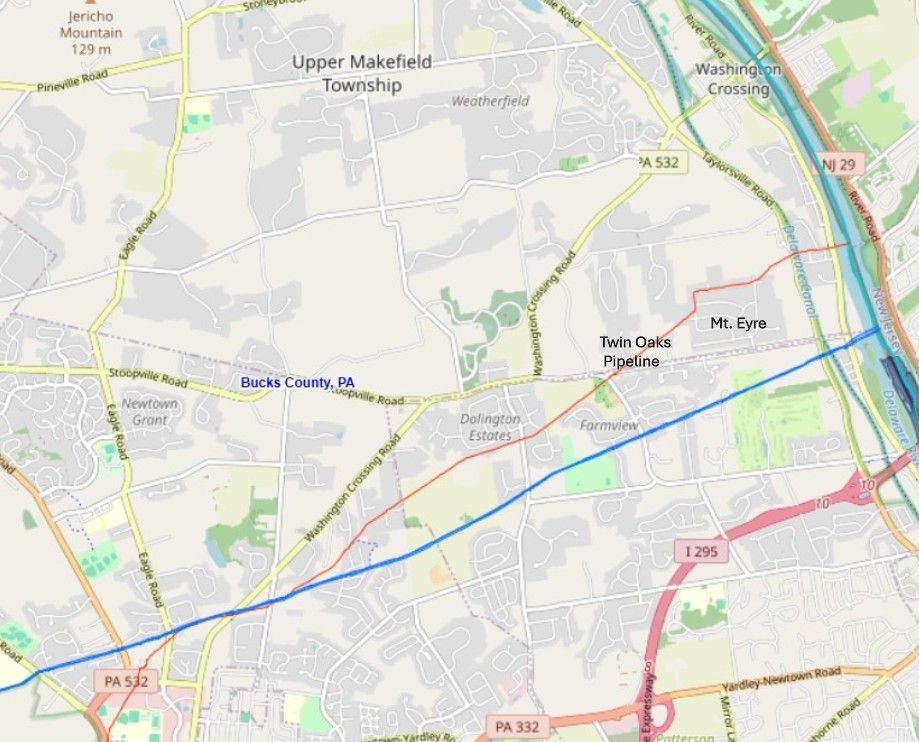
One of those pipelines slices under Mount Eyre Manor, a suburban Bucks County neighborhood perched high above the popular Delaware Canal State Park towpath and only a few thousand feet from the Delaware River.
For years, residents barely gave any thought to the Twin Oaks Pipeline, owned by Sunoco and its parent company, Energy Transfer. That changed in January when state inspectors uncovered a jet fuel leak.
Now, the pipeline is always on their minds.
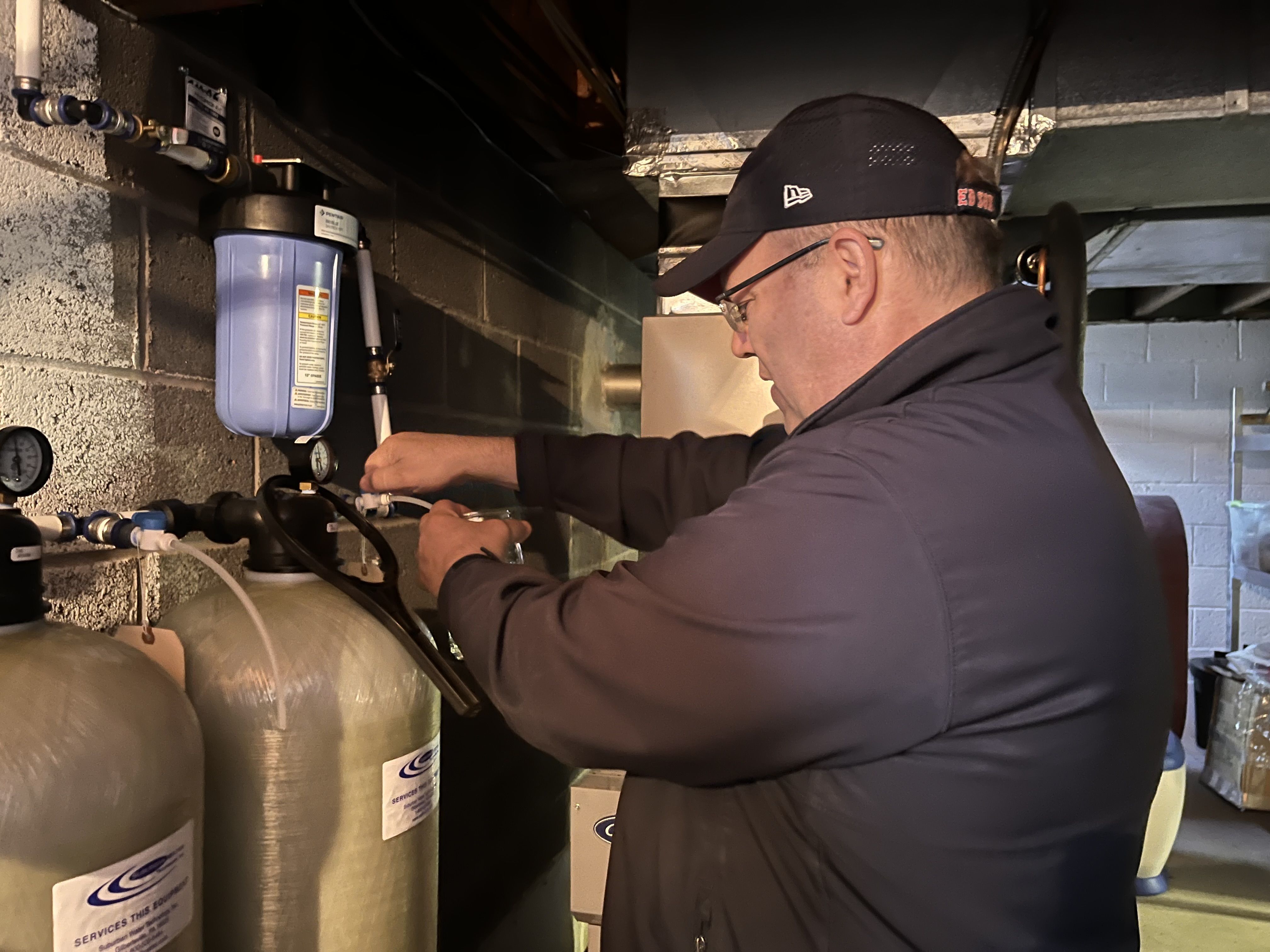
“We will never drink the water in this house again,” said Kristine Wojnovich, whose well was one of six tainted in the leak. Six metal tanks, part of a filtration system installed by Energy Transfer, now crowd her basement wall.
The Twin Oaks Pipeline stretches 106 miles. Built in 1958, its 14-inch diameter pipe carries jet fuel, diesel, or gasoline, depending on need, from Sunoco’s Twin Oaks Terminal in Aston, Delaware County, to a terminal in Newark, N.J.
Along its route, the pipeline burrows beneath suburbs, tunnels under waterways — including the Delaware River — and runs below a school’s grounds and state and local parks. It carves directly through Mount Eyre in the Washington Crossing section of Upper Makefield Township.
Federal regulators estimated that a “slow drip” had seeped undetected at least 16 months before the leak was detected.
Energy Transfer has accepted responsibility and apologized at public meetings. The company declined to comment for this article but noted that it has set up a website with updates and documents related to the spill.
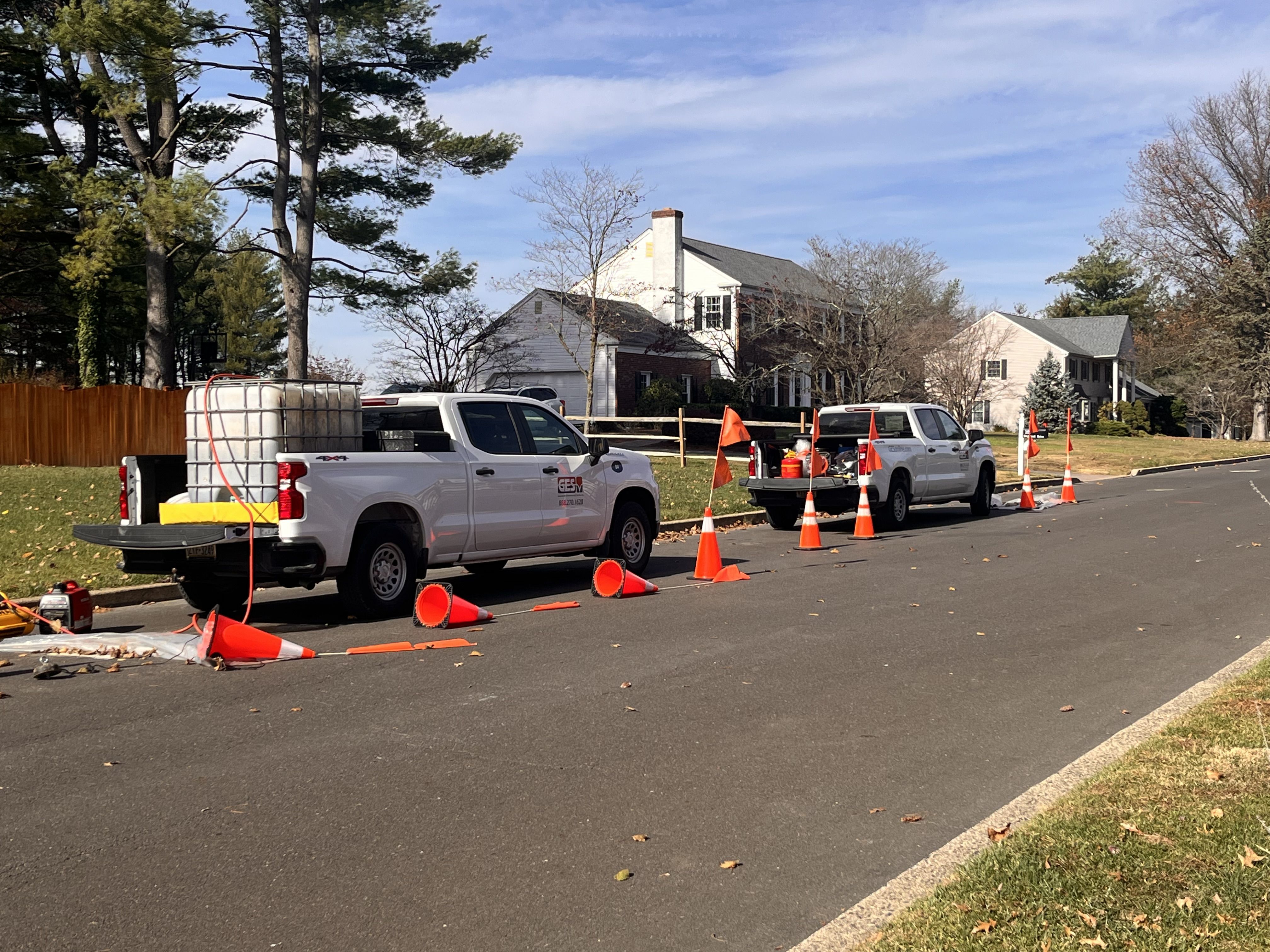
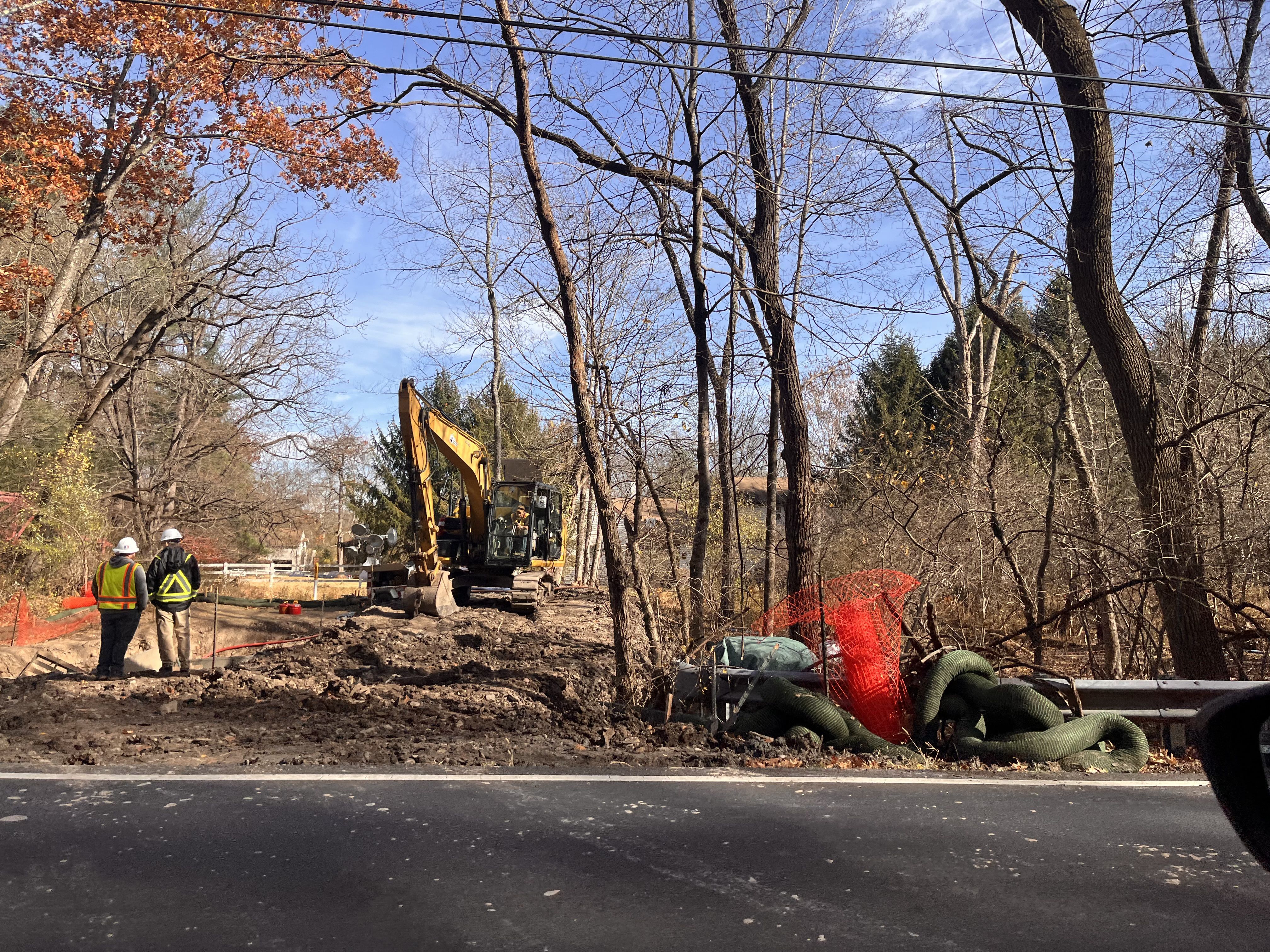
A contractor for Energy Transfer working on a recovery well in front of Kristine Wojnovich’s home in the Mount Eyre Manor neighborhood.
Signs of contamination
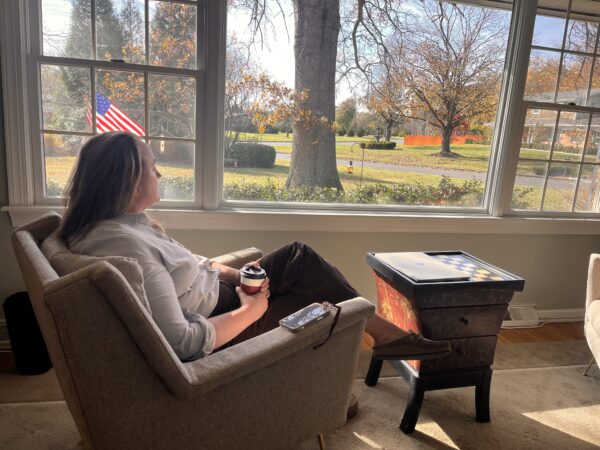
Wojnovich said she first noticed “something off with the water” as she was getting a drink after a workout in September 2023. She recalled the incident on a recent day from her living room as several white trucks owned by an Energy Transfer contractor were parked outside as part of well-monitoring work.
“It smelled to me like oil or gasoline or some kind of petroleum,” Wojnovich said.
Uncertain whether she was imagining it, she waited for her husband, Kevin, to return home. He, too, noticed the odor and suggested they call Sunoco.
The couple say Sunoco failed to locate a source of the odor and told them the likely cause was bacteria. Other neighbors had complained, too.
But it wasn’t until Jan. 21, 2025, that residents first learned of a leak discovered during an investigation by the Pennsylvania Department of Environmental Protection. The DEP advised the federal Pipeline and Hazardous Materials Safety Administration (PHMSA) that water samples from a Mount Eyre home “indicated the presence of kerosene, a major component of JP-8 jet fuel.”
PHMSA notified Energy Transfer and Sunoco.
Since then, residents have attended hours and hours of meetings. They’ve filed seven lawsuits, including a class action. Wojnovich is one of the plaintiffs.
Most people won’t drink the water. Many won’t cook with it. Wojnovich and her husband, Kevin, bathe elsewhere.
Wojnovich noted that when her well was initially tested after the leak, “fumes came out. It was overwhelming. They measured 12½ feet of jet fuel on top of our drinking water well.”
Her water, which eventually tested positive for contamination, now gets routinely tested by contractors paid by Energy Transfer. The company has drilled a second well for the family. But the Wojnoviches say their water still has a pungent odor.
Kevin Wojnovich samples water from a point-of-entry-treatment, whole-house filtration system that Sunoco installed at his Washington Crossing home after a 2024 jet fuel leak was detected in the company’s Twin Oaks pipeline.
The fallout
Of six wells that tested positive for hydrocarbons, four exceeded contaminant levels for drinking water. Residents suspect other wells were, or are, tainted and are skeptical about the way testing has been carried out.
According to the DEP, jet fuel contains “contaminants of concern” including benzene, toluene, ethylbenzene, xylenes, cumene, naphthalene, trimethylbenzenes, dichloroethanes, dibromoethane, and lead, which is also naturally occurring. The compounds can be harmful if ingested in large amounts. Some are carcinogens.
Energy Transfer has purchased a home with a contaminated well on Spencer Road, adjacent to where the leak was detected, for $721,800. It is across from the Wojnoviches’ home and sits vacant. The company purchased the home to drill two recovery wells in order to remove contaminated water.
Since digging up and repairing the pipe section, the company has recovered 1,027 gallons of fuel. About 163 gallons came from private wells, according to DEP records.
Energy Transfer has paid contractors to excavate and remove 276 tons of petroleum-impacted soil, according to a DEP document. It has installed four wells to recover petroleum from underground, dug 26 wells to monitor groundwater, and put in 181 point-of-entry treatment filtration systems in homes. It has collected 1,289 water samples from 363 individual wells.
A map from the federal Pipeline and Hazardous Materials Safety Administration shows the Mount Eyre Manor neighborhood in Washington Crossing, Bucks County, and Sunoco’s Twin Oaks pipeline in red. The blue line signifies another gas transmission pipeline.
Over the summer, Energy Transfer, using an inspection tool, identified multiple anomalies in the pipeline in Upper Makefield Township that required excavation, according to an Oct. 22 update.
The company said in an August letter that the anomalies presented no immediate danger and that there is no “data or information that the continued operation of the pipeline presents a critical safety concern or that the pipeline is leaking.”
One of those excavations took place in a section of pipe next to the popular canal path used by cyclists and hikers. It is being dug up and replaced.
The excavation along Taylorsville Road won’t disturb the canal trail, company officials said during a recent meeting. The term anomaly does not mean a pipe section is an immediate threat to the safety or integrity of the pipeline, Matt Gordon, vice president of operations at Energy Transfer, said at the meeting.
Meanwhile, the pipeline continues to deliver fuel.
A contractor for Energy Transfer excavates a pipe found along Taylorsville Road with an anomaly that the company said was not in any immediate danger of failing.
‘Another house is up for sale’
The spill has upended life in and around Mount Eyre, neighbors say.
Joe Babiasz said many neighbors had bonded through their children’s schools and activities before the spill. Now, instead of talking soccer, they talk pipelines.
“It’s become part of daily life at this point,” Babiasz said. “When we get together socially, it’s the thing we talk about. It’s been kind of hard to just hang out with people and have it not come up. You can’t walk around the neighborhood without seeing a reminder. ‘Oh, there’s the monitoring well,’ or ‘another house is up for sale.’”
Residents have expressed outrage and skepticism toward Energy Transfer, the parent company of Sunoco, over the handling and testing of the contamination. They say theydon’t trust the company’s methods and doubt the safety of the 67-year-old pipeline.
“There are the trucks out there now,” Babiasz said on a recent day. “You can see them or hear them. It’s been integrated into our daily life.”
He asked: “Are they actually telling us everything?”
Residents wonder if the leak would have been discovered if they had municipal water. They wonder whether the leak created a toxic plume underground and where it might drift to, including into the river.
Neighbors plan to attend the next update by the DEP during a Dec. 8 webinar.
Katherine LaHart, a plaintiff in the class-action suit, said her well water was once clear. Now it is “black — Texas brown.”
“I worry every day about the integrity of our water, air and soil and the pipeline that runs through our neighborhood,” LaHart said. “It keeps me up at night.”
A Main Line developer’s plan to turn a shuttered steel mill into a 2-million-square-foot AI data center on the outskirts of Conshohocken was stymied Monday when he was forced to withdraw his application over legal issues.
At the Plymouth Township zoning hearing board meeting, Brian O’Neill’s team had been set to make their case for an exception that would allow a data center to be built at 900 Conshohocken Rd.
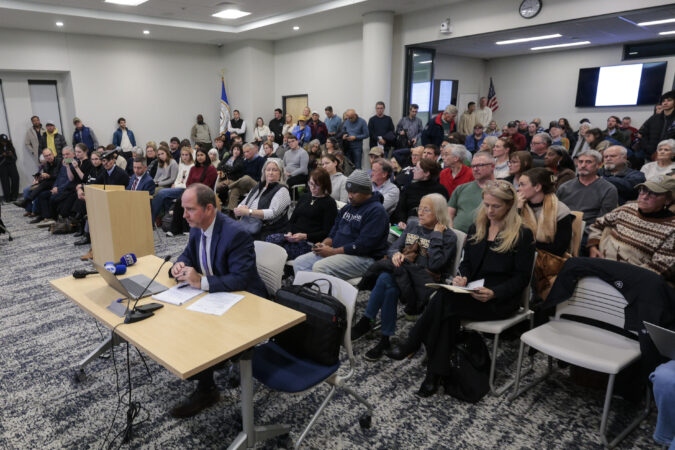
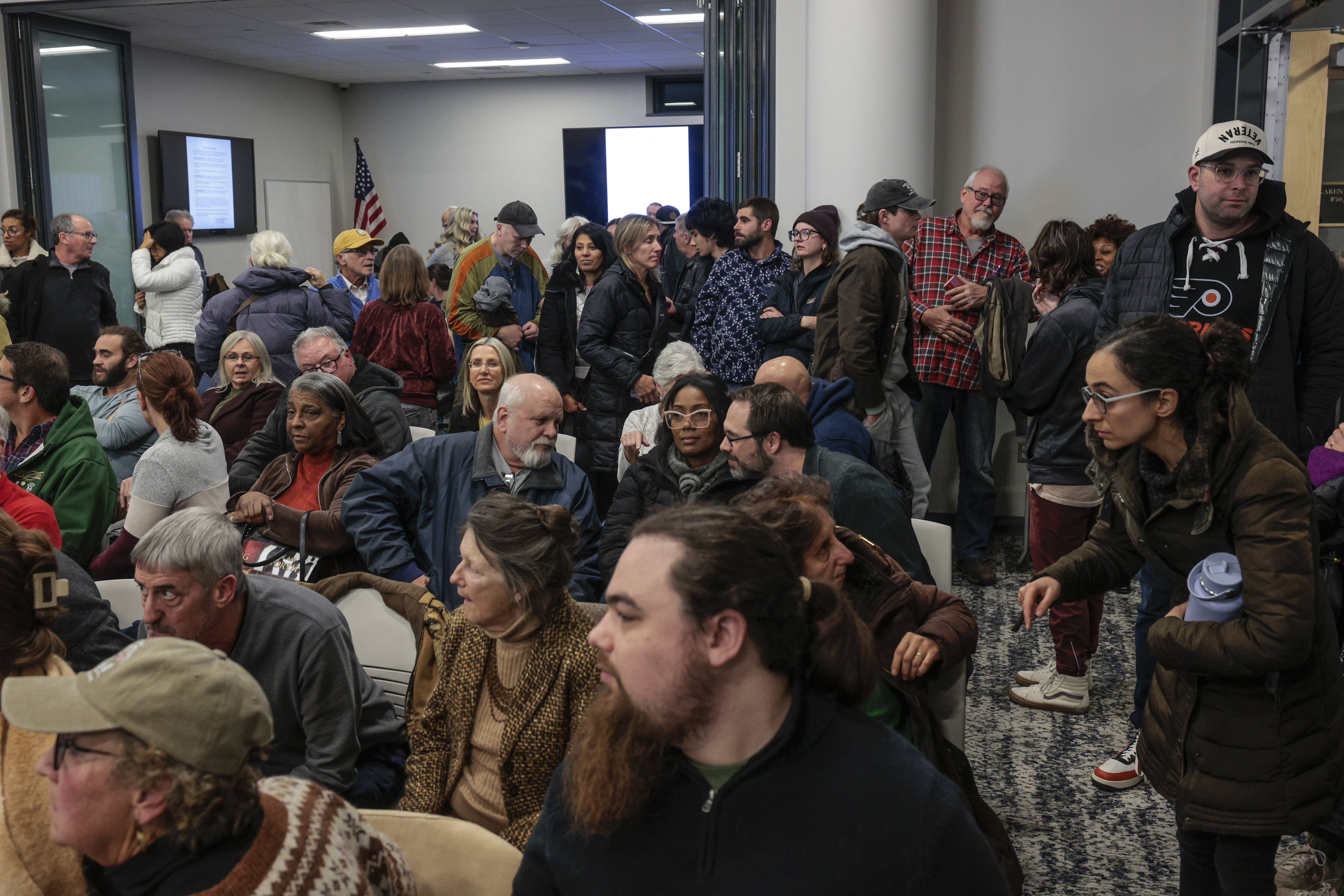
The plan has faced neighborhood pushback, and hundreds of people packed the meeting room on Monday night. O’Neill did not appear to be among them.
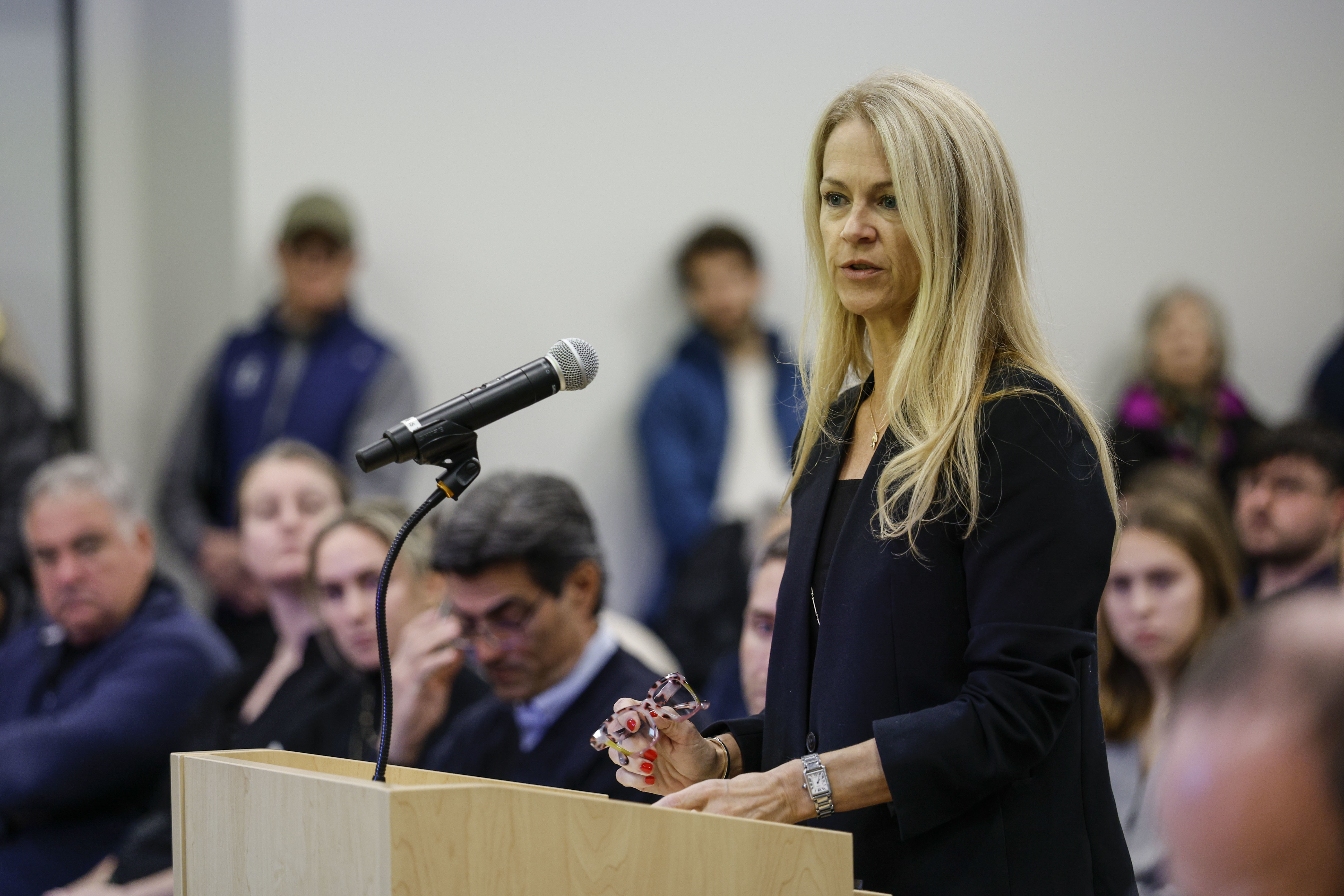
Edmund J. Campbell Jr., an attorney for O’Neill, said they wished to move the hearing to the township’s December meeting. Then an attorney for Cleveland-Cliffs, the property owner, said the prospective buyer did not have legal standing to do so.
An agreement of sale had not been approved prior to the meeting, said Heather Fine, the attorney for Cleveland-Cliffs.
Heather Fine, an attorney for Cleveland-Cliffs, addresses the Plymouth Township zoning hearing board on Monday.
Campbell later asked Fine and then the board for permission to withdraw the application. Both declined to provide additional comment.
Residents who had spent more than a month organizing in opposition to the project said they had mixed emotions.
“It is the smallest of small wins, because we’re making it harder for something bad to happen to our community,” said Nick Liermann, an attorney who lives in a neighborhood near the former steel mill. “But we will be back in this room in a few months.”
“Communities can be effective,” said Patti Smith, a neighbor of Liermann who has spearheaded the local data-center opposition efforts. “We have to stand up for ourselves.”
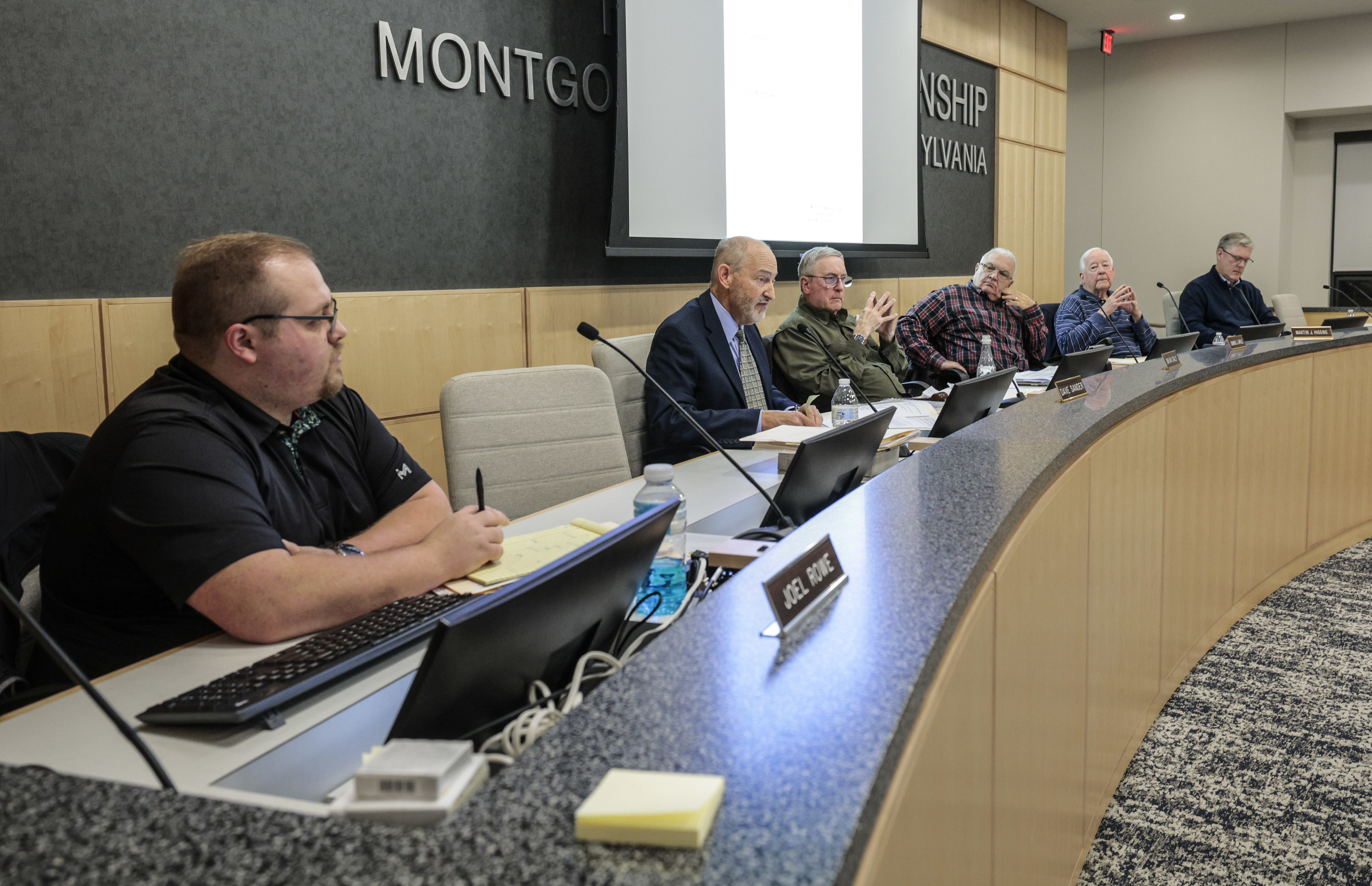
With the withdrawal, the data center proposal is officially off the docket in Plymouth Township, zoning officer Joel Rowe said, but the applicant can resubmit a plan at any time, restarting the process.
What the data center proposal entailed
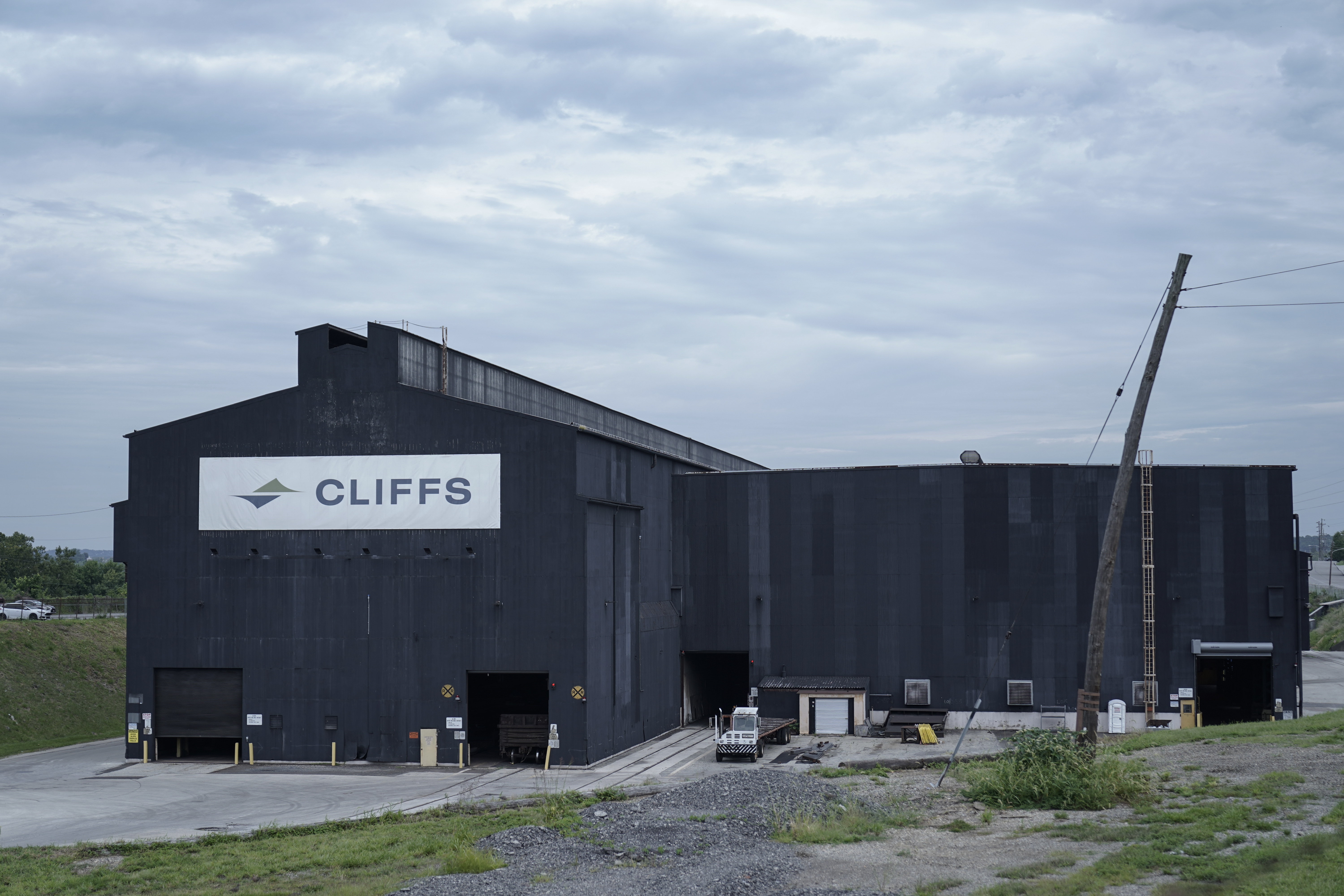
The now-closed Cleveland-Cliffs plant near Conshohocken is shown in this 2023 file photo. A data center has been proposed for the site.
This latest development in the Conshohocken-area data center saga occurs amid broader controversy about such facilities, which handle cloud-computing and storage for Big Tech companies.
The construction of data centers has been fast-tracked to meet the growing demands of power-hungry AI tools like ChatGPT. Politicians on both sides of the aisle, including President Donald Trump and Gov. Josh Shapiro, have pushed for more centers, while some neighbors near proposed sites have mounted fierce pushback.
In the Philadelphia area, Amazon is building a 2-million-square-foot data center on a former steel mill in Falls Township, Bucks County. And a 1.3-million-square-foot data center has been proposed at the former Pennhurst State School and Hospital in East Vincent Township, Chester County.
In Plymouth Township, O’Neill had not revealed the potential tenant for his proposed data center, but indicated it would be related to the life sciences.
The data center is proposed for a 66-acre property along the Schuylkill in the Connaughtown section of the township. The site is less than a mile from downtown Conshohocken. Its neighbors include the Proving Grounds sports complex, Tee’s Golf Center, and dozens of homes.
A crowd of people leave the Plymouth Township zoning hearing board meeting on Monday.
Some Connaughtown residents, along with other data center opponents from across the Philadelphia region, have rallied against the proposal. As of Tuesday, more than 1,000 people had signed an online petition urging township officials not to grant a zoning exception for the data center, citing concerns about light, noise, and air pollution; water usage; and electricity costs.
O’Neill, meanwhile, had argued that a data center should be permitted in the “heavy industrial” zone due its to similarity to a warehouse and laboratory, which are both permitted uses under township code. He had also touted the center’s potential economic benefits, saying it could bring in $21 million in annual tax revenue and attract other companies to the area.
“Industry hasn’t come and gone. It’s simply changed,” O’Neill said at last month’s planning board meeting. “What I’m proposing is to put 21st-century industry into an industrial building.”
Why the data center plan was withdrawn
The Plymouth Township zoning hearing board had been set to hear Brian O’Neill’s proposal for an AI data center outside Conshohocken on Monday.
At the start of Monday’s standing-room-only meeting, Plymouth Township officials were expecting a long and potentially tense night.
Solicitor Dave Sander began by warning the crowd that they must maintain decorum, and said he would cut off the proceedings at 10 p.m. Police officers stood outside the room.
Quickly, however, it became clear that Campbell, O’Neill’s attorney, had other plans, requesting a continuance to the Dec. 15 meeting. If granted, it would have marked the hearing’s second continuance: The proposal was initially supposed to be discussed at an October meeting.
“My client would like an additional opportunity to review with [community members] the project,” Campbell said. “When we proceed, if we have had a more robust dialogue with those participants, this hearing on the 15th would be significantly more efficient.”
Neighbors, some of whom had already attended a private meeting with O’Neill last month, objected to the last-minute request, saying that it was unlikely their minds would be changed if no significant changes had been made to the plan.
“Is the proposal significantly different than what was displayed to community members at the Oct. 8 meeting?” asked Smith, who organized neighborhood opposition.
Patti Smith, resident and organizer of anti-data center movement in the neighborhood, addresses the Plymouth Township zoning hearing board at Monday’s meeting.
“No,” Campbell responded, later adding that they wanted more residents to be able to attend the meeting and hear from their experts who could speak to concerns, including about noise and emissions.
Before the zoning hearing board could vote on the continuance request, Fine, the attorney for property owner Cleveland-Cliffs, took to the podium.
“There is no standing for the prospective buyer to proceed with the application this evening,” Fine said. “That authority was not extended to the prospective buyer from the owner. There is no LOI [letter of intent] in place.”
“My client delivered a signed agreement of sale to the owner this evening,” Campbell said. “Based on that, we have standing. … We made our application with the express consent of the owner.”
Sander turned to Fine, asking if that was true.
“It’s not entirely true, no,” Fine said. “The signed agreement that was transmitted to my colleague at 5:51 p.m. this evening had redline changes. Those have not been accepted by my client.”
She did not elaborate on what those changes entailed.
The zoning hearing board recessed before returning to accept Campbell’s motion to withdraw the application.
As a neighbor to the site, Liermann said the unexpected turn of events left him with a more sour taste in his mouth about the developer: “The last-minute request in an attempt to obstruct the process and dissuade the public from participating, and then this ‘confusion’ over whether or not an LOI was actually signed between the developer and the owner, is incredibly disturbing.”
The turning point in Pennsylvania’s budget impasse, by Gov. Josh Shapiro’s telling, came just before Halloween, when he and leaders in Harrisburg gathered in his stately, wood-paneled office to meet twice daily to hash out a deal to end the bitter, monthslong stalemate.
The long grind eventually led to compromises 135 days in, and a deal Shapiro said he thinks is far better than what national Democrats, hoping to extend healthcare subsidies, got in Washington at the end of the federal shutdown.
“Sometimes you’ve got to show that you’re willing to stay at the table and fight and bring people together in order to deliver,” Shapiro told The Inquirer in an interview Friday, touting the state budget agreement finally signed that week.
“I think it’s a stark contrast, frankly, with what happened in D.C., where they didn’t stay at the table, they didn’t fight, and they got nothing,” he said.
Washington is controlled by Republicans, while in Pennsylvania, Democrats control the state House and governorship, and Republicans hold a majority in the Senate.
Both state and federal budgets were signed the same day, offering Pennsylvanians relief from more than a month of government dysfunction at two levels. But for Shapiro — an exceedingly popular Democratic governor facing reelection in 2026 as whispers swirl over his potential 2028 presidential ambitions — the moment was bigger than a procedural win. In the end, Shapiro, preaching his oft-used slogan of “getting things done,” cast the outcome as proof he can muscle through gridlock of a divided legislature, cut deals under pressure, and hold firm where others cave.
So what if it took almost five months? Shapiro argues. At least he didn’t fold.
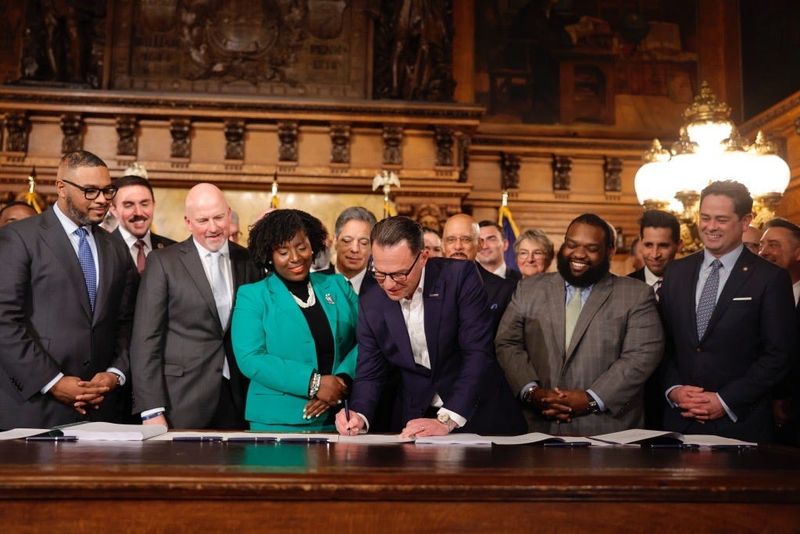
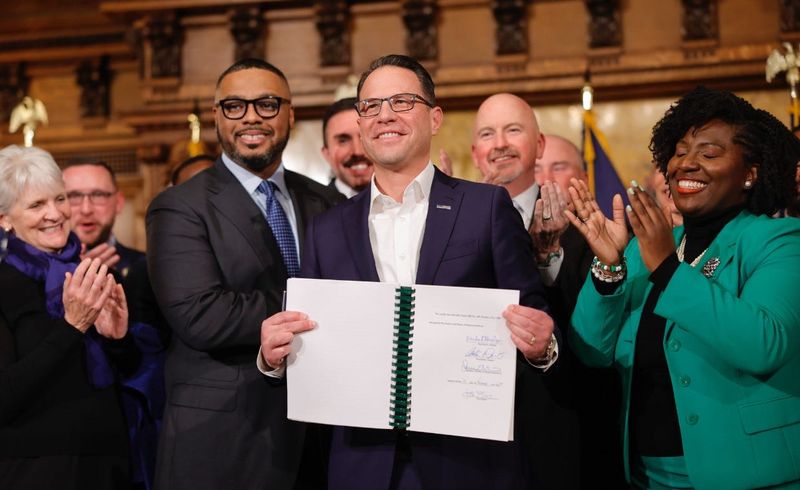
“I would have hoped to have gotten this budget done, you know, 100 or so days earlier,” Shapiro said, putting pen to paper in the state Capitol building’s baroque reception room last week. “But I think what you also saw was the result of having the courage to stay at the table and keep fighting for what you believe in. And we got a lot more than we gave in this budget.”
Gov. Josh Shapiro signs the fiscal year 2025-26 budget surrounded by General Assembly members on Nov. 12 at the Capitol in Harrisburg. The state budget had been due June 30, and Pennsylvania the final state in the country to approve a funding deal.
Critics are quick to note it took the self-proclaimed dealmaker so long to get a deal. Counties, school districts, and nonprofits struggled through four months without state payments while officials remained at loggerheads.Pennsylvania was the last state in the nation to pass a spending plan for the 2025-26 fiscal year.
“He’s five months late. He’s the governor of the fifth-biggest state in the country and the last state to get a budget done,” GOP consultant Vince Galko said. “It’s not a failing grade because it got done, but it’s still a D.”
‘A tremendous cost’
The $50.1 billion budget includes several key priorities for Shapiro and Democrats: significant increases in public education funding, a new tax credit for lower- and middle-income residents, continuation of a popular student-teacher stipend, and other economic and workforce development initiatives.
House Speaker Joanna McClinton (D., Philadelphia) heaped praise on Shapiro during a Monday news conference celebrating the budget’s new Working Pennsylvanians tax credit. “I am grateful that here in Harrisburg we have a hero among us for working families, and his name is Josh Shapiro.”
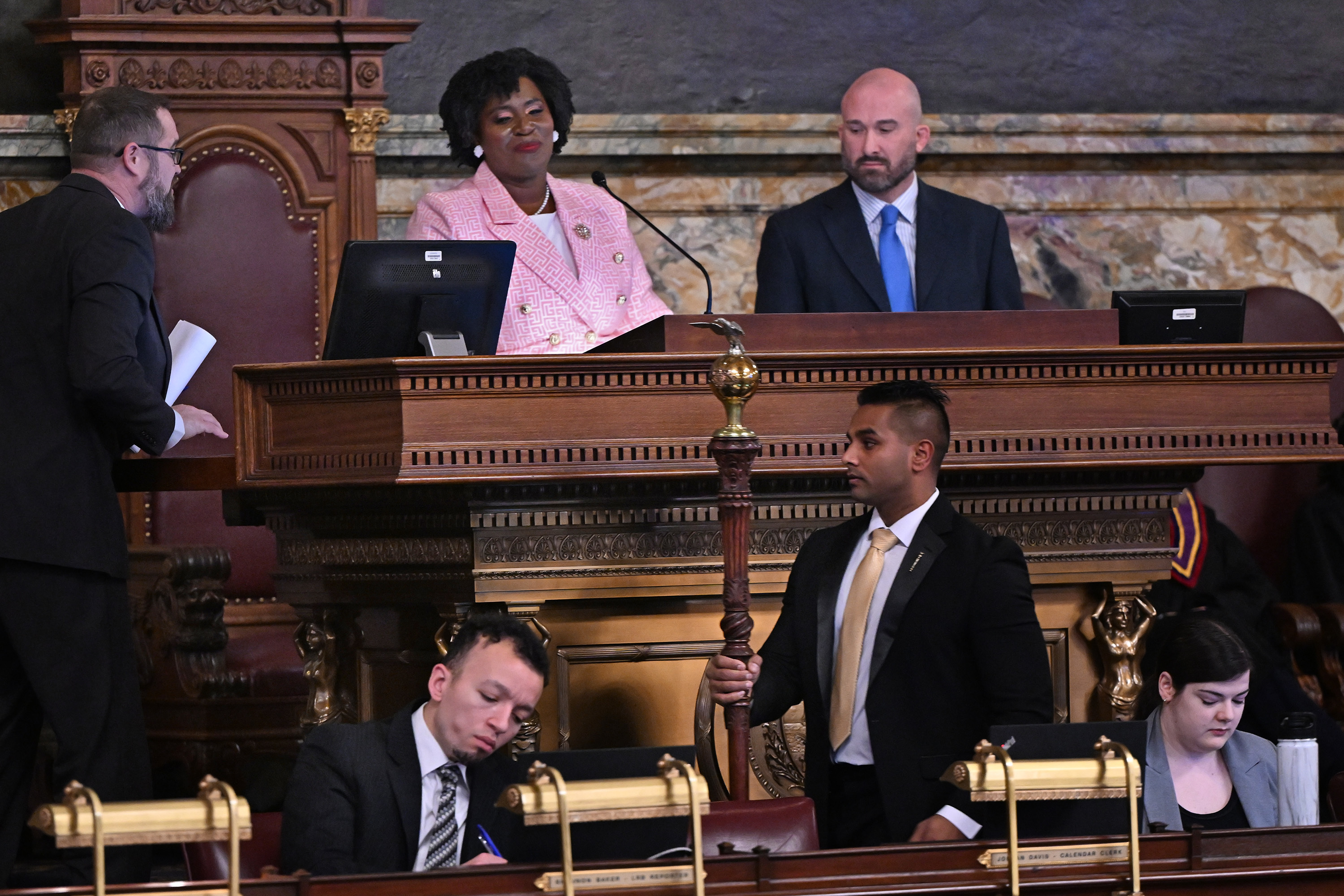
State Rep. Joanna McClinton (D., Philadelphia) is on the rostrum in the House chamber on Jan. 7 after she was reelected speaker of the House despite an initial 101-101 tie vote along party lines.
State Sen. Nikil Saval, a progressive lawmaker who represents part of Philadelphia, was one of a handful of Democrats to vote against the bipartisan Pennsylvania budgetbill that was largely lauded by Democrats and Republicans in Harrisburg and beyond. Saval applauded the school funding, anti-violence grant funding, and childcare support but slammed the absence of transit funding and Democrats’ agreement to end their pursuit to join a key climate program.
“Unfortunately, it comes at this tremendous cost,” he said.And ultimately, Saval said, the finished product didn’t seem to justify the time it took to get there.
Gov. Josh Shapiro visits SEPTA headquarters on Aug. 10 to discuss funding for the transit agency. To his right, from left, are state Democratic legislators Sen. Anthony H. Williams; Sen. Nikil Saval; Rep. Ed Neilson; and Rep. Jordan Harris.
It was not just transit funding that took a back seat to get the budget deal over the line. To thedelight of Republicans — and the chagrin of some progressive Democrats and the climate-conscious — the deal also pulled the state out of the Regional Greenhouse Gas Initiative, a cooperative among states to reduce carbon emissions.
“For years, the Republicans who have led the Senate have used RGGI as an excuse to stall substantive conversations about energy,” Shapiro said. “Today, that excuse is gone.”
The powerful Pennsylvania Building and Construction Trades Council had lobbied heavily for lawmakers to walk away from the initiative, and it was a top win for state Republicans, who have long said the state should not join the multistate cap-and-trade emissions program they see as hamstringing Pennsylvania’s energy industry from accessing the state’s plentiful natural resources.
‘Two-a-days’
Shapiro said he spent months “running back and forth” to broker a deal between Senate Majority Leader Joe Pittman (R., Indiana) and House Majority Leader Matt Bradford (D., Montgomery). The three met on-and-off in private talks, attempting to hammer out a compromise between the Democratic House and Republican-controlled Senate. But the week of Oct. 27, more than four months into the stalemate, Shapiro said a “breakthrough” finally came when he broadened the talks to include McClinton and Ward.
Minority leaders Rep. Jesse Topper (R., Bedford) and Sen. Jay Costa (D., Allegheny) also joined the group, as it became clear that neither of the tightly controlled chambers would have the votes needed to pass a final budget deal.
The group met twice daily in a conference room in Shapiro’s office. Shapiro, always a fan of the sports metaphor, called the meetings “two-a-days.”
“We would come in the morning, go over the issues. We’d have our homework for a few hours, then come back in the afternoon and talk about, you know, the progress that we made,” Shapiro said. Coming out of that week, the governor said, leaders “had a clear direction on where we were going to go.”
Pennsylvania Lt. Gov. Austin Davis and Gov. Josh Shapiro show a budget document moments after it was signed Nov. 12 while surrounded by legislators at the state Capitol. A deal struck Nov. 12 ended a budget delay that lasted more than four months.
At the negotiating table, Shapiro served as “referee and facilitator” between House Democrats and Senate Republicans, McClinton said in an interview Monday.
“The man is nothing if not dogged and determined,” Bradford said of Shapiro last week.
Two officials in the closed-door talks said Topper’s presence, as the House minority leader who understands House Democrats and Senate Republicans, helped change the dynamic and got leaders on track toward a deal. Other officials in negotiations noted that once the state’s two top leaders — McClinton and Ward, who are both the first women to serve in their roles — the breakthrough deal swiftly came together.
Topper, for his part, didn’t try to take credit for striking the final budget deal, calling himself “a neutral arbiter” and “someone all sides can trust to have an honest dialogue.”
There were other signs of tensions easing as the legislators worked through the fall. Ward, a top critic of Shapiro since he reneged on a promise he made over school vouchers during his first budget negotiations, joined the conversations. The two had not met in person since 2023, and had barely communicated. Suddenly, they were sitting across from one another.
Kim Ward, president pro tempore of the Pennsylvania Senate, talks with her chief of staff Rob Ritson in her office Tuesday, Jan. 17, 2023, before heading out to preside over the swearing-in of Lt. Gov. Austin Davis in the Senate chambers.
Ward said her criticisms of Shapiro still stand — she wants him to be more transparent, among other disagreements. But she described the conversations as “very cordial, very professional.” And there were moments of levity that helped, said the top Republican leader in the Senate, who is known for her wry humor.
“He did leave me a sugar sprinkle heart [cookie] one day at my seat, and I told him, ‘You know, I’m too old for you, and we’re both married,’” she joked.
“I can’t understand why all these legislators think they did a great job,” she said on The Conservative Voice radio program, breaking with GOP leaders, like Ward and Pittman, who lauded the deal. “… Next year, they’re going to have to dip into the Rainy Day Fund to plug a budget, and then taxes are going to go up.”
Because of how long this budget took to finalize, Shapiro will already need to introduce his next budget in just three months, and in proximity to the 2026 midterms and Pennsylvania governor’s election. But it’s unclear whether those negotiations will be as fraught, given budgets tend to get resolved faster in election years with both parties eager to focus on the campaign trail.
“In this day and age, I would not downplay the fact that there was compromise,” said Berwood Yost, a pollster with Franklin and Marshall College. “People want their problems solved. They want politicians to do things that help their everyday lives and that, for most people, means some kind of compromise. Getting this problem solved fits with his narrative.”
Galko, the GOP consultant, looked further ahead to a potential 2028 presidential election. The budget impasse, he said, could provide material for Democratic rivals on the national stage. The possible field is filled with other governors, several from blue states, like Gov. JB Pritzker of Illinois and Gov. Gavin Newsom of California, where in-state dealmaking is easier among a uniform legislature.
“If he’s unable to negotiate with the Pennsylvania Senate, what’s he gonna do when he goes up against China or Russia?” Galko asked, previewing the possible attack.
Ultimately, history suggests Shapiro’s political success is likely to hinge less on the nuts and bolts of a budget only some Pennsylvanians — and even fewer outside Pennsylvania — are familiar with, and more on his ability to bolster his image as a bipartisan governor in a purple state.
On Friday morning in South Philadelphia, Shapiro sported a bomber jacket while posing for selfies with Eagles fans, nodding along to a rock band’s cover of “Santeria” in a tent outside the Xfinity Mobile Arena at an event hosted by radio station WMMR.
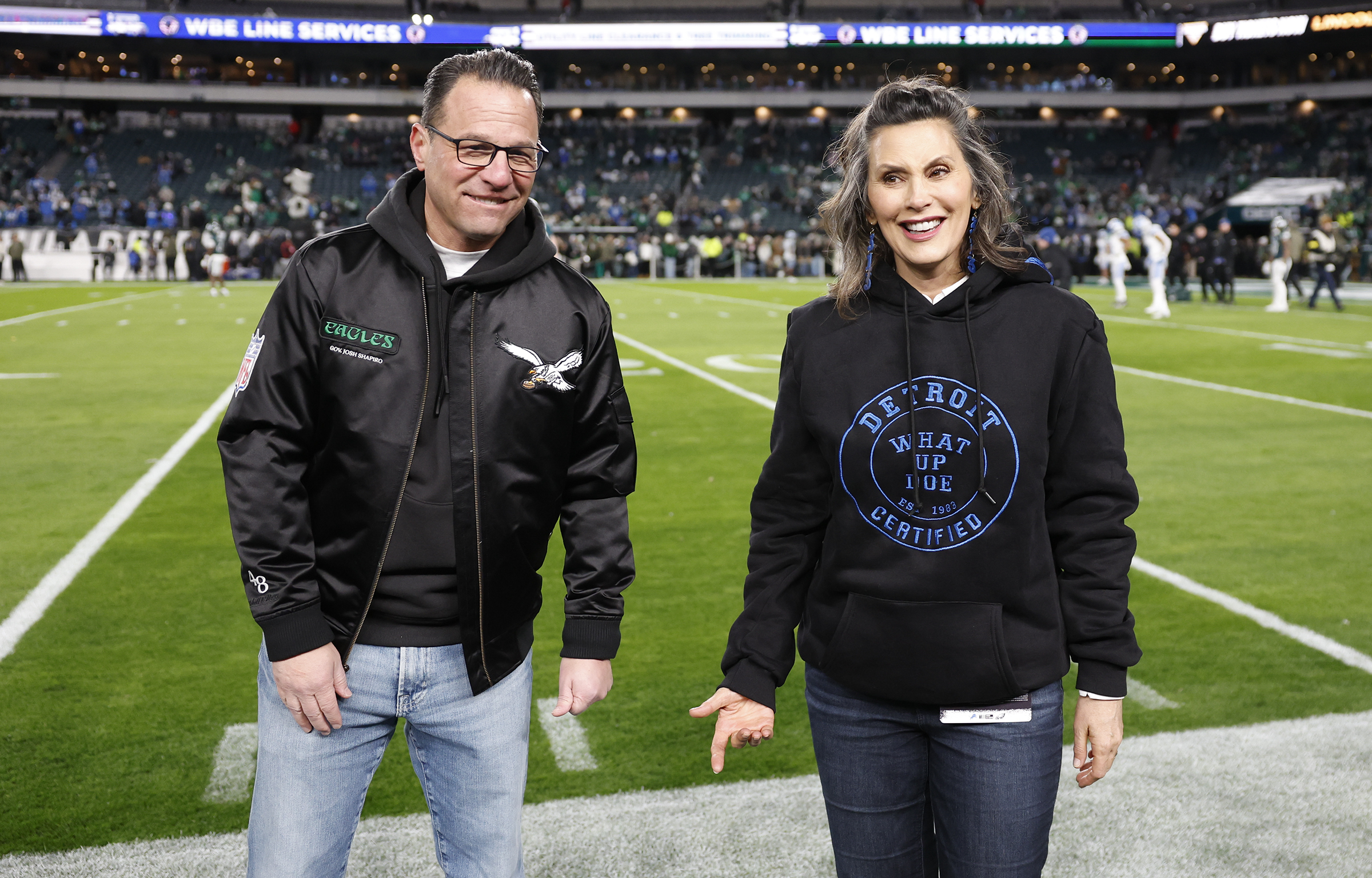
Casually, almost as a throwaway line, Shapiro mentioned to radio hosts Preston and Steve during an interview that he planned to bring Michigan Gov. Gretchen Whitmer — a fellow swing-state governor seen, too, as a possible 2028 Democratic contender — as his guest to the Eagles-Lions game at the Linc that Sunday.
“She actually said, ‘Is it OK if I wear Lions stuff?’” Shapiro told the kelly green-clad crowd in Philadelphia, riffing on the friendly football rivalry — the undercurrents of national politics left unspoken. “And I’m like, ‘No problem. You’re on your own in the parking lot. I can’t protect you.’”
Michigan Gov. Gretchen Whitmer joined Pennsylvania Gov. Josh Shapiro at Sunday’s game between the Eagles and Detroit Lions at Lincoln Financial Field.
The event was a food drive but also served as a tribute to the station’s beloved late host, Pierre Robert. Shapiro brought along a commendation from the governor’s office for the occasion.
“He created community, created joy, brought people together,” Shapiro said of Robert. “You think about just how divided we are as a world, there’s a few things that still bring us together, right?”
“By the way, I’ve learned those lessons. That’s what I try and do governing with a, you know, divided legislature.”
Music and sports, the governor mused before the crowd of Philadelphia fans, are two things that bridge the gap. “Go Birds,” he added with a grin.
Staff writer Katie Bernard contributed to this article.
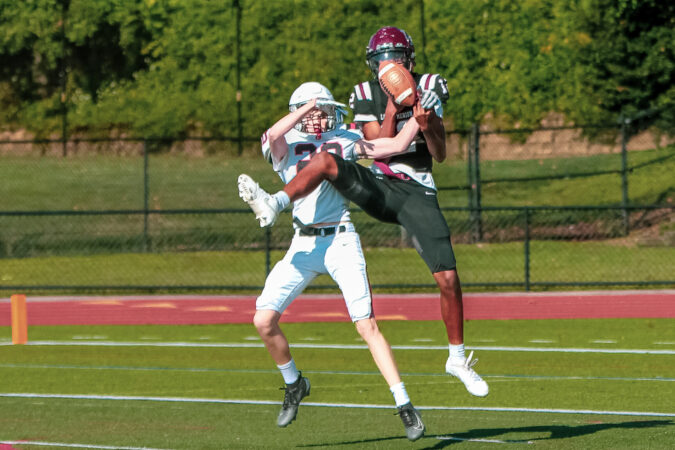
Lower Merion’s two high school football teams won’t be merging, for now.
At a school board meeting Monday night, Lower Merion School District Superintendent Frank Ranelli made an official recommendation that the district not merge Lower Merion and Harriton High Schools’ football programs despite a coordinated push by parents to combine the teams.
“I don’t feel it’s [Lower Merion’s] responsibility to give up their team identity … and playoff chances to merge with Harriton,” Ranelli said. “Lower Merion High School would be giving up a great deal for a problem that they do not need to solve.”
Parents of Lower Merion and Harriton football players in recent months have petitioned the school board to allow for a merger. They argue that a lack of youth football infrastructure in Lower Merion Township has contributed to a steep decline in player interest, leaving both high school teams under-rostered and unable to compete with neighboring schools. Neither high school has a freshman or junior varsity team, leaving 14-year-old freshmen to play alongside 18-year-old seniors and, the parents argue, increasing the risk of injury.
Amy Buckman, director of communications for the Lower Merion School District, said any further action or vote on a potential football merger would be the school board’s decision.
Last fall, Lower Merion went 1-8 in the Central League, the 12-school athletic conference that stretches across parts of Montgomery and Delaware Counties. Harriton went 0-9.
Ranelli said the issues described by parents were “more of a Harriton problem than [a Lower Merion] problem.”
Explaining his recommendation, Ranelli cited a potential loss of age-old traditions, school spirit, and playoff eligibility. He expressed concerns that the district’s two cheerleading teams would not combine, creating potential issues.
Ranelli also cited a survey sent out to football players and parents. He said 95% of Lower Merion High School football players rated “having their own school team [as] important” and 74% of Harriton players “want to maintain the program at their school.” Thirty-nine percent of middle school players were in favor of merging the teams, Ranelli said.
Parents, students, and alumni, however, called the survey “misleading” and said Ranelli’s comments ignored the safety concerns at the core of their argument. Many urged the school board to take an official vote on the merger.
“To say I am unhappy and a little shocked with the decision is an understatement,” said Michelle Miller, a Lower Merion football parent.
Miller called the survey questions “confusing and up for interpretation.”
About a dozen football players attended the meeting, and four addressed the school board, advocating for their teams to merge.
“You’re shorting a lot of students this opportunity to develop,” Tommy Burke, a Lower Merion High School football player, said. “You’re shorting them development as players and as young men. A lot of them quit because of it. It’s a complete detriment to both programs.”
Rahul Mistry, the parent of a Harriton football player, told the board: “We’ve been trying to have a conversation for months. Let’s talk about it. Let’s open the books and have a conversation.”
This suburban content is produced with support from the Leslie Miller and Richard Worley Foundation and The Lenfest Institute for Journalism. Editorial content is created independently of the project donors. Gifts to support The Inquirer’s high-impact journalism can be made at inquirer.com/donate. A list of Lenfest Institute donors can be found at lenfestinstitute.org/supporters.
When a western diamondback rattlesnake sinks its fangs into your hand, and it swells up like a purplish water balloon for days in a Texas hospital, it might be a sign for a career change.
But Clyde Peeling, who was born in Muncy, Lycoming County, in 1942, had already been bitten by the proverbial bug long before the rattlesnake bit him while he was stationed in Texas with the Air Force. Peeling, 83, still loved snakes, despite that close call, and went on to become the reptile king of Pennsylvania.
“I’ve pretty much known what I wanted to do with my life since I was 14,” Peeling said recently, from his beloved zoo near Williamsport.
A snake-necked turtle is shown in an aquarium at Clyde Peeling’s Reptiland in Allenwood, Pa., on Saturday, Nov. 1, 2025.
It wouldn’t be the last time he’d be bitten, either, in a career that has spanned more than half a century.
“Let’s see, once by a copperhead, a viper, and four other rattlesnakes. I don’t say that with any bravado,” Peeling said. “That was a very serious bite.”
Today, Clyde Peeling’s Reptiland is home to enormous Komodo dragons with uncanny eyes, poisonous Gila monsters, anacondas thicker than most thighs, and Aldabra tortoises that can live up to 150 years.
“Some of these tortoises were just five pounds when we got them,” he said, in their hot enclosure.
Today, the tortoises look like boulders.
Clyde Peeling, 83, talks about his experiences at his reptile zoo, Clyde Peeling’s Reptiland.
Reptiland opened on US-15 in Allenwood, Union County, in 1976. It joined an American tradition of roadside attractions ushered in by the post-World War II auto boom and the urge to hit the highway.
U.S. Route 15 bisects Pennsylvania, from the Maryland border, north to New York, passing through Williamsport and Harrisburg. Still, Peeling said it was far from bustling back then.
“I remember sitting there hoping one car would pass by. I was too egotistical to think I’d made a mistake, but I had a lot of naysayers,” he recalled.
In the timeless tradition of late-night television, Peeling has brought wild animals to visit Conan O’Brien, Jay Leno, Jon Stewart, and others.
Reptile parks, serpentariums, and alligator farms dot the American landscape. Peeling wanted to elevate Reptiland beyond those hokey roadside shacks.
In 1986, his facility received a key and difficult-to-obtain accreditation by the Association of Zoos & Aquariums and it’s held that status ever since. Peeling said the inspection process, which takes place every five years, is grueling and every facet of the business is scrutinized, everything from record keeping, to veterinary care, aesthetics, and visitor services.
“We would have been accredited in 1985, but we were hit by a tornado that nearly flattened us,” he said.
Over the decades, Peeling expanded with a parakeet-feeding aviary and a large, outdoor dinosaur exhibit. More renovations are in the works, too. If you’d like parakeets to land on your head, you’ll have a blast. The park hosts a “Wino & Dinos” event outdoors, during the summer, for adults only.
At Clyde Peeling’s Reptiland, life-size animated dinosaurs give visitors a perspective on life in the Mesozoic Era.
Peeling, with his sons, has visited, lectured, and collected in dozens of countries.
“That skull is from a crocodile in Borneo,” he said in his office.
Peeling’s son Chad, a right-hand man in the family business, died from brain cancer in 2019. Peeling himself fought non-Hodgkin’s lymphoma. Tornadoes have damaged the property, and the COVID-19 pandemic has hurt, too.
Peeling hasn’t guided a trip since his son died but won’t rule out doing it one more time.
It's been 30 years since I've been back to Clyde Peeling's Reptiland in Union County and I wish I had come back sooner. Thanks for having us, Clyde! pic.twitter.com/5RKP9AbuWM
Fetterman has not announced whether he will run for reelection in 2028, but the progressive party put out a public declaration Tuesday pledging to endorse — and, if necessary, recruit and train — a challenger.
The announcement, first reported by The Inquirer, is a remarkable step for the left-leaning organization to take more than two years before an election and speaks to the degree of frustration with Fetterman among progressives.
“At a time when Donald Trump and Republicans in Congress are doing everything they can to make life harder for working people, we need real leaders in the Senate who are willing to fight for the working class,” Shoshanna Israel, Mid-Atlantic political director for the Working Families Party, said in a statement.
“Senator Fetterman has sold us out, and that’s why the Pennsylvania Working Families Party is committed to recruiting and supporting a primary challenge to him in 2028.”
Fetterman did not immediately return a request for comment about the Working Families Party’s announcement.
The Working Families Party is a progressive, grassroots political party that is independent from the Democratic Party, but it often endorses and supports Democratic candidates.
Though he supports extending federal healthcare subsidies, Fetterman has long said he is against government shutdowns as a negotiating tactic and will always vote to get federal coffers flowing and federal employees paid.
“I’m sorry to our military, SNAP recipients, gov workers, and Capitol Police who haven’t been paid in weeks,” Fetterman said in a post on X after the vote. “It should’ve never come to this. This was a failure.”
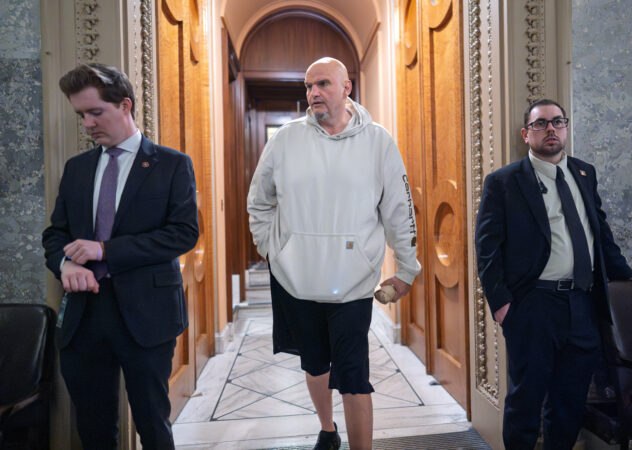
Already one of the most well-known and scrutinized senators in Washington, Fetterman was back in the spotlight this week as he returns to work following a hospitalization after a fall near his home in Braddock. His staff said he suffered a “ventricular fibrillation flare-up” and hit his face, sustaining “minor injuries.”
Ventricular fibrillation is the most severe form of arrhythmia — an abnormal heart rhythm — and the most common cause of sudden cardiac death.
He spent Thursday and Friday in the hospital and was released Saturday, saying he was feeling good and grateful for his care with plans to be back in the Senate this week.
Working Families on the offensive
Israel said in addition to the online portal, the party will hold a number of recruitment events across Pennsylvania in the coming months to train candidates and campaign staff on the basics of running for office and managing a campaign with hopes of finding quality candidates for a variety of races ahead of 2028.
The party is also pledging a robust ground game and fundraising for a potential challenger it supports.
It wouldn’t be the first time the Working Families Party has opposed Fetterman. In the 2022 Democratic Senate primary, WFP endorsed State Rep. Malcolm Kenyatta (D., Philadelphia) over Fetterman, who was lieutenant governor at the time.
The book makes no mention of a reelection bid but laments the ugly politics he experienced in both the Democratic primary and his general election race against Mehmet Oz.
Fetterman said in the book that Oz’s attacks during his rehabilitation from his stroke became so mentally crushing he felt he should have quit the race.
And he grapples with criticism he faced during the primary surrounding a 2013 incident in which he wielded a shotgun and apprehended a Black jogger he suspected of a shooting. Fetterman calls the backlash an early trigger of his depression.
Fetterman has said he will remain a Democrat even as Republicans have lauded his independent streak and willingness to work with the GOP.
Earlier this year, Fetterman was the first Senate Democrat to support the Laken Riley Act, a Republican immigration bill that requires U.S. Immigration and Customs Enforcement to detain and take into custody individuals who have been charged with theft-related offenses, even without a conviction. Critics of the law say it severely cracks down on due process for immigrants.
Fetterman was the sole Senate Democrat to vote to confirm Attorney General Pam Bondi, who was one of Trump’s attorneys when he tried to overturn the results of the 2020 election.
“He has repeatedly shown disregard for the rights of Palestinians,” the Working Families Party release said. “Refusing to support a two-state solution and breaking with the rest of the Democratic caucus on Israel’s illegal annexation of the West Bank.”
Staff writer Aliya Schneider contributed to this article.
A woman who was found dead inside an abandoned car in Lower Makefield on Sunday had been killed hours earlier by her boyfriend in Trenton, police said Monday.
Lamont Truitt, of Trenton, has been charged with murder, attempted murder, carjacking, and related crimes in the shooting death of Alyssia Murphy, 32. He is also charged with shooting and wounding a friend of Murphy’s who had been sitting with her in a Toyota Camry that police say he stole after the shooting.
Truitt, 36, remained in custody Monday, awaiting a detention hearing in Mercer County.
A passerby found Murphy’s body inside the abandoned Camry early Sunday near an access road to the Delaware Canal, according to police in the Bucks County township. She had been shot multiple times.
Trenton police say the shooting happened just before 6 a.m. on Coolidge Avenue near Oakland Street in the capital city.
Murphy’s friend, whom police did not identify, said she was sitting in the car with Murphy when Truitt approached them. The couple began to argue, she said, and in the heat of their dispute, Truitt pulled out a handgun and fired multiple times at Murphy at close range.
The woman, who was shot in the leg, said she jumped out of the car and ran before Truitt sped off. She was treated at Capital Health Regional Medical Center.
A family friend who asked not to be identified out of fear of retaliation described Murphy as a kind, generous person who had long dreamed of starting a family and “certainly did not deserve to go like that.”
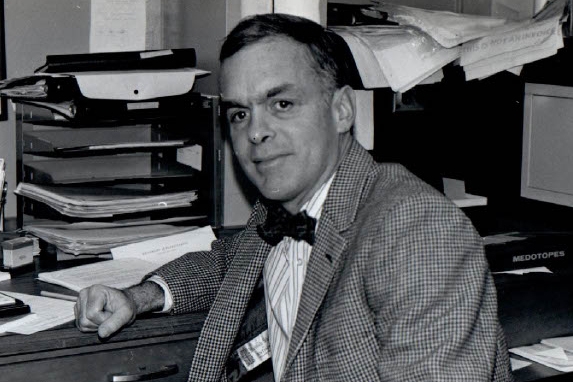
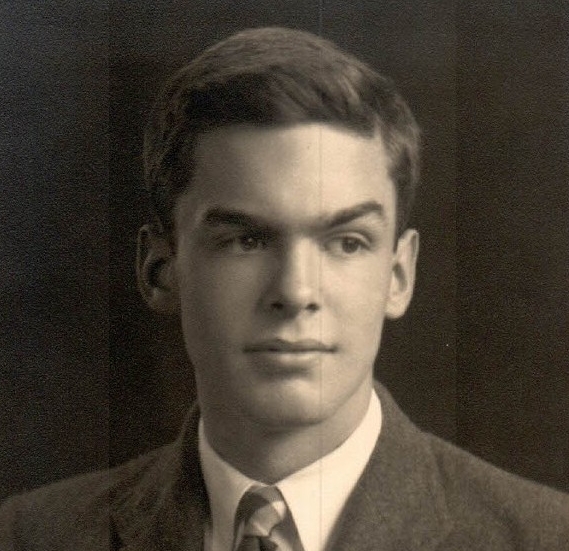
William L. Elkins, 93, of Coatesville, pioneering research immunologist at what is now the University of Pennsylvania’s Perelman School of Medicine, associate professor emeritus of pathology and laboratory medicine, innovative longtime Angus cattle rancher in Chester County, avid sailor, and veteran, died Tuesday, Nov. 11, of complications from pneumonia at Chester County Hospital.
The great-great-grandson of Philadelphia business tycoon William Lukens Elkins, Dr. Elkins fashioned his own distinguished career as a scientist, medical researcher, and professor at Penn from 1965 to 1985, and owner of the Buck Run Farm cattle ranch in Coatesville for the last 39 years.
At Penn, Dr. Elkins conducted pioneering research on how the human immune system fights infection and disease. He collaborated with colleagues in Philadelphia and elsewhere around the country to provide critical new research regarding bone marrow transplants and pediatric oncology.
His work contributed to new and more effective medical procedures at Penn, Children’s Hospital of Philadelphia, and elsewhere, and he instructed students and residents at Penn. But his lifelong love of the fields and rolling hills he roamed as a boy in Chester County never faded, he told Greet Brandywine Valley magazine in 2023.
Dr. Elkins was a lifelong outdoorsman.
“Farming is in my blood,” he said. “So even when I went to medical school and all that, the enthusiasm never left, and I wanted to go back to it.”
So he retired from medicine at 53, and he and his wife, Helen, bought nearly 300 acres of the old King Ranch on Doe Run Church Road in Coatesville. She kept the books and looked after the business. He became an expert on breeding cattle and growing the high-energy grass they eat.
Wearing floppy hats and riding a colorful ATV from field to field, Dr. Elkins worked his land for decades. He mended fences and tended daily to his 120 cows, heifers, and prize bulls.
He championed holistic regenerative farming and used new scientific systems to feed his cattle. He rejected commercial fertilizer and knew all about soil composition, grass growing, and body fat in cattle.
Dr. Elkins and his wife, Helen, married in 1966.
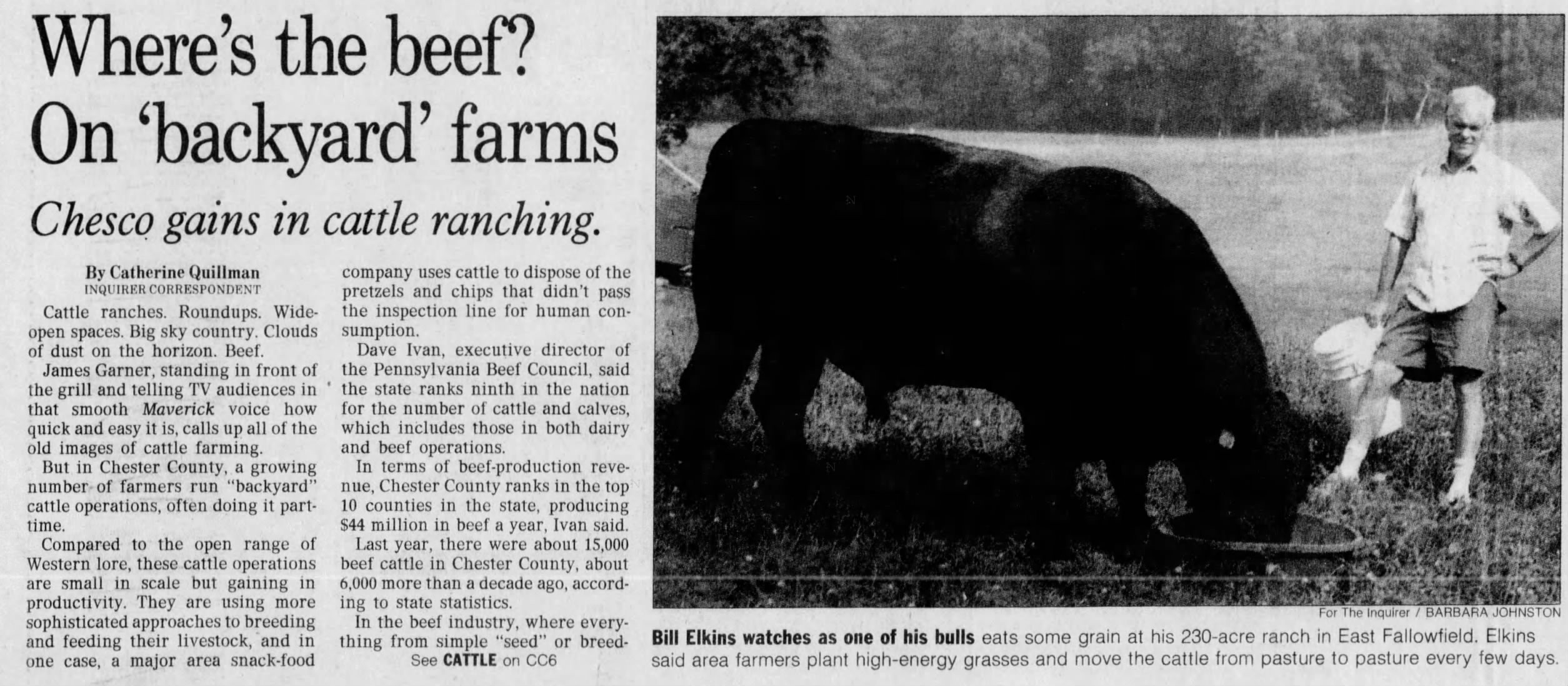
In a 1995 Inquirer story, he said: “Cattle are just like anyone else. If you just turn a few cattle out in a great big field, they will wander around, eat the grass they like best, and leave what they don’t want. That means the less desirable grasses tend to predominate.”
He traveled the country to confer with other cattlemen and helped found the Southeast Regional Cattlemen’s Association in 1994. He sold his beefsteaks, patties, jerky sticks, and kielbasa grillers to private customers online and to butchers and restaurants.
At least one local chef featured an item on the menu called Dr. Elkins’ Angusburger. Lots of folks called him Doc.
He earned his medical degree at Harvard University in 1958 and served two years in the Navy at the hospital in Bethesda, Md. He was a surgical intern in New York and discovered that he preferred the research lab. Before Penn, he worked at the Wistar Institute of biomedical research.
Dr. Elkins graduated from St. Mark’s School in Massachusetts in 1950.
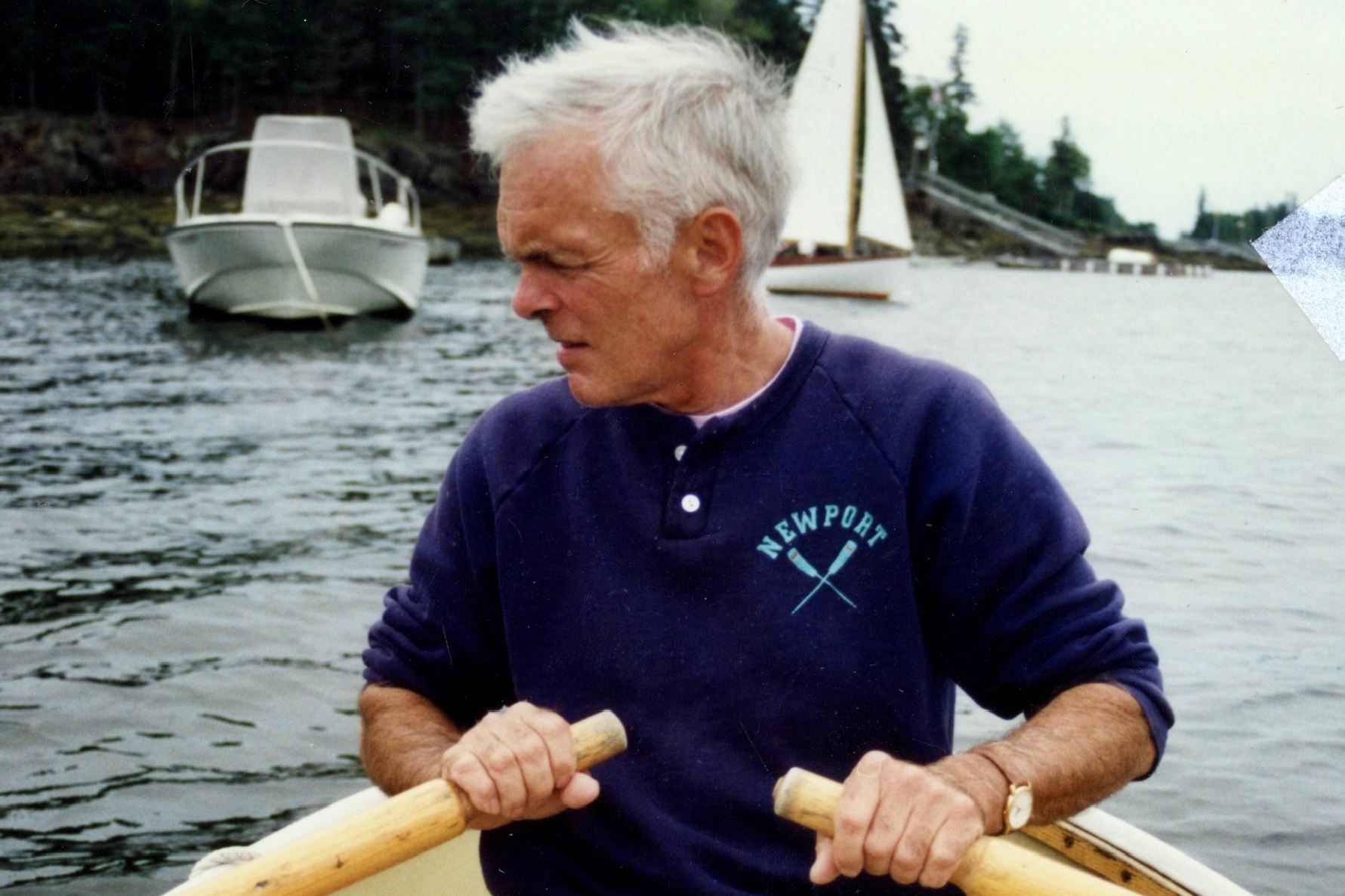
Away from the lab, Dr. Elkins was an ocean sailor, expert navigator, and former boat club commodore. He was active with the Brandywine Conservancy, Natural Lands, and other groups, and was lauded by national organizations for his wide-ranging conservation and wildlife efforts.
He made his farm a haven again for the bobolink grassland songbird and other migratory birds and butterflies that had dwindled. “Buck Run Farm is more about growing grass and trees than beef,” he told Greet Brandywine Valley. “We’re blessed by the land.”
William Lukens Elkins was born Aug. 2, 1932, in Boston. He lived on the family dairy farm in Pocopson, Chester County, when he was young, went to boarding school in Massachusetts for four years, and earned a bachelor’s degree in biology at Princeton University.
He met Helen MacLeod at a party in Washington, and they married in 1966 and had a daughter, Sheila, and a son, Jake. They lived in Center City, Society Hill, and Villanova before moving to the farm. “He was easy to be with,” his wife said.
Dr. Elkins enjoyed sailing and fishing.
Dr. Elkins loved nature, fishing, and baseball, and he followed the Phillies, the Flyers, and other sports teams. “He had a wonderful bedside manner,” his daughter said. “He was a great listener. He really knew how to support people.”
His son said: “He was unassuming and direct. He spoke his mind. He connected with so many different people. He was curious about the world around him.”
His wife said: “He was thoughtful and always concerned about people. He had good humor. He was fun.”
In addition to his wife and children, Dr. Elkins is survived by five grandchildren and other relatives. A sister died earlier.
This article about Dr. Elkins and his ranch appeared in The Inquirer in 1995.