Category: Pennsylvania News

  • The Pa. GOP and state Dems finalize their endorsements for the 2026 governor’s race

    The Pa. GOP and state Dems finalize their endorsements for the 2026 governor’s race

    HARRISBURG — The Pennsylvania Republican and Democratic Parties locked in their endorsements for the 2026 governor’s race Saturday at dueling committee meetings in the state’s capital, as they present different visions of the future for Pennsylvania and America.

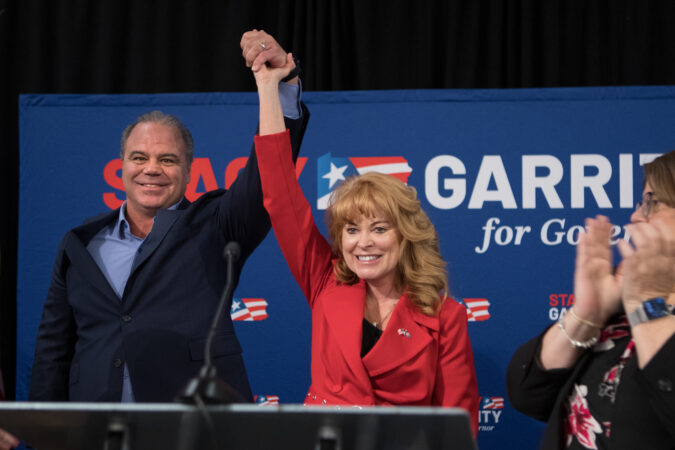
    The state GOP endorsed Jason Richey, a longtime Pittsburgh attorney and chair of the Allegheny County Republicans, for lieutenant governor to run alongside its endorsed gubernatorial candidate, Treasurer Stacy Garrity. On the other side of town, the state Democratic Party resoundingly endorsed Gov. Josh Shapiro and Lt. Gov. Austin Davis for reelection to a second term.

    By finalizing their endorsements for governor and lieutenant governor, the November election is all but officially set. The candidates are expected to be formally nominated by their parties in the May 19 primary.

    Garrity would be the state’s first female governor and would be a strong conservative leader who will protect the state from becoming “California East,” Richey said as he described another term under Shapiro in his acceptance remarks.

    State Republicans took the unprecedented step to endorse Garrity in September 2025, in an effort to give her six additional months to campaign for governor and coalesce support. However, Garrity did not announce Richey as her choice for running mate until last month. Several candidates had turned down the job, as Garrity faces an uphill battle to challenge Shapiro, a popular moderate Democratic governor, in a midterm election already advantageous to Democrats.

    There was no shortage of attacks on Shapiro at the state GOP meeting.

    “[Shapiro] is a charlatan. He is a phony who tries to talk like [former President Barack] Obama and has done nothing to help move this state forward,” Richey said. “Today is not just another meeting. Today is not just another endorsement. Today is the moment that the Pennsylvania Republican Party stands together and resolves to take back our commonwealth.”

    Garrity last month received the coveted nod from the leader of the Republican Party, President Donald Trump, who called her an “America First Patriot.”

    Meanwhile, for state Democratic Party committee members, their attention was not on Garrity and Richey. They want to make Trump a lame-duck president by flipping four congressional seats and secure Shapiro a Democratic trifecta by retaining control of the state House and flipping the state Senate for the first time in more than 30 years.

    “These are people who are lawless. They are without a conscience, without a backbone, without any sense of right and wrong,” said U.S. Rep. Madeleine Dean (D., Pa.), describing the GOP colleagues she wants to unseat. “Four seats. That will be the U.S. House majority. We can get the gavels in our hands, and we can make Trump an even lamer duck than he already is, and we can move on with impeachments, convictions, whatever we can do.”

    Different outlooks on Pennsylvania and the U.S.

    To Republicans, Pennsylvania is falling behind, citing its U.S. News & World Report rankings as 41st in Best Overall States, 38th for its economy, and 39th for education. Trump’s White House, alternately, is heavily invested in Pennsylvania’s success, often inviting its GOP county commissioners to visit, said Lancaster County Commissioner Josh Parsons, delivering the GOP commissioners’ update to the state committee.

    “We’re going to keep Republicans in the majority in Congress, because if not, we’ve seen this show before. We know what’s going to happen: investigations, impeachments, and, worst of all, they will stop the agenda that Trump has created,” said state GOP chair Greg Rothman, noting Trump’s efforts to lower prices, end the war in Gaza, and more.

    For Democrats, it’s America that’s on the wrong track, while Pennsylvania is succeeding despite the “chaos in Washington,” as Shapiro described in his endorsement acceptance speech.
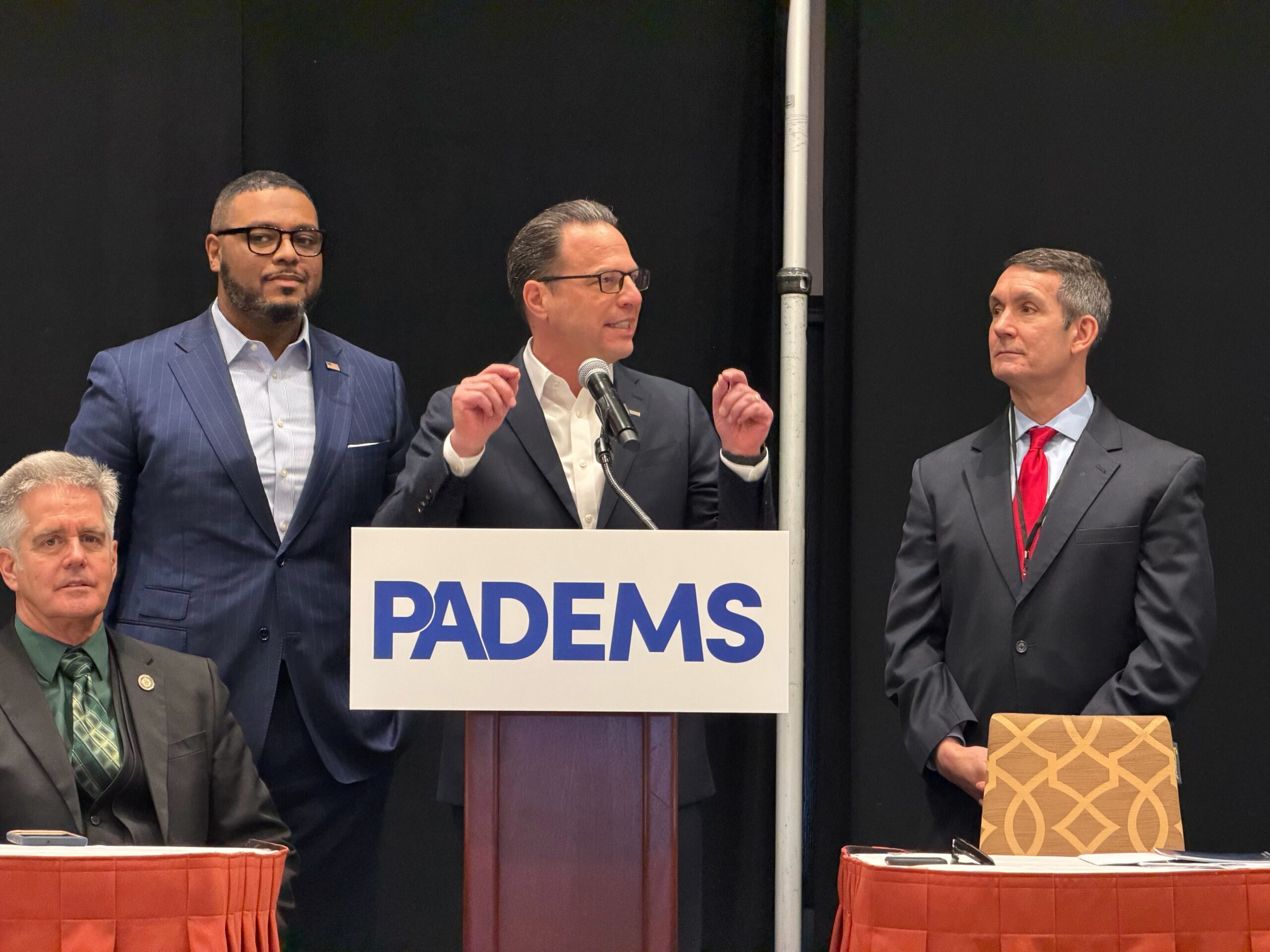
    Pennsylvania Gov. Josh Shapiro accepts the endorsement for a second term as governor at the state Democratic Party’s winter meeting in Harrisburg on Feb. 7, 2026. With him are Lt. Gov. Austin Davis (second from left) and Pennsylvania Democratic Party chair Eugene DePasquale (right).

    That positive view of Pennsylvania is due to Shapiro’s leadership in the state, said Pennsylvania Democratic Party chair Eugene DePasquale.

    “You look at the polls today, Donald Trump is at his historic low mark, while the governor is at a historic high mark,” DePasquale added. “Why is he at that high mark? They see the state heading in the right direction. They see him fighting the Trump administration to protect Pennsylvanians.”

    Candidates will begin circulating petitions later this month to secure a spot on the ballot. No candidates are expected to challenge Shapiro or Davis in the primary. There is at least one write-in campaign being run, for State Sen. Doug Mastriano (R., Franklin), who declined to challenge Shapiro for a second time. He lost to Shapiro by more than 15 percentage points in 2022.

  • This Chesco business wants to create a ‘third place’ between home and work or school

    This Chesco business wants to create a ‘third place’ between home and work or school

    When you walk into Koselig Nook, Aracelis Mullin wants you to feel a wave of calm. She intentionally designed the teahouse that way: From its welcoming furniture to its lighting, its green paint, its scents, it is meant to be a relaxing third space, a stopping point between work and home, where people can gather, craft, focus on wellness, or anything between. Don’t forget to take off your shoes. (Really. It’s a rule.)

    Koselig Nook, a late-night teahouse, plans to open in Exton, at 333 E. Lincoln Highway, later this month. The business is relocating from Coatesville, where it opened in 2024, to be more central for customers within the county and traveling from Philly.

    “The whole idea and the purpose is to bring the people out of their houses and to enjoy another place where they can network or just spend some time or talk,” Mullin said.

    Named for the Norwegian term encompassing contentment and coziness, Koselig Nook’s seating is meant to be secure and comfortable — with plush, downy pillow seating and blankets, oils, and low lighting, inviting people to lounge.

    So much of today’s gathering culture revolves around bars and drinking, Mullin said. Though sober options are opening in metropolitan areas, like Philadelphia, people in the county have fewer places — especially places open later, she said.

    That’s the gap Koselig Nook seeks to fill, she said.

    “I think there’s a big need for third places that are more calm; for introverted people, they can come and network, too, little by little, but they don’t have the pressure of society saying, ‘Hey, do you want to drink?’” she said.

    Instead, customers can sit and study or work from 11 a.m. to 3 p.m. for $25 on Tuesdays through Fridays. Students spent a lot of time holed up in the Nook’s Coatesville location during finals week in December, Mullin said.

    In the evenings, from 7 to 11 p.m. for $35 on Friday and Saturday, people can go somewhere that is not about drinking.

    During various events offered week to week, people can come to workshops where they junk journal, cutting up pictures and pasting them into notebooks, or take a meditative break surrounded by gongs and chimes and singing bowls in a sound bath session, or spend time with a medium. You can pick up letters from a pen pal in another country or pen your own, facilitated through Koselig Nook. You can silently read your own book and then, in a formal discussion, chat about it with other readers, trading recommendations.

    Some make events out of it. For one 24-year-old’s birthday, she and her friends journaled together, sipping their tea, and had a sound bath.

    Others come alone and leave with connections: During a full moon ceremony, only two of the 15 women who came knew each other. By the end, “they all shared their phone numbers. … It was amazing,” Mullin said.

    The business traces its lineage to when Mullin’s daughter, Victoria, was living in California in 2020. She frequented a teahouse where customers could reserve time and sit and enjoy themselves during the evening hours. After Mullin visited herself, she felt compelled to bring something similar to the East Coast. She picked the brains of the owners.

    With her background — she ran a traveling tea party business for young girls and a birthday party business in Thorndale — Mullin embraced their model; her teahouse is reservation-only. There is unlimited tea, and a selection of premade snacks. Everything is provided without extra charge once you are in the Nook. Socks only.

    “I wanted to have that community place where the people come and gather, regardless of what your politics and your religion, so we did it. I was scared to death,” she said.

    She expected to have to go a bit more slowly in Chester County, for people to understand the business. But she was met with a lot of enthusiasm.

    “The people are so in need of this that they love it,” she said.

  • After Trump shared a racist video about the Obamas, Pa. lawmakers of both parties condemn the post: ‘Absolutely unacceptable.’

    After Trump shared a racist video about the Obamas, Pa. lawmakers of both parties condemn the post: ‘Absolutely unacceptable.’

    U.S. Rep. Brian Fitzpatrick (R., Bucks) called on President Donald Trump to apologize for sharing a racist video Thursday night on Truth Social that depicts former President Barack Obama, the country’s first Black president, and former first lady Michelle Obama, as apes.

    “Whether intentional or careless, this post is a grave failure of judgment and is absolutely unacceptable from anyone — most especially from the President of the United States. A clear and unequivocal apology is owed,” Fitzpatrick wrote in a post on X Friday afternoon.

    The Bucks County Republican, who will be defending a key swing district this fall, joined a bipartisan ensemble of lawmakers who are condemning Trump’s post, which was deleted Friday after the widespread backlash.

    The president has a long history of promoting inflammatory content online and making racist remarks. This post also comes in the wake of his administration’s decision to remove exhibits about slavery and other injustices from Independence National Historic Park and other national parks.

    “Donald Trump is a bigoted, small-minded man who has long spewed racist remarks and tried to whitewash our nation’s history. Today he finds a new low,” said U.S. Rep. Dwight Evans (D., Philadelphia), a member of the Congressional Black Caucus, in a post on X. “His recent post is vile, disgusting, and abhorrently racist. Every elected official should speak up and condemn this hate.”

    Sen. John Fetterman (D., Pa.) in a statement to The Inquirer, called the president’s post “indefensible and horrendous.”

    “That garbage came from, and should forever remain in, the twisted and grotesque corners of the internet,” he said.

    Fitzpatrick, a moderate representing a purple county, has disagreed with Trump before but the lawmaker’s comments Friday serve as one of his strongest rebukes yet.

    “Racism and hatred have no place in our country — ever. They divide our people and weaken the foundations of our democracy,“ Fitzpatrick wrote. “History leaves no doubt: when division is inflamed by those in positions of power, the consequences are real and lasting.”

    The White House blamed a staffer for the video, which was posted just five days into Black History Month, The Associated Press reported. This came after White House press secretary Karoline Leavitt said there was “fake outrage” over the post and that it was a meme inspired by The Lion King.

    In addition to the Obamas, other Democratic leaders, including former President Joe Biden, were depicted as various animals in the video, which was set to “The Lion Sleeps Tonight” and features Trump as the “King of the Jungle.” The clip of the Obamas appears to have originally come from a conservative user on X, The New York Times reported.

    In addition to the election officials reacting with horror, Rt. Rev. Daniel G.P. Gutiérrez, bishop of the Episcopal Diocese in Pennsylvania, said that he was “repulsed and sickened” by Trump’s post and called on the president to resign.

    U.S. Sen. Dave McCormick (R., Pa) condemned the video late Friday afternoon after the White House had blamed it on a staffer.

    “Posting this video is unacceptable and thankfully it has been taken down. It should never have been posted and does not represent who we are as a nation. Racism has no place in America,” McCormick said in a post on X.

    Other Republican senators moved faster to publicly condemn Trump’s post.

    U.S. Sen. Tim Scott (R., S.C.), the only Black Republican in the U.S. Senate, said Friday morning, “It’s the most racist thing I’ve seen out of this White House. The President should remove it.”

    Democratic Gov. Josh Shapiro pointed to Scott’s comments when asked about the video during a stop in Philadelphia Friday.

    “I actually agree with [Republican] Sen. Tim Scott of South Carolina that it’s racist,” Shapiro said.

    Fitzpatrick has in the past avoided calling out Trump directly.

    The Republican was the only member of his party’s delegation in Pennsylvania to vote against Trump’s One Big Beautiful Bill Act on final passage, though he moved the legislation forward with an earlier vote. Trump called Fitzpatrick disloyal in response.

    Fitzpatrick also recently voted to extend Affordable Care Act subsidies alongside Democrats and two other swing-district Republicans.

    Fitzpatrick’s seat is one of four in Pennsylvania that is being targeted by the Democratic Congressional Campaign Committee, but he entered 2026 with significantly more campaign cash than any of his Democratic challengers.

    The Bucks County lawmaker remains the only Republican in Pennsylvania’s U.S. House delegation that has yet to receive an endorsement from Trump.

    Staff Writer Alfred Lubrano contributed to this reporting.

  • Downingtown dog involved in 4 attacks is euthanized

    A Downingtown dog has been euthanized after it injured multiple people in recent months and made residents feel unsafe, officials said.

    The decision, made the day of a Thursday hearing in district court, stems from a November incident in which the dog bit a child in a neighboring house on the 500 block of Thomas Road.

    Whitley Coggins said her sons, ages 4 and 8, had been playing in the backyard when the neighbor’s dogs were let outside. One mixed-breed dog got through the fence, attacking her youngest son, she said. The boy was bitten on his upper arm and required stitches.

    There are four dogs that had been known to neighbors for aggressive behavior, she said. Though the Coggins family had never personally experienced it until November, the mother said, she warned her sons to run back inside if they ever saw the dogs in the yard.

    After the hearing and the owner’s decision to euthanize, Coggins said she was frustrated that the only positive was that one of the dogs was removed from the house.

    “I feel like I’m supposed to feel like something was done, I’m supposed to feel good that the one dog that attacked my child is gone, and I do feel a small sense of replaced safety or something — that that one dog is not there,” she said. “But that one dog has never been the problem, not the whole problem.”

    Coggins said her sons still feel unsafe leaving the house and are fearful of dogs.

    “Following our time in court, we still had to return — and the rest of the neighbors had to return — to a neighborhood with three dogs who have registered attacks on other people and other animals, and because of the laws and the way the laws are written or interpreted, there is nothing to go forward with to remove these dogs,” Coggins said.

    Reached by phone, the attorney for the dog owner declined comment.

    Brendan Brazunas, Downingtown’s chief of police, said the owner’s defense counsel immediately suggested euthanasia given the seriousness of the 4-year-old’s injury, and the fact that this was the fourth documented bite involving this dog since 2023.

    “The dog that created the most issues at that house is this dog that was euthanized,” Brazunas said. “Obviously, the community is very concerned and they’re afraid, and I think this was the first step with regards to dogs at that house.”

    Brandywine Valley SPCA, which had assisted the Downingtown police in the case, transported and euthanized the dog, a spokesperson for the organization said.

    “This was a tragic situation that never should have escalated to this point,” Erica Deuso, mayor of Downingtown, said in a statement. “I love animals, and I am heartbroken any time a dog loses its life, but public safety comes first.”

    The charges were dropped, as they can only be made for live dogs, Brazunas said. But there are ongoing cases facing the owner’s other dogs.

    A Jan. 20 incident was reported to police when the dogs escaped through an open door and injured an adult man, a tow-truck driver who was returning a vehicle. That case will be heard in the coming weeks.

    The SPCA has six outstanding charges for other dogs in the owner’s home regarding rabies vaccinations, dog licenses, and the dogs getting loose, the spokesperson said.

  • Shapiro blasts Trump for racist video of the Obamas and ICE’s ‘secretive’ warehouse purchase in Berks County

    Shapiro blasts Trump for racist video of the Obamas and ICE’s ‘secretive’ warehouse purchase in Berks County

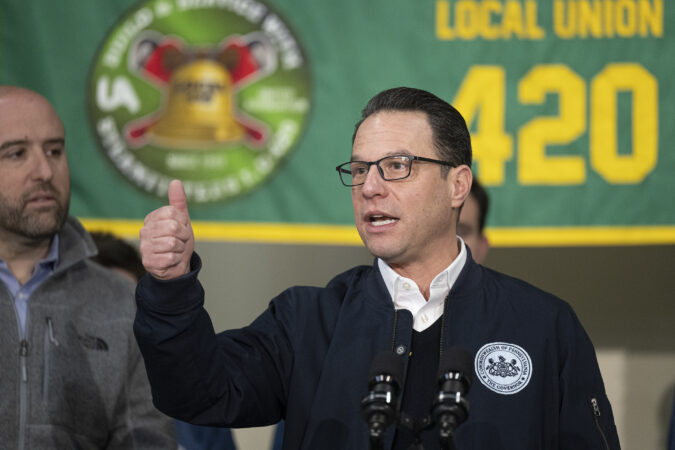
    Gov. Josh Shapiro blasted U.S. Immigration and Customs Enforcement (ICE) Friday for buying a Berks County warehouse that may be used to detain people.

    “I’m strongly opposed to the purchase,” Shapiro said after speaking at an event at the Steamfitters Local 420 in Northeast Philadelphia.

    Shapiro said the facility is “not what we need anywhere in Pennsylvania,” adding that he was not alerted ahead of time of ICE’s $87 million acquisition of the warehouse on 64 acres in Upper Bern Township.

    “The secretive way the federal government went about this undermines trust,” Shapiro said.

    Shapiro has grown increasingly vocal in his criticism of ICE and President Donald Trump in recent weeks as he’s toured the East Coast promoting his new memoir. In addition to voicing his opposition to the warehouse, Shapiro criticized Trump for sharing a racist video attacking former President Barack Obama and former first lady Michelle Obama.

    The Democratic governor, who is widely seen as a contender for the White House in 2028, is in the midst of a reelection campaign against Trump-endorsed Republican Stacy Garrity, who has urged cooperation with ICE.

    He said the commonwealth is exploring “what legal options we may have to stop” the ICE procurement, but he acknowledged “those options are very slim, given that the federal government is the purchaser.”

    Shapiro told this audience of union workers and apprentices that the Berks County building would be better used for economic development.

    At the same event, Shapiro announced a new $3 million Redevelopment Assistance Capital Program (RACP) grant to expand the Steamfitters Local Union 420 Training Center, which he said would help “train the next generation of workers.”

    Shapiro criticizes Trump over racist anti-Obama video

    During the union hall event, Shapiro also leveled criticism at the Trump administration for sharing on social media a racist video depicting Obama, the first Black president, and his wife, as apes.

    When asked for a reaction, Shapiro said, “I actually agree with [Republican] Sen. Tim Scott of South Carolina that it’s racist.”

    Scott, the only Black Republican in the Senate, called the video “the most racist thing I’ve seen out of this White House,” after Trump shared it to his Truth Social account Thursday evening.

    Shapiro said that Trump “seems to always find a lower and lower common denominator. We’re not going to get sucked down into the depths that this president seems to reach for each day.”

    Trump took down the video early Friday afternoon.

    The governor also strongly chided Trump for recently saying the federal government should be in charge of elections.

    Specifically, Trump named Philadelphia, along with Detroit and Atlanta, as cities where the federal government should step in to run elections. The predominantly Black cities are in swing states and have long been targeted with Trump’s false claims of voter fraud.

    “The president of the United States doesn’t run our elections,” said Shapiro. “County officials run our elections, Republican and Democrat alike.”

    “We’re not going to have interference from the White House,” added the governor, who served as attorney general when Trump tried to overturn Pennsylvania’s election results in 2020.

  • Cumberland County skill game executive pleads guilty to money laundering, tax fraud

    Cumberland County skill game executive pleads guilty to money laundering, tax fraud

    A skill game industry executive who took kickbacks from illegal gambling machine operators throughout Pennsylvania pleaded guilty this week in Cumberland County to money laundering.

    Ricky Goodling, an ex-state police corporal and former national compliance director for Pace-O-Matic, contributed to the “disorganized and problematic” skill game market when he accepted hundreds of thousands of dollars in exchange for quashing complaints about illegal gaming machines, Attorney General Dave Sunday said in a statement.

    Goodling, 59, of Mechanicsburg, also pleaded guilty in federal court to evading more than $100,000 in taxes after falsely claiming the proceeds of the scheme were business travel expenses, according to the U.S. Attorney’s Office in Harrisburg.

    An attorney listed for Goodling in court records declined to comment.

    Pace-O-Matic said in a statement that it was “deeply troubled” by Goodling’s guilty plea. “We are also troubled to know that he violated our trust and intentionally harmed our business interests,” the statement reads.

    According to Pace-O-Matic’s statement, law enforcement has assured the company that it is “not involved in or connected with any of the actions of Mr. Goodling, and they have characterized Pace-O-Matic as a victim of these crimes.” The company terminated Goodling’s employment in November 2023 when it learned of the investigation.

    The powerful and controversial skill game industry has operated largely by its own rules in Pennsylvania for more than a decade, allowing the slot machinelike devices to proliferate in bars and gas stations across the commonwealth.

    Skill games operate in a legal gray area: Courts have ruled that the so-called skill component distinguishes them from games of chance, like slot machines. The state Supreme Court is now weighing the machines’ lawfulness.

    The biggest player in the skill games market, Georgia-based Pace-O-Matic, has claimed for years that its machines are the only “legal” skill games — and spent millions of dollars on campaigns and lobbying for favorable regulation and lower tax rates.

    While some lawmakers want to ban the machines outright, arguing they attract crime and can be addictive, others see it as a potential new revenue stream. Last year, Gov. Josh Shapiro proposed taxing the machines at 52%, which the industry quickly rejected. In his latest budget, the governor said that regulating skill games, coupled with legalizing cannabis, could generate $2 billion annually.

    Illegal gambling enterprises have sought to commingle their machines with Pace-O-Matic’s legal games, in an attempt to give their products a veneer of legitimacy and deflect law enforcement scrutiny, according to an October 2024 state grand jury presentment. Goodling acted as their ally, facilitated straw purchases of Pace-O-Matic games, and laundered the money through a fictitious company, prosecutors said.

    Goodling is scheduled to be sentenced April 28 in the state case.

  • The Narberth Council bars borough police from assisting ICE in immigration enforcement

    The Narberth Council bars borough police from assisting ICE in immigration enforcement

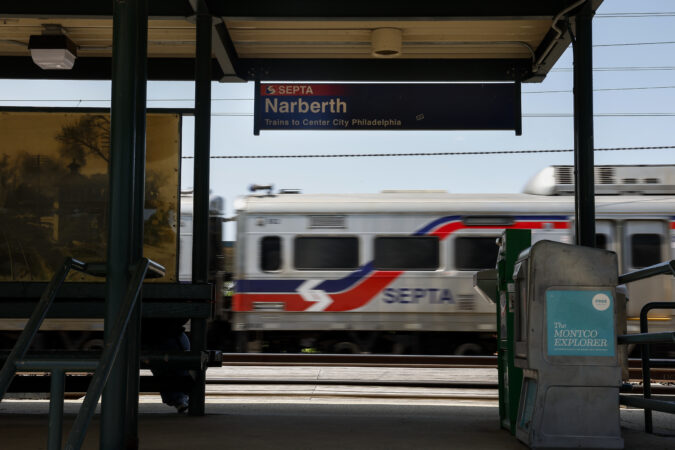
    Narberth’s borough council has voted unanimously to bar the municipality’s police officers from cooperating with U.S. Immigration and Customs Enforcement under the agency’s 287(g) program.

    The resolution approved Thursday made clear that “our police department operates to protect our residents and protect the public safety here and does not have a role in immigration enforcement,” said Council President Fred Bush.

    ICE’s 287(g) program deputizes local law enforcement officers to carry out immigration actions, including identifying, arresting, and deporting immigrants. ICE has signed around 1,400 such agreements with law enforcement agencies in 40 states, including dozens in Pennsylvania.

    In Philadelphia’s collar counties, only the Lansdowne Borough Constable’s Office in Delaware County and the Pennsylvania State Constable Office Honey Brook Precinct 1 in Chester County are 287(g) participants. Bucks County Sheriff Danny Ceisler, a newly elected Democrat, terminated his office’s controversial partnership last month, citing negative impacts on public safety and law enforcement trust.

    Neither Lower Merion nor Narberth participates in the program.

    Narberth’s resolution establishes that the borough will not enter into any agreement with the federal government, including 287(g), that would commit borough time, funds, efforts, or resources toward ICE noncriminal enforcement activities.

    Officials clarified that Narberth’s police department would cooperate with ICE officials if they had a judicial warrant to arrest someone. An internal memo first reported by The Associated Press last month has authorized ICE to forcibly enter people’s homes without a judicial warrant.

    Narberth officials acknowledged that the resolution could be seen as “virtue signaling,” given that the borough already does not participate in an ICE partnership. Yet council members said they believe it’s important to publicly signal the municipality’s values regarding immigration enforcement.

    The resolution “lets the public clearly know where we stand on the issues, helps reinforce trust, and provides that clarity of what we will do and what we won’t do,” said Dana Edwards, Narberth’s mayor. “From my standpoint, it’s a practical resolution.”

    “When our community members trust their law enforcement, they feel comfortable reaching out to them for assistance,” said Councilmember Jean Burock. “We can’t afford to erode that trust.”

    Bush cautioned residents against interfering with ICE operations, describing the agency as “poorly trained” and “dangerous,” citing “the actions and the images that came out of Minneapolis” in recent weeks.

    Neighboring Haverford Township similarly barred its law enforcement officers from assisting ICE last month.

    Narberth’s resolution came on the heels of a Jan. 30 incident in which two people were taken into custody by ICE during a traffic stop in Penn Wynne.

    Following the arrests, Lower Merion affirmed in a public statement that the township does not participate in 287(g) and encouraged residents to call 911 if they observe law enforcement activity with no Lower Merion police officers present.

    This suburban content is produced with support from the Leslie Miller and Richard Worley Foundation and The Lenfest Institute for Journalism. Editorial content is created independently of the project donors. Gifts to support The Inquirer’s high-impact journalism can be made at inquirer.com/donate. A list of Lenfest Institute donors can be found at lenfestinstitute.org/supporters.

  • A dash of snow, an Arctic chill, and 55 mph wind gusts are possible this weekend in Philly

    A dash of snow, an Arctic chill, and 55 mph wind gusts are possible this weekend in Philly

    By now Arctic air may qualify for a frequent-visitor pass around here, but the version coming this weekend will be of a different quality and have a particular sting.

    “It’s going to be a slap in the face,” said Cody Snell, a meteorologist with the National Oceanic and Atmospheric Administration’s Weather Prediction Center.

    After a day in which highs will be around freezing on Friday — a solid 10 degrees below normal — some nuisance snow is possible late in the day or evening and early Saturday, and maybe even squalls. Then temperatures are going to tumble through the teens in the wake of another potent Arctic front.

    They might not see 20 degrees in the Philly region until Monday.

    Adding bite will be winds that could gust to 55 mph, and the National Weather Service says wind chills of 10 and 15 below are likely Saturday in the immediate Philly area. The agency has issued an “extreme-cold warning” — a relatively new addition to the advisory list — in effect Saturday afternoon through Sunday morning. Wind chills of 17 below zero are possible, and winds could gust to 55 mph, the weather service says.

    Said Ray Martin, a lead meteorologist at the weather service office in Mount Holly, “It’s going to be awful.” Among the recent sequence of Arctic invasions, “it looks like the worst.”

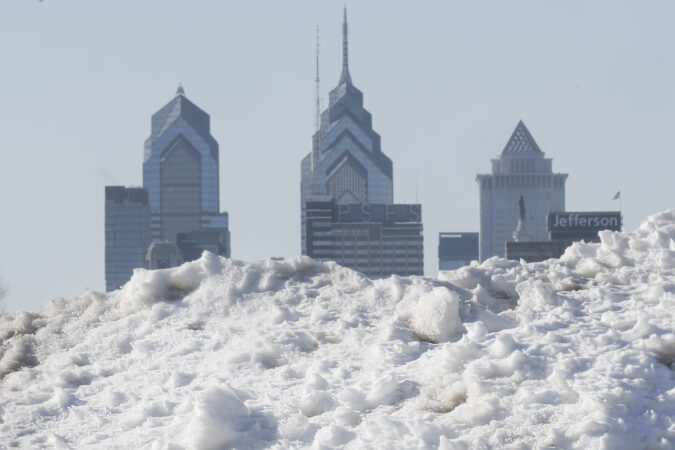
    In short, that unusually tenacious snowpack that was left over from the 9.3 inches of snow and white ice that fell on Jan. 25 and has since mutated into a form of frozen slurry will be spending at least another weekend in Philly.

    What’s more, it’s likely to be a harvest weekend for the ice that is solidifying upon the region’s waterways, a growing concern.

    A warm-up is due to begin Monday and pick up steam during the workweek, with highs maybe reaching 40 degrees on Thursday. But it may encounter some resistance, and another storm threat might be brewing for next weekend, forecasters say.

    The snowpack already has achieved an elite status

    Friday marked the 12h consecutive day in which the official snow cover at Philadelphia International Airport, measured daily at 7 a.m., was at least 5 inches.

    In the 142-year period of record, that ties for seventh place for a snow-cover duration of that depth.

    “To hold on to a snowpack like this is unusual,” said Johnathan Kirk, senior hydrologist at NOAA’s Middle Atlantic River Forecast Center, in State College, Pa., which is keeping a close eye on the waterway icing.

    The Schuylkill in Philly is ice-covered, as is the Delaware River from Trenton to Washington Crossing.

    In addition to an eight-day stretch when temperatures failed to reach 30, the durability is related to the 2 or so inches of sleet that capped the snow on Jan. 25. Sleet is white ice that melts more slowly than snow.

    The dry and cold air has been a natural preservative; snow and ice melt more readily when the air is moist.

    Another factor was the impressive liquid content of the snow and sleet, Snell said. The frozen mass contained 1.39 inches of liquid, the weather service said, comparable to what is contained in 15 to 18 inches of snow.

    As temperatures finally nudged above freezing, some melting did occur this week, which would explain that unsightly slushy porridge at Philly intersections. However, the official snow depth lost only an inch between Jan. 27 and Wednesday.

    The snowpack may receive a fresh frosting Friday night into early Saturday with up to an inch of snow, Martin said, but it’s not going to have the same staying power.

    What’s different about this Arctic air mass

    Any snow that falls is likely to get blown away in a hurry, Martin said, as winds will pick up before daybreak Saturday and gusts howl to 50 mph by late morning.

    Typically, cold air pours into the region from the northwest and becomes modified as it passes over land, the Great Lakes, and the mountains.

    This is going to be a straight-up Arctic shot. It will come more or less from the north, and the icy lakes are not going to do much to impede it, said Matt Benz, senior meteorologist at AccuWeather Inc.

    The weather center’s Snell said a weak storm system moving off the Atlantic coast is forecast to blow up as it interacts with warm Gulf Stream waters. The differences between the cold high pressure with its heavier air over the East and the lighter air of the storm are going to place the Philadelphia region in a frigid sandwich.

    Heavier air tends to rush toward lighter air, like air escaping from a punctured tire.

    A thaw is coming to Philly, eventually

    Just how warm it gets next week remains unclear, AccuWeather’s Benz said.

    “Arctic air is hard to dislodge sometimes,” he said, adding that recent model trends suggest the warm-up will not be quite as robust as expected earlier.

    A wild card would be a potential storm next weekend. The European forecast model was seeing rain and 60 degrees, Martin said, while the U.S. model was suggesting a blizzard.

    His take: “I have no clue at this point.”

    An anniversary of note

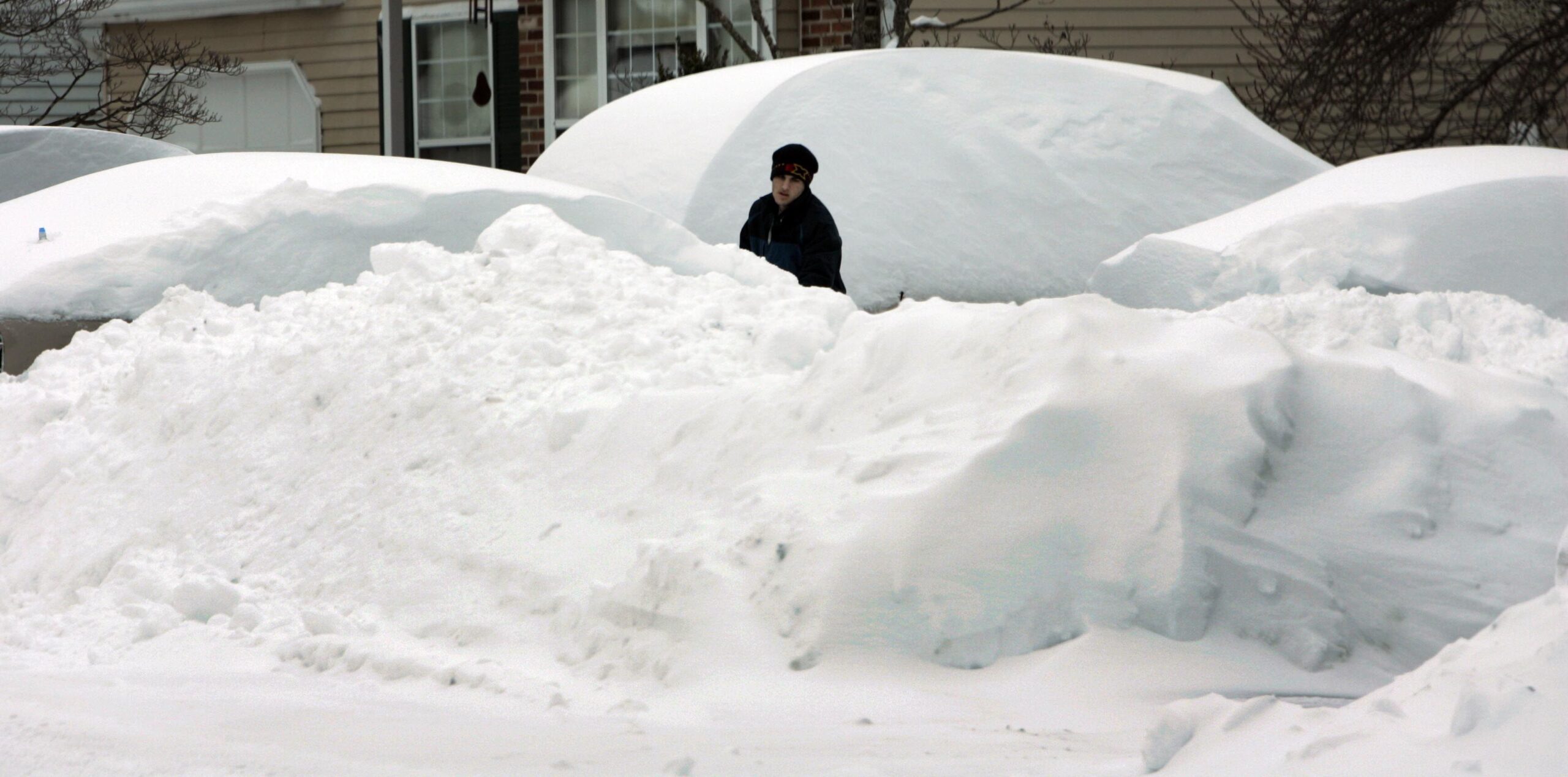
    On Feb. 5, 2010, 6.6 inches of snow fell upon the airport, the beginning of an unprecedented siege in which 44.3 inches accumulated in a six-day period.

    A man shovels cars out under mountains of snow in West Bradford Township, Chester County, during the incredible snow siege of February 2010.

    Twelve days after the snow stopped, the official snow depth was down to 4 inches.

  • Former Villanova professor says she was fired after accusing the law school of racial discrimination

    Former Villanova professor says she was fired after accusing the law school of racial discrimination

    A former Villanova professor says in a federal lawsuit filed this week she was fired from the Catholic university after accusing its law school of racial discrimination involving one of her students.

    Stephanie Sena, who had been an anti-poverty fellow in the law school and taught at Villanova for more than 20 years, was dismissed in 2024 for what the school said were “student complaints,” according to the lawsuit.

    But Sena’s lawyers say the dismissal was due to her filing an ethics complaint against the school for racial discrimination for comments that administrators made around a decision not to give her student a financial award that would have alleviated her debt, citing a speech the student made at a law school symposium.

    The student, Antionna Fuller, accused Villanova of racial discrimination and failing to appropriately support her with financial aid during a 2021 symposium speech at the university, titled “Shifting the Poverty Lens: Caritas in Focus.” Sena hosted the symposium, during which Fuller also publicly asked for an apology from Villanova.

    “How can you say caritas [which means love and charity in Latin] and Black lives matter with no thought to a Black life in front of you, systematically oppressed by your hands?” Fuller said, according to a video of the speech. “It’s not only hypocritical, but it’s embarrassing. We cannot talk about oppression and white supremacy without acknowledging its very presence here.”

    Her speech drew a standing ovation, but later caused consternation among law school leadership.

    Sena found out that law school dean Mark Alexander, in a letter to the scholarship committee, asked that Fuller not receive the debt relief award because she “maliciously maligned” the law school, according to the suit.

    Sena‘s lawsuit alleges that then-law school vice dean Michael Risch said after the student’s speech that the student was “lucky” to have gotten into the law school and that she would not be there if she were white.

    Villanova said in a statement Wednesday that Sena’s lawsuit “lacks merit” and that the university “will vigorously defend against these baseless allegations.”

    “We look forward to presenting the actual facts surrounding the plaintiff’s separation from Villanova. To be clear, Villanova University does not tolerate discrimination or retaliation of any kind, and the allegations in Plaintiff’s lawsuit are contrary to our written policies and conflict with the core values of our University.”

    Sena, 46, of Media, declined to comment.

    Fuller, 29, who now lives with her mother in the South, said in an interview Wednesday that she feels both relieved and anxious about seeing the issue aired publicly.

    “I am happy, at least relieved, that truth is coming out,” said Fuller, who graduated summa cum laude from the University of South Carolina and got her Villanova law degree in 2022. “I’ve been in such an isolated place and just carrying this trauma for so long.”

    She said she sought therapy after the reaction she got to her speech from Villanova administrators and last year wrote a book, I Almost Sued My Law School, about her journey as a first-generation, low-income Black student. She no longer wants to practice law, she said, and is still figuring out her next steps.

    But she said she was grateful to Sena, whom, during the symposium speech, she called “my hero, advocate, and my friend.”

    “She was the first person to publicly stand up for me,” Fuller said.

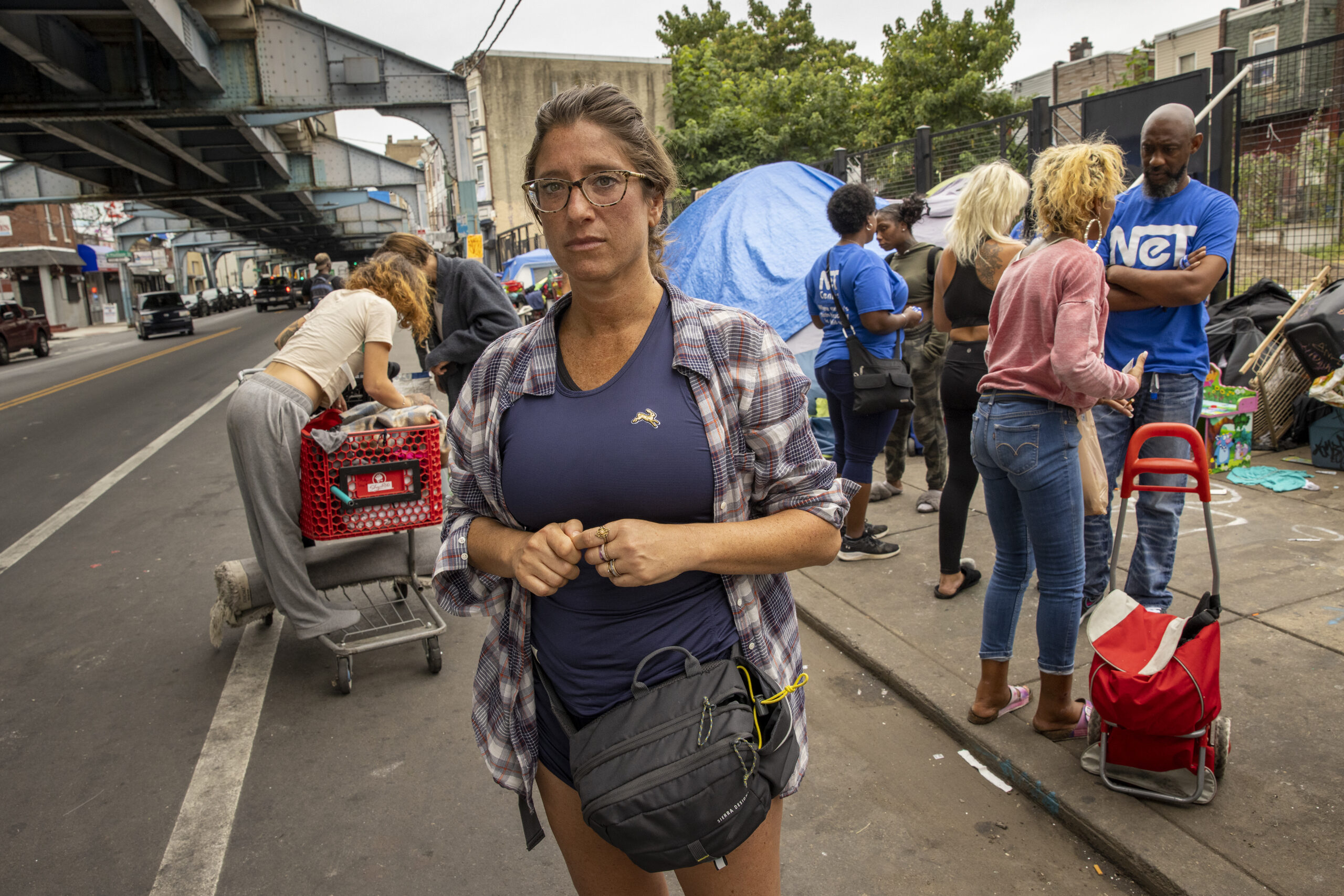
    Stephanie Sena stands at site of an encampment along Kensington Avenue in 2021.

    Fallout from symposium speech

    Sena, a longtime activist who has worked to help people experiencing homelessness and opened a homeless shelter in Upper Darby in 2022, was fired in 2016 from her job as an adjunct professor at the Pennsylvania Academy of the Fine Arts after defending students who accused a classmate of rape. She sued PAFA and the case ended in a confidential settlement.

    She also led activists in lawsuits against the city in 2021 over its intentions to remove homeless people in a Kensington encampment. In 2023, the head of Norristown’s municipal council planned to bus homeless people to Villanova’s campus because of Sena’s advocacy for the homeless in Norristown. Villanova at the time was criticized for not defending Sena and making a stronger response.

    Sena was hired to teach at Villanova in 2003 and began to work at the law school in 2020, serving as a full-time faculty member and anti poverty fellow. She was also an adjunct professor at Villanova’s Center for Peace and Justice.

    In her lawsuit against Villanova, Sena asserts that law school leadership met with her in 2022, several months after Fuller’s symposium speech, and asked her if she had known what Fuller planned to say. Matthew Saleh, former assistant dean for admissions, told her it would be harder to attract Black students to the school because of the speech, according to the suit. Risch, the vice dean, made the comment about Fuller not being at Villanova if she had been white, the suit says.

    Saleh, who now is the senior associate dean of enrollment management and financial aid at Rutgers’ law school, said in an interview that he does not recall making that comment and that he doesn’t think it’s even the case that Fuller’s speech would hurt recruiting.

    “That would not have even come to my mind,” he said. “I couldn’t reasonably see a way that it would impact recruiting.”

    Sena “objected to the race discriminatory and retaliatory comments” made to her in that meeting, according to the suit.

    In October 2023, she complained again about the comments in an email to two administrators who headed diversity, equity, and inclusion at Villanova, according to the lawsuit complaint. Then came the award committee meeting on Jan. 30, 2024, where the dean in a letter argued against Fuller’s receiving the award, according to the suit.

    Students who were in the award committee meeting and were upset about the law school dean’s reaction approached Sena and asked what they could do, according to the suit. Sena said the students, who are not named in her lawsuit, could contact the diversity, equity, and inclusion office and file a climate complaint.

    Sena, according to the suit, complained again one day after the award committee meeting that Villanova “had engaged in a dangerous pattern of race discrimination” and filed an ethics complaint with the university. She also expressed her concerns in an email to faculty and in a meeting with a law professor, who told her the students had committed an ethics violation by revealing confidential details of the awards meeting they were in, according to the suit.

    After filing the complaint, Sena said in her lawsuit, she was “treated differently,” “unjustly criticized,” and “blamed for issues outside her control.”

    In June 2024, human resources informed her that she was under investigation after students said she had pressured them to file complaints against the deans, which Sena denied, the suit said.

    She was fired July 30, 2024, even though, the suit said, she had no prior performance or disciplinary issues and had received awards and promotions. She is seeking damages including economic loss, compensatory and punitive, and attorneys’ fees and costs.

    An apology and acknowledgement

    During the symposium, Fuller had said she wished Villanova would apologize and acknowledge what happened. She said that the school had given her $15,000 in financial aid toward her annual $65,000 cost, but that she subsequently learned other students had gotten more, even though her mother worked multiple jobs as a nurse’s aide to support the family.

    “I was confused,” she told the audience. “How can a student with seemingly the most need graduate with the most debt?”

    She learned of a free-tuition public interest scholarship that Villanova awards to incoming students and sought it after she was enrolled, she said. She was turned down repeatedly, she said, even though Villanova had recently awarded its largest group of the scholarships.

    “Am I invisible?” she asked. “To walk into this law school building every day, to be surrounded by wealth and prestige, while struggling and burdened with debt, and while expected to perform like those who are not feels inhumane.”

    She said during the speech she would graduate with almost $200,000 in student debt. Villanova officials, she said Wednesday, later accused her of exaggerating because she was including her undergraduate debt, too, and maintained that the total was really $160,000 — $126,000 of which was from the law school.

    Fuller said Wednesday she had apologized to law school leadership, hugged them at graduation, and thought everything had been resolved. She said she was surprised to hear that the dean wanted to block her access to the debt award, she said.

    “My intent wasn’t to harm, attack or mislead,” Fuller wrote in her book, “but to share my personal experience — my fears and financial anxieties — as part of the larger conversation about finding solutions to reduce poverty, which the conference was centered around.”

    Staff writer Abraham Gutman contributed to this article.

  • Who owns Pennsylvania’s digitized history? We’re a step closer to an answer.

    Who owns Pennsylvania’s digitized history? We’re a step closer to an answer.

    Spotlight PA is an independent, nonpartisan, and nonprofit newsroom producing investigative and public-service journalism that holds power to account and drives positive change in Pennsylvania. Sign up for our free newsletters.

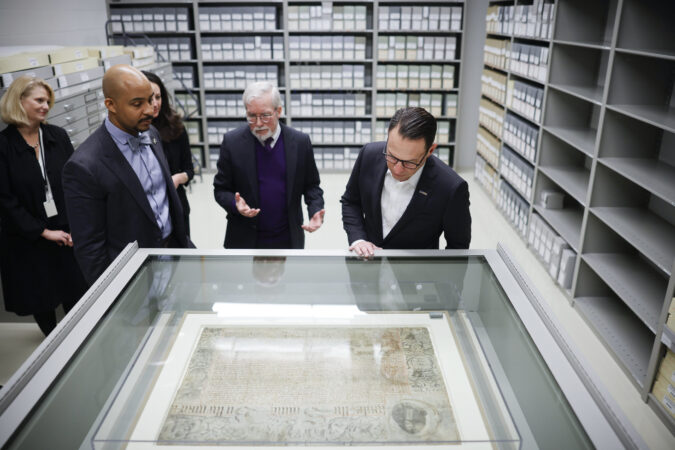
    HARRISBURG — A long-simmering dispute over who owns digital copies of millions of Pennsylvania’s treasured historical records landed before a state appellate court this week.

    The ruling could determine whether those belong to the public or are under the control of a privately owned genealogy powerhouse.

    On Wednesday, Pennsylvania’s Commonwealth Court heard legal arguments in the case, in which a New York City-based professional genealogist faces off with a little-known but important state agency, as well as online genealogy giant Ancestry. The latter is a private company used by millions of people to search for family and other records.

    The genealogist is Alec Ferretti, a director at Reclaim the Records, a nonprofit that advocates for governments to make genealogical documents more accessible. In 2022, he submitted a public records request to the Pennsylvania Historical and Museum Commission (PHMC), the state’s “official history agency” that is responsible for collecting, conserving, and safeguarding the commonwealth’s historical records and objects.

    At the time, Ferretti sought all records the state agency had provided to Ancestry as part of a 2008 agreement that, up until Ferretti’s request, had attracted sparse attention. That agreement allowed Ancestry to digitize a long list of Pennsylvania historical documents belonging to the commission and make them available on its website.

    According to the agreement, those documents include birth and death certificates, veterans’ burial cards, records about enslaved people, and naturalization forms, as well as Civil War border claims and muster rolls. Those records would then be free to Pennsylvania residents who create user profiles with Ancestry, which requires a paid subscription to access the breadth of its records. An Ancestry lawyer on Wednesday said it has about 18 million digitized images in all.

    Since Ferretti is a New York state resident, he requested the information directly from PHMC. He also asked for the metadata on the digitized records, as well as any index lists that Ancestry created when performing that work.

    PHMC denied the request, saying it didn’t have any responsive records in its possession. Ferretti appealed, arguing that the state agency was required to obtain them from Ancestry under a section of Pennsylvania’s Right-to-Know Law that allows public access to documents held by a private contractor hired to perform a governmental function on behalf of a government agency.

    Lawyers for Ancestry soon intervened in the fight, contending the company was not carrying out a government function for PHMC. They also argued that although Ancestry had agreed to license back the digitized records to the state, its work product is proprietary.

    Translation: It owns the digital records.

    The case has spent nearly four years in a complicated spiral of appeals before the state’s Office of Open Records, which sided with Ferretti. The matter could wind up in front of the Pennsylvania Supreme Court, depending on Commonwealth Court’s decision.

    During oral arguments on Wednesday, Commonwealth Court judges asked both sides pointed questions about whether the digital images constitute a public record accessible under the state’s Right-to-Know Law, as certain archival materials (while public) don’t fall under the law’s jurisdiction. They also asked whether maintaining digitized copies of historical records amounted to a governmental function.

    The judges seemed to agree on one thing: The case raised interesting dilemmas.

    “We just love Right-to-Know Law, so this is great,” President Judge Renée Cohn Jubelirer told lawyers when legal arguments came to a close.

    BEFORE YOU GO… If you learned something from this article, pay it forward and contribute to Spotlight PA at spotlightpa.org/donate. Spotlight PA is funded by foundations and readers like you who are committed to accountability journalism that gets results.