A former Philadelphia Fire Department medic has been charged with stealing money from a 72-year-old woman who had been pronounced dead during the response to an apartment in Center City last year, District Attorney Larry Krasner said Friday.
Gary Robb, 41, was charged in early December with misdemeanor theft and related crimes.
A spokesperson for the fire department declined to comment on the case except to say that Robb no longer worked for the department.
Robb could not be reached for comment Friday night.
On Oct. 16, Robb was part of a medic response to an apartment building on the 1300 block of Lombard Street and encountered an unresponsive person who was later pronounced dead, Krasner said.
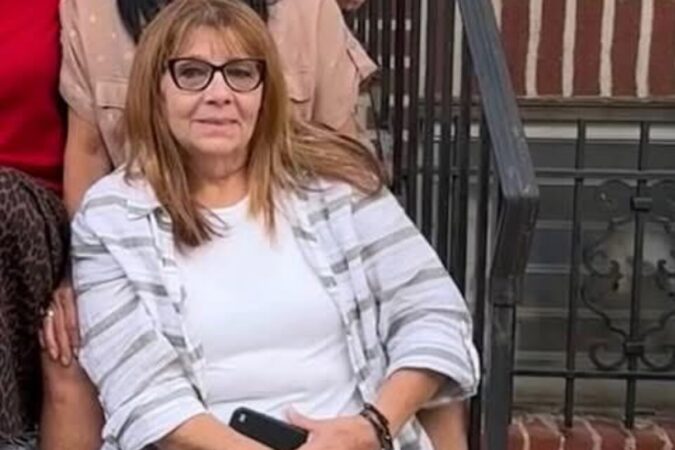
The person who died was identified as Nanette Santilli by her niece, Nicolette Santilli Holt, 28, of Philadelphia.
A video camera inside the home recorded Robb removing money from the dead person’s wallet and placing the money in his jacket pocket, the DA said.
“The alleged incident is an egregious misuse of power,” Krasner said in a statement.
“The men and women of the Philadelphia Fire Department are trusted public servants, and nothing alleged here diminishes the importance or integrity of their work. We will aggressively pursue the facts to ensure accountability and justice,” he said.
The investigation is ongoing.
Holt in an interview Friday night described her aunt as a generous person.
“She was the absolute best: crazy, loud, loving, gentle, funny — just one of a kind,” Holt said.
“She had a voice you couldn’t miss blocks away. She always had a loud set of keys, a roll of paper towels, and a Red Bull with her big handbag,” Holt said. “Truly one of a kind and would’ve helped anyone, so to see someone take advantage is a shame.”
The resistance was born on a Friday morning at the Gen. George A. McCall School photocopy machine.
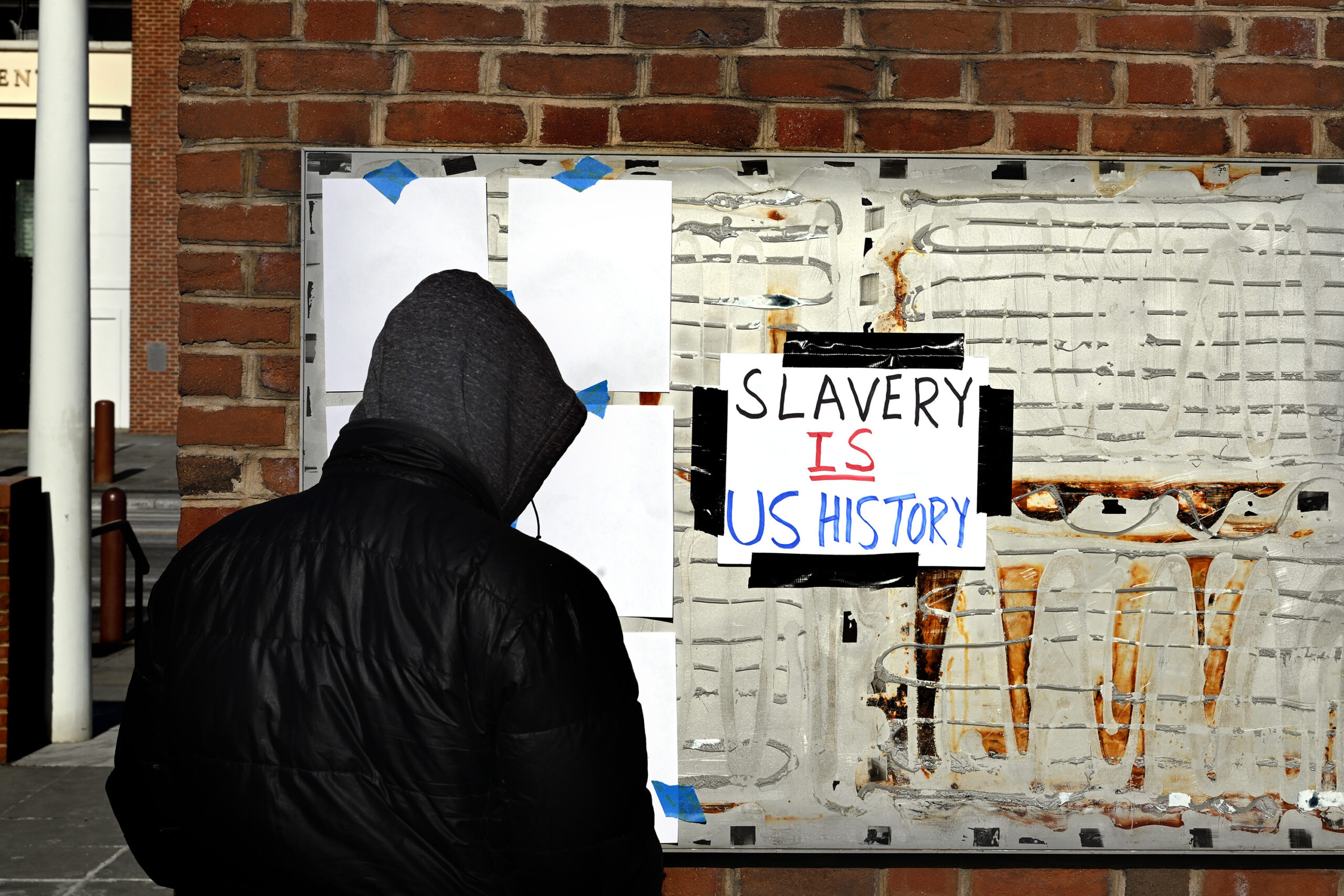
The copier spat the message out on yellow, purple, and orange paper — page after page amplifying the same sentiment scrawled on each in big black letters: Learn all history.
In the aftermath of the removal of the slavery exhibit at the President’s House Site on Jan. 22, fourth-grade social studies teacher Kaity Berlin wanted to convert her rage into something productive, she said. She quickly thought of the words on one of her shirts: “Teach all history.” So she gathered some teacher friends, took to the photocopier, and headed to Independence National Historical Park.
Berlin wasn’t the only one who saw the shallow silver frames at the President’s House as a void screaming to be filled.
The city asked a federal justice to order that no more exhibits be removed from the President’s House and that the exhibits that were already removed be kept safe. In a hearing Friday, judge Cynthia M. Rufe didn’t issue a ruling but asked the Trump administration attorney that the exhibits remain untouched so she can review them Monday.
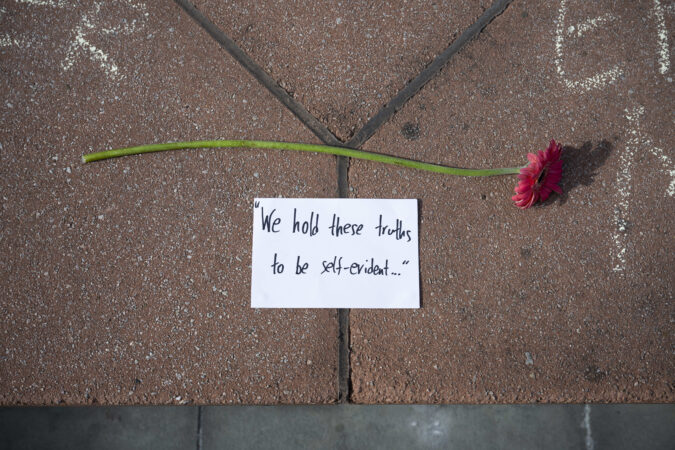
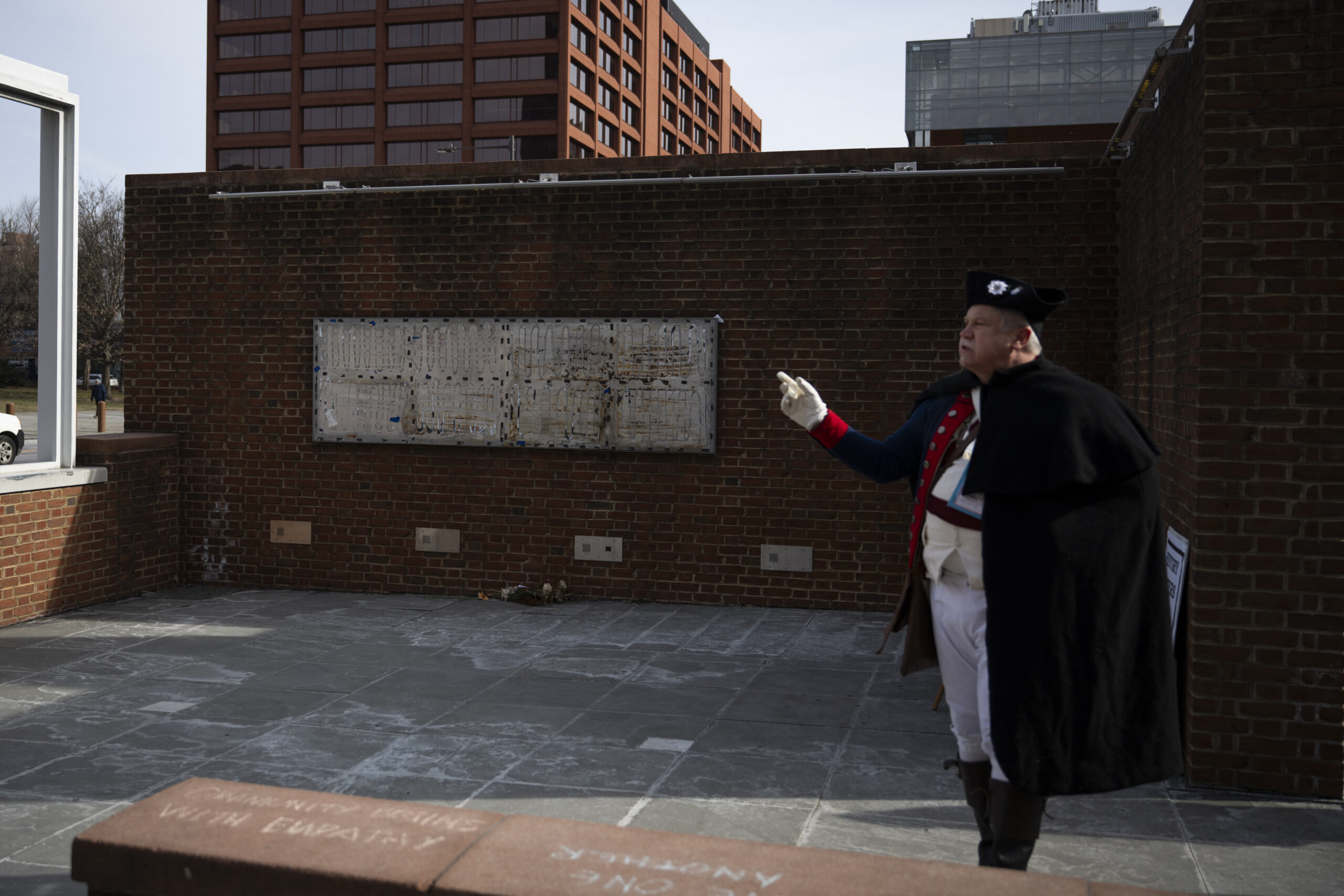
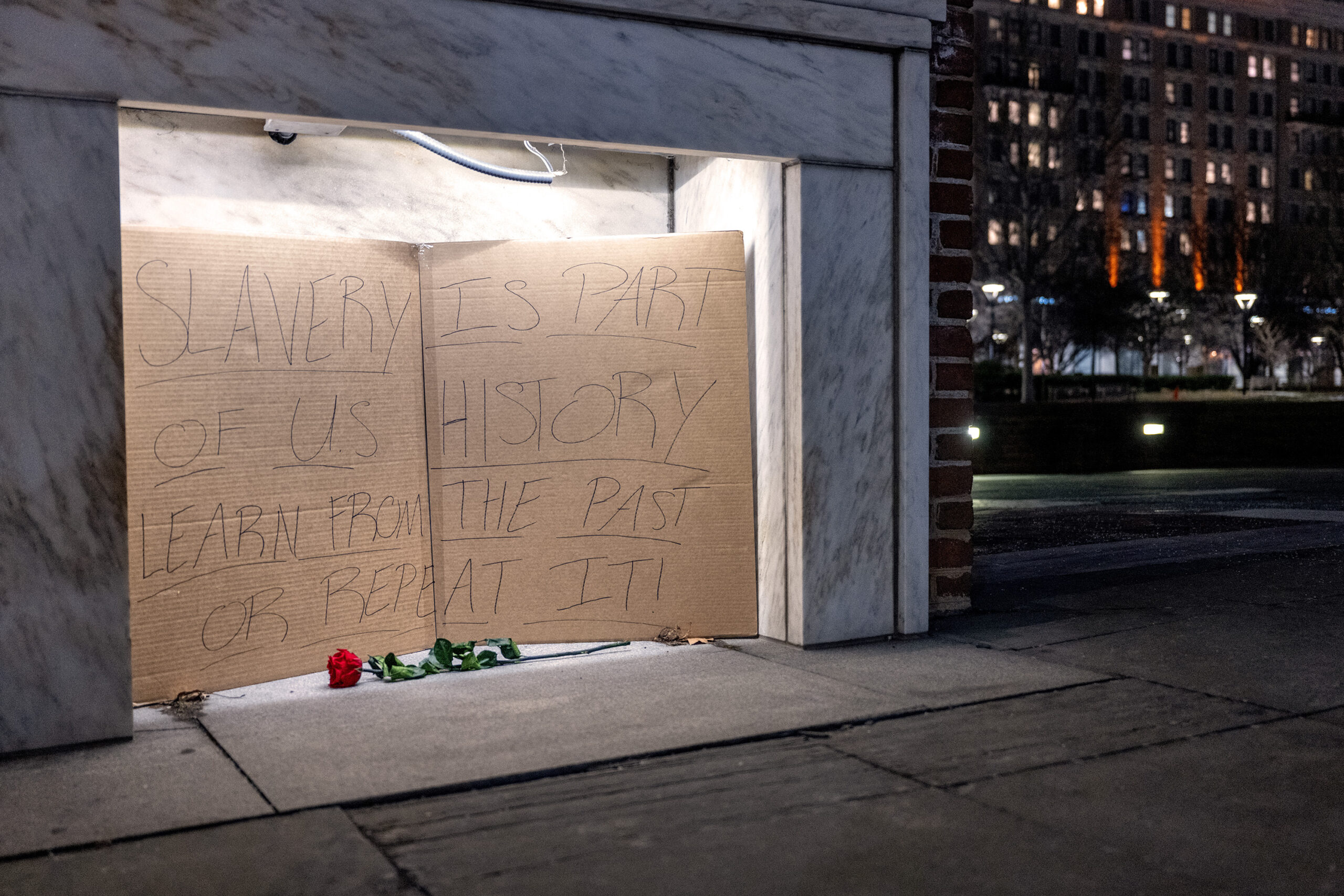
Over that first weekend colorful signs populated the walls, reenactors donned historic garb and positioned themselves along the red brick pillars with a flourish, some people held giant replica signs of the ones that were removed, and others laid flowers delicately across the facility.
To Berlin, whose school is a few blocks from the President’s House, posting the colorful signs was just a quick action she could take in her 45-minute prep period.
“It was just a cathartic way to be like ‘Ugh, this sucks,’” Berlin said.
But it soon became the first of numerous forms of activism and art that filled the space as more and more Philly-area residents yearned for a similar way to express their opposition to the removal of the plaques.
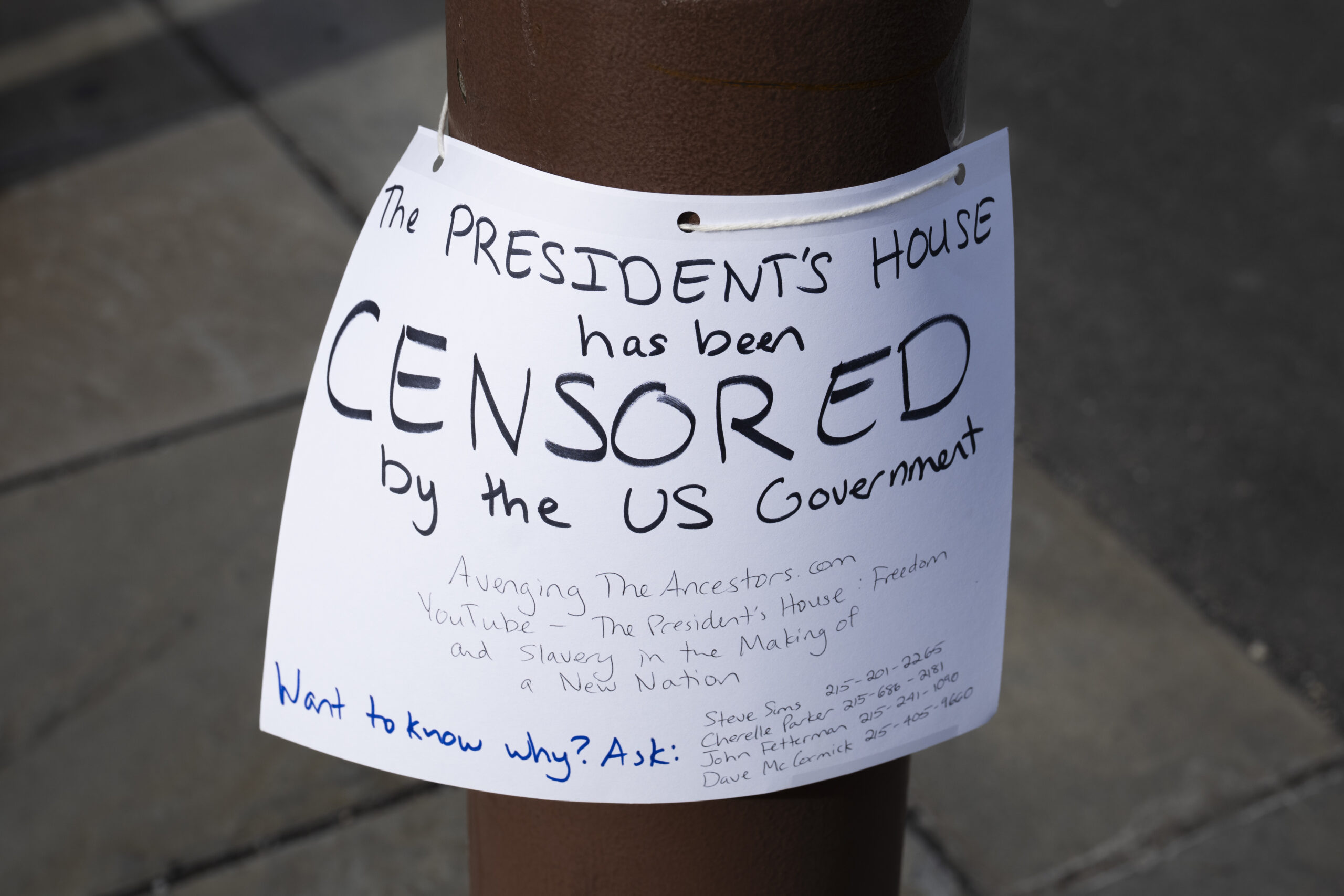
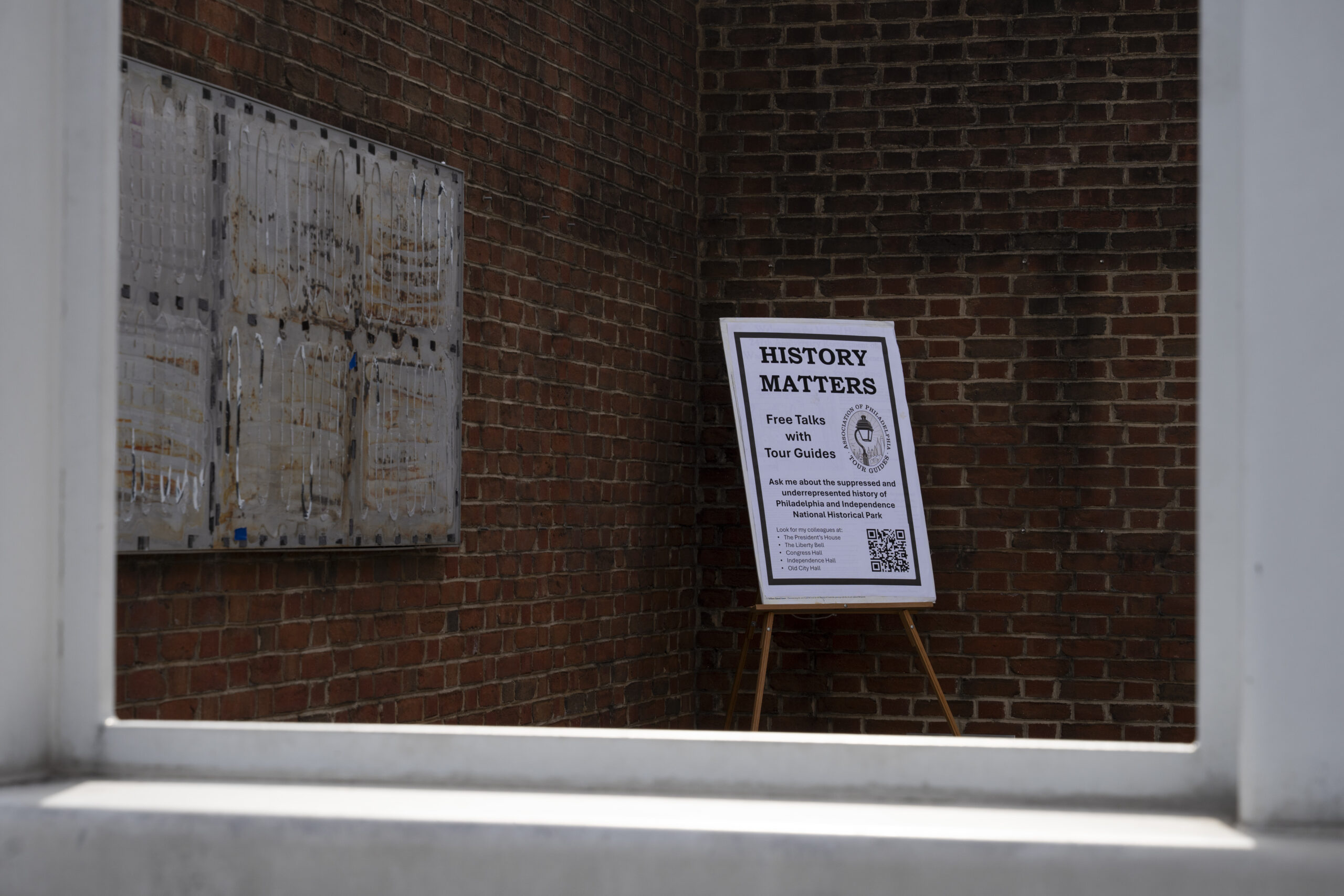
Media ranged from cardboard to poster board. Tools included Sharpies and pens. Many of the more informal signs were affixed with painter’s tape to nooks in the brick structure and empty metallic shells where the original signs hung. Some more official-looking signs included QR codes and printed messages balanced on easels. Others were replicas of the signs that were there made with assistance from professional printing services.
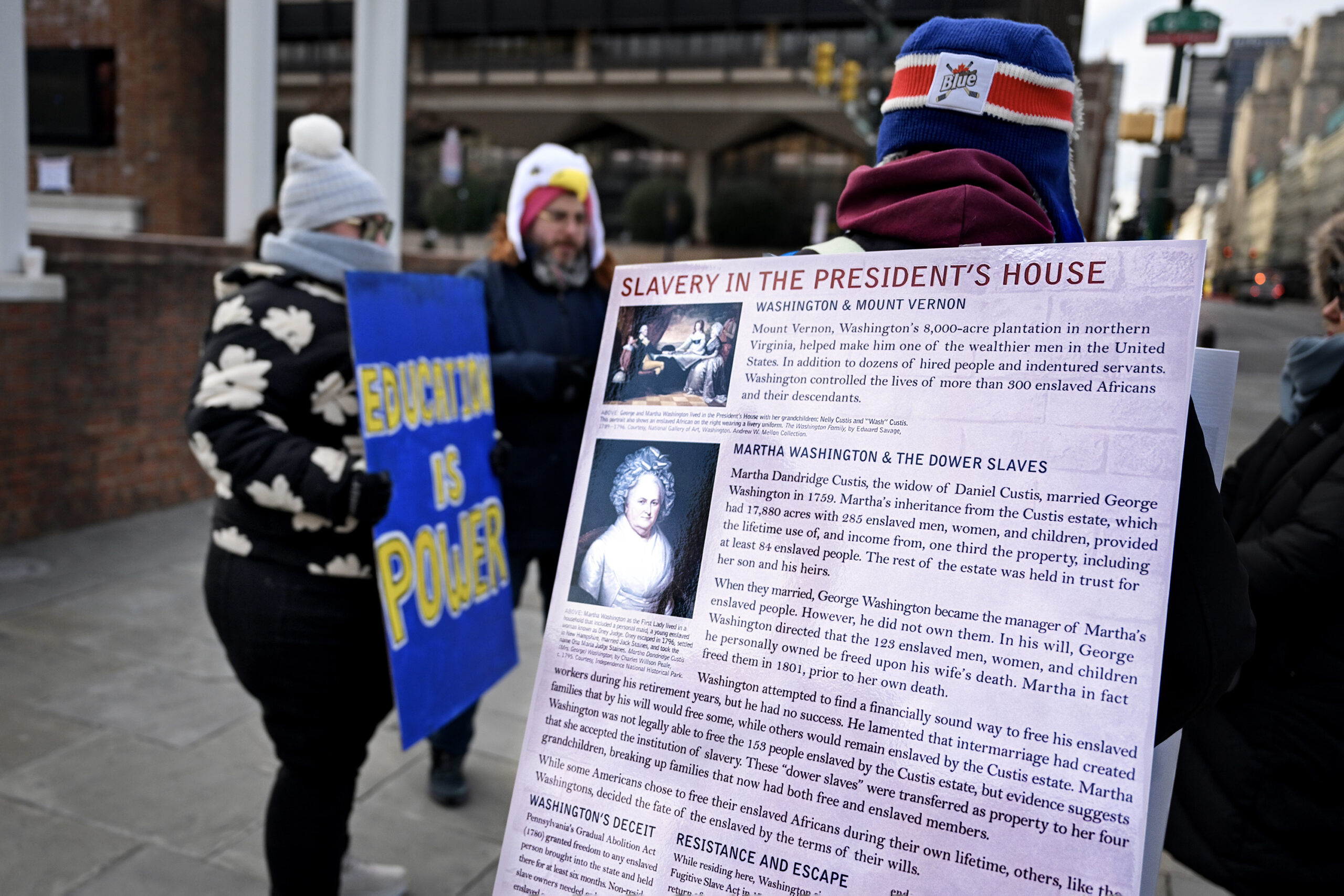
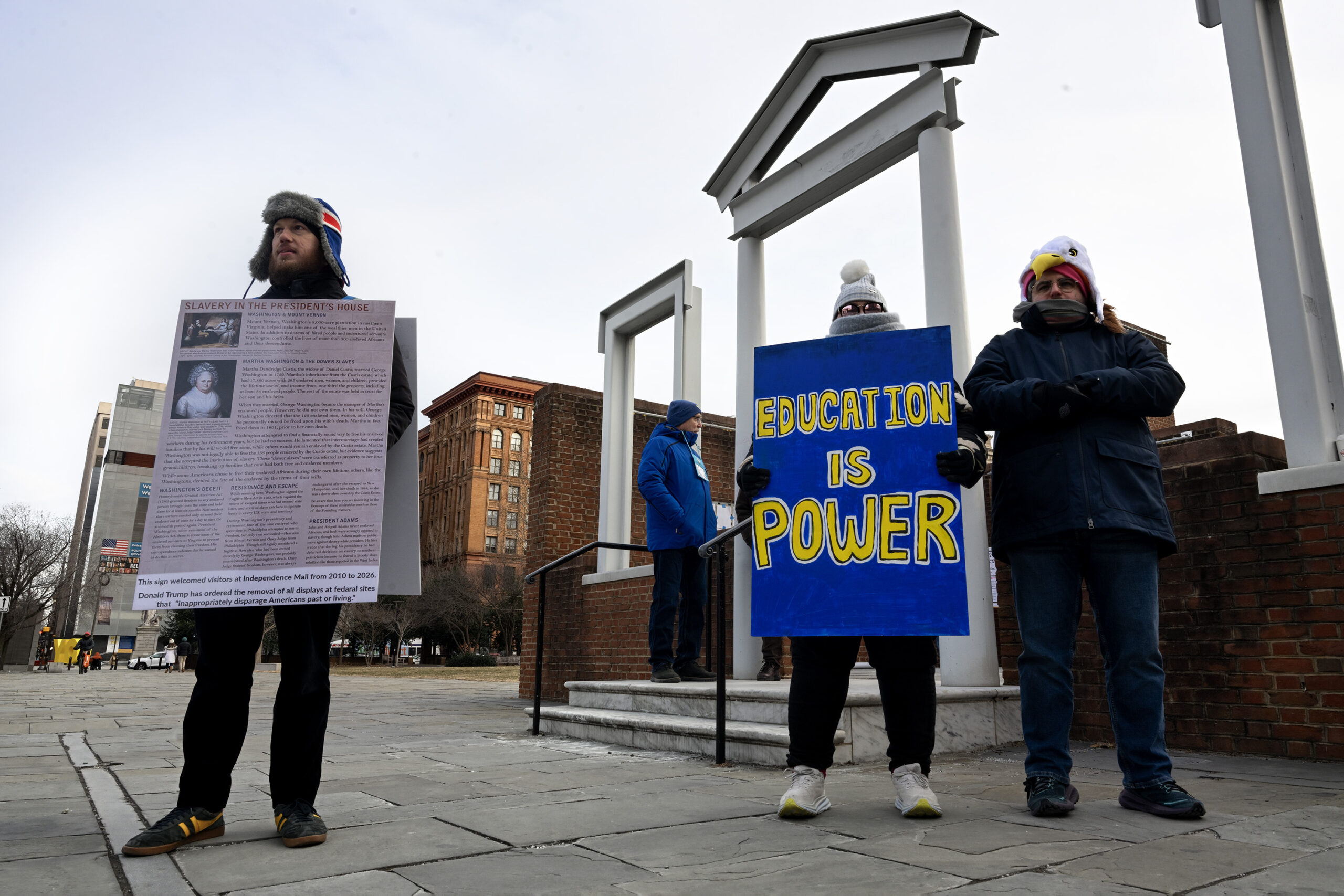
Ted Zellers, a property manager in North Philly, took a more full-body approach to his protest. He found a high-resolution image online of one of the removed signs, titled “Slavery in the President’s House,” got it printed twice, fashioned a sandwich board out of the posters, and became “a living sign,” he said.
It was an educational tool he could wield, but it doubled as a warning.
“I hope people will think about what other information is under threat of being disappeared,” Zellers said.
He expected to be the only person in the park with a sign, but was heartened to see a few dozen others there withstanding the 17-degree air interspersed with sharp winds slicing through the open air exhibit.
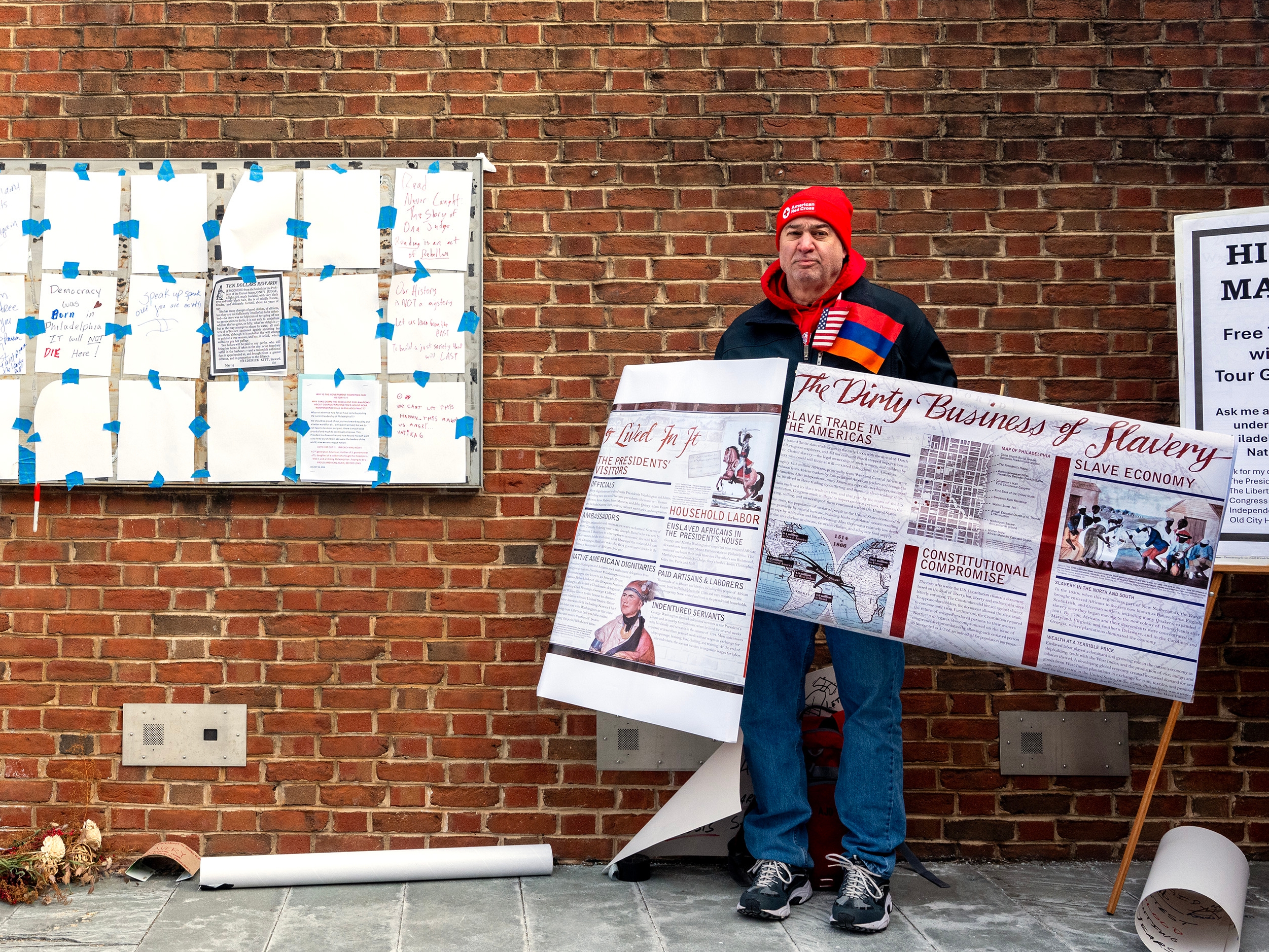
Albert DerMovsesian from Willow Grove, who came to the site equipped with one vertical sign detailing the labor that took place in the house and a horizontal one titled “The Dirty Business of Slavery,” found himself similarly pleased to see so many like-minded others around him.
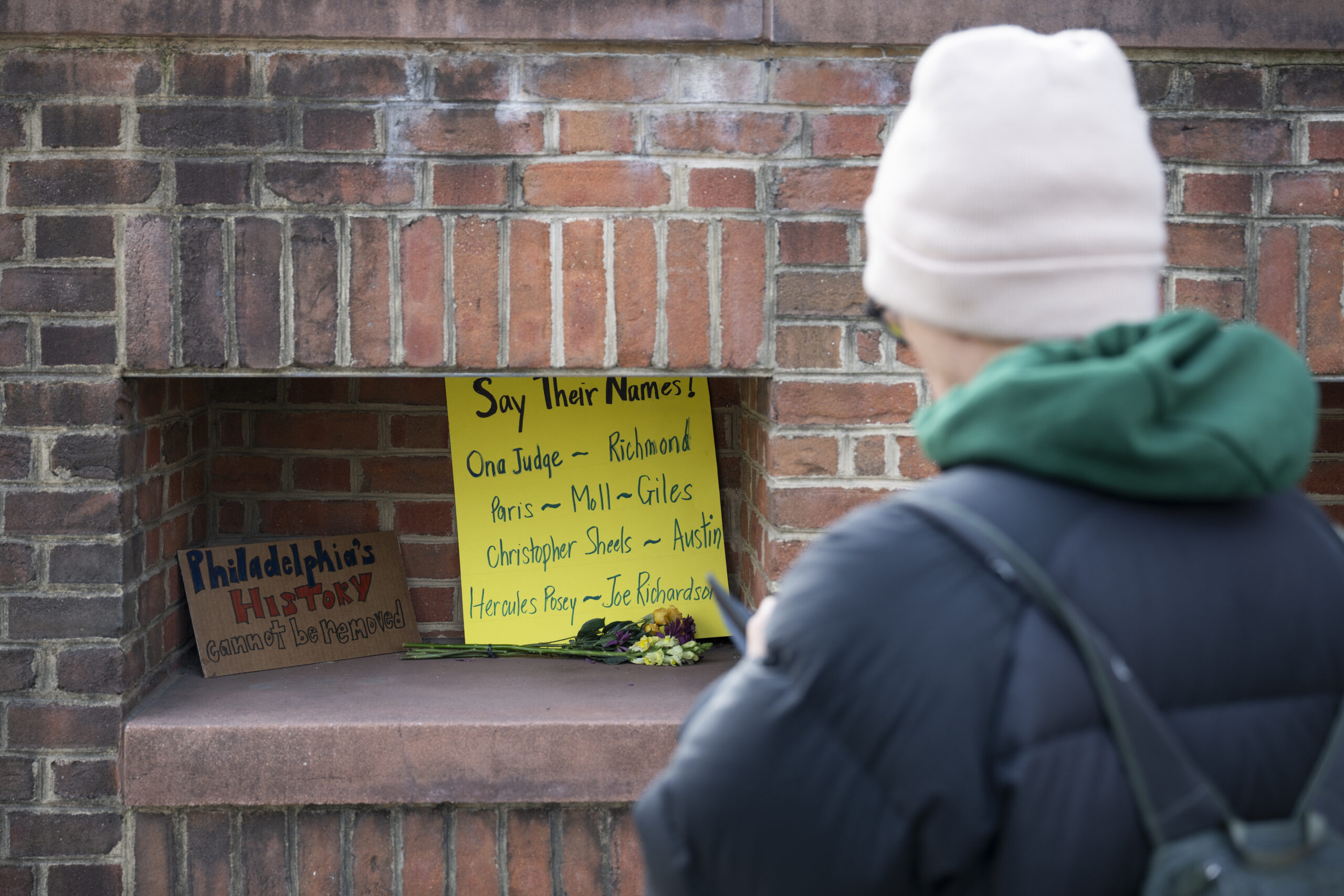
In the park he saw little kids writing on pieces of paper pasted to the walls, a woman leaving a sign with the names of those enslaved at the site, and people adorning the structure with flowers.
“It reminded me that I wasn’t alone,” DerMovsesian said.
“We don’t need 350 million Malcolm X’s to make the country better,” Zellers said. “We just need a lot of regular people who recognize that they’re part of networks and who can take some action and amplify what’s going on, pass it onm and get other people engaged.”
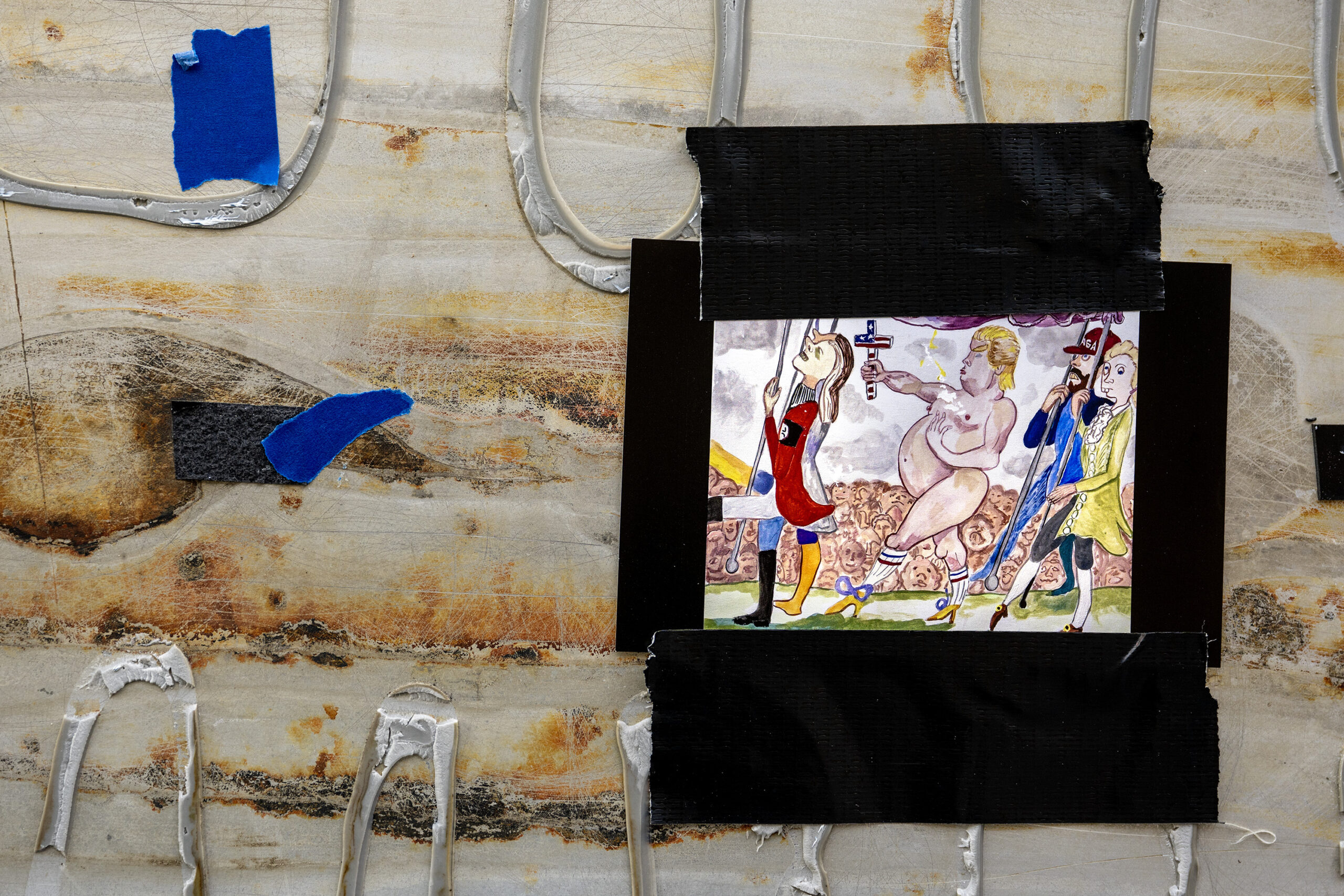
The collage of images developed organically, but hearkened back to a long lineage of protest art that has become increasingly prevalent under the Trump administration, said Nicolo Gentile, an artist and adjunct faculty member at Temple University’s Tyler School of Art and Architecture.
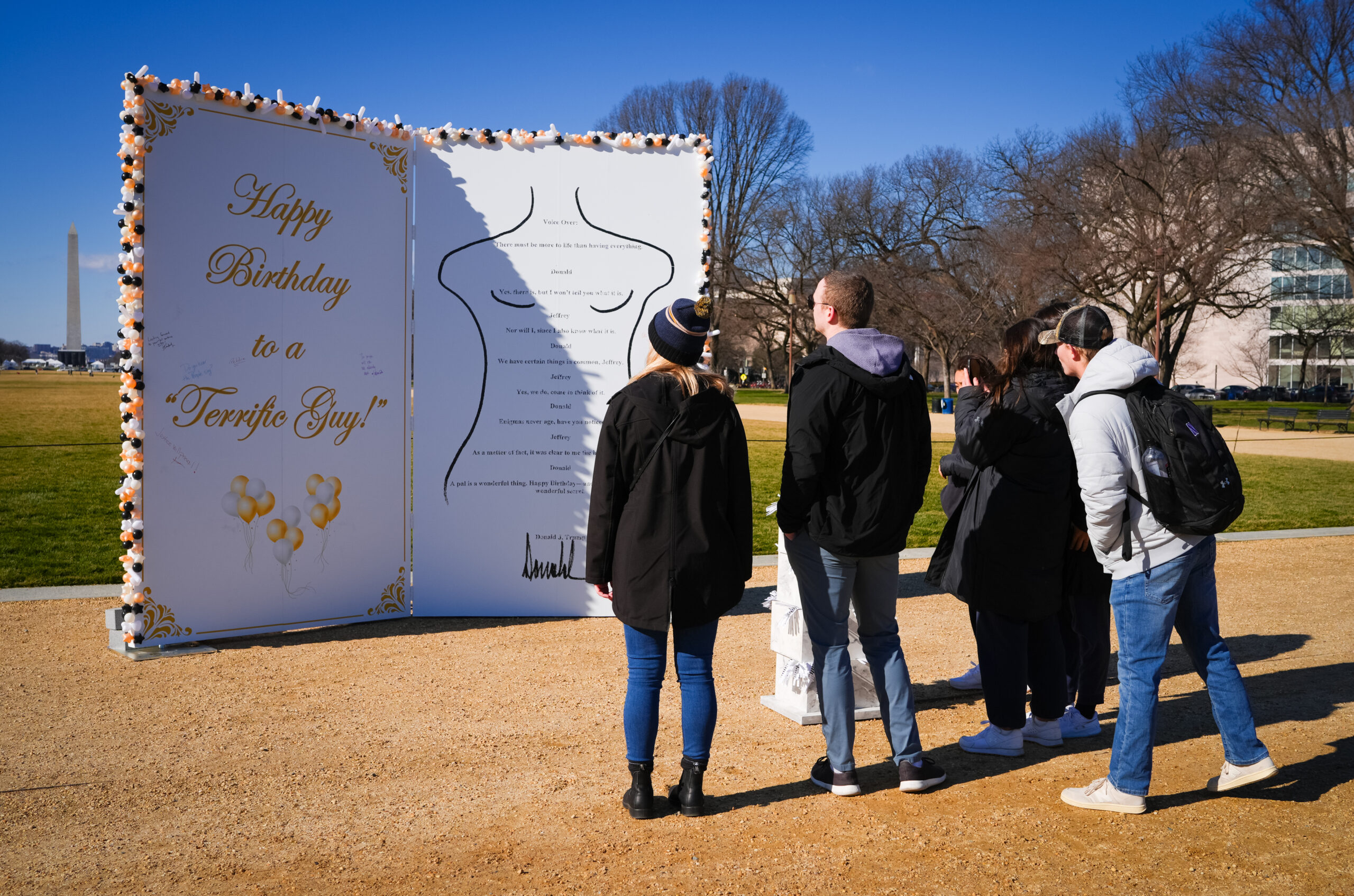
A new protest art installation referencing the Epstein files and President Donald Trump was installed on Third Street SW along the National Mall.
The assortment of papers reading “learn all history” gets its power from the relative anonymity of its author, Gentile said, as well as its use of repetition.
“It starts to create a texture of sound of a greater voice the way that the many voices of a chant during protest does,” he said.
While Berlin said she doesn’t see herself as an artist, she appreciates the punch of a stark and direct message through signage and art.
“I do love the impact of a good simple piece,” she said.
In some cases, political art can be used to “accelerate progress,” Gentile said, but sometimes its best use is halting regression and “to wedge our foot in the door as progress may seem to be closing.”
“This work seems to be the foot in the door,” he said.
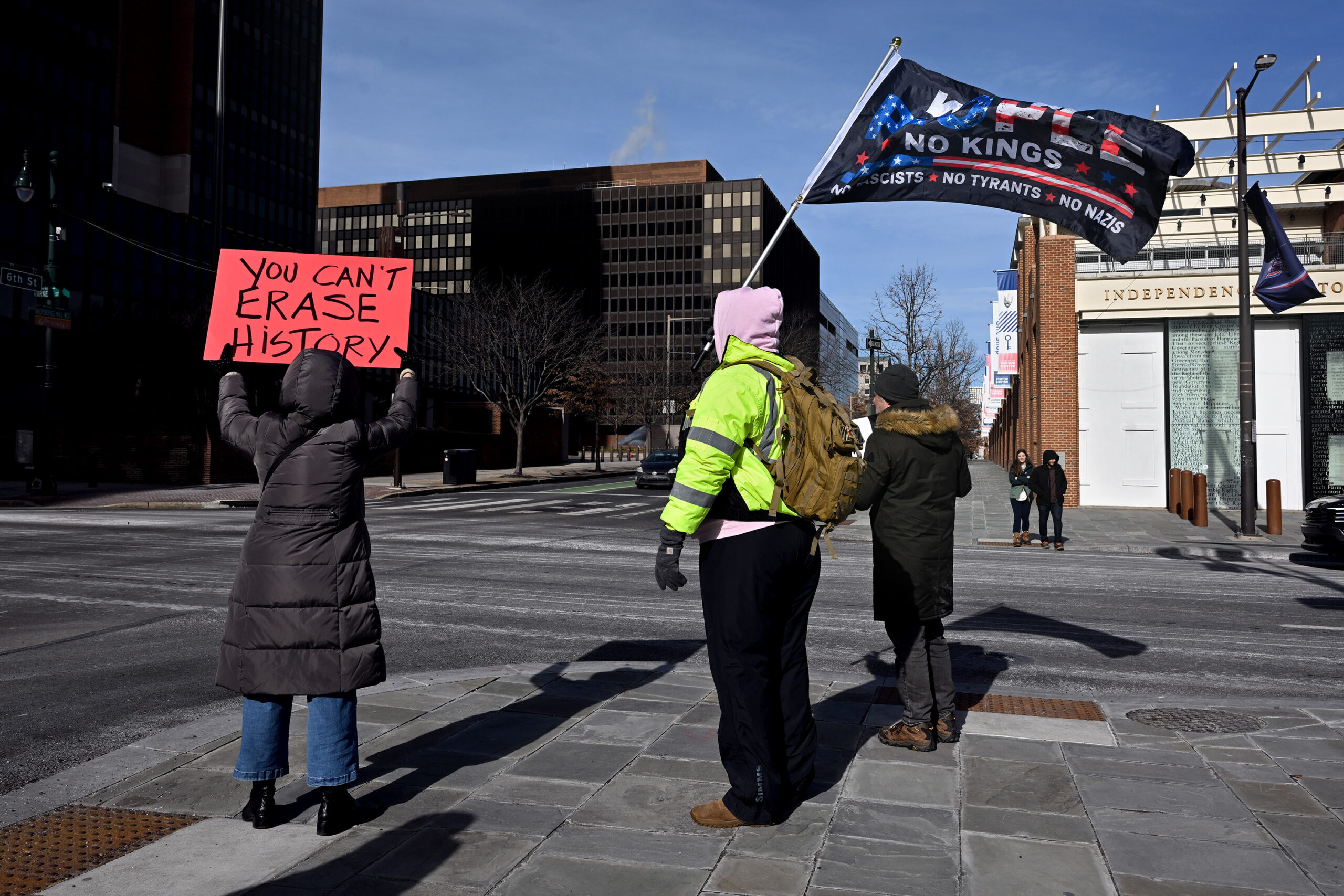
People leave notes on the spaces at the President’s House site in Independence National Historical Park.Ted Zellers (right) wears a sandwich board with a replica of one of the removed slavery panels as people visit and protest at the President’s House site.Ted Zellers (left) wears a sandwich board with a replica of one of the removed slavery panels, joining Jenna and Gregory May (right) protesting at the President’s House. People leave notes and political satire cartoons in the spaces at the President’s House.People protest at the President’s House site.Al DerMovsesian holds replicas of some of the removed slavery panels as people visit the President’s House site.The President’s House in Independence National Historical Park.The President’s House in Independence National Historical Park.Michael Carver portrays Mordecai Sheftall as part of a “History Matters” guide at The President’s House.A sign was placed at the President’s House.A group of teacher taped posters along the now barren brick walls of the President’s House.A single rose and a handwritten cardboard sign (“Slavery is part of U.S. history learn from the past or repeat it”) are inside an empty hearth at the President’s House.
A month after dangerous winds led Mummers string bands to cancel their New Year’s Day Parade competition, one string band says it’ll be too cold to play a makeup show Saturday.
“With extreme cold predicted for this weekend, our top priority is the health and safety of our members, and the forecasted conditions may put them at risk,” the Avalon String Band said on Facebook.
The band was set to join other groups at the 2026 String Band Spectacular at Lincoln Financial Field Saturday afternoon.
The Philadelphia Mummers String Band Association scheduled the event after the string bands canceled their New Year’s Day performances this year, when high winds destroyed props and sent five people to the hospital.
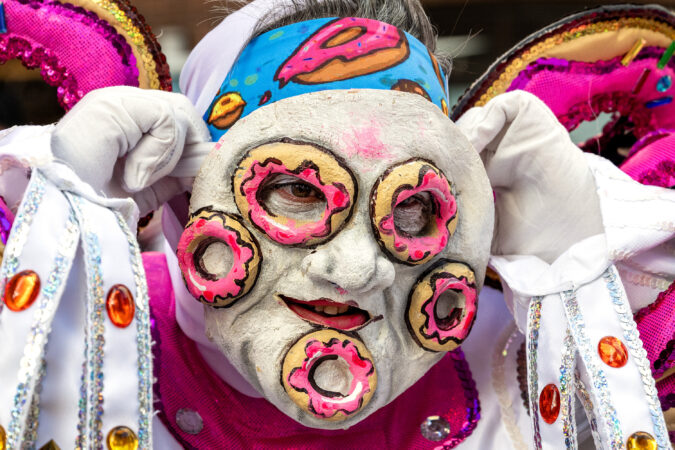
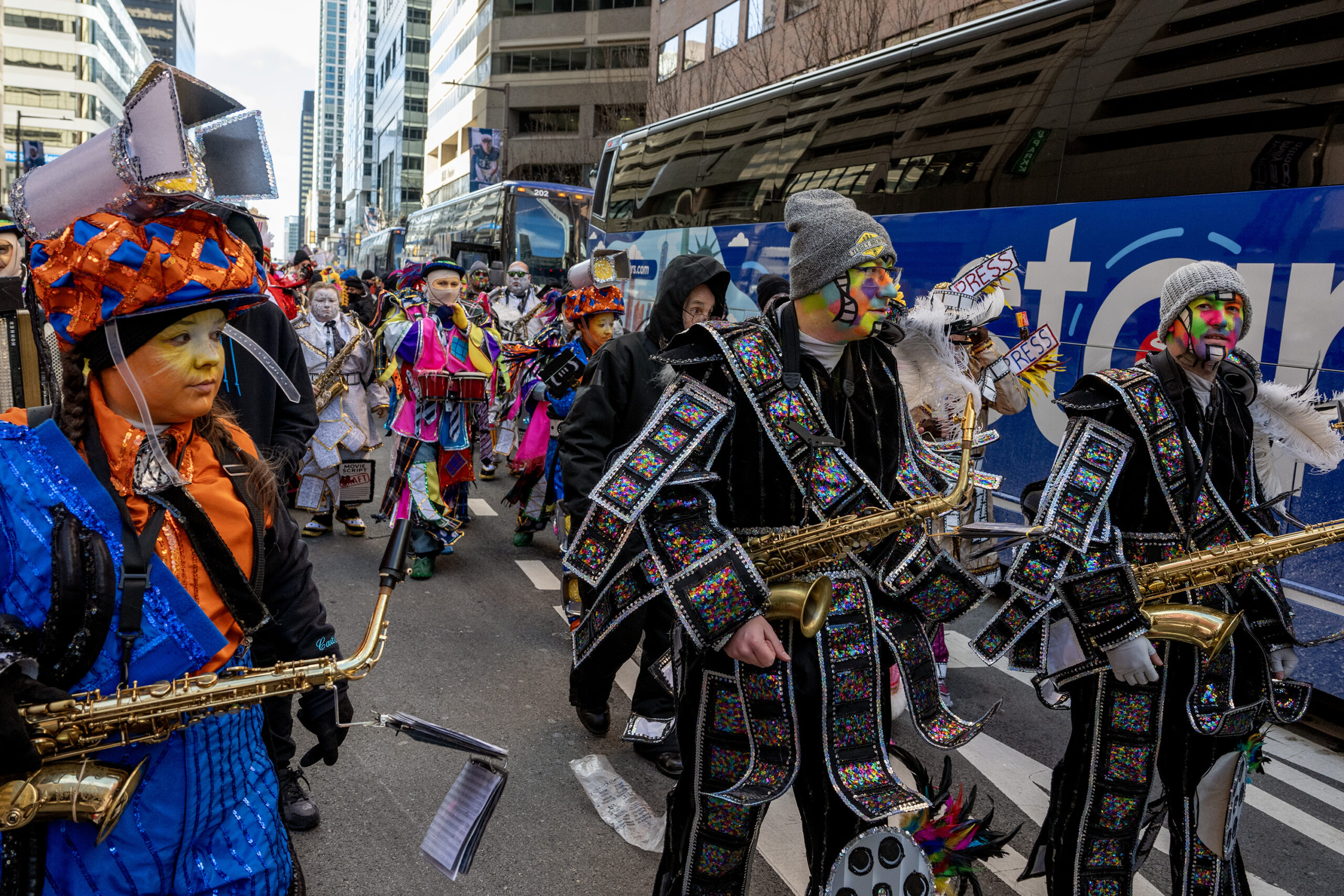
Musicians with the Uptown String Band arrive on buses for the Mummers Parade Thursday, Jan. 1, 2026, after the String Band competition was suspended because of high winds that destroyed props and caused injuries during morning setup. The bands still marched and played their music, but did not carry props, and were not judged. The Uptown theme was “From Script to Screen.”
Saturday a coastal “bomb cyclone” is expected to douse New Jersey and Delaware with snowfall, though forecasting models say Philadelphia won’t get hit. However, stinging winds and Arctic air will push temperatures down to zero Saturday morning, with windchills dipping as low as 10 degrees below 0.
It’s unclear whether other bands will follow the Avalon String Band’s lead. A total of 14 bands make up the Philadelphia Mummers String Band Association, according to its website.
Twelve organizations are set to perform Saturday, said Philadelphia Mummers String Band Association President Sam Regalbuto Friday afternoon. He said workers are getting the stages and props ready.
“Everyone’s on board,” Regalbuto said. “Everyone’s here. We’re good to go.”
The event will begin a 2 p.m. Saturday with the Philadelphia Gay Men’s Chorus singing the national anthem. The event will be broadcast on WDPN-TV (MeTV2) at 8 p.m. and will be streamed on WFMZ.
It looks like the Philly region will evade any snow generated by that coastal “bomb cyclone” during the weekend, but the disruptive snowpack on the ground continues to melt at a glacial pace. Maybe ever slower.
“For now, it’s not budging,” said David Robinson, the New Jersey state climatologist who is an international expert on snow cover.
And, ironically, that has a whole lot to do with what happened in the hours right after the snow stopped around 11:30 a.m. Sunday.
Add one of the more signifiant Arctic cold spells in Philadelphia’s period of record, and the entire region has endured a white and wintry week rarely experienced around here.
As of Friday morning, the official snow depth at the airport still was 6 inches, about two-thirds of what was measured when the storm ended five days before.
The cold won’t be as harsh during the workweek, but a thaw isn’t imminent, and some snow is possible Wednesday.
Temperatures are forecast to drop deep into the single digits Saturday morning, flirting with records. It is not due to get into the 20s until Sunday, when backlash winds from the potent coastal storm are expected to drive wind chills below zero.
Those winds may contribute to significant flooding at the Shore, where they could gust to 50 mph.
About last Sunday in Philly
About 7.5 inches of snow had fallen officially by 11:30 a.m. Sunday at Philadelphia International Airport, more in some other places, when it yielded to several hours of sleet that accumulated 2 to 3 inches, coating the snow with a sparkling, icy veneer.
“You can’t help but recognize the beauty of it,” said Robinson, a Rutgers University geography professor and keeper of the Rutgers Snow Lab.
While it may be an aesthetic pleasure, especially at night under the full “snow moon” rising this weekend, it has had a profoundly chilling effect on cleanup efforts.
The sleet, liquid that freezes before it lands, literally put an ice cap on the snow. “Ice pellets are tougher to melt,” said PennDot’s Thomas Rogal, a maintenance supervisor for the Philadelphia district. In a melting race, a homely sleet ball wouldn’t have a chance against a six-sided snowflake.
On Sunday, said Rogal, the sleet was a game-changer for the road crews. Instead of just plowing, crews were “scraping the road surfaces,” he said. Sleet added a stubborn stickiness to the mass of frozen material.
It also contained about as much liquid as several inches of snow, said Robinson.
The surprisingly cold temperatures, in the lower 20s and teens, inhibited the effectiveness of salt on Sunday. “The material just didn’t function,” said Rogal.
In the city, the glacial mass has been especially disruptive, a royal, inconvenient pain for people living on side streets, for street crews, for anyone who has tried shoveling, and for the schools.
A thermometer in a Central High School classroom on Friday read 39 degrees. That’s colder than the normal high for the date in Philly — outdoors.
When will all this go away?
Philly hasn’t had a stretch of days like this in which the temperature has failed to reach 30 degrees since 1979, according to records tracked by the Pennsylvania state climatologist.
And it likely is going to finish in the top 10 for consecutive days in which readings didn’t get past freezing, said Mike Silva, a meteorologist with the National Weather Service in Mount Holly.
Low temperatures Thursday and Friday morning, 13 and 11, respectively, were several degrees above the forecasts. That probably was related to the winds at the airport, he said.
It also may be related to the sleet, said Robinson: Ice doesn’t have quite the same chilling effect as fresh snow.
Conditions Saturday morning — clear skies and lighter winds — should be more conducive for daytime heating (we use the term loosely) to radiate into space. Morning lows could approach the record of 3 degrees, set in 1948.
Some moderation is expected with the workweek, but not much. “We were hoping to get to the mid-30s,” said Sliva, but “it looks like we may barely get to freezing.”
Even at those temperatures, some melting should occur.
The total daily solar energy beaming toward Philly now is about 30% higher than it was on Jan. 1, according to NASA’s calculations, and the sunrise-to-sunset time is increasing by about two minutes a day.
Even the cold has a bright side, said PennDot’s Rogal. Potholes, it turns out, have something in common with a lot of humans: “They aren’t particularly fond of this weather.”
“The freeze-thaw is what always gets us,” he said. “We’re actually in better shape when the cold sets and stays.”
Even if it snows next week — “There’s a couple of systems that could affect us,” said Silva — based on 150 years of official record-keeping for Philly, it is going to warm up and the ground will reappear.
Even as a child, Dan McQuade let his imagination run wild. “What are you doing?” his mother, Denise, would ask if she hadn’t heard any noise from his bedroom for a while. “I’m making stories,” he would reply.
Later, as a young man about town, his compassion for fellow Philadelphians inspired his father, Drew. Dan volunteered to give blood often, donated brand-new sneakers to other guys in need, and continually reached out to people he saw struggling with drug abuse and homelessness. “His kindness was what I loved about him the most,” his father said.
Dan McQuade was already an award-winning writer, blogger, and journalist when he met his future wife, Jan Cohen, online in 2014. To her, his jovial humor, wide-ranging intelligence, and shoulder-length hair made him unique in her circle. “I thought he was too cool for me,” she said.
His empathy, likely inspired by his parents, his wife said, led him to toil tirelessly for charitable nonprofits such as the Everywhere Project, Back on My Feet, and Prevention Point. “Service was always part of his life,” his wife said.
His coolness, as unconventional as it sometimes was, made those he encountered feel cool, too. Molly Eichel, an Inquirer editor and longtime friend, said: “He was annoyingly smart and incredibly kind.”
Dan McQuade died Wednesday, Jan. 28, of neuroendocrine cancer at his parents’ home in Bensalem. He was 43. His birthday was Jan. 27.
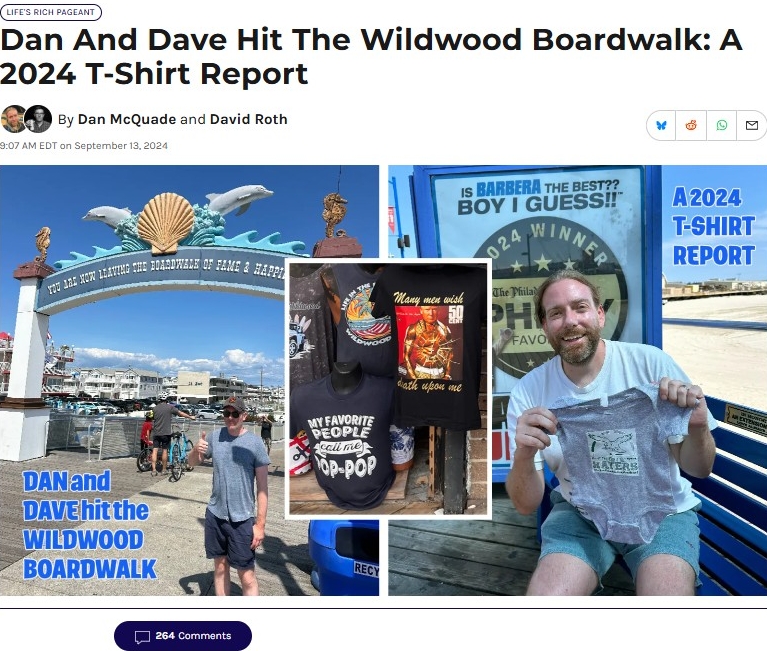
Mr. McQuade’s annual Wildwood T-shirt report was a favorite of his many readers and fans.
“It’s incredibly hard for me to imagine living in a Philadelphia without Dan McQuade,” said Erica Palan, an Inquirer editor and another of Mr. McQuade’s many longtime friends. “He understood Philadelphians better than anyone because he was one: quirky and funny, competitive and humble, loyal and kind.”
A journalism star at the University of Pennsylvania in the early 2000s, Mr. McQuade was a writer, sports editor, and columnist for the school’s Daily Pennsylvanian, and managing editor of its 34th Street Magazine. He earned two Keystone Press awards at Penn, was the Daily Pennsylvanian’s editor of the year in 2002, and won the 2003 college sports writing award from the Philadelphia Sportswriters Association.
He went on to create Philadelphia Weekly’s first blog, “Philadelphia Will Do,” and was a finalist for the Association of Alternative Newsmedia’s best blogger award. He served an internship at the Bucks County Courier Times in Levittown and worked for a while at the Northeast News Gleaner.
Often irreverent, always inventive, he filed thousands of notable stories about, among other things, the Wildwood T-shirt scene, the origin of “Go Birds,” sneaker sales, Donald Trump, Wawa hoagies, the Philly accent, parkway rest stops, the Gallery mall, soap box derbies, and Super Bowls. His stories sparkled with research and humor.
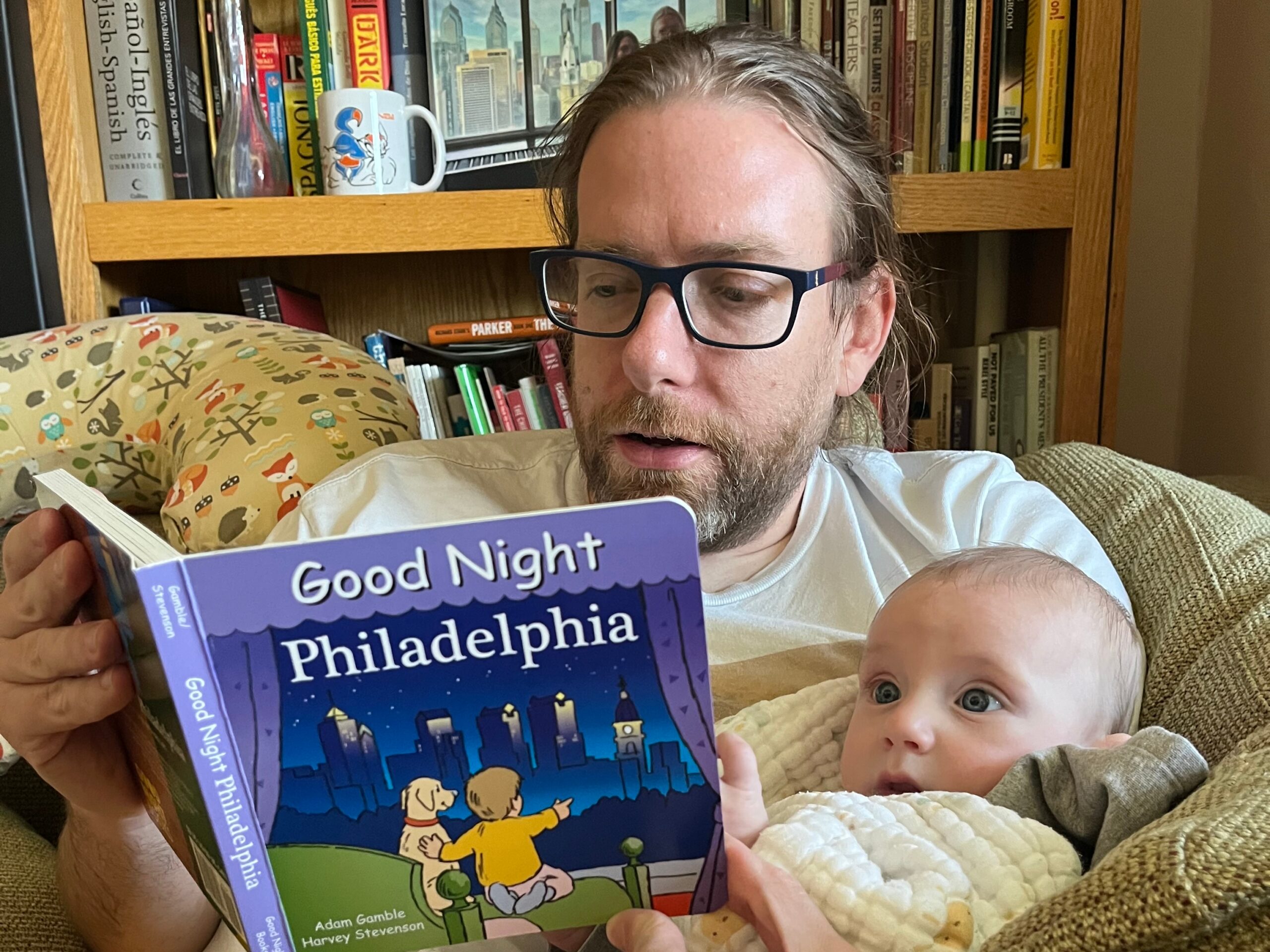
An avid reader himself, Mr. McQuade enjoyed reading local tales to his son, Simon.
“Dan was a truly authentic and engaging person,” Tom Ley, editor-in-chief at Defector, said in an online tribute. “His curiosity was relentless, and his interests were varied and idiosyncratic.”
For example, Mr. McQuade wrote in Philadelphia Magazine in 2013 that Sylvester Stallone’s famous training-run montage in Rocky II — it started in South Philly and ended two minutes of screen time later atop the Art Museum steps — actually showed city scenes that would have had the actor/boxer run more than 30 miles around town. “Rocky almost did a 50K,” Mr. McQuade wrote. “No wonder he won the rematch against Apollo!”
In 2014, he wrote in Philadelphia Magazine about comedian Hannibal Buress calling Bill Cosby a rapist onstage at the old Trocadero. The story went viral, and the ensuing publicity spurred more accusations and court cases that eventually sent Cosby to jail for a time.
When he was 13, Mr. McQuade wrote a letter to the editor of the Daily News that suggested combining the Mummers Parade with Spain’s running of the bulls. Crossing Broad’s Kevin Kinkead said he had “an innate gift for turning the most random things into engaging reads.”
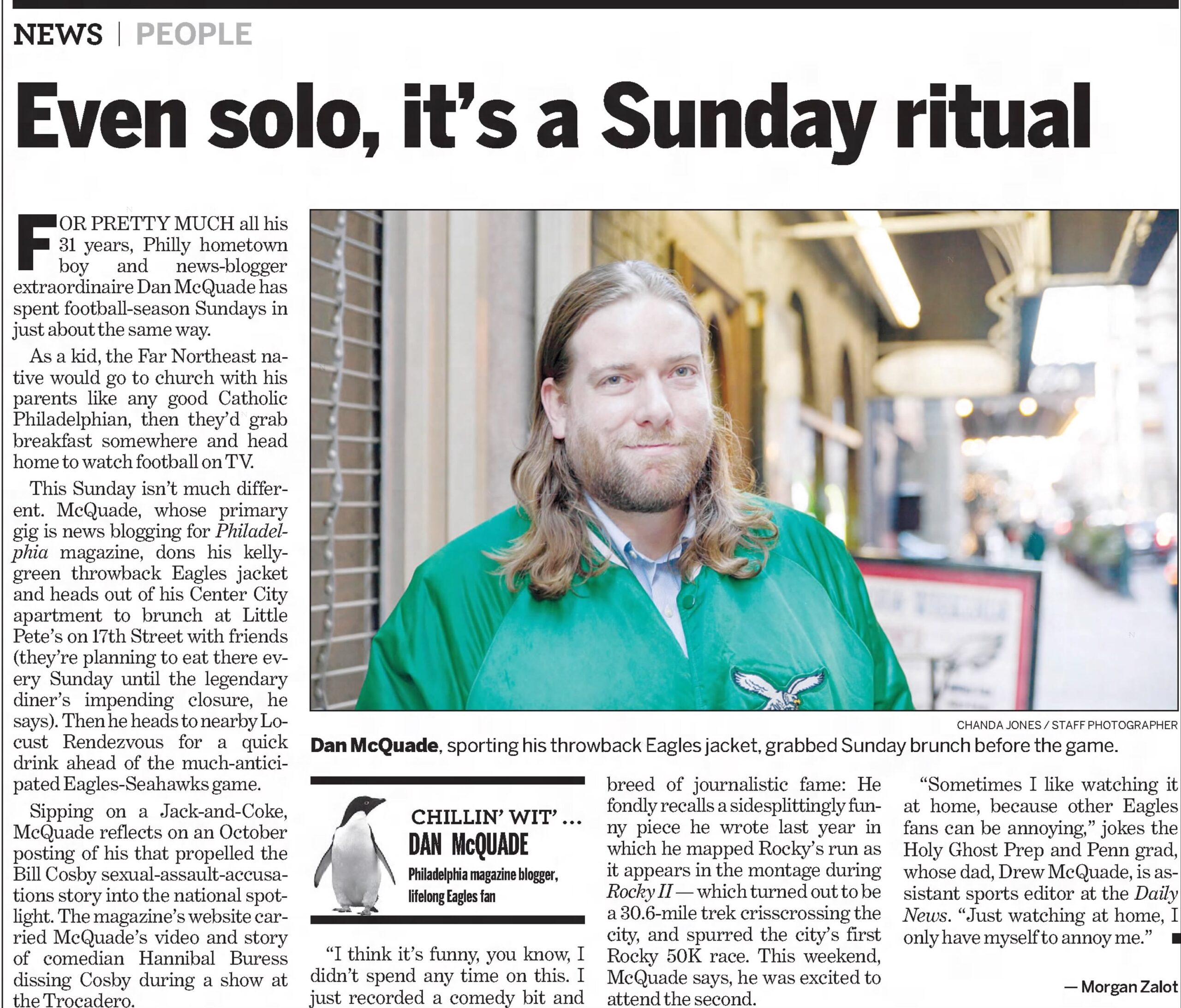
This story about Mr. McQuade appeared in the Daily News in 2014.
“Without Dan’s voice, Philly Mag wouldn’t be Philly Mag,” editor and writer Brian Howard said in a tribute on phillymag.com. “And, I’d argue, Philadelphia wouldn’t quite be Philadelphia.”
Other colleagues called him “a legend,” “a Philadelphia institution,” and “the de facto mayor of Philadelphia” in online tributes. Homages to him were held before recent Flyers and 76ers games.
“Sometimes,” his wife said, “he inserted himself into stories, so readers had a real sense of who he was because he was so authentic.”
Daniel Hall McQuade was born Jan. 27, 1983, in Philadelphia. His father worked nights at the Daily News for years, and the two spent many days together when he was young hanging around playgrounds and skipping stones across the creek in Pennypack Park.
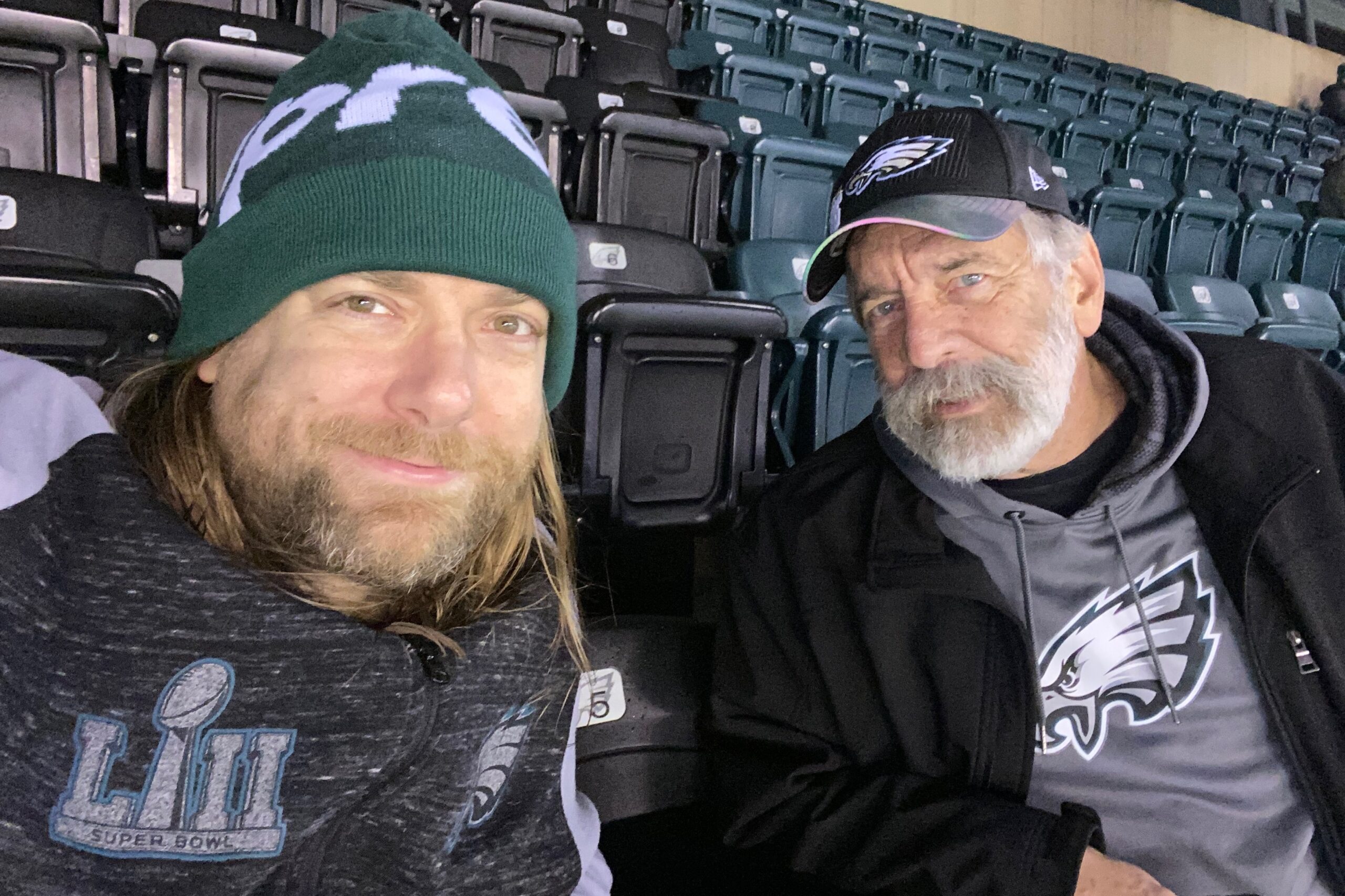
Mr. McQuade (left) and his father, Drew, shared a love of Philly sports and creative writing.
Later, they texted daily about whatever came to mind and bonded at concerts, Eagles games, and the Penn Relays. He grew up in the Northeast, graduated with honors from Holy Ghost Preparatory School in Bensalem, and earned a bachelor’s degree in English at Penn in 2004.
He overcame a serious stutter as a teen and played soccer and basketball, and ran cross-country and track at Holy Ghost. He married Jan Cohen in 2019 and they had a son, Simon, in 2023. They live in Wissahickon.
Mr. McQuade was a voracious reader and an attentive listener. “He never wanted to stop learning,” his wife said. He enjoyed going to 76ers games with his mother and shopping for things, his father said, “they didn’t need.”
He was mesmerized by malls, the movie Mannequin, the TV series Baywatch, and his wife’s cat, Detective John Munch. During the pandemic, he and his wife binged all 11 seasons of Baywatch.
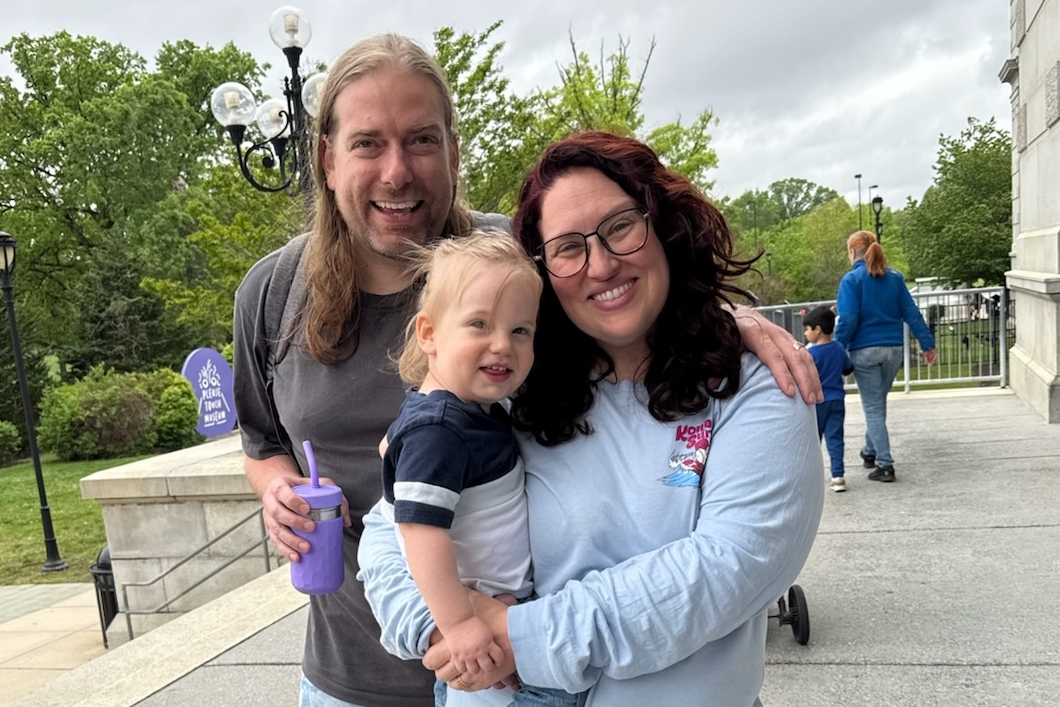
Mr. McQuade doted on his wife, Jan, and their son, Simon.
He could be loud, his mother said, and Molly Eichel described his laugh as “kind of a honk.” His friend and colleague Alli Katz said: “In 50 years I’ll forget my own name. But I’ll remember his laugh.”
He was a vintage bootleg T-shirt fashionista, and his personal collection numbered around 150. He named Oscar’s Tavern on Sansom Street as his favorite bar in a recent podcast interview and said he would reluctantly pick a pretzel over a cheesesteak if that was the choice.
In September, Mr. McQuade wrote about his illness on Defector.com under the headline “My Life With An Uncommon Cancer.” In that story, he said: “Jan has been everything. My son has been a constant inspiration. My parents are two of my best friends, and I talk to them every day. Jan’s parents have been incredible.”
He also said: “I believe there are no other people on earth with my condition who are in as fortunate a situation. … For the past thousand words you have been reading about a bad break I got, but if only everyone in my position had it this good.”
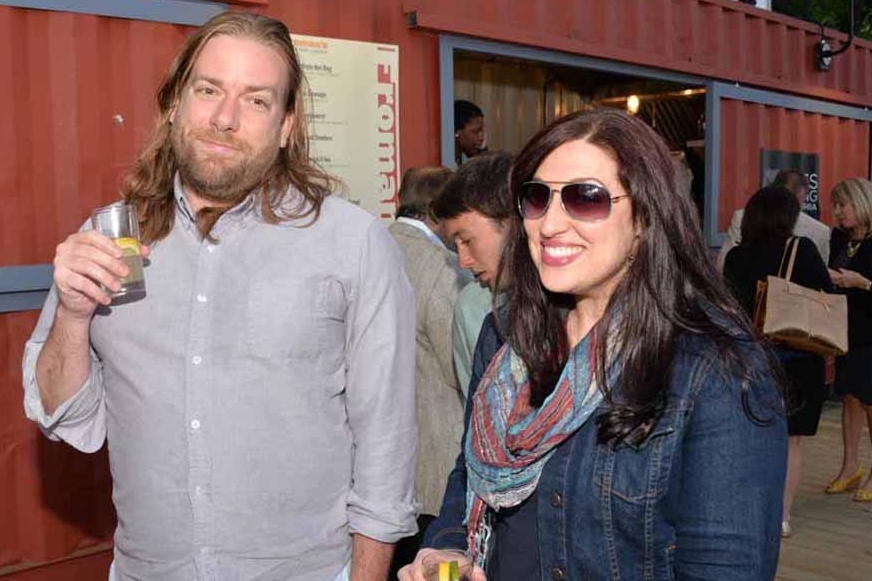
Mr. McQuade and his wife, Jan Cohen, married in 2019.
His wife said: “He was truly the best guy.”
In addition to his wife, son, and parents, Mr. McQuade is survived by his mother-in-law, Cheryl Cohen, and other relatives.
Visitation with the family is to be from 9 to 10 a.m. Thursday, Feb. 5, at St. Martha Parish, 11301 Academy Rd., Philadelphia, Pa. 19154. Mass is to follow from 10 to 11 a.m.
Donations in his name may be made to the Everywhere Project, 1733 McKean St., Philadelphia, Pa. 19145.
Comcast owes a California company $240 million for infringing on its patent when rolling out a voice-activation feature on television remotes over a decade ago, a Philadelphia federal jury decided.
Promptu Systems Corporation “pioneered” the technology that allows users to control their TVs through voice commands spoken into a remote control in the early 2000s, the company said in legal filings.
After Comcast launched its voice remote in 2015, Promptu sued, accusing the telecommunication giant of utilizing patented technology. Comcast executives were aware of the patents, expressed interest in Promptu’s capabilities as early as 2001, and took steps to launch a remote in collaboration with Promptu, the 2016 lawsuit said.
But Comcast ended up launching a voice-controlled remote on its own, which the suit says was based on technology that Promptu shared with Comcast in demonstrations.
“Promptu technology was exploited without permission over a 10-year period,” said Jerry Ivey, an attorney at the law firm Finnegan who represented the company in the trial.
Propmtu’s attorneys asked the jury to award $346 million, based on a calculation that the company was owed 30 cents per month for each Comcast cablecustomer over a 10-year period.
At the conclusion of a six-day trial in the Eastern District of Pennsylvania, on Jan. 23, jurors found that Comcast infringed on two patents but that only one of them was valid. The jury deliberated for less than three hours and awarded $240 million.
The verdict will have no impact on Comcast’s customers, a company spokesperson said.
“We will continue to pursue our claim in court against Promptu to show that these expired patents are unenforceable and appeal this decision if necessary,” the spokesperson’s statement said.
During the 10 years of litigation, Comcast attacked the validity of the patents. It is pursuing a separate claim arguing that the patent that led to the verdict is not enforceable.
Promptu technology wasn’t ahead of its time, the attorney representing Comcast told the jurors, and the start-up did not succeed in becoming a big player in the TV remote market.
“Investors from Promptu have come here to ask you to not only bail them out of their investment in Promptu but to give them an enormous windfall in profits that they didn’t earn in the marketplace and for technology that they didn’t invent,” said Douglas Lumish, a Weil Gotshal & Manges attorney representing Comcast, according to court transcripts.
By 2017, Comcast said it had voice-activated remotes in about 12 million homes — roughly half its subscribers at the time — and the company expected to process 4 billion voice commands that year. In a 2024 meeting with investors, Comcast said their remotes were processing about 50 million voice commands daily in five languages, allowing users to quickly access cable and streaming content.
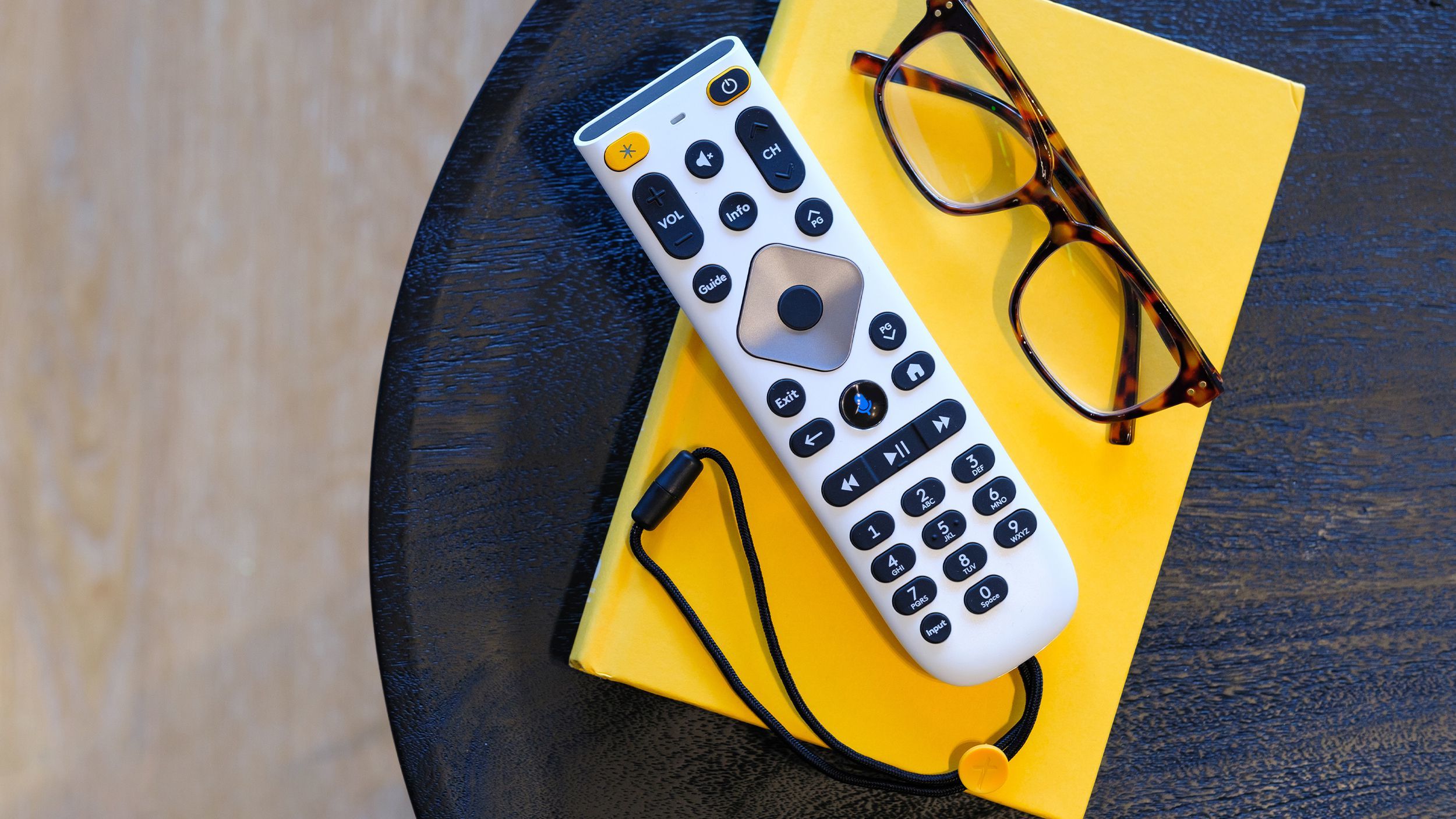
The company also developed a large-button voice remote with accessibility in mind. Both have been provided to their cable subscribers at no additional cost.
Comcast’s large-button remote with added accessibility features, as released in 2022.
Even if they don’t directly bring in revenue, these kinds of tech features can help a company keep customers. (In recent years, Comcast has been losing more cable customers than gaining, but it counts its Peacock streaming service among areas of growth.)
On Thursday, Comcast reported its 2025 financial results, showing flat revenue from the year before. The company touted Peacock’s 22% increase in paid subscribers, the release of Wicked: For Good from its studios division, and growth in its mobile phone business.
Its count of cable customers decreased — again — to 11.2 million.
Also this month, Comcast agreed to a $117.5 million settlement to resolve 24 lawsuits surrounding a 2023 data breach. The settlement received initial approval from a judge, with a final approval hearing scheduled for July.
It remains a long shot that a fresh layer of frosting will coat the hardening and tenacious snowpack, but evidently that street-congesting frozen mass isn’t exiting in the near future.
As of Friday morning, it appeared that a potent coastal storm that is expected to qualify as a meteorological “bomb” was going to spare the Philadelphiaregion from another snowfall.
But it is expected to have serious impacts on the New Jersey and Delaware beaches, with a combination of onshore gales and a tide-inciting full moon, forecasters are warning.
On the mainland, it is poised to generate winds that would add sting to what has been one of the region’s most significant outbreaks of Arctic air in the period of record.
Lows at Philadelphia International Airport both Thursday and Friday mornings — 13 and 11, respectively — were several degrees above what was forecast.
But they are to drop into single digits Saturday morning, and flirt with a record. Wind chills during the weekend are expected be in the 10-below range, said Mike Silva, a meteorologist with the National Weather Service in Mount Holly.
“Even though there might not be much or any snow in Philly,” he said, “it’s going to be cold, and we’re still going to have the wind impacts.”
window.addEventListener(“message”,function(a){if(void 0!==a.data[“datawrapper-height”]){var e=document.querySelectorAll(“iframe”);for(var t in a.data[“datawrapper-height”])for(var r,i=0;r=e[i];i++)if(r.contentWindow===a.source){var d=a.data[“datawrapper-height”][t]+”px”;r.style.height=d}}});
But “it wouldn’t take much of a jog west to really mess up the forecast,” said Tom Kines, senior meteorologist with AccuWeather Inc. It’s been known to happen.
On Friday morning, the National Weather Service was posting a 30% chance that Philly would get something measurable — technically 0.1 inches — Saturday night into Sunday, with about a 10%shot at an inch.
The weather service was expecting an inch at the Shore, but with a slight chance of several inches.
Forecasters are certain that a storm is going to blow up off the Southeast coast as frigid air that is penetrating all the way to Disney World interacts with the warm waters of the Gulf Stream.
Gusts at the Shore during the day Sunday might be as high as 40 mph as the storm could reach “bomb” status.
What exactly is a ‘bomb?’
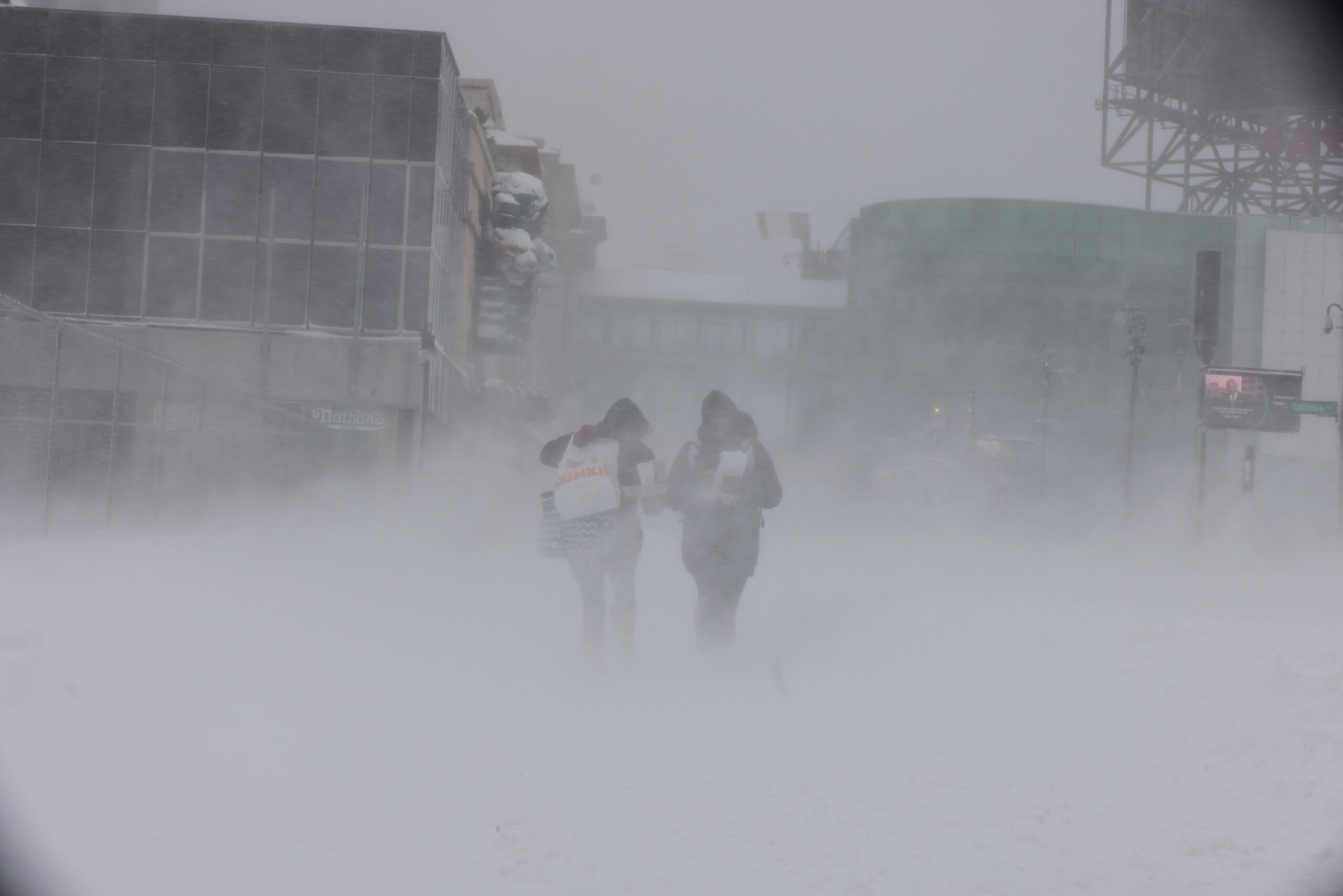
Two brave souls endure the snow and winds from a meteorological bomb cyclone in Atlantic City in January 2022.
The technical definition of a meteorological bomb is a drop in central barometric pressure of 0.7 inches in a 24-hour period, about a 2% to 3% change in the weight of the air. That might not seem like much, but it’s a big deal if you’re a column of air.
Such a drop in pressure indicates a rapidly developing storm. Air is lighter in the centers of storms, as precipitation is set off by lighter warm air rising over denser cold air.
As a weather term, bombfirst appeared in an academic paper in 1980 by atmospheric scientists Frederick Sanders at the Massachusetts Institute of Technology and John Gyakum at McGill University.
They found that the western Atlantic, in the proximity of the Gulf Stream, was one of two regions on the planet most prone to bombs. The other was the area near the Kuroshio Current in the far northwestern Pacific.
Both are massive reservoirs of warmer waters that interact with cold air coming off land masses. Some of the European settlers in the colonial era learned about the effects the hard way, experiencing mega-storms that were alien to areas in England.
Gyakum, who was Sanders’ graduate student at MIT, recalled Thursday that the duo took some blowback for using the word bomb.
But with a cyclone of such ferocity, the term was worth using to draw the public’s attention to potential impacts, which sometimes exceed those of hurricanes, Gyakum said.
He said he had no doubt this weekend’s storm would reach bomb status.
While any heavy snows from this storm are likely to bypass the Philly region, some accumulating snow is possible the middle of next week, Kines said, although nothing in a league with what happened Sunday.
When can Philly expect a thaw?
Temperatures during the coming workweek are due to moderate, at least slightly, with highs around freezing Monday through Thursday, 10 to 12 degrees warmer than what is expected this weekend.
The cold “certainly eases up,” Kines said.
But that 9.3 inches of snow and sleet that accumulated Sunday evidently has taken a particular liking to the region. As for when it will disappear, he said: “It’s going to take a while.”
The overall cold upper-air pattern looks to persist, said Paul Pastelok, AccuWeather’s long-range forecaster. And the extensive snow cover is going to have a refrigerant effect on temperatures.
So when will it warm up and go away?
“We’ll find out Monday,” Kines said. He was referring to Groundhog Day, of course, when Punxsutawney Phil will issue his extended forecast.
Nevertheless, he said, meteorologists will be on call if needed.
“It never hurts to get a second opinion,” he said.
Gumienny, who grew up in Port Richmond cheering on the Polish American String Band and has been the chief operating officer for the Eagles since 2023, called Sam Regalbuto, president of the String Band Association, on New Year’s Day to see if a makeup event would be possible. It would, but the string bands needed an outdoor venue to host their competition.
“I was like, ‘Wow, we have probably the biggest and most well-known outside venue in Philadelphia,” Gumienny said.
Gumienny and the Eagles were able to offer Lincoln Financial Field to host the 2026 String Band Spectacular. The event, which is open to the public, will begin at 2 p.m. at the Linc on Saturday.
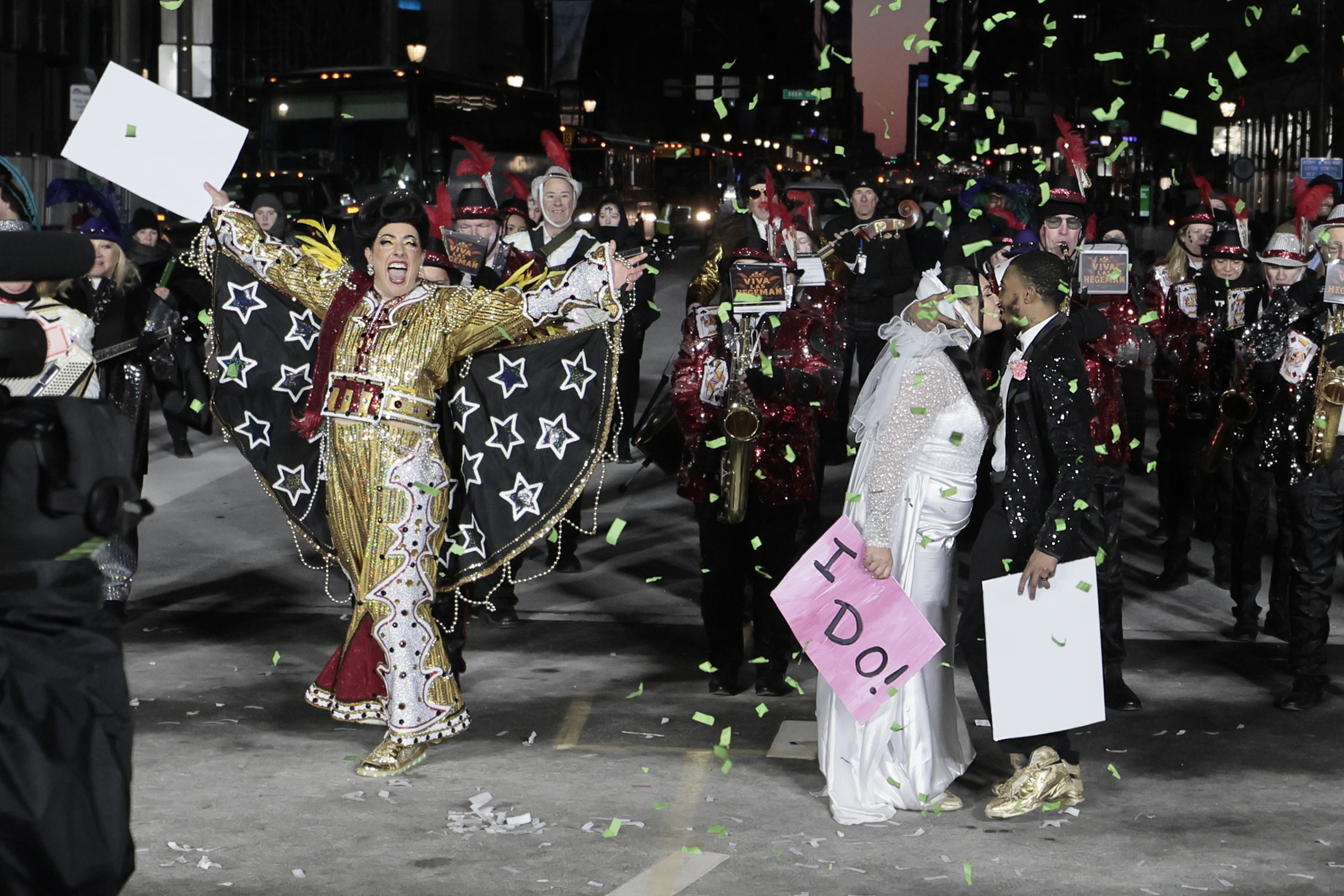
Julianna Bonilla (middle) and Stanley Wells (right) kiss after being officially married by Hegeman String Band captain Kelliann Gallagher (left) during this year’s Mummers Parade.
The show will give the string bands an opportunity to perform their four-and-a-half minute shows in front of judges and compete.
“They’ve been preparing all year,” Gumienny said. “They prepare 12 months to perform this on New Year’s Day. It’s a Philadelphia tradition. So we try to make sure that they can take everything that they’ve practiced all year and show off.”
When Gumienny let the Eagles’ neighbors in the South Philly sports complex know that the Linc would be hosting the string bands, the other teams were eager to help. The Phillies, Flyers, and Sixers all made financial contributions to help stage Saturday’s show, and the Union chipped in from Chester to help cover some costs.
“The other sports teams were like, ‘How can we contribute? How can we be a part of it?’” Gumienny said. “There are costs associated, obviously, with doing this. … A lot of people don’t understand all the costs that go on behind the scenes. And, obviously, the string bands [are] on, call it a tight budget. So we wanted to do whatever we can.”
The bands will perform on a stage on the Eagles sideline. The string bands will play toward the crowd, which will be seated in the lower level on the western side of the stadium. Gumienny said he’s estimating between 8,000 and 10,000 spectators will come to the Linc for the showcase, despite the cold weather in the forecast.
However, one of the 14 bands, Avalon String Band, said it is withdrawing from the event due to the weather. It is unclear if others will join them.
“With extreme cold predicted for this weekend, our top priority is the health and safety of our members, and the forecasted conditions may put them at risk,” the band posted on Facebook.
“I think it just highlights Philadelphia,” Gumienny said. “The spirit of Philadelphia, the pride of Philadelphia, the passion … The pride and passion of Philadelphia always shines, and I think things like the Eagles, our local sports teams, are always highlighted in this. And then, obviously, things like the Mummers parade that really coincide with what Philadelphia is.”
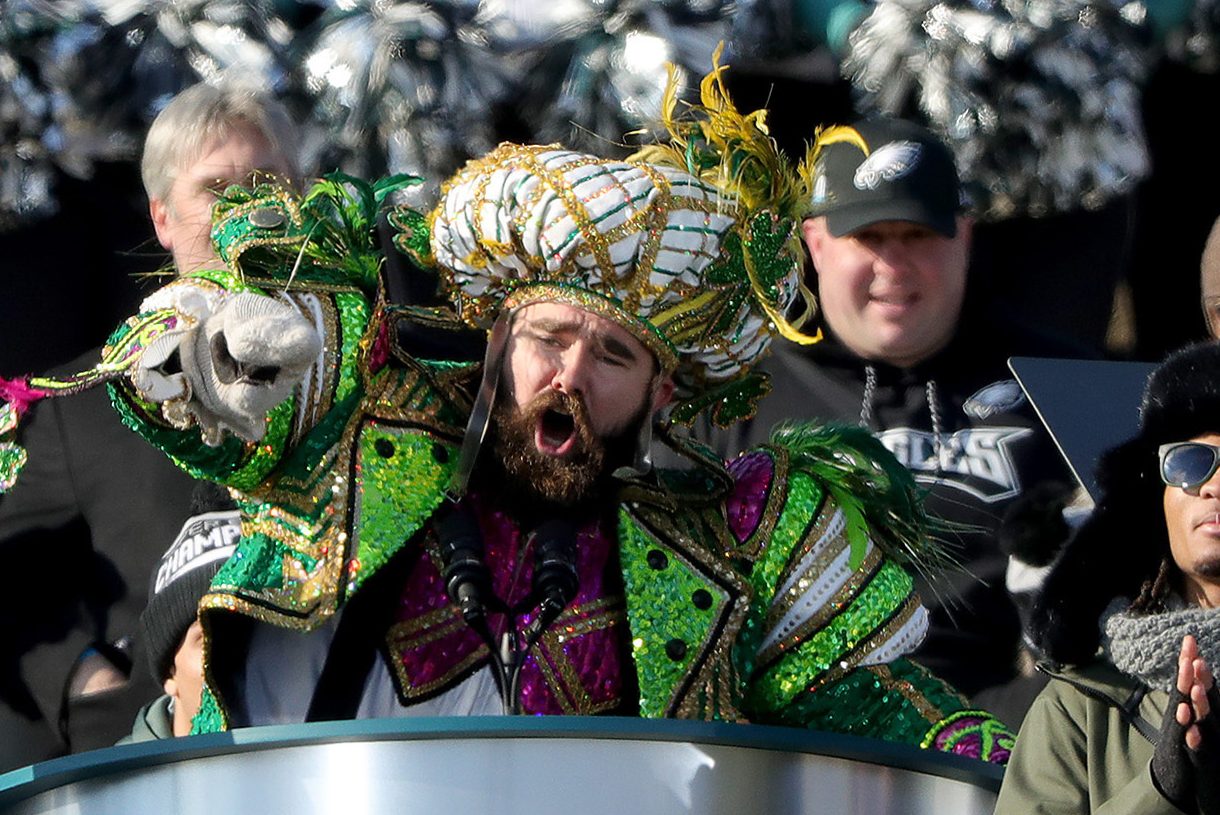
Former Eagles center Jason Kelce pauses during his colorful Super Bowl parade speech on the Art Museum steps while dressed in Mummers attire.
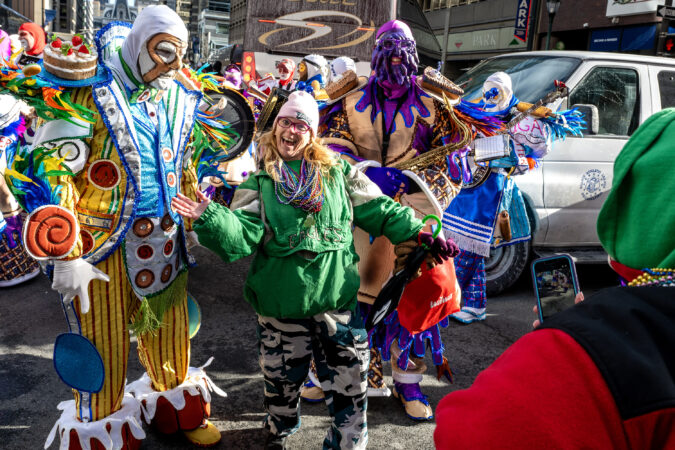
While all 14 string bands were able to march during the parade on New Year’s Day, the weather forced them to abandon their planned routines, and sent five people to the hospital. The postponement was the first in the parade’s 125-year history. Saturday’s event will give the bands an opportunity to show off their originally planned routines, which take months of planning and preparation.
“I’ve had a member of the Quaker City String Band reach out and just say, ‘Look, thank you so much, we put a lot of hard work in to do this, and to be able to showcase it at the stadium is awesome,’” Gumienny said. “It’s been super positive, and they’ve been super appreciative and such a good partner to work with. For us and our staff, we get to do something a little bit new and unique to us. But anything that shows off Philadelphia and shows off the stadium, we love it.”
For Gumienny, the chance to host the string bands is personal, too. In addition to his fond childhood memories of enjoying Port Richmond’s Polish American String Band, his late father-in-law was a captain of the Harrowgate String Band.
“Back as a little kid, I used to remember either going down to the parade or watching it on TV,” Gumienny said. “It doesn’t get much more Philly than the Mummers.”
Spectators looking to attend the String Band Spectacular can purchase general admission tickets through Ticketmaster. The event will be broadcast by WFMZ-TV, the same channel that broadcasts the parade on New Year’s Day.
Think you know your news? There’s only one way to find out. Welcome back to our weekly News Quiz — a quick way to see if your reading habits are sinking in and to put your local news knowledge to the test.
Question 1 of 10
A pair of topiary bears went viral for their pose outside a Southwest Philly strip club. How much did the owner of Sin City Cabaret Nightclub pay for the bawdy bears?
CorrectIncorrect. XX% of other readers got this question right.
The 8-foot bears cost $18,000. They were designed by celebrity topiary artist Joe Kyte, whose 2-acre topiary garden in Tellico Plains, Tenn. has churned out larger-than-life dragons, Formula 1 cars, and semi-realistic bottles of booze for clients ranging from Legoland and Ferrari to Absolut Vodka since 1992.
Question 2 of 10
D.C. bagel chain Call Your Mother is opening its first Philadelphia location in Fishtown. What color are they painting the building?
CorrectIncorrect. XX% of other readers got this question right.
Most of the building will be painted pink, the owners say. The expansion comes amid a bagel boom in the Philly area, including viral bagel chain PopUp Bagels coming to town and Bart’s Bagels of West Philly expanding. Penny’s Bagels is coming to Haddonfield this year, as well.
story continues after advertisement
Question 3 of 10
RJ Smith, the 21-year-old chef who has established a reputation doing pop-ups as Ocho Supper Club, is taking on a six-month residency at the restaurant space here:
CorrectIncorrect. XX% of other readers got this question right.
Smith’s Ocho Supper Club will begin a six-month residency at the Rittenhouse Hotel on Feb. 1, taking over the Scarpetta space ahead of construction on the Ruxton, a steakhouse from Atlas Restaurant Group due to open in 2027. Ocho’s run is expected to continue through July 26 — a month after Smith graduates from Drexel’s culinary program.
Question 4 of 10
Which 57-year-old Philadelphia dive bar is both responsible for popularizing the Citywide and hosting the city's longest-running drag show?
CorrectIncorrect. XX% of other readers got this question right.
Scads of Philadelphians and passers-through have whiled hours away at Bob and Barbara’s, the 57-year-old South Street institution. The dive popularized Philly’s citywide: a PBR and shot of Jim Beam. It also hosts Philly’s longest-running drag show. It’s a bar for absolutely everyone and anyone, which readers love.
Question 5 of 10
Philly-born rapper Chill Moody has a new children’s book out. It’s all about Gia and her magical ___:
CorrectIncorrect. XX% of other readers got this question right.
The rapper wants Gia, the protagonist who rocks a red golf tee and wields magical golf clubs, to inspire more Black and brown children to take up golf. And be the next Dora, the Explorer.
Subscribe to The Philadelphia Inquirer
Our reporting is directly supported by reader subscriptions. If you want more journalism like this story, please subscribe today.
Philadelphia’s African American Museum is showcasing six costumes from a popular movie as part of a traveling exhibit. Which film are the costumes from?
CorrectIncorrect. XX% of other readers got this question right.
Ruth E. Carter's designs for Michael B. Jordan and the Sinners cast are a part of the museum's 250th birthday celebration, and will be on display through September. That includes Smoke and Stack’s (twins played by Jordan) memorable 1930s-era three-piece suits, with complementary fedora and newsboy cap, time pieces, and tiepins.
Question 7 of 10
Stephanie Stronsick of Berks County is intentionally housing, rescuing, and rehabilitating this animal — that is considered a pest by some — inside her home.
CorrectIncorrect. XX% of other readers got this question right.
Stronsick is the founder and executive director of Pennsylvania Bat Conservation and Rehabilitation (PA Bat Rescue), a nonprofit that underwent a major overhaul last year. She’d like the bats to leave, ideally, but only after they’ve healed. Currently, the facility is treating over 100 bats for injuries and illness.
Question 8 of 10
What activity does the University of Delaware's new president take part in with students and staff?
CorrectIncorrect. XX% of other readers got this question right.
On Thursdays at 7 a.m., Laura Carlson, faculty, staff, and students run a five-kilometer loop through campus. Typically, 10 to 20 people show. “Rain or shine, we run down to the track on South Campus, loop the track and come back,” said Carlson, 60, who began the treks as interim president last summer and is continuing them in her permanent role, which started earlier this month.
Question 9 of 10
A Super Bowl ad that’s already being previewed will feature Lincoln, the bald eagle who flies over Birds games, befriending whom?
CorrectIncorrect. XX% of other readers got this question right.
Lincoln, the 28-year-old bald eagle, will star alongside a Clydesdale in this year’s Budweiser Super Bowl LX spot titled “American Icons.” The ad follows Lincoln’s friendship with the iconic horse playing under the appropriate sounds of Lynyrd Skynyrd’s “Free Bird.” The 60-second in-game spot will air during the Super Bowl.
Question 10 of 10
Following a directive from the Trump administration, informational exhibits about slavery were removed by the National Park Service from the President’s House Site last week. The removal sparked outrage, national media coverage, and a lawsuit. As part of the city’s injunction, the fate of the removed panels has been revealed. What happened to them or where are they?
CorrectIncorrect. XX% of other readers got this question right.
The panels are being kept in storage at the National Constitution Center, according to a legal filing from the Trump administration. The exhibits will remain in the park service’s custody at the center, down the street from the President’s House, pending the outcome of the City of Philadelphia’s federal lawsuit against the Department of Interior and the National Park Service for taking down the exhibits.
Your Results
You have skipped .
You scored XX out of 10.
The average reader scored XX out of 10
Seems like you’ve been skimming more than reading there, buddy. There’s always next week.
You’ve read some articles (or made some educated guesses) but we wouldn’t come to you first for our local news recaps. Better luck next week!
Do you work here? You’re a local news stan with the latest updates on Philly happenings. Your friends definitely ask you for summaries on what’s going on and it shows.
Before 9.3 inches of snow and sleet blanketed Philadelphia, in the biggest snowfall the city has seen in a decade, officials were adamant: Shovel or face a fine.
In a news conference last week, Director of Clean and Green Initiatives Carlton Williams said residents would have six hours to shovel after the last bit of snow fell. Failure to do so could result in a $300 fine.
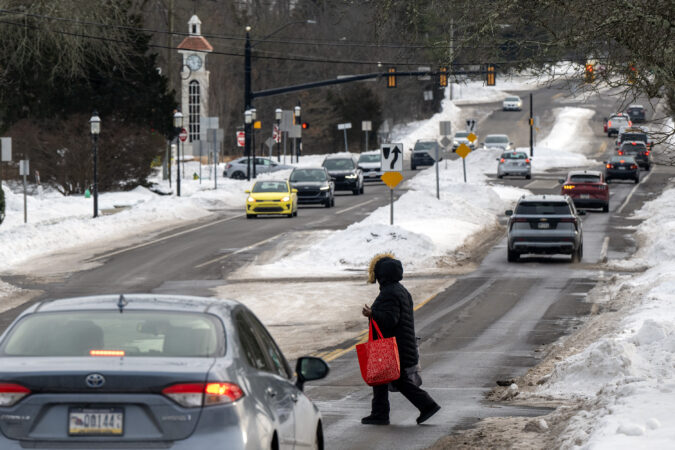
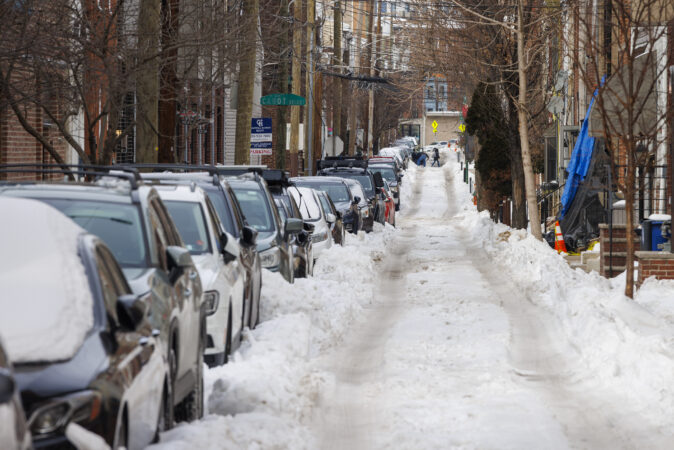
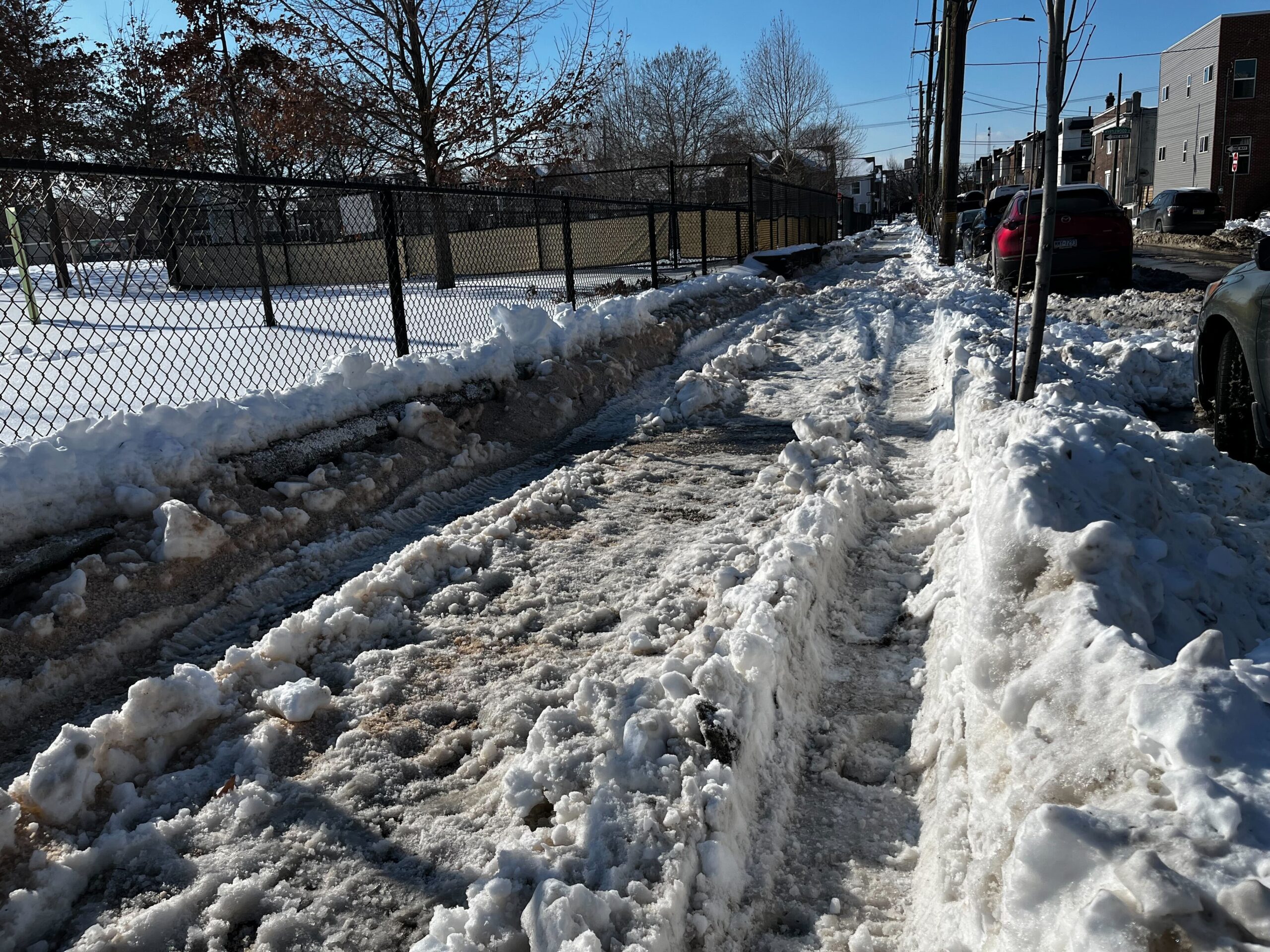
But four days after the last icy flake fell, residents across Philadelphia say the city has set a bad example on the shoveling front, noting various city-owned properties, many of them parks, remain inaccessible for people with strollers, wheelchairs, and those who have limited mobility, and a frigid obstacle for even the most nimble.
“It feels emblematic of the city’s attitude towards its residents, where it’s like they have rules and laws for everybody, but if they can’t manage to do something, it’s like, ‘We don’t have the resources. People need to be patient. We’re trying,’” said Coryn Wolk of Cedar Park.
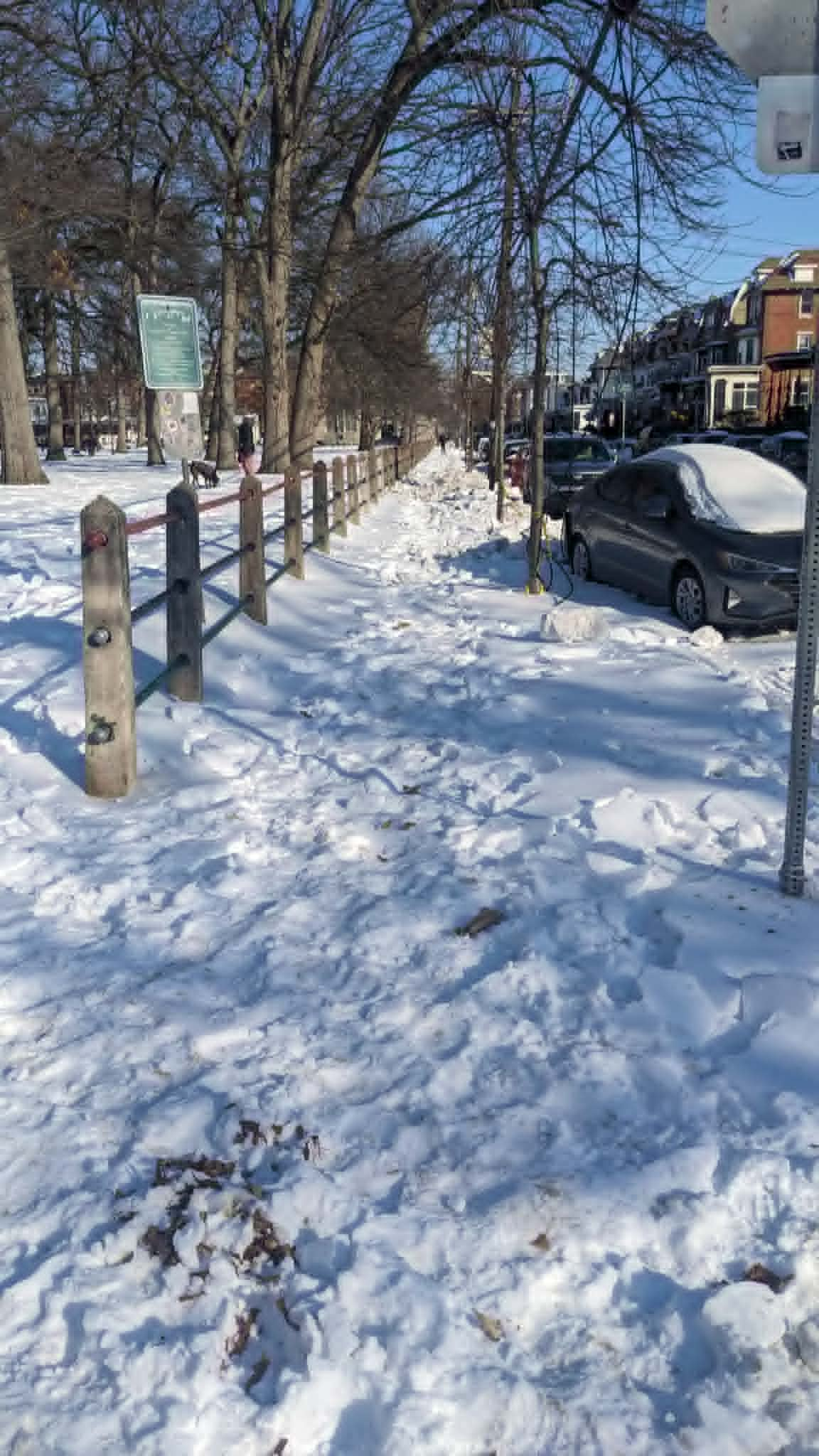
The 36-year-old said she does have some sympathy for the city, as do many others, because it isresponsible for so many sidewalks and buildings, and the icy weather isn’t helping cleanup efforts. But as she walked through Malcolm X Park Thursday, frustration set in as she trudged through a sidewalk of tightly packed, icy snow.
The city did not respond to a request for comment regarding shoveling issues but its rules say paths on sidewalks must be three feet wide. Those on streets with sidewalks less than three feet wide can carve out paths that are one foot wide.
A sidewalk of Malcom X Park in West Philadelphia on Thursday, Jan. 29, 2026.
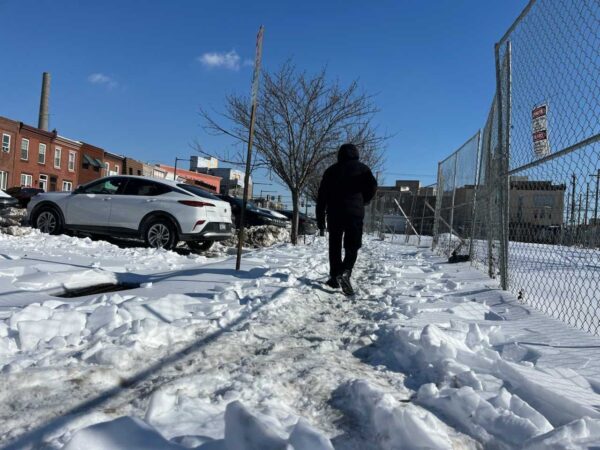
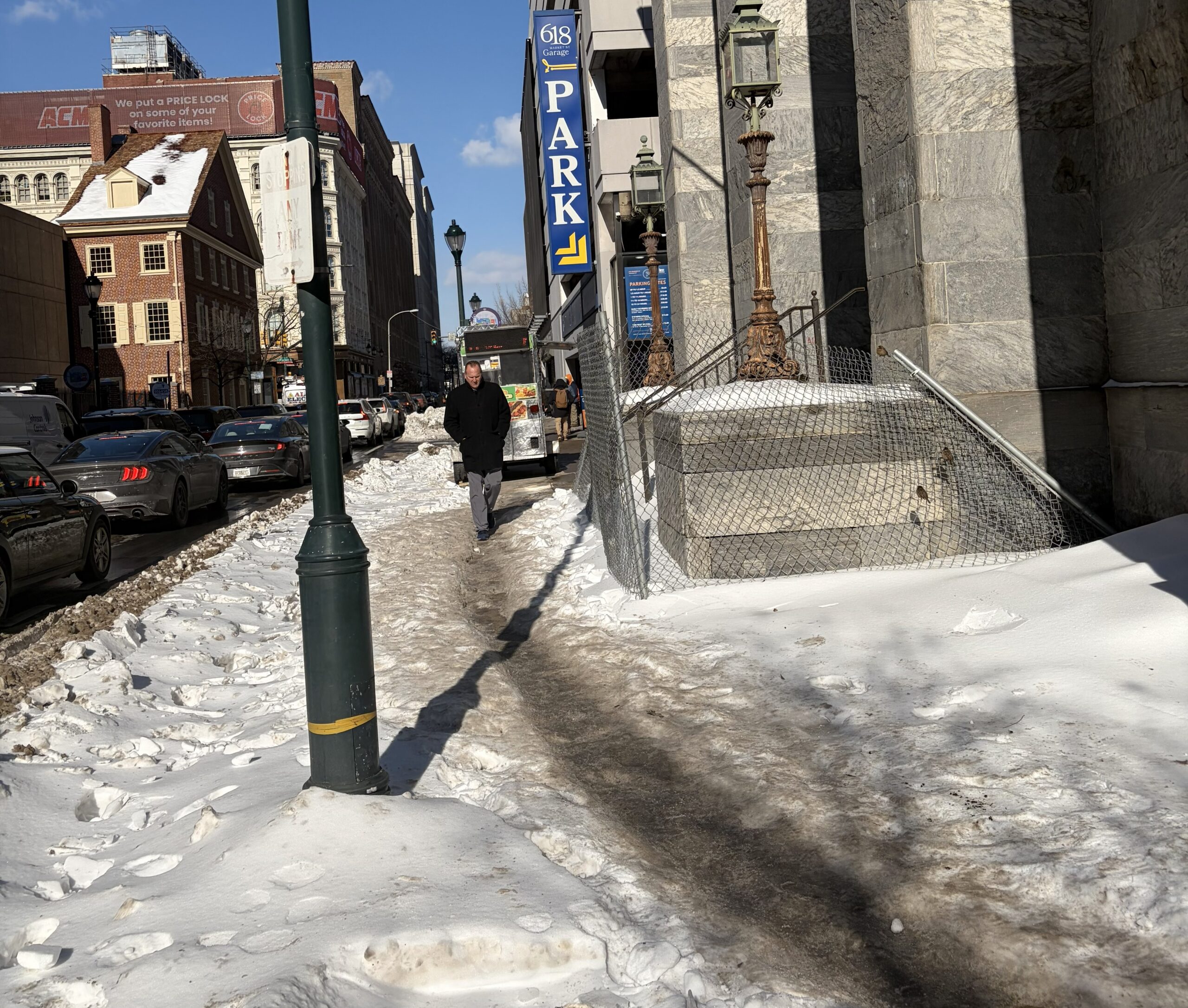
Still, Greys Ferry’s Lanier Park, Ridgeway Park in the Hawthorne section of the city, and Cobbs Creek Park also had sidewalks covered by a trampled layer of gray and yellow snow Thursday. In Center City, outside the former Philadelphia History Museum, another city-owned property, passersby had molded a narrow path that should have been shoveled.
A sidewalk along Lanier Park in Grays Ferry on Thursday, Jan. 29, 2026.
Residents say the problem extends to trolley and bus stops that line streets, describing large mounds of snow they need to climb like athletes to reach their modes of transportation.
Chase Howell, 29, described a herculean snow trudge through Center City with the child she nannies Wednesday. In one instance, she tried to catch the Route 4 bus along Broad and Spruce Streets only to find there was “no way to access the bus lane” because of snow pileups. To her disappointment, the next bus shelter north “was halfheartedly shoveled a foot wide but incredibly slippery.”
In the process of lifting and pushing the stroller, Howell hurt her back, but she said that’s secondary in herwhole ordeal.
The city owes residents who use wheelchairs more than this, she said. “City curbs should be shoveled three feet wide just as the requirement is for residences and businesses.”
Those stops and bus shelters are not under SEPTA’s purview. The responsibility of cleanup falls to the city and others who own property next to the stops, according to the agency’s spokesperson Andrew Busch. SEPTA, however, is responsible for the bus stops at the major transit hubs and clearing platforms, entrances, lots, and other areas at train stations.
Walking around West Philadelphia, Razan Idris has seen plenty of businesses and properties that have also neglected to clear their sidewalks. But she thinks the cleanup is part of a larger issue that can be applied to property owners who don’t pick up trash or who let their buildings rot.
“I see it as kind of the same thing, like there is little to no accountability for whoever is owning a building or an area or a lot,” said the 30-year-old.
But ultimately, the buck stops with the city, said Idris.
The former Philadelphia History Museum, which is city-owned, on Thursday, Jan. 29, 2026.
By failing to care for public sidewalks surrounding parks and municipal properties, other residents feel the city is sending a message that the rules on shoveling aren’t being enforced.
In South Philly, pedestrians trudged through crusty snow on the sidewalk along West Passyunk Avenue next to the former Melrose Diner. The sidewalk looked like it hadn’t been shoveled since the storm hit last week.
The property is owned by M R Realty Limited Partnership, state records show. Business owner Michael Petrogiannis did not respond to a request for comment.
A passerby, who only identified himself as Derek, complained about how some property owners leave their neighbors with the responsibility of making the sidewalks safe for use.
“They don’t come out and shovel,” he said. “So I’m the one shoveling for them.”
Staff writers Henry Savage and Max Marin contributed to this article.