Pennsylvania’s Republican lawmakers are on the verge of deepening the state’s pharmacy access crisis — and Black and brown communities will pay the highest price.
Earlier this year, three Republican state senators announced intended legislation that purports to “protect” Pennsylvanians’ access to care. While not yet introduced, this proposed legislation would do the opposite, forcing the closure of chain pharmacies that are owned by companies that also own pharmacy benefit managers.
Verbatim, the announcement says the bill would, “prohibit PBMs from holding a pharmacy license in Pennsylvania.” If enacted, hundreds of brick-and-mortar and mail-order pharmacies could lose their licenses and be forced to shut down.
Closing pharmacies is not protection. It is a deliberate harm to vulnerable seniors, working families, and the communities that already struggle most to access care. Academic studies document that socioeconomic barriers can influence access to pharmacies.
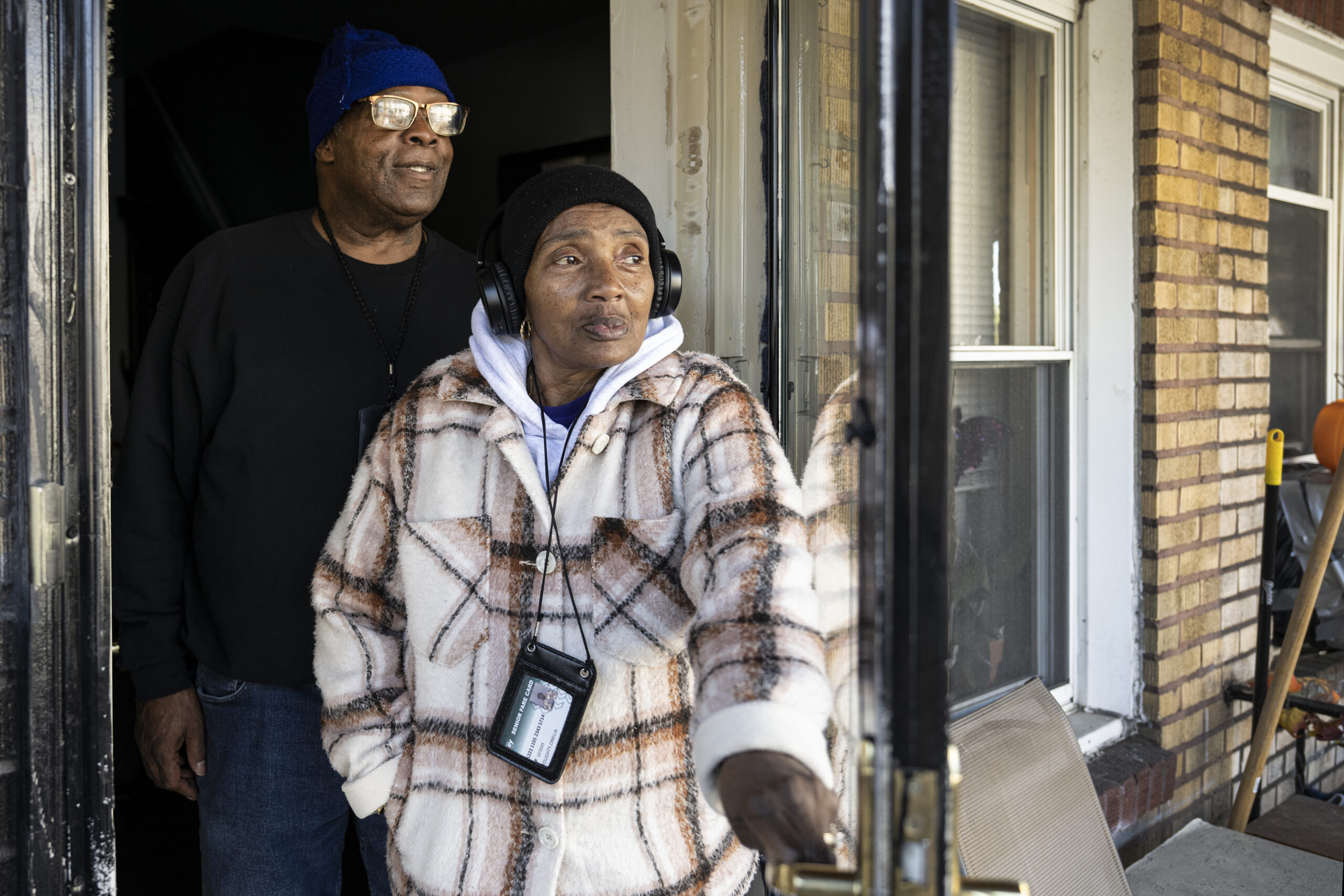
Ronald and Onelia Doughty, photographed at their Grays Ferry home in November 2023, take dozens of medications between them for various health conditions. But to get those medications, Ronald, who walks with a cane, now has to get a bus to South Broad Street or borrow a car from his son who lives in West Philadelphia. Their neighborhood Rite Aid was among those that closed earlier in 2023.
Residents in predominantly Black and brown neighborhoods in Philadelphia, Pittsburgh, and Allentown, as well as those in rural townships, already face long distances and real hardships just to fill a prescription.
The health stakes are high. Hispanic Pennsylvanians, in particular, experience higher risk factors for chronic disease, asthma, and multiple cancers than white residents. Managing chronic conditions requires consistent, affordable access to medication — and when that access is severed, patients split pills, skip doses, or abandon prescriptions entirely.
Managing chronic conditions requires consistent, affordable access to medication — and when that access is severed, vulnerable communities are the most impacted.
Medication adherence is already lower in minority communities. This legislation would make a serious problem catastrophic.
Proponents argue that independent pharmacies can fill the void. We’ve seen how that plays out. When Rite Aid collapsed, independent pharmacists reported being overwhelmed, creating waitlists and turning away patients on less profitable insurance plans. The chaos that followed will repeat — and intensify — if hundreds more pharmacies are shuttered at once.
This legislation also ignores legal reality. Arkansas passed a similar law that was immediately halted in federal court for violating the Commerce Clause and interfering with TRICARE, the healthcare program for veterans and military families. Tennessee faced fierce opposition from patient advocates and state Medicare officials.
Pennsylvania should avoid repeating these costly mistakes.
Pennsylvania’s Act 77, passed in 2024, already established meaningful oversight, transparency, and fairness in pharmacy benefit management — with the explicit goal of preventing pharmacy closures. These new proposals directly contradict that intent.
Communities of color cannot absorb more neglect. The National Hispanic Health Foundation strongly opposes this legislation and urges its immediate rejection.
Pennsylvania’s must instead pursue reforms that strengthen — not destroy — the healthcare lifelines our communities rely on.
Elena Rios is president of the National Hispanic Health Foundation, a leading national organization dedicated to transforming the healthcare system through leadership, research, and education to improve the health of Hispanics.
Last month’s summit in Beijing between Donald Trump and Xi Jinping, the presidents of the world’s largest economies, drove home the magnitude of the crisis facing democracy. At the scale of decisions affecting billions of people, nobody was properly represented.
Trump and Xi were negotiating for all of us, but representative of hardly any of us, whether American, Chinese, or, like most of the world, completely voiceless in the selection of either leader.
Americans have a bigger say than most nations in the selection of their leaders, but when the leader of the world’s preeminent representative democracy is openly envying the power of the leader of the world’s biggest autocracy, we know that democracy is in trouble.
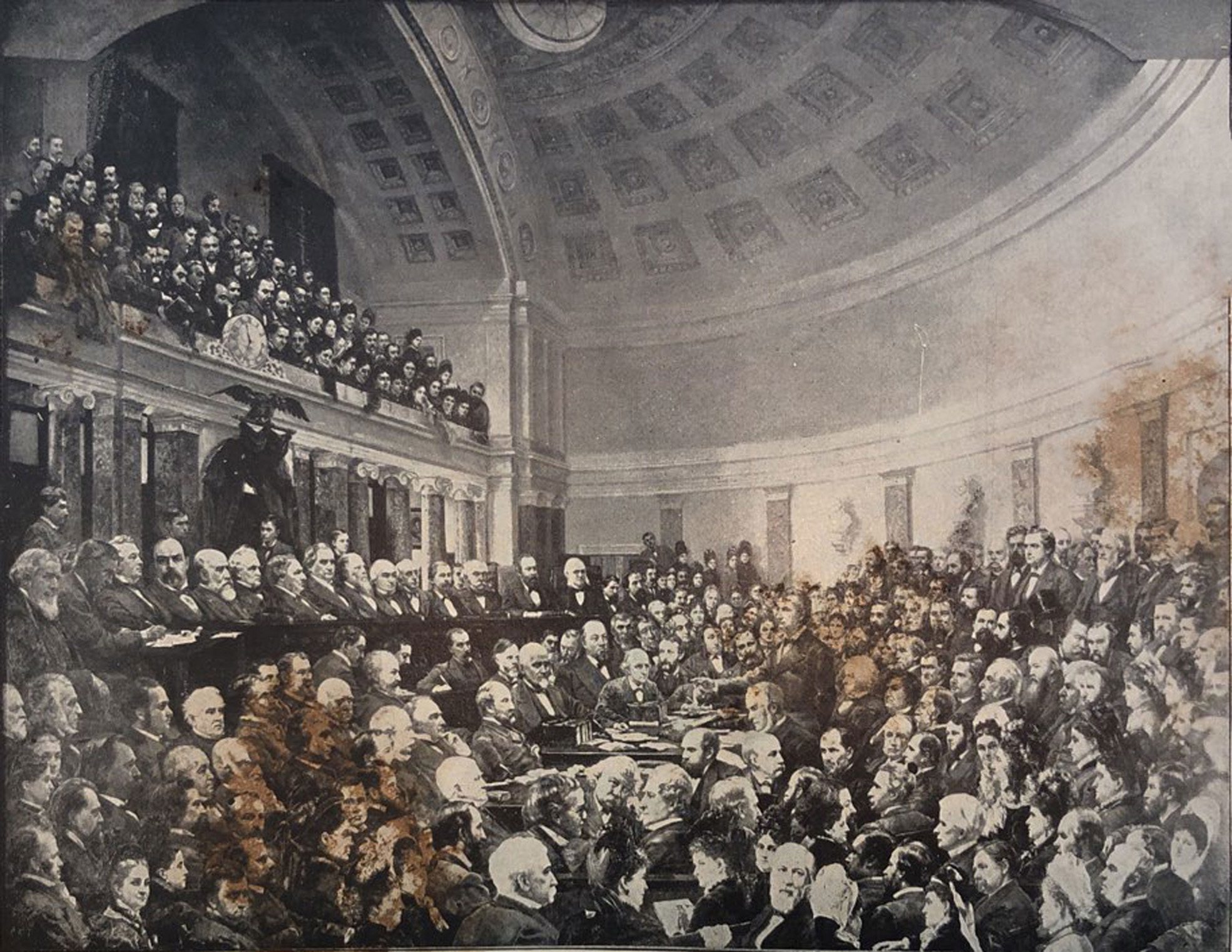
In 1787, the Constitutional Convention in Philadelphia hammered out a blueprint for representative democracy. Today, we are in a crisis because democracy has failed to scale up to fit the nearly 100-fold growth in population since then. We need to think of alternative ways of ensuring that diverse interests and diverse expertise are represented for the good of the people. We need a new constitutional convention.
In 1787, the Constitutional Convention in Philadelphia hammered out a blueprint for representative democracy, writes Colin Allen.
This is not the first time that democracy has failed to scale.
Athenian direct representation was only barely functional at the scale of the Greek city-state. Even though only male landowners were enfranchised, it was still impossible to accommodate them all at once in the Pnyx, so each voter was required to show up only for a subset of the votes.
It took another two millennia to invent representative democracy: a manageable number of legislators, each of them elected to represent the interests of thousands of people. The first U.S. census in 1790 recorded just shy of 4 million inhabitants. The newly formed House of Representatives had 65 members: roughly one per 60,000 people.
Today, over 331 million Americans are represented by 435 members: a ratio of roughly 1 to every 760,000. Not only is each member tasked with representing so many more people, but the diversity of interests in each constituency and the sheer range of issues that must be addressed at this scale mean that practically nobody is properly represented on all issues.
Voting often feels like selecting the lesser of several evils, and is at best a compromise forced by the need to decide which issue is most important to you, writes Colin Allen.
Electors face impossible choices. The chance that any one candidate represents all of a voter’s views is vanishingly small. Casting a ballot often feels like selecting the lesser of several evils, and is at best a compromise forced by the need to decide which issue is most important. At worst, voters disengage entirely or resort to preferring qualities that would be more suitable for dominance contests among apes. These problems are aggravated because social media has fractured communal purpose, and gerrymandering is splitting natural constituencies.
The possibility of electing leaders with autocratic tendencies has always been a weakness of democracy. This weakness is magnified at scale: Larger, more diverse constituencies can come to seem ungovernable, favoring politicians who project strength. We need to grapple collectively with these problems and find better ways of allocating our votes among representatives whose values and expertise match the scope of their powers.
How might this be done?
The whole approach to democratic governance needs to be reengineered from the ground up. For example, the existing separation among legislative, executive, and judicial powers should be supplemented by erecting firewalls among different spheres of political decision-making.
Existing government departments (health, education, agriculture, defense, etc.) provide an initial sketch of where separate legislative bodies might be desirable. Separating legislative functions along these lines would serve to concentrate expertise where it is needed.
Legislation in one domain would no longer be encumbered by riders that belong in other domains. Funding of health or science initiatives would not be held hostage to disputes about unrelated matters. Reducing the scope of individual legislators would also make them less prone to targeting by the full spectrum of lobbyists.
The Nobel Prize-winning work of Elinor Ostrom, pictured here, showed how management of scarce common resources is often best handled through local self-governance.
We also need to rethink the relationship between geography and representation. Some areas of governance are inherently more tied to location than others. The Nobel Prize-winning work of Elinor Ostrom showed how management of scarce common resources is often best handled through local self-governance. People whose livelihoods depend on shared resources they jointly control make better decisions than those acting under rules imposed remotely.
Current political systems (whether democratic or not) aggregate legislative and economic power hierarchically over increasingly large geographic areas. This favors decisions by people who have little or no skin in the game when it comes to good stewardship of local resources. Hence, in the domains of agriculture or the environment for example, it makes sense that one’s choice of representative should be tied to your location.
But for other issues, such as justice and civil rights, national defense, or international trade, a voter’s interests and values may be better represented by someone living far away than by local politicians. At-large representation could provide a mechanism for voters to select representatives for domains where geographic location is less important. For some domains, a mixture of local and at-large representation may produce the best deliberative bodies and the greatest sense by voters that their views are adequately represented.
These ideas merely provide one set of suggestions. They admittedly bring new problems with them. An obvious challenge for multiple specialized legislative bodies is that of coordination among them. Possible solutions to be explored include constitutionally mandated joint sessions. Elected delegations from one legislature could also have voting rights in another. Other solutions come from the power of the purse.
I suggest giving some of that power back to the people by allowing voters to allocate a certain number of shares of the government’s total revenue to various legislative bodies. A pacifist might opt to allocate zero shares to defense while splitting the remainder 50-50 between health and education, for instance. Other voters with different priorities could steer the money differently. Such a scheme would help to address “not with my tax dollars” complaints that are often heard when people don’t like some government programs that others believe essential.
In a pluralistic society we can be fairly confident that the allocations emerging from these individual choices would keep the essential parts of the government going via the wisdom of crowds. But there are many reasons for retaining some degree of top-down control. An elected body specializing in finance and taxation would be particularly important. This body could be constitutionally mandated to control some percentage of the total budget, say 30% with the other 70% being allocated through voter preferences.
The finance body might itself consist of a mixture of at-large representatives and district-based representatives. It could be constitutionally mandated to allocate a substantial portion of revenues to domain-crossing projects, such as education that serves agriculture, or medical research that serves defense department needs, and it could also provide funding in cases where an urgent or unanticipated need has arisen.
I present these ideas in the spirit of trying to think creatively about how we can harness democracy for the large-scale challenges of the 21st century. I am sure that all of these proposals can be improved upon collectively through the mechanism of a constitutional convention.
Pie in the sky? Clearly this is not an overnight project. The Philadelphia Convention took place 11 years after the signing of the Declaration of Independence. The deliberations that occurred there were a matter of intense public scrutiny.
The Constitution took another two years to be ratified. Compromises were necessary and were made. We are still living with the effects of some of those compromises today. But something workable emerged, although it notoriously failed to treat all people as equal.
The system we have is no longer suited to a modern society in which hard-won gains of underrepresented groups are being rolled back by a Supreme Court that regards the application of the Constitution more as an academic exercise than a serious attempt to deal with all that has changed in the past 239 years.
Those on both wings can be suspicious of the motives of those on the other side, but all should be able to take seriously the idea that the United States has outgrown the clothes originally tailored for it almost 250 years ago.
Colin Allen is a distinguished professor of philosophy at University of California, Santa Barbara and a Public Voices fellow of the OpEd Project.
BELFAST, Northern Ireland — The morning of our walking tour of Belfast, my first task was to check Twitter for updates on local rioting the night before.
This tour covered “The Troubles” — the period in the 1970s when Catholics in Northern Ireland first marched for their civil rights, then escalated to vicious bombings to pressure the British Army to leave.
Now The Troubles 2.0 seemed to be erupting, threatening to plunge this weary city back into those dark times.
The spark was a shocking knife attack the evening of June 8; a Sudanese immigrant, who was in the country legally as a refugee, was charged in connection with it. The attempted beheading had been caught in a viral video so brutal it came with warnings.
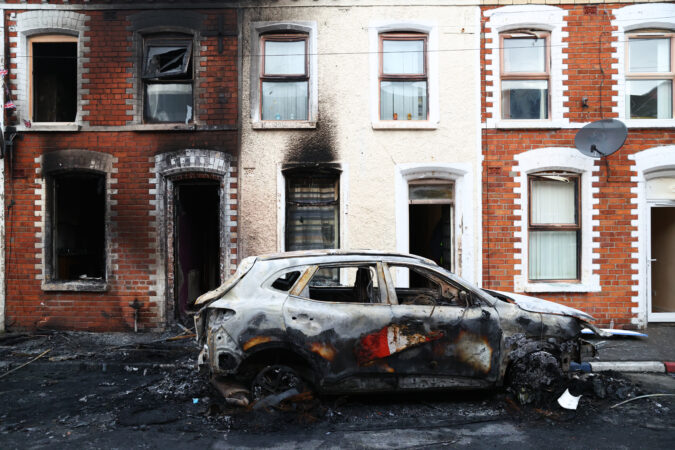
For the next two nights, violence flared in several neighborhoods. Masked rioters quickly set up barricades, burned cars, torched the homes of ethnic minorities, and pelted police with paving stones they’d pulled from the streets and smashed with sledgehammers.
A generation after the Good Friday Peace Accords ended sectarian violence in 1998, rioting techniques live on in the muscle memory of Belfast. Need something to chuck at police? Ask your Da — he’ll show you how to break up the paving stones.
News of the riots spread internationally, and soon I had to reassure worried relatives back in the States that our vacation itinerary kept us in the city center, miles away from any commotion. Fanning the flames in the U.S. were the likes of Steve Bannon and Elon Musk, who both cheered on the pushback against immigration.
Police attempt to disperse protesters near Newtownabbey, in Belfast, Northern Ireland, on June 10, following a stabbing incident two days earlier.
Yet over the next several days, a small miracle unfolded: There were two nights of rioting, followed by appeals for calm from the five main political parties, then a large peace march.
The march was even attended by 77-year old Gerry Adams, the reputed head of the Provisional Irish Republican Army who reinvented himself and went into politics. Earlier this week he wrote on Twitter, “Elon Musk and others who support these despicable actions from afar should shut up. Belfast says NO to racism.”
That a man whom many suspected was associated with flat-out terrorism was condemning the riots embodied the change that has taken root here.
Then lo and behold, the rioting stopped.
The incident actually dropped off the front page, temporarily replaced by this universal headline: “Belfast residents upset over pickleball noise.”
Belfast let the world know it has come too far — and its collective PTSD is still too raw — to be dragged back to that traumatizing era.
To be clear, riots or not, immigration remains a smoldering political issue in Northern Ireland. Immigrants from anywhere can apply for political asylum in any European Union country. Once that is granted, they are free to hop over to the Republic of Ireland, which is also in the EU.
From there, they can saunter into Northern Ireland without having to cross any physical border because all residents of the island are able to live, work, and travel freely between the two countries.
(As foreigners, we had to get a visa to enter the United Kingdom, but never had to show it to anyone. The only sign we’d driven across the border was a text message from Verizon, welcoming us to Northern Ireland.)
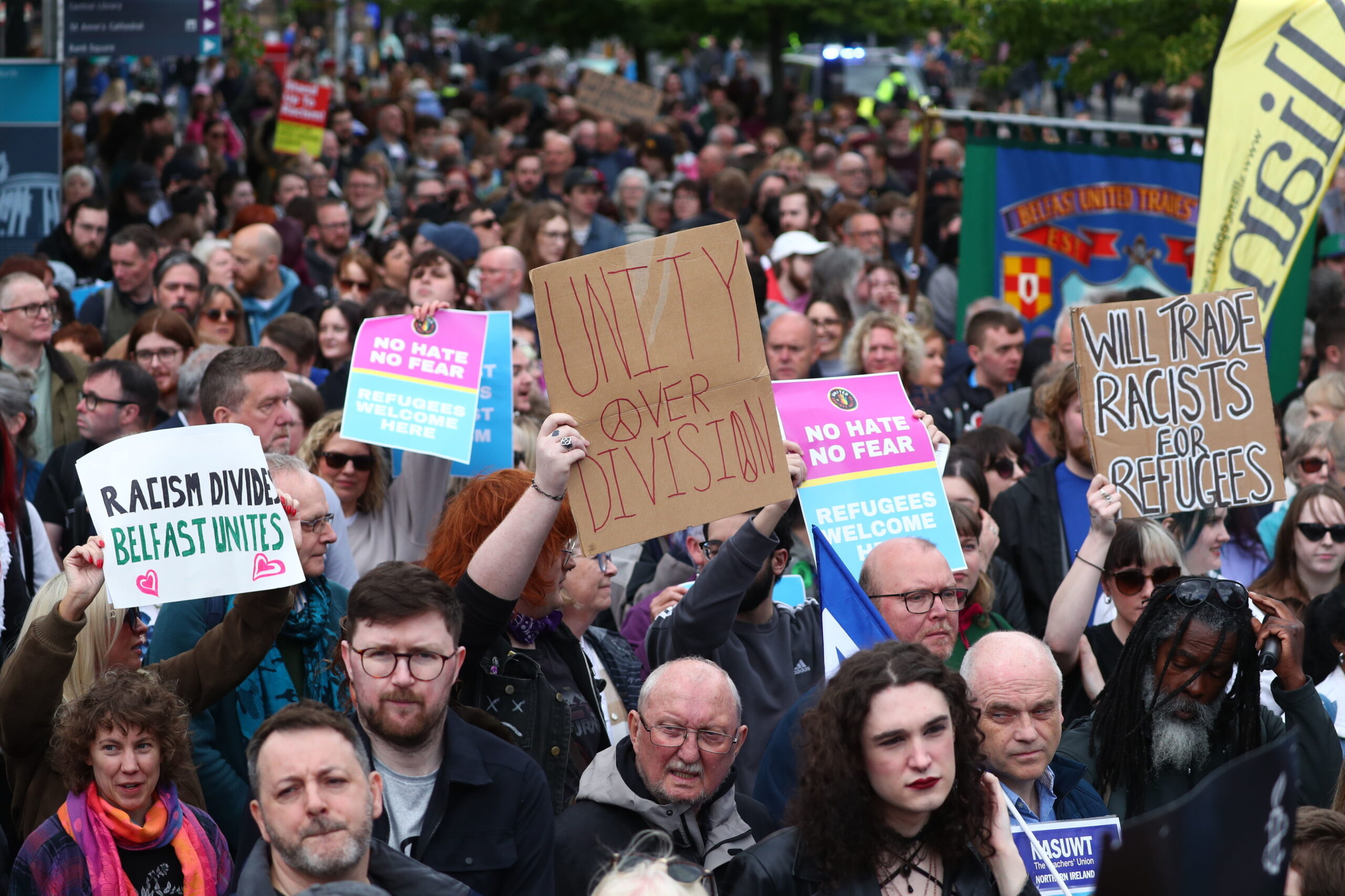
Demonstrators gather June 13 during an anti-racism rally outside Belfast City Hall sparked by a knife attack on a man in North Belfast.
That makes Northern Ireland’s immigration concerns world’s apart from those of the United States, no matter how hard Musk wants to link them. Both the details and the scale are vastly different.
Our tour guide, who wrote her doctoral dissertation about the generation born after the 1998 Peace Accords, said what bothered her most about these newest riots was the sight of “40-year-olds egging on teenagers.”
That view was echoed by the elderly proprietor of our bed-and-breakfast just south of the border the next day. She shook her head sadly, pursing her lips as she dismissed the rioters. “They’re just young tugs” — thugs, in her Irish brogue.
That generation has grown up in peace, spared the trauma of their elders. In the key years of The Troubles, 3,700 people were killed in bombings and executions, more than half of them civilians who were in the wrong place at the wrong time. Imagine if Pittsburgh, nearly the same size as Belfast, had seen that many deaths.
We heard sickening stories of “No warning” bombs, execution-style slayings of young off-duty British soldiers out for a night at a pub, and an unrelenting stream of tit-for-tat retaliatory killings.
It was a descent into pure madness, as chronicled in Belfast, actor Kenneth Branagh’s movie about his childhood, and Say Nothing, the true-crime novel about the 1972 disappearance of a widowed mother of 10 thought to be a police informant.
The long shadow of those tragic years denied Belfast the economic development that makes Dublin a robust city of building cranes. Tourists still visit Belfast to see the Titanic Museum, but the designer shops catering to them disappear just a few blocks from City Hall.
The city’s nightlife remains muted — a legacy of the “Ring of Steel,” the fortified perimeter of barriers, turnstiles, and military checkpoints installed by the British in 1972 to protect the city’s commercial center.
Strikingly absent from this tragic landscape is any public expression of grief. Memorials to the innocent victims of the bombing campaign are absent in the “shared space” of the city center, our guide said, because they are too polarizing.
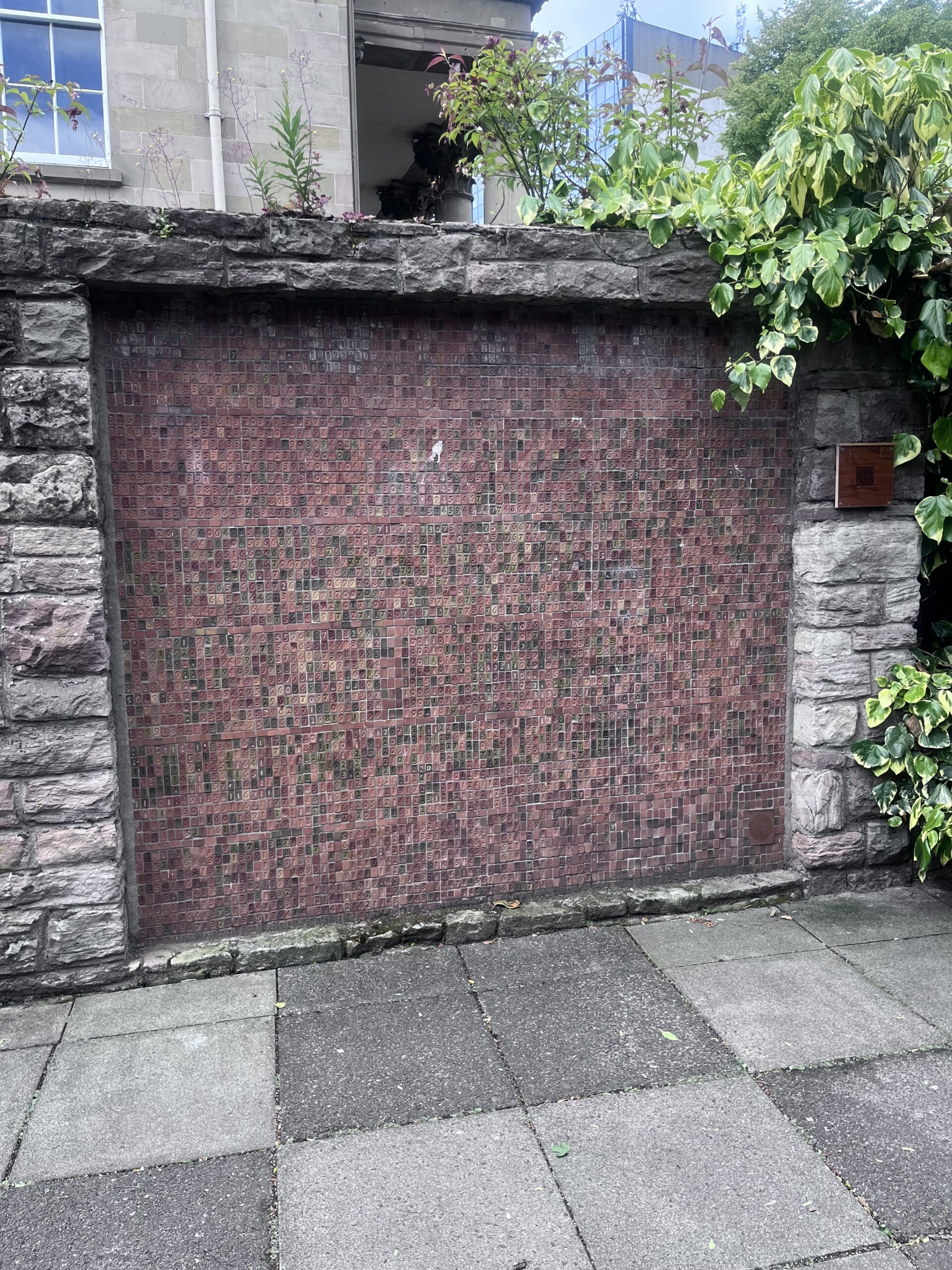
Instead, a discreet panel of ceramic tiles is embedded in a wall in Jubilee Square. Called the “Numbers Wall,” it assigns a digit to each of the first 1,500 victims of sectarian violence. However, it comes with no key, no way of telling which number represents which person. That’s intentional — a statement that each loss is equal.
The “Numbers Wall” in Jubilee Square in Belfast, Northern Ireland honors each of the first 1,500 victims of sectarian violence in Northern Ireland.
Our vacation itinerary also took us 125 miles to the west, where a picturesque County Sligo harbor village has its own link to The Troubles. It’s where an IRA bomb killed Lord Mountbatten on his fishing boat in 1979, an attack designed to devastate Britain’s royal family. (See Season 4, Episode 1 of The Crown.)
Here, too, there is little in the way of a public memorial. There was a photograph displayed of the 2015 reconciliation visit by Prince (now King) Charles and his wife Camilla, but since the harbor is in the Republic of Ireland, it was soon vandalized, Charles’ face scratched out.
Instead, our travels through Northern Ireland revealed many examples of artwork dedicated to peace. There is a Peace Bridge in Derry/Londonderry, peace statues and murals in Belfast, and “Peace Walls” in both. Such walls are there not to celebrate a solid peace, but rather to help protect a fragile one by separating neighborhoods.
Our Derry tour guide, who as a teenager hid under his bed whenever he heard bombs explode nearby, summed up the irony of the term: “They’re evidence we’re not in a perfect peace.”
Perhaps this last week has shown Northern Ireland’s peace may be sturdier than people thought. It teetered for a few days, but Belfast displayed the resolve it showed three decades ago, when 71% of Northern Ireland residents voted in favor of the Peace Accords, turning a page on violence.
For a city in which everyone over the age of 30 is likely to have known a victim of The Troubles, peace is more than the absence of violence. It is a tangible state of being — and precious enough to be nurtured and protected.
Kathleen OʼBrien is a retired newspaper columnist who lives in North Jersey. While her recent DNA analysis shows her to be 78% Irish, she returned from her trip feeling 100% American.
Haiti’s June 19 World Cup match against soccer’s most decorated nation, Brazil, held at Philadelphia’s Lincoln Financial Field, encapsulates the contradictions at the heart of FIFA’s flagship event this summer.
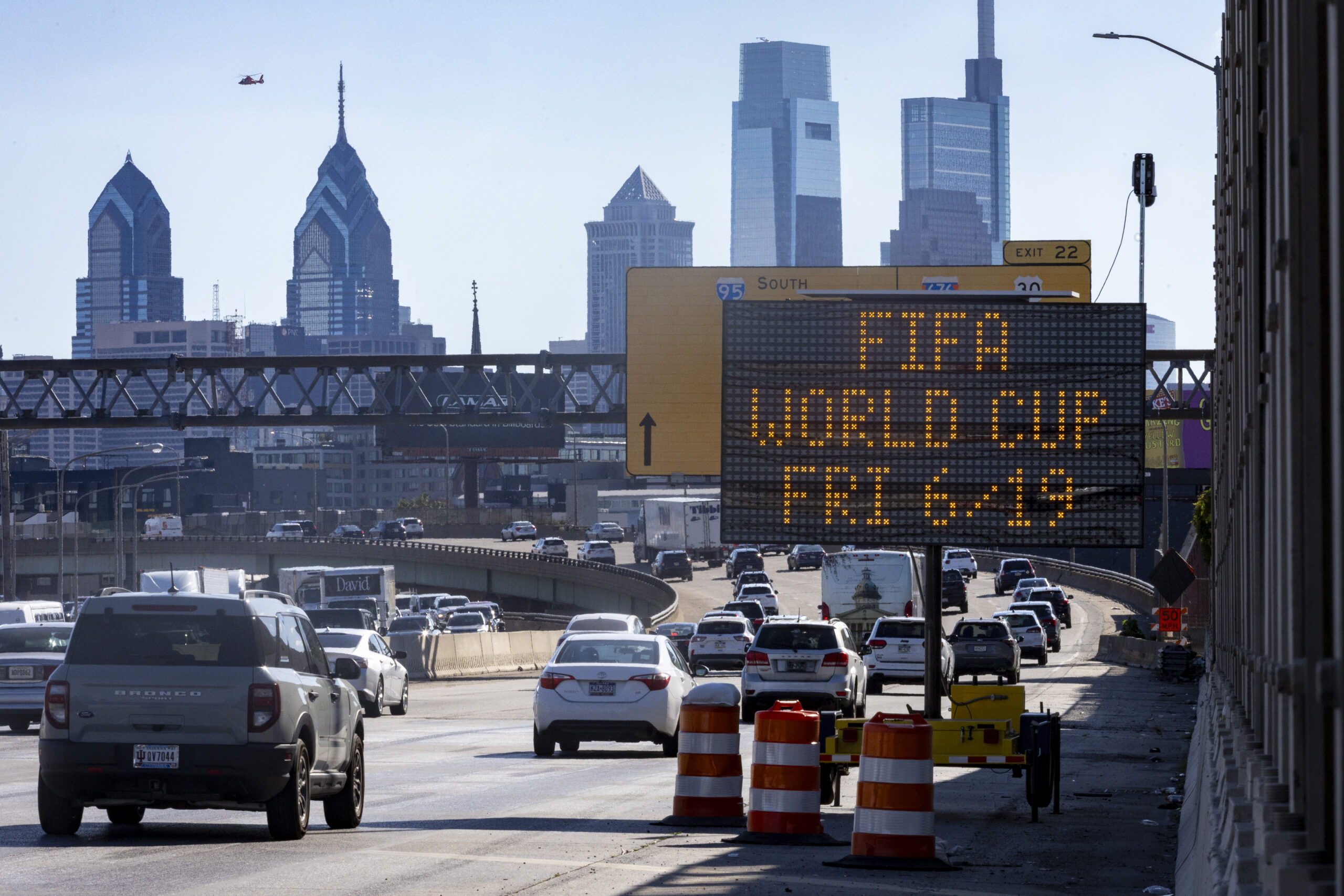
A traffic sign on I-95 informs drivers of expected traffic delays to occur because of the World Cup match — Brazil is set to face Haiti — on Friday at Lincoln Financial Field in Philadelphia.
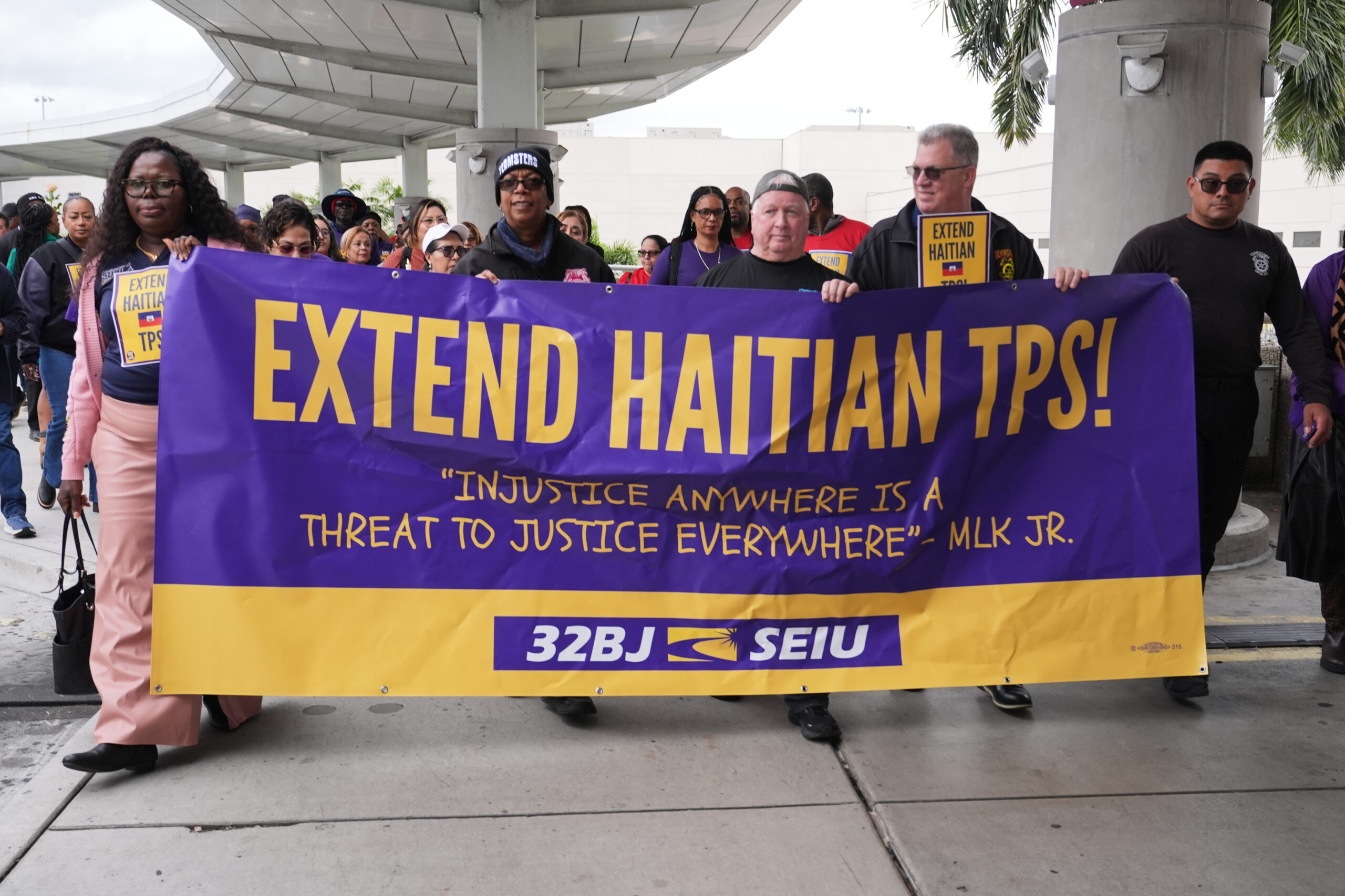
The World Cup — and Haiti’s first appearance in it since 1974 — is a welcome distraction from the humanitarian and security crisis at home. For many Haitians, however, the Trump administration’s cruel immigration policies, including its effort to terminate this Caribbean country’s temporary protected status (TPS) — a form of protection against deportation to dangerous situations — casts a shadow over the tournament.
Since a catastrophic 2010 earthquake, Haitians have dealt with one disaster after another, including a cholera epidemic, devastating hurricanes, increasing violence, and chronic political instability.
The current crisis, during which criminal groups have consolidated control over most of the capital, Port-au-Prince, and expanded to at least four more of Haiti’s 10 regions, has killed thousands, displaced more than 1.5 million people, and led to widespread sexual violence.
Even before the World Cup began, the odds were stacked against Haiti’s “Grenadiers” — a nickname that pays homage to the revolutionary soldiers who fought for Haiti’s independence in 1804. The squad managed to top their regional qualifying group for the tournament despite not being able to play a single game on home soil; their national stadium is in an area controlled by criminal groups. It was a remarkable feat — one that ended Haiti’s 52-year wait to participate in another World Cup, and became a source of immense pride for Haitian soccer fans around the world.
Haiti fans cheer during the World Cup Group C soccer match between Haiti and Scotland in Foxborough, Mass., near Boston, on June 13.
For the coming weeks, Haitians will be celebrated on the world stage and their players welcomed with open arms, but their fans may find their paths to the stadiums — or to the United States itself — inaccessible.
In Philadelphia, many by now will have already seen proud Haitian fans sporting their team’s blue and red jerseys. But while the World Cup inspires hope and pride for Haitians living in the U.S., the Trump administration’s immigration policies, including the possibility of U.S. Immigration and Customs Enforcement presence at or near World Cup venues, may elicit anxiety, fear, and exclusion.
Haiti is one of 39 countries affected by U.S. government travel restrictions that prevent fans from supporting their countries in person this summer. Although the ban includes an exception for athletes, Woodensky Pierre, the only Haitian player based in the country, missed a vital pre-tournament match after his U.S. visa wasn’t approved in time. He landed at Miami airport shortly after the game began and was later embraced by his teammates on the pitch at the final whistle.
It is the attempts to terminate Haitians’ temporary protected status, however, that pose the most serious human rights concerns for Haitians who are already in Philadelphia and other cities.
Under U.S. law, the Department of Homeland Security can designate a country for this status when conflict, environmental disasters, or other circumstances temporarily prevent its nationals from returning safely, or when the country cannot adequately handle their return.
TPS protects beneficiaries from removal, allows them to apply for work and travel authorization, and prevents Homeland Security officials from detaining them solely based on their immigration status.
Haiti first received this designation after the 2010 earthquake. Since then, and because conditions in Haiti itself have not improved, hundreds of thousands of Haitians in the U.S. have built lives, raised families, and become essential contributors to local communities, including in Philadelphia. Approximately 330,000 Haitians now have TPS in the United States.
Haitian TPS holders in the U.S. need stability, protection, and a durable path forward, writes Robbie Newton.
The Trump administration is now trying to strip Haitians of this protection.
Despite clear evidence that the human rights crisis in Haiti is worsening, the Department of Homeland Security insists that “country conditions have improved to the point where Haitians can return home safely.” A Supreme Court decision on the legality of ending this protection is expected this summer.
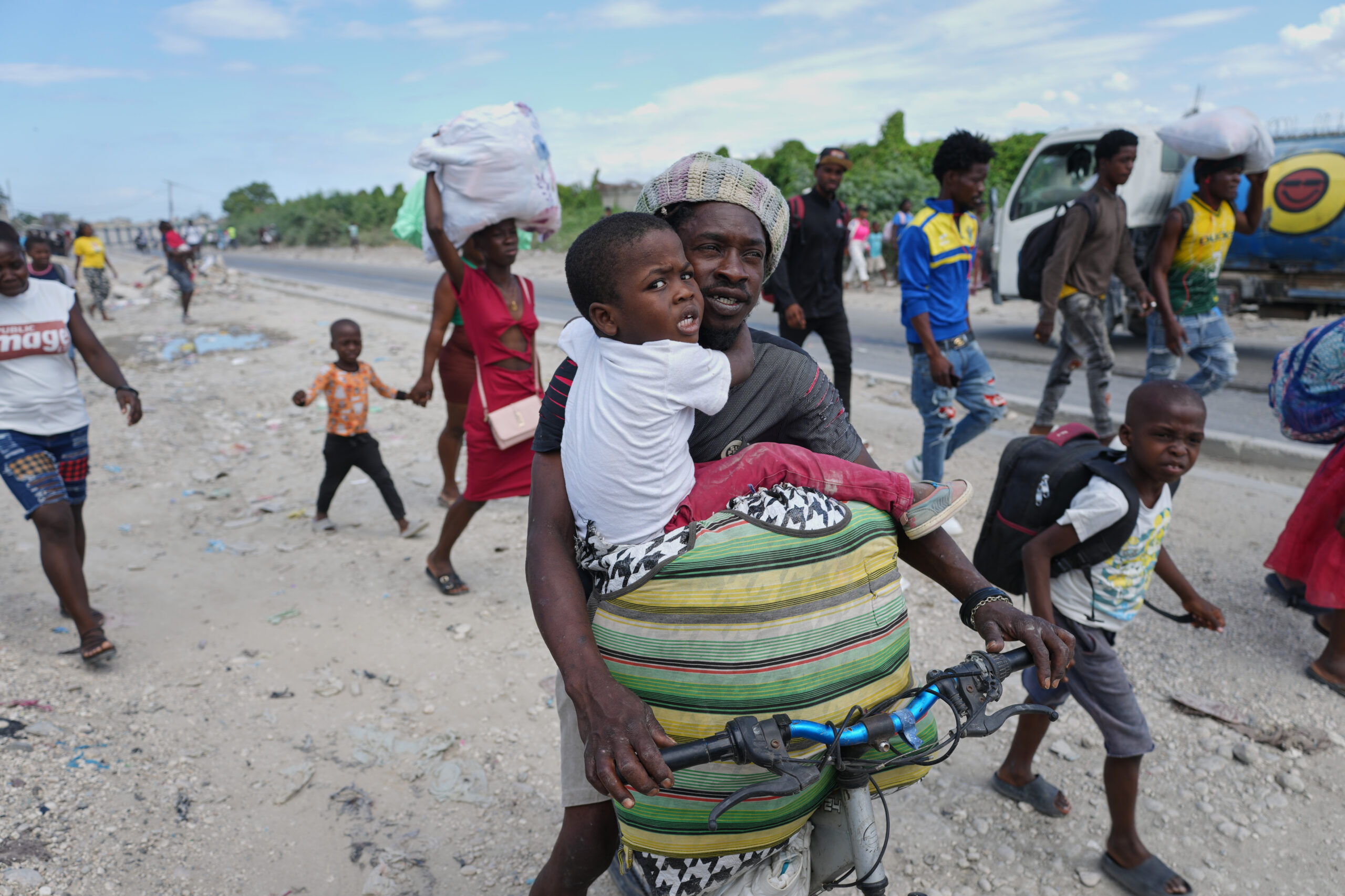
Residents flee their homes to escape clashes between armed gangs in Port-au-Prince, Haiti, in May.
Terminating the protection would have devastating consequences, exposing hundreds of thousands of Haitians to detention and possible return to the “cataclysmic” situation unfolding at home, where they would face serious risks of kidnapping, extortion, and other abuses by criminal groups.
For the 15,000 Haitians protected by TPS in the state of Pennsylvania, making it to the World Cup and cheering on their team represents a powerful symbol of hope and unity at a precarious time for the community.
Other soccer fans who root for the underdog will very likely cheer on Haiti as it makes its way through all of its Group C matches (and, hopefully, into the knockout stage). But support for Haiti should extend beyond the World Cup. The U.S. government should renew temporary protected status for Haitians.
Haiti’s Grenadiers deserve their place at the World Cup. For Haitian TPS holders in the U.S., the stakes go far beyond the tournament.
Robbie Newton is a senior coordinator and in the sport and human rights team at HumanRights Watch.
I’ve been thinking a lot about the speech Frederick Douglass gave on the 76th anniversary of the signing of the Declaration of Independence. Posed as a question, “What to the Slave is the Fourth of July?” the answer written in commentary form hasn’t lost its power or relevance in Philadelphia in 2026: “What, to the American slave, is your Fourth of July? I answer: a day that reveals to him, more than all other days in the year, the gross injustice and cruelty to which he is the constant victim.”
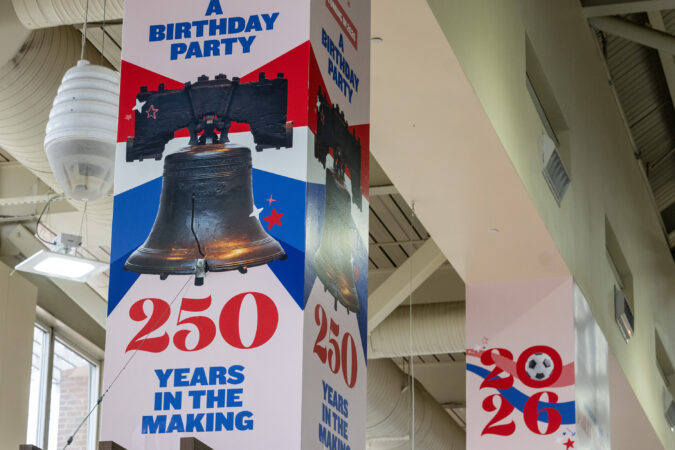
This summer will place Philadelphia in the spotlight not only with the celebration of America’s Semiquincentennial, but also as a host city for the FIFA World Cup, the PGA Championship, and the MLB All-Star Game.
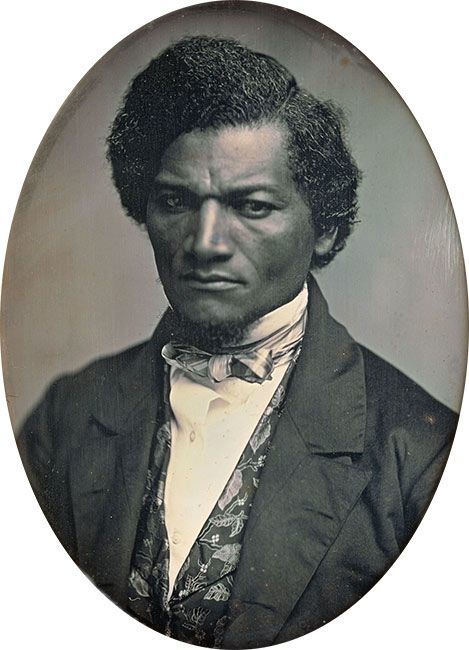
Frederick Douglass, ca. 1847-1852.
Just as Douglass decried our delusions of progress and challenged why victims of a broken system would celebrate their own oppression, we see that patterns repeat.
Soccer jerseys on exhibit at at the National Liberty Museum.
The events themselves will serve as an excuse for an influx of federal security agents — and there is nothing that makes me feel safe about them coming to Philadelphia this summer to keep us “safe.”
And we continue to ignore our broken carceral system, which hungrily awaits the failures of everything listed above.
As Douglass wrote in his famous speech: “I say it with a sad sense of the disparity between us. I am not included within the pale of this glorious anniversary! Your high independence only reveals the immeasurable distance between us. The blessings in which you, this day, rejoice, are not enjoyed in common.”
We hold these truths …
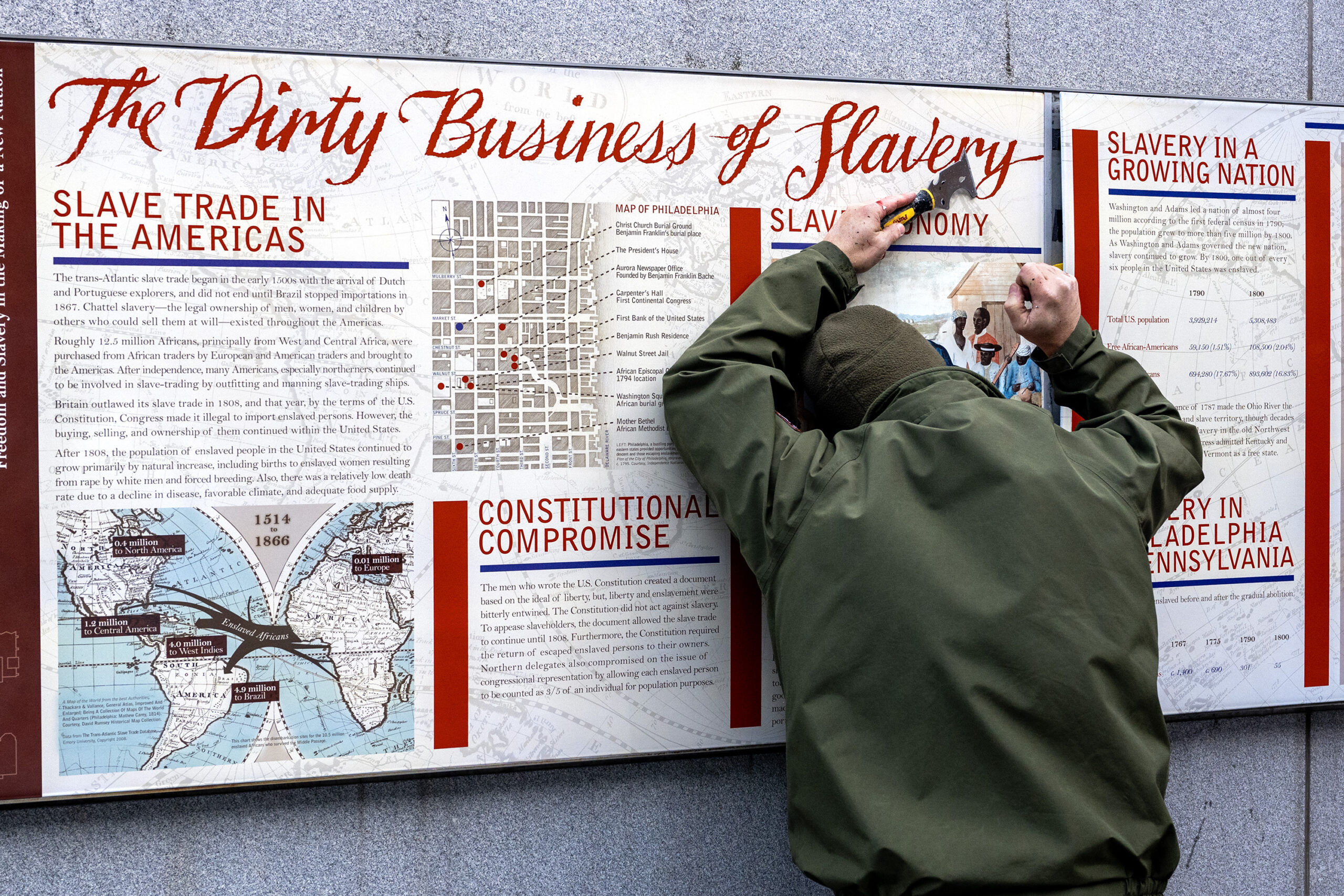
This summer is not just about the nation, but about Philadelphia trying to put its best foot forward to show the few gleaming spots in our house, while keeping visitors from seeing the dirt inside the closet or under the couch.
As Douglass likely experienced in 1852, I can already see the faces of some reading this and thinking, This is not the time for all your talk. We cannot allow Philadelphia to be disparaged.
I am not disparaging Philadelphia — I am holding onto the city’s multiple truths.
This is a great city and is the birthplace of independence for some — but instead of serving as the cheerleaders for despots and a city that submits to our nation’s current “king,” we should be the city that serves as the vanguard of resistance. Our city cannot stand on both sides of history and hold hands with our oppressors simply because we are desperate to be noticed.
As it was with Douglass 175 years ago, where we stand today will be remembered tomorrow.
The need for plain speaking
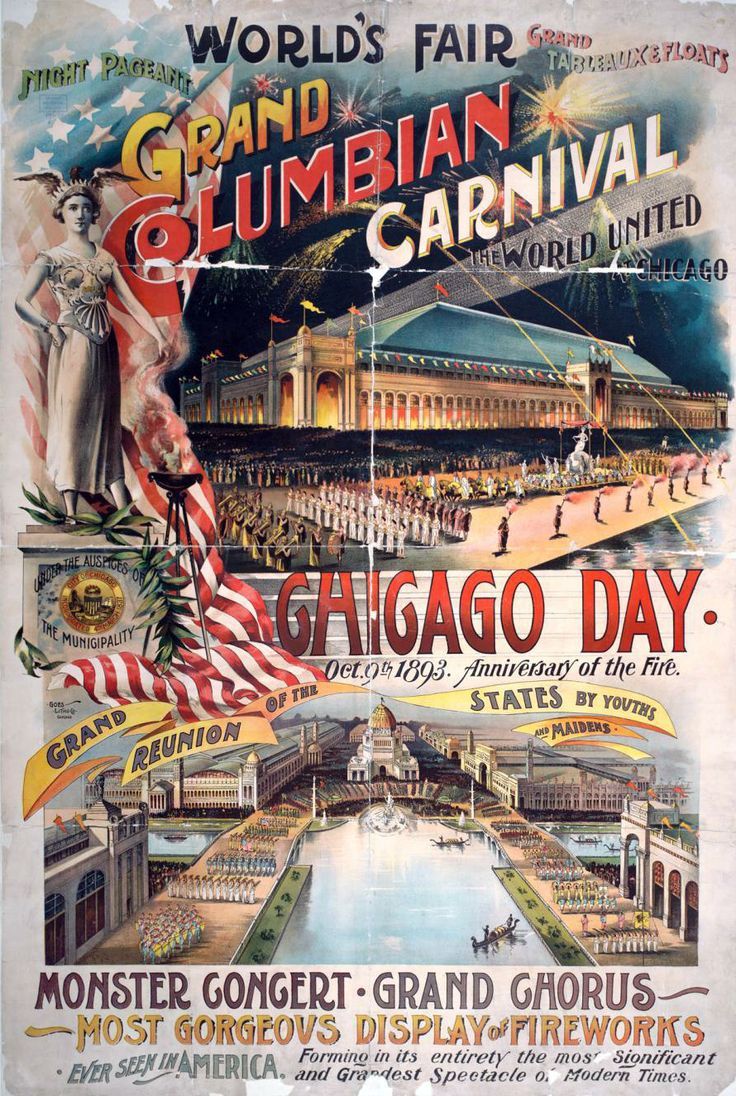
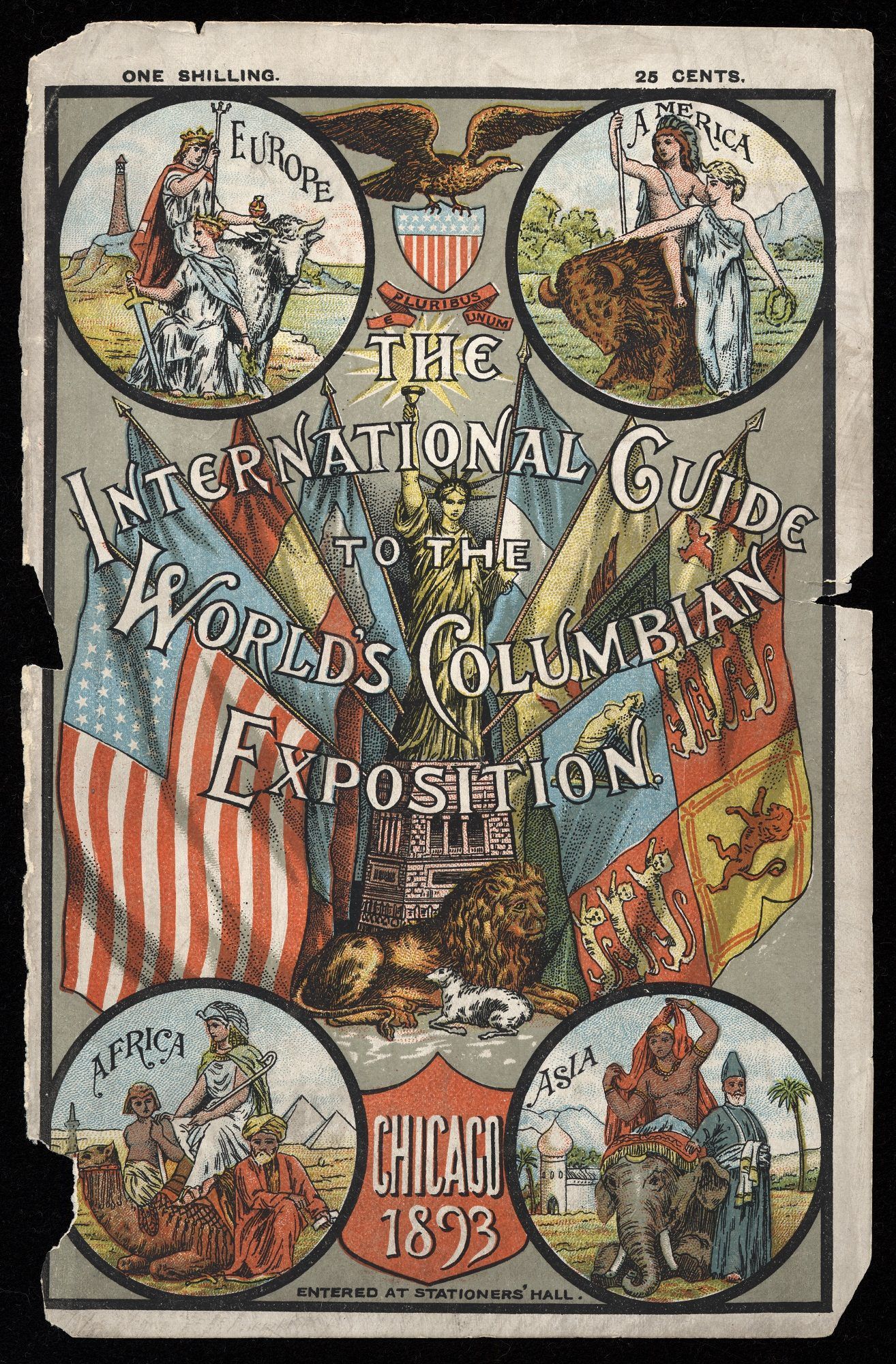
Forty years after Douglass shared his words about the Fourth of July, America had once again chosen to celebrate its history and place in the world — this time through the 1893 World’s Fair in Chicago, which marked the 400th anniversary of Christopher Columbus’ landing in the Americas.
Program from the 1893 World’s Fair in Chicago.Program from the 1893 World’s Fair in Chicago.
Just four years earlier, the event had been held in Paris, and marvels such as the Eiffel Tower were shared with the world, showing the importance and ingenuity of the host nation.
This era is often referred to as the “Gilded Age,” a time our current president fondly looks back on and wishes we would return to. “We were at our richest from 1870 to 1913. That’s when we were a tariff country,” President Donald Trump said in March. But it was also a time defined by government corruption, inequality, and exploitation, and it took place only 28 years after the end of slavery in America.
While Paris gave the world the Eiffel Tower, the 1893 World’s Fair in Chicago introduced the world to Cracker Jack, the first dishwasher, and the first Ferris wheel — which stood 264 feet tall and carried 2,000 passengers — a monument to America’s greatness!
While the fair was about all of America, the only space for Indigenous peoples was in the exotic exhibits of peoples from around the world. While the fair was about all of America, white women asked for their place within the fair and, after initially being denied a role, were eventually granted one through the creation of the World’s Congress of Representative Women.
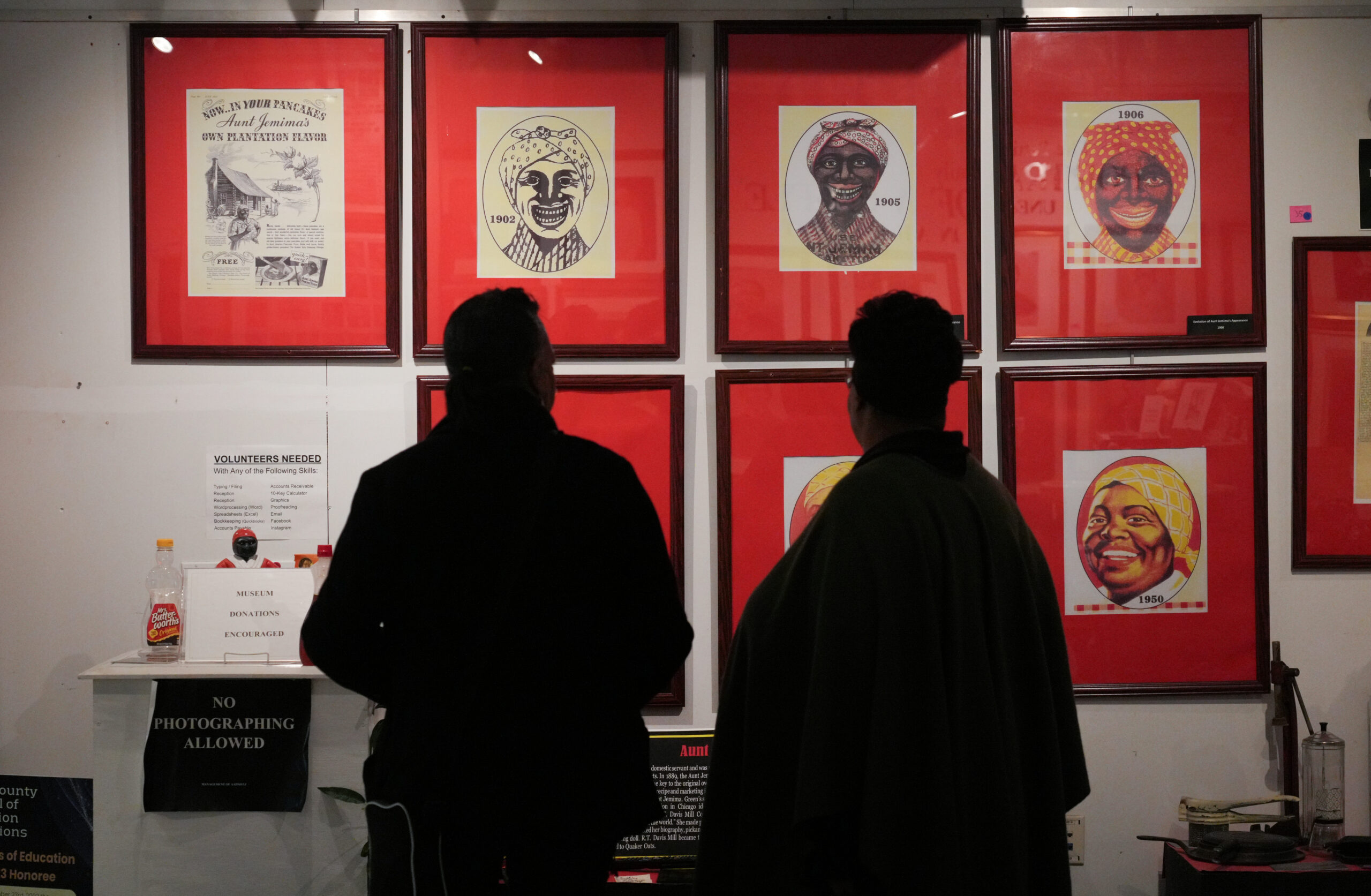
Aunt Jemima in ads at the African American Heritage Museum of Southern New Jersey.
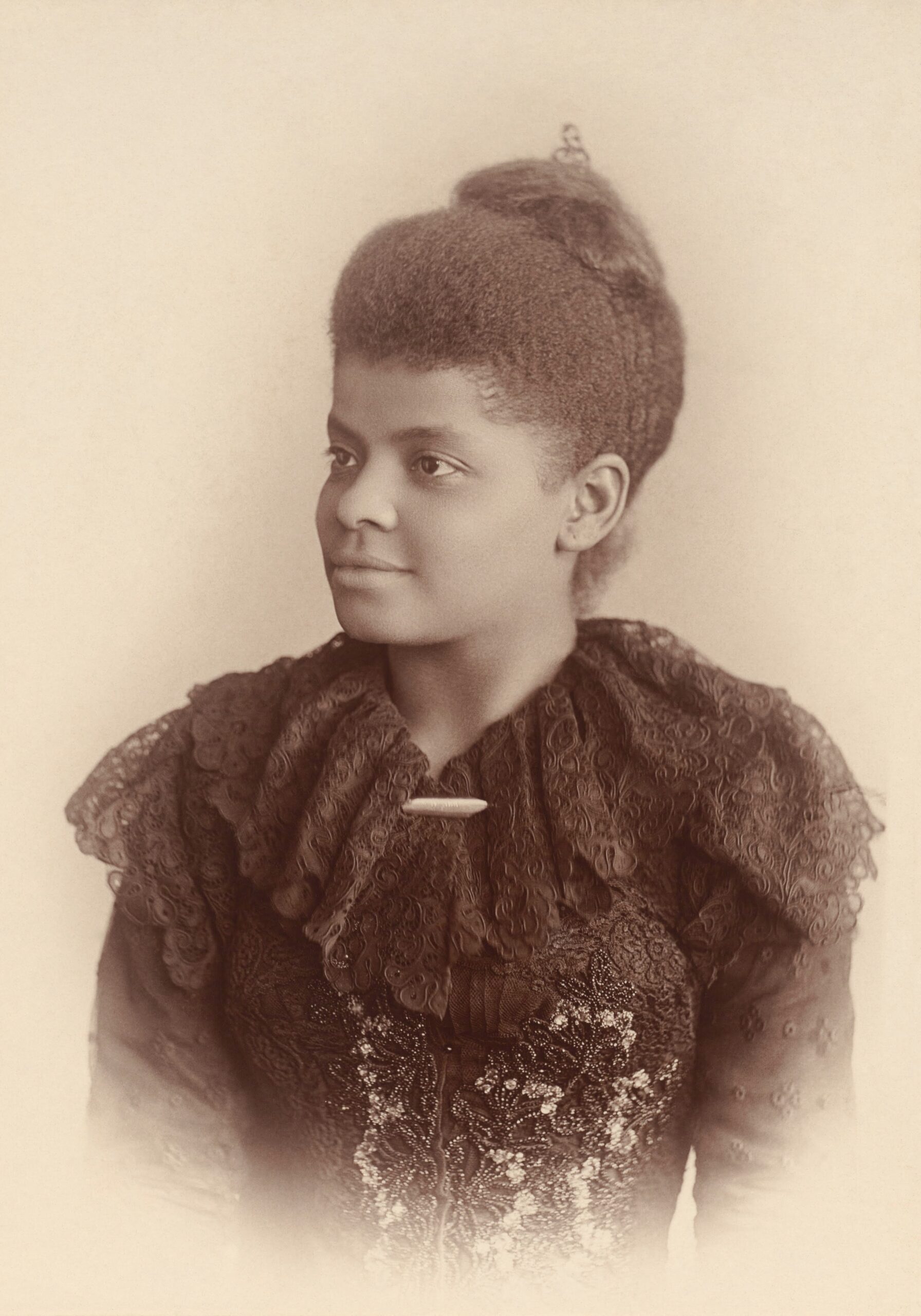
While the fair was about all of America, African American luminaries such as Douglass and Ida B. Wells were denied any formal space or role. Instead, it was determined by organizers that participation of African Americans would be marked by introduction to the character Aunt Jemima — a fictional depiction playing to all fantasies of the happy slave and the way of life lost after emancipation — and through Negro Day, during which the organizers of the fair gave away 2,000 free watermelons to visitors.
After being denied any real role within the fair, African American leaders appealed for sponsorship to the newly recognized World’s Congress of Representative Women, and that group said no — foreshadowing the next 150 years of American politics. With that denial, African American leadership turned to the Haitian delegation and received support from the only country that successfully established a new government from a slave revolt.
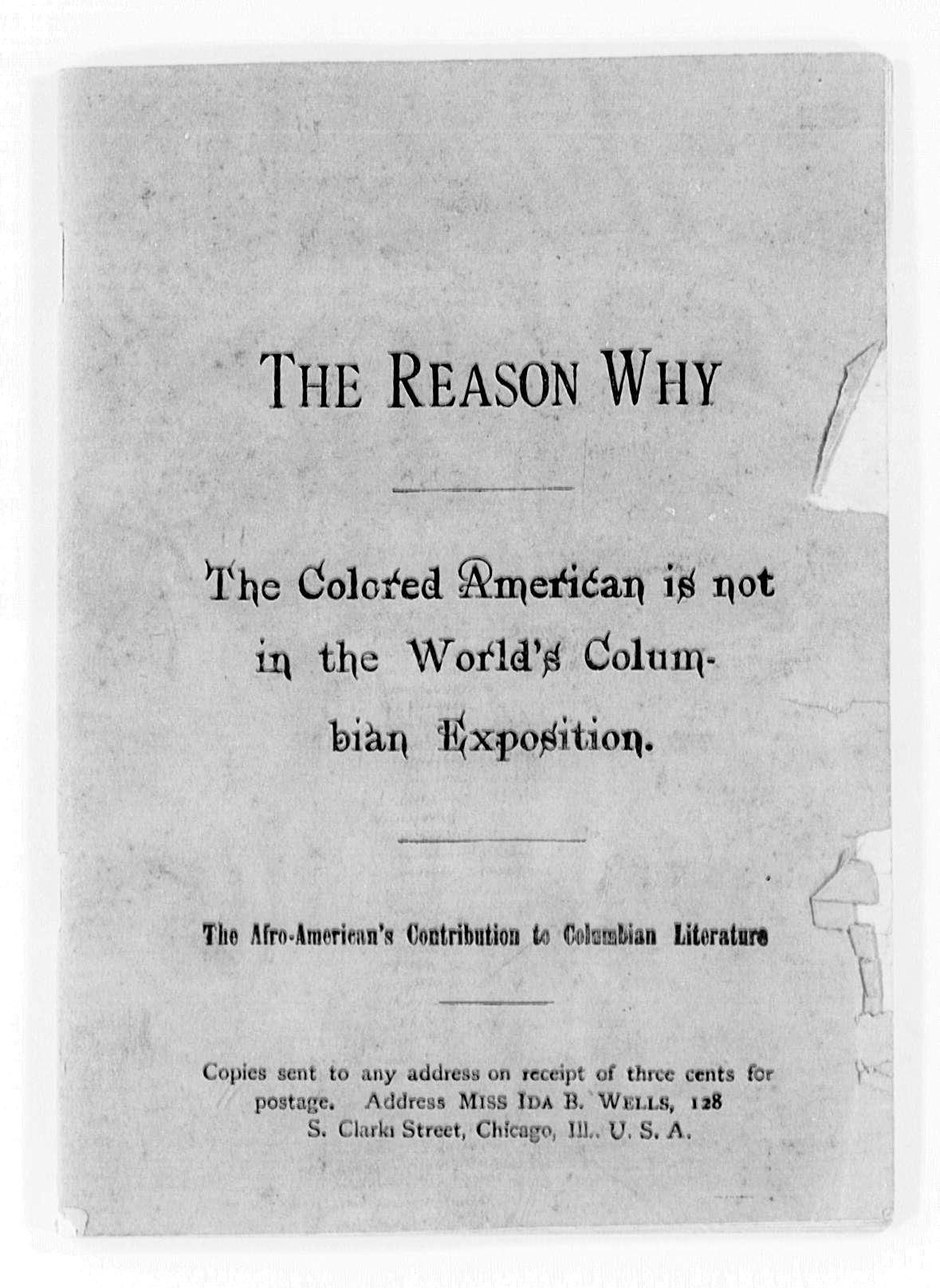
The pamphlet distributed from the Haitian exhibition space at the 1893 World’s Fair in Chicago.Ida B. Wells Barnett, c. 1893.
It was from the Haitian exhibition space that an alternative conversation took place, one that started with “The Reason Why: The Colored American is not in the World’s Columbia Exhibition,” a pamphlet which explained the current condition of the American Negro, but also spoke to the history, the successes, and a vision for the future.
In it, Douglass wrote that “it involves the necessity of plain speaking of wrongs and outrages endured, and of rights withheld, and withheld in flagrant contradiction to boasted American Republican liberty and civilization. It is always more agreeable to speak well of one’s country and its institutions than to speak otherwise; to tell of their good qualities rather than of their evil ones.”
I live and work in Kensington, an area of Philadelphia built during the Gilded Age to create wealth for a few. Our community is literally still trying to recover from that era; we have no interest in bringing it back or celebrating the destruction it caused.
Just as during the Gilded Age — when a false history was celebrated in order to justify and whitewash the failures of America — we are walking into the trap of reproducing our mistakes without recognizing the current conditions, or centering the voices of those most affected by them.
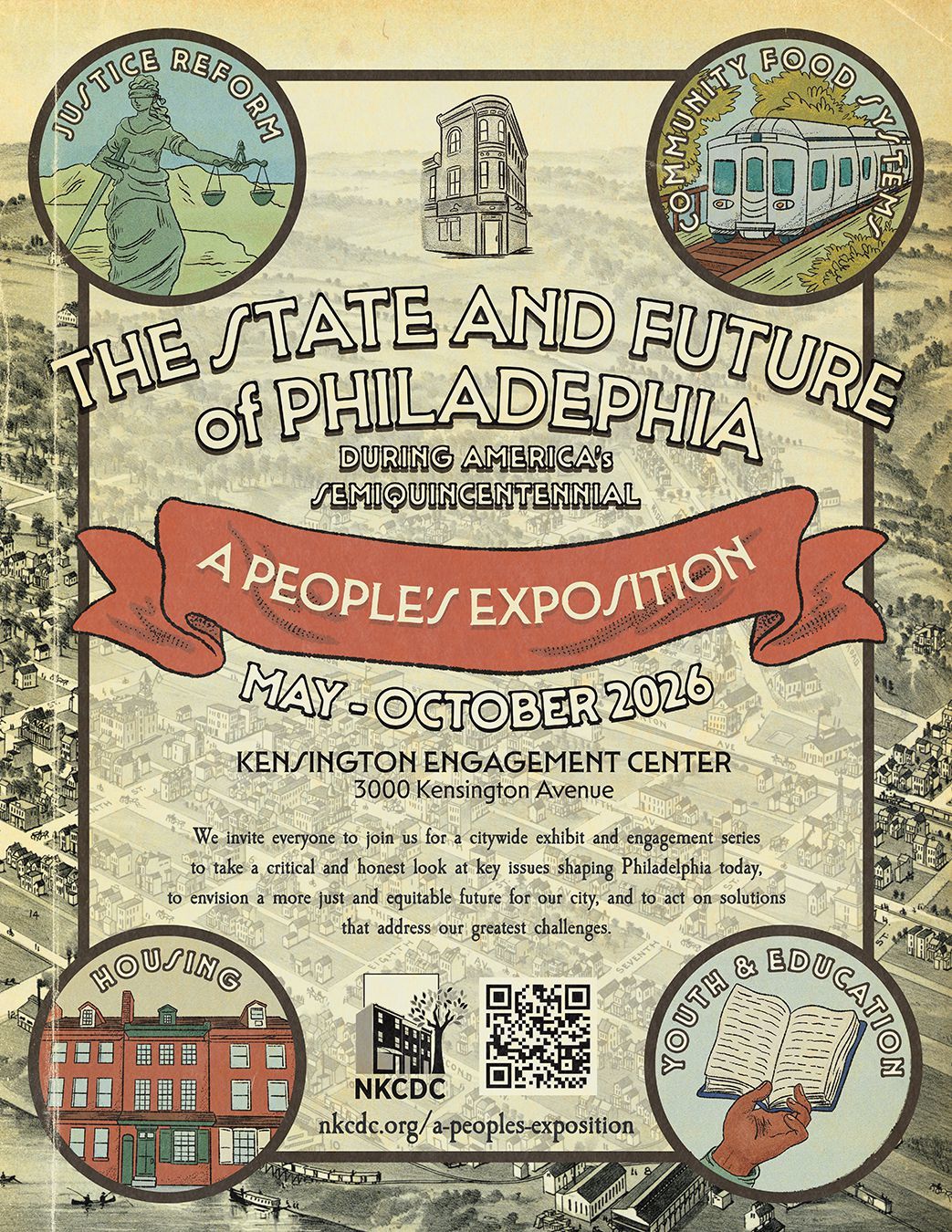
The 1893 World’s Fair in Chicago promotional flier.“A People’s Exposition” 2026 promotional flier.
Welcome to ‘A People’s Exposition’
In the spirit of Douglass and Wells, and the ways they challenged “the celebration of oppression,” New Kensington Community Development Corp., along with partners throughout the city, invite you to participate in “A People’s Exposition” at the Kensington Engagement Center — to take a critical and honest look at our city’s challenges, to envision a just and equitable future, and to act on cocreated solutions.
Opening on May 20 and running through October, partners from across the city will collectively create a welcoming space where we can learn about the status of Philadelphia’s most pressing issues, including the housing crisis, poverty and workforce development, the criminal justice system, youth and education, and community food systems and transportation.
We invite you into a space of the curious and the committed, to learn and connect to current efforts and campaigns that are working toward addressing our city’s greatest needs.
Leaving off with hope
We all need and deserve celebration and joy. Philly has many things to be proud of — be it housing wins, Chinatown wins, or the daily wins of just making it another day on the right side of the grass — but we can and should hold two truths at once.
While many in our city will only want to take part in performative displays of national and civic pride without facing the true underbelly of our nation and city, I encourage us all to resist whitewashing and to support participatory processes to fight the oppressive and exploitative machine that continues to be built and executed 250 years after independence. As a true patriot would.
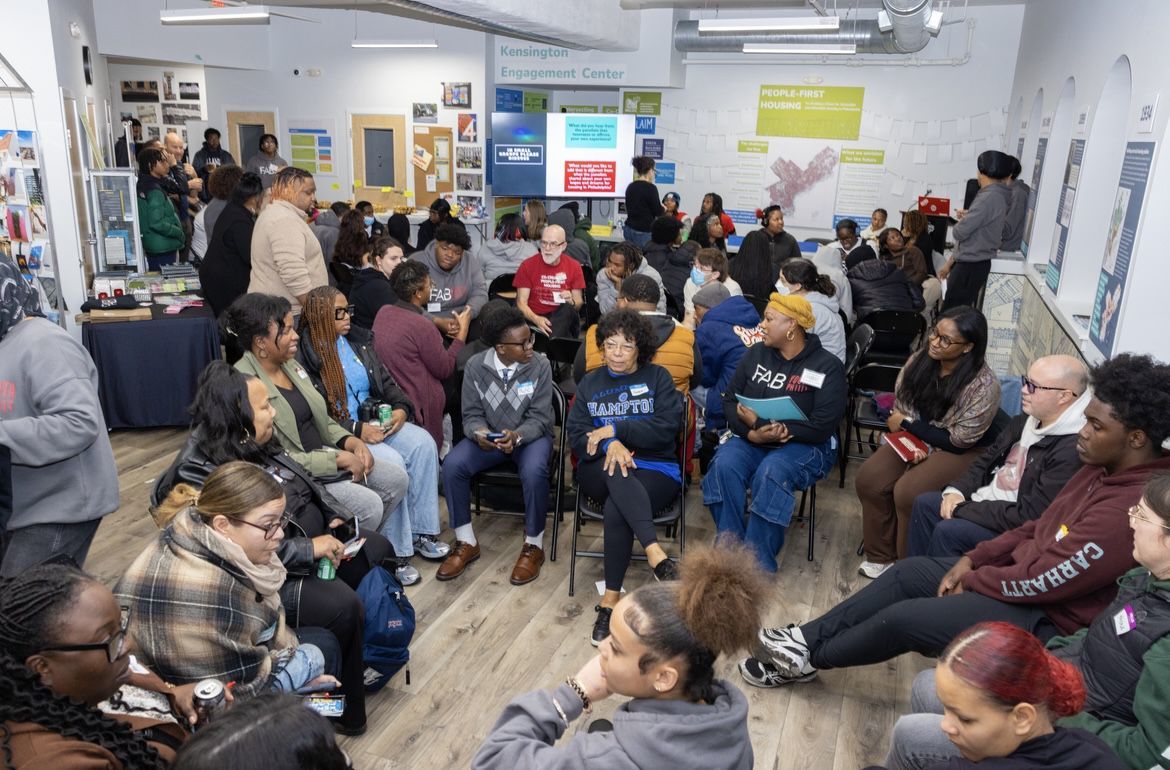
Participants in a teen town hall at the Kensington Engagement Center.
And as Frederick Douglass did on the Fourth of July.
He challenged us to remember that for many, there is very little, if anything, to celebrate, and we should instead be engaged in reflection and organizing to put into action what is necessary to create a just society for all.
“I do not despair of this country,” he wrote. “There are forces in operation, which must inevitably, work the downfall of slavery … I, therefore, leave off where I began, with hope.”
Bill McKinney is a Kensington resident and the executive director of the New Kensington Community Development Corp.
All images courtesy of the New Kensington Community Development Corp., except where noted.
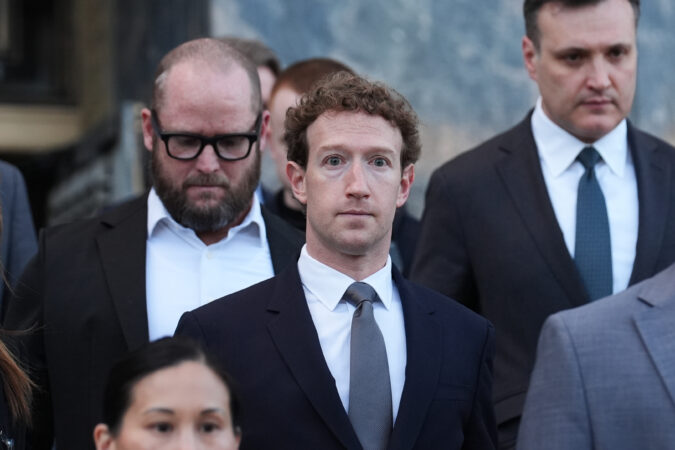
One block from the Los Angeles courthouse where Mark Zuckerberg testified in February, families gathered around the Lost Screen Memorial: 50 illuminated phones, each bearing the face of a child their families say social media killed.
Inside the courtroom, the unsealed documents were unsparing: “We’re basically pushers,” one Meta employee wrote. A 2018 internal memo laid out the strategy: “If we wanna win big with teens, we must bring them in as tweens.”
Internal research found that teens described Instagram in terms of what the documents called an “addict’s narrative” — compulsive behavior they knew was harmful but felt powerless to stop. Meta’s own engineers proposed fixes, warning internally that “our product exploits weaknesses in human psychology to promote product engagement and time spent.”
Executives chose profits instead.
Nylah Anderson, 10, in Chester, liked TikTok videos and she accepted the “blackout challenge” in personal TikTok feed last December as a fun dare. She asphyxiated herself. Her mother has sued TikTok in Philadelphia federal court.
In December 2021, 10-year-old Nylah Anderson of Chester died after TikTok’s algorithm recommended a “Blackout Challenge” on her “For You” page. In August 2024, the U.S. Third Circuit Court of Appeals ruled that this was not protected speech. The court determined that TikTok’s act of serving that video to a 10-year-old was an expressive act. That ruling cracked Section 230, the legal shield platforms had used for two decades to avoid accountability.
Thirteen-year-old Levi Maciejewski of Cumberland County never made it to a courtroom. He died by suicide in August 2024, two days after opening an Instagram account and being extorted by a predator through Instagram’s “Accounts You May Follow” feature.
Internal Meta audits from 2022, cited in his family’s wrongful death lawsuit, found that same feature was recommending accounts engaged in “inappropriate interactions” to 1.4 million minors. Meta’s own documents from 2015 estimated that approximately 4 million users under the age of 13 were already on Instagram — roughly 30% of all 10- to 12-year-olds in the U.S. — despite that age being prohibited.
Anyone who worked with children during the adoption of the smartphone watched their minds deteriorate. When I started teaching in 2009, students socialized, made eye contact, were able to focus. By the end of that decade, they arrived sleep-deprived and anxious, reaching for their phones at every opportunity.
Lunch rooms and hallways were quieter, earbuds in, eyes locked on screens. Teachers, like parents, were being asked to compete against a billion-dollar engineering operation. We weren’t losing because of personal failings. We were losing because we were outmatched by a trillion-dollar campaign to harvest attention.
Big Tech is making the same argument the tobacco industry made for 50 years about smokers who couldn’t quit. Plaintiff KGM — known in court as Kaley — testified this month that she began using YouTube at age 6 and Instagram at age 9, with no barriers to stop her. Instagram was the first thing she opened every morning and the last thing she looked at before sleep. Not getting enough likes left her feeling “insecure” or “ugly.” Asked whether she felt that way before social media, she said: “No, I didn’t.” By age 10, she was cutting herself.
Meta’s lawyers argued her struggles came from a difficult home life. Kaley answered them directly: most of the arguments with her mother were about the phone. She is 20 now. She told the jury her life would have been “unequivocally better” without these platforms.
In the years that social media became ubiquitous, the suicide rate for 10- to 14-year-olds tripled. We don’t stand at the edge of a lake watching children drown and demand more longitudinal studies to figure out the cause. We see the harm. We act.
The tobacco parallel is more than rhetorical; it provides the applicable legal and moral framework for addressing Big Tech. We do not let tobacco companies advertise to children. We do not allow stores to sell to them. We require warning labels. None of that required settling every clinical debate. It required a political decision that some harms to children are unacceptable regardless of whether we can precisely quantify them.
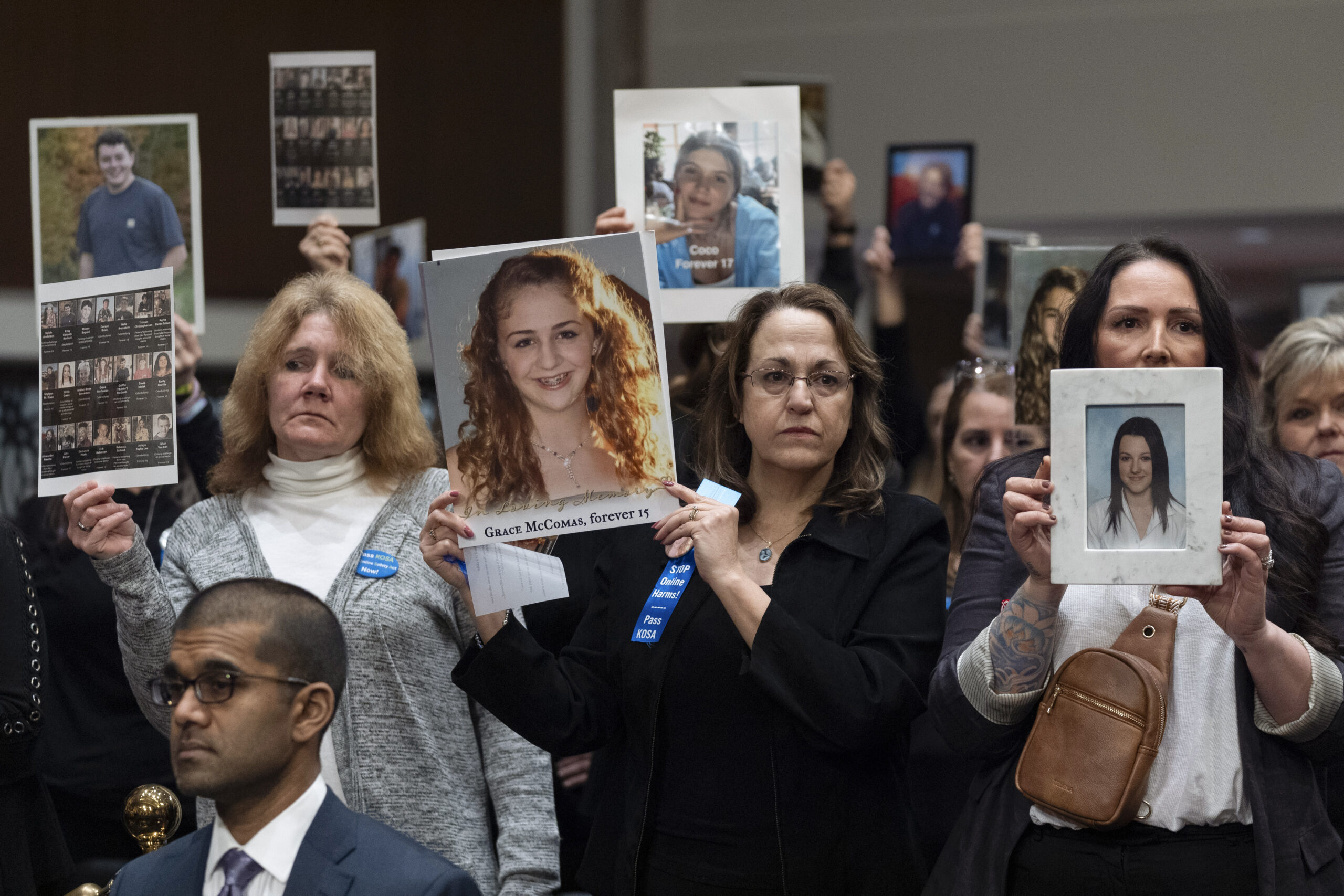
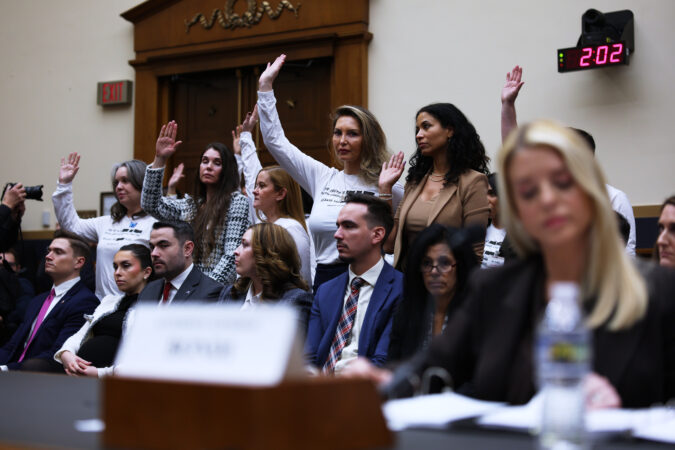
People in the audience hold up photos of their loved ones during a Senate Judiciary Committee hearing on online child safety on Capitol Hill in January 2024.
In February, West Virginia’s attorney general sued Apple after the company’s own internal communications described iCloud as “the greatest platform for distributing child porn.” Meta is on trial in Los Angeles. For the first time, tech executives are producing documents under court order, with legal penalties attached. For the first time, the “we didn’t know” defense is colliding with internal evidence that they did. The legal reckoning is not coming. It is here.
The Kids Online Safety Act, which would require platforms to prioritize children’s safety over engagement, passed the Senate 91-3 in 2024. Last week, the House Energy and Commerce Committee responded — not with that bill, but with a weakened substitute called the KIDS Act, advancing it to the House floor 28-24, along party lines.
The House substitute is a retreat dressed as progress: It omits the “duty of care” language that would require companies to design products with children’s safety in mind, sets a federal safety floor lower than existing state protections, and, most damaging, would preempt stronger state laws — potentially nullifying thousands of pending lawsuits, including the cases in Los Angeles that are finally forcing these documents into the open.
Big Tech spent over $60 million on federal lobbying in 2024. The bill tells you exactly where that money went.
In Pennsylvania, legislators have made progress. Senate Bill 1014 — a bell-to-bell cell phone ban in public and private schools — passed the state Senate 46-1 last month, with Gov. Josh Shapiro’s endorsement already secured. As one parent leading the effort put it: “Teachers, kids, and parents have been tasked with managing the unmanageable. It’s time to recognize that our current approach isn’t working.”
The House should finish the job. But even a unanimous phone ban is a seven-hour policy competing against platforms that spend billions optimizing addiction across the other 17 hours of a child’s day. Keeping phones out of classrooms is a start.
Keeping companies from engineering compulsion in the first place is the actual problem — and that requires a federal duty of care with teeth, and political leaders who care about children more than cashing their checks.
Nylah Anderson was 10 years old. Levi Maciejewski was 13. Their tragedies helped start the battle against these companies. The House has a bill on its desk.
Act — before another Pennsylvania child’s face joins those 50 phones outside the courthouse.
AJ Ernst worked as a teacher and administrator in Philadelphia for 13 years and holds a doctoral degree in educational leadership from the University of Pennsylvania’s Graduate School of Education.
Every year, St. Patrick’s Day turns Philadelphia green.
Crowds gather along the Parkway. Families celebrate in neighborhoods shaped by generations of Irish Americans. We honor a heritage that is now inseparable from the city’s identity — a story of resilience, faith, and hard work that helped build Philadelphia into what it is today.
For me, that story is personal.
My parents were Irish immigrants who settled in Philadelphia in search of opportunity and stability. By the time they arrived, earlier waves of Irish families had established strong neighborhoods, parishes, and institutions. My parents found jobs, community, and a sense of belonging. They raised their children here and became part of the fabric of the city.
But the welcome Irish immigrants eventually experienced was not always guaranteed.
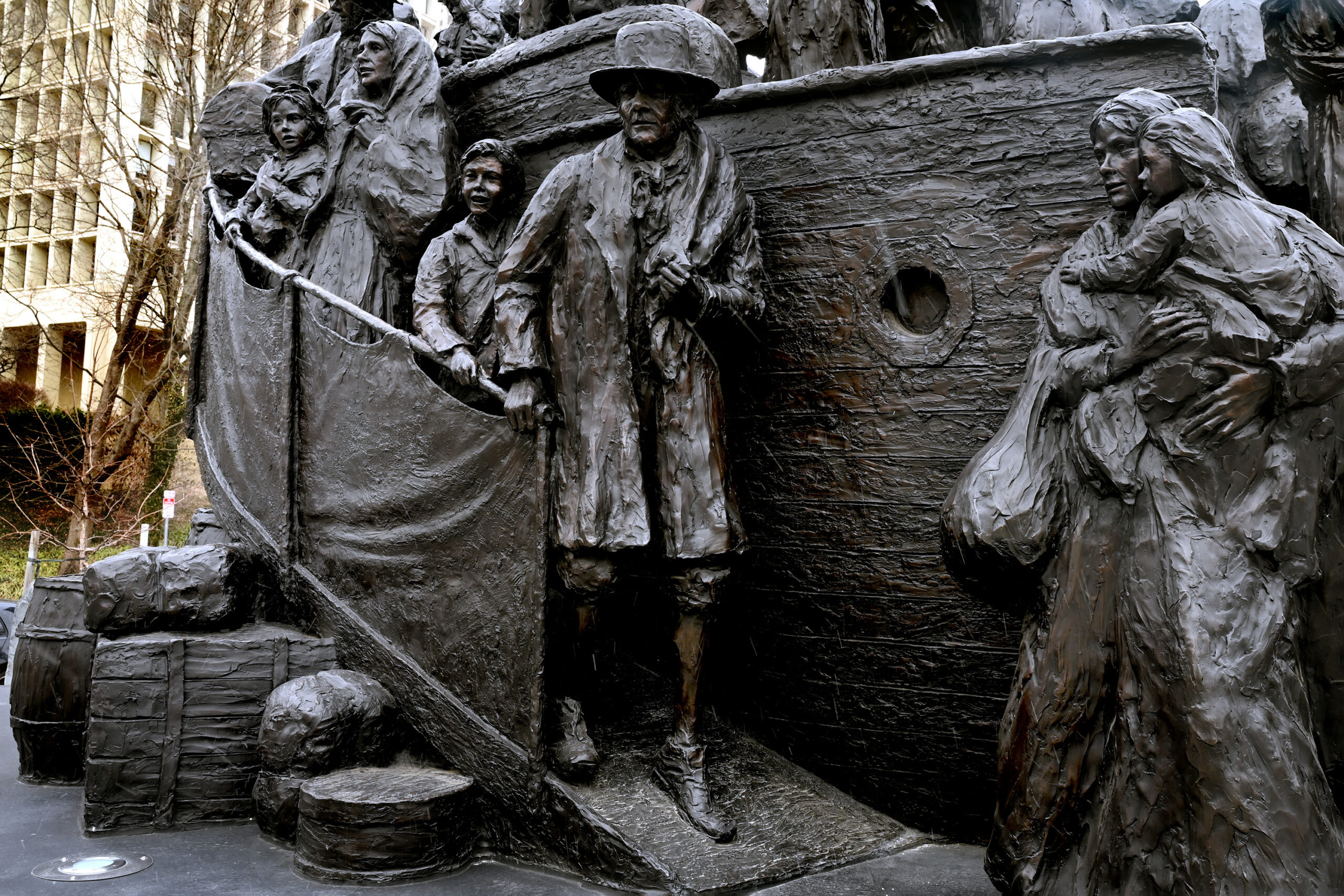
A detail of the “Irish Memorial An Gorta Mor (The Great Hunger)” in Foglietta Park. The aspirations of immigrants today are not so different from those of the Irish families who once arrived at the port of Philadelphia with little more than determination and hope, writes Anna Gallagher.
In the 19th and early 20th centuries, Irish newcomers often faced suspicion and discrimination. They were portrayed as outsiders and told they did not belong. Over time, through perseverance and the support of local communities, they became integral to Philadelphia’s civic and economic life. Today, their story is celebrated as part of the American immigrant narrative.
That history is worth remembering, especially now.
Across the country and here in Pennsylvania, immigrant families are navigating an increasingly complex and uncertain landscape. Many are longtime residents who work, pay taxes, and contribute to their communities. Others are seeking refuge from violence or instability abroad. All are striving for the same things previous generations sought: safety, opportunity, and the chance to build a future for their children.
The Irish immigrant experience is often remembered as a story of eventual success. But that success was not inevitable, writes Anna Gallagher.
Yet many face significant barriers. Access to legal representation remains limited. Immigration policies shift quickly, creating confusion and instability. Families live with the fear that a routine encounter could separate parents from children. Employers struggle to retain valued workers. Entire neighborhoods feel the ripple effects of uncertainty.
As executive director of the Catholic Legal Immigration Network Inc., the nation’s largest network of nonprofit immigration legal services providers, I see both the challenges and the promise every day. I see mothers seeking asylum, fathers working multiple jobs to support their families, and young people who have grown up in this country hoping to fully belong. I also see the extraordinary contributions immigrants continue to make to cities like Philadelphia.
Immigrants start businesses, work in hospitals and construction sites, care for the elderly, and teach in classrooms. They strengthen the local economy and revitalize neighborhoods. Their aspirations are not so different from those of the Irish families who once arrived at the port of Philadelphia with little more than determination and hope.
St. Patrick’s Day offers a moment to reflect on that continuity.
The Irish immigrant experience is often remembered as a story of eventual success. But that success was not inevitable. It was made possible by communities willing to open doors, institutions willing to offer support, and policies that allowed families to put down roots.
Philadelphia has long been renewed by newcomers. From South Philadelphia to Northeast neighborhoods and beyond, immigrants have shaped the city’s culture, economy, and civic life. That pattern continues today, if we choose to sustain it.
This is not simply about honoring heritage. It is about shared prosperity. Cities thrive when families feel secure enough to invest in their neighborhoods, pursue education, and contribute fully to community life. They thrive when longtime residents and newcomers alike see themselves as part of a shared story.
Green-wearing Mayor Cherelle L. Parker is with State Sen. Sharif Street (right) during the annual Philadelphia St. Patrick’s Day Parade in 2025.
As we celebrate St. Patrick’s Day, Philadelphia has an opportunity to honor its immigrant roots in a meaningful way. That means supporting policies that keep families together and create fair, orderly pathways through our immigration system. It means expanding access to legal representation so individuals can navigate that system effectively. And it means fostering a civic culture that recognizes immigrants not as outsiders, but as neighbors and fellow Philadelphians.
My parents’ journey from Ireland to Philadelphia is one story among many. It is a story of welcome, hard work, and belonging. The question before us now is whether we will help ensure that today’s immigrant families have the same chance to contribute, to build, and to call this city home.
Immigration is not just part of Philadelphia’s past. It is central to its present, and vital to its future.
Anna Gallagher is executive director of the Catholic Legal Immigration Network Inc. (CLINIC). Born in Philadelphia to Irish immigrant parents, she is a nationally recognized expert on immigration and refugee policy and a longtime advocate for the rights and dignity of migrants.
For the last three years, my life has been defined by the tragedy of my son’s murder and the management of the indescribable pain I feel every moment. For everyone else, time continues normally. For me, time simultaneously stands still, moves like molasses, or flies by in a blur.
I’ve been dreading 2026 for a while — it would have been Nick’s senior year at W.B. Saul High School. He’d have turned 18 last October. He’d have a driver’s license. He’d be looking forward to senior prom and graduation. But instead, this June, we’ll attend the trial for his murder, nearly four years later, and after constant delays.
Meredith Elizalde holds a photograph of her son, Nicolas, who was fatally shot after his football scrimmage in 2022 outside of Roxborough High School.
For all this time, I’ve been able to picture Nick with his classmates at Saul, having the time of his life. But once June comes, where will I picture him? His life, as it was when he was killed, will be over. I cannot explain the level of distress this causes me. Who and where would my son be?
In an effort to manage this pain, I made the decision to attend the Philadelphia Flower Show this year, so that I could see what Nick’s classmates had on display before they graduate. It’s hard for me to watch the Saul kids continue on without Nick, but it also provides me a brief, albeit painful, respite and sense of pride to watch them shine — and to imagine him with them.
Visitors look at W.B Saul High School of Agricultural Sciences’ “Up-Rooted, Re-Planted” display at the Philadelphia Flower Showon Feb. 27.
I was impressed and deeply moved by the homage to the Lenni Lenape. I could feel Nick’s Indigenous pride as I marveled at what his classmates had created.
A man and woman were next to me, very engaged in the Saul exhibit, reading all of the signs. The man said, “The two high school exhibits”— Saul and Lankenau — “are the best ones here.” As a Saul mother and a former Philadelphia high school teacher, I felt a surge of maternal pride upon hearing that.
I had just walked over from the Lankenau Environmental Science Magnet High School display, which was phenomenal. It was colorful and intimate. I especially loved the border of flowers in cinderblocks. It reminded me of how beauty pushes through hardness and barriers that are meant to suppress.
A display by students from Lankenau Environmental Science Magnet High School, “Bloom Where You Are Planted,” is shown Feb. 28 at the Philadelphia Flower Show.
Standing in front of the display, I saw three Lankenau students handing out fliers, which broke my heart. What a surreal feeling it was to stand in front of such a marvelous, artistic display of the natural world, next to some of its creators, as they asked people for help to save their school from closure. What a shortsighted decision to close Lankenau — a treasure in the “green lung” of the city.
I am now an environmental graduate student at the University of Montana. My research was born from Nick’s deep love of Mother Earth, his exemplary stewardship of nature, his murder, and my experience of teaching high school in Philadelphia. Why would we close a school in one of what feels like extremely limited green spaces in a densely populated, urban area?
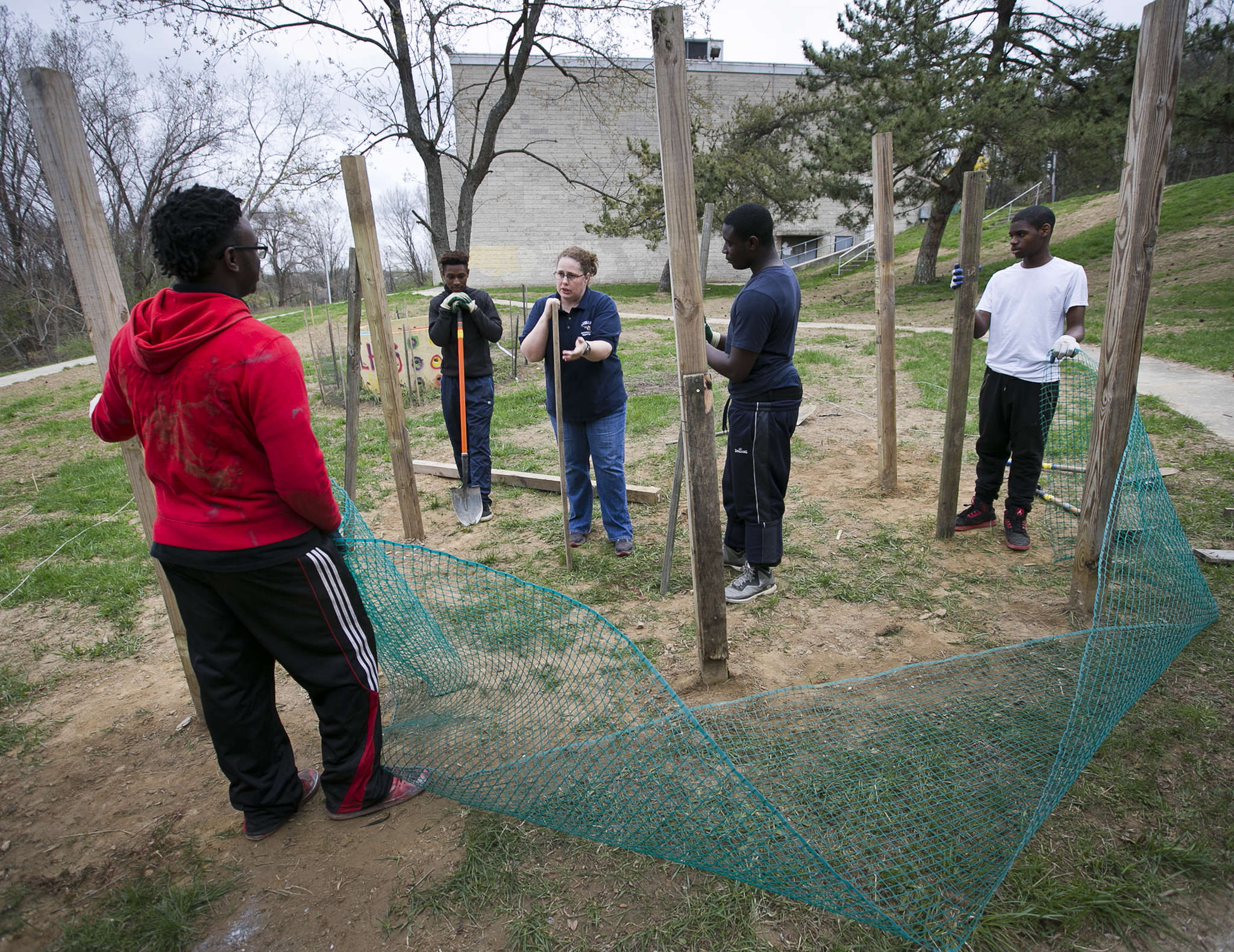
Students in the botany club ant their teacher at Lankenau Environmental Science Magnet High School build a compost pile in this file photo from 2018.
Scientific literature is saturated with the physical and mental health benefits of green and blue space exposure. The literature also details the correlation between tree canopy and lower crime rates. Nature deficit is real, and it has detrimental consequences, especially for our youth. The built environment and the omnipresence of screens have affected our youth in ways most people who do not interact with kids in an educational setting cannot understand.
It therefore baffles me that a school in such an idyllic setting for place-based learning — where socioemotional learning can have greater impact because of the healing effect of natural settings on our nervous systems — is considered expendable.
Last year, I taught undergraduate classes in Montana. We took a field trip to Yellowstone National Park for three days, and I was amazed at the level of comfort the students had with wilderness, teamwork, wayfinding, and so much more.
Overall, they had knowledge about so many things that completely bewilder me — it was simultaneously embarrassing and inspirational. I wondered what our Philadelphia youth might feel like if more of them had greater access to the natural world, and, in turn, what would our society look like when they come of age and contribute to the community.
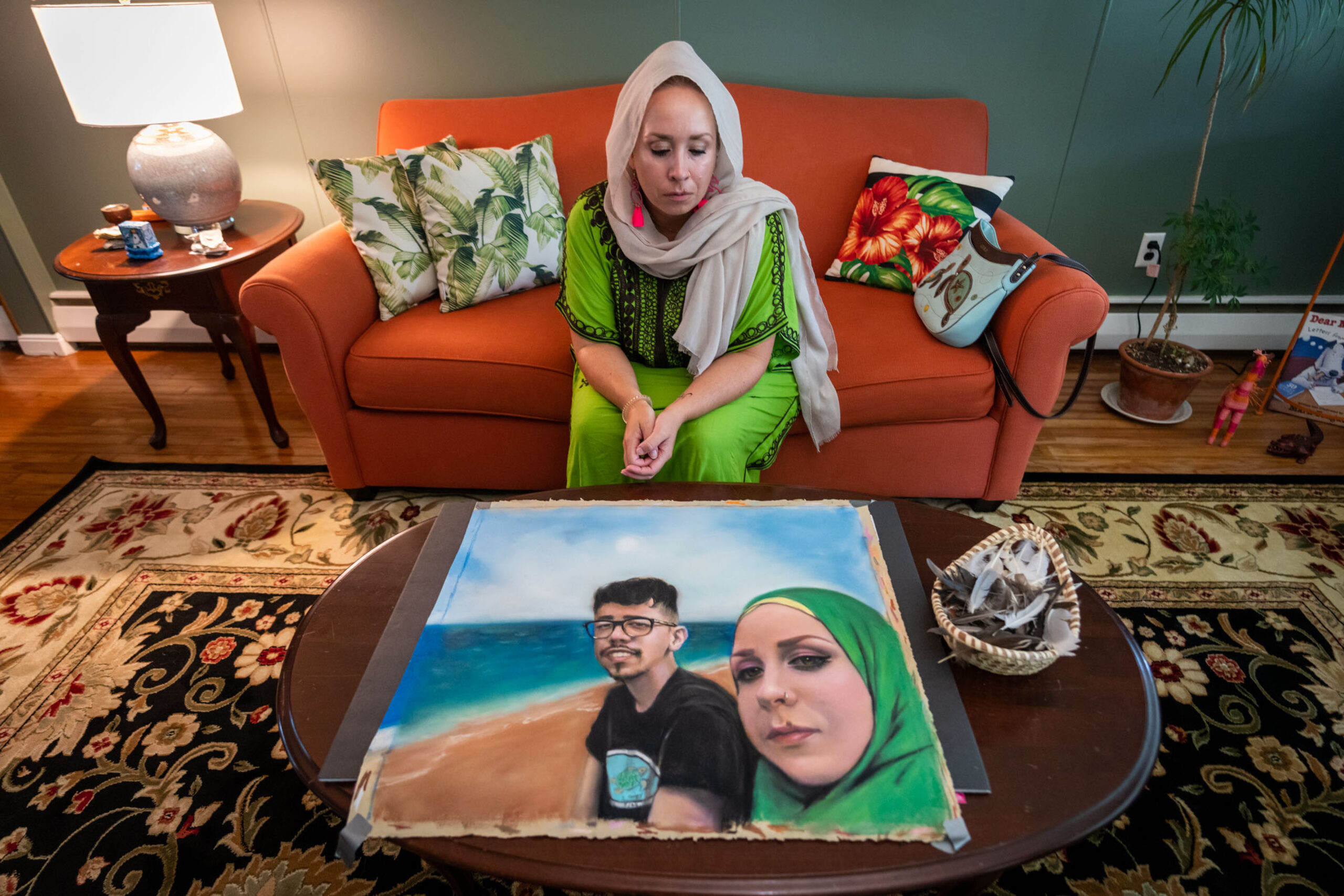
Meredith Elizalde with a painting of her and her son, Nicolas, in Aston in July 2024.
There are so few places like Lankenau; it is a travesty that we are even thinking about closing such a distinctive institution.
We have lost so many young lives to gun violence. And those left behind are in a state of collective yet disenfranchised grief that permeates daily life in unseen but troubling ways. After Nick was killed, students posted wishes for themselves, each other, and society on the wall of Roxborough High School. So many wished for an end to gun violence and living in fear. One wished he would live to see age 25.
When we lost Nick, our city lost a true conservationist and a pure soul. Lankenau graduates students who can help to fill that gap, left by all of our murdered loved ones and their stolen potential.
I urge everyone, Philadelphia resident or not, to join the fight for Lankenau and all the schools slated to close. If you believe that every child deserves a chance, now is the time to act on that belief.
One of the Lankenau students at the Flower Show told me they are “trying to make noise.” Let’s not put that burden on our youth, or solely on the shoulders of those most affected. Whoever you are — show up, make noise.
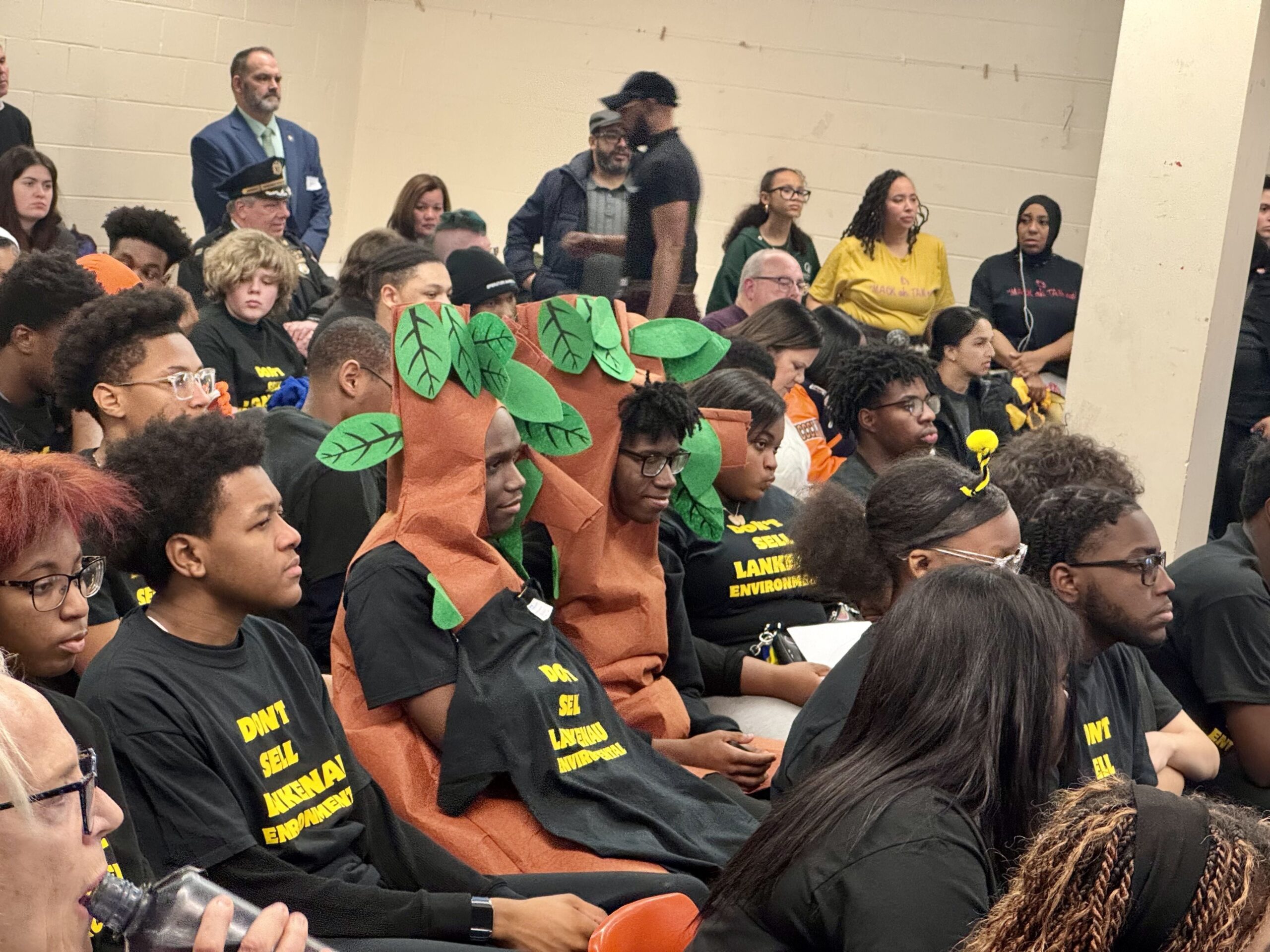
Students, staff, and community members who support Lankenau High School — including some dressed as trees — packed a community meeting at the school Feb. 4. The Philadelphia School District proposes closing the city’s only environmental sciences magnet, citing issues including low enrollment. But the school system had a hand in limiting enrollment.
A magnet school in a beautiful, natural setting is violence prevention, a soothing balm, and a safe haven from the chaos of life. The imam at Nick’s janaza read an African proverb: “The child who is not embraced by the village will burn it down to feel its warmth.”
We are the village, and we must embrace our children.
Meredith Elizalde is Nick’s mom. A former Philadelphia high school teacher, she is currently a graduate student at the University of Montana.
Hearing that the highest tiers of European royalty and government officials have been toppled for their association with Jeffrey Epstein, I can’t help but look closer at home and abroad. It’s hard to avoid uncomfortable comparisons.
In the U.S., we’ve seen a lower tier of elite face consequences, such as Peter Attia and Larry Summers, who were spared termination but were able to resign. For the rest, it’s been a familiar playbook. When powerful people are accused of misconduct or even abuse, institutions move to containment — not transparency.
The piecemeal release of the Epstein files reflects a familiar pattern: complaints and claims are made, evidence exists, but access is controlled. Accountability stalls.
While the Constitution promises equal protection under the law, that protection comes through the courts and via its agents — attorneys. Juries decide on innocence or guilt, and then determine financial damages.
In America, harm is monetized.
It follows, then, that those who wield money and power can buy protection within the legal system. How can we forget OJ Simpson’s stable of lawyers, the best money could buy, nicknamed the “Dream Team.”
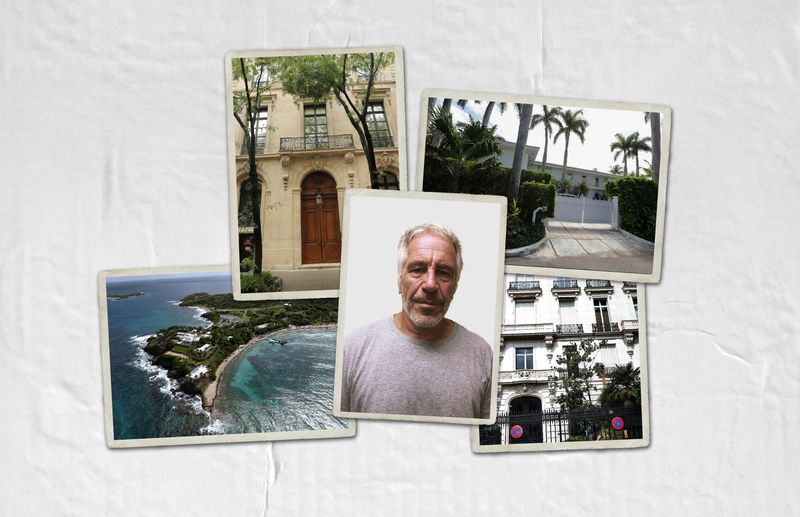
Convicted sex offender Jeffrey Epstein owned islands and properties around the world. The files that the U.S. Department of Justice has selected for release show he cultivated a network of wealthy, high-profile friends and associates across the world.
With financial resources and access to elite legal representation, those accused of wrongdoing are able to turn the pursuit of justice into a negotiation. Civil settlements, nondisclosure agreements (NDAs), and confidential arbitration dominate. As such, judgment and public accountability can be avoided or deferred.
Left unaddressed in those cases in which perpetrators are not brought to justice is the magnitude of the impact on victims.
My career as an emergency physician and public health expert has centered on the vulnerable and at-risk. I have seen the long arc of trauma — through physical, mental, and behavioral health manifestations in my patients, most especially those who suffered adverse childhood events (ACE).
Ranging from anxiety and depression to sleep disturbances, neurologic impact, chronic illness, and substance use, the consequences are long-standing and pervasive. This doesn’t include the depth of impact on what are known as the social determinants of health — job stability, housing stability, economic possibilities, and other nonmedical factors that can shape a patient’s well-being. The damages of trauma are not measurable in simple dollars.
Power is often leveraged through coerced silence.
Studies have shown that more than one-third of the U.S. workforce has been subjected to NDAs for workplace-related harassment, sexual misconduct, and employment discrimination. The National Women’s Law Center found NDAs isolate victims, shield serial predators, and allow harassment to persist.
Years ago, a woman I was treating for opioid use disorder confided in me after holding me at reticent arms’ length for weeks. I noted a subtle change, where her steely gaze was replaced by downcast eyes. She whispered, “I want to tell you something.” She went on to recount how she had been sexually assaulted on more than one occasion by someone who was supposed to help her.
She hadn’t told anyone out of fear. She felt trapped. After our session, I immediately sprang into action to alert authorities as a mandatory reporter and put mechanisms in place to keep her safe — especially for possible retaliation.
Days later, when I saw her next, she was sobbing uncontrollably. I feared the worst until she finally whispered, “Thank you for believing me.”
For the minority who do speak up, the consequences can be overwhelming. Speaking truth to power is fraught with danger that is rarely just legal. A victim’s credibility is often structurally discounted — framed as financially motivated, vindictive, or selfish.
That skepticism is unevenly applied. Institutions often require overwhelming proof of undeniable and well-documented harm, while at the same time, extend presumption and patience to those with power. Countless examples illustrate how anchor institutions often circle the wagons to protect an accused, but leave the person harmed to fend for themselves.
Lawyers and others are often forthcoming with victims about the risks of pursuing legal action. The list is long: litigation costs, reputational damage, professional blacklisting, social ostracism, and family exposure.
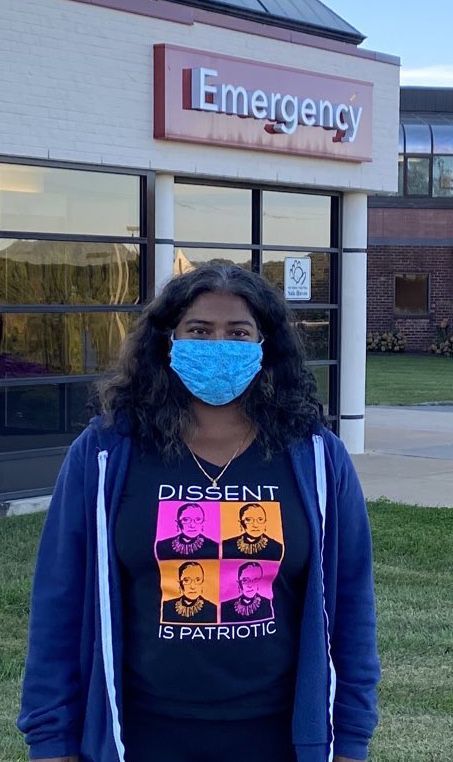
The author photographed at Jennersville Hospital on Sept. 19, 2020. It was the day after Ruth Bader Ginsburg died, so Mammen wore a T-shirt to honor the late U.S. Supreme Court justice’s urging to challenge gender inequality in court.
Despite Ruth Bader Ginsburg’s encouragement to challenge laws in court, it seems difficult for many to understand why someone might invoke the protections of our laws or work to establish safety and fairness for others. For the many who don’t have wealth or power as buffers, silence is survival — not consent.
Europe does not always operate in a way Americans would consider fair or just. But in the last few weeks, we’ve seen that government officials and the highest-ranking citizens seem to be held to a higher standard than their counterparts in the U.S.
Police officers stand in front of Buckingham Palace in London, Feb. 20, after Andrew Mountbatten-Windsor, formerly known as Prince Andrew, was arrested and held for hours by British police on suspicion of misconduct in public office related to his links to Jeffrey Epstein.
There is a cultural expectation that power increases responsibility.
The British monarchy and government have repeatedly centered the survivors in their response to questions and probes: “Our thoughts are with the victims.”
Cynically, this could be a convenient deflection, but practically, it keeps the focus on those who have been hurt and wronged. It sets the tone from the top and normalizes compassion and empathy for victims over perpetrators.
In America, power often confers insulation. In Europe, there is instead greater reputational consequence. That kind of accountability conveys justice precisely because it cannot be insured against. It changes the incentives.
In Europe, they have fired the men who were involved with Epstein. In America, we have allowed them to step down, resign, or retire quietly.
Will we allow power to protect itself more reliably than it protects the vulnerable — especially children?
The enduring failure we are seeing play out is a collective nonconsequence for those who sit the highest among us. Accountability collapses where power concentrates.
At the same time, lest we forget, it was the demands from everyday Americans that led to the release of the Epstein files. The public brought this issue to the forefront.
We can use this moment to force change.
If we demand extraordinary proof from victims, we must demand extraordinary transparency from power. If we believe authority confers responsibility, then ethical standards must be enforced. Boards, professional societies, and institutions cannot simply issue statements of values; they must act when those values are breached.
Accountability cannot remain optional for the powerful. As voters, donors, consumers, and leaders, we decide what we will reward. We can insist that reputation reflect conduct. We can demand that rules travel upward, not only downward. We can see justice as an integral part of our democracy, and each of us equally deserving.
As a society, we can be clear on whose harm matters. That choice is ours.
Priya E. Mammen is an emergency physician, healthcare executive, and public health specialist who helps the nation’s most impactful companies integrate clinical integrity at scale.
When we were teenagers growing up in rural Pennsylvania, Americans typically bought their first home at the age of 29. Now, first-time home buyers tend to be in their 40s.
As U.S. senators from different parties, we don’t agree on everything. But as friends, parents of nine children between us, and representatives of working families across Pennsylvania, we cannot accept this terrible trend.
The American dream — the promise that if you work hard and play by the rules, you can build a good life and financial security in a home that you own — must not fall out of reach of young Pennsylvanians.
That’s why we support the ROAD to Housing Act. This bipartisan bill, which the U.S. Senate is expected to vote on this week, will help address Pennsylvania’s housing crisis by making it easier to build more homes, more affordably, while also preserving and repairing the housing stock we already have.
The commonwealth has 100,000 fewer homes than it needs today and is on track to be short 185,000 by 2035.
As a result of this shortage, home prices have increased 75% in the last five years. More than one million Pennsylvania households spend over 30% of their income on housing, and more than half of our housing stock is over 50 years old, driving up repair costs and straining family budgets.
Sens. John Fetterman (D., Pa.) (left) and Dave McCormick (R., Pa.) greet before participating in a debate in Boston moderated by Fox News in June.
That combination — too few and too many aging homes — creates a squeeze felt from Erie to Philly: young families delaying having kids, seniors stuck in homes they can’t afford to fix, workers turning down jobs because they can’t find a place to live nearby.
The shortage will get even more acute as new investments in Pennsylvania’s energy and artificial intelligence, defense, and life-science industries generate great new jobs across the commonwealth.
We have celebrated these transformative investments, from U.S. Steel to the Philly Shipyard, but more jobs mean more workers, and workers need homes.
The ROAD Act delivers by taking three commonsense approaches. First, it tackles affordability at the source — supply — by reducing delays and lowering construction costs.
Second, it strengthens accountability and modernizes federal programs to ensure they work for the people they’re meant to serve.
Third, it empowers Pennsylvanians to build what fits local needs.
We’re proud that the bill includes provisions to protect Pennsylvania workers, veterans, and homeowners, which we championed together. Our Whole-Home Repairs legislation, for example, supports homeowners, especially in markets like ours with many historic residences, by offering grants and forgivable loans for repairs and upgrades of aging homes, keeping families in their homes and stabilizing neighborhoods.
This isn’t a Republican problem or a Democratic problem. It’s an American one, and it demands bipartisan action.
For these reasons, we stand united, as we have on many other issues, in voting yes for the ROAD to Housing Act.
Dave McCormick and John Fetterman represent Pennsylvania in the U.S. Senate.