In moments of political crisis, societies often look to their religious leaders for moral clarity.
During the rise of Adolf Hitler, a small but courageous group of German theologians — Martin Niemöller, Karl Barth, and Dietrich Bonhoeffer — refused to let the church become an instrument of the state. They spoke out when silence meant complicity. Their resistance was not partisan. It was theological, moral, and rooted in the conviction that the dignity of human beings cannot be subordinated to political power.
Today, as the United States wrestles with deep political division and troubling scenes at its borders, the contrast is hard to ignore. Children held in detention facilities, families separated, deaths involving immigration enforcement. These are not abstract policy debates; they are moral questions that cut to the heart of what religious traditions claim to value. And yet, despite the outcry from some theologians and advocacy groups, the nation has not seen a united response.
Why?
Part of the answer lies in history. The German church struggle was triggered by a direct attempt to reshape Christian doctrine. Hitler’s government sought to absorb the Protestant churches into a state‑controlled Reich Church, replacing the Gospel with nationalist ideology. For Niemöller and others, this was a line that could not be crossed. Their resistance began not with politics, but with the defense of their own faith.
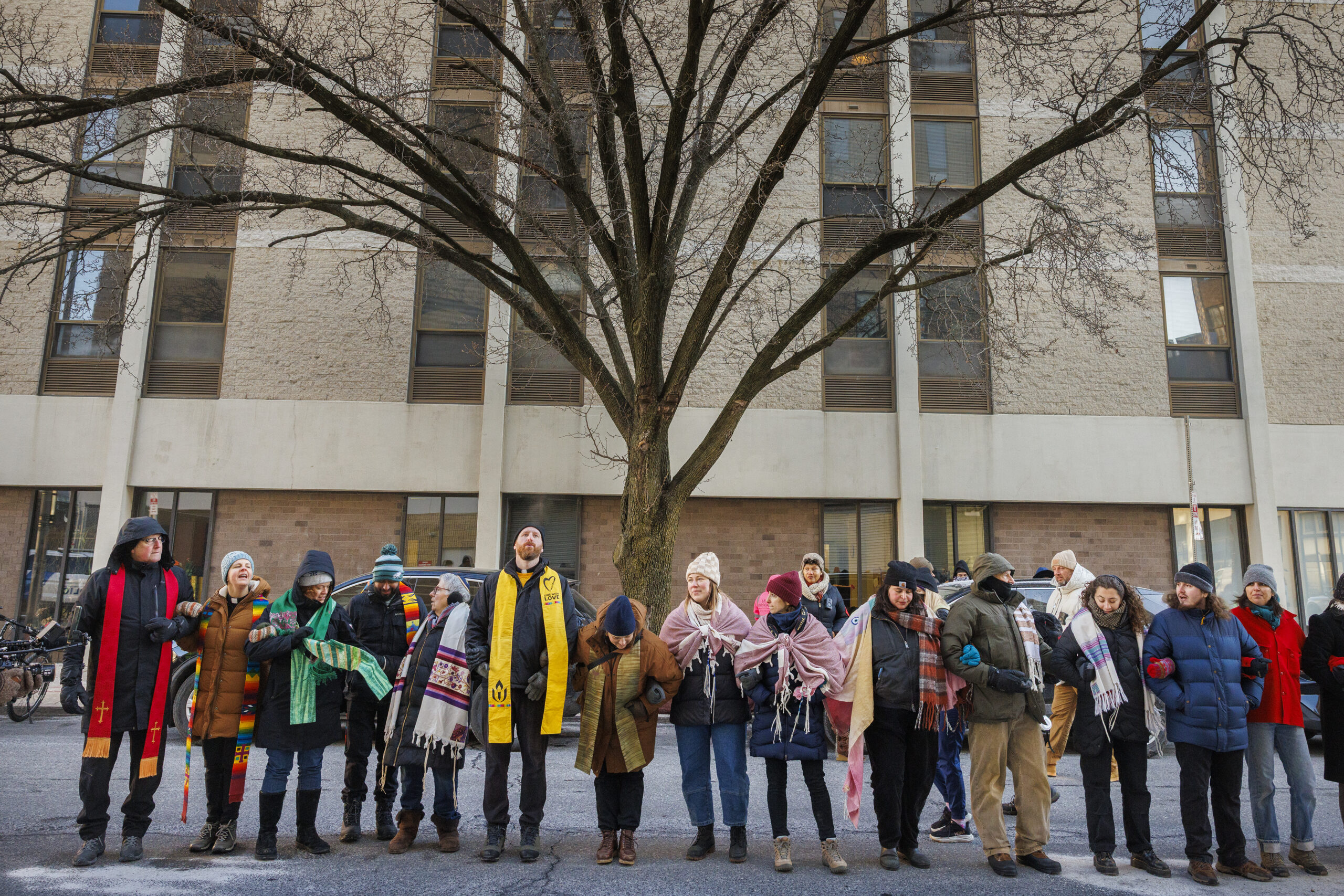
Demonstrators and clergy block vehicles outside a U.S. Immigration and Customs Enforcement office near Eighth and Cherry Streets in Center City in January.
The American situation is different. No administration — Donald Trump’s included — has attempted to dictate theology or restructure the church. Religious institutions remain free, protected by the Constitution. Without a direct threat to ecclesial identity, many clergy do not perceive an existential crisis that demands collective resistance.
But that explanation only goes so far. The deeper issue is fragmentation. American Christianity is not a single institution, but a sprawling landscape of denominations, traditions, and political loyalties. What one group sees as a moral emergency, another interprets as a defense of religious liberty or national sovereignty. The result is paralysis: a theologically moral confusion instead of a theologically moral chorus.
And yet, the absence of unified condemnation does not mean the absence of moral responsibility. The images from detention centers, the stories of families torn apart, the deaths that occur in immigration enforcement — these are precisely the kinds of injustices that once stirred theologians like Niemöller to action.
They understood that a church’s credibility depends not on its proximity to power, but on its willingness to speak when human dignity is at stake.
The lesson from the German theologians is not that today’s political moment is identical to theirs. It isn’t. But their example does remind us that moral clarity rarely emerges from comfort. It comes from the willingness to name what is wrong, even when doing so risks alienating congregants, donors, or political allies.
Some American clergy have taken that risk. Many have not. And in the silence, something essential is lost: The sense that faith can still serve as a compass when the nation drifts. The question now is whether religious leaders will reclaim that role. This comes about not by mimicking the past or predicting the future, but by recognizing that moral courage is timeless. The German churches, although a minority, did not wait for consensus. They spoke because the alternative was complicity.
Today’s churches face their own decision. History will remember whether they found their voice — or whether they chose, once again, to fall silent.
Robert Bruce Ellis earned his doctorate in 20th-century German history from Rutgers University and studied theology at Christ Church College, University of Oxford.
The announcement that the Philadelphia School District will close additional schools because of budget shortfalls is devastating, but sadly not surprising.
When schools close, students who have already faced instability pay the highest price. Parents scramble to rearrange transportation and childcare. Children lose trusted teachers and friendships. Communities lose institutions that once anchored them. Families deserve more than reassignment letters and uncertainty. They deserve meaningful options.
Two solutions are within reach: Lifeline Scholarships for Pennsylvania and the federal program, the Educational Choice for Children Act (ECCA). These programs would allow funding to follow Pennsylvania students to schools that meet their needs. These scholarships would give parents — not bureaucracies — the ability to choose a safe, effective learning environment, whether that is a public charter school, private school, faith-based school, or specialized program tailored to a child’s needs.
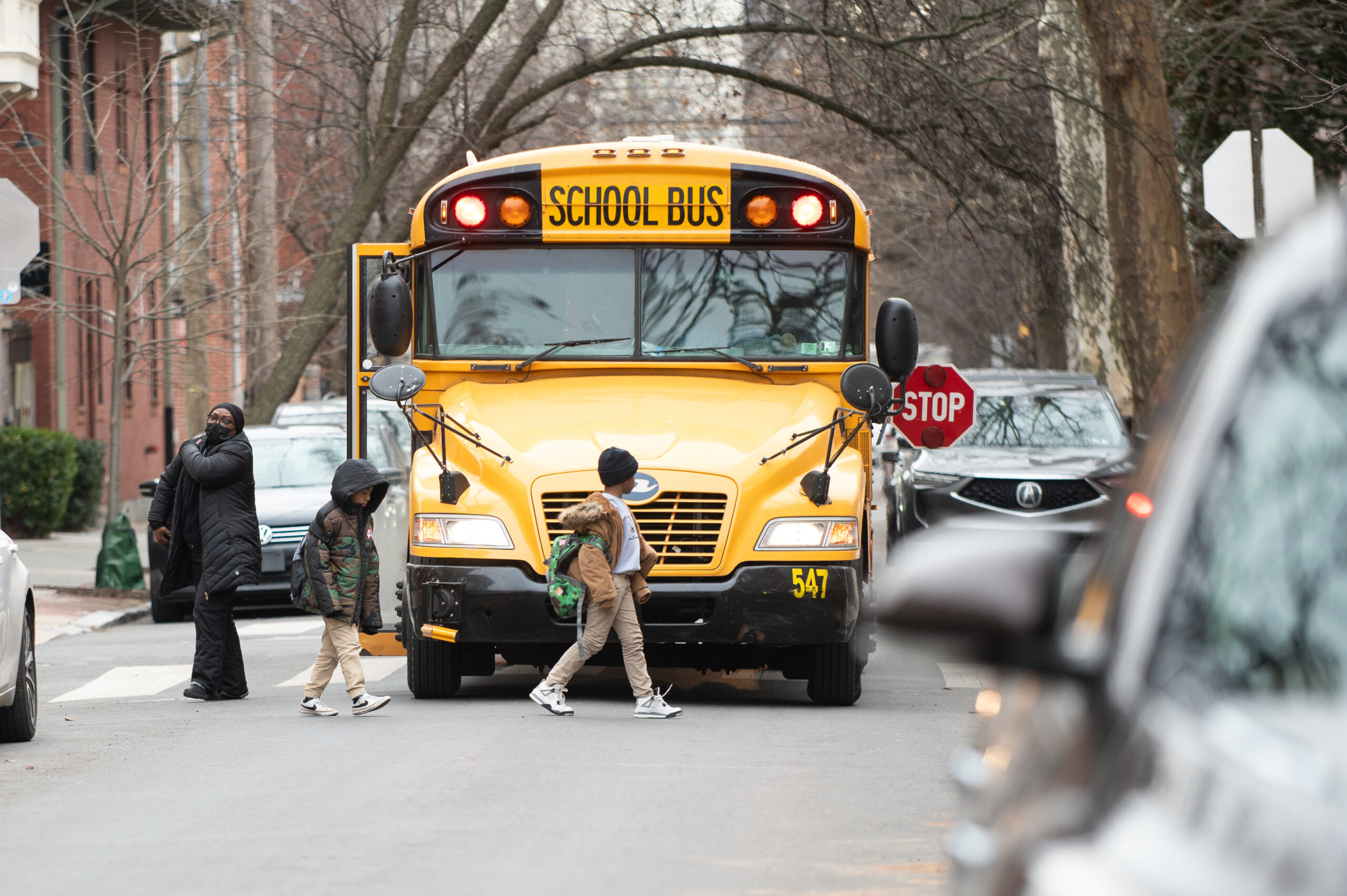
Students get off the bus at Laura W. Waring elementary school in Spring Garden last month. The school is set to close in 2027.
Gov. Josh Shapiro has the opportunity to act, and he needs to opt in now. By supporting Lifeline Scholarships and opting Pennsylvania into federal education choice programs like ECCA, the state could help families immediately. These are education dollars intended for children. Allowing them to follow students would give parents real leverage and real hope.
Other states are already moving forward. In Texas and Florida, tens of thousands of families are applying for scholarships that open doors to schools better suited to their children. Reports from Texas show more than 80,000 applications from families seeking alternatives. These parents are not abandoning public education; they are seeking opportunity where it exists.
Critics argue that school choice harms public schools. But forcing families to remain in schools that are unsafe or chronically underperforming harms children. Choice introduces accountability. When families have options, schools must improve to keep students. Competition can spark innovation, encourage responsiveness, and reward excellence.
This is not about politics or ideology. It is about fairness.
Every parent wants the same basic things: a safe school, strong teachers, and a chance for their child to succeed. For too many Philadelphia families, those expectations remain unmet. School closures make that reality even more urgent. Lifeline Scholarships and federal education choice programs like ECCA could offer stability in a time of upheaval.
Philadelphia parents and community leaders should make their voices heard. Contact your legislators. Write to Gov. Shapiro. Ask Pennsylvania to adopt policies that put students first and give families the freedom to choose schools that work for their children.
Our children cannot wait another decade for incremental change. When schools close, families need solutions — not promises. These solutions are already working for families in many states across the country; why not in Pennsylvania?
Reginald Streater, president of the Philadelphia Board of Education, opened his testimony before City Council last month by introducing himself as “Reggie from Germantown,” a graduate of two district schools that no longer exist. Germantown High and Leeds Middle both closed. He knows what it means to lose a building. He’s also voting to close 20 more.
The conflict playing out in Philadelphia isn’t only about schools. It’s about the fact that the school district and City Council have different responsibilities for the same places, and the new facilities plan brings that conflict into sharp focus.
On Jan. 22, Superintendent Tony B. Watlington Sr. released a facilities master plan proposing to close 20 schools, colocate six, and modernize 159 others. On Feb. 26, he presented an amended final plan to the Board of Education, which was updated from 20 school closures to 18. Russell Conwell Middle School and Motivation High School were removed from the closure list.
The district has lost 15,000 students in a decade, carries 300 buildings, many of them 75 years and older, and runs some schools with more than 1,000 empty seats, while others are overcrowded. Concentrating students means Advanced Placement courses in every high school, algebra for every eighth grader, and real career and technical pathways. The current spread of half-empty buildings makes all of that impossible to deliver consistently or fairly.
The facilities plan is doing exactly what it was designed to do. The trouble is that everything it was not designed to do.
A Philadelphia neighborhood school isn’t just one institution. It’s four, sharing an address. There’s the instructional platform: courses, teachers, schedules, the district’s domain. There’s the civic anchor: the building that signals to a neighborhood that its children count, and they belong. There’s the distribution node: where meals are served, where social workers operate, and where there is, most days, someone watching. And there’s the pathway to the future: where a counselor knows a family by name, where a student learns there’s a college or a trade or a life beyond the block.
In places like Kensington, schools have absorbed those responsibilities over time.
When that school building closes, all of those other things close with it. Some of those functions were formal educational programs. Others accumulated because families had nowhere else to go for them. The school became the place where paperwork was explained, problems were addressed and solved, and someone always knew which door to knock on next.
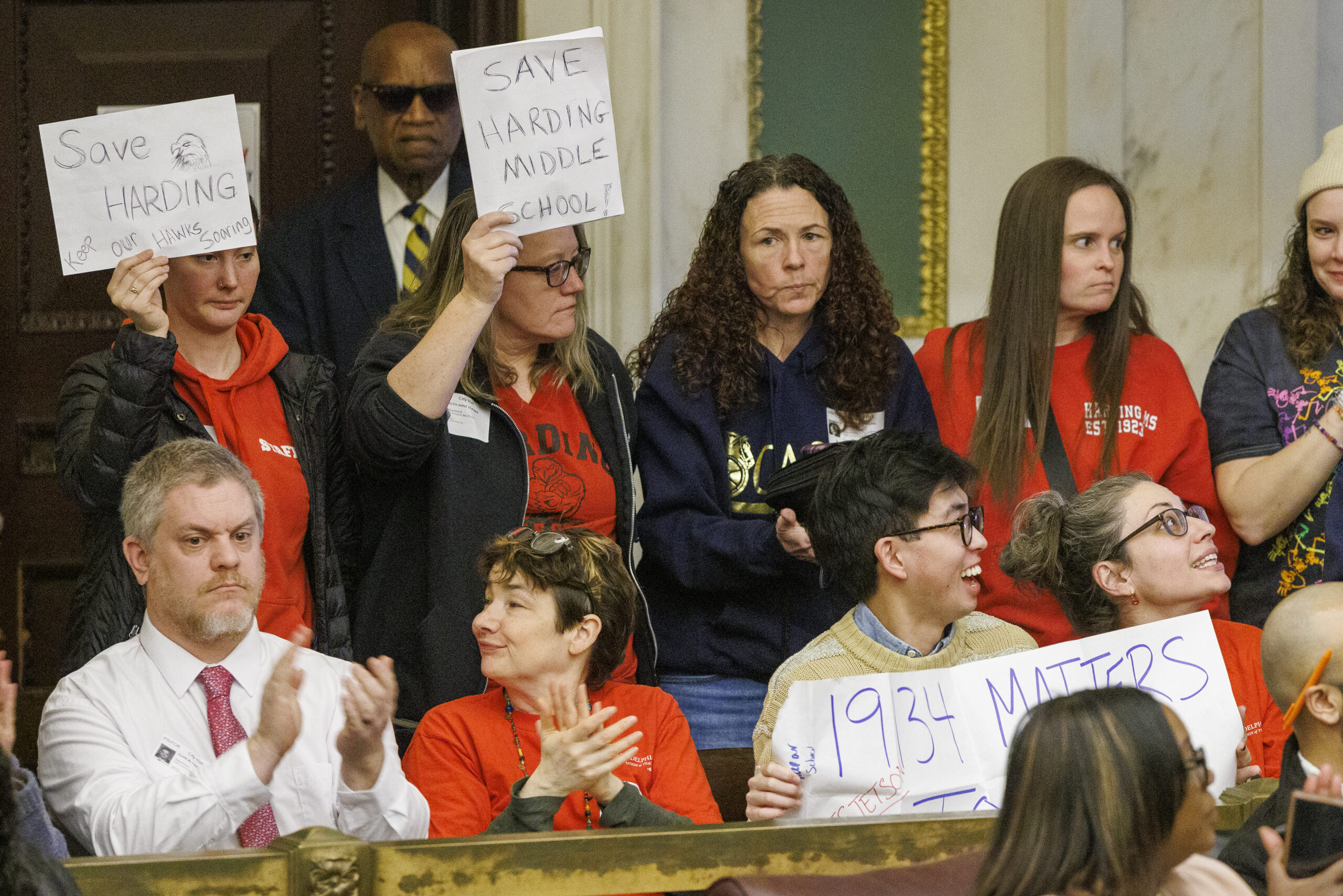
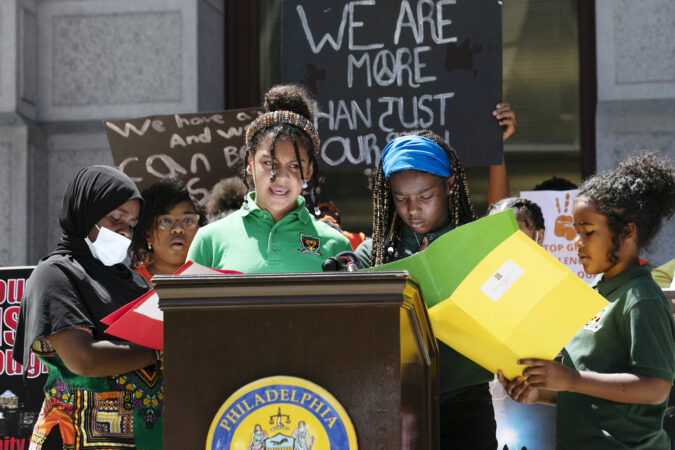
Supporters of Harding Middle School protest at a City Council hearing with school board members earlier this month.
Residents and families filled the chamber. Parents stood along the walls long after seats ran out, some holding infants, others carrying school backpacks. The hearing lasted hours.
The debate sounded like a disagreement about the plan, but it was really a disagreement about who is responsible for what the plan leaves behind.
What closes with a school building is not limited to instruction. Council’s budget is the instrument for the functions the facilities plan does not govern: housing investment, community infrastructure, colocated services, and neighborhood anchors that exist independent of school enrollment.
The district held 47 public listening sessions and surveyed more than 13,000 people before releasing this plan. The fight at City Hall last month wasn’t because communities weren’t heard. It’s because what they described was a loss that the facilities plan was never designed to address. That’s not a failure of process. It’s a mismatch of jurisdiction.
The district’s plan answers an educational question. What replaces the neighborhood functions housed in those buildings is a civic one.
That answer does not sit with the school district.
Amanda Soskin is a Philadelphia resident and consultant who writes about neighborhoods and civic infrastructure at Neighborhood Fundamentals.
Superintendent Tony B. Watlington Sr. and the Philadelphia School District have proposed 18 school closures, six colocations, and a vague, insufficiently transparent plan to reconfigure grade levels across numerous other schools, citing the need for “more efficient use of all of our resources” to deliver high-quality academic and extracurricular programming districtwide.
The Inquirer Editorial Board has endorsed the plan, pending adjustments to several sites, including Lankenau Environmental Science Magnet High School.
The district is right to pursue a comprehensive facilities plan that addresses toxic building conditions, overcrowding, and underutilization. But it is going about it the wrong way. Facilities planning should be an annual, longitudinal process grounded in sustained community engagement, not a punctuated moment of 24 mass closures that disrupt neighborhoods and sidestep the thoughtful incorporation of public input that only time and intention can provide.
Mistakes of 2013
Without such care, the district will repeat the mistakes of the 2013 closures, which led to students disappearing from school rolls in September, overcrowded receiving schools, and the racialized erasure of neighborhood histories and place-based educational traditions.
First, significant questions remain about implementation and transparency. Ten properties are slated to be “conveyed” to the city, reportedly tied to Mayor Cherelle L. Parker’s H.O.M.E. plan. Amid speculation about a 20-year tax abatement connected to redevelopment, it is unclear what mechanisms will ensure the benefits of these transfers accrue to the communities that have borne the brunt of closure, rather than to private developers. A two-decade tax abatement would symbolically and materially reinscribe the racialized disinvestment, neglect, and manufactured crisis that have too often paved the way for school closures in the first place.
Second, the data used to inform the closures have been called into question by many, and do not take into account the nuance of mixing school populations via colocation. For example, parents at Childs Elementary have cited the district’s plan to colocate a new Academy at Palumbo based on a building capacity of 1,000. However, a significant portion of the building’s classrooms is dedicated to special-education students. A colocation would displace SPED students from these classrooms while reinforcing a bifurcated culture among the catchment-based middle school students and Palumbo students in an already rapidly gentrifying neighborhood of Point Breeze.
Third, closure and conveyance to the city for resale do not guarantee public-serving outcomes. With my collaborators — Ariel Bierbaum, Amy Bach, and Elaine Simon — I have studied how thoughtful reuse, rooted in restoring community access and public control, can begin to repair the racially inequitable legacy of past closures.
Yet, private redevelopment has repeatedly failed to stabilize these properties. Selling off public assets does not guarantee revitalization; it often perpetuates stagnation or displacement. Developers frequently “flip” former school buildings, speculating on value rather than advancing community use.
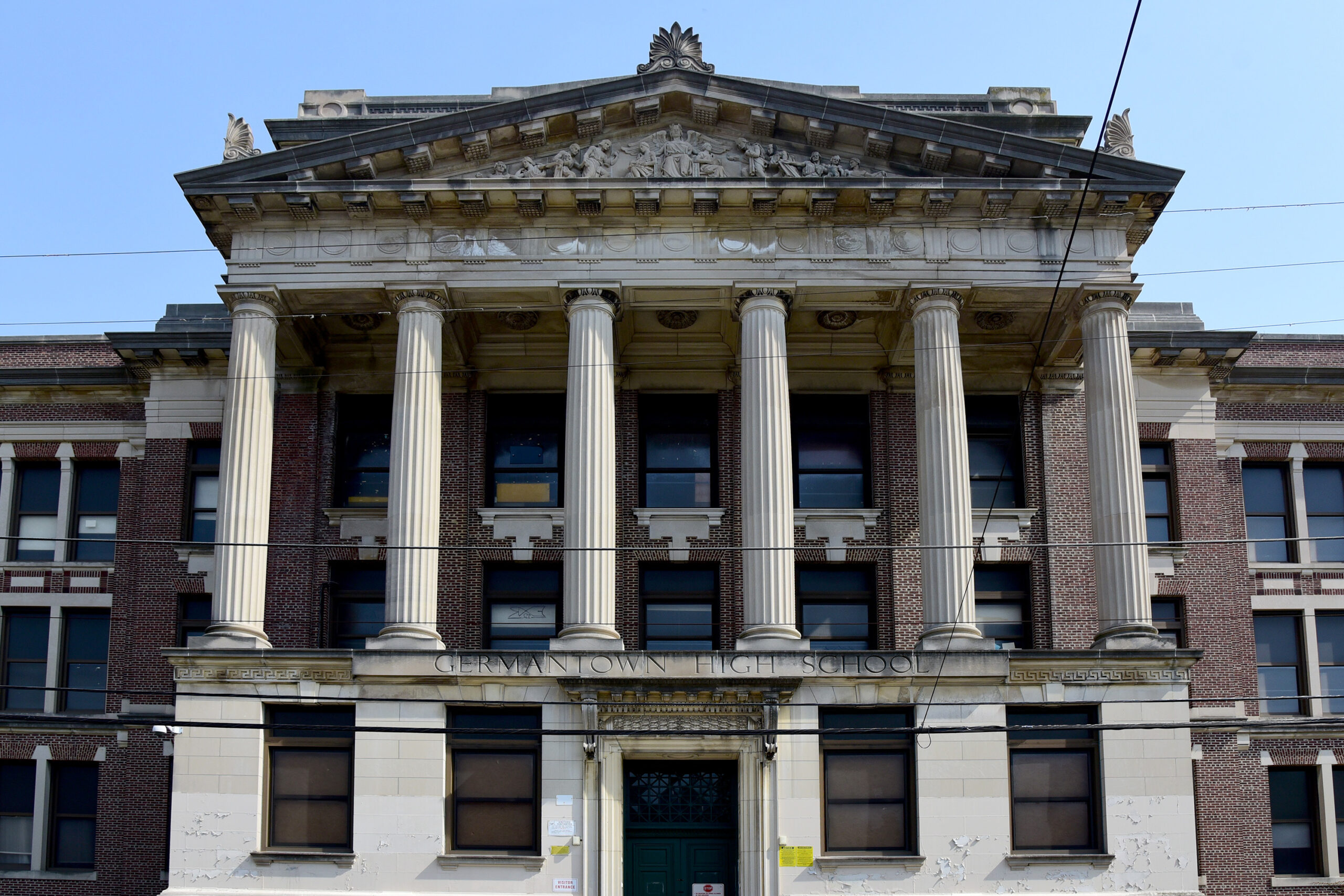
After it closed in 2013, Germantown High School fell into decay and disrepair, a fate Julia McWilliams writes could be repeated.
Take the former Germantown High School and Robert Fulton Elementary, for example. Concordia Group bought them in 2014, only to abandon its plans and resell the buildings three years later to local developer Jack Azran, whose opaque redevelopment has sparked concern.
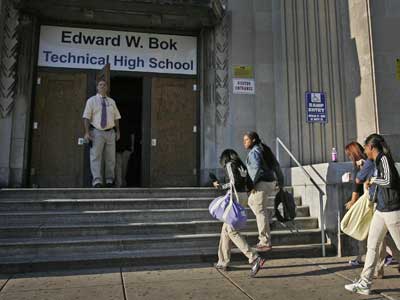
Moreover, once schools are sold to private entities, they are effectively lost to some communities and public education forever. South Philadelphia’s experience is a cautionary tale. As nearby elementary schools became overcrowded following the 2013 closures, the former Edward W. Bok Technical High School, once a public citywide admissions school, was transformed into a workspace for small-business owners, artists, and nonprofit organizations, closing classrooms forever.
This reuse no longer serves the same community of students and families as when it was a high school, and raises important questions: What does it mean for a community’s future when former schools become symbols of gentrification rather than centers of education? And what options remain when demographic shifts create new demand for neighborhood schools that no longer exist?
Had Bok remained in public hands, it could have flexibly adapted to those needs. Instead, it serves a much different population: South Philadelphia working artists, small-business owners, and local refugee-serving nonprofits, but also patrons who can afford $14 cocktails.
Slow down
Rather than defaulting to closure, the Board of Education should consider how underenrolled buildings might be repurposed for public-serving uses that retain community control. Could redevelopment proceed gradually, with clear commitments that investments in existing buildings benefit both local families and those who have chosen these schools?
Such an approach would require genuine public engagement and sustained dialogue. It would require slowing down and rejecting a disruptive, thinly deliberated plan shaped by speculative capital and instead committing to participatory, long-term facilities planning.
The district and the city face a choice. They can repeat a cycle of disinvestment and dispossession, or they can chart a more deliberative, community-rooted path. The question is whether they have the will to do so.
Julia McWilliams is the codirector of the Urban Studies Program at the University of Pennsylvania and a member of Stand Up for Philly Schools. She coauthored the forthcoming book, “Schools for Sale: Disinvestment, Dispossession, and School Building Reuse in Philadelphia,” from the University of Chicago Press.
Philadelphia is the birthplace of American democracy. It is also a city that understands democracy is strongest when rooted in truth.
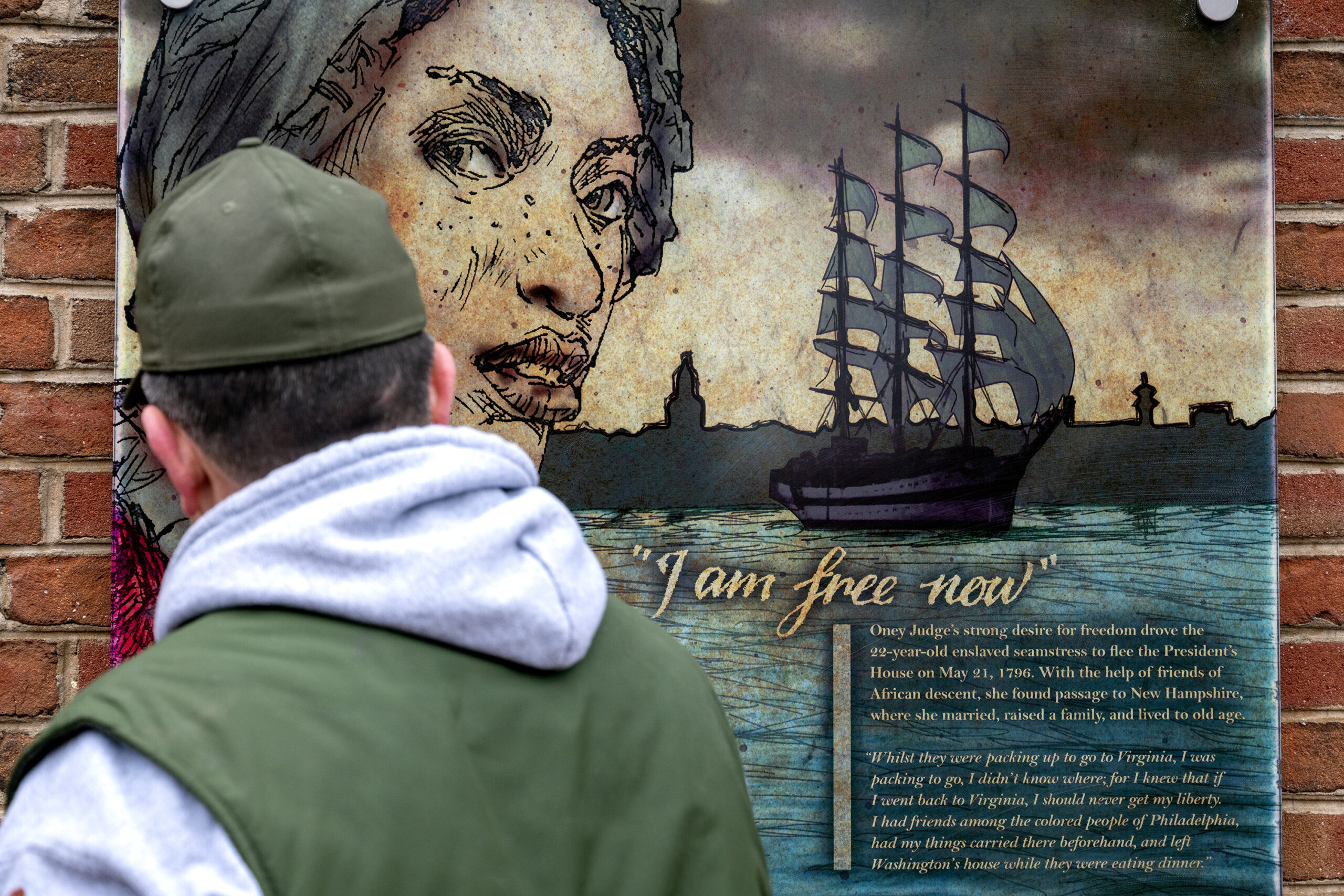
That is why the January removal of slavery exhibits from the President’s House site in Center City was so deeply concerning. I am happy National Park Service workers restored the exhibits on Feb. 19, but they are only back up in their rightful place because of U.S. District Judge Cynthia M. Rufe’s order directing the NPS to restore them.
Rufe made it clear in her Feb. 16 ruling that historical truth cannot be dismantled or rewritten, and that the federal government and President Donald Trump’s administration do not have the authority to erase or alter facts simply because they control a national site.
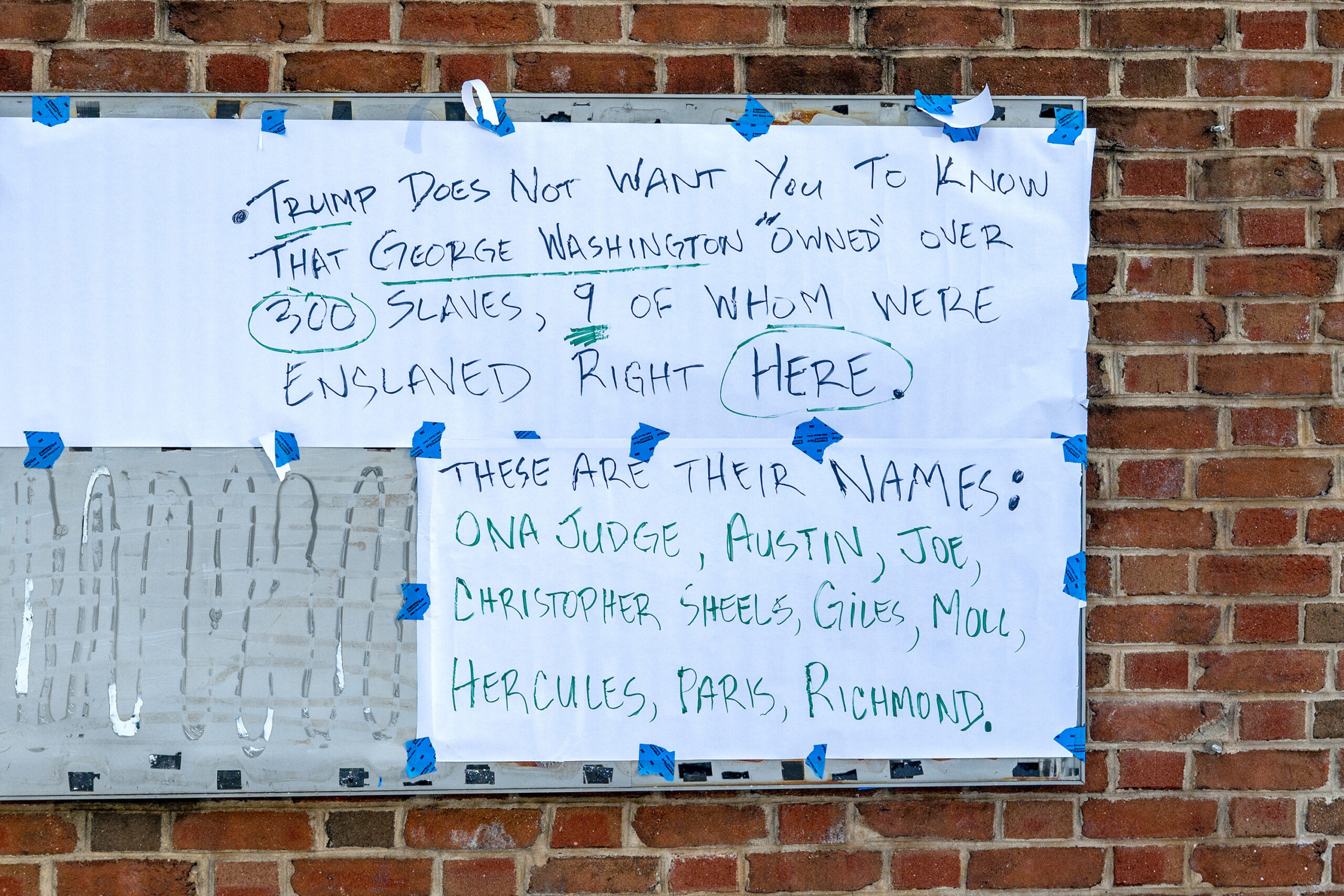
At the President’s House — located within Independence National Historical Park — visitors learn about George Washington’s early presidency. But equally important, they learn about the nine enslaved Africans who were forced to live and work in Washington’s Philadelphia household. Their lives unfolded in the literal shadow of a building where liberty was debated and declared.
That story is not just an aside in our nation’s founding — it is essential for understanding both America’s ideals and its contradictions. Removing those interpretive panels is more than just an administrative decision; it’s an effort to alter the narrative of our shared history.
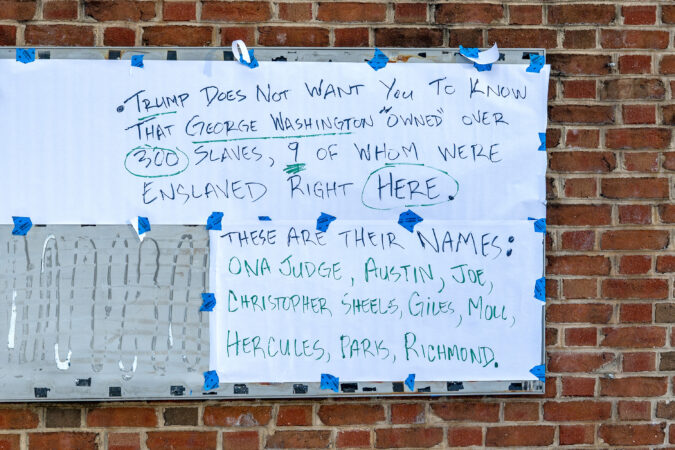
Signs and notes placed by visitors at the President’s House in Independence National Historical Park on Feb. 2 replace the panels about slavery that were removed in January by the National Park Service.
The City of Philadelphia sought an injunction in federal court on Jan. 22 to preserve the integrity of this significant site. This battle goes beyond signage; it’s about whether we are prepared to face the full truth of who we are as a nation.
There is no harmful ideology in recognizing that slavery existed at the highest levels of early American government. There is no political agenda in naming the enslaved men and women who lived at the President’s House. There is only a duty to tell the truth.
The President’s House memorial opened in 2010 after years of research, advocacy, and public engagement, led by the Avenging the Ancestors Coalition and supported for decades by the city of Philadelphia and the NPS.
It reflects Philadelphia’s long-standing commitment to the honest telling of history. We acknowledge that our nation’s founding documents proclaimed liberty while millions remained enslaved. We understand that progress arises not from denial, but from reckoning.
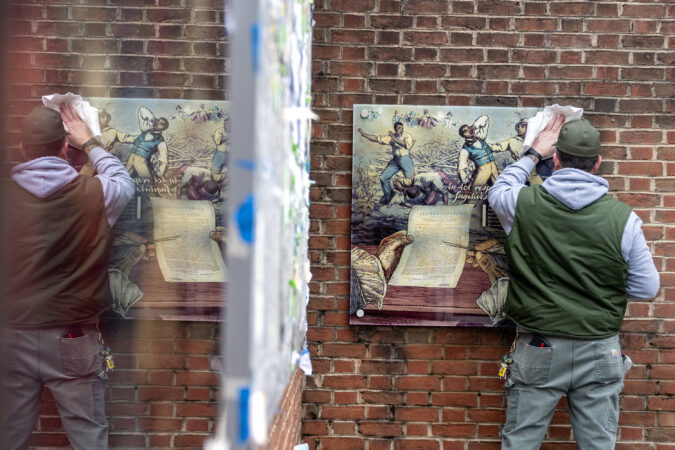
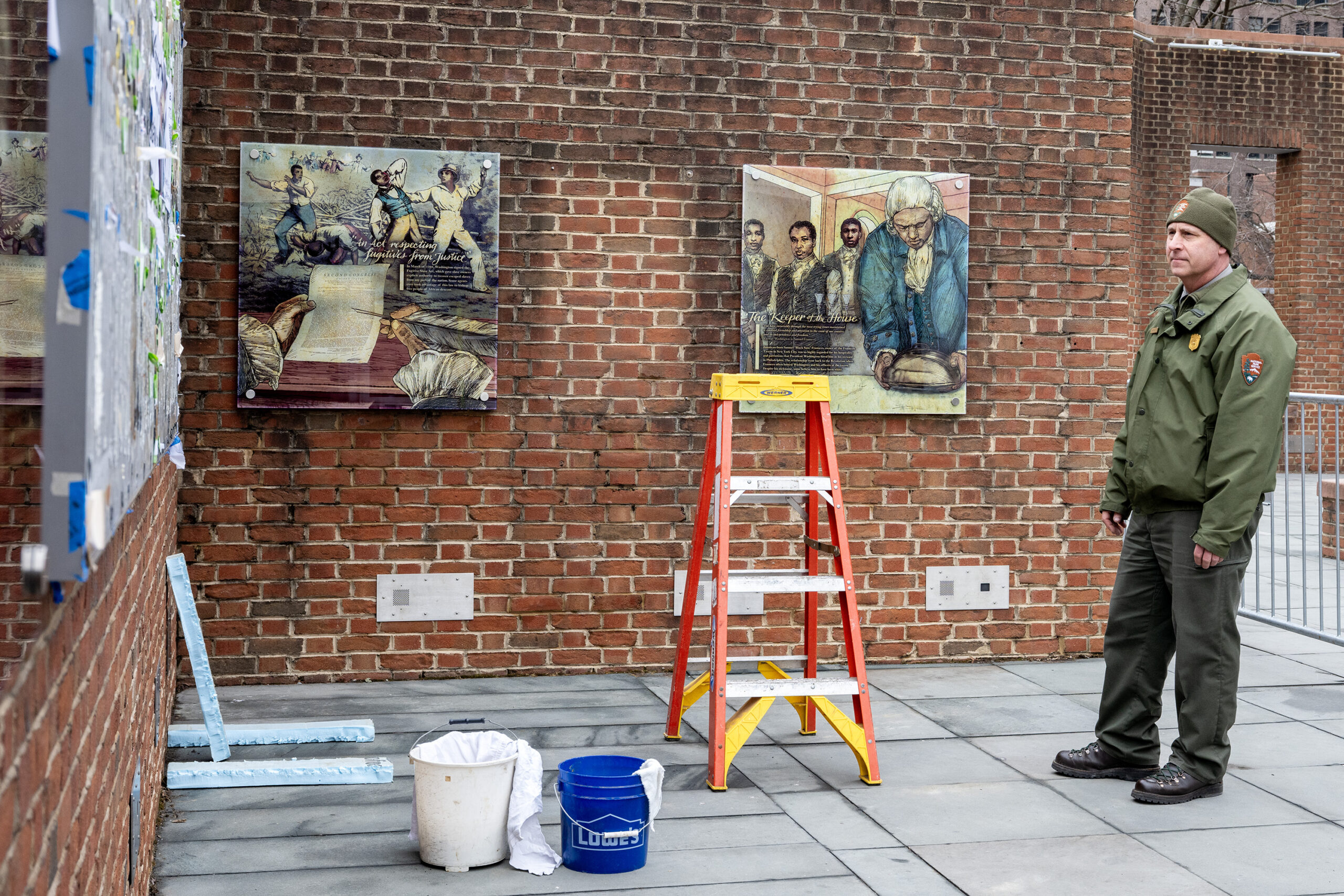
A worker pauses while rehanging panels at the President’s House in Independence National Historical Park on Feb, 19.
Philadelphia will always remain dedicated to sharing the full history of our nation, not just the easy parts, but the whole truth.
Our children deserve to learn that America’s greatness is not in pretending we are perfect, but in working to become a more perfect union every day.
Restoring these exhibits at the President’s House is not about politics. It’s about principles. It’s about making sure that a site visited by people from all over the world, especially on the 250th anniversary of the United States, reflects the full scope of our history, including both triumphs and injustices.
As the fight over the President’s House continues through the federal court system, I will continue to support our efforts to ensure the exhibits remain at the site permanently.
We must not let Trump whitewash African American history. Black history is an integral part of American history.
Kenyatta Johnson is City Council president and represents the 2nd Council District in Philadelphia, which includes parts of Center City, South Philadelphia, and Southwest Philadelphia.
The 2026 Winter Olympics in Milan may be over, but the political storm and protests stirred by the presence of U.S. Immigration and Customs Enforcement have not faded. With the FIFA World Cup set to bring millions of international fans to North America next, the Milan backlash now feels less like an isolated controversy and more like a warning of what could lie ahead.
Italian lawmaker Riccardo Magi (center) shows a placard demanding that U.S. Immigration and Customs Enforcement (ICE) agents not be allowed at the Milan Cortina Olympics, during a protest staged outside the U.S. Embassy in Rome in January.
The last World Cup in Qatar drew about one million international visitors. The 2026 tournament — hosted across the United States, Canada, and Mexico — is expected to attract several times that number, making it the largest in soccer’s history. Its success will hinge not only on logistics and policing, but on whether teams and supporters feel welcome, safe, and able to move across borders within tight time frames.
That confidence is now under scrutiny. ICE acting Director Todd Lyons has said the agency will be a “key part of the overall security apparatus” for the World Cup. Yet, when immigration enforcement becomes visibly woven into the staging of a global tournament, it ceases to look like routine security and instead risks appearing as a projection of domestic policy onto an international stage.
Already, there are increasing calls to boycott the event for safety reasons, with fan groups like Football Supporters Europe expressing concern about the “ongoing militarization of police forces in the U.S.”
Meanwhile, supporters from Latin America, Africa, and the Middle East are already asking whether a valid visa will be enough. Could minor paperwork errors lead to detention? For mixed-status families living in the United States, the anxiety is sharper still. A major German team has reportedly canceled a U.S. tour, and online fan forums openly debate boycotts.
Sport has always intersected with politics. The 1936 Berlin Olympics were carefully orchestrated by the Nazi regime to project ideological confidence and international legitimacy, even as discriminatory policies continued at home. Decades later, the global boycott of apartheid South Africa — leading to the country being barred from the 1964 Olympic Games — showed that tournaments can reflect moral choices.
But there is a difference between holding regimes accountable and turning sporting events into stages for domestic enforcement policy. This point carries particular weight in the U.S., a country whose global appeal has long rested on openness and pluralism.
Chelsea’s Cole Palmer walks with the golden ball trophy after Chelsea won against Paris St. Germain in the Club World Cup final, at MetLife Stadium in East Rutherford, N.J., in July.
The World Cup is a soft-power moment. For one month, North America will present itself to billions of viewers not just as a host, but as a harmonious society — a rare global moment when rival nations share rules, rituals, and space on equal terms.
That is precisely why international bodies have treated soccer as a tool for cohesion rather than division. The United Nations has repeatedly promoted sport as a mechanism for refugee integration and social stability, while organizations working on counter-extremism and discrimination, including the Muslim World League, have similarly highlighted how athletics can cultivate “understanding, empathy and respect” across communities.
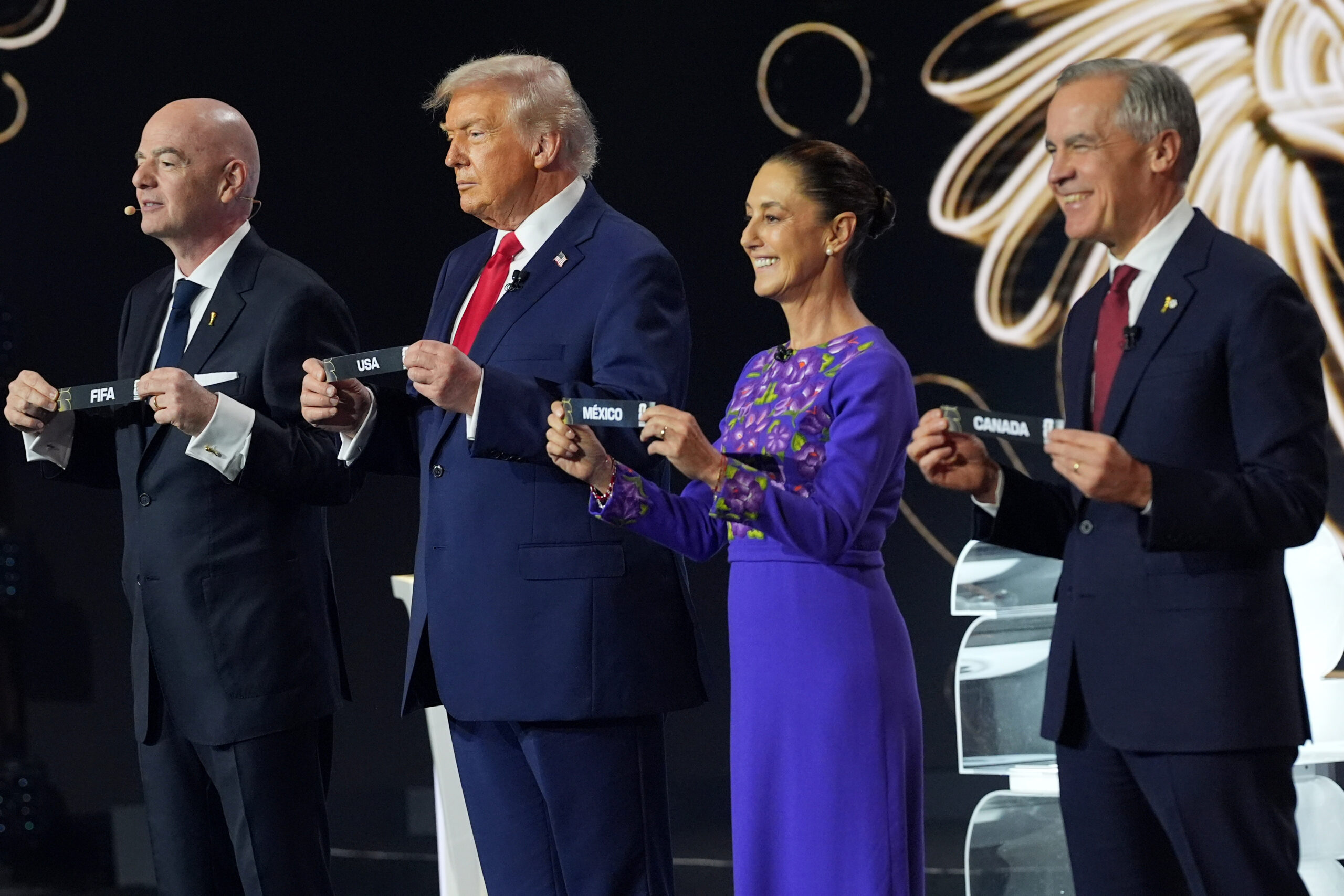
Canadian Prime Minister Mark Carney, Mexican President Claudia Sheinbaum, President Donald Trump, and FIFA President Gianni Infantino hold up country names during the draw for the 2026 FIFA World Cup at the Kennedy Center in Washington in December.
MWL’s secretary general, Mohammad bin Abdulkarim Al-Issa — who was recently recognized in the United States for his efforts to combat hate — has repeatedly warned that weak integration and social division are the biggest threats facing humanity today. Global sporting events, by contrast, offer rare shared civic spaces where diverse societies meet on equal terms, reinforcing inclusion rather than suspicion.
If enforcement spectacle overshadows the 2026 World Cup, the consequences will be economic as well as social. Travel hesitancy, empty seats, and reduced tourism would be immediate effects.
But the deeper risk is political: Visible exclusion at a global event reinforces narratives of division and grievance that extremists on all sides are quick to exploit. When people feel unwelcome in shared civic spaces, mistrust grows — and the integrative power that sport is meant to provide begins to erode.
That makes clarity from federal authorities essential. The U.S. Departments of Homeland Security and State and host city governments should coordinate to publish tournament-specific guidance covering visa processing timelines, entry procedures for ticket holders, and the scope of enforcement activity around official venues.
Clear assurances that immigration sweeps will not be conducted at stadiums, accredited fan zones, or public watch sites would reduce uncertainty without compromising border security.
For a country that prides itself on being a nation of immigrants — and for a president who places great stock in ratings, turnout, and global spectacle — the 2026 tournament presents an extraordinary opportunity to show that security and openness can coexist. Full stadiums and strong international attendance would reinforce the image of a confident, welcoming host nation.
If instead, travel hesitancy, empty seats, and visible enforcement dominate the optics, the tournament risks projecting exclusion rather than unity.
That outcome would not only diminish the World Cup’s global appeal but squander a rare moment of soft power that no amount of security planning alone can restore.
Khalid Sayed is the leader of the opposition for the African National Congress in the Western Cape Provincial Parliament in South Africa, now serving his second term. A former provincial leader of the ANC Youth League, he is an activist committed to social cohesion and democratic renewal in a postapartheid society.
Nearly 5,000 Philadelphia students face a tough decision after the recent announcement of school closures in the district. As they begin searching for a new school, many will find the process overly fraught and needlessly complicated due to bad policies that have limited their choices.
Charter schools are one popular option. About 41% of Philadelphia’s public school students have chosen these kinds of schools — including both cyber and brick-and-mortar charters.
But transferring to a charter school isn’t a sure thing. In fact, charter schools host lotteries for interested students. For the 2025-26 school year, nearly 26,000 students applied, but only about 10,000 across the district were lucky enough to win a seat. The rest went on a waiting list.
Philadelphia School District officials created this bottleneck. Despite the high demand for these schools, the school board has denied new charter school applications year after year. Even after approving its first charter school in nearly a decade, the board negated this progress by proposing to close several more charters.
Harrisburg isn’t helping, either.
Pennsylvania lawmakers continue to gut another popular alternative: cyber charters. This year’s budget robbed cyber charters of almost $178 million, which many bad-faith partisans euphemistically called “savings.” And as if those cuts weren’t enough, Gov. Josh Shapiro offered more doublespeak in his recent budget address, proposing to “redirect” another $250 million away from cyber charters.
So, how about transferring to a private school?
Last year, Pennsylvania awarded more than 101,000 tax credit scholarships to students seeking private alternatives to their neighborhood schools. Almost one-third of those scholarships went to Philadelphia students. Locally, the Children’s Scholarship Fund Philadelphia (CSFP) provides more than 6,800 scholarships to low-income K-8 students in the city. In December, CSFP held its own lottery day, calling hundreds of parents to tell them the good news.
But many more families weren’t so lucky — all thanks to bad politics.
Scholarships needed
Statewide, nearly 70,000 tax credit scholarship applicants were turned away due to program caps. Demand for these scholarships has outpaced supply, leaving far too many students stuck in schools that don’t work for them.
Lifeline Scholarships could have filled this gap. This transformative program would have awarded $100 million in scholarships to students attending Pennsylvania’s lowest-achieving schools — 35% of whom live in Philadelphia.
This program nearly became a law. But Shapiro, who promised that “every child — no matter their zip code — has the opportunity to succeed,” unceremoniously vetoed the program.
The governor has also fumbled a new federal opportunity: the Education Freedom Tax Credit (EFTC). He has yet to commit to participating in this new program, which enables donors to contribute dollar-for-dollar tax-deductible scholarships up to $1,700. Projections estimate the EFTC could provide $483 million in scholarships for Pennsylvania students.
So far, 27 states have indicated they will opt into the EFTC. Even Shapiro’s Democratic colleague, Colorado Gov. Jared Polis, officially opted in, calling the decision a “no-brainer.”
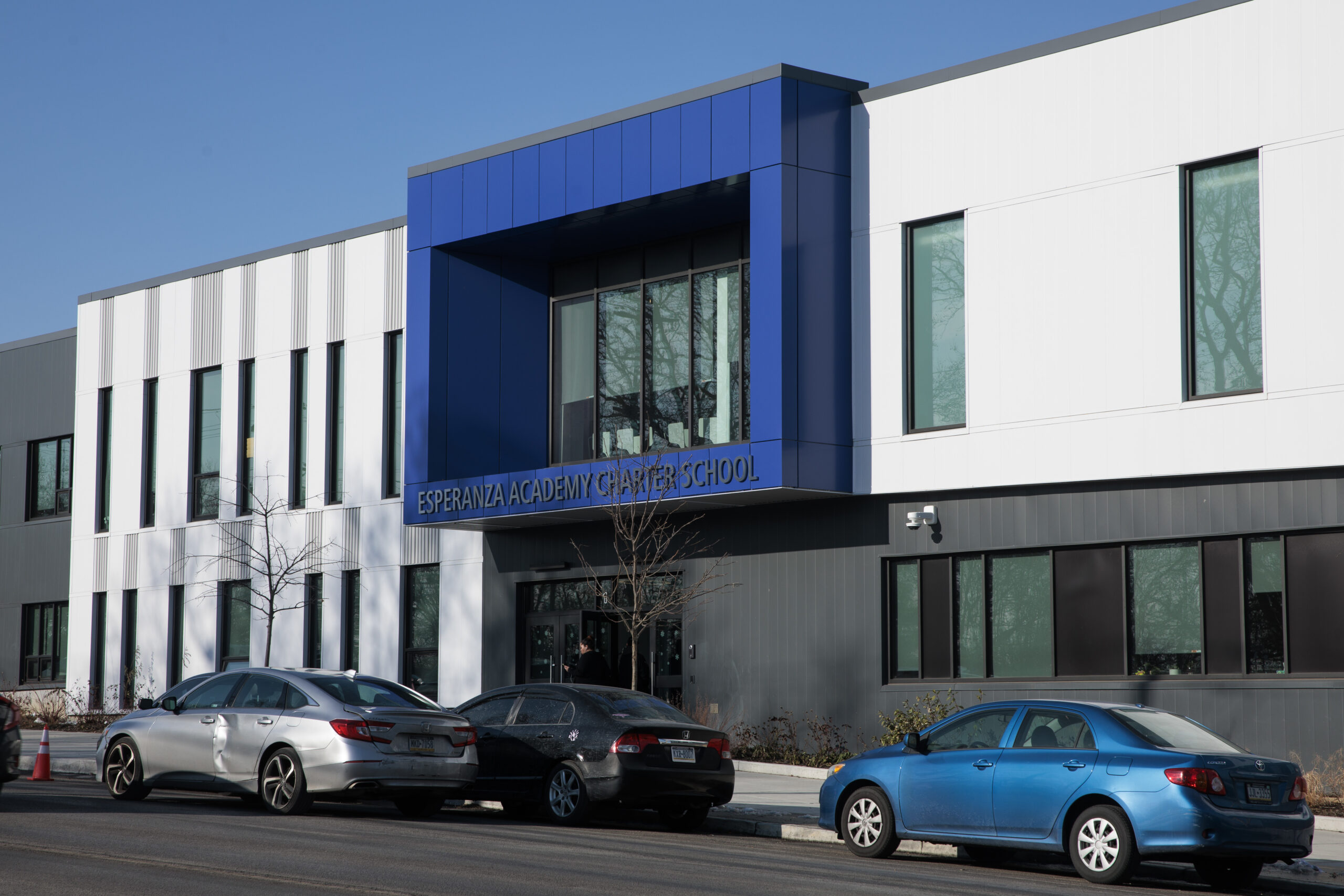
The exterior of the Esperanza Academy Charter School at 201 W. Hunting Park Ave. in Philadelphia.
Time after time, public officials have denied educational opportunities for students who need them the most. Moreover, these policymakers have painted themselves into a corner: After decades of forcing students to attend schools based entirely on their zip code, the powers that be seem unprepared when those schools disappear.
Families need genuine options. Parents should be empowered to choose the learning environment that best meets their needs — whether that’s a local district school, a charter school, a private school, a cyber school, a microschool, or homeschooling.
Lawmakers must reverse course and empower families with educational opportunity. This means expanding the commonwealth’s successful scholarship programs, enacting new ones like Lifeline Scholarships, opting in to the federal tax credit, and ending the ongoing war against charter schools.
School choice recognizes that a one-size-fits-all system isn’t realistic. And judging by the declining enrollment of public schools and the rising popularity of their alternatives, Pennsylvania families have already sent an unambiguous message to policymakers: They want more educational choices.
It is incumbent upon us to give it to them.
Andrew Lewis is president and CEO of the Commonwealth Foundation, a free-market think tank. David P. Hardy is the president of Girard College and a distinguished fellow at the Commonwealth Foundation.
The State of the Union is supposed to be a ritual of reassurance. The president enters the chamber of the United States Congress, lawmakers rise and applaud, and for one choreographed evening, we tell ourselves a story about who we are. We are strong. We are resilient. We are advancing.
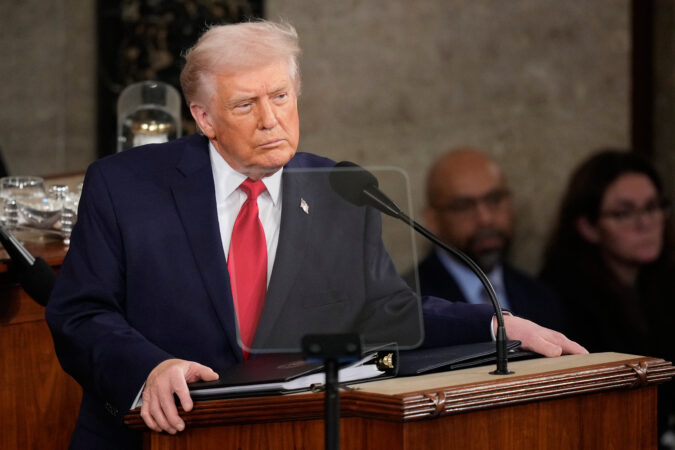
However, on Tuesday night, President Donald Trump delivered a sprawling, raucous narrative about economic revival, border tightening, partisan battles, and a vision of America in a “golden age.”
As I watched the speech’s cadence — the applause lines, the assaults on political opponents, the relentless assertion of national triumph — a question kept rising in me, a question that is rarely spoken but always present: What does this mean for our children? As I listened, I found myself thinking less about gross domestic product and more about their interior lives.
For adults accustomed to political combat, this is familiar terrain. But for children — particularly those in immigrant families, children of color, or children whose identities have been politicized — the message can register differently.
When leaders describe certain groups as dangerous or burdensome, children who see themselves reflected in those groups internalize subtle but corrosive questions: Am I safe here? Do I belong?
Research on childhood trauma and adverse childhood experiences tells us that chronic exposure to fear — even secondhand fear — can activate the body’s stress systems. Elevated cortisol, persistent hypervigilance, difficulty concentrating: These are not ideological reactions. They are biological responses.
A child who hears repeated warnings of danger in their community, or who worries that a parent could be detained or deported, does not experience politics as theater.
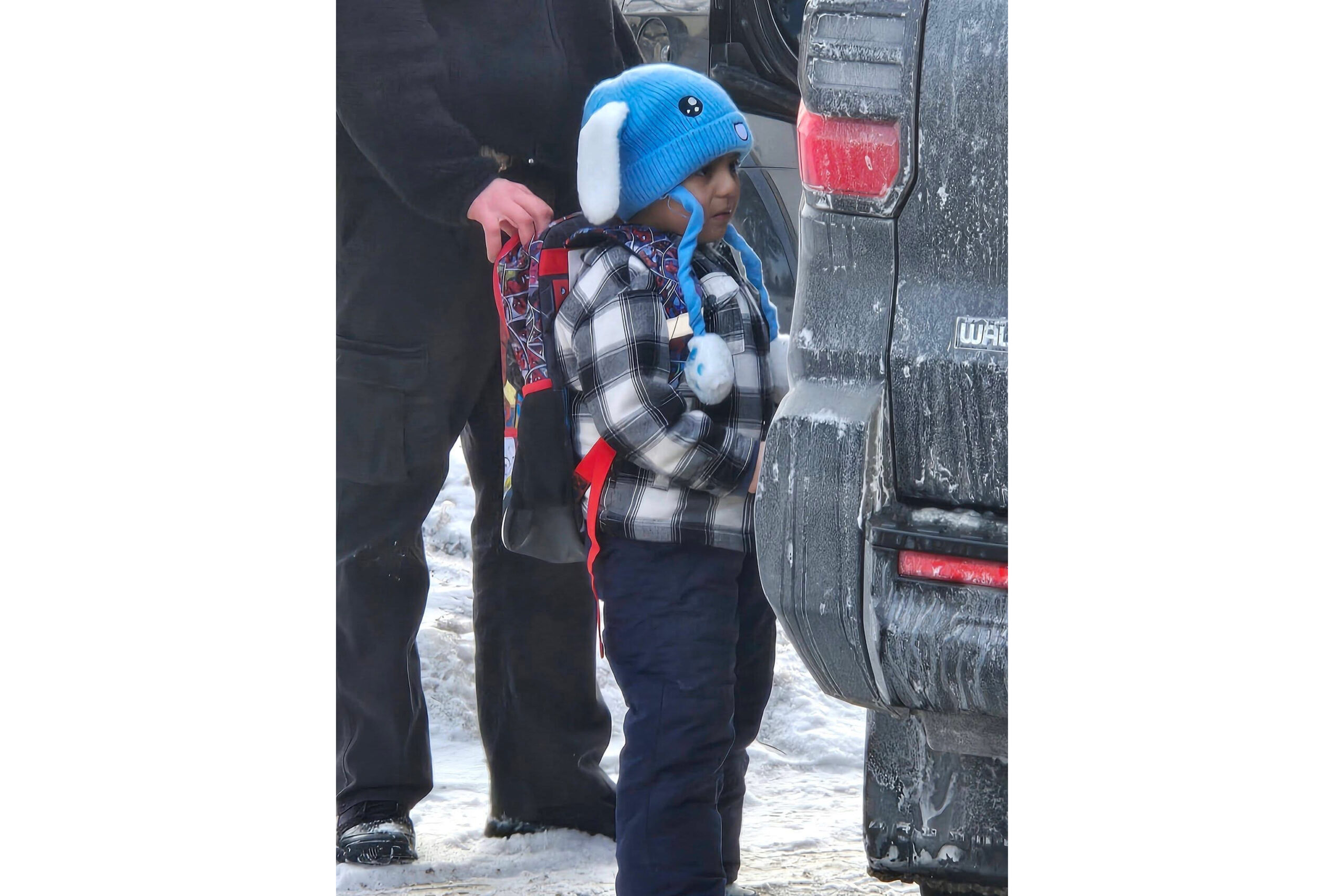
Five-year-old Liam Conejo Ramos is taken into custody by federal immigration officers as he returns home from preschool in Columbia Heights, Minn.
In her landmark book Trauma and Recovery, psychiatrist Judith Lewis Herman writes that trauma is “an affliction of the powerless.” It arises when people are subjected to overwhelming forces and deprived of control. Trauma is not merely a bad experience; it is an experience that shatters the basic assumptions of safety, trust, and meaning. It reorganizes the brain around vigilance and fear.
Herman was writing about survivors of war, domestic violence, and political terror. But the framework she provides is disturbingly relevant to our civic culture. Trauma flourishes in conditions of sustained unpredictability, humiliation, and threat. And for many children in America over the past several years, unpredictability and threat have not been abstractions. They have been ambient conditions.
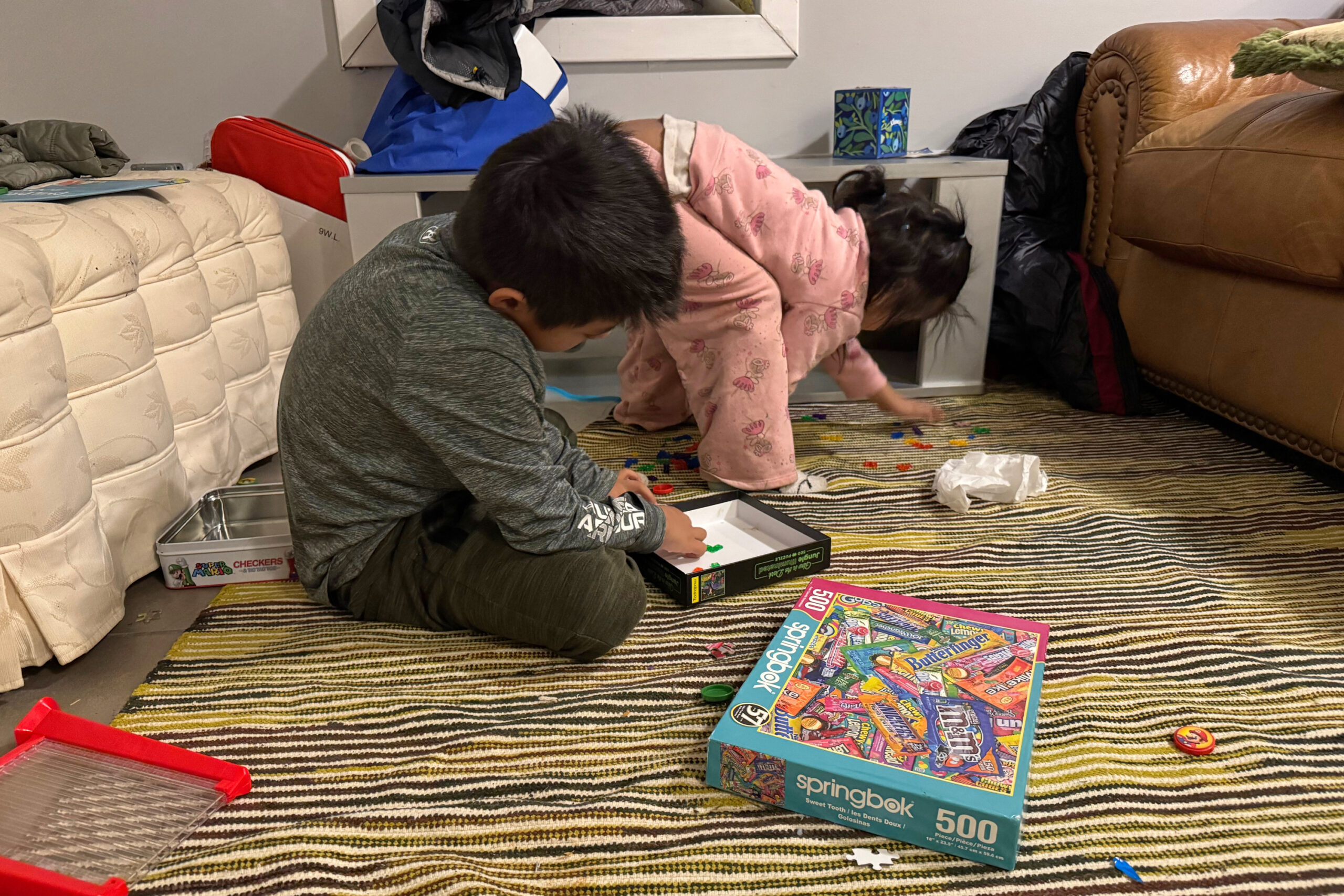
Two immigrant children play in a safe house in Minneapolis in January, after volunteers relocated them from their home to protect them from federal agents.
Consider the moments in the speech when the president highlighted crimes committed by undocumented immigrants to justify harsher enforcement. Or the policy of family separation at the southern border — a decision that, whatever one’s views on immigration enforcement, resulted in children being forcibly separated from their parents. Developmental psychologists have been unequivocal: abrupt separation from primary caregivers activates the body’s stress response at extreme levels. Prolonged activation can alter brain architecture. The child does not interpret the experience as a policy dispute.
The child experiences terror.
Or consider the speech’s emphasis on rooting out ideological enemies within institutions — universities, federal agencies, the press. When authority figures repeatedly signal that institutions are corrupt or hostile, children can lose faith in the very structures meant to protect them.
Herman writes that trauma often involves a “betrayal of trust” by systems that are supposed to provide safety. When public discourse paints schools, courts, or civic bodies as fundamentally illegitimate, children absorb that distrust.
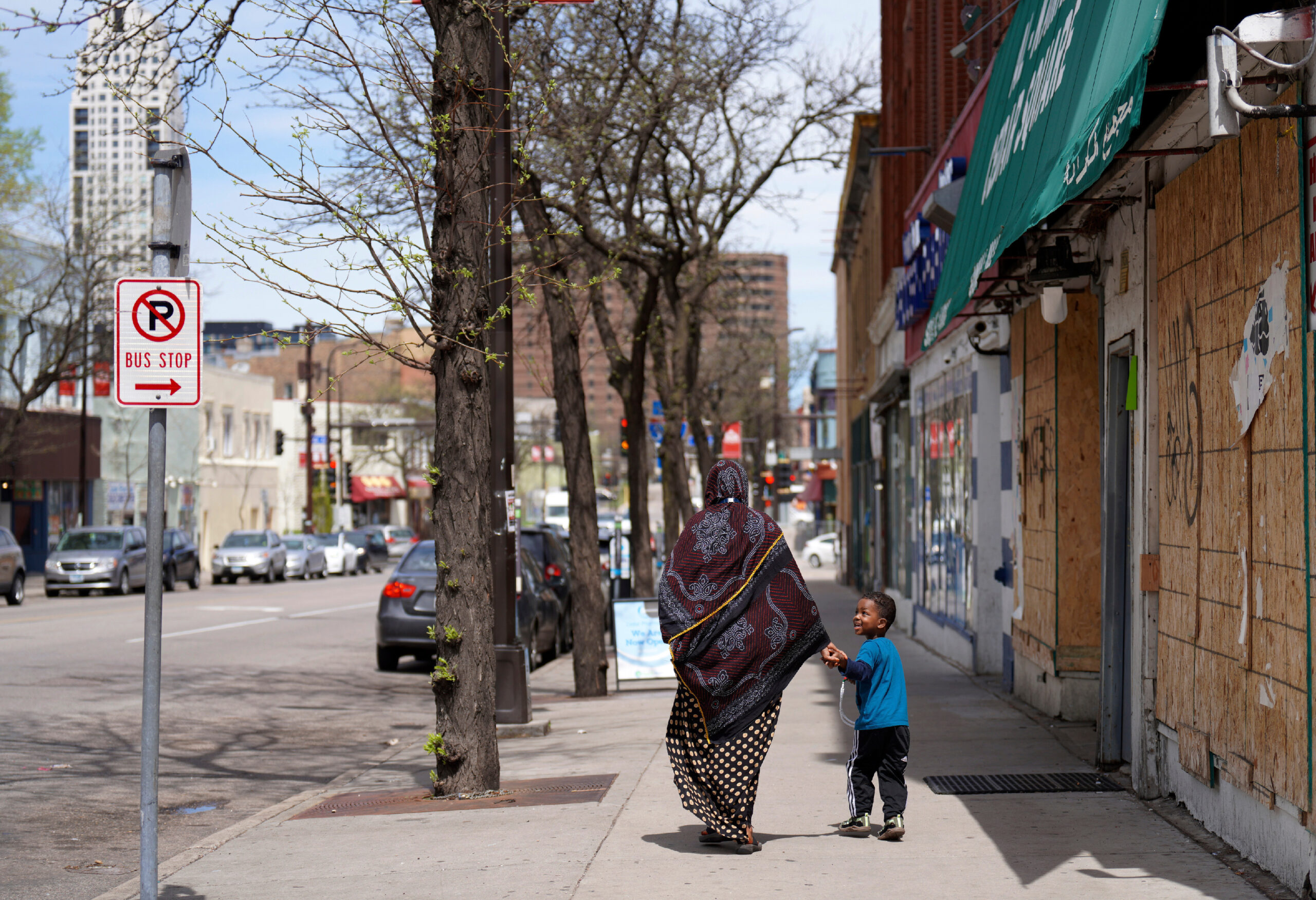
A woman and a child hold hands as they walk down a street in the predominantly Somali neighborhood of Cedar-Riverside in Minneapolis in 2022.
When leaders speak in ways that categorize certain groups as threats or burdens, children who identify with those groups absorb the message. Even children who do not belong to those groups learn something about how power operates: that dignity is conditional.
For some viewers, Trump’s anecdotes reinforced the case for stronger borders. For others — including children in mixed-status families — they reinforced a sense of collective suspicion. Trauma researchers note that when individuals feel stigmatized or collectively blamed, it can produce what psychologists call “identity-based stress,” a chronic strain associated with anxiety and depression.
None of this is to deny the president’s right to advocate his policies. Nor is it to suggest that only one party’s rhetoric carries emotional consequences. But the tone and themes of this particular address — siege, dominance, humiliation reversed through force — echo dynamics that trauma science has long identified as destabilizing when internalized by the powerless.
A child who hears repeated warnings of danger in their community, or who worries that a parent could be detained or deported, does not experience politics as theater, writes Jack Hill.
Children are, by definition, powerless in the civic sphere. They do not vote. They do not shape policy. They rely on adults and institutions for stability. When those adults present the world as perpetually on the brink, the child’s sense of baseline safety erodes.
There is also the matter of modeling. Children learn not only from what leaders say but how they say it. When applause lines are built on mockery or derision of opponents, when strength is defined primarily as crushing adversaries, children receive lessons about conflict resolution. If politics is portrayed as a zero-sum battle between good and evil, compromise looks like betrayal. Empathy looks like weakness.
Herman’s framework suggests that healing from trauma requires three stages: safety, remembrance and mourning, and reconnection. Safety comes first. And safety, at its core, is relational. It is built through consistent, attuned caregiving and through trustworthy institutions. This is where parents face an immense challenge.
How do you cultivate a child’s sense of security in a culture that often amplifies alarm? The first task is to build a counter climate at home. When children hear rhetoric about invasions or enemies, parents can contextualize without dismissing. “The president believes these policies will make the country safer,” one might say. “There are different views. What matters here is that you are safe, and we are together.” Research on co-regulation shows that children borrow calm from steady adults. The parent’s tone becomes a neurological anchor.
Second, parents can help children develop narrative competence. Trauma fragments experience; it turns events into isolated flashes of fear. By inviting children to talk about what they heard in the speech — what confused them, what worried them — parents help integrate those fragments into a coherent story. “What did you notice?” “How did that make you feel?” Such questions restore a sense of agency.
It is vital that children experience inclusive communities. Faith groups, sports teams, neighborhood networks — these are not luxuries. They are buffers, writes Jack Hill.
Third, parents can double down on belonging. In a speech that emphasized insiders vs. outsiders, strength vs. weakness, it is vital that children experience inclusive communities. Faith groups, sports teams, neighborhood networks — these are not luxuries. They are buffers. Studies consistently show that a single stable, supportive relationship can dramatically reduce the long-term impact of stress.
Fourth, parents can model moral steadiness. If adults respond to polarizing rhetoric with rage and contempt, children learn that the world truly is at war. If adults respond with firm but measured disagreement, children learn that conflict can be navigated without annihilation. Moral clarity does not require hysteria.
The deeper issue, however, extends beyond individual households. When a president frames national life primarily through threat and triumph, he shapes the emotional climate of the country. Emotional climates matter. They influence how children perceive their future, their neighbors, and themselves.
The State of the Union is often measured by applause, polling bumps, or market reactions. But there is another metric — harder to capture, yet profoundly consequential: the degree to which our public discourse expands or contracts a child’s sense of safety.
A nation can declare itself strong. But if its children are chronically anxious, if they feel stigmatized or uncertain of belonging, that strength is brittle.
Herman reminds us that trauma is not destiny. Recovery is possible. Human beings are resilient, especially when supported by love and connection. The same is true for societies. We can choose rhetoric that rallies without terrorizing, that fortifies without dehumanizing, that inspires without humiliating.
The real state of our union is written not only in economic reports but in the bedtime questions children ask. “Will we be OK?” “Do we belong?” “Is this place safe?”
If our politics cannot answer those questions with a steady yes, then all the declarations of greatness ring hollow.
The task before us is not simply to win arguments, but to cultivate a civic culture in which children can grow without chronic fear. That is not a partisan project. It is a moral one.
Jack Hill is a diversity consultant, child advocate, journalist, and writer.
When I studied American history in 11th grade, African American history was barely discussed, except for slavery. I took it upon myself to read about Black history to learn what my class hadn’t included.
Since then, I’ve always looked forward to Black History Month, as scholars of African American history and culture present new research on what had been an understudied aspect of American history.
After the Civil War ended, Confederate diehards, in a successful effort to memorialize “the lost cause,” reframed America’s deadliest conflict as the War of Northern Aggression. For over a century, this falsehood included textbooks that claimed plantation owners treated their slaves decently, and that the North’s interference in the South’s internal affairs caused the Civil War.
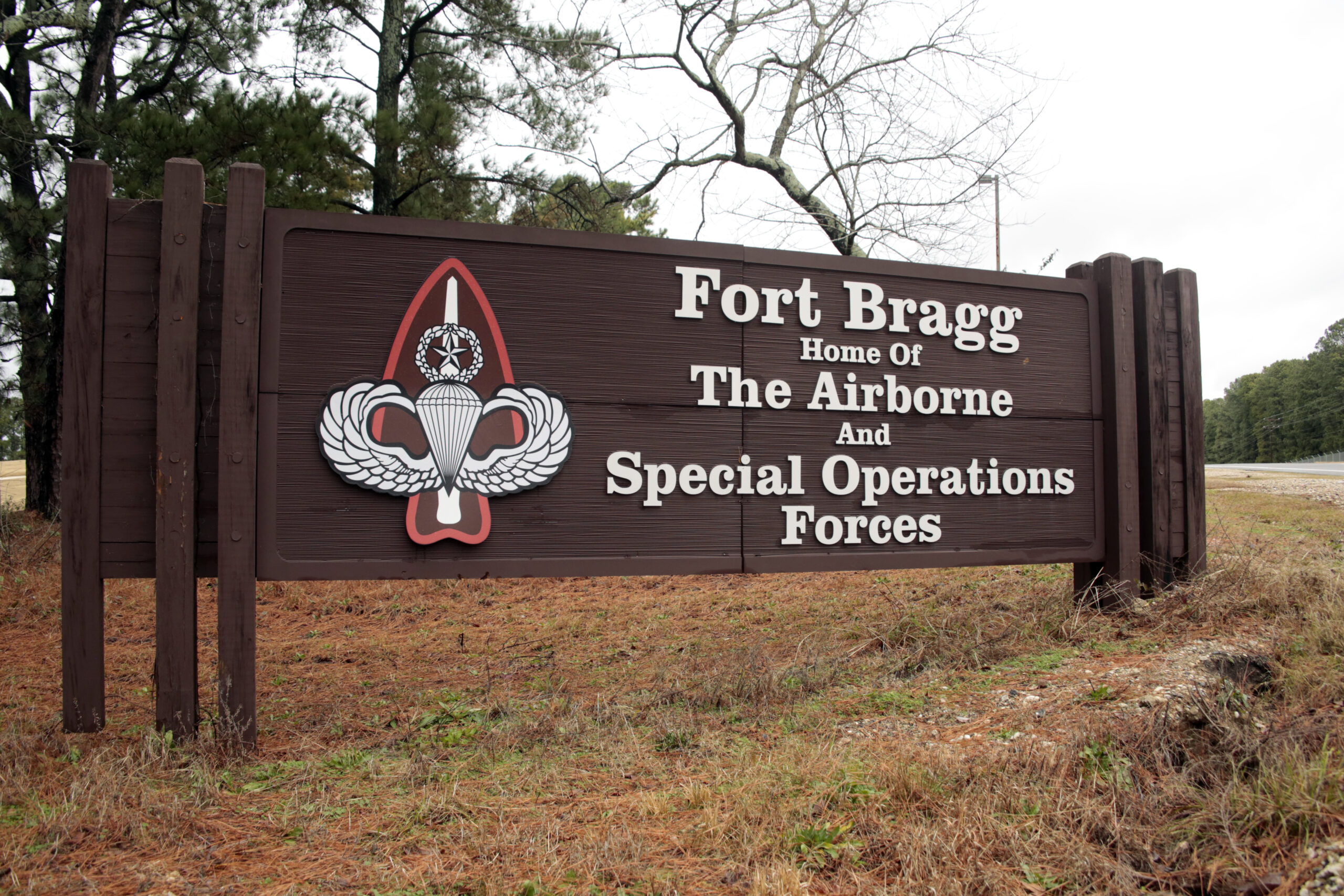
This Jan. 4, 2020, file photo shows a sign for Fort Bragg, N.C., which was named for a Confederate general who fought against the United States of America. The Confederate name was changed during Joe Biden’s presidency, but has been restored during Donald Trump’s second term.
With the increase in the Army’s man power during both world wars, new forts were established. The War Department named 10 of them to honor Confederate generals. Mind you, these generals led their forces in a rebellion against the United States that killed American servicemen.
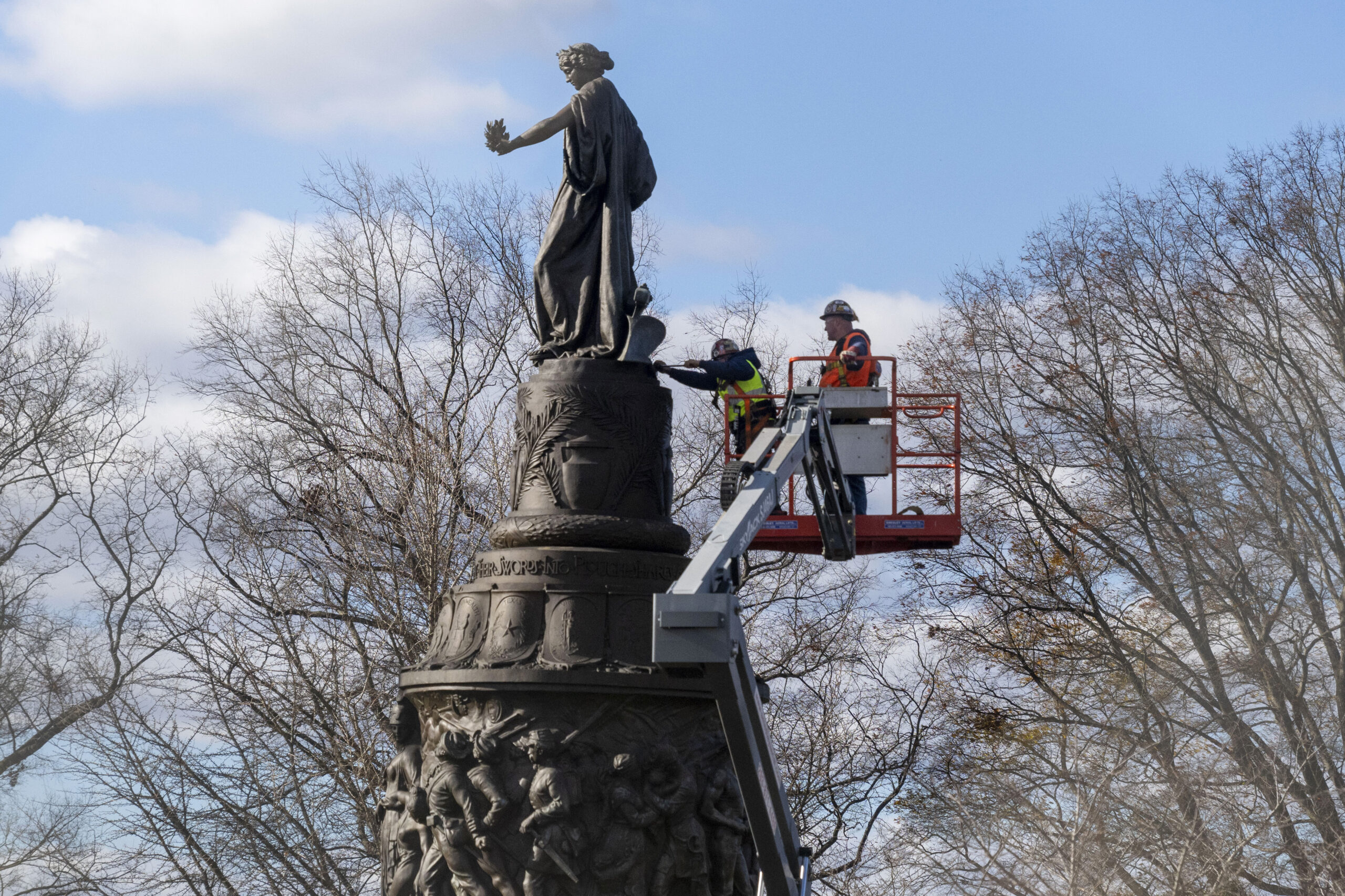
Workers prepare the Confederate Memorial for removal in Arlington National Cemetery on Monday, Dec. 18, 2023, in Arlington, Va.
More importantly, federal and state governments were willing to acknowledge past mistakes in the treatment of America’s Black citizens.
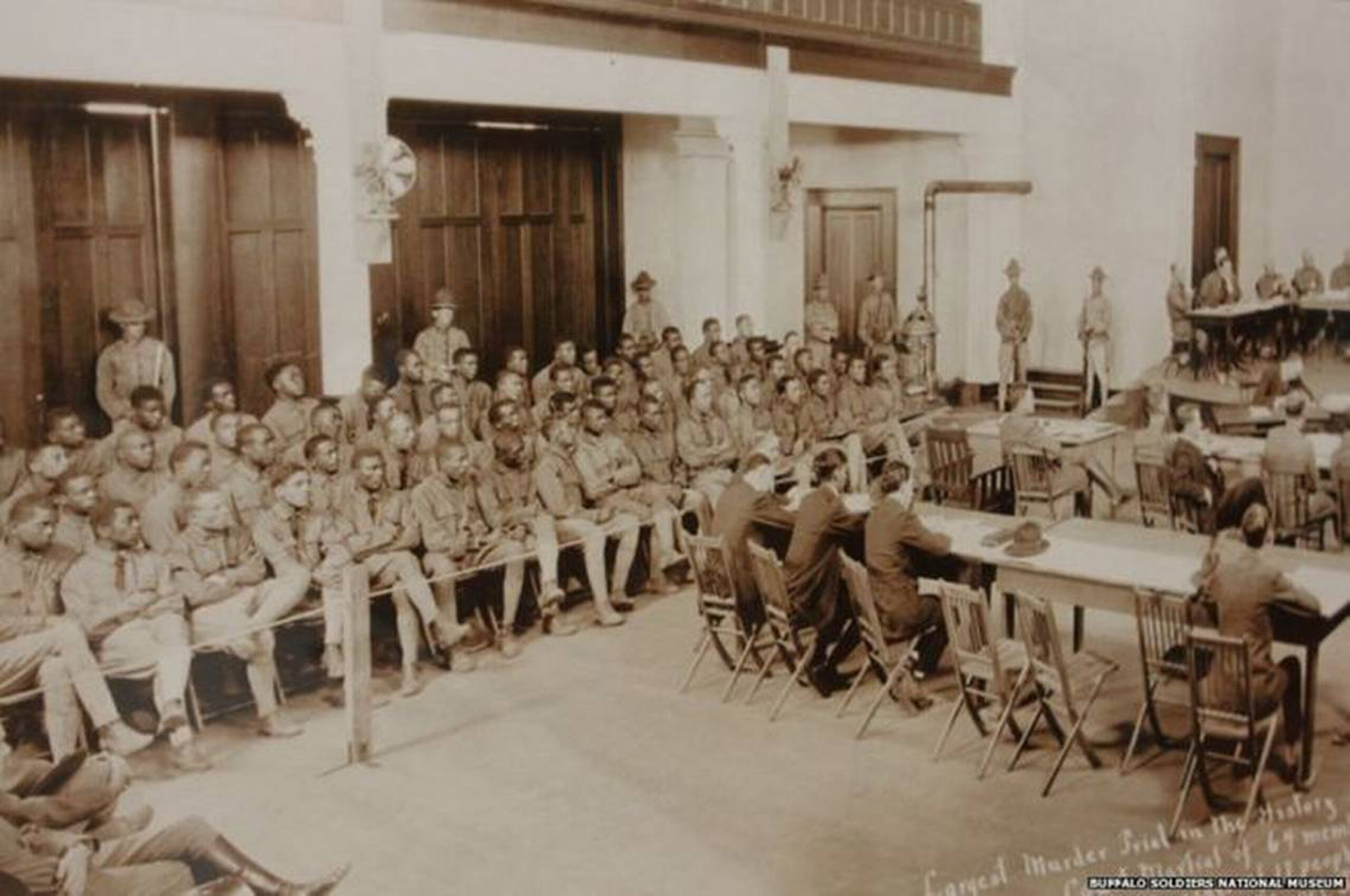
During Biden’s administration, the unjust treatment of Black soldiers following the 1917 Houston Riot and of Black sailors convicted in the 1944 Port Chicago Mutiny was recognized. Although these men were dead, awarding them posthumous honorable discharges was an acknowledgment that they had been unfairly treated.
A photograph of the courtroom where 63 Buffalo Soldiers from the predominantly Black 24th Infantry Regiment stood trial in 1917 for the Houston riot.
These were signs of progress in race relations.
In early 2025, I marveled at the changes in relaying America’s history, including its unpleasant truths, to students. State and federal governments now emphasize the multiple contributions of Black Americans in all fields of endeavor.
The greatest aid in elucidating these contributions was the requirement to teach African American history in schools.
A worker pauses while rehanging a panel of Oney Judge at the President’s House in Independence National Historical Park on Feb. 19, 2026. Judge was a woman enslaved by George Washington. A federal judge earlier in the week ordered the Trump administration to restore the slavery exhibits that the National Park Service removed in January.
Having visited this site multiple times, I never saw any falsehoods on its signage. Instead, I saw an inconvenient truth. America’s first president — as well as the majority of our first 18 — owned human beings despite living 100 yards from where “all men are created equal” was adopted in our country’s founding document.
Mount Vernon, the Washingtons’ Virginia plantation, doesn’t hide their enslavement of hundreds. Nor do Thomas Jefferson’s plantation at Monticello, James Madison’s at Montpelier, James Monroe’s at Highland, and Andrew Jackson’s at Hermitage.
We cannot obfuscate the fact that slavery didn’t end in 1865, as throughout the South, convict leasing and debt peonage reigned for decades after the Civil War.
We cannot forget that federal and state governments failed to protect the voting rights of Black citizens for 100 years.
Germany doesn’t hide its horrific past. Instead, it has erected monuments memorializing victims of an earlier German government. Germany’s past is not buried, forgotten, or ignored.
America is not Nazi Germany, but if we start to hide our flaws, we risk repeating history. Black History Month teaches us to learn from our past, flaws and all, and ensure they aren’t repeated.
Paul L. Newman is an amateur historian of African American history. He’s working on a miniseries docudrama on the African American civil rights movement of the first half of the 20th century.
As the nation enters its 250th birthday at a moment when faith in democracy feels fragile, I have been thinking deeply about what it means to be American right now. This is not a season for rose-tinted nostalgia, nor is it a time to ignore the difficulties of the past year. The challenges we have faced have been real and impossible to dismiss.
But cynicism is not a solution, and disengagement is not patriotism.
I keep returning to what feels like a revolutionary idea right now: I am not giving up on democracy, and I am not giving up on my neighbor.
American democracy is a glorious, unfinished experiment. Anchored in the radical idea that government derives its power from, and is created of, by, and for the people, it was new and unproven nearly 250 years ago.
Rejecting rule by kings in favor of the will of the people, it was an idea that endured extraordinary challenges and helped shape one of the most successful societies in human history.
In everyday life, not giving up on democracy looks like staying in the game. It means talking openly with people in our communities, engaging across differences, and resisting the urge to judge or dismiss ideas before listening for understanding. At its core, it is a recommitment to respecting the human dignity of every person.
I come to this work as the president and CEO of Eastern State Penitentiary Historic Site, a site founded on a Quaker belief in the “light within” every person, and a deep respect for our shared humanity. Today, Eastern State bears witness to nearly 200 years of evolving ideas about justice, liberty, and freedom in America. Walking its corridors and sitting with its stories reveals a powerful record of trauma and human resilience — and a nation still wrestling with the true meaning of those ideals.
This perspective is also shaped by more than 20 years of studying the Constitution, a document woven with both brilliance and imperfection. At Eastern State, we recognize humans’ capacity for change. Like democracy itself, people are not a finished product. We are living beings who both require and deserve care to grow and evolve.
When democracy is healthy, individuals and groups can express different viewpoints freely, with the goal of shaping public life. But those viewpoints must also be shaped by one another through engagement and dialogue. Civic ideas are meant to strengthen over time, not harden into absolutes. When trust erodes, that essential civic interplay breaks down.
We see this erosion clearly. According to the General Social Survey, the share of Americans who believe “most people can be trusted” fell from 46% in 1972 to just 34% in 2024. Research shows social trust is rooted in personal experience. How we treat one another is inseparable from the health of our democracy.
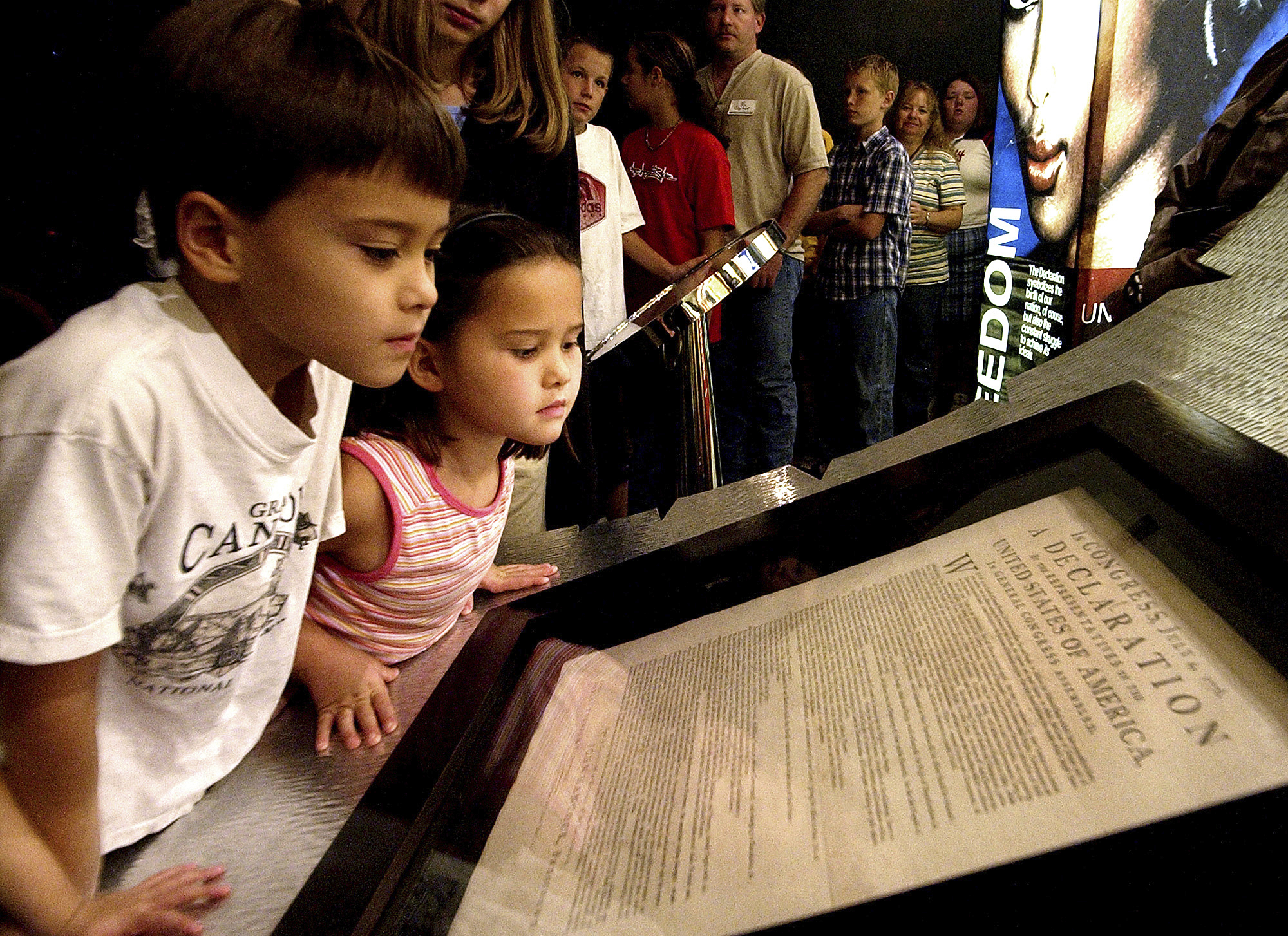
Children look at an original printed version of the Declaration of Independence. The ideals that guided the founders are pertinent today.
The American Revolution did not happen in a single summer in Philadelphia. John Adams wrote that the war was just one part of the revolution, stating: “The Revolution was in the Minds and Hearts of the People. … This radical Change in the Principles, Opinions Sentiments and Affection of the People, was the real American Revolution.”
Likewise, Benjamin Rush, a framer of both the Declaration of Independence and of Eastern State, believed the real revolution was still unfolding, shaped over time by citizens’ morals and manners. He was right then, and he remains right now.
Civic holidays give us a chance to come together, remember, commemorate, and celebrate. As we approach the Semiquincentennial, perhaps it is also time to reconnect and consider how those founding ideals can guide us forward.
The real revolution is not behind us. It is happening now — in how we show up for one another, and in our refusal to give up on each other.
Kerry Sautner is president and CEO of Eastern State Penitentiary.