Category: Commentary

  • The founders’ vision on the limits placed on power is being tested

    The founders’ vision on the limits placed on power is being tested

    America is not facing a policy disagreement.

    America is facing a constitutional stress test.

    Every generation eventually discovers whether it truly believes in the limits placed on power — or only supports those limits when they restrain political opponents. The moment we are living through now forces that question upon us.

    The Founding Fathers of the United States did not design government for efficiency or speed. They designed it to restrain ambition. When they embedded the separation of powers into the Constitution, they were responding to centuries of human history that proved a simple truth: Unchecked power eventually silences the people.

    They understood human nature’s tendency toward absolutism. Kings centralize authority. Leaders justify overreach. Governments expand unless they are deliberately restrained. The American republic was built differently. Authority was divided so that no single person could ever claim to speak fully for we the people.

    That is why last Friday’s U.S. Supreme Court decision matters far beyond tariffs or commerce. The court reminded the executive branch of a basic constitutional principle: Decisions concerning commerce — especially taxation and tariffs — must originate in Congress.

    Yes, the process is messy. Debate is slow. Compromise is imperfect. But the friction is intentional. The founders built resistance into the machinery of government so that sweeping economic power could never again be exercised by personal decree.

    If tariffs are truly wise policy, then Congress should debate them openly. Legislators should defend them before voters. That is representation. That is accountability. That is self-government.

    Our nation was born out of resistance to unilateral taxation. The Boston Tea Party of 1773 was not simply protest theater — it was a rejection of economic authority imposed without representation. The Constitution ensured such power would never again rest in one individual’s hands.

    When one branch exceeds its authority, another branch must respond. That is not dysfunction; it is design. The judicial branch exists precisely to interpret the law and restore and remind us of the constitutional boundaries when political actors drift beyond them.

    Courts have not always been right. History reminds us of poor decisions that took decades and courage to correct. Yet, judicial independence remains essential. Without it, constitutional limits become optional.

    What should concern Americans today is not disagreement with the court’s ruling, but the reaction that followed.

    Instead of accepting the decision, the executive branch responded with personal attacks against justices carrying out their constitutional duty. Even more troubling were the immediate efforts to search for ways around the ruling — to achieve the same outcome by different means.

    That should unsettle every citizen, regardless of party affiliation.

    I remember when one of my children was young, and my wife placed a forbidden toy on a high shelf for their safety. Determined to retrieve it anyway, the child stacked books and climbed upward, trying to bypass the boundary we had set. The creativity was impressive. The disobedience was undeniable.

    A constitutional ruling is that high shelf.

    Attempting to maneuver around it rather than respecting it undermines not only the court’s authority but the rule of law itself. The Constitution works only when leaders accept limits they dislike.

    Equally troubling was the suggestion that a president could act militarily against another nation at will while being constrained economically. The Constitution says otherwise. The power to declare war rests with Congress. The president commands the military, but he does not possess unilateral authority to wage war or impose economic punishment without legislative participation.

    The founders feared concentrated authority in every form — economic, military, and political. Their caution was wisdom born from history.

    Republics rarely collapse in dramatic moments. They erode gradually — one ignored boundary at a time. One exception becomes precedent. One act of defiance becomes normalization.

    The question before us now is not about one ruling or one administration. It is whether Americans still believe constitutional limits apply equally to those who govern and those who are governed.

    The founders’ vision was never about strong personalities. It was about strong institutions accountable to a free people.

    This feels like a dark chapter in the life of our republic. Yet, darkness often clarifies responsibility. Citizens must decide whether we will defend the structure that preserves our liberty, or remain silent as its guardrails are tested.

    At the close of the Constitutional Convention in 1787, a woman asked Benjamin Franklin what kind of government had been created. Franklin replied with words that echo across generations: “A republic, if you can keep it.”

    The question is no longer theoretical.

    Now, we the people must decide whether we will.

    The Rev. Dr. Michel J. Faulkner, a former NFL player, community leader, pastor, and registered Republican, is chair of the board of directors of the Philadelphia Council of Clergy.
  • The Dow is over 50,000, but healthcare is underwater

    The Dow is over 50,000, but healthcare is underwater

    “The Dow right now is over 50,000.”

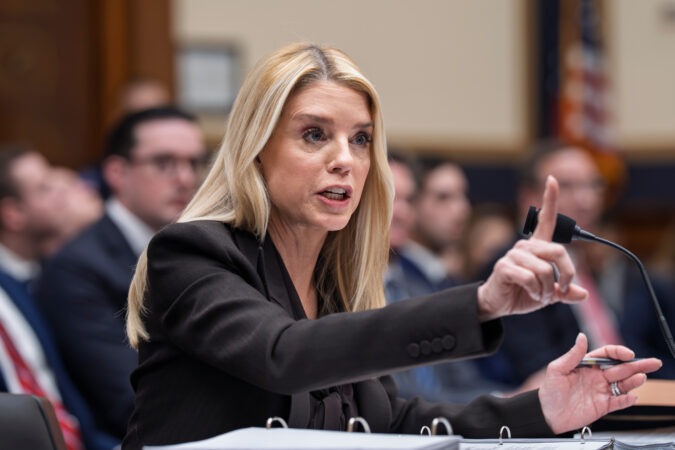
    Those were the words Attorney General Pam Bondi used during a recent congressional hearing to justify and/or deflect from any wrongdoing by the Trump administration.

    The implication is clear. The United States economy is doing well, so nothing else matters. However, although an elevated Dow helps those with retirement accounts, what does it mean for the 40% of Americans who do not have a 401(k) or any other retirement savings account? How does that translate into affordability for basic items like food, clothing, shelter, and, perhaps most importantly, healthcare?

    The latter is a huge problem, especially with the Medicaid and Medicare cuts in July, and the expiration of the Affordable Care Act (ACA) subsidies last month. The combination is expected to affect 15 million Americans by 2034. Consider also that 3.14 million Pennsylvanians, which translates to 24.1% of everyone in the commonwealth, were covered by Medicaid in 2024.

    Frankly, the cost of healthcare tops the list of the public’s economic anxieties. As people with deep backgrounds in health policy, this also concerns us greatly.

    The facts are that health insurance has become increasingly unaffordable for most Americans, and that has a downstream effect. When health insurance premiums are prohibitive, people are more likely to go without insurance or opt for a plan that offers a lower premium but a much higher deductible. Those people are more likely to skip important preventive care, placing them at increased risk for adverse health consequences. This also applies to those whose Medicaid benefits were cut.

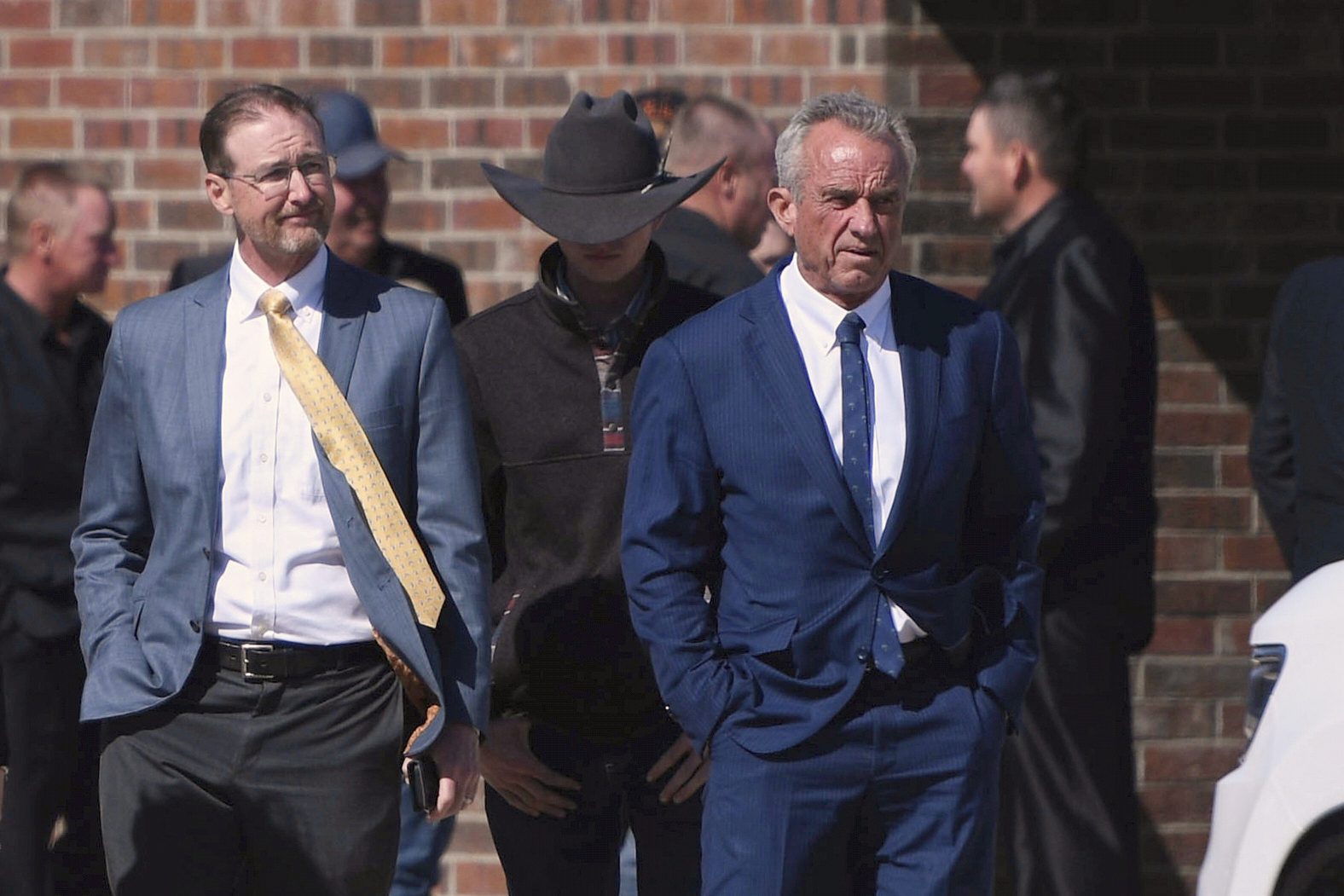
    Under Health and Human Services Secretary Robert F. Kennedy Jr., the number of measles cases in the U.S. has skyrocketed.

    President Donald Trump has promised to decrease the price of prescription drugs through the Trump Rx program, but in actuality, the differences will be much smaller than promised.

    To his credit, his administration has tried to address the price of drugs by reining in pharmacy benefit managers, the middlemen whose practices serve to increase the cost of drugs. However, the success in that area pales in comparison with the overall detrimental effects of this administration on healthcare.

    The most recent problem is the expiration of the federal subsidies under the ACA. Consider the case of Pennsylvania residents Tom and Carol Shaw, who saw their health insurance premiums jump from $1,090 a month to $3,505 a month, largely due to the loss of the ACA subsidies. That’s a 221% increase!

    To put that in perspective, the average monthly mortgage payment in York County, where they live, is about $1,300, according to the U.S. Census. The Shaws can afford the increase, but what about those who can’t? The result is that about 85,000 Pennsylvanians have dropped their health insurance in 2026. That amounts to one in five enrollees terminating coverage, which is truly a stunning statistic.

    On top of the financial effects, the dismantling of our vaccine infrastructure poses a significant risk to the health of the nation. The science of vaccines has not changed, but the politics have, such that Health and Human Services Secretary Robert F. Kennedy Jr. has been able to spew misinformation and take numerous actions designed to destroy trust in science and physicians without any accountability, no matter how much he mangles the facts and the science. As a result, in 2025, we saw 1,277 measles cases — the highest number since 1992.

    Meanwhile, Kennedy continues to insult physicians by stating that the only reason physicians recommend vaccines is to make money. It is difficult enough to take proper care of patients in the limited time allotted without having to dispel the numerous lies coming from this administration.

    It is not clear exactly what President Trump will say in his upcoming State of the Union address. We suspect he will address the affordability of healthcare. If he does, we are quite confident he will dismiss it as a nonissue, given his comments in December that the affordability crisis is a hoax.

    We are convinced he will cite the Dow while ignoring the fact that 59% of Americans disapprove of his handling of their cost of living. We fully expect a speech that will be tone deaf to the financial plight of many Americans, including his own supporters.

    There must be accountability for this administration. The midterm elections are approaching, and healthcare, yours and that of your neighbors, will be guided by your vote.

    If we do not address this issue appropriately, we will pay the price, as will our children and loved ones. In fact, we already have.

    Mark Lopatin is a physician and the author of “Rheum for Improvement,” a member of Ask Nurses and Doctors, and a coeditor for Doctors for America, a nonprofit that focuses on putting patients over politics. Jeffrey Lerner holds a doctorate in health policy and is the Pennsylvania coordinator of Ask Nurses and Doctors, a bipartisan organization whose mission is to help elect government officials who prioritize U.S. healthcare problems.

  • I can’t shake the feeling that my new car thinks I’m an idiot

    I can’t shake the feeling that my new car thinks I’m an idiot

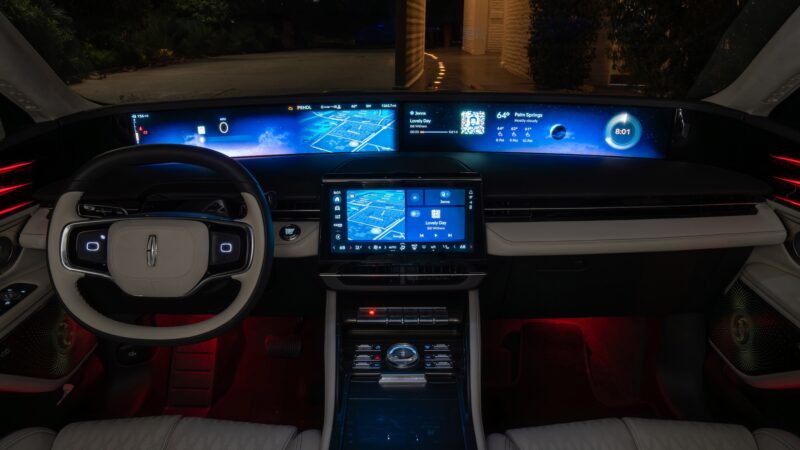
    My new car thinks I’m an idiot.

    Through a constant series of beeps, flashes, and messages, it badgers me in a manner that’s a cross between an unrepentant mansplainer and passive-aggressive nanny.

    It comes with all sorts of ways to protect me from being, well, an idiot. It has a “lane sway warning” in case I’m dozing off. It blocks searching for a new Sirius radio station while driving — presumably to prevent distracted driving. (All while displaying postage stamp-sized album cover images of the music being played.)

    “Lane departure!” it warns if I swerve six inches over the center line of a country road to avoid hitting a bicyclist.

    When the salesman started to explain how to work the headlights, he stopped midsentence to pronounce: “Just don’t touch it. The car already knows what to do.”

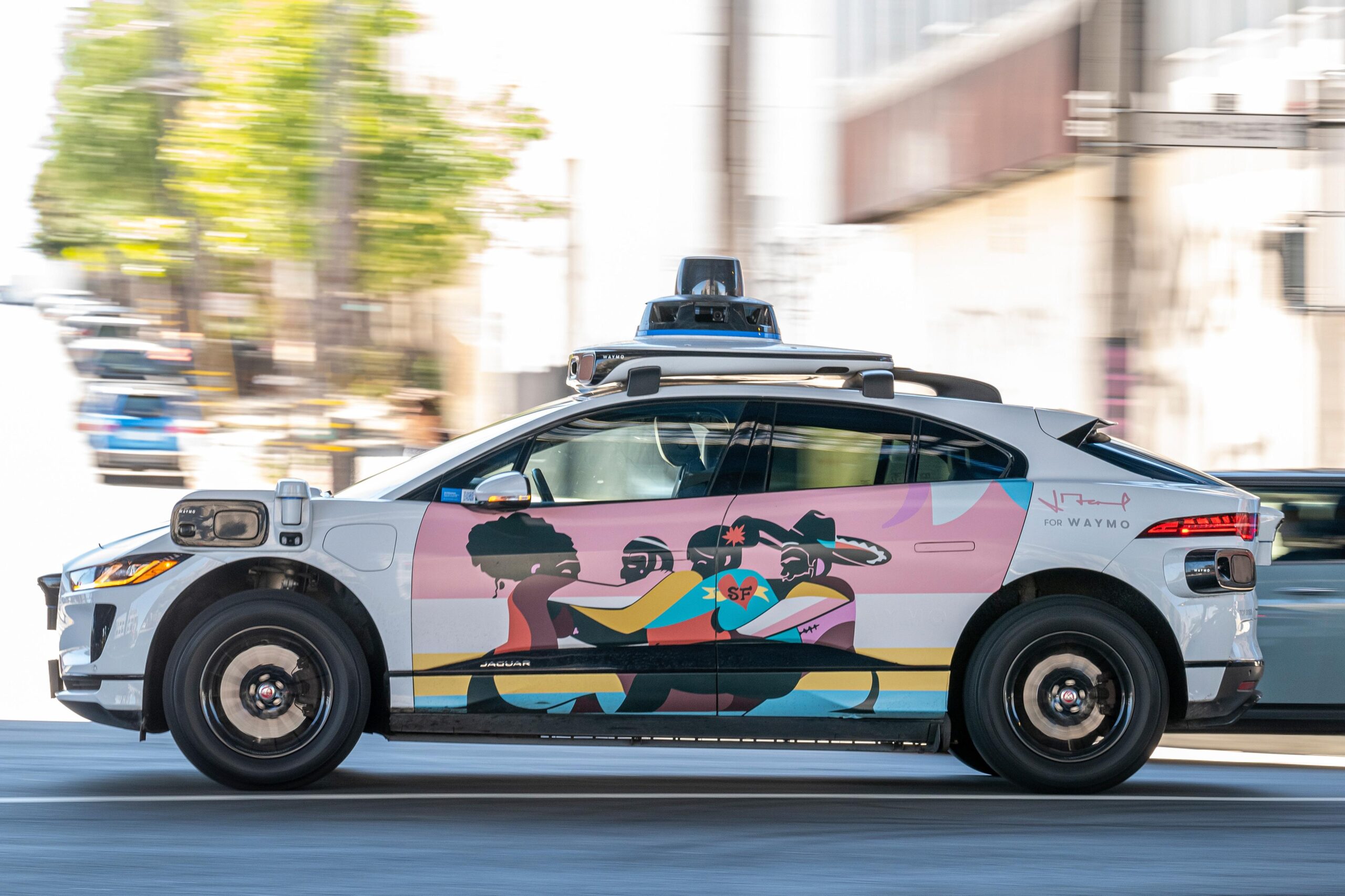
    In short, my new car yearns to be a driverless car, kind of like those Waymo taxis, which will soon be rolled out in Philly. It deigns to have me as its owner; tolerates — nay, suffers — my ownership of it. I’m surprised the dealer didn’t require my SAT scores in order to buy it.

    Take the day I tossed my yoga mat in the back seat after class, drove home, then spotted this yellow dashboard warning upon alighting: “Reminder, look in rear seat.”

    This was puzzling, until I realized it was a safety feature designed to prevent drivers from absentmindedly leaving their baby (or pet) behind during a heat wave.

    A Waymo autonomous taxi in San Francisco, in August 2023.

    Well-intentioned, to be sure — yet an ineffectual mixture of condescending and vague. It merely hints at the problem, as if it is too polite to accuse someone of literal child endangerment. Better it should just come out and say, “Hey, don’t forget the baby, ya moron!”

    Or better yet: “I got you here safely. Do you need me to parent for you, too?”

    Whenever the warning flashes, I find myself muttering, “Calm down — it’s a yoga mat.”

    My friend’s Mercedes claims it can detect if she’s “fatigued,” barking a suggestion to take a break, and even flashing an image of a coffee cup. (Is Mercedes in cahoots with Big Coffee?)

    When the outdoor temperature hits 37 degrees, the dashboard flashes a little orange icon that looks like the Imperial fighter plane from Star Wars. It’s to warn me about possible ice — and functions even in bone-dry weather.

    This safety system — which I alternately sense as being either male or female — doesn’t seem to grasp that I just want to run errands, not pilot the Starship Enterprise.

    Fed up with its bewildering collection of multicolored dashboard symbols, I finally decided to read the instruction manual.

    Correction: Manuals. This car comes with three, and like the Harry Potter novels, each one is longer than the last.

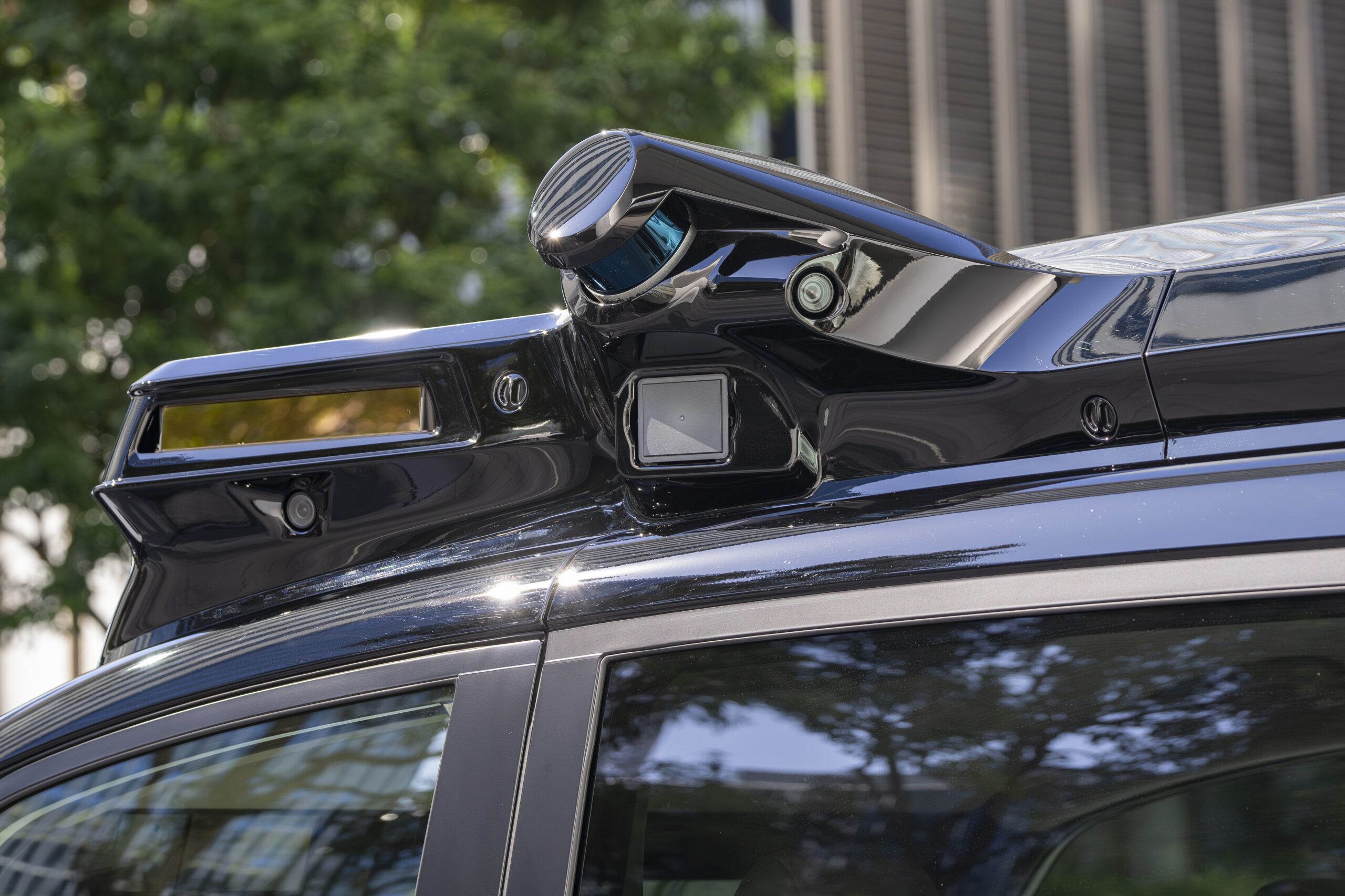
    This photo released by Nissan Motor Corp. shows sensors attached to the top of its car, which assist the Japanese automaker’s self-driving technology with computer functions, radars, and cameras.

    Here I learned the trademarked “Eyesight” driver assistance technology will detect pedestrians … unless they’re carrying an umbrella. Its disclaimer says it can also get confused by: ditches, fog, dirt, dust, strong sunlight, motorcycles, bicycles, animals, rain, and windshield washer fluid.

    The car has automatic braking, should you fail to notice that the car ahead of you has stopped. That feature, along with the rear-seat warning, has triggered the ire of Senate Republicans, who announced hearings on whether such safety features are worth the added cost.

    It also has keyless entry, using just a fob, whose presence the car can sense even when it’s in my purse or pocket.

    Last November, I was a volunteer poll worker on Election Day, which required that I depart in darkness to arrive at my polling place by 5 a.m. When I gathered my belongings to go inside, I couldn’t find my keys. I figured they had to be in the car, because otherwise the car wouldn’t run, right?

    I spent the morning searching my purse and backpack. No keys. I spent my lunch break rummaging around in the car to see if they’d fallen between or under the seats. Nope.

    I tried to start the car, on the premise that if the keys were somewhere in the car, it would start. It didn’t.

    I panicked. Since I was the poll worker assigned to bring the all-important USB stick containing our district’s voting tallies to the town clerk, it was vital that I depart as soon as possible once the polls closed. I shuddered at the prospect of going viral, with CNN announcing, “New Jersey’s machine vote tally is now final — with the exception of a single missing district.”

    Luckily, my husband brought over my spare keys. When the polls closed, I dropped off the voting equipment, then went to a music rehearsal. At its conclusion, as I leaned down to load my music bag into the back seat, I spotted something on the vehicle’s roof: my keys, nestled snugly against the luggage rack.

    Yes, I had driven over five miles, up proverbial hill and dale, with the key fob atop my car.

    And this know-it-all car, which can sense I’ve veered a centimeter across a lane line and barely tolerates my presence, never realized it.

    Hey, Mr./Ms. Smarty-Pants: Who’s the idiot now?

    Kathleen O’Brien is a retired newspaper columnist who lives with her know-it-all car in northwest New Jersey.

  • Trump doesn’t invent resentments — he senses which ones are newly safe to express

    Trump doesn’t invent resentments — he senses which ones are newly safe to express

    There is a particular kind of ugliness that does not merely offend but instructs. It tells us something about who we have been, who we are becoming, and what social permissions are quietly being expanded. Donald Trump’s circulation of an image portraying Barack and Michelle Obama as apes belongs squarely in that category. It is not a one-off lapse. It is a signal flare.

    This was not just racist imagery; it was historically literate racism. The ape trope is among the oldest tools in the dehumanization kit, refined over centuries and deployed whenever Black Americans have come too close to full belonging. One does not stumble into it by accident.

    To understand why this matters — and why it is likely to get worse — we have to situate Trump not just as a provocateur, but as a product of moral inheritance, cultural permission, and a long American tradition of racial degradation repackaged as “joking” or “provocation.”

    Trump has always been less an ideologue than an accelerant. He doesn’t invent resentments; he senses which ones are newly safe to express. His strategy, if we must call it that, is social intuition — an ability to intuit when cruelty will be rewarded rather than punished.

    That intuition was honed in a family and business culture that Mary Trump, his niece, describes in her 2020 memoir, Too Much and Never Enough: How My Family Created the World’s Most Dangerous Man, as emotionally brutal, hierarchical, and relentlessly contemptuous of perceived weakness. Empathy was treated as a liability; dominance as virtue.

    That worldview maps neatly onto racial hierarchy. When Trump rose to political prominence by falsely claiming Barack Obama was not really American, he was not engaging in policy disagreement. He was policing the boundaries of belonging. The ape image is simply that instinct stripped of euphemism.

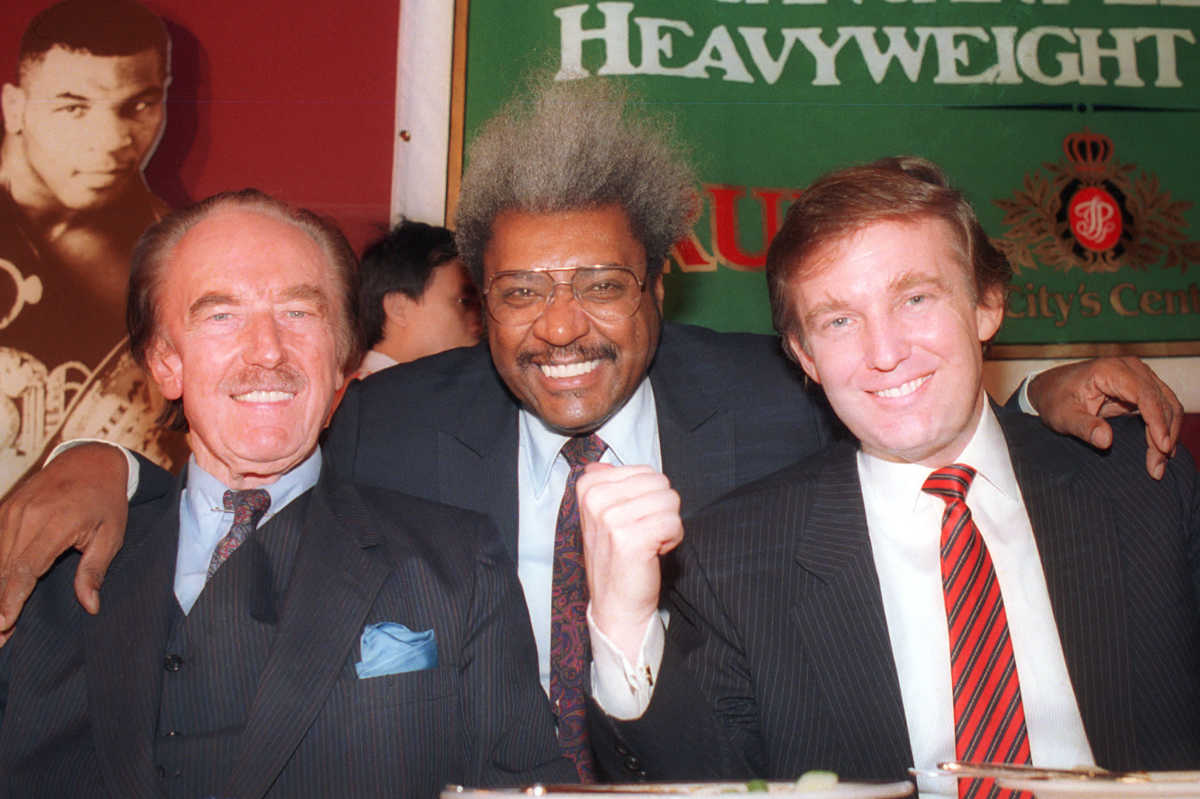
    From left, Fred Trump, boxing promoter Don King, and Donald Trump participate in a 1987 news conference in Atlantic City.

    It is also not untethered from history. Trump’s defenders bristle at any mention of white supremacist lineage, but history is stubborn. His father, Fred Trump, was arrested at a 1927 Ku Klux Klan rally in Queens — an event Trump has long dismissed without serious reckoning.

    Whether Fred Trump was a member or merely present is ultimately less important than what this moment symbolizes: Trumpism did not emerge in a vacuum. It grew in soil long fertilized by segregationist politics, racial grievance, and coded contempt that later became uncoded.

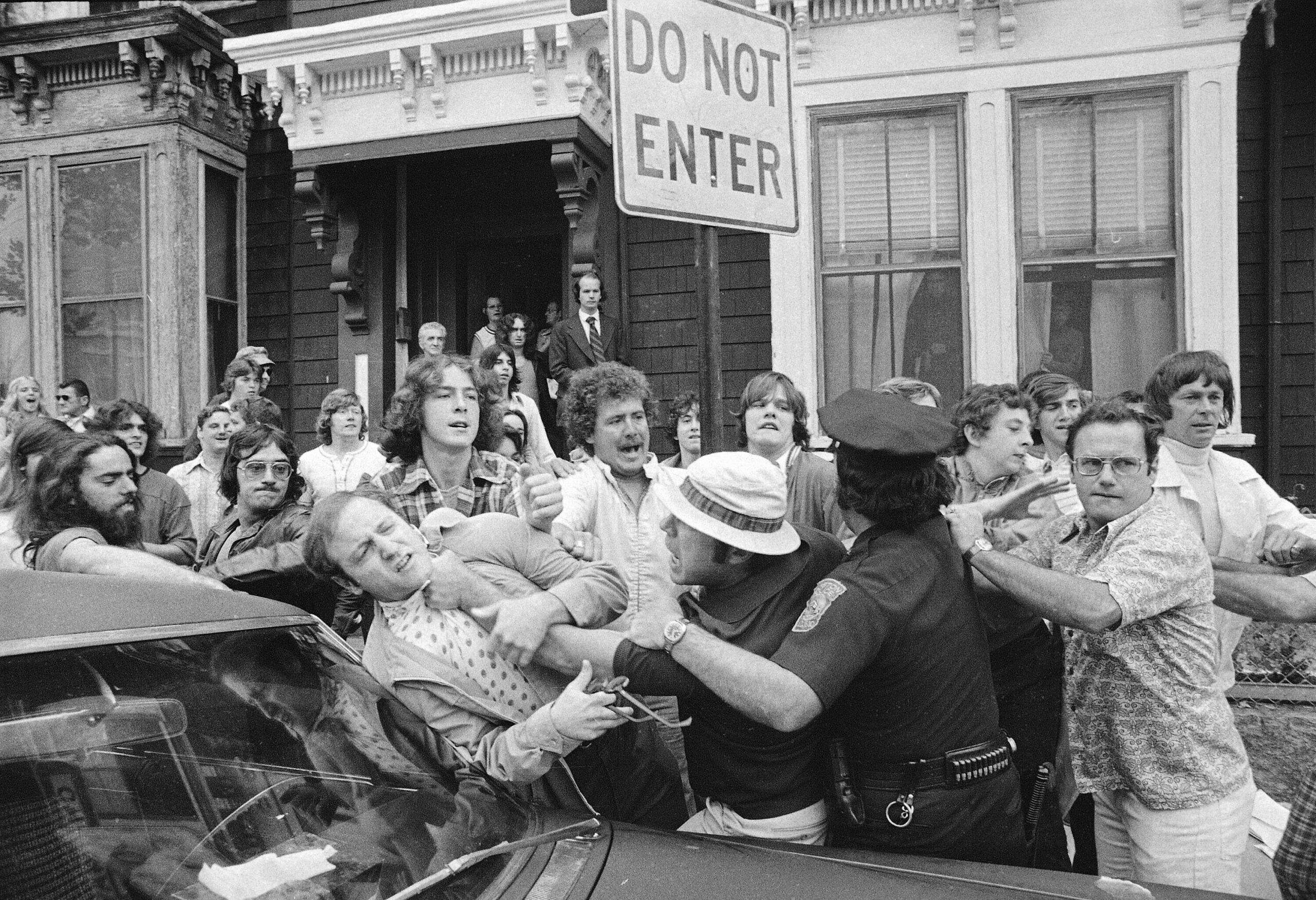
    Police officers break up a scuffle amid demonstrators outside South Boston High School on the first day of a court-ordered busing program to integrate Boston public schools in September 1974.

    Cultural historians like Henry Louis Gates Jr. have shown how the ape trope was central to 19th and early 20th-century pseudoscience, minstrel culture, and colonial propaganda. To depict Black people as simian was to deny them reason, morality, and ultimately rights. It was a way of making cruelty feel natural.

    Scholars from Frantz Fanon to Saidiya Hartman have traced how this imagery did not vanish with Jim Crow; it merely went underground, resurfacing whenever racial hierarchy felt threatened.

    The Obama presidency was precisely such a moment. For some Americans, it symbolized not progress but displacement. Trump rose by giving voice to that panic, laundering it through grievance and mockery. The ape image is not regression; it is escalation.

    Why will it get worse? Because norms erode asymmetrically. Once a president can circulate imagery that would once have ended a public career — and suffer no meaningful consequence — the floor drops out. What was once unsayable becomes debatable. What was once debatable becomes funny. And what was once funny becomes policy.

    What made this episode briefly arresting — before it slid into the familiar churn of outrage — was that condemnation came, at least initially, from both sides of the political aisle. Democrats responded with predictable fury, naming the image for what it was: racist, dehumanizing, indecent. But some Republicans, too, recoiled. A handful of conservative commentators, former officials, and religious leaders expressed a kind of moral embarrassment, as if they had suddenly overheard a family secret spoken aloud at the dinner table.

    That bipartisan outrage matters, but not in the way we might hope. It did not signal a renewed moral consensus so much as a fleeting recognition of how far the ground has shifted.

    Many of the Republican critics framed their objections narrowly — not that the image was wrong in itself, but that it was “unhelpful,” “distracting,” or “beneath the dignity of the office.” This is the language of procedural discomfort, not moral revulsion. It suggests that the line being defended is not the humanity of the Obamas but the decorum of politics.

    On the Democratic side, the outrage was morally clearer but strategically fatigued. There was anger, yes — but also weariness. A sense that we have seen this movie before, named its villain, issued our statements, and then moved on. Moral clarity without moral consequence eventually becomes ritual. It reassures the speaker more than it restrains the offender.

    This asymmetry reveals something crucial. Outrage alone does not halt degradation; it can even normalize it by making it routine. When every transgression is met with the same crescendo of denunciation and the same absence of consequence, the culture learns a quiet lesson: that cruelty is survivable, that it carries no lasting cost. Trump understands this intuitively. He relies on the fact that outrage is loud but short-lived, while the permissions he expands are durable.

    What we witnessed, then, was not a national reckoning, but a brief moral spasm — a reminder that many Americans still know, at least intellectually, that some lines should not be crossed. The tragedy is that knowing is no longer the same as enforcing. In a healthier moral ecosystem, bipartisan outrage would be a stopping force. In ours, it is often just a speed bump.

    Trump’s political project has never been about persuasion in the classical sense. It is about habituation. Repetition dulls outrage. Shock exhausts resistance. Eventually, people stop asking whether something is wrong and start asking whether it “works.”

    This is how democracies corrode — not in grand coups, but in the slow reeducation of moral reflexes. The danger is not only Trump’s blatant racism and cruelty, but the lesson it teaches: that dignity is conditional, and that some people may always be safely reduced.

    If history teaches us anything, it is that dehumanization does not stop where it starts. Once a society relearns how to sneer, it rarely remembers where to stop.

    And that is why this moment deserves more than disgust. It deserves memory.

    Jack Hill is a diversity consultant, child advocate, journalist, and writer.

  • John Dunlap’s print shop in Old City deserves a blue historical marker — before this July 4

    John Dunlap’s print shop in Old City deserves a blue historical marker — before this July 4

    The most important printing job in American history took place in Philadelphia, on the corner of Second and High Streets, on the night of July 4, 1776.

    There, in the shop of John Dunlap, the Declaration of Independence was first printed and sent around the new United States. Yet today, no Pennsylvania Historical Marker commemorates the spot on Market Street where the declaration first emerged to tell the world about the birth of a new country.

    On the 250th anniversary of American independence, a marker should be erected as soon as possible by the city or state.

    Dunlap’s job was of the first importance. Congress, led by the Boston merchant John Hancock, knew that getting word of independence out to the rest of the colonies was critical to gaining support at home for a war that was not going well. Since the war started in Lexington and Concord up in Massachusetts in April 1775, the Americans had forced the British out of Boston, but lost ground in New York. Independence was just as crucial for trying to get arms and money from Great Britain’s adversary, France, for George Washington’s poorly equipped Continental Army.

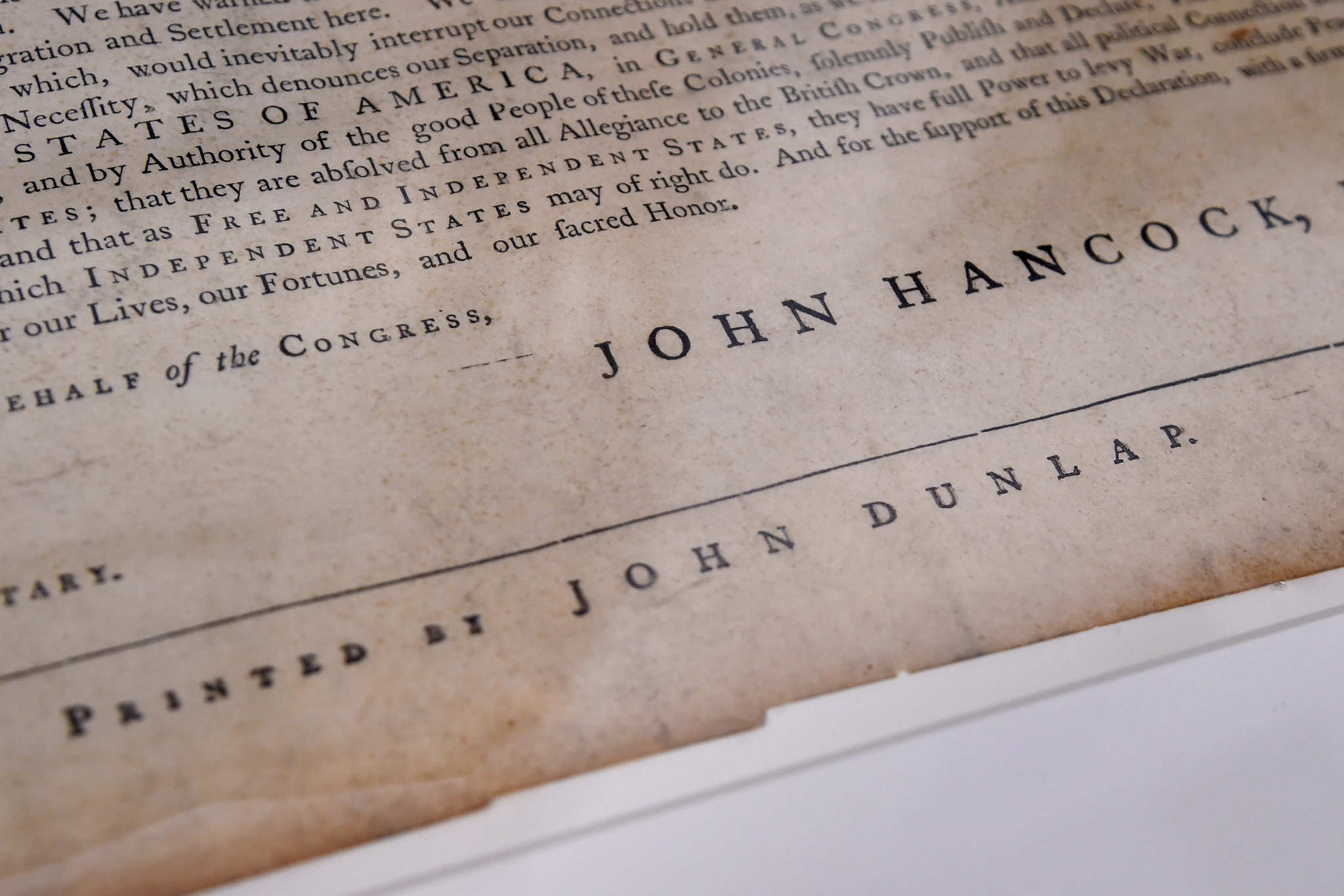
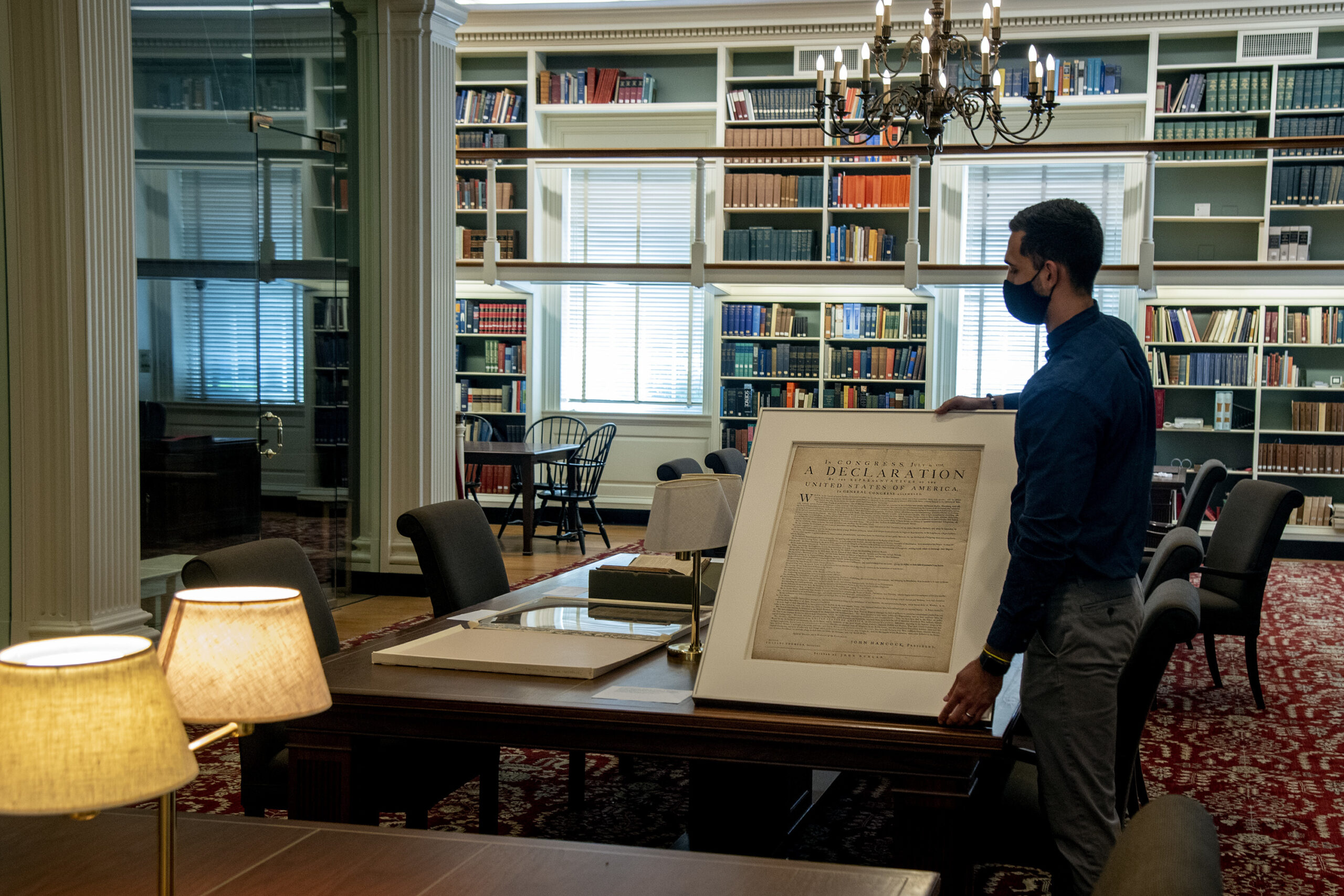
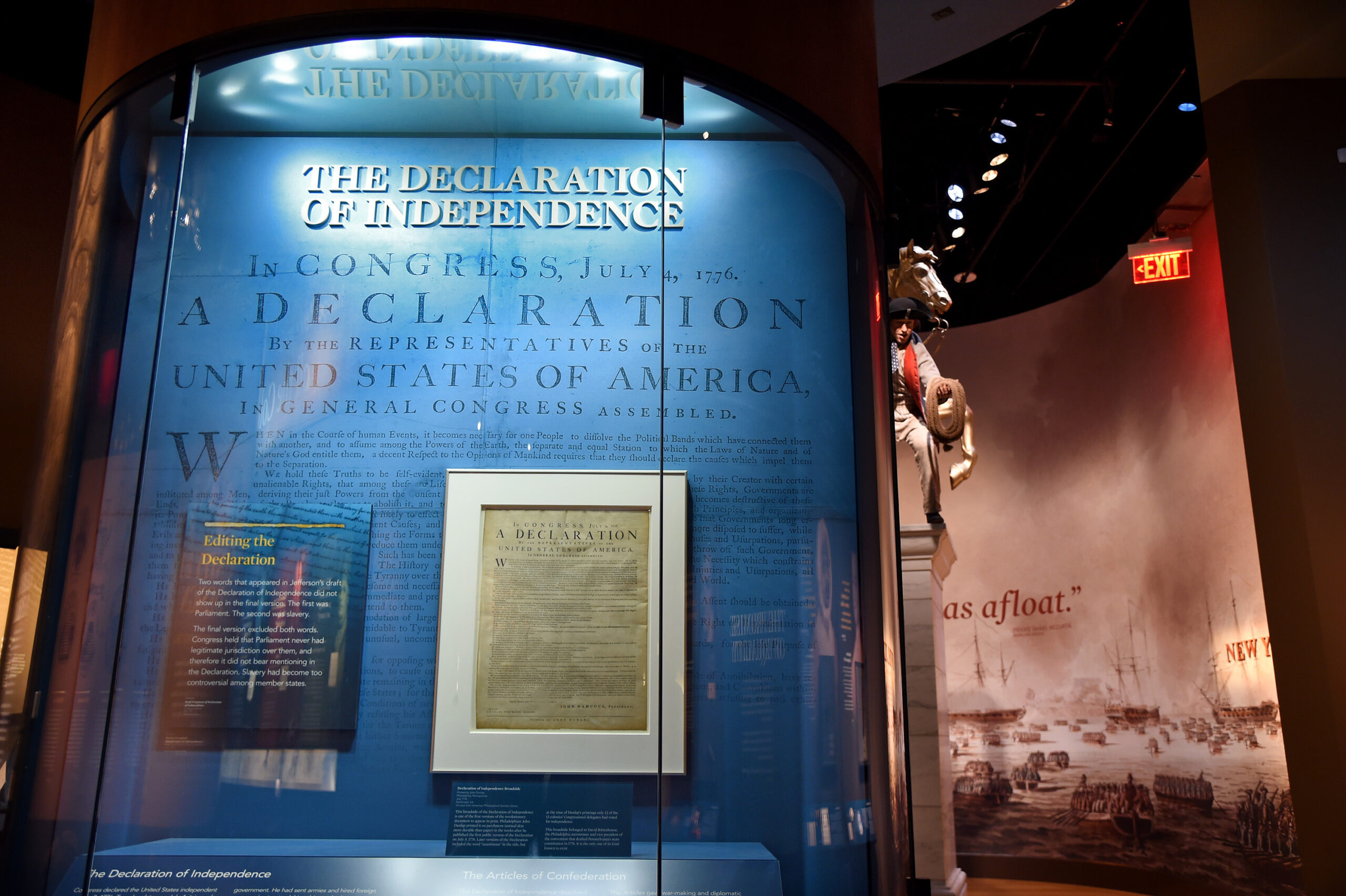
    John Dunlap’s name — along with that of John Hancock, president of the Continental Congress — appears on the oversized declarations Dunlap printed on parchment or vellum.

    Sometime in the afternoon of July 4, Thomas Jefferson walked from the State House on Chestnut Street to the shop of Dunlap, a 29-year-old Irish immigrant and publisher of the Pennsylvania Packet. Jefferson handed Dunlap the original handwritten copy of the Declaration of Independence, adopted just hours earlier by the Continental Congress, and ordered several hundred copies to be printed as soon as possible.

    Working through the night, Dunlap and his assistants printed up at least two batches of “broadsides,” some on paper bearing the watermark of King George III. Dunlap had to rush, and some copies were printed slightly askew, while many were folded while still wet, leaving offset imprints.

    They were rushed back to Congress and given to dispatch riders to distribute to colonial assemblies and the army. Washington received his on July 9 and had it read that day at his headquarters in Manhattan.

    In their library on June 16, 2021, American Philosophical Society reference and digital services specialist Joe DiLullo holds its copy of a rare oversized Declaration of Independence printed by congressional printer John Dunlap on parchment or vellum in July 1776.

    It took weeks for the other Dunlap broadsides to reach their destinations, the last arriving in Savannah, Ga., on Aug. 10.

    One Dunlap broadside was used for the first public reading of the declaration, on July 8, in front of the State House, by Col. John Nixon. The scene was immortalized nearly a century later by Frederick Peter Rothermel, in a painting now hanging in the Union League Club.

    To this day, no one knows how many were printed, but only 26 original Dunlap broadsides are known to exist, making them among the rarest of American artifacts.

    The last one to come up for auction, in 2000, was bought for $8 million ($15 million in 2025 dollars) by the television producer and liberal activist Norman Lear. Most are held by museums or universities, but whenever they are displayed, the Dunlap broadsides draw crowds who are just as fascinated to see the words that declared a sovereign state as were those a quarter millennium ago.

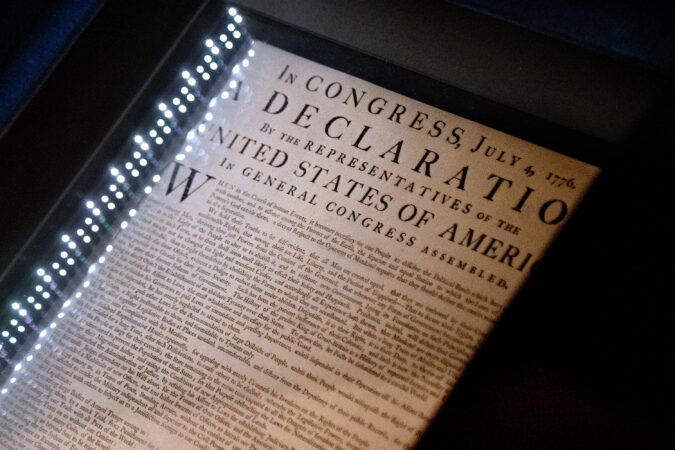
    The only known copy of the Declaration of Independence printed on vellum by John Dunlap is on display at the Museum of the American Revolution.

    Yet, few passersby, if any, stop to look at a tarnished, old plaque affixed to a rundown building at Market and Second. Put there 50 years ago by the Society of Professional Journalists, it is the only acknowledgment of one of the most important sites of the American Revolution.

    Next to a shuttered diner, the plaque is likely all but ignored by any but the most dedicated history buff.

    There is not enough time to go through the formal Pennsylvania State Historic Preservation Office process, but given the historic importance of the site, an ad hoc or special exemption by the city or state should be made, and a proper blue historical marker should be put up before July 4.

    It is the least that can be done to commemorate a site where actions that still reverberate around the world took place.

    Michael Auslin is a historian at Stanford’s Hoover Institution and is the author of the forthcoming “National Treasure: How the Declaration of Independence Made America.”

  • Words have consequences, especially when you are Jewish

    Words have consequences, especially when you are Jewish

    Last month, a Pittsburgh-area man admitted in federal court that he made an online antisemitic threat to a public official.

    “Go back to Israel or better yet, exterminate yourself and save us the trouble,” Edward Owens Jr. wrote on Facebook Messenger, adding, “we will not stop until your kind is nonexistent.”

    This was not some random act — it is part of a larger issue of rising political violence, and an example of what many Jews encounter when they turn on their phones or scroll through their feeds.

    The American Jewish Committee’s just-released “State of Antisemitism in America 2025 Report” lays bare the scope of the problem. Online is where American Jews experience antisemitism the most, with 73% seeing or hearing antisemitic content or being personally targeted.

    Of those who experienced online antisemitism, 54% found it on Facebook — up 7 points from 2024 — while 38% experienced it on YouTube. That is an especially alarming number, given that it demonstrates an 11-point jump from the year before. Instagram and TikTok also saw concerning increases in reported antisemitic content.

    What were once quiet murmurings are now getting very loud. Words matter. AJC’s report found that 55% of American Jews are altering their behavior out of fear of antisemitism. That includes the 39% who are not posting content online that could identify them as Jewish or reveal their views on Jewish issues.

    It’s self-censorship as a means of self-preservation. You don’t know who is reading or who may be triggered by what you post. The Pittsburgh Jewish Chronicle reported that the FBI examined Owens’ phone and found searches tied to antisemitism and “Pittsburgh Jews.”

    Owens also texted a friend that he was “ready to hunt down Jews for extermination.” Those may have just been the words of a bitter man who felt Jews were to blame for everything lacking in his life. But Owens also owned several guns, including a 9 mm pistol FBI agents found in his truck with hundreds of rounds of ammunition.

    Noah Rubin, a Penn engineering student, during a “No hate on campus” rally at the University of Pennsylvania in 2024.

    We don’t know whether Owens’ words would have turned into violence — the online threats and gun charges were handled separately in this case. However, we also don’t have the luxury of parsing whether someone is merely spewing venom to put a scare into people or is contemplating something more sinister.

    Either way, it has an impact. AJC’s report found that 21% of American Jews who experienced antisemitism online felt physically threatened by these incidents.

    Put yourself in the shoes of the official who received Owens’ message. Chances are you’ll be rattled by what you read and contact the authorities, who are better equipped to hunt down cowards like Owens who use online aliases. Then you’ll have a better idea of what it’s like to be an American Jew in 2026.

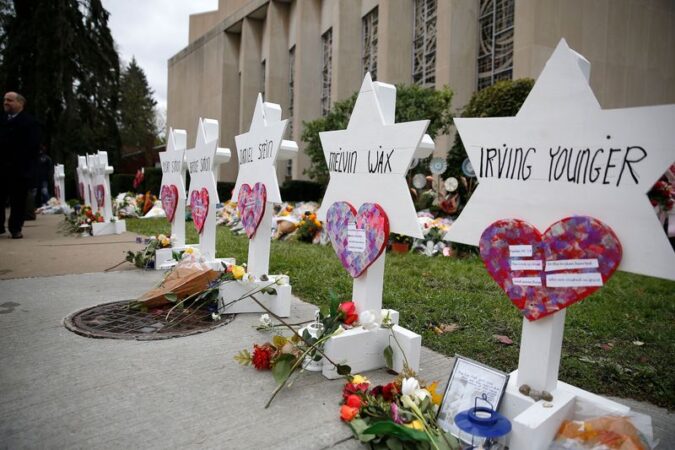
    Jews in America had long been insulated from violent antisemitism. It was something that happened elsewhere. Then, the 2018 Tree of Life synagogue massacre in Pittsburgh, where 11 people were murdered, changed that and precipitated hundreds of incidents in which Jews have been targeted simply for being Jewish.

    Last April, Gov. Josh Shapiro’s residence was torched on the second night of Passover. As with the Owens case, this is what public officials who are also publicly Jewish are currently facing.

    Owens is a sorry footnote in this spasm of hate. He will rightfully be forgotten after he is sentenced in April. But what we can’t forget is that he has plenty of company. Jewish or not, that should worry us all.

    Marcia Bronstein is the director of the American Jewish Committee’s Philadelphia/Southern New Jersey regional office.

  • From East Berlin to Philadelphia: Springsteen’s long arc of protest

    From East Berlin to Philadelphia: Springsteen’s long arc of protest

    Philadelphia has always understood that music is never just music; sometimes rhythm becomes resistance. In this city, songs have spilled out of union halls and church basements, echoed off rowhouse walls, and marched alongside movements for labor rights and racial justice.

    That tradition shows why Bruce Springsteen’s music, and his choices, still matter, decades after a summer night in East Berlin when rock and roll quietly challenged both sides of a superpower rivalry.

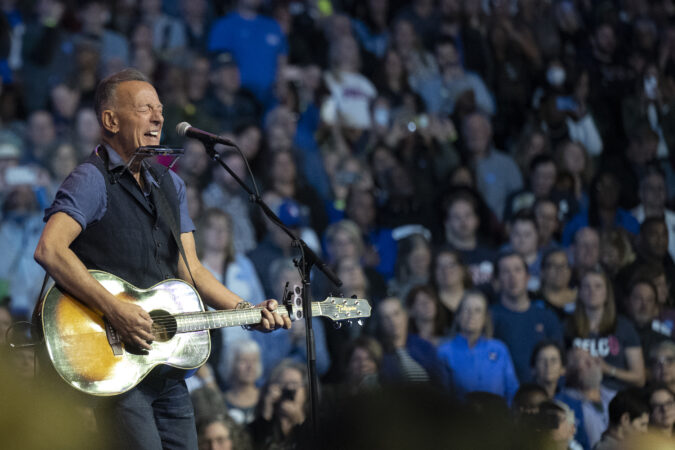
    In 1988, nearly 300,000 young East Germans gathered for the largest rock concert in the history of the German Democratic Republic. The performer was Springsteen, a working-class songwriter whose music had already been widely misunderstood in the United States.

    Ronald Reagan appropriated the pounding chorus of “Born in the U.S.A.” as a patriotic anthem while ignoring its verses — the story of a Vietnam veteran sent off “to go and kill the yellow man,” only to return home abandoned by the country he served.

    In East Germany, those lyrics landed differently. Listeners heard the betrayal beneath the beat. They recognized themselves in the song’s moral tension. That understanding is why, unlike most Western rock stars, Springsteen was invited to play behind the Iron Curtain.

    Pressure to stop the concert came from both sides of the Cold War. The U.S. Embassy urged Springsteen to cancel, fearing the show would legitimize a communist regime. At the same time, the East German youth organization sponsoring the concert — without Springsteen’s knowledge — advertised it as a “solidarity concert” for Nicaragua’s Sandinista government.

    Springsteen refused both. He told U.S. officials he would not cancel. He told East German organizers he would not perform unless Sandinista banners were removed. His music, he insisted, belonged to ordinary working people, not to politicians.

    About an hour into the concert, Springsteen stopped and addressed the crowd in halting German. “It’s great to be in East Berlin,” he said. “I’m not here for or against any government. I came to play rock and roll for East Berliners in the hope that, one day, all barriers will be torn down.”

    He had wanted to say “walls,” but anxious officials begged him to soften the language. So he let the music finish the thought, launching into Bob Dylan’s “Chimes of Freedom,” a song written for the refugees, the silenced, the imprisoned, which Springsteen has lately reprised. A year later, the Berlin Wall fell. Many described the night as a widening crack — a moment when imagination briefly outran fear.

    Late last month, Springsteen’s new song “The Streets of Minneapolis” reached No. 1 on iTunes in 19 countries. Written in response to police violence and racial injustice, the song was dismissed last week by the White House as “irrelevant.” Millions of listeners disagreed.

    People protest against ICE outside the Bishop Henry Whipple Federal Building on Jan. 30 in Minneapolis.

    This pattern is familiar. Springsteen’s work has long been embraced by audiences while misread, or deliberately misunderstood, by power. His songs are moral arguments set to melody, like the Academy Award-winning tune “Streets of Philadelphia.” They insist the American dream is fragile. It collapses when dignity, accountability, and justice are denied.

    That message resonates deeply in Philadelphia, a city shaped by labor battles, civil rights struggles, and ongoing demands for racial justice. It also resonates with the white working-class men who have always been at the center of Springsteen’s audience — many of whom now make up the backbone of the MAGA movement.

    His message to them has never changed. Freedom does not come from walls. Power does not come from cruelty. The streets belong to everyone, or they belong to no one. Will this be the moment when they hear Donald Trump’s administration is destroying whatever is left of the American dream?

    Music alone does not tear down barriers — or walls. But it shapes what people are willing to imagine, what they are willing to demand, and who they are willing to stand beside.

    Springsteen’s music calls us to rise up against injustice, whether in the streets of Philadelphia, Berlin, or Minneapolis.

    Kristen Ghodsee is a professor of Russian and East European studies at the University of Pennsylvania. She is the author of 12 books and is currently on academic sabbatical as an honorary fellow of the Einstein Forum in Potsdam, Germany. Susan Neiman has been the director of the Einstein Forum since 2000. She is a philosopher, essayist, and the author of 10 books.

  • Daniel Hilferty: We know Philadelphia can shine on the FIFA World Cup stage. Let’s show it.

    Daniel Hilferty: We know Philadelphia can shine on the FIFA World Cup stage. Let’s show it.

    Last June, I was in my office at the Xfinity Mobile Arena when I saw sparks flying on Pattison Avenue. That’s not a metaphor. I saw literal sparks, plumes of red and black smoke, and heard a steady beat of drums. Thousands of people were marching toward Lincoln Financial Field, chanting, with all the gusto in the world, to a soccer match.

    It was 10:30 a.m.

    As a lifelong Philadelphian, I know our love of sports. I’ve witnessed my fair share of tailgates, and in the last three years, I’ve seen that devotion, up close and personal, in my role as governor of the Philadelphia Flyers. But as I stared out my office window and watched this parade of passion, I was struck by the extraordinary power and potential of the FIFA World Cup ’26 in Philadelphia this summer.

    Since 2000, we have experienced some of the largest and most significant events ever to take place in our city, from the papal visit in 2015 to the Democratic National Convention the following year, to the 2017 NFL Draft. I’ve had the privilege of helping to lead many of these civic efforts and, no doubt, 2026 promises to be a game changer with America’s 250th anniversary, PGA Championship, ArtPhilly, and Major League Baseball’s All-Star Week.

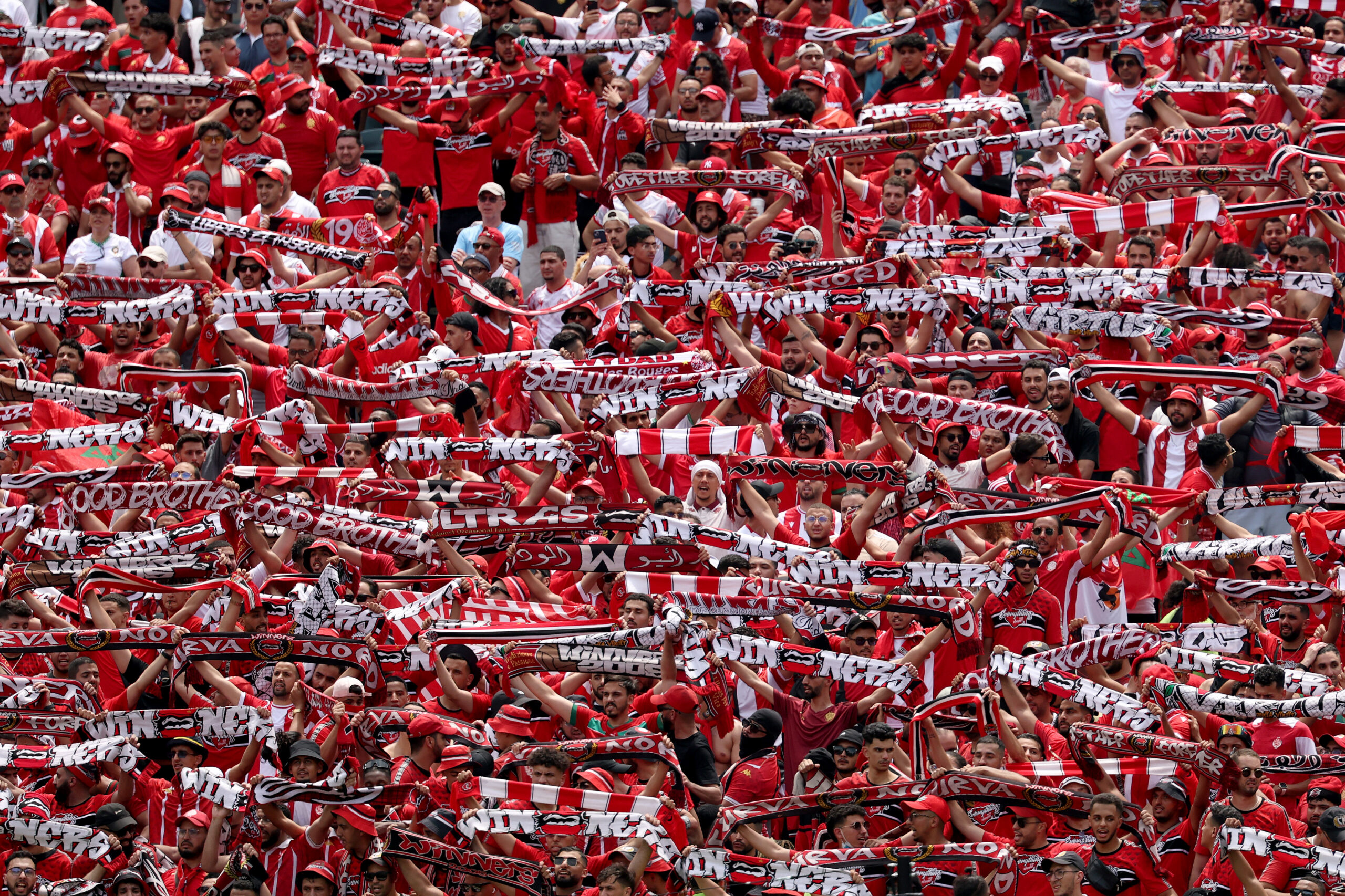
    Wydad AC fans cheer during the FIFA Club World Cup match in June against Manchester City FC at Lincoln Financial Field.

    But what I learned last summer, as Moroccan fans flooded the stadium complex, was that soccer is the world’s love language. It unites sports, culture, and national pride. Fans live and breathe every minute from opening kick through stoppage time. There is no arriving late to a match, and there is no movement from one’s seat during it.

    I’m frequently asked, “Are we ready for 2026?” The answer is yes, because Philadelphia hosts major international events so well. But what I’m not sure we are ready for is what a spectacular celebration the FIFA World Cup is.

    I’m not sure we understand just how important this sport — and this tournament — is to the world. And I’m not sure we realize there is no host city more ready to embrace the fans who will come for this party than Philadelphia.

    That’s what makes this so exciting for 2026 — and so important beyond this year.

    FIFA chose Philadelphia to host six of the tournament’s 104 matches here, including a Round of 16 match on July 4. We have been asked to play host to soccer fans from around the globe, especially those who will root for Brazil, the Ivory Coast, Croatia, Curaçao, Ecuador, Haiti, France, Ghana, and a few yet-to-be-determined national teams.

    It’s crucial we recognize that among the many reasons Philadelphia was selected by FIFA was our authentic passion for sports and our unabashed pride for this place we call home.

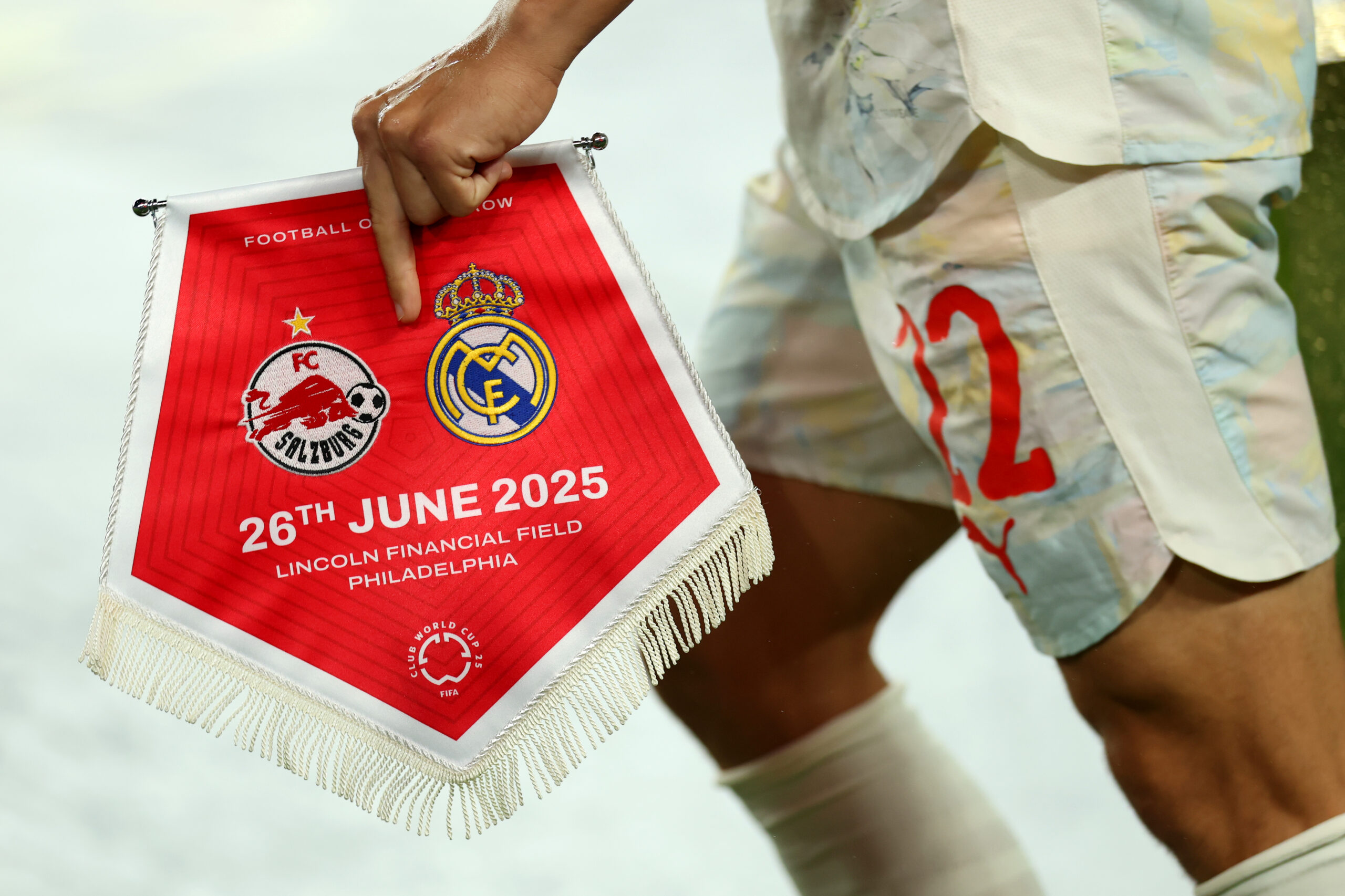
    The match pennant is held by Stefan Lainer of FC Salzburg as he walks out prior to a FIFA Club World Cup match in June against Real Madrid CF at Lincoln Financial Field.

    We know Philadelphia can shine on the world stage. We know that hundreds of thousands of visitors will walk our streets, dine in our restaurants, and experience our neighborhoods. The global media will spotlight our skyline and highlight our stories. Investment will flow into tourism and community development. But to unlock the economic, cultural, and civic potential of the FIFA World Cup, and of 2026, we need one important thing.

    We need you to be here. We need every Philadelphian to help us welcome the world.

    So, how can you do that?

    Come to the FIFA Fan Festival at Lemon Hill, which will be free to enter during the tournament. And don’t just come once!

    Adopt a rooting interest among the teams coming here, in addition to our U.S. men’s national team.

    When visitors ask where to eat (and they will!), give them your best hidden neighborhood gem.

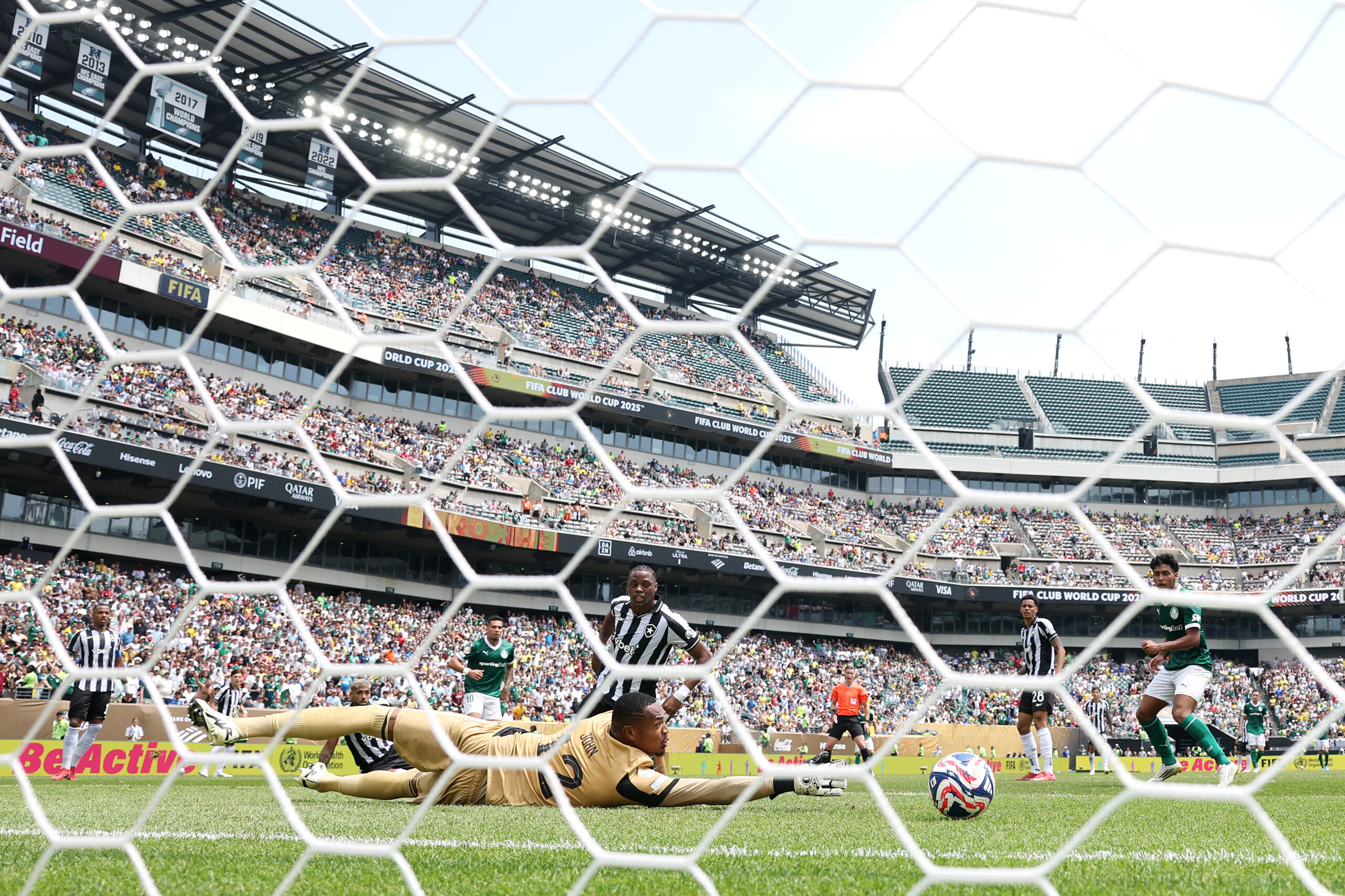
    Paulinho of Palmeiras scores his team’s first goal past John of Botafogo during a FIFA Club World Cup at Lincoln Financial Field in June.

    If someone asks what they absolutely must do or see when here, tell them your favorite experience, whether it’s in arts and culture, history, culinary, or even shopping.

    And when you’re asked to take a picture at the top of the “Rocky Steps,” happily do it!

    What makes Philadelphia special is its people. It’s why we won our bid in 2022, and it’s why this year has the potential to be a launchpad for Philadelphia as a global destination. This summer, the eyes of the world will be on us, and we want them to see the best of who we are: welcoming, inclusive, fun, proud, and united.

    But to show that, we need you to be here. We need you to be part of the action. And we need you to help us make history together.

    Daniel J. Hilferty is the chairman and CEO of Comcast Spectacor and governor of the Philadelphia Flyers. He has served as cochair of Philadelphia Soccer 2026 since 2021, alongside Michelle Singer.

  • The cost of climate change is measured in people, not dollars. Save the endangerment finding.

    The cost of climate change is measured in people, not dollars. Save the endangerment finding.

    While countries around the world strive to protect their citizens from climate change, the U.S. government is attacking its citizens through climate regulations. Repealing the Environmental Protection Agency’s 2009 “endangerment finding” hits Americans where it hurts: their health.

    This all started last year, when the Trump administration convened a group of five “climate contrarians” who have profited from their fringe views denying climate change and called it a “Climate Working Group.” The group quickly threw together a report full of cherry-picked data and other bad science. It was soon disbanded in the face of widespread scientific criticism, but the damage was done. The EPA — or a gutted version of it — used this sham Climate Working Group’s conclusions to propose a repeal of the 2009 endangerment finding, the foundation of our ability to regulate the polluting emissions that cause climate change and endanger human health.

    Instead, it wants environmental regulation to be based solely on costs to businesses — effectively valuing human health at $0 in its scientific models.

    This battle of reports and regulations might seem abstract, but it threatens real people. In the nearly two decades since the endangerment finding was issued, the impacts of climate change on health have only become clearer. Air pollution and extreme weather cause hundreds of thousands of premature deaths in the U.S. every year, impacting everyone from newborns to working-age people to older adults — and it’s only getting worse.

    Doctors understand this reality beyond the science. Pretending health has no economic value passes the cost of climate change and air pollution onto people who are sick.

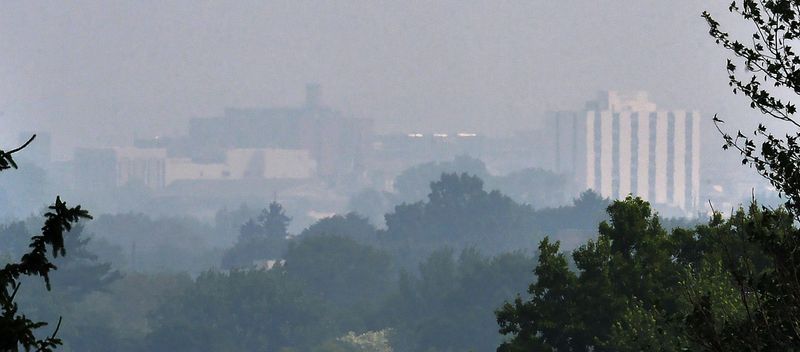
    In this 2023 file photo, buildings in downtown Erie, normally visible from West Grandview Boulevard, are shrouded in a smoky haze caused by smoke from Canadian wildfires.

    These are our patients — the truck driver in Cleveland having an asthma attack because of smoke from the Canadian wildfires, the gig worker who wiped out on her e-bike in a torrential storm, the day laborer who gets kidney failure working day after day in extreme heat — and they are sacrificing their health to pay their rent and feed their families. It’s no surprise that 120 leading patient care organizations (including Doctors for America) signed a letter urging the EPA to save the endangerment finding.

    None of this seems to matter to the Trump administration.

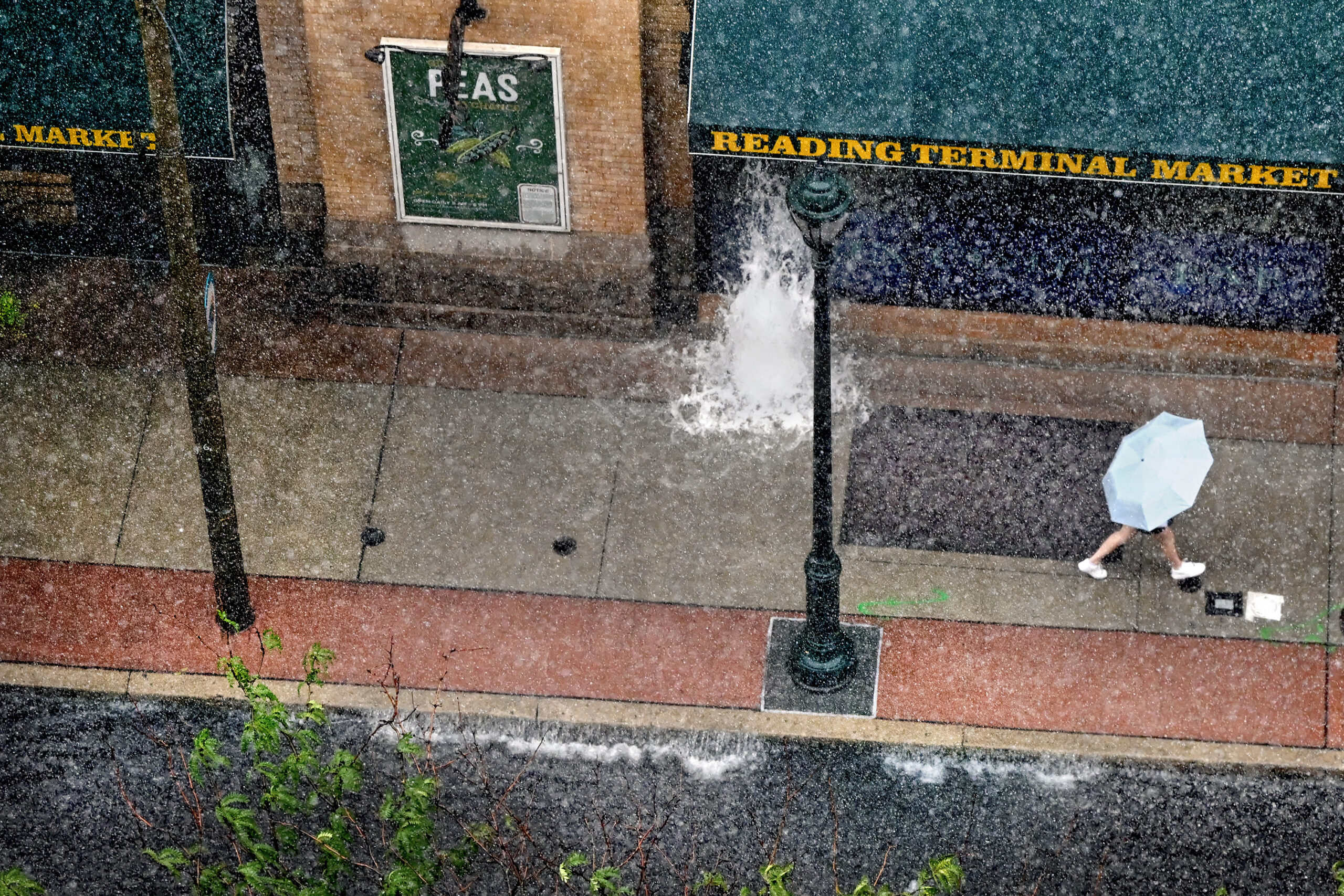
    A geyser of runoff rain water spouts from the sidewalk along 12th Street outside Reading Terminal Market as storms with damaging winds and significant flash flooding, as well as localized rainfall in amounts as high as seven inches, impacted the Philadelphia region last July.

    The EPA officially repealed the endangerment finding Thursday. As doctors, we can’t believe we’re having this conversation again. The evidence is clear: Climate change is making us sicker and sicker, but we can limit that harm with better policy and regulations. This government is trading our health for the interests of big business.

    We’re tired and angry, but we’re also scared. We’re doctors, but we’re also people.

    We’ve been the new mom afraid to bring her newborn home from the NICU under skies turned orange by wildfire smoke. We’ve sat in our driveways during a flash flood warning, wondering if it’s worth risking our safety to get to work on time. We stay up at night worrying about an America where a livable environment is a luxury.

    The America we want puts its citizens over politics. It cares more about people than dollars. Repeal of the endangerment finding has made that America a pipe dream. Only real science, a government that protects its people, and strong climate regulations can get us there.

    Madhury “Didi” Ray is a public health physician, a Drexel Med alum, and a Copello Fellow in Health Advocacy with Doctors for America. Olivia Rizzo is a pulmonologist from northeast Ohio and the cochair of the Public Health Taskforce for Doctors for America.

  • SAVE Act would drastically change how Americans vote

    SAVE Act would drastically change how Americans vote

    This week, lawmakers in Congress renewed their push to pass the SAVE Act, rebranding it as the “SAVE America Act.” Wednesday night, this bill passed the House and will move on to the Senate.

    Although this legislation’s title suggests safeguarding Americans and ensuring election security, its actual impact would be catastrophic.

    The SAVE America Act would impose sweeping new “show your papers” requirements that threaten to disenfranchise millions of eligible Americans, including hundreds of thousands of Pennsylvanians. It places new burdens on voters and election officials without addressing real problems. Mainly, it seeks to solve an issue that does not exist: Noncitizens are already prohibited from registering to vote, and checks are already in place to prevent ineligible voters from casting ballots.

    The League of Women Voters of Pennsylvania urges our senators to reject this renewed effort to undermine Americans’ freedom to vote.

    The SAVE America Act would require voters to present documentary proof of U.S. citizenship in person when registering to vote, whether it be for the first time or when voters move, along with proof of state residency. It would also require proof of citizenship and photo ID not only for registration, but again when casting a ballot — including when requesting and submitting an absentee ballot.

    This is not a minor paperwork adjustment. It is a fundamental change to how Americans exercise a constitutional right.

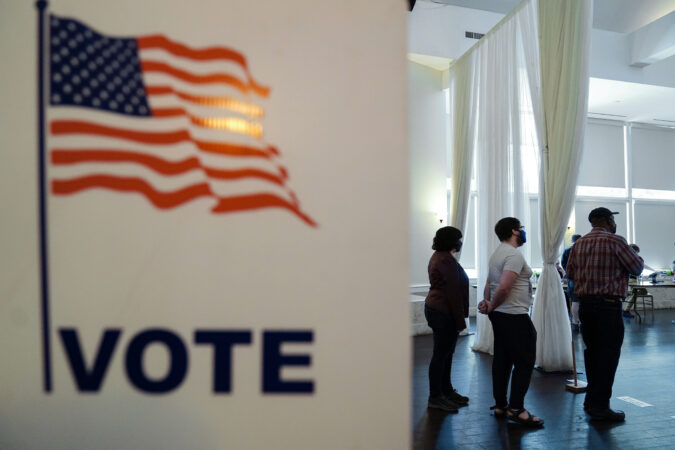
    A voter prepares to cast a ballot in Lawrence, Mass., in 2025. A GOP-backed bill would fundamentally change how American vote.

    In Pennsylvania, that means hundreds of thousands of eligible voters could face new barriers. Voters who don’t have a passport or a copy of their birth certificate, voters who move and don’t update their driver’s licenses right away, married women who change their names and lack matching documentation, Americans living abroad, including members of the military and their families overseas, and naturalized citizens who would need to safeguard their original citizenship papers.

    These are not hypothetical voters. They are our family, our friends, and our neighbors. They are people like you.

    The SAVE America Act would add undue burden on voters, including travel, fees, lost work time, and bureaucratic hurdles, to solve a problem that does not meaningfully exist.

    There is simply no evidence of widespread noncitizen voting that justifies such sweeping restrictions, especially ones that rely on obtaining documents that are hard to get under the best circumstances, and are simply inaccessible for some.

    This legislation is a gross example of federal overreach into our elections. Pennsylvania already has safeguards to ensure only eligible citizens vote. Federal law requires voters to attest to citizenship under penalty of perjury. Election officials verify identity and eligibility. Adding unnecessary documentation does not strengthen democracy; it burdens it.

    For over a century, the League of Women Voters has defended the right of eligible citizens to participate in our democracy. We do not support candidates or parties, but we will always stand for voter access and voting rights.

    The original SAVE Act failed last year after widespread public opposition. The SAVE America Act is simply a new vehicle for the same restrictive policy. Election integrity and voter access are not at odds with one another. We can protect both without disenfranchising millions.

    Democracy is strongest when all eligible citizens have their voices heard. For more than two centuries, our nation has moved — often imperfectly, but steadily — toward a more inclusive and participatory democracy.

    The SAVE America Act reverses this progress by creating new barriers to a fundamental right. Pennsylvania’s congressional delegation must reject this bill and reaffirm a simple principle: If you are an eligible citizen in America, your right to vote should not depend on producing the right documentation at the right moment.

    Our democracy depends on participation, not paperwork.

    Amy Widestrom is executive director of the League of Women Voters of Pennsylvania.