I see a lot of anger and frustration that the powers that be aren’t doing enough in response to the Epstein files, especially compared to the resignations and firings going on in other parts of the world, and that’s right; they aren’t. But it is literally our job as citizens in a representative democracy to hold our elected representatives’ feet to the fire until they do what we want them to do. If Pam Bondi isn’t doing what she needs to do, and Congress isn’t doing what we’re telling them to do, then we must not be telling Congress what to do hard enough.
How will we know when we’re pushing hard enough? When we see these Epstein monsters in handcuffs doing the perp walk. Until then, keep up the pressure on Congress to issue their own subpoenas and conduct their own investigations of the multiple credible leads and tips in the file. Call. Write. Put a sign in your front yard. Talk to your friends and ask them to do those things.
The survivors deserve it. We deserve it. But we’re going to have to fight to get it.
Linda Falcao, Baltimore
. . .
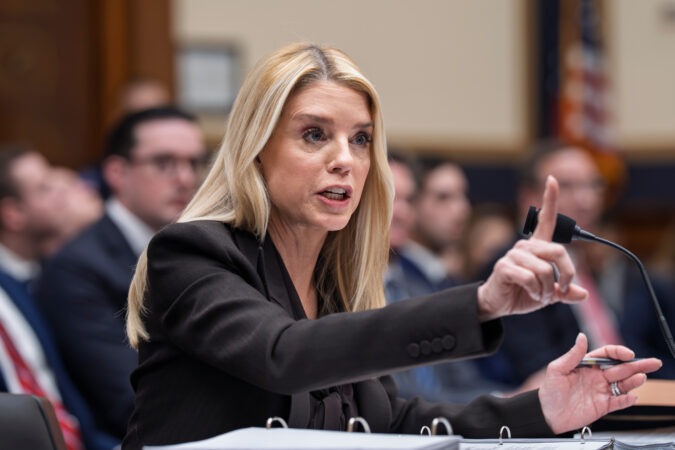
Donald Trump’s chosen attorney general filibustered, dodged, and prevaricated her way during the disgracefully run and much-anticipated House Judiciary Committee hearing (chaired by Republican Rep. Jim Jordan of Ohio) on Wednesday. I challenge anyone to recall any other attorney general who conducted themselves in such an ugly manner. Americans were subjected to an incompetent, irrelevant, and disingenuous performance by a sworn witness in Congress. Jordan did nothing (naturally) to rein in Bondi, who serially refused to answer direct questions but invoked her fealty to Donald Trump ad nauseam. Bondi was 100% political, hyper-emotional, and insulting to nearly every interrogator who was a Democrat. What I took away from Bondi’s performance was that she really doesn’t know much and was unprepared — and unwilling — to testify honestly. Bondi is a bush league lawyer — trying desperately to survive in Washington — who has turned her agency into the Department of Injustice.
David Kahn, Boca Raton, Fla.
National debt
It is hard to get a handle on the Trump administration’s America First agenda because the president is constantly deflecting concerns about any specific policy by bad-mouthing the previous administration or by suggesting new outrageous proposals to mask any real problems. At the beginning of his first year, he unleashed the Department of Government Efficiency to cut waste in the budget by eliminating thousands of jobs that Elon Musk considered unnecessary in order to help pare down government spending. Early on, the president also began to impose tariffs with the promise that these vehicles would provide America with unimaginable wealth. What happened? After one year in office, Donald Trump’s policies have increased the national debt by about $2 trillion. At this pace, he will have increased the national debt by at least $8 trillion at the end of his term. It seems his economic policies are not producing the desired results. Perhaps he and his Republican colleagues should rethink what is best for the average American. And the average American should rethink who is best serving his or her interests.
Anthony Munafo,Warminster
Join the conversation: Send letters to letters@inquirer.com. Limit length to 150 words and include home address and day and evening phone number. Letters run in The Inquirer six days a week on the editorial pages and online.
This week, the Philadelphia School District and SEPTA find it hard to change, the cost of free rides, and City Council finds it hard to listen to public comments.
Schools and SEPTA in the same boat
The debate over the school district’s facilities plan is giving me déjà vu. That’s because the city has already had this conversation. It was just that last time, it was about SEPTA’s proposed Bus Revolution.
Like the facilities plan, Bus Revolution was designed to generate improvements within state-imposed fiscal constraints. By eliminating some bus routes and redrawing others to reduce delays, SEPTA aimed to provide more rides to more riders without hiring more operators or buying more buses. The new system — which is scheduled to debut later this year — promises faster and more frequent service.
Where both plans struggle is on the political end. After all, opponents have a relatively straightforward story to tell: “Don’t eliminate our bus stop” and “Don’t close our school” are arguments that require little explanation. The benefits, on the other hand, sometimes require a multipage document, and neither institution has done a good job of communicating its goals at public meetings.
That doesn’t change the fact that the proposed changes are for the better.
For transit riders, more frequency is life-changing. For schools, shrinking the amount of physical space that needs to be maintained will facilitate investments and upgrades elsewhere. The two beleaguered organizations should compare notes on how best to eliminate their empty seats without provoking public uproar.
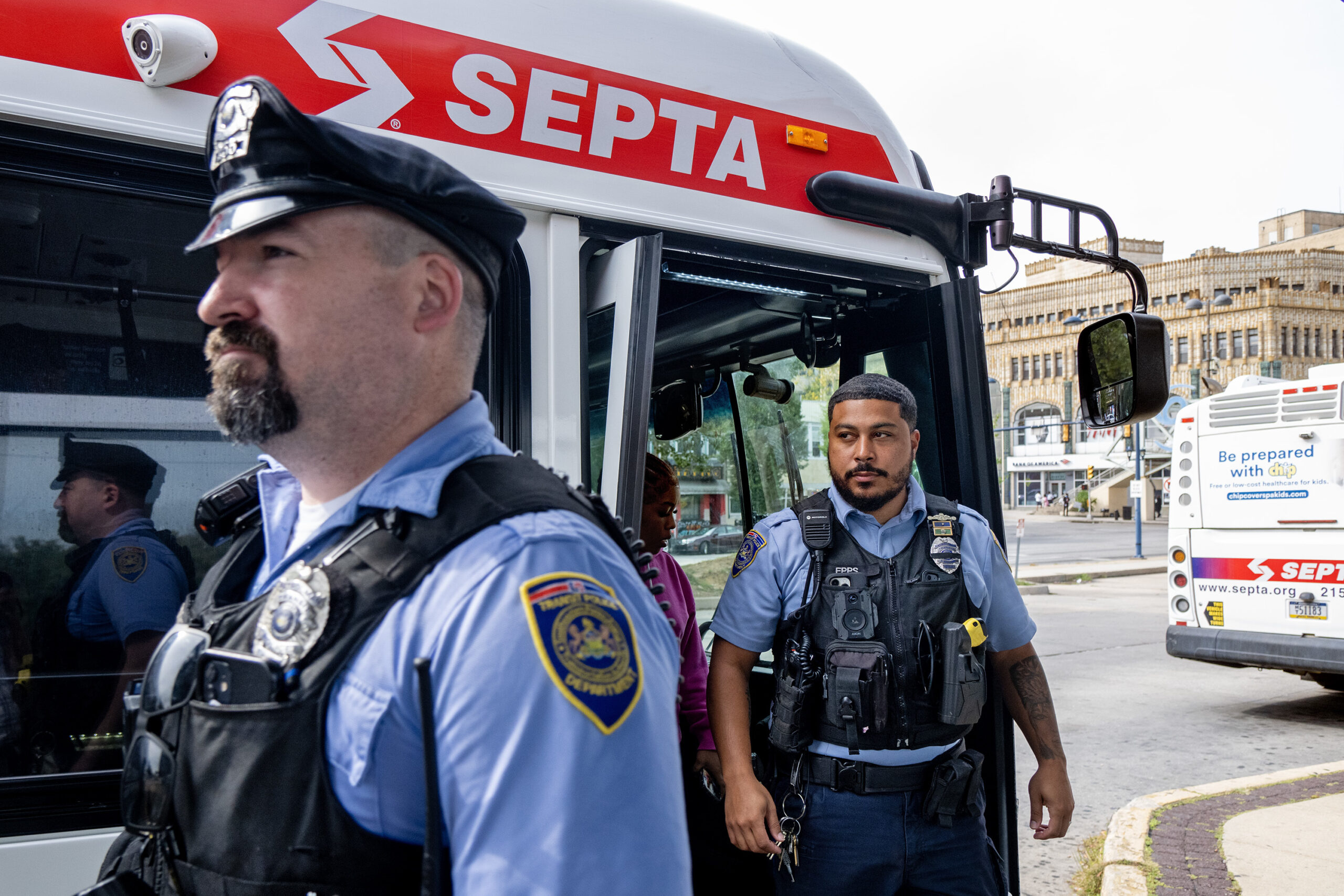
SEPTA Transit Police patrol officers Brendan Dougherty (left) and Nicholas Epps (right) with the Fare Evasion Unit leave a bus at the 69th Street Transportation Center in September.
No free rides
New fare evasion-resistant gates are slowly going up across the SEPTA Metro system, with the Frankford Transportation Center the newest recipient of the upgrades. As is the case when SEPTA tries anything new, this has generated some consternation from riders. Specifically, people have wondered why SEPTA is spending on new fare gates given its well-noted fiscal woes. Given how much is spent just trying to collect the fare, why not just make transit free? After all, New York’s new mayor, Zohran Mamdani, wants to make the buses in his city fareless.
While that all sounds exciting, it isn’t a good idea. Especially not here.
The most obvious reason is that SEPTA simply can’t afford to give up the hundreds of millions of dollars it generates in fare revenue each year. In fact, SEPTA is already operating with a deficit, forcing a raid on its (already underfunded) capital budget. Going fare-free would put the future of the system entirely in the hands of Harrisburg politicos, who have demonstrated repeatedly they can’t be trusted to adequately fund the system.
Plus, as New York’s Metropolitan Transportation Authority CEO Janno Lieber has said, transit is already affordable. A monthly bus pass is almost 90% cheaper than the average cost of car ownership. The biggest reasons people don’t ride are speed, frequency, and the behavior of other passengers, not fares.
This isn’t just a question of money; it is also about rider and employee quality of life.
In the Bay Area, the BART system has shown another benefit: reduced time spent on what it calls corrective maintenance. After installing new, evasion-resistant fare gates, the agency saw a 961-hour reduction in these issues over six months. That’s a serious drop in time spent cleaning up graffiti, fixing broken screens, and uh, picking up large messes. At many stations, the need was almost completely eliminated. As a regular transit rider, that sounds like it is worth a lot more than $3.
Don’t just take my word for it. Iconic Philadelphia journalist Dan McQuade — who left us far too soon — looked into it, as well. McQuade wanted to believe in the idea, only to find that “free transit is not the sunshine-and-rainbows image I had in my head.”
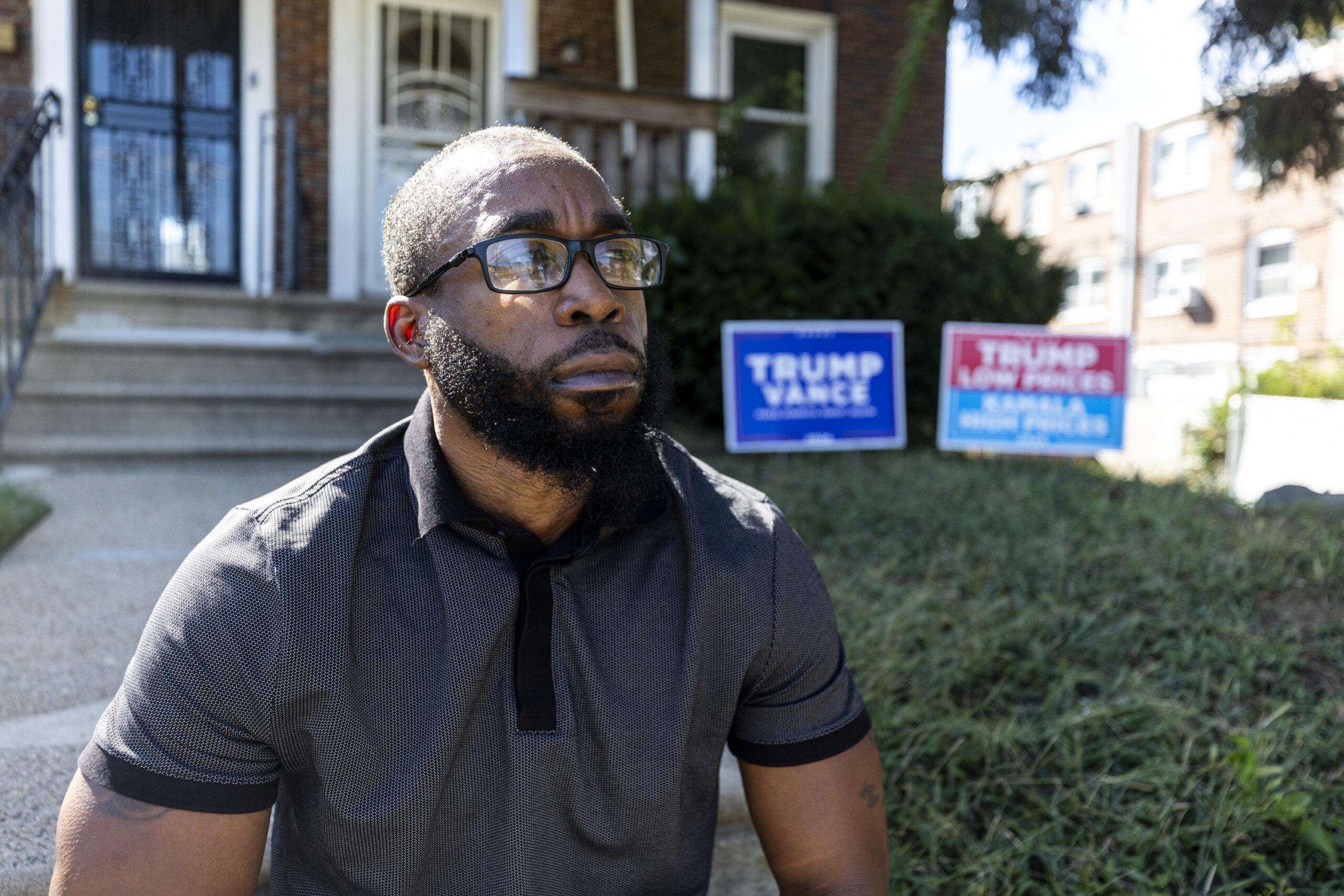
John McAuley, a Republican of Northwest Philadelphia, poses for a portrait outside his home in 2024.
Public revolt
One of the more entertaining parts of covering City Council is watching the public comment portion of its meetings. Council has attracted a growing chorus of regular speakers, many of whom have things to say that clearly frustrate the members. More recently, the Council’s peanut gallery has been joined by John McAuley, an activist with the Black MAGA group Flip Philly Red.
Council President Kenyatta Johnson, who is usually a deft hand while leading proceedings, found himself going viral on social media after contentious exchanges with McAuley and longtime speaker Lynn Landes. Johnson sought to keep McAuley on a germane topic and criticized Landes for using the word alien.
In general, Johnson and his colleagues are better off letting people speak and not reacting to what they have to say. Intervening ensured more people would see their speeches than would have otherwise.
Even by the pitifully low standards of the fact-free government of the United States, this one was a whopper.
Last month, agents from U.S.Immigration and Customs Enforcement (ICE) showed up at a Minneapolis hospital emergency room with a 31-year-old Mexican immigrant named Alberto Castañeda Mondragón who’d suffered severe head injuries.
The ICE agents told the ER nurses, according to the Associated Press, that Mondragón “purposefully ran headfirst into a brick wall.” But doctors could immediately see that the official version made zero sense, since their patient had multiple head injuries on the front, back, and side — not consistent with a fall or a collision.
Under oath, the feds suddenly switched to passive voice, as an ICE deportation officer said only in a sworn statement that Mondragón “had a head injury that required emergency medical treatment.” A judge ruled the arrest was unlawful — Mondragón had come to the U.S. legally and overstayed his visa — and ordered the man freed. Mondragón, who survived his eight skull fractures and brain bleeds and is suing the government, weeks later told an AP reporter his story of what really happened.
“They started beating me right away when they arrested me,” he recounted, describing how immigration agents pulled him from a friend’s car at a St. Paul, Minn., shopping center on Jan. 8, then slammed him to the ground, handcuffed him, punched him, and whacked him with a steel baton. Mondragón said he was beaten again at a federal detention center, where his pleas for mercy were met by laughter and more blows.
“There was never a wall,” he said.
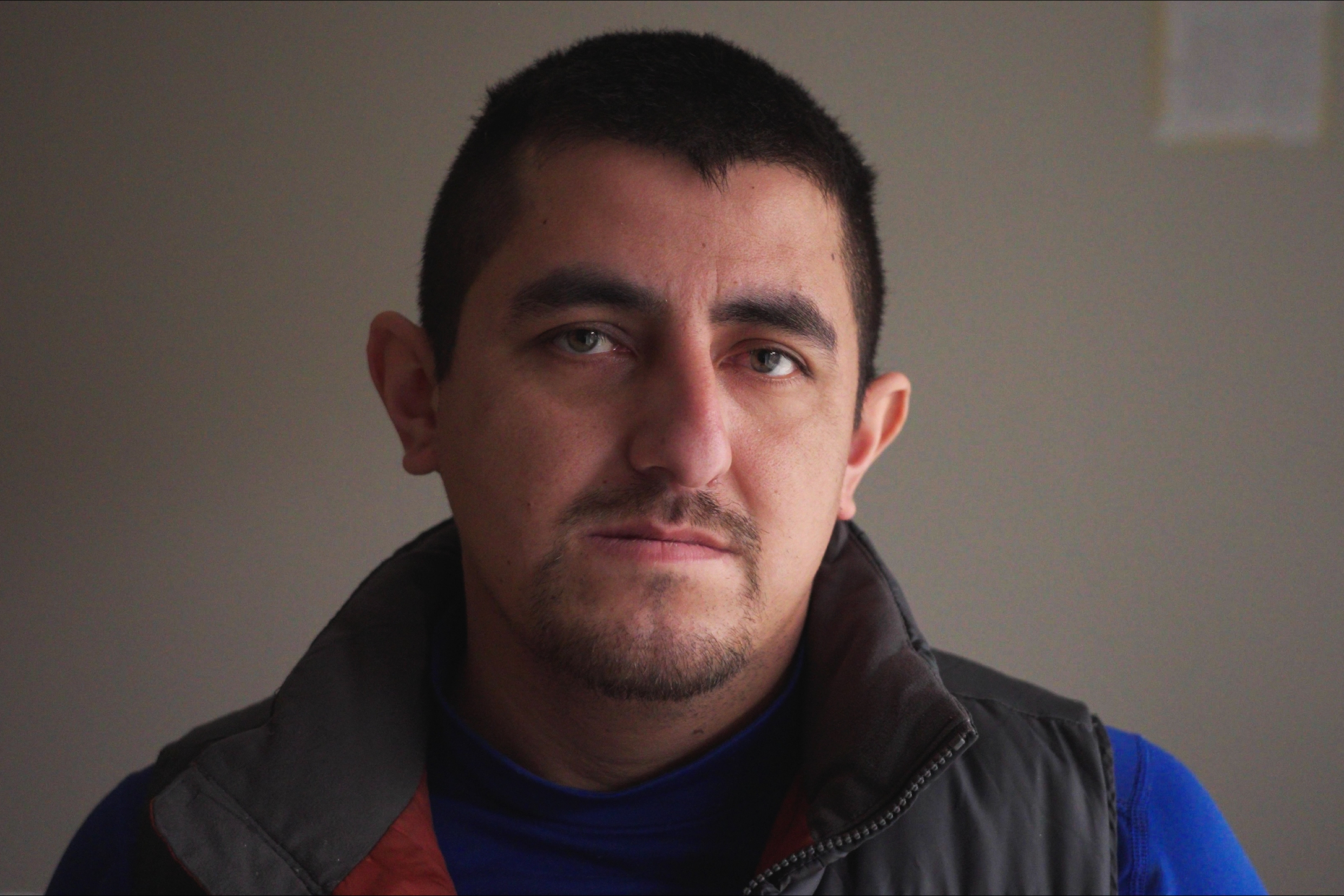
Alberto Castañeda Mondragón, who says in a lawsuit that he sustained eight skull fractures when he was beaten by ICE agents, poses for a portrait earlier this month in St. Paul, Minn.
Mondragón’s narrative would be outrageous if it were an isolated incident, but this is simply one of the most egregious examples of falsehoods by an American secret police regime that has been caught in high-profile lies again and again. The best-known cases are the Minneapolis killings of Renee Good — where officials up to the president falsely claimed an agent was struck by a car and rushed to a hospital — and Alex Pretti, who was accused of brandishing a gun at federal agents, a lie that was instantly demolished when videos emerged.
And these are just three of the many instances where a U.S. Department of Homeland Security (DHS) agent or top official has offered a version of events — often backed up by sworn testimony — that soon fell apart.
On Wednesday, another woman DHS had described as “a domestic terrorist” — Mirimar Martinez, the Chicago Montessori schoolteacher who was shot five times after a vehicle collision with ICE agents — presented powerful evidence of government lies as she pursues legal action against DHS and the agent who shot her, Charles Exum.
Marimar Martinez (center) is greeted by her family after being released from the Metropolitan Correctional Center in October, after being shot by immigration agents and charged with assaulting federal officers in an incident in Chicago’s Brighton Park.
Martinez, whose federal charges stemming from the encounter were later dropped, and her lawyer said that a federal diagram of the crash scene presented in court showed three other vehicles that do not exist, that the shots did not come through the front windshield as claimed by Exum, and that another claim — that Martinez had “rammed” Exum’s vehicle — was also false. Said her lawyer, Christopher Parente, “This is a time where you just cannot trust the words of our federal officials.”
Let’s not pretend to be so naive as to act as if official deceit began on the June 2015 day that Donald Trump descended on that Trump Tower escalator. It was the late 1960s — the era of Lyndon B. Johnson’s Vietnam “credibility gap” — when the investigative journalist I.F. Stone famously wrote, “All governments lie.” I became an opinion journalist because of my disgust over George W. Bush’s lies that drove the Iraq War.
That said, the outrageous, Soviet-caliber falsehoods of the Trump regime feel much worse. These are not “plausible denial” fairy tales to push an unpopular policy or cover up some dirty deeds, like Watergate, but a vast empire of Big Lies — easily disprovable, about everything from election results to economic statistics — with a much more ambitious goal of undermining the very notion of objective reality.
Trump: "California is more corrupt than Minnesota. And I won Minnesota." (Trump has lost Minnesota three times.) pic.twitter.com/umCFf121vg
This fish stinks from the head. That Trump was elected a second time after the Washington Post (remember them?) chronicled some 30,573 false or misleading claims during his first four years was essentially America’s drive-through order of a Double Whopper.
The nation seems to have all but given up on challenging Trump’s absurd claims that he won Minnesota three times (although he actuallylost three times), or his fact-free insistence that his tariff policies have sparked $18 trillion in new investments, just to name two instances. But America’s liar-in-chief has also offered fresh inspiration to his underlings.
One would be hard-pressed to find a more blatant case of highest-level lying than the matter of Commerce Secretary Howard Lutnick and his friendship with Jeffrey Epstein, the deceased financier and sex trafficker. When the Trump regime’s cover-up of its massive Epstein files became a big story last summer, Lutnick, a former Wall Street CEO who lived next door to Epstein in Manhattan, told a podcast that he’d briefly visited Epstein’s home in 2005, and was revulsed atthe sight of a massage table. He insisted that he then decided, “I will never be in the room with that disgusting person ever again.”
This was an epic lie.
We now know — thanks to thecongressionally mandated (but still incomplete) release of the Epstein files — that Lutnick and his family and entourage stopped for lunch at Epstein’s Caribbean island in 2012, and that this was one of many contacts — about meeting for drinks, or philanthropic contributions — the two men had almost up until Epstein’s arrest and jail cell death in 2019.
There’s no evidence Lutnick committed any crime — beyond telling a massive and now discredited lie to the American people he purportedly serves. In Europe, heads are rolling for far less, but Lutnick has “the full confidence” of the president. That fact, bobbing above a vast MAGA sea of lies, should make us ask some hard questions as a nation.
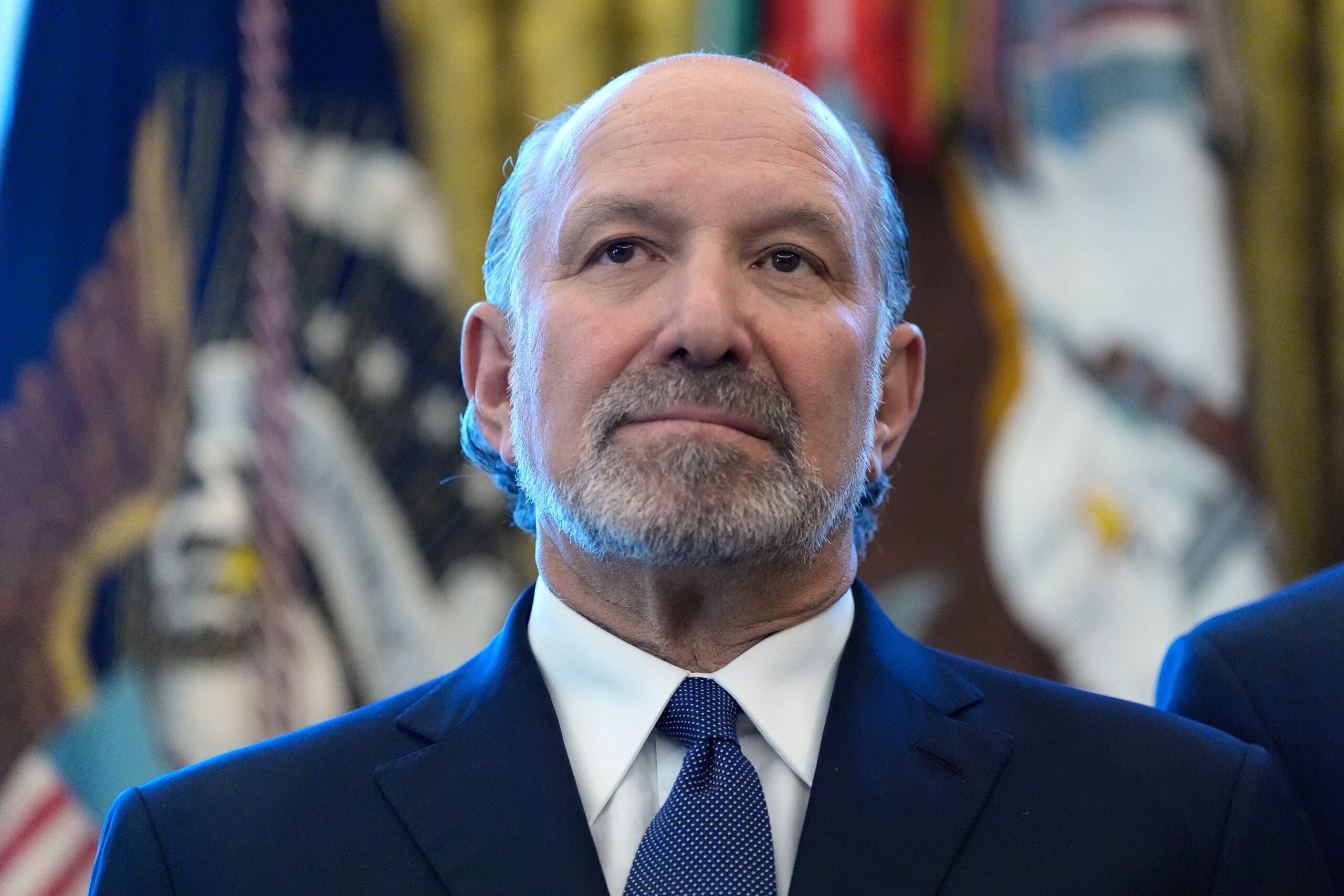
Commerce Secretary Howard Lutnick listens during an event with President Donald Trump in the Oval Office in February.
The current consensus — honored mainly in the breach — that lying is wrong, or bad, does not go nearly far enough. Perhaps it muddies the water that the U.S. Supreme Court has ruled it is First Amendment-protected free speech when private citizens utter things that aren’t true. But official deceit is a different category.
“The government’s lies can be devastating,” a leading scholar — University of Colorado law professor Helen Norton — wrote in a powerful 2015 article, arguing that official government dishonesty is fundamentally unconstitutional. Norton noted that false testimony and evidence in criminal cases — what we’ve seen frequently in the immigration terror campaign — is a violation of the Constitution’s due process clause, while invented allegations that aim to silence critics are offenses against constitutionally protected free speech.
It’s a felony to lie in federal court cases, or when testifying under oath before Congress, or in other types of governmental proceedings. And the federal statute of limitations for perjury is five years — plenty of time for a liberated U.S. Department of Justice to pursue these many cases if democratic forces can win back the White House in 2028.
But we should also recognize that top officials who tell deliberate lies are abusing their power in ways that, as Norton rightly argues, are grossly unconstitutional. When Noem lies to the American people about Good and how she was killed by ICE, she should resign or be impeached. When Lutnick looks into a camera and offers complete fiction about his friendship with the world’s most notorious sex trafficker, he, too, should quit immediately, or face impeachment.
Norton, in her prescient article from 11 years ago, notes that beyond the specific wrongs against individuals — such as Mondragón, Martinez, Good, and Pretti — that occur when the government lies, there is a much broader problem: the loss of public trust.
Indeed, the steep decline of public faith not only in government but in other civic institutions began with those official lies about Vietnam and Watergate, and the flawed probes into the John F. Kennedy assassination. It was those and other countless moments of scatheless lying by those in power that created the rubble Trump marched over in 2016.
We won’t get anything resembling democracy until we clear that widespread debris, and that means sending a bunch of these liars to prison, because they are the real criminals. America desperately needs truth and consequences.
This week, lawmakers in Congress renewed their push to pass the SAVE Act, rebranding it as the “SAVE America Act.” Wednesday night, this bill passed the House and will move on to the Senate.
Although this legislation’s title suggests safeguarding Americans and ensuring election security, its actual impact would be catastrophic.
The SAVE America Act would impose sweeping new “show your papers” requirements that threaten to disenfranchise millions of eligible Americans, including hundreds of thousands of Pennsylvanians. It places new burdens on voters and election officials without addressing real problems. Mainly, it seeks to solve an issue that does not exist: Noncitizens are already prohibited from registering to vote, and checks are already in place to prevent ineligible voters from casting ballots.
The SAVE America Act would require voters to present documentary proof of U.S. citizenship in person when registering to vote, whether it be for the first time or when voters move, along with proof of state residency. It would also require proof of citizenship and photo ID not only for registration, but again when casting a ballot — including when requesting and submitting an absentee ballot.
This is not a minor paperwork adjustment. It is a fundamental change to how Americans exercise a constitutional right.
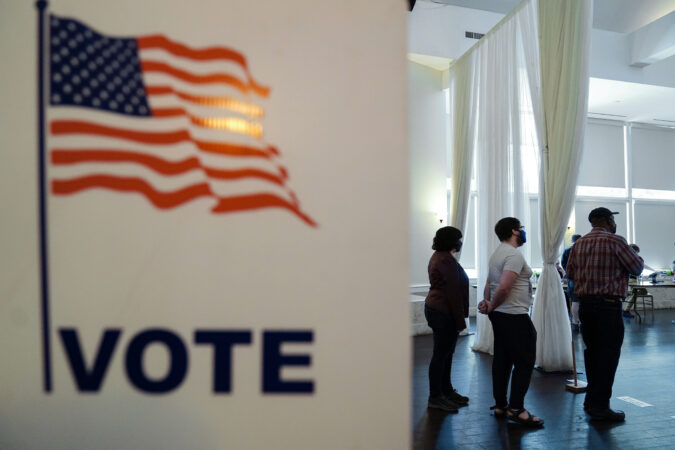
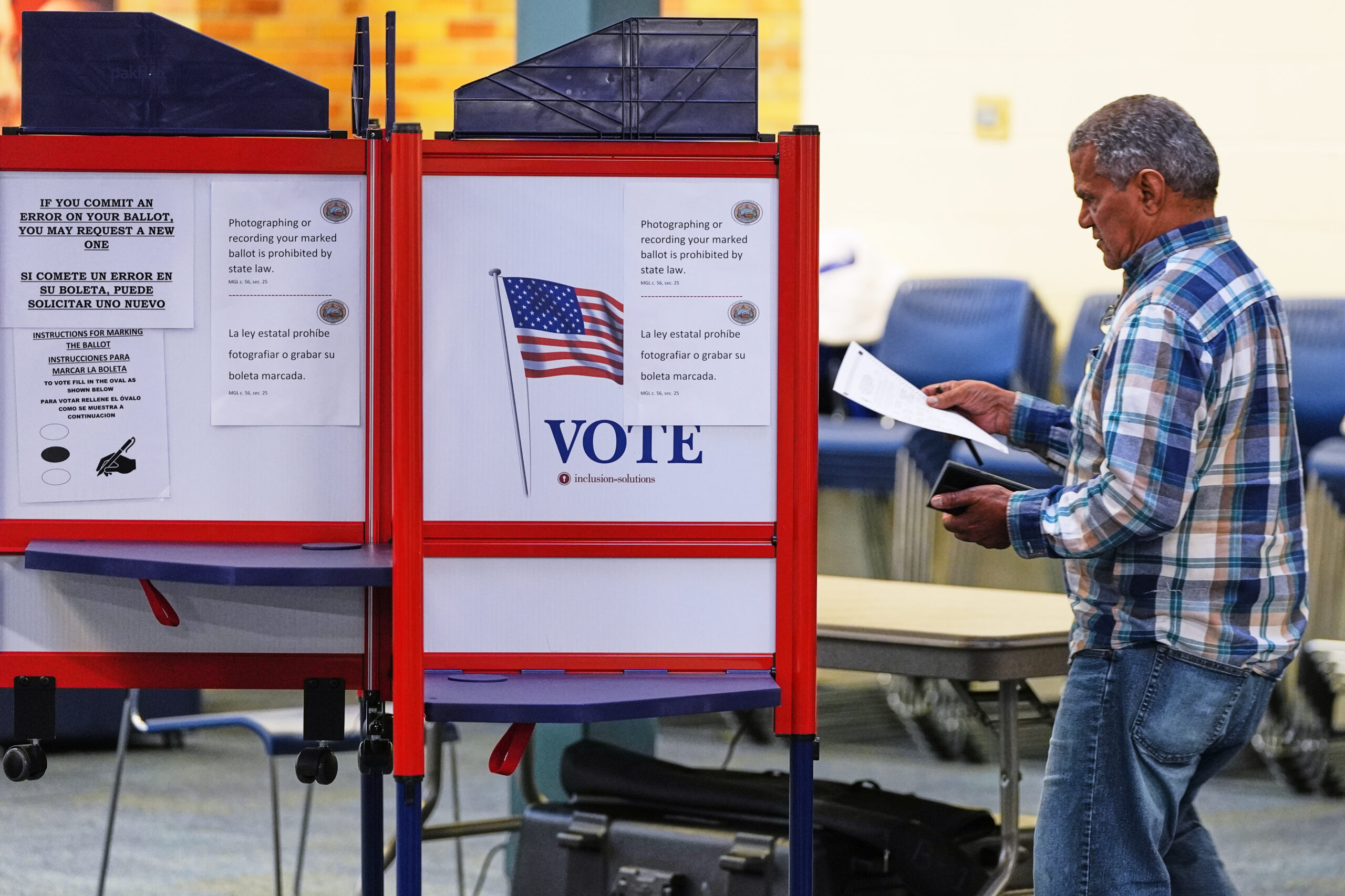
A voter prepares to cast a ballot in Lawrence, Mass., in 2025. A GOP-backed bill would fundamentally change how American vote.
In Pennsylvania, that means hundreds of thousands of eligible voters could face new barriers. Voters who don’t have a passport or a copy of their birth certificate, voters who move and don’t update their driver’s licenses right away, married women who change their names and lack matching documentation, Americans living abroad, including members of the military and their families overseas, and naturalized citizens who would need to safeguard their original citizenship papers.
These are not hypothetical voters. They are our family, our friends, and our neighbors. They are people like you.
The SAVE America Act would add undue burden on voters, including travel, fees, lost work time, and bureaucratic hurdles, to solve a problem that does not meaningfully exist.
There is simply no evidence of widespread noncitizen voting that justifies such sweeping restrictions, especially ones that rely on obtaining documents that are hard to get under the best circumstances, and are simply inaccessible for some.
This legislation is a gross example of federal overreach into our elections. Pennsylvania already has safeguards to ensure only eligible citizens vote. Federal law requires voters to attest to citizenship under penalty of perjury. Election officials verify identity and eligibility. Adding unnecessary documentation does not strengthen democracy; it burdens it.
For over a century, the League of Women Voters has defended the right of eligible citizens to participate in our democracy. We do not support candidates or parties, but we will always stand for voter access and voting rights.
The original SAVE Act failed last year after widespread public opposition. The SAVE America Act is simply a new vehicle for the same restrictive policy. Election integrity and voter access are not at odds with one another. We can protect both without disenfranchising millions.
Democracy is strongest when all eligible citizens have their voices heard. For more than two centuries, our nation has moved — often imperfectly, but steadily — toward a more inclusive and participatory democracy.
The SAVE America Act reverses this progress by creating new barriers to a fundamental right. Pennsylvania’s congressional delegation must reject this bill and reaffirm a simple principle: If you are an eligible citizen in America, your right to vote should not depend on producing the right documentation at the right moment.
Our democracy depends on participation, not paperwork.
Amy Widestrom is executive director of the League of Women Voters of Pennsylvania.
A normal, healthy weight for me was 120 pounds. In the late 1990s, before addiction reshaped the course of my life, I was a model — someone whose world revolved around silhouettes, styling, and self-expression through fashion.
My metabolism kept me effortlessly consistent in size, my confidence steady, my presence bold. In Philadelphia, style carried currency, and I spent mine generously. I was known — and crowned — as the “Queen of Fashion,” a title that suggested a life stitched together with glamour, ease, and admiration.
I hired two of my very own fashion designers, and they made leather tops and pants specifically for me. I shopped at the most exquisite stores on South Street for shoes, clothes, and designer sunglasses. I kept my hair done and went to a nail salon in Center City on a regular basis — all part of the architecture of how I showed up.
Chekesha Lakenya Ellis was a 29-year-old model in 2000, the year her addiction to opioids began.
I looked healthy, controlled, and admired, even as addiction was quietly taking hold. I looked like someone who had mastered the runway. No one knew that soon I would be fighting a battle that fashion couldn’t tailor, metabolism couldn’t manage, and praise couldn’t heal.
No one knew the story would shift from being known for how well I wore clothes to how bravely I rebuilt the body inside them.
By 2001, that admiration extended beyond aesthetics. I worked as therapeutic support staff — a job that demanded attentiveness, emotional intelligence, and care. I delivered it well. My clients felt seen. My coworkers felt supported. Respect followed me into rooms before I even sat down.
On the surface, my life looked like momentum — until prescription opioids quietly stepped in and dismantled the foundation beneath it.
I became what many called “functional” — a person whose addiction was masked by productivity, routine, and public reliability. But functionality is not the absence of illness. It is often the art of hiding it. And I practiced that art for nearly a decade.
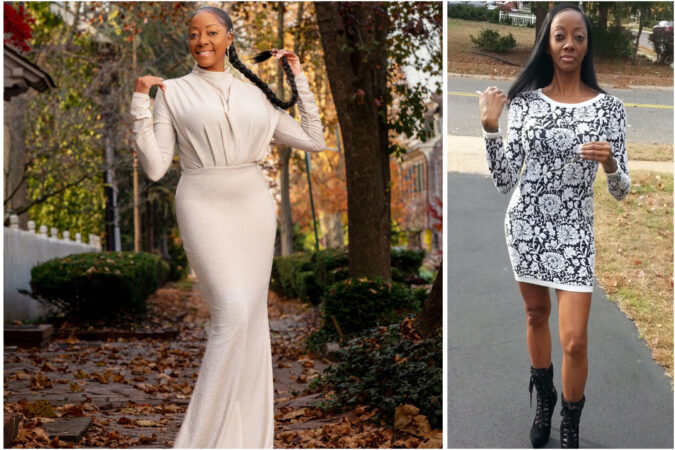
Chekesha Lakenya Ellis during the self-described “party era” at the beginning of her opioid addiction in 2001, after a dramatic weight loss when she went from a size 5/6 to a 1/2 very quickly. The weight disappeared, she said, and the applause appeared.
I went from a size 5/6 to a 1/2 very quickly — a dramatic drop that unfolded faster than most narratives could keep up. The weight disappeared. The applause appeared. The concern stayed absent. People praised the result without recognizing the cause.
Compliments met me at the door before questions ever did: You look amazing. You’re so small now. What are you doing?
Chekesha Lakenya Ellis in 2008 in active addiction at a party. “I was very frail,” she remembered.
But I wasn’t doing anything admirable. I was enduring something dangerous. The shrinking they celebrated was not transformation. It was toxicity — a body under neurological attack, nutritional depletion, depression, and a decade-long prescription opioid addiction that pulled more from me than pounds. It eventually cost me my hearing.
As my body grew smaller, the praise grew louder. At the same time, as I declined medically, physically, mentally, and emotionally, the world grew quieter about the part that mattered. They applauded the appearance of wellness while I was privately collapsing.
Skinny equaled praise to them.
To me, it was evidence that I was fading.
In 2010, recovery finally became my rescue. It demanded rebuilding, not shrinking — a process slower, quieter, and far less visible than what the world celebrates.
Chekesha Lakenya Ellis in 2010, her first year in recovery. Weight gain can mean restoration, healing, and survival, Ellis says. It deserves compassion and applause, but is rarely celebrated the way weight loss is.
As my brain healed from the damage of long-term opioid use, my body began reclaiming the signals addiction had silenced: appetite, rest, regulation, safety, nourishment. The pounds I regained were not a reversal of progress. They were proof of it.
There was no applause for that rebuilding. No celebration for the return of sleep, nourishment, or neurological stabilization. The world didn’t honor restoration because restoration didn’t look like reduction. It looked like progress that challenged how we measure wellness.
At times, rebuilding invited commentary that echoed the same shallow math that once praised me: You used to be so small. Are you OK? The irony was painful. The same shrinking that was celebrated when it was harming me was questioned when it was saving me.
Today, the cultural conversation around weight has grown louder, faster, more pharmaceutical, and more celebrated. Medications that promise shrinking have become shorthand for “wellness” in the public imagination.
But in recovery communities — including those quietly healing in our own region — weight gain often signals restoration. It signals life returning to a body that nearly didn’t survive the war addiction waged on it.
Bodies in crisis don’t need applause for shrinking. They need care for surviving. And bodies in recovery don’t need shame for rebuilding. They deserve compassion.
Recovery doesn’t always show up as loss. Sometimes it shows up as strength. Sometimes it shows up as nourishment. Sometimes it shows up as life returning to places addiction tried to erase.
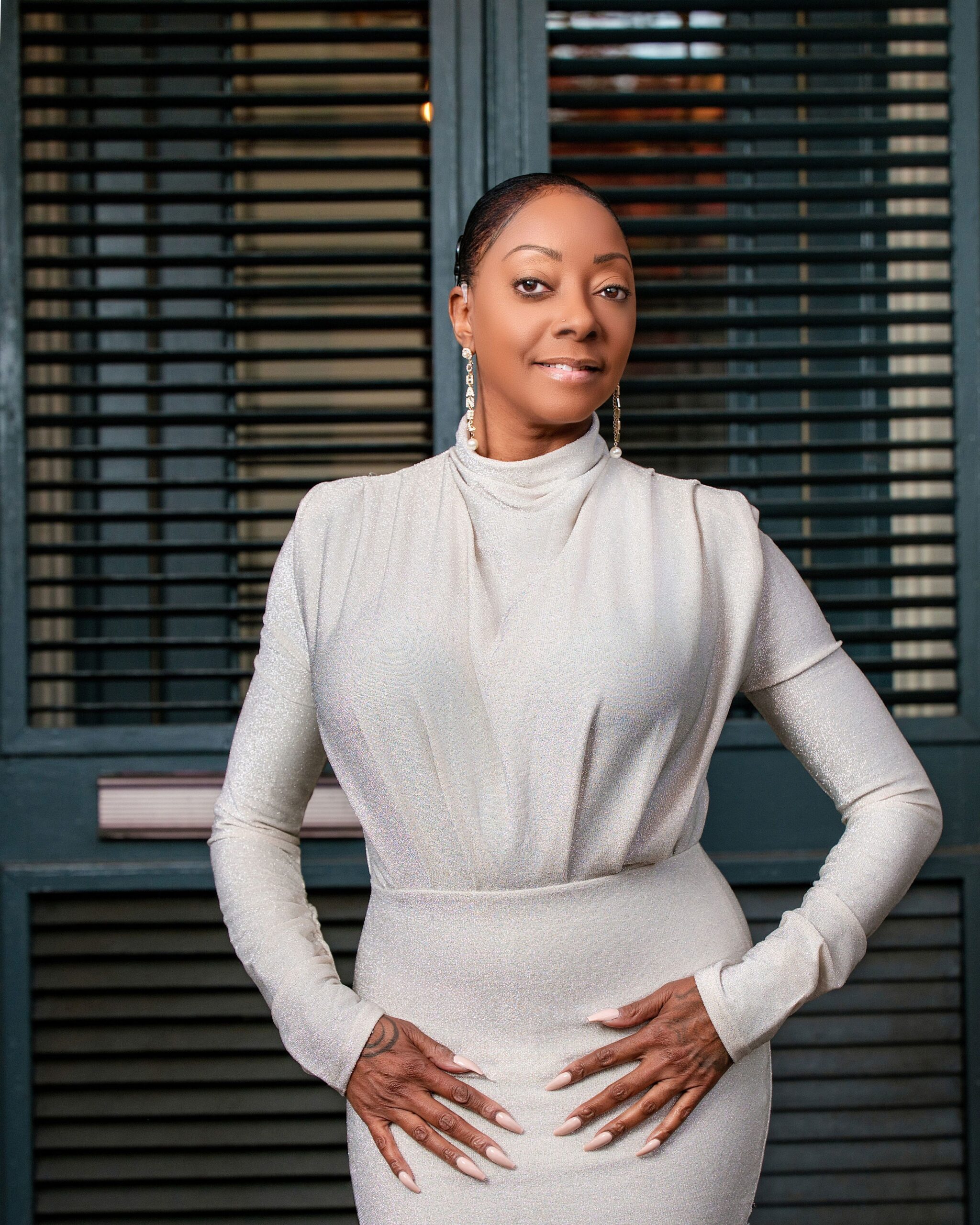
Chekesha Lakenya Ellis in 2024. As she recovered from addiction and regained weight, she says people would say: You used to be so small. Are you OK? The irony was painful. The same shrinking that was celebrated when it was harming me was questioned when it was saving me.
If you or someone in your life is walking the path of recovery, understand this: Healing does not always match what society rewards. Progress may look unfamiliar or misunderstood. A body that is stabilizing is not disappearing — it is reclaiming itself.
Culture may applaud reduction. Recovery teaches something different: renewal, resilience, and the quiet work of staying alive.
That work matters. And it deserves dignity and recognition.
Foundation separation. Cracked masonry. Failing floor joists. A building so compromised that city officials said it posed “immediate danger” to human life.
That violation is just the tip of the iceberg. I know this because I have lived it. On Aug. 23, my wife noticed a large crack forming in our living room ceiling. We alerted management through their portal, and I went to their on-site office to report it. Less than 24 hours later, at 12:06 a.m., the entire ceiling collapsed.
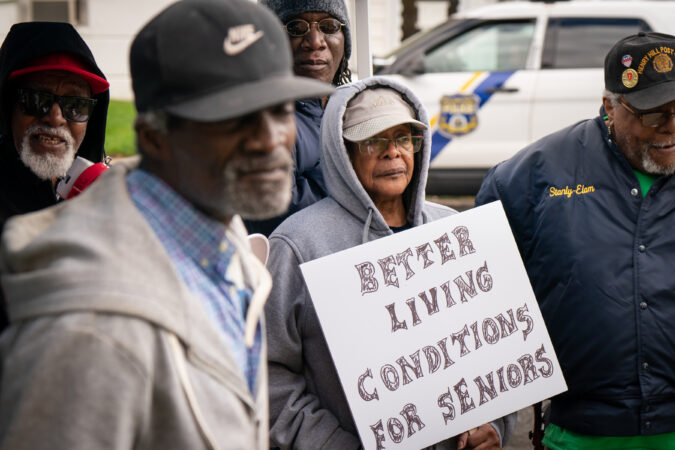
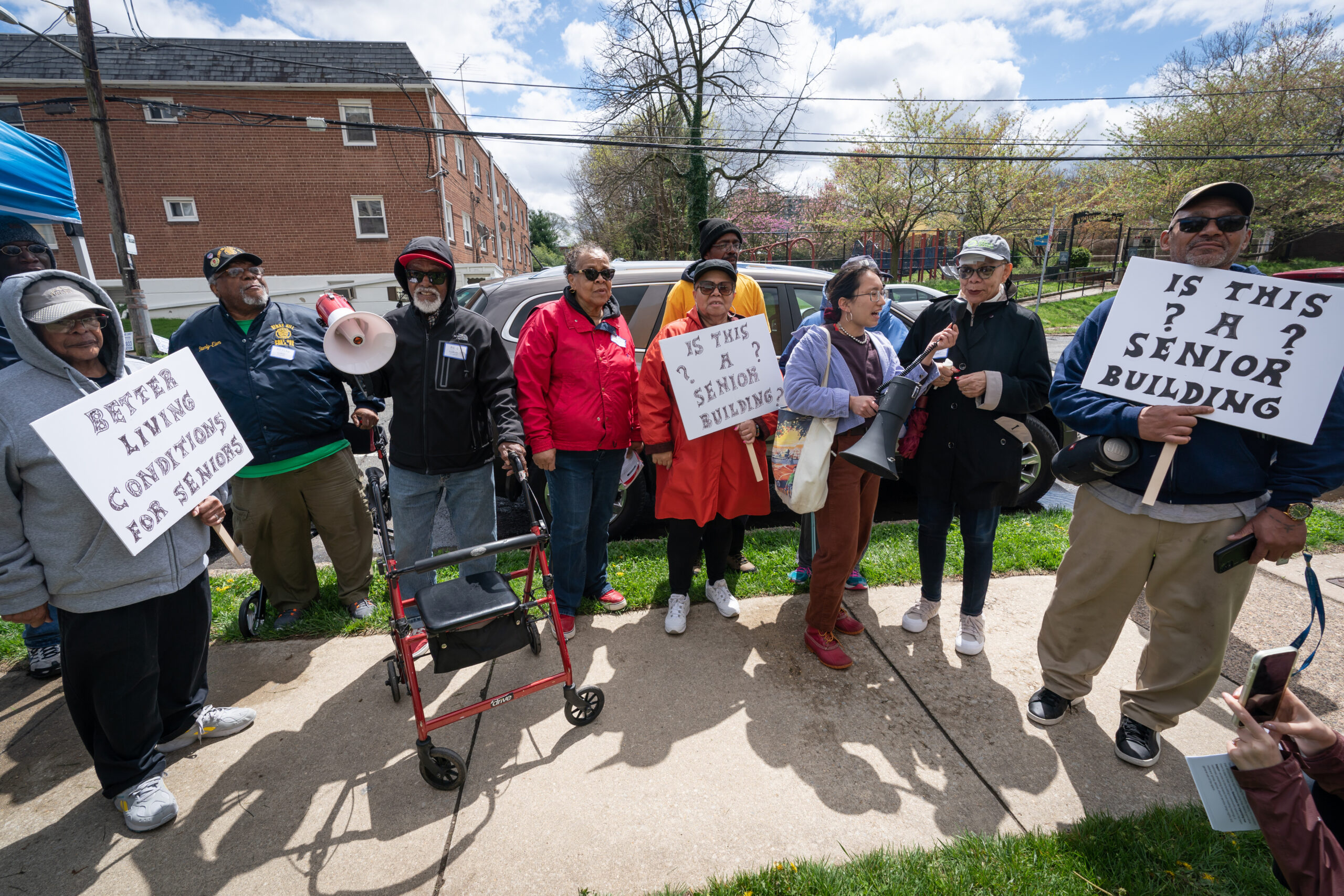
Residents speak during a demonstration organized to protest against the living conditions at Brith Sholom House apartments in Philadelphia in April 2024.
Fortunately, we had renters’ insurance. While management took their time deciding what to do, we stayed in the apartment under the exposed ceiling until our insurance finally booked us a hotel. After two days of waiting, we were moved temporarily so repairs could be made. But that displacement came with costs: For eight days, we paid out of pocket for meals and essentials while living in the hotel.
Nevertheless, when we returned home, a notice was taped to our door: “Overdue rent.”
Management knew we were displaced because of conditions they failed to address. And still, they badgered us for late rent — as though the collapse was an inconvenience tothem, rather than a danger to us.
A citywide crisis
Unfortunately, my story isn’t unusual. My neighbors have filed a class-action lawsuit against the owners and managers of the property due to the complex-wide dangerous conditions described in an “unsafe structure” L&I violation. This lawsuit reflects a mounting rental safety crisis across Philadelphia.
Philadelphians deserve safe and healthy homes, tenants deserve roofs and ceilings that are secure, floors that don’t buckle, and air that doesn’t make their children sick. We have laws on the books intended to address these issues.
But a combination of loopholes, insufficient funding, and lack of enforcement leaves renters without a clear means to enforce those laws, placing many renters between a rock and a hard place: pay for unsafe housing, risk retaliation for withholding rent, or absorb the costs of displacement.
Renters aren’t completely powerless, though. This year, we’ve seen that when renters come together, they win. This spring, City Council took the first steps toward addressing the city’s rental safety crisis by creating a fund for tenants displaced because of unsafe conditions. But that fund sat empty for months, until a coalition of housing justice advocates successfully lobbied for Mayor Cherelle L. Parker’s H.O.M.E. Plan to fund it.
The Safe Healthy Homes (SHH) campaign, led by OnePA, Renters United Philadelphia, Philly Thrive, and the office of Councilmember Nicolas O’Rourke, provides commonsense answers to these issues: protecting renters who speak up about unsafe conditions from landlord retaliation, authorizing proactive L&I inspections, and requiring proof of code compliance to evict or collect rent. These are all things we would assume are happening already, but this package adds the critical enforcement provisions that have been missing.
Safe housing is not a perk — it is the bare minimum, and City Council’s Housing Committee had a long-overdue hearing for the SHH package tentatively scheduled for Tuesday.
I encourage you to let the members of the committee know how you feel about having safe and healthy homes for tenants across our city.
B. Cincere Wilson is the chief operations officer of Myra’s Kids Inc., a nonprofit serving justice-impacted and high-risk youth. He lives in Philadelphia and works in New York City.
As a Pennsylvanian who works with immigrants on the U.S.-Mexico border, I urge people of goodwill in the Keystone State and beyond to stand up for immigrants in our country. Our democracy depends on it.
I am a Sister of Mercy of the Americas, a Catholic order that has accompanied immigrants in Pennsylvania, across the United States, and internationally since 1843. We take seriously the Gospel command to “welcome the stranger.”
On the border, I am a community worker. Part of my ministry is to help immigrants in the United States apply for citizenship or renew their legal permanent residence and DACA (Deferred Action for Childhood Arrivals) status.
Migrants are arrested at the Texas-Mexico border in 2024. Migrants’ lives have become a nightmare, writes Sister Patricia Mulderick.
Most are doing everything they can to follow the rules, to attain or hold on to legal status. But their lives have become a living nightmare, and their plight fills me with anguish.
Migrant workers in Texas are terrified of being picked up in the fields, where they toil 12 hours a day under the hot sun to pick melons, onions, carrots, and other fresh produce destined for grocery stores and our kitchen tables around the country, anonymous but vital to our economy and way of life.
The migrants left in Mexico are in limbo, denied hearings by U.S. immigration officials and often unable to return to their home countries.
“You could send me a limousine with a marching band, and I could not return,” one man said to me. “I would be dead within 24 hours.” And a woman I know sold everything she owned to make the journey north — she has nothing to go back to.
On the U.S. side of the border, people are being terrorized by masked U.S. Immigration and Customs Enforcement agents stalking our neighborhoods. One elderly woman who has worked in the fields for four decades hid in her bedroom as they pounded on her front door. Neighbors alerted a women’s group I am part of, and members asked to see the agents’ warrant. It turned out ICE was looking for someone else. I shudder to think what would have happened if those brave advocates had not stepped up.
I first learned about the bonds between democracy and our nation of immigrants at my public school in the coal regions. The brutality and terror inflicted by security forces all around our country are un-American.
When Pennsylvanians helped unite 13 colonies into one country by inviting new Americans to Philadelphia’s Independence Hall to debate and sign the Declaration of Independence and the U.S. Constitution, they knew their “experiment” in self-governance wasn’t guaranteed. Ben Franklin famously said that Americans had “a republic, if you can keep it.” We must again help lead the way.
Pennsylvanians take pride in being standard-bearers for liberty. We also value the vital contributions newcomers make in our state, in industries ranging from construction and hospitality to high-tech.
More than ever, we must stand up for immigrants and democracy together. We must hold our nation to the ideals inscribed on the Statue of Liberty: “Give me your tired, your poor, your huddled masses yearning to breathe free.”
Pope Leo and I met in the 1980s, when he was the young priest Father Robert Prevost, and we both were serving in Peru. His humility and concern for people living in poverty moved me deeply.
In Mexico recently, I held hands with a woman who wept after her immigration hearing — scheduled for the day after President Donald Trump’s inauguration — was canceled by the president on his first day in office. This woman had lived in a tent for eight months, waiting to cross legally.
“Your president says we are criminals, but I have never broken a law in my life,” she told me. “They seem to hate us, but I will not hate back. I will not let hate win.”
Will we?
Sister Patricia Mulderick is a member of the Sisters of Mercy of the Americas, the largest order of Catholic religious women in the United States. She serves in both Pennsylvania and Texas.
Delaware Avenue used to be Philadelphia’s party district. During the 1990s, when nightclub culture was in full swing, people flocked to riverfront venues like Egypt and Maui. While patrons enjoyed the riverfront’s dance era, many of the people living nearby did not.
With the assistance of their district councilperson, Frank DiCicco, neighbors in Northern Liberties and Fishtown instituted restrictions in 2002 on what kind of businesses could operate in the area. This meant new bars and restaurants adjacent to the nightclub zone would have to go to the city’s zoning board for approval.
These days, club culture has faded. Young people are staying home, drinking less, and dancing is done on TikTok. Yet, the restrictive zoning rules remain — out of step with the neighborhood’s current needs and realities.
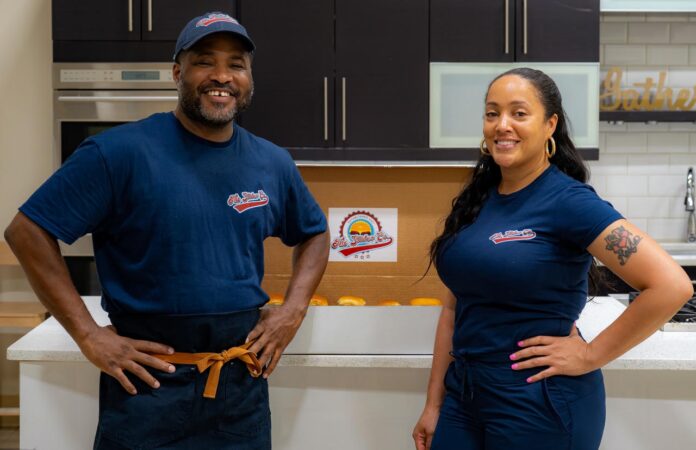
Take the new bar and restaurant proposed by the Slider Co. for a building at 2043 Frankford Ave. in Fishtown. Since the restriction affects any establishment that serves food or drinks, the business has been mired in red tape that has so far cost owners more than $40,000 in fees and six months in delays, according to reporting by The Inquirer’s Jake Blumgart.
Even after prevailing recently at the Zoning Board of Adjustment, the eatery could still face further delays — and more legal fees — if an appeal is filed.
These obstacles are a self-imposed limit on prosperity for Philadelphia.
The city’s onerous wage and business taxes are often cited as a reason for the lack of economic growth, paucity of businesses, and stagnant job market. Having these zoning restrictions on the books contributes to these problems — without even the benefit of helping to fund city services. Instead, the tens of thousands in legal fees and rent payments go directly to local law firms and landlords.
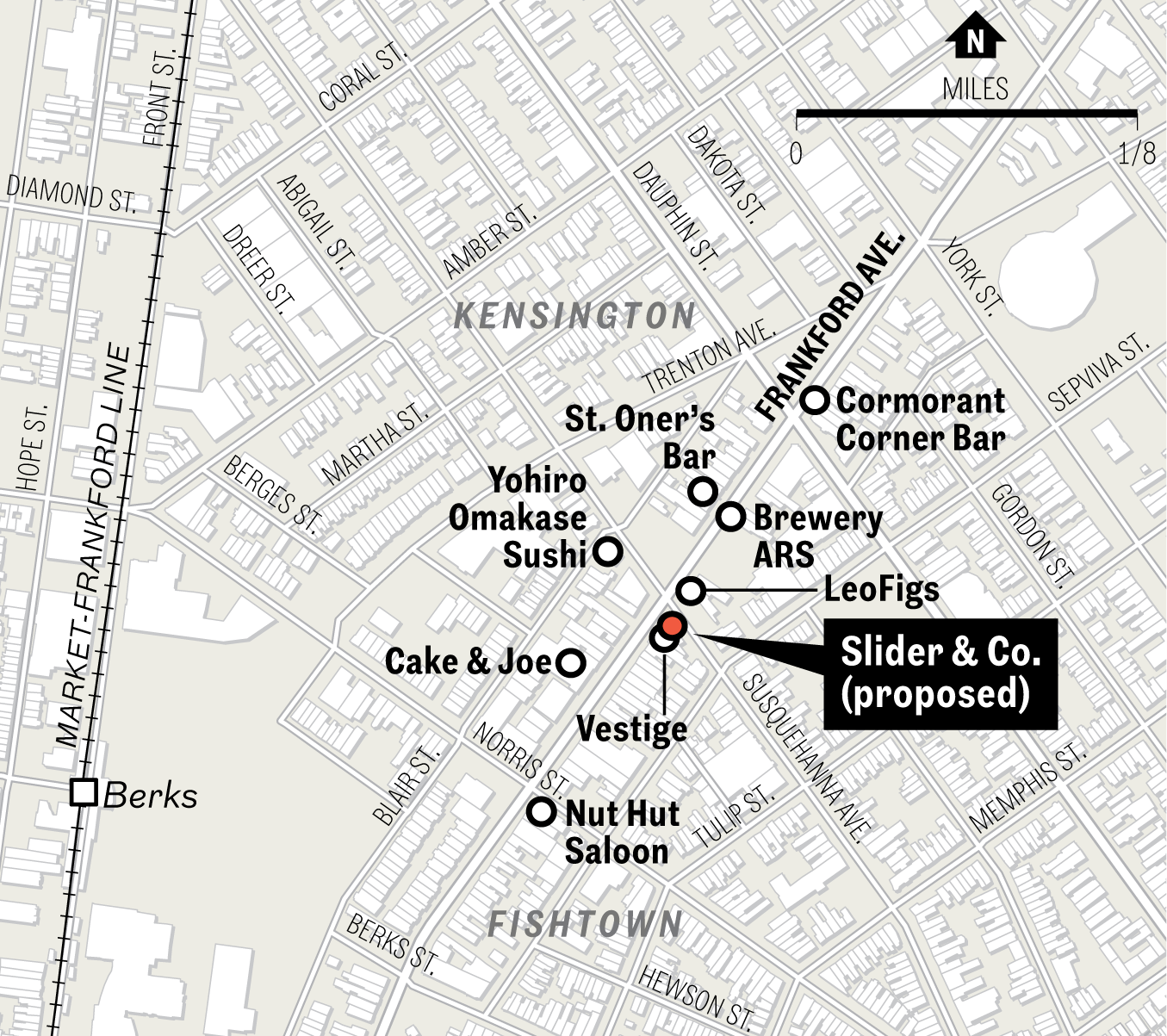
It is also inherently unfair. With no objective standards, entrepreneurs are forced to defend themselves against vague arguments. A potential neighbor of the Slider Co. argued to the zoning board that a bar and restaurant would be out of character for the corridor. Never mind that the area is already home to LeoFigs, a winery and restaurant, St. Oner’s restaurant, and Brewery ARS. This incongruity led some neighbors to allege that opposition may be based on race. The Slider Co.’s owners are Black, and most of Fishtown is not.
Locator map of bars and restaurants along Frankford Avenue in Fishtown and Kensington.
Over time, maintaining these kinds of zoning restrictions incentivizes the growth of the kind of national franchises that can afford to go through the process, as opposed to the scrappy local options that lack the resources needed to wait out the delays. This board has long opposed the proliferation of these types of limits, as well as the tradition of councilmanic prerogative that makes them possible.
Given City Council is unlikely to give up prerogative — the tradition of allowing district Council members to control land use in their districts — or to stop adopting zoning restrictions anytime soon, one way they can mitigate some of the resulting bureaucratic entanglement for future Philadelphians is to enact a sunset provision.
Attaching an expiration date to zoning restrictions would change the conversation.
Instead of asking why a zoning overlay should be repealed, policymakers would ask why it should be extended. In some cases, antiquated restrictions may simply disappear. After all, the nightclub restriction along Delaware Avenue is not the only one that could use a refresh.
In much of South Philadelphia, residents are prohibited from adding a third story to their homes without including an 8-foot setback. Beyond making for some truly ugly streetscapes, the requirement also makes the high cost of adding a floor futile by eliminating a sizable chunk of the new square footage. This restriction was passed with the aim of preventing gentrification, but instead, it just makes it harder for families to rightsize their homes for the remote work era.
Creating a sunset clause doesn’t stop Council members from protecting their communities from unwanted changes; it just allows Philadelphia the chance to evolve with the times.
Pennsylvania is home to almost 86,000 miles of rivers and streams, more than any state except Alaska. The Shapiro administration understands the responsibility that comes with maintaining our waterways and remains committed to protecting them to keep Pennsylvania beautiful.
Over the last three years, the Pennsylvania Department of Environmental Protection has increased our assessments and evaluated more than 10,000 miles of streams, which has led to us identifying a higher number of impaired waterways. That is why we have accelerated our work to protect and restore our rivers, lakes, and streams and reduce pollution flowing through them, all while supporting our farmers, growing our economy, and strengthening communities across the commonwealth — meeting these challenges and delivering for the people of Pennsylvania, but we know there is more work to be done.
DEP takes a “whole watershed” approach to protecting the water quality of Pennsylvania’s waterways. We look at rural and urban conservation opportunities that keep stormwater runoff from pulling pollutants into our waters. We work with landowners, watershed organizations, local governments, and conservation districts to identify the best ways to protect rivers and streams — and we have grant programs like Growing Greener, which invest in local communities to restore waterways.
Restoring the remaining miles of impaired waterways will take a lot of effort, but with strong partnerships, we can continue to restore our rivers, lakes, and streams for all to enjoy.
Jessica Shirley,secretary, Pennsylvania Department of Environmental Protection
More data, please
I am a teacher at Parkway Northwest High School for Peace and Social Justice. I teach English, history, and journalism. I also serve as the elected Philadelphia Federation of Teachers building representative. In response to your editorial headlined, “Philadelphia school closure proposal is not perfect, but it is necessary,” The “recommendation” of Superintendent Tony B. Watlington Sr. to the Board of Education reeks of machine politics at its worst. It is clear to everyone directly involved that the district is not really concerned about improving outcomes for students; if it had produced real data that supported its conclusions, it would have already shared it with the public. There are scant details provided for these bright neighborhood community hubs upon the hill because, according to the district’s own briefing, this will all be figured out after the plan has been approved. Understandably, it can’t say what this is really about, but it doesn’t have to worry about transparency as long as the institutions meant to hold government accountable, like this one, are so obviously complicit in the “dirty work” of city politics. Instead of holding the district accountable for its shoddy process and threadbare arguments, you are helping sell the general public on the benefits of getting on board a plane that is only 10% built. You should be ashamed of yourselves, and it should come as no surprise when our students leave a school or political system that has failed the basic tests of democratic process and transparency.
Brian Nevins, Philadelphia
Dumb down AI
With all the talk these days of artificial intelligence, I recently came across an interesting and uncanny quote from an 18th-century essayist and scholar, Joseph Addison, in which he said, “Artificial intelligence will never be a match for natural stupidity.”
Addison surely had nothing in mind relating to current interpretations of artificial intelligence, but maybe he had a point in that snags should be expected in our adoption and use of AI. This would not be unusual for a new technology.
B. W. Witty, Mount Laurel
Join the conversation: Send letters to letters@inquirer.com. Limit length to 150 words and include home address and day and evening phone number. Letters run in The Inquirer six days a week on the editorial pages and online.
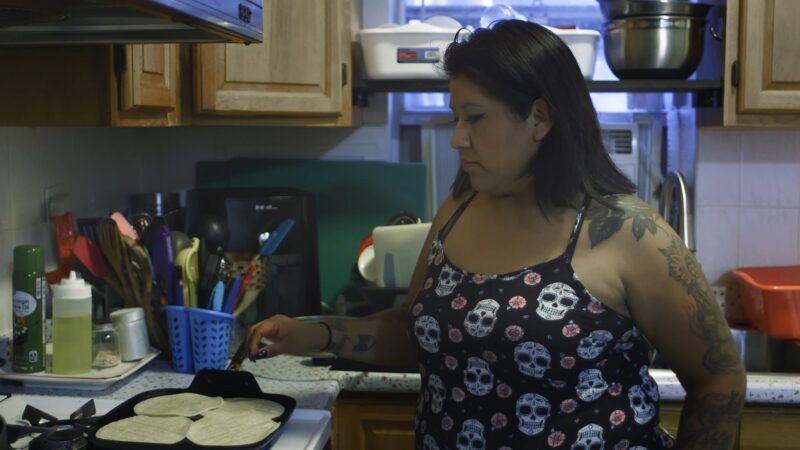
A still image from the documentary “Expanding Sanctuary” by Philadelphia filmmaker Kristal Sotomayor. The 2024 BlackStar award-winning short film will have a virtual screening on Wednesday, Feb. 11, and a local screening on April 29 and 30, as part of the Table Sessions at Bartram’s Garden.
For anyone viewing Philadelphia filmmaker Kristal Sotomayor’s short film, Expanding Sanctuary, for the first time at a free virtual screening and Q&A on Wednesday at 8 p.m., the issues depicted as impacting the lives of Philadelphia’s unauthorized immigrants will seem both meaningfully the same, and poignantly different, than they are today.
Philadelphia immigrants haven’t changed really — they still fall in love, get married, tend to their children, work hard, and look out for neighbors in need. They still give their time to building strong and loving communities.
Legislation, like the Laken Riley Act, has passed with bipartisan support, essentiallytreating immigrants accused of a criminal offense as if they had already been found guilty of it — codifying the violation of their constitutionally protected rights. Plus, thanks to Trump’s “Big Beautiful Bill,” ICE now has an extraordinary amount of funding to do with what it will.
A still image from the documentary, Expanding Sanctuary, by Philadelphia filmmaker Kristal Sotomayor. The 2024 BlackStar award-winning short film will have a virtual screening on Wed. Feb. 11, and a local screening on April 29 and 30, as part of the Table Sessions at Bartram’s Garden.
So, I asked Sotomayor: Why release the film now, into a U.S. that speaks more frequently in virulent terms about immigrants, when the national justice picture is grimmer, and our municipal leaders have chosen to stay more silent than before?
“Yeah, many things have changed,” Sotomayor told me via email. “Politically in Philadelphia, you are right that there is now a mayor who is less willing to push back against the federal government to protect immigrant rights. The mayor has not been willing to uphold sanctuary status or sanctuary policies. We are also dealing with far more mass surveillance than there was in 2018 … ICE now has access to everything from tax records to hospital records to things we probably are not even fully aware of yet.”
“I also do not think immigrant rights are as much of a national issue as they were in 2018,” Sotomayor added, “when the photo of the young boy in a detention center (essentially a cage) sparked widespread national outrage. I am not really seeing that same level of response right now [even though] there are protests around the country against the ramping up of ICE enforcement.”
Kristal Sotomayor, the award-winning, nonbinary, Philadelphia-area Peruvian American director and producer of “Expanding Sanctuary” will lead a Q&A after the film’s virtual screening on Feb. 11.
But, Sotomayor added: “For me, it is vital that this film is circulating now. Expanding Sanctuary is a hopeful story. In many ways, the film feels like it could have been shot last week. It shows how communities organized, changed policy, and protected their families during the first Trump presidency, and [it] reminds us that collective action is still possible now.”
“At a time when so many people are feeling overwhelmed and hopeless, this film offers a success story,” they added. “It demonstrates that change is possible, that policy can be shifted, and that families can be protected, not just in the past, but moving forward into the future.”
The Wednesday virtual screening of the documentary, which was honored at the 2024 BlackStar Film Festival, will be followed by a Q&A. Featured speakers are scheduled to include Sotomayor, Linda Hernandez, the Philadelphia-based community leader and holistic wellness practitioner who is the protagonist of Expanding Sanctuary, and Katie Fleming, an immigration lawyer and the director of public education and engagement at the Acacia Center for Justice.
I’ll be honest, I came away from my most recent viewing of Sotomayor’s film feeling a bit nostalgic. Not only was it filled with the faces of beloved community members — some of whom have recently stepped away from decades of work helping people see immigrants as human beings, not abstractions — but also because of the intimate specificity of what Expanding Sanctuary celebrates.
There on the soundtrack are the musicians who once told me that making space for convivencia is making space for life, for community, and, yes, for resistance. There on screen is the Philadelphia I adore — where James Beard winners feed desperate families living in sanctuary, where people show up to protest in their wedding dresses, where sidewalks become sign-making studios, and where mothers raise their families on both tortillas and hope.
The huge anti-ICE protests these days are amazing, but they should never obscure the fact that while we must always fight against injustice and the weakening of democratic norms, we cannot forget who we are fighting for — real people, real neighborhoods and communities, real cities whose civic leaders may have forgotten their voices, but whose residents never will.
For their part, Sotomayor is hopeful. “I think we are ramping up toward something that could be just as strong and just as powerful as what is portrayed in Expanding Sanctuary,” they told me.
“It may take some time for immigrant rights to become a national talking point again, as it was in 2018, but I do believe that moment will come with larger protests, deeper outrage, and, ultimately, real change.”
To attend the virtual screening and Q&A on Feb. 11, click here. For more information about the Table Sessions at Bartram’s Garden on April 29 and 30, click here.