Category: Opinion

  • As the future of college athletics takes shape, Penn State doesn’t need permission to speak for itself

    As the future of college athletics takes shape, Penn State doesn’t need permission to speak for itself

    Universities should not need permission from sports conference administrators to engage with Congress on legislation that will shape their future. That statement should be obvious.

    As what had been a slow-brewing crisis in college athletics comes to a boil, Washington is finally paying attention.

    For years, universities have struggled to manage a system increasingly shaped by sweeping court rulings, a patchwork of often-contradictory state laws, and endlessly competing commercial interests rather than any coherent national policy. Athletes navigate a tangle of name, image, and likeness rules, which govern the compensation they can receive and which vary widely by state. Administrators make decisions without knowing what the rules will look like six months from now. And fans watch their favorite players transfer from campus to campus with few reliable guardrails in place.

    Yet as Congress considers the Protect College Sports Act, the most significant attempt in years to establish a national framework for college athletics — many universities appear reluctant to engage publicly while conference administrators increasingly position themselves as the primary voice speaking on behalf of their members.

    That should concern every university trustee, president, donor, alumnus, college athlete, and policymaker.

    This is not a debate about whether the Protect College Sports Act is perfect. It isn’t. Nor is it a debate about whether conference commissioners are talented leaders. Many are.

    This is a debate about who should speak for universities when the future of higher education and intercollegiate athletics is being decided.
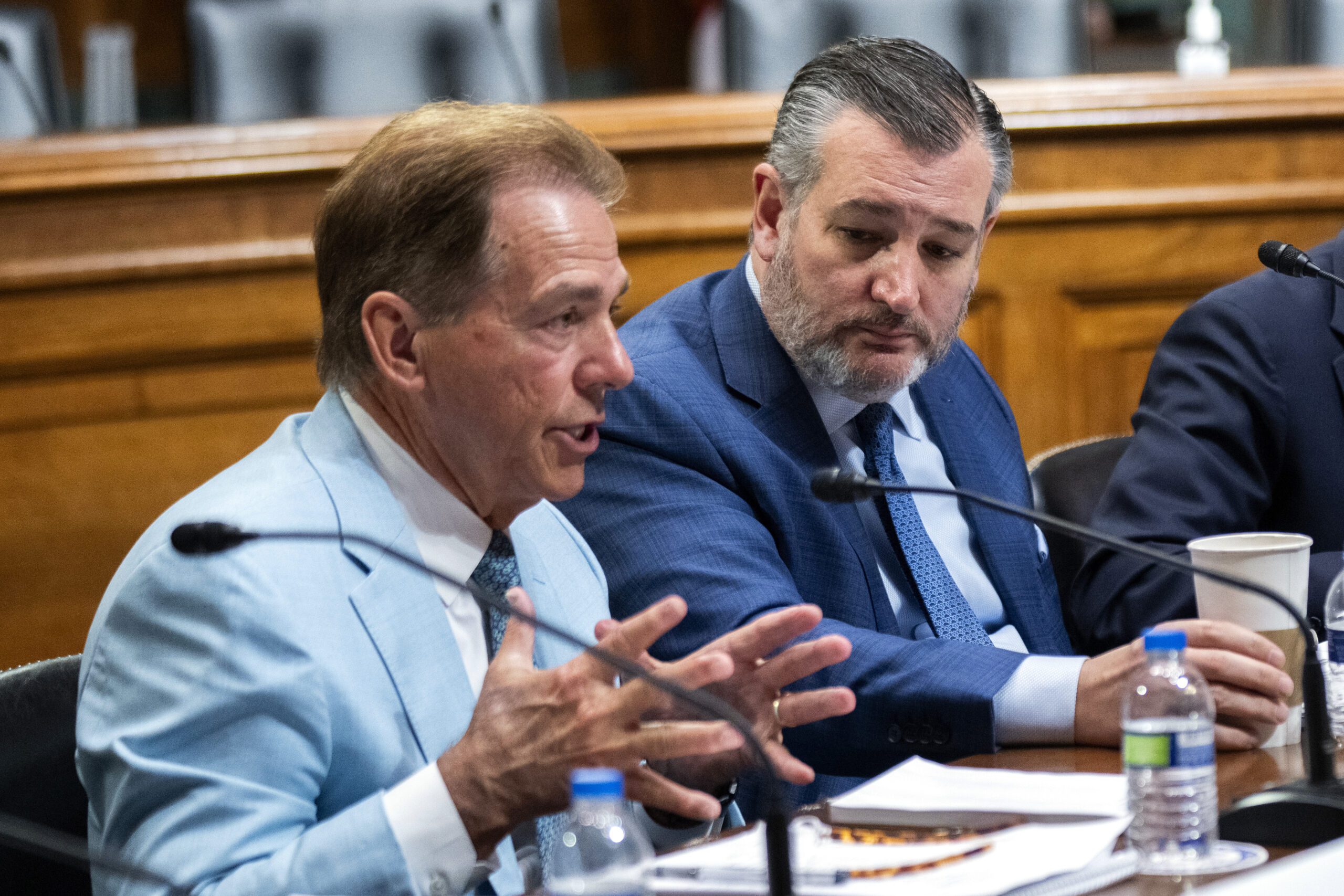
    Nick Saban (left), the former University of Alabama football coach, speaks as Sen. Ted Cruz (R., Texas) listens during a roundtable on the future of college athletics on Capitol Hill in March 2024.

    The current system is broken — and there are only two realistic options for what comes next: a federal framework that restores stability and national standards, or the continuation of today’s chaos. There is no option three.

    What troubles me most is not opposition to the Protect College Sports Act. Reasonable people can disagree. What troubles me is the notion that universities should remain silent while others speak for them.

    As a Penn State graduate, two-time NCAA All-American wrestler, donor, parent of a future Penn State athlete, and someone who has spent four decades building businesses and advising organizations throughout college athletics, I have watched this moment unfold from nearly every angle.

    My perspective comes from life as an athlete, entrepreneur, executive, adviser, and parent. From the wrestling mat to the boardroom, I have never seen college athletics facing greater uncertainty than it does today.

    Congress is not asking the Big Ten what is best for Penn State. Congress is asking stakeholders what is best for college athletics.

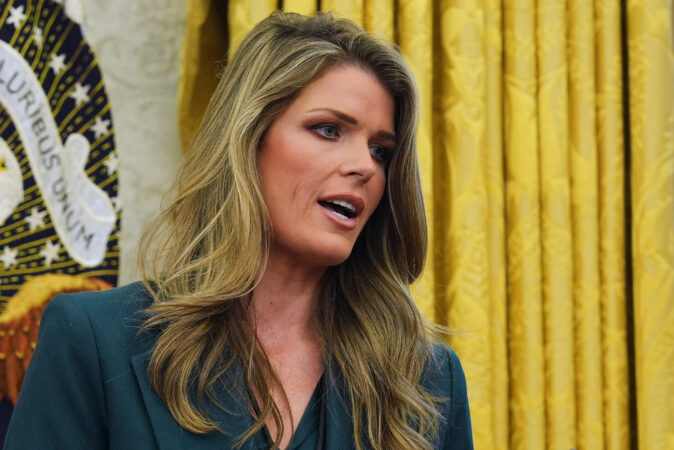
    In fact, one of the bill’s cosponsors, Sen. Maria Cantwell of Washington, recently challenged the growing influence of conference administrators in the legislative process, asking whether universities were really comfortable allowing conferences to drive the discussion.

    It’s a fair question.

    Penn State should answer that question itself.
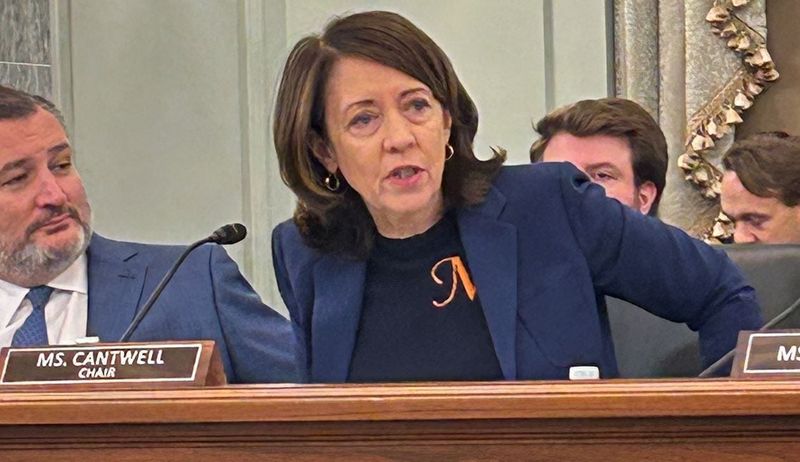
    Sen. Maria Cantwell (D., Wash.) recently challenged the growing influence of conference administrators in the debate over the Protect College Sports Act.

    Lawmakers are finally engaging. They are asking questions. They are seeking input from universities, athletic leaders, and stakeholders across the country. Penn State should be part of that conversation.

    If conference administrators are prohibiting university leaders, trustees, athletic directors, donors, and other stakeholders from engaging directly with lawmakers or expressing support for legislation, then conference employees are attempting to silence the voices of the institutions that created them. That is not their role.

    Universities created the conferences. Conferences exist to serve universities — not to control them.

    If institutions with Penn State’s stature are unwilling to engage directly with lawmakers, then the future of college athletics will increasingly be shaped by others.

    The stakes extend far beyond football. As a former student-athlete, I know firsthand that the value of college athletics goes well beyond the sports that generate the largest television audiences. Wrestling, volleyball, gymnastics, swimming, track and field, soccer, softball, lacrosse, and dozens of other sports depend on a healthy and sustainable collegiate model.

    The opportunities those programs create changed my life, as they have changed the lives of countless others. They deserve to exist for future generations as well. That is what is at stake.

    The decisions being made in Washington will affect every university in the nation. They will shape opportunities for college athletes for decades to come.

    Pennsylvania’s universities deserve a voice in that discussion. Penn State certainly does — and it should take its seat at the table and speak with its own voice, as should other institutions that have recently voiced independent concerns, including Michigan, Ohio State, and USC.

    Not because the legislation is perfect. Not because every stakeholder agrees. But because leadership requires engagement.

    Penn State has never been a follower. It shouldn’t start now.

    Chris Bevilacqua is a veteran of four decades in sports, media, and technology as an entrepreneur, operator, investor, and adviser, including founding the nation’s first 24-hour college sports television network. He is a 1986 graduate of Penn State where he was a two-time NCAA All-American on the wrestling team and also competed internationally for USA Wrestling.
  • America at 250: 50-year sentences for progressive protesters. Freedom for millionaires.

    America at 250: 50-year sentences for progressive protesters. Freedom for millionaires.

    A few months back, the Donald Trump-fried chair of the Federal Communications Commission, Brendan Carr, urged broadcasters to air patriotic programming for America’s 250th birthday — including regular on-air recitations of the Pledge of Allegiance.

    I couldn’t find any reports about TV or radio stations that have actually done this. Maybe they’ve figured out that the bit at the end — that stuff about “liberty and justice for all” — has been rendered into utter baloney by Carr’s strongman boss.

    For anyone who still believes the myth that the United States’ criminal justice system is the envy of the world, I say: Let them come to Fort Worth. In northern Texas, a crime committed by one man with the “wrong” politics gave the Trump regime the ammunition it craved for a free-speech crackdown that makes a mockery of America’s birthday bash.

    Ironically, it was on July 4, 2025, that a crew from the small but tight-knit left-wing community in the Dallas-Fort Worth (DFW) metroplex ventured 30 minutes south to the Prairieland Detention Center run by U.S. Immigration and Customs Enforcement to protest the squalid conditions and overcrowding there.

    The protesters dressed in black; some brought fireworks or medical supplies. The evidence shows they committed some minor crimes — vandalizing a vehicle, for example. But when local police were called, one man — Benjamin Song, an ex-Marine known to local activists as “Champagne” — committed a serious offense, firing a gunshot that wounded a town police officer in the neck. The officer later acknowledged he was pointing his gun at a fleeing protester when Song fired his weapon.

    The Prairieland incident came right as the Trump regime was striving to brand “antifa” — a loose ideology that fascism should be resisted by any means necessary — as some kind of highly organized terrorist cell. FBI agents fanned out across DFW, ultimately building a riot-and-terrorism case against nearly two dozen leftists, including the group — now known as the Prairieland 9 — that stood trial this winter at the Fort Worth federal courthouse.

    Among the evidence prosecutors presented to bolster their contention that the protesters were part of some kind of terror cell included their black garb, their Signal chats in which they discussed plans for a “noise protest” at Prairieland, or their decision to bring medical supplies with them to the demonstration, which occurred at a time when anti-ICE protests were meeting violent responses. One of the alleged coconspirators wasn’t even at the protest; he’d moved a box of anti-fascist magazines before agents visited his home after his wife called from jail.

    Tamera Hutcherson, a local activist who attended much of the trial as a paralegal for defendant Savanna Batten, told me by phone Saturday that the case against Batten “was based on the fact that she showed up to the protest wearing black, she had medical supplies on her, which included a tourniquet, and that she was there for a noise demonstration to set off fireworks.”

    Batten, Song, and the other seven were convicted in March, and their sentencing was decided by the trial judge — Mark Pittman, a Trump appointee — and his colleague, Reed O’Connor, a federal jurist so well known for his right-wing rulings that the Trump regime and allies like trillionaire Elon Musk look for excuses to bring cases before him.

    In this case, O’Connor was happy to say the quiet part out loud: that a repressive government is seizing on this case to send a message to anyone who wants to aggressively protest mass deportation or other abuses. He called the protest “an assault on democracy,” adding, “The need to deter this type of conduct is high.”

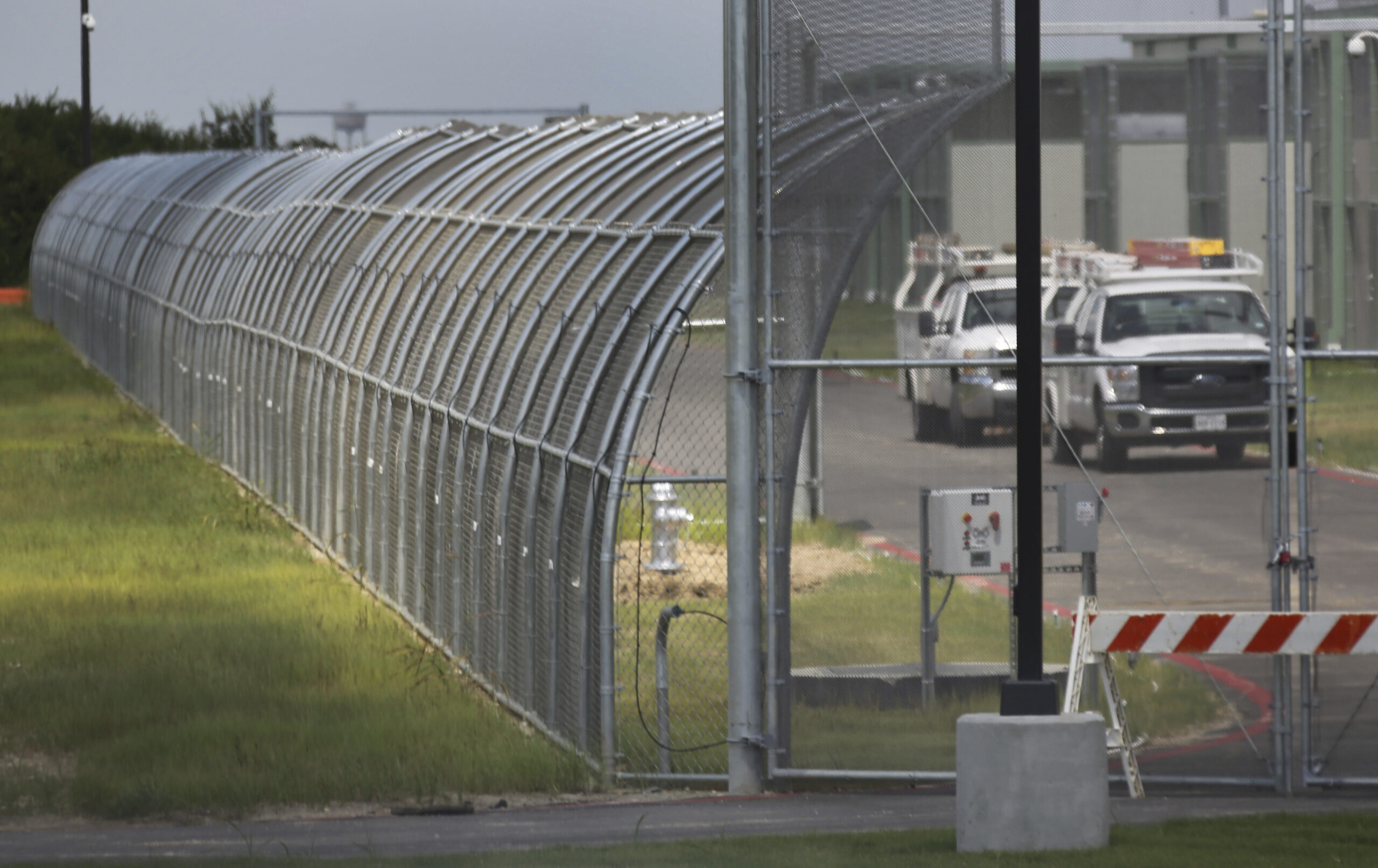
    Trucks drive at the Prairieland Detention Center in Alvarado, Texas, in September.

    Still, courtroom observers were stunned when the sentences came down. It wasn’t a total shock when Song, convicted of attempted murder, was given 100 years, but Batten, the black-clad medic, got 50 years — a virtual life sentence for dissent — as did several others. Daniel Sanchez Estrada, the magazine mover, got 30 years.

    Hutcherson, who was in the courtroom for last week’s sentencing, called O’Connor’s comments “chilling … to have the judge say this out loud, it really sunk in.”

    What’s sunk in is that the federal government is pouncing on the Prairieland 9 convictions to unleash a crackdown on left-wing protest that will make America’s past sins like the Palmer raids, McCarthyism, and the trial of the Chicago 7 look like child’s play.

    In recent days, we’ve seen federal charges against the Minneapolis 15 protesters who monitored the Minnesota ICE raids in Signal chats, and an indictment against two Atlanta protesters against the “Cop City” police training center — even after a local judge had essentially laughed state charges against them out of his court. When a state prosecutor offered evidence of criminality that the Cop City demonstrators wore black clothes and masks, Judge Robert Flournoy said, “Oh, that sounds like ICE.”

    There’s a lot going on here. The Trump regime — which last fall designated “antifa” (again, not an actual group) as a terrorist organization, abusing its vast post-9/11 powers as many of us feared it would — is aggressively clamping down on the First Amendment-protected right of dissent ahead of the November midterms, when its dictatorial-minded leader will stop at nothing to keep his party in power.

    But these 50-year prison sentences, which carry the sauerkraut stench of German cooking, circa 1933, are also an exclamation point on the death of even pretending there is anything resembling impartial criminal justice in America. We are now a land where left-wing dissenters will spend decades behind bars reading about the latest millionaire fraudster or Republican apparatchik to get out of jail free.

    Look, we’ve always been more than delusional about praising U.S. justice as the supposed envy of the free world despite the reality that rich kids or celebrities like the late O.J. Simpson who hire the best lawyers can walk free after people die, and white-collar crime is treated as a sport, while Black, brown, and poorer defendants form the backbone of one of the planet’s highest incarceration rates.

    But the Prairieland most-of-your-life sentences didn’t happen in a vacuum. They are the counterweight to Trump’s Day One pardons for the roughly 1,500 right-wing rioters on Jan. 6, 2021, who stormed and vandalized the U.S. Capitol in an insurrection blamed for five immediate deaths, with more than 140 police officers injured.

    And that’s not all. Trump has individually pardoned and granted clemency to well over 100 or so others in his second term — including just about every high-ranking Republican who’d been convicted of a federal crime, big-time donors to his political campaigns, or those who hired the president’s friends for big bucks.

    At the same time the Prairieland 9 were getting frontier justice, the New York Times reported that Trump’s Justice Department quashed a criminal probe into the circumstances behind the president’s clemency for a multimillionaire named David Gentile. The private equity executive had been sentenced to seven years in prison and ordered to pay $15.5 million in restitution for a $1.6 billion scheme that defrauded small investors. Many lost their life savings — arguably a greater harm than anything that happened at the Texas ICE detention center.

    But Trump granted clemency to Gentile after just two weeks in prison. Prosecutors were looking into the relationship between Gentile and a retired priest from Queens who has become a top supporter and personal friend of Trump and who lobbied the president for Gentile’s release. But higher-ups reportedly told New York mid-level prosecutors to end their probe into questions like whether the priest was paid.

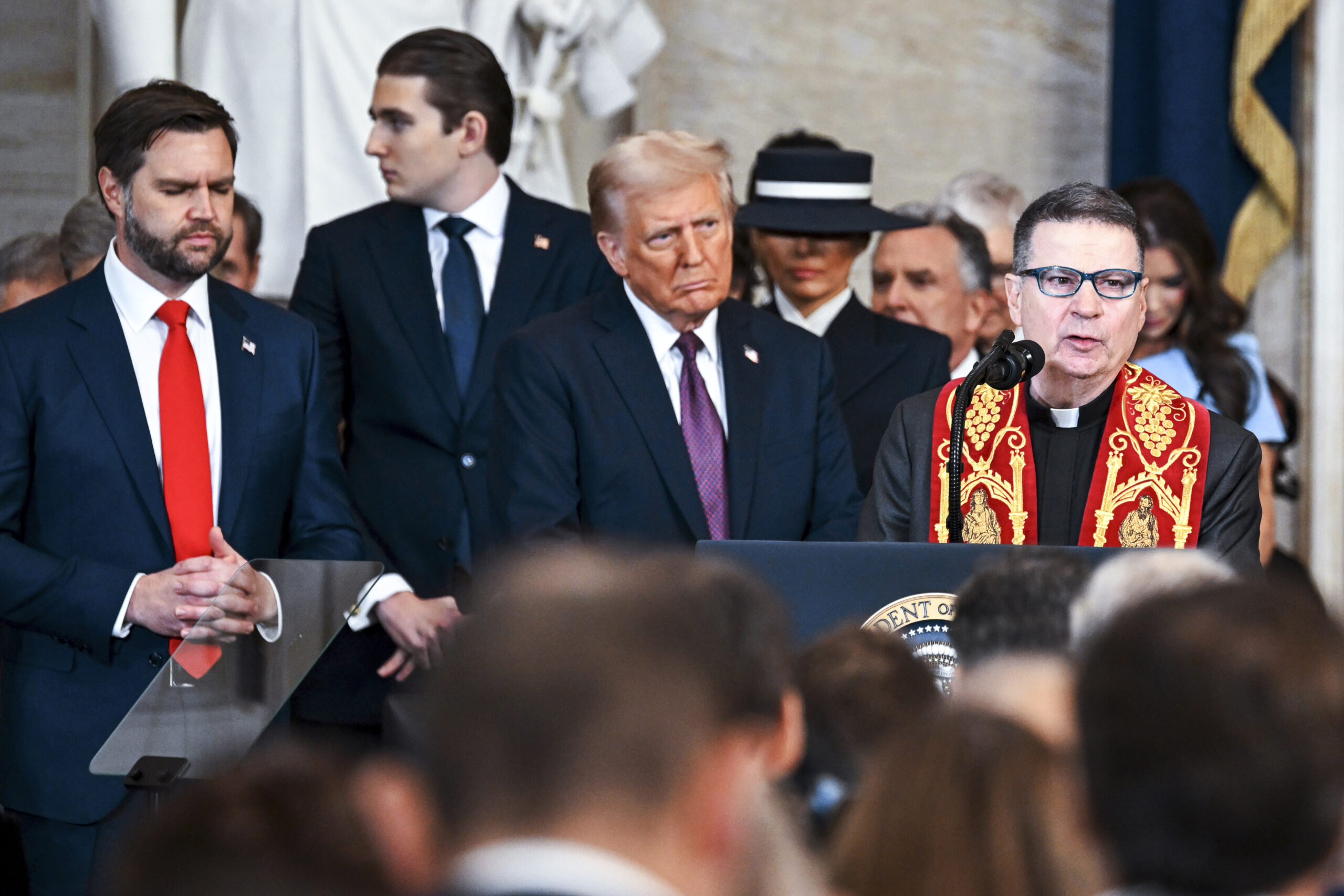
    The Rev. Frank Mann speaks next to Donald Trump during Trump’s second inauguration at the U.S. Capitol on Jan. 20, 2025.

    In a matter of months, Trump has exploited the existing cracks in the federal justice system to make it a blunt instrument of personalist dictatorship — a “purge” for his criminal friends or bad guys willing to make a donation, while depriving those who dissent of their liberty.

    I’m just barely scratching the surface, as Trump’s injustice department also conducts high-profile investigations into law-abiding political opponents, including top Democrats or people like former FBI chief James Comey. Or consider this: No action has been taken against Jonathan Ross, the ICE agent who’s been publicly identified as the killer of unarmed Minneapolis motorist Renee Good. When a Syracuse, N.Y., woman ID’d Ross and asked why he had not been indicted in an Instagram post, federal agents entered a voting place where she was working as a poll worker and ordered her to take the inarguably true post down.

    The nation’s founders, who declared American independence 250 years ago this week, strongly believed that justice was the backbone of their experiment in democracy. The Bill of Rights they’d enact in 1791 is largely about the right to a fair trial, avoiding unlawful searches and seizures, and the essential liberty of protesting an unjust government. More than two centuries later, the White House seems more governed by George Orwell’s 1984, as they criminalize left-wing “thoughtcrime.”

    “I think it’s very symbolic … that this protest happened on the Fourth of July,” the Texas activist Hutcherson told me. “This year is the 250th year of America being America. And when we think about the inception of this nation, it was because of protest; it was because of dissent. And so it feels very contradictory that because someone has leftist or anti-fascist views that now they can be deemed criminal or a terrorist to the U.S. government. You know, we’re not seeing the same energy given toward people that have right-wing views.”

    The firecrackers of dissent that went off on Independence Day 2025 over an ICE gulag in Texas were much more of a tribute to what America was supposed to be than whatever Trump detonates over his morally empty National Mall on this July Fourth. In a United States with liberty for billionaires and justice for none, what are we even celebrating?

  • The Trump Justice Dept. has forfeited the benefit of the doubt. Act accordingly.

    The Trump Justice Dept. has forfeited the benefit of the doubt. Act accordingly.

    For nearly as long as American courts have existed, they have extended the federal government a quiet courtesy. It is called the presumption of regularity. It holds that when government officials act, judges should assume they did so lawfully and in good faith, absent clear evidence otherwise. It rests on a simple bet: that the people enforcing the law are trying to follow it.

    That bet no longer looks safe, and the people best positioned to know are saying so out loud.

    A new survey from Bright Line Watch and the Safeguarding Democracy Project at UCLA Law asked more than 300 legal experts — sitting federal judges, elite lawyers, and law professors — to assess the state of the rule of law in America. The findings should unsettle anyone who assumes the system will police itself. Only one in five legal experts agreed that the federal government still merits the presumption of regularity in court. Among elite lawyers, the figure was 24%. Among law professors, 17%. Even among federal judges, less than half, just 41%, said the presumption was still warranted.

    The doctrine that courts should trust the government’s word is now rejected by a majority of the legal professionals who built their careers inside that system, and by most of the judges who apply it.

    The reasons are not mysterious. Nine in 10 legal experts said the current administration has used the Department of Justice to target enemies and reward allies. Likewise, 86% said political appointees at the DOJ mislead federal judges. And 80% said federal officials fail to comply with court orders. More than 90% viewed the prosecutions of New York Attorney General Letitia James and former FBI Director James Comey as politically motivated. These are not the impressions of activists. They are the considered judgments of people who have clerked at the Supreme Court, run U.S. Attorney’s Offices, and served as general counsels to major institutions.

    Judges are not just saying this in response to a survey. They are saying it from the bench.

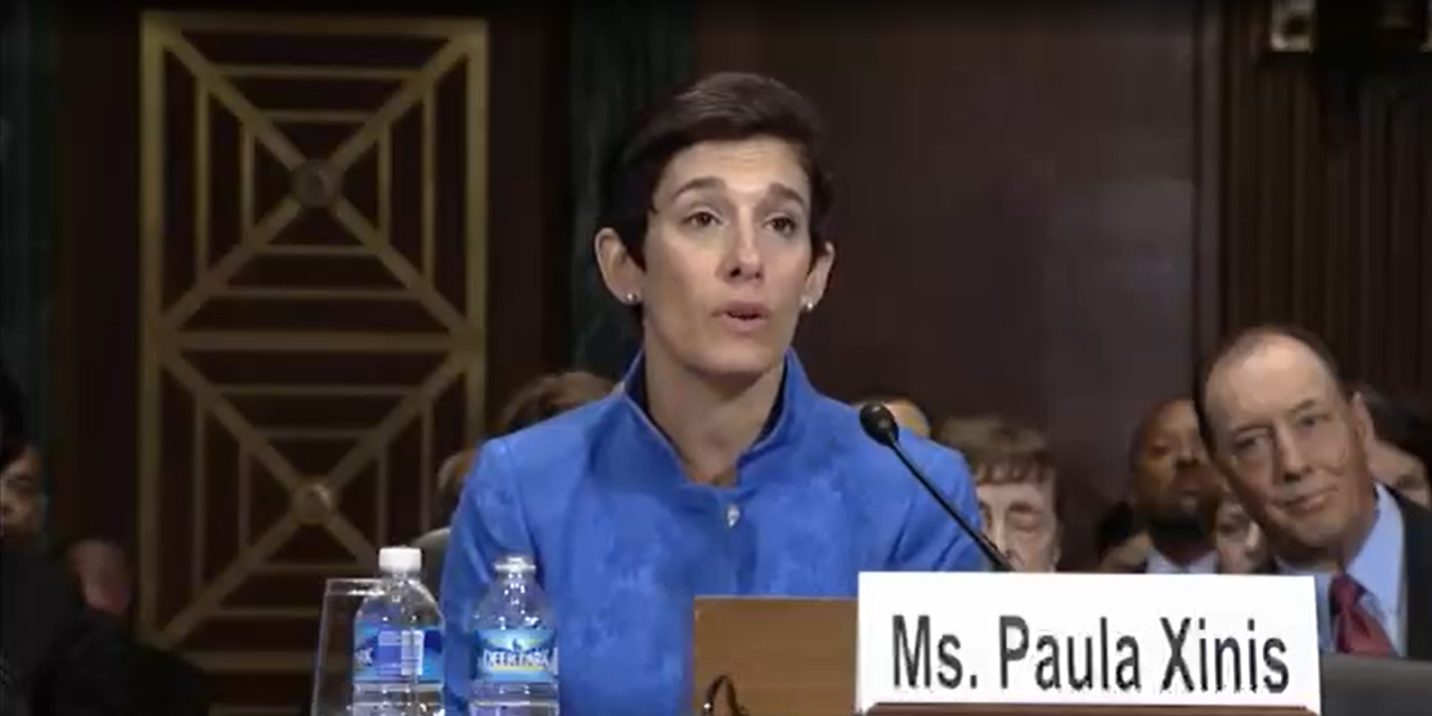
    In a Maryland courtroom this past summer, a federal judge, Paula Xinis, told a government lawyer, “You have taken the presumption of regularity, and you’ve destroyed it.” A judge in Washington, D.C., wrote that “blind deference to the government” was “no longer a thing,” explaining that “trust that had been earned over generations has been lost in weeks.” By March 2026, three New Jersey and Oregon judges had separately declared, in unrelated cases, that the deference long extended to the U.S. Attorney’s Office had been “undeniably eroded.”

    Judge Paula Xinis, seen in a video image during her Senate confirmation hearing in 2015 for U.S. district judge for the District of Maryland. In 2025, she excoriated government lawyers, saying they had “destroyed” the legal “presumption of regularity.”

    Pattern of bad behavior

    A study by the legal publication Just Security has now cataloged more than 200 instances in which courts have voiced concern over the government’s noncompliance with orders, distrust of its representations, or findings that its actions were arbitrary and capricious. One judge, surveying six months of the administration’s conduct, concluded the president “may have forfeited the right to such a presumption of regularity.”

    When the watchdogs of the legal system conclude that the government can no longer be taken at its word, the question stops being abstract. It becomes practical. What are the rest of us supposed to do?

    Consider what happened to the Southern Poverty Law Center. In April, the Justice Department indicted the civil rights organization on charges of wire fraud and money laundering, alleging it concealed payments to informants who had infiltrated extremist groups. The SPLC denies the charges and outside experts have called them weak and politically motivated. Members of Congress have pointed to whistleblower reports that the DOJ pressed prosecutors to rush the indictment despite doubts about its strength. No court has weighed the evidence. The organization remains in good standing with the IRS. An indictment, as more than one community foundation has had to remind the public, is an allegation, not a verdict.

    And yet the consequences arrived immediately, delivered not by a judge but by three financial institutions. Fidelity Charitable, Vanguard Charitable, and DAFgiving360, the philanthropic arm of the investment bank Charles Schwab, together three of the largest sponsors of donor-advised funds in the country, blocked their account holders from sending grants to the SPLC.

    Donors who rushed to support the group’s legal defense found their requests denied, in some cases learning of the freeze only when the transaction failed. The sponsors cited internal policies permitting them to pause grants to organizations under investigation.

    Weaponizing the law

    Each firm acted within its legal rights. The money in a donor-advised fund, or DAF, is legally controlled by the sponsor, not the donor. Yet the result is troubling. Three private companies, applying a rule that treats a politicized indictment as if it were a finding of guilt, did to the SPLC what no court has done: They cut off its lifeline at the moment it most needed resources to defend itself. The sponsors of the DAF extended the SPLC’s accuser precisely the deference that judges, in case after case, have been withdrawing.

    The mechanism this creates for the weaponization of the rule of law is worth understanding. The administration does not need to win in court to inflict the punishment. It only needs to bring the charge and then rely on a web of private institutions to treat the charge as conclusive. The indictment becomes the sentence. The presumption of regularity, eroding inside the courtroom, is being smuggled back in through the side door, as private actors continue to defer to government accusations that the legal profession itself no longer trusts.

    We do not believe the Fidelity, Vanguard, and Schwab affiliates acted in bad faith. We believe they applied old rules to new circumstances without recognizing that the circumstances had changed. A policy that pauses grants to indicted organizations can make sense in a world where indictments reflected the impartial judgment of career prosecutors. It makes far less sense in a world where the leading scholars and judges of American law have concluded that the same Justice Department weaponizes its charging power against political targets.

    The norms that govern civil society and industry were built on an assumption that is no longer reliable. They assumed regularity. They now need to account for its absence.

    This does not mean private institutions should ignore genuine wrongdoing or bankroll proven fraud. It means they need standards calibrated to the actual environment rather than an imagined one.

    A donor-advised fund sponsor could, for instance, distinguish between an indictment and a conviction, maintain grant-making to organizations that retain their tax-exempt status, and reserve suspension for cases where independent evidence, not a government press release, establishes a real problem. Banks, law firms, insurance companies, and professional associations face versions of the same choice. Each can decide whether to be an instrument of political pressure or a check against it.

    Strained guardrails

    The financial industry already has standard procedures for exercising independent judgment. It conducts due diligence. It weighs reputational and ethical risk. We are asking it to extend that same judgment to a new kind of risk: the risk of becoming the enforcement arm for accusations that the legal profession has flagged as suspect.

    The Bright Line Watch data tell us that the formal guardrails, the courts, the separation of powers, the presumption of good faith, are strained. The legal experts surveyed do not expect this to change materially over the next several years — if the current trajectory holds, it likely may get worse.

    That is sobering. But it also clarifies the assignment. When official institutions falter, the informal ones, the norms and standards that private actors set for themselves, become load-bearing.

    Civil society and industry cannot restore the rule of law on their own. But they can refuse to be the means by which it is dismantled. They can decline to treat an accusation as a conviction. They can ask, before they act on a government charge, whether that government still deserves the benefit of the doubt.

    The legal profession has given its answer. It is time for the rest of our institutions to listen.

    Joe Goldman is the president of Democracy Fund. Ian Bassin is co-founder and executive director of Protect Democracy.

  • What lurks beneath Trump’s botched Reflecting Pool renovation | Editorial

    The immediate problem with Washington’s algae-choked Lincoln Memorial Reflecting Pool is that, contrary to President Donald Trump’s typically inflated promises, it’s not reflecting much other than its hospitality to primitive aquatic life. And yet in a figurative sense, this relatively inconsequential public works project reflects the president’s excesses as faithfully as a mirror. Among them:

    A visitor at the Lincoln Memorial takes a selfie Wednesday as workers repair the Reflecting Pool in Washington.

    Narcissism: The Narcissus of myth fell in love with his own reflection in a pool of water, so it’s fitting that the same tendency lured Trump into this National Mall quagmire. Not content to quietly assess and address the feature’s deficiencies as if it’s his, well, job, the president made an ocean of a pond, insisting that repairing it would somehow simultaneously glorify America and himself, between which he makes little distinction.

    Trump has bizarrely exaggerated the pool’s dimensions, falsely calling it “longer than the tallest building in the world” and suggesting its persistent murk was not just an age-old design flaw but a national calamity. Echoing a mantra dating to his original campaign, he claimed that he alone could fix it where his predecessors had failed, transforming its condition from “filthy,” “disgusting,” and “garbage-ridden” into “the most beautiful” “American-flag blue” for up to a century hence. And he said he could do it quickly and cheaply, vowing to complete the renovation in as little as a week for no more than $2 million.

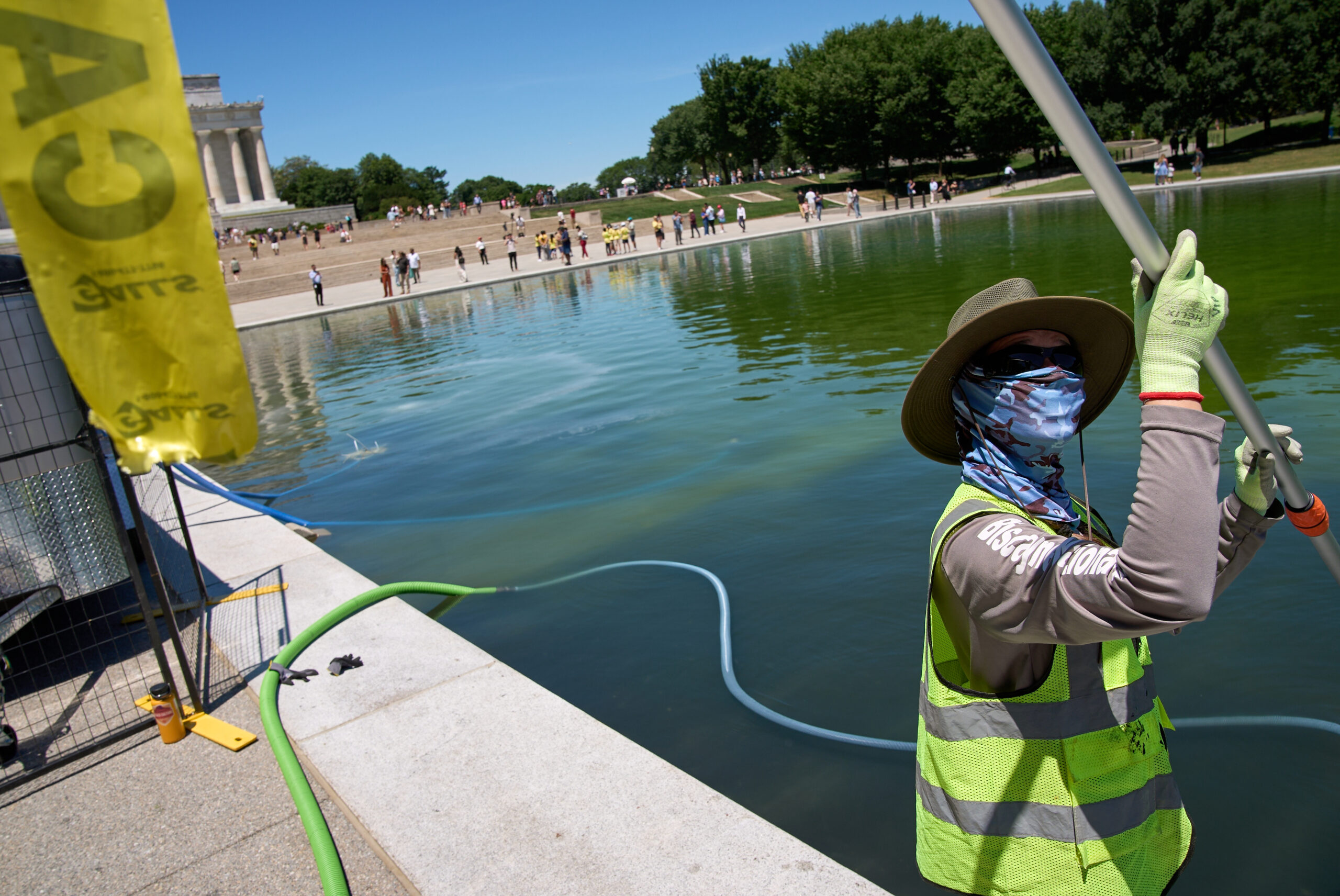
    The Reflecting Pool is cleaned of algae, utilizing “ozone nano bubbles” by National Park Service employees and contractors, on June 16 at the Lincoln Memorial Reflecting Pool in Washington.

    Incompetence: But unlike the last attempt to remedy the pool’s persistent issues, during the Obama administration, Trump’s project did not grapple with the underlying plumbing problems that conspire with the Mid-Atlantic climate to create an ideal habitat for algae. His contractors simply resurfaced the pool’s concrete bottom with foam and a blue-tinted sealant.

    Predictably, the algae persisted. Worse, the new surface did not, detaching and floating free in forlorn pieces. Workers dumped hydrogen peroxide into the water in a desperate attempt to beat back the pond scum, while the untimely demise of a few unlucky ducks in and around the pool raised further concerns. The project, meanwhile, took about six times as long as the president promised and cost eight times as much, with further work expected to prolong the effort beyond the Fourth of July.

    A blue protective coating, as part of a renovation project to the Lincoln Memorial Reflecting Pool, is seen being sprayed in May.

    Corruption: The nation’s approaching 250th birthday was cited as the dubious reason for awarding the work on an emergency basis without competitive bidding, allowing the administration to handpick companies with little or no experience as federal contractors. Some of the business went to an Ohio company called Greenwater Services — a bit of honest advertising given the water’s current hue — owned by James J. Cafaro, a Trump neighbor who has given hundreds of thousands of dollars to committees linked to the president.

    This isn’t Cafaro’s first inauspicious encounter with the federal government. In 2001, he pleaded guilty to a conspiracy to bribe Democratic Rep. James Traficant of Ohio. He went on to testify that he gave the congressman, who was pushing Federal Aviation Administration officials to adopt a laser system sold by Cafaro’s company, an envelope stuffed with cash. In 2002, Traficant was convicted of corruption charges and expelled from Congress.

    A piece of the blue coating floats among algae at the Lincoln Memorial Reflecting Pool June 21 on the National Mall in Washington.

    Deception: Lest anyone leap to the conclusion that these unsavory facts suggest the administration didn’t hire the best people for the job, Trump advanced the theory that the real culprit is a conspiracy.

    Having begun the project with a fictive account of the pool’s history and false promises of a glorious future, he recently alleged without evidence that the project came up short because unidentified enemies had sabotaged the feature with “a very sharp knife or razors” and algae-promoting “chemicals” in the “dark of night.”

    A demonstrator at the Lincoln Memorial speaks with a National Guard member as workers repair the Reflecting Pool in Washington, Wednesday.

    Authoritarianism: The farce took a fascist turn when Trump declared on social media that half a dozen people had been arrested for alleged vandalism of the pool.

    One of the targets said he was arrested on an obscenity charge for taunting National Guard troops deployed around the pool. Another said he was taken into custody and detained for hours for touching a piece of federal flotsam. His lawyer, Norm Eisen, argued persuasively that the arrest was an attempt to distract from the mismanagement and corruption surrounding the project, calling it “textbook authoritarian behavior.”

    In short, the president’s promise to embody national greatness has been exposed as a shoddy racket wrapped in lies and oppression. The pool reflects after all.

  • I’ve seen struggles for democracy around the world. It’s painful to see that battle come home.

    I’ve seen struggles for democracy around the world. It’s painful to see that battle come home.

    As we approach the 250th anniversary of America’s founding, I can’t help recalling my 1999 visit to the Central Asian republic of Turkmenistan, whose dictator had a fetish for white marble architecture decorated with gold.

    As I drove around the dusty capital of Ashgabat, it was impossible to escape Saparmurad Niyazov’s face.

    It was emblazoned on banners hanging from government buildings and appeared on every denomination of paper currency. Statues of the dictator (I learned there were more than 2,200 of them in a country of 4.2 million people) loomed all around the city. The oil fields of this desert backwater funded Niyazov’s whims. Much of the country’s budget went into his private slush fund — all while he slashed resources for healthcare and renamed the months of January and April after himself and his mother.

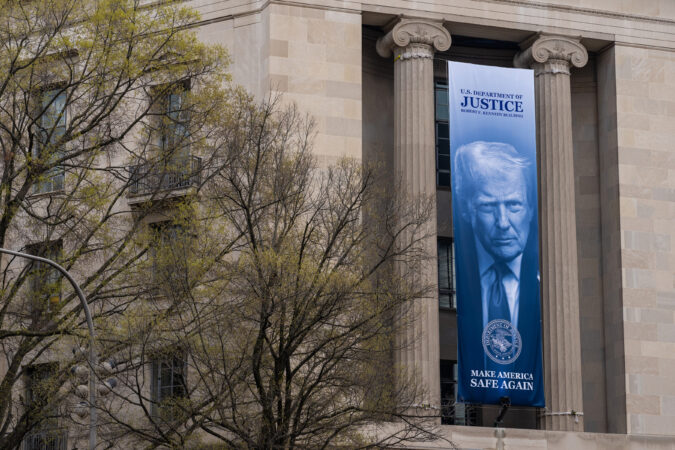
    What sticks out most vividly among my memories, as President Donald Trump turns our nation’s Semiquincentennial into a celebration of himself — festooning government buildings with huge banners of his face and holding a political rally on the mall Wednesday to kick off July Fourth events — is Niyazov’s arch.

    The three-legged arch, sitting in the center of Ashgabat, supported an observation tower that, at 226 feet, soared higher than the nearby presidential palace. The structure was topped by a 36-foot gold plated statue of the Asian potentate that rotated constantly to face the sun. Perhaps if the planned 250-foot high “Arch de Trump” ever gets built, and blocks the view of Arlington National Cemetery, the face on the gold winged figure atop the memorial will look familiar.

    It seems all dictators and wannabes have the same instincts: to build grandiose monuments of marble and gold, the bigger the better, in order to impress their subjects with their magnificence. Back in Ashgabat all that seemed bizarrely amusing. Whoever thought it could happen here?

    Instead of honoring the country’s founding values and documents in this year’s celebrations, Trump is performing like a wannabe Niyazov of Turkmenistan.

    The main point of the Declaration of Independence was that governments “derive their just powers from the consent of the governed,” i.e., the people. The 13 colonies were quitting the British Empire because they refused to submit to a monarch who tried to rule by decree, rather than respect the elected representatives from the colonies.

    Trump, who disdains any restraints on his powers and wants to rig election rules so they guarantee GOP victories, is turning the meaning of the Fourth of July on its head. I find it personally painful how this distortion has changed attitudes toward the United States all around the world.

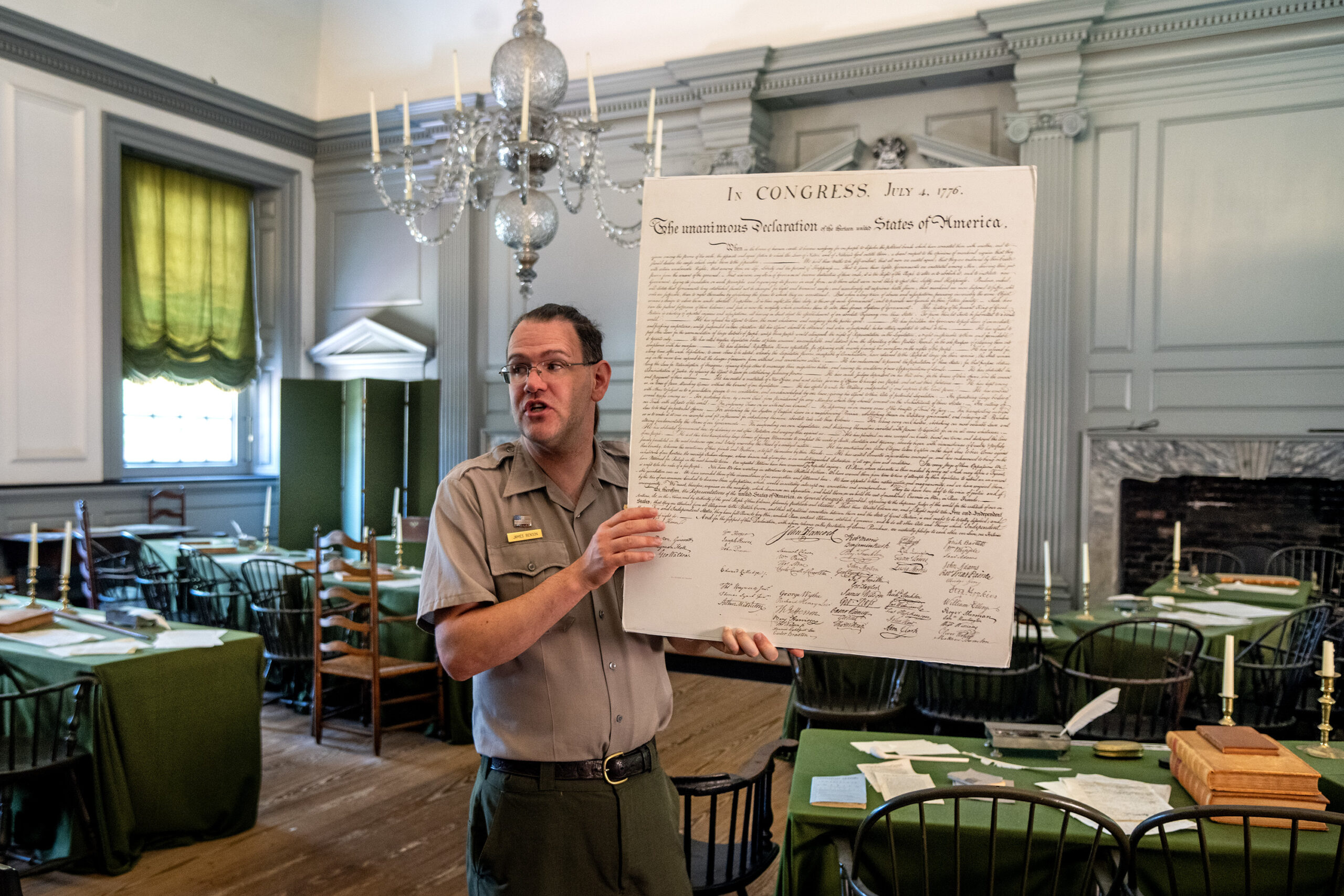
    National Park Service ranger James Benson uses an enlarged copy of the Declaration of Independence while talking to visitors in the Assembly Room — where both the declaration and U.S. Constitution were signed — on the first floor of Independence Hall in Independence National Historical Park in August 2025.

    For decades I’ve reported on the struggles of other countries to achieve the kind of free elections that most Americans have taken for granted for decades. I had the privilege of bearing witness to struggles for some form of democracy in the Soviet Union and China, in new post-Soviet nations, during the 1980s upheavals in the Philippines and South Korea, during the Arab Spring revolts, in post-Saddam Hussein Iraq, and during the post-Taliban interval in Afghanistan.

    Those who struggled for the right to choose their leaders often paid a terrible price. More often than not, their struggles failed or have been reversed after brief periods of freedom.

    Throughout those struggles, the U.S. election system was a lodestar – even though reformers abroad may have opposed specific U.S. foreign policies or the U.S. exercise of overweening power. That admiration was especially evident in the ’80s and ’90s inside communist countries that were trying to break away from their past.

    Russians listened to Voice of America (now nearly shuttered by Trump) and would eagerly query me about U.S. politics on my yearly visits to Moscow during those decades.

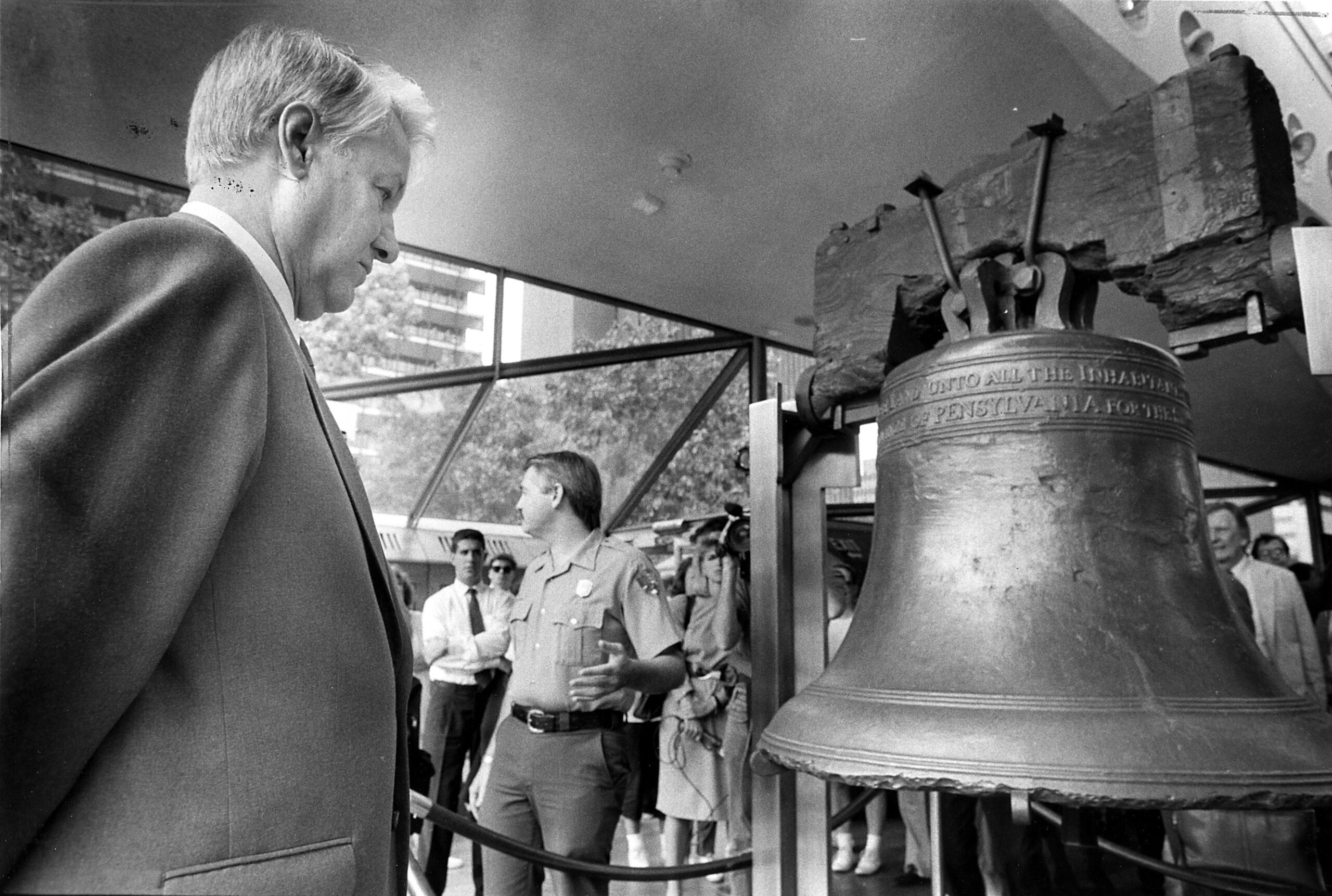
    In 1989, I shadowed then-President of the Soviet Republic of Russia Boris Yeltsin for a day when he visited the room where the Declaration of Independence was adopted inside Independence Hall. He asked the National Park ranger how the American colonies apportioned power between states and central government after independence. I realized only later that he was preparing to take Russia out of the Soviet Union and wanted tips on how the Founding Fathers managed their exit from the British Empire.

    Boris Yeltsin views the Liberty Bell during a visit to Philadelphia in Sept. 13, 1989. Seeking to view U.S. democracy up close, he traveled the country, including a visit to the White House.

    In May 1989, Chinese students erected a 33-foot-tall Goddess of Democracy statue in Tiananmen Square inspired by the Statue of Liberty. I was in Poland at the time, observing that country’s first free parliamentary elections on June 5 that were won by Lech Walesa’s Solidarity movement. But on June 4, I watched with horror on television, along with Polish colleagues, as the Chinese army sent tanks into Tiananmen Square.

    Yet, despite hundreds to thousands of deaths (the exact figure is still unknown), Chinese democrats didn’t give up. In the 1990s, I reported on their efforts to press the central government to permit village, and then town, elections. I interviewed law students at top universities who traveled to small villages to instruct peasants on their rights according to Chinese laws that were ignored by officials.

    This progress has been totally reversed by China’s hard-line dictator Xi Jinping, who also crushed democratic institutions in once autonomous Hong Kong. But as recently as 2023, it was inspiring to hear Hong Kong high schoolers, who were protesting the ongoing crackdown by Beijing, recite from memory their rights under law as they had learned in civics classes. Since then, such classes have been banned, and students must memorize rote lessons on “patriotic education” or “Xi Jinping thought.”

    It saddens me now to hear self-exiled Russian liberals or Hong Kong democrats or visiting Chinese who once worked for some form of democracy at home, express shock at Trump’s attacks on America’s democratic institutions and efforts to rig elections. Repeatedly, I get the same questions expressed with genuine bewilderment: Why isn’t it possible to stop him from doing this? How is it possible that this can happen in the United States?

    In this Sept. 3, 2015, file photo, Chinese President Xi Jinping (right) and Russian President Vladimir Putin observe a parade commemorating the 70th anniversary of Japan’s World War II defeat, from Tiananmen Gate in Beijing.

    Ukrainians, who have fought bravely for more than four years to save their independence from Vladimir Putin’s imperialism, ask me how a U.S. president can back a dictator who hates the West, and wants to restore the Soviet empire. As Independence Day approaches, POTUS continues to ignore the parallel between Ukraine’s courageous struggle for freedom and ours long ago against the imperial British.

    Europeans have given up on Trump, and I understand why, having watched Vice President JD Vance at the 2025 Munich Security Conference praise far right, neo-Nazi parties and demean Europe’s democracies. Trump, Elon Musk, and other MAGA acolytes continue to support extremist Europeans whose values would make the Founding Fathers gag.

    So it isn’t surprising that a new Pew Research Center poll reveals a steep decline in the popularity of the United States worldwide, especially over the past year. Only a median of 37% of adults polled across 36 countries hold a favorable opinion of our nation. Only 23% express confidence in Trump’s leadership of world affairs, ranking him behind Putin and Xi.

    But what is even more striking is that only 39% believe the U.S. government respects the personal freedoms of its own citizens. This is how the world now views a country that was once seen as a beacon of democracy.

    During July Fourth celebrations across the country, in places far away from Trump’s pollution of the capital, I hope Americans will reflect on what the Founding Fathers bequeathed to us 250 years ago. For inspiration, reread the Declaration of Independence and brainstorm with friends, colleagues, and family on how to prevent the president from desecrating its principles at the polls come November.

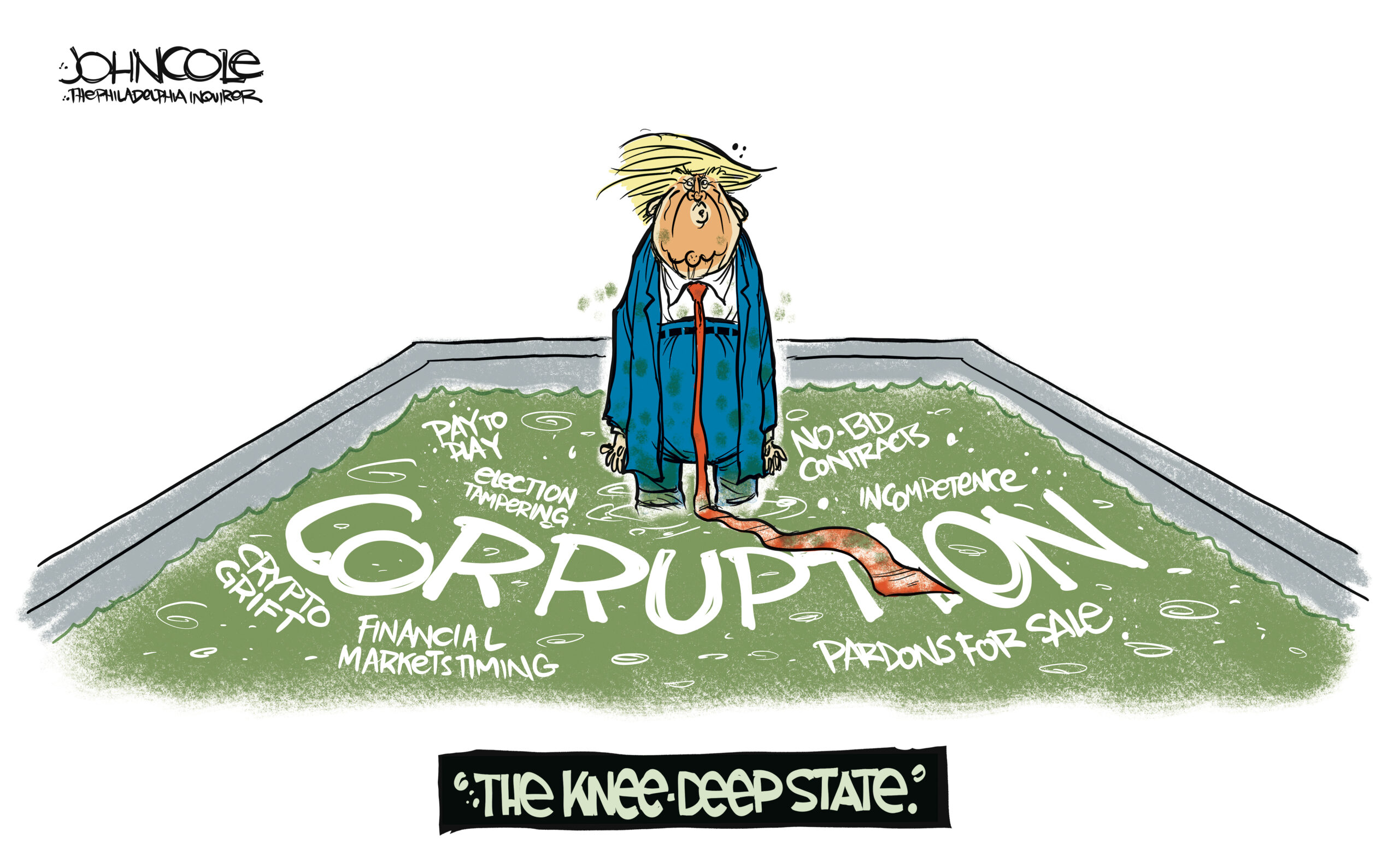
  • The (Knee) Deep State | Editorial Cartoon

    John Cole spent 18 years as editorial cartoonist for The (Scranton) Times-Tribune, and now draws for various statesnewsroom.com sites.

  • Letters to the Editor | June 28, 2026

    Letters to the Editor | June 28, 2026

    Government for sale

    The scale of the corruption in Washington would make even the world’s most notorious kleptocracies blush. The president thinks the U.S. Treasury is his treasury, and the money in the Treasury belongs to him. It’s his money. He can spend as much as he wants, on whatever he wants, for whatever reason he wants — and he doesn’t need approval from anyone. Neither Congress, taxpayers, nor the rule of law can stop him.

    How about destroying public property? Donald Trump’s latest accusation is that “vandals” working in the “dark of night” destroyed public property, sabotaged his $16 million Lincoln Memorial Reflecting Pool renovation project, and should be locked up. How about Trump demolishing the East Wing of the White House?

    How about $1 billion of taxpayer money for his ballroom? How about a $400 million airplane as a gift, plus another $1 billion of taxpayer money to retrofit the aircraft? How about the allegations of rampant insider trading in the White House? How about the Reflecting Pool no-bid contract? Or the pledge by the U.S. Department of Justice to never audit Trump or the Trump family or the Trump businesses, forever. I could go on, but you get the point.

    Patrick Thompson, Media

    Religious instruction

    When John Quincy Adams became president in 1825, he swore the oath of office while resting his hand on a book containing the laws of the United States, not the Bible.

    It was an unspoken way to assert his views on the separation of church and state.

    Fast-forward to today. Religious “instruction” clubs — aimed at indoctrinating youngsters in the values of Christian nationalism — are making their way into our public schools. While supposedly promoting “religious instruction,” these programs disguise the corporate entities funding them.

    This “wolf in sheep’s clothing” approach coerces children into accepting a political authoritarian value system under the guise of “God’s will.”

    What would Adams say to us now?

    Karen Fraley, Kimberton

    Join the conversation: Send letters to letters@inquirer.com. Limit length to 150 words and include home address and day and evening phone number. Letters run in The Inquirer six days a week on the editorial pages and online.

  • Pennsylvania’s highest court confirmed what we already knew about skill games. Now lawmakers must act.

    Pennsylvania’s highest court confirmed what we already knew about skill games. Now lawmakers must act.

    When Gov. Ed Rendell first championed casino gambling in Pennsylvania more than two decades ago, the promise was straightforward: Regulated gaming would boost the economy, modernize the state’s entertainment industry, and create jobs. For years, it did exactly that.

    But something went wrong along the way. Skill games, devices that look, sound, and function like slot machines, spread to thousands of bars, restaurants, gas stations, and clubs across Pennsylvania, completely unregulated and untaxed. Meanwhile, as brick-and-mortar casinos paid their fair share to the commonwealth and submitted to oversight from the Pennsylvania Gaming Control Board, skill game operators avoided both. The playing field wasn’t level. It was tilted, and Pennsylvania workers at licensed casinos paid the price.

    This was always a fairness problem. The Pennsylvania Supreme Court has now confirmed it is also a legal one.

    On June 15, the state’s highest court ruled that skill games are slot machines under Pennsylvania law, “several times over,” in the court’s own words. The justices found that Commonwealth Court’s previous rulings to the contrary were “deeply flawed” and “incorrect on both points.” What the skill games industry spent years arguing in court, that their machines were fundamentally different from slots, was rejected at the highest level.

    Unregulated gaming devices known as “skill games” in a barbershop in Hazelton, Pa., in August.

    This is not a surprise to anyone who has watched these machines proliferate across the commonwealth while casinos absorbed the competitive damage.

    The Philadelphia region knows this story well. Between 2019 and 2025, Harrah’s Philadelphia lost 616 jobs, a 51% decline. Rivers Philadelphia lost 446 jobs, a 28% decline. Valley Forge Casino lost 627 jobs, a 62% decline. Parx Casino lost 344 jobs, a 15% decline. Combined, these four Philadelphia-area casinos shed more than 2,000 jobs during a period when skill games were expanding freely across the state without paying a dollar in gaming taxes or answering to a single regulator.

    These are not abstract figures. These are men and women in this region who lost livelihoods while an unregulated industry built a 70,000-machine footprint across Pennsylvania.

    Between 2019 and 2025, Rivers Casino, pictured here, lost 446 jobs, a 28% percent decline. Casinos, writes David Black, accepted state regulation, paid taxes, and employed thousands of people in good-paying jobs while forced to compete against an unregulated industry that played by none of the same rules.

    Statewide, the picture is equally stark. From 2019 to 2025, the 12 casinos operating in Pennsylvania during that period saw a 27% reduction in employment, dropping from 15,400 employees to 11,200. More than 4,000 jobs gone across the commonwealth, in cities and rural communities that could least afford to lose them.

    While the Supreme Court has provided a 120-day window to act on skill games, the practical reality is far more urgent. Pennsylvania’s budget deadline of June 30 is rapidly approaching, and skill games are already part of that conversation.

    Lawmakers don’t have until October to figure this out. They have a matter of days to decide whether this year’s budget will finally bring skill games into the same regulatory and tax framework that governs licensed casinos, or whether the issue gets punted again while the clock the court has set continues to run in the background.

    But getting it right means more than finding a tax rate that fills a budget gap. Gov. Josh Shapiro has projected more than $2 billion in annual gaming revenue if skill games are brought into the fold, and that revenue is badly needed. Republicans in the state Senate have proposed a 35% tax rate; Shapiro’s budget calls for 52%, closer to the 55% casinos already pay. That debate is legitimate and worth having.

    What cannot get lost in that debate is the human cost of the last several years. Pennsylvania’s casinos did everything right. They accepted regulation, paid taxes and employed thousands of people in good-paying jobs. They were then forced to compete against an unregulated industry that played by none of the same rules. The Supreme Court has now said that was wrong. Lawmakers have the opportunity and the obligation to correct it.

    This is the time for lawmakers to address not just the problems with skill games, but to address the broader policy inequities as it relates to how gaming policy impacts economic development, job creation, and community impact.

    The four major forms of gaming in Pennsylvania — casinos, online gaming, sports betting, and skill games — have dramatically different tax rates and economic impact. The fact is that only casinos create major economic development through employment, local spending on goods and services, and community engagement. Our state policy should encourage this type of economic development.

    As this year’s budget negotiations intensify, I urge the General Assembly to prioritize the workers who built Pennsylvania’s gaming industry and who have borne the cost of unfair competition for too long. A fair tax structure is a start. But the final product should be judged not just by how much revenue it raises, but by whether it begins to reverse the job losses that should never have happened in the first place.

    The court did its job. Now it’s time for the legislature to do its job.

    David Black was a deputy secretary at the Pennsylvania Department of Community and Economic Development in the administration of former Republican Gov. Tom Ridge.

  • The hidden link between mummers and Pennsylvania’s most notorious labor rebels

    The hidden link between mummers and Pennsylvania’s most notorious labor rebels

    The biggest mass execution in Pennsylvania’s long history took place 149 years ago this week.

    Ten Irish Catholics from the hard coal region went to the gallows, convicted of murder in a long-running labor war against the all-powerful coal companies. Another 10 would be hanged over the next few years, for a total of 20. Their trials made a mockery of justice, with a coal company president as prosecutor, a Pinkerton detective hired by the company as the star witness, and Irish Catholics excluded from the jury.

    The hanged men were called Molly Maguires, a name straight out of Ireland, where a secret society using that moniker battled the landlords on behalf of starving peasants during the horror of the 1840s potato famine. These Mollies disguised themselves in women’s clothing, or straw clothing, or whiteface or blackface. And they timed their killings around major holidays.

    That’s because the Molly Maguires were merely the flip side of a group quite familiar to Philadelphians — the mummers. The connection explains many of the mysteries about the Mollies — where the name came from, why the Mollies wore odd disguises, why they did their killing around high points of the calendar, and why they were revived in Pennsylvania amid resistance to the Civil War draft.

    In Ireland, mummers were more actors than musicians. They visited every home in a district around New Year’s and collected money by putting on a skit that always featured a killing. The money paid for a party for the whole community. Groups like the mummers performed this kind of trick or treat around other big holidays — St. Brigid’s Day on Feb. 1, Easter, the summer solstice and Halloween.

    During the potato famine, small bands of men — dressed in the women’s clothes or the straw of the mummers — began going from house to house, collecting money for the hungry. But these men weren’t mummers. They were Molly Maguires. And when they didn’t get what they wanted, or when landlords evicted tenant farmers, the mock killing of the mummers became the very real violence of the Molly Maguires.

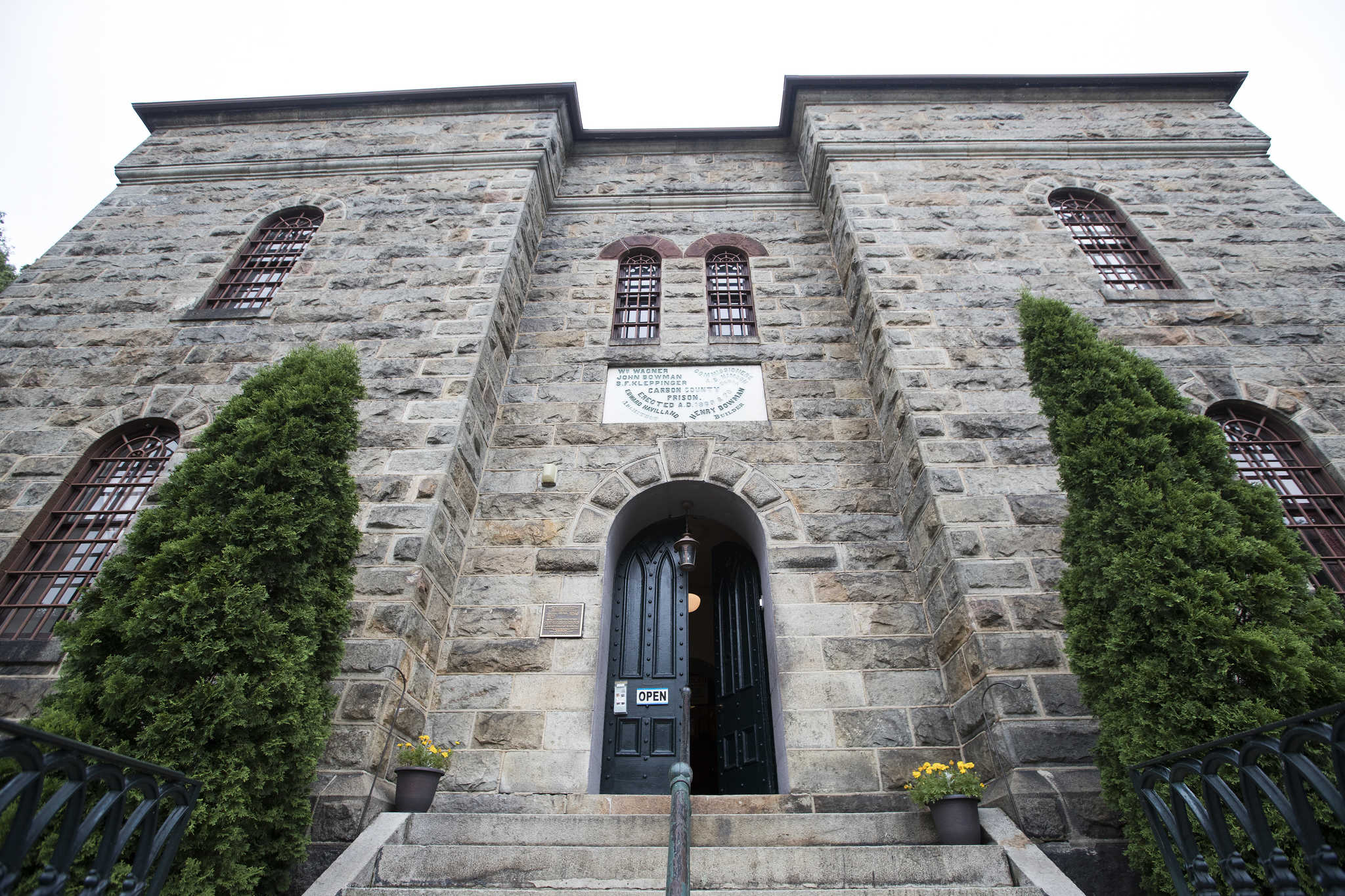
    The entrance to the former Carbon County Jail in Jim Thorpe, Pa., where seven Irish coal miners were hanged in 1877.

    The killings often took place around the days that the mummers celebrated, to signal that the Mollies were acting on behalf of the community. The three most celebrated Molly murders in Ireland came within a day or two of St. Brigid’s Day, the summer solstice, and Halloween.

    The name itself sounds like something from the mummers’ play. A female character often had names that began with the letter M — Molly Masket or Mary Ann McMonagle. And, curiously, Molly Maguire wasn’t always Molly — a number of death threats were signed “Mary Ann Maguire.” The similarity between “Mary Ann McMonagle” and “Mary Anne Maguire” underlined the links between the mummers and the Mollies.

    Famine emigration led many from the Molly Maguire heartland to the booming anthracite industry in Northeastern Pennsylvania. It was one of the few rural places in the United States where famine immigrants settled in such concentrated numbers that the folkways of the Irish countryside were transplanted wholesale, including mummery — and its associated pattern of violence. In 1848, a man acquitted of killing an Irishman was murdered in Schuylkill County, on Dec. 30. The killer, an Irishman, had whitened his face like a mime or a mummer.

    Mummery had long been established in Philadelphia, but a peculiar offshoot, called the fantasticals, emerged in Northern Liberties before the Civil War, as a protest against mandatory militia service. At the time, able-bodied men between ages 21 and 45 were regularly required to muster for militia drill. This meant a day without pay — and the fantasticals protested by making a mockery of it.

    They showed up for drill in ridiculous costumes, with giant wooden swords, or in some cases the leg of a deer. This mockery widened from muster day to mummers parades around Christmas and the Fourth of July and Halloween, and spread beyond Philadelphia.

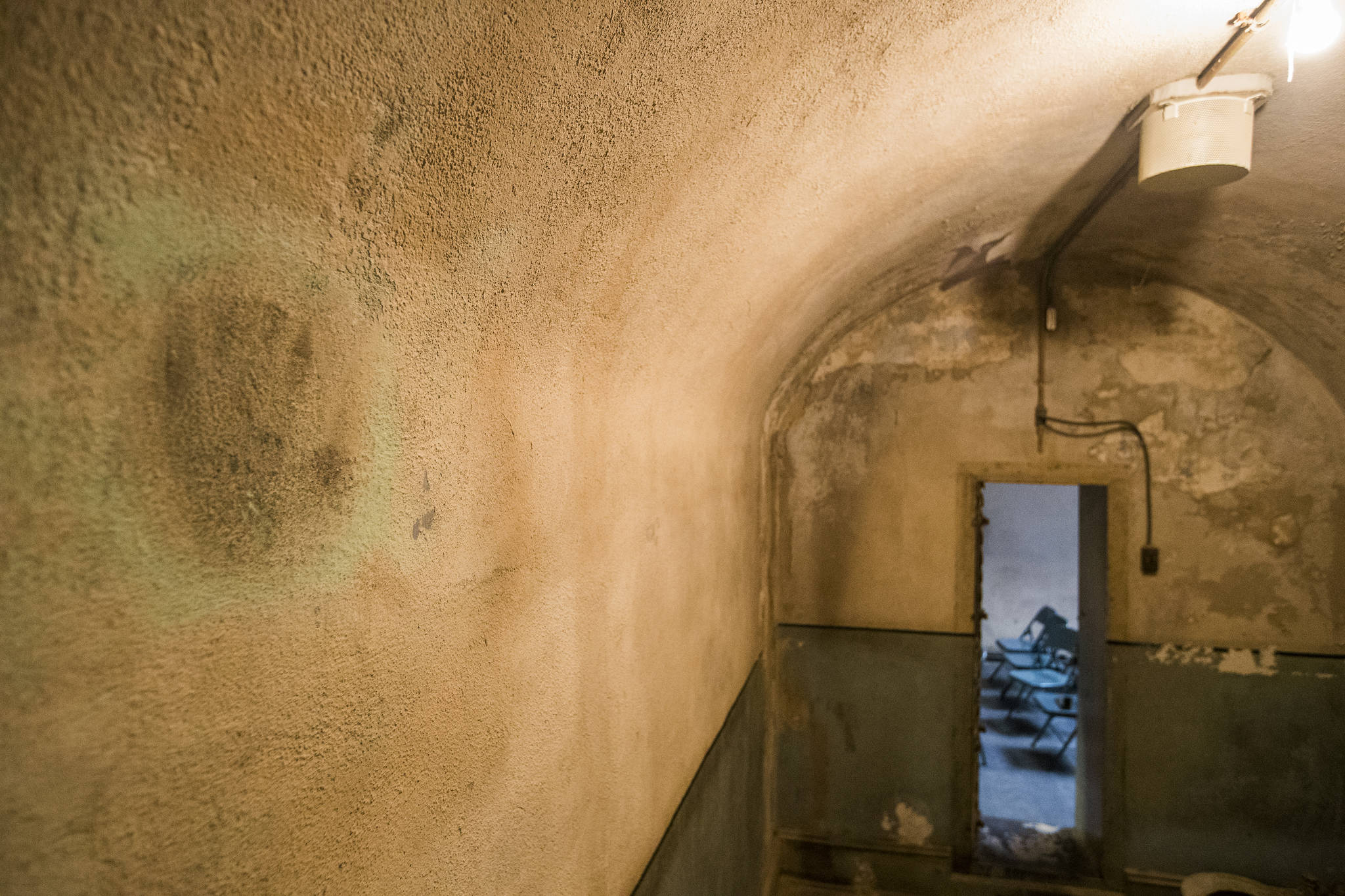
    Before one of the Molly Maguires was hanged, he put his hand on the dirty floor of his cell in the former Carbon County Jail and then placed it firmly on the wall proclaiming, “This handprint will remain as proof of my innocence.”

    In 1855, the Pottsville militia was called out after a mine boss was beaten in Branchdale, Schuylkill County. Though just four men attacked him, the militia rounded up 28 Irish Catholics. Adding insult to arrest, the militia then played a Protestant anthem from Ulster, “The Boyne Water,” which celebrated the defeat of Catholic Ireland.

    It just so happened that the fantasticals made their first appearance in Schuylkill County that very year, marching in Pottsville on Christmas Day. The whole performance mocked the Pottsville militia and its music. The captain wielded a giant wooden sword, the rest were dressed in “every imaginable burlesque costume,” and the band was drunk — and played that way. In 1857, when the militia was used to break a strike by largely Irish mine workers in Cass Township, the fantasticals appeared in Schuylkill Haven on the Fourth of July and in Cressona on Dec. 26.

    A few short years after those anti-militia mummers parades, opposition to compulsory militia service in the Civil War led to the revival of the Molly Maguires. The man who administered the 1862 militia draft in Schuylkill County was a nativist Republican who saw conscription as a way to sweep large numbers of Irish Catholic Democrats into the maw of a bloody war. He set unfairly high conscription quotas for heavily Irish Cass Township, then urged that the draftees be shipped out before a crucial election.

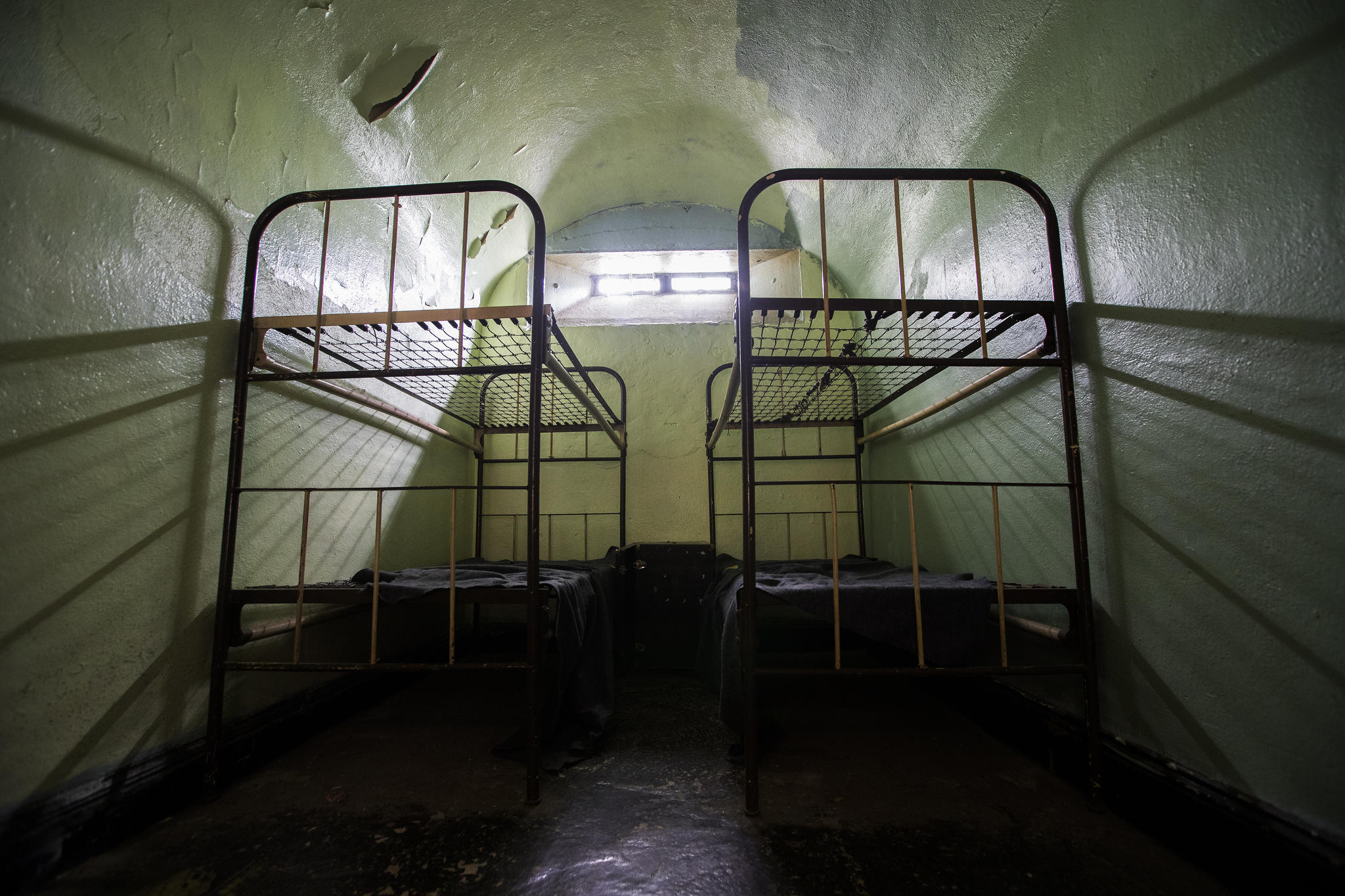
    A cell in the former Carbon County Jail in Jim Thorpe, Pa.

    In response, Irish mine workers went out on strike, marching under arms with a fife and drum from mine to mine. Two months later, they went out on strike again, calling themselves Molly Maguires. When a government crackdown appeared imminent, the Mollies targeted residents who had shown government sympathies by volunteering for the military.

    On Jan. 2, 1863, five men fatally shot an Irish mine worker home wounded from the Union Army, then cheered for the Confederate president. Over the next nine days, two former militia men were attacked in Cass Township. A few days after Halloween, gunmen with false whiskers and blackened faces killed a mine owner who had been helping to enforce conscription.

    Note the progression. In the last half of the 1850s, some Schuylkill County residents were making fun of the militia, but by 1862, they were on strike to oppose the militia draft, and as 1862 edged into 1863, they were shooting former militia members around New Year’s. As in Ireland, what started as mummer revelry ended as Molly Maguire rebellion.

    The Molly troubles raged for another 15 years, ending only when a Pinkerton infiltrated the organization. The ensuing executions showed that the Mollies were no match for the coal companies and the state of Pennsylvania when it came to dealing death at high points of the calendar. The biggest killing — the hanging of 10 men on June 21, 1877 — came on the summer solstice.

    Mark Bulik is the author of “The Sons of Molly Maguire: The Irish Roots of America’s First Labor War.” A retired senior editor for The New York Times, he grew up in Ridley Park, Delaware County.

  • People under 30 are most concerned about the environmental impact of data centers

    People under 30 are most concerned about the environmental impact of data centers

    In recent months, the public’s backlash to the artificial intelligence boom has spilled over to a surprising place: college commencement stages. From Florida to California, students have booed speakers who praised AI or highlighted its growing role in today’s society.

    A cohort that historically has supported and quickly adopted cutting-edge technologies is now growing more skeptical.

    The backlash is hardly surprising since AI threatens to wipe out the kind of entry-level jobs that new college graduates depend on. But beneath that immediate threat lies another, less obvious one: the AI boom’s impact on climate change — an issue that young people have grown up worrying about and that has shaped how they view their future.

    In Pennsylvania alone, there are more than 130 AI infrastructure projects either under construction or in the approval pipeline. As demands for AI have increased, utilities and developers are racing to secure enough power to support them. Clean energy projects are already playing an important role in the AI infrastructure build-out.

    But many companies trying to meet energy demands are turning to new fossil fuel plants, reviving coal-fired power, and rolling back their corporate climate goals.

    Shown is the Northampton generating station in Northampton, Pa., in 2024. Gov. Josh Shapiro unveiled a plan to fight climate change Wednesday, saying he will back legislation to make power plant owners in Pennsylvania pay for their planet-warming greenhouse gas emissions and require utilities in the nation’s third-biggest power-producer to buy more electricity from renewable sources.

    There is a stark contradiction at the center of this reality. AI is marketed as a 21st-century future-oriented technology, yet much of it is being powered by 19th-century energy sources.

    In addition to the energy demands, data centers can require up to five million gallons of water for cooling per day, including in regions already facing drought and water stress linked to climate change.

    A recent Pew Research Center poll shows that 54% of adults under the age of 30 believe data centers will have negative impacts on the environment. While older cohorts surveyed still express concerns about environmental impacts, it isn’t the majority of respondents as it is with younger people: 44% of those 30 to 49; 35% of people ages 50 to 64, and 26% of those 65 and older.

    The increasing backlash among younger people — which has found expression from college commencement speeches to community forums — points to what research has consistently shown: Younger generations are worried about climate change.

    They are already experiencing the impacts in Pennsylvania: hotter and longer heat waves, more dangerous flooding, worsening drought conditions, and the increase in certain diseases thanks to the territorial expansion of carriers, like ticks.

    Chart shows the rise of tickborne illnesses in Pennsylvania.

    If the growth of AI leads to more fossil fuel use, higher emissions, and worsening air pollution, young people are justified in questioning whether the technological progress is worth the future problems they will inherit.

    Leaders have a responsibility to usher in new development responsibly. One way to do that is to pair data center expansion with investments in clean energy sources. Clean energy is affordable, local, and reliable, and by producing homegrown power, Pennsylvania could potentially lower power bills and protect families from price spikes in the process.

    A clean energy standard for data centers would require that these Big Tech companies use clean energy in increasing percentages over time and that they pay for the required electricity system upgrades to support their operations.

    Another way is for the state to require greater transparency around the electricity and water use of these data centers, so communities understand the tradeoffs required for these proposals in their backyards before agreeing to them.

    Both of these are part of Gov. Josh Shapiro’s Responsible Infrastructure Development (GRID) Standards, approved by the Pennsylvania House on Wednesday, which codify guardrails to protect consumers and hold data center developers accountable. Companion legislation may be introduced in the state Senate in coming days.

    It is a positive move toward responsible development.

    Not all young people skeptical of AI are rejecting it; many are just questioning whether the race to build that future is happening with an understanding of the environmental consequences.

    For the U.S. and Pennsylvania to continue leading in technological innovation while protecting the planet on which young people will build their lives, leaders must take climate change concerns seriously. Young people deserve their future.

    Sanya Carley is the Mark Alan Hughes faculty director of the Kleinman Center. She is also vice provost for climate science, policy, and action at the University of Pennsylvania and presidential distinguished professor of energy policy and city planning at the Stuart Weitzman School of Design.