As we settle into the new year, the idea of “leftovers” might not be quite as appetizing as it was a few weeks ago, while we were relaxing with family and friends during the holidays. But 2026 greets us with a challenge that went unmet last year: securing Pennsylvania’s energy future in a way that benefits our economy, environment, and everyday lives.
Why is this a challenge? Because we are currently facing difficulties of our own making, or perhaps more accurately, the consequences of our own inaction. Like New Year’s resolutions, the solutions will take more than promises.
At the heart of the issue is the remarkable speed and intensity of data center development in Pennsylvania. According to the most recent report from the independent market monitor for the 13-state PJM regional electric grid, data centers have dramatically increased costs for Pennsylvania’s energy consumers by as much as $23 billion across the PJM footprint over the past three years.
Rising electric costs
In other words, the primary reason electric costs are going up, and what increasingly worries public officials about grid reliability, is existing and projected future energy demand from data centers. That demand shows no sign of slowing down.
To be fair, data centers provide vital construction and technology service jobs, can help build local tax bases, and are seen as essential to economic competitiveness and national security. But all this comes at a very real cost borne by citizens — including those who may benefit, and many who do not.
So, what does this mean for decision-makers?
First, we need to manage the frenzied rush to build data centers by enacting strong standards to protect communities and energy consumers. These measures include requiring data centers to directly pay for necessary grid connection and expansion costs to accommodate their demand, and securing additional, preferably clean, generation to meet their needs. This is essential to help ensure grid reliability, along with expanding other programs and policies to make our grid more efficient and electrons more abundant.
Between recent efforts by the state Public Utility Commission to manage large energy user demand and legislation introduced in the General Assembly to address consumer and community concerns, we’re seeing the beginnings of a solution to several of these challenges.
These are urgently needed and should be advanced as soon as possible. Pennsylvania is not alone in developing these safeguards, so putting reasonable protections in place won’t hinder our competitiveness and will ensure this important industry develops in a sound and sustainable manner.
Diversifying the grid
Pennsylvania also needs to do all it can to diversify our electric grid, make it more efficient, and incentivize new, cleaner energy generation. Legislation from Gov. Josh Shapiro’s Lightning Plan (House Bill 501 and Senate Bill 501) to expand our state’s Alternative Energy Portfolio Standards should be front and center, as it would bring new generation technologies like advanced nuclear, renewables, and geothermal to our state and help reduce long-term costs.
Legislation to modernize existing energy efficiency programs (House Bill 505 and Senate Bill 505) — which have proven to reduce energy demand and save consumers money — should also cross the finish line this year. So should policies that further encourage utilities to deploy advanced transmission technologies to bolster grid resilience.
Pennsylvania also needs to examine how we can better facilitate project development at the local level, where both a lack of capacity and intentional impediments have stymied the expansion of a clean energy supply. We can have strong protections in concert with fair and efficient review.
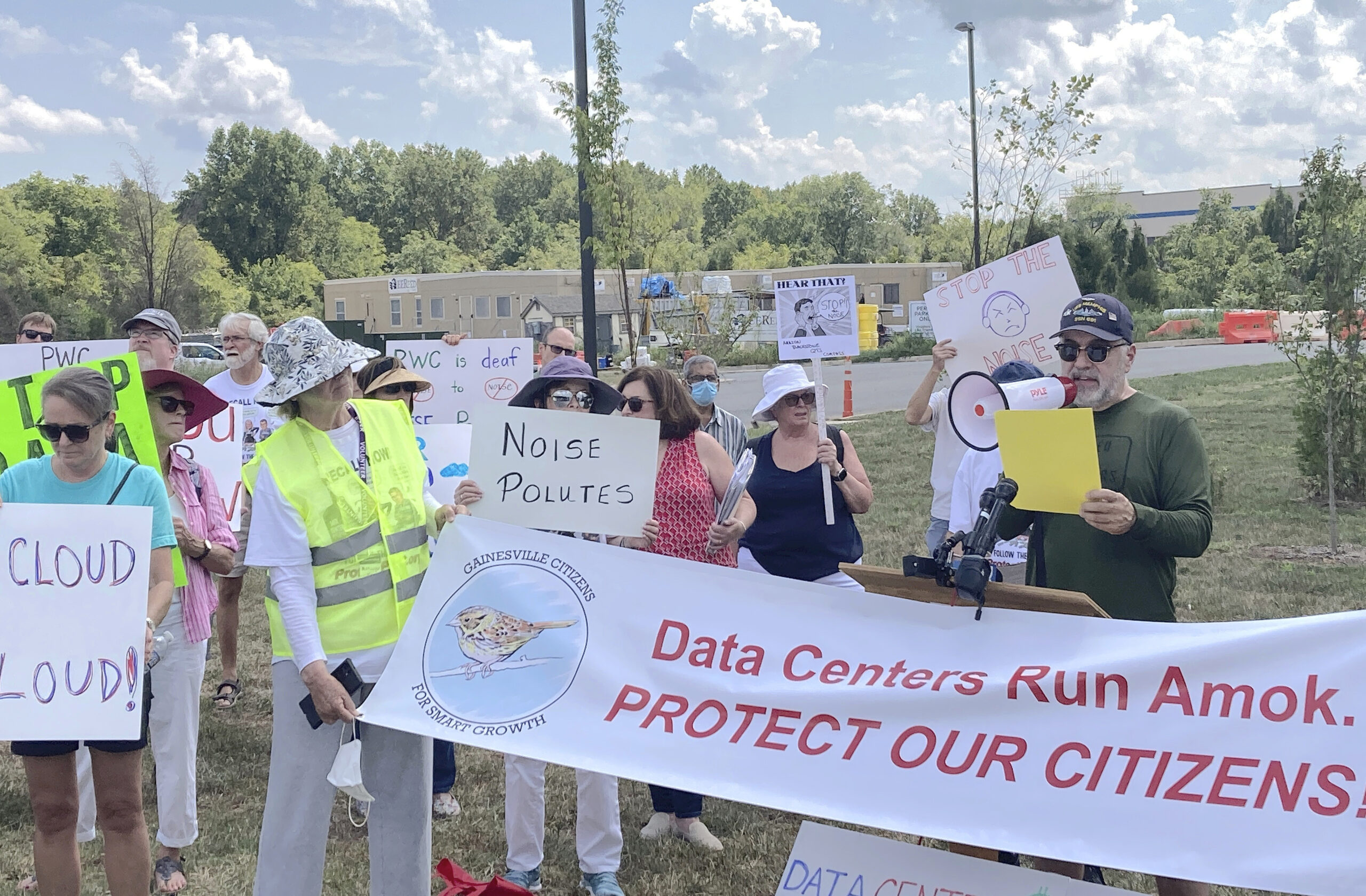
Protesters rally in Manassas, Va., in 2023 against a newly built data center for Amazon. New data centers are planed nationwide.
On top of the energy cost considerations, we also need to ensure data centers do not overtax water resources (which could cause similar cost inflation for public water users) or worsen our air quality. On this latter point, data centers should be required to maximize battery storage instead of using polluting backup generators.
This may sound like a large to-do list, but it’s one Pennsylvania can’t afford to ignore any longer.
2026 can be the year we move forward together and forge energy solutions that help our communities, economy, and environment. Let’s not lose another moment or any further opportunities to build an affordable, reliable, and prosperous clean energy future.
Tom Gilbert is president of the Pennsylvania Environmental Council.
I doubt Black History Month will be paid any attention this year by a president who no longer feels the need to be so hypocritical that he would stand among Christians with a smile on his face and a Bible in his hand, only to later confess his ever passing through the pearly gates of heaven is highly unlikely.
Donald Trump no longer feels compelled to go through the motions of pretending to be something he never was. With age 80 rapidly approaching, he knows he’s never going to run for another political office. So why should he put on another performance to cull votes from demographic groups he never really cared about anyway?
Trump fell only 3% short of winning the Hispanic vote in the 2024 presidential race, a 21% improvement from the 2020 election. I wonder how many of Trump’s Hispanic supporters regret voting for him after having family members or friends detained by U.S. Immigration and Customs Enforcement police and possibly deported?
President’s disdain
More Black folks were enticed by Trump’s blarney, too. He nearly doubled his Black support from 8% in 2020 to 15% in 2024. Trump repaid Black voters by signing the One Big Beautiful Bill Act that he pushed through a Republican Congress, which cut taxes for higher-income households by slashing funding for food and medical assistance programs sorely needed by disproportionately poor Black families.
Trump signaled with his recent criticism of the 1964 Civil Rights Act that he wouldn’t be adding his voice to a chorus of “Lift Every Voice and Sing” during Black History Month. He said the law unfairly discriminated against white people.
“White people were very badly treated,” he said. “People that deserve to go to a college or deserve to get a job were unable to get a job. So it was, it was a reverse discrimination.”
Such an uninformed statement being made by a president of the United States is exactly why this country still needs Black History Month. Trump’s comment, however, also underscores the need to change how that 100-year-old celebration has been observed.
Trump isn’t wrong to call the Civil Rights Act a reversal, but he failed to put that assessment in context. He may drive nothing more powerful than a golf cart these days, but nonetheless, he should know that sometimes you have to put a vehicle in reverse to stop it from going in the wrong direction.
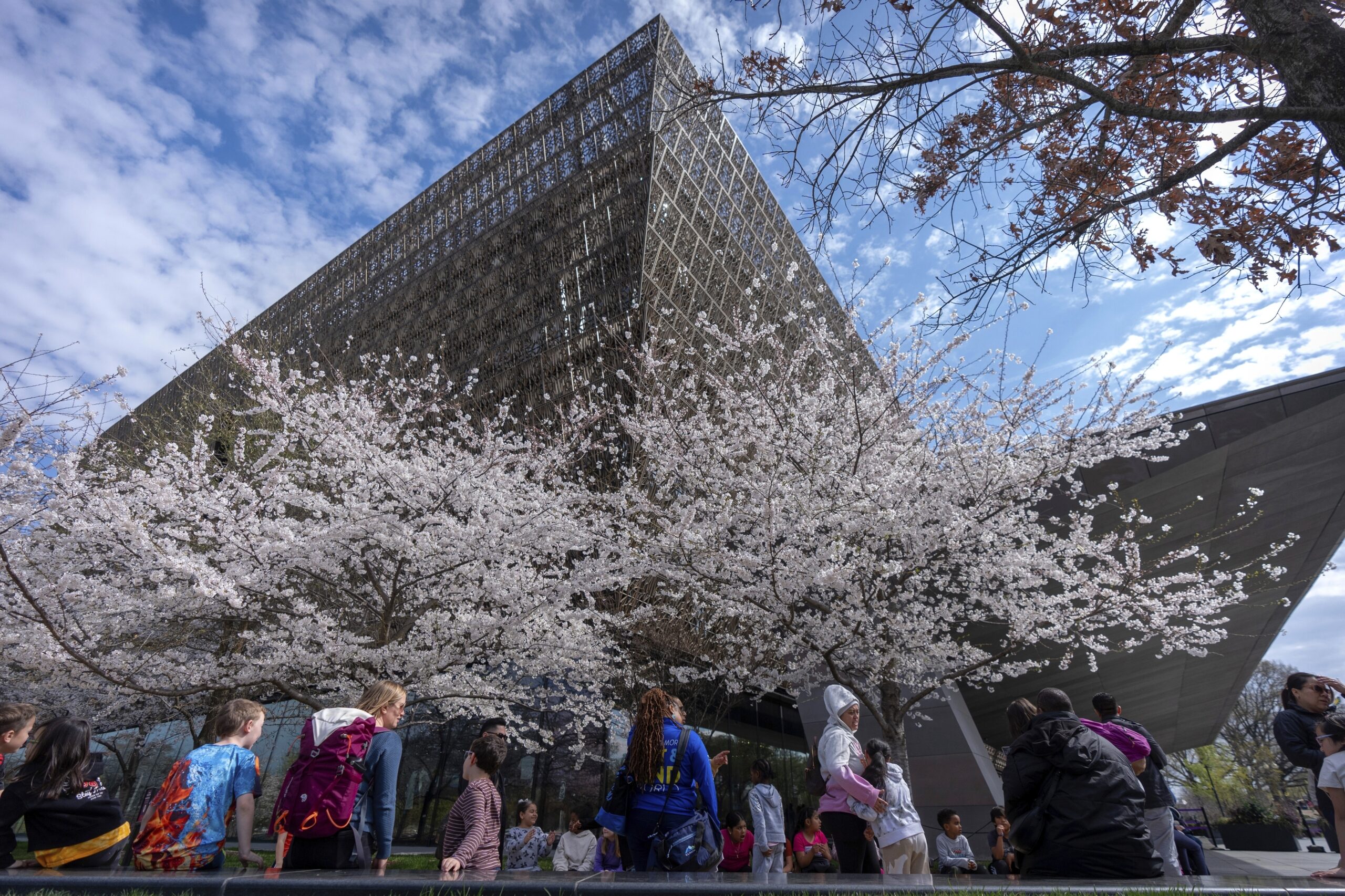
The National Museum of African American History and Culture on the National Mall in Washington is a repository of Black history.
The Civil Rights Act was needed to reverse the course of both the legal and traditional segregation that persisted in America decades after the Civil War ended slavery. It was hoped that affirmative action laws would, in time, become unnecessary and could end when all Americans were assured of equal treatment regardless of their race.
In fact, Justice Sandra Day O’Connor opined in a 2003 college admissions case before the U.S. Supreme Court “that 25 years from now, the use of racial preferences will no longer be necessary.” But in too many respects, the need for policies designed to reverse the significantly diminished but nevertheless enduring racism in this country has not gone away.
More people might accept that reality if they had a better understanding of American history and realized that laws such as the Civil Rights Act of 1964 and the Voting Rights Act of 1965 were passed by Congress on a bipartisan basis and upheld again and again by a nonpartisan Supreme Court because it was the right thing to do. Context is important, which brings us back to Black History Month.
Honoring people and ideas
What began as Negro History Week in 1926 was created by Howard University professor Carter G. Woodson to instill a greater sense of pride among African American students who mostly attended all-Black schools.
Focusing on these and other historically significant African Americans, including Sojourner Truth, Booker T. Washington, W.E.B. Du Bois, Malcolm X, and Mary McLeod Bethune, may have been fine when I attended segregated public schools in Alabama in the 1960s and ‘70s. But now, with white students attending integrated schools also observing Black History Month, it’s time to move beyond Woodson’s effort to instill pride among African American students.
Instead of celebrating individuals, Black History Month should focus more on the events and ideas that continue to impact how Black and white people coexist in an America that continues to struggle with both covert and subtle racism. Projects and book reports should explore the arguments made when the Civil War began, consider why Reconstruction failed to place African Americans on even footing with whites, and note the similarity of racist rhetoric 60 years ago and now.
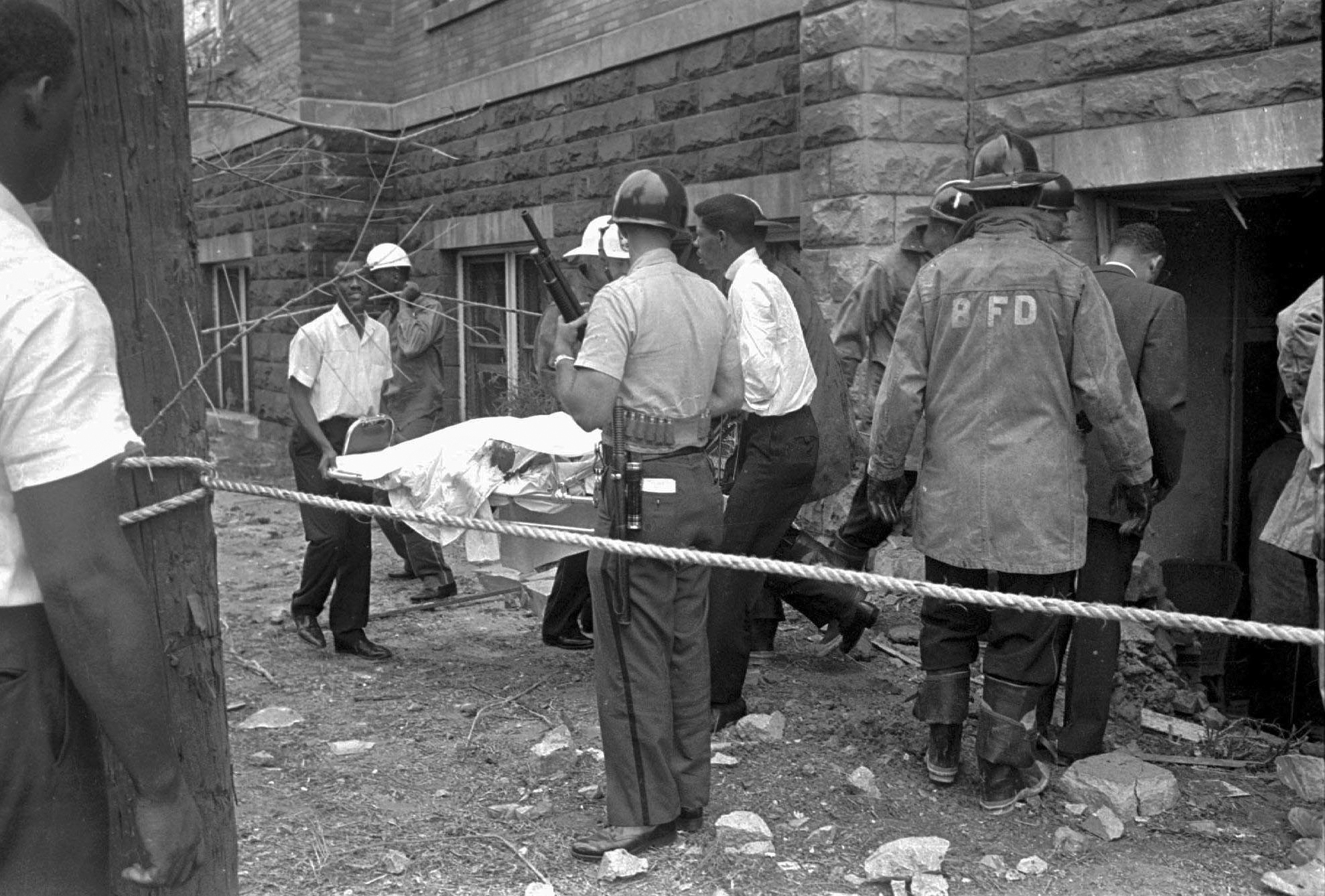
A body is removed from the 16th Street Baptist Church in Birmingham, Ala., Sept. 15, 1963, after a bomb set by the Ku Klux Klan detonated during services, killing four girls. The author, Harold Jackson, was a child in the city at the time.
Sixty years ago, I was a 12-year-old attending an all-Black school in Birmingham, Ala. Two years earlier, 16th Street Baptist Church was bombed by Ku Klux Klansmen, and a child who attended my elementary school was one of the four little girls killed. Four years prior to that, I remember my mother walking me to an alley to relieve myself because no white store downtown would let a Black person use its bathrooms.
Birmingham is so much better than that now. America is better, too. But some days it seems to have prematurely shifted to reverse. Remedies to discrimination are being prematurely discarded even as racist rhetoric rises to levels that are uncomfortable reminders of what America was, and not what we want it to be. Black History Month is a good time to reflect on that reality and take steps to avoid slipping into a past we need to remember but not repeat.
Harold Jackson, who served as editorial page editor for The Inquirer from 2007 to 2017, was awarded the Pulitzer Prize for editorial writing in 1991 and retired from the Houston Chronicle in 2020. His memoir, “Under the Sun: A Black Journalist’s Journey,” was published in April by the University of Alabama Press.
In response to Sen. John Fetterman’s claim that U.S. Immigration and Customs Enforcement agents wear masks because they fear doxing, perhaps he should ask himself why police departments don’t wear masks or share those same fears.
When law enforcement follows the Constitution, they have little to fear from the law-abiding public, and they earn the respect required to do their jobs. If ICE and U.S. Customs and Border Protection stopped circumventing the Constitution and started upholding it, they wouldn’t need to hide behind masks.
Colleen Dunn,Bethlehem
. . .
I would like to inform Sen. John Fetterman that if U.S. Immigration and Customs Enforcemen agents did not murder legal protesters, did not use tear gas on legal protesters, did not hunt down and brutalize people who try to document their illegal acts, and arrest legal citizens and children from the streets (even when they have documents on their person that prove citizenship), then they would not have to fear doxing. If ICE agents were to follow the law and treat the public with respect, they would not have to worry about having their identities revealed.
Edward Gardella, Langhorne
America 250+
As our nation approaches the 250th anniversary of the Declaration of Independence, we should not only celebrate our freedoms — we should also remember the faith that helped shape them. William Penn founded Pennsylvania as a “Holy Experiment,” a colony built on Christian principles of justice, peace, and love of neighbor. Long before 1776, Penn wrote and spoke passionately for religious tolerance and freedom of conscience in England, even at great personal risk, facing imprisonment and threats of death. His vision of liberty of conscience, fair laws, and respect for all people was groundbreaking and helped lay the foundation for what would eventually become the United States Constitution.
In 1751, to mark 50 years of this Holy Experiment, the Pennsylvania Assembly commissioned John Pass and John Stow to cast a bell. Inscribed with the words of Leviticus 25:10, “Proclaim Liberty Throughout All the Land Unto All the Inhabitants Thereof,” the bell celebrated the enduring connection between faith and freedom that Penn championed. This bell, later known as the Liberty Bell, remains a powerful symbol of liberty rooted in moral conviction.
If liberty is to endure today, we should revisit Penn’s faith, grounded beyond himself, where love of God and neighbor produced a durable, shared freedom together.
The Rev. Pete Linko, McDonald Bible Methodist Church, McDonald, Pa.
Join the conversation: Send letters to letters@inquirer.com. Limit length to 150 words and include home address and day and evening phone number. Letters run in The Inquirer six days a week on the editorial pages and online.
The school closures and consolidations proposal for Philadelphia schools that was announced in January was not surprising. The district, like many districts across the country, has signaled that it is grappling with declining enrollment, underutilized buildings, and tight budgets. The issue is so pervasive that the consulting firm Bellwether published a full report about it last fall called “Systems Under Strain: Warning Signs Pointing Toward a Rise in School Closures,” warning that many districts would soon face similar decisions.
The process isn’t surprising, either. Seattle similarly wrestled with a school closures plan before it got so complicated that the city simply dropped the issue after intense community backlash, concerns over student well-being, and the realization that there wasn’t a clear plan for how much the closures would chip away at the roughly $100 million budget deficit.
The situation in both Philadelphia and Seattle has many similarities to Chicago’s school closures in 2013. Chicago Public Schools closed 47 elementary schools — the largest national mass closures up to that point.
My colleagues and I at the University of Chicago Consortium on School Research studied that process, releasing reports on families’ priorities and choices in finding new schools, and on staff and students’ experiences, including academic outcomes. The findings from our research offer important lessons and considerations for district leaders and community members in Philadelphia today.
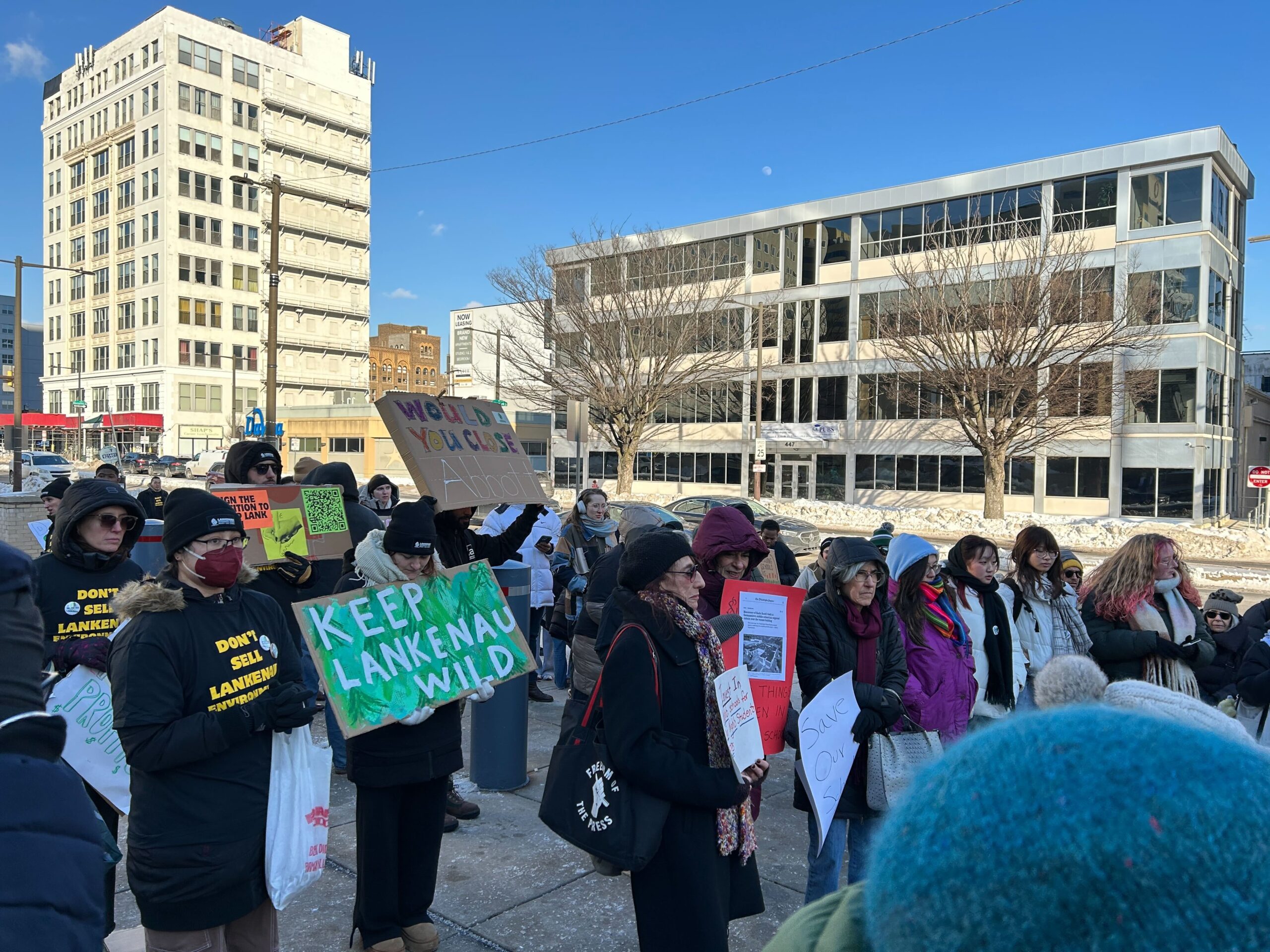
Demonstrators rallied against school closures outside the School District of Philadelphia headquarters in Center City on Jan. 29.
First, school is a very personal space and choice for students and families. Families assess the quality of a school in many different ways, from class size to specific course offerings to the availability of specific extracurriculars.
A school’s reputation, sometimes going back multiple generations, is often a factor. And both safety and accessibility — proximity and available transportation — are always paramount. Closing a school isn’t just an administrative change; it is a profound disruption of community and family life.
Second, logistics matter enormously and proved more difficult than expected in Chicago. The management of closing some schools and merging into others was a massive pain point in Chicago’s school closures.
Some teachers could not find their personally purchased furniture, technology, and classroom supplies. Critical details were overlooked, which caused significant challenges for staff and students. Closures require thorough and transparent operational planning.
But last and most importantly, it is critical to consider the effect of school closures on the people who experience them. In our interviews with both students and staff, we repeatedly heard that they wished their grief and loss had been acknowledged, validated, and addressed.
When we looked at the data, we found that test scores dropped for students whose schools closed — and the drops started the year potential closures were announced, reflecting the effects of uncertainty and upheaval. Test scores also dropped for students whose schools were “receiving schools,” enrolling many of the affected students.
Our University of Chicago colleague, professor Eve L. Ewing, wrote in her commentary in our report that “we must ask how and why we continue to close schools in a manner that causes ‘large disruptions without clear benefits for students.’”
The way this plays out in Philadelphia matters, as young people, families, and educators are already emphasizing. In Chicago, school staff wished for more communication, more transparency, more training on merging school communities, longer-term transitional funding, and more emotional support for adults, whose feelings were still raw three years later when we interviewed them.
Students wished school actions provided better facilities, from building and green space to sufficient toilet paper and warm water. And they wished they had more counselors and social workers, and general emotional support from all school staff, who were, themselves, grieving. Simple yet powerful reminders of what makes schools feel like places of care, connection, and community.
In 2023, our fantastic Chicago education reporters covered the 10-year anniversary of Chicago’s massive school closures in Chalkbeat Chicago and in a WBEZ/Chicago Sun-Times collaboration. The students, families, neighbors, and staff shared similar messages in those stories as they had in our research: being told one thing and experiencing another; seeing the process as “hurtful” and without any benefit to young people or the community; wishing they could see the district and the city investing in schools, housing, and community resources where they live.
Regardless of what final decisions are made, a difficult path lies ahead for school communities across Philadelphia. Chicago’s experience tells us that any district considering school closures needs to plan meticulously, communicate frequently and transparently, and keep the experiences of students, families, and school staff at the center of the process.
Marisa de la Torre is managing director and senior research associate at the University of Chicago Consortium on School Research, part of the Kersten Institute for Urban Education within the Crown Family School of Social Work, Policy, and Practice.
Philadelphia is a city of neighborhoods, and at the heart of every neighborhood is a school. Schools are where our children learn, where families gather, and where communities take shape. When our schools thrive, Philadelphia thrives.
That is why the Philadelphia School District’s recently announced Facilities Master Plan is so important — not just for students and educators, but for the future of our entire city.
This plan is about more than bricks and mortar. It is about opportunity. It is about ensuring every child, in every zip code, has access to high-quality academic programs, safe and modern learning environments, and the extracurricular experiences that help young people discover their talents and chart their paths forward.
For too long, inequities in school facilities have mirrored broader inequities across our city. Some students learn in buildings that limit what they can access — advanced coursework, arts and music programs, athletics, career and technical education, and modern technology — while others have more opportunities simply because of where they live. That is not acceptable, and it is not sustainable.
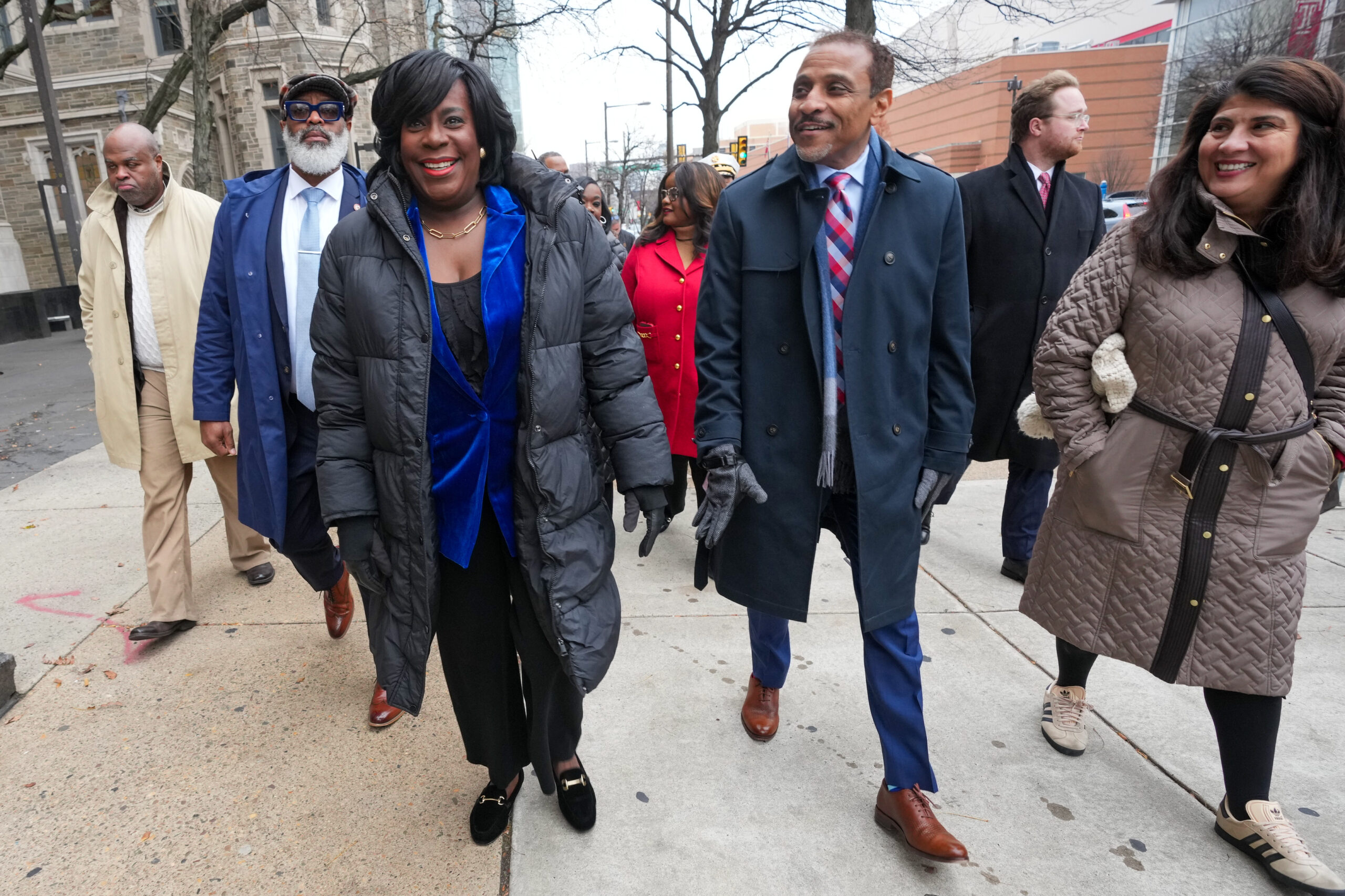
Mayor Cherelle L. Parker and Superintendent Tony B. Watlington Sr. on Temple University’s campus in December 2024. Inequities in school facilities are unacceptable, the pair write.
The Facilities Master Plan directly confronts these challenges. It takes a thoughtful, data-driven approach to aligning school buildings with student needs, enrollment trends, and program quality. The goal is clear: to expand access to strong academic offerings and enriching extracurricular programs across neighborhoods, while making smarter use of resources and improving learning conditions citywide.
Ninety percent of impacted students will be reassigned to schools with comparable or better academic outcomes, and 100% of impacted students will be reassigned to schools with comparable or better academic outcomes and/or comparable or better building conditions.
When students have access to well-equipped schools with robust programs, outcomes improve. Graduation rates rise. Attendance improves. Students are better prepared for college, careers, and civic life. These are not abstract benefits — they translate into a stronger workforce, safer neighborhoods, and a more vibrant local economy.
The impact extends well beyond the classroom. Modernized and rightsized school facilities can anchor neighborhood revitalization. They attract families, support local businesses, and create hubs for community use — from recreation and arts to adult education and workforce training. Investments in schools are investments in communities.
This plan also reflects a commitment to partnership and transparency. It is grounded in community engagement and recognizes that schools do not exist in isolation. The city of Philadelphia and the school district are working together to ensure that planning decisions consider housing, transportation, economic development, and public safety — because when we coordinate our efforts, everyone benefits.
One of us, Mayor Parker, has made clear that creating a safer, cleaner, and greener city with access to economic opportunity for all is critically important to the success of our young people. Strong schools are foundational to that vision.
The other one of us, Superintendent Watlington, has, over the past three years, led a series of sweeping improvements in the district: student attendance, teacher attendance, graduation rates, and test scores in grades four through eight have all increased. During the same period, dropout rates have decreased by more than half.
The Facilities Master Plan brings these priorities together in a way that will drive even stronger and faster progress in an ambitious and responsible manner.
Change is never easy, and conversations about school facilities can be deeply personal. Families care about their schools because schools are part of their identity.
That is why continued engagement and listening will remain central as the plan moves forward. The school district and the city are committed to working with students, families, educators, and community members every step of the way.
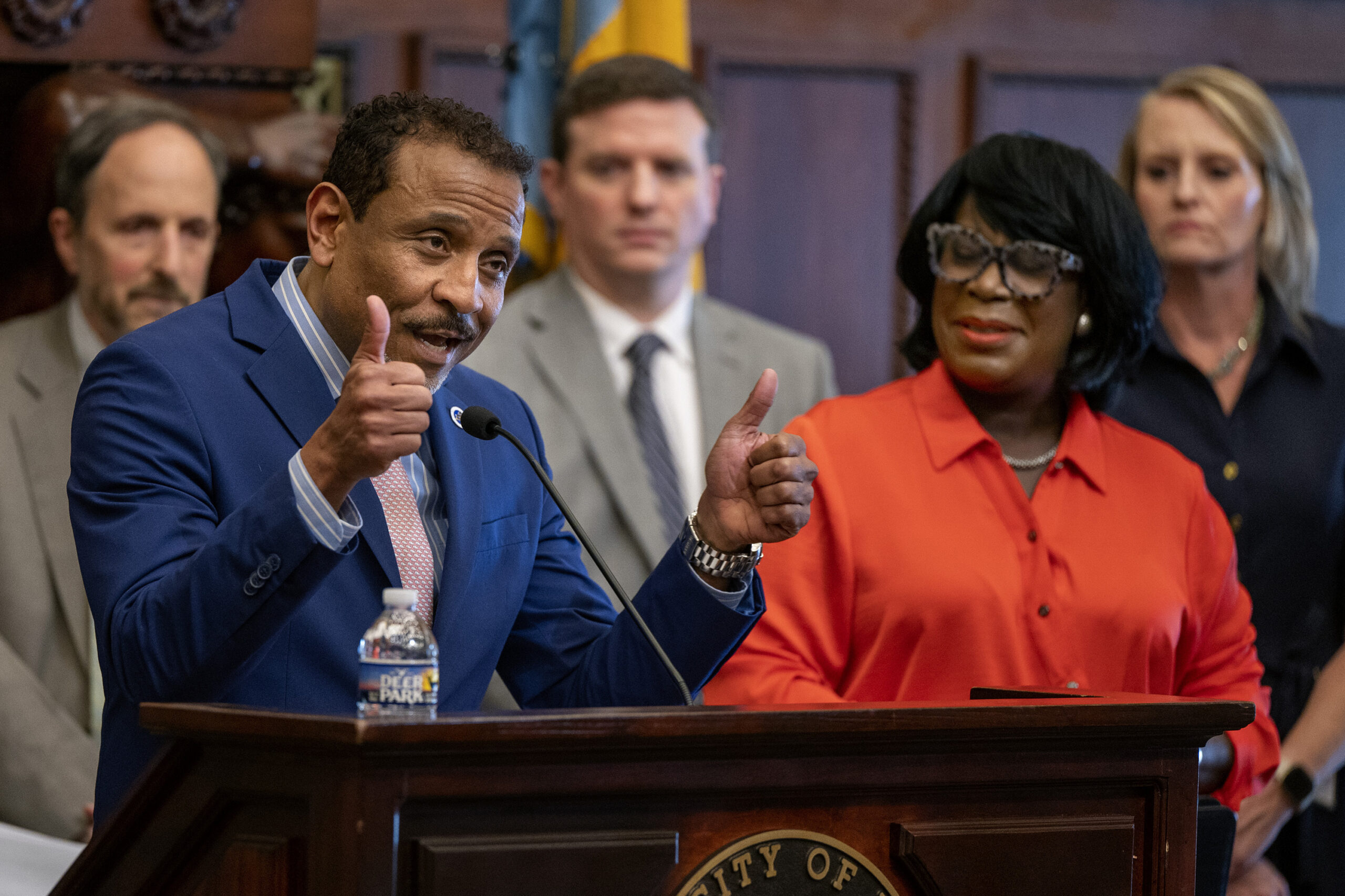
Superintendent Tony B. Watlington Sr. joins Mayor Cherelle L. Parker at a City Hall news conference in August 2024.
What unites us is a shared belief that Philadelphia’s children deserve the best we can offer — and that the city’s future depends on how well we prepare them today.
This Facilities Master Plan is a long-term investment in equity, excellence, and opportunity. It is a commitment to making sure that no matter what zip code a child grows up in in Philadelphia, they have access to high-quality education and enriching experiences that open doors and expand horizons.
By building better schools, we are building a stronger Philadelphia — for this generation and the next.
Tony B. Watlington Sr. is the superintendent of the Philadelphia School District. Cherelle L. Parker is the 100th mayor of Philadelphia.
In the early 2010s, school closures were presented as unavoidable and data-driven. Families were promised efficiency and reinvestment. What many communities experienced instead was lasting harm that never fully healed. That history matters now as the Philadelphia School District advances a new Facilities Master Plan that again relies on closures as a primary tool.
The district argues that consolidating magnet programs into neighborhood high schools will expand access and strengthen those schools as community anchors. That logic assumes program quality can be preserved through reorganization alone. Experience suggests otherwise.
A mission-driven school culture depends on sustained focus and institutional priority. Once reduced to a single track, that culture becomes fragile. Through Lankenau, students are participating in an Environmental Rights Amendment curriculum led by the Pennsylvania Bipartisan Climate Initiative, one rooted in civic engagement as much as environmental literacy. That depth of engagement would be hard to replicate in other schools without a dedicated institutional focus on this work.
Environmental education is especially vulnerable to this kind of dilution. Partnerships with universities and community organizations take years to build. Internship pipelines depend on consistent coordination. Hands-on programs require both space and continuity. When these elements are separated, the whole weakens.
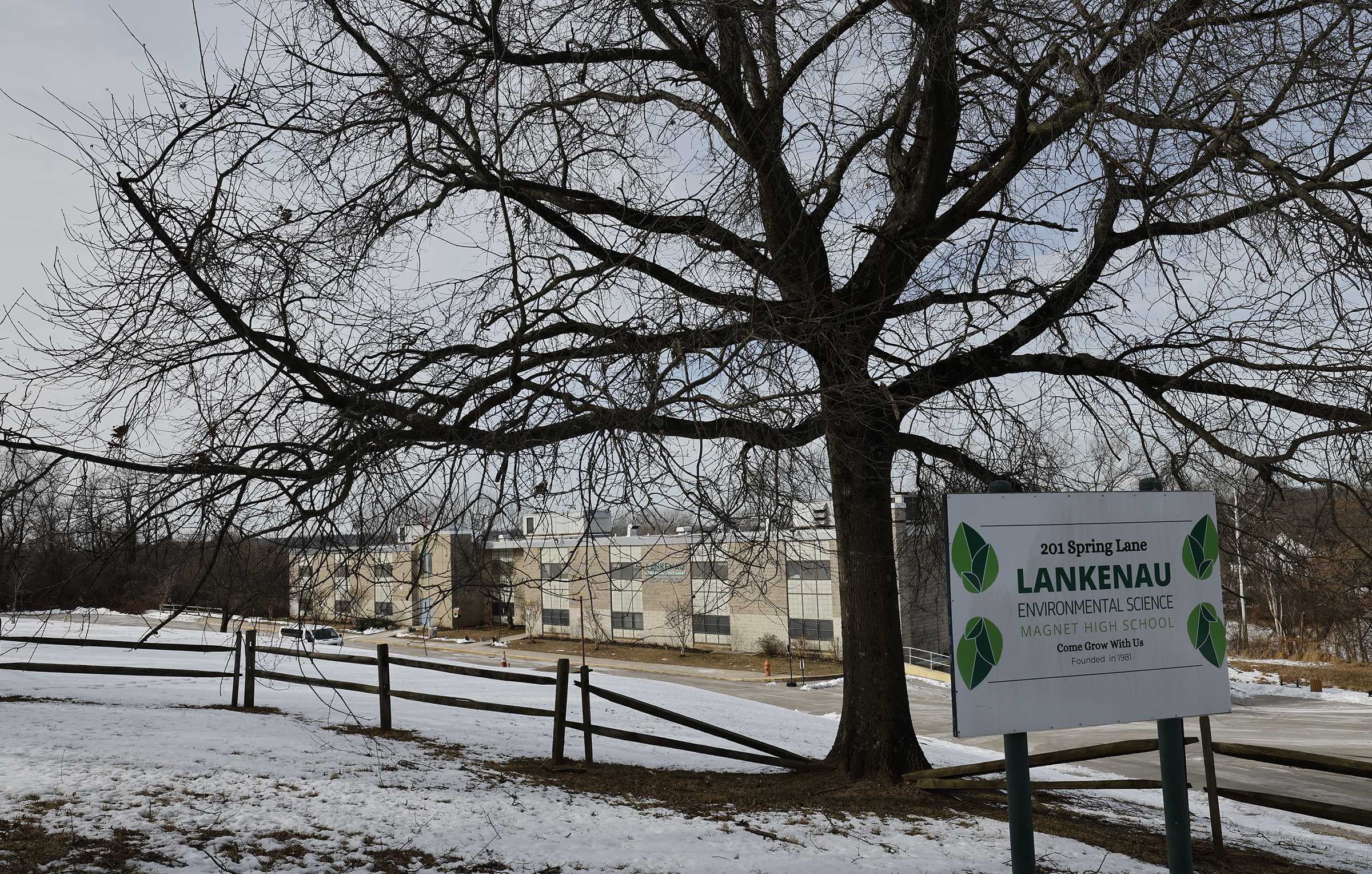
The Board of Education has recommended closing or merging as many as 20 schools, including Lankenau in Roxborough.
Equity concerns also deserve closer attention. Lankenau serves students from across North and Northwest Philadelphia who rely on district-provided transportation. For many families, this school represents access to a learning environment aligned with their interests and ambitions. Closing it narrows those options rather than expanding them.
The Facilities Master Plan emphasizes data analysis, community engagement, and fiscal responsibility. Those factors matter. But they do not capture everything. Some schools provide value that cannot be reduced to enrollment figures or building utilization rates. When a public school consistently prepares students to engage with one of the defining challenges of this century, dismantling it should not be taken lightly.
Climate literacy is not optional. It shapes workforce readiness and civic decision-making. Philadelphia should be strengthening pathways that cultivate this knowledge early and deeply. Offering environmental science only as an honors option signals a retreat from that responsibility.
This proposal is not final. The Board of Education still has time to reconsider. Protecting schools like Lankenau would not undermine the broader goals of modernization or equity. It would reinforce them and affirm that preparing young people for a changing world requires more than consolidation.
Ashlei Tracy is a nonprofit leader with a background in environmental policy and biology. Her work centers around increasing civic engagement, policy literacy, and care for our shared planet.
Dan McQuade had such a way with words that it’s almost impossible to find the right ones to contemplate a Philadelphia without Dan writing about all the bat-guano crazy things we do here. Dan, who wrote for a variety of sites including glory-days Deadspin and Defector, died from cancer last week. He’d just turned 43 — way too young. We started blogging at the same time in the mid-2000s, and I was blessed to know him from that long-lost scene. He leaves behind his wife, a 2-year-old son, and a remarkable body of work — like essential coverage of the Wildwood T-shirt scene, or his analysis of Sylvester Stallone’s absurd 30-mile run in Rocky II — that people will still be reading and talking about for many years to come.
The twisted, deadly culture of U.S. immigration cops can’t be fixed with training
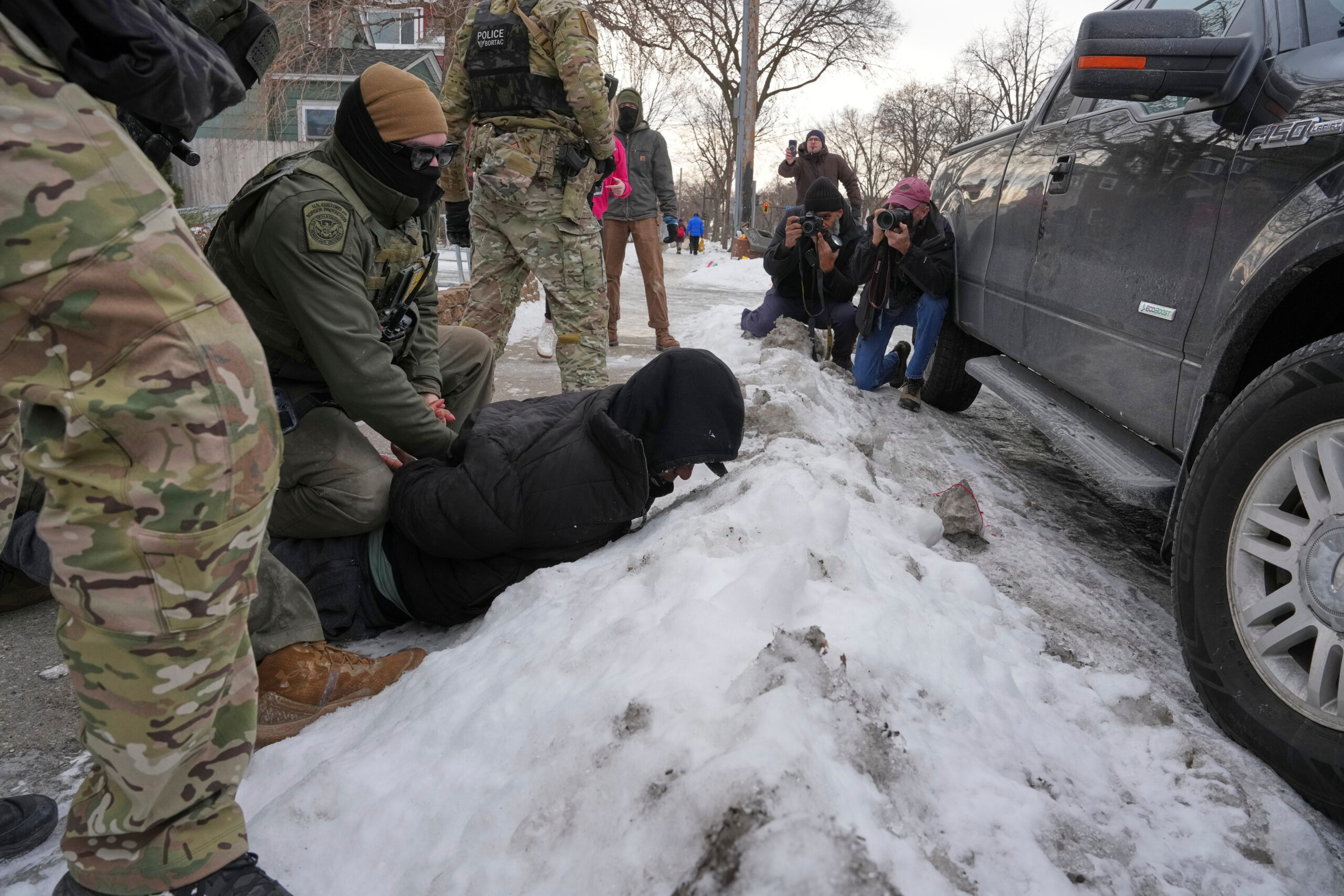
Border Patrol agents detain a man in Minneapolis on Jan. 11.
The fear was palpable even before the ink had dried on what Donald Trump called his “Big Beautiful Bill” — the 2025 legislation that funneled a whopping $170 billion toward immigration enforcement, including doubling the number of agents in the field from 10,000 to 20,000.
Many warned the surge of inexperienced rookies — indeed, their training was slashed from 90 days to just 47 (or 48) days to race the new agents out into the streets — could lead to acts of police brutality, or worse, as an alphabet soup of Homeland Security agencies donned masks and went after immigrants in agitated urban neighborhoods.
Those whispers became a scream as Americans watched the horrific videos of a masked federal agent walking in front of the family SUV driven by a Minneapolis mom, Renee Good, and then firing three shots that killed her. Seventeen days later, one of the officers in a scrum beating up observer Alex Pretti — apparently not seeing that Pretti had already been stripped of his legal handgun — fired the first blast of what became a volley of 10 shots that killed the 37-year-old Minneapolis intensive care nurse.
On Sunday, the ProPublica newsroom revealed what the U.S. government had successfully kept secret for more than a week: the names of the two agents — both from South Texas — who fired the fusillade of shots that killed Pretti on a busy Minneapolis street.
They were not rookies.
Border Patrol officer Jesus “Jesse” Ochoa, 43 — who, according to his ex-wife, is also a gun enthusiast with 25 pistols, rifles, and shotguns — had his heart set on joining the federal force after earning his criminal justice degree from the University of Texas-Pan American and finally got his wish eight years ago, ProPublica wrote.
The site reported that the other shooter, Raymundo Gutierrez, joined U.S. Customs and Border Protection in 2014 and works for its Office of Field Operations, where he is assigned to a kind of agency SWAT team, involved in high-risk operations.
The men who gunned down Pretti were well-trained and experienced, as was Jonathan Ross, the ICE and former Border Patrol officer who shot and killed Good during their Jan. 7 encounter. Their involvement in the killings that shocked America suggests that moderates calling for reforms at ICE, but not for a radical reworking of immigration enforcement, are failing to understand the much deeper problems.
Garrett M. Graff, a journalist and best-selling author who’s been tracking Border Patrol and its brother agencies since their expansion in the 2000s, told me on Monday that he was not at all surprised the three officers firing the deadly shots were highly experienced.
“I do think it’s enormously relevant that the shooters all have CBP backgrounds,” Graff said. “It’s an agency that routinely uses deadly force outside of the norms of law enforcement in the U.S., and it’s not a surprise to me that in both cases we see agents quick to resort to deadly force.”
Graff added that Ross’ fatal shooting of Good mirrored problems that have existed in the agency for years. He said it “jibes with a 2013 internal report that criticized CBP agents and officers for putting themselves in danger by stepping into the path of vehicles, and firing their guns out of ‘frustration’ rather than fear.”
I reached out to Graff, who was a Pulitzer Prize finalist for his history of the Watergate scandal, because just two days before the ProPublica report, he offered some extraordinary history and background about CPB in testimony before an Illinois state commission that’s looking into misconduct during the 2025 immigration raids there.
Graff’s statement went viral on social media because it detailed a toxic culture at CPB that’s highlighted by shocking levels of criminality among its agents, from on-the-job brutality to off-duty thuggery, as well as domestic violence.
Finding that at least 4,913 Border Patrol agents and CBP officers were arrested over a 20-year period, Graff testified, “Indeed, for much of the 2010s and likely before and since, it appears the crime rate of CBP agents and officers was higher per capitathan the crime rate of undocumented immigrants in the United States.”
Ironic, huh? But why has this happened?
A lot of the problem, Graff testified, lies in the rapid surge of Border Patrol from around 9,200 agents at the time of the 2001 terror attacks to roughly 21,000 by the Obama administration. Those new hires, he said, were hastily recruited with limited background checks, rushed into the field with minimal training, and lacked the arrest powers of more rigorous federal agencies like the FBI.
On the job, this new cadre bonded over a culture that simmered in misogyny and racism, and then boiled over in backing an authoritarian like Trump. “Agents developed a strong tradition of frontier-style justice; its agency motto, ‘Honor first,’ is as much a statement of machismo as it is about integrity,” Graff testified.
This culture has proved lethal long before the frigid streets of Minneapolis. Graff said that CBP agents have been involved in at least 72 deadly shootings or use-of-force incidents since 2010, making it “perhaps the nation’s deadliest law enforcement agency.”
He’s not the only one to suggest that Border Patrol’s problem is its warped culture, not a lack of training or body cams. Jenn Budd, a former Border Patrol agent who became a whistleblower, has described CBP as plagued by abusive officers and a pervasive rape culture. In her memoir, she calls Border Patrol “a criminal organization disguised as a federal law enforcement agency.”
America’s response to the 9/11 attacks — the birth of the U.S. Department of Homeland Security and the dramatic expansion of Border Patrol, as well as the creation of ICE in 2003 — launched a monster that has now blown back against America’s own citizens, in Minnesota and elsewhere.
This fundamental notion — that ICE, CPB, and Border Patrol are rotten way past the point of tinkering around the margins — is what needs to be driving the debate on Capitol Hill. The incremental reforms some top Democrats are pushing, such as body cams or requiring arrest warrants, are fine as stopgap measures, but they would not have saved the lives of Pretti or Good.
The only fix that makes sense is abolishing ICE and all the other post-2001 excesses and returning to just the essential functions that are actually needed: airport security, arresting the relatively small number of violent criminals who enter America, humanely securing the border, and processing people seeking refuge from their violent homelands.
Abolishing ICE and radically reforming the rest of a broken system won’t bring back Good or Pretti, either, but it would be the most fitting and appropriate memorial to America’s slain martyrs of 2026.
Yo, do this!
As things in America have seemed to consistently get worse since the dawn of the 21st century, there was a frequent question: Why are there no great protest songs? You can stop asking now. Bruce Springsteen has channeled the golden era of Nobel laureate Bob Dylan, who sang in outrage over injustices like the assassination of Medgar Evers, with his own instant and electric protest record, “The Streets of Minneapolis.” Recorded and released in the course of a weekend, the Boss honors ICE murder victims Renee Good and Alex Pretti and heaps scorn on their killers. Already the most downloaded song in America, it shouldn’t have taken this for Springsteen to get his first-everNo. 1 single.
Just as everyone predicted at the start of the season, it’s Drake Maye’s New England Patriots against Sam Darnold’s Seattle Seahawks for all the marbles when Super Bowl LX kicks off Sunday night from Santa Clara, Calif. (Yes, that was sarcasm.) Although this is one of the least appealing matchups, on paper, in the history of the Big Game, 2025-26 has — excepting our Eagles — proved the most exciting NFL season in modern memory, so hopefully these two Cinderella QBs will do their part. The real fireworks may come when Trump-unfriendly artists Green Day (!!) and Bad Bunny take the stage. Actual football commences at 6:30 p.m. on NBC.
Ask me anything
Question: Was the Minnesota general strike successful? And what are the prospects of a true national strike? — @exlibrophilly.bsky.social via Bluesky
Answer: The answer to your first question would have to be a yes. It was telling that 60 Minnesota corporations felt compelled to issue a statement (albeit one I viewed as milquetoast) and that the Trump regime started making some partial concessions after thousands of Minnesotans skipped work to take to the streets. On the second part, I noticed there was chatter about a national general strike last Friday, and very little came of it. That’s because a successful nationwide shutdown — something that has never happened before — would require weeks, not days, of planning and committed, full-throated support from the top labor unions and other key organizations like the Democratic Party. Given that the real power in America seems to be economic, I would urge these power brokers to join with regular folks and make it happen.
What you’re saying about …
Newsletter readers feel strongly that — while there’s nothing wrong with proposed reforms such as unmasking, visible badges, marked vehicles, and the proper use of arrest warrants — U.S. Immigration and Customs Enforcement should be abolished, and immigration enforcement should be totally overhauled. Wrote Daniel Hoffman: “Any of the reforms, controls and procedures that the Democrats are likely to impose on ICE are useless as long as Donald Trump is president and he has stooges to carry out his campaigns of vengeance and nationalist bigotry.” Thomas Ceresini agreed: “Dems *should* demand that ICE be abolished immediately, and that CBP be reorganized from top to bottom, purging all the fascists from its ranks.”
📮 This week’s question: Pennsylvania Gov. Josh Shapiro has been all over the news lately with the release of his new book and a controversial passage about the 2024 Kamala Harris campaign. But his stock for president in 2028 seems to be falling. Would you like to see him run for president, or vice president, or neither? Please email me your answer and put the exact phrase “Shapiro 2028” in the subject line.
Backstory on the strange case of Tulsi Gabbard
Director of National Intelligence Tulsi Gabbard enters the Fulton County Election HUB Wednesday as FBI agents seize Fulton County 2020 Election ballots, in Union City, Ga.
Tulsi Gabbard was in the news a lot in the first couple of shocking months after Donald Trump’s 2024 election victory, and for good reason. The 47th president’s stunning pick of the former leftist as his director of national intelligence (DNI) barely made it out of the Senate on a 52-48 vote, with Democrats like Sen. Elizabeth Warren calling Gabbard a likely, if perhaps unwitting, Russian asset because of her history of statements that aligned with the Vladimir Putin regime.
But then something even stranger happened: Gabbard largely disappeared from sight. Most notably, the nation’s intelligence chief was not heard from during the U.S. attack on Venezuela that captured and deposed its strongman leader Nicolás Maduro, and reportedly was excluded from its planning — likely because in her Democratic past, she had vehemently opposed American intervention there. But it was even more jarring when and how Gabbard resurfaced last week: overseeing an FBI raid at the Fulton County, Ga., election hub that the president has long insisted — in a Big Lie with zero evidence — was the epicenter of some type of fraud that prevented his reelection in 2020.
Gabbard’s appearance in Georgia raised many questions, especially since the spy agencies she oversees as DNI are supposed to watch for foreign intelligence threats — not get involved in domestic policy. On Monday, Gabbard sent a letter to key Democratic lawmakers who’d demanded answers, explaining that she monitored the raid because Trump had asked her to be there, and insisting that election security is one of her duties because of the possibility of foreign interference.
The Georgia raid, and Gabbard’s involvement, has sent off all kinds of alarm bells that the Trump regime is planning to gin up a voter fraud case — even though thorough recounts proved that Joe Biden narrowly won Georgia in 2020 — as an excuse for an unprecedented federal intervention in November’s midterm election. We also learned this week that while she was in Atlanta, Gabbard even facilitated a phone call between Trump and several FBI agents involved in the raid, a stunning breach of protocol. On Monday, Trump went on a podcast with his former deputy FBI director, Dan Bongino, and declared that “Republicans ought to nationalize the voting” in 15 unspecified key states. Such a move would mean the end of American democracy as we’ve known it.
Meanwhile, Gabbard is back on the radar in a big way. Also on Monday, the Wall Street Journal reported that the DNI is the subject of an explosive whistleblower complaint that, according to the whistleblower’s attorney, the White House has listed as highly classified and is refusing to share with Congress. Leaders on Capitol Hill need to fight to get this secret information by any means necessary. In the increasingly fraught fight to save the American Experiment, we need to know who Gabbard is really working for.
What I wrote on this date in 2022
Remember affirmative action? Four years ago, the U.S. Supreme Court was still considering the legal challenge to the use of race as a factor in college admissions, which it did strike down later that year, in a foreshadowing of the Trump regime’s much wider war against diversity. On Feb. 3, 2022, I wrote that while the threat to affirmative action was indeed alarming, the existing rules were already failing African American college applicants. I wrote: “In a nation where the Black-white wealth ratio is 20-1, recruiting Black kids was a low priority. These self-inflicted wounds had little to do with the legal status of affirmative action.”
The fallout from the deadly ICE raids in Minneapolis remains the dominant story in America, as reflected in my recent columns. First, I wrote about the looming deep cuts in news reporting at the Washington Post and CBS News, and decried how these self-inflicted wounds — both at the hands of their billionaire Trump-favoring owners — would mean fewer eyes out in the field just as Minnesota was showing the power of bearing witness. Over the weekend, I warned of the regime’s plan for new immigration raids against the beleaguered Haitian refugees of Springfield, Ohio — a scheme that seems on hold for now after a judge ruled late Monday night to continue the protected legal status of these immigrants.
While we still haven’t seen all of the government’s Jeffrey Epstein files — despite the law calling for their full release last December — the massive tranche of documents that did go public last Friday is a gift that keeps on giving for those who track the follies of America’s rich and famous. Not surprisingly, America’s founding and still sixth-largest city has numerous ties to the late financier and convicted sex trafficker. So far, The Inquirer has reported that the U.S. Department of Justice files reveal a surprising relationship between Epstein and Philadelphia-born comic Bill Cosby, who at the time was battling his own flurry of sexual abuse allegations. Epstein even offered to buy Cosby’s home at one point. In a separate story, The Inquirer traced the relationship between the financier and 76ers owner and hedge-fund billionaire Josh Harris, who “had an ongoing business relationship that included numerous phone calls and at least one visit to Epstein’s home in Manhattan.” What’s more, Epstein inquired about buying a plane from a Harris business associate, University of Pennsylvania megadonor Marc Rowan. The Epstein scandal shows that all politics — especially the most tawdry — is local. There’s more to come, but you’ll be locked out without a subscription. Why not sign up today?
By submitting your written, visual, and/or audio contributions, you agree to The Inquirer’s Terms of Use, including the grant of rights in Section 10.
Black media matters. Right here, right now, and more than ever before. We are the essential workers on the front lines of a growing resistance movement.
As the owner and operator of WURD Radio, Philadelphia’s only multiplatform Black talk radio station, my team and I are focused on a singular mission: fighting back against this administration’s attempt to destroy Black history, culture, institutions, and people. We provide our communities with our most powerful weapon: trusted, accurate, culturally specific information.
The recent arrest of Don Lemon and Georgia Fort, two independent Black journalists, underscores the lengths this government will go to silence dissent — which, by the way, is protected by the First Amendment of the U.S. Constitution.
The Black press has been fighting a system that has sought to weaken our institutions, marginalize our reporting, and underfund our organizations for centuries. And frankly, for too long, mainstream media has been complicit in maintaining that system of devastating racial oppression.
Throughout history, the mainstream media has been complicit in maintaining the system of racial oppression by focusing on and reinforcing negative narratives about African Americans, writes Sara Lomax.
In the 1800s, newspapers profited by running ads to capture enslaved Africans, and throughout history, they‘ve reinforced the caricatures and negative narratives used to justify a racial hierarchy.
In this new era, it feels as though we are slipping back in time, forced to fight battles we thought were won. The quest for newsroom diversity in mainstream media, for example. The brief glimmer of self-awareness that followed the murder of George Floyd — when pledges were made to hire more reporters of color, diversify sources, and commit to nuanced coverage — was tragically short-lived.
But if you are Black in America, you know the drill: Racial progress is always followed by a wicked backlash. Now is no different.
Still, we look to our history for the blueprint of our survival.
We draw strength from Samuel Cornish and John B. Russwurm, who founded Freedom’s Journal, the first Black newspaper, in 1827. They advocated for the full humanity of Black people nearly 40 years before slavery was abolished nationwide. Imagine the courage and tenacity it took for two Black men to start a newspaper in a country that said it was illegal — in some places, punishable by death or maiming — to read and write.
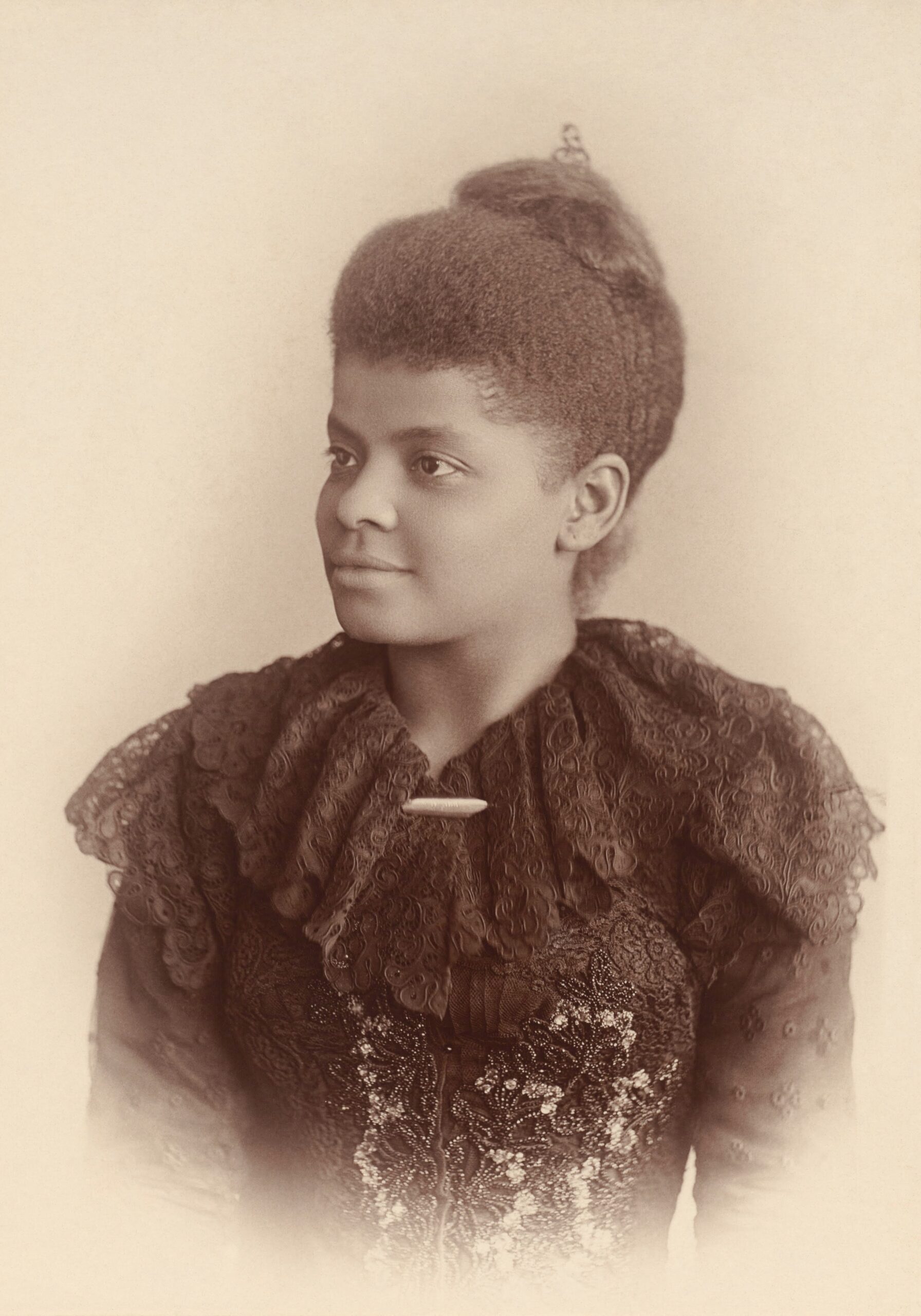
Ida B. Wells-Barnett, in a photograph by Mary Garrity from c. 1893.
I am inspired by Ida B. Wells-Barnett, who used the power of her pen to expose the barbaric practice of lynching through the Red Record. She traveled the country with a bounty on her head, determined to move the nation away from its most diabolical instincts.
I think of Robert Abbott, who launched the Chicago Defender from a landlord’s dining room in 1905. He built a secret network of Black Pullman porters to smuggle his papers into the South, serving as a catalyst for the Great Migration — the movement of roughly six million Black Americans from the rural South to the urban North and West between 1916 and 1970.
And, of course, there is Christopher Perry, who founded the Philadelphia Tribune in 1884, which remains the longest-running Black newspaper in the nation.
This history is in our DNA. We call on these ancestors now because we face an overt hostility unlike anything I have seen in my lifetime.
This moment is clarifying. Statistics highlight the stark disparities in housing, health, and education — but without the historical context of Jim Crow, redlining, and voter suppression, the public is left to believe the administration’s lie: that Black people are “inherently inferior” or merely “unqualified social promotions.”
This hypocrisy is as old as the nation itself — a country whose “Founding Fathers” codified slavery while declaring all men equal. When your foundational document is based on a lie you refuse to address, it tracks that you would spawn a president who is morally bankrupt. As Malcolm X said, “The chickens are coming home to roost.”
Yes, our nation has a serious problem. Yet, we persist.
2025 was the most difficult year of my career. WURD weathered an anti-DEI lawsuit, layoffs after an advertising collapse tied to anti-DEI policies, and the day-to-day exhaustion of covering relentless racial animus in Washington.
Yet, we did some of our best work, including a special series called Exonerated, which earned us an NAACP Image Award nomination — a rare recognition for local radio. And we’ve launched two new yearlong initiatives to make sure Black voices are centered as part of the 250th birthday festivities.
Our ancestors didn’t just dream of a free press — they built one. We will continue using all our platforms to tell our stories and center the complexity and diversity of our history, culture, and community.
We know that in this season of increased tension and hostility, our voice is our most potent weapon and our most sacred sanctuary.
We don’t just broadcast; we bear witness. And in that witnessing, we find the power to not only endure the present, but to author a future where there is a possibility to be finally and fully free.
Sara Lomax is the president and CEO of WURD Radio and the cofounder and president of URL Media.
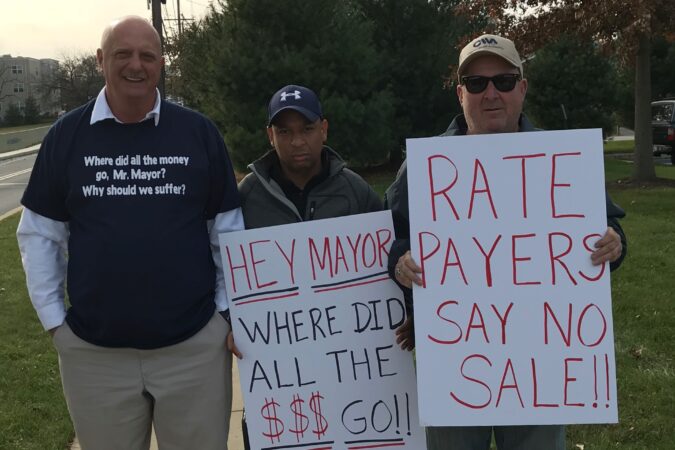
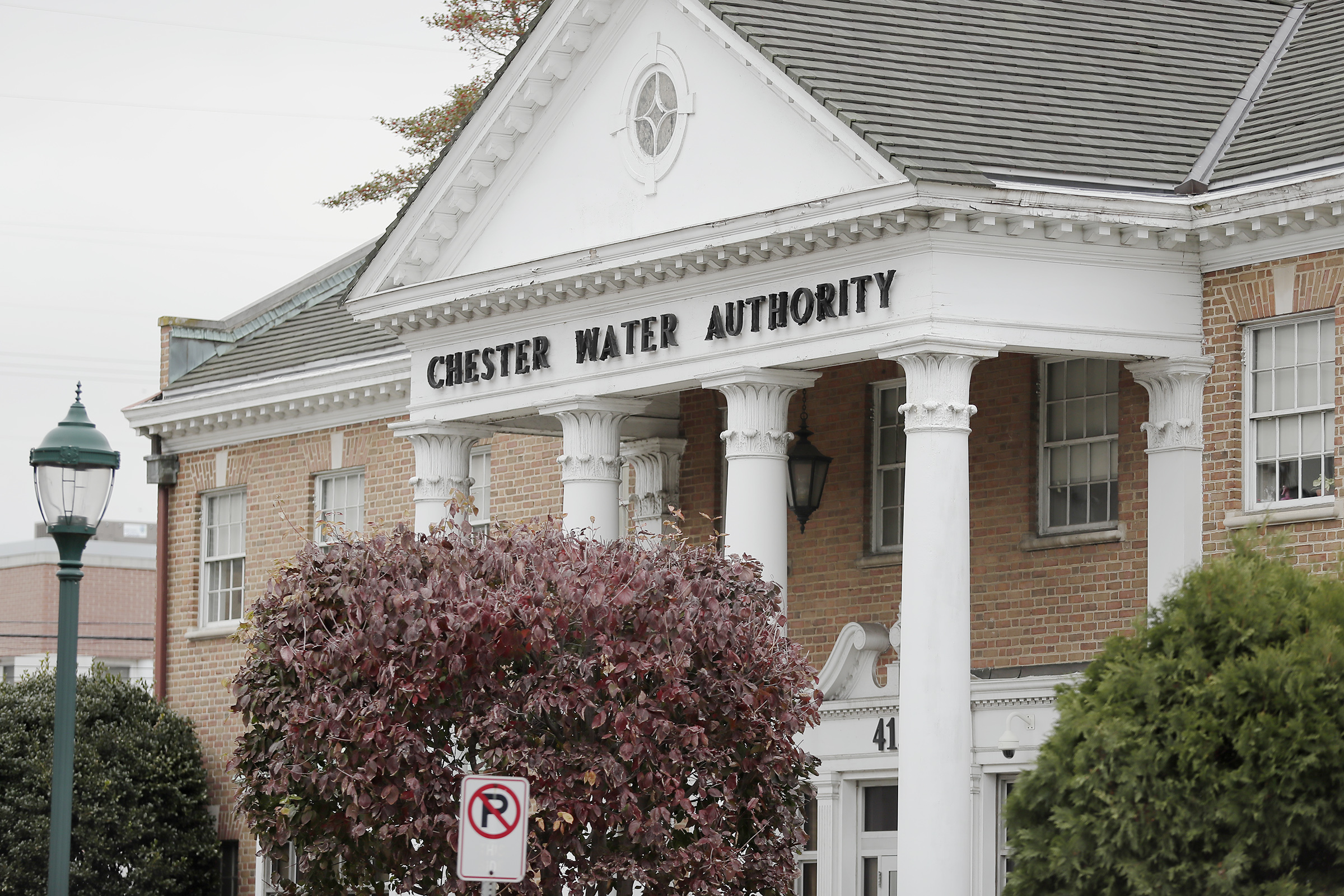
The recent state Supreme Court ruling that a receiver can’t unilaterally sell the Chester Water Authority to a for-profit company was a big win for its customers. But it complicated a plan to use the sale to bail out the city of Chester.
While the court ruling is the final word on the sale, there is more to be done to safeguard utility customers across the commonwealth and help the residents of Chester.
The best way to protect all utility customers in Pennsylvania would be for the General Assembly to repeal Act 12. The misguided legislation, spearheaded by lobbyists, opened the door in 2016 for the sale of municipal water and sewer systems.
The law was supposed to help distressed utility systems. Instead, for-profit companies have largely purchased well-run systems and massively and routinely increased the rates that customers pay.
Since Aqua Pennsylvania purchased the sewer system in New Garden Township in Chester County in 2020, for example, residents have seen their rates increase 200%, according to a consumer group fighting the sales. Other cities and towns have seen their bills go up by 100% or more.
In short, Act 12 has failed to accomplish what it was allegedly designed to do.
To his credit, State Sen. John Kane, a Democrat who represents parts of Chester and Delaware Counties, has proposed repealing Act 12, but few lawmakers in Harrisburg are brave enough to stand up to the influential for-profit water companies.
Short of a repeal, lawmakers must reform Act 12. At the very least, the law should be amended to require that the sale of any public utility be put to a vote. The residents who pay for the utility should decide whether to sell it, not the local politicians. If residents approve a sale, the utility should be put out to a public bid and not negotiated in private.
Such reforms, while not perfect, would give residents some protection from local elected officials selling off public utilities for short-term gains without their input.
The Chester City Council voted in 2021 to sell the Chester Water Authority to Aqua Pennsylvania for $410 million. In January, the state Supreme Court ruled the sale could not go through.
The court was right to rule that the city of Chester could not sell the water authority. After all, the authority serves roughly 200,000 people in more than 30 municipalities across Chester and Delaware Counties.
It is understandable that the city wanted to sell the water authority. The City of Chester, which has about 34,000 residents, filed for Chapter 9 bankruptcy in 2022.
Aqua offered to buy the water authority in 2017 for $320 million. Two years later, the for-profit company increased its offer to $410 million.
The board that oversees the water authority unanimously rejected the offer, but the city council in Chester viewed the sale as a way out of its financial problems.
But any short-term gain for the city would likely have resulted in a sharp increase in water bills for customers. This would have put more financial stress on residents in Chester, which has a poverty rate of 30%, making it one of the poorest municipalities in the state.
Residents in Chester and Delaware Counties would have also seen steep increases in their water bills. The water authority is already well run, so there is little to be gained by a sale.
However, the court’s ruling leaves the city of Chester in a bind. There is a vehicle in place to help Chester. Act 47, known as the Municipalities Financial Recovery Act, supplies funding to help municipalities in financial distress.
The city of Harrisburg, the city of Chester, and the borough of Newville are already part of the Act 47 program. State lawmakers should increase funding for Act 47 to help the commonwealth’s distressed municipalities.
That is the best solution to a thorny problem. It also avoids the sale of public utilities that will only result in bigger bills coming due for ratepayers.
Just ask the residents in New Garden and other towns whose local elected officials sold them out to for-profit companies.
Regarding City Council’s overwhelming opposition to U.S. Immigration and Customs Enforcement, what is its plan to enforce our nation’s immigration laws? Or does it believe Philadelphia should establish its own? And that America’s 50 states and countless cities should also “do their own thing.” Or is it really saying it wants no standards at all — completely open borders? In which case, an untold number of immigrants could come here.
Does Philadelphia have a plan for that scenario? Because, to my knowledge, there is no nation on earth that allows anyone to cross its border at any time for any reason. Just as we lock the doors of our homes from unwanted intruders, nations set immigration laws for the same reason. Otherwise, we have anarchy. This commonsense observation seems to have escaped the anti-ICE movement.
Or has it? Certainly, there are well-intentioned activists in this movement. However, there are also financial backers, such as Neville Roy Singham, who reportedly has close ties to China’s government. And as we have seen with District Attorney Larry Krasner, a recipient of George Soros’ financial support, nonenforcement of the law puts everyone at unnecessary risk. Or is that the point?
Lynn Landes,Philadelphia, lynnlandes@gmail.com
No middle ground
Jonathan Zimmerman’s recent column misses the forest for the trees. Either we apply the articles and amendments of the Constitution to all citizens equally, or we are living in a failed democracy. There is no middle ground on this question.
It is certainly ironic that the Second Amendment has been cited by the left. That does not mean its application in this case is automatically hypocritical. To cite it is to faithfully and equally apply the Constitution as interpreted by the courts. In suggesting otherwise, Zimmerman acts as an apologist for those who have ignored and will likely continue to ignore the Constitution at will. This has the effect of normalizing such behavior.
The Constitution starts with the words “We the people …” emphasizing its collective nature and evolution through time. While citizens may sometimes be frustrated by legal interpretations of some of the articles and amendments, the Constitution represents our country’s most basic principles governing behavior. Those who ignore this fact do so at the peril of all citizens.
A defining feature of this administration is that it willfully and illegally ignores basic tenets and interpretations of the Constitution made by the courts. When this happens, the individuals involved must be held to account. If we do not do so, we tacitly accept that the Constitution is no longer meaningful, and that our interactions will be governed by the whims of one man and his underlings.
Michael James,Haverford
ICE vs. police
“The officer … has been placed on administrative duty pending an internal investigation, as per department policy when an officer discharges his gun.”
When The Inquirer published a report recently about a Philadelphia police officer who had fired a shot at a suspect who allegedly shot another man, the article ended with the above words. Any casual reader of crime in Philadelphia probably knows these words by heart. If you use your gun for any reason, we have to check you out.
Why can’t U.S. Immigration and Customs Enforcement be subject to the same type of regulations? Why isn’t Jonathan Ross, who fired the shots that killed Renee Good, subject to investigation? Why was he allowed to flee the scene? And why aren’t the ICE agents who shot Alex Pretti being investigated?
Rosemary McDonough,Narberth
Join the conversation: Send letters to letters@inquirer.com. Limit length to 150 words and include home address and day and evening phone number. Letters run in The Inquirer six days a week on the editorial pages and online.
Editor’s Note: An earlier version of the letter about City Council’s opposition to ICE agents misidentified a businessman who has been linked to the Chinese government. It is Neville Roy Singham not George Soros.