Category: Opinion

  • Trump betrays his pledge to Iran’s protesters by letting clerics crush them

    Trump betrays his pledge to Iran’s protesters by letting clerics crush them

    When President Donald Trump called on Iranian demonstrators to “KEEP PROTESTING — TAKE OVER THE INSTITUTIONS” in early January and pledged “HELP IS ON THE WAY,” I feared a shameful episode of American betrayal was about to be repeated.

    “We are locked and loaded and ready to go,” he had promised these brave Iranians, fed up with decades of corruption and repression by the ayatollahs.

    Human rights activists report that these words encouraged many ordinary Iranians to come to the streets.

    My mind flashed back to January 1991, when President George H.W. Bush urged Iraqis to rise up against Saddam Hussein, as U.S. troops were liberating Kuwait, then allowed the Iraqi Kurds and Shiites who responded to be slaughtered by the thousands. On assignment in Iraq, I saw the bloody consequences, which undermined U.S. forces during the 2003 Iraq War.

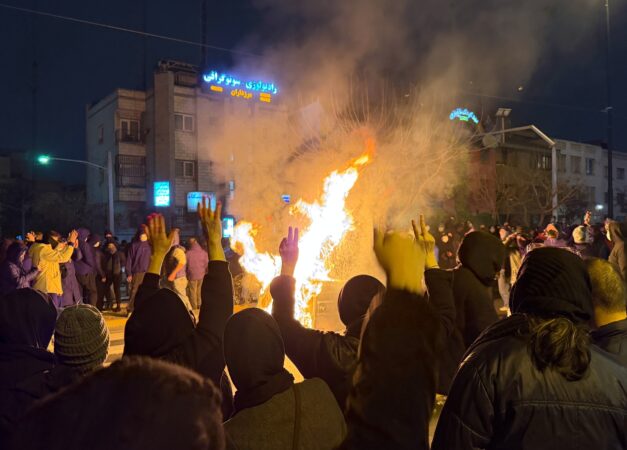
    Sure enough, history is repeating itself, this time in Iran. TACO Trump ignored the impact his braggadocio has on real people and reneged on his promises to the Iranians. Many thousands of demonstrators who believed him were shot dead in the streets by regime forces, and many more thousands jailed, beaten, and tortured.

    Human rights groups estimate the number of dead at a minimum of 5,000, but we won’t know if the number is much higher until the regime stops blocking the internet. Iranian officials insist, contrary to Trump’s claims, that they won’t halt executions.

    If Trump had moved quickly to do the possible — aid the protesters with satellite connections, isolate Iran at the United Nations, organize tighter sanctions against their oil sales and shadow fleet, cripple their military and government with cyberattacks — he might have made a difference. He still could.
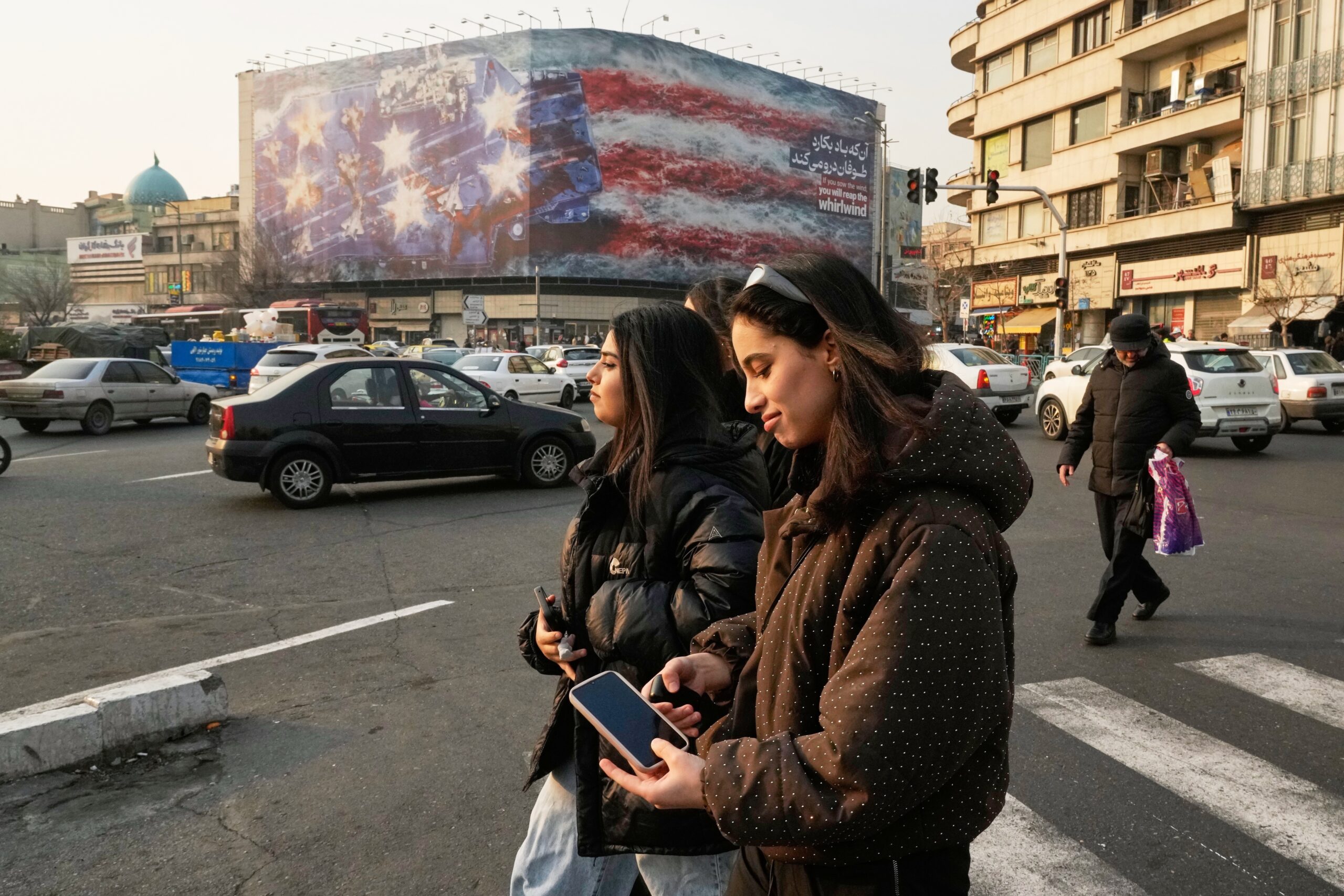
    Two girls, not wearing the legally required headscarves, walk past a billboard depicting a damaged U.S. aircraft carrier with disabled fighter jets on its deck and a sign reading in Farsi and English, “If you sow the wind, you’ll reap the whirlwind,” at Enqelab-e-Eslami (Islamic Revolution) Square in Tehran, Iran, Sunday.

    Instead, convinced of his own brilliance, surrounded by incompetent advisers, and possessed of a mistaken belief that he has the power to reorder the world, he has tweeted cheap rhetoric that only provoked more regime brutality on young people in the streets.

    The consequence of betraying Iran’s citizen uprising will have ripple effects that Trump is unable to foresee.

    “We’re in a very difficult situation,” I was told by Suzanne Maloney, a leading Iran expert who directs the foreign policy program at the Brookings Institution. “President Trump raised hopes without a strategy or the tools to carry it out. The tools [a massive U.S. armada dispatched to the region] have arrived too late to make a difference for the demonstrators on the street.”

    Now that the uprising has been crushed, Trump no longer mentions the murdered protesters. Compassion is not his thing.

    Instead, the president is seeking a deal with the ayatollahs to completely abandon their nuclear program, cut back their missile program, and stop meddling in the region.

    In other words, as in Venezuela, the regime could remain if it bowed to the United States. The demands themselves lay out highly desirable objectives, but the regime recognizes that meeting them would leave them totally at the mercy of the U.S. and Israel. So it will probably delay or reject them.

    Then what? Trump has likely boxed himself into conducting military strikes. Yet, bombs alone aren’t likely to unseat a government in which the military still has plenty of weapons and sees its fate as tied to the Islamic Republic. More likely, U.S. strikes would provoke a wider regional war, with attacks on U.S. bases in Arab countries and on Israel.

    “Trump sees Venezuela as a model,” Maloney said, and indeed POTUS has said so. But in Venezuela, the CIA had inside sources who betrayed Nicolás Maduro and made his extraction possible. Moreover, the United States had previous contacts with Maduro’s vice president, swapping one dictator for another so long as she was willing to let Trump control Venezuelan oil profits. One limited strike, no messy follow-up with ground troops.

    Iran, on the other hand, would be brutal, long, and messy, probably requiring U.S. ground troops, something Trump rightly won’t consider.
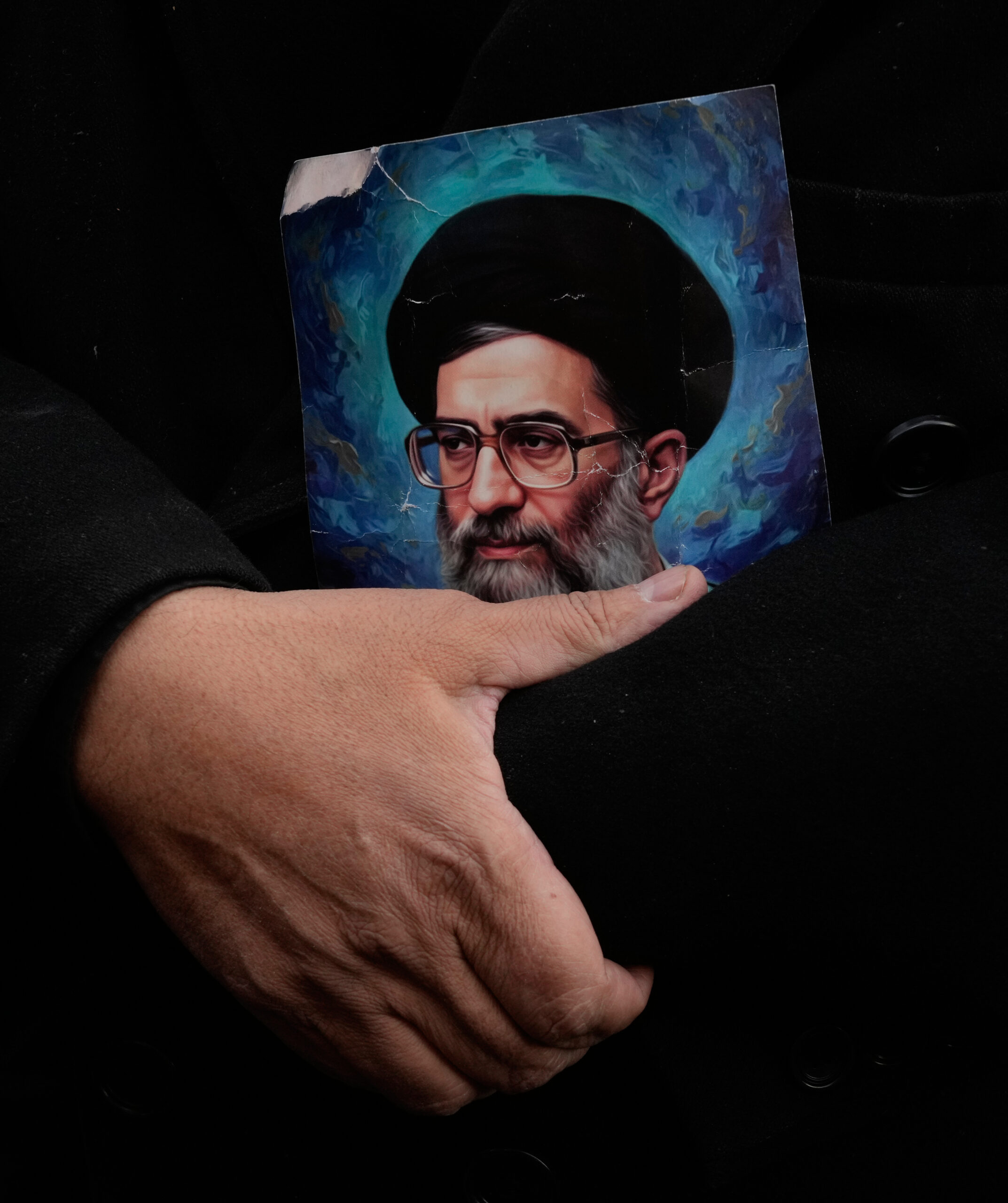
    A man holds a poster of the Iranian Supreme Leader Ayatollah Ali Khamenei during a funeral ceremony for a group of security forces, who were killed during anti-government protests, in Tehran, Iran, on Jan. 14.

    In Iran, said Maloney, “with the Revolutionary Guards and the clerical elite, there is not a pathway to a pro-Western leader who will bow to the U.S. They are going to go down fighting.”

    As for Reza Pahlavi, the son of the last shah of Iran, who has some popularity in Iran, he has lived in exile in the United States since the 1979 Iranian Revolution and has no organization inside his homeland. U.S. experience with overhyped Iraqi exiles in 2003 taught diplomatic officials a bitter lesson, about which Trump is probably totally unaware.

    Even if Iran’s supreme leader, Ali Khamenei, were miraculously slain, no one can guarantee what would come after. This is why the Saudis are urging Washington not to pursue regime change, and closing their airspace to any U.S. warplanes headed for Tehran.

    Meantime, the trials and future executions of protesters will go forward.

    So let me return to the bitter consequences of betraying allies who believed in the promises of the U.S.

    The Shiites of southern Iraq never forgot Bush 41’s betrayal, during which he allowed a defeated Saddam to retain military helicopters that were used to slaughter at least 10,000 of their people who had answered the president’s call.

    In 2003, just after the U.S. invasion, I returned to Najaf, the heart of Iraq’s south, where George W. Bush expected the Shiite population to welcome American troops. Instead, clerics and merchants recalled bitterly how their fathers and uncles had been slain in 1991. “You owe us,” one Najaf leader told me. “So kill Saddam and get out of Iraq, or we will turn on you, too.”

    Instead, we remained in Iraq for years, and Shiite militias ultimately took revenge on our soldiers for the earlier betrayal.

    Perhaps the population of Iran will be more forgiving if Trump devises a strategy that will help them, not cause more slaughter. But he doesn’t have much time.
  • Letters to the Editor | Feb. 1, 2026

    Letters to the Editor | Feb. 1, 2026

    Too far

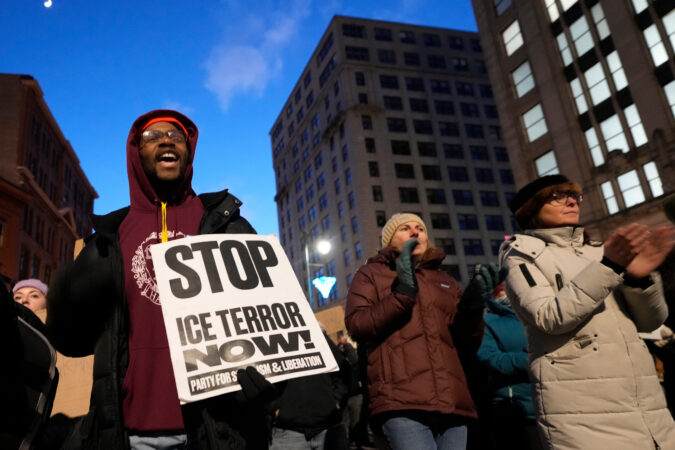
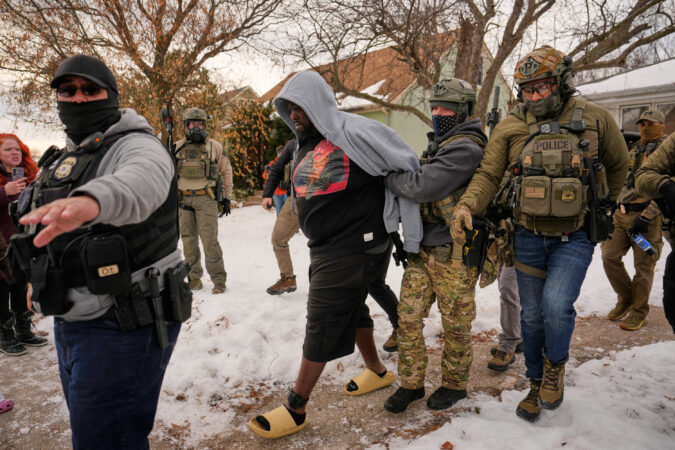
    Two citizens have now been killed by untrained, ruthless, vicious, masked U.S. Immigration and Customs Enforcement agents who have been encouraged to act as government thugs, as they possess absolute immunity for whatever they do.

    They abduct people, they brandish their firearms to intimidate crowds, they smash vehicle windows with their targets inside, they drag people through the streets, they use battering rams to enter homes without a warrant or reasonable suspicion, and they spray nonviolent protesters who get under their skin with tear gas and pepper spray. Many have likened the tactics of ICE to those of the Gestapo.

    After each killing, the secretary of Homeland Security and the president demonize the dead and justify the actions of ICE agents who are never wrong, in their twisted view. The victims were terrorists, they tell us; they were there to kill the agents: knee-jerk assertions made with no evidence, no valid basis.

    In a rarity, and fearing for their members’ reelection chances in the midterm election to take place later this year, many Republicans are speaking out against what has taken place, at the very least calling for an independent investigation of the killings, which would include Minnesota state officials, rather than a farce that would be an administration whitewash.

    Should those who are here in violation of immigration law and who have committed a serious crime here be apprehended and deported? Certainly, but that is not what the Trump administration has done. The vast majority of those who have been targeted for removal have been law-abiding since they arrived.

    May the chaos that has enveloped and so heavily and pointlessly damaged Minneapolis soon end, and may it not spring up in other blue areas in which the president seeks to impose chaos.

    Oren Spiegler, Peters Township

    Consider countermeasures

    Professor Jonathan Zimmerman has provided a detailed analysis of the many ways in which the Trump administration has attempted to whitewash American history, culminating locally with its despicable actions at the President’s House memorial site. As a retired physician, I fully agree with his diagnosis. But he didn’t offer any treatment plans, except perhaps an implied three-year wait for a new administration with a hopefully less racist agenda.

    Meanwhile, I suggest a few more: Commit to placing numerous replacement signs in every available city-owned or sympathetic privately owned locations surrounding the President’s House Site. Maybe our wonderful city’s Mural Arts program could be involved? Make sure these notices describe how the former materials were taken down by the National Park Service, and state unequivocally that this heinous act occurred during the Trump administration under its order. Pass a city ordinance that such signs and murals shall remain in place for perpetuity.

    If we do this, it will forever mark these actions as shameful for future generations. I’d like to see similar actions at all our national parks and museums, but as all politics are local, let’s at least start here in our country’s birthplace.

    Fred Henretig, Philadelphia

    Join the conversation: Send letters to letters@inquirer.com. Limit length to 150 words and include home address and day and evening phone number. Letters run in The Inquirer six days a week on the editorial pages and online.

  • The regime does not make mistakes

    The regime does not make mistakes

    Manuel Contreras, the head of the secret police during Chile’s dictatorship, which reigned from 1973 to 1989, once explained why so many seeming innocents — students, union leaders, local activists — were murdered by the state: “The guerrilla tries to act like a normal citizen, honest and good, and lies even to his family. When discovered, he will always deny the facts.”

    The regime does not make mistakes.

    “The lack of specific information … demonstrates that they are terrorists with regard to whom we lack a complete profile.”

    That last bit wasn’t the head of Chile’s secret police, though. It was a U.S. Immigration and Customs Enforcement field director, Robert Cerna, explaining last March why 75% of Venezuelan deportees to El Salvador’s mega-prisons had no criminal background.

    I am a scholar of authoritarian politics at the University of Pennsylvania. I research and teach about repression and censorship. The Trump administration is engaged in state terror. And, in a page ripped from the autocrat’s playbook, they are trying to convince us that the victims deserve it.

    On Jan. 7, Secretary of Homeland Security Kristi Noem claimed Renee Goodshot in the head by an ICE agent while observing a raid — engaged in an “act of domestic terrorism.” Noem said that Good “weaponized” her car (the same car with a glove compartment overflowing with her child’s stuffed animals and a friendly dog in the back).

    The very next day, federal agents shot two people in Portland, Ore., during a traffic stop. DHS claims the driver “is believed to be a member of the vicious Venezuelan gang Tren de Aragua,” who again “weaponized his vehicle.” The same claim appears again and again: to justify why federal agents killed Silverio Villegas Gonzalez in Chicago, and why they shot Marimar Martinez five times (the U.S. Department of Justice brought, and then dropped, charges against her). After Alex Pretti, a Veterans Affairs nurse, was executed by federal agents in Minneapolis on Jan. 24, White House Deputy Chief of Staff Stephen Miller called him a “would-be-assassin.”

    These are the same lies Augusto Pinochet told in Chile, where the regime frequently falsified reports that blamed the victims for their own deaths. Rather than executions, victims died in “shootouts.” The official government account of the death of one 28-year-old activist was that he was a “subversive” killed while attacking a barracks. But witnesses saw him being arrested two days earlier. A miner with no known political affiliation, the press claimed, “tried to seize a policeman’s weapon … and so he was shot.” Two victims executed by army troops were accused of “criminal or subversive activities.”

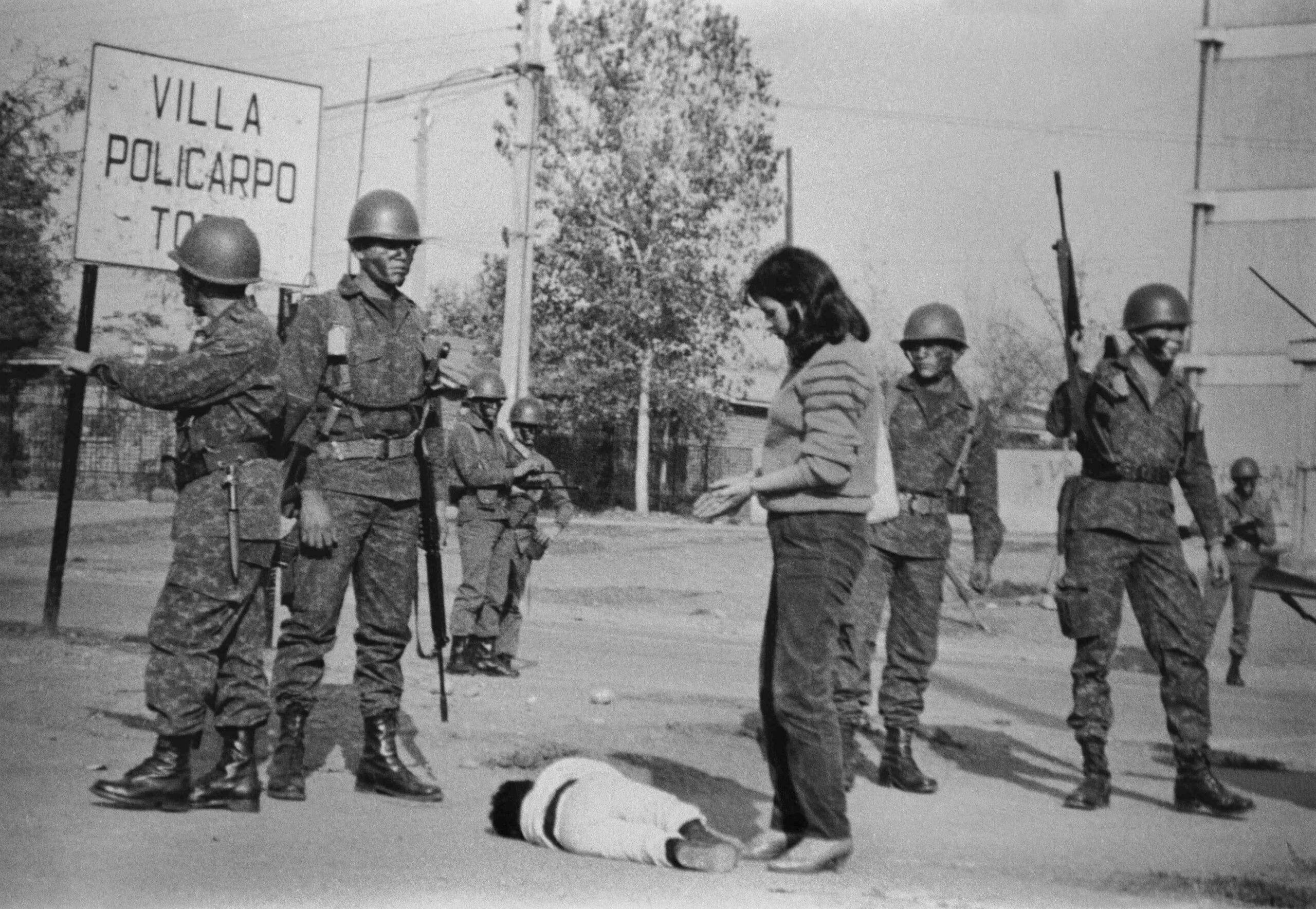
    A boy lies weeping by his mother after his father was arrested by soldiers in Santiago, Chile, during the Pinochet reign in 1986.

    Like Pinochet, the Trump administration wants you to believe the people they are terrorizing and killing deserve it. They want us to accept, or even celebrate, their crimes. Because if a victim deserves what happened to them, if there is a reason for it, then perhaps it can be stomached, or excused away, or ignored.

    During Argentina’s brutal 1970s dictatorship, civilians often justified repression using the phrase “Por algo será” — roughly, “There must be a reason for it.”

    Victimization implied that the victims were guilty of something. People are thrown out of planes while drugged. Por algo será. They are taken from their families in the middle of the night. Por algo será. Bodies are dumped in mass graves. Por algo será.

    And if there is a reason for it, then anyone can avoid being a victim by staying home. By not fighting. By letting the administration do whatever it wants, with no pushback.

    Good was a 37-year-old white mother from Colorado, her death filmed at multiple angles, all of which make the government’s lies harder to swallow for an American audience. But who the victim is should not matter: The government is violating fundamental human rights.

    It is our responsibility to refuse to accept these lies. To demand — and to pressure our representatives to demand — accountability for these crimes.

    Jane Esberg is an assistant professor of political science focused on authoritarian repression and censorship, particularly in Latin America, at the University of Pennsylvania.

  • Officials should be ready to protect Philadelphia from Trump’s immigration overreach | Editorial

    Officials should be ready to protect Philadelphia from Trump’s immigration overreach | Editorial

    The killings, assaults, and gaslighting by the Trump administration in Minneapolis have been heart-wrenching and appalling.

    But the costly chaos has also raised a difficult question: Is Philadelphia prepared if Donald Trump launches an immigration crackdown here?

    Mayor Cherelle L. Parker has largely remained mum on all things Trump. She believes non-provocation is the best way to keep the peace. Given the president’s erratic approach to governing, that strategy may work until something as inane as a Fox News segment sets him off.

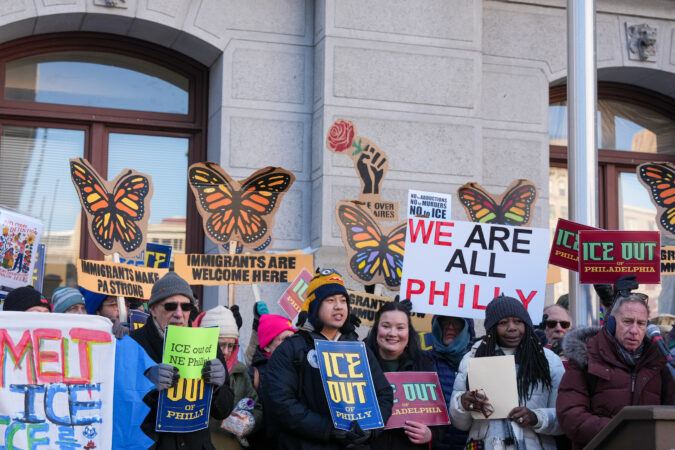
    That’s why two progressive City Council members, Kendra Brooks and Rue Landau, want the city to do more. They proposed a package of bills designed to make it harder for Trump’s U.S. Immigration and Customs Enforcement agents to operate in Philadelphia.

    If approved, the measures would codify into law the existing practices that limit cooperation with immigration enforcement agents, which are currently in place through executive orders by previous mayors. Those orders prohibit city officials from holding undocumented immigrants in custody without a judicial warrant, among other things.

    The Council bills would go further by barring ICE agents from wearing masks, using city-owned property for staging raids, or accessing city databases.

    The measures seem well-intended, but Parker administration officials doubt they will withstand legal challenges. Nor does Parker welcome anything that may irk Trump.

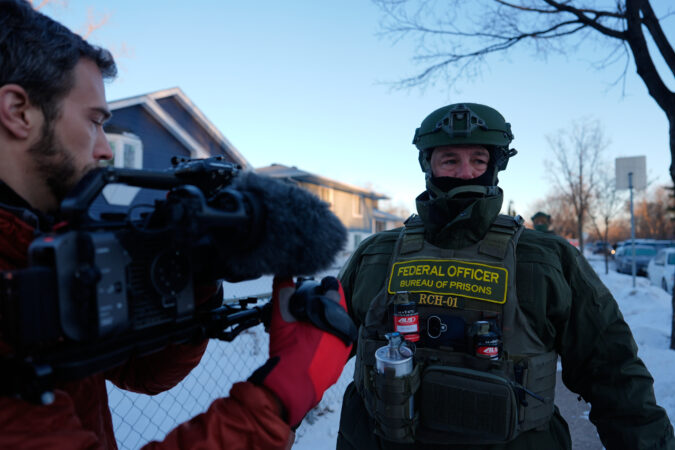
    Tear gas is deployed amid protesters near the scene where Renee Good was fatally shot by an ICE officer in Minneapolis.

    “Our strategy is working, and it’s keeping Philadelphia safe from all this nonsense,” an administration official who asked not to be identified told the Editorial Board.

    Some argue the mayor’s silence signals complicity, and is cold comfort for the city’s estimated 76,000 undocumented immigrants, or the many others who have legal status but still fear harassment — a perfectly rational concern given how ICE under the Trump administration has conducted itself so far.

    Beyond the murders of two U.S. citizens in Minneapolis, everyone has watched federal agents act with violent impunity in the name of purportedly going after the “worst of the worst” undocumented immigrants.

    Armed ICE agents entered a U.S. citizen’s home without a warrant and took him away in his underwear. Masked agents dragged a woman from her car and detained innocent children.

    More than 170 U.S. citizens have been detained by ICE, including one man with a Real ID who was arrested twice during immigration raids at construction sites in Alabama.

    More than 30 immigrants have died in ICE custody. The causes of death include homicide, seizure, and suicide.

    Hundreds of thousands more have been deported, often without due process enshrined in the Fifth and 14th Amendments. Meanwhile, protesters have been shot, assaulted, and pepper-sprayed in violation of their First Amendment rights.

    Given the stakes, Philadelphia would best be served if the mayor and Council put aside political differences and figured out how to marshal a unified plan that protects all residents from Trump’s overreach.

    It would be even better if state and city leaders developed a plan together in case Trump sends the National Guard or ICE agents to Philadelphia.

    The Shapiro administration has engaged in “tabletop exercises” to simulate what a federal incursion would look like, a spokesperson told the Editorial Board, adding that the governor speaks often with the mayor.

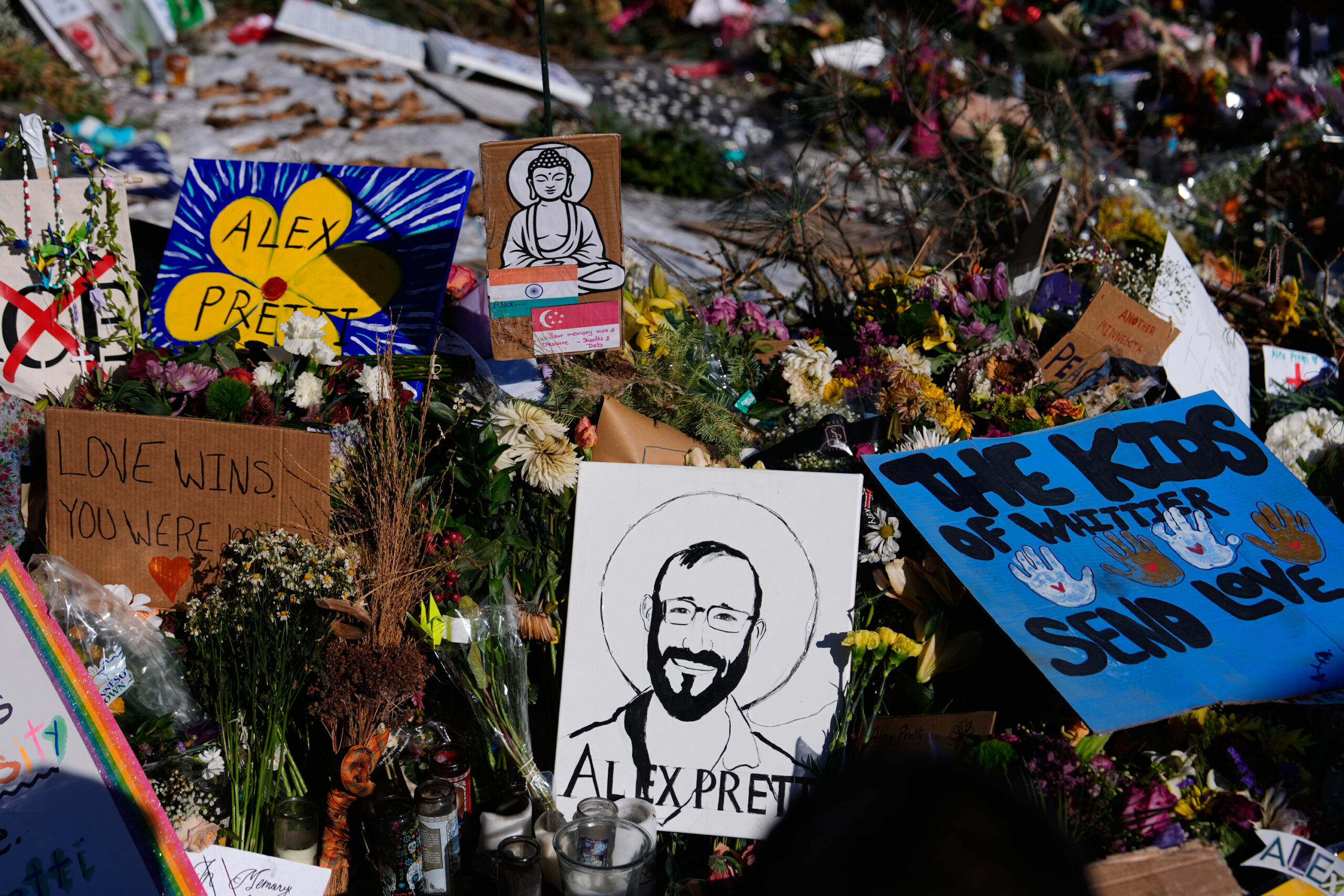
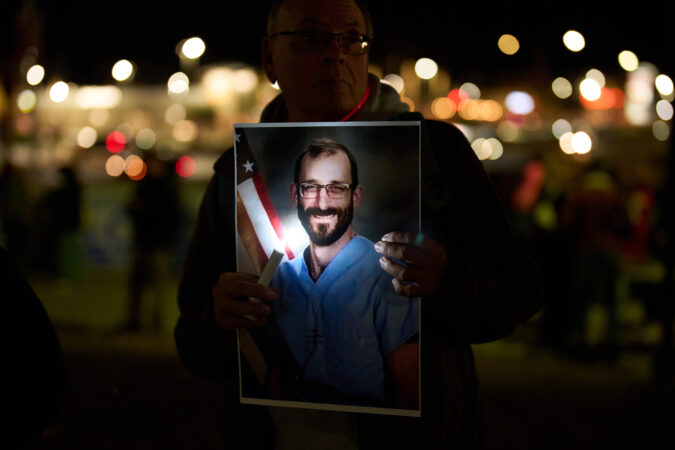
    A drawing of Alex Pretti is displayed at the scene where 37-year-old Pretti was fatally shot by a U.S. Border Patrol officer in Minneapolis.

    Gov. Josh Shapiro has sued the Trump administration 19 times to protect federal funding for critical programs and other issues, including stopping the unlawful deployment of the National Guard into cities.

    While Trump has somewhat dialed down the rhetoric in the face of broad pushback following the killing of Alex Pretti by Border Patrol agents, he has shown no sign of ending his misguided and unconstitutional immigration crackdown. That is even more reason why other leaders must develop a plan to stop the madness.

    The governor of Illinois and the mayor of Chicago were successful in going to the U.S. Supreme Court and getting Trump to withdraw National Guard troops. While cities and states can only go to court after Trump oversteps his authority, it is never too early to prepare.

    Democratic lawmakers in other states have proposed a variety of measures to limit and prevent Trump’s heavy-handed immigration tactics.

    A bill in Delaware, modeled after one in New York, would prohibit airlines from receiving jet fuel tax exemptions if they transport people detained by ICE without warrants and due process.

    A proposed measure in Colorado would allow individuals to sue federal law enforcement officials for civil rights violations.

    In a reminder of just how divided the country remains, lawmakers in some red states have proposed measures to ensure local officials cooperate with ICE.

    A bill in South Carolina would require county sheriffs enter into formal agreements to work with ICE, while a measure in Tennessee would require schools to check the immigration status of K-12 students.

    It’s beyond head-spinning that any reasonable person — let alone elected officials sworn to uphold the Constitution — could watch how ICE is operating and want more.

    Enough is enough. As the country prepares to celebrate the 250th anniversary of the Declaration of Independence, city and state officials here must work on a unified plan to ensure everyone is free to pursue life, liberty, and happiness.

  • Like the 2025 Eagles’ offense, Philly’s 2026 snow response has been underwhelming | Shackamaxon

    Like the 2025 Eagles’ offense, Philly’s 2026 snow response has been underwhelming | Shackamaxon

    This week’s Shackamaxon covers slow snow removal, political incentives, and whether politicians should be able to hedge their electoral bets.

    Snow-go zones

    When the news came through that Philadelphia schools would finally be open on Thursday, the Pearson household cheered. Between some brutal stomach bugs, the Christmas holiday break, in-service days, and the snow, it had felt like my older two children had barely spent any time in class since Thanksgiving. While I’m a strong advocate for snow days, I’m less enthusiastic about snow weeks. For many, the failure to open schools for three days crystallized their frustrations with the way the city handled the weekend onslaught of snow, sleet, and ice.

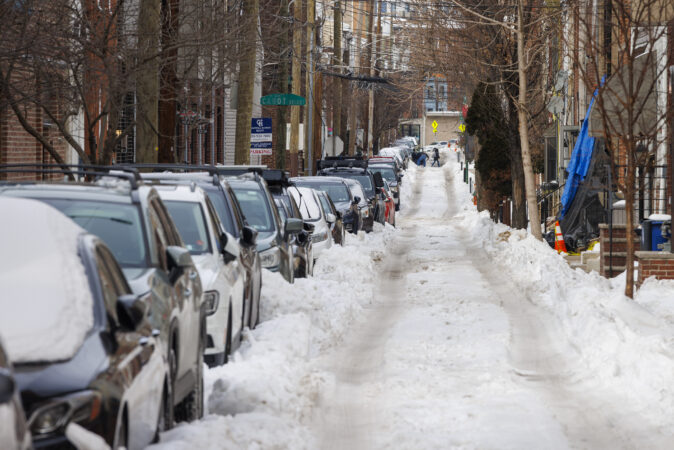
    TV news and social media are filled with angry residents. Many small streets remain wholly unplowed. Getting on the bus often requires climbing over ice piles. Many feel Mayor Cherelle L. Parker and her team did not adequately prepare for a weather event that everyone knew was coming. One reader even asked me if Carlton Williams, the city’s director of Clean and Green Initiatives and the point person for plowing, was Parker’s version of overmatched Eagles offensive coordinator Kevin Patullo.

    According to contemporary Inquirer reporting, more than 90% of city streets were plowed and passable after a large ice storm in 2016. It is hard to make a direct comparison, but I would be surprised if we were anywhere close. I asked Joe Grace, the mayor’s head of communications, if the city had anyone available to explain any unique challenges this year, but he did not respond.

    Of course, Philadelphia is hardly the only city to struggle with this storm. Washington residents are furious with their city’s snow response, schools across the state of Maryland are still closed, and cities in New Jersey are also struggling to remove the snow and ice. The freezing cold temperatures mean the snow piles are sticking around, rather than melting, and the accumulation is both heavy and frozen solid, making shoveling a difficult process.

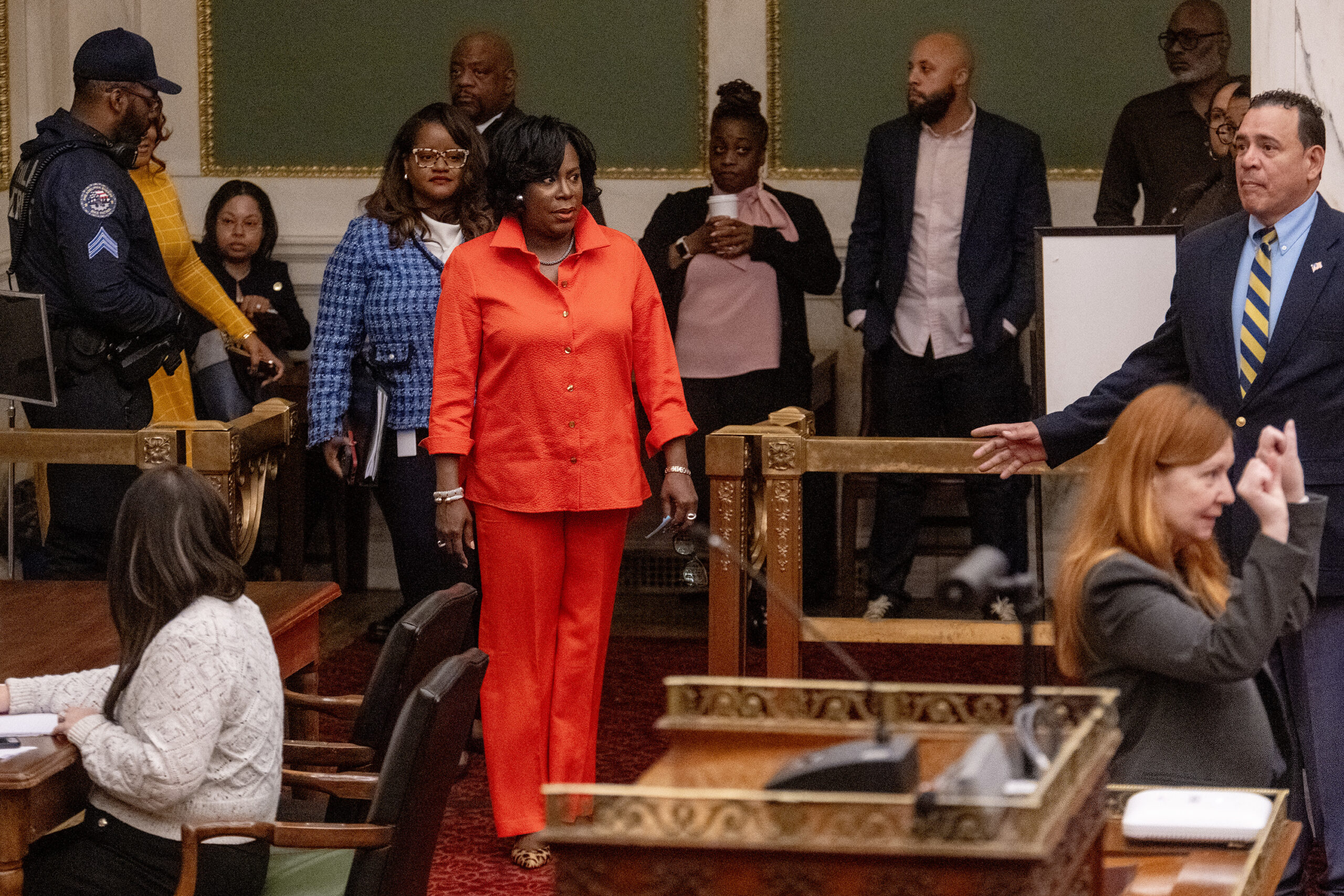
    Mayor Cherelle L. Parker arrives in Council chambers in March.

    A matter of incentives

    The snowfall, and the attendant consternation, is a good way to explain one of my key beliefs about city government: When the mayor disagrees with City Council, the mayor is often right. This isn’t a statement about any particular mayor or councilmember, but rather the different incentives for each office.

    When things go bad in a way that affects everyone, it’s the mayor who gets the blame. While many residents may vent to their district councilmember about the cleanup effort, most understand legislators aren’t in charge of plowing. In the private sector, employers will often talk about “key performance indicators.” For cities, that means things like crime reduction, trash collection, snow removal, and effective schools — which are all under mayoral control.

    With a two-term limit and competitive elections for each vacancy, mayors also have more direct accountability. People know who the mayor is, even if they don’t typically vote in local elections. If you are reading this column, you probably know who your district councilmember is, but around half of your neighbors likely don’t.

    Meanwhile, the things Council gets blamed for, and thus focuses on, tend to be more picayune. Sometimes, the body makes sweeping policy changes based on the testimony of just a few outspoken residents, who themselves often represent a hard-line and unrepresentative “not in my backyard” attitude. This approach leads to a concentration of benefits and the diffusion of costs.

    One former staffer told me councilmembers tend to see themselves as their constituents’ lawyer, rather than agents of systemic change. With challenges rare and vacancies even rarer, members have little incentive to take on new perspectives or alter their approach. Instead, they tend to dance with the ones who brung ‘em. This is particularly acute for members who represent districts, who are a majority of Council.

    The one move that tends to refocus a councilmember’s attention is becoming mayor.

    Parker herself is a great example of this phenomenon. As a district councilmember, she was tough on new development. As mayor, Parker has become a cheerleader for it. That’s because while individual projects may lead to a surge in complaints, they also help the city pay its bills, employ skilled workers, and house residents. The city’s chief executive, no matter who they are, is always likely to side with policy choices that have widespread public benefit because it is in their interest.

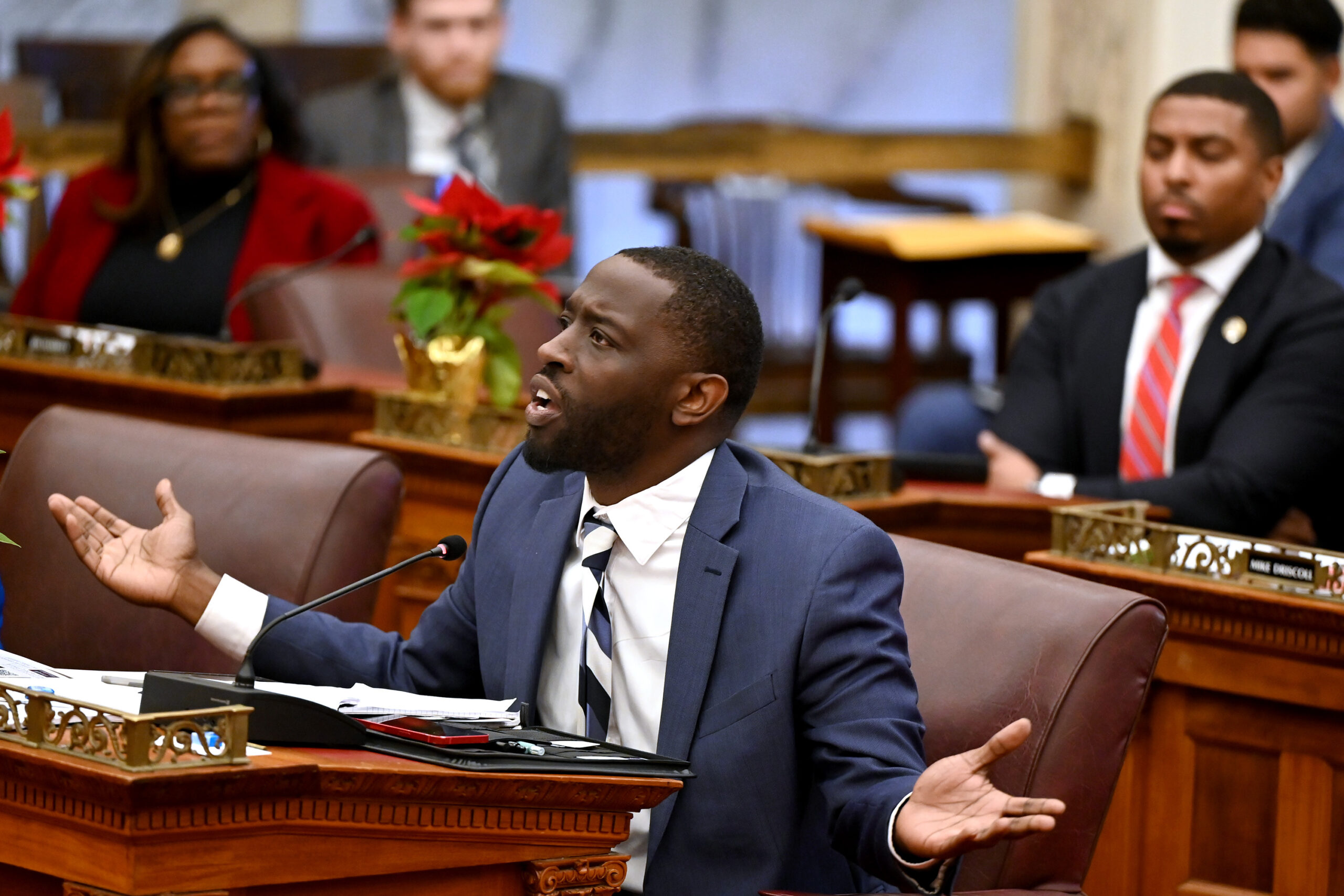
    Councilmember Isaiah Thomas in chambers as City Council meets in December.

    Resign to run reforms

    Perhaps lost in the ice removal and “Remove ICE” controversies is an effort from At-Large City Councilmember Isaiah Thomas to reform Philadelphia’s “resign to run” provision. This rule prevents city employees from running for political office without first quitting their day job, including elected officials. Thomas told me he’d like to see the proposed charter change put to the voters this year, perhaps as early as the May primary.

    In the past, efforts to change or eliminate the provision have failed, in part because of an understandable resentment of politicians getting to run for higher office on the public dime. Still, just like debates between mayors and councilmembers, it is worth looking at what kind of behavior this rule incentivizes.

    While the current crop of councilmembers is quite new, that hasn’t always been the case. Growing up, the joke was that people only left Council for three reasons: they retired, they went to jail, or they ran for mayor. The last member of Council to earn a political promotion outside of City Hall was Lucien Blackwell, who won a special election to replace Bill Gray in Congress all the way back in 1991.

    Both of Philadelphia’s current U.S. representatives benefited from holding elected office in Harrisburg, where this provision doesn’t exist. Could Brendan Boyle, famously the son of a janitor, have run for Congress if he had to resign his seat in the state House to run? Probably not.

  • Letters to the Editor | Jan. 30, 2026

    Letters to the Editor | Jan. 30, 2026

    ICE Out

    Mayor Cherelle L. Parker and everyone on City Council must urgently support the “ICE Out” legislative package introduced by Councilmembers Kendra Brooks and Rue Landau, which would restrict local cooperation with federal agents. We’ve all watched the horrific scenes playing out in Minneapolis, and while Mayor Parker has made it clear that she wants to avoid antagonizing the White House, the fact is that laying low has never been the right response to fascism. We know how spectacle-focused Donald Trump is, so with the nation’s 250th anniversary celebrations coming to Philadelphia this year, it’s only a matter of time before the president turns his gaze on our city and tries to make an example of our community. Let’s prepare now to protect our neighbors in whatever ways we can — including by passing the “ICE Out” bills.

    Melina Blees, Philadelphia

    Getting the job done

    The critical role of immigrant workers in healthcare is underscored by your recent article about the death of nurse Muthoni Nduthu, the nurse who perished with two others in an explosion at Silver Lake Nursing Home in Bucks County.

    Ms. Nduthu and her family emigrated from Kenya to Philadelphia two decades ago. Like many immigrants — some, yes, undocumented — she worked long hours and put herself through school to become part of the huge share of foreign-born workers in the healthcare sector — 28% of the overall direct care workforce for long-term care, and 32% of workers in home care settings, according to a 2025 analysis by KFF.

    What would the steadily growing U.S. aging population do without these men and women?

    As a nurse myself, and recently having family members in other rehabilitation centers, I can attest to the important roles of immigrants and people of color in providing care. It is tough work, with a median annual wage of $16,800, according to a brief prepared for the SCAN Foundation. Consequently, there isn’t a clamor for these jobs by native-born Americans.

    The Trump administration’s immigration policies and U.S. Immigration and Customs Enforcement deployments are having a chilling effect on immigrants seeking employment in healthcare — something we absolutely don’t need as our aging population demands more care.

    We need more people committed to helping others like Nduthu. Let’s honor her memory by welcoming newcomers to our country, thoughtfully reforming immigration laws, and realizing that adequate healthcare can’t be achieved without immigrants.

    Pat Ford-Roegner, Glen Mills

    Blaming the victim?

    I’ve been increasingly frustrated with Jonathan Zimmerman’s columns, which strike me as not meeting the moment we live in. His most recent, “On guns, everyone’s a hypocrite,” is a prime example of what I would describe as utopian thinking. I agree that “Guns are a scourge on America.” But I would urge him to consider: What exactly does it accomplish to publicly state that Alex Pretti “carrying a gun certainly made it more likely that he would [die]”? Doing so reinforces the statements of the Trump administration, aiding in providing cover to murderers. Far better to highlight the hypocrisy of the administration abandoning its Second Amendment principles out of convenience. And we need not look far for a counterexample, Renee Good, who was unarmed and yet was still murdered.

    I would love to live in a world in which simply repeating over and over the data and history of the gun debate brought an end to gun violence. But we’ve been doing that for decades now. We don’t live in the same world we did before Donald Trump took office. In my opinion, the moment calls for realpolitik, not idealism. To appropriate the National Rifle Association’s oft-repeated oversimplification: Guns didn’t kill Alex Pretti. ICE agents did.

    Michael Fox, Philadelphia

    . . .

    The both-sides-ing on display in Jonathan Zimmerman’s column, “On guns, everyone’s a hypocrite,” is pathetic and counterproductive.

    Not every issue needs to be seen from both sides. When one “side” shows up to a protest and murders someone with a gun, and the other “side” shows up to a protest and gets murdered while armed.

    Zimmerman is missing the point that the left’s defense of gun ownership is in response to our government lying to us and saying Alex Pretti posed a threat as a retroactive excuse for the actions of their fascist goon squads, while video evidence proved otherwise. Maybe he wants to write an article about gun control, but this framing is completely missing the point; it is victim-blaming garbage.

    Timothy Burgess, Philadelphia

    Somalis targeted

    I was a U.S. Peace Corps volunteer in Somalia and had the opportunity to experience the rich Somali culture. I am appalled and ashamed to have Donald Trump treat the Somali population of the United States with disdain and disrespect.

    Unfortunately, this attitude has spread to U.S. Immigration and Customs Enforcement members in Minnesota. It is reported that ICE is stopping people and asking, “Are you Somali?” as if that were a crime. In that climate, it’s no wonder Somali American U.S. Rep. Ilhan Omar found herself being attacked during a recent town hall she was hosting there.

    Seventy-three percent of Somali immigrants are naturalized citizens. In Minnesota, this figure is even higher, with about 95% of the state’s Somali population holding U.S. citizenship.

    No people deserve to be called “garbage.” I do not believe this reflects the character or convictions of most Americans. Most of us are descended from immigrants.

    Our country is founded on the belief that all people have the right to due process and to be treated with respect.

    We need to depend on our government of laws and judicial review to protect our rights, including those of the Somali Americans among us. Raise your voices in protest. Write the president and your members of Congress. Do something to help keep our democracy alive.

    Lally Turner, Philadelphia

    History, past and present

    George Santayana is quoted as saying, “Those who cannot remember the past are condemned to repeat it.” I think for our times, we need a slight variant of this saying. This seems especially true in light of the Trump administration’s decision to remove the exhibit at the President’s House Site about the nine enslaved people who were held captive by George Washington. Please ask yourself, “Why does this administration not want us to remember them?” I now believe the Santayana saying should read, “Those who seek to erase the past intend to repeat it.”

    Beware, my fellow citizens: If these nine — Austin, Christopher Sheels, Giles, Hercules, Joe Richardson, Moll, Oney Judge, Paris, and Richmond — can be erased, who is next?

    Deborah Zubow, Philadelphia

    Man in the mirror

    I read the recent article about Donald Trump supporters in Northeast Pennsylvania having “voter’s remorse” after casting ballots for Trump. Sorry, boys and girls, you get no sympathy from me. Trump is exactly who he has always been, and your failure to see that in the 2024 election is nothing more than an indictment of you. One woman interviewed made the incredible statement that Trump was “honest.” Give me a break. I have always maintained that Trump himself is only part of the equation, the “frontman,” if you will. The real problem is represented by the people who believe, support, and back him up. They say they don’t particularly like him, but they like his “policies.” What policies might they be? Attempting to steal Greenland? Already having stolen Venezuela’s oil? Insulting allies? Threatening NATO and its members? Attempting to rewrite the parts of our history he doesn’t like? Failing to reduce inflation as he promised? Failing to end the Ukraine war as he promised? Killing American citizens while his ICE squad rounds up immigrants? The list goes on and on.

    I am anything but a liberal, having never voted for a Democrat for any office. I’d go so far as to say I support some of Trump’s policies, but he simply can’t get anything right, let alone keep his mouth shut or control his “Twitter finger.” If Trump doesn’t like it, everyone else be damned. A decent parent wouldn’t accept this kind of behavior from a 6-year-old.

    Enough already. Trump is what he has always been: a pompous, egotistical, selfish, childish buffoon — the same guy voted into office by those people interviewed for your article. If their standards revolve around the likes of Trump, they need to do the country a favor. Stay home in November and then again in 2028. Let the rest of us try to fix the problem you helped to create.

    Peter Moore, Jeffersonville

    Join the conversation: Send letters to letters@inquirer.com. Limit length to 150 words and include home address and day and evening phone number. Letters run in The Inquirer six days a week on the editorial pages and online.

  • CBS, Washington Post blind themselves when America needs eyes on the ground

    CBS, Washington Post blind themselves when America needs eyes on the ground

    She said all the right things.

    The embattled new boss of CBS News, the until-now opinion journalist Bari Weiss, on Tuesday led a town hall-style meeting for editors and reporters at the storied TV network and appeared to understand both the crisis of American media and the values needed to fix it.

    “Our strategy until now has been: Cling to the audience that remains on broadcast television,” Weiss told her newsroom. “I’m here to tell you that if we stick to that strategy, we’re toast.” She called for more investigative reporting and pledged to merge the values of a high-tech start-up with “journalistic principles that will never change — seeking the truth, serving the public, and ferociously guarding our independence …”

    Meanwhile, the overpowering stench of burning toast filled the room.

    That’s because Weiss and her billionaire pro-Trump overlords, the Ellison family, seem to be doing all the wrong things, undercutting those pretty words. Her first concrete move announced in tandem with the town hall was the hiring of 18 thumb-sucking opinion journalists — a ragtag, right-leaning group that includes a medical huckster and an ex-Trump official — even as the newsroom braced for buyouts and feared layoffs that would slash honest shoe-leather reporting.

    The move toward more commentators telling you what to think about an America spiraling into chaos and fewer boots-on-the-ground journalists digging up what’s needed to fix that crisis — objective truth — could not happen at a worse time, and unfortunately, this is not unique to CBS News.

    The Washington Post — which has lost hundreds of thousands of digital subscribers since a self-coup by its billionaire owner, Amazon founder Jeff Bezos, shifted its opinion section to the political right — is also bracing for deep staff cuts that would cripple its international reporting, as well as its sports staff.

    The extent of the widely rumored staff reductions isn’t yet known, but a preview came last week when the paper briefly told the newsroom it was axing its long-standing plan to send 12 journalists to next month’s Winter Olympics in Italy, before slightly backtracking and saying four reporters would still go.

    Still, that move, and the louder rumors about pending layoffs, has led to deep concern over the future of its metro Washington and international desks. “We urge you to consider how the proposed layoffs will certainly lead us first to irrelevance — not the shared success that remains attainable,” stated a letter from 60 journalists on the foreign desk sent this week to Bezos.

    “It’s all very confusing, and no one knows anything,” an anonymous Post staffer told the Guardian. “The anxiety is so sad.”

    America has been losing news reporters for years. Nationally, newsroom staff have plummeted a whopping 26% since 2008, and the pace of job cuts has only accelerated in recent years as vast news deserts with no sources of local journalism expand across rural America. It’s been a perfect storm prompted heavily by internet-driven changes in reader or viewer habits, as well as declining public trust in traditional media.

    But the looming cuts at the Post and CBS are especially painful both in a symbolic sense and also as self-inflicted own goals that will only heighten public mistrust instead of attacking the problem.

    In 1972, with then-President Richard Nixon driving toward a landslide reelection, the Post, under its legendary editor Ben Bradlee, and CBS, with its popular, avuncular anchor Walter Cronkite, were the only two major outlets that took seriously the links between the Watergate break-in and the Nixon White House. Both newsrooms threw major resources into keeping alive the story that eventually caused Nixon to resign, including a 22-minute special report that Cronkite anchored on the CBS Evening News.

    In this undated photo released by Paramount, one of the Free Press’s cofounders, Bari Weiss, poses for a portrait. Weiss is the editor-in-chief of CBS News.

    That kind of accountability journalism created a bond with the audience that should have left CBS and the Post better positioned to weather the economic storms that have battered journalism in the 21st century. The current crises were self-inflicted, albeit for slightly different reasons.

    In Washington, the Post zigzagged from acknowledging what its readers wanted during Donald Trump’s first term — both in its “Democracy Dies in Darkness” slogan to some solid journalism that backed that up — to billionaire Bezos’ embrace of authoritarianism ahead of Trump’s second coming. The Bezos-ordered spiking of a Kamala Harris endorsement and a rightward editorial shift accelerated a steep decline in subscriptions, including about 300,000 lost readers after the nonendorsement.

    One could argue that staff cuts in such an environment are inevitable, but one might also question the priorities of the Post’s owner, the world’s second-richest person. Amazon — where Bezos remains executive chairman — has just spent $75 million on a White House-fluffing Melania documentary expected to bring back just $1 million at the box office.

    The priorities at Weiss-run CBS News seem similarly warped. The money the newsroom is spending on those 18 or so opinion journalists — a motley crew that includes Mark Hyman, who health experts have accused of “quackery,” calling him a “germ theory denialist,” and retired Gen. H.R. McMaster, a key policy adviser in Trump’s first term — could have been spent on new investigative reporters.

    Indeed, a major CBS rival — MS Now, which is also in a state of flux after spinning off from its longtime relationship with NBC News — did exactly that when it hired Pulitzer Prize-winning journalist and author Carol Leonnig away from the Post, of all places. Since late last year, Leonning has been scooping CBS and everybody else on corruption in Trump’s Justice Department, and the curious case of immigration czar Tom Homan and his $50,000 Cava bag.

    But then Weiss’ overlords in the Ellison family, whose recent role in the TikTok takeover and current fight to acquire Warner Bros. Discovery both depend on the blessing of the Trump White House, probably don’t want the stories Leonnig is uncovering.

    This is not a diatribe against all opinion journalism. I am an opinion journalist, and I started moving in that direction in the 2000s when I thought someone needed to be screaming from the rooftops about the lying and the war crimes of the George W. Bush regime. I think commentary and debate are especially needed in the local communities where such jobs have vanished the most, but I also think powerful opinion journalism exists mainly to augment on-the-ground reporting, not replace it.

    The greatest irony of the pullbacks at CBS and the Post is that the national crisis over immigration raids in Minnesota and the conduct of U.S. Immigration and Customs Enforcement and U.S. Customs and Border Protection officers who’ve killed two citizens has shown that what American democracy needs most is seekers of the truth — much more than people telling you what to think.

    The over-the-top lies from the highest levels of the U.S. government about how and why Renee Good and Alex Pretti were gunned down on the streets of Minneapolis have fallen apart because multiple videos have allowed citizens to see the truth of what actually happened.

    Most of those videos were shot by citizen observers, but with 3,000 federal agents fanning out across Minnesota and hundreds more conducting immigration raids from Maine to Los Angeles, a web of local and independent journalists has also proved critical in documenting the raids and their many human rights abuses.

    Dozens of journalists have been tear-gassed multiple times or struck with rubber bullets or pepper balls, and yet continue to cover protests and ICE activities, often in the most miserable conditions, and keep going out there to create a public record.

    This week, a federal judge called out ICE for violating nearly 100 court orders just since the start of this year. The reason we know about many of these is because of an army of journalists — some independents, some with small community weeklies, and some with metro newspapers like the Chicago Tribune or the Minnesota Star Tribune — who refused to accept the regime’s lies and refused to be scared off by the projectiles fired at them.

    They are showing people the truth. And the truth is rapidly turning public opinion against Trump’s immigration raids and the rush to authoritarianism. Public opinion is changing policy, including the regime’s abrupt retreat from Maine on Thursday, and possible legislative action on Capitol Hill (we’ll believe it when we see it).

    CBS News and the Washington Post could have been at the vanguard of this movement, which would have been a fitting tribute to the legacies of Cronkite and Edward R. Murrow, Bradlee and Bob Woodward and Carl Bernstein, and their many intrepid colleagues. Instead, the supposed keepers of those flames have made a horrible, doomed bet on autocracy.

    What I’ve watched in recent weeks coming out of Minneapolis and elsewhere on the front lines of the war for America’s soul has given me more hope for the future of journalism than any time since the ball dropped to launch this cursed millennium. That CBS and the Post chose this exact moment to willingly blind themselves is beyond pathetic.

  • Slavery was central to the presidency. The President’s House should say so.

    Slavery was central to the presidency. The President’s House should say so.

    Last Thursday, the National Park Service removed a series of informational signs about slavery from the President’s House Site at Sixth and Market Streets in Old City Philadelphia.

    Installed when the site opened in 2010, the signs documented the lives of the enslaved people who lived and labored in the home of Presidents George Washington and John Adams. Their removal occurred without consultation with the city, despite a 2006 agreement requiring the parties to meet and confer before any changes were made to the exhibit.

    The City of Philadelphia responded by filing a federal lawsuit seeking to have the signs restored. According to the suit, the National Park Service and the U.S. Department of the Interior made unilateral changes in violation of those long-standing agreements. At stake is not simply a set of panels, but whether the public will continue to confront an essential historical truth: Slavery was central to the American presidency.

    Philadelphia is the wrong place for historical amnesia.

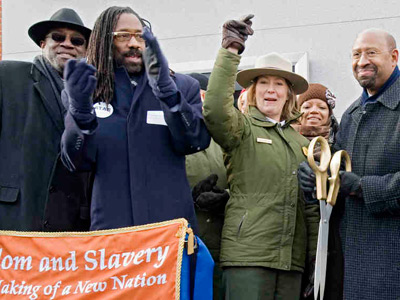
    Dignitaries gather for the opening of a memorial to enslaved people at President’s House in 2010. From left: Municipal Judge Charles Hayden, attorney Michael Coard, Independence National Historical Park’s Cynthia MacLeod, and Mayor Michael Nutter.

    The President’s House stands on ground where the ideals of liberty were articulated alongside the daily practice of human bondage. During Washington’s presidency, the executive mansion functioned simultaneously as a seat of republican government and a site of enslavement, even as Philadelphia emerged as a center of abolitionist thought and Black civic life. The exhibit that opened in 2010 was the result of years of advocacy by historians, community members, and activists who insisted that the enslaved people in Washington’s household not be erased from public memory.

    Slavery was not incidental to Washington’s presidency. It was essential to it.

    Washington enslaved people from childhood, inheriting human property at the age of 11 and expanding his holdings through purchase and marriage. By the time he became president in 1789, he was a Virginia planter whose wealth, household, and public standing depended on enslaved labor. That dependence followed him north.

    When Washington relocated to Philadelphia, he encountered Pennsylvania’s Gradual Abolition Act of 1780, which allowed enslaved people to claim freedom after residing in the state for six months. Rather than comply with the law’s intent, Washington devised a deliberate strategy to evade it.

    Enslaved people in his household were sent out of Pennsylvania just before the deadline and then returned, resetting the clock. He was careful to keep this arrangement private, instructing aides that it should not become public.

    Among the enslaved people living in the President’s House was Ona Judge, who belonged to Martha Washington and served as her personal attendant. As historian Erica Armstrong Dunbar has shown through meticulous research, Judge understood the possibilities and dangers of freedom in a city like Philadelphia. In May 1796, after learning she was to be given away as a wedding gift, Judge fled the President’s House and escaped north.

    Committed to slavery

    Washington’s response reveals the depth of his commitment to slavery.

    Within days, an advertisement appeared on the front page of the Philadelphia Gazette and Universal Daily Advertiser. It announced that Judge had “absconded from the household of the President of the United States.” Placed by the steward of the President’s House, the notice described her appearance in detail, warned ship captains not to assist her escape, and offered a reward for her capture and return.

    The language matters. It explicitly tied the presidency itself to the pursuit of an enslaved woman who claimed her freedom.

    Washington pursued Judge for years, dispatching friends, relatives, and officials to recapture her. He never succeeded, but his actions make clear that slavery was not a peripheral contradiction in his life. It was a system he actively defended while serving as president.

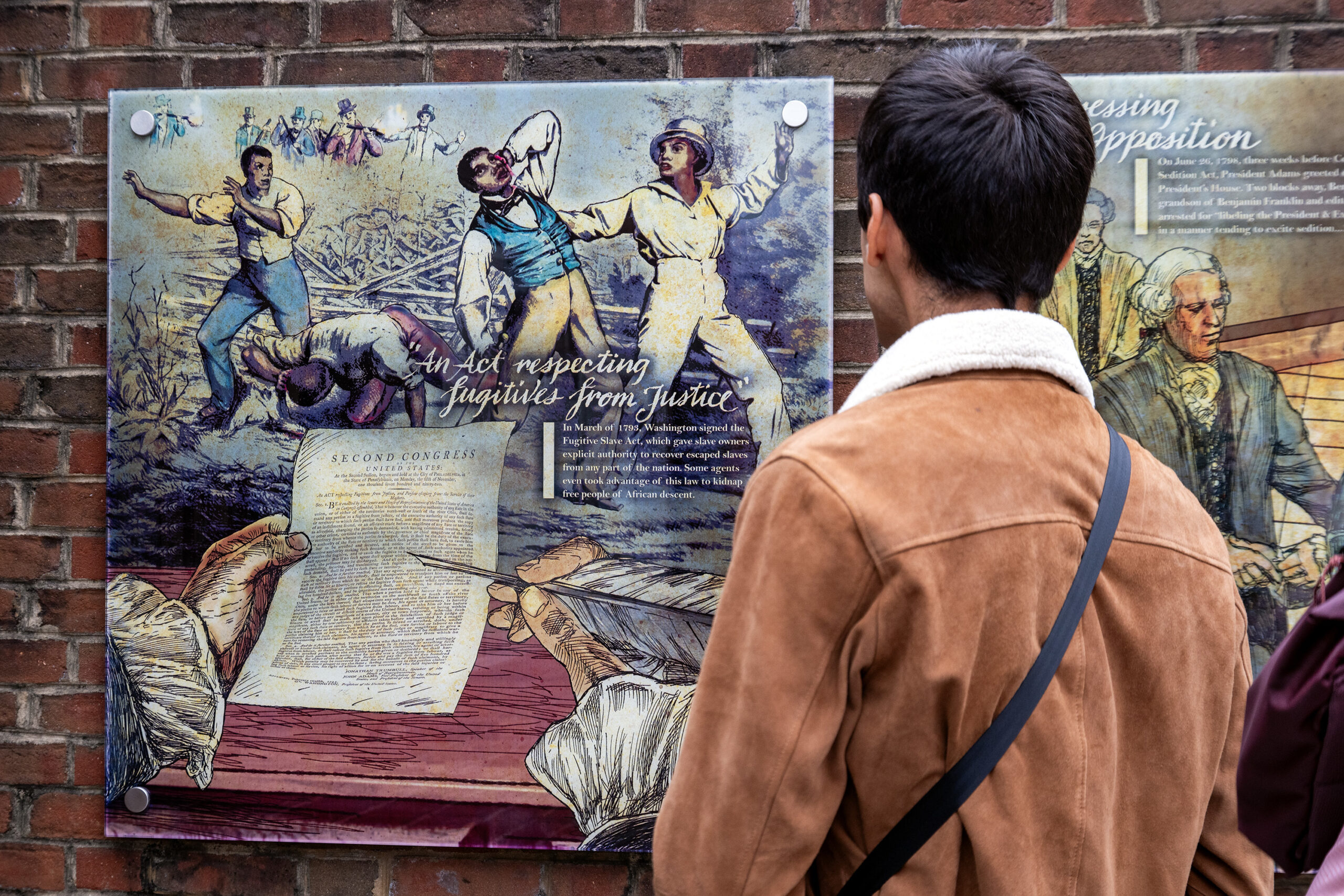
    A visitor views a panel about the Fugitive Slave Act at the President’s House in Independence National Historical Park in 2025.

    At the same time, Black Philadelphians were building institutions that challenged slavery not in theory, but in practice.

    Only a few blocks from the President’s House, Richard Allen and Absalom Jones organized mutual aid through the Free African Society, laying the groundwork for what would become Mother Bethel African Methodist Episcopal Church. Born from the violence of segregation in white churches, Mother Bethel became a cornerstone of Black autonomy in the early republic — a place where abolition was preached, freedom was practiced, and Black civic life flourished.

    The ironies of Philadelphia’s founding moment are unavoidable. The same Washington who pursued Judge and signed the Fugitive Slave Act also contributed financially to Allen’s efforts to build an African church. These contradictions were not hidden from contemporaries. They were preserved.

    More than a century after the American Revolution and Washington’s presidency, the association between presidential authority and enslaved labor had not faded from public memory.

    In 1883, a widely circulated illustrated history depicted Washington walking along a cobblestone street with a Black “servant” following several steps behind him in livery, carrying his coat. For Americans who could not read — or who absorbed history visually — such images conveyed meaning powerfully. Even generations later, Washington was still remembered in proximity to enslaved labor.

    That illustration is not an abstraction. It survives today in the holdings of the Library Company of Philadelphia, where I direct the Program in African American History. Despite contemporary efforts to erase or soften this past, the evidence remains materially present. The Library Company holds the largest collection documenting the Black presence in Philadelphia — more than 13,000 items spanning the 18th through 20th centuries.

    These materials document slavery, but they also trace the Black community’s sustained fight to advance abolition, and the enduring ways Black Philadelphians confronted the afterlives of slavery across the 19th and 20th centuries.

    Preserving memory

    The archive does what removed signage cannot. It insists on memory.

    It shows how Black political thought, religious life, and institutions developed alongside — and in opposition to — slavery. Mother Bethel AME Church, which continues to stand today, hosted abolitionists, organized resistance to colonization schemes, supported the Underground Railroad, and later aided Black migrants during emancipation, Reconstruction, and the Great Migration. This is not peripheral history. It is Philadelphia’s history.

    Removing slavery interpretation from the President’s House is therefore not a neutral curatorial decision. It contradicts the historical record, violates agreements requiring consultation with the city, and risks teaching the public that the presidency can be understood without reckoning with slavery.

    It cannot.

    This moment is especially fraught as the nation approaches the 250th anniversary of 1776. That commemoration will invite renewed storytelling about founding ideals and national origins. If we enter that moment by stripping slavery from public history sites, we will be manufacturing historical amnesia precisely when historical clarity matters most.

    Philadelphia has another choice. In February, the Library Company of Philadelphia, in partnership with the American Philosophical Association, will host a conference titled “Black Declarations of Independence: Before and After 1776.” The premise is straightforward: Black claims to freedom, dignity, and self-determination were not marginal to the founding era. They were central to it — and they continue to shape the nation’s unfinished project.

    Restoring the President’s House signs would be a modest but meaningful step in that direction. It would affirm that Philadelphia will confront its history honestly as it prepares to commemorate 1776 — and that it will not celebrate independence by forgetting those whose bondage, resistance, and perseverance make the meaning of independence intelligible in the first place.

    Jim Downs is a historian and Guggenheim Fellow, a professor of history at Gettysburg College, and director of the Program in African American History at the Library Company of Philadelphia.

  • Removal of slavery exhibit from the President’s House will not whitewash history | Editorial

    Removal of slavery exhibit from the President’s House will not whitewash history | Editorial

    Despite widespread pushback, the Trump administration and the National Park Service removed exhibits on slavery from the President’s House, a recreation of the executive residence that once housed George Washington and John Adams.

    The exhibits detailed facts about slavery in early America, including how Washington engaged in a human shell game with enslaved members of his own household. After the passage of Pennsylvania’s Gradual Emancipation Act in 1780, enslaved people were shuttled between Philadelphia and Mount Vernon every six months to obey the letter, if not the spirit, of the law.

    The exhibits, part of Independence National Historical Park, also memorialized the nine people first brought into bondage to the city with our nation’s first president. It is important to note their names and their stories.

    Austin was a waiter who died while traveling on one of those trips back to Virginia. Paris was a young stable hand whose tenure in the city was short. Hercules was a celebrated chef who eventually escaped from Mount Vernon. Christopher Sheels served as Washington’s valet. Richmond was the son of Hercules and worked various roles despite being just 11 years old. Giles drove Washington’s carriage. Oney Judge, a maid, famously fled bondage in Philadelphia, attracting the president’s ire. There was also Moll, a nanny, and Joe, a footman. Joe had to leave his wife and children behind in Virginia during his time working at the President’s House.

    Evidence shows that the people whom Washington enslaved were well aware of the hypocrisy surrounding their situation. In a nation formed on the premise that “all men are created equal,” they found themselves bound by birth to a life of servitude, working in the household of the new republic’s first leader. Their stories once adorned the President’s House. Now, blank spaces stand in their place.

    The Trump administration has cited a desire to avoid any historical marker that “inappropriately disparages Americans past or living.” Washington is one of the most admired men in U.S. history. His military leadership and willingness to cede executive power are worthy of our esteem. But Washington, like Thomas Jefferson and many other founders, fell short when it came to slavery. Removing panels cannot change that fact.

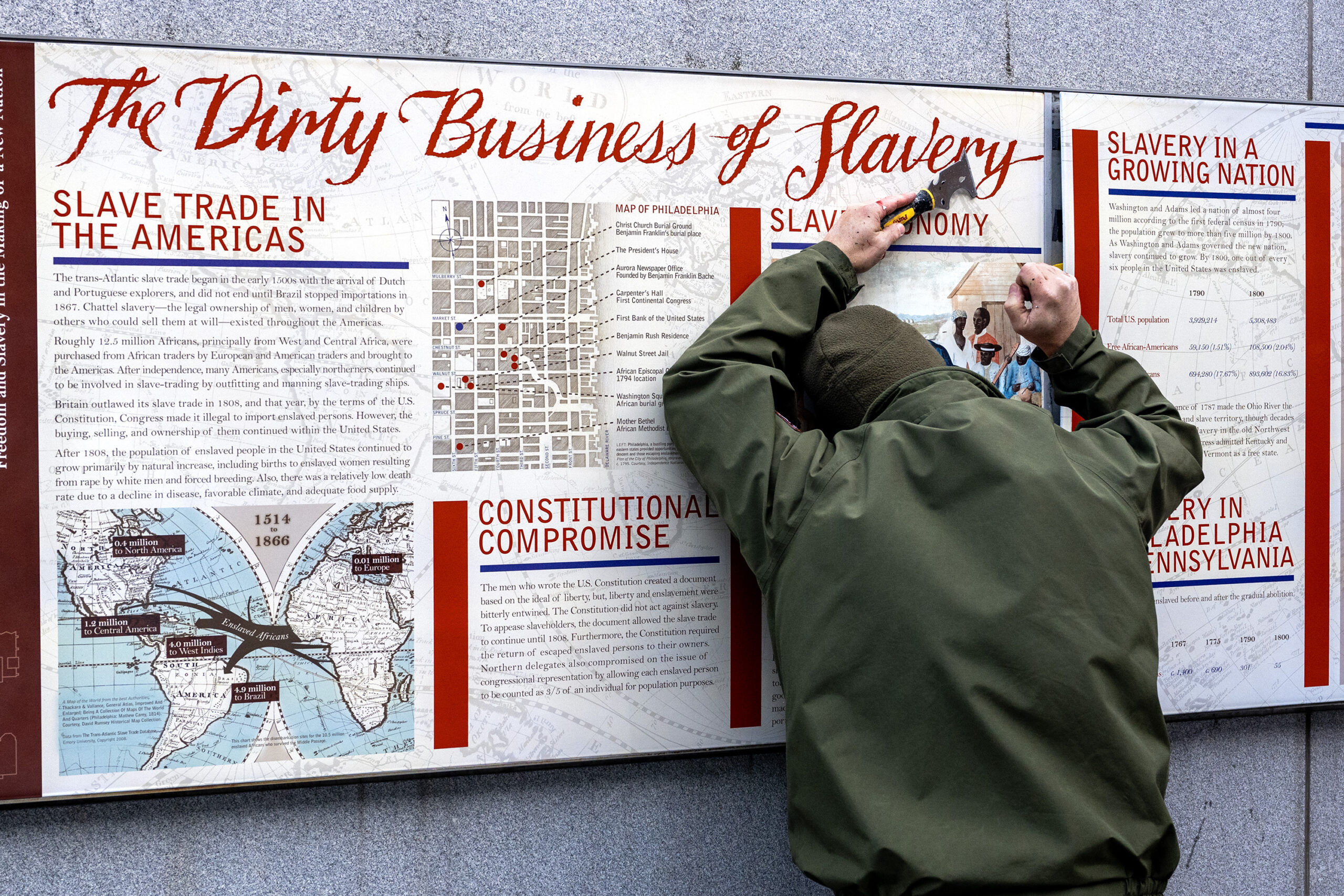
    A National Park Service worker removes panels at the President’s House site in Independence National Historical Park on Jan. 22. More than a dozen educational displays and illustrations about slavery were removed from the site.

    What the desecration of the President’s House does is disparage not just the enslaved members of Washington’s household, but the millions of Americans who, in the words of Mayor Cherelle L. Parker, “endured a great deal of pain so that America could realize its promise.” It also insults the efforts of the Philadelphians who fought to build the exhibit and have a vital part of America’s history recognized.

    Thankfully, there is a strong local effort to fight the removal.

    Parker cited a 2006 agreement between the city and the National Park Service, which her administration says requires consultation before any alterations are made. The city has filed a lawsuit to restore the panels and is hosting a public hearing on Friday. Perhaps while the court fight plays out, a temporary alternative can be installed at City Hall, by the Constitution Center, or in Fairmount Park.

    Parker’s outrage is also a welcome change. While the mayor has mostly refrained from picking fights with the White House, she chastised President Donald Trump and park service officials, saying: “You cannot erase our history. You will not erase our history!”

    Gov. Josh Shapiro has joined the city’s lawsuit. An amicus brief filed by his administration said: “There is no virtue in refusing to acknowledge certain aspects of our history because it is painful to do so. The removal of the slavery exhibit from the President’s House undermines this commitment and denies Pennsylvanians and others the opportunity to learn more about a part of our history that cannot be ignored.”

    This sentiment is the right way forward.

    As the United States celebrates its 250th anniversary, Americans will undoubtedly hear much about this country’s triumphs. That includes those who fought and died — including many who had been enslaved themselves — to keep our country united and begin to address our nation’s greatest mistake.

    Generations after the Civil War, Americans were a pivotal part of the coalition that defeated the forces of fascism in Europe. The United States has put people on the moon, helped vanquish diseases like polio, exported its diverse and vibrant culture, and inspired democratic reformers across the world.

    Failing to acknowledge our failures can only undermine that legacy.

  • Letters to the Editor | Jan 29, 2026

    Letters to the Editor | Jan 29, 2026

    Defund ICE

    Words sufficient to describe the horrors of this administration and the complicit Republicans have long left me. Our senators, though, have an opportunity to slow the imposition of authoritarian rule by voting to remove U.S. Immigration and Customs Enforcement funding from the current appropriations package. There is no need to shut the government down again if that particular funding package is cut to be addressed another day. The Trump administration has been squirreling away money in offshore accounts in Qatar, but any pushback from the Senate will send a message that democracy isn’t dead yet.

    Mary Ann Hanna, Media

    History repeats

    Unfortunately, governments murdering citizens and then lying about it is nothing new. I know because my grandfather was present when a band of government thugs attacked a group of people, killing four of them and injuring many more. The government lied and said shots had been fired at the thugs, and they were just acting in self-defense. So what we are witnessing in Minnesota is from an age-old playbook. In my grandfather’s case, the year was 1933, and the leader in charge was Adolf Hitler. I never thought that all these years later, I would live to see it happen in America.

    Stefan Keller, Huntingdon Valley

    No moral conviction

    The tone of the civil rights and social justice movements of the 1960s and the anti-Vietnam War protesters of the 1970s had some moral character. In contrast, these U.S. Immigration and Customs Enforcement-related protesting mobs are fundamentally different from those times, as they have no morals and no credibility. This endless massive wave of anti-ICE protesters — their chaotic confrontations with federal agents, their disrupting of a Christian church service — is creating even more emotional volatility, rather than any unified moral conviction of the ’60s and ’70s.

    Fueled by social media, the United States is now more polarized than ever before. As unrest continues to escalate, the armed military waits to get involved. We are now watching the collision of federal immigration enforcement and protesters (who I sincerely believe are being paid). The situation is now so unstable that it’s like we’re all just waiting for the next shooting. As law enforcement takes sniper positions, preparing for the mob’s coordinated violence, should we not take a minute of silence before the gunfire starts?

    Carl Marchi, Holliston, Mass.

    Standing on truth

    I thank special counsel Jack Smith for his calm, factual, disciplined, and courageous public testimony before Congress last week. He laid out evidence in the criminal cases against Donald Trump, including the persistent lie of a “stolen” 2020 election, without theatrics or spin.

    Mr. Smith did not editorialize or inflame. He stated the evidence and the law, exactly as his role requires.

    The response from President Trump was telling. While Mr. Smith testified before the House Judiciary Committee, Trump attacked him on Truth Social, calling him a “deranged animal,” and directing Pam Bondi to investigate him. That is not oversight. It is intimidation. It is retaliation.

    One man testified to facts and law. The other resorted to insults and threats. That contrast explains far more about the state of our democracy than any talking point ever could.

    History will take note.

    Maria Duca, Philadelphia

    Join the conversation: Send letters to letters@inquirer.com. Limit length to 150 words and include home address and day and evening phone number. Letters run in The Inquirer six days a week on the editorial pages and online.