Category: National Politics

  • Legal fight escalates over Georgia voting records as Trump says he wants to ‘take over’ elections

    Legal fight escalates over Georgia voting records as Trump says he wants to ‘take over’ elections

    ATLANTA — Officials in Georgia’s Fulton County said Wednesday they have asked a federal court to order the FBI to return ballots and other documents from the 2020 election that it seized last week, escalating a voting battle as President Donald Trump says he wants to “take over” elections from Democratic-run areas with the November midterms on the horizon.

    The FBI had searched a warehouse near Atlanta where those records were stored, a move taken after Trump’s persistent demands for retribution over claims, without evidence, that fraud cost him victory in Georgia. Trump’s election comment came in an interview Monday with a conservative podcaster and the Republican president reaffirmed his position in Oval Office remarks the next day, citing fraud allegations that numerous audits, investigations and courts have debunked.

    Officials in heavily Democratic Fulton County referenced those statements in announcing their legal action at a time of increasing anxiety over Trump’s plans for the fall elections that will determine control of Congress.

    “This case is not only about Fulton County,” said the county chairman, Robb Pitts. “This is about elections across Georgia and across the nation.”

    In a sign of that broader concern, Sen. Mark Warner (D., Va.) said this week that he once doubted Trump would intervene in the midterms but now “the notional idea that he will ask his loyalists to do something inappropriate, beyond the Constitution, scares the heck out of me.”

    The White House has scoffed at such fears, noting that Trump did not intervene in the 2025 off-year elections despite some Democratic predictions he would. But the president’s party usually loses ground in midterm elections and Trump has already tried to tilt the fall races in his direction.

    Democratic state election officials have reacted to Trump’s statements, the seizure of the Georgia election materials and his aggressive deployment of federal officers into Democratic-leaning cities by planning for a wide range of possible scenarios this fall. That includes how they would respond if Immigration and Customs Enforcement officers were stationed outside polling places.

    They also have raised concerns about U.S. Department of Justice lawsuits, mostly targeting Democratic states, seeking detailed voter data that includes dates of birth and partial Social Security numbers. Secretaries of state have raised concerns that the administration is building a database it can use to potentially disenfranchise voters in future elections.

    Trump and his allies have long fixated on Fulton County, Georgia’s most populous, since he narrowly lost the state to Democrat Joe Biden in 2020. In the weeks after that election, Trump called Georgia’s secretary of state, Republican Brad Raffensperger, urged him to help “find” the 11,780 ballots that would enable Trump to be declared the Georgia winner of the state and raised the prospect of a “criminal offense” if the official failed to comply.

    Raffensperger did not change the vote tally, and Biden won Georgia’s 16 electoral votes. Days later, rioters swarmed the U.S. Capitol on Jan. 6, 2021, and tried to prevent the official certification of Biden’s victory. When Trump returned to the presidency in January 2025, he pardoned more than 1,000 charged in that siege.

    “The president himself and his allies, they refuse to accept the fact that they lost,” Pitts said. “And even if he had won Georgia, he would still have lost the presidency.”

    Pitts defended the county’s election practices and said Fulton has conducted 17 elections since 2020 without any issues.

    A warrant cover sheet provided to the county includes a list of items that the agents were seeking related to the 2020 general election: all ballots, tabulator tapes from the scanners that tally the votes, electronic ballot images created when the ballots were counted and then recounted, and all voter rolls.

    The FBI drove away with hundreds of boxes of ballots and other documents. County officials say they were not told why the federal government wanted the documents.

    The county is also asking the court to unseal the sworn statement from a law enforcement agent that was presented to the judge who approved the search warrant.

    The Justice Department declined to comment on the county’s motion.

    “What they’re doing with the ballots that they have now, we don’t know, but if they’re counted fairly and honestly, the results will be the same,” Pitts said.

    Tulsi Gabbard, Trump’s director of national intelligence, was at the Fulton search last week, and Democrats in Congress have questioned the propriety of her presence because the search was a law enforcement, not intelligence, action.

    In a letter to top Democrats on the House and Senate Intelligence committees Monday, Gabbard said Trump asked her to be there “under my broad statutory authority to coordinate, integrate, and analyze intelligence related to election security.”

    White House spokeswoman Karoline Leavitt said Tuesday that the president’s “take over” remarks, which included a vague reference to “15 places” that should be targeted, were a reference to the SAVE Act, legislation that would tighten proof of citizenship requirements. Republicans want to bring it up for a vote in Congress.

    But in his remarks that day, Trump did not cite the proposal. Instead, he claimed that Democratic-controlled places such as Atlanta, which falls mainly in Fulton County, have “horrible corruption on elections. And the federal government should not allow that.”

    The Constitution vests states with the ability to administer elections. Congress can add rules for federal races. One of Trump’s earliest second-term actions was an executive order that tried to rewrite voting rules nationwide. Judges have largely blocked it because it violates the Constitution.

    Trump contended that states were “agents of the federal government to count the votes. If they can’t count the votes legally and honestly, then somebody else should take over.”

    Sen. Thom Tillis (R., N.C.) said Wednesday said he supported the SAVE Act but not Trump’s desire for a federal takeover. “Nationalizing elections and picking 15 states seems a little off strategy,” Tillis told reporters.
  • U.S. wants to create a critical minerals trading bloc with its allies to counter China

    U.S. wants to create a critical minerals trading bloc with its allies to counter China

    WASHINGTON — The Trump administration announced Wednesday that it wants to create a critical minerals trading bloc with its allies and partners, using tariffs to maintain minimum prices and defend against China’s stranglehold on the key elements needed for everything from fighter jets to smartphones.

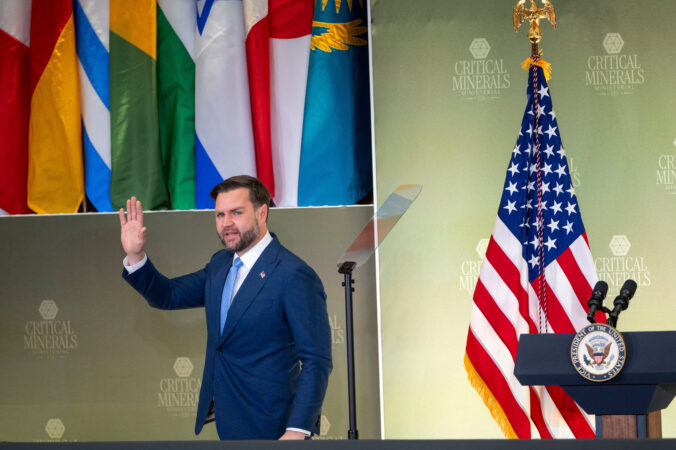
    Vice President JD Vance said the U.S.-China trade war over the past year exposed how dependent most countries are on the critical minerals that Beijing largely dominates, so collective action is needed now to give the West self-reliance.

    “We want members to form a trading bloc among allies and partners, one that guarantees American access to American industrial might while also expanding production across the entire zone,” Vance said at the opening of a meeting that Secretary of State Marco Rubio hosted with officials from several dozen European, Asian, and African nations.

    The Republican administration is making bold moves to shore up supplies of critical minerals needed for electric vehicles, missiles and other high-tech products after China choked off their flow in response to President Donald Trump’s sweeping tariffs last year. While the two global powers reached a truce to pull back on the high import taxes and stepped-up rare earth restrictions, China’s limits remain tighter than they were before Trump took office.

    The critical minerals meeting comes at a time of significant tensions between Washington and major allies over President Donald Trump’s territorial ambitions, including Greenland, and his moves to exert control over Venezuela and other nations. His bellicose and insulting rhetoric directed at U.S. partners has led to frustration and anger.

    The conference, however, is an indication that the United States is seeking to build relationships when it comes to issues it deems key national security priorities.

    While major allies like France and the United Kingdom attended the meeting in Washington, Greenland and Denmark, the NATO ally with oversight of the mineral-rich Arctic island, did not.

    A new approach to countering China on critical minerals

    Vance said some countries have signed on to the trading bloc, which is designed to ensure stable prices and will provide members access to financing and the critical minerals. Administration officials said the plan will help the West move beyond complaining about the problem of access to critical minerals to actually solving it.

    “Everyone here has a role to play, and that’s why we’re so grateful for you coming and being a part of this gathering that I hope will lead to not just more gatherings, but action,” Rubio said.

    Vance said that for too long, China has used the tactic of unloading materials at cheap prices to undermine potential competitors, then ratcheting up prices later after keeping new mines from being built in other countries.

    Prices within the preferential trade zone will remain consistent over time, the vice president said.

    “Our goal within that zone is to create diverse centers of production, stable investment conditions and supply chains that are immune to the kind of external disruptions that we’ve already talked about,” he said.

    To make the new trading group work, it will be important to have ways to keep countries from buying cheap Chinese materials on the side and to encourage companies from getting the critical minerals they need from China, said Ian Lange, an economics professor who focuses on rare earths at the Colorado School of Mines.

    “Let’s just say it’s standard economics or standard behavior. If I can cheat and get away with it, I will,” he said.

    At least for defense contractors, Lange said the Pentagon can enforce where those companies get their critical minerals, but it may be harder with electric vehicle makers and other manufacturers.

    U.S. turns to a strategic stockpile and investments

    Trump this week also announced Project Vault, a plan for a strategic U.S. stockpile of rare earth elements to be funded with a $10 billion loan from the U.S. Export-Import Bank and nearly $1.67 billion in private capital.

    In addition, the government recently made its fourth direct investment in an American critical minerals producer, extending $1.6 billion to USA Rare Earth in exchange for stock and a repayment deal. The Pentagon has shelled out nearly $5 billion over the past year to spur mining.

    The administration has prioritized the moves because China controls 70% of the world’s rare earths mining and 90% of the processing. Trump and Chinese President Xi Jinping spoke by phone Wednesday, including about trade. A social media post from Trump did not specifically mention critical minerals.

    Heidi Crebo-Rediker, a senior fellow in the Center for Geoeconomic Studies at the Council on Foreign Relations, said the meeting was “the most ambitious multilateral gathering of the Trump administration.”

    “The rocks are where the rocks are, so when it comes to securing supply chains for both defense and commercial industries, we need trusted partners,” she said.

    Japan’s minister of state for foreign affairs, Iwao Horii, said Tokyo was fully on board with the U.S. initiative and would work with as many countries as possible to ensure its success.

    “Critical minerals and (their) stable supply is indispensable to the sustainable development of the global economy,” he said.

    How the strategic reserve would work

    The Export-Import Bank’s board this week approved the largest loan in its history to help finance the setup of the U.S. Strategic Critical Minerals Reserve, which is tasked with ensuring access to critical minerals and related products for manufacturers.

    The bank’s president and chairman, John Jovanovic, told CNBC that manufacturers, which benefit the most from the reserve, are making a long-term financial commitment, while the government loan spurs private investments.

    David Abraham, a rare earths expert who has followed the industry for decades and is author of “The Elements of Power,” said that while the Trump administration has focused on reinvigorating critical minerals production, it also is important to encourage development of manufacturing that will use those minerals.

    He noted that Trump’s decisions to cut incentives for electric vehicles and wind turbines have undercut demand for these elements in America.

  • Man who tried to shoot Trump at a Florida golf course gets life in prison

    Man who tried to shoot Trump at a Florida golf course gets life in prison

    FORT PIERCE, Fla. — A man convicted of trying to assassinate President Donald Trump on a Florida golf course in 2024 was sentenced Wednesday to life in prison after a federal prosecutor said his crime was unacceptable “in this country or anywhere.”

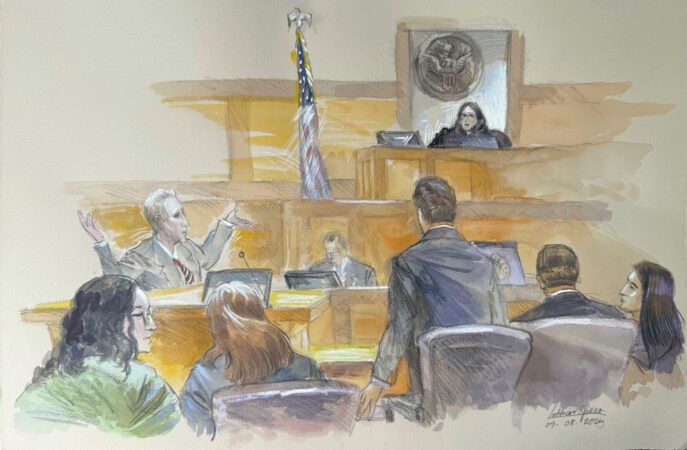
    U.S. District Judge Aileen Cannon pronounced Ryan Routh’s fate in the same Fort Pierce courtroom that erupted into chaos in September when he tried to stab himself shortly after jurors found him guilty on all counts.

    “American democracy does not work when individuals take it into their own hands to eliminate candidates. That’s what this individual tried to do” Assistant U.S. Attorney John Shipley told the judge.

    Routh’s new defense attorney, Martin L. Roth, argued that “at the moment of truth, he chose not to pull the trigger.”

    The judge pushed back, noting Routh’s history of arrests, to which Roth said, “He’s a complex person I’ll give the court that, but he has a very good core.”

    Routh then read from a rambling, 20-page statement. Cannon broke in and said none of what he was saying was relevant, and gave him five more minutes to talk.

    “I did everything I could and lived a good life,” Routh said, before the judge cut him off.

    “Your plot to kill was deliberate and evil,” she said. “You are not a peaceful man. You are not a good man.”

    She then issued his sentence: Life without parole, plus 7 years on a gun charge. His sentences for his other three crimes will run concurrently.

    Routh’s sentencing had initially been scheduled for December, but Cannon agreed to move the date back after Routh decided to use an attorney during the sentencing phase instead of representing himself as he did for most of the trial.

    Routh was convicted of trying to assassinate a major presidential candidate, using a firearm in furtherance of a crime, assaulting a federal officer, possessing a firearm as a felon and using a gun with a defaced serial number. “Routh remains unrepentant for his crimes, never apologized for the lives he put at risk, and his life demonstrates near-total disregard for law,” the prosecutors’ sentencing memo said.

    His defense attorney had asked for 20 years plus the mandatory seven for the gun conviction.

    “The defendant is two weeks short of being sixty years old,” Roth wrote in a filing. “A just punishment would provide a sentence long enough to impose sufficient but not excessive punishment, and to allow defendant to experience freedom again as opposed to dying in prison.”

    Prosecutors said Routh spent weeks plotting to kill Trump before aiming a rifle through shrubbery as the Republican presidential candidate played golf on Sept. 15, 2024, at his West Palm Beach country club.

    At Routh’s trial, a Secret Service agent helping protect Trump on the golf course testified that he spotted Routh before Trump came into view. Routh aimed his rifle at the agent, who opened fire, causing Routh to drop his weapon and run away without firing a shot.

    In the motion requesting an attorney, Routh offered to trade his life in a prisoner swap with people unjustly held in other countries, and said an offer still stood for Trump to “take out his frustrations on my face.”

    “Just a quarter of an inch further back and we all would not have to deal with all of this mess forwards, but I always fail at everything (par for the course),” Routh wrote.

    In her decision granting Routh an attorney, Cannon chastised the “disrespectful charade” of Routh’s motion, saying it made a mockery of the proceedings. But the judge, nominated by Trump in 2020, said she wanted to err on the side of legal representation.

    Cannon signed off last summer on Routh’s request to represent himself at trial. The U.S. Supreme Court has held that criminal defendants have the right to represent themselves in court proceedings, as long as they can show a judge they are competent to waive their right to be defended by an attorney.

    Routh’s former federal public defenders served as standby counsel and were present during the trial.

    Routh had multiple previous felony convictions including possession of stolen goods, and a large online footprint demonstrating his disdain for Trump. In a self-published book, he encouraged Iran to assassinate him, and at one point wrote that as a Trump voter, he must take part of the blame for electing him.

  • Trump’s border czar announces 700 immigration officers to immediately leave Minnesota

    Trump’s border czar announces 700 immigration officers to immediately leave Minnesota

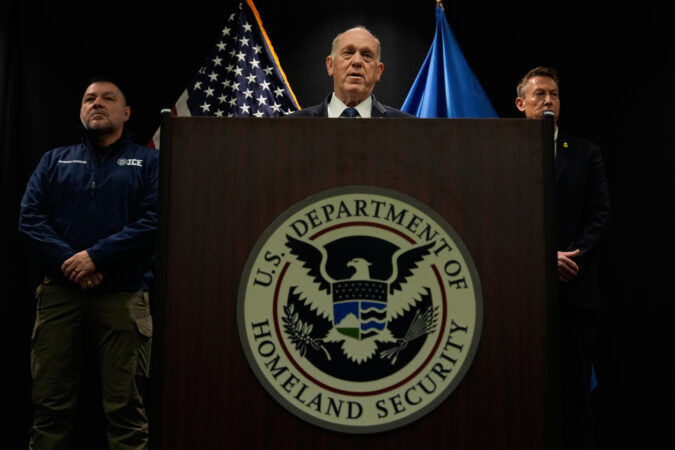
    The Trump administration is reducing the number of immigration officers in Minnesota but will continue its enforcement operation that has sparked weeks of tensions and deadly confrontations, border czar Tom Homan said Wednesday.

    About 700 federal officers — roughly a quarter of the total deployed to Minnesota — will be withdrawn immediately after state and local officials agreed over the past week to cooperate by turning over arrested immigrants, Homan said.

    But he did not provide a timeline for when the administration might end the operation that has become a flashpoint in the debate over President Donald Trump’s mass deportation efforts since the fatal shootings of U.S. citizens Renee Good and Alex Pretti in Minneapolis.

    About 2,000 officers will remain in the state after this week’s drawdown, Homan said. That’s roughly the same number sent to Minnesota in early January when the surge ramped up, kicking off what the Department of Homeland Security called its ” largest immigration enforcement operation ever.”

    Since then, masked, heavily armed officers have been met by resistance from residents who are upset with their aggressive tactics.

    A widespread pullout, Homan said, will occur only after protesters stop interfering with federal agents carrying out arrests and setting up roadblocks to impede the operations.

    Gov. Tim Walz and Minneapolis Mayor Jacob Frey, both Democrats who have heavily criticized the surge, said pulling back 700 officers was a good first step but that the entire operation should end quickly.

    “We need a faster and larger drawdown of forces, state-led investigations into the killings of Alex Pretti and Renee Good, and an end to this campaign of retribution,” Walz posted on social media.

    Vice President JD Vance said the officers being sent home were mainly in Minneapolis to protect those carrying out arrests. “We’re not drawing down the immigration enforcement,” Vance said in an interview on The Megyn Kelly Show.

    Trump administration has pushed for cooperation in Minnesota

    Trump’s border czar took over the Minnesota operation in late January after the second fatal shooting by federal officers and amid growing political backlash and questions about how the operation was being run.

    Homan said right away that federal officials could reduce the number of agents in Minnesota, but only with the cooperation of state and local officials. He pushed for jails to alert Immigration and Customs Enforcement about inmates who could be deported, saying transferring those inmates to ICE is safer because it means fewer officers have to be out looking for people in the country illegally.

    Homan said during a news conference Wednesday that there has been an “increase in unprecedented collaboration” resulting in the need for fewer public safety officers in Minnesota and a safer environment, allowing for the withdrawal of the 700 officers.

    He didn’t say which jurisdictions have been cooperating with DHS

    The Trump administration has long complained that places known as sanctuary jurisdictions — a term applied to local governments that limit law enforcement cooperation with the department — hinder the arrest of criminal immigrants.

    Minnesota officials say its state prisons and nearly all of the county sheriffs already cooperate with immigration authorities.

    But the two county jails that serve Minneapolis and St. Paul and take in the most inmates had not previously met ICE’s standard of full cooperation, although they both hand over inmates to federal authorities if an arrest warrant has been signed by a judge.

    The Hennepin County Sheriff’s Office, which serves Minneapolis and several suburbs, said its policies have not changed. The Ramsey County Sheriff’s Office in neighboring St. Paul did not immediately respond to a request for comment.

    Border czar calls Minnesota operation a success

    Homan said he thinks the ICE operation in Minnesota has been a success, checking off a list of people wanted for violent crimes who were taken off the streets.

    “I think it’s very effective as far as public safety goes,” he said Wednesday. “Was it a perfect operation? No.”

    He also made clear that pulling a chunk of federal officers out of Minnesota isn’t a sign that the administration is backing down. “We are not surrendering the president’s mission on a mass deportation operation,” Homan said.

    “You’re not going to stop ICE. You’re not going to stop Border Patrol,” Homan said of the ongoing protests. “The only thing you’re doing is irritating your community”

    Schools ask court to block immigration operations

    Two Minnesota school districts and a teachers union filed a lawsuit Wednesday to block federal authorities from conducting immigration enforcement at or around schools.

    The lawsuit says actions by DHS and its ICE officers have disrupted classes, endangered students and driven families away from schools.

    It also argues that Operation Metro Surge has marked a shift in policy that removed long-standing limits on enforcement activity in “sensitive locations,” including schools.

    Homeland Security officials have not responded to a request for comment.

  • Trump and Xi discuss Iran in wide-ranging call as U.S. presses China and others to break from Tehran

    Trump and Xi discuss Iran in wide-ranging call as U.S. presses China and others to break from Tehran

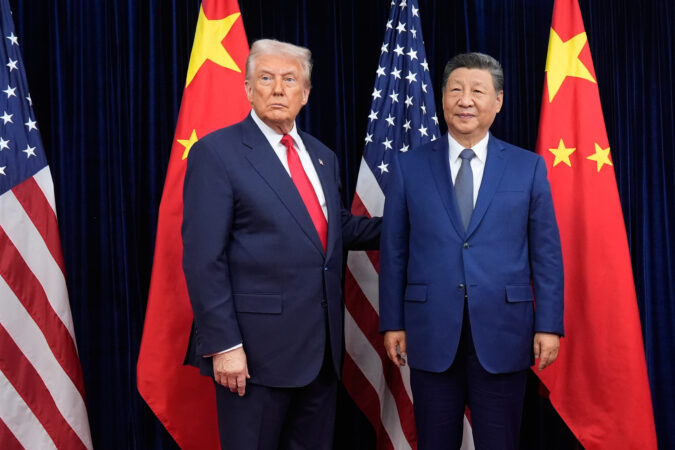
    WASHINGTON — President Donald Trump said Wednesday that he and Chinese President Xi Jinping discussed the situation in Iran in a wide-ranging call that comes as the U.S. administration pushes Beijing and others to isolate Tehran.

    Trump said the two leaders also discussed a broad range of other critical issues in the U.S.-China relationship, including trade and Taiwan and his plans to visit Beijing in April.

    “The relationship with China, and my personal relationship with President Xi, is an extremely good one, and we both realize how important it is to keep it that way,” Trump said in a social media posting about the call.

    The Chinese government, in a readout of the call, said the two leaders discussed major summits that both nations will host in the coming year and opportunities for the two leaders to meet. The Chinese statement, however, made no mention of Trump’s expected April visit to Beijing.

    China also made clear that it has no intention of stepping away from it’s long-term plans of reunification with Taiwan, a self-governing, democratic island operating independently from mainland China, though Beijing claims it as its own territory.

    “Taiwan will never be allowed to separate from China,” the Chinese government statement said.

    Trump and Xi discussed Iran as tensions remain high between Washington and Tehran after the Middle East country’s bloody crackdown on nationwide protests last month.

    Trump is now also pressing Iran to make concessions over its nuclear program, which his Republican administration says was already set back by the U.S. bombing of three Iranian nuclear sites during the 12-day war Israel launched against Iran in June.

    The White House says that special envoy Steve Witkoff is slated to take part in talks with Iranian officials later this week.

    Trump announced last month that the U.S. would impose a 25% tax on imports to the United States from countries that do business with Iran.

    Years of sanctions aimed at stopping Iran’s nuclear program have left the country isolated. But Tehran still did nearly $125 billion in international trade in 2024, including $32 billion with China, $28 billion with the United Arab Emirates and $17 billion with Turkey, the World Trade Organization says.

    Separately, Xi also spoke on Wednesday with Russian President Vladimir Putin.

    Xi’s engagement with Trump and Putin comes as the last remaining nuclear arms pact, known as the New START treaty, between Russia and the United States is set to expire Thursday, removing any caps on the two largest atomic arsenals for the first time in more than a half-century.

    Trump has indicated he would like to keep limits on nuclear weapons but wants to involve China in a potential new treaty.

    “I actually feel strongly that if we’re going to do it, I think China should be a member of the extension,” Trump told The New York Times last month. “China should be a part of the agreement.”

    The call with Xi also coincided with a ministerial meeting that the Trump administration convened in Washington with several dozen European, Asian and African nations to discuss how to rebuild global supply chains of critical minerals without Beijing.

    Critical minerals are needed for everything from jet engines to smartphones. China dominates the market for those ingredients crucial to high-tech products.

    “What is before all of us is an opportunity at self-reliance that we never have to rely on anybody else except for each other, for the critical minerals necessary to sustain our industries and to sustain growth,” Vice President JD Vance said at the gathering.

    Xi has recently held a series of meetings with Western leaders who have sought to boost ties with China amid growing concerns about Trump’s tariff policies and calls for the U.S. to take over Greenland, a Danish territory.

    The disruption to global trade under Trump has made expanding trade and investment more imperative for many U.S. economic partners. Vietnam and the European Union upgraded ties to a comprehensive strategic partnership last month, two days after the EU and India announced a free-trade agreement.

  • Why nobody really knows the scale of the U.S. housing crisis

    Why nobody really knows the scale of the U.S. housing crisis

    America faces a serious housing shortage, one that Moody’s estimates would take more than 2 million new homes to resolve.

    But over at Goldman Sachs, analysts put the number at 3 million. Zillow’s estimate tops 4 million, while Brookings projects 5 million, and McKinsey says 8 million. Meanwhile, congressional Republicans insist the shortfall is closer to 20 million.

    Then there are the economists who contend there’s no shortage at all.

    The disparate projections reflect the challenge of quantifying the nation’s housing needs, a puzzle that rests on assumptions about how much a home should cost, how many people it should hold, and how big a footprint it should have.

    With housing affordability a crucial political issue and increasingly out of reach for many Americans, determining the nation’s needs is not merely an academic exercise but is key to devising policies that will solve the problem.

    Vacancy rates and missing households

    The U.S. has 146 million homes, Census Bureau data show. Of those, 8.1 million are “doubled up” households, meaning people are sharing space with nonrelatives. Zillow’s housing estimate assumes most of those people would prefer having their own place. There also are 3.4 million vacant homes available to rent or buy, the real estate website says. So Zillow economists subtracted the number of available homes from the number of doubled-up households and concluded that the nation needs 4.7 million more homes.

    Several analyses zeroed in on two questions: How many homes should be vacant, and how many consumers have delayed striking out on their own because of the cost.

    Though it might seem counterintuitive, a healthy housing market needs vacancies. An empty property could signal it’s between tenants or buyers, for example, or under renovation. Or it could mean the owner is splitting time between properties; according to the National Association of Home Builders, more than 6 million homes — about 1 in 20 — are secondary residences.

    What constitutes a healthy level of vacancies is harder to define, as experts put it anywhere from 3% to 13%. After home construction cratered following the 2008 housing crash, vacancy rates slumped to the lowest level in nearly two decades, falling to less than 1% of owner-occupied dwellings and 5% of rental units. They have yet to fully recover.

    The optimal home number could be as simple as one for every household, plus a certain number of vacancies. But what if we don’t have an accurate count of households?

    When housing costs are prohibitive, adult children tend to reside with their parents longer; in 2023, 18% of adults 25 to 34 were living in a parent’s home, compared with 8% in the 1970s, according to a Pew Research Center report.

    For many economists, that suggests the equation should be: the number of existing households, plus the number of homes that should be vacant, plus the number of households that would naturally come into being if there was enough inventory to lower prices.

    Yet different researchers using this framework still came up with different answers for the housing shortage.

    Moody’s Analytics and PolicyMap say it would take 800,000 homes to reach the equilibrium of the U.S. housing market between 1985 and 2000. Add 1.2 million “pent up households,” those that haven’t formed yet, and the conclusion is the U.S. needs an additional 2 million homes.

    Brookings’s calculation aims to get back to the 2006 vacancy rate of more than 12%, when it was near its historic peak. It used a complex statistical model to tease out how much of the decline in household formation since then is due to home prices instead of other factors, such as young people having trouble finding jobs or marrying later. As a result, it concluded the U.S. needed 4.9 million more houses.

    Other analyses along these lines include Freddie Mac’s, which calls for 3.7 million more homes. Goldman Sachs analysts tried the “vacancies plus pent-up demand” approach, as well as a mathematical model to determine how many homes it would take to make ownership as affordable relative to income as it was in the 1990s. Both equations worked out to between 3 million and 4 million homes. McKinsey added up new households and vacancies, plus enough housing to address homelessness and replace overcrowded homes with more than one person to a bedroom, to get to 8.2 million.

    Envisioning an unconstrained market

    A 2022 congressional report took a different tack. Most analyses attempt to re-create some semblance of the housing market two, three or four decades ago. But Republicans on the Joint Economic Committee argued that the correct number is equal to the number of homes that developers would build had they had no regulatory constraints — no permitting or zoning rules that prohibit them from building what customers want.

    The Republicans’ estimate relied on the reasoning that the value of the land should be about 20% of the home cost. Anything higher would mean the market is artificially constrained; land becomes pricier when it is harder to build something on it. To bring prices in line with that in every U.S. county, they concluded the home shortage stood at 20 million.

    By their math, North Dakota and West Virginia have almost no housing shortage, while California is short 4.5 million homes. Eliminating zoning and building restrictions across the country’s hundreds of jurisdictions might be unfeasible, but they project that any substantial effort would lower prices. For example, they contend that building an additional 2.7 million homes could reduce prices enough to make ownership economically viable for nearly 5 million more consumers.

    “If we relaxed all regulations that concerned supply in every single market in the United States, this is how many homes you would have … . I do think this is the right way to think about how many homes we should have,” said Kevin Corinth, an economist who co-authored the report while he was a Senate staffer and now works at the American Enterprise Institute, a libertarian think tank. “If you really want to bring down home prices to the point where people can actually afford them, you’re going to have to build a lot more houses than people are suggesting.”

    Per capita spending

    Housing analyst Kevin Erdmann did some eye-popping math recently. Adjusted for inflation, per capita spending on housing construction has been falling as a fraction of personal consumption, dropping 23% since 1990. If such spending held to 1990 levels, he said, the U.S. would have an additional 40 million houses. “Almost all professional estimates of the housing shortage are ridiculously low,” Erdmann, who has written two books about the housing market, wrote on his Substack.

    He said the slowdown in construction spending indicates that people are living in smaller homes than they’d prefer because they had no choice, but he shies away from actually saying the country is 40 million homes short. Instead, based on aggressive assumptions about missing households and necessary vacancies, he says the country needs 15 million to 20 million.

    Maybe there’s no shortage at all

    Urban planning professors Kirk McClure and Alex Schwartz examined 900 U.S. metropolitan areas and found that only 19 had added more population than housing since 2000. Before the 2008 recession, they argued, developers built far too many houses, leaving room for underbuilding in some years since.

    “Yes, we have a shortage of units in the low-income price points, but not overall,” McClure said. He contends it would be far less costly for the government to help poor households rent or buy existing units than to build new ones. “The best housing program right now would be an increase in the minimum wage. You get people up to $20 an hour and suddenly life gets better — we can’t build our way out of this problem.”

    This view of the current housing supply transcends partisan lines, with some of the highest and the lowest estimates of the shortage coming from the right. Economists at the libertarian Cato Institute contend that housing production has kept up with population growth. Just because people want to live in big houses in expensive, densely populated areas, they assert, doesn’t mean there’s a shortage.

    “A shortage is literally people don’t have anywhere to live. That’s not what we have,” Norbert Michel, one of the Cato writers, said in an interview.

    In the end, the dispute doesn’t just come down to the choice of mathematical models, but varying interpretations of what a housing shortage even means.

    “If I have a hard time finding an apartment in the area of Washington, D.C., that I like, I can still move to Maryland and find something,” Michel said. “The idea that I’m just completely shut out of all my options and I can’t find any place to live, that’s what a shortage evokes. And the data doesn’t support that.”

    Erdmann views it differently: “There are 28-year-olds living with their parents that wouldn’t be if there were a house. If that’s not a shortage, I don’t know when you could use the word.”

  • Brothers of Renee Good, woman killed by immigration officer, call for action in Congress

    Brothers of Renee Good, woman killed by immigration officer, call for action in Congress

    WASHINGTON — The brothers of Renee Good, one of two U.S. citizens killed by federal immigration officers in Minneapolis, called on Congress to do something about the violence on American streets as a result of immigration operations, warning Tuesday that the scenes playing out are “changing many lives, including ours, forever.”

    Good, a 37-year-old mother of three, was shot and killed Jan. 7. Her death and that of another protester, Alex Pretti, just weeks later have sparked outrage across the country and calls to rein in immigration enforcement.

    Brothers Luke and Brett Ganger spoke during a hearing held Tuesday by congressional Democrats to highlight use-of-force incidents by officers from the Department of Homeland Security as they arrest and deport immigrants. The mood was somber as the brothers spoke, often comforting each other as they talked and listened to others speaking.

    Luke Ganger, speaking of the “deep distress” the family felt at losing their sister in “such a violent and unnecessary way,” didn’t specify what they wanted from Congress but painted his sister’s death as a turning point that should inspire change in operations such as those going on in Minneapolis.

    “The completely surreal scenes taking place on the streets of Minneapolis are beyond explanation. This is not just a bad day, or a rough week, or isolated incidents,” he said. “These encounters with federal agents are changing the community and changing many lives, including ours, forever.”

    The forum was put on by Sen. Richard Blumenthal (D., Conn.) and Rep. Robert Garcia (D., Calif.) to spotlight use-of-force complaints against Homeland Security officers tasked with carrying out President Donald Trump’s mass deportation agenda.

    Trump administration officials said Good tried to run over an officer with her vehicle. State and local officials in Minneapolis, as well as protesters, have rejected that characterization.

    The two brothers didn’t delve into the details of their sister’s death or what the administration has said about her. Instead, they spoke about her life.

    Luke Ganger said the most important thing the brothers could do was to explain to those listening “what a beautiful American we have lost. A sister. A daughter. A mother. A partner and a friend.”

    Brett Ganger shared some of the eulogy he had written for his sister’s funeral service. He compared her to dandelions that grow and bring beauty in unexpected places.

    “She believed tomorrow could be better than today. She believed that kindness mattered. And she lived that belief,” he said.

    The panel also heard from three other U.S. citizens who detailed their treatment by Homeland Security officers.

  • Trump plans to install a Christopher Columbus statue outside of the White House

    Trump plans to install a Christopher Columbus statue outside of the White House

    President Donald Trump is planning to install a statue of Christopher Columbus on White House grounds, according to three people with knowledge of the pending move, in his latest effort to remake the presidential campus and celebrate the famed and controversial explorer.

    The statue is set to be located on the south side of the grounds, by E Street and north of the Ellipse, two of the people said, although they cautioned that plans could change. The three people spoke on the condition of anonymity to speak on private discussions. The piece is a reconstruction of a statue unveiled in Baltimore by then-President Ronald Reagan and dumped in the city’s harbor by protesters in 2020 as a racial reckoning swept the country.

    A group of Italian American businessmen and politicians, working with local sculptors, obtained the destroyed pieces and rebuilt the statue with financial support from local charities and federal grant funding.

    Bill Martin, an Italian American businessman who helped recover the remnants of the original sculpture and organize a campaign to rebuild it, said the statue is expected to be transferred from a warehouse on Maryland’s Eastern Shore to the Trump administration in coming weeks.

    The White House declined to comment on its plans but praised the 15th-century explorer.

    “In this White House, Christopher Columbus is a hero,” spokesman Davis Ingle said in a statement. “And he will continue to be honored as such by President Trump.”

    As Columbus statues became something of a battleground in the broader tug-of-war over the nation’s history, Trump has repeatedly positioned himself as a staunch defender of a legacy he says has been dishonored by “left-wing arsonists.”

    Trump included Columbus in a 2021 executive order of historical figures for his proposed National Garden of American Heroes, showcasing those who embody “the American spirit of daring and defiance, excellence and adventure, courage and confidence, loyalty and love.”

    The Italian explorer is long celebrated for his voyage in 1492 to the Americas, opening up trade routes with Europe and setting the stage for colonization and enslavement. Some U.S. states now recognize Indigenous Peoples’ Day instead of Columbus Day; Joe Biden in 2021 became the first president to mark the holiday.

    Trump campaigned in 2024 on promises to celebrate Columbus Day, and in October he signed a presidential proclamation to recognize Columbus as “the original American hero” and mark the annual holiday.

    “We’re back, Italians. Okay? We love the Italians,” Trump said after signing the proclamation. He later said the move should help the Republican Party in the upcoming midterm elections.

    “The Italian people are very happy about it. Remember when you go to the voting booths, I reinstated Columbus Day,” Trump told reporters at the White House last month.

    Meanwhile, his administration pushes to scrub federal institutions of “corrosive ideology” recognizing historical sexism and racism and to leave its mark on the nation’s capital in a sweeping effort that has drawn complaints and lawsuits. The president rapidly demolished the East Wing annex last year to build his planned $400 million ballroom; paved over the Rose Garden to make room for a patio; and has imposed his vision on numerous internal fixtures and rooms, including the Lincoln Bathroom.

    Historic preservationists have called on Trump to go through federal review panels before making further changes to the White House grounds.

    In his first term, Trump decried the destruction of Columbus statues across the country. After administration officials learned about efforts in 2020 to rescue and preserve Baltimore’s statue, they asked to obtain it for possible installation on federal grounds, but the statue was not yet ready, said Martin, the businessman.

    Martin estimated that he and his allies raised and spent more than $100,000 for their recovery and restoration efforts, which he said represented inspiration to the Italian American community.

    “It’s not about Columbus ‘discovering America’ … it’s about the Italian immigrants who came here and looked to Columbus as a hero,” Martin said.

    Nino Mangione, a Republican member of the Maryland House of Delegates, also was involved in efforts to recover the statue, and he praised Trump’s plan to install it at the White House.

    “It is such an honor for the Italian American community,” Mangione wrote in an email. “This proves that gangs, thugs, and people of that ilk don’t control things by mob rule. … in America the people rule and our voices are heard.”

    Columbus’s planned D.C. arrival comes on the heels of the administration’s reinstallation last October of a Confederate general that protesters had toppled and torched five years prior.

    Albert Pike is now back on his plinth in a small federal park about a mile east of the White House, the only Confederate leader memorialized with an outdoor statue in Washington.

  • Pa. officials push back as Trump targets Philly in call to nationalize elections ahead of 2026 midterms

    Pa. officials push back as Trump targets Philly in call to nationalize elections ahead of 2026 midterms

    Pennsylvania Secretary of State Al Schmidt on Wednesday rejected President Donald Trump’s false claims about voter fraud in the state as Trump targeted Philadelphia in his push to nationalize elections.

    The state’s top election official said Trump’s proposal would violate the Constitution, which he noted clearly gives states exclusive authority to administer elections.

    “Pennsylvania elections have never been more safe and secure,” said Schmidt, who served as Philadelphia’s Republican city commissioner in 2020, when the city was at the center of Trump’s conspiracy theories.

    “Thousands of election officials — Democrats, Republicans, and Independents alike — across the Commonwealth’s 67 counties will continue to ensure we have free, fair, safe, and secure elections for the people of Pennsylvania,” he said in a statement.

    Speaking to reporters Tuesday in the Oval Office, Trump cited Philadelphia, Detroit, and Atlanta as examples of where the federal government should run elections. He singled out three predominantly Black cities in swing states but offered no evidence of voter fraud or corruption to support his claims of a “rigged election.”

    “Take a look at Detroit. Take a look at Pennsylvania, take a look at Philadelphia. You go take a look at Atlanta,” Trump said. “The federal government should get involved.”

    Philadelphia has been a frequent target of Trump’s false claims of election fraud for several years, going back to his efforts to overturn his loss in the 2020 election. City and state officials have persistently pushed back on those claims, and there is no evidence that elections in the city have been anything but free and fair.

    Trump is advocating for taking control of elections in 15 states, though his administration has not named which ones.

    “The Republicans should say, ‘We want to take over,’” Trump said in December. “We should take over the voting, the voting in at least many — 15 places. The Republicans ought to nationalize the voting.”

    But, Pennsylvania officials and experts noted, he lacks the power to do so unilaterally.

    Congress has limited power to set rules for elections, but the U.S. Constitution grants control of elections to the states.

    “The president has zero authority to order anything about elections,” said Marian Schneider, an election attorney who was Pennsylvania’s deputy secretary of elections during the 2016 election.

    White House press secretary Karoline Leavitt claimed to reporters early Tuesday the president was referring to the SAVE Act, legislation proposed by House Republicans require citizens to show documents like a passport or driver’s license to register to vote.

    But Trump didn’t mention the legislation Tuesday.

    Trump will face an uphill battle in nationalizing elections as even some Republicans in Congress are already pushing back. Senate Majority Leader John Thune (R., S.D.) told reporters Tuesday he disagreed with Trump on any attempt to nationalize elections, calling it “a constitutional issue.”

    “I’m not in favor of federalizing elections,” Thune said.

    Still, Trump’s comments raised alarm as his administration continues to sow doubt in the nation’s elections.

    “This is clearly a case of Trump trying to push the boundaries of federal involvement in election administration because he has a problem with any checks on his power, democracy being one of them,” said Montgomery County Commissioner Neil Makhija, an attorney and a Democrat who chairs the Montgomery County Board of Elections.

    Trump’s comments came a week after the FBI seized ballots and voting records from the 2020 election from the Fulton County election hub in Georgia. In a statement, Fulton County Commissioner Marvin Arrington Jr. said the county will file a motion in the Northern District of Georgia challenging “the legality of the warrant and the seizure of sensitive election records, and force the government to return the ballots taken.”

    Lisa Deeley, a Democratic member of the Philadelphia city commissioners, who oversee elections, accused Trump of trying to distract from federal agents killing two civilians in Minnesota last month.

    “We all know the President’s playbook by now. His remarks on elections are an effort to change the conversation from the fact that the Federal Government is killing American citizens in Minneapolis,” Deeley said in a statement.

    Trump has been making similar claims since 2016, when he erroneously blamed fraud for costing him the popular vote.During a debate with his 2020 opponent, Joe Biden, Trump said, “Bad things happen in Philadelphia, bad things,” viewed at the time as an attempt to sow doubt about the election results and mail voting during the peak of the COVID-19 pandemic.

    Despite losing to Biden in Pennsylvania in 2020 by a little more than 80,000 votes, Trump has repeatedly claimed he actually won, lying about mail-in votes “created out of thin air” and falsely stating there were more votes than voters.

    “Every single review of every single county in the commonwealth has come back within a very small difference, if any, of the results reported back in 2020,” Kathy Boockvar, who served as Pennsylvania’s secretary of state during the 2020 election, told The Inquirer in 2024.

  • Cory Booker has raised more than nearly every candidate for Congress running in 2026

    Cory Booker has raised more than nearly every candidate for Congress running in 2026

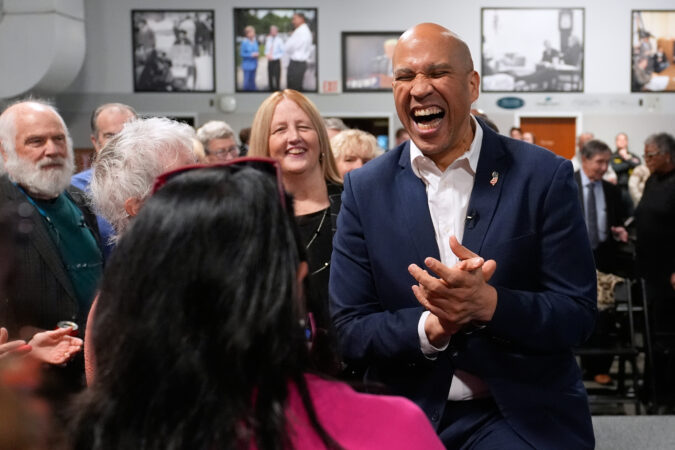
    U.S. Sen. Cory Booker has raised more than $30 million for his reelection campaign, outdoing the vast majority of candidates running for either chamber of Congress in 2026.

    The New Jersey Democrat has raised the second-largest amount of money for the 2026 elections for U.S. House and Senate as of the end of last year, behind only Sen. Jon Ossoff (D., Ga.), according to Federal Election Commission reports.

    Booker is widely considered a potential presidential contender for 2028, after unsuccessfully seeking the office in 2020.

    The lawmaker has no serious challengers at this point for his Senate seat, and he could leave this cycle with extra money he could use for a presidential run.

    His campaign has nearly $22 million cash on hand and no debt. He has been adding to his coffers since he began his most recent term in 2021.

    More than 200,000 people donated to Booker in 2025, and roughly 80% of the donations were $25 or less, according to Booker’s campaign.

    “Cory is backed by a grassroots movement that recognizes the importance of strong, principled leadership that stands up in this moment,“ his campaign manager, Adam Silverstein, said in a statement. ”We are grateful for this incredible outpouring of support and will keep building the infrastructure we need to win in 2026 and elect Democrats at every level.”

    The New Jersey Democrat saw a fundraising spike when he delivered a record-breaking 25-hour speech on the Senate floor last year. He raised nearly $9.7 million in the second quarter of 2025, the period that included his speech, far more than any other quarter last year.

    Booker criticized President Donald Trump on a host of issues in the speech and held up a pocket Constitution. He also acknowledged his own party’s failure to prevent Trump’s return to office.

    “I confess that the Democratic Party has made terrible mistakes that gave a lane to this demagogue,” he said in his speech. “I confess we all must look in the mirror and say, ‘We will do better.’”

    Laura Matos, a New Jersey Democratic operative, said Booker was already a “known entity,” and his speech came at a time when Democrats across the country were looking for someone to stand up to Trump.

    “For 25 hours, his people could constantly churn out, like every hour, ‘He’s still on the Senate floor, show him you support him,’” said Matos, a partner at lobbying and public affairs firm MAD Global Strategy Group. “The way that fundraising works, you can really build upon things like that. He was prolific before that, and then that just kind of skyrocketed it.”

    Ossoff, the 2026 federal candidate who reported more than Booker, has raised nearly $64 million and faces a more competitive race in a key swing state.

    Booker was viewed as a rising star in the party several years ago before dropping his primary bid for president in 2020 in part because he did not have enough money or support.

    He began serving as mayor of Newark in 2006 until he was elected to the U.S. Senate in a 2013 special election.

    Booker is also heading into a national tour to promote Stand, his new book, set to publish next month.

    The book combines Booker’s personal reflections with stories of American leaders from President George Washington to Supreme Court Justice Ketanji Brown Jackson, and “offers a hopeful and practical path forward,” according to his publisher, Macmillan.

    The tour will include a stop at the New Jersey Performing Arts Center in Newark, where Gov. Mikie Sherrill was inaugurated, as well as a book shop in D.C. and a church in St. Louis.

    Pennsylvania Gov. Josh Shapiro, another potential 2028 Democratic contender, recently embarked on a book tour of his own.

    Most of Booker’s money comes from outside New Jersey.

    According to FEC data, from January through September 2025, he received the most money from California, followed by New York.

    While Booker is raking in money, he’s also spending it. He spent the fourth most out of all 2026 Senate candidates, reporting $14 million in spending since 2021.

    One of his biggest expenses was in April, when his campaign spent $1.2 million on an email list acquisition.

    The only other candidate who has reporting fundraising for the New Jersey Senate race so far is Justin Murphy, a Republican from the Pinelands, who reported a little over $3,500.

    Several other Republicans have expressed interest in running in the primary, and county parties will hold conventions in the coming weeks to endorse candidates.

    Luke Ferrante, the executive director of New Jersey GOP, said the party is planning “a robust effort statewide” to unseat Booker.

    “New Jerseyans across the state are eager to elect a statewide representative that is focused on delivering for its residents, not their greater Washington ambitions,” Ferrante said.