Category: National Politics

  • Venezuelan politics are a ‘blood sport.’ The U.S. is entering the ring.

    Venezuelan politics are a ‘blood sport.’ The U.S. is entering the ring.

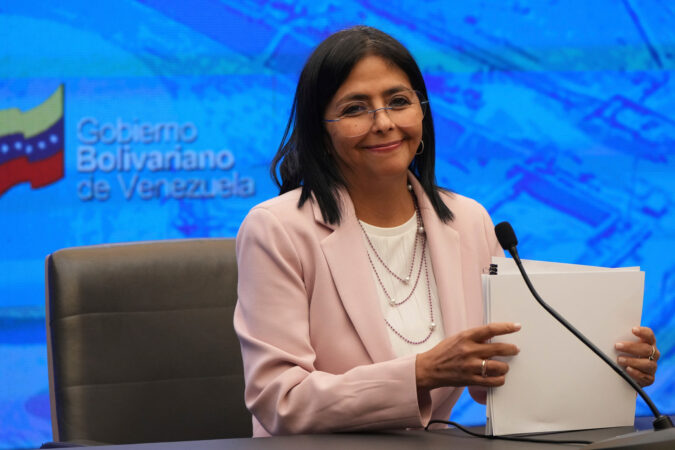
    The day after U.S. special operations forces swept into Caracas, the new Venezuelan president assembled her cabinet members around a large wooden table at the Miraflores Palace. Behind Delcy Rodríguez were large pictures of the country’s fallen leaders: Hugo Chávez, dead of cancer in 2013, and Nicolás Maduro and his wife, Cilia Flores, now jailed in New York on drug-trafficking charges.

    Seated on either side of Rodríguez, at the head of the table, were the powers that remained. One was Vladimir Padrino López, the defense minister, dressed in military camouflage. The other was Diosdado Cabello, the interior minister. He wore a scowl and a hat that said, “To doubt is treason.”

    Both men hold far more power than their titles suggest, analysts say. Stalwarts of the Maduro regime — one U.S. investigators say is built on patronage and fueled by criminal proceeds — they control Venezuela’s expansive security state and much of its commercial activity.

    Since Maduro’s capture and arrest Saturday, public attention has focused on Rodríguez and whether she will accede to White House demands to open up Venezuela’s vast natural resources to American industry. But the newly installed president — alongside her brother Jorge, president of the Venezuelan National Assembly — represents only the political sphere.

    The country’s other power centers, according to scholars, Venezuelan researchers, and current and former U.S. officials, are commanded by Padrino López and Cabello — hard-line, old-school Chavistas who came of ideological age in the socialist movement and accrued significant power and wealth through continued loyalty to the cause.

    Using connections and intimidation, researchers say, the men have repeatedly helped Maduro survive periods of crisis and tighten his authoritarian grip. First in 2019, when much of the world united behind opposition leader Juan Guaidó’s bid to supplant Maduro. And then again in summer 2024, when electoral tallies made clear that Maduro had lost the presidential election.

    Now Padrino López and Cabello, both of whom are wanted by U.S. authorities on drug-trafficking allegations, will help to decide the future of Chavismo — and the nation. Their continued presence magnifies the complexity of the challenge faced by American negotiators as they seek to bypass war and regime change and find common ground with members of a besieged government riven by internal divisions.

    Venezuelan President Nicolás Maduro (left) listens to Defense Minister Vladimir Padrino López during a government-organized civic-military march on Nov. 25, 2025, in Caracas.

    “There are three centers of power,” said a former senior official with the U.S. State Department, who like others in this story spoke on the condition of anonymity to discuss sensitive matters. “And Delcy is going to find out pretty quickly that she can’t provide everything that the Americans want.”

    The Washington Post was unable to reach Padrino López and Cabello for comment. The communications office of the Venezuelan government did not respond to a request for comment.

    President Donald Trump has said the United States is “in charge” of Venezuela, while Secretary of State Marco Rubio has suggested a less direct role, saying the U.S. will use its ongoing oil blockade and other economic measures to make Caracas do its bidding.

    Venezuelan Interior Minister Diosdado Cabello attends the arrival of migrants deported from the United States at Simon Bolivar International Airport in Maiquetia, Venezuela, on Feb. 10, 2025.

    Analysts expressed concern that Washington doesn’t fully understand the factional, internecine political system it now seeks to control — a maze of overlapping loyalties, family ties and competing interests. Several pointed to Cabello — a feared figure who hosts a weekly talk show called Bringing the Hammer — as the wild card.

    One Venezuelan adviser close to Rodríguez’s government said he was central to maintaining unity. “In times of crisis, his role is not conciliatory, but rather one of maintaining order,” the adviser said. “Delcy governs; Diosdado ensures that power does not slip away.”

    But others worry about what he was capable of. At his disposal, according to researchers and U.S. officials, were not only the police and intelligence services, but also the “colectivos,” a pro-government militia embedded throughout society, whose members speed around the streets on motorcycles, armed and masked.

    “Cabello is a brutal, repressive figure in the regime, but he’s not stupid,” said Geoff Ramsey of the Atlantic Council. “He knows his survival depends on threatening to burn down the country, unless his interests are taken care of.”

    “Politics in Venezuela,” he added, “is a ruthless blood sport.”

    Power at all costs

    How the state built by Chávez went from a hierarchal system built around a single charismatic leader to a hotbed of competing factions is, to some degree, a story of Maduro’s own political failings.

    “Chávez was a leftist military man and very charismatic and happened to rule Venezuela during an oil boom, so he had a lot of resources to do a lot of things,” said David Smilde, a sociologist at Tulane University who researches Chavismo. “And with the exception of being a leftist, Maduro is none of those things — not charismatic, not a military man, and he has no oil boom.”

    After narrowly winning the presidential election to succeed Chávez in 2013, Maduro appeared to recognize what he lacked and set out to defend his hold on power not through political persuasion, but by restricting freedoms and empowering — and enriching — the armed forces.

    In February 2016, he put the mining sector in the hands of the military. A few months later, he gave it control over the distribution of basic goods. Another decree shortly afterward put the nation’s ports under its purview. Padrino López, who rose to defense minister in October 2014, became more powerful with each move, researchers said, pioneering new kickback schemes that kept the military loyal to him and indebted to the regime.

    “The military became its own branch of power,” said Carolina Jiménez Sandoval, the Venezuelan president of the Washington Office on Latin America. “I don’t think the United States understands the extent to which the military is ingrained into the politics and economy, both formally and informally.”

    The military also began to profit from illicit revenue streams, American authorities contend. In March 2020, federal prosecutors in the U.S. District Court of the Southern District of Florida filed charges against Padrino López and Cabello for using their roles to facilitate and abet Venezuelan drug trafficking and “flood” the United States with cocaine.

    The U.S. government announced significant bounties for both men — $15 million for Padrino López and $25 million for Cabello.

    Over time, Maduro came to be seen less as the ultimate authority in the country and more as an arbiter between competing powers that had little in common, said Roberto Deniz, a Venezuelan investigative journalist.

    “It’s not just an authoritarian regime,” he said. “It’s an authoritarian regime with a kleptocratic structure in which there are numerous heads, and each one acts as its own fiefdom.”

    “It doesn’t matter if the economy is good or bad, if human rights are respected or not,” he added. “The goal is to preserve power.”

    ‘The black sheep’

    Cabello, who describes himself online as a “revolutionary” and “radical Chavista,” is seen by observers as a particularly unpredictable figure. He participated in Chávez’s failed coup attempt in 1992 and spent the next two years in prison. After Chávez won the presidency through the ballot box, Cabello served as vice president, helping him stave off an attempted coup in 2002, and then as interior minister, a role where he developed deeper ties with the internal security and intelligence forces.

    At the time of Chávez’s cancer diagnosis, he was seen as the second most important revolutionary and a direct rival to Maduro, then the vice president, in the line of succession. After Chávez selected Maduro as his heir, he moved to sideline Cabello, only bringing him back into his cabinet shortly after his apparent electoral loss in 2024.

    “Cabello has been the black sheep in the ruling party,” Ramsey said. “But Maduro found it impossible to rule without his knack for repression and his proximity to the intelligence apparatus.”

    His family’s influence spans the nation. Alexis Rodríguez Cabello, a first cousin, is in charge of the Venezuelan intelligence service and posts frequent homages to Cabello on social media. His brother, José David Cabello, is in charge of the powerful customs and taxation ministry, granting him control over duties at borders and ports. His wife Marleny Contreras, a current member of the national assembly, has been the minister of both tourism and public works.

    The Post was unable to reach Cabello’s family members for comment.

    “Diosdado never stopped being a powerful actor, even when he seemed demoted,” Deniz said.

    And he has “ascended rapidly” since his formal return to government, added Rafael Uzcátegui, the former director of Provea, a prominent Caracas nongovernmental organization — “at the cost of Rodríguez.”

    Uzcátegui saw a narrow path forward for brokering an agreement between Venezuela’s rival power centers that would enable cooperation with U.S. officials and avert a wider conflict.

    “It’s much easier to negotiate with a malandro than a religious fanatic,” he said, using a word that most closely translates to “hustler.” “And the Diosdado Cabello and Padrino López factions are most motivated by material incentive.”

    But there have been worrying early signs, most notably from the informal militias that answer to Cabello.

    The colectivos have fanned out across Caracas. Ordinarily, they carry small arms to intimidate dissenters, but they have been seen with larger weapons in recent days, including assault rifles. They have set up checkpoints, forcing residents to turn over their phones and searching them for messages that could be seen as supportive of the U.S.

    Security forces also have arrested civilians and detained members of the media.

    “Diosdado Cabello could be the spoiler,” said the former senior U.S. diplomat. “It’s a pretty rough start for what is the same regime, but a different management.”
  • The data center rebellion is here, and it’s reshaping the political landscape

    The data center rebellion is here, and it’s reshaping the political landscape

    SAND SPRINGS, Okla. — One float stood out among the tinsel and holiday cheer at the annual Christmas parade here: an unsightly data center with blinding industrial lights and smoke pouring out of its roof, towering menacingly over a helpless gingerbread house.

    This city bordering Tulsa is a battleground, one of many across the country where companies seeking to build massive data centers to win the AI race with China are coming up against the reality of local politics.

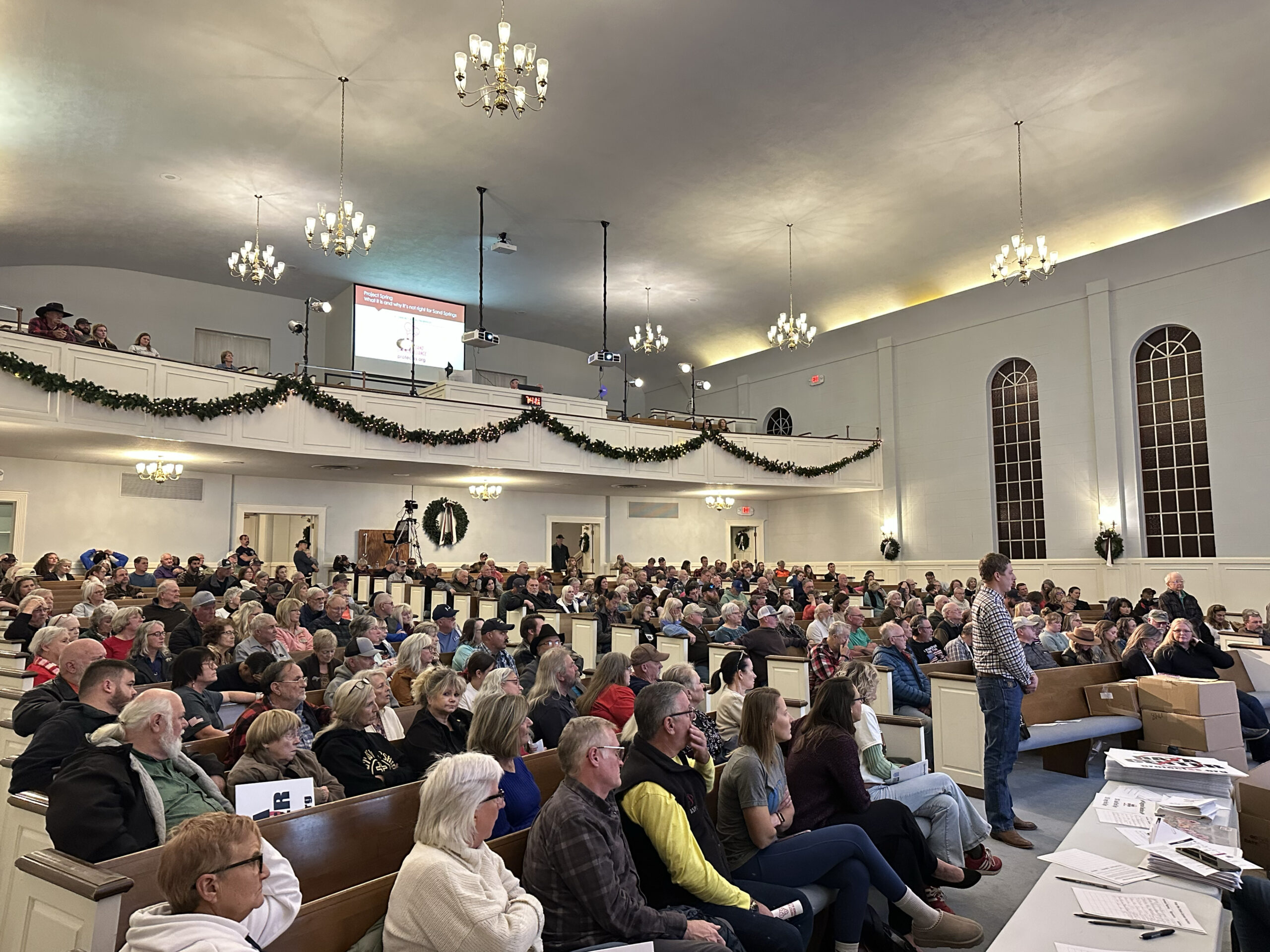
    Sand Springs leaders were besieged with community anger after annexing an 827-acre agricultural property miles outside of town and launching into secret talks with a tech giant looking to use it for a sprawling data center. Hundreds of aggrieved voters showed up at community meetings. Swarms of protest signs are taking root along the rural roads.

    “It feels like these data center companies have just put a big target on our backs,” said Kyle Schmidt, leader of the newly formed Protect Sand Springs Alliance. “We are all asking: Where are the people we elected who promised to protect us from these big corporations trying to steamroll us? The people who are supposed to be standing up and protecting us are standing down and caving.”

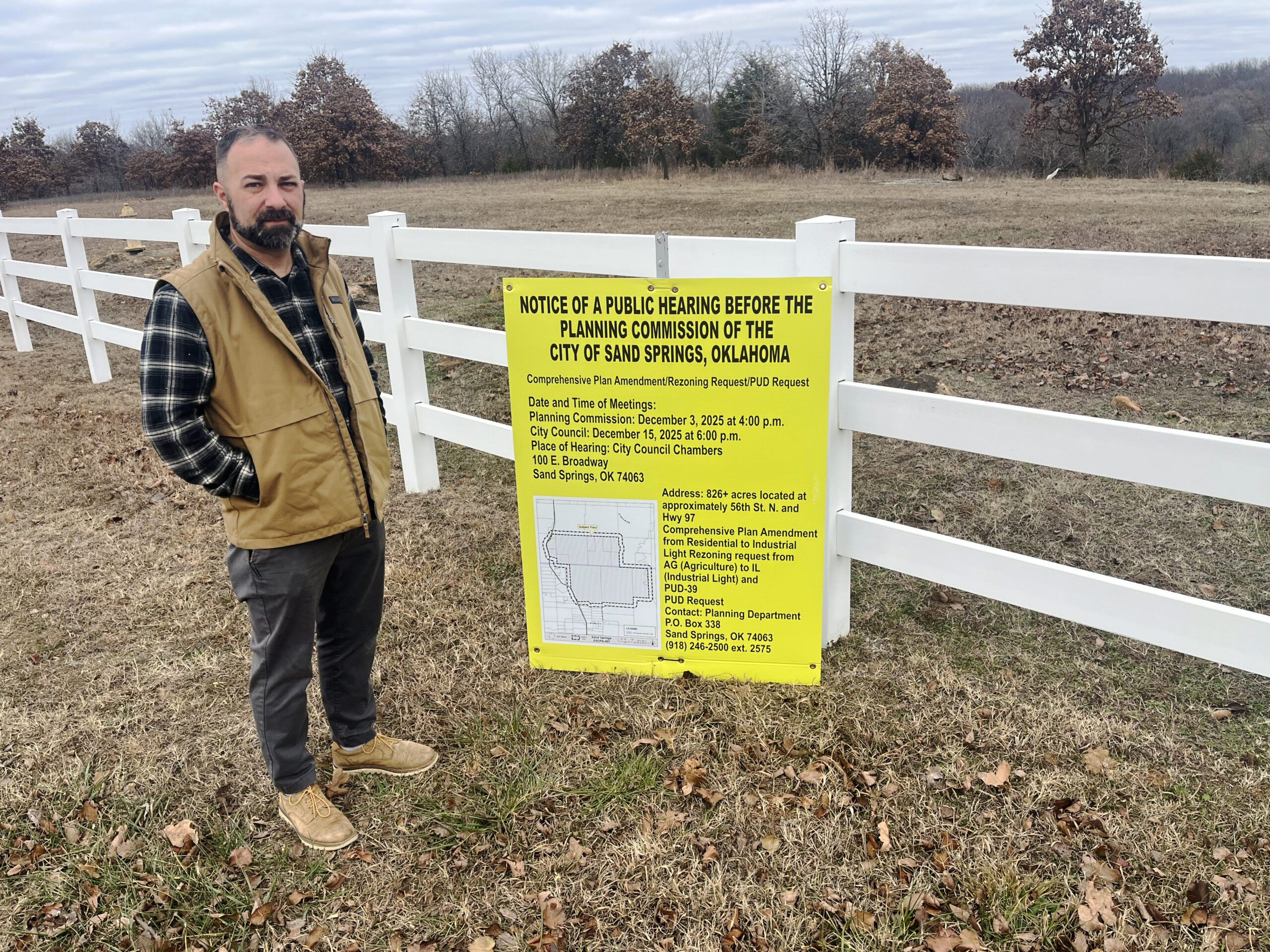
    Kyle Schmidt, president of the advocacy group Protect Sand Springs, at the property city officials have annexed near his home.

    From Archbald, Pa., to Page, Ariz., tech firms are seeking to plunk down data centers in locations that sometimes are not zoned for such heavy industrial uses, within communities that had not planned for them. These supersize data centers can use more energy than entire cities and drain local water supplies.

    Anger over the perceived trampling of communities by Silicon Valley has entered the national political conversation and could affect voters of all political persuasions in this year’s midterm elections.

    Many of the residents fighting the project in Sand Springs voted for Trump three times and also backed Gov. J. Kevin Stitt, a Republican who implores tech firms to build in his state.

    “We know Trump wants data centers and Kevin Stitt wants data centers, but these things don’t affect these people,” said Brian Ingram, a Trump voter living in the shadow of the planned project. “You know, this affects us.”

    Ingram was standing before a homemade sign he planted on his front lawn that said, “Jesus Was Born on Ag Land.”

    The grassroots blowback comes from deep red states as much as from left-wing groups such as the Democratic Socialists of America, which have helped draw hundreds of residents to hearings in Arizona, Indiana, and Maryland.

    Even Energy Secretary Chris Wright warned data center developers that they are losing control of the narrative. “In rural America right now, where data centers are being built, everyone’s already angry because their electricity prices have risen a lot,” he told energy executives assembled in Washington for the North American Gas Forum last month. “‘I don’t want them in my state’ is a common viewpoint.”

    Some industry groups argue that residents’ concerns are misplaced.

    “Fueled by misinformation, driven by radical environmental policies, communities are missing out on the jobs, security, and opportunities this technology is delivering,” said an email from Brian O. Walsh, executive director of the AI Infrastructure Coalition. The group says the projects lower electricity prices, a claim that is hotly disputed.

    The White House frames the data center boom as beneficial, saying in a statement that it will lead to big investments in infrastructure and boost manufacturing. But the administration is also aware some communities oppose them.

    “Communities know what’s best for them, and the Administration is clear that local infrastructure decisions remain with states and localities,” the statement said.

    Residents who attended a community meeting held near the land Sand Springs annexed were overwhelmingly against the proposed data center project.

    Many local politicians are yielding to community pressure and rejecting data centers. Between April and June, more projects were blocked or delayed than during the previous two years combined, according to Data Center Watch, a tracking project by the nonpartisan research firm 10a Labs. Some $98 billion in planned development was derailed in a single quarter.

    Last month, a group of Senate Democrats launched an investigation into the role data centers play in increasing electricity prices.

    Sen. Bernie Sanders (Ind., Vt.) last month called for a moratorium on data center construction, warning that the tech firms are draining scarce energy and water reserves and pushing the cost onto everyday Americans in pursuit of AI technologies that threaten to displace millions from the workforce.

    White House AI czar David Sacks replied on X: “He would block new data centers even if states want them & they generate their own power.”

    But advocates say residents’ concerns are legitimate.

    “This data center expansion affects so many issues,” said Mitch Jones, managing director of policy and litigation at Food and Water Watch. The group last month organized a letter signed by several national advocacy groups demanding a moratorium.

    “It takes up farmland in rural communities. It takes up dwindling water sources in communities that need cleaner drinking water. And it is driving up electricity prices for everyone,” he said. “It is drawing together people from disparate backgrounds who might not agree on other political issues. They are saying this is taking place without any forethought to communities and we must stop it.”

    The NAACP this month convened a two-day “Stop Dirty Data” conference in Washington that focused on the impacts of the AI build-out on minority and low-income communities. It included a bus tour of “Data Center Alley” in Northern Virginia, the world’s largest collection of data centers.

    Even Florida Gov. Ron DeSantis is championing an AI “bill of rights” to enshrine local governments’ power to stop data center construction and prohibit utilities from pushing AI infrastructure costs onto residents. The break between Rep. Marjorie Taylor Greene (R., Ga.) and President Donald Trump was driven in part by her vocal criticism of his AI build-out push.

    The industry has struggled to quell the concerns. In Chandler, Ariz., former Sen. Kyrsten Sinema, co-founder of the AI Infrastructure Coalition, implored city officials to get on board with a large proposed project or risk the federal government pushing it through without city input.

    The city council rejected the project unanimously.

    The vote followed the Tucson City Council’s unanimous rejection of a plan that would have required annexing land in the Sonoran Desert that until June had been zoned “rural homestead.” Some voters were outraged that local officials had signed a five-year nondisclosure agreement with Amazon, which did not come to light for two years. Frustration with the power company that would have provided the power has fueled a movement to drive it out in favor of a community-led nonprofit.

    Amazon did not respond to questions about the controversy, saying only, “We do not have any commitments or agreements in place to develop this project.” Amazon founder Jeff Bezos owns the Washington Post.

    “People are understandably asking how they will benefit,” said Chris Lehane, chief global affairs officer at OpenAI, which has won initial local approval for some of the country’s largest data center projects. He said companies need to listen to communities and make sure they are sharing in the economic gains. “You need to be on the ground, having these conversations. It is a journey.”

    In some places, large tech companies have signed contracts committing to pay for new power grid infrastructure required to bring a data center online, even when the companies are not the only ones that would benefit from it.

    It’s a journey that some local officials are willing to go on because the projects generate construction jobs and boost revenue for schools.

    “We’re trying to work through this,” said Mike Carter, the city manager in Sand Springs. “This would probably be one of our major employers. It would almost certainly become the dominant part of our tax base. … When you can surpass Walmart, which is right now the biggest taxpayer in our community, there is a big incentive to look at this.”

    He has tried to assure residents that they will have all their questions answered — including the name of the tech firm — before the city hearing this month, where officials will consider rezoning the sprawling property from agricultural to industrial. He said the city has signed other nondisclosure agreements during negotiations with large corporations, such as Olive Garden.

    The project developer, White Rose Partners, said none of the costs involved with providing electricity to the Sand Springs data center would fall on residential ratepayers. The firm says the data center would generate millions of dollars in revenue for local schools and services.

    It is cold comfort to many residents of the rural community, where the data center would industrialize a landscape now defined by the ranches that drew them there.

    “I don’t care how much chocolate icing you put on a dog turd, it don’t make it chocolate cake,” said Rick Plummer, who raises elite team-roping horses next to the proposed data center. “They are trying to fluff this data center thing up and say, ‘Man, eat this birthday cake.’ But it isn’t birthday cake.”

    On the other side of Tulsa, a steady stream of pickups pulled off the busy local road to sign petitions fighting a different data center proposed for the rural community of Coweta. One sign takes aim at the nondisclosure agreements, stating “NDAs BETRAY.” The petitions demand the firing of a city official who signed one.

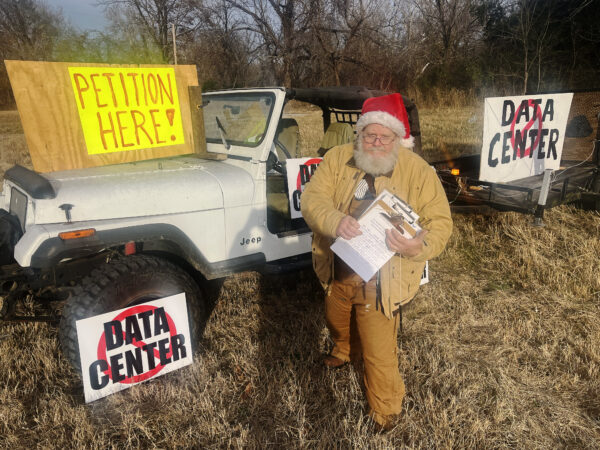
    “We want to see this damn data center go away and go someplace else,” said Allen Prather, who was leading the petition drive dressed as Santa. “This town deserves a better centerpiece than a data center. They keep coming to smaller and smaller towns. Leave mine alone.”

    Sherri Crumpacker, a retired law enforcement officer who pulled over to sign, concurred. “I moved here from California to get away from BS like this,” she said.

  • Protests erupt over federal immigration enforcement operations after shootings in Minneapolis and Portland

    Protests erupt over federal immigration enforcement operations after shootings in Minneapolis and Portland

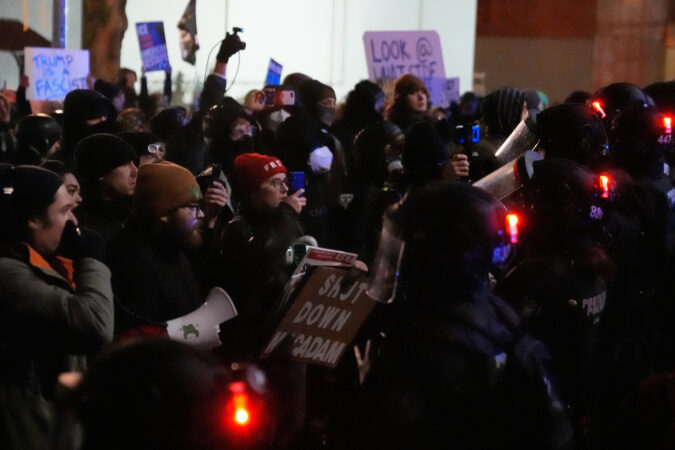
    MINNEAPOLIS — As anger and outrage spilled out onto Minneapolis’ streets over the fatal shooting of a woman by an Immigration and Customs Enforcement officer, a new shooting by federal officers in Oregon left two people wounded, sparked additional protests and elicited more scrutiny of enforcement operations across the U.S.

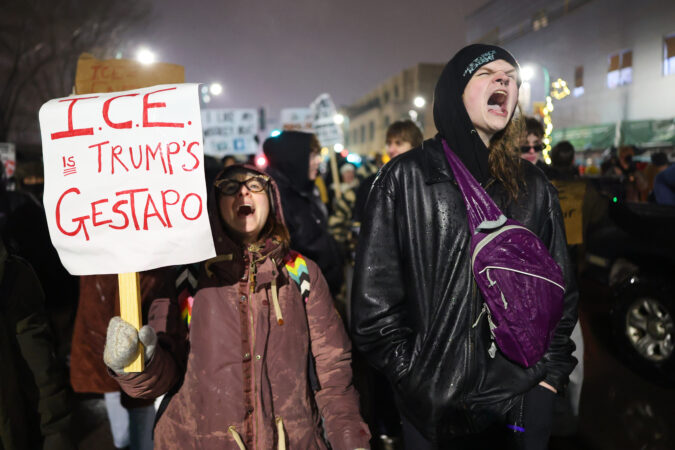
    Hundreds of people protesting the shooting of Renee Good marched in freezing rain Thursday night down one of Minneapolis’ major thoroughfares, chanting “ICE out now” and holding signs saying, “killer ice off our streets.” Protesters earlier vented their outrage outside a federal facility that is serving as a hub for the administration’s latest immigration crackdown on a major city.

    Early Friday, city crews removed makeshift barricades made from debris including garbage cans and Christmas trees that blocked streets in the area of Wednesday’s shooting to keep streets open, but Minneapolis officials said they would not remove the memorial the community created there. An estimated 15 tons (13.6 metric tonnes) of debris including metal and tires were removed, officials said.

    The shooting in Portland, Oregon, took place outside a hospital Thursday afternoon. A man and woman were shot inside a vehicle, and their conditions were not immediately known. The FBI and the Oregon Department of Justice were investigating.

    Portland Mayor Keith Wilson and the city council called on ICE to end all operations in the city until a full investigation is completed. Hundreds protested Thursday night at the ICE building. Early Friday, Portland police reported that a handful of arrests were made after officers asked protesters to move to the sidewalk, as traffic remained open in the area.

    Just as it did following Wednesday’s shooting in Minneapolis shooting, the Department of Homeland Security defended the actions of the officers in Portland, saying it occurred after a Venezuelan man with alleged gang ties and who was involved in a recent shooting tried to “weaponize” his vehicle to hit the officers. It was not yet clear if witness video corroborates that account.

    Homeland Security Secretary Kristi Noem, President Donald Trump and others in his administration have repeatedly characterized the Minneapolis shooting as an act of self-defense and cast Good as a villain, suggesting she used her vehicle as a weapon to attack the officer who shot her.

    Vice President JD Vance said the shooting was justified and Good, a 37-year-old mother of three, was a “victim of left-wing ideology.”

    “I can believe that her death is a tragedy while also recognizing that it is a tragedy of her own making,” Vance said, noting that the officer who killed her was injured while making an arrest last June.

    But state and local officials and protesters rejected that characterization, with Minneapolis Mayor Jacob Frey saying video recordings show the self-defense argument is “garbage.”

    An immigration crackdown quickly turns deadly

    The Minneapolis shooting happened on the second day of the Trump administration’s immigration crackdown on the Twin Cities of Minneapolis and St. Paul, which Homeland Security said is the biggest immigration enforcement operation ever. More than 2,000 officers are taking part and Noem said they have made more than 1,500 arrests.

    It provoked an immediate response in the city where police killed George Floyd in 2020, with hundreds of people turning up to the scene to vent their outrage at the ICE officers and the school district canceling classes for the rest of the week as a precaution.

    Good’s death — at least the fifth tied to immigration sweeps since Trump took office — has resonated far beyond Minneapolis, as protests took place or were expected this week in many large U.S. cities.

    Who will investigate?

    The Minnesota agency that investigates officer-involved shootings said Thursday that it was informed that the FBI and U.S. Justice Department would not work with the it, effectively ending any role for the state to determine if crimes were committed. Noem said the state has no jurisdiction.

    “Without complete access to the evidence, witnesses and information collected, we cannot meet the investigative standards that Minnesota law and the public demands,” said Drew Evans, head of the Minnesota Bureau of Criminal Apprehension.

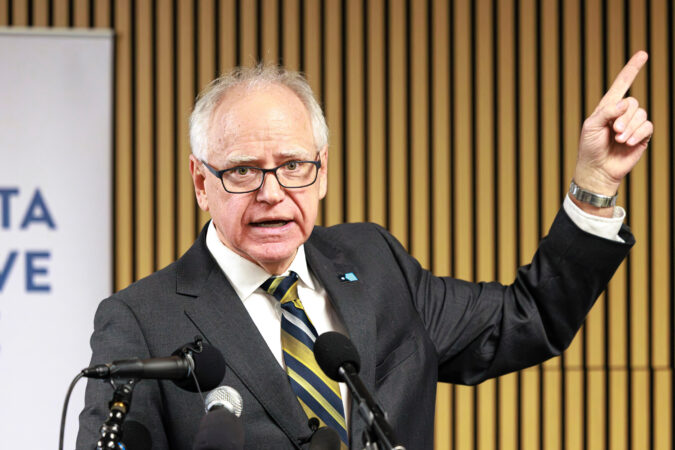
    Minnesota Gov. Tim Walz demanded that the state be allowed to take part, repeatedly emphasizing that it would be “very difficult for Minnesotans” to accept that an investigation excluding the state could be fair.

    Deadly encounter seen from multiple angles

    Several bystanders captured video of Good’s killing, which happened in a neighborhood south of downtown.

    The recordings show an officer approaching an SUV stopped across the middle of the road, demanding the driver open the door and grabbing the handle. The Honda Pilot begins to pull forward and a different ICE officer standing in front of it pulls his weapon and immediately fires at least two shots at close range, jumping back as the vehicle moves toward him.

    It is not clear from the videos if the vehicle makes contact with the officer, and there is no indication of whether the woman had interactions with agents earlier. After the shooting, the SUV speeds into two cars parked on a curb before crashing to a stop.

    Officer identified in records

    The federal agent who fatally shot Good is an Iraq War veteran who has served for nearly two decades in the Border Patrol and ICE, according to records obtained by AP.

    Noem has not publicly named him, but a Homeland Security spokesperson said her description of his injuries last summer refers to an incident in Bloomington, Minnesota, in which court documents identify him as Jonathan Ross.

    Ross got his arm stuck in the window of a vehicle whose driver was fleeing arrest on an immigration violation. Ross was dragged and fired his Taser. A jury found the driver guilty of assaulting a federal officer with a dangerous weapon.

    Attempts to reach Ross, 43, at phone numbers and email addresses associated with him were not successful.

  • ICE shooting reinforces Minnesota’s grim role as Trump’s target

    ICE shooting reinforces Minnesota’s grim role as Trump’s target

    MINNEAPOLIS — Federal officers have encountered opposition in nearly all of the cities targeted by President Donald Trump’s immigration enforcement campaign. But it was in Minnesota — a state in daily conflict with the Trump administration this year — that a 37-year-old woman was shot and killed by an immigration officer.

    Trump has focused on several blue states in the divide-and-conquer campaign that has characterized his second term, and now he has turned to Minnesota, where the killing of George Floyd and the protests it sparked stained his first presidency.

    Trump last month called the state’s Somali population “garbage” in the wake of a massive federal investigation into COVID-19 and medical aid fraud tied to organizations serving Somali immigrants, among others. The fraud cases led Minnesota’s Democratic governor, Tim Walz — former Vice President Kamala Harris’ 2024 running mate — to announce this week he will not run for reelection.

    In June, a Democratic state lawmaker and her husband were assassinated by a Trump supporter, although conservatives insist the gunman was actually a leftist working at Walz’s behest. On Sunday, the victims’ family begged Trump to take down a social media post echoing those conspiracy theories.

    Memories of the chaos that followed the killing of George Floyd

    Amid that mounting tension, the Trump administration announced Tuesday that it was sending more than 2,000 federal officers to the Twin Cities of Minneapolis and St. Paul in what it claimed would be the biggest immigration enforcement operation in history.

    The Immigration and Customs Enforcement officer who killed Renee Good during a protest Wednesday against the immigration raids opened fire just blocks from where, in 2020, a Minneapolis police officer killed George Floyd. The parallels were painful and frightening for many in the area, including Stephanie Abel, a 56-year-old Minneapolis nurse, who is keeping her gas tank full and cash handy in memory of the chaos that followed that slaying.

    “I thought the federal government would realize that now is not the time to be toying with people,” Abel said. “What are they going to try to do to get Minneapolis to ignite?”

    Floyd’s death sparked the biggest protests of Trump’s first term. The president, who is still publicly bitter about the unrest, contends it should have been met with a stronger show of force.

    That’s the approach Trump has adopted in his second term, trying to cow blue states by surging military and immigration agents into their cities and insisting that anyone who doesn’t comply with federal demands will face severe consequences.

    Immigration operations that started last summer in liberal strongholds such as Chicago,Los Angeles and Portland also generated large protests. Good is at least the fifth person killed during ICE enforcement efforts.

    On Thursday, Vice President JD Vance said Good’s death was “a tragedy of her own making,” blamed “leftist ideology” and said the media had encouraged protests against Trump’s immigration crackdown. Vance spoke at the White House to announce a new assistant attorney general position to prosecute the abuse of government assistance programs that will focus on Minnesota.

    Federal investigators have Somalis in their sights

    The Twin Cities operation is intertwined with a conservative effort to make Minnesota the poster child for government fraud. Though prosecutions for the fraudulent use of hundreds of millions of dollars of federal COVID-19 and health aid by social service groups began in the Biden administration, Trump and conservatives have seized on the scandal in recent weeks.

    In November, Trump called Minnesota “a hub of fraudulent money laundering activity” after a report by a conservative news site, City Journal, claimed federal money was fraudulently flowing to the militant group al-Shabab. There has been little, if any, evidence, proving such a link. Nevertheless, the president said he would end Temporary Protected Status for Somalis in Minnesota.

    The allegations got a new charge late last month when conservative influencer Nick Shirley posted an unconfirmed video claiming that day care centers in Minneapolis run by Somalis had fraudulently collected over $100 million in government aid.

    Jamal Osman, a Somali immigrant and Minneapolis city councilman who lives just a few blocks from the location of the ICE shooting, said he and other prominent Somalis in the area have been swamped with angry calls and messages since Trump made his statements. The vitriol, he said, mainly comes from out of state.

    “We have whole groups of people who’ve never been to Minnesota,” Osman said in an interview. “Minnesota is probably one of the nicest places to live. It’s a beautiful area with very nice people and we blended in, it’s all very nice. We don’t really see bad things happening here normally.”

    The Trump administration on Tuesday said is withholding funding for programs that support needy families with children, including day care funding, in five Democratic-led states over concerns about fraud. Joining Minnesota on the list were California, Colorado, Illinois and New York.

    ‘Leave our state alone’

    Minnesota’s place on a list of targeted blue states is not unexpected.

    Under Walz, Minnesota has become something of a beacon for liberals as an example of a state that expanded the public safety net even as the nation swung to the right. Since Trump’s first election, the state has seen large increases in education spending, free school breakfasts and lunches, and improved protection of abortion rights.

    Trump lost Minnesota by only 4 percentage points in 2024, making it significantly less liberal than California and New York. Still, it has been reliably Democratic throughout the Trump years, a rarity in the swingy upper Midwest.

    The state’s political tilt reflects the size of the Twin Cities metro area and its robust population of college-educated liberals, which overwhelm the state’s more conservative rural reaches.

    It’s the sort of cleavage that has defined national politics during Trump’s years in office.

    “Minnesota is a microcosm of a lot of the tensions we have in our society,” said David Schultz, a political scientist at Hamline University in St. Paul. “We’re a country that’s hugely polarized, Democrats-Republicans, urban-rural.”

    On Thursday, Minnesota was an ominous indicator of the damage those divisions can inflict. Minneapolis schools remained closed after immigration agents clashed with high school students at one campus on Wednesday. The state’s National Guard remained on standby at Walz’s directive.

    Walz begged Trump to ease up, saying Minnesota’s residents are “exhausted” by the president’s “relentless assault on Minnesota.”

    “So please, just give us a break,” Walz said during a news conference Thursday. “And if it’s me, you’re already getting what you want, but leave my people alone. Leave our state alone.”

  • Somalia denies U.S. allegation that it destroyed food aid warehouse

    Somalia denies U.S. allegation that it destroyed food aid warehouse

    MOGADISHU, Somalia — Somalia’s government on Thursday denied an allegation by the U.S. government that authorities in Mogadishu destroyed an American-funded warehouse belonging to the World Food Program and seized food aid earmarked for impoverished civilians.

    The U.S. State Department said Wednesday that it has suspended all assistance from Washington to Somalia’s federal government over the allegations, saying the Trump administration has “a zero-tolerance policy for waste, theft and diversion of life-saving assistance.”

    A senior U.S. State Department official said authorities at the Mogadishu port demolished the warehouse of the World Food Program, a Rome-based U.N. agency, at the direction of President Hassan Sheikh Mohamud “with no prior notification or coordination with international donor countries, including the United States.” The official spoke on condition of anonymity to discuss private reporting from American diplomats in the region.

    Somalia’s foreign ministry said that the food in question wasn’t destroyed and that “the commodities referenced in recent reports remain under the custody and control of the World Food Program, including assistance provided by the United States.”

    The foreign ministry said expansion and repurposing works at the Mogadishu port are underway as part of broader developments, but ongoing activities there have not affected the custody and distribution of humanitarian assistance.

    Somalia “remains fully committed to humanitarian principles, transparency, and accountability, and values its partnership with the United States and all international donors,” it said. It gave no other details.

    The WFP told The Associated Press in a statement that its warehouse in Mogadishu port had been demolished by port authorities. The organization said the warehouse contained 75 metric tones of specialized foods intended for the treatment of malnourished pregnant and breastfeeding women and girls and young children.

    In a later update, the WFP said it had “retrieved 75 metric tons of nutritional commodities” without explaining further details on how the material was retried.

    The U.S. State Department said: “We’re glad to hear reports that certain commodities have been recovered and continue our investigation into diversion and misuse of assistance in Somalia. We’ve urged the Federal Government of Somalia to promptly follow through on their commitment to provide an account of the incident.”

    Located in the Horn of Africa, Somalia is one of the world’s poorest nations and has been beset by chronic strife and insecurity exacerbated by multiple natural disasters, including severe droughts, for decades.

    The U.S. provided $770 million in assistance for projects in Somalia during the last year of Democratic President Joe Biden’s administration, but only a fraction of that went directly to the government.

    The U.S. suspension comes as the Trump administration has ratcheted up criticism of Somali refugees and migrants in the United States, including over fraud allegations involving child care centers in Minnesota. It has slapped significant restrictions on Somalis wanting to come to the U.S. and made it difficult for those already in the United States to stay.

    It wasn’t immediately clear how much assistance would be affected by the suspension because the Trump administration has slashed foreign aid expenditures, dismantled the U.S. Agency for International Development and not released new country-by-country data.

    South Sudan, another African country facing conflict and food shortage, is also heavily affected by U.S. aid restrictions. On Thursday, the U.S. suspended foreign assistance to a county in South Sudan’s Jonglei state, and similar assistance to Western Bahr el-Ghazal state was under review, the U.S. Embassy in South Sudan said in a statement.

    That statement charged that South Sudanese officials “take advantage of the United States instead of working in partnership with us to help the South Sudanese people.”

    The U.S. measures “follow continued abuse, exploitation, and theft directed against U.S. foreign assistance by South Sudanese officials at national, state, and county levels,” it said.

    There was no immediate comment from South Sudan’s government.

  • Senate pushes back on Trump’s military threats against Venezuela with war powers vote

    Senate pushes back on Trump’s military threats against Venezuela with war powers vote

    WASHINGTON — The Senate advanced a resolution Thursday that would limit President Donald Trump’s ability to conduct further attacks against Venezuela, sounding a note of disapproval for his expanding ambitions in the Western Hemisphere.

    Democrats and five Republicans voted to advance the war powers resolution on a 52-47 vote and ensure a vote next week on final passage. It has virtually no chance of becoming law because Trump would have to sign it if it were to pass the Republican-controlled House. Still, it was a significant gesture that showed unease among some Republicans after the U.S. military seized Venezuelan leader Nicolás Maduro in a surprise nighttime raid over the weekend.

    Trump’s administration is now seeking to control Venezuela’s oil resources and its government, but the war powers resolution would require congressional approval for any further attacks on the South American country.

    “To me, this is all about going forward,” said Missouri Sen. Josh Hawley, one of the five Republican votes. “If the president should determine, ‘You know what? I need to put troops on the ground of Venezuela,’ I think that would require Congress to weigh in.”

    The other Republicans who backed the resolution were Sens. Rand Paul of Kentucky, Lisa Murkowski of Alaska, Susan Collins of Maine and Todd Young of Indiana.

    Trump reacted to their votes by saying on social media that they “should never be elected to office again” and that the vote “greatly hampers American Self Defense and National Security.”

    Democrats had failed to pass several such resolutions in the months that Trump escalated his campaign against Venezuela. But lawmakers argued now that Trump has captured Maduro and set his sights to other conquests such as Greenland, the vote presents Congress with an opportunity.

    “This wasn’t just a procedural vote. It’s a clear rejection of the idea that one person can unilaterally send American sons and daughters into harm’s way without Congress, without debate,” said Senate Democratic leader Chuck Schumer of New York.

    Lawmakers’ response to the Venezuela operation

    Republican leaders have said they had no advance notification of the raid early morning Saturday to seize Maduro and his wife, Cilia Flores, but mostly expressed satisfaction this week as top administration officials provided classified briefings on the operation.

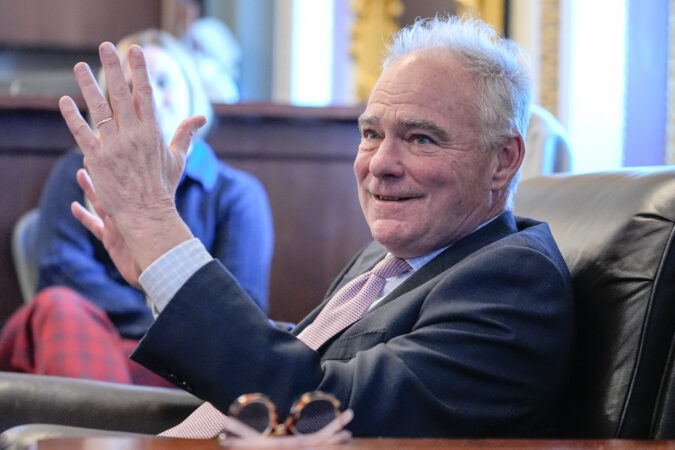
    Sen. Tim Kaine, D-Va., who forced the vote on the resolution, said he believes many Republicans were caught off guard by the outcome. He said that Trump’s recent comments to The New York Times suggesting U.S. oversight in Venezuela could last for years — combined with details revealed in the classified briefings — prompted some lawmakers to conclude that “this is too big to let a president do it without Congress.”

    The administration has used an evolving set of legal justifications for the monthslong campaign in Central and South America, from destroying alleged drug boats under authorizations for the global fight against terrorism to seizing Maduro in what was ostensibly a law enforcement operation to put him on trial in the United States.

    Republican leaders have backed Trump.

    “I think the president has demonstrated at least already a very strong commitment to peace through strength, especially in this hemisphere,” said Senate Majority Leader John Thune, R-S.D. “I think Venezuela got that message loudly and clearly.”

    A vote on a similar resolution in November narrowly failed to gain the majority needed. Paul and Murkowski were the only Republicans voting in favor then.

    Young in a statement said he supported the operation to capture Maduro, but was concerned by Trump’s statements that his administration now “runs” Venezuela.

    “It is unclear if that means that an American military presence will be required to stabilize the country,” Young said, adding that he believed most of his constituents were not prepared to send U.S. troops to that mission.

    House Democrats were introducing a similar resolution Thursday.

    The rarely enforced War Powers Act

    Trump criticized the Senate vote as “impeding the President’s Authority as Commander in Chief” under the Constitution.

    Presidents of both parties have long argued the War Powers Act infringes on their authority. Passed in 1973 in the aftermath of the Vietnam War — and over the veto of Republican President Richard Nixon — it has never succeeded in directly forcing a president to halt military action.

    Congress declares war while the president serves as commander in chief, according to the Constitution. But lawmakers have not formally declared war since World War II, granting presidents broad latitude to act unilaterally. The law requires presidents to notify Congress within 48 hours of deploying forces and to end military action within 60 to 90 days absent authorization — limits that presidents of both parties have routinely stretched.

    Democrats argue those limits are being pushed further than ever. Some Republicans have gone further still, contending congressional approval is unnecessary altogether.

    Republican Sen. Lindsey Graham of South Carolina, a close Trump ally who traveled with the president aboard Air Force One on Sunday, said he would be comfortable with Trump taking over other countries without congressional approval, including Greenland.

    “The commander in chief is the commander in chief. They can use military force,” Graham said.

    Greenland may further test the limits

    Graham’s comments come as the administration weighs not only its next steps in Venezuela, but also Greenland. The White House has said the “military is always an option” when it comes to a potential American takeover of the world’s largest island.

    Republicans have cited Greenland’s strategic value, but most have balked at the idea of using the military to take the country. Some favor a potential deal to purchase the country, while others have acknowledged that is an unlikely option when Denmark and Greenland have rejected Trump’s overtures.

    Democrats want to get out in front of any military action and are already preparing to respond. Arizona Sen. Ruben Gallego said he expected soon to introduce a resolution “to block Trump from invading Greenland.”

    Greenland belongs to a NATO ally, Denmark, which has prompted a much different response from Republican senators than the situation in Venezuela.

    On Thursday, Sen. Roger Wicker, chairman of the Senate Armed Services Committee, met with the Danish ambassador to the United States, Jesper Møller Sørensen. Also in the meeting were the top Democrat on the Senate Foreign Relations Committee, New Hampshire Sen. Jeanne Shaheen, and the head of Greenland’s representation to the U.S. and Canada, Jacob Isbosethsen.

    “There’s no willingness on their part to negotiate for the purchase or the change in title to their land which they’ve had for so long,” Wicker, R-Miss., said afterward. “That’s their prerogative and their right.”

    Wicker added that he hoped an agreement could be reached that would strengthen the U.S. relationship with Denmark.

    “Greenland is not for sale,” Isbosethsen told reporters.

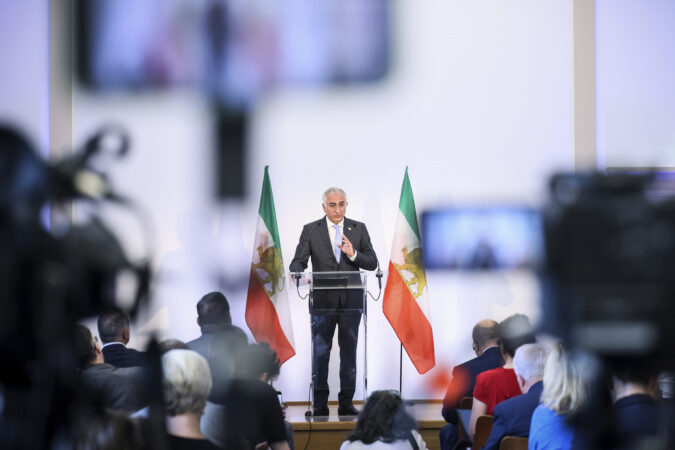
  • Internet and phones cut in Iran as protesters heed exiled prince’s call for mass demonstration

    Internet and phones cut in Iran as protesters heed exiled prince’s call for mass demonstration

    DUBAI, United Arab Emirates — People in Iran’s capital shouted from their homes and raIran’s government cut off the country from the internet and international telephone calls Thursday night as a nighttime demonstration called by the country’s exiled crown prince drew a mass of protesters to shout from their windows and storm the streets.

    The protest represented the first test of whether the Iranian public could be swayed by Crown Prince Reza Pahlavi, whose fatally ill father fled Iran just before the country’s 1979 Islamic Revolution. Demonstrations have included cries in support of the shah, something that could bring a death sentence in the past but now underlines the anger fueling the protests that began over Iran’s ailing economy.

    The demonstrations that have popped up in cities and rural towns across Iran continued Thursday. More markets and bazaars shut down in support of the protesters. So far, violence around the demonstrations has killed at least 42 people while more than 2,270 others have been detained, said the U.S.-based Human Rights Activists News Agency.

    The growth of the protests increases the pressure on Iran’s civilian government and its Supreme Leader Ayatollah Ali Khamenei. CloudFlare, an internet firm, and the advocacy group NetBlocks reported the internet outage, both attributing it to Iranian government interference. Attempts to dial landlines and mobile phones from Dubai to Iran could not be connected. Such outages have in the past been followed by intense government crackdowns.

    Meanwhile, the protests themselves have remained broadly leaderless. It remains unclear how Pahlavi’s call will affect the demonstrations moving forward.

    “The lack of a viable alternative has undermined past protests in Iran,” wrote Nate Swanson of the Washington-based Atlantic Council, who studies Iran.

    “There may be a thousand Iranian dissident activists who, given a chance, could emerge as respected statesmen, as labor leader Lech Wałęsa did in Poland at the end of the Cold War. But so far, the Iranian security apparatus has arrested, persecuted and exiled all of the country’s potential transformational leaders.”

    Thursday’s demonstration rallies at home and in street

    Pahlavi had called for demonstrations at 8 p.m. local (1630 GMT) on Thursday and Friday. When the clock struck, neighborhoods across Tehran erupted in chanting, witnesses said. The chants included “Death to the dictator!” and “Death to the Islamic Republic!” Others praised the shah, shouting: “This is the last battle! Pahlavi will return!” Thousands could be seen on the streets before all communication to Iran cut out.

    “Iranians demanded their freedom tonight. In response, the regime in Iran has cut all lines of communication,” Pahlavi said. “It has shut down the Internet. It has cut landlines. It may even attempt to jam satellite signals.”

    He went on to call for European leaders to join U.S. President Donald Trump in promising to “hold the regime to account.”

    “I call on them to use all technical, financial, and diplomatic resources available to restore communication to the Iranian people so that their voice and their will can be heard and seen,” he added. ”Do not let the voices of my courageous compatriots be silenced.”

    Pahlavi had said he would offer further plans depending on the response to his call. His support of and from Israel has drawn criticism in the past — particularly after the 12-day war Israel waged on Iran in June. Demonstrators have shouted in support of the shah in some demonstrations, but it isn’t clear whether that’s support for Pahlavi himself or a desire to return to a time before the 1979 Islamic Revolution.

    Iranian officials appeared to be taking the planned protests seriously. The hard-line Kayhan newspaper published a video online claiming security forces would use drones to identify those taking part.

    Iranian officials have not acknowledged the scale of the overall protests, which raged across many locations Thursday even before the 8 p.m. demonstration. However, there has been reporting regarding security officials being hurt or killed.

    The judiciary’s Mizan news agency report a police colonel suffered fatal stab wounds in a town outside of Tehran, while the semiofficial Fars news agency said gunmen killed two security force members and wounded 30 others in a shooting in the city of Lordegan in Chaharmahal and Bakhtiari province.

    A deputy governor in Iran’s Khorasan Razavi province told Iranian state television that an attack at a police station killed five people Wednesday night in Chenaran, some 700 kilometers (430 miles) northeast of Tehran. Late Thursday, the Revolutionary Guard said two members of its forces were killed in Kermanshah.

    Iran weighs Trump threat

    Iran has faced rounds of nationwide protests in recent years. As sanctions tightened and Iran struggled after the 12-day war, its rial currency collapsed in December, reaching 1.4 million to $1. Protests began soon after, with demonstrators chanting against Iran’s theocracy.

    It remains unclear why Iranian officials have yet to crack down harder on the demonstrators. Trump warned last week that if Tehran “violently kills peaceful protesters,” America “will come to their rescue.”

    Speaking to talk show host Hugh Hewitt, Trump reiterated his pledge.

    Iran has “been told very strongly, even more strongly than I’m speaking to you right now, that if they do that, they’re going to have to pay hell,” Trump said.

    Trump demurred when asked if he’d meet with Pahlavi.

    “I’m not sure that it would be appropriate at this point to do that as president,” Trump said. “I think that we should let everybody go out there, and we see who emerges.”

    Meanwhile, Nobel Peace Prize laureate Narges Mohammadi remains imprisoned by authorities after her arrest in December.

    “Since Dec. 28, 2025, the people of Iran have taken to the streets, just as they did in 2009, 2019,” her son Ali Rahmani said. “Each time, the same demands came up: an end to the Islamic Republic, an end to this patriarchal, dictatorial and religious regime, the end of the clerics, the end of the mullahs’ regime.”

  • Federal immigration officers shoot and wound two people in Portland, authorities say

    Federal immigration officers shoot and wound two people in Portland, authorities say

    PORTLAND, Ore. — Federal immigration agents shot and wounded two people in a vehicle outside a hospital in Portland on Thursday, a day after an officer fatally shot a woman in Minnesota, authorities said.

    The shooting drew hundreds of protesters to the U.S. Immigration and Customs Enforcement building at night, and Oregon Attorney General Dan Rayfield vowed to investigate “whether any federal officer acted outside the scope of their lawful authority” and refer criminal charges to the prosecutor’s office if warranted.

    The Department of Homeland Security said the vehicle’s passenger was “a Venezuelan illegal alien affiliated with the transnational Tren de Aragua prostitution ring” who was involved in a recent shooting in the city. When agents identified themselves to the occupants during a “targeted vehicle stop” in the afternoon, the driver tried to run them over, the department said in a statement.

    “Fearing for his life and safety, an agent fired a defensive shot,” it said. “The driver drove off with the passenger, fleeing the scene.”

    There was no immediate independent corroboration of that account or of any gang affiliation of the vehicle’s occupants. During prior shootings involving agents from President Donald Trump’s immigration crackdowns in U.S. cities, including the fatal one Wednesday in Minneapolis, video evidence has cast doubt on the administration’s characterizations of what prompted the shootings.

    Trump and his allies have consistently blamed the Tren de Aragua gang for being at the root of violence and drug dealing in some U.S. cities.

    The Portland shooting escalates tensions in a city that has long had a contentious relationship with Trump, including due to his recent failed effort to deploy National Guard troops there. The city saw long-running nightly protests outside the ICE building.

    According to the Portland Police bureau, officers initially responded to a report of a shooting outside Adventist Health hospital at 2:18 p.m. Thursday.

    A few minutes later, police received information that a man who had been shot was asking for help in a residential area a couple of miles away. Officers went there and found a man and a woman with gunshot wounds. Officers determined that they were injured in the shooting with federal agents, police said.

    Their conditions were not immediately known. Portland police said officers applied a tourniquet to one of them.

    City Council President Elana Pirtle-Guiney said during a meeting that “as far as we know, both of these individuals are still alive, and we are hoping for more positive updates throughout the afternoon.”

    At a nighttime news conference, Police Chief Bob Day said the FBI was leading the investigation and he had no details about the events that led to the shooting.

    Mayor Keith Wilson and the City Council called on ICE to end all operations in Oregon’s largest city until a full investigation is completed.

    “We stand united as elected officials in saying that we cannot sit by while constitutional protections erode and bloodshed mounts,” they said in a statement. “Portland is not a ‘training ground’ for militarized agents, and the ‘full force’ threatened by the administration has deadly consequences.”

    Wilson also suggested at a news conference that he does not necessarily believe the federal government’s account of the shooting: “There was a time we could take them at their word. That time is long past.”

    Democratic State Sen. Kayse Jama, who lives near where it took place, said Oregon is a welcoming state — but he told federal agents to leave.

    “You are not welcome,” Jama said. “You need to get the hell out of Oregon.”

    The city officials said “federal militarization undermines effective, community‑based public safety, and it runs counter to the values that define our region. We’ll use every legal and legislative tool available to protect our residents’ civil and human rights.”

    They urged residents to show up with “calm and purpose during this difficult time.”

    Several dozen people gathered in the evening near the scene where police found the wounded people.

    “It’s just been chaos,” said one, Anjalyssa Jones. “The community is trying to get answers.”

    U.S. Sen. Jeff Merkley, an Oregon Democrat, urged protesters to remain peaceful.

    “Trump wants to generate riots,” he said on the social platform X. “Don’t take the bait.”

  • House passes bill to extend health care subsidies in defiance of GOP leaders

    House passes bill to extend health care subsidies in defiance of GOP leaders

    WASHINGTON — In a remarkable rebuke of Republican leadership, the House passed legislation Thursday, 230-196, that would extend expired healthcare subsidies for those who get coverage through the Affordable Care Act as 17 renegade GOP lawmakers joined every Democrat in voting for the measure.

    Forcing the issue to a vote came about after a handful of Republicans signed on to a so-called “discharge petition” to unlock debate, bypassing objections from House Speaker Mike Johnson. The bill now goes to the Senate, where pressure is building for a bipartisan compromise.

    Together, the rare political coalitions are rushing to resolve the standoff over the enhanced tax credits that were put in place during the COVID-19 crisis but expired late last year after no agreement was reached during the government shutdown.

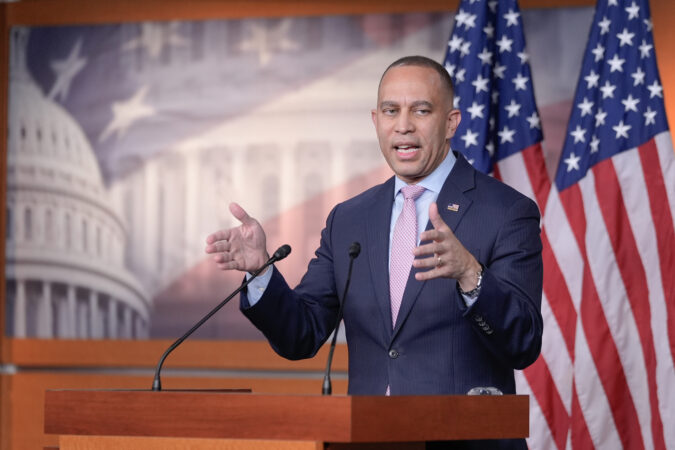
    “The affordability crisis is not a ‘hoax,’ it is very real — despite what Donald Trump has had to say,” said House Democratic Leader Hakeem Jeffries, invoking the president’s remarks.

    “Democrats made clear before the government was shut down that we were in this affordability fight until we win this affordability fight,” he said. “Today we have an opportunity to take a meaningful step forward.”

    Ahead of voting, the nonpartisan Congressional Budget Office estimated that the bill, which would provide a three-year extension of the subsidy, would increase the nation’s deficit by about $80.6 billion over the decade. At the same time, it would increase the number of people with health insurance by 100,000 this year, 3 million in 2027, 4 million in 2028 and 1.1 million in 2029, the CBO said.

    Growing support for extending ACA subsidies

    Johnson (R., La.) worked for months to prevent this situation. His office argued Thursday that the federal healthcare funding from the COVID-19 era is rife with fraud and urged a no vote.

    On the floor, Republicans also argued that the lawmakers should be focused on lowering health insurance costs for the broader population, not just those enrolled in ACA plans.

    “Only 7% of the population relies on Obamacare marketplace plans. This chamber should be about helping 100% of Americans,” said Rep. Jason Smith, the Republican chairman of the House Ways and Means Committee.

    While the momentum from the vote shows the growing support for the tax breaks that have helped some 22 million Americans have access to health insurance, the Senate would be under no requirement to take up the House bill and has already rejected it once before.

    Instead, a small group of senators from both parties has been working on an alternative plan that could find support in both chambers and become law. Senate Majority Leader John Thune, (R., S.D.) said that for any plan to find support in his chamber, it will need to have income limits to ensure that the financial aid is focused on those who most need the help. He and other Republicans also want to ensure that beneficiaries would have to at least pay a nominal amount for their coverage.

    Finally, Thune said there would need to be some expansion of health savings accounts, which allow people to save money and withdraw it tax-free as long as the money is spent on qualified medical expenses.

    Sen. Jeanne Shaheen (D., N.H.), who is part of the negotiations on reforms and subsidies for the Affordable Care Act, said there is agreement on addressing fraud in healthcare.

    “We recognize that we have millions of people in this country who are going to lose — are losing, have lost — their health insurance because they can’t afford the premiums,” Shaheen said. “And so we’re trying to see if we can’t get to some agreement that’s going to help, and the sooner we can do that, the better.”

    Trump has pushed Republicans to send money directly to Americans for health savings accounts so they can bypass the federal government and handle insurance on their own. Democrats largely reject this idea as insufficient for covering the high costs of healthcare.

    Republicans go around their leaders

    The action by Republicans to force a vote has been an affront to Johnson and his leadership team, who essentially lost control of what comes to the House floor as the Republican lawmakers joined Democrats for the workaround.

    After last year’s government shutdown failed to resolve the issue, Johnson had discussed allowing more politically vulnerable GOP lawmakers a chance to vote on another healthcare bill that would temporarily extend the subsidies while also adding changes.

    But after days of discussions, Johnson and the GOP leadership sided with the more conservative wing, which has assailed the subsidies as propping up ACA, which they consider a failed government program. He offered a modest proposal of healthcare reforms that was approved, but has stalled.

    It was then that rank-and-file lawmakers took matters into their own hands, as many of their constituents faced soaring health insurance premiums beginning this month.

    Republican Reps. Brian Fitzpatrick, Robert Bresnahan and Ryan Mackenzie, all from Pennsylvania, and Mike Lawler of New York, signed the Democrats’ petition, pushing it to the magic number of 218 needed to force a House vote. All four represent key swing districts whose races will help determine which party takes charge of the House next year.

    Jeffries said in a celebratory press conference after the vote that Thune should bring the Democratic bill to the Senate floor for an immediate vote.

    “Stop playing procedural games that are jeopardizing the health and safety and well-being of the American people,” Jeffries said.

    Trump encourages GOP to take on healthcare issue

    What started as a long shot effort by Democrats to offer a discharge petition has become a political vindication of the Democrats’ government shutdown strategy as they fought to preserve the healthcare funds.

    Democrats are making clear that the higher health insurance costs many Americans are facing will be a political centerpiece of their efforts to retake the majority in the House and Senate in the fall elections.

    Trump, during a lengthy speech this week to House GOP lawmakers, encouraged his party to take control of the healthcare debate — an issue that has stymied Republicans since he tried, and failed, to repeal Obamacare during his first term.

  • White House says it wasn’t economical to save East Wing during ballroom construction

    White House says it wasn’t economical to save East Wing during ballroom construction

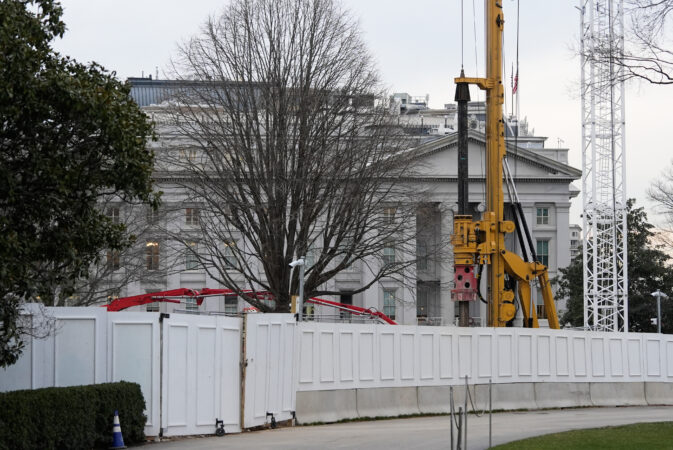
    WASHINGTON — The White House said Thursday that it was not feasible to save the East Wing because of structural issues, past decay and other major concerns as officials shared details of President Donald Trump’s planned ballroom at a public meeting of the commission charged with approving it.

    Josh Fisher, director of the White House Office of Administration, said an unstable colonnade, water leakage, mold contamination and other problems made it more economical to tear down the East Wing to make room for the $400 million ballroom than to renovate it.

    “Because of this and other factors, the cost analysis proved that demolition and reconstruction provided the lowest total cost ownership and most effective long-term strategy,” Fisher told members of the National Capital Planning Commission.

    It was the most comprehensive explanation to date for the dramatic demolition of the East Wing, which caused a public stir when it began in October with little advance notice.

    The commission’s chairman, Will Scharf, who is also a top White House official, said he thought the project would ultimately be approved.

    The project’s architect, Shalom Baranes, joined Fisher to provide a high-level view of the proposal to the commission. Baranes showed the panel renderings of the ballroom and views of the White House complex from the north and south with the addition.

    Baranes said the design could include adding a second story to the West Wing colonnade to help make the White House more uniform with the new ballroom on the east side. But such a step would also dramatically alter the iconic space outside the Oval Office.

    Fisher and Baranes said the project includes more than just a ballroom, and will also streamline visitor access to the White House and make unspecified improvements to Lafayette Park across the street.

    Some of the 12 commissioners raised concerns, most vocally Democrat Phil Mendelson, who asked several questions about the ballroom’s size and location and whether those might change going forward. Baranes said “anything’s possible,” but added that the plans had been thoroughly studied.

    Mendelson, who is also chairman of the D.C. Council, asked if the planned ceiling height of 38 to 40 feet could still be lowered before the final structure is finished and received assurances that the number wasn’t fully set. “It still seems to me it’s overwhelming the existing building,” Mendelson said.

    Baranes said the idea would be to build the ballroom’s height to ensure it matches the rest of the White House. “The heights will match exactly,” he said.

    Scharf listened to those and other questions Mendelson raised. Upon completion, however, the ballroom is expected to be larger than the rest of the existing White House.

    Mendelson also asked why the project hadn’t been presented in its entirety to the commission before the East Wing was demolished. Fisher said some aspects of the ballroom construction were of a “top secret nature” and needed to be dealt with.

    Scharf repeated his past assertions that the planning commission doesn’t usually have jurisdiction over site work and demolition on any project, including at the White House.

    After the meeting, he expressed confidence that the project will receive the go-ahead.

    “I certainly, based on the presentation today, I fully expect that the commission will … approve this project,” Scharf told reporters. “I think you just saw a very positive response to these preliminary drawings.” He acknowledged Mendelson’s concerns and suggested they would be addressed.

    Only commissioners were allowed to ask questions and offer feedback at the meeting. A more formal review, including public testimony and votes, is expected after the White House submits a more detailed proposal. The panel’s next meeting is Feb. 5.

    Before the meeting adjourned, Scharf argued that the White House needed a larger, more elegant space for major functions. He recalled visiting Windsor Castle last year with Trump and said, that when the president likely hosts King Charles III of Great Britain, “more likely than not, he will be hosted in a tent on the South Lawn with porta-potties.”

    Scharf also said after the meeting that the commission is interested in more than whether the ballroom is a good idea. He said their concerns extend to how it affects the White House visitor experience and how the building fits in with others in the area and across the city.

    Plans only recently offered

    The White House in December submitted its ballroom plans to the commission, which is one of two federal panels that review construction on federal land — usually before ground is broken. The National Trust for Historic Preservation has sued to halt construction of the ballroom, accusing the Trump administration of violating federal laws by proceeding before submitting the project for the independent reviews, congressional approval and public comment.

    Carol Quillen, president and CEO of the Trust, said in a statement afterward that the White House presentation was a “good and necessary first step.” She urged the administration to comply with all legally required review and approval processes before starting construction.

    A summary on the commission’s website said the purpose of the “East Wing Modernization Project” is to “establish a permanent, secure event space within the White House grounds” that provides increased capacity for official state functions, eliminates reliance on temporary tents and support facilities, and “protects the historic integrity and cultural landscape of the White House and its grounds.”

    A comprehensive design plan for the White House prepared in 2000 identified the “need for expanded event space to address growing visitor demand and provide a venue suitable for significant events,” the summary said. It added that successive administrations had “recognized this need as an ongoing priority.”

    Ballroom’s size and scope has grown

    Trump, a Republican serving his second term, has been talking about building a White House ballroom for years. Last July, the White House announced a 90,000-square-foot space would be built on the east side of the complex to accommodate 650 seated guests at a then-estimated cost of $200 million. Trump has said it will be paid for with private donations, including from him.

    He later upped the ballroom’s capacity to 999 people and, by October, had demolished the East Wing. In December, he updated the price tag to $400 million — double the original estimate.

    The White House had announced few other details about the project but has said it would be completed before Trump’s term ends in January 2029.