Category: National Politics

  • Trump hires new White House ballroom architect

    Trump hires new White House ballroom architect

    President Donald Trump has replaced the architect he handpicked to design his White House ballroom, according to three people familiar with the project, ending the involvement of a boutique firm whose selection raised questions from the start about whether it had the capacity to complete the massive, high-profile endeavor.

    For more than three months, James McCrery II and his architecture firm led the effort to design Trump’s $300 million ballroom building — until late October, when he stopped working on the project, one of the people said. It is unclear whether McCrery stepped back voluntarily, but the men parted on good terms and remain so, according to one of the people familiar with the project, all of whom spoke on the condition of anonymity to discuss internal conversations.

    Trump and McCrery had clashed over the president’s desire to keep increasing the size of the building, but it was the firm’s small workforce and inability to hit deadlines that became the decisive factor in him leaving, one of the people said.

    Trump has chosen architect Shalom Baranes, who’s been designing and renovating government buildings in Washington for decades, to pick up the mantle, according to two of the people. Baranes’ firm has handled a number of large Washington projects dating back decades, including projects involving the main Treasury building near the White House and the headquarters of the General Services Administration.

    “As we begin to transition into the next stage of development on the White House Ballroom, the Administration is excited to share that the highly talented Shalom Baranes has joined the team of experts to carry out President Trump’s vision on building what will be the greatest addition to the White House since the Oval Office — the White House Ballroom,” White House spokesman Davis Ingle said in a written statement. “Shalom is an accomplished architect whose work has shaped the architectural identity of our nation’s capital for decades and his experience will be a great asset to the completion of this project.”

    The White House and McCrery’s representative have continued to say that McCrery remains involved in the project in a “consulting” role.

    The ballroom building — at 90,000 square feet and estimated to hold nearly 1,000 guests and cost $300 million — was from the start a herculean task for McCrery, said people familiar with his firm’s operations. That might have been true for any firm given Trump’s rushed timeline, but it was especially difficult for the head of a small firm better equipped to design churches, libraries, and homes.

    Trump’s selection of the firm raised eyebrows of architects and planning experts worried that a shop as small as McCrery’s couldn’t complete such a large project in little more than three years. One architect said federal officials tasked with awarding contracts would normally consider only firms four times bigger than McCrery’s to take on projects of that scale.

    Those concerns grew almost immediately, according to one of the people, who spoke on the condition of anonymity about the project.

    “Everybody realized he couldn’t do it,” the person said.

    McCrery’s spokesman did not respond to requests for an interview.

    The renovation represents one of the biggest changes to the White House in its 233-year history, and has yet to undergo any formal public review. The administration has not publicly provided key details about the building, such as its planned height. The structure also is expected to include a suite of offices previously located in the East Wing. The White House has also declined to specify the status of an emergency bunker located beneath the East Wing, citing matters of national security.

    In the weeks since the switch from McCrery to Baranes, crews of dozens of workers have continued to prep the site for construction, driving piles, stockpiling materials such as reinforced concrete pipes and amassing an array of cranes, drills and other heavy machinery, photos obtained by The Post show. On Wednesday, they erected a towering crane anchored into a concrete paddock.

    On Tuesday, Trump said during a Cabinet meeting that the pile drivers operate “all night” and have created a disagreement in his marriage. The president said he loves the sound while first lady Melania Trump has asked him to make the constant pounding stop, a request he’s denied.

    “Sorry, darling, that’s progress,” Trump said he told her.

  • Under Robert F. Kennedy Jr., America’s health department is in the business of promoting Kennedy

    Under Robert F. Kennedy Jr., America’s health department is in the business of promoting Kennedy

    As health and human services secretary, Robert F. Kennedy Jr. wields one of the louder megaphones the federal government has. Yet he insists he doesn’t want to impose his opinions on Americans.

    “I don’t think people should be taking medical advice from me,” Kennedy told a Democratic congressman in May.

    Kennedy once expressed different views — for example, about the need to proselytize about exercise. As he said on a podcast, he wants to use the “bully pulpit” to “obliterate the delicacy” with which Americans discuss fitness and explain that “suffering” is virtuous.

    “We need to establish an ethic that you’re not a good parent unless your kids are doing some kind of physical activity,” Kennedy told the podcaster in September 2024.

    The Department of Health and Human Services is tasked with communicating information to protect and improve the health and well-being of every American. It provides reminders about vaccinations and screenings; alerts about which food is unsafe; and useful, everyday tips about subjects such as sunscreen and, yes, exercise.

    Under Kennedy’s watch, though, HHS has compromised once-fruitful campaigns promoting immunizations and other preventive health measures. On Instagram, the agency often emphasizes Kennedy’s personal causes, his pet projects, or even the secretary himself. Former agency employees say communications have a more political edge, with “Make America Healthy Again” frequently featured in news releases.

    Interviews with over 20 former and current agency employees provide a look inside a health department where personality and politics steer what is said to the public. KFF Health News granted many of these people anonymity because they fear retribution.

    One sign of change is what is no longer, or soon will not be, amplified — for instance, acclaimed anti-smoking campaigns making a dent in one of Kennedy’s priorities, chronic disease.

    Another sign is what gets commemorated. On the official HHS Instagram account this year, out were posts saluting Juneteenth and Father’s Day. In, under Kennedy, were posts marking President Donald Trump’s birthday and Hulk Hogan’s death.

    Commenting on such changes, HHS spokesperson Andrew Nixon said in an email that “DEI is gone, thanks to the Trump administration.”

    Some elected officials are pointedly not promoting Kennedy as a source of healthcare information. Regarding the secretary’s announcement citing unproven links between Tylenol and autism, Senate Majority Leader John Thune (R., S.D.) told MSNBC (now called MS NOW) that, “if I were a woman, I’d be talking to my doctor and not taking, you know, advice from RFK or any other government bureaucrat, for that matter.” (Thune’s office did not respond to a request for comment.)

    At least four polls since January show trust in Kennedy as a medical adviser is low. In one poll, from the Economist and YouGov, barely over a quarter of respondents said they trusted Kennedy “a lot” or “somewhat.”

    The department’s online messaging looks “a lot more like propaganda than it does public health,” said Kevin Griffis, who worked in communications at the CDC under President Joe Biden and left the agency in March.

    Transition to a new administration

    The new administration inaugurated dramatic changes. Upon arrival, political appointees froze the health agency’s outside communications on a broader scale than in previous changeovers, halting everything from routine webpage updates to meetings with grant recipients. The pause created logistical snafus: For example, one CDC employee described being forced to cancel, and later rebook, advertising campaigns — at greater cost to taxpayers.

    Even before the gag order was lifted in the spring, the tone and direction of HHS’ public communications had shifted.

    According to data shared by iSpot.tv, a market research firm that tracks television advertising, at least four HHS ads about vaccines ended within two weeks of Trump’s inauguration.

    “Flu campaigns were halted” during a season in which a record number of children died from influenza, Deb Houry, who had resigned as the CDC’s chief medical officer, said in a Sept. 17 congressional hearing.

    Instead of urging people to get vaccinated, HHS officials contemplated more-ambivalent messaging, said Griffis, then the CDC’s director of communications. According to Griffis, other former agency employees, and communications reviewed by KFF Health News, Nixon contemplated a campaign that would put more emphasis on vaccine risks. It would “be promoting, quote-unquote, ‘informed choice,’” Griffis said.

    Nixon called the claim “categorically false.” Still, the department continues to push anti-vaccine messaging. In November, the CDC updated a web page to assert the false claim that vaccines may cause autism.

    Messaging related to tobacco control has been pulled back, according to Brian King, an executive at the Campaign for Tobacco-Free Kids, as well as multiple current and former CDC employees. Layoffs, administrative leaves, and funding turmoil have drained offices at the CDC and the Food and Drug Administration focused on educating people about the risks of smoking and vaping, King said.

    Four current and former CDC employees told KFF Health News that “Tips From Former Smokers,” a campaign credited with helping approximately a million people quit smoking, is in danger. Ordinarily, a contract for the next year’s campaign would have been signed by now. But, as of Nov. 21, there was no contractor, the current and former employees said.

    Nixon did not respond to a question from KFF Health News regarding plans for the program.

    “We’re currently in an apocalypse for national tobacco education campaigns in this country,” King said.

    Kennedy’s HHS has a different focus for its education campaigns, including the “Take Back Your Health” campaign, for which the department solicited contractors this year to produce “viral” and “edgy” content to urge Americans to exercise.

    An earlier version of the campaign’s solicitation asked for partners to boost wearables, such as gadgets that track steps or glucose levels — reflecting a Kennedy push for every American to be wearing such a device within four years.

    The source of funds for the exercise campaign? In the spring, leadership of multiple agencies discussed using funding for the CDC’s Tips From Former Smokers campaign, employees from those agencies said. By the fall, the smoking program had not spent all its funds, the current and former CDC employees said.

    Nixon did not respond to questions about the source of funding for the exercise campaign.

    Food fight

    At the FDA, former employees said they noticed new types of political interference as Trump officials took the reins, sometimes making subtle tweaks to public communications, sometimes changing wholesale what messages went out. The interventions into messaging — what was said, but also what went unsaid — proved problematic, they said.

    Early this year, multiple employees told KFF Health News, Nixon gave agency employees a quick deadline to gather a list of all policy initiatives underway on infant formula. That was then branded “Operation Stork Speed,” as if it were a new push by a new administration.

    Marianna Naum, a former acting director of external communications and consumer education at the FDA, said she supports parts of the Trump administration’s agenda. But she said she disagreed with how it handled Operation Stork Speed. “It felt like they were trying to put out information so they can say: ‘Look at the great work. Look how fast we did it,’” she said.

    Nixon called the account “false” without elaborating. KFF Health News spoke with three other employees with the same recollections of the origins of Operation Stork Speed.

    “Things that didn’t fit within their agenda, they were downplayed,” Naum said.

    For example, she said, Trump political appointees resisted a proposed news release noting agency approval of cell-cultured pork — that is, pork grown in a lab. Similar products have raised the ire of ranchers and farmers working in typically GOP-friendly industries. States such as Florida have banned lab-grown meat.

    The agency ultimately issued the news release. But a review of the agency’s archives showed it has not put out news releases about two later approvals of cell-cultured meat.

    Wide-ranging layoffs have also hit the FDA’s food office hard, leaving fewer people to make sure news gets distributed properly and promptly. Former employees say notices about recalled foods are not circulated as widely as they used to be, meaning fewer eyeballs on alerts about contaminated ice cream, peaches, and the like.

    Nixon did not respond to questions about changes in food recalls. Overall, Nixon answered nine of 53 questions posed by KFF Health News.

    Pushing politics

    Televised HHS public service campaigns earned nearly 7.3 billion fewer impressions in the first half of 2025 vs. the same period in 2022, according to iSpot data, with the drop being concentrated in pro-vaccine messaging. Other types of ads, such as those covering substance use and mental health, also fell. Data from the marketing intelligence firm Sensor Tower shows similar drops in HHS ad spending online.

    With many of the longtime professionals laid off and new political appointees in place atop the hierarchy, a new communications strategy — bearing the hallmarks of Kennedy’s personality — is being built, said the current and former HHS employees, plus public health officials interviewed by KFF Health News.

    Whereas in 2024, the agency would mostly post public health resources such as the 988 suicide hotline on its Instagram page, its feed in 2025 features more of the health secretary himself. Through the end of August, according to a KFF Health News review, 77 of its 101 posts featured Kennedy — often fishing, biking, or doing pull-ups, as well as pitching his policies.

    By contrast, only 146 of the agency’s 754 posts last year, or about 20%, featured Xavier Becerra, Kennedy’s predecessor.

    In 2024, on Instagram, the agency promoted Medicare and individual insurance open enrollment; in 2025, the agency has not.

    In 2024, the agency’s Instagram feed included some politicking as Biden ran for reelection, but the posts were less frequent and often indirect — for instance, touting a policy enacted under Biden’s signature legislation, the Inflation Reduction Act, but without mentioning the name of the bill or its connection to the president.

    In 2025, sloganeering is a frequent feature of the agency’s Kennedy-era Instagram. Through the end of August, “Make America Healthy Again” or variants of the catchphrase featured in at least 48% of posts.

    Amid the layoffs, the agency made a notable addition to its team. It hired a state legislative spokesperson as a “rapid response” coordinator, a role that employees from previous administrations could not recall previously existing at HHS.

    “Like other Trump administration agencies, HHS is continuously rebutting fake news for the benefit of the public,” Nixon said when asked about the role.

    On the day Houry and Susan Monarez, the CDC leader ousted in late August, testified before senators about Kennedy’s leadership, the agency’s X feed posted clips belittling the former officials. The department also derisively rebuts unfavorable news coverage.

    “It’s very interesting to watch the memeification of the United States and critical global health infrastructure,” said McKenzie Wilson, an HHS spokesperson under Biden. “The entire purpose of this agency is to inform the public about safety, emergencies as they happen.”

    ‘Clear, powerful messages from Bobby’

    Kennedy’s Make Our Children Healthy Again report, released in September, proposes public awareness campaigns on subjects such as illegal vaping and fluoride levels in water, while reassuring Americans that the regulatory system for pesticides is “robust.”

    Those priorities reflect — and are amplified by — cadres of activists outside government. Since the summer, HHS officials have appeared on Zoom calls with aligned advocacy groups, trying to drum up support for Kennedy’s agenda.

    On one call — on which, according to host Tony Lyons, activists “representing over 250 million followers on social media” were registered — famous names such as motivational speaker Tony Robbins gave pep talks about how to influence elected officials and the public.

    “Each week, you’re gonna get clear, powerful messages from Bobby, from HHS, from their team,” Robbins said. “And your mission is to amplify it, to make it your own, to speak from your soul, to be bold, to be relentless, to be loving, to be loud, you know, because this is how we make the change.”

    The communications strategy captivates the public, but it also confuses it.

    Anne Zink, formerly the chief medical officer for Alaska, said she thought Kennedy’s messaging was some of the catchiest of any HHS director.

    But, she said, in her work as an emergency physician, she has seen the consequences of his health department’s policies on her puzzled patients. Some question vaccines. Children show up with gastrointestinal symptoms Zink says she suspects are related to raw milk consumption.

    “I increasingly see people say, ‘I just don’t know what to trust, because I just hear all sorts of things out there,’” she said.

    KFF Health News is a national newsroom that produces in-depth journalism about health issues and is one of the core operating programs at KFF — the independent source for health policy research, polling, and journalism.

  • Trump praises Congo and Rwanda as they sign U.S.-mediated peace deal

    Trump praises Congo and Rwanda as they sign U.S.-mediated peace deal

    WASHINGTON — President Donald Trump praised the leaders of the Democratic Republic of Congo and Rwanda for their courage as they signed onto a deal on Thursday aimed at ending the conflict in eastern Congo and opening the region’s critical mineral reserves to the U.S. government and American companies.

    The moment offered Trump — who has repeatedly and with a measure of exaggeration boasted of brokering peace in some of the world’s most entrenched conflicts — another chance to tout himself as a dealmaker extraordinaire on the global stage and make the case that he’s deserving of the Nobel Peace Prize. The U.S. leader hasn’t been shy about his desire to receive the honor.

    “It’s a great day for Africa, a great day for the world,” Trump said shortly before the leaders signed the pact. He added, “Today, we’re succeeding where so many others have failed.”

    Trump welcomed Presidents Felix Tshisekedi of Congo and Paul Kagame of Rwanda, as well as several officials from other African nations who traveled to Washington to witness the signing, in the same week he contemptuously derided the war-torn country of Somalia and said he did he did not want immigrants from the East African nation in the U.S.

    Lauded by the White House as a “historic” agreement brokered by Trump, the pact between Tshisekedi and Kagame follows monthslong peace efforts by the U.S. and partners, including the African Union and Qatar, and finalizes an earlier deal signed in June.

    But the Trump-brokered peace is precarious.

    The Central African nation of Congo has been battered by decadeslong fighting with more than 100 armed groups, the most potent being the Rwanda-backed M23 rebels. The conflict escalated this year, with M23 seizing the region’s main cities of Goma and Bukavu in an unprecedented advance, worsening a humanitarian crisis that was already one of the world’s largest, with millions of people displaced.

    ‘We are still at war’

    Fighting, meanwhile, continued this week in the conflict-battered region with pockets of clashes reported between the rebels and Congolese soldiers, together with their allied forces. Trump, a Republican, has often said that his mediation has ended the conflict, which some people in Congo say isn’t true.

    Still, Kagame and Tshisekedi offered a hopeful tone as they signed onto to the agreement.

    “No one was asking President Trump to take up this task. Our region is far from the headlines,” Kagame said. “But when the president saw the opportunity to contribute to peace, he immediately took it.”

    “I do believe this day is the beginning of a new path, a demanding path, yes. Indeed, quite difficult,” Tshisekedi said. ”But this is a path where peace will not just be a wish, an aspiration, but a turning point.”

    Indeed, analysts say Thursday’s deal also isn’t expected to quickly result in peace. A separate peace deal has been signed between Congo and the M23.

    “We are still at war,” said Amani Chibalonza Edith, a 32-year-old resident of Goma, eastern Congo’s key city seized by rebels early this year. “There can be no peace as long as the front lines remain active.”

    Rare earth minerals

    Thursday’s pact will also build on a Regional Economic Integration Framework previously agreed upon that officials have said will define the terms of economic partnerships involving the three countries.

    Trump also announced the United States was signing bilateral agreements with the Congo and Rwanda that will unlock new opportunities for the United States to access critical minerals–deals that will benefit all three nations’ economies.

    “And we’ll be involved with sending some of our biggest and greatest U.S. companies over to the two countries,” Trump said. He added, “Everybody’s going to make a lot of money.”

    The region, rich in critical minerals, has been of interest to Trump as Washington looks for ways to circumvent China to acquire rare earths, essential to manufacturing fighter jets, cell phones and more. China accounts for nearly 70% of the world’s rare earth mining and controls roughly 90% of global rare earths processing.

    Trump hosted the leaders on Thursday morning for one-on-one meetings at the White House as well as a three-way conversation before the signing ceremony at the Institute of Peace in Washington, which the State Department announced on Wednesday has been rebranded “the Donald J. Trump Institute of Peace.”

    Later Thursday, the U.S. Chamber of Commerce will host an event that will bring together American business leaders and the Congolese and Rwandan delegations to discuss potential investment opportunities in critical minerals, energy and tourism.

    Ongoing clashes

    In eastern Congo, meanwhile, residents reported pockets of clashes and rebel advances in various localities. Both the M23 and Congolese forces have accused each other of violating the terms of the ceasefire agreed earlier this year. Fighting has also continued in the central plateaus across South Kivu province.

    The hardship in the aftermath of the conflict has worsened following U.S. funding cuts that were crucial for aid support in the conflict.

    In rebel-held Goma, which was a regional hub for security and humanitarian efforts before this year’s escalation of fighting, the international airport is closed. Government services such as bank operations have yet to resume and residents have reported a surge in crimes and in the prices of goods.

    “We are waiting to see what will happen because so far, both sides continue to clash and attack each other,” said Moise Bauma, a 27-year-old student in rebel-held Bukavu city.

    Both Congo and Rwanda, meanwhile, have touted American involvement as a key step towards peace in the region.

    “We need that attention from the administration to continue to get to where we need to get to,” Makolo said. “We are under no illusion that this is going to be easy. This is not the end but it’s a good step.”

    Conflict’s cause

    The conflict can be traced to the aftermath of the 1994 genocide in Rwanda, where Hutu militias killed between 500,000 and 1 million ethnic Tutsi, as well as moderate Hutus and Twa, Indigenous people. When Tutsi-led forces fought back, nearly 2 million Hutus crossed into Congo, fearing reprisals.

    Rwandan authorities have accused the Hutus who fled of participating in the genocide and alleged that elements of the Congolese army protected them. They have argued that the militias formed by a small fraction of the Hutus are a threat to Rwanda’s Tutsi population.

    Congo’s government has said there can’t be permanent peace if Rwanda doesn’t withdraw its support troops and other support for the M23 in the region. Rwanda, on the other hand, has conditioned a permanent ceasefire on Congo dissolving a local militia that it said is made up of the Hutus and is fighting with the Congolese military.

    U.N. experts have said that between 3,000 and 4,000 Rwandan government forces are deployed in eastern Congo, operating alongside the M23. Rwanda denies such support, but says any action taken in the conflict is to protect its territory.

  • A quiet corner of Arkansas has become a hot spot for U.S. immigration crackdown, AP finds

    A quiet corner of Arkansas has become a hot spot for U.S. immigration crackdown, AP finds

    ROGERS, Ark. — She was already separated from her husband, the family breadwinner and father of her two youngest children, and had lost the home they shared in Arkansas.

    Then Cristina Osornio was ensnared by the nation’s rapidly expanding immigration enforcement crackdown just months after her husband was deported to Mexico. Following a traffic stop in Benton County, in the state’s northwest corner, she was jailed for several days on an Immigration and Customs Enforcement hold, records show, even though she is a legal permanent U.S. resident and the mother of six children.

    Best known as home to Walmart headquarters, the county and the wider region have emerged as a little-known hot spot in the Trump administration’s crackdown, according to an Associated Press review of ICE arrest data, jail records, police reports and interviews with residents, immigration lawyers and watchdogs.

    The county offers a window into what the future may hold in places where local and state law enforcement authorities cooperate broadly with ICE, as the Department of Homeland Security offers financial incentives in exchange for help making arrests.

    The partnership in Arkansas has led to the detention and deportation of some violent criminals but also repeatedly turned misdemeanor arrests into the first steps toward deportations, records show. The arrests have split apart families, sparked protests and spread fear through the immigrant community, including people born in Mexico, El Salvador, Guatemala, Honduras and the Marshall Islands.

    “Nobody is safe at this point because they are targeting you because of your skin color,” said Osornio, 35, who was born in Mexico but has lived in the U.S. since she was 3 months old.

    Her odyssey began in September, when an officer in the city of Rogers cited her for driving without insurance and with a suspended license, body cam video shows. She was arrested on a warrant for missing a court appearance in a misdemeanor case and taken to the Benton County Jail, where an ICE hold was placed on her.

    After four days behind bars, she said she was released without explanation. She called it a “very scary” experience that exacerbated her health conditions.

    Cristina Osornio and her 3-year-old daughter, Valentina, decorate a Christmas tree in their apartment in Rogers, Ark.

    Benton County offers the kind of help ICE wants nationwide

    More than 450 people were arrested by ICE at the Benton County Jail from Jan. 1 through Oct. 15, according to ICE arrest data from the University of California Berkeley Deportation Data Project analyzed by AP. That’s more than 1.5 arrests per day in the county of roughly 300,000 people.

    Most of the arrests were made through the county’s so-called 287(g) agreement, named for a section of immigration law, that allows deputies to question people who are booked into the jail about their immigration status. In fact, the county’s program accounted for more than 4% of roughly 7,000 arrests nationwide that were attributed to similar programs during the first 9 1/2 months of this year, according to the data.

    Under the program, deputies alert ICE to inmates suspected of being in the country illegally, who are usually held without bond and eventually transferred into ICE custody. After a couple of days, they are often moved to the neighboring Washington County Detention Center in Fayetteville, which has long held detainees for ICE, before they are taken to detention centers in Louisiana and potentially deported.

    ICE now has more than 1,180 cooperation agreements with state and local law enforcement agencies, up from 135 at the start of the new administration, and it has offered federal payments to cover the costs of training, equipment and salaries in some circumstances. Arrests under the programs have surged in recent months as more agencies get started, ICE data shows.

    The growth has been particularly pronounced in Republican-led states such as Florida, where new laws encourage or require such cooperation. Earlier this year, Arkansas Gov. Sarah Huckabee Sanders signed a law requiring all county sheriffs to cooperate with ICE through either a 287(g) program at the jail or a program in which they serve ICE warrants to expedite detentions and removals.

    ICE arrests have surged in Benton County this year

    Benton County’s partnership with ICE has been controversial off and on since its inception nearly 20 years ago.

    ICE data shows arrests have shot up this year in the county, a Trump stronghold in a heavily Republican state that has a large foreign-born population compared with other parts of Arkansas.

    About half of those arrested by ICE through the program have been convicted of crimes, while the other half have charges pending, according to the data. But the severity of the charges ranges widely.

    Jail records show those on recent ICE holds include people charged with forgery, sexual assault, drug trafficking, theft, and public intoxication. Offenses related to domestic violence and unsafe driving are among the most common.

    Local observers say they have tracked an uptick in people facing ICE detention after traffic stops involving violations such as driving without a license.

    “It just feels more aggressive. We’re seeing people detained more frequently on extremely minor charges,” said Nathan Bogart, an immigration attorney. “They’ve kind of just been let off the leash now.”

    County officials were unwilling to talk about their partnership with ICE. County Judge Barry Moehring, the county’s chief executive who oversees public safety, referred questions to the sheriff’s office.

    Sheriff Shawn Holloway, who has championed the program since his election in 2015, did not respond to several interview requests. The sheriff’s office spokesperson referred questions to ICE.

    A routine traffic stop turns into an ICE hold

    Body cam video shows that police officer Myles Tucker pulled Osornio over on Sept. 15 in a quiet neighborhood of Rogers as she drove to a bank to get change for her job at the retail chain Five Below.

    Tucker said he stopped Osornio because a check of her license plate number indicated that her auto insurance was unconfirmed, and he thought she made a suspicious turn after seeing police.

    In addition to issuing tickets for lacking insurance and driving with a suspended license, the officer learned she had a warrant for failing to appear for a misdemeanor domestic violence case. That case stemmed from a 2023 incident in which she argued and fought with her husband.

    Osornio disputed that she missed a court hearing. She told the officer that her husband had been deported and that she needed to arrange child care for her children.

    During the drive to the jail, Tucker played upbeat Christian-themed music in his patrol vehicle.

    He turned down the music to ask Osornio where she was born, saying the information would be required at the jail. “I ask the question because I have to put it on the form, not because I’m trying to get you in trouble,” he said.

    Osornio said she was baffled about why she was placed on an ICE hold. She offered to show her residency and Social Security cards, but jail staff told her she would have to meet with an immigration agent in a few days. She said that never happened and instead she was told the hold was “lifted.”

    Neither a jail spokesperson nor ICE responded to questions about the matter.

    Cpl. Don Lisi, spokesperson for the Rogers Police Department, said his agency has “nothing to do with” the county’s ICE partnership.

    But jail records show dozens of the department’s recent arrests have turned into ICE detentions once suspects are booked. Advocates for immigrants allege the department and others nearby engage in racial profiling in traffic stops.

    Afraid of racial profiling, local residents take precautions

    In interviews, nonwhite residents said they were afraid to drive in northwest Arkansas regardless of whether they had legal status. Some said they leave home only to go to work, have groceries and food delivered rather than eating out, and avoid other activities.

    “This is a kind of jail, one would say,” said Ernesto, 73, a school custodian born in Venezuela, from his apartment filled with Christmas decorations. He spoke on the condition that only his first name be used to avoid retaliation.

    One of Ernesto’s adult daughters was recently stripped of her asylum status, and his temporary legal status also recently expired. He recently witnessed authorities “taking away people” from a traffic stop.

    “Don’t just pull over people because they’re Latino or a foreigner,” he said. “I hope that all this is over soon, that the state of Arkansas sees who are the immigrants that are doing good here.”

    Immigration attorney Lilia Pacheco in her vehicle, which has a surveillance camera she installed on the windshield in order to record interactions with police should she be pulled over.

    Rogers-based attorney Lilia Pacheco said she started practicing law in the area during the first Trump administration, and “it’s day and night between the first administration as far as enforcement.” She said Benton County authorities have taken their cooperation with ICE to new heights, stepping up traffic stops, assisting with arrests and welcoming undercover agents.

    “We’re seeing that shift here, and I think that’s given a rise to the arrests and operations in the area,” she said. “It looks like their relationship is a lot closer than what we anticipated that it would be.”

    Pacheco said her husband was recently pulled over in Rogers while taking their daughter to school when he was driving the speed limit and could not understand why. The officer asked for his driver’s license, and he was let go without a ticket, she said.

    The family has since installed a dashboard camera in their car so that they can record any future interactions with police after the Supreme Court decision that allowed ICE to racially profile, she said.

    Pacheco said many who live in the area are from the state of Guanajuato in Mexico, and fear deportation because of a rise in violence linked to drug cartels. Those from El Salvador fear prolonged detention in their country, which has swept up innocent people in its crackdown on gangs, she said.

    After husband’s deportation, family has struggled

    Osornio said she has been with her husband, Edwin Sanchez-Mendoza, for eight years. They got together a couple of years after he illegally crossed the border from Mexico when he was in his late teens.

    They have two children together, a 5-year-old boy and 3-year-old girl. She said her husband worked in construction, and his salary paid the rent and bills in the home they shared in Bentonville.

    Court records show Sanchez-Mendoza was arrested on misdemeanor charges in September 2024 after he was accused of striking one of his teenage stepsons.

    Sanchez-Mendoza told police he was restraining the stepson in self-defense and believed the teen called police to scare him since he was not in the country legally. A Bentonville officer wrote in a report that the sheriff’s office should check “the legality of Edwin’s nationality status.”

    Sanchez-Mendoza was placed on a hold for ICE at the Benton County Jail. The charges were dropped after ICE transferred him elsewhere in January 2025.

    Ultimately, Osornio said her husband ended up at an ICE detention facility in Louisiana, where he found the conditions unbearable. He agreed to be deported and was flown last spring to Mexico, where he has since moved back to his rural hometown and helps on the family farm.

    His absence has been devastating financially and emotionally, Osornio said. When they drive past construction sites, their young daughter says, “Look, Mom, Daddy’s working there,” she said.

    The family could no longer afford their house. Osornio got the retail job but has struggled to pay for the apartment where they moved and their bills. She’s getting help from a local advocacy organization and asking for help on GoFundMe.

    She suffers from high blood pressure and said she suffered a stroke days after her release from jail.

    Osornio said Sanchez-Mendoza wants her to move to Mexico, and she and the kids visited him in May. But she’s agonizing over the decision, saying she fears it would put her children in danger of cartel violence and that she knows the U.S. as home.

    She’s anxiously waiting for her new permanent residency card to arrive after receiving a temporary extension earlier this year.

    “Obviously over there it’s the cartels. But here now the scare is with immigration. Now we don’t know even if we are safe here anymore,” she said. “Ever since that happened to me, I don’t go anywhere. I don’t go out of my house.”

  • How Palantir shifted course to play key role in ICE deportations

    How Palantir shifted course to play key role in ICE deportations

    For years, Alex Karp, Palantir’s CEO, had declared the data-management company to be “involved in supporting progressive values,” saying he has repeatedly “walked away” from contracts that targeted minorities or that he found otherwise unethical. Even as Palantir took on extensive data-management contracts for the federal government, the company said it was not willing to allow its powerful tools to broadly track immigrants across America.

    That commitment no longer holds. Palantir’s software is helping U.S. Immigration and Customs Enforcement track undocumented immigrants and deport them faster, according to federal procurement filings and interviews with people who have knowledge of the project and who spoke on the condition of anonymity to discuss sensitive details. The software, Immigration OS, plays a key role in supporting the Trump administration’s mass deportation agenda.

    Karp, formerly an outspoken Democrat who a decade ago said that he respected “nothing” about Donald Trump and that a deportation drive made “no sense,” has staunchly defended the president’s immigration policies. Declaring Palantir to be “completely anti-woke,” he has repeatedly praised Trump’s ongoing crackdown on immigrants, thrusting the company into one of the country’s most contentious issues.

    That shift in political alliances in no way signals a change in his core beliefs, Karp said in a statement to The Washington Post, portraying his commitment to controlling immigration as of a piece with his long-standing devotion to social justice.

    “For over two decades, I have implored our political elite to take seriously the truly progressive position on immigration: one of extreme skepticism. To no avail,” Karp said. “Unfettered immigration in Europe, where I lived for well over a decade, has been a disaster — depressing wages for the working class and resulting in mass social dislocation. I remain an economic progressive, isolated among self-proclaimed progressives that are anything but.”

    The changes at Palantir have been driven by multiple factors, according to five of the people familiar with the company’s project. Palantir executives saw Trump’s election to a second term as a mandate from voters for stricter border control, the people said, and, like many other companies, Palantir has changed some policies in response to executive orders targeting diversity in hiring and other issues. They added that Karp’s support of Israel after the Oct. 7, 2023, Hamas attack has drawn him closer to Republican national security hawks.

    Palantir’s federal contracting business has bloomed during the Trump administration. Its September tally of new federal contracts was $128 million, its largest monthly sum on record, according to USASpending.gov. The company’s stock price is up more than 120 percent this year, as it rides its contracting wave and the boom in companies that, like Palantir, are centered on the development and use of AI.

    Palantir has long defied simple political characterization. For years, it has worked with administrations of both parties on projects other Silicon Valley firms shunned, such as the Pentagon’s Project Maven AI target identification system. But its support for ICE on a deportation crackdown punctuated by violent clashes and stiff court challenges has sparked debate among current and former employees over whether it runs afoul of the company’s values and endangers its bipartisan profile.

    Seven months into the project, which was renewed in late September, some Palantir employees still harbor concerns about Immigration OS, according to two of the people familiar with the matter. They say some Palantir staff members have been discussing whether the contract should be discontinued if ICE’s use of the technology veers into extrajudicial actions or violate the company’s civil liberties principles. It couldn’t be determined whether the company’s senior executives are involved in those discussions. A Palantir spokeswoman declined to comment.

    ICE and its parent department, the Department of Homeland Security, declined to answer questions about Immigration OS. DHS said in a statement that Palantir has been a contractor for 14 years, providing “solutions for investigative case management and enforcement operations” to ICE. “DHS looks holistically at technology and data solutions that can meet operational and mission demands,” it said.

    ICE awarded Palantir a $30 million contract on April 11 to build an “Immigration Lifecycle Operating System,” or Immigration OS for short. Its aim, according to procurement filings by the agency, is to facilitate the “selection and apprehension operations of illegal aliens” based on ICE priorities, minimize “time and resource expenditure” in deportations, and track in “near real-time” which individuals leave the country voluntarily. Palantir won the contract without a competitive bidding process, with ICE citing an “urgent and compelling need” and stating that “Palantir is the only source that can provide the required capabilities … without causing unacceptable delays.” ICE renewed the contract on Sept. 25, bringing its total value to about $60 million — a relatively small amount in the context of Palantir’s$2.87 billion revenue in 2024.

    In an internal communication to employees in the spring, Palantir presented the project as a “prototype” and said “longer-term engagements” were “TBD,” according to a copy obtained by 404 Media. The company said it was “pursuing this effort because we believe it is critical to national security and that our software can make a meaningful difference in the safety of all involved in enforcement actions.”

    ICE and Palantir have declined to disclose how many people the system tracks, which agencies it pulls data from, and whether there are safeguards against mistaken identity or overcollection of surveillance data. Shyam Sankar, Palantir’s chief technology officer, told the New York Times in a recent interview that Immigration OS tracked encounters at the border, asylum applications and applications for benefits. Immigration OS does not track information of U.S. citizens who are relatives of undocumented immigrants, Palantir said in a statement.

    ICE adopted Immigration OS this year as it rolled out a campaign to identify and detain what it calls the “Worst of the Worst.” The agency has cited cases of undocumented immigrants committing serious crimes as justification for broad deportation sweeps through Chicago, Charlotte and Portland, Oregon, and other cities. ICE and Palantir declined to say whether Immigration OS played a role in helping compile ICE’s “Worst of the Worst” lists.

    Trump said on Thanksgiving Day that he would “permanently pause” migration from “Third World Countries,” broadly deport undocumented immigrants, and end all federal benefits and subsidies to noncitizens. That would mark an escalation of a campaign that federal judges have repeatedly ruled exceeds the administration’s legal authority, with one Chicago judge saying last month that the use of force involved “shocks the conscience.” The Department of Homeland Security has decried the rulings as coming from “activist judges” and said its actions have been lawful.

    In an interview with Wired published in November, Karp said he had previously “pulled things” that he believed were being deployed in violation of the company’s code of conduct, while rejecting contentions that its immigration software is. Asked whether he needed to take a closer look at how Palantir’s products were being used in the United States, he called it “exactly the right question,” adding: “I’m telling you that I have done this, and I will continue to do it.”

    Wendy R. Anderson, who was Palantir’s senior vice president for national security until May, said Karp has never wavered in his conviction that tech companies working in defense have a duty to the country, not to politics.

    “Alex starts from a single, nonnegotiable premise: America has to win,” she said, speaking generally and not in reference to Immigration OS. “Not in a partisan sense, but in the enduring one — the survival of the United States and the Western institutions that make free societies possible.”

    Palantir, founded by Karp and PayPal co-founder Peter Thiel in 2003 in the wake of 9/11, has long drawn criticism from civil rights activists over the powerful data-management tools it sold to the likes of the Pentagon, CIA and ICE.

    Karp is the son of a Jewish father and African American mother, who brought him along to civil rights protests as a child. He grew up in Philadelphia, graduated from Central High School in 1985 and earned a bachelor’s degree in philosophy from Haverford College. Karp has long been outspoken in his self-identification as a Democrat and his beliefs in privacy protections. “We as a company, and I as an individual, always have been deeply involved in supporting progressive values and causes,” Karp said in 2011.

    In summer 2015, shortly after Trump announced his first major presidential run, Karp told his staff that he had turned down an opportunity to meet Trump, as “it would be hard to make up someone I find less appealing,” according to a leaked video published by BuzzFeed. Karp said he opposed Trump’s broad deportation platform, saying it made “no sense” to throw out hardworking people. He said blaming immigrants for the nation’s ills would bring up “the worst that a society can bring up.”

    During Trump’s first presidency, Palantir said it would not work directly with ICE’s Enforcement and Removal Operations arm on deportations, citing the risk of human rights violations. The company limited its contracts to the agency’s Homeland Security Investigations division, which worked on issues such as terrorism, sex trafficking and drug smuggling, though in practice there was at least some crossover with raids on undocumented immigrants.

    Palantir had made that distinction, Courtney Bowman, the company’s director of privacy and civil liberties, wrote in a 2020 letter to Amnesty International, “because we share your organization’s concern with the potential serious human rights violations against migrants, refugees, and asylum seekers at the U.S.-Mexico border and risks of disproportionate immigration enforcement inside the U.S.”

    Critics say Immigration OS represents a breach of those principles. The project has drawn public backlash, including from Y Combinator co-founder Paul Graham, who wrote on X that Palantir was “building the infrastructure of the police state.” In a public letter, 13 of the company’s former employees accused Palantir’s leadership of being “complicit” in “normalizing authoritarianism” in America.

    Within Palantir, executives defended the project by citing changing voter sentiment on the border issue and changes to ICE’s structure. In one of his first executive orders in January, Trump had ordered ICE’s Homeland Security Investigations to prioritize immigration enforcement instead of national security.

    “The national conversation around immigration enforcement, both at the border and in the interior of the United States has shifted,” the company wrote in an internal communication to employees, according to a copy obtained by 404 Media. Palantir said it had realized that “to really support the agency’s immigration enforcement mission, we must expand our aperture … this means supporting workflows that are substantially distinct from our historical scope and into Enforcement and Removal Operations (ERO).”

    The policy reversal prompted some employee resignations. Brianna Katherine Martin, who had been a U.S. government strategist for the company for almost three years, left in May, citing the recent expansion of the company’s work with ICE.

    “For most of my time here, I found the way that Palantir grappled with the weight of our capabilities to be refreshing, transparent, and conscionable,” Martin wrote on LinkedIn. “This has changed for me over the past few months.” She did not respond to requests for comment.

    The deepened partnership with ICE has come amid other changes at the company.

    Palantir revised its employee code of conduct in March, removing pledges to avoid biased decision-making and eschew unfair action based on race or national origin. The “Protect the Vulnerable” section of the code previously said: “We will not create or perpetuate the unfair treatment and/or stigmatization of individuals or groups, particularly when such unfair action is based on race, color, national origin, religion, sex, gender identity, disability, age, ancestry, marital status, citizenship, or sexual orientation.” The new version pledges more generally to avoid unfair action “based on any characteristic protected by federal, state, or local laws.”

    Palantir also deleted a section that said employees should strive to overcome conscious and unconscious biases in their decision-making. The section now says employees should engage with one another with respect.

    The code-of-conduct changes were made in response to Trump executive orders unrelated to the company’s ICE business, according to a person familiar with the matter, who spoke on the condition of anonymity to discuss the shift. Trump had forbidden federal contractors from “illegal” diversity practices in January.

    Karp biographer Michael Steinberger, whose book “The Philosopher in the Valley” was published last month, said his interviews revealed Karp’s increasing exasperation with what he saw as the Democratic Party’s unwillingness to control the border and preoccupation with identity politics.

    “He has definitely moved to the right,” Steinberger said. “Though I suspect he would be more inclined to say that he thinks the left left him.”

    An important factor in Karp’s rightward shift has been the Oct. 7 attack on Israel two years ago, Steinberger wrote in his book. “I’m now very willing to overlook my disagreements with Republicans on other issues because of the position they have taken on this one,” he quotes Karp there as saying.

    In a letter in July to Amnesty International, responding to questions about its ICE contracts, Palantir said that while it took the human rights risks of its work with governments seriously, its role was to serve as a responsible federal contractor and uphold the law, not to set U.S. government policy.

    “Palantir is not an oversight authority entrusted with scrutinizing or questioning executive branch actors,” the company wrote.

  • Trump targets Minnesota’s Somali community with harsh words and policies

    Trump targets Minnesota’s Somali community with harsh words and policies

    MINNEAPOLIS — Recent statements by President Donald Trump and top administration officials disparaging Minnesota’s large Somali community have focused renewed attention on the immigrants from the war-torn east African country and their descendants.

    Trump on Tuesday said he did not want Somalis in the U.S. because “they contribute nothing.” The president spoke soon after a person familiar with the planning said federal authorities are preparing a targeted immigration enforcement operation in Minnesota that would primarily focus on Somali immigrants living unlawfully in the U.S.

    Here are some things to know about Somalis in Minnesota:

    Largest Somali American population in the U.S.

    An estimated 260,000 people of Somali descent were living in the U.S. in 2024, according to the Census Bureau’s annual American Community Survey. The largest population is in the Minneapolis-St. Paul area, home to about 84,000 residents, most of whom are American citizens. Ohio, Washington and California also have significant populations.

    Almost 58% of the Somalis in Minnesota were born in the U.S. Of the foreign-born Somalis in Minnesota, an overwhelming majority — 87% — are naturalized U.S. citizens. Of the foreign-born population, almost half entered the U.S. in 2010 or later, according to the Census Bureau.

    They include many who fled the long civil war in their east African country and were drawn to the state’s welcoming social programs.

    Trump targets the community

    Trump has become increasingly focused in recent weeks on Somalis living in the U.S., saying they “have caused a lot of trouble.”

    Trump and other administration officials stepped up their criticism after a conservative news outlet, City Journal, claimed that taxpayer dollars from defrauded government programs have flowed to the militant group al-Shabab, an affiliate of al-Qaida that controls parts of rural Somalia and often has targeted the capital, Mogadishu.

    While Treasury Secretary Scott Bessent said in a social media post Monday that his agency is investigating whether “hardworking Minnesotans’ tax dollars may have been diverted to the terrorist organization,” little evidence has emerged so far to prove a link. Federal prosecutors have not charged any of the dozens of defendants in recent public program fraud cases in Minnesota with providing material support to foreign terrorist organizations.

    Last month, Trump said he was terminating Temporary Protected Status for Somali migrants in Minnesota, a legal safeguard against deportation. A report produced for Congress in August put the number of Somalis covered by the program at just 705 nationwide.

    The announcement drew immediate pushback from some state leaders and immigration experts, who characterized Trump’s declaration as a legally dubious effort to sow fear and suspicion.

    Fraud allegations lead to pushback

    Local Somali community leaders, as well as allies like Gov. Tim Walz and Minneapolis Mayor Jacob Frey, have also pushed back against those who might blame the broader Somali community for some recent cases of massive fraud in public programs.

    Those include what is known as the Feeding Our Future scandal, which federal prosecutors say was the country’s largest COVID-19-related fraud case. It involved a program meant to feed children during the pandemic. The defendants were accused of fraudulently claiming to be feeding millions of meals to children. While the alleged ringleader was white, many of the defendants were Somalis, and most of them were U.S. citizens.

    Prosecutors in recent months have raised their estimate of the thefts to $300 million from an original $250 million, and the number of defendants last month grew to 78. The cases are still working their way through the court system.

    Republican candidates for governor and other offices in 2026 are staking their hopes on voters blaming Walz for failing to prevent the losses to taxpayers. Trump has blasted Walz for allowing the fraud to unfold on his watch.

    Earlier terrorism cases still echo

    Authorities in Minnesota struggled for years to stem the recruiting of young Somali men by the Islamic State group and the Somalia-based militant group al-Shabab.

    The problem first surfaced in 2007, when more than 20 young men went to Somalia, where Ethiopian troops propping up a weak U.N.-backed government were seen by many as foreign invaders.

    While most of those cases were resolved years ago, another came to light earlier this year. A 23-year-old defendant pleaded guilty in September to attempting to provide material support and resources to a designated foreign terrorist organization.

    Mostly in the 2010s, the Islamic State group also found recruits in Minnesota’s Somali community, with authorities saying roughly a dozen left to join militants in Syria.

    Somalis have become a force in Minnesota politics

    The best-known Somali American is arguably Democratic U.S. Rep. Ilhan Omar, a fiery progressive whose district includes Minneapolis and is a frequent target of Trump.

    Several other Somali Americans have served in the Minnesota Legislature and the Minneapolis and St. Paul city councils. State Sen. Omar Fateh, a democratic socialist, finished second in the Minneapolis mayoral election in November to incumbent Mayor Frey.

  • Pentagon knew boat attack left survivors but still launched a follow-on strike, AP sources say

    Pentagon knew boat attack left survivors but still launched a follow-on strike, AP sources say

    WASHINGTON — The Pentagon knew there were survivors after a September attack on an alleged drug boat in the Caribbean Sea and the U.S. military still carried out a follow-up strike, according to two people familiar with the matter.

    The rationale for the second strike was that it was needed to sink the vessel, according to the people familiar with the matter who spoke on the condition of anonymity because they weren’t authorized to discuss it publicly. The Trump administration says all 11 people aboard were killed.

    What remains unclear was who ordered the strikes and whether Defense Secretary Pete Hegseth was involved, one of the people said. That will be part of a classified congressional briefing Thursday with the commander that the Trump administration says ordered the second strike, Adm. Frank “Mitch” Bradley.

    Hegseth has defended the second strike as emerging in the “fog of war,” saying he didn’t see any survivors but also “didn’t stick around” for the rest of the mission.

    Hegseth is under growing scrutiny over the military strikes on alleged drug traffickers in the Caribbean and eastern Pacific. Legal experts and some lawmakers say a strike that killed survivors would have violated the laws of armed conflict.

  • Gov. Josh Shapiro says Kamala Harris’ descriptions of him were ‘blatant lies’ intended to sell books

    Gov. Josh Shapiro says Kamala Harris’ descriptions of him were ‘blatant lies’ intended to sell books

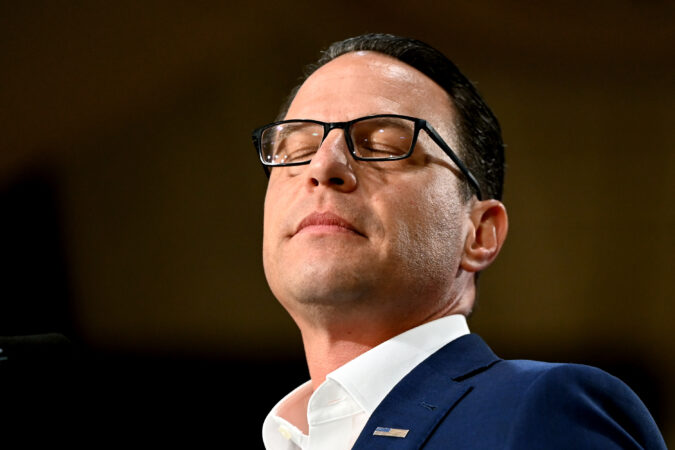
    Gov. Josh Shapiro lashed out over former Vice President Kamala Harris’ portrayal of his interview to become her 2024 running mate, calling Harris’ retellings “complete and utter bulls—” intended to sell books and “cover her a—,” according to the Atlantic.

    Shapiro, Pennsylvania’s first-term Democratic governor now seen as a likely presidential contender in 2028, departed from his usual composed demeanor and rehearsed comments in a lengthy Atlantic profile, published Wednesday, when journalist Tim Alberta asked the governor about Harris’ depiction of him in her new book.

    In her book, titled 107 Days, Harris described Shapiro as “poised, polished, and personable” when he traveled to Washington to interview with Harris for a shot at becoming the Democratic vice presidential candidate during her historic campaign against Donald Trump.

    However, Harris said, she suspected Shapiro would be unhappy as second-in-command. He “peppered” her with questions, she wrote, and said he asked questions about the vice president’s residence, “from the number of bedrooms to how he might arrange to get Pennsylvania artists’ work on loan from the Smithsonian.” The account aligns with reporting from The Inquirer when Harris ultimately picked Minnesota Gov. Tim Walz over Shapiro, in part, because Shapiro was too ambitious to serve in a supporting role if chosen as her running mate.

    But Shapiro, the Atlantic reported, was taken aback by the portrayal.

    “She wrote that in her book? That’s complete and utter bull—,” Shapiro reportedly told the Atlantic when asked about Harris’ account that he had been imagining the potential art for the vice presidential residence. He added: “I can tell you that her accounts are just blatant lies.”

    The governor’s sharp-tongued frustration depicted in the Atlantic marked a rare departure for the image-conscious Shapiro, whose oratory skills have been compared to those of former President Barack Obama, and who has been known to give smiling, folksy interviews laced with oft-repeated and carefully told anecdotes.

    The wide-ranging, nearly 8,000-word profile in the Atlantic also detailed Shapiro’s loss of “some respect” for Harris during the 2024 election, including for her failure to take action regarding former President Joe Biden’s visible decline.

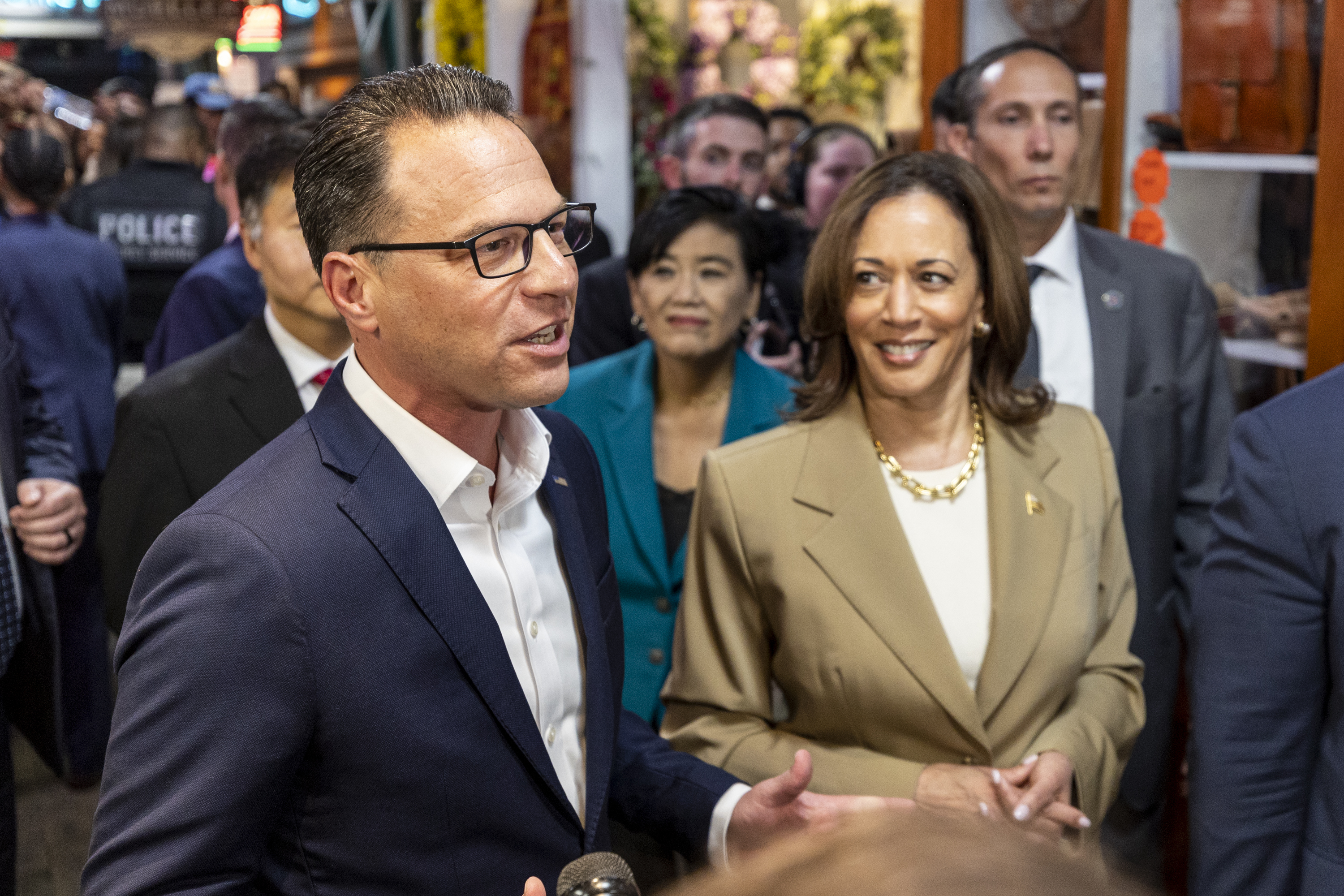
    Governor Josh Shapiro speaks with press along with Vice President Kamala Harris during their short visit to Little Thai Market at Reading Terminal Market after she spoke at the APIA Vote Presidential Town Hall at the Pennsylvania Convention Center in Philadelphia, Pa., on Saturday, July 13, 2024.

    When Shapiro was asked by the Atlantic whether he felt betrayed by Harris’ comments in her book about him, given that the two have known each other for 20 years, he said: “I mean, she’s trying to sell books and cover her a—.”

    He quickly reframed his response: “I shouldn’t say ‘cover her a—,’ I think that’s not appropriate,” he added. “She’s trying to sell books, period.”

    The Atlantic piece, titled “What Josh Shapiro Knows About Trump Voters,” presented Shapiro as a popular Democratic governor in a critical swing state that went for Trump in 2024, and as a master political operator who has carefully built a public image as a moderate willing to work across the aisle or appoint Republicans to top cabinet positions. That image was tested this year during a protracted state budget impasse that lasted 135 days, as Shapiro was unable to strike a deal between the Democratic state House and GOP-controlled state Senate for nearly five months past the state budget deadline.

    The Atlantic piece also outlined common criticisms of Shapiro throughout his two decades in Pennsylvania politics, including those from within the Democratic Party: He is too ambitious with his sights set on the presidency, and his pragmatic approach often leaves him frustrating all sides, as evidenced in his 2023 deal-then-veto with state Senate Republicans over school vouchers. It highlighted some of the top issues Shapiro will face if he chooses to run for president in 2028, including a need to take clearer stances on policy issues — a complaint often cited by Republicans and his critics. If he rises to the presidential field, Shapiro will also have to face his past handling of a sexual harassment complaint against a former top aide that Shapiro claimed he knew very little about despite the aide’s long-held reputation.

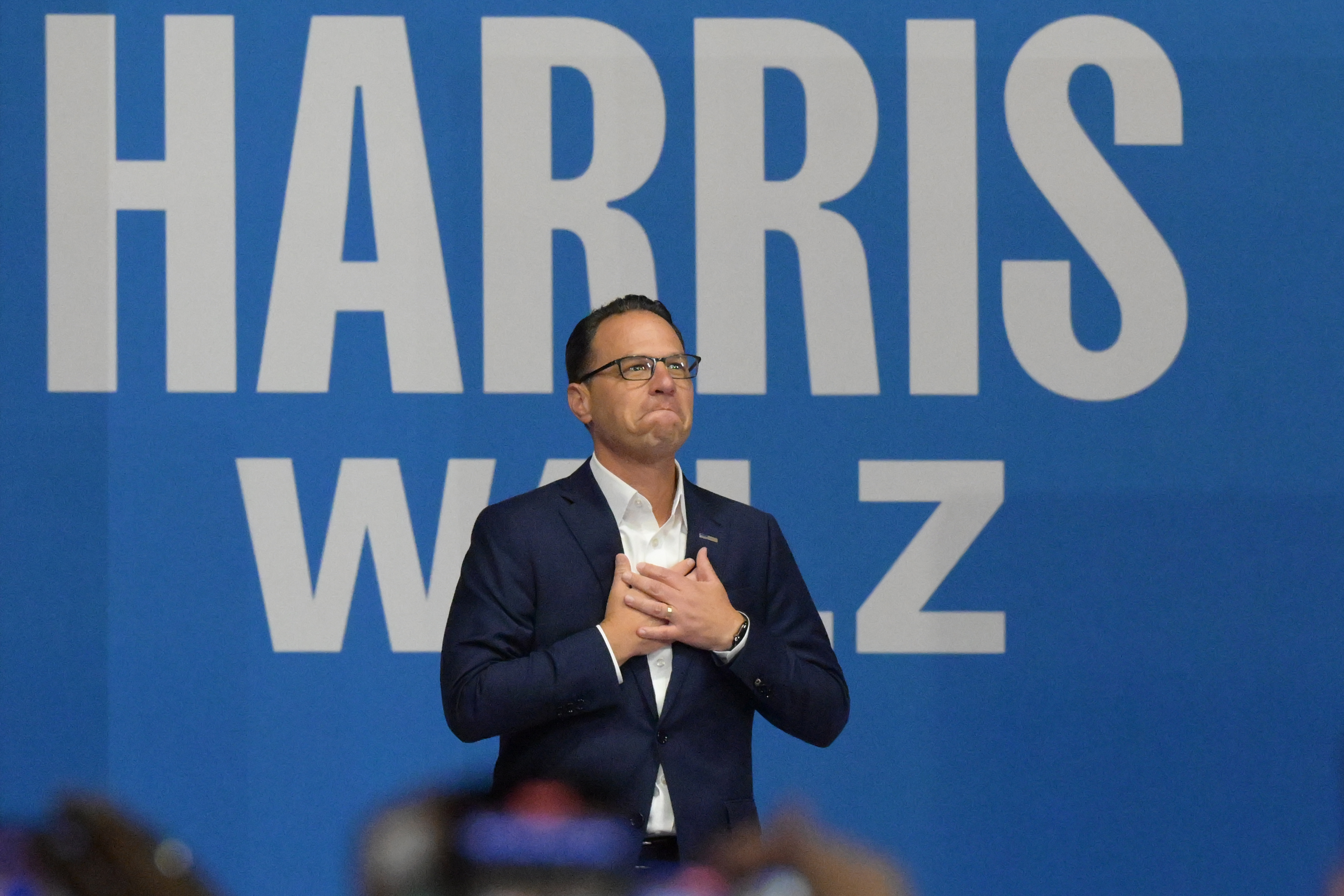
    Gov. Josh Shapiro takes the stage ahead of U.S. Vice President Kamala Harris and Gov. Tim Walz at a rally in Philadelphia’s Liacouras Center on August 6, 2024.

    “The worst-kept secret in Pennsylvania politics is that the governor is disliked — in certain cases, loathed — by some of his fellow Democrats,” the Atlantic reported. Further, Alberta noted that when an unnamed Pennsylvania lawmaker received a call from a member of Harris’ vetting operation, the member said they had never seen “so many Democrats turning on one of their own.”

    Shapiro has been featured in several other prominent national media outlets in recent weeks, including in the New Yorker, which ran a profile about his experience with political violence. He has become vocal on that issue in the months since a Harrisburg man who told police he wanted to kill Shapiro broke into the governor’s residence in April and set several fires while Shapiro and his family slept upstairs. As one of the most prominent Jewish elected officials in the nation, Shapiro has frequently said that leaders must “bring down the temperature” in their rhetoric, and has tried to refocus his own messaging on the good that state governments can do to make people’s lives easier, such as permitting reforms and infrastructure improvements.

    “The fact that people view institutions as incapable or unwilling to solve their problems is leading to hyper-frustration, which then creates anger,” Shapiro told the Atlantic. “And that anger forces people oftentimes into dark corners of the internet, where they find others who want to take advantage of their anger and try and convert that anger into acts of violence.”

  • Sabrina Carpenter slams Trump administration for using her music in ‘disgusting’ ICE video

    Sabrina Carpenter slams Trump administration for using her music in ‘disgusting’ ICE video

    Sabrina Carpenter’s not mincing words when it comes to the Trump administration using one of her songs in a video promoting ICE and the Department of Homeland Security.

    On Tuesday, the pop princess condemned the White House for posting a video featuring ICE arresting protesters and undocumented immigrants to one of her songs. The video, which was published on the White House’s X account one day earlier, was captioned “Have you ever tried this one?“ alongside the hearteye emoji and was paired with Carpenter’s track ”Juno.”

    It’s a nod to a scene in Carpenter’s just-wrapped “Short n’ Sweet” tour, where she would playfully “arrest” someone in the crowd “for being so hot,” giving them a souvenir pair of fuzzy pink cuffs before performing “Juno.”

    Carpenter, a Bucks County native, replied to the post, “this video is evil and disgusting. Do not ever involve me or my music to benefit your inhumane agenda.” Her response has been viewed more than 2 million times.

    It’s the latest in a series of similar incidents, where artists ranging from Beyoncé to the Rolling Stones have objected to the White House using their music in videos promoting the Trump administration’s agenda without their consent.

    Last month, Olivia Rodrigo had a similar exchange in the comments of a White House Instagram video demanding that undocumented immigrants self-deport over the singer’s track “All-American Bitch.” Rodrigo, who is Filipino American, commented at the time, “Don’t ever use my songs to promote your racist, hateful propaganda.”

    The White House also used a song by Carpenter’s friend and musical collaborator, Berks County’s Taylor Swift, last month. Fans of Swift’s called out the use of “The Fate of Ophelia” in a video celebrating President Donald Trump, despite the president’s repeated slights toward the pop star. Swift herself did not comment on the video, but she has previously criticized Trump for posting AI photos of her on his social platforms.

    Carpenter, 26, worked with HeadCount on her “Short n’ Sweet” tour, registering 35,814 voters — more than any other artist the nonpartisan voter registration group worked with in 2024. She’s been vocal about her support for LGBTQ+ rights and has publicly donated to the National Immigration Law Center.

    When Trump won last year, she took a moment during her concert to say “I’m sorry about our country and to the women here, I love you so, so, so much.”

    “Here’s a Short n’ Sweet message for Sabrina Carpenter: We won’t apologize for deporting dangerous criminal illegal murderers, rapists and pedophiles from our country,” White House spokesperson Abigail Jackson told the New York Times. “Anyone who would defend these sick monsters must be stupid, or is it slow?”

  • Bessent says Federal Reserve Board could ‘veto’ future regional presidents

    Bessent says Federal Reserve Board could ‘veto’ future regional presidents

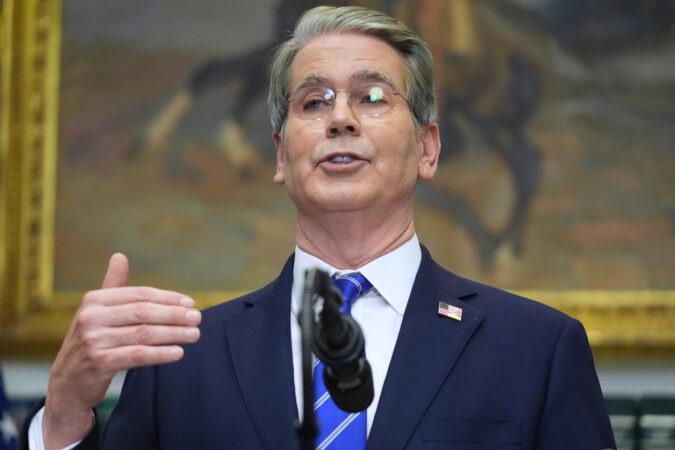
    WASHINGTON — Treasury Secretary Scott Bessent said Wednesday he would push a new requirement that the Federal Reserve’s regional bank presidents live in their districts for at least three years before taking office, a move that could give the White House more power over the independent agency.

    In comments at the New York Times’ DealBook Summit, Bessent criticized several presidents of the Fed’s regional banks, saying that they were not from the districts that they now represent, “a disconnect from the original framing” of the Fed.

    Bessent said that three of the 12 regional presidents have ties to New York: Two previously worked at the New York Federal Reserve, while a third worked at a New York investment bank.

    “So, do they represent their district?” he asked. “I am going to start advocating, going forward, not retroactively, that regional Fed presidents must have lived in their district for at least three years.”

    Bessent added that he wasn’t sure if Congress would need to weigh in on such a change. Under current law, the Fed’s Washington, D.C.-based board can block the appointment of regional Fed presidents.

    “I believe that you would just say, unless someone’s lived in the district for three years, we’re going to veto them,” Bessent said.

    Bessent has stepped up his criticism of the Fed’s 12 regional bank presidents in recent weeks after several of them made clear in a series of speeches that they opposed cutting the Fed’s key rate at its next meeting in December. President Donald Trump has sharply criticized the Fed for not lowering its short-term interest rate more quickly. When the Fed reduces its rate it can over time lower borrowing costs for mortgages, auto loans, and credit cards.

    The prospect of the administration “vetoing” regional bank presidents would represent another effort by the White House to exert more control over the Fed, an institution that has traditionally been independent from day-to-day politics.

    The Federal Reserve seeks to keep prices in check and support hiring by setting a short-term interest rate that influences borrowing costs across the economy. It has a complicated structure that includes a seven-member board of governors based in Washington as well as 12 regional banks that cover specific districts across the United States.

    The seven governors and the president of the New York Fed vote on every interest-rate decision, while four of the remaining 11 presidents vote on a rotating basis. But all the presidents participate in meetings of the Fed’s interest-rate setting committee.

    The regional Fed presidents are appointed by boards made up of local and business community leaders.

    Three of the seven members of the Fed’s board were appointed by Trump, and the president is seeking to fire Governor Lisa Cook, which would give him a fourth seat and a majority. Yet Cook has sued to keep her job, and the Supreme Court has ruled she can stay in her seat as the court battle plays out.

    Trump is also weighing a pick to replace Chair Jerome Powell when he finishes his term in May. Trump said over the weekend that “I know who I am going to pick,” but at a Cabinet meeting Tuesday said he wouldn’t announce his choice until early next year. Kevin Hassett, a top economic adviser to Trump, is widely considered Trump’s most likely choice.

    The three regional presidents cited by Bessent are all relatively recent appointees. Lorie Logan was named president of the Dallas Fed in August 2022, after holding a senior position at the New York Fed as the manager of the Fed’s multitrillion dollar portfolio of mostly government securities. Alberto Musalem became president of the St. Louis Fed in April 2024, and from 2014-2017 was an executive vice president at the New York Fed.

    Beth Hammack was appointed president of the Cleveland Fed in August 2024, after an extended career at Goldman Sachs.

    Musalem is the only one of the three that currently votes on policy and he supported the Fed’s rate cuts in September and October. But last month he suggested that with inflation elevated, the Fed likely wouldn’t be able to cut much more.

    Logan has said she would have voted against October’s rate cut if she had a vote, while Hammack has said that the Fed’s key rate should remain high to combat inflation. Both Hammack and Logan will vote on rate decisions next year.

    Bessent argued last month in an interview on CNBC that the reason for the regional Fed banks was to bring the perspective of their districts to the Fed’s interest rate decisions and “break the New York hold” on the setting of interest rates.

    __

    Associated Press Writer Fatima Hussein contributed to this report.