Category: National Politics

  • How Social Security has gotten worse under Trump

    How Social Security has gotten worse under Trump

    The Social Security Administration — the sprawling federal agency that delivers retirement, disability, and survivor benefits to 74 million Americans — began the second Trump administration with a hostile takeover.

    It ended the year in turmoil. A diminished workforce has struggled to respond to up to six million pending cases in its processing centers and 12 million transactions in its field offices — record backlogs that have delayed basic services to millions of customers, according to internal agency documents and dozens of interviews.

    Long-strained customer services at Social Security have become worse by many key measures since President Donald Trump began his second term, agency data and interviews show, as thousands of employees were fired or quit and hasty policy changes and reassignments left inexperienced staff to handle the aftermath.

    Exaggerated claims of fraud, for example, have led to new roadblocks for elderly beneficiaries, disabled people, and legal immigrants, who are now required to complete some transactions in person or online rather than by phone. Even so, the number of calls to the agency for the year hit 93 million as of late September — a six-year high, data show.

    The troubled disability benefits system is also deteriorating after some improvement, with 66% of disability appointments scheduled within 28 days as of December — down from nearly 90% earlier in the year, data show.

    One notable exception is phone service, which improved in the second half of the year but is still subpar. Average hold times peaked at about 2½ hours in March, but dropped starting in July as employees were diverted from field office duties to fix what had become a public relations crisis. Average wait times for callbacks remain an hour or longer, however, while new delays have emerged elsewhere in the system, internal data show.

    “It was not good before, don’t get me wrong, but the cracks are more than beginning to show,” said John Pfannenstein, a claims specialist outside Seattle and president of Local 3937 of the American Federation of Government Employees, which represents most Social Security employees. “It is a great amount of stress on our employees that remain on the job, who haven’t jumped ship.”

    Commissioner Frank Bisignano has authorized millions of dollars in overtime pay to employees in a race to clear the bottlenecks, which worsened dramatically after nearly 7,000 employees — 12% of the workforce — were squeezed out early in the year. The agency said it has made improvements: It reduced the processing center backlog by one million cases this fall, cut pending disability claims by a third and kept the website live 24-7 after a series of outages earlier this year.

    The current crisis follows years of disinvestment by Congress and acting leadership, despite a surge in baby boomer retirements. Bisignano promised faster service and a leaner workforce with a digital identity that he says will automate simple retirement claims and other operations.
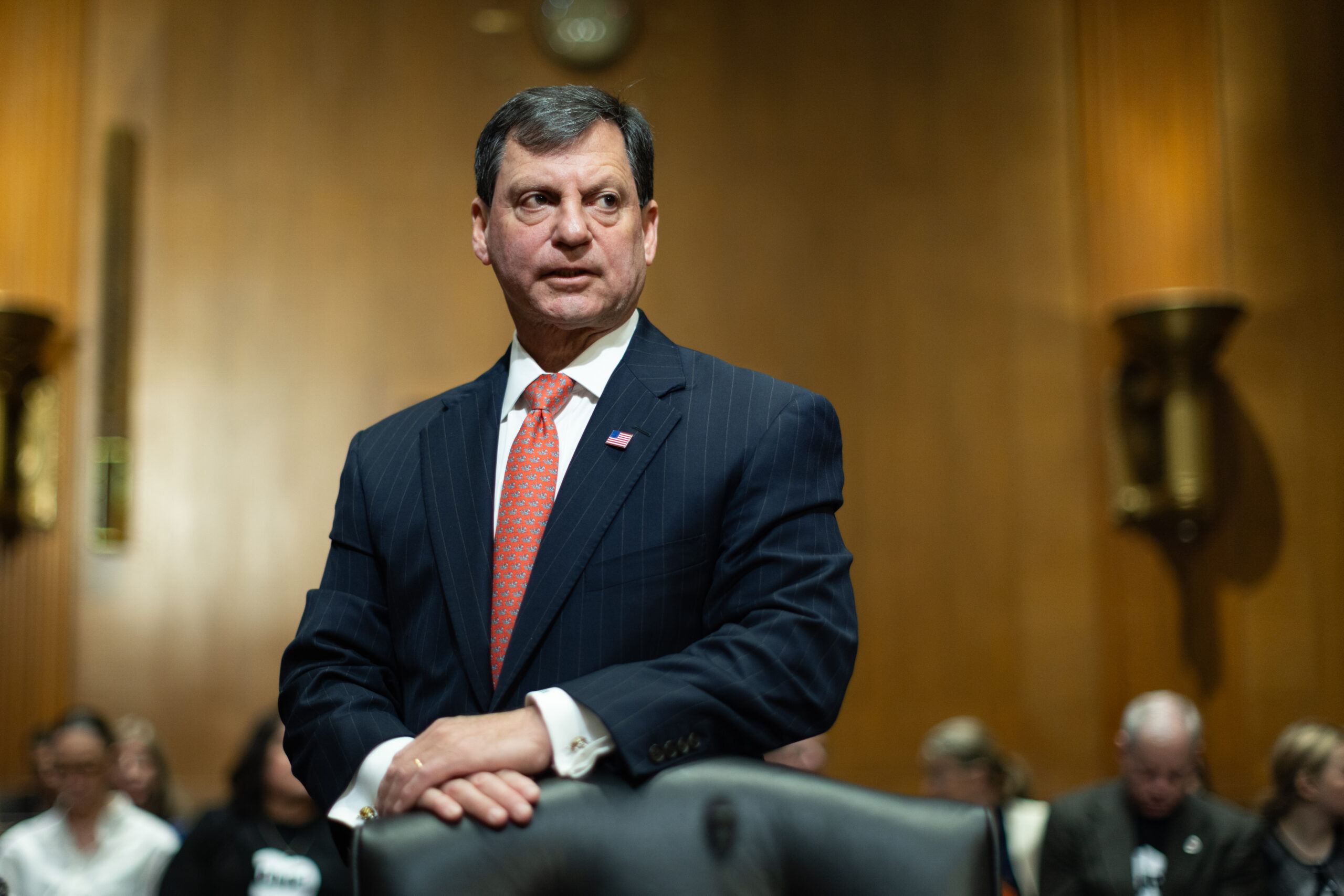
    Frank Bisignano, President Donald Trump’s nominee for commissioner of the Social Security Administration, arrives for his confirmation hearing in March.

    “In the coming year, we will continue our digital-first approach to further enhance customer service by introducing new service features and functionality across each of our service channels to better meet the needs of the more than 330 million Americans with Social Security numbers,” the commissioner said in a statement to the Washington Post.

    But responsiveness and trust in the agency have suffered, according to current and former officials and public polling.

    This account of the crisis at Social Security is based on internal documents and interviews with 41 current and former employees, advocates and customers, many of whom spoke on the condition of anonymity to speak candidly about their concerns.

    Social Security officials declined to make Bisignano available for an interview, though he did respond to written questions.

    Three days before Christmas, Brian Morrissey, 65, arrived at the field office in Silver Spring, Md., for an appointment to apply for Medicare. He had tried the “MySSA” website, “but navigating it was just really hard,” he said. Morrissey owns a home improvement business, he said.

    “If they can make the process easier online, great, but right now it is not well designed,” he said. So his wife waited 30 minutes on hold to schedule a face-to-face appointment for him.

    Aime Ledoux Tchameni, an immigrant from Cameroon, waited in line at the Silver Spring office to get an appointment time to fix his last name from being listed as his first name — a mistake that occurred when he came to the U.S. two years ago. He has a provisional driver’s license from Maryland and needs to clear up his name with Social Security by mid-January, he said. But his appointment is not until Feb. 9.

    “This is really going to cause me problems, because I need my driver’s license to get to work,” Tchameni said in French. “I don’t understand why I have to wait so long.”

    ‘I flipped the switch’

    The table was set in February by Elon Musk and his Department of Government Efficiency, or DOGE, which installed a loyal, mid-level data analyst with no management experience to lead the $15.4 billion agency.

    That former analyst, Leland Dudek, insists that he saved Social Security from a worse fate under Musk’s cost-cutting team. “I flipped the switch,” he said in a recent interview, referring to his disruptive four-month tenure as acting commissioner. “The casualty of that is a smaller SSA, an SSA that is being, for the first time, subject to the whims of being a political organization, which it was never intended to be.”

    Regional offices abruptly disappeared in a rushed reorganization. New policies to fight fraud were rolled out only to be canceled or changed, prompting confused customers to jam the phones and the website, which crashed repeatedly. Daily operations in some respects became an endless game of whack-a-mole as employees were pulled from one department to another.

    Along the way, Social Security also became ground zero in the administration’s quest to gather Americans’ personal data — largely in service of its mass deportation campaign.

    The chaos quickly became a political cudgel, as Democrats saw an opening to defend one of the country’s most popular entitlement programs. Senate Democrats, led by Sen. Elizabeth Warren of Massachusetts, set up a “war room,” holding rallies with former commissioners in both parties and issuing demands for more resources to keep the Trump administration on the defensive.

    “We’ve kept up the pressure and held Donald Trump, Elon Musk and Frank Bisignano accountable for the chaos they’ve caused,” Warren said in an interview.

    Many critics note that Bisignano, a Wall Street veteran who became commissioner in May, now wears a second hat as CEO of the Internal Revenue Service — another massive portfolio with a multibillion-dollar budget.

    In a statement, Bisignano said his shared leadership of Social Security and the IRS “will drive a better outcome for the American public.” He said he envisions “a Social Security Administration that is easier to access, faster to respond, and better prepared to meet the challenges facing Americans.”

    Bisignano also said he is working to improve morale and “have the right level of staffing to operate at peak efficiency and deliver best-in-class customer service to the American people.”

    ‘Work piles up’

    By the time Bisignano was confirmed by the Senate, Social Security had been led by three acting commissioners in six months. He pledged to stabilize the upheaval.

    But he confronted immediate challenges. Dudek had reassigned 2,000 employees in administrative, analytical and technical roles to jobs dealing with the public. Many accepted the switch under threat of firing if they refused. Some began working the phones. But the national toll-free number was still in crisis, so another 1,000 staffers were assigned to the phones in July. The employees were thrown in with minimal training, multiple employees said — and found themselves unable to answer much beyond basic questions. The phone staff was told to keep calls under seven minutes in what became a push for volume over quality, employees said.

    Although officials have publicly claimed that wait times have improved to single digits in some cases, those numbers do not account for the time it takes for customers to be called back, according to internal metrics obtained by the Post.

    An audit published by the Social Security Inspector General’s Office on Dec. 22 confirmed that millions of callers requesting callbacks were counted as zero-minute waits by the agency. The review concluded that the metrics themselves were accurate, however, and showed that customer service overall has improved.

    Jenn Jones, AARP’s vice president of financial security, said the improved phone service numbers were “encouraging” but that “more work needs to be done.”

    “Wait times for callbacks remain over an hour, and more than a quarter of callers are not being served — by getting disconnected or never receiving a callback, for instance,” Jones said in a statement.

    Public outcry and pushback from congressional Democrats derailed the planned closure of dozens of field offices that DOGE had said were no longer needed.
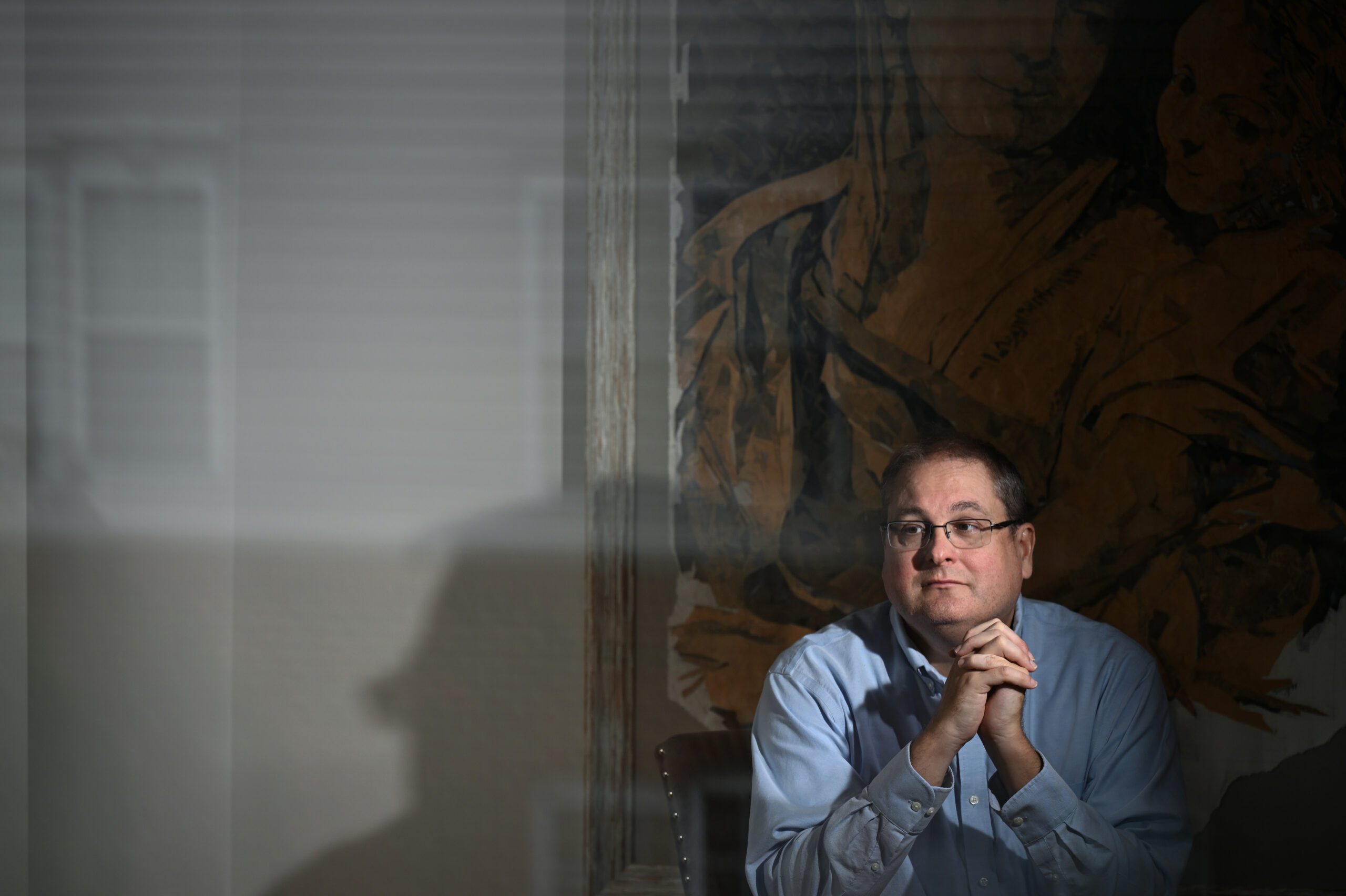
    Leland Dudek, former acting commissioner of the Social Security Administration, in November.

    Meanwhile, Dudek’s workforce cuts led field offices to shed 9% of their employees by spring due to early retirement and deferred resignation offers. Overtime was restricted and hiring was frozen, even as customer visits continued to climb.

    Shortly after taking office, Bisignano’s field operations chief, Andy Sriubas, wrote in an email to the staff that field offices “are, and will always remain, our front line — our face in the community and the primary point of in-person contact.”

    In the near term, though, the front line staff were overwhelmed. Attrition was geographically uneven, with some offices losing a quarter of their employees to early retirement offers just as foot traffic grew, according to a staffing analysis by the AFGE’s research partner, the Strategic Organizing Center. The group calculated that there were about 4,000 beneficiaries for every field office employee in August of this year.

    In several states that ratio is worse, the group found. Wyoming’s field offices, for example, have just 18 employees — or one for every 7,429 beneficiaries.

    The shortages have created temporary office closures in many rural areas, some for days or months at a time. The office in Havre, Mont., has been closed for months, with the nearest one almost two hours away in Butte.

    Today a majority of Social Security staffers who accepted reassignments have not been fully or properly trained, according to several employees with direct knowledge of the initiative. Instruction is often truncated so the staff can respond to customers. Officials said they provide training based on the employee’s level of experience and review the reassigned employees’ work.

    “They offered minimal training and basically threw them in to sink or swim,” one veteran employee said of their transferred colleagues.

    Training on the phone system and complicated claims and benefit programs lasted four hours for some reassigned workers when it should have taken six months, another employee said. As a result, some customers still can’t get basic questions answered or are given inaccurate information, according to a half-dozen staffers who answer the phones or work closely with employees who do.

    The increased workload, hiring freeze and departures have made it harder for the staff to complete their daily tasks, said Jordan Harwell, a Butte, Mont., field office employee who is president of AFGE Local 4012. The staff used to find time between calls to process pay stubs, take in new disability applications and schedule appointments, but now “that work piles up,” he said.

    DOGE officials, citing fraud concerns, also required direct deposit changes to be done in person or online — but getting online now calls for new identity verification measures that do not come easily to many elderly or disabled customers. Immigrants approved for green cards to work in the U.S. are now required to get Social Security cards in person under a Trump anti-fraud policy, producing a flood of new field office visits.

    In one Indiana field office, one employee said she drags herself to work every day, dreading what will come next. Although she was hired as a claims specialist, she and her colleagues are being told to prioritize answering the phones, which never stop ringing now that her office is taking calls for both Indiana and parts of Illinois due to reorganizations and reductions.

    That means she is forced to let other work pile up: calls from people asking about decisions in their cases, claims filed online and anyone who tries to submit forms to Social Security — like proof of marriage — through snail mail.

    As the backlogs keep building, she is taking calls from 25 or so people every day, already knowing that she won’t be able to help five or six of them. These are elderly people, often poor or bedridden, who have no way to comply with the change requiring that direct deposit actions take place in person or online. Usually they’re calling because something has happened to their bank accounts and they need to alter their financial information. But they can’t access a computer, the employee said, and driving is out of the question.

    She received a call this month from a 75-year-old man who suffered a massive stroke that left him unable to drive. He’d also had to switch banks and, as a result, hadn’t received Social Security checks for the last two or three months.

    “I had to sit there on the phone and tell this guy, ‘You have to find someone to come in … or, do you have a relative with a computer who can help you or something like that?’” she recalled. “He was just like, ‘No, no, no.’”

    She ended that call by telling the man to call his bank, hoping they might be able to help when her agency, hampered by administration policies, no longer could.

    ‘Everybody started laughing’

    As the staff races to answer the phones, other tasks are backing up, including Medicare applications, disability claims that require initial vetting by field offices and other transactions that cannot be solved in one conversation. Any case falling in that category is redirected to a processing center, where the backlogs have been building all year.

    These back-office operations, located across the country, often handle labor-intensive, highly complex cases that do not call for automated resolution. Among the tasks are issuing checks, including for back pay, to disabled people whose denial of benefits was reversed by an administrative law judge.

    As Congress kept funding flat for Social Security over many years, the processing operations fell way behind, requiring headquarters employees to help handle the volume. But it was never as bad as it got this fall.

    Many disability payments now take three to six months to process when they used to take weeks, advocates and employees said.

    At the start of September, one benefits authorizer in a processing center was called into an all-staff meeting with her colleagues, she said. There, management explained that the backlog at the time — six million cases — was unacceptable and that everyone would have to work overtime in an attempt to drive it down to two million by Christmas.

    “When they told us that, everybody started laughing,” she said. “Because there is just absolutely no way to get it down in that short period of time.”

    Still, she and her colleagues have been hustling, she said, processing cases as fast as they can, even as they can see their haste sometimes causes errors. No time to fix them, she has decided: Best to just keep moving.

    The Social Security Administration has said it expects to pay $367 million less on payroll this fiscal year than the year before.

    Meanwhile, another staffer, who answers phones at a national call center, said she has changed what she says to customers when she realizes their claim can’t be finished in one conversation and must be referred to a payment center.

    “I’m supposed to reassure people it’s being worked on,” she said. “But now I avoid giving people a firm date they can expect it to be done by.”

    Just before Thanksgiving, Bisignano said that starting next year, he hopes to slash field office visits by half. More than 31 million people visited field offices in the last fiscal year — or tried to. Critics say the change will dismantle the fail-safe for those who cannot use computers, no matter how imperfect.

    At the same time, in recent weeks, hundreds of employees who transferred to customer service operations have been recalled to the roles they were originally hired to fill. Others have been reassigned to a new “digital engagement” office.

    Social Security has told Congress it plans to put more resources toward IT, with an expected increase of $591 million this fiscal year compared to fiscal 2025, according to the agency’s budget justification. The agency also expects to pay $367 million less on payroll than it did the year before.

    Social Security also plans to roll out a new program that will allow customers to book phone appointments with field offices throughout the country, no matter where they live, according to two people familiar with the plans.

    The goal is to reduce the number of field office visits, though one field office employee said the change will probably lead to a greater workload for staff keeping up with queries from customers outside their area.

    “They’ve created problems and now they are trying to fix problems they created,” the worker said.

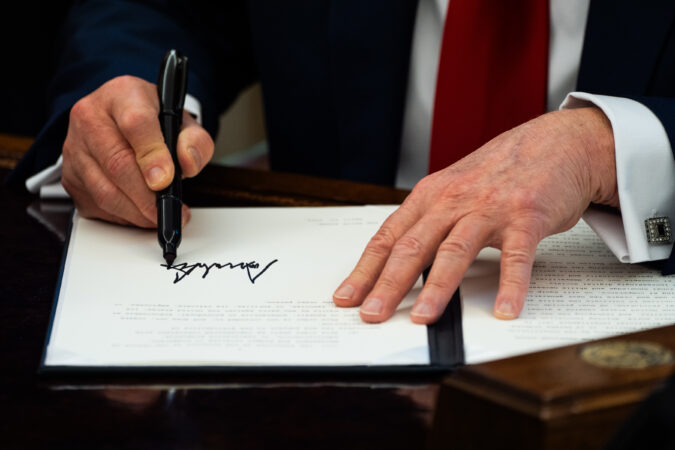
    During Christmas week, the grind continued for most front line staff. After Trump signed an executive order last week closing most federal offices on Christmas Eve and Friday, Bisignano told his staff that field offices, teleservice centers, processing centers and more operations would remain open.

    “In order to balance the needs of the public and our workforce, we will solicit interest from employees who would like to work on Wednesday and Friday,” he wrote.
  • Chief justice says rule of law is strong at time of rising concerns

    Chief justice says rule of law is strong at time of rising concerns

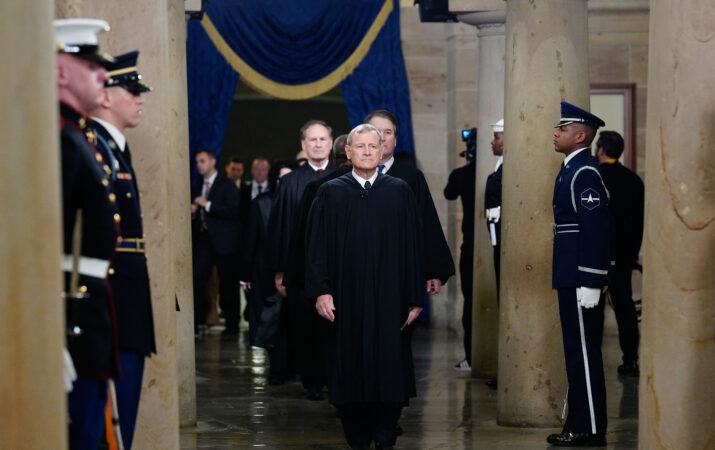
    Amid rising concerns about the health of the nation’s democracy, Chief Justice John G. Roberts Jr. expressed faith Wednesday that the nation’s founding charters and key principles are proving resilient.

    Quoting President Calvin Coolidge, the Supreme Court’s leader wrote in a year-end report that as the nation approaches its 250th anniversary, the rule of law remains alive and well.

    “Amid all the clash of conflicting interests, amid all the welter of partisan politics, every American can turn for solace and consolation to the Declaration of Independence and the Constitution of the United States with the assurance and confidence that those two great charters of freedom and justice remain firm and unshaken,” Roberts quoted Coolidge as saying.

    He added in his own words: “True then; true now.”

    The comments came in Roberts’s annual report on the state of the judiciary, which largely sidestepped contemporary controversies and events at a moment of political upheaval. Many of those concerns have revolved around President Donald Trump’s push to expand executive authority and wield power that critics say belongs to other branches of the government.

    Instead of those issues, Roberts wrote mostly about history — the drafting of the Declaration of Independence and Constitution, the ideas that inspired the documents and the nation’s struggles to fulfill the charters’ ideals.

    Roberts urged judges to remain true to that legal bedrock.

    “Those of us in the Third Branch must continue to decide the cases before us according to our oath, doing equal right to the poor and to the rich, and performing all of our duties faithfully and impartially under the Constitution and laws of the United States,” Roberts wrote.

    Roberts made no mention of topics that have animated others in the judiciary and legal observers over the last year: threats against judges, the Trump administration’s alleged defiance of court orders or critiques by lower-court judges of how the Supreme Court has ruled on its emergency docket.

    Roberts did decry threats against judges in last year’s annual report and pushed back on President Donald Trump’s calls to impeach a federal judge who ruled against him. In March, Roberts issued a rare statement saying that “impeachment is not an appropriate response to disagreement concerning a judicial decision.”

    In November, Congress boosted funding for security at the Supreme Court, but it did not extend additional money for the protection of lower-court judges.

    Threats against federal judges spiked in the months after Trump began his second term in January. Through the current fiscal year, which started Oct. 1, the U.S. Marshals Service has investigated 133 threats against federal judges, according to agency statistics.

    Trump and his allies have sharply criticized rulings against the president’s policies and called for the removal of some judges. Dozens of judges who have ruled against Trump have received unsolicited pizza deliveries at their homes. Threats against judges have also come from the left.

    Roberts’s report comes as the Supreme Court takes up a series of high-profile cases involving key tests of Trump’s agenda. In November, the justices appeared skeptical that Trump’s sweeping tariffs were legal. Earlier this month, the justices seemed ready to allow Trump greater authority to fire the heads of independent agencies without cause.

    Next month, the justices will hear arguments over whether the president can dismiss Federal Reserve governor Lisa Cook, which would allow the president to reshape the Fed and its vast powers over the economy.

    Decisions in all three cases are expected by the summer.

  • Capitol riot ‘does not happen’ without Trump, Jack Smith told Congress

    Capitol riot ‘does not happen’ without Trump, Jack Smith told Congress

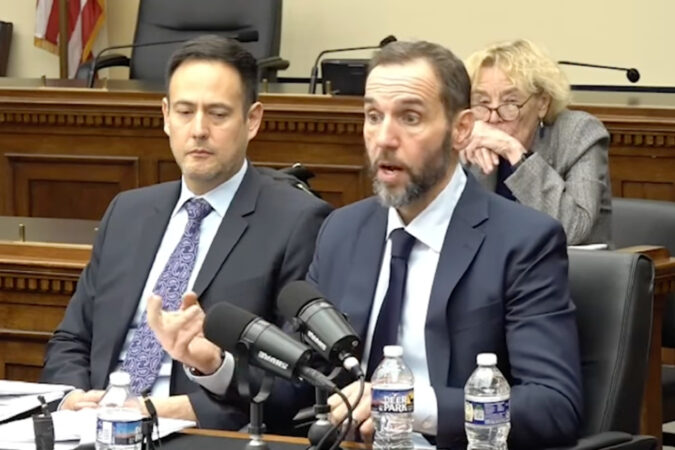
    WASHINGTON — The Jan. 6. riot at the U.S. Capitol “does not happen” without Donald Trump, former special counsel Jack Smith told lawmakers earlier this month in characterizing the Republican president as the “most culpable and most responsible person” in the criminal conspiracy to overturn the results of the 2020 election.

    The Republican-led House Judiciary Committee released on Wednesday a transcript and video of a closed-door interview Smith gave about two investigations of Trump. The document shows how Smith during the course of a daylong deposition repeatedly defended the basis for pursuing indictments against Trump and vigorously rejected Republican suggestions that his investigations were politically motivated.

    “The evidence here made clear that President Trump was by a large measure the most culpable and most responsible person in this conspiracy. These crimes were committed for his benefit. The attack that happened at the Capitol, part of this case, does not happen without him. The other co-conspirators were doing this for his benefit,” Smith said, bristling at a question about whether his investigations were meant to prevent Trump from reclaiming the presidency in 2024.

    “So in terms of why we would pursue a case against him, I entirely disagree with any characterization that our work was in any way meant to hamper him in the presidential election,” he added.

    The Dec. 17 deposition was conducted privately despite Smith’s request to testify publicly. The release of the transcript and video of the interview, so far Smith’s only appearance on Capitol Hill since leaving his special counsel position last January, adds to the public understanding of the decision-making behind two of the most consequential Justice Department investigations in recent history.

    Trump was indicted on charges of conspiring to undo the 2020 election he lost to Democrat Joe Biden, and of willfully retaining classified documents at his Mar-a-Lago estate in Florida. Both cases were abandoned after Trump’s 2024 election win, with Smith citing Justice Department policy against the indictment of a sitting president.

    Smith repeatedly made clear his belief that the evidence gathered against Trump was strong enough to sustain a conviction. Part of the strength of the Jan. 6 case, Smith said, was the extent to which it relied on the testimony of Trump allies and supporters who cooperated with the investigation.

    “We had an elector in Pennsylvania who is a former congressman, who was going to be an elector for President Trump, who said that what they were trying to do was an attempt to overthrow the government and illegal,” Smith said. “Our case was built on, frankly, Republicans who put their allegiance to the country before the party.”

    Accounts from Republicans willing to stand up against the falsehood that the election had been stolen “even though it could mean trouble for them” created what Smith described as the “most powerful” evidence against Trump.

    When it came to the Capitol riot itself, Smith said, the evidence showed that Trump “caused it and that he exploited it and that it was foreseeable to him.”

    Asked whether there was evidence that Trump had instructed supporters to riot at the Capitol, Smith said that Trump in the weeks leading to the insurrection got “people to believe fraud claims that weren’t true.”

    “He made false statements to state legislatures, to his supporters in all sorts of contexts and was aware in the days leading up to January 6th that his supporters were angry when he invited them and then he directed them to the Capitol,” Smith said.

    “Now, once they were at the Capitol and once the attack on the Capitol happened, he refused to stop it. He instead issued a tweet that without question in my mind endangered the life of his own Vice President. And when the violence was going on, he had to be pushed repeatedly by his staff members to do anything to quell it.”

    Some of the deposition focused on Republican anger at revelations that the Smith team had obtained, and analyzed, phone records of GOP lawmakers who were in contact with Trump on Jan. 6. Smith defended the maneuver as lawful and by-the-book, and suggested that outrage over the tactic should be directed at Trump and not his team of prosecutors.

    “Well, I think who should be accountable for this is Donald Trump. These records are people, in the case of the senators, Donald Trump directed his co-conspirators to call these people to further delay the proceedings. He chose to do that,” Smith said. “If Donald Trump had chosen to call a number of Democratic senators, we would have gotten toll records for Democratic senators.”

    The communications between Trump and Republican supporters in Congress were an important component of the case, Smith said. He cited an interview his office did with Mark Meadows in which Trump’s then-chief of staff referenced that Rep. Jim Jordan, an Ohio Republican and current chairman of the House Judiciary Committee, had been in touch with the White House on the afternoon of the riot.

    “And what I recall was Meadows stating that ‘I’ve never seen Jim Jordan scared of anything,’ and the fact that we were in this different situation now where people were scared really made it clear that what was going on at the Capitol could not be mistaken for anything other than what it was,” Smith said.

    Smith was also asked whether his team evaluated former White House aide Cassidy Hutchinson’s explosive claim that Trump that grabbed at the steering wheel of the presidential SUV when the Secret Service refused to let him go to the U.S. Capitol building after a rally at the Ellipse on Jan. 6, 2021.

    Smith told lawmakers that investigators interviewed the officer who was in the car, “who said that President Trump was very angry and wanted to go to the Capitol,” but the officer’s version of events “was not the same as what Cassidy Hutchinson said she heard from somebody secondhand,” Smith said.

  • Trump says he’s dropping push for National Guard in Chicago, LA, and Portland, Oregon, for now

    Trump says he’s dropping push for National Guard in Chicago, LA, and Portland, Oregon, for now

    WASHINGTON — President Donald Trump said he’s dropping — for now — his push to deploy National Guard troops in Chicago, Los Angeles and Portland, Ore., a move that comes after legal roadblocks held up the effort.

    “We will come back, perhaps in a much different and stronger form, when crime begins to soar again — Only a question of time!” he said in a social media post Wednesday.

    Governors typically control states’ National Guardsmen, and Trump had deployed troops to all three cities against the wishes of state and local Democratic leaders. He said it was necessary as part of a broader crackdown on immigration, crime and protests.

    The president has made a crackdown on crime in cities a centerpiece of his second term — and has toyed with the idea of invoking the Insurrection Act to stop his opponents from using the courts to block his plans. He has said he sees his tough-on-crime approach as a winning political issue ahead of next year’s midterm elections.

    Troops had already left Los Angeles after the president deployed them earlier this year as part of a broader crackdown on crime and immigration.

    In his post, Trump said the troops’ presence was responsible for a drop in crime in the three cities, though they were never on the streets in Chicago and Portland as legal challenges played out. When the Chicago deployment was challenged in court, a Justice Department lawyer said the Guard’s mission would be to protect federal properties and government agents in the field, not “solving all of crime in Chicago.”

    Portland Mayor Keith Wilson’s office in a statement said the city’s reduction in crime was due to the efforts of local police and public safety programs. Chicago officials echoed the sentiment, saying in a release Tuesday that the city had 416 homicides in 2025 — the fewest since 2014.

    Trump’s push to deploy the troops in Democrat-led cities has been met with legal challenges at nearly every turn.

    Governors react

    The Supreme Court in December refused to allow the Trump administration to deploy National Guard troops in the Chicago area. The order was not a final ruling but was a significant and rare setback by the high court for the president’s efforts.

    Illinois Gov. JB Pritzker wrote on X Wednesday that Trump “lost in court when Illinois stood up against his attempt to militarize American cities with the National Guard. Now Trump is forced to stand down.”

    Hundreds of troops from California and Oregon were deployed to Portland, but a federal judge barred them from going on the streets. A judge permanently blocked the deployment of National Guard troops there in November after a three-day trial.

    Oregon Gov. Tina Kotek said in a statement Wednesday that her office had not yet received “official notification that the remaining federalized Oregon National Guard troops can return home. They were never lawfully deployed to Portland and there was no need for their presence. If President Trump has finally chosen to follow court orders and demobilize our troops, that’s a big win for Oregonians and for the rule of law.”

    Trump’s decision to federalize National Guard troops began in Los Angeles in June, when protesters took to the streets in response to a blitz of immigration arrests in the area. He deployed about 4,000 troops and 700 Marines to guard federal buildings and, later, to protest federal agents as they carried out immigration arrests.

    The number of troops slowly dwindled until just several hundred were left. They were removed from the streets by Dec. 15 after a lower court ruling that also ordered control to be returned to Gov. Gavin Newsom. But an appeals court had paused the second part of the order, meaning control remained with Trump. In a Tuesday court filing, the Trump administration said it was no longer seeking a pause in that part of the order.

    “About time (Trump) admitted defeat,” Newsom said in a social media post. “We’ve said it from Day One: the federal takeover of California’s National Guard is illegal.”

    Troops will remain on the ground in several other cities. The U.S. Court of Appeals for the District of Columbia Circuit in December paused a lower court ruling that had called for an end to the deployment of National Guard troops in Washington, D.C., where they’ve been deployed since August after Trump declared a “crime emergency.”

    Trump also ordered the deployment of the Tennessee National Guard to Memphis in September as part of a larger federal task force to combat crime, a move supported by the state’s Republican Gov. Bill Lee and senators. A Tennessee judge blocked the use of the Guard, siding with Democratic state and local officials who sued. However, the judge stayed the decision to block the Guard as the state appeals, allowing the deployment to continue.

    In New Orleans, about 350 National Guard troops deployed by Trump arrived in the city’s historic French Quarter on Tuesday and are set to stay through Mardi Gras to help with safety. The state’s Republican governor and the city’s Democratic mayor support the deployment.

  • Department of Justice is reviewing more than 5.2 million documents related to Jeffrey Epstein

    Department of Justice is reviewing more than 5.2 million documents related to Jeffrey Epstein

    WASHINGTON — The Department of Justice has expanded its review of documents related to the convicted sex offender Jeffrey Epstein to 5.2 million as it also increases the number of attorneys trying to comply with a law mandating release of the files, according to a person briefed on a letter sent to U.S. Attorneys.

    The figure is the latest estimate in the expanding review of case files on Epstein and his longtime girlfriend Ghislaine Maxwell that has run more than a week past a deadline set in law by Congress.

    The Justice Department has more than 400 attorneys assigned to the review, but does not expect to release more documents until Jan. 20 or 21, according to the person briefed on the letter who spoke on the condition of anonymity because they were not authorized to discuss it.

    The expanding scope of the disclosure and the additional legal firepower committed to it showed how the Epstein file investigation will continue to occupy significant attention in Congress and the White House, almost ensuring that it remains a potent political force as the new year rolls toward midterm elections.

    The White House did not dispute the figures laid out in the email, and pointed to a statement from Todd Blanche, the deputy attorney general, who said the administration’s review was an “all-hands-on-deck approach.”

    Blanche said Wednesday that lawyers from the Justice Department in Washington, the FBI, the Southern District of Florida, and the Southern District of New York are working “around the clock” to review the files. The additional documents and lawyers related to the case were first reported by the New York Times.

    “We’re asking as many lawyers as possible to commit their time to review the documents that remain,” Blanche said. “Required redactions to protect victims take time, but they will not stop these materials from being released.”

    Still, Attorney General Pam Bondi is facing pressure from Congress after the Justice Department’s rollout of information has lagged behind the Dec. 19 deadline to release the information.

    “Should Attorney General Pam Bondi be impeached?” Rep. Thomas Massie, a Kentucky Republican who helped lead the effort to pass the law mandating the document release, asked on social media this week.

    Democrats also are reviewing their legal options as they continue to seize on an issue that has caused cracks in the Republican Party and, at times, flummoxed President Donald Trump’s administration.

    Senate Democratic Leader Chuck Schumer said on social media that the latest figures from the Department of Justice “shows Bondi, Blanche, and others at the DOJ have been lying to the American people about the Epstein files since day one” and pointed out that the documents released so far represented a fraction of the total.

    What’s expected next

    A late January release of documents would put the Department of Justice more than a month behind the deadline set in law, but some key lawmakers appeared willing to let the process play out before trying to take direct action against the Trump administration.

    Rep. Ro Khanna, a California Democrat who also led the effort to pass the law requiring the release, told the Associated Press that the Justice Department’s expanding review showed that the law is working.

    “We are willing to give DOJ a few extra weeks to comply, provided they release the survivors’ statements to the FBI naming the other rich and powerful men who abused them or covered up and the prosecution memos about charges that were dropped against Epstein and co-conspirators,” he said. “When all the information comes out, this will shock the conscience of the nation.”

    Massie has also said that he wants to see the release of statements that victims gave to the FBI. He has claimed that those could disclose the names of influential business figures and political donors who were involved or complicit in Epstein’s abuse.

    The pair has also argued that the expanding disclosure is evidence that more people were involved besides Epstein and Maxwell.

    What could the files mean for the midterms?

    The Trump administration has already struggled to move past the Epstein files for the better part of last year. While it’s not clear what else will be shown in the files, it will almost certainly give Democrats continued fodder to continue to seize on the issue.

    So far, Democrats, even though they are in the minority, have forced Congress to act on an issue that has caused splits in Trump’s political base.

    A tranche of documents released just before Christmas showed that Trump flew on Epstein’s private jet in the 1990s, when they had a friendship before a falling out. But the documents revealed little new information about their relationship. The initial release of documents also showed several photos of former President Bill Clinton with women whose faces were blacked out.

    Republicans on the House Oversight Committee have honed in on the connections to Clinton and are seeking to force him and former Secretary of State Hillary Clinton to appear for a deposition in January.

    Still, Democrats are trying to show that the Trump administration’s handling of the Epstein files shows that it cannot be trusted and is more concerned about the welfare of the rich and famous than working-class voters.

    “Unlike the President, we don’t care who’s in the files,” said Rep. Robert Garcia, the top Democrat on the oversight panel, on social media. “Anyone that’s involved in the abuse of women and girls should be held accountable.”

  • These bipartisan bills were noncontroversial — until Trump vetoed them

    These bipartisan bills were noncontroversial — until Trump vetoed them

    WASHINGTON — President Donald Trump issued the first vetoes of his second term on Tuesday, rejecting two low-profile bipartisan bills, a move that had the effect of punishing backers who had opposed the president’s positions on other issues.

    Trump vetoed drinking water pipeline legislation from Republican Rep. Lauren Boebert of Colorado, a longtime ally who broke with the president in November to release files on convicted sex offender Jeffrey Epstein. He also vetoed legislation that would have given the Miccosukee Tribe of Indians of Florida more control of some of its tribal lands. The tribe was among groups suing the administration over an immigration detention center in the Everglades known as ” Alligator Alcatraz.”

    Both bills had bipartisan support and had been noncontroversial until the White House announced Trump’s vetoes Tuesday night.

    Trump appeared to acknowledge the tribe’s opposition to the detention facility in a letter to Congress explaining his veto. “The Miccosukee Tribe has actively sought to obstruct reasonable immigration policies that the American people decisively voted for when I was elected,” Trump wrote.

    Trump did not allude to Boebert in his veto of her legislation, but raised concerns about the cost of the water pipeline at the heart of that bill.

    In an interview later Wednesday with Politico, Trump also criticized the state’s Democratic Gov. Jared Polis while saying that he issued the veto because “They’re wasting a lot of money and people are leaving the state. They’re leaving the state in droves. Bad governor.”

    Boebert, one of four House Republicans who sided with House Democrats early on to force the release of the Epstein files, shared a statement on social media suggesting that the veto may have been “political retaliation.”

    “I sincerely hope this veto has nothing to do with political retaliation for calling out corruption and demanding accountability. Americans deserve leadership that puts people over politics,” her statement said. Boebert added in another post: “This isn’t over.”

    The Florida legislation had been sponsored by Republican Rep. Carlos Gimenez, whom Trump has endorsed. Gimenez and the Miccosukee Tribe were not immediately available for comment on Wednesday.

    When asked whether the vetoes were punishment, the White House did not answer and instead referred to Trump’s statements explaining the vetoes.

    Congress can override the vetoes by a vote of two-thirds of the members of the House and the Senate, but it’s unclear if there’s enough support in the Republican-controlled chambers to do so, especially heading into a midterm election year where many of them will be on the ballot and many GOP members will count on Trump’s backing.

    Boebert’s legislation, the “Finish the Arkansas Valley Conduit Act,” aimed to improve access to clean drinking water in eastern Colorado.

    While the congresswoman has long been a staunch supporter of Trump, she found herself at odds with the president with her support this year for legislation that required the Justice Department to release files related to Epstein.

    Trump fought the proposal before reversing in the face of growing Republican support for releasing the files. Members of his administration even met with Boebert in the White House Situation Room to discuss the matter, though she didn’t change her mind.

    Republican Rep. Jeff Hurd of Colorado, who co-sponsored the legislation, said he was “deeply disappointed” by Trump’s veto.

    “This was a bipartisan, unanimous bill passed by Congress to uphold a long-standing federal commitment to southeastern Colorado,” Hurd said in a statement.

    He said the legislation did not authorize any new construction spending or expand the federal government’s original commitment to the pipeline project, but adjusted the terms of repaying its costs.

  • Karen Dalton, who plans to challenge Scott Perry in the GOP primary, has her own definition of RINO

    Karen Dalton, who plans to challenge Scott Perry in the GOP primary, has her own definition of RINO

    If she makes it on the ballot, Karen Dalton will be U.S. Rep. Scott Perry’s first primary opponent since 2012 – the year he first won the seat.

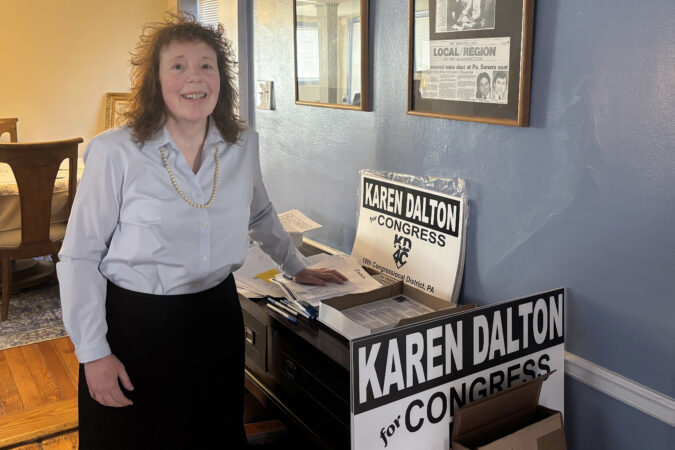
    Dalton, a retired staff attorney for the Pennsylvania House Republicans, knows the odds are against her as she runs a solo campaign operation out of her living room. But she thinks she has a shot.

    The 65-year-old Carlisle resident is irked by President Donald Trump’s policies both from a faith-based standpoint and a legal one.

    She holds many views that align with Democrats, which may draw accusations that she’s a “RINO,” or Republican in name only. But she argues she’s a Republican at heart.

    “I was talking to a senior citizen the other day, and the first thing he said to me was, ‘So you’re a RINO,” said Dalton, 65. “And my response to that was, well, if you mean ‘Respect for Individuals and Not Oligarchs,’ I’ll go along with that. He goes, ‘No, no, no, I’m a RINO too. I’m that old school Republican that believes in helping people.’ I’m like, ‘Yes, thank you. That’s what I’m talking about getting back to.’”

    Perry, a longtime ally of President Donald Trump who supported his unsuccessful attempts to overturn the 2020 election, represents Dauphin County and parts of Cumberland and York Counties in Central Pennsylvania. He appears to be particularly vulnerable this year as the district has shifted toward Democrats and Republican-turned-Democrat Janelle Stelson, a former local news anchor, had a razor-thin loss against him in the general election last year. She plans to run again in the Democratic primary.

    Dalton, in a long-ranging interview with The Inquirer in her living room, called Donald Trump’s One Big Beautiful Bill Act the “Big, Brutal Betrayal of the American Dream Act,” because of its cuts to Medicaid and SNAP.

    She believes former Vice President Kamala Harris should have pushed back more on Trump’s claims about transgender people in the 2024 election, argued that the term “illegal alien” is factually incorrect, and says on her website that climate change is a real threat.

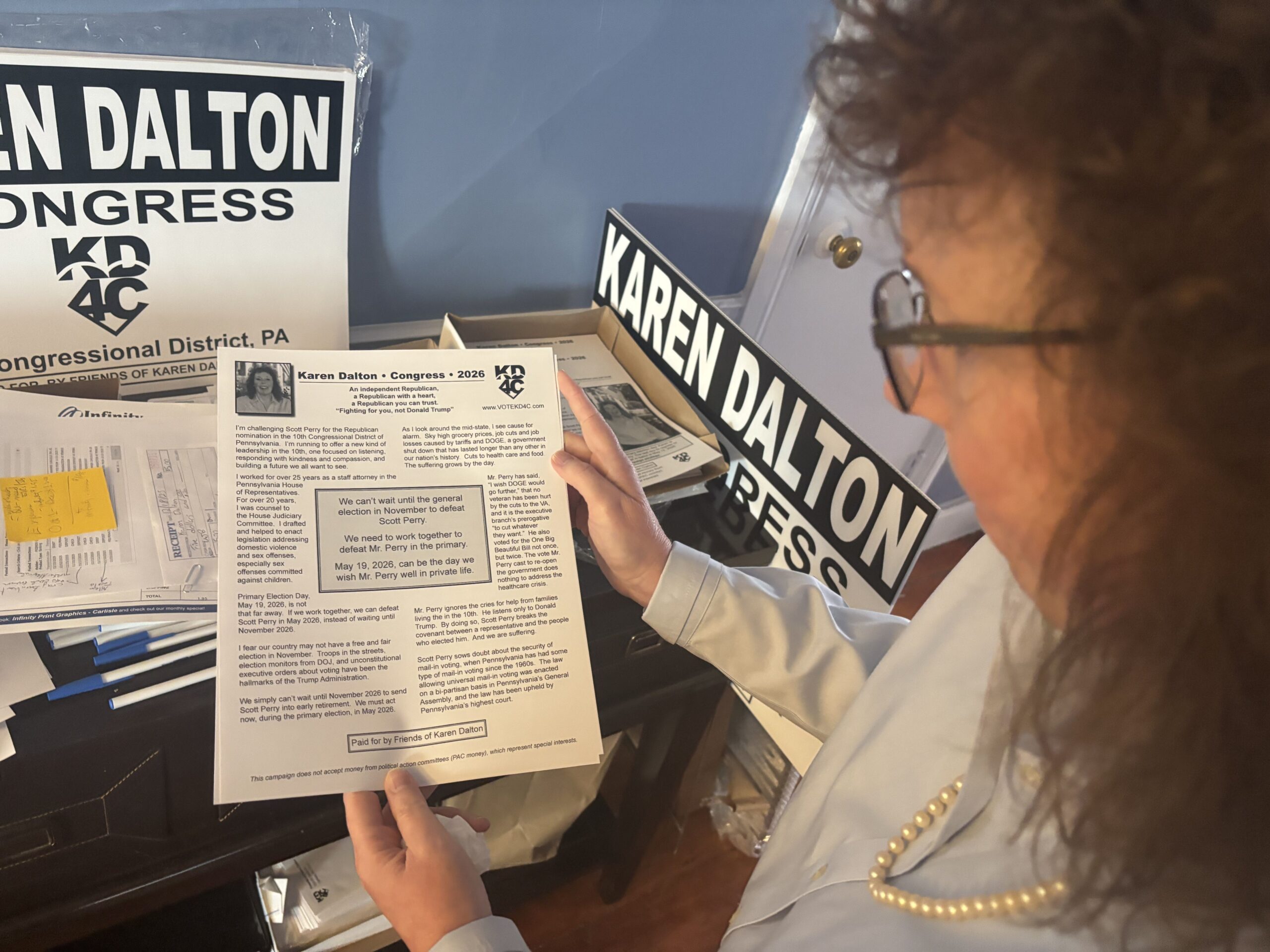
    Karen Dalton, who plans to challenge Scott Perry in the Republican primary, holds materials from a bill she worked on in Harrisburg in her Carlisle home on Monday.

    She supports a $15 federal minimum wage and a millionaire’s tax, and wants to raise the corporate tax rate. She supports abortion rights and believes health care is a human right, though she’s fearful of what she views as over-regulation from Democrats.

    Her walls are covered with Republican political memorabilia and a poster of the late Sen. Robert F. Kennedy, a Democrat who was assassinated during his 1968 presidential campaign.

    She noted that she was a Republican when Donald Trump was a Democrat.

    Her path to victory, she believes, is convincing enough independents and Democrats – particularly former Republicans – to change their registration to support her in the May GOP primary.

    “You know, independents have been upset many years because Pennsylvania has a closed primary system … if they register as Republicans, they get to vote in a primary against Scott Perry and not wait until November,” she said.

    Primary challengers are rarely successful. Dalton reported under $3,000 in contributions – and an approximately $6,000 loan from herself — through September, which is pennies compared to the more than $1 million Perry reported.

    But she only needs to gather 1,000 signatures and pay a $150 filing fee to appear alongside him on the primary ballot.

    Perry’s campaign did not respond to a request for comment about Dalton as of Wednesday.

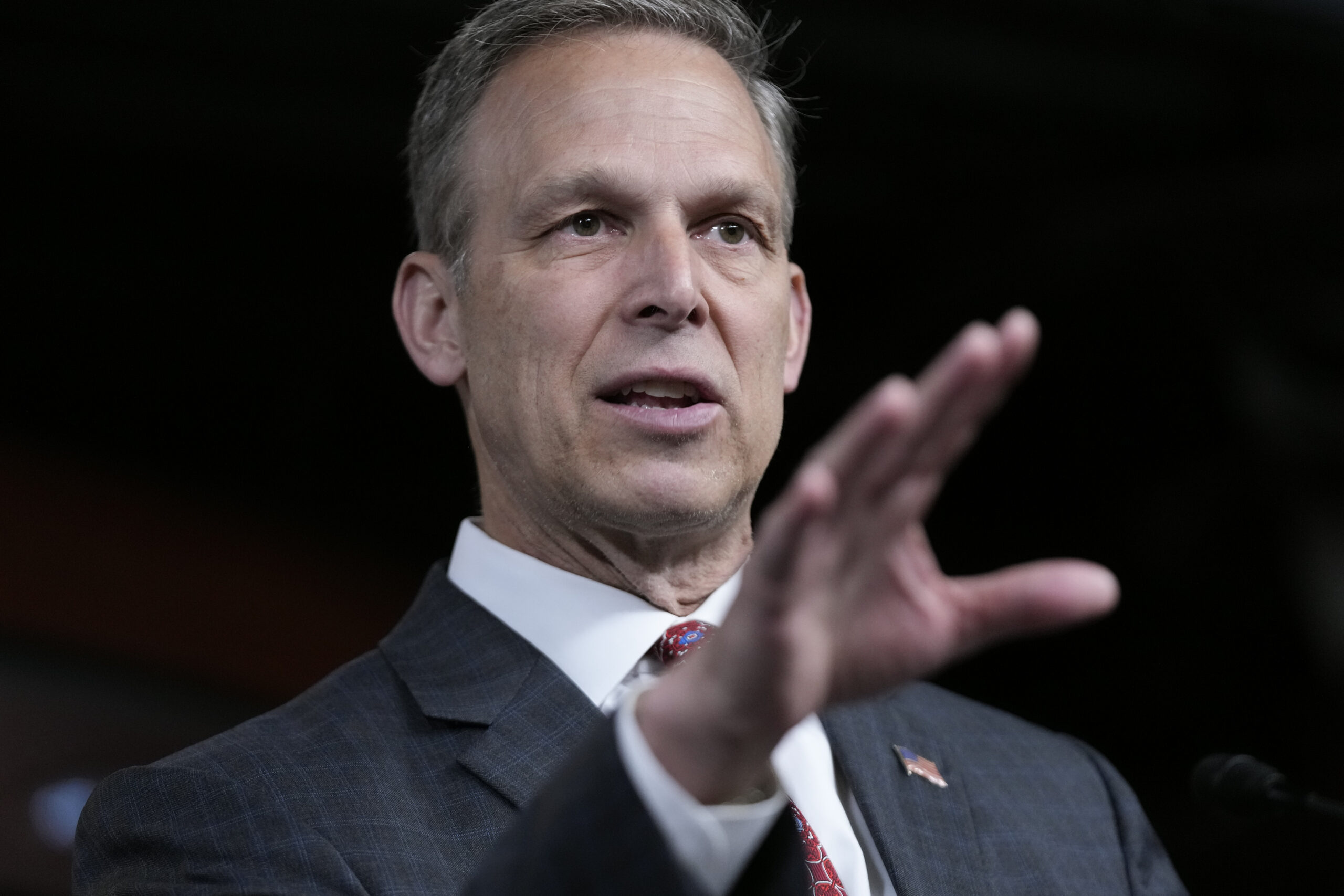
    U.S. Scott Perry speaks during a news conference on Capitol Hill in Washington in July 2023.

    Rosy eyed about the old Republicans

    Dalton grew up in New Jersey and was the first in her immediate family to go to college, attending Montclair State University before getting her politics graduate degree at New York University and later attending law school.

    She lives in Carlisle near Dickinson Law — her “beloved alma mater” — in a home she bought just four years ago at age 61. With student loans hanging over her head for the vast majority of her career, she couldn’t afford a down payment until her state retirement payday.

    She has no kids and she’s never been married — “I spent a lot of time reading and studying and going to school,” she said. These days, she takes piano lessons and plays pickleball, and does pro bono legal work when she’s not knocking on doors for her one-woman campaign.

    Dalton is rosy-eyed about moderates of the Republican Party’s past. She managed former U.S. Rep. Jim Greenwood’s (R., Bucks) successful state Senate campaign in 1986 and worked for New Jersey Republican Gov. Tom Kean, who wrote The Politics of Inclusion. She later worked as a staff attorney for Pennsylvania House Republicans for 25 years, where she focused on domestic violence and child sexual abuse legislation.

    “I’m convinced that if the Republican Party wants to survive and thrive, we need to give up what Donald Trump believes in, and return to our roots,” she said.

    Dalton, whose parents were both Democrats, changed her registration from independent to Republican in 1984 at the age of 24 after her first job working for Ralph J. Salerno’s unsuccessful state Senate campaign in New Jersey. When he lost, “amazingly, nobody took up arms,” she said.

    “I mean, I cried in his lapel, but you know, it’s just like he conceded, and everybody moved on,” she said. “There was no insurrection, there was no battle, there was no violence, there was no ‘Oh, there was voter fraud.’ None of that stuff happened, because that’s the way things used to be before Donald Trump was president.”

    Karen Dalton points to a photo of herself and her old boss Jim Greenwood in her Carlisle home on Monday. A message from Greenwood says: “Now I can prove that I knew you before you were a rock star.”

    Tired of yelling at the television

    Dalton said she didn’t think she’d become a candidate herself during her years working for politicians. But she said “steam started to come out of my ears” when Trump tried to end birthright citizenship, and again when House Speaker Mike Johnson mused about defunding the federal judiciary.

    “I just couldn’t sit back anymore … I got tired of yelling at the television,” she said.

    While Dalton argued that Trump’s rise in 2015 has soured the Republican Party, much of her criticism concentrated on the Jan. 6, 2021 riot and what followed.

    Dalton worked with Perry in Harrisburg when he was a state representative, and she described him as “an incredibly nice man” despite her misgivings about his efforts to overturn the 2020 election and continued alignment with Trump. (She calls him “morally blind” on her website.)

    When asked if she ever supported Perry, Dalton said she wasn’t comfortable talking about who she voted for in the past because “ballots are private.” She did say that she didn’t vote for Trump in 2024, and she voted for Stelson, Perry’s Democratic challenger.

    “I can tell you that I don’t vote for insurrectionists,” she said.

    Karen Dalton, who plans to challenge Scott Perry in the Republican primary, calls a table in her living room her “campaign headquarters.”

    Policy informed by faith

    Dalton was raised Catholic, confirmed Episcopalian, and has attended the Unitarian Universalist Church. Though she hasn’t converted, she now identifies as Jewish, and was moved to tears while talking about a late mentor who introduced her to the religion – noting that speaking about the subject made her “verklempt,” a Yiddish term for emotional.

    “One of the things I love so much about Judaism, in addition to its focus on social justice, is the idea that you get to disagree,” she said, a handful of crumpled tissues in her lap.

    Her faith informs her approach to public policy, from opposing cuts to healthcare subsidies to appreciating ideas across the political spectrum.

    One of her flagship policy proposals is creating a way for people to borrow up to two years worth of their own Social Security benefits before they reach retirement age to help with things like a down payment, tuition, or medical expenses – one that would have helped her buy a home earlier.

    Another is a scholarship program that would allow students in any field to borrow the full amount of their education from the federal government through loans that would be forgiven if they serve “the public good,” a rebuke of Trump’s One Big Beautiful Bill’s borrowing limit on federal student loans.

    She also wants to create a program to pay for the education of students who want to pursue careers in science and guarantee employment at national health or science institutions, including a new foundation for scientific discovery.

    Dalton has brought her neighbors into her home to discuss her ideas, and plans to do it again.

    She also held a town hall at Central Penn College in Enola that she said drew 15 people.

    “That’s 15 more people than Scott Perry looked in the eye and talked to over the past five years at his town halls that didn’t exist,” she said.

  • Kennedy Center changed board rules months before vote to add Trump’s name

    Kennedy Center changed board rules months before vote to add Trump’s name

    The Kennedy Center adopted bylaws earlier this year that limited voting to presidentially appointed trustees, a move that preceded a unanimous decision this month by board members installed by President Donald Trump to add his name to the center.

    The current bylaws, obtained by the Washington Post, were revised in May to specify that board members designated by Congress — known as ex officio members — could not vote or count toward a quorum. Legal experts say the move may conflict with the institution’s charter.

    Trump took over the Kennedy Center in February, purging its board of members he had not appointed. The months that followed saw struggling ticket sales and programming changes that began to align the arts complex with the Trump administration’s broader cultural aims, culminating with the annual Kennedy Center Honors hosted by the president.

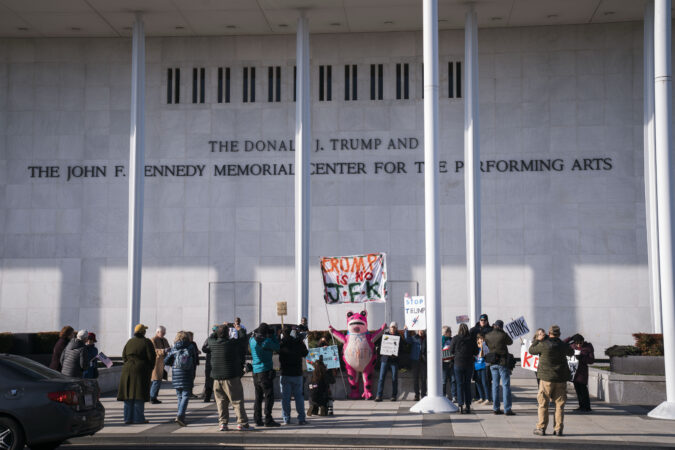
    Days later, on Dec. 18, the board voted to add the president’s name to the institution, and within 24 hours it was on the website and the building itself: “The Donald J. Trump and The John F. Kennedy Memorial Center for the Performing Arts.”

    Several artists have announced cancellations at the center as the unprecedented move drew public scrutiny and backlash. Democratic lawmakers and legal experts said it was illegal for the board to alter the name of the living memorial to Kennedy that Congress established. Democrats also claimed that one ex officio member, Rep. Joyce Beatty (D., Ohio), was muted when she attempted to speak out during the Dec. 18 vote.

    Roma Daravi, the center’s vice president of public relations, told the Post that ex officio members have never voted.

    “The bylaws were revised to reflect this longstanding precedent and everyone received the technical changes both before the meeting and after revisions,” Daravi wrote in an email to the Post. “Some members (including ex officio) attended in person, others by phone, and no concerns were voiced, no one objected, and the bylaws passed unanimously.”

    The Kennedy Center lists 34 presidentially appointed board members, including Trump himself as chair, and 23 ex officio seats. The center’s president, Richard Grenell, is also an officer of the board.

    The federal law that established the Kennedy Center designates specific government and federal positions — including the librarian of Congress; the mayor of Washington, D.C.; the secretary of the Smithsonian Institution; and the majority and minority leaders of the Senate — to serve as ex officio members.

    The law identifies them as part of the board of trustees, which it directs to maintain and administer the facility as a living memorial. But it does not distinguish between voting and nonvoting members, which has been a point of ambiguity in the days following the vote to rename the Kennedy Center.

    The center’s original bylaws didn’t distinguish voting powers, either. But its most recent tax filings list 59 “voting members” of its governing body — a total that includes both general and ex officio members.

    A former Kennedy Center staffer with knowledge of board proceedings, who spoke on the condition of anonymity out of fear of retribution, told the Post that ex officio members were “always included in debate and discussion” during their tenure, but the person did not recall a time when those members’ votes were counted.

    “Theoretically they could vote, but our practice was not to have them vote or count toward quorum,” the person said, noting they were not aware of the new leadership’s practices at the center.

    For this report, the Post reached out to all ex officio members with questions about their voting authority and any known changes to it. Some told the Post or other outlets that they understood their current role to be nonvoting, though none addressed whether they were aware of any prior changes to that status.

    “Like a lot of things, this seems to be in dispute,” said one person with knowledge of board proceedings, who spoke on the condition of anonymity because they were not authorized to speak on the matter.

    Senate Majority Leader John Thune (R., S.D.) told a reporter Dec. 18: “I don’t have a vote. I don’t know enough about it.”

    Sen. Sheldon Whitehouse (D., R.I.) told the Post that he became an ex officio member this year after he became the lead Democrat on the Senate Committee on Environment and Public Works — another ex officio seat designated by Congress — but was not invited to board meetings until his committee began investigating the Kennedy Center last month.

    Whitehouse said the statute “makes no distinction between ex officio and presidentially appointed Trustees when it comes to members’ rights and responsibilities on the board, including voting,” and he accused the Trump-appointed board of attempting to “illegally change the bylaws to silence dissent.”

    A spokesperson for the Smithsonian Institution said that Secretary Lonnie G. Bunch III does not vote or attend the meetings. It was unclear whether he had since assuming his role in 2019, but it is not uncommon for high officials serving on influential Washington boards to attend by proxy or not at all.

    Copies of the Kennedy Center’s May and September board meeting minutes, obtained by the Post, showed that many ex officio members were absent or sent a staffer in their place.

    Beatty, who sued the Kennedy Center’s board of trustees Dec. 22 to stop it from adding Trump’s name to the institution, declined to comment for this story. But her lawsuit argues the center’s statute makes her a “a full voting member.”

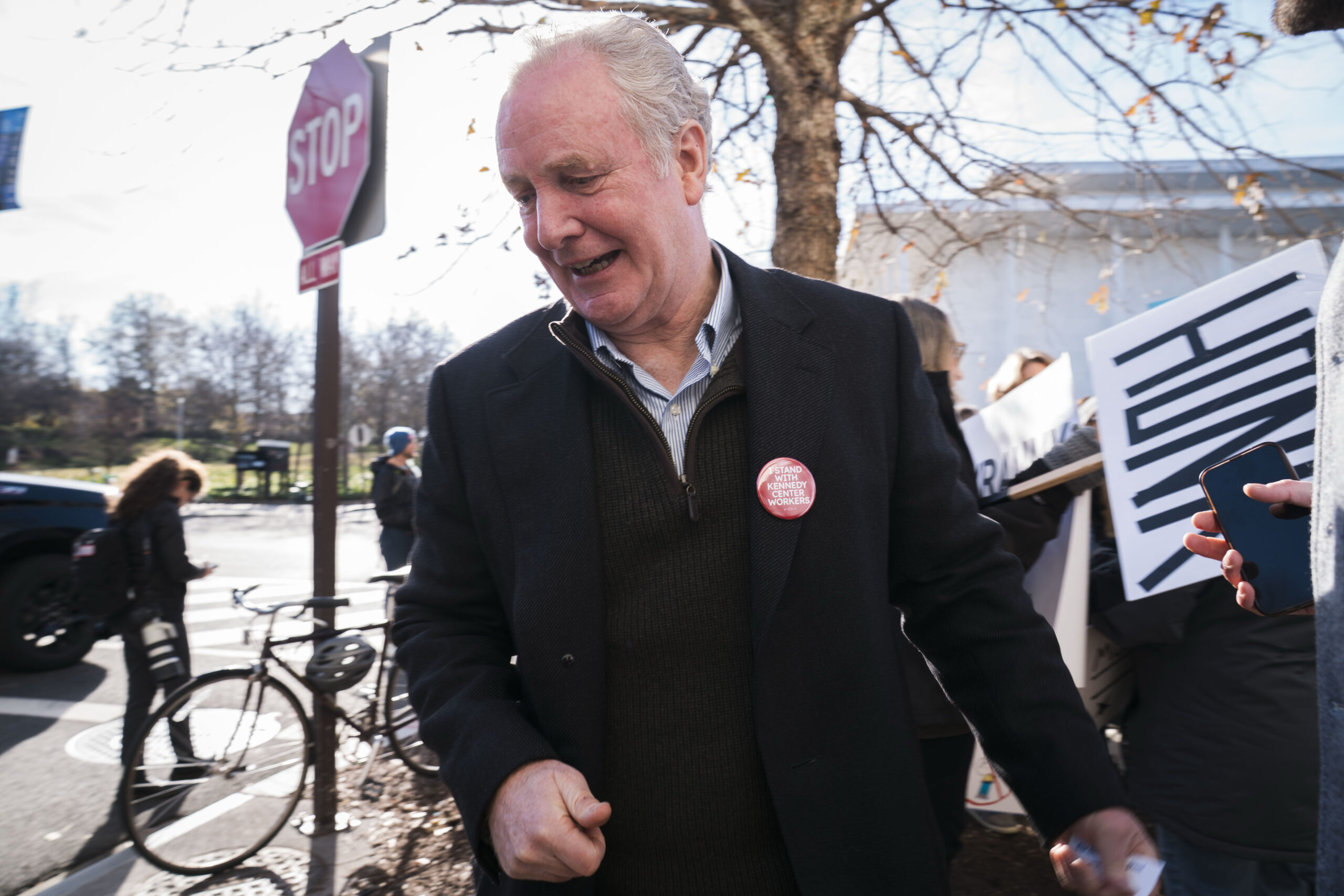
    Sen. Chris Van Hollen (D., Md.) leaves a protest of the Kennedy Center name change in Washington on Dec. 20.

    Sen. Chris Van Hollen (D., Md.), who is listed as an ex officio member on the Kennedy Center’s website, said he is no longer part of the board. “I was on the Kennedy Center board … in the last Congress,” he told the Post. “So their website is not caught up because I was told when Democrats lost control of the Senate and the Republicans became the majority that I fell off.” (The charter calls for three additional Senate members appointed by the president of the Senate and three House members appointed by the speaker to serve in ex officio seats.)

    Many in high-ranking roles, including Secretary of State Marco Rubio, Health Secretary Robert F. Kennedy Jr. and Senate Minority Leader Charles E. Schumer (D., N.Y.), did not respond to requests for comment.

    The offices of D.C. Mayor Muriel E. Bowser and the acting librarian of Congress, Robert Newlen, declined to comment.

    Other changes from the May revision state that the general trustees “serve at the pleasure of the President.” (Previously, that language appeared in the bylaws and the federal statute only in reference to the Advisory Committee on the Arts, a separate body that makes recommendations to the board.)

    They also added language about the ability of officers to make certain appointments, including stating that the chair may appoint the center’s president to act as chief executive.

    The vote by the Kennedy Center’s board to add Trump’s name to the institution marked the most overt effort to date by the president and his allies to remold the storied performing arts center in his image.

    In the days since his name was added to the building, several lawmakers have vowed to fight the change.

    During a rally outside the Kennedy Center on Dec. 20, Van Hollen said he and his colleagues would work to “reverse” the move when Congress returns to session in January. “The day we get back, we can put an amendment on the … Interior appropriations bill to reverse this outrage,” he told the crowd.

    Beatty’s lawsuit, filed in the U.S. District Court for the District of Columbia, claimed that the vote exceeded its statutory authority and requested that a judge declare it to be void.

    “Because Congress named the center by statute, changing the Kennedy Center’s name requires an act of Congress,” the lawsuit says, adding that “Congress intended the Center to be a living memorial to President Kennedy — and a crown jewel of the arts for all Americans, irrespective of party.”

    President Donald Trump, shown attending a showing of “Les Misérables” in June, has made himself a marquee element of the Kennedy Center.

    Last week, Rep. April McClain Delaney (D., Md.) introduced legislation to remove Trump’s name.

    Rep. Chellie Pingree of Maine, the top Democrat on the Appropriations subcommittee that oversees the Kennedy Center, along with more than 70 lawmakers in Congress, called for Trump to reverse the renaming effort and remove his name from the building immediately.

    “No board vote nor social media post has the legal authority to change the name without an act of Congress,” the members wrote.

    “We’ll be working to block this disgraceful renaming effort at every possible opportunity and restore the Kennedy Center’s rightful place as our nation’s cultural center without the burden of vanity projects or political influence,” they wrote.

    Roger Colinvaux, a law professor at Catholic University, said his read of the statue establishing the center was “not quite as demonstrative” as Beatty’s, but “I’d argue that the statute does not differentiate among types of trustees in terms of powers and obligations, which would include voting.”

    Colinvaux added that “basic governance principles” “do not allow for the ‘muting’ of members” of an entity’s governing body, which is a “deliberative body.”

    Phil Hackney, a law professor at the University of Pittsburgh and a specialist in nonprofit tax-exempt organizations, said it’s worth noting “how ex officio trustees have traditionally operated” at both the Kennedy Center and the Smithsonian, of which the Kennedy Center is technically a bureau. He said that a court would also need to consider whether trustees are supposed to be able to remove ex officio members’ powers by amending bylaws.

    That said, the statute says the trustees “have the usual powers,” and “it still strikes me, under what I see so far, that it is reasonable to believe that ex officio trustees might have the right to vote,” he said.

    Ellen Aprill, senior scholar at UCLA School of Law, who has written about the Kennedy Center’s legal status, said even if the bylaws limit voting to general board members appointed by the president, “I believe there is a strong argument that such a bylaw provision violates the Kennedy Center’s charter.”

    Aprill stressed that the charter includes a variety of public servants, and both majority and minority members of Congress in the Kennedy Center’s governance. “Clearly the intent of the charter provisions was to entrust Kennedy Center guidance to a broad group, not just those appointed by the president,” she said.

    Still, the Kennedy Center’s relatively ambiguous legal status as a public-private entity “makes it difficult to predict how a judge faced with the issues in the case beyond standing would decide,” she said, noting the situation “is likely to give any judge a great deal of freedom in making any decision.”

  • Why Trump’s EEOC wants to talk to white men about discrimination

    Why Trump’s EEOC wants to talk to white men about discrimination

    In mid-December, the nation’s leading workplace civil rights enforcer took to social media to pose a question: “Are you a white male who has experienced discrimination at work based on your race or sex?”

    Andrea Lucas, chair of the Equal Employment Opportunity Commission, appeared in the video, urging those who have to contact the agency “as soon as possible.”

    “You may have a claim to recover money under federal civil rights laws,” she says in the video, which has amassed nearly 6 million views on X.

    It was an unusual move, because the EEOC does not typically solicit complaints. But it underscores the sea change at an agency central to President Donald Trump’s civil rights agenda — one that began with executive orders gutting the last vestiges of affirmative action, and buttressed by his purge of the EEOC board and a newly installed Republican majority.

    Now “fully empowered,” the agency will focus on stamping out “illegal discrimination” stemming from diversity, equity, and inclusion (DEI) programs and “anti-American bias,” Lucas said recently in written responses to questions from the Washington Post. Enforcement, including a heightened emphasis on pregnancy and religious bias, will stress “individual rights over group rights,” she said, and eschew identity politics.

    The EEOC’s new priorities come during a year of regulatory uncertainty — it lacked a quorum most of the year, limiting its functions — fueling confusion and uncertainty for employers, workplace experts say. And civil rights advocates contend this pivot detracts from its mission.

    “Chair Lucas has chosen to elevate an asserted concern that lacks empirical support as a significant and widespread problem,” a group called EEO Leaders said in a statement Dec. 23, “diverting scarce enforcement resources from well documented and pervasive forms of workplace discrimination that harm millions of workers in America today.” The group comprises former EEOC and Department of Labor officials.

    Andrea Lucas, testifying at a June hearing on Capitol Hill, was designated chair of the Equal Employment Opportunity Commission in November, after a 10-month stint as acting chair.

    Lucas said her X post reflects the agency’s effort to “correct underreporting” of forms of discrimination that were neglected by the past administration, adding that “for too long, many employees thought they weren’t the ‘right’ kind of plaintiff, that our civil rights laws only protected certain groups, rather than all Americans.”

    A restrained year

    Founded in 1964 at the height of the Civil Rights Movement, the EEOC is charged with enforcing federal laws that make it illegal to discriminate against a worker or job applicant on the basis of race, sex, religion, age, disability, and other factors. Most employers with at least 15 employees are bound by EEOC regulations, which apply to such workplace practices as hiring, firing, promotions, and wages. The agency has recouped billions in monetary rewards for victims of workplace bias and harassment during the last decade.

    Days into his second term — in a break from precedent — Trump dismissed two Democratic members of the independent commission. As a result, it lost the quorum needed to pursue certain cases and overhaul guidance. That changed in October with the appointment of Commissioner Brittany Panuccio, who with Lucas gave the panel a 2-1 GOP majority and a quorum. Commissioner Kalpana Kotagal, a Democrat, rounds out the commission.

    In past administrations, the EEOC typically filed 200 to 300 merit lawsuits — those in which the agency determined discrimination exists — a year, said Christopher DeGroff, an employment attorney with the firm Seyfarth Shaw. The 93 merit suits the agency filed in fiscal 2025 marked one of its lowest tallies in three decades, he noted in an analysis of its activity.

    Still, the agency’s new priorities were evident in the cases that reached a public resolution or culminated in a lawsuit, DeGroff said. Merit suits alleging discrimination based on race or national origin — historically one of the EEOC’s busiest enforcement areas — hit a decade low in 2025, his research noted. And two of the three cases filed revolved around anti-American bias.

    Meanwhile, 37 of the 93 merit lawsuits the EEOC brought pertained to sex or pregnancy discrimination. Of those, 10 were filed under the Pregnancy Discrimination Act and/or the newly enacted Pregnant Workers’ Fairness Act, and included lawsuits against Delta Air Lines and meat processor Smithfield alleging they denied accommodations to pregnant employees.

    Religious bias lawsuits were another focus in 2025, with the agency filing 11 merit suits asserting religious discrimination or failure to accommodate religious beliefs. One case was against Apple, over allegations it failed to accommodate a Jewish employee’s request not to work on the weekend due to his faith.

    Apple declined to discuss the case but “strongly denied” the claims in a statement to the Post.

    Disparate impact

    One of the EEOC’s biggest pivots under Trump is to abandon cases filed under disparate impact, a legal theory holding that seemingly neutral policies — such as height or lifting requirements — can have discriminatory outcomes. It stems from the U.S. Supreme Court’s landmark 1971 decision in Griggs v. Duke Power, where attorneys used statistical evidence to show how standardized tests prevented Black employees from advancing at a North Carolina energy company.

    Disparate impact is central to civil rights litigation and a key lens though which the EEOC has tackled systemic discrimination, said Jenny Yang, who served as EEOC chair during the Obama administration and worked to expand the agency’s tool kit for addressing systemic discrimination.

    In 2020 for example, Walmart settled a nationwide discrimination lawsuit brought by the EEOC over a “physical ability test” it used for grocery workers that “disproportionately excludes female applicants.” Walmart agreed to stop using the test and to pay $20 million into a settlement fund for women who were denied grocery order-filler positions because of the testing.

    Disparate impact “advances the core principle that removing unjustified barriers to opportunity helps all Americans thrive,” Yang said.

    In April, Trump signed an executive order barring use of disparate impact by agencies, calling it a “pernicious movement” that ignores “individual strengths, effort or achievement.” Dan Lennington, deputy counsel at the Wisconsin Institute for Law and Liberty, a conservative think tank specializing in workplace issues, said the debate reflects the broader ideological divide on how to best protect workers’ civil rights.

    “The minute you start saying all Black people this, all Hispanic people this, all women this, you’re just stereotyping,” he added. “The only thing that matters is the individual in front of you.”

    Yang said it’s been “challenging” to see the Trump administration make such changes to an agency that historically ” really valued its bipartisanship and its independence to interpret antidiscrimination laws.” By moving away from disparate impact and targeting corporate diversity efforts, Yang said, the EEOC has been “weaponized to intimidate employers, to retreat from efforts designed to promote equal opportunity, and to really abandon its historic mission to protect some of our most vulnerable workers.”

    ‘Illegal’ DEI

    Shawna Bray, general counsel at the Center for Equal Opportunity, a conservative think tank, said that Lucas’ EEOC is correcting for past administrations that “used the tools in the toolbox to push things up to, and even over, the line because of their goals,” especially with DEI and other social issues.

    DEI refers to practices companies use to ensure equal opportunity in their ranks, from recruiting and mentorship programs to antibias training and employee resource groups. Many companies began reconsidering such policies after the Supreme Court’s 2023 decision rejecting the use of affirmative action in college admissions.

    After the Supreme Court struck down the use of racial considerations in college admissions in June 2023, many companies reassessed their diversity, equity and inclusion (DEI) programs.

    The ruling sparked a wave of activist lawsuits aiming to replicate the order in the employment sphere. Much of corporate America has since opened identity-based programs, such as fellowships and employee resource groups, to people of all backgrounds, ended efforts like antibias training, and rebranded DEI programs with a focus on “belonging.”

    Lucas and others in the Trump administration often refer to “illegal DEI,” but Bray said that she finds the term “a little frustrating” given that such programs only break the law if they show identity-based preference. She also thinks the phrasing has created confusion.

    The EEOC should “have in mind an even application of our civil rights,” regardless of factors such as race, gender, and religious background, Bray said. “The desire to put a thumb on the scale was never consistent with that.”

    While the agency has yet to file a lawsuit over a workplace DEI program under Lucas, DeGroff expects to see such “cases hit the docket” in 2026.

    Valerie Wilson, director of EPI’s Program on Race, Ethnicity, and the Economy, said that priorities like dismantling DEI have “turned the mission of the EEOC on its head, in a way that weaponizes it against the people that it was intended to protect, given the long history of racial discrimination and exploitation” in the United States.

    Lucas contends the EEOC is making up for past administrations that “went hunting for activist matters while closing [their] eyes to overt widespread discrimination occurring against groups it disfavored.” Earlier this year, it issued guidance encouraging workers to challenge DEI policies by their employers.

    Among possible targets are 20 law firms from which the EEOC said it has requested information about their DEI and hiring practices going back nearly a decade.

    Jason Solomon, director of the National Institute for Workers’ Rights, a think tank focusing on private workplace law, wonders whether there is much more for the EEOC to target, given that companies have largely gotten rid of identity-based programs.

    “They may look at the changed landscape and say, ‘We can declare victory because we’ve gotten employers to change a lot of what they’ve done,’” Solomon said.

    Backing away

    Race-discrimination complaints are historically among the most common lodged with the EEOC — 29,000 a year on average since 1997, according to a report from EPI — but 2025 marked “the lowest number of race/national origin-based filings by the EEOC in at least a decade,” Seyfarth’s report states.

    Two of the lawsuits it pursued alleged bias against U.S.-born workers in favor of foreign ones, DeGroff said. One case involved a hotel and resort in Guam, LeoPalace Guam Corp., which agreed to pay $1.4 million to resolve claims that it favored Japanese workers over those from other countries, including the U.S.

    The EEOC also has dismissed cases filed on behalf of transgender workers and stopped processing new gender-identity complaints to comply with Trump’s executive order that prohibits agencies from using federal funds to support gender-identity issues. It also removed “X” as a gender marker option on its discrimination charge intake form, making it harder for workers whose gender identity does not match their sex at birth to file complaints.

    Over the summer, the agency resumed processing some transgender discrimination cases, although the complaints will be subject to a heightened level of review.

  • SNAP bans on soda, candy, and other foods take effect in five states Jan. 1

    SNAP bans on soda, candy, and other foods take effect in five states Jan. 1

    Starting Thursday, Americans in five states who get government help paying for groceries will see new restrictions on soda, candy, and other foods they can buy with those benefits.

    Indiana, Iowa, Nebraska, Utah, and West Virginia are the first of at least 18 states to enact waivers prohibiting the purchase of certain foods through the Supplemental Nutrition Assistance Program, or SNAP.

    It’s part of a push by Health Secretary Robert F. Kennedy Jr. and Agriculture Secretary Brooke Rollins to urge states to strip foods regarded as unhealthy from the $100 billion federal program — long known as food stamps — that serves 42 million Americans.

    “We cannot continue a system that forces taxpayers to fund programs that make people sick and then pay a second time to treat the illnesses those very programs help create,” Kennedy said in a statement in December.

    The efforts are aimed at reducing chronic diseases such as obesity and diabetes associated with sweetened drinks and other treats, a key goal of Kennedy’s Make America Healthy Again effort.

    But retail industry and health policy experts said state SNAP programs, already under pressure from steep budget cuts, are unprepared for the complex changes, with no complete lists of the foods affected and technical point-of-sale challenges that vary by state and store. And research remains mixed about whether restricting SNAP purchases improves diet quality and health.

    The National Retail Federation, a trade association, predicted longer checkout lines and more customer complaints as SNAP recipients learn which foods are affected by the new waivers.

    “It’s a disaster waiting to happen of people trying to buy food and being rejected,” said Kate Bauer, a nutrition science expert at the University of Michigan.

    A report by the National Grocers Association and other industry trade groups estimated that implementing SNAP restrictions would cost U.S. retailers $1.6 billion initially and $759 million each year going forward.

    “Punishing SNAP recipients means we all get to pay more at the grocery store,” said Gina Plata-Nino, SNAP director for the anti-hunger advocacy group Food Research and Action Center.

    The waivers are a departure from decades of federal policy first enacted in 1964 and later authorized by the Food and Nutrition Act of 2008, which said SNAP benefits can be used for “any food or food product intended for human consumption” except alcohol and ready-to-eat hot foods. The law also says SNAP cannot pay for tobacco.

    In the past, lawmakers have proposed stopping SNAP from paying for expensive meats like steak or so-called junk foods, such as chips and ice cream.

    But previous waiver requests were denied based on U.S. Department of Agriculture research concluding that restrictions would be costly and complicated to implement, and that they might not change recipients’ buying habits or reduce health problems such as obesity.

    Under the second Trump administration, however, states have been encouraged and even incentivized to seek waivers — and they responded.

    “This isn’t the usual top-down, one-size-fits-all public health agenda,” Indiana Gov. Mike Braun said when he announced his state’s request last spring. “We’re focused on root causes, transparent information, and real results.”

    The five state waivers that take effect Jan. 1 affect about 1.4 million people. Utah and West Virginia will ban the use of SNAP to buy soda and soft drinks, while Nebraska will prohibit soda and energy drinks. Indiana will target soft drinks and candy. In Iowa, which has the most restrictive rules to date, the SNAP limits affect taxable foods, including soda and candy, but also certain prepared foods.

    “The items list does not provide enough specific information to prepare a SNAP participant to go to the grocery store,” Plata-Nino wrote in a blog post. “Many additional items — including certain prepared foods — will also be disallowed, even though they are not clearly identified in the notice to households.”

    Marc Craig, 47, of Des Moines, said he has been living in his car since October. He said the new waivers will make it more difficult to determine how to use the $298 in SNAP benefits he receives each month, while also increasing the stigma he feels at the cash register.

    “They treat people that get food stamps like we’re not people,” Craig said.

    SNAP waivers enacted now and in the coming months will run for two years, with the option to extend them for an additional three, according to the USDA. Each state is required to assess the impact of the changes.

    Health experts worry that the waivers ignore larger factors affecting the health of SNAP recipients, said Anand Parekh, chief policy officer at the University of Michigan School of Public Health.

    “This doesn’t solve the two fundamental problems, which is healthy food in this country is not affordable and unhealthy food is cheap and ubiquitous,” he said.