Category: National Politics

  • As rumors swirl after political killings, this GOP lawmaker draws a line

    As rumors swirl after political killings, this GOP lawmaker draws a line

    To Julia Coleman, Minnesota House Speaker Melissa Hortman and Turning Point USA founder Charlie Kirk were just “Melissa” and “Charlie.”

    Coleman, a Republican state senator, knew Hortman, a Democrat, through their work in the Minnesota legislature. The two had discussed reopening the Capitol daycare center, while sitting in Hortman’s office sharing tequila and Milano cookies. Coleman was Turning Point USA’s first Minnesota employee, and Kirk, her first boss, became her friend.

    On June 14, Melissa was shot dead.

    On Sept. 10, so was Charlie.

    Coleman, 34, watched in horror as her social media feeds became clouded with a thickening haze of baseless and speculative ideas about her former colleagues’ deaths.

    “When I see people spreading horrible conspiracy theories that are completely based out of nothing and dishonor the person who passed away, I feel compelled to say something,” Coleman said. “More elected officials have to stop sitting on their hands and start calling it out.”

    That is what she is trying to do.

    On the Sunday after Christmas, Coleman was in her kitchen, making dinner for her family, when she saw a post that infuriated her. The user claimed that Hortman’s assassination was connected to a fraud scandal in Minnesota, and implied that Hortman had known her life was in danger. (There is no evidence supporting either of these claims.)

    “This is sick,” Coleman thought to herself. She began to type.

    “I am a Minnesota Republican legislator. I never agreed with Melissa. Not once. But I’m begging people to stop sharing this conspiracy theory,” Coleman wrote. “Please, unless you have evidence, stop trying to get social media clout off the death of a good person that you know nothing about.”

    Within 24 hours, her post had attracted more than a million views.

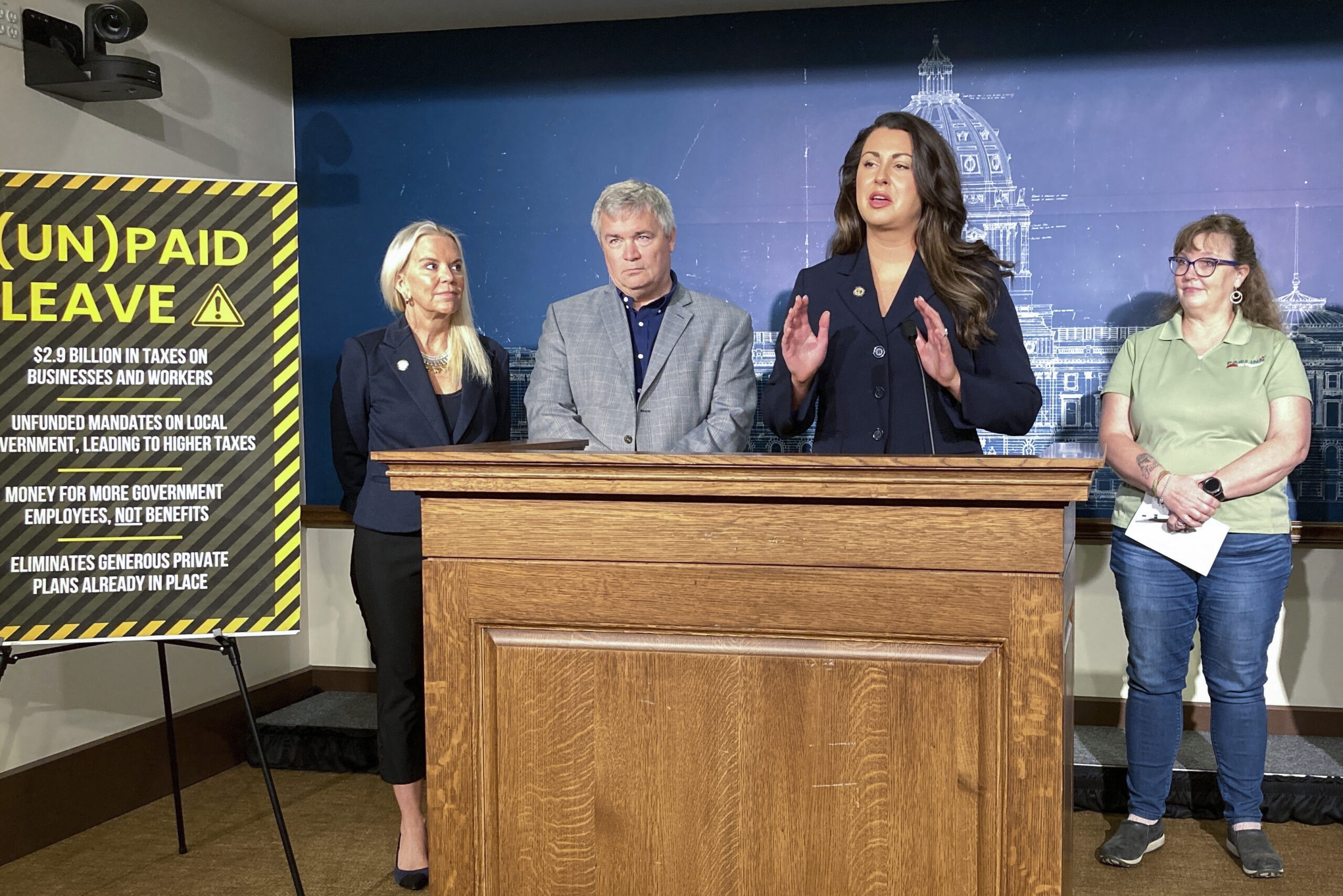
    Republican state Sen. Julia Coleman, of Waconia, speaks at a news conference at the Minnesota State Capitol in St. Paul., Minn., on Monday, May 8, 2023, against a Democratic-backed paid family and medical leave bill that was slated for debate later in the day. (AP Photo/Steve Karnowski)

    Responses have been mostly positive, she said. Coleman sees conspiracies and misinformation trending more on her own side, the political right, but believes the problem transcends partisan loyalties. In Minnesota, traumatized legislators have stayed away from Hortman and Kirk conspiracy theories, and many have been speaking out against them, Coleman said.

    Hours after her first post, Coleman followed up: “I’ve learned two things today 1) invest in tinfoil (for hats on both sides of the aisle) 2) buy a bunch of jumbo crayons and construction paper for explaining basic concepts to people this upcoming year.” Others, including former Minnesota Senate Majority Leader Paul Gazelka, a Republican, have also come out to slam the rumors.

    Legislators have watched as Minnesota Gov. Tim Walz, a Democrat, has borne the brunt of recent attacks, with some people claiming baselessly that Walz was involved with Hortman’s assassination.

    The conspiracists have relied on a video of Hortman in tears after she voted to end a budget deadlock by supporting a spending plan that cut health benefits for people who are in the country illegally. Coleman has said that Hortman was upset because she knew people would lose healthcare, and that there is no evidence of any link between the shooting and the scandal, which involves allegations of improper social services payments to dozens of Somali immigrants.

    The Kirk conspiracies are tied to unproven claims that the political activist’s killing was related to his stance on Israel.

    Coleman saw the governor at a bill signing shortly after Hortman was killed. Walz had lost weight. She noticed pain in his eyes. “It’s got to be hard that people are sitting there thinking he did that or would order that to be done just because a crazy man said it to be true,” Coleman said.

    A spokesperson for Walz did not respond to a request for comment.

    After Hortman and Kirk were killed, Coleman had panic attacks. She questioned whether she should quit her job to protect her three young boys. “It was a rough summer and fall. Losing two people to assassinations — I just never thought that sentence would even come out of my mouth,” Coleman said. “The initial reaction was: I have to get out of this if I want my kids to grow up with a mother.”

    Then Coleman thought about who would be left to speak up if people like her were intimidated out of politics. She said she decided she did not want to let fear drive her from public office — but knows the experience will never be the same.

    “It feels like all the magic that was in this job got sucked out of it on June 14,” Coleman said. “Long-standing grudges have been erased because a lot of us just are in the trenches now together.”

    When legislators walk into the House chamber, they see Hortman’s photo and roses on her desk.

    When the doorbell rings at home, they now check their security camera before answering.

    “I’ve seen some people start to speak up, and I hope that my actions [Sunday], which came from a moment of frustration standing in my kitchen, will encourage others to do the same,” Coleman said.

  • How RFK Jr. upended the public health system

    How RFK Jr. upended the public health system

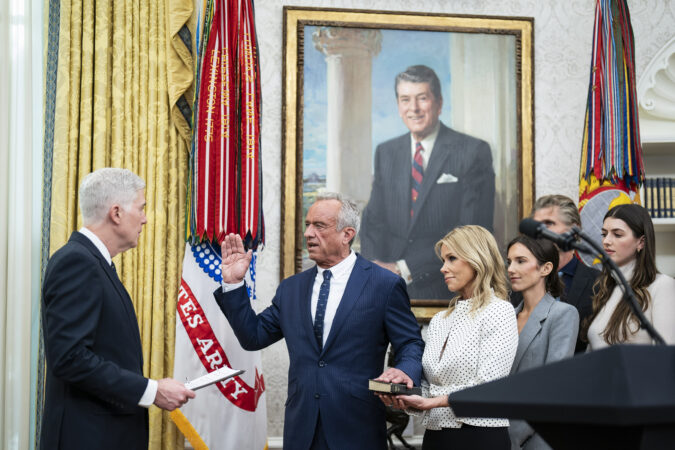
    On his way to being confirmed as the nation’s top health official, Robert F. Kennedy Jr. promised lawmakers he would do nothing that “makes it difficult or discourages people from taking vaccines.”

    Almost 100 days into the job, amid rising measles outbreaks and congressional scrutiny of his messaging on vaccines, Kennedy made clear behind the scenes that he wanted to reshape the nation’s immunization system.

    Kennedy, the founder of a prominent anti-vaccine group, presented several top federal health officials with a new vision.

    “Bobby has asked for the following changes,” Kennedy’s deputy chief of staff for policy at the time, Hannah Anderson, wrote to the officials in a May 19 email later reviewed by the Washington Post.

    Among his requests was to replace the entire membership of an influential independent committee of experts that makes recommendations for how and when to vaccinate Americans. Kennedy also asked the panel to reconsider a long-standing recommendation that all newborns get a hepatitis B vaccine and to revisit the use of multidose flu shot vials, which contain a mercury-based preservative.

    Anti-vaccine activists have criticized those vaccines for years, claiming they unnecessarily endanger children. Career federal scientists who learned of Kennedy’s asks said they represented a sea change for shots that have been extensively studied and deemed safe.

    “At that point we were just bracing for upheaval,” said Demetre Daskalakis, who was then the CDC’s top respiratory diseases and immunization official.

    Kennedy would get what he wanted. The May 19 email reveals his previously undisclosed influence on some of these changes in a highly unusual way, according to legal experts and former and current health officials, showing how Kennedy has wielded government power to overhaul a public health system he has blasted as corrupt and ineffective.

    Andrew Nixon, a spokesperson for the Department of Health and Human Services, said of the email: “All this was was a suggestion.”

    “This was a newly reconstituted committee, and the secretary was providing a North Star to make sure suggestions were communicated to the members for consideration,” Nixon said.

    Over the course of the year, Kennedy’s actions have alarmed public health experts, medical associations, and current and former health officials, who say he is eroding trust in science and dismantling confidence in long-standing public health measures.

    “I do feel shocked by how quickly he has been able to implement these things that he has clearly been pretty passionate about for many years,” said Kerry Kennedy Meltzer, Kennedy’s niece and a physician who this year released email exchanges with her uncle in an attempt to foil his Senate confirmation to lead HHS.

    Kennedy has challenged years of public health messaging on vaccines, including instructing the CDC to contradict the long-settled scientific conclusion that vaccines do not cause autism. His once-fringe views have moved to the center of the nation’s health strategy amid a growing distrust in the medical establishment after the coronavirus pandemic.

    “It is now acceptable to talk about all these issues,” said Leslie Manookian, a leader in the “medical freedom” movement, which opposes vaccine mandates. “The person that we have most to thank for that is Bobby Kennedy, together with President Trump.”

    Kennedy has maintained the backing of the White House and a warm relationship with President Donald Trump, whom he speaks to often, as the two aligned on their Make America Healthy Again initiative to encourage better nutrition and address chronic disease and childhood illness, according to two people familiar with the matter.

    Besides his heavy focus on immunizations, Kennedy has also taken on the food industry. Next year will test, ahead of the midterms, whether he can deliver sweeping change on this more broadly popular agenda.

    This account of Kennedy’s ascent and leadership since becoming HHS secretary is based on interviews with almost 100 current and former federal health officials, Kennedy allies, public health experts, and others. Many spoke on the condition of anonymity to detail private conversations or internal deliberations, or out of fear of retaliation.

    In response to an interview request, Kennedy said in a text message: Wapo has been more consistently unfair, biased, and inaccurate, and it’s reporting about me than any other major outlet. Im not inclined to validate that bias with an interview.”

    He referred the request to Stefanie Spear, a top aide, who said Kennedy wanted to share a Substack article with a Post reporter that described the “invisibility of vaccine injury,” adding Kennedy could perhaps do an interview after the first of the year.

    The HHS media relations office did not answer detailed questions for this article but in a statement commented on the email from Anderson and identified what Kennedy has done so far.

    “Under Secretary Kennedy’s leadership, HHS is exercising its full authority to deliver results for the American people,” Nixon said.

    “In 2025, the Department confronted long-standing public health challenges with transparency, courage, and gold-standard science — eliminating petroleum-based food dyes from the nation’s food supply, removing the black box warning for many menopause hormone therapies, lowering drug prices, advancing [Organ Procurement and Transplantation Network] reform, streamlining prior authorization, investing in rural health, accelerating biosimilars, doubling funding for childhood cancer research, launching an agency-wide AI strategy, and increasing transparency in drug advertising,” Nixon added. “HHS will carry this momentum into 2026 to strengthen accountability, put patients first, and protect public health.”

    RFK Jr.’s rise to power

    In August 2024, Kennedy strode onto a stage in Arizona to suspend his long-shot independent presidential bid. Flanked by American flags, he explained why the scion of a famous Democratic family was endorsing a Republican, Trump.

    “I asked myself what choices must I make to maximize my chances to save America’s children and restore national health,” Kennedy said.

    Kennedy quickly became viewed as one of the campaign’s top surrogates, bringing along some voters who might not have backed Trump. Before winning the presidency, Trump promised to let Kennedy “go wild on health.”

    Although some Trump aides had weighed making Kennedy, a lawyer, a White House health czar, Kennedy told Trump he wanted to be considered as HHS secretary, according to three people familiar with the matter. Donald Trump Jr. and Charlie Kirk, the conservative activist who was fatally shot this year, advised Kennedy that he needed to be in charge of an actual bureaucracy to make lasting change and avoid being sidelined, one person said. Trump Jr. and Turning Point USA, Kirk’s organization, did not respond to requests for comment.

    Just over a week after Election Day, Trump tapped Kennedy to helm the nation’s sprawling health department, an almost $2 trillion portfolio responsible for administering health insurance, approving drugs and medical devices, and responding to infectious-disease outbreaks.

    The luxury Florida beach house of Mehmet Oz — a physician and former daytime television star who is now the nation’s Medicare and Medicaid chief — quickly became ground zero for pushing MAHA’s agenda and securing Kennedy’s position in Washington, according to multiple attendees. Those weeks forged an alliance among some who challenged the medical establishment, including Del Bigtree, head of the anti-vaccine group Informed Consent Action Network (ICAN), and Spear, a longtime ally to Kennedy in his environmental and anti-vaccine advocacy, and newer people in Kennedy’s orbit, such as Calley Means, a health entrepreneur.

    One night, several of those at the beach house bonded over listening to the Grateful Dead, according to Michael Caputo, who was Trump’s HHS spokesperson in 2020. They viewed the book Good Energy — a bestseller, written by now-surgeon general nominee Casey Means along with her brother Calley, that promotes healthy eating and exercise to optimize metabolic health — as MAHA’s bible, he said.

    “Food expanded the movement overnight,” Bigtree, who was Kennedy’s communications director during his presidential campaign, said in an interview.It was an easier topic to sell to moms across America.”

    On Capitol Hill, Kennedy’s messaging pushing for healthier, less-processed foods proved far more popular than his views on immunization.

    Kennedy’s confirmation largely hinged on Sen. Bill Cassidy (R., La.), a physician and chair of the Senate health committee, who begged Kennedy to disavow his false claims linking vaccines and autism and raised concerns about Kennedy’s involvement in vaccine safety litigation.

    “[Does a] 71-year-old man who has spent decades criticizing vaccines and who’s financially vested in finding fault with vaccines, can he change his attitudes and approach now that he’ll have the most important position influencing vaccine policy in the United States?” Cassidy asked during Kennedy’s confirmation hearing.

    As Cassidy vacillated, Vice President JD Vance stepped in to help negotiate his eventual support, according to two people familiar with the matter.

    In a speech on the Senate floor, Cassidy detailed the commitments he received from Kennedy in exchange for his vote, including to protect the nation’s vaccine infrastructure. All but one Republican voted yes: Sen. Mitch McConnell of Kentucky, a childhood polio survivor who said he would “not condone the re-litigation of proven cures.” A week later, McConnell announced he would not seek reelection.

    Cassidy’s doubts proved prescient. Within months, Kennedy found ways to bypass some of his pledges.

    A fierce critic becomes the boss

    Kennedy has called for the ouster of what he describes as “corrupt, industry-captured” federal health officials, arguing the health department had failed to keep Americans healthy.

    “I’m not scared to disrupt things,” Kennedy said at a recent event at George Washington University.

    Since February, health agencies have been inundated by continuous waves of departures involving more than 30 high-ranking senior career leaders — representing decades of experience on managing infectious-disease outbreaks, administering billions in research dollars, and overseeing the nation’s drug supply, according to a Post review.

    Thousands more staffers were laid off in what some called the “April Fools’ Day massacre,” a sweeping purge and proposed reorganization of the health agencies. Some including lead poisoning specialists and lab scientists were rehired, but many administrative support staff, communications staffers, and program officers are among those who remain laid off.

    As secretary, Kennedy brought in fierce critics of the public health COVID-19 response and federal health agencies more broadly. Bigtree told the Post that candidates for top health roles were questioned to see whether they agreed with some of Kennedy’s longtime vaccine safety priorities.

    Under Kennedy, prominent figures in the anti-vaccine movement have been working within the department on vaccine safety issues, including Lyn Redwood, a former leader of the anti-vaccine group Kennedy founded, Children’s Health Defense, and David Geier and Mark Blaxill, two longtime proponents of false claims that vaccines can cause autism. The three did not return requests for comment.

    In a statement, White House spokesperson Kush Desai said Kennedy and his team at HHS are restoring “Gold Standard Science and accountability to our public health bodies” after the medical establishment pushed “unscientific lockdowns and mask mandates” during the coronavirus pandemic.

    Kennedy has accused public health agencies of being dishonest during the pandemic. He repeated that criticism, arguing the government overreached on COVID vaccines, when a reporter asked how to avoid the violence the CDC witnessed in August, when a gunman incensed by coronavirus vaccines attacked the agency’s Atlanta campus.

    Public health and medical experts say the turnover in staff and leadership has hollowed out the federal government’s scientific capacity to anticipate and respond to health threats.

    “For people who are still left at the [CDC], there is chaos and confusion, and morale is at an all-time low,” Aryn Melton Backus said at a November rally in support of public health. She was a health communication specialist placed on administrative leave as part of pending layoffs from the CDC’s Office on Smoking and Health, which has funded state tobacco control programs.

    The reduction of CDC staff and programs is being felt across the country. In Georgia, where smoking is the leading cause of preventable death, state officials cut a tobacco control and prevention program. An online concussion training that many school youth sports coaches must complete will no longer be updated with the latest research. Local officials who want to fluoridate their drinking water to improve oral health no longer have access to technical experts who can help calibrate the proper levels.

    As Kennedy upended the public health workforce, he leaned into his more broadly popular messaging around overhauling the food industry. He has posted on social media more than twice as frequently about food than vaccines while in office, according to the Post’s analysis of his personal accounts and official HHS accounts. Last summer, almost 1 in 3 social media posts focused on food.

    He often highlights posts about companies pledging to remove artificial dyes from food products, which has been one of his signature efforts.

    Some in the food sector have been trying to accommodate Kennedy and downplay differences with his initiatives, in hopes of avoiding MAHA criticism, according to two people involved in the industry. That is a stark shift for an industry accustomed to viewing the GOP as an ally.

    “Wanting to eat simpler foods, more real foods, look at the ingredients, all of that is not a Democrat hippie thing anymore,” said Vani Hari, an author, activist, and Kennedy ally who also writes under the name of the Food Babe. “It’s a Republican thing, too, now.”

    Kennedy returns to his core issue: Vaccines

    As Kennedy sought senators’ support to become health secretary, he told them he supported the childhood immunization schedule, including the shot for measles, which he had previously described falsely as increasing the odds of spreading the virus.

    In the past, Kennedy had decried the “exploding vaccine schedule,” claiming that the series of vaccines recommended to children is linked to the rise of autism, chronic disease, and food allergies. Medical experts have argued that these purported links have no basis in evidence and that the increase in vaccinations has successfully combated more disease. He wrote a book in 2014 calling for removal of the mercury-based preservative thimerosal from vaccines. He questioned why newborns should get the hepatitis B vaccine, which health authorities say is safe, claiming on an online show that it “poisoned” kids.

    Kennedy faced his first big test on vaccines soon into his tenure. A measles surge had started in an under-vaccinated region of Texas, driving the country’s largest annual case tally in at least 33 years and threatening to end the nation’s measles elimination status.

    At first, Kennedy downplayed the severity of the outbreak and later, under pressure, acknowledged vaccines prevent the virus’ spread. But he muddled that message by also falsely claiming the vaccines were not safety-tested and contained aborted fetal debris — a stark contrast from the first Trump administration’s unequivocal support for vaccination during a 2019 outbreak.

    He repeatedly offered to send Texas doses of vitamin A, an unproven measles treatment in the U.S. embraced by vaccine skeptics as an alternative to immunization, even though the vitamin is primarily used for malnourished children abroad and public health workers and doctors said their focus was vaccination, according to a top state health official, Jennifer Shuford.

    In June, he fired every member of the Advisory Committee on Immunization Practices, which makes vaccine recommendations, setting in motion plans to remake the vaccine system. Kennedy argued the panel had become “little more than a rubber stamp for any vaccine” with members too closely tied to the pharmaceutical industry. He selected new members, some of whom had histories of criticizing vaccine guidance. The former CDC director, Susan Monarez, said she was fired in August for refusing to be a “rubber-stamp” to the new committee.

    The panel has voted on some of Kennedy’s requests detailed in the May email from Anderson, who is no longer with HHS and did not respond to requests for comment.

    The vaccine panel voted in June to remove thimerosal — which the CDC had concluded is safe but Kennedy and his allies have decried as unnecessarily exposing children to mercury — from the rare multidose flu shot vials that contain it. In that same meeting, they vowed to form a work group to look at vaccines that have not been subject to review in more than seven years, in line with Kennedy’s request.

    The panel over several months grappled with how to revise the guidance for all newborns to receive a hepatitis B vaccine. It ultimately voted in December to stop recommending the shot when the mother tests negative and instead to encourage those parents to consult doctors about whether and when to begin vaccination.

    José Romero, who began serving on ACIP in 2014 and chaired the panel from 2018 to mid-2021, described Kennedy’s asks to the committee as “extremely” unusual.

    “The secretary is within his legal rights to make these suggestions or requests, but it’s unheard of as far as I know,” said Romero, who was a top health official in Arkansas during the pandemic and then at the CDC. He now consults for the pharmaceutical industry on vaccines and is a member of the American Academy of Pediatrics infectious diseases committee.

    An HHS official, who spoke on the condition of anonymity because of legal concerns, said that the career CDC official who oversees ACIP sets its agenda and that members of the committee are ultimately responsible for writing the questions they vote on.

    In reference to the May email, the official said HHS officials worked with the CDC’s administrative officer for the vaccine panel to communicate the suggestions to the members, but those suggestions were not directives.

    Joseph Hibbeln, a neuroscientist who has become a dissenting voice on the vaccine panel, said committee members have not been given clear answers when they have asked who is determining which vaccines they are scrutinizing.

    Robert Malone, a prominent critic of coronavirus vaccines who is now the panel’s vice chair, said that he did not know how the agenda items were developed but that there would be nothing “nefarious” about Kennedy or other top Trump administration officials “contributing” to agenda items because the panel’s job is to provide advice.

    During the panel’s December meeting, Kirk Milhoan, chairman of the vaccine committee, was overheard telling another member that he felt “a little bit like puppets on a string as opposed to really being an independent advisory panel,” according to a transcript of the exchange captured by videoconferencing software and reviewed by the Post. He later told the Post he was referring to pressure from outside groups critical of changes to vaccine recommendations, not the administration.

    ‘Raise the risk, bury the benefits’

    Kennedy and his aides have repeatedly said the Trump administration is not limiting access to vaccines for those who want them, but is instead working to help people make informed decisions. Critics say they are exaggerating the downsides and obfuscating the value of immunization.

    “The secretary and his committee have stopped doing the hard job of balancing the risks and benefits of vaccines,” said Dan Jernigan, who oversaw the CDC’s vaccine safety office. He described their playbook as “raise the risk, bury the benefits, sow confusion, drive down use.”

    In the late summer, Jernigan and two other high-ranking officials resigned in protest over what they called an unscientific and politicized approach to vaccines.

    In one instance that alarmed career staff, Kennedy wanted Aaron Siri, a top lawyer for the anti-vaccine movement, and perhaps Paul Offit, a scientist at Children’s Hospital of Philadelphia who is a prominent proponent of vaccines and critic of Kennedy, to speak publicly during the June meeting of the new vaccine advisers, according to three former health officials familiar with a meeting where a CDC senior adviser relayed the secretary’s request. Siri has been involved in legal challenges to school vaccine mandates and petitioned the government to reconsider its approval of Sanofi’s stand-alone polio vaccine.

    But the plan to invite Siri fell apart after objections from career CDC staff and legal advisers who raised concerns about providing a platform to a man who has repeatedly sued the agency seeking data about vaccine safety on behalf of ICAN, the anti-vaccine group. Kennedy was informed of those concerns, one of the officials said.

    After almost six months and an exodus of CDC leaders, Siri was invited to the agency’s headquarters for the December meeting of the vaccine advisers and spent more than 90 minutes arguing that the history of childhood immunization in the U.S. is marred by insufficient research and improperly performed vaccine clinical trials. HHS did not answer questions from the Post about Siri’s appearance.

    Siri said he has a “significant knowledge base” about vaccines based on his legal work, including regularly suing health authorities and deposing and cross-examining leading vaccinologists. “If you were standing in my office with me right now, you would be looking at a bookshelf that is filled with medical textbooks on vaccinology, immunology, infectious disease, and pediatrics,” he said.

    Cassidy, the Republican senator, reacted with shock to Siri’s appearance at ACIP.

    It was his latest frustration with the health department’s handling of vaccine issues under Kennedy, including the revisions to the CDC website language on autism. The page includes an asterisk after the header “Vaccines do not cause Autism,” explaining that the header was not removed as part of an agreement with Cassidy. But the revised webpage also claims that the assertion that vaccines do not cause autism is not evidence-based and that health authorities ignored studies supporting a link.

    Cassidy’s office declined repeated requests for a formal interview. Approached at the Capitol and asked about Kennedy’s vaccine commitments, Cassidy said, “You can compare those actions to those commitments I enumerated in my floor speech, and I’ll let you draw your own conclusions.”

    But what were his conclusions? “I’ll leave it at that,” he said.

    The looming fight

    Kennedy has spent much of this year laying the groundwork for bigger changes to the nation’s vaccine and food policy.

    Findings from investigations Kennedy commissioned into the causes of autism, the safety of vaccines, and whether fluoridated water harms children are expected to be released.

    The Trump administration is weighing plans to shift the federal government away from directly recommending most vaccines for children and to more closely align with Denmark’s immunization model of suggesting fewer shots, according to two people familiar with the matter.

    Kennedy plans to release revised federal dietary guidelines for healthy eating habits early next year, which will be partly tied to when Americans are making New Year’s resolutions, according to a federal health official. Kennedy has said the guidelines will focus on eating whole foods.

    The health department is also hoping to finalize a plan as soon as next year to require labels on the front of food and drink packages to alert Americans about unhealthy foods. Under Kennedy, health officials are working internally to determine the best approach to the labels, which were first proposed in the Biden administration, according to two people familiar with the matter.

    Meanwhile, Kennedy has crisscrossed the country to support governors who have restricted using food stamps to buy soda and candy and signed bills to remove artificial dyes from school meals. Some MAHA proponents want to see another wave of policies next year that would promote nutrition education and also challenge long-standing public health practices such as vaccine mandates. The nonprofit advocacy group MAHA Action has met with almost 20 top state officials as it pushes for states to embrace the movement.

    “Bobby Kennedy is doing the work he was put on the planet to do,” said Tony Lyons, president of MAHA Action.

    Kennedy’s allies say he’s just getting started. They hope he will be secretary for eight years.
  • Judge blocks White House’s attempt to defund the CFPB, ensuring employees get paid

    Judge blocks White House’s attempt to defund the CFPB, ensuring employees get paid

    NEW YORK — The White House cannot lapse in its funding of the Consumer Financial Protection Bureau, a federal district court judge ruled on Tuesday, only days before funds at the bureau would have likely run out and the consumer finance agency would have no money to pay its employees.

    Judge Amy Berman ruled that the CFPB should continue to get its funds from the Federal Reserve, despite the Fed operating at a loss, and that the White House’s new legal argument about how the CFPB gets its funds is not valid.

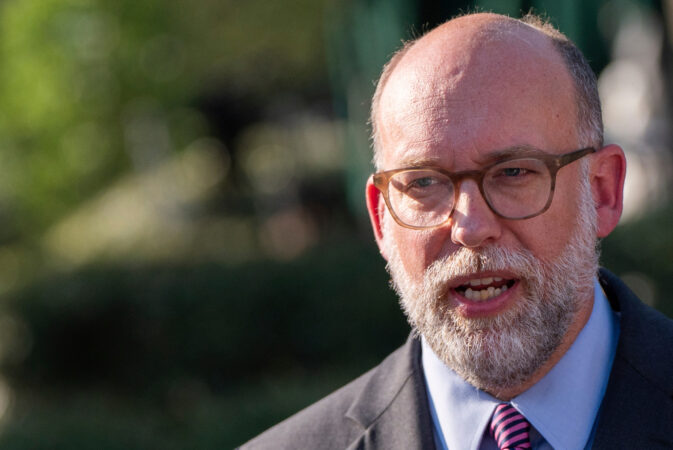
    At the heart of this case is whether Russell Vought, President Donald Trump’s budget director and the acting director of the CFPB, can effectively shut down the agency and lay off all of the bureau’s employees. The CFPB has largely been inoperable since Trump has sworn into office nearly a year ago. Its employees are mostly forbidden from doing any work, and most of the bureau’s operations this year have been to unwind the work it did under President Joe Biden and even under Trump’s first term.

    Vought himself has made comments where he has made it clear that his intention is to effectively shut down the CFPB. The White House earlier this year issued a “reduction in force” for the CFPB, which would have furloughed or laid off much of the bureau.

    The National Treasury Employees Union, which represents the workers at the CFPB, has been mostly successful in court to stop the mass layoffs and furloughs. The union sued Vought earlier this year and won a preliminary injunction stopping the layoffs while the union’s case continues through the legal process.

    In recent weeks, the White House has used a new line of argument to potentially get around the court’s injunction. The argument is that the Federal Reserve has no “combined earnings” at the moment to fund the CFPB’s operations. The CFPB gets its funding from the Fed through expected quarterly payments.

    The Federal Reserve has been operating at a paper loss since 2022 as a result of the central bank trying to combat inflation, the first time in the Fed’s entire history it has been operating at a loss. The Fed holds bonds on its balance sheet from a period of low interest rates during the COVID-19 pandemic, but currently has to pay out higher interest rates to banks who hold their deposits at the central bank. The Fed has been recording a “deferred asset” on its balance sheet, which it expects will be paid down in the next few years as the low-interest bonds mature.

    Because of this loss on paper, the White House has argued there are no “combined earnings” for the CFPB to draw on. The CFPB has operated since 2011, including under Trump’s first term, drawing on the Fed’s operating budget.

    White House lawyers sent a notice to the court in early November in which they argued, using the “combined earnings” argument, that the CFPB would run out of appropriations in early 2026 and does not expect to get any additional appropriations from Congress.

    This combined earnings legal argument is not entirely new. It has floated in conservative legal circles going back to when the Federal Reserve started operating at a loss. The Office of Legal Counsel, which acts as the government’s legal advisers, adopted this legal theory in a memo on November 7. However, this idea has never been tested in court.

    In her opinion, Berman said the OLC and Vought were using this legal theory to get around the court’s injunction instead of allowing the case to be decided on merits. A trial on whether the CFPB employees’ union can sue Vought over the layoffs is scheduled for February.

    “It appears that defendants’ new understanding of ‘combined earnings’ is an unsupported and transparent attempt to starve the CPFB of funding and yet another attempt to achieve the very end the Court’s injunction was put in place to prevent,” Berman wrote in an opinion.

    “We’re very pleased that the court made clear what should have been obvious: Vought can’t justify abandoning the agency’s obligations or violating a court order by manufacturing a lack of funding,” said Jennifer Bennett of Gupta Wessler LLP, who is representing the CFPB employees in the case.

    A White House spokesperson did not immediately respond to a request for comment on Berman’s opinion.

  • Zohran Mamdani has bold promises. Can he make them come true as New York City mayor?

    Zohran Mamdani has bold promises. Can he make them come true as New York City mayor?

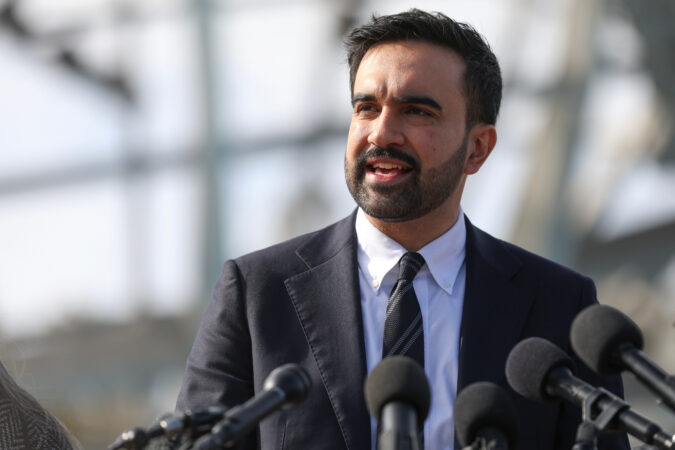
    Zohran Mamdani has promised to transform New York City government when he becomes mayor. Can he do it?

    Mamdani, a 34-year-old democratic socialist, already faces intense scrutiny, even before taking office in one of the country’s most scrutinized political jobs. Republicans have cast him as a liberal boogeyman. Some of his fellow Democrats have deemed him too far left. Progressives are closely watching for any signs of him shifting toward the center.

    On Jan. 1, he will assume control of America’s biggest city under that harsh spotlight, with the country watching to see if he can pull off the big promises that vaulted him to office and handle the everyday duties of the job. All while skeptics call out his every stumble.

    For Mamdani, starting off strong is key, said George Arzt, a veteran Democratic political consultant in New York who worked for former Mayor Ed Koch.

    “He’s got to use the first 100 days of the administration to show people he can govern,” he said. “You’ve got to set a mindset for people that’s like, ‘Hey, this guy’s serious.’”

    That push should begin with Mamdani’s first speech as mayor, where Arzt said it will be important for the city’s new leader to establish a clear blueprint of his agenda and tell New Yorkers what he plans to do and how he plans to do it.

    Mamdani will be sworn in around midnight during a private ceremony at a historic, out-of-use City Hall subway station. Then in the afternoon, he will be sworn in a second time on the steps of City Hall, while his supporters are expected to crowd surrounding streets for an accompanying block party.

    From there, Arzt said, Mamdani will have to count on the seasoned hands he’s hired to help him handle the concrete responsibilities of the job, while he and his team also pursue his ambitious affordability agenda.

    Managing expectations as a movement candidate

    Mamdani campaigned on a big idea: shifting the power of government toward helping working class New Yorkers, rather than the wealthy.

    His platform — which includes free childcare, free city bus service, and a rent freeze for people living in rent stabilized apartments — excited voters in one of America’s most expensive cities and made him a leading face of a Democratic Party searching for bright, new leaders during President Donald Trump’s second term.

    But Mamdani may find himself contending with the relentless responsibilities of running New York City. That includes making sure the trash is getting picked up, potholes are filled, and snow plows go out on time. When there’s a subway delay or flooding, or a high-profile crime or a police officer parked in a bicycle lane, it’s not unusual for the city’s mayor to catch some heat.

    “He had a movement candidacy and that immediately raises expectations locally and nationally,” said Basil Smikle, a Democratic political strategist and Columbia University professor, who added that it might be good for Mamdani to “Just focus on managing expectations and get a couple of good wins under your belt early on.”

    “There’s a lot to keep you busy here,” he said.

    A large part of Mamdani’s job will also be to sell his politics to the New Yorkers who remain skeptical of him, with Smikle saying “the biggest hurdle” is getting people comfortable with his policies and explaining how what he’s pushing could help the city.

    “It’s difficult to have this all happen on day one,” he said, “or even day 30 or even day 100.”

    Challenges and opportunities

    Mamdani’s universal freechild care proposal — perhaps one of his more expensive plans — is also one that has attracted some of the strongest support from New York Gov. Kathy Hochul, a moderate from Buffalo who endorsed the mayor-elect.

    Hochul is eager to work with Mamdani on the policy and both leaders consider the program a top priority, although it’s not yet clear how exactly the plan could come to fruition. The governor, who is up for reelection next year, has repeatedly said she does not want to raise income taxes — something Mamdani supports for wealthy New Yorkers — but she has appeared open to raising corporate taxes.

    “I think he has allies and supporters for his agenda, but the question is how far will the governor go,” said state Senate Deputy Leader Michael Gianaris, a Mamdani ally.

    “There’s an acknowledgment that the voters have spoken, and there’s very clear policies that were associated with his successful campaign,” he said, “so to not make progress on them would be us thumbing our noses at the voters.”

    Mamdani’s pledge to freeze the rent for roughly 1 million rent-stabilized apartments in the city would not require state cooperation.

    But that proposal — perhaps the best known of his campaign — is already facing headwinds, after the city’s departing mayor, Eric Adams, made a series of appointments in recent weeks to a local board that determines annual rent increases for the city’s rent stabilized units.

    The move could potentially complicate the mayor-elect’s ability to follow through on the plan, at least in his first year, although Mamdani has said he remains confident in his ability to enact the freeze.

    Other challenges await

    His relationship with some of the city’s Jewish community remains in tatters over his criticisms of Israel’s government and support for Palestinian human rights.

    The Anti-Defamation League, a prominent Jewish advocacy organization, plans to track Mamdani’s policies and hires as it pledged to “protect Jewish residents across the five boroughs during a period of unprecedented antisemitism in New York City.”

    Earlier this month, a Mamdani appointee resigned over social media posts she made more than a decade ago that featured antisemitic tropes, after the Anti-Defamation League shared the posts online.

    The group has since put out additional findings on others who are serving in committees that Mamdani set up as he transitions into his mayoral role. In response, Mamdani said the ADL often “ignores the distinction” between antisemitism and criticism of the Israeli government.

    The mayor-elect’s past calls to defund the city’s police department continue to be a vulnerability. His decision to retain Jessica Tisch, the city’s current police commissioner, has eased some concerns about a radical shake-up at the top of the nation’s largest police force.

    And then there’s Trump.

    Tensions between Trump and Mamdani have appeared to cool — for now — after months of rancor led into a surprisingly friendly Oval Office meeting. Future clashes may emerge given the sharp political differences between them, particularly on immigration enforcement, along with anything else that could set off the mercurial president.

  • How Vance brokered a truce between Trump and Musk

    How Vance brokered a truce between Trump and Musk

    Vice President JD Vance was doggedly working the phones, trying to quell a rebellion in his midst. Elon Musk had just declared his intention to form a third party this spring, turning a simmering feud into an all-out war against the MAGA movement.

    Backlash to Musk’s radical government cost-cutting campaign, the U.S. DOGE Service, along with his public swipes at President Donald Trump on social media, had damaged the relationship between the president and his billionaire backer. Now, Vance and those around him feared a new party could hurt the GOP in the 2026 midterms and beyond, according to two people familiar with his thinking, who spoke on the condition of anonymity to describe private conversations.

    Vance already had appealed to Musk directly. This time, he urged Musk allies to push him to back off his third party plans. And Vance would later personally lobby lawmakers to support restoring the nomination of Musk ally Jared Isaacman to head NASA, the agency that funds Musk’s space exploration business SpaceX, said the two people.

    The monthslong offensive by Vance and other White House officials, the details of which have not been previously reported, has worked. Having scrapped his third party project, Musk appeared at the White House in November, attending a dinner for Crown Prince Mohammed bin Salman of Saudi Arabia. The killing of conservative activist Charlie Kirk spurred Musk to put support behind GOP campaigns in the midterms, said a person directly familiar with his political operation, who spoke on the condition of anonymity to discuss its inner workings. Privately, Musk is considering reworking his donations by seeding existing groups with cash rather than wielding his own super PAC, the person added.

    But though Trump and Musk are once again on good terms, their truce is fragile, allies of both men say.

    This story is based on interviews with more than a dozen people familiar with the relationship between Musk and the White House and DOGE’s ongoing influence, most of whom spoke on the condition of anonymity to describe the private deliberations.

    The reconciliation offers a glimpse into the next phase of the singular political partnership — one that carries both risk and reward for all involved. Musk and Trump forged their relationship around a set of shared aims: winning an election and trimming back what they saw as government largesse. But there were deep gaps in their mutual understanding, six of the people said. Trump’s camp was surprised at the speed and brazenness with which Musk inserted himself into government, commandeered computer systems and email servers to briskly uproot federal agencies; moved to dismantle the U.S. Agency for International Development; and was willing to take shots at anyone — including Cabinet members.

    Though Musk is unpredictable, he is also a formidable ally. With his nearly unlimited resources and unmatched digital megaphone, Musk could prove a powerful asset to the MAGA movement once Trump leaves the stage.

    Vance in particular stands to benefit. Though the falling-out between Trump and Musk dominated the headlines, Vance’s role in the reunion highlights his own relationship with the billionaire. He talks regularly with Musk, who sees Vance as a viable 2028 candidate, according to one of the people. Musk and Vance, a former Silicon Valley investor, share not just a tech-infused worldview but a fondness for online performance — especially on Musk’s social media platform, X, where Vance has embraced a sharp, “own-the-libs” style that can mirror Musk’s own taste for provocation. Their alliance could further entrench the influence of tech titans in the White House, extending the authority of private entrepreneurs.

    But Vance, who has been dogged by criticism dating back to his 2021 Senate campaign that his close ties to billionaires undermine his populist bona fides, may have to tread carefully. Ties to a tech billionaire of Musk’s stature carry political risk at a moment when skepticism of Silicon Valley runs deep among many Americans — and even within the MAGA movement itself.

    And advisers to both Trump and Vance understand that Musk’s support comes with baggage beyond the usual demands of deep-pocketed donors, with Musk eager at times to command the spotlight — and drive policy toward his own worldview. Republican officials eager for Musk’s financial help are aware of that reality.

    “Obviously, we would love to see [Musk] contribute generously,” said Oscar Brock, a member of the Republican National Committee from Tennessee. “But he brings with him a lot of media attention, and so we want to be careful that he’s spreading the right word … we don’t want him taking sides on issues that aren’t aligned with the party right now.”

    But if a year ago the culture clash between a billionaire used to controlling his corporate fiefdom and a new administration attuned to public opinion came as a shock, now everyone involved understands the stakes.

    “He enjoys kind of that kingmaker role,” said the person familiar with Musk’s political operation. “Part of being a kingmaker is making sure everybody in the world knows you’re the king.”

    Vance and White House AI czar David Sacks, who is close to Vance and Musk, declined to comment. Musk did not respond to requests for comment.

    “President Trump pledged to cut the waste, fraud, and abuse in our bloated government, and the Administration is committed to delivering on this pledge for the American people,” said White House spokesperson Davis Ingle.

    Trump officials, including Vance, Sacks, White House chief of staff Susie Wiles, and Taylor Budowich, a former White House deputy chief of staff, sought a reconciliation on the grounds that it would be better for the country if the right’s two most prominent figures got along, the people interviewed for this story said.

    Musk, for his part, has emerged having learned some lessons, including understanding that the government doesn’t run like his businesses. “Best to avoid politics where possible,” he told podcaster Nikhil Kamath recently, describing it as a “blood sport.”

    Musk has said he is unlikely to take on another project like the U.S. DOGE Service, his signature cost-cutting venture, which fell far short of its promise to cut $2 trillion from the federal budget. The program continues in decentralized form, Trump administration officials and Musk allies have said, with a small number of people in the White House working on streamlining the design of government services — and former DOGE members embedded as full-time workers within an array of federal agencies.

    To some veterans of government reform, Musk’s DOGE is not a failed experiment, but a lasting wound. “The entire development world: crushed,” said Max Stier, the chief executive of the Partnership for Public Service, who described the effort as “Godzilla rampaging through the city.”

    Focusing on the gap between promised savings and actual results, he argued, misses the deeper damage. “It’s the wrong idea to say he promised $2 trillion and didn’t make it,” Stier said. “He promised $2 trillion and blew up the place. … He slammed our whole government into reverse.”

    Yet Musk is buoyed by a chorus in Silicon Valley and among remaining government allies, who argue that his effort achieved a higher goal: fundamentally reforming the workings of government, according to five of the people.

    The effort, they argue, helped eradicate taboos in Washington, normalizing aggressive hiring and firing, expanding the use of untested technologies, and lowering resistance to boundary-pushing startups seeking federal contracts. In short, he made it possible for the government to run more like a company.

    “That’s the cultural shift, the shift in the Overton window,” said Isaiah Taylor, CEO of the nuclear company Valar Atomics, referring to the political theory describing how a radical idea can become acceptable.

    The result, said Taylor, who was close to aspects of DOGE, is “a new urgency injected into government agencies. … We can actually allow American builders to move.”

    From first buddy to a falling-out

    Soon after Trump’s victory, Musk, who put more than $288 million toward electing GOP candidates during the 2024 cycle, began spending his days in Palm Beach, Fla. The billionaire traipsed around Mar-a-Lago, referring to himself as the first buddy while plotting the future Department of Government Efficiency, an effort Trump hailed as the potential “‘Manhattan Project’ of our time.”

    The outside group would be run by Musk and biotech entrepreneur Vivek Ramaswamy and report to budget office director Russell Vought, a White House official who had long advocated for radical government cuts. DOGE was the culmination of an ethos Musk had brought to his companies, where he’d cut large numbers of employees briskly — sometimes achieving wildly ambitious goals as he drew lawsuits and skirted regulatory guardrails.

    Despite that track record, seasoned operators in Washington were skeptical that DOGE could have the same slash-and-burn effect, assuming that Musk would be bogged down by bureaucratic processes and red tape.

    They were wrong. Swiftly after inauguration, DOGE began an unprecedented sweep through federal agencies, culling the federal workforce, hoovering up data, and dismantling entire organizations, including the U.S. Agency for International Development. It turned to creative methods: To end some federal grants, it stopped payments from going out. In February, Musk brandished a chain saw at the Conservative Political Action Conference to brag about his cost-cutting strategy.

    But the Tesla CEO’s work proved deeply unpopular and the company’s stock price plunged amid protests in front of its showrooms. Musk’s hard-charging style alienated those around him, including some of his DOGE recruits, who felt he had gone too far, particularly in breaking policies around extracting and manipulating government information, according to two of the people familiar with the workings of DOGE. His efforts to persuade Congress to issue legislation to support his changes were largely rebuffed.

    “He’s used to being the emperor,” said another Musk associate, speaking on the condition of anonymity to describe the billionaire’s thinking. “But he wasn’t treated with much respect in Congress. And he doesn’t do politicking.”

    He clashed repeatedly with administration officials, some of whom resented Musk’s taking command of personnel and other decisions within their agencies. By the time he left the White House at the end of May, Musk’s private spats with administration officials had leached into the public, with a roster of adversaries including Treasury Secretary Scott Bessent, Secretary of State Marco Rubio, Transportation Secretary Sean P. Duffy, Trade Adviser Peter Navarro, and White House aide Sergio Gor.

    The Gor dynamic would prove the most troublesome. On Musk’s final day as a special government employee, Gor, a White House aide involved in personnel matters, provided Trump with printouts showing that Jared Isaacman, a billionaire with ties to SpaceX whom Musk had pushed to lead NASA, had donated to Democrats, said a person familiar with Musk and Trump’s falling-out. Gor was aware that Trump was sensitive to hires that did not share his political ideology, the person said.

    Trump pulled Isaacman’s nomination, announcing the decision in a Saturday night post on Truth Social. Three days later, Musk railed on X against Trump’s signature tax and immigration legislation, the “One Big Beautiful Bill.”

    Privately, both Wiles and Vance began to back channel to Musk to de-escalate the situation, said two people with knowledge of the conversations. Vance and Musk were friends before the election, but the men had become closer since the billionaire came to Washington for DOGE, three people said. Days into the new administration, Vance invited Musk over for dinner with his family at the Naval Observatory in February, and the two talked multiple times a week in the months that followed. They had shared mutual friends in Silicon Valley, including Sacks, who had introduced the men years earlier. Musk had also lobbied Trump to pick Vance as his running mate, three people said.

    But Musk was undeterred. In June, he accused Trump on X of being in files related to the deceased convicted sex offender Jeffrey Epstein. In July, when Trump’s bill appeared headed for passage, Musk said he would start a new political party “to give you back your freedom.” He dubbed his new venture the “America Party.”

    The third party declaration sent shock waves through MAGA world. Musk’s funding of a party to rival the GOP could splinter the base, White House officials worried, delivering wins to Democrats.

    Vance began making calls to people in Musk’s circle in an effort to get him to back off of the plans, said three people familiar with the calls. Sacks stepped in, too, sharing with Musk his view that a splintering between the right’s two most prominent figures was bad for the country, one of the people said.

    But Musk’s associates say he doesn’t make empty threats. “Whenever Elon talks, there are only two possibilities,” said a longtime associate. “He’s either telling you what he wants you to do — or what he is going to do — or he is trying to be funny.”

    “I didn’t interpret [the third party announcement] as funny,” the person added.

    But a few factors altered Musk’s plans. The political operatives in Musk’s orbit were reluctant to start working on a third party — an effort that they saw as unlikely to be successful and one that could sabotage their own careers which, unlike Musk’s, were rooted in the GOP, according to the person directly familiar with his operation.

    Then in early September, Charlie Kirk was killed during an appearance on a Utah college campus. Musk felt compelled to act by what happened, the person familiar with his operation said. He has increasingly engaged with Republican operatives in recent months, even expressing a desire to return to politics for the 2026 midterm elections.

    Meanwhile, the White House began discussing ways to bring Musk back into the fold. Vance and others knew a top priority for Musk was the confirmation of his friend Isaacman as NASA administrator. Vance pushed for Isaacman to have the position again, speaking with relevant members on the Senate Commerce Committee to make sure Isaacman had the support he needed and would receive a quick confirmation. Wiles also worked behind the scenes to get Isaacman’s nomination restored, despite objections from acting NASA administrator Duffy, the people said.

    Then the White House reassigned Gor, the official who had intervened against Isaacman, to a foreign posting.

    “[Gor’s ouster] made it easier for everyone to go back to liking each other,” said one of the people familiar with the dynamic.

    Before long, Musk was back.

    The bloodstream of the government

    In late November, Musk gathered former DOGE operatives for a reunion of sorts in Bastrop, Texas, home of the Boring Company and other Musk ventures. Beaming in from a videoconferencing screen — Musk said he couldn’t be there in person because he feared an assassination attempt — he predicted the start of a “great 12-year span” of Trump’s second term followed by eight years of a Vance presidency, according to Politico.

    In Washington, people debated what had become of DOGE. “DOGE doesn’t exist anymore,” Scott Kupor, a Silicon Valley venture capitalist serving as director of the White House’s Office of Personnel Management, told Reuters in November.

    But as the headline zinged across the capital, Kupor clarified. Though it no longer had centralized leadership, “the principles of DOGE remain alive and well,” Kupor wrote on X. He named “deregulation; eliminating fraud, waste and abuse; reshaping the federal workforce; making efficiency a first-class citizen” as the principles that were carried forward.

    “DOGE catalyzed these changes,” he added. His team and the agencies would now “institutionalize them.”

    He listed other shifts, such as changes to the federal hiring process and such as a new Merit Hiring Plan, being carried out by his team. Kupor did not reply to a request for comment.

    Many of Musk’s DOGE hires have burrowed throughout government, where they still occupy key positions within federal agencies. And while DOGE must be evaluated based on its financial aims, focusing only on dollars saved misses a broader point, said several Silicon Valley executives with close ties to Vance, Musk and DOGE.

    To Musk and his deputy, Steve Davis, DOGE was primarily about changing the government, not about curtailing costs, said one person. Another said that administration officials deeply misunderstood the lengths that Musk would go to when he sought to destroy the “deep state.”

    “We would never have gotten reusable rockets if Elon hadn’t set a goal to occupy Mars. You have to set an audacious goal to make any incremental steps at all, and Elon is a master of that strategy,” the person said. “If you go in with a soft approach, you will be defeated by a bureaucratic leviathan.”

    Musk set the stage for his protégés as he stepped back from his government work last spring.

    “Is Buddha needed for Buddhism?” he asked then. “Was it not stronger after he passed away?”

  • U.S. offers Ukraine 15-year security guarantee as part of peace plan, Zelenskyy says

    U.S. offers Ukraine 15-year security guarantee as part of peace plan, Zelenskyy says

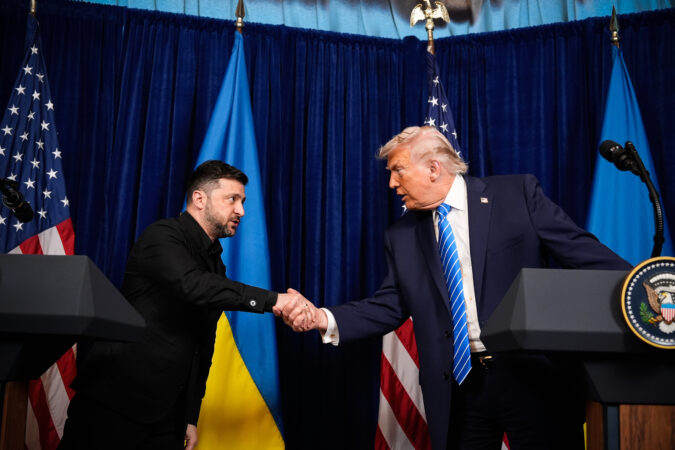
    KYIV, Ukraine — The United States is offering Ukraine security guarantees for a period of 15 years as part of a proposed peace plan, Ukrainian President Volodymyr Zelenskyy said Monday, though he said he would prefer an American commitment of up to 50 years to deter Russia from further attempts to seize its neighbor’s land by force.

    U.S. President Donald Trump hosted Zelenskyy at his Florida resort on Sunday and insisted that Ukraine and Russia are “closer than ever before” to a peace settlement.

    Negotiators are still searching for a breakthrough on key issues, however, including whose forces withdraw from where in Ukraine and the fate of Ukraine’s Russian-occupied Zaporizhzhia nuclear power plant, one of the 10 biggest in the world. Trump noted that the monthslong U.S.-led negotiations could still collapse.

    “Without security guarantees, realistically, this war will not end,” Zelenskyy told reporters in voice messages responding to questions sent via a WhatsApp chat.

    Ukraine has been fighting Russia since 2014, when it illegally annexed Crimea and Moscow-backed separatists took up arms in the Donbas, a vital industrial region in eastern Ukraine.

    Details of the security guarantees have not become public but Zelenskyy said Monday that they include how a peace deal would be monitored as well as the “presence” of partners. He didn’t elaborate, but Russia has said it won’t accept the deployment in Ukraine of troops from NATO countries.

    As indications suggest negotiations could come to a head in January, before the fourth anniversary of Russia’s full-blown invasion of Ukraine on Feb. 24, 2022, Russian President Vladimir Putin on Monday claimed that Russian troops are advancing in the eastern Donetsk region of Ukraine and are also pressing their offensive in the southern Zaporizhzhia region.

    Putin has sought to portray himself as negotiating from a position of strength as Ukrainian forces strain to keep back the bigger Russian army.

    He also emphasized at a meeting with senior military officers the need to create military buffer zones along the Russian border.

    “This is a very important task as it ensures the security of Russia’s border regions,” he said.

    Kremlin spokesman Dmitry Peskov said Monday that Putin and Trump were expected to speak in the near future but there was no indication the Russian leader would speak to Zelenskyy.

    French President Emmanuel Macron said Kyiv’s allies will meet in Paris in early January to “finalize each country’s concrete contributions” to the security guarantees.

    Trump said he would consider extending U.S. security guarantees for Ukraine beyond 15 years, according to Zelenskyy. The guarantees would be approved by the U.S. Congress as well as by parliaments in other countries involved in overseeing any settlement, he said.

    Zelenskyy said he wants the 20-point peace plan under discussion to be approved by Ukrainians in a national referendum.

    However, holding a ballot requires a ceasefire of at least 60 days, and Moscow has shown no willingness for a truce without a full settlement.

  • Trump aides’ official religious messages for Christmas draw objections

    Trump aides’ official religious messages for Christmas draw objections

    Top officials in President Donald Trump’s administration posted messages from their government accounts hailing Christmas in explicitly sectarian terms, such as a day to celebrate the birth of “our Savior Jesus Christ.”

    The Department of Homeland Security posted three messages on social media Thursday and Friday, twice declaring, “Christ is Born!” and once stating, “We are blessed to share a nation and a Savior.” One DHS video posted on X displayed religious images, including Jesus, a manger and crosses.

    The messages sharply diverged from the more secular, Santa Claus-and-reindeer style of Christmas messages that have been the norm for government agencies for years. The posts provided the latest example of the administration’s efforts to promote the cultural views and language of Trump’s evangelical Christian base.

    That drew criticism from advocates of a strict separation of church and state.

    Those social media posts are “one more example of the Christian Nationalist rhetoric the Trump administration has disseminated since Day One in office,” Rachel Laser, president and CEO of Americans United for Separation of Church and State, said in a statement. “Our Constitution’s promise of church-state separation has allowed religious diversity — including different denominations of Christianity — to flourish in America.

    “People of all religions and none should not have to sift through proselytizing messages to access government information,” she added. “It’s divisive and un-American.”

    Administration officials aggressively defended their approach. Asked about the Christmas morning post on Defense Secretary Pete Hegseth’s official X account declaring, “Today we celebrate the birth of our Lord and Savior, Jesus Christ,” Pentagon press secretary Kingsley Wilson provided a one-sentence reply: “Merry Christmas to all, even the fake news Washington Post!”

    Conservative Christians make up an important part of Trump’s political support, even as the country has become less Christian in recent decades.

    The Pew Research Center’s most recent Religious Landscape Study, released earlier this year, found that 62% of Americans identify as Christian, a 16-point drop since 2007. The share of Americans who said they have no religion — including atheists, agnostics and those who say “nothing in particular” — was 29%, up from 16% in 2007. The share of the population following other religious traditions — Jews, Muslims, Hindus, Buddhists and others — has remained fairly constant, at around 6%.

    Just under 1 in 4 Americans identify as evangelical Christians. But those evangelical voters play a central role in Trump’s electoral coalition. He won 81% of white evangelical voters in the 2024 election, according to a separate Pew study of voters. Those voters made up about 3 in 10 of his supporters in the election.

    In 2015, as Trump campaigned for president, he told voters, “We’re going to be saying Merry Christmas again.” A decade later, officials in his second term have gone further in overtly seeking to align the administration with Christian advocacy in both language and action.

    Most recently, on Thursday, Trump justified airstrikes against alleged Islamic State camps in northwestern Nigeria by saying he was aiming to “stop the slaughtering of Christians.” Nigerian officials said they approved of the strikes but said Trump was wrongly injecting religion into a situation that was primarily about terrorism.

    How to celebrate Christmas while respecting the Constitution’s ban on “establishment of religion” has been an issue for federal officials at least since 1870 when President Ulysses S. Grant, seeking to unite the country after a brutal Civil War, designated Christmas — along with Thanksgiving and New Year’s Day — as federal holidays.

    Government officials sought to balance the celebration of a federal holiday rooted in a religious tradition with the country’s tradition of pluralism and secular public spaces. The result was often a Christmas message that avoided specific references to Christianity. For decades, it was common for government officials on both sides of the aisle to share celebratory yet secular messages about Christmas with images that did not carry overt religious meanings, like snowflakes and Christmas trees.

    Many still do. The State Department, for example, posted a secular Christmas message this year, directed at “all Americans.”

    Many of the Trump administration’s officials who are most active on social media, however, took a different approach.

    Just before 9 a.m. on Christmas Day, for example, Harmeet K. Dhillon, head of the Justice Department’s civil rights division, posted a message on X wishing “Christians nationwide” a happy holiday “celebrating the birth of Jesus!”

    In the post was a video more than a minute long in which Dhillon said the department uses the principle of “religious liberty” and the First Amendment on “a daily basis to protect Christians.” She did not mention protecting other religions.

    About two hours later, DHS’s official account posted on X that “we are blessed to share a nation and a Savior.” A video in the post began with text that said, “Remember the miracle of Christ’s birth,” followed by 90 seconds of religious images, including Jesus, Mary, and a manger, as well as several of Trump.

    Just before 3 p.m. the department posted another message on X, stating, “Christ is Born!”

    Hegseth posted his message around 8:30 a.m. Less than an hour later, Agriculture Secretary Brooke Rollins posted a video on X in which she stood in front of a Christmas tree and said “the very best of the American spirit … flows from the very first Christmas, when God gave us the greatest gift possible: the gift of his son and our savior, Jesus Christ.”

    Just after 10 a.m., Education Secretary Linda McMahon posted on X about how “we celebrate the birth of our Savior.” And just after 1 p.m., the Department of Labor wrote on X, “Let Earth Receive Her King.”

    Representatives for the departments of Justice, Agriculture, Education, Labor and Homeland Security did not respond to questions about their posts.

  • Trump suffers several defeats in effort to punish opposing lawyers

    Trump suffers several defeats in effort to punish opposing lawyers

    Since taking office for the second time, President Donald Trump has suffered multiple losses in his efforts to strip security clearances from political opponents and prestigious Washington law firms. With several of those cases working through the courts, the issue could become one of the next Supreme Court fights over presidential power.

    The president’s latest loss came this week, when a federal judge in Washington temporarily blocked Trump’s efforts to strip a security clearance from national security attorney Mark Zaid. In 2019, Zaid represented the government whistleblower who accused Trump of trying to pressure Ukraine for damaging information about his political opponents. The accusations led to Trump’s first impeachment.

    In his Tuesday order, U.S. District Judge Amir Ali found that Zaid was likely to succeed on his claim that revoking Zaid’s security clearance violated the attorney’s constitutional free speech and due process rights. The order notes that Trump has called Zaid a “sleazeball” and said the lawyer should be sued for treason.

    “This case involves the government’s retribution against a lawyer because he represented whistleblowers and other clients who complained about the government,” wrote Ali, who was appointed by President Joe Biden.

    The case should not have been difficult, Zaid said in an interview. “But it’s surrounded by all sorts of constitutional analysis because of the assertion by the Trump administration that it has the power to do anything it wants without any oversight whatsoever.”

    He compared his situation — as well as Trump’s targeting of law firms more generally — to the line from William Shakespeare’s play Henry the VI, Part 2: “The first thing we do, let’s kill all the lawyers.” The line, spoken by one of the play’s villains, is about subverting lawyers “fighting for rule of law,” he said.

    The White House did not immediately respond to a request for comment.

    The case began with a March 22 presidential memorandum in which Trump revoked the security clearances of Zaid and 14 other individuals, saying that he had determined it was “no longer in the national interest” for the people to hold the clearances.

    The individuals included Democrats such as Biden, former vice president Kamala Harris and former secretary of state Antony Blinken. It also included New York Attorney General Letitia James (D), whom Trump’s Justice Department has tried, and so far failed, to indict in a mortgage fraud case. The administration has also revoked clearances of 37 current and former national security officials.

    This spring, Trump moved to summarily suspend the security clearances of several large Washington law firms that regularly do work for the government and have ties to his perceived political opponents. Trump argued that the law firms posed national security dangers to U.S. interests and said the firms’ diversity, equity. and inclusion policies resulted in “unlawful discrimination.”

    Though some law firms cut deals with the administration to keep their clearances, others successfully sued to block the actions.

    This year, federal judges in Washington blocked the administration’s attempts to suspend security clearances from the law firms Jenner & Block, Susman Godfrey, WilmerHale, and Perkins Coie. In each case, the judges found that the orders were retaliatory and violated the firms’ constitutional free speech rights.

    In the case of Jenner & Block, U.S. District Judge John D. Bates wrote that the president was trying “to chill legal representation the administration doesn’t like, thereby insulating the Executive Branch from the judicial check fundamental to the separation of powers.”

    The administration has appealed those cases and, depending on the outcomes in the court of appeals, the issue could be decided by the Supreme Court. The high court has heard a number of cases concerning presidential power this term, and it’s unclear how it would rule.

    Should his case reach the Supreme Court, Zaid said the issue could transcend judicial ideology. No matter which way they lean, the justices “recognize the importance and role that lawyers play in society,” he said. “And what the Trump administration is doing with clearance revocations … is a direct attack on our ability to enforce exactly what judges enforce: the rule of law.”

  • Trump’s farmer bailout caps tough year for loyal constituency

    Trump’s farmer bailout caps tough year for loyal constituency

    Mike Phillips has spent the past year reconciling his vote for Donald Trump with the uncertain future of his farm in central Iowa.

    The 72-year-old has been farming for five decades and tills 2,000 acres of soybeans and corn. Trump’s tough talk on trade has always appealed to Phillips, who thinks China’s relationship with American farmers desperately needs a reset. He voted for Trump in each of the past three presidential elections. He believes in GOP farming policies because “we’ve been burned so bad by the Democrats.”

    But the tariff war Trump started has been eating into Phillips’s bottom line and clouding his decisions about the best path forward. Thirteen months after Trump won a second term with wide support in farm-dependent parts of the country, Phillips wonders what will come first: Trump’s promised farm resurgence or his own retirement.

    “For the most part, farmers — we’ve been willing to kind of go along. But I don’t know about now,” Phillips said. “I know [Trump is] a more practical person. He’s trying to do something. I’m not sure the tariffs were a good idea. I guess I still support him but hope he can get something done.”

    Trump announced this month that he will use $11 billion to bail out farmers from “trade market disruptions and increased production costs that are still impacting farmers.” For farmers, trade groups, and industry advocates, however, the bailout marked a tacit admission that a year’s worth of Trump policies have upended their industry and threatened their livelihoods. Still unclear is whether policies that have hurt farmers will also sour the relationship between the president and one of his most loyal and politically symbolic constituencies.

    Trump won farm-dependent counties with an average of nearly 78% of the vote in 2024, according to Investigate Midwest. Discouraged by rising inflation during Joe Biden’s presidency, farmers hoped a second Trump term would usher in a more favorable climate, said Chad Hart, an agricultural economics professor at Iowa State University.

    But Trump’s far-reaching tariffs on imports — and reciprocal levies against some U.S. products — have blunted those hopes. Tariffs on countries including Canada and China, and on specific goods such as steel and aluminum, translated into rising costs for tractors, combines, and fertilizer. Even more damaging for Phillips and farmers like him was the escalating trade war with China, a country American soybean producers have relied on to import the bulk of their crops. Reciprocal tariffs swelled well into the triple digits.

    At the same time, Chinese leaders have worked to reduce their country’s reliance on American soybeans. China accounted for half — about $12.6 billion — of all U.S. soybean exports in 2024. In September, the country did not import American soybeans at all.

    “For soybean farmers, market losses due to the ongoing trade conflict with China are only exacerbating financial problems,” Caleb Ragland, the president of the American Soybean Association, said during testimony before Congress in October. He pointed to estimates that soybean producers would lose $109 per acre on their crops this year. “It is likely that a quarter of U.S. soy production will need to find new customers.”

    Aaron Lehman, a fifth-generation farmer who grows soybeans, corn, oats, and hay in Iowa’s Polk County and heads the Iowa Farmers Union, said farmers have “a big dissatisfaction with how this has gone.”

    “What we’re seeing right now is we’ve broken all of the trade structures without a real plan to put it back together in the right way,” Lehman said. “Farmers are willing to be a part of the solution, but I don’t think they’re willing just to be a pawn in a trade war that has no path or plan to get to true reform. That’s the disappointing part, because we’re not getting close to a fairer path.”

    For some farmers, the White House aid package may come too late. About 181 farmers filed for bankruptcy protection in the first half of the year, the Washington Post reported in October, a 60% increase from 2024. It was the highest six-month reading since 2020, court records show. And some of the shifts may be permanent, Phillips and other soybean farmers fear. Chinese importers have strengthened relationships with crop competitors like Argentina, Uruguay, Russia, and especially Brazil, the world’s largest exporter of soybeans.

    “The hope for a quick turnaround is now gone,” said Hart, the economics professor. “If you’re holding out hope, that hope is now, at best, looking like it won’t come until a year to three years down the road.”

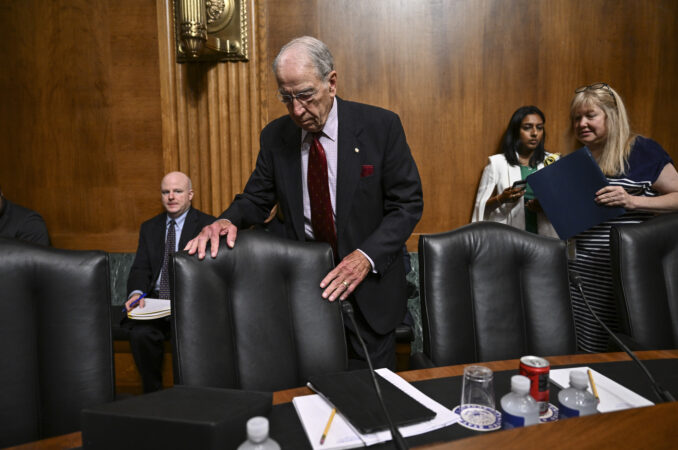
    Sen. Chuck Grassley (R., Iowa) said farmers in his home state are experiencing a “not-so-perfect storm” of low grain prices, high input costs, industry consolidation and tariff uncertainty that mirrors the tumult of the 1980s, when more than 900 farmers killed themselves across six Midwestern states during what was dubbed the worst agricultural economic crisis since the Great Depression.

    “It kind of crept up on us at that particular time,” he said. “And, Congress didn’t see it coming soon enough. Congress waited too long to act.”

    During a roundtable announcing the package, Trump blamed the agricultural tumult on inflation linked to Biden — an assertion that industry leaders said is true. But Trump also said that “a small portion of the hundreds of billions of dollars we receive in tariffs” is helping to pay for the relief, a statement that many in the industry question.

    Trump did not appear to be concerned about his standing with U.S. farmers.

    “And, as you know, the farmers like me, because you know, based on — based on voting trends, you could call it voting trends or anything else, but they’re great people. They’re the backbone of our country,” Trump said.

    He seemed confident that his supporters in agriculture would blame Biden, not him, for their woes.

    “Biden turned that surplus into a gaping agricultural deficit that continues to this day, but we’re knocking it down,” Trump said. “It’s starting to go very good. In fact, China, as you know, is buying a tremendous amount of soybeans.” Trump did not say that China’s soybean imports have actually fallen.

    The economic policies that have put farmers in dire straits have been bipartisan in nature, said Tom Adam, the president of the Iowa Soybean Association. Inflation ate into crop profits in the latter portion of Biden’s tenure and has continued, he said, but tariffs have tacked on additional harm.

    “Expenses have been very high. Things just keep going up. Everything is getting higher, I don’t care if you’re buying groceries or buying fertilizers, and we just don’t have increasing crop prices,” he said. “We were pretty certain that there would be reciprocal tariffs when this happened. I think farmers support a lot of the things that Trump is doing on tariffs. But at the same time it’s getting pretty painful.”

    Adam said the aid is helpful, but “it’s probably not going to be enough. It’s not going to make a farmer wealthy by any means. And there will be some farms that may not make it through. Everyone’s in a little different financial situation, but you can’t rescue everyone. I’ve heard from many that are saying this could be their last year. Whether it’s bankruptcy or whether they want to just try something else.”

    Modern farms historically have relied on government assistance to stay afloat. The legislation Trump has called the One Big Beautiful Bill locked in more than $65 billion over 10 years in agricultural support programs. And during his first term, Trump released $16 billion in aid to farmers amid Chinese retaliation for tariffs. Corn and soybean advocacy groups have long pushed for policies that would force or encourage ethanol use in gasoline to increase demand for the two products.

    Speaking from his farm on a blustery December day, a few months before another round of difficult decisions about how to eke out the most profit from his land, Phillips said he’s also trying to determine how much of the promised government relief might end up in his pockets — even though he knows it won’t be there for long.

    “That money is not to the farmers. That money is going to go to their bankers or their machinery dealers or their chemical [fertilizer] companies to pay them,” he said.

    He said he understands the infusion is meant as a bridge to a better day, but he would prefer smarter trade policies over a government handout.

  • Two vulnerable senators stand to benefit from intense focus on constituents

    Two vulnerable senators stand to benefit from intense focus on constituents

    Justin Juray didn’t know where to turn. His Maine bowling alley had been the site of a mass killing, and he was struggling — not just to reopen, but to cope with his business’s now notorious place in history.

    John Curry was worried about closing his Georgia coffee shop, scrambling to rebound from the coronavirus pandemic and “drowning” financially as he waited for a $126,000 payment from a federal program for keeping his employees on staff.

    In their low moments, they received help from an unexpected source: their United States senator.

    Sens. Susan Collins (R., Maine) and Jon Ossoff (D., Ga.), two of the most vulnerable members of the Senate facing reelection next year, have little in common politically. But both have reputations for providing strong constituent services, an often overlooked advantage afforded incumbents that could matter on the margins in close races.

    Taking requests for help and working out a solution is one of the most unsung practices in most Senate offices, often overshadowed by committee hearings and Senate floor fights in Washington and by campaign rallies and television ads back home. But no work puts voters in more direct contact with their federal representative.

    Collins’ office helped Juray with tax and insurance issues, as well as securing a disaster relief loan, in the wake of what was Maine’s deadliest mass killing ever, where eight people were killed in 2023 at his Lewiston, Maine, bowling alley.

    Ossoff gave Curry his card after an event at the small business owner’s Augusta, Ga., coffee shop in 2023 and told him to call if he “ever needed anything.” When the business faced serious financial difficulties while waiting for funds to cover a string of bills, he emailed the senator for help.

    “He called me the next day,” said Curry. “It was not long at all before I got an email from the IRS saying that I had a check on the way.”

    In separate interviews with the Washington Post, Collins and Ossoff both said they have worked to create a culture in their offices that prioritizes each interaction with people they represent.

    “I know that I have had an impact,” Collins said when asked to reflect on the constituent service work out of her office. “It’s extremely satisfying … when we’re able to solve a problem for an individual.”

    Ossoff said he wants his constituents “to experience a level of responsiveness and accountability and concern that they have never felt before.”

    Asked why all members of Congress don’t focus as heavily on such services, Ossoff said the current culture in politics is “all about attention.”

    “For a lot of people in Congress, their goal is to become more and more and more famous or infamous, find the cameras, post the viral content,” he said. “That’s just not my approach to the job.”

    Both Collins and Ossoff face competitive reelections next year.

    Collins, who has yet to announce a campaign but has said she intends to run for her sixth Senate term, is the only Republican in the state’s congressional delegation and faces an electorate that has voted for every Democratic presidential nominee since 1992.

    But Collins, a relatively moderate Republican, also faces pressure from her right, with more conservative members of her state bristling at the times she bucks her party and President Donald Trump. Maine Gov. Janet Mills announced a Senate campaign in October. The 77-year-old Democrat faces a primary challenge from a more liberal candidate, Graham Platner, a Marine Corps combat veteran and oyster farmer.

    Ossoff, first elected to the Senate in 2020, faces a similarly competitive election in a state that has only recently been in play statewide for Democrats. Trump won in Georgia by two percentage points in 2024. The Republican primary to face Ossoff is competitive, a sign Republicans view him as vulnerable.

    Collins’ six and Ossoff’s four state offices include case workers whose primary focus is helping constituents solve problems. But other staff in the offices — and in Washington, D.C. — regardless of their primary duties, are also expected to pitch in.

    The work has created scenarios in which people who may disagree with Collins and Ossoff on specific issues are willing to back them for reelection because of the personal level of work their offices have done.

    Juray, the bowling alley owner, offers an example.

    Two people from Collins’ office worked with him following the shooting. Juray said they not only cleared up all the questions with his insurance company and the IRS, but they secured him a disaster relief loan that “helped us get everything put back together” so they could reopen in 2024.

    Juray, a registered Democrat, has voted for Collins in the past. While he hasn’t decided who he will vote for next year, he says he is “leaning” toward the Republican incumbent.

    “Without the senators’ support and without them, I might still be waiting on some of this funding,” Juray said. “It changed the way I saw representation as a whole.”

    Chris Gardner, the head of the port authority in Eastport, Maine, was at a loss after watching the town’s historic decades-old breakwater built to protect the city’s harbor “open up like a zipper” and crumble along the rocky coast early one morning in 2014. The collapse put the livelihoods of countless people at risk.

    Before the sun rose, Gardner recalled, Collins called him and promised to do “whatever it takes” to rebuild the critical infrastructure at the nation’s easternmost port. When the breakwater was rebuilt and reopened in 2017, Collins was there with Gardner, celebrating the achievement and the millions of dollars the senator helped secure for the project.

    Gardner is a registered Republican who at times “hasn’t agreed with some of Senator Collins’ votes.” But he said he tells “anyone who will listen” about the role Collins played in rebuilding the breakwater. “God love her, she is hated by people on both sides of the aisle. … The irony is, she weathers all of that … because she stays focused on doing her job.”

    Collins laughed when asked if she thinks her constituent services work helps temper some of the anger directed at her by people who disagree with her politics. She said that often people come up to her at the grocery store and she can tell that they might not be her typical political supporters.

    “I always find that people come up to me because I’m alone,” she said. “I’m doing exactly what they’re doing. And they will come up to me and thank me for the work that my offices have done.”

    Ossoff, who is far newer to the Senate than Collins, is working to build that kind of reputation.

    Shortly after Ossoff joined the Senate in 2021, he invited an executive from a famed Georgia company — Delta Air Lines — to come speak with his staff on “best practices” for his customer service operation, including suggestions that “maybe are not common in the legislative branch or the federal government.”

    The result? Ossoff calls a handful of people who received assistance from his office each week to check in on their experience. And at the end of every constituent call with his office, Ossoff said the caller is asked whether they would “recommend the service that my office provides for someone else in the same situation as them.”

    For Claven Williams, a retired Navy commander, the answer was yes.

    Williams was exposed to Agent Orange during his service in the Pacific from the 1970s to the 1990s and was diagnosed with non-Hodgkin’s lymphoma. After initially approving his claim for disability in 2024 under the newly passed Pact Act, the Department of Veterans Affairs reduced his disability to 50% in 2025, claiming that he was cured of the ailment. That prompted Williams to contact to Ossoff’s office, which successfully worked with the department to restore his 100% benefit earlier this year.

    “I had dealt with other politicians; they didn’t support you like that, they didn’t go out of your way to help you,” recalled Williams, who voted for Ossoff in 2020.

    The casework provided by Ossoff and Collins has drawn praise from those partisans who have opposed their elections.

    “Their constituent services are second to none,” Brian Robinson, a Republican operative in Georgia, said of Ossoff’s staff during an April radio appearance with the senator, praising him for following in the footsteps of former Republican senator Johnny Isakson.

    Bev Uhlenhake, the former chair of the Maine Democratic Party who opposes Collins’ reelection next year, said the reason Collins has proved difficult to defeat in a blue state is “her relationships throughout the state of Maine.”

    “They are so deep because her staff have helped so many Mainers while in crisis,” Uhlenhake said. “Constituent services in Maine are incredibly important, and she has done it really well.”