WASHINGTON — The Trump administration said Monday it is pausing leases for five large-scale offshore wind projects under construction in the East Coast due to unspecified national security risks identified by the Pentagon.
The pause is effective immediately and will give the Interior Department, which oversees offshore wind, time to work with the Defense Department and other agencies to assess the possible ways to mitigate any security risks posed by the projects, the administration said.
“The prime duty of the United States government is to protect the American people,” Interior Secretary Doug Burgum said in a statement. “Today’s action addresses emerging national security risks, including the rapid evolution of the relevant adversary technologies, and the vulnerabilities created by large-scale offshore wind projects with proximity near our east coast population centers.”
The administration said leases are paused for the Vineyard Wind project under construction in Massachusetts, Revolution Wind in Rhode Island and Connecticut, Coastal Virginia Offshore Wind, and two projects in New York: Sunrise Wind and Empire Wind.
The Interior Department said unclassified reports from the U.S. government have long found that the movement of massive turbine blades and the highly reflective towers create radar interference called “clutter.” The clutter caused by offshore wind projects obscures legitimate moving targets and generates false targets in the vicinity of wind projects, the Interior Department said.
The action comes two weeks after a federal judge struck down President Donald Trump’s executive order blocking wind energy projects, saying the effort to halt virtually all leasing of wind farms on federal lands and waters was “arbitrary and capricious” and violates U.S. law.
Judge Patti Saris of the U.S. District Court for the District of Massachusetts vacated Trump’s Jan. 20 executive order blocking wind energy projects and declared it unlawful.
Saris ruled in favor of a coalition of state attorneys general from 17 states and Washington, D.C., led by New York Attorney General Letitia James, that challenged Trump’s Day One order that paused leasing and permitting for wind energy projects.
An internal CBS News battle over a “60 Minutes” story critical of the Trump administration has exploded publicly, with a correspondent charging it was kept off the air for political reasons and news chief Bari Weiss saying Monday the story did not “advance the ball.”
Two hours before airtime Sunday, CBS announced that the story where correspondent Sharyn Alfonsi spoke to deportees who had been sent to El Salvador’s notorious CECOT prison, would not be a part of the show. Weiss, the Free Press founder named CBS News editor-in-chief in October, said it was her decision.
The dispute puts one of journalism’s most respected brands — and a frequent target of President Donald Trump — back in the spotlight and amplifies questions about whether Weiss’ appointment was a signal that CBS News was headed in a more Trump-friendly direction.
Alfonsi, in an email sent to fellow “60 Minutes” correspondents said the story was factually correct and had been cleared by CBS lawyers and its standards division. But the Trump administration had refused to comment for the story, and Weiss wanted a greater effort made to get their point of view.
“In my view, pulling it now after every rigorous internal check has been met is not an editorial decision, it is a political one,” Alfonsi wrote in the email. She did not immediately respond to requests for comment from The Associated Press.
Alfonsi said in the email that interviews were sought with or questions directed to — sometimes both — the White House, State Department and Department of Homeland Security.
“Government silence is a statement, not a VETO,” Alfonsi wrote. “Their refusal to be interviewed is a tactical maneuver designed to kill the story. If the administration’s refusal to participate becomes a valid reason to spike a story, we have effectively handed them a ‘kill switch’ for any reporting they find inconvenient.”
“Spike” is a journalist’s term for killing a story. But Weiss, in a statement, said that she looked forward to airing Alfonsi’s piece “when it’s ready.”
Speaking Monday at the daily CBS News internal editorial call, Weiss was clearly angered by Alfonsi’s memo. A transcript of Weiss’ message was provided by CBS News.
“The only newsroom I’m interested in running is one in which we are able to have contentious disagreements about the thorniest editorial matters with respect and, crucially, where we assume the best intent of our colleagues,” Weiss said. “Anything else is completely unacceptable.”
She said that while Alfonsi’s story presented powerful testimony about torture at the CECOT prison, The New York Times and other outlets had already done similar work. “To run a story on this subject two months later, we need to do more,” she said. “And this is ‘60 Minutes.’ We need to be able to get the principals on the record and on camera.”
It wasn’t clear whether Weiss’ involvement in seeking administration comment was sought. She reportedly helped the newscast arrange interviews with Jared Kushner and Steve Witkoff this past fall to discuss Trump’s Middle East peace efforts. Trump himself was interviewed by Norah O’Donnell on a “60 Minutes” telecast that aired on Nov. 2.
Trump has been sharply critical of “60 Minutes.” He refused to grant the show an interview prior to last fall’s election, then sued the network over how it handled an interview with election opponent Kamala Harris. CBS’ parent Paramount Global agreed to settle the lawsuit by paying Trump $16 million this past summer. More recently, Trump angrily reacted to correspondent Lesley Stahl’s interview with Trump former ally turned critic Marjorie Taylor Greene.
“60 Minutes” was notably tough on Trump during the first months of his second term, particularly in stories done by correspondent Scott Pelley. In accepting an award from USC Annenberg earlier this month for his journalism, Pelley noted that the stories were aired last spring “with an absolute minimum of interference.”
Pelley said that people at “60 Minutes” were concerned about what new ownership installed at Paramount this summer would mean for the broadcast. “It’s early yet, but what I can tell you is we are doing the same kinds of stories with the same kind of rigor, and we have experienced no corporate interference of any kind,” Pelley said then, according to deadline.com.
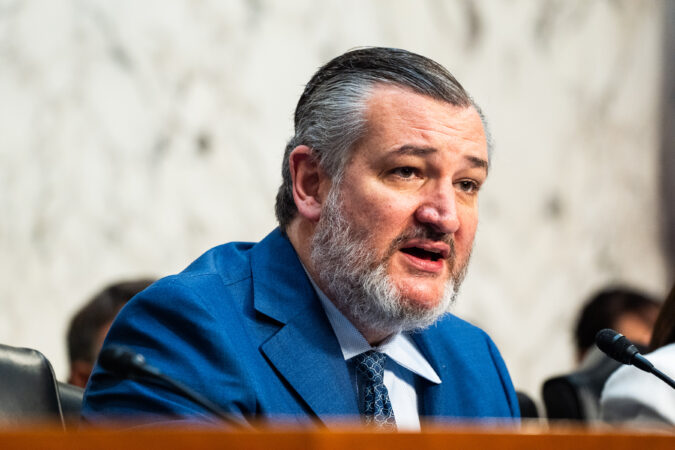
Sen. Ted Cruz sat down with a longtime ally in November at an office near D.C.’s Union Station to discuss the future of the Republican Party. Before long, the discussion touched on his own future.
His friend Morton Klein, president of the Zionist Organization for America, told Cruz he believed that “Jew hatred and Israel bashing” was on the rise on the right — and that something had to be done about it. Cruz, who had begun a series of speeches decrying antisemitism in the GOP, told Klein he had been fielding requests from people urging him to run for president in 2028.
Cruz came across as someone “seriously” considering such a run, Klein recalled.
With the future of the party up for grabs in a Donald Trump-less 2028 primary, Cruz has in recent months positioned himself as a loud voice for a more traditional, hawkish Republican foreign policy. He’s also urging the GOP to rid itself of popular MAGA pundit Tucker Carlson, whom he argues is injecting the “poison” of antisemitism into the movement with his broadsides against Israel. Carlson has rejected that characterization.
As he feuds with Carlson, Cruz is weighing a second presidential bid, according to a person close to the senator and another briefed on his thinking, who spoke like others on the condition of anonymity to disclose internal conversations. A White House run would be politically risky for Cruz, 55, putting him on course to collide with Vice President JD Vance, who many Republicans expect to enter the 2028 race.
Friction is already evident behind the scenes: Cruz has criticized Vance, a close ally of Carlson, to Republican donors, according to two people familiar with the comments. The senator has warned that Vance’s foreign policy views are dangerously isolationist, the people said.(Vance has been one of the GOP’s most prominent skeptics of U.S. intervention abroad.)
The emerging rivalry shows how much the party has changed under Trump’s leadership since Cruz arrived in the Senate in 2013. After rising to prominence as a rebel against the establishment, Cruz is now a vocal champion of some longtime orthodox GOP positions, as a new generation of conservatives is ascending with a different vision.
Some political observers are skeptical that another Cruz run would gain much traction. He can no longer run as an outsider and alienated some conservatives with his fight against Trump in the 2016 campaign. Still, Cruz has built name recognition and relationships with plenty of activists and donors across the country in recent years, and it’s far from clear what will animate the base in the next GOP primary.
“Can Ted help craft or meld together the traditional Republican approach with the new reality of what the Republican Party is now?” asked Daron Shaw, a political science professor at the University of Texas who overlapped with Cruz as a staffer on George W. Bush’s presidentialcampaign. “It’s a heavy lift.”
The day after his chat with Klein, Cruz called Carlson “a coward” during a speech before a group supporting Jewish conservatives in Las Vegas, again denouncing the “poisonous lies” of antisemitism. He said they were “blessed” to have Trump, who “loves the Jewish people,” in the White House right now.
“When Trump is not in the White House, what then?” he asked in his booming voice.
“Ted Cruz!” an audience member shouted.
The senator just smiled, then continued his speech.
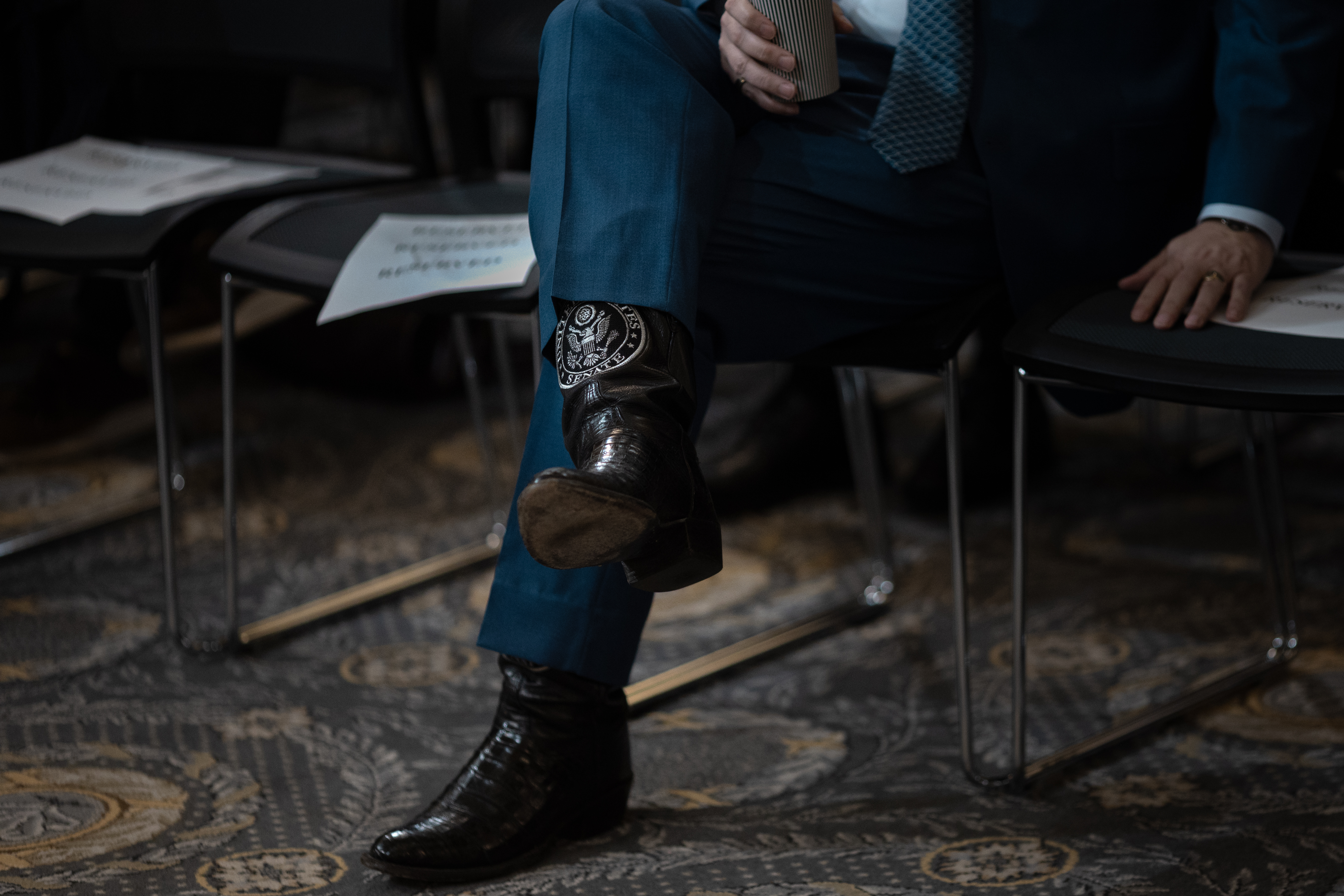
Sen. Ted Cruz (Texas) wears Senate-themed boots in May at the Capitol.
‘All of us hate Ted Cruz’
Anyone considering a run for the GOP nomination in 2028 faces a big obstacle: Vance.
The 41-year-old vice president leads early polls and is seen as a loyal lieutenant to Trump, who maintains high support from the party base even as the president’s approval ratings have plummeted.
But Trump has been noncommittal about endorsing his running mate as heir to his Make America Great Again movement, leaving an opening for an ambitious conservative with a different vision for the party.
“The Republicans will be fighting for their identity,” Rep. Marjorie Taylor Greene (R-Georgia) said of the 2028 primary. Greene, a close ally of Carlson who represents the populist and isolationist wing of the party, added: “There’ll be Ted Cruz, I’m sure, running against JD Vance. All of us hate Ted Cruz.”
Cruz has adapted to changes in his party over several decades in politics. Following a stretch in the establishment during Bush’s 2000 campaign, he became solicitor general of Texas in 2003 and launched a Senate campaign in 2011 as a tea-party-infused change agent, defeating the lieutenant governor in the GOP primary.
“The best thing to happen to the Republican Party was to get its teeth kicked in in 2008,” Cruz said during a 2012 campaign event with the libertarian Ron Paul.
When he arrived in Washington, Cruz picked fights over spending and President Barack Obama’s health care law, sparking a government shutdown in 2013. Not everyone in his party liked his style. “If you killed Ted Cruz on the floor of the Senate, and the trial was in the Senate, nobody could convict you,” Sen. Lindsey Graham (R-South Carolina) joked at a 2016 press dinner.
Cruz brought his insurgent pitch into the 2016 presidential race, but Trump caught fire with an antiestablishment campaign that dramatically eclipsed the senator’s. After bowing out of the GOP race as the last major Trump opponent standing, Cruz told delegates at the Republican National Convention that year to “vote your conscience,” instead of throwing his support behind Trump, who had branded him as “Lyin’ Ted.” He returned to the Senate, where he is now chair of the Commerce Committee and has refashioned himself into a bipartisan dealmaker on aviation safety and other issues.
The Texas senator, who has called himself a “noninterventionist hawk” and has long been a vocal ally of Israel, argues that an anti-Israel foreign policy could embolden terrorists. And he is a defender of the benefits of traditional capitalism at a time when some in the “New Right” are calling for a more populist turn.
“Those who are anti-Israel quickly become anti-capitalist and anti-American,” Cruz said in a brief interview about his decision to speak out against Carlson. “Tucker’s obsession is unhealthy and dangerous.”
By targeting Carlson and growing anti-Israel sentiment within the party, Cruz has hit upon a division within the GOP base that some believe could animate the 2028 primaries. Carlson is closely allied with Vance, a onetime Trump critic who is now an “America First” populist, embracing skepticism of some big-business interests and rejecting the U.S. foreign policy status quo.
Cruz is staking out positions against isolationism and antisemitism at a time when explicitly antisemitic figures such as white supremacist commentator Nick Fuentes are gaining an audience on the right.
Vance, by contrast,has rejected the suggestion that the right has a problem with antisemitism afterCarlson hosted Fuentes for a friendly interview. (The vice president disavowed Fuentes months before the interview and has not explicitly weighed in on Carlson hosting him.)
It’s “kind of slanderous to say that the Republican Party, the conservative movement, is extremely antisemitic,”Vancesaid in a recent interview with NBC News. In a social media postlast week, Vance criticized a news article claiming antisemitism was rising among young people.
“I would say there’s a difference between not liking Israel (or disagreeing with a given Israeli policy) and antisemitism,” he replied to one user.
Asked to respond to Vance’s comment, Cruz said he is not in agreement with “people who are anti-Israel or people who are antisemitic.”
“Every Hamas or Hezbollah or IRGC terrorist that Israel took out makes Americans safer,” Cruzsaid, referencing militants in Gaza, Lebanon and Iran that the United States designates as terrorist groups. “And those who don’t see that are not acting in accordance with American national security interests.”
The feud
In early July, Cruz sat down in Washington with Israel’s prime minister and delivered a dire warning. Over cigars at Blair House, Cruz told Benjamin Netanyahu that antisemitism on the right was rising to a level he had never seen before.
“No, Ted,” Netanyahu responded, according to Cruz, who recounted the conversation in a speech. “That’s Qatar, that’s Iran, that’s astroturf, that’s paid for.”
But Cruz said he was not placated. Replies to his social media posts were flooded with anti-Jewish bigotry from what looked to him like ordinary, real people. He began to fear that what he saw as antisemitism on the left was beginning to infect the right, he said.
In June, Cruz sat for an interview with Carlson that grew heated over the topic of Israel. Cruz suggested that Carlson criticizes Israel more than other countries because of bigotry toward Jews. Carlson said he has many Jewish friends who have the same questions as him and grilled Cruz with factual questions on the Middle East. In an uncharacteristic lapse, Cruz failed to identify the population of Iran. “You don’t know the population of the country you seek to topple?” Carlson asked.
Since then, the two have savaged each other in increasingly personal terms. Carlson has called Cruz “vulgar and dumb and reckless” for connecting U.S. military support for Israel to a biblical responsibility to defend the Holy Land and God’s chosen people. After Carlson hosted Fuentes on his podcast this fall, Cruz called on Republicans to repudiate the pundit.
Carlson “decided Jews are the source of all evil in the world,” Cruz said in a recent podcast. The senator also posted a digitally altered sexually suggestive photo of Carlson to critique his friendly stance toward Qatar, a U.S. ally with which Israel has clashed.
Since the killing of conservative influencer Charlie Kirk, internal battles about the future of the GOP have spilled into the open, many centering on the true meaning of “America First” as Trump spends time and political capital on Ukraine, Israel and Venezuela. Carlson criticized Trump’s decision to strike Iran’s nuclear sites in June and has warned the president against pursuing regime change in Venezuela, a goal Cruz shares.
“What Ted is trying to do is say, this is where our voters are,” said one person close to the senator. “Trump and Ted are much more aligned on foreign policy than Trump and Tucker are.”
Few Republicans have publicly rallied to Cruz’s side.
“I can tell you, my colleagues, almost to a person, think what is happening is horrifying,” Cruz said in one speech on Carlson. “But a great many of them are frightened because he has one hell of a big megaphone.”
Rep. Dan Crenshaw (R-Texas) said he “applauds” Cruz for speaking out against Carlson. But others declined to weigh in.
Sen. Tommy Tuberville (R-Alabama), a close Trump ally, said he believes the back-and-forth is personal. “Sometimes when you get embarrassed, you get mad, get your feelings hurt,” he said.
Sen. Richard Blumenthal (D-Connecticut) said he is surprised but happy that Cruz has the “courage” to challenge such a powerful figure on the right. “To give Senator Cruz due credit, it requires some guts and gumption to stand up against Tucker Carlson,” he said.
As Carlson and Cruz have attacked each other, Trump has declined to take sides, calling Carlson a “nice guy” and Cruz a “good friend” in recent months.
Carlson has said he thinks “antisemitism is immoral, and I am against it.” He argues the feud is just politics. “All [Cruz] wants is to be president. That’s all he’s ever wanted,” Carlson said in an interview. “As a political matter, he somehow thinks that calling me a Nazi is going to get him the nomination because it’s going to hurt JD Vance.” (Cruz has not publicly used that word to described Carlson.)
Rep. Ryan Zinke (R-Montana), who argued that Cruz damaged his credibility with conservatives after spurning Trump in 2016 but later recovered his standing, said Cruz “always has an eye on running.”
“Ted stakes out his position pretty well, and so were he to run, we know where he is,” Zinke said.
So far, there are few signs that Cruz is gaining an advantage. Hal Lambert, a major GOP donor who helped organize a super PAC to support Cruz when he ran for president in 2016, said he thinks a 2028 bid would be tricky for the senator.
“If JD Vance is running, I’m going to be supporting JD Vance,” Lambert said.
“I just don’t understand what the platform would be,” he said of Cruz’s potential run. “The platform would be, I’m Ted, and that’s JD?”
Kadia Goba and Sarah Ellison contributed to this report.
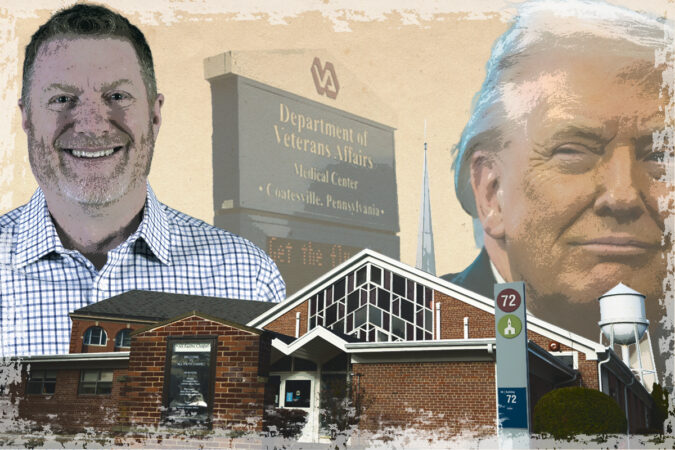
Russell “Rusty” Trubey said he was compelled by God to preach the words that helped set off a national battle over religion at the U.S. Department of Veterans Affairs.
Reading from a sermon titled“When Culture Excludes God,” Trubey, an Army Reserve chaplain, sermonized to a congregation of veterans at the Coatesville VA Medical Center from a Bible passage — Romans 1:23-32 — that refers to same-sex relationships as “shameful.”
Some congregants, upset by the sermon, walked out of the June 2024 service at the Chester County facility, where Trubey has been employed for roughly 10 years. Soon after, Trubey’s lawyers said he was temporarily pulled from his assignment — and transferred to stocking supply shelves — while his supervisors investigated his conduct.
Speaking to Truth and Liberty, a Christian group that advocates for the church to play a greater role in the public sphere, Trubey said he knows that reading the Bible verses about same-sex relationships is “100%” the reason he got in trouble.
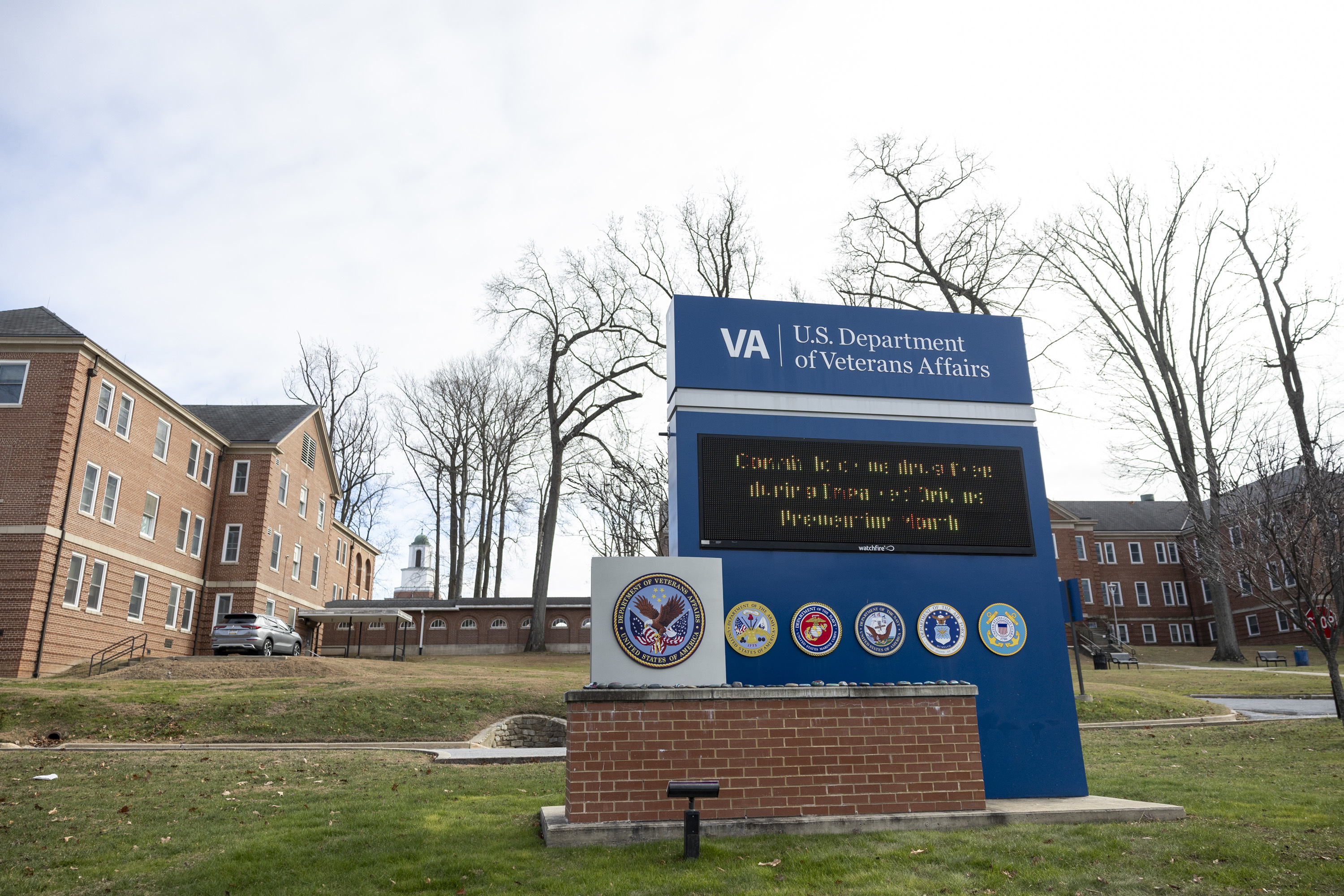
One of the entrances leading into Coatesville VA Medical Center.
A month earlier, Trubey’s lawyers had taken hiscase to the White House. In a letter sent a few weeks after President Donald Trump’s inauguration, Trubey’s lawyers asked Trump’s VA secretary, Doug Collins, to interveneon Trubey’s behalf in regard to repercussions for the sermon.
Trubey had delivered the talk during former President Joe Biden’s administration — an environment that Trump officials allege was hostile to Christians.
In the letter, the chaplain’s lawyers from the First Liberty Institute and Independence Law Center accused Trubey’s supervisor of wanting sermons to be screened ahead of time for pre-approval and stated that Trubey received a letter of reprimand, which would later go on to be rescinded by Coatesville VA Medical Center officials.
Soon after the lawyers’ letter reached the new administration, the VA, one of the largest federal employers in Pennsylvania, reinstated Trubey to his position and Collins reaffirmed that chaplains’ sermons would not be censored.
But the fallout from this incident — paired with Trump’s ongoing campaign to root out perceived prejudice against Christians and dismantle diversity, equity, and inclusion — left an undeniable mark on the VA, helping to inspire an agencywide “Anti-Christian Bias Task Force.”
Announced to employees in April 2025, the task force asks employees to report offenses such as “reprimand issued in response to displays of Christian imagery or symbols,” per a department email reviewed by The Inquirer.
And the VA wants names.
In the email, the VA encouraged employees to identify colleagues and workplace practices that violate the policy and send information about the alleged offenses to a dedicated email address. The announcement was in accordance with a Trump executive order from February that ordered federal agencies to “eradicate” anti-Christian bias and create a larger White House task force composed of cabinet secretaries and chaired by Attorney General Pam Bondi.
As of this summer, the VA received more than 1,000 reports of anti-Christian bias and reviewed 500, according to task force documents. Another report is expected in February.
Some of the offenses the VA is on the watch for could be especially pertinent during the holiday season when workers may want their faith represented at their desks.
One union leader at the Veterans Benefits Administration office in Philadelphia called the task force, which does not extend to biases against other religions, “McCarthyism for Christians.”
“What they’re really doing is they’re trying to create a hostile work environment where you’re now afraid to say something because you may be reported,” said the union representative weeks after the VA’s task force announcement. The representative asked to speak anonymously out of fear of workplace retaliation.
The VA said in a statement that the department is “grateful” for Trump’s executive order. The VA did not answer The Inquirer’s questions on an updated number of reports received through the task force, what happens to people or practices that are reported, and next steps of the task force.
“As the EO stated, the prior administration ‘engaged in an egregious pattern of targeting peaceful Christians, while ignoring violent, anti-Christian offenses,’” said VA press secretary Pete Kasperowicz in the statement. “Under President Trump, VA will never discriminate against Veterans, families, caregivers or survivors who practice the Christian faith.”
One of those offenses, as outlined by the VA, is “informal policies, procedures, or unofficial understandings hostile to Christian views.” Another is retaliation against chaplains’ sermons, which appears to be in responseto the Trubey incident from June 2024.
Erin Smith, associate counsel at the First Liberty Institute, who helped represent Trubey said: “If Chaplain Trubey’s story serves as inspiration to help protect the rights of all chaplains in the VA, then that is a wonderful thing to come out of a terrible situation.”
But some VA employees disagree.
Ira Kedson, president of AFGE Local 310, which represents employees at the Coatesville VA Medical Center, said in an interview in June that he heard some employees were “deeply troubled” by the incident with Trubey, especially those who worked in clinical settings with patients who were in attendance of the controversial sermon.
“I was told that some of the residents were deeply hurt and deeply troubled by the situation and it took a long time for them to be able to move past it,” Kedson said.
Religion takes center stage in the Trump administration
Trump is leading what is arguably one of the most nonsecular presidencies in modern United States history with his embrace of a loyal, conservative Christian base.
“We’re bringing back religion in our country,” Trump said at the Rose Garden during the National Day of Prayer in May.
And efforts to elevate religion in the public sphere have gone beyond Trump’s rhetoric. For instance, the Office of Personnel Management, the federal government’s human resources agency, issued guidance that aims to protect religious expression in the workplace for all religions.
Most of the reports submitted to the VA focused on “denying religious accommodations for vaccines and provision of abortion services; mandating trainings inconsistent with Christian views; concealing Christian imagery; and Chaplain program and protections for Chaplains,” according to task force documents.
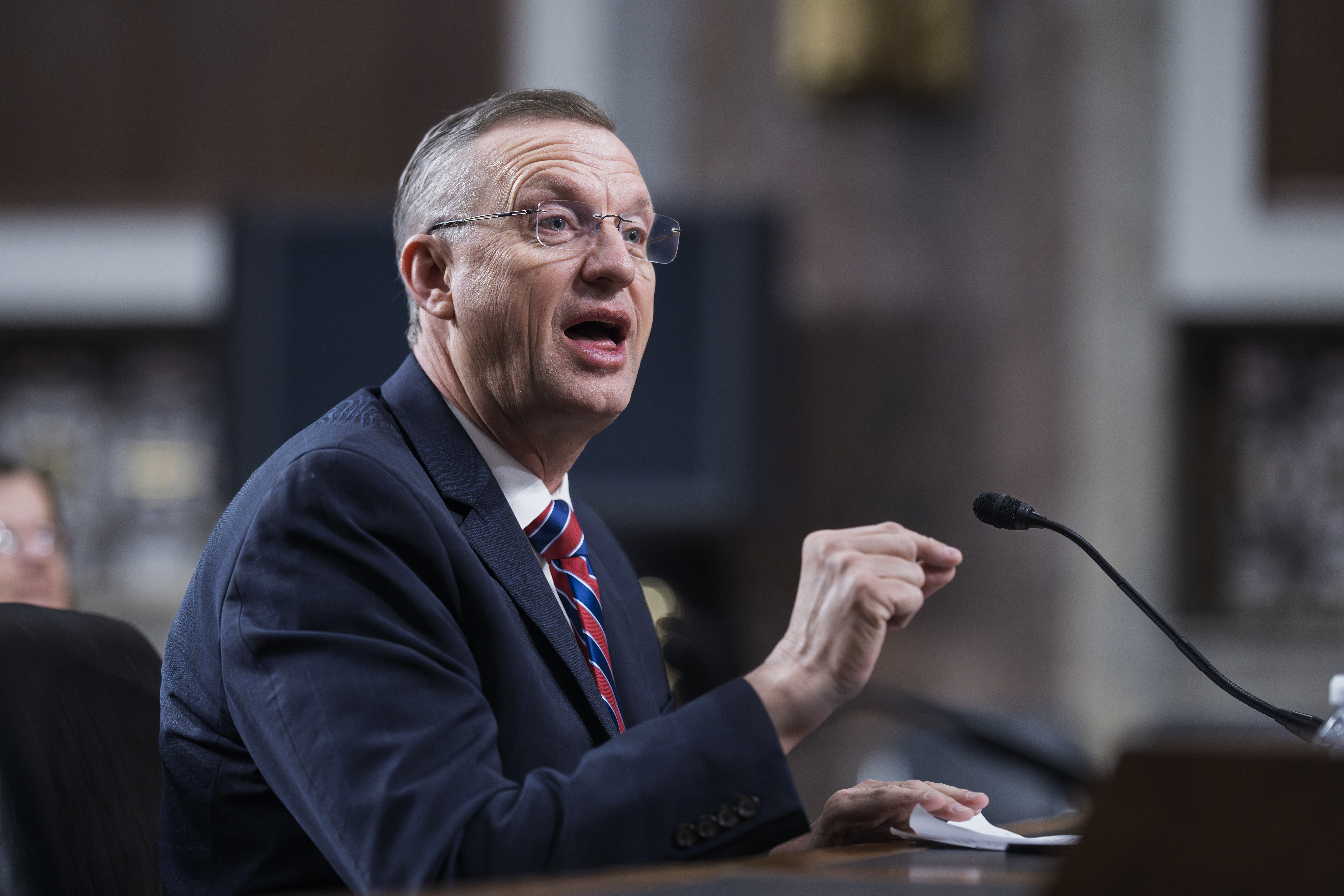
Doug Collins at his Jan. 21 confirmation hearing before the Senate Veterans’ Affairs Committee, at the Capitol in Washington.
Charles Haynes, senior fellow for religious liberty at the Freedom Forum, a nonpartisan organization based in Washington that promotes First Amendment rights, said while it’s not unconstitutional or unprecedented to createa faith-specific task force, “the appearance of [the Christian-bias task force], to many people, is a favoritism of the government for one group over another.”
The White House, in a statement, said Trump has a record of defending religious liberty regardless of faith.
“President Trump has taken unprecedented action to fight anti-Christian, anti-Semitic, and other forms of anti-religious bias while ending the weaponization of government against all people of faith,” said White House spokesperson Taylor Rogers in an email to The Inquirer.
Furthermore, she added, that the media is doing “insane mental gymnastics to peddle a false and negative narrative about the President’s efforts on behalf of nearly 200 million Christians across the country.”
Identifying anti-Christian bias or chasing a ‘unicorn’?
The Trump administration has shared few details about the operations and goals of the anti-Christian bias task force, raising questions from lawmakers and other stakeholders.
Rep. Mark Takano, the ranking member of the House Committee on Veterans’ Affairs, was in a monthslong back-and-forth with VA Secretary Collins, trying to get answers to an extensive list of questions he initially sent in May, with the California Democrat particularly concerned that the scope of the initiative is limited to bias against Christians.
“To preserve this right to religious freedom, the Department cannot prioritize one faith over others, nor can it allow religious considerations to shape its policies in ways that may conflict with the First Amendment,” Takano wrote in May. “Further, the vagueness of the task force’s mission raises significant concerns about how it will be used and whether it is compatible with the mission of the Department.”
Collins responded in June and did not answer most of Takano’s questions, though he did saythat the task force, which reports to the secretary, will identify, strategize, and potentially alter any policies that discriminate against Christians or religious liberty.
The lawmakerfollowed up a week later. Roughly four months later, in October, Collins’ responses were vague once again.Most recently, Takano is asking for both Democratic and Republican members of the House and Senate’s Veterans’ Affairs Committees to be looped in on future correspondence regarding the task force.
The VA, according to a statement from Takano, has not fully answered their questions and has refused to host a bipartisan briefing.
“The lack of transparency and accountability of this task force leaves me with numerous concerns for the due process and privacy of hardworking VA employees,” Takano said. “VA’s silence won’t stop us from asking the questions we are constitutionally obligated to ask.”
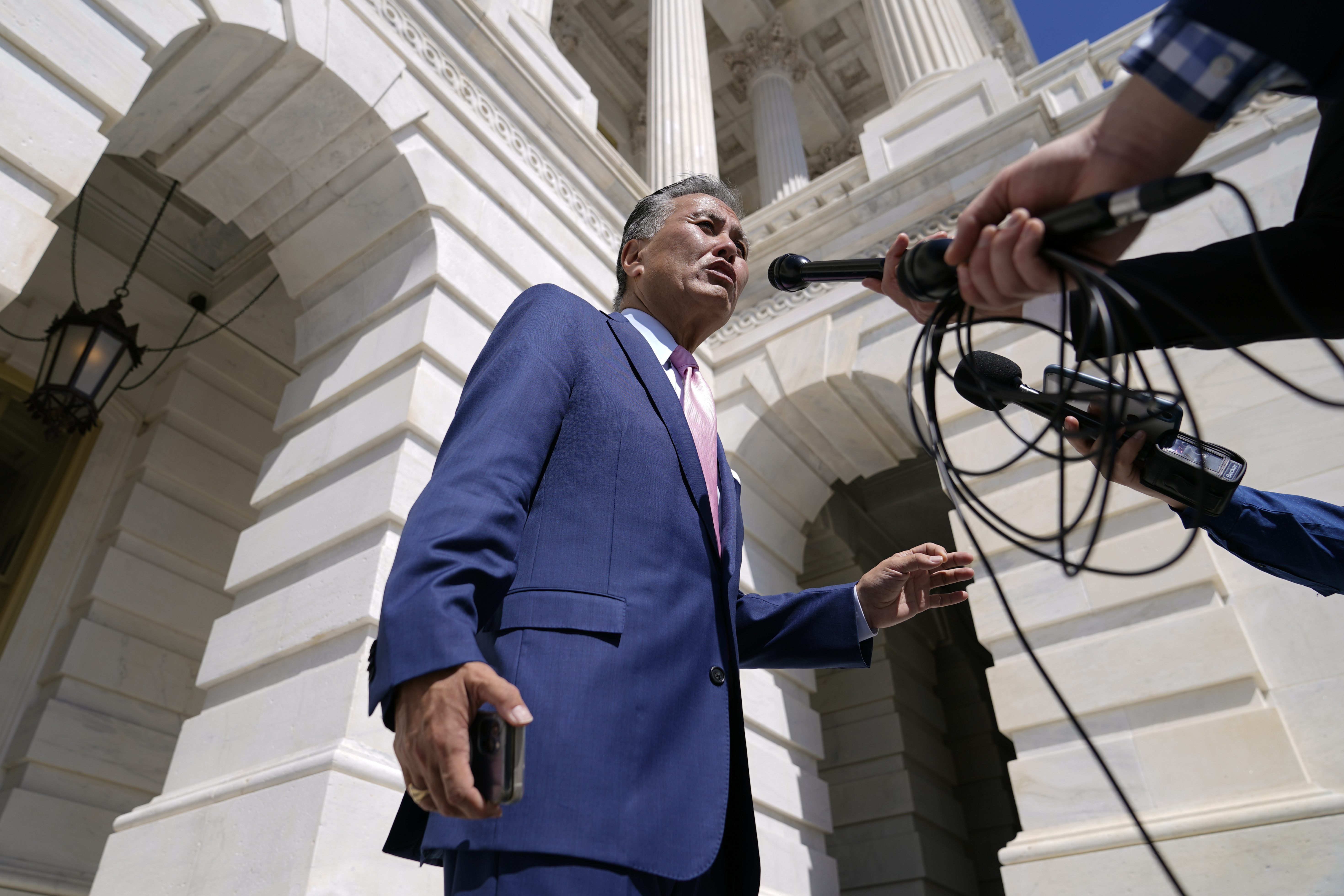
Rep. Mark Takano (D., Calif.) in August 2022, on Capitol Hill in Washington. Takano, ranking member of the House Committee on Veterans’ Affairs, has been trying to get answers from the VA on the Anti-Christian Bias Task Force.
Michael L. “Mikey” Weinstein, former counsel for the Reagan administration turned founder and president of the Military Religious Freedom Foundation, said his group is looking for a plaintiff to sue the government over the task force. The group has been receiving calls from VA employees concerned aboutit, one of whom, he said, was a senior physician at the VA Medical Center in Philadelphia.
The physician, Weinstein said, was distraught to receive the memo about the task force. He had family in town and noted the irony of showing his family around all the historical sites that signified the birthplace of American freedoms while being asked by the federal government to partake in such a project.
“It was like a dagger in his heart,” Weinstein said.
Weinstein is adamant that anti-Christian bias in the federal workforce is nonexistent, like looking for a “unicorn.”
Noticeably absent from the task force, critics say, is any effort to explore instances of discrimination against other faiths within federal agencies.
Trump has historically espoused hateful rhetoric against Muslims, including enacting a travel ban on individuals from predominantly Muslim countries during his first term. The president has issued an executive order this term to combat antisemitism on college campuses, but he also has a history of engaging with antisemites on the political right.
Ahmet Selim Tekelioglu, executive director of CAIR-Philadelphia, a nonprofit that aims to protect the civil rights of Muslims in the U.S., said he believes all forms of discrimination should be stamped out, but he’s concerned the task force isn’t affording those protections to everyone.
“It focuses exclusively on alleged anti-Christian conduct within the federal agencies, and in our opinion of this, risks then entrenching preferential treatment and signaling the protections that should exist for everyone is conditional, right?” Tekelioglu said.
There is hope, however, that this task force could lead to other future initiatives to root out hate, said Jason Holtzman, chief of Jewish Community Relations Council at the Jewish Federation of Greater Philadelphia.
“My hope is that hopefully they’re starting with the task force on Christian bias, and then maybe they’ll initiate one on antisemitism, Islamophobia, because I think task forces need to exist on all of these different forms of hate,” said Holtzman, noting that both Trump and Biden have taken action to combat antisemitism.
Haynes, the religious liberty expert, said anti-Christian bias is a “matter of perspective.”
“How you see it for the conservative Christian, what others would say is just creating an inclusive, safe workplace for everyone, they see, in some respects, as being anti-Christian,” Haynes said.
Haynes said that “anecdotal sort of stories” about prejudice against Christians pushed by conservative groups do not appear to be based in any kind of research into a widespread trend. But it only takes one story — as seen in Trubey’s case — to set off a firestorm.
WEST PALM BEACH, Fla. — Deputy Attorney General Todd Blanche on Sunday defended the Justice Department’s decision to release just a fraction of the Jeffrey Epstein files by the congressionally mandated deadline as necessary to protect survivors of sexual abuse by the disgraced financier.
Blanche pledged that the Trump administration eventually would meet its obligation required by law. But he stressed that the department was obligated to act with caution as it goes about making public thousands of documents that can include sensitive information.
Friday’s partial release of the Epstein files has led to a new crush of criticism from Democrats who have accused the Republican administration of trying to hide information.
Blanche called that pushback disingenuous as President Donald Trump’s administration continues to struggle with calls for greater transparency, including from members of his political base, about the government’s investigations into Epstein, who once counted Trump as well as several political leaders and business titans among his peers.
“The reason why we are still reviewing documents and still continuing our process is simply that to protect victims,” Blanche told NBC’s Meet the Press. “So the same individuals that are out there complaining about the lack of documents that were produced on Friday are the same individuals who apparently don’t want us to protect victims.”
Blanche’s comments were the most extensive by the administration since the file dump, which included photographs, interview transcripts, call logs, court records, and other documents. But some of the most consequential records expected about Epstein were nowhere to be found, such as FBI interviews with survivors and internal Justice Department memos examining charging decisions. Those records could help explain how investigators viewed the case and why Epstein was allowed in 2008 to plead guilty to a relatively minor state-level prostitution charge.
Trump, who was friends with Epstein for years before the two had a falling out, tried for months to keep the records sealed. Though Trump has not been accused of wrongdoing in connection with Epstein, he has argued there is nothing to see in the files and that the public should focus on other issues.
Federal prosecutors in New York brought sex trafficking charges against Epstein in 2019, but he killed himself in jail after his arrest.
Democrats see a cover-up, not an effort to protect victims
But Democratic lawmakers on Sunday hammered Trump and the Justice Department for a partial release.
Rep. Jamie Raskin (D., Md.) argued that the Justice Department is obstructing the implementation of the law mandating the release of the documents not because it wants to protect the Epstein victims.
“It’s all about covering up things that, for whatever reason, Donald Trump doesn’t want to go public, either about himself, other members of his family, friends, Jeffrey Epstein, or just the social, business, cultural network that he was involved in for at least a decade, if not longer,” he said on CNN’s State of the Union.
Blanche also defended the department’s decision to remove several files related to the case from its public webpage, including a photograph showing Trump, less than a day after they were posted.
The missing files, which were available Friday but no longer accessible by Saturday, included images of paintings depicting nude women, and one showed a series of photographs along a credenza and in drawers. In that image, inside a drawer among other photos, was a photograph of Trump alongside Epstein, Melania Trump, and Epstein’s longtime associate, Ghislaine Maxwell.
Blanche said the documents were removed because they also showed victims of Epstein. Blanche said that the Trump photo and the other documents will be reposted once redactions are made to protect survivors.
“It has nothing to do with President Trump,” Blanche said. “There are dozens of photos of President Trump already released to the public seeing him with Mr. Epstein.”
The thousands of Epstein-related records posted publicly offer the most detailed look yet at nearly two decades worth of government scrutiny of Epstein’s sexual abuse of young women and underage girls. Yet Friday’s release, replete with redactions, has not dulled the clamor for information given how many records had yet to be released and because some of the materials had already been made public.
Blanche says DOJ has just learned of more potential victims
Blanche said that the department continues to review the trove of documents and has learned the names of additional potential victims in recent days.
The deputy attorney general also defended the decision by the federal Bureau of Prisons, which Blanche oversees, to transfer Maxwell to a less restrictive, minimum-security federal prison earlier this year soon after he interviewed her about Epstein. Blanche said that the transfer was made because of concerns about her safety.
Maxwell, Epstein’s onetime girlfriend, is serving a 20-year federal prison sentence for her 2021 conviction for sex trafficking crimes.
“She was suffering numerous and numerous threats against her life,” Blanche said. “So the BOP is not only responsible for putting people in jail and making sure they stay in jail, but also for their safety.”
Meanwhile, Reps. Ro Khanna (D., Calif.) and Thomas Massie (R., Ky.) have indicated they could draft articles of impeachment against Attorney General Pam Bondi for what they see as the gross failure of the department to comply with the Epstein Files Transparency Act.
“It’s not about the timeline, it’s about the selective concealment,” Khanna said on CBS’ Face the Nation, adding that the redactions in the released files are excessive. He said he believes there will be “bipartisan support in holding her accountable, and a committee of Congress should determine whether these redactions are justified or not.”
House Democratic leader Hakeem Jeffries of New York said on ABC’s This Week that there needs “to be a full and complete explanation and then a full and complete investigation as to why the document production has fallen short of what the law clearly required,” but he stopped short of backing impeachment.
Blanche dismissed the impeachment talk.
“Bring it on,” Blanche said. “We are doing everything we’re supposed to be doing to comply with this statute.”
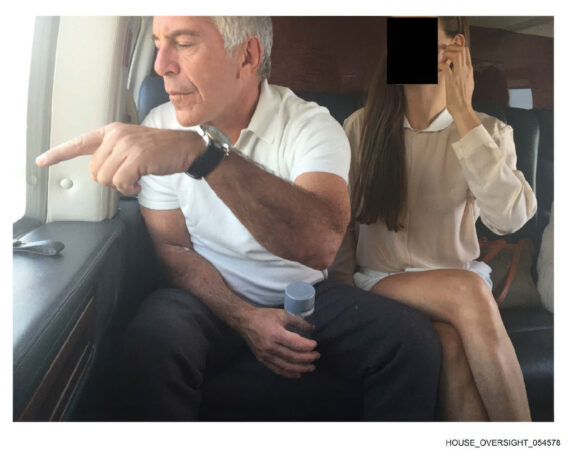
WASHINGTON — The Justice Department released thousands of files Friday about convicted sex offender Jeffrey Epstein but the incomplete document dump did not break significant ground about the long-running criminal investigations of the financier or his ties to wealthy and powerful individuals.
The files included a small number of photos of President Donald Trump, sparing the White House for now from having to confront fresh revelations about an Epstein relationship that the administration for months has tried in vain to push past.
It did, however, feature a series of never-before-seen photos of Bill Clinton from a trip that the former president appears to have take with Epstein decades ago.
Reaction to the disclosures broke along mostly partisan lines. Democrats and some Republicans seized on the limited release to accuse the Justice Department of failing to meet a congressionally set deadline to produce the Epstein files. White House officials on social media gleefully promoted a photo of Clinton in a hot tub with a person with a blacked-out face. The Trump administration touted the release as a show of its commitment to transparency, ignoring the fact that the Justice Department just months ago said no more files would be released. Congress then passed a law mandating it.
The records, consisting largely of pictures but also including call logs, grand jury testimony, interview transcripts, and other documents, arrived amid extraordinary anticipation that they might offer the most detailed look yet at nearly two decades worth of government scrutiny of Epstein’s sexual abuse of young women and underage girls. Their release has long been demanded by a public hungry to learn whether any of Epstein’s associates knew about or participated in the abuse. Epstein’s accusers have also sought answers about why federal authorities shut down their initial investigation into the allegations in 2008.
Yet the release, replete with redactions. seemed unlikely to satisfy the public clamor for information given how many investigative records the department indicated it was continuing to withhold.
In a letter to Congress obtained by The Associated Press, Deputy Attorney General Todd Blanche wrote that the Justice Department was continuing to review files in its possession and expected additional disclosures by the end of the year. The department also said it was withholding some documents under exemptions allowed in the law and was redacting names of victims. The department expects to complete its document production by the end of the year, Blanche said.
Bowing to political pressure from fellow Republicans, Trump on Nov. 19 signed a bill giving the Justice Department 30 days to release most of its files and communications related to Epstein, including information about the investigation into his death in a federal jail. The law’s passage, which set a deadline for Friday, was a remarkable display of bipartisanship that overcame months of opposition from Trump and Republican leadership.
Limited details about Trump
The released files include a small number of photos of Trump, which appear to have been known for decades, including two in which Trump and Epstein are posing with now-first lady Melania Trump in February 2000 at an event at Trump’s Palm Beach club, Mar-a-Lago, before the pair’s friendship ruptured.
Trump was friends with Epstein for years before the two had a falling-out. Neither he nor Clinton has ever been accused of wrongdoing in connection with Epstein, and the mere inclusion of someone’s name in files from the investigation does not imply otherwise.
Attorney General Pam Bondi said last month that she had ordered a top federal prosecutor to investigate Epstein’s ties to Trump’s political foes, including Clinton. Bondi acted after Trump pressed for such an inquiry, though he did not explain what supposed crimes he wanted the Justice Department to investigate.
In July, Trump dismissed some of his own supporters as “weaklings” for falling for “the Jeffrey Epstein hoax.” But both Trump and House Speaker Mike Johnson (R., La.) failed to prevent the legislation from coming to a vote.
Trump did a U-turn on the files once it became clear that congressional action was inevitable. He insisted that the Epstein matter had become a distraction to the Republican agenda and that releasing the records was the best way to move on.
After nearly two decades of court action and prying by reporters, a voluminous number of records related to Epstein had already been public well before Froday, including flight logs, address books, email correspondence, police reports, grand jury records, courtroom testimony, and transcripts of depositions of his accusers, his staffers and others.
New photos of Clinton
Senior Trump White House aides took to X to promote photos in the Epstein files that show Clinton with women whose faces are redacted.
Karoline Leavitt, the White House press secretary, wrote “Oh my!” and added a shocked face emoji in response to a photo of Clinton in a hot tub with a woman whose face was redacted.
“They can release as many grainy 20-plus-year-old photos as they want, but this isn’t about Bill Clinton,” Clinton spokesman Angel Ureña said in a statement.
“There are two types of people here,” he said. “The first group knew nothing and cut Epstein off before his crimes came to light. The second group continued relationships after that. We’re in the first. No amount of stalling by people in the second group will change that.”
The Epstein investigations
Police in Palm Beach, Fla., began investigating Epstein in 2005 after the family of a 14-year-old girl reported she had been molested at his mansion. The FBI joined the investigation, and authorities gathered testimony from multiple underage girls who said they had been hired to give Epstein sexual massages.
Ultimately, though, prosecutors gave Epstein a deal that allowed him to avoid federal prosecution. He pleaded guilty to state prostitution charges involving someone under age 18 and was sentenced to 18 months in jail.
Epstein’s accusers then spent years in civil litigation trying to get that plea deal set aside. One of those women, Virginia Giuffre, accused Epstein of arranging for her to have sexual encounters, starting at age 17, with numerous other men, including billionaires, famous academics, U.S. politicians, and Andrew Mountbatten-Windsor, then known as Britain’s Prince Andrew. Mountbatten-Windsor denied ever having sex with Giuffre, but King Charles III stripped him of his royal titles this year after Giuffre’s memoir was published after she died.
Prosecutors never brought charges in connection with Giuffre’s claims, but her account fueled conspiracy theories about supposed government plots to protect the powerful. Giuffre died by suicide at her farm in Western Australia in April at age 41.
Federal prosecutors in New York brought new sex trafficking charges against Epstein in 2019, but he killed himself in jail a month after his arrest. Prosecutors then charged Epstein’s longtime confidant, British socialite Ghislaine Maxwell, with recruiting underage girls for Epstein to abuse.
Maxwell was convicted in late 2021 and is serving a 20-year prison sentence, though she was moved from a low-security federal prison in Florida to a minimum-security prison camp in Texas after she was interviewed over the summer by Blanche. Her lawyers argued that she never should have been tried or convicted.
The Justice Department in July said it had not found any information that could support prosecuting anyone else.
The Kennedy Center began updating signage on the exterior of the building Friday morning, a day after its board voted to rename the institution “The Donald J. Trump and The John F. Kennedy Memorial Center for the Performing Arts.”
A blue tarp was stretched across a portion of the building as a small team on scaffolding started the work. Loud drilling could be heard nearby. Inside the building, large letters spelling “Trump” could be seen on the floor of the entry hall, according to a photograph obtained by the Washington Post. Signage elsewhere around the exterior of the institution remained unchanged.
Thursday’s vote by the board of trustees marked a dramatic change to a building established as a “living memorial” to a slain president. The announcement drew swift condemnation from Kennedy family members and Democratic leaders, who called it illegal and said only Congress could change the center’s name.
For months, Trump had repeatedly joked about the name change, including at the Kennedy Center Honors earlier this month. The center has seen a year of upheaval since Trump overhauled the institution in February, sparking a wave of firings and resignations. Ticket sales have fallen sharply, according to an October analysis by The Post, and many artists have said they will no longer perform there. The new leadership has boasted of hefty fundraising tallies and has begun to ramp up bookings for Christian and right-wing events.
“The Trump Kennedy Center shows a bipartisan commitment to the Arts,” Kennedy Center President Richard Grenell wrote Thursday on X.Officials did not cite an authority for the board’s ability to change the institution’s name.
The current board consists of loyalists to Trump following a purge of trustees appointed by former President Joe Biden. They met Thursday in Palm Beach, Florida.
This is not the only building to which Trump’s name has been added in recent weeks in Washington. Earlier this month, his administration renamed the building that houses the U.S. Institute of Peace downtown, emblazoning “Donald J. Trump” in several areas of the structure.
“Boy, that is beautiful,” Trump said at the time, thanking Secretary of State Marco Rubio for putting his name on the building.
The Florida insurance brokers offered an enticing deal to unemployed and homeless people: Enroll in a Healthcare.gov health plan they weren’t eligible for in exchange for gift cards, food, alcohol, or cash. Theycoached them to lie about their income to qualify for heavily subsidized coverage, according to court documents. Sometimes they enrolled people without their knowledge.
A federal jury convicted Cory Lloyd and Steven Strong last month of collecting millions of dollars in commissions between 2018 and 2022 through a widespread plot to defraud the federal insurance marketplace. People earning at least the federal poverty level can get income-based subsidies to help them afford monthly premiums for plans sold through the Affordable Care Act. Under Lloyd and Strong’s scheme, the federal government paid at least $180 million in ineligible subsidies.
Many more agents and brokers — likely thousands, according to two career staffers at the Centers for Medicare and Medicaid Services, who spoke on the condition of anonymity because they weren’t authorized to speak to press — are gaming the marketplace where 24 million Americans get health insurance.
Corruption among Healthcare.gov agents and brokershad emerged as a sticking point in Washington as Congress failed to reach a deal to halt the year-end expiration of enhanced subsidies for insurance premiums, which will drive up the cost of plans for millions of Americans. Republicans invoked the fraud to argue against extending the subsidies while Democrats said the solution is better enforcement rather than withholding assistance from Americans who need it.
Last year, the Biden administration temporarily suspended 850 insurance agents and brokers suspected of fraudulent or abusive conduct. CMS hasn’t terminated any agents or brokers this year — although spokesman Christopher Krepich said the agency has “initiated terminations” — even as it sets up stricter enrollment rules for customers amid Administrator Mehmet Oz’s promises to root out fraud.
Around 100,000 agents and brokers are authorized by Healthcare.gov. They facilitate more than three-quarters of enrollments. For each person enrolled, insurers pay thema small monthly commission, typically between $5 and $20. Florida, where Lloyd and Strong operated, offers the largest commissions in the country, averaging $28 per enrollee, according to the nonpartisan health policy organization KFF.
A new government report underscoredhow easy it is to game the marketplace.
When the Government Accountability Office, which evaluates federal programs and spending, submitted 20 fraudulent applications to Healthcare.gov for coverage this year, 19 were initially approved even though the agency didn’t submit documents requested to prove income, citizenship, and Social Security numbers. The marketplace terminated one enrollee for insufficient documentation. The government is still paying more than $10,000 a month in subsidies for 18 remaining enrollments.
Investigators also discovered misuse of Society Security numbers — in one case, a single number was used for 125 policies in 2023 — and identified serious shortcomings in how CMS assesses marketplace fraud.
Stopping marketplace fraud is “not a priority” for CMS, said Seto Bagdoyan, a director at GAO who worked on the report.
Krepich said the agency has undertaken “a thorough investigation into improper agent and broker activity” and is committed to “ensuring consumers are never enrolled in coverage without their knowledge or consent.”
Democrats complain the Trump administration is doing little to fix the problem despite its bluster about waste, fraud, and abuse in federal health programs.
Rep. Lloyd Doggett (Texas), the top Democrat on a subcommittee overseeing CMS, wrote a letter to Oz last week requesting closer scrutiny of the reinstated agents and brokers. “The remedy is not to deny a mother access to care for her sick child,” Doggett said in a statement. “What we need is effective law enforcement.”
Like brokers for Lloyd and Strong, who did not return requests for comment, many have enrolled people without their knowledge, switched their plan without their consent or created fake enrollments to maximize commissions.
The GAO concluded thatthe enhanced subsidies worsened fraud in recent years as bad actors seized upon the beefier assistance to lure new customers. As enrollments on Healthcare.gov skyrocketed under the extra subsidies, fraudulent sign-ups grew too. The Congressional Budget Office estimated those misstating their incomes to get more subsidies nearly doubled from 1.3 million to 2.3 millionbetween 2023 and 2025.
“We believe that the expansion of the subsidies — which put more money in the pool — invigorated the financial incentive to sign up as many people as possible,” Bagdoyan said.
The GAO’s findings were among the hurdles to Republicans in Congress agreeing to extend extra subsidies for a marketplace they’ve accused of failing to sufficiently police from bad actors.
“These findings validate long-standing Republican warnings: Obamacare’s subsidy system lacks even the most basic guardrails and has created an environment where criminals, identity thieves, and unscrupulous brokers can exploit taxpayers with ease,” House Speaker Mike Johnson (R., La.) said in a statement last week.
Democrats say the proper response isn’t to let the extra subsidies expire but to go after the brokers.
“I’ve always said any fraud is too much,” said Sen. Ron Wyden (Oregon), the top Democrat on the Senate Finance Committee, which has oversight of healthcare issues.
Wyden introduced a bill to create new civil penalties for brokers who commit fraud. He said Republicans haven’t signed onto his bill or offered similar measures.
After receiving hundreds of thousands of complaints about fraud, the Biden administration started requiring customers to hold a three-way call with their broker and the marketplace call center in July 2024. But the new policy left plenty of loopholes, agents told GAO. The rule didn’t apply to new enrollees. And the marketplace took only “limited steps to verify the identity of the consumer on the three-way call,” the report says.
Oz has been vowing to root out the abuse, slamming the prior administration for rules he said were too lenient and touting stricter enrollment rules CMS released in June. Those rules don’t include any direct, new restrictions on agents and brokers but could indirectly make fraud harder by ending year-round enrollment for people earning less than 150% of the federal poverty level, roughly $23,000 for an individual.
“The past administration prioritized achieving big program enrollment numbers over protecting program integrity,” Oz said in a video posted recently to X.
CMS is also preparing to implement stricter verification requirements laid out in Trump’s sweeping tax-and-spending law he signed this summer. That legislation bans the marketplaces from awarding subsidies before verifying a customer’s personal information, including their income and legal status, before awarding any subsidies, which could make it harder for bad actors to sign people up.
PHOENIX — Erika Kirk, widow of Turning Point USA founder Charlie Kirk and the organization’s new leader, endorsed a potential presidential bid by Vice President JD Vance on the opening night of the conservative youth group’s annual conference.
After telling the cheering crowd that Turning Point would help keep Congress in Republican hands next year, she said, “We are going to get my husband’s friend JD Vance elected for 48 in the most resounding way possible.”
Vance would be the 48th president if he takes office after President Donald Trump.
Kirk’s statement on Thursday is the most explicit backing of Vance’s possible candidacy by a woman who has been positioned as a steward to her late husband’s legacy. Charlie Kirk had become a powerbroker and bridge builder within the conservative movement before he was assassinated in September.
Vance was close with Charlie Kirk, whose backing helped enable his rapid political rise. After the assassination, Vance and his wife joined Erika Kirk in Utah to fly her husband’s remains home to Arizona aboard Air Force Two.
Vance is set to speak to Turning Point on Sunday, the conference’s last day. The convention has featured the usual spectacle and energy that have characterized the organization’s events, but the proceedings have also been marred by intense infighting among conservative commentators and estranged allies who have turned on each other in the wake of Kirk’s death.
As Trump’s vice president, Vance is well-positioned to inherit the movement that remade the Republican Party and twice sent Trump to the White House. But it would be no small task for him to hold together the Trump coalition, which is built around personal loyalty to him more than shared political goals.
Various wings of the conservative movement already are positioning to steer the party after Trump’s presidency, a skirmish that’s becoming increasingly public and pointed.
Turning Point, with its thousands of young volunteers, would provide a major boost for Vance in a fractious primary. Now 41, Vance would be the first Millennial president if elected, a natural fit for the organization built around mobilizing youth.
Trump has repeatedly mused about running for a third term despite a constitutional prohibition. However, he’s also speculated about a 2028 ticket featuring Vance and Secretary of State Marco Rubio.
Although Rubio previously ran for president in 2016, he has said he would support Vance as Trump’s successor.
The U.S. Coast Guard on Thursday deleted language from its new workplace harassment policy that had downgraded the definition of swastikas and nooses from overt hate symbols to “potentially divisive,” an abrupt turnaround after the more lenient interpretation of those items was allowed to take effect this week despite objections from Congress.
In a message to all Coast Guard personnel, Adm. Kevin Lunday, the service’s acting commandant, said those revisions had been “completely removed” from the policy manual. The document, a copy of which was reviewed by the Washington Post, now shows a large black bar obscuring the relevant chapter in its table of contents and a message directing readers to a separate manual outlining the Coast Guard’s civil rights policies.
Lunday’s message also says that a separate directive he issued last month prohibiting swastikas and nooses “remains in full effect.”
The sudden turn of events appeared to satisfy Sens. Tammy Duckworth (D., Ill.) and Jacky Rosen (D., Nev.), who said after Lunday’s announcement that they had lifted their holds on his nomination to become the service’s full-time commandant. Both cited their disapproval of the new policy when explaining earlier this week why they had taken such measures.
Lunday’s announcement caps a tumultuous few weeks within the Coast Guard, following Washington Post reports detailing the service’s plan to include the incendiary language within its new workplace harassment manual, its vow to reverse course in the face of widespread criticism, and the wording’s surprising retention as the new manual took effect earlier this week.
In response to the Post’s initial reporting in late November, Lunday issued an order condemning and categorically prohibiting swastikas and nooses, and said then that his directive would supersede any other policy language. But for reasons that remain unclear, Lunday’s order was never incorporated.
Two people familiar with the policy manual overhaul said this week that the Coast Guard, which is overseen by the Department of Homeland Security, wanted to strike the “potentially divisive” wording from the document but was unable to do so. They spoke on the condition of anonymity to discuss the contentious situation.
The Coast Guard’s hazing and harassment policy was an early focus of Lunday’s after the Trump administration, upon entering office in January, fired his predecessor, Adm. Linda Fagan — the first woman to lead a branch of the U.S. military. In announcing Fagan’s removal, officials cited among other things her “excessive focus” on diversity and inclusion initiatives.
Within days, Lunday ordered the suspension of the policy manual that, among its other guidance, said explicitly that the swastika was among a “list of symbols whose display, presentation, creation, or depiction would constitute a potential hate incident.” Nooses and the Confederate flag also matched that description under the previous policy. Lunday was later nominated by Trump to lead the service as its commandant.
In a statement announcing that she had lifted her hold on his nomination, Rosen said she had put another on Sean Plankey, Trump’s nominee to be the director of Homeland Security’s Cybersecurity and Infrastructure Security Agency, and “will keep that hold in place until we see that this new policy works to protect our men and women in uniform from racist and antisemitic harassment.” She also chastised leadership within the Coast Guard and at DHS who, she said, had been “evasive, misleading, and elusive” as lawmakers sought assurances the “potentially divisive” wording would be cut from the policy manual.
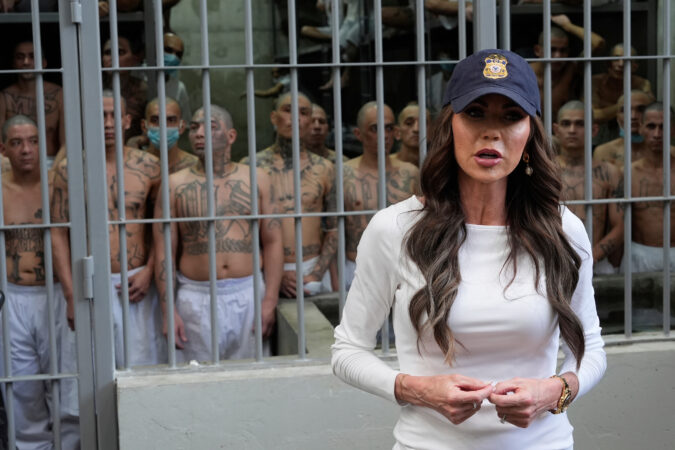
Homeland Security Secretary Kristi L. Noem said in a social media post earlier Thursday that the language was being removed from the manual “so no press outlet, entity or elected official may misrepresent the Coast Guard to politicize their policies and lie about their position on divisive and hate symbols.”
Neither DHS nor the Coast Guard has addressed questions seeking to understand whether Lunday, as acting commandant, was empowered to change the manual’s wording on his own or if DHS leadership had to approve it.
The lack of action, particularly amid a rise in antisemitism, incensed an array of lawmakers, including Republicans, who said Lunday had pledged to them that the “potentially divisive” wording would be removed from the policy manual before it went into effect.
Several expressed anger at the existence of an official U.S. government document defining swastikas, inseparable from the extermination of millions of Jews in World War II, and nooses, a symbol of racial hatred, as “potentially divisive.”
Sen. James Lankford (R., Okla.) was among those who registered disapproval with what his office called the Coast Guard’s “conflicting policies.” A GOP aide said Lankford took his concerns directly to the Trump administration and urged officials to change the manual.