Category: National Politics

  • Federal judge limits warrantless immigration arrests in D.C.

    Federal judge limits warrantless immigration arrests in D.C.

    The Trump administration’s escalating use of warrantless immigration arrests in D.C. this year probably violated federal law, a judge ruled Tuesday in a decision that prohibits such arrests for all migrants in the city except those at risk of escaping.

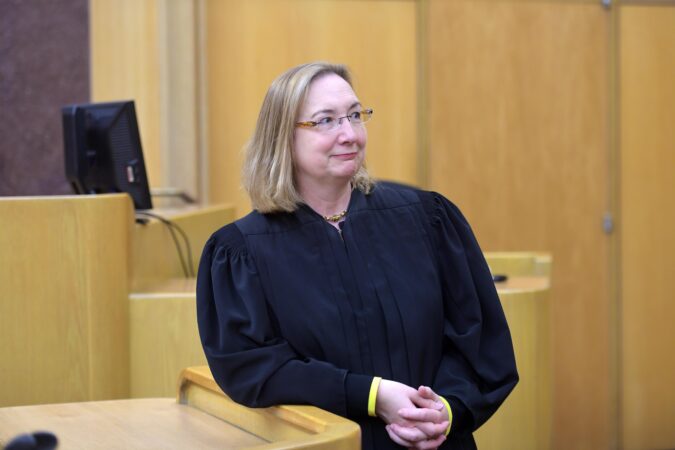
    U.S. District Judge Beryl A. Howell granted a preliminary injunction sought by the immigrant-rights group CASA Inc. and four migrants who were arrested without administrative warrants in August amid President Donald Trump’s law enforcement surge in the capital. All four had pending immigration applications at the time of their arrests and were eventually released after spending time in detention facilities.

    “They were arrested while going about unavoidable, lawful activities of daily life,” Howell said.

    The judge, in an 88-page opinion, took Trump administration officials to task for depriving migrants of their rights and basic necessities as they languished in cramped detention facilities before being released. She criticized immigration authorities’ “systemic failure” to follow the law and said top administration officials, including Chief Border Patrol Agent Gregory Bovino, had repeatedly misstated the legal requirements for warrantless arrests in public comments.

    Bovino and a spokesperson for the Department of Homeland Security had asserted that officers needed “reasonable suspicion” to conduct such arrests, but Howell said the legal standard was more stringent: probable cause. Homeland Security officials did not immediately respond to a request for comment Wednesday.

    Trump ordered a renewed crackdown on illegal immigration this year, and top administration officials set targets as high as 3,000 daily arrests of migrants. Attorneys for CASA and the four plaintiffs in the case argued that authorities began to work under an “arrest first, ask questions later” policy to comply with the high daily quotas — and began ignoring a section of the Immigration and Nationality Act that authorizes warrantless arrests only when a migrant “is likely to escape before a warrant can be obtained.”

    One of the plaintiffs, Jose Escobar Molina, a scaffolder from El Salvador, described in a court filing how he was picked up at 6 a.m. as he headed to work one morning by a group of plainclothes officers who shoved him into a black SUV, making him think he was being kidnapped. Another plaintiff, from Venezuela, said he showed his arresting officers his driver’s license, work permit and asylum application paperwork, which they disregarded.

    Warrantless arrests have skyrocketed since Trump’s surge began in August, Howell found. By one count, she said, officials conducted 943 immigration arrests over a month-long period that ended Sept. 9, which represented 40 percent of all D.C. arrests. The judge noted that being present in the country without legal authorization is not a criminal offense, but a civil violation. Entering the United States without legal authorization is a misdemeanor under federal law, and a felony for repeat offenders.

    “Viewing all immigrants potentially subject to removal as criminals is, as a legal matter, plain wrong,” Howell said, before quoting a Supreme Court ruling from 2012: “Perceived mistreatment of aliens in the United States may lead to harmful reciprocal treatment of American citizens abroad.”

    At a court hearing last month, an assistant U.S. attorney argued that an injunction would slow the Trump administration’s deportation efforts by allowing the court to micromanage arrests. As part of her ruling Tuesday, Howell ordered that immigration authorities document every warrantless immigration arrest in D.C. with “specific, particularized facts” establishing probable cause “that the person is likely to escape before a warrant can be obtained.”

    The Justice Department in a legal filing denied that immigration authorities had instituted a new policy of warrantless arrests and argued that the court did not have jurisdiction to rule on the case.

    “Plaintiffs identify no written policy authorizing the arrests that they complain of because there is none,” Assistant U.S. Attorney John Bardo said. Howell said approximately 40 migrants had submitted court declarations attesting to the warrantless arrests and said Bovino’s comments defending those arrests with inaccurate information proved that the policy existed.

    “This is a victory for the rule of law and for the people across the city, who have avoided going to work, to church, to school, to grocery stores — out of fear of being unlawfully arrested, detained, and deported,” said Joanne Lin, an official with the Washington Lawyer’s Committee, one of the groups representing the plaintiffs.

    The ruling describes some circumstances in which immigration agents can establish a migrant’s likelihood of escaping before a warrant may be obtained, but Howell said those factors could vary.

    “Some courts have found the likelihood of escape to be higher when, for example, the noncitizen presented ‘conflicting documents,’ ‘had been “picked up before,” ’ admitted that he had previously been removed, or appeared ‘extremely nervous’ as if ‘looking for an opportunity to run,’” the judge wrote. “Courts have also made the self-evident finding that the likelihood of escape is lower when the individual has resided in the country for a lengthy period of time and has strong community ties.”

    Aditi Shah, an attorney involved in the case from the American Civil Liberties Union of D.C., welcomed those conditions.

    “This requires the government to take some extra steps that it’s required to under the law before it can just grab people off the streets and lock them away in detention centers,” she said.

    Ama Frimpong, CASA’s legal director, said the ruling was a powerful memorial to one of the migrants who described his warrantless arrest and detention in a legal filing, using a pseudonym, Elias Doe. He died last week, Frimpong said. His health had worsened after he missed a dialysis treatment while detained, she said.

    “This is now part of his legacy,” Frimpong said. “It is important for impacted community members to lead this fight and show that they are not afraid.”
  • House Judiciary issues subpoena to force Jack Smith to testify in private

    House Judiciary issues subpoena to force Jack Smith to testify in private

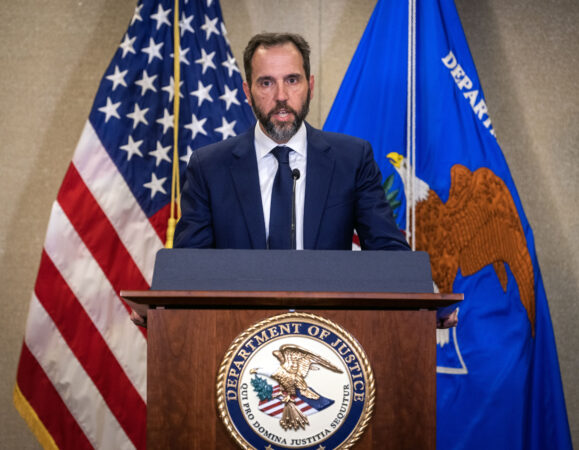
    House Republicans have upped their demands for Jack Smith to testify behind closed doors, issuing a subpoena on Wednesday to the former special counsel that calls on him to meet with members of the House Judiciary Committee and answer questions about his two federal prosecutions of President Donald Trump.

    Rep. Jim Jordan (R., Ohio), who chairs the House Judiciary Committee, said in his letter to Smith — which he posted on social media — that Smith would be deposed on Dec. 17. Smith must hand over materials related to the investigations by Dec. 12, he said.

    The demand is the latest in a string from Republican lawmakers aimed at getting Smith to testify privately and hand over materials related to the probes. In October, Jordan wrote Smith requesting that he sit for a private interview with lawmakers about the investigations, though did not issue a subpoena.

    “Due to your service as special counsel, the Committee believes that you possess information that is vital to its oversight of this matter,” the letter from Jordan reads.

    Smith repeatedly has said he would sit for an interview with lawmakers in a public setting, but does not want to do it behind closed doors. His supporters have expressed concern that a private interview would be subject to selective leaks by committee members.

    Public testimony, however, could put Republicans and the Trump administration in a tricky position. Smith has said he collected ample evidence showing that Trump committed the alleged crimes for which he was indicted. By calling Smith to testify, Republicans risk giving him a platform to air the evidence he collected against the president and failing to elicit testimony that would portray him as a corrupt prosecutor out to get Republicans.

    The former special counsel has also said that, under long-standing protocol, he needs Justice Department guidance to tell him what he is allowed to testify about and what materials he is allowed to hand over. Smith, who is now a private citizen, says he does not have access to the investigatory materials, which are now in the Justice Department’s possession.

    The Justice Department did not immediately respond to a request asking if it had provided Smith with that guidance.

    “Nearly six weeks ago Jack offered to voluntarily appear before the House Judiciary committee in an open hearing to answer any questions lawmakers have about his investigation,” Smith’s attorney, Peter Koski, said in a statement.

    “We are disappointed that offer was rejected, and that the American people will be denied the opportunity to hear directly from Jack on these topics. Jack looks forward to meeting with the committee later this month to discuss his work and clarify the various misconceptions about his investigation.”

    If Smith failed to comply with the subpoena, he could risk prosecution. If a person defies a congressional subpoena, lawmakers could refer that person to the Justice Department for prosecution.

    The back-and-forth over the terms of Smith’s testimony highlights the Trump administration’s contentious relationship with Smith and the large team of agents and prosecutors involved in investigating the president. The administration has fired multiple prosecutors and agents who worked on the cases and has portrayed Smith and his team as corrupt and politicized. The committee has also called some of Smith’s deputies on the special counsel team for testimony.

    Smith oversaw two federal investigations into Trump during the Biden administration. One examined Trump’s alleged mishandling of classified materials after he left office, and the other probed his alleged attempts to overturn the 2020 election results.

    Neither case made it to trial, and both were dismissed before Trump took office in January. Smith has said that he did nothing wrong and that he followed all investigatory protocols when overseeing the cases.

  • Pentagon watchdog finds Hegseth’s use of Signal posed risk to U.S. personnel, AP sources say

    Pentagon watchdog finds Hegseth’s use of Signal posed risk to U.S. personnel, AP sources say

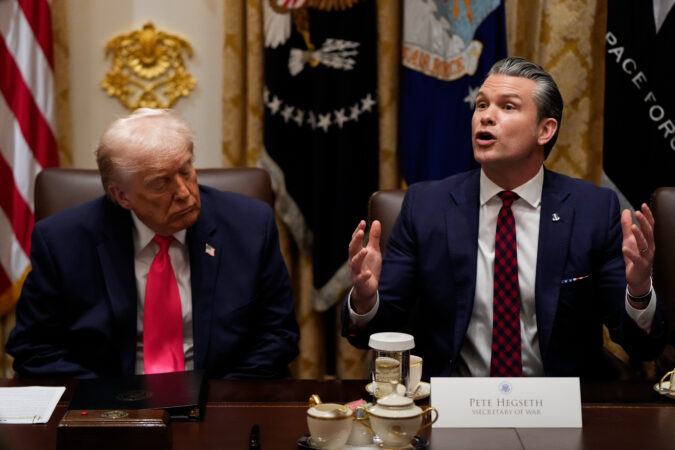
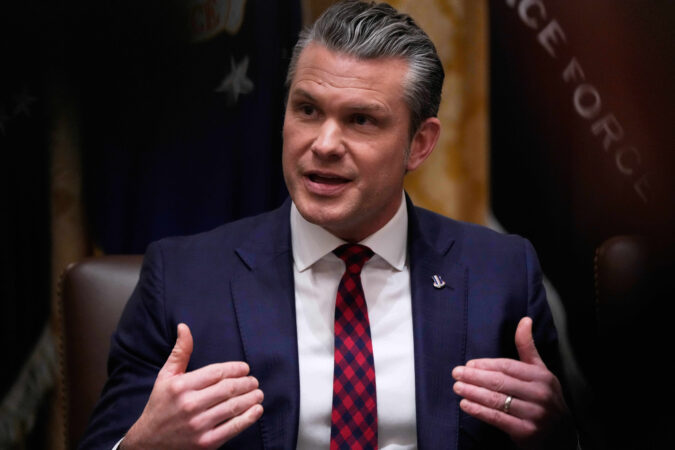
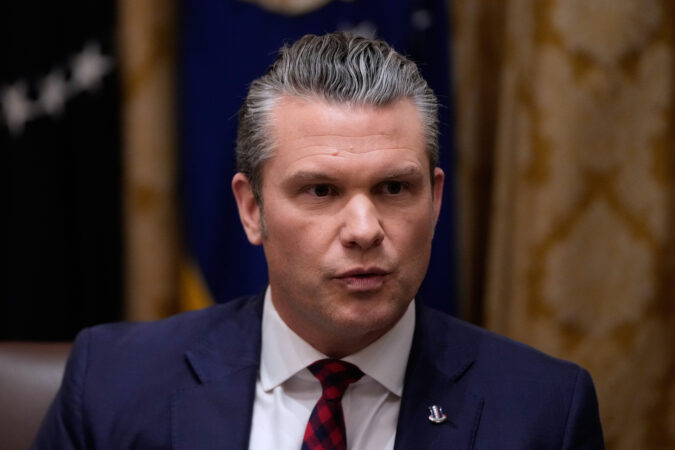
    The Pentagon’s watchdog found that Defense Secretary Pete Hegseth put U.S. personnel and their mission at risk when he used the Signal messaging app to convey sensitive information about a military strike against Yemen’s Houthi militants, two people familiar with the findings said Wednesday.

    Hegseth, however, has the ability to declassify material and the report did not find he did so improperly, according to one of the people familiar with the findings who spoke on condition of anonymity to discuss the information. That person also said the report concluded that Hegseth violated Pentagon policy by using his personal device for official business and it recommended better training for all Pentagon officials.

    Hegseth declined to sit for an interview with the Pentagon’s inspector general but provided a written statement, that person said. The defense secretary asserted that he was permitted to declassify information as he saw fit and only communicated details he thought would not endanger the mission.

    The findings ramp up the pressure on the former Fox News Channel host after lawmakers had called for the independent inquiry into his use of the commercially available app. Lawmakers also just opened investigations into a news report that a follow-up strike on an alleged drug-smuggling boat in the Caribbean Sea in September killed survivors after Hegseth issued a verbal order to “kill everybody.”

    Hegseth defended the strike as emerging in the “fog of war‚” saying he didn’t see any survivors but also “didn’t stick around” for the rest of the mission and that the admiral in charge “made the right call” in ordering the second strike. He also did not admit fault following the revelations that he discussed sensitive military plans on Signal, asserting that the information was unclassified.

    “The Inspector General review is a TOTAL exoneration of Secretary Hegseth and proves what we knew all along — no classified information was shared,” Sean Parnell, the Pentagon’s chief spokesman said in a statement. “This matter is resolved, and the case is closed.”

    Meanwhile, the Pentagon knew there were survivors after a September attack on an alleged drug boat in the Caribbean Sea and the U.S. military still carried out a follow-up strike, according to two people familiar with the matter.

    The rationale for the second strike was that it was needed to sink the vessel, according to the people familiar with the matter who spoke on the condition of anonymity because they weren’t authorized to discuss it publicly. The Trump administration says all 11 people aboard were killed.

    What remains unclear was who ordered the strikes and whether Hegseth was involved, one source said. That will be part of a classified congressional briefing Thursday with the commander that the Trump administration says ordered the second strike, Adm. Frank “Mitch” Bradley.

    The information about the follow-on strike was not presented to lawmakers during a classified briefing in September, in the days after the incident. It was disclosed later, one source said, and the explanation provided by the department has been broadly unsatisfactory to various members of the national security committees in Congress.

    In a rare flex of bipartisan oversight, the Armed Services committees in both the House and Senate swiftly announced investigations into the strikes as lawmakers of both parties raise questions.

    Hegseth is under growing scrutiny over the military strikes on alleged drug traffickers in the Caribbean and eastern Pacific. Legal experts and some lawmakers say a strike that killed survivors would have violated the laws of armed conflict. The Trump administration has said the U.S. is in “armed conflict” with drug cartels, even though Congress has not approved any authorization for the use of military force in the region.

    Journalist was added to a chat where sensitive plans were shared

    In at least two separate Signal chats, Hegseth provided the exact timings of warplane launches and when bombs would drop — before the men and women carrying out those attacks on behalf of the United States were airborne.

    Hegseth’s use of the app came to light when a journalist, Jeffrey Goldberg of The Atlantic, was inadvertently added to a Signal text chain by then-national security adviser Mike Waltz. It included Vice President JD Vance, Secretary of State Marco Rubio, Director of National Intelligence Tulsi Gabbard, and others, brought together to discuss March 15 military operations against the Iran-backed Houthis.

    Hegseth had created another Signal chat with 13 people that included his wife and brother where he shared similar details of the same strike, The Associated Press reported.

    Signal is encrypted but is not authorized for carrying classified information and is not part of the Pentagon’s secure communications network.

    Hegseth previously has said none of the information shared in the chats was classified. Multiple current and former military officials have told the AP there was no way details with that specificity, especially before a strike took place, would have been OK to share on an unsecured device.

    The review was delivered to lawmakers, who were able to review the report in a classified facility at the Capitol. A partially redacted version of the report was expected to be released publicly later this week.

    Hegseth said he viewed the investigation as a partisan exercise and did not trust the inspector general, according to one of the people familiar with the report’s findings. The review had to rely on screenshots of the Signal chat published by the Atlantic because Hegseth could not provide more than a small handful of his Signal messages, the person said.

    When asked about the investigation in August, Pentagon press secretary Kingsley Wilson told reporters that “we believe that this is a witch hunt and a total sham and being conducted in bad faith.”

    The Pentagon did not immediately respond Wednesday to a request for comment.

    Lawmakers had called for inspector general to investigate

    The revelations sparked intense scrutiny, with Democratic lawmakers and a small number of Republicans saying Hegseth posting the information to the Signal chats before the military jets had reached their targets potentially put those pilots’ lives at risk. They said lower-ranking members of the military would have been fired for such a lapse.

    The inspector general opened its investigation into Hegseth at the request of the Republican chairman of the Senate Armed Services Committee, Sen. Roger Wicker of Mississippi, and the committee’s top Democrat, Sen. Jack Reed of Rhode Island.

    Some veterans and military families also raised concerns, citing the strict security protocols they must follow to protect sensitive information.

    It all ties back to the campaign against Yemen’s Houthis

    The Houthi rebels had started launching missile and drone attacks against commercial and military ships in late 2023 in what their leadership had described as an effort to end Israel’s offensive against Hamas in the Gaza Strip. Their campaign greatly reduced the flow of trade through the Red Sea corridor, which typically sees $1 trillion of goods move through it annually.

    The U.S.-led campaign against the Houthis in 2024 turned into the most intense running sea battle the Navy had faced since World War II.

    A ceasefire in the Israel-Hamas war had begun in January before falling apart in March. The U.S. then launched a broad assault against the Houthis that ended weeks later when Trump said they pledged to stop attacking ships. The latest Gaza ceasefire began in October.

    Following the disclosure of Hegseth’s Signal chat that included the Atlantic’s editor, the magazine released the entire thread in late March. Hegseth had posted multiple details about an impending strike, using military language and laying out when a “strike window” starts, where a “target terrorist” was located, the time elements around the attack and when various weapons and aircraft would be used in the strike. He mentioned that the U.S. was “currently clean” on operational security.

    Hegseth told Fox News Channel in April that what he shared over Signal was “informal, unclassified coordinations, for media coordinations and other things.”

    During a congressional hearing in June, Hegseth was pressed multiple times by lawmakers over whether he shared classified information and if he should face accountability if he did.

    Rep. Seth Moulton, a Massachusetts Democrat and Marine veteran, asked Hegseth whether he would hold himself accountable if the inspector general found that he placed classified information on Signal.

    Hegseth would not directly say, only noting that he serves “at the pleasure of the president.”

  • Republicans brace for tough midterms after Tennessee special election

    Republicans brace for tough midterms after Tennessee special election

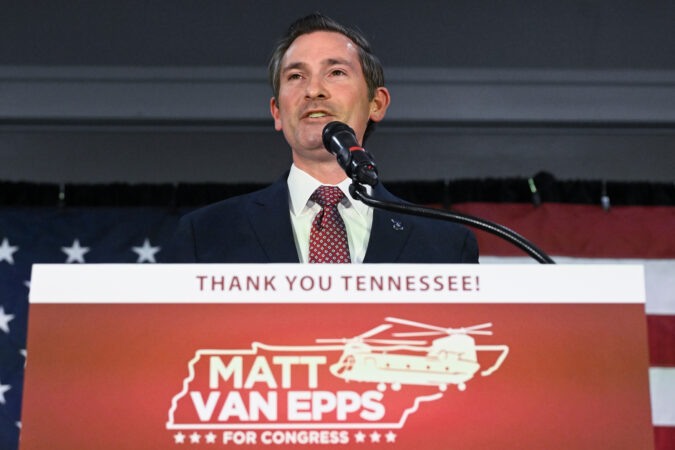
    Republicans held onto a reliably conservative U.S. House district in Tennessee’s special election, but only after a late burst of national spending and high-profile campaigning helped them secure a margin less than half of last year’s race.

    Even with that victory, the outcome contributed to a gloomy outlook for the party going into the 2026 midterms that will determine control of Congress. Republicans will need to defend much more vulnerable seats if they have any hope of keeping their House majority, while Democrats are capitalizing on President Donald Trump’s unpopularity and the public’s persistent frustration with the economy.

    “The danger signs are there, and we shouldn’t have had to spend that kind of money to hold that kind of seat,” said Jason Roe, a national Republican strategist working on battleground races next year.

    He said that “Democratic enthusiasm is dramatically higher than Republican enthusiasm.”

    Republican Matt Van Epps, a military veteran and former state general services commissioner, defeated Democratic state Rep. Aftyn Behn by 9 percentage points on Tuesday for the seat vacated by Republican Mark Green, who retired over the summer. Green had won reelection in 2024 by 21 percentage points.

    Special elections provide a limited window into the mood of voters and take place under far different conditions than regular campaign cycles. But some Republicans are acknowledging the warning signs, especially after Democrats had convincing victories in New Jersey, Virginia and elsewhere last month.

    Tennessee was the fifth House special election this year, and Democratic candidates have outperformed Kamala Harris’ showing in the 2024 presidential race by an average of 16 percentage points in the same districts.

    “We could have lost this district,” Sen. Ted Cruz (R., Texas) told Fox News after The Associated Press called the race for Van Epps. Cruz said his party must “set out the alarm bells” because next year is “going to be a turnout election and the left will show up.”

    Trump dismisses affordability concerns

    Although inflation has dropped since Democratic President Joe Biden was in office, Behn focused her campaign on the lingering concerns about prices.

    Trump has played down the affordability issue, saying during a Cabinet meeting Tuesday that it was “a con job” by his political opponents.

    “There’s this fake narrative that the Democrats talk about, affordability,” he said. ”They just say the word. It doesn’t mean anything to anybody, they just say it.”

    Roe viewed things differently. He said the Tennessee race had “better be a wake-up call that we’ve got to address the affordability problem, and the president denying that affordability is a political issue is not helpful.”

    Maintaining House control is crucial for Trump, who fears a repeat of his first term, when Democrats flipped the House and launched an impeachment inquiry. The Republican president has been leaning on GOP-led states to redraw congressional maps to improve the party’s chances.

    Trump campaigned for Van Epps, boosting him during the primary with an endorsement and participating in two tele-rallies during the general election.

    The Republican National Committee also deployed staffers and partnered with state officials to get voters to the polls. MAGA Inc., the super political action committee that had gone dark since supporting Trump in 2024, reemerged to back Van Epps with about $1.7 million.

    House Speaker Mike Johnson (R., La.) visited the Nashville-area district on Monday.

    “When you’re in a deep red district, sometimes people assume that the Republican, the conservative will win,” he said Tuesday. “And you cannot assume that, because anything can happen.”

    Chip Saltsman, a political strategist and former Tennessee Republican Party chair, said his party had brought in its heaviest hitters simply because there were not other competing contests, not because Republicans feared a loss.

    “It’s the only election going on. Why wouldn’t the speaker come?” he asked. “There was one race, and you would expect everybody to do everything they could.”

    Democrats see promise despite loss

    The House Majority PAC put $1 million behind Behn. After she lost, Democratic national party chair said Behn’s performance was “a flashing warning sign for Republicans heading into the midterms” in 2026.

    Behn said her campaign had “inspired an entire country.”

    “Let’s keep going,” she urged voters after her loss. “We’re not done. Not now, not ever.”

    Although Democrats were optimistic, the result contributed to some murmuring within the party about the best path forward as it grasps for a path back to power in Washington.

    Among special elections this year, the shift in Behn’s direction was the second smallest, providing an opening for some factions that believe more moderate candidates would fare better.

    “Each time we nominate a far-left candidate in a swing district who declares themselves to be radical and alienates the voters in the middle who deliver majorities, we set back that cause,” said a statement from Lanae Erickson, a senior vice president at Third Way, a centrist Democrat think tank.

    Republicans tried to turn Behn’s own words against her in television ads, such as when she described herself as a “radical” or claimed to be “bullying” immigration agents and state police officers. Also cited were comments Behn made about Nashville years ago, when she said, “I hate this city,” and complained about bachelorette parties.

    Several high-profile progressive leaders, including U.S. Rep. Alexandria Ocasio-Cortez (D., N.Y.) had rallied for Behn in the campaign’s final days.

  • DHS launches new immigration sting in New Orleans

    DHS launches new immigration sting in New Orleans

    The Department of Homeland Security announced the start of a new immigration enforcement operation in New Orleans on Wednesday, the latest in a series of sweeps that have resulted in thousands of arrests, legal challenges and protests.

    DHS said it was launching “Operation Catahoula Crunch” to target “criminal illegal aliens roaming free thanks to sanctuary policies that force local authorities to ignore U.S. Immigration and Customs Enforcement (ICE) arrest detainers.”

    The announcement included a list and photos of 10 undocumented immigrants — from Honduras, El Salvador, Guatemala, Jordan and Vietnam — who the agency said had been arrested for a variety of crimes in New Orleans and later released.

    “Sanctuary policies endanger American communities by releasing illegal criminal aliens and forcing DHS law enforcement to risk their lives to remove criminal illegal aliens that should have never been put back on the streets,” Assistant Secretary Tricia McLaughlin said in a statement. “It is asinine that these monsters were released back onto New Orleans streets to COMMIT MORE CRIMES and create more victims.”

    Immigration enforcement escalations in Los Angeles, Chicago, Boston and — for a shorter time — Charlotte have generated unrest. Residents have alleged civil rights abuses, and policing experts have questioned the tactics used and the training provided to agents in the rapidly growing U.S. immigration enforcement apparatus.

    While DHS has said the operations are targeted at capturing violent criminals, many undocumented immigrants with no record have also been arrested. In Chicago, the agency said, immigration officers arrested more than 4,000 people in “Operation Midway Blitz,” but officials have publicly identified only about 120 of those arrested as having a criminal arrest or conviction, some for major crimes such as murder and others for nonviolent offenses such as illegally crossing the border.

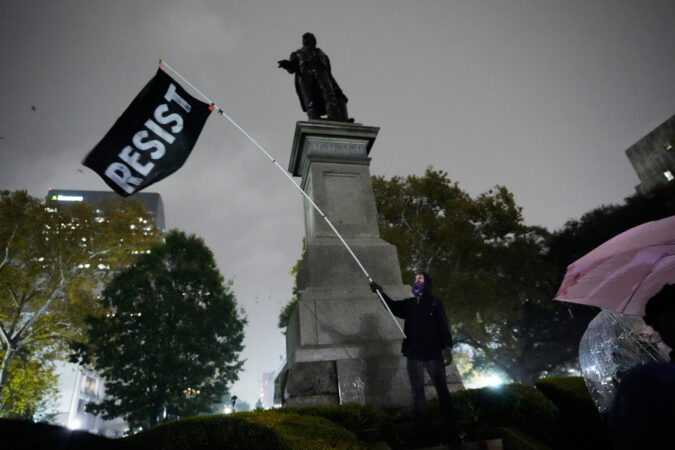
    In each city, whistleblowing protesters have trailed immigration agents, warning neighborhoods of their presence. In Chicago and Los Angeles especially, immigration agents were limited in their ability to manage large, hostile crowds or protesters as they worked independently of Chicago police officers, who were not permitted to assist in immigration arrests.

    Across New Orleans, residents had anticipated the operation, particularly immigrants. Some businesses had closed while others posted signs saying, “ICE not welcome here.”

    First Grace United Methodist Church posted a sign citing scripture that read, “ICE: Whatsoever you do to the least, you do unto me.”

    “A lot of people are locking their houses because it’s a scary time. We are all anticipating,” said Leticia Casildo, a co-founder of the nonprofit immigrant advocacy group Familias Unidas en Acción who immigrated to the United States from Honduras and who has lived in New Orleans for 20 years.

    New Orleans mutual aid organizations have been watching closely how immigration operations have played out in other cities, and several organizations have collaborated with like-minded entities in Chicago, Los Angeles and Charlotte to learn new strategies to adapt to increased enforcement.

    A spokesperson for the ACLU of Louisiana said the organization had consulted with the ACLU of North Carolina to fine-tune educational materials for individuals eager to document the actions of federal officers.

    Chicago organizers said they believe that a network of “rapid response” civilians who follow Homeland Security agents or respond to arrest scenes with cameras and whistles effectively warned communities of law enforcement’s presence and held agents accountable, to an extent, for violent interactions.

    “What we’ve learned is that even a street witness who is not recording makes these interactions less traumatic and less violent,” said Beth Davis, a press liaison for Indivisible NOLA. “So we need to get eyes on these people.”

    Louisiana residents’ reaction to Homeland Security actions may be complicated by a new state law punishing obstruction of immigration enforcement, said GOP state Sen. John “Jay” Morris, who represents northern Louisiana and wrote the law. While some mutual aid organizations in New Orleans have been directing people to buy whistles similar to those used in other cities, other organizations have not, anticipating immigration agents or local police may class the use of whistles as obstruction.

    “Such a law shouldn’t be necessary, but around the country and even the sheriff in Orleans Parish about a year ago indicated that she would not cooperate with ICE,” Morris said. “I hate that we have to have a law to tell people they have to cooperate with federal officials.”

    The law he wrote makes it a crime to “hinder, delay, prevent, or otherwise interfere with or thwart” federal immigration enforcement, and those in violation could face fines and up to a year in jail. Morris and other state lawmakers also expanded the crime of malfeasance in office, punishable by up to a decade in jail, to include government officials who refuse requests by ICE and prohibited police and judges from releasing anyone who “illegally entered or unlawfully remained” in the U.S. without notifying ICE.

    He said the laws could come into force if New Orleans officials or others attempt to interfere with DHS.

    New Orleans police spokesman Reese Harper said that federal officials had not notified the department about when the operation would start and that police will not be involved.

    “We handle the criminal aspect of the law. Border Patrol and ICE handle civil. So it’s unlawful for us to even touch that,” Harper said. “The only way we would even come in contact with them is if they called for backup, like a life-threatening situation.”

    He said that Superintendent Anne Kirkpatrick last month “did meet with both Border Patrol and ICE, but we don’t know much about the operation. We know that they are coming and that’s basically it.”

    New Orleans police have operated under a federal consent decree for the past 13 years that limited their cooperation with federal immigration enforcement, including the city’s jail. The Justice Department accused New Orleans of undermining federal immigration enforcement and included it on a list of 18 immigrant “sanctuary cities.”

    But a federal judge ended the consent decree last month, and Kirkpatrick said she would be a “partner” to the federal agents, although officers will not be conducting immigration arrests or asking people about their immigration status, according to a radio interview with WBOK reported by the Times-Picayune.

    Local and state leaders were split on the prospect of more immigration agents in Louisiana and Mississippi.

    New Orleans Mayor-elect Helena Moreno, who will begin her term in January as the city’s first Latina and Mexican-born mayor, criticized immigration enforcement tactics during surges in other cities in an interview with CNN on Tuesday.

    “It’s one thing if you would have a real strategic approach on going after people … who have criminal felonies or are being accused of some very serious and violent crimes. But that’s not what the public is seeing,” Moreno said. “They’re seeing people who are just trying to survive and do the right thing — and many of them now have American children who are not causing problems in our community — treated like they are violent, violent criminals.”

    The Orleans Parish Sheriff’s Office has refused to honor ICE detainers at the jail for more than a decade, but state officials last month challenged that policy under the new state law.

    A spokesman for the sheriff’s office this week referred questions about the operation to New Orleans police.

    Louisiana Gov. Jeff Landry (R) told Fox News on Monday that “we don’t talk about specific operations, but we certainly invite [Border Patrol official] Greg Bovino and [ICE Deputy Director] Madison Sheahan and [Homeland Security Secretary Kristi L.] Noem and all of President Trump’s great team that’s trying to make America safe to help make Louisiana safe.”

    “New Orleans is a crime-ridden city that we’ve been trying to keep people safe and something we’ve been working on since I became governor of Louisiana,” he said. “I’m welcoming them to come in. We’re going to take these dangerous criminals off the streets in Louisiana.”

    Asked what he thought of Kirkpatrick saying she can’t enforce immigration law, Landry conceded that “she can’t” and blamed the recently lifted federal consent decree that “decimated the New Orleans police department” and led him to create a French Quarter-based team of state police called “Troop Nola” “to get crime under control in New Orleans.”

    In September, Landry requested a National Guard deployment to New Orleans, citing an alleged increase in violent crime, even though police and city leaders say crime has decreased and federal support isn’t needed.

    Louisiana is a key hub in “Detention Alley,” a region that includes Texas and Mississippi that’s home to most of the country’s largest federal immigration detention centers. Louisiana’s centers house up to 6,000 detainees. The state opened the new “Louisiana Lockup” in September within the Louisiana State Penitentiary in Angola to hold immigrants whom federal officials consider dangerous. In a news conference, Noem said the prison’s “notorious” reputation — which includes a long, documented history of civil rights abuses — was a factor in choosing the facility to house undocumented immigrants.

    The New Orleans immigration enforcement operation, previously dubbed “Operation Swamp Sweep” in media reports anticipating the action, instead references Catahoula leopard dogs, trained by early Louisiana settlers to hunt wild boar.

  • Trump pardons Texas Democratic Rep. Henry Cuellar in bribery and conspiracy case

    Trump pardons Texas Democratic Rep. Henry Cuellar in bribery and conspiracy case

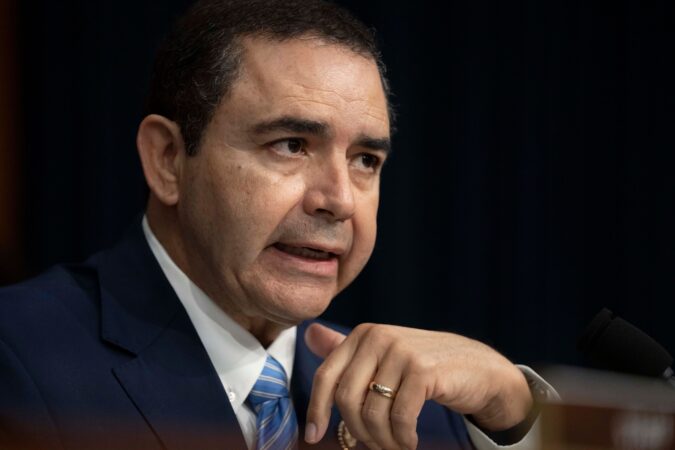
    President Donald Trump pardoned Texas Democratic Rep. Henry Cuellar and his wife in a federal bribery and conspiracy case on Wednesday, citing what he called a “weaponized” justice system.

    Trump, who has argued that his own legal troubles were a partisan witch hunt, said on social media without presenting evidence that Cuellar and his wife, Imelda Cuellar, were prosecuted because the congressman had been critical of President Joe Biden’s immigration policies.

    Trump, a Republican, said in a social media post that Cuellar “bravely spoke out against Open Borders” and accused Biden, a Democrat, of going after the congressman and his wife “for speaking the TRUTH.”

    Federal authorities had charged Cuellar and his wife with accepting thousands of dollars in exchange for the congressman advancing the interests of an Azerbaijan-controlled energy company and a bank in Mexico. Cuellar is accused of agreeing to influence legislation favorable to Azerbaijan and deliver a pro-Azerbaijan speech on the floor of the U.S. House.

    Cuellar has said he and his wife are innocent. The couple’s trial had been set to begin next April.

    “Henry, I don’t know you, but you can sleep well tonight,” Trump wrote in his social media post announcing the pardon. “Your nightmare is finally over!”

    Cuellar thanks Trump for the pardon

    Cuellar, who spoke to reporters outside his congressional office on Wednesday, thanked Trump in a brief statement.

    “I think the facts have been clear about this, but I would also say I want to thank God for standing during this very difficult time with my family and I,” he said. ”Now we can get back to work. Nothing has changed. We will continue working hard.”

    Cuellar was asked if he was changing parties and said, “No, like I said, nothing has changed.”

    A spokesperson for Biden did not immediately respond to messages seeking comment.

    The Constitution gives the president broad power to grand pardons for federal crimes. The pardons don’t erase a recipient’s criminal record but can be seen as act of mercy or justice, often in cases that further public welfare.

    Trump’s pardons this year have included a string of unlikely beneficiaries who are boldfaced names and frequently politically aligned with the president. He pardoned dozens of Republicans accused of participating in his efforts to overturn his 2020 election loss to Biden. He gave clemency to all of 1,500-plus people charged in the Jan. 6, 2021, attack on the U.S. Capitol. He’s also pardoned a former Republican governor of Connecticut, an ex-GOP congressman and reality TV stars who had been convicted of cheating banks and evading taxes.

    Cuellar’s daughters sought a pardon for him

    In Trump’s social media post, he included a copy of a letter that Cuellar’s two daughters, Christina and Catherine, had sent to him on Nov. 12 asking that he pardon their parents.

    “When you and your family faced your own challenges, we understood that pain in a very human way,” Cuellar’s daughters wrote in their letter. ”We watched from afar through the eyes of daughters who knew what it felt like to see parents under fire.”

    One of Henry Cuellar’s lawyers, Eric Reed, said Wednesday that his legal team made a “pretty substantive presentation” to the Justice Department several months ago seeking dismissal of the charges. He declined to comment on what specifically Cuellar’s legal team discussed with the department but said the arguments made were not political in nature.

    In a statement, Imelda Cuellar’s lawyers said Wednesday they were gratified by Trump’s pardon of their client.

    “She has always maintained her innocence,” the statement said.

    Henry Cuellar still faces an Ethics Committee investigation in the House. It began in May 2024 shortly after his indictment and was reauthorized in July. The committee said it was in contact with the Justice Department about mitigating the risks associated with dual investigations while still meeting its obligations to safeguard the integrity of the House.

    Cuellar, who has served in Congress for more than 20 years, is a moderate Democrat who represents an area on the Texas-Mexico border and has a history of breaking with his party when it comes to immigration and firearms.

    He was among the most vocal critics of the Biden administration’s response to a record number of migrants crossing the U.S.-Mexico border. He also is one of the last Democrats in Congress who opposes abortion rights.

    Cuellar is not the only Democrat Trump has pardoned this year. In February, he pardoned former Illinois Gov. Rod Blagojevich, five years after he had commuted his sentence in a political corruption case.

    Like in Cuellar’s case, Trump suggested that New York City Mayor Eric Adams, a Democrat, faced federal corruption charges because he made comments critical of Biden’s immigration policies.

    Trump did not pardon Adams, but after Trump took office, the Justice Department moved to drop the case against the mayor, who had begun working with the Republican administration on immigration issues.

    A top Justice Department official, who was also Trump’s defense lawyer in several of his cases, stepped in to seek dismissal in the case.

  • Pete Hegseth faces deepening scrutiny from Congress over boat strikes

    Pete Hegseth faces deepening scrutiny from Congress over boat strikes

    WASHINGTON — Pete Hegseth barely squeaked through a grueling Senate confirmation process to become secretary of defense earlier this year, facing lawmakers wary of the Fox News Channel host and skeptical of his capacity, temperament and fitness for the job.

    Just three months later, he quickly became embroiled in Signalgate as he and other top U.S. officials used the popular Signal messaging application to discuss pending military strikes in Yemen.

    And now, in what may be his most career-defining moment yet, Hegseth is confronting questions about the use of military force after a special operations team reportedly attacked survivors of a strike on an alleged drug boat off the coast of Venezuela. Some lawmakers and legal experts say the second strike would have violated the laws of armed conflict.

    “These are serious charges, and that’s the reason we’re going to have special oversight,” said Sen. Roger Wicker of Mississippi, the Republican chair of the Senate Armed Services Committee.

    The scrutiny surrounding Hegseth’s brash leadership style is surfacing what has been long-building discontent in Congress over President Donald Trump’s choice to helm the U.S. military. And it’s posing a potentially existential moment for Hegseth as the congressional committees overseeing the military launch an investigation amid mounting calls from Democratic senators for his resignation.

    Hegseth vowed a ‘warrior culture,’ but lawmakers take issue

    Since working to become defense secretary, Hegseth has vowed to bring a “warrior culture” to the U.S. government’s most powerful and expensive department, from rebranding it as the Department of War to essentially discarding the rules that govern how soldiers conduct themselves when lives are on the line.

    Hegseth on Tuesday cited the “fog of war” in defending the follow-up strike, saying that there were explosions and fire and that he did not see survivors in the water when the second strike was ordered and launched. He chided those second-guessing his actions as being part of the problem.

    Yet the approach to the operation was in line with the direction of the military under Hegseth, a former infantry officer with the Army National Guard, part of the post-Sept. 11 generation, who was deployed to Iraq and Afghanistan and earned Bronze Stars.

    During a speech in September, he told an unusual gathering of top military brass whom he had summoned from all corners of the globe to the Quantico Marine Corps Base in Virginia that they should not “fight with stupid rules of engagement.”

    “We untie the hands of our warfighters to intimidate, demoralize, hunt and kill the enemies of our country,” he said. “No more politically correct and overbearing rules of engagement, just common sense, maximum lethality and authority for warfighters.”

    But now lawmakers and military and legal experts say the Sept. 2 attack borders on illegal military action.

    “Somebody made a horrible decision. Somebody needs to be held accountable,” said Sen. Thom Tillis, a North Carolina Republican who in January held out support for Hegseth until only moments before casting a crucial vote for his confirmation.

    “Secretary Talk Show Host may have been experiencing the ‘fog of war,’ but that doesn’t change the fact that this was an extrajudicial killing amounting to murder or a war crime,” said Sen. Chris Van Hollen, D-Md. “He must resign.”

    Rep. Don Bacon, a Republican who served 30 years active duty in the Air Force, finishing his career at the rank of brigadier general, said he hasn’t been a fan of Hegseth’s leadership. “I don’t think he was up to the task,” Bacon said.

    Will Hegseth keep Trump’s support?

    Trump, a Republican, has largely stood by his defense secretary, among the most important Cabinet-level positions. But the decisions by Wicker, alongside House Armed Services Chair Mike Rogers of Alabama and the top Democrats on the committees, to open investigations provide a rare moment of Congress asserting itself and its authority to conduct oversight of the Trump administration.

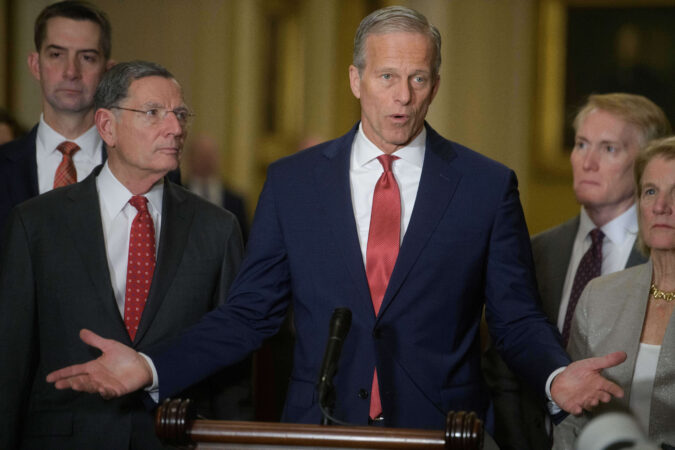
    Senate Majority Leader John Thune, R-S.D., who shepherded the defense secretary’s nomination to confirmation, has said the boat strikes are within Trump’s authority as commander in chief — and he noted that Hegseth serves at the pleasure of the president.

    “I don’t have, at this point, an evaluation of the secretary,” Thune said at the start of the week. “Others can make those evaluations.”

    But Hegseth also has strong allies on Capitol Hill, and it remains unclear how much Republicans would actually be willing to push back on the president, especially when they have spent the first year in his administration yielding to his various demands.

    Vice President JD Vance, who cast a rare tiebreaking vote to confirm Hegseth, has vigorously defended him in the attack. And Sen. Eric Schmitt, another close ally to Trump, dismissed criticism of Hegseth as “nonsense” and part of an effort to undermine Trump’s focus on Central and South America.

    “He’s not part of the Washington elite,” said Schmitt, R-Mo. “He’s not a think tanker that people thought Trump was going to pick. … And so, for that reason and others, they just, they don’t like him.”

    Tension between some Republican lawmakers and the Pentagon has been rising for months. Capitol Hill has been angered by recent moves to restrict how defense officials communicate with lawmakers and the slow pace of information on Trump’s campaign to destroy boats carrying drugs off the coast of Venezuela.

    As he defends his job, Hegseth has spoken to both Wicker and Rogers, the top lawmakers overseeing the military. Rogers said he was “satisfied” with Hegseth after that conversation, while Wicker said that he told Hegseth that he would like him to testify to Congress.

    Hegseth at first tried to brush aside the initial report about the strike by posting a photo of the cartoon character Franklin the Turtle firing on a boat from a helicopter, but that only inflamed criticism of him and angered lawmakers who felt he was not taking the allegations seriously.

    Senate Democratic leader Chuck Schumer of New York called Hegseth a “national embarrassment,” adding the defense secretary’s social media post of the cartoon turtle is “something no serious leader would ever think of doing.”

    What information will Congress get?

    Later this week, the chairs of the armed services committees, along with the top Democrats on the committees, will hear private testimony from Navy Vice Adm. Frank “Mitch” Bradley, who the White House has said ordered the second strike on the survivors.

    Republicans have been careful to withhold judgment on the strike until they complete their investigation, but Democrats say that these problems with Hegseth were a long time coming.

    Sen. Tim Kaine, a Virginia Democrat, pointed back to Hegseth’s tumultuous confirmation hearing, at which issues were raised with his management of nonprofits, as well as allegations of a sexual assault and abuse, and drinking on the job. Hegseth had vowed not to consume alcohol if confirmed.

    “You don’t suddenly change your judgment level or change your character when you get confirmed to be secretary of defense,” Kaine said. “Instead, the things that have been part of your character just become much more dire and existential.”

  • Chances dwindling for renewal of healthcare subsidies, risking premium spikes for millions

    Chances dwindling for renewal of healthcare subsidies, risking premium spikes for millions

    WASHINGTON — Hopes for an extension of healthcare subsidies were diminishing in Congress this week as Republicans and Democrats largely abandoned the idea of bipartisan talks on the issue, increasing the odds that millions of Americans could see sharp premium spikes starting Jan. 1.

    Democrats who agreed earlier this month to reopen the government in exchange for a December healthcare vote were hoping they could work with Republicans to extend the COVID-era Affordable Care Act tax credits that help many Americans pay for their health coverage. But lawmakers in both parties have spent most of the time since talking among themselves instead, while rehashing longstanding partisan arguments over the law in public.

    “I don’t think at this point we have a clear path forward, I don’t think the Democrats have a clear path forward,” Senate Majority Leader John Thune said Tuesday after Republicans met and discussed different proposals to overhaul the law.

    The impasse means the Senate vote, expected next week, could be a party-line messaging exercise with no real chance of passage. Under the deal struck to end the shutdown, Democrats can determine the legislation that comes up for a vote. But Senate Democratic Leader Chuck Schumer has indicated they are leaning toward a vote on a straight extension of the subsidies with no new limits or tweaks to the law, which Republicans have already rejected.

    “So far the Republicans are in total disarray and have no plan,” Schumer said Tuesday. “We have a plan.”

    Democrats say they are willing to negotiate on the issue, and some have said they would be open to new limits on the subsidies. But they argue that two main issues are holding up talks: the lack of input from President Donald Trump, and Republicans’ insistence that abortion funding be part of the discussion.

    “Our Republican colleagues aren’t going to engage with us” unless Trump weighs in, Sen. Peter Welch (D., Vt.) said. “That’s the paralysis here.”

    Abortion issue holds up compromise

    Maine Sen. Angus King, an independent who caucuses with the Democrats, was part of the group that struck a deal to end the shutdown. He says there have been some informal bipartisan discussions since then, but says they stalled as Republicans insisted on stricter abortion restrictions on Affordable Care Act plans.

    “They have set up a red line that is also a red line for the Democrats,” King said of Republicans. “So they’re going to own these increases.”

    Missouri Sen. Josh Hawley, who has said he wants to see the tax credits extended, said the issue “should not be a deal-killer” since a ban on federal funding for abortions is already in the law.

    Democrats say current law should be sufficient. While many states ban abortion coverage from all plans in the ACA marketplaces, others allow or require abortion coverage that isn’t paid for with federal funding.

    Republicans weigh different plans

    Beyond the abortion issue, many Republicans have said for years that they want to see the ACA scrapped or overhauled. But there is still little consensus in the GOP about whether to do that or how.

    Republican senators have discussed several competing proposals in recent weeks. Louisiana Sen. Bill Cassidy and Florida Sen. Rick Scott have suggested creating different types of health savings accounts that would change the way people buy insurance — an idea that Trump has endorsed in social media posts without much detail. Other senators have suggested extending the subsidies with new limits on income.

    Thune said Tuesday that “we will see where the Republicans come down, but that conversation continues.”

    Republicans want to work on a constructive solution, he said, “but that hasn’t landed yet.”

    In the House lawmakers were also discussing different ideas. But there was no indication that any of them could be ready by the end of the year or generate enough bipartisan support.

    “Healthcare is a very complicated issue,” House Speaker Mike Johnson (R., La.) said Tuesday, while insisting that Republicans were still “pulling ideas together.”

    Trump gives little guidance

    Lawmakers in both parties have said it will be hard to move forward without Trump’s support for a plan. But the president has yet to formally endorse any legislation.

    Last week, the White House circulated a proposal to extend the subsidies with some limits, like new income caps and a requirement that all recipients pay some sort of premium. The proposal would also have allowed those in lower-tier plans, such as the bronze-level or catastrophic plans, to put money into health savings accounts.

    But the proposal was never released.

    Asked last week whether he wants to extend the subsidies, Trump appeared to refer to the leaked plan, saying that “somebody said I wanted to extend it for two years. … I’d rather not extend them at all.”

    Still, he acknowledged that some sort of extension may be “necessary.”

  • Trump appears to doze off in another meeting

    Trump appears to doze off in another meeting

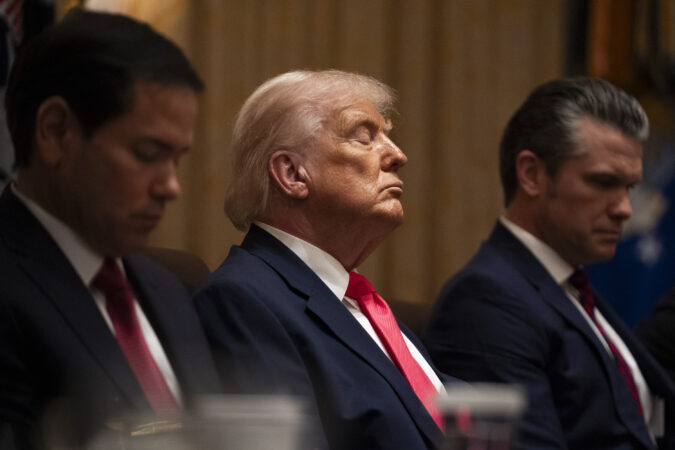
    President Donald Trump closed his eyes for extended periods as cabinet officials went around the room Tuesday providing updates on their work, at times seeming to nod off.

    It was the second time in less than a month that Trump has appeared to struggle to stay awake as his advisers speak about the administration’s initiatives. A Washington Post analysis of multiple video feeds of the meeting Tuesday showed that during nine separate instances, Trump’s eyes were closed for extended periods or he appeared to struggle to keep them open, amounting cumulatively to nearly six minutes. The episode was similar to an Oval Office event on Nov. 6 when the president spent nearly 20 minutes battling to keep his eyes open.

    Trump’s apparent drowsiness during the 2-hour, 17-minute gathering with his cabinet followed pronouncements in recent days by the 79-year-old president, his advisers and his doctor that he is in excellent health and full of stamina — an assertion the president repeated early in Tuesday’s meeting.

    “Right now, I think I’m sharper than I was 25 years ago,” Trump said, criticizing a recent New York Times article that said the president was facing the realities of aging. He later resurrected a frequent insult, “Sleepy Joe,” to mock former President Joe Biden, the first octogenarian to serve as president, who faced regular scrutiny for his perceived lack of stamina.

    In response to a request for comment about Trump’s eyes being closed during the meeting, a White House official initially told the Post that he was not sleeping, though a subsequent statement from press secretary Karoline Leavitt did not specifically address whether the president had dozed off.

    Leavitt instead said he was “listening attentively and running the entire” meeting, and cited Trump’s “amazing final answer in the news conference,” in which he bashed Somali migrants, calling it an “epic moment.”

    The White House has worked to refute suggestions that Trump has slowed down since his first term eight years ago. His advisers on Monday provided private logs to the New York Post that they said revealed Trump “working up to 12-hour days” on several instances during the past few weeks, the outlet reported.

    But on Tuesday, the president appeared sleepy. Throughout Secretary of State Marco Rubio’s discussion of “the most transformational year in American foreign policy since the end of the Second World War — at least,” Trump leaned his head forward and shut his eyes. They remained closed even as Rubio discussed one of the president’s favorite topics, his efforts to broker peace between warring foreign nations.

    Trump appeared far more alert later Tuesday when announcing “Trump accounts,” new tax-advantaged investment accounts for children. Unlike the meeting that had ended an hour earlier, where Trump was seated as he appeared to battle sleep, the president, Sen. Ted Cruz (R., Texas) and other officials were standing during the 40-minute announcement.

    “I don’t think [Trump] sleeps at all,” Cruz said at one point.

    While Trump’s Oval Office drowsiness last month came a week after he returned from a trip to Asia — a journey known for causing jet lag — the episode Tuesday followed a late night and early morning of the president scrolling and posting on social media.

    Between 10 p.m. Monday and midnight, Trump made nearly 150 posts and reposts on his Truth Social account, ranging from criticisms of Democrats and screenshots of posts from right-wing conspiracy theorists to positive video clips about himself and first lady Melania Trump. Despite being a prolific and longtime user of social media, Trump’s blitz of posts that night was far more than is typical for him, though Trump’s advisers have told the Post he frequently only gets about four hours of sleep a night.

    By 5:30 a.m. Tuesday, the president was back to posting again online.

  • Pete Hegseth, in a 2016 talk, cited the same military law as the lawmakers he’s now calling seditious

    Pete Hegseth, in a 2016 talk, cited the same military law as the lawmakers he’s now calling seditious

    Defense Secretary Pete Hegseth previously emphasized the same military law that the Trump administration has been calling Pennsylvania lawmakers seditious for citing.

    Hegseth noted the military rule not to obey unlawful orders during a forum in 2016, when he was a Fox News contributor, in recorded remarks CNN unearthed on Tuesday.

    Hegseth spoke at length about his views on the military — and criticism of former President Barack Obama — in a talk titled “The US Military: Winning Wars, Not Social Engineering.” The talk was shared online by the Liberty Forum of Silicon Valley and was marked as taking place on April 12, 2016. Hegseth, an Army veteran, had a book coming out that he promoted at the event.

    The moderator asked him a question from an attendee: “Can you comment on soldiers who are being held at Leavenworth Prison for being soldiers?”

    Fort Leavenworth in Kansas is home to the military’s only maximum-security correctional facility, which houses prisoners convicted of violating the Uniform Code of Military Justice.

    Hegseth argued that some prisoners at the facility did not deserve to be there but that others were facing the consequences for their unlawful actions.

    “There are some guys at Leavenworth who made really bad choices on the battlefield, and I do think there have to be consequences for abject war crimes,” he said. “If you’re doing something that is just completely unlawful and ruthless, then there is a consequence for that.”

    “That’s why the military said it won’t follow unlawful orders from their commander in chief,” he added. “There’s a standard, there’s an ethos, there’s a belief that we are above what so many things that our enemies or others would do.”

    It is the same policy that a group of six Democratic members of Congress cited in a video that enraged President Donald Trump.

    Democratic U.S. Reps. Chrissy Houlahan of Chester County and Chris Deluzio of Allegheny County, both veterans, joined a group of other veterans and former members of the intelligence community to urge members of the military and intelligence community to “refuse illegal orders” in a video they shared on social media last month.

    On his social media website, Truth Social, Trump said they were committing sedition “punishable by DEATH” and shared other posts attacking the lawmakers, including one calling for them to be hanged. Hegseth called them the “seditious six.”

    “Encouraging our warriors to ignore the orders of their Commanders undermines every aspect of ‘good order and discipline,’” Hegseth said in a social media post. “Their foolish screed sows doubt and confusion — which only puts our warriors in danger.”

    When asked for comment by CNN, spokespersons for the Pentagon and the White House further criticized the Democratic lawmakers who made the video.

    Pentagon spokesperson Kingsley Wilson also told CNN that the military “has clear procedures for handling unlawful orders” and defended Trump’s orders as legal.

    White House spokesperson Anna Kelly told CNN that Hegseth’s position has remained consistent and that his remarks were “uncontroversial.”

    Sean Timmons, a Houston-based attorney specializing in military law who served as an active-duty U.S. Army captain in the U.S. Army Judge Advocate General (JAG) program, told The Inquirer that service members can get in trouble for refusing orders and that it is largely up to commanders to determine whether orders are lawful or not. While the military rules specify not to follow obviously illegal orders, such as war crimes, they also say to presume orders are lawful.

    Houlahan expressed disappointment in her Republican colleagues for largely not defending the Democratic lawmakers, though U.S. Rep. Brian Fitzpatrick, a Bucks County Republican, said he stood by his Democratic colleagues when asked by The Inquirer.

    The fallout from the video has gone beyond rhetoric on X and Truth Social.

    The FBI wanted to question the lawmakers involved in the video, and the Department of Defense said it would investigate U.S. Sen. Mark Kelly (D., Ariz.), a former naval officer and the one veteran in the video who is still obligated to follow military laws because he served long enough to become a military retiree. The department threatened to call Kelly back to active duty for court-martial proceedings, which abide by stricter rules than civilian law.

    Hegseth also said in his 2016 talk that he believed U.S. Sen. Ted Cruz (R., Texas), Trump’s top rival for the GOP nomination that year, would be the best president at fighting wars, but that he believed Cruz and Trump would both “unleash war fighters and get the lawyers out of the way, which is really a big impediment to how we fight wars.”

    The Democratic lawmakers did not cite specific orders in their video announcement, but Trump’s involvement of the National Guard in U.S. cities and the Pentagon’s strikes in the Caribbean have drawn legal debate.