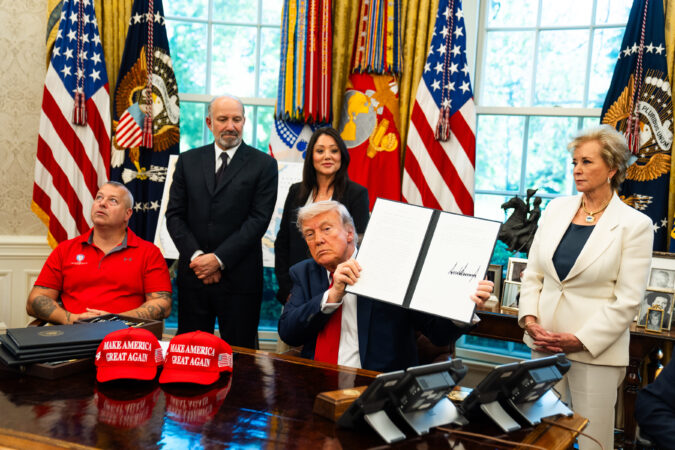
The Education Department plans to announce Tuesdaythat it will move multiple parts of the agency to other federal departments, an unprecedented and unilateral effort to dismantle an agency created by Congress to ensure all Americans have equal access to educational opportunity and better coordinate federal programs.
The move was described by three people informed of the plan ahead of the announcement. Two of these people said six offices within the department would be shifted elsewhere; the third person said it was at least two.
President Donald Trump signed an executive order in March seeking to close the department and asked Education Secretary Linda McMahon to work with Congress to do so. The agency, which was created in 1979, has long been derided by conservatives as unnecessary and ineffective. But Congress has not acted on or seriously considered Trump’s request.
McMahon has acknowledged that only Congress can eliminate the department but vowed to do everything in her power to dismantle it from within.
Asked for comment, an Education Department spokeswoman suggested some information provided to The Post about the plan was inaccurate, but did not offer specifics.
Supporters of the department say that the agency is effective in coordinating multiple aspects of education in one place and keeping priorities important to students, parents and schools high on the federal agenda.
Offices that could be moved out of the agency include the Office for Civil Rights, which investigates allegations of discrimination on the basis of race, sex and disability; the Office of Special Education and Rehabilitative Services, which administers the $15 billion Individuals with Disabilities Act program; and the Indian Education program; the Office of Elementary and Secondary Education, which administers K-12 grant programs; and the Office of Postsecondary Education.
Federal law directs that these programs be housed in the Education Department. The Trump administration is employing a work-around, the people briefed on the matter said, whereby other government agencies would run the Education programs under a contract with the Education Department. The people spoke on the condition of anonymity because they were not authorized to discuss the changes.
The Trump administration laid the groundwork for this changeearlier this year when it signed an agreement to move career, technical and adult education grantsout of the Education Department to the Labor Department. Under the arrangement, Education retains oversight and leadership while managing the programs alongside Labor, a way of sidestepping thefederal statute.
“We believe that other department functions would benefit from similar collaborations,” McMahon wrote in an op-ed essay published Monday in USA Today.
More broadly, McMahon has argued that the recently ended government shutdown showed how unnecessary her agency is.
“Students kept going to class. Teachers continued to get paid. There were no disruptions in sports seasons or bus routes,” she wrote. “The shutdown proved an argument that conservatives have been making for 45 years: The U.S. Department of Education is mostly a pass-through for funds that are best managed by the states.”
The turning point in Pennsylvania’s budget impasse, by Gov. Josh Shapiro’s telling, came just before Halloween, when he and leaders in Harrisburg gathered in his stately, wood-paneled office to meet twice daily to hash out a deal to end the bitter, monthslong stalemate.
The long grind eventually led to compromises 135 days in, and a deal Shapiro said he thinks is far better than what national Democrats, hoping to extend healthcare subsidies, got in Washington at the end of the federal shutdown.
“Sometimes you’ve got to show that you’re willing to stay at the table and fight and bring people together in order to deliver,” Shapiro told The Inquirer in an interview Friday, touting the state budget agreement finally signed that week.
“I think it’s a stark contrast, frankly, with what happened in D.C., where they didn’t stay at the table, they didn’t fight, and they got nothing,” he said.
Washington is controlled by Republicans, while in Pennsylvania, Democrats control the state House and governorship, and Republicans hold a majority in the Senate.
Both state and federal budgets were signed the same day, offering Pennsylvanians relief from more than a month of government dysfunction at two levels. But for Shapiro — an exceedingly popular Democratic governor facing reelection in 2026 as whispers swirl over his potential 2028 presidential ambitions — the moment was bigger than a procedural win. In the end, Shapiro, preaching his oft-used slogan of “getting things done,” cast the outcome as proof he can muscle through gridlock of a divided legislature, cut deals under pressure, and hold firm where others cave.
So what if it took almost five months? Shapiro argues. At least he didn’t fold.
“I would have hoped to have gotten this budget done, you know, 100 or so days earlier,” Shapiro said, putting pen to paper in the state Capitol building’s baroque reception room last week. “But I think what you also saw was the result of having the courage to stay at the table and keep fighting for what you believe in. And we got a lot more than we gave in this budget.”
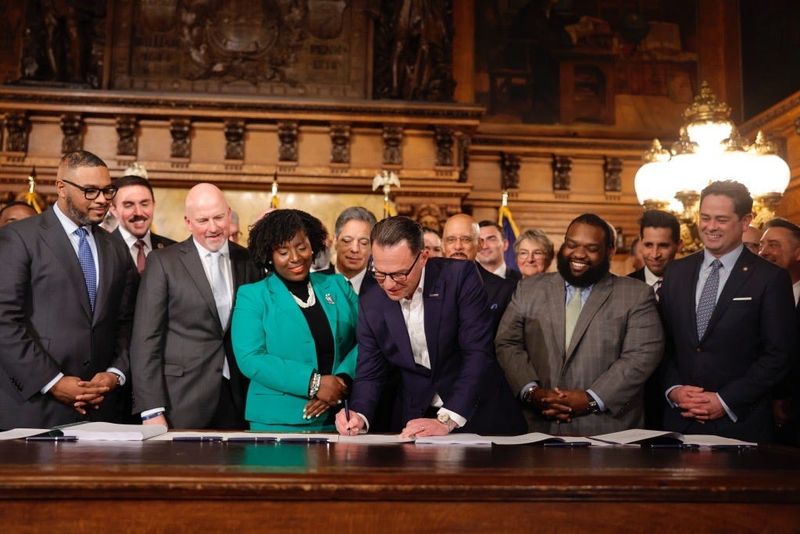
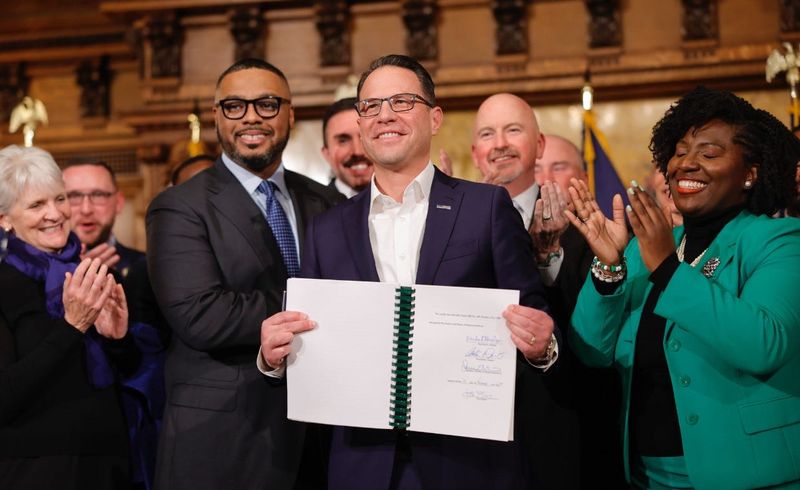
Gov. Josh Shapiro signs the fiscal year 2025-26 budget surrounded by General Assembly members on Nov. 12 at the Capitol in Harrisburg. The state budget had been due June 30, and Pennsylvania the final state in the country to approve a funding deal.
Critics are quick to note it took the self-proclaimed dealmaker so long to get a deal. Counties, school districts, and nonprofits struggled through four months without state payments while officials remained at loggerheads.Pennsylvania was the last state in the nation to pass a spending plan for the 2025-26 fiscal year.
“He’s five months late. He’s the governor of the fifth-biggest state in the country and the last state to get a budget done,” GOP consultant Vince Galko said. “It’s not a failing grade because it got done, but it’s still a D.”
‘A tremendous cost’
The $50.1 billion budget includes several key priorities for Shapiro and Democrats: significant increases in public education funding, a new tax credit for lower- and middle-income residents, continuation of a popular student-teacher stipend, and other economic and workforce development initiatives.
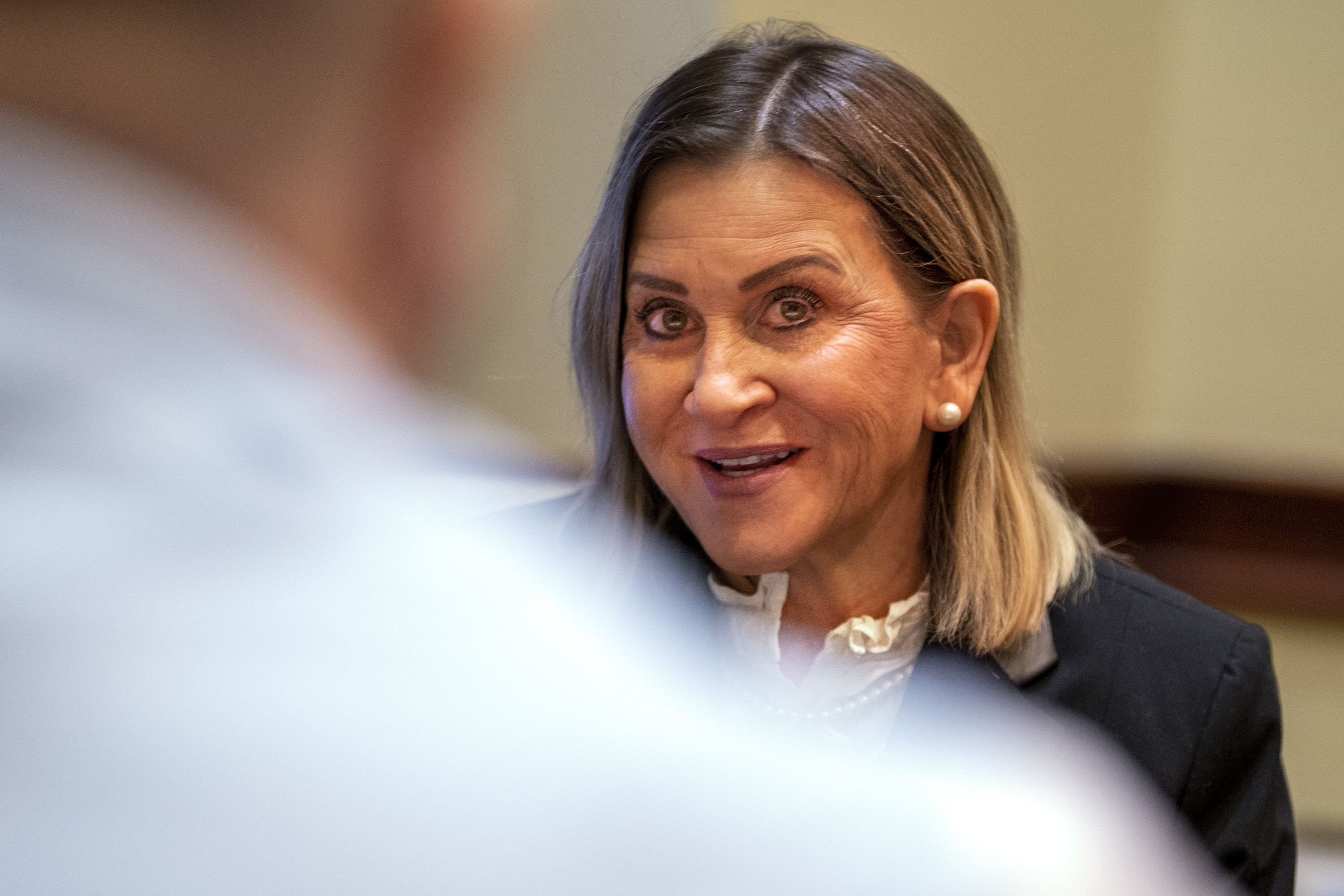
House Speaker Joanna McClinton (D., Philadelphia) heaped praise on Shapiro during a Monday news conference celebrating the budget’s new Working Pennsylvanians tax credit. “I am grateful that here in Harrisburg we have a hero among us for working families, and his name is Josh Shapiro.”
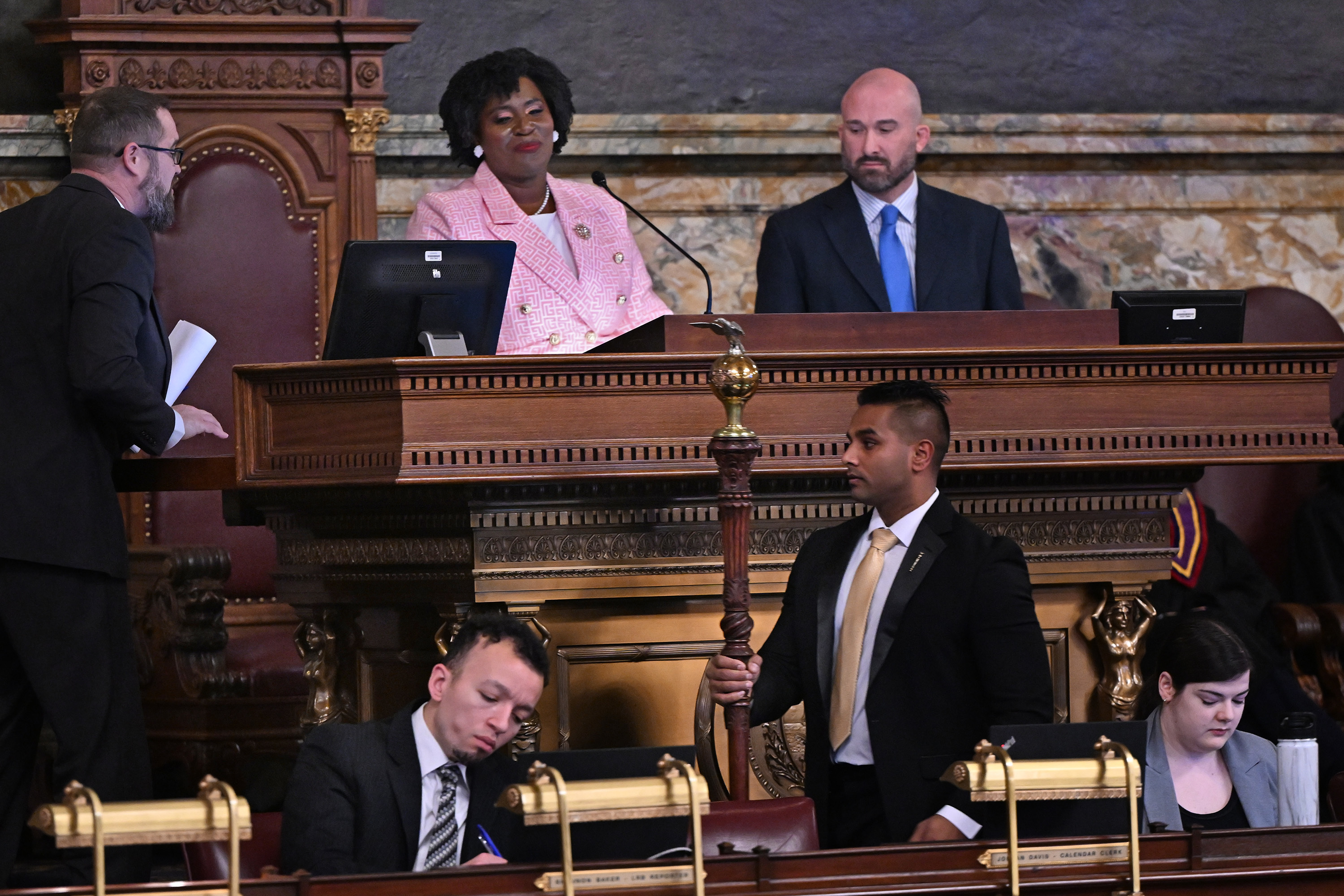
State Rep. Joanna McClinton (D., Philadelphia) is on the rostrum in the House chamber on Jan. 7 after she was reelected speaker of the House despite an initial 101-101 tie vote along party lines.
State Sen. Nikil Saval, a progressive lawmaker who represents part of Philadelphia, was one of a handful of Democrats to vote against the bipartisan Pennsylvania budgetbill that was largely lauded by Democrats and Republicans in Harrisburg and beyond. Saval applauded the school funding, anti-violence grant funding, and childcare support but slammed the absence of transit funding and Democrats’ agreement to end their pursuit to join a key climate program.
“Unfortunately, it comes at this tremendous cost,” he said.And ultimately, Saval said, the finished product didn’t seem to justify the time it took to get there.
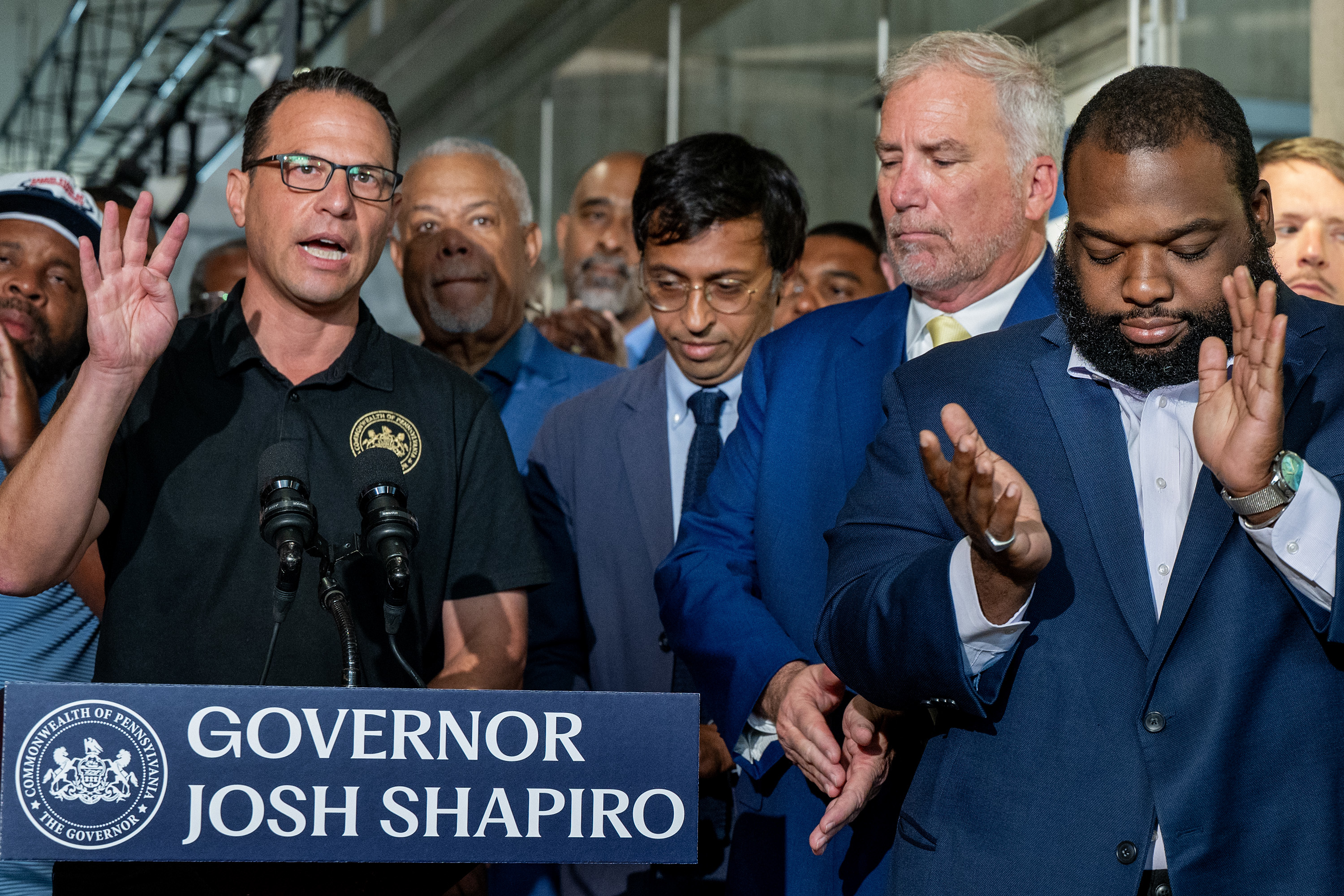
Gov. Josh Shapiro visits SEPTA headquarters on Aug. 10 to discuss funding for the transit agency. To his right, from left, are state Democratic legislators Sen. Anthony H. Williams; Sen. Nikil Saval; Rep. Ed Neilson; and Rep. Jordan Harris.
It was not just transit funding that took a back seat to get the budget deal over the line. To thedelight of Republicans — and the chagrin of some progressive Democrats and the climate-conscious — the deal also pulled the state out of the Regional Greenhouse Gas Initiative, a cooperative among states to reduce carbon emissions.
“For years, the Republicans who have led the Senate have used RGGI as an excuse to stall substantive conversations about energy,” Shapiro said. “Today, that excuse is gone.”
The powerful Pennsylvania Building and Construction Trades Council had lobbied heavily for lawmakers to walk away from the initiative, and it was a top win for state Republicans, who have long said the state should not join the multistate cap-and-trade emissions program they see as hamstringing Pennsylvania’s energy industry from accessing the state’s plentiful natural resources.
‘Two-a-days’
Shapiro said he spent months “running back and forth” to broker a deal between Senate Majority Leader Joe Pittman (R., Indiana) and House Majority Leader Matt Bradford (D., Montgomery). The three met on-and-off in private talks, attempting to hammer out a compromise between the Democratic House and Republican-controlled Senate. But the week of Oct. 27, more than four months into the stalemate, Shapiro said a “breakthrough” finally came when he broadened the talks to include McClinton and Ward.
Minority leaders Rep. Jesse Topper (R., Bedford) and Sen. Jay Costa (D., Allegheny) also joined the group, as it became clear that neither of the tightly controlled chambers would have the votes needed to pass a final budget deal.
The group met twice daily in a conference room in Shapiro’s office. Shapiro, always a fan of the sports metaphor, called the meetings “two-a-days.”
“We would come in the morning, go over the issues. We’d have our homework for a few hours, then come back in the afternoon and talk about, you know, the progress that we made,” Shapiro said. Coming out of that week, the governor said, leaders “had a clear direction on where we were going to go.”
Pennsylvania Lt. Gov. Austin Davis and Gov. Josh Shapiro show a budget document moments after it was signed Nov. 12 while surrounded by legislators at the state Capitol. A deal struck Nov. 12 ended a budget delay that lasted more than four months.
At the negotiating table, Shapiro served as “referee and facilitator” between House Democrats and Senate Republicans, McClinton said in an interview Monday.
“The man is nothing if not dogged and determined,” Bradford said of Shapiro last week.
Two officials in the closed-door talks said Topper’s presence, as the House minority leader who understands House Democrats and Senate Republicans, helped change the dynamic and got leaders on track toward a deal. Other officials in negotiations noted that once the state’s two top leaders — McClinton and Ward, who are both the first women to serve in their roles — the breakthrough deal swiftly came together.
Topper, for his part, didn’t try to take credit for striking the final budget deal, calling himself “a neutral arbiter” and “someone all sides can trust to have an honest dialogue.”
There were other signs of tensions easing as the legislators worked through the fall. Ward, a top critic of Shapiro since he reneged on a promise he made over school vouchers during his first budget negotiations, joined the conversations. The two had not met in person since 2023, and had barely communicated. Suddenly, they were sitting across from one another.
Kim Ward, president pro tempore of the Pennsylvania Senate, talks with her chief of staff Rob Ritson in her office Tuesday, Jan. 17, 2023, before heading out to preside over the swearing-in of Lt. Gov. Austin Davis in the Senate chambers.
Ward said her criticisms of Shapiro still stand — she wants him to be more transparent, among other disagreements. But she described the conversations as “very cordial, very professional.” And there were moments of levity that helped, said the top Republican leader in the Senate, who is known for her wry humor.
“He did leave me a sugar sprinkle heart [cookie] one day at my seat, and I told him, ‘You know, I’m too old for you, and we’re both married,’” she joked.
“I can’t understand why all these legislators think they did a great job,” she said on The Conservative Voice radio program, breaking with GOP leaders, like Ward and Pittman, who lauded the deal. “… Next year, they’re going to have to dip into the Rainy Day Fund to plug a budget, and then taxes are going to go up.”
Because of how long this budget took to finalize, Shapiro will already need to introduce his next budget in just three months, and in proximity to the 2026 midterms and Pennsylvania governor’s election. But it’s unclear whether those negotiations will be as fraught, given budgets tend to get resolved faster in election years with both parties eager to focus on the campaign trail.
“In this day and age, I would not downplay the fact that there was compromise,” said Berwood Yost, a pollster with Franklin and Marshall College. “People want their problems solved. They want politicians to do things that help their everyday lives and that, for most people, means some kind of compromise. Getting this problem solved fits with his narrative.”
Galko, the GOP consultant, looked further ahead to a potential 2028 presidential election. The budget impasse, he said, could provide material for Democratic rivals on the national stage. The possible field is filled with other governors, several from blue states, like Gov. JB Pritzker of Illinois and Gov. Gavin Newsom of California, where in-state dealmaking is easier among a uniform legislature.
“If he’s unable to negotiate with the Pennsylvania Senate, what’s he gonna do when he goes up against China or Russia?” Galko asked, previewing the possible attack.
Ultimately, history suggests Shapiro’s political success is likely to hinge less on the nuts and bolts of a budget only some Pennsylvanians — and even fewer outside Pennsylvania — are familiar with, and more on his ability to bolster his image as a bipartisan governor in a purple state.
On Friday morning in South Philadelphia, Shapiro sported a bomber jacket while posing for selfies with Eagles fans, nodding along to a rock band’s cover of “Santeria” in a tent outside the Xfinity Mobile Arena at an event hosted by radio station WMMR.
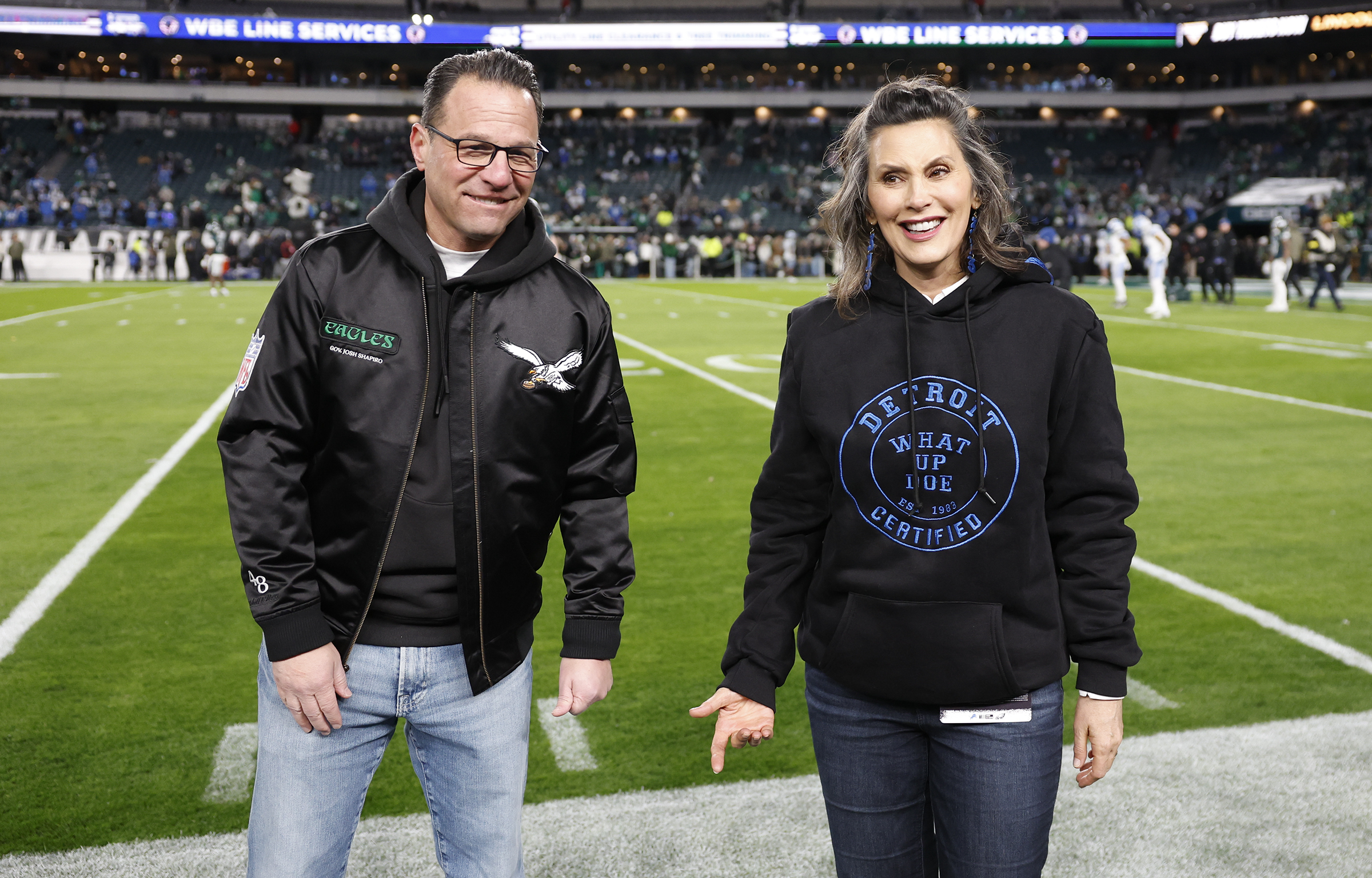
Casually, almost as a throwaway line, Shapiro mentioned to radio hosts Preston and Steve during an interview that he planned to bring Michigan Gov. Gretchen Whitmer — a fellow swing-state governor seen, too, as a possible 2028 Democratic contender — as his guest to the Eagles-Lions game at the Linc that Sunday.
“She actually said, ‘Is it OK if I wear Lions stuff?’” Shapiro told the kelly green-clad crowd in Philadelphia, riffing on the friendly football rivalry — the undercurrents of national politics left unspoken. “And I’m like, ‘No problem. You’re on your own in the parking lot. I can’t protect you.’”
Michigan Gov. Gretchen Whitmer joined Pennsylvania Gov. Josh Shapiro at Sunday’s game between the Eagles and Detroit Lions at Lincoln Financial Field.
The event was a food drive but also served as a tribute to the station’s beloved late host, Pierre Robert. Shapiro brought along a commendation from the governor’s office for the occasion.
“He created community, created joy, brought people together,” Shapiro said of Robert. “You think about just how divided we are as a world, there’s a few things that still bring us together, right?”
“By the way, I’ve learned those lessons. That’s what I try and do governing with a, you know, divided legislature.”
Music and sports, the governor mused before the crowd of Philadelphia fans, are two things that bridge the gap. “Go Birds,” he added with a grin.
Staff writer Katie Bernard contributed to this article.
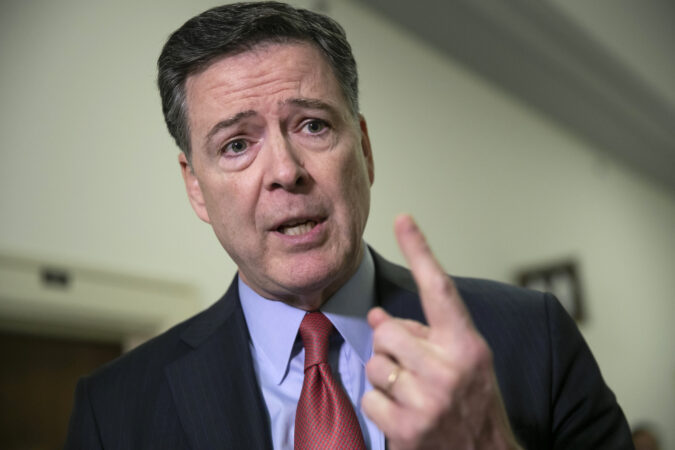
WASHINGTON — The Justice Department engaged in a “disturbing pattern of profound investigative missteps” in the process of securing an indictment against former FBI Director James Comey, a federal judge ruled Monday in directing prosecutors to provide defense lawyers with all grand jury materials from the case.
Those problems, wrote Magistrate Judge William Fitzpatrick, include “fundamental misstatements of the law” by a prosecutor to the grand jury that indicted Comey in September, the use of potentially privileged communications during the investigation and unexplained irregularities in the transcript of the grand jury proceedings.
“The Court recognizes that the relief sought by the defense is rarely granted,” Fitzpatrick wrote “However, the record points to a disturbing pattern of profound investigative missteps, missteps that led an FBI agent and a prosecutor to potentially undermine the integrity of the grand jury proceeding.”
The 24-page opinion is the most blistering assessment yet by a judge of the Justice Department’s actions leading up to the Comey indictment. It underscores how procedural missteps and prosecutorial inexperience have combined to imperil the prosecution pushed by President Donald Trump for reasons separate and apart from the substance of the disputed allegations against Comey.
A different judge is set to decide by Thanksgiving on the challenges by Comey and James to Halligan’s appointment.
Though grand jury proceedings are presumptively secret, Comey’s lawyers had sought records from the process out of concern that irregularities may have tainted the case. The sole prosecutor who defense lawyers say presented the case to the grand jury was Halligan, a former White House aide with no prior prosecutorial experience who was appointed just days before the indictment to the job of interim U.S. attorney for the Eastern District of Virginia.
In his order Monday, Fitzpatrick said that after reviewing the grand jury transcript himself, he had come away deeply concerned about the integrity of the case.
“Here, the procedural and substantive irregularities that occurred before the grand jury, and the manner in which evidence presented to the grand jury was collected and used, may rise to the level of government misconduct resulting in prejudice to Mr. Comey,” Fitzpatrick said.
The Justice Department responded to the ruling by asking that it be put on hold to give prosecutors time to file objections. The government said it believed Fitzpatrick “may have misinterpreted” some facts in issuing his ruling.
Fitzpatrick listed, among nearly a dozen irregularities in his ruling, two different comments that a prosecutor — presumably, Halligan — made to the grand jury that he said represented “fundamental misstatements of the law.”
The actual statements are blacked out, but Fitzpatrick said the prosecutor seems to have ignored the fact that a grand jury may not draw a negative inference about a person who exercises his right not to testify in front of it. He said she also appeared to suggest to grand jurors that they did not need to rely only on what was presented to them and could instead before assured that there was additional evidence that would be presented at trial.
The judge also drew attention to the jumbled manner in which the indictment was obtained and indicated that a transcript and recording of the proceedings do not provide a full account of what occurred. Halligan initially sought a three-count indictment of Comey, but after the grand jury rejected one of the three proposed counts and found probable cause to indict on the other two counts, a second two-count indictment was prepared and signed.
But Fitzpatrick said it was not clear to him in reviewing the record that the indictment that Halligan presented in court at the conclusion of the process had been presented to the grand jury for their deliberation.
“Either way, this unusual series of events, still not fully explained by the prosecutor’s declaration, calls into question the presumption of regularity generally associated with grand jury proceedings, and provides another genuine issue the defense may raise to challenge the manner in which the government obtained the indictment,” he wrote.
The two-count indictment charges Comey with lying to Congress in September 2020 when he suggested under questioning that he had not authorized FBI leaks of information to the news media. His lawyers say the question he was responding to was vague and confusing but the answer he gave to the Senate Judiciary Committee was true.
The line of questioning from Sen. Ted Cruz appeared to focus on whether Comey had authorized his former deputy director, Andrew McCabe, to speak with the news media. But since the indictment, prosecutors have made clear that their indictment centers on allegations that Comey permitted a separate person — a close friend and Columbia University law professor, Dan Richman — to serve as an anonymous source in interactions with reporters.
The FBI executed search warrants in 2019 and 2020 to access messages between Richman and Comey as part of a media leaks investigation that did not result in charges. But Fitzpatrick said he was concerned that communications between the men that might have been protected by attorney-client privilege — Richman was at one point functioning as a lawyer for Comey — were exposed to the grand jury without Comey having had an opportunity to object.
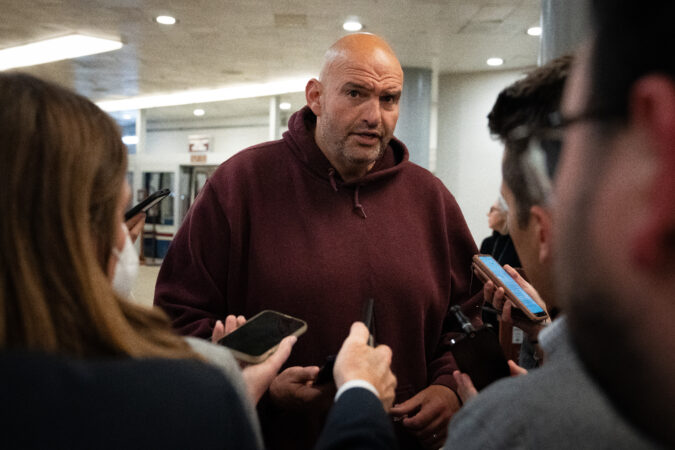
Sen. John Fetterman is back to work after recovering from a fall that required hospitalization.
Fetterman (D., Pa.) was hospitalized last week following a fall after he experienced a heart issue, an unnamed spokesperson announced Thursday. On Saturday, Fetterman shared a selfie after being released from the hospital with a coffee in hand.
Come Monday he was back in the public eye, appearing at an event hosted by the Jewish Federations of North America (JFNA)in Washington. His presence sent the message that he’s back in commission.
Photos posted by attendees on social media show the senatorwearing his signature hoodie and shorts.
His face is still healing from the fall after what he described in his Saturday post as “20 stitches later and a full recovery.”
“See you back in DC,” he said on X.
20 stitches later and a full recovery, I’m back home with @giselefetterman and the kids.
I’m overwhelmed + profoundly grateful for all the well-wishes.
Truly.
Grateful for @UPMC for the incredible medical care that put me back together.
Fetterman’s Monday appearance was part of the JFNA’s General Assembly — which began on Sunday and will continue through Tuesday. The three-day event is described on the group’s website as a gathering for Jewish community leaders, professionals, philanthropists, and community partners to “address pressing issues, explore best practices, and cultivate innovative solutions.”
Fetterman sat on stage during a session called “Monday Morning Plenary: Protecting Our Communities Today.” It was advertised as giving attendees the opportunity to “hear from leaders on the front lines who are building stronger systems of protection and trust.”
Other guests listed alongside Fetterman for the morning program included Annie Sandler, president of the Joint Distribution Committee; the Rev. Juan Rivera, president of the Hispanic Israel Leadership Coalition; Zibby Owens, founder of Zibby Media; and Olivia Reingold, staff writer at the Free Press. The Free Press is a center-right outlet that Fetterman had provided an exclusive excerpt of his book to ahead of its release.
Steven Schimmel, executive director of the Jewish Federation of Central Massachusetts, said in a post on X that Fetterman shared on the JNFA stage that his wife Gisele’s free store “has been vandalized by anti-Israel activists.”
His unnamed spokesperson had said his fall last week was due to a ventricular fibrillation “flare-up.” Ventricular fibrillation is a life-threatening heart issue. The incident comes after the senator suffered a near-fatal stroke in 2022.
The medical incident came just two days after he released his new memoir, Unfettered, in which he discusses his recovery from the stroke and his battle with depression that followed.
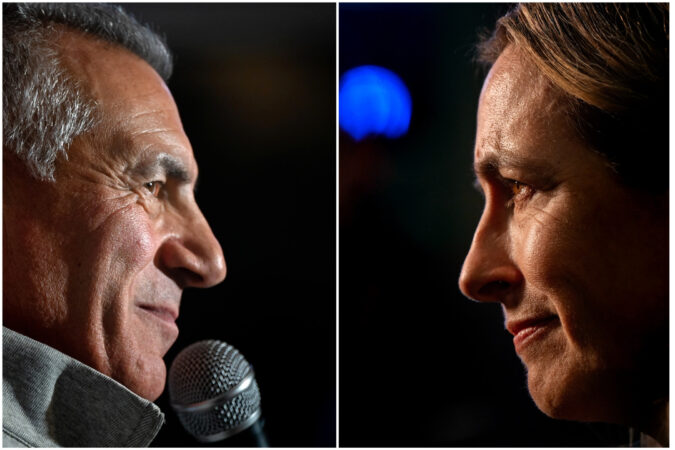
The results of the tight race could be a barometer, nationally, for which party has an edge, and signal the type of messaging and candidate that can win over New Jersey voters in an increasingly purple state.
The race has attracted national attention and resources from both parties — especially Democrats who see the seat as a critical opportunity to build momentum and safeguard the state from the policies of President Donald Trump.
Ciattarelli spent his final campaign week rallying with Puerto Rican voters in Passaic County and taking his “It’s Time” bus tour around the state. He held meet-and-greets, rallies, and diner stops over the weekend in Monmouth, Ocean, Union, and Bergen Counties.
Sherrill, who would be only the second woman elected governor in the state should she prevail on Tuesday, rallied with former President Barack Obama on Saturday in Newark and with Sens. Cory Booker and Andy Kim on Sunday in Camden and Mount Laurel Township. The events followed a week that included a “Driving Down Costs” bus tour and appearances with former Transportation Secretary and presidential candidate Pete Buttigieg and Philadelphia Mayor Cherelle L. Parker.
Along with her promise to take on landlords “colluding to raise rents” and to tackle pharmaceutical prices, Sherrill reiterated her campaign promise to freeze utility rate hikes on her first day in office at the rally with Obama on Saturday.
“New Jersey, I’m not playing,” she told the audience. “I’m not writing a strongly worded letter and I’m not starting up a working group. I am not doing a 10-year study. I’m declaring a state of emergency.”
For decades, New Jerseyans had voted blue at the national level while electing Republicans to the governor’s mansion. Democrats have a voter registration advantage of about 850,000 voters in New Jersey, but 2.2 million voters are registered unaffiliated. And GOP registrations have outpaced Democratic ones since the 2024 presidential election, when Trump swung the state significantly redder, losing by only 6 points.
Ashley Koning, the director of the Rutgers Center for Public Interest Polling, said either candidate has a “very plausible path to victory.”
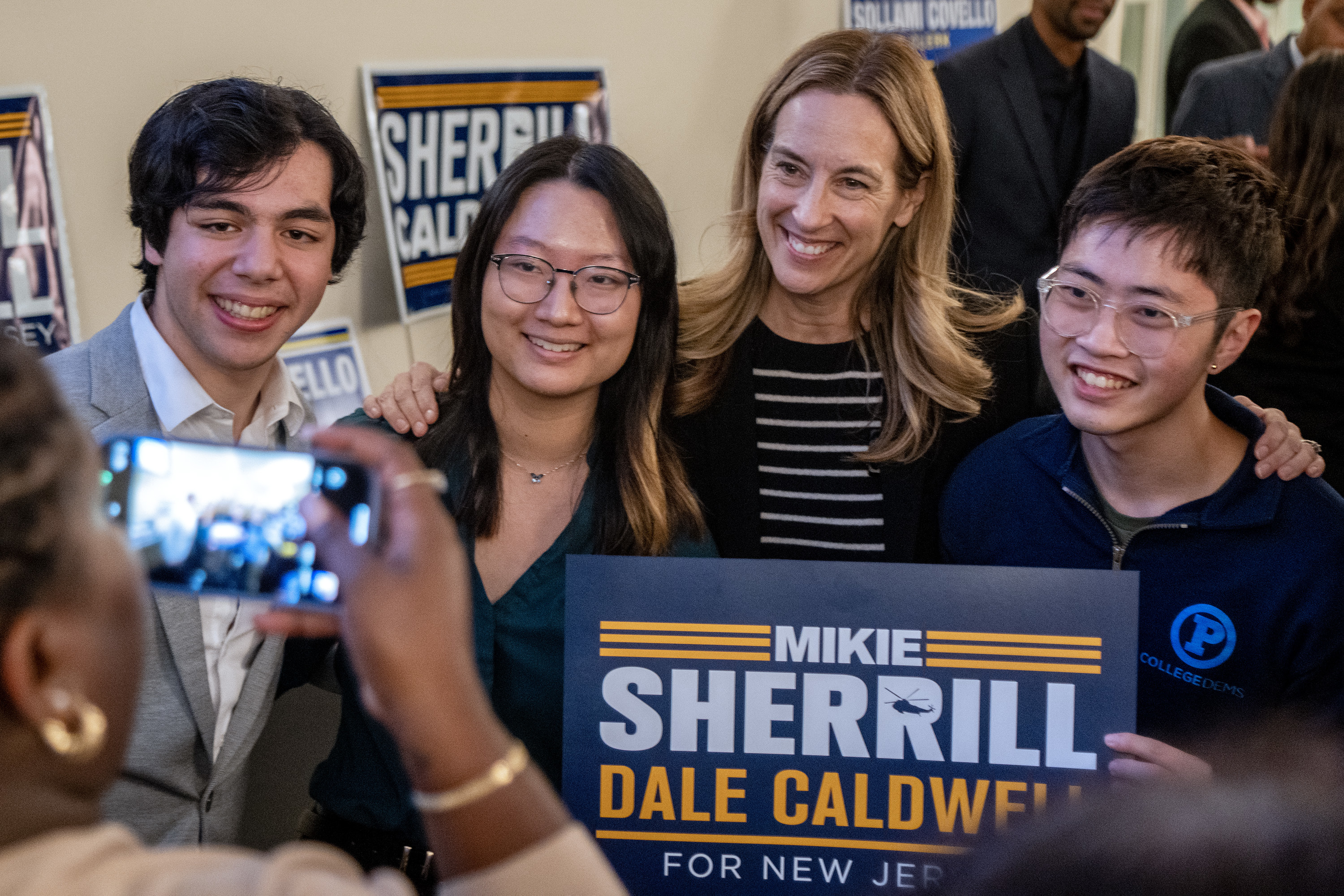
Democratic candidate for governor U.S. Rep. Mikie Sherrill poses with members of the Princeton College Democrats as she appears at a Mercer County Democrats GOTV Rally at the Mercer Oaks Golf Course in West Windsor Thursday, Oct. 23, 2025. From left are: Julian Danoff; Michelle Miao; and Paul Wang. (The group’s motto: “Bringing blue values to the Orange Bubble.”)
Dueling headwinds
There are dueling headwinds at play in the contest for New Jersey governor, too. Both Trump and Murphy are unpopular with about half of New Jersey voters. New Jersey hasn’t elected the same party to a third term for the governorship since 1961, but Republicans have also not won the office while their party has held the White House since 1985.
Once the votes are tallied in Tuesday’s election, New Jersey political history will be made either way.
Ken Martin, the chair of the Democratic National Committee, said he expects the race to be a close win for Democrats, noting “a win is a win.”
He resisted the critiques from some fellow Democrats that Sherrill played her campaign too safe, “in an era of brash bravado, machismo, and Donald Trump, and these candidates basically saying whatever the hell they want.”
“I think what she’s been doing is putting out a pretty compelling message to New Jerseyans and campaigning everywhere to make sure that they understand what she’s focused on,” he said.
The party’s vice chair, Pa. State Rep. Malcolm Kenyatta (D., Philadelphia) predicted a good night for Democrats in New Jersey. “There’s that famous saying that ‘Trenton makes, the world takes,’ and I think Trenton is going to make a lot of momentum that we are going to take into 2026 and beyond.”
“I feel it, you know, I feel it on the ground,” said Sen. Andy Kim (D., N.J.) who campaigned with Sherrill in between fielding questions from fellow Democrats in Washington about what the race looks like back home.
“Everyone I talked to knows what’s at stake,” Kim said.
Chris Russell, Ciattarelli’s political strategist, argued that Ciattarelli has garnered support from voters who have traditionally supported Democrats by delivering them a clearer message on affordability.
“We put a significant amount of time and resources, driven and led by Jack, to be present in minority communities like the Hispanic community and the Black community, and we believe that effort is going to pay off,” he said.
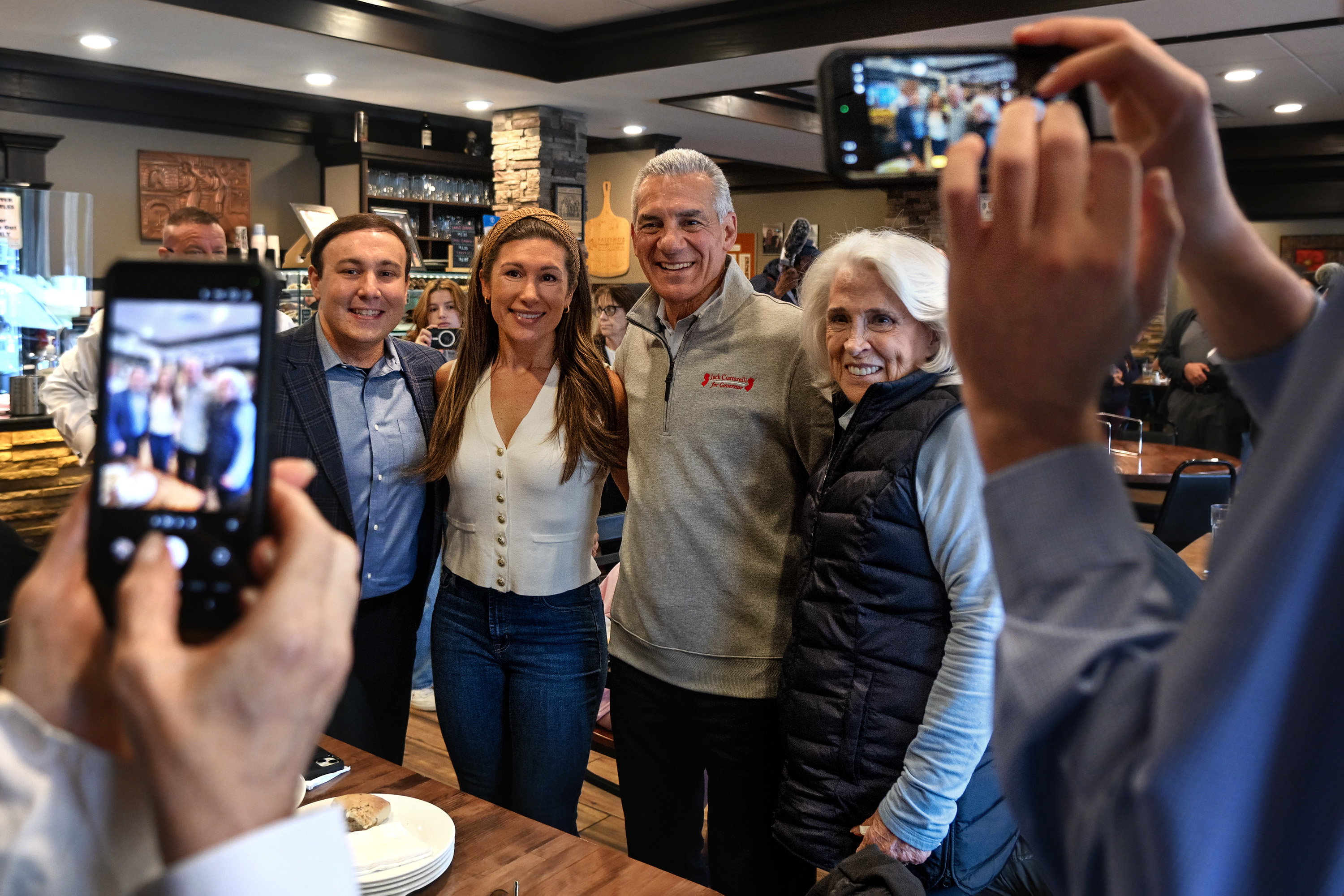
Republican candidate for governor Jack Ciattarelli poses with members of the Pascucci family as he greets supporters at Palermo’s Pizza in Bordentown Monday, Oct.13, 2025 while campaigning in South Jersey.
‘A totally different vibe’
As the candidates made their final burst of media appearances in the countdown to Election Day, Ciattarelli, in a town hall with Fox News’ Sean Hannity on Thursday night, said the Republican campaign energy “is electric.” Ciattarelli said he was encouraged by early-vote and vote-by-mail numbers, which, while trailing Democrats, had surpassed 2021 GOP turnout numbers.
“We go after those one out of four Republicans … who typically only vote in presidential years,” Ciattarelli said on Hannity’s program. “We’ve done a magnificent job, our local Republican organizations have, in getting those people to vote by mail or vote early.”
State Sen. Latham Tiver, a South Jersey Republican, said Ciattarelli’s campaign stops are a “totally different vibe” than his last run in 2021. He recalls Ciattarelli introducing himself table to table, but now, Tiver said when the candidate enters the room, people flock to him.
“Jack’s doing everything he can. … He’s pounding the pavement, he’s meeting more and more people, and we’re all out there doing the same thing for him,” Tiver said.
As the candidates make their final push to lead New Jersey, the outcome will likely depend on who shows up at the polls Tuesday.
Both campaigns have motivated bases, but the election could come down to the less engaged and whether they decide to vote. Despite a record amount of spending in the state, only about 2% of voters remained undecided in polls.
“I don’t think people give enough credit — pollsters, political wonks — to just how burnt out the average American is,” said Jackie Cornell, who previously ran field operations for Obama’s campaign in New Jersey.
“They just don’t want to hear anything about any of this any more, and I worry that will be the deterrent more so than anything else.”
WASHINGTON — The Pentagon confirmed Friday that it has accepted an anonymous $130 million gift to help pay members of the military during the government shutdown, raising ethical questions after President Donald Trump had announced that a friend had offered the gift to defray any shortfalls.
While large and unusual, the gift amounts to a small contribution toward the billions needed to cover service member paychecks. The Trump administration told Congress last week that it used $6.5 billion to make payroll. The next payday is coming within the week, and it is unclear if the administration will again move money around to ensure the military does not go without compensation.
“That’s what I call a patriot,” Trump said during a White House event Thursday when he disclosed the payment from the donor.
The president declined to name the person, whom he called “a friend of mine,” saying the man didn’t want the recognition.
The Pentagon confirmed it had accepted the donation on Thursday “under its general gift acceptance authority.”
“The donation was made on the condition that it be used to offset the cost of Service members’ salaries and benefits,” said Sean Parnell, chief spokesman for the Pentagon. “We are grateful for this donor’s assistance after Democrats opted to withhold pay from troops.”
Congress is at a stalemate over the government shutdown, now on track to become one of the longest federal closures ever, in its 24th day. Neither Republicans, who have control of the House and Senate, nor Democrats, in the minority, are willing to budge in their broader standoff over health care funding.
Payment for service members is a key concern among lawmakers of both parties as well as a point of political leverage. The Trump administration shifted $8 billion from military research and development funds to make payroll last week, ensuring that military compensation did not lapse.
But it is unclear if the Trump administration will be willing — or able — to shift money again next week as tensions rise over the protracted shutdown.
While the $130 million is a hefty sum, it would cover just a fraction of the billions needed for military paychecks. Trump said the donation was to cover any “shortfall.”
What’s unclear, however, is the regulations around such a donation.
“That’s crazy,” said Max Stier, president and CEO of the Partnership for Public Service, a nonpartisan organization focused on the federal government.
“It’s treating the payment of our uniformed services as if someone’s picking up your bar tab.”
He questioned the legality of the donation and called for more transparency around it.
Pentagon policy says authorities “must consult with their appropriate Ethics Official before accepting such a gift valued in excess of $10,000 to determine whether the donor is involved in any claims, procurement actions, litigation, or other particular matters involving the Department that must be considered prior to gift acceptance.”
The federal shutdown messaging war was in full swing at Philadelphia International Airport Friday, where U.S. Transportation Secretary Sean Duffy blamed airline travel disruptions on Democrats, as air traffic controllers are slated to miss their first full paycheck next week.
“If you’re seeing an increase in shutdowns right now, or delays, or cancellations, it’s because the Democrats won’t open the government back up,” said Duffy.
Travel disruptions fueled by air traffic controller absences played a major role in pressuring politicians to relent and reopen government during the last government shutdown, which started in December 2018 and bled into the new year for a total of 35 days. As that shutdown dragged on, air traffic controllers who were working without pay began calling out sick, sparking major delays across the country.
Though a PHL spokesperson said the airport has not experienced disruptions as a result of the shutdown to date, other hubs, including Newark Liberty International Airport, have. Duffy said while about 5% of delays are typically due to staffing shortages, that number has been as high as 53% since the shutdown began Oct. 1.
Joining Duffy, Nick Daniels, president of the National Air Traffic Controllers Association, described how members report taking on side gigs delivering food or driving rideshares.
Air traffic controllers were able to receive about 90% of their pay in their last check because most of theirbiweekly pay period fell before the shutdown.
As more families feel the impact of the shutdown, Daniels said air traffic controllers would feel the stress at work and “instead of focusing on the safety of the American flying public, they’re now focusing on what they can’t afford to pay.”
The visit to Philadelphia International Airport comes amid a back-and-forth between President Donald Trump‘s administration and Democrats. The White House’s official website has a “Government Shutdown Clock,” which tells visitors, “Democrats have shut down the government.” Other federalgovernment sites blame the “Radical Left” or call the shutdown “Democrat-led.”
Airports have not been immune to the shutdown messaging wars, with Homeland Security Secretary Kristi Noem blaming Democrats in a video sent to the travel hubs to play — the Transportation Security Administration is part of Noem’s department and TSA workers are not being paid during the shutdown. PHL and several other airports have refused to play the video, citing federal limits on political messaging they can display.
Just last week, Pennsylvania Gov. Josh Shapiro‘s administration pushed back with its own messaging on the state Department of Human Services website.
“Because Republicans in Washington D.C., failed to pass a federal budget, causing the federal government shutdown, November 2025 [Supplemental Nutrition Assistance Program] benefits cannot be paid,“ reads a banner on the website.
For airports and travelers, the possibility of a prolonged shutdown brings the potential for disruptions during one of the most popular times to travel.
What’s more, it could affect those in the Federal Aviation Administration’s training academy, hoping to become air traffic controllers. Those students continued to receive modest pay amid the shutdown — their instructors have not — but Duffy said money is slated to run out in as little as a week ortwo. The transportation secretary said fears of future funding issues have caused some students to drop out at a time the department is short some 3,000 air traffic controllers.
TSA employees at PHL, meanwhile, are also suffering.
Joe Shuker, Region 7 vice president for AFGE Council 100, which represents TSA employees there, said workers are being required to bring doctor’s notes if they call out, adding the cost of a copay to legitimately sick staff. Shuker, like Daniels, said employees were being encouraged to keep working.
“However, at some point running out of money will be an issue,” he said as workers struggle to pay for gas, childcare, and mortgages.
Duffy on SEPTA
Ahead of his visit to PHL, Duffy wrote a blistering letter to Shapiro, blaming the Democrat for SEPTA’s financial woes and, in particular, for five Regional Rail train fires this year involving 50-year-old Silverliner IV cars.
“Thankfully, no fatalities resulted, but the department will not stand by waiting for tragedy to strike,” Duffy told Shapiro. “If changes are not made immediately, it is only a matter of time before SEPTA’s crumbling commuter rail system erupts in flames and kills someone.”
The governor clapped back. A spokesperson noted that Shapiro has fought for new, stable state funding for SEPTA and other transit agencies in the last two budgets — only to have Senate Republicans, who hold the majority in the chamber, kill the proposals.
“Instead of issuing a press release, if Secretary Duffy actually wants to be helpful, he should call his fellow Republicans and get them to fund the governor’s mass transit funding package for SEPTA,” said Rosie Lapowsky, Shapiro’s press secretary. “We would be happy to provide their phone numbers.”
The mass-transit agency has been pulling the 225 cars off the line for extensive safety inspections and repairs, acting on an Oct. 1 order from the Federal Railroad Administration, which regulates commuter rail. SEPTA also is installing a modern thermal detection system on the Silverliner IVs, which were built in the mid 1970s.
The FRA order imposed a deadline of Oct. 31 and Duffy warned unrepaired rail cars could be ordered out of service if it is not met.
“I want a great system for Philadelphia, that’s what I want,” Duffy said when asked about the letter at PHL. “If I can be helpful, I will, if I get resistance, we can we can be great friends, or we can be really bad enemies. I think we should be in the friend business and serve in this community.”
Comcast is among 37 corporations, foundations, and individuals donating money to build President Donald Trump’s proposed ballroom where the East Wing of the White House once stood, according to CNN and various news reports.
The exact amount that the Philadelphia-based global media and technology company will be contributing toward the estimated $300 million construction cost was not included on a list of donors provided to news media by the White House.
Comcast officials didn’t comment Friday.
The company has supported Trump in the past. It donated $1 million to Trump’s 2025 inaugural committee in December, The Philadelphia Inquirer reported. And it made a $250,000 donation to his 2017 inauguration, according to CNN.
Despite the contributions, the Trump administration has attacked Comcast-owned media outlets such as NBC and MSNBC for content he’s found objectionable.
The 90,000-square-foot ballroom, to be named after Trump, could hold close to 1,000 people for state dinners and events, Time magazine reported.
The project is not without controversy.
Trump lacked approval for construction from the National Capital Planning Commission, which signs off on construction work and major renovations to government buildings in the Washington area, according to the Associated Press.
Ethics experts wonder whether donors are looking for special consideration from Trump.
Claire Finkelstein, a University of Pennsylvania Carey Law School professor and director of the school’s Center for Ethics and the Rule of Law, said the ballroom project rouses “a lot of concerns,” according to FactCheck.org, a project of the Annenberg Public Policy Center at Penn.
“Is he really going to use it for the duties of his office, or will he entertain a lot of individuals trying to curry favor with the administration or him personally?” Finkelstein asked. She wondered whether it could be “a misuse of public real estate.”
Others complain that the administration initially pledged not to demolish the East Wing, which turned out “to be a lie,” according to New York Magazine.
Comcast joins an elite roster of ballroom underwriters, including Amazon, Apple, Google, Lockheed Martin, Meta Platforms, Microsoft, and T-Mobile, according to NBC News.
Also on the list are crypto, oil, and tobacco companies, owners of sports teams, and the foundations of several billionaires.
Trump said he’ll contribute his own money to the ballroom’s construction, joining the list of what he calls “patriot donors.”
Staff writer Sean Collins Walsh contributed to this article.
Senate Majority Leader John Thune earlier this week announced the measure, Senate Bill 3012, as hundreds of thousands of federal workers will miss their paychecks, while the military, while paid Oct. 15, face missing their Oct. 31 paychecks. This as families face food security issues, with SNAP benefits stretched thin.
Senate Bill 3012, known as the S. 3012, is a measure that would pay federal employees who are working through the shutdown, including members of the military and contractors who support “excepted” work.
Majority Whip Sen. John Barrasso, a Wyoming Republican, said live on the Senate floor on Thursday, Oct. 23, that there was “no single argument against passing it immediately” since it would pay the troops, Coast Guard, Border Patrol, members of ICE, air traffic controllers, TSA agents at airports, and Capitol police officers in Washington, D.C.
The bill would provide “such sums as are necessary” to pay non-furloughed workers; however, Democrats have argued that all federal workers, including those on furlough, should be paid.
The bill, sponsored by GOP Sen. Ron Johnson of Wisconsin, applies only to “excepted” federal employees whose work is considered essential during a period of prolapsed funding. Those employees continue to work but cannot get back pay until the shutdown is over. Nonessential workers are placed on furlough, and also get back pay.
The bill was first proposed by Senate Majority Leader John Thune this week. The legislation requires the backing of Democrats, but some have warned the bill would give power to President Donald Trump.
“We know what will happen — any agencies that he doesn’t like won’t get paid,” Sen. Chris Murphy, a Connecticut Democrat, told reporters earlier this week, per CBS News.
ALAMEDA, Calif. — President Donald Trump said Thursday that he’s backing off a planned surge of federal agents into San Francisco to quell crime after speaking to the mayor and several prominent business leaders who said they’re working hard to clean up the city.
Trump had been threatening to send the National Guard to San Francisco, a move Mayor Daniel Lurie and Gov. Gavin Newsom said was unnecessary because crime is on the decline. Separately, U.S. Customs and Border Protection agents began arriving at a Coast Guard base in the region earlier Thursday for a possible ramp up of immigration enforcement, a move that drew several hundred protesters.
It was not clear if the president was canceling a National Guard deployment or calling off immigration enforcement by CBP agents. At his news conference, Lurie said he could not clarify and could only repeat what the president had told him. Lurie said Homeland Security Secretary Kristi Noem “reaffirmed” Trump’s commitment on Thursday morning. DHS oversees CBP agents as well as U.S. Immigration and Customs Enforcement.
“The Federal Government was preparing to ‘surge’ San Francisco, California, on Saturday, but friends of mine who live in the area called last night to ask me not to go forward with the surge,” Trump posted on social media. “I spoke to Mayor Lurie last night and he asked, very nicely, that I give him a chance to see if he can turn it around.”
Specifically, Trump said he heard from Salesforce CEO Mark Benioff and Nvidia CEO Jensen Huang. He said the federal government could handle crime better than city leaders, and he indicated he could still send agents in the future.
At an afternoon news conference, Lurie said he welcomes the city’s “continued partnership” with the Drug Enforcement Agency and other federal authorities to get illegal narcotics off the streets and contribute to San Francisco’s falling crime rates.
“But having the military and militarized immigration enforcement in our city will hinder our recovery,” the mayor said. Trump’s assertions of out-of-control crime in the city of roughly 830,000 have baffled local and state leaders, who point to statistics showing that many crimes are at record lows.
Newsom’s office said on X: “Trump has finally, for once, listened to reason — and heard what we have been saying from the beginning. The Bay Area is a shining example of what makes California so special, and any attempt to erode our progress would damage the work we’ve done.”
Protesters assembled just after dawn at Coast Guard Island in Alameda, California, where CBP agents were arriving before Trump made his remarks. Several hundred people stood outside the facility, with many singing hymns and carrying signs saying, “Protect our neighbors” and “No ICE or troops in the Bay.”
Police used at least one flash-bang grenade to clear a handful of demonstrators from the entrance as CBP vehicles drove onto the base. Organizers urged protesters to remain peaceful, as a line of Coast Guard officers in helmets watched from just outside the entrance.
Protester Gala King participated in an interfaith vigil against the federal crackdown and in support of immigrants.
“The Bay Area is a beautiful place full of diversity, and we are here to protect that,” King said. “Our faith traditions, our interfaith traditions, call on us to stand on the side of justice, to stand on the side of those that are most marginalized, that are most targeted right now.”
Coast Guard Island is an artificial island formed in 1913, and the Coast Guard first established a base there in 1926. The island is owned by the federal government and is not open to the general public, so escorts or specific government ID cards are required for visitors. The Coast Guard is part of the Department of Homeland Security.
Trump has deployed the Guard to Washington, D.C., and Memphis, Tennessee, to help fight what he says is rampant crime. Los Angeles was the first city where Trump deployed the Guard, arguing it was necessary to protect federal buildings and agents as protesters fought back against immigration arrests.
He has also said they are needed in Chicago and Portland, Oregon. Lawsuits from Democratic officials in both cities have so far blocked troops from going onto city streets.