Category: National Politics

  • Alex Murdaugh continues to insist he didn’t kill wife and son as he gets another day in court

    Alex Murdaugh continues to insist he didn’t kill wife and son as he gets another day in court

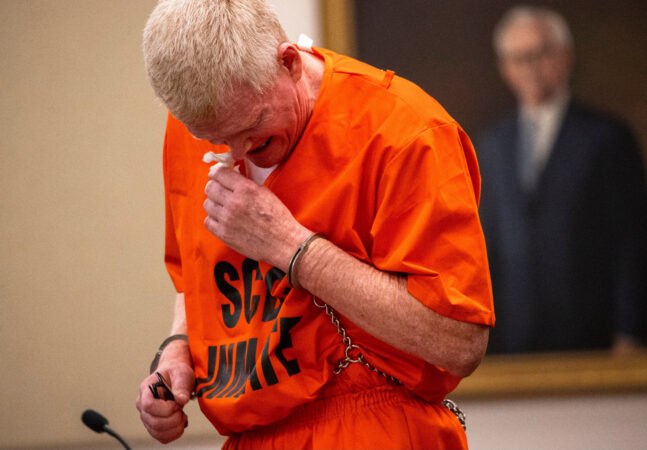
    COLUMBIA, S.C. — Alex Murdaugh has admitted he is a thief, a liar, an insurance cheat, a drug addict and a bad lawyer. But even from behind bars he continues to adamantly deny he is a killer.

    Murdaugh’s attorneys argued Wednesday before the South Carolina Supreme Court, asking the justices to overturn the two murder convictions and life sentence Murdaugh is serving for the shooting deaths of his wife, Maggie, and younger son, Paul, outside their home in June 2021.

    The defense argues the trial judge made rulings that prevented a fair trial, such as allowing in evidence of Murdaugh stealing from clients that had nothing to do with the killings but biased jurors against him. They detail the lack of physical evidence — no DNA or blood was found splattered on Murdaugh or any of his clothes, even though the killings were at close range with powerful weapons that were never found.

    And they said the court clerk assigned to oversee the evidence and the jury during the trial influenced jurors to find Murdaugh guilty, hoping to improve sales of a book she was writing about the case. She has since pleaded guilty to lying about what she said and did to a different judge.

    Prosecutors argued that the clerk’s comments were fleeting and the evidence against Murdaugh was overwhelming. His lawyer said that didn’t matter because the comments a juror said she made — urging jurors to watch Murdaugh’s body language and listen to his testimony carefully — removed his presumption of innocence before the jury ever deliberated.

    “If only the people who may be innocent get a fair trial, then our Constitution isn’t working,” Murdaugh’s lawyer Dick Harpootlian told the justices.

    Murdaugh won’t leave prison

    The case continues to captivate. There are streaming miniseries, best selling books and dozens of true crime podcasts about how the multimillionaire Southern lawyer whose family dominated and controlled the legal system in tiny Hampton County ended up in a maximum security South Carolina prison.

    Even if Murdaugh wins this appeal, he isn’t going anywhere. Hanging over the 57-year-old’s head is a 40-year federal prison sentence for stealing more than $12 million from clients intended for their medical care and living expenses after they or their relatives suffered devastating and even deadly injuries in accidents.

    “He said he deserved to go to prison for what he did financially, but he can’t accept the fact that he was convicted of murdering his wife and son, for which he constantly proclaimed his innocence,” attorney Jim Griffin said after the hearing.

    Wednesday’s state Supreme Court arguments featured the same lawyers who squared off at Murdaugh’s 2023 murder trial, although Murdaugh was not there.

    Did the court clerk influence jurors?

    Former Colleton County Clerk of Court Mary Rebecca “Becky” Hill pleaded guilty in December to obstruction of justice and perjury for showing a reporter photographs that were sealed as court exhibits and then lying about it.

    The justices pressed prosecutor Creighton Waters to say whether the trial judge, who initially rejected Murdaugh’s appeal for a new trial, was right to ignore testimony from a few jurors while believing the 11 who did not accuse the clerk of misconduct.

    Waters agreed there were problems, but said they were so isolated in the six-week trial that they had no impact. Murdaugh’s lawyers said that is impossible to figure out because jurors could be influenced subtly, without realizing it.

    “It was improper. Perhaps not improper to the point of reversal, but it was improper,” Chief Justice John Kittredge observed.

    There will be no immediate decision. Rulings usually take months to be handed down.

    “We understand the gravity of the situation and the entitlement of every individual to a fair and impartial trial,” Kittredge said.

    Prosecutors reiterate evidence for conviction

    Prosecutors have said in court papers there is no reason to throw out the guilty verdicts for murder against Murdaugh.

    They carefully recounted the case for the first 34 pages of their brief. Murdaugh’s financial situation was crumbling as he stole from clients to repay his mounting debts from his drug habit and expensive tastes. He was financially vulnerable when Paul Murdaugh caused a boat crash that killed a teen.

    The brief recalls evidence that helped convict Alex Murdaugh, who told investigators for months he hadn’t seen his wife and son for about an hour before they were killed. That story went unchallenged until investigators cracked the passcode on Paul Murdaugh’s phone and found a video with a barking dog and Alex Murdaugh’s voice admonishing it five minutes before the young man stopped using his phone.

    Defense says court allowed an unfair trial

    To establish Murdaugh’s motive at trial, prosecutors presented more than a week of testimony about his dire financial situation, including how he had stolen a multimillion insurance settlement from the son of a longtime family employee who died in a fall at the Murdaugh home. Waters said it was all critical to the big picture of a unique crime.

    “You can’t understand the boiling point if you don’t understand the slow burn that led up to it,” Waters said. “The jury could not understand the full weight of the pressure if they didn’t understand the entre criminal and financial history.”

    The chief justice asked why prosecutors piled on so much financial evidence, including pointing out the family employee also had a disabled son.

    That could have caused the jury to think “not only is he a thief with the motive for murder but he is a despicable, low-life character,” Kittredge said.

    In the insular world of South Carolina, the state Supreme Court’s decision could have impacts well beyond courtrooms. Sitting at the prosecution table on Wednesday with the case’s chief litigator was Republican South Carolina Attorney General Alan Wilson, a candidate in November’s election for the open governor’s seat.


  • Lawyers of Chicago woman shot by federal agents say documents show how DHS lies about investigations

    Lawyers of Chicago woman shot by federal agents say documents show how DHS lies about investigations

    CHICAGO — Border Patrol commander Gregory Bovino praised a federal agent who shot a Chicago woman during an immigration crackdown last year, according to evidence released Wednesday by attorneys who accused the Trump administration of mishandling the investigation and spreading lies about the shooting.

    Marimar Martinez, a teaching assistant and U.S. citizen, was shot five times by a Border Patrol agent in October while in her vehicle. She was charged with a felony after Homeland Security officials accused her of trying to ram agents with her vehicle. But the case was abruptly dismissed after videos emerged showing an agent steering his vehicle into Martinez’s vehicle.

    Her attorneys pushed to make evidence in the now-dissolved criminal case public, saying they were especially motivated after a federal agent fatally shot Minneapolis woman Renee Good under similar circumstances.

    Martinez’s attorneys are pursuing a complaint under a law that permits individuals to sue federal agencies. They outlined instances of DHS lying about Martinez after the shooting, including labeling her a “domestic terrorist” and accusing her of having a history of “doxxing federal agents.” The Montessori school assistant has no criminal record and prosecutors haven’t brought evidence in either claim.

    “This is a time where we just cannot trust the words of our federal officials,” attorney Christopher Parente said at a news conference where his office released evidence.

    That included an agent’s hand-drawn diagram of the scene to allege how Martinez “boxed in” federal agents. It included three vehicles Parente said “don’t exist.”

    Many of the emails, text messages and videos were released the night before by the U.S. attorney’s office.

    DHS didn’t immediately return a message Wednesday.

    The shooting came during the height of the Chicago-area crackdown. Arrests, protests and tense standoffs with immigration agents were common across the city of 2.7 million and its suburbs. Weeks before the Martinez shooting, agents fatally shot a suburban Chicago dad in a traffic stop.

    The government unsuccessfully fought the release of the documents, including an email from Bovino, who led enforcement operations nationwide before he returned to his previous sector post in California last month.

    “In light of your excellent service in Chicago, you have much yet left to do!!” Bovino wrote Charles Exum on Oct. 4.

    In an agent group text, others congratulated Exum, calling him a “legend” and offering to buy him beer. In previously released documents, text messages sent by Exum, appeared to show him bragging to colleagues about his shooting skills.

    “I fired 5 rounds and she had 7 holes. Put that in your book boys,” the text read.

    The latest documents are public now because U.S. District Judge Georgia Alexakis lifted a protective order last week. Federal prosecutors had argued the documents could damage Exum’s reputation. But Alexakis said the federal government has shown “zero concern” about ruining the reputation of Martínez.

    On the day Martinez was shot, she had followed agents’ vehicle and honked her horn to warn others of the presence of immigration agents. Body camera footage showed agents with weapons drawn and rushing out of the vehicle.

    “It’s time to get aggressive and get the (expletive) out,” one agent said.

    Martinez, who sat near her attorneys, was largely silent during the news conference.

    She declined an Associated Press interview request. But in recent weeks she has spoken to local media and before lawmakers.

    Earlier this month, Martinez testified before congressional Democrats to highlight use-of-force incidents by DHS officers. Members of Good’s family also spoke. Martinez is scheduled to attend President Donald Trump’s State of the Union address this month as the guest of U.S. Rep. Jesus “Chuy” Garcia.

    She was hospitalized before being taken into the custody of the FBI, which still has her car. Martinez said the incident has left her with mistrust of law enforcement, which accused her of being armed.

    Martinez has a valid concealed-carry license and had a handgun in her purse. Attorneys showed a picture of it in a pink holster at the bottom of her purse, saying it remained there during the encounter.

    “They are not targeting the worst of the worst, they are targeting individuals who fit a certain profile, who simply have a certain accent, or a non-white skin color just like mine. This raises serious concerns about fairness, discrimination, and abuse of authority,” she said during her congressional testimony. “The lack of accountability for these actions is deeply troubling.”

    Martinez’s attorneys said they’d pursue a complaint under the Federal Tort Claims Act. If the agency denies the claim or doesn’t act on it within six months, they can file a federal lawsuit.

  • Chrissy Houlahan calls Trump administration’s failed attempt to indict her and other lawmakers for video an ‘abuse of power’

    Chrissy Houlahan calls Trump administration’s failed attempt to indict her and other lawmakers for video an ‘abuse of power’

    U.S. Rep. Chrissy Houlahan said it’s unclear what crime the Department of Justice was trying to charge her with when a grand jury refused an indictment over a video in which she, with five other Democratic colleagues, called on service members to “refuse illegal orders.”

    “The regular American people that comprised the grand jury saw this for what it was, which was kind of a spurious misuse, abuse of the power of the federal government against the people,” Houlahan, of Chester, said in an interview Wednesday.

    “It’s not about me or my colleagues,” continued Houlahan, a former Air Force officer. “It’s about the fact that the Constitution allows for all of us to be treated as equals, and all of us to have the freedom to speak with freedom.”

    The Justice Department investigated the six Democratic lawmakers who made the video, all of whom previously served in the military or intelligence agencies. But a Washington grand jury would not sign off on charges on Tuesday, The Associated Press reported.

    It’s a setback for President Donald Trump’s administration, which has targeted the lawmakers in a variety of ways since November, when the president claimed the video was an act of sedition.

    Houlahan said none of the Democrats’ lawyers could identify what charges could have legitimately been brought against them.

    “Collectively, we all, of course, have unfortunately had to secure lawyers in this process,” she said. “And to a person, none of them could come up really with what it was that we had purportedly done. And clearly the people in the grand jury saw the same thing.”

    The Justice Department did not respond to a request for comment on Wednesday.

    U.S. Rep. Chris Deluzio, an Allegheny County Democrat who also appeared in the video, said in an interview Wednesday he is “not surprised at all” by the grand jury’s decision.

    “The fact that the Trump administration and their lawyers want to try to charge us with crimes for stating the law and saying words that they don’t like is outrageous, and of course, not something that you should be able to throw people in prison for,” said Deluzio, who served in the Navy.

    In a news conference Wednesday, some of the lawmakers suggested legal action against the Trump administration is on the table.

    “There will be accountability, and they should be preserving documents, preparing for what’s coming,” Deluzio said.

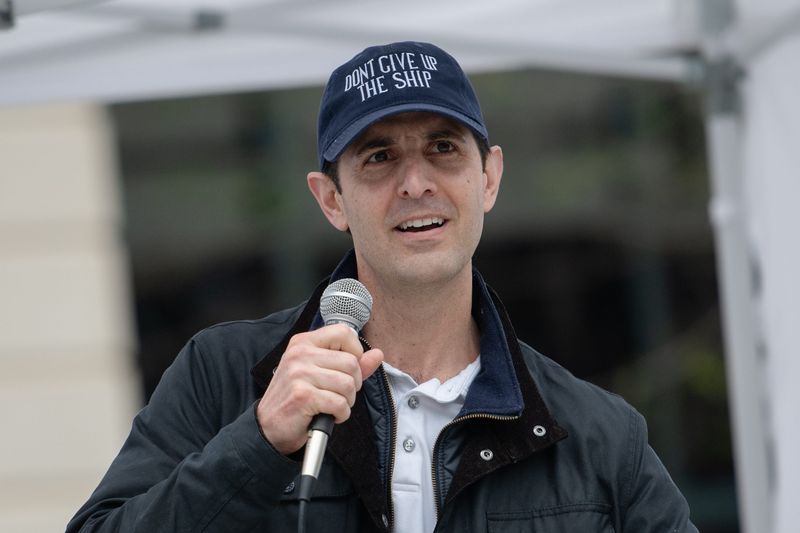
    U.S. Rep. Chris Deluzio speaks to a large crowd in front of the Beaver County Courthouse in April 2025 wearing a hat that says “don’t give up the ship.”

    Trump accused the Democratic lawmakers of sedition “punishable by death” after they posted the video in November, warning service members and intelligence workers to “refuse illegal orders.” In the video, the Democrats urged service members and intelligence professionals not to “give up the ship,” a sentiment Deluzio repeated Tuesday night.

    The phrase, which Deluzio has long referenced, is a rallying cry that’s hung on the wall at the Naval Academy’s Memorial Hall.

    “It’s a phrase that means a lot, and it means a lot in this moment of great stress to our country — that this thing is worth our efforts and that we should not give it up,” Deluzio said in the Wednesday interview.

    The Democrats did not mention any specific orders in the video, but lawmakers who appeared in the video expressed concerns at the time about strikes on boats in the Caribbean and National Guard operations in U.S. cities.

    Houlahan said they continue to be concerned about “the unlawfulness of the administration.”

    The video also included U.S. Sen. Elissa Slotkin (D., Mich.), a former CIA officer; U.S. Sen. Mark Kelly (D., Ariz.), a former Navy captain; U.S. Rep. Maggie Goodlander (D., N.H.), a former intelligence officer; and U.S. Rep. Jason Crow (D., Colo.), a former paratrooper and Army Ranger.

    The lawmakers were contacted by the FBI late last year.

    Federal prosecutors unsuccessfully tried to secure the indictment against all six lawmakers in the video, The New York Times reported. The office that pursued the case is led U.S. Attorney for D.C. Jeanine Pirro, the former Fox News personality who served as district attorney in Westchester County, N.Y., during the 1990s and early 2000s.

    Grand jury rejections are extraordinarily rare, but have occurred repeatedly in recent months in Washington, as citizens who have heard the government’s evidence have come away underwhelmed in a number of cases. Prosecutors could try again to secure an indictment.

    Attention on the lawmakers’ video escalated days after they initially posted it when Trump began his social media tirade in November.

    “This is really bad, and Dangerous to our Country,” he wrote on his social media platform Truth Social. “Their words cannot be allowed to stand. SEDITIOUS BEHAVIOR FROM TRAITORS!!! LOCK THEM UP???”

    He also shared posts from supporters calling for retribution against the Democrats, including one that said, “HANG THEM GEORGE WASHINGTON WOULD !!” and another calling them domestic terrorists.

    Houlahan said at the time she was “profoundly disappointed” in her GOP colleagues for not defending the Democrats, a sentiment she repeated on Wednesday.

    “The fact that the president and the people around him, in hearing a reminder about the law, reacted the way they did, which is to call for our death, arrest, to try to imprison us, tells me more about them than I could ever know,” Deluzio said Wednesday.

    “A normal person, a normal president, would be reminding their troops of their obligations to follow the law as well because they care about the rule of law,” he added.

    Houlahan and Deluzio reported bomb threats at their district offices after Trump went on offense in November.

    Trump told Fox News Radio that he was “not threatening death, but I think they’re in serious trouble,” adding that, “in the old days, it was death.”

    His administration has cited a different military law that says orders are presumed to be lawful and the importance of “good order and discipline.”

    “Their foolish screed sows doubt and confusion — which only puts our warriors in danger,” Defense Secretary Pete Hegseth said at the time.

    Kelly, the only lawmaker who served long enough to officially retire and therefore falls under The Pentagon’s jurisdiction, is in a another fight with Trump’s administration over the video.

    Hegseth has censured Kelly for participating in the video and is trying to retroactively demote him from his retired rank of captain.

    In response, Kelly is suing Hegseth to block those proceedings, calling them an unconstitutional act of retribution. During a hearing last week, the judge appeared to be skeptical of key arguments that a government attorney made in defense of Kelly’s Jan. 5 censure by Hegseth.

    This article contains reporting from The Associated Press

  • Instagram chief says he does not believe people can get clinically addicted to social media

    Instagram chief says he does not believe people can get clinically addicted to social media

    LOS ANGELES — Adam Mosseri, the head of Meta’s Instagram, testified Wednesday during a landmark social media trial in Los Angeles that he disagrees with the idea that people can be clinically addicted to social media platforms.

    The question of addiction is a key pillar of the case, where plaintiffs seek to hold social media companies responsible for harms to children who use their platforms. Meta Platforms and Google’s YouTube are the two remaining defendants in the case, which TikTok and Snap have settled.

    At the core of the Los Angeles case is a 20-year-old identified only by the initials “KGM,” whose lawsuit could determine how thousands of similar lawsuits against social media companies would play out. She and two other plaintiffs have been selected for bellwether trials — essentially test cases for both sides to see how their arguments play out before a jury.

    Mosseri said it’s important to differentiate between clinical addiction and what he called problematic use. The plaintiff’s lawyer, however, presented quotes directly from Mosseri in a podcast interview a few years ago where he said the opposite, but he clarified that he was probably using the term “too casually,” as people tend to do.

    Mosseri said he was not claiming to be a medical expert when questioned about his qualifications to comment on the legitimacy of social media addiction, but said someone “very close” to him has experienced serious clinical addiction, which is why he said he was “being careful with my words.”

    He said he and his colleagues use the term “problematic use” to refer to “someone spending more time on Instagram than they feel good about, and that definitely happens.”

    It’s “not good for the company, over the long run, to make decisions that profit for us but are poor for people’s wellbeing,” Mosseri said.

    Mosseri and the plaintiff’s lawyer, Mark Lanier, engaged in a lengthy back-and-forth about cosmetic filters on Instagram that changed people’s appearance in a way that seemed to promote plastic surgery.

    “We are trying to be as safe as possible but also censor as little as possible,” Mosseri said.

    In the courtroom, bereaved parents of children who have had social media struggles seemed visibly upset during a discussion around body dysmorphia and cosmetic filters. Meta shut down all third-party augmented reality filters in January 2025. The judge made an announcement to members of the public on Wednesday after the displays of emotion, reminding them not to make any indication of agreement or disagreement with testimony, saying that it would be “improper to indicate some position.”

    In recent years, Instagram has added a slew of features and tools it says have made the platform safer for young people. But this does not always work. A report last year, for instance, found that teen accounts researchers created were recommended age-inappropriate sexual content, including “graphic sexual descriptions, the use of cartoons to describe demeaning sexual acts, and brief displays of nudity.”

    In addition, Instagram also recommended a “range of self-harm, self-injury, and body image content” on teen accounts that the report says “would be reasonably likely to result in adverse impacts for young people, including teenagers experiencing poor mental health, or self-harm and suicidal ideation and behaviors.” Meta called the report “misleading, dangerously speculative” and said it misrepresents its efforts on teen safety.

    Meta is also facing a separate trial in New Mexico that began this week.

  • Trump says he ‘insisted’ to Netanyahu that U.S. talks with Iran continue as Israel wants them expanded

    Trump says he ‘insisted’ to Netanyahu that U.S. talks with Iran continue as Israel wants them expanded

    WASHINGTON — President Donald Trump met privately with Israeli Prime Minister Benjamin Netanyahu on Wednesday and said he’d insisted that negotiations with Iran continue as the U.S. pushes for a nuclear deal with Tehran.

    Netanyahu spent nearly three hours at the White House, but he entered and left out of the view of reporters and he and Trump didn’t take questions. In a subsequent post on his social media site, however, the president called it “a very good meeting” and said “there was nothing definitive reached, other than I insisted that negotiations with Iran continue to see whether or not a Deal can be consummated.”

    “If it can, I let the Prime Minister know that will be a preference,” Trump wrote. “If it cannot, we will just have to see what the outcome will be.”

    He added, “Last time Iran decided that they were better off not making a Deal” and were hit by U.S. airstrikes.

    “Hopefully this time they will be more reasonable and responsible,” Trump wrote.

    In a statement, Netanyahu’s office said the two leaders had discussed negotiations with Iran as well as developments in Gaza and around the region and they had “agreed to continue their close coordination and relationship.”

    Wednesday’s meeting was their seventh during Trump’s second term and took place as both the U.S. and Iran are projecting cautious optimism after holding indirect talks in Oman on Friday about how, once again, to approach negotiations over Iran’s nuclear program.

    Trump said on reaching an agreement with Iran in a Tuesday interview with Fox Business Network’s Larry Kudlow: “I think they’d be foolish if they didn’t. We took out their nuclear power last time, and we’ll have to see if we take out more this time.”

    “It’s got to be a good deal,” he said then. “No nuclear weapons, no missiles.”

    Netanyahu pushes for more in Iran talks

    Netanyahu’s office said prior to the meeting that he wants the U.S.-Iran talks to include limits on Tehran’s ballistic missile program and its support for militant groups such as Hamas and Hezbollah.

    “I will present to the president our outlook regarding the principles of these negotiations — the essential principles which, in my opinion, are important not only to Israel, but to everyone around the world who wants peace and security in the Middle East,” Netanyahu said Tuesday before leaving Israel.

    But it remains unclear how much influence Netanyahu will have over Trump’s approach toward Iran. Trump initially threatened to take military action over Iran’s bloody crackdown on nationwide protests in January, then shifted to a pressure campaign in recent weeks to try to get Tehran to make a deal over its nuclear program.

    Iran is still reeling from the 12-day war with Israel in June. The devastating series of airstrikes, including the U.S. bombing several Iranian nuclear sites, killed nearly 1,000 people in Iran and almost 40 in Israel.

    Trump has said repeatedly that U.S. strikes had “obliterated” Iran’s nuclear capabilities, although the extent of the damage remains unclear. Satellite photos of nuclear sites have recently captured activity, prompting concern that Iran could be attempting to salvage or assess damage at the sites.

    Israel has long called for Iran to cease all uranium enrichment, dial back its ballistic missile program, and cut ties to militant groups across the region. Iran has always rejected those demands, saying it would only accept some limits on its nuclear program in return for sanctions relief.

    Washington has built up military forces in the region, sending an aircraft carrier, guided-missile destroyers, air defense assets and more to supplement its presence. Arab and Islamic countries, including Turkey and Qatar, have been urging both sides to show restraint, warning that any strike or retaliation could have destabilizing consequences for a region already strained by the Israel-Hamas war in Gaza.

    Gaza was also a topic

    In his post, Trump said he and Netanyahu had “also discussed the tremendous progress being made in Gaza, and the Region in general.”

    Trump plans to hold the first meeting next week of his Board of Peace, which was initially framed to oversee future steps of the U.S.-brokered Gaza ceasefire plan but has taken shape with Trump’s ambitions of resolving other global crises.

    Earlier Wednesday, Netanyahu met with Secretary of State Marco Rubio at Blair House, across the street from the White House, and agreed to be part of the board.

    On Iran, Trump said Friday that his special envoy, Steve Witkoff, and son-in-law Jared Kushner had “very good” talks and more were planned this week. But the Republican president kept up the pressure, warning that if Iran did not make a deal over its nuclear program, “the consequences are very steep.”

    Abbas Araghchi, Iran’s foreign minister, made similar comments, saying there will be consultations on “next steps.” He also said the level of mistrust between the two longtime adversaries remains a “serious challenge facing the negotiations.”

    He signaled that Iran would stick to its position that it must be able to enrich uranium — a major point of contention with Trump.

    Netanyahu met with Witkoff and Kushner shortly after arriving in Washington on Tuesday evening and they gave him an update on the talks held with Iran in Oman, the prime minister’s office said.

    Araghchi said in November that Iran was no longer enriching uranium due to the damage from last year’s war.

    Before the war, Iran had been enriching uranium up to 60% purity, a short, technical step away from weapons-grade levels. The U.N. nuclear watchdog, the International Atomic Energy Agency, had said Iran was the only country in the world to enrich to that level that was not armed with the bomb.

    Iran has been refusing requests by the IAEA to inspect the sites bombed in the June war. Even before that, Iran has restricted IAEA inspections since Trump’s decision in 2018 to unilaterally withdraw the U.S. from Iran’s 2015 nuclear deal with world powers.

  • Several ICE agents were arrested in recent months, showing risk of misconduct

    Several ICE agents were arrested in recent months, showing risk of misconduct

    Investigators said one immigration enforcement official got away with physically assaulting his girlfriend for years. Another admitted he repeatedly sexually abused a woman in his custody. A third is charged with taking bribes to remove detention orders on people targeted for deportation.

    At least two dozen U.S. Immigration and Customs Enforcement employees and contractors have been charged with crimes since 2020, and their documented wrongdoing includes patterns of physical and sexual abuse, corruption, and other abuses of authority, a review by The Associated Press found.

    While most of the cases happened before Congress voted last year to give ICE $75 billion to hire more agents and detain more people, experts say these kinds of crimes could accelerate given the sheer volume of new employees and their empowerment to use aggressive tactics to arrest and deport people.

    The Trump administration has emboldened agents by arguing they have “absolute immunity” for their actions on duty and by weakening oversight. One judge recently suggested that ICE was developing a troubling culture of lawlessness, while experts have questioned whether job applicants are getting enough vetting and training.

    “Once a person is hired, brought on, goes through the training and they are not the right person, it is difficult to get rid of them and there will be a price to be paid later down the road by everyone,” said Gil Kerlikowske, who served as commissioner of U.S. Customs and Border Protection from 2014 to 2017.

    Almost every law enforcement agency contends with bad employees and crimes related to domestic violence and substance abuse are long-standing problems in the field. But ICE’s rapid growth and mission to deport millions are unprecedented, and the AP review found that the immense power that officers exercise over vulnerable populations can lead to abuses.

    Department of Homeland Security Assistant Secretary Tricia McLaughlin said that wrongdoing was not widespread in the agency, and that ICE “takes allegations of misconduct by its employees extremely seriously.” She said that most new hires had already worked for other law enforcement agencies, and that their backgrounds were thoroughly vetted.

    “America can be proud of the professionalism our officers bring to the job day-in and day-out,” she said.

    Could become a ‘countrywide phenomenon’

    ICE announced last month that it had more than doubled in size to 22,000 employees in less than one year.

    Kerlikowske said ICE agents are particularly “vulnerable to unnecessary use-of-force issues,” given that they often conduct enforcement operations in public while facing protests. With the number of ICE detainees nearly doubling since last year to 70,000, employees and contractors responsible for overseeing them are also facing challenging conditions that can provide more opportunities for misconduct.

    The Border Patrol doubled in size to more than 20,000 agents from 2004 to 2011 — six years longer than ICE took. It was embarrassed by a wave of corruption, abuse, and other misconduct by some of the new hires. Kerlikowske recalled cases of agents who accepted bribes to let cars carrying drugs enter the U.S. or who became involved in human trafficking.

    He and others say ICE is poised to see similar problems that will likely be broader in scope, with less oversight and accountability.

    “The corruption and the abuse and the misconduct was largely confined in the prior instance to along the border and interactions with immigrants and border state residents. With ICE, this is going to be a countrywide phenomenon as they pull in so many people who are attracted to this mission,” said David Bier, director of immigration studies at the Cato Institute, a libertarian think tank.

    Bier, who has helped publicize some of the recent arrests and other alleged misconduct by ICE agents, said he has been struck by the “remarkable array of different offenses and charges that we’ve seen.”

    AP’s review examined public records involving cases of ICE employees and contractors who have been arrested since 2020, including at least 17 who have been convicted and six others who are awaiting trial. Nine have been charged in the last year, including an agent cited last month for assaulting a protester near Chicago while off-duty.

    Some of the most serious crimes were committed by veteran ICE employees and supervisors rather than rookies.

    While federal officials have justified ICE’s aggression, the behavior of agents is drawing scrutiny from cellphone-wielding observers and prosecutors in Democratic-led jurisdictions. Local agencies are looking into last month’s fatal shootings in Minneapolis of protesters Renee Good and Alex Pretti by federal agents, as well as the killing of Keith Porter by an off-duty ICE agent in Los Angeles on New Year’s Eve.

    Arrests have made local headlines

    Around the country, the cases have attracted unwelcome headlines for ICE, which has spent millions of dollars publicizing the criminal rap sheets of those they arrest as the “worst of the worst.”

    Among them:

    — The assistant ICE field office supervisor in Cincinnati, Samuel Saxon, a 20-year ICE veteran, has been jailed since his arrest in December on charges that he attempted to strangle his girlfriend.

    Saxon had abused the woman for years, fracturing her hip and nose and causing internal bleeding, a judge found in a ruling ordering him detained pending trial. “The defendant is a volatile and violent individual,” the judge wrote of Saxon, whose attorneys didn’t return a message seeking comment. ICE said he is considered absent without leave.

    — “I’m ICE, boys,” an ICE employment eligibility auditor told police in Minnesota in November when he was arrested in a sting as he went to meet a person he thought was a 17-year-old prostitute. Alexander Back, 41, has pleaded not guilty to attempted enticement of a minor. ICE said Back is on administrative leave while the agency investigates.

    — When officers in suburban Chicago found a man passed out in a crashed car in October, they were surprised to discover the driver was an ICE officer who had recently completed his shift at a detention center and had his government firearm in the vehicle. They arrested Guillermo Diaz-Torres for driving under the influence. He’s pleaded not guilty and has been put on administrative duty pending an investigation.

    — After an ICE officer in Florida was stopped for driving drunk with his two children in the car in August, he tried to get out of charges by pointing to his law enforcement and military service. When that failed, he demanded to know whether one of the deputies arresting him was Haitian and threatened to check the man’s immigration status, body camera video shows.

    “I’ll run him once I get out of here and if he’s not legit, ooh, he’s taking a ride back to Haiti,” Scott Deiseroth warned during the arrest.

    Deiseroth, who was sentenced to probation and community service, is on administrative leave pending the outcome of an internal investigation. “He did something stupid. He owned up to it,” said his attorney, Michael Catalano. “He’s very sorry about the whole thing.”

    Several cases of force and abuse

    The AP’s review found a pattern of charges involving ICE employees and contractors who mistreated vulnerable people in their care.

    A former top official at an ICE contract facility in Texas was sentenced to probation on Feb. 4 after acknowledging he grabbed a handcuffed detainee by the neck and slammed him into a wall last year. Prosecutors had downgraded the charge from a felony to a misdemeanor.

    In December, an ICE contractor pleaded guilty to sexually abusing a detainee at a detention facility in Louisiana. Prosecutors said the man had sexual encounters with a Nicaraguan national over a five-month period in 2025 as he instructed other detainees to act as lookouts.

    Outside Chicago, an off-duty ICE agent has been charged with misdemeanor battery for throwing to the ground a 68-year-old protester who was filming him at a gas station in December. McLaughlin has said the agent acted in self-defense.

    Other charges cited corruption

    Another pattern that emerged in AP’s review involved ICE officials charged with abusing their power for financial gain.

    An ICE deportation officer in Houston was indicted last summer on charges that he repeatedly accepted cash bribes from bail bondsmen in exchange for removing detainers ICE had placed on their clients targeting them for deportation.

    ICE said the officer was “indefinitely suspended” in May 2024, before his arrest one year later. He has pleaded not guilty to seven counts of accepting bribes and was released from custody while awaiting trial.

    Prosecutors say a former supervisor in ICE’s New York City office provided confidential information about people’s immigration statuses to acquaintances and made an arrest in exchange for gifts and other gain. He was arrested in November 2024, has pleaded not guilty and is awaiting trial.

    Two Utah-based ICE investigators were sentenced to prison last year for a scheme in which they made hundreds of thousands of dollars stealing synthetic drugs known as “bath salts” from government custody and selling them through government informants.

    Using badges to dodge consequences

    The wrongdoing often included the use of ICE resources and credentials to try to avoid arrest or receive favorable treatment.

    In 2022, ICE supervisor Koby Williams was arrested in a sting by police in Othello, Washington, while going to a hotel room to meet who he thought was a 13-year-old girl he’d arranged to pay for sex.

    Williams had driven his government vehicle, which was filled with cash, alcohol, pills, and Viagra, and was carrying his ICE badge and loaded government firearm. The 22-year ICE veteran offered a rationale that turned out to be a lie: that he was there to “rescue” the girl as part of a human trafficking investigation. Williams is serving prison time for what prosecutors called a “reprehensible” abuse of power.

    “With a duty to protect and serve,” they wrote, “defendant sought to exploit and victimize.”

  • Montco officials condemn ICE’s ‘brutality’ after federal agents arrest a man near Norristown

    Montco officials condemn ICE’s ‘brutality’ after federal agents arrest a man near Norristown

    Montgomery County elected officials forcefully condemned a Monday ICE arrest in which agents broke down a family’s front door, lambasting officers for what the leaders described as needless cruelty.

    “We are here for one reason, to say that this kind of brutality is completely unacceptable,” said State Sen. Art Haywood, a Democrat who represents parts of Montgomery County and Philadelphia, during a news conference Tuesday in Norristown.

    Neighbors watched in Lower Providence on Monday as a U.S. Immigration and Customs Enforcement action turned into an hours-long siege, with the street blocked off and more than a dozen government vehicles outside a home in an effort to take one man into custody.

    The local leaders’ comments came amid a national debate over President Donald Trump’s deportation agenda, following violent operations in Minnesota in which federal agents fatally shot two U.S. citizens last month.

    “ICE agents, if you can hear me, do not follow these cruel orders that violate the basic dignity that we all recognize, and for all immigrants who are terrified … we stand with you,” Haywood said.

    ICE officials in Philadelphia did not respond to a request for comment.

    Montgomery County has become a hot spot for ICE activity, and the Norristown area has come under particular scrutiny, with about one-third of the population identifying as Latino. In July, in one of its most high-profile operations in the Philadelphia region, ICE arrested 14 people at a food market near Norristown, about two miles north of the home where Monday’s arrest took place.

    Rachel Rutter, an attorney and the executive director of Project Libertad, was at the scene of the arrest Monday.

    She said it appeared the man was going to work when agents attempted to stop his car, and the vehicles tapped. Each blamed the other, she added. The man, who was not immediately identified, subsequently went inside the home at Ridge Pike and North Barry Avenue in Lower Providence Township.

    By about 10 a.m., agents had arrived and moved into positions around the property. Videos showed the road blocked off with yellow police tape.

    Some agents approached the house, Rutter said, and at least one could be seen waving at someone who was filming from inside. Rutter said family members told her federal agents later obtained a warrant and subsequently broke through the door to arrest the man.

    The Department of Homeland Security statement said Wednesday that ICE was conducting a targeted operation to arrest Jose Manuel Cordova Lopez, a Mexican national who overstayed his visa after it expired in 2021 and who in 2025 was charged with driving under the influence.

    To try to evade arrest, DHS said, he “weaponized his vehicle” and rammed an ICE vehicle, then fled into his house and refused to come out. ICE subsequently obtained a criminal warrant and arrested him, the agency said.

    On Tuesday, elected officials said they were especially concerned with the manner in which Monday’s arrest was carried out.

    Janine Darby, a Lower Providence Township supervisor, described seeing at least 20 unmarked vehicles, some with Uber stickers, along with agents from ICE and the Bureau of Alcohol, Tobacco, Firearms, and Explosives. She added that an ambulance was called for a family member in the house who had been “punched in the face.”

    “Inside the home, what I saw was devastating,” Darby said. “Children crying, a family in shock, and a home destroyed after agents broke down the door.”

    State Sen. Katie Muth (D., Montgomery) said that ICE arrests make communities less safe and less trusting of law enforcement.

    “You allow this kind of unlawful behavior without due process to happen to one person, it can happen to anyone,” Muth said.

    Montgomery County Commissioner Neil Makhija, a Democrat and vice chair of the board, said Tuesday that “it’s incredibly important that we continue to show that we are taking steps to protect every resident’s rights.”

    Immigration activists have repeatedly called for Montgomery County officials to adopt a formal ordinance or resolution to officially become a “welcoming county.”

    The Democratic-led board of commissioners has not done so, citing limits to its power and concern about creating a false sense of security for immigrants. Last year, county officials approved a policy limiting communication between county employees and ICE and said they would not honor prison-detainer requests without a signed judicial warrant, and the commissioners confirmed that the county will not participate in ICE’s 287(g) program, which authorizes local governments to assist in immigration enforcement.

    Local stakeholders have called for all 62 municipalities in the county to enact their own welcoming provisions to limit cooperation with ICE. As of early December, six of them had done so.

    State Rep. Greg Scott (D., Montgomery) said community advocacy is crucial, adding that residents witnessing and recording ICE activity are documenting “reality.”

    “Keep on recording, keep that spare battery pack in your pocket,” he said. “Keep it in your car, keep your phones charged. We got to keep recording to hold people accountable.”

  • Homeland Security officials voice concerns about looming shutdown

    Homeland Security officials voice concerns about looming shutdown

    WASHINGTON — A disruption in reimbursements to states for disaster relief costs. Delays in cybersecurity response and training. And missed paychecks for the agents who screen passengers and bags at the nation’s airports, which could lead to unscheduled absences and longer wait times for travelers.

    Those were just some of the potential ramifications of a looming funding lapse at the Department of Homeland Security, according to officials who testified before a House panel on Wednesday.

    Congress has approved full-year funding for the vast majority of the federal government, but it only passed a short-term funding patch for the Department of Homeland Security that extends through Friday. In response to the killing of two American citizens in Minneapolis and other incidents, Democrats have insisted that any funding bill for the department come with changes to immigration enforcement operations.

    Finding agreement on the issue of immigration enforcement will be exceedingly difficult. But even though lawmakers in both parties were skeptical, a White House official said that the administration was having constructive talks with both Republicans and Democrats. The official, granted anonymity to speak about ongoing deliberations, stressed that President Donald Trump wanted the government to remain open and for Homeland Security services to be funded.

    Meanwhile, Republicans are emphasizing that a Homeland Security shutdown would not curtail the work of the agencies Democrats are most concerned about. Trump’s tax and spending cut bill passed last year gave Immigration and Customs Enforcement about $75 billion to expand detention capacity and beef up enforcement operations.

    “Removal operations will continue. Wall construction will continue,” said Rep. Mark Amodei, the Republican chairman of the House Appropriations subcommittee on Homeland Security.

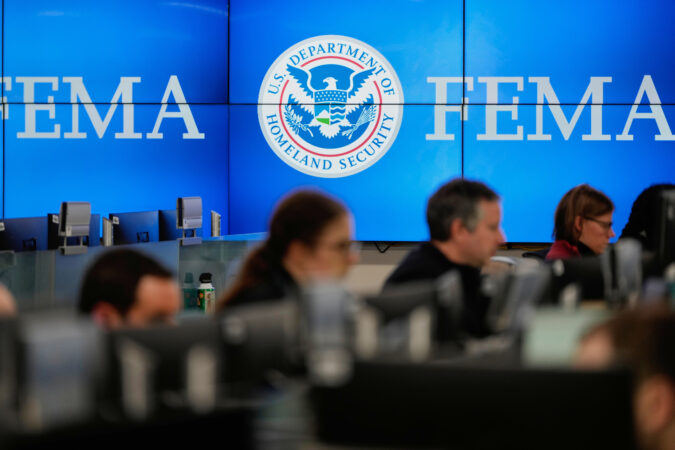
    Rather, agencies such as the Transportation Security Administration, the Secret Service, Coast Guard, and Federal Emergency Management Agency would take the biggest hit, he said. Officials from those agencies appeared before the House subcommittee to explain the potential impact of a Homeland Security shutdown.

    Rep. Henry Cuellar, the ranking Democrat on the panel, said the tragic loss of two American citizens in Minneapolis — Renee Good and Alex Pretti — should concern every lawmaker. He said that strong borders and a respect for human life are not competing values.

    “When enforcement actions lead to outcomes like that, we have an obligation to ask the hard question and to make sure our laws and policies are working as intended,” Cuellar said.

    He said on Homeland Security funding that “we were almost there. We were there, Democrats and Republicans and everybody, but the second shooting brought different dynamics. I think we can get there to address that.”

    Essential work continues

    About 90% of the department’s employees would continue working in a shutdown, but they would do so without pay. Vice Admiral Thomas Allan of the U.S. Coast Guard said law enforcement and emergency response missions continue during a shutdown, but that the possibility of missed paychecks creates significant financial hardships.

    “Shutdowns cripple morale and directly harm our ability to recruit and retain the talented Americans we need to meet growing demands,” Allan said.

    Ha Nguyen McNeill, of the Transportation Security Administration, shared a similar concern. She estimated about 95% of the agency’s 61,000 workers would continue to work, but potentially go without a paycheck depending upon the length of a shutdown. She noted that they just went through a lengthy shutdown last fall.

    “We heard reports of officers sleeping in their cars at airports to save money on gas, selling their blood and plasma and taking on second jobs to make ends meet,” she said. “…Some are just recovering from the financial impact of the 43-day shutdown. Many are still reeling from it. We cannot put them through another such experience.”

    Homeland Security also includes the agency charged with working to protect the public and private sector from a broad range of cyber threats. Madhu Gottumukkala, acting director of that agency, said a shutdown would “degrade our capacity to provide timely and actionable guidance to help partners defend their networks.”

    “I want to be clear, when the government shuts down, cyber threats do not,” he said.

    Long-term impact

    Gregg Phillips, an associated administrator at FEMA, said its disaster relief fund has sufficient balances to continue emergency response activities during a shutdown, but would become seriously strained in the event of a catastrophic disaster. He said that while the agency continues to respond to threats like flooding and winter storms, long-term planning and coordination with state and local partners is “irrevocably impacted.”

    For example, he said a lapse would disrupt training for first responders at the National Disaster & Emergency Management University in Maryland.

    “The import of these trainings cannot be measured,” Phillips said. “And their absence will be felt in our local communities.”

    At the Secret Service, “the casual observer will see no difference,” said Matthew Quinn, the agency’s deputy director. But he said reform efforts taking place at the Secret Service are affected.

    “Delayed contracts, diminished hiring and halted new programs will be the result,” Quinn said.

  • Kennedy Center head warns staff of cuts and ‘skeletal’ staffing during renovation closure

    Kennedy Center head warns staff of cuts and ‘skeletal’ staffing during renovation closure

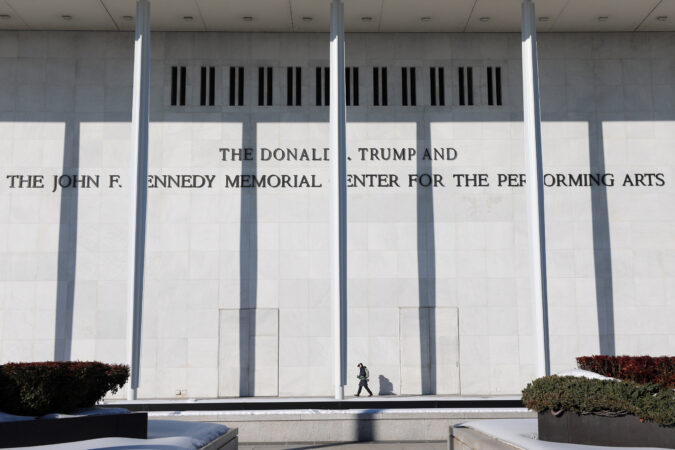
    As the Trump administration prepares to close the Kennedy Center for a two-year renovation, the head of Washington’s performing arts center has warned its staff about impending cuts that will leave “skeletal teams.”

    In a Tuesday memo obtained by The Associated Press, Kennedy Center president Richard Grenell told staff that “departments will obviously function on a much smaller scale with some units totally reduced or on hold until we begin preparations to reopen in 2028,” promising “permanent or temporary adjustments for most everyone.”

    A Kennedy Center spokesperson declined comment Wednesday.

    Over the next few months, he wrote, department heads would be “evaluating the needs and making the decisions as to what these skeletal teams left in place during the facility and closure and construction phase will look like.” Grenell said leadership would “provide as much clarity and advance notice as possible.”

    The Kennedy Center is slated to close in early July. Few details about what the renovations will look like have been released since President Donald Trump announced his plan at the beginning of February. Neither Trump nor Grenell have provided evidence to support claims about the building being in disrepair, and last October, Trump had pledged it would remain open during renovations.

    It’s unclear exactly how many employees the center currently has, but a 2025 tax filing said nearly 2,500 people were employed during the 2023 calendar year. A request for comment sent to Kennedy Center Arts Workers United, which represents artists and arts professionals affiliated with the center — wasn’t immediately returned.

    Leading performers and groups have left or canceled appearances since Trump ousted the center’s leadership a year ago and added his own name to the building in December. The Washington Post, which first reported about Grenell’s memo, has also cited significant drops in ticket revenue that — along with private philanthropy — comprises the center’s operating budget. Officials have yet to say whether such long-running traditions as the Mark Twain Award for comedy or the honors ceremony for lifetime contributions to the arts will continue while the center is closed.

    The Kennedy Center was first conceived as a national cultural facility during the Eisenhower administration, in the 1950s. President John F. Kennedy led a fundraising initiative, and the yet-to-be-built center was named in his honor following his assassination. It opened in 1971 and has become a preeminent showcase for theater, music and dramatic performances, enjoying bipartisan backing until Trump’s return to office last year.

    “This renovation represents a generational investment in our future,” Grenell wrote. “When we reopen, we will do so as a stronger organization — one that honors our legacy while expanding our impact.”

  • She bounced a $25 check in 2014. ICE tried to deport her.

    She bounced a $25 check in 2014. ICE tried to deport her.

    One evening last summer, Donna Hughes-Brown was handcuffed and led into a filthy holding cell somewhere in Kentucky, where insects crawled out of a drain and feces streaked the walls.

    The Missouri grandmother’s life had taken an unrecognizable turn days earlier, when federal agents pulled her off an arriving flight at Chicago’s O’Hare International Airport, arrested her and told her she would be deported.

    Her crime? Writing two bad checks, for a combined total of less than $75, more than a decade earlier.

    Hughes-Brown, a lawful permanent resident of the United States since she was a child, would go on to spend 143 days — nearly five months — in detention. She was only released at the end of last year after an immigration judge granted an application to stop her removal. Her story underscores just how far the Trump administration is willing to go in its quest to boost deportations, extending its dragnet to people who are legally present in the country with minor offenses from years earlier.

    For those swept up in the expanding deportation drive, it is also increasingly difficult to win release, resulting in lengthy detentions such as the one Hughes-Brown experienced. In November, the number of people released from Immigration and Customs Enforcement detention into the U.S. fell about 70 percent from a year earlier, according to a recent report from the American Immigration Council.

    When asked about Hughes-Brown, Tricia McLaughlin, assistant secretary at the Department of Homeland Security, defended her agency’s handling of the case. A conviction for passing bad checks does “not make for an upstanding lawful permanent resident,” McLaughlin said in an email. A spokesperson for ICE did not respond to a request for comment.

    Hughes-Brown, 59, is an Irish citizen and green-card holder who immigrated to the U.S. with her parents in 1978. Before last year, she never imagined she would become a target of the administration’s clampdown on immigration, she said, and she believed that everyone should come to the country legally, like she did.

    Now back home in small-town Missouri, Hughes-Brown said she thinks constantly of the women she left behind in detention: Jeimy, a 25-year-old from Guatemala who is married to an American citizen; Grace, a woman from Venezuela with a congenital heart condition; Beata, a Polish green-card holder with two convictions for minor retail theft more than a decade ago, her story an echo of Hughes-Brown’s.

    “It was the intent for this to happen to so many people,” Hughes-Brown said. “It doesn’t really matter how you got here, the end result is the same.”

    A $25 mistake

    Hughes-Brown’s ordeal began last July, when she made her first overseas trip in almost a decade. Her aunt had died, so Donna and her husband, Jim Brown, traveled to Ireland, gathering with family at a lighthouse overlooking an estuary as they spread her aunt’s ashes.

    At the airport in Dublin, Donna and Jim precleared U.S. Customs and Immigration. Officers pulled Donna aside and asked questions about her travel history. Then they let her proceed to her flight, she said.

    As the plane was approaching Chicago’s O’Hare airport, the flight attendant announced that all passengers would be required to show their passports as they exited. That’s odd, Donna thought. Exiting the plane, she saw armed officers waiting on the jet bridge. They were there for her.

    After a night in a cell at O’Hare, Donna received paperwork explaining why she had been apprehended. She was flummoxed. Back in 2015, she pleaded guilty to passing a bad check the previous year, a misdemeanor. The check was for $25, court records show, and made out to Krazy Korner, a gas station, and convenience store.

    She was living paycheck to paycheck and didn’t realize the check would bounce, Donna says. After it did, court records show, she paid restitution of $80 plus court fees of $117 and served a year of probation. She stabilized her finances, building a career as a home health care aide. She was certain that chapter was closed.

    The government also cited a separate 2012 misdemeanor conviction for passing a bad check. Records from that case are not available to the public because the case was either dismissed or expunged, a county official in Missouri said. Donna barely remembered it; she believes it was for less than $50 at a grocery store.

    While lawful permanent residents have considerably more protection from deportation than visa holders, the government can seek to deport green-card holders for certain nonviolent offenses. One such situation: crimes of “moral turpitude,” which include offenses with an intent to steal or defraud.

    But the government has an “immense amount of discretion” in deciding whether to exercise such powers and whether to detain someone, said César Cuauhtémoc García Hernández, a law professor and immigration expert at Ohio State University. In the past, he said, he would have expected DHS to exercise its discretion favorably in Donna’s case, given her “half a century in the United States with only one or two extremely minor hiccups.”

    To assert that passing a bad check more than a decade ago “makes you unworthy of living in the U.S. — that’s a policy decision,” García Hernández said. What’s more, detaining someone for months is “neither easy nor cheap.”

    The average cost to house an ICE detainee per day was $187, according to the most recent figures available. At that rate, detaining Hughes-Brown cost taxpayers about $27,000.

    ‘Hell from both sides’

    In early August, Donna and several other detainees were handcuffed and loaded into a van for the six-hour drive from Illinois to Campbell County Detention Center, a local jail in Kentucky that also houses ICE detainees. Four hundred miles from home, she lived in a pod with dozens of other women, she says, sleeping on metal bunks with only a thin mat and toilets that were clogged for days.

    One of the women was Beata Siemionkowicz, a lawful permanent resident from outside of Chicago who has lived in the U.S. since 1995. Federal agents arrested her at her daughter’s house in August, her lawyer, George Gomez, said, and told her they were launching deportation proceedings. The reason: two misdemeanor cases for retail theft in 2005 and 2011.

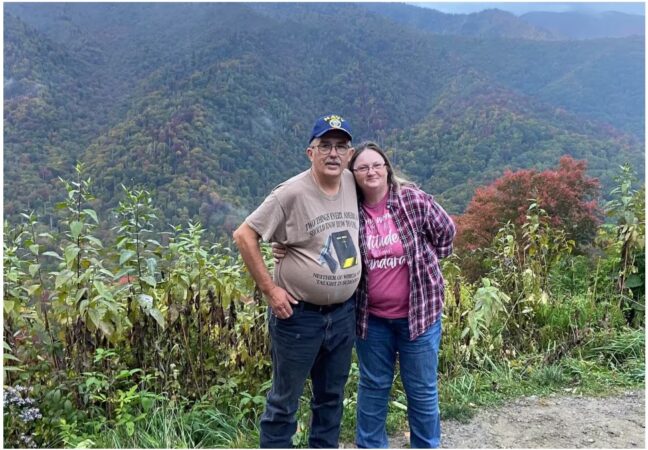
    Meanwhile, Donna’s husband, Jim, was doing everything he could think of to get her released. They’d met online and married seven years before, building a life in Cyrene, a tiny town south of Bowling Green, where they keep three horses and are active in their church. After Hurricane Helene, they twice filled a 30-foot horse trailer with supplies and drove it to North Carolina to help disaster victims.

    A combat veteran turned CT technologist, Jim describes himself as a conservative Christian and voted for Trump in 2024. He’s not against immigration: He grew up around migrant workers in Texas, hard-working people who paid taxes into the system.

    When Donna was detained, Jim wrote to every member of Missouri’s congressional delegation. He struck out, but then help came from an unexpected place: Rep. Seth Magaziner, a Democrat who represents Rhode Island. Magaziner brought Jim to Washington to speak at a panel on Trump’s immigration crackdown. At the event, Jim was asked why he had voted for Trump. He paused. “Because I was an idiot,” he answered.

    The partisan backlash has been swift, he said. Longtime friends in the ruby-red county where the couple lives have turned their back on him because he criticized Trump. Meanwhile, more liberal neighbors have said his wife’s ordeal is a fitting consequence of his vote.

    “My family and I have got hell from both sides,” Jim said.

    In December, Magaziner also asked Homeland Security Secretary Kristi L. Noem about Donna’s case during a hearing on Capitol Hill. “The Trump Administration claimed it would target the ‘worst of the worst,’ but no one understands how false that promise was more than Jim and Donna Brown,” Magaziner said in a statement.

    As the months rolled by, Donna spent two stints in an isolation cell, where the only book allowed was the Bible and she was permitted an hour outside every other day. Her requests to be released on bond were rejected by an immigration judge. But on Dec. 18, after a hearing during which family members talked about how devastating her deportation would be, the judge granted her application to cancel removal proceedings. DHS declined to appeal the decision.

    Still, Donna doesn’t intend to take chances. Her passport and green card were finally returned to her last week after the Irish consulate intervened. “I’m not even getting close to the border,” she said.

    These days, she senses an awkwardness with some friends. They’re sorry for what happened to her but still support the administration’s efforts. That’s their right, she says, and she’s not interested in cutting people off because they disagree with her.

    But she does want to talk to them. About how helpless she felt in her darkest moments in detention – labeled a criminal, locked away and unsure if she would ever return to her life in Missouri. She’s determined to fight for the women she met there.

    “I’m going to keep on keepin’ on,” Donna said. “Because it is not right. It is not right.”