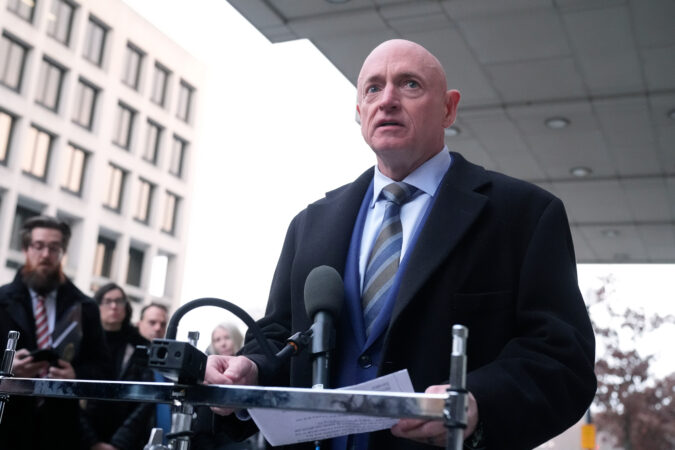
WASHINGTON — A grand jury in Washington refused Tuesday to indict Democratic lawmakers in connection with a video in which they urged U.S. military members to resist “illegal orders,” according to a person familiar with the matter.
The Justice Department opened an investigation into the video featuring Democratic Sens. Mark Kelly and Elissa Slotkin and four other Democratic lawmakers urging U.S. service members to follow established military protocols and reject orders they believe to be unlawful. All the lawmakers previously served in the military or at intelligence agencies.
Grand jurors in Washington declined to sign off on charges in the latest of a series of rebukes of prosecutors by citizens in the nation’s capital, according to the person, who spoke on the condition of anonymity because they were not authorized to publicly discuss the matter. It wasn’t immediately clear whether prosecutors had sought indictments against all six lawmakers or what charge or charges prosecutors attempted to bring.
Grand jury rejections are extraordinarily unusual, but have happened repeatedly in recent months in Washington as citizens who have heard the government’s evidence have come away underwhelmed in a number of cases. Prosecutors could try again to secure an indictment.
Spokespeople for the U.S. attorney’s office and the Justice Department didn’t immediately respond to requests for comment Tuesday.
The FBI in November began contacting the lawmakers to schedule interviews, outreach that came against the backdrop of broader Justice Department efforts to punish political opponents of the president. President Donald Trump and his aides labeled the lawmakers’ video as “seditious” — and Trump said on his social media account that the offense was “punishable by death.”
Besides Slotkin and Kelly, the other Democrats who appeared in the video include Reps. Jason Crow of Colorado, Chrissy Houlahan of Pennsylvania, Maggie Goodlander of New Hampshire and Chris Deluzio of Pennsylvania.
Slotkin, a former CIA analyst who represents Michigan, said late Tuesday that she hopes this ends the Justice Department’s probe.
“Tonight we can score one for the Constitution, our freedom of speech, and the rule of law,” Slotkin said in a statement. “But today wasn’t just an embarrassing day for the Administration. It was another sad day for our country,” she said.
Kelly, a former Navy pilot who represents Arizona, called the attempt to bring charges an “outrageous abuse of power by Donald Trump and his lackies.”
“Donald Trump wants every American to be too scared to speak out against him,” Kelly said in a post on X. “The most patriotic thing any of us can do is not back down.”
In November, the Pentagon opened an investigation into Kelly, citing a federal law that allows retired service members to be recalled to active duty on orders of the defense secretary for possible court-martial or other punishment. Defense Secretary Pete Hegseth has censured Kelly for participating in the video and is trying to retroactively demote Kelly from his retired rank of captain.
The senator is suing Hegseth to block those proceedings, calling them an unconstitutional act of retribution. During a hearing last week, the judge appeared to be skeptical of key arguments that a government attorney made in defense of Kelly’s Jan. 5 censure by Hegseth.
Despite Philadelphia being a deep-blue city dominated by Democrats, local officials have been somewhat cautious in how they talk about President Donald Trump’s administration.
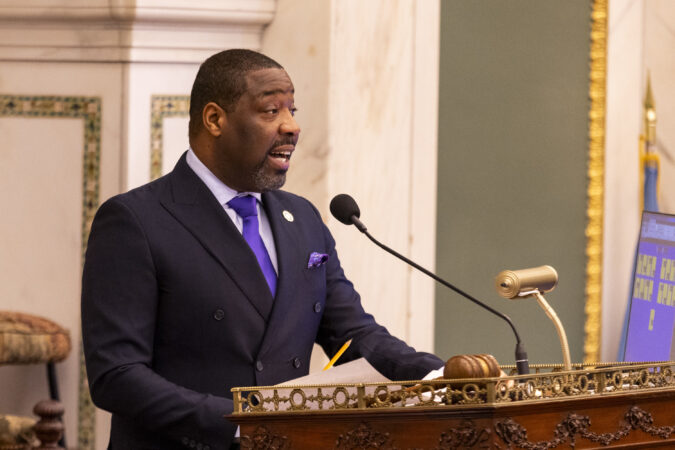
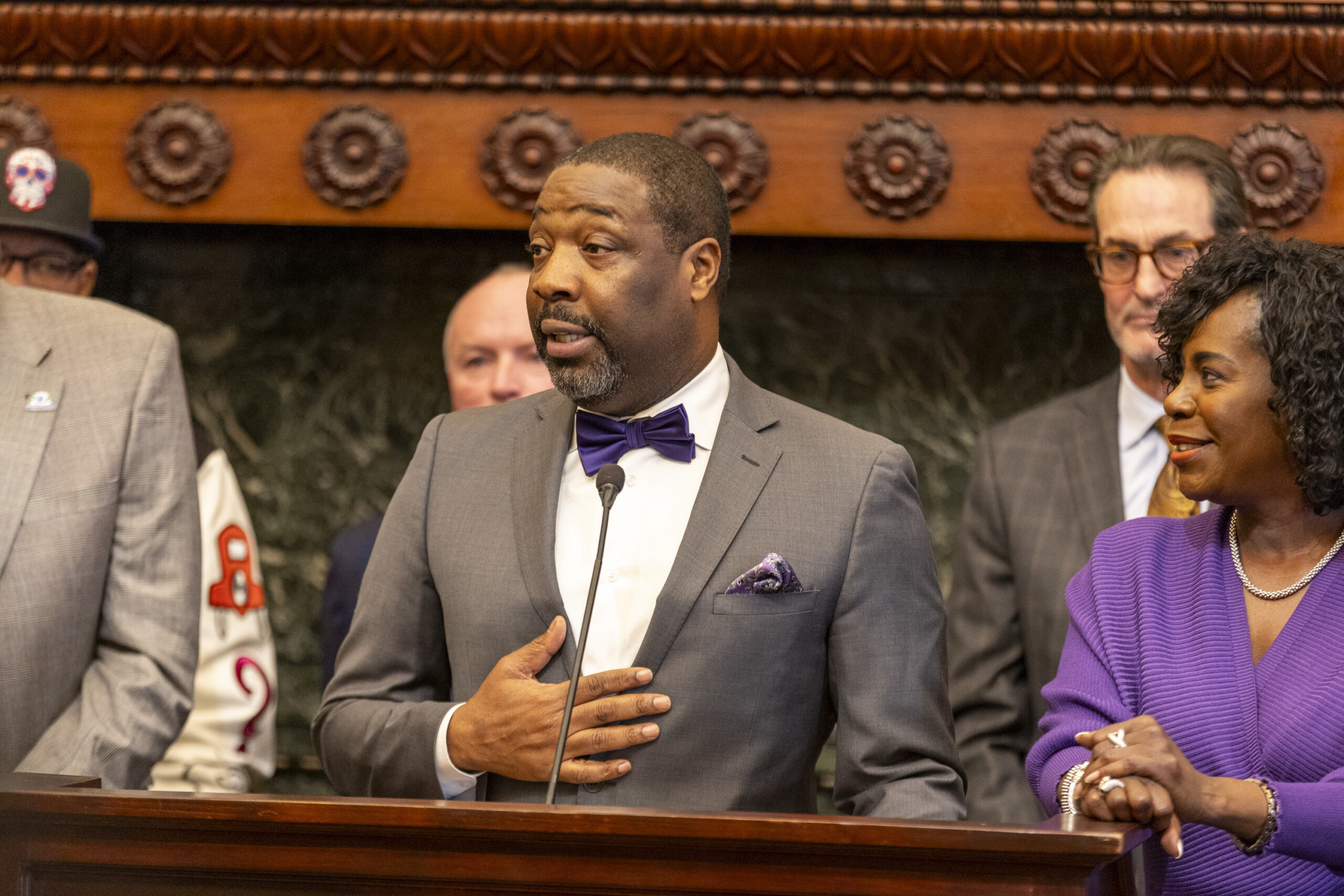
That has included the top legislator, City Council President Kenyatta Johnson, who has largely taken a measured approach on national politics, opting to convene task forces and hold public hearings rather than go scorched-earth on Trump.
That was until last month, when Johnson, like the rest of the country, watched video footage on the news showing federal immigration enforcement agents bearing down on Minneapolis and fatally shooting two United States citizens.
He said in an interview Friday that he now sees City Council differently: as an “activist body” that is obligated to take legislative action in opposition to the Trump administration.
And Johnson said he questions the purpose of his position if not to stand up for the city’s most vulnerable — and right now, he said, that’s immigrants.
“It’s my responsibility to step up in this space and be more vocal,” he said over lunch in South Philadelphia’s Point Breeze neighborhood, the section of the city where he grew up and still lives. “It’s just the evolution of me really not addressing it from a political standpoint, but from a moral standpoint of advocating and fighting for individuals who really need a voice.”
That reflects a shift for Johnson, the centrist Democrat who is entering his third year as Council president. He considers himself pro-law enforcement, and he typically takes an understated approach to leadership, preferring to dissent with others privately rather than duke it out in public.
In employing a more assertive approach, Johnson has also over the last several months started to diverge from Mayor Cherelle L. Parker, a close ally.
“The mayor can respond how she chooses to respond,” he said. “For me, it’s a moral issue.”
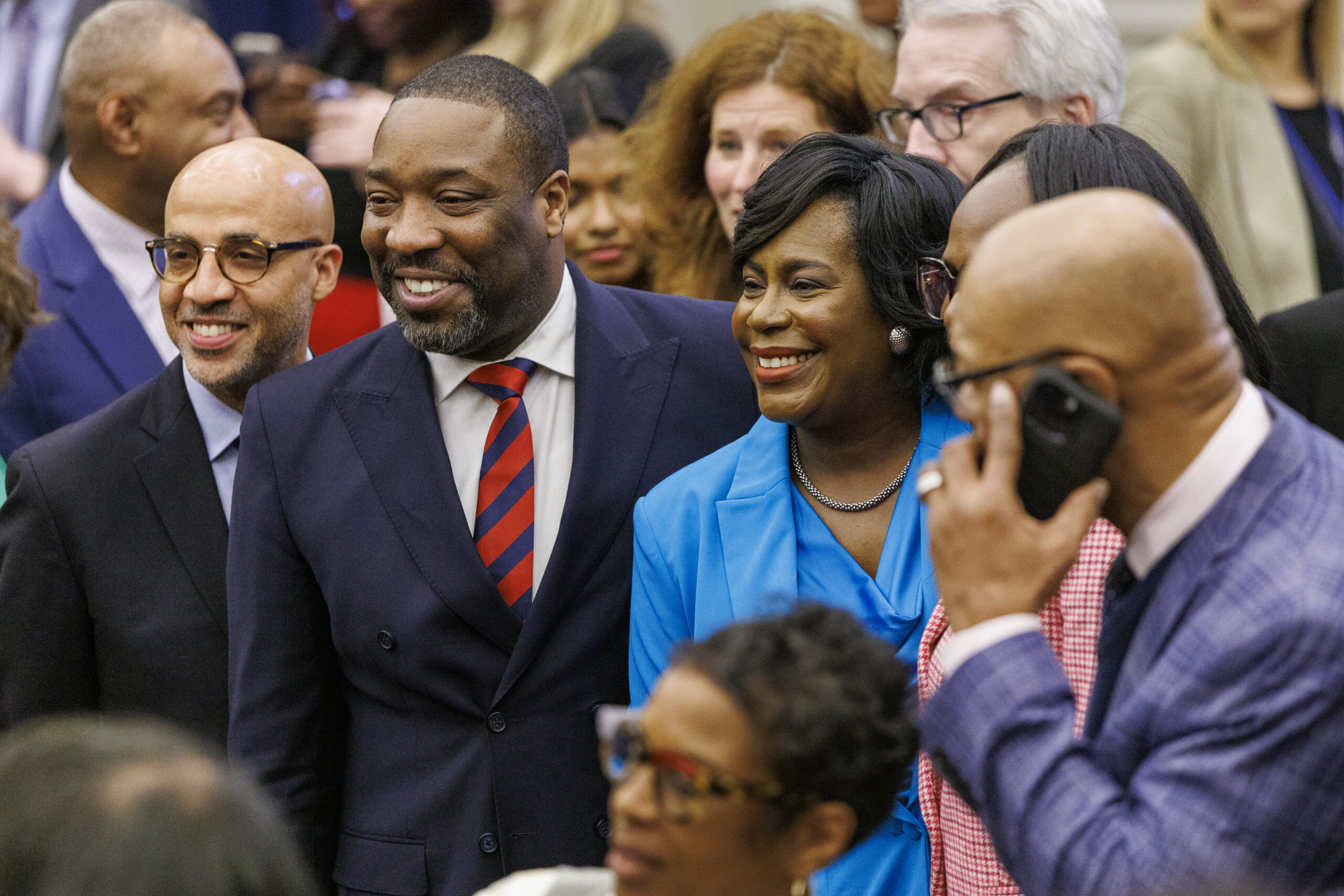
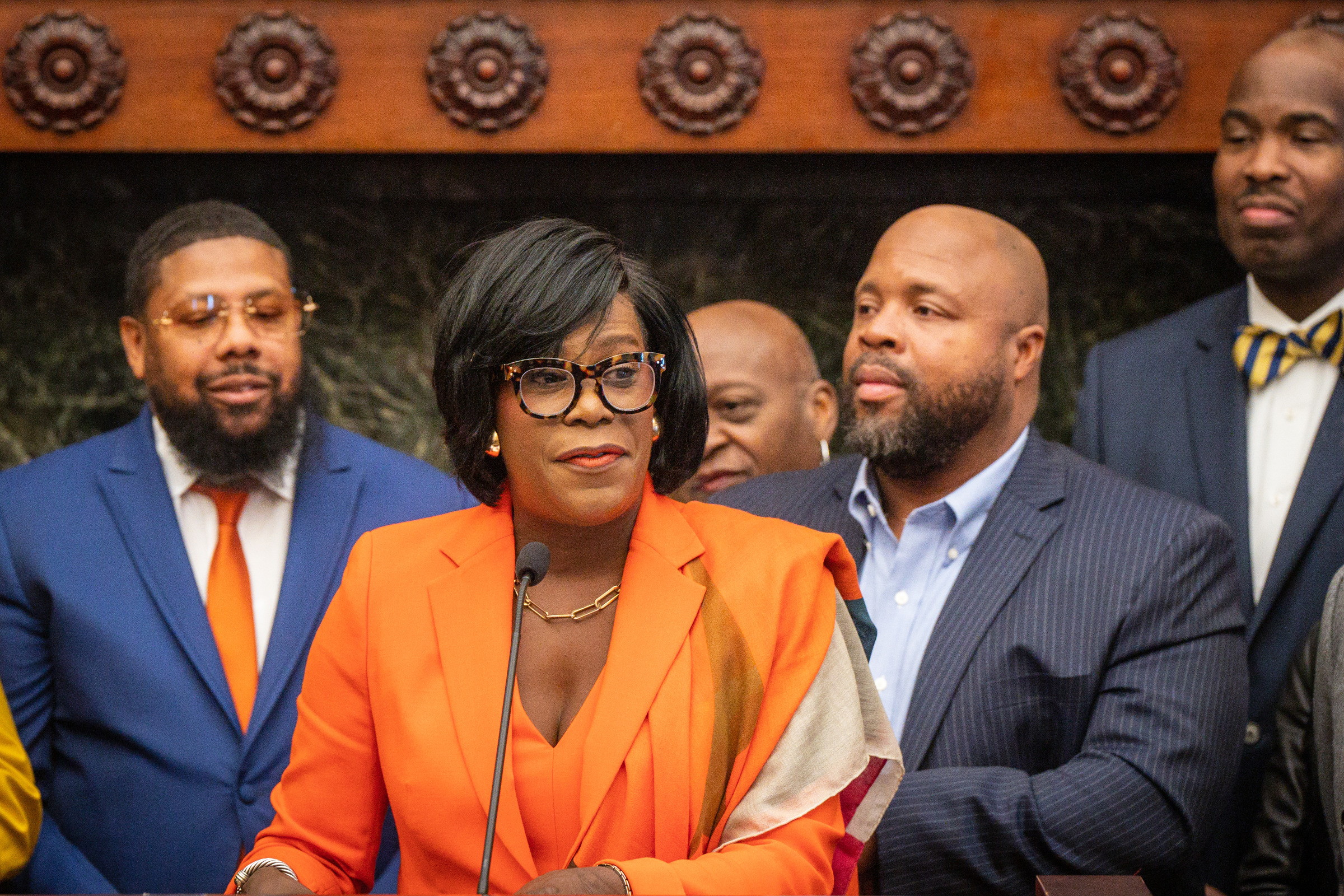
Philadelphia Mayor Cherelle L. Parker stands beside Council President Kenyatta Johnson (left) after she finished her budget address to City Council, City Hall, Thursday, March 13, 2025.
Larry Ceisler, a public affairs executive and longtime City Hall observer, said he has watched Johnson rise from community activist to lawmaker.
He said the Council president, in his latest evolution, might have calculated that a majority of the 16 other members want the city’s legislative body to take a more active role.
“He is an activist at heart, and he has a tremendous amount of empathy for people,” Ceisler said. “At the same time, he’s a pretty good politician and he can count votes. It’s very difficult for him at this point to push back on the will of his members.”
But Ceisler said that Parker might have more to lose, and that she will “be on the hook for all this if there is retribution from Washington.”
A ‘shameful’ episode at the President’s House
Through the first eight months of the second Trump administration, Johnson largely kept focused on local policymaking.
When a reporter asked Johnson in January 2025 how he saw his role responding to the Trump administration, he noted that he had convened two working groups to study how Trump-backed policies would affect Philadelphia residents.
Other Council members introduced more than a dozen resolutions to condemn the Trump administration’s efforts that they said would harm Philadelphians, like cutting food assistance and prohibiting some diversity-hiring initiatives. One resolution opposed the federal government’s deployment of the National Guard as a crime-fighting measure in major American cities; another said Trump’s cabinet members were wholly unqualified.
Those measures, almost entirely symbolic, were largely spearheaded by progressive members. They passed the overwhelmingly Democratic Council with little debate and not much acknowledgment from the Council president.
But by September, Johnson began to speak up.
He was incensed when word spread that the Trump administration was seeking to alter some content related to slavery on federal properties, including at Independence National Historical Park. The National Park Service was reportedly looking to edit panels at the President’s House Site in Center City that memorialize the nine people whom George Washington enslaved.
Last month, federal workers removed the exhibit and relocated the panels to the National Constitution Center, where they are in storage. Parker’s administration filed a lawsuit immediately, and the issue remains the only Trump initiative that Parker has vocally opposed over the last year.
“This history is a critical part of our nation’s origins, and it deserves to be seen and heard,” she said in a video posted on social media.
Veronica Chapman-Smith, concerned citizen was present at the history lesson and protest, Presidents house, Independence National Historical Park, Philadelphia, Friday, Feb. 6, 2026. The community is coming together to protest the removal of slavery exhibit at the President’s House site.
The Council president said he wants the panels returned in time for an expected influx of tourists this year for several major events, including World Cup games and the 250th anniversary of the founding of the nation.
“It’s shameful that during this celebration of our country, the birthplace of America, here in the city of Philadelphia, we have to deal with a Trump administration trying to whitewash our history,” Johnson said last week.
A Minneapolis-like ICE surge on ‘any given day’
Over the next five months, Johnson will juggle advocating for the return of the panels as he manages other high-profile local matters. Council must approve a city budget by the end of June, and its members are expected to play a crucial role in the Philadelphia School District’s closure and consolidation plan that will affect dozens of schools.
The “ICE Out” legislation that Johnson has already backed is also expected to be a major undertaking over the coming weeks. The seven bills that make up the package already have support from 15 of Council’s 17 members, which constitutes a veto-proof majority.
City Councilmember Rue Landau, a Democrat who is one of the prime sponsors of the immigration legislation, said Johnson “fully realizes the importance of this moment.”
“His support,” she said, “is a recognition that local government has a pivotal role to play in moments like these.”
Prior to this year, Johnson rarely talked about immigration. He has spent most of his career focused on public safety, gun violence prevention, and quality-of-life issues.
Bloomberg reported that the building, about 85 miles outside Philadelphia, is one of two dozen across the nation that ICE has identified for conversion into detention centers. ICE purchased another warehouse in Schuylkill County, about 110 miles from Philadelphia.
Together, the two facilities could hold 9,000 beds.
To Johnson, it was like the federal government was saying: “We want to set up shop right in your backyard.”
ICE is already operating in the city. But Johnson said the warehouse purchases are a sign that Philadelphia should prepare for a greater surge of immigration enforcement like the operation in Minneapolis, where more than 3,000 federal agents were deployed and large-scale protests ensued.
Countless Minnesotans have said they were harassed, racially profiled, and unlawfully arrested by ICE agents during the operation this year.
“Who’s to say that won’t happen to any of my constituents that I represent from Liberia? From Sierra Leone? From Cambodia?” Johnson said. “It can happen on any given day here in the city of Philadelphia.”
Philadelphia and state officials awarded more than $6 million in taxpayer funds over the last five years to a politically connected but financially unstable anti-violence nonprofit, despite repeated warnings from city grant managers about improper spending and mismanagement, an Inquirer investigation has found.
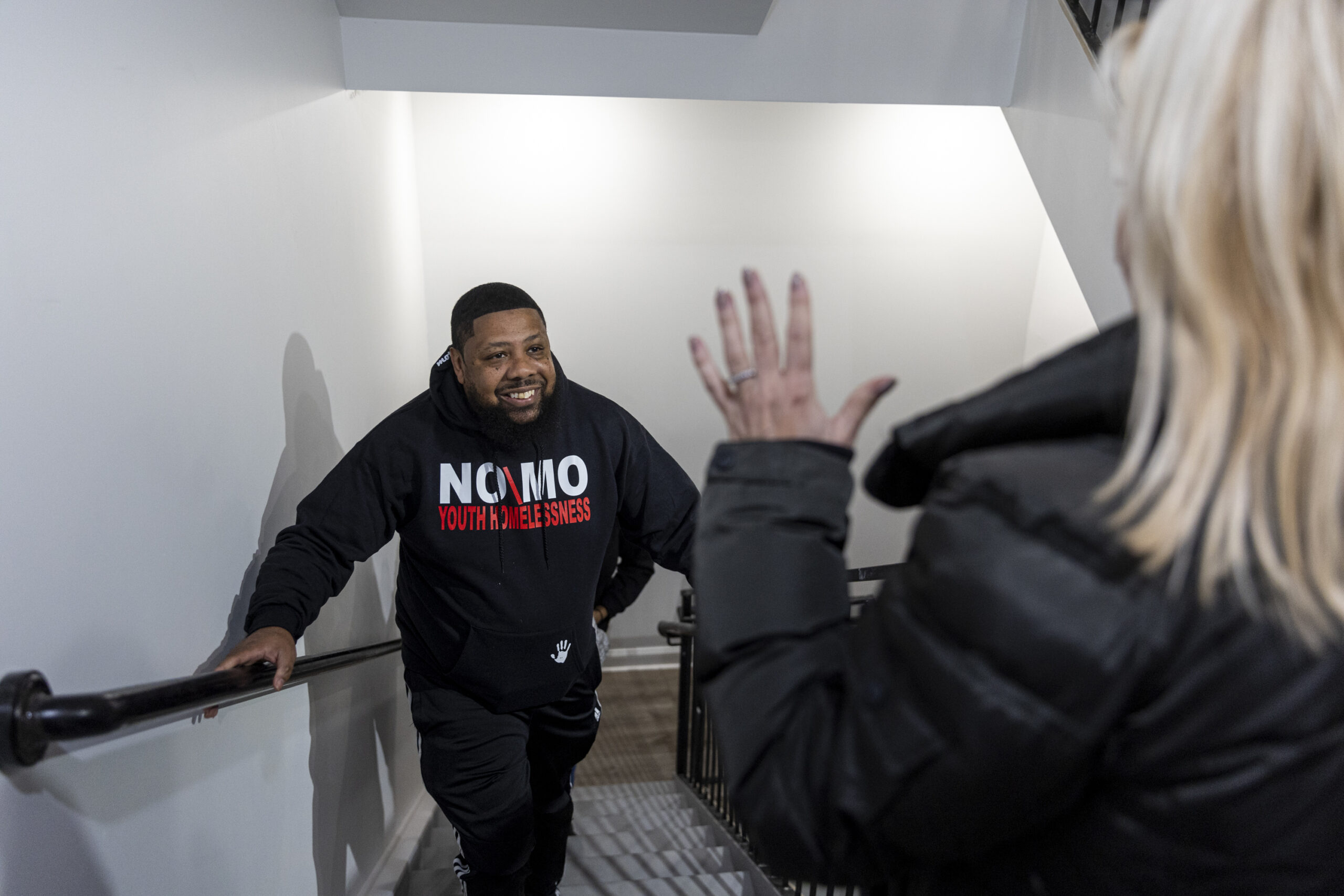
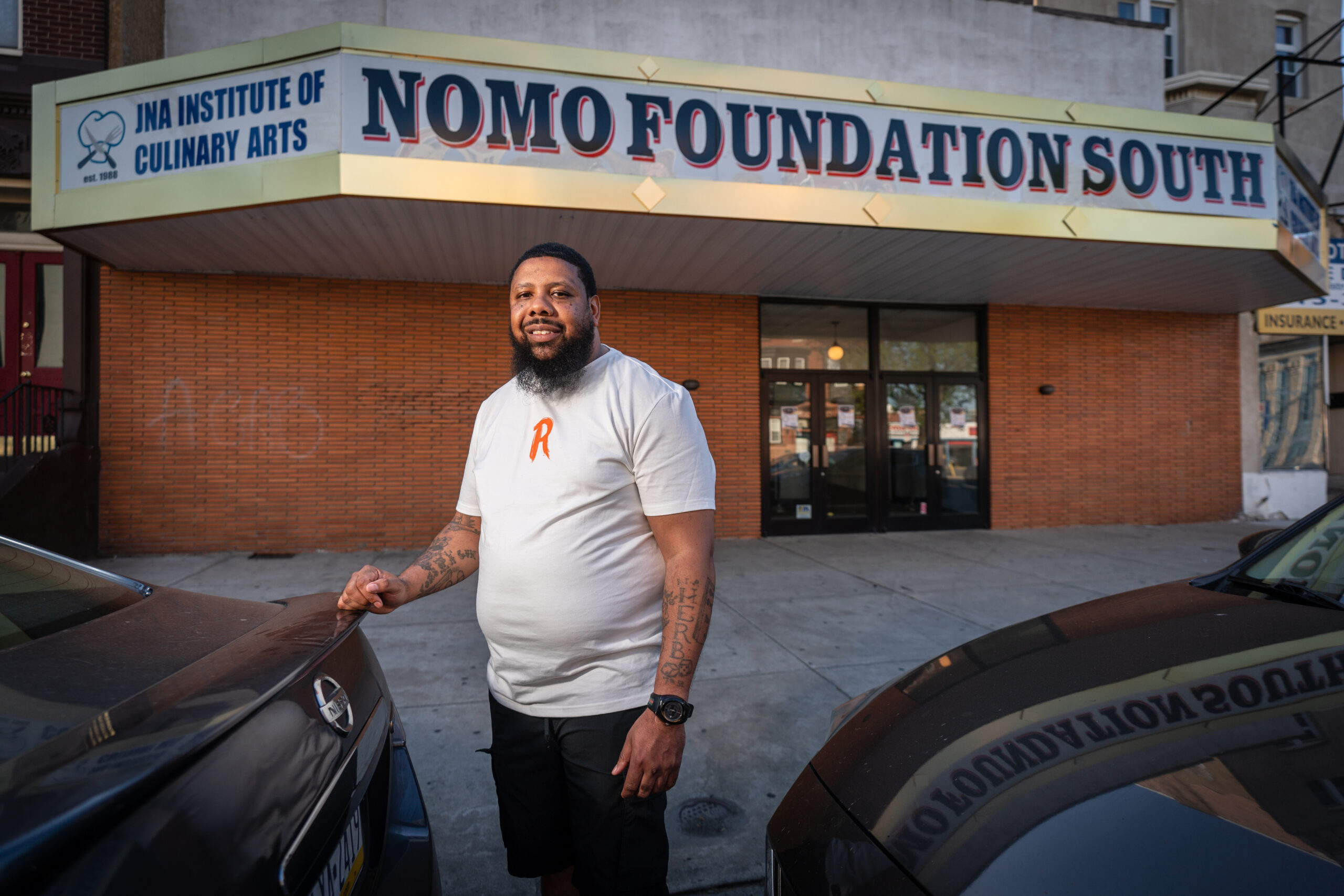
The group — New Options More Opportunities, or NOMO Foundation — received city and state anti-violence grants and locally administered federal dollars to expand its youth programs and launch a new affordable housing program. The money fueled NOMO’s rapid rise from a small, grassroots outfit into a sprawling nonprofit that took on expenses it ultimately could not afford.
Mayor Cherelle L. Parker has publicly touted NOMO’s work in the community, and she further boosted its profile by naming its director to her transition team upon taking office. But behind the scenes, Parker administration staffers watched NOMO face mounting financial pressures over the last two years.
In that time, the organization has been hit with multiple eviction filings and an IRS tax lien, and had to lay off staff and suspend programming. Most significantly, NOMO had to terminate its housing initiative last year — displacing all 23 low-income households that had been its tenants.
The warning signs were evident years earlier. Records obtained under Pennsylvania’s Right to Know Law show that city grant managers expressed concerns as far back as 2021 about NOMO’s lack of financial controls, incomplete balance sheets, and chronic inability to provide basic documents. As recently as last year, the city was unaware who sat on the group’s board.
Yet records show city officials kept propping up the group with more funds, without successfully putting in place the kind of structural support that might have kept it from foundering. Last year, the city sought to award a $700,000 federal homelessness prevention contract to NOMO, but the nonprofit was unable to meet the conditions of the contract and the funds were never disbursed. Officials also proposed writing more funding to NOMO into last year’s city budget as a last-minute line item. That effort failed.
In a September interview, NOMO executive director Rickey Duncan blamed city officials for funding delays.
“I was breaking my back to make sure those young people were getting housed,” Duncan said. “We built a tab that was so big we couldn’t pay no more, because the city didn’t pay.”
Rickey Duncan surprised a group of young women with apartments in a December 2022 file photograph. Last year, NOMO gave up the leases for the apartments citing a lack of funding.
Much of the money awarded to NOMO came via Philadelphia’s Community Expansion Grant (CEG) program, launched in 2021 to respond to record gun violence and support alternatives to policing. NOMO was one of only two initial grantees to receive the maximum $1 million award, which was meant to help the group scale up its operations and serve more at-risk youth.
NOMO’s financial records detail spending that quickly led to trouble after it received the first city grant, starting with the decision to devote most of the funds to launching a costly housing initiative while opening sprawling new youth centers to expand its after-school programs to new neighborhoods.
Duncan signed annual building leases totaling $750,000, and increased his own salary from $48,000 in 2021 to $144,000 the next year. (Duncan said that his pay — now $165,000, according to the most recent tax filing — is below average for an organization of NOMO’s size and was previously lower because he was volunteering half his time.)
The records contain no evidence that city grant managers questioned the lease expenses or conducted an evaluation of whether the upstart housing program was an appropriate addition to the organization’s core mission of offering after-school programming.
By the start of last year, a tax lien and lawsuits over unpaid rent threatened NOMO’s existence. Still, Duncan asked the city in January 2025 to reimburse the roughly $9,000 cost of two Sixers season tickets he purchased a year earlier. He explained in a memo that the tickets were “an innovative tool for workforce development.”
“Season tickets to the Sixers are not an acceptable programmatic expense,” the grant program manager responded in an email.
Records show that city officials discovered in April that a $35,000 IRS lien, filed four months earlier, had rendered NOMO ineligible for grant funding. Grant administrators sent an email to NOMO staffers with a warning written in all-caps: “CEASE ALL SPENDING.”
Duncan said that the lien was the result of a missing signature on a tax form, and that it was eventually resolved at no cost. But in a June email to Public Safety Director Adam Geer and other city officials, he accused the city of pushing his organization to the brink of collapse.
“I am respectfully requesting a written response detailing how a tax [lien] escalated into a comprehensive investigation into the NOMO Foundation’s financial health,” Duncan wrote. “NOMO has been disrespected, attacked, and harassed, by members of this office on this and previous occasions.”
City Council President Kenyatta Johnson, speaking on Jan. 20. Regarding NOMO, he says, “It is crucial that any concerns are taken seriously.”
In a statement responding to The Inquirer’s findings, Johnson praised NOMO and credited the organization with “working with children throughout Philadelphia, intervening in cycles of violence, and literally saving lives in our community.”
Johnson, who was listed as a reference on the group’s most recent grant application, added: “Regarding any allegations raised against Mr. Duncan and NOMO, I am confident that the City of Philadelphia’s Office of Public Safety will review these matters thoroughly, fairly, and professionally. It is crucial that any concerns are taken seriously and examined through the proper channels, with facts guiding the outcome.”
A spokesperson for Parker referred questions to the Philadelphia Office of Public Safety, which manages CEG grants.
In a written response, a spokesperson for the department, Jennifer Crandall, praised NOMO’s efforts.
Rickey Duncan (left) and then Mayor-elect Cherelle Parker at a news conference that outlined Parker’s transition team and the plans that she had for her administration on Nov. 9, 2023.
“Not only has NOMO delivered on grant-funded programs, it has become an important partner on city initiatives like interventions with at-risk youth,” Crandall wrote. She cited evaluations by an unnamed third party that credited NOMO for providing “holistic support to participants … beyond the immediate program activities” and “addressing the broader social determinants of violence.”
Crandall did not respond to a follow-up request for the evaluation.
Duncan gave The Inquirer a 2023 report prepared by four nonprofit partners that evaluated CEG recipients in their first year, with the intention of documenting program goals and activities. The report states that the evaluation was based on a single site visit, interviews with staff, and a youth focus group, and that it was then too soon to evaluate impact. It noted that NOMO had retained more than half its participants over the grant cycle and had created “an environment that is welcoming and comfortable, so that participants willingly show up.”
The assessment did not address the viability of the housing program, nor did it cite any metrics that might be used to gauge whether NOMO’s programs had reduced community violence.
Duncan also sent The Inquirer written statements from two landlords indicating that their court cases against him had been resolved, and that they support NOMO’s mission.
He says NOMO is now financially stable, despite three years of tax returns showing the nonprofit in the red. He said NOMO’s programs now serve about 140 children a year across its three locations — about the same as when it was operating in just one location in 2019 and before the city awarded the expansion grants.
Laura Otten, a nonprofit consultant and former director of La Salle University’s Nonprofit Center, said it was clear the city’s grant awards to NOMO had not fulfilled their stated goals.
“It obviously didn’t work if they ended up having to evict people,” she said. “Where is the evidence that this grant has improved the capacity of the organization?”
Dawan Williams (left), vice president of restorative justice for the Nomo Foundation, and Rickey Duncan, Nomo CEO and executive director, in one of the student spaces at the foundation on South Broad Street on April 13, 2023.
‘Significant weaknesses noted’
When Parker laid out her priorities in her first budget address before City Council in spring 2024, she mentioned Duncan and NOMO by name as she praised the grassroots anti-violence organizations “working each day to lessen the pain and the trauma caused by gun violence.” She also promised to reward the various groups with an additional $24 million in grant funding.
It was another highlight of Duncan’s well-documented redemption story. By his own account, he dropped out of South Philadelphia High School in 1994 to sell drugs and promote concerts, earning the nickname “Rickey Rolex” for his flashy style. He was arrested the next year for robbery and spent more than a decade in prison. After he was released in 2015, Duncan began volunteering with NOMO, then a fledgling nonprofit, and eventually took the reins.
“My vision started off, to be honest, just wanting to help kids and give back to a city that I took from,” Duncan said in a 2023 interview with The Inquirer.
NOMO began as a largely volunteer-run effort operating in borrowed space on less than $50,000 a year, tax returns show.
In 2019, the tiny nonprofit submitted a grant application to Philadelphia Works, the city’s workforce development board, which was tasked with distributing about $6 million in federal Temporary Assistance for Needy Families (TANF) grants. NOMO proposed after-school programs that would teach up to 125 kids everything from neuroscience to software development to road construction.
Philadelphia Works awarded NOMO $209,000, skipping the standard financial review in order to disburse funds that would have otherwise expired.
“It breathed life into us,” Duncan said.
Rickey Duncan speaks with kids at a NOMO after-school program in a 2021 file photograph.
By 2021, NOMO was receiving half a million dollars annually in TANF money — enough to lease a 7,000-square-foot office space on North Broad Street and support programs for more than 100 young people. And Duncan’s star was rising as a charismatic and credible voice who came up from the same streets that he and others were working to rid of violence. Elected officials and news media alike turned to him for quotes and photo ops amid a surge in shootings.
In December 2021, then-Mayor Jim Kenney announced a $155 million investment in gun violence prevention funding. The plan included a $22 million grant program, with more than half that focused on “supporting midsized organizations with a proven track record” to “expand their reach, deepen their impact, and achieve scale.”
Duncan’s scrappy, homespun nonprofit was exactly the type of group city officials had in mind when they created the CEG program, and his grant application cited support from State Reps. Danilo Burgos and Elizabeth Fiedler. Although 30 other nonprofits received funding, NOMO was one of only two organizations awarded the maximum grant of $1 million — a transformative sum that would roughly triple NOMO’s operating budget.
In his first application for the CEG funds, Duncan pledged to expand his “trauma informed” after-school program to South Philadelphia by offering paid work experience, academic support, and intensive case management. The $1.4 million proposed budget projected the organization would spend about $1 million annually on staff salaries and participation incentives for teens, while spending $94,000 a year to cover added lease costs.
NOMO devoted just one sentence of its 15-page grant application to describing a new affordable housing initiative “to combat youth homelessness.” The proposal did not include what metrics would be used to judge that program’s success.
Despite the brief mention, the housing initiative would become the organization’s largest single budget item, by far.
After securing the city grant money, NOMO took on a $552,000 annual lease for a newly built 27,000-square-foot West Philadelphia apartment complex near 40th Street and Lancaster Avenue. It also signed a $192,000-per-year lease for a 17,000-square-foot former culinary school on South Broad Street.
The deals left NOMO with youth centers in North, South, and West Philly, each with large event spaces that could host its programming. Duncan also planned to market the venues for private events — such as weddings and Eagles watch parties — to generate additional revenue.
NOMO students bounced a basketball in the ballroom at the nonprofit’s South Broad Street youth center. The space is offered for event rentals, which Duncan said can generate crucial unrestricted income.
If city officials had concerns about NOMO’s costly expansion strategy or the viability of his plan to lease out the youth centers for parties, they are not reflected in the available records.
However, staffers at the Urban Affairs Coalition — a nonprofit the city had contracted to manage the first round of the grant program — flagged NOMO’s general lack of financial controls in a December 2021 fiscal assessment of prospective grantees.
“Significant weaknesses noted,” an Urban Affairs staffer wrote of NOMO in an email to then-anti-violence director Erica Atwood and other city officials. “No audited financials. No balance sheets presented even in the [IRS Form] 990s. Separation of Authority: Basically non-existent.”
That month, the city instructed Urban Affairs to proceed with the scheduled grant advance of $200,000 and to work with NOMO to establish a remediation plan. Instead, grant administrators wrote that they were reassured after NOMO installed a new chief operating officer — who left the organization the following year.
By the end of the grant cycle, Duncan was able to deliver a public relations win for NOMO. He appeared on Good Day Philadelphia in December 2022 to launch the housing plan with a surprise giveaway of the first of 23 brand-new apartments for young women, many of them single mothers.
Duncan said NOMO’s housing program would cover 70% of rent costs for 18 to 24 months while enrollees seek employment and eventually move out on their own.
“They’ll be getting their credit together so they can prepare to become a homeowner,” he told Fox 29. “We need money to finish doing this.”
Rickey Duncan, CEO and executive director, at Nomo on South Broad Street on April 13, 2023.
Billion-dollar dream
The city renewed NOMO’s grant in January 2024, this time for $850,000. But a tax return the same year showed the organization was already $710,000 in the red.
Months later, the nonprofit faced its first eviction suit, targeting its North Broad headquarters, and had to cut a check for $275,000 in back rent — the equivalent of one-third of its city grant money for that year.
By the fall of 2024, records show NOMO had spent only about 5% of the $150,000 initially budgeted for youth incentives, outside activities, equipment, or program supplies. The city withheld most of NOMO’s fourth-quarter grant funding, reducing the nonprofit’s award by $170,000 to a total of $680,000 for that year.
Still, the city re-upped the group for a third grant in 2025, this time for $600,000.
By January 2025, financial records show NOMO had virtually stopped spending on youth programming. It laid off most of its staff as landlords for all three youth centers took legal action against the nonprofit over hundreds of thousands of dollars of back rent.
NOMO sought to justify the expense of Sixers season tickets with a narrative submitted to the city, which denied the expense. Duncan said the majority of the tickets went to youth participants and members of the community.
Around then, NOMO received an infusion of support in the form of a $950,000 grant from the Pennsylvania Commission on Crime and Delinquency. But the TANF funds had run out, and the organization’s problems continued. City officials had NOMO submit a formal “performance enhancement plan” last July.
Duncan said in September that NOMO had cut costs, hired a new accounting firm, and was working toward “full financial stability.” It resolved two eviction cases by reducing its real estate footprint — downsizing its North Philly headquarters into basement offices and terminating its affordable housing program. Duncan said the former tenants moved in with family members or were transferred to the nonprofit Valley Youth House, which provides transitional housing.
After The Inquirer asked Duncan about the most recent lawsuit over back rent, this one for $312,000, his landlord filed notice in court that the matter was resolved. Duncan said keeping three youth centers and marketing the NOMO spaces for special events are key parts of his business plan as the organization continues to settle its debts.
The spate of lawsuits has not dampened the city’s enthusiasm for Duncan’s nonprofit. Crandall, the spokesperson for the Philadelphia Office of Public Safety, said NOMO remains eligible to receive funds when a new round of grants are awarded this year.
And with the housing initiative scrapped, NOMO is left pursuing its original mission — anti-violence programming for city youth. The organization’s renegotiated leases for its three youth centers now total $360,000 a year, roughly half what NOMO had been paying.
In a 2023 interview, Duncan acknowledged that he underestimated the financial demands of running an organization on a citywide scale.
“As a kid you think, … ‘If I can get a million dollars, I’ll be rich.’ And then you’re broke again,” he said then. “I had a billion-dollar dream. I didn’t realize it was a billion-dollar dream.”
ACKNOWLEDGMENT
The Inquirer’s journalism is supported in part by The Lenfest Institute for Journalism and readers like you. News and Editorial content is created independently of The Inquirer’s donors. Gifts to support The Inquirer’s high-impact journalism can be made at inquirer.com/donate. A list of Lenfest Institute donors can be found at lenfestinstitute.org/supporters.
The FBI relied heavily on previously debunked claims of widespread election irregularities in Georgia as it persuaded a federal judge last month to sign off on plans to seize scores of 2020 voting records from the state’s most populous county, court documents unsealed Tuesday show.
In a pair of Jan. 28 search warrant affidavits, authorities said they were seeking evidence that would determine whether “deficiencies” in the vote tabulation in Fulton County, home to Atlanta, were the result of intentional wrongdoing that could constitute a crime.
But many of the irregularities they raised — including claims of duplicate ballots and missing ballot images — have been previously explained by county officials as the types of routine errors that frequently occur, are typically corrected in the moment, and are not significant enough to sway the outcome of an election. Independent reviews have backed up that conclusion.
The affidavits cited previously aired theories from several prominent election deniers whose names were redacted in the documents unsealed Tuesdaybut whose descriptions align with publicly known details about those who advanced conspiracy theories about the election.
The documents also revealed that the FBI’s investigation was prompted by a referral from former Trump campaign lawyer and prominent election denier Kurt Olsen, who was recently appointed to a White House position tasked with monitoring election integrity.
“Some of those allegations have been disproven while some of those allegations have been substantiated, including through admissions by Fulton County,” FBI Special Agent Hugh Raymond Evans wrote in the affidavits, which sought court authorization to search the county’s primary election warehouse and the office of the county’s clerk of courts.
He added, “If these deficiencies were the result of intentional action, it would be a violation of federal law,” whether or not any of them were significant enough to affect the outcome of the race.
Evans’s affidavits weremade public Tuesday after Fulton County officials and a coalition of news outlets, including The Washington Post, urged a federal judge to release the typically sealed court filing. The Justice Department did not oppose the request.
The assertions laid out in the 23-page documents are likely to stoke alarm among county officials and democracy advocates who have condemned the investigation as an attempt by the Justice Department to substantiate Trump’s long-held grievances about his 2020 election loss to Joe Biden.
Multiple audits, nearly a dozen court rulings and former Trump attorney general William P. Barr have found no evidence of widespread fraud sufficient enough to affect the outcome of the race in Georgia.
More broadly, Trump’s critics have raised concerns that the criminal probe of Fulton County officials could pose a threat to state-level control of voting and the future of independent elections.
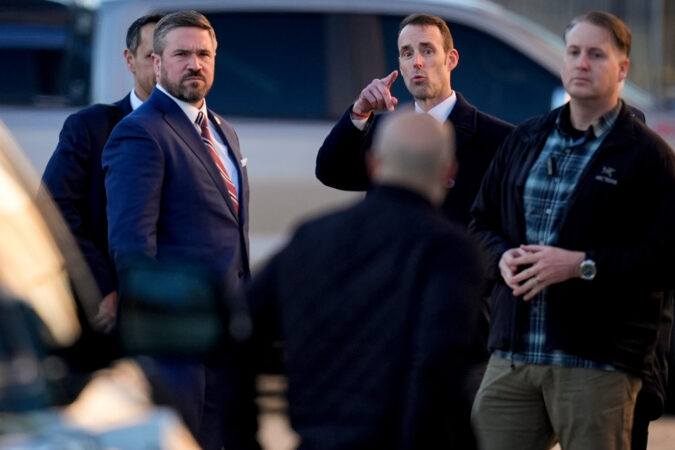
Dozens of agents descended on Fulton County’s election warehouse last month and spent several hours combing through the county’s records under supervision from FBI Deputy Director Andrew Bailey. They left with more than 700 boxes of material, including all physical ballots from the 2020 race.
A copy of the search warrant, previously obtained by The Post, revealed that the search was part of a criminal inquiry into possible violations of two federal laws: one requiring officials to retain voting records and the other criminalizing efforts to defraud voters through denying them an impartially conducted election.
But until the public release Tuesday of the affidavit underlying the warrant, the exact focus of the investigation — and the evidence agents cited to persuade a judge to sign off on the search — was unknown.
Federal authorities did not have to prove anyclaims laid out as the basis for the warrant. They were required only to demonstrate a substantial likelihood that a crime occurred and that evidence of that crime could be found at the two locations they sought to search.
U.S. Magistrate Judge Catherine M. Salinas in Atlanta found the Justice Department had met that threshold and signed off on the warrant Jan. 28 — just hours before agents arrived at the warehouse.
Since the search, FBI Director Kash Patel has waved off concern expressed by Trump’s critics over the bureau’s investigation, describing the search as “just like one we would do anywhere else.”
“We did the same thing there we do in any criminal case or investigation,” Patel told Fox News in an interview last week. “We collected evidence, we presented that evidence to a federal magistrate judge, who made a finding of probable cause.”
Fulton County officials have urged a different federal judge — Trump appointee J.P. Boulee — to order the return of all material seized by the FBI.
“Claims that the 2020 election results were fraudulent or otherwise invalid have been exhaustively reviewed and, without exception, refuted,” Fulton County Attorney Y. Soo Jo wrote in a recent filing. “Eleven different post-election lawsuits, challenging various aspects of Georgia’s election process, failed to demonstrate fraud.”
Boulee has yet to rule on that request.
— — –
Aaron Schaffer and Mark Berman contributed to this report.
Analilia Mejia appeared to cement victory in the Democratic primary to replace New Jersey Gov. Mikie Sherrill in Congress after her top opponent conceded Tuesday morning.
It’s a massive upset win for the progressive movement.
Mejia led the race with a razor-thin margin when former U.S. Rep. Tom Malinowski, the closest contender, conceded. The Associated Press has still not called the race five days after the election as the race remains tight, but Malinowski’s concession will enable Mejia to focus on campaigning for her April 16 contest against Republican Joe Hathaway.
The progressive, an Afro-Latina, shared a gif of Bad Bunny overwhelmed with emotion as he stood last week to receive the coveted album of the year Grammy for Debí Tirar Más Fotos — the first Spanish album to get the honor.
She delivered a victory speech a couple of hours later on a livestream that kicked off with about two dozen supporters fromunions and progressive groups chanting “abolish ICE,” “tax the rich,” and “Mejia for Congress.”
Mejia said she wants to represent “every voice” in the district and said the victory was not hers alone.
“This isn’t a race in which one individual won,” she said. “This is a race in which the community stepped up and said, ‘In this moment, what we want are real representatives who will listen to the people, who will ask questions about what is keeping you up at night, who will prioritize your interest over special interests.’”
“Analilia deserves unequivocal praise and credit for running a positive campaign and for inspiring so many voters on Election Day,” Malinowski said in a statement Tuesday.
Malinowski initially appeared to be in the lead Thursday night, which led multiple outlets and the Democratic National Committee to prematurely declare the race in his favor. Mejia picked up steam and moved ahead of him as the night went on, and publications issued retractions.
In response, Mejia shared on social media the famous 1948 photo of President Harry Truman holding up the Chicago Tribune’s erroneous “Dewey Defeats Truman” headline.
Mejia, the daughter of Colombian and Dominican immigrants, has repeatedly said that U.S. Immigration and Customs Enforcement cannot be reformed and should therefore be abolished as President Donald Trump’s immigration enforcement tactics become increasingly scrutinized across the country.
She said at a news conference Friday that her position resonated with voters, and that the agency “must be replaced by something that isn’t violent, that isn’t shooting Americans in the streets, that is respecting our Constitution.”
She made the case during her campaign that “any old blue just won’t do” and that she is “unbought and unbossed.”
Malinowski raised nearly three times as much as Mejia through Jan. 16, according to Federal Election Commission data.
Her victory is a major breakthrough for New Jersey’s progressive movement in what has become a fairly reliably blue district that includes parts of Essex, Morris, and Passaic Counties. It comes on the heels of a progressive victory in the crowded Jersey City mayoral race.
(function () {window.addEventListener(‘message’, function (e) { var message = e.data; var els = document.querySelectorAll(‘iframe[src*=”‘ + message.id + ‘”]’); els.forEach(function(el) { el.style.height = message.height + ‘px’; }); }, false); })();
Italso adds another feather to the cap of the national progressive movement after the victory of New York City Mayor Zohran Mamdani, who was supported by some of the same high-profile progressives as Mejia, including U.S. Sens. Bernie Sanders (Ind., Vt.) and Elizabeth Warren (D., Mass.) and U.S. Rep. Alexandria Ocasio-Cortez (D., N.Y.).
Sherrill, who remained neutral in the primary, said in a statement Tuesday that she endorses Mejia’s campaign to replace her seat in Congress.
“I’ve known Analilia for years — I’ve seen her dedication to expanding opportunity and fighting for working people. I know she will be a great partner in Congress whether it is fighting for the Gateway Tunnel or to protect our Constitutional rights,” Sherrill said, referencing a major infrastructure project Trump halted.
I’ve spoken with @Analilia_Mejia to congratulate her and I am very proud to endorse her campaign for Congress. I’ve known Analilia for years — I've seen her dedication to expanding opportunity and fighting for working people. I know she will be a great partner in Congress whether…
Mejia will enter the April special election as a heavy favorite against Hathaway, the former Randolph mayor who ran unopposed in the Republican primary. A regular primary will take place less than two months later, on June 2, for the midterm elections in November. That means the winner’s term will last only through this year.
The progressive, who grew up in Elizabeth, lives with her husband and two kids in Glen Ridge in Essex County, where she says she has resided for 13 years.
She said Friday that garnering name recognition was an “uphill battle” sinceshe was one of the last candidates to join the crowded race. Even though mail ballots went out before many voters had the chance to get to know her, her team made it up “by being on the ground and having the most extensive field operation possible,” she added.
Mejia has most recently worked as the co-executive director of Popular Democracy, a network of organizations across the country that call for “transformational change for Black, brown and low-income communities,” according to its website.
She has a long resumé in activism, politics, and government, including working as the national political director for Sanders’ 2020 presidential campaign, the deputy director for the U.S. Labor Department’s Women’s Bureau under former President Joe Biden, the executive director of the New Jersey Working Families Party, and a union organizer before launching her bid for the seat.
Her victory is the latest example of how the Democratic establishment in New Jersey is losing its grasp on primaries in the state.
That is largely because New Jersey redesigned its primary ballot system last year to get rid of its county line ballot. The long-held system was advantageous to candidates supported by their local party apparatus, and progressive activists like Mejia worked for years to dismantle it to give other candidates a shot.
Malinowski had the endorsement of the Morris County Democratic Committee, and the other local committees supported candidates who fell behind the two front-runners.
AIPAC’s attacks on Malinowski
A thorn in Malinowski’s side was a series of attacks funded by the American Israel Public Affairs Committee (AIPAC), a pro-Israel national lobbying group, on issues unrelated to Israel. The method may have backfired, since Mejia has been more critical of Israel than the former House member.
United Democracy Project, a super PAC funded by AIPAC, attacked Malinowski in ads for voting “with Trump” by supporting bipartisanlegislation that included funding for federal immigration enforcement. It also went after him for undisclosed stock trading while in Congress, for which he had received previous scrutiny.
Patrick Dorton, a spokesperson for the super PAC, told the New York Times that Malinowski is not sufficiently supportive of Israel because he has talked about putting conditions on aid for the country.
The group spent nearly $2 million on the race, according to Adimpact, which tracks TV and other spending by campaigns.
Malinowski,who generally supports Israel, said in his concession statement that the results of the race “cannot be understood” without looking at the “dishonest ads” funded by the group.
I spoke with Analilia Mejia this morning and congratulated her on her win in our primary. See my full statement below.
I will be forever grateful to everyone who supported and believed in me in this race, and in the fight for our democracy that must go on! pic.twitter.com/J7tIjgmDq1
“I wish I could say today that this effort, which was meant to intimidate Democrats across the country, failed in NJ-11,” he said. “But it did not. I met several voters in the final days of the campaign who had seen the ads and asked me, sincerely: ‘Are you MAGA? Are you for ICE?’”
He said he will oppose any candidates AIPAC backs in the June primary when the seat is again on the line.
Mejia said AIPAC’s attacks demonstrate the influence money has over American politics, but she rejected the notion AIPAC played a decisive role in the race.
“What they didn’t do is win this for us,” she said. “How we won it was people power. How we won it was talking to folks. How we won it was knocking at doors. How we won it was being ready at every moment.”
As President Donald Trump calls for sweeping changes to election law — including saying that Republicans should “take over the voting” — Republicans in Congress are planning to vote this week on the SAVE America Act, which would make massive changes to how Americans vote ahead of November’s midterms.
They want to require all Americans to prove they are citizens when registering to vote, and to show an ID when voting in person or by mail, as well as make mail voting more difficult.
Trump and Republicans say this would make voters feel more confident there’s no fraud in federal elections. “We need elections where people aren’t able to cheat,” Trump told NBC News. “And we’re gonna do that. I’m gonna do that. I’m gonna get it done.”
But there’s no evidence of widespread election fraud. There is evidence, say some nonpartisan elections experts, that this bill could disenfranchise millions of eligible voters by requiring new voters to provide documents that tens of millions of U.S. citizens lack immediate access to.
The nonpartisan Campaign Legal Center asserts the bill “is harmful to our democracy and a threat to the freedom to vote for all Americans. … Its extreme documentation requirements would actually amount to one of the harshest voter suppression laws nationwide.”
Here’s how the SAVE Act could dramatically change elections and its chance of becoming law.
3 major changes
1. You’d have to provide a proof of citizenship to register to vote:Millions of Americans register to vote every year, and they are already required to verify they are citizens when they do. Under this bill, they’d have to prove it.
For example, those who change states, or are newly eligible to vote would have to provide proof of their citizenship, like a passport, a military ID submitted with proof of place of birth, or — when submitted alongside other documents — a birth certificate.Newly married voters who change their last name would have to reregister to vote with all of these documents — plus provide proof as to why their current name doesn’t match their birth certificate.
But about half of Americans don’t have passports, and not all Americans have a copy of their birth certificate.
“Our research shows that more than 21 million Americans lack ready access to those documents,” writes the nonpartisan Brennan Center for Justice.
Even some Republican election experts have questioned whether all this documentation is necessary.
“The premise of the SAVE Act is we need to ensure there are processes that confirm citizenship,” says Matt Germer, director of the governance program at the R Street Institute, a conservative think tank. “But I think much of the burden of citizenship verification should be on the government, which holds much of this data in the first place.”
2. It requires IDs to vote nationwide: Strong majorities of Americans, including Democrats, support voters presenting a photo ID to cast ballots.
Only government (state, tribal, or federal) IDs would be accepted.
3. It would probably make voting by mail more difficult:Mail-in voting is popular and safe, say election experts. Almost all states offer some form of it. Trump has voted by mail, and Republicans certainly use it too.
But this bill would put strict restrictions on who can vote by mail without providing valid identification. Some disabled voters and active duty troops would be exempt from the new rules.
Some Republican election officials have expressed concern this takes away from states’ constitutional right to run their own elections how they best see fit. Mail-in voting first became popular among rural conservatives in Western states.
“When I was in office,” former Kentucky secretary of state Trey Grayson said in a recent interview, “the number one principle of election administration was that the states run elections and Congress should be minimally involved. On the Republican side, we really believed that. It was really, really important.”
Democrats adamantly oppose
The bill could pass the Republican-controlled House this week, but in the Senate, Democrats plan to block the legislation by filibustering it.
“It’s Jim Crow 2.0,” Senate Minority Leader Charles E. Schumer (D., N.Y.) told MS NOW recently. “What they’re trying to do here is the same thing that was done in the South for decades to prevent people of color from voting.”
This isn’t the first time Republicans have tried to pass some version of the bill, and Trump has been increasingly vocal about election reform. Some of his ideas appear blatantly unconstitutional. But that hasn’t stopped the president from arguing for them.
WASHINGTON — An annual meeting of the nation’s governors that has long served as a rare bipartisan gathering is unraveling after President Donald Trump excluded Democratic governors from White House events.
The National Governors Association said it will no longer hold a formal meeting with Trump when governors are scheduled to convene in Washington later this month, after the White House planned to invite only Republican governors. On Tuesday, 18 Democratic governors also announced they would boycott a traditional dinner at the White House.
“If the reports are true that not all governors are invited to these events, which have historically been productive and bipartisan opportunities for collaboration, we will not be attending the White House dinner this year,” the group wrote. “Democratic governors remain united and will never stop fighting to protect and make life better for people in our states.”
Oklahoma Gov. Kevin Stitt, a Republican and the chairman of the NGA, said in a letter Monday to fellow governors obtained by The Associated Press that the White House intends to limit invitations to the association’s annual business meeting, scheduled for February 20, to Republican governors only.
“Because NGA’s mission is to represent all 55 governors, the Association is no longer serving as the facilitator for that event, and it is no longer included in our official program,” Stitt wrote.
The NGA is scheduled to meet in Washington from Feb. 19-21. Representatives for Stitt, the White House and the NGA didn’t immediately comment on the letter.
Brandon Tatum, the NGA’s CEO, said in a statement last week that the White House meeting is an “important tradition” and said the organization was “disappointed in the administration’s decision to make it a partisan occasion this year.”
The governors group is one of the few remaining venues where political leaders from both major parties gather to discuss the top issues facing their communities. In his letter, Stitt encouraged governors to unite around common goals.
“We cannot allow one divisive action to achieve its goal of dividing us,” he wrote. “The solution is not to respond in kind, but to rise above and to remain focused on our shared duty to the people we serve. America’s governors have always been models of pragmatic leadership, and that example is most important when Washington grows distracted by politics.”
Signs of partisan tensions emerged at the White House meeting last year, when Trump and Maine’s Gov. Janet Mills traded barbs.
Trump singled out the Democratic governor over his push to bar transgender athletes from competing in girls’ and women’s sports, threatening to withhold federal funding from the state if she did not comply. Mills responded, “We’ll see you in court.”
Trump then predicted that Mills’ political career would be over for opposing the order. She is now running for U.S. Senate.
The back and forth had a lasting impact on last year’s conference and some Democratic governors did not renew their dues last year to the bipartisan group.
After Sharif Street Jr. got into a highly public fight at Mayor Cherelle L. Parker’s 2024 inauguration ceremony, his boss, City Councilmember Jim Harrity, extended him some grace.
Harrity, who credits Street Jr.’s father, State Sen. Sharif Street (D., Philadelphia), with giving him a second chance earlier in his own career, kept the junior Street on staff as a special assistant, saying the incident was a lapse in judgment.
But according to another staff member in Harrity’s office, it was not the only transgression.
Shanelle Davis, a former constituent services representative, filed a federal lawsuit last week against the city claiming that she told supervisors months before the inauguration fight that Street Jr. had sexually harassed her while she was at work, including twice grabbing her and making sexualized comments about her body.
She said in the suit, filed in the U.S. District Court for the Eastern District of Pennsylvania, that no action was taken and Street Jr. remained on staff.
Davis is seeking unspecified damages from the city, which she claims violated state and federal laws related to gender-based discrimination. Street Jr. is not named as a defendant in the suit, but he is mentioned throughout the 13-page filing.
Davis’ complaint portrays a dysfunctional workplace environment in the City Hall office, including an alleged physical altercation between Street Jr. and another staffer for which no one was reprimanded. Davis, who is Black, claimed another colleague in Harrity’s office made racist comments, including hurling the N-word toward her.
Davis, who was hired in late 2022, said in the lawsuit that she was fired for underperforming at her job about a year later, after Harrity won reelection.
Her attorney did not respond to a request for comment Monday. Street Jr. did not respond to calls seeking comment.
Harrity, a Democrat who represents the city at-large and was a longtime aide to the elder Street, said in a statement that he “categorically denounce[s] workplace harassment, or any conduct that undermines a respectful and professional work environment.”
He declined to comment further, citing the ongoing legal proceedings. A spokesperson for the city law department also declined to comment.
The lawsuit is the latest legal trouble involving Sharif Street Jr., 26, who over the last three years has pleaded guilty to criminal offenses in Philadelphia, Montgomery, and Delaware Counties. In August, his employment with the city was terminated the week he pleaded guilty to charges in connection with the inauguration assault and another incident.
City Councilmember Jim Harrity speaks to colleagues on during a Council session in September.
Street Jr. comes from one of Philadelphia’s most well-known political families. His grandfather is former Mayor John F. Street, his mother is Common Pleas Court Judge Sierra Thomas Street, and his father is a state senator and the former head of the state Democratic Party who is now running for a seat in Congress.
Anthony Campisi, a spokesperson for the elder Sharif Street’s congressional campaign, said the state senator had “no knowledge” of the sexual harassment allegations.
“Sharif loves his son unconditionally and has supported his son through personal troubles, like so many parents across Philadelphia,” Campisi said. “That being said, Sharif unequivocally condemns sexual harassment in all its forms and is looking for the legal process to play out.”
City Council President Kenyatta Johnson, who took over as leader of the chamber in 2024, declined to comment. Under City Council rules, individual members are responsible for hiring and terminating their own employees.
State Senator Sharif Street (D., Phila.)is in the state House chamber as Gov. Josh Shapiro makes his annual budget proposal Feb. 3, 2026.
Street Jr. was arrestedseveral times over three years while working in City Hall as an assistant in Harrity’s office, court records show. Davis’ lawsuit comes about six months after Street Jr.’s employment in Harrity’s office ended, according to payroll records.
In January 2024, Street Jr. punched a security guard at the entrance to Parker’s inauguration ceremony at the Met Philadelphia on North Broad Street. He told The Inquirer at the time that he was defending his grandfather, the former mayor, whom he said the guard had grabbed because they were trying to enter at a back entrance without waiting in line.
“I saw my grandfather get grabbed and I just sort of blacked out,” Street Jr. said. His father defended him at the time, saying the security guard had initiated the altercation.
Later that month, Street Jr. was charged in connection with a hit-and-run from the previous August that left a 14-year-old injured.
The two cases were consolidated in Common Pleas Court, and Street Jr. pleaded guilty in August to charges of assault and causing an accident that resulted in an injury. According to prosecutors, he was sentenced to 60 days in jail.
Four months later, when he was no longer working in city government, Street Jr. was briefly jailed in Delaware County following what police in Upper Darby described as a “prolonged struggle” during a traffic stop. He pleaded guilty to disorderly conduct, a summary offense.
WASHINGTON — Congressional leaders said Tuesday that a deal was still possible with the White House on Homeland Security Department funding before it expires this weekend. But the two sides were still far apart as Democrats demanded new restrictions on President Donald Trump’s immigration crackdown.
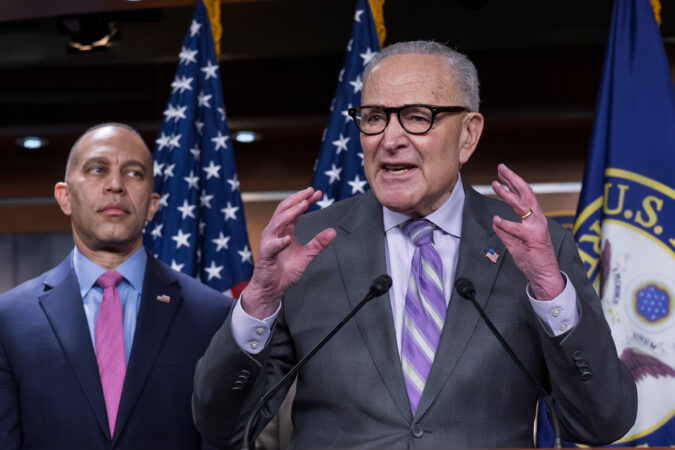
After federal agents fatally shot two protesters in Minneapolis last month, Democrats say U.S. Immigration and Customs Enforcement needs to be “dramatically” reined in and are prepared to let Homeland Security shut down if their demands aren’t met. On Tuesday, Senate Democratic Leader Chuck Schumer and House Democratic Leader Hakeem Jeffries said they had rejected a White House counteroffer that “included neither details nor legislative text” and does not address “the concerns Americans have about ICE’s lawless conduct.”
“We simply want ICE to follow the same standards that most law enforcement agencies across America already follow,” Schumer said Tuesday. “Democrats await the next answer from our Republican counterparts.”
The Democrats’ rejection of the Republican counteroffer comes as time is running short, with a shutdown of the Homeland Security Department threatening to begin Saturday. Among the Democrats’ demands are a requirement for judicial warrants, better identification of DHS officers, new use-of-force standards and a stop to racial profiling.
Finding agreement on the charged, partisan issue of immigration enforcement will be exceedingly difficult. But even as lawmakers in both parties were skeptical, a White House official said that the administration was having constructive talks with both Republicans and Democrats. The official, granted anonymity to speak about ongoing deliberations, stressed that Trump wanted the government to remain open and for Homeland Security services to be funded.
Senate leaders also expressed some optimism.
“There’s no reason we can’t do this” by the end of the week, Senate Democratic Leader Chuck Schumer said after meeting with his caucus on Tuesday.
Senate Majority Leader John Thune, R-S.D., said there have been “some really productive conversations.”
Democratic demands
Schumer and Jeffries have said they want immigration officers to remove their masks, to show identification and to better coordinate with local authorities. They have also demanded a stricter use-of-force policy for the federal officers, legal safeguards at detention centers and a prohibition on tracking protesters with body-worn cameras.
Among other asks, Democrats say Congress should end indiscriminate arrests, “improve warrant procedures and standards,” ensure the law is clear that officers cannot enter private property without a judicial warrant and require that before a person can be detained, it’s verified that the person is not a U.S. citizen.
Democrats made the demands for new restrictions on ICE and other federal law enforcement after ICU nurse Alex Pretti was shot and killed by a U.S. Border Patrol officer in Minneapolis on Jan. 24, and some Republicans suggested that new restrictions were necessary. Renee Good was shot by ICE agents on Jan. 7.
Many Democrats said they won’t vote for another penny of Homeland Security funding until enforcement is radically scaled back.
“Dramatic changes are needed at the Department of Homeland Security before a DHS funding bill moves forward,” Jeffries said. “Period. Full stop.”
Republican counterproposal
Jeffries said Tuesday that the White House’s offer “walked away from” their proposals for better identification of ICE agents, for more judicial warrants and for a prohibition on excessive use of force. Republicans also rejected their demand for an end to racial or ethnic profiling, Jeffries said.
“The White House is not serious at this moment in dramatically reforming ICE,” Jeffries said.
Republican lawmakers have also pushed back on the requests. Oklahoma Sen. Markwayne Mullin, a close ally of Trump, said Tuesday that he’s willing to discuss more body cameras and better training — both of which are already in the Homeland spending bill — but that he would reject the Democrats’ most central demands.
“They start talking about judicial warrants? No. They start talking about demasking them? No, not doing that. They want them to have a photo ID with their name on it? Absolutely not,” Mullin said.
Republicans have said ICE agents should be allowed to wear masks because they are more frequently targeted than other law enforcement officials.
“People are doxing them and targeting them,” said House Speaker Mike Johnson, R-La., on Monday. “We’ve got to talk about things that are reasonable and achievable.”
Some Republicans also have demands of their own, including the addition of legislation that would require proof of citizenship before Americans register to vote and restrictions on cities that they say do not do enough to crack down on illegal immigration.
At a House hearing on Tuesday, the acting director of ICE, Todd Lyons, said his agency is “only getting started” and would not be intimidated as his officers carry out Trump’s mass deportation agenda.
Trump deals with Democrats
Congress is trying to renegotiate the DHS spending bill after Trump agreed to a Democratic request that it be separated out from a larger spending measure that became law last week and congressional Republicans followed his lead. That package extended Homeland Security funding at current levels only through Feb. 13, creating a brief window for action as the two parties discuss new restrictions on ICE and other federal officers.
But even as he agreed to separate the funding, Trump has not publicly responded to the Democrats’ specific asks or suggested any areas of potential compromise.
White House press secretary Karoline Leavitt said late last week that the Trump administration is willing to discuss some items on the Democrats’ list, but “others don’t seem like they are grounded in any common sense, and they are nonstarters for this administration.”
Thune said Tuesday that “there are certain red lines that I think both sides have, things they are not going to negotiate on, but there are some things they are going to negotiate on, and that’s where I think the potential deal space is here.”
It was, so far, unclear what those issues were.
“We are very committed to making sure that federal law enforcement officers are able to do their jobs and to be safe doing them,” Thune said of Republicans.
Consequences of a shutdown
In addition to ICE and U.S. Customs and Border Protection, the homeland security bill includes funding for the Federal Emergency Management Agency and the Transportation Security Administration, among other agencies. If DHS shuts down, Thune said last week, “there’s a very good chance we could see more travel problems” similar to the 43-day government closure last year.
Thune has said Republicans will try to pass a two- to four-week extension of the Homeland Security funding while negotiations continue.
Many Democrats are unlikely to vote for another extension. But Republicans could potentially win enough votes in both chambers from Democrats if they feel hopeful about negotiations.
“The ball is in the Republicans’ court,” Jeffries said Monday.
In an effort to reduce air pollution and modernize U.S. ports, the Biden administration in 2024 announced $3 billion in grants for zero-emission equipment — including tens of millions earmarked for Philadelphia’s port to buy two new electric cranes to help unload ships.
Ports have embraced the clean energy push, but some have run into a problem. U.S. law requires federally funded infrastructure projects to use American-made products. But according to industry groups, no U.S. firm makes the giant ship-to-shore gantry cranes like the ones Philly is hoping to buy.
Those rules — included in a 2021 law that had bipartisan support in Congress — reflect a push under both Republican and Democratic administrations to revive American manufacturing, especially in industries such as semiconductor production and shipbuilding, where continued U.S. deference to China is seen as a potential security risk.
In the case of the cranes, PhilaPort says that even if it could procure them in the U.S., it would still face risks because of a lack of “a reliable domestic supply chain for spare parts and service.”
The Environmental Protection Agency said it is reviewing PhilaPort’s application.It might not be a slam dunk: President Donald Trump’s administration has slashed billions of dollars in funding for Biden-era clean energy initiatives — and early last year, PhilaPort’s grant appeared to be briefly suspended.
Yet Trump has also expressed support for union dockworkers like the ones who would operate new cranes at Tioga Marine Terminal in Port Richmond. The International Longshoremen’s Association has celebrated the initiative, known as the Clean Ports Program, saying it protects jobs against automation.
If the EPA doessign off on the request, the port authority will have to navigate a geopolitical minefield.
Grant recipients are prohibited from using the funds to buy equipment made in China, whose state-owned Shanghai Zhenhua Heavy Industries Co. Ltd. (ZPMC) produces 70% of the world’s ship-to-shore cranes, including the vast majority in use at U.S. ports.
American reliance on Chinese-made critical port infrastructure has raised national security concerns, magnified by the FBI’s 2021 discovery of “intelligence gathering equipment” onboard a ship that was delivering ZPMC cranes to Baltimore’s port, according to a congressional investigation.
Only three companies outside China, two in Europe and one in Japan, make ship-to-shore cranes available for international buyers, according to the American Association of Port Authorities. Each firm’s cranes would likely be subject to tariffs imposed by the Trump administration.
Another wrinkle: As PhilaPort has sought support for the waiver from Pennsylvania’s congressional delegation, some lawmakers have expressed reservations that even cranes made by a non-Chinese manufacturer might include parts made in China. Limiting that exposure could be challenging, given China’s dominance in these intermediate goods.
It remains to be seen whether lawmakers will ultimately back the request. Labor unions such as United Steelworkers have broadly opposed exemptions from domestic production requirements. A spokesperson for United Steelworkers said the union is “still reviewing the specifics of this case.”
U.S. Rep. Brendan Boyle (D., Pa.) said he “fought hard” to include the Build America Buy America provision in the 2021 law. “So I’m naturally quite concerned any time an entity is attempting to circumvent these important provisions that protect American jobs and industries,” he said in a statement.
“PhilaPort’s management needs to do a much better job explaining why a waiver in this case is absolutely necessary,” said Boyle, whose district includes the Tioga terminal.
Spokespeople for U.S. Sens. John Fetterman (D., Pa.) and Dave McCormick (R., Pa.) did not respond to messages seeking comment.
Those restrictionswill likely increase the cost. Of the $80 million awarded to PhilaPort by the EPA, the port authority had budgeted $47 million for two cranes at Tioga Marine Terminal.
Now, “it’s unclear if we can do two [cranes] for that price,” said Ryan Mulvey, the port authority’s director of government and public affairs.
Replacing diesel-powered cranes
The 2022 Inflation Reduction Act passed by Congress and signed by President Joe Biden presented an opportunity for PhilaPort’s Tioga Marine Terminal, which was built in the 1960s and until recently was still using two diesel-powered cranes that had been installed in the late ‘60s and early ’70s.
The cranes reached the end of their useful life and were recently dismantled, and the port authority has installed electrical infrastructure to support zero-emission equipment at Tioga, which handles cargoes such as forest products, containers, and steel.
President Joe Biden speaks at PhilaPort’s Tioga Marine Terminal in Philadelphia on Oct. 13, 2023.
Cranes can lift two 20-ton cargo containers off a ship at a time. Without them, “it really restricts the amount of cargo you can put through the terminal,” said Andrew Sentyz, president of operator Delaware River Stevedores, which leases the terminal from the port authority.
About 100 to 200 union longshoremen work at the site, depending on cargo volumes, he said.
When PhilaPort started reaching out to vendors, at least three — Konecranes of Finland, Phoenix-based Stafford Crane Group, and Swiss-German firm Liebherr’s U.S. affiliate — indicated they were working toward making ship-to-shore cranes that would meet domestic content requirements under the Build America, Buy America Act, a provision of Biden’s 2021 bipartisan infrastructure law. (Stafford is a new entrant in the STS crane market.)
But when the port authority proceeded to bid for the project last spring, four potential bidders said they were not able to deliver cranes meeting PhilaPort’s technical specifications within its schedule or budget, according to the application it filed with the EPA in September.
One firm said Buy America rules would increase the cost of the project as much as threefold. It would take three to five years to build the manufacturing facilities needed to comply with the law and a further 36 months to complete production. By comparison, cranes that are not subject to those rules can be completed within 28 months, the vendor said.
“In the absence of continuing federal incentives toward onshore crane manufacturing, the vendor advised there is not sufficient market demand to continue to scale up its domestic manufacturing of cranes,” PhilaPort’s application says.
Another vendor told the port authority that “the low volume of current demand for BABA-compliant cranes makes domestic manufacturing currently uneconomical.”
To comply with Buy America regulations, more than 55% of the totalcost of components in a manufactured product must be from U.S.-made parts.
The EPA has acknowledged the limited domestic production of zero-emission port equipment and in 2024 temporarily lowered that requirement to 25% for certain items. But to take advantage of that reduced threshold, installation of the STS cranes would have to begin by the end of the year — a timeline PhilaPort says is not realistic.
‘Nonexistent for decades’
PhilaPort’s findings were consistent with broader industry research.
Barriers to reviving domestic industry include a shortage of welders and the fact that “American steel is significantly more expensive than European or Asian alternatives,” Davis said.
Holt Logistics Corp. cranes lift containers off vessels docked at the Packer Avenue Marine Terminal in South Philadelphia.
Likewise, the National Association of Waterfront Employers told the Biden administration in 2024 that domestic crane manufacturing is years, “if not decades, away from being a reality.”
The EPA is aware of the industry input, and as part of its review of PhilaPort’s application, the agency is now conducting its own market research to assess the availability of American-made cranes, a spokesperson said.
There have been signs of some incremental progress toward diversifying supply chains. In September, California-based PACECO Corp., a subsidiary of Japanese firm Mitsui E&S, said it had secured a contract to supply two ship-to-shore cranes to a terminal at the Port of Long Beach in California. The cranes will be built in Japan, the companies said, and include “American-made components supplied by U.S. companies.”
“This order underscores the shift now underway in the U.S. container handling market,” Troy Collard, general manager of sales at PACECO, said in a news release announcing the order. He said the order shows there are “reliable alternatives” to Chinese manufacturers “that both meet the needs of U.S. ports and support broader national security and supply chain resilience goals.”
Scrutiny of China
The focus on domestic production comes as Congress and federal law enforcement have in recent years stepped up scrutiny of potential security risks associated with Chinese equipment at U.S. ports.
China’s ZPMC built about 80% of the ship-to-shore cranes in use at U.S. ports — including several bought by PhilaPort for the Packer Avenue Marine Terminal in South Philadelphia. The firm has close ties to the Chinese Communist Party, according to two Republican-led House committees that investigated the company.
ZPMC cranes were installed at Packer Avenue Marine Terminal in 2018.
In 2024, three years after the FBI’s discovery in Baltimore, the committees said their investigation found that ZPMC had installed communication devices on crane components and other maritime infrastructure at two U.S. seaports. These cellular modems, not included in contracts with U.S. ports, were “intended for the collection of usage data on certain equipment,” constituting “a significant backdoor security vulnerability that undermines the integrity of port operations,” the investigation found.
But under Beijing’s “highly acquisitive data governance regime and comparatively high levels of control over PRC firms,” Chinese-made equipment and software in port systems enable surveillance and “may cause delay or disruption to the critical operations of U.S. maritime transport systems,” Isaac Kardon, senior fellow for China Studies at Carnegie Endowment for International Peace, told Congress last year.
It is not easy to completely remove China from the supply chain, however. In response to a request from lawmakers, PhilaPort asked prospective bidders if they could produce the cranes without Chinese parts, Mulvey said. Only one firm said it could source “100% without Chinese components,” he said.
PhilaPort noted in the waiver application that it is considered by the Pentagon as one of 14 “strategic military seaports.” During the Iraq War, that enabled the port to handle Army shipments.
“These cranes enable the efficient handling of heavy, oversized, and mission-critical military cargo, directly supporting the Department of Defense’s logistical and deployment capabilities,” the application says.