Category: Politics

Political news and coverage

  • Senate for first time approves a war powers resolution in a rebuke to Trump over Iran conflict

    Senate for first time approves a war powers resolution in a rebuke to Trump over Iran conflict

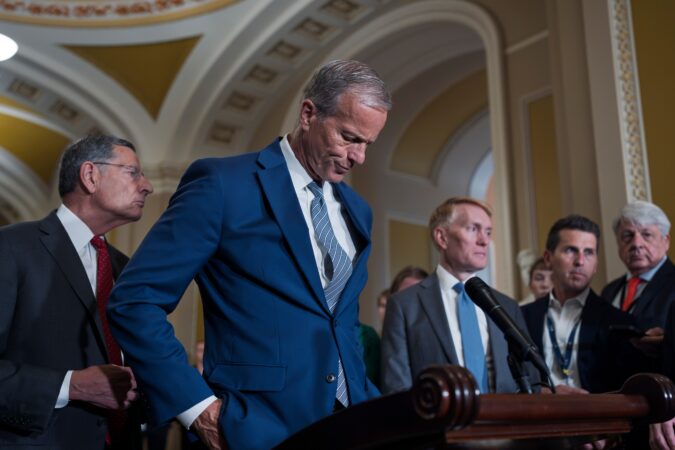
    WASHINGTON — The Senate for the first time approved a war powers resolution Tuesday seeking to block U.S. military action against Iran, as lawmakers warily watch President Donald Trump’s efforts to resolve a conflict that the administration launched on its own and now needs Congress to fund.

    It was the 10th time the Senate has tried to stop the war, and the outcome, on a vote of 50-48, was a stunning turnaround from past efforts. While the resolution is largely symbolic, and does not carry the full force of law, it reflects the growing concerns from a number of Republican lawmakers in both the House and Senate over both the war and the deal Trump struck with Iran to end it. The House approved the resolution earlier this month.

    Trump responded angrily Tuesday night on his Truth Social platform, calling the vote “poorly timed and meaningless” and saying it “provided aid and comfort” to Iran.

    Senate Democratic Leader Chuck Schumer of New York said, “Time after time, the vast majority of Senate Republicans sided with Trump and his war instead of the American people.”

    Schumer said Americans have paid the price for “Trump’s historic blunder in Iran. It’ll go down in the history books as one of the worst foreign policy forays America has ever made.”

    In the past, as many as four GOP senators have voted for the war powers resolutions, and they did so Tuesday — Republicans Lisa Murkowski of Alaska, Susan Collins of Maine, Rand Paul of Kentucky and Bill Cassidy of Louisiana. One Democrat, Sen. John Fetterman of Pennsylvania, voted against.

    Trump bashed the four Republicans as losers, saying, “These senators have made my job more difficult.”

    On this vote, the absence of two Republicans, including Sen. Mitch McConnell of Kentucky, who was admitted to the hospital recently for an undisclosed matter, left the GOP without a full majority to halt the effort. Sen. Dave McCormick, R-Pa., also missed the vote.

    The vote comes as the Pentagon is seeking $80 billion from Congress mostly for the Iran war as it backfills munitions and stockpiles.

    Trump to meet senators as Republicans balk at Iran deal

    Trump himself is headed to the Capitol on Wednesday to meet with GOP senators after Vice President JD Vance was overseas working to negotiate with Iran to end its nuclear ambitions — which had been among the stated rationales for the war.

    The president is not pleased with the Republicans who have been critical of the deal he struck with Iran, according to one GOP senator granted anonymity to discuss the private dynamics.

    The terms of the Iran deal are spelled out in a memorandum of understanding that Trump signed last week, starting a 60-day clock for the sides to reach a broader agreement over ending Iran’s nuclear program.

    But Republicans have particularly objected to the $300 billion fund to help Iran rebuild, which is far greater than the $1.7 billion then-President Barack Obama refunded the country under his administration’s 2015 Iran deal.

    “I believe President Trump is getting very poor advice on Iran,” Sen. Ted Cruz, R-Texas, said last week on his podcast after the deal was made public.

    Democrats have repeatedly forced Iran votes

    Over and again, Democrats have been forcing votes on the Iran war, almost since the U.S. and Israel launched missile strikes on Iran on Feb. 28.

    Nearly each week they’re in session, the Senate Democrats have put forward war powers resolutions, but they have failed to amass the majority needed for passage in the narrowly split chamber, where Trump’s Republican Party holds the majority. Trump would almost certainly veto any measure that passed.

    The House pushed its own version to passage earlier this month, with four Republicans joining all Democrats in approving the war powers resolution, over the objections of House Speaker Mike Johnson and the GOP leadership.

    While the House- and Senate-passed resolution does not go to the president for his signature, passage stands as a powerful, if symbolic, statement from Congress and a rebuke of the administration’s military actions.

    Sen. Tim Kaine, the Democrat from Virginia who has led his party’s efforts, said the pause in warfighting, as Trump’s team works to shore up a fragile ceasefire, provides the perfect time for Congress to step back and assess “what should the next chapter be.”

    Hegseth seeks $80 billion from Congress for the Iran war

    Defense Secretary Pete Hegseth is on Capitol Hill this week, seeking roughly $80 billion in supplemental funding to shore up defense supplies in the aftermath of the Iran war, which is drawing scrutiny when many Americans are reeling from high gas prices and costs of living.

    The Pentagon early on had estimated the war cost $11.3 billion during its first week, and senators said experts put the overall price tag of Operation Epic Fury higher, at some $100 billion.

    The Defense Department’s funding request is part of a broader beef-up of military money the White House wants as part of its budget request this year.

    House Democratic Leader Hakeem Jeffries said Tuesday, “We should not spend another dime of taxpayer dollars on Operation Epic Failure.”

    The Trump administration is seeking $1.5 trillion in defense funding this year — a nearly 50% increase — including $350 billion that it wants in a so-called budget reconciliation package. Johnson and GOP leaders are working to pass that package on their own, over the objections of Democrats, much the way they approved Trump’s big tax cuts bill last year.

    The 2025 tax cuts package also included a sizable increase for the military.

  • The history of American Jews exposes the fundamental questions of citizenship

    The history of American Jews exposes the fundamental questions of citizenship

    The history of American Jews’ citizenship makes the president’s case to eliminate birthright citizenship, now awaiting a Supreme Court decision, no surprise—but this should offer little comfort.

    The central plotline of the story of Jews in the United States tends to revolve around citizenship: Jews arrived, gained citizenship, the end. Yet this story accounts for neither how citizenship has worked for Jews nor how it works in general. A far more accurate history of Jewish citizenship in the United States exposes the persistent political questions asked, answered, and unresolved when policymakers try to decide who is and isn’t “American.”

    For the past 250 years, American leaders have used citizenship law to draw and re-draw the lines of individual belonging through collective categories. From the beginning, Congress granted “any alien being a free white person” access to citizenship, writing into naturalization law in 1790 broad thresholds for membership. In 1868 the Fourteenth Amendment revolutionized citizenship by opening it to “all persons born or naturalized in the United States.” Yet Congress also legislated that for the purposes of naturalization, “all persons” only included “free white persons” and “aliens of African nativity…and African descent,” not Chinese people or “Asiatics.”

    Jews who immigrated from Europe tended to gain access to naturalization as “white” under citizenship law, but government officials found Jews a useful—and sometimes confounding—guide to help them apply the law, even when Jews were not directly involved.

    Take a 1909 naturalization appeal from four men, described in their rejected application as “Armenians by race.” The men were not Jewish, but Judge Henry Cabot Lowell, who presided over their appeal, nonetheless found himself contemplating Jewish citizenship. Harvard-educated and hailing from an elite Boston family, Lowell consulted scientific treatises to conclude that “Hebrews” and Armenians were both “Asiatic” in origin. Prevailing scientific racism of the day convinced him that neither met the threshold of whiteness. As he wrote in his decision, it was “hard to find loophole for admitting the Hebrews” to citizenship. But at least until Congress acted, he saw no reason to exclude Armenians if Jews could benefit from the loophole.

    Jewish leaders panicked when they witnessed high-level government officials slotting them into racialized categories other than “white.” They understood that the historical fact of citizenship would not necessarily protect Jews in years to come, especially as eugenicist ideas gained traction among policymakers designing new restrictive immigration laws. In the early 20th century, elite Jews lobbied politicians, filed reports, intervened in naturalization cases, and testified at congressional hearings to bolster Jews’ claims to citizenship. Their efforts met partial success. As passed in the 1920s, immigration quota laws dropped the classification of Jews as “Hebrews,” instead counting Jews among others of their same “national origin.” Still, the countries from which most Jews immigrated, such as Russia and Poland, now faced some of the harshest restrictions.

    In practice, the new quota laws reduced the number of Jews who could naturalize and raised suspicion about those who did. Foreign-born Americans from many different backgrounds experienced discrimination that legal status did not avert.

    But accusations of foreignness and dual loyalty clung to Jews in unique ways, as illustrated by a remarkable case from 1947. That year, a naturalized Jewish man sought to return to the United States after living in British-mandate Palestine for over a decade. Detained by U.S. border control agents, the Ukrainian-born man learned that his American passport had been revoked under a 1940 law that prohibited naturalized citizens from living abroad for over five years. Native-born citizens were not subject to the same law. The ACLU, American Jewish Committee, and American Jewish Congress seized on this fact to call the law unconstitutional and defend the Jewish man on his appeal. But for the Jewish organizations, the constitutional violation was a piece of a much larger threat to Jewish citizenship in the United States. When Congress authorized the 1940 statute, it did so under pressure from a State Department official who insisted that “these Zionists” regularly manipulated the protections of American citizenship for their own nationalist ends.

    The court rejected the Jewish man’s appeal, and in doing so diminished the distinctly Jewish dimension of the case by tying him to other naturalized Americans, such as Japanese-Americans, whose constitutional rights to equal protection could be overridden by national interests according to recent Supreme Court precedent.

    Citizenship debates routinely entangled Jews’ status with that of other groups because the categories of citizenship were neither self-evident nor self-executing. Only in motion, by scrutinizing groups, comparing them to one another, and gauging the changing winds of national interests, did government officials bend citizenship to their will.

    In a remarkable exchange on the Senate floor in the spring of 1964, two senators debated the exclusion of religion from proposed anti-discrimination legislation targeting federally-funded programs. Albert Gore, Sr., a Democrat from Tennessee, contended that Jews lacked shelter under the law’s categories of “race, color, or national origin” because Jews were a religion. Joseph Clark, a fellow Democrat from Pennsylvania, countered that those categories protected Jews just fine because many Jews lacked any faith, so whatever discrimination they faced must be race-based. Signed into law that summer as Title VI of the Civil Rights Act, the statute (unlike many others in the same law) did not include religion among its protected categories.

    For many decades, the question of Jews’ standing under Title VI seemed to be resolved in practice, as government officials and Jewish leaders agreed that its jurisdiction did not include Jews. But it was only a matter of time before the answer faded back into a question.

    Over the last two decades—and especially since Oct. 7, 2023—government officials and many Jewish leaders have argued that Jews should have standing in anti-discrimination laws on the basis of race, color, or national origin. Detractors argue that Jews—or certain expressions of Jewishness such as Zionism—do not fit squarely into those categories. The arguments matter because the categories of citizenship law are consequential, but their answers aren’t intrinsic to citizenship. Rather, citizenship remains a tool to ask questions about belonging; as political aims change so too will its meaning.

    Made By History sponsors. FOR USE ON MADE BY HISTORY STORIES ONLY.

    For American Jews, citizenship has not offered a singular point of arrival or a final answer to the puzzle of national belonging. This lesson from the history of American Jews may offer some reassurance that Trump’s bid to overturn birthright citizenship is just another stop on a zig-zagging journey. Whether the Supreme Court endorses the administration’s tendentious reading of the 14th Amendment or not, the twisted and entangled process of arguing over citizenship will continue.

    A less sanguine lesson from the same history should warn all American citizens that an attack against birthright citizenship is an attack against them. No one is naturally or natively a citizen, wherever they were born. Political leaders are constantly remaking citizenship—just look at how the categories used to define, question, or defend Jews have changed over time. The protections of citizenship are as mutable as they are unreliable.

    Faith in any fundamental meaning of citizenship not only misses the point but also carries profound risk. Even the most capacious understanding of citizenship will not resolve the question of human belonging, but the starkly narrow one on offer from the Trump administration today threatens our ability to keep asking the question.

    Lila Corwin Berman is a professor of history at NYU and author of Who Is American? Belonging and the Question of Jewish Citizenship.

    Made by History takes readers beyond the headlines with articles written and edited by professional historians. Opinions expressed do not necessarily reflect the views of The Inquirer.

  • Josh Shapiro is most popular politician among Philadelphia residents — by a long shot

    Josh Shapiro is most popular politician among Philadelphia residents — by a long shot

    Gov. Josh Shapiro is by far the most popular political figure among Philadelphia residents, a boost as he looks toward November and beyond.

    In a new Suffolk University/Philadelphia Inquirer CityView poll, 62% of Philadelphians have a favorable opinion of Shapiro, double digits above any other political figure included in the survey.

    Not only did the Democratic incumbent running for reelection win over three-quarters of his own party’s voters in the blue stronghold, he also got positive reviews from almost half the city’s independents and more than one-third of Republicans.

    “He has strong bona fides within his own party, 76% favorable and 11% unfavorable, but he’s also at least somewhat competitive among independents and even some Republicans, so that’s an amazing profile for a candidate who’s an incumbent these days,” said David Paleologos, the polling director at Suffolk.

    Just 16% of residents have an unfavorable view of Shapiro, and only 8% have never heard of the one-term governor, who was on former Vice President Kamala Harris’ short list of potential running mates in 2024.

    (function(){function e(){window.addEventListener(`message`,function(e){if(e.data[`datawrapper-height`]!==void 0){var t=document.querySelectorAll(`iframe`);for(var n in e.data[`datawrapper-height`])for(var r=0,i;i=t[r];r++)if(i.contentWindow===e.source){var a=e.data[`datawrapper-height`][n]+`px`;i.style.height=a}}})}e()})();

    The poll of 500 residents in the city, which was conducted by phone from June 16 to 20, had a margin of error of 4.4 percentage points. Pollsters reached residents in all 66 wards in the city.

    Shapiro clobbers his Republican opponent, Treasurer Stacy Garrity, whom just 9% of the poll’s respondents view favorably.

    That’s not unexpected in a city where Democrats outnumber Republicans 6-1. But it’s Garrity’s lack of name recognition that plays a larger role. A whopping 61% of those surveyed had never heard of Garrity, a glaring figure less than five months until the November election.

    Although the state GOP coalesced around her last year and she faced no challengers for her primary nomination this year, only 26% of Republicans had even heard of Garrity.

    (function(){function e(){window.addEventListener(`message`,function(e){if(e.data[`datawrapper-height`]!==void 0){var t=document.querySelectorAll(`iframe`);for(var n in e.data[`datawrapper-height`])for(var r=0,i;i=t[r];r++)if(i.contentWindow===e.source){var a=e.data[`datawrapper-height`][n]+`px`;i.style.height=a}}})}e()})();

    “She’s kind of a blank slate, and that works to the challenger’s advantage, but if you’re Stacy Garrity you want to start defining yourself quickly before someone else does,” Paleologos said.

    Shapiro can drive up his statewide total if voters in Philadelphia, an overwhelming Democratic electorate, turn out in large numbers — though that has been less reliable in recent years.

    His broad favorability could also help him stretch his bank account further. Shapiro, who hails from nearby Montgomery County, has spent the least amount of money so far in the Philadelphia television market and the most in Pittsburgh, which could show his campaign knows where he is already strong.

    Fetterman is far less popular in Philly, particularly among young voters

    Shapiro’s popularity in the city stands in stark contrast with the state’s other top Democrat: U.S. Sen. John Fetterman.

    In the swing state’s most Democratic city, the one-term senator is faring poorly.

    Less than one-quarter, 24%, of Philly residents have a favorable opinion of Fetterman, compared with 43% with an unfavorable view. The numbers are even worse within his own party, with just 17% of Democrats holding a favorable view of the senator, who has often feuded with progressives and repeatedly crossed party lines to cast key votes in support of President Donald Trump’s nominees.

    His numbers are particularly sour among voters ages 18 to 24 and 25 to 34.

    (function(){function e(){window.addEventListener(`message`,function(e){if(e.data[`datawrapper-height`]!==void 0){var t=document.querySelectorAll(`iframe`);for(var n in e.data[`datawrapper-height`])for(var r=0,i;i=t[r];r++)if(i.contentWindow===e.source){var a=e.data[`datawrapper-height`][n]+`px`;i.style.height=a}}})}e()})();

    A strong majority of Republican voters, 60%, view him favorably in the poll, but the Pennsylvania Democrat has repeatedly insisted he has no interest in switching parties heading into 2028, when he is likely to face a primary challenge if he runs for another term.

    While slightly more Philadelphians have a favorable view of Fetterman than his GOP colleague, U.S. Sen. Dave McCormick, a greater share of Philly voters have an unfavorable view of the Democrat.

    McCormick earned 17% favorable views compared with 25% unfavorable views, while the rest had not heard of the freshman senator or were undecided.

    But the least popular politician in Philly was Trump, who had just 12% favorability in the city.

    Ninety-two percent of Democrats view Trump unfavorably, and 31% of Philadelphia Republicans do, too. The poll also found that nearly 70% of Philly voters had grown less confident in American democracy under Trump’s presidency.

    Trump made inroads in the deep-blue city in 2024, but Harris still won Philadelphia handily with 78% of the vote.

    The president is a frequent target of Shapiro, who has blamed Trump’s tariffs and other policies for exacerbating the cost of living.

    Taking on Trump may be boosting Shapiro’s popularity as he pursues reelection. His numbers show opportunity as he continues building a national profile, likely with ambitions for higher office. In a city where voters favor liberal and left-leaning candidates, Paleologos said, the polling results could be somewhat extrapolated to a national Democratic primary for president in 2028.

    What Shapiro has going in his favor is high popularity among women, with 69% viewing him favorably. That is good news for the governor, since women consistently make up a large proportion of Democratic primary voters, according to exit surveys.

    “In a Democratic primary, you really want to be strong among women, and he is,” Paleologos said. “If 60% of women are voting a Democratic primary, that really plays to his strength.”

    He also ranks in the 70s for favorability among people ages 45 to 74.

    “Those are people who are bill payers, they’re raising children, they’re taking care of sick parents, they’re very stretched in terms of economics. Just terrific numbers,” Paleologos said.

    Shapiro’s favorability is far above that of other Democratic politicians in the city, including Mayor Cherelle L. Parker and State Rep. Chris Rabb, who won last month’s competitive primary to represent the 3rd Congressional District, which stretches from Northwest Philly to parts of South Philly.

    A majority of respondents had not heard of Rabb despite his recent win. But 26% of respondents said they had a favorable view of the progressive lawmaker, compared with only 7% with an unfavorable view.

    The mayor was viewed favorably by nearly 44% of respondents, compared with nearly 35% who viewed her unfavorably — a net positive rating but a much closer split than Shapiro.

    “There are there are pockets of strength that make her electorally strong, but I wouldn’t call it broad-based,” Paleologos said of Parker.

  • Trump was welcomed to Pa. by Stacy Garrity. He didn’t mention her at all.

    Trump was welcomed to Pa. by Stacy Garrity. He didn’t mention her at all.

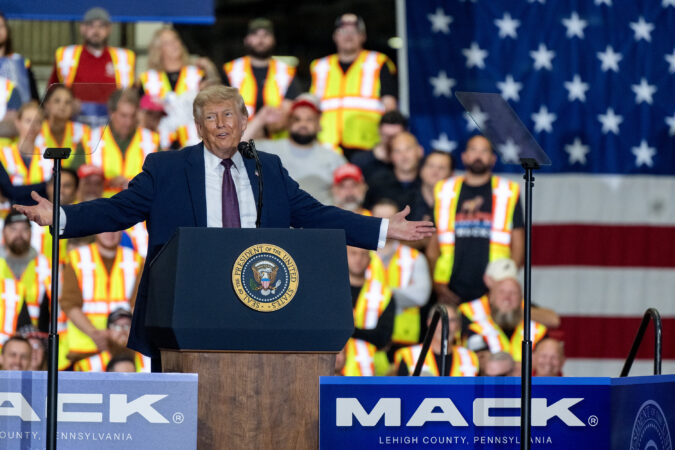
    MACUNGIE, Pa. — President Donald Trump’s speech on manufacturing in a key Pennsylvania swing district repeatedly veered into other topics and musings about elections in other states, like Maine and California.

    It took the president nearly an hour to even reference by name GOP U.S. Rep. Ryan Mackenzie, the vulnerable incumbent whose district Trump was visiting to boost his chances in this year’s midterm elections.

    And GOP gubernatorial nominee Stacy Garrity did not even get a mention during Trump’s speech to roughly 1,500 attendees, including workers at the Mack Trucks facility in Macungie in Lehigh County.

    Trump’s visit came just days after the company received $47 million through a Defense Department contract.

    And while he touted the trucks, he spent just as much time meandering about weight-loss drugs, immigration, firearms, the role of transgender athletes in women’s sports, and the UFC fight recently held on the White House lawn. He also repeated conspiracy theories about the races for Los Angeles mayor and California governor, saying he had asked the U.S. attorney in that state to investigate after conservative mayoral candidate Spencer Pratt did not advance to the general election.

    And he threw jabs at Pennsylvania Gov. Josh Shapiro amid 2028 speculation and appeared to undermine Shapiro’s Republican opponent, Garrity.

    Speaking about recent victories by democratic socialist candidates around the country, Trump quipped that “Shapiro is not that much better, to be honest with you.”

    He referenced the Democratic governor’s potential presidential aspirations, warning that “a guy like Shapiro is going to be forced on the left, otherwise he’s not going to get the nomination.”

    But though he weighed in on Shapiro, the governor’s Republican challenger’s name was noticeably absent from Trump’s list of shout-outs to GOP officials, despite the fact that Garrity spoke earlier in the event.

    Trump instead heaped praised on U.S. Rep. Dan Meuser, a Pennsylvania Republican who considered a run before ultimately opting against it and enabling the state party to coalesce around Garrity.

    “Meuser’s another great guy who was thinking about running for governor. I think he would have won. He was thinking of running for governor, and I said ‘I want you to stay in Congress,’” Trump said.

    Trump endorsed Garrity earlier this year, but the lack of acknowledgment Tuesday was striking given the election year focus of the event and Garrity’s own promises to support Trump’s agenda.

    “We need a governor in Harrisburg who will be a partner with President Trump in Washington, not an opponent in the courtrooms,” she said before Trump took the stage. “We need a governor who will fight for Pennsylvania jobs, like right here at Mack Trucks.”

    State Treasurer and Republican candidate for governor Stacy Garrity is seen on a big screen as she speaks to supporters before the arrival of President Donald Trump at Mack Trucks in Macungie Tuesday, June 23, 2026. Trump did not mention Garrity when he later spoke to the crowd in the Lehigh Valley.

    Trump restated his belief that tariffs have revitalized and would further boost the U.S. economy, though gas prices have reached new heights since he began a war with Iran, stymieing the flow of oil. (The Strait of Hormuz has reopened, following a tentative peace deal struck this month.)

    “I placed a 25% tariff on foreign automobiles and very importantly posed a 25% tariff on medium and heavy-duty trucks, so Mack Trucks could do very well with this factory in Pennsylvania,” he said.

    “They weren’t gonna come in from foreign lands and steal your jobs,” Trump added.

    However, the company cited Trump’s tariffs last year as contributing to its decision to lay off hundreds of workers at its Lehigh Valley operations center, the Pennsylvania Capital-Star reported at the time.

    Tuesday marked Trump’s fourth Pennsylvania appearance in his second term and his first this year ahead of November’s high-stakes midterm elections. The visit was billed as an official event as part of Trump’s American Workers First tour, but the event had the feel of a campaign rally.

    Four U.S. House districts in Pennsylvania are considered competitive, the most of any state, and the event took place in the 7th Congressional District, which is viewed as one of the most likely to flip to Democratic control.

    “We have to reelect a certain congressman,” Trump told the crowd.

    In 2024, Mackenzie won the seat by 1 percentage point, while Trump defeated Democrat Kamala Harris and won Pennsylvania in the presidential race.

    “Workers, like the ones here at Mack, are spearheading the great American comeback,” Mackenzie said.

    Bob Brooks, a union leader and firefighter who won the Democratic nomination to challenge Mackenzie, praised the union workers at Mack ahead of the event for building “the literal engine for the American economy,” but he blasted Trump and Mackenzie for failing to bring down prices.

    “No speech from Mackenzie can change the fact that his time in Congress has been an absolute disaster for the hardworking people of the Lehigh Valley,” Brooks said in a statement ahead of Tuesday’s event.

    Lt. Gov. Austin Davis, in a media call earlier Tuesday, said Trump’s choice to rally at Mack Trucks specifically signals he and his party recognize a “real political danger” because of Trump’s policies.

    “Donald Trump’s agenda is putting Congressman Mackenzie at serious risk,” Davis said. “They’re circling the wagons and trying to save that seat.”

    Affordability is likely to be a key issue on voters’ minds as they choose between Mackenzie and Brooks.

    Steve Leiby, 52, who works for Mack and attended Tuesday’s event, said he understands the tariffs Trump enacted are controversial, but he still supports them.

    “It’s a big risk, if we had a war, that we didn’t make a lot of war supplies in the U.S.,” he said.

    President Donald Trump leaves after a visit to Mack Trucks in Macungie, in the Lehigh Valley Tuesday, June 23, 2026.

    Brent and Francine Stanley, both 60, from New Tripoli, said they support Mackenzie because he shares their conservative values. His office organized an elder-care symposium that Francine Stanley attended because the couple have a 23-year-old child with disabilities, and they were able to get connected to resources.

    But they both know how competitive this election is, noting the stack of pro-Brooks mailers they have already received and predicting that Democrats will be knocking on their doors as November approaches.

    “They’re really persistent, and if you don’t answer, they follow up,” Francine Stanley said. Mackenzie, she said, should consider doing the same.

    Staff reporters Andrea Padilla and Sam Janesch contributed to this article.

  • ‘Blur our differences and find our commonalities’: Josh Shapiro stresses unity at World Cup

    ‘Blur our differences and find our commonalities’: Josh Shapiro stresses unity at World Cup

    Gov. Josh Shapiro thinks sports could be the key to unity ahead of the nation’s 250th anniversary.

    “To me, sports is still one of the few things that allows people from all different walks of life, and different political views, to actually come together and enjoy each other’s company,” Shapiro said in an interview with 6abc while in Philadelphia for Monday’s World Cup match between France and Iraq.

    Luckily for Shapiro, Pennsylvania has had no shortage of sporting events. After this spring’s NFL draft and PGA Championships were both held in the state, Philadelphia is hosting six World Cup games through July and the forthcoming MLB All-Star Game.

    Shapiro said this was intentional.

    “We worked really, really hard to stack these events up,” Shapiro told 6abc. “And I was really purposeful about this, that as we celebrate our history, we have to find ways to come together.”

    Shapiro has attended two of the three World Cup games held in the city so far, taking in Ivory Coast’s 1-0 win over Ecuador on June 14 before attending France’s 3-0 victory against Iraq.

    VisitPA has committed $31.6 million to Philadelphia Soccer 2026 to help aid World Cup costs. Through this sponsorship, the state, including Shapiro, has access to tickets and suites.

    “The Commonwealth has access to a mix of suite, VIP, and general admission tickets, which are being used to host business leaders, prospective partners, and other guests to further strengthen Pennsylvania’s economic development and promote the Commonwealth as the best place to visit, live, and do business,” Rosie Lapowsky, a spokesperson for Shapiro, wrote in an email.

    Shapiro said he stopped by the FIFA Fan Festival at Lemon Hill before the game and admired how welcoming Philadelphians were to tourists from all over the globe.

    “We are welcoming people,” Shapiro said. “We want you here, and we want you to celebrate not just a great sport; we want you to celebrate the greatest country on the face of the earth at this important moment as we celebrate the 250th birth of this nation.”

    Fan fests are being held in multiple locations, allowing Pennsylvanians to bask in the World Cup excitement across the state.

    “We were really insistent that this fan fest not be the only one, that we have them across the state,” Shapiro told The Inquirer during that event. “So we got one in Scranton, Reading, and Pittsburgh, and I think we’re going to see a lot of the excitement in there, too.”

    Shapiro, a potential 2028 presidential candidate, is among the many possible 2028 aspirants to attend World Cup events. According to Politico, California Gov. Gavin Newsom, Secretary of State Marco Rubio, and Health and Human Services Secretary Robert F. Kennedy Jr. have all also attended games.

    Politico reported that, ahead of the games, Shapiro distributed 700 free tickets to Philadelphia community organizations to make the games as accessible as possible and bring people together.

    “I think it [the World Cup] has a great way of allowing us to kind of blur our differences and find our commonalities and come together,” Shapiro told 6abc.

    Staff writer Owen Hewitt contributed to this article.

  • 6abc is warning viewers about the FCC taking away its TV license. Here’s what’s going on.

    6abc is warning viewers about the FCC taking away its TV license. Here’s what’s going on.

    On Monday, 6abc issued a warning for viewers to take action to prevent Action News from disappearing from TV screens across the Delaware Valley.

    “The FCC is questioning our commitment to viewers by threatening to take us off the air,” a message from the station read.

    A 6abc message warning viewers about the FCC reviewing its broadcast license.

    So what’s going on?

    Most local news stations are owned by separate companies, but 6abc is one of eight owned and operated by ABC, whose parent company is Disney.

    In April, the Federal Communications Commission launched an early review of the broadcast licenses for those eight stations. The review came shortly after President Donald Trump called for ABC late-night host Jimmy Kimmel to be fired over a joke he made involving first lady Melania Trump.

    FCC commissioner Anna M. Gomez, the only remaining Democrat on the three-member panel, wrote in a May letter to Disney that the company had “been made a target” by Trump’s FCC, and that targeting local stations “is an extraordinary and dangerous misapplication” of the agency’s authority.

    “What Disney and ABC are facing is not a series of coincidental regulatory actions but a sustained, coordinated campaign of censorship and control,” Gomez wrote, “carried out through the weaponization of the FCC’s authority as a federal regulator and aimed at pressuring a free and independent press and all media into submission.”

    Despite that, the FCC said the review stemmed from an earlier investigation into diversity, equity, and inclusion initiatives at Disney, citing “the agency’s prohibition on unlawful discrimination.” The agency is conducting a similar investigation of Comcast, which owns NBC.

    “If the evidence does in fact play out and shows that they were engaged in race- and gender-based discrimination, that’s a very serious issue at the FCC, that could fundamentally go to their character qualifications to even hold a license,” FCC chairman Brendan Carr said on Fox News in March.

    6abc viewers being asked to comment

    In an attempt to fight back, 6abc, which did not immediately respond to request for comment, is asking viewers to weigh in on the early review of its broadcast license and support the station.

    The FCC doesn’t make it easy. Viewers need to visit the agency’s website and submit a “express comment” using the FCC’s docket number: 26-131

    The public comment period is open until June 29.

    6abc renewed its broadcast license in 2023 for eight years, but the FCC could move to revoke it if it determines the station hasn’t “served the public interest” or has violated federal broadcast rules and regulations.

    A Disney spokesperson said in a statement the company has “a long record of operating in full compliance with FCC rules” and was “prepared to show that through the appropriate legal channels.”

    It’s been more than 40 years since the FCC has revoked a broadcast license from a TV station. The last time it happened was 1987, when the FCC stripped RKO General Inc. of its licenses in Boston, New York, and Los Angeles because of business misconduct.

    Even if the FCC revokes ABC’s local broadcast licenses, the case would ultimately be decided by an administrative law judge, according to the FCC’s website.

    The process could take years, and no changes are expected for 6abc during that time.

    ‘The View’ is also fighting back

    It’s not just ABC’s local stations the Trump administration is targeting. The FCC is also targeting the daytime interview show The View and its ability to interview politicians.

    The investigation of The View stems from an February interview featuring U.S. Senate candidate James Talarico, a Texas Democrat who at the time was facing off in a primary against U.S. Rep. Jasmine Crockett.

    The FCC claimed the interview was a violation of the equal time rule, a federal requirement put into law in 1934 requiring broadcast stations to provide comparable airtime to political opponents during an election.

    Disney has asked the FCC to declare The View qualifies as a “bona fide news” interview program and is exempt from the federal rules, like news programs on broadcast TV like Meet the Press and Face the Nation.

    In a May filing, ABC said The View received a news exemption from the FCC in 2002, and in 24 years it hadn’t been challenged. It called the FCC’s move to go after The View “unprecedented” and an attempt to “chill critical protected speech.”

    It’s a blurry line for late-night shows, which feature politicians as guests. While not technically news programs, the FCC hasn’t enforced the equal time rule on late-night shows since 2006, when it ruled then-California gubernatorial candidate Arnold Schwarzenegger’s appearance on The Tonight Show with Jay Leno qualified as a “bona fide news interview.”

    But that’s changing under the Trump administration. The FCC issued a notice to broadcasters in January stating late-night and daytime TV talk shows may no longer be exempt, claiming some were “motivated by partisan purposes.”

    Carr also pressured ABC affiliates to take Kimmel off the air in September. ABC ultimately suspended his show after two companies — Nexstar and Sinclair — said they would preempt it on their ABC-affiliated stations. Ultimately, ABC backed Kimmel and his show was back on TV a week later.

  • Federal citizenship data tool cannot be used to screen voters, judge rules

    Federal citizenship data tool cannot be used to screen voters, judge rules

    WASHINGTON — A federal judge on Monday barred the Trump administration from letting states query a centralized national database of citizens built for checking immigration status to screen their voter rolls, finding that the repurposing of the federal data to monitor voting violated at least three laws.

    In a sharply worded ruling, Judge Sparkle L. Sooknanan ordered the Department of Homeland Security to stop permitting states to search the data, which also incorporates Social Security records.

    President Donald Trump had ordered several agencies last year to pool data that states could use to verify citizenship. The combined data set allows state and local election officials to search immigration records stored by Homeland Security about migrants, as well as a much larger database of information maintained by the Social Security Administration.

    Sooknanan, who was appointed by former President Joe Biden, wrote that the executive order had resulted in a rush by agencies to “haphazardly” adopt a system that they knew was flawed and that would flag eligible voters along with those who might have registered illegally. She warned that states were already “actively” using it to potentially purge eligible voters before an election.

    “All in all, the federal government has knowingly trampled on the privacy rights of American citizens in a manner that threatens the sacred right to vote,” she wrote. “This court cannot stand idly by while that happens.”

    Repurposing the immigration database — known as the Systematic Alien Verification for Entitlements, or SAVE, system — into a tool to check voter eligibility unlawfully abused sensitive data stored by the government for other purposes, Sooknanan wrote. She added that federal agencies were joining to together over the last year to “create a centralized federal database that contains the private information of United States citizens, including Social Security numbers, citizenship status and other sensitive data” that violated protections Congress had intended to guard personal data.

    Sooknanan wrote that evidence presented in the case showed Homeland Security officials acknowledged in internal communications that the infrastructure it had built violated federal privacy law and could incorrectly flag eligible voters as noncitizens. She wrote, for instance, that the database included outdated information that could result in naturalized citizens who had been assigned Social Security numbers long ago incorrectly appearing as ineligible to vote.

    James Percival, the department’s general counsel, responded to the ruling on social media, calling it the “latest example” of “how hard the Left will fight to stop us from solving problems they insist do not exist.”

    At Trump’s direction, the federal government has intensified efforts this year to intervene in state administration of elections, as he pushes discredited theories about voter fraud and claims that immigrants in the U.S. illegally and others who are ineligible to vote can be found on state rolls.

    The Justice Department has also contributed to efforts to build a national voter database, suing a number of Democratic-led states that resisted the push to obtain their records.

    Earlier on Monday, a federal judge in Maryland dismissed a lawsuit by the department seeking the state’s voter records, the latest of more than half a dozen decisions that have gone against the Trump administration.

    The lawsuit before Sooknanan dates to an executive order Trump signed in March 2025 requiring more aggressive federal oversight of elections, inserting the federal government into roles historically reserved for states. Among other things, the order required Homeland Security and Social Security to collaborate to verify the immigration status of registered voters or new voters signing up.

    The lawsuit was brought by the League of Women Voters, the Electronic Privacy Information Center and several members of those organizations who argued the Trump administration had unlawfully pooled their sensitive personal data into a tool that could be abused for voter suppression.

    “As the Trump-Vance administration continues its attack on the right to vote, this is an important victory for the American people and our democracy,” said Skye Perryman, president of Democracy Forward, which helped represent the coalition.

    In November, Sooknanan initially denied a request by the groups to halt the overhaul of the SAVE system, writing that while she “doubts the lawfulness of the government’s actions,” it was unclear that the Trump administration had actually misused the data. But on Monday, she wrote that states, including Texas and Louisiana, had now started using the system to check voter registrations and had flagged eligible voters for removal.

    Separately, at Trump’s direction, the U.S. Postal Service submitted a plan this month under which it could refuse to deliver mail ballots in states that decline to share their voter rolls with the federal government. The Postal Service is also facing pressure to assist with the creation of state-by-state voter lists that it could consult and use to justify refusing mail-in ballots of people left off the lists.

    In May, Judge Carl J. Nichols declined to immediately block Homeland Security from compiling and distributing those lists to state election workers.

    This article originally appeared in The New York Times.

  • With win in Washington, socialists have momentum in urban America

    With win in Washington, socialists have momentum in urban America

    The biggest city in the country is led by a democratic socialist, and another is in the running to lead the second biggest. Seattle has a socialist mayor. And in 2027, a democratic socialist will almost certainly be taking the reins of the nation’s capital.

    With her convincing victory in the Democratic primary in Washington last week, Janeese Lewis George, 38, became the latest candidate to claim victory with the once-forbidden “S word” in her biography and an ambitious left-wing agenda, promising to harness the power of municipal government to tackle the costs and challenges of urban living.

    Tapping into frustrations about housing and the cost of raising children, Lewis George pledged to greatly expand childcare assistance, build tens of thousands more homes and expand rent stabilization. Her critics derided those promises as unrealistic; voters ate them up.

    “I think people were like, ‘I don’t buy that the status quo is all we can do,’” Lewis George said in an interview. Instead, she said, they thought, “‘I want to see leaders do something more than tell people what they can’t do.’”

    Lewis George, who in a city as blue as Washington is close to a lock in the general election, joins a vanguard of young democratic socialists, including the new mayors of New York City and Seattle. Some are formal members of the organized Democratic Socialists of America, some not, but all have won on platforms of robust government action, arguing that the older Democratic establishment has failed.

    Democratic socialists say that solutions to challenges like the rising costs of childcare and housing lie in community organizing and direct government action, not the free market or timeworn tax incentives. While they cast themselves more in the mold of a mayor from Stockholm than Leningrad, they do not shy from confrontation with business interests, whether that means private utilities or landlords, oligarchs or plutocrats.

    Not everyone running from the left in big blue cities has won, as losers of the most recent mayoral races in San Francisco and Philadelphia can attest.

    But socialist success indicates an ascendant left — a generational movement as much as a political one — might have considerably more room to run.

    “We’re seeing real opportunities open up here,” said Kurtis Hagans, chair of the DSA chapter in the Washington metro area. “It’ll be interesting to see how the Democratic establishment wants to move forward into the midterms.”

    Zohran Mamdani, 34, who twice beat Andrew Cuomo, the former New York governor, in his unlikely rise to the New York City mayor’s office, is in many ways the lodestar for the rising brigade of democratic socialist candidates. He unapologetically pledged in his inauguration speech to “replace the frigidity of rugged individualism with the warmth of collectivism.”

    He has since moderated positions in deference to the political realities of governing a city of 8 million. He retained Jessica Tisch, a relatively moderate billionaire heiress, as police commissioner and ceded significant policy control to her. He has backed away from his vow to give up unilateral control of the school system, and from his pledge to expand an expensive housing subsidy program.

    He has developed a strong working partnership with New York Gov. Kathy Hochul, a relative moderate in the Democratic Party, and he has struck up a surprisingly amiable relationship with President Donald Trump, despite once characterizing him as a despot. “Sewer socialism,” with images of an army of volunteers shoveling snow or squads of pothole fillers, has become as much a Mamdani calling card as his campaign promise of free buses.

    The act of governing is the big test for a movement propelled by idealism and bold promises, along with a disenchantment with the compromises that its followers believe are too often made by those in power.

    But fiscal constraints on municipal government can be strict, particularly in Washington, a federal enclave subject to extensive congressional oversight. And at a time when Washington’s finances are suffering from the impacts of federal job cuts as well as a lingering pandemic downturn, the city has had a hard enough time paying for the social programs already in place.

    “Especially at the local level, governing is a practical affair,” said Mary Cheh, a former council member who endorsed Lewis George’s main rival in the primary but acknowledged the appeal of her message.

    “There will be some change, I’m sure,” she said. “But it’s not going to be all that they hoped for.”

    The limits of idealism have inevitably led to compromise and, at times, friction.

    In Los Angeles, Nithya Raman, 44, a City Council member and a democratic socialist, is in a runoff against Karen Bass, the Democratic mayor who is running for reelection. Raman’s ascent in 2020 coincided with the Black Lives Matter protests that rippled through big cities across the country.

    Support for Raman in her first race that year, against an incumbent on the City Council, became a kind of social shorthand for progressive politics at a moment when flying a Black Lives Matter flag outside of a home was de rigueur among Los Angeles’ wealthy liberals.

    But in recent years, Raman, as a council member, has broken with the DSA on some issues, including how to alleviate Los Angeles’ crushing housing crisis. While she and her DSA-aligned colleagues have both sought protections for poor tenants, Raman has also backed more development-friendly housing policies.

    Up the coast in Seattle, Katie Wilson, a self-identified socialist but not a DSA member, has largely avoided the ideological battles many had expected after her upset victory in November.

    Tension between Wilson and a Seattle City Council that is more moderate has so far led to negotiations rather than conflict, as when she agreed to turn on newly installed security cameras in the city’s stadium district during the World Cup, despite her initial opposition.

    Like many of her fellow politicians of the left, Wilson has made housing a priority. She promised to open 500 new shelter beds or emergency housing units by the start of the World Cup but appears to have fallen short by more than 400. She has pledged to build 1,000 new units by the end of her first year and 4,000 by the end of her four-year term, a tall order.

    “I certainly have a learning curve, but I don’t want to portray myself as coming in with some kind of unrealistic idea that this would be easy,” she said in an interview last month. “There’s the way things have been done for a very long time, and it takes a very long time to change that. I’m not surprised at where we’re at.”

    But at a time when voters across the political spectrum feel like government has stopped working for them, the promises of a robust and responsive public sector have clearly resonated among voters, regardless of the fiscal or partisan realities.

    “When people see you deliver on the small things,” Lewis George said, “they trust that you can also deliver on the big things.”

    This article originally appeared in The New York Times.

  • Judge blocks bans on using food stamps for sugary drinks and candy

    Judge blocks bans on using food stamps for sugary drinks and candy

    WASHINGTON — A federal judge on Monday blocked the Trump administration from barring the use of food stamps to buy sugary drinks and candy.

    Since last year, the Agriculture Department has approved waivers in more than 20 states that allow them to bar participants in the federal Supplemental Nutrition Assistance Program from using their benefits to buy soda, energy drinks, candy or other prepared desserts. In March, recipients in five states sued the agency over the waivers, arguing that the limits were unlawful and confusing and made it difficult to manage health conditions such as diabetes.

    Judge Amy Berman Jackson of the U.S. District Court in Washington, in a 68-page decision, agreed with the recipients that the Agriculture Department did not have the authority to approve the waivers and also failed to abide by a notice period. Monday’s decision was a rollback of restrictions that officials have characterized as a major achievement of the Make America Healthy Again movement.

    Jackson wrote that while the law allows for the department to approve projects related to the administrative and logistical efficiency of the SNAP program, the agency essentially “purports to waive not just a mere administrative or technical obstacle, but the very definition of ‘food’ as it was laid down by Congress.”

    “The federal defendants and the states may have a genuine desire to improve the health of SNAP households by encouraging healthy choices at the store, and they can take lawful steps to meet those goals,” she wrote. “But what they cannot do is violate the law and their own regulations along the way.”

    The case was brought by the National Center for Law and Economic Justice, a nonprofit that advocates on behalf of low-income people, and Shinder Cantor Lerner, an antitrust law firm.

    Katharine Deabler-Meadows, a senior attorney at the National Center for Law and Economic Justice, said in a statement that the decision was “a major step in restoring essential food assistance to the millions of families that rely on SNAP nationwide.”

    The Agriculture Department did not immediately respond to a request for comment about the ruling. A spokesperson for the agency had earlier told The Associated Press that it “will not be backing down from the fight to Make America Healthy Again.”

    This article originally appeared in The New York Times.

  • Trump-endorsed de la Espriella holds slim lead in Colombia’s election as rival challenges vote

    Trump-endorsed de la Espriella holds slim lead in Colombia’s election as rival challenges vote

    BOGOTA, Colombia — Conservative political outsider Abelardo de la Espriella held a narrow lead Monday with almost all votes counted in Colombia’s polarized presidential runoff, as the ruling party’s progressive candidate vowed to challenge the results.

    De la Espriella, a business owner and lawyer who earned U.S. President Donald Trump’s endorsement despite never having run for office, led with 49.7% of the votes over lawmaker Iván Cepeda, with 99.9% of results released by electoral authorities. Cepeda, ally of outgoing President Gustavo Petro, had 48.7%.

    Election officials have not formally announced a winner.

    A victory by de la Espriella is expected to usher in policies that will reverse Petro’s agenda, including a contentious plan to hold parallel peace negotiations with illegal armed groups. Cepeda, Petro’s protégé, had pledged to push forward that strategy and other social reforms if he won Sunday’s vote.

    The election was colored by people’s fears of renewed internal conflict.

    “I will govern for all Colombians,” de la Espriella, nicknamed “The Tiger,” told thousands of supporters as he stood behind bulletproof glass in the northern city of Barranquilla on Sunday night. But his conciliatory tone changed as he spoke.

    “Pack your bags and prepare to become the opposition,” he added. “Make no mistake, Mr. Cepeda. You already know how fiercely the tiger roars.”

    Progressive candidate calls count “unofficial”

    Cepeda on Monday responded to de la Espriella’s remarks, warning him against threats, veiled or otherwise.

    “Let me be perfectly clear: We are half of this country in political terms, and we have a long history of resistance,” Cepeda said in the capital, Bogota. “We are very hardened. Don’t come threatening us. Neither your roars nor your screams frighten us.”

    He asked supporters to remain calm and maintain “exemplary behavior.” Hours earlier, people in the western city of Cali took to the streets, damaging a public bus, several surveillance cameras, and an ATM.

    The vote count showed that the municipality that includes Cali favored Cepeda with nearly 60%. Authorities there said four police officers were injured in the protest and two demonstrators were arrested.

    After the results became public Sunday, Cepeda characterized the count as “unofficial and non-binding” and announced that his team was challenging results from more than 30,000 voting stations. Petro also vowed to challenge the outcome.

    No recount has flipped the results of a presidential election in Colombian history.

    Sunday’s winner will begin a four-year term Aug. 7.

    The candidates pitched voters widely different strategies to protect the South American country from the nonstop violence, such as car bombs, kidnappings, disappearances, and forced displacements, that Colombians have lived with in previous decades.

    De la Espriella, 47, promised a heavy-handed approach to crime-fighting, including drug trafficking. He also said he plans to end Petro’s attempts to establish dialogue with multiple armed groups — an effort that has largely failed — and to build mega-prisons, emulating Salvadoran President Nayib Bukele’s aggressive policies. Those tactics have lowered homicide rates in the Central American country but have fueled accusations of human rights abuses.

    De la Espriella holds dual Colombian and U.S. citizenship. He’s a Trump supporter and a member of the Republican Party.

    “He Won, BIG!” Trump said on social media.

    ‘It’s always the same violence’

    Yolanda Hernández, who recycles trash for a living, voted for Petro in 2022 but cast her ballot for de la Espriella this time. While she acknowledged that Petro was unable to deliver on promises meant to help the poor because of congressional gridlock, she said Colombia cannot afford another four years under his vision for the country.

    “We want change in Colombia because it’s always the same violence, always the same thing,” Hernández, 49, said. “(Petro) said he was going to lower the cost of services, that he was going to lower the price of food, and everything is more expensive.”

    More than 426,000 voters chose a third, no-name option on the ballot meant to allow people to express dislike of both candidates. Another 29,000 voters cast blank ballots.

    Will Freeman, a fellow for Latin American Studies at the Council on Foreign Relations, said Sunday’s result shows the country “has not shifted overwhelmingly or decisively” against Petro’s project or for de la Espriella’s outsider “iron fist showmanship.”

    Freeman said the result also underscored Colombia’s regional divisions.

    “It’s regional, not just ideological, polarization; or rather, the two overlapping,” he said. “Ironically, de la Espriella’s iron-fist message performed best in the core of the country, not the periphery, which bears the brunt of Colombia’s violence.”

    Colombia’s illegal groups have more than 27,000 members.

    Last year, authorities recorded 14,780 homicides, the most since at least 2015, driven by clashes among illegal armed groups. Among those killed was conservative presidential hopeful Miguel Uribe.