Category: Politics

Political news and coverage

  • U.K. Prime Minister Starmer to resign as Labour Party seeks reboot

    U.K. Prime Minister Starmer to resign as Labour Party seeks reboot

    LONDON — British Prime Minister Keir Starmer announced Monday that he will resign, succumbing to pressure from lawmakers within his own Labour Party, after crushing losses in nationwide local elections last month triggered a mutiny.

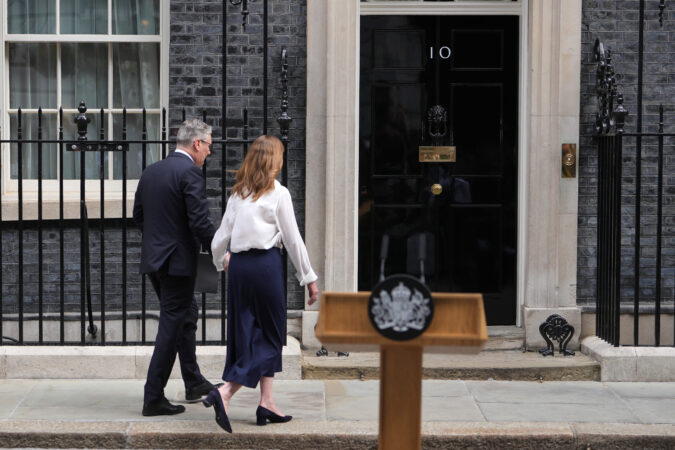
    An emotional Starmer said he would leave office after a new Labour leader — and therefore a new prime minister — is selected in a leadership election that will begin in July. Standing outside 10 Downing Street, Starmer recounted his government’s achievements during its two years in office and then grew tearful after saying that he had informed King Charles III of his decision Monday morning and would soon devote himself to his own family.

    “The question my party is asking now is whether I am best placed to lead us into the next general election,” Starmer said with his staff and some — but notably not all — of his cabinet looking on. “I have heard the answer of my parliamentary party to that question, and I accept that answer with good grace.”

    Starmer, 63, had struggled to define his agenda while contending with economic stagnation, fallout from the Epstein scandal, and turbulent relations with President Donald Trump.

    The discord with Trump was punctuated by a final jab on Sunday when the U.S. president proclaimed that Starmer would resign — shoving the British leader to the door before Starmer had made any announcement of his own.

    Starmer’s surrender came fast on the heels of a special parliamentary election in Makerfield on Thursday, in which Greater Manchester Mayor Andy Burnham won a decisive victory, returning him to the House of Commons and positioning him to mount a Labour Party leadership challenge that Starmer seemed all but certain to lose.

    Burnham’s victory gave him momentum in a challenge to Starmer that has been brewing for months. And his status as a front-runner neared shoo-in levels on Monday when another likely candidate for a leadership race, former Health Secretary Wes Streeting, pulled out of contention and threw his support to Burnham.

    To become the new Labour leader, any challenger must first secure the written backing of at least 81 of Labour’s 403 elected members of Parliament. Once that threshold is crossed, the contest goes to a broader vote of party members who rank candidates in order of preference until one of them clears 50%.

    Starmer could have effectively anointed Burnham as his replacement, avoiding what could be a bruising intraparty battle for the top job. But some have argued that Labour, and the country, would be better served by a leadership contest that demanded candidates defend their vision for leadership.

    Starmer opted for an open contest, saying he would instruct Labour’s executive committee to begin accepting nominations on July 9 with an eye to completing the election in time for a new prime minister to take office by the end of parliament’s summer recess in September.

    It was unclear if that schedule would hold given the accelerating support for Burnham among lawmakers.

    “He’s the next prime minister,” said Tim Bale, a professor of politics at Queen Mary University of London. “It’s going to be something like a coronation.”

    Starmer’s resignation extends a remarkable era of political turmoil in Britain and will usher in the country’s seventh prime minister in the past 10 years.

    Starmer spent less than two years at No. 10 Downing Street. His departure ends a troubled tenure marred by failures to deliver on campaign promises, ousters of senior advisers, criticism of his handling of the wars in Ukraine and Iran, and recriminations over his appointment as U.S. ambassador of former Labour power broker Peter Mandelson, whose entanglement with Jeffrey Epstein, the convicted sex offender, is now under investigation by the Metropolitan Police.

    These and other missteps contributed to the undoing of a staid politician who led Labour to a landslide victory in 2024, promising competence and centrist polices that he said would reinvigorate the British economy and shield the country from the polarizing forces tearing other democracies apart.

    After nearly 15 years of Conservative Party rule, Labour also benefited in that race from widespread unhappiness over the economic malaise that followed Brexit, the country’s Tory-led departure from the European Union.

    And yet Starmer soon became caught in the same currents of voter discontent that he had exploited. Starmer, a former prosecutor who lacked the flair of Britain’s most famous prime ministers, faced persistently abysmal approval ratings and barely concealed scheming in the upper ranks of his party.

    More broadly, Starmer’s resignation underscores the extent to which British politics is entering a turbulent new period in which insurgent parties — including Reform UK, whose anti-immigrant posture echoes the MAGA movement in the United States, and the populist Green Party — are gaining strength amid eroded support for the Conservative and Labour parties that have dominated U.K. politics for generations.

    The bloodbath in local elections suffered by Labour on May 7 — a loss of more than 1,500 of the approximately 2,600 seats it held on local councils and other bodies — was widely expected. And with national parliamentary elections not due until mid-2029, Labour retains a strong majority in the House of Commons. But rank-and-file MPs quickly called for Starmer’s head, fearing a potential wipeout if they did not replace him in time for a dramatic turnabout.

    On paper, at least, the looming leadership contest looked to be Burnham’s to lose even before Streeter pulled out Monday.

    Burnham’s decisive win last week in Makerfield, a working-class constituency Labour strategists feared it might lose outright to Reform UK, handed him a fresh mandate as the figure best positioned to blunt the new right-wing party’s advance in the postindustrial seats Labour needs to hold onto power.

    Burnham’s camp has said he has already secured the backing of more than 201 Labour MPs, half the 402-member parliamentary party. That tally, if it holds, would make him the prevailing favorite from the outset. Coming from local politics, he is seen as largely untainted by the compromises of Starmer’s government.

    Streeting, 43, who served as health secretary under Starmer, resigned his cabinet post last month to launch his own leadership bid. His quick endorsement suggested that Burnham was building perhaps insurmountable support.

    Streeting, who hails from the more centrist Labour wing identified with former prime minister Tony Blair, would have challenged Burnham from the right, and had built a profile as a sharp-elbowed media figure willing to break publicly with Starmer’s government. That’s a contrast to Burnham’s more staid, institutional brand of working-class populism, built over three terms as mayor of Greater Manchester and 16 years before that in the House of Commons.

    Streeting has stressed the need for Labour to win back swing voters defecting to Reform UK and had pointed to his record of NHS reform as proof of a pragmatic governing style. In withdrawing, he acknowledged that a divisive leadership contest could prove costly by stressing disagreements rather than unity.

    “We could spend the summer exaggerating small differences, or we can roll up our sleeves and help him to deliver the change our Party and our country needs,” Streeting said in a statement.

    Starmer’s struggles were compounded by strains in the “special relationship” between Britain and the United States.

    Starmer’s early attempts to appease Trump upon his return to the White House — including a trip to Washington in which he carried an invitation from King Charles III for an “unprecedented” second state visit to England — did not shield Britain from steep tariffs imposed by Trump or from a steady stream of insults.

    In recent weeks, Trump has lashed out at Starmer, saying he is “no Winston Churchill,” for his refusal to thrust Britain’s military more directly into the U.S.-Israeli war with Iran.

    Seeking to avoid the fate of Blair, whose support for the 2003 U.S. invasion of Iraq is still seen as a stain on his legacy, Starmer initially refused to allow U.S. forces to stage attacks on Iran from British bases. He later softened that position to allow “defensive” strikes meant to blunt Iran’s ability to retaliate on British territories or allies. Starmer’s shifting positions added to perceptions of him as indecisive.

    Still, it was another U.S. crisis — the Epstein scandal — that seemed most damaging. Starmer has no known direct ties to Epstein but was pilloried for the ambassadorial appointment of Mandelson, who maintained ties with the Epstein long after his 2008 conviction on solicitation of prostitution and shared with him sensitive U.K. government documents, according to U.S. Justice Department files.

    In February, police arrested Mandelson on suspicion of misconduct in public office, raising the pressure on Starmer over his judgment in appointing him. Weeks earlier, a government review had found evidence in the Epstein files that sensitive information about the 2008 financial crash appeared to have been shared with the financier by a government official. Mandelson was a government minister at the time.

    Starmer’s resignation is likely to add to a general sense that the political fallout related to Epstein has been far more severe in Britain and Europe than in the United States, where neither Trump nor other American politicians revealed to have had close ties with Epstein over the years have faced significant consequences.

    In Britain, Starmer faced calls for his resignation. And Andrew Mountbatten Windsor, a brother of King Charles, was stripped of his royal titles and forced to leave his longtime royal residence following new revelations about his own Epstein connection.

    Starmer weathered those initial calls to step down, but ultimately bowed to reality as the numbers among Labour’s rank-and-file turned against him. In his resignation speech on Monday, he claimed credit for bringing Labour back from the dead.

    “Six years ago, I inherited a Labour Party that was politically, financially, and morally bankrupt,” Starmer said. “I was told time and time again that my part was finished, that we were consigned to history, that a majority at the general election let alone a landslide majority was impossible. But we proved those people wrong.”

  • Brian Fitzpatrick ties the knot with Fox News’ Jacqui Heinrich in NYC wedding

    Brian Fitzpatrick ties the knot with Fox News’ Jacqui Heinrich in NYC wedding

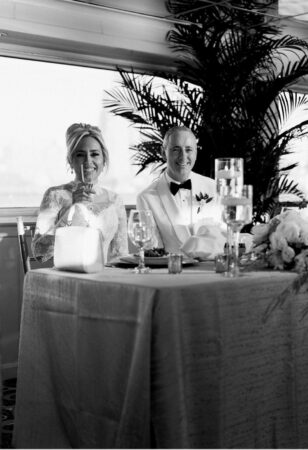
    U.S. Rep. Brian Fitzpatrick (R., Pa.), who represents Bucks County, and Fox News senior White House correspondent Jacqui Heinrich got married Saturday in New York City.

    The wedding was attended by high-profile figures in politics and media and featured a nighttime cruise around the Statue of Liberty.

    The celebrations for the newlyweds and their 302 guests included a ceremony at St. Patrick’s Cathedral and a reception on a yacht called Horizon’s Edge, with a 10-piece brass band and the toasts of former GOP House Speaker Kevin McCarthy and former Sen. Joe Manchin (I., W. Va.), People magazine reported.

    The nuptials of Fitzpatrick, 52, and Heinrich, 37, comes almost a year after their engagement and amid the Republican’s high-stakes reelection campaign to represent Pennsylvania’s 1st Congressional District against Democratic challenger Bob Harvie.

    Fitzpatrick and Heinrich said they chose New York for their wedding because of its significance in jumpstarting their respective careers as an FBI agent and a network news reporter and its connection to their families’ immigration journey, People reported. It was also a central meeting point for the couple’s families from New England and Pennsylvania.

    The reception featured other nods to family — Heinrich’s parents got married on a chartered cruise and the couple’s cake-cutting song was an “Irish tune,” People reported, written by Fitzpatrick’s great-uncle, an NYPD officer who was killed in the line of duty, according to People.

    Former Sen. Joe Manchin (I, W.Va) and former GOP House Speaker Kevin McCarthy (right) give a toast to U.S. Rep. Brian Fitzpatrick and Fox News reporter Jacqui Heinrich’s nuptials.

    Guests took to social media to congratulate the newlyweds including Heinrich’s Fox News colleagues, U.S. Rep. Don Bacon (R., Neb.), and President Donald Trump’s former Labor Secretary Lori Chavez-DeRemer.

    Pennsylvania Gov. Josh Shapiro was invited to the wedding, but the Democrat was unable to attend.

    Fitzpatrick and Heinrich met in Washington when Heinrich was a correspondent on Capitol Hill. After she switched beats to cover the White House, Fitzpatrick asked her on a date to the Kennedy Center Honors.

    Heinrich’s LinkedIn page shows she began working as Fox News’ White House correspondent in May 2021 during former President Joe Biden’s term.

    They are one of the most high-profile couples on Capitol Hill, sometimes earning the ire of Trump.

    Last month, after Fitzpatrick won his GOP primary unopposed, Trump threatened Fitzpatrick, without saying his name, when asked a question by Heinrich, who is vice president of the White House Correspondents Association.

    “Her husband votes against me all the time. Can you imagine? I don’t know what’s with him,” Trump said. “You better ask what’s with him. She’s married to a certain congressman. He likes voting against Trump, You know what happens with that? It doesn’t work out well.”

  • A Philly woman pleaded guilty to voting twice in the 2024 presidential election

    A Philly woman pleaded guilty to voting twice in the 2024 presidential election

    A Philadelphia woman pleaded guilty Monday to voting twice in the 2024 election — first in northern New Jersey, then in the city.

    Miya Pack, 40, said little beyond responding to routine legal questions as she pleaded guilty to a charge of voter fraud before U.S. District Judge Joshua D. Wolson.

    Pack has been registered to vote since 2004 in Bergen County, N.J., prosecutors said in court documents, and she’s also been registered to vote in Philadelphia since 2016. She is not affiliated with any political party, voter records show.

    On Oct. 26, 2024, prosecutors said, Pack cast a ballot in that year’s presidential election in Bergen County. Then, 10 days later, prosecutors said, she cast a ballot in the same contest in Philadelphia on Election Day.

    They did not say whom she voted for, and she declined to comment as she left the courtroom Monday.

    President Donald Trump has repeatedly made questionable or false statements about the prevalence of voter fraud, particularly in places like Philadelphia, where Democrats heavily outnumber Republicans. Election officials and experts who study the issue generally agree that voter fraud has not historically occurred at widespread rates.

    Pack was charged by federal prosecutors last September. Prosecutors announced her indictment alongside the indictment of another man, Matthew Laiss, who was separately charged with voting twice in the 2020 election.

    Laiss later said in court documents that he voted twice for Trump, and unsuccessfully sought to claim that his actions were covered by pardons Trump extended to people who tried to help him overturn the results of the 2020 election.

    Laiss was convicted of voter fraud earlier this year at trial and is awaiting sentencing.

    Pack is scheduled to be sentenced in October. She faces the possibility of prison time, although prosecutors said in court that federal guidelines suggest a term of no jail time to six months.

  • Trump to visit Pa. on Tuesday as the battle for control of Congress heats up in the Lehigh Valley

    Trump to visit Pa. on Tuesday as the battle for control of Congress heats up in the Lehigh Valley

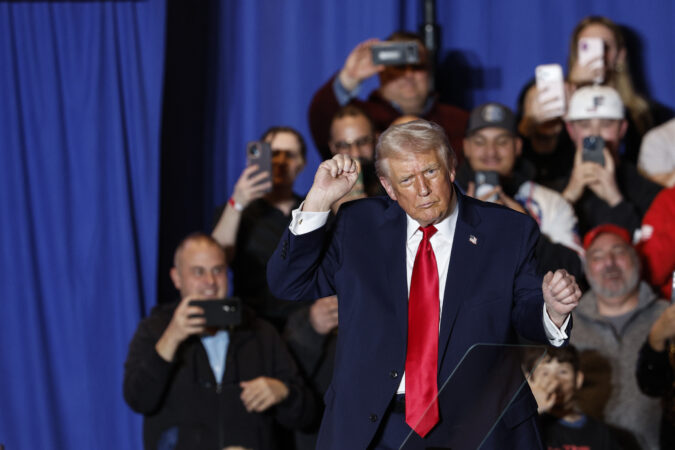
    President Donald Trump is scheduled to speak Tuesday at a truck manufacturing facility in the Lehigh Valley, where a competitive race for Congress this year could determine which party controls the U.S. House for the second half of his term.

    Trump will deliver remarks at Mack Trucks in Macungie in Lehigh County, according to the White House and two local members of Congress.

    The visit will mark Trump’s fourth Pennsylvania appearance in his second term and his first this year ahead of November’s high-stakes midterm elections.

    Pennsylvania has four competitive U.S. House districts — the most of any state — and the Lehigh Valley-based 7th District is widely considered one of the most likely in the nation to flip from Republican to Democrat.

    GOP U.S. Rep. Ryan Mackenzie won that seat by 1 percentage point in 2024 as Trump defeated Democrat Kamala Harris statewide. Bob Brooks, a union leader and retired firefighter whom many prominent Democrats rallied behind before last month’s competitive primary, is facing Mackenzie in November.

    The event Tuesday is scheduled as an official White House event, not a campaign event, and it could be the first of several trips by the president to the region and across Pennsylvania in the coming months.

    “We’re looking forward to joining President Trump at Mack Trucks — one of our nation’s most iconic manufacturers,” Mackenzie wrote on social media.

    “By investing in American workers and supporting domestic manufacturing, President Trump and Republicans in Congress have helped to put the Lehigh Valley and the Poconos at the forefront of our nation’s industrial revitalization. We appreciate President Trump coming to the region to help us highlight the work we’ve done together to support American workers, families, and industries.”

    Mackenzie spoke Friday at a different Mack facility outside of Allentown to highlight part of a contract the company won from the U.S. Army last year to produce heavy dump trucks. The deal is worth up to $221.8 million, and Mack Defense said it received $47 million in the latest Department of Defense appropriations act.

    A White House spokesperson said Trump will “stand with the American workers he has fought for” during his visit.

    “Under the President’s leadership, key domestic industries are being revitalized, historic investments are pouring back into communities like Macungie, and families across the country are securing new, high-paying jobs,” Liz Huston said. “Pennsylvanians placed their trust in President Trump, and he has delivered for them.”

    Former President Joe Biden visited the same Mack facility in 2021 for a speech focused on supporting American manufacturing.

    Trump last appeared in Pennsylvania in December for a rally at the Mount Airy Casino Resort in Mount Pocono, which is in the neighboring 8th Congressional District where another freshman Republican is looking to fend off a Democratic challenger. Pitched as a speech to address voters’ concerns about affordability, the president repeatedly veered off script and called affordability concerns a “hoax.”

    Some of the president’s former supporters in the region have since said they regretted voting for him, and national Democrats have made the area a priority as they look to win back a seat that Mackenzie flipped two years ago. Brooks, the Democratic nominee, has leaned into his working-class background while saying he understands voters’ financial concerns.

    U.S. Rep. Dan Meuser, a Republican who represents a different neighboring district, said Trump’s visit signals the president’s support for workers.

    “Mack Trucks are a symbol of America’s manufacturing strength,” Meuser said on social media. “Their Lehigh Valley operations are a pillar of the local economy, employing Pennsylvania workers and driving the nation’s trucking industry. Thank you, President Trump, for supporting American workers.”

  • Invading Cuba would be a disaster, and history proves it

    Invading Cuba would be a disaster, and history proves it

    Recently, President Donald Trump declared “I do believe I’ll have the honor of taking Cuba.” He mused that, “whether I free it, take it, I think I could do anything I want with it.” Trump’s increasingly hostile rhetoric has led to a debate over whether the U.S. should invade Cuba and remove the island nation’s government from power.

    History suggests that the answer is no. An intervention by the U.S. in Cuba will end badly for both Americans and Cubans. It may prompt a flood of Cuban Americans returning to the island, and the very sort of economic development that, in the past, produced a revolution and ignited a chain of events that led to the current situation.

    U.S. intervention in the Caribbean to “bring democracy” or promote American corporate interests is nothing new — and Cuba is no exception.

    In 1898, the U.S. took control of Cuba after it won a quick victory in the Spanish-American War. What most Americans do not know is that Spain’s defeat was just the epilogue to a Cuban war for independence that had raged for three years.

    The American victory meant that, instead of the independence for which Cubans had been fighting, they became an American colony. Worse, a series of independence wars, dating back to 1868, had left the fledgling Cuban government and landowners bankrupt as the warring factions destroyed property in an effort to break the other’s morale. As a result, many previously wealthy Cubans sold off their properties to American investors.

    U.S. business owners and companies poured money into the island, purchasing some of the best properties in the agricultural zones, as well as telecommunications, mining and railroad infrastructure. These purchases gave Americans dominance over the Cuban economy. At one point 70% of Cuba’s foreign trade was with the United States, and U.S. companies and investors owned 90% of the telephone and telegraph industry, 83% of the railways and 42% of sugar production.

    U.S. industries, like the United Fruit Company, primarily hired Americans to work in upper management, which limited the upward mobility of Cubans. They built enclaves for their managers that frequently segregated them from the Cuban population-at-large except for the laborers who provided services. Often, they even built infrastructure, including railroads and ports, to extract goods and wealth from Cuba rather than serve the people of the island.

    Even worse, as historian Louis A. Pérez, Jr. has eloquently argued, this economy paved the way for a corrupt political system fueled by patronage and pay offs. Engaging in the system became the principal pathway to wealth for Cubans.

    Four years after the occupation, in 1902, the U.S. granted Cuba independence — sort of.

    The U.S. agreed to withdraw its troops, but only after Cuba signed a treaty allowing the U.S. to militarily intervene when its self-interests were imperiled — the so-called Platt Amendment. Cuba also agreed to lease to the U.S. in perpetuity a vast tract of land around Guantanamo Bay for use as a naval base. The lease could only be voided if both parties agreed to end it, which gave the U.S. veto power.

    In 1906, the U.S. demonstrated that Cuba’s “independence” was illusory. Concerned by a faltering Cuban government, the U.S. dispatched troops who would occupy the island until 1909. In 1912, U.S. Marines again invaded eastern Cuba to help put down a local uprising.

    The interventions sent the unmistakable message: Cuban officials had to maintain U.S. support. Accordingly, every Cuban government until 1933 sought to please the U.S. government and powerful American economic interests.

    When the government did try to boost Cuban industries, it often had to reverse course after Washington balked to protect American corporate interests.

    Cubans resented an economy that served U.S. companies well, but not Cubans. They also resented their government for putting American interests ahead of Cuban ones. That led to a powerful backlash typified by the slogan “Cuba for Cubans.” In 1933, Cubans finally revolted.

    The uprising produced some economic and political reforms, including the establishment of an eight-hour work day, a minimum wage, guarantees that industries would maintain a minimum percentage of Cuban workers and the abrogation of the Platt Amendment.

    However, in the ensuing years, the U.S. meddled in Cuban politics in an attempt to temper the revolutionary fervor. Behind the scenes, the U.S. Embassy worked with political groups to try to ensure a compliant Cuban government. They went so far as to help rig the 1936 presidential election to secure victory for a candidate favorable to military dictator Fulgencio Batista (who ruled the island on several occasions between the 1930s and 1950s) and the military. American officials saw the dictator as a stabilizing force in Cuban politics.

    Made By History sponsors. FOR USE ON MADE BY HISTORY STORIES ONLY.

    The U.S. also maintained economic dominance over the island by purchasing most of Cuba’s primary export: sugar. That made it impossible even for democratic Cuban governments to undertake the substantial land reform necessary to create economic prosperity for small farmers. Such reform would have taken land from American owners and therefore risked an U.S. boycott of Cuban sugar or other economic sanctions. The loss of their primary market would have devastated Cuban tenant farmers.

    In 1952, however, the U.S. made a fatal mistake. After an eight-year absence from power, Batista led a coup against democratically elected president Carlos Prio Socarrás. The Eisenhower administration quickly recognized Batista’s government, failing to grasp that it had little popular support.

    Enter Fidel Castro, who quickly built a strong opposition movement, precipitating the Cuban Revolution in 1959. During a visit to the U.S. a few months after his triumph, Castro described his revolution as “humanist.”

    Yet, the Eisenhower Administration suspected that Castro was a Communist at heart. The new leader confirmed their worst fears when he presented a modest land reform plan in June 1959 that would distribute unused parcels of land to tenant farmers. This proposal led to a rapid escalation of American sanctions against Cuba. The Cuban government responded by seizing property owned by American business interests. The escalating bellicosity from the U.S. drove Castro into a closer relationship with the Soviet Union. In April 1961, this cycle of escalation culminated in the fiasco that was the Bay of Pigs invasion by Cuban exiles, backed by the U.S.

    Scholars have long debated whether Castro was a Communist when he took power, but it was not until the day before the Bay of Pigs that he made it official by declaring this is a “socialist and democratic revolution of the humble, by the humble and for the humble.”, In October 1962, the conflict between the two nations culminated in the Cuban missile crisis, when the Soviet Union placed nuclear weapons in Cuba. After 13 days of brinkmanship between the U.S. and Soviet Union, the Soviets agreed to withdraw the missiles. As part of the deal, President John F. Kennedy pledged never to invade Cuba.

    Over decades, however, memory of the cycle that led to the Cuban Revolution — and the rise of a government hostile to the U.S. — has faded. And that has left Americans and Cubans, once again, at a crossroads.

    Cuba, already impoverished by government mismanagement, is being squeezed further by a fuel blockade and new economic sanctions imposed by the U.S. The Trump Administration is seeking a collapse of the Cuban Government. It has not ruled out direct military intervention either to capture former President Raúl Castro (Fidel’s brother) or displace the government.

    Yet, the history of Cuban-American relations suggests that such a move would be a mistake. It is easy to envision Miami Cubans flooding back to the island, some with property claims dating back more than 65 years, and others with mucho dinero ready to invest in Cuban tourism and other economic opportunities. Investment sounds like a great idea but as the first half of the 20th century demonstrated, investment from Americans and American interests probably will not focus on what is good for Cubans.

    If the U.S. recreates an economy dominated by outsiders like it did after the Spanish-American War, trampling all over Cuban sovereignty in the process, that will fuel resentments and anti-American sentiment, and could sow the seeds of revolution once again. If history is any guide, the result will be catastrophic for Cubans and Americans alike.

    Frank Argote-Freyre is a Latin American history professor at Kean University, Argote-Freyre’s first book, Fulgencio Batista: From Revolutionary to Strongman, was published in 2006. He is the author of dozens of scholarly works, journalistic articles, and public policy papers on a wide variety of topics from mental health to housing to public education. He is currently working on his next book, Fulgencio Batista: From President to Dictator.

    Made by History takes readers beyond the headlines with articles written and edited by professional historians. Opinions expressed do not necessarily reflect the views of The Inquirer.

  • Stacy Garrity on potentially being the first female governor of Pennsylvania: ‘It’s my least favorite thing to talk about’

    Stacy Garrity on potentially being the first female governor of Pennsylvania: ‘It’s my least favorite thing to talk about’

    If elected in November, Stacy Garrity would become Pennsylvania’s first female governor in the state’s 238-year history.

    Even now, she is one of only two women in history to receive the Republican Party’s nomination for the job.

    The state has never had a woman as its governor; no woman has been elected as U.S. senator; and both times a woman ran for president, she lost the state. Over the last two centuries, Pennsylvania’s political glass ceiling has proven stubbornly resistant to cracks.

    But on the campaign trail against Democratic Gov. Josh Shapiro, Garrity, 62, said she doesn’t give that too much thought.

    “It’s my least favorite thing to talk about,” she said. “I was the oldest of four daughters, and we were just told that we were expected to work hard.”

    Navigating gender dynamics in politics can prove to be a particularly fine balance. Republicans, in particular, often emphasize that candidates should rise on their skills and talent, not personal identity.

    Garrity emphasized her attention is on issues like the power grid, education, and reining in spending, though she recognizes the historic significance of a potential win.

    “Republicans, for the most part, are based on merit, and that’s how I was raised,” said Garrity, who spent decades serving in the Army Reserve and as an executive in the manufacturing industry before becoming state treasurer. When she was reelected in 2024, she broke the record in Pennsylvania for the most number of votes cast in her favor for a statewide office, a distinction formerly held by Shapiro.

    In addition to taking on centuries of male-dominated leadership, Garrity will face other challenges in November.

    She is a Republican who has aligned herself closely with President Donald Trump — including campaigning at his Mar-A-Lago Club in Florida — at a time when Trump has been experiencing historic dissatisfaction among voters and the national political environment favors Democrats.

    And she is running against Shapiro, a Democratic incumbent with a rising national star who is popular even among independents. He has $38 million banked as of May, vastly outpacing Garrity’s $2.8 million. Shapiro is also counting on a strong showing in the midterms to help Democrats win the majority in the U.S. House.

    “I think [voters] are excited to have a first female governor, but I don’t think that is the reason anybody would vote for me,” she said.

    In Pennsylvania and 16 other states

    It is hard to be what you can’t see. And for voters who have never experienced a woman at the top of the hierarchy, it is difficult to imagine what that could look like, experts said.

    It has been 300 years since a woman led Pennsylvania — before it was a state.

    Hannah Callowhill Penn led the colony of Pennsylvania, governing first while her husband, William Penn, suffered several strokes, and then alongside a group of trustees after he died. Over 14 years, she settled boundary disputes, appointed and replaced government officials, and navigated relations with the monarchy in England.

    Other Pennsylvania women made attempts to break gender barriers but came up short. Barbara Hafer ran as a Republican against Democratic incumbent Bob Casey Sr. in the 1990 governor’s race, but lost with just 32% of the vote.

    Former U.S. Rep. Allyson Schwartz lost to Tom Wolf during the Democratic primary for governor in 2014, and Laura Ellsworth was defeated by Scott Wagner in the 2018 Republican gubernatorial primary.

    “It could just be a coincidence, but also it’s very hard to break political traditions, and one of those traditions in Pennsylvania, unfortunately, is male leadership,” said Nichola Gutgold, a professor at Pennsylvania State University’s Lehigh Valley campus, who has researched women in politics.

    Pennsylvania, however, is not alone. There are 17 states that have never had a female senator, and 17 states have never had a female governor, according to the Pew Research Center. That distinction spans geographic ranges and party control.

    Still, Pennsylvania is one of just four states that has never had either, along with Idaho, Indiana, and Colorado. Among them, only Colorado went for Democrats Hillary Clinton and Kamala Harris for president.

    “We have certain variables at play in the Commonwealth of Pennsylvania that make it more challenging for women to run for elected office,” said Dana Brown, executive director of the Pennsylvania Center for Women and Politics.

    The role of the parties on the state and county levels means they have a strong influence on recruiting candidates and pushing them up through the pipeline. Historically, recruiting tended to come from more masculine bases — such as fire stations or township supervisor positions.

    Now, though, “both sides of the aisle recognize that women can win here in Pennsylvania, and so Republicans and Democrats have been purposely recruiting more women,” she said.

    Women have made strides in other Pennsylvania elected offices.

    In Harrisburg, State Rep. Joanna McClinton (D., Philadelphia) is the first woman and second Black person to serve as speaker of the Pennsylvania House. Republican State Sen. Kim Ward of Westmoreland County is the first woman in Pennsylvania history to serve as Senate president pro tempore and Senate majority leader.

    When former Democratic U.S. Rep. Susan Wild, the first woman to represent the Lehigh Valley in Congress, was elected in 2018, “it took a real concentrated effort from [political action committees] and from groups that really wanted to see a woman win to make that happen,” Gutgold said.

    In other cases, as in neighboring New Jersey or Virginia, women have ascended with a combination of fortunate timing, skill, experience, and deft campaigning.

    When Gov. Mikie Sherrill last year became the second woman elected to lead New Jersey, Brown said, “it was a change election for New Jersey, and it was a sign of pushing back against what the federal government is doing with ICE and immigration and also with the economy.”

    Even though Sherrill, a Democrat, shares the same party as her predecessor, Phil Murphy, New Jersey’s vote for a woman represents change, Brown said. “She also worked really, really hard for it, as most women do,” she added.

    Sometimes, female candidates succeed by pushing against expected norms for women by emphasizing military experience or work in male-dominated trades, Gutgold said. Garrity has emphasized her military and business experience on the campaign trail, holding a Veterans for Garrity rally last week.

    “I think that, rhetorically speaking, it would be easier to elect a woman who appears to hold more conservative views, because of the way we, the electorate, still views women’s role in society,” Gutgold said.

    Republican women have scored victories in the Deep South by upholding conservative values such as opposition to abortion and support of gun rights. Kay Ivey holds the governor’s mansion in Alabama, and Nikki Haley previously led South Carolina for two terms. In Tennessee, U.S. Sen. Marsha Blackburn has represented the state since 2018 and publicly repudiated gender-specific titles, such as congresswoman vs. congressman.

    Garrity, on the campaign trail, has also vowed to clean up the “boys will be boys” culture in Harrisburg and has criticized Shapiro’s handling of a sexual harassment case involving a longtime aide.

    The aide, Mike Vereb, abruptly stepped down in 2023, while the administration quietly agreed to pay $295,000 to settle claims from an employee in the governor’s office that Vereb had made repeated sexual advances toward her, and made lewd claims about her and other women.

    “We don’t need to settle for a governor who will sweep sexual harassment and abuse charges under the rug. We don’t need to accept that our state government is a cesspool where intimidation is the norm and public employees fear retribution,” Garrity said during a news conference this year.

    Manuel Bonder, a spokesperson for Shapiro, rejected those accusations.

    “Governor Shapiro has a track record of taking on powerful institutions, exposing sexual abuse, and putting predators behind bars — and he continues to fight to deliver real accountability and justice for survivors here in Pennsylvania,” he said.

    Could Pa. women give Garrity a boost?

    Nationally, women voters tend to lean more toward the Democratic Party, Pew Research Center data show, so it’s unlikely that the Republican Party will attract a huge turnover — even with a female candidate on the top of the ticket.

    Sometimes, however, the gender divide can become even more entrenched. In 2024, for example, when the candidates were broadly polling neck-and-neck, Harris saw a 17-point advantage with Pennsylvania women, while Trump led with men in the state by 11 points, according to a Philadelphia Inquirer/New York Times/Siena College poll.

    Garrity said she is putting together agendas that speak to various coalitions of voters, such as veterans, Latinos, and small-business owners.

    “I don’t think we’ve done specifically females, but that might be a good idea,” she said. A campaign spokesperson added that Garrity would be rolling out women-focused events in the coming weeks.

    Campaigns can target women by speaking directly to certain issues. Democrats have often focused their message on support for reproductive access and abortion rights, especially since the 2022 Supreme Court decision overturning Roe v. Wade.

    According to a Pew Research Center report in March, 64% of women and 55% of men say abortion should be legal in all or most cases. But Garrity has been inconsistent on the issue. She said “Roe was wrong from the beginning” on the day the ruling came out and sold T-shirts on her campaign website that opposed abortion. But in an interview last September, Garrity said she would “respect” Pennsylvania’s current abortion law and would not support a state ban.

    Republicans, meanwhile, often promote public safety and have sought to make women’s sports a wedge issue in recent elections by pushing restrictions on the participation of transgender athletes.

    It is a tactic Garrity will use against Shapiro, who has called attempts to silo transgender athletes discriminatory.

    “A lot of people think that he’s moderate because he likes to be all things to all people, and they don’t understand, he is really for boys competing against girls in sports,” Garrity said.

    There are other issues women candidates are often seen as more trusted on, such as education, healthcare, and children’s needs, Gutgold said.

    Amy Widestrom, executive director of the League of Women Voters of Pennsylvania, said top of mind for members of her organization right now is the right to vote. She said some women have expressed concern that requiring documentary proof of citizenship, which Republicans say is meant to ensure immigrants in the country illegally do not vote, could affect those who change their legal name and do not have matching identification records.

    Appealing to women on these issues can pay off, as they represent a significant voting bloc. Among registered voters in Pennsylvania, 52% are female. Of registered Democrats, 59% are female, and 47% of registered Republicans are female. Roughly 40% of unaffiliated voters are female, according to Widestrom, via voter data.

    But Macy Charles of Concerned Women for America, a socially conservative political nonprofit focused on women, said candidates should speak more expansively when courting women voters.

    “It’s pretty offensive to assume that when we’re talking about issues women care about, it’s only women’s specific issues, like abortion,” said Charles, a legislative strategist. “Women care about the economy, women care about the U.S. borders. Because they have maternal instincts, they care about their families, they care about the well-being of America’s future.”

    Rather than leaning into identity, Charles said, Garrity is reinforcing her reputation of competence.

    “More than just her identity as a woman, she is willing to stand up for common sense and truth and really put families first,” she said.

    Still, Garrity recognizes the achievement her potential victory could bring.

    To be Pennsylvania’s first female governor, “I think it would be great,” she said, “but I think it will be because I am absolutely the best candidate.”

  • With a city funding plan in place, Mayor Parker is headed to Harrisburg for help to shore up school finances

    With a city funding plan in place, Mayor Parker is headed to Harrisburg for help to shore up school finances

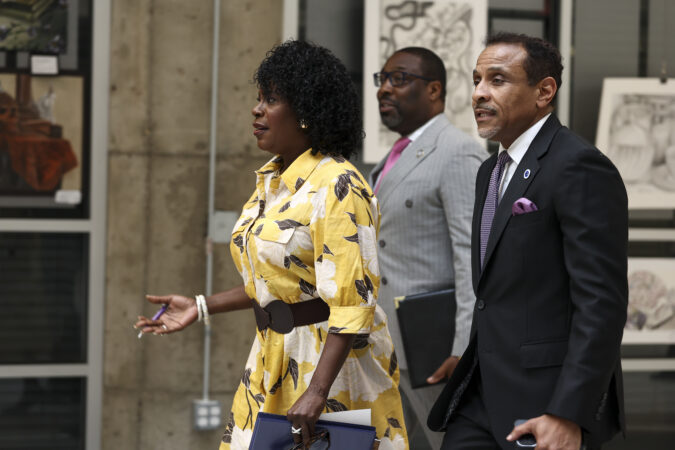
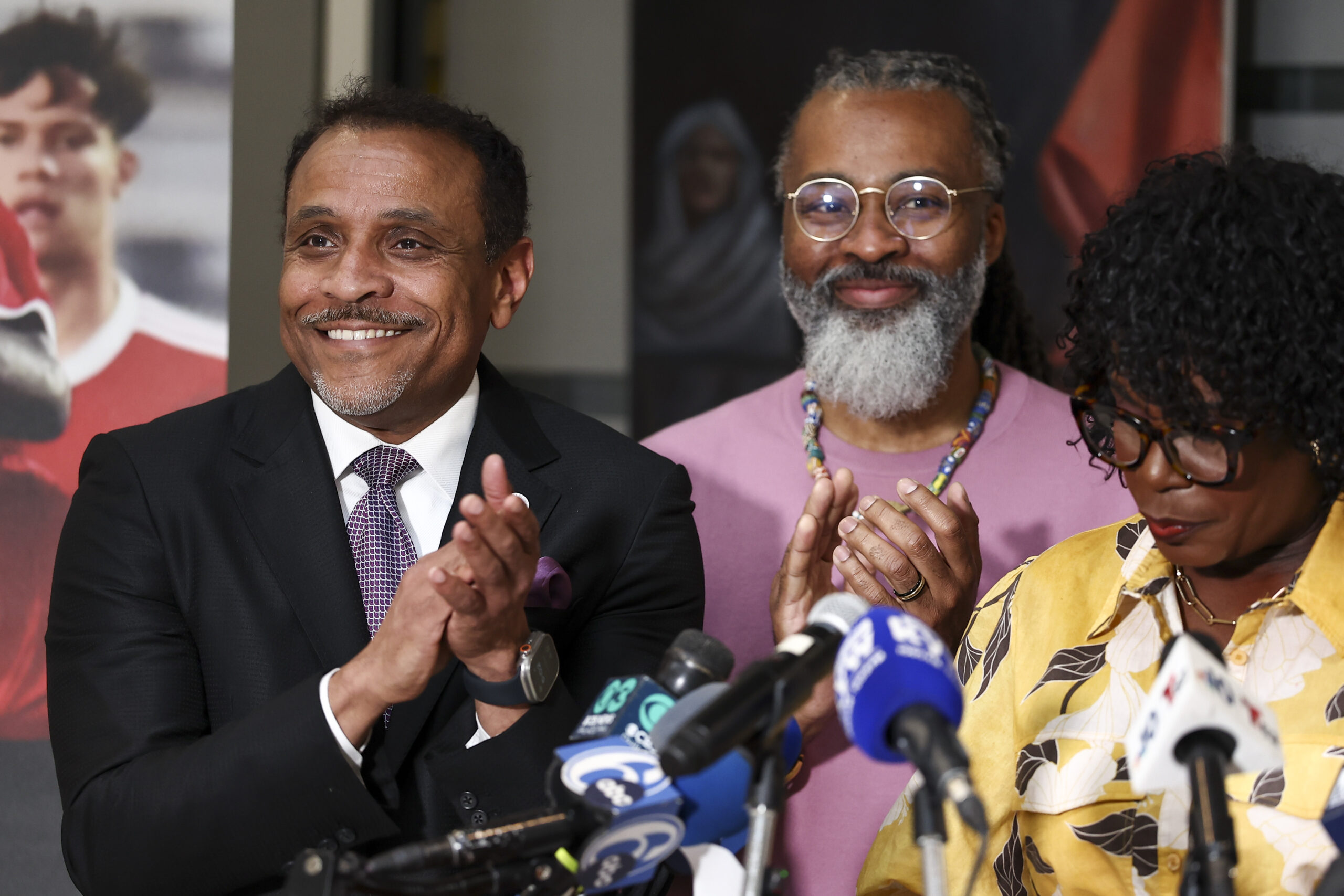
    Mayor Cherelle L. Parker and other top leaders of the city government and the Philadelphia School District will travel to Harrisburg on Monday for a high-stakes trip aimed at securing millions of dollars in new funding for the financially strapped public schools.

    Parker will spend much of the day advocating for increased public education dollars as state lawmakers hurtle toward their June 30 budget deadline. The mayor is slated to host an afternoon rally in the Capitol Rotunda alongside Superintendent Tony B. Watlington Sr., school board president Reginald L. Streater, and City Council President Kenyatta Johnson.

    Their trip to the Capitol comes after weeks of tension among those same leaders, who earlier this month hammered out a city budget deal that was in large part centered on finding new funding for the school district, which is facing a $300 million structural deficit and had planned to cut more than 300 school-based staff positions.

    Parker and school officials wanted the city to levy a $1-per-ride tax on rideshare services like Uber and Lyft to secure about $50 million a year in recurring funding, but Council rejected that plan, and instead voted on a one-time diversion of money to the district that came out of the existing city budget.

    City officials have pledged $216 million to the district over five years to keep funding the school workers, though the exact sources of that money is yet-to-be-determined.

    Parker, who served in the state legislature for a decade before becoming a City Council member and then taking office as mayor in 2024, said when she announced the new funding plan that city leaders would be able to travel to Harrisburg “saying we’ve made tough decisions, we’ve made sure we’ve done our best to take care of our own, and we have a plan.

    “Philadelphia is primed to travel to Harrisburg to advocate in unity to ensure that our children get access to the revenue that they deserve,” she said, “so that they can have a first-class school district here in the city.”

    Superintendent Tony B. Watlington Sr., school board president Reginald L. Streater, and Mayor Cherelle L. Parker stand together during an announcement at the School District of Philadelphia Headquarters on June 10 in Philadelphia. Philadelphia School District officials will move to restore 340 classroom-based jobs that were slated to be cut, despite top district leaders saying earlier that they did not have the recurring funding needed to keep the positions.

    The mayor’s message to lawmakers will be largely focused on securing capital dollars for the district’s $3 billion plan to modernize 169 aging school buildings over the next decade. In April, the school board adopted its controversial facilities plan — which includes an intention to close 17 schools — with the goal of bringing in $2 billion of that money from state and philanthropic sources.

    Finding that money in Harrisburg could be a tall task as the state faces its own multibillion-dollar budget shortfall. All 203 state representatives and half of the 50-member Senate are up for reelection this year, and many lawmakers gearing up to face voters in November are averse to broad-based tax increases aimed at juicing revenue.

    In addition, gridlock is commonplace in the divided legislature, where reaching a state budget deal has been a drawn-out and arduous process in recent years. Last year’s bitter negotiations stalled for more than five months, leading to mass service disruptions statewide.

    Gov. Josh Shapiro, a Democrat who is in the midst of his own reelection battle and is seen as a potential contender for president, has also said that he is generally not looking to raise taxes. Leaders in Harrisburg last month rejected a separate proposal by Parker to raise the city’s hotel tax to generate new funding for homelessness prevention programs.

    However, Shapiro has positioned himself as a champion of public education, and he proposed increasing the Philadelphia School District’s general funding allocation to about $2.2 billion in the coming fiscal year, a $151 million increase over this year’s amount.

    Statewide, Shapiro called for an additional $565 million for public schools as part of the state’s new “adequacy funding” formula, a multiyear plan developed to address the chronic underfunding of low-wealth school districts.

    The formula was adopted in 2024 after a Commonwealth Court ruling that the state had for years unconstitutionally deprived some children of an adequate education by sustaining a funding plan largely reliant on local property tax dollars. Philadelphia is the only school district in the state that can’t itself raise taxes. Instead, it depends on the city and state governments for funding.

    Parker said earlier this month that despite her own tax proposal to fund the schools falling through, she intends to “take this fight on the road.”

    “We stand in unity with our legislative leaders in Harrisburg, our legislative leaders on both sides of the aisle, [and] we stand with our governor,” she said. “And we fight until the end to ensure that we do everything we possibly can to ensure that our school district has access to the resources that it needs.”

  • Trump post seems to push Starmer to resign

    Trump post seems to push Starmer to resign

    LONDON — President Donald Trump appeared to scoop Downing Street on Sunday, announcing that Prime Minister Keir Starmer would resign before any public statement from Starmer himself.

    “Keir Starmer will resign as Prime Minister of The United Kingdom,” proclaimed in a social media post, in which he also asserted that Starmer had “failed badly” on immigration and energy policy.

    Then, Trump added: “I wish him well!”

    Doubts about Starmer’s political future have swirled for weeks since his Labour Party suffered staggering losses in local elections in May, and prospects of a leadership challenge increased markedly on Friday after his most formidable rival, Greater Manchester Mayor Andy Burnham, won a special election for an open seat in parliament.

    Earlier on Sunday, British media had reported that Starmer was considering resigning. Still, Trump’s intervention represented an extraordinary foray into British domestic politics that left some veteran political observers stunned.

    “There is literally no boundary this American president will not bulldoze through,” ITV’s Robert Peston wrote on X.

    Peston also cited a cabinet minister who said that, despite Trump’s “scoop,” Starmer had “genuinely not made a decision to quit.”

    Broadcaster Piers Morgan called it “the final humiliation.”

    Downing Street told the Washington Post on Sunday evening that Starmer and Trump had not spoken over the weekend, raising questions about how the U.S. president came to make such a definitive prediction.

    But it also didn’t mean Trump was wrong about Starmer’s plans. A senior Labour Party MP told the Post on Sunday evening that some Labour Party lawmakers were “being briefed that he will step down tomorrow and that he realizes his position is untenable.”

    Speaking on the condition of anonymity because she wasn’t authorized to discuss the matter publicly, she added that Starmer “no longer has the confidence” of his peers and that it was “only right that he now steps aside.”

    However Trump reached his conclusion, the president’s ties with close European allies are increasingly strained. In recent days, Italian Prime Minister Giorgia Meloni accused Trump of lying after he claimed she had “begged” to have her photograph taken with him.

    Relations between Starmer and Trump have been rocky for months.

    Earlier this year, Trump branded Starmer “no Winston Churchill” during a dispute over Britain’s support for U.S. strikes on Iran, and the two leaders did not hold a bilateral meeting at the Group of Seven summit in France last week.

    Starmer led the Labour Party to a landslide election victory just two years ago, but has faced increasing pressure from within his own party and growing calls for him to step aside since the local elections in which Labour and the Conservatives lost badly to Reform UK, the populist party led by Nigel Farage, one of the key architects of Brexit, the U.K.’s departure from the European Union.

    Starmer on Friday vowed to fight any leadership challenge. He has not commented publicly on the matter since then, but briefings from senior lawmakers have suggested that he spent the weekend weighing his position.

    Some commentators have suggested that the question is no longer if Starmer will leave, but how, and when.

    The focus, they say, has shifted to choreography — whether Labour will stage a full leadership contest, with figures such as Wes Streeting, the former health secretary, also entering the race — or rally around a single successor.

    British politics have been remarkably unstable since the 2016 Brexit referendum. If Starmer does announce his resignation, it would usher in Britain’s seventh prime minister in a decade.

    In the special election last week, Burnham won a decisive victory against a Reform UK opponent — a win that for many Labour lawmakers provided a test case of whether Burnham could help reverse Labour’s dire poll ratings of late.

    Starmer, for his part, took to social media on Sunday only to comment on Father’s Day. “Being a dad is my great joy,” he wrote.

  • Trump, claiming vandalism, says reflecting pool will be drained

    Trump, claiming vandalism, says reflecting pool will be drained

    WASHINGTON — President Donald Trump said on Saturday that “multiple individuals” had been arrested for vandalizing the Lincoln Memorial Reflecting Pool, and that problems with a more than $14 million renovation project had become so severe that the pool would have to be at least partly drained for “necessary repairs.”

    The president’s announcement late Saturday, made on social media, was his starkest acknowledgment of the pool’s rapid deterioration in recent days. The water this week became covered by clouds of blooming algae, which were obscuring a floor that had just been painted a shade that Trump has called “American flag blue.” The paint then began to peel off, making it a tourist destination for unusual reasons.

    Among those accused of vandalism was David Carter Hearn, 67, a cyclist and three-time Olympian as a canoeist who says he stopped at the site Friday just to have a look, then reached down to touch a strip of peeling blue paint mixed with the algae.

    The U.S. Park Police arrested Hearn shortly after, accusing him of destroying government property, a crime that can carry up to a 10-year prison sentence. Hearn denies the charge.

    “I was just a curious, concerned citizen,” he said in an interview. “I guess I was there at the wrong place, wrong time.”

    The administration has not released the names of others accused of vandalizing the pool, a crime that Trump said Saturday could lead to “years in jail.” In a later post, he said without evidence that vandals had “poured corrosive and destructive chemicals into the Pool.”

    The project, one of many Trump is undertaking around the capital as the United States nears its 250th birthday, has faced intense scrutiny, including from engineers and other experts who warned that the hastily undertaken project was unlikely to undo the problems that have plagued the pool for decades. A construction company tied to Trump was awarded a no-bid contract and painted the bottom of the pool.

    Trump said Saturday that he had met with contractors earlier in the day to discuss the state of the pool.

    The Interior Department said this week that agency workers had “killed the algae” that had expanded with heat and humidity. But on Friday afternoon, the water was stained by clumps of algae where National Park Service staff members had scrubbed away bright green blooms along the bottom of the basin. The pool’s new coating was also missing large sections, including a gap roughly the size of a park bench. Underneath appeared to be the original concrete basin.

    Hearn, of Bethesda, Maryland, said that he was on a 50-mile bike ride before stopping at the pool, and that Park Police officers detained him for more than four hours Friday at a facility south of the National Mall without allowing a phone call. They also did not say more about why he had been arrested, he added. The White House and Park Police did not respond to requests for comment.

    Late Friday, Trump claimed on social media that the “inside surface that was just installed” had been damaged by vandals.

    Hearn said that he had “reached into the water to feel the characteristics” of a dislodged paint piece “still attached to the bottom.” He compared his actions to those of Jonathan Karl, an ABC News reporter who lifted a detached piece of paint at the pool Thursday in a video the news organization published.

    “I didn’t remove anything,” Hearn said. “I was bending and feeling this 2-millimeter-thick, rubbery flap.”

    Until his retirement 18 months ago, Hearn ran a company selling special materials for building canoes. That, he said, made him particularly interested in the materials contractors had used before the paint at the base of the pool began peeling.

    Hearn said that he had already received offers of pro bono representation following his arrest.

    “I’m getting a lot of support from my community,” he added.

    This article originally appeared in The New York Times.

  • ICE plans to offload Pa. and N.J. warehouse properties intended to be mass detention centers

    ICE plans to offload Pa. and N.J. warehouse properties intended to be mass detention centers

    U.S. Immigration and Customs Enforcement is planning to offload its two warehouse properties in Pennsylvania and another in New Jersey — bought for a total of more than $336 million — that had been purchased to further support President Donald Trump’s mass deportation agenda.

    In total, ICE is planning to disown seven warehouses across the country by either handing the properties off to other federal agencies or selling them, the New York Times reported.

    The agency will continue to pursue spaces in Texas, Arizona, and Maryland.

    The move signifies a notable shift in priorities within the Department of Homeland Security under Secretary Markwayne Mullin — tapped to lead the department after the abrupt firing of former Secretary Kristi Noem, whose costly warehouse purchases were a pillar of her highly controversial tenure carrying out Trump’s escalating immigration enforcement agenda.

    In contrast, Mullin, the Times reported, wants DHS to keep a lower profile.

    It remains unclear why DHS is aiming to get rid of some sites while planning to keep others. A spokesperson for the department touted the Trump administration’s immigration agenda and said that “DHS is moving swiftly to utilize EXISTING detention space with our state and county partners.”

    ICE’s new course would be a win for officials in Pennsylvania and New Jersey who have railed against the agency’s plans to use the warehouses as sites for the mass detention of immigrants, citing harmful community impact.

    A source close to Pennsylvania Gov. Josh Shapiro’s administration confirmed to The Inquirer on Friday that they had heard discussions about ICE’s plans to offload the Pennsylvania sites.

    Shapiro penned a letter to Noem earlier this year saying he would “aggressively pursue every option” to prevent the ICE warehouses that were slated for Berks and Schuylkill Counties.

    Pennsylvania Gov. Josh Shapiro speaks with members of the media on May 19 outside his polling place in Rydal.

    In the February letter, he questioned the legality of the facilities, highlighted possible harmful environmental impacts, and slammed the department’s immigration enforcement tactics. Cabinet secretaries and the Pennsylvania Department of Environmental Protection also issued five administrative orders in March that would have prevented the warehouses from using local water and sewage systems unless DHS complied with state and federal regulations.

    U.S. Sen. John Fetterman (D, Pa.), who backed Mullin’s nomination, voiced his opposition to the warehouse centers in an April letter to the secretary.

    Public records indicate that in February, the Department of Homeland Security purchased a property in Hamburg, Berks County, for $87.4 million and a property in Tremont, Schuylkill County, for $119.5 million.

    In New Jersey, the agency purchased a property in Roxbury Township, Morris County, for $129.3 million, records show.

    ICE has been hit with several lawsuits across the country, including in New Jersey, questioning the environmental and community impacts of the warehouses.

    New Jersey Gov. Mikie Sherrill and Attorney General Jennifer Davenport filed a joint lawsuit with Roxbury Township against ICE and DHS in March.

    On Thursday, Sherrill and Davenport said in a statement: “DHS’s plans were always illegal: the Roxbury warehouse is a logistics center fit for packages, not thousands of people, and did nothing to make New Jersey safer.”

    Discussions surrounding ICE warehouses also spurred local officials in the Philadelphia region to voice their concerns about such sites.

    In Bucks County, commissioners unanimously passed a resolution in February opposing any immigration detention or processing facilities. U.S. Rep. Brian Fitzpatrick (R., Pa.), who represents Bucks County and a sliver of Montgomery County, said he received assurances from the federal government that no ICE warehouses were planned in his district.

    Staff writer Stephen Stirling contributed to this article.