Jeremy and Simone Mock accused the governor and his wife, Lori Shapiro, of illegally occupying part of their yard to build an eight-foot security fence last summer in what the Mocks claim in the lawsuit was an “outrageous abuse of power.”
On the same February day the Mocks filed their lawsuit, the Shapiros sued their neighbors in Montgomery County Court, asking a judge to declare the disputed 2,900-square-foot strip of lawn as part of their property.
The Mocks’ lawsuit has no place in federal court, Monday’s filing contends, as a controversy over a property boundary is a common matter for state courts.
Plus, the Mocks cannot bring a lawsuit against Shapiro as governor or against the Pennsylvania State Police because the couple’s claims are against Shapiro as a property owner, not action he took in his official capacity as governor, according to the filing.
“That the Shapiros allowed [state police] to access the disputed parcel in a manner similar to that which the Shapiros access that parcel does not magically convert this private dispute to ‘state action,’” the motion says.
The motion also argues the state police are immune from litigation in federal court as a state agency.
The feud began when security updates were proposed to Shapiro’s home after a man firebombed the state-owned governor’s residence in Harrisburg in April 2025 while Shapiro and his family slept inside, according to court filings.
In response, state police proposed security upgrades to the governor’s personal residence in Abington, which included the installation of an eight-foot fence along the property’sperimeter.
<div data-analytics-viewport="autotune" data-analytics-label="shapiroyard" id="shapiroyard__graphic" data-iframe-fallback="https://media.inquirer.com/storage/inquirer/ai2html/shapiroyard/fallback-mobile.jpg" style="width: 0; min-width: 100% !important; border: none;" data-iframe-fallback-height="643" data-iframe="https://media.inquirer.com/storage/inquirer/ai2html/shapiroyard/index.html" data-iframe-height="620.999999999999" data-iframe-resizable></div> <script type="text/javascript">(function() { var l = function() { new pym.Parent( 'shapiroyard__graphic', 'https://media.inquirer.com/storage/inquirer/ai2html/shapiroyard/index.html'); }; if(typeof(pym) === 'undefined') { var h = document.getElementsByTagName('head')[0], s = document.createElement('script'); s.type = 'text/javascript'; s.src = 'https://pym.nprapps.org/pym.v1.min.js'; s.onload = l; h.appendChild(s); } else { l(); } })(); </script>
A land surveyor discovered in summer 2025 that the Mocks actually owned about 2,900 square feet of land that the Shapiros had believed was a part of their property since they bought the home in 2003.
The Mocks, whose property is adjacent to the Shapiros’, say in their suit that the planned location of the fence is on their property unlawfully and wouldviolate their rights.
The Shapiros began planting arborvitae-type trees and other plants on the Mocks’ property, flying drones over it, threatening to remove healthy trees, and “chasing away” contractors who came to work in the Mocks’ yard, the Mocks’ suit says.
The complaint also accuses Shapiro of directing state police to patrol the property. Troopers instructed the Mocks to leave the area of the yard multiple times, calling it a “disputed” area or “security zone,” the suit says.
The Shapiros say they are the rightful owners of the land through adverse possession, a legal mechanism that extends a person ownership of a property they have actively used for at least 21 years.
The governor and his wife are asking a Montgomery County Court judge to find them the “legal and equitable owners” of the area in dispute. Until the state judge makes a determination, the federal court should abstain from considering the Mocks’ federal lawsuit, the new filing says.
Outside of court filings, Shapiro attacked the lawsuit as politically motivated.
The Mocks are represented by Wally Zimolong, a Delaware County attorney who describes himself on his website as the “‘go-to’ lawyer in Pennsylvania for conservative causes and candidates.” Zimolong previously represented the political campaigns of President Donald Trump and U.S. Sen. Dave McCormick (R., Pa.).
“The Governor looks forward to a swift resolution and will not be bullied by anyone trying to score cheap political points, especially at the expense of his family’s safety and well-being,” Will Simons, a spokesperson for Shapiro, a Democrat running for reelection, saidin a statement in February.
Zimolong did not comment on the new filing, but previously said the Mocks are open to resolving the dispute outside of court.
“At base, this is a straightforward defense of the property rights of two innocent owners, who were living peacefully next to the Shapiros for over nine years,” the attorney said in a February statement.
Staff writer Gillian McGoldrick contributed to this article.
WASHINGTON — President Donald Trump plans to sit in on Wednesday’s Supreme Court hearing on birthright citizenship, making him the first sitting president to attend oral arguments at the nation’s highest court.
The Republican president’s official schedule, sent out by the White House, included a stop at the Supreme Court, where justices will hear Trump’s appeal of a lower court ruling that struck down his executive order limiting birthright citizenship.
The order, which Trump signed on the first day of his second term, declared that children born to parents who are in the United States illegally or temporarily are not American citizens. It’s an about-face from the long-standing view that the Constitution’s 14th Amendment and federal law since 1940 confer citizenship to everyone born on American soil, with narrow exceptions.
It’s not the first time Trump has considered showing up for a high court hearing. Last year, Trump said that he badly wanted to attend a hearing on whether he overstepped federal law with his sweeping tariffs, but he decided against it, saying it would have been a distraction.
On Tuesday, however, Trump seemed more sure he’d be in court for Wednesday’s hearing while he spoke with reporters in the Oval Office.
“I’m going,” Trump said, when the upcoming arguments in the birthright citizenship case were mentioned. To a follow-up question clarifying that he planned to go in person, Trump said, “I think so, I do believe.”
Trump went to the Supreme Court in his first term for the ceremonial swearing-in of the first justice he appointed, Neil Gorsuch. Two other justices he appointed — Brett Kavanaugh and Amy Coney Barrett — also sit on the court.
Other presidents have dealt directly with the court, but don’t appear to have done so while in office. Richard Nixon argued a case between his time as vice president and president, and William Howard Taft served as chief justice after his presidency.
Trump, asked to whom he would be listening most closely, went on a lengthy detour Tuesday describing a court he viewed as mostly partisan, between justices appointed by Republican and Democratic presidents.
“I love a few of them,” he said. “I don’t like some others.”
The citizenship restrictions are a part of Trump’s broader immigration crackdown, but they have not yet taken effect anywhere in the country after being blocked by several courts.
A definitive ruling from the Supreme Court is expected by early summer.
Pennsylvania Gov. Josh Shapiro pushed back against President Donald Trump’s executive orderto create of a national eligible voter list and restrict mail voting.
“President Trump can sign whatever the hell he wants to, but it won’t change the Constitution,“ Shapiro, a Democrat, said in a post on X Tuesday night after Trump signed the order. ”The authority to set our election rules belongs to the states — and as Governor, I will protect your right to vote. That includes your right to vote by mail.”
Trump’s order is the latest of several attempts by the president to nationalize the U.S. voting process and promote his false claims of election fraud.
Tuesday’s directive instructs the Department of Homeland Security to coordinate with the Social Security Administration to develop a list of eligible voters in each state, according to the executive order signed Tuesday. The list — called “The State Citizenship List” — will be compiled from various government records including citizenship and naturalization and the SSA.
It also seeks to bar the U.S. Postal Service from sending absentee ballots to those not on each state’s approved list, although the president likely lacks the power to mandate what the Postal Service does. Trump is also calling for ballots to have secure envelopes with unique barcodes for tracking.
The order is likely to attract swift legal action from officials in Democratic-led states. Shapiro was not explicit in his post on X as to whether he’ll file suit against the Trump administration for the directive. But it wouldn’t be a surprise if he did — the governor, who is running for reelection, has frequently taken the president and other top officials to court over the past year.
If Shapiro takes legal action, he’d be joining other Democratic officials who have already committed to file suit, including inArizona and Oregon. Voting law experts told The Associated Press that the order votes the Constitution by attempting to take the power to run elections from the states.
As Congress spends a two-week break no closer to a compromise on Homeland Security funding, U.S. Rep. Madeleine Dean visited the federal detention facility in Center City Tuesday to do some research on the agency at the center of the fight.
ICE agents have been paid throughout the 46-day shutdown, but most other employees of agencies overseen by the the Department of Homeland Security have gone without pay for the duration.
But Dean (D., Montgomery) discovered Tuesday that the pay disparity also existed within ICE itself.
“What I learned there is something I did not fully understand. We all know about TSA not getting paid. But did you know the support staff (for ICE and other agencies) has not been paid?” Dean said.
“The support staff is often the backbone of any organization and it’s just completely unthinkable, unconscionable — I think it should be illegal — that these folks are not being paid.”
The four-term lawmaker’s visit came more than six weeks into the Department of Homeland Security shutdown and just days after Congress left Washington for a two-week break without a solution.
Democrats have remained steadfast in opposing any new funding for Immigration and Customs Enforcement without reforms to the agency’stactics, following two fatal shootings of civilians in Minneapolis by federal agents in January.
Many Republicans havebristled at Democrats’ proposals to ban masking by agents and other reforms. And House GOP leaders have refused to consider a larger DHS budget without the ICE funding.
Dean said her trip to the Philadelphia Federal Detention Center, which she said had 52 immigrant detainees Tuesday morning, was designed for her to learn both about the shutdown’s impacts and the operations of a facility that only began holding immigrants in ICE custody last year.
She said the pay disparity — support staff not being paid while law enforcement officers continue to be paid to do enforcement work — struck her as unfair, particularly with funding available through President Donald Trump’s One Big Beautiful Bill Act and after Trump authorized payment for Transportation Security Administration workers.
Trump approved the TSA payments last week as unpaid employees increasingly called out of work, disrupting airport operations and leading to ICE agents being deployed to pick up some of their duties.
Dean said the decisions made about who to pay and not pay, along with House Republicans’ move last week to reject a compromise plan proposed by the Senate, were “an utter failure to govern.”
Spokespeople for DHS and ICE did not respond to questions from the Inquirer about which types of federal employees are receiving paychecks during the budget impasse.
While the Trump administration has occasionally blocked members of Congress — including two from Pennsylvania last year — from entering ICE detention facilities, Dean said she did not have a problem getting access on Tuesday. However, she criticized the current policy that requires a week’s notice.
Democratic lawmakers have fought in court against the advance-notice policies. The policies have been used, for instance, to block lawmakers looking to visit a facility in Minneapolis after an ICE officer killed U.S. citizen Renee Good, sparking a wave of public backlash. The arrest of nine religious leaders protesting the Philadelphia detention center on Monday was part of a series of protests after the events in Minneapolis.
“We should have been able to walk right in,” Dean said after giving notice for her Tuesday visit. “We have a responsibility as the appropriators to take a look at these places without any prior approval.”
Dean described the staff at the Philadelphia facility as cooperative even as they did not answer all of her questions, and declined to let her speak with any of the immigrants who were detained there Tuesday morning.
The questions she said she entered with — about how long the detainees had been there, and if they had criminal records beyond their immigration status — were left unanswered.
Dean said she also did not get clarity on how many came from her district, which covers most of Montgomery County and part of Berks County, or about the circumstances around the death of a detainee in January. That detainee, 46-year-old Parady La, was a Cambodian immigrant who ICE said was treated for drug withdrawal and died after being transferred to Thomas Jefferson University Hospital.
La’s family and groups including the ACLU of Pennsylvania have sought more information. Dean said Tuesday she was unable to learn anything more after speaking with the staff.
Dean described the conditions at the facility, which also still operates as a federal jail, as “heavy-duty, serious prison” — similar but also different from a much larger detention facility in Texas that she visited earlier in March.
The facility in Dilley, Texas, holds up to 2,400 people, and Dean has highlighted it as a cautionary exhibit of what could be coming if the Trump administration succeeds in its plans to turn two warehouses — in Berks and Schuylkill counties — into similarly large detention facilities.
“It was incredibly inhumane and grotesque,” Dean said. “We saw children whose medical needs were being neglected.”
Dean said she spoke to several detainees who had severe medical issues. An educational area set up for the detained children also appeared to be unused, she said.
“It was an absolute sham, a joke,” she said. “I’ll do everything in my power to get these centers shut down.”
Making his pitch to the Great Valley school board, Jed Lu said he and fellow students seeking to bring slain conservative activist Charlie Kirk’s Turning Point USA organization into their high school weren’t racists or extremists.
“We simply have a different perspective,” Lu told the board at a late February meeting.
The Chester County district is one of the latest in the Philadelphia area to approve a Club America chapter — the high school offshoot of Kirk’s group. The organization seeks to mobilize “anti-woke warriors” and has rapidly been adding new local chapterssince his assassination in September, provoking debate around right-wing influence in public schools.
Nationally, chapters have nearly tripled — from 1,200 prior to Kirk’s death, to more than 3,300, according to Turning Point officials. Governors in Republican-led states like Arkansas and Nebraska are partnering with Turning Point to expand clubs throughout their states.
In eastern Pennsylvania, there were 11 Club America chapters at the end of last school year. Now, “we’re currently approaching 40,” said Nick Cocca, Turning Point’s enterprise director.
The group’s expansion might be overstated in the Philadelphia region. Seven area high schools listed by Turning Point on its website or Instagram graphics as having Club America chapters said they didn’t have clubs.
Souderton Area High School, for instance, appears on Turning Point’s map, but doesn’t have a club. The school’s assistant principal, Matthew Haines, said “a student made an inquiry” in September about starting a chapter, but never applied to do so.
In some schools, like Springfield High School in Delaware County, “we have a few students who started running an after-school student pilot a few months back,” said principal Monica Conlin, but the district doesn’t officially recognize the club. Conlin said new clubs must complete a three-year pilot before gaining district approval.
Still, the organization has gained traction. In addition to Great Valley, Penncrest High School in Rose Tree Media School Districtlists Club America among its student clubs; district officials and staff didn’t respond to requests for comment.
Turning Point says it also has a Club America chapter at Pennsbury High School, and an Instagram account for “Club America at Pennsbury” invited students to a Feb. 25 meeting to discuss the State of the Union and “participate in prayer for law enforcement and our nation.” District officials didn’t respond to requests for comment.
‘An outpouring of support’ after Kirk’s death
A spokesperson for Turning Point couldn’t explain the discrepancy between its list and schools that say they don’t have any Club America chapters.
The organization was also unable to provide a local student willing to be interviewed.
Cocca said Turning Point “saw an outpouring of support and outreach from young people across the country” in the wake of Kirk’s Sept. 10 assassination. To support its growth, the organization is hiring more field representatives to work with high school students, Cocca said.
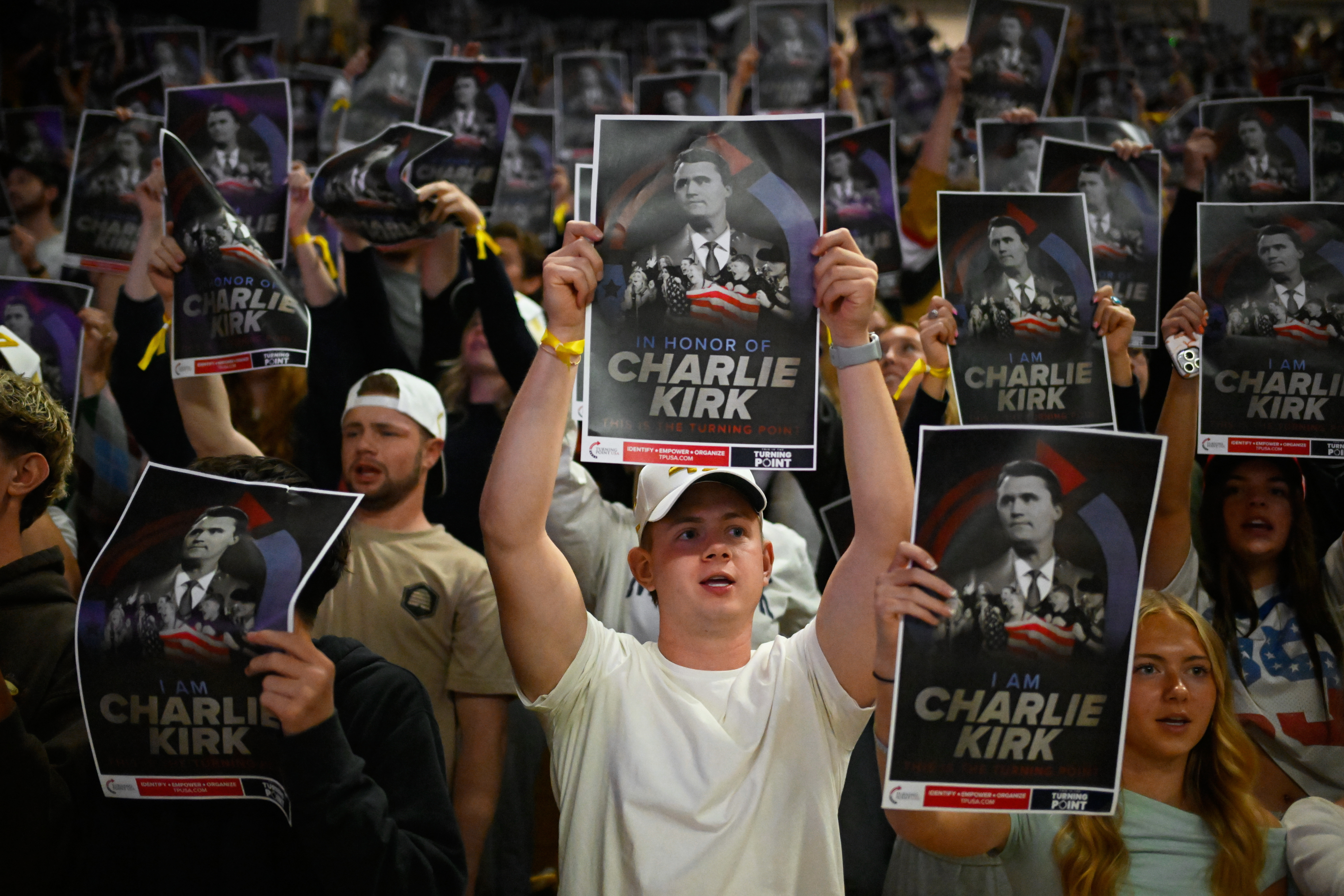
People hold posters of Charlie Kirk during a Turning Point USA rally at Utah State University, as a part of the organization’s push to memorialize Kirk in Logan, Utah, in September.
Turning Point, which began as an organization advocating for conservative views on college campuses, had previously been expanding its presence in high schools. (A Turning Point chapter launched years ago at Pennridge High School in Upper Bucks County, for example.)
Turning Point last July renamed its high school operation Club America. “We wanted a brand that spoke specifically to them,” Cocca said. He said that “when Charlie was alive, he used to say ‘I want a Club America chapter in every high school in America.’”
The expansion has spurred conflict. Critics have highlighted Kirk’s controversial statements, including referring to the Rev. Dr. Martin Luther King, Jr. as “an awful person” and calling the passage of the 1964 Civil Rights Act a “mistake.”
Kirk also promoted the so-called “great replacement theory,” framing non-white immigration as a plot to replace white populations.
“This club is an easy way to incorporate hate and discrimination within our high school. This should not be normalized,” a Change.org petition launched in January against a proposed Club America chapter at West Chester East High School read. An update to the petition later declared that Turning Point “was shut down at West Chester East.”
Molly Schwemler, a district spokesperson, said that earlier this year, some students expressed interest in starting a Club America chapter.
But “after discussing the process and need for sponsorship from a teacher with school administration,” students “instead decided to organize independently outside of the school,” Schwemler said. (On its website, Turning Point lists West Chester East as having a chapter.)
In an Instagram post, the club said it decided to operate independently “because people can’t be mature, open minded or respectful at our school.”
Activism hubs and kits
In addition to identifying a teacher adviser, students looking to form clubs often have to supply information to administrators like their purpose, planned activities, and funding needs.
Schools have little discretion to reject a new club, based on the federal Equal Access Act and First Amendment, said Jeffrey Sultanik, a solicitor for numerous Philadelphia-area districts.
Districts need “to be viewpoint-neutral,” Sultanik said, noting that “once you open up the door to clubs coming in,” administrators can’t pick and choose which to permit.
In its handbook for Club America chapters, Turning Point calls it “imperative that every chapter works to become officially recognized by the school,” offering students help if schools deny them.
Students can form an “activism hub” outside of school for a specific geographic area “as a last resort,” the handbook says.
In Downingtown — where Turning Point says there is an activism hub — a school district spokesperson said the district has not sponsored any clubs “related to religious or political groups in recent history.” (Some other area schools have official political clubs: Penncrest High School, for instance, lists Penncrest Democrats of America.)
Turning Point says its Club America chapters are nonpartisan and don’t support specific candidates.
But the group’s ideology is clear from materials it supplies to student members. Presentations available in Turning Point’s “Activism Library” for students to use have titles including “Taxes Are Shady,” “Socialism Kinda Sus,” and “Big Gov Scares.”
“Why are those on the left not proud to be Americans?” a presentation titled “Always Love America” asks.
Kids can order “Activism Kits” from Turning Point with posters and stickers. A “2A” kit features slogans like “Gun rights are women’s rights” and “Guns are the greatest equalizer.”
Cocca said Turning Point provides students “anything they may need, to promote what they want to promote, and what they want to make their club about” — whether that’s registering students to vote, or learning about the Constitution, he said.
“Ultimately, it’s up to the students to use those resources the way they want to use them,” he said.
Opposition to Club America groups
Critics accuse Turning Point of trying to indoctrinate high schoolers.
“They are grooming at the high school level, and college level, for a generational change,” said Sherry Lawrence, a parent in Great Valley whoopposed the district’s new Club America chapter. “All the red flags are there for people who don’t subscribe to this brand of conservatism, or this brand of Christianity.”
Lawrence questioned whether adults were driving some efforts to organize Club America chapters.
In an October Facebook post in a Turning Point Pennsylvania Action group, George Sabo, then a GOP candidate for township supervisor in East Whiteland, said his daughter was starting a chapter at Great Valley High School. “We had discussed it over the summer but pulled the trigger after Charlie’s assassination,” Sabo wrote.
In a brief phone interview, Sabo said it was his daughter’s idea to start the chapter.
“My daughter and family, who believe in the Bible, and believe God is king, value those properties and want to see that brought more into the school district,” Sabo said.
He said that while there had been pushback from other kids, “there’s some support from other kids, too.”
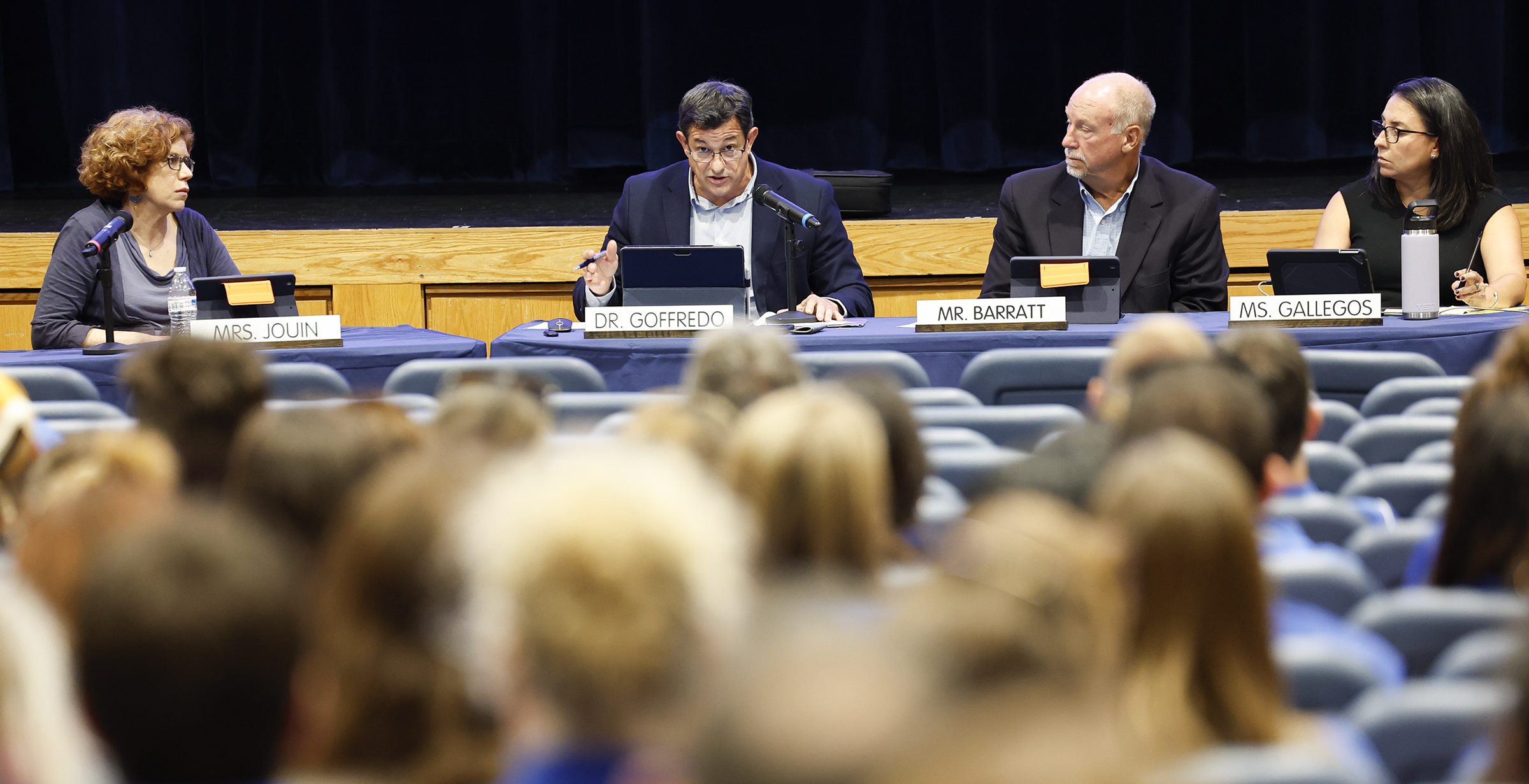
Great Valley school board members during a meeting at Great Valley High School in Malvern in 2024.
The Great Valley board approved the club 7-0 at its February meeting.
At the board meeting, Lu, the club president, said he and the three other club officers had initiated its formation.
While the club has a “conservative viewpoint,” Lu said, “our purpose is civic debate and civil discussion.” He added that the club is motivated by “the Christian value of love and compassion.”
The club hopes to be an “impactful addition to Great Valley High School,” Lu said.
In reality, Philadelphia’s budget process is far more complicated than our simulation. It is more “like eight-dimensional chess,” according to Marisa Waxman, executive director of the Pennsylvania Intergovernmental Cooperation Authority, an independent agency that provides financial oversight for the city. Here’s what we did to simplify it.
Defining “budget”
At the most basic level, Philadelphia has two budgets: operating and capital. The operating budget handles day-to-day services and programs, while the capital budget funds major long-term investments. We used the term “city budget” throughout the game as a loose reference to Philadelphia’s General Fund, which accounts for the majority of the city’s operating budget.
There are, however, other funds that allocate resources to the operating budget. Some are specific like the Water Fund or the Transportation Fund. Philadelphia also uses federal, state, and philanthropic grants for day-to-day expenses.
story continues after advertisement
Merging departments
Philadelphia has over 70 departments. While each of them hasr its own line item in the budget, we condensed them to six:
Arts, Culture, and Recreation encompasses the Art Museum, the Free Library, the Office of Arts and Culture and the Creative Economy, and Parks and Recreation
Local Economic Development and commerce encompass the Department of Commerce, including its Convention Center subsidy and economic stimulus, and the Office of Community Empowerment and Opportunity
Police and prisons encompass the Citizens Police Oversight Commission, District Attorney, the Department of Finance’s witness fees, the First Judicial District, the Managing Director’s Defenders Association, the Office of Public Safety (which includes the Office of Prison Oversight), the Philadelphia Police Department, the Prisons Department, and Sheriff Department
Infrastructure encompasses Licenses and Inspections (which includes the Board of Building Standards and the Board of L&I Review), the Office of Property Assessment, the Department of Planning and Development, Public Property’s SEPTA subsidy, and the Department of Sanitation (including Disposal)
Community Health, Housing, Education, and Safety encompasses the Finance Department’s community college subsidy, Hero Scholarship awards, school district contribution, and payment to the housing trust fund; the Fire Department; the Human Relations Commission; the Department of Human Services; the Managing Director’s Office; Neighborhood Community Action Centers; the Office of Behavioral Health and Intellectual disAbility; the Office of Education; the Office of Homeless Services; the Office of Sustainability; and the Department of Public Health
City Government Operations encompasses Auditing (City Controller), the Board of Ethics, the Board of Revision of Taxes, City Commissioners, City Council, the City Representative, the City Treasurer, the Civil Service Commission, the Finance Department (including budget stabilization, employee benefits, indemnities, Reg #32, and refunds), Fleet Services (including vehicle lease/purchase), Labor, Law, the Mayor’s Office, the Office of Human Resources, the Office of Innovation and Technology (including 911), Office of the Inspector General, Procurement, Public Property (including space rentals and utilities), Records, Register of Wills, Revenue, and the Sinking Fund Commission.
These are similar to, but not the same as, the buckets in Mayor Parker’s fiscal year 2027 operating budget in brief. We also referenced groupings based on survey results out of the People’s Budget Office, a Mural Arts project that teaches Philadelphians how the budget works and how they can advocate for issues that matter to them.
How we did the math
We based the dollar values for each department on Philadelphia’s proposed budgets for fiscal 2026 and fiscal 2027. The fixed aspects of those departmental budgets represent inflexible contributions – for example, subsidies to SEPTA and the School District of Philadelphia. In addition to specific contributions, we estimate that 80% of personnel costs from Philadelphia’s General Fund for each department would be fixed, since over 80% of the city’s workforce is unionized.
The special projects and their associated costs were inspired by departmental summary of increases and decreases from the fiscal 2026 proposals, as well as Mayor Parker’s recently announced priorities in her fiscal 2027 budget address. Finally, the game’s approval ratings are based on the ranked priorities in the 2023 Every Voice, Every Vote (EVEV) poll and the fiscal 2026 People's Budget Office survey results.
story continues after advertisement
What you can do now
If you’d like to get involved in the real budget, one way would be to give public testimony at a budget hearing. Your next opportunity will be on April 21 at City Hall. Alternatively, you could attend a neighborhood budget town hall or fill out a survey for City Council.
The People’s Budget Office also hosts workshops where they teach Philadelphians about the budget and how to advocate for issues they care about. “It’s one of the ways we can build power as neighbors and denizens of the city,” said Sarah Bishop-Stone, PBO’s program director. “It’s to understand [the budget] and make it legible.” Their next Budget 101 workshop will be in South Philly on April 19.
Still, speaking up might not materialize in the outcomes you’re hoping for. "Once [you] learn how [the budget] works, it becomes much clearer how hard it is to have a say in that process," said Bishop-Stone. She said that last year, during “the past budget cycle, the folks who tried to advocate really came away quite dispirited” because they didn’t see the changes they pushed for reflected in the budget that passed in June.
Let us know what you thought
This is the first time The Inquirer has published a game about the city budget and we would love to know what you think.
Staff Contributors
Reporting: Charmaine Runes
Editing: Sam Morris
Illustration: Yali Chen
Copy Editing: Brian Leighton
Subscribe to The Philadelphia Inquirer
Our reporting is directly supported by reader subscriptions. If you want more journalism like this story, please subscribe today
Bucks County authorities have charged a nurse with child endangerment for allegedly harming a Bensalem 3-year-old for whom she was providing in-home services, according to a criminal complaint filed last week.
The parents of the child reported Cindy Desser to child welfare authorities after seeing home surveillance video footage in which she “smacked and slammed” the child, who was born early and has “multiple medical issues,” according to the complaint filed by Bensalem police.
The child “lives with a trachea,” according to the complaint, and one video showed the Desser “pull the trach out” and take “her time putting the trachea back in.” The child could be heard “gasping for air,” and Desser, who was the child’s “night nurse,” was recorded saying, “You did this,” the document said.
An attorney for Desser did not immediately respond to a request for comment.
The family hired Desser, who lives in Jamison, Pa., through Dynamic Home Health Care, according to the complaint. The company did not respond to a request for comment.
The parents told the channel they wished to remain anonymous.
“Thank God my daughter is so strong,” the mother told 6ABC. “It was just horrific. I just couldn’t believe it. It’s like almost like monsters come out at night.”
FBI Director Kash Patel is pressing to release a decade-old investigative file involving Rep. Eric Swalwell (D., Calif.) and a suspected Chinese intelligence operative, recently dispatching agents in the bureau’s San Francisco office to quickly redact the files before they are released publicly despite no evidence of wrongdoing by Swalwell, according to three people familiar with the effort.
The potential release is part of the Trump administration’s aggressive push to investigate Swalwell, a vocal critic of President Donald Trump and a leading Democratic candidate for California governor, according to the people familiar with the effort. It is highly unusual for the FBI to release case files tied to a probe that did not result in criminal charges.
As FBI director, Patel has focused on trying to bring a criminal case against the outspoken Democrat, reassigning multiple agents in San Francisco to work on the matter, the current and former officials said. FBI leaders have even discussed sending agents to China to talk to the suspected intelligence operative, believing she could have damaging information about Swalwell, according to two of the people familiar with the investigation. The people familiar with the matter spoke on the condition of anonymity to discuss an investigation that has not been made public.
The Chinese woman at issue is Christine Fang, also known as Fang Fang, who reportedly courted Swalwell and other California politicians in the United States from 2011 to 2015. She helped with fundraising for Swalwell’s 2014 reelection campaign and even helped place an intern in his congressional office. When federal agents conveyed their concerns about Fang to Swalwell around 2015, he reportedly cut off ties with her and said he helped investigators.
Swalwell was not accused of any wrongdoing when the FBI investigated his relationship with Fang a decade ago. In 2023, the Republican-led House Ethics Committee closed a two-year investigation into the congressman, deciding to “take no further action.”
Despite that, FBI leaders have recently suggested in internal discussions that the government could try to arrange for Fang to get a U.S. visa in exchange for speaking with FBI agents about the Democrat, according to the three people with knowledge of Patel’s efforts. It would be highly unorthodox to grant a visa to a person suspected of being an intelligence agent for a foreign superpower.
An FBI spokesperson disputed any notion of improper motives. “The contentions in this story are incorrect,” the spokesperson said. “This FBI, being the most transparent in history, prepares documents for numerous different reasons, including for release to different agencies and departments to further review investigations that may have been opened under previous administrations.”
The push to publicly release the investigative files, the people interviewed said, suggests that the FBI has struggled to so far build a criminal case against Swalwell. Even if there is no incriminating evidence in the files, an extensive case file could contain revealing and personal details about Swalwell and his campaign operations.
The lengths that Patel’s circle is going to in the bid to pursue a political foe of the president has raised alarms within the bureau, where some officials fear that releasing the files — even with redactions — could compromise law enforcement sources and investigatory methods, making it harder for the FBI to gain trust with potential witnesses.
They also said they feared the repercussions of sending agents to the territory of an adversarial nation to dig up information on a sitting congressman. Such an interview, legal experts said, would be impossible without Chinese interference, and Fang would be considered an unreliable witness.
“Most troubling about this is that we are now literally at war. We also face threats against the homeland,” Swalwell said in a statement to the Washington Post. “Kash Patel should be spending every moment trying to keep us safe, not scoring political points. A lot of people have bent the knee to this administration. But I will not, and neither will the people of California.”
Rep. Eric Swalwell (D., Calif.) speaks to reporters after a campaign event on Nov. 3, 2025, in San Francisco.
Swalwell, who unsuccessfully sought the Democratic presidential nomination in 2020, has been an unusually aggressive and colorful critic of the president, frequently criticizing the president in media interviews and on the dais as a member of the House Judiciary Committee. Swalwell also was a House “manager” — essentially, a prosecutor — in Trump’s 2021 impeachment for his role in the Jan. 6, 2021, attack on the U.S. Capitol.
Swalwell’s district in Northern California includes a large Chinese American population. Republicans and media personalities frequently criticize Swalwell for his ties to Fang and the Chinese community, suggesting that he is improperly working with them.
But FBI agents typically need a specific investigative reason to reopen a closed investigation. The people familiar with the probe said it is unclear how or why the FBI reopened its examination of Swalwell.
Internal Justice Department policy has long said that law enforcement should refrain from taking any public investigatory steps against a political candidate in the 60 days before an election, to prevent even the appearance of the department using its power to sway the vote.
The Justice Department is not legally bound to follow this rule, however, and it is unclear whether it would do so in Swalwell’s case. The California gubernatorial primary is June 2.
In California’s primaries, the top two vote-getters, regardless of party affiliation, move on to the November general election. Two Republicans currently lead the governor’s race in recent polls, despite the state’s liberal leanings, as a large number of Democrats — led by Swalwell — split the vote. Democratic leaders hope their voters ultimately coalesce around one or two candidates, but the outcome remains uncertain.
The investigatory files are likely to include numerous interviews with Swalwell, his aides, friends and others about the congressman’s interactions with Fang, details about his campaign and more.
Under a long-standing legal principle, agencies do not release potentially damaging material about people against whom they were unable to build a case strong enough to take to court.
The department recently released the investigatory files in the case of sex trafficker Jeffrey Epstein, who had been indicted on federal sex trafficking charges but had not yet faced trial before killing himself. But in that case, the department’s hand was forced by political pressure and ultimately an act of Congress.
Republicans and Democrats criticized the Justice Department’s handling of the Epstein release, saying the rollout was disorganized with few effective systems in place to ensure that appropriate redactions were made.
Since Trump took office, his administration has mounted an aggressive campaign to use federal law enforcement agencies to pursue his political adversaries.
The Justice Department filed criminal cases against former FBI Director James B. Comey and New York Attorney General Letitia James, for example. A judge threw out both indictments in November, ruling that Lindsey Halligan, the prosecutor overseeing both cases, had been unlawfully appointed.
Federal Housing Finance Agency Director Bill Pulte — a staunch Trump ally — referred Swalwell to the Justice Department for criminal prosecution over mortgage fraud allegations, but the department never indicted Swalwell. Swalwell sued Pulte, saying he unlawfully looked used his position to look through private mortgage fraud documents, but he ultimately dropped the lawsuit.
The department is also investigating Federal Reserve Chair Jerome H. Powell over the cost of the Fed’s recent building renovations. A federal prosecutor acknowledged in a closed-door hearing this month that the department did not have evidence of wrongdoing, the Post has reported.
Even against this backdrop, a proposal to release extensive files, send agents to China to interview a suspected intelligence operative and offer her a U.S. visa in exchange for revelations about a U.S. congressman would be extraordinary.
Patel, who before becoming FBI director was a conservative firebrand who attacked the “deep state” and vowed to “come after” Trump’s adversaries, has long been a critic of Swalwell. In his 2023 book Government Gangsters, Patel published a list of 60 names in an appendix that has been widely viewed by Patel’s critics as a sort of enemies list. It includes Trump foes, Democrats, and FBI agents who were involved in investigations into the president.
Swalwell was among those named by Patel, who has said that his critics are mischaracterizing the appendix by calling it an enemies list.
At a congressional hearing last year, Swalwell asked Patel if he would recuse himself from any investigation of people on the list, and Patel said no.
At times, Ala Stanford feels like she doesn’t quite fit in.
She’s a pediatric surgeon — albeit very well-known — who is running for political office for the first time, trying to win a seat in Congress that for decades has been held by a seasoned Philadelphia politician.
At campaign events, when the top Democrats in the congressional race are chit-chatting among themselves, Stanford has found herself on the margins. Often, she feels more comfortable talking medical procedures with Dave Oxman, the other physician in the race, than whatever the sitting state representatives have going on in Harrisburg.
The trail may get lonelier. Oxman is planning to drop out Wednesday and endorse Stanford, making her the hands-down most prominent outsider in a race that is stacked with political veterans.
To amass support ahead of the crowded May 19 primary election — the likely deciding contest in one of the nation’s bluest congressional districts — Stanford will have to chart a path that beats both the Democratic establishment and the progressive left, which have chosen other candidates in the wide-open race.
Stanford, 55, knows her lack of political experience makes her stand out, and she’s accentuating it on the campaign trail. She is highlighting her career as a physician, and she says she’ll fix a healthcare system her opponents failed to address in their years as public officials. Her candidacy comes as an increasing number of medical professionals are running for office across the country, and as thousands of Pennsylvanians have dropped their healthcare coverage due to rising costs.
She has kept pace with three sitting lawmakers who are also running for the seat, in part by lending her campaign $250,000 of her own money.
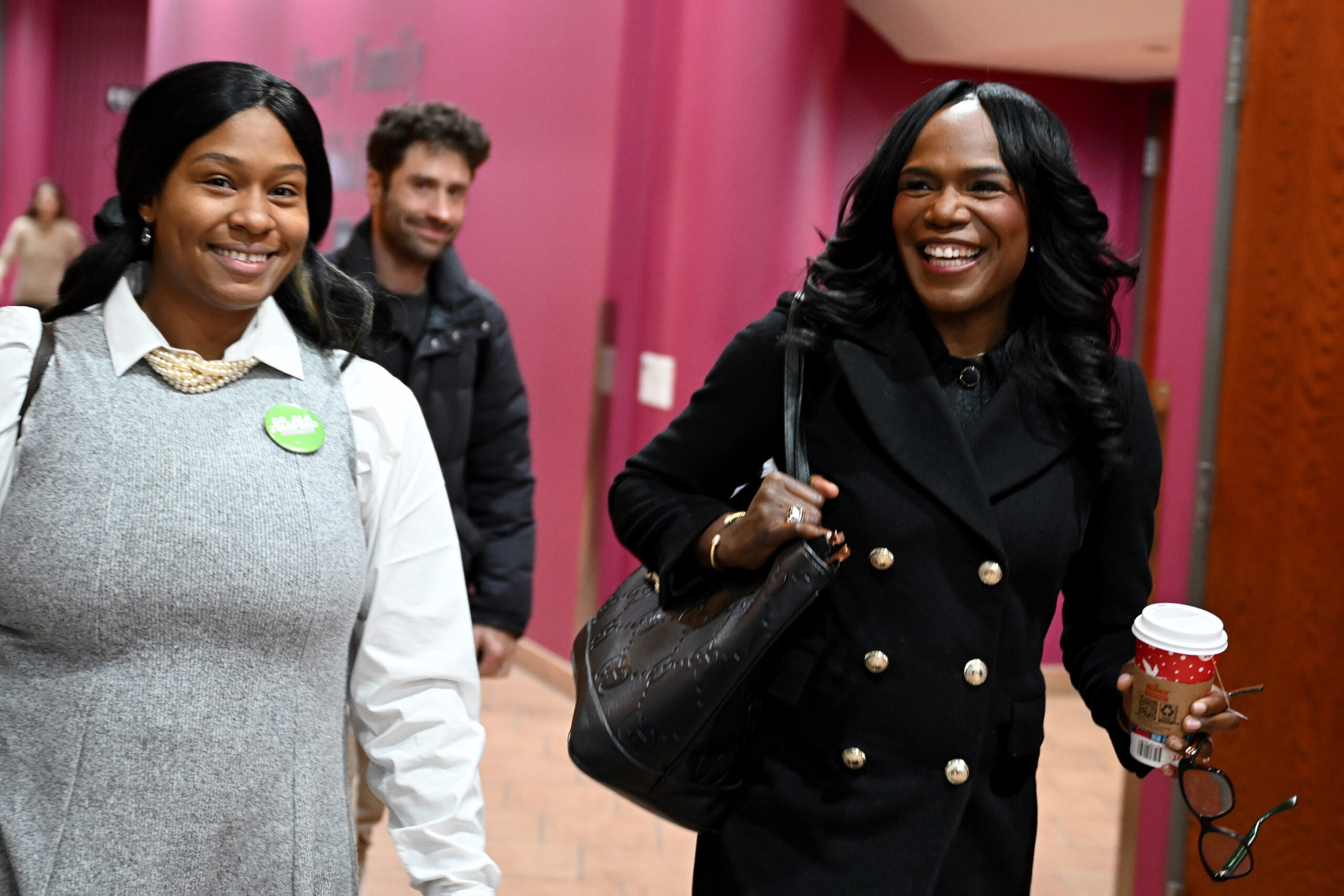
Candidates (from left) State Rep. Morgan Cephas; physician David Oxman; State Rep. Chris Rabb; physician Ala Stanford and State Sen. Sharif Street appear at a forum hosted by the 9th Ward Democratic Committee in Mt. Airy Thursday, Dec. 4, 2025.
Stanford alsohas a cadre of healthcare workers uplifting her. She has won endorsements from prominent doctors, as well as a national super PAC, 314 Action, which backs candidates with backgrounds in science and has poured $1.5 million into a pro-Stanford campaign.
The group so far funded five weeks of television commercials reminding voters that Stanford founded the Black Doctors COVID-19 Consortium. In the throes of the pandemic, she set up mobile testing sites in majority-Black communities and ran vaccination clinics to inoculate thousands of Philadelphians, a grassroots effort to fill gaps left by government-funded programs.
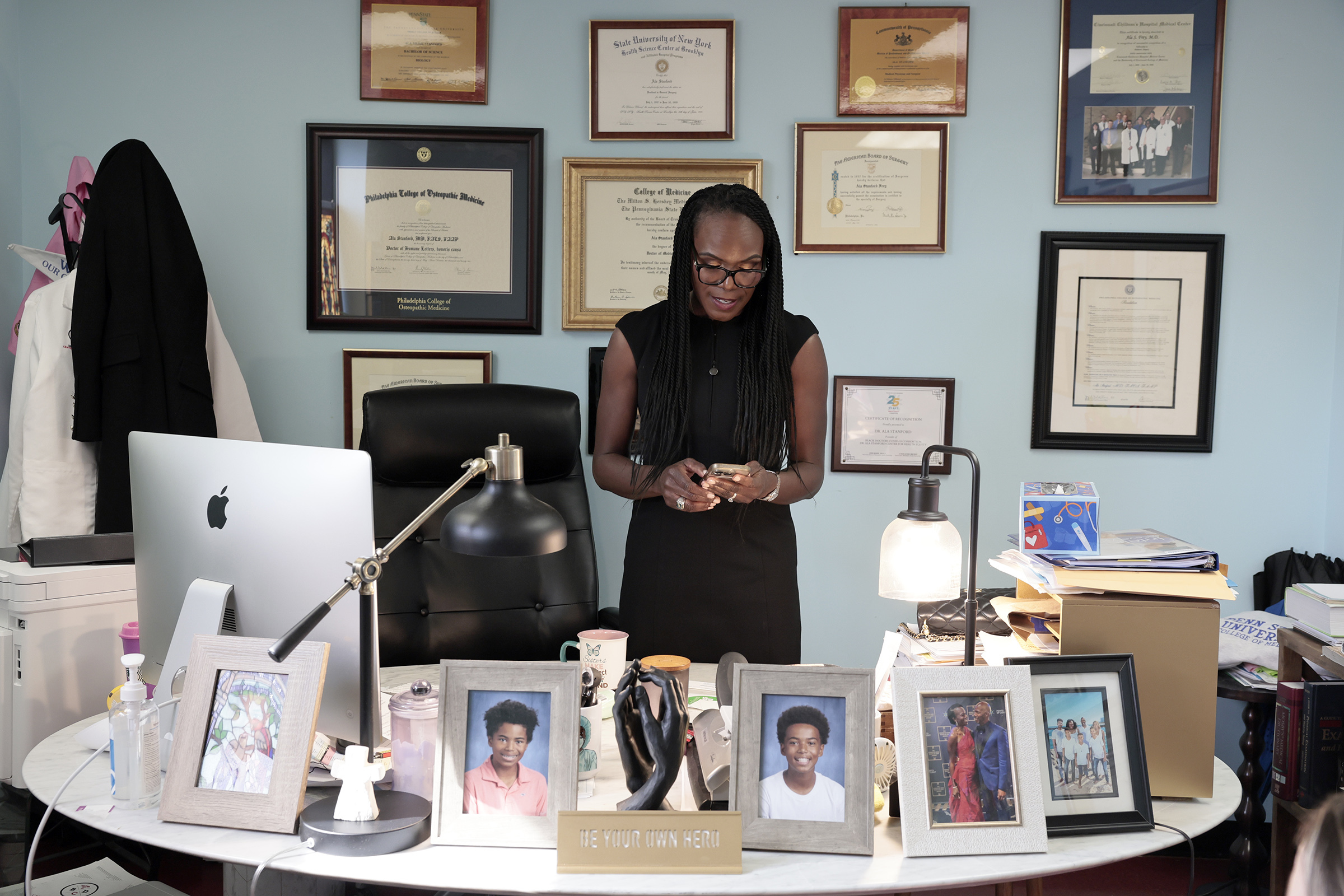
Ala Stanford texts her son while in her office at the Dr. Ala Stanford Center for Health Equity, 2001 W Lehigh Ave. in Philadelphia on Friday, March 13, 2026
It is a compelling story that has been told many times — across national media, on podcasts, and in Stanford’s own memoir.
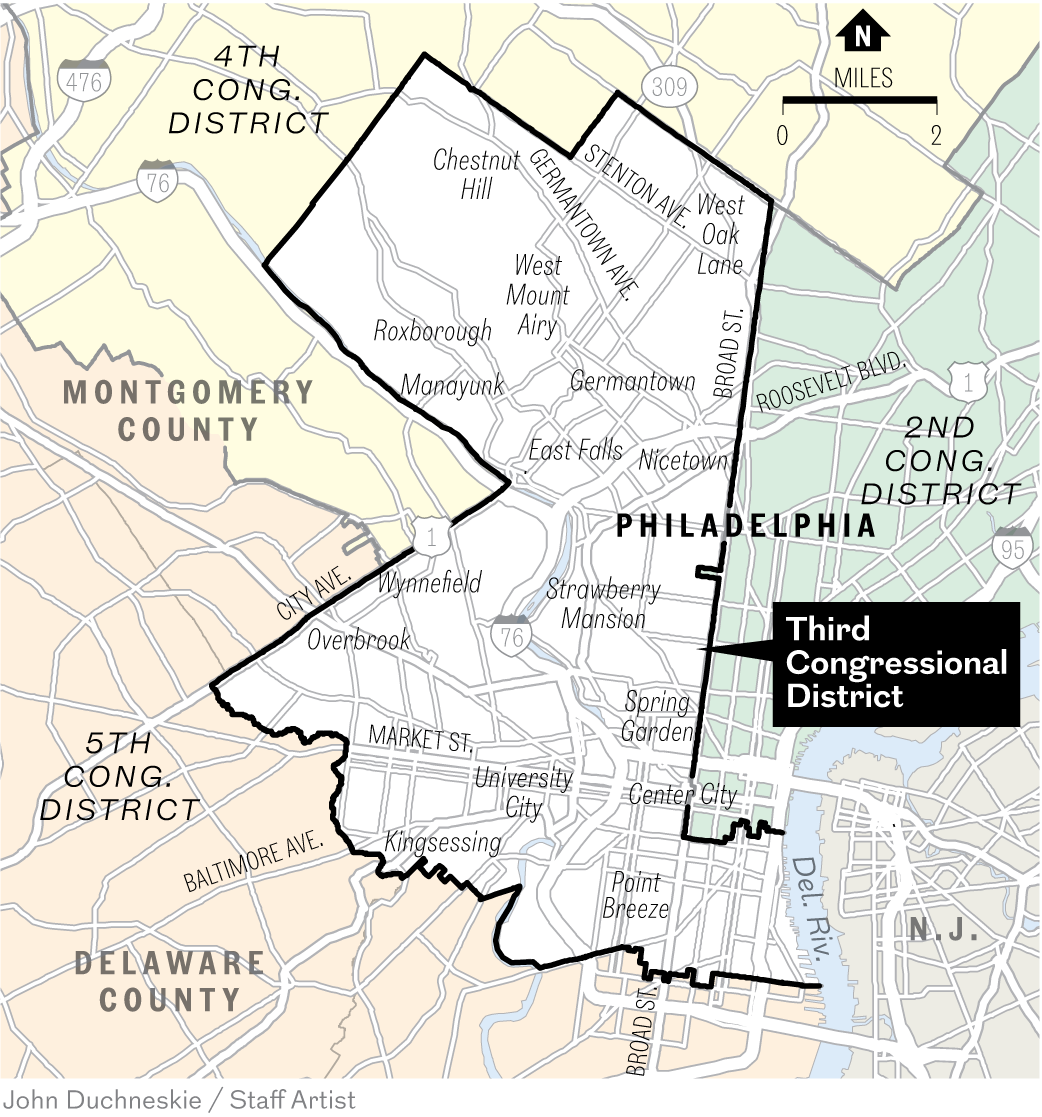
What hasn’t been told is why it means she should represent the 3rd Congressional District, which covers much of Philadelphia, over her opponents who have spent years in politics.
“People get so comfortable doing things the same way, the same way, the same way,” she said in a recent interview at her health clinic. “And no one likes change. But the city needs this. The city needs some change.”
Other candidates say Stanford doesn’t have a monopoly on talking about healthcare. State Sen. Sharif Street, another front-runner in the race, has touted that he and other government officials helped secure funding for Stanford’s pandemic operation.
“During COVID, he was very proud of his work,” Street spokesperson Anthony Campisi said, “to ensure that Doctor Stanford’s vaccination efforts received the support they needed so that we could get vaccines into arms quickly.”
Stanford’s opponents also clearly know that her status as a physician may be an asset.
She submitted paperwork to appear on the ballot as “Dr. Ala Stanford.” But on Tuesday, a member of the Democratic City Committee — which endorsed Street — filed a petition in state court, saying Stanford’s name should appear without the “Dr.” in front of it.
In the coming days, a judge will decide.
Leaning on healthcare as a core issue
Stanford does not fit neatly onto the ideological spectrum.
Of course, she is not conservative. She doesn’t call President Donald Trump by his name — he’s “47″ — and she uses words like “tyranny” and “running amok” to describe the current White House.
But unlike some of her opponents, she is not of the Philadelphia Democratic establishment. She said she feels like the city’s long-entrenched party apparatus had always planned to endorse Street, the former head of the state party and the son of a Philadelphia mayor.
Stanford is also not of the populist left. She believes Palestinians “deserve to have safety and freedom,” but thinks it’s inflammatory when her progressive opponent, State Rep. Chris Rabb, calls Israel’s war in Gaza a “genocide.”
“I know when you use the G-word how hurtful it is to a group of people,” she said. “It’s like someone saying the N-word around me. I don’t want to hear that. And every time you shout that from the rooftops, how many people are you hurting?”
What she does believe is that government systems have failed underserved communities, and that most domestic issues can be traced back to inequities in healthcare — points she has consistently emphasized in her campaign.
Physician Ala Stanford (right) arrives at a forum hosted by the 9th Ward Democratic Committee Dec. 4, 2025. She is a Democratic candidate running to represent Philadelphia’s 3rd Congressional District.
She has hammered Republicans for not extending pandemic-era subsidies that ensured people on Affordable Care Act health plans did not pay more than 8.5% of their income for care. She has advocated for universal healthcare. And she has harshly criticized Health and Human Services Secretary Robert F. Kennedy Jr., who has long been skeptical of vaccines.
“In this country, wealth is linked to homeownership, home ownership is linked to education, education is linked to health outcomes, and health outcomes are all exacerbated by racial injustice,” Stanford said during a recent candidates forum. “So when you talk about one, you talk about all.”
Stanford is careful to say that her focus on healthcare doesn’t mean she can’t discuss housing, immigration, or the war in Iran.
But it is clear that she feels most comfortable talking about what she knows best. Her supporters say that’s an asset in the 3rd Congressional District, which has a disproportionately high number of people who rely on public healthcare systems.
More than a third of the district’s residents, or more than 284,000 people, were on Medicaid as of December, according to the state Department of Human Services. Among Pennsylvania congressional districts, that’s the second-highest proportion of residents on Medicaid. (The first highest is the 2nd Congressional District, which also includes parts of Philadelphia.)
There were also more than 80,000 people in the district who last yearhad health coverage under the Affordable Care Act, either through expanded Medicaid eligibility or a plan they purchased through the marketplace.
That number is also likely lower now since ACA subsidies expired this year and premiums rose. Statewide, one in five people who bought plans last year from Pennsylvania’s marketplace, Pennie, opted out for 2026.
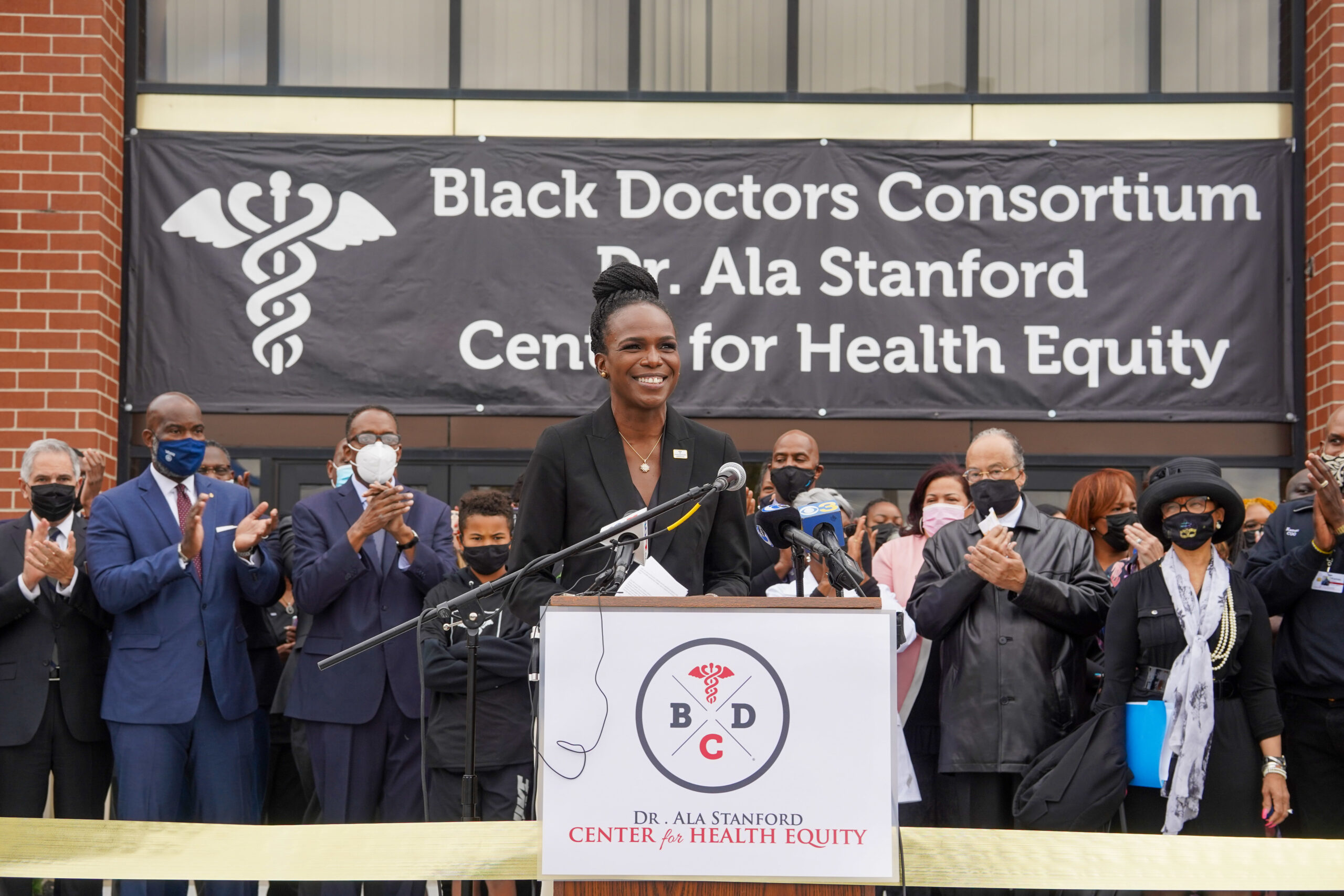
Ala Stanford speaks at the Black Doctors Consortium Dr. Ala Stanford Center for Health Equity in Philadelphia, Pa., on October 27, 2021. The center was opened with the goal of making healthcare accessible for those in communities who might struggle to get proper healthcare treatment.
Stanford’s supporters think Philadelphia voters will trust a doctor to ensure affordable healthcare access. They point to a survey released this month by the Annenberg Policy Center at the University of Pennsylvania that found 86% of respondents said their primary healthcare provider is trustworthy.
Erik Polyak, the executive director of 314 Action, said Stanford’s background differentiates her in a Democratic primary in which most candidates align on key issues.
“Voters want healthcare decisions made by people who understand patients and the science,” he said, “and not politicians chasing headlines.”
Oxman, Stanford’s now-former opponent, said physicians running for office can help rebuild a Democratic Party that has “lost the trust of so many people.”
“So many people see us as not centered on their needs, particularly their economic needs,” he said. “If the Democrats are going to build a party that has a chance of winning in Center City Philadelphia and in central Pennsylvania, it’s got to regain the trust of the voters.”
New to politics, but not government
It was the spring of 2020, and the bills were piling up.
Stanford, who was born in Germantown, had given up her well-paying day job as a surgeon to work full-time with the Black Doctors Consortium. She ran COVID-19 testing clinics in Philly parking lots and churches, and amassed some $200,000 in bills, saying she couldn’t “let one person lose their life for a test that costs $100.”
That was the beginning of her pandemic experience with government.
A lot of it was begging. As Stanford tells it, she peppered government officials with emails, telling them how many people she and her volunteers had tested that day, and asking for help securing funding.
In this April 2020 file photo, Ala Stanford puts on her mask before running a coronavirus (COVID-19) testing site at the Miller Memorial Baptist Church in Philadelphia.
U.S. Rep. Dwight Evans was immediately responsive. He connected Stanford with the White House, other members of Congress, and top insurance companies. And he publicly called on former Gov. Tom Wolf and then-Mayor Jim Kenney to allocate funding to Stanford’s organization, citing the group’s outreach to predominately Black communities and its work to address distrust of medical institutions.
The money came in several months later. It was finally enough for Stanford to pay for testing, compensate her staff, and prepare to vaccinate thousands of Philadelphians.
Fast-forward five years, and Evans has endorsed Stanford to replace him in Congress as he retires after decades of public service. His backing has been invaluable to Stanford, and it surprised some political observers who figured he might endorse one of the politicians whom he’d served alongside.
Stanford said Evans’ support has not convinced some Democratic voters. Some tell her they plan to vote for Street, citing his family name, or they say that “it’s his turn now.”
“What about if he is not what’s best for the people?” Stanford said. “Doesn’t that factor in?”
She tells voters that despite being new to the campaign trail, she isn’t new to government. She worked as a regional director for the Department of Health and Human Services under former President Joe Biden, who appointed her to the role. And she leads medical services at the Riverview Wellness Village, the city-owned drug recovery center opened last year by Mayor Cherelle L. Parker’s administration.
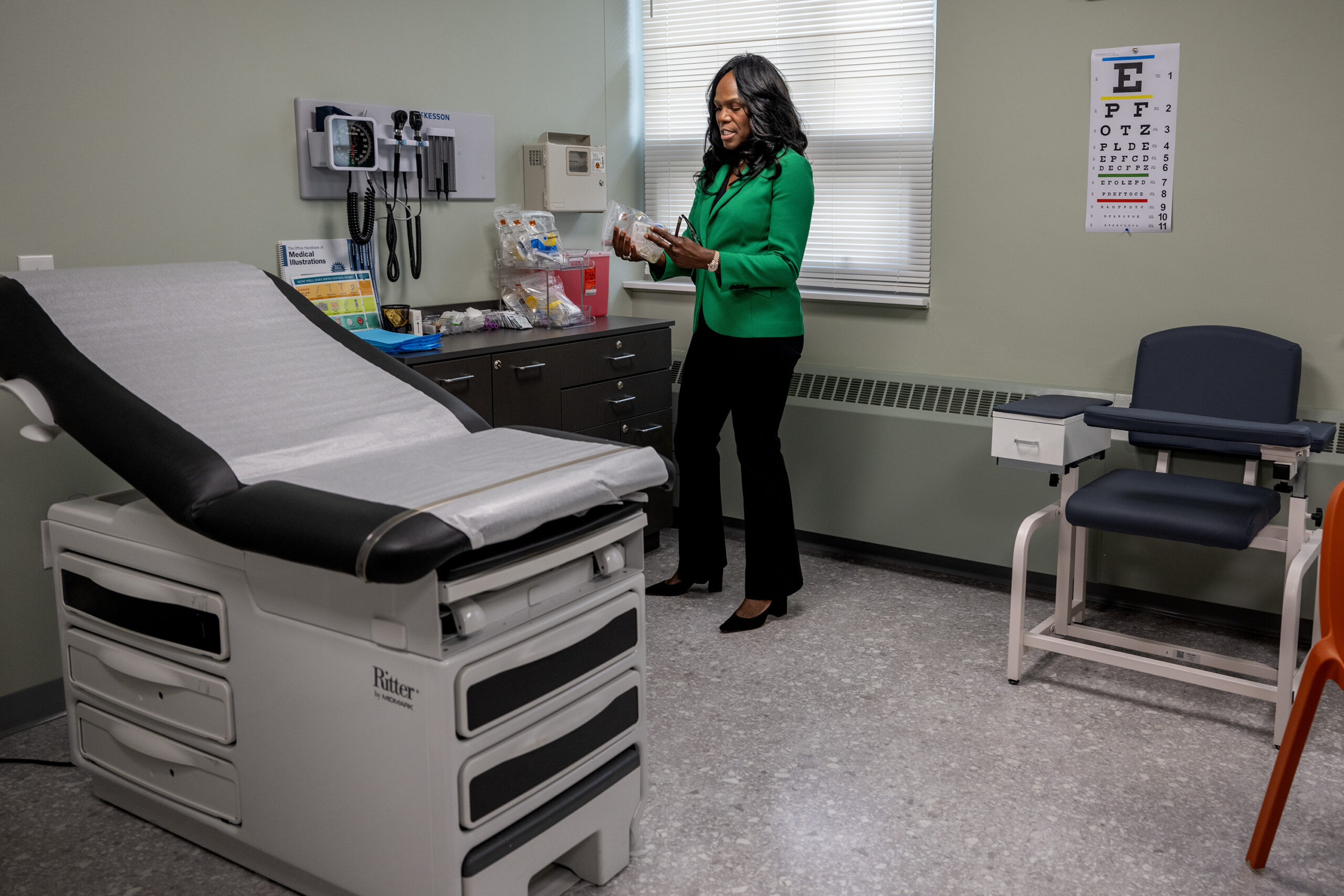
Physician Ala Stanford in an examination room at the primary medical care center run by her Black Doctors Consortium at Riverview Wellness Village, a city-owned drug recovery home in Northeast Philadelphia Tuesday, Nov. 25, 2025.
Still, Stanford very much sees herself as a doctor.
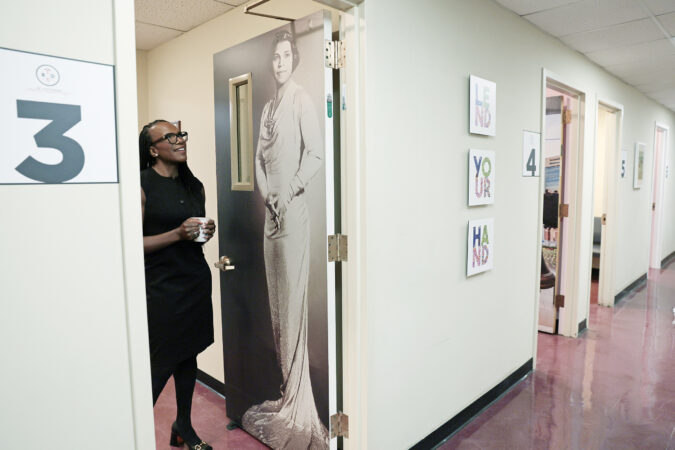
She often works out of a corner office in the North Philadelphia health center, and she still is alerted when the temperature of the vaccine refrigerator dips a degree too low. She has, on more than one occasion, tended to someone experiencing a medical emergency while she was campaigning.
She knows that overseeing day-to-day operations at the health clinic won’t be possible if she’s in Congress. There’s a succession plan in place.
“It’s just about, how can I have more significance at a larger scale? Congress is definitely a way to do it, but it might be somewhere else,” Stanford said. “That is, if I don’t win. But I want to win. I should win.”
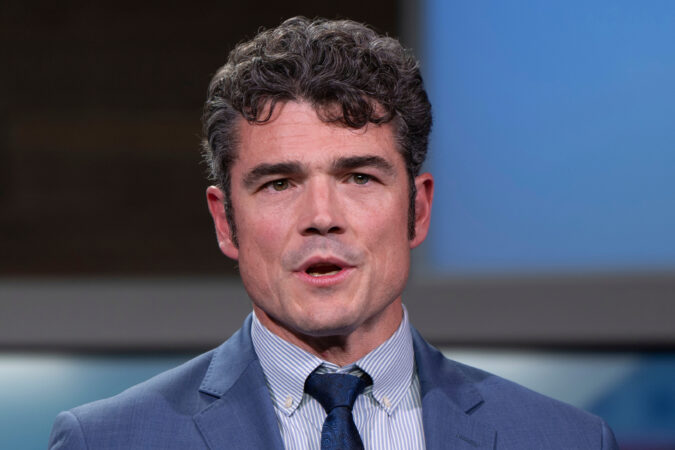
WASHINGTON — Joe Kent, the director of the National Counterterrorism Center, announced his resignation on Tuesday, saying he “cannot in good conscience” back the Trump administration’s war in Iran.
Kent said on social media Iran “posed no imminent threat to our nation, and it is clear that we started this war due to pressure from Israel and its powerful American lobby.”
There was no immediate comment from the White House.
Kent, a former political candidate with connections to right-wing extremists, was confirmed to his post last July on a 52-44 vote. As head of the National Counterterrorism Center, he was in charge of an agency tasked with analyzing and detecting terrorist threats.
Before entering President Donald Trump’s administration, Kent ran two unsuccessful campaigns for Congress in Washington state. He also served in the military, seeing 11 deployments as a Green Beret, followed by work at the CIA.
Democrats strongly opposed Kent’s confirmation, pointing to his past ties to far-right figures and conspiracy theories. During his 2022 congressional campaign, Kent paid Graham Jorgensen, a member of the far-right military group the Proud Boys, for consulting work. He also worked closely with Joey Gibson, the founder of the Christian nationalist group Patriot Prayer, and attracted support from a variety of far-right figures.
During his Senate confirmation hearing, Kent also refused to distance himself from a conspiracy theory that federal agents instigated the Jan. 6, 2021, attack at the Capitol, as well as false claims that Trump, a Republican, won the 2020 election over Democrat Joe Biden.
Still, Republicans praised Kent’s counterterrorism qualifications, pointing to his military and intelligence experience.
Sen. Tom Cotton, the GOP chair of the intelligence committee, said in a floor speech that Kent had “dedicated his career to fighting terrorism and keeping Americans safe.”