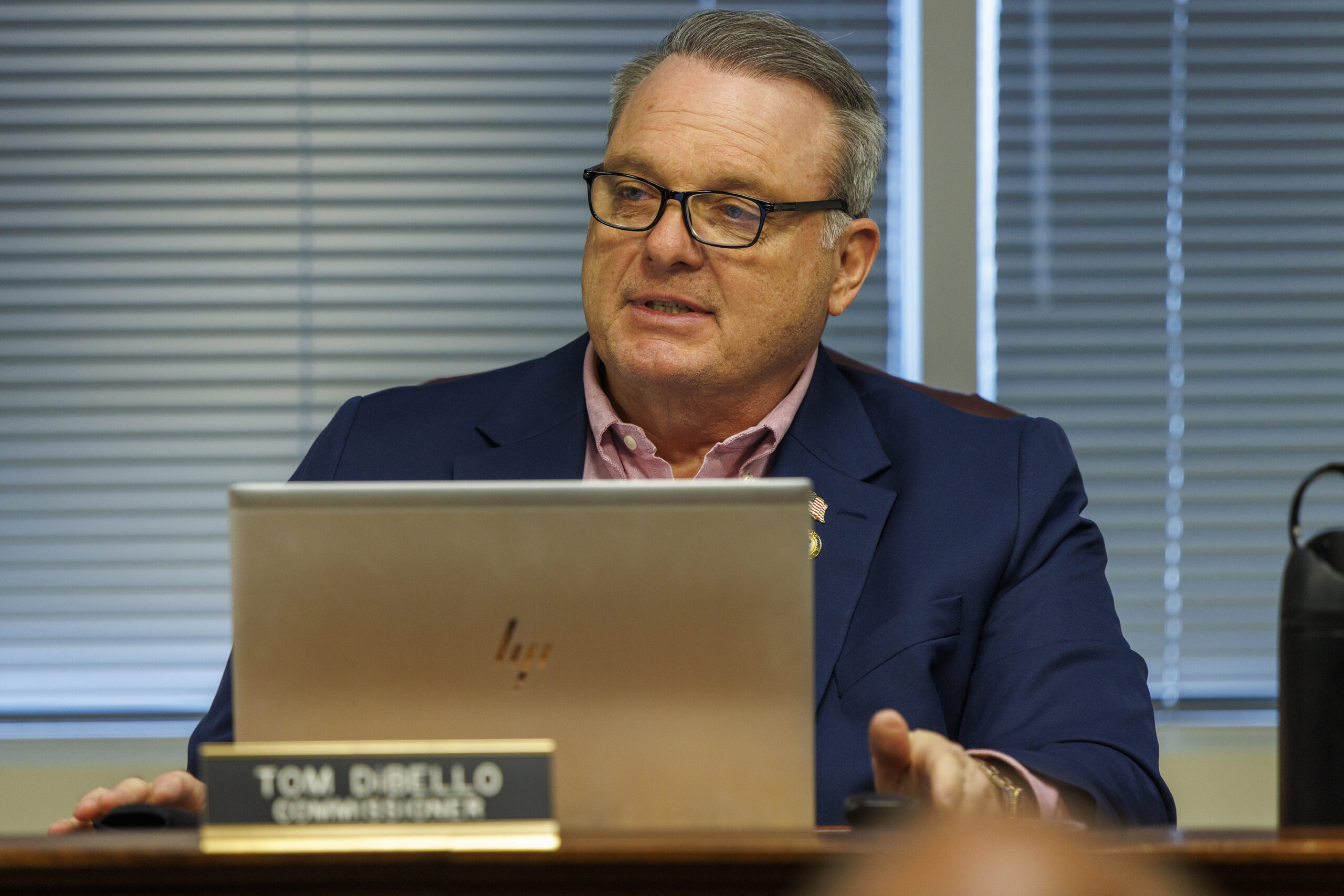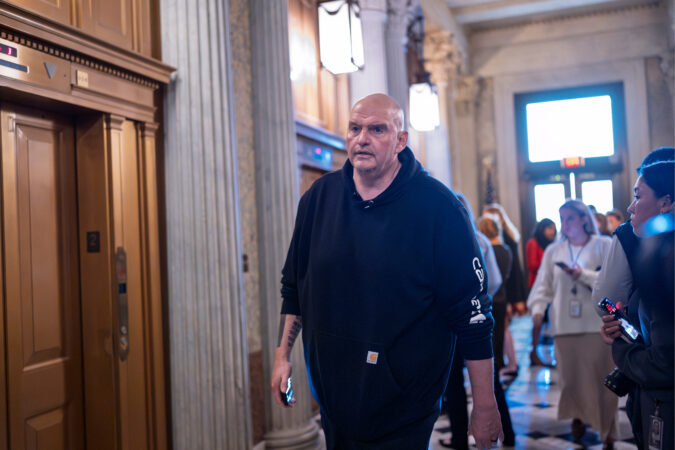
Category: Politics

Political news and coverage

  • John Fetterman is already backing Donald Trump’s pick to replace Kristi Noem as DHS secretary

    John Fetterman is already backing Donald Trump’s pick to replace Kristi Noem as DHS secretary

    U.S. Sen. John Fetterman promised to back President Donald Trump’s pick to succeed Kristi Noem within minutes of her abrupt firing as secretary of homeland security.

    Trump has tapped U.S. Sen. Markwayne Mullin (R., Okla.) to lead the Department of Homeland Security, which oversees Immigration and Customs Enforcement, the Border Patrol, and the two agencies’ increasingly unpopular operations in carrying out Trump’s deportation agenda.

    Mullin’s nomination must be confirmed by the Senate.

    “I’m not sure how many fellow Democrats will vote to support our colleague [Sen. Mullin] as the next DHS Secretary, but I am AYE,” Fetterman said in a post on X, which also noted his membership on the committee that oversees the department.

    Mullin and Fetterman (D., Pa.) were both elected to the Senate in 2022. The Oklahoma Republican had served in the U.S. House for a decade before joining the upper chamber. Mullin told reporters he had already received a text message from Fetterman after Trump’s announcement.

    “You guys know John and I are friends. … We’re going to try to earn everybody’s vote,” Mullin said when asked whether other Democrats would vote for him.

    The sudden change in leadership at DHS follows growing outrage over ICE’s tactics and questions about Noem’s leadership, both of which escalated nationally after federal agents shot and killed U.S. citizens Renee Nicole Good and Alex Pretti in January in Minneapolis.
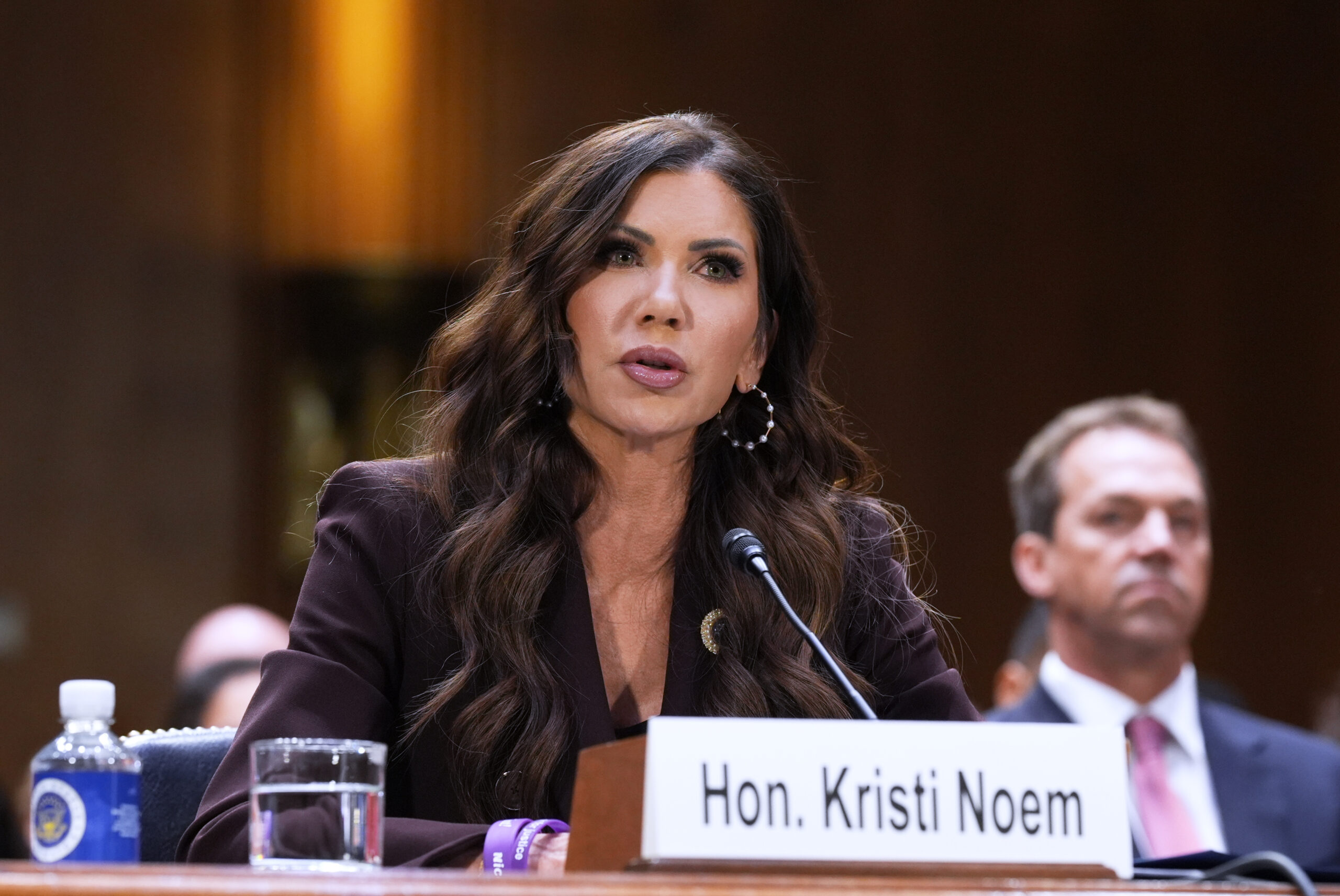
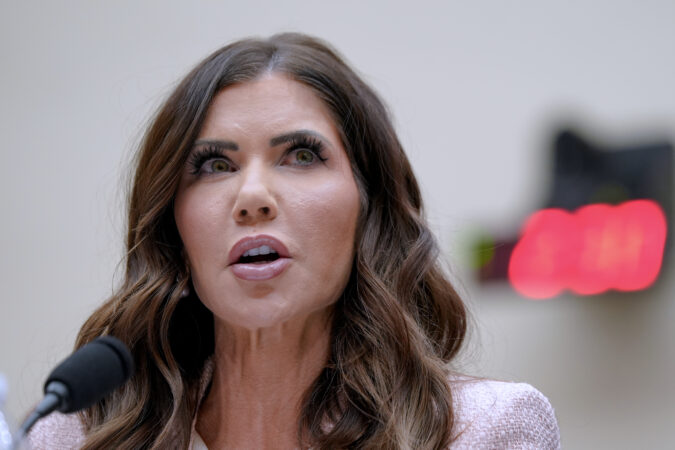
    Homeland Security Secretary Kristi Noem appears for an oversight hearing before the Senate Judiciary Committee, at the Capitol in Washington, March 3, 2026.

    Immigration has gone from one of Trump’s strongest polling issues to a potential drag on his party in the forthcoming midterms. More than half of Pennsylvania voters disapprove of ICE’s enforcement methods, according to a poll from Franklin and Marshall College released Thursday.

    Fetterman and other senators who had voted for Noem’s confirmation called for her to be fired after Pretti’s killing. She also faced criticism from both sides of the aisle at a recent oversight hearing before the Senate that examined a controversial $220 million ad campaign she approved, among other topics.

    “Americans have died,“ Fetterman said in a direct plea to Trump in January. ”She is betraying DHS’s core mission and trashing your border security legacy.”

    U.S. Sen. Dave McCormick (R., Pa.) said on Thursday that he supports Mullin’s nomination.

    It is unclear whether other Democratic senators will give the green light to Mullin’s nomination, but many on Thursday were quick to celebrate Noem’s departure as she transitions into a newly created role in the Trump administration called “the Special Envoy for the Shield of the Americas.”
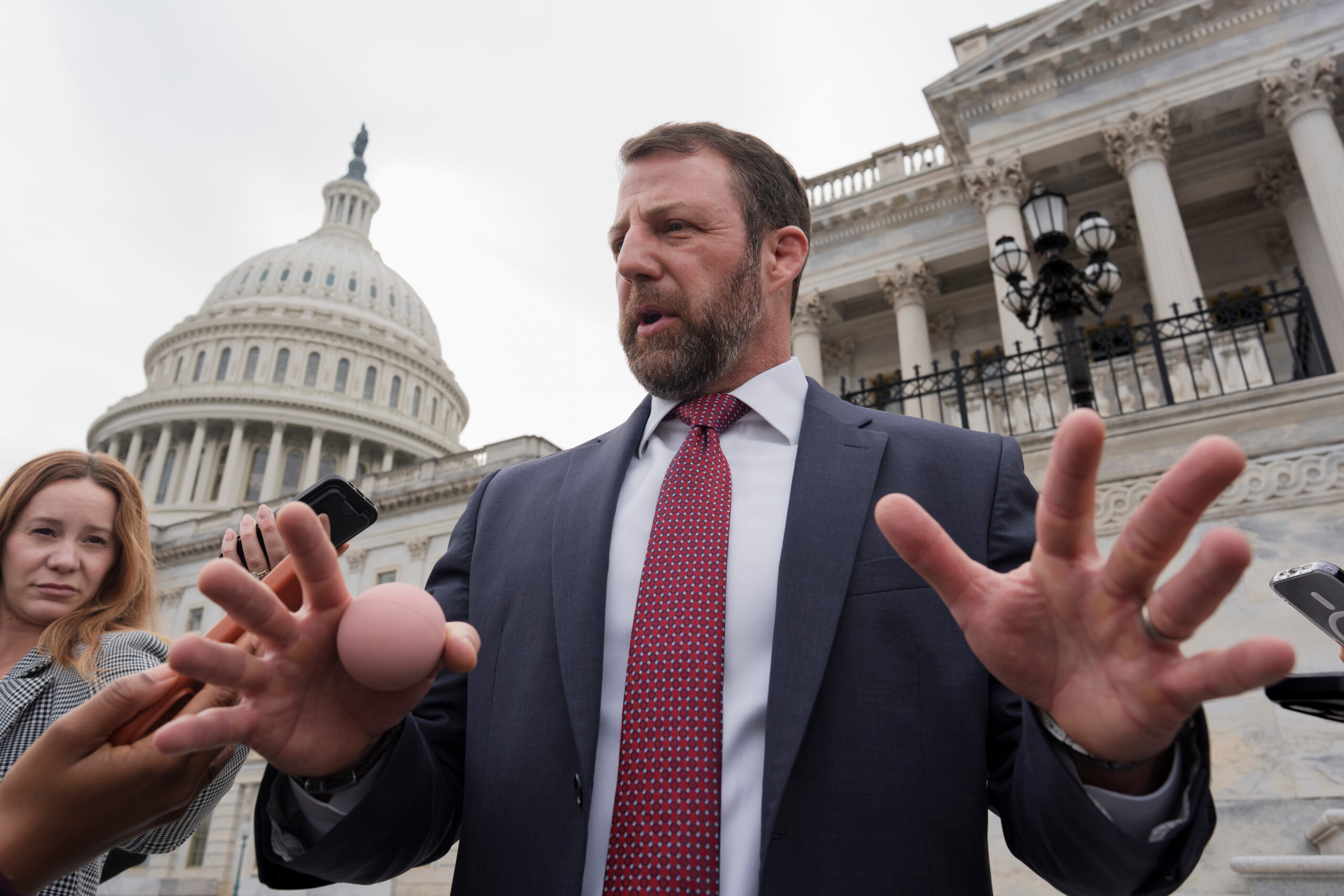
    Sen. Markwayne Mullin, R-Okla., speaks with reporters on the steps at the Capitol in Washington, Thursday, March 5, 2026.

    U.S. Sen. Andy Kim (D., N.J.), who also voted for Noem’s confirmation in January 2025 before calling for her to be fired a year later, said Thursday on X that her firing “Will be the most popular decision of [Trump’s] presidency.”

    But he cautioned that Noem’s termination is “only the start of getting rid of the deep rot of corruption in the Trump administration,” and that other officials, including Trump adviser Stephen Miller and Tom Homan, the border czar, should be held accountable for immigration agents’ conduct.

    The leadership change comes as Pennsylvania and New Jersey officials are pushing back on DHS’s plans to convert warehouses in the states into detention centers.

    Kim and U.S. Sen. Cory Booker (D., N.J.) have offered legislation to prohibit such moves and Gov. Josh Shapiro has floated possible legal action over DHS’s purchase of two warehouses in Pennsylvania.

    Democratic House members from the region echoed Kim’s sentiment that more change is needed than just the leadership of the department.

    Lawmakers are still debating future funding for DHS, with Democrats demanding reforms to immigration enforcement before they will approve more money for the department.

    “Change the lousy policies, not just the person,” U.S. Rep. Dwight Evans (D., Philadelphia) wrote on X.

    “We still need real accountability at DHS, including meaningful reforms to ICE so agents are not terrorizing Americans,” U.S. Rep. Brendan Boyle (D., Philadelphia) said on X.

    Boyle criticized Fetterman for immediately pledging to support Mullin, saying in another post that the Pennsylvania senator is “Trump’s favorite Democrat for a good reason.“

    U.S. Rep. Chrissy Houlahan (D., Chester) congratulated Trump in a statement Thursday for “taking this long overdue action” in firing Noem.

    “I sincerely hope Mr. Mullin or whomever is eventually confirmed will be prepared to reform ICE and to work with the Congress to rein in its most destructive practices,” she said.

    U.S. Rep. Ryan Mackenzie (R., Lehigh), who represents a key swing district, said he looks forward to “seeing a greater emphasis on transparency” under Mullin.

    He stopped short of criticizing Noem and said in the last year DHS “made critical progress towards securing the border once and for all.”

    One of the reforms Democrats have called for is a prohibition on ICE agents wearing masks. U.S. Rep. Brian Fitzpatrick (R., Bucks), a former FBI agent, is one of the few Republicans supporting that proposal as a way to restore trust with the agency.

    His office underlined that a new leader should focus on rebuilding the department’s reputation with the American people.

    “The Department of Homeland Security carries one of the most important missions in government — protecting the American people. That mission requires the public’s trust, and Congressman Fitzpatrick believes a leadership change was needed to help restore confidence in the department,” Fitzpatrick spokesperson Casey-Lee Waldron said in a statement.

    “He hopes Senator Mullin will work to rebuild that trust and strengthen DHS moving forward.”

  • Trump allies expand role in planning America’s 250th anniversary

    Trump allies expand role in planning America’s 250th anniversary

    Two groups — one with the imprimatur of Congress, the other with President Donald Trump’s blessing — are jockeying to host celebrations marking America’s 250th anniversary, sparking confusion, muddled messages, and new scrutiny from Democrats who ask why the Trump-aligned group is receiving federal money.

    America250, led by a bipartisan board created by Congress a decade ago to mark the nation’s Semiquincentennial, has overseen events such as the Army’s 250th anniversary last year. It has also issued grants to state commissions and sponsored initiatives such as a float in this year’s Rose Parade.

    Freedom 250, a public-private partnership launched by the White House in December, has emerged as the more publicized and prolific group, with a flurry of high-profile announcements, including some from the Oval Office.

    “Freedom Trucks,” six customized semitrucks backed by $10 million in federal funds and with educational content crafted by conservative educators, have begun crisscrossing red states. A “Freedom Plane” took flight from Washington this week, beginning a National Archives-led nationwide tour in which the Boeing 737 will ferry an original engraving of the Declaration of Independence and other historic documents. The group is also planning a national prayer event on the National Mall, an IndyCar race around D.C., and a UFC fight hosted outside the White House on Trump’s birthday. The organization is led by Keith Krach, who served in the first Trump administration.

    Both groups are drawing on private funds for their programming, with sponsors such as Exiger, Oracle, and Palantir contributing to both organizations. The groups are also set to share in $150 million appropriated by Congress last year and managed by the Interior Department.

    The rapid rise of Freedom 250, with its Trump-tailored programming, has unnerved some liberals and watchdog organizations, who question whether it is wrongly tapping into funds intended for nationwide anniversary celebrations and promising access to the president at a price. Twelve Senate Democrats on Tuesday pressed the Interior Department to provide a “clear accounting” of money routed to Freedom 250, in a letter sent to the Trump administration and shared with the Washington Post.

    “The Trump administration’s latest venture, Freedom 250, continues to raise serious and troubling questions about whether access to the president or official government events is for sale to the highest bidders,” Sen. Adam Schiff (D., Calif.), who led the letter, said in a statement to the Post. “And if the administration is commingling taxpayer dollars with other funds in an unaccountable private entity run by the president’s allies, it is an open invitation for corruption. We need answers.”

    Public Citizen, a consumer advocacy organization, also has called for congressional investigations, citing a recent New York Times report that donors to Freedom 250 were offered access to Trump if they gave $1 million or more.

    Freedom 250 spokeswoman Rachel Reisner referred questions about its federal funding to the Interior Department. Trump “is deeply grateful for the support of his donors, but unlike the politicians of the past, he can’t be bought,” she said in a statement.

    She added that the organization has reached out to all 50 governors and partnered with a range of organizations, including PragerU and MyAmerica2026.

    “As we approach this historic milestone in our nation’s founding, we will not be deterred by any partisan outrage or political theater,” Reisner said.

    The Trump administration also has touted its approach, and Trump has repeatedly celebrated that he will be the president to oversee the nation’s 250th anniversary — an idea he embraced on the campaign trail.

    Asked about its plans to distribute the $150 million provided by Congress and what share would go toward Freedom 250, the Interior Department declined to comment.

    “The Department of the Interior looks forward to celebrating Freedom 250 and saluting 250 years of American greatness alongside President Donald J. Trump — the most iconic and accomplished President in the history of our great nation,” the department said in a statement.

    America250 and Freedom 250 have publicly touted their shared commitment to the nation’s Semiquincentennial.

    Rosie Rios, the Democrat leading America 250, has repeatedly praised her counterparts in interviews and statements, saying that Freedom 250 will focus on Washington-area events while her group tackles nationwide programming.

    The bipartisan commission “has taken every possible step” to support the Trump administration’s activities, the group said in its report to Congress in January.

    But the tensions between the organizations have grown, according to five people who spoke on the condition of anonymity to describe private conversations. Freedom 250 officials have bristled at the pace of America250’s work and output, and argued that the bipartisan group has been overly bureaucratic and politically correct. They also argue that America250 — which has received more than $100 million in federal funding since 2019 — has little to show for those contributions.

    In comparison, one person familiar with the matter said, Freedom 250 drew on $3 million in federal funds last year to quickly produce a New Year’s Eve light display on the Washington Monument.

    America250 said in a statement that it continues to actively collaborate with the White House task force, Freedom 250 and the full executive branch to plan the celebrations.

    The group has been running a nationwide contest for students to submit perspectives on what America means to them and has been to eight states so far with a storytelling program on identity, service, community, and personal legacy.

    Meanwhile, America250 officials and allies have questioned whether the Trump-backed group is too focused on activities that please the president and say the group threatens to siphon money that could be used for nationwide activities. America250 has received $25 million of the $150 million apportioned by Congress last year for anniversary activities, according to a person familiar with its finances.

    The friction between the groups reached a breaking point in the planning for the Army’s 250th birthday last summer — a military parade in Washington that coincided with Trump’s birthday, said one person familiar with the plans. America250 wanted the celebration to focus on the military, not the president. Freedom 250 wanted Trump, as the commander in chief, to be front and center, the person said.

    Some programming has shifted between the two groups. America250 originally applied for and received a grant from the Institute of Museum and Library Services for the Freedom Trucks, mobile museums inspired by the American Freedom Train that crisscrossed the country from 1975-1976. The institute is a federal agency that provides financial support for museums and libraries. The $10 million grant was later voluntarily transferred to Freedom 250, according to an official of the agency.

    “These mobile museums, which tell the incredible story of our nation’s founding, will be a cherished memory for an entire generation,” Keith Sonderling, a Trump appointee who leads the museum and library agency, said in a statement.

    Marissa Streit, chief executive of PragerU, a conservative media organization, said her company volunteered to produce all video and educational content for the Freedom Trucks after White House officials came up with the vision and worked with Hillsdale College to develop the displays.

    Streit insisted that despite the uniformly conservative credentials of the people involved, the exhibits showed a balanced view of history.

    “I believe we need to teach and talk about both the negative things that have happened in our country as well as the positive,” she said.

    The tensions are a departure from the approach taken during the bicentennial under President Gerald Ford, who sought to make sure the celebrations did not raise questions of impropriety in the wake of the Watergate scandal, said Richard Painter, the chief White House ethics lawyer in the George W. Bush administration.

    “The one thing our taxpayer funds should not be used for is politicizing the 250th anniversary of the founding of the country,” said Painter, co-author of The U.S. Presidency: Power, Responsibility, and Accountability. “One of the things [the founders] were most afraid of is faction and political parties destroying our democracy. The celebrations here shouldn’t be owned by one political party or another.”

  • Trump says he’s replacing Homeland Security Secretary Noem with GOP Sen. Markwayne Mullin

    Trump says he’s replacing Homeland Security Secretary Noem with GOP Sen. Markwayne Mullin

    WASHINGTON — President Donald Trump on Thursday fired his embattled Homeland Security Secretary Kristi Noem, after mounting criticism over her leadership of the department, including the handling of the administration’s immigration crackdown and disaster response.

    Trump, who said he would nominate Oklahoma Republican Sen. Markwayne Mullin in her place, made the announcement on social media after Noem faced a two-day grilling on Capitol Hill this week from GOP members as well as Democrats.

    Noem’s departure marks a stunning turnaround for a close ally to the president who was tasked with steering his centerpiece policy of mass deportations. But she appeared to increasingly become a liability for Trump, with questions arising over her spending at her department and over her conduct in the aftermath of the shooting deaths of two protesters in Minneapolis earlier this year.

    Trump said Noem “has served us well, and has had numerous and spectacular results (especially on the Border!).” He said he was making her a “Special Envoy for The Shield of the Americas,” a new security initiative that he said would focus on the Western Hemisphere.

    Noem, who appeared at a law enforcement event in Nashville, moments after Trump’s announcement, did not address her ouster there. She read from prepared remarks and was not asked by attendees about the development.

    Later, in a social media post, she thanked Trump for the new appointment and touted her accomplishments as secretary.

    “We have made historic accomplishments at the Department of Homeland Security to make America safe again,” she wrote.

    White House press secretary Karoline Leavitt said the administration will work with the GOP-led Senate to get Mullin, whom she called “extraordinarily qualified,” confirmed to lead DHS “as soon as possible.”

    The administration’s immigration crackdown faced criticism, especially in Minnesota

    Noem is the first cabinet secretary to leave during Trump’s second term. Her tenure looked increasingly short-lived after hearings in Congress this week where she faced rare but blistering criticism from Republican lawmakers. One particular point of scrutiny was a $220 million ad campaign featuring Noem that encouraged people in the country illegally to leave voluntarily.

    Noem told lawmakers that Trump was aware of the campaign in advance, but Trump disputed that in an interview Thursday with Reuters, saying he did not sign off on the ad campaign.

    Noem has faced waves of criticism as she’s overseen Trump’s immigration crackdown, especially since the shooting deaths of the two protesters in Minneapolis at the hands of immigration enforcement officers. In the immediate aftermath of the deaths of Renee Good and Alex Pretti, Noem portrayed both of them as aggressors, contradicting widely viewed videos and descriptions of their deaths from bystanders. She declined to apologize for her description over two days of congressional testimony.

    The former South Dakota governor was also criticized over the way her department has spent billions of dollars allocated to it by Congress.

    Her department, DHS, has been at the center of a funding battle in Congress over immigration enforcement tactics and has been shut down for 20 days, although many of the employees are continuing to work, often without pay.

    Even before Noem’s appearance before key congressional committees this week, Republican lawmakers had been anticipating the secretary’s eventual ouster, particularly after her handling of the immigration enforcement crackdown in Minneapolis.

    As they tried to end the ongoing Homeland Security shutdown, Senate Republicans had noted privately to Democratic senators that Noem was likely on her way out and that that should prompt Democrats to move forward with agreeing to fund the department again, according to two people familiar with the discussions.

    Democrats did not see that as an actual concession by Republicans, considering Noem was becoming a political liability for the GOP, said the people, who spoke on condition of anonymity to discuss private negotiations.

    Aside from immigration, Noem also faced criticism — including from Republicans — over the pace of emergency funding approved through the Federal Emergency Management Agency and for the Trump administration’s response to disasters.

    Critics welcomed Noem’s departure. Minneapolis Mayor Jacob Frey wrote “good riddance” on social media, a sentiment echoed by Senate Democratic Leader Chuck Schumer.

    Some immigration activists questioned whether her departure would change the execution of an immigration agenda that they fundamentally disagree with.

    “This is not accountability, just a reshuffling of the enablers of the agenda of President Trump,” said Vanessa Cárdenas, executive director of America’s Voice, an advocacy group. She said Noem’s tenure was “marked by cruelty.”

    Gregory Bovino, a Border Patrol official who was elevated under Noem’s watch to lead immigration crackdowns in cities including Los Angeles, Chicago and Minneapolis, was one of the few who applauded Noem’s tenure.

    “She is the best Secretary I ever worked for, period. The others weren’t even close. Noem is the ultimate patriot,” Bovino told the Associated Press.

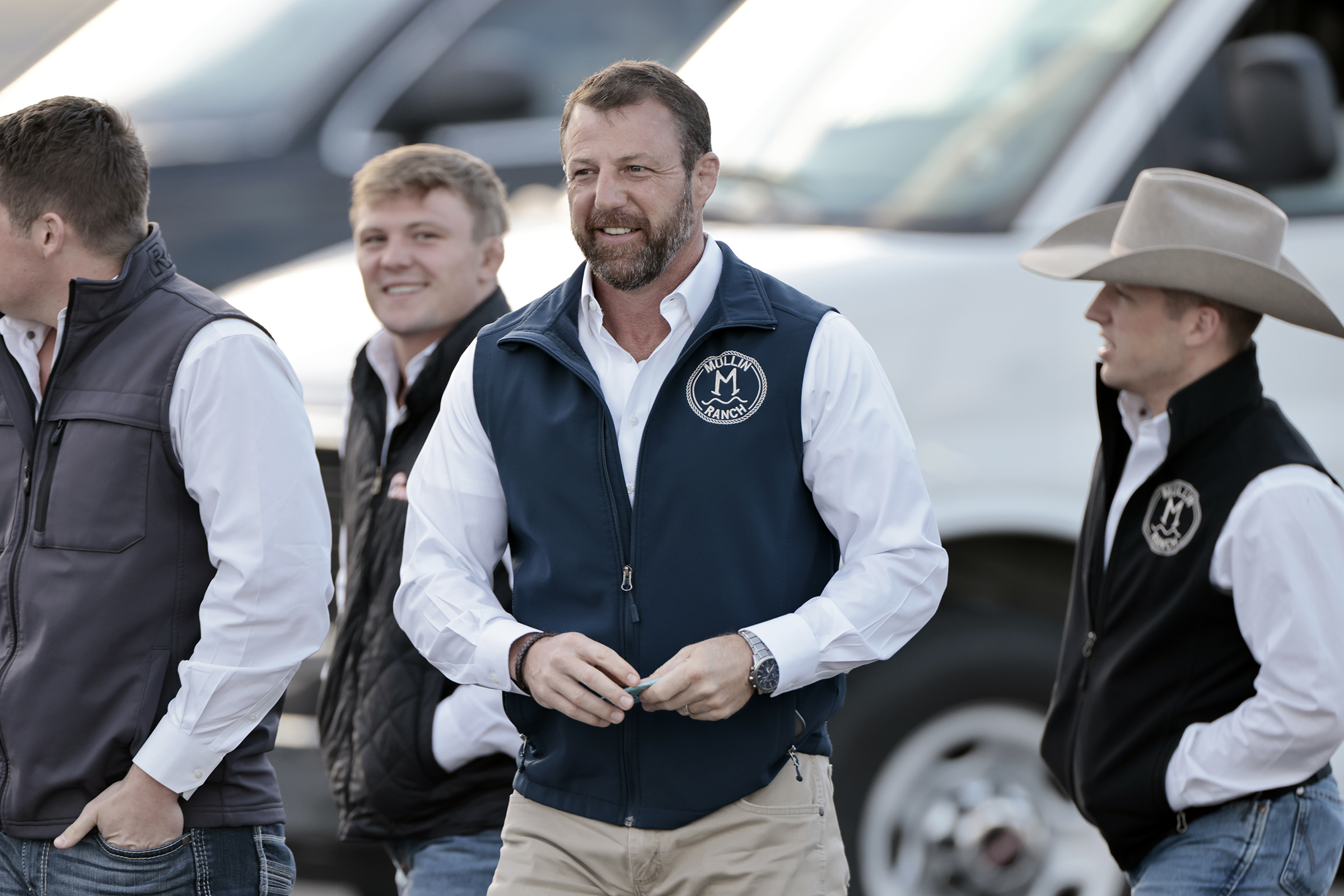
    Sen. Markwayne Mullin (center) arrives at Philadelphia International Airport to attend the NCAA Division 1 men’s wrestling championships at the Wells Fargo Center on March 22, 2025.

    DHS leadership changes come at a pivotal time

    Mullin would need to be confirmed by the Senate, but under a federal law governing executive branch vacancies, he would be allowed to serve as an acting Homeland Security secretary as long as his nomination is formally pending.

    Voting in the Senate just after Trump’s announcement, Mullin said he has “no idea” how quickly his nomination will move.

    “The president and I are good friends. So we look forward to working closer with the White House, and obviously I’m gonna be over there a lot more,” he said.

    Mullin would take over the third-largest department in government that has responsibility for carrying out Trump’s hard-line immigration agenda. And he would assume the role at a pivotal time for that agenda.

    Immigration enforcement during the first year of Trump’s administration was largely defined by high-profile, made-for-social-media operations with flashy names, often led by Bovino, who reported directly to Noem. Noem herself often went out on those operations, riding along with officers when they went out to make arrests.

    But those high-profile operations in places like Los Angeles, Chicago and Minneapolis often led to clashes with activists and protesters that were captured on video and drove opposition to the president’s immigration agenda.

    That culminated with the shooting deaths in Minneapolis after which Trump shuffled leadership of the operation. The number of officers there was drawn down shortly after.

  • Homeland Security funding bill falters again in Senate as Republicans warn of Iran risk

    Homeland Security funding bill falters again in Senate as Republicans warn of Iran risk

    WASHINGTON — Republicans invoked the war in Iran and the prospect of retaliatory terrorist attacks as they made another unsuccessful effort Thursday to pass a bill funding the Department of Homeland Security.

    Democrats are insisting on changes to immigration enforcement operations as part of the measure and blocked it from advancing. The procedural vote was 51-45, falling well short of the 60 that Republicans needed to proceed with the measure. While the House will also take up the bill Thursday, that outcome will be more about putting lawmakers on the record about where they stand.

    In the end, a bipartisan compromise will have to be reached to end a DHS shutdown that began Feb. 14.

    The funding bill first passed the House back in January, but it has gone nowhere in the Senate as Democrats seek new restraints on immigration enforcement tactics following the killing of ICU nurse Alex Pretti by Border Patrol officers in Minneapolis.

    Republicans have called on Democrats to reconsider their vote in the wake of the conflict in Iran.

    Sen. John Barrasso, the No. 2 Republican in the Senate, said Democrats would bear responsibility for the next cyberattack that is missed or the next “lone wolf terrorist” who attacks in the U.S.

    “Blood will be on their hands,” Barrasso said on the Senate floor. “Because we don’t have a functioning Department of Homeland Security that is funded with people on the ground in every position receiving their paychecks.”

    It did not appear the GOP’s strategy had changed the position of Democratic lawmakers, though. They said they are prepared to fund most of the agencies at the department, just not Immigration and Customs Enforcement or Customs and Border Protection.

    “It’s the same lousy, rotten bill that does not put any guardrails or constraints on ICE or CBP after federal agents shot American citizens in the street,” Rep. Jim McGovern (D., Mass.) said.

    Moments before the vote, senators were getting word that President Donald Trump had just fired DHS Secretary Kristi Noem. The news did not change Democrats’ resolve to force operational changes within the department through the spending bill.

    “Good riddance,” said Senate Democratic leader Chuck Schumer. “But the problems at ICE transcend any one individual.”

    Workers are beginning to miss part of their paychecks

    Following the longest federal shutdown in the country’s history last year, Congress has completed work on 11 of this year’s 12 appropriations bills. Only the bill for Homeland Security remains outstanding.

    Republicans said the timing couldn’t be worse for a Homeland Security shutdown. While a large majority of the department’s employees are considered essential and continue to work, many will not receive a full paycheck this week.

    “Like Democrats’ first shutdown a few months ago, this shutdown is causing a lot of financial stress, uncertainty, and pain for hardworking Americans,” Senate Majority Leader John Thune said. “It’s also making it harder for those working to keep America safe.”

    Republicans said the prospect of an increase in unscheduled absences by the Transportation Security Administration’s agents could lead to longer wait times at the nation’s airports. Meanwhile, the Cybersecurity and Infrastructure Security Agency has canceled various assessments to determine vulnerabilities to critical infrastructure. And training for first responders conducted through the Federal Emergency Management Agency was canceled.

    Democrats are seeking several changes at the department that include prohibiting ICE enforcement operations at sensitive locations like schools and churches, allowing independent investigations into alleged wrongdoing, requiring warrants to be signed by judges before federal agents can forcibly enter private homes or other nonpublic spaces without consent, and requiring agents to wear identification and remove their masks.

    Republicans note that the bill does include a bipartisan provision directing more resources for de-escalation training and $20 million to outfit immigration enforcement agents with body-worn cameras.

    Little to show from negotiations

    The White House and congressional Democrats don’t appear to have made significant progress in recent weeks in resolving their differences after trading several offers.

    “Look, we’re still far apart, but we’re negotiating and exchanging paper back and forth,” Schumer said.

    The size of the divide appeared significant during Thursday’s debate on the Senate floor.

    Alabama Sen. Katie Britt said that through their actions, Democrats were “still the party of open borders, they are still the party of defund the police, now actually more than ever.”

    She and other Republicans also cited last weekend’s mass shooting in Austin, Texas, as an example of the dangerous threat environment that’s facing Americans following the attack on Iran.

    “We know this couldn’t come at a more dangerous time.,” Britt said.

    Sen. Patty Murray, the top Democrat on the Senate Appropriations Committee, said that Democrats were simply working to make sure federal immigration officials follow the same standards as other law enforcement officers.

    “We are not asking for the moon. We are asking for basic steps to protect Americans’ constitutional rights and their safety,” Murray said.

  • Pa. Gov. Josh Shapiro joins other states challenging Trump’s latest swing at global tariffs

    Pa. Gov. Josh Shapiro joins other states challenging Trump’s latest swing at global tariffs

    Pennsylvania Gov. Josh Shapiro joined Democratic leaders from nearly two dozen states in challenging President Donald Trump’s latest global tariffs.

    In a lawsuit filed Thursday, Shapiro and the other state leaders argue Trump’s plan to impose 15% tariffs, which comes after the U.S. Supreme Court blocked his last round of global tariffs, oversteps his powers.

    “The Supreme Court got it right — but instead of following the law, Trump decided to double down,” Shapiro said in a statement.

    “This President’s tariffs have done nothing but cause chaos and raise prices for our farmers, small businesses, and families,” Shapiro said. “I’ve gone to court before to protect Pennsylvanians from the costs of this disastrous trade war — and I’m ready to do it again.”

    The suit, which is being led by the attorneys general of Oregon, Arizona, California, and New York, marks the 21st legal action Shapiro has filed or joined against the administration during Trump’s second term, including two suits he has led.

    Trump’s first round of tariffs sent shock waves through the U.S. economy as prices rose. Exports, including Pennsylvania’s lumber sales, also suffered.

    Shapiro, who is up for reelection this year, has long highlighted his willingness to go up against Trump in court. That record began during Trump’s first term, when Shapiro was state attorney general.

    In Trump’s second term, Shapiro has repeatedly stepped in to sue on behalf of Pennsylvania when Republican Attorney General Dave Sunday has not.

    Kentucky Gov. Andy Beshear, the only other governor signed onto the case, faces similar circumstances in his Republican-leaning state. Both Beshear and Shapiro are seen as likely contenders for the Democratic nomination in 2028.

    New Jersey and Delaware, which have Democratic attorneys general, also joined the suit.

    “Tariffs raise prices for hard-working families and businesses across New Jersey,” New Jersey Attorney General Jennifer Davenport said in a statement. “I will keep fighting against the imposition of unnecessary and illegal costs on our consumers. We’re going to court to protect our state from these illogical and illegal tariffs.”

    The suit is the fourth Davenport has joined against the Trump administration since she was appointed by Gov. Mikie Sherrill in January and the 50th New Jersey has filed since Trump took office last year.

    Trump has said the tariffs are essential to reduce America’s longstanding trade deficits. He imposed duties under Section 122 of the Trade Act of 1974 after the Supreme Court struck down tariffs he imposed last year under an emergency-powers law.

    Trump criticized the high court during last week’s State of the Union address, calling the ruling “very unfortunate.” Trump said in the speech that his new tariffs would be “a little more complex but actually probably better.”

    Section 122, which had never been invoked, allows the president to impose tariffs of up to 15%. They are limited to five months unless extended by Congress.

    The states’ new suit argues that Trump cannot pivot to Section 122 because it was intended to be used only in specific, limited circumstances — not for sweeping import taxes. It also contends the tariffs will drive up costs for states, businesses, and consumers.

    Many of those states also had successfully sued over Trump’s tariffs imposed under a different law: the International Emergency Economic Powers Act (IEEPA).

    Four days after the Supreme Court struck down his sweeping IEEPA tariffs Feb. 20, Trump invoked Section 122 to slap 10% tariffs on foreign goods. Treasury Secretary Scott Bessent told CNBC on Wednesday that the administration would raise the levies to the 15% limit this week.

    The Democratic states and other critics say the president cannot use Section 122 as a replacement for the defunct tariffs to combat the trade deficit.

    The Section 122 provision is aimed at what it calls “fundamental international payments problems.’’ At issue is whether that wording covers trade deficits, the gap between what the U.S. sells other countries and what it buys from them.

    Section 122 arose from the financial crises that emerged in the 1960s and 1970s, when the U.S. dollar was tied to gold. Other countries were dumping dollars in exchange for gold at a set rate, risking a collapse of the U.S. currency and chaos in financial markets. But the dollar is no longer linked to gold, so critics say Section 122 is obsolete.

    Awkwardly for Trump, his own Justice Department argued in a court filing last year that the president needed to invoke the emergency powers act because Section 122 did “not have any obvious application” in fighting trade deficits, which it called “conceptually distinct” from balance-of-payment issues.

    Still, some legal analysts say the Trump administration has a stronger case this time.

    “The legal reality is that courts will likely provide President Donald Trump substantially more deference regarding Section 122 than they did to his previous tariffs under IEEPA,” Peter Harrell, visiting scholar at Georgetown University’s Institute of International Economic Law, wrote in a commentary Wednesday.

    The specialized Court of International Trade in New York, which will hear the states’ lawsuit, wrote last year in its own decision striking down the emergency-powers tariffs that Trump did not need them because Section 122 was available to combat trade deficits.

    Trump does have other legal authorities he can use to impose tariffs, and some have already survived court tests. Duties that Trump imposed on Chinese imports during his first term under Section 301 of the same 1974 trade act are still in place.

    Staff writer Aliya Schneider contributed to this article, which contains information from the Associated Press.

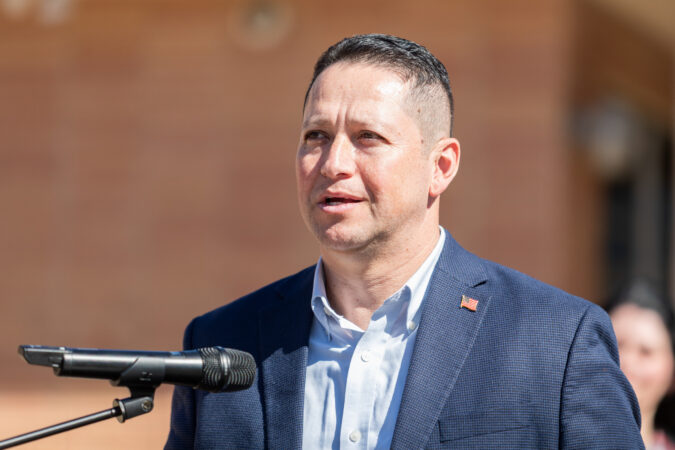
  • GOP Rep. Tony Gonzales of Texas ends reelection bid after admitting to affair with aide

    GOP Rep. Tony Gonzales of Texas ends reelection bid after admitting to affair with aide

    WASHINGTON — Republican Rep. Tony Gonzales of Texas said late Thursday he was withdrawing from his reelection race, after having admitted an affair with a former staff member who later died by suicide, but he vowed to finish out his term in Congress.

    He had faced calls from GOP leadership to end his reelection bid, and from others in Congress to resign.

    “After deep reflection and with the support of my loving family, I have decided not to seek re-election,” Gonzales said in a statement posted late Thursday to X.

    The move is the latest in a quickly changing situation that stunned Capitol Hill and resulted in a House Ethics Committee investigation into his conduct. Gonzales’ decision to bow out of the race appears to clear the field. On Tuesday, he had been forced into a May runoff against Brandon Herrera, a gun manufacturer and YouTube gun-rights influencer who narrowly lost to him in the 2024 primary.

    House Speaker Mike Johnson and the GOP leadership earlier Thursday had called on Gonzales to withdraw from reelection after Gonzales, a day earlier, acknowledged a relationship that has upturned the political world in his home state and in Washington.

    “We have encouraged him to address these very serious allegations directly with his constituents and his colleagues,” said Johnson, Majority Leader Steve Scalise, Whip Tom Emmer, and GOP Conference Chairwoman Lisa McClain in a statement.

    “In the meantime, Leadership has asked Congressman Gonzales to withdraw from his race for reelection.”

    Johnson, R-La., has been under enormous pressure from his own GOP lawmakers to take action, and several Republicans have already called for Gonzales to step aside. Rep. Anna Paulina Luna, R-Fla., has introduced two resolutions to punish Gonzales. The first seeks to remove him from his assignments on the House Appropriations and Homeland Security committees, while the second seeks to censure him.

    House Democratic Leader Hakeem Jeffries of New York, meanwhile, said he would support expelling Gonzales from the House, a rare step that requires a two-thirds vote from the chamber.

    GOP leaders notably did not call for Gonzales to resign from office as they struggle to maintain their slim majority in the House, which they hold by only a handful of seats.

    Their move came after Gonzales, appearing on the “Joe Pags Show,” was asked whether he had a relationship with the aide, Regina Ann Santos-Aviles.

    Santos-Aviles, 35, died after setting herself on fire in the backyard of her home in Uvalde, Texas. The Bexar County Medical Examiner’s Office later ruled her death a suicide.

    “I made a mistake and I had a lapse in judgment, and there was a lack of faith, and I take full responsibility for those actions,” Gonzales said.

    The congressman, now in his third term, had said he would not step down in response to the allegations, telling reporters recently that there will be opportunities for all the details and facts to come out.

    Gonzales, a father of six, first won his seat in 2020 after retiring from a 20-year career in the Navy that included time in Iraq and Afghanistan.

    In the interview broadcast Wednesday, Gonzales said he had not spoken to Santos-Aviles since June 2024. She died in September 2025.

    “I had absolutely nothing to do with her tragic passing, and in fact, I was shocked just as much as everyone else,” Gonzales said.

    Gonzales went on to say he had reconciled with his wife, Angel, and has asked God to forgive him. He also said he looked forward to the Ethics Committee investigation.

    Johnson and GOP leadership urged that committee to “act expeditiously.”

    Under House ethics rules, lawmakers may not engage in a sexual relationship with any employee of the House under their supervision.

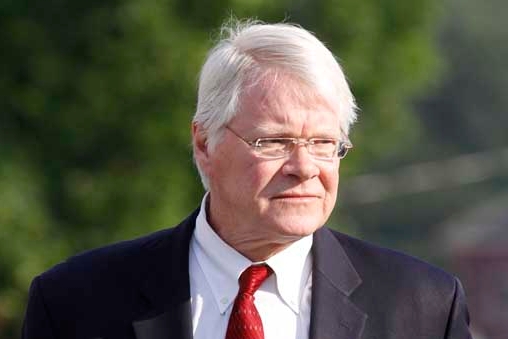
  • Joseph E. McGettigan III, longtime trial lawyer and celebrated former prosecutor, has died at 76

    Joseph E. McGettigan III, longtime trial lawyer and celebrated former prosecutor, has died at 76

    Joseph E. McGettigan III, 76, of Media, longtime trial lawyer and legal consultant, former Philadelphia assistant district attorney, former Pennsylvania chief deputy attorney general, former Delaware County first assistant district attorney, former assistant U.S. attorney in Philadelphia, former Philadelphia first assistant district attorney, and former Pennsylvania senior deputy attorney general, died Thursday, Dec. 31, of lung inflammation at Lankenau Medical Center.

    Born in West Philadelphia and a graduate of Temple University, Mr. McGettigan was a legal expert in sexual assault and murder cases. He litigated in hundreds of trials over more than three decades as a prosecutor for city, county, state, and federal governments, and won notable convictions in the murder case against multimillionaire philanthropist John E. du Pont in 1997 and the child sexual abuse case against then-Pennsylvania State University assistant football coach Jerry Sandusky in 2012.

    He was, then-Delaware County District Attorney Patrick L. Meehan said in 1998, like “a fascinating character in a crime novel.”

    He worked for four Philadelphia district attorneys over two stints in City Hall and spent a year in Iraq in 2008 and 2009 as a U.S. government resident legal adviser working to reestablish a criminal justice system after the fall of Saddam Hussein. For most of the last decade, he worked for the Philadelphia law firm of McAndrews Mehalick Connolly Hulse & Ryan P. C. “He was a wonderful guy, a faithful citizen, and an incredible lawyer,” Dennis McAndrews, founder of the firm, said in an online tribute.

    The grandson of a Philadelphia police officer and son of a lawyer, Mr. McGettigan prosecuted one of the first sex-abuse cases involving a priest from the Archdiocese of Philadelphia in 1985 and oversaw a state Senate absentee-ballot scam case in 1993. “I’m not shocked by much of human depravity,” he said in a 2018 video interview with lifelong friend Dom Irrera. “I’ve seen a fair amount of it.”

    In an online tribute, Judge Jack Stollsteimer of Delaware County Court called Mr. McGettigan a “legendary prosecutor, a larger-than-life personality, and an avenging hero to crime victims across our Commonwealth.” He was a favorite of the City Hall crowd, and colleagues called him “a true public servant,” “a great guy with a wonderful heart,” and “an extraordinary presence in the courtroom.”

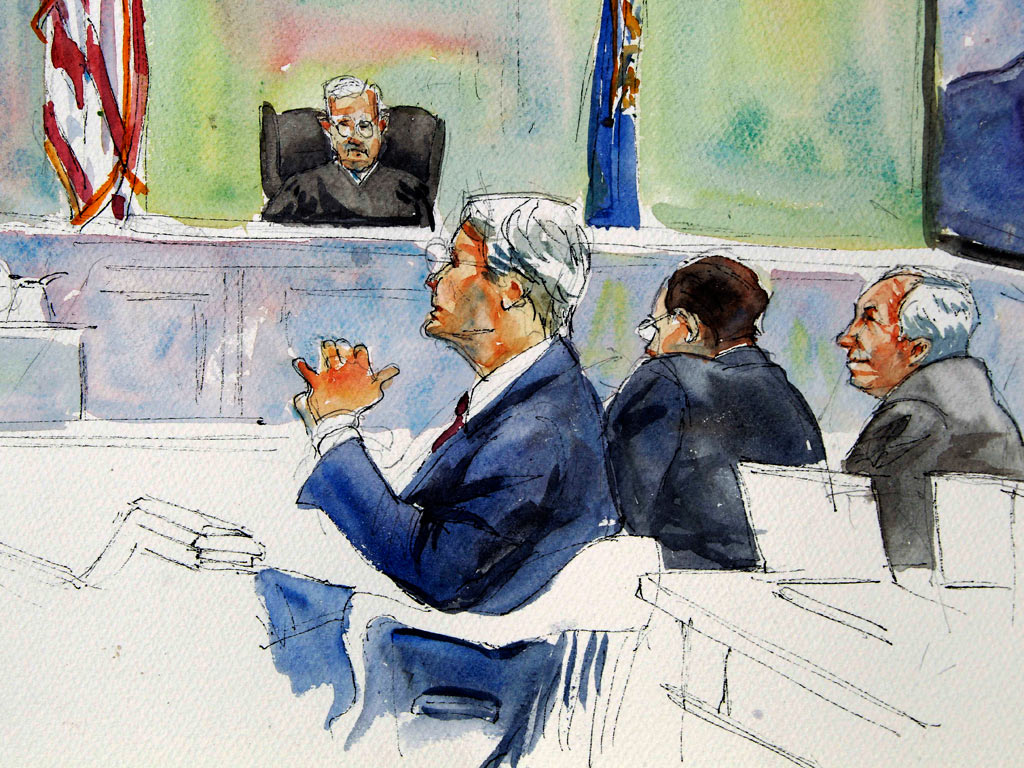
    Mr. McGettigan (foreground) is shown in this courtroom sketch during the Jerry Sandusky trial in 2012.

    Even those with whom he clashed praised Mr. McGettigan. Thomas A. Bergstrom, the Philadelphia lawyer who represented du Pont, said in 2011: “He’s a formidable adversary … very principled. If Joe doesn’t agree with you, he’ll let you know. If he’s going to hit you, it will be a punch in the nose, not a stab in the back.”

    Witty and naturally engaging, Mr. McGettigan interrupted his legal career after the du Pont case to work briefly in Hollywood as a legal content adviser for the short-lived TV series Philly. The show starred Kim Delaney as a tough defense attorney in Philadelphia, and Mr. McGettigan played a police detective, not a prosecutor, in a courtroom scene in one episode in 2002.

    He also worked briefly as a consultant and manager for a private security company in Virginia, was a legal analyst for TV talk shows, and mentored other lawyers. He graduated summa cum laude with a bachelor’s degree in English literature from Temple and earned his law degree at the University of San Diego School of Law in 1982.

    Mr. McGettigan played basketball in high school, on Philly playgrounds, and later whenever he could. Longtime college basketball coach and lifelong friend Fran O’Hanlon called him “a great friend who would do anything for you.”

    His sister Mary said: “He was complex. He appeared often to be a hard-nose tough guy. But there was a soft side to him. He wanted to help people who were vulnerable.” His sister Patty said: “He left the world a better place.”

    Joseph Edward McGettigan III was born March 5, 1949. An altar boy at church, he grew up with six sisters and a brother, and he instigated many dinner-table debates with his siblings and parents about all kinds of subjects.

    “He kept us on our toes,” his sister Mary said. “He had a strong sense of justice, of doing the right thing.”

    Mr. McGettigan (second from right) liked nothing better than playing hoops with friends.

    He married Gay Warren, and they lived in Media and Naples, Fla. “Gay was Joe’s rock,” his sister Mary said. “He was devoted to her, and she to him.”

    Mr. McGettigan loved music, reading, and writing, and told Irrera in 2018 that his favorite authors were William Shakespeare and Joseph Conrad. He was fun and funny, his siblings said, a raconteur with a large personality.

    “Joe was an outlier in a family of bookish nerds,” his sister Jeanne said. “We followed his youthful adventures with great amusement and his later accomplishments with pride and respect. His generosity changed lives for the better.”

    Mr. McGettigan spent a year in Iraq helping local officials revive their justice system.

    One time, when they were young, his brother Michael tried to lie about losing Mr. McGettigan’s football. So Mr. McGettigan grilled him about the details and eventually extracted a confession.

    “I gave it all up,” Michael McGettigan said, “the first of many malefactors to find relief in telling the whole truth and nothing but to Joseph E. McGettigan III.”

    In addition to his wife and siblings, Mr. McGettigan is survived by his mother, Ruth, and other relatives. A sister died earlier.

    Mr. McGettigan (front right) always seemed to be surrounded by friends.

    Visitation with the family is to be from 10 to 10:45 a.m. Saturday, March 7, at St. Francis de Sales Church, 4625 Springfield Ave., Philadelphia, Pa. 19143. A Funeral Mass is to follow at 11 a.m.

    Donations in his name may be made to the Tunnel to Towers Foundation, 2361 Hylan Blvd., Staten Island, N.Y. 10306.

    “Everyone wanted to be Joe’s friend,” a colleague said in a tribute. 
  • Lawmakers honor Philly-born Palestinian American killed by Israeli settlers | City Council roundup

    Lawmakers honor Philly-born Palestinian American killed by Israeli settlers | City Council roundup

    City Council on Thursday formally honored a Philadelphia-born Palestinian American who was killed last month by Israeli settlers in the occupied West Bank.

    In a unanimous voice vote, Philadelphia lawmakers passed a resolution to celebrate the life of 19-year-old Nasrallah Abu Siyam, who was fatally shot during a violent clash in a village on Feb. 18, the beginning of the Muslim holy month of Ramadan.

    Members of Abu Siyam’s family appeared in Council chambers Thursday alongside representatives from the Council on American-Islamic Relations, who called for an independent U.S.-led investigation into the killing.

    “You don’t know what it means to live under occupation. You don’t know what these settlers are doing,” said Abdelhamid Siyam, Nasrallah Abu Siyam’s uncle. “When justice is attacked, silence is treason. … We should stand together and pressure all those elected officials to stand with justice.”

    City Councilmember Rue Landau, a Democrat who authored the honorary resolution in partnership with Councilmember Nicolas O’Rourke, said Thursday that other members of Abu Siyam’s family are trapped in the Middle East after flying there after his death.

    They are unable to travel home, she said, due to the ongoing war in Iran and restrictions on airspace.

    Landau also called on the U.S. State Department and the Department of Justice to “conduct a full investigation and pursue justice for Nasrallah.”

    “We demand accountability so that no other family here or abroad has to stand where this family stands now,” she said during a later event alongside Abu Siyam’s family.

    Thirty U.S. senators signed a letter to President Donald Trump’s administration Thursday calling for an independent investigation into Abu Siyam’s killing. Pennsylvania’s two senators, Republican Dave McCormick and Democrat John Fetterman, did not sign it.

    Here’s what else happened in Council on Thursday.

    What was the highlight?

    Prioritizing transit-oriented development: Mayor Cherelle L. Parker’s administration is pushing Council to approve a package of legislation that makes it easier to build apartment buildings near SEPTA stations, measures that proponents see as a way to boost ridership and increase the city’s housing stock.

    Parker transmitted a package of zoning bills to Council on Thursday, but no member formally introduced it. Members said they saw the legislation for the first time on Wednesday and want more time to review it before introduction.

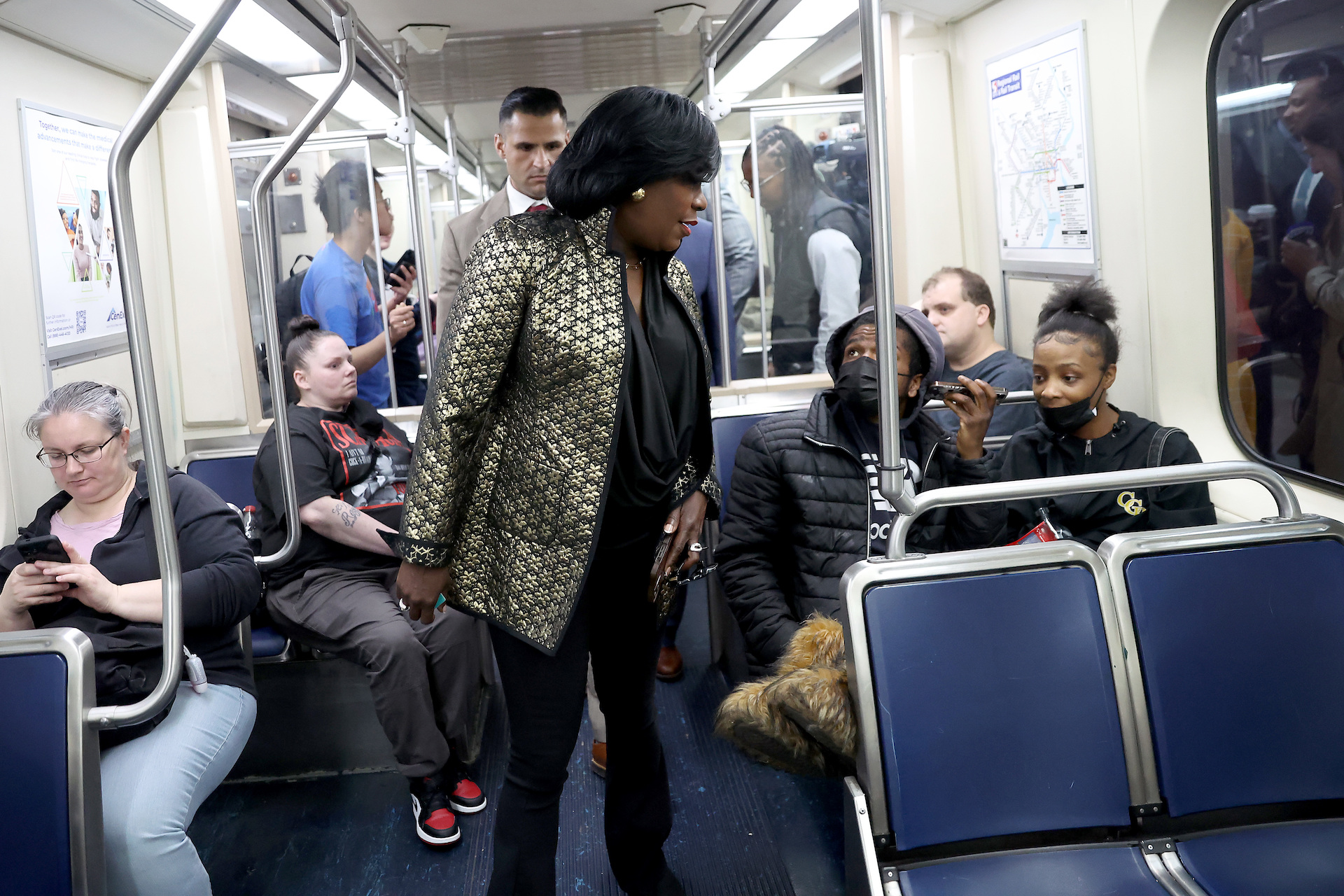
    Mayor Cherelle Parker (center) rides the SEPTA Market-Frankford Line to an event in the Kensington section of Philadelphia, Pa. on Thursday, April 11, 2024.

    The bills are aimed at advancing Parker’s goal to build, preserve, and repair 30,000 housing units.

    Most crucially, one bill expands an existing law that says properties within 500 feet of a Council-designated SEPTA station can receive benefits allowing developers to build more homes. Parker’s legislation increases the radius to 1,320 feet, or a quarter of a mile.

    What else happened?

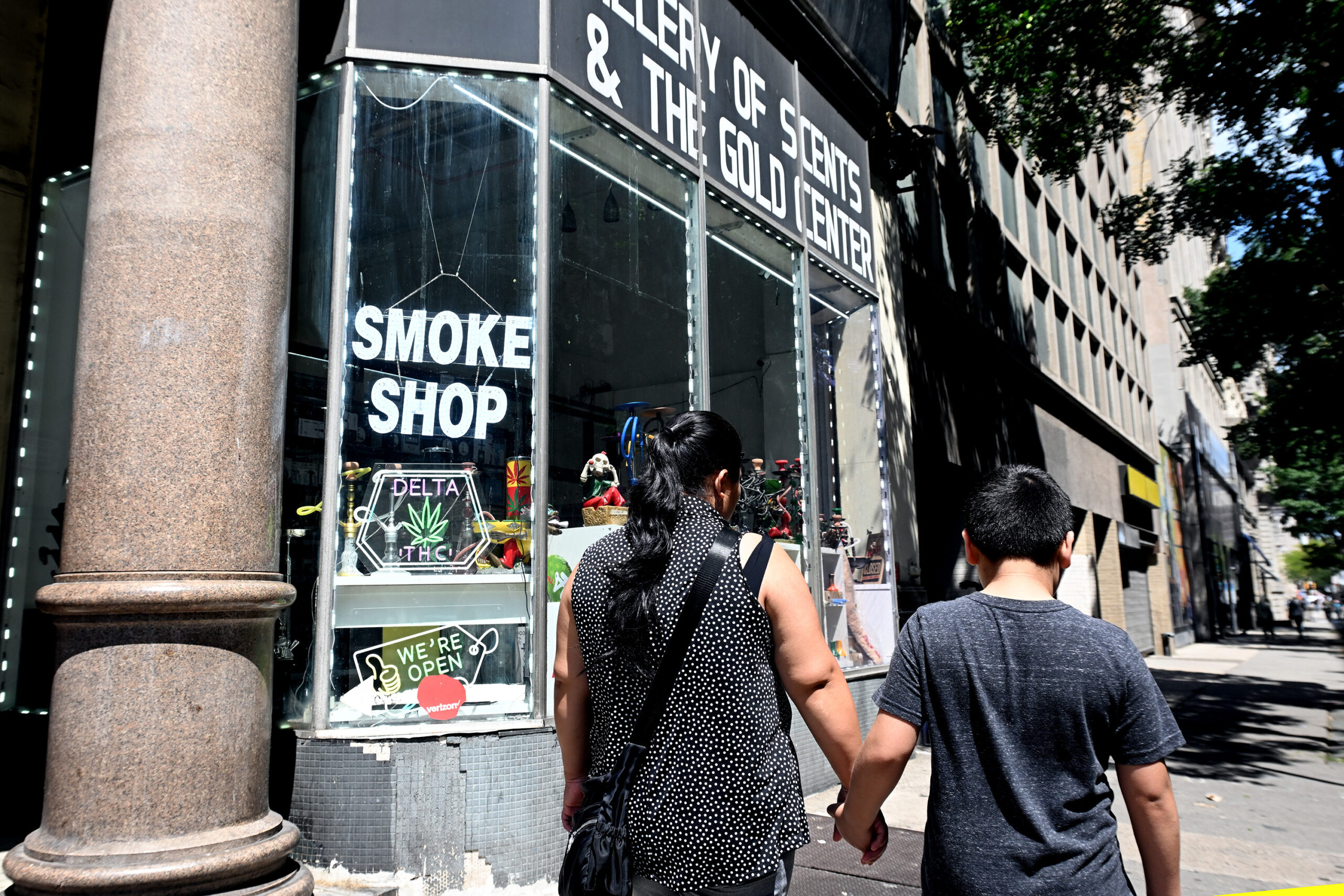
    Smoke-filled doom: Lawmakers continued their crusade against smoke shops and so-called nuisance businesses Thursday, with Councilmember Katherine Gilmore Richardson bringing legislation to hold commercial landlords accountable for renting to illegal smoke shops.

    The bill is a follow-up to a package of legislation lawmakers passed last year that makes it easier for the city to shut down stores that sell cannabis and tobacco products without permits.

    This file photo shows a city smoke shop exterior on the 1000 block of Chestnut Street in July. City Council has advanced several pieces of legislation aimed at curbing smoke shops.

    Gilmore Richardson introduced a second bill to establish a new license requirement for stores selling products like hemp-based THC and kratom. The ordinance would define the products as “intoxicating substances” and establish a 21-plus age minimum.

    What’s next?

    Block off your calendar: Next week will be a busy one. Parker is scheduled to deliver her annual budget address to Council on Thursday, when she will outline her vision for the coming year.

    The speech will kick off weeks of hearings before Council, when members will have the opportunity to question administration officials from every major department, as well as the leaders of other agencies that receive city dollars, including the city courts, the district attorney, and the Philadelphia School District.

    Quote of the week

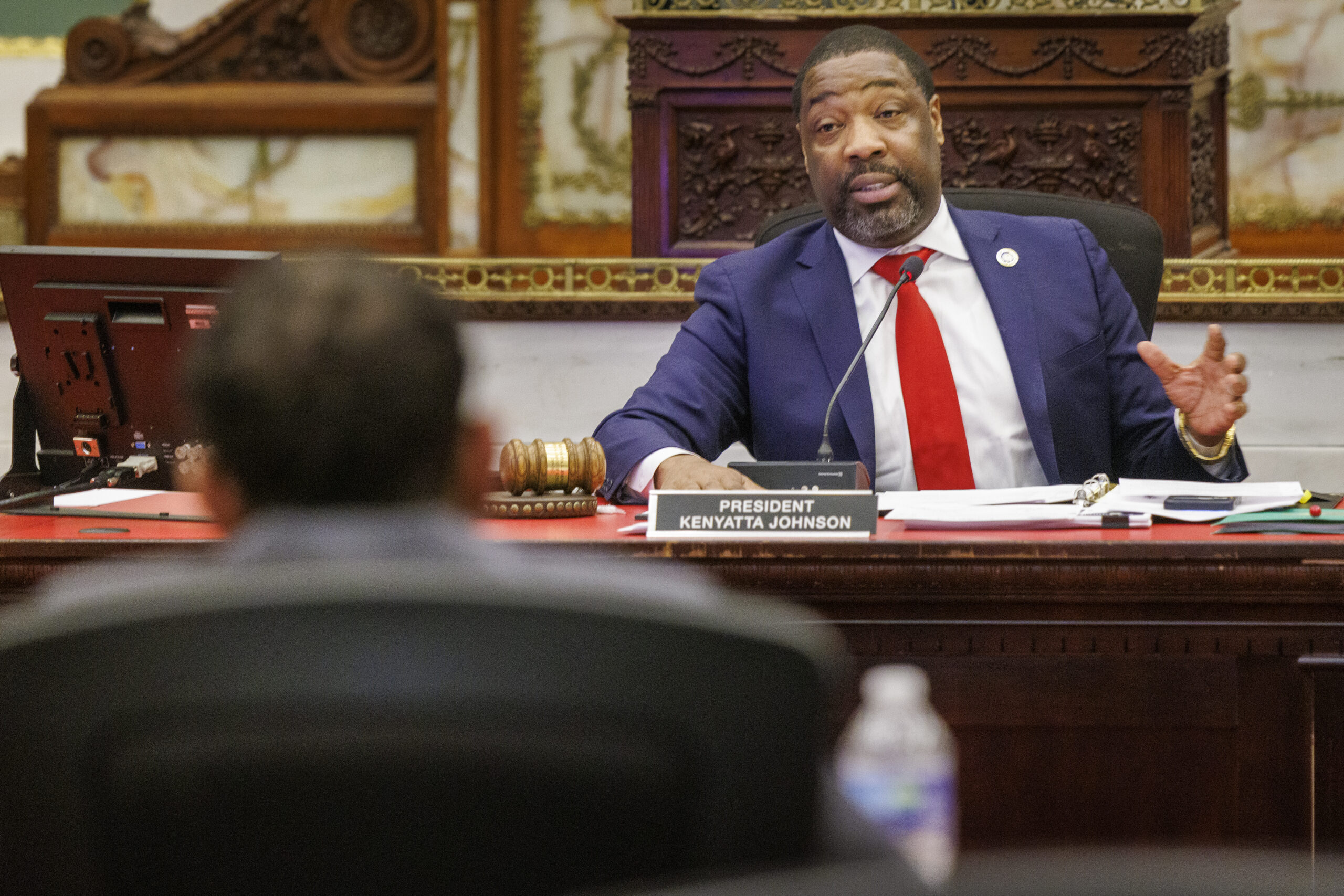
    Philadelphia City Council President Kenyatta Johnson questioning Dr. Tony Watlington, Superintendent of School District of Philadelphia, during a hearing with board members of School District of Philadelphia, Tuesday, Feb. 17, 2026.

    A little school district shade: That was Council President Kenyatta Johnson chiming in on an effort to rename a North Philadelphia street after the late Constance E. Clayton, Philadelphia’s first Black and female schools superintendent.

    Johnson slyly brought up his opposition to parts of the school district’s proposal to close 20 schools as part of its facilities master plan, prompting a wave of “oohs” in the chamber.

    Staff writers Jake Blumgart and Max Marin contributed to this article.

  • ICE can’t use Montgomery County’s property or resources in civil immigration operations under new resolution

    ICE can’t use Montgomery County’s property or resources in civil immigration operations under new resolution

    The Montgomery County commissioners further limited the county’s cooperation with ICE on Thursday when they passed a resolution restricting federal immigration enforcement from using county property or resources for noncriminal investigations.

    The measure approved by the Democratic-controlled board bars U.S. Customs and Immigration Enforcement from using county resources for various purposes, including as staging areas, processing locations, or operations bases related to civil immigration operations.

    “We’ve seen it elsewhere — the violence, the fear, the separation of families. We want to make sure that here in Montgomery County, we’re doing everything we can to make sure all of our residents can continue to access essential services and live their lives safely,” said Commissioner Jamila Winder, the Democrat who chairs the board.

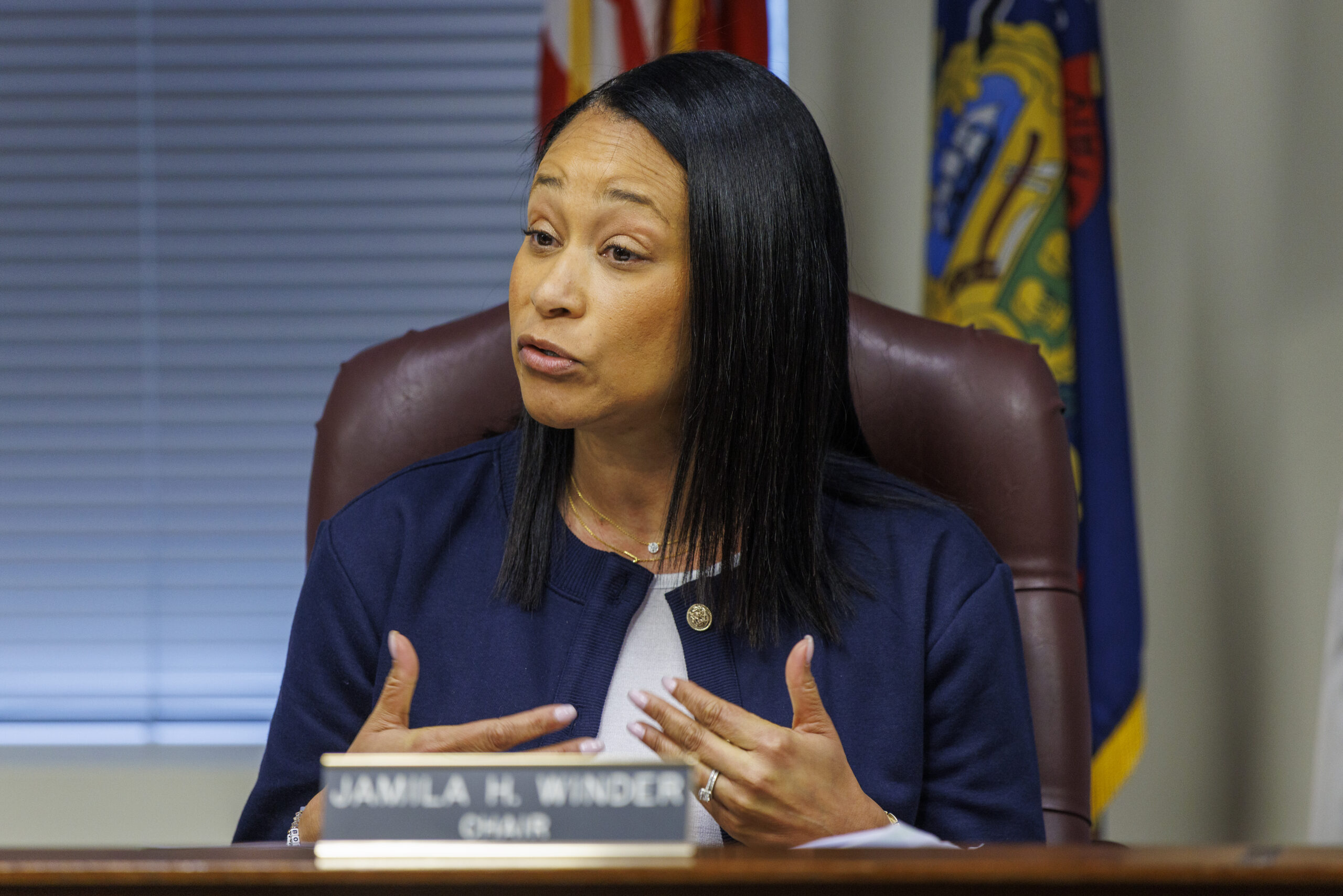
    Jamila H. Winder, Chair, Montgomery County Commissioners on Thursday, March 5, 2026.

    The resolution comes as immigration stakeholders in the county have been pushing the commissioners to take further action to protect residents from ICE enforcement as President Donald Trump’s deportation agenda continues to escalate.

    Much of the tension occurred under the leadership of Kristi Noem, the Department of Homeland Security secretary whom Trump fired Thursday.

    Calls for action escalated nationally in January after federal agents killed U.S. citizens Renee Nicole Good and Alex Pretti in Minnesota. In Montgomery County, ICE has carried out numerous operations, especially in communities with high numbers of Latino residents, such as Norristown, the county seat.

    “Let me be clear: The county does not have authority over the federal government’s actions over civil immigration enforcement, and we still do not have the authority over the courts, other elected officials, municipalities, townships, or their law enforcement officers,” Winder said. “That remains unchanged, but what has changed is the environment we’re in.”

    The policy to block ICE from using county resources passed 2-1 with Commissioner Tom DiBello, the board’s sole Republican, voting no.

    The measure codifies that the county will not enter into a 287(g) agreement, which would allow ICE to use county resources, and that county employees will not comply in federal civil immigration operations without a judicial warrant or subpoena.

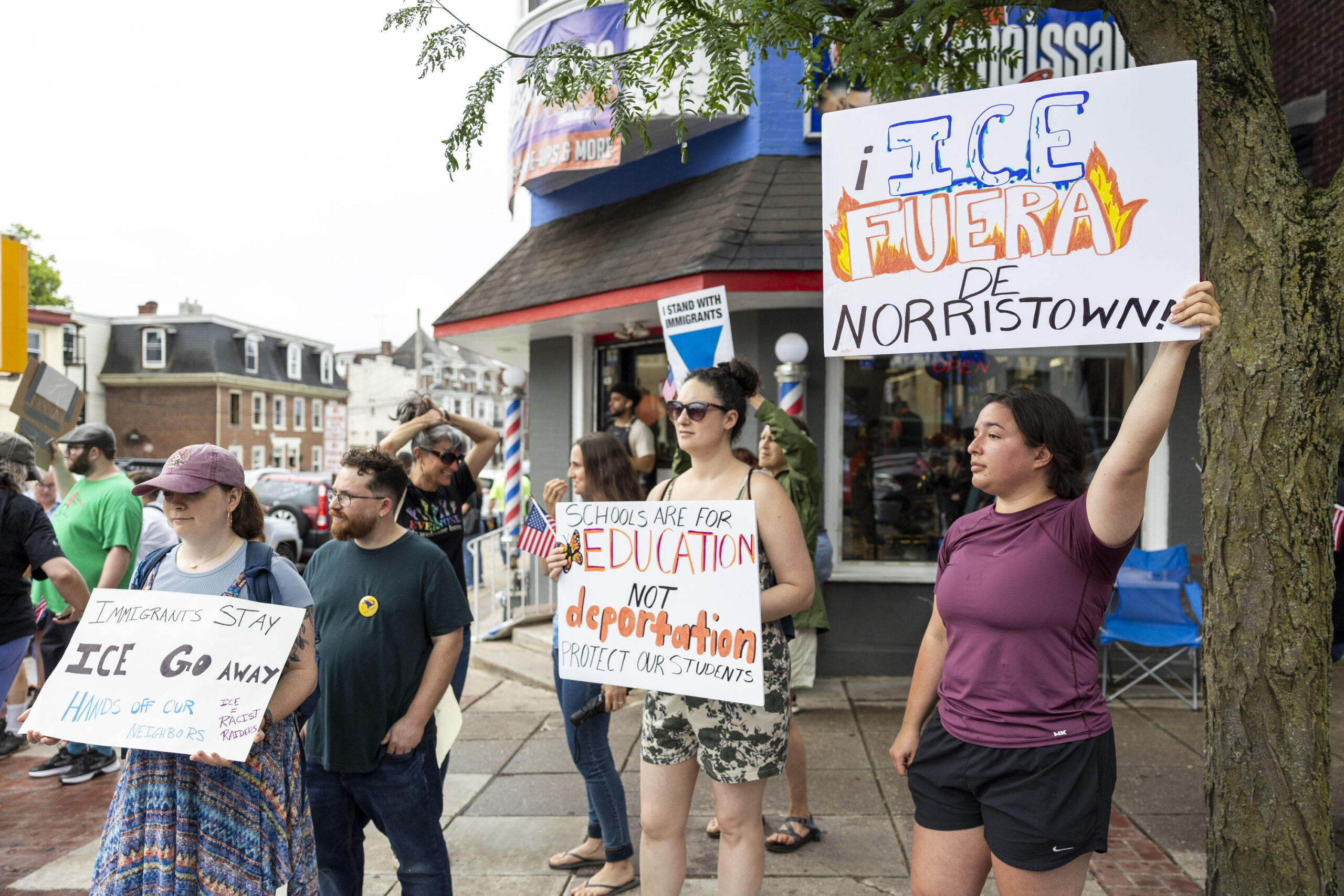
    Lydia Villalba, 27, of Souderton, Pa., (right), holds a sign saying “Ice Fuera De Norristown” meaning Ice out of Norristown, during a rally to support immigrants in Norristown, Pa., on Saturday, June 7, 2025.

    It does not prohibit ICE from purchasing warehouses for detention centers, as the agency has done in Berks and Schuylkill Counties.

    Democratic Gov. Josh Shapiro has blasted the warehouse purchases as being conducted in secret and promised to pursue avenues to block the plan from moving forward. Bucks County in February passed a unanimous resolution opposing any potential purchases there.

    Montgomery County’s resolution denying ICE access to its buildings and lands follows a national trend among Democratic-led jurisdictions. The move has both symbolic and practical impacts.

    First, it enables the county government to publicly make clear its opposition and noncooperation. And second, ICE can need big spaces to set up officers, cars, and equipment for operations; banning the use of potential staging areas can complicate the agency’s logistics.

    Montgomery County’s Department of Assets and Infrastructure will post signage on county-owned property noting that the area cannot be used for purposes not approved by the county, according to the resolution. Private property owners who wish to restrict civil immigration enforcement activity on their properties can request signs for free.

    Megan Alt, a spokesperson for the county, said the hope is that ICE will comply with county law. But if not, the county is prepared to handle violations as it would for any other instances of trespassing.

    Thomas DiBello, Commissioner, Montgomery County Commissioners on Thursday, March 5, 2026.

    DiBello, the lone GOP commissioner, said his opposition has “nothing to do with politics” and criticized the resolution’s references to ICE-related incidents that took place outside Montgomery County. He also said he was concerned that private property owners who do not post signs restricting ICE action on their properties will be targeted as a consequence.

    “What’s going to happen then? Is there doxing going to occur? Is there protests outside of businesses?” he asked.

    Commissioner Neil Makhija, the board’s vice chair, said the resolution “has nothing to with immigration policy,” but rather was about limiting cooperation with an agency that has used extreme tactics. He cited an ICE arrest last month in Lower Providence Township in which agents broke down a family’s front door.

    DiBello responded that Makhija was engaging in “political positioning.”

    In the Philadelphia region and elsewhere, ICE’s use of government property has long rankled immigration advocates, who say it amounts to cooperation on the part of local leaders.

    For instance, Philadelphia City Council is poised to consider a package of “ICE Out” legislation that would bar the agency from staging or conducting enforcement on property owned or controlled by the city — including garages, parking lots, vacant land, buses, playgrounds, and schools.

    Winder said Thursday that Montgomery County’s resolution is not some “newfound desire” to limit cooperation.

    “Yes, we have our political affiliations, but we also know the difference between right and wrong, good and evil,” she said.

  • More than 20 states sue over new global tariffs Trump imposed after his stinging Supreme Court loss

    More than 20 states sue over new global tariffs Trump imposed after his stinging Supreme Court loss

    WASHINGTON — About two dozen states — including Pennsylvania and New Jersey — challenged President Donald Trump’s new global tariffs on Thursday, filing a lawsuit over import taxes he imposed after a stinging loss at the Supreme Court.

    The Democratic attorneys general and governors in the lawsuit argue that Trump is overstepping his power with planned 15% tariffs on much of the world.

    Trump has said the tariffs are essential to reduce America’s longstanding trade deficits. He imposed duties under Section 122 of the Trade Act of 1974 after the Supreme Court struck down tariffs he imposed last year under an emergency powers law.

    Section 122, which has never been invoked, allows the president to impose tariffs of up to 15%. They are limited to five months unless extended by Congress.

    The lawsuit is led by attorneys general from Oregon, Arizona, California, and New York.

    “The focus right now should be on paying people back, not doubling down on illegal tariffs,” said Oregon Attorney General Dan Rayfield. The suit comes a day after a judge ruled that companies who paid tariffs under Trump’s old framework should get refunds.

    The new suit argues that Trump can’t pivot to Section 122 because it was intended to be used only in specific, limited circumstances — not for sweeping import taxes. It also contends the tariffs will drive up costs for states, businesses and consumers.

    Many of those states also successfully sued over Trump’s tariffs imposed under a different law: the International Emergency Economic Powers Act (IEEPA).

    Four days after the Supreme Court struck down his sweeping IEEPA tariffs Feb. 20, Trump invoked Section 122 to slap 10% tariffs on foreign goods. Treasury Secretary Scott Bessant told CNBC on Wednesday that the administration would raise the levies to the 15% limit this week.

    The Democratic states and other critics say the president can’t use Section 122 as a replacement for the defunct tariffs to combat the trade deficit.

    The Section 122 provision is aimed at what it calls “fundamental international payments problems.’’ At issue is whether that wording covers trade deficits, the gap between what the U.S. sells other countries and what it buys from them.

    Section 122 arose from the financial crises that emerged in the 1960s and 1970s when the U.S. dollar was tied to gold. Other countries were dumping dollars in exchange for gold at a set rate, risking a collapse of the U.S. currency and chaos in financial markets. But the dollar is no longer linked to gold, so critics say Section 122 is obsolete.

    Awkwardly for Trump, his own Justice Department argued in a court filing last year that the president needed to invoke the emergency powers act because Section 122 did “not have any obvious application’’ in fighting trade deficits, which it called “conceptually distinct’’ from balance-of-payment issues.

    Still, some legal analysts say the Trump administration has a stronger case this time.

    “The legal reality is that courts will likely provide President Trump substantially more deference regarding Section 122 than they did to his previous tariffs under IEEPA,’’ Peter Harrell, visiting scholar at Georgetown University’s Institute of International Economic Law, wrote in a commentary Wednesday.

    The specialized Court of International Trade in New York, which will hear the states’ lawsuit, wrote last year in its own decision striking down the emergency-powers tariffs that Trump didn’t need them because Section 122 was available to combat trade deficits.

    Trump does have other legal authorities he can use to impose tariffs, and some have already survived court tests. Duties that Trump imposed on Chinese imports during his first term under Section 301 of the same 1974 trade act are still in place.

    Also joining the lawsuit are the attorneys general of Colorado, Connecticut, Delaware, Illinois, Maine, Maryland, Massachusetts, Michigan, Minnesota, Nevada, New Jersey, New Mexico, North Carolina, Rhode Island, Vermont, Virginia, Washington, Wisconsin, and the governors of Kentucky and Pennsylvania.