Category: Politics

Political news and coverage

  • More than 20 states sue over new global tariffs Trump imposed after his stinging Supreme Court loss

    More than 20 states sue over new global tariffs Trump imposed after his stinging Supreme Court loss

    WASHINGTON — About two dozen states — including Pennsylvania and New Jersey — challenged President Donald Trump’s new global tariffs on Thursday, filing a lawsuit over import taxes he imposed after a stinging loss at the Supreme Court.

    The Democratic attorneys general and governors in the lawsuit argue that Trump is overstepping his power with planned 15% tariffs on much of the world.

    Trump has said the tariffs are essential to reduce America’s longstanding trade deficits. He imposed duties under Section 122 of the Trade Act of 1974 after the Supreme Court struck down tariffs he imposed last year under an emergency powers law.

    Section 122, which has never been invoked, allows the president to impose tariffs of up to 15%. They are limited to five months unless extended by Congress.

    The lawsuit is led by attorneys general from Oregon, Arizona, California, and New York.

    “The focus right now should be on paying people back, not doubling down on illegal tariffs,” said Oregon Attorney General Dan Rayfield. The suit comes a day after a judge ruled that companies who paid tariffs under Trump’s old framework should get refunds.

    The new suit argues that Trump can’t pivot to Section 122 because it was intended to be used only in specific, limited circumstances — not for sweeping import taxes. It also contends the tariffs will drive up costs for states, businesses and consumers.

    Many of those states also successfully sued over Trump’s tariffs imposed under a different law: the International Emergency Economic Powers Act (IEEPA).

    Four days after the Supreme Court struck down his sweeping IEEPA tariffs Feb. 20, Trump invoked Section 122 to slap 10% tariffs on foreign goods. Treasury Secretary Scott Bessant told CNBC on Wednesday that the administration would raise the levies to the 15% limit this week.

    The Democratic states and other critics say the president can’t use Section 122 as a replacement for the defunct tariffs to combat the trade deficit.

    The Section 122 provision is aimed at what it calls “fundamental international payments problems.’’ At issue is whether that wording covers trade deficits, the gap between what the U.S. sells other countries and what it buys from them.

    Section 122 arose from the financial crises that emerged in the 1960s and 1970s when the U.S. dollar was tied to gold. Other countries were dumping dollars in exchange for gold at a set rate, risking a collapse of the U.S. currency and chaos in financial markets. But the dollar is no longer linked to gold, so critics say Section 122 is obsolete.

    Awkwardly for Trump, his own Justice Department argued in a court filing last year that the president needed to invoke the emergency powers act because Section 122 did “not have any obvious application’’ in fighting trade deficits, which it called “conceptually distinct’’ from balance-of-payment issues.

    Still, some legal analysts say the Trump administration has a stronger case this time.

    “The legal reality is that courts will likely provide President Trump substantially more deference regarding Section 122 than they did to his previous tariffs under IEEPA,’’ Peter Harrell, visiting scholar at Georgetown University’s Institute of International Economic Law, wrote in a commentary Wednesday.

    The specialized Court of International Trade in New York, which will hear the states’ lawsuit, wrote last year in its own decision striking down the emergency-powers tariffs that Trump didn’t need them because Section 122 was available to combat trade deficits.

    Trump does have other legal authorities he can use to impose tariffs, and some have already survived court tests. Duties that Trump imposed on Chinese imports during his first term under Section 301 of the same 1974 trade act are still in place.

    Also joining the lawsuit are the attorneys general of Colorado, Connecticut, Delaware, Illinois, Maine, Maryland, Massachusetts, Michigan, Minnesota, Nevada, New Jersey, New Mexico, North Carolina, Rhode Island, Vermont, Virginia, Washington, Wisconsin, and the governors of Kentucky and Pennsylvania.

  • Gisele Fetterman’s X and Instagram profiles are now inactive weeks after she spoke against ICE

    Gisele Fetterman’s X and Instagram profiles are now inactive weeks after she spoke against ICE

    Gisele Barreto Fetterman‘s social media accounts have been taken down after she spoke out about ICE earlier this year. Her X and Instagram accounts were both inactive as of Thursday morning.

    It was unclear on what date the two accounts were removed from the platforms, but she did use her X account to criticize the Trump administration a little more than a month ago. Her Facebook account has not been deactivated, though her last public post was in June.

    Barreto Fetterman, who had lived undocumented in the U.S. for more than a decade after emigrating from Brazil, posted about the emotional toll caused by President Donald Trump’s immigration crackdown in Minneapolis and other cities.

    “Every day carried the same uncertainty and fear lived in my body — a tight chest, shallow breaths, racing heart,” she said in a post on X in late January, the day after a Border Patrol agent fatally shot civilian Alex Pretti. In the same month, an ICE agent fatally shot civilian Renee Good and the agency detained 5-year-old Liam Conejo Ramos.

    “What I thought was my private, chronic dread has now become a shared national wound,” she added. “This now-daily violence is not ‘law and order.’ It is terror inflicted on people who contribute, love, and build their lives here. It’s devastatingly cruel and unAmerican.”

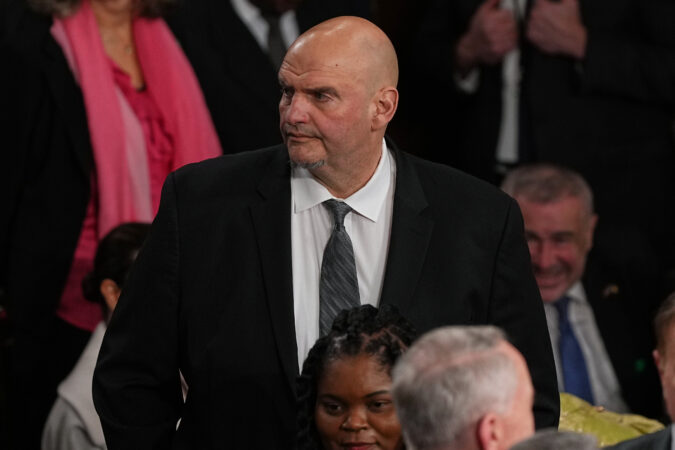
    Barreto Fetterman’s post preceded a statement from her husband, Sen. John Fetterman (D., Pa.), calling for DHS Secretary Kristi Noem to be fired in the wake of Pretti’s killing. Trump fired Noem on Thursday.

    That same week Fetterman joined fellow Democrats in blocking DHS funding in an effort to force reforms to immigration enforcement, but he has since spoken out against a proposal to prohibit Immigration and Customs Enforcement agents from masking while they perform their duties.

    The senator’s office did not comment Thursday about his wife’s social media hiatus.

    Fetterman has faced pushback online for aligning with Trump and being at odds with his party on certain issues.

    After Fetterman stood out among Democrats for shaking Trump’s hand at the State of the Union last week, U.S. Rep. Brendan Boyle (D., Pa.) derided him as “Trump’s favorite Democrat” in a post on X. The senator in turn criticized his fellow Democrats for not standing to applaud at various moments through Trump’s marathon speech that he believed should have had bipartisan support.

    Fetterman has been vocal about the negative effects social media has had on him and has advocated for mental health warnings on social media platforms.

    This week, Fetterman was the only Democrat in the Senate to vote against advancing a war powers resolution that would have barred Trump from ordering further strikes on Iran without congressional approval.

    The Pennsylvanian has contended that military action is necessary to prevent Iran from developing nuclear weapons and had previously urged Israel and the U.S. to bomb the country.

    While Fetterman has touted his ability to work across the aisle, a recent Quinnipiac University poll found that 62% of Democratic voters in Pennsylvania disapprove of how Fetterman is handling his job (eight points higher than the percentage of Democrats who disapprove of Republican Sen. Dave McCormick).

    Barreto Fetterman has temporarily deactivated her online accounts before.

    She said in January 2024 that she had recently taken her social media down because she was “bored with it” and it “wasn’t adding anything to my life.” She had been subjected to negative comments on social media over her husband’s views, Newsweek reported.

    She previously posted in November 2023 that she was “3 weeks into a social media break that may last another month or forever,” according to news reports.

    She also said at the time that “treating someone as simply someone’s spouse is insulting and minimizing … did you know male spouses don’t get treated this way?”

    At that point, the senator had been facing pushback for his comments about the war in Gaza and his staunch support of Israel following the country’s response to Hamas’ Oct. 7, 2023, attack.

    Barreto Fetterman published a book last year called Radical Tenderness: The Value of Vulnerability in an Often Unkind World. She said in a July interview about the book on WHYY that she considers herself a “softie.”

    Barreto Fetterman is also a firefighter and runs a “free store” in Braddock, the Allegheny County town where her husband previously served as mayor. She said in the WHYY interview “every single day is a heartbreak” under Trump’s immigration crackdown.

  • Mayor Parker backs legislation to boost housing development around SEPTA stations

    Mayor Parker backs legislation to boost housing development around SEPTA stations

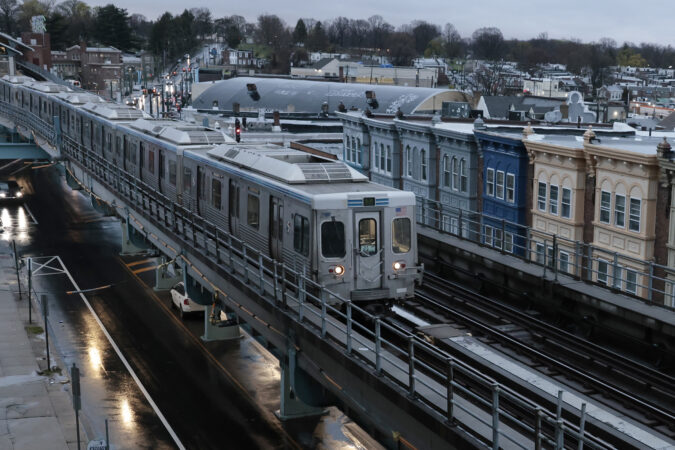
    Mayor Cherelle L. Parker’s administration sent City Council a bill on Thursday to encourage more apartment construction around SEPTA stations, in hopes of boosting ridership.

    The proposal expands an existing law. Currently, if a SEPTA station is made a “transit-oriented development” district — a designation City Council must adopt — then most properties within a 500-foot radius receive a variety of benefits that allows developers to build more housing with less parking than otherwise allowed.

    The legislation sent to Council by the Parker administration would expand that radius to 1,320 feet, or a quarter of a mile.

    The bill is part of a package of zoning legislation meant to boost Parker’s effort to build or repair 30,000 homes in the coming years.

    “Zoning is how we turn housing ambition into housing reality,” said Angela D. Brooks, chief housing and urban development officer. “These bills help us put more homes where our infrastructure can support them, near transit, near jobs, and near opportunity, while respecting the character of the neighborhoods Philadelphians already love.”

    The hope is that SEPTA will benefit from a ridership boost if more housing is built close to transit, and more people will be able to afford to live near public transportation — which, in some areas, is in more expensive and sought-after neighborhoods.

    The zoning overlay grants different types of development benefits depending on the existing zoning around transit stations.

    In a bid to avoid controversies that have undermined similar laws in other cities, land zoned for single-family housing would not be given any development advantage under the law.

    But properties already zoned for dense housing would be allowed to build many more units, with additional benefits given if they provide affordable housing or environmentally friendly design.

    “This package will also increase ridership, reduce costly trips to the [zoning board], and allow more investment in transit stations,” Brooks said. “Zoning may sound technical to some, but investments in transit are something residents can see, touch, and feel every day.”

    Projects that have benefited from the existing transit-oriented development overlay include The Noble, with 360 units, near the Spring Garden stop on the Market-Frankford Line, and a proposal for a 134-unit mixed-income development at the Frankford Transportation Center.

    Land zoned for more modest density would be allowed to build 50% more units. That means if developers could build four units under normal conditions, in a transit-oriented development district, they could build six.

    The overlay requires that the ground floor of commercially zoned buildings have active uses. Curb cuts, parking garages, and one-story buildings are not allowed.

    Parker’s bill further eases some parking requirements, although the requirement for developers building in such areas is already less than under normal zoning rules.

    The bill was circulated to City Council on Wednesday. Members wanted more time to review it before it was formally introduced.

    “In general, I’ve been a proponent of the basic concept of increasing density around our transit stops,” said Councilmember Jamie Gauthier, who chairs City Council’s housing committee.

    “It makes our neighborhoods more lively, more livable,” Gauthier said. “We have a great transit system, and we should be trying to help it be as successful as possible.”

    Because City Council must pass legislation to include transit stations in the zoning overlay, district Council members are given effective control over how many stations will be included in the law’s benefits.

    Both the Broad Street and Market-Frankford Lines run between Council districts, which means half of many stations are under one Council member’s purview while the other half are in another’s control.

    Transit advocates have long hoped for legislation that would automatically apply to all major transit stations, but that idea could prove difficult to get through City Council.

    Gauthier is one of the few Council members who have embraced transit-oriented development. All of the Market-Frankford Line stations in her district are covered by the overlay.

    No stations on the Broad Street Line are included so far.

    “I don’t want to speak about areas of the city that are not mine,” Gauthier said. But in her transit-rich West Philadelphia district, “I do think we can consider expanding that radius more. We know that less people are driving nowadays.”

    City Councilmember Jamie Gauthier is one of the most enthusiastic proponents of transit-oriented development on City Council.

    The urbanist advocacy group 5th Square says that Parker’s bill should be broader.

    The group called for the elimination of parking minimums near transit, an even larger coverage radius, and for multifamily housing to be allowed on land zoned for single-family homes near stations.

    “These bills are a welcome step toward more housing near transit, but their scope doesn’t quite address our massive housing shortage,” said Fae Ehsan, board member with 5th Square Advocacy.

    The other housing-related bill Parker sent to Council includes legislation that would make it easier to build more apartments above commercial buildings on the ends of some rowhouse blocks, which are currently allowed to have only one unit above ground-floor retail.

    The bill would allow owners to convert the ground floor to residential uses if they cannot fill the storefront. The administration believes 7,000 to 12,000 more housing units could be allowed under the change.

  • More than half of Pennsylvanians oppose ICE’s methods under Trump, new poll finds

    More than half of Pennsylvanians oppose ICE’s methods under Trump, new poll finds

    Pennsylvania voters broadly oppose some of President Donald Trump’s immigration enforcement tactics — but there’s a stark partisan split, according to a new statewide poll of registered voters.

    Franklin & Marshall College’s Center for Opinion Research released a wide-ranging poll Thursday that tracked registered Pennsylvania voters’ opinions on America’s 250th anniversary, ICE enforcement tactics, and other issues facing the state and nation ahead of the midterm election.

    Trump’s approval ratings have remained consistently low since returning to office last year, with a majority of Pennsylvanians disapproving of his job as president.

    Democratic Gov. Josh Shapiro maintains a 50% approval rating heading into the midterm elections later this year.

    Pollsters at Franklin & Marshall College surveyed 834 registered Pennsylvania voters, including 353 Democrats, 347 Republicans and 134 independents. The sample error is +/- 4.1 percentage points.

    Here are three takeaways from the poll of registered Pennsylvania voters, conducted Feb. 18 through March 1 by phone or online.

    Trump is consistently unpopular in Pennsylvania

    Trump’s approval ratings among registered Pennsylvania voters remain low, with 61% of voters rating him as doing a “poor” or “fair” job, according to the statewide poll, which also assessed Trump’s performance on immigration, the economy, and other issues.

    Trump maintained a net negative approval rating throughout his first term in 2017-2021 and so far in his second term, according to the poll.

    Despite winning the state in 2024, he remains divisive with 51% of respondents rating him as doing a “poor” job, and only 10% who rate him as doing a “fair” job. Approximately 39% of registered Pennsylvania voters view Trump as doing an “excellent” or “good” job, according to the poll.

    window.addEventListener(“message”,function(a){if(void 0!==a.data[“datawrapper-height”]){var e=document.querySelectorAll(“iframe”);for(var t in a.data[“datawrapper-height”])for(var r,i=0;r=e[i];i++)if(r.contentWindow===a.source){var d=a.data[“datawrapper-height”][t]+”px”;r.style.height=d}}});

    Trump’s low approval numbers could have a drag effect on Republicans’ performance in the midterm election, said Berwood Yost, the director of Franklin & Marshall’s poll.

    “While there’s still a long way to go until November, [Trump has] got to figure out a way and his party has to find a way to prevent that and earn those voters back,” Yost said.

    Trump’s low numbers align with those of former President Barack Obama or George W. Bush’s approvals at the same point in their second term, Yost added. Both of their parties lost seats in the midterms elections those years.

    However, Trump’s approval ratings are not the lowest they have been in the state. His approval ratings dropped to their lowest, 70% disapproval, during his first term in September 2017.

    Josh Shapiro is still popular

    Gov. Josh Shapiro remains popular ahead of his reelection contest this year: 50% of Pennsylvania voters say he is doing an “excellent” or “good job,” while another 44% believe he is doing a “fair” or “poor” job leading the nation’s fifth most populous state.

    Shapiro is the most popular governor since 2000, when comparing his approval ratings to those of other Pennsylvania governors at the same point during their first terms, Yost said.

    Shapiro also maintains a significant lead over his likely GOP challenger, State Treasurer Stacy Garrity. If the midterm elections were to happen today, 48% of voters said they would reelect Shapiro, while 28% said they would vote for Garrity. Another 7% of voters said they would vote for a different candidate, while 17% were undecided or refused to answer the question.

    Shapiro’s approval ratings have remained steadily high since taking office in January 2023. A Quinnipiac University poll released last month found similar public opinion toward Shapiro’s reelection, while some voters said they were unsure whether they wanted the rumored 2028 presidential candidate to run for higher office.

    Pa. voters broadly oppose some of ICE’s enforcement actions, but are split on others

    Approximately three-fourths of Pennsylvania voters believe ICE should not be able to use deadly force against protesters or enter a home without a warrant, in a major pushback to Trump’s immigration enforcement tactics.

    Pennsylvania voters’ opinions on immigration enforcement varies significantly based on a person’s political party: While nine in 10 Republicans support ICE tactics, only two in five independents and one in 10 Democrats support them.

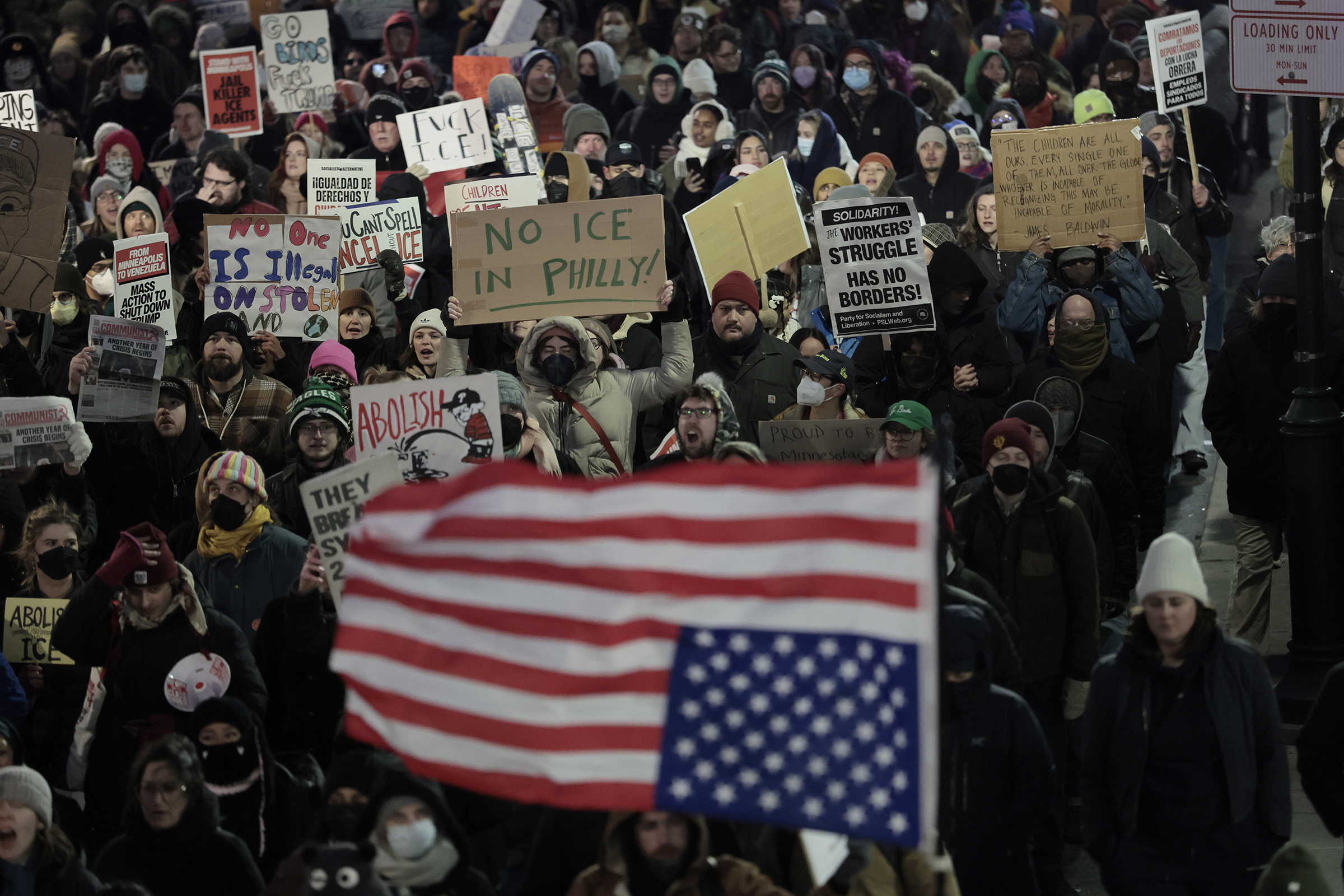
    Protesters march up Eighth Street, towards the immigration offices, during the Philly stands with Minneapolis Ice Out For Good protest at Philadelphia’s City Hall on Friday, Jan. 23, 2026.

    Republicans support ICE’s use of unmarked vehicles to detain people and their use of masks to hide an agent’s identity at much higher rates than Democrats, while independents are split. On the use of masks, 77% of Republican voters believe agents should be able to wear them, while 40% of independents and only 10% of Democrats do.

    “There’s a lot of consensus about the fundamental principles that protect our individual rights like entering a home without a warrant or using force against protesters, whereas there’s a little more partisanship in others,” Yost said.

    window.addEventListener(“message”,function(a){if(void 0!==a.data[“datawrapper-height”]){var e=document.querySelectorAll(“iframe”);for(var t in a.data[“datawrapper-height”])for(var r,i=0;r=e[i];i++)if(r.contentWindow===a.source){var d=a.data[“datawrapper-height”][t]+”px”;r.style.height=d}}});

    There is also overwhelming support among Pennsylvania voters that non-citizens who are in the U.S. legally — whether by visa, green card, asylum or other protected statuses, or in the process of becoming a citizen — should not be targeted by Immigration and Customs Enforcement for deportation, according to the poll.

    However, a majority of Republicans and independent voters believe undocumented immigrants who have been in the United States illegally for any amount of time and have no criminal record should be targeted for deportation, while less than a quarter of Democrats believe they should.

    Pennsylvania voters want the 250th anniversary to acknowledge the positives and negatives from American history

    As Trump tries to reframe American history for the nation’s 250th anniversary, most Pennsylvanians want the celebrations to acknowledge its positive and negative parts.

    Approximately 73% of Pennsylvania voters believe any retelling of American history should include the upsides and downsides of the nation’s founding, while 24% believe only positive aspects should be celebrated.

    “Most people, they want to see historical interpretations that include the whole picture,” Yost said.

    This finding is of particular interest in Pennsylvania, following the Trump administration’s removal of an exhibit that memorialized the enslaved people who lived in George Washington’s home from the historic President’s House site in Independence National Historical Park. A federal judge ordered the restoration of the exhibit, but the Trump administration is appealing the decision.

  • Philadelphia may host another DNC in 2028. Here’s what that could mean for the local economy.

    Philadelphia may host another DNC in 2028. Here’s what that could mean for the local economy.

    The first time Philly hosted a major presidential nominating convention was in 1848, when the Whig Party, meeting in Sansom Street’s long-gone Chinese Museum building, nominated Zachary Taylor, who went on to win the White House.

    The 10th and most recent time, Democrats in 2016 made Hillary Rodham Clinton the first woman to be nominated for president by a major party.

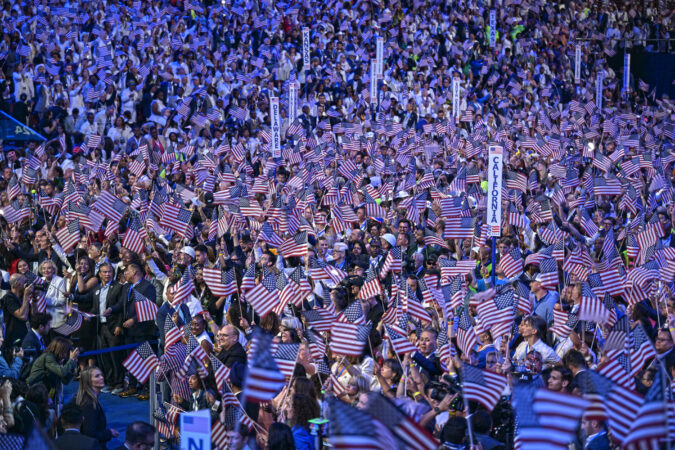
    Mayor Cherelle L. Parker and other local leaders are hoping to make more history by landing Philly’s 11th convention in 2028. And part of the appeal is the promise of a boost to the local economy as thousands of conventiongoers buy up hotel rooms, spend money at restaurants, and visit the city’s attractions.

    Philadelphia “would see substantial economic benefits,” Gov. Josh Shapiro recently wrote to the Democratic National Committee, which this week named the city as one of five finalists to host the party’s next convention, alongside Atlanta, Boston, Chicago, and Denver.

    But how much do cities really benefit from hosting political conventions? Here’s what you need to know about what Philly stands to gain from hosting another DNC.

    Conventions’ economic impact debatable

    Tourism bureaus and convention planners often make lofty claims about the economic benefits of major events like political conventions.

    Visit Philly, for instance, in 2016 commissioned the consulting firm Tourism Economics to examine that year’s DNC, and the firm found the event brought 54,300 visitors to the region and provided a $230.9 million injection into the local economy.

    But economists who have studied conventions are skeptical of such claims. A 2018 study of both parties’ conventions in 2008 and 2012 found that “political conventions do not seem to have the large economic impact that is usually suggested by traditional economic impact studies.”

    Officials at the time often claimed economic impacts north of $150 million for conventions. But estimates that high rely on unrealistic assumptions about how much money conventiongoers spend each day, according to the study, which was published in the journal Papers in Regional Science.

    “Cities and states often tout mega events as vehicles for economic growth,” economists Lauren R. Heller, Victor A. Matheson, and E. Frank Stephenson wrote in the paper. “Hosting national political conventions generates a large inflow of overnight visitors and increases hotel revenue. However, the cumulative effect of approximately 29,000 additional room nights of lodging services and $20 million of hotel revenue imply that traditional economic impact estimates may be unrealistically large.”

    Hotels are big winners

    Although conventions’ overall economic impact is debatable, there is little disagreement about their benefits to one industry in particular: hotels.

    “I’ve seen a lot of different large events come through [over] the years, and the DNC was one that definitely delivered,” said Ed Grose, president and CEO of the Greater Philadelphia Hotel Association. “I can think of a few of examples of hotels making their annual budget based on the DNC alone.”

    Grose said the benefits are widespread in the lodging industry when a convention rolls into town.

    “It’s not just Center City hotels, but the airport area, the suburban hotels — everyone benefits from the DNC,” Grose said. “It’s especially good for our frontline team members; it’s good for our restaurants; it’s good for our bars. It is an event that delivers a huge economic hype.”

    Minimal tradeoffs

    Debates over economic impact are often centered on situations in which officials must weigh tradeoffs, such as whether to provide tax breaks to businesses promising new jobs.

    For cities, political conventions are a different story. While hosting another DNC would likely require taxpayer resources from the state and federal governments, there would be little downside for Parker and the city budget.

    Conventions are funded primarily through private contributions. In 2016, the DNC host committee raised about $85 million — $10 million of which came from taxpayers in the form of a state grant.

    Much of the cost incurred by local governments related to security is reimbursed by the federal government. Congress has appropriated grant funding for presidential nominating convention host cities since 9/11.

    In 2024, the localities hosting both the DNC and the Republican National Convention were each eligible to receive about $75 million in reimbursements.

    Beyond dollars and cents

    For some, the value proposition of a convention coming to town is as much about getting attention as it is boosting the economy. The 2016 DNC drew roughly 19,000 media members from around the world, according to the Philadelphia Convention and Visitors Bureau.

    Labor leader Ryan Boyer, who heads the Philadelphia Building and Construction Trades Council and is a close Parker ally, said conventions like the DNC that bring major donors and corporations to town have the potential to result in “longitudinal jobs,” meaning they could lay the groundwork for future investments by potential employers.

    He said a convention is an opportunity to showcase spots of the city ripe for investment — such as the Navy Yard, the industrial hub known as the Bellwether District, and the life sciences corridor in University City — to corporate figures who might not otherwise travel here.

    “It’s a chance to show off Philadelphia,” Boyer said. “We’re a good business proposition.”

    Grose said there were indirect, long-term impacts from hosting conventions.

    “We get a lot of exposure from being on TV for a week. There’s a lot of things that happen during the DNC that we can’t buy,” he said. ”It’s great to see we are back in the mix after a relatively short time since hosting the DNC. That just shows what a great job we did as a city.”

    David L. Cohen, the longtime Democratic fundraiser who is leading the recently formed host committee called Pick Pennsylvania, noted another reason revisiting Philadelphia could be an appealing pick for Democrats: It allows the party to dominate the biggest media market in a critical swing state.

    “You own the media market for the week that you’re there,” said Cohen, a former Comcast executive who served as U.S. ambassador to Canada under former President Joe Biden. “The party couldn’t afford to pay for the positive advertising the party would get for holding its convention in Philadelphia.”

  • A statue of a founding father who enslaved people was taken down in Wilmington. It’s moving to D.C.’s Freedom Plaza.

    A statue of a founding father who enslaved people was taken down in Wilmington. It’s moving to D.C.’s Freedom Plaza.

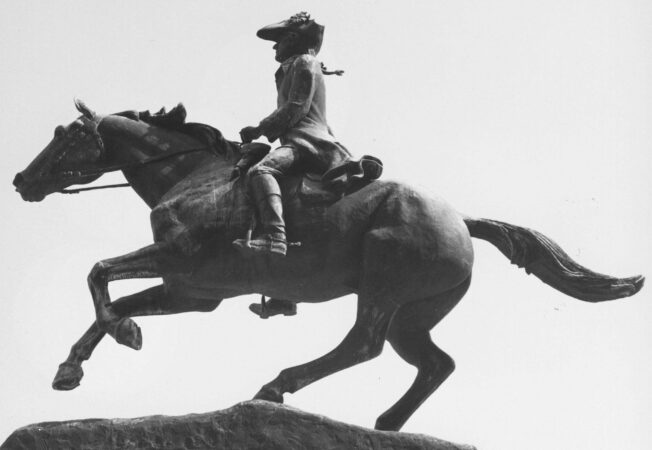
    The statue of a founding father who enslaved Black people in Delaware is moving from a New Castle storage facility to a venerated spot in Washington’s Freedom Plaza as part of President Donald Trump’s celebration of America’s 250th birthday.

    Wilmington officials took down the statue of Caesar Rodney in 2020 amid Black Lives Matter protests and a national reckoning over racism in America, taking it out of public view at the same time as the city removed a statue of Christopher Columbus for similar reasons.

    It wasn’t clear when the bronze monument of Rodney on a horse will be put on temporary display in the plaza on Pennsylvania Avenue, near the White House, according to the New York Times, which learned of the story from a Feb. 3 National Park Service memo.

    The statue had stood in Wilmington’s Rodney Square for around 100 years.

    Rodney’s legend includes a partially disputed story about riding two horses 82 miles from Dover to Independence Hall to sign the Declaration of Independence — a trip five times longer than Paul Revere’s more famous ride a year earlier.

    Rodney arrived spent and mud-spattered on July 2, 1776, to sign the Declaration before its formal adoption on July 4, breaking the tie between two other Delaware delegates, one of whom wouldn’t sign, said Dick Carter, chairman of the Delaware Heritage Commission. The near last-minute inscribing is true, Carter and others say, but it’s possible that Rodney, who suffered from facial cancer and was quite ill, may have covered some of the mileage in a carriage.

    Giving his life to public service, Rodney was a brigadier general in the Continental Army, a sheriff, a justice on the Delaware Supreme Court, and a delegate from Delaware to the Continental Congress.

    Rodney was also among the 41 out of 56 Declaration signers who enslaved people. He was a complex and contradictory figure, especially when viewed through a 21st-century lens, Carter said, adding that it is not fair to “judge historical figures by the norms and mores of the present day.”

    Rodney enslaved anywhere from 20 to 200 people on his estate near Dover. But his legacy also includes a bill he introduced in the state legislature to end the practice of importing enslaved people into Delaware. And upon his death, he freed the 18 people he’d enslaved at the time.

    Trump, during his first term in 2020, praised Rodney in a proclamation issued on the founding father’s birthday.

    In the proclamation, Trump condemned the removal of Rodney’s statue “as part of an ongoing, radical purge of America’s founding generation.”

    Trump said it was a “re-education attempt” and the “end result of an extreme anti-American historical revisionism,” generated by “critical race theorists … [and] mobs on city streets” who say that America is not an exceptional country “but an evil one.”

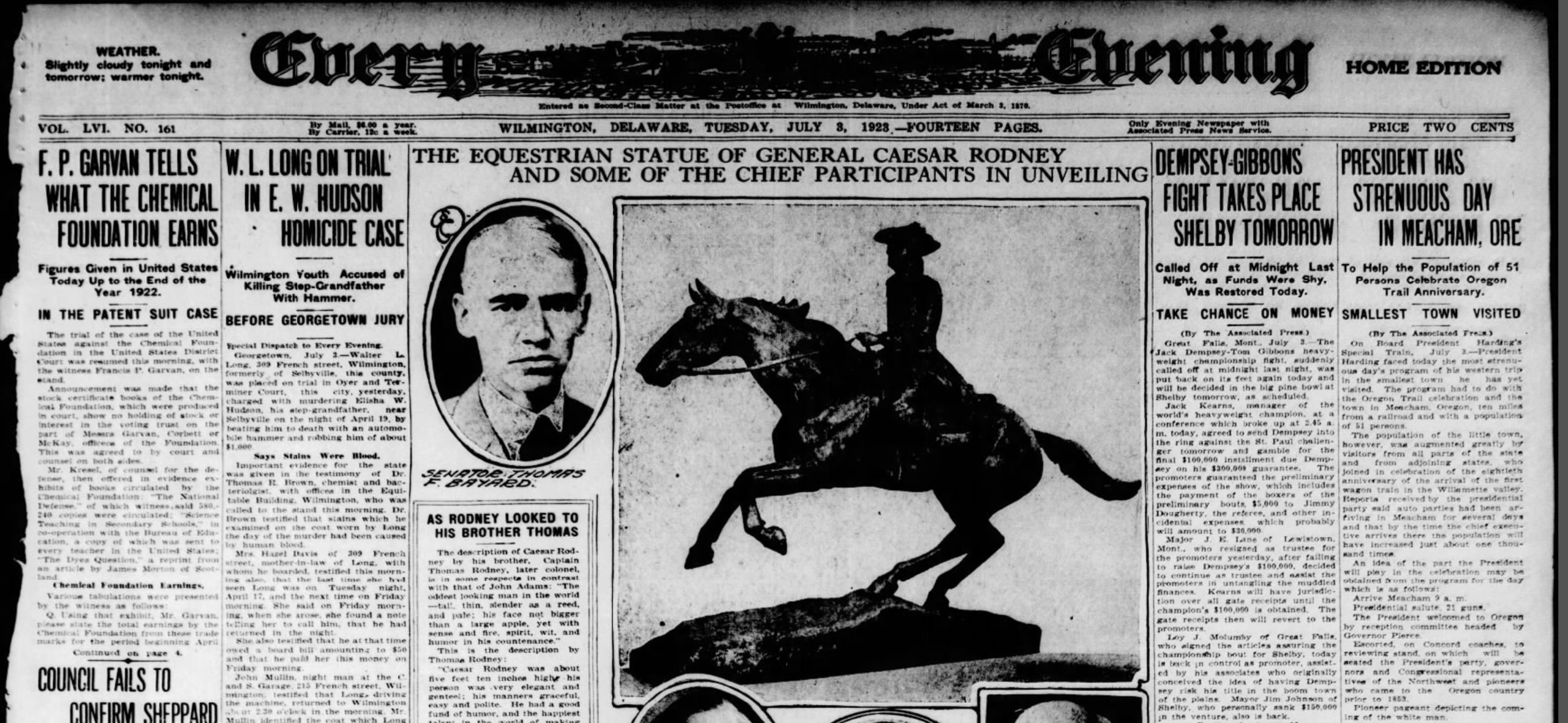
    An image of the front page of the July 3, 1923, edition of the News Journal of Wilmington, Del., which makes note of the dedication of the Caesar Rodney statue on the following day.

    Trump has expressed similar views during his second term and taken steps to change the way Americans are educated about the nation’s history.

    In January, the administration ordered the removal of exhibits depicting slavery at the President’s House in Independence National Historical Park. The U.S. Department of Interior said that the slavery-related materials were being reviewed “to ensure accuracy, honesty, and alignment with shared national values.” Last month, a federal judge ordered the exhibit’s restoration, though the administration is still pursuing the matter.

    In the summer of 2025, the administration restored two statues in the D.C. area that commemorated the Confederacy. One was a statue of Confederate Gen. Albert Pike, the only outdoor statue of a Confederate military leader in the nation’s capital.

    “We see a pattern of celebrating enslavers while reducing teaching about slavery in the United States and limiting diversity, equity, and inclusion,” said Timothy Wellbeck, director of the Center for Anti-Racism at Temple University. “Caesar Rodney has components of character not worth celebrating despite his contributions to America’s founding.”

    Shané Darby, a councilwoman from Wilmington, told the Times that glorifying Rodney was “a slap in the face of Black and brown people of this city… . You can have him, D.C.”

    That’s a view shared by other people in the Black community, said Syl Woolford, a member of the Delaware Heritage Commission. “Some folks in Wilmington are saying, ‘Get that white boy out of here,’” Woolford said. “They tell you there’s no place here for the statue of a slave owner.”

    But, he and other historians say, Rodney’s place in history shouldn’t be completely ignored. Even with the statue gone, elements of Rodney remain. He still appears on the quarter that honors Delaware. And his square continues to bear his name, although there’s discussion it’ll be renamed after President Joe Biden, whose ties to Delaware run deep, Carter said.

    The Department of Interior didn’t answer a request from The Inquirer to comment on criticism from Wellbeck and others that the Trump administration is exalting an enslaver. Instead, a spokesperson said, “Rodney’s journey itself reflected extraordinary courage.”

    “By telling the full story … we strengthen our shared understanding and ensure that future generations inherit not just the land we love, but the truth of the journey that brought us here,” the spokesperson added.

    To avoid further consternation in Wilmington, there’s a plan to send Rodney’s statue to Dover, not Wilmington, after the 250th celebration is over, said Republican State Sen. Eric Buckson.

    “Dover is Rodney’s birth and resting place,” Buckson said.

    He added, however, that “in this climate, folks are rightfully concerned about having monuments minimizing slavery.”

    So, whenever Rodney comes back, his statue will be amended, Buckson said.

    “It’ll include a plaque,” he added, “and that will have the story that, along with everything else, Caesar Rodney was a slave holder.”

  • Former Bucks County man who voted twice for Trump convicted of voter fraud

    Former Bucks County man who voted twice for Trump convicted of voter fraud

    A former Bucks County man who claimed he was covered by pardons given by President Donald Trump to supporters who tried to overturn the 2020 election was found guilty Wednesday by a federal jury in Philadelphia of voting twice for Trump in 2020.

    Matthew Laiss, 32, was charged by indictment in September of one count of voting more than once in a federal election and one count of voter fraud. He is scheduled to be sentenced on June 10 and faces a maximum of five years in prison on both counts.

    Laiss, who prosecutors said is currently a resident of Bethehem, Pa., had been a resident of — and was registered to vote in — Ottsville, Bucks County, from at least 2012 to around August 2020, prosecutors said. Laiss then moved to Frostproof, Fla., where he obtained a driver’s license and registered to vote there.

    Around Oct. 31, 2020, Laiss filled out and returned a mail-in Pennsylvania ballot, then on Nov. 3, 2020, Laiss went to a polling place in Florida and voted again.

    “Today’s conviction reinforces a simple principle: our elections must be fair, secure, and lawful, ” U.S. Attorney David Metcalf said in a statement.

    “Casting a ballot in more than one jurisdiction undermines public trust and dilutes the votes of others. Our office will continue to protect the integrity of federal elections and hold accountable those who violate the law,” Metcalf said.

    The case was investigated by the FBI, with assistance from the Pennsylvania Department of State, and is being prosecuted by Assistant U.S. Attorney Mark Dubnoff.

    Federal defenders who represented Laiss could not be reached for comment Wednesday night.

    Lawyers for Laiss had argued to U.S. District Judge Joseph F. Leeson Jr. that a pardon proclamation Trump issued last year on Nov. 7 applied to Laiss, and that Laiss had accepted it.

    Laiss was not among the 77 people Trump listed when specifying who would receive relief, but Laiss’ lawyers said the proclamation’s preamble included language making it applicable to “all United States citizens” for conduct, voting, or advocacy surrounding the contest.

    His lawyers wrote that Trump allies including Rudy Giuliani, Sidney Powell, and Mark Meadows were all explicitly pardoned for “exponentially more egregious alleged conduct.” Extending relief to them while denying it to Laiss, his lawyers wrote, “would be outrageous.”

    Prosecutors said they checked with Trump’s Office of the Pardon Attorney and were told that the lawyers there did not believe the pardon proclamation applied to Laiss.

    In January, Leeson ruled against Laiss’ motion to dismiss the indictment, explaining that the court was without jurisdiction to decide the matter because Laiss had not applied to the Office of the Pardon Attorney, or had received a certificate of pardon.

  • Mayor Cherelle Parker has appointed former prosecutor Tito Valdes to be Philly’s director of LGBTQ+ affairs

    Mayor Cherelle Parker has appointed former prosecutor Tito Valdes to be Philly’s director of LGBTQ+ affairs

    Mayor Cherelle L. Parker this week appointed former prosecutor Tito Valdes as Philadelphia’s new director of LGBTQ+ affairs.

    Valdes, who graduated from Pennsylvania State University Dickinson Law, has extensive experience working on legal issues concerning youth. He previously worked as a city attorney representing the Philadelphia Department of Human Services in child welfare cases. And he is well-known for his work as a Philadelphia assistant district attorney in the family violence and sexual assault unit.

    Valdes said one of his top priorities in his new role will be working with DHS to that ensure LGBTQ+ youth receive proper care in the city’s foster system.

    “I am envisioning a particular focus on LGBTQ youth and care, and just ensuring that that particular population, which is in the system oftentimes because of who they are, receive services that are culturally competent,” Valdes said in an interview.

    Valdes is the third person to hold the job under Parker’s administration, which began in January 2024. The previous two both left the city under unusual circumstances, and Valdes said he hopes to restore stability to the office.

    “The community generally deserves and needs stability and just a sense of consistency,” he said.

    Valdes assumes the role at a sensitive time for the city’s work on equality and civil rights issues. Progressives and advocates for marginalized populations have called on Parker to take a more aggressive stance against President Donald Trump’s attacks on immigrants, the LGBTQ+ community, and other groups.

    But Parker has for the most part avoided direct confrontation with Trump in a strategy to prevent Philadelphia from being targeted by his administration. (One notable exception is the city’s lawsuit to preserve exhibits on slavery at Independence National Historical Park.)

    “My approach will be to loudly proclaim what I believe the Parker administration does proclaim, which is that everybody deserves to be treated fairly, that we’re committed to this work,” Valdes said.

    The Philadelphia Gay News first reported Parker’s appointment of Valdes, who has served on the board of the William Way LGBT Community Center and on the Governor’s Advisory Commission on LGBTQ Affairs under former Democratic Gov. Tom Wolf.

    Valdes has won the Prosecutor of the Year award from the Philadelphia Coalition for Victim Advocacy and the Team Excellence Award from the Philadelphia Children’s Alliance, according to the mayor’s office. He most recently worked at the personal injury law firm Anapol Weiss.

    “Tito brings years of legal experience and proven intergovernmental, collaborative leadership to this role,” Parker said in a statement. “His leadership will help ensure that LGBTQ+ Philadelphians experience a city government that is responsive, accountable, and fully committed to their safety and opportunity.”

    The Philadelphia Office of LGBTQ+ Affairs works to “strengthen protections, expand opportunity, and improve service delivery for LGBTQ+ residents across Philadelphia,” according to the city.

    Valdes’ most recent predecessor, Tyrell Brown, was fired last year after receiving a seminude photograph from another high-ranking city employee, then-deputy chief of staff Chris Dailey, while using a cruising app.

    Inspector General Alex DeSantis said he recommended Parker fire Brown and Brandee Anderson — who was the city’s chief diversity, equity, and inclusion officer — after an investigation by his office found they acted “highly unprofessionally” while discussing the photograph in the workplace.

    Anderson has publicly pushed back on the city’s account, denying that she and Brown mishandled the incident and saying the administration targeted her for pushing the city to be more aggressive on DEI issues.

    Brown has not commented on the incident. But they said in a statement that they were “incredibly excited and proud of Tito’s appointment.”

    “This moment is about celebrating his leadership and standing behind him as he steps into this role, something I am honored and proud to do,” Brown said.

    Brown was preceded by Celena Morrison-McLean, who was appointed in 2020 by former Mayor Jim Kenney and who was the first openly transgender person to lead a city office.

    Morrison-McLean made national headlines in March 2024, two months after Parker took office, when she and her husband were arrested after a state trooper pulled her over on I-76 for multiple violations. During the traffic stop, Morrison-McLean recorded a cell phone video of a confrontation between the trooper and her husband, who had been following her in a separate vehicle and was also pulled over. The video went viral, but it answered few questions about the circumstances that led to the confrontation.

    Morrison-McLean left city government in November 2024. City officials at the time did not give a reason for her departure.

    Staff writer Anna Orso contributed to this article.

  • John Fetterman is the only Democrat to vote against curbing Trump’s power to order strikes in Iran

    John Fetterman is the only Democrat to vote against curbing Trump’s power to order strikes in Iran

    U.S. Sens. John Fetterman and Dave McCormick voted Wednesday against advancing a war powers resolution that would have barred President Donald Trump from ordering further strikes on Iran without congressional approval.

    The vote came days after United States and Israel launched a missile attack on Iran, killing that nation’s supreme leader, Ayatollah Ali Khamenei. Six U.S. service members were killed in Iranian counterstrikes.

    Fetterman, who applauded Trump’s comments about Iran during last week’s State of the Union, was the lone Democrat to vote against the measure, which would require the termination of U.S. military force against Iran.

    Even before Trump ordered “Operation Epic Fury,” Democrats had pushed for a vote on a resolution to reassert congressional authority over military action.

    But Fetterman has been at odds with the rest of his party, contending that military action is necessary to prevent Iran from developing nuclear weapons.

    “Every member in the U.S. Senate agrees we cannot allow Iran to acquire a nuclear weapon. I’m baffled why so many are unwilling to support the only action to achieve that,” Fetterman said on X Monday. “Empty sloganeering vs. commitment to global security — which is it?”

    The resolution, led by Sen. Tim Kaine (D., Va.), failed 47 to 53, falling short of the required 60-vote threshold to advance in the U.S. Senate. U.S Sen. Rand Paul (R., Ky) was the only Republican to support the measure.

    The U.S. House will consider a similar measure on Thursday.

    U.S. Sen. Andy Kim (D., N.J.) compared Trump’s decision to attack Iran to former President George W. Bush’s 2003 invasion of Iraq.

    “We’ve seen this before. A president manufactures an imminent threat, chooses to start a war with unclear objectives and uses America’s resolve as an excuse for war without end because they’ve got no plan to end it,” Kim said in a Senate floor speech Tuesday in support of the resolution.

    But Kim also noted a point of contrast. Bush had obtained authorization from Congress for military force, a step Trump didn’t even try to take, Kim noted.

    “President Trump refused to make a case to the American people,” said Kim, who served on former President Barack Obama’s National Security Council.

    Lawmakers’ attempts to rein in Trump comes as the U.S. is “accelerating, not decelerating” its military efforts, Defense Secretary Pete Hegseth told reporters in the Pentagon Wednesday, CBS News reported.

    A 1973 law allows a single lawmaker to force a vote to withdraw troops or block military strikes, and it requires the president to obtain congressional authorization to commit the Armed Forces beyond 60 days.

    Both of Pennsylvania’s senators have been strong supporters of Trump’s strikes, which followed failed negotiations.

    McCormick (R., Pa.), an Army veteran and member of the Senate Foreign Relations Committee, said “the president has given the ayatollahs a chance for a deal, and they have rejected a path to peace and prosperity.”

    During the first Trump administration, the president withdrew from an agreement Obama struck with Iran intended to prevent it from developing nuclear weapons in exchange for lifting sanctions.

    U.S. Sen. Lisa Blunt Rochester (D., Del.), who voted to support the measure, said in a statement Wednesday that the Iranian government ”is a deadly one” and acknowledged the danger of the country’s nuclear capabilities.

    “But after attending the Senate briefing on Iran, it was strikingly clear that there was no rational justification for military action and no imminent threat to the United States,” she said. “This administration has failed to define its goals, explain an exit strategy, or provide any long-term plan for what comes next.”

    Her fellow Delaware Democrat, U.S. Sen. Chris Coons, also supported the resolution and this week called for Hegseth and Secretary of State Marco Rubio to appear before the national security committees to explain the lack of planning for the “protection and evacuation of Americans from their war of choice,” as U.S. citizens in the Middle East are scrambling to evacuate.

    U.S. Sen. Cory Booker (D., N.J.) said on X Saturday that Congress cannot “simply roll over” and invoked the lessons from past conflicts in the Middle East.

    “We should have learned from the last two decades of conflict in the Middle East that wars launched without clear goals and without an end-state in mind rarely end well,” he said. “They cost lives, destabilize regions, embolden adversaries, and weaken America’s moral standing.”

  • House committee votes to subpoena Attorney General Bondi to answer questions over the Epstein files

    House committee votes to subpoena Attorney General Bondi to answer questions over the Epstein files

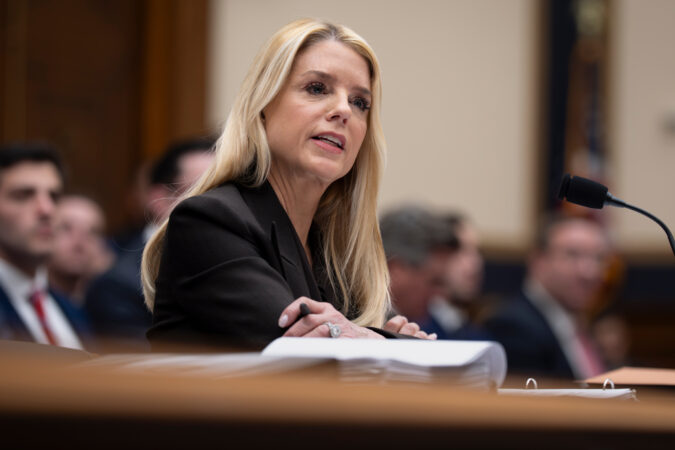
    WASHINGTON — The House Oversight Committee voted Wednesday to subpoena Attorney General Pam Bondi to answer questions over the Justice Department’s handling of files related to the Jeffrey Epstein sex trafficking investigation.

    Five Republicans joined Democrats to support the subpoena proposed by GOP Rep. Nancy Mace of South Carolina in a sign of continued frustration with the department’s review and release of a tranche of documents regarding the disgraced financier.

    The Justice Department had no immediate comment on the subpoena.

    Former President Bill Clinton and his wife, former Secretary of State Hillary Clinton, recently sat with lawmakers on the committee for their own depositions over the former Democratic president’s connections to Epstein from more than two decades ago.