Category: Politics

Political news and coverage

  • Reflecting Pool’s algae bloom and peeling paint reflect Trump’s treatment of U.S. history

    Reflecting Pool’s algae bloom and peeling paint reflect Trump’s treatment of U.S. history

    President Donald Trump’s latest D.C. renovation, painting the Lincoln Memorial Reflecting Pool “American Flag Blue,” to celebrate the country’s 250th birthday has instead turned the symbolic heart of the National Mall Algae Bloom Green. The paint is peeling, and the water is a swampy muck.

    Trump has asserted, without evidence or corroboration, that vandals cut a 250-foot gash into the new lining and poured corrosive chemicals into the basin. Yet, the explanation for what has happened appears to be more mundane and predictable than the cloak-and-dagger sabotage Trump has suggested. Rosalina Stancheva Christova, an aquatic ecologist from George Mason University’s Algal Ecology Laboratory, sampled the water and found an ordinary, non-toxic bloom — the kind any ordinary swimming pool owner has fought in their own backyard.

    And yet, the problem with the renovation runs far deeper than all of this. Trump’s painting project reflects a fundamental lack of understanding of the original purpose and vision for the reflecting pool. For more than a century, the basin has functioned as a civic mirror, a place where visitors could see themselves reflected alongside the monuments that commemorate the nation’s story. Today that possibility is gone.

    The roots of the reflecting pool lie in the “City Beautiful” movement of the late 19th and early 20th centuries. The Gilded Age and decades of laissez-faire growth had left many of America’s cities in disrepair, full of tenement districts, boss-run wards and blight.

    American architects Daniel Burnham, Charles McKim, Frederick Law Olmsted Jr. and Augustus Saint-Gaudens wanted to change that, and they were inspired by European urban renewal projects like Baron Georges-Eugene Haussmann’s redesign of Paris. In 1893, at the World’s Columbian Exposition in Chicago, they explored the principles that spawned their movement to reimagine American cities — demonstrating how monumental architecture and carefully designed landscapes could express civic ideals.

    Their experience in Chicago helped to convince the men that beautiful, orderly, civic space could repair the disordered industrial cities the Gilded Age had left them. Their vision reflected a broader Progressive Era faith that urban renewal and public investment could address the social problems of industrial America while restoring civic pride through monumental construction projects designed to project an image of a robust and resilient nation.

    In 1903, all four architects became members of the Senate Park Commission (McMillan Commission) whose mandate was to replace decades of haphazard development in Washington D.C. with a coherent civic plan.

    They set their sights on the National Mall, which was, at that time, a disunified Victorian garden punctuated by marshland with a public green transected by a railroad depot and tracks.

    The commission’s 1901 report complained that the mall “has been diverted from its original purpose and cut into fragments, each portion receiving a separate and individual informal treatment, thus invading what was a single composition.” Their redesign plans aimed to unify the space into a legible and cohesive civic story and the reflecting pool eventually became the spine for that narrative.

    Over the next two decades, the McMillan Plan gradually reshaped the mall.

    Architect Henry Bacon was charged with designing the Lincoln Memorial. In 1911, he completed his first sketches, and he incorporated the commission’s vision by extending the mall’s central axis westward and anchoring it with the reflecting pool. Bacon imagined the pool as a mirror reflection, where visitors could see both the Washington Monument and the Lincoln Memorial. As a result, Bacon created a linear and legible connection between the man who presided over the creation of the republic at one end and the man who led the nation through the war for its preservation at the other.

    The future Reflecting Pool site facing west toward the Lincoln memorial in 1921.

    In 1919, the Army Corps of Engineers began excavating a former Potomac marshland known as the Kidwell Flats, to enable construction of the pool. The project took four years and was still under construction at the time of the Lincoln Memorial’s dedication in 1922.

    The pool quickly became a symbolically rich venue for crucial moments in U.S. history. In 1939 the African American contralto Marian Anderson sang from the memorial steps to a crowd of approximately 75,000 people massed along the pool after the Daughters of the American Revolution refused to let her perform at Constitution Hall.

    Made By History sponsors. FOR USE ON MADE BY HISTORY STORIES ONLY.

    Twenty-four years later, a quarter million people lined both banks of the pool to hear the Reverend Dr. Martin Luther King Jr. proclaim his dream, to challenge the nation to complete the unfinished journey toward racial equality and achieve a meaningful resolution of the issues that had nearly destroyed the nation.
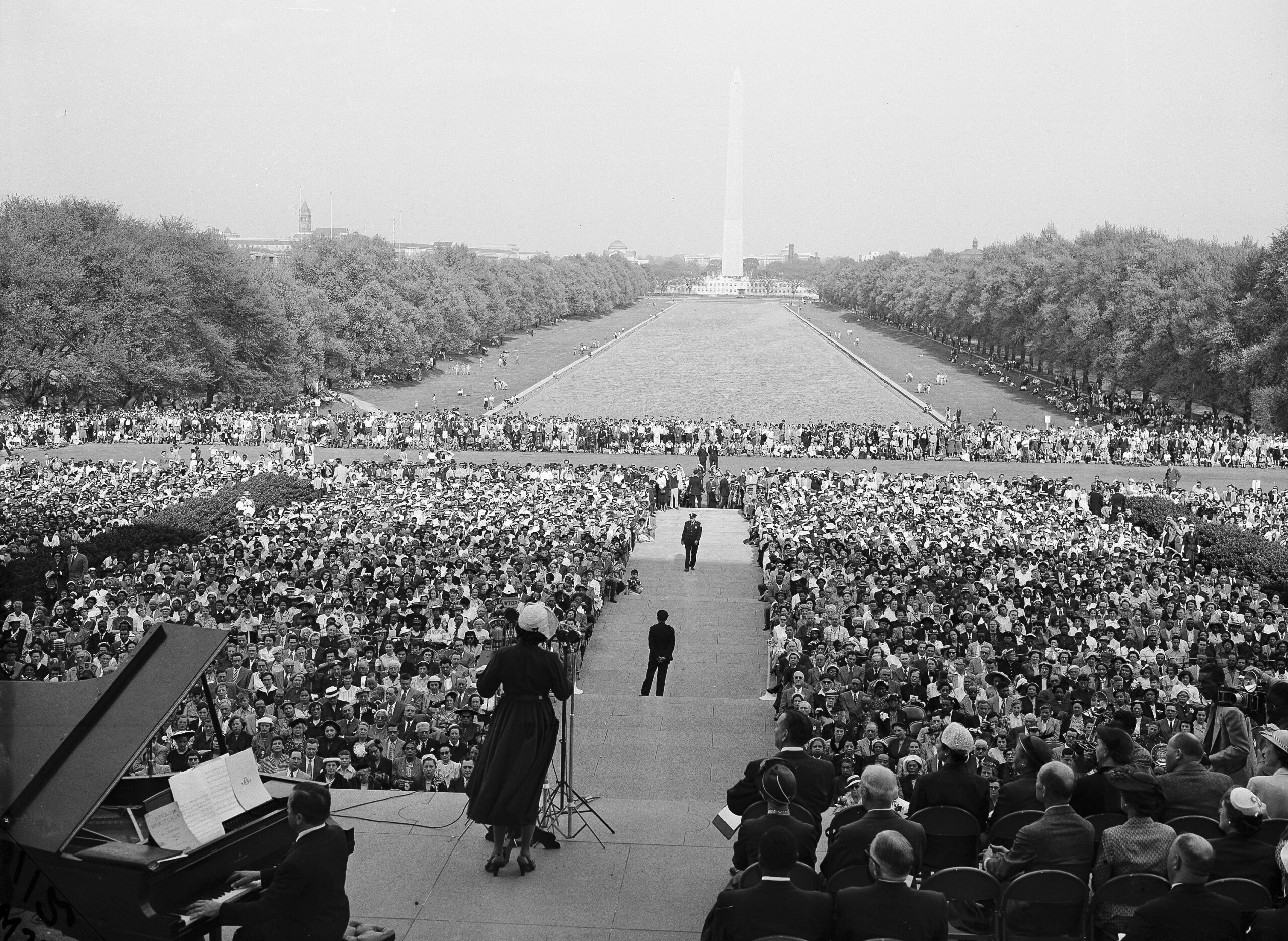
    Marian Anderson performs from the steps of the Lincoln Memorial in Washington on April 20, 1952, in this image showing the Reflecting Pool and the Washington Monument. . Anderson’s accompanist is Franz Rupp, lower left, at piano. (AP Photo/Henry Griffin, File)

    The pool reflected those crowds, those moments and those movements only while they occupied the space. Each reflection vanished and was replaced by another individual, another gathering, another episode in the nation’s story.

    Yet, despite its symbolic significance and its success as a site for large scale civic dialogue, from a physical standpoint, the pool faced problems almost from day one. At issue was the soggy foundation created by the choice of marshlands for the reflecting pool’s site.
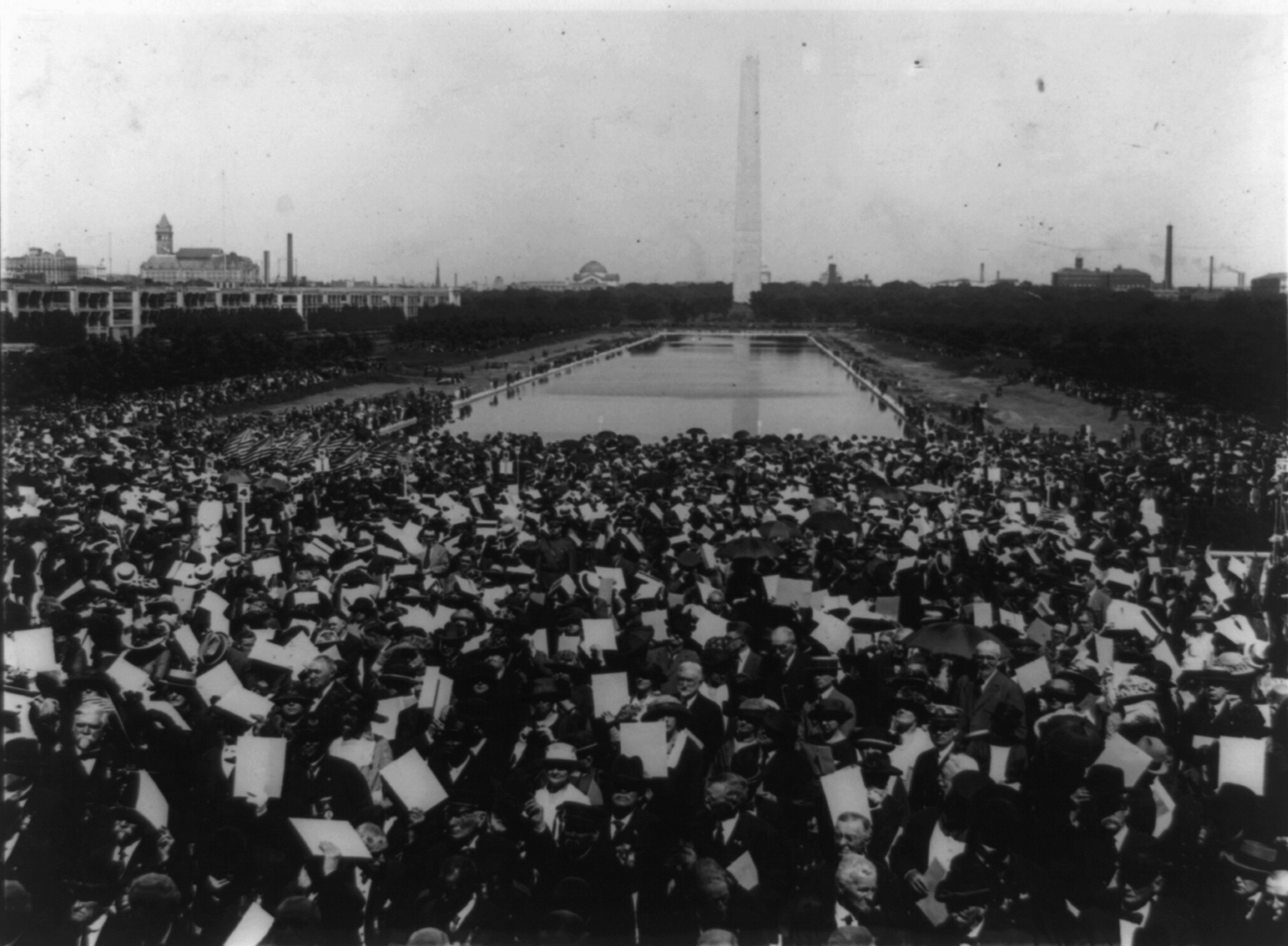
    This 1922 photo was taken at the dedication of the Lincoln Memorial. Nearly from the start, the Reflecting Pool faced structural problems.

    During its construction, the Army Corps of Engineers had attempted to mitigate the potential problem with concrete support beams and a drainage system undergirding the pool. But almost immediately these mitigation systems proved inadequate. The result was cracks and leaks that have plagued the pool for its entire lifetime.

    Numerous administrations have tried to solve the issues. In 1986, the Reagan Administration drained the pool and poured an entirely new concrete foundation. Even this did not solve the problem. The pool continued to leak nearly 30 million gallons per year.

    In 2011, Barack Obama’s administration undertook another round of renovations. While matters improved, the pool still leaks 16 million gallons of water per year.

    The current issue with the reflecting pool and Trump’s response to it, however, go well beyond structural inadequacies and sabotage theories. They reflect a lack of understanding about the pool’s purpose.

    In April, Trump posted a doctored image of himself and his officials in swimsuits lounging in the reflecting pool, a woman in a bikini reclining in the water beside them. But the pool is a mere 18 inches deep, not swimming pool/ lounging depth and Bacon never intended anyone to use it that way. He built a basin you stand beside because its work happens in the mind of the person at the rim. Trump’s artificial intelligence revisionism gets the object exactly wrong — an instrument of contemplation made over into the feature of a tacky resort.

    Trump directed the Department of the Interior to repaint the pool in time for the nation’s 250th anniversary and used an emergency exemption to award a no-bid contract to a company that specialized in painting swimming pools. The result essentially took an area that was a swamp, before its transformation into a civic mirror, and returned it to a swamp. An algae-greened surface now sits where the reflection used to be, and the connection the pool held, the citizen to the monuments, individual to the national story, has been severed.

    When the pool functions as a mirror surface, it is a monument that embodies an evolving republic rather than a finished one. Trump’s swamp has transformed it into a static, murky image that defies the idea of a nation moving forward. As this history makes clear, the health of the republic depends on its ability to see itself clearly, and Trump’s algae-infested reflecting pool is a symbolic reflection of a nation and a history he and his administration continue to try to obscure from clear view.

    Susan Deily-Swearingen holds a Ph.D. in history from the University of New Hampshire, and has taught at multiple universities since 2015. She has a forthcoming book about the persistent legacies of the U.S. Civil War in contemporary politics and society, and frequently writes about historical memory and the echoes of the past in the modern world.

    Made by History takes readers beyond the headlines with articles written and edited by professional historians. Opinions expressed do not necessarily reflect the views of The Inquirer.
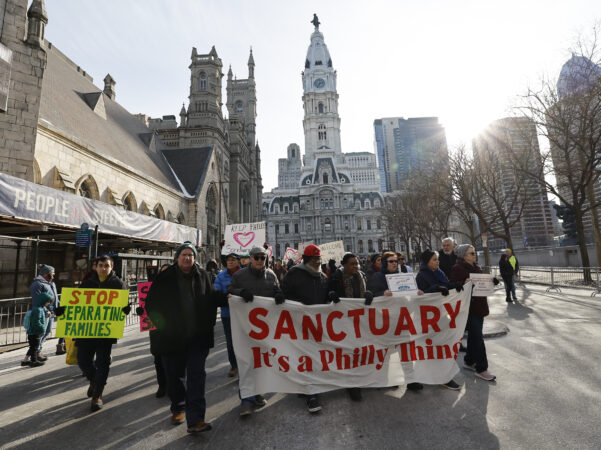

  • Most Philadelphians back sanctuary city status as Trump threatens federal funding, poll shows

    Most Philadelphians back sanctuary city status as Trump threatens federal funding, poll shows

    A significant majority of residents want Philadelphia to remain a sanctuary for immigrants, according to a new poll that shows the overwhelmingly Democratic city is undeterred by President Donald Trump’s threats to defund so-called sanctuary cities.

    A recent Suffolk University/Philadelphia Inquirer poll that surveyed 500 city residents asked respondents if Philadelphia should remain a sanctuary city, “even if it means losing federal funding.” A commanding 59% answered “yes,” with only 28% saying “no” and the remainder undecided or unwilling to say.

    The support for Philadelphia’s sanctuary status was consistent across age and racial groups. The only geographic region where a plurality of respondents answered “no” was far Northeast Philadelphia, which is among the most politically conservative areas of the city.

    The survey question did not elaborate on what a loss of federal funding could mean for the city in terms of the impact on residents. Philadelphia received $2.2 billion from the federal government in fiscal year 2024 to pay for a wide range of critical services, including infrastructure needs, as well as healthcare, food, and housing assistance for low-income people.

    (function(){function e(){window.addEventListener(`message`,function(e){if(e.data[`datawrapper-height`]!==void 0){var t=document.querySelectorAll(`iframe`);for(var n in e.data[`datawrapper-height`])for(var r=0,i;i=t[r];r++)if(i.contentWindow===e.source){var a=e.data[`datawrapper-height`][n]+`px`;i.style.height=a}}})}e()})();

    Still, the results of the poll show relatively widespread support in Philadelphia for the city’s sanctuary policies, which include its practice of not complying with detainers issued by U.S. Immigration and Customs Enforcement without a court order. Those detainers are effectively requests submitted by federal agents to local law enforcement agencies that ask to hold undocumented immigrants in custody.

    Mayor Cherelle L. Parker’s administration does not refer to Philadelphia as a “sanctuary city” — she and her top aides instead call it a “welcoming city,” language that has been increasingly adopted nationwide as Trump and his allies in the Republican Party have sought to crack down on sanctuary cities.

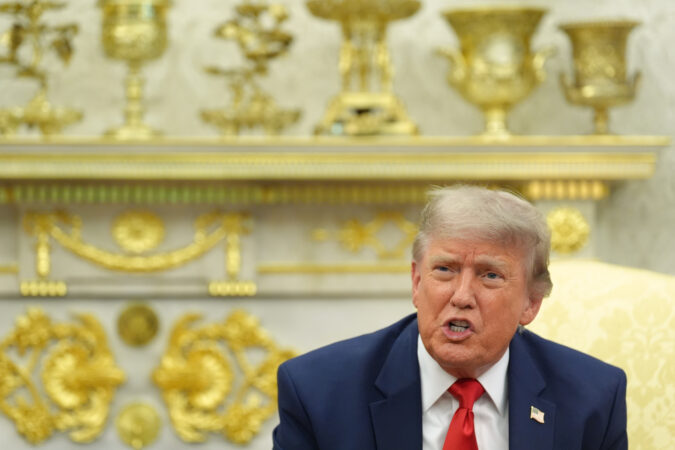
    President Donald Trump travels to the Lehigh Valley to visit Mack Trucks in Macungie on Tuesday, June 23, 2026.

    The sanctuary policies predate Parker’s tenure and were in place under an executive order signed by former Mayor Jim Kenney. They were codified into law earlier this year after City Council passed a package of legislation aimed at limiting ICE’s operations in the city and instituting some of the nation’s toughest restrictions on ICE.

    In May, Parker signed six of the seven bills in the package, but took no action on one that bars law enforcement officers from concealing their identities, including by wearing masks. City Solicitor Renee Garcia wrote in a letter to Parker that the legislation may not be legally enforceable, but the mayor did not veto the bill, allowing it to become law.

    Last week, the Trump administration sued Philadelphia and some of its top officials, including Parker, over the mask-ban ordinance. The Trump administration contended that the law is “blatantly unconstitutional” and undermines federal law enforcement’s ability to do its job.

    The lawsuit is one of several filed across the nation by the Trump administration challenging local laws related to immigration as federal authorities carry out the massive deportation campaign promised by the president.

    The White House has also targeted sanctuary cities through executive orders, including one the president issued last year directing the Department of Justice and the Department of Homeland Security to ensure that sanctuary jurisdictions “do not receive access to federal funds.”

    That effort is also tied up in litigation. Last year, a federal judge issued an injunction blocking the Trump administration from denying funding to jurisdictions that limit cooperation with ICE, saying the White House could not impose funding conditions without authorization from Congress.

    Staff writer Sean Collins Walsh contributed to this article.

  • 1 in 4 Philadelphians say preserving historical sites is city’s top ‘responsibility to the nation,’ poll shows

    1 in 4 Philadelphians say preserving historical sites is city’s top ‘responsibility to the nation,’ poll shows

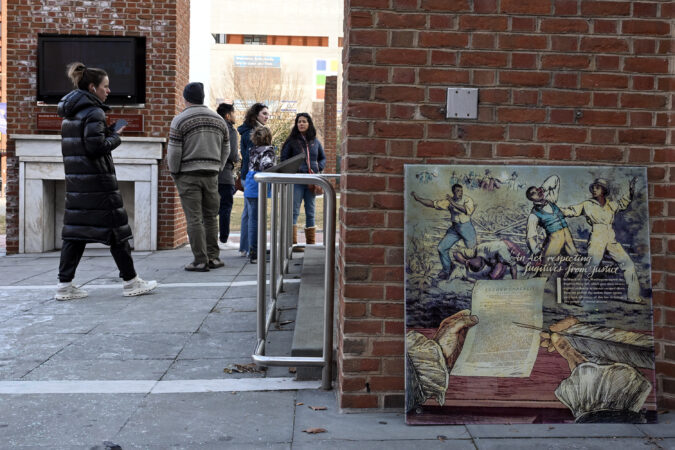
    President Donald Trump’s administration got the green light from a federal appeals court last week to install its own version of the historical exhibits at the President’s House Site on Independence Mall after it dismantled panels about slavery there earlier this year.

    But that may not jibe with what many Philadelphians want to see.

    A new Suffolk University/Philadelphia Inquirer CityView poll of 500 city residents found that a quarter of respondents believe the city’s primary responsibility to the nation is to protect its historical sites for future generations. Nearly 27% said the city’s primary responsibility to the nation is to serve as a model for “diverse, multicultural urban progress.”

    The poll, conducted from June 16 to 20 and released this week, comes after a ruling by the U.S. Court of Appeals for the Third Circuit in favor of the Trump administration and just weeks ahead of celebrations in Philadelphia for the nation’s 250th birthday.

    (function(){function e(){window.addEventListener(`message`,function(e){if(e.data[`datawrapper-height`]!==void 0){var t=document.querySelectorAll(`iframe`);for(var n in e.data[`datawrapper-height`])for(var r=0,i;i=t[r];r++)if(i.contentWindow===e.source){var a=e.data[`datawrapper-height`][n]+`px`;i.style.height=a}}})}e()})();

    The appeals court’s ruling last week was a turning point in a legal battle waged by Mayor Cherelle L. Parker’s administration that questioned the federal government’s authority to interfere in what information is presented at the President’s House. Both the Third Circuit ruling and a recent decision by a Boston-based federal appeals court regarding National Park Service exhibits nationwide have started to pave the way for the Trump administration to make unprecedented changes to displays of U.S. history in the region.

    Alacia Maxton, 36, a respondent to the poll, said frustration with the attacks on the President’s House has been at the forefront of her mind as the city prepares to celebrate the Semiquincentennial.

    For nearly two decades without opposition, the site — which opened in December 2010 — has memorialized the nine people George Washington enslaved at his Philadelphia residence during the founding of America and detailed the brutality of slavery.

    Last month, it was designated as an endangered historic site by a major national historic preservation organization. The new panels proposed by the Trump administration to replace the removed exhibits at the President’s House soften Washington’s role as an enslaver, according to those working to protect the site.

    “I don’t like the idea that certain groups of people want to whitewash history and erase what doesn’t make them feel comfortable,” said Maxton, who lives in Overbrook Park.

    Carolyn Keys, 61, another resident who responded to the poll, said the absence of the some of the original panels is like “missing pieces to a puzzle.”

    “Every piece was specifically put together for a purpose,” said Keys, 61, a veteran who lives in the Tacony neighborhood.

    David Paleologos, director of the Suffolk University Political Research Center, said Philadelphians valuing preserving history and being a model for progress is a particularly localized issue.

    “Which I think makes this really important information for the nation to see,” Paleologos said.

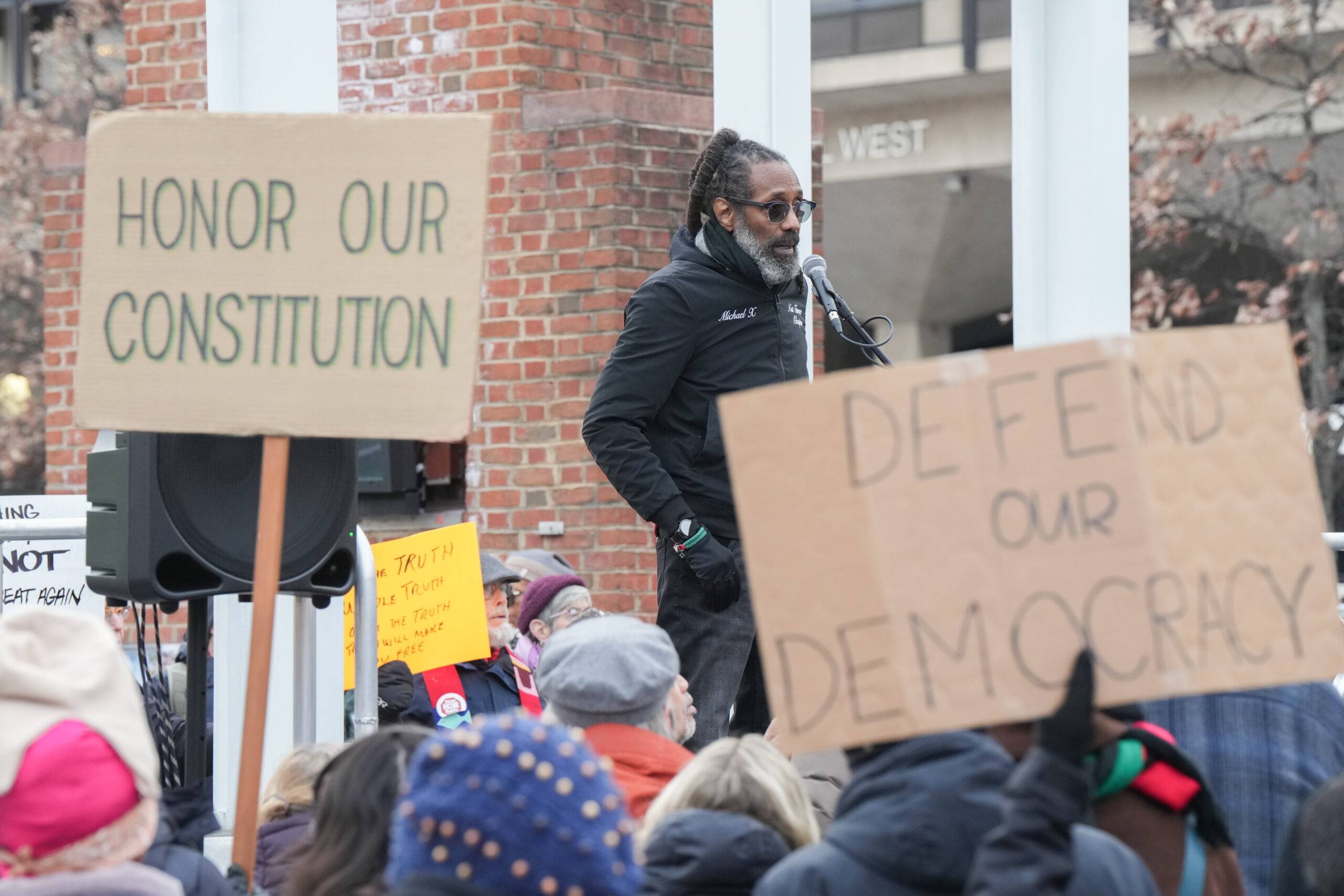
    Philadelphia Lawyer Michael Coard speaks at a rally at the President’s House Site in response to the removal of the President’s House exhibit in Old City, in Philadelphia, Tuesday, Feb. 10, 2026, in Philadelphia

    A bipartisan grassroots group of Philadelphians — called the President’s House/Slavery Memorial Coalition — has been spearheading efforts to protect the historical site, which has been under scrutiny from the Trump administration since last summer.

    The group has often discussed a desire for its work in Philadelphia to be a model for preserving history elsewhere in the country.

    Michael Coard, an attorney and founder of one of the leading groups in the efforts to protect the President’s House, said in a statement Wednesday that the poll results show that “Philadelphians understand the importance of protecting our shared history.”

    “Black history is American history, and we have both an obligation and, based on these results, a clear mandate to ensure that the stories of enslaved Africans and their descendants are preserved, honored, and accurately told,” Coard said.

    Other respondents had different ideas for Philadelphia’s primary responsibility as the birthplace of democracy: Roughly 23% said “leading national conversations on civil rights and economic justice” was a top priority, while almost 17% said the city’s duty to the nation is “proving that a large, complex city can govern itself equitably.”

    These insights come as Philadelphia is bracing for an influx of tourists, with particular emphasis on its history as the nation’s birthplace, ahead of the Semiquincentennial celebrations.

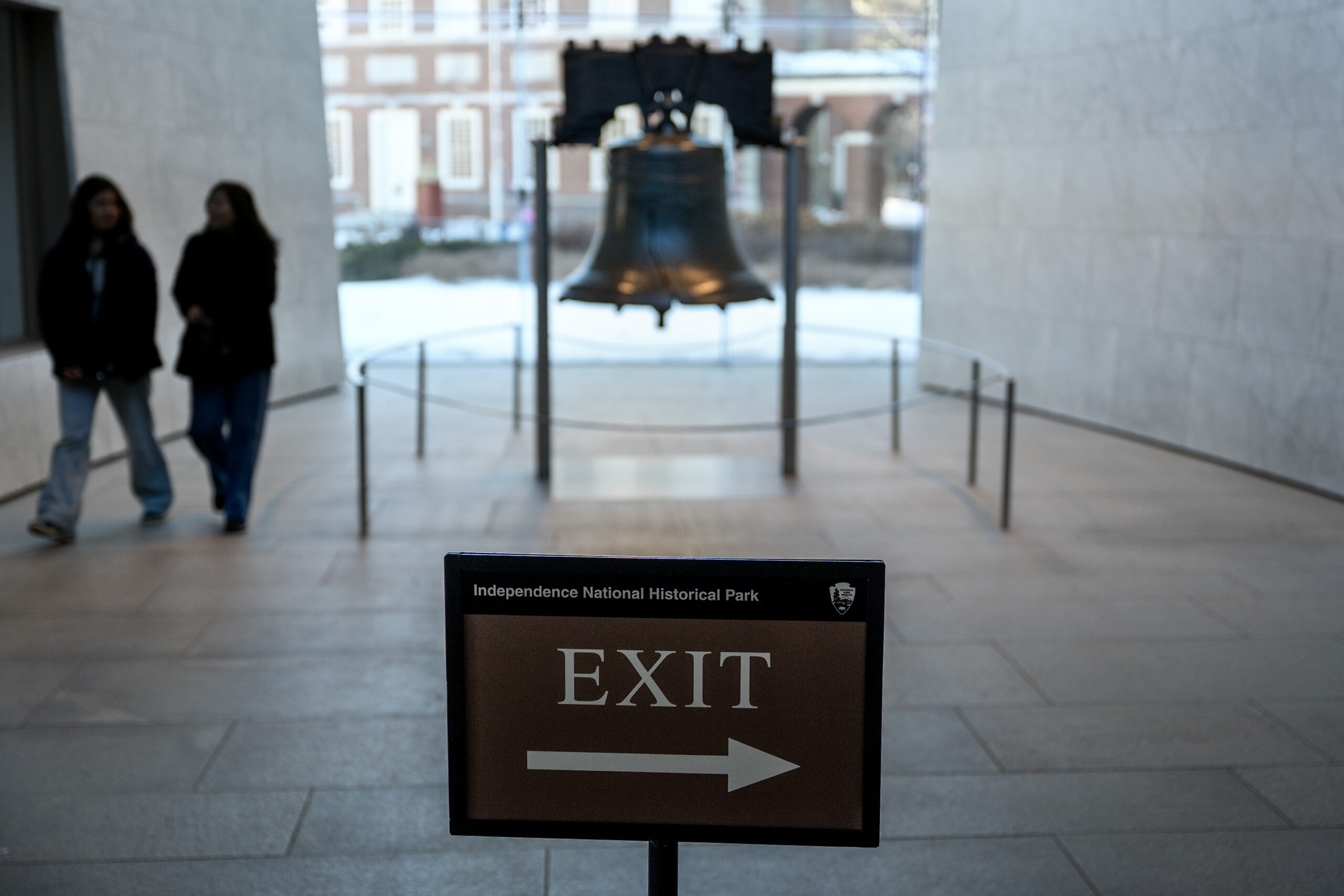
    The Liberty Bell in Independence National Historical Park Feb. 2, 2026.

    Almost 28% of the Philadelphia residents polled see the Liberty Bell — in comparison to Independence Hall, the National Constitution Center, and the Rocky Steps — as the city landmark that best embodies American democracy.

    But hanging over the impending 250th celebrations is the uncertain fate of the President’s House, said Leeanna Lundy, 34, of West Philly.

    “For them to remove where the most impactful part of where history took place, it’s like mind-boggling,” Lundy said.

    Staff writer Michelle Baruchman contributed to this article.

  • This Philly City Hall power couple stands to reap up to $750K by briefly retiring — then continuing to work for the city

    This Philly City Hall power couple stands to reap up to $750K by briefly retiring — then continuing to work for the city

    Councilmember Curtis Jones Jr. and City Representative Jazelle Jones, who are married, are poised to collect up to $752,000 in combined payouts from Philadelphia’s widely criticized Deferred Retirement Option Plan, an early retirement incentive that two decades ago sparked a major scandal in City Hall.

    But neither of the city officials is actually retiring.

    DROP is available to all city workers. But both of the Joneses are using the program in a way that is not available to a vast majority of municipal employees: temporarily retiring and immediately returning to their jobs, allowing them to receive their DROP payouts before the end of their city government careers.

    Curtis Jones, 68, who has represented the 4th District for 18 years, is able to access that perk because he is a long-serving lawmaker. Jazelle Jones, 70, a high-ranking appointee of Mayor Cherelle L. Parker, received an exception from the mayor to be rehired after her DROP retirement.

    Following her one-day retirement, Jazelle Jones also received a $97,000 payout for unused sick and vacation time, a benefit normally reserved for employees permanently departing from city government.

    FILE – Curtis Jones, Jr. declares victory with his wife Jazelle and his family in the Council race in his home in West Philadelphia on Tuesday, May 15, 2007.

    Lauren Cristella, president of the government watchdog group Committee of Seventy, said the administration’s handling of the situation further undermines public confidence in the DROP program.

    “Rehiring an employee to the same position the day after she collects a DROP payout defeats the purpose of the program,” Cristella said. “DROP exists to manage workforce transitions, not to serve as a bonus for employees with no intention of actually leaving.”

    Established in the late 1990s during Mayor Ed Rendell’s administration, DROP was originally pitched as a cost-neutral way to give the city predictability over retirements and entice high-earning employees to step down early.

    But the program ended up costing the city far more than expected, and voter frustration with elected officials’ enrollment in DROP was credited with ending the political careers of several Council members.

    At the height of that controversy in 2010, Curtis Jones voted to enact a law banning future elected officials from accessing DROP. But he and others already serving at that time were “grandfathered” in, Curtis Jones said.

    He would be eligible to collect a $432,000 lump-sum DROP payment in August 2028. However, Curtis Jones said he plans to run for a sixth Council term in 2027, using the loophole to briefly retire to collect the payout before resuming his post.

    In interviews, the Council member, who earns $165,000 annually, said he instead plans to retire in December 2027, collecting a reduced DROP payment closer to $350,000. If he is reelected, the maneuver would allow him to hang on to his Council seat for another four years by being sworn back into office the following month.

    He justified his enrollment in DROP by saying that times have changed since the 2010 vote — both for the city’s finances, which have dramatically improved, and for his health. He said he is suffering from glaucoma, an incurable disease that causes vision loss.

    “Over the years, I’ve had four surgeries on my eyes,” said Curtis Jones, who represents the Northwest and West Philadelphia-based Council district. “I’ve actually lost 40% of my vision.”

    Curtis Jones said he enrolled in DROP “so that if I was blind, I wouldn’t have been without resources.”

    A centrist Democrat, he endorsed Parker’s 2023 campaign for mayor and is viewed as her most reliable ally on Council.

    His wife, Jazelle Jones — who receives a $199,000 annual salary for serving as an ambassador for the city and planning special events — temporarily retired for one day last year and was then immediately rehired by the city with a $4,000 raise.

    The Philadelphia Administrative Board, which oversees personnel matters, granted her an exception to return to her job. That board is led by Parker, a staunch defender of DROP, and other top officials in her administration.

    The mayor said she personally asked Jazelle Jones to return to work, and defended the decision.

    Parker cited Jazelle Jones’ “lived experience” and the potential disruption her departure could cause for major events this year, like the city hosting World Cup games.

    “The essential nature of her role is why I asked” Jazelle Jones to continue working, Parker said Tuesday in a phone interview. “And I’m unapologetic about asking. It’s one of the most important decisions I’ve made as mayor.”

    Jazelle Jones was originally scheduled to retire in September 2024. Instead, in a departure from typical DROP procedures, she continued to work as the city representative through that date and took her one-day retirement a year later, in September 2025.

    None of those changes appear to have been approved at the time they occurred by the city’s administrative board. It was not until March 2026 when the board retroactively approved exceptions allowing Jazelle Jones to receive an extra year of DROP — resulting in the 2025 retirement date — and her rehiring, according to board minutes.

    Parker declared an emergency in order to approve the extra year of DROP for Jazelle Jones, the mayor’s office said. The move effectively increased her retirement payout by almost 20%, to nearly $320,000.

    Parker’s office did not respond to questions about the deviation in the approval timeline.

    Jazelle Jones did not respond to a request for comment through the mayor’s office.

    ‘Tools in the toolbox’

    When city employees enroll in DROP, they select a mandatory retirement date no more than four years in the future. Between the time they sign up for the program and their selected retirement date, the city pays their regular salaries and makes pension payments as if they had already retired.

    The deferred pension payments are deposited into an interest-bearing account that each city worker collects in a lump-sum payout four years after enrolling. The departing employee then begins to receive standard monthly pension checks, which are calculated based on when they entered DROP.

    City workers make contributions from their salaries to the municipal pension fund. But their contributions do not cover all of the pension fund’s liabilities, let alone the added costs associated with DROP, which ultimately come out of taxpayer coffers.

    Philadelphia’s original DROP law created a loophole in which elected officials, who generally serve four-year terms, can enter into the program, retire a day before their terms end, and rejoin the city workforce when they are sworn in again the following day.

    The revelation that many members of Council had enrolled in DROP rocked City Hall in the early 2000s. The scandal was credited for several members’ decisions to not run for new terms in 2011 and was widely seen as the reason former Councilmember Frank Rizzo Jr. lost reelection that year.

    A 2017 city controller report found that, cumulatively, the program had cost the city in excess of $277 million despite initially being projected as budget-neutral.

    While DROP programs were once common in cities across the country, the Government Finance Officers Association — a national organization that Philadelphia officials regularly cite for best practices when shaping the city budget — in 2020 warned they led to unpredictable costs and detrimental impacts on municipal pension funds.

    “Government defined benefit plans should not include deferred retirement option programs for a variety of reasons,” the GFOA said a statement.

    Parker, however, has defended the program as a valuable recruitment and retention tool.

    “Government doesn’t pay you as much as the private sector, so we offer a great benefits package,” Parker told reporters in March. “DROP, the defined-benefit pension — I’m never going to be for taking away any of the tools in the toolbox that would allow the city of Philadelphia to compete.”

    ‘Semi-hypocritical’

    In 2008, when Council was in the early stages of considering a ban on elected officials enrolling in DROP, some wanted the prohibition to apply not just to future officeholders, but current ones as well.

    Curtis Jones, a freshman legislator at the time, agreed.

    “It would be semi-hypocritical if I say [end it] for only future elected officials,” he said then.

    The bill that Council eventually passed did not prohibit current members from enrolling in DROP. Now, Curtis Jones is set to become the first lawmaker to benefit from the program in years.

    “At the time, when I was 20/20 vision, [banning lawmakers from using DROP] was my decision. And now that I’ve had some surgeries, I’ve changed that position,” Jones said Monday. “It’s an earned benefit that I contributed to that I would like to receive.”

    Cristella, of the Committee of Seventy, accused Jones of hypocrisy.

    “Being grandfathered in is not the same as acting with integrity,” she said.

    At left is Councilmember Curtis J. Jones Jr. shaking the hand of actor and rapper Will Smith who was honored with a street naming, Will Smith Way, at N. 59th and Lancaster, across from Overbrook High School, Wednesday, March 26, 2025.

    Curtis Jones enrolled in DROP in August 2024, meaning he is required to retire no later than August 2028. He has made no secret of his intent to run for a sixth term next year, even publicly musing about delaying bridge repairs in his district so as not to subject potential voters to traffic jams.

    Were he to win reelection and collect his maximum $432,221 DROP payout, Curtis Jones’ scheduled retirement date would fall within the first year of his next four-year term.

    However, the lawmaker said in an interview that he intends to complete his next Council term. To achieve that, he said he would instead resign in December 2027, after the November election but just before he would be sworn into a new term in January 2028.

    “I am going to resign, then be sworn in [if], God willing, I’m reelected,” he said.

    In this scenario, Curtis Jones said, he would receive a reduced DROP payout by forgoing the final nine months of payments into his interest-bearing account by taking his brief retirement early. He would be effectively rehired to his city job by being sworn back into office.

    He added that he hopes State Rep. Morgan Cephas, a West Philadelphia Democrat, will succeed him in the 4th Council District after the 2031 elections.

    Cephas declined to comment.

    In 2023, Curtis Jones ran for Council president, but lost to Kenyatta Johnson. He said he is now relieved he did not win.

    “I am functional. My staff kind of helps to keep that good,” Jones said. ”I am thankful to God that I did not get elected [Council] president. Do you know how much reading they do? I could have not kept up with all of the numbers and stuff like that, so I know my limitations.”

    ‘I had heard whispers’

    During Jazelle Jones’ one-day retirement in 2025, the 25-year city employee earned a $319,757 DROP payout and cashed out nearly 1,000 hours of unused sick and vacation time, worth $97,000, as all city workers are entitled to do upon their last day of service.

    The very next day, she was back on the job, with a small raise that brought her salary to about $199,000.

    Michael Newmuis (center), the city’s 2026 Director Philadelphia, rings the bell to kick off the city’s “Ring It On! One Philly, A United Celebration” at Independence Visitor Center Wednesday, Sept. 3, 2025. Mayor Cherelle L. Parker announced the new initiative that puts city neighborhoods at the forefront of the city celebrations of America’s 250th birthday in 2026. At right is Jazelle Jones, City Representative and Director of Special Events.

    Despite saying Jazelle Jones was needed to coordinate the city’s 2026 festivities, Parker has also appointed a separate 2026 director, Michael Newmuis, to a $175,000 position to also oversee this year’s major events.

    The mayor said Jazelle Jones was irreplaceable given her experience managing large events like the 2015 papal visit, the 2016 Democratic National Convention, the 2017 NFL Draft, and the Eagles’ Super Bowl wins.

    “Could we have hired five to 10 people to try to do the job Jazelle does?” Parker asked. “We could have tried, but there would be no reason for me to do that when I had the best person.”

    Parker indicated she was aware of the steep price tag required to keep Jazelle Jones working through 2026 when the mayor first appointed her as city representative shortly after taking office in 2024.

    “I had heard whispers,” Parker said. “They said, ‘You’re going to lose Jazelle.’”

    City personnel records show Jazelle Jones enrolled in DROP in September 2020, meaning her first planned retirement date was September 2024, just nine months after Parker appointed her to the role.

    Jazelle Jones’ $97,000 payout for unused paid time off was deposited into her account this month, four days after The Inquirer contacted the mayor’s office about her rehiring. The mayor’s office did not respond to a question about the delay in her payment.

    Unlike most newly hired city employees, who are entered into a hybrid 401(k)-style pension plan, she was granted an exception allowing her to continue paying into an older, more generous pension plan.

    Cristella, from the Committee of Seventy, said the decision to hire Jazelle Jones into a vital role months prior to her mandatory retirement date was irresponsible.

    “It is also deeply troubling that the city would retain a high-salaried senior official with full knowledge that a large DROP payout was imminent,” Cristella said. “If city leadership knew and proceeded anyway, that is a failure of fiscal stewardship that demands explanation.”

    Staff writer Max Marin contributed to this article.

  • White House seeks $87.6B from Congress for Iran war costs, U.S. farmers, and Ebola response

    White House seeks $87.6B from Congress for Iran war costs, U.S. farmers, and Ebola response

    WASHINGTON — The White House has formally requested $87.6 billion mostly to replenish the Pentagon after the U.S. war against Iran, submitting the request to Congress at a politically difficult time as Republican and Democratic lawmakers have objected to any further military action.

    The Office of Management and Budget sent the supplemental spending request on Wednesday. It arrived just hours after President Donald Trump assailed Republican senators during a private lunch — engaging in a shouting match with one — over their votes to approve a war powers resolution that would halt further hostilities.

    The request is mostly for expenses incurred by the Defense Department as part of Operation Epic Fury, the U.S.-led attack on Iran. But it also includes a range of other items, including aid to American farmers, help for the Ebola crisis in Africa, and other needs closer to home, including restoration projects in Washington, D.C.

    “I urge the Congress to take action on these important and urgent requests as soon as possible,” said OMB Director Russ Vought in a letter to House Speaker Mike Johnson.

    It’s unclear how quickly the House and Senate could act on the White House’s request, or if Congress takes up the matter at all. The funding faces a difficult path because many lawmakers could view any votes as a reflection of test of their support for the war effort.

    Yet the White House was clear to include provisions to interest lawmakers from various regions, including $1 billion to assist “the final design and construction of a modernized Penn Station in New York City,” which would be of interest to the Senate Democratic Leader Chuck Schumer and House Democratic Leader Hakeem Jeffries, both of New York.

    The administration said it is requesting $67 billion for the Department of Defense for what it said were urgent needs related to the war against Iran, including “funding for military personnel and readiness expenses, operational costs to rebuild stocks.”

    It also wants $11.1 billion toward economic assistance for American farmers, $1.4 billion for the Ebola virus outbreak in Central Africa and requests $500 million to support ongoing efforts “to complete restoration and construction projects in and around Washington, D.C.”

    The package also includes a collection of policy proposals that the administration strongly supports, and which are certain to raise interest among lawmakers.

    Among them, the package proposes revisions to federal regulations of hemp products that have long been in dispute, changes to the year-round sales of renewable fuels and lifting of restrictions around federal investment support in Venezuela.

    Washington Sen. Patty Murray, the lead Democrat on the Senate Appropriations Committee, said the request is not merely to pay for “the president’s disastrous war, but an attempt to secure tens of billions of additional dollars for unrelated Pentagon priorities that should rightly be considered through the annual appropriations process.”

    Murray added: “I will closely review this request in its entirety and ensure we take care of our service members, but I will not rubber-stamp tens of billions more for this disastrous war of choice.”

    Rep. Tom Cole (R., Okla.), the chairman of the House Appropriations Committee, and Rep. Ken Calvert (R., Calif.), who chairs the panel’s subcommittee on Defense, said in a joint statement, “President Trump’s request reflects the reality that our defense strength must be maintained, not merely demonstrated.”

    The biggest share of defense funding, $21 billion, will go to weapons munitions, with another $17.3 billion for operational costs and $12.1 billion for other classified programs. Funds are also requested to cover fuel costs, drone manufacturing, and cybersecurity.

    The money for farmers would provide $10 billion in economic assistance to row and specialty crop farmers and $1.1 billion specifically to Florida agriculture producers who suffered losses from this past year’s winter storms.

  • Ex-chief of staff to former NYC Mayor Eric Adams charged with taking bribes

    Ex-chief of staff to former NYC Mayor Eric Adams charged with taking bribes

    NEW YORK — A former chief of staff to ex-New York Mayor Eric Adams was arrested Wednesday in a federal bribery case about a lucrative migrant shelter contract, the latest sign that prosecutors continue to scrutinize Adams’ inner circle months after the scandal-bruised Democrat left office.

    The charges against Frank Carone are the latest in a string of corruption allegations leveled at the former mayor — who was himself indicted on bribery and other charges that were later dismissed — and key aides. Separately, federal authorities searched the homes of current and former New York Police Department leaders Wednesday in connection with a different bribery investigation.

    Adams was not accused of wrongdoing in Carone’s indictment. It alleges the ex-chief of staff exploited his position to get more than $100,000 in payoffs for steering a migrant shelter contract to a hotel that social service officials had deemed unsuitable.

    “Frank Carone was entrusted to run our city government and instead put his own wealth and status above duty,” Assistant U.S. Attorney Sarah Winik told a court.

    Carone and his brother, Anthony Carone; hotel owner Yan Po Zhu, and hotel employee Crystal Chen pleaded not guilty to various charges. The brothers sat across from each other at a defense table, where Anthony Carone rubbed his face and Frank Carone appeared to read along during the proceedings.

    Frank Carone’s lawyer, Arthur Aidala, said outside court that the case was based on “assumption after assumption after assumption.”

    “There is not one fact that indicates Frank Carone did anything specific to influence anything in our government,” Aidala said. The other defendants and their attorneys declined to comment.

    Frank Carone and the Sabrina Carpenter church video

    Carone, a former Brooklyn Democratic Party lawyer and longtime political power broker, is widely credited as one of the architects of Adams’ political rise. He also drew attention for his financial dealings with a Roman Catholic priest who let pop star Sabrina Carpenter film scenes for a provocative music video in a church.

    Federal investigators later subpoenaed the church. “They found nothing,” Aidala said Wednesday, contending that the government first targeted Carone, then looked for a case.

    Carone played a key role in Adams’ 2021 mayoral campaign, was chief of staff in 2022, then left and formed a political consulting firm.

    He “dedicated decades of his life to public service, the legal profession and helping countless individuals, businesses, and charitable organizations throughout New York,” Adams spokesperson Todd Shapiro said in a statement.

    Indictment focuses on how the hotel became a shelter

    Starting in 2022, the city scrambled to expand its shelter capacity amid an influx of migrants. Zhu’s hotel got $6.8 million to shelter some of the new arrivals, though the city’s Social Services Department had repeatedly rejected the facility, which was small and in a Queens neighborhood where residents objected to more shelters, according to prosecutors.

    Prosecutors said in court papers that Frank Carone accepted around $120,000 in bribes from Zhu and Chen to intercede on the hotel’s behalf. The money was passed through Anthony Carone’s law firm, according to the indictment.

    In a September 2022 text message, Zhu asked Frank Carone for help getting the hotel an immediate one-year contract, according to the indictment. It said Carone replied by asking for the address, and Zhu gave it, adding: “Thank you my big guy.”

    In December 2023, Zhu texted Carone: “I asked my partners to pay you for a year,” according to the document. Carone, who is also charged with obstruction of justice, deleted the message after learning he was under investigation, prosecutors said.

    Zhu “is anxious to establish his innocence,” lawyer Stephen Scaring said before the arraignments. All four defendants later were released on bond, ranging from $100,000 for Chen to $8 million for Zhu.

    Police officials’ homes searched in unrelated probe

    Separately Wednesday, the FBI and the NYPD executed search warrants at the homes of NYPD Chief of Manhattan South James McCarthy and former Deputy Commissioner Tarik Sheppard, and federal agents also searched former Chief of Department Jeffrey Maddrey’s home, according to a law enforcement official briefed on the searches. The official, who was not authorized to discuss the investigation and spoke on condition of anonymity, said the searches were part of a bribery investigation that grew out of an inquiry into Maddrey.

    There was no immediate response to an inquiry to Maddrey’s attorney. Attorney information for Sheppard and McCarthy was not immediately available.

    There is no public indication of any arrests as part of those searches.

    They were not related to Frank Carone’s arrest, according to another person familiar with the matter who also was not authorized to publicly discuss details of the case and spoke on condition of anonymity.

    Once the NYPD’s highest-ranking uniformed officer, Maddrey resigned in 2024 over allegations that he demanded sex from a subordinate in exchange for opportunities to earn extra pay. Maddrey denied the claims of a quid pro quo.

    Adams was indicted in 2024 on charges of accepting illegal campaign contributions from Turkish officials and others in exchange for political favors. The case was tossed by federal Justice Department leaders who said it was distracting Adams from assisting in Republican President Donald Trump’s immigration crackdown. Adams has denied wrongdoing.

    After skipping last year’s Democratic primary, Adams mounted but eventually abandoned an independent campaign for a second term.

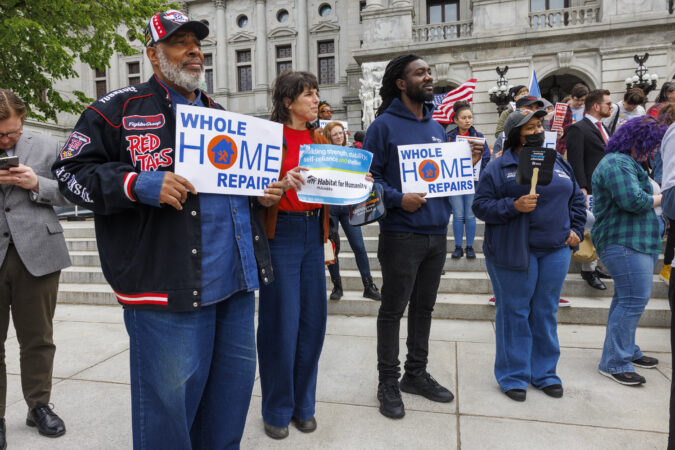
  • A new bipartisan housing law was on track to bring Pennsylvania’s home-repair program nationwide. Then Trump refused to sign the bill.

    A new bipartisan housing law was on track to bring Pennsylvania’s home-repair program nationwide. Then Trump refused to sign the bill.

    WASHINGTON — A Pennsylvania program that assists homeowners and small landlords by financing repairs was on track Wednesday to expand nationwide, after Congress this week passed a bill that both Republicans and Democrats are celebrating as the first major federal housing law in decades.

    Tucked into the 374-page omnibus legislation is a pilot version of a federally backed Whole-Home Repairs program — an idea that was originally sponsored by State Sen. Nikil Saval (D., Philadelphia) and passed in Pennsylvania in 2022.

    The program offers grants or loans to address safety, habitability, and efficiency concerns.

    But despite wide bipartisan support for the program and dozens of other housing reforms in the larger bill, final approval was derailed on Wednesday when President Donald Trump canceled the bill-signing ceremony in an attempt to force Congress to first pass more restrictive voter-ID laws.

    Democrats and some Republicans quickly rebuked the president, who still made a rare appearance on Capitol Hill to meet with Senate Republicans. The intraparty meeting turned contentious, according to multiple reports, while Democrats noted they had enough votes to overturn Trump’s veto if he holds out long enough.

    “It’s a mess,” said U.S. Sen. Andy Kim (D., N.J.). “Finally, we’re doing something that the American people want. We got bipartisanship. We worked on it forever. … Then he just parachutes in and just blows it all up here at the end.”

    The 21st Century ROAD to Housing Act aims to incentivize housing construction, restrict large institutional investors from buying single-family homes, improve financial literacy, and more.

    More than a year in the making, it includes a separate stand-alone Whole-Home Repairs Act that U.S. Sen. John Fetterman (D., Pa.) had introduced in each of the last two sessions of Congress. Fetterman’s bill merged last year into the larger bill while keeping many of the same provisions as the Pennsylvania-level program.

    Households that earn less than 80% of the area median income are eligible for grants, while small landlords with affordable units can access loans, including forgivable loans.

    Funded with more than $120 million in COVID-era federal stimulus money, the program has been limited amid high demand, with as many as 18,000 homes on the waiting list.

    Saval said he expects the national version to also reflect that level of “immense demand” — particularly as the program starts small and as homeowners across the country face higher costs to maintain their residences.

    “This is a huge issue. There are some 200,000 homes in Pennsylvania alone that have moderate to severe deficiencies,” Saval said. “Everyone is dealing with rising energy costs. Everyone’s dealing with the cost of materials and labor and the inability to pay for all that.”

    Addressing those kinds of affordability concerns, which have become a top-of-mind political issue during this year’s high-stakes midterm elections, is a rare bipartisan effort to emerge from the U.S. Capitol.

    Philadelphia-area lawmakers on both sides of the aisle had spent months advocating for the bill.

    U.S. Sens. Dave McCormick (R., Pa.) and Lisa Blunt Rochester (D., Del.) — members of the Senate committee that advanced the legislation — both celebrated the final passage by talking about its impacts on affordability and “cutting red tape.” Kim called it a “historic” move to bring costs down.

    “This package comes at a critical moment,” Blunt Rochester said in a statement, noting a nationwide housing shortage of as many as 7 million units. Five bills she separately sponsored — to accelerate building, increase investment in community development projects, develop zoning and land-use policies, and more — were featured in the final law.

    The Whole-Home Repairs provision of the legislation was not a guarantee as negotiations developed over the last year. House Republicans were generally skeptical of creating a new government program, and specifically critical of the policy’s tenant protections, according to a source familiar with the negotiations. But their counterparts in the Senate, and Democrats in both chambers, helped keep it in the larger bill.

    Fetterman said in a statement that Whole-Home Repairs “ensures families can stay in their homes” and that passing it had been a priority since he entered the Senate in 2023.

    “I’ve consistently maintained that our housing crisis needs real solutions that help address the problems at the center,” Fetterman said.

    Saval, who said he made multiple trips to Capitol Hill to work with sponsors and lobby for Whole-Home Repairs, said he was “thrilled” by the inclusion of a program that he and the coalition of advocates who helped push the idea had always envisioned as a model that could be replicated.

    He said he expects the pilot program to prove successful in “a few states” where it is able to launch. Unlike previous version of the federal bill that would have allocated $30 million to the pilot, there is no specific funding number for Whole-Home Repairs in the 21st Century ROAD to Housing Act.

    The legislation calls for the secretary of the U.S. Department of Housing and Urban Development to identify between two and 10 “implementing organizations” every year during the pilot, which is set to run through October 2031. The organizations will be local or state governments that administer the programs.

    Saval said that no matter how much funding is allocated, it “will undoubtedly fall short of the need,” but that its effectiveness will spur further investment.

    “It repays itself,” Saval said. “It repays itself in stabilized communities. It repays itself in stabilized property values, in people remaining in their homes rather than in unsafe or unhealthy homes, or rather than abandoning them.”

    Staff writer Jake Blumgart contributed to this article.

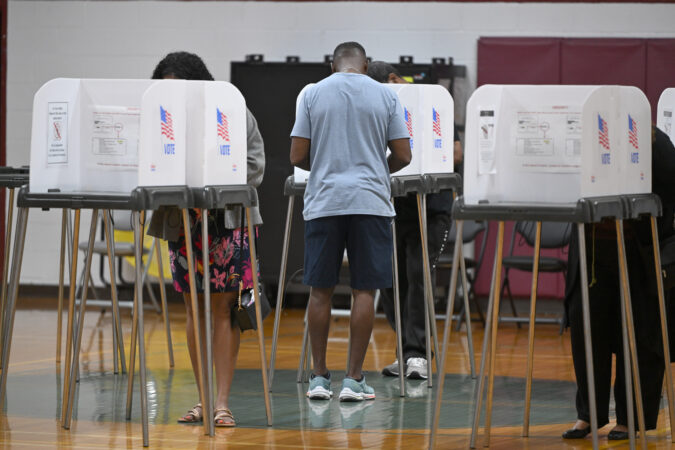
  • Federal judge bars Trump from implementing proof of citizenship requirement to vote

    Federal judge bars Trump from implementing proof of citizenship requirement to vote

    A federal judge on Wednesday permanently barred President Donald Trump’s administration from implementing most of his first executive order on elections, part of which sought to require people to show documentary proof of citizenship when they register to vote.

    The ruling by U.S. District Court Judge Denise Casper in Boston effectively converts a preliminary injunction she issued a year ago, in which she temporarily blocked many of Trump’s efforts to overhaul elections, into a permanent ban.

    Casper rejected the Republican administration’s argument that the lawsuit to block the changes brought by Democratic state attorneys general was premature because the rules had yet to be put in place. Instead, she agreed that the Constitution gives states and Congress the authority to regulate elections, and that Trump’s requirements violated the separation of powers.

    The Constitution “does not grant the President any specific powers over elections,” wrote Casper.

    Among other proposed changes, Trump’s order would have required people to provide documentary proof of citizenship when registering to vote, prevented mail ballots from being counted if they arrive after Election Day, even if they were postmarked by then, and punished states that failed to comply by withholding certain federal money.

    In a statement, New York Attorney General Letitia James said she was grateful the court had blocked Trump’s “unconstitutional attempt to seize control of our elections” and would continue to defend voting rights in this year’s midterm elections.

    “Generations of Americans fought tirelessly for the right to vote, and we honor their legacy by protecting that right against anyone who tries to undermine it,” said James, a Democrat.

    California Attorney General Rob Bonta, whose state was the lead plaintiff in the case, said the ruling reaffirmed the constitutional principle that it s up to the states and Congress to set election rules.

    “While we are proud of this result, we are clear-eyed that President Trump’s attacks on voting rights and our elections show no signs of slowing down,” Bonta, a Democrat, said in a statement. “So let me be clear: we will keep fighting back every step of the way.”

    Requests for comment sent to the White House and the U.S. Department of Justice were not immediately returned.

    The ruling was the latest in a series against the elections executive order Trump signed just months after taking office for his second term. The Republican president has since signed another executive order on elections that seeks to create a national voter list and limit mail balloting. That directive also faces multiple legal challenges.

    Last fall, a federal judge in Washington, D.C., overseeing a separate challenge to the first election executive order by civil rights and Democratic Party-aligned groups blocked the government from taking steps to include the proof-of-citizenship requirement on the federal voter registration form. That judge later barred Trump’s defense secretary from requiring documentary proof of citizenship when military personnel register to vote or request ballots.

    In an apparent nod to the difficulty of implementing a proof-of-citizen requirement by executive order, Trump is pushing legislation in the Republican-controlled Congress to create such a mandate. The SAVE America Act has passed the House but has stalled in the Senate, leading Trump to advocate for eliminating the filibuster that is blocking the legislation.

    On Wednesday, he abruptly canceled the expected signing of a bipartisan housing bill, saying he would not sign legislation until Congress passes his proof of citizenship requirement for voting.

    The president and many of his Republican allies have been promoting the narrative that voting by noncitizens is a major problem, when in fact it’s quite rare. The federal voter registration form already requires people to attest that they are U.S. citizens. Violating that is punishable as a felony that can lead to prison or deportation.

    In another major voting case, the U.S. Supreme Court is due to issue an opinion soon on whether mail ballots must arrive by Election Day. That could immediately change the rules in 14 states that allow grace periods ranging from days to weeks if the ballots are postmarked by Election Day.

    Casper, who was nominated by Democratic President Barack Obama, is the chief judge for the U.S. District Court for the District of Massachusetts.

  • Victories by pro-Palestinian Democrats show the party’s shift on Israel

    Victories by pro-Palestinian Democrats show the party’s shift on Israel

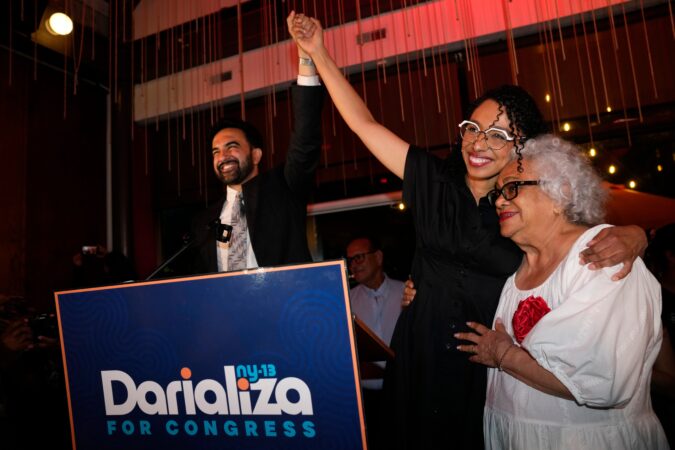
    NEW YORK — Three Democrats who made criticism of Israel central to their political identities swept to victory in House primary races in New York City on Tuesday, signaling a new era of skepticism in their party toward the Jewish state and its actions.

    The striking results reflected a fast-moving shift in liberal politics. Democratic voters are now more likely to be critical of Israel and its government than they are to be supportive, according to several recent polls, a monumental change in American sentiment.

    And while many Democratic officials remain supportive of Israel, next year’s class of congressional Democrats is on track to be more wary about the United States’ relationship with Israel than at any other moment since the Jewish state was established after World War II.

    The primary triumphs in deep-blue districts of Brad Lander, Claire Valdez, and Darializa Avila Chevalier came after each was endorsed by Mayor Zohran Mamdani of New York, whose advocacy for the Palestinian cause has been integral to his rapid political rise. At a rally for the candidates last week, he called the nation’s leading pro-Israel organization part of a group of “monsters” that he said were too powerful in American politics.

    At Avila Chevalier’s victory party Tuesday night in Harlem, supporters chanted “free Palestine” while she pushed her campaign’s “babies, not bombs” slogan. She suggested in her victory speech that her win represented a shift in how Democrats in New York would operate.

    “Today, we make it clear: The politics of the past ends today,” she said.

    Super political action committees allied with the American Israel Public Affairs Committee, the pro-Israel group, have spent huge amounts of money on this year’s midterm elections to try to turn the tide in voter opinion. The organization has had some victories, saying in a statement Tuesday night that 180 Democrats and Republicans it had endorsed had advanced to the November election. The group congratulated a Maryland House candidate its allied super PAC spent millions backing and said this would “ensure this seat remains represented by pro-Israel leadership.”

    But despite those successes, AIPAC has largely been on the defensive.

    Polls show that support for Israel among Democrats has sharply and steadily eroded since the Hamas-led terrorist attacks on Oct. 7, 2023, and Israel’s subsequent destruction of most of the Gaza Strip. A New York Times/Siena survey this spring found that 60% of Democratic supporters said they were more sympathetic to Palestinians than Israelis, compared with 15% who were more supportive of Israel.

    “You’re seeing more and more Democrats making it clear that we should provide no U.S. taxpayer support to the government of Israel,” Sen. Chris Van Hollen (D., Md.) said in an interview Tuesday. Next year, he added, “I hope we will see a Congress that doesn’t provide reflexive unconditional support to the government of Israel.”

    Perhaps the most significant of the New York races pitted Rep. Dan Goldman, a two-term Democrat from Brooklyn, against Lander, the former New York City comptroller, who staked his campaign on opposing Goldman for being insufficiently critical of Israel.

    The race between the two men, Jews who both describe themselves as liberal Zionists, symbolized how Democratic voters, especially younger ones, have shifted away from support for Israel.

    But perhaps the most outspoken anti-Israel Democratic candidate who won in New York City, Avila Chevalier, defeated Rep. Adriano Espaillat, who has been a steadfast supporter of Israel in his decade in Congress. Avila Chevalier spoke often of having lived in the West Bank and attended a rally on Oct. 8, 2023, that was widely criticized for featuring speakers who appeared to justify the attacks a day earlier.

    Like Lander and Valdez, Avila Chevalier is now the Democratic nominee in a solidly blue House district and is a heavy favorite to wind up in Congress come January.

    New York Mayor Zohran Mamdani (left) congratulates Brad Lander after his victory in the Democratic primary election for the seat held by Rep. Daniel Goldman (D., N.Y.) in Brooklyn on Tuesday night.

    The fights in New York became increasingly nasty in the final days of the campaign. A local coffee shop chain wrote on social media that Goldman, who is critical of Israel’s government but has opposed banning aid to the country, was not welcome because it did not serve “genocide enablers.”

    Pitched midterm battles over Israel

    The main super PAC tied to AIPAC, the United Democracy Project, has spent more than $25 million so far this year, in addition to at least $5 million it has funneled to create new super PACs.

    That sum may be just a fraction of what is to come. The group started the year with more than $96 million, making it one of the best-funded PACs in the country.

    Its most prominent spending battles so far have been in New Jersey and Illinois. But Israel also became a driving issue in several House primaries in California.

    The results have been mixed. In the Chicago suburbs, Daniel Biss, the mayor of Evanston, Ill., won a House primary after explicitly attacking AIPAC. The group spent $7 million in the race, mostly aimed at defeating Biss, who is Jewish. But in the final days of the primary, when it became clearer that a candidate even more critical of Israel than Biss could win, the super PAC dialed back its attacks on him.

    In New Jersey, the AIPAC-tied super PAC targeted Tom Malinowski, a popular former member of Congress who supported more restrictions on aid to Israel. But in an embarrassing turn for AIPAC, Analilia Mejia, a progressive organizer who was loudly critical of Israel, beat him in the special election and then won a later primary.

    AIPAC has won victories, too. Two of its preferred candidates in Illinois won crowded primaries, even as another anti-AIPAC Democrat won in a Chicago district.

    Democratic congressional candidate Claire Valdez speaks during a June 18 rally in Brooklyn ahead of New York’s primary election.

    In Washington, defending Israel has fallen out of favor among many congressional Democrats, with a large majority of senators who caucus with the party voting this year to block some U.S. arms sales to Israel.

    “Do I think the Overton window on Israel has shifted more in the last six months than my entire career?” said Amy Rutkin, the longtime chief of staff to Rep. Jerry Nadler of New York, the longest-serving Jewish Democrat in the House, who is retiring. “It surely, absolutely has.”

    The shift is part of a generational change after the retirements of longtime Democratic leaders such as former House Speaker Nancy Pelosi of California and Rep. Steny Hoyer of Maryland, the longest-serving Democrat in the House, both of whom are stalwart supporters of Israel. Rep. Hakeem Jeffries of New York, the minority leader, is also a backer of Israel.

    But among Democratic voters, support for Israel has crumbled. And even House Democrats who are broadly supportive of Israel are highly critical of Benjamin Netanyahu, the country’s prime minister. Few enthusiastically support the right-wing Israeli government, and many are openly counting down until elections there, which are scheduled for October.

    Shifting winds in New York

    The Democratic shift on Israel has been particularly notable in New York, home to the country’s largest Jewish population and a mayor who has frequently focused on the plight of Palestinians.

    “The monsters that we are up against, they take many different forms,” Mamdani said at a recent rally for his endorsed candidates, before adding that AIPAC believed “the only thing more frightening than democracy being allowed to run its course is an end to genocide and Netanyahu’s wars.”

    Many Jewish leaders and groups criticized the remarks, arguing that they echoed antisemitic tropes at a time of increased hate crimes targeting Jews.

    One of the candidates the mayor backed, Avila Chevalier, defeated Espaillat, the chair of the Congressional Hispanic Caucus. He was the only candidate in New York who was explicitly backed by AIPAC’s super PAC, which transferred money to a separate group that supported him.

    In the 10th Congressional District, which includes lower Manhattan and a large area of Brooklyn and is one of the most Jewish districts in the country, Goldman frequently argued that a focus on foreign policy was misplaced given voters’ domestic priorities. Those arguments fell flat: He lost badly, trailing late Tuesday by more than 30 percentage points.

    Several Jewish Democrats who are most likely heading to the House, including Lander and Biss, have taken a more antagonistic tone toward the current Israeli government. But whether they will take radically different approaches to policy remains to be seen.

    AIPAC as a litmus test

    For decades, AIPAC was the leading voice of a bipartisan congressional consensus on the importance of the U.S.-Israel alliance. Now, many Democrats in contested primaries want nothing to do with it.

    The organization has become a symbol of dark money, alongside organizations backing the cryptocurrency and artificial intelligence industries. And all three interest groups are spending money on many of the same races.

    None of the advertisements paid for by the AIPAC super PAC even mention Israel, focusing instead on top-polling issues in each area.

    In Maryland, the super PAC spent more than $5 million to back Adrian Boafo, a state legislator, in the primary to replace Hoyer. The ads focused on Boafo’s biography and his accomplishments in Annapolis. Cryptocurrency interests spent an additional $3.4 million to back Boafo, according to AdImpact, a media tracking firm. He ended up finishing well ahead of a crowded Democratic field.

    The next Democratic primaries to revolve around Israel will come in August, when Minnesota, Michigan and other states are holding competitive intraparty contests.

    At a Democratic primary debate for Senate last week in Minnesota, Lt. Gov. Peggy Flanagan declared that “I don’t take AIPAC money because my values don’t align with AIPAC.” Her opponent, Rep. Angie Craig, who has been endorsed by AIPAC in the past, replied that she had taken “not one penny” from the group and called for Netanyahu to lose his reelection bid in October.

    The most divisive race, however, will be in Michigan, which has large Jewish and Muslim populations.

    The Democratic Senate primary there includes Rep. Haley Stevens, a staunch backer of Israel, and Abdul El-Sayed, a progressive public health official who has called Israel’s actions a genocide and opposes any military aid to the country. A third candidate, State Sen. Mallory McMorrow, has tried to take a middle path on Israel, but is struggling in the polls.

    This article originally appeared in The New York Times.

  • Senate for first time approves a war powers resolution in a rebuke to Trump over Iran conflict

    Senate for first time approves a war powers resolution in a rebuke to Trump over Iran conflict

    WASHINGTON — The Senate for the first time approved a war powers resolution Tuesday seeking to block U.S. military action against Iran, as lawmakers warily watch President Donald Trump’s efforts to resolve a conflict that the administration launched on its own and now needs Congress to fund.

    It was the 10th time the Senate has tried to stop the war, and the outcome, on a vote of 50-48, was a stunning turnaround from past efforts. While the resolution is largely symbolic, and does not carry the full force of law, it reflects the growing concerns from a number of Republican lawmakers in both the House and Senate over both the war and the deal Trump struck with Iran to end it. The House approved the resolution earlier this month.

    Trump responded angrily Tuesday night on his Truth Social platform, calling the vote “poorly timed and meaningless” and saying it “provided aid and comfort” to Iran.

    Senate Democratic Leader Chuck Schumer of New York said, “Time after time, the vast majority of Senate Republicans sided with Trump and his war instead of the American people.”

    Schumer said Americans have paid the price for “Trump’s historic blunder in Iran. It’ll go down in the history books as one of the worst foreign policy forays America has ever made.”

    In the past, as many as four GOP senators have voted for the war powers resolutions, and they did so Tuesday — Republicans Lisa Murkowski of Alaska, Susan Collins of Maine, Rand Paul of Kentucky and Bill Cassidy of Louisiana. One Democrat, Sen. John Fetterman of Pennsylvania, voted against.

    Trump bashed the four Republicans as losers, saying, “These senators have made my job more difficult.”

    On this vote, the absence of two Republicans, including Sen. Mitch McConnell of Kentucky, who was admitted to the hospital recently for an undisclosed matter, left the GOP without a full majority to halt the effort. Sen. Dave McCormick, R-Pa., also missed the vote.

    The vote comes as the Pentagon is seeking $80 billion from Congress mostly for the Iran war as it backfills munitions and stockpiles.

    Trump to meet senators as Republicans balk at Iran deal

    Trump himself is headed to the Capitol on Wednesday to meet with GOP senators after Vice President JD Vance was overseas working to negotiate with Iran to end its nuclear ambitions — which had been among the stated rationales for the war.

    The president is not pleased with the Republicans who have been critical of the deal he struck with Iran, according to one GOP senator granted anonymity to discuss the private dynamics.

    The terms of the Iran deal are spelled out in a memorandum of understanding that Trump signed last week, starting a 60-day clock for the sides to reach a broader agreement over ending Iran’s nuclear program.

    But Republicans have particularly objected to the $300 billion fund to help Iran rebuild, which is far greater than the $1.7 billion then-President Barack Obama refunded the country under his administration’s 2015 Iran deal.

    “I believe President Trump is getting very poor advice on Iran,” Sen. Ted Cruz, R-Texas, said last week on his podcast after the deal was made public.

    Democrats have repeatedly forced Iran votes

    Over and again, Democrats have been forcing votes on the Iran war, almost since the U.S. and Israel launched missile strikes on Iran on Feb. 28.

    Nearly each week they’re in session, the Senate Democrats have put forward war powers resolutions, but they have failed to amass the majority needed for passage in the narrowly split chamber, where Trump’s Republican Party holds the majority. Trump would almost certainly veto any measure that passed.

    The House pushed its own version to passage earlier this month, with four Republicans joining all Democrats in approving the war powers resolution, over the objections of House Speaker Mike Johnson and the GOP leadership.

    While the House- and Senate-passed resolution does not go to the president for his signature, passage stands as a powerful, if symbolic, statement from Congress and a rebuke of the administration’s military actions.

    Sen. Tim Kaine, the Democrat from Virginia who has led his party’s efforts, said the pause in warfighting, as Trump’s team works to shore up a fragile ceasefire, provides the perfect time for Congress to step back and assess “what should the next chapter be.”

    Hegseth seeks $80 billion from Congress for the Iran war

    Defense Secretary Pete Hegseth is on Capitol Hill this week, seeking roughly $80 billion in supplemental funding to shore up defense supplies in the aftermath of the Iran war, which is drawing scrutiny when many Americans are reeling from high gas prices and costs of living.

    The Pentagon early on had estimated the war cost $11.3 billion during its first week, and senators said experts put the overall price tag of Operation Epic Fury higher, at some $100 billion.

    The Defense Department’s funding request is part of a broader beef-up of military money the White House wants as part of its budget request this year.

    House Democratic Leader Hakeem Jeffries said Tuesday, “We should not spend another dime of taxpayer dollars on Operation Epic Failure.”

    The Trump administration is seeking $1.5 trillion in defense funding this year — a nearly 50% increase — including $350 billion that it wants in a so-called budget reconciliation package. Johnson and GOP leaders are working to pass that package on their own, over the objections of Democrats, much the way they approved Trump’s big tax cuts bill last year.

    The 2025 tax cuts package also included a sizable increase for the military.