Category: Politics

Political news and coverage

  • You can celebrate Pennsylvania’s 250th birthday at this hidden Philly landmark

    You can celebrate Pennsylvania’s 250th birthday at this hidden Philly landmark

    Days before America’s Founding Fathers declared their independence from Britain, Pennsylvania did it first.

    In June 1776, before the Declaration of Independence was signed, a group of leaders from Philadelphia and its surrounding 10 counties — Bucks, Berks, Chester, Lancaster, York, Cumberland, Bedford, Northampton, Northumberland, and Westmoreland — met in Carpenters Hall for the Pennsylvania Provincial Conference. There, the Commonwealth of Pennsylvania was born.

    Carpenters Hall, a hidden landmark just two blocks from Independence Hall in Philadelphia’s Old City, is the true birthplace of Pennsylvania, where the state declared its independence from Britain — jump-starting the framework of the state’s influential constitution that would serve as a model for the U.S. Constitution.

    Now, the little-known and privately owned historic site is celebrating Pennsylvania’s 250th birthday — which coincides with America’s Semiquincentennial — by holding commemorative events across the state to reflect on Pennsylvania’s history and ask residents how the state constitution should be strengthened in 2026 and beyond.

    “It’s the piece of the story we should own and celebrate and use as a platform for civic engagement,” said Michael Norris, the executive director of Carpenters Hall.

    Executive director Michael Norris makes remarks at the reopening ceremony at Carpenters Hall on July 3, 2023.

    Last week, Norris and others from Carpenters Hall traveled from Philadelphia — the state’s first capital — to Harrisburg to announce their yearlong schedule of events celebrating Pennsylvania’s founding, including those about the state’s constitution and its past and future.

    At a news conference last week, Rep. Mary Isaacson (D., Philadelphia) noted that she occupies the seat once held by former Pennsylvania House Speaker Benjamin Franklin. She said she sees the Carpenters Hall events as “more than learning about a key moment in Pennsylvania history.”

    “It’s also about exploring the vital importance of our state constitution in our democracy today and what citizens can do to engage,” she added.

    The commemorative events include an interactive town hall series hosted in Philadelphia, Pittsburgh, Harrisburg, and Erie to discuss the importance of the Pennsylvania Provincial Conference in the United States’ founding. The group will also host several events at Carpenters Hall, including the installation of a blue historical marker outside the hall on June 18, in addition to a three-part virtual lecture series on Pennsylvania’s constitution.

    The events, funded by America 250 PA and the Landenberger Family Foundation, are open to the public and intended to reach Pennsylvania’s “lifelong learners” who are interested in history and civics, as well as the legal community, who will be eligible for Continuing Legal Education credits for attending the virtual lectures, Norris said.

    “To me, 250 is about reflection and engagement,” Norris said. “It’s not about parties and buildings. It’s really a moment to reflect and say, ‘What are we doing here? Do we still want this democracy, and how do we protect it and keep it going?’”

    The Carpenters’ Company — the nation’s oldest craft guild, which built and still owns Carpenters Hall — will also conduct polling about how Pennsylvania’s constitution, as well as the U.S. Constitution, should be changed to better represent citizens in a modern time, Norris said. The poll results will be made public at an in-person event in Philadelphia on Sept. 28, the 250th anniversary of when the state constitution was ratified.

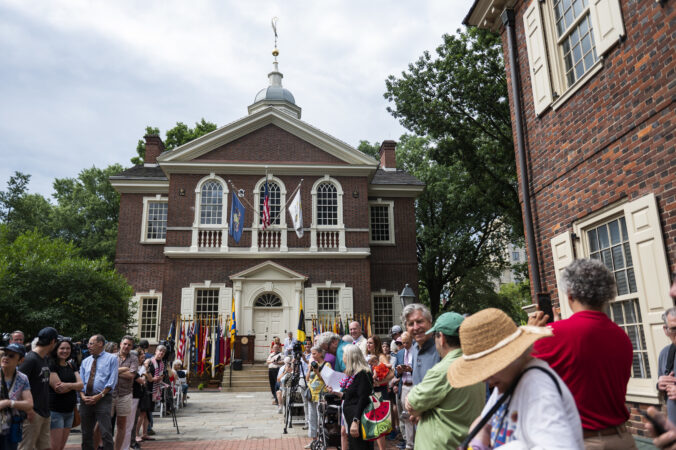
    Historic flags are displayed outside at the reopening ceremony at Carpenters Hall on July 3, 2023. The building opened for the first time to the public since April 2022.

    Rhode Island was the first colony to declare independence from England in May 1776, and Delaware became the first state in December 1787. Pennsylvania followed days after, and its constitution influenced the country’s founding documents. Pennsylvania’s expansive constitution — viewed as radical at the time — focused on personal freedoms and liberties in its “Declaration of Rights,” after which the Bill of Rights was modeled.

    Carpenters Hall was the nation’s first privately owned historic landmark, and remains owned by the Carpenters’ Company today, which offers free admission for 150,000 visitors each year. Because it is privately owned, it is not overseen by the National Park Service, which has in recent weeks dismantled exhibits about slavery at the nearby President’s House Site in Independence National Park that President Donald Trump’s administration contends “inappropriately disparage” the United States.

    The Carpenters Hall events will occur as Philadelphia prepares to host millions of visitors this summer for America’s 250th celebrations, the MLB All-Star Game, and FIFA World Cup games.

  • A security fence has sparked dueling lawsuits between Gov. Josh Shapiro and his Abington neighbors

    A security fence has sparked dueling lawsuits between Gov. Josh Shapiro and his Abington neighbors

    Gov. Josh Shapiro’s Abington Township neighbors filed a federal lawsuit Monday against Pennsylvania’s first couple, in what is the latest clash over security upgrades to his personal home following an arson attack on the governor’s Harrisburg residence while Shapiro and his family slept inside.

    In the suit, filed in U.S. District Court for the Eastern District of Pennsylvania, the Shapiros’ neighbors in Abington Township, Jeremy and Simone Mock, accuse the governor and his wife, Lori Shapiro, of illegally occupying part of the Mocks’ yard to build an eight-foot security fence last summer in what they claim in the lawsuit is an “outrageous abuse of power.”

    In short, they asked a federal judge to order the Shapiros off their property.

    The Shapiros quickly filed a countersuit in Montgomery County Court of Common Pleas on Monday against the Mocks, asking a judge to declare that the disputed chunk of the property has been theirs for years.

    The attempt to build the new fence is part of a larger security upgrade for Shapiro and his family, following the April firebombing of the state-owned governor’s residence in Harrisburg, when a man broke in to the mansion and set off Molotov cocktails that quickly engulfed part of the home. Cody Balmer, 38, pleaded guilty in October to attempted murder and was sentenced to 25 to 50 years in prison.

    The Mocks, whose property is adjacent to the Shapiros’ Montgomery County property, say the planned location of the fence is on their property unlawfully and violates their rights, according to the lawsuit.

    The couple is represented by Wally Zimolong, a Delaware County attorney who is described as “the ‘go-to’ lawyer in Pennsylvania for conservative causes and candidates” on his firm’s website. He previously represented the political campaigns of President Donald Trump and U.S. Sen. Dave McCormick (R., Pa.), according to his website.

    “The Governor looks forward to a swift resolution and will not be bullied by anyone trying to score cheap political points, especially at the expense of his family’s safety and wellbeing,” Will Simons, a spokesperson for Shapiro, a Democrat running for reelection, said in a statement.

    According to the Mocks’ lawsuit, the Shapiros approached their neighbors in July to discuss the construction of a security fence near where their yards meet. The Shapiros were interested in purchasing a portion of the Mocks’ property for the fence, and also discussed a lease option. But the couples couldn’t agree on the price, according to the suit.

    Things took a turn in late August, when, according to the lawsuit, the Shapiros’ attorney told the Mocks they would obtain the chunk of land through “alternative actions.”

    “What followed was an outrageous abuse of power by the sitting Governor of Pennsylvania and its former Attorney General,” the complaint says. (Shapiro served as Pennsylvania’s attorney general before he was elected governor in 2022.)

    The Shapiros told the Mock family, according to the neighbors’ lawsuit, that they owned the land through adverse possession, a legal mechanism through which a person can gain ownership of a property they’ve actively used for at least 21 years. The Shapiros have lived in their Montgomery County home for 23 years.

    The governor and first lady then began planting arborvitae-type trees and other plants on the Mocks’ property, flying drones over it, threatening to remove healthy trees, and “chasing away” contractors who came to work in the Mocks’ yard, the lawsuit claims.

    The complaint also accuses Shapiro of directing state police to patrol the property. Troopers instructed the Mocks to leave the area of the yard multiple times, calling it a “disputed” area or “security zone,” the suit says.

    The Mocks purchased the house in 2017, according to property records, and their lawsuit says they have paid taxes on the property over the time period. The offer to purchase the land shows the Shapiros knew it wasn’t theirs, according to the complaint.

    “The Shapiros continue to occupy the Mock Property without permission or any legal justification whatsoever,” the lawsuit says.

    The security fencing for the Shapiros’ home was purchased but ultimately never installed, and is being repurposed at the Pennsylvania State Police training academy, Spotlight PA previously reported.

    Zimolong declined to comment on the lawsuit Monday.

    The Shapiro’s countersuit

    The Shapiros’ lawsuit doesn’t dispute many elements of the Mocks’ suit, but casts them in a different light.

    As the Shapiros tell it, a land surveyor discovered in summer 2025 that the Mocks actually owned about 2,900 square feet of land that the Shapiros had believed was a part of their property since they bought the home in 2003. That time period, 22 years, satisfies Pennsylvania’s adverse possession law.

    The Mocks didn’t consider that part of the property to be theirs, according to the complaint, until the Shapiros told them.

    But after negotiations fell apart when the Shapiros attempted to purchase the land, the Mocks sought a permit to erect their own fence and include the disputed area on their property, the suit says.

    Shapiro’s security detail denied a tree-removal contractor access to the area, according to the complaint, because the first couple believe they possessed the land.

    And the state police troopers the Mocks saw were part of Shapiro’s security detail, which after the April attack have conducted review of his Abington home.

    The governor and his wife are asking a judge to find that they are the “legal and equitable owners” of the area in dispute.

    This image provided by Commonwealth Media Services shows damage after a fire on April 13, 2025, at the Pennsylvania governor’s mansion while Democratic Gov. Josh Shapiro and his family slept inside.

    Scrutiny over security

    Shapiro has faced scrutiny for using taxpayer dollars with little transparency to upgrade the security of his personal home, which is the primary residence for two of his four children, who are school-aged. State Police spent at least $1 million to upgrade security on his Abington Township property, in addition to more than $32 million in upgrades and repairs to the Harrisburg governor’s mansion.

    The GOP-controlled Senate Intergovernmental Operations Committee in December took the rare step of subpoenaing Shapiro for access to records about how taxpayer dollars were spent to upgrade the Shapiro property and home, including a new security system and landscaping work previously reported by Spotlight PA. Sen. Jarrett Coleman (R., Lehigh), who chairs the committee, argued the subpoenas were necessary because the Shapiro administration did not turn over the requested documents, or turned over incomplete records.

    As the Democratic governor of the nation’s fifth most-populous state, Shapiro continues to face threats to his safety. Police arrested a Carlisle man last week for allegedly sending messages to the governor’s office, that said “I do plan on stalking and hurting your family, before adding “metaphorically speaking of course.” The man, George R. Brown Jr., later told police they were “fake threats” and he was trying to get help with an eye injury he suffered while at Cumberland County Prison, PennLive reported.

  • Trump leaves Republicans guessing on midterms plans as outlook darkens

    Trump leaves Republicans guessing on midterms plans as outlook darkens

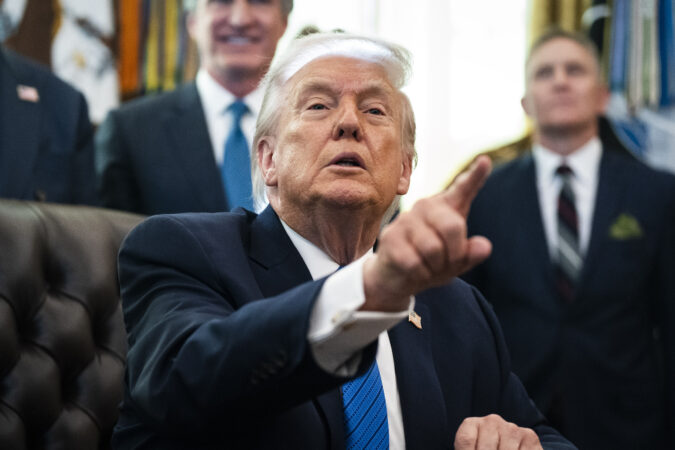
    Republicans looking to the White House to lead in the face of the party’s dimming prospects for November’s midterms are facing a crucial hang-up: the president.

    The party’s flagship campaign committee and super PACs have no indication of how President Donald Trump will deploy his $300 million-plus war chest because he has not approved a spending plan. Republican donors are funding expensive Senate primaries in Texas and Georgia because Trump has not cleared the field with his endorsement, or, in the case of Louisiana, endorsed a challenger to the incumbent Republican.

    People who have spoken with Trump about these obstacles said he at times can sound detached and noncommittal about his plans for spending and endorsements. One person close to the White House said some days the president seems not to care. Having already been impeached twice and indicted four times, Trump is less afraid of being impeached again than he is determined not to let a Democratic-controlled House halt his policy agenda, a White House official said. The official and others spoke to the Washington Post on the condition of anonymity to detail private conversations.

    But a White House official said Trump is excited to get more engaged in midterm strategy and looking forward to increasing his travel this month, including a campaign-style event outside of Washington this week. An Oval Office meeting to go over a handful of House endorsements Wednesday night turned into a five-hour gabfest on the midterms, according to two people present. Trump said he wants to defy the tendency of the president’s party losing seats in Congress in the midterms, one of the people said.

    “We’ll spend whatever it takes,” the person recalled Trump saying. “Go get it done.”

    The president’s political team, led by White House adviser James Blair, campaign strategist Chris LaCivita, and pollster Tony Fabrizio, met in Palm Beach, Fla., on Friday to review research from every competitive race in both chambers and develop estimates for what Republicans will have to spend to win. The team also briefed a retreat of the Senate Republicans’ campaign arm on Saturday.

    For much of last year, the White House was an island of optimism. Trump’s team would argue that Republicans were better positioned than at the same point in his first term, based on data such as the president’s approval rating, the generic ballot, and voter registration.

    Democrats, however, don’t need a 2018-size blue wave to win the House, where Republicans hold the narrowest possible majority and are defending 14 seats rated as toss-ups by the Cook Political Report. Democrats are defending four toss-up seats, and Cook shifted 18 seats in their favor in January.

    Republicans are anxiously awaiting a clear picture of the Trump team’s plans as the president’s sagging approval ratings and Democratic overperformances in special elections have darkened the GOP’s outlook for the midterms. Most Republicans are not ready to criticize Trump in public. But privately, there is rising frustration with an apparent lack of urgency from Trump and his staff, according to people who spoke to the Post.

    “Every time I talk to him on the phone, he says, ‘How’s the race going?’ and then he cites polls back to me so I know he’s following it closely,” Sen. John Cornyn (R., Texas) said, noting that Fabrizio is also his pollster and that LaCivita is a consultant to the super PAC supporting his reelection.

    Still, Trump’s endorsement has eluded Cornyn. “There’s only one person in the world who’s going to make that decision, and we can’t wait,” the senator said.

    Cornyn’s primary in Texas next month is dominating Republican anxieties on the Senate side since national strategists see his toughest challenger, state Attorney General Ken Paxton, as weaker in the general election, according to a memo from the National Republican Campaign Committee obtained by the Post. Holding the Senate seat for the GOP with Paxton as the nominee would cost an additional $100 million in a state where effective advertising costs $8 million a week, according to people involved in the race.

    “Texas cannot be taken for granted,” the memo said, presenting internal polling that puts Cornyn ahead of the Democratic candidates and Paxton behind them. Either Republican would face a competitive general election, the survey showed, with Texas state Rep. James Talarico running stronger than U.S. Rep. Jasmine Crockett on the Democratic side.

    An online survey released Monday that was conducted between Jan. 20 and 31 by the Hobby School of Public Affairs at the University of Houston found Paxton leading Cornyn 38% to 31%, with Rep. Wesley Hunt at 17%. On the Democratic side, Crockett led Talarico 47% to 39%.

    In a presentation to the Republican Senate caucus on Tuesday, National Republican Senatorial Committee Chair Tim Scott of South Carolina said a recent Fox News poll giving Democrats a six-point advantage in House races would put all nine Senate battlegrounds up for grabs, according to two people present. He also noted that Democratic candidates are raising more money for competitive races such as those in Georgia, North Carolina, and Ohio.

    Senate Republicans were heartened Feb. 1 when Trump endorsed John E. Sununu in the Republican primary for Senate in New Hampshire, after extensive lobbying by Senate Majority Leader John Thune (R., S.D.). Sununu has criticized Trump in the past but was leading in polls, and national Republicans saw him as the strongest candidate to flip the seat being vacated by a retiring Democrat, Jeanne Shaheen.

    But lobbying for Trump to endorse Cornyn has stalled as the incumbent has not established a clear polling lead — even after allies have poured $50 million into ads supporting Cornyn. Trump treasures his endorsement as definitive in primaries — and it often is, in part because he resists backing underdogs.

    Early voting opens Feb. 17 for the March 3 primary. If no one wins a majority, the top two candidates will compete in a runoff on May 26.

    Trump renewed hopes that he would wade into the race by telling reporters Feb. 1, “I’m giving it a very serious look.” The day before, a Democrat won a special election in a state Senate district that Trump won by 17 points in 2024.

    “I’ve had many conversations about why I think that makes the most sense to get behind John Cornyn,” Thune told reporters last week. “I don’t have any inside knowledge of when or what that might look like or when it might happen.”

    Trump might clear the field with an endorsement in Georgia to challenge Democrat Jon Ossoff, the person close to the White House said. The Republican primary includes Reps. Buddy Carter and Mike Collins, as well as former football coach Derek Dooley, who is backed by Gov, Brian Kemp. That race, though, is not considered as much a priority for Senate leaders as Texas is.

    Senate Republicans, including Thune, have been frustrated by Trump’s treatment of Senate incumbents, according to two people familiar with the tensions. Sen. Thom Tillis of North Carolina declined to run for reelection in the battleground state after feuding with Trump over Medicaid cuts in the president’s 2025 tax cuts and spending package. Last month, Trump recruited and endorsed a challenger to Sen. Bill Cassidy in Louisiana — which the White House official said was the result of Cassidy’s vote five years ago to convict Trump in the Senate impeachment trial of inciting the Jan. 6, 2021, riot at the Capitol.

    “I do think it’s a real problem when Senate Leadership Fund is on record supporting Cornyn and Cassidy, and President Trump is either silent or in opposition,” Tillis said, referring to the main super PAC supporting Senate Republicans. “We’re literally going to have Republican-on-Republican money being spent, and that makes no sense leading up to a general [election] where we’re going to have headwinds.”

    On the House side, the White House’s push to protect the House majority using redrawn congressional maps in Texas, North Carolina, and Missouri appears poised to net zero seats because of Democratic counteractions in California, Maryland, and Virginia. The latter two still face legislative or judicial hurdles.

    The White House still expects to pick up Republican seats from a new map in Florida, after Gov. Ron DeSantis (R) last month announced a state legislative special session in April. DeSantis said he wanted to wait until then in the hopes of a new Supreme Court ruling that could reshape as many as 19 House districts across the South by further weakening the Voting Rights Act of 1965.

    Trump has noted that the stakes of the midterms include, for him personally, the likelihood of being investigated or even impeached by a Democratic-controlled House. His first administration uniformly disregarded oversight requests and litigated subpoenas until after his term. Now some advisers expect that the administration can stonewall congressional oversight and that Democratic focus on investigating Trump could backfire on them leading up to the 2028 presidential election.

    Republicans still hold an overall advantage in fundraising. The House GOP campaign arm, which historically struggles to attract donors in uphill midterms, outraised its Democratic counterpart in 2025. The Democratic National Committee has more debt than cash, while the Republican National Committee has $95 million in the bank.

    Trump’s main super PAC, MAGA Inc., finished 2025 with a $304 million stockpile. But the PAC, led by LaCivita and Fabrizio, has been mum with allies about its spending plans. The person close to the White House said the president is likely to approve spending in multiple waves, and may reserve funds to maintain his political kingmaker role in future elections and for legal fees.

    “Thanks to President Trump’s leadership, MAGA Inc. will have the resources to help candidates who support President Trump’s America First agenda of securing our border, keeping our streets safe, supercharging our economy, and making life more affordable for all Americans,” PAC spokesperson Alex Pfeiffer said.

    While lawmakers await details on what assistance they can expect from the super PAC, Trump’s team noted it was the largest outside spender in the Dec. 2 special election to retain a House seat in Tennessee.

    “President Trump and his team were all in for me. I wouldn’t have won without them,” said Rep. Matt Van Epps, who won by 8.8 points in a district Trump carried by 22 points in 2024. “I know they’ll do the same for the entire America First team in this year’s midterm.”

    The White House said it is actively scheduling multiple trips for the president in battleground states and districts in the coming weeks and months that will include local lawmakers. The White House has also encouraged cabinet secretaries to minimize foreign trips and focus solely on domestic travel this year, encouraging officials to seek guidance on prioritizing battleground districts. White House officials are also helping to book cabinet members on local media in target areas.

    Since Thanksgiving, Trump has visited the battleground districts of Reps. Rob Bresnahan (R., Pa.) and Don Davis (R., N.C.), as well as Detroit (home to a Senate and governor’s race) and Iowa (home to a Senate race and two target House races). Vice President JD Vance visited battleground House districts held by Ryan Mackenzie (R., Pa.) and Marcy Kaptur (D., Ohio). Medicare administrator Mehmet Oz visited the districts of Rep. Michael Lawler (R., N.Y.) and Brian Fitzpatrick (R., Pa.).

    The White House provided statements from Lawler, North Carolina U.S. Senate candidate Michael Whatley, Sen. Jon Husted of Ohio, Sen. Dan Sullivan of Alaska, and RNC adviser Danielle Alvarez praising Trump and his staff for their support.

    “It is only February, and there is time for more, but I’m glad to have very strong support from the President and his administration,” Husted said.

  • Democratic ward leaders endorse Sharif Street for Congress, solidifying him as Philly’s establishment favorite

    Democratic ward leaders endorse Sharif Street for Congress, solidifying him as Philly’s establishment favorite

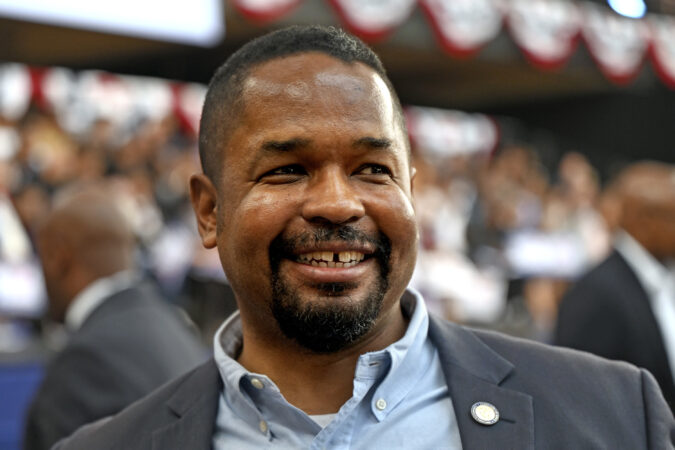
    Philadelphia’s Democratic Party has endorsed State Sen. Sharif Street for the city’s open congressional seat.

    The endorsement Monday came as no surprise, given Street’s insider connections. He previously chaired the Pennsylvania Democratic Party and is close to party leaders in the city. And Bob Brady, who chairs the Democratic City Committee, said last fall that he expected his fellow ward leaders to vote to endorse Street.

    But it nonetheless strengthens Street’s status as the favorite in the race among the local Democratic establishment. Street, the son of former Mayor John F. Street, was endorsed by the politically powerful unions in the Philadelphia Building & Construction Trades Council last year.

    “I am deeply honored to have received the overwhelming support of the grassroots leaders who power our party,” Street, who represents a North Philadelphia district in the state Senate, said in a statement. “This endorsement is more than just a vote of confidence — it is a demonstration that we are building a broad-based coalition.”

    Street is one of about a dozen Democrats vying to succeed retiring U.S. Rep. Dwight Evans in Pennsylvania’s 3rd Congressional District. Other contenders include State Reps. Morgan Cephas and Chris Rabb and physicians Ala Stanford and Dave Oxman.

    Street has also emerged as the front-runner in the financial race. Recently disclosed campaign reports showed he raised $348,000 from donors in the last quarter of 2025, the largest haul among the candidates.

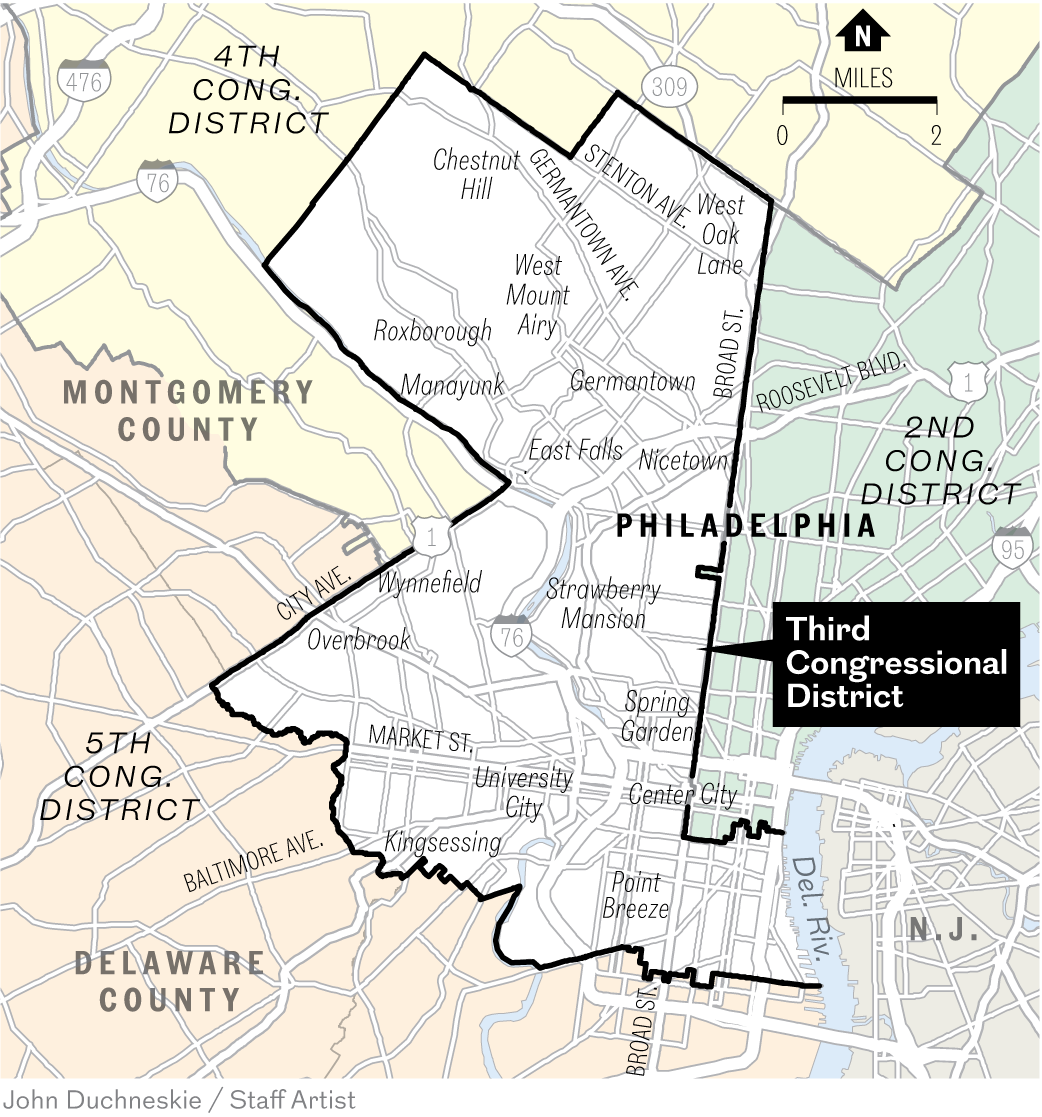
    The 3rd Congressional District is, by some measures, the most heavily Democratic district in the U.S. House, and includes West and Northwest Philadelphia and parts of Center City, Southwest, South, and North Philadelphia.

    The winner of the Democratic primary in May is all but guaranteed victory in November. Democrats hold a 7-to-1 voter registration edge over Republicans in Philadelphia.

    Map of Pennsylvania’s Third Congressional District.

    Earning the party nod may help Street stand out in a crowded field and will bolster his ground game for campaigning, activating the party’s hundreds of committeepeople to get out the vote for him.

    But it doesn’t guarantee victory. Insurgent candidates have defied the party’s dominance several times in recent city elections, and the district includes several progressive pockets that could open the door for a candidate who can coalesce the left against Street.

    The endorsement followed a vote by the Democratic ward leaders in the district. A candidate must receive at least 50% of the vote to win the party endorsement.

    If no candidate reaches that mark, each ward prints its own sample ballots with its preferred candidates, which often happens in open contests like this year’s primary.

    The party’s endorsement of Street means all ward leaders are now encouraged to include him in the literature distributed to voters before and on election day. Some wards, however, choose to print their own slates anyway.

    The party did not immediately disclose the final vote tally at the endorsement meeting.

    Northwest Philadelphia’s 50th Ward, which is led by Mayor Cherelle L. Parker, has not yet made an endorsement in the race, said Aren Platt, executive director of the mayor’s campaign, People for Parker.

    Top candidates in the race, including Street, were scheduled to face off at a candidates forum hosted by the Center City Residents Association on Monday night.

  • Mayor Cherelle Parker’s campaign raised an eye-popping $1.7 million last year though she won’t face reelection until 2027

    Mayor Cherelle Parker’s campaign raised an eye-popping $1.7 million last year though she won’t face reelection until 2027

    Mayor Cherelle L. Parker’s campaign raised almost $1.7 million last year despite her not facing reelection until 2027, according to a new campaign finance report.

    That is the most any Philadelphia mayor has raised during their second year in office since at least the early 2000s, when the city’s current ethics and campaign finance rules took effect, according to Parker’s campaign. She is also the only mayor in that time frame to avoid a dip in fundraising after her first year in office, when many donors shell out to support the city’s new leader.

    “The Mayor has strong support from across the City and the region,” Aren Platt, the executive director of the mayor’s campaign committee, People for Parker, said in a written statement. “These numbers equate to people investing in her vision as Mayor for the City and supporting the work that she is doing.”

    Her campaign also spent $812,000 in 2025, a huge sum for a nonelection year. Parker entered 2026 with nearly $1.6 million in the bank — a significant haul two years out from a municipal election cycle. (For context, Parker’s campaign in 2023 raised almost $3.4 million, and spent just over $3.2 million en route to winning the mayor’s race.)

    State law gives politicians wide latitude in how they spend their campaign donations beyond traditional election expenses like buying TV ads and printing fliers.

    Parker’s campaign expenditures last year included airfare to Colorado for a mayoral roundtable at the Aspen Institute, and almost $20,000 to cover costs for a constituent’s funeral.

    Parker’s hefty off-year fundraising is reflective of the increasingly constant and professionalized world of political fundraising in Philadelphia. Local politicians no longer wait until challengers emerge to press donors for cash or host major fundraisers.

    “Philadelphia elections keep getting more expensive, so now all the candidates have professional fundraisers, which means the frequency of their events and calls has risen dramatically as well,” said John Hawkins, a City Hall lobbyist.

    City Council President Kenyatta Johnson, for instance, last year raised about $960,000 and entered 2026 with more than $1.1 million in the bank. Johnson, who, like Parker, will not face reelection until 2027, said he raises money in off years so that he can support other Council members and fund community programs.

    “I am blessed to support 16 other hardworking members of Council,” he said Friday. “I always support different community initiatives that come before me, individuals always seeking support for a variety of different initiatives.”

    Philadelphia Mayor Cherelle L. Parker stands beside Council President Kenyatta Johnson (left) after she finisher her budget address to City Council, City Hall, Thursday, March 13, 2025.

    Johnson, a close ally of the mayor, is also seen as a potential contender in the race to succeed Parker, which would happen in 2031 if she wins reelection. Racking up money between now and then could allow him to enter the race in a strong financial position.

    “My focus is being the best City Council president that I can be,” Johnson said when asked if he was considering the city’s top job.

    Using the rules to their advantage

    Philadelphia’s campaign finance laws rules limit contributions to $3,700 per calendar year from individual donors, and cap political committees and businesses allowed to make political donations at contributions of $14,800 per year.

    That means incumbents can collect the maximum amount from donors in each of the four years in their terms before running for reelection. That is not possible in federal elections, where contribution limits apply to the entire election cycle.

    The city’s rules give incumbents a potential advantage over new candidates, who typically have the opportunity to raise money over only one or two calendar years after they enter a race.

    Incumbents do not always maximize that opportunity. But Parker last year set a new standard.

    She is also among the growing number of Philly elected officials taking advantage of a rule that allows politicians to accept donations larger than the city’s contribution limits if they do not spend the excess money on electioneering activities, such as buying ads or paying canvassers to knock on doors.

    The electricians union, the politically active Local 98 of the International Brotherhood of Electrical Workers, for instance, gave $50,000 to Parker’s campaign in 2025. At most $14,800 of that can be spent on persuading city voters to support Parker during her next campaign. The remaining $35,200 will be deposited into a separate bank account known as a Segregated Pre-candidacy Excess Contribution, or SPEC, account.

    While SPEC accounts are nothing new, more Philly elected officials are using them. In addition to Parker, at least a half dozen Council members, including Johnson, now have SPEC accounts, said Shane Creamer, executive director of the Philadelphia Board of Ethics.

    “We haven’t seen this in the lead-up to past elections, certainly not in this number,” Creamer said, adding that the trend shows that politicians are being conscientious about the city’s rules. “I think it suggests that, fundraising aside, there’s an effort to comply with the contribution limits.”

    How Parker raises money

    Parker hosts major fundraising events, such her annual birthday party, which last September took place at the Live! Casino & Hotel. She also calls donors to ask for contributions, and her supporters sometimes host smaller fundraisers to collect money for her campaign.

    Labor unions gave more than $330,000 to Parker last year, campaign finance reports show. That includes $50,000 from the electricians union, $64,800 from the Carpenters union, and $45,000 from the Laborers District Council.

    Organized labor — especially the Philadelphia Building and Construction Trades Council, the Carpenters union, and Local 32BJ of the Service Employees International Union — fueled Parker’s victory in the 2023 mayor’s race.

    Mayor Cherelle L. Parker (center) joins the chant as she marches with Local 332 during the annual Tri-State Labor Day Parade in Philadelphia on Monday, Sept. 1, 2025.

    Campaign finance records also show Parker last year accepted a $10,000 donation from one of her rivals in the 2023 Democratic primary: Jeff Brown, the owner of Brown’s Super Stores.

    “We’re very aligned on policy, and if you look at her campaign promises, she is doing fairly well. She’s made some progress on all of them,” said Brown, who serves on the mayor’s business roundtable and an advisory panel providing input on the city’s efforts to revitalize Market East. “I’m invested in the city, and I want to see a functional, good mayor who can lay out a vision and get things done.”

    Corporate interests also donated heavily to Parker in 2025. Her campaign contributions from law firms last year included $10,000 from Ballard Spahr, $11,000 from Duane Morris, $5,000 from Buchanan Ingersoll, and $11,000 from Cozen O’Connor. She also received $5,000 from Comcast, $1,000 from Independence Blue Cross, and $4,700 from the Chamber of Commerce for Greater Philadelphia.

    Wealthy individuals shelled out big bucks, too. Investor Richard Vague gave $16,000; developer Carl Dranoff contributed $15,000; former Aramark CEO Joseph Neubauer gave $30,000; and Firstrust Bank executive chair Richard J. Green gave $15,000.

    How Parker spends campaign money

    Although campaign donors may imagine their contributions pay for yard signs and radio spots, the money also often covers strategy meetings held at expensive restaurants, gifts for constituents, and costs related to officeholders’ public duties.

    Elected officials are prohibited from using political donations for personal expenses. But beyond that, the rules for spending campaign cash are famously lax and rarely enforced.

    Parker’s expenditures on the recently filed reports included a $1,200 tab at Vernick Fish, and 14 more modest purchases from Shanghai Gourmet in Chinatown, totaling $424.

    In addition to the Aspen Institute roundtable, Parker’s campaign helped her pay for trips to Miami for a tour of wellness and homeless centers that are part of the Florida judicial system, to Martha’s Vineyard, Mass., for a Black Economic Alliance gathering, to Puerto Rico for a National League of Cities event, and to Harvard University’s Bloomberg Center for Cities.

    Aren Platt (right) executive director of Mayor Cherelle L. Parker’s political committee is with her after a Kamala Harris campaign event in Germantown Nov. 3, 2024. Platt was senior campaign adviser in Parker’s run for mayor, and served briefly as deputy mayor before leaving her administration.

    The campaign paid $112,000 in consulting fees for ALP Impact Strategies, Platt’s firm; and $30,000 to 215 Bears, the private security company owned by Shawntee Willis, whom Parker has hired as a special assistant in the mayor’s office and who works closely with her police detail.

    It also paid $158,563.73 to Rittenhouse Political Partners, the fundraising firm founded by well-known political consultant Aubrey Montgomery and used by Parker, Johnson, and five other members of Council who saw large fundraising hauls last year.

    Rittenhouse’s clients include some of the most aggressive off-year fundraisers in Philly politics and some of the most prominent adopters of SPEC accounts.

    Montgomery declined to comment.

    Staff writer Anna Orso contributed to this article.

  • Philly Council president says he’ll hold up school funding over the closure and consolidation plan ‘if need be’

    Philly Council president says he’ll hold up school funding over the closure and consolidation plan ‘if need be’

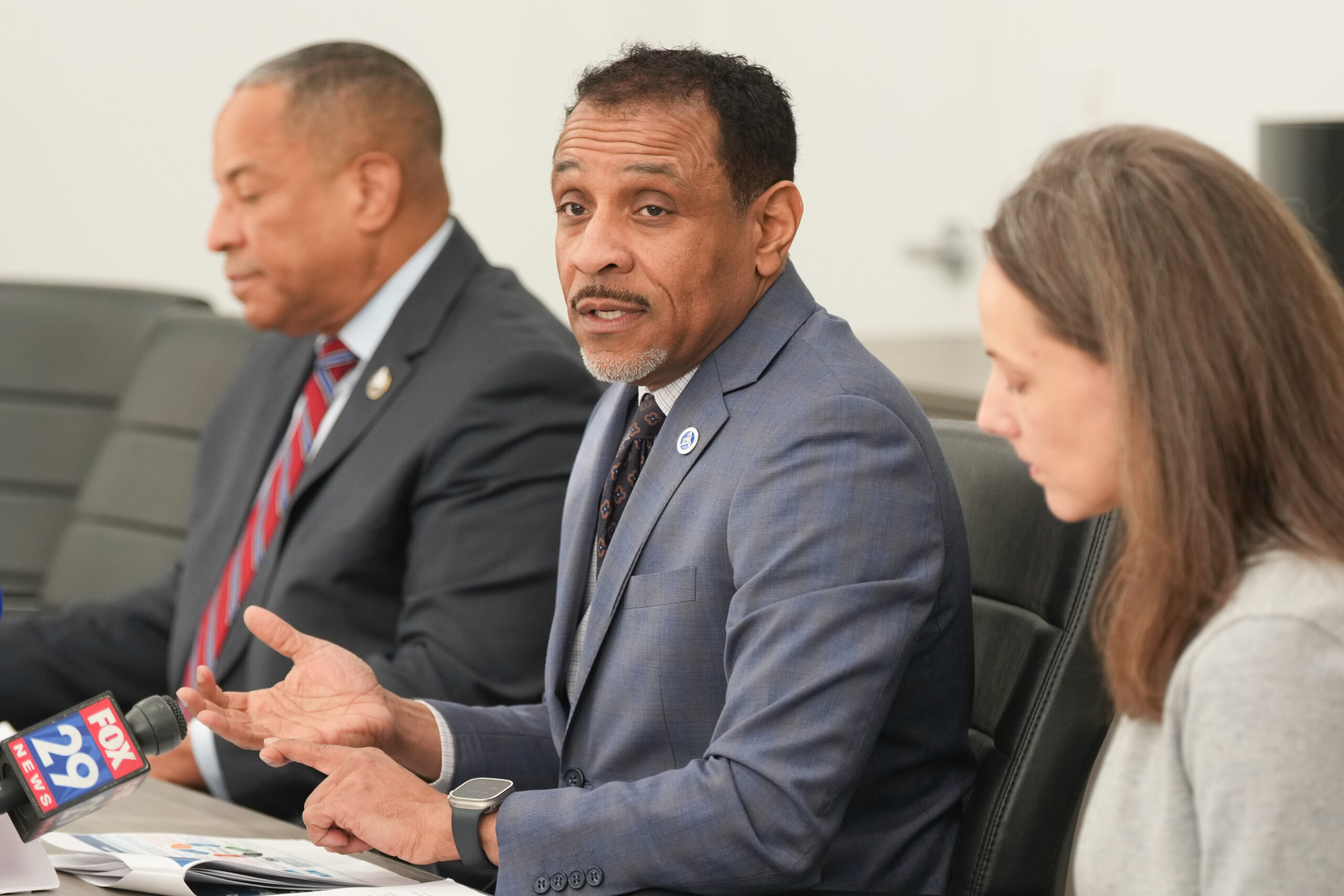
    Philadelphia’s top lawmaker said he’s willing to hold up city funding to the Philadelphia School District over concerns about the recently released closure and consolidation plan, a warning that signals City Council intends to leverage its biggest bargaining chip as members fight to keep schools in their neighborhoods open.

    City Council President Kenyatta Johnson said in an interview Friday that multiple members oppose proposed closures in their districts, and some want more robust investments in schools slated for consolidation in exchange for their support.

    Johnson’s primary concern, he said, is “making sure that the issues and concerns that we would like to see addressed with the facilities plan are reflected in the final recommendations.”

    Asked if he’d be willing to hold up the city’s contribution to the school district if their concerns are not met, Johnson said: “If need be.”

    Schools Superintendent Tony B. Watlington Sr. has proposed sweeping changes to schools across the city, including closing 20 schools, ordering six others to share buildings, and modernizing 159 buildings. His plan is subject to approval by the school board, which will likely vote sometime this winter.

    Oz Hill (left), Superintendent Tony B. Watlington Sr. (center), and Claire Landau at a news conference to announce plans for the first draft of the Philadelphia facilities master plan during a news conference at the Philadelphia School District Headquarters in Philadelphia on Jan. 20.

    Johnson’s public insistence that Council members exercise veto power over parts of the district’s long-awaited facilities master plan is notable, and it raises the stakes ahead of a Feb. 17 hearing, during which every Council member will have the opportunity to question district officials about the proposal.

    The Council president — a Democrat who is typically even-keeled and does not often speak publicly about legislative strategies — wields significant control over the fate of the city budget, which members must pass by the end of June. Mayor Cherelle L. Parker will unveil her proposed budget in March.

    Local revenue and city funding made up about 40% of the district’s budget this year, or nearly $2 billion. Most of that is the district’s share of city property taxes which, unlike other school systems in Pennsylvania, are levied by the city and then distributed to the district.

    In addition, the city makes a separate, direct contribution to the district, which this year was nearly $285 million.

    Johnson’s opposition to elements of the plan could also position lawmakers somewhat at odds with Parker and Watlington. The pair have operated in lockstep since Watlington last month unveiled his proposal.

    The plan did not appear to go over well in Council, with several members expressing immediate concerns. The day the plan was released publicly, Johnson endorsed another member’s legislation to amend the city’s governing document and grant Council power to remove members of the school board at will.

    Councilmember Cindy Bass at City Council’s first session of the year on Jan. 23, 2025, in City Hall.

    Some Council members said they plan to fight proposed closures and advocate for more investment in struggling schools.

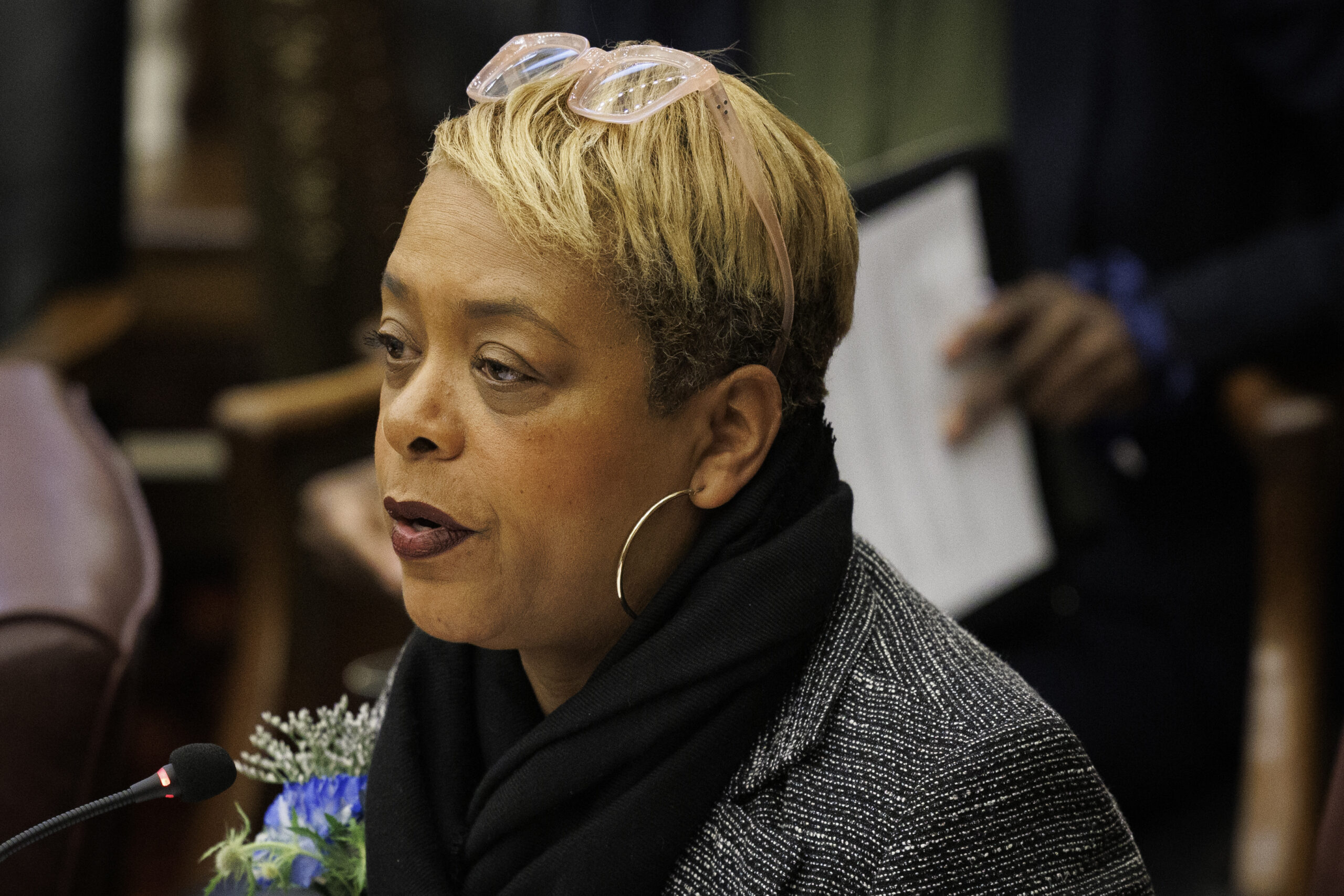
    Speaking at a meeting at Lankenau High School in Upper Roxborough last week, Councilmember Cindy Bass pushed back against the notion of closing Lankenau, a well-regarded magnet outside of her district, and other strong schools, including Fitler Academics Plus and Parkway Northwest in her district.

    “When budget time comes up, I’ll be asking about these decisions that the school district is making,” Bass, a Democrat who represents parts of North and Northwest Philadelphia, told an emotional crowd of more than 100. “We don’t support them and we don’t understand them. They have not been rationalized.”

    At Conwell Middle School in Kensington, Councilmember Quetcy Lozada, a Democrat who represents the neighborhood, said she was “having a really hard time understanding how the decisions were made.”

    Closing Conwell, a magnet school whose enrollment has fallen to just over 100 because of parent concerns over neighborhood safety, was particularly galling, Lozada said.

    “We are saying to these families, ‘We are punishing them because, as a city, we can’t respond to the public safety issues that we have on the outside,’” Lozada said. “And that is just not fair.”

    Johnson said he wanted to see a clear safety plan for students being asked to travel to schools in new neighborhoods.

    He also floated rebuilding consolidated schools as “all-in-one” campuses that are co-located with parks, recreation centers, and other city services.

    “It would be in the best interest of the school district and the school board to think outside the box in terms of how they move forward, besides just saying, ‘We’re going to be closing down schools,’” Johnson said. “And those are conversations that we’re having right now.”

  • Trump plans to keep Democratic governors out of traditionally bipartisan meeting

    Trump plans to keep Democratic governors out of traditionally bipartisan meeting

    President Donald Trump plans to keep Democrats out of a traditionally bipartisan White House gathering of governors typically held as part of the National Governors Association’s annual Washington summit, the organization said.

    According to the governors’ offices, the president also revoked invitations sent to Maryland Gov. Wes Moore (D), the NGA’s vice chair; and Colorado Gov. Jared Polis (D) to attend a second White House event scheduled to occur around the summit: a dinner for governors.

    “This week, I learned that I was uninvited to this year’s National Governors Association dinner — a decades-long annual tradition meant to bring governors from both parties together to build bonds and celebrate a shared service to our citizens with the President of the United States,” Moore said in a statement Sunday. “… It’s hard not to see this decision as another example of blatant disrespect and a snub to the spirit of bipartisan federal-state partnership.”

    Moore told CNN’s State of the Union on Sunday that he was confused by the White House’s decision, saying that, just a few weeks ago, he led a bipartisan group of governors who met with the president as Trump signed a memorandum on bringing down energy costs.

    Moore also said on CNN that it was “not lost” on him that he is the only Black governor of a state.

    “I find that to be particularly painful, considering the fact that the president is trying to exclude me from an organization that not only my peers have asked me to help to lead, but then also a place where I know I belong in,” he said. “I’m never in a room because of someone’s benevolence nor kindness. I’m not in a room because of a social experiment. I’m in the room because I belong there and the room was incomplete until I got there.”

    Spokespeople for Polis, as well as representatives of the Democratic Governors Association, did not immediately respond to a request for comment.

    While Moore and Polis were excluded from the dinner with Trump, some Democrats remained invited to the gathering.

    The White House did not explain why Democratic governors were not invited to the meeting with Trump, and a spokesperson did not respond to a request to provide a list of Democrats who were invited to the dinner.

    Trump has frequently clashed with Moore and Polis, and his decision comes after months of conflict between the federal government and Democratic governors.

    Moore has condemned the president’s threat to deploy the National Guard to Baltimore and defund Maryland’s efforts to replace the fallen Key Bridge. Trump has also repeatedly claimed that Baltimore is “crime ridden” despite the fact that the city is experiencing its lowest homicide rate in 50 years.

    Polis and Trump have repeatedly feuded over Tina Peters, a former county clerk in Colorado who was convicted in state court on felony charges related to efforts to overturn the 2020 presidential election. Polis has defended the conviction and refused the White House’s request to transfer Peters to a federal prison. Because of this, in December, Trump in a Truth Social post called Polis a “scumbag” and said he should “rot in Hell.”

    The NGA’s Washington meetings are expected to take place Feb. 19 to 21. The organization said Friday that the White House meeting will no longer be part of the association’s official schedule.

    In a statement Friday, Brandon Tatum, the interim CEO of the NGA, said that the “bipartisan White House governors meeting is an important tradition, and we are disappointed in the administration’s decision to make it a partisan occasion this year.”

    “To disinvite individual governors to the White House sessions undermines an important opportunity for federal-state collaboration,” Tatum said. “At this moment in our nation’s history, it is critical that institutions continue to stand for unity, dignity and constructive engagement.”

  • Sen. John Fetterman said he ‘absolutely’ expects a DHS shutdown as ICE negotiations stall

    Sen. John Fetterman said he ‘absolutely’ expects a DHS shutdown as ICE negotiations stall

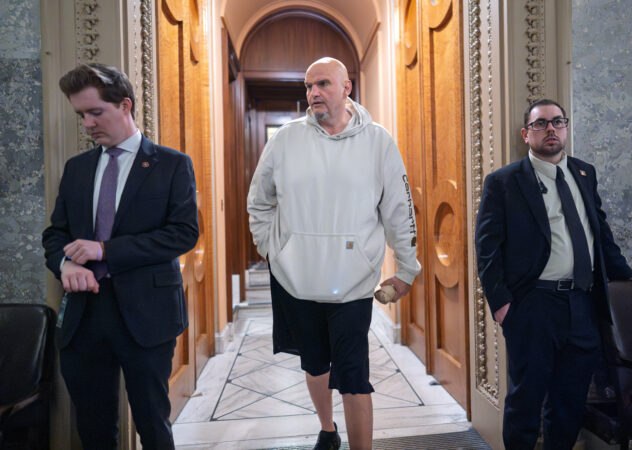
    U.S. Sen. John Fetterman said Sunday that he expects the Department of Homeland Security to shut down Friday as negotiations over immigration enforcement have stalled, an outcome that could impact air travel and emergency response across the nation.

    “I absolutely would expect that it’s going to shut down,” the Pennsylvania Democrat said during an interview on Fox News’ Sunday Morning Futures with Maria Bartiromo.

    Funding for DHS is scheduled to lapse Friday, a deadline that lawmakers set after separating the agency’s funding from other parts of the federal budget and approving a two-week extension to continue talks.

    At the center of the impasse is Democrats’ insistence on overhauling federal immigration enforcement. The party’s leaders drafted a list of 10 policies they want Republicans to agree to in exchange for their support in funding DHS, which includes U.S. Immigration and Customs Enforcement.

    Among Democrats’ demands are banning immigration enforcement agents from wearing masks and requiring DHS officers to obtain a warrant signed by a judge before entering a home.

    House Minority Leader Hakeem Jeffries (D., N.Y.) said Sunday during an interview on CNN’s State of the Union that “at this point” he was not willing to accept a deal that didn’t include President Donald Trump’s administration implementing Democrats’ full list of ICE changes.

    “We know that ICE is completely and totally out of control,” Jeffries said. “They’ve gone way too far, and the American people want them reined in.”

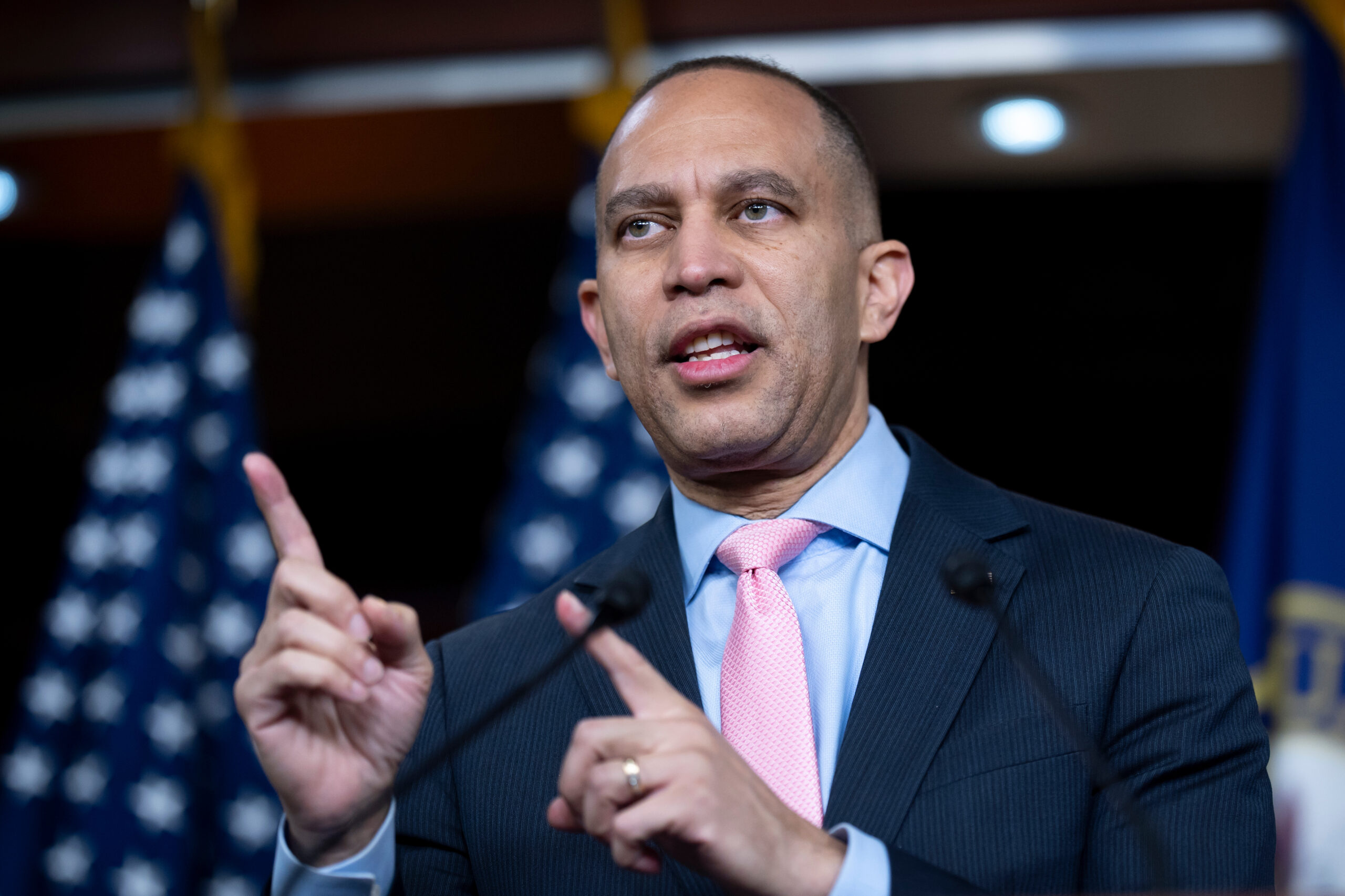
    House Minority Leader Hakeem Jeffries (D., N.Y.) speaks to reporters about Venezuela, the ICE shooting in Minneapolis, and affordability ahead of a vote in the House to extend the Obamacare subsidies for three years at the Capitol on Jan. 8. (AP Photo/J. Scott Applewhite)

    Fetterman has called for significant changes at DHS, including the firing of Secretary Kristi Noem. But he said Sunday that Democrats shouldn’t expect to “get all 10″ demands.

    “We, the Democrats, we provided 10 kinds of basic things, and then the Republicans pushed back quickly saying, ‘That’s a Christmas wish list,’ and that they’re nonstarters,” Fetterman, a member of the Senate Homeland Security Committee, said. “I truly don’t know what specifically are the Democrats’ red lines that it has to be — certainly not going to get all 10.”

    Fetterman generally opposes any measure that would shut down the government and has been the only Senate Democrat to vote for some Republican budget proposals. He added that he is concerned about federal workers, including TSA agents, not being paid amid a funding lapse.

    “Every American deserves to be paid for the work that they’ve done,” he said. “That’s real lives, and they’re not wealthy if they’re TSA folks. They’re allowing us to fly safe here in America, and that’s part of that conversation now, too.”

  • John Fetterman asks DHS to halt development of ICE detention centers in Pennsylvania, saying they will burden local communities

    U.S. Sen. John Fetterman (D., Pa.) is calling on the Department of Homeland Security to hit the brakes on its plan to develop two Immigration and Customs Enforcement detention centers in Pennsylvania, saying they would have a negative impact on local communities.

    “While I have been clear in my support for the enforcement of federal immigration law, this decision will do significant damage to these local tax bases, set back decades-long efforts to boost economic development, and place undue burdens on limited existing infrastructure in these communities,” Fetterman wrote in a letter addressed to DHS Secretary Kristi Noem and posted online Saturday.

    Fetterman’s criticism comes shortly after DHS purchased an $87 million warehouse in Upper Bern Township, Berks County, and a nearly $120 million former Big Lots distribution center in Tremont Township, Schuylkill County.

    A 1.3-million-square-foot former Big Lots warehouse in Tremont, Pa., has been bought by U.S. Immigration and Customs Enforcement for $119 million. The agency plans to detain up to 7,500 immigrants there.

    The Tremont Township detention center would house as many as 7,500 people, Fetterman noted, while the Upper Bern Township one would be capable of detaining 1,500 people.

    Upper Bern Township has 1,606 residents, according to the U.S. Census Bureau, and is about 30 minutes northwest of Reading. The facility is near an Amazon warehouse and the Mountain Springs Camping Resort.

    Tremont Township — where the much larger detention center is set to be built — has just 283 residents and is next to the 1,670-resident Tremont Borough. Tremont is in a rural area northeast of Harrisburg, near the Appalachian Trail, state game lands, and Fort Indiantown Gap, an Army National Guard training center.

    In his letter, Fetterman said local and state officials did not have a chance to weigh in on how these massive facilities would affect everything from sewer systems and the electrical grid to hospitals and emergency medical services.

    “Both townships do not currently have the capacity to meet the demands of these detention centers, with Tremont Township officials specifically stating the proposed 7,500-bed detention facility would quadruple the existing burden on their public infrastructure system,” Fetterman said.

    A warehouse in Upper Bern Township, Berks County, Pennsylvania, was purchased by ICE and the Trump administration.
    A warehouse in Upper Bern Township, Berks County, Pa., was purchased by ICE and the Trump administration.

    The letter maintains Fetterman’s stance as someone who supports ICE operations in general while criticizing the federal government’s recent handling of them. After federal agents shot and killed two U.S. citizens in Minneapolis last month, Fetterman called on the Trump administration to fire Noem. A few days later, Fetterman said he supports ICE agents wearing face masks.

    Fetterman was among 23 Senate Democrats to cross the aisle last month to vote for a compromise bill funding the federal government through September, while granting just two weeks of funding for DHS.

    Fetterman said the Pennsylvania facilities would result in a tax loss of $1.6 million to the communities. He asked DHS to agree to several conditions before proceeding further with the sites.

    He requested an “impact assessment,” details on the criteria used to select these facilities, an agreement that federal funds be used to upgrade them, and “a commitment to a period of public engagement and dialogue with these communities.”

    “Due to these significant concerns, it is my fear that DHS and ICE did not perform any due diligence, spending more than $200 million in tax dollars for warehouses that cannot be adequately converted and further eroding trust between Pennsylvanians and the Federal government,” Fetterman wrote.

    The Department of Homeland Security and Immigration and Customs Enforcement did not immediately respond to a request for comment.

    This story has been updated to correct the location of one of the proposed detention centers to Upper Bern Township.

  • Could the Philly region become the ‘eds, meds, and defense industrial base’ region?

    Could the Philly region become the ‘eds, meds, and defense industrial base’ region?

    As Chris Scafario sees it, Philadelphia’s reputation as an “eds and meds” region, referring to its plethora of colleges and hospitals, could grow a third leg.

    It could also become the defense industrial base region, said Scafario, CEO of the Delaware Valley Industrial Resource Center.

    President Donald Trump wants to increase defense spending, with $1.5 trillion proposed for 2027. This could mean more research and workforce development training opportunities — and local universities are positioned to take advantage of it, Scafario said.

    Chris Scafario, CEO of the Delaware Valley Industrial Resource Center

    “A lot of that investment is going to be targeted toward university and innovation-based relationships because they need help getting stuff done,” said Scafario, who is talking to local colleges to help get them ready to capitalize. “They need access to brilliant people, whether they’re faculty or the faculty’s work products, the students.”

    The move comes as colleges face potential cuts in research funding under the Trump administration in other areas, such as the National Institutes of Health. Both Princeton University and the University of Pennsylvania in the last month announced cutbacks to cope with potential financial fallout from federal policies.

    Scafario’s center, which is based at the Navy Yard and was founded in 1988, aims to foster economic development and local manufacturing.

    The Philadelphia region has been involved in defense contracting on and off for years, with major hubs in naval and aerospace manufacturing, and local universities say they worked with the Department of Defense in the past. Rowan University in New Jersey says it has $70 million in defense-related research projects underway.

    But Scafario sees the opportunity for major expansion.

    Drexel University, Temple University, Penn, Rowan, and Villanova University, which is already a top producer of naval engineers, are among the schools that are “in a great spot to leverage the opportunities that are going to be coming through the defense industrial base,” Scafario said. “In the next year, people are going to start realizing that we are meds, eds, and a defense industrial base region. It’s going to bring a lot of investment, a lot of economic opportunities, and some really, really great employment opportunities in the region.”

    The Philadelphia region could become a national anchor for shipbuilding or other maritime industrial-based activities, he said.

    Scafario hopes to bring colleges together with other partners for more discussions in the spring when the timeline for those federal investments starts to become clearer, he said.

    Amanda Page, Warfighter Technologies Liaison for the Delaware Valley Industrial Resource Center

    Colleges could help with efforts to accelerate production capacity of naval ships and work on initiatives such as how to make submarines less traceable and more durable. Or they could help improve medical equipment and training for the battlefield. The treatment standard in the military used to be the “golden hour”; now it’s about “prolonged field care,” said Amanda Page, a retired active-duty Army medic who serves as warfighter technologies liaison for the center.

    “Medical personnel need to be prepared mentally, physically, emotionally, and electronically to keep those patients for 96 hours,” Page said. “That’s going to require a ton of research and technology.”

    Page was hired by the center in October to help build relationships between the center, the Department of Defense (which the Trump administration has rebranded the Department of War), local higher education systems, and the city.

    “I’m super excited about what it will bring to the region and what the region can prove to the Department of War about its legitimacy,” she said, “as a manufacturing and technology powerhouse.”

    Local colleges say they are reviewing potential collaborations.

    “There are a lot of opportunities we are looking at,” said Aleister Saunders, Drexel’s executive vice provost for research and innovation, declining to provide specifics for competitive reasons.

    In addition to opportunities with the Navy and the Navy Yard, he noted major local companies involved with aerospace and aviation, including Lockheed Martin and Boeing. There are also opportunities around materials and textiles with the Philadelphia-based Defense Logistics Agency Troop Support, which provides many of the supplies to the military.

    “Those are really valuable assets that we should find a way to leverage better than we are,” he said.

    Key opportunities are available in advanced manufacturing and workforce development, he said.

    “There could be folks who are already working in manufacturing who need [upgraded skills] in advanced manufacturing techniques,” he said.

    Temple University president John Fry said increasing research opportunities and impact — the school’s research budget now exceeds $300 million — is a priority in the school’s strategic plan. Temple offers opportunities around medical manufacturing, healthcare, and health services, he said.

    “The key to doing that is going to be partnerships,” he said.

    Josh Gladden, Temple’s vice president for research, said he has met with folks from Scafario’s group and they are talking about some opportunities, but declined to discuss them because they are in early development.

    He noted that the Navy is interested in working with Temple’s burn unit.

    Temple has also been getting to know the workforce needs of businesses at the Navy Yard and looking at how to align its educational programs, Fry said.

    “Those are relationships I would love to pursue,” he said. “Part of our mission is to develop the future workforce and grow the regional economy, and that’s one way of doing it.”

    Rowan has been a longtime research partner with the U.S. military, said Mei Wei, the school’s vice chancellor for research.

    “It’s encouraging to know there could be more funding available for research,” Wei said. “These projects give our undergraduate and graduate students the opportunities they need to develop their research skills with close guidance from our faculty and our external partners.”