President Donald Trump told The Washington Post early Saturday that his main concern is “freedom” for the Iranian people as the U.S. launched military strikes in the country.
A U.S. official said a multiday operation against Iran beganat about 1 a.m. Eastern time with a salvo of ship-launched Tomahawk cruise missiles and air-launched munitions from U.S. Air Force and Navy jets.
Iran quickly launched counterstrikes in response to the attack, which the Trump administration has named “Operation Epic Fury.” Multiple U.S. military bases were targeted by Iran, the official said, including the support facility for its 5th Fleet ships in Bahrain, according to the country’s state-run news service.
While the operations are ongoing, no U.S. service members have been injured, the official said, who spoke on the condition of anonymity to provide details that had not yet been publicly announced.Israel said it also launched attacks on Iran on Saturday.
“All I want is freedom for the people,” Trump said in a brief phone interview shortly after 4 a.m., when asked what he hopes his legacy will be as a result of the military action and a push for regime change in Iran.
“I want a safe nation, and that’s what we’re going to have,” the president said, his first reportable remarks since announcing “major combat operations” in a video message around 2:30 a.m.
Trump spoke from Mar-a-Lago, his home in Palm Beach, Fla., where he arrived Friday night just hours before the military strikes began. He spoke to the Post as television news played in the background.
Despite hisprevious criticism of U.S. involvement in Middle Eastern wars—particularly American lives lost during efforts to topple and install new regimes — Trump on Saturday made the case for the United States helping to bring about regime change in the country. In the video address, Trump urged Iranians once the strikes cease to “take over your government,” telling them “this will be probably your only chance for generations.”
Trump also conceded that U.S. troops were putting their lives at risk in this effort.
“The lives of courageous American heroes may be lost and we may have casualties,” Trump said in his taped remarks. “That often happens in war. But we’re doing this, not for now. We’re doing this for the future, and it is a noble mission.”
Less than a year ago, while visiting the Middle East, Trump decried the “so-called nation builders” who “wrecked far more nations than they built.”
“And the interventionalists were intervening in complex societies that they did not even understand,” Trump said in May at an investment conference in Riyadh, the capital of Saudi Arabia.
Now, the president is portraying himself as the one willing to assume substantial risk to save the Iranian people, urging them to “seize control” of their “destiny” with U.S. help.
“No president was willing to do what I am willing to do tonight,” Trump declared in the eight-minutevideo, which he said was filmed shortly after the attacks began in the early hours Saturday. He stood behind a lectern,wearing a white “USA” ball cap.
“Now you have a president who is giving you what you want, so let’s see how you respond,”he said, speaking to the Iranian people. “America is backing you with overwhelming strength and devastating force.”
Trump’s case to the American people for taking the country to war with Iran has never been urgently articulated.
While the president said the objective of the strikes is to “defend the American people by eliminating imminent threats from the Iranian regime,” in his video about the attacks, Trump accused Iran of a litany of sins: from working to build a nuclear weaponto roadside bombs to a campaign of “mass terror” he said the regime has carried out against the U.S. “for 47 years.”
Trump invoked the 1979 hostage crisis, in which 66 Americans were taken hostage at the U.S. Embassy in Tehran, and the 1983 bombing of U.S. Marine barracks in Beirut, in which 241 Americans were killed. He said Iran was “probably involved” in the al-Qaedaattack on the USS Cole in 2000 in Yemen.
“I built and rebuilt our military in my first administration,” Trump said, “and there is no military on Earth even close to its power, strength or sophistication.”
While speaking to the Post, the president did not take additional questions about the scope of ongoing operations or the potential for U.S. troop involvement on the ground. On Thursday, Vice President JD Vance said in an interview with the Post that any operation Trump initiates in Iran would not result in the U.S. becoming involved in a drawn-out war.
“The idea that we’re going to be in a Middle Eastern war for years with no end in sight – there is no chance that will happen,” Vance said.
Foreign policy experts have warned that, unlike the limited strikes the U.S. launched against Iranian nuclear sites in June, a wider conflict with Tehran could embroil Washington for years.
Trump’s views on U.S. intervention in the Middle East have evolved over time, with the president initially expressing support for the Iraq War at its outset more than two decades ago, before months later calling it a “terrible mistake.”
He built his political brand as an “America First” president opposed to adventures overseas, decrying the Iraq War during his 2016 campaign and in 2024 pledging a “stop to the endless wars and a return to peace in the Middle East.”
“We defeated [Islamic State] in record time, but we had no wars,” Trump said in his November 2024 election night victory speech, referring to his first term. “They said, he will start a war. I’m not going to start a war. I’m going to stop wars.”
Philadelphia’s $10 billion municipal pension system is now 68% funded and on pace to reach full funding by 2032, a year earlier than previously projected, City Controller Christy Brady announced this week.
A decade ago, the pension fund was only 45% funded and appeared to pose a significant threat to the city’s fiscal health. But a series of reforms carried about by successive mayors, state and city legislators, and municipal labor leaders have fostered a remarkable turnaround.
The city’s pension system pays for retirement benefits for city workers. Benefits vary based on when employees were hired. About 35,000 people are currently receiving benefits, according to the pension board’s most recent newsletter. That includes retirees, their beneficiaries, and disability claimants.
“The fiscal health of the Pension Fund continues its relentless upward climb since many reforms were put in place 10 years ago,” Brady, who sits on the city Board of Pensions and Retirement, said in a statement. “We’ve made smart investments, doubled our assets, reduced investment manager fees — resulting in a large reduction of the overall liability for taxpayers.”
The reforms included increasing annual contributions from the city budget to the pension fund beyond the minimum amount required by state law; negotiating union contracts with higher employee retirement contributions; moving away from high-fee investment managers; and dedicating revenue from a 1% sales tax in Philadelphia to the pension fund.
Despite disagreeing on many other issues, the mayoral administrations of Michael A. Nutter, Jim Kenney, and now Cherelle L. Parker have largely stuck to the same playbook when it comes to turning around the pension fund.
“Everyone has played a role in the stabilization of our pension fund, a development with enormous fiscal consequences for our city,” Parker said last year to City Council.
The continuity is in no small part due to the influence of Rob Dubow, who has been the city’s finance director since 2009 and has encouraged mayors to prioritize improving the health of the pension fund. Dubow chairs the pension board, which in addition to Brady includes appointees from the administration and the labor unions for city workers.
The good news for the pension fund comes as Parker prepares to unveil her proposal for the next city budget to Council on March 12.
The current budget, which took effect in July 2025 and was originally projected at $6.8 billion, has grown to just under $7 billion, according to the latest Quarterly City Manager’s Report. The fund balance — the amount of money left unspent, and the city’s primary reserve for navigating unexpected crises — is now projected to close the current fiscal year at $509 million, up from an initial estimate of $471 million.
As the city chips away at the pension system’s unfunded liability, it is paying more than $800 million per year into the system, an enormous expense. But there is light at the end of the tunnel.
If Parker serves two terms, she will leave office right when the pension fund is projected to reach full funding, which will be a watershed moment and will reduce the annual pension contribution by more than $400 million.
Parker’s budget plans appear to take into account that the next mayor may have it easier when it comes to fixed costs. For instance, her 13-year schedule for reducing business income and receipts tax rates, which Council approved last year, back-loaded the biggest tax cuts until after she is likely to leave office.
Meanwhile, Parker’s signature housing initiative calls for the city to take out $800 million in bonds over the next two years. Philly taxpayers will repay that debt, along with an estimated $500 million in interest, over the coming decades.
WASHINGTON — The Trump administration on Friday ordered all U.S. agencies to stop using Anthropic’s artificial intelligence technology and imposed other major penalties, culminating an unusually public clash between the government and the company over AI safety.
President Donald Trump, Defense Secretary Pete Hegseth, and other officials took to social media to chastise Anthropic for failing to allow the military unrestricted use of its AI technology by a Friday deadline, accusing it of endangering national security after CEO Dario Amodei refused to back down over concerns the company’s products could be used in ways that would violate its safeguards.
“We don’t need it, we don’t want it, and will not do business with them again!” Trump said on social media.
Hegseth also deemed the company a “supply chain risk,” a designation typically stamped on foreign adversaries that could derail the company’s critical partnerships with other businesses.
Anthropic had said it sought narrow assurances from the Pentagon that its AI chatbot Claude would not be used for mass surveillance of Americans or in fully autonomous weapons. The Pentagon said it was not interested in such uses and would only deploy the technology in legal ways, but it also insisted on access without any limitations.
The government’s effort to assert dominance over the internal decision-making of the company comes amid a wider clash over AI’s role in national security and concerns about how increasingly capable machines could be used in high-stakes situations involving lethal force, sensitive information or government surveillance.
Trump and others lash out at Anthropic
Trump said Anthropic made a mistake trying to strong-arm the Pentagon. He wrote on Truth Social that most agencies must immediately stop using Anthropic’s AI but gave the Pentagon a six-month period to phase out the technology that is already embedded in military platforms.
“The United States of America will never allow a radical left, woke company to dictate how our great military fights and wins wars!” he wrote in all caps.
After months of private talks exploded into public debate this week, Anthropic said Thursday that the government’s new contract language would allow “safeguards to be disregarded at will.” Amodei said his company “cannot in good conscience accede” to the demands.
Anthropic can afford to lose the contract. But the government’s actions posed broader risks at the peak of the company’s meteoric rise from a little-known computer science research lab in San Francisco to one of the world’s most valuable startups.
The president’s decision was preceded by hours of top Trump appointees from the Pentagon and the State Department taking to social media to criticize Anthropic, but their complaints posed contradictions.
Top Pentagon spokesman Sean Parnell said on social media Thursday that Anthropic’s unwillingness to go along with the military’s demands was “jeopardizing critical military operations and potentially putting our warfighters at risk.” Hegseth said Friday that the Pentagon “must have full, unrestricted access to Anthropic’s models for every LAWFUL purpose in defense of the Republic.”
Trump’s social media post also mandated the company “better get their act together, and be helpful” during a six-month phase-out period or there would be “major civil and criminal consequences to follow.”
However, Hegseth’s choice to designate Anthropic a supply chain risk uses an administrative tool that has been designed for companies owned by U.S. adversaries to prevent them from selling products that are harmful to American interests.
Virginia Sen. Mark Warner, the top Democrat on the Senate Intelligence Committee, noted that this dynamic, “combined with inflammatory rhetoric attacking that company, raises serious concerns about whether national security decisions are being driven by careful analysis or political considerations.”
Anthropic didn’t immediately reply to a request for comment on the Trump administration’s actions.
Dispute shakes up Silicon Valley
The dispute stunned AI developers in Silicon Valley, where venture capitalists, prominent AI scientists and a large number of workers from Anthropic’s top rivals — OpenAI and Google — voiced support for Amodei’s stand in open letters and other forums.
The move is likely to benefit Elon Musk’s competing chatbot, Grok, which the Pentagon plans to give access to classified military networks, and could serve as a warning to two other competitors, Google and OpenAI, that have still-evolving contracts to supply their AI tools to the military.
Musk sided with Trump’s administration, saying on his social media platform X that “Anthropic hates Western Civilization.”
But one of Amodei’s fiercest rivals, OpenAI CEO Sam Altman, sided with Anthropic and questioned the Pentagon’s “threatening” move in a CNBC interview and a letter to employees that said OpenAI shared the same red lines. Amodei once worked for OpenAI before he and other OpenAI leaders quit to form Anthropic in 2021.
“For all the differences I have with Anthropic, I mostly trust them as a company, and I think they really do care about safety,” Altman told CNBC, hours before he gathered employees for an all-hands meeting Friday.
Retired Air Force Gen. Jack Shanahan, a former leader of the Pentagon’s AI initiatives, wrote on social media this week that “painting a bullseye on Anthropic garners spicy headlines, but everyone loses in the end.”
Shanahan said Claude is already being widely used across the government, including in classified settings, and Anthropic’s red lines were “reasonable.” He said the AI large language models that power chatbots like Claude, Grok, and ChatGPT are also “not ready for prime time in national security settings,” particularly not for fully autonomous weapons.
Anthropic is “not trying to play cute here,” he wrote Thursday on LinkedIn. “You won’t find a system with wider & deeper reach across the military.”
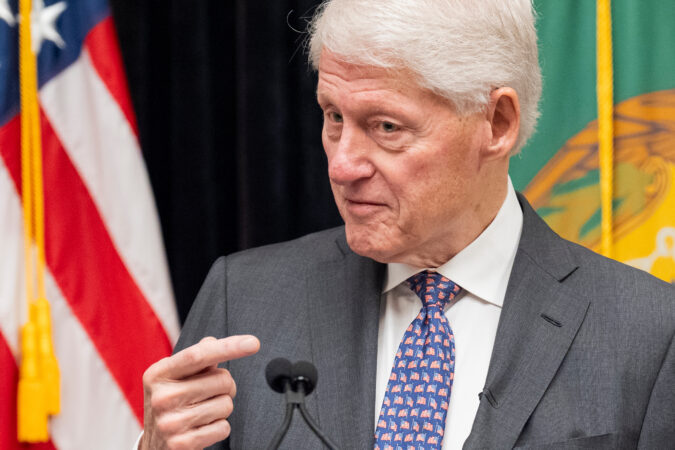
WASHINGTON — Former President Bill Clinton told members of Congress on Friday that he “did nothing wrong” in his relationship with Jeffrey Epstein and saw no signs of Epstein’s sexual abuse as he faced hours of grilling from lawmakers over his connections to the disgraced financier from more than two decades ago.
“I saw nothing, and I did nothing wrong,” the former Democratic president said in an opening statement he shared on social media at the outset of the deposition. The closed-door deposition ended after more than six hours of questioning from lawmakers who said he answered every question posed to him.
The closed-door deposition in Chappaqua, N.Y., marks the first time a former president has been compelled to testify to Congress. It came a day after Clinton’s wife, former Secretary of State Hillary Clinton, sat with lawmakers for her own deposition.
Bill Clinton has also not been accused of any wrongdoing. Yet lawmakers are grappling with what accountability in the United States looks like at a time when men around the world have been toppled from their high-powered posts for maintaining their connections with Epstein after he pleaded guilty in 2008 to state charges in Florida for soliciting prostitution from an underage girl.
“Men — and women for that matter — of great power and great wealth from all across the world have been able to get away with a lot of heinous crimes and they haven’t been held accountable and they have not even had to answer questions,” said Republican Rep. James Comer, the chair of the House Oversight Committee, before the deposition began Friday.
Hillary Clinton told lawmakers Thursday that she had no knowledge of how Epstein had sexually abused underage girls and had no recollection of even meeting him. But Bill Clinton will have to answer questions on a well-documented relationship with Epstein and his former girlfriend Ghislaine Maxwell, even if it was from the late 1990s and early 2000s.
Bill Clinton in his opening statement said that he would likely often tell the committee that he did not recall the specifics of events from more than 20 years ago. But he also expressed certainty that he had not witnessed signs of Epstein’s abuse.
Still, Republicans were relishing the opportunity to scrutinize the former Democratic president under oath.
Still, Republicans were relishing the opportunity to scrutinize the former Democratic president under oath.
“No one’s accusing anyone of any wrongdoing, but I think the American people have a lot of questions,” Comer said.
Republicans finally get a chance to question Bill Clinton
Republicans have wanted to question Bill Clinton about Epstein for years, especially as conspiracy theories arose following Epstein’s 2019 suicide in a New York jail cell while he faced sex trafficking charges.
Those calls reached a fever pitch late last year when several photos of the former president surfaced in the Department of Justice’s first release of case files on Epstein and Maxwell, a British socialite who was convicted of sex trafficking in December 2021 but maintains she’s innocent. Bill Clinton was photographed on a plane seated alongside a woman, whose face is redacted, with his arm around her. Another photo showed Clinton and Maxwell in a pool with another person whose face was redacted.
Epstein also visited the White House several times during Clinton’s presidency, and the pair later made several international trips together for their humanitarian work. Comer claimed the committee has collected evidence that Epstein visited the White House 17 times and that Bill Clinton flew on Epstein’s airplane 27 times.
“We are only here because he hid it from everyone so well for so long,” Bill Clinton said in his opening statement. “And by the time it came to light with his 2008 guilty plea, I had long stopped associating with him.”
Comer pledged extensive questioning of the former president. He claimed that Hillary Clinton had repeatedly deferred questions about Epstein to her husband.
Bill Clinton went after Comer for calling his wife before the committee, telling him that “including her was simply not right.”
The committee was working to quickly publish a transcript and video recording of her deposition.
Has a precedent been set?
Democrats, who have supported the push to get answers from Bill Clinton, are arguing that it sets a precedent that should also apply to President Donald Trump, a Republican who had his own relationship with Epstein.
“I think that President Trump needs to man up, get in front of this committee and answer the questions and stop calling this investigation a hoax,” said Rep. Robert Garcia, the top Democrat on the committee, on Friday.
Comer has pushed back on that idea, saying that Trump has answered questions on Epstein from the press.
Trump on Friday expressed remorse at Bill Clinton being forced to testify. “I like Bill Clinton, and I don’t like seeing him deposed,” he told reporters as he departed the White House en route to Corpus Christi, Texas.
Democrats are also calling for the resignation of Trump’s Commerce Secretary Howard Lutnick. Lutnick was a longtime neighbor of Epstein in New York City but said on a podcast that he severed ties with Epstein following a 2005 tour of Epstein’s home that disturbed Lutnick and his wife.
The public release of case files showed that Lutnick actually had two engagements with Epstein years later. He attended a 2011 event at Epstein’s home, and in 2012 his family had lunch with Epstein on his private island.
“He should be removed from office and at a minimum should come before the committee,” Garcia said of Lutnick.
Republican Rep. Nancy Mace questioned Hillary Clinton about Lutnick’s relationship to Epstein during the deposition on Thursday. On Friday morning, Mace joined in calling for the commerce secretary to come before the committee.
“I believe we will have the votes to subpoena him,” Democratic Rep. Ro Khanna said.
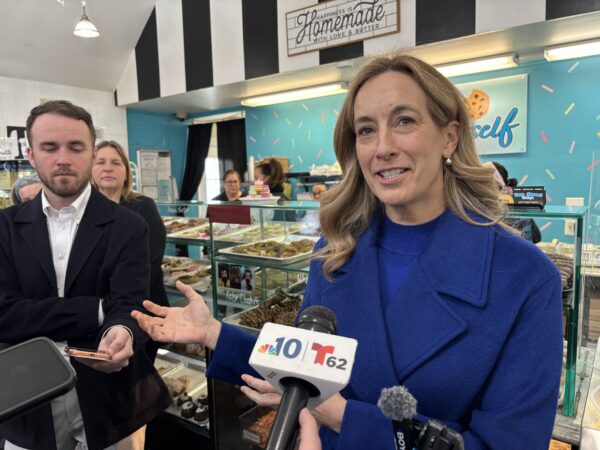
When New Jersey Gov. Mikie Sherrill walked into Two Sweet Boutique in Deptford, she couldn’t help but noticephotos of the Kelce brothers taped inside the bakery glass.
Below the sign were gigantic mounds of Reese’s Puffs dipped in chocolate and drizzled with peanut butter — coined the Kelce Kluster and named after retired Eagles legendJason Kelce and his brother, Travis Kelce, who plays tight end for Kansas City Chiefs and is engaged to pop superstar Taylor Swift.
“I’ve never seen anything like that,” said the Democratic governor, who took office last month. “It looks fantastic.”
She directed her staffer to add one of the domes to her bakery haul. She said the sweet treat will go to her two hungry teenagers at home.
New Jersey football fandom is often divided by New York Giants fans in the North and Eagles fans in the South, but Sherrill, who grew up in Virginia before settling in North Jersey, roots for the New York Jets.
But her purchase during the South Jersey stop may appeal to Eagles fans, who watched Jason Kelce play center for 13 seasons and emerge as a fan favorite after his boisterous victory speech following the team’sfirstSuper Bowl win in 2018.
Rocco Centrone, who owns the Deptford business with his wife and daughter, said the idea of the Kelce Kluster struck him when he was listening to the brothers’ podcast and they agreed on Reese’s Puffs as their favorite cereal.
Gov. Mikie Sherrill speaks to reporters in front of the Kelce Klusters at Two Sweet Boutique in Deptford.
The Centrones and their supporters took to social media and successfully got the football stars’ attention. The Kelce brothers have chatted about the treat on their podcast New Heights, drawing customers nationwide to the small Gloucester County business.
“They look delicious, I can’t believe this isn’t a thing,” Jason Kelce said on a 2023 episode. “These are outstanding. Well, I guess this is a thing now.”
Dressed in Mummers attire, Eagles center Jason Kelce pauses during his colorful speech on the Art Museum steps in 2018 at the Super Bowl victory parade.
The label on the treat during the governor’s visit spelled the treat name as “Kelse Clusters,” but an employee assured The Inquirer that the misspelling was just an error and not the official title.
Sherrill visited the South Jersey bakery on Friday to discuss her “Save You Time and Money Agenda,” though the conversation largely focused on learning about the business and its sweet treats.
Sherrill said she visited the bakery because “small businesses really are the heart of our communities.”
“I find that everywhere I go with small businesses, they truly are the lifeblood,” she said. “So I want to make sure, as governor, I’m making it easier for people who are running these businesses, saving them time and money, cutting through red tape and bureaucracy, and that is a cornerstone to me.”
WASHINGTON — President Donald Trump said Friday that the U.S. is in talks with Havana and raised the possibility of a “friendly takeover of Cuba” without offering any details on what he meant.
Speaking to reporters outside the White House as he left for a trip to Texas, Trump said Secretary of State Marco Rubio was in discussions with Cuban leaders “at a very high level.”
“The Cuban government is talking with us,” the president said. “They have no money. They have no anything right now. But they’re talking to us, and maybe we’ll have a friendly takeover of Cuba.”
He added: “We could very well end up having a friendly takeover of Cuba.”
Trump didn’t clarify his comments but seemed to indicate that the situation with Cuba, a communist-run island that has been among Washington’s bitterest adversaries for decades, was coming to a critical point. The White House did not respond to requests for more information Friday.
The president also said that Cuba “is, to put it mildly, a failed nation” and “they want our help.”
His remarks came two days after the Cuban government reported that a Florida-registered speedboat carrying 10 armed Cubans from the U.S. opened fire on soldiers off the island’s north coast. Four of the armed Cubans were killed, and six were injured in responding gunfire, according to Cuba’s government. One Cuban official also was injured.
Cuba has been on Trump’s mind since at least early January, after U.S. forces ousted one of Havana’s closest allies, Venezuela’s socialist President Nicolás Maduro. Trump suggested in the aftermath of that raid that military action in Cuba might not be necessary because the island’s economy was weak enough — particularly in the absence of oil shipments from Venezuela that stopped after Maduro was taken into custody — to soon collapse on its own.
“We’ve had a lot of years of dealing with Cuba. I’ve been hearing about Cuba since I’m a little boy. But they’re in big trouble,” he said Friday.
Then, noting the exile community from the island living in the U.S., Trump said there could be something coming that “I think [is] very positive for the people that were expelled, or worse, from Cuba and live here.” He did not elaborate.
The U.S. has maintained a strict trade embargo on Cuba since 1962, the year after a failed, CIA-sponsored invasion of the island at the Bay of Pigs. Trump nonetheless indicated earlier this month that talks with Cuban officials were underway.
Cuba’s government confirmed earlier this week that it was communicating with U.S. officials following the shooting of the American boat. Rubio has said the U.S. Department of Homeland Security and Coast Guard are investigating what happened.
An executive order that Trump signed in late January pledged to impose tariffs on countries providing oil to Cuba, threatening to further cripple a country already plagued by a deepening energy crisis, though U.S. authorities have since indicated that oil from Venezuela can be sold to Cuban interests in some cases.
Carlos Fernández de Cossío, Cuba’s deputy foreign minister, posted, then later deleted on Friday that “the US maintains its fuel embargo against Cuba in full force, and its impact as a form of collective punishment is unwavering.”
“Nothing announced in recent days changes this reality,” he wrote on X before the post was removed. “The possibility of conditional sales to the private sector already existed and does not alleviate the impact on the Cuban population.”
Meanwhile, 40-plus U.S. civil society organizations sent a letter to Congress on Friday asking that it “press the Trump administration to reverse its aggressive policy towards Cuba” and saying that efforts to cut oil shipments to the Caribbean island would spark a humanitarian collapse.
Signees included the Alliance of Baptists, ActionAid USA and the Presbyterian Church.
“Policies that deliberately impose hunger and mass hardship on millions of civilians constitute a form of collective punishment, and as such are a grave violation of international humanitarian law,” the letter reads.
New Jersey Gov. Mikie Sherrill said Friday that “all options are on the table” when asked by The Inquirer whether she would support adding a new tax on ICE detention centers in the state.
A bill introduced in both the state Assembly and Senate last week would implement a 50% tax on the gross receipts of private detention centers in the state and send that money to a fund for immigration services in the state. It has not yet been put up for a vote in either chamber.
Sherrill expressed opposition to new U.S. Customs and Immigration Enforcement detention facilities in the Garden State and said the state can ensure the federal government is following proper legal processes as it buys up warehouses and seeks to expand confinement capacity.
The legislativeeffort is led in part by progressives who were just elected to the legislature in November — Assembly members Ravi Bhalla and Katie Brennan, both North Jersey Democrats.
On a national level, Sens. Andy Kim and Cory Booker, both Democrats, introduced legislation on Thursday that would ban President Donald Trump’s administration from purchasing or converting warehouses for immigration detention or processing.
Sherrill wrote a letter to Homeland Security Secretary Kristi Noem on Friday expressing her opposition to the plan, which the governor said involves housing up to 1,500 beds in a 470,000-square-foot facility that currently has just two bathrooms.
“They really just have not gone through a thoughtful process,” she said during her Gloucester County stop. “It’s going to put some pressure on the town as well, and these types of facilities have a history of not being built in a way that is safe for prisoners.”
New Jersey has existing ICE detention centers at Delaney Hall in Newark and in Elizabeth. The agency has also floated the idea of confining people at Joint Base McGuire-Dix-Lakehurst.
“This is not a warehouse that’s fit for human habitation, and they say they’re putting 1,500 people in there,” she said of the Roxbury plan. “So there is a lot we can do as a state to prevent this.”
In her Friday letter to Noem, Sherrill denounced the Department of Homeland Security’s lack of transparency around their Roxbury plans — a criticism that Pennsylvania Gov. Josh Shapiro, who opposes ICE warehouse facilities in Pennsylvania, has also lodged against the agency.
Protests erupted in Roxbury after the Washington Post included it as a site that ICE was considering. Confusion later ensued after DHS, which oversees ICE, put out contradictory statements to the media over whether they were purchasing a warehouse for a detention center there.
Sherrill also told Noem in her letter that the state will “assess all options to protect the community’s infrastructure, public safety, health, and long-term economic stability,” using “every tool at our disposal.” She said the ICE detention centers in the state and elsewhere are known for “deplorable conditions,” such as overcrowding, undrinkable water, rotten food, and insufficient healthcare.
“In short, DHS’s treatment of human beings — citizen and noncitizen alike — reflects a chilling disregard for both human life and the rule of law,” she said in the letter. “New Jersey will not be complicit in this.”
For the third time in two decades, Philadelphia voters this May will have the opportunity to weigh in on a city rule requiring local elected officials to step down from their current jobs if they want to seek higher office.
Voters rejected City Council’s first two attempts to get rid of the resign-to-run rule, which requires a ballot measure because it is part of the city’s Home Rule Charter.
The latest proposal, which Council approved Thursday in a 15-1 vote, will go before the voters during the May 19 primary election. Councilmember Isaiah Thomas, who authored the measure, is hopeful it will be approved because his proposal is more limited than Council’s previous attempts.
“Reforming the resign-to-run rule for local elected officials is a critical first step towards ensuring Philadelphians have the best representation possible at all levels of government,” Thomas said in a statement.
Rather than eliminating the resign-to-run rule, Thomas’ proposal would amend it to allow all elected city officials except the mayor to run for state or federal offices without resigning. (Council members would still have to step down if they wanted to run for mayor, and mayors would still have to resign to seek any other office.)
What was this week’s highlight?
Why stop there? Councilmember Jeffery Young Jr. cast the only vote against Thomas’ proposal.
He said afterward that he believes a measure to alter the resign-to-run rule should be paired with another charter amendment: one that would impose term limits for Council members.
“I do believe that we should be limited as elected officials,” said Young, a first-term Council member representing North Philadelphia and parts of Center City. “I do think that as a public office, we shouldn’t do these jobs forever.”
Young’s position echoes that of the Committee of Seventy, Philadelphia’s business-backed good-government group. Committee of Seventy CEO Lauren Cristella told Council last year that pairing a resign-to-run change with term limits would provide “comprehensive, not piecemeal, reform.”
The group proposed limiting Council members to three four-year terms. Young said he is open to negotiating about what the right number of terms should be.
What else happened?
Never read the comments: Is serving on City Council a “real job”?
Not according to a recent Instagram comment from Young, whose taxpayer-funded salary is about $166,000 per year.
“Jay Young is a joke of a councilperson and I cannot wait till he’s replaced,” wrote Fisher, who posts about urbanism issues and has thousands of followers across his social media accounts.
Young replied: “me too so I can get a real job.”
After Council ended Thursday, Young said the comment was not an indication of his political future.
“I’m joking,” he told reporters. “The guy called me a joke, and I made a joke.”
Councilmember Jeffery Young, Jr. in chambers as City Council meets Dec. 11, 2025.
The backstory: Young, who represents the North Philadelphia-based 5th District, had proposed a zoning bill to prevent the former Hahnemann University Hospital site on North Broad Street from being redeveloped into housing. Young said he was hoping to see the site return to being an employment hub.
But instead, his efforts to change the area’s zoning led to a rush of housing permit applications from developers hoping to beat him to the punch as his proposal made its way through the legislative process. He has since pressed pause on the bill, and The Inquirer video laid out how the saga had unfolded.
In a Council speech Thursday, Young appeared to walk back his comment, although he did not directly mention the episode.
“People say a lot of vile stuff about us. It seems like we’re not allowed to have a sense of humor about it,” Young said. “But I want my constituents to know that in the 5th Council District, we are fighting each and every day to improve their lives.”
The Instagram comment was not the first time Young has provided curious commentary about his political future.
Late last year, when The Inquirer asked if he planned to run for reelection in 2027, Young said: “It’s not up to me to make that decision. … It’s up to the people of the 5th District.”
Usually, the people’s will is discerned through elections. Young, who has already drawn a potential opponent in next year’s race, said he will instead take the pulse of the 5th District by reaching out to people before deciding whether to seek a second four-year term.
At the time, Young seemed to think being a member of Council was a real job.
“I like doing my job,” he said last year.
Quote of the day
Jerome Richardson, 21, a senior at Temple who is a native of St. Paul, has been charged along with journalist Don Lemon for an anti-ICE protest at a Minnesota church last month.
Temple student honored: Council on Thursday recognized Jerome Richardson, a Temple University senior who was arrested by federal authorities on charges connected to a January protest in his native St. Paul, Minn.
During the surge in immigration enforcement activities and civil unrest in the Twin Cities this winter, protesters interrupted a service at a church whose pastor is also a federal immigration officer.
The fallout from the demonstration led to the controversial arrest of former CNN anchor Don Lemon, who live-streamed the event and said he was covering it as a journalist. Richardson said in a video he assisted Lemon “by helping with logistics and connecting him with local contacts” and posted a text-message exchange in which Lemon said Richardson could “produce” for him.
Richardson turned himself in to federal authorities in Philadelphia earlier this month. His case is pending, along with those of Lemon and other defendants.
“Whenever journalists are under attack, we are all under attack,” Richardson said in a speech to Council.
Staff writers Anna Orso, Jake Blumgart, and Ryan W. Briggs contributed to this article.
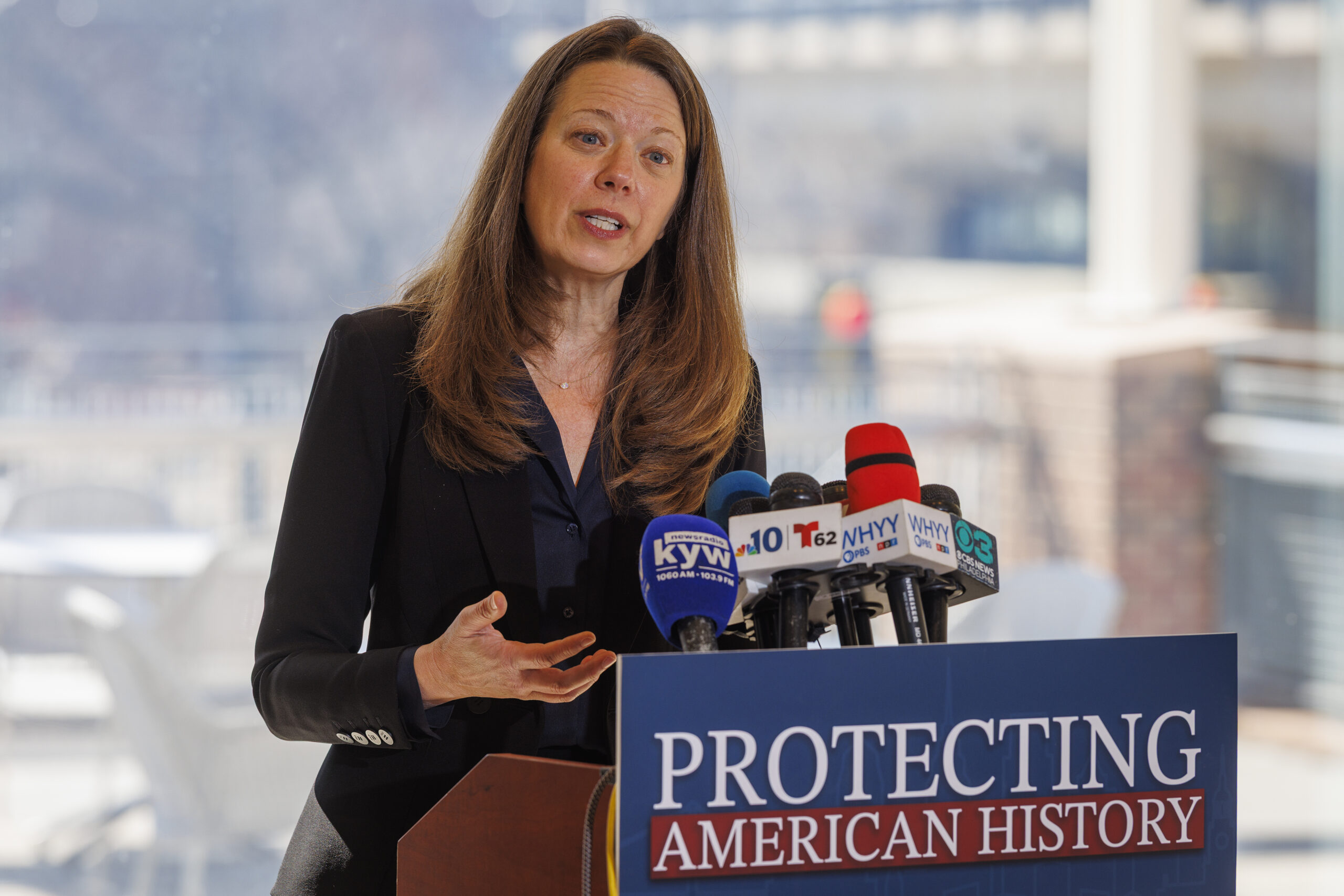
The proposed Protecting American History Act comes as the future of the President’s House, which memorializes the nine people George Washington enslaved in Philadelphia, remains in limbo as a legal battle between the City of Philadelphia and the federal government continues to play out.
“It is only dictatorships and communist countries that whitewash their history and give an official version, rather than the accurate version,” Boyle said during a news conference Friday. “Frankly, the most American thing in the world is to discuss and debate our nation’s history. It improves who we are as a people and where we’re going.”
The National Park Service last month removed educational panels from the site under President Donald Trump’s executive order forbidding displays at national parks that “inappropriately disparage Americans past or living.”
Some of that material was restored last week after a judge ruled in favor of the city, but those efforts were paused by a federal appeals judge while considering the Trump administration’s motion for a stay. The appeal of the lower federal court’s injunction that ordered them to restore the displays is also underway.
“Court decisions alone are not enough… History should not depend on the whims of one federal judge. This issue is bigger than just one exhibit, as important as it is. This is about the history of our entire nation and our people,” Boyle told reporters Friday at the Independence Visitor Center.
With Independence Hall towering behind him, Boyle said the bill calls for restoring all historical exhibits at the park, including the President’s House, to its status on Jan. 21, the day before the displays were taken down. It will also shield all historical displays at Independence National Historical Park, which Boyle’s district includes, from any future government censorship.
The President’s House opened in 2010 after years of advocacy by local Black leaders. It juxtaposes the cruelty of slavery against the nation’s founding ideals.
Michael Coard, an attorney and leader of Avenging the Ancestors Coalition, which helped shape the President’s House, said in a statement that his group is looking forward to working with Boyle on the legislation and will reach out to both Democratic and Republican lawmakers.
“From day one, we have said this is not a partisan issue,” Coard said in a statement. “This is an American issue. The full history of our nation deserves to be told without censorship or political interference.”
U.S. Rep. Brendan Boyle announces legislation called the Protecting American History Act at the Independence Visitor Center, Friday, Feb. 27, 2026.
U.S. Reps. Dwight Evans and Mary Gay Scanlon, who also represent parts of Philadelphia, are the lead cosponsors on the legislation.
The Democrats also joined Boyle last month in writing to Interior Secretary Doug Burgum and Acting National Park Service Director Jessica Bowron seeking answers about the President’s House by Jan. 30. As of Friday, the Trump administration officials had yet to respond, Boyle said.
Boyle said that he has discussed this bill with Republican colleagues in the House, and they have expressed support, but it’s uncertain whether those lawmakers will publicly support his billor whether it’ll receive a vote in the GOP-controlled chamber.
In addition to lawmakers, Boyle’s bill is supported by the Rev. Beth Hessel, executive director of the Athenaeum of Philadelphia, a historic membership library, and Sean Connolly, executive director of Arch Street Meeting House, a Quaker historical site.
Rev. Dr. Beth Hessel, executive director of the Athenaeum of Philadelphia, speaks in support of legislation from U.S. Rep. Brendan Boyle that would restore exhibits at the President’s House.
The legislation focuses solely on Philadelphia, but the hope is, Boyle said, that it can serve as a model for other lawmakers throughout the country as the Trump administration attempts to rewrite history ahead of the nation’s 250th anniversary.
Other historic sites and national parks have also had educational material removed in recent weeks, including the Grand Canyon, where the National Park Service took down signage about the mistreatment of Native Americans.
Boyle said the present day is almost a full-circle moment from the country’s founding, comparing Trump to King George III.
“Almost exactly 250 years ago, our founders were dealing with an out-of-control, dictatorial ‘Mad King.’ They opted on the side of honesty and truth and idealism… it is toward that more perfect union you still strive today.”
In the early-morning hours after the Rev. Jesse Jackson died on Feb. 17, his family called another prominentpastor for prayer and solace. “A mighty lion has passed,” Bishop William Barber recalled the family saying.
“I’ve been thinking about that imagery,” said Barber, who leads Repairers of the Breach, an organization that aims to bring moral and religious language to causes such as safeguarding voting rights and alleviating poverty. “Because lions, they protect the pride, but they also expand the territory of the pride.” And Jackson expanded the notion of civil rights in America, he said: from the Black community to the full spectrum of people seeking justice.
Jackson’s death at age 84 comes at a perilous time for the civil rights crusade he helped lead for decades. Most of his iconic contemporaries are gone as President Donald Trump attacks their hard-fought principles, declaring war on diversity, equity, and inclusion initiativeswhile the foundational achievement of the civil rights movement, the 1965 Voting Rights Act, may be on the verge of being overturned by the U.S. Supreme Court.
“Our heroes are dying, and the question has to be asked: Who comes next or what comes next?” said author and political commentator Bakari Sellers. “This new era of regression, this new era of Trumpism, has shown clearly that … our new leaders [are] not able to meet the moment.”
It’s a major test of the movement in a fragmented landscape of social media and political division with no clear successor generation to rally a response. The wellspring that produced leaders such as Jackson and the Rev. Dr. Martin Luther King Jr. — the Black church — no longer plays the same role. Institutional religion doesn’t have the authority or power it once did in the United States, experts said, and the religious right for decades has been more loudly — and successfully — merging its view of Christianity and politics.
“The Black church isn’t as important as it was. It’s harder to have a figure come out of that tradition and command the power and respect that Jesse Jackson did,” said Claflin University historian Robert Greene II. “It’s hard to imagine someone today being able to enter the political realm already seen as a moral authority.”
If there is to be a robustdefense of civil rights, many believe it will come from Jackson’s legacy of expansion — using the Voting Rights Act to get more people of color into voting booths and into electedoffice; broadening the definition of civil rights to include all marginalized communities, such as LGBTQ people and people with disabilities,in a common cause; and pushing beyond political rights to economic rights.
In some ways, the fact that there is no obvious individual to take the mantle is part of Jackson’s legacy, say civil rights activists, elected leaders and scholars. He advocated for leaders at all levels of government and activismcarrying out different parts of the mission.
“We have democratized leadership in the civil rights movement and spread it throughout the country,” Virginia lawmaker Don Scott said.
Scott said his own life found a new purpose when he was a college sophomore in 1984 and met Jackson, who was running for president. Forty years later, Scott became the first Black person elected speaker of the Virginia House of Delegates.
“That’s the legacy of Jesse Jackson — he empowered a whole lot of folks to lift up their voice,” Scott said.
Bryan Stevenson, a lawyer and founder of the Equal Justice Initiative, said it’s important to remember the historical arc of the civil rights movement. After the Civil War, Black men had a brief moment when they were able to participate in democracy. Then Jim Crow swooped in and disenfranchised Black voters in the South for more than half ofthe 20th century.
During that time, without access to elected office, Black Americans looked elsewhere for leadership and resistance. Black churches filled that void, giving rise to the civil rights movement, Stevenson said, exemplified by King and other figures — such as Claudette Colvin, John Lewis and Fannie Lou Hamer — who blended the tone of the pulpit with politics.
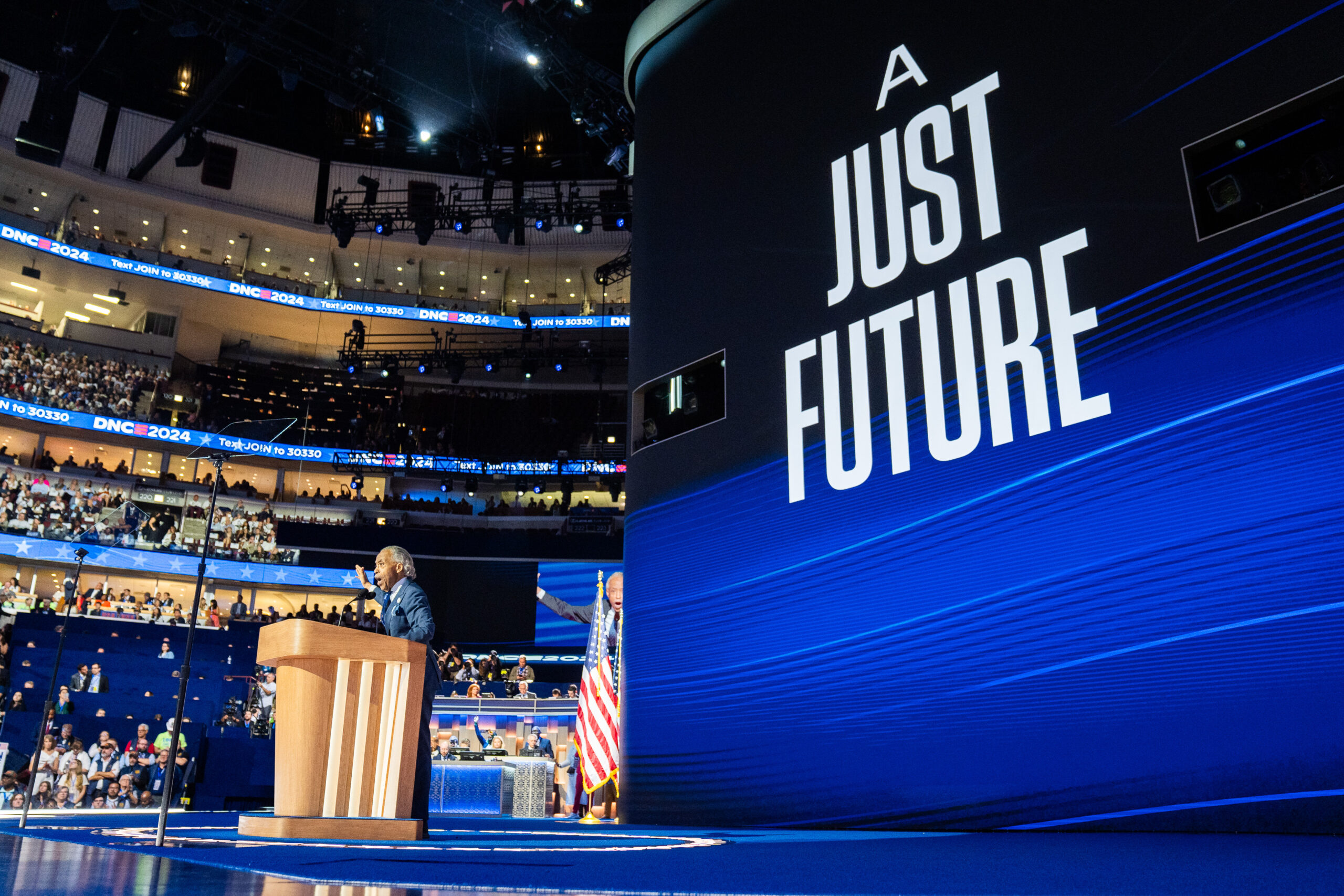
The Rev. Al Sharpton speaks on the final day of the 2024 Democratic National Convention in Chicago.
Younger generations of pastors — including those from more conservative traditions — were “inspired to be not just pastors but prophets as well,” said Tyler Burns, a Florida pastor and director of the Witness, a multimedia organization aimed at elevating the voices of Black Christians.
Today there are some figures who echo Jackson in their focus on combining Black Christianity and politics to serve the disenfranchised, including U.S. Sen. Raphael G. Warnock (D., Ga.) and Barber, a North Carolina organizer who founded the Center for Public Theology & Public Policy at Yale University.
But Jackson was one of a kind, said Jemar Tisby, a historian, writer, and podcaster on race and religion. He represented “the longer Black freedom struggle,” Tisby said, and harnessed a blend of charisma, ambition, and eloquence to an unusual moment of political opportunity.
The Voting Rights Act of 1965, and Jackson’s immediate recognition of the door that it opened, “radically changed the opportunity for Black leadership,” Stevenson said. Jackson was particularly effective at voter registration, preachingthe power of politics.
“It’s a different landscape today as a result,” Stevenson said.
The Supreme Court has already weakened much of the 1965 Voting Rights Act and will rule on whether to strike down its last major pillar in the coming months. The court could further limit the use of race in drawing legislative maps, which would most likely lead to a decline in the number of minorities holding public office.
Maryland Gov. Wes Moore, the state’s first Black governor and among only three African Americans ever elected governor of any state, saidthat “an attack on the VRA is in many ways an attack on decades of progress.”
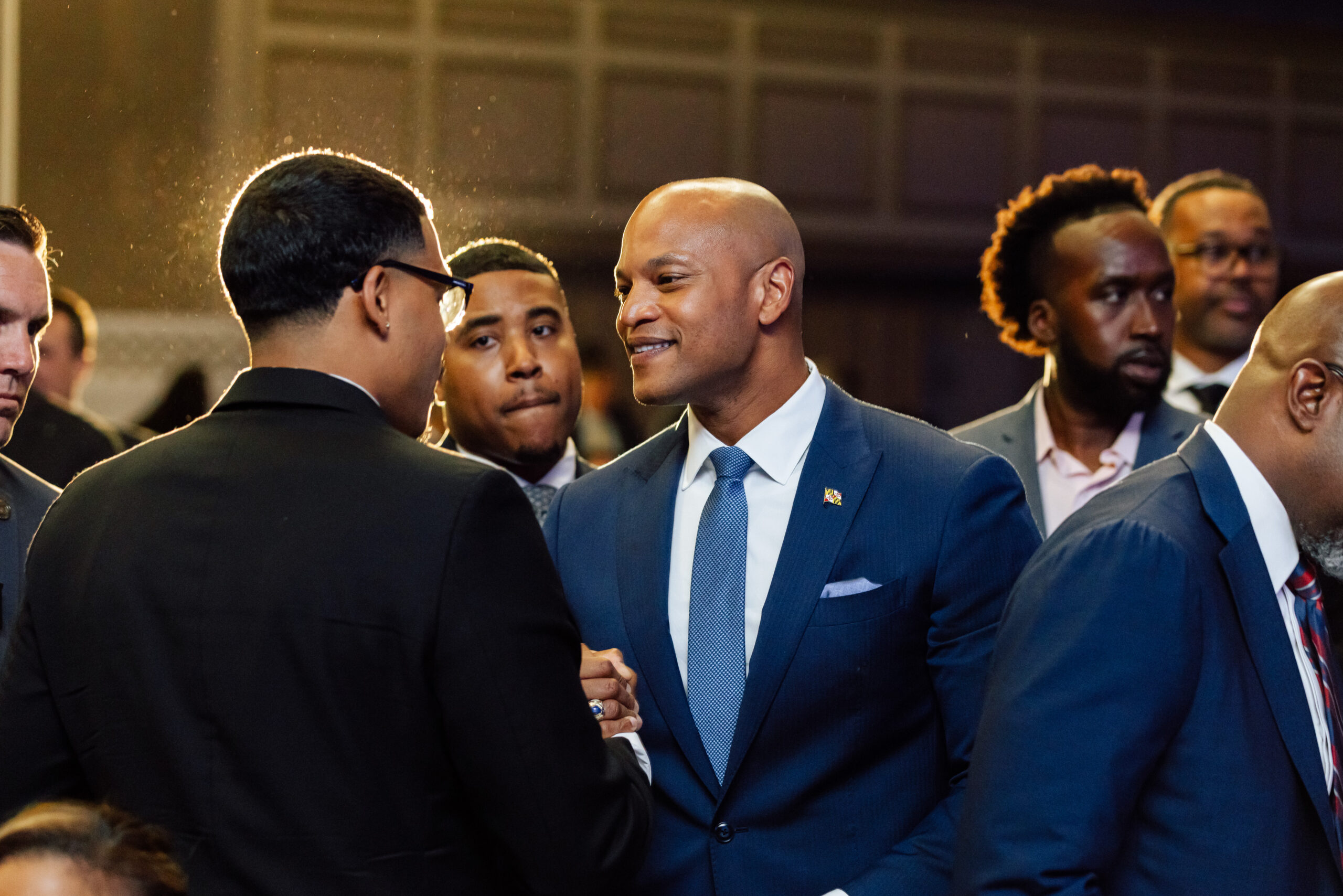
Maryland Gov. Wes Moore speaks with supporters at a Democratic Party gala in Baltimore last June.
Jackson’s pivot after the passage of the law, which helped Black officials win congressional and legislative seats, spurred the movement’s success, Moore said.“He was able to make the transition from demanding change to saying, ‘I want to be one of the people to help make it,’ right? Because he understood that part of the power of the civil rights movement was the fact that they were able to get into rooms.”
The Brennan Center for Justice at the NYU School of Law has tracked efforts to roll back access to the ballot box around the country, including states imposing voter ID laws, making registration more difficult, and aggressively purging voter rolls. Those actions are part of what Georgia politician Stacey Abrams calls “the exercise of diminishing democracy … [and] a wholesale attack on the pluralism of America.”
Abrams, a former Georgia state lawmaker and gubernatorial candidate, said Jackson’s legacy is key to fighting back. His Rainbow/PUSH Coalition framed the fight for civil rights broadly, as “how do we make America meet its obligations to all its people,” Abrams said.
That not only brought more marginalized groups into the struggle, she said, butit expanded the idea of civil rights beyond the political realm. “Now that we had voting rights and civil rights, we also had to have access to economic rights,” Abrams said.
For all the years Jackson carried on his fight, “the through line was always that he worked to bring more people into the process … [so that] as many people as possible believe they have the right to participate,” she said.
Former Richmond Mayor Levar Stoney — who, until term-limited out of office in 2025, was part of a new generation of young Black mayors around the country — said the effectiveness of Jackson’s work can be seen in state and local offices in the South, where minorities and women have made huge strides in representation.
The phenomenon cuts across generations, Stoney said, pointing out that in Virginia, 82-year-old L. Louise Lucas is the first Black woman to serve as president pro tempore of the state Senate; Scott, 60, is the first Black speaker; and Jay Jones, 36, is the first Black person elected as the state’s attorney general.
Apart from President Barack Obama, Stoney said, “I can’t foresee us ever looking to one singular leader.” He added, “There’s a collective of leaders now, [and] we expect to be represented by someone who looks like us.”
What might be lost, though, is the unifying emotional resonance of a figure such as Jackson. One element that gets overlooked, Sellers said, is that Jackson, King, and other leaders of the day “were more patriotic than most.”
They were able to “look at this country and call out its failures, call out its broken promises, and then try to reimagine her for what she should look like, which is an inclusive society built in the image of us all.”
Jackson was able to lend that stature to others, which is what several remembered this week in the lead-up to his memorial services.
Stevenson said he regularly conferred with Jackson in creating the National Memorial for Peace and Justice in Montgomery, Ala., which recognizes more than 4,000 African Americans lynched during the Jim Crow era. At the dedication for an affiliated memorial in 2024, Jackson had traveled to the ceremony but by then was using a wheelchair and had difficulty communicating. As Stevenson spoke before the crowd, he looked out and saw Jackson, who held his fingers in the shape of a heart.
A work by Ghanaian artist Kwame Akoto-Bamfo depicting enslaved people in bondage is on display at the National Memorial for Peace and Justice in Montgomery, Ala.
“It was so moving to me,” Stevenson said. “And I told him, you know, you had me almost in tears.”
Abrams recalled the night in 2018 when it became clear that she had narrowly lost the election for Georgia governor. Jackson was on hand as she prepared to concede before supporters, and some of her staff tried to get him to move into a VIP area backstage. He refused.
“He said: ‘I want to be here when she comes downstairs. I know what [defeat] feels like, and I need her to know that the work she’s done continues and she should still be proud,’” Abrams said.
Barber said he intends to honor Jackson’s legacy by convening a group in the coming weeks to study his speech at the 1988 Democratic convention — when his performance in the primaries brought him closer to the presidential nomination than anyone thought possible — to galvanize a new voter movement.
In the speech, Jackson called for unity to “keep hope alive,” and said he cherished America not as a uniform blanket but as a quilt.
“My prayer and hope,” Barber said, “is that we’re working toward that end and bringing folk together. And that the dying of Jesse will not cause us to just say, ‘Woe is us’ and ‘Oh, just look at what he did.’ Because commemoration is not how you remember people like him. You remember people like him by engagement. By recommitting yourselves.”