Category: Politics

Political news and coverage

  • Five Philly police officers sue over DEI, backed by a Trump-aligned legal team

    Five Philly police officers sue over DEI, backed by a Trump-aligned legal team

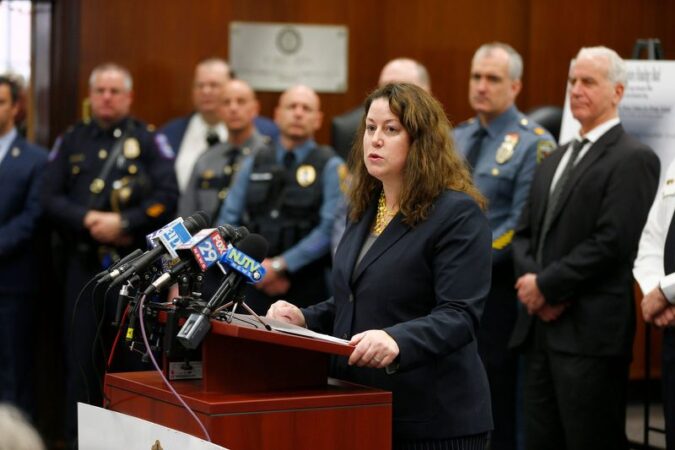
    Five police officers say in a new federal lawsuit they were skipped over for promotions because of a Philadelphia policy change to promote diversity, equity, and inclusion in the municipal workforce.

    The officers — Christopher Bloom, Kollin Berg, Joseph Musumeci, Marc Monachello, and Leroy Ziegler — claim they were victims of an “illegal and discriminatory” policy change adopted by City Council and Philadelphia voters in the aftermath of Black Lives Matter protests that swept the nation.

    The lawsuit is a proposed class action on behalf of “all white male employees” of the Philadelphia Police Department who were passed over for promotions since 2021 in favor of a candidate with lower exam scores. The complaint was filed by a team of attorneys affiliated with President Donald Trump who have sued the city previously over diversity initiatives.

    The change at the heart of the latest lawsuit is related to the so-called rule of two that required city managers to choose between the two candidates with the highest Civil Service exam scores. The rule was an often-cited reason for the limited diversity in the city workforce.

    Voters got rid of the requirement through a ballot question in 2021, giving the city more discretion to tailor the number of finalists for a position.

    The five officers sought promotions in November, three from lieutenant to captain and two from sergeant to lieutenant. All were “passed over for one of these promotions on account of their race and sex,” the suit says.

    The complaint, filed Wednesday in the Eastern District of Pennsylvania, quotes from legislative documents and statements from politicians to argue that the rule change was racially motivated.

    A 2022 resolution calling on then-Mayor Jim Kenney to study the impact of the rule change “repeatedly bemoans the fact that white men were obtaining too many promotions under the city’s merit-based promotion system,” the suit says, calling it “one of the many examples of the city of Philadelphia’s determination to impose illegal DEI practices that consciously and intentionally discriminate against white men.”

    Another example cited in the lawsuit is a statement by Mayor Cherelle L. Parker, a Council member at the time, who championed the change. She is quoted as saying that “for too long, the Rule of Two has held back Black and Brown employees.”

    The suit is the latest filed by a team of conservative lawyers against Philadelphia over efforts to address racial inequity. The attorneys include Pennsylvania’s self-described “go-to” lawyer for Republicans, Wally Zimolong; Jonathan Mitchell, the former Texas solicitor general who is credited as the legal mind behind that state’s abortion ban; and attorneys from American First Legal, an organization formed by Trump adviser Stephen Miller.

    In October, the group settled a lawsuit that claimed the city violated the Constitution by forcing bidders to sign agreements that included diverse workforce goals. The city agreed to pay $417,000 in attorneys’ fees and clarify that diversity benchmarks in project agreements were aspirational goals, not mandatory quotas.

    Parker’s administration ended a Philadelphia policy prioritizing businesses owned by women or people of color in city contracting shortly after the settlement.

    And earlier this month, the U.S. Court of Appeals for the Third Circuit revived a lawsuit brought by Philadelphia School District parents challenging admission-policy changes to selective schools as racially motivated.

    Delaware County-based attorney, Wally Zimolong, has been filing lawsuits challenging Philadelphia’s programs to increase diversity, equity, and inclusion in hiring and schools.

    The attorneys are not targeting Philadelphia, according to Zimolong.

    “Philadelphia just so happens to habitually enact policies that violate the United States Constitution,” he said.

    Zimolong declined to comment on the current lawsuit, as did the city’s law department.

    The complaint names as defendants the city, the police department, Police Commissioner Kevin Bethel, Deputy Commissioner Krista Dahl-Campbell, and Philadelphia Chief Human Resources Officer Candi Jones. It asks a judge to order the promotion of the officers and declare that the city’s current hiring policies are unlawful because they consider race and gender.

    Passed over

    Police lieutenants Bloom, Berg, and Musumeci sought promotions in fall 2025. There were 10 available positions, and the trio ranked eighth, 11th, and 13th, respectively, on the “captain eligibility” list based on exam scores.

    After interviews, six candidates were passed over in favor of those with lower scores, according to the complaint. Five of those six were white males.

    The lawsuit alleges a similar pattern when the department decided not to promote sergeants Monachello and Ziegler.

    “Monachello and Ziegler were passed over for promotion in favor of lower-ranked female or minority candidates with lower scores on the civil-service examination,” the suit says.

    The Fraternal Order of Police Lodge 5 blasted the police department in a statement following the November promotions, saying the union filed grievances and was considering other actions against “unfair DEI practices in law enforcement.” The FOP also sent a letter asking the U.S. Department of Justice asking to review the promotion criteria, the suit says.

    The police department workforce is 50% white, 34% Black, 12% Hispanic, and 3% Asian, according to data from the city. Nearly 40% of new hires this fiscal year have been Black, compared with 33% white.

    In comparison, the city’s population is 44% white, 42% Black, 16% Hispanic, and 9% Asian, according to the Census Bureau.

    The department has faced racial discrimination lawsuits from employees, including regarding promotions. But usually the candidates allege they were passed over for a white candidate.

    For example, in October, an Asian officer sued after not getting promoted to captain, noting in the complaint that “no person of Asian descent has been promoted to the rank of Captain since 1976.”

    Leslie Marant, the department’s first DEI chief, was fired after less than two years and has filed a suit alleging she became a victim of the systemic sex discrimination she was tasked with fixing.
  • Justice Department says it’s reviewing whether any Epstein-related records were mistakenly withheld

    Justice Department says it’s reviewing whether any Epstein-related records were mistakenly withheld

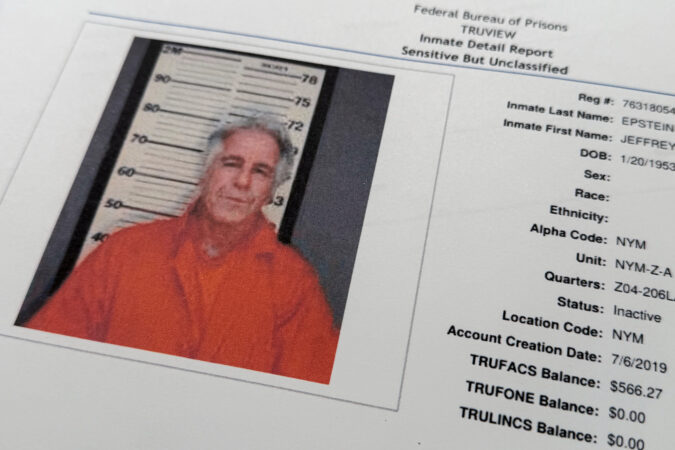
    WASHINGTON — The Justice Department said Wednesday that it was looking into whether it improperly withheld documents from the Jeffrey Epstein files after several news organizations reported that some records involving uncorroborated accusations made by a woman against President Donald Trump were not among those released to the public.

    The announcement followed news reports saying that a massive tranche of records released by the Justice Department did not include several summaries of interviews that the FBI conducted with an unidentified woman who came forward after Epstein’s 2019 arrest and claimed to have been sexually assaulted by both Trump and Epstein when she was a minor in the 1980s.

    “Several individuals and news outlets have recently flagged files related to documents produced to Ghislaine Maxwell in discovery of her criminal case that they claim appear to be missing,” the Justice Department said in a post on X. “As with all documents that have been flagged by the public, the Department is currently reviewing files within that category of the production.” Maxwell, Epstein’s longtime confidant, is serving a 20-year prison sentence on a sex trafficking conviction.

    It said that if any document is found to have been improperly withheld and is responsive to the federally enacted law mandating the files’ release, “the Department will of course publish it, consistent with the law.”

    At issue is a series of interviews said to have been conducted in 2019 with a woman who made an allegation against Trump, who has consistently denied any wrongdoing in connection with Epstein. News reports from recent days say the accuser was interviewed four times but a summary of only one of those interviews was included in the publicly released files.

    The missing records were earlier reported by the journalist Roger Sollenberger on Substack and NPR, and have since been documented by other news organizations, including the New York Times, MS Now, and CNN.

    Rep. Robert Garcia, the top Democrat on the House Oversight Committee, said in a statement that his panel would investigate the withheld records. He said he had reviewed unredacted evidence logs and “can confirm that the DOJ appears to have illegally withheld FBI interviews” with the accuser.

    The Justice Department last month said it was releasing more than 3 million pages of records related to Epstein, who took his own life in a New York jail cell in 2019 while awaiting trial on sex trafficking charges. The department said at the time that, though it was attempting to be transparent, it was also entitled to withhold records that exposed potential abuse victims, were duplicates or protected by legal privileges, or related to an ongoing criminal investigation.

    “Some of the documents contain untrue and sensationalist claims against President Trump that were submitted to the FBI right before the 2020 election. To be clear, the claims are unfounded and false, and if they have a shred of credibility, they certainly would have been weaponized against President Trump already,” the department said in a statement last month as it released the records.

    The redaction process was quickly revealed to have been flawed, with the department withdrawing some materials identified by victims or their lawyers, along with a “substantial number” of documents identified independently by the government.

    Lawyers for Epstein accusers told a New York judge last month that the lives of nearly 100 victims had been “turned upside down” by sloppy redactions in the government’s latest release of records. The exposed materials include nude photos showing the faces of potential victims as well as names, email addresses, and other identifying information that was either unredacted or not fully obscured.

    Other uncorroborated claims against Trump and other public figures were included in the publicly available files. The department did not say in its social media post Wednesday why records related to this specific accusation might have been withheld.

  • Vance says administration is pausing some Medicaid funding to Minnesota because of fraud concerns

    Vance says administration is pausing some Medicaid funding to Minnesota because of fraud concerns

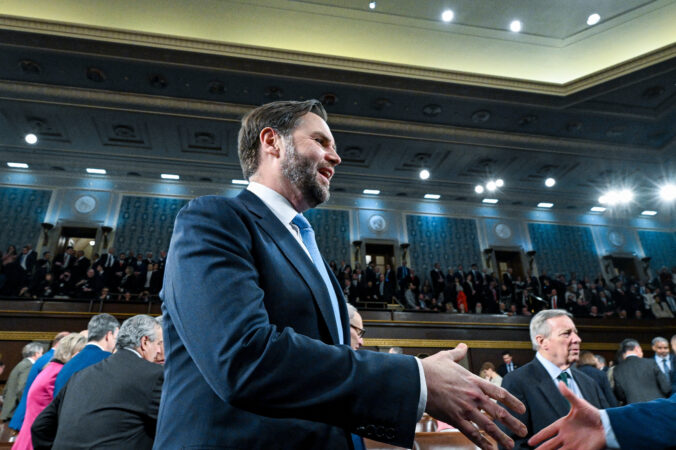
    WASHINGTON — Vice President JD Vance announced Wednesday that the Trump administration would “temporarily halt” some Medicaid funding to the state of Minnesota over fraud concerns, as part of what he described as an aggressive crackdown on misuse of public funds.

    Vance, who made the announcement with Mehmet Oz, the administrator for the Centers for Medicare and Medicaid Services, said the administration was taking the action “in order to ensure that the state of Minnesota takes its obligations seriously to be good stewards of the American people’s tax money.”

    Oz, who referred to people committing fraud as “self-serving scoundrels,” said the federal government would hold off on paying $259.5 million to Minnesota in funding for Medicaid, the healthcare safety net for low-income Americans.

    “This is not a problem with the people of Minnesota, it’s a problem with the leadership of Minnesota and other states who do not take Medicaid preservation seriously,” Oz said.

    Wednesday’s move is part of a larger Trump administration effort to spotlight fraud around the country. That effort comes after allegations of fraud involving daycare centers run by Somali residents in Minneapolis prompted a massive immigration crackdown in the Midwestern city, resulting in widespread protests. President Donald Trump, in his State of the Union address on Tuesday, announced Vance would spearhead a national “war on fraud.”

    Trump also recently nominated Colin McDonald to serve as the first assistant attorney general in charge of a Justice Department division dedicated to rooting out fraud.

    Oz said the administration was simultaneously notifying Minnesota’s Democratic Gov. Tim Walz as he was making the announcement publicly. Messages sent to spokespeople for Walz, former Vice President Kamala Harris’ 2024 running mate, were not immediately returned.

    “We will give them the money, but we’re going to hold it and only release it after they propose and act on a comprehensive corrective action plan to solve the problem,” Oz said.

    He said Walz would have 60 days to respond and advised healthcare providers and Medicaid beneficiaries who were concerned to contact Walz’s office.

    A spokesperson for Minnesota Attorney General Keith Ellison, whose office investigates Medicaid fraud, referred questions to the state Department of Human Services, which administers Medicaid in the state, A department spokesperson said the agency was preparing a statement.

    Earlier Wednesday, Ellison held a news conference to promote legislation that would give his office more staff and new legal tools to combat Medicaid fraud.

    Oz said the Centers for Medicare and Medicaid Services were also taking action to crack down on fraud in Medicare, the healthcare system relied upon by millions of older adults.

    He said CMS for six months would block any new Medicare enrollments for suppliers of durable medical equipment, prosthetics, orthotics or other supplies used to treat chronic conditions or assist in injury recovery.

    The Office of the Inspector General for the U.S. Department of Health and Human Services found last year that Medicare improperly paid suppliers nearly $23 million for durable medical equipment from 2018 through 2024. But it found that most of that was before January 2020, when changes to the system were implemented.

    Oz also announced a new crowdsourcing effort he said would help “crush fraud” by soliciting Americans’ tips and suggestions.

    “All of us are smarter than any one of us,” he said.

    In a news release accompanying the announcement, CMS said the funding being paused in Minnesota included some $244 million in unsupported or potentially fraudulent Medicaid claims and about $15 million in claims involving “individuals lacking a satisfactory immigration status.”

    Immigrants who are not living in the U.S. legally, as well as some lawfully present immigrants, are not allowed to enroll in the Medicaid program that provides nearly-free coverage for health services.

    CMS said in the release that if Minnesota fails to satisfy its requirements, it may defer up to $1 billion in federal funds to the state over the next year.

    A CMS spokesperson didn’t immediately respond to an inquiry about what the agency will require from Minnesota in order to restart the deferred funding.

    The administration has threatened to cut off funding for various programs for some Democratic-run states over fraud concerns over the last few months.

    One judge blocked those actions and required that payments flowing to Minnesota and four other states — California, Colorado, Illinois and New York — for a variety of social service programs. The government had said that there was “reason to believe” that those states were granting benefits to people in the country illegally. It did not initially explain where that information came from, but a government lawyer told the judge it was largely in reaction to news reports about possible fraud.

    Another judge said she would not let it cut off funding for administrative costs for 22 states that have refused to hand over information about applicants and recipients of food aid through the Supplemental Nutritional Assistance Program.

    The latest action was prompted in part by a series of fraud cases, including a nonprofit called Feeding Our Future accused of stealing pandemic aid meant for school meals. Prosecutors have put the losses from that case at $300 million.

    Since then, Trump has targeted the Somali diaspora in Minnesota with immigration enforcement actions and has made a series of disparaging comments about the community. During his State of the Union address on Tuesday, Trump said “pirates” have “ransacked Minnesota.”

    Federal agencies have also been enlisted to assist in targeting fraud in Minnesota.

    Last December, the U.S. Treasury Department issued an order requiring money wire services that people use to send money to Somalia to submit additional verification to the Treasury.

    The Center for Medicare and Medicaid Services told Minnesota in January that it intended to freeze parts of payments for some Medicaid programs that were deemed high-risk. The state said that those cuts would add up to more than $2 billion annually if they lasted and made an administrative appeal.

  • Josh Shapiro’s presidential prospects and John Fetterman’s eye-popping numbers: Highlights from a new Pa. poll

    Josh Shapiro’s presidential prospects and John Fetterman’s eye-popping numbers: Highlights from a new Pa. poll

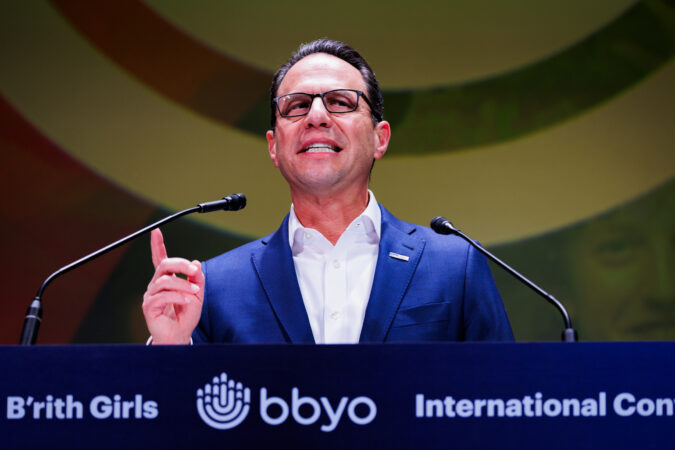
    Pennsylvania voters appear to be all in on Gov. Josh Shapiro’s reelection bid, while some are still warming up to the thought of him being president one day.

    Among registered voters, the Democratic incumbent leads his Republican challenger, state Treasurer Stacy Garrity, 55-37%, according to a Quinnipiac University poll released Wednesday.

    Meanwhile, 40% of Pennsylvania voters think that Shapiro, who has been bolstering his national political profile and has a job approval rating of 56%, would make a good president, according to the poll.

    But 43% of the state’s voters do not think he would make a good president and 16% did not offer an opinion, despite his high overall approval.

    A strong majority of Democrats and a plurality of independent voters both said he would be a good president, but a strong majority of Republicans disagreed.

    The survey, conducted among 836 registered voters in Pennsylvania from Feb. 19 to 23, offers a glimpse of what voters in one of the most politically consequential states think of top elected officials a little more than eight months ahead of the high-stakes 2026 midterms.

    Pennsylvania voters also shared their perceptions of U.S. Sen John Fetterman (D., Pa.), who has significant support among Republicans but a low rating with his own party, and President Donald Trump, whose job approval rating is sitting below 50% in a state he won two years ago.

    Here’s what else to know from the Quinnipiac poll:

    Sen. John Fetterman, D-Pa., left, and Sen. Dave McCormick, R-Pa., right, greet before participating in a debate moderated by Fox News anchor Shannon Bream, not shown, Monday, June 2, 2025, at the Edward M. Kennedy Institute for the United States Senate, Monday, June 2, 2025, in Boston, as livestreamed on Fox Nation. (AP Photo/Steven Senne)

    Republicans support John Fetterman. Democrats don’t.

    Fetterman has been known to cross the political aisle, and his willingness to embrace Trump and take key votes with Republicans appears to be costing him with voters in his own party.

    Sixty-two percent of Democratic Pennsylvania voters disapprove of how Fetterman is handling his job, while only 22% approve.

    Those dismal numbers with his own party are worse than Fetterman’s Republican colleague, Sen. Dave McCormick, who has a 54% disapproval rate with Democrats.

    After three years in office, Fetterman does much better with Republicans than his own party. Among GOP voters, 73% approve of the Democratic senator, compared with just 18% who disapprove, according to the poll. Among independents in the swing state, 48% approve and 37% disapprove.

    This dynamic has helped fuel speculation of a future party switch — something Fetterman has repeatedly shot down — or a Democratic primary challenge.

    The progressive Working Families Party has said it will support and, if needed, recruit a challenger. Fetterman has repeatedly sparred with progressives on a range of issues from unconditional support for Israel’s military actions in Gaza to his stance on immigration enforcement.

    He also drew ire from fellow Pennsylvania Democrats for crossing the aisle to support a Republican plan to end last year’s government shutdown without a deal to address expiring healthcare subsidies.

    U.S. Rep. Brendan Boyle (D., Philadelphia), a potential primary challenger, has repeatedly called Fetterman “Trump’s favorite Democrat,” including on Tuesday night, when the senator shook the president’s hand at the State of the Union address.

    Other names floated as potential contenders include U.S. Rep. Chris Deluzio (D., Beaver) and former U.S. Rep. Conor Lamb, who lost the 2022 primary to Fetterman.

    Which party do Pa. voters want to win the midterms?

    Forty-nine percent of Pennsylvania registered voters want to see Democrats win control of the U.S. House in November, while 43% want Republicans to maintain their advantage.

    November’s midterms are consequential for both parties, especially in the House, where Republicans currently have a slim majority.

    But voters in Pennsylvania have soured on Trump, who receives just 40% approval in the poll, compared with 55% disapproval. And he is losing ground on two key issues that propelled him to office: the economy and immigration.

    According to the poll, only 28% of Pennsylvania voters think the economy is getting better, while 47% think it is getting worse and 23% think it is staying the same.

    Additionally, 56% believe the Trump administration’s immigration enforcement is too harsh in how it treats undocumented immigrants. Meanwhile, 36% think the president is handling immigration correctly and 6% think the administration is being too lenient.

    Democrats believe they can capitalize on these issues and defeat incumbents in key swing districts: Republican U.S. Reps. Brian Fitzpatrick in Bucks County, Ryan Mackenzie in Lehigh County, Rob Bresnahan in Lackawanna County, and Scott Perry in York County.

    Trump has endorsed every member of the Republican U.S. House delegation in Pennsylvania except Fitzpatrick.

  • Trump floats new retirement benefit for 54 million workers

    Trump floats new retirement benefit for 54 million workers

    President Donald Trump, in his State of the Union address Tuesday night, suggested a major new retirement benefit for tens of millions of American workers, embracing an economic policy that proponents say could bolster the federal retirement safety net.

    Speaking to congressional lawmakers, Trump pledged to extend to private-sector workers the same type of retirement plan already available to federal employees. He also said the government would kick in up to $1,000 per year to their accounts, presumably in matching benefits. Roughly 54 million workers in the private sector have no workplace retirement benefits and do not benefit from stock market gains, according to research cited by the Economic Innovation Group, a Washington-based think tank, as part of what some experts have termed a “retirement crisis” in America.

    “Half of all of working Americans still do not have access to a retirement plan with matching contributions from an employer,” Trump said. “To remedy this gross disparity, I’m announcing that next year, my administration will give these often forgotten American workers — great people, the people that built our country — access to the same type of retirement plan offered to every federal worker. We will match your contribution with up to $1,000 each year.”

    The announcement was celebrated by Trump supporters as a major new economic policy heading into the 2026 midterm elections, but critics pointed out some problems with Trump’s pledges, and are skeptical it will substantially boost savings for working-class Americans.

    The most obvious challenge is that it’s not clear how much Trump can do on his own. Under existing authorities, the administration can create portable retirement accounts — modeled on the Thrift Savings Plan used by federal employees — and make them available to workers who currently lack a workplace plan. But the government cannot compel employers or workers to automatically enroll, nor can it unilaterally appropriate funds to provide a universal $1,000 match to all eligible workers.

    Instead, the administration can facilitate take-up of a benefit that already exists. The bipartisan Secure 2.0 bill, signed by President Joe Biden in 2022, created a “Saver’s Match” — a federal contribution of up to $1,000 annually for qualifying workers who put $2,000 in an eligible retirement account. One problem has been that many eligible workers have had nowhere to put their contributions. Trump’s executive action could create additional account infrastructure, but eligibility would still be constrained. Only workers who make less than $25,000 per year, or roughly $41,000 for couples, are eligible.

    More impactful would be if Trump’s comments spur congressional action. A White House official suggested that the administration will support bipartisan legislation to automatically enroll eligible workers in federal accounts, provide the $1,000 federal match for low- and moderate-income workers, and make those accounts portable across jobs. One bill is backed by a coalition that spans Charles Schwab, AARP, DoorDash, and Uber.

    White House economist Kevin Hassett has backed a similar kind of approach. Of the more than $200 billion in annual income tax expenditures related to retirement savings, less than 1% flows to workers in the bottom income quintile, according to the Economic Innovation Group. This would move some of those benefits down the income distribution.

    “Since we’ve had the 401(k) system this has always been the problem: A huge share of the workforce has not been participating and doesn’t have access to these benefits. Closing that gap is a big first step,” said John Lettieri, cofounder of the Economic Innovation Group. “It’s a long-run exercise to get people into the market, engaged in long-term savings and investment behavior with matching benefits. That’s a proven way of building wealth over time, including for low-income savers.”

    That said, there are reasons to doubt that even the legislation being debated in Congress would do much to increase retirement security for low-income workers. Low-income Americans often do not have enough to live on already, much less an extra $2,000 per year to put into retirement accounts, said Matt Bruenig, founder of the People’s Policy Project, a left-leaning think tank.

    The Survey of Consumer Finances suggests that fewer than 12% of people who earn below $43,000 save for retirement.

    “Almost no low-income people have retirement accounts. This is not because they are disallowed from having them,” Bruenig said. “It’s because they can barely pay their bills. Nothing in the president’s plan changes that.”

  • Fact check: A look at Trump’s false and misleading claims in his State of the Union speech

    Fact check: A look at Trump’s false and misleading claims in his State of the Union speech

    WASHINGTON — On inflation, immigration, tariffs, and matters of war and peace, President Donald Trump presented a frequently distorted account of the state of the nation Tuesday as he claimed a “turnaround for the ages” and myriad achievements that don’t pass scrutiny.

    Trump has spent the last year boasting of his accomplishments while mocking the record of his predecessor, Joe Biden. But much of this bluster has been based on misinformation, which he again fell back on during his State of the Union address.

    Here’s a closer look at the facts:

    The economy

    Claim: “When I last spoke in this chamber 12 months ago, I had just inherited a nation in crisis, with a stagnant economy.”

    The facts: Not quite. Voters were unhappy with high inflation in the 2024 election, but the U.S. economy was far from stagnant. The U.S. gross domestic product rose 2.8% in 2024 after adjusting for inflation. That’s a stronger pace of growth than the 2.2% achieved last year during the start of Trump’s second term.

    Trump: “Incomes are rising fast, the roaring economy is roaring like never before.”

    The facts: Not so. After-tax incomes, adjusted for inflation, rose just 0.9% in 2025, down from 2.2% in 2024, Biden’s last year in office. The annual gain in Trump’s first year is the smallest since 2022, when inflation soared and caused Americans’ inflation-adjusted income to drop.

    Wages and salaries are the largest component of incomes, and their growth has slowed as companies have sharply slowed hiring. Workers typically command smaller wage gains in such an environment.

    Investment

    Claim: “I secured commitments for more than $18 trillion pouring in from all over the globe.”

    The facts: Trump has presented no evidence that he’s secured this much domestic or foreign investment in the U.S. Based on statements from various companies, foreign countries, and the White House’s own website, that figure appears to be exaggerated, highly speculative, and far higher than the actual sum. The White House website offers a far lower number, $9.6 trillion, and that figure appears to include some investment commitments made during the Biden administration.

    A study published in January raised doubts about whether more than $5 trillion in investment commitments made last year by many of America’s biggest trading partners will actually materialize and questions how it would be spent if it did.

    Jobs

    Claim: “More Americans are working today than at any time in the history of our country.”

    The facts: Yes, but the number of Americans with jobs always rises as the population grows. The relevant figure is the proportion of Americans with jobs, which has fallen significantly in the last quarter-century, partly because the workforce is aging and more people are retired. The proportion of Americans with jobs peaked at 64.7% in April 2000, and was 59.8% in January.

    The unemployment rate is a low 4.3%, but was lower when Biden left office in January 2025, at 4%. During Biden’s presidency, the rate fell to a 50-year low of 3.4%.

    Foreign wars

    Claim: “My first 10 months I ended eight wars.”

    The facts: This statistic, which Trump frequently cites, is highly exaggerated.

    Although he has helped mediate relations among many nations, his impact isn’t as clear-cut as he makes it seem. In at least two instances of peace he claims credit for achieving, there were no wars to end: no fighting between Serbia and Kosovo, and friction rather than fighting between Egypt and Ethiopia over the Grand Ethiopian Renaissance Dam.

    The other wars Trump counts as those that he has solved were between Israel and Hamas, Israel and Iran, India and Pakistan, Rwanda and Congo, Armenia, and Azerbaijan, and Cambodia and Thailand. His influence varied in those conflicts.

    Tariffs

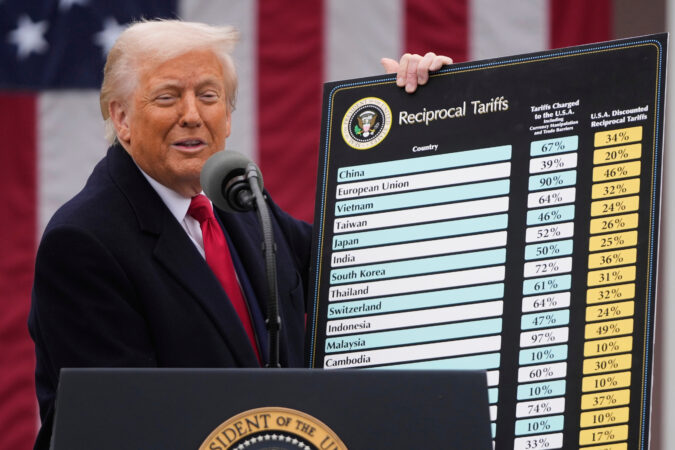
    Claim: Tariff revenues are “saving our country, the kind of money we’re taking in.”

    The facts: Though Trump has imposed massive tax hikes on imports, they’re not sizable enough to make a dent in the government’s annual budget deficits. Nor have the tariffs corresponded with manufacturing job gains.

    Before the Supreme Court struck down Trump’s tariffs based on an emergency declaration, the Congressional Budget Office estimated that his new taxes would raise $3 trillion over 10 years, or $300 billion annually.

    That’s not enough to cover the cost of his $4.7 trillion in tax cuts, including additional interest cuts, that favored companies and the wealthy. Nor is it enough to pay down an annual budget deficit that last year was $1.78 trillion.

    Claim: “Tariffs paid for by foreign countries will, like in the past, substantially replace the modern day system of income tax.’’

    The facts: Not likely. Under Trump, tariff revenues have swelled — to $195 billion in the budget year that ended Sept. 30 from $77 billion the year before. But the import taxes accounted for less than 4% of federal revenue. Income taxes and payroll taxes that finance Social Security and Medicare account for 84%.

    Medicine

    Claim: “I took prescription drugs, a very big part of healthcare, from the highest price in the entire world to the lowest. That’s a big achievement. The result is price differences of 300, 400, 500, 600% and more.”

    The facts: This is impossible. Although the Trump administration has taken steps to lower drug prices, cutting them by more than 100% would theoretically mean that people are being paid to take medications.

    Geoffrey Joyce, director of health policy at the University of Southern California’s Schaeffer Center, said in August that this claim is “total fiction” by the president. He agreed that it would amount to drug companies paying customers, rather than the other way around.

    Crime

    Claim: “Last year, the murder rate saw its single largest decline in recorded history. This is the biggest decline. Think of it in recorded history, the lowest number in over 125 years.”

    The facts: Trump takes credit for a significant decrease in violent crime during 2025, claiming the murder rate in the U.S. dropped to its lowest in 125 years. But this is misleading. Crime had already been trending down in recent years.

    A study released in January by the independent Council on Criminal Justice, which collected data from 35 U.S. cities on homicides, showed a 21% decrease in the homicide rate from 2024 to 2025.

    The report noted that when nationwide data for jurisdictions of all sizes is reported by the FBI later this year, there is a strong possibility that homicides in 2025 will drop to about 4 per 100,000 residents. That would be the lowest rate ever recorded in law enforcement or public health data going back to 1900.

    FBI reports for 2023 and 2024 show significant reductions in violent crimes.

    Crime surged during the coronavirus pandemic, with homicides increasing nearly 30% in 2020 over the previous year, the largest one-year jump since the FBI began keeping records. But violent crime dropped to near pre-pandemic levels around 2022 when Biden was president.

    Immigration

    Claim: “We will always allow people to come in legally, people that will love our country and will work hard to maintain our country.”

    The facts: Trump has actually taken steps to restrict who can emigrate to the U.S., often in the name of protecting national security.

    He suspended the refugee program on his first day in office and in October resumed the program but only in limited numbers for white South Africans.

    Trump has also placed restrictions on who can travel or emigrate to the U.S. from nearly 40 countries around the world. Many of those countries are in Africa.

    Taxes

    Claim: “With the great big beautiful bill, we gave you no tax on tips, no tax on overtime and no tax on Social Security.”

    The facts: Though the president frequently says his big tax cut bill means no tax on Social Security, that’s not true for everyone. Not all Social Security beneficiaries will be able to claim the deduction, which lasts until 2029.

    Those who won’t be able to do so include the lowest-income seniors who already don’t pay taxes on Social Security, those who choose to claim their benefits before they reach age 65 and those above a defined income threshold. The deductions also phase out as income increases.

    Elections

    Claim: “I’m asking you to approve the Save America Act to stop illegal aliens and other who are unpermitted persons from voting in our sacred American elections. The cheating is rampant in our elections.”

    The facts: He and his allies have never produced evidence of rampant election cheating. Experts say voter fraud is extremely rare, and very few noncitizens ever slip through the cracks.

    For example, a recent review in Michigan identified 15 people who appear to be noncitizens who voted in the 2024 general election, out of more than 5.7 million ballots cast in the state. Of those, 13 were referred to the attorney general for potential criminal charges. One involved a voter who has since died, and the final case remains under investigation.

    1776

    Claim: “The revolution that began in 1776 has not ended. It still continues because the flame of liberty and independence still burns in the heart of every American patriot.”

    The facts: To be clear, the American Revolution started the previous year, on April 19, 1775. The colonies declared independence in 1776. It ended Sept. 3, 1783.

  • On Jennifer Davenport’s first day as N.J. attorney general, the Sherrill administration exchanges lawsuits with Trump

    On Jennifer Davenport’s first day as N.J. attorney general, the Sherrill administration exchanges lawsuits with Trump

    New Jersey Attorney General Jennifer Davenport marked her first official day in the office Tuesday exchanging lawsuits with President Donald Trump’s administration.

    Davenport, appointed by Gov. Mikie Sherrill, had already been waging legal battles against Trump as acting attorney general before her unanimous confirmation by the New Jersey Senate.

    The state’s new top lawyer announced a lawsuit the same day against Trump’s Department of Health and Human Services over what she called its “rogue vaccine schedule that gambles with children’s health and lives.”

    Trump’s administration also announced a lawsuit against New Jersey over a new immigration policy Davenport helped roll out that restricts ICE operations on state property.

    She called the federal government’s suit a “pointless” waste of resources.

    The two cases are a sign of more battles to come as Sherrill promises to fight Trump. Davenport will be tasked with making sure the governor’s policies withstand a potential barrage of court battles in the months and years ahead.

    DOJ sues Sherrill over her executive order limiting ICE

    The Department of Justice announced Tuesday that it filed a lawsuit against Sherrill and the state over the Democratic governor’s recent executive order prohibiting ICE from conducting civil immigration enforcement without a judicial warrant in non-public areas of state-owned property, which she announced alongside Davenport.

    The DOJ’s legal complaint repeatedly misspells Sherrill’s last name.

    “Federal agents are risking their lives to keep New Jersey citizens safe, and yet New Jersey’s leaders are enacting policies designed to obstruct and endanger law enforcement,” U.S. Attorney General Pam Bondi said in a statement. “States may not deliberately interfere with our efforts to remove illegal aliens and arrest criminals — New Jersey’s sanctuary policies will not stand.”

    Davenport said Tuesday that the DOJ lawsuit is a waste and that her team looks “forward to defending this executive order in court.”

    “New Jersey will continue to ensure the safety of our state’s immigrant communities,” she said.

    Davenport joins lawsuit against RFK Jr.

    In a lawsuit going in the other direction, Davenport announced on Tuesday that New Jersey is joining a multi-state lawsuit against HHS, the Centers for Disease Control and Prevention, and their leaders.

    The suit challenges a January CDC memo that upended childhood vaccination recommendations. Vaccines for rotavirus, meningitis, hepatitis A, hepatitis B, influenza, COVID-19, and respiratory syncytial virus (RSV) were previously universally recommended, but are now only recommended for children under high risk of serious illness. (Parents of otherwise healthy children can still decide with their doctors to give their kids these vaccines.)

    The lawsuit also focuses on HHS Secretary Robert F. Kennedy Jr.’s decision to replace members of the Advisory Committee on Immunization Practices.

    “This radical and unlawful overhaul of the nation’s childhood vaccine schedule rests on fringe theories and ignores decades of science,” Davenport said.

    The suit, which was led by Arizona Attorney General Kris Mayes, was brought forward by a dozen other Democratic attorneys general and Pennsylvania Gov. Josh Shapiro, a Democrat whose state has a Republican attorney general.

    Davenport and Sherrill fighting Trump and ICE

    Prior to her confirmation, Davenport as acting attorney general joined another multi-state lawsuit last week against the Trump administration for rescinding clean energy funding that had previously been appropriated by Congress.

    In New Jersey, the federal Department of Energy ended two agreements with Rutgers University, according to Davenport’s office. One, a $3.2 million award, was for energy-efficiency upgrades that would result in potential energy savings between $3.8 billion and $15.4 billion over the course of five years. The other award of $1.7 million was for research for farmers to use their land for energy production and agricultural production at the same time.

    Lowering energy costs and fighting Trump were hallmarks of Sherrill’s campaign for governor and are part of her continued messaging as the state’s executive.

    Davenport also sued the Trump administration with New York earlier this month over his halting of funding for the Gateway infrastructure project between New York and New Jersey. A federal judge ordered the Trump administration to release funding for the project, and construction is moving forward as the appeal process plays out.

    She has also joined multi-state coalitions condemning the Trump administration over the DOJ asking Minnesota to hand over resident data in exchange for ending the violent ICE operations there, as well as Trump’s attempt to halt funding for natural disaster response.

    Sherrill and Davenport have also worked together to create a portal for people to submit videos of ICE agents in New Jersey and share information for residents to know their rights when interacting with federal immigration agents.

    Who is Jennifer Davenport?

    Davenport has more than 15 years of state and federal law enforcement experience, with experience at the New Jersey Attorney General’s Office, United States Drug Enforcement Administration, and the U.S. Attorney’s Office in New Jersey, where she was colleagues with Sherrill for part of her time there.

    She most recently worked as deputy general counsel and chief litigation counsel for the energy company PSEG.

    Davenport worked in a top role at the New Jersey Attorney General’s office in 2018 when the state first implemented the Immigrant Trust Directive, the state’s sanctuary policy that limits law enforcement cooperation with ICE and has been upheld by federal judges.

    The litigator, who grew up in Wildwood and now lives in Monmouth County, has two daughters ages 11 and 14. She graduated from DeSales University in Pennsylvania and the Seton Hall University School of Law in New Jersey.

    “I am grateful to Governor Sherrill and the Legislature for the trust placed in me,” she said in a statement Tuesday. “I will serve with fairness, independence, and integrity — the same values that have guided every step of my public service.”

  • States sue Trump administration over changes to childhood vaccine recommendations

    States sue Trump administration over changes to childhood vaccine recommendations

    SACRAMENTO, Calif. — More than a dozen states sued the Trump administration Tuesday over its rollback of vaccine recommendations for children, calling the move an illegal threat to public health.

    The states argue that the Centers for Disease Control and Prevention put children’s lives at risk when it announced last month that it would stop recommending all children get immunized against the flu, rotavirus, hepatitis A, hepatitis B, some forms of meningitis, and RSV. Under the new guidance, which was met with criticism from medical experts, protections against those diseases are recommended only for certain groups deemed high risk or when doctors recommend them in what’s called “shared decision-making.”

    The new vaccine recommendations ignore long-standing medical guidance and will make states have to spend more to protect against outbreaks, the states, including Arizona and California, said.

    “The health and safety of children across the country is not a political issue,” Arizona Attorney General Kris Mayes, a Democrat, said at a news conference. “It is not a culture war talking point.”

    Emily G. Hilliard, press secretary for the Department of Health and Human Services, blasted the complaint as a “publicity stunt dressed up as a lawsuit.”

    Pennsylvania, New Jersey, and Delaware all joined the Arizona-led lawsuit.

    “Every Pennsylvanian deserves accurate information to make their own healthcare decisions when consulting with their doctors — and science, not politics, will continue to guide our healthcare decisions here in the Commonwealth,” said Gov. Josh Shapiro, a Democrat who has repeatedly joined litigation against the Trump administration since last year.

    The lawsuit escalates an ongoing battle between Democratic-led states and Republican President Donald Trump’s administration over the federal government’s changes to public health policy under Health Secretary Robert F. Kennedy Jr. The Trump administration has laid off thousands of workers at federal public health agencies, cut funding for scientific research and altered government guidance on fluoride and other topics.

    Kennedy last year ousted every member of a vaccine advisory committee and replaced them with his own picks, which Tuesday’s complaint alleges was unlawful.

    The lawsuit comes months after the Democratic governors of California, Washington state, and Oregon launched an alliance to establish their own vaccine recommendations. The governors said the Trump administration was risking people’s health by politicizing the CDC.

    States, not the federal government, have the authority to require vaccinations for schoolchildren, though the CDC’s requirements typically influence state regulations.

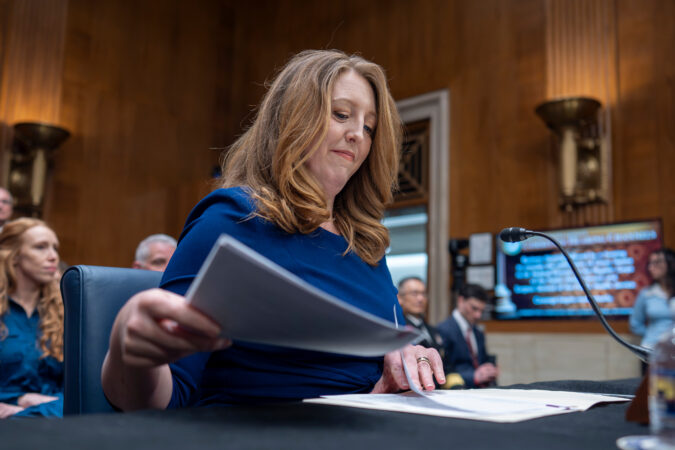
  • Surgeon general nominee Casey Means grilled on vaccines, pesticides in hearing

    Surgeon general nominee Casey Means grilled on vaccines, pesticides in hearing

    After over a year without a surgeon general, the Senate Health Committee is grilling Casey Means on vaccinations, her business entanglements, and past comments on pesticides, as they weigh whether she should serve as the nation’s top doctor.

    Means wrote the book considered the bible of the Make America Healthy Again movement with her brother, Calley Means, a Trump administration official. As surgeon general, she could amplify many of her messages around healthy eating and exercise, although she has faced criticism for some of her ties to wellness products.

    Means is drawing fire and praise from both sides of the aisle, reflecting the MAHA coalition’s crosscutting appeal. Her messages on food found favor with both sides, while Democrats and the panel’s GOP chair probed her views on vaccinations and a Republican senator raised questions on how her stance on pesticides could impact American farmers.

    Means highlighted the nation’s chronic illness rates and a path to how she hopes to change them in her opening remarks.

    “Public health leaders must address the evidence-based, modifiable drivers of chronic diseases which include ultra-processed foods, industrial chemical exposure, lack of physical activity, chronic stress and loneliness, and overmedicalization,” Means said. “As surgeon general, I would call on every American and the Public Health Service to join in a great national healing — one that halts preventable chronic disease, makes healthy living the easiest choice, honors the body’s connection to the environment, and puts America back on the road towards wholeness and health.”

    Her initial confirmation hearing was delayed after she gave birth in the fall. This hearing is also a referendum on the controversial moves of her political patron, Health Secretary Robert F. Kennedy Jr., who has overhauled federal vaccine guidelines and upended the public health system. Means, like Kennedy, has publicly questioned the number of vaccines included in the childhood vaccine schedule, as well as the hepatitis B shot. Public health experts say the vaccine schedule is safe and effective.

    Vaccine questions

    At the beginning of the hearing, Chairman Bill Cassidy (R., La.) cautioned that as the nation’s top doctor, Means would have a responsibility to fight back against the vaccine skepticism rising across the country “at a time when so many, for whatever reason, sow distrust and confusion.”

    Sen. Bernie Sanders (Ind., Vt.), the panel’s ranking minority-party member, went further, accusing Trump and Kennedy of spreading misinformation on vaccines and pleading with Means to take a stand against them.

    Cassidy later peppered Means with questions around immunizations, pointing to children who have died of vaccine-preventable disease. Means emphasized that while she supports vaccines, she believes parents and patients must speak to their physicians. She also refused to explicitly say vaccines do not cause autism when pressed, instead saying that no stones should be left unturned in the search for the causes of autism. As health secretary, Kennedy instructed the Centers for Disease Control and Prevention to remove from its website the long-settled scientific conclusion that vaccines do not cause autism.

    In his questioning, Sanders started by pointing out the overlap between his and Means’s interest in fighting against ultra-processed food, before pivoting to further press Means on the scientific community’s determination that vaccines don’t cause autism.

    “Anti-vaccine rhetoric has never been a part of my message,” Means said, adding that the nation should study when children are getting many medications.

    Business ties and pesticides

    A Washington Post examination last year found that Means had made over half a million dollars from partnerships with companies that her financial forms described as selling “diagnostic testing,” “herbal remedies and wellness products,” and “teas, supplements, and elixirs” from 2024 into the summer of 2025, according to her financial disclosures. Legal and advertising experts told the Post last fall that they were concerned about whether Means clearly disclosed her ties to some brands.

    Sen. Tammy Baldwin (D., Wis.) grilled Means on some of her connections to wellness products: “It seems to me that you’ve spent your career sort of making money off the flaws” in the healthcare system.

    Sen. Chris Murphy (D., Conn.) said he was concerned that Means was in “willful violation” of Federal Trade Commission rules, recommending products without telling followers she was sponsored by such products.

    Means pushed back on the allegations and said she “would rectify that immediately” if it has inadvertently happened.

    “I take conflicts of interest incredibly seriously,” Means said.

    While many Republicans spoke highly of Means’s approach to improving American diets and fighting chronic disease, some others did not hold back in their questioning of her past remarks on psilocybin, pesticides, and other items.

    Pesticides are a hot-button issue among the MAHA movement after Trump issued an executive order protecting a key ingredient in a weed killer.

    She wrote in a newsletter sent in 2024: “How can we help bring a pesticide-free world to fruition? It starts with each of us prioritizing eating organic food as much as possible and standing firmly against buying or serving food sprayed with pesticides.”

    Sen. Jon Husted (R., Ohio) stressed that he has heard questions from Ohio farmers about her comments on pesticides, calling them critical for the food supply and farmers’ stability.

    Means called her thoughts on pesticides a core belief that was important to understand the impact pesticides could be having on Americans’ bodies, but noted she understood change could not happen overnight to destabilize the farming ecosystem.

    Means also got in a testy exchange with Sen. Patty Murray (D., Wash.) over birth control, with Means stressing that it’s important to highlight the possible risks including stroke for women. Means has a history of disparaging birth control, which has been under fire from wellness and right-wing influencers.

    Bucking the medical mainstream

    Secretary Kennedy has championed Means’s nomination.

    “She has an extraordinary capacity to communicate to the American public. That is the function of the surgeon general,” Kennedy said at an event Monday, saying Means would be a medical and “moral” authority for the public and he hoped she would be confirmed very soon.Means’ credentials — attending Stanford for her undergraduate education and medical school, racking up academic honors, writing scientific papers and working on research at top institutions — came up in the hearing.

    Means left her medical residency over seven years ago and has encouraged Americans to ask questions of their doctors — positions Kennedy has said led to her nomination.

    Means, a physician, has a medical license in Oregon that she voluntarily placed in inactive status, according to the state medical board, which means she cannot practice medicine in Oregon as of the beginning of 2024. Sen. Andy Kim (D., N.J.) raised concerns about Means’s medical license. Means pushed back on him by noting she practiced medicine and sees her background as “a feature, it’s not a bug.

    MAHA supporters have lauded her for challenging the medical mainstream.

    Public health experts have raised questions about some of her advice. In her book Good Energy, Means writes that “the ability to prevent and reverse” a variety of ailments, including infertility and Alzheimer’s, “is under your control and simpler than you think.”

    Medical experts have said that while there is significant evidence that diet and exercise can lower the risk of some chronic conditions and slow the progression of diseases, Means overstates the science when she says it can reverse many of them.

  • Takeaways from Trump’s address: Sales mode on economy, heavy on patriotism, dark turn on Democrats

    Takeaways from Trump’s address: Sales mode on economy, heavy on patriotism, dark turn on Democrats

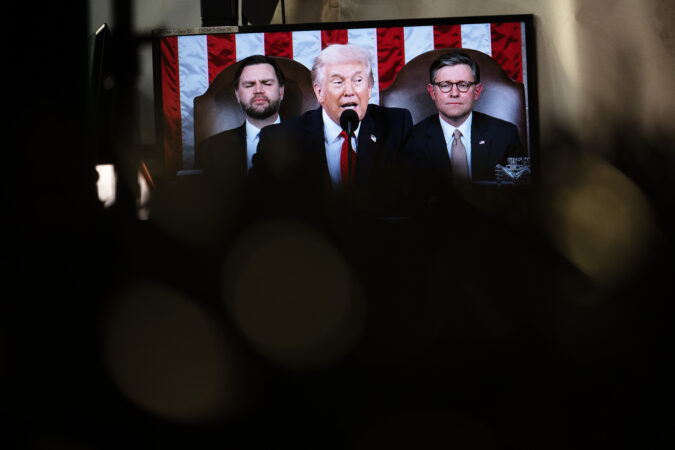
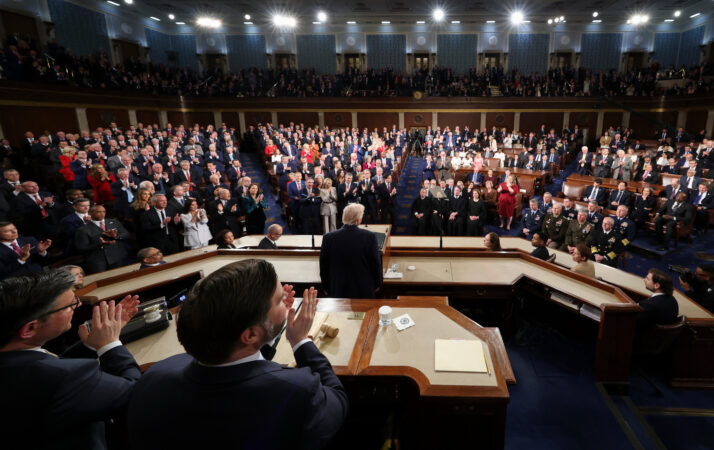
    WASHINGTON — President Donald Trump started in sales mode, using his State of the Union address to deliver an upbeat vision of the U.S. economy.

    But that portrayal collides with the sentiment of Americans who remain anxious about their finances and feel they haven’t benefited from Trump’s policies. He took the high road to honor the gold medal-winning U.S. men’s Olympic hockey team and a war hero before pivoting abruptly to a darker tone as he ridiculed Democrats.

    Here are takeaways from the speech.

    Trump’s ‘roaring’ economy is at odds with sour public sentiment

    Much of the nation is worried about the direction of the economy, but Trump says the good times are here, insisting repeatedly that rising costs are no longer a problem.

    “The roaring economy is roaring like never before,” he said. He cheered the lower cost of gasoline, mortgage rates, prescription drug prices, and the rising stock market: “Millions and millions of Americans are all gaining.”

    Such optimism, as so many Americans are feeling economic strains, risks painting Trump as out of touch. Just 39% of U.S. adults approved of Trump’s handling of the economy in February, according to AP-NORC polling.

    Still, the president focused much of the first hour of his speech on the economy, something Republicans had urged him to do as they head into the midterm elections.

    First lady Melania Trump awards World War II Navy pilot Capt. Royce Williams the Congressional Medal of Honor as President Donald Trump delivers the State of the Union address to a joint session of Congress.

    Trump wraps himself in the flag

    For a president who always seems to be spoiling for a fight, Trump also tried to summon Americans’ innate patriotic impulses. In addition to the hockey team, he singled out war heroes and those who had taken brave stands in other countries, using the moment to bestow numerous presidential medals in an effort to give the address a more positive gloss.

    It underscored the president’s media savvy and understanding that even if a moment isn’t appreciated completely in real time, it can have an afterlife in the days following speech, especially on social media.

    Yet in one revealing moment, Trump lamented why he couldn’t give a congressional medal to himself.

    Taking aim at Democrats

    Tributes to the Olympic hockey team and a World War II veteran didn’t unify the room for long.

    The Republican president soon took aim at Democrats and blamed them for many of the nation’s ills.

    Trump said rising healthcare premiums are “caused by you,” suggested Democrats “are not protecting” Social Security and blamed them for the nation’s affordability crunch. “You caused that problem. You caused that problem,” Trump said as he glared at the Democratic side of the room.

    He seemed to get angrier as the speech progressed.

    “These people are crazy, I’m telling you, they’re crazy,” he said. “Democrats are destroying this country.”

    Trump’s MAGA base loves such aggression. It’s unclear, however, if the rest of the country feels the same.

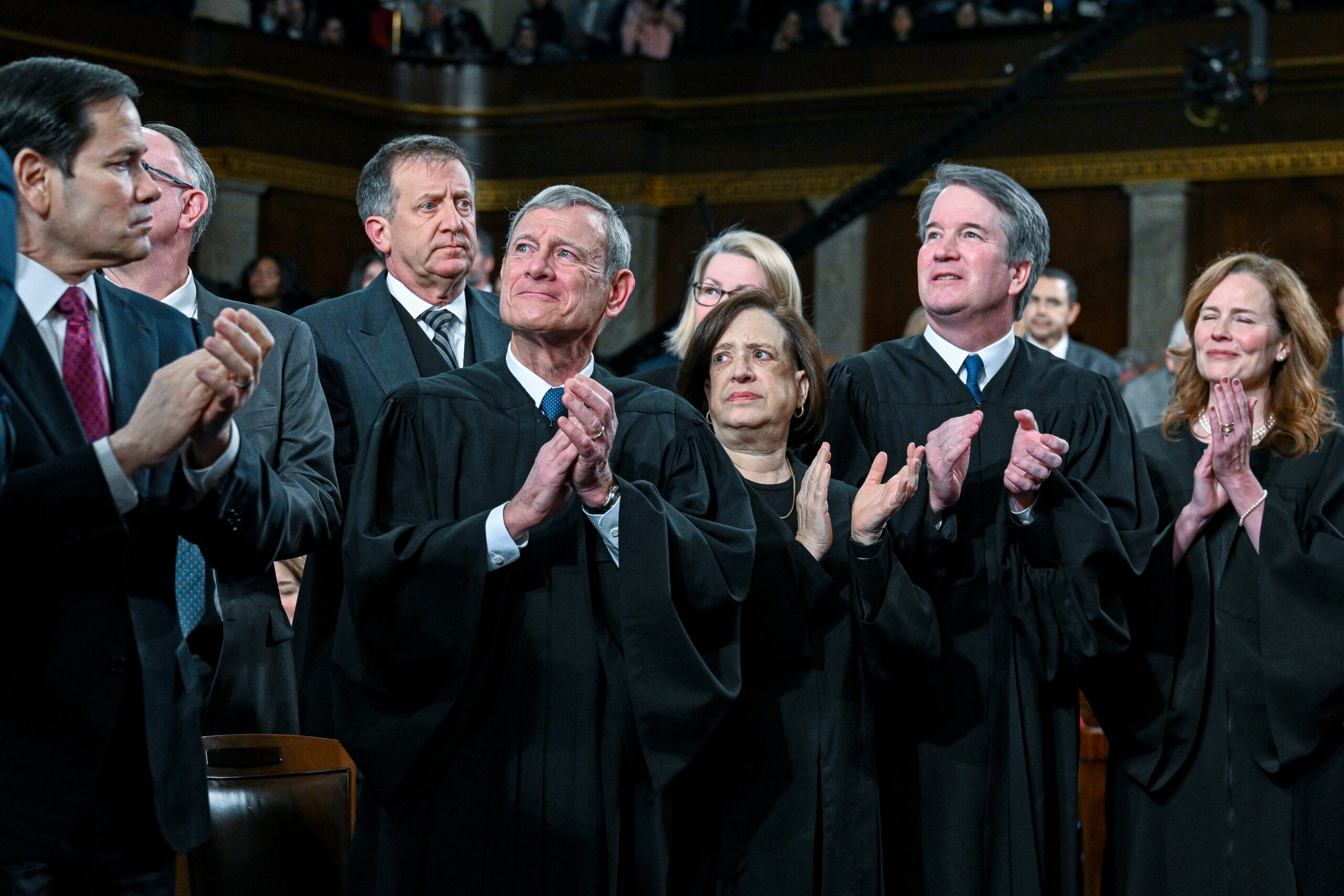
    Secretary of State Marco Rubio (from left), Chief Justice John Roberts, Justice Elena Kagan, Justice Brett Kavanaugh, and Justice Amy Coney Barrett applaud before President Donald Trump delivers the State of the Union address Tuesdy to a joint session of Congress in the House chamber at the U.S. Capitol.

    The Supreme Court’s ‘unfortunate’ decision

    By Trump’s standards, he held his tongue when it came to the Supreme Court.

    After the court struck down his tariff policy last week, Trump said the justices who voted against one of his signature issues were an “embarrassment to their families.” By Tuesday, he simply called the ruling “unfortunate.”

    Trump sought to treat the ruling with indifference, insisting that tariff revenues were “saving” the U.S., ignoring the fact that the levies haven’t made a significant dent in government debt. He said the tariffs were paid by foreign countries even as virtually every study concludes that costs have been paid by U.S. firms and consumers.

    At one point, he seemed to take the long view that history would ultimately vindicate him even if the Supreme Court would not.

    “As time goes by, I believe the tariffs paid by foreign countries will, like in the past, substantially replace the modern day system of income tax, taking a great burden off the people that I love,” he said.

    That is unlikely. The federal income tax is authorized by the 16th Amendment to the Constitution and the power to collect revenue is ultimately defined by Congress, not the president.

    Trump vows action on election ‘cheating’

    The president also used the speech to reprise his attack on the integrity of U.S. elections.

    “Cheating is rampant in our elections,” Trump said.

    Trump has made such claims for years, focused on his 2020 election loss, claims rejected by dozens of courts and his own attorney general at the time.

    But the timing of Tuesday’s prime-time claims, less than nine months before voters across America are scheduled to decide control of Congress, was noteworthy. So, too, was Trump’s suggestion that he would take action to address a problem that doesn’t appear to exist.

    “They want to cheat. They have cheated, and their policy is so bad that the only way they can get elected is to cheat,” Trump said of Democrats. “And we’re going to stop it. We have to stop it.”

    Trump is calling on Congress to pass a bill requiring voters to show a photo ID before casting ballots. But he also recently vowed to enact an executive order to address the issue, although the White House has not clarified what it might entail.

    No mention of Minneapolis

    Sometimes what’s not said is as notable as what is.

    Trump has highlighted immigration since the very first speech in which he announced his 2016 presidential campaign. And on Tuesday night, he revived much of the same language he’s used throughout the past decade, blasting “criminal aliens” and warning of “drug lords, murderers all over our country.”

    What he didn’t mention: the most aggressive immigration enforcement tactics that threatened to bring the U.S. to the brink earlier this year. He didn’t mention the deaths of two U.S. citizens in Minneapolis last month at the hands of federal agents.

    Indeed, it was Rep. Rashida Tlaib (D., Mich.), who shouted that “Alex wasn’t a criminal,” referring to Alex Pretti, one of the U.S. citizens killed in Minneapolis.

    During her Democratic rebuttal, Virginia Gov. Abigail Spanberger said law enforcement must work to build trust in communities and said Trump “every minute spent sowing fear is a minute not investigating murders.”

    Trump said nothing of his administration’s shift in tactics, including a drawdown of agents in the Twin Cities. And he made no acknowledgment of the broad concerns in the U.S. about Trump’s approach on immigration, as demonstrated by the 60% of U.S. adults who disapproved of his handling of the issue in February, according to AP-NORC polling.

    Drumbeat for war gets louder

    Trump has already built up the largest U.S. military presence in the Middle East in decades. And in his speech, he outlined a rationale for using those forces to launch a major military strike against Iran.

    The president said that Iran and its proxies have “spread nothing but terrorism, death and hate,” adding that its leaders killed at least 32,000 protesters in recent weeks, which is at the further end of estimates over the death toll. The U.S.-based Human Rights Activist News Agency has so far counted more than 7,000 dead and believes the death toll is far higher. Iran’s government offered its only death toll on Jan. 21, saying 3,117 people were killed.

    Trump also warned that the nation has developed missiles that can threaten Europe and is working on missiles “that will soon reach” the U.S.

    “My preference is to solve this problem through diplomacy. But one thing is certain, I will never allow the world’s number one sponsor of terror, which they are, by far to have a nuclear weapon. Can’t let that happen.”

    On brand, the speech was the longest SOTU ever

    The president, ever mindful of records that allow him to say he was the first, the best or had done the most, succeeded clearly on one thing: he beat his own record for the longest, clocking in at just under 1 hour, 48 minutes.