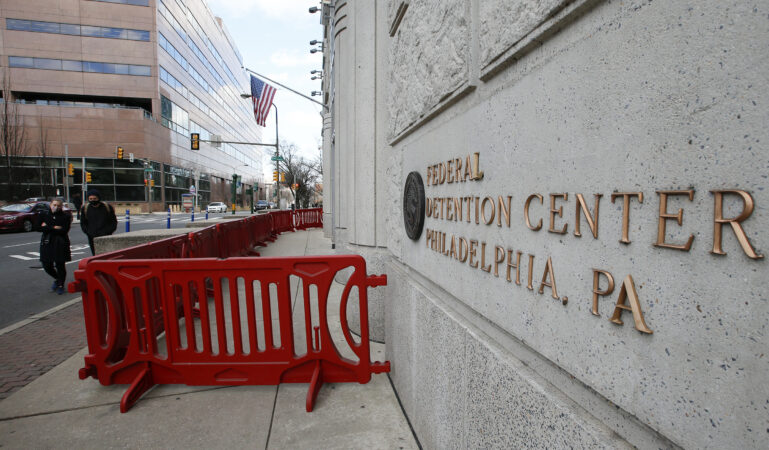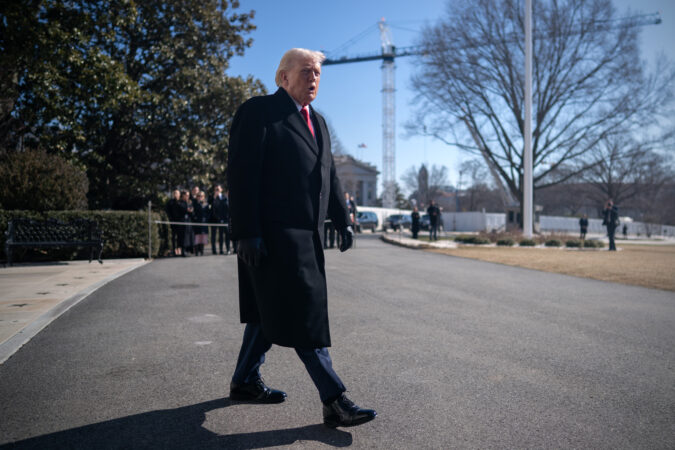
Category: Politics

Political news and coverage

  • Behind closed doors, GOP lawmaker questioned ‘disturbing’ East Wing demolition

    Behind closed doors, GOP lawmaker questioned ‘disturbing’ East Wing demolition

    As GOP leaders leaped to defend President Donald Trump’s decision to tear down the East Wing of the White House last year, one Republican lawmaker privately warned a senior White House aide that he had “substantial concerns” and demanded answers about how the decision was made.

    Administration officials had pledged the project would not “interfere” with existing structures, and the public had no warning about the demolition.

    “The stark images of the East Wing demolished in mere days were disturbing to Americans who cherish preservation of our nation’s history,” Rep. Michael R. Turner (R., Ohio), co-chair of the congressional Historic Preservation Caucus, wrote in an Oct. 24 letter obtained through a Freedom of Information Act request and shared with the Washington Post.

    Turner’s correspondence to Will Scharf, Trump’s staff secretary and chairman of the National Capital Planning Commission, the review committee with the power to approve or reject the ballroom project, raised questions about oversight, transparency, and process, including whether the White House had taken steps to preserve artifacts.

    The communication, obtained by the government watchdog group Public Citizen, adds to the public understanding of sweeping concerns voiced by members of Congress, preservationists and others over transparency and other issues with Trump’s project. A federal judge is weighing a legal challenge to the construction.

    Scharf responded more than seven weeks later, telling Turner that Trump administration officials did not consult with or get the approval of the commission before tearing down the East Wing. But, he added, they were not required to since the commission’s review process covers only “vertical” construction — not demolition or site preparation. Scharf has made the same argument several times since, a position critics have blasted as absurd because those three steps are so closely linked — and because part of the commission’s duty in reviewing projects is to consider the preservation of buildings that already exist.

    Turner declined, through a spokeswoman, to discuss the letter or his concerns, and none of the other 17 Republicans on the Historic Preservation Caucus responded to interview requests.

    The letter from Turner “revealed what people were really thinking,” said Jon Golinger, democracy advocate at Public Citizen. “I bet there’s a lot more high-ranking Republicans who feel the same.”

    Trump has cast the 90,000-square-foot, privately funded addition as a needed upgrade to the White House that taxpayers will not have to support. Administration officials have publicly identified about two dozen companies and about a dozen individual donors they say have already contributed hundreds of millions toward the $400 million project, including major corporations such as Amazon, Google, and Palantir that collectively have billions of dollars in contracts before the administration. (Amazon founder Jeff Bezos owns the Washington Post.)

    Americans oppose Trump’s demolition of the White House’s East Wing by a more than 2-to-1 ratio, according to an Economist/YouGov poll conducted this month.

    Given that, Golinger said, he’s not surprised by Republicans’ relative silence on the project in a midterm election year.

    “I certainly haven’t seen a lot of campaign ads saying, ‘Elect me for this reason,’” Golinger said. “No Republicans have had to … put their name behind this project and say, ‘This is what I stand for.’”

    Many liberal lawmakers and political groups, meanwhile, have invoked the ballroom in appeals to voters ahead of the midterms. Congressional Democrats have pressed the Trump administration and its allies to divulge more details, asking whether donors stand to gain for their contributions.

    “BLOCK Trump’s White House Ballroom,” said one fundraising email sent by Defend Democracy Now PAC last month. “Top Democrats are fighting TOOTH AND NAIL to stop this wasteful project in its tracks.”

    On Oct. 30, Rep. Teresa Leger Fernandez (D., N.M.), Turner’s fellow co-chair on the Historic Preservation Caucus, was among the 60 House Democrats who sent Trump a public letter asking for some of the same information Turner had requested privately less than a week before.

    U.S. District Judge Richard J. Leon is expected to rule soon on whether the project can proceed after criticizing the Trump administration for making an “end run” around congressional oversight by soliciting private donations for the project rather than seeking taxpayer money.

    At a court hearing last month, Leon expressed skepticism of Justice Department lawyers’ argument that Congress had authorized the White House to make changes to its grounds by setting aside several million dollars in funding and allowing the Interior Department to solicit gifts for national parks.

    Leon, a George W. Bush appointee, said the congressional authorization was narrow and limited to matters such as White House maintenance, not carte blanche to undertake one of the biggest changes in the White House’s history. Justice Department lawyers have argued that any pause on the project could pose a national security risk and said they will immediately appeal if Leon grants a stay on construction.

    If he rules that Congress must explicitly authorize the ballroom building, Trump could press congressional Republicans to deliver, which would commit Turner to a public up-or-down vote.

    “There will be nowhere to run,” Golinger said, “and nowhere to hide.”
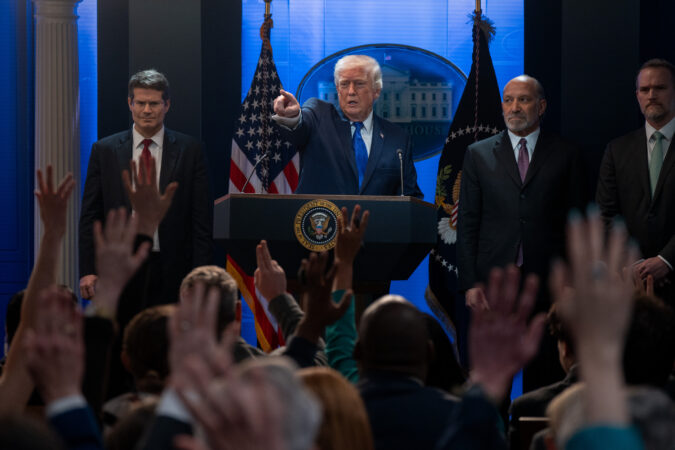
  • Trump’s newest tariffs could face legal challenge, though time is short

    Trump’s newest tariffs could face legal challenge, though time is short

    President Donald Trump’s new tariffs are not legally justified, according to several prominent economists and trade experts, who say there is no sign of the profound international financial problems that such measures were intended to remedy.

    Hours after the Supreme Court invalidated the emergency tariffs that he imposed last year, Trump on Friday invoked a 1974 law to announce a new 10% global import tax, later raising it to 15%. The president cited a provision known as Section 122 that authorizes temporary restrictions on imports to deal with “fundamental international payments problems.”

    In an official proclamation, the president said the nation’s “balance of payments,” a comprehensive account of Americans’ financial transactions with foreigners, was suffering “a large and serious deficit.” And he listed a number of metrics reflecting a deteriorating U.S. financial posture.

    The law does not define “balance-of-payments deficit,” and economists disagree about what should be included in the term. But several critics, including the International Monetary Fund’s former chief economist and a prominent conservative legal commentator, disputed the president’s claim. Trump wrongly conflated an alleged payments deficit with the merchandise trade deficit that he targeted last year with his first set of comprehensive tariffs under the International Emergency Economic Powers Act (IEEPA), they said.

    “The U.S. does not have a ‘payments’ problem. It can finance its trade deficits,” Gita Gopinath, the former IMF official, now teaching at Harvard University, wrote on X.

    Added Andrew McCarthy, a former federal prosecutor, writing in the conservative National Review: “These new tariffs are even more clearly illegal than Trump’s IEEPA tariffs.”

    Opposition to the new import taxes erupted even before they took effect at 12:01 a.m. on Tuesday. The outcry suggested that the president, still smarting from his 6-3 Supreme Court defeat, could face renewed legal jeopardy over the centerpiece of his economic agenda.

    “I do anticipate a lawsuit,” said Scott Lincicome, vice president of general economics for the Cato Institute and a former trade lawyer.

    U.S. importers would have the right to sue once they paid the tariffs. Liberty Justice Center, the nonprofit public-interest law firm that represented several small businesses in one of the tariff cases decided by the Supreme Court, said Monday that it is “closely monitoring” the president’s latest actions.

    “We will ensure that whatever authority the executive branch relies on, it follows the rules Congress actually wrote and the constitutional guardrails that protect our system of separated powers,” said Sara Albrecht, the center’s chairman.

    The debate over the Section 122 levies shows that questions of law and economics will continue to dog Trump’s bid to remake the global trading system. This time, there is no question that Congress has delegated to the president the power to levy tariffs — only under what circumstances. At issue are complex definitional questions of international economics and the legislative intent behind the wording of an untested provision in U.S. trade law.

    Time may also be a factor. The Section 122 tariffs expire after 150 days unless Congress votes to extend them, which is unlikely.

    Judges might be reluctant to “second guess” the president’s judgment on whether a balance-of-payments problem exists, said John Veroneau, a lawyer who served as deputy U.S. trade representative under President George W. Bush.

    Still, the administration’s newfound reliance upon Section 122 reverses the legal arguments it made last year. Defending the president’s emergency tariffs, Justice Department attorneys told an appeals court that Section 122 did not apply to Trump’s trade deficit concerns, which were “conceptually distinct from balance-of-payments deficits.”

    The White House declined to elaborate on the president’s Feb. 20 proclamation and fact sheet, which blamed a loss of domestic manufacturing for an excessive number of dollars leaving the country. Problems with the nation’s balance of payments can “endanger the ability of the United States to finance its spending, erode investor confidence in the economy, and distress the financial markets,” the proclamation said.

    Congress passed the Trade Act of 1974 when the United States was dealing with a distinctly different set of economic issues. In 1971, President Richard M. Nixon abruptly ended the convertibility of dollars into gold, marking the end of the Bretton Woods system of fixed exchange rates.

    At the time, foreign central banks were rushing to trade their unwanted dollars for gold, threatening to deplete U.S. financial reserves.

    There’s no sign of that sort of crisis today. The dollar has dropped about 10% over the past year, but it remains above its level for most of the decade leading to 2015. There’s certainly no sign of the “imminent and significant depreciation” that Section 122 requires.

    But even some Democrats say the administration is reacting to worrisome financial ailments.

    Economist Brad Setser, who served in the Treasury Department under President Barack Obama, said the global economy is characterized by dangerous imbalances.

    For years, the U.S. has run a deficit in its current account, the broadest measure of the nation’s trade balance, while China has run a mirror-image surplus. To keep running a large trade deficit, the U.S. must attract financing from abroad. So far, it’s been able to do that, which is why many analysts do not share the administration’s urgency.

    But the nation’s net international investment position — which balances the value of foreign stocks and bonds owned by Americans against what foreigners own in this country — is also deteriorating. That figure reached negative $26.7 trillion last year, down sharply in recent years.

    Some of that decline reflects foreigners’ large purchases of U.S. stocks, which have outperformed other markets, and thus is not a problem, Setser said. But the deterioration in the investment account also stems from the growth in the U.S. external debt, which carries a rising interest burden.

    “At this level of the current account [deficit], U.S. external debt will tend to rise. The external position will tend to weaken, which is one definition of a balance-of-payments problem,” he said. “The debt position does worry me.”

  • Stacy Garrity will be a guest at Trump’s SOTU address. Here’s who else from Pa. will (and won’t) be there.

    Stacy Garrity will be a guest at Trump’s SOTU address. Here’s who else from Pa. will (and won’t) be there.

    Pennsylvania Republican gubernatorial candidate and state Treasurer Stacy Garrity is to be among the guests filling the U.S. House’s gallery Tuesday night when President Donald Trump delivers the first State of the Union address of his second term.

    Her presence at the primetime speech underlines her alignment with Trump on the national stage as she pursues her challenge against popular Democratic incumbent Gov. Josh Shapiro, widely seen as a potential contender for the White House in 2028.

    A campaign spokesperson said Garrity will attend the address in her official capacity as state treasurer rather than as a candidate, but the Republican lawmaker bringing her to the event specifically cited her campaign for governor when he announced her as his guest.

    “I am pleased to announce that the next governor of Pennsylvania Stacy Garrity will be my guest at the coming State of the Union,” U.S. Rep. Glenn ‘GT’ Thompson, who represents the 15th District, said earlier this month at a gathering of Pennsylvania Republicans in Harrisburg.

    Steven Chizmar, a spokesperson for the Pennsylvania Treasury Department, said that Garrity was in Washington for the National Association of State Treasurers through Tuesday and that her attendance at the speech will come as part of this previously scheduled trip.

    “This opportunity will allow her to gain valuable insights into national issues that could impact Pennsylvanians and the services provided by the Pennsylvania Treasury Department,” Chizmar said. “Attending the State of the Union is an honor rooted in more than two centuries of American tradition and Stacy Garrity is proud to be able to attend the president’s address.”

    Garrity’s trip to Washington comes just days after Shapiro was among the Democratic governors to meet with Trump at the White House for the National Governors Association’s annual conference — though he skipped the black-tie dinner after Trump’s attacks on colleagues.

    Garrity is a longtime Trump supporter who has voiced support for Pennsylvanians to cooperate with ICE agents and previously claimed that Trump won the 2020 election.

    Trump endorsed Garrity at the end of January, saying, “Stacy is a true America First patriot who has been with me from the beginning.”

    Garrity was reelected as treasurer during the 2024 red wave in Pennsylvania when all state row offices were won by Republicans, as Trump carried Pennsylvania with more votes than any statewide Republican candidate in history .

    But now a little over a year into his second term, Trump’s approval rating is sinking. According to a new Washington Post-ABC-Ipsos poll, 60% of Americans said they disapprove of how Trump is handling the presidency. This is a potential liability for Garrity and other Pennsylvania Republicans on the ballot this year.

    The Pennsylvania Democratic Party seized on Garrity’s planned appearance at the State of the Union. Party chair Eugene DePasquale said during a news briefing Monday that Garrity will be “cheerleading” Trump’s “damaging” policies and specifically tied Garrity to rising healthcare costs.

    Democrats boycott or bring guests to send a message

    Healthcare costs will likely be a key point of Democratic messaging against Trump on Tuesday night, following a national spike in insurance premiums when enhanced tax credits for the Affordable Care Act expired at the start of the year.

    U.S. Rep. Madeleine Dean, who represents the 4th District, which is primarily Montgomery County, is to bring Lisa Boone Bogacki, a physical therapist and affordable healthcare advocate from Berks County.

    Bogacki‘s husband, Gary, died from a sudden cardiac event in 2009 and Bogacki’s family came to rely on the Affordable Care Act and Social Security survivor benefits.

    “Prior to the ACA, I paid over $20,000 annually for insurance coverage, and this was where the majority of the kids’ survivor’s benefits was spent,” Bogacki said in a news release from Dean’s office. “The ACA finally made insurance premiums affordable for us. This year, my premiums have drastically increased, following the new cuts made to the program.”

    U.S. Rep. Chris Deluzio, who represents the 17h District in Western Pennsylania, also focused on health care messaging with his announced guest, Jonathan Akanowicz, an independent pharmacist from Hampton Township.

    Akanowicz has been working to lower prescription drug costs and save community pharmacies by campaigning against pharmacy benefit managers.

    Addressing another contentious issue, Trump’s immigration agenda, U.S. Sen. Lisa Blunt Rochester of Delaware plans to bring Maria Mesias-Tatnall, director of outreach and immigration assistance at the Delaware Department of Justice.

    Some Democrats are choosing to express their disapproval in other ways.

    U.S. Rep. Summer Lee, of the 12th District in Pittsburgh and surrounding area, plans to attend the progressive-led “People’s State of the Union” in Washington instead of Trump’s speech, her office said.

    She is to deliver the Working Families Party’s response to Trump, according to the progressive organization.

    U.S. Rep. Mary Gay Scanlon of the 5th District mostly in Delaware County, is also scheduled to attend the “People’s State of the Union” event, organized by progressive groups MeidasTouch and MoveOn, her office confirmed.

    After he boycotted Trump’s joint address to Congress last year, U.S. Rep. Dwight Evans of the 3rd District in Philadelphia will not attend Trump’s address Tuesday night. In his place, Evans — who is retiring — has designated Carolyn Hill, a Philadelphia grandmother who is impacted by Trump’s cuts to SNAP, an honorary guest.

    Republican lawmakers from the region

    U.S. Sen. Dave McCormick of Pennsylvania will be hosting hosted Jason Zugai, vice president of United Steelworkers Local 2227, as his guest after Japanese company Nippon Steel finalized a buyout of U.S. Steel in June. McCormick played a key role in persuading Trump to back the deal after his initial public opposition.

    U.S. Rep. Ryan Mackenzie of the 7th District, which is north of Philadelphia will to bring Sarah Arndt, the lead teacher at PathStone Carbon County Head Start, where she has worked for the past 13 years. Funding for her program was in jeopardy last fall amid the lengthy government shutdown and state budget impasse.

    And Sheryl Klein, a senior at Council Rock High School South in Bucks County, will to be the guest of U.S. Rep. Brian Fitzpatrick of the 1st District. Klein founded and leads the high school’s Women’s Empowerment Club.

    “That is the kind of civic engagement we should be encouraging across this country at every level: unifying, positive, and rooted in service to something greater than ourselves,” Fitzpatrick said.

    Fitzpatrick and Mackenzie represent key swing districts, which both parties are targeting in the fall.

  • Pennsylvania leaders want to avoid another lengthy state budget impasse. But with a $4.3 billion budget shortfall on the horizon, can they?

    Pennsylvania leaders want to avoid another lengthy state budget impasse. But with a $4.3 billion budget shortfall on the horizon, can they?

    HARRISBURG — Pennsylvania’s top leaders want to avoid another ugly, monthslong budget standoff, showing resolve this year to begin negotiations much sooner in hopes of approving a spending deal by their June 30 deadline.

    But that doesn’t change the state’s financial predicaments: Pennsylvania is again on track to spend more than it brings in this fiscal year. Gov. Josh Shapiro has pitched spending at least $4.3 billion more than the state is projected to raise in revenue next fiscal year, part of his $53.2 billion budget proposal.

    Shapiro, who is up for reelection this year and is a rumored 2028 presidential contender, has struggled in budget negotiations since taking office to deliver on his national image as a moderate Democrat willing to work across the aisle while leading the state with a GOP-controlled Senate and narrow Democratic House majority.

    And after last year — when lawmakers couldn’t agree on a state budget deal for months, leading to a bitter impasse and negotiations stretching into November while schools and counties went unfunded — the governor is trying a new strategy.

    Shortly after unveiling his budget proposal to lawmakers last month, Shapiro called top legislative leaders in for a meeting in his office to discuss their spending priorities. Last year, the initial negotiation conversation took place just before the June budget deadline, taking months to arrive at an agreement. House Majority Leader Matt Bradford (D., Montgomery), Senate Majority Leader Joe Pittman (R., Indiana), House Minority Leader Jesse Topper (R., Bedford), and Senate Minority Leader Jay Costa (D., Allegheny) accepted Shapiro’s invitation.

    Rosie Lapowsky, a spokesperson for Shapiro, said in a statement that the early conversation was intended to “ensure they remain timely, constructive, and focused on results.”

    A $4.3 billion budget shortfall — and disagreement over how to fix it

    Both Pittman and Bradford, who control their chambers and are top architects to any final budget deal in closed-door negotiations with Shapiro, said the first talks were a good first step in opening negotiations much sooner than last year. But they acknowledged the tough fiscal realities facing the state, and disagreed on how to address them.

    “It just simply spends too much money. We can’t continue the spending trajectory,” Pittman said of Shapiro’s $53.2 billion budget proposal. “It’s only going to cause us to have conversations, as the Independent Fiscal Office pointed out about massive, broad-base tax increases.”

    The Independent Fiscal Office was created by the state legislature in 2010 and is required to produce revenue projections for current and future years. An IFO report this month found that the budget deficit could top $6 billion this year, and hit $8 billion by 2028-29, likely requiring broad tax increases to fill the gap.

    “Assuming he’s reelected, if he’s reelected, I can’t imagine he’s going to be wanting to deal with budgets in 2027 and 2028 that are going to have to call for broad-based tax increases,” added Pittman, who has endorsed Shapiro’s likely GOP gubernatorial challenger, State Treasurer Stacy Garrity.

    State Senate Majority Leader Joe Pittman (R., Indiana) during a Feb. 3 news conference at the Capitol in Harrisburg.

    Meanwhile, Bradford, a Democrat, believes the state should focus on the long game in addressing Pennsylvania’s budget shortfall, citing the state’s efforts to recruit new businesses and pass tax cuts to encourage economic growth, as well as Shapiro’s renewed push to create new revenue streams like the taxation and regulation of recreational marijuana and the slot-machine look-alikes know as skill games.

    Pennsylvania’s declining population has “put a lot of stress on our budget books,” Bradford said.

    “The best thing we can do is continue to grow this economy,” Bradford added.

    State Rep. Matt Bradford (D., Montgomery County) during a Feb. 3 news conference at the Capitol in Harrisburg.

    Even without increasing its spending over the 2025-26 fiscal year — an impossible feat due to growing Medicaid obligations — Pennsylvania would still be poised to spend $1.2 billion more than it is expected to bring in next fiscal year.

    To avoid raising taxes this year, leaders will need to raise new revenues and tap into its more than $7 billion in reserves. Republican leaders want to avoid tapping into the state’s Rainy Day Fund until an emergency arises, citing the state’s lackluster revenue projections in future years. However, it’s unclear what government programs or agencies they’d like to cut.

    Just as he did last year to no avail, Shapiro this month again proposed regulating and taxing recreational marijuana and skill games as a way to help fill the state’s budget shortfall. This time, however, his projections on how much revenue could be made has increased dramatically since last year, without changing much of the scope of the proposals.

    For example, last year he pitched a 20% tax on the sale of legal marijuana that he estimated would bring in $535.6 million in its first year. This year, he projected the same idea, but instead projected a marijuana tax would bring in $729.4 million in its initial year — a 36% increase. A Shapiro administration official said earlier this month that the projected increase is due to more interest from marijuana companies that want to do business in Pennsylvania.

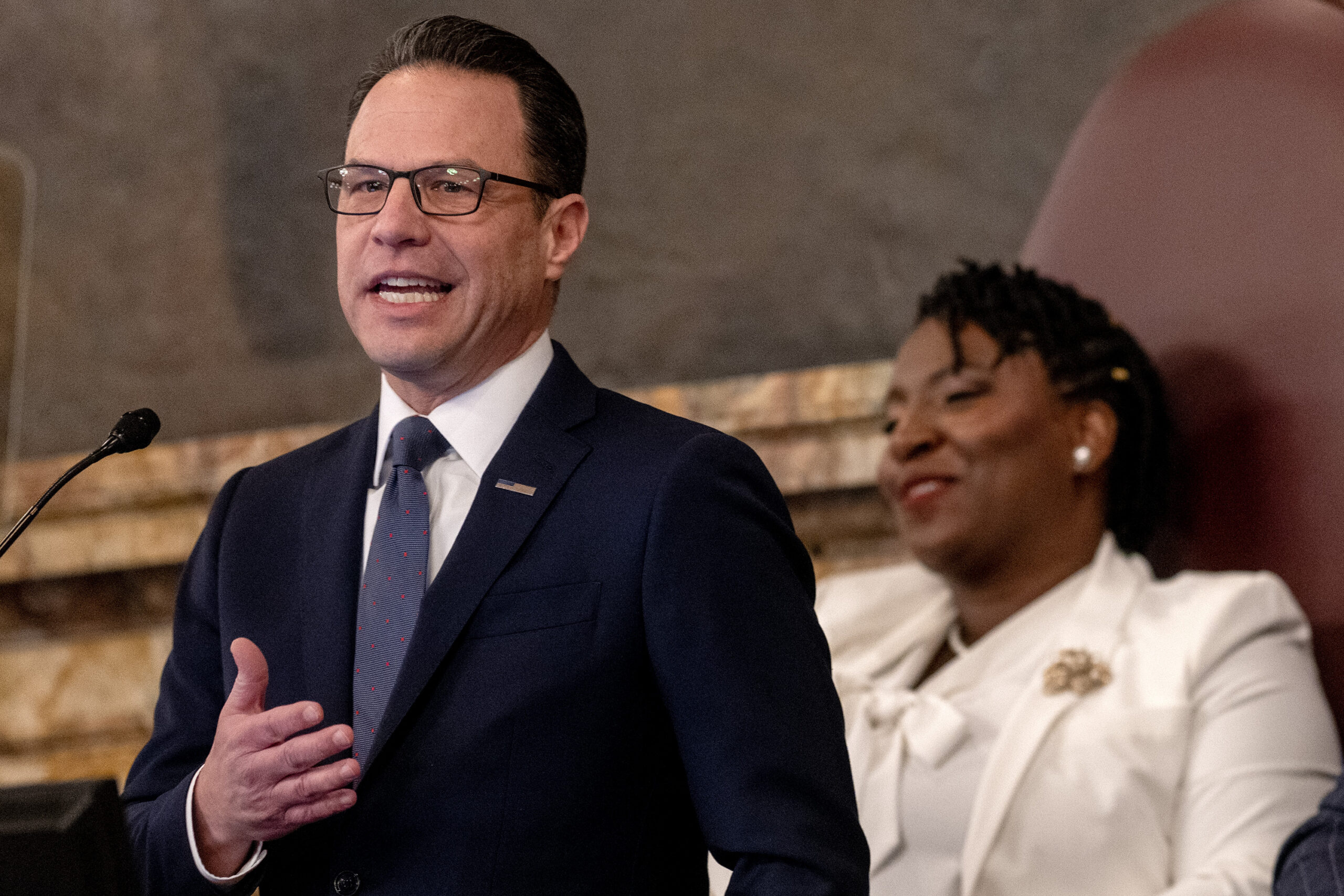
    Gov. Josh Shapiro makes his annual budget proposal in the state House chamber on Feb. 3. House Speaker Joanna McClinton is seated behind him.

    State revenues are $362 million higher than expected so far this fiscal year, according to the IFO, offering some hope that the state may continue to grow its economy to fill some of the budget hole.

    Lapowsky, Shapiro’s spokesperson, said in a statement that Shapiro’s budget pitch shows “that government can be a force for good in people’s lives when leaders come together and put Pennsylvanians first.”

    Election year optimism and a preview of the fights to come

    Legislators on the powerful Senate and House appropriations committees, led by House Appropriations Chair Jordan Harris (D., Philadelphia) and Senate Appropriations Chair Scott Martin (R., Lancaster) will individually begin analyzing Shapiro’s budget proposal line-by-line in public hearings this week. Both committees were scheduled to begin their budget hearings on Monday, but were rescheduled to begin on Tuesday afternoon and Wednesday morning for the Senate and House, respectively, due to a snowstorm that blanketed the Philadelphia area.

    The weekslong series of hearings examine the budget needs for each state government agency and row office, as well as the spending from the previous year. Secretaries and elected officials from each office come before the committee to answer questions about their proposed spending.

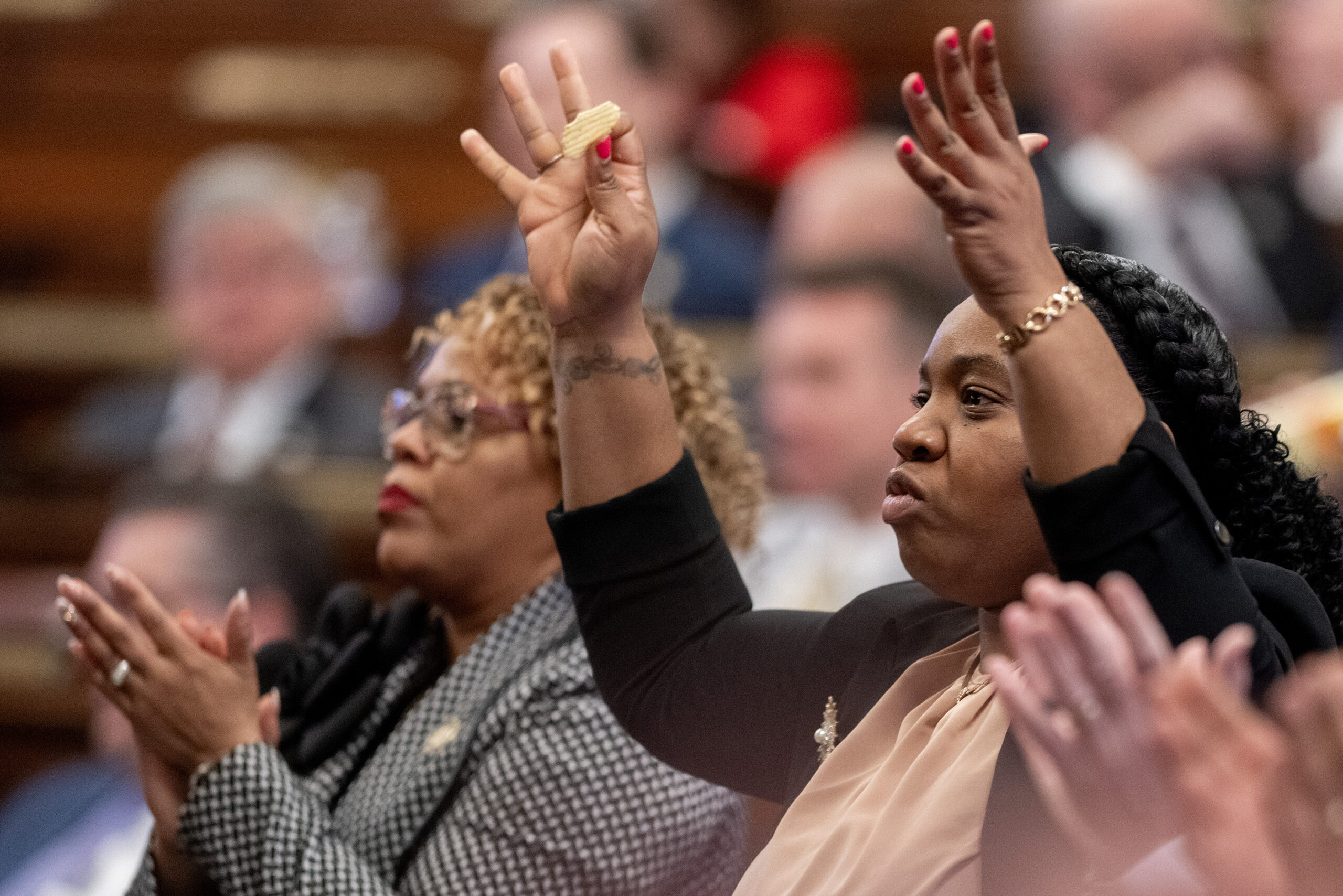
    State Reps. Johanny Cepeda-Freyitz (left), a Berks County Democrat, and Carol Kazeem (D., Delaware) in the state House chamber Feb. 3 during Gov. Josh Shapiro’s annual budget proposal.

    Pittman said Senate Republicans are likely to zero in on Shapiro’s $1 billion proposed bonding initiative for a range of infrastructure projects relating to energy, housing, local governments, and schools that he largely billed as “a major investment in building new housing.” They’ll also likely question why the Department of Corrections is seeking a $150 million funding increase, after the closure of two state prisons last year.

    GOP members of the Senate committee will also likely question top officials in the Pennsylvania State Police and the Department of General Services over spending for security upgrades at Shapiro’s personal residence following an arson attack last year on the governor’s mansion in Harrisburg, and a mail vendor’s failure to deliver a month’s worth of state mail to residents.

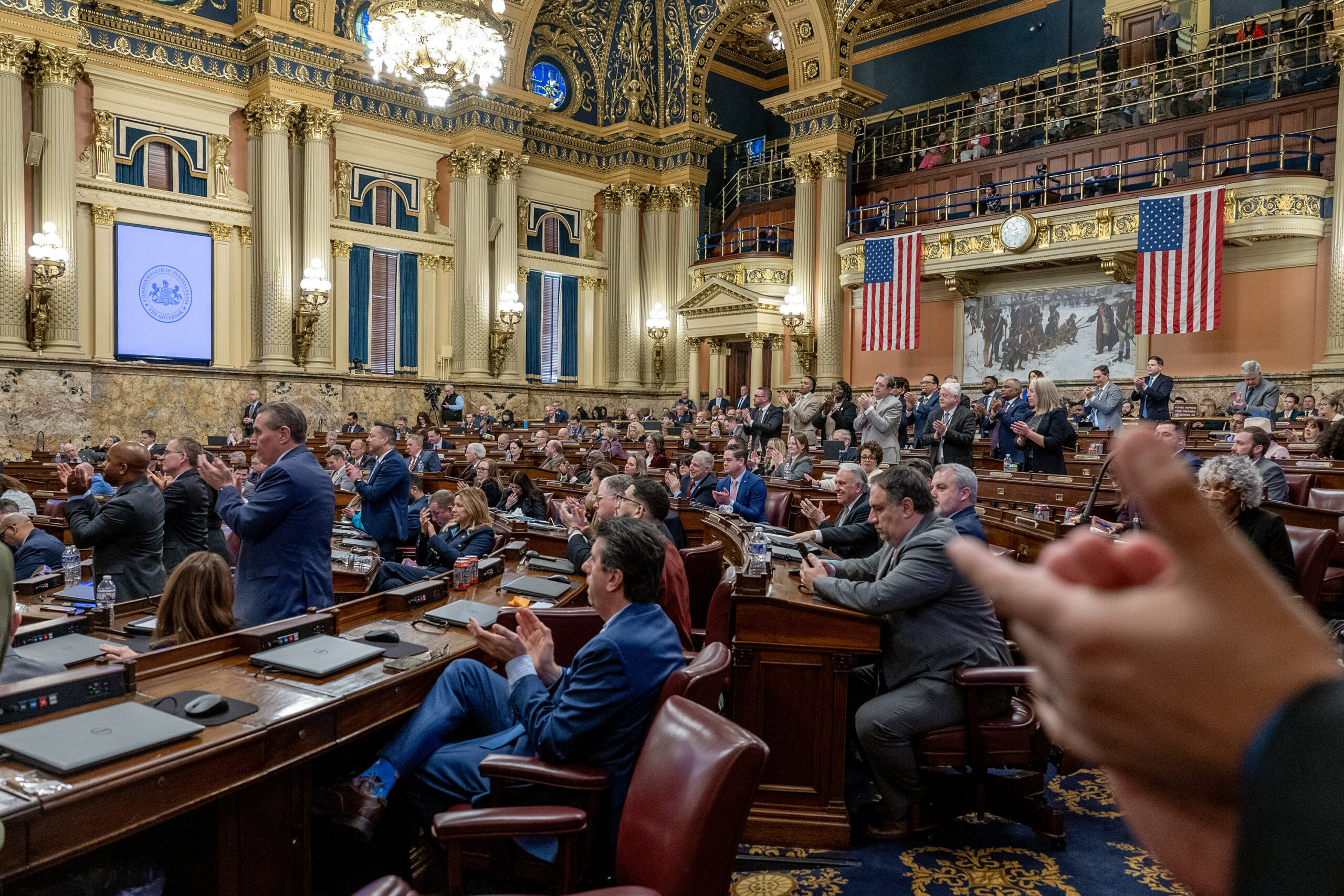
    The state House chamber as Gov. Josh Shapiro makes his annual budget proposal Feb. 3 in Harrisburg.

    House Democrats, meanwhile, are likely to bring attention to the successes of the Working Pennsylvanians Tax Credit and additional increases to public education under the state’s new adequacy formula, Bradford said.

    “We’ve got real accomplishments and a real opportunity to prioritize funding education, affordability, and build on what we’ve done,” Bradford said.

    Unlike the last round of budget negotiations, mass transit funding for SEPTA and other transit agencies is unlikely to be a roadblock this year, as lawmakers have until next year to find a long-term funding solution.

    Despite the inevitable disagreements ahead, there is some cause for optimism heading into another year of Pennsylvania state budget negotiations: Midterm election years often produce much less contentious budget battles, as lawmakers are motivated to reach an agreement and bring home their accomplishments to their districts as they campaign for reelection in November.

    Both Bradford and Pittman expressed hope that the election year may bring an increased willingness among all parties to finish an on-time budget.

    But, “divided government creates all kinds of twists and turns,” Pittman added. “I certainly can’t predict what’s coming ahead here.”

  • How Trump will use his State of the Union address to sell skeptical midterm voters on his plans

    How Trump will use his State of the Union address to sell skeptical midterm voters on his plans

    WASHINGTON — President Donald Trump’s State of the Union address on Tuesday is likely to be a test run of the message Republicans will give to voters in November’s elections for control of the House and the Senate.

    The president and his party appear vulnerable, with polls showing much of America distrusts how Trump has managed the government in his first year back in office. In addition, the Supreme Court last week struck down one of the chief levers of his economic and foreign policy by ruling he lacked the power to impose many of his sweeping tariffs.

    Though Trump is expected to focus on domestic issues, his intensifying threats about launching military strikes on Iran over its nuclear program cast a shadow over the address.

    Here are a few things to watch as Trump tries to make his case:

    Economy, immigration are no longer strengths for Trump

    Trump swept back into the White House on promises to bring down prices and restore order to immigration in America. But on both issues, public sentiment has turned against him.

    Only 39% of U.S. adults approve of his economic leadership and just 38% support him on immigration, according to the latest Associated Press-NORC Center for Public Affairs Research survey. Those low numbers show the country is still fretting about the costs of groceries, housing, and utilities, a problem compounded by Trump’s whipsawing use of tariffs. They also show how the public was disturbed by videos of violent clashes with protesters, including two U.S. citizens killed by federal agents.

    Since his party passed a massive tax cut bill last year, Trump has yet to unveil major new policy ideas on the economy. In recent speeches, he has largely offered the public reruns about his tax cuts, plans to reduce mortgage rates, and a new government website for buying prescription drugs.

    The Supreme Court ruling against many of Trump’s far-reaching global tariffs on Friday and the president vowing to use other means to forge ahead with import taxes will only prolong the economic turmoil over trade and prices.

    “I think it makes it even more important that the speech really focus on the economy,” said Alex Conant, a Republican strategist.

    Conant said between the tariff ruling and a Commerce Department report on Friday that showed U.S. economic growth slowed in the final three months of last year, “the president needs to bolster his economic message.”

    Blame everything on Biden

    The administration is trying to make the case that despite Trump’s rewiring of global trade and tax cuts, the economy is still struggling because of choices made in 2021 and 2022 by his Democratic predecessor Joe Biden. But Trump is also seeking to take credit for positive signs in the current economy, such as recent stock market gains.

    “Watch the State of the Union. We’re going to be talking about the economy. We inherited a mess,” Trump said at the White House on Wednesday.

    Of course, Trump made the same kind of argument in his address to a joint session of Congress last year, invoking the Biden name 13 times.

    Trump’s focus on foreign policy has yet to resonate politically

    Despite Trump’s America First credo, his aggressive approach abroad over the past year has sparked concerns among some of his supporters about whether he should spend more time focusing on voters at home.

    Trump, who’s made it clear he covets a Nobel Peace Prize, is likely to use the speech to remind Americans of his attempts to try to broker peace accords in global conflicts.

    But in many respects, the president hasn’t been extending olive branches. Within the past year, his administration has launched strikes in Yemen, Nigeria, and Iran, along with an ongoing campaign of lethal military strikes on alleged drug-trafficking vessels near South America. Trump also shocked the world in January with a surprise raid to capture Venezuela’s then-leader, Nicolás Maduro, and floated the idea of using force to seize Greenland.

    In recent weeks, as he pressures Iran, Trump has bolstered the U.S. military’s presence in the Middle East. But he has yet to make a clear case to voters about what his actions overseas mean for their lives.

    He might even minimize foreign policy in his State of the Union despite his belief that it’s been a major success.

    “For as much as foreign policy has dominated his last year in office, this speech will mostly focus on the economy,” Conant predicted.

    Vice President JD Vance offered a similar prediction, saying in an interview Saturday on Fox News Channel that in the speech, “You’re going to hear a lot about the importance of bringing jobs back into our country, of reshoring manufacturing, of all these great factories that are being built.”

    He said Trump would also speak about lowering energy costs.

    Trump has made the State of the Union his own

    The State of the Union used to be about recapping accomplishments and seeking to unite the country, but it increasingly reflects divisions in society.

    “What you’re going to expect is some version of a campaign speech in which the Democrats are the villains, the Republicans he likes are the heroes, and he is the savior not only of the nation but of the globe,” said Kathleen Hall Jamieson, a communications professor at the University of Pennsylvania.

    Trump supporters might cherish the moment in 2020 when the president midspeech reunited a military family. He also bestowed the Presidential Medal of Freedom on Rush Limbaugh, the conservative radio host and author who died in 2021. But that moment turned off Democrats who saw Limbaugh as a destructive figure in political media.

    Reaction in the room could matter

    Trump is delivering the speech, but his audience sitting in the House chamber has a big role, too. When Trump delivered his 2020 State of the Union, then-House Speaker Nancy Pelosi theatrically ripped up a copy of the speech afterward, overshadowing much of what Trump said.

    House Democratic leader Hakeem Jeffries of New York has said in a letter to colleagues “it is important to have a strong, determined and dignified Democratic presence in the chamber,” indicating some members might choose not to attend in protest to Trump. But there’s also the possibility of Democrats razzing Trump as Rep. Al Green (D., Texas) did in 2025, leading him to be removed from the chamber.

    If Trump in his speech lays out a fuller case for why he’s using other mechanisms in federal law to continue his tariffs, Conant said it’ll be interesting to see the reaction from lawmakers.

    “I think that any House Republicans that don’t applaud his tariffs are going to be featured prominently on the telecast,” he said.

    State of the Unions have short shelf lives

    While some presidential phrases endure, much of the rhetoric in State of the Unions is forgettable. And with Trump — who’s known for veering off-script — there’s a good chance a stray comment or a social media post could step on his message.

    Matt Latimer, a former Republican speechwriter for then-President George W. Bush, noted in an email that people hear the president talk all of the time, so the State of the Union has lost much of its luster.

    A State of the Union “only matters in moments when the country is undergoing a great trauma — a war, an attack, a global crisis — and a president and Congress want to speak in a (mostly) united voice to the country,” he said. “That’s not what we are experiencing now.”

  • Bill would restrict Trump administration’s push for ICE detention centers

    Bill would restrict Trump administration’s push for ICE detention centers

    Sens. Jeanne Shaheen (D., N.H.) and Maggie Hassan (D., N.H.) introduced a bill Monday that would bar the Department of Homeland Security from opening new immigration detention centers without state and local officials’ consent.

    The legislation is a response to the Trump administration’s plans to convert warehouses into new processing sites and detention centers across the country as part of President Donald Trump’s campaign to deport millions of undocumented immigrants. Reps. Chris Pappas (D., N.H.) and Maggie Goodlander (D., N.H.) plan to introduce a companion bill in the House.

    The legislation has little chance of passing the Republican-controlled Congress, but it reflects the qualms that some lawmakers in both parties have expressed about the administration’s push to set up facilities in their states and districts, some of which could house as many as 10,000 people.

    “Our new bill responds directly to the concerns we’ve heard from local officials in towns like Merrimack, New Hampshire, and across the country,” Shaheen said in a statement. “They were never consulted about ICE’s plans, and they don’t want the chaos of new detention facilities in their communities.”

    Shaheen and Hassan are introducing the bill as Democrats demand the Trump administration agree to new restrictions on DHS after federal agents last month shot and killed two U.S. citizens in Minneapolis. Much of DHS shut down earlier this month after the two sides failed to strike a deal to send more money to the agency.

    The bill would prohibit DHS from setting up new processing sites or detention centers unless local officials and the state’s governor sign off.

    At least one governor — Pennsylvania Gov. Josh Shapiro (D) — has said he opposes the administration’s plans to set up a new detention center in his state.

    “I don’t think this is helpful to have in our community,” Shapiro said this month. “I don’t want it here, and we’re exploring what options we have.”

    The bill would also require the administration to notify Congress and to accept public comment for at least 60 days before setting up new detention centers or processing sites.

    U.S. Immigration and Customs Enforcement has bought facilities in Maryland, Pennsylvania, New Jersey, Georgia, Michigan, Texas, and Arizona to detain undocumented immigrants, according to an ICE spokesperson. The administration undertook “community impact studies and a rigorous due diligence process to make sure there is no hardship on local utilities or infrastructure prior to purchase,” according to the spokesperson.

    Republicans in Congress largely support Trump’s deportation campaign, which they argue is necessary after the arrival of millions of undocumented immigrants under the Biden administration. Republicans included $45 billion for expanding immigration detention in the tax and spending law that Trump signed last year. But some Republican lawmakers have expressed concerns about the administration’s plans to set up new detention centers and processing sites in their states and districts.

    Sen. Roger Wicker (R., Miss.) relayed local officials’ concerns about a proposed facility in his state to Homeland Security Secretary Kristi L. Noem earlier this month. “I appreciate her for agreeing to look elsewhere,” Wicker wrote on X.

    Rep. Dan Meuser (R., Pa.) said he is working to set up a meeting between DHS officials and local leaders in his district, where DHS bought two facilities that it plans to convert into a processing site and detention center.

    “These recent developments have raised serious concerns, and I share many of the same questions being raised by local officials and residents,” Meuser said in a statement.

    Sen. Dave McCormick (R., Pa.) said in a statement that his team was also in touch with DHS officials and local leaders to assess the impact of the facilities, including the possibility of thousands of new jobs. ICE estimates the two facilities together would create more than 11,000 jobs.

    Rep. Mike Collins (R., Ga.) and his aides have been in frequent communication with ICE and local leaders about a planned detention center in his district that would hold up to 9,000 people, according to Emma Gibson, a Collins spokesperson. The district is a Republican stronghold, but the city manager of Social Circle — the small city where the detention center would open — and many residents oppose the project.

    Collins supports Trump’s efforts “to detain and deport criminal illegal aliens who flooded across our border under Joe Biden, but he also shares the concerns of the Social Circle community that the city may not have the infrastructure or capacity to support the demands of this facility,” Gibson wrote in an email to the Washington Post.

    Democrats appear to have had less success in pushing back on the administration’s plans to build new detention centers and processing sites. Hassan told Todd M. Lyons, the acting ICE director, in a hearing last week that DHS had failed to consult local leaders about its plans to open a facility in her state.

    “I would hope that I would get the same treatment to that Senator Wicker got — which is to say the town doesn’t want the dentition center, so please cancel it,” Hassan said. “And I would expect that my partisan affiliation shouldn’t make any difference to that determination.”

    Lyons said in the hearing that DHS officials had spoken with New Hampshire Gov. Kelly Ayotte (R) about the project’s economic impact. ICE did not say whether it plans to move forward with the facility.

    Sen. John Fetterman of Pennsylvania — the only Senate Democrat who voted for legislation this month to fund DHS — has come out against the proposed facilities in his state, warning that they would “do significant damage to these local tax bases, set back decades-long efforts to boost economic development, and place undue burdens on limited existing infrastructure in these communities.”

    Democrats from Georgia, New Jersey, and Arizona have also voiced concerns about proposed detention centers and processing sites.

    Sens. Ruben Gallego and Mark Kelly, both Democrats of Arizona, wrote to Noem and Lyons this month seeking more information by Feb. 17 about DHS’ purchase of a warehouse in Surprise, Ariz., that it plans to turn into a processing site.

    “Given the scale of this project, the total lack of community involvement, the concerns we have heard from local leaders, and the potential implications for the community and region, we urge the Department to immediately provide answers about this project before it moves forward,” Gallego and Kelly wrote.

    The Democrats have not heard back from DHS, according to Kelly’s office.

  • After Supreme Court rebuke, Democrats call for government to refund billions in Trump tariff money

    After Supreme Court rebuke, Democrats call for government to refund billions in Trump tariff money

    WASHINGTON — A trio of Senate Democrats is calling for the government to start refunding roughly $175 billion in tariff revenues that the Supreme Court ruled were collected because of an illegal set of orders by President Donald Trump.

    Sens. Ron Wyden of Oregon, Ed Markey of Massachusetts, and Jeanne Shaheen of New Hampshire unveiled a bill on Monday that would require U.S. Customs and Border Protection to issue refunds over the course of 180 days and pay interest on the refunded amount.

    The measure would prioritize refunds to small businesses and encourages importers, wholesalers, and large companies to pass the refunds on to their customers.

    “Trump’s illegal tax scheme has already done lasting damage to American families, small businesses, and manufacturers who have been hammered by wave after wave of new Trump tariffs,” said Wyden, stressing that the “crucial first step” to fixing the problem begins with “putting money back in the pockets of small businesses and manufacturers as soon as possible.”

    The bill is unlikely to become law, but it reveals how Democrats are starting to apply public pressure on a Trump administration that has shown little interest in trying to return tariff revenues after the Supreme Court announced its 6-3 ruling on Friday.

    Because of the ruling, going into November’s midterm elections for control of Congress, Democrats have begun telling the public that Trump illegally raised taxes and now refuses to repay the money to the American people.

    Shaheen said that repairing any of the damage caused by the tariffs in the form of higher prices starts with “President Trump refunding the illegally collected tariff taxes that Americans were forced to pay.” Markey stressed that small business tend to have ”little to no resources” and a “refund process can be extremely difficult and time consuming” for companies.

    The Trump administration has asserted that its hands are tied, because any refunds should be the responsibility of further litigation in court.

    That message could put Republicans on the defensive as they try to explain why the government isn’t proactively seeking to return the money. GOP lawmakers had planned to try to preserve their House and Senate majorities by running on the income tax cuts that Trump signed into law last year, saying that tax refunds this year would help families.

    Treasury Secretary Scott Bessent told CNN on Sunday that it’s “bad framing” to raise the question of refunds because the Supreme Court ruling did not address the issue. The administration’s position is that any refunds will be decided by lawsuits winding their way through the legal system, rather than by a president who has repeatedly stressed to voters that he has the ability to act with speed and resolve.

    “It is not up to the administration — it is up to the lower court,” Bessent said, stressing that rather than offer any guidance he would “wait” for a court opinion on refunds.

    Trump has defended his use of the 1977 International Emergency Economic Powers Act to impose broad tariffs on almost every U.S. trading partner, saying that his ability to levy taxes on imports had helped to end military conflicts, bring in new federal revenues, and apply pressure for negotiating trade frameworks.

    The University of Pennsylvania’s Penn Wharton Budget Model released estimates that the refunds would total $175 billion. That’s the equivalent of an average of $1,300 per U.S. household. But determining how to structure reimbursements would be tricky, as the costs of the tariffs flowed through the economy in the form of customers paying the taxes directly as well as importers passing along the cost either indirectly or absorbing them.

    The president has previously claimed that refunds would drive up U.S. government debt and hurt the economy. On Friday, he told reporters at a briefing that the refund process could be finished after he leaves the White House.

    “I guess it has to get litigated for the next two years,” Trump said, later amending his timeline by saying: “We’ll end up being in court for the next five years.”

  • Immigration lawsuits are dominating Philly’s federal courthouse as ICE push continues

    Immigration lawsuits are dominating Philly’s federal courthouse as ICE push continues

    Philadelphia’s federal courthouse has become awash in lawsuits filed by undocumented immigrants challenging the government’s attempts to detain them, an Inquirer review has found, the latest example of how the mass deportation push by President Donald Trump’s administration has been affecting the nation’s legal landscape.

    Through six weeks this year, court figures show, 168 such lawsuits have been filed in Pennsylvania’s Eastern District Court, up from 115 in all of 2025.

    By contrast, only 11 such suits were filed between 2020 and 2024, meaning a new practice of litigation dominating the region’s federal court practically sprung up overnight.

    <iframe title="An Unprecedented Rise In Release Petitions" aria-label="Column Chart" id="datawrapper-chart-Ze5f9" src="https://datawrapper.dwcdn.net/Ze5f9/1/" scrolling="no" frameborder="0" style="width: 0; min-width: 100% !important; border: none;" height="499" data-external="1"></iframe><script type="text/javascript">window.addEventListener("message",function(a){if(void 0!==a.data["datawrapper-height"]){var e=document.querySelectorAll("iframe");for(var t in a.data["datawrapper-height"])for(var r,i=0;r=e[i];i++)if(r.contentWindow===a.source){var d=a.data["datawrapper-height"][t]+"px";r.style.height=d}}});</script>

    U.S. District Judge Paul S. Diamond wrote in a recent court filing that these lawsuits, known as habeas petitions, now represent more than one in six civil suits filed in the district.

    In other jurisdictions, the surge has become so pronounced that judges and attorneys say they’re struggling to keep up. In New Jersey, the region’s chief judge last week issued new procedures for filing and litigating the petitions, writing: “The volume and timing of these filings is creating a substantial burden on the Court’s ability to expeditiously docket, assign, and address” them.

    And in Minnesota, a federal judge took the highly unusual step of holding a Justice Department attorney in contempt for failing to follow orders about the terms of an immigrant’s release.

    In Philadelphia, nearly all of the increase in habeas petitions appears tied to the Trump administration’s decision last summer to mandate detention for virtually every undocumented immigrant encountered by authorities. ICE and other agencies are now confining people who would have previously been eligible to remain in the community while their cases wound through the immigration system, such as people who have been in the country for years, or those who have not complied with ICE’s instructions while living here.

    “It was not a big part of our work up until about six months ago,” said Chris Setz-Kelly, a managing attorney with HIAS Pennsylvania, a nonprofit that provides legal assistance to immigrants.

    For decades, Setz-Kelly said, there had been a clear understanding about who was or was not eligible to be released on bond once they were picked up by ICE. But he said that changed under mandatory detention, which also says anyone who is newly detained should be denied a bond hearing.

    And the petitions represent just the tip of the iceberg, the attorney said, as many detained immigrants don’t have representation or leave the country during the process.

    “It had really dire consequences to the community,” Setz-Kelly said.

    The number of people in immigration detention has since grown from about 50,000 people in June, to nearly 70,000 people at the start of this year, federal data show.

    ‘The border is everywhere’

    Trump’s administration has been clear about its desire to increase deportations. And it has scored one legal victory in a higher court so far while defending its mandatory detention policy in court.

    Earlier this month, a three-judge panel in the Fifth Circuit Court of Appeals ruled the policy was legal and could be applied in Louisiana, Mississippi, and Texas.

    The government’s main argument in that case was that every undocumented immigrant is, in legal terms, “seeking admission” to the United States, despite a longstanding interpretation that the phrase only applied to people who had recently crossed the border without proper paperwork.

    “The everyday meaning of the statute’s terms confirms that being an ‘applicant for admission’ is not a condition independent from ‘seeking admission,’” the majority opinion said.

    Two Fifth Circuit judges agreed with the government’s position.

    The one who dissented, U.S. Circuit Judge Dana M. Douglas, wrote that the government’s interpretation contradicted the basics of immigration law and, in effect, would create a situation in which “the border is now everywhere.”

    A ‘trap’

    The ruling in the Fifth Circuit — based in New Orleans, and widely considered one of the most conservative courts in the country — has done little to change the views of judges in Pennsylvania’s Eastern District Court.

    This region’s federal judges have consistently criticized the government’s mandatory detention policy over the last eight months, ruling in favor of nearly every immigrant seeking to be released from confinement.

    Some judges have quoted Greek mythology to describe what they’ve cast as an unending attempt by the Trump administration to continue defending a policy that has been resoundingly rejected in court. The region’s chief judge even wrote that “the law is piled sky high against the government’s position.”

    Diamond, in an opinion this month, wrote that he’d reviewed 201 recent decisions in the district involving habeas petitions, and found that judges in every case had rejected the government’s view that mandatory detention — with no opportunity for bond — was both warranted and legal.

    U.S. District Judge Karen Spencer Marston, a Trump appointee, wrote in a recent decision that she was “unpersuaded” by the Fifth Circuit’s ruling as she agreed to free an undocumented immigrant from custody.

    Still, government attorneys have appealed dozens of those losses to the region’s Third Circuit Court of Appeals. Experts believe the effort is part of a Justice Department attempt to create opposing appellate rulings and propel the question of the policy’s legality to the U.S. Supreme Court, which has a conservative majority.

    “I think they’re just trying to tee up the right cases,” said Chris Casazza, a Philadelphia-based immigration attorney who has filed more than 60 habeas petitions in recent months. “They’re hoping the Supreme Court is going to rubber stamp this.”

    In the meantime, judges in Philadelphia are continuing to confront and rule on dozens of petitions in an emerging area of law.

    This week, in a blistering opinion, U.S. District Judge Gail A. Weilheimer wrote that ICE had set up a “trap” for “thousands of non-citizens,” who are required to file forms, attend check-ins, or apply for asylum to receive permission to stay in the country.

    But under mandatory detention, Weilheimer wrote, those applicants will now get arrested and taken to a detention facility for the duration of their removal proceedings, which could take months or years.

    The judge compared the situation to the government handing immigrants a bow and instructing them to shoot an arrow at a tree.

    If anyone hits it, Weilheimer said, “the Government will look at the mark, paint a target to the left of it, and accuse them of missing.”

    Correction: This story has been updated to correct the spelling of Chris Setz-Kelly.

  • Supreme Court put the brakes on Trump, after Congress helped him step on the gas

    Supreme Court put the brakes on Trump, after Congress helped him step on the gas

    The Supreme Court delivered a stinging rebuke Friday to President Donald Trump’s favorite instrument of economic and foreign policy power, by rejecting his claim that his presidential emergency authority allows him to unilaterally impose sweeping tariffs.

    Trump’s assertion that the 1977 International Emergency Economic Powers Act allowed him to put tariffs in place without any action by Congress was unprecedented, as are some of his other declarations of emergencies where there is no evidence they exist.

    Among the avalanche of executive orders he signed on his first day in office was one “declaring a national energy emergency” at a time of record U.S. oil and gas production and the lowest gasoline prices in years. Another emergency declaration deemed there to be an “invasion” and “widespread chaos” taking place on the southern border, even as Border Patrol statistics were showing the number of illegal crossings had dropped sharply and were lower than they had been at the end of Trump’s first term.

    But while Trump has far outpaced his modern predecessors when it comes to emergency declarations, presidents of both parties have used them in dubious ways to eliminate obstacles to their political agendas.

    President Joe Biden claimed the COVID-19 pandemic allowed him to cancel $400 billion in student debt, citing authority under the 2003 Heroes Act. That law allowed the education secretary to rewrite rules that apply to student loans during times of war or national emergencies but was meant to help military personnel serving in Iraq and Afghanistan. (The Supreme Court blocked Biden’s directive.)

    Congress shares a significant portion of the blame for presidential overreach, given that it has granted the chief executive no fewer than 150 statutory powers that become available upon the declaration of a national emergency, according to a tally by New York University Law School’s Brennan Center for Justice. Those emergency powers stretch across and beyond actions involving health and the environment, troop deployments, seizure of private property, even the dumping of infectious medical waste in ocean waters.

    Although it has always been recognized that the nation’s chief executives need flexibility to act in times of crisis, members of both parties have long been concerned that presidents can abuse their emergency powers.

    In 1976, Congress passed the National Emergencies Act, setting up more formalized procedures governing how presidents exercise them, including setting a renewable one-year expiration date for emergency actions.

    Presidents since then have made 91 emergency declarations under the act, more than half of which are still in effect. One of them — imposing economic sanctions on Iran — dates to the Carter administration.

    The law also specified that Congress could nullify an emergency declaration by passing a resolution in each chamber on a simple majority vote that would go into effect without the president’s signature.

    But the Supreme Court ruled that such resolutions were unconstitutional with its 1983 decision in INS v. Chadha. Congress, meanwhile, became lax even in exercising its enforcement and oversight authority that remained, said Elizabeth Goitein, senior director of the Brennan Center’s liberty and national security program.

    However, the legislative branch is not without other tools for reining in emergency actions, including cutting off funding or exercising more diligent oversight of them. Neither of which the Republican Congress has shown much inclination to do since Trump took office.

    “We have had decades of legislative fecklessness,” said Georgetown University law professor Stephen I. Vladeck. “Things have run totally off the rails in the last 13 months.” With Congress supine before Trump, “what you see is the increased proliferation of executive-judicial confrontation,” he added.

    Still, there have been stirrings of alarm in Congress at some of the emergency actions Trump has taken. Both the House and the Senate have voted to overturn his tariffs on Canada, although not by veto-proof majorities.

    During Trump’s first term, conservative Sen. Mike Lee (R., Utah) introduced what he called the Article One Act, after the section of the Constitution that sets out the role of the legislative branch. His bill would automatically end presidential emergency declarations unless Congress voted to extend the emergency.

    “If Congress is troubled by recent emergency declarations made pursuant to the National Emergencies Act, they only have themselves to blame,” Lee said in a statement when he introduced the bill. “If we don’t want our president acting like a king we need to start taking back the legislative powers that allow him to do so.”

    The bill, which he has subsequently reintroduced, has won bipartisan support.

    Rep. Chip Roy (R., Texas), who sponsored a companion measure in the House, said Friday that the Supreme Court decision on tariffs will not be enough to solve the problems that have arisen over presidential assertions of executive power.

    “The fact is, Congress is the one who made the mess out of all of this,” Roy said in an interview with Newsmax. “Congress needs to clean it up.”

  • Armed man shot and killed after entering secure perimeter of Mar-a-Lago, Secret Service says

    Armed man shot and killed after entering secure perimeter of Mar-a-Lago, Secret Service says

    WASHINGTON — An armed man drove into the secure perimeter of Mar-a-Lago, President Donald Trump’s resort in Palm Beach, Fla., before being shot and killed early Sunday morning, according to a spokesperson for the U.S. Secret Service. Trump was not there but was at the White House in Washington.

    The man, who was in his early 20s and from North Carolina, had a gas can and a shotgun, according to Anthony Guglielmi, the spokesperson. He had been reported missing by his family a few days ago, and investigators believe he headed south and picked up the shotgun along the way.

    Guglielmi said a box for the weapon was discovered in the man’s vehicle after the incident, which took place around 1:30 a.m.

    The man killed was identified by investigators as 21-year-old Austin Tucker Martin, according to a person familiar with the matter. The person spoke on the condition of anonymity because they were not authorized to publicly discuss details of the investigation.

    Trump has faced threats to his life before, including two assassination attempts during the 2024 campaign. Although the president often spends weekends at his resort, he and first lady Melania Trump were at the White House when the breach at Mar-a-Lago occurred.

    The man entered the north gate of the property as another vehicle was exiting and was confronted by two Secret Service agents and a Palm Beach County sheriff’s deputy, according to Palm Beach County Sheriff Ric Bradshaw.

    “He was ordered to drop those two pieces of equipment that he had with them. At which time he put down the gas can, raised the shotgun to a shooting position,” Bradshaw said at a brief news conference. The two agents and the deputy “fired their weapons to neutralize the threat.”

    The FBI asked residents who live near Mar-a-Lago to check any security cameras they may have for footage that could help investigators.

    In a post on X, FBI Director Kash Patel said that the bureau would be “dedicating all necessary resources” to the investigation.

    Investigators are working to compile a psychological profile and a motive is still under investigation. Asked whether the individual was known to law enforcement, Bradshaw said “not right now.”

    On Sunday afternoon, vehicles blocked the entrance to a property listed in public records as an address for Martin at the end of a private road in Cameron, N.C.

    Braeden Fields, Martin’s cousin, reacted with disbelief. He described Martin as quiet, afraid of guns, and from a family of avid Trump supporters.

    “He’s a good kid,” Fields, 19, said. He said they grew up together. “I wouldn’t believe he would do something like this. It’s mind-blowing,” Fields said.

    He said Martin worked at a local golf course and would send money from each paycheck to charity.

    “He wouldn’t even hurt an ant. He doesn’t even know how to use a gun,” Fields said.

    He said his cousin didn’t discuss politics.

    “We are big Trump supporters, all of us. Everybody,” Fields said, but his cousin was “real quiet, never really talked about anything.”

    The incident comes as the United States has been rocked by spasms political violence.

    The incursion at Mar-a-Lago took place a few miles from Trump’s West Palm Beach club, where a man tried to assassinate him while he played golf during the 2024 campaign.

    A Secret Service agent spotted that man, Ryan Routh, aiming a rifle through the shrubbery before Trump came into view. Officials said Routh aimed his rifle at the agent, who opened fire and caused Routh to drop his weapon.

    Routh was found guilty last year and sentenced this month to life in prison.

    Trump also survived an assassination attempt at a Butler, Pa., campaign rally. That gunman fired eight shots before being killed by a Secret Service counter sniper. One rally attendee was killed by the gunman.

    White House press secretary Karoline Leavitt said in a post on X that “the United States Secret Service acted quickly and decisively to neutralize a crazy person, armed with a gun and a gas canister, who intruded President Trump’s home.”

    Leavitt used her post to blame Democratic lawmakers in Congress for the partial government shutdown affecting the Homeland Security Department that began Feb. 14 after Democrats demanded changes to the president’s deportation campaign.

    The Secret Service is among the agencies where the vast majority of employees are continuing their work but missing paychecks.

    “Federal law enforcement are working 24/7 to keep our country safe and protect all Americans,” Leavitt said. “It’s shameful and reckless that Democrats have chosen to shut down their Department.”

    The White House referred all questions to the Secret Service and FBI. Both Trump and his wife posted statements on social media after the incident, but they were unrelated to the shooting.

    There have been other recent incidents of political violence as well.

    In the last year, there was the assassination of conservative activist Charlie Kirk; the assassination of the Democratic leader in the Minnesota state House and her husband and the shooting of another lawmaker and his wife; and an arson attack at the official residence of Pennsylvania Gov. Josh Shapiro.

    Five days ago, a Georgia man armed with a shotgun was arrested as he sprinted towards the west side of the U.S. Capitol.