The Supreme Court ruled Friday that most of President Donald Trump’s widespread tariffs put in place last year are invalid — but that doesn’t mean shoppers will suddenly see prices drop.
The high court ruled that Trump overstepped his authority by relying on a decades-old emergency law to impose tariffs on goods from nearly every country.
Now, the fate of the tariffs is uncertain. Trump indicated at a news conference Friday that he would not back off from his prominent economic policy and would impose tariffs using other laws.
Here’s what the ruling means for American consumers and what happens next.
Does this mean all tariffs are off?
No. The Supreme Court’s ruling applies to the tariffs Trump imposed under the International Emergency Economic Powers Act (IEEPA). That includes the country-specific tariffs such as a 15% levy on goods from European Union countries or a 20% tariff on imports from Vietnam.
That includes most of the tariffs Trump put into place last year, but not all of them. Sector-specific tariffs, such as duties on steel, aluminum, and autos will remain in place.
What does this mean for prices?
Tariffs contributed to rising prices throughout the past year, though not as significantly as some analysts had initially feared. Still, the Yale Budget Lab estimates that the average household would lose about $1,800 because of the cost of tariffs in the short term.
Federal Reserve Chair Jerome H. Powell said in December that tariff price increases caused much of the overshoot in inflation, which has remained stubbornly higher than the Fed’s target rate of 2%.
But even with IEEPA tariffs gone, consumers are unlikely to see much immediate relief in their shopping bills.
“Generally, prices don’t go down once they’ve gone up,” said Joe Feldman, senior managing director and retail analyst at Telsey Advisory Group. “We might see a little bit of relief.”
Companies may be wary to reduce prices when so much uncertainty remains about the future of tariffs.
For months last year, many companies stocked up on imports in anticipation of tariffs. That gave them a cushion before they had to raise prices to make up for the increased cost of goods. That advance inventory started running out for many late last year, but it’s possible that throwing out the IEEPA tariffs will prevent future price increases that would have otherwise taken place.
Will I get any rebates?
Probably not. For the most part, tariffs are paid by importing companies during a Customs and Border Protection process. Individual consumers eventually see some of those fees in the form of cost increases but do not pay tariffs directly.
It’s unlikely that individual businesses will refund customers for price increases.
Trump said several times last year that he planned to use the tariff revenue, which was about $200 billion as of mid-December, to give stimulus checks to Americans. But there are many challenges inherent in that plan, including that tariff funds go to the Treasury and must be allocated by Congress before they are used.
Will businesses get refunds from tariff payments?
Maybe. There’s already a process in place for importers to adjust and dispute the duties they’ve paid at the border, and it’s possible that companies will use that system to appeal the fees they’ve paid over the past several months.
But the government has yet to say if or how refunds would work or how long they might take to reach companies. The Supreme Court did not address what to do about refunds.
At a news conference shortly after the decision was announced, Trump criticized the Supreme Court for not addressing the refund issue.
“I guess it has to get litigated for the next two years,” he said.
Businesses are preparing for a potential refund process, and some had already started petitioning CBP for refunds even before the court ruled, in the hopes of getting put in the front of the line.
Costco, one of the nation’s largest retailers, sued customs officials in late November, saying separate legal action was needed to guarantee its refund rights.
What does this mean for the future of tariffs?
Trump is unlikely to simply dismiss the idea of tariffs because of the legal setback. Members of the Trump administration have already discussed other avenues to impose levies. After the Supreme Court oral arguments, Trump told reporters his team would “develop a ‘game two’ plan.”
There are more traditional — albeit slower — ways to put tariffs in place, such as the sector-specific tariffs on steel, aluminum, and copper. Those are generally proceeded by a government investigation and are more specific than the countrywide tariffs Trump imposed last year.
Trump said Friday after the decision that the government would use a separate law, Section 122, to implement a 10% global tariff. That law allows tariffs to be imposed for 150 days.
He also said he would impose “several” new tariffs under Section 301, which applies to unfair trade practices.
One way Trump might proceed would be to use a different law to temporarily put in place tariffs of up to 15% for about five months, said Patrick Childress, an international trade attorney at Holland & Knight in D.C. and a former assistant general counsel at the Office of the U.S. Trade Representative. During that time, the Trump administration could conduct investigations using a separate law to potentially put in place country-specific tariffs.
“This is the path I think the administration is most likely to take because it gives them speed. They have flexibility to raise tariffs up or down, and they result in country-specific tariffs much like the IEEPA tariffs,” Childress said.
If that’s how the White House ultimately tackles tariffs, it could mean that not much changes at all for consumers.
Justices wrote the Constitution “very clearly” gives Congress the power to impose taxes, which include tariffs, and that Trump could not invoke emergency powers to impose them.
Philly area lawmakers, area businesses react to Supreme Court ruling
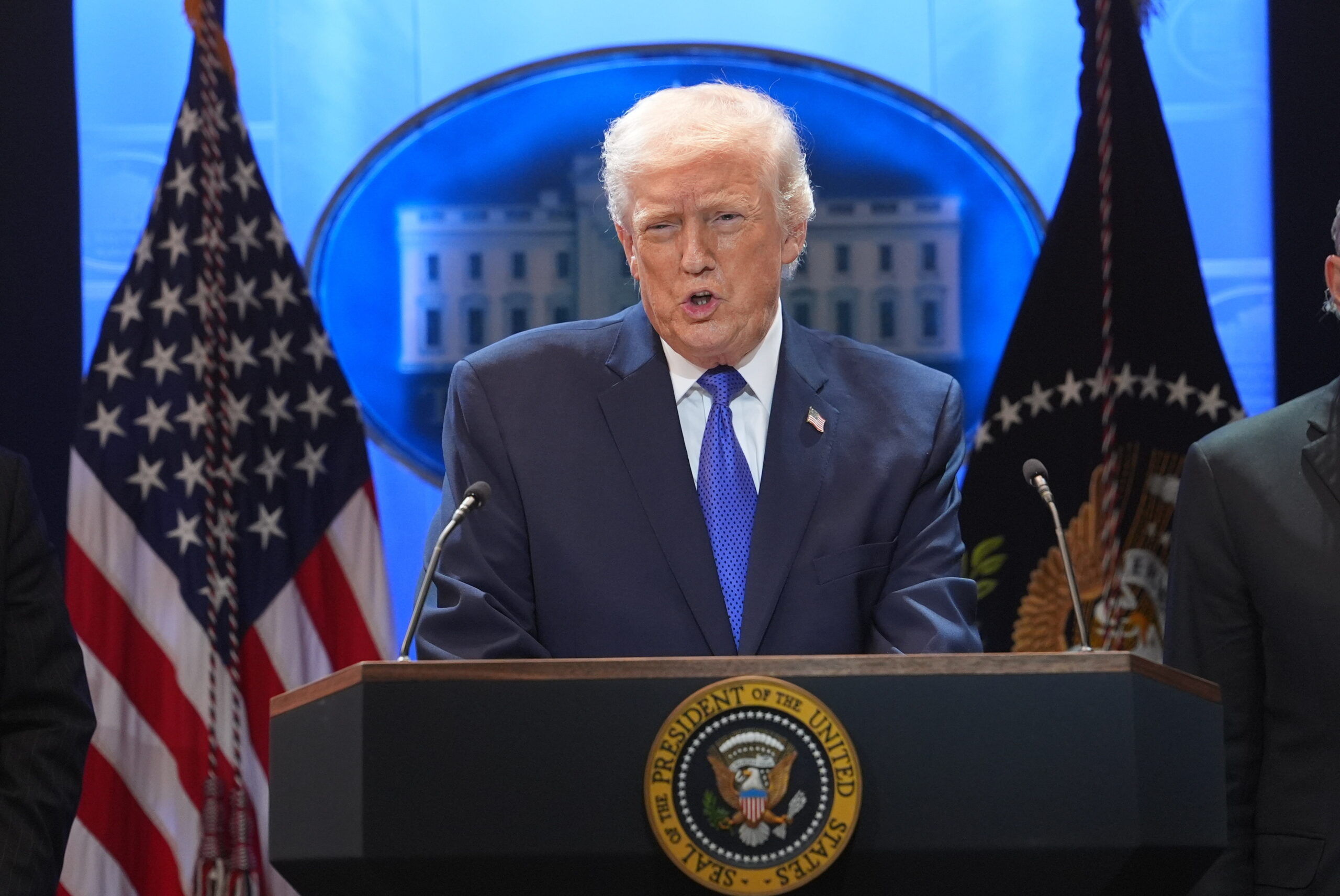
President Donald Trump slammed Republican-nominated Supreme Court justices who ruled against him Friday.
Pennsylvania lawmakers say Congress should reclaim its power over taxes and tariffs after the U.S. Supreme Court quashed President Donald Trump’s controversial global tariffs.
The nation’s high court ruled 6-3 Friday that Trump overstepped with tariffs imposed under an emergency powers law, dealing a significant blow to the president’s economic agenda and reasserting congressional authority.
Chief Justice John Roberts and Justices Neil Gorsuch and Amy Coney Barrett — both Trump nominees — joined liberal justices in the majority. Justices Brett Kavanaugh, Clarence Thomas, and Samuel Alito dissented.
Trump told reporters at the White House Friday that he was “ashamed” of the three Republican-appointed justices for not having “the courage to do what’s right for our country.”
But local lawmakers celebrated the decision as a step toward alleviating inflation exacerbated by Trump’s tariffs.
It’s “the first piece of good news that American consumers have gotten in a very long time,” said U.S. Rep. Brendan Boyle (D., Philadelphia), the ranking member of the House Budget Committee.
The decision is likely not the end of the road for Trump’s efforts to impose tariffs. The court struck down the broad authority Trump had claimed to impose sweeping tariffs but he could still impose additional import and export taxes using powers he employed in his first term.
President of Philly port operator says Supreme Court ruling ‘hard to interpret’
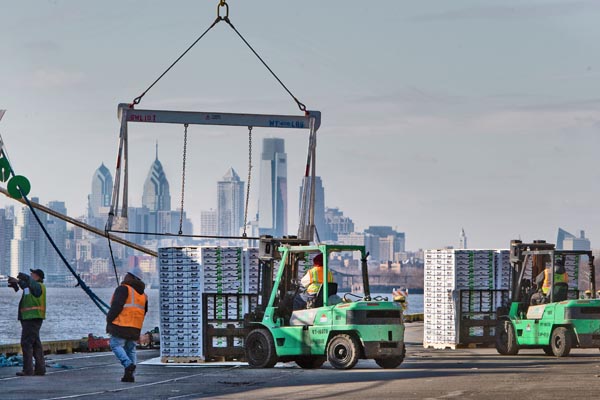
Workers move cargo at the Tioga Marine Terminal in Port Richmond.
Andrew Sentyz is president of Delaware River Stevedores, which operates the Port of Philadelphia’s publicly owned Tioga Marine Terminal in Port Richmond.
“It’s kind of hard to interpret,” he said of the Supreme Court ruling. “…I don’t know if I have a handle on what exactly it’s going to impact, and what it’s not. Some [tariffs] are still there, some are not.”
“Our business is a lot like a public utility in that there’s a demand and there’s a supply and we’re like the conduit the goods pass through,” he said. “…Trade policy massively affects how much moves or how much doesn’t move and in which direction.”
Sentyz said he’s cautiously optimistic about a normalization in trade.
“From the perspective that people have more certainty, I think it is welcome,” he said of the court ruling. “People receiving the cargo, they like a market that’s predictable. When it’s unpredictable it makes their business much harder. We’re impacted by how much they buy or sell.”
Will companies get refunds for paying tariffs the Supreme Court has now ruled were illegally imposed?
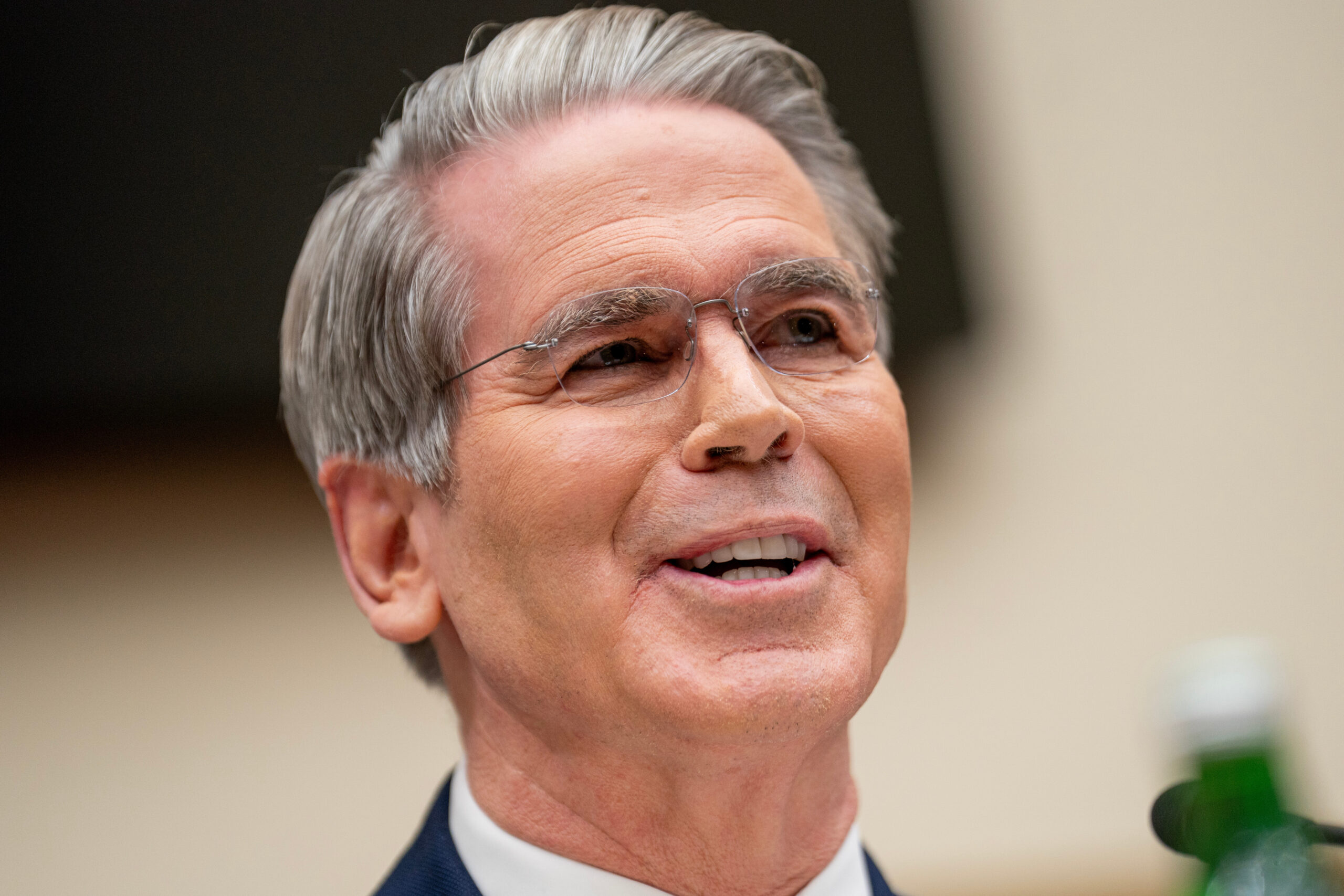
Treasury secretary Scott Bessent doesn’t think it’s likely.
“I got a feeling the American people won’t see it,” Bessent said during an interview at the Economic Club of Dallas Friday,
Bessent said he expects tariff revenue to be “virtually unchanged” in 2026 because the administration plans to turn to alternate methods to collect the levies.
Trump has already announced he plans to impose a 10% global tariff using an untested section of the 1974 Trade Act meant to address issues with international payments.
Reaction from Europe focuses on renewed upheaval, confusion
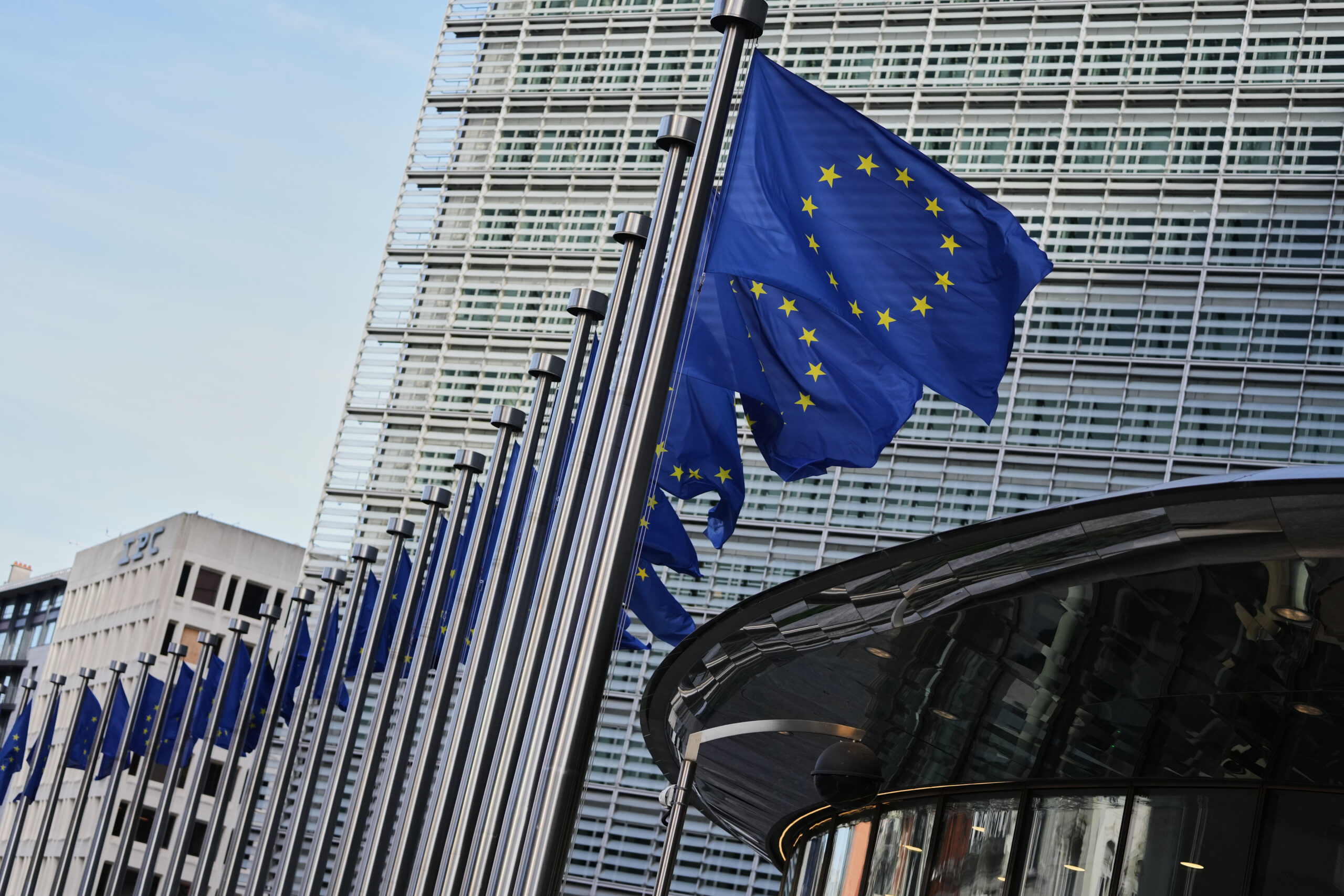
European Union flags flap in the wind outside of EU headquarters in Brussels.
The initial reaction from Europe focused on renewed upheaval and confusion regarding costs facing businesses exporting to the US.
The European Commission had reached a deal with the Trump administration capping tariffs on European imports at 15%. The deal gave businesses certainty that helped them plan, a factor credited with helping the 21 countries that use the euro currency skirt a recession last year.
“Uncertainty remains high for German enterprises doing business in the US,” said the German Chamber of Commerce and Industry. “Because there are other instruments for trade limitations in the hands of the US administration that German companies must prepare themselves for.”
Trump could resort to laws permitting more targeted tariffs that could hit pharmaceuticals, chemicals and auto parts, said Carsten Brzeski, global head of macro at ING bank: “Europe should not be mistaken, this ruling will not bring relief. … The legal authority may be different, but the economic impact could be identical or worse.”
— Associated Press
// Timestamp 02/20/26 3:08pm
Supreme Court ruling the beginning of a long legal battle
Among those following the issue, the Supreme Court ruling was “widely expected,” said Villanova University professor of international business Jonathan Doh.
In oral hearings, the Trump administration had argued that the tariffs were necessary due to trade disputes that constituted an emergency, said Doh, who had served as a trade policy negotiator during the 1990s.
However, the administration then touted the tariffs’ revenue-generating capacity — saying they’ve raised about $175 billion, Doh said. Supreme Court justices took notice of this when they weighed whether this was really an emergency.
“The justices spent as much time arguing about whether the remedy [for the trade dispute] was tariffs,” Doh said.
The 6-3 decision is having immediate effects, Doh said. Importers can no longer collect tariffs through this act. Companies are already looking for ways to recoup what they paid from the federal government. And the Trump administration has already announced it plans to implement “temporary” tariffs through another legal mechanism.
This “shifting playing field” only adds uncertainty to a business community that’s been watching tariffs closely since the start of Trump’s second term, Doh said. All of this will play out in legal battles in the lower courts.
“The decision was extremely significant, but it’s not the end of the story,” Doh said. “In some ways it’s just the beginning.”
Shapiro calls on Trump to ‘listen’ to the Supreme Court
Speaking to reporters on Friday, Gov. Josh Shapiro said he agreed with the Supreme Court’s decision to strike down Trump’s tariffs.
“I have made no bones about the fact that these tariffs are really harming,” the governor said. “I spend a lot of time on farmlands in our commonwealth. Farmers are getting killed by this.”
“We are hearing from folks in our rural communities sort of questioning why would the president do this,” Shapiro continued. “At the same time we’re seeing grocery prices go up, consumer goods go up, and there is a direct line connecting those price increases to the president pushing the tariff.”
Inflation reports show Trump’s tariffs inflated prices across household consumer items by as much as 5% at times.
Shapiro concluded by taking a jab at the president.
“I think the Supreme Court got it right. I say that as a former attorney general, and I say that as someone who actually follows the law,” he said. “And I think the president needs to actually listen to the Supreme Court and drop this and stop the pain for Pennsylvania and stop the pains for the Americans who are dealing with rising prices directly as a result of his tariffs.”
Bucks County Republican Rep. Brian Fitzpatrick ‘applauds’ Supreme Court decision
U.S. Rep. Brian Fitzpatrick (R., Pa.) is a moderate who represents Bucks County.
Casey-Lee Waldron, a spokesperson for U.S. Rep. Brian Fitzpatrick (R., Bucks), said in a statement Friday the lawmaker “applauds” the high court’s decision, “which validates the Congressman’s opposition to blanket and indiscriminate tariffs that are not narrowly tailored, and that do not lower costs for the American consumer.”
Waldron added that Fitzpatrick, a moderate who represents purple Bucks County, supports enforcing trade laws but that “This should always be done in a collaborative manner with a bipartisan, bicameral majority in Congress.”
Rep. Mary Gay Scanlon, a Delaware County Democrat, joined the chorus of lawmakers applauding the decision Friday afternoon.
In a post to X she called the decision a “win for the American people.”
“If the President stands by his disastrous tariff policy, it’s because he doesn’t care about lowering costs for American families,” Scanlon wrote.
Trump says he’ll impose a 10% tariff on all countries using untested statute
President Donald Trump speaks with reporters Friday.
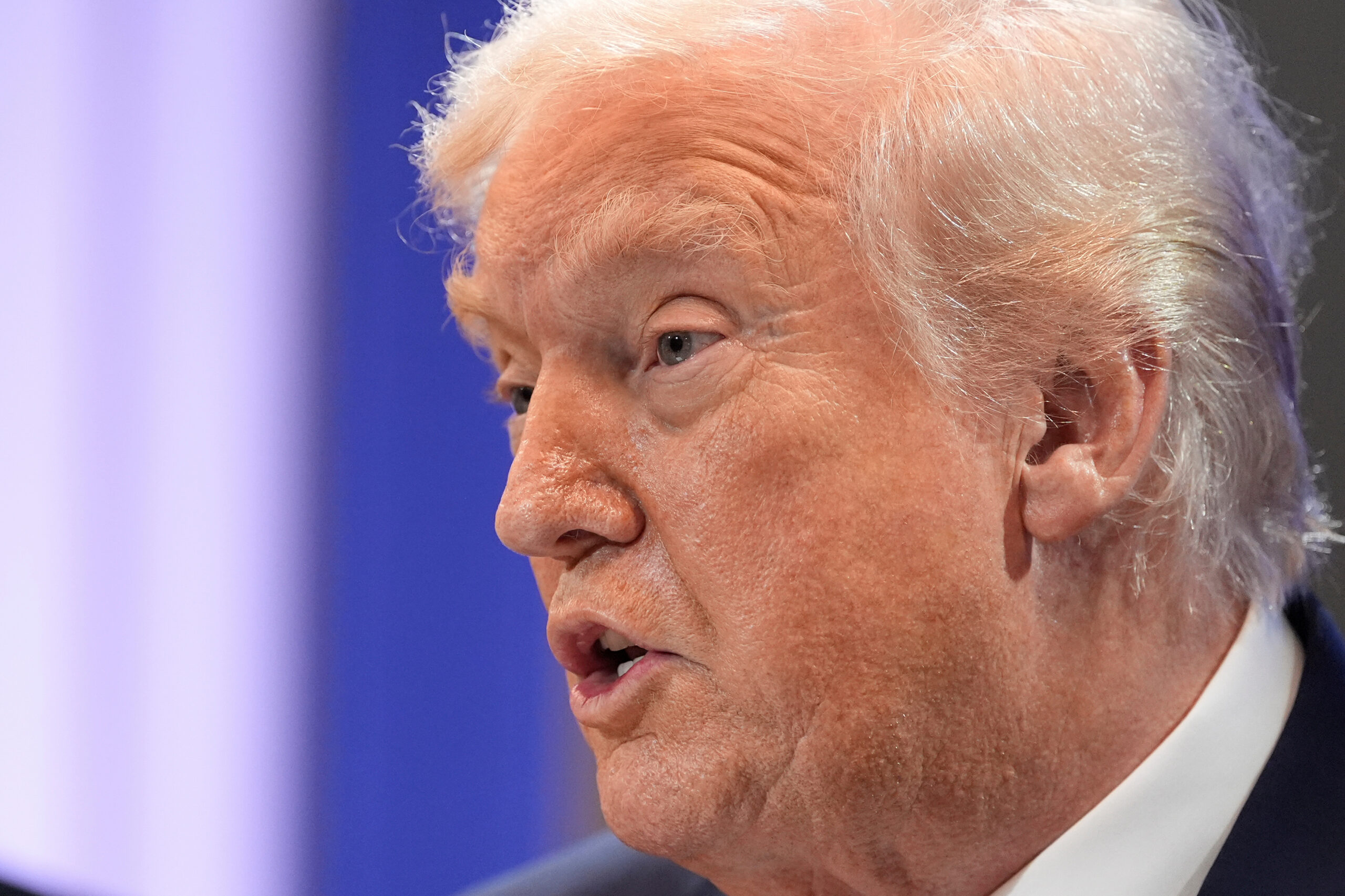
President Donald Trump told reporters he plans to sign an executive order enacting 10% global tariffs following the Supreme Court’s decision.
“Today, I will sign an order to impose a 10% global tariff under Section 122, over and above our normal tariffs already being charged,” Trump said Friday. “And we’re also initiating several section 301, and other investigations to protect our country from unfair trading practices of other countries and companies.”
Section 122, a statute created by the 1974 Trade Act, allows the president to impose temporary tariffs on countries to address issues with international payments. The statute, which has never been invoked by a president, limits tariffs to 150 days.
National Association of Manufacturers president: U.S. trade policy needs ‘clarity and durability’
Jay Timmons, president of the National Association of Manufacturers, said he and other leaders of the 14,000-member manufacturers’ group share President Trump’s goal of “ushering in the greatest manufacturing era.” But, he added, the court decision “underscores the importance of clarity and durability in U.S. trade policy.”
Timmons was in Philadelphia Friday morning to meet with leaders from the port, shipyard, Chamber of Commerce, and others in industry.
Stable tariffs and policies boost investment and hiring, but “legal and policy uncertainty make it more difficult” for American companies to compete, Timmons added in a statement. Since the court has ruled, “now is the time for policymakers to work together to provide a clear and consistent framework for trade.”
In the future, tariffs should be limited, according to the NAM leader. Timmons said punitive tariffs should target “specific unfair trade practices,” especially in “nonmarket” nations where government controls production.
NAM has pledged to work with Congress and the Trump administration on “durable” solutions to boost U.S. manufacturing and factory workers, he concluded.
‘Fools and lapdogs’: Trump says Republican-appointed Supreme Court justices lacked loyalty in tariff ruling
President Donald Trump speaks to reporters Friday.
President Donald Trump slammed three Republican-appointed Supreme Court justices for voting in favor of striking down his tariffs on foreign goods.
Two justices Trump nominated — Neil Gorsuch and Amy Coney Barrett — joined with chief justice John Roberts in ending Trump’s central economic policy.
Speaking to reporters at the White House Friday, Trump said he was “ashamed” the three justices — two of whom he nominated — didn’t have “the courage to do what’s right for our country.”
Trump also went after the court’s three Democratic appointees, calling them “automatic no” votes on any of his policies that make their way to the Supreme Court.
“You can’t knock their loyalty,” Trump said. “It’s one thing you can do with some of our people … They’re just being fools and lapdogs for the RINOs and radical-left Democrats.”
“Trump’s tariffs are FAR from over,” says Gene Marks, small business columnist for The Inquirer and founder of small-business consulting firm Marks Group in Bala Cynwyd.
Marks notes, “As Karoline Leavitt said back in June ‘we can walk and chew gum at the same time’ and as Scott Bessent said in December: ‘The administration will be able to replicate tariffs even if the SCOTUS rules against.’”
Some ways it could do so, Marks added, include:
The 1930 Smoot Hawley Act allows the U.S. to impose tariffs up to 50% on imports from countries that “discriminate” against U.S. goods through unfair duties, taxes, or regulations. But it requires congressional approval.
Section 122 of the Trade Act of 1974 gives the president “balance-of-payments” authority. This has a 150-day limit unless extended by Congress, and a 15% maximum rate.
Section 232 of the Trade Expansion Act of 1962/Section 301 of the Trade Act of 1974 allow tariffs on sectors or industries. These would require investigations and public comment.
“The only thing certain about tariffs in 2026 is that there will be a lot of uncertainty,” Marks said.
Tariffs had been impacting business at the Port of Philadelphia
Cranes at the Packer Avenue Marine Terminal in South Philadelphia.
Tariffs have slowed business at the Port of Philadelphia lately, with cargo volume down across the board — containers, steel, automobiles, and other commodities.
Philly is a major gateway for produce, bringing in more fresh fruit than any other U.S. port, largely from Central and South America. The port saw record container volume last year, handling almost 900,000 units, up 6% over 2024. About two-thirds of that cargo was refrigerated — fruit and meat, for example.
But the year got off to a slow start. “The story is increased competition and tariffs,” Sean Mahoney, marketing director at the Philadelphia Regional Port Authority (PhilaPort), said during the agency’s board meeting on Wednesday.
Container volume in January was down 14% over the year-earlier period. Auto imports fell 17%, and breakbulk cargoes (steel, paper, lumber) fell too. (Tariffs weren’t the only factor; Mahoney noted that ports in early 2025 happened to see more cargo than usual in part because shippers ordered more goods amid labor negotiations between employers and unions representing dockworkers.)
Shapiro hails Supreme Court decision to stop Trump’s ‘reckless approach’
Pennsylvania Gov. Josh Shapiro has been a vocal opponent of Trump’s tariffs.
Gov. Josh Shapiro, who has been a frequent critic of the tariffs, posted to X Friday applauding the Supreme Court’s decision.
“Donald Trump’s tariffs have been a disaster — wreaking havoc on Pennsylvania farmers, small business owners, and families who are just trying to make ends meet,” Shapiro wrote.
He urged Trump to follow the court’s ruling and “drop this reckless approach to economic policy that has done nothing but screw over Americans.”
New Jersey import-export company doesn’t expect it will be easy to get refunds
Now that the Supreme Court has made its decision, one big question for companies is whether they’ll be able to get refunds for the additional tariffs they’ve paid since “liberation day” 10 months ago, said Tim Avanzato, vice president of international sales at Lanca Sales Inc.
The New Jersey-based import-export company should be eligible for as much as $4 million in tariff refunds, Avanzato said. But getting that money is far from guaranteed.
“It’s going to create a paperwork nightmare for importers,” he said, and he doesn’t expect the Trump administration to make it easy.
He’ll also be on the lookout for other ways the Trump administration may implement tariffs, further complicating the matter.
Avanzato said President Trump was right when he said that other countries have been taking advantage of the U.S. with their tariffs — and in principle, the president was right to apply his own.
“He should have done more with a scalpel than with a bomb,” Avanzato said.
Though companies may be able to recoup some of what they lost, the same won’t go for consumers, he noted.
“Companies are not very good at passing on savings,” Avanzato said. “Nobody is going to rush to drop their prices.”
Supreme Court ruling brings uncertainty to Pennsylvania businesses
Canada is Pennsylvania’s biggest export market, with the state sending more than $14 billion in goods there in 2024.
The Supreme Court’s decision may be welcome news for U.S. businesses that pay the import taxes, but one immediate effect is more uncertainty as firms weigh whether to hire and make investments.
Not all of President Donald Trump’s tariff increases came through the use of the International Emergency Economic Powers Act and therefore some will remain in place, said Julie Park, a partner at London-based tax and business advisory firm Blick Rothenberg.
“This decision brings further uncertainty for businesses,” she said in a statement. That’s in part because Trump could seek to reimpose tariffs through other legal tools, leaving “businesses in limbo about if they will get refunded.”
U.S. exporters will also be closely following what happens next, since the fate of Trump’s tariffs will likely affect whether other countries like Canada keep their retaliatory measures in place. Canada is Pennsylvania’s biggest export market, with the state sending more than $14 billion in goods there in 2024. Top exports included machinery, cocoa, iron, and steel.
Pennsylvania’s dairy industry has also been caught in the middle of the global trade war, as China and Canada imposed extra taxes on those goods in response to U.S. tariffs.
President Donald Trump will hold a news briefing at 12:45 p.m. to address the Supreme Court’s ruling, White House Press Secretary Karoline Leavitt announced on social media.
// Timestamp 02/20/26 12:17pm
Gov. Mikie Sherrill, other New Jersey officials celebrate Supreme Court ruling
New Jersey Gov. Mikie Sherrill, seen here in November.
New Jersey Gov. Mikie Sherrill celebrated the court ruling on President Donald Trump’s tariffs, which she said have raised costs by $1,700 per New Jersey family and had a negative impact on small businesses and jobs.
“I’m thrilled that folks and businesses will start to see the relief they deserve – with no thanks to the president,” she added.
The new governor ran on a message combining affordability and fighting Trump. She took particular aim at his tariffs and visited small businesses in South Jersey to discuss their impact on local economies in the state.
Sen. Andy Kim, a South Jersey Democrat, said the Supreme Court’s decision is “a step” in righting wrongs by Trump’s administration, but that there’s “so much more to go.”
Calling the tariffs “unpopular and illegal,” the senator said the president cost Americans “a lot of money.”
“Trump 2.0: You pay for his tariffs, tax breaks for his billionaire donors, & insane corruption for his friends and family,” he added in a social media post.
Sen. Cory Booker, a North Jersey Democrat, lauded the Supreme Court for ruling “what we’ve all known: this administration cannot ignore the rule of law and Congress’ role to protect America’s economy from reckless and chaotic tariffs.”
“For nearly a year, Trump abused our trade tools to curry favors with foreign officials and exact revenge on his rivals, all while America’s working families and small businesses paid the price,” Booker said on social media. “Trump raised the cost on everything from the food we eat to the clothes we wear, and also failed to bring back good-paying jobs or fix our broken economy.”
Philly Rep. Dwight Evans calls on Congress to reassert its constitutional power
Congressman Dwight Evans, seen here in 2025.
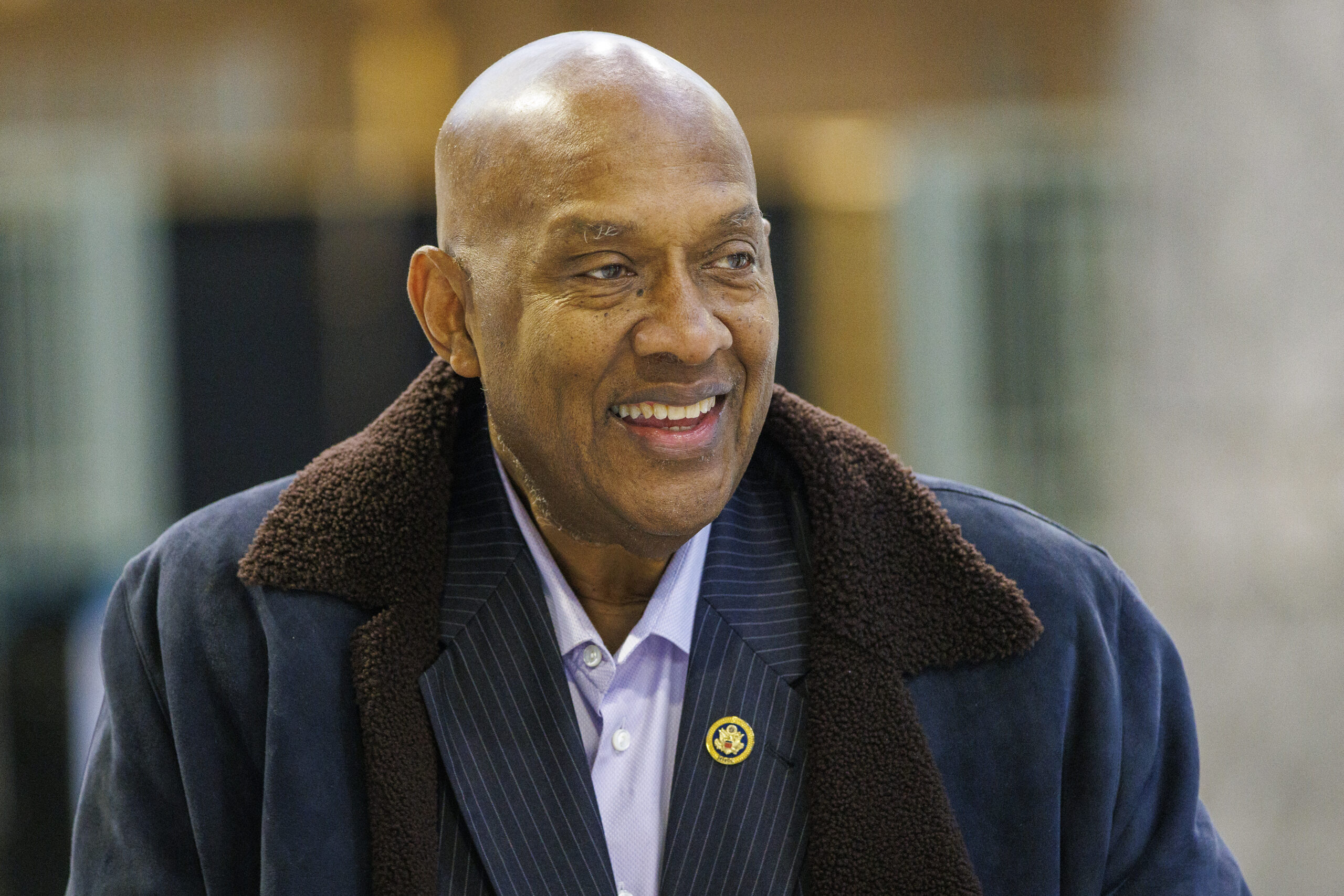
U.S. Rep. Dwight Evans (D., Pa.), who represents parts of Philadelphia, called the ruling a win for the wallets of Americans and called on Congress to reassert its power over the country’s economy.
“The Constitution is clear — only Congress has the power to levy tariffs and other taxes,” Evans wrote on social media. “I’m a co-sponsor of legislation to return this power to Congress — it’s long past time Republicans work with Democrats to pass it!”
The bill, which has no chance of passing in the Republican-controlled House, would require congressional approval for all new tariffs and the reversal of tariffs imposed on Mexico and Canada enacted through the United States-Mexico-Canada Agreement.
His call was echoed by Sen. Chuck Grassley, an Iowa Republican who serves as the chairman of the Senate Judiciary Committee.
In a statement, Grassley wrote, “I’ve made clear Congress needs to reassert its constitutional role over commerce, which is why I introduced prospective legislation that would give Congress a say when tariffs are levied in the future.”
President Trump described the Supreme Court decision as “a disgrace” when he was notified in real time during his morning meeting with several governors.
That’s according to someone with direct knowledge of the president’s reaction, who spoke on the condition of anonymity to discuss the private conversation. Trump was meeting privately with nearly two dozen governors from both parties when the decision was released.
— Associated Press
// Timestamp 02/20/26 11:03am
Brendan Boyle celebrates Supreme Court ruling as ‘good news’ for consumers
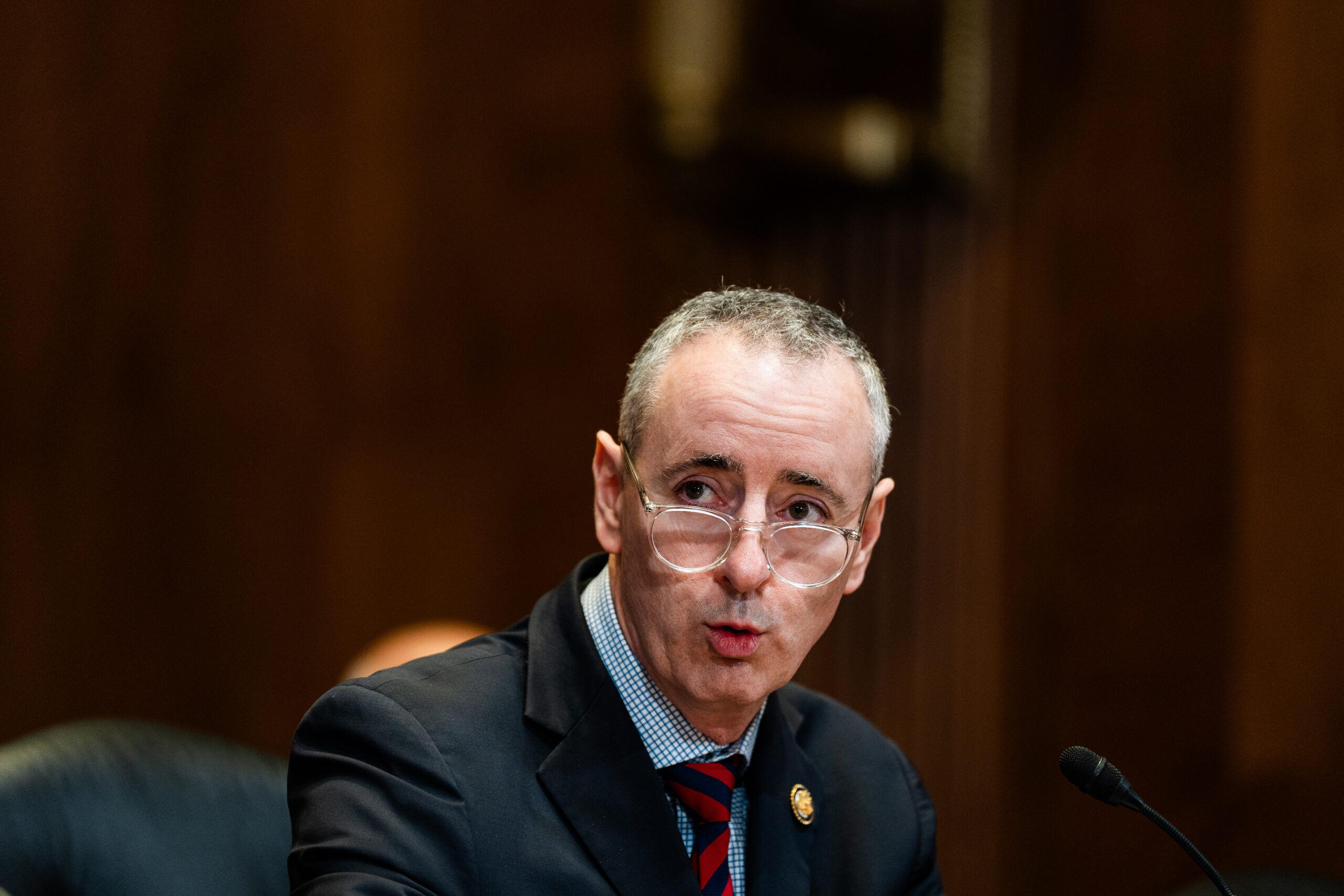
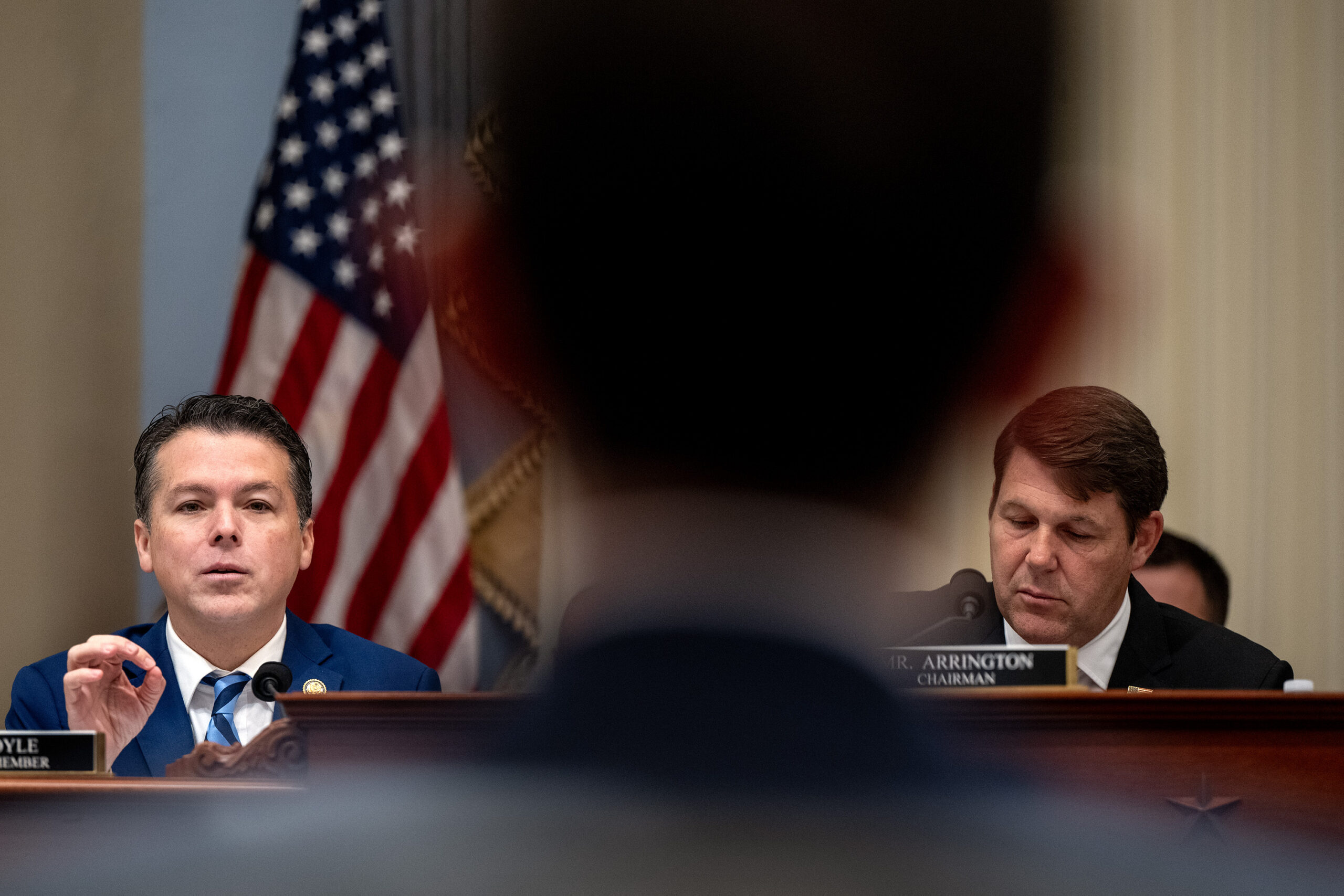
U.S. Rep. Brendan Boyle during a hearing on Capitol Hill in Washington, D.C., in November.
The decision is “the first piece of good news that American consumers have gotten in a very long time,” said U.S. Rep. Brendan Boyle (D., Philadelphia), the ranking member of the House Budget Committee, said in an interview Friday.
Boyle noted that the public will eventually see prices go down, but it remains unclear what will happen to tariff revenue that’s already been collected. But Pennsylvania lawmakers, including Boyle, are pushing for Congress to reassert its power to control the country’s purse strings.
“As the Supreme Court validated this morning, Congress has the authority to levy taxes and tariffs,” Boyle said. “It’s time now for us to finally reclaim that authority and bring some certainty and rationality to our tariff policy, which under Donald Trump has been all over the map and changes day by day, even hour by hour.”
Boyle and U.S. Rep. Dwight Evans (D., Philadelphia) have cosponsored a bill that would require congressional approval for all new tariffs and the reversal of tariffs imposed on Mexico and Canada enacted through the United States-Mexico-Canada Agreement. It’s unlikely that it will pass the Republican-controlled U.S. House.
Will businesses get refunds? One Supreme Court justice says the process will be a ‘mess’
Supreme Court Justice Brett Kavanaugh, who was one of three who ruled against striking down the tariffs.
Companies have collectively paid billions in tariffs. Many companies, including the big-box warehouse chain Costco, have already lined up for refunds in court, and Justice Brett Kavanaugh noted the process could be complicated.
“The Court says nothing today about whether, and if so how, the Government should go about returning the billions of dollars that it has collected from importers. But that process is likely to be a ‘mess,’ as was acknowledged at oral argument,” Kavanaugh wrote in the dissent.
We Pay the Tariffs, a coalition of more than 800 small businesses that has been advocating against the tariffs, said a process for refunding the tariffs is imperative.
“A legal victory is meaningless without actual relief for the businesses that paid these tariffs,” executive director Dan Anthony said in a statement. “The administration’s only responsible course of action now is to establish a fast, efficient, and automatic refund process that returns tariff money to the businesses that paid it.”
— Associated Press
// Timestamp 02/20/26 10:36am
The Supreme Court strikes down Trump’s tariffs
The Supreme Court struck down President Donald Trump’s far-reaching global tariffs on Friday, handing him a significant loss on an issue crucial to his economic agenda.
The 6-3 decision centers on tariffs imposed under an emergency powers law, including the sweeping “reciprocal” tariffs he levied on nearly every other country.
It’s the first major piece of Trump’s broad agenda to come squarely before the nation’s highest court, which he helped shape with the appointments of three conservative jurists in his first term.
The majority found that the Constitution “very clearly” gives Congress the power to impose taxes, which include tariffs. “The Framers did not vest any part of the taxing power in the Executive Branch,” Chief Justice John Roberts wrote.
Justices Samuel Alito, Clarence Thomas, and Brett Kavanaugh dissented.
“The tariffs at issue here may or may not be wise policy. But as a matter of text, history, and precedent, they are clearly lawful,” Kavanaugh wrote in the dissent.
The economic impact of Trump’s tariffs has been estimated at some $3 trillion over the next decade, according to the Congressional Budget Office. The Treasury has collected more than $133 billion from the import taxes the president has imposed under the emergency powers law, federal data from December shows. Many companies, including the big-box warehouse chain Costco, have already lined up in court to demand refunds.
— Associated Press
// Timestamp 02/20/26 10:34am
Trump could still impose tariffs under other laws
The Supreme Court’s tariffs decision doesn’t stop President Donald Trump from imposing duties under other laws.
While those have more limitations on the speed and severity of Trump’s actions, top administration officials have said they expect to keep the tariff framework in place under other authorities.
“It’s hard to see any pathway here where tariffs end,” said Georgetown trade law professor Kathleen Claussen. “I am pretty convinced he could rebuild the tariff landscape he has now using other authorities.”
The Constitution gives Congress the power to levy tariffs. But the Trump administration argued that a 1977 law allowing the president to regulate importation during emergencies also allows him to set tariffs. Other presidents have used the law dozens of times, often to impose sanctions, but Trump was the first president to invoke it for import taxes.
Trump set what he called “reciprocal” tariffs on most countries in April 2025 to address trade deficits that he declared a national emergency. Those came after he imposed duties on Canada, China, and Mexico, ostensibly to address a drug trafficking emergency.
A series of lawsuits followed, including a case from a dozen largely Democratic-leaning states and others from small businesses selling everything from plumbing supplies to educational toys to women’s cycling apparel.
The challengers argued the emergency powers law doesn’t even mention tariffs and Trump’s use of it fails several legal tests, including one that doomed then-President Joe Biden’s $500 billion student loan forgiveness program.
— Associated Press
Two Trump Supreme Court appointees ruled against his tariffs
Chief Justice John Roberts wrote the court’s majority opinion, joined by Justices Neil Gorsuch and Amy Coney Barrett, two of Trump’s three Supreme Court picks. The three liberal justices were also part of the majority.
Justice Brett Kavanaugh, Trump’s other appointee, wrote the main dissent, joined by Justices Clarence Thomas and Samuel Alito.
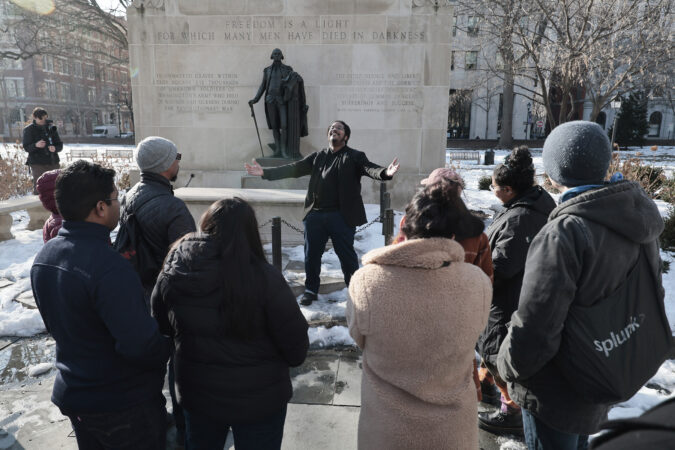
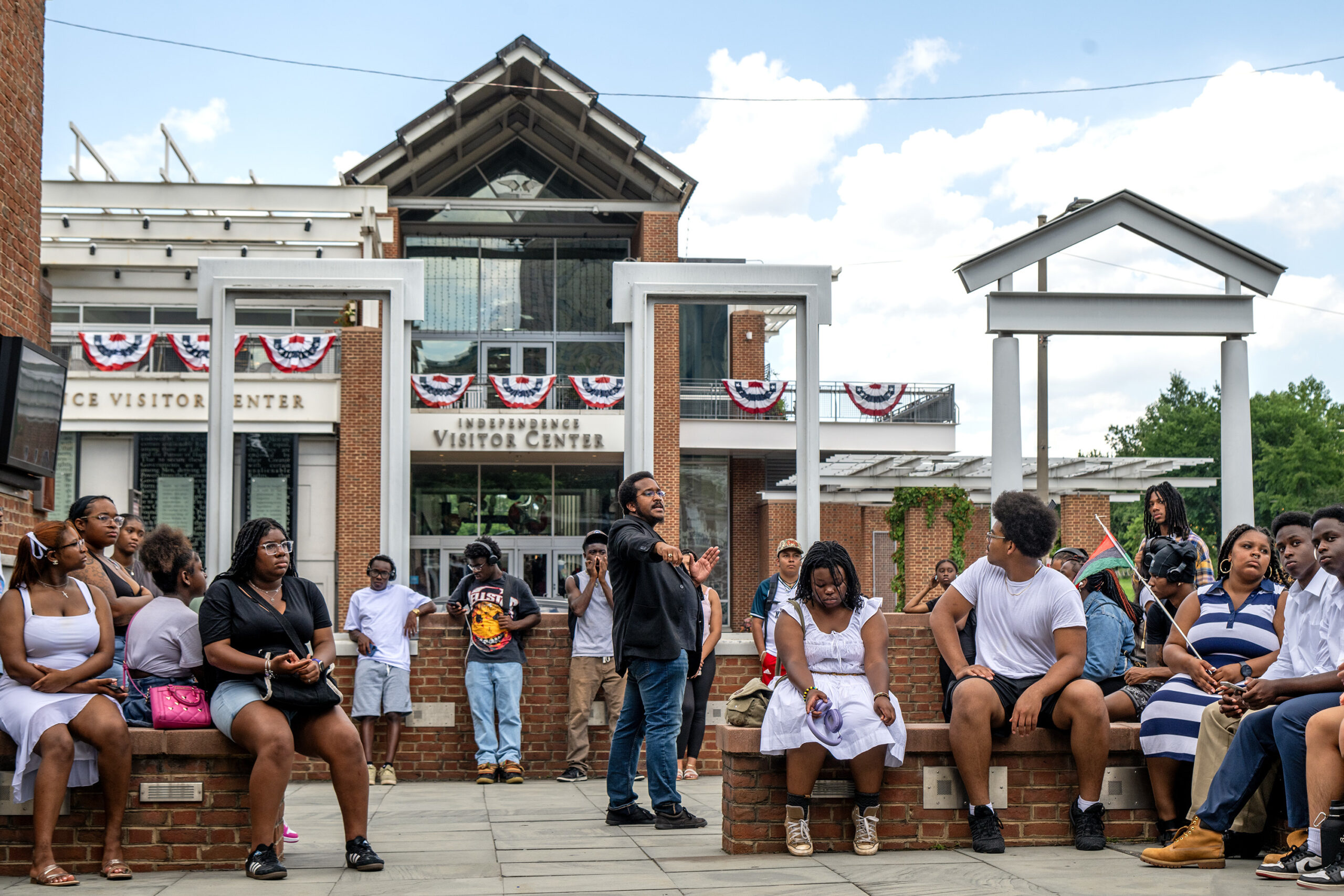
Mijuel K. Johnson stood on theground where the dining room of the first president’s residence once stood as he told the story of Ona Judge’s path to freedom.
Speaking to a group assembled just steps from the Liberty Bell, Johnson recounted how Judge escaped George Washington’s household in Philadelphia into the city’s free Black community before eventually making her way to New Hampshire, and evading the Washingtons’ several attempts to recapture her.
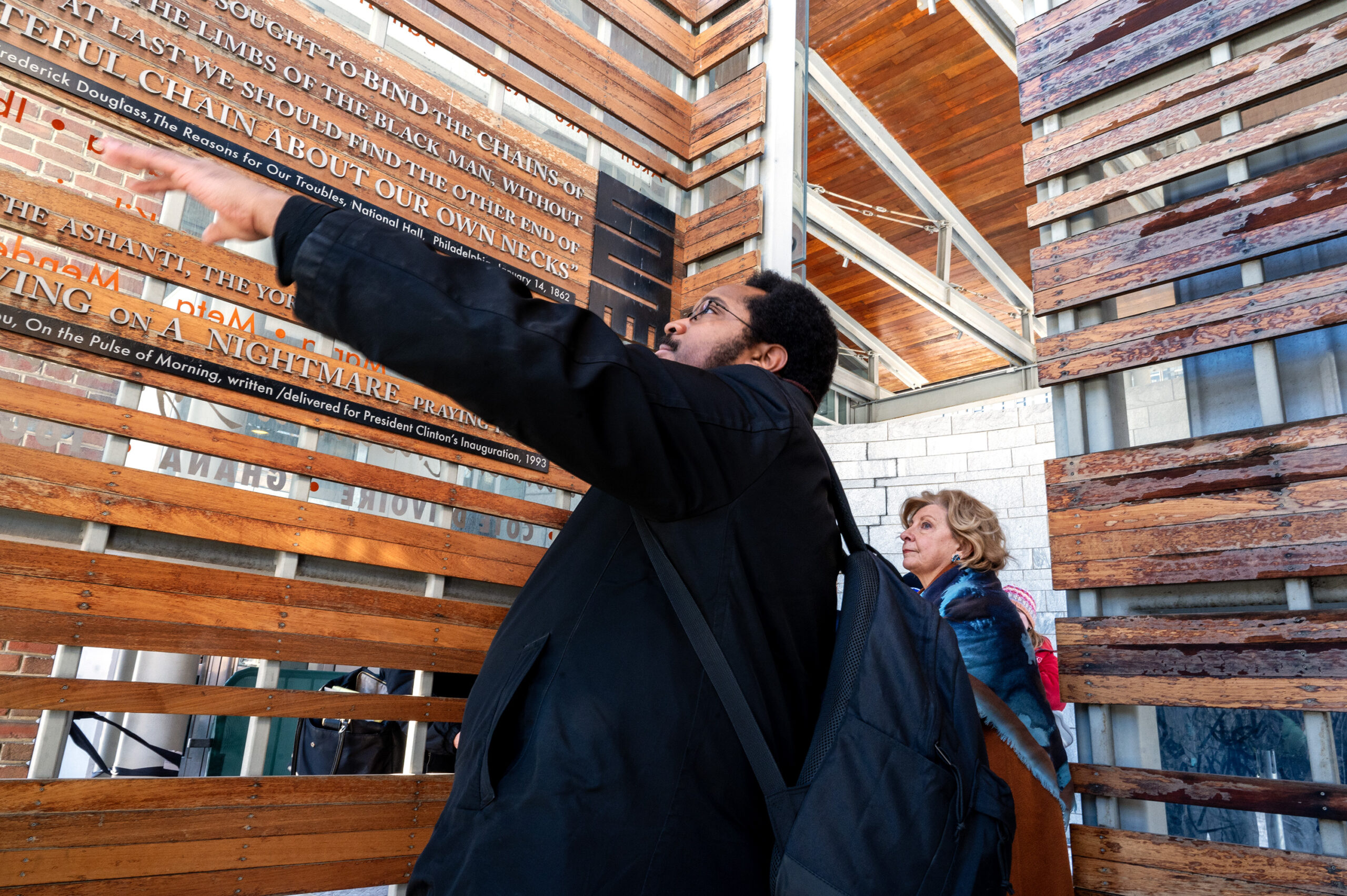
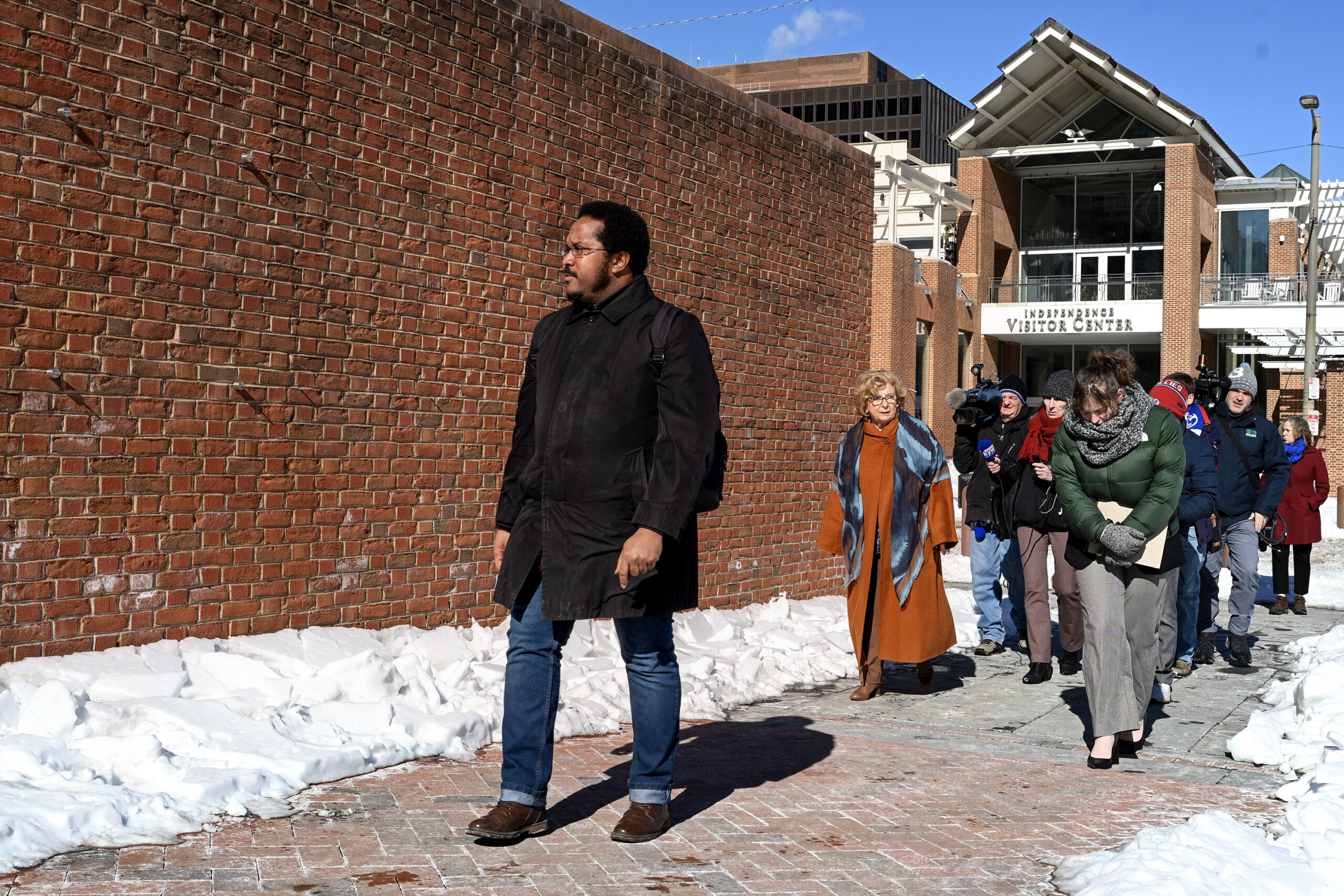
It’s a story Johnson has told many times as a guide for the Black Journey, which offers walking tours focused on African American history in Philadelphia. One of the first stops on “The Original Black History Tour” is the President’s House Site, an open-air exhibit at Sixth and Market Streets that memorializes Judge and the eight other people enslaved by the first president here.
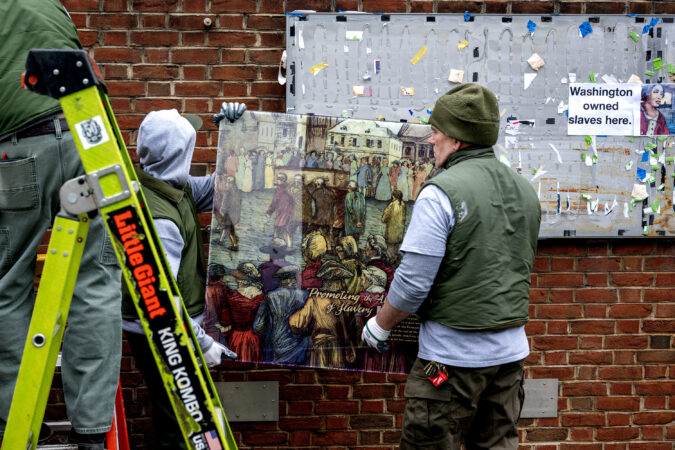
But last weekend, instead of the educational panels and informative videos displayed for the last 15 years, the guide and his group were faced with faded brick walls and blank TV screens. Adhesive residue marked the spots where colorful panels had been.
Mijuel K. Johnson guides Judge Cynthia M. Rufe as she visits the President’s House in Independence National Historical Park on Monday, Feb. 2, 2026.
It was Johnson’s first group tour since National Park Service employees wielding wrenches and crowbars — acting at the direction of President Donald Trump’s administration — last month stripped out every panel at the President’s House, censoring roughly 400 years of history. Judge’s name was still inscribed on the Memorial Wall and her footprints still imprinted into the concrete as the group walked through the site, but her story was missing. Television screens recounting her life had been abruptly disconnected.
Black History Month began this year with visitors unable to read displays juxtaposing the cruelty of slavery with the country’s founding principles for the first time since the site opened in late 2010. For many tourists and the guides who know the site best, the removal was a call to action.
Workers remove the displays at the President’s House in Independence National Historical Park on Thursday, Jan. 22, 2026. More than a dozen displays about slavery were flagged for the Trump administration’s review, with the President’s House coming under particular scrutiny.Maria Felton (middle) and Jahmitza Perez (right) of Philadelphia listen to Mijuel K. Johnson (left) during The Black Journey tour in Philadelphia on Saturday, Feb. 14, 2026.
“In telling their stories, I’m telling my own,” Johnson, 34, of South Philadelphia, said of the nine people the site memorializes, “and that’s where it becomes personal, so that in trying to erase their story, they’re effectively trying to erase me, too, and I just refuse to be erased.”
Parker celebrated the reinstallation in a post on social media Thursday but cautioned: “We know that this is not the end of the legal road.”
The Trump administration is appealing the ruling, so the future of the site remains uncertain even after this week’s victory. On Friday, a federal appeals judge said that the Trump administration does not have to restore more panels while the appeal is pending.
Seeing the site bare without the panels last weekend felt like a “slap in the face” for Maria Felton, 31, a stay-at-home mom from Roxborough. Felton, who is Afro-Latina, joined the Black Journey’s tour with best friend Jahmitza Perez, 37, as part of her quest to reconnect with her heritage.
“The administration can take away physical things. They can’t take away our ability to connect and learn and share our culture,” Felton said.
Passing a wall where panels about slavery were removed, Mijuel K. Johnson (left) with The Black Journey: African-American Walking Tour of Philadelphia, leads Judge Cynthia M. Rufe (second from left) as she visits the President’s House in Independence National Historical Park on Monday, Feb. 2, 2026.
‘A sign of the revolution’
Johnson has been giving tours since 2019, delivering rousing accounts of U.S. history interwoven with humor and theatrical gestures. He tells his patrons, who come from around the country, that long before cheesesteaks became Philly’s iconic food,the city was known for its pepper pot stew, an African dish.
“We can tell the full story of America,” he said.
Last weekend, Johnson’s tour group was more “somber” than usual, he said, as they saw the bare walls of the “desecrated” site.
“People seeing it for themselves that this actually did happen,” Johnson said.
For Toi Rachal, 47, a pharmacist from Dallas, and her husband, the tour was eye-opening. The couple had been unaware of the Trump administration’s changes to the site until they joined the tour during their visit to Philadelphia. The work of Johnson and other community members to continue telling the story was even more crucial with the exhibits gone, Rachal said.
“If we just walked in these areas on our own, eventually we would have probably figured it out,” she said, “but you may not have known exactly what happened.”
The exhibits were removed under an order issued by Trump instructing the Department of the Interior to remove materials at national parks that “inappropriately disparage Americans past or living,” widely criticized as an effort to whitewash history ahead of this year’s celebrations of the country’s 250th anniversary.
But the move brought unprecedented attention to the President’s House, drawing curious onlookers. When the panels were beginning to be restored Thursday, a group observed as park employees put history back in its rightful place.
Shortly before Johnson’s tour group stopped at the site, a volunteer read from a binder containing the informational text that had been removed. The volunteer was one of dozens of people who had signed up for a shift with Old City Remembers, a grassroots effort to speak the history of the President’s House even if the panels were no longer there.
Mijuel K. Johnson leads visitors from Charlotte, North Carolina, at the President’s House in Independence National Historical Park on Wednesday, July 23, 2025.
“Because those have been removed, somebody needs to tell the story, somebody needs to make sure that we’re not going to let that history be erased,” Matt Hall, a professor and the organizer of the group, said in an interview earlier this month.
It’s “active history,” said Ashley Jordan, president and CEO of the African American Museum in Philadelphia, located blocks away from the site. “The fact that they are using their words, their demonstrations, through art-making, through signage, through print materials — that has always been a sign of the revolution in America.”
Ahead of Johnson’s tour last Saturday, visitors taking advantage of the warmest winter day in weeks congregated around the bare exhibit wall. In its place were educational fliers about Washington, Ona Judge, and other historical figures. Posters displayed messages: “Truth Matters,” “Erasing Slavery is Pro-slavery,” and “Dump Trump Not History.”
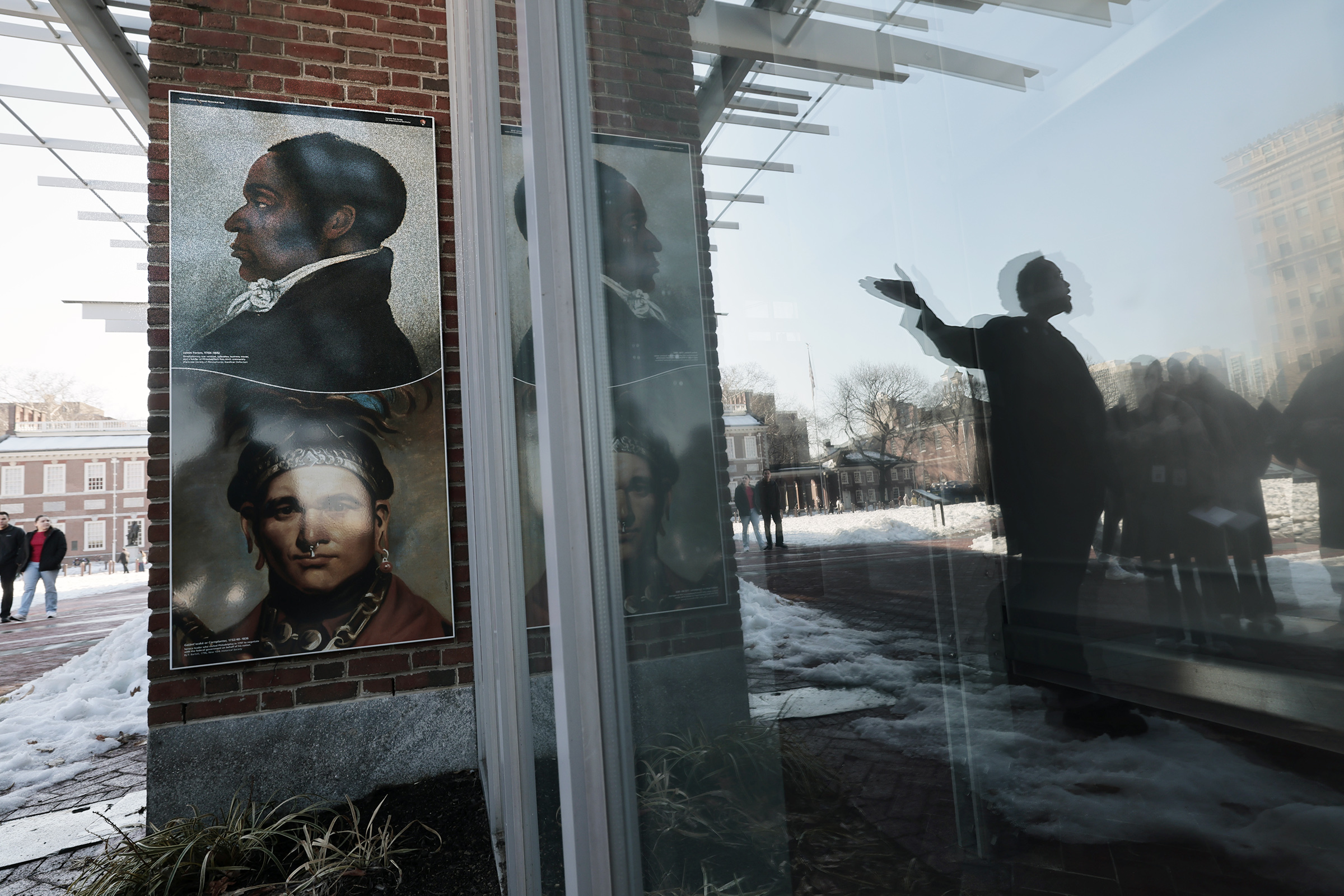
The Black Journey and the 1838 Black Metropolis tour guide Mijuel K. Johnson (right) is reflected in the Liberty Bell Center window as he talks about James Forten (top left) 1746-1842 during a Black History tour in Philadelphia on Saturday, Feb. 14, 2026. Forten was a Revolutionary War veteran, sailmaker, business owner, and a leader of Philadelphia’s free Black community.
Philadelphians celebrate, but prepare for more fights ahead
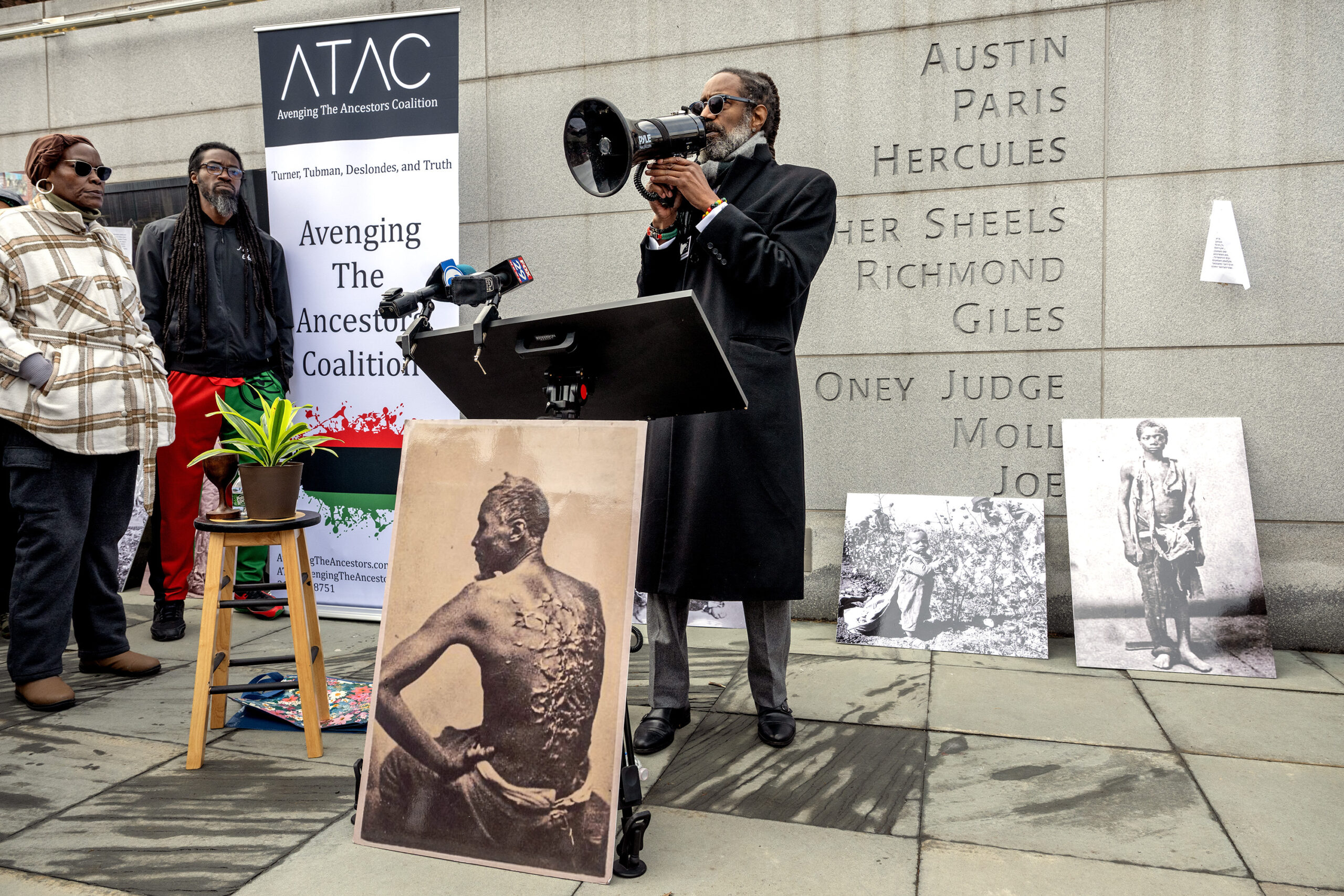
Avenging the Ancestors Coalition members gathered Thursday afternoon at the President’s House, celebrating the reinstallation earlier in the day.
“This is actually a moment in time,” said Michael Coard, attorney and leader of the coalition, which had fought tirelessly to develop and, now, protect the site. “Your children, your grandchildren, your great-grandchildren are going to be talking about this for years.”
Coard emphasized the fight was not yet over while highlighting the significance of the community’s contributions in the fight to safeguard the President’s House.
“I just want you for a few seconds just to think about what you all have done,” Coard told the crowd. “Because what you’ve done is to actually create history. … Think about it. You fought the most powerful man on the planet, and you won.”
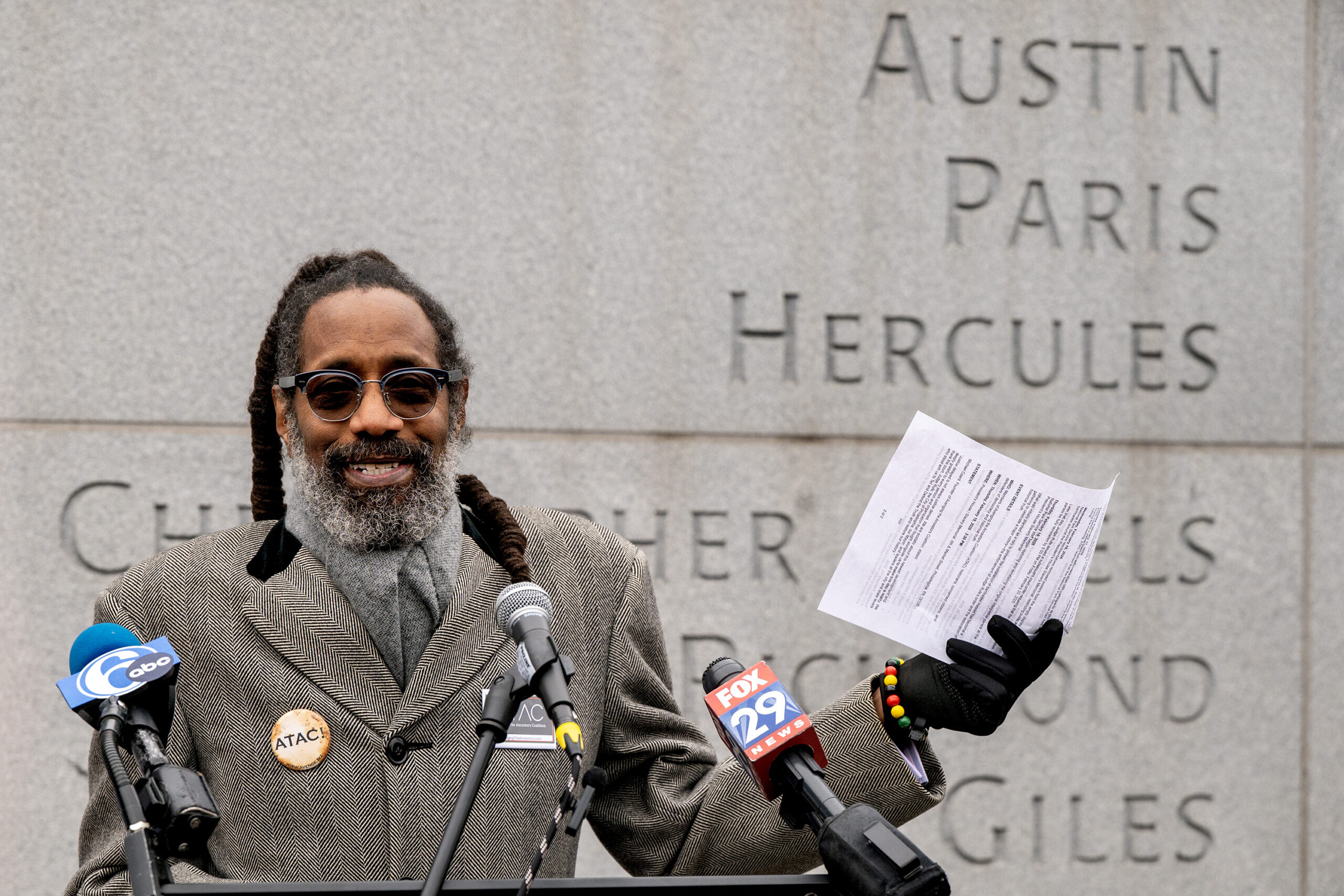
Attorney Michael Coard, leader of the Avenging the Ancestors Coalition, speaks at the President’s House site on Monday, Feb. 16, 2026, during their annual gathering for a Presidents’ Day observance. While there, they learned a federal judge ordered the Trump administration to restore the slavery exhibits that the National Park Service removed from the site last month. The names of nine enslaved people who lived and worked in the household of George Washington engraved in stone behind him were not removed by the NPS.
Even as Philadelphians celebrated the reinstallation, more efforts were being planned to continue sharing the story of the President’s House.
Mona Washington, a playwright and Avenging the Ancestors Coalition board member,is crafting a series of plays related to the President’s House, which she hopes to showcase this summer, during the height of the 250th anniversary celebrations. Some of the plays, she said, are written in the first person for the people who were enslaved by the first president at his Philadelphia residence.
“We’re here, and you can try and erase whatever you want, as much as you want, but guess what? There are lots of us, and we’re just going to keep moving and moving and moving toward truth,” Washington said.
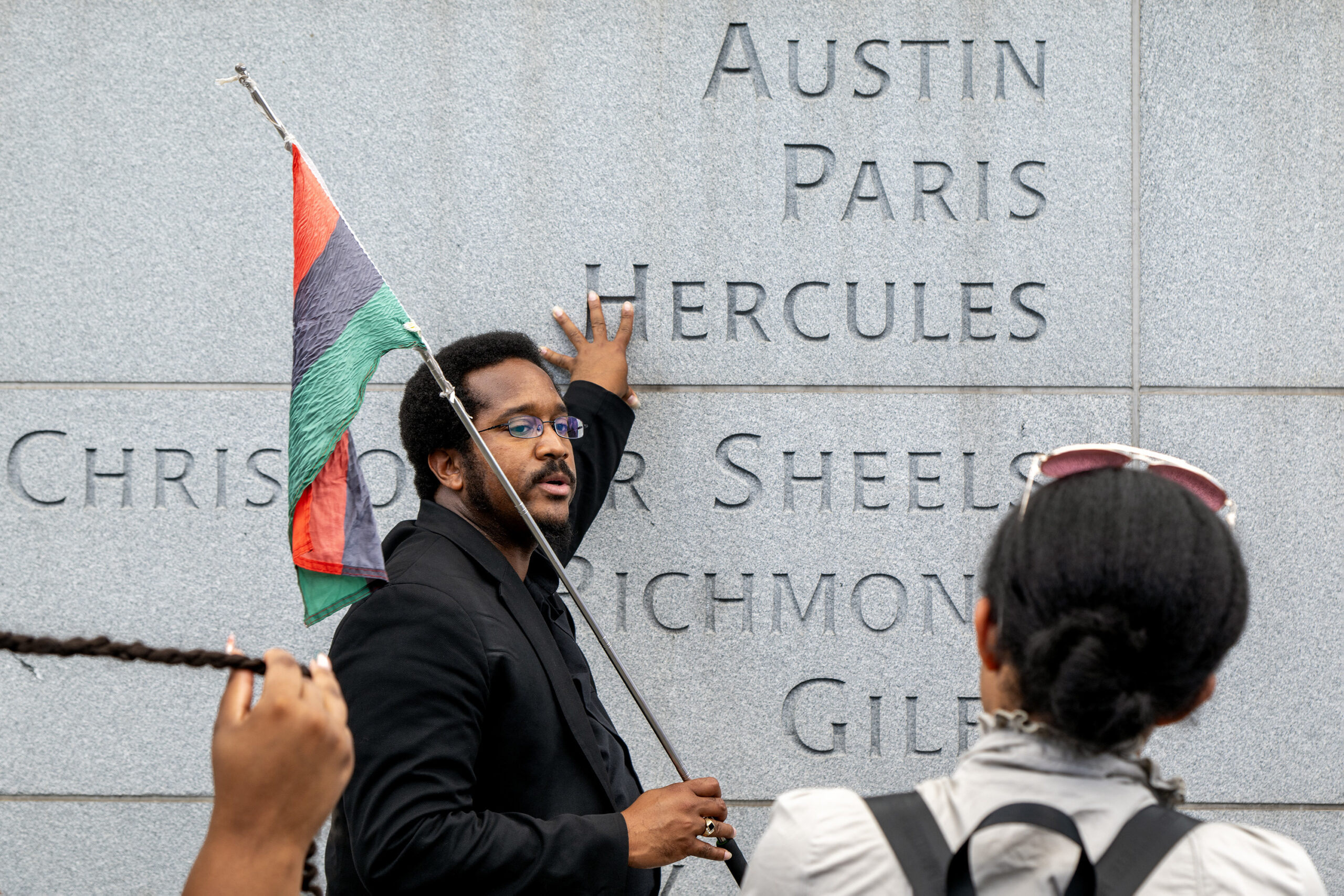
At the President’s House last Saturday, there were few pieces that Johnson could share with the group that had not been tainted by the Trump administration. One of them was the Memorial Wall, which is engraved with the names of Ona Judge and the eight other people George Washington enslaved — Austin, Paris, Hercules, Christopher Sheels, Richmond, Giles, Moll, and Joe. A few paces away, their quarters once stood, where at least four of the nine individuals would stay at any given time, Johnson said.
Mijuel Johnson, a guide with The Black Journey: African-American Walking Tour of Philadelphia, leads visitors in the President’s House in Independence National Historical Park Wednesday, July 23, 2025. The names of nine enslaved people who lived and worked at the House are engraved in stone on the site.
Outside the quarters appears a plaque signed by the city and the National Park Service that reads: “It is difficult to understand how men who spoke so passionately of liberty and freedom were unable to see the contradiction, the injustice, and the immorality of their actions.”
These words are preceded by an italicized quote from former President Barack Obama, the country’s first Black president: “It was whispered by slaves and abolitionists as they blazed a trail toward freedom … yes we can, yes we can.”
A lack of proper tools and the snow were the only things standing in the way of the Trump administration making further alterations to the President’s House last month.U.S. District Judge Cynthia M.Rufe has now ordered that the President’s House cannot be further altered.
Last Saturday, Johnson assured his tour group as they were filing through the quarters that this piece of history would remain.
“They can’t touch this,” he said.
Staff writer Maggie Prosser contributed to this article.
While lauding the pledges, Trump faces the unresolved challenge of disarming Hamas, a sticking point that threatens to delay or even derail the Gaza ceasefire plan that his administration notched as a major foreign policy win.
The dollars promised, while significant, represent a small fraction of the estimated $70 billion needed to rebuild the territory decimated after two years of war between Israel and Hamas. While Trump praised allies for making the commitments of funding and troops, he offered no detail on when the pledges would be implemented.
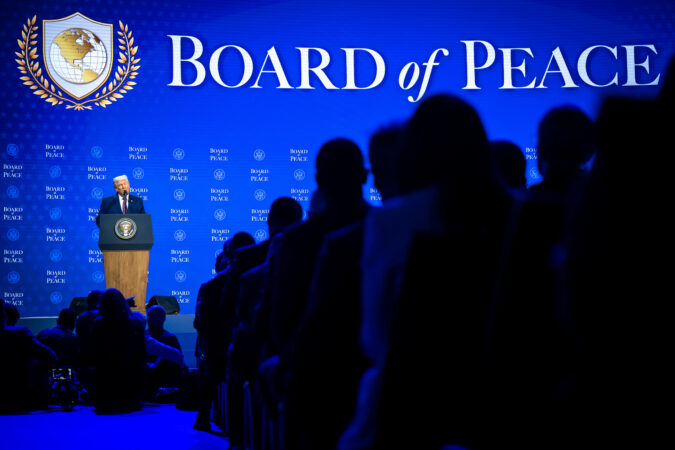
“Every dollar spent is an investment in stability and the hope of new and harmonious [region],” Trump said. He added, “The Board of Peace is showing how a better future can be built right here in this room.”
Trump also announced the U.S. was pledging $10 billion for the board but didn’t specify what the money will be used for. It also was not clear where the U.S. money would come from — a sizable pledge that would need to be authorized by Congress.
The board was initiated as part of Trump’s 20-point plan to end the conflict in Gaza. But since the October ceasefire, Trump’s vision for the board has morphed and he wants it to have an even more ambitious remit — one that will not only complete the Herculean task of bringing lasting peace between Israel and Hamas but also help resolve conflicts around the globe.
But the Gaza ceasefire deal remains fragile, and Trump’s expanded vision for the board has triggered fears the U.S. president is looking to create a rival to the United Nations.
Trump, pushing back against the criticism, said the creation of his board would help make the U.N. viable in the future.
“Someday I won’t be here. The United Nations will be,” Trump said. “I think it is going to be much stronger, and the Board of Peace is going to almost be looking over the United Nations and making sure it runs properly.”
Even as Trump spoke of the gathering as a triumph that would help bring a more persistent peace to the Middle East, he sent new warnings to Iran.
One aircraft carrier group is already in the region and another is on the way. Trump has warned Tehran it will face American military action if it does not denuclearize, give up ballistic missiles and halt funding to extremist proxy groups, such as Hezbollah and Hamas.
“We have to make a meaningful deal. Otherwise bad things happen,” Trump said.
Indonesia, Morocco, Kazakhstan, Kosovo, and Albania made pledges to send troops for a Gaza stabilization force, while Egypt and Jordan committed to train police.
Troops will initially be deployed to Rafah, a largely destroyed and mostly depopulated city under full Israeli control, where the U.S. administration hopes to first focus reconstruction efforts.
The countries making pledges to fund reconstruction are Kazakhstan, Azerbaijan, the United Arab Emirates, Morocco, Bahrain, Qatar, Saudi Arabia, Uzbekistan, and Kuwait, Trump said.
Maj. Gen. Jasper Jeffers, leader of the newly created international stabilization force, said plans call for 12,000 police and 20,000 soldiers for Gaza.
“With these first steps, we help bring the security that Gaza needs for a future of prosperity and enduring peace,” Jeffers said.
Some U.S. allies remain skeptical
Nearly 50 countries and the European Union sent officials to Thursday’s meeting. Germany, Italy, Norway, Switzerland, and the United Kingdom are among more than a dozen countries that have not joined the board but took part as observers.
Most countries sent high-level officials, but a few leaders — including Indonesian President Prabowo Subianto, Argentine President Javier Milei, and Hungarian President Viktor Orbán — traveled to Washington.
“Almost everybody’s accepted, and the ones that haven’t, will be,” Trump offered. ”And some are playing a little cute — it doesn’t work. You can’t play cute with me.”
Vatican Secretary of State Cardinal Pietro Parolin told reporters this week that “at the international level, it should above all be the U.N. that manages these crisis situations.” French Foreign Minister Jean-Noël Barrot said in a post on X that the European Commission should never have attended the meeting as it had no mandate to do so.
More countries are “going through the process of getting on,” in some cases, by getting approval from their legislatures, Trump told reporters later Thursday.
“I would love to have China and Russia. They’ve been invited,” Trump said. “You need both.”
Official after official used their speaking turns at the gathering to heap praise on Trump for his ability to end conflicts. Pakistani Prime Minister Shehbaz Sharif called him the “savior of South Asia,” while others said that years of foreign policy efforts by his predecessor failed to do what Trump has done in the past year.
Turkish Foreign Minister Hakan Fidan said Trump and others there deserved thanks for their collective efforts on Gaza. But Fidan, who said Turkey also was prepared to contribute troops to the stabilization force, cautioned that the situation remains precarious.
“The humanitarian situation remains fragile and ceasefire violations continue to occur,” Fidan said. “A prompt, coordinated and effective response is therefore essential.”
Questions about disarming Hamas
Central to Thursday’s discussions was assembling an international stabilization force to keep security and ensure the disarming of the militant Hamas group, a key demand of Israel and a cornerstone of the ceasefire deal.
Hamas has provided little confidence that it is willing to move forward on disarmament. The administration is “under no illusions on the challenges regarding demilitarization” but has been encouraged by what mediators have reported back, according to a U.S. official who was not authorized to comment publicly and spoke on condition of anonymity.
Israeli Prime Minister Benjamin Netanyahu, speaking at a dusty army base in southern Israel, repeated his pledge that “there will be no reconstruction” of Gaza before demilitarization. His foreign minister, Gideon Saar, said during Thursday’s gathering that “there must be a fundamental deradicalization process.”
Trump said Hamas has promised to disarm and would be met “very harshly” if it fails to do so. But he gave few details on how the difficult task would be carried out.
Secretary of State Marco Rubio acknowledged that there is a “long ways to go” in Gaza.
“There’s a lot of work that remains that will require the contribution of every nation state represented here today,” Rubio said.
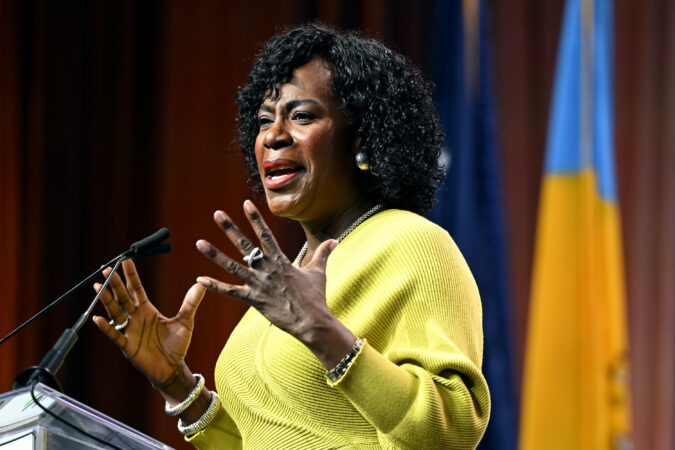
Mayor Cherelle L. Parker’s administration last August told the U.S. Department of Justice that Philadelphia remains a “welcoming city” for immigrants and that it had no plans to change the policies the Trump administration has said make it a “sanctuary city,” according to a letter obtained by The Inquirer through an open-records request.
“To be clear, the City of Philadelphia is firmly committed to supporting our immigrant communities and remaining a welcoming city,” City Solicitor Renee Garcia wrote in the Aug. 25, 2025, letter. “At the same time, the City does not maintain any policies or practices that violate federal immigration laws or obstruct federal immigration enforcement.”
Garcia sent the letter last summer in response to a demand from U.S. Attorney General Pam Bondi that Philadelphia end its so-called sanctuary city policies, which prohibit the city from assisting some federal immigration tactics. Bondi sent similar requests to other jurisdictions that President Donald Trump’s administration contends illegally obstruct immigration enforcement, threatening to withhold federal funds and potentially charge local officials with crimes.
Although some other cities quickly publicized their responses to Bondi, Parker’s administration fought to keep Garcia’s letter secret for months and initially denied a records request submitted by The Inquirer under Pennsylvania’s Right-To-Know Law.
The city released the letter this week after The Inquirer appealed to the Pennsylvania Office of Open Records, which ruled that the Parker administration’s grounds for withholding it were invalid.
The letter largely mirrors Parker’s public talking points about immigration policy, raising questions about why her administration sought to keep it confidential.
But the administration’s opaque handling of the letter keeps with the approach Parker has taken to immigration issues since Trump returned to office 13 months ago. Parker has vowed not to change immigrant-friendly policies enacted by past mayors, while avoiding confrontation with the federal government in a strategy aimed at keeping Philadelphia out of the president’s crosshairs as he pursues a nationwide deportation campaign.
Although U.S. Immigration and Customs Enforcement officers operate in the city, Philadelphia has not seen a surge in federal agents like the ones Trump sent to Minneapolis and other jurisdictions.
A spokesperson for the Justice Department did not respond to a request for comment.
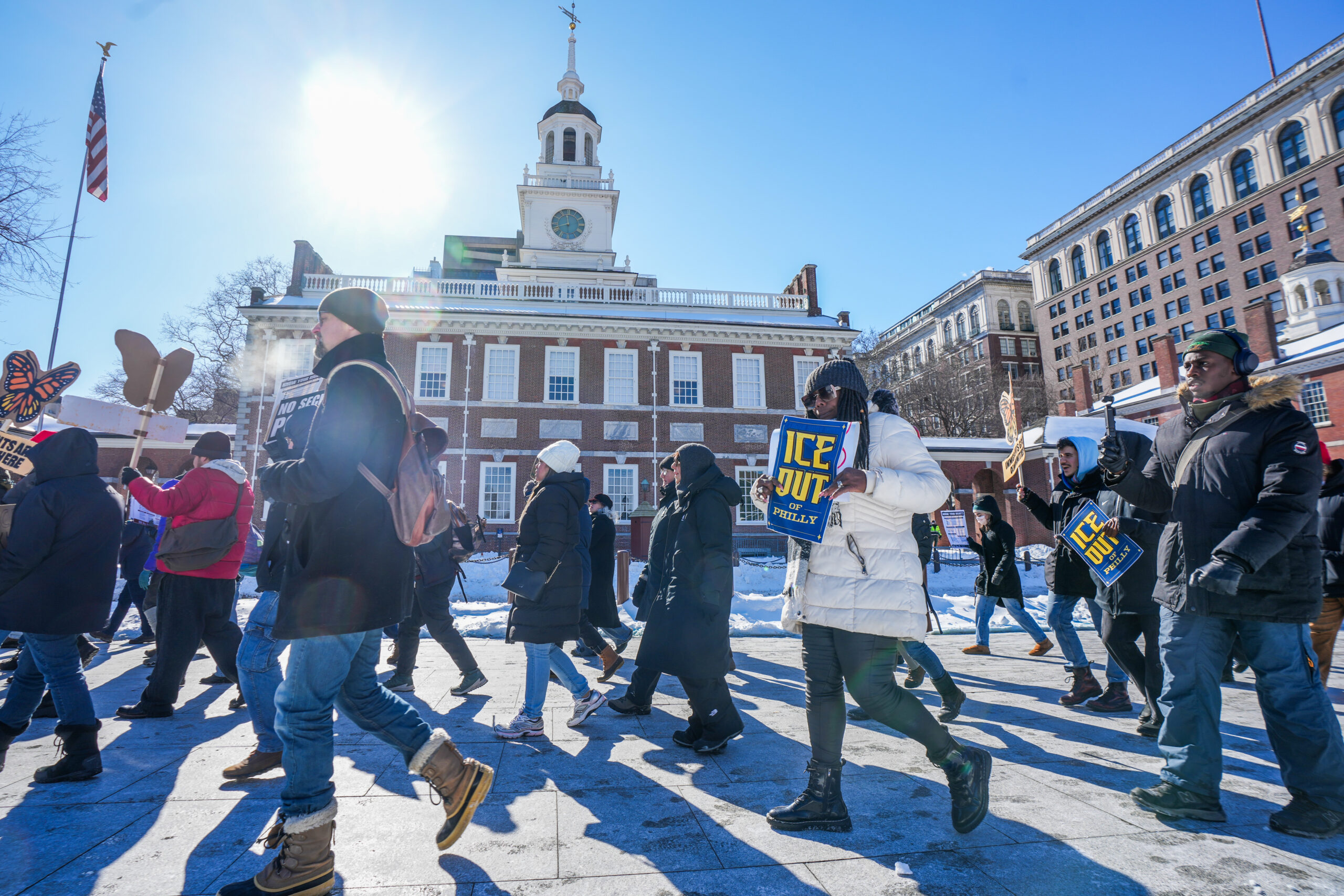
Immigrant advocates have called on Parker to take a more aggressive stand against Trump, and City Council may soon force the conversation. Councilmembers Rue Landau and Kendra Brooks have proposed a package of bills aimed at further constricting ICE operations in the city, including a proposal to ban law enforcement officers from wearing masks. The bills will likely advance this spring.
Advocates and protesters call for ICE to get out of Philadelphia in Center City on January 27, 2026.
Parker’s delicate handling of immigration issues stands in contrast to her aggressive response to the Trump administration’s removal last month of exhibits related to slavery at the President’s House Site on Independence Mall.
The city sued to have the panels restored almost immediately after they were taken down. After a federal judge sided with the Parker administration, National Park Service employees on Thursday restored the panels to the exhibit in a notable win for the mayor.
Bondi’s letter, which was addressed to Parker, demanded the city produce a plan to eliminate its “sanctuary” policies or face consequences, including the potential loss of federal funds.
“Individuals operating under the color of law, using their official position to obstruct federal immigration enforcement efforts and facilitating or inducing illegal immigration may be subject to criminal charges,” Bondi wrote in the letter, which is dated Aug. 13. “You are hereby notified that your jurisdiction has been identified as one that engages in sanctuary policies and practices that thwart federal immigration enforcement to the detriment of the interests of the United States. This ends now.”
“Sanctuary city” is not a legal term, but Philadelphia’s policies are in line with how the phrase is typically usedto describe jurisdictions that decline to assist ICE.
Immigrant advocates have in recent years shifted to using the label “welcoming city,” in part because calling any place a “sanctuary” is misleading when ICE can still operate throughout the country. The newer term is also useful for local officials hoping to evade Trump’s wrath, as it allows them to avoid the politically hazardous “sanctuary city” label.
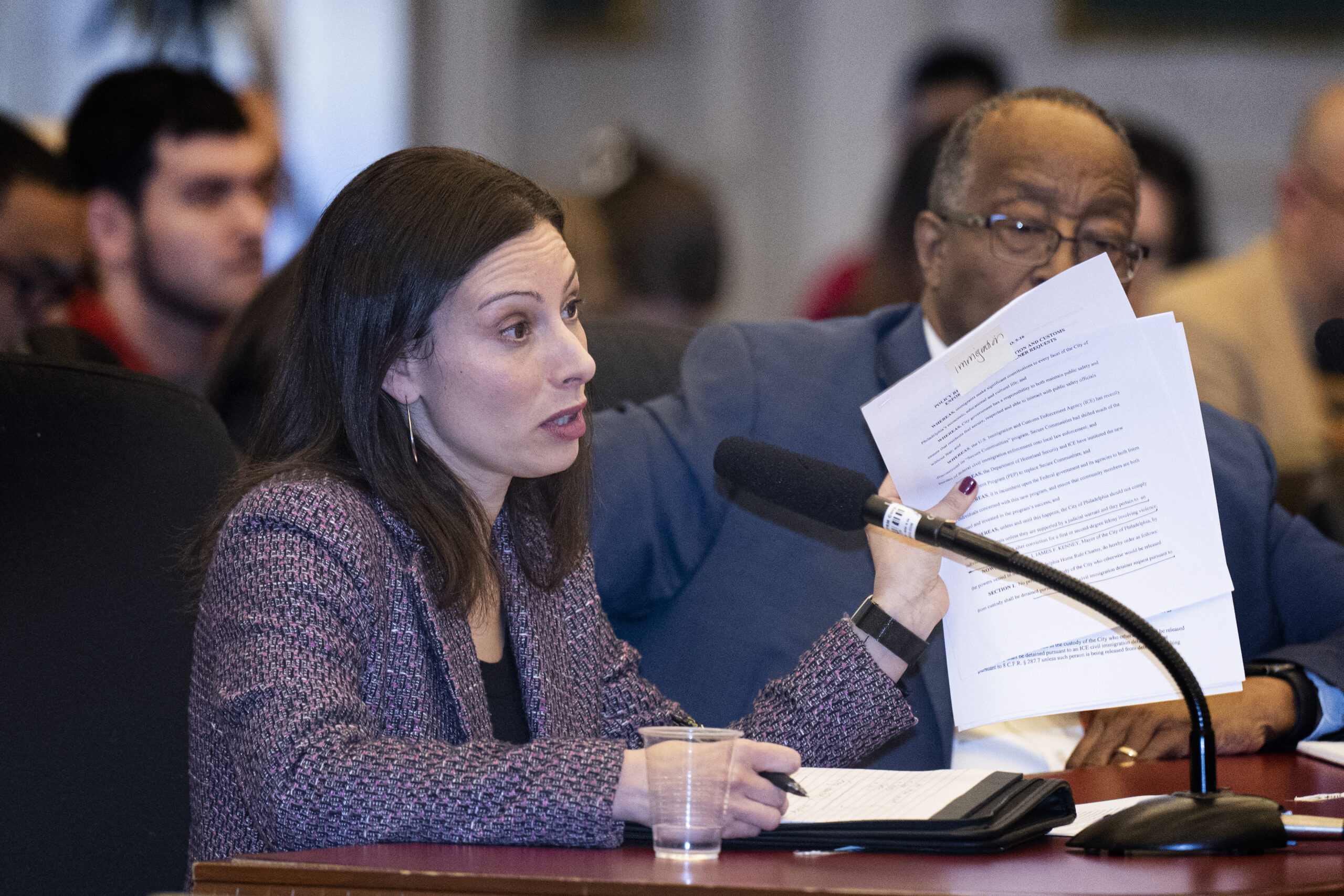
Philly’s most notable immigration policy is a 2016 executive order signed by then-Mayor Jim Kenney that prohibits city jails from honoring ICE detainer requests, in which ICE agents ask local prisons to extend inmates’ time behind bars to facilitate their transfer into federal custody. The city also prohibits its police officers from inquiring about immigration status when it is not necessary to enforce local law.
Renee Garcia, Philadelphia City Solicitor speaks before City Council on Jan 22, 2025.
Garcia wrote in the August letter that Kenney’s order “was not designed to obstruct federal immigration laws, but rather to clarify the respective roles of the Police Department and the Department of Prisons in their interactions with the Department of Homeland Security when immigrants are in City custody.” The city, she wrote, honors ICE requests when they are accompanied by judicial warrants.
Immigration enforcement is a federal responsibility, and — in a case centered on Kenney’s order — the Philadelphia-based U.S. Court of Appeals for the Third Circuit ruled in 2019 that cities do not have to assist ICE.
The court, Garcia wrote, “held that the federal government could not coerce Philadelphia into performing immigration tasks under threat of federal repercussions, including the loss of federal funds.”
City loses fight over records
In Pennsylvania, all government records are considered public unless they are specifically exempted from disclosure under the Right-To-Know Law. In justifying its attempt to prevent the city’s response to the Trump administration from becoming public, the Parker administration cited two exemptions that had little to do with the circumstances surrounding Garcia’s letter.
First, the administration argued that the letter was protected by the work product doctrine, which prevents attorneys’ legal work and conclusions from being shared with opposing parties. Given that the letter had already been sent to the federal government — the city’s opponent in any potential litigation — the doctrine “has been effectively waived,” Magdalene C. Zeppos-Brown, deputy chief counsel in the Pennsylvania Office of Open Records, wrote in her decision in favor of The Inquirer.
“Despite the [city’s] argument, the Bondi Letter clearly establishes that the Department of Justice is a potential adversary in anticipated litigation,” Zeppos-Brown wrote.
Second, the city argued that the records were exempted from disclosure under the Right-To-Know Law because they were related to a noncriminal investigation. The law, however, prevents disclosure of records related to Pennsylvania government agencies’ own investigations — not of records related to a federal investigation that happen to be in the possession of a local agency.
“Notably, the [city] acknowledges that the investigation at issue was conducted by the DOJ, a federal agency, rather than the [city] itself,” Zeppos-Brown wrote. “Since the DOJ is a federal agency, the noncriminal investigation exemption would not apply.”
Garcia’s office declined to appeal the decision, which would have required the city to file a petition in Common Pleas Court.
“As we stated, the City of Philadelphia is firmly committed to supporting our immigrant communities as a Welcoming City,” Garcia said in a statement Wednesday after the court instructed the city to release the letter. “At the same time, we have a long-standing collaborative relationship with federal, state, and local partners to protect the health and safety of Philadelphia, and we remain [in] compliance with federal immigration laws.”
Staff writers Anna Orso and Jeff Gammage contributed to this article.
The Department of Homeland Security issued a memo Wednesday stating that federal immigration agents should arrest refugees who have not yet obtained a green card and detain them indefinitely for rescreening — a policy shift that upends decades of protections and puts tens of thousands of people who entered during the Biden administration at risk.
The new policy rescinds a 2010 memo that said failing to apply for status as a lawful permanent resident within a year of living in the United States is not a basis for detaining refugees who entered the country legally. Two Trump administration officials wrote in the new directive that the previous guidance was incomplete and that the law requires DHS to detain and subject those refugees to a new set of interviews while in detention.
The memo appeared in a court filing one day before a scheduled hearing in Minnesota federal court, where a judge temporarily blocked U.S. Immigration and Customs Enforcement in late January from detaining 5,600 refugees in the state after several organizations sued. Immigration officers arrested dozens of resettled people from countries including Somalia, Ecuador, and Venezuela for further questioning as part of an enforcement surge dubbed Operation PARRIS that the Trump administration has said was aimed at combating fraud. Immigration lawyers say many were quickly transported to Texas detention centers and later released without their identity documents.
The International Refugee Assistance Project, one of the lead counsels for the plaintiffs in the lawsuit, is asking a judge to declare the newrefugee detention policy unlawful to prevent more refugees in Minnesota from being arrested.
“I am concerned that the Feb. 18 memo and the indiscriminate detention of refugees in Minnesota are the opening salvos in an attack on refugees resettled all over the United States,” said Laurie Ball Cooper,the organization’s vice president for U.S. legal programs.
Refugee resettlement groups across the country see the Minnesota operation as a precursor to an expected shift in refugee policy that could undermine the nation’s half-century-old promise to offer safe harbor tothe world’s most persecuted.
“This memo, drafted in secret and without coordination with agencies working directly with refugees, represents an unprecedented and unnecessary breach of trust,” said Beth Oppenheim, chief executive of HIAS, one of the oldest refugee agencies in the country and the world. “We have both a moral and a legal obligation to demand that DHS immediately rescind this action.”
A spokesperson for U.S. Citizenship and Immigration Services said the memo directs agencies to implement the plain language of “long established immigration law.”
“This is not novel or discretionary; it is a clear requirement in law,” the spokesperson said in a statement. “The alternative would be to allow fugitive aliens to run rampant through our country with zero oversight. We refuse to let that happen.”
Refugees, unless charged with crimes, are not fugitives, and are invited to resettle legally in the U.S. after being vetted abroad.
President Donald Trump suspended all refugee admissions on his first day in office, including thoseinvolving people who had already been approved to come to the U.S. His administration later reopened the program to white South Africans, who he said face race-based persecution in their home country, though they had rarely qualified before for refugee status in the U.S. or any other country.
More than 200,000 refugees entered the U.S. during the Biden administration and most had waited years to be admitted, according to federal data. Some of those new arrivals have already received green cards, but advocates estimate about 100,000 refugees have not and could be subject to detention under the new policy. Most entered assuming they were protected the moment they stepped on U.S. soil, according to refugee experts and attorneys. Refugees are permitted to apply to become permanent residents after one year of physical presence in the country after their arrival date.
But the Trump administration is recasting refugee status as conditional instead of permanent — a major change in how refugees have historically been regarded. The memo said refugees who haven’t adjusted their status must endure a second round of “congressionally mandated” vetting to screen for public safety, fraud, and national security risks.
“This requires DHS to take the affirmative actions of locating, arresting, and taking the alien into custody,” states the memo, signed by acting ICE director Todd M. Lyons and U.S. Citizenship and Immigration Services Director Joseph Edlow.
DHS based its policy on a section of the Immigration and Nationality Act that says refugees who don’t apply for a green card after a year must return to DHS “custody.” It voids previous guidance indicating that a failure to adjust was not a “proper basis” for removal or detention and if any unadjusted refugee was arrested, they must be released within 48 hours.
There are many reasons, advocates said, for why a refugee might not apply at the one-year mark, including confusion about the process, language barriers, lost mail from changing addresses, and difficulty navigating the system.
But returning to DHS “custody”has never meant arrest and unlimited detention, attorneys said in court filings. The historical practice for USCIS was to issue notices for appointments or letters urging compliance, according to court documents in the pending lawsuit.
Ball Cooper said Congress does not demand revetting as part of the adjustment of status. The law requires the federal government to “inspect” or ask specific questions after the one-year mark, such as whether the person has been physically present in the U.S. throughout that time or whether they have already obtained lawful status through a different channel.
“None of that requires interrogating a refugee about their original claim, which they’ve already proven to the U.S. government,” Ball Cooper said.
The Trump administration also halted green-card processing months ago for scores of countries from which refugees originate, making it impossible to satisfy the requirement.
What has traditionally been treated as a paperwork issue is now a detention issue under the new guidance. Advocates call that a major escalation in the Trump administration’s targeting of legal immigrants. Changing how the law is enforced for refugees who had begun rebuilding their lives under a different set ofassumptions is unfair and disproportionately punitive, said Shawn VanDiver, a U.S. Navy veteran who founded the nonprofit organization AfghanEvac.
“It seems like they are just trying to find new and different ways to put grandma in jail,” said VanDiver. “You don’t invite people into the United States under one set of rules and start moving the goalposts after they arrive.”
ICE arrested about 100 refugees, some of whom were children, before Minnesota District Judge John Tunheim issued a temporary restraining order in response to the International Refugee Assistance Project’s lawsuit. Dozens were flown to Texas to be asked the same questions they faced during screening overseas, according to attorneys who were present during the interviews. Several of those cases involved refugees withpending green-card applications. There are no confirmed reports of DHS terminating an individual’s refugee status as a result of the operation.
Former ICE director Sarah Saldaña, who led the agency during President Barack Obama’s administration, said she could not recall a time when immigration officers had arrested refugees for failing to apply on time for a green card. She said this and other actions by the Trump administration signal that “they want to close the door on what has been the country’s welcoming nature when it comes to refugees.”
The DHS memo cited statistics from an unpublished review from USCIS’sFraud Detection and National Security Directorate that found insufficient vetting and some public safety concerns in regard to 31,000 recently admitted refugees from the Western Hemisphere. However, it’s unclear where the data came from or what conclusions the internal report reached about “known failures” in screening people from other parts of the world.
Vetting refugees from specific parts of the world, such as conflict zones, can be challenging, experts said. But the layers of screening, hours of interviews and the fact that would-be refugees can be denied at every step in the process — including the moment they arrive at a U.S. airport — have created a high bar ofscrutiny for anyone seeking refugee status.Refugees convicted of aggravated felonies can lose their status and be deported, but studies have repeatedly found — as they have with all immigrants — that refugees commit crimes at far lower rates than native-born citizens.
Meredith L.B. Owen, senior director of policy and advocacy at Refugee Council USA, said the memo directly threatens the very purpose of why the U.S. brings in refugees. Advocates expect a coming ruling from the Board of Immigration Appeals to set up the legal mechanism for the Trump administration’s broader push to deport thousands of recently admitted refugees. That could ultimately lead to refugees being sent back to the places from which they were fleeing war or political persecution, thus putting their lives in danger.
That scenario, known as refoulement, violates international law, said Owen, whose group represents all of the national resettlement agencies that provide assistance to refugees upon their arrival to the U.S.
“This administration stops at nothing to terrorize day after day after day refugee communities in Minnesota and to make sure refugee communities across the country are fearful and bracing themselves for what’s to come,” she said.
Almost a month after abruptly dismantling exhibits about slavery from the President’s House Site, National Park Service employees began reinstalling the panels late Thursday morning ahead of a court-imposed deadline.
Just before 11 a.m., four park service employees carted glass panels from a white van to a barricaded area at the site. They screwed each panel back into the bricks before cleaning the glass with rags.
The restoration is a win for the City of Philadelphia and local stakeholders who have been fighting to preserve the President’s House after President Donald Trump’s administration ordered the removal of educational panels from the exhibit on Independence Mall last month, censoring 400 years of history. The removal sparked weeks of community activism that turned into celebrations Thursday once the reinstallation began.
As of Thursday evening, 16 of the 34 panels had been reinstalled. A couple of bystanders clapped as the displays were put back up.
Shortly before noon, Parker arrived at the scene, taking in the newly reinstalled exhibits. She shook hands with and thanked the National Park Service employees.
“It’s our honor,” an employee told the mayor.
Parker did not take questions from the media but later issued a statement celebrating the return of the exhibits.
“We know that this is not the end of the legal road,” the mayor said. “We will handle all legal challenges that arise with the same rigor and gravity as we have done thus far.”
Michael Coard, an attorney and leader of Avenging the Ancestors Coalition, which helped steer efforts to preserve the President’s House, called Thursday’s reinstallation a “huge victory” after weeks of advocacy in court and around the site itself.
“We had people doing something at least every single day since the vandalism took place on Jan. 22, and we’ve had the attorneys in court, so it’s a great day, but the battle is not over,” Coard said.
On Wednesday, several employees from Independence National Historical Park placed metal barriers around the brick walls where panels had been displayed near the open-air exhibit’s Market Street entrance. One employee said the barriers were set up so employees could clean the area.
Prior to Thursday, exhibits were being stored in a National Park Service storage facility adjacent to the National Constitution Center.
The reinstallation was a moment that Philadelphians who had been tirelessly fighting to protect the President’s House had been waiting for.
On Jan. 22, after park employees took crowbars and wrenches to the President’s House, which memorializes the nine people George Washington enslaved at his Philadelphia residence, the City of Philadelphia filed suit against members of the Trump administration. Community stakeholders took action to preserve the memory of the site.
“It’s important to hang on to hope,” said Bill Rooney, 68, of Chestnut Hill. “The people who lived here — sometimes that’s all they had to hold on to. We need to do that, too, and [make] sure that the whole history is told.”
Rooney, a certified tour guide, added: “History matters. All of history matters.”
Rufe, a George W. Bush appointee, issued a blistering 40-page opinion in which she compared the federal government’s arguments justifying the removal of the interpretive panels to the dystopian Ministry of Truth from George Orwell’s novel 1984.
The opinion said it was urgent that the full exhibit be shown to the public. When the federal government did not comply 48 hours later, the judge set a deadline of 5 p.m. Friday for the Department of the Interior and the National Park Service to fulfill her order.
The Trump administration asked Rufe on Wednesday night for a stay on the injunction while its appeal is pending in the U.S. Court of Appeals for the Third Circuit.
The motion says enforcement of the order makes Philadelphia a “backseat driver holding veto power” in all decisions related to Independence National Historical Park. By forcing the government to restore the slavery panels, the court “compels the Government to convey a message that it has chosen not to convey,” the motion says.
The city filed a brief Thursday opposing the stay, saying that the federal government did not add anything new to its argument. The idea that the restoration would cause harm was undermined by the fact that the exhibits “stood for 15 years without alteration, conveying the ‘whole, complicated truth,’” the city said. The filing does not acknowledge that some panels had been reinstalled.
Rufe had not ruled on the stay as of Thursday afternoon. But neither the federal government’s appeal to a higher court nor the request for a stay pauses Rufe’s order.
Complying with the order could complicate the federal agencies’ argument that restoring the panel inflicts irreparable harm because they have “turned around and done what they said they couldn’t do,” said Marsha Levick, a visiting chair at Temple University’s Beasley School of Law.
Attorney Michael Coard, leader of the Avenging the Ancestors Coalition speaks during a rally at the President’s House in Independence National Historical Park Thursday, Feb, 19, 2026, after some of the slavery exhibits were returned.
The people behind the fight to restore the President’s House Site were lauded at a late-afternoon rally. Organizers had called the 120-person event after the barricades were installed Wednesday, which they said prevented people from visiting the memorial. Instead, the event Thursday — set to Kool & the Gang’s “Celebration” and “Fight the Power” by Public Enemy — was celebratory.
“We’re still fighting. The battle is still being fought in court,” said coalition member Mijuel Johnson. “But today — this greatest day, this day of pride — we got our panels put back up.”
Coard said Thursday’s development epitomizes the group’s name. He said his coalition’s advocacy for the President’s House stands on the shoulders of activism by ancestors during the Civil Rights Movement.
“We took that baton from them and we ran with it,” Coard said. “And the interesting thing about taking that baton is that this track was not as difficult for us. They had more obstacles on their track. We have fewer because they cleared it for us.”
WASHINGTON — The U.S. Commission of Fine Arts, a panel made up of President Donald Trump’s appointees, on Thursday approved his proposal to build a ballroom larger than the White House itself where the East Wing once stood.
The seven-member panel is one of two federal agencies that must approve Trump’s plans for the ballroom. The National Capital Planning Commission, which has jurisdiction over construction and major renovation to government buildings in the region, is also reviewing the project.
Members of the fine arts commission originally had been scheduled to discuss and vote on the design concept after a follow-up presentation by the architect, and had planned to vote on final approval at next month’s meeting. But after the 6-0 vote on the design, the panel’s chairman, Rodney Mims Cook Jr., unexpectedly made another motion to vote on final approval.
Six of the seven commissioners — all appointed by the Republican president in January — voted once more in favor. Commissioner James McCrery did not participate in the discussion or the votes because he was the initial architect on the project before Trump replaced him.
The ballroom will be built on the site of the former East Wing, which Trump had demolished in October with little public notice. That drew an outcry from some lawmakers, historians, and preservationists who argued that the president should not have taken that step until the two federal agencies and Congress had reviewed and approved the project, and the public had a chance to provide comment.
The 90,000-square-foot ballroom would be nearly twice the size of the White House, which is 55,000-square-feet, and Trump has said it would accommodate about 1,000 people. The East Room, the largest room in the White House, can fit just over 200 people at most.
Commissioners offered mostly complimentary comments before the votes.
Cook echoed one of Trump’s main arguments for adding a larger entertaining space to the White House: It would end the long-standing practice of erecting temporary structures on the South Lawn that Trump describes as tents to host visiting dignitaries for state dinners and other functions.
“Our sitting president has actually designed a very beautiful structure and, as was said, in the comments earlier, the United States just should not be entertaining the world in tents,” Cook said.
The panel received mainly negative comments from the public
Members of the public were asked to submit written comment by a Wednesday afternoon deadline. Thomas Luebke, the panel’s secretary, said “over 99%” of the more than 2,000 messages it received in the past week from around the country were in opposition to the project.
Luebke tried to summarize the comments for the commissioners.
Some comments cited concerns about Trump’s decision to unilaterally tear down the East Wing, as well as the lack of transparency about who is paying for the ballroom or how contracts were awarded, Luebke said. Comments in support referenced concerns for the U.S. image on the world stage and the need for a larger entertaining space at the White House.
Trump has defended the ballroom in a recent series of social media posts that included drawings of the building. He said in one January post that most of the material needed to build it had been ordered “and there is no practical or reasonable way to go back. IT IS TOO LATE!”
The commission met Thursday over Zoom and heard from Shalom Baranes, the lead architect, and Rick Parisi, the landscape architect. Both described a series of images and sketches of the ballroom and the grounds as they would appear after the project is completed.
Trump has said the ballroom would cost about $400 million and be paid for with private donations. To date, the White House has only released an incomplete list of donors.
A lawsuit against the project is still pending
The National Trust for Historic Preservation has sued in federal court to halt construction. A ruling in the case is pending.
Carol Quillen, president and CEO of the privately funded nonprofit organization, said the group was “puzzled” by both votes because the final plans had not been presented or reviewed. But with the votes, she said the commission had “bypassed its obligation to provide serious design review and consider the views of the American people,” including all of the negative public comments.
Quillen said that while her organization has always acknowledged the usefulness of a larger White House meeting space, “we remain deeply concerned that the size, location, and massing of this proposal will overwhelm the carefully balanced classical design of the White House, a symbol of our democratic republic.”
At the commission’s January meeting, some members had questioned Baranes, Trump’s architect, about the “immense” design and scale of the project even as they broadly endorsed Trump’s vision.
On Thursday, Cook and other commissioners complimented Baranes for updating the building’s design to remove a large pediment, a triangular structure above the south portico, that they had had objected to because of its size.
“I think taking the pediment off the south side was a really good move,” said commissioner Mary Anne Carter, who also is head of the National Endowment for the Arts. “I think that really helps to restore some balance and make it look, just more aligned” with the White House.
Baranes said it was the biggest design change and that Trump had “agreed to do that.”
Trump quietly named his final two commissioners to the panel in late January. Pamela Hughes Patenaude has a background in housing policy and disaster recovery, and was as a deputy secretary at the Department of Housing and Urban Development in Trump’s first term. Chamberlain Harris is a special assistant to the president and deputy director of Oval Office operations.
The ballroom project is scheduled for additional discussion at a March 5 meeting of the National Capital Planning Commission, which is led by a top White House aide. This panel heard an initial presentation about the project in January.
At the meeting, the White House defended tearing down the East Wing, saying that preserving it was not an option due to structural issues, past decay and other concerns. Josh Fisher, director of the White House Office of Administration, cited an unstable colonnade, water leakage, mold contamination and other problems.
The Upper Darby Township Council passed a resolution Wednesday to restrict cooperation with U.S. Immigration and Customs Enforcement in response to growing concerns about the agency’s activities in the diverse township.
The 11-member council, made up entirely of Democrats, voted unanimously to pass a resolution saying the town will not use its resources to assist ICE with non-criminal immigration enforcement. But the largely symbolic resolution nearly mirrors the municipality’s existing guidelines, leading to criticism that it does not go far enough.
The resolution’s passage comes after Parady La, an Upper Darby resident struggling with addiction, died last month in a hospital while in ICE’s custody. It also follows the chaotic scenes in Minneapolis, where federal agents fatally shot Renee Good and Alex Pretti last month as President Donald Trump’s administration targeted the city with a massive immigration enforcement operation.
Those events have fueled anxiety in Upper Darby, where nearly a quarter of the population is foreign-born, compared with 15% in Philadelphia. Armed ICE agents wearing masks have become a familiar sight in the township, prompting residents to question why their community is suddenly under pressure, including high school students who held a walkout earlier this month.
Council President Marion Minick called the resolutiona chance to show immigrants in the community “they are not alone.”
“We can demonstrate through our votes and through our voices that Upper Darby Council will do everything within our legislative power to shield our residents and their families from this climate of intimidation,” he said.
The council’s resolution comes as localgovernmentsacross the country and in the Philadelphia area try to curb ICE’s impact on their residents. Last month, Haverford passed a similar measure and Bucks County ended its agreement with the agency that allowed sheriff’s deputies to act as immigration enforcement.
Council member Kyle McIntyre, a progressive community organizer who began his term last month, emphasized that the resolution is “just the start.”
“There is so much more than we can do, and we will be doing, and I make that solemn promise to the community right now,” he said before the vote.
“If we don’t do more, hold us accountable,” he added.
Kyle McIntyre, an Upper Darby Township council member, listens to residents’ comments during a township meeting on Wednesday, Jan. 21, at the Upper Darby Municipal Building in Upper Darby, Pa.
Township solicitor Mike Clarke said that police will cooperate with ICE if the agency has a criminal warrant signed by a judge.
“Local law enforcement is not supposed to be in the immigration enforcement business, and essentially that’s what this resolution is saying … but if it’s a criminal warrant, they will be involved,” Clarke said.
A list of frequently asked questions about ICE on the township’s website already stated that Upper Darby does not participate in civil immigration enforcement or ask residents their immigration status, though it does cooperate with lawfully issued criminal warrants and court orders. Township spokesperson Rob Ellis confirmed that the resolution reaffirms the town’s existing internal policy.
The lack of cooperation seems to be going both ways.
Upper Darby Mayor Ed Brown said earlier this month that ICE would no longer communicate with local police to tell them when agents are operating in the township, calling the change “scary.” ICE did not immediately respond to a request for clarity on Thursday.
Some residents at the meeting expressed concern about the reaffirmed policy getting in the way of public safety, and McIntyre later said the policy ensures anyone in Upper Darby can feel comfortable reporting crimes to the police. He said “anybody that commits a crime in Upper Darby Township will be held accountable,” regardless of immigration status.
Jennifer Hallam, who said she has worked with immigrants in Upper Darby for almost a decade, urged the council to postpone its vote and instead pursue legislation that has more teeth.
“The current resolution really just preserves the status quo,” she said.
She called for a resolution that would restrict ICE from municipal property without judicial warrants, prohibit the collection and sharing of immigration status among municipal employees, and prohibit ICE from wearing masks. Philadelphia lawmakers are attempting to ban ICE from wearing masks, though experts are split on whether the measure would be legally sound.
McIntyre said in an interview that Wednesday’s resolution puts the council’s values down on paper and provides clarity to the community, but he acknowledged that a resolution is not enforceable.
A death in ICE custody close to home
The community has been grappling with the death of La, a 46-year-old Cambodian immigrant and Upper Darby resident who, according to his widow, Meghan Morgan, struggled with addiction. La came the United States in 1981 as a refugee around the age of 2. He became a lawful permanent resident a year later but lost his legal status after committing a series of crimes over two decades, ICE said.
ICE said agents arrested La outside his home last month before he received treatment for severe withdrawal in a Philadelphia detention center. He was admitted to the hospital in critical condition, where his condition worsened and he died, the agency said.
Morgan and La’s daughter Jazmine La said they believe he was not given proper medical treatment and the Pennsylvania ACLU filed a Freedom of Information Act request surrounding his detention and death.
McIntyre last month called on Delaware County District Attorney Tanner Rouse and Philadelphia District Attorney Larry Krasner to investigate La’s death.
Rouse said at the time that Delaware County law enforcement was not involved or aware of La’s detainment when it happened, and that his office would investigate it. He said Thursday that surveillance footage showed La was detained “without violence” but that his death in Philadelphia should be addressed by “investigating authorities” in the city.
Krasner’s office declined to comment, saying it was a federal matter.
Staff writer Jeff Gammage contributed to this article.
A three-year ban on puppy breeding in Philadelphia is likely to become law after City Council members on Thursday passed a bill to relieve overcrowded animal shelters.
Tightening the leash on backyard breeders: The bill was authored by Councilmember Cindy Bass, a Democrat who represents parts of North and Northwest Philadelphia.
Bass was sick and absent from Council on Thursday, but she has previously said that her bill is aimed at limiting people from breeding more puppies than they can sell.
“Every litter means more dogs in our shelter, more cost for taxpayers, and more suffering that we can prevent,” Bass said last year. “This isn’t about punishment; it’s about compassion and responsibility.”
Under the bill, it would be illegal to sell puppies or post ads to sell them within city limits. Breeders who violate the moratorium could face a $1,000 fine, with the proceeds going to the city’s Animal Care and Control Team, also known as ACCT Philly. The animal control agency would also enforce the ban.
Sammi Craven, a local animal welfare advocate, testified Thursday about overcrowding at ACCT Philly’s North Philadelphia shelter. She named the dogs that were recently euthanized or are scheduled to be put down: Stella, Cheese Burrito, Luna, and Muffin, among others.
“Philadelphia’s current animal welfare policy is ineffective,” Craven said, “and infrastructure and prevention have not kept pace with intake.”
In this 2022 file photo, Brian Martin, 31, and Vanessa Green, 29, look at their new dog they plan to adopt while Green holds Autumn, 1, at ACCT Philly, which was hosting a pet adoption event.
Critics of the moratorium say it will be challenging to enforce and could harm smaller, responsible breeders as opposed to those already operating illegally.
Charley Hall, a government relations official with the American Kennel Club, called on Council to hold the bill and establish a working group to draft new regulations.
“Working together, we can stop the flow of irresponsible breeders and improve animal welfare and fewer dogs ending up in Philadelphia’s shelters,” Hall said. “The question is how to achieve that goal in a way that is effective, fair, and legally sound.”
What else happened today?
Resign to run gets amended: City Councilmember Isaiah Thomas has been trying for more than a year to pass legislation amending a rule that requires city employees quit their jobs to run for higher office.
He’s attempting to amend the rule so that city officeholders can keep their jobs only if they are running for a state or federal office. That means Council members running for mayor would still have to give up their seats.
Councilmember Isaiah Thomas makes a statement at the start of a hearing last week.
But Thomas has run into roadblocks, including opposition from the city’s Board of Ethics, which asked him to make changes to the legislation in December, just before it appeared poised to pass.
On Thursday, he introduced an amendment that made a series of tweaks, including clarifying that sitting city officeholders may only run for one public office in any election.
Jordana Greenwald, general counsel for the city’s Board of Ethics, testified that the board still has concerns and requested more amendments, including prohibiting certain forms of politicking in the workplace.
She also said the legislation should clarify that the mayor can’t run for another office while serving as the city’s chief executive, a rule that is already enumerated elsewhere in the city charter.
However, making additional amendments could require Thomas re the legislation entirely. He said he would prefer for the bill to be called up for a final vote next week.
Amending the resign-to-run rule requires changing the city’s Home Rule Charter, meaning voters would have to approve it through a ballot question. Voters have rejected earlier attempts to repeal resign-to-run.
Codifying the youth watchdog: Council members also approved legislation to make the city’s Office of the Youth Ombudsperson permanent.
The office was created through an executive order signed by former Mayor Jim Kenney and is responsible for monitoring child welfare, juvenile justice, and behavioral health residential placement facilities in the city.
Making the office permanent also requires an amending the charter. A ballot question is likely to appear in the May primary election.
Quote of the week
Councilmember Jim Harrity in Council Chambers in September 2025.
That was Councilmember Jim Harrity, an Irish Catholic who in a speech Thursday honored the sacrifices made during the Muslim holy month of Ramadan.