Category: Politics

Political news and coverage

  • Philly lawmakers want to restrict cooperation with ICE and ban agents from wearing masks

    Philly lawmakers want to restrict cooperation with ICE and ban agents from wearing masks

    Philadelphia lawmakers are set to consider legislation that would make it harder for ICE to operate in the city, including limiting information sharing, restricting activity on city-owned property, and prohibiting agents from concealing their identities.

    Among the package of bills set to be introduced Thursday is an ordinance that effectively makes permanent Philadelphia’s status as a so-called “sanctuary city” by barring city officials from holding undocumented immigrants at ICE’s request without a court order. Another bans discrimination based on immigration status.

    Two City Council members are expected to introduce the legislation as U.S. Immigration and Customs Enforcement is facing mounting national scrutiny over its tactics in Minneapolis, where federal agents fatally shot two U.S. citizens this month.

    Councilmembers Rue Landau, a Democrat, and Kendra Brooks, of the progressive Working Families Party, said in an interview that the violence in Minneapolis hardened their resolve to introduce legislation to protect a population that includes an estimated 76,000 undocumented immigrants in Philadelphia.

    “It’s been very disheartening and frightening to watch ICE act with such lawlessness,” Landau said. “When they rise to the level of killing innocent civilians, unprecedented murders … this is absolutely the time to stand up and act.”

    The package of a half-dozen bills is the most significant legislative effort that Council has undertaken to strengthen protections for immigrants since President Donald Trump took office last year on a promise to carry out a mass deportation campaign nationwide.
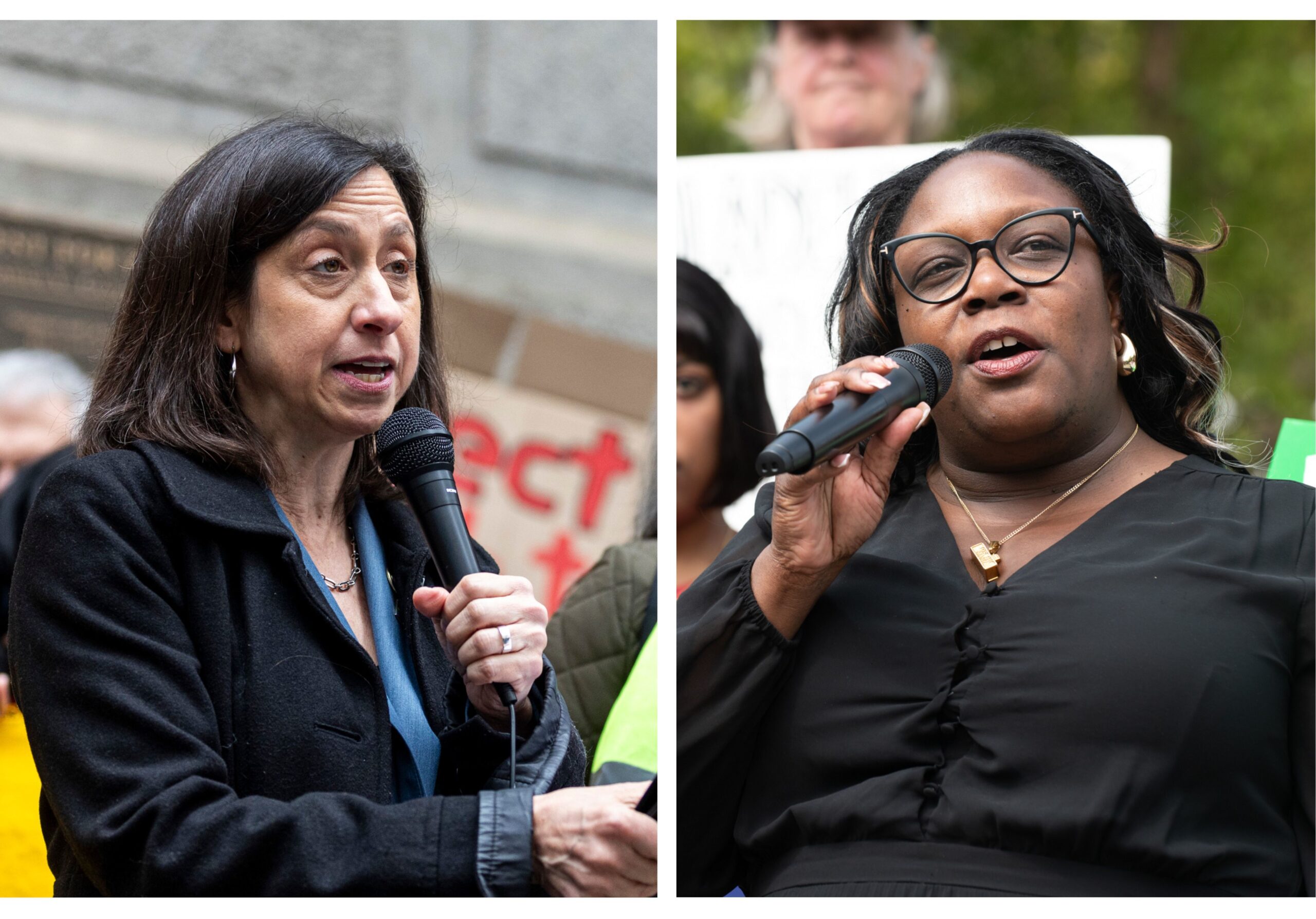
    Left: City Councilmember Rue Landau. Right: City Councilmember Kendra Brooks. Landau and Brooks are introducing legislation this week to make it harder for ICE to operate in Philadelphia, including by limiting city cooperation with the agency.

    ICE spokespeople did not immediately reply to a request for comment.

    Jasmine Rivera, executive director of the Pennsylvania Immigration Coalition, said it’s not the job nor the jurisdiction of the city to enforce federal law.

    The goal of the legislation, Rivera said, is ensuring that “not a single dime and single second of our local resources is being spent collaborating with agencies that are executing people.”

    Activists have for months urged Mayor Cherelle L. Parker to formally affirm her commitment to the city’s sanctuary status. Top city officials say an executive order signed by the former mayor to limit the city’s cooperation with ICE remains in place.

    But Parker, a centrist Democrat, has taken a quieter approach than her colleagues in Council, largely avoiding criticizing the Trump administration outwardly and saying often that she is focused on her own agenda.

    Now, the mayor could be forced to take a side. If City Council passes Landau and Brooks’ legislation this spring, Parker could either sign the bills into law, veto them, or take no action and allow them to lapse into law without her signature. She has never vetoed a bill.

    Joe Grace, a spokesperson for Parker, declined to comment on the legislation.
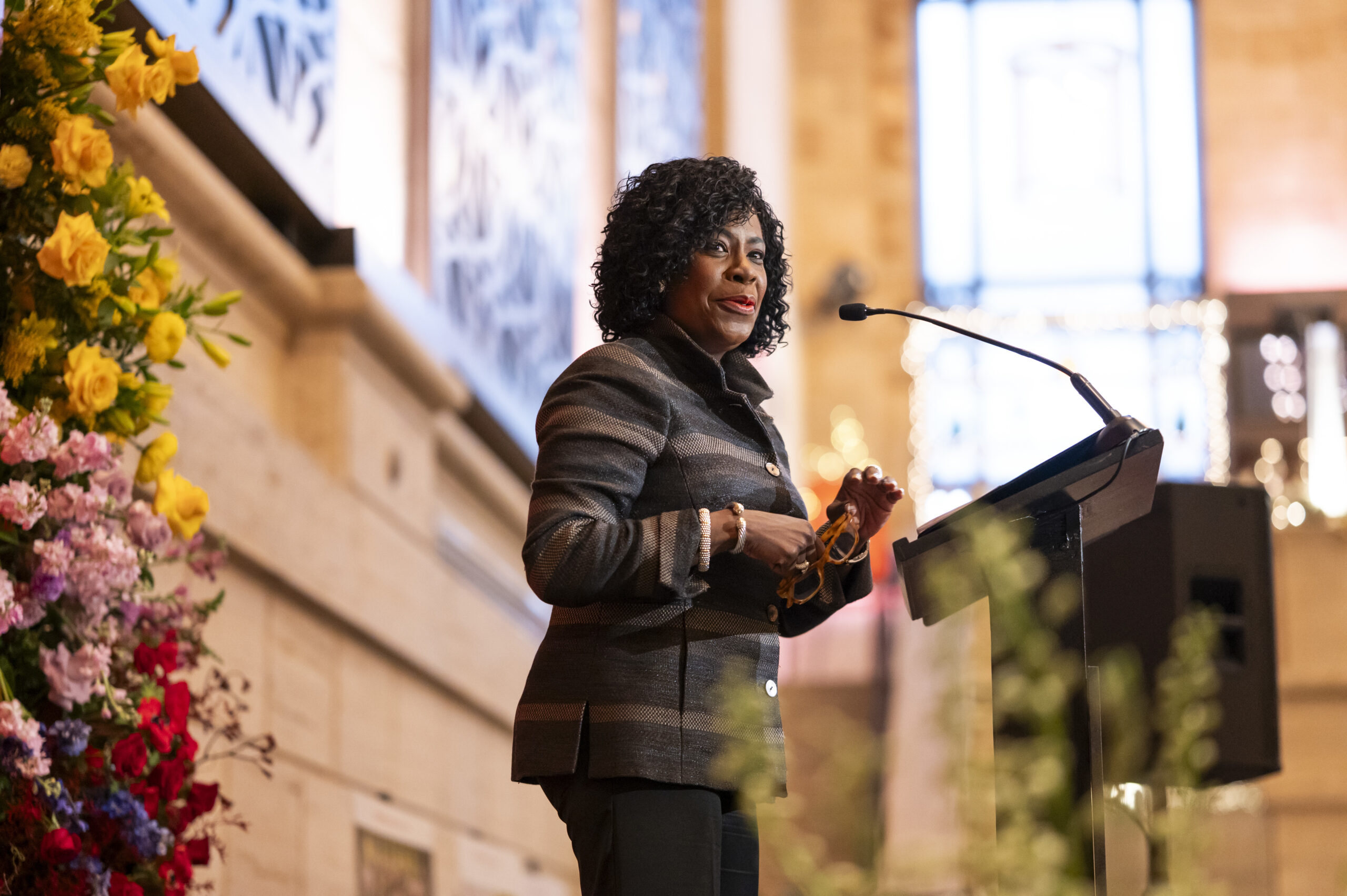
    Mayor Cherelle L. Parker speaks at a news conference earlier this month. It is unclear how she will act on upcoming legislation related to ICE operations in Philadelphia.

    It’s unclear what fate the ICE legislation could meet in Council. The 17-member body has just one Republican, but Parker holds influence with many of the Democrats in the chamber.

    City Council President Kenyatta Johnson, a Democrat who controls the flow of legislation, has not taken a position on the package proposed by Landau and Brooks.

    But he said in a statement that “Philadelphia has long positioned itself as a welcoming city that values the contributions of immigrants and strives to protect their rights and safety.”

    “I have deep concerns about federal ICE actions directed by President Donald Trump’s administration that sow fear and anxiety in immigrant communities,” Johnson said, “underscoring the belief that enforcement practices should be lawful, humane, and not undermine trust in public safety.”

    Making sanctuary status the law

    Border Patrol and ICE are both federal immigration agencies, which are legally allowed to operate in public places and subject to federal rules and regulations. Some cities and states — not including Pennsylvania and New Jersey — actively cooperate with ICE through written agreements.

    Since 2016, Philadelphia has operated under an executive order signed by former Mayor Jim Kenney, which prohibits city jails from honoring ICE “detainer requests,” in which federal agents ask the city to hold undocumented immigrants in jail for longer than they would have otherwise been in custody to facilitate their arrest by federal authorities.

    Undocumented immigrants are not shielded from federal immigration enforcement, nor from being arrested and charged by local police for local offenses.

    Some refer to the noncooperation arrangement as “sanctuary.” As the term “sanctuary cities” has become politically toxic, some local officials — including in Philadelphia — have backed away from it, instead declaring their jurisdictions to be “welcoming cities.”

    Parker administration officials have said several times over the last year that Philadelphia remains a “welcoming city.”

    Protesters march up Eighth Street, toward the immigration offices, during the Philly stands with Minneapolis Ice Out For Good protest at Philadelphia’s City Hall on Jan. 23.

    But advocates for immigrants have said they want an ironclad city policy that can’t be rescinded by a mayor.

    Landau and Brooks’ legislation would be that, codifying the executive order into law and adding new prohibitions on information sharing. The package includes legislation to:

    • Strengthen restrictions on city workers, including banning local police from carrying out federal immigration enforcement and prohibiting city workers from assisting in enforcement operations.
    • Prohibiting law enforcement officers from concealing their identities, including by wearing masks or covering up badges with identifying information.
    • Banning ICE from staging raids on city-owned property and designated community spaces such as schools, parks, libraries, and homeless shelters. (It would not apply to the Criminal Justice Center, where ICE has had a presence. The courthouse is overseen by both city and state agencies.)
    • Prohibiting city agencies and contractors from providing ICE access to data sets to assist in immigration enforcement.
    • Restricting city employees from inquiring about individuals’ immigration status unless required by a court order, or state or federal law.

    Peter Pedemonti, co-director of New Sanctuary Movement of Philadelphia, an advocacy organization that partnered with the Council members to craft the package of bills, compared ICE to an octopus that has multiple arms reaching into different facets of American life.

    The proposed legislation, he said, is a means to bind a few of those arms.

    “The whole world can see the violence and brutality,” Pedemonti said. “This is a moment where all of us need to stand up, and Philadelphia can stand up and speak out loud and clear that we don’t want ICE here to pull our families apart, the families that make Philadelphia Philadelphia.”

    An impending showdown that Parker hoped to avoid

    Homeland Security officials claim that sanctuary jurisdictions protect criminal, undocumented immigrants from facing consequences while putting U.S. citizens and law enforcement officers in peril.

    Last year, the Trump administration named Philadelphia as among the jurisdictions impeding federal immigration enforcement. The White House has said the federal government will cut off funding to sanctuary cities by Feb. 1.

    However, the president has made no explicit threat to ramp up ICE activities in Philadelphia.

    Some of Parker’s supporters say the mayor’s conflict-averse strategy has spared Philadelphia as other cities such as Washington, New York, Los Angeles, Chicago, and Minneapolis have seen National Guard troops or waves of ICE agents arrive in force.
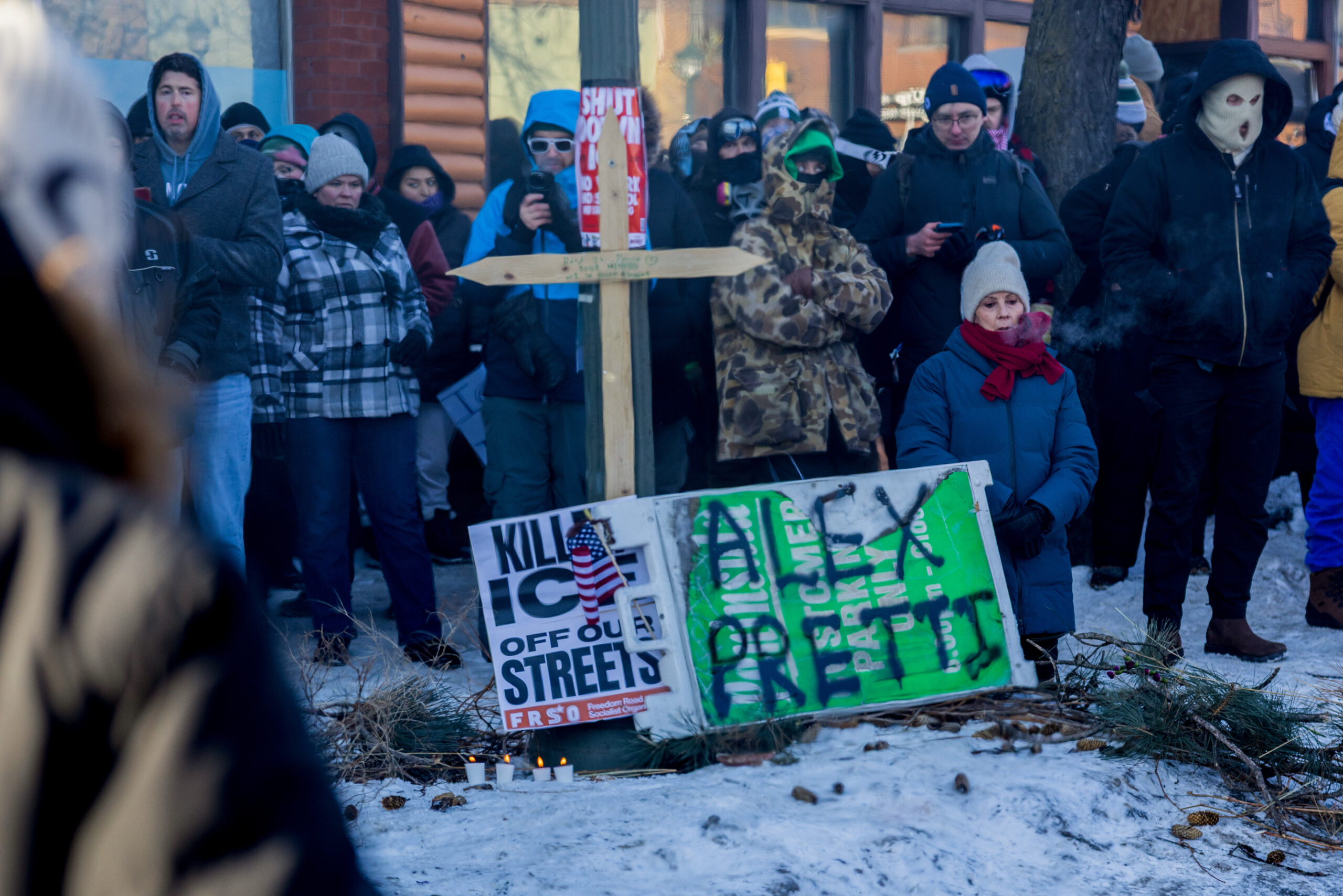
    Residents near the scene of a shooting by a federal law enforcement agent in Minneapolis on Saturday.

    Critics, including the backers of the new legislation, have for months pressed Parker to take a stronger stand.

    Brooks said she “would love to have the support of the administration.”

    “This should be something that we should be working collaboratively on,” she said. “Philadelphia residents are demanding us do something as elected officials, and this is our time to lead.”

    But Parker has not been eager to speak about Philadelphia’s immigration policies.

    For example, the city is refusing to release a September letter it sent to the U.S. Department of Justice regarding its immigration-related policies, even after the Pennsylvania Office of Open Records ruled its reasoning for keeping the document secret was invalid. The Inquirer has requested a copy of the letter under the state Right-to-Know Law.

    The new Council legislation and the increasing tension over Trump’s deportation push may force Parker to take a clearer position.

    Notably, the city sued the federal government last week over its removal of exhibits related to slavery from the President’s House at Independence National Historical Park, potentially signaling a new willingness by Parker to push back against the White House.

    But even then, Parker declined to take a jab at Trump.

    “In moments like this,” she said last week, “it requires that I be the leader that I need to be for our city, and I can’t allow my pride, ego, or emotions to dictate what my actions will be.”

  • Joanna McClinton has carefully wielded her power as Pa. House speaker. Now she’s speaking out for home care workers.

    Joanna McClinton has carefully wielded her power as Pa. House speaker. Now she’s speaking out for home care workers.

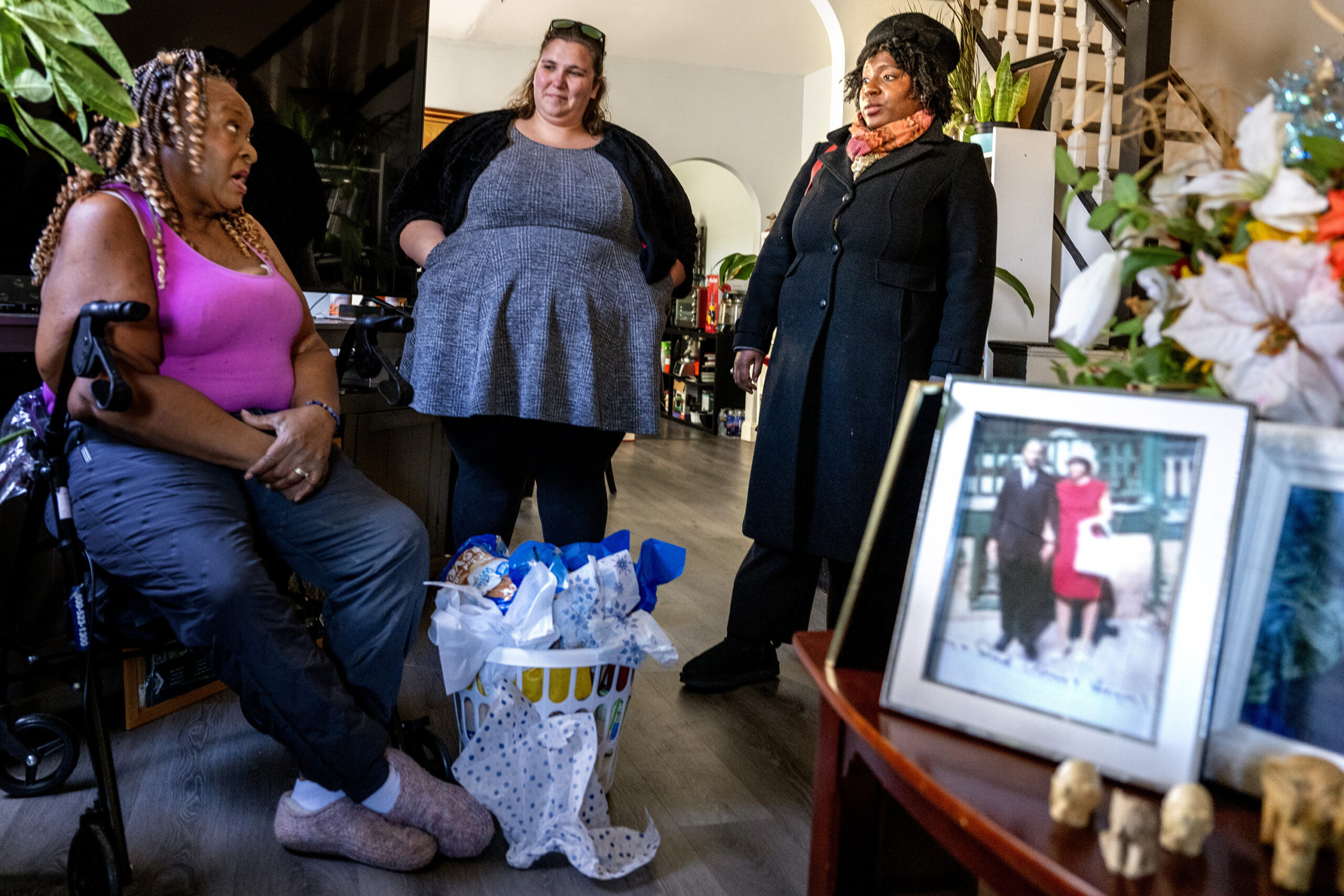
    On a below-freezing day in January, Pennsylvania House Speaker Joanna McClinton delivered food to a West Philly home just minutes from her district office and listened as Sheila Alexander discussed the patchwork of care she has created for herself.

    Alexander, 67, who struggles to get around on her own, explained that she depends on family often but uses a Medicaid-funded home health aide who helps her in the evening — especially when she needs to get up the steep stairs in her home.

    McClinton is advocating for the aides who care for Alexander — and the rest of the roughly 270,000 Pennsylvania workers who make up the home care industry — to earn a higher wage.

    Pennsylvania’s home healthcare workers are among the lowest-paid in the region at an average $16.50 per hour, resulting in what the Pennsylvania Homecare Association has called a crisis point for home care, as more and more workers leave the field and seniors struggle to find help. And it’s a crisis that may only deepen in future years, as one in three Pennsylvanians are projected to be 60 or older by 2030.

    It’s an issue that McClinton, a Philadelphia Democrat who became House speaker in 2023 when her party took a one-seat majority, has had to contend with in her own life.

    McClinton’s 78-year-old mother lost one of her favorite aides because of low pay, she said. The aide had cared for McClinton’s mother for a year, until the aide’s daughter got a job at McDonald’s that paid $3 more an hour. At that point, McClinton said, her mother’s aide realized just how low her pay was.

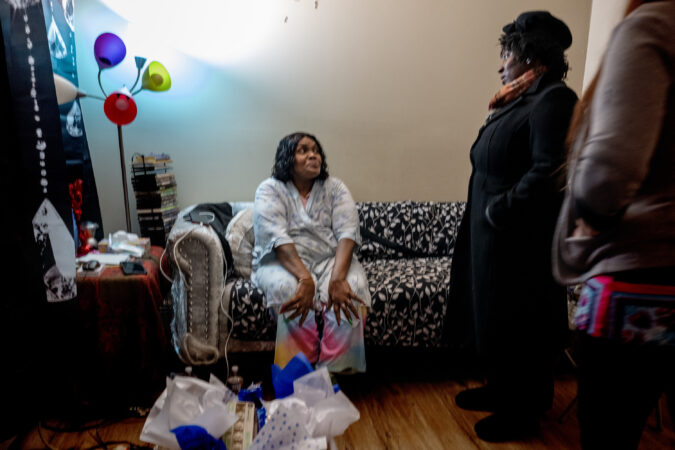
    House Speaker Joanna McClinton (center) with her staff member Nicole Reigelman (left) and home care worker Kate McNaughton (right) wait to meet with home care recipient Ronda Gay on Jan. 20 in her West Philadelphia home. McNaughton was bringing a basket of milk, eggs, canned foods, and other necessities.

    McClinton said she helps her mother when she can, but she only has so many hours in the day and needs assistance when she’s at the Capitol.

    “Many of my colleagues are just like myself, supporting parents who are aging and trying to make sure that they have all the necessities so that when I’m in Harrisburg I’m not thinking, ‘Oh, my God, how’s my mom going to eat or how’s she going to have a bath,’” McClinton said. “It’s because of home health aides and the folks assigned to her that she’s able to thrive. But she’s not unique.”

    Until recently, McClinton had taken a more hands-off approach compared with some previous House speakers who would use their position as the top official to push through their personal agendas. Now, she is taking a more active role in pushing for the issues she cares about most, with special attention to the home care wage crisis.

    Home care workers are often paid through Medicaid, which provides health services to low-income and disabled Americans and is administered at the state level. Pennsylvania has not increased how much it reimburses home care agencies, resulting in all of the surrounding states paying higher wages to home care workers, including GOP-controlled West Virginia and Ohio.

    Describing her leadership approach with a slim majority as “pragmatic,” McClinton says her goal is to find common ground to raise the wages for home healthcare workers between Republicans and Democrats, on an issue that impacts residents across all corners of the state.

    “We just have to really coalesce and build a movement so that we see things get better and that there’s more care,” she said. “Because when there’s more care, there’s less hospitalization, there’s less ER trips, there’s more nutrition.”

    Better pay at Sheetz

    Stakeholders recount dozens of similar stories of aides leaving to work at amusement parks, Sheetz stores, or fast-food restaurants because the pay is better. What’s more: Some home health aides will choose to work in a nearby state where wages are all higher than those paid in Pennsylvania.

    Cathy Creevey, a home health aide who works for Bayada in Philly, made $6.25 when she started working in the field nearly 25 years ago. Now, she makes just $13.50. She has watched countless colleagues quit to take higher-paying jobs elsewhere, resulting in missed shifts and seniors that go without the care they need.

    “We have patients that are 103, 105, and when that aide doesn’t show up their whole world is turned upside down because sometimes we’re the only people that they see to come in, to feed them, to bathe them,” Creevey said.

    While Creevey said she stays in the work because she cares about her patients, she said the long hours and low pay are difficult.

    Fewer and fewer people being willing to take on the jobs means seniors going without care or being forced into already understaffed nursing homes throughout the state.

    “Participants are waiting for care that isn’t coming,” said Mia Haney, the CEO of the Pennsylvania Homecare Association.

    Haney said she hoped McClinton’s advocacy will help drive the issue heading into the next budget season.

    “She has a wonderful opportunity to really influence her peers, but also raise awareness and education about how meaningful and critical these services are,” Haney said.

    In addition to McClinton’s advocacy, 69 House Democrats sent a letter to Gov. Josh Shapiro earlier this month, calling for more funding for the struggling industry just as Shapiro is set to make his 2026-27 budget proposal next month.

    Older Pennsylvanians prefer to “age in place,” or stay in their homes where they remain connected to their communities, said Kevin Hancock, who led the creation of a statewide 10-year strategic plan to improve care for the state’s rapidly aging population.

    “Nursing facilities and hospital services get a lot of attention in the space of older adult services, but it’s home care that really is the most significant service in Pennsylvania,” Hancock said. “The fact that it doesn’t seem to warrant the same type of attention and same type of focus is pretty problematic.”

    House Speaker Joanna McClinton (right) meets with home care worker Rachael Gleisner (center) and home care recipient Sheila Alexander in her West Philadelphia home on Jan. 20.

    Home care remains popular in Pa.

    The fight to increase dollars for home care workers has been an uphill battle in Harrisburg even with the speaker’s support.

    More Medicaid dollars go to home care services than any other program in Pennsylvania due to its popularity among Medicaid recipients, Hancock said. Meanwhile, its critical care workers — a majority of whom are women or women of color — still make low wages for often physically and emotionally demanding work.

    A study by the Pennsylvania Department of Human Services last year determined that a 23% increase would be necessary for agencies to offer competitive wages, but the state’s final budget deal did not include it. (The final budget deal did provide increases to direct aides hired by patients, which represent about 6% of all home care workers in the state.)

    Home care agencies are asking Shapiro to include a 13% reimbursement rate increase in the 2026-27 budget, which equates to a $512 million increase for the year. The 13% ask, Haney said, was a “reasonable and fair” first step in what would need to be a phased approach to reaching competitive wages.

    But neither Shapiro nor Senate GOP leadership has committed to any increases in the forthcoming budget.

    Pennsylvania House Speaker Joanna McClinton listens as Gov. Josh Shapiro delivers his budget address to a joint session of the state House and Senate at the State Capitol on Feb. 4, 2025.

    In a statement, a spokesperson for Shapiro said the governor understood the need and cited his support for limited increases in last year’s budget and for a proposed statewide minimum wage increase to $15 per hour. (Previous efforts by the Democratic House to increase the state’s minimum wage have stalled in the GOP-controlled Senate.)

    Senate Majority Leader Joe Pittman (R., Indiana) said his caucus will put the state’s “future financial stability” before all else. Pennsylvania is expected to spend more than it brings in in revenue this year, setting the stage for yet another tense budget fight.

    “While we’ve seen Democrats continually push for more spending within the state budget year after year, any increases require thoughtful consideration as to the impact on hardworking taxpayers of Pennsylvania,” Pittman added.

    Senate Majority Leader Joe Pittman, a Republican from Indiana County, is joined by other GOP Senate leaders criticizing Gov. Josh Shapiro’s proposed budget last year.

    McClinton, however, was cautiously optimistic that something could be done this year, even as she placed the onus on Senate Republicans, rather than Shapiro.

    “We’ve seen Republicans refusing to work, refusing to resolve issues, that’s not acceptable,” McClinton said. “I’ve seen an unwillingness from Republicans to resolve these issues.”

    Republicans, she said, should come to the table because staffing shortages harmed their constituents in rural Pennsylvania even more than it harmed hers in Philly.

    “We have to get our heads around the fact that we have the lowest reimbursement rates in our area,” McClinton said in an interview after visiting two patients in her district. “We have to make the investment now. We have lots of needs. We have lots of priorities, but we can balance them.”

  • Minnesota GOP gubernatorial candidate Chris Madel drops out, faults Trump immigration policy

    Minnesota GOP gubernatorial candidate Chris Madel drops out, faults Trump immigration policy

    MADISON, Wis. — A lawyer for the immigration officer who shot and killed Renee Good dropped out of the Minnesota governor’s race Monday, breaking with many fellow Republicans and calling President Donald Trump’s immigration operation in the state an “unmitigated disaster.”

    Chris Madel’s surprise move comes amid growing calls from Republicans to investigate federal immigration tactics in Minnesota after a U.S. Border Patrol agent fatally shot Alex Pretti in Minneapolis on Saturday.

    Madel went a step further than most Republicans in his video, saying that while he supports the goal of deporting “the worst of the worst” from Minnesota, he thinks the Trump administration’s immigration enforcement operation in the Twin Cities has gone too far.

    “I cannot support the national Republicans’ stated retribution on the citizens of our state,” Madel said. “Nor can I count myself a member of a party that would do so.”

    Madel said that U.S. citizens, “particularly those of color, live in fear.”

    “United States citizens are carrying papers to prove their citizenship,” Madel said. ”That’s wrong.”

    Madel said he personally had heard from local Asian and Hispanic law enforcement officers who had been pulled over by ICE.

    “I have read about and I have spoken to help countless United States citizens who have been detained in Minnesota due to the color of their skin,” Madel said.

    He also said it was unconstitutional and wrong for federal officers to “raid homes” using a civil warrant, rather than one issued by a judge.

    Madel was among a large group of candidates seeking to replace Democratic Gov. Tim Walz, who dropped his reelection bid earlier this month. Other Republican candidates include MyPillow founder and chief executive Mike Lindell, an election denier who is close to Trump; Minnesota House Speaker Lisa Demuth; Scott Jensen, a former state senator who was the party’s 2022 gubernatorial candidate; and state Rep. Kristin Robbins.

    Democratic U.S. Sen. Amy Klobuchar has filed paperwork to run, but has yet to publicly launch a campaign to succeed Walz.

    Madel, in his Monday video posted on the social platform X, described himself as a “pragmatist,” and said national Republicans “have made it nearly impossible for a Republican to win a statewide election in Minnesota.”

    Madel did not immediately return a text message seeking comment.

    Madel, 59, was a political newcomer making his first run for public office. He got into the race on Dec. 1.

    Madel brought 30 years of experience as an attorney to the race, including cases taking on corporate corruption. Madel also defended law enforcement officers, including the 2024 case of a Minnesota state trooper who fatally shot a Black man after a traffic stop. Prosecutors dropped charges against Trooper Ryan Londregan in the killing of Ricky Cobb II, saying the case would have been difficult to prove.

    Madel often referenced that victory in his brief campaign for governor, including in his video dropping out.

    Republicans were expecting the race for governor to be focused on Walz, who at the time was seeking a third term amid questions about how his administration handled welfare fraud. But the race shifted dramatically on Jan. 5 when Walz dropped out.

    That same week, the Trump administration sent thousands of federal officers to Minnesota. ICE agent Jonathan Ross shot and killed Good in Minneapolis two days later on Jan. 7.

    Madel agreed to offer pro bono legal advice to Ross, although no criminal charges or civil lawsuits have been filed. Madel said he was honored to help Ross, particularly during a gubernatorial campaign.

    “Justice requires excellent legal representation,” Madel said.

    Madel announced his decision ending his candidacy two days after a Border Patrol officer shot and killed Pretti on Saturday in Minneapolis.

  • Trump tries — again — to deliver a winning message on affordability

    Trump tries — again — to deliver a winning message on affordability

    President Donald Trump’s attempts to show Americans he cares about their struggles with rising costs began in earnest last month, when he went to a casino in Pennsylvania to talk about affordability — but instead mocked Democrats who use the term and called it “a hoax.”

    Next, he traveled to Detroit to tout his efforts to revive American manufacturing. But again, he called affordability “a fake word by Democrats.”

    Then, on a trip to Davos last week, he unveiled a new domestic housing policy meant to help families struggling with rising costs. There, too, the president stepped on his own announcement by stoking a global crisis over his desire to wrest control of Greenland from NATO ally Denmark.

    Again and again, Trump has tried to stay focused on domestic economic uncertainty, an issue that Republicans fear could hobble them in this year’s midterm elections. Again and again, the president’s attention has drifted elsewhere — and away from the concerns of his restive base. In the past month, he has ordered a strike on Venezuela, considered military action against Iran, and threatened to use force to take Greenland. None of these actions have inspired broad support within his core America First constituency, which the GOP needs to hold Congress.

    On Tuesday, Trump will give it another go. The planned afternoon speech in Des Moines — assuming winter weather doesn’t upend the trip — will focus on energy and the economy. It is part of what White House officials say will be an uptick in domestic travel to avert what even Trump has acknowledged could be a difficult election in November.

    The trip also comes amid growing concern and political pressure on federal law enforcement actions in the aftermath of a fatal shooting in Minneapolis.

    Although the economy has grown steadily in recent months, there are mounting signs of concern. Employers are hiring fewer people, wage growth is slowing, and credit card delinquencies are rising. And while the wealthiest have benefited from rapid stock market gains and rising home values, that hasn’t been the case for most Americans, whose spending power has remained largely flat since the pandemic, according to Moody’s Analytics.

    As a result, people say they feel worse about the economy than they did a year ago. Consumer sentiment ticked up between December and January but remains well below year-ago levels, according to a closely watched survey from the University of Michigan released Friday. Notably, Americans expect inflation to worsen in the coming year, as Trump’s unpopular new tariffs and immigration policies work their way through the economy.

    “It is definitely the issue that voters say is the most important to them,” longtime Democratic pollster Geoff Garin said of affordability. “And it is the issue that is driving Trump’s very high disapproval ratings.”

    Garin said a particular challenge for the president is the effect of his tariff policies, which he remains committed to despite widespread concerns and the threat of still more rising costs.

    “The polling is crystal clear that Americans do not want higher tariffs and understand tariffs are a tax on them that adds to their cost of living,” Garin said.

    Some Republicans are cautiously optimistic that the president can reset his message.

    “I think he’s woken up to where things are now,” said Frank Luntz, a Republican pollster who frequently conducts focus groups on the economy. “He believes he can change the perception by his tenacity. But affordability is a very stubborn issue.”

    A White House official pointed to positive economic indicators, including cooling inflation and growing wages, and said Trump’s uptick in travel could help get those messages across.

    “President Trump has always been most in his element when he’s interacting with everyday Americans,” said the official, speaking on the condition of anonymity to describe internal deliberations about the trip. “The President’s domestic travel will allow him to most effectively underscore how this administration has and continues to deliver economic prosperity for the American people, despite whatever contrived scandals the mainstream media and Democrats would rather focus on instead.”

    Trump’s choice of Iowa for his next stop is noteworthy because he won the state, which has grown more reliably Republican over the last decade, in three consecutive presidential elections. But Democrats have sensed opportunity there, and it is likely to be a major focus in 2026, with open races for governor and U.S. Senate and two competitive congressional seats. All are currently held by Republicans.

    “I’m going to do a lot of campaign traveling,” Trump told reporters on Air Force One while traveling back from Davos last week, acknowledging the historic headwinds the president’s party typically faces in off-year elections.

    “Sitting presidents don’t seem to do well in the midterms,” he said. “I guess over a 50-year period, they won twice. So I don’t know what that is. That’s something down deep. You’d have to ask a psych — really a psychiatrist about that. But we should do great.”

    Trump regularly blames his predecessor, Joe Biden, for many of the current economic conditions. But the two presidents actually have something in common now when it comes to public opinion: They have both struggled to win over Americans on their handling of the economy.

    Biden repeatedly claimed that the economy was better than how average Americans said they felt about it. He believed he didn’t receive what he felt was well-deserved credit for improving economic conditions, but he also lamented his own shortcomings in selling his policies to the public.

    Trump, who won the 2024 election by tapping into economic anxieties and Biden’s handling of them, now also says the economy is better than people think. And he, like Biden, has acknowledged that he needs to do more to promote his policies.

    “People’s sense that he was good on the economy is what propped him up even when they disliked 100 other things about him,” Garin said. “But now to have him so deeply underwater on the economy means there’s really nothing propping him up among the 100 other things.”

    Garin views the economy as a central issue in the November elections and does not see Trump suddenly succeeding at a message reset that he has been trying for unsuccessfully for weeks.

    “I don’t think things are going to change between now and then because Trump’s not going to change,” he added. “He is who he is.”

    Trump’s first major attempt came in December, when he traveled to a casino in Mount Pocono, Pa., and read from charts touting economic data. Behind him, signs read “Lower Prices Bigger Paychecks.”

    But he frequently veered off course, entertaining the crowd but stealing the focus from the economy.

    Trump’s dismissal of the term affordability may itself become a liability, Luntz said, because it’s a word used not just by Democrats. The president risks sounding like he is telling Americans that their struggles with mortgage payments or groceries aren’t real.

    Affordability is “part of the lexicon,” Luntz said. “And you know this if you talk to average voters. All these focus groups I’ve been doing, that’s what came up first. Immigration was important at one point. Russia-Ukraine was for a while. But affordability, and that’s the word Americans use: ‘I can’t afford fill-in-the-blank.’”

    Trump has also suggested that his policies will be effective in the long run even if there is short-term pain, returning to comments he made earlier in his presidency that Americans can do without.

    “You don’t need 37 dolls for your daughter,” he said last month. “Two or three is nice, but you don’t need 37 dolls. So, we’re doing things right. We’re running this country right.”

    The president’s choice of an annual gathering of the world’s financial elite in Davos to formally tout new policies aimed at helping homeowners struck an odd note, too. The announcement got little attention amid his threats over Greenland and high-profile panels of tech billionaires and thought leaders.

    “It’s not fun for him, and the public doesn’t applaud because it’s serious stuff,” Luntz said.

    That may explain the tangents. In Detroit, Trump started talking about affordability, but quickly got in his own way. “No, that’s a word used by the Democrats,” he said. “They’re the ones that caused the problem.”

    He then digressed into riffs about transgender athletes and criticism about lack of unity in his own party (“We got some real losers,” he said — including Mitt Romney, Rand Paul, and Lisa Murkowski). Five minutes later, he returned to economic matters.

    “After real wages plummeted by $3,000 under sleepy Joe Biden, real wages are up by $1,300 in less than one year under President Trump,” he said.

    As he launches a tour focused on the midterm elections, his overarching message is likely to focus on how he’s tried to turn things around. He has until around Labor Day to change public perception on the economy, a time when voter sentiment tends to solidify ahead of elections.

    The task is made more challenging by the fact that some of those who voted for him in 2024 were not wholly behind him but were turned off by Democrats. Those voters largely oppose Trump’s handling of the economy — especially his tariff policies.

    A new CNN-SSRS poll found that 3 in 10 Americans rate the economy positively, and 55% say that Trump’s policies have worsened conditions. Some 64% said that he hasn’t done enough to reduce the price of everyday goods, and even about half of Republicans say he should be doing more.

    “We’ve inherited a mess,” he said last week. “And we’ve made it a beautiful, beautiful picture.”

  • Facing an uphill battle against Gov. Josh Shapiro’s $30 million war chest, Stacy Garrity still has to convince top Republicans she’s worth investing in

    Facing an uphill battle against Gov. Josh Shapiro’s $30 million war chest, Stacy Garrity still has to convince top Republicans she’s worth investing in

    HARRISBURG — In the race for Pennsylvania governor, State Treasurer Stacy Garrity still has a lot of work to do.

    With a little more than nine months until Election Day, the state Republican Party-endorsed candidate must convince top GOP donors that her campaign is worth investing in, making the case that she can motivate voters — and beat popular incumbent Gov. Josh Shapiro.

    And so far, she has significant ground to make up against the Democratic machine Shapiro now effectively controls, as he continues to build his name recognition nationwide.

    Garrity announced earlier this month that from August through December, her campaign raised nearly $1.5 million — almost as much as the 2022 Republican gubernatorial candidate, Doug Mastriano, raised in the entirety of his campaign. But the amount is only a fraction of the $30 million war chest Shapiro has built up over the last few years.

    Republican insiders for months have said privately they see the race against Shapiro, a Democratic governor with consistently high approval ratings and a rising national star, as one they have slim chances at winning in November.

    Pennsylvania Gov. Josh Shapiro (right) listens to Stacy Garrity, the 78th state treasurer, at the Forum Auditorium in Harrisburg, Pa., on Jan. 21, 2025. It was the day she was sworn in.

    Still, they’re hoping that Garrity, a retired U.S. Army colonel who in 2024 broke the record for receiving the most votes in a state-level race — a record previously held by Shapiro — will be able to deliver a high enough level of excitement among Republican voters in Pennsylvania to drive them to the polls, where down-ballot races for control of the U.S. House and state Senate are also on the line.

    Some GOP insiders have pointed to Garrity’s limited early fundraising haul as make-or-break for the state’s whole Republican ticket — and the political future of Pennsylvania.

    “This is the Democrats’ first real opportunity to gain a trifecta in Pennsylvania that could lock up Pennsylvania from being a ‘purple’ state to a solid blue state every election here onward,” said Matt Brouillette, who leads Commonwealth Partners and its political action committees, which often contribute to Republican candidates and are largely funded by Pennsylvania’s richest man, Jeffrey Yass.

    Brouillette leads the Commonwealth Leaders Fund, a powerful PAC that sat out the 2022 gubernatorial race that the PAC saw Mastriano as unable to win. Brouillette said in an interview earlier this month that the fund still had yet to decide whether it will invest in Garrity’s campaign.

    There isn’t a specific number Brouillette said he wants to see her raise before he chooses to get involved in the governor’s race, but he is overall “encouraged to see Stacy solidifying support for her candidacy.”

    “Stacy is going to have to attract national investment the way Josh has,” Brouillette said. “Our donors won’t be sufficient. Stacy is going to have to be competitive nationally to make this a race.” (After publication of this story, Brouillette said the PAC would invest in Garrity’s race, but did not disclose a dollar amount.)

    As 2028 inches closer, Shapiro’s national reach continues to grow — and with that, he has been able to flex his fundraising skills across the country. He will publish his first book on Tuesday, a memoir called Where We Keep the Light, in what is largely seen as a telltale sign that a candidate is considering a presidential run. He has promised to use his influence in Pennsylvania to support Democrats down the ballot, including in four congressional districts the party hopes to flip in the midterms — and deliver Democrats a majority in the U.S. House.

    Campaign finance filings detailing who contributed to both Shapiro and Garrity’s campaigns won’t be available until next week. Shapiro broke fundraising records in the 2022 race, and is on track to do the same again this year.

    What’s more: Garrity is also contending with strong headwinds favoring Democrats in November, as support for President Donald Trump wanes.

    Still, Garrity has been rolling out a number of endorsements from top Pennsylvania Republicans, including on Friday from U.S. Rep. Ryan Mackenzie (R., Pa.), who is running for reelection in one of the districts Democrats hope to flip. But she has yet to receive Trump’s support or endorsement, and was not mentioned by Trump when she attended his most recent Pennsylvania rally.

    The hesitancy appears to have extended to the lieutenant governor’s contest. Garrity still has yet to announce who she would like to be her running mate. Only a few candidates have announced their candidacy for lieutenant governor so far, and the state GOP is expected to endorse Garrity’s pick at its February meeting.

    A spokesperson for Garrity’s campaign said she is “humbled by the outpouring of support she’s received from supporters all across the commonwealth, including from members of the Commonwealth Partners’ leadership,” who share her vision for the state and frustrations with Shapiro.

    “No moment crystalized this support more than when the PAGOP took the unusual step of endorsing Treasurer Garrity’s campaign so early, which served as the catalyst for the momentum she’s building to defeat Josh Shapiro this November,” said Garrity’s spokesperson, Matt Benyon, in a statement.

    A spokesperson for the Pennsylvania Republican Party declined to comment.

    Garrity will host a kickoff fundraiser in Philadelphia on Wednesday, said Bob Asher, Garrity’s finance chair.

    As for her fundraising numbers since December, Asher said, with a smile: “Stay tuned.”

    Grassroots support vs. Shapiro’s war chest

    In announcing her first haul, Garrity’s campaign said 97% of her contributions came from Pennsylvania residents, and 75% of the contributions were under $100. Shapiro, for his part, boasted that the $30 million in his campaign coffers came from all of Pennsylvania’s 67 counties, as well as financial support from all 50 states.

    A large number of small-dollar campaign contributions can suggest grassroots support — translating to an energized voter base on Election Day — for a candidate that big-dollar or corporate political action committee funds can’t capture. But the bigger the war chest, the more a candidate can spend to get their name on the airwaves.

    Other GOP insiders are pointing their fingers at the state Republican Party, using Garrity’s early fundraising numbers as proof they are not doing enough to back her up in the race against Shapiro and that they’re setting themselves up for failure in November.

    For Jim Worthington, the owner of the Newtown Athletic Club and a Bucks County GOP power player, Garrity’s early struggles are a result of failings by the state GOP to plan ahead and invest in mail voting.

    “It’s an indictment of the party,” Worthington said. “I understand why some people are hesitant to give money. They’re looking at the tea leaves and saying, ‘Look, we lost the year.’”

    “It’s going to be difficult for Stacy, and I feel bad because she is a hell of a candidate,” he added.

    State Treasurer Stacy Garrity greets supporters after a campaign rally in Bucks County on Sept. 25, 2025. The GOP gubernatorial candidate visited the Newtown Sports & Events Center, in one of Pennsylvania’s top swing counties.

    Worthington said anytime he talks to national Republicans in Washington or Trump’s Mar-a-Lago club, where he’s a member, he mentions Garrity’s race as one in which they should invest.

    At the very least, he argues, top Republicans should help Garrity in an effort to ensure Shapiro doesn’t “have a cakewalk right into 2028,” as speculation continues to surround Shapiro about his political aspirations. Worthington said he even brought this up directly to Vice President JD Vance, the GOP’s expected 2028 successor to Trump, at Vance’s holiday party.

    As for Garrity, Worthington said he believes she can win, calling her “an excellent candidate” with a hard work ethic.

    “Make no mistake, it’s gonna be a tough go,” Worthington added. “But I’m 100% sure she can win.”

  • John Fetterman calls for Minneapolis ICE operation to ‘immediately end,’ while Dave McCormick wants an investigation into the shooting

    John Fetterman calls for Minneapolis ICE operation to ‘immediately end,’ while Dave McCormick wants an investigation into the shooting

    Sen. John Fetterman (D., Pa.) on Monday called for the federal immigration enforcement operation in Minneapolis to “immediately end” after a Border Patrol agent shot and killed a 37-year-old man there Saturday morning.

    “It has become an ungovernable and dangerous urban theatre for civilians and law enforcement that is incompatible with the American spirit,” Fetterman said in a statement Monday.

    The senator’s comments come two days after a federal agent shot and killed Alex Pretti, an intensive care nurse at a VA hospital, on Saturday amid the Trump administration’s immigration crackdown in Minneapolis. An ICE agent shot and killed Renee Nicole Good, a 37-year-old poet and mother, on Jan. 7, provoking protests nationwide.

    But Fetterman stopped short of backing other Democrats’ calls to shut down the government if ICE does not withdraw from the city. The U.S. Senate is poised to vote on funding for the Department of Homeland Security, which oversees both ICE and the Border Patrol.

    Sen. Dave McCormick (R, Pa.) called for a “full investigation into the tragedy in Minneapolis” on Sunday evening, joining a number of Republicans in voicing concern about the escalating tensions in the wake of President Donald Trump’s immigration enforcement crackdown.

    “We need all the facts,” McCormick said in a post on X Sunday, adding that, “We must enforce our laws in a way that protects the public while maintaining its trust. This gives our law enforcement officers the best chance to succeed in their difficult mission.”

    Fetterman ‘wants a conversation’ about DHS funding

    Fetterman said that both Pretti and Good should “still be alive.” And noted that he believes in a secure border while also believing “there needs to be a path to citizenship for those hardworking families who are here.”

    Some Democrats said they would vote against DHS funding in light of Saturday’s shooting, unless restrictions on immigration enforcement were put in place. This could potentially trigger a federal shutdown for the second time in four months.

    Fetterman said he will never vote for a shutdown. However, he does support having a “conversation on the DHS appropriations bill and stripping it from” the overall government funding package.

    “A vote to shut our government down will not defund ICE,” Fetterman said, noting the agency received nearly $180 billion in Trump’s One Big Beautiful Bill Act, which he opposed.

    “I reject the calls to defund or abolish ICE. I strongly disagree with many strategies and practices ICE deployed in Minneapolis, and believe that must change,” Fetterman said.

    “We must find a way forward and I remain committed to being a voice of reason and common sense,” he added.

    The senator’s public comments followed a Sunday evening social media post from his wife, Gisele Barreto Fetterman, who was formerly living undocumented in the U.S. for more than a decade after emigrating from Brazil.

    “Every day carried the same uncertainty and fear lived in my body — a tight chest, shallow breaths, racing heart,” she said in a post on X. “What I thought was my private, chronic dread has now become a shared national wound. This now-daily violence is not ‘law and order.’ It is terror inflicted on people who contribute, love, and build their lives here. It’s devastatingly cruel and unAmerican.”

    Other Democrats in the region plan to block the funding package without changes.

    Sen. Lisa Blunt Rochester (D, Del.) said in a statement that ICE and federal agents’ actions are “shameful and disturbing.” She called for an end to ICE’s presence in Minnesota, a full investigation into Pretti’s death, and said that she would not be voting for DHS funding.

    “I refuse to support this current package of funding bills as federal agents shoot Americans in the street,” she said.

    McCormick siding with the NRA

    McCormick is one of several Republicans who have voiced concern over violent incidents involving immigration enforcement, without denouncing ICE or Border Patrol. The National Rifle Association, the country’s top gun lobby which has deep ties to the GOP, has called for an investigation.

    The NRA spoke out after it came to light that Pretti was legally carrying a gun that he had a permit for. Homeland Security Secretary Kristi Noem claimed that Pretti was “brandishing” his weapon at federal agents, though in video released by bystanders it appears that was not the case.

    “Responsible public voices should be awaiting a full investigation, not making generalizations and demonizing law-abiding citizens,” the group said in response to a post on X from the first assistant U.S. attorney for the Central District of California, who said: “If you approach law enforcement with a gun, there is a high likelihood they will be legally justified in shooting you. Don’t do it!”

    McCormick said in his statement Sunday that he agreed with the NRA’s statement, which preceded his own, and others in calling for the investigation of Pretti’s killing.

    McCormick qualified his statement on Sunday by maintaining his support for federal immigration enforcement and accusing Minnesota politicians of exacerbating tensions.

    It’s the second time in two days that McCormick spoke out on a highly controversial move by the Trump administration. On Saturday, McCormick said he disagreed with the National Park Service’s decision to dismantle exhibits about slavery at the President’s House at Independence National Historical Park.

  • Trump softens tone as some federal agents expected to leave Minneapolis

    Trump softens tone as some federal agents expected to leave Minneapolis

    MINNEAPOLIS — President Donald Trump softened his tone Monday on the immigration crackdown in Minnesota, touting productive conversations with the governor and Minneapolis mayor as he sent the border czar to take charge of much of the enforcement effort. Some federal agents were expected to leave as soon as today.

    Minneapolis Mayor Jacob Frey said he spoke by phone with Trump, who praised the discussion and declared that “lots of progress is being made.” Frey said he asked Trump in a phone call to end the immigration enforcement surge and that Trump agreed the present situation cannot continue.

    The mayor said some agents would soon leave and that he would keep pushing for others involved in Operation Metro Surge to go.

    Among those who are expected to depart was senior Border Patrol commander Greg Bovino, a person familiar with the matter told the Associated Press. The person was not authorized to publicly discuss details of the operation and spoke to AP on condition of anonymity.

    Bovino has been at the center of the administration’s aggressive enforcement surge in cities nationwide. His departure marks a significant public shift in federal law enforcement posture amid mounting outrage over the fatal shooting of 37-year-old ICU nurse Alex Pretti by Border Patrol agents.

    Bovino’s leadership of highly visible federal crackdowns, including operations that sparked mass demonstrations in Los Angeles, Chicago, Charlotte, and Minneapolis, has drawn fierce criticism from local officials, civil rights advocates, and congressional Democrats.

    Criticism has increased around Bovino in the last few days after his public defense of the Pretti shooting and disputed claims about the confrontation that led to his death.

    The border czar, Tom Homan, will take charge of Immigration and Customs Enforcement operations in Minnesota.

    Judge hears arguments on crackdown

    A federal judge heard arguments Monday over Minnesota’s challenge to the Trump administration’s immigration enforcement crackdown, posing skeptical questions to both sides about the effort that has led to two fatal shootings by federal officers.

    U.S. District Judge Katherine Menendez is considering whether to grant requests by the state and the cities of Minneapolis and St. Paul to temporarily halt the immigration operation. She said the case was a priority, though she issued no immediate ruling.

    Menendez questioned the government’s motivation behind the crackdown and expressed skepticism about a letter recently sent by Attorney General Pam Bondi to Minnesota Gov. Tim Walz. The letter asked the state to give the federal government access to voter rolls, to turn over state Medicaid and food assistance records, and to repeal sanctuary policies.

    “I mean, is there no limit to what the executive can do under the guise of enforcing immigration law?” Menendez asked. She noted that the federal requests are the subject of litigation.

    Lawyers for the state and the Twin Cities argued that the situation on the street is so dire as to require the court to halt the federal government’s enforcement actions.

    “If this is not stopped right here, right now, I don’t think anybody who is seriously looking at this problem can have much faith in how our republic is going to go in the future,” Minnesota Assistant Attorney General Brian Carter said.

    Brantley Mayers, counsel to the Justice Department’s assistant attorney general, said the government’s goal is to enforce federal law. Mayers said one lawful action should not be used to discredit another lawful action.

    “I don’t see how the fact that we’re also doing additional things that we are allowed to do, that the Constitution has vested us with doing, would in any way negate another piece of the same operation, the same surge,” Mayers said.

    Menendez questioned where the line was between violating the Constitution and the executive’s power to enforce the law. She also asked whether she was being asked to decide between state and federal policies.

    “That begins to feel very much like I am deciding which policy approach is best,” she said.

    At one point, while discussing the prospect of federal officers entering residences without a warrant, the judge expressed reluctance to decide issues not yet raised in a lawsuit before her.

    “I can’t be the global keeper of all things here. Like, presumably that will be litigated,” she said to the state’s attorney.

    The state of Minnesota and the cities sued the Department of Homeland Security earlier this month, five days after Renee Good was shot by an Immigration and Customs officer. The shooting of Alex Pretti by a Border Patrol officer on Saturday added urgency to the case.

    Border czar to Minnesota

    In other developments, Trump said he had a “very good” call with Gov. Tim Walz about the latest shooting and that they are now on a “similar wavelength.” It was an abrupt shift from Trump, who frequently derides Walz for his actions on immigration issues in Minnesota.

    Trump also said he would send border czar Tom Homan to Minnesota. The president’s statement comes after Homeland Security Secretary Kristi Noem and Bovino, who has become the public face of the crackdown, answered questions at news conferences over the weekend about Pretti’s shooting. Trump posted on social media that Homan will report directly to him.

    Since the original court filing, the state and cities have substantially added to their request in an effort to restore the conditions that existed before the administration launched Operation Metro Surge on Dec. 1.

    The lawsuit asks the judge to order a reduction in the number of federal law enforcement officers and agents in Minnesota back to the level before the surge and to limit the scope of the enforcement operation.

    Justice Department attorneys have called the lawsuit “legally frivolous” and said Minnesota “wants a veto over federal law enforcement.” They asked the judge to reject the request or to at least stay her order pending an anticipated appeal.

    Democratic Minnesota Attorney General Keith Ellison said Sunday that the lawsuit is needed because of “the unprecedented nature of this surge. It is a novel abuse of the Constitution that we’re looking at right now. No one can remember a time when we’ve seen something like this.”

    During a briefing on Monday, White House press secretary Karoline Leavitt said that a trio of “active investigations” and internal probes of the shooting were underway by federal agencies.

    Leavitt said that the Department of Homeland Security and the FBI were investigating the shooting and that U.S. Customs and Border Protection was “conducting their own internal review.”

    Leavitt said at the briefing that she has not heard Trump commit to release body camera footage from federal immigration officers involved in the shooting and killing of Alex Pretti.

    Leavitt later said that the administration is talking with members of Congress about requirements to have federal immigration officers wear body cameras.

    Leavitt said the shooting and killing of Pretti by a federal immigration officer “occurred as a result of a deliberate and hostile resistance by Democrat leaders in Minnesota.”

    Walz, Minneapolis Mayor Jacob Frey, and other elected Democrats “were spreading lies about federal law enforcement officers,” Leavitt said at the White House briefing.

    Other state implications

    The case has implications for other states that have been or could become targets of ramped-up federal immigration enforcement operations. Attorneys general from 19 states plus the District of Columbia, led by California, filed a friend-of-the-court brief supporting Minnesota.

    “If left unchecked, the federal government will no doubt be emboldened to continue its unlawful conduct in Minnesota and to repeat it elsewhere,” the attorneys general wrote.

    Menendez ruled in a separate case on Jan. 16 that federal officers in Minnesota cannot detain or tear gas peaceful protesters who are not obstructing authorities, including people who follow and observe agents.

    An appeals court temporarily suspended that ruling three days before Saturday’s shooting. But the plaintiffs in that case, represented by the American Civil Liberties Union of Minnesota, asked the appeals court late Saturday for an emergency order lifting the stay in light of Pretti’s killing.

    The Justice Department argued in a reply filed Sunday that the stay should remain in place, calling the injunction unworkable and overly broad.

    In yet another case, a different federal judge, Eric Tostrud, issued an order late Saturday blocking the Trump administration from “destroying or altering evidence” related to Saturday’s shooting. Ellison and Hennepin County Attorney Mary Moriarty asked for the order to try to preserve evidence collected by federal officials that state authorities have not yet been able to inspect.

    A hearing in that case was scheduled for Monday afternoon in federal court in St. Paul.

    “The fact that anyone would ever think that an agent of the federal government might even think about doing such a thing was completely unforeseeable only a few weeks ago,” Ellison told reporters. “But now, this is what we have to do.”

  • Gov. Josh Shapiro: Trump’s goal, from Minneapolis to Venezuela, is to ‘dictate’ in a ‘facade of strength’

    Gov. Josh Shapiro: Trump’s goal, from Minneapolis to Venezuela, is to ‘dictate’ in a ‘facade of strength’

    Gov. Josh Shapiro revealed new details of what he described as childhood trauma, weighed in on President Donald Trump’s “facade of strength” in U.S. and foreign policy, and promised to work to “bring down the temperature” of political violence in a wide-ranging interview with CBS News Sunday Morning.

    Shapiro told CBS News’ Norah O’Donnell that Trump’s actions are making Americans less safe, and said he has plans in place should the Trump administration attempt a surge of federal agents here.

    “I think what the president is trying to do is show that he can be the dominant figure, that he can dictate behavior, whether we’re talking about Minneapolis or Greenland or Venezuela,” Shapiro said. “This president wants to try and show what he believes to be strength — that I think is a facade of strength and ultimately a veneer of strength.”

    Shapiro, who has been promoting his new memoir, Where We Keep the Light, brought a CBS News producer to the synagogue he’s attended since childhood, Beth Sholom in Elkins Park, to discuss his personal journey.

    He said he has never received therapy for harrowing experiences as a young boy, namely the fallout of his mother’s unspecified mental health struggles, that shaped his path well into adulthood.

    “There were moments where a switch could be flipped and there’d be a lot of yelling and a lot of chaos and a lot of tumult in the house, and you would just want to retreat to your room and try and escape it all,” he said.

    He added that the experience led him to public service: “That constant desire to find a solution to someone else’s problem, that’s driven by childhood trauma.”

    The interview also touched on Shapiro’s vice presidential vetting, in which Vice President Kamala Harris’ presidential campaign asked him if he had been an Israeli agent. “I thought some of the commentary about my wife was not OK,” he said, “and I thought asking me if I was a double agent for the Israeli government was offensive.”

    He said he called Harris’ campaign staffers after the interview to take himself out of the running.

    And, he addressed the issue of political violence, including the arson attack on the governor’s mansion and the “strange conversation” with Trump that followed. “[Trump] said, you know, being president’s a really dangerous job. And he rattled off other jobs that have a lower fatality rate than presidents. And he said it’s very, very dangerous. Just be careful.”

    Shapiro said the incident underscored the need for bipartisanship to “bring down the temperature” on all sides.

    Neither Shapiro nor his interviewers made mention of his 2026 gubernatorial opponent, Republican state Treasurer Stacy Garrity. Instead, the conversation appeared to look ahead to 2028, and Shapiro’s potential as a presidential contender.

    Still, Shapiro remains noncommittal about running. “That’s a conversation for another day,” he said.

  • Eleanor Holmes Norton ends House reelection campaign

    Eleanor Holmes Norton ends House reelection campaign

    Eleanor Holmes Norton’s campaign filed a termination report with the Federal Election Commission on Sunday, signaling that the 88-year-old will not seek an 19th term as D.C.’s nonvoting delegate in the House.

    The lawmaker has faced months of intense public scrutiny about her ability to adequately represent the nation’s capital during an unprecedented period of federal intervention.

    The termination filing, first reported by NOTUS, has the practical effect of ending a candidate’s campaign operation, although it does not prevent them from filing to run for office in the future. Her campaign did not respond to repeated requests for comment.

    The move would bring to a close a three-decade career in which she became known as D.C.’s “warrior on the Hill” and became, to an entire generation of Washingtonians who have known no other House representative, nearly synonymous with the city’s House seat in Congress and its crusade for D.C. statehood.

    But her evident decline in recent months and years — appearing less often in public, speaking more haltingly and largely only from scripts, seeming to struggle with candid interactions or to walk without assistance — ignited concerns that she was not the advocate the city needed during a critical time. Her current term ends in January 2027, when she will be 89.

    Two D.C. Council members — Robert C. White Jr. and Brooke Pinto — have already launched primary challenges against her, among a host of others. Her closest confidante, Donna Brazile, called on her longtime friend to step aside last year. And an October police case, in which she reportedly fell victim to fraud at her home, as NBC4 reported, only accelerated concerns about her vulnerabilities and mental sharpness as she has aged. A D.C. police report described her as having “early stages of dementia.”

    Meanwhile, congressional Republicans have unleashed a cascade of efforts to erode D.C.’s already limited right to self-governance while President Donald Trump castigates the city as dangerous and filthy. During his first year back in office, he seized temporary control of local police, surged immigration enforcement, and deployed armed National Guard troops on city streets.

    D.C. public officials and politicos began publicly voicing concerns about Norton’s ability to represent the District last year given the tenuous relations between the federal government and the nation’s capital.

    Yet Norton (D) has spent months insisting she would seek reelection, raising concern within a party that has had to reckon with the consequences of geriatric leaders clinging to power for too long. While D.C. does not have a vote in Congress, its representative in the House can introduce bills, serve on committees, and spearhead advocacy efforts.

    Her exit from the campaign would set the stage for the first competitive race for the seat since Norton first ran for it in 1990.

    One of Norton’s top staffers, Trent Holbrook, recently left his job as her senior legislative counsel to run for her seat. White (D., At large) and Pinto (D., Ward 2), though, remain the candidates to beat. Other candidates include Kinney Zalesne, a former Democratic fundraiser who has raised more than $400,000; Deirdre Brown, a Democratic organizer in Ward 3; and Vincent Morris, who works in communications.

  • Republicans took control of education. Can Democrats take it back?

    Republicans took control of education. Can Democrats take it back?

    WATER VALLEY, Miss. — A crowd turned out to hear a politician talk big about improving schools, but it wasn’t a Republican railing about transgender athletes or school vouchers or any of the issues the GOP has used to put Democrats into a defensive crouch.

    On this night, the politician taking questions was a Democrat — former Chicago mayor and President Barack Obama’s chief of staff Rahm Emanuel — talking about reading. For the past several years, Republicans have dominated the education debate with a focus on culture war politics. Emanuel, who is exploring a 2028 presidential run, makes the case for returning to the education part of education: achievement and learning rather than book bans and gender identity.

    That would benefit students and, he says, Democrats, who have not led a national conversation about student achievement since Obama was president. Instead, Republicans have been able to make up ground, capitalizing on anger about school closures during the pandemic and heated fights over transgender rights, race and other subjects.

    Emanuel talks about school achievement with a frequency and urgency rarely heard from Democrats in recent years. And he says both parties have wasted time on education culture wars.

    “This distracts us from the priorities of education,” he said in an interview. Questions around gender identity, he said, affect “less than 1 percent of the population and yet dominate 99 percent of the conversation. … You want to pick a pronoun? Great. Now can we focus on the other 35 kids that don’t know what a goddamn pronoun is?”

    While a dozen or more Democratic presidential hopefuls scramble to carve out their identities in advance of the 2028 election, many of them better known than he is, Emanuel is betting that a renewed focus on education can fuel a Democratic victory — and more immediately, his own prospects.

    As Chicago mayor, Emanuel successfully pushed several school reforms, including a longer school day, and saw graduation rates jump. But he had a contentious relationship with the teachers union and his tenure was marred by a seven-day strike. He also angered many Chicagoans by closing 50 schools. He says he has learned from his mistakes and hopes to take some of his successes national.

    Emanuel traveled to Mississippi this month to examine and promote the state’s success in teaching reading. On fourth-grade tests, the state moved from 49th in the nation in 2013 to ninth in 2024 by focusing on what’s called the science of reading — instruction built on sound-it-out phonics. The state combined that with increased funding, a heavy dose of teacher training and support, and a requirement that third graders pass a reading test to advance to fourth grade.

    Emanuel argues that Washington should use federal dollars to incentivize other states to do the same. And he is proposing renewed federal standards and accountability, ideas that faded a decade ago.

    At the town hall meeting in Water Valley, a tiny town in the north of the state, more than 125 people gathered. There were no questions about race, gender or culture wars, giving Emanuel space to drive home his central thesis.

    “We’ve got a 30-year low in reading scores,” he said. “Has a single governor called for an emergency meeting of the governors association?”

    Left unsaid was that he might run against some of those governors in a 2028 Democratic primary.

    Emanuel brought a film crew with him, and within a day of leaving the state, he had posted video from the visit to his social media accounts.

    Rahm Emanuel in 2023, when he served as U.S. ambassador to Japan.

    An education evolution

    Emanuel likes to hark back to an era when education reform was in vogue. A national movement centered on standards and accountability began in the states and culminated with the bipartisan passage of the No Child Left Behind Act in 2001. Schools were required to make progress on annual tests or face escalating consequences.

    Eight years later, Obama continued pressing for accountability with the Race to the Top competition that awarded states with extra federal money for adopting favored policies such as Common Core standards and using student scores to measure teacher quality.

    But by the end of Obama’s tenure, opposition had built to the high-stakes testing that the accountability system was built on. The Race to the Top program ended, and most of the requirements under the 2001 law were reversed. The bipartisan consensus collapsed, and soon the political parties gravitated to their partisan corners.

    Democrats backed increased funding for public schools and racial equity initiatives. They adopted policies in support of transgender students. Today, most Democratic governors continue to focus on new funding — for prekindergarten, community schools, teacher pay, free meals, and other priorities.

    Republicans promoted tax dollars for private school vouchers. During the pandemic, they blamed Democrats for keeping schools closed too long and for requiring measures like masks once school buildings reopened. Conservative parent groups that formed around pandemic issues soon used that momentum to build support for book bans and influence how educators address race and LGBTQ+ issues. GOP legislatures and conservative school boards passed laws and policies restricting how those topics could be dealt with in school.

    Republicans began eating into Democrats’ commanding lead on education issues. In 2006, a Fox News poll found Democrats with a 17-percentage-point lead when asked whom they trust on education issues, though their advantage was not that big in other surveys. By 2022, Republicans had narrowed the gap significantly – som— polls found the parties virtually tied. (Several newer polls have found that Democrats regained their advantage following President Donald Trump’s election.)

    In the wake of the pandemic, scores on national math and reading exams slid to a 30-year low.

    The Trump administration repeatedly cites this data in making the case for closing the Education Department and for backing school choice policies. Now, some Democrats are arguing that their party needs its own response to the slide.

    “It is deeply frustrating to me as a Democrat that we completely ceded this issue,” said Lanae Erickson, senior vice president for social policy, education, and politics at Third Way, a centrist Democratic think tank. “We have absolutely no ideas on the table.”

    In the 2024 presidential election, President Joe Biden and Vice President Kamala Harris, who took his place on the ticket, put forward only vague education goals. One day before the election, the Center for American Progress, a leading Democratic think tank, published a set of education recommendations. Even then, there was not much about student achievement.

    Jared Bass, senior vice president for education at CAP, said the group is now working on a new set of proposals that will squarely address academics.

    “There’s a real sense of humility within the party. We used to be the party that was trusted on education,” he said. “We need to get it right.”

    Even with a hunger for action among Democrats, Emanuel’s ideas are likely to face pushback inside his party and beyond. Many progressives argue that racial inequity and racism are to blame for the low achievement rates of many students of color, and they may resist leaders who want to pivot away from those topics. Teachers unions, who are active in the Democratic Party, strongly oppose the accountability systems that rely on standardized testing that Emanuel hopes to bring back.

    Randi Weingarten, president of the American Federation of Teachers and a longtime power in the Democratic Party, said she would oppose a return to accountability systems that too often, in her view, devolved into blaming teachers. Still, she agrees that Democrats need a new vision.

    “Democrats are all too reactive and as a result they have lost ground on education,” she said. “It’s very frustrating.”

    A new Race to the Top

    Emanuel is betting that while other Democratic presidential candidates concentrate on standing up to Trump, voters will want a candidate more focused on their daily concerns.

    On his trip to Mississippi, Emanuel toured an elementary school in Hattiesburg, crouching beside children’s desks to peek at their work and hearing from the principal about what has succeeded. And he met with Jim Barksdale, whose $100 million donation beginning 25 years ago set Mississippi on its path to a new reading program.

    “When do we get to geek out?” he asked Barksdale as they took seats in his living room with a trio of people involved in education in Mississippi. He turned to the group and asked, simply, “How did you do it?”

    After a long conversation about the reading program, Barksdale told Emanuel that a lot of people say they want to learn from Mississippi’s success. “They say, ‘I’m all for it. How’d you do this?’” he said. “And then they don’t do it because it costs money.”

    “It also costs guts,” Emanuel replied.

    Emanuel, long known as a partisan brawler, says he is ready to fight for this.

    In an interview, Emanuel sketched the outlines of the federal program he would like to see. He suggested a new version of Obama’s Race to the Top that would incentivize states to adopt science of reading curriculums — what Mississippi uses — and other policy changes.

    The program, he said, also could encourage high schools to offer more college courses, and he favors a policy he advanced in Chicago requiring all seniors to have a plan for college, trade school or the military to graduate from high school. He also wants to incentivize states to replicate Chicago’s promise of free community college for students who graduate from high school with a B average.

    States would have to adopt these types of changes to get the new federal money, he said. He contrasted that approach with the unprecedented $130 billion in COVID funding that went to K-12 schools under the Biden administration, which Emanuel slammed as having too few requirements. For instance, the program was sold as a way to reopen schools, but districts were not required to reopen.

    He argues that the No Child Left Behind system was too test-driven, but that the country “overcorrected.” The right answer, he said, lies somewhere in between.

    As for the culture wars, he is trying to stay far away. He dismisses some of the racial equity efforts that swept through schools, mocking San Francisco’s effort to rename schools, including one named for Abraham Lincoln.

    He also opposes allowing trans athletes to compete in girls’ and women’s sports, saying it’s not fair to other competitors. But he said he does not know whether he would, if elected president, pull federal funding from schools that resist, as Trump has done, and he said he is not interested in discussing the finer points of these policies. The entire debate, he said, has been a “dead-bang loser” — both politically and for the young people involved.

    As Democrats begin to rethink their positions on education, they will need to weigh whether Emanuel’s prescriptions are the right ones and also whether he is the right messenger for them. For now, though, Emanuel is one of the few people making this case.

    At the town hall meeting, a questioner asked what he had done right and wrong as mayor, and Emanuel replied that he mishandled his relationship with the teachers union at first, specifically by unilaterally canceling a scheduled pay raise.

    “It created a lot of animosity,” he said, describing his first term as “hand-to-hand combat.” He said he should have tried to work with the union president to find a solution together.

    “You can’t drive reform if people don’t feel part of it,” he said. “That’s like 101, and I screwed it up — Mr. Smarty Pants over here. And I learned a lot.”