Category: Politics

Political news and coverage

  • Grieving families press Congress on aviation safety reforms after midair collision near D.C.

    Grieving families press Congress on aviation safety reforms after midair collision near D.C.

    Key senators and the families of the 67 dead in an airliner collision with an Army helicopter near the nation’s capital are convinced that advanced aircraft locator systems recommended by experts for nearly two decades would have prevented last year’s tragedy. But it remains unclear if Congress will pass a bill requiring every plane and helicopter to use them around every busy airport.

    The Senate Commerce Committee held a hearing Thursday to highlight why the National Transportation Safety Board has been recommending since 2008 that all aircraft be equipped with one system that can broadcast their locations and another one to receive data about the location of other aircraft. Only the system that broadcasts location is currently required. The hearing will review all 50 of the NTSB’s recommendations to prevent another midair collision like that of Jan. 29, 2025.

    Everyone aboard the helicopter and the American Airlines jet flying from Wichita, Kansas, including 28 members of the figure skating community, died when the aircraft collided and plummeted into the icy Potomac River.

    The Senate already unanimously approved the bill that would require all aircraft flying around busy airports to have both kinds of Automatic Dependent Surveillance-Broadcast systems installed. However, leaders of the key House committees seem to want to craft their own comprehensive bill addressing all the NTSB recommendations instead of immediately passing what’s known as the ROTOR act. The ADS-B Out systems continually broadcast an aircraft’s location and speed and have been required since 2020. But ADS-B In systems that can receive those signals and create a display showing pilots were all air traffic is located around them are not standard.

    Facing headwinds in the House

    Commerce Committee Chairman Sen. Ted Cruz said he’s concerned that some people are talking about possibly adding loopholes to the bill that would exempt regional airlines and private jets from the mandate. The Texas Republican said that would undermine the effort, and doesn’t make sense given that the plane involved in this collision was flown by a regional airline.

    “Flying can only be safe when everyone follows the same standards,” Cruz said. He said that he hopes the House will vote on the bill in the next two weeks to send it to the president’s desk.

    But Rep. Sam Graves, who leads the House Transportation Committee, said Thursday that he doesn’t plan to consider the Senate bill.

    “I haven’t looked a whole lot at the ROTOR Act. We’re going to do our own bill,” Graves said.

    If the American Airlines jet and the helicopter had also been equipped with one of the ADS-B In systems that can receive location data, the NTSB and the victims’ families and key lawmakers say, the pilots may have been able to avoid the collision because they would have received nearly a minute of advanced warning.

    The receiving systems would have provided more warning along with an indication of where the other aircraft was. But for that to work the helicopter’s ADS-B Out system that’s supposed to broadcast its location would have to be turned on and working correctly, which wasn’t the case on the night of the crash.

    Tragedy could have been prevented

    These locator systems are one of the measures that might have been able to overcome all the systemic problems and mistakes the NTSB identified in the disaster. That’s why this requirement was endorsed by NTSB Chairwoman Jennifer Homendy — the only witness called to the hearing — Transportation Secretary Sean Duffy and all of the Senate. This is the 18th time the NTSB has recommended the technology.

    “This seems like a no-brainer, right? Especially when this is not a new thing that they’re proposing,” said Amy Hunter, whose cousin Peter Livingston died on the flight with his wife and two young daughters.

    Sen. Tammy Duckworth said the FAA also failed to act on warnings from its own controllers after a strikingly similar near miss in 2013 about the risks that helicopters pose around DCA (Ronald Reagan Washington National Airport), and an alarming number of near misses chronicled in the agency’s own data.

    “FAA’s failure in the face of blaring alarm bells, screaming out that it was a matter of when — not if — one of the near misses at DCA would become a deadly tragedy is, unfortunately, emblematic of a chronic crisis that’s plagued FAA for years,” Duckworth said.

    Afterward, the FAA made several changes including prohibiting helicopters from flying along the route where the crash happened whenever a plane is landing on DCA’s secondary runway and requiring all aircraft to use their ADS-B Out systems to broadcast their locations.

    The crash anniversary and NTSB hearing on the causes of the crash have made recent weeks challenging for victims’ families. And now the Olympics are reminding Hunter and others that their loved ones — like young Everly and Alydia Livingston — will never have a chance to realize their dreams of competing for a gold medal.

    Cost concerns for plane owners

    The biggest stumbling block is cost. Upgrading some airline jets might cost hundreds of thousands of dollars or more, placing an expensive burden on some — especially regional airlines with tighter profit margins like the one that flew the jet that collided with the Army helicopter. Some also worry whether general aviation pilots could afford the upgrades. These systems haven’t even been designed and certified for some airline jets — particularly the CRJ models that were involved in this crash.

    But some airlines have already begun to add the technology to their planes, partly because in addition to the safety benefits, the systems can help increase the number of planes that can fly into an airport by spacing them more precisely. American Airlines leads the industry, having added the technology to its Airbus A321s over the past several years, equipping more than 300 of its roughly 1,000 planes to date. Homendy said American officials told her the retrofits cost less than $50,000 per plane.

    Any plane more than a decade old likely doesn’t have either of these systems installed. Most newer planes have at least an ADS-B Out system that broadcasts their location.

    But roughly three quarters of the pilots of business jets and smaller single-engine Cessnas and Bonanzas use portable devices that only cost $400 dollars that can tap into this location data and display the information about nearby aircraft on an iPad. So it doesn’t appear the legislation would create a significant expense for them. Homendy held up one of the small receivers during her testimony to demonstrate how easy it is for pilots to get ADS-B In warnings.

    Tim Lilley, a pilot himself, said having both these locator systems would have saved the life of his son Sam, who was copilot of the airliner, and everyone else who died. He said small plane owners have an affordable option, but even the expensive upgrades to large planes would be worth it.

    “If those recommendations had been fully realized, this accident wouldn’t have happened,” Lilley said. “I don’t know what value we put on the human life, but 67 lives would still be here today.”
  • Trump immigration officials shown video of Minneapolis protester’s death in tense Senate hearing

    Trump immigration officials shown video of Minneapolis protester’s death in tense Senate hearing

    WASHINGTON — The men tasked with carrying out President Donald Trump’s mass deportation agenda were made to watch a video of the shooting death of Alex Pretti in a slow, moment-by-moment analysis on Thursday by Sen. Rand Paul, who repeatedly cast doubt on the tactics used by federal officers and warned that the American public had lost trust in the country’s immigration agencies.

    It was a tense confrontation at a Senate hearing that was called to scrutinize the immigration chiefs as they carry out one of Trump’s signature policy and after the deaths of two protesters in Minneapolis over recent weeks at the hands of federal officers.

    Paul, who paused the video every few seconds to explain his interpretation of the events, argued that Pretti posed no threat to the officers and questioned why the situation culminated in the ICU nurse’s death.

    “He is retreating at every moment,” said Paul, speaking of Pretti’s behavior while officers pepper-sprayed him. “He’s trying to get away and he’s being sprayed in the face.”

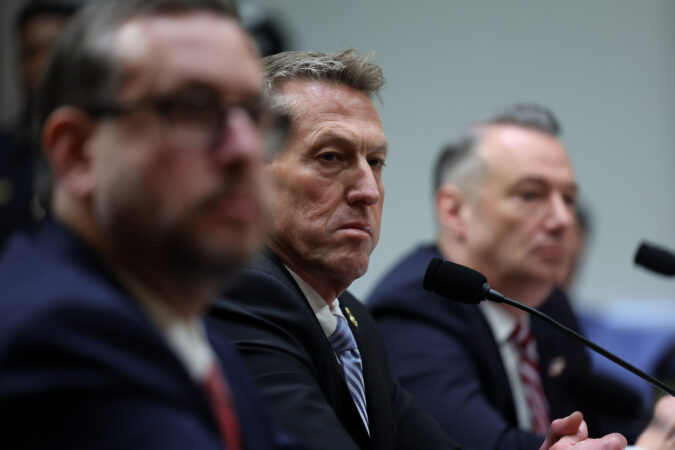
    The hearing’s witnesses included Todd Lyons, the acting director of Immigration and Customs Enforcement; Rodney Scott, who heads Customs and Border Protection, and Joseph Edlow, who runs U.S. Citizenship and Immigration Services. The same officials appeared in front of a House committee earlier this week.

    Paul’s comments were a strong rebuke of the conduct by CBP officers who ultimately shot and killed Pretti on Jan. 24 in Minneapolis.

    “It’s clearly evident that the public trust has been lost. To restore trust in ICE and Border Patrol they must admit their mistakes, be honest and forthright with their rules of engagement and pledge to reform,” Paul said in his opening statements.

    But Paul, who’s often shown a willingness to buck party line, was the lone Republican voice questioning the immigration officers’ conduct with others steering clear of any criticism. Democrats also weighed in with sharp condemnation of the shooting and, more broadly, on how officers from those agencies are using force when carrying out their responsibilities.

    Scott disputed that Pretti wasn’t a threat.

    “What I’m seeing is a subject that’s also not complying. He’s not following any guidance. He’s fighting back nonstop,” said Scott.

    Lyons disputed claims that his officers are not held accountable. He said in the year since Trump took office, ICE has opened 37 investigations for excessive force; 18 were closed, 19 are still pending and one was been referred for “further action,” he said.

    The shooting death of Pretti, along with another American citizen, Renee Good, who were protesting immigration enforcement in Minnesota, sparked outrage and prompted changes to the Minnesota operation. On Thursday, Trump’s border czar, Tom Homan, announced that he was winding down the operation, which at one point included 3,000 ICE and CBP officers.

    Sen. Richard Blumenthal pushed Lyons to explain a memo he wrote justifying the use of administration warrants — documents signed by an ICE officer and not an independent judge — to forcibly enter a home to make an arrest.

    The Associated Press reported last month that ICE was asserting sweeping power through the use of administrative warrants in its enforcement operations.

    Administrative warrants historically have not been sufficient to overcome Fourth Amendment protections that guard against illegal searches.

    Lyons defended the practice, arguing that there is case law in Minnesota that allows officers to enter a home to catch a fugitive using only an administrative warrant.

    Blumenthal, who compared the ICE’s administrative warrants to a permission slip, said they aren’t enough to overcome constitutional protections.

    Other Republicans directed their toughest questioning toward an earlier panel of Minnesota officials. When questioning Lyons and Scott, they focused not on the officers’ tactics but on the threats they said ICE and CBP officers faced in carrying out their jobs.

    Sen. Ron Johnson, a Wisconsin Republican, asked Lyons to talk about the “violence, the threats, the doxing against ICE officers.”

    “That’s where I’ve got a great deal of sympathy for people trying to enforce law,” he said.

  • White House fires new U.S. attorney in N.Y. within hours of his appointment

    White House fires new U.S. attorney in N.Y. within hours of his appointment

    Federal judges in Albany, N.Y., appointed a new U.S. attorney on Wednesday, exercising a rarely invoked legal authority to appoint top prosecutors in regions without a Senate-confirmed nominee.

    Their choice lasted less than five hours on the job.

    Donald T. Kinsella, a 79-year-old former prosecutor and registered Republican, was summarily fired via an email from the White House later that evening, Justice Department officials said.

    The move underscored a growing point of tension between the Trump administration and courts in parts of the country where the president’s controversial picks for U.S. attorney have been unable to win Senate support.

    Kinsella’s swift termination also sent a signal to judges in several other federal court districts, including the Eastern District of Virginia, who have recently announced plans to make similar replacements of Trump-installed prosecutors whose appointments have been deemed invalid by the courts.

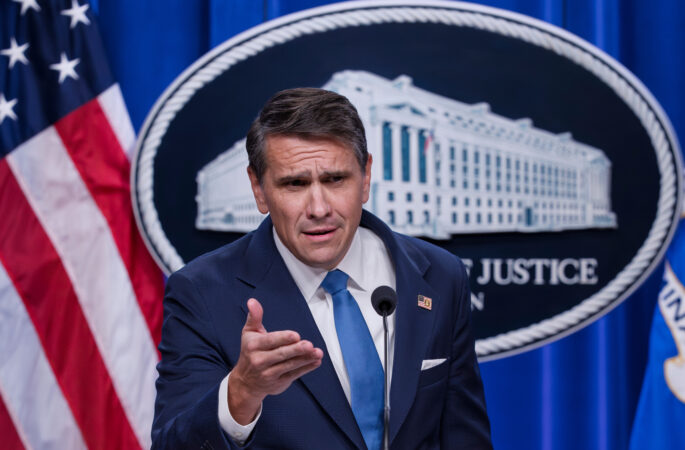
    “Judges don’t pick U.S. Attorneys, @POTUS does,” Deputy Attorney General Todd Blanche, said in a social media post late Wednesday. “See Article II of our Constitution. You are fired, Donald Kinsella.”

    Kinsella did not immediately respond to requests for comment Wednesday morning. And it was not immediately clear whether federal judges in Albany had any recourse to counter the White House’s decision.

    When administration officials similarly fired a new U.S. attorney whom federal judges in New Jersey appointed in July to replace Alina Habba, President Donald Trump’s former personal lawyer and pick for the position there, there was little formal response from the courts.

    Typically, U.S. attorneys, who wield broad prosecutorial discretion to pursue civil and criminal matters in their districts, are nominated by the president and confirmed or rejected in a Senate vote. But federal law empowers judges to name acting U.S. attorneys when there is no lawfully serving appointee or Senate-confirmed presidential pick serving in the role.

    Before his appointment Wednesday, Kinsella had most recently worked as a senior counsel to Albany-based law firm Whiteman Osterman & Hanna. He had served a previous stint in the U.S. attorney’s office in Albany from 1989 to 2002.

    The judges named him to lead the office as a replacement for John A. Sarcone III — a Trump loyalist whom the Justice Department appointed to serve in the position on an interim basis in March.

    Before his appointment, Sarcone had never worked as a prosecutor and most recently had served as a regional administrator for the General Services Administration.

    His tenure as interim U.S. attorney has been marked by a series of controversies, including an incident in June in which he announced a knife-wielding undocumented immigrant from El Salvador had tried to kill him outside an Albany hotel.

    Surveillance footage later showed the man did not come close to Sarcone with his weapon, and charges brought by a local prosecutor were downgraded from attempted murder to a misdemeanor.

    Sarcone had also launched an investigation over the summer into New York Attorney General Letitia James (D), probing whether her office had violated Trump’s civil rights when it secured a multimillion-dollar fraud judgment against him and his real estate empire in 2024.

    As part of a legal challenge from James, a federal judge ruled in January that Sarcone had been serving unlawfully in his position for months well beyond the 120-day limit federal law places on interim U.S. attorney picks.

    But like other interim U.S. attorney picks by Trump who have faced similar disqualification rulings in Los Angeles, Nevada, New Mexico and Alexandria, Va., Sarcone refused to immediately vacate the job. He continues leading the office.

    Until recently, judges in districts like Sarcone’s have been reticent to exercise their authority to appoint prosecutors counter to the Trump administration’s wishes.

    Last month, though, the chief federal judge in the Eastern District of Virginia announced the courts there would be accepting applications for a U.S. attorney to replace Lindsey Halligan, another former Trump lawyer named interim U.S. attorney only to be later disqualified by the courts. She left her post in January.

    The judges in Virginia have not yet named a replacement.

    Federal judges in Seattle have similarly been soliciting applications to potentially appoint a new acting U.S. attorney there, after the term of the Trump administration’s interim pick expired this month.

  • Trump’s EPA revokes scientific finding that underpinned U.S. fight against climate change

    Trump’s EPA revokes scientific finding that underpinned U.S. fight against climate change

    WASHINGTON — The Trump administration on Thursday revoked a scientific finding that long has been the central basis for U.S. action to regulate greenhouse gas emissions and fight climate change, the most aggressive move by the Republican president to roll back climate regulations.

    The rule finalized by the Environmental Protection Agency rescinds a 2009 government declaration known as the endangerment finding that determined that carbon dioxide and other greenhouse gases threaten public health and welfare. The Obama-era finding is the legal underpinning of nearly all climate regulations under the Clean Air Act for motor vehicles, power plants and other pollution sources that are heating the planet.

    The repeal eliminates all greenhouse gas emissions standards for cars and trucks and could unleash a broader undoing of climate regulations on stationary sources such as power plants and oil and gas facilities, experts say. Legal challenges are near certain.

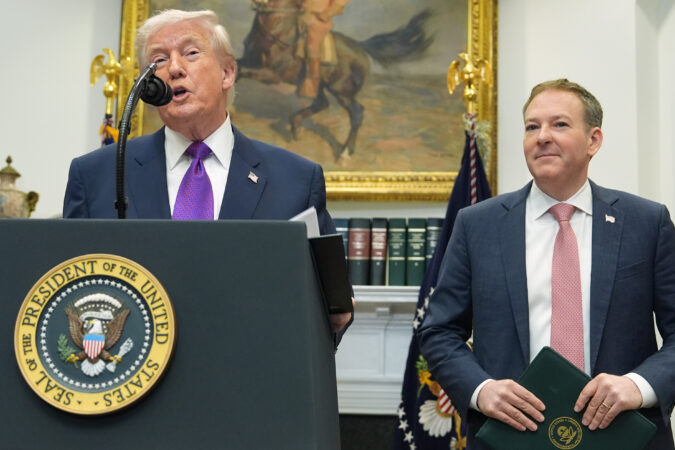
    President Donald Trump called the move “the single largest deregulatory action in American history, by far,” while EPA Administrator Lee Zeldin called the endangerment finding “the Holy Grail of federal regulatory overreach.”

    Trump called the endangerment finding “one of the greatest scams in history,” claiming falsely that it “had no basis in fact” or law. “On the contrary, over the generations, fossil fuels have saved millions of lives and lifted billions of people out of poverty all over the world,” Trump said at a White House ceremony, although scientists across the globe agree that carbon dioxide and other greenhouse gases are driving catastrophic heat waves and storms, droughts and sea level rise.

    Environmental groups described the move as the single biggest attack in U.S. history against federal authority to address climate change. Evidence backing up the endangerment finding has only grown stronger in the 17 years since it was approved, they said.

    “This action will only lead to more climate pollution, and that will lead to higher costs and real harms for American families,” said Fred Krupp, president of Environmental Defense Fund, adding that the consequences would be felt on Americans’ health, property values, water supply and more.

    The EPA also said it will propose a two-year delay to a Biden-era rule restricting greenhouse gas emissions by cars and light trucks. And the agency will end incentives for automakers who install automatic start-stop ignition systems in their vehicles. The device is intended to reduce emissions, but Zeldin said “everyone hates” it.

    Zeldin, a former Republican congressman who was tapped by Trump to lead EPA last year, has criticized his predecessors in Democratic administrations, saying that in the name of tackling climate change, they were “willing to bankrupt the country.”

    The endangerment finding “led to trillions of dollars in regulations that strangled entire sectors of the United States economy, including the American auto industry,” Zeldin said. “The Obama and Biden administrations used it to steamroll into existence a left-wing wish list of costly climate policies, electric vehicle mandates and other requirements that assaulted consumer choice and affordability.”

    The endangerment finding and the regulations based on it “didn’t just regulate emissions, it regulated and targeted the American dream. And now the endangerment finding is hereby eliminated,” Zeldin said.

    Supreme Court has upheld the endangerment finding

    The Supreme Court ruled in a 2007 case that planet-warming greenhouse gases, caused by the burning of oil and other fossil fuels, are air pollutants under the Clean Air Act.

    Since the high court’s decision, in a case known as Massachusetts v. EPA, courts have uniformly rejected legal challenges to the endangerment finding, including a 2023 decision by the U.S. Court of Appeals for the District of Columbia Circuit.

    The endangerment finding is widely considered the legal foundation that underpins a series of regulations intended to protect against threats made increasingly severe by climate change. That includes deadly floods, extreme heat waves, catastrophic wildfires and other natural disasters in the United States and around the world.

    Gina McCarthy, a former EPA administrator who served as White House climate adviser in the Biden administration, called the Trump administration’s actions reckless. “This EPA would rather spend its time in court working for the fossil fuel industry than protecting us from pollution and the escalating impacts of climate change,” she said.

    Former President Barack Obama said on X that repeal of the endangerment finding will make Americans “less safe, less healthy and less able to fight climate change — all so the fossil fuel industry can make even more money.”

    Dr. Lisa Patel, a pediatrician and executive director of the Medical Society Consortium on Climate and Health, said Trump’s action “prioritizes the profits of big oil and gas companies and polluters over clean air and water” and children’s health.

    “As a result of this repeal, I’m going to see more sick kids come into the Emergency Department having asthma attacks and more babies born prematurely,” she said in a statement. “My colleagues will see more heart attacks and cancer in their patients.”

    David Doniger, a climate expert at the Natural Resources Defense Council, said Trump and Zeldin are trying to use repeal of the finding as a “kill shot’’ that would allow the administration to make nearly all climate regulations invalid. The repeal could erase current limits on greenhouse gas pollution from cars, factories, power plants and other sources and could hinder future administrations from imposing rules to address global warming.

    The EPA action follows an executive order from Trump that directed the agency to submit a report on “the legality and continuing applicability” of the endangerment finding. Conservatives and some congressional Republicans have long sought to undo what they consider overly restrictive and economically damaging rules to limit greenhouse gases that cause global warming.

    Withdrawing the endangerment finding “is the most important step taken by the Trump administration so far to return to energy and economic sanity,” said Myron Ebell, a conservative activist who has questioned the science behind climate change.

    Tailpipe emission limits targeted

    Zeldin and Transportation Secretary Sean Duffy have moved to drastically scale back limits on tailpipe emissions from cars and trucks. Rules imposed under Democratic President Joe Biden were intended to encourage U.S. automakers to build and sell more electric vehicles. The transportation sector is the largest source of greenhouse gas emissions in the U.S.

    The Trump administration announced a proposal in December to weaken vehicle mileage rules for the auto industry, loosening regulatory pressure on automakers to control pollution from gasoline-powered cars and trucks. The EPA said its two-year delay to a Biden-era rule on greenhouse gas emissions by cars and light trucks will give the agency time to develop a plan that better reflects the reality of slower EV sales, while promoting consumer choice and lowering prices.

    Environmental groups said the plan would keep polluting, gas-burning cars and trucks on U.S. roads for years to come, threatening the health of millions of Americans, particularly children and the elderly.

  • Howard Lutnick’s name is on the library at Haverford College. Will that change after his appearance in the Epstein files?

    Howard Lutnick’s name is on the library at Haverford College. Will that change after his appearance in the Epstein files?

    As U.S. Commerce Secretary Howard Lutnick’s relationship with Jeffrey Epstein gains new scrutiny, questions have emerged on Haverford College’s campus about how to address their mega-donor’s involvement.

    Lutnick, a 1983 Haverford graduate who has donated $65 million to the college and whose name is on the school’s library, had contact with the late financier as recently as 2018, long after Epstein pleaded guilty to obtaining a minor for prostitution and soliciting a prostitute, according to documents released by the Justice Department. And during congressional testimony this week, he said he visited the sex offender’s private island with his family in 2012. That’s even though Lutnick previously said he had not been in a room with Epstein, whom he found “disgusting,” since 2005.

    At Haverford, where the library at the heart of campus is named after Lutnick, two students have floated a proposal to remove Lutnick’s name from the building and wrote a resolution that could be discussed at a forthcoming student-led meeting, according to the Bi-College News, the student newspaper for Haverford and Bryn Mawr Colleges. Fliers that say “Howard Lutnick is in the Epstein Files — What Now?” have been posted around campus, according to the publication.

    And in an email to campus Thursday, Wendy Raymond, president of the highly selective liberal arts college on the Main Line, said she and the board of managers are monitoring the situation.

    “We recognize that association with Epstein raises ethical questions,” she wrote. “While Secretary Lutnick’s association with Epstein has no direct bearing on the College, as an institution, we are committed to our core values and cognizant of broader ethical implications raised by these disclosures.”

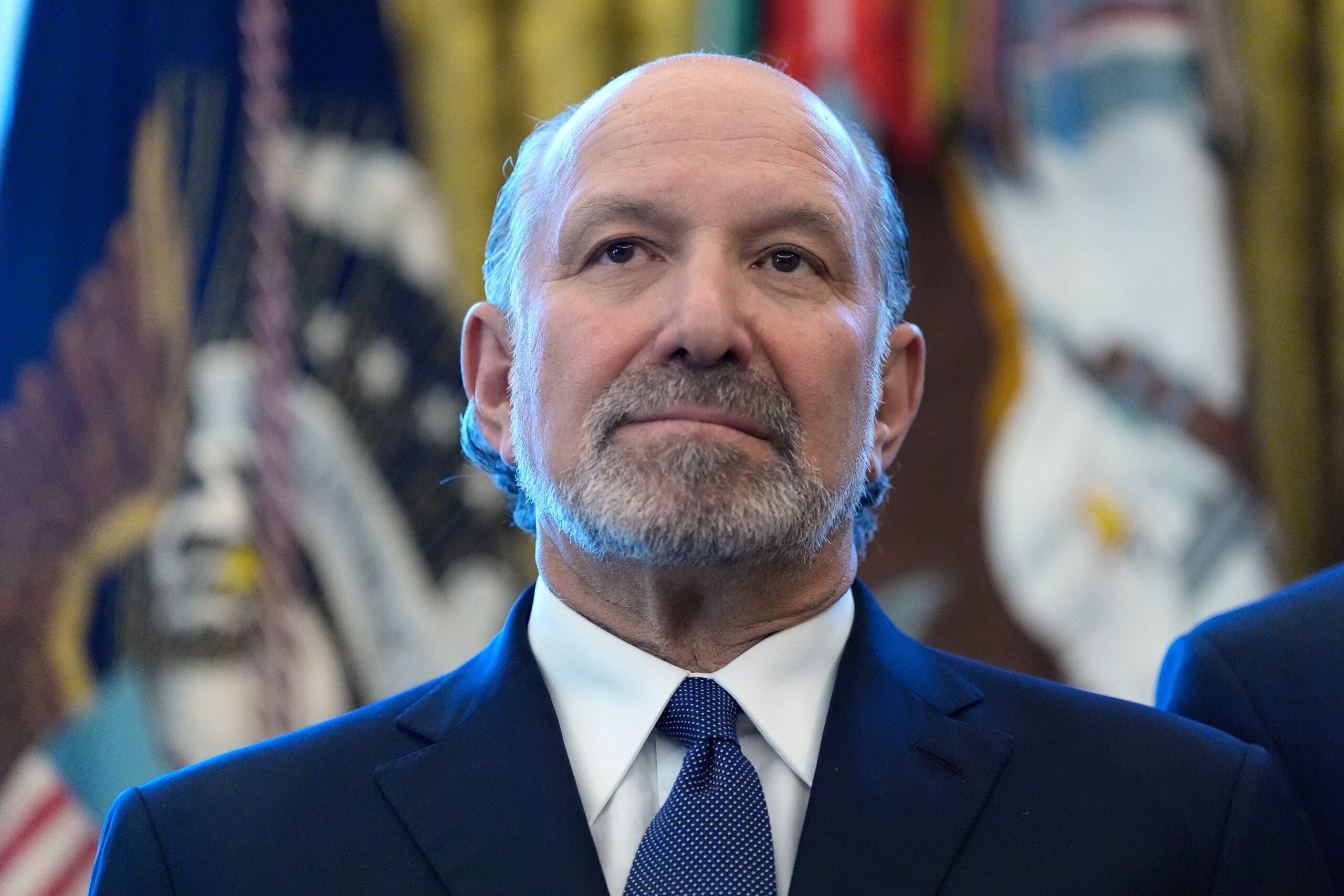
    Commerce Secretary Howard Lutnick listens during an event with President Donald Trump in the Oval Office of the White House earlier this month.

    A Commerce Department spokesperson told the Associated Press last month that Lutnick had had “limited interactions” with Epstein, with his wife in attendance, and had not been accused of “wrongdoing.” Lutnick told lawmakers this week: “I did not have any relationship with him. I barely had anything to do with him.”

    Lutnick, formerly chairman of Cantor Fitzgerald L.P., a New York City financial firm that lost hundreds of employees in the 9/11 World Trade Center attacks, served on Haverford’s board for 21 years and once chaired it. In addition to the library, the indoor tennis and track center bears the name of his brother Gary Lutnick, a Cantor Fitzgerald employee who was killed on 9/11, and the fine arts building carries the name of his mother, Jane Lutnick, a painter. He also funded the college’s Cantor Fitzgerald Art Gallery.

    In making a $25 million gift to the college in 2014 — which remains tied for the largest donation Haverford has received — Lutnick told The Inquirer the college had helped him during a particularly difficult period. He lost his mother to cancer when he was a high school junior, and one week into his freshman year at Haverford, where he was an economics major, his father died as the result of a tragic medical mistake.

    The then-president of Haverford called Lutnick and told him his four years at Haverford would be free.

    “Haverford was there for me,” Lutnick said, “and taught me what it meant to be a human being.”

    Lutnick’s gift was used to make the most significant upgrades to the library in 50 years. Lutnick left Haverford’s board in 2015.

    He was confirmed as commerce secretary a year ago, after President Donald Trump took office for the second time. Since the Epstein documents were released, Lutnick has faced bipartisan calls to resign.

    Some in the Haverford community have spoken out online about Lutnick’s ties to Epstein.

    “How soon can we petition to make Magill Magill again,” one alum, who said they were at Haverford when Lutnick attended, wrote anonymously on a Reddit thread, referring to the library’s prior name. “More urgently, does Haverford plan to express compassion and support for the survivors and publicly condemn Lutnick for his involvement?”

    The Haverford Survivor Collective’s executive board, a group founded in 2023 and led by Haverford students and survivors of sexual assault, also called on the college to “re-examine” its ties to Lutnick.

    “At what point will the College confront its relationship with this individual?” the group asked. “At what point will it say, unequivocally, ‘enough is enough’? At what point does a reluctance to do so extend beyond mere negligence into a moral failing?”

    The outside of the Lutnick Library at Haverford College

    Push to rename the library

    Earlier this month during a Plenary Resolution Writing Workshop — part of Haverford’s student self-governance process — students Ian Trask and Jay Huennekens put forth a resolution that would change the name of the library, the student newspaper reported.

    At plenary sessions, which take place twice a year in the fall and spring, the student body discusses and votes on important campus issues. On March 23, a packet of plenary resolutions will be released to the student body, with the plenary session scheduled for March 29.

    “We feel that it is important that the college reflect the values of the student body, and that those values do not align with the Trump administration or the associates of Jeffrey Epstein,” the students told the Bi-Co News.

    Attempts to reach Trask and Huennekens were unsuccessful.

    If the student resolution passes, it would go to Raymond for signing.

    But even then, it’s no easy feat to remove a name from a college building. There would be a review process involving the board of managers that could take a while.

    Under Haverford’s gift policy, the school can rename a building if “the continued use of the name may be deemed detrimental to the College, or if circumstances change regarding the reason for the naming.”

    Raymond would have to convene a committee, consider that committee’s recommendations, and make her recommendation to the external affairs committee of the board of managers and its chair and vice chair. The external affairs committee then would make its recommendation to the full board of managers.

    At nearby Bryn Mawr College, it took years before M. Carey Thomas’ name was removed from the library. Thomas, who was Bryn Mawr’s second president, serving from 1894 to 1922, was a leading suffragist, but also was reluctant to admit Black students and refused to hire Jewish faculty.

    In 2017, then-Bryn Mawr president Kim Cassidy issued a moratorium on using Carey’s name while the college studied how to handle the matter. A committee in 2018 decided students, faculty, students, and staff should no longer refer to the library using Thomas’ name, but decided to leave the inscription and add a plaque explaining the complicated history.

    The college faced continued pressure from students to take further action and removed Thomas’ name in 2023.

    Other colleges have taken similar actions. Princeton University in 2020 stripped former President Woodrow Wilson’s name from its public affairs school and presidential college.

  • Speaker Johnson says he disapproves of Justice Department logging lawmaker searches of Epstein files

    Speaker Johnson says he disapproves of Justice Department logging lawmaker searches of Epstein files

    WASHINGTON — Republican House Speaker Mike Johnson said Thursday that he did not think it was appropriate for the Justice Department to be tracking the search histories of lawmakers who are reviewing files from the Jeffrey Epstein investigation.

    The rare rebuke to the Trump administration came as photographs emerged revealing an apparent index of records reviewed by a Democratic member of Congress who was among the lawmakers given an opportunity to read less-redacted versions of the Epstein files at a department annex and on department-owned computers.

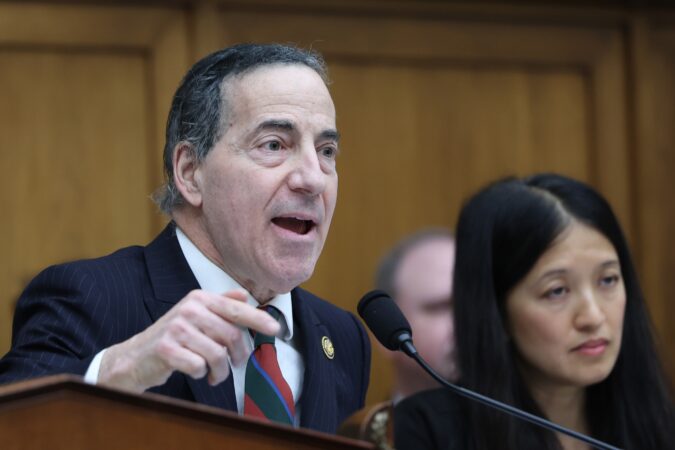
    Rep. Jamie Raskin, the top Democrat on the House Judiciary Committee, asked the Justice Department’s inspector general to investigate what he characterized as “spying,” and Johnson, a close ally of President Donald Trump, offered his own scolding when asked about the issue Thursday.

    “I think members should obviously have the right to peruse those at their own speed and with their own discretion. I don’t think it’s appropriate for anybody to be tracking that,” Johnson told reporters. “I will echo that to anybody involved with the DOJ — and I’m sure it was an oversight.”

    The Justice Department said in a statement that, as part of the process of permitting lawmakers to review the Epstein files, it “logs all searches made on its systems to protect against the release of victim information.”

    Photographs taken during Attorney General Pam Bondi’s hearing before the House Judiciary Committee on Wednesday showed her with a printout that said “Jayapal Pramila Search History” and that listed a series of documents that were apparently reviewed. Pramila Jayapal, a Democratic congresswoman from Washington state, was among the Judiciary Committee members who pressed Bondi during the hearing about the department’s handling of the Epstein files.

    Jayapal called it “totally unacceptable” and said lawmakers will be “demanding a full accounting” of how the department is using the search history.

    “Bondi has enough time to spy on Members of Congress, but can’t find it in herself to apologize to the survivors of Epstein’s horrific abuse,” Jayapal said in a post on X.

    The Justice Department statement did not explain why Bondi came to the House hearing with information on lawmaker searches.

    A bipartisan contingent of lawmakers has traveled in recent days to a Justice Department outpost to review less-redacted records from the files, but some who have seen the documents have complained that too much information about Epstein associates remains withheld from view. The Trump administration Justice Department said last month that it was releasing more than 3 million pages along with more than 2,000 videos and 180,000 images related to Epstein investigations.

    In a statement, Raskin said that not only had the Justice Department withheld records from lawmakers “but now Bondi and her team are spying on members of Congress conducting oversight in yet another blatant attempt to intrude into Congress’s oversight processes.”

    He added: “DOJ must immediately cease tracking any Members’ searches, open up the Epstein review to senior congressional staff, and publicly release all files — with all the survivors’ information, and only the survivors’ information, properly redacted — as required by federal law.”

  • Deaths in Iran’s crackdown on protests reach at least 7,000, activists say

    Deaths in Iran’s crackdown on protests reach at least 7,000, activists say

    DUBAI, United Arab Emirates — The death toll from a crackdown over Iran’s nationwide protests last month has reached at least 7,003 people killed with many more still feared dead, activists said Thursday.

    The continued rise in the tally of the dead from the demonstrations adds to the overall tensions facing Iran both inside the country and abroad as it tries to negotiate with the United States over its nuclear program. A second round of talks remains up in the air as Israeli Prime Minister Benjamin Netanyahu pressed his case directly with President Donald Trump to intensify his demands on Tehran in the negotiations.

    “There was nothing definitive reached other than I insisted that negotiations with Iran continue to see whether or not a Deal can be consummated. If it can, I let the Prime Minister know that will be a preference,” Trump wrote afterward on his Truth Social website.

    “Last time Iran decided that they were better off not making a Deal, and they were hit. … That did not work well for them. Hopefully this time they will be more reasonable and responsible.”

    Trump told reporters at the White House Thursday that Iran should come to an agreement with US “very quickly.” Asked about his timeline for striking a deal with Iran over its nuclear program, Trump said, “I guess over the next month, something like that.”

    Trump, who is seeking a deal to constrain Iran’s nuclear program and who also has suggested the U.S. might take military action in response to Iran’s crackdown on protesters, warned Iran that failure to reach a deal with his administration would be “very traumatic.”

    Meanwhile, Netanyahu told reporters before boarding a plane to return to Israel that Trump believes that his terms and Iran’s “understanding that they made a mistake the last time when they did not reach an agreement, may lead them to agree to conditions that will enable a good agreement to be reached.”

    Netanyahu said he “did not hide” his own “general skepticism” about any deal, and stressed that any agreement must include concessions about Iran’s ballistic missiles program and support for militant proxies, not just the Islamic Republic’s nuclear program. He described talks with the U.S. president as “excellent.”

    Meanwhile, Iran at home faces still-simmering anger over its wide-ranging suppression of all dissent in the Islamic Republic. That rage may intensify in the coming days as families of the dead begin marking the traditional 40-day mourning for the loved ones.

    Activists’ death toll slowly rises

    The U.S.-based Human Rights Activists News Agency — which offered the latest figure of 7,003 people killed, including 214 government forces — has been accurate in counting deaths during previous rounds of unrest in Iran and relies on a network of activists in Iran to verify deaths. The continuing rise in the death toll has come as the agency slowly is able to crosscheck information as communication remains difficult with those inside of the Islamic Republic.

    Iran’s government offered its only death toll on Jan. 21, saying 3,117 people were killed. Iran’s theocracy in the past has undercounted or not reported fatalities from past unrest.

    The Associated Press has been unable to independently assess the death toll, given authorities have disrupted internet access and international calls in Iran.

    Diplomacy over Iran continues

    Senior Iranian security official Ali Larijani met Wednesday in Qatar with Foreign Minister Sheikh Mohammed bin Abdulrahman Al Thani. Qatar hosts a major U.S. military installation that Iran attacked in June, after the U.S. bombed Iranian nuclear sites during the 12-day Iran-Israel war in June. Larijani also met with officials of the Palestinian Hamas militant group, and in Oman with Tehran-backed Houthi rebels from Yemen on Tuesday.

    Larijani told Qatar’s Al Jazeera satellite news network that Iran did not receive any specific proposal from the U.S. in Oman, but acknowledged that there was an “exchange of messages.”

    Qatar has been a key negotiator in the past with Iran, with which it shares a massive offshore natural gas field in the Persian Gulf. Its state-run Qatar News Agency reported that ruling emir Sheikh Tamim bin Hamad Al Thani spoke with Trump about “the current situation in the region and international efforts aimed at de-escalation and strengthening regional security and peace,” without elaborating.

    The U.S. has moved the aircraft carrier USS Abraham Lincoln, ships and warplanes to the Middle East to pressure Iran into an agreement and have the firepower necessary to strike the Islamic Republic should Trump choose to do so.

    Already, U.S. forces have shot down a drone they said got too close to the Lincoln and came to the aid of a U.S.-flagged ship that Iranian forces tried to stop in the Strait of Hormuz, the narrow mouth of the Persian Gulf.

    Trump told the news website Axios that he was considering sending a second carrier to the region. “We have an armada that is heading there and another one might be going,” he said.

    Concern over Nobel Peace laureate

    Meanwhile, the Norwegian Nobel Committee said it was “deeply appalled by credible reports detailing the brutal arrest, physical abuse and ongoing life‑threatening mistreatment” of 2023 Peace Prize laureate Narges Mohammadi.

    The committee that awards the prize said it had information Mohammadi had been beaten during her arrest in December and continued to be mistreated. It called for her immediate and unconditional release.

    “She continues to be denied adequate, sustained medical follow‑up while being subjected to heavy interrogation and intimidation,” the committee said. “She has fainted several times, suffers from dangerously high blood pressure and has been prevented from accessing necessary follow‑up for suspected breast tumors.”

    Iran just sentenced Mohammadi, 53, to seven more years in prison. Supporters had warned for months before her arrest that she was at risk of being put back into prison after she received a furlough in December 2024 over medical concerns.

  • Ukrainian athlete barred from Olympic skeleton event over helmet images

    Ukrainian athlete barred from Olympic skeleton event over helmet images

    MILAN — A Ukrainian skeleton athlete was barred from competing at the Winter Olympics just hours before his race Thursday after he refused to remove a helmet honoring compatriots killed in Russia’s invasion of Ukraine. It is the latest twist in a controversy that has cast a shadow over the opening days of these Games.

    Vladyslav Heraskevych was removed from the starting list for the men’s skeleton event after the jury of the International Bobsleigh and Skeleton Federation ruled that the helmet he intended to wear violated the Olympic Charter and the International Olympic Committee’s Guidelines on Athlete Expression.

    His removal came after an early morning meeting with IOC President Kirsty Coventry that an IOC spokesman described as “respectful,” in which Coventry tried to find a way for Heraskevych to compete wearing a different helmet, but he refused.

    Heraskevych has appealed his disqualification to the Court of Arbitration for Sport, arguing that he violated no Olympic rules and was denied the same treatment afforded to other athletes.

    The men’s skeleton event began Thursday morning in Cortina d’Ampezzo without Heraskevych. Two qualifying heats were run Thursday in the men’s skeleton event. Heraskevych is arguing he should either be allowed back into the semifinal Friday or be allowed to do a run by himself, supervised by race officials. CAS, which has an ad hoc division at the Games, has 24 hours to rule, but Heraskevych would need a quick ruling.

    Later Thursday, Ukrainian President Volodymyr Zelensky awarded the Order of Freedom to Heraskevych. The decree said the award is for “selfless service to the Ukrainian people, civic courage, and patriotism in defending the ideals of freedom and democratic values.”

    “I never wanted a scandal with the IOC, and I did not create one,” Heraskevych said in Ukrainian in a social media video. “The IOC created it through its interpretation of the rules, which many consider discriminatory. While the IOC’s actions made it possible to speak loudly about Ukrainian athletes who were killed, the very existence of the scandal diverts a huge amount of attention away from the competition itself and from the athletes taking part in it. That is why I, once again, propose bringing this scandal to an end.”

    Ukraine’s Vladyslav Heraskevych takes part in the skeleton men’s training session at Cortina Sliding Centre during the Milano Cortina 2026 Winter Olympic Games in Cortina d’Ampezzo on February 11, 2026.

    The IOC had been wrestling with the matter for several days. The Olympic governing body said under long-standing Olympic rules, athletes are prohibited from making political demonstrations on the field of play or during medal ceremonies. In recent days, IOC officials worked repeatedly with Heraskevych and Ukrainian team officials to come up with a compromise. He was allowed to wear the helmet during training runs and the IOC first suggested he wear a black armband, eventually offering him a chance to wear the helmet after he finished his competition run as well as carry it through the post-event interview area known as the mixed zone.

    “We dearly wanted him to compete,” IOC spokesman Mark Adams said in a Thursday morning news conference in Milan. “It would have sent a very powerful message. We were happy to provide him with a number of occasions to express his grief.”

    The IOC originally said Heraskevych would be stripped of his accreditation, meaning he would likely be forced to leave the Games, but after Coventry appealed to the IOC’s disciplinary commission, she announced he will be allowed to remain at the Olympics.

    Athlete protests have long been a thorny issue for the IOC, whose officials have wrestled for years with trying to balance the right for athletes to speak about controversial causes while also maintaining the neutrality the organization feels it must have to be fair to all countries. It tries to stamp out any indication of protest in actual competition.

    “Sport without rules cannot function,” Adams said. “If we have no rules, we have no sport.”

    Russia’s 2022 full-scale invasion of Ukraine has been particularly challenging for the IOC. The organization moved quickly to push global sports federations to suspend Russian teams from competitions, then barred the Russian Olympic Committee over Russia’s attempts to claim athletes in seized Ukrainian territories as Russian. In the Paris 2024 Games and in Milan Cortina, the IOC is allowing a handful of Russian athletes to compete as what it calls individual neutral athletes, forbidding them to show support for Russia’s aggression in Ukraine and prohibiting them from wearing Russian colors or displaying Russian flags.

    The IOC’s hard line against Russia has appeared to soften in recent months, and many in the Olympic world expect the IOC to find a way to bring Russia back before the 2028 Los Angeles Olympics. The IOC’s slight warming toward Russia has alarmed Ukrainians, however.

    Heraskevych said he plans to appeal his disqualification to the Court of Arbitration for Sport, arguing that he violated no Olympic rules and was denied the same treatment afforded to other athletes. CAS, which has an ad hoc division at the Games, had not registered a complaint before Thursday’s qualifying runs.

    “I still believe we did not break any rules and had every right to compete wearing that helmet, on equal terms with other athletes who did similar things earlier at these Olympic Games,” Heraskevych said Thursday in comments to Ukrainian public broadcaster Suspilne Sport.

    Heraskevych challenged IOC claims that the helmet with the faces of the deceased athletes is a political statement.

    “The helmet itself carries no political message,” Heraskevych said. “I believe I had the full right to compete in it.”

    He expressed “serious doubts” about Coventry’s commitment to Ukraine and balked at the idea of wearing the helmet before and after the race.

    “I believe I deserve the same rights as athletes in other sports from other countries,” Heraskevych said. “For some reason, I was not granted those rights.”

    His father and coach, Mykhailo Heraskevych, said Coventry argued during their meeting that displaying images of athletes killed by Russia could “create chaos” within the Olympic movement and interfere with celebration of the Games.

    “It felt like bargaining,” Mykhailo Heraskevych said. “That is unacceptable, because the memory of Ukrainian heroes is not for sale, and never will be.”

    He added that the origins of the Olympic Games lie in honoring fallen warriors. “Our helmet emphasized the very foundation of the Olympic tradition,” he said. “It is painful that the IOC — and its president, herself an Olympic champion — appear to have forgotten that history.”

    “Vlad was in peak condition. Based on recent training results, he would have been competing in the medal zone,” he said. “That opportunity was taken away. But more importantly, the IOC attempted to erase the memory of Ukrainian heroes.”

    He argued that the disqualification extended beyond the athlete.

    “The IOC did not disqualify Vladyslav — it disqualified Ukraine,” he said, citing support from Ukraine’s president, parliament, sports ministry, national Olympic committee and frontline soldiers. “This is the disqualification of democracy in favor of private interests,” he added, alleging there was pressure from Russia.

    “Sport shouldn’t mean amnesia, and the Olympic movement should help stop wars, not play into the hands of aggressors,” Zelensky said in a message on X. “Unfortunately, the decision of the International Olympic Committee to disqualify Ukrainian skeleton racer Vladyslav Heraskevych says otherwise. This is certainly not about the principles of Olympism, which are founded on fairness and the support of peace.”

    Late Thursday morning, Coventry spoke to reporters near the competition venue and repeated what other IOC officials had said — pulling Heraskevych from the event was not about protecting Russia or silencing Ukrainian athletes.

    “No one — especially me — is disagreeing with the messaging,” she said. “The messaging is a powerful message. It’s a message of remembrance. It’s a message of memory.”

  • Brian Fitzpatrick supports banning masks for ICE agents as lawmakers mull funding and reforms at Department of Homeland Security

    Brian Fitzpatrick supports banning masks for ICE agents as lawmakers mull funding and reforms at Department of Homeland Security

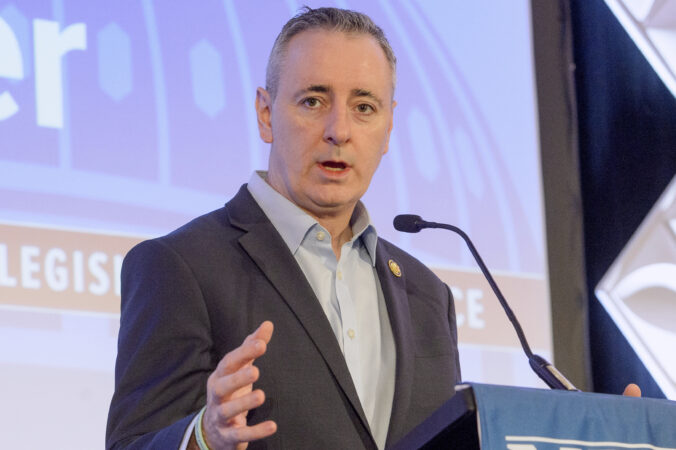
    As the Department of Homeland Security approaches an increasingly likely shutdown this weekend, U.S. Rep. Brian Fitzpatrick (R., Bucks) said reforms to ICE, including banning masks for federal immigration agents, should be a part of any funding extensions for DHS.

    “I’m the only federal agent in Congress,” Fitzpatrick, who served in the FBI for 14 years, said in an interview Thursday. “I spent my whole professional career as an FBI agent. Never once did I wear a mask, never. Executing a search warrant, arrest warrant, you name it, because you need to be transparent. You need to identify yourself. The whole function of policing requires the trust of the public.”

    U.S. Immigration and Customs Enforcement and the U.S. Border Patrol, the agencies involved in the fatal shootings of two American citizens last month in Minnesota, both fall under DHS, which will enter a shutdown if lawmakers do not reach a funding deal by Friday.

    The Border Patrol and ICE would continue to operate after receiving funding from President Donald Trump’s One Big Beautiful Bill Act, but a lapse in funding to DHS would affect other agencies under the department, including the Transportation Security Administration, the Coast Guard, and the Federal Emergency Management Agency, of which many employees would be working without pay.

    Democrats have demanded that restrictions on masking and other changes to immigration enforcement be part of any funding deal.

    Fitzpatrick, who represents a purple district, is rare among Republicans in accepting Democrats’ proposal as Congress grapples with a national reckoning over Trump’s immigration crackdown after federal agents killed Renee Good and Alex Pretti in shootings caught on video.

    “There is broken trust between the public and ICE, and we have to restore that trust,” Fitzpatrick said.

    “And the only way you restore that trust is by enacting reforms that are going to rebuild that social contract,” he continued. “Because policing is a social contract, whether it be local law enforcement or federal law enforcement.”

    In the aftermath of the shootings in Minnesota, the House ended a four-day government shutdown earlier this month by passing a five-bill funding package that excluded DHS. Fitzpatrick, who voted for the House bill, said he would aim to work with Democrats to come up with a solution.

    Negotiations on DHS’s allocation appeared to be at a standstill Thursday ahead of lawmakers going on a 10-day break, making a partial shutdown appear likely. In the U.S. Senate, a vote to advance a funding bill was rejected in a 52-47 tally Thursday, falling short of the necessary 60-vote threshold, the Associated Press reported.

    U.S. Sen. John Fetterman (D., Pa.) was the only Democrat to vote with Republicans for the measure. He also opposes prohibiting ICE agents from wearing masks, putting himself at odds with members of his party.

    “The agents wearing masks, I think primarily that’s driven by people are going to dox those people. That’s a serious concern, too, absolutely,” Fetterman said in a Fox News interview with correspondent Jacqui Heinrich (who is engaged to Fitzpatrick).

    Whether ICE agents should be allowed to wear masks has become a point of contention since the escalation of Trump’s immigration policies, with legislative bodies across the U.S., including in Philadelphia City Council, introducing legislation to prohibit them.

    Fitzpatrick, cochair of the bipartisan Problem Solvers Caucus, said Thursday that he believes there is “unanimity” among lawmakers in Washington for reforms, like requiring ICE agents to wear body cameras and prohibiting them from wearing masks.

    The Bucks County lawmaker, one of nine Republicans representing districts that went for Democratic presidential nominee Kamala Harris in 2024, has frequently touted his willingness to break with Trump on issues, such as voting to extend Affordable Care Act subsidies and opposing the final passage of the One Big Beautiful Bill. (Democratic opponents note that he cast a key vote to advance an earlier version of Trump’s legislation.)

    As for next steps, Fitzpatrick said he and U.S. Rep. Tom Suozzi (D., N.Y.), cochair of the Problem Solvers Caucus with Fitzpatrick, are continuing to communicate with House Speaker Mike Johnson (R., La.) and House Minority Leader Hakeem Jeffries (D., N.Y.) as discussions over DHS funding and changes continue.

    “I would hope that we can all agree that everybody needs to be treated humanely and with respect and with dignity, that everybody believes in upholding the rule of law, everybody believes in the constitutional rights of everybody in this country,” Fitzpatrick said.

  • What’s in Gov. Josh Shapiro’s new housing plan: Protections for Pa. renters, $1 billion for infrastructure, homebuyer support, and more

    What’s in Gov. Josh Shapiro’s new housing plan: Protections for Pa. renters, $1 billion for infrastructure, homebuyer support, and more

    Gov. Josh Shapiro unveiled a broad plan Thursday meant to grow and preserve Pennsylvania’s housing supply as the state faces a shortage of homes residents can afford.

    The plan aims to expand residents’ access to homes, connect Pennsylvanians to resources to keep them housed, make homebuilding faster and less costly, and improve coordination of housing efforts across agencies and levels of government.

    Recommendations and reforms in the state’s Housing Action Plan, which is meant to guide Pennsylvania into 2035, are embedded in the governor’s proposed budget, Shapiro said.

    “And now, the ball is in the court of the legislature to carry this forward and to get it done,” he said at a news conference in Philadelphia.

    The plan is the culmination of a process that started in September 2024, when Shapiro signed an executive order directing state officials to create it.

    In the plan, Shapiro highlights that more than a million Pennsylvania households are spending more than 30% of their income on housing. These households are “cost burdened,” according to the U.S. Department of Housing and Urban Development’s definition. Building more can lower housing costs.

    Shapiro called the plan a long-term housing strategy that “brings together all different groups who are doing this work, builds on their expertise, and tackles housing access and affordability from every single angle.”

    Here are key takeaways from Shapiro’s proposed housing action plan, the first of its kind in Pennsylvania.

    Enacting the plan

    Much of the plan relies on action from lawmakers in the state’s split legislature and other stakeholders rather than Shapiro’s administration exclusively. It does not assign dollar amounts to proposals, but calls on local governments to allow more housing and housing types, on builders to build more, and on both to work together to remove barriers to housing construction.

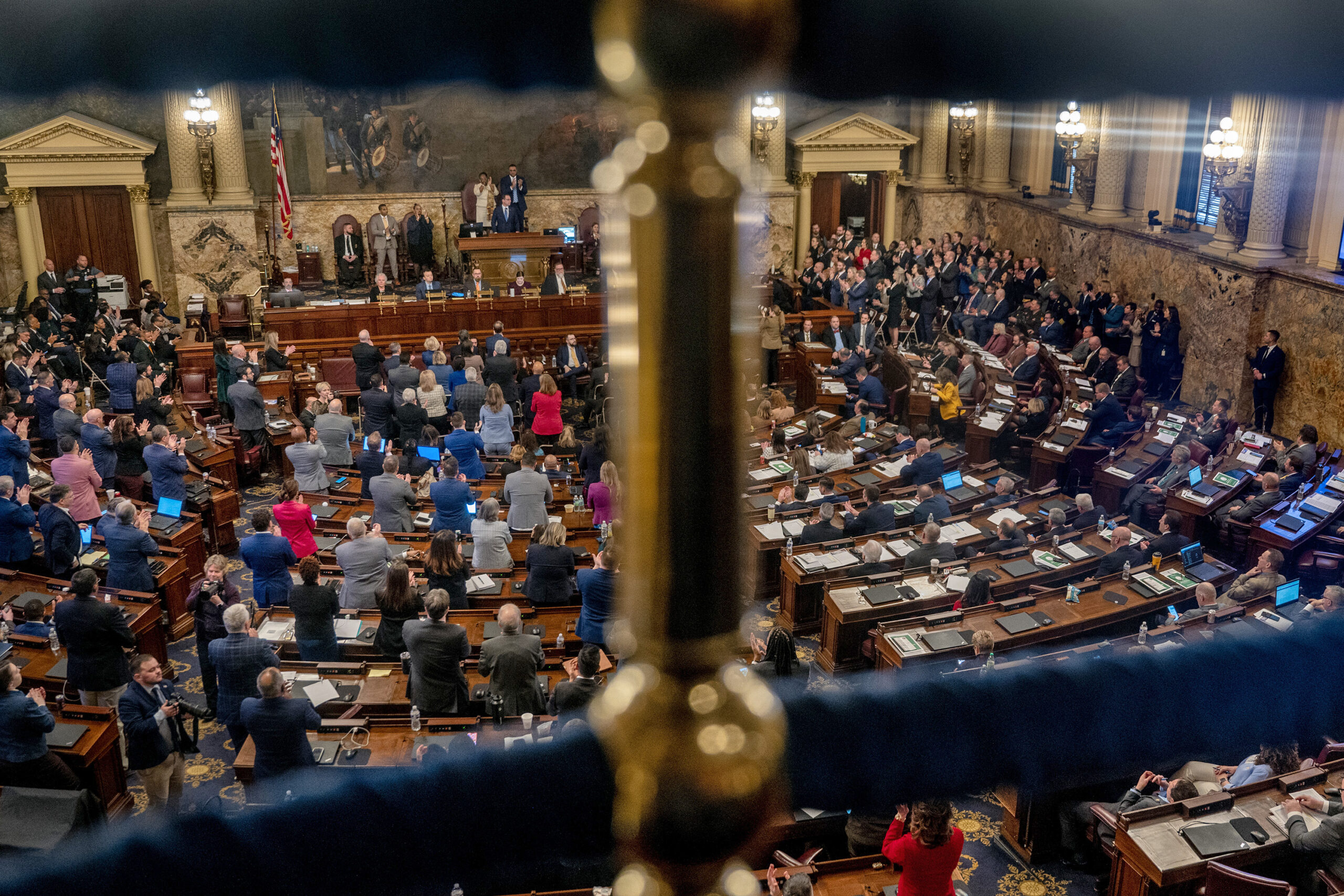
    Democrats (left) stand to applaud a tax cut proposal while Republicans (right) remain seated as Gov. Josh Shapiro delivers his third budget address to a joint session in the House chambers at the State Capitol Tuesday, Feb. 4, 2025.

    When Shapiro was asked how he intends to make sure the housing plan is implemented, he said he can take some actions through executive orders but “a lot does require the legislature to act and to work in concert with local government.”

    “I hear in rural, urban, suburban communities, districts led by Democrats and Republicans, the need for more housing,” Shapiro said. “… And I would say to any lawmaker that doesn’t like my idea, ‘What’s yours?’ Because we can no longer wait. We have got to get this done. We’ve got to build more housing.”

    $1 billion fund

    In his budget address last week, Shapiro previewed his housing priorities, calling for a $1 billion fund, supported by the issuing of bonds, to pay for infrastructure projects that include housing.

    Shapiro’s budget proposal includes no requirements on the proportion of funding that goes to each infrastructure need, leaving the possibility that the majority of funds could be spent on projects other than housing.

    While Shapiro said Thursday that divvying up the $1 billion will be subject to negotiation with lawmakers, he said he hoped “the lion’s share of it would go to housing.”

    Pennsylvania needs more housing

    If Pennsylvania takes no action to build and preserve more housing, it will be short about 185,000 homes by 2035, according to the plan. To keep up with anticipated demand, the state needs to add 450,000 homes to its supply by then.

    The housing plan has a stated goal of turning Pennsylvania into a leader in home construction.

    Construction work on a home at Bancroft and Reed Streets in South Philadelphia, Pa. on Friday, May 1, 2020.

    As it stands now, Pennsylvania is one of the states that have allowed the least new housing. It ranked 44th for the share of homes approved to be built from 2017 to 2023, the Pew Charitable Trusts said in a report released last year. Pew said Pennsylvania’s lack of housing supply is hiking prices for homeowners and renters.

    Shapiro’s housing plan recommends that Pennsylvania:

    • Expand programs to repair and preserve existing homes.
    • Create a tax credit to incentivize home building in underinvested areas.
    • Invest in small residential developers who can help boost housing production.
    • Eliminate outdated or unnecessary state development regulations.
    • Direct funding to help homebuilders pay land development costs, developers convert former commercial buildings into homes, and property owners create mixed-use developments that include housing.
    • Appoint a deputy secretary of housing and create a “housing one-stop shop” to help residents and builders access the state’s existing housing resources.

    Protection for renters

    The housing plan calls for Pennsylvania to bolster protections for households that either rent their homes or rent the land their homes sit on, including protections Shapiro called for in his budget address.

    Suggestions include:

    • More eviction protections.
    • Restrictions on how much landlords can collect as a security deposit.
    • A statewide cap on rental application fees. (Philadelphia City Council members passed their own cap on application fees last year.)
    • Explicitly banning landlords from denying housing to people because they use public assistance or any other lawful source of income. (New Jersey enacted a law last month that does this.)

    Security for manufactured-home owners

    Manufactured homes are single-family dwellings often built off-site and placed on a lot. These households own their homes, but many of them rent the land.

    Manufactured homes represent one of the most affordable forms of homeownership. But homeowners are often left vulnerable because they have no other option than to pay increased rent costs if they want to keep the homes they own. Manufactured-home communities are increasingly being bought by private equity companies and other institutional investors, and rent hikes tend to follow.

    The housing plan says Pennsylvania should:

    • Limit the rent increases that landowners can charge.
    • Make financing easier for buyers of manufactured homes.
    • Give residents of manufactured-home communities the right of first refusal when a landowner decides to sell.

    Recent laws in New Jersey limit annual rent increases for manufactured-home lots and make it easier for residents to buy their communities.

    Across Pennsylvania, 56,000 households live in manufactured-home communities, Shapiro said in his budget address last week.

    Homebuyer help

    The plan calls for Pennsylvania to pursue new ways to help residents become homeowners, including creating programs to reduce home-buying costs and allowing local governments to exempt first-time homebuyers from local realty transfer taxes.

    It also calls for the state to impose a transfer tax when corporate investors buy single-family and certain other types of homes to help households compete for properties.

    Untangling titles

    To protect Pennsylvanians’ generational wealth, the plan calls for the state to allow transfer-on-death deeds to provide a streamlined process for passing down homes. This would help prevent cases of tangled title — or unclear legal ownership of property. This mostly occurs when a homeowner dies and the deed is not transferred to a new owner.

    Tangled titles keep people from qualifying for help to repair their homes and can prevent them from being able to sell properties.

    In Philadelphia alone, tangled titles threaten more than $1 billion in generational wealth, according to a 2021 report from the Pew Charitable Trusts.

    The plan also calls for funding for legal services to help low-income Pennsylvanians resolve tangled titles. In 2022, Philadelphia officials pledged to give $7.6 million over four years to legal-aid groups that are tackling this problem.

    Rachel Gallegos, a divisional supervising attorney for the homeownership and consumer rights unit at Community Legal Services of Philadelphia, called Shapiro’s plan “ambitious.”

    “And I like that,” she said. “I think it has to be in order to keep progress moving forward.”

    The legal-aid nonprofit routinely helps low-income clients with tangled titles, and Gallegos said she was glad to see the plan call for additional support for the work.

    “We want to preserve homeownership for our clients,” she said.