Category: Politics

Political news and coverage

  • Bondi clashes with Democrats as she struggles to turn the page on turmoil over the Epstein files

    Bondi clashes with Democrats as she struggles to turn the page on turmoil over the Epstein files

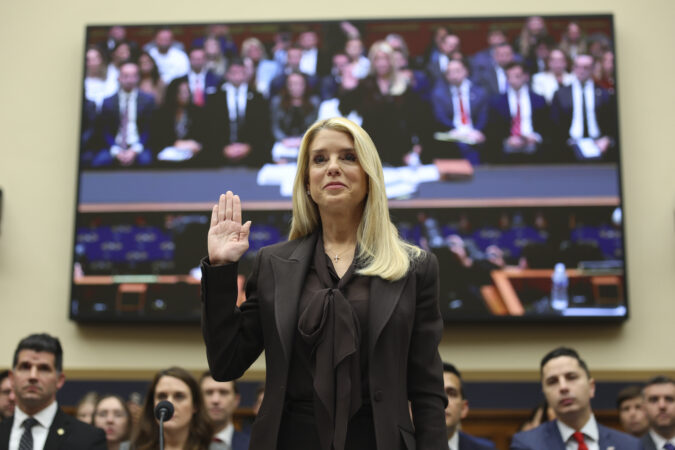
    WASHINGTON — Attorney General Pam Bondi launched into a passionate defense of President Donald Trump Wednesday as she tried to turn the page from relentless criticism of the Justice Department’s handling of the Jeffrey Epstein files, repeatedly shouting at Democrats during a combative hearing in which she postured herself as the Republican president’s chief protector.

    Besieged by questions over Epstein and accusations of a weaponized Justice Department, Bondi aggressively pivoted in an extraordinary speech in which she mocked her Democratic questioners, praised Trump over the performance of the stock market and openly aligned herself as in sync with a president whom she painted as a victim of past impeachments and investigations.

    “You sit here and you attack the president and I’m not going to have it,” Bondi told lawmakers on the House Judiciary Committee. ”I am not going to put up with it.”

    With victims of Epstein seated behind her in the hearing room, Bondi forcefully defended the department’s handling of the files related to the well-connected financier that have dogged her tenure. She accused Democrats of using the Epstein files to distract from Trump’s successes, when it was Republicans who initiated the furor over the files and Bondi herself fanned the flames by distributing binders to conservative influencers at the White House last year.

    The hearing quickly devolved into a partisan brawl, with Bondi repeatedly lobbing insults at Democrats while insisting she was not “going to get in the gutter” with them. In one particularly fiery exchange, Rep. Jamie Raskin of Maryland accused Bondi of refusing to answer his questions, prompting the attorney general to call the top Democrat on the committee a “washed-up loser lawyer — not even a lawyer.”

    Trying to help Bondi amid an onslaught of Democratic criticism, Republicans tried to keep the focus on bread-and-butter law enforcement issues like violent crime and illegal immigration. Bondi repeatedly deflected questions from Democrats, responding instead with attacks seemingly gleaned from news headlines as she sought to paint them as uninterested about violence in their districts. Democrats became exasperated as Bondi declined time and again to directly answer.

    “This is pathetic. I am not asking trick questions,” said Becca Balint, a Vermont Democrat who tried to ask Bondi whether the Justice Department had questioned different Trump administration officials about their ties to Epstein. “The American people deserve to know.”

    Bondi has struggled to move past the backlash over the Epstein files since handing out binders to a group of social media influencers at the White House in February 2025. The binders included no new revelations about Epstein, leading to even more calls from Trump’s base for the files to be released.

    In her opening remarks, Bondi told Epstein victims to come forward to law enforcement with any information and about their abuse and said she “deeply sorry” for what they had suffered. She told the survivors that “any accusation of criminal wrongdoing will be taken seriously and investigated.”

    But she refused when pressed by Rep. Pramila Jayapal to turn and face the Epstein victims in the audience and apologize for what Trump’s Justice Department has “put them through” and accused the Washington state Democrat of “theatrics.”

    Bondi’s appearance on Capitol Hill comes a year into her tumultuous tenure that has amplified concerns that the Justice Department is using its law enforcement powers to target political foes of the president. Just a day earlier, the department sought to secure charges against Democratic lawmakers who produced a video urging military service members not to follow “illegal orders.” But in an extraordinary rebuke of prosecutors, a grand jury in Washington refused to return an indictment.

    Turning aside criticism that the Justice Department under her watch has become politicized, Bondi touted the department’s work to reduce violent crime and said she was determined to restore the department to its core missions after what she described as “years of bloated bureaucracy and political weaponization.”

    GOP Rep. Jim Jordan, of Ohio, praised Bondi for undoing actions under President Joe Biden’s Justice Department that Republicans say unfairly targeted conservatives — including Trump, who was charged in two criminal cases that were abandoned after his 2024 election victory.

    “What a difference a year makes,” Jordan said. “Under Attorney General Bondi, the DOJ has returned to its core missions — upholding the rule of law, going after the bad guys and keeping Americans safe.”

    Democrats, meanwhile, excoriated Bondi over haphazard redactions in the Epstein files that exposed intimate details about victims and also included nude photographs. A review by The Associated Press and other news organizations has found countless examples of sloppy, inconsistent or nonexistent redactions that have revealed sensitive private information.

    “You’re siding with the perpetrators and you’re ignoring the victims,” Raskin told Bondi in his opening statement. “That will be your legacy unless you act quickly to change the course. You’re running a massive Epstein coverup right out of the Department of Justice.”

    Republican Rep. Thomas Massie of Kentucky, who broke with his party to advance the legislation that forced the released of the Epstein files, also took Bondi to task for the release of victims’ personal information, telling her: “Literally the worst thing you could do to survivors, you did.”

    Bondi told Massie that he was only focused on the files because Trump is mentioned in them, calling him a “hypocrite” with “Trump-derangement syndrome.”

    Department officials have said they took pains to protect survivors, but that errors were inevitable given the volume of the materials and the speed at which the department had to release them. Bondi told lawmakers that the Justice Department took down files when they were made aware that they included victims’ information and that staff had tried to do their “very best in the time frame allotted by the legislation” mandating the release of the files.

    After raising the expectations of conservatives with promises of transparency last year, the Justice Department said in July that it had concluded a review and determined that no Epstein “client list” existed and there was no reason to make public additional files. That set off a furor that prompted Congress to pass the legislation demanding that the Justice Department release the files.

    The acknowledgment that the well-connected Epstein did not have a list of clients to whom underage girls were trafficked represented a public walk-back of a theory that the Trump administration had helped promote when Bondi suggested in a Fox News interview last year that it was sitting on her desk for review. Bondi later said she was referring to the Epstein files in total, not a specific client list.

  • Suspect in Canada school shooting is identified as 18-year-old who had prior mental health calls

    Suspect in Canada school shooting is identified as 18-year-old who had prior mental health calls

    VANCOUVER, British Columbia — Police on Wednesday identified the suspect in a school shooting in Canada as an 18-year-old who had prior mental health calls to her home and who was found dead following the attack that killed eight people in a remote part of British Columbia.

    Royal Canadian Mounted Police Deputy Commissioner Dwayne McDonald said Jesse Van Rootselaar had a history of mental health contact with police, and that the suspect’s mother and stepbrother were found dead in a home near the school.

    The motive remained unclear.

    Police initially said nine people were killed Tuesday in the attack, but McDonald clarified Wednesday that there were eight fatalities, plus the suspect, who authorities said shot herself. McDonald said the discrepancy arose from a victim who was airlifted to a medical center. Authorities mistakenly thought that person had died.

    More than 25 people were wounded Tuesday in the attack in the small mountain community of Tumbler Ridge, police said.

    Town is near border with Alberta

    The town of 2,700 people in the Canadian Rockies is more than 600 miles northeast of Vancouver, near the provincial border with Alberta.

    Police said the victims included a 39-year-old teacher and five students, ages 12 to 13.

    McDonald said the suspect’s mother, who was also 39, and an 11-year-old stepbrother, were found at the suspect’s home.

    The killings at the home occurred first, he said. A young family member at the home went to a neighbor, who called police.

    At the school, one victim was found in a stairwell and the rest, McDonald believed, were found in the library. The suspect was not related to any of the victims at the school, he said.

    “There is no information at this point that anyone was specifically targeted,” McDonald said.

    Police recovered a long gun and a modified handgun. McDonald said officers arrived at the school two minutes after the initial call. When they arrived, shots were fired in their direction.

    “Parents, grandparents, sisters, brothers in Tumbler Ridge will wake up without someone they love. The nation mourns with you, and Canada stands by you,” an emotional Prime Minister Mark Carney said as he arrived in Parliament.

    Deadliest rampage since 2020

    The attack was Canada’s deadliest rampage since 2020, when a gunman in Nova Scotia killed 13 people and set fires that left another nine dead.

    Carney said flags at government buildings will be flown at half-staff for seven days and added: “We will get through this.”

    Shelley Quist said her neighbor across the street lost her 12-year-old. “We heard his mom. She was in the street crying. She wanted her son’s body,” Quist said.

    Quist said her 17-year-old son, Darian, was on lockdown in the school for more than two hours. The provincial government website lists Tumbler Ridge Secondary School as having 175 students in grades 7 to 12.

    “The grade sevens and eights, I think, were upstairs in the library, and that’s where the shooter went,” she said. Her son was in the library just 15 minutes prior to the attack.

    Quist was working at the hospital down the street when the shooting started.

    “I was about to go run down to the school, but my coworker held me back. And then I was able to get Darian on the phone to know he was OK,” she said.

    Darian Quist said he knew the attack was real when the principal came down the halls and ordered doors to be closed. He said fellow students texted him pictures of blood while he remained locked down in a classroom.

    “We used the desk to block the doors,” he said.

    School shootings are rare in Canada, which has strict gun-control laws. The government has responded to previous mass shootings with gun-control measures, including a recently broadened ban on all guns it considers assault weapons.

    A video showed students walking out with their hands raised as police vehicles surrounded the building and a helicopter circled overhead.

    Village is a ‘big family’

    Tumbler Ridge Mayor Darryl Krakowka said it was “devastating” to learn how many had died in the community, which he called a “big family.”

    “I broke down,” Krakowka said. “I have lived here for 18 years. I probably know every one of the victims.”

    The Rev. George Rowe of the Tumbler Ridge Fellowship Baptist Church went to the recreation center where victims’ families were awaiting more information.

    “It was not a pretty sight. Families are still waiting to hear if it’s their child that’s deceased and because of protocol and procedure, the investigating team is very careful in releasing names,” Rowe said Tuesday.

    Rowe once taught at the high school, and his three children graduated from there.

    “To walk through the corridors of that school will never be the same again,” he said.

    The school district said the high school and elementary school will be closed for the rest of the week.

    Carney’s office said he called off a planned trip to Halifax, Nova Scotia, and Munich, Germany. He had been set to announce a long-awaited defense industrial strategy Wednesday in Halifax before heading to Europe for the Munich Security Conference.

    British Columbia Premier David Eby on Tuesday said he had spoken to the prime minister about the “unimaginable tragedy.”

    “I know it’s causing us all to hug our kids a little bit tighter tonight,” he said. “I’m asking the people of British Columbia to look after the people of Tumbler Ridge tonight.

  • Alex Murdaugh continues to insist he didn’t kill wife and son as he gets another day in court

    Alex Murdaugh continues to insist he didn’t kill wife and son as he gets another day in court

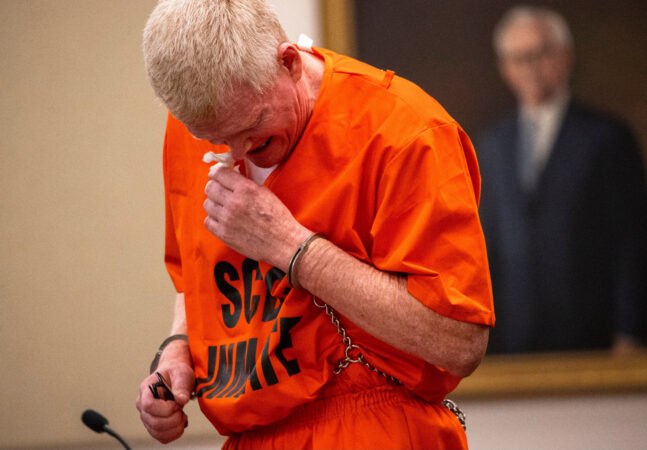
    COLUMBIA, S.C. — Alex Murdaugh has admitted he is a thief, a liar, an insurance cheat, a drug addict and a bad lawyer. But even from behind bars he continues to adamantly deny he is a killer.

    Murdaugh’s attorneys argued Wednesday before the South Carolina Supreme Court, asking the justices to overturn the two murder convictions and life sentence Murdaugh is serving for the shooting deaths of his wife, Maggie, and younger son, Paul, outside their home in June 2021.

    The defense argues the trial judge made rulings that prevented a fair trial, such as allowing in evidence of Murdaugh stealing from clients that had nothing to do with the killings but biased jurors against him. They detail the lack of physical evidence — no DNA or blood was found splattered on Murdaugh or any of his clothes, even though the killings were at close range with powerful weapons that were never found.

    And they said the court clerk assigned to oversee the evidence and the jury during the trial influenced jurors to find Murdaugh guilty, hoping to improve sales of a book she was writing about the case. She has since pleaded guilty to lying about what she said and did to a different judge.

    Prosecutors argued that the clerk’s comments were fleeting and the evidence against Murdaugh was overwhelming. His lawyer said that didn’t matter because the comments a juror said she made — urging jurors to watch Murdaugh’s body language and listen to his testimony carefully — removed his presumption of innocence before the jury ever deliberated.

    “If only the people who may be innocent get a fair trial, then our Constitution isn’t working,” Murdaugh’s lawyer Dick Harpootlian told the justices.

    Murdaugh won’t leave prison

    The case continues to captivate. There are streaming miniseries, best selling books and dozens of true crime podcasts about how the multimillionaire Southern lawyer whose family dominated and controlled the legal system in tiny Hampton County ended up in a maximum security South Carolina prison.

    Even if Murdaugh wins this appeal, he isn’t going anywhere. Hanging over the 57-year-old’s head is a 40-year federal prison sentence for stealing more than $12 million from clients intended for their medical care and living expenses after they or their relatives suffered devastating and even deadly injuries in accidents.

    “He said he deserved to go to prison for what he did financially, but he can’t accept the fact that he was convicted of murdering his wife and son, for which he constantly proclaimed his innocence,” attorney Jim Griffin said after the hearing.

    Wednesday’s state Supreme Court arguments featured the same lawyers who squared off at Murdaugh’s 2023 murder trial, although Murdaugh was not there.

    Did the court clerk influence jurors?

    Former Colleton County Clerk of Court Mary Rebecca “Becky” Hill pleaded guilty in December to obstruction of justice and perjury for showing a reporter photographs that were sealed as court exhibits and then lying about it.

    The justices pressed prosecutor Creighton Waters to say whether the trial judge, who initially rejected Murdaugh’s appeal for a new trial, was right to ignore testimony from a few jurors while believing the 11 who did not accuse the clerk of misconduct.

    Waters agreed there were problems, but said they were so isolated in the six-week trial that they had no impact. Murdaugh’s lawyers said that is impossible to figure out because jurors could be influenced subtly, without realizing it.

    “It was improper. Perhaps not improper to the point of reversal, but it was improper,” Chief Justice John Kittredge observed.

    There will be no immediate decision. Rulings usually take months to be handed down.

    “We understand the gravity of the situation and the entitlement of every individual to a fair and impartial trial,” Kittredge said.

    Prosecutors reiterate evidence for conviction

    Prosecutors have said in court papers there is no reason to throw out the guilty verdicts for murder against Murdaugh.

    They carefully recounted the case for the first 34 pages of their brief. Murdaugh’s financial situation was crumbling as he stole from clients to repay his mounting debts from his drug habit and expensive tastes. He was financially vulnerable when Paul Murdaugh caused a boat crash that killed a teen.

    The brief recalls evidence that helped convict Alex Murdaugh, who told investigators for months he hadn’t seen his wife and son for about an hour before they were killed. That story went unchallenged until investigators cracked the passcode on Paul Murdaugh’s phone and found a video with a barking dog and Alex Murdaugh’s voice admonishing it five minutes before the young man stopped using his phone.

    Defense says court allowed an unfair trial

    To establish Murdaugh’s motive at trial, prosecutors presented more than a week of testimony about his dire financial situation, including how he had stolen a multimillion insurance settlement from the son of a longtime family employee who died in a fall at the Murdaugh home. Waters said it was all critical to the big picture of a unique crime.

    “You can’t understand the boiling point if you don’t understand the slow burn that led up to it,” Waters said. “The jury could not understand the full weight of the pressure if they didn’t understand the entre criminal and financial history.”

    The chief justice asked why prosecutors piled on so much financial evidence, including pointing out the family employee also had a disabled son.

    That could have caused the jury to think “not only is he a thief with the motive for murder but he is a despicable, low-life character,” Kittredge said.

    In the insular world of South Carolina, the state Supreme Court’s decision could have impacts well beyond courtrooms. Sitting at the prosecution table on Wednesday with the case’s chief litigator was Republican South Carolina Attorney General Alan Wilson, a candidate in November’s election for the open governor’s seat.

  • Lawyers of Chicago woman shot by federal agents say documents show how DHS lies about investigations

    Lawyers of Chicago woman shot by federal agents say documents show how DHS lies about investigations

    CHICAGO — Border Patrol commander Gregory Bovino praised a federal agent who shot a Chicago woman during an immigration crackdown last year, according to evidence released Wednesday by attorneys who accused the Trump administration of mishandling the investigation and spreading lies about the shooting.

    Marimar Martinez, a teaching assistant and U.S. citizen, was shot five times by a Border Patrol agent in October while in her vehicle. She was charged with a felony after Homeland Security officials accused her of trying to ram agents with her vehicle. But the case was abruptly dismissed after videos emerged showing an agent steering his vehicle into Martinez’s vehicle.

    Her attorneys pushed to make evidence in the now-dissolved criminal case public, saying they were especially motivated after a federal agent fatally shot Minneapolis woman Renee Good under similar circumstances.

    Martinez’s attorneys are pursuing a complaint under a law that permits individuals to sue federal agencies. They outlined instances of DHS lying about Martinez after the shooting, including labeling her a “domestic terrorist” and accusing her of having a history of “doxxing federal agents.” The Montessori school assistant has no criminal record and prosecutors haven’t brought evidence in either claim.

    “This is a time where we just cannot trust the words of our federal officials,” attorney Christopher Parente said at a news conference where his office released evidence.

    That included an agent’s hand-drawn diagram of the scene to allege how Martinez “boxed in” federal agents. It included three vehicles Parente said “don’t exist.”

    Many of the emails, text messages and videos were released the night before by the U.S. attorney’s office.

    DHS didn’t immediately return a message Wednesday.

    The shooting came during the height of the Chicago-area crackdown. Arrests, protests and tense standoffs with immigration agents were common across the city of 2.7 million and its suburbs. Weeks before the Martinez shooting, agents fatally shot a suburban Chicago dad in a traffic stop.

    The government unsuccessfully fought the release of the documents, including an email from Bovino, who led enforcement operations nationwide before he returned to his previous sector post in California last month.

    “In light of your excellent service in Chicago, you have much yet left to do!!” Bovino wrote Charles Exum on Oct. 4.

    In an agent group text, others congratulated Exum, calling him a “legend” and offering to buy him beer. In previously released documents, text messages sent by Exum, appeared to show him bragging to colleagues about his shooting skills.

    “I fired 5 rounds and she had 7 holes. Put that in your book boys,” the text read.

    The latest documents are public now because U.S. District Judge Georgia Alexakis lifted a protective order last week. Federal prosecutors had argued the documents could damage Exum’s reputation. But Alexakis said the federal government has shown “zero concern” about ruining the reputation of Martínez.

    On the day Martinez was shot, she had followed agents’ vehicle and honked her horn to warn others of the presence of immigration agents. Body camera footage showed agents with weapons drawn and rushing out of the vehicle.

    “It’s time to get aggressive and get the (expletive) out,” one agent said.

    Martinez, who sat near her attorneys, was largely silent during the news conference.

    She declined an Associated Press interview request. But in recent weeks she has spoken to local media and before lawmakers.

    Earlier this month, Martinez testified before congressional Democrats to highlight use-of-force incidents by DHS officers. Members of Good’s family also spoke. Martinez is scheduled to attend President Donald Trump’s State of the Union address this month as the guest of U.S. Rep. Jesus “Chuy” Garcia.

    She was hospitalized before being taken into the custody of the FBI, which still has her car. Martinez said the incident has left her with mistrust of law enforcement, which accused her of being armed.

    Martinez has a valid concealed-carry license and had a handgun in her purse. Attorneys showed a picture of it in a pink holster at the bottom of her purse, saying it remained there during the encounter.

    “They are not targeting the worst of the worst, they are targeting individuals who fit a certain profile, who simply have a certain accent, or a non-white skin color just like mine. This raises serious concerns about fairness, discrimination, and abuse of authority,” she said during her congressional testimony. “The lack of accountability for these actions is deeply troubling.”

    Martinez’s attorneys said they’d pursue a complaint under the Federal Tort Claims Act. If the agency denies the claim or doesn’t act on it within six months, they can file a federal lawsuit.

  • ‘We’re going to work at the speed of business’: Mayor Cherelle Parker launches PHL PRIME to help firms navigate Philly’s red tape

    ‘We’re going to work at the speed of business’: Mayor Cherelle Parker launches PHL PRIME to help firms navigate Philly’s red tape

    Mayor Cherelle L. Parker on Wednesday unveiled PHL PRIME, a new service in Philadelphia that has nothing to do with Amazon — although the e-commerce giant could potentially sign up for it.

    At her annual address to the Chamber of Commerce for Greater Philadelphia, Parker signed an executive order to establish PHL PRIME, which stands for Project Review and Infrastructure Made Easy. The new program is designed to draw “high-impact economic development projects that generate quality jobs” by helping businesses that are considering investing in Philadelphia to navigate city rules and regulations, according to the mayor’s office.

    “I‘m the mayor, and I’m not absolving myself of the responsibility of making sure that bureaucracy is working effectively and efficiently,” Parker said during her annual speech at the Convention Center. “We’re not going to burden business with the ‘time tax.’ We’re going to work at the speed of business.”

    Parker told reporters the new program will not involve hiring any new staff. Instead, it’s meant to bring various city departments together into a “PHL PRIME Tiger Team“ to coordinate a streamlined approach and lay out the welcome mat for investment.

    In her wide-ranging speech, Parker also said the city was committed to helping major development plans from the Market East corridor and the South Philadelphia Stadium Complex to the port and shipyard.

    But Parker did not speak at length about two measures she included in last year’s city budget deal that some have said shows the city is not as welcoming to business as it could be. Both relate to the city’s business income and receipts tax, or BIRT.

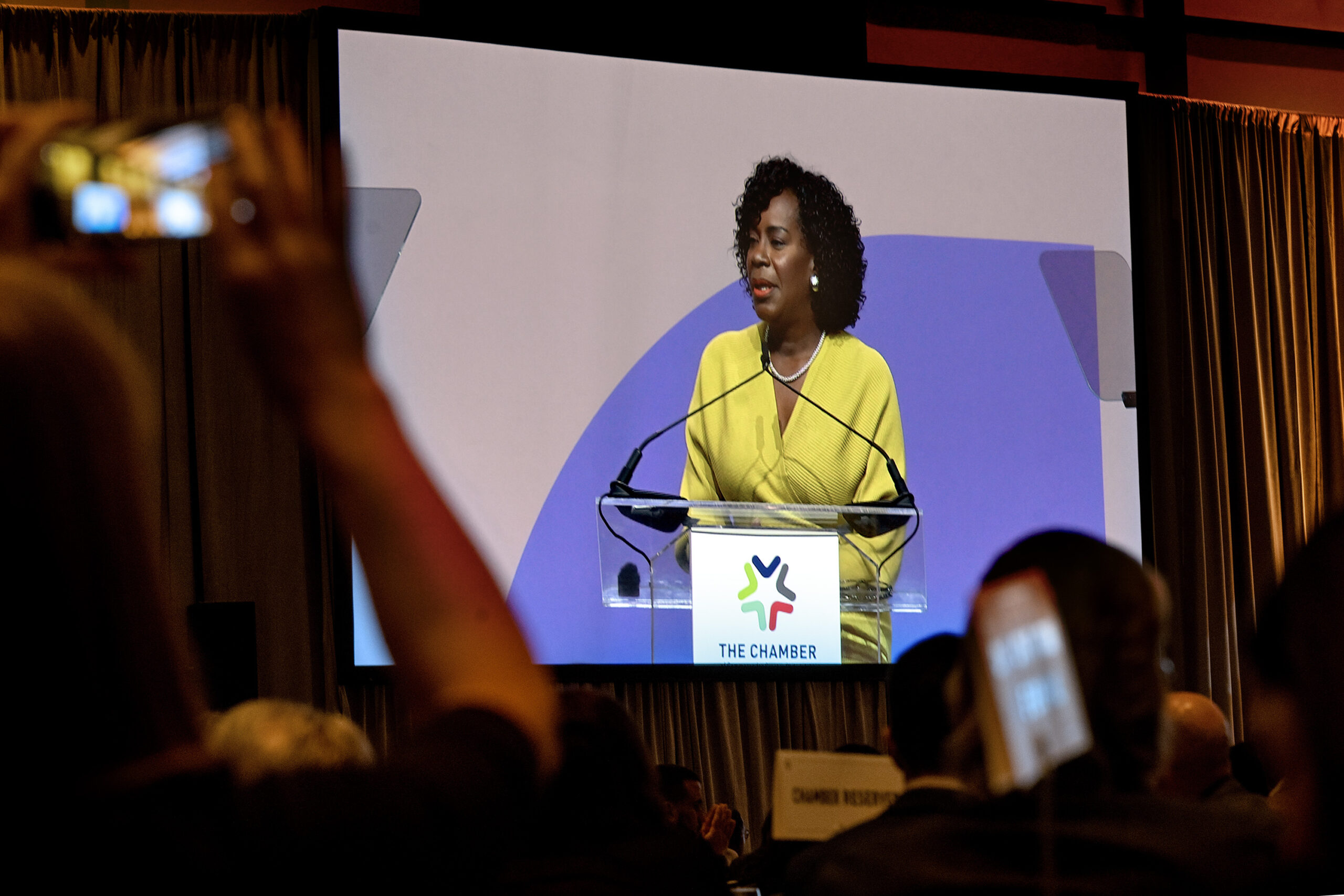
    Attendees record Mayor Cherelle L. Parker on the big screen as she delivers her keynote address at the Chamber of Commerce for Greater Philadelphia’s Annual Mayoral Luncheon at the Convention Center Wednesday, Feb. 11, 2026.

    Parker on Wednesday briefly mentioned a law she and City Council adopted last year that bakes in annual incremental cuts to the two BIRT tax rates over 13 years. And she thanked the Tax Reform Commission for guidance on making the city’s tax structure more business-friendly.

    “I am proud to affirm that we proposed and codified into law $210 million in tax investments to provide the kind of predictability that the business community told us that it needs,” Parker said. “I hope that was a direct sign to each of you in this room that the executive and the legislative branches are listening.”

    But she did not mention that the enacted tax cuts — the steepest of which will likely take effect after she leaves office — are far less aggressive than the commission’s recommendations, which called for completely eliminating BIRT within eight to 12 years.

    Parker also did not address the elimination of an important tax break that allowed businesses to exempt their first $100,000 in revenue when calculating their BIRT liabilities. That policy — which lasted about a decade before Council approved a Parker bill to end it last year — effectively eliminated BIRT for the tens of thousands of businesses that take in less than $100,000 per year from commerce in the city.

    Parker has said she supports the exemption but was forced to get rid of it after the city was sued by Massachusetts-based Zoll Medical Corp., which does business in Philadelphia and argued that the tax break violated the Pennsylvania Constitution.

    Philly’s smallest businesses are now scrambling to comply with the rule change. Tax bills are due April 15.

  • Chrissy Houlahan calls Trump administration’s failed attempt to indict her and other lawmakers for video an ‘abuse of power’

    Chrissy Houlahan calls Trump administration’s failed attempt to indict her and other lawmakers for video an ‘abuse of power’

    U.S. Rep. Chrissy Houlahan said it’s unclear what crime the Department of Justice was trying to charge her with when a grand jury refused an indictment over a video in which she, with five other Democratic colleagues, called on service members to “refuse illegal orders.”

    “The regular American people that comprised the grand jury saw this for what it was, which was kind of a spurious misuse, abuse of the power of the federal government against the people,” Houlahan, of Chester, said in an interview Wednesday.

    “It’s not about me or my colleagues,” continued Houlahan, a former Air Force officer. “It’s about the fact that the Constitution allows for all of us to be treated as equals, and all of us to have the freedom to speak with freedom.”

    The Justice Department investigated the six Democratic lawmakers who made the video, all of whom previously served in the military or intelligence agencies. But a Washington grand jury would not sign off on charges on Tuesday, The Associated Press reported.

    It’s a setback for President Donald Trump’s administration, which has targeted the lawmakers in a variety of ways since November, when the president claimed the video was an act of sedition.

    Houlahan said none of the Democrats’ lawyers could identify what charges could have legitimately been brought against them.

    “Collectively, we all, of course, have unfortunately had to secure lawyers in this process,” she said. “And to a person, none of them could come up really with what it was that we had purportedly done. And clearly the people in the grand jury saw the same thing.”

    The Justice Department did not respond to a request for comment on Wednesday.

    U.S. Rep. Chris Deluzio, an Allegheny County Democrat who also appeared in the video, said in an interview Wednesday he is “not surprised at all” by the grand jury’s decision.

    “The fact that the Trump administration and their lawyers want to try to charge us with crimes for stating the law and saying words that they don’t like is outrageous, and of course, not something that you should be able to throw people in prison for,” said Deluzio, who served in the Navy.

    In a news conference Wednesday, some of the lawmakers suggested legal action against the Trump administration is on the table.

    “There will be accountability, and they should be preserving documents, preparing for what’s coming,” Deluzio said.

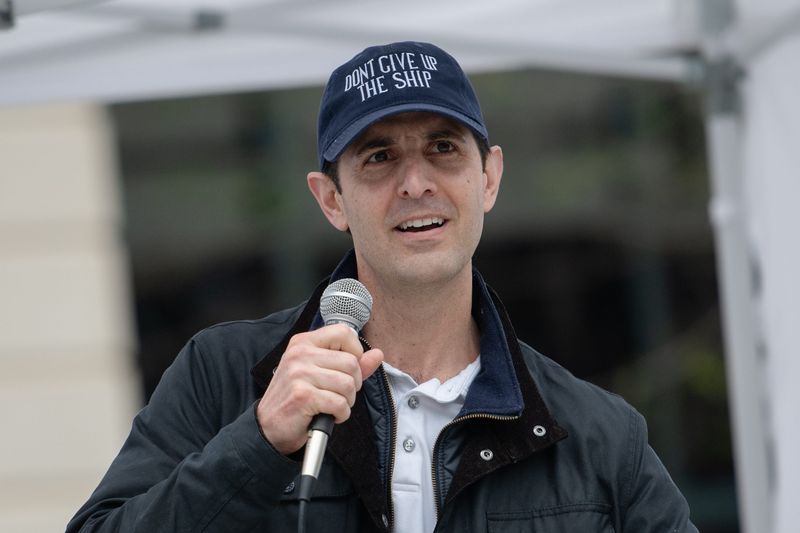
    U.S. Rep. Chris Deluzio speaks to a large crowd in front of the Beaver County Courthouse in April 2025 wearing a hat that says “don’t give up the ship.”

    Trump accused the Democratic lawmakers of sedition “punishable by death” after they posted the video in November, warning service members and intelligence workers to “refuse illegal orders.” In the video, the Democrats urged service members and intelligence professionals not to “give up the ship,” a sentiment Deluzio repeated Tuesday night.

    The phrase, which Deluzio has long referenced, is a rallying cry that’s hung on the wall at the Naval Academy’s Memorial Hall.

    “It’s a phrase that means a lot, and it means a lot in this moment of great stress to our country — that this thing is worth our efforts and that we should not give it up,” Deluzio said in the Wednesday interview.

    The Democrats did not mention any specific orders in the video, but lawmakers who appeared in the video expressed concerns at the time about strikes on boats in the Caribbean and National Guard operations in U.S. cities.

    Houlahan said they continue to be concerned about “the unlawfulness of the administration.”

    The video also included U.S. Sen. Elissa Slotkin (D., Mich.), a former CIA officer; U.S. Sen. Mark Kelly (D., Ariz.), a former Navy captain; U.S. Rep. Maggie Goodlander (D., N.H.), a former intelligence officer; and U.S. Rep. Jason Crow (D., Colo.), a former paratrooper and Army Ranger.

    The lawmakers were contacted by the FBI late last year.

    Federal prosecutors unsuccessfully tried to secure the indictment against all six lawmakers in the video, The New York Times reported. The office that pursued the case is led U.S. Attorney for D.C. Jeanine Pirro, the former Fox News personality who served as district attorney in Westchester County, N.Y., during the 1990s and early 2000s.

    Grand jury rejections are extraordinarily rare, but have occurred repeatedly in recent months in Washington, as citizens who have heard the government’s evidence have come away underwhelmed in a number of cases. Prosecutors could try again to secure an indictment.

    Attention on the lawmakers’ video escalated days after they initially posted it when Trump began his social media tirade in November.

    “This is really bad, and Dangerous to our Country,” he wrote on his social media platform Truth Social. “Their words cannot be allowed to stand. SEDITIOUS BEHAVIOR FROM TRAITORS!!! LOCK THEM UP???”

    He also shared posts from supporters calling for retribution against the Democrats, including one that said, “HANG THEM GEORGE WASHINGTON WOULD !!” and another calling them domestic terrorists.

    Houlahan said at the time she was “profoundly disappointed” in her GOP colleagues for not defending the Democrats, a sentiment she repeated on Wednesday.

    “The fact that the president and the people around him, in hearing a reminder about the law, reacted the way they did, which is to call for our death, arrest, to try to imprison us, tells me more about them than I could ever know,” Deluzio said Wednesday.

    “A normal person, a normal president, would be reminding their troops of their obligations to follow the law as well because they care about the rule of law,” he added.

    Houlahan and Deluzio reported bomb threats at their district offices after Trump went on offense in November.

    Trump told Fox News Radio that he was “not threatening death, but I think they’re in serious trouble,” adding that, “in the old days, it was death.”

    His administration has cited a different military law that says orders are presumed to be lawful and the importance of “good order and discipline.”

    “Their foolish screed sows doubt and confusion — which only puts our warriors in danger,” Defense Secretary Pete Hegseth said at the time.

    Kelly, the only lawmaker who served long enough to officially retire and therefore falls under The Pentagon’s jurisdiction, is in a another fight with Trump’s administration over the video.

    Hegseth has censured Kelly for participating in the video and is trying to retroactively demote him from his retired rank of captain.

    In response, Kelly is suing Hegseth to block those proceedings, calling them an unconstitutional act of retribution. During a hearing last week, the judge appeared to be skeptical of key arguments that a government attorney made in defense of Kelly’s Jan. 5 censure by Hegseth.

    This article contains reporting from The Associated Press

  • Instagram chief says he does not believe people can get clinically addicted to social media

    Instagram chief says he does not believe people can get clinically addicted to social media

    LOS ANGELES — Adam Mosseri, the head of Meta’s Instagram, testified Wednesday during a landmark social media trial in Los Angeles that he disagrees with the idea that people can be clinically addicted to social media platforms.

    The question of addiction is a key pillar of the case, where plaintiffs seek to hold social media companies responsible for harms to children who use their platforms. Meta Platforms and Google’s YouTube are the two remaining defendants in the case, which TikTok and Snap have settled.

    At the core of the Los Angeles case is a 20-year-old identified only by the initials “KGM,” whose lawsuit could determine how thousands of similar lawsuits against social media companies would play out. She and two other plaintiffs have been selected for bellwether trials — essentially test cases for both sides to see how their arguments play out before a jury.

    Mosseri said it’s important to differentiate between clinical addiction and what he called problematic use. The plaintiff’s lawyer, however, presented quotes directly from Mosseri in a podcast interview a few years ago where he said the opposite, but he clarified that he was probably using the term “too casually,” as people tend to do.

    Mosseri said he was not claiming to be a medical expert when questioned about his qualifications to comment on the legitimacy of social media addiction, but said someone “very close” to him has experienced serious clinical addiction, which is why he said he was “being careful with my words.”

    He said he and his colleagues use the term “problematic use” to refer to “someone spending more time on Instagram than they feel good about, and that definitely happens.”

    It’s “not good for the company, over the long run, to make decisions that profit for us but are poor for people’s wellbeing,” Mosseri said.

    Mosseri and the plaintiff’s lawyer, Mark Lanier, engaged in a lengthy back-and-forth about cosmetic filters on Instagram that changed people’s appearance in a way that seemed to promote plastic surgery.

    “We are trying to be as safe as possible but also censor as little as possible,” Mosseri said.

    In the courtroom, bereaved parents of children who have had social media struggles seemed visibly upset during a discussion around body dysmorphia and cosmetic filters. Meta shut down all third-party augmented reality filters in January 2025. The judge made an announcement to members of the public on Wednesday after the displays of emotion, reminding them not to make any indication of agreement or disagreement with testimony, saying that it would be “improper to indicate some position.”

    In recent years, Instagram has added a slew of features and tools it says have made the platform safer for young people. But this does not always work. A report last year, for instance, found that teen accounts researchers created were recommended age-inappropriate sexual content, including “graphic sexual descriptions, the use of cartoons to describe demeaning sexual acts, and brief displays of nudity.”

    In addition, Instagram also recommended a “range of self-harm, self-injury, and body image content” on teen accounts that the report says “would be reasonably likely to result in adverse impacts for young people, including teenagers experiencing poor mental health, or self-harm and suicidal ideation and behaviors.” Meta called the report “misleading, dangerously speculative” and said it misrepresents its efforts on teen safety.

    Meta is also facing a separate trial in New Mexico that began this week.

  • Trump says he ‘insisted’ to Netanyahu that U.S. talks with Iran continue as Israel wants them expanded

    Trump says he ‘insisted’ to Netanyahu that U.S. talks with Iran continue as Israel wants them expanded

    WASHINGTON — President Donald Trump met privately with Israeli Prime Minister Benjamin Netanyahu on Wednesday and said he’d insisted that negotiations with Iran continue as the U.S. pushes for a nuclear deal with Tehran.

    Netanyahu spent nearly three hours at the White House, but he entered and left out of the view of reporters and he and Trump didn’t take questions. In a subsequent post on his social media site, however, the president called it “a very good meeting” and said “there was nothing definitive reached, other than I insisted that negotiations with Iran continue to see whether or not a Deal can be consummated.”

    “If it can, I let the Prime Minister know that will be a preference,” Trump wrote. “If it cannot, we will just have to see what the outcome will be.”

    He added, “Last time Iran decided that they were better off not making a Deal” and were hit by U.S. airstrikes.

    “Hopefully this time they will be more reasonable and responsible,” Trump wrote.

    In a statement, Netanyahu’s office said the two leaders had discussed negotiations with Iran as well as developments in Gaza and around the region and they had “agreed to continue their close coordination and relationship.”

    Wednesday’s meeting was their seventh during Trump’s second term and took place as both the U.S. and Iran are projecting cautious optimism after holding indirect talks in Oman on Friday about how, once again, to approach negotiations over Iran’s nuclear program.

    Trump said on reaching an agreement with Iran in a Tuesday interview with Fox Business Network’s Larry Kudlow: “I think they’d be foolish if they didn’t. We took out their nuclear power last time, and we’ll have to see if we take out more this time.”

    “It’s got to be a good deal,” he said then. “No nuclear weapons, no missiles.”

    Netanyahu pushes for more in Iran talks

    Netanyahu’s office said prior to the meeting that he wants the U.S.-Iran talks to include limits on Tehran’s ballistic missile program and its support for militant groups such as Hamas and Hezbollah.

    “I will present to the president our outlook regarding the principles of these negotiations — the essential principles which, in my opinion, are important not only to Israel, but to everyone around the world who wants peace and security in the Middle East,” Netanyahu said Tuesday before leaving Israel.

    But it remains unclear how much influence Netanyahu will have over Trump’s approach toward Iran. Trump initially threatened to take military action over Iran’s bloody crackdown on nationwide protests in January, then shifted to a pressure campaign in recent weeks to try to get Tehran to make a deal over its nuclear program.

    Iran is still reeling from the 12-day war with Israel in June. The devastating series of airstrikes, including the U.S. bombing several Iranian nuclear sites, killed nearly 1,000 people in Iran and almost 40 in Israel.

    Trump has said repeatedly that U.S. strikes had “obliterated” Iran’s nuclear capabilities, although the extent of the damage remains unclear. Satellite photos of nuclear sites have recently captured activity, prompting concern that Iran could be attempting to salvage or assess damage at the sites.

    Israel has long called for Iran to cease all uranium enrichment, dial back its ballistic missile program, and cut ties to militant groups across the region. Iran has always rejected those demands, saying it would only accept some limits on its nuclear program in return for sanctions relief.

    Washington has built up military forces in the region, sending an aircraft carrier, guided-missile destroyers, air defense assets and more to supplement its presence. Arab and Islamic countries, including Turkey and Qatar, have been urging both sides to show restraint, warning that any strike or retaliation could have destabilizing consequences for a region already strained by the Israel-Hamas war in Gaza.

    Gaza was also a topic

    In his post, Trump said he and Netanyahu had “also discussed the tremendous progress being made in Gaza, and the Region in general.”

    Trump plans to hold the first meeting next week of his Board of Peace, which was initially framed to oversee future steps of the U.S.-brokered Gaza ceasefire plan but has taken shape with Trump’s ambitions of resolving other global crises.

    Earlier Wednesday, Netanyahu met with Secretary of State Marco Rubio at Blair House, across the street from the White House, and agreed to be part of the board.

    On Iran, Trump said Friday that his special envoy, Steve Witkoff, and son-in-law Jared Kushner had “very good” talks and more were planned this week. But the Republican president kept up the pressure, warning that if Iran did not make a deal over its nuclear program, “the consequences are very steep.”

    Abbas Araghchi, Iran’s foreign minister, made similar comments, saying there will be consultations on “next steps.” He also said the level of mistrust between the two longtime adversaries remains a “serious challenge facing the negotiations.”

    He signaled that Iran would stick to its position that it must be able to enrich uranium — a major point of contention with Trump.

    Netanyahu met with Witkoff and Kushner shortly after arriving in Washington on Tuesday evening and they gave him an update on the talks held with Iran in Oman, the prime minister’s office said.

    Araghchi said in November that Iran was no longer enriching uranium due to the damage from last year’s war.

    Before the war, Iran had been enriching uranium up to 60% purity, a short, technical step away from weapons-grade levels. The U.N. nuclear watchdog, the International Atomic Energy Agency, had said Iran was the only country in the world to enrich to that level that was not armed with the bomb.

    Iran has been refusing requests by the IAEA to inspect the sites bombed in the June war. Even before that, Iran has restricted IAEA inspections since Trump’s decision in 2018 to unilaterally withdraw the U.S. from Iran’s 2015 nuclear deal with world powers.

  • Montgomery County’s top officials are divided on ICE and potential Trump administration funding cuts, but they say they’ll ‘put politics aside’

    Montgomery County’s top officials are divided on ICE and potential Trump administration funding cuts, but they say they’ll ‘put politics aside’

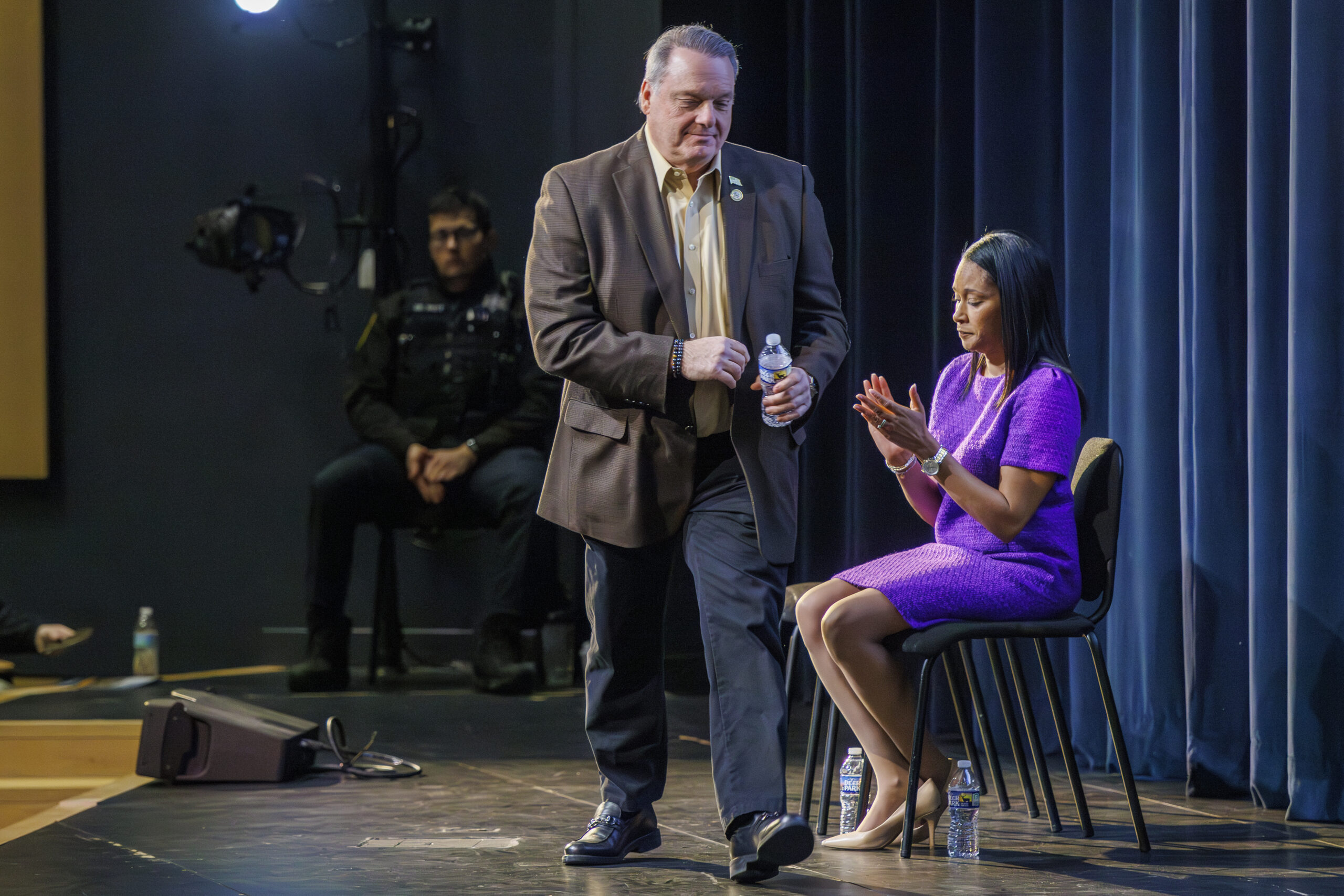
    It was a portrait of amicable disagreement.

    Talking to reporters gathered at the front of an auditorium at Montgomery County Community College, the collar county’s top officials engaged in a friendly back-and-forth about something local leaders have had to pay unprecedented attention to since last year: how to handle any future federal funding cuts under President Donald Trump.

    Within the last year, counties have navigated uncertainty surrounding reductions in funding under the Trump administration. In Montgomery County, those cuts have jeopardized key resources for public health, higher education, and homeless services.

    “Naturally, our teams are following what’s coming out of [the Department of Housing and Urban Development], what’s happening with SNAP. We’re trying to anticipate,” said Jamila Winder, a Democrat and the chair of the Montgomery County Board of Commissioners.

    Community needs “that arise from the cuts to SNAP and the cuts to Medicaid are significant,” said vice chair Neil Makhija, a Democrat.

    Tom DiBello, the board’s lone Republican, had a different view.

    “Well, we also have to maybe look at what those reductions are, why those reductions are occurring … and I know this is where we divide,” he said.

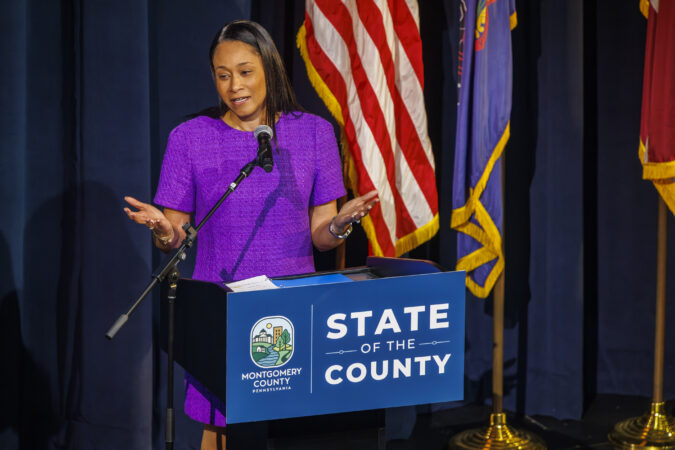
    Crossing the aisle has become rare in the rancorous national political environment. But at Montgomery County Community College on Wednesday, the commissioners emphasized at their annual State of the County address that they are striving for cooperation to be their norm, even as lawmakers in Harrisburg and Washington struggle to work together.

    The commissioners have navigated their own tense moments in recent months, particularly related to immigration.

    “Look, there are definitely things that we disagree on as a team, but what’s most important is that we’re able to fund the services that we provide to people in Montgomery County,” Winder told reporters.

    Montgomery County commissioners and row officers stand on stage during introductions.

    Wednesday’s address featured the commissioners reflecting on the county’s accomplishments in 2025 and outlining their goals for the year ahead to an audience of constituents and officials. Those include opening shelters for people experiencing homelessness, determining how to best integrate artificial intelligence in county services, and cutting red tape for residents trying to access local services.

    And it was also sprinkled with displays of camaraderie despite political differences, such as the commissioners touting 2026’s bipartisan budget as the first in nearly a decade or DiBello going in for a hug after turning the microphone over to Winder for her closing remarks.

    “If there’s one thing I want you to take away from today, it’s this: Under our collective leadership as commissioners, this board will continue to put politics aside to do what’s best for our communities,” Winder said at the address, of which the theme was “collaboration.”

    But their interactions have not always fit the cordial image presented Wednesday.

    During a board of commissioners meeting in July, Winder accused DiBello of lacking empathy after 14 people were taken into custody by U.S. Immigration and Customs Enforcement in West Norriton.

    Winder and Makhija called for ICE agents to be held accountable, while DiBello encouraged respect for law enforcement and denounced the incorporation of politics into the meeting.

    “People are being terrorized by masked ICE agents in Montgomery County, that’s what we’re saying. And if you can’t be empathetic to that, that’s disconcerting,” Winder said at the time.

    Thomas DiBello, the lone Republican commissioner, walks to the podium for remarks during the Montgomery County’s 2026 State of County event in Blue Bell. At right is Jamila H. Winder, the board’s Democratic chair.

    “No matter what, we should be respecting our law enforcement agencies until they break the law,” DiBello responded.

    On Wednesday, immigration-related disagreements lingered when Makhija told reporters about his opposition to ICE buying warehouses in Pennsylvania, including in Berks County, that may be used to detain people.

    “Again we divide, because I will support the rule of law,” DiBello said on immigration enforcement. ”I stand with law enforcement, and if people want changes, they need to go to Washington and ask and promote those changes.”

  • Several ICE agents were arrested in recent months, showing risk of misconduct

    Several ICE agents were arrested in recent months, showing risk of misconduct

    Investigators said one immigration enforcement official got away with physically assaulting his girlfriend for years. Another admitted he repeatedly sexually abused a woman in his custody. A third is charged with taking bribes to remove detention orders on people targeted for deportation.

    At least two dozen U.S. Immigration and Customs Enforcement employees and contractors have been charged with crimes since 2020, and their documented wrongdoing includes patterns of physical and sexual abuse, corruption, and other abuses of authority, a review by The Associated Press found.

    While most of the cases happened before Congress voted last year to give ICE $75 billion to hire more agents and detain more people, experts say these kinds of crimes could accelerate given the sheer volume of new employees and their empowerment to use aggressive tactics to arrest and deport people.

    The Trump administration has emboldened agents by arguing they have “absolute immunity” for their actions on duty and by weakening oversight. One judge recently suggested that ICE was developing a troubling culture of lawlessness, while experts have questioned whether job applicants are getting enough vetting and training.

    “Once a person is hired, brought on, goes through the training and they are not the right person, it is difficult to get rid of them and there will be a price to be paid later down the road by everyone,” said Gil Kerlikowske, who served as commissioner of U.S. Customs and Border Protection from 2014 to 2017.

    Almost every law enforcement agency contends with bad employees and crimes related to domestic violence and substance abuse are long-standing problems in the field. But ICE’s rapid growth and mission to deport millions are unprecedented, and the AP review found that the immense power that officers exercise over vulnerable populations can lead to abuses.

    Department of Homeland Security Assistant Secretary Tricia McLaughlin said that wrongdoing was not widespread in the agency, and that ICE “takes allegations of misconduct by its employees extremely seriously.” She said that most new hires had already worked for other law enforcement agencies, and that their backgrounds were thoroughly vetted.

    “America can be proud of the professionalism our officers bring to the job day-in and day-out,” she said.

    Could become a ‘countrywide phenomenon’

    ICE announced last month that it had more than doubled in size to 22,000 employees in less than one year.

    Kerlikowske said ICE agents are particularly “vulnerable to unnecessary use-of-force issues,” given that they often conduct enforcement operations in public while facing protests. With the number of ICE detainees nearly doubling since last year to 70,000, employees and contractors responsible for overseeing them are also facing challenging conditions that can provide more opportunities for misconduct.

    The Border Patrol doubled in size to more than 20,000 agents from 2004 to 2011 — six years longer than ICE took. It was embarrassed by a wave of corruption, abuse, and other misconduct by some of the new hires. Kerlikowske recalled cases of agents who accepted bribes to let cars carrying drugs enter the U.S. or who became involved in human trafficking.

    He and others say ICE is poised to see similar problems that will likely be broader in scope, with less oversight and accountability.

    “The corruption and the abuse and the misconduct was largely confined in the prior instance to along the border and interactions with immigrants and border state residents. With ICE, this is going to be a countrywide phenomenon as they pull in so many people who are attracted to this mission,” said David Bier, director of immigration studies at the Cato Institute, a libertarian think tank.

    Bier, who has helped publicize some of the recent arrests and other alleged misconduct by ICE agents, said he has been struck by the “remarkable array of different offenses and charges that we’ve seen.”

    AP’s review examined public records involving cases of ICE employees and contractors who have been arrested since 2020, including at least 17 who have been convicted and six others who are awaiting trial. Nine have been charged in the last year, including an agent cited last month for assaulting a protester near Chicago while off-duty.

    Some of the most serious crimes were committed by veteran ICE employees and supervisors rather than rookies.

    While federal officials have justified ICE’s aggression, the behavior of agents is drawing scrutiny from cellphone-wielding observers and prosecutors in Democratic-led jurisdictions. Local agencies are looking into last month’s fatal shootings in Minneapolis of protesters Renee Good and Alex Pretti by federal agents, as well as the killing of Keith Porter by an off-duty ICE agent in Los Angeles on New Year’s Eve.

    Arrests have made local headlines

    Around the country, the cases have attracted unwelcome headlines for ICE, which has spent millions of dollars publicizing the criminal rap sheets of those they arrest as the “worst of the worst.”

    Among them:

    — The assistant ICE field office supervisor in Cincinnati, Samuel Saxon, a 20-year ICE veteran, has been jailed since his arrest in December on charges that he attempted to strangle his girlfriend.

    Saxon had abused the woman for years, fracturing her hip and nose and causing internal bleeding, a judge found in a ruling ordering him detained pending trial. “The defendant is a volatile and violent individual,” the judge wrote of Saxon, whose attorneys didn’t return a message seeking comment. ICE said he is considered absent without leave.

    — “I’m ICE, boys,” an ICE employment eligibility auditor told police in Minnesota in November when he was arrested in a sting as he went to meet a person he thought was a 17-year-old prostitute. Alexander Back, 41, has pleaded not guilty to attempted enticement of a minor. ICE said Back is on administrative leave while the agency investigates.

    — When officers in suburban Chicago found a man passed out in a crashed car in October, they were surprised to discover the driver was an ICE officer who had recently completed his shift at a detention center and had his government firearm in the vehicle. They arrested Guillermo Diaz-Torres for driving under the influence. He’s pleaded not guilty and has been put on administrative duty pending an investigation.

    — After an ICE officer in Florida was stopped for driving drunk with his two children in the car in August, he tried to get out of charges by pointing to his law enforcement and military service. When that failed, he demanded to know whether one of the deputies arresting him was Haitian and threatened to check the man’s immigration status, body camera video shows.

    “I’ll run him once I get out of here and if he’s not legit, ooh, he’s taking a ride back to Haiti,” Scott Deiseroth warned during the arrest.

    Deiseroth, who was sentenced to probation and community service, is on administrative leave pending the outcome of an internal investigation. “He did something stupid. He owned up to it,” said his attorney, Michael Catalano. “He’s very sorry about the whole thing.”

    Several cases of force and abuse

    The AP’s review found a pattern of charges involving ICE employees and contractors who mistreated vulnerable people in their care.

    A former top official at an ICE contract facility in Texas was sentenced to probation on Feb. 4 after acknowledging he grabbed a handcuffed detainee by the neck and slammed him into a wall last year. Prosecutors had downgraded the charge from a felony to a misdemeanor.

    In December, an ICE contractor pleaded guilty to sexually abusing a detainee at a detention facility in Louisiana. Prosecutors said the man had sexual encounters with a Nicaraguan national over a five-month period in 2025 as he instructed other detainees to act as lookouts.

    Outside Chicago, an off-duty ICE agent has been charged with misdemeanor battery for throwing to the ground a 68-year-old protester who was filming him at a gas station in December. McLaughlin has said the agent acted in self-defense.

    Other charges cited corruption

    Another pattern that emerged in AP’s review involved ICE officials charged with abusing their power for financial gain.

    An ICE deportation officer in Houston was indicted last summer on charges that he repeatedly accepted cash bribes from bail bondsmen in exchange for removing detainers ICE had placed on their clients targeting them for deportation.

    ICE said the officer was “indefinitely suspended” in May 2024, before his arrest one year later. He has pleaded not guilty to seven counts of accepting bribes and was released from custody while awaiting trial.

    Prosecutors say a former supervisor in ICE’s New York City office provided confidential information about people’s immigration statuses to acquaintances and made an arrest in exchange for gifts and other gain. He was arrested in November 2024, has pleaded not guilty and is awaiting trial.

    Two Utah-based ICE investigators were sentenced to prison last year for a scheme in which they made hundreds of thousands of dollars stealing synthetic drugs known as “bath salts” from government custody and selling them through government informants.

    Using badges to dodge consequences

    The wrongdoing often included the use of ICE resources and credentials to try to avoid arrest or receive favorable treatment.

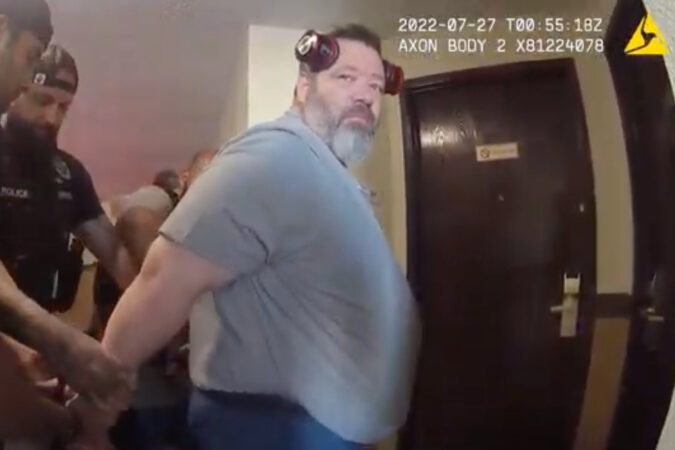
    In 2022, ICE supervisor Koby Williams was arrested in a sting by police in Othello, Washington, while going to a hotel room to meet who he thought was a 13-year-old girl he’d arranged to pay for sex.

    Williams had driven his government vehicle, which was filled with cash, alcohol, pills, and Viagra, and was carrying his ICE badge and loaded government firearm. The 22-year ICE veteran offered a rationale that turned out to be a lie: that he was there to “rescue” the girl as part of a human trafficking investigation. Williams is serving prison time for what prosecutors called a “reprehensible” abuse of power.

    “With a duty to protect and serve,” they wrote, “defendant sought to exploit and victimize.”