Category: Politics

Political news and coverage

  • Pentagon plan calls for major power shifts within U.S. military

    Pentagon plan calls for major power shifts within U.S. military

    Senior Pentagon officials are preparing a plan to downgrade several of the U.S. military’s major headquarters and shift the balance of power among its top generals, in a major consolidation sought by Defense Secretary Pete Hegseth, people familiar with the matter said.

    If adopted, the plan would usher in some of the most significant changes at the military’s highest ranks in decades, in part following through on Hegseth’s promise to break the status quo and slash the number of four-star generals in the military. It would reduce in prominence the headquarters of U.S. Central Command, U.S. European Command, and U.S. Africa Command by placing them under the control of a new organization known as U.S. International Command, according to five people familiar with the matter.

    Joint Chiefs Chairman Dan Caine is expected to detail the proposal, which had not previously been reported, for Hegseth in the coming days. Such moves would complement other efforts by the administration to shift resources from the Middle East and Europe and focus foremost on expanding military operations in the Western Hemisphere, these people said. Like others interviewed for this report, they spoke on the condition of anonymity to discuss the effort before it is conveyed to the secretary.

    Hegseth’s team said in a statement that it would not comment on “rumored internal discussions” or “pre-decisional matters.” Any insinuation that there is a divide among officials over the issue is “completely false — everyone in the Department is working to achieve the same goal under this administration,” the statement said.

    The Pentagon has shared few, if any, details with Congress, a lack of communication that has perturbed members of the Republican-led Senate and House Armed Services Committees, according to two people familiar with how the panels have prepared for the proposal. Top officers at the commands involved are awaiting more details as well, officials said.

    The plan also calls for realigning U.S. Southern Command and U.S. Northern Command, which oversee military operations throughout the Western Hemisphere, under a new headquarters to be known as U.S. Americas Command, or Americom, people familiar with the matter said. That concept was reported earlier this year by NBC News.

    Pentagon officials also discussed creating a U.S. Arctic Command that would report to Americom, but that idea appears to have been abandoned, people familiar with the matter said.

    Combined, the moves would reduce the number of top military headquarters — known as combatant commands — from 11 to eight while cutting the number of four-star generals and admirals who report directly to Hegseth. Other remaining combatant commands would be U.S. Indo-Pacific Command, U.S. Cyber Command, U.S. Special Operations Command, U.S. Space Command, U.S. Strategic Command, and U.S. Transportation Command.

    Those familiar with the plan said it aligns with the Trump administration’s national security strategy, released this month, which declares that the “days of the United States propping up the entire world order like Atlas are over.”

    The proposal was organized by the Pentagon’s Joint Staff under the supervision of Caine, and is due to be shared with Hegseth as soon as this week as the preferred course of action among senior military officials. It grew from a request made by Hegseth in the spring to look for ways to improve how troops are commanded and controlled, a senior defense official familiar with the discussion said, adding that Hegseth has kept in touch with Caine about the issue over the last several months.

    Any changes would need the approval of Hegseth and President Donald Trump. The moves would come in the Pentagon’s Unified Command Plan, which lays out the roles of the military’s major headquarters.

    Lawmakers have taken the extraordinary step of requiring the Pentagon to submit a detailed blueprint that describes the realignment’s potential costs and impacts on America’s alliances. The measure, included in Congress’ annual defense policy bill, would withhold money to enact the effort until at least 60 days after the Pentagon provides lawmakers with those materials.

    The bill has cleared the House and is expected to pass the Senate this week.

    The senior defense official said the proposed realignment is meant to speed decision-making and adaptation among military commanders. “Decay” had been observed in how the U.S. military commands and controls troops, he added, suggesting that the need for sweeping change is urgent.

    “Time ain’t on our side, man,” the senior defense official said, describing internal conversations around the plan. “The saying here is, ‘If not us, who, and if not now, when?’”

    The potential reorganization comes as Hegseth has begun broader efforts to cull the number of generals and admirals across the military. He also has fired or otherwise forced out more than 20 senior officers, threatened others with polygraph tests to determine whether they have leaked information to the news media, and told those remaining that if they do not like the administration’s policies they should “do the honorable thing and resign.”

    Chuck Hagel, who served as defense secretary during the Obama administration and as a Republican member of the Senate before that, expressed concerns about the Trump administration’s ambitions. There are different dynamics, needs, and security threats throughout the globe, he said.

    “The world isn’t getting any less complicated,” Hagel said in an interview. “You want commands that have the capability of heading off problems before they become big problems, and I think you lose some of that when you unify or consolidate too many.”

    Senior military officials considered about two dozen other concepts, the senior defense official said. At least one discussion called for a reduction to six total combatant commands. Under that plan, Special Operations Command, Space Command, and Cyber Command would be downgraded and placed under the control of a new U.S. Global Command, said other officials familiar with the discussion.

    Caine is expected to share at least two other courses of action with Hegseth, people familiar with the matter said. One concept calls for creating two commands to house all of the others, with all major geographic organizations such as Central Command and European Command placed under the control of an entity that would be called Operational Command. Other major headquarters, such as Transportation Command and Space Command, would fall under an organization called Support Command.

    One proposal suggested the creation of a new headquarters unit, Joint Task Force War, to be based at the Pentagon. It would focus on planning and strategy when the United States was not at war, and be capable of controlling forces anywhere in the world when there was a conflict, people familiar with the matter said.

    The idea didn’t “test well” in exercises with military officials and appears unlikely to be adopted, the senior defense official said. Top military officials expressed concerns that such an organization would not possess the same regional expertise and relationships inherent to the military’s current construct.

    Even if you have “some of your best people” in such a task force, the senior official said, “you don’t have a fingertip feel” for what is occurring in a region. A second official said it seemed “very confusing” to have top commanders in a region prepare for a conflict there, only to hand those plans over to another commander when something occurred.

    Another plan sought to reorganize the military by domain, with operations organized and led by whether they occurred on land or in air, sea, space, or cyberspace, people familiar with the matter said. The idea had supporters in the Space Force but had few other proponents, people familiar with the matter said. It also limited the Marine Corps’ influence, with it falling under the control of the Navy Department even as the other branches of service were elevated.

    Military officials involved in the reorganization effort also considered whether to elevate the chairman’s role to allow him to command forces, rather than serving as the senior military adviser to both the president and the defense secretary. That could have occurred through the Joint Task Force War framework, two officials said, but the concept seemed murky.

    The idea also could have been complicated by the Goldwater-Nichols Act of 1986, landmark legislation that reorganized the military and defined the chairman’s role. Under the law, the chairman is considered the “principal” military adviser to the president, the defense secretary, and other senior officials. Operations are controlled through a chain of command that runs from combatant commanders to the defense secretary and then to the president.
  • All 17 City Council members may be running for reelection. That would be the first time in at least 75 years.

    All 17 City Council members may be running for reelection. That would be the first time in at least 75 years.

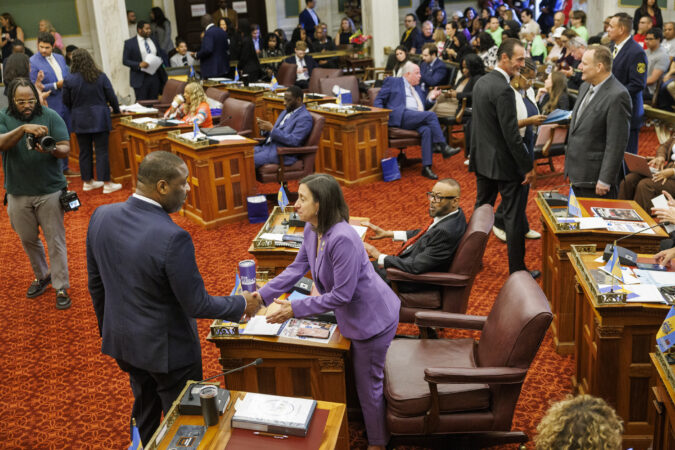
    All 17 of Philadelphia’s City Council members have indicated they will seek reelection in 2027. And if they follow through, that election would mark the first time all members simultaneously asked voters for new four-year terms since the city’s Home Rule Charter was adopted in 1951.

    The 2027 primary is more than a year away, and plenty can happen before then. Past lawmakers have declined to seek reelection for a variety of unexpected reasons, such as receiving an appointment to another post or being indicted. And while incumbents usually prevail in Council elections, several current members are likely to see serious challengers.

    Still, if the incumbents all run and prevail, Philadelphia could potentially see for the first time in its modern political history a cohort of Council members serving more than four years together.

    In some ways, it makes sense that this crop of Council members might be the first to achieve that feat. Council is remarkably inexperienced at the moment, with 12 of its members having served less than two terms. And it appears no current Council members are expected to resign their seats to run for other offices until after 2027, given that none have entered the race for Philadelphia’s open U.S. House seat next year and that Mayor Cherelle L. Parker is in her first term and unlikely to face a reelection challenge from Council’s ranks.

    “It’s no surprise this City Council all wants to return,” said John C. Hawkins, a City Hall lobbyist. “They are much younger and newer than previous iterations, and they’re feeling confident that they and their leadership are representing their constituents well.”

    While many voters may not start paying attention to who is running for Council until much closer to the primary, potential candidates and political insiders are already hard at work trying to figure out which seats will be open or vulnerable and who might run in the 2027 election cycle.

    A majority of Council members were in New York City last weekend for the annual political hobnobbing fest known as Pennsylvania Society, where Council’s recent spat with Parker over her housing initiative was a major topic of conversation.

    In addition to being an opportunity for special interests to wine and dine the state’s political class, Pennsylvania Society also serves as a breeding ground for rumors about future elections. This year, there was little if any talk of vacancies emerging on Council.

    O’Neill to seek 13th term

    In the run-up to every recent city election cycle, speculation has swirled around whether Councilmember Brian J. O’Neill, the body’s lone Republican member and by far its longest-serving, will run for reelection.

    O’Neill, who turns 76 later this month and was first elected in 1979, said he is up for the challenge of extending his own record by seeking a 13th four-year term.

    “I am definitely running,” O’Neill said Monday. “If my health or my wife’s changed, that would be a big factor. Right now, she’s pretty healthy, and so am I.”

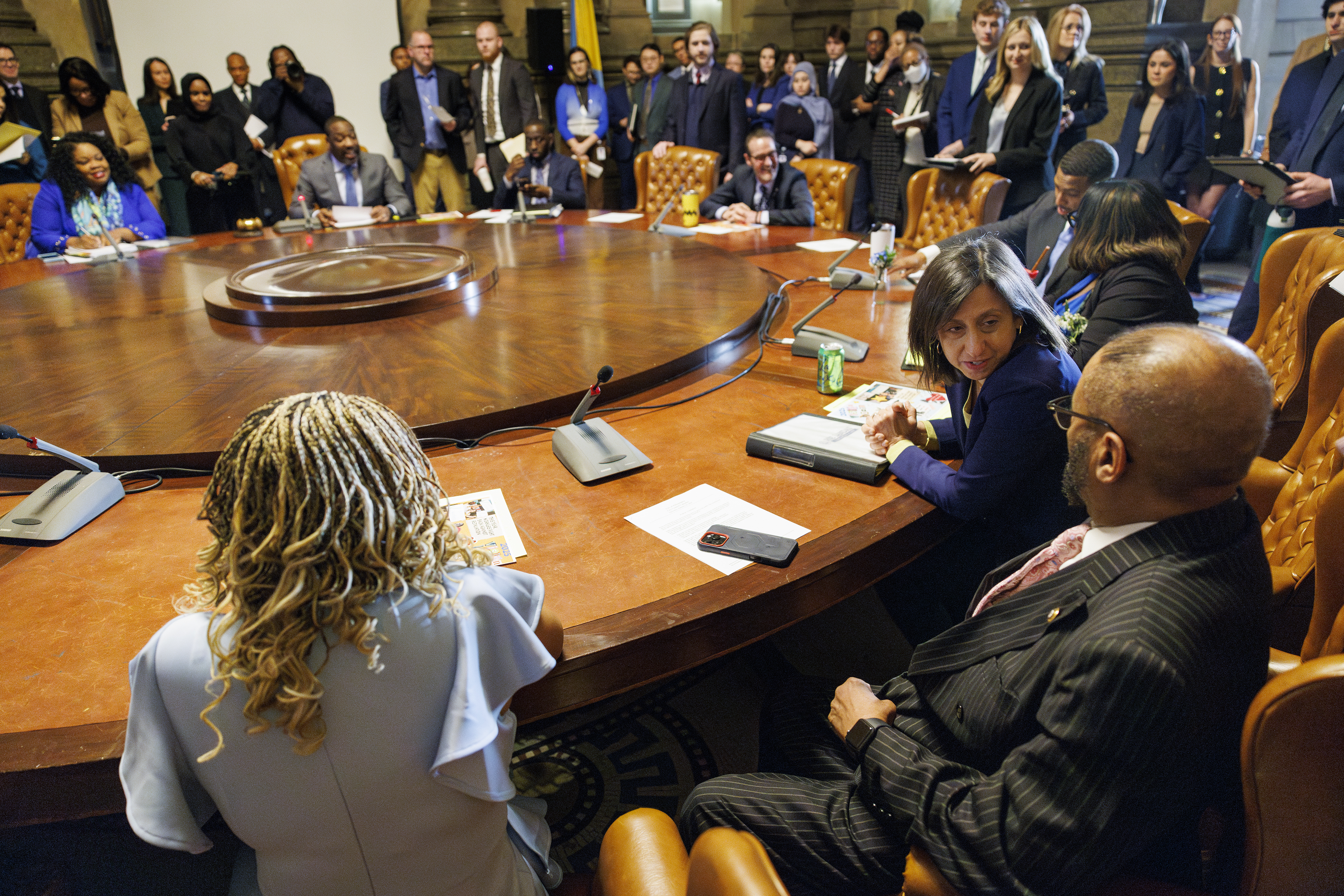
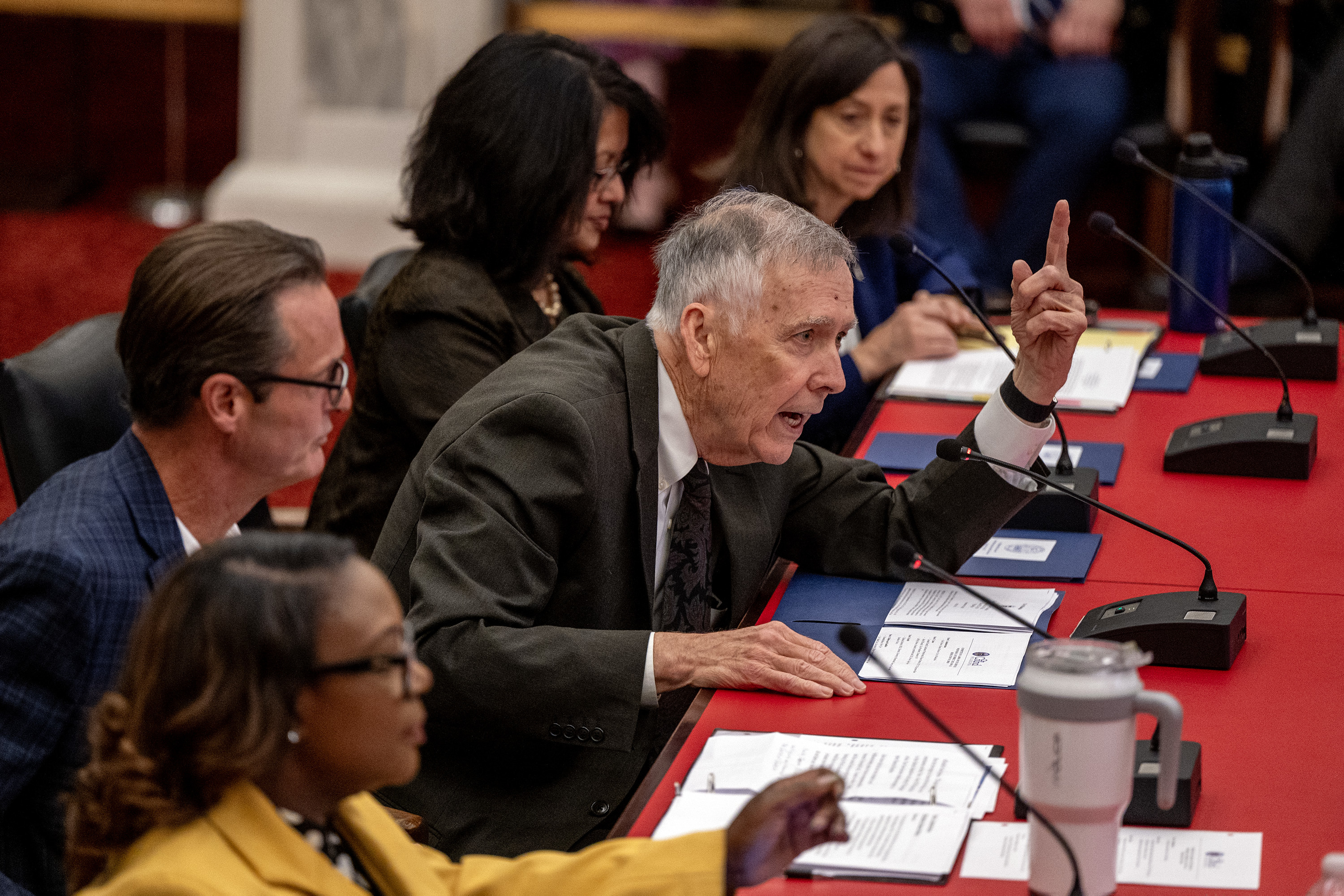
    Councilmember Brian J. O’Neill (center) speaks during a hearing in City Council Monday, Oct. 27, 2025 on former Mayor Jim Kenney’s tax on sweetened beverages. Behind him, front to rear, are: Councilmembers Kendra Brooks, Jimmy Harrity, Nina Ahmad, and Rue Landau.

    O’Neill said he decided long ago that if he could no longer knock on doors while campaigning, he would call it quits. After shoveling snow for more than two hours last weekend, O’Neill said, he is confident that won’t be a problem.

    What is most remarkable about O’Neill’s longevity is that he is one of the few district Council members who regularly face opposition. That’s because his Northeast Philadelphia-based 10th District is the only one in deep-blue Philly that could be considered purple.

    In fact, a majority of voters registered with parties in the district are now Democrats. But O’Neill has successfully swatted away a series of Democratic challengers, doing so most recently in 2023 against Gary Masino, who led the sheet metal workers’ union.

    O’Neill, who avoids partisan political debates in Council and focuses almost entirely on Northeast Philly neighborhood issues, expects another challenge in 2027. But he is not concerned.

    “I try not to think about it because I could never have predicted any of the races I’ve had,” O’Neill said. “It’s a waste of energy because no matter who runs against you, they all present different situations.”

    Turnover turns to incumbency

    Since the 2019 election cycle, six Council members have resigned to run for mayor, three retired, two lost reelection campaigns, and one stepped down after being convicted on federal corruption charges.

    The Council members who are viewed as potentially vulnerable include some of the newest and some who must navigate ideologically divided constituencies.

    Councilmember Jimmy Harrity, one of seven Council members who represent the entire city, was the last-place finisher among Democrats in the 2023 primary, putting a target on his back for the 2027 primary.

    In the last two election cycles, Councilmembers Kendra Brooks and Nicolas O’Rourke of the progressive Working Families Party won at-large seats set aside for minority-party or independent candidates. The GOP, which had held those seats for 70 years, may seek to mount a comeback.

    City Council candidates Kendra Brooks and Nicolas O’Rourke celebrate after the Working Families Party declared victory at their election night gathering at Roar Nightclub in Philadelphia, Pa. on Tuesday, Nov. 7, 2023.

    Councilmember Cindy Bass, a centrist who represents the 8th District, which includes parts of North and Northwest Philadelphia, narrowly eked out a win over progressive Democrat Seth Anderson-Oberman in the 2023 primary and may see another challenge from the left in 2027.

    And Councilmember Jeffery “Jay” Young Jr., who represents the North Philadelphia-based 5th District, has already drawn a potential challenger.

    Young won his seat without opposition after being the only candidate to qualify for the ballot in a bizarre scenario triggered by former Council President Darrell L. Clarke’s last-minute decision not to seek reelection in 2023.

    In 2027, he could be the only incumbent facing a competitive election for the first time. In announcing his intentions to run against Young, attorney Jalon Alexander said in September that he aims to correct what he sees as “a lack of accountability from a Council member who ran uncontested.”

    All signs point to yes

    Council members do not have to make their reelection campaigns official for more than a year, and they gave a variety of answers when asked if they planned to seek new terms.

    “I can’t see a reason why I wouldn’t,” said Council President Kenyatta Johnson, who represents the 2nd District in South and Southwest Philadelphia.

    “I’m strongly considering yes,” said Councilmember Curtis Jones Jr., whose 4th District includes parts of West and Northwest Philadelphia.

    Councilmember Isaiah Thomas, who holds an at-large seat, said yes, and added, “What I like is the fact this legislative body as a collective is so young.”

    Councilmembers Nina Ahmad, Harrity, O’Rourke, Jamie Gauthier, Rue Landau, Quetcy Lozada, and Mike Driscoll all simply affirmed they would likely run. And numerous City Hall insiders told The Inquirer they expect all members to seek new terms.

    Councilmember Rue Landau speaks with Councilmember Curtis Jones Jr. on first day of City Council on Jan. 23, 2025, Caucus Room, Philadelphia City Hall.

    Young gave perhaps the most puzzling answer.

    “It’s not up to me to make that decision,” he said. “It’s up to the people of the 5th District.”

    Asked how he would discern whether voters wanted to keep him before the next election, Young said he would gauge support by doing outreach in his district. But he also said he would personally like to serve another four years.

    “I like doing my job,” he said.

    2031 mayoral election race on horizon

    Even if they all win reelection, it is unlikely that this group of Council members will stay together for future elections.

    One major driver of Council turnover is the City Charter’s “resign to run” rule, which requires city employees to step down if they want to campaign for an office other than the one they hold. Consequently, mayoral elections are a major driver of resignations.

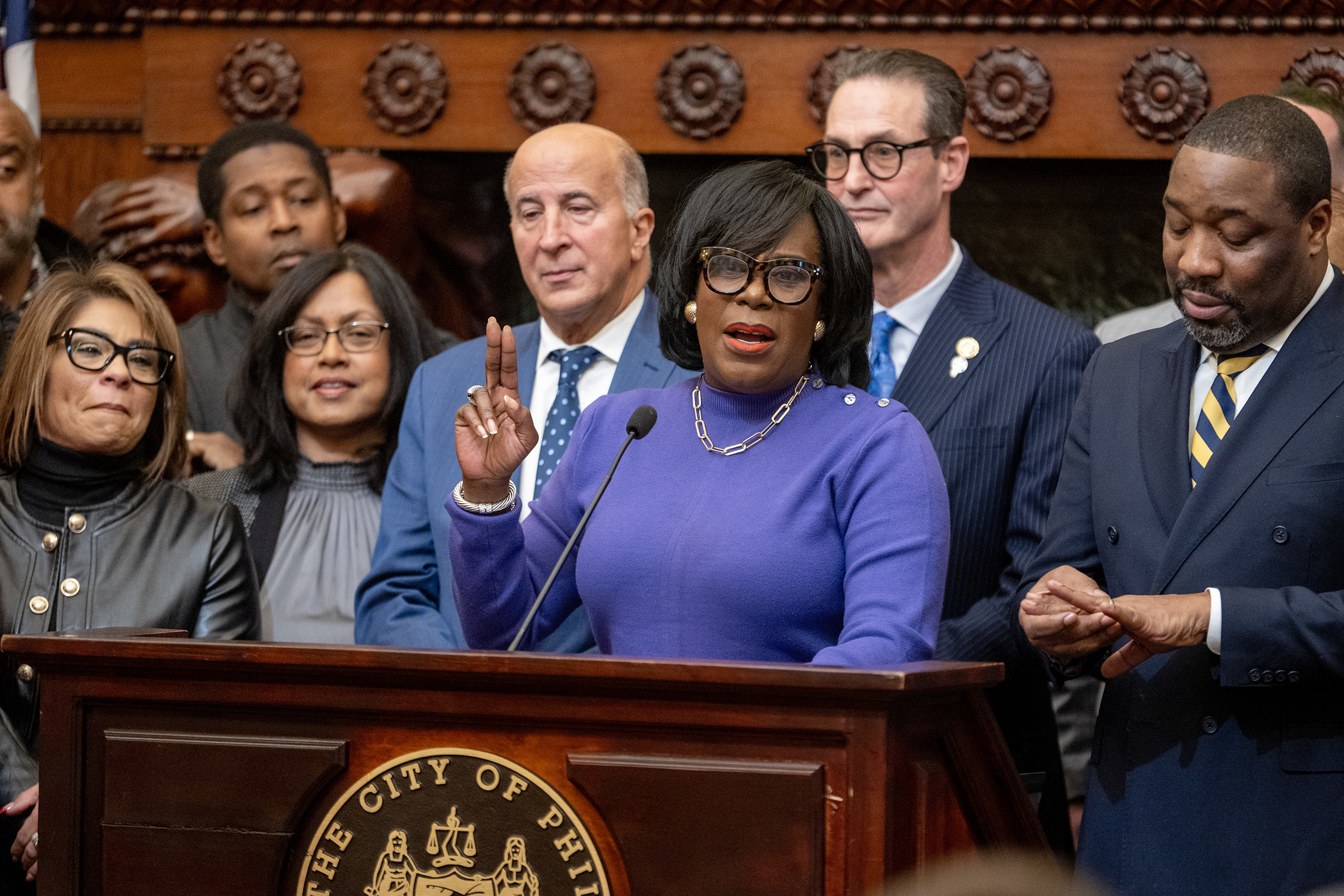
    Mayor Cherelle L. Parker is with City Council President Kenyatta Johnson (far right) and supportive Council members in the Mayor’s Reception Room at City Hall Thursday, Dec. 19, 2024 after Council gave final approval to the Sixers arena.

    Assuming Parker wins reelection in 2027, she will be unable to seek a third consecutive term in 2031, and several current members are likely to throw their hats in the ring to replace her.

    Johnson, Thomas, Gauthier, and Majority Leader Katherine Gilmore Richardson are all seen as potential contenders for that race.

  • Nearly 30 employees have left Chester County’s election office since 2021 amid allegations of toxic work culture

    Nearly 30 employees have left Chester County’s election office since 2021 amid allegations of toxic work culture

    More than two years ago, a Chester County Voter Services employee made a dire prediction.

    In an eight-page grievance against Voter Services Director Karen Barsoum, the employee described a hostile work environment in which election workers were subjected to “bullying” from the department’s director.

    At the time of the complaint, the employee wrote, 15 people had left the 25-person department since Barsoum was hired in 2021.

    “I have very legitimate fears that there will be a mass exodus from voter services in the coming months,” the employee, who asked not to be named for fear of retaliation, wrote in the grievance document he provided to The Inquirer. “My concern is how this will impact the 370k voters of Chester County.”

    Two years later, it appears that his prediction had come true. The number of staff departures since Barsoum took over grew to 29 by November of this year, according to a Chester County spokesperson.

    Election offices across the nation have experienced a high level of turnover and staff burnout in recent years in the face of election denialism and threats, but Chester County’s churn-rate is nearly double the number of departures in Montgomery and Delaware Counties’ elections departments that have lost 16 and 15 people respectively in the same time period. Both departments are larger than Chester County’s election office.

    Accounts and records from three former staffers at Chester County Voters Services Department, two of whom asked not to be named, paint a picture of a hostile work environment where employees were often made to feel as though management had placed a target on their back.

    These concerns have been raised to elected and non-elected county leaders for more than two years.

    Barsoum said in an interview that she couldn’t respond to allegations from employees but described her management style as collaborative.

    Employees, she said, had left for a variety of reasons including jobs in other Southeast Pennsylvania election offices that pay better than Chester County. Others, she said, left to pursue other opportunities or for family reasons.

    Some, she said, left because of the increased pressures of election work as state law changes and the intensity increases.

    “I encourage everyone to do what is the best for them,” Barsoum said Thursday.

    Though Barsoum acknowledged it was challenging for the office when people left, she said she and other managers were very hands-on in training staff and ensuring that staff members knew the ins and outs of various positions.

    Karen Barsoum, Chester County’s director of voter services, at the Chester County Government Services Building in 2022.

    The employee who filed the grievance said he feared that the attrition would lead to mistakes during the 2024 presidential election, when the eyes of the nation were on Pennsylvania.

    The county reported no major mistakes in 2024.

    But in 2025 the department failed to include an office on the May primary ballot and left the names of roughly 75,000 voters off the poll books in November.

    Ultimately, everyone who wanted to vote was able to, county officials said. But the error created a chaotic scene as the county kept polls open two additional hours and more than 12,000 voters were asked to cast provisional ballots — which require more steps from election workers and voters to be counted.

    The county hired a West Chester law firm to investigate how and why the poll book error occurred.

    Chester County’s CEO David Byerman, the county’s top unelected official, said that turnover across all departments can be attributed to a variety of factors in the county including pay and managers.

    He described working in elections today as a “pressure cooker” as a result of the political climate.

    The investigation, he said, would look closely at management in the department and whether factors existed that would have hindered staff from identifying or reporting concerns.

    “The very fact that we’re doing an investigation into what happened last month … indicates that we want to learn more about what happened in this particular election,” Byerman said. “Part of that investigation is looking at the performance of our management team in voter services.”

    It’s unclear at this stage whether the error can be attributed to the turnover and environment in voter services, but Paul Manson, a professor at Portland State University who researches challenges faced by election workers, said the turnover seen in Chester County is unusual and alarming.

    Often, Manson said, staff tends to be relatively stable in election offices because they care deeply about the work. Stressors of reduced staffing and the toxic environment described by three former employees, he said, could create a dynamic that makes mistakes more likely.

    “When we have these periods of turnover local election officials really sort of grit their teeth because they worry about these small errors turning into big errors,” he said.

    Election workers process mail ballots for the 2024 general election at the Chester County, administrative offices in West Chester. (AP Photo/Matt Slocum)

    Allegations of ‘hostility’ toward staff

    Barsoum, who came to Chester County from Berks County in 2021, has earned respect in the election field nationally and within Pennsylvania. Barsoum had been the assistant director in the Berks election office.

    “Karen Barsoum has an extraordinary knowledge that is a resource both statewide here in Pennsylvania and has been a resource nationally. I don’t think anyone doubts her knowledge of election processes,” said Byerman, the Chester County CEO.

    “At the end of the day I think any manager needs to combine two abilities. An ability to manage an office effectively and an ability to be knowledgeable and an expert.”

    Byerman said each manager in the county is evaluated on these criteria regularly, but when asked whether Barsoum possessed both qualities, Byerman did not respond.

    Former county employees said Barsoum’s high reputation outside Chester County did not align with what they experienced in their jobs.

    The employee who filed the grievance against Barsoum said he got along with her well when she started and he received high marks on performance reviews, according to documents provided to The Inquirer.

    But after a reorganization in the department in 2022, he said, he noticed that more and more staff members were leaving. The employee was promoted to a new role and during the 2022 election did that job while maintaining responsibilities from his prior role.

    He said he expressed concern about being overworked and received little support in the new role. After the employee said he dropped the ball on a minor item and reported it to Barsoum, she began treating him differently.

    “In Karen’s eyes you’re either 100% right or 100% wrong,” he said in an interview.

    The employee filed his grievance in August of 2023 after a meeting where, he said, Barsoum listed accomplishments of staff members and refused to acknowledge any of his work.

    Barsoum’s “hostility” toward him in the meeting was so noticeable, he wrote in the complaint, that eight colleagues approached him afterward to say they noticed it.

    “After so many months of mistreatment and disrespect in such a hostile work environment, it eventually gets to the point that something needs to be said. If the Presidential Election were to not run smoothly next year and ChesCo voters were disenfranchised due to the Voter Services, I would forever regret not sending this grievance,” the employee wrote in his grievance.

    That employee left the department the next year. He was placed on a performance-improvement plan weeks after submitting his grievance, and, after completing that plan, he was placed on another as a result of a low performance review and quit before he could be terminated.

    Elizabeth Sieb, who worked at the election office for eight years before leaving in 2022, said she had similar experiences with Barsoum to those detailed in the grievance. For the past year and a half she has been telling county officials about her concerns.

    In 2022, Barsoum reorganized the office to respond to the new stressors of elections and new responsibilities that come with mail voting. Since then, she said, she and staff work to evaluate after each election what worked and what didn’t so adjustments can be made.

    But Sieb said Barsoum didn’t take constructive criticism well when changes were made and stifled discussion among staff members.

    Sieb was fired from the department in 2022. She said she was placed on a personal-improvement plan that demanded that she seek mental health treatment and subsequently placed on a three-day unpaid suspension.

    Following the suspension, Sieb said, she was directed not to speak to her colleagues if it was not directly related to her work. She said she was fired for violating that rule when she reported to a lower-level manager concerns about another manager speaking disparagingly about a job applicant in earshot of other employees.

    Sieb, who at times questioned Barsoum’s decisions, said she felt that the director was threatened by long-term staff and was prone to outbursts when employees would correct her.

    “She was slowly but surely wearing down and getting rid of all the people that had been there a long time,” Sieb said.

    Jennifer Morrell, the CEO of the Elections Group, a company that assists local election officials, said turnover in election offices happens for a variety of reasons — including the long hours and relatively low pay civil servants receive.

    She noted that training programs from state agencies and associations are designed to help prevent errors as a result of turnover and that a larger department, like Chester County, may be able to fill rolls with election workers from other counties.

    “Karen is highly respected in the election community, super professional,” Morrell said. “Our hearts just ached with what happened because it could have happened to anybody.”

    Commissioners respond to concerns

    After leaving the department, Sieb said, she believed she suffered from PTSD related to her experience.

    Beginning in 2024 she began reaching out to Republican Commissioner Eric Roe with her concerns. Roe, Sieb said, investigated the complaints and brought them to the other commissioners, Democrats Josh Maxwell and Marian D. Moskowitz. The commissioners also serve as the county’s election board.

    “I have had a lot of people come to me with various concerns throughout county government, and voter services is certainly one of them,” Roe told The Inquirer, explaining that his role as minority party commissioner makes him a frequent recipient of workforce complaints.

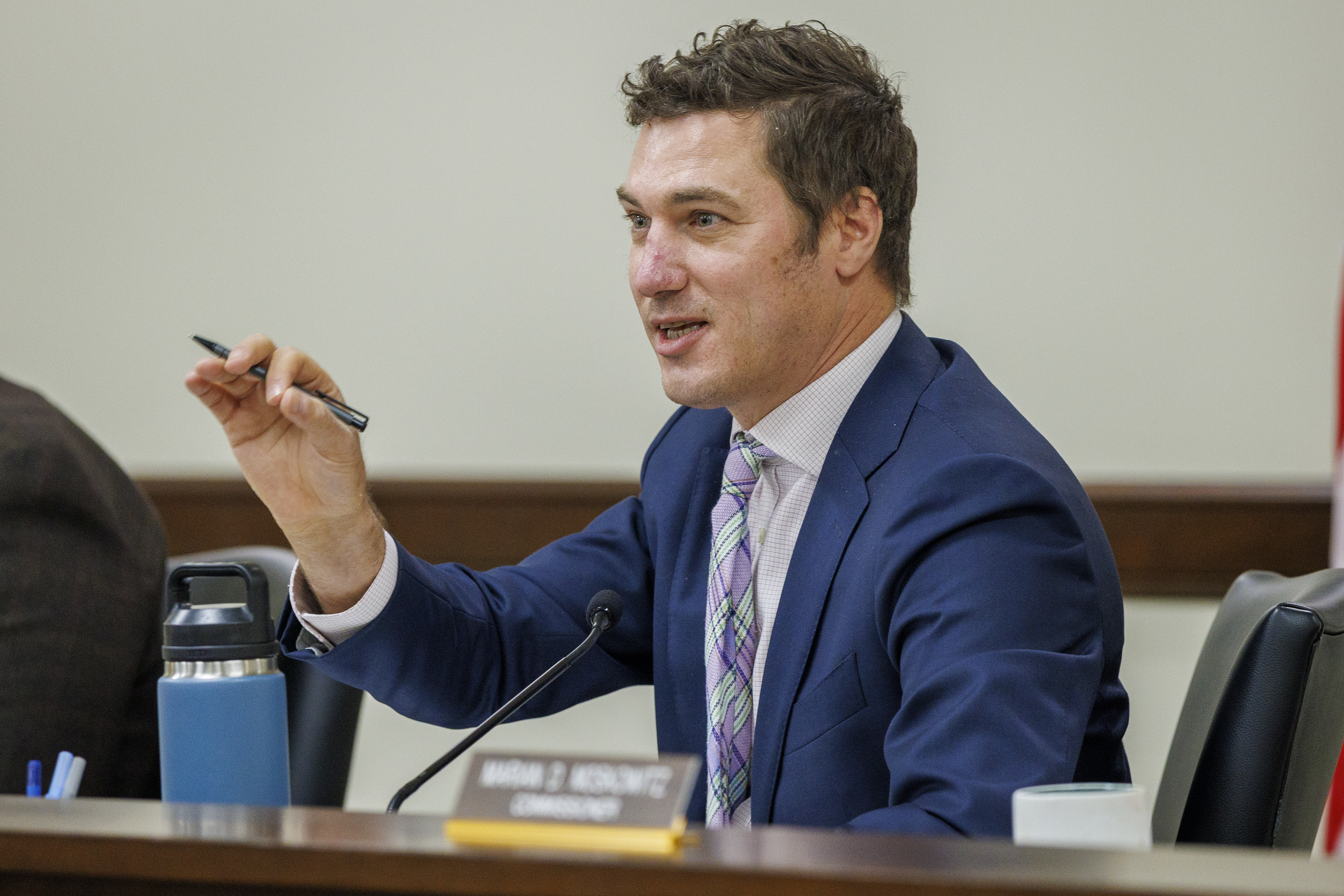
    Chester County Commissioners (from left) Eric M. Roe, Josh Maxwell, and Marian D. Moskowitz at a board meeting in September.

    But a year and a half later, Barsoum remained in her role and Sieb continued to hear from her former colleagues with concerns. Twice this year, Sieb went before the Chester County Election Board to raise public concerns about turnover under Barsoum.

    Maxwell, who chairs the Chester County Election Board, said the county reviews reports from departments when they receive them. He said he was unable to comment on specific departments or personnel matters but said the county needed to do everything it could to support its election workers.

    “We need to do a better job, I think, making sure that people feel valued. Including the folks that unfortunately we’ve lost,” he said.

    Election work in Pennsylvania and elsewhere has gotten increasingly fraught. The work itself is more intense than it once was with more mail voting, and workers now deal with threats, longer hours, and a camera on them when they’re working with ballots.

    “We were seen as clerical people, maybe, in the past; now we are wearing many different hats,” Barsoum said.

    Moskowitz attributed much of the turnover in the county to burnout and noted the threats that election employees have faced in her years on the job.

    Barsoum became emotional as she said she had worked to ensure that her staff had the resources they needed to feel safe, including mental health resources through the Human Resources department, team building outside election cycles, and a space for workers to step off camera.

    “We can count on each other; we lean on each other. It’s a strong bond, a camaraderie,” she said.

    When hiring new staffers, Barsoum said she warns them of what’s to come — that they’re not walking into a normal 9-to-5 job, that they won’t be able to plan vacations through about half of the year, and that they’ll be asked to take phone calls from irate people.

    It’s a lifestyle, she said, that isn’t right for everyone — including some parents.

    “If you’re leaning on a daycare and that is your sole, the go-to, it will be very hard to work in the department because there is 24/7 operations, and there are so many things that are going off and beyond the regular work schedule.”

    Josh Maxwell, chair of Chester County Commissioners and the county Elections Board, presides over a September commissioners meeting.

    Maxwell and Moskowitz declined to comment specifically when asked if they were confident in Barsoum’s leadership, but Maxwell has repeatedly asked residents to direct their anger at November’s error at him rather than Barsoum or her staff.

    “I think it’s important that we protect these folks and we empower them to make the best decisions possible,” Maxwell said at an election board meeting last week.

    Speaking to The Inquirer, he reiterated that point.

    “We want to make sure that people feel welcomed and empowered and are in a working environment they appreciate,” Maxwell said in an interview.

    “Elections have changed so much in five years it’s not surprising to me that some people want to find something new to do.”

    This suburban content is produced with support from the Leslie Miller and Richard Worley Foundation and The Lenfest Institute for Journalism. Editorial content is created independently of the project donors. Gifts to support The Inquirer’s high-impact journalism can be made at inquirer.com/donate. A list of Lenfest Institute donors can be found at lenfestinstitute.org/supporters.

  • Trump administration says White House ballroom construction is a matter of national security

    Trump administration says White House ballroom construction is a matter of national security

    WASHINGTON — The Trump administration said Monday in a court filing that the president’s White House ballroom construction project must continue for reasons of national security.

    The filing came in response to a lawsuit filed last Friday by the National Trust for Historic Preservation asking a federal judge to halt the project until it goes through multiple independent reviews and wins approval from Congress.

    In its filing, the administration included a declaration from the deputy director of the U.S. Secret Service saying more work on the site of the former White House East Wing is still needed to meet the agency’s “safety and security requirements.” The administration has offered to share classified details with the judge in an in-person setting without the plaintiffs present.

    The government’s response to the lawsuit offers the most comprehensive look yet at the ballroom construction project, including a window into how it was so swiftly approved by the Trump administration bureaucracy and its expanding scope.

    The filings assert that final plans for the ballroom have yet to be completed despite the continuing demolition and other work to prepare the site for construction. Below-ground work on the site continues, wrote John Stanwich, the National Park Service’s liaison to the White House, and work on the foundations is set to begin in January. Above-ground construction “is not anticipated to begin until April 2026, at the earliest,” he wrote.

    The National Trust for Historic Preservation did not immediately respond to email messages seeking comment.

    The privately funded group last week asked the U.S. District Court to block Trump’s ballroom addition until it goes through comprehensive design reviews, environmental assessments, public comments, and congressional debate and ratification.

    Trump had the East Wing torn down in October as part of the project to build an estimated $300 million, 90,000-square-foot ballroom before his term ends in 2029.

    The administration argues in the filing that the plaintiff’s claims about the demolition of the East Wing are “moot” because the tear-down cannot be undone. The administration also argues that claims about future construction are “unripe” because the plans are not final.

    The administration also contends that the National Trust for Historic Preservation cannot establish “irreparable harm” because above-ground construction is not expected until April. It argues that the reviews sought in the lawsuit, consultation with the National Capital Planning Commission and the Commission of Fine Arts, “will soon be underway without this Court’s involvement.”

    “Even if Plaintiff could overcome the threshold barriers of mootness, ripeness, and lack of standing, Plaintiff would fail to meet each of the stringent requirements necessary to obtain such extraordinary preliminary relief,” the administration said.

    Trump’s ballroom project has prompted criticism in the historic preservation and architectural communities, and among his political adversaries, but the lawsuit is the most tangible effort thus far to alter or stop his plans for an addition that itself would be nearly twice the size of the White House before the East Wing was torn down.

    A hearing in the case was scheduled today in federal court in Washington.

  • Top Pennsylvania Republicans are projecting relative calm amid 2026 national party panic

    Top Pennsylvania Republicans are projecting relative calm amid 2026 national party panic

    The same week Republican National Committee chair Joe Gruters said history predicted “almost certain defeat” for his party in the 2026 midterms, Pennsylvania Republicans partying in Midtown Manhattan projected relative calm about the election cycle.

    Gruters, President Donald Trump’s handpicked chair to run the party, said on a conservative radio station last week: “It’s not a secret. There’s no sugarcoating it. It’s a pending, looming disaster heading our way. We are facing almost certain defeat.”

    He added that the goal is to win and he “liked our chances in the midterms,” but noted “only three times in the last hundred years has the incumbent party been successful winning a midterm.”

    Pennsylvania could decide which party controls the U.S. House next year, as Democrats eye four congressional districts that Republicans recently flipped while the GOP fights to maintain its majority.

    But Pennsylvania Republicans in New York City for the annual Pennsylvania Society glitzy gathering of politicos last weekend had a less hair-on-fire view.

    “At this point when I was running [for Senate in 2024], the betting market said there was a 3% chance I was going to win,” Sen. Dave McCormick (R., Pa.) said after addressing a bipartisan audience at the Pennsylvania Manufacturer’s Association luncheon on Saturday.

    “We’re a million miles from Election Day, and we’ve got a great track record of things to talk about and a great vision for how the president’s policies are going to make life better for working families,” McCormick said. “We just got to go out and make that message happen, but also continue to make the policies that are going to make that a reality happen.”

    The political environment was, of course, far more favorable to Republicans in 2024, when Trump won Pennsylvania by a larger margin than he did in 2016. But with Republicans in power and popular Democratic Gov. Josh Shapiro on the ballot for reelection, the headwinds in 2026 in the Keystone State are different.

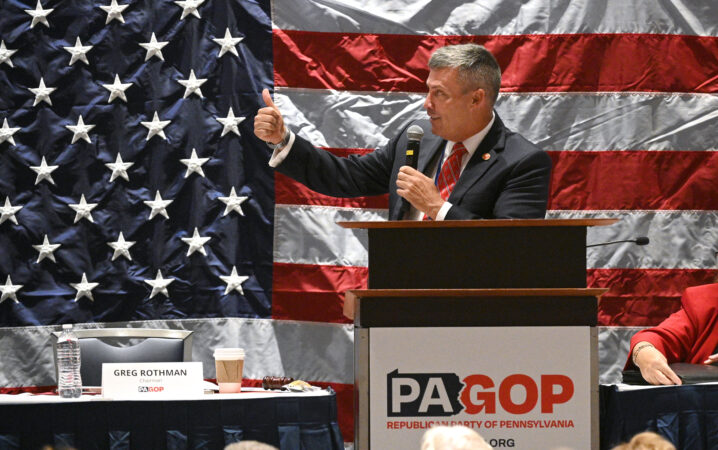
    Pennsylvania GOP chair Greg Rothman, in an interview outside the PMA event on Saturday, called Shapiro “one of the greatest politicians of my generation” but noted that upsets have happened across various political environments in state history.

    “Anything can happen and the voters are smart, and all I can do is prepare the party to ride the waves and ignore the crashes, but I’m optimistic,” he added.

    Shapiro will likely face a GOP challenge from State Treasurer Stacy Garrity, who is a popular politician in her own right and holds the record for receiving the most votes of any candidate for statewide office in Pennsylvania.

    Meanwhile, Rothman predicted that the four Pennsylvania congressional incumbents running for reelection in swing districts will sink or swim based on how Trump and his policies land with voters come November.

    “They will be judged by the national economy and by immigration,” he said, and by Trump’s ability to end some international conflicts.

    But U.S. Rep. Rob Bresnahan, a GOP incumbent running for reelection in Pennsylvania’s Eighth Congressional District, which includes Scranton, had a more local view of how to win in 2026.

    “Everything about our job as a member of Congress is about northeastern Pa.,” Bresnahan said.

    “Northeastern Pennsylvania has always been our North Star. We know our district. We are out in our district. We’ve done over 250 public events. Our constituency case work is, in my opinion, one of the best offices in the country.”

    Bresnahan appeared at a rally with Trump in Mount Pocono last week. He was also one of just 20 House Republicans to sign a successful discharge petition to force a vote for collective bargaining to be restored for federal workers.

    “At the end of the day that might have been going against party leadership, but it was what’s right for northeastern Pennsylvania,” he said.

    Democrats have begun a full court press. That was evident at the Pennsylvania Society, where attendees seen mingling with other politicians included: Janelle Stelson, who is running for a second time against U.S. Rep. Scott Perry in the 10th Congressional District, as well as firefighter Bob Brooks and former federal prosecutor Ryan Croswell, both of whom are running for the Democratic nomination to take on U.S. Rep. Ryan Mackenzie in the Seventh.

    Bresnahan’s challenger, Scranton Mayor Paige Cognetti, also attended the soiree and walked through the Rainbow Room atop Rockefeller Center with U.S. Sen. Chris Coons (D., Del.) on Friday night. Coons said the time is now for Democrats to get involved in these races.

    “Given the margin, if there were to be four new Democrats in the House this cycle, as there were in 2018, that’d be the difference maker for the country,” Coons added.

    Staff writer Gillian McGoldrick contributed to this article.

  • Josh Shapiro doesn’t need Pa. Society, the Parker-Johnson relationship, Kim Ward’s budget ballad, and more takeaways from Pa.’s weekend in NYC

    Josh Shapiro doesn’t need Pa. Society, the Parker-Johnson relationship, Kim Ward’s budget ballad, and more takeaways from Pa.’s weekend in NYC

    NEW YORK — Pennsylvania’s political class schmoozed their way across Midtown Manhattan this past weekend, bouncing from cocktail parties to swanky receptions organized to woo the elite ahead of a big midterm election year.

    Hundreds of Pennsylvania politicos made their way for the state’s annual weekend of civility, bipartisanship, fundraising, and more than a few hangovers.

    Four Inquirer political writers were among those who traveled to the Pennsylvania Society gathering, chatting with lawmakers and interviewing candidates inside the moody bars and penthouse parties. Here are our takeaways.

    Maybe Shapiro doesn’t need Pa. Society anymore

    Gov. Josh Shapiro this year has hosted fundraisers in New Jersey and Massachusetts for his unannounced reelection campaign.

    But he didn’t need to make the rounds this weekend among Pennsylvania’s political elite as he emerges as a top contender for the 2028 Democratic nomination for president.

    Shapiro traveled to New York City only to deliver his annual speech to the Pennsylvania Society and honor former U.S. Ambassador to Canada, David L. Cohen, who received the society’s top award.

    Instead of handshaking and fundraising like most incumbent governors would, Shapiro has largely avoided Pennsylvania Society mingling during his time as governor. His reelection campaign did not appear to change that.

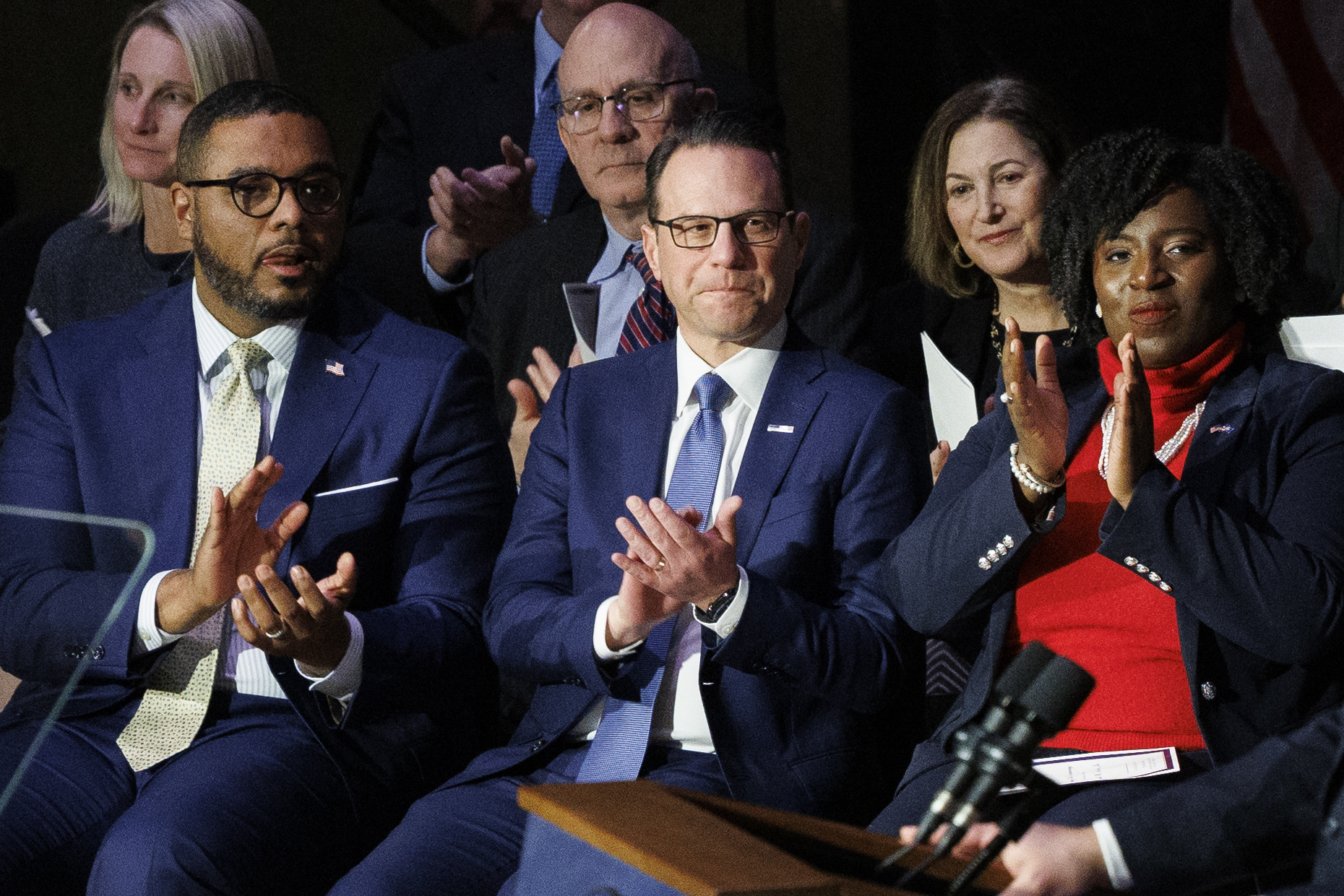
    Pennsylvania politicians (from left) Lt. Gov. Austin Davis, Gov. Josh Shapiro and State House of Representatives Speaker Joanna E. McClinton last January attending the swearing-in ceremony of Attorney General David W. Sunday, Jr. in Harrisburg.

    Instead, Lt. Gov. Austin Davis hosted a solo fundraiser for their joint reelection ticket.

    “There’s a lot of demands on the governor’s time,” Davis said following a speech at the annual luncheon hosted by the Pennsylvania Manufacturers’ Association.

    The Third Congressional District race was the talk of the town

    Three of the candidates vying to replace retiring U.S. Rep. Dwight Evans in the Third Congressional District had a busy weekend in New York. State Sen. Sharif Street, pediatric surgeon Ala Stanford, and State Rep. Morgan Cephas made the rounds.

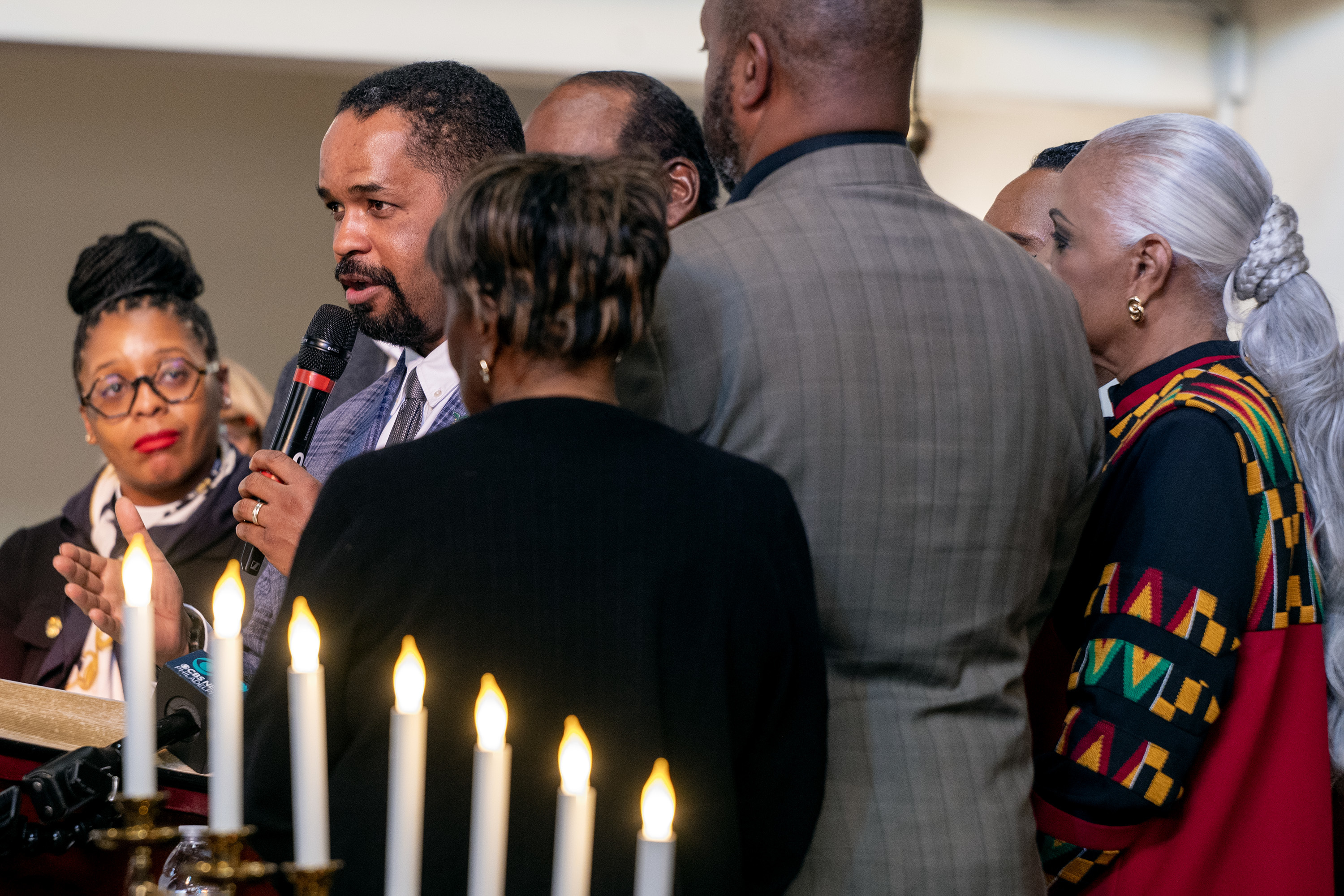
    Sharif Street speaks from the pulpit of Mother Bethel A.M.E. church Sunday, Nov. 2, 2025 as the Black Clergy of Philadelphia and Vicinity holds a press conference with other community and political leaders to discuss the negative impacts of the ongoing government shutdown. Mother Bethel Pastor Rev. Carolyn Cavaness is at left.

    Stanford held a somewhat star-studded fundraiser Thursday evening, hosted, according to a posted listing for the private event, by Hamilton actor Leslie Odom Jr. (who did not attend but lent his name).

    Street, the former state party chair and a longtime attendee at Pennsylvania Society, held two fundraisers in Manhattan, fresh off his endorsement last week by former Gov. Ed Rendell.

    Not spotted: State Rep. Chris Rabb, who is running as an anti-establishment progressive.

    “That’s not really my thing,” he said in a text message.

    The Parker-Johnson relationship was a hot topic

    Philadelphia City Council wrapped up its final meeting of the year the day before the Pennsylvania Society began, and the lawmakers gave the chatterati plenty to talk about in Manhattan, with a dramatic close to the session.

    One major topic of conversation in New York: What did Council’s recent conflict with Mayor Cherelle L. Parker over her housing plan mean for the unusually tight relationship between Council President Kenyatta Johnson and the mayor?

    The consensus: Mom and Dad were fighting, but they’ll probably patch things up.

    “Disagreements between Council and mayor — it happens,” said Larry Ceisler, a Philadelphia-based public affairs executive whose firm hosted a packed party in Midtown on Saturday. “It’s the way the system is set up.”

    But Ceisler said he’s not worried that Parker and Johnson will abandon their goal of emulating then-Mayor Rendell’s close working relationship with Council President John F. Street in the 1990s.

    “The fact is they’re certainly in sync more than they’re not,” Ceisler said.

    City Council president Kenyatta Johnson speaking with Philadelphia Mayor Cherelle Parker in June 2024.

    Johnson, he said, likely improved his standing with members by holding firm against a last-minute amendment Parker proposed to alter Council’s version of the housing plan’s budget.

    Parker and Johnson both made the trek to Manhattan, along with Councilmembers Rue Landau, Nina Ahmad, Jamie Gauthier, Jeffery “Jay” Young Jr., Kendra Brooks, Katherine Gilmore Richardson, Jim Harrity, Cindy Bass, and Quetcy Lozada.

    The mayor also took the opportunity to engage in a bit of bipartisanship. She has often touted her ability to build relationships across the aisle, despite Philadelphia politics being dominated by Democrats.

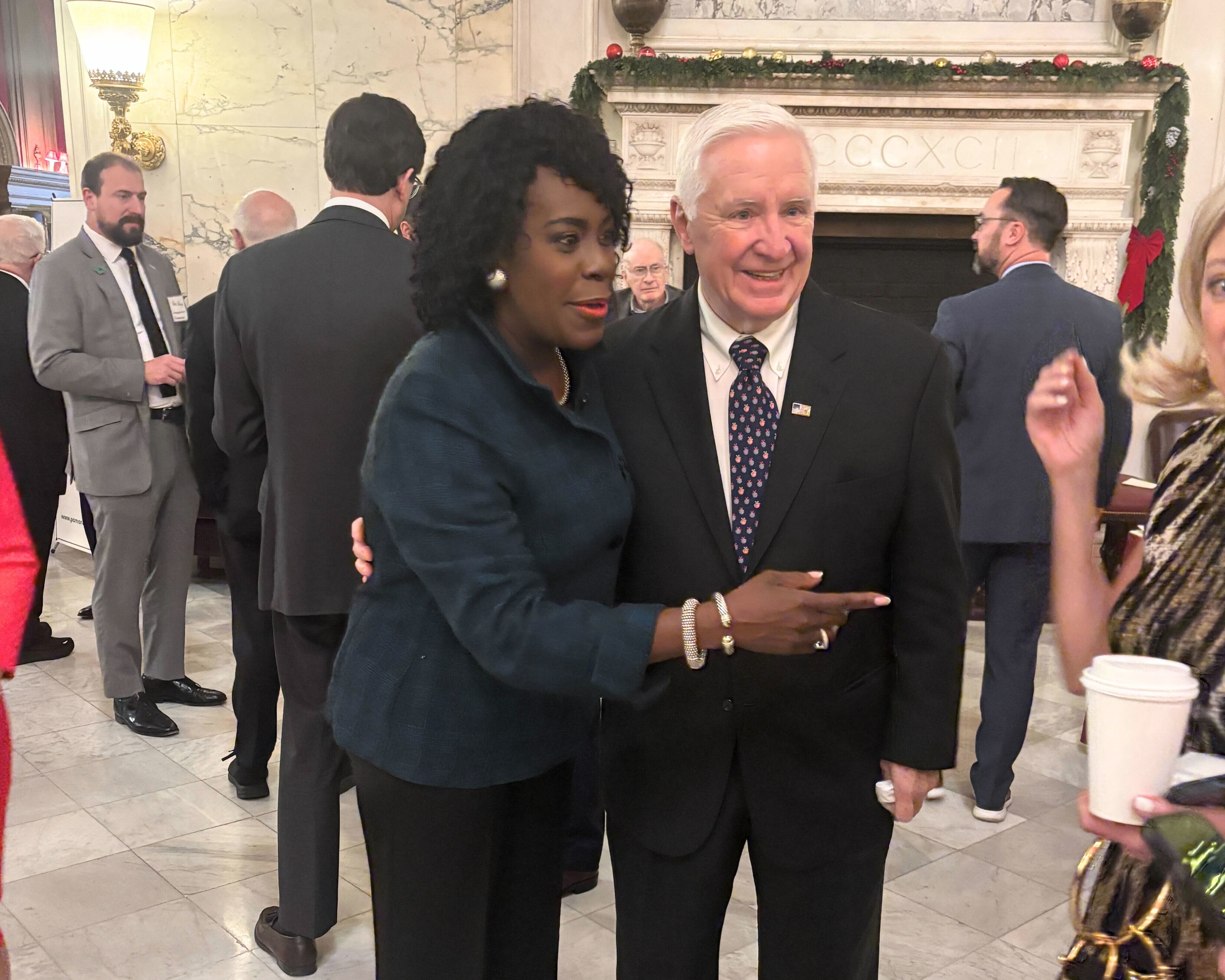
    At the PMA luncheon, Parker embraced former Gov. Tom Corbett and gave a warm greeting to Auditor General Tim DeFoor, both Republicans.

    Mayor Cherelle L. Parker (left) and former Gov. Tom Corbett at the luncheon hosted by the Pennsylvania Manufacturers’ Association on Saturday in New York.

    At the same event, Republican U.S. Sen Dave McCormick shouted out Parker multiple times during his prepared remarks. The pair have forged a working relationship despite their partisan differences.

    “We talk about challenges in the city that we’re facing right now, and the hope is that we can count on some folks as allies,” Parker said of meeting with members of the GOP.

    She added: “It’s great to try to maintain those lines of communication.”

    Special interests woo political elite

    Many of the events were hosted by special-interest groups and corporations that have business with the government and are looking to win influence over glasses of Champagne.

    There were the usual suspects and big law firms: Duane Morris always hosts a marquee late-night event on Friday in the sprawling Rainbow Room atop Rockefeller Center. Other firms including Cozen O’Connor, Ballard Spahr, and Saul Ewing also hosted cocktail parties.

    One notable newcomer to the party scene was Pace-O-Matic, the Georgia-based operator of “skill games” at the center of negotiations over regulation and taxing of the machines.

    The company, which has spent millions on political contributions and lobbying, threw a cocktail reception Thursday night at an Italian restaurant attended by a sizable contingent of state lawmakers.

    Legislators have yet to agree on how to regulate and tax skill games, which remain entirely unregulated and untaxed.

    But solutions seemed possible at the Pace-O-Matic party, as Central Pennsylvania Republicans and Philadelphia Democrats milled about the bar in an unlikely alliance.

    Another bipartisan event — this one in a sunny room atop the vintage Kimberly Hotel — was hosted by Independence Blue Cross and AmeriHealth Caritas, insurance companies that have Medicaid contracts with the state.

    Lawmakers often credit the weekend of partying in New York as a time for civil conversations in a neutral territory that ultimately benefit a philanthropic cause at the Pennsylvania Society’s annual dinner.

    But Rabbi Michael Pollack, who leads the government accountability group March on Harrisburg, said the civility seems to come only when special interests are footing the bill.

    “It’s absolutely embarrassing that our legislators can only interact with each other when a lobbyist sets up a playdate for them,” he said.

    A Christmas budget ballad by DJ Ward

    Senate President Pro Tempore Kim Ward debuted a hidden musical talent on stage at the annual bipartisan Pennsylvania Chamber of Business and Industry breakfast: She can write a Harrisburg holiday hit.

    “I did live in Nashville for six years and no one discovered me,” she joked, before launching into a three-minute budget balladto the tune of “Deck the Halls.”

    Ward (R., Westmoreland) debuted her song after an ugly budget battle that lasted 135 days and ended just last month. Punctuated by fa-la-las, she called out each of the top leaders who were in the closed-door budget talks.

    Senate President Pro Tempore Kim Ward (R., Westmoreland) speaking in February 2024 at the Capitol in Harrisburg.

    Ward is among Shapiro’s top critics. The two had hardly spoken since 2023 until Ward joined in-person budget negotiations at the end of October.

    During those negotiations, Ward has said Shapiro gave her a special heart-shaped cookie to break the ice. And it appears that she’s not yet letting that go, dedicating a moment in her song to the encounter:

    Mr. Shapiro give me a break

    You know you gave me that heart cookie cake

    Why are you saying that you didn’t do it?

    Ward’s jingle wasn’t the first time a Pennsylvania Republican leader leaned on the power of song during the bitter budget battle.

    At the peak of the clash over transit funding in August, Senate Majority Leader Joe Pittman quoted heavily from the lyrics of John Mellencamp’s “Small Town” in recalling his upbringing in rural Western Pennsylvania.

    Shapiro will propose a new budget in February, restarting the budget negotiation process. Ward urged the group of leaders to take a break from fighting during the holiday season.

    It’s Christmas and we’re all here together

    Republicans and Democrats, and all who matter

    Let’s celebrate the birth of Jesus

    For the next three weeks, let’s not be egregious

    Perhaps next budget season will inspire a mixtape.

  • Why hasn’t Trump sent troops to Philly, the city where ‘bad things happen’? Everyone has a theory.

    Why hasn’t Trump sent troops to Philly, the city where ‘bad things happen’? Everyone has a theory.

    In the last six months, President Donald Trump has sent troops, immigration agents, or both to Democratic cities from coast to coast. The list includes Los Angeles, Chicago, Washington, Memphis, Portland, Ore., Charlotte, N.C., New Orleans, and Minneapolis.

    But not Philadelphia.

    The city that seemed an obvious early target, condemned by Trump as the place where “bad things happen,” has somehow escaped his wrath. At least so far.

    That has sparked speculation from City Hall to Washington over why the president would ignore the staunchly Democratic city with which he has famously feuded. Here we offer some insight into whether that’s likely to change.

    Why has Philadelphia been spared when smaller, less prominent cities have not?

    Nobody knows. Or at least nobody knows for sure. But lots of people in government and immigration circles have ideas.

    There’s the weather theory, that it’s hard for immigration agents who depend on cars to make arrests in cities that get winter snow and ice. Except, of course, the administration just launched Immigration and Customs Enforcement operations in Minneapolis, which gets 54 inches of snow a year.

    Then there’s the swing-state theory, that Trump is staying out of Philadelphia because Pennsylvania ranks among the handful of states that can tip presidential elections. But that doesn’t explain Trump’s surge into North Carolina, where he sent immigration forces last month.

    While the Tar Heel State voted for Trump three times, elections there can be decided by fewer than 3 percentage points.

    U.S. Rep. Brendan Boyle, a Democrat whose North and Northeast Philadelphia district includes many immigrants, suggested a blue-state theory, that Trump has mostly targeted cities in states that voted for Vice President Kamala Harris in the 2024 presidential election. But Boyle acknowledged that North Carolina and Tennessee are exceptions.

    “It could just be that they’re working their way down the list,” Boyle said.

    Has Mayor Cherelle L. Parker had a hand in keeping troops out of Philadelphia?

    It depends on whom you talk to.

    For months she has passed up opportunities to publicly criticize the president, turning aside questions about his intentions by saying she is focused on the needs of Philadelphia. Some believe her more passive approach has kept the city out of the White House crosshairs.

    People close to the mayor point out that big-city mayors who land on the president’s bad side have faced big consequences. For instance, in Los Angeles, Mayor Karen Bass frequently clashed with Trump ― and faced a National Guard deployment.

    Some point out that Parker has good relationships with Republicans who are friendly with the president, including U.S. Sen. Dave McCormick of Pennsylvania, who has praised the mayor on multiple occasions.

    On the other hand, some in the city’s political class ― especially those already skeptical of Parker ― say the suggestion that she has shielded the city gives her too much credit.

    One strategist posited that the lack of overt federal action has more to do with Trump’s trying to protect a razor-thin Republican majority in the House, and that targeting Philadelphia could anger voters in the Bucks County and Lehigh Valley districts where Republicans hold seats.

    What does Trump say about his plans for Philadelphia?

    Not much. Or at least nothing specific.

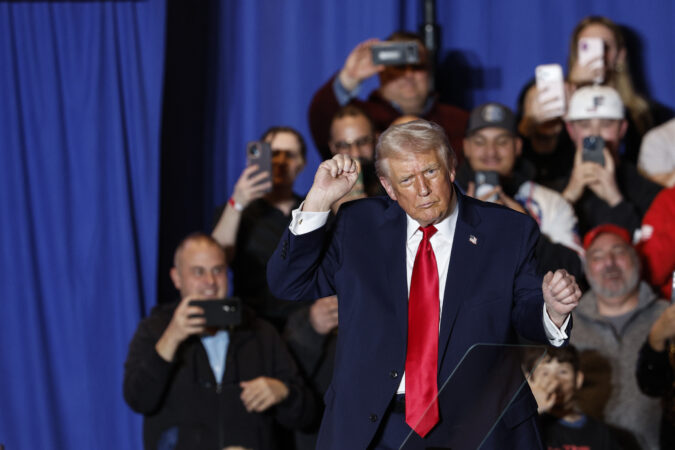
    During a raucous campaign-style rally Tuesday night in Northeast Pennsylvania, Trump made no mention of his intentions ― even as he railed against immigration and accused Democrats of making the state a “dumping ground” for immigrants.

    Trump suggested there should be a “permanent pause” on immigration from “hellholes like Afghanistan, Haiti, Somalia and many other countries,” declared Washington the safest it has been in decades, and praised ICE as “incredible.”

    He also reminisced about hosting the Philadelphia Eagles at the White House earlier this year, after their Super Bowl win, hailing head coach Nick Sirianni as a “real leader” and marveling at running back Saquon Barkley’s muscles.

    “I love Philadelphia,” Trump declared. “It’s gotten a little rougher, but we will take it.”

    That was a marked change from a decade ago, when Trump called Jim Kenney a “terrible” mayor, and Kenney called him a “nincompoop.”

    Kenney fought Trump in court and won in 2018, when a U.S. District Court judge ruled that the president could not end federal grants based on how the city treats immigrants. After the ruling, the Irish mayor was captured on video dancing a jig and calling out “Sanctuary City!”

    More recently, in May, Philadelphia landed on Trump’s list of more than 500 sanctuary jurisdictions that he planned to target for funding cuts. That was no surprise. Nor was it surprising that in August, when the administration zapped hundreds of places off that list, Philadelphia was among the 18 cities that remained.

    “I don’t know why they’re not here yet,” said Peter Pedemonti, codirector of New Sanctuary Movement of Philadelphia. But the larger point is that “ICE is in neighborhoods every day, they are taking away people every day,” and he urged those who support immigrants to prepare.

    “Now is the time to get involved with organizations that are organizing around this,” Pedemonti said. “There are neighbors who need us.”

    Has Gov. Josh Shapiro helped dissuade federal action in Philadelphia?

    It’s hard to say. Shapiro has challenged Trump in court multiple times, including when he was the state attorney general during Trump’s first term.

    As governor, Shapiro sued the administration over its move to freeze billions in federal funds for public health programs, infrastructure projects, and farm and food bank contracts. He also joined a multistate suit challenging an executive order that restricted gender-affirming care for minors.

    On immigration, however, Shapiro has been careful not to directly engage in the sanctuary city debate, saying his job is to provide opportunity for all Pennsylvanians. But he has been critical of Trump’s enforcement tactics, calling them fear-inducing and detrimental to the state’s economy and safety.

    Still, Trump has not lashed out at Shapiro, a popular swing-state governor. At his rally in Mount Pocono last week, in which he criticized several Democrats, Trump didn’t mention Shapiro ― or the Republican in attendance who is running against the governor in 2026, Stacy Garrity.

    Why is the president sending troops to American cities in the first place? Isn’t that unusual?

    Highly unusual ― and fought in court by the leaders of many of the cities that have been targeted. On Wednesday, a federal judge blocked Trump’s deployment of troops to Los Angeles, saying it was “profoundly un-American” to suggest that peaceful protesters “constitute a risk justifying the federalization of military forces.”

    Trump says the National Guard is needed to end violence, to help support deportations, and to fight crime in Democratic-run cities. Last week he declared that Democrats were “destroying” Charlotte, after a Honduran man who had twice been deported allegedly stabbed a person on a commuter train.

    Two members of the West Virginia National Guard were hospitalized in critical condition ― one subsequently died ― after being shot by a gunman in Washington the day before Thanksgiving.

    That the attack was allegedly carried out by an Afghan man who had been granted asylum helped spark a wave of immigration policy changes, all in the name of greater security. For some immigrants who are attempting to legally stay in the country, that has resulted in the cancellation of citizenship ceremonies and the freezing of asylum processes.

    So what happens next?

    It’s hard to say. Immigration enforcement will surely continue to toughen.

    More immigrants are being arrested when they show up for what they expect to be routine immigration appointments, suddenly finding themselves handcuffed and whisked into detention. In Philadelphia this year, more than 90 immigrants have been trailed from the Criminal Justice Center by ICE agents and then arrested on the sidewalks outside, according to advocates who are pushing the sheriff to ban the agency from the courthouse.

    But it’s difficult to predict when or whether troops might land on Market Street.

    “I’ve heard so many different theories,” said Jay Bergen, the pastor at Germantown Mennonite Church, who has helped lead demonstrations against courthouse arrests. “It’s probably all of them ― a little bit of the way Shapiro has positioned himself, the way the mayor has positioned herself, a little bit the electoral map of Pennsylvania, a little bit, more than a little bit, Trump’s own personality.”

    That Philadelphia has been ignored to date doesn’t mean it won’t be in Trump’s sights tomorrow, Bergen said.

    “This administration thrives on being unpredictable, and on sowing as much exhaustion and pain as possible,” Bergen said. “We don’t do ourselves a favor by getting panicked in advance, but we also need to be ready.”

  • As gerrymandering battles sweep country, supporters say partisan dominance is ‘fair’

    As gerrymandering battles sweep country, supporters say partisan dominance is ‘fair’

    When Indiana adopted new U.S. House districts four years ago, Republican legislative leaders lauded them as “fair maps” that reflected the state’s communities.

    But when Gov. Mike Braun recently tried to redraw the lines to help Republicans gain more power, he implored lawmakers to “vote for fair maps.”

    What changed? The definition of “fair.”

    As states undertake mid-decade redistricting instigated by President Donald Trump, Republicans and Democrats are using a tit-for-tat definition of fairness to justify districts that split communities in an attempt to send politically lopsided delegations to Congress. It is fair, they argue, because other states have done the same. And it is necessary, they claim, to maintain a partisan balance in the House of Representatives that resembles the national political divide.

    This new vision for drawing congressional maps is creating a winner-take-all scenario that treats the House, traditionally a more diverse patchwork of politicians, like the Senate, where members reflect a state’s majority party. The result could be reduced power for minority communities, less attention to certain issues, and fewer distinct voices heard in Washington.

    Republican Sen. Rand Paul of Kentucky fears that unconstrained gerrymandering would put the United States on a perilous path, if Democrats in states such as Texas and Republicans in states like California feel shut out of electoral politics. “I think that it’s going to lead to more civil tension and possibly more violence in our country,” he said Sunday on NBC’s Meet the Press.

    Although Indiana state senators rejected a new map backed by Trump and Braun that could have helped Republicans win all nine of the state’s congressional seats, districts have already been redrawn in Texas, California, Missouri, North Carolina, and Ohio. Other states could consider changes before the 2026 midterms that will determine control of Congress.

    “It’s a fundamental undermining of a key democratic condition,” said Wayne Fields, a retired English professor from Washington University in St. Louis who is an expert on political rhetoric.

    “The House is supposed to represent the people,” Fields added. “We gain an awful lot by having particular parts of the population heard.”

    Redistricting is diluting community representation

    Under the Constitution, the Senate has two members from each state. The House has 435 seats divided among states based on population, with each state guaranteed at least one representative. In the current Congress, California has the most at 52, followed by Texas with 38.

    Because senators are elected statewide, they are almost always political pairs of one party or another. Pennsylvania and Wisconsin are the only states now with both a Democrat and a Republican in the Senate. Maine and Vermont each have one independent and one senator affiliated with a political party.

    By contrast, most states elect a mixture of Democrats and Republicans to the House. That is because House districts, with an average of 761,000 residents, based on the 2020 census, are more likely to reflect the varying partisan preferences of urban or rural voters, as well as different racial, ethnic, and economic groups.

    This year’s redistricting is diminishing those locally unique districts.

    In California, voters in several rural counties that backed Trump were separated from similar rural areas and attached to a reshaped congressional district containing liberal coastal communities. In Missouri, Democratic-leaning voters in Kansas City were split from one main congressional district into three, with each revised district stretching deep into rural Republican areas.

    Some residents complained their voices are getting drowned out. But Govs. Gavin Newsom (D., Calif.) and Mike Kehoe (R., Mo.) defended the gerrymandering as a means of countering other states and amplifying the voices of those aligned with the state’s majority.

    All is “fair” in redistricting

    Indiana’s delegation in the U.S. House consists of seven Republicans and two Democrats — one representing Indianapolis and the other a suburban Chicago district in the state’s northwestern corner.

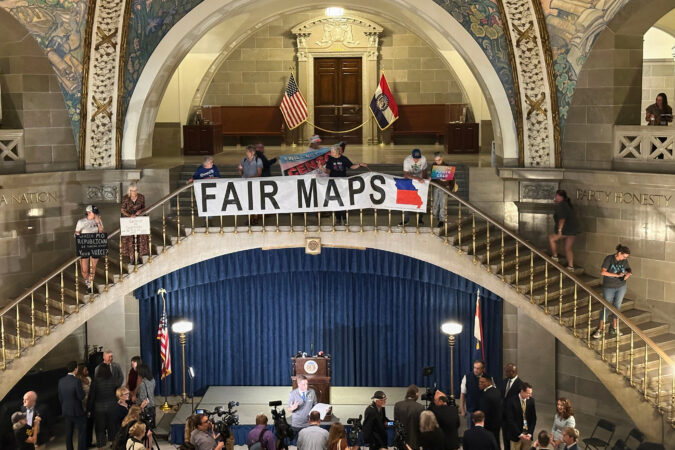
    Dueling definitions of fairness were on display at the Indiana Capitol as lawmakers considered a Trump-backed redistricting plan that would have split Indianapolis among four Republican-leaning districts and merged the Chicago suburbs with rural Republican areas. Opponents walked the halls in protest, carrying signs such as “I stand for fair maps!”

    Ethan Hatcher, a talk radio host who said he votes for Republicans and Libertarians, denounced the redistricting plan as “a blatant power grab” that “compromises the principles of our Founding Fathers” by fracturing Democratic strongholds to dilute the voices of urban voters.

    “It’s a calculated assault on fair representation,” Hatcher told a state Senate committee.

    But others asserted it would be fair for Indiana Republicans to hold all of those House seats, because Trump won the “solidly Republican state” by nearly three-fifths of the vote.

    “Our current 7-2 congressional delegation doesn’t fully capture that strength,” resident Tracy Kissel said at a committee hearing. “We can create fairer, more competitive districts that align with how Hoosiers vote.”

    When senators defeated a map designed to deliver a 9-0 congressional delegation for Republicans, Braun bemoaned that they had missed an “opportunity to protect Hoosiers with fair maps.”

    Disrupting an equilibrium

    By some national measurements, the U.S. House already is politically fair. The 220-215 majority that Republicans won over Democrats in the 2024 elections almost perfectly aligns with the share of the vote the two parties received in districts across the country, according to an Associated Press analysis.

    But that overall balance belies an imbalance that exists in many states. Even before this year’s redistricting, the number of states with congressional districts tilted toward one party or another was higher than at any point in at least a decade, the AP analysis found.

    The partisan divisions have contributed to a “cutthroat political environment” that “drives the parties to extreme measures,” said Kent Syler, a political-science professor at Middle Tennessee State University. He noted that Republicans hold 88% of congressional seats in Tennessee, and Democrats have an equivalent in Maryland.

    “Fairer redistricting would give people more of a feeling that they have a voice,” Syler said.

    Rebekah Caruthers, who leads the Fair Elections Center, a nonprofit voting rights group, said there should be compact districts that allow communities of interest to elect the representatives of their choice, regardless of how that affects the national political balance. Gerrymandering districts to be dominated by a single party results in “an unfair disenfranchisement” of some voters, she said.

    “Ultimately, this isn’t going to be good for democracy,” Caruthers said. ”We need some type of détente.”

  • Trump’s library plan: An iconic building in Miami and a ‘fake news wing’

    Trump’s library plan: An iconic building in Miami and a ‘fake news wing’

    Eric Trump sounded triumphant after Florida officials recently approved giving away a prized piece of Miami real estate for his father’s presidential library. “I got the library approved yesterday,” Trump said on a podcast, adding that “we just got the greatest site in Florida and I’m going to be building that.”

    Then, speaking on another program, Trump said he would take the host’s suggestion to create a “fake news wing” — paid for with money from lawsuit settlements with ABC, CBS, and other sources. It would run clips from 60 Minutes and other programs that he said were evidence of the media organizations’ animus against his father.

    These little-noticed statements by the president’s son provide a revealing look into the zeal of President Donald Trump and his family to build a likely high-rise with a museum that they say will be unlike any other presidential library — and which could tell the story of his presidency only as he wants it to be told.

    Much about the process is secretive, with no federal rules requiring disclosure of the donors — some of whom may have interests affected by White House policy — who are expected to provide hundreds of millions of dollars. A recent filing, for example, says the Donald J. Trump Library Foundation raised $50 million this year but doesn’t provide any donor names. It says $6 million has been spent for “program services” but doesn’t provide specifics.

    The White House referred questions to the foundation, which did not respond to an emailed list of queries and has not said whether Trump might use some of the site for a hotel or other development.

    It is also unclear whether the Trump library will function as the name implies — providing a center for research of presidential papers — or whether museum exhibits would be reviewed by government historians. Trump might follow the example of former President Barack Obama, who created a private foundation that is building his Chicago center where the museum exhibits will not be subject to government review.

    Running a center under the Obama model would require huge sums of money, which might be why Trump’s strategy of using money from lawsuits against media companies and many other sources has become a crucial component.

    Trump hasn’t said whether he will follow Obama’s example, but if he does, experts said, he would be free to tell his own version of his presidencies — including his false assertion that the 2020 election was stolen. That would be in contrast, for example, to the library of former President Richard M. Nixon, where the National Archives created an exhibit on Watergate that was vetted by nonpartisan government historians but is decried by some Nixon supporters.

    Tim Naftali, who helped create that Watergate exhibit in his former role as the National Archives-appointed director of the Nixon library, said he is concerned that Trump could create a museum that tells a misleading story about his presidency without oversight.

    “If they are going to have a ‘fake news wing,’ it would be awfully hard for nonpartisan library professionals at the National Archives to swallow,” said Naftali, now a senior research fellow at Columbia University’s School of International and Public Affairs.

    But if Trump follows the Obama model, the National Archives would be powerless to object, he said. The archives would still control the presidential papers, which belong to the federal government and would gradually be made available online after undergoing review for classified material.

    That model will become clearer once the Obama Presidential Center, as it is called, opens in June. Asked how Obama’s center will tell his story, a spokesperson said in a statement that Obama and his foundation consulted with leading independent historians and “take the study of history and the U.S. Constitution seriously, and these values are reflected in the work at the center — and in particular, the Museum.”

    But Curt Smith, a former speechwriter for President George H.W. Bush who wrote a book on presidential libraries, said in an interview that the Obama model “is a terrible example to follow” because it allows a former president to write whatever script they choose. “I would be truly alarmed if the Trump library followed that model,” he said.

    There is no law requiring the construction of a presidential library; with or without it, presidential papers and artifacts are the property of the federal government and controlled by the National Archives. Indeed, after Trump’s first term, he did not establish such a center. When Trump took some classified presidential papers to Mar-a-Largo in Palm Beach, Fla., he was charged with willful retention of national defense secrets. The case was dismissed.

    From the earliest days of his second administration, however, Trump has focused on raising millions of dollars for his center, while Eric Trump focused on gaining land for the project. Once President Trump decided to build his center, he had no choice other than to raise private funds because Congress does not provide taxpayer money for construction.

    The rules say not only that the construction funds be privately raised, but also that an additional 60% of that cost be provided as an endowment if the government maintains the facility. That requirement was enacted because the National Archives is spending $91 million annually to cover expenses of most earlier presidential libraries, almost one-fourth of its congressional budget. As a result, the Archives has been negotiating deals that would transfer much of that cost to foundations.

    “Today, preserving the presidential library system requires acknowledging these facts and addressing mounting expenditures across the system,” Jim Byron, senior adviser to the archivist of the National Archives, said in a statement to the Washington Post.

    If Trump keeps his center private, as is widely expected, his foundation would be responsible for maintenance and would not cede control of the museum to the National Archives — saving taxpayer money while enabling him to write his own story.

    That has led to the current situation in which Trump is raising funds from the settlement of lawsuits against the media and other sources.

    “We gave away very valuable land”

    On Sept. 16, a vague ad appeared in the Miami Herald announcing that Miami Dade College would hold a public hearing to “discuss potential real estate transactions.” There was no indication that a 2.6-acre property in downtown Miami — which is appraised at about $60 million but which real estate brokers have said could be worth $300 million or more — was about to be donated to Trump’s library foundation.

    Seven days later, at 8 a.m. Sept. 23, the meeting of the college board of trustees convened. Chairman Michael Bileca called for approval of Agenda Item A, a proposal to convey an unnamed piece of property to an entity known as the “Internal Trust Fund of the State of Florida.” Again, there was no mention of land being given for a Trump library. Bileca opened the floor for discussion; there was none. The motion was passed unanimously by the seven members. Bileca did not respond to a request for comment.

    At exactly 8:03 a.m., according to board minutes, the meeting adjourned and the deal was done.

    Gov. Ron DeSantis and his cabinet then announced they had agreed to give the land to the Trump library foundation. The only requirement is that construction begins within five years and that it “contains components of a Presidential library, museum, and/or center.”

    The secretive deal took many people by surprise — including at least some members of the college board of trustees — and caused an uproar among critics.

    Roberto Alonso, vice chair of the Miami Dade College board of trustees, said the governor’s office sent a letter to the college asking for the land transfer to the state, without explaining why.

    “When I found out that this was exactly what the state wanted was literally right after we voted,” Alonso said.

    Alonso said because Miami Dade is a state college, the land is owned by the state, so his board had little choice but to do what DeSantis wanted and convey the deed.

    He called the library an “incredible opportunity for our students and our community.” The college did not respond to a request for comment.

    The property is a parking lot on the downtown campus of the college. It’s next to the Freedom Tower, an iconic and recently restored landmark on Biscayne Boulevard often referred to as the “Ellis Island of the South.”

    The plan drew immediate backlash from many in the Cuban community who said Trump’s immigration policies contrast with the treatment their families received under previous administrations.

    The college board’s approval also became the target of a lawsuit filed by Miami historian Marvin Dunn, who said the vague notice about the action violated state government Sunshine Laws. The judge in the case set a trial date for next year, but the trustees held a second vote Dec. 2, this time with input from the public, that ended in the same result — a unanimous vote.

    Dunn’s lawyer, Richard E. Brodsky, said in an interview the lawsuit has succeeded in gaining a temporary injunction that prevents the conveyance of the land pending a further order of the court.

    “It’s not over yet,” Brodsky said.

    Miami mayor-elect Eileen Higgins — the first Democrat to win the office in almost 30 years — said before Tuesday’s election that she had questions about the deal.

    “We gave away very valuable land to a billionaire for free. That doesn’t make sense to me,” she said during a televised debate this month.

    Dunn said Eric Trump’s statement that the library will be an “iconic building” raises the alarming prospect of “a 47-story condominium hotel banquet hall” or other oversize structure.

    “If the argument is that this library is going to bring tourism and economic development to the wider region, that may well be true,” Dunn said in an interview. “Then why doesn’t the foundation pay for the land? Why give that to them for free?”

    DeSantis said in September that “we had worked and negotiated” other possible locations for the library, including at Florida Atlantic University in Boca Raton, which is in Palm Beach County about 30 miles from Mar-a-Lago.

    “But their preference was for this land, next to the Freedom Tower. So you’re going to have a presidential library in the state of Florida, which I think is good for the state of Florida. I think it’s good for the city of Miami,” he said.

    “A possible tool for corruption and bribery”

    While the state filing by Trump’s library foundation doesn’t disclose funding sources, President Trump has spoken often about some of them. The largest projected donation is a gift of a Boeing 747-8 aircraft valued at $400 million from the Qatari royal family — which has many interests in Washington policy — that would replace Air Force One and then be given to his library. It is not clear how or whether the plane could be exhibited at the Trump library as Ronald Reagan’s Air Force One is exhibited at his library in California.

    Other funds for the library stem from payments from media companies — some of which have interests before the government — to settle lawsuits filed against them by Trump. These include: $22 million from Meta Platforms, Facebook’s parent company, part of a settlement to resolve a lawsuit over the company’s suspension of Trump from the platform in the wake of the events of Jan. 6; $16 million from CBS; $15 million from ABC; and an unspecified part of a $10 million settlement with X, formerly known as Twitter, which had banned him from the platform. In addition, millions of dollars raised from private interests left from Trump’s inauguration may be transferred to the library foundation.

    These gifts and payments, and the potential of hundreds of millions more from unknown donors, have led Democrats to introduce the Presidential Library Anti-Corruption Act, which would ban fundraising until after a president leaves office, except from nonprofits. It would require a two-year delay after a president leaves before donations can be accepted from foreign nationals or foreign government, lobbyists, individuals seeking pardons, and federal contractors.

    Sen. Elizabeth Warren (D., Mass.) issued a report in support of the legislation that said Trump “may be using his future presidential library as a possible tool for corruption and bribery while still in office.” The report then listed donations intended for Trump’s library. Warren was unavailable for an interview, an aide said.

    Presidential libraries are seen as a crucial pillar for portraying the history of White House occupants and making their materials widely available. They have proven invaluable to historians and others seeking to piece together the strands of a presidency that often become clearer in hindsight; author Robert Caro used materials at Lyndon B. Johnson’s presidential library in Texas for his prizewinning multivolume biography.

    But in recent years, historians have raised concerns that presidential libraries have focused more on hagiography than clear-eyed biography — particularly as increasingly large sums have come from private donors, including those who have interests before the federal government and who favor a particular storyline about a president.

    Obama’s center, backed by a $1.6 billion fundraising effort, is being built on a 19-acre site that will be run by his foundation. It is not designed to include on-site research materials, which are being digitized with the help of a $5 million payment from the foundation and will be retained by the National Archives, a foundation spokesperson said.

    Former President Joe Biden, meanwhile, is at the beginning of his effort. While he said the library would be in Delaware, he has not provided specifics and has not announced any donation of land. A tax filing says $4 million was raised for Biden’s library in 2024. A Biden spokesperson, who spoke on the condition of anonymity to discuss internal matters, said a board has been named and that a foundation is focused on creating a planning study and a budget for the facility. Biden plans to attend a holiday gathering today at which he will lay out his vision for his library, but it will not be a fundraiser, an associate said.

    Trump and his family, meanwhile, have been aggressive in gathering land and money for his center while he is in office. After the state authorized the land transfer, Eric Trump went on conservative commentator Glenn Beck’s show to say that he was responsible for the approval and would build his father’s facility, while ridiculing the Obama center, which he said looked like a “jailhouse.”

    Then, appearing on a podcast called The Benny Show, Eric Trump said he would take host Benny Johnson’s suggestion to create a “fake news wing of the library” — paid for with money from settlements with ABC, CBS, and other media — which would run clips that he said were evidence of the media’s animus against his father.

    “What we’ll do is, we’ll just roll the 60 Minutes clip over and over of how they doctored Kamala’s interview,” Trump said, referring to his father’s assertion that the newsmagazine show deceptively edited its interview of Democratic presidential candidate Kamala Harris. Trump said creating such a wing “is a phenomenal freaking idea” and vowed, “I will do an entire floor dedicated to the fake news.”

    CBS said in October 2024 that the Harris interview was edited for time but stood by its accuracy. Paramount, the parent company of CBS, which produces 60 Minutes, settled the suit for $16 million in July; that agreement did not include an apology, according to a story posted on the CBS website. The payment was designated for Donald Trump’s library foundation. It came as Paramount was attempting to complete an $8 billion sale to Skydance Media, a deal that required FCC approval.

    Shortly afterward, in July, the agency assented to the deal. A Paramount spokesperson did not respond to a request for comment.

  • ‘Gotta win the Super Bowl again’: Former President Joe Biden at the Linc to see the Eagles take on the Raiders

    ‘Gotta win the Super Bowl again’: Former President Joe Biden at the Linc to see the Eagles take on the Raiders

    The Eagle has landed.

    Former President Joe Biden and former first lady Jill Biden touched down at the Linc for the snowy Sunday matchup between the Philadelphia Eagles (8-5) and the Las Vegas Raiders (2-11). Joe and “that girl from Philly,” Jill, were spotted on the sidelines with Eagles owner Jeffrey Lurie before the 1 p.m. kickoff.

    “Go Birds, man, all the way,” Biden said in a clip posted to NBC10’s John Clark’s Instagram. “Gotta win the Super Bowl again.”

    Jill Biden, who grew up in Willow Grove, is a fervent Eagles fan and has never been shy about her passion for Philly sports. She’s talked about watching the Phillies with her dad, and in 2020, wore an Eagles shirt to a fundraiser with former Dallas Cowboys star Emmitt Smith — as any “good Philly girl” would do.

    Husband Joe, a Delawarean, hasn’t been so forthcoming about his allegiance; ahead of the ill-fated Super Bowl LVII, then-POTUS tweeted, “As your president, I’m not picking favorites. But as Jill Biden’s husband, fly Eagles, fly.”

    Coming off three straight losses and arguably the worst game of Jalen Hurts’ career, the Birds faced the perfect opponent to turn things around in Week 15: The Raiders are tied for the worst record in the league.

    “We got to get ‘em back moving, man,” Joe Biden said.