HARRISBURG — Approximately 2.7 million pieces of state agency mail never reached Pennsylvania residents last month after a state-contractedvendor failed to send them, affecting outgoing correspondence from the state Department of Human Services and the Department of Transportation, officials said Tuesday.
From Nov. 3 through Dec. 3, officials said, the affected state agency mail was never presorted and delivered by the vendor to the U.S. Postal Service, resulting in a backlog of millions of unsent state communications.
Late last week, Pennsylvania state officials discovered that a month’s worth of mail had never been sent to residents by the outside vendor, Harrisburg-based Capitol Presort Services LLC. Once the issue was discovered, the state fired the vendor for failing to fulfill its contract and hired another vendor to work through the backlog.
The state Department of Human Services, which oversees the care of the state’s most vulnerable residents and children, is still determining “the exact volume and categories of delayed mail,” said Paul Vezzetti, a spokesperson for the state Department of General Services. However, DHS was able to confirm that some services were not interrupted: residents waiting on Electronic Benefit Transfer (EBT) cards for receiving food assistance, mail sent by county assistance offices, and notices about suspended benefits duringthe federal government shutdown were not affected, Vezzetti added.
PennDot driver’s license and vehicle registration renewal invitations, driver’s license camera cards, vehicle registration cards, and address update cards are all among the routine correspondences that were never sent to residents over the last month, Vezzetti said. Driver’s license suspensions were not impacted by the stalled mail.Vehicle registration and license renewal registrations are sent three months in advance, so anyone who was due to receive one at the start of November will have until February to submit it, the agency said.
It was not clear on Tuesday which other state agencies’ mail had been impacted by the lapse in service.
All of the recently discovered unsent state agency mail was transported to USPS on Monday by the state’s new vendor and will be promptly delivered to residents by the Postal Service, officials said. PennDot customers should receive any expected mail from the time period of Nov. 3 to Dec. 3 within the next 7-10 days, Vezzetti added.
On Friday, the state secured a $1 million emergency contract with another mail presorting company, Pitney Bowes, to handle the multimillion-letter backlog.
The state had contracted with Capitol Presort Services since May 1, 2021. The company filed for bankruptcy in 2022, but had continued its work for the state until last week, when the agency mail pileup was uncovered.
It remained unclear Tuesday why it took a full month for officials to determine that 2.7 million pieces of state agency mail had not been reaching residents. It was also unclear how the issue was discovered by officials last week.
The unsent mail may prove to be a major headache for Gov. Josh Shapiro’s administration, depending on which state communications were not delivered to residents. The backlog could include critical correspondence relating to state services, such as health benefits or food assistance, among others.
State agencies regularly send communications by mail about an individual’s eligibility for services or benefits, renewals and appeals, and whether a person is due to appear at a hearing about that eligibility, and more.
“Agencies across the Commonwealth continue to evaluate any potential negative effects of this mail delay and are taking proactive steps to mitigate potential impacts on Pennsylvanians,” Vezzetti added.
A spokesperson for Gov. Josh Shapiro declined to comment.
According to the state’s contract with Capitol Presort Services from 2021, the vendor was responsible for delivering more than 16 million pieces of state agency mail each year. Almost all of this mail was to be for the delivery of the state’s First Class and Next-Day mail, which are among the U.S. Postal Services’ fastest delivery options.
Philip Gray, the president and owner of Capitol Presort Services, did not immediately respond to questions about his company’s bankruptcy and how the backlog of mail came about.
Capitol Presort Services advertises itself as a way for “companies to maximize postal discounts while improving their mail delivery,” according to its website. Mail presorting allows organizations to prepare mail with the proper bar codes and trays needed for easy delivery by USPS, which USPS offers to companies at a discounted rate.
A smattering of people pushed their luck Tuesday at the Mount Airy Casino Resort, tapping neon slot buttons, flipping dice onto felt craps tables, and wandering the rows of glowing, dinging machines.
A floor below, President Donald Trump was set to speak in a sprawling ballroom, where event staff hung a huge blue banner: LOWER PRICES, BIGGER PAYCHECKS.
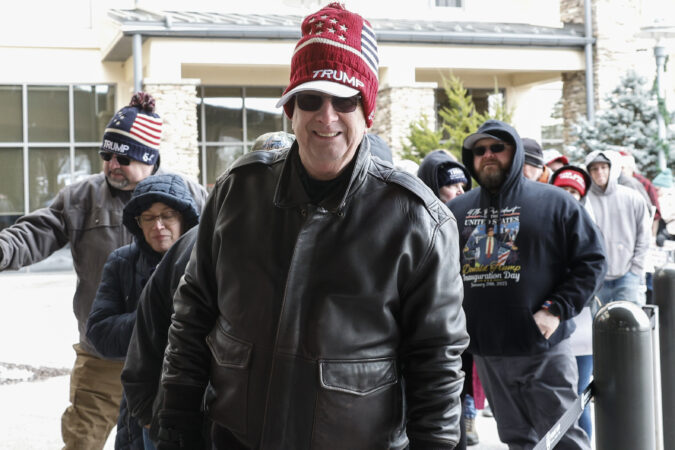
Trump picked this casino in the Pocono Mountains to deliver the first big economic speech of his presidency as polls show Americans are feeling the pain of high prices — and many are blaming him.
But the contrast at the casino was hard to miss: the steady slot machine chimes of financial risk and uncertainty above and a president’s promises of stability and revival on the floor below.
How’s the economy working for Rosemary Migli?
“It could be better,” saidthe 73-year-old retired bartender from Tobyhanna, taking a puff of a cigarette before winning 35 cents on a spin.
Despite a frenzy of police and Secret Service, many gamblers, focused on their own troubles or celebrations, did not realize the president was coming. An older retired couple enjoyed an afternoon together with no obligations. Nearby, a recently widowed woman said the monotony of the slots helps her cope with her loss.
Peter Jean-Baptiste celebrated his 33rd birthday at the casino with his fiancee. The Philadelphia-based couple are saving for a wedding next year.
“It’s tough for everyone just trying to make a living, honest people trying to make a living,” Jean-Baptiste said. “One day you feel like [Trump’s] got your back, the next day he doesn’t.”
Jean-Baptiste, who works in property insurance, said he has also seen housing prices rise. And, as a child of Haitian immigrant parents, he is struggling with how Trump’s anti-Haitian verbal attacks and immigration crackdowns have affected his family.
“He does a bunch of hot takes and causes division between American citizens,” Jean-Baptiste said. “When, I feel, we really all just want to get along and get by.”
Mount Pocono is a region with mixed fortunes: Wealthy retirees have second vacation homes here, while lower-income workers are employed in warehouses and hold up the tourism industry. The area is also a hub for New York City commuters who moved here for more affordable housing.
“We live on a fixed income. We watch what we spend,” said Julie Dietz, sitting beside her husband, Glenn, as she played a buffalo-themed slot game. The Toms River, N.J., couple gamble for a few hours every now and then. She was a paralegal and he worked evaluating industrial facilities for safety before they retired.
“We know what our limitations are,” Dietz, 71, said. “Yes, food prices have gone up, but I’ve also seen some things come down — gas prices in our area. And the economy took so many years to get to this point.”
Dietz, who supported Trump in the last election, thinks an economic rebound is just going to take more time.
“He’s been in office 11 months. Eleven months. So I feel full confidence that he is going to do what he said he’s going to do. Everybody wants things immediately.”
Kathy F., who didn’t want to give her last name talking about politics and gambling, joined her husband at the casino Tuesday, despite her misgivings about losing money at a time when prices are going up.
“I go to Costco and everything is $5 more than it used to be. That’s a lot,” she said, bundled in a puffy black coat as her husband gambled nearby.
“I really don’t understand politics,” said the retired New York City civil servant, who voted for then-Vice President Kamala Harris last year. “It seems like they just fight with each other nonstop when all people want is to be able to afford to live.”
As he stretched his legs between games, Stephen Miller — “not that Stephen Miller,” he clarified — laughed off the notion of going to see Trump in person a floor below.
“If I want to see him, all I have to do is turn on the TV. He’s on at 12, he’s on at 3, he’s on at 5, seven days a week.”
The 75-year-old retired contractor supports Trump, though, and called the economy “half-decent.” He said food prices are high but eggs have gone down.
“The economy is glacial, so it moves slow. Democrats are definitely locked onto the affordability. But affordability means, what? It means whatever you want it to mean.”
Miller glanced down at a few vouchers in his hand to set off for the next set of machines.
“I’m not winning yet, but I will be and the Donald will be,” he said. “Give it time.”
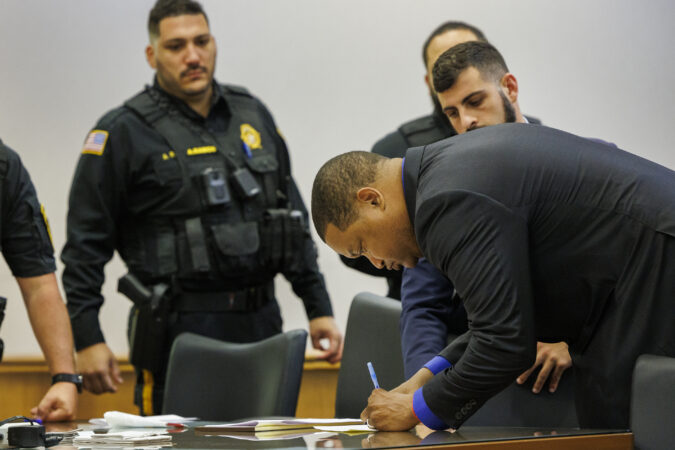
MAYS LANDING, N.J. — The daughter of Atlantic City Mayor Marty Small Sr. took the stand in an Atlantic County courtroom Tuesday morning to testify against him at trial as he stands accused of physically abusing her.
As a Superior Court judge looked on, the teen told jurors her father had beaten and punched her and struck her with a broom.
“He put his hands on me,” she said.
Small, a Democrat, faces charges of child endangerment, aggravated assault, and witness tampering in connection with a series of incidents in which prosecutors say he punched, beat, and threatened his then-15-year-old daughter, largely over his disapproval of her relationship with her boyfriend. He has denied any wrongdoing, and his lawyers have challenged his daughter’s credibility.
The girl, now 17, recounted the abuse in a soft voice, calmly answering prosecutors’ questions — and rejecting suggestions by an attorney for her father that she had lied about key details.
“My dad came home and he was like, upset,” the girl said as prosecutors asked her about crimes they allege took place in the Small family home in January 2024.
She said her mother had recently gone through her phone and learned that she had sneaked her boyfriend into the house. Her father, she testified, was “mad and disappointed.” As she sat in a chair that she recalled as having a Philadelphia Flyers theme, she told the jury, he hit her with a belt and punched her in the legs.
Louis Barbone, an attorney for Small, maintained that there were inconsistencies in statements the girl gave to investigators, and he disputed her account of the incident with the broom.
Earlier in the day, prosecutors played video footage they say the teen recorded at home.
Though the camera did not show images of Small or others, it captured the sound of the girl and her parents screaming amid what prosecutors described as the chaos that descended on the home after the teen started a relationship they did not approve of.
Prosecutors also showed Instagram messages the girl exchanged with her boyfriend about the alleged abuse, including one in which she told him, ”I’m scared to get in the shower because my bruise is gonna burn.”
Small’s daughter told jurors that as her father was rousing his family one January morning to attend the Atlantic City Peace Walk, she did not have her hair done and didn’t want to go. She said she and her father argued and he pushed her, so she splashed him with laundry detergent.
Small, she said, then got a broom and struck her multiple times in the forehead. She testified that she passed out, and the next thing she remembered was her father telling her brother to get her some water.
On cross examination, Barbone returned to a theme he struck in his opening statement to the jury on Monday — that Small was a caring father who, watching his daughter’s life veer off course because of a relationship he believed to be manipulative and inappropriate, had legally disciplined a disobedient child.
He told jurors prosecutors did not have a recording of the incident involving a broom, and he said the girl had been wielding a butter knife and the injuries she sustained that day happened when she fell as the two wrestled for the broom.
Barbone said the teen had exaggerated her injuries, and he noted that when initially questioned by investigators, she told them she felt safe at home.
“I didn’t want to get taken away,” the girl said, “so I said, ‘yes.’”
The trial is expected to continue through the end of the week.
Despite President Donald Trump’s wishes, Jimmy Kimmel won’t be going off the air any time soon.
ABC announced the network signed a one-year contract extension with the late-night host on Monday.
Kimmel’s previous, multiyear contract was set to expire in May. The extension means Jimmy Kimmel Live! will continue through at least May of 2027.
The news comes on the heels of Kimmel’s temporary suspension following remarks he made about the assassination of conservative activist, Charlie Kirk. Trump praised the suspension at the time.
Following a public outcry, ABC lifted the suspension, and Kimmel returned to the air with stronger ratings than he had before.
Since then, Trump has continued to take jabs at Kimmel, who has resumed making jokes and digs at the president’s expense, performing a 10-minute monologue on Trump and the Jeffrey Epstein files in one episode and ragging on his approval ratings.
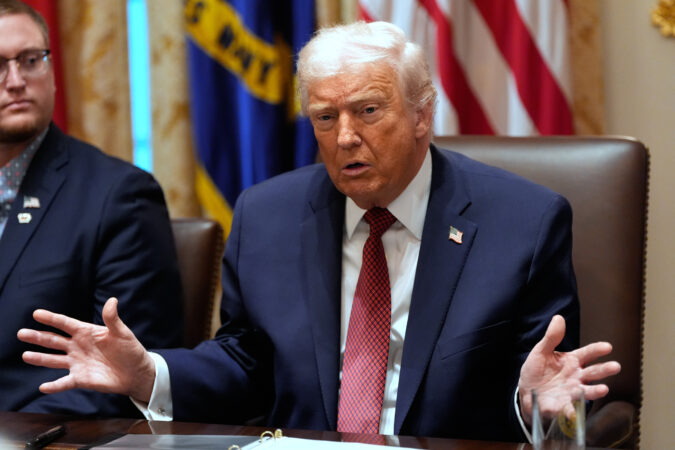
“I’ve watched some of the people that host,” Trump said. “Jimmy Kimmel was horrible, and some of these people, if I can’t beat out Jimmy Kimmel in terms of talent, then I don’t think I should be president.” (Kimmel has never hosted the Kennedy Center Honors. He has hosted the Oscars four times.)
Trump has continued to set his sights on other late-night TV hosts, including Stephen Colbert — whose show will end in May with CBS citing financial reasons for its cancelation — Jon Stewart, and, most recently, Seth Meyers.
Stewart will remain at his weekly post on The Daily Show for another year, Paramount, a Skydance Corporation, announced last month. Meyers’ Late Night with Seth Meyers is under contract with NBC through 2028.
President Donald Trump is expected to visit Northeast Pennsylvania today, promoting his economic agenda — including affordability and gas prices.
The trip — which the White House confirmed with The Inquirer last week — will include stops in Scranton and a rally in Mount Pocono.
Trump is no stranger to northeast and north-central Pennsylvania. He visited the region 13 times, including stops in Wilkes-Barre Township and Scranton on his second-term campaign last year. He had a particularly strong performance in Northeast Pennsylvania last year, with some of his top gains compared to the 2020 election coming from Lackawanna and Luzerne counties.
It’s part of an expected national tour where Trump will tout his efforts to lower inflation ahead of the 2026 midterm elections in battleground areas. Those races, including ones in northeastern and north-central Pennsylvania, will determine whether Democrats or Republicans control Congress.
Trump’s visit Tuesday appears to be his first to Pennsylvania since attending an energy summit in Pittsburgh in July.
Affordability — a concept Trump has rebuked in the past, calling it a “fake narrative” — remains a top issue for voters, including locals. Trump continues to claim that prices have fallen since he took office in January, despite reports of the opposite. A CNN fact-checking report from November said prices and inflation have increased. Trump’s tariff policies have contributed to those increases, according to experts.
When and where will Trump be in Pennsylvania?
Trump has obligations at the White House and in D.C. until at least 3:15 p.m. according to his public schedule.
His first publicly visible scheduled appearance in Pennsylvania is at 6:10 p.m. at the Mount Airy Casino Resort in Mount Pocono. As of Tuesday morning, registration to attend the remarks were still open.
This story will be updated. Staff reporter Fallon Roth contributed to this article.
Kevin Bean was a frail 125 pounds last February when he entered a brand-new recovery house, a facility where he landed after spending four years in the throes of addiction — at times on the streets of Kensington, the epicenter of the city’s drug crisis.
The Frankford native was one of the first residents to enter the Riverview Wellness Village, the 20-acre recovery facility that Mayor Cherelle L. Parker’s administration opened in Northeast Philadelphia nearly a year ago as part of City Hall’s efforts to address opioid addiction and the Kensington drug market.
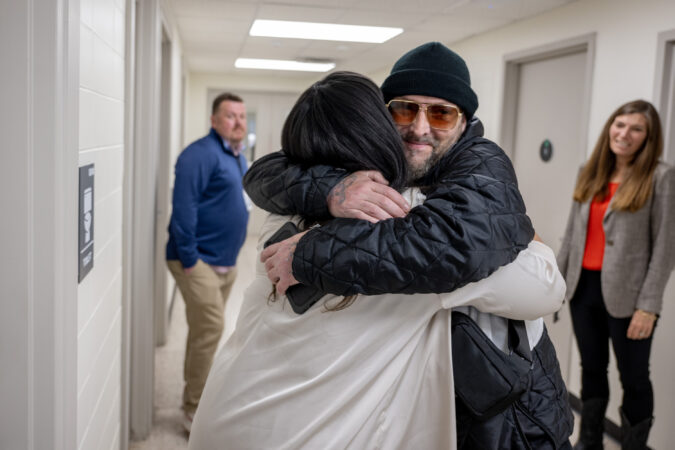
Bean, now 46 and boasting a healthier frame, just celebrated one year of sobriety and is preparing to move out of Riverview early next year.
He described his transition simply: “whole new life.”
Much of the mayor’s agenda in Kensington has been visible to the neighborhood’s residents, such as increased law enforcement and a reduction in the homeless population. But the operations and treatment outcomesat Riverview, located down a winding road next to the city’s jail complex, happen largely outside of public view. Last spring, some city lawmakers complained that even they knew little about the facility operations.
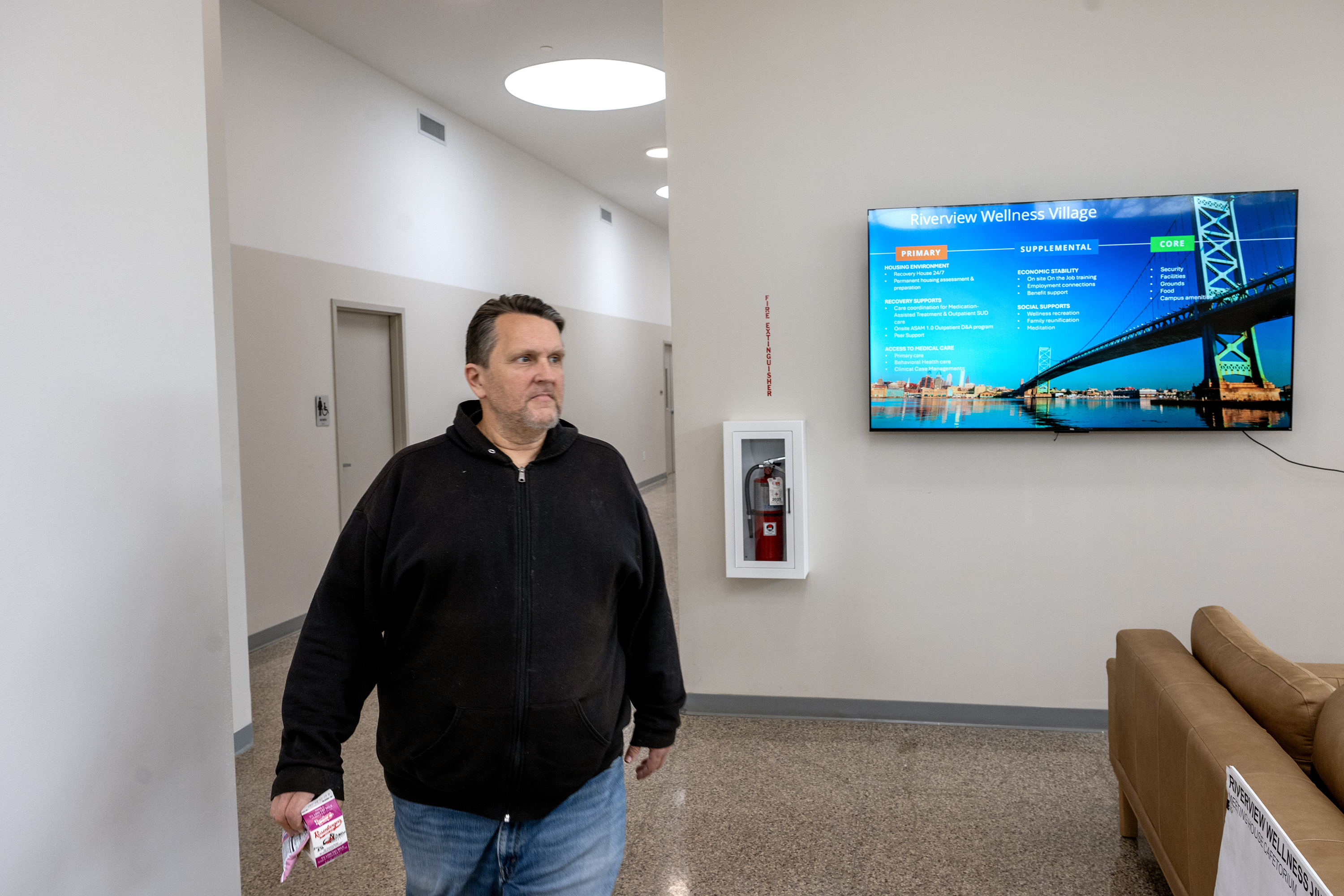
An inside look at the Riverview complex and interviews with more than a dozen residents and employees showed that, over the last year, the city and its third-party healthcare providers have transformed the facility. What was recently a construction zone is now a one-stop health shop with about 75 staff and more than 200 residents, many of whom previously lived on Kensington streets.
Those who live and work at Riverview said the facility is plugging a hole in the city’s substance use treatment landscape. For years, there have not been enough beds in programs that help people transition from hospital-style rehab into long-term stability. The recovery house industry has been plagued with privately run homes that are in poor condition or offer little support.
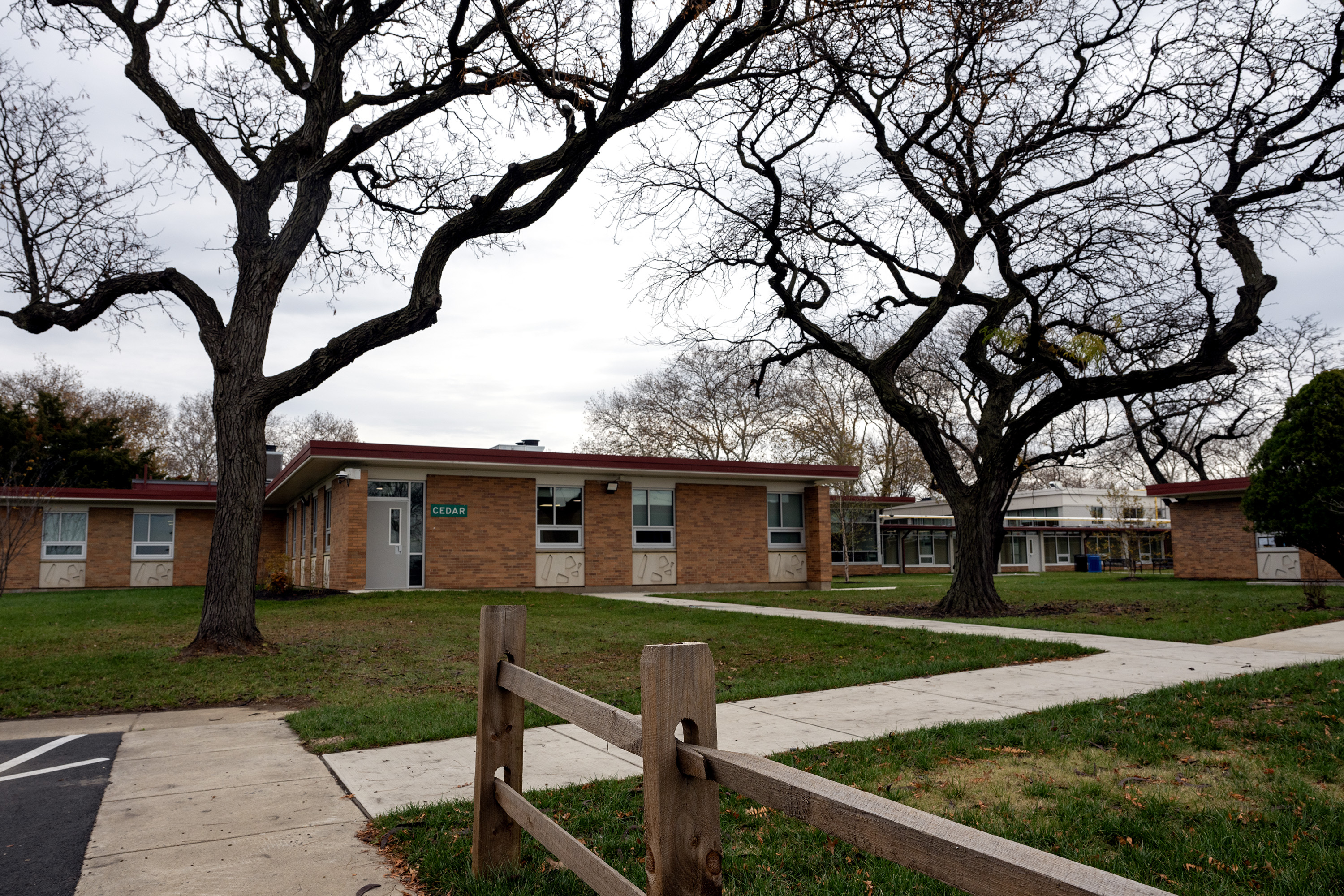
The grounds and residence buildings at Riverview Wellness Village, a city-owned drug recovery home in Northeast Philadelphia.
At its current capacity, Riverview has singularly increased the total number of recovery house beds in the city by nearly 50%. And residents — who are there voluntarily and may come and go as they please — have much of what they need on the campus: medical care, mental health treatment, job training, and group counseling.
They also, as of last month, have access to medication-assisted treatment, which means residents in recovery no longer need to travel to specialized clinics to get a dose of methadone or other drugs that can prevent relapse.
Arthur Fields, the regional executive director at Gaudenzia, which provides recovery services to more than 100 Riverview residents, said the upstart facility has become a desirable option for some of the city’s most vulnerable. Riverview officials said they aren’t aware of anywhere like it in the country.
“The Riverview Wellness Village is proof of what’s possible,” Fields said, “when we work together as a community and move with urgency to help people rebuild their lives.”
While the facility launched in January with much fanfare, it also faced skepticism, including from advocates who were troubled by its proximity to the jails and feared it would feel like incarceration, not treatment. And neighbors expressed concern that the new Holmesburg facility would bring problems long faced by Kensington residents, like open drug use and petty theft, to their front doors.
But despite some tenets of the mayor’s broader Kensington plan still facing intense scrutiny, the vocal opposition to Riverview has largely quieted. Parker said in an interview that seeing the progress at Riverview and the health of its residents made enduring months of criticism “well worth it.”
“I don’t know a Philadelphian who, in some way, shape, or form, hasn’t been touched by mental and behavioral health challenges or substance use disorder,” said Parker, who has spoken about how addiction shaped parts of her own upbringing. “To know that we created a path forward, to me, I’m extremely proud of this team.”
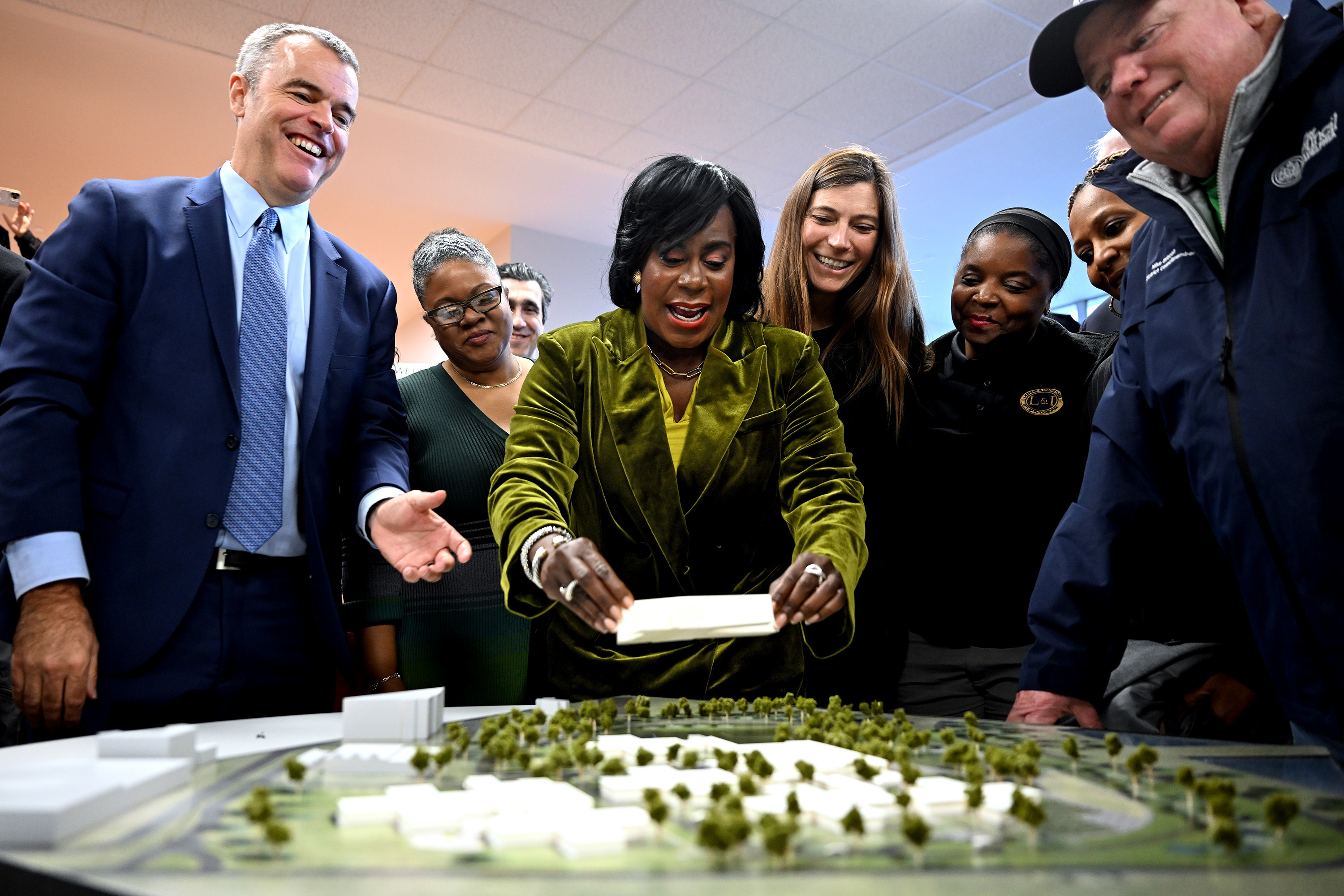
Mayor Cherelle L. Parker places a new block on the scale model of the Riverview Wellness Village on Wednesday, Jan. 8 during the unveiling of Philadelphia’s new city-operated drug treatment facility. At left is Managing Director Adam Thiel. City Councilmember Michael Driscoll is at right.Isabel McDevitt, executive director of the Office of Community Wellness and Recovery, points to a model with upcoming expansion at Riverview Wellness Village, a city-owned drug recovery home in Northeast Philadelphia on Nov. 25.Staffers move photos into place at the Riverview Wellness Village on Jan. 8 before the unveiling of Philadelphia’s new city-operated drug treatment facility.
Meanwhile, neighbors who live nearby say they have been pleasantly surprised. Pete Smith, a civic leader who sits on a council of community members who meet regularly with Riverview officials, said plainly: “There have been no issues.”
“If it’s as successful as it looks like it’s going to be,” he said, “this facility could be a model for other cities throughout the country.”
Smith, like many of his neighbors, wants the city’s project at Riverview to work because he knows the consequences if it doesn’t.
His son, Francis Smith, died in September due to health complications from long-term drug use. He was 38, and he had three children.
Getting a spot at Riverview
The sprawling campus along the Delaware River feels more like a college dormitory setting than a hospital or homeless shelter. Its main building has a dining room, a commercial kitchen, a gym, and meditation rooms. There are green spaces, walking paths,and plans for massive murals on the interior walls.
Katherine Young, director of Merakey at Riverview Wellness Village, talks with a resident at the city-owned drug recovery home in Northeast Philadelphia on Nov. 25.
Residents live and spend much of their time in smaller buildings on the campus, where nearly 90% of the 234 licensed beds are occupied. The city plans to add 50 more in January.
Their stays are funded through a variety of streams. The city allocated $400 million for five years of construction and operations, a portion of which is settlement dollars from lawsuits against pharmaceutical companies that manufactured the painkillers blamed for the opioid crisis.
(function() {
var l2 = function() {
new pym.Parent(‘RIVERVIEW_MAP2.html’,
‘https://media.inquirer.com/storage/inquirer/projects/innovation/arcgis_iframe/RIVERVIEW_MAP2.html’);
};
if (typeof(pym) === ‘undefined’) {
var h = document.getElementsByTagName(‘head’)[0],
s = document.createElement(‘script’);
s.type = ‘text/javascript’;
s.src = ‘https://pym.nprapps.org/pym.v1.min.js’;
s.onload = l2;
h.appendChild(s);
} else {
l2();
}
})();
To get in to Riverview, a person must complete at least 30 days of inpatient treatment at another, more intensive care facility.
(function() { var l = function() { new pym.Parent( ‘riverview-flowchart__graphic’, ‘https://media.inquirer.com/storage/inquirer/ai2html/riverview-flowchart/index.html’); }; if(typeof(pym) === ‘undefined’) { var h = document.getElementsByTagName(‘head’)[0], s = document.createElement(‘script’); s.type = ‘text/javascript’; s.src = ‘https://pym.nprapps.org/pym.v1.min.js’; s.onload = l; h.appendChild(s); } else { l(); } })();
Still, residents at Riverview have come from more than 25 different providers, according to Isabel McDevitt, the city’s executive director of community wellness and recovery. The bulk were treated at the Kirkbride Center in West Philadelphia, the Behavioral Wellness Center at Girard in North Philadelphia, or Eagleville Hospital in Montgomery County.
They have ranged in age from 28 to 75. And they have complex medical needs: McDevitt said about half of Riverview’s residents have a mental health diagnosis in addition to substance use disorder.
She said offering treatment for multiple health conditions in one place allows residents to focus less on logistics and more on staying healthy.
“Many of the folks that are at Riverview have long histories of substance use disorder, long histories of homelessness,” she said. “So it’s really the first time a lot of people can actually breathe.”
When new residents arrive, they go through an intake process at Riverview that includes acute medical care and an assessment for chronic conditions. Within their first week, every resident receives a total-body physical and a panel of blood work.
“They literally arrive with all of their belongings in a plastic bag and their medications and some discharge paperwork,” said Ala Stanford, who leads the Black Doctors Consortium, which provides medical services at Riverview. “We are the ones who greet them and help get them acclimated.”
Stanford — who this fall announced a run for Congress — said doctors and nurses at Riverview have diagnosed and treated conditions ranging from drug-related wounds to diabetes to pancreatic cancer. And patients with mental health needs are treated by providers from Warren E. Smith Health Centers, a 30-year-old organization based in North Philadelphia.
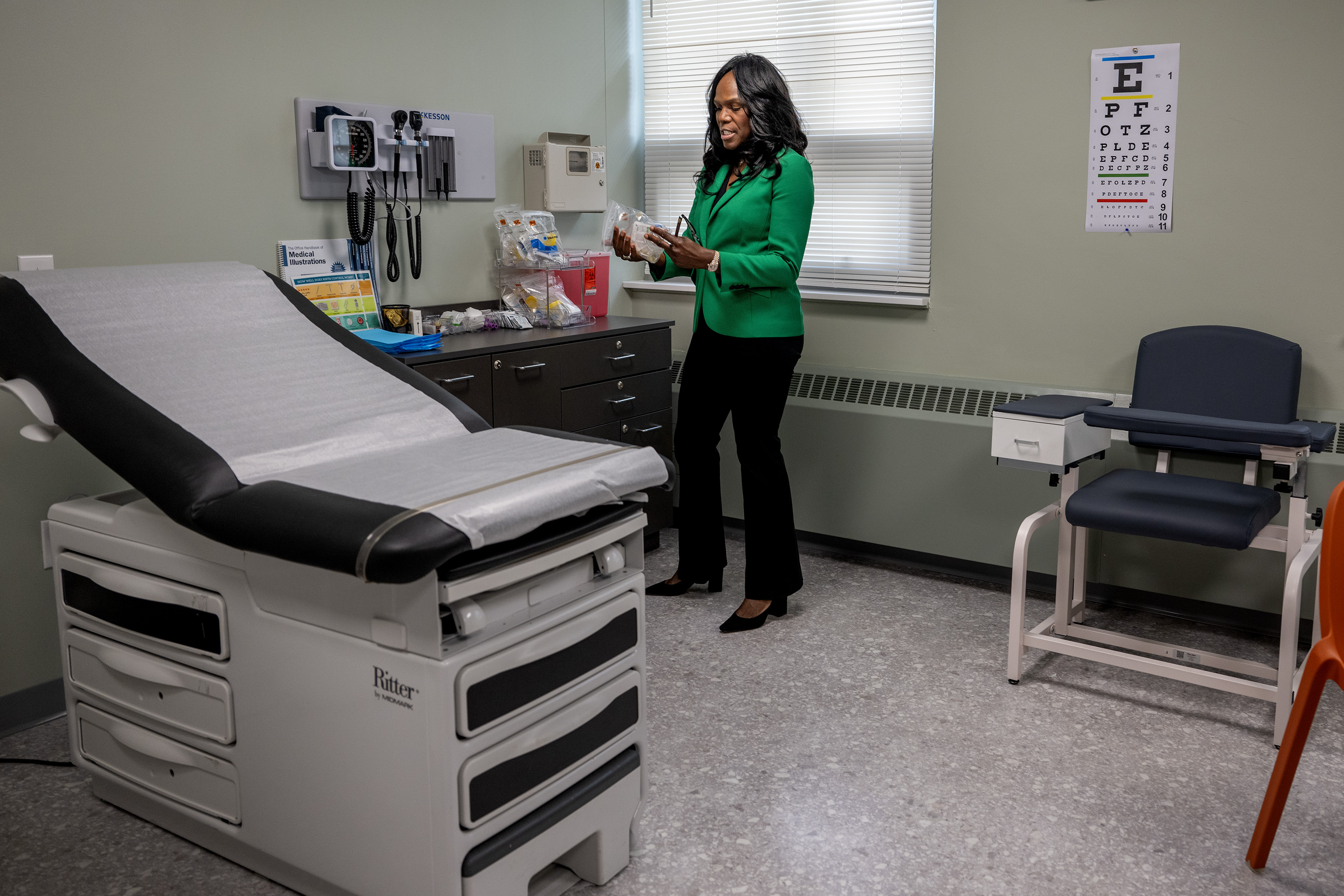
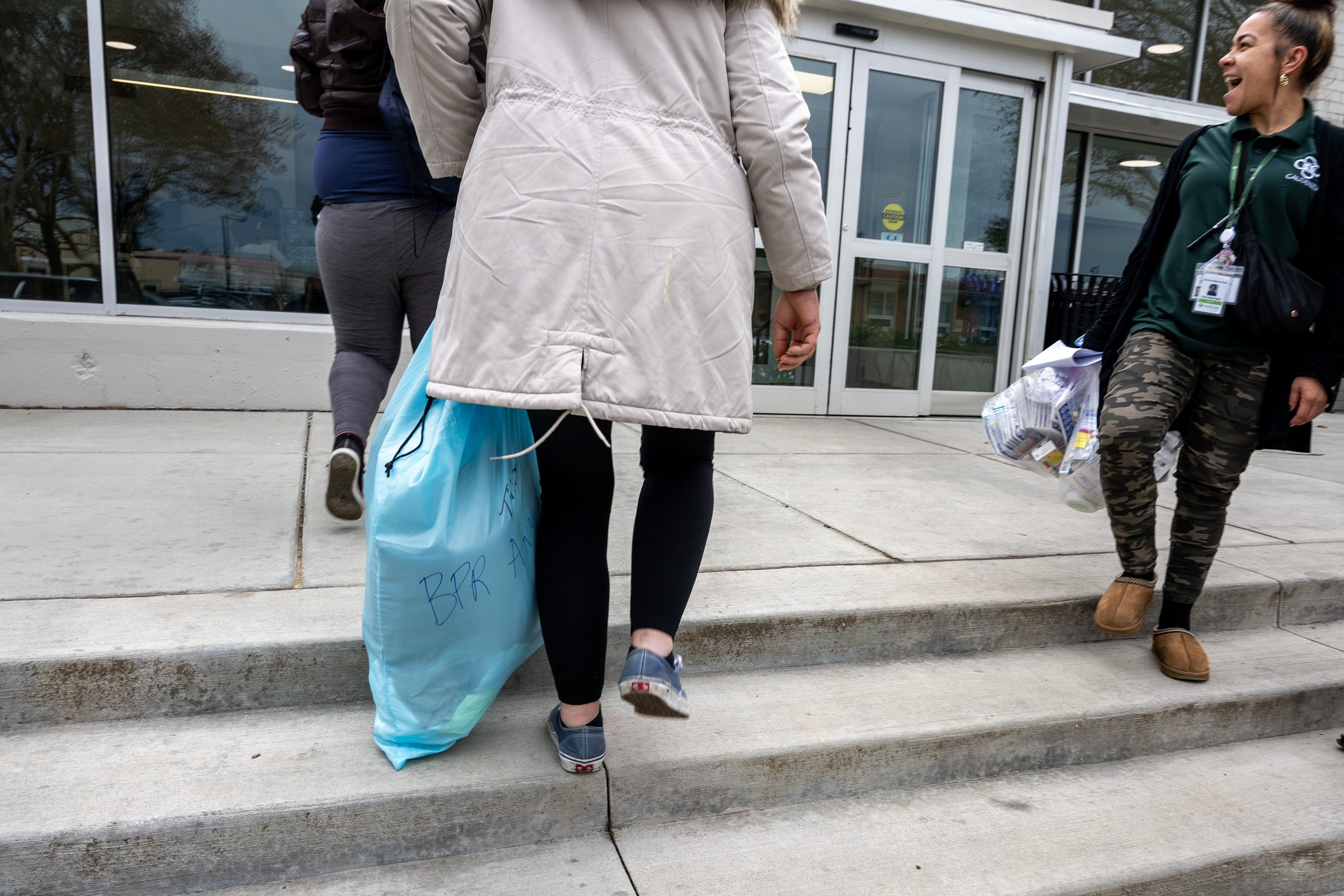
Physician Ala Stanford in an examination room at the primary medical care center run by her Black Doctors Consortium at Riverview Wellness Village, a city-owned drug recovery home in Northeast Philadelphia, on Nov. 25.Francesca Colon (right), a recovery support professional with Gaudenzia, brings people in recovery to the main entrance of the Meetinghouse at Riverview Wellness Village on Nov. 25.
Residents’ schedules are generally free-flowing and can vary depending on their wants and needs. About 20% have jobs outside the campus. Culinary arts training will be available in the next month or so. And residents can meet with visitors or leave to see family at any time.
They also spend much of their time in treatment, including individual, family, and group therapy. On a recent day, there were group sessions available on trauma recovery, managing emotions, and “communicating with confidence.”
Vernon Kostic, a 52-year-old Port Richmond native who said he has previously been homeless, has been in and out of drug treatment facilities for years.
He said he’s been content as a Riverview resident since July, and called it “one of the smartest things that the city has ever done.”
“We have the doctor’s office right over here,” he said. “They’ve got counseling right here. Everything we need. It’s like a one-stop recovery place.”
Resident Vernon Kostic heads to a group meeting at Riverview Wellness Village on Nov. 25.The dining room and meeting room in the Meetinghouse at Riverview Wellness Village. At rear left is a brand-new, industrial, restaurant-quality kitchen that was not operational yet on Nov. 25.
Finding ways to stay at Riverview
Finding success in recovery is notoriously hard. Studies show that people who stay in structured sober housing for at least six months after completing rehab see better long-term outcomes, and Riverview residents may stay there for up to one year.
But reaching that mark can take multiple tries, and some may never attain sobriety. McDevitt said that on a monthly basis, about 35 people move into Riverview, and 20 leave.
Some who move out are reunited with family and want to live at home. Others simply were not ready for recovery, McDevitt said, “and that’s part of working with this population.”
Fields said a resident who relapses can go back to a more intensive care setting for detoxification or withdrawal management, then return to Riverview at a later time if they are interested.
“No one is punished for struggling,” he said. “Recovery is a journey. It takes time.”
Providers are adding new programming they say will help residents extend their stays. Offering medication-assisted treatment is one of the most crucial parts, said Josh Vigderman, the senior executive director of substance use services at Merakey, one of the addiction treatment providers at Riverview.
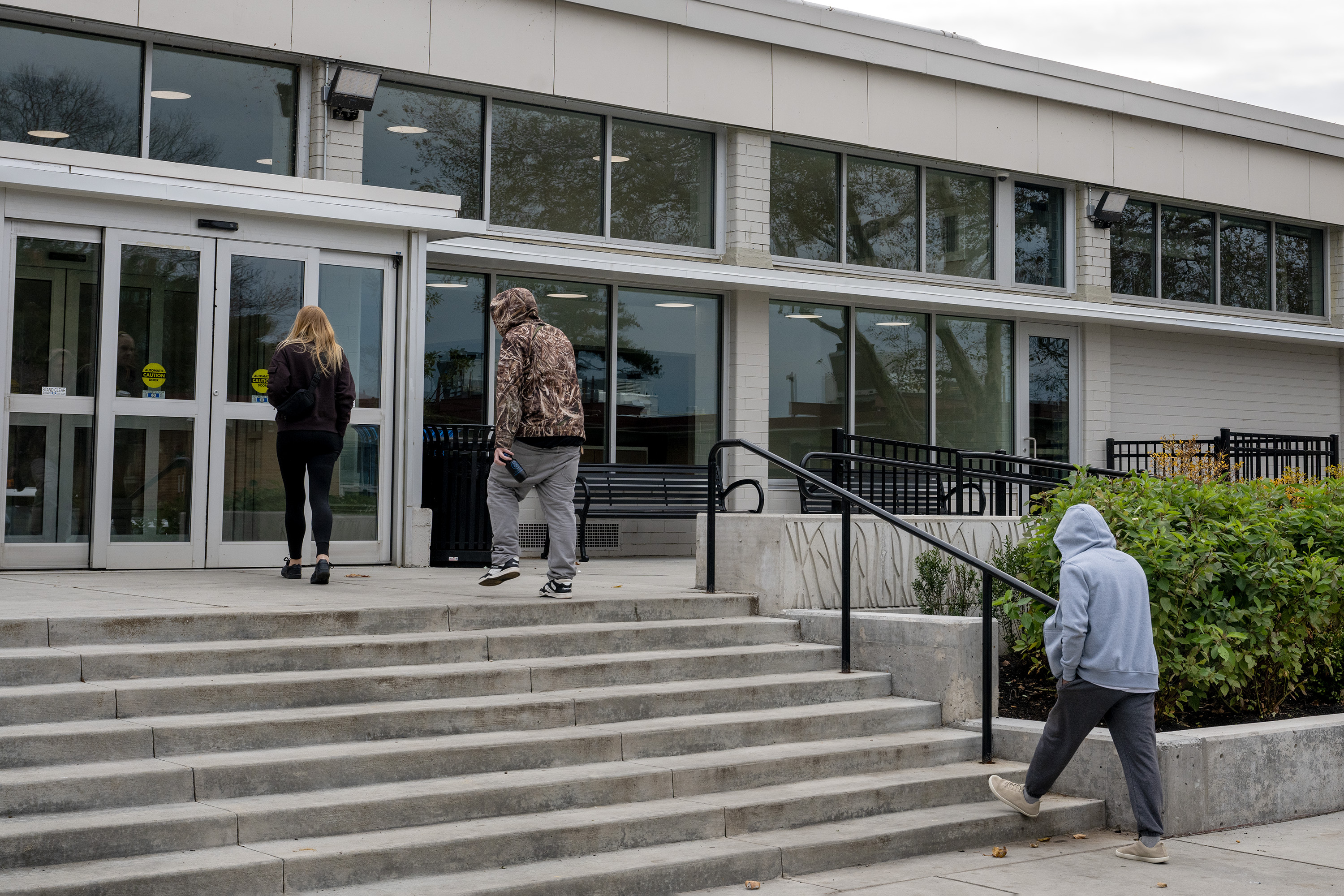
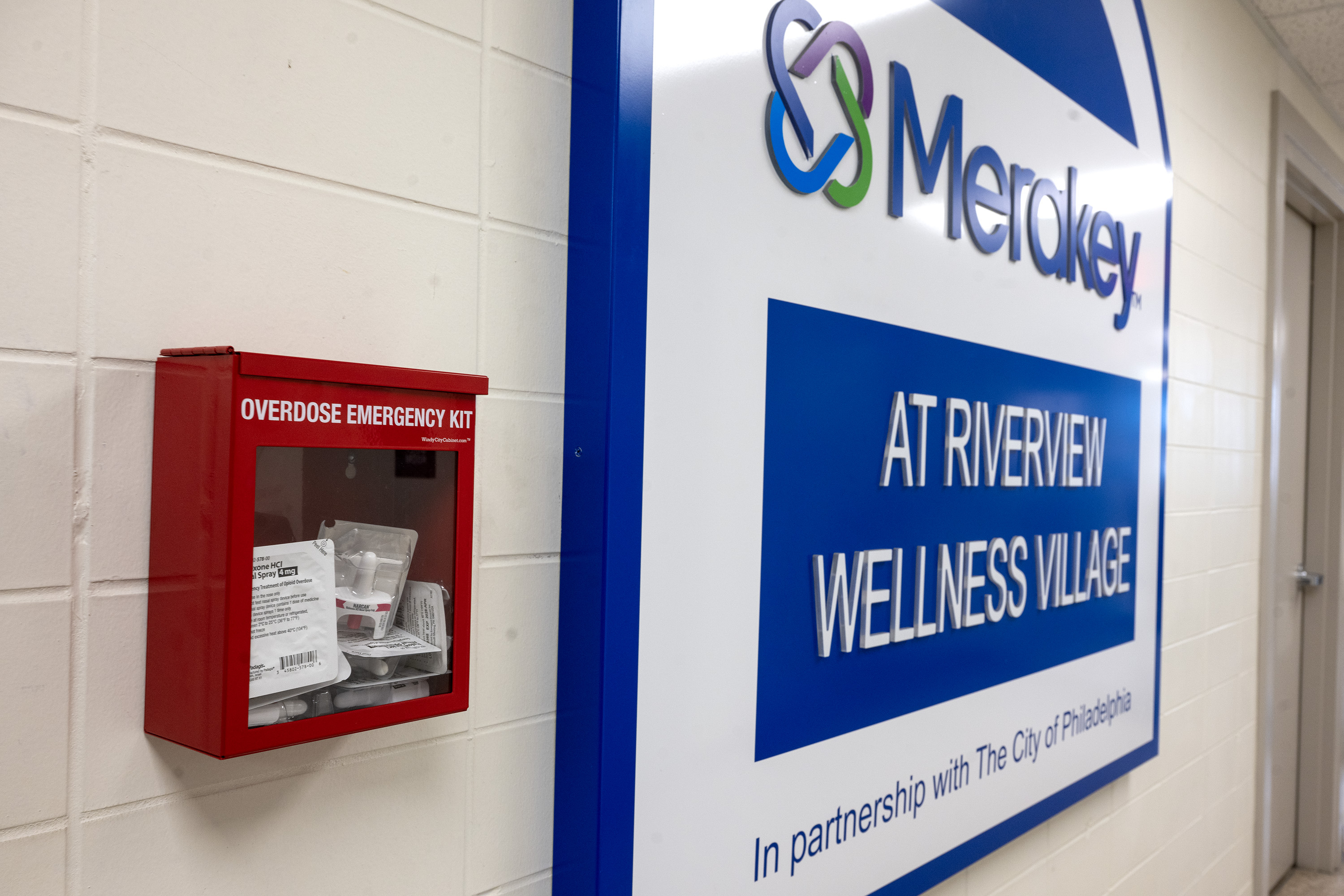
Entry to the primary medical care center run by the Black Doctors Consortium at Riverview Wellness Village.The main entry Meetinghouse at Riverview Wellness Village.Naloxone (Narcan) in an “overdose emergency kit” at Riverview Wellness Village.
In the initial months after Riverview opened its doors, residents had to travel off campus to obtain medication that can prevent relapse, most commonly methadone and buprenorphine, the federally regulated drugs considered among the most effective addiction treatments.
Typically, patients can receive only one dose of the drug at a time and must be supervised by clinicians to ensure they don’t go into withdrawal.
Vigderman said staff suspected some residents relapsed after spending hours outside Riverview, at times on public transportation, to get their medication.
This fall, Merakey — which was already licensed to dispense opioid treatment medications at other locations — began distributing the medications at Riverview, eliminating one potential relapse trigger for residents who no longer had to leave the facility’s grounds every day.
Interest in the program has been strong, Vigderman said, with nearly 80 residents enrolling in medication-assisted treatment in just a few weeks. Merakey is hiring more staff to handle the demand.
What’s next at Riverview
The city is eying a significant physical expansion of the Riverview campus, including a new, $80 million building that could double the number of licensed beds to more than 500. That would mean that about half of the city’s recovery house slots would be located at Riverview.
Parker said the construction is “so important in how we’re going to help families.” She said the process will include “meticulous design and structure.”
“The people who come for help,” she said, “we want them to know that we value them, that we see them, and that we think enough of them to provide that level of quality of support for them.”
In the meantime, staff are working to help the center’s current residents — who were among the first cohort to move in — plot their next steps, like employment and housing.
A rendering of the new, $80 million five-story building to be constructed on the campus of Riverview Wellness Village. It will include residences and medical suites.
That level of support, Vigderman said, doesn’t happen in many smaller recovery houses.
“In another place, they might not create an email address or a resumé,” he said. “At Riverview, whether they do it or not is one thing. But hearing about it is a guarantee.”
Bean is closing in on one year at Riverview. He doesn’t know exactly what’s next, but he does have a job prospect: He’s in the hiring process to work at another recovery house.
“I’m sure I’ll be able to help some people,” he said. “I hope.”
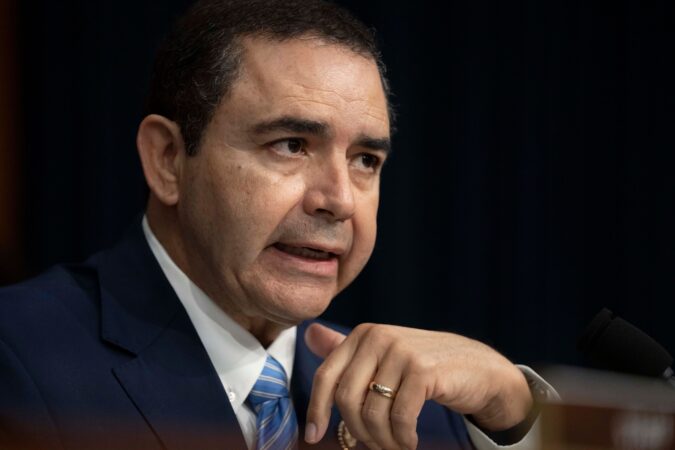
Trump blasted Cuellar for “Such a lack of LOYALTY,” suggesting the Republican president might have expected the clemency to bolster the GOP’s narrow House majority heading into the 2026 midterm elections.
Cuellar, in a television interview Sunday after Trump’s social media post, said he was a conservative Democrat willing to work with the administration “to see where we can find common ground.” The congressman said he had prayed for the president and the presidency at church that morning “because if the president succeeds, the country succeeds.”
Citing a fellow Texas politician, the late President Lyndon Johnson, Cuellar said he was an American, Texan, and Democrat, in that order. “I think anybody that puts party before their country is doing a disservice to their country,” he told Fox News Channel’s Sunday Morning Futures.
Trump noted on his Truth Social platform that the Democratic President Joe Biden’s administration had brought the charges against Cuellar and that the congressman, by running once more as a Democrat, was continuing to work with “the same RADICAL LEFT” that wanted him and his wife in prison — “And probably still do!”
“Such a lack of LOYALTY, something that Texas Voters, and Henry’s daughters, will not like. Oh’ well, next time, no more Mr. Nice guy!” Trump said. Cuellar’s two daughters, Christina and Catherine, had sent Trump a letter in November asking that he pardon their parents.
Trump explained the pardon he announced Wednesday as a matter of stopping a “weaponized” prosecution. Cuellar was an outspoken critic of Biden’s immigration policy, a position that Trump saw as a key alignment with the lawmaker.
Cuellar said he has good relationships within his party. “I think the general Democrat Caucus and I, we get along. But they know that I’m an independent voice,” he said.
A party switch would have been an unexpected bonus for Republicans after the GOP-run Legislature redrew the state’s congressional districts this year at Trump’s behest. The Texas maneuver started a mid-decade gerrymandering scramble playing out across multiple states. Trump is trying to defend Republicans’ House majority and avoid a repeat of his first term, when Democrats dominated the House midterms and used a new majority to stymie the administration, launch investigations, and twice impeach Trump.
Yet Cuellar’s South Texas district, which includes parts of metro San Antonio, was not one of the Democratic districts that Republicans changed substantially, and Cuellar believes he remains well-positioned to win reelection.
Federal authorities had charged Cuellar and his wife with accepting thousands of dollars in exchange for the congressman advancing the interests of an Azerbaijan-controlled energy company and a bank in Mexico. Cuellar was accused of agreeing to influence legislation favorable to Azerbaijan and deliver a pro-Azerbaijan speech on the floor of the U.S. House.
Cuellar has said he and his wife were innocent. The couple’s trial had been set to begin in April.
In the Fox interview, Cuellar insisted that federal authorities tried to entrap him with “a sting operation to try to bribe me, and that failed.”
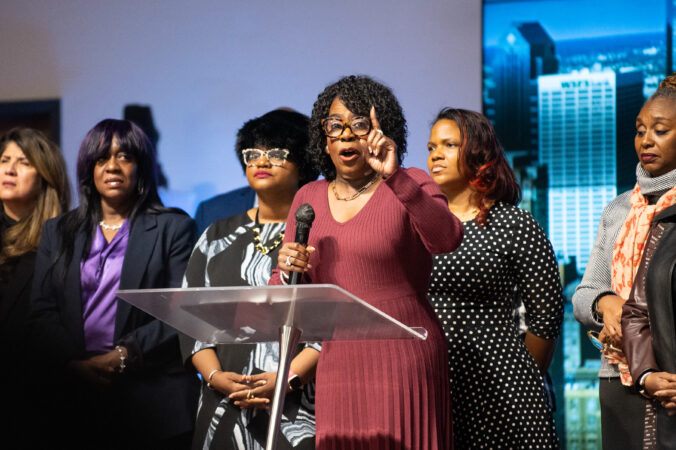
Mayor Cherelle L. Parker traversed pulpits across West and North Philadelphia on Sunday, promoting her vision for her signature housing initiative that’s heightening tensions in City Hall.
Parker, who wants to ensure the initiative helps those with varying incomes, largely opposes the changes, which has caused one of the most notable standoffs between the city’s executive and legislative branches during her mayoralty. From West Philly’s Church of Christian Compassion on Sunday morning, she lobbied her constituents, saying her vision for the housing plan is to avoid “trying to pit the ‘have-nots’ against those who have just a little bit.”
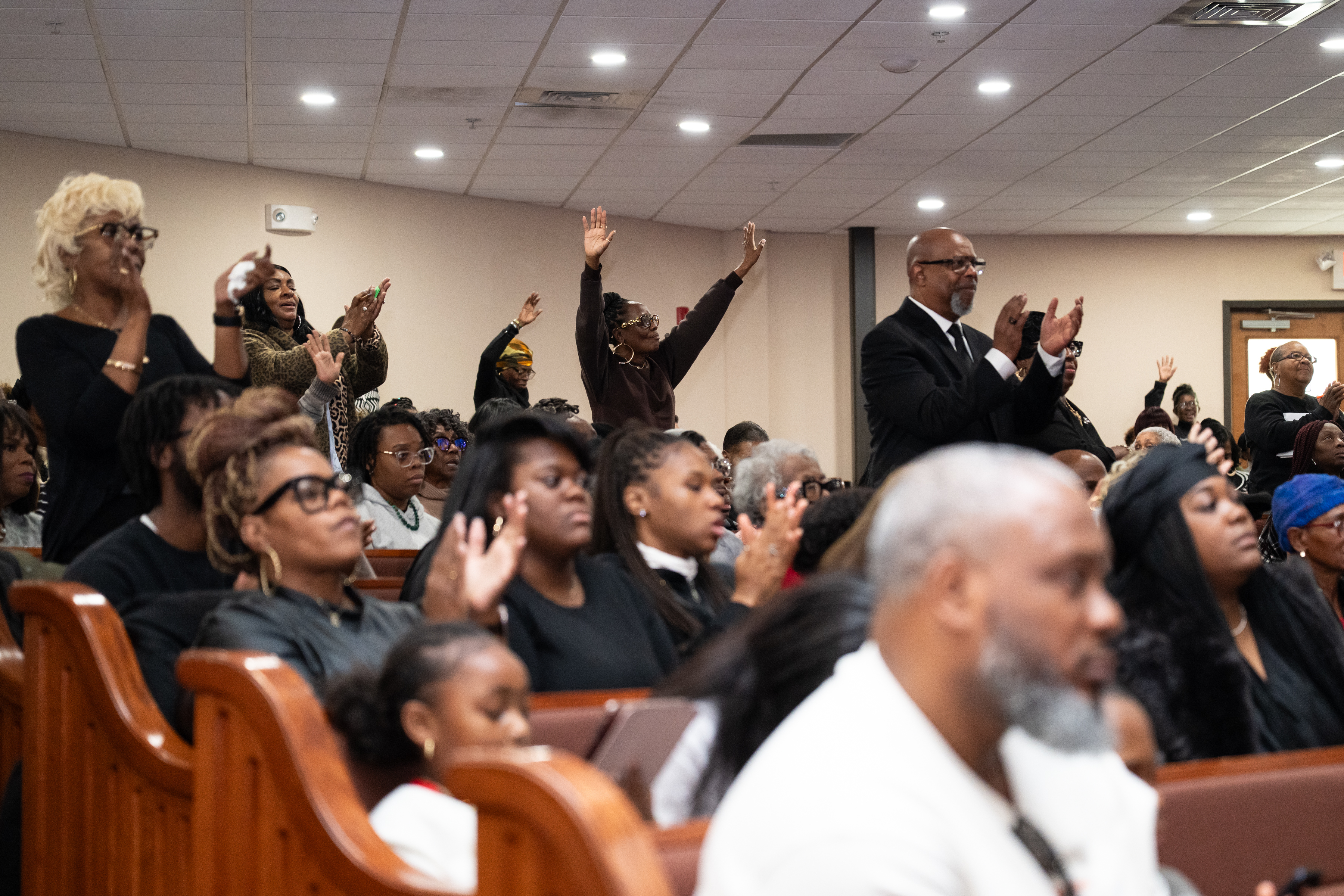
“We should be about addition, not subtraction,” she said to a packed sanctuary, as she sought to reclaim the narrative surrounding H.O.M.E. Her rousing 10-minute address was met with acclaim and applause, bringing some in the crowd to their feet.
“We’ve got to take care of the people who are most in need, but we can’t penalize the people who are going to work every day, pay their taxes, contribute to the city, and they can’t benefit from home improvement programs.”
The H.O.M.E. initiative calls for spending $800 million across dozens of existing programs. The bulk of the funding would go to affordable-housing preservation, the Turn the Key program, the Basic Systems Repair Program, affordable housing production, and One Philly Mortgage, which would provide loans to low income households.
Councilmember Jamie Gauthier, chair of the Committee on Housing, Neighborhood Development, and the Homeless, and whose district includes Church of Christian Compassion, called Council’s proposal reasonable and compromised and a fiscally responsible response to “Philadelphians who need our help the most in this moment.”
“The mayor has every right to get out into the public, to tell her side, to talk about her vision,” Gauthier said in an interview, “but I will say there was plenty of time to negotiate with Council on this, and plenty of attempts made from the Council’s side.”
Despite the disagreement over eligibility rules, Parker and Council are on the same page about the broad strokes of the housing plan; critical pieces of legislation Parker proposed as part of H.O.M.E. were approved by Council earlier this year. The changes last week did not alter the fundamentals of the program, which Parker hopes will achieve her goal of creating or preserving 30,000 units of housing in her first term.
Congregants at the Church of Christian Compassion cheer as Mayor Cherelle L. Parker addresses the crowd before service in the Cobbs Creek neighborhood of West Philadelphia on Sunday, Dec. 7, 2025.
The main sticking point in recent negotiations has been eligibility criteria for several programs: Parker, for instance, had proposed that H.O.M.E. funding for the Basic Systems Repair Program — which subsidizes critical home improvements — is open to any homeowner who makes Philadelphia’s area median income, about $119,400 for a family of four. Council’s amendments, however, require 90% of the new funding to go to families making 60% of the area median income or less, about $71,640 for a family of four.
Gauthier likened what’s in dispute to an emergency room: “The person who’s having a heart attack is going to be seen before the person with a broken leg, because that person who’s experiencing a heart attack might not make it if they don’t get immediate assistance.”
The squabble has given way to the most significant public dustup between Parker and Council President Kenyatta Johnson. In an uncharacteristically blunt statement last week, Johnson broke from his usual alignment with the mayor and defied her administration’s analysis of the situation.
In a statement Sunday, Johnson’s spokesperson Vincent Thompson said “Johnson heard clearly and directly from Councilmembers and housing organizations in Philadelphia about critical issues they want addressed in the first-year H.O.M.E. Plan spending. Those concerns center on accountability, neighborhood equity, and — most importantly — making sure that the deepest investments reach the poorest and most vulnerable Philadelphians.”
The amended budget could be up for a final vote as soon as Thursday, Dec. 11, Council’s last meeting before its winter break, according to Johnson’s office.
WASHINGTON — After the arrest of a man charged with placing two pipe bombs outside the headquarters of the Republican and Democratic national parties on Jan. 5, 2021, the warning from the Trump administration was clear: If you come to the nation’s capital to attack citizens and institutions of democracy, you will be held accountable.
Yet Justice Department leaders who announced the arrest were silent about the violence that had taken place when supporters of President Donald Trump stormed the Capitol and clashed with police one day after those bombs were discovered.
It was the latest example of the Trump’s administration’s efforts to rewrite the history of the riot, through pardons and the firings of lawyers who prosecuted the participants of the siege, and of the disconnect for a government that prides itself for cracking down on violent crime and supporting law enforcement but has papered over the brutality of the Jan. 6 attacks on police officers.
“The administration has ignored and attempted to whitewash the violence committed by rioters on Jan. 6 because they were the president’s supporters. They were trying to install him a second time against the will of the voters in 2020,” said Michael Romano, who prosecuted the rioters before leaving the Justice Department this year. “And it feels like the effort to ignore that is purely transactional.”
The White House referred comment to the Justice Department, which referred comment to the FBI. The bureau did not immediately respond to an email from the Associated Press on Friday.
Bongino once suggested pipe bomb incident was ‘inside job’
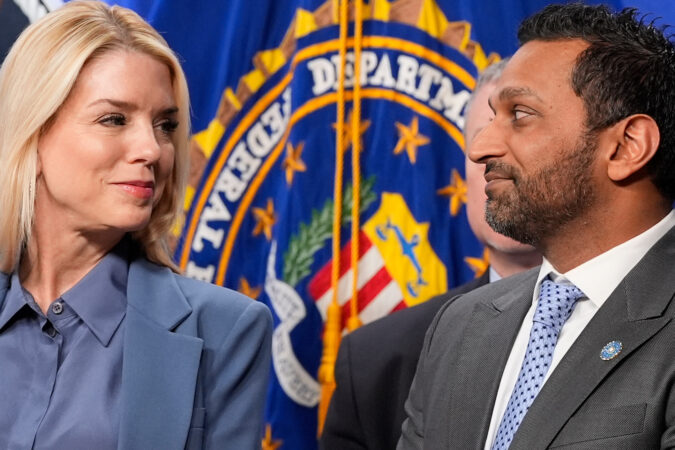
FBI Director Kash Patel, as a conservative podcast host during the Biden administration, had called the Jan. 6 rioters “political prisoners” and offered to represent them for free. But on Thursday, he said the arrest of the pipe bomb suspect, 30-year-old Brian Cole Jr., was in keeping with Trump’s commitment to “secure our nation’s capital.”
“When you attack American citizens, when you attack our institutions of legislation, when you attack the nation’s capital, you attack the very being of our way of life,” Patel said. “And this FBI and this Department of Justice stand here to tell you that we will always combat it.”
Patel’s deputy, Dan Bongino, had suggested before joining the FBI that federal law enforcement had wasted time investigating Jan. 6 rioters and anti-abortion activists.
“These are threats to the United States?” he said on a podcast last year. “Grandma is in the gulag for a trespassing charge on January 6th.”
Bongino indicated last year he believed the pipe bomb incident was an “inside job” that involved a “massive cover-up.” After joining the FBI, Bongino repeatedly described the investigation as a top priority that was receiving significant resources and attention.
“We were going to track this person to the end of the earth. There was no way he was getting away,” he said Thursday.
No public link has emerged between the pipe bombs and the riot, and Cole’s arrest was a significant development in a long-running investigation that had confounded authorities, who are now are assembling a portrait of Cole. People familiar with the matter told the Associated Press that among the statements Cole made to investigators is that he believed conspiracy theories about the 2020 election, which Trump has insisted was stolen from him in favor of Democrat Joe Biden. The people were not authorized to discuss the ongoing investigation publicly and spoke on condition of anonymity.
There was no widespread fraud in that election, which a range of election officials across the country, including Trump’s former attorney general, William Barr, have confirmed. Republican governors in key states crucial to Biden’s victory have also vouched for the integrity of the elections in their states. Nearly all the legal challenges from Trump and his allies were dismissed by the courts.
Administration played down Jan. 6 and aftermath
The tough-on-crime words heard during Thursday’s announcement about Cole’s arrest were at odds with the Republican administration’s repeated efforts to play down the violence of Jan. 6, absolve those charged in the insurrection, and target those who investigated and prosecuted the rioters.
Trump’s clemency action on his first day back in the White House in January applied to all 1,500-plus people charged with participating in the attack on the foundations of American democracy. That included defendants seen on camera violently attacking police with makeshift weapons such as flagpoles, a crutch, and a hockey stick. More than 100 police officers were injured, including some who have described being scared for their lives as they were dragged into the crowd and beaten.
Earlier this year, the Justice Department asked the FBI for the names of agents who participated in Jan. 6 investigations, a demand feared within the bureau as a possible precursor to mass firings. In August, Patel fired Brian Driscoll, who as the FBI’s acting director in the early days of the Trump administration resisted handing over those names.
Trump’s administration, meanwhile, has fired or demoted numerous prosecutors who worked on Jan. 6 cases, including more than two dozen lawyers who had been hired for temporary assignments to support the investigation but were moved into permanent roles after Trump won the 2024 election.
In October, two federal prosecutors were locked out of their government devices and told they were being put on leave after filing court papers that described those who attacked the Capitol as a “mob of rioters.” The Justice Department later submitted a new court filing that stripped mentions of the Jan. 6 riot.
One man whose case was dismissed because of Trump’s pardons was accused of hurling an explosive device and a large piece of wood at a group of officers who trying to defend an entrance to the Capitol. Some officers later said they had “believed they were going to die,” prosecutors wrote in court papers, and several reported suffering temporary hearing loss.
Philly’s first competitive congressional primary in more than a decade is officially underway.
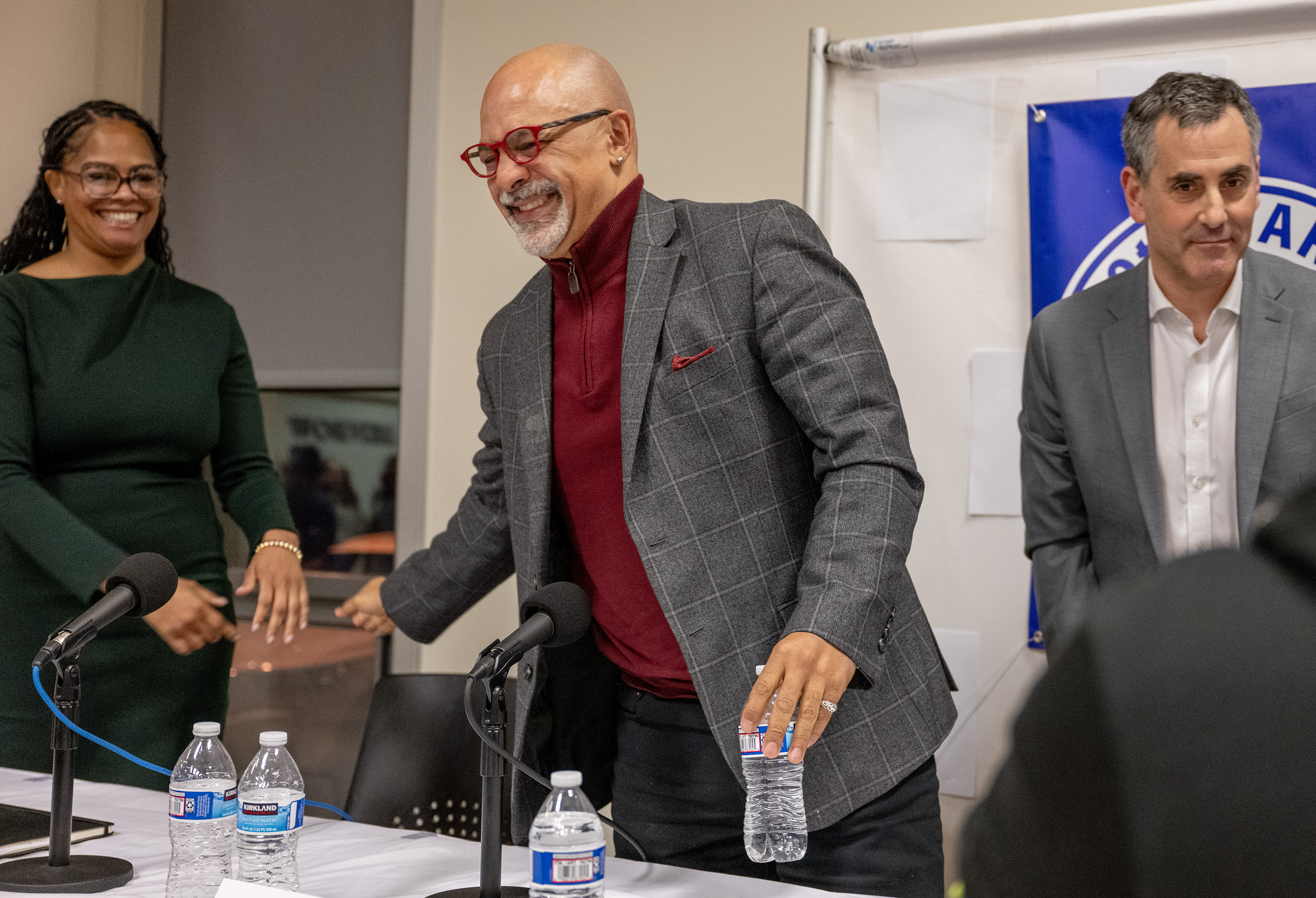
On Thursday night in a standing-room-only auditorium in Mount Airy, State Sen. Sharif Street, State Reps. Morgan Cephas and Chris Rabb, and doctors Ala Stanford and David Oxman made their opening pitches to voters for why they should represent the 3rdCongressional District, which stretches from Northwest Philadelphia to parts of South Philly.
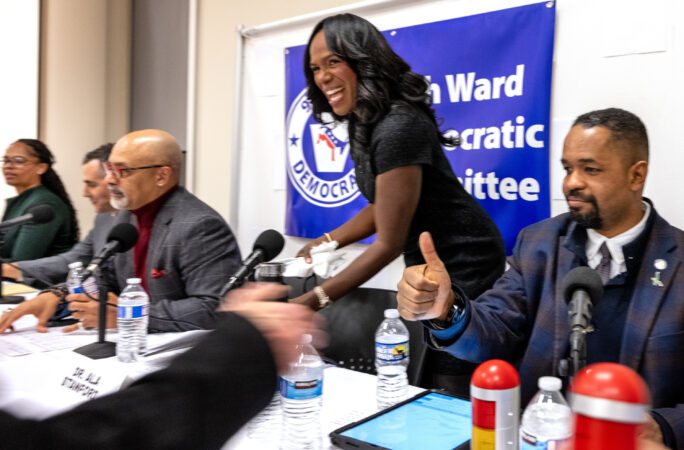
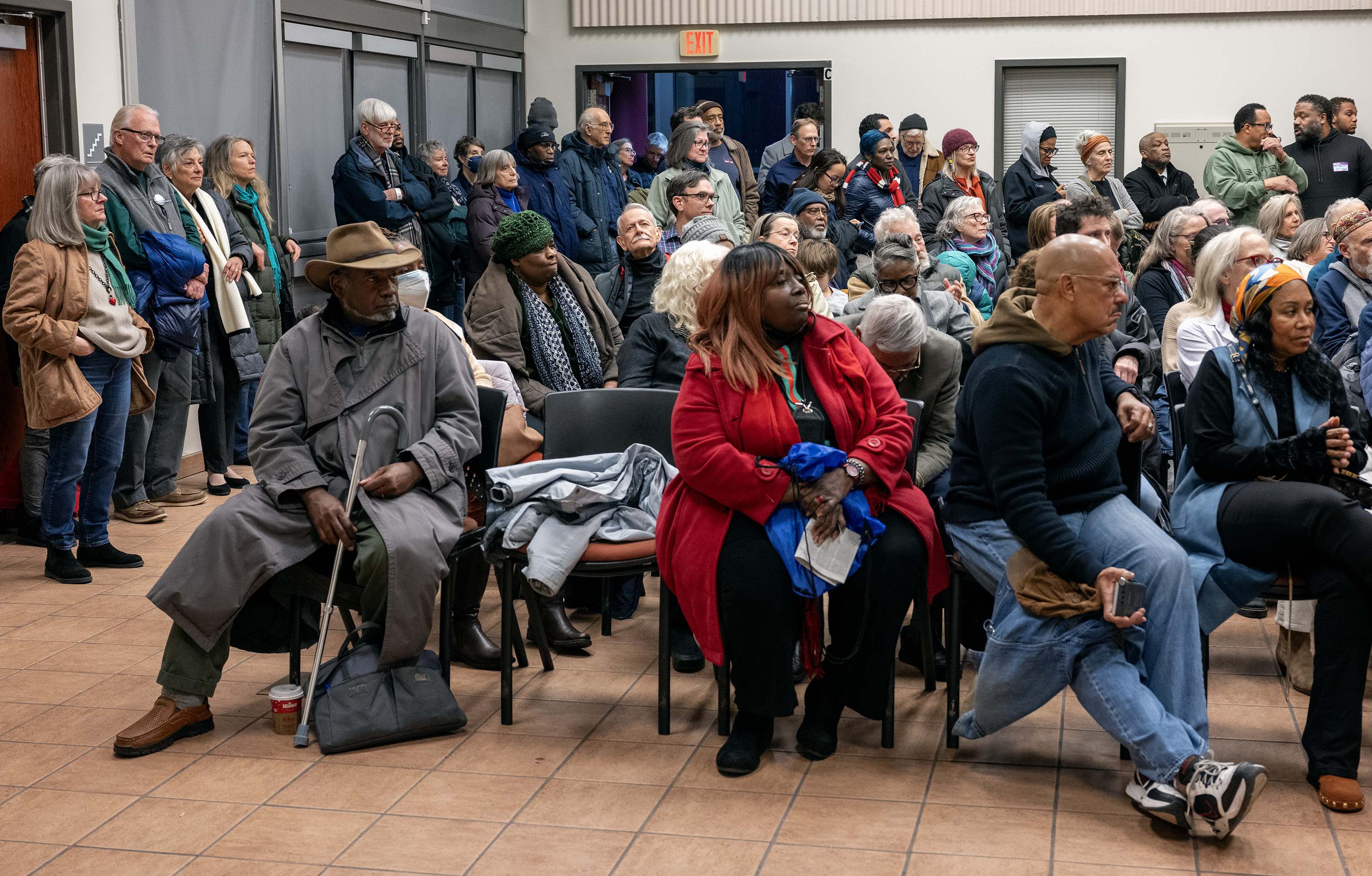
The candidates are vying to replace retiring U.S. Rep. Dwight Evans in a district that is among the most Democratic in the nation. Thursday’s packed forum, hosted by the 9th Ward Democratic Committee, was largely an opportunity for candidates to introduce themselves to a heavily engaged community more than five months before the May primary.
The five candidates represent only a fraction of nearly a dozen declared in the race. They were invited based on fundraising and endorsements, wardchair Jeff Duncan said in opening remarks.
Here are some takeaways from the evening.
Candidates (from left) State Reps. Morgan Cephas, and Chris Rabb; and physician David Oxman appear at a forum hosted by the 9th Ward Democratic Committee in Mt. Airy Thursday, Dec. 4, 2025.
Why are they running for Congress?
It’s tough to run for office without a compelling “why,” and each candidate made a personal pitch to the crowd.
Cephastalked about being a toddler in a stroller while her mom picketed with American Federation of State, County, and Municipal Employees District Council 47, the union representing many of Philly’s city workers, back in 1986. She said she wants to bring a family history of activism andher experience in Harrisburg, where she has championed maternal health, to Washington.
Oxman, a medical professor and intensive-care doctor, said Philadelphians are in the midst of a health crisis — not just because of deteriorating physical wellness, but also from mental and financial strain. He talked about building trust with patients and colleagues and taking an outsider approach in Congress, where there are only a handful of doctors serving.
Rabb, on friendly turf in Mount Airy, an area he represents in the state House, separated himself from the Democrats sitting beside him by arguing he is the only true progressive in the race who would bring needed energy to Washington, “not another establishment ally.” Throughout the forum, he called out Democrats who take money from corporations and who he argued have been unwilling to fight for progressive causes.
Stanford gave a compelling rundown of her personal backstory: born to a young mother in poverty and going on to be the first Black female pediatric surgeon trained in the United States. Stanford played a key role in responding to the COVID-19 outbreak in Black and brown communities in Philadelphia and now operates a health center in North Philadelphia. “I’m running because I lived it and I understand it, and I won’t wait for permission in Washington,” she said.
On the topic of immigration, candidates were unanimous that U.S. Immigration and Customs Enforcement needs to be reined in, if not totally abolished.
Street called the agency “corrupt to its core” and one that recruits “racists and neo-Nazis,” a reference to scrutiny over the imagery used in ICE’s recent campaign.
Cephas said there needs to be better oversight of immigrant detention centers. Democratic lawmakers have been turned away from facilities in recent months when they have attempted to review conditions.
Rabb thinks those centers should be dismantled altogether and took the opportunity to contrast the moment with Trump’s first administration. “Yes, ‘abolish ICE’ is popular these days,” he said. “But when I was leading families into sanctuary in 2017, people weren’t talking then. We have a bigger villain now.”
Oxman said he didn’t know if ICE was “salvageable.”
“If you have to wear a mask at work to hide your identity, maybe you should be asking a few questions,” he said.
Rabb and Oxman vow not to take pharmaceutical, insurance PAC money
Only Rabb and Oxman said they would commit to refusing corporate donations from pharmaceutical or insurance firms.
Rabb said he has never, since his first election in 2015, taken corporate PAC money.
Oxman told a story about colleagues at the hospital getting wined and dined by pharmaceutical companies and insisting they were unaffected by the gifts. “I asked them, ‘Why do you think they do it?’” Oxman said. “Because it works.” He added he’s a “hell, no” on taking pharma and insurance PAC money.
Cephas, Street, and Stanford all promised to work to hold those industries accountable without committing to forgo their money on the trail.
Rabb comes out strongly against sending arms to Israel
Candidates were given one minute to say whether they would support a bill that would prohibit sending more weapons to Israel, two years after the start of its war in Gaza following the Oct. 7, 2023, attack. Street said it was an insufficient amount of time to cover an exceedingly complex topic.
He said violence is correlated with poverty — noting the disproportionately high homicide rate in his neighborhood, where people are struggling to afford groceries — and stressed the need to get humanitarian aid flowing in Gaza.
Cephas said she would want to have conversations about the proposal. Oxman said that the enemy is “extremism on both sides” and that any country receiving arms from the United States has to live up to certain standards.
Stanford said that as a mother and a surgeon who cares for children, she believes there is “no justifiable reason for a child to lose her life,” but did not weigh in on the bill.
Only Rabb answered definitively, saying he would support the bill to block weaponry to Israel. “There are no two sides in this when we see the devastation,” he said of Gaza, where the death toll has surpassed 70,000 since Israel launched its military campaign.
It was standing room-only at the United Lutheran Seminary in Mt. Airy when the 9th Ward Democratic Committee hosted a candidates forum five months before the Democratic primary.
Abortion question prompts some personal stories
Asked how they would protect women’s reproductive rights, several candidates shared personal stories of grief or hardship.
Stanford said there is a need for more doctors in Congress with lived experience and talked about having had a miscarriage.
“Unfortunately, I am one of those Black women who was treated with racism and bias, and it impacted the livelihood of a child I did not carry to term,” she said. “I will fight for reproductive rights, and that also includes the right to choose.”
She noted she had worked closely with Vice President Kamala Harris on postpartum-care initiatives for women.
Street said reproductive rights have to extend to expanded in vitro fertilization protections and access. He said that he and his wife, who had children from previous marriages but wanted to have another, went through IVF.
“It didn’t work, but we did try it, and everyone should have that option,” he said, adding there is power in people telling their stories.
Boosting their party beyond Philadelphia
May’s Democratic primary winner in the extremely blue district is all but guaranteed to become Philadelphia’s newest congressperson next fall. All five candidates vowed to help Democrats win in congressional races around the state following the May election.
Cephas said it’s not “enough to be safe here in Philadelphia” without a Democratic majority in the House.
Street made a case for his experience campaigning as a past state party chair.
Rabb argued a progressive voice is the way to motivate voters around the state. “Are we gonna have a status quo person or a transformational leader?” he asked. “And if that person’s a transformational leader, they can help reach beyond the traditional base around the state. The Democratic Party has been sleeping on folks.”
Ultimately, the direction the 3rd District goes will likely get national attention for what it says about the preferences of Democratic voters in urban areas like Philadelphia. Oxman argued that means selecting the right messenger.
“Whoever represents it has to think about how their message is heard around Pennsylvania. We need a message that can rally the whole state. What happens here has national import.”