Category: Politics

Political news and coverage

  • Pennsylvania’s state budget is late — again

    Pennsylvania’s state budget is late — again

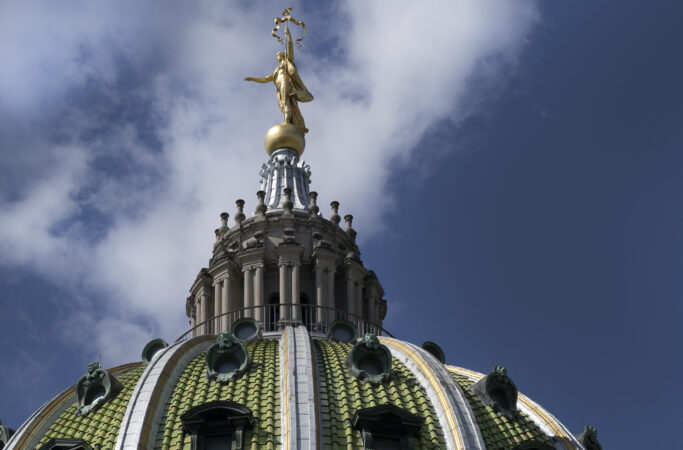
    HARRISBURG — Pennsylvania enters the new fiscal year on Wednesday without a state budget in place for a fifth consecutive year, while top leaders in the politically split legislature publicly disagreed over whether a deal was near.

    Lawmakers in the Republican-controlled Senate and the Democratic-led House have known for months that Pennsylvania faces fiscal straits, as the state is on a path to spend more than it brings in in revenue in fiscal 2027. Top negotiators have spent weeks meeting behind closed doors about how the state should spend more than $50 billion in taxpayer dollars, in hopes of avoiding another drawn-out budget impasse.

    Under first-term Democratic Gov. Josh Shapiro’s proposed $53.2 billion budget, Pennsylvania would spend $4.8 billion more than its $48.6 billion in projected revenue and would require lawmakers to create new revenue streams, cut spending, or raise taxes — or dip into the state’s reserves.

    Senate Republicans on Tuesday recessed until legislators have a final budget deal to vote on, with Senate Majority Leader Joe Pittman (R., Indiana) saying that there is “no reason we cannot conclude our work early next week” and that lawmakers “have a very good trajectory in front of us.”

    Pittman — a top negotiator in the closed-door talks — made those remarks just one day after a Senate committee voted to gut the main spending bill in Shapiro’s budget proposal, which was approved by the House in April, from $53.1 billion to $25 million.
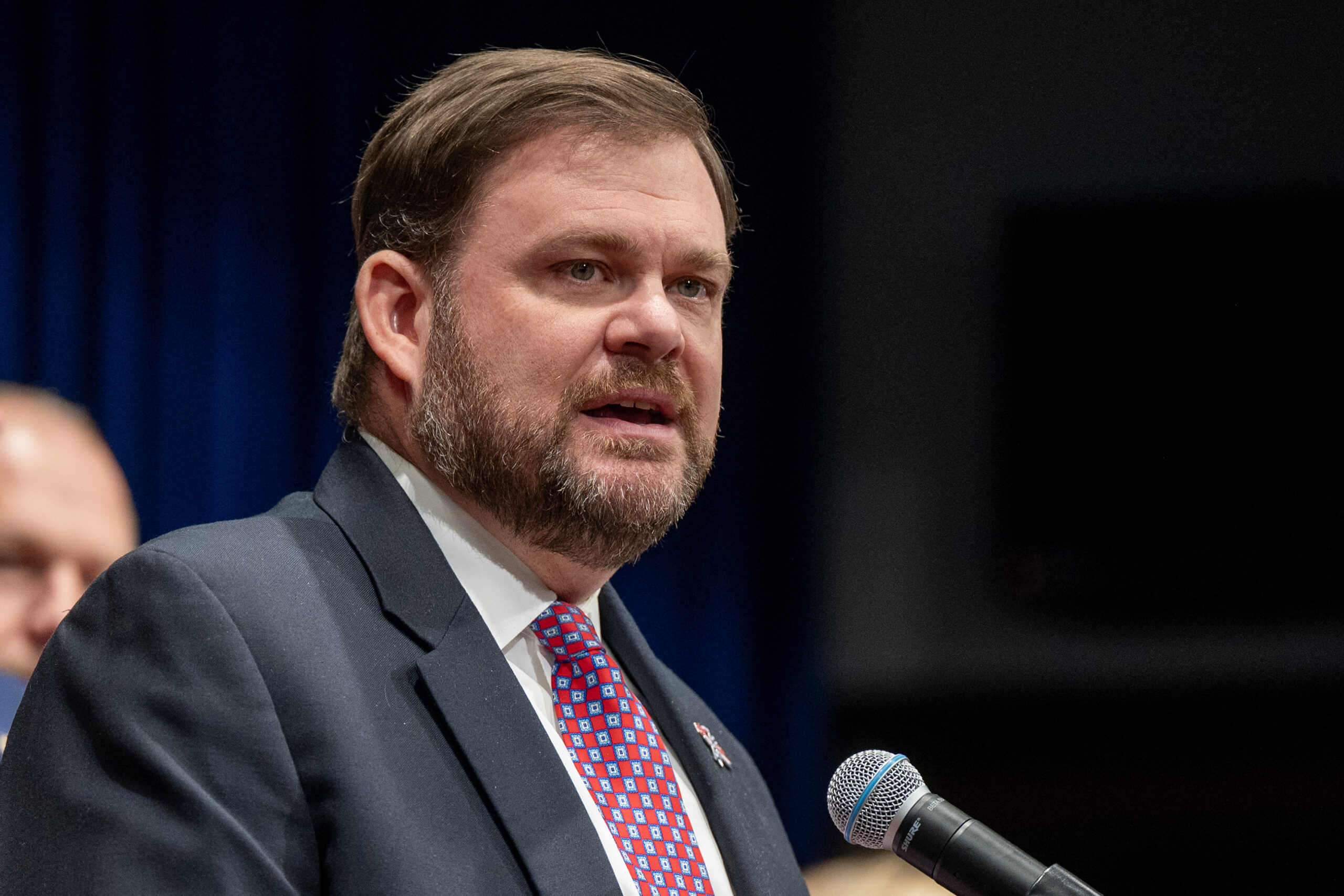
    State Senate Majority Leader Joe Pittman (R., Indiana) during a press conference at the Capitol in Harrisburg in February.

    In a news conference Tuesday, House and Senate Democratic leaders offered a different picture: Despite lawmakers traditionally staying in Harrisburg in the days leading up to July Fourth in hopes of hashing out a deal, Senate Republicans are already packing up for the holiday weekend, the Democrats said, and are politically motivated to hold up the state budget. (House Democrats later canceled their scheduled legislative session on Thursday.)

    “[Senate Republicans are] going to tell you that progress is being made, and that it’s important that we allow time for members to go home for the weekend. And by the way, it’s Tuesday,” said Senate Minority Leader Jay Costa (D., Allegheny).

    “The bottom line is they’re not serious about getting a budget done, they’re slow-walking this process for weeks and weeks, and we’re calling them on it,” Costa said.

    Shapiro echoed the same frustration with Senate Republicans in an interview Tuesday, adding that the Senate “decided to go home on vacation” when lawmakers are due to deliver a budget bill to him for his signature.

    “I think it’s disrespectful to the people of Pennsylvania,” Shapiro said, noting that Pennsylvania has a revenue surplus. “They should be here, and they should be working. And instead, they ran away.”
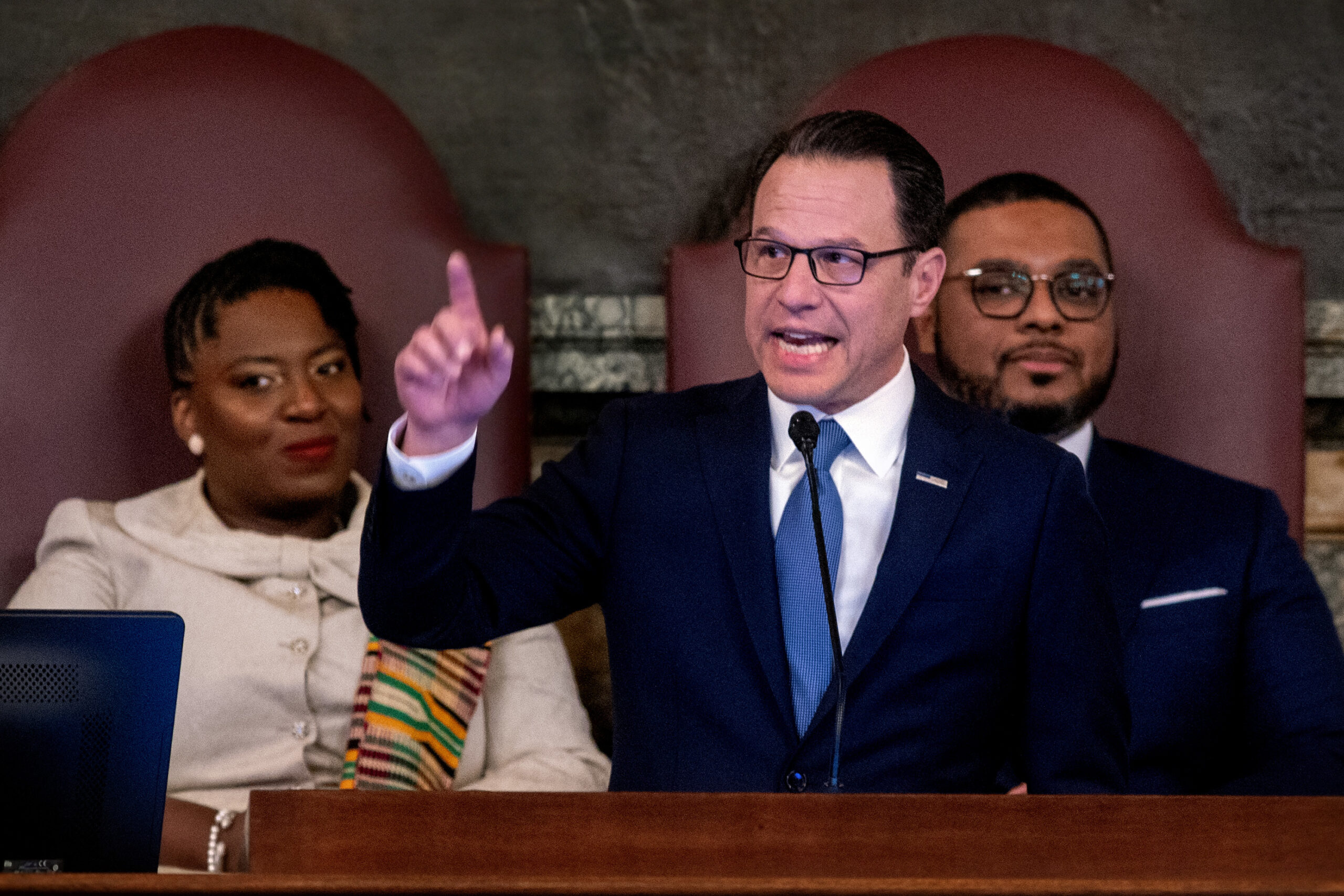
    Speaker of the House Joanna McClinton (left) and Lt. Gov. Austin Davis are seated behind Gov. Josh Shapiro as he delivers his third budget address to a joint session of the state House and Senate at the state Capitol on Feb. 4.

    Senate GOP leaders, in a statement following their recess Tuesday, said they believe they are “well on our way to effectuating a full budget agreement in the days.”

    House Minority Leader Jesse Topper (R., Bedford) told reporters that legislative leaders have been constantly in contact “over the past month” no matter if members are in the building.

    “At the end of the day, the talks continue,” Topper said. “This kind of stunt feels a lot like politics.”

    Top legislative leaders have been tight-lipped about what the remaining sticking points are in budget talks.

    Pennsylvania is constitutionally required to deliver a balanced budget by the start of the new fiscal year on July 1, releasing state funds which are then sent to school districts, county governments, and nonprofit organizations that offer critical services to residents.

    The true impact of the missed deadline won’t be felt by local governments and schools for weeks. However, these entities are often required by law to submit their own budgets despite inaction by the state, often leaving them unable to predict how much state money to budget. State employees and lawmakers continue to receive pay during a state budget impasse.

    Last year, a nearly five-month budget impasse required schools, counties, and service providers to cut jobs, take out high-interest loans, or stop services altogether. The School District of Philadelphia, the state’s largest school district, borrowed $1.5 billion to pay its bills, resulting in $30 million in interest and borrowing costs that weren’t repaid when the state approved its annual spending plan.

    Lawmakers were at a bitter standstill about whether to allocate a new, reliable funding stream for public transit, reviving the state’s long-held rural-urban divide. Members also couldn’t agree on how much to spend, until ultimately reaching a $50.1 billion budget deal in November 2025.

    This year, both chambers have slim margins for budget votes: House Democrats hold a one-seat majority, while Senate Republicans have a three-seat majority with several conservative members who rarely support spending increases. This often means legislative leaders must work with the minority parties to come to a final deal.

    On Monday, Senate Republicans leaders did not show up to a scheduled meeting with Shapiro and Democratic leaders, Costa said, signaling potential discord.

    Legislators still need to reach agreements on a number of issues, including whether to tax and regulate so-called skill games differently from slot machines and whether the state should overhaul existing school choice programs.

    Democrats have wholly backed Shapiro’s budget proposal, which included legalizing recreational marijuana and raising the state minimum wage. Republicans have emphasized a need to slow down spending, citing the state’s structural deficit.

    The leaders will also trade a number of legislative priorities in closed-door meetings unrelated to state spending as part of an overall deal, such as data center oversight proposals.

    In Pennsylvania, the state budget topped $50 billion for the first time last year. It had increased by 25% — about $10 billion — over a five-year period.

  • Mayor Parker changed things up for this year’s July 4th concert — and it’s costing Philly’s taxpayers millions more

    Mayor Parker changed things up for this year’s July 4th concert — and it’s costing Philly’s taxpayers millions more

    With the eyes of the nation on Philadelphia for America’s 250th birthday, Mayor Cherelle L. Parker’s administration this year took over management of the city’s free July Fourth concert, which for years was produced by a nonprofit established by the city: Welcome America.

    The mayor instead hired ESM Productions, a for-profit company, to put on the annual show featuring musical acts and fireworks over the Ben Franklin Parkway, and she changed the name from Wawa Welcome America to the “One Philly: Unity Concert for America” — a version of Parker’s well-known slogan, “One Philly: A United City.”

    Another change: It will cost taxpayers far more than in the past.

    The city is due to pay ESM Productions about $15.5 million for the show, which will be headlined by Christina Aguilera, Jill Scott, and The Roots, and feature rapper Meek Mill, according to a copy of the city’s contract paperwork with ESM, obtained by The Inquirer. The city in March signed a $10 million contract with the Philadelphia-based company, as well as a $5.5 million contract amendment.

    By comparison, Welcome America’s budget for all of 2024 — including that year’s July Fourth concert, the numerous other events it manages in the build-up to the concert, and the salaries of its staff — was about $6.6 million, only about $5.3 million of which came from government grants, according to the group’s most recent federal nonprofit disclosure.

    Welcome America, which is a public-private partnership with the mayor serving as a board member, receives city and state funding, as well as a corporate sponsorship. The organization has been involved in Philly’s July Fourth celebrations since 1993.

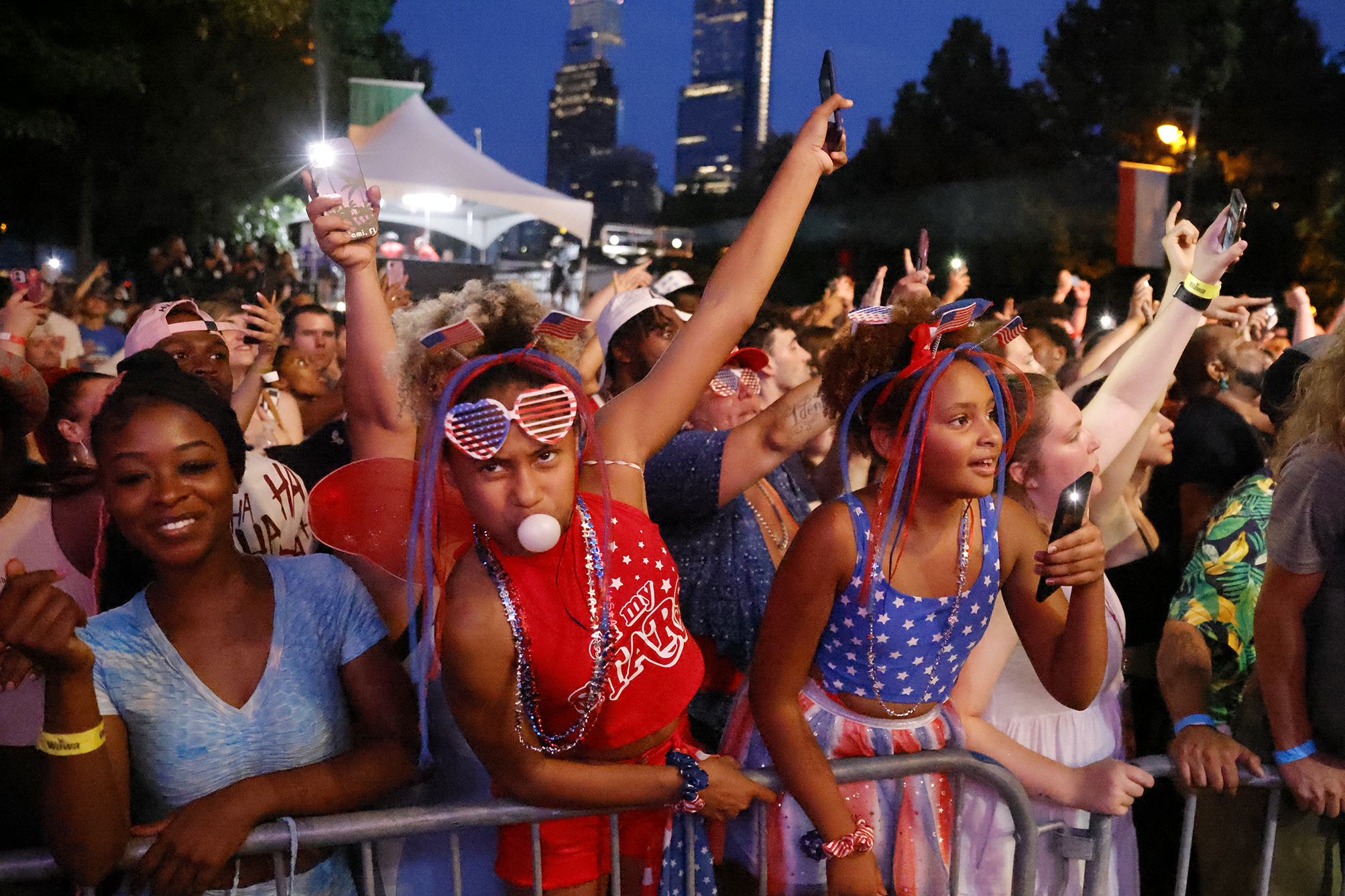
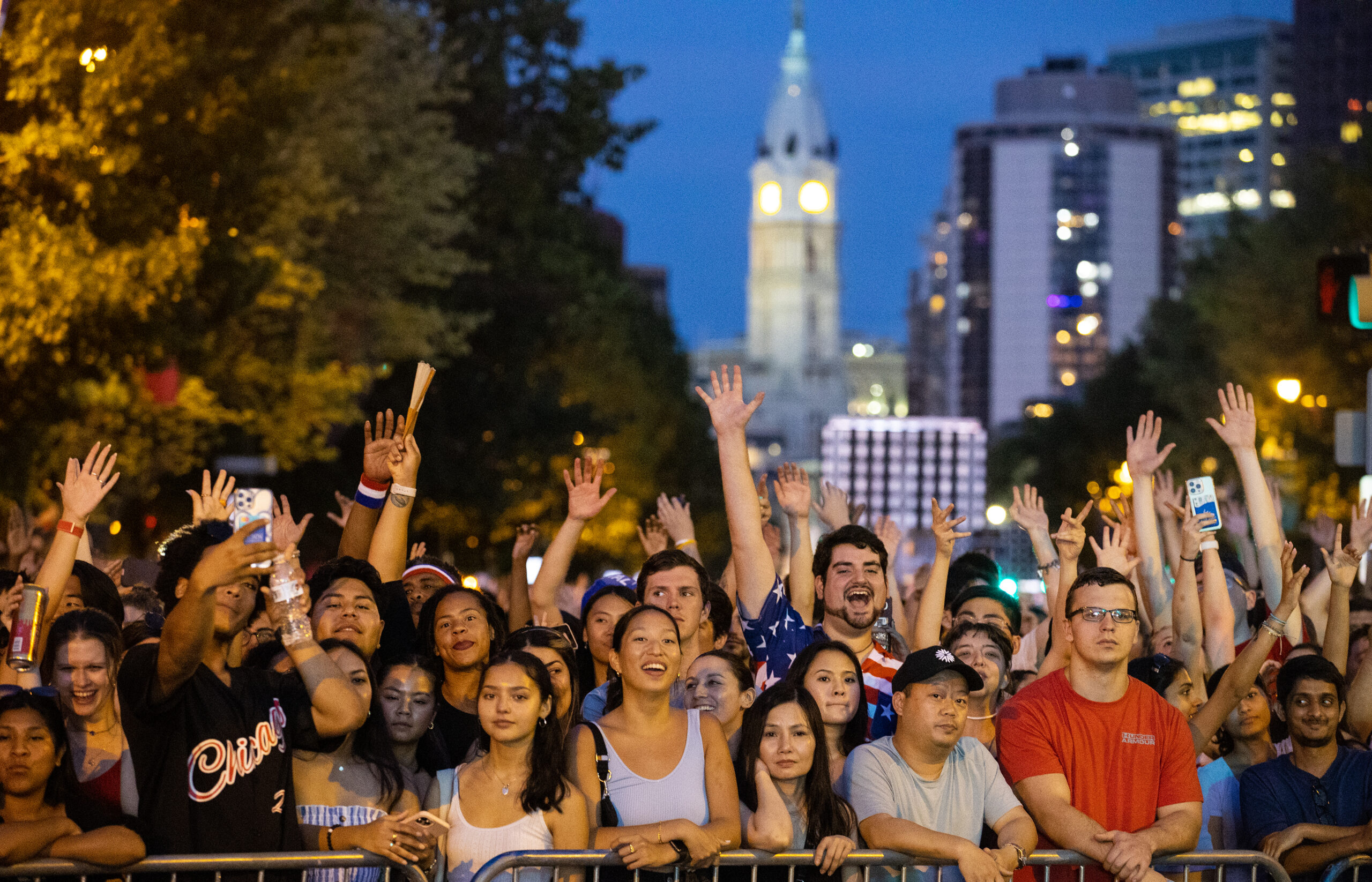
    Fans react to the music as the Wawa Welcome America Festival concluded July 4, 2023 with a free concert featuring Ludacris on the Benjamin Franklin Parkway.

    Last year’s iteration of the Wawa Welcome America concert cost the organization about $3 million, according to a person with knowledge of the situation who spoke on the condition of anonymity because they were not permitted to disclose that information.

    The Philly taxpayer money paid to the concert’s producers does not cover additional expenses borne by the city, such as pay for police officers and sanitation workers staffing the event.

    Parker’s office declined a request from The Inquirer for a copy of the contract or information on the cost of this year’s concert. Chief Deputy Mayor Vanessa Garrett Harley said in an interview that the administration would publicly disclose the costs and economic benefits of the concert after it was over.

    “At a later time, we could certainly be doing a full accounting, as we’re not trying to hide anything and always want to be transparent,” Garrett Harley said.

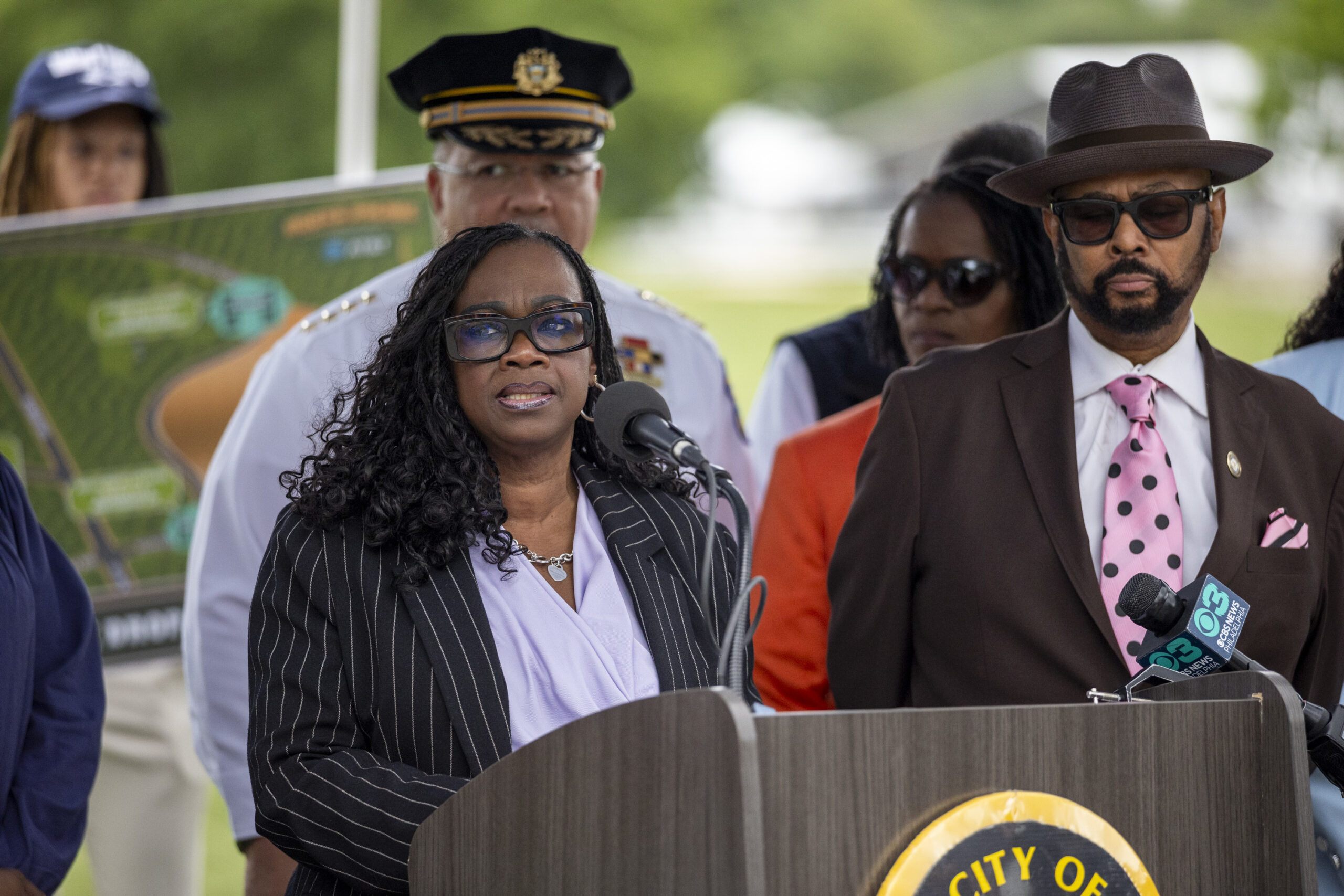
    Chief Deputy Mayor Vanessa Garrett Harley speaks at Belmont Plateau in Philadelphia on May 28.

    Following the interview with Garrett Harley, The Inquirer later obtained the contract, and the mayor’s office on Tuesday did not respond to follow-up questions about the cost of the concert.

    ESM’s original $10 million contract with the city included a breakdown of costs, ranging from $5,000 for “furniture” to nearly $3.4 million for “talent.” It also included $1.2 million for “ESM Productions Fees” and $1 million for “Above the line Producer’s Unit.”

    The contract amendment for $5.5 million, signed June 26, did not include details on costs.

    A spokesperson for ESM declined to comment.

    Founded in 1996 by Scott Mirkin and Jenny Woo, ESM has previously produced numerous high-profile events on the Parkway, including the 2015 papal visit and Jay-Z’s Made in America concert.

    David L. Cohen, a Philly political powerbroker and former U.S. ambassador to Canada, said he has hired ESM to produce events going back to when he was chief of staff for then-Mayor Ed Rendell in the 1990s.

    “They’re incredibly competent; they’re incredibly good; they do an excellent job,” he said. “I really do think they’re the best event producers in Philadelphia.”

    In paperwork submitted to the city, ESM said it “has a long standing relationship” with Cohen and pointed to events he hired the company to produce at the U.S. embassy in Ottawa, Canada, as examples of its past work.

    Cohen, who is close to Parker and is working with the mayor to lure the Democratic National Convention back to Philly, said he had “nothing to do with their hiring.”

    Michael DelBene, president and CEO of Welcome America, said that, despite no longer being the producer for the concert, his organization is still managing more than a dozen Semiquincentennial-related events in partnership with the city. The events kicked off on Juneteenth and will run through the Fourth.

    “The celebrations that happen in the city are the implementation of the mayor’s vision, and if she chooses a team to implement that vision, that’s great, and we all support that person and that team,” DelBene said in an interview. “We’re all going to row in the same direction to make sure the city shines.”

    ‘Any and everybody can participate’

    By the time Parker took office in January 2024, Philadelphia was already behind in planning the celebration for America’s Semiquincentennial.

    Drama and infighting had plagued a series of nonprofit efforts and federal commissions meant to coordinate the festivities. And the COVID-19 pandemic pushed party-planning way down the priority list for the city and for state leaders who could have previously led the charge, former Mayor Jim Kenney and former Gov. Tom Wolf.

    Those delays likely squandered any opportunities for a monumental building project, such as the Please Touch Museum building, which was constructed for the 1876 Centennial Exposition, or the Ben Franklin Bridge, which opened for America’s 150th birthday in 1926. They may have also cost Philly the chance for an appearance by a high-profile dignitary, such as when Queen Elizabeth II visited for the 1976 Bicentennial.

    Mayor Cherelle L. Parker heads to the stage at the Independence Visitor Center Wednesday, Sept. 3, 2025 to announce a new initiative that puts city neighborhoods at the forefront of the city celebrations of America’s 250th birthday in 2026.

    Parker, who campaigned on combating the city’s gun violence crisis and improving basic services, did not at first appear to make the Semiquincentennial a top priority. She dedicated no money to the celebration in her first budget proposal, which was focused on public safety and public cleanliness. And she helped squelch a proposal from former Gov. Ed Rendell to build a monument for the 250th in LOVE Park.

    But the mayor eventually embraced the task in a more public way — following some public prodding from City Councilmember Isaiah Thomas — and the city’s Semiquincentennial celebrations will very much bear her stamp.

    Parker has pledged to spend $120 million this year to mark the occasion, and she has made investing in communities across the city, not just the historic district, a major focus as Philadelphia this summer is also hosting World Cup games and the MLB All-Star Game. Much of that spending will pay for street work and beautification projects in neighborhood commercial corridors, 250th-themed block parties, and extra funding for annual events like the Odunde Festival.

    “We want to make sure that any and everybody can participate in this regardless of your station in life,” Garrett Harley said.

    ‘This is her big concert’

    With the official Independence Day parade — still organized by Welcome America — scheduled for Friday, July 3, there is surprisingly little in the way of official patriotic proceedings taking place on July Fourth itself.

    Parker at 10 a.m. will lead a Philadelphia Freedom Awards ceremony at Independence Mall, honoring seven people, including Cohen and actor and Philadelphia-native Colman Domingo.

    At 5 p.m., the concert will kick off on the Ben Franklin Parkway. Performers include Aguilera, Will Smith, DJ Jazzy Jeff, Jill Scott, The Roots, Meek Mill, and Seal. The city’s official fireworks show will begin at the show’s conclusion, around 11:30 p.m.

    Fans during the Wawa Welcome America July 4th Concert on the Parkway in Philadelphia, Pa. on July 4, 2022.

    Parker has several times compared this year’s show to Live Aid, the 1985 benefit concert staged in Philadelphia and London that featured in its 10-hour stateside lineup Bob Dylan, Mick Jagger, Madonna, Phil Collins, the Beach Boys, the Four Tops, Santana, Run-D.M.C., and many other musical A-listers.

    “If you remember Live Aid and you think about the legacy experience we’re trying to create … that’s what we’re trying to do on July the Fourth,” Parker said in March.

    Garrett Harley on Tuesday conceded the concert lineups may not be exactly comparable, but said the mayor was “really talking more about the scope and the magnitude and just the memories.”

    “But to certain kids it’s gonna be bigger than Live Aid, because Christina Aguilera means to them what Stevie Wonder and some of the folks who ran Live Aid meant to others,” Garrett Harley said.

    Garrett Harley disputed the notion that renaming the concert “One Philly: A Unity Concert for America” meant that it now bears Parker’s branding.

    “I don’t know how a ‘Unity Concert for America’ is Parker’s branding because the whole point of this is about unity,” Garrett Harley said. “The branding is really about reminding people that we need to unify, we need to be one America, despite everything that may be going on in the country right now.”

    The mayor frequently concludes speeches by asking crowds to raise their index fingers and say in unison, “One Philly: A United City.” She has also had the slogan printed on city trash trucks and cans, along with her name.

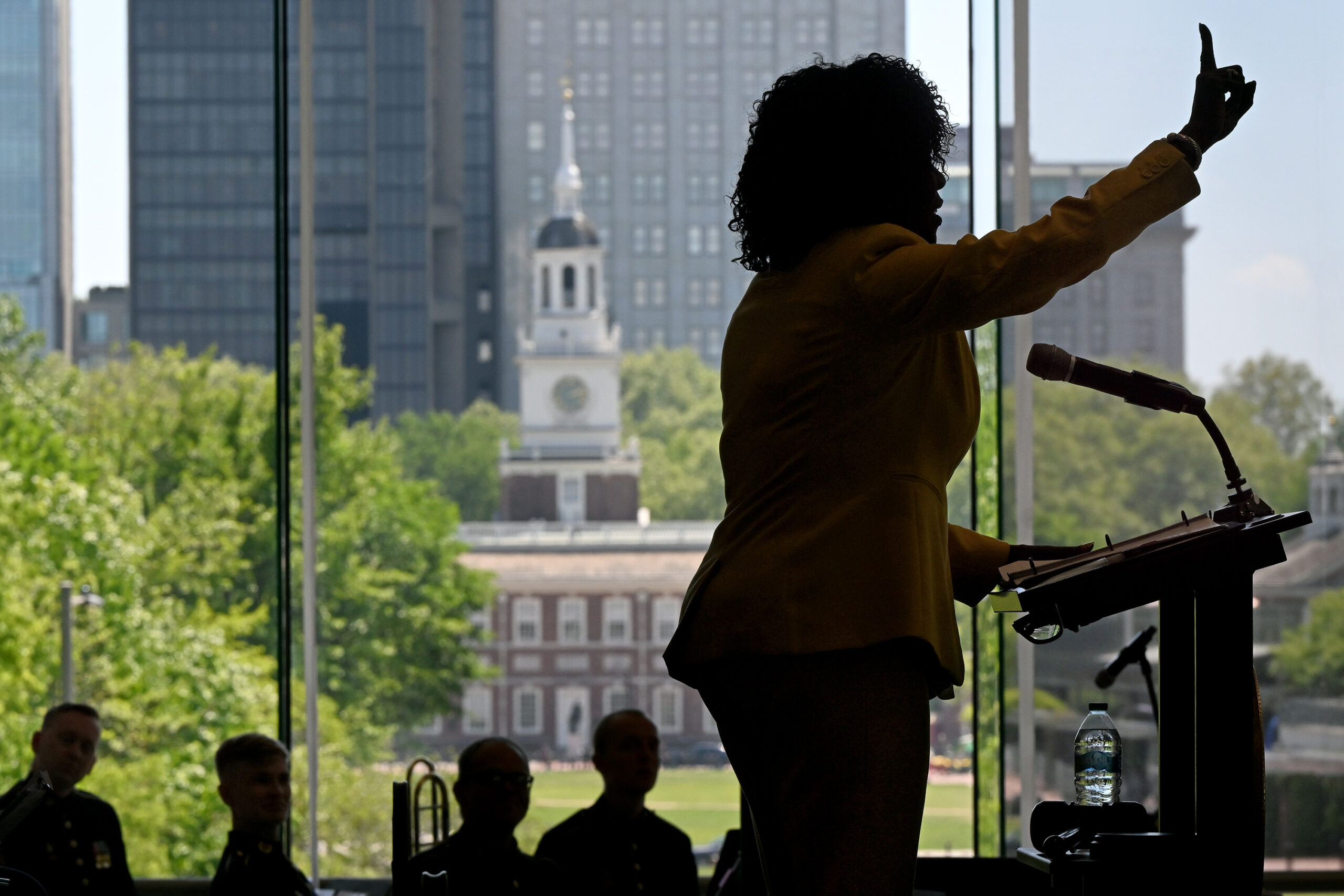
    Mayor Cherelle L. Parker raises a finger with her call-and-response “One Philly, A United City” mantra ending her speech during a ceremonial meeting of the Pennsylvania Senate at the National Constitution Center across the mall from Independence Hall on May 5.

    “Even if it is Parker’s branding, if that’s how people see it, what would Wawa Welcome America be if not branding?” Garrett Harley added.

    (Wawa, a longtime corporate sponsor for the city’s July Fourth festivities, pays Welcome America to include its branding in the event, defraying costs for taxpayers.)

    Branding or not, Parker’s vision guided the planning for the concert, Garrett Harley said.

    “At the end of the day, this is [Philadelphia’s] 100th mayor,” Garrett Harley said of Parker. “This was her biggest concert, and probably will be the biggest that she will ever do. She’s the first female mayor. She’s the first African American female mayor. This is her big concert.”

  • The city’s revamped July 4 concert is impeding on World Cup fans’ Rocky time

    The city’s revamped July 4 concert is impeding on World Cup fans’ Rocky time

    As soon as international soccer fans arrived in Philadelphia for the World Cup, they continued a time-honored tradition of gathering en masse at the foot of the Philadelphia Museum of Art steps, thrusting their fists to the sky as Sly Stallone did 50 years ago, and rallying for their team to victory.

    From the thousands of Ecuadorian fans draping soccer jerseys on the Rocky statue, inadvertently cursing the Ecuador national team before it lost to Ivory Coast, to Brazilian fans staging security guards to deter fans from doing the same, and Iraqi fans waving their flags at the top of the steps — Rocky and its picturesque views of the Benjamin Franklin Parkway have been a staple of Philly’s World Cup.

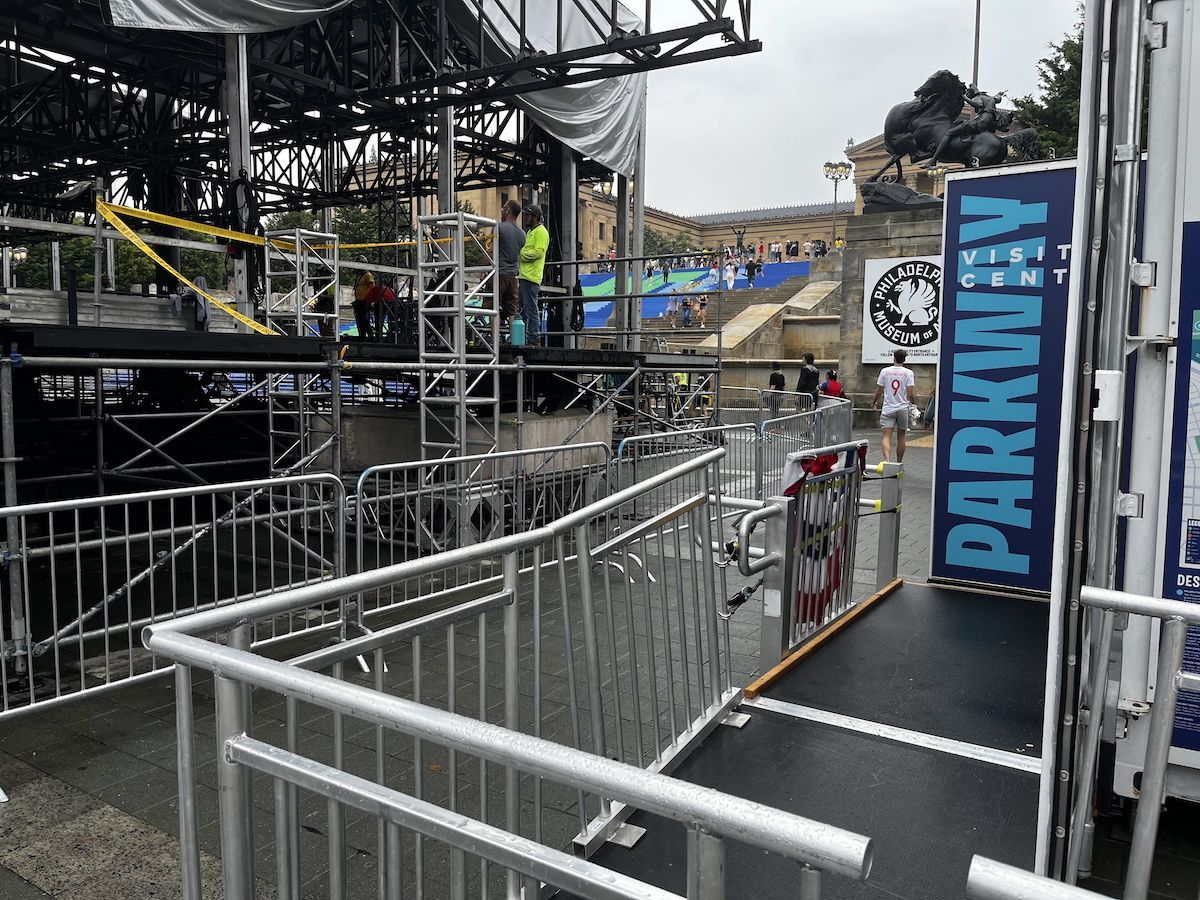
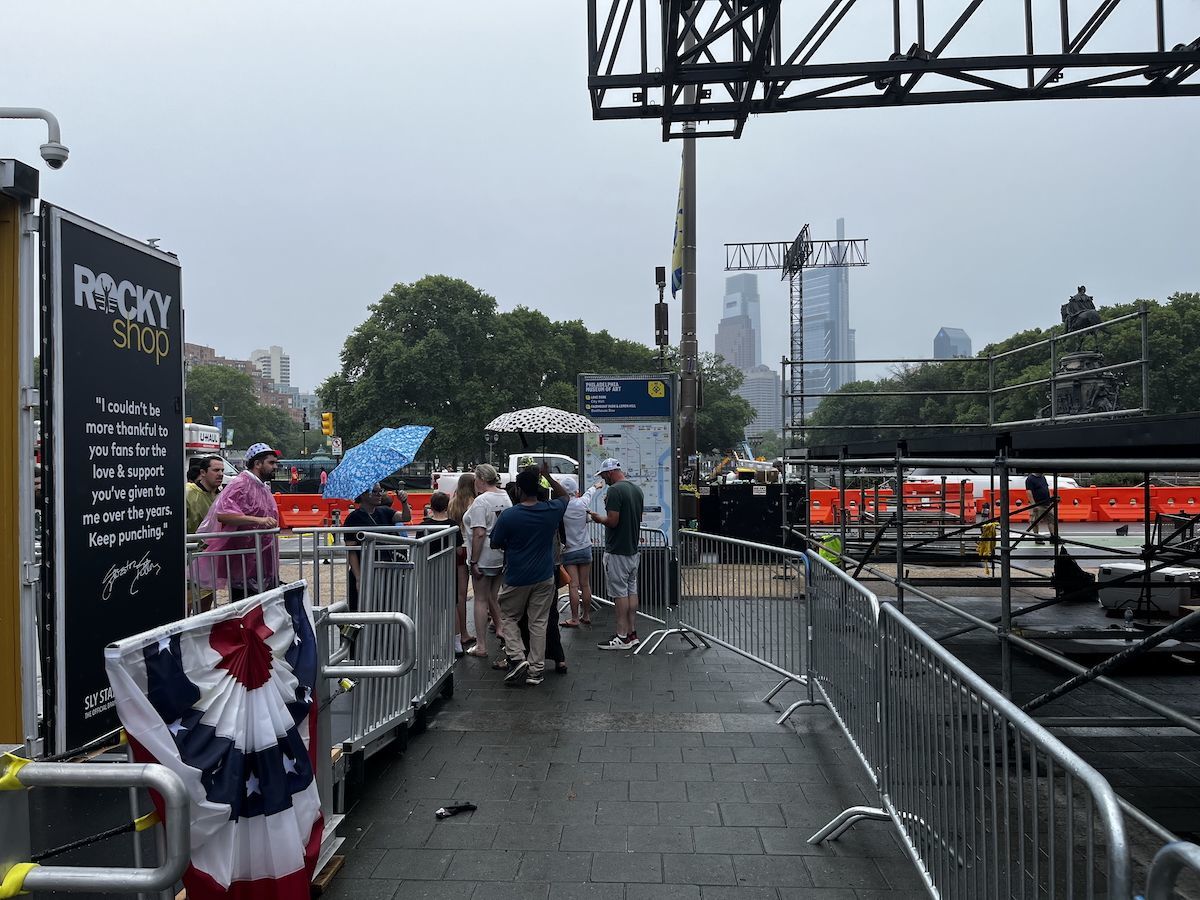
    Temporary fenced walkways were erected for tourists to access the Philadelphia Museum of Art steps and Rocky Statue while the One City: Unity Concert for America stage is under construction on Saturday, June 27, 2026. Some World Cup fans and tourists have remarked on its inconvenience, but are enjoying the Parkway anyway.

    However, last week, a stage spanning the width of the steps was erected in front of the Rocky statue, leaving two narrow walkways to access the iconic landmark. Metal fencing ushers tourists through a walkway behind the under-construction stage, which will soon host the One Philly: Unity Concert for America on July 4 — the city’s revamped Fourth of July concert, which had been known as the Wawa Welcome America July 4th Concert for more than a decade.

    “Because of the magnitude of this year’s event, organizers needed to properly position the stage back to where they’ve done large scale events before at the Art Museum,” a spokesperson for the Mayor’s Office of Communications said about the placement of the stage.

    Additionally, a spokesperson for the Office of Special Events said Croatia was the only fan meetup that was asked to relocate so far, as it planned to transport a 300-foot Croatia flag through the area which would prove difficult in the narrow walkways.

    For most, this is a minor inconvenience. For Croatian fans, it forced them to relocate their pre-game rally and march.

    “People did want to start the parade at the Rocky steps, and some people were upset by it,” said Croatia supporters organizer, Daniel Pedisich. “But, some of our fans went to Rocky on their own, and in some ways, maybe we avoided that Rocky curse?”

    Croatia fans cheer outside of Con Murphy’s Irish pub located along the Benjamin Franklin Parkway in Philadelphia, Pa on Friday, June 26, 2026. Because construction took place by the Rocky Steps that day, Croatia fans relocated and gathered along the Parkway, where the Irish pub became the center point for the fan rally. Croatia defeated Ghana 2-1 on Saturday at the Lincoln Financial Field in Philadelphia, allowing both teams to advance to the knockout stage.

    Before the Croatian fan delegation would go on to cheer the checkered-clad team to a win against Ghana on Saturday, Pedisich said the city encouraged them to relocate their parade elsewhere along the Pakway. They settled for Con Murph’s Irish Pub on 17th Street.

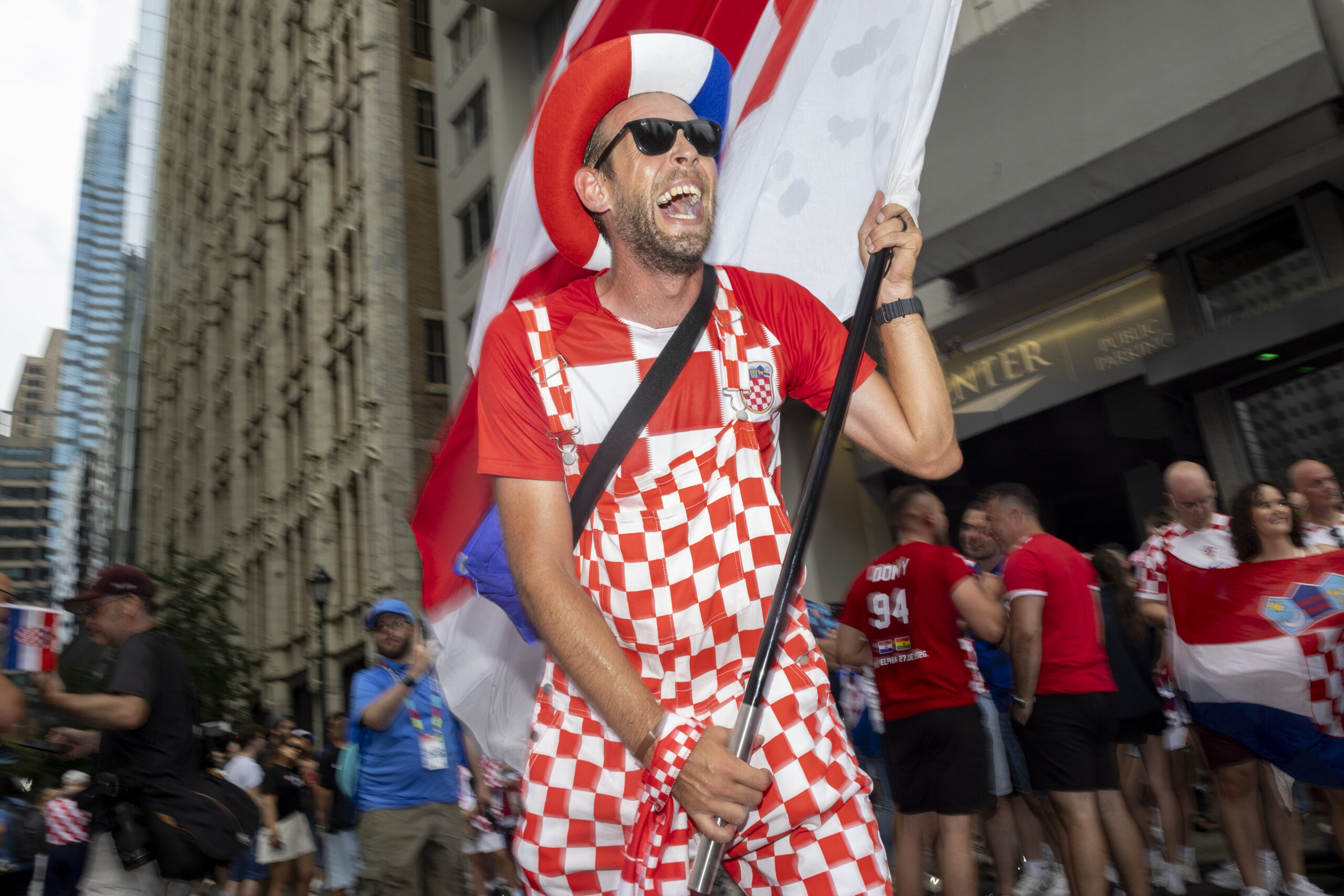
    Before the fan parade Friday, Bosko Katic, known to friends as “Coach Bosko,” was sporting red and white checkered overalls and a Croatia-themed cowboy hat as he waited for the fan parade to start at the new location. Croatians know how to bring joy to everyone they meet, Katic said, so while the delegation didn’t begin their march with Rocky, they still found ways to make memories — including crashing a wedding photoshoot at City Hall.

    Bosko Katic cheers while waving the Croatia national flag outside of Con Murphy’s Irish pub located along the Benjamin Franklin Parkway in Philadelphia, Pa on Friday, June 26, 2026.

    “We couldn’t gather at Rocky because there is something happening there, so we changed the parade route,” Katic said. “But it does not matter anyway — we always bring party, happiness, and love to everybody who is around us.”

    Later that weekend, as tourists made their way to the Art Museum steps, squeezing by each other in the walkways, El Salvadorian World Cup fan Stephanie Rodriguez took photos of the steps while standing behind the stage. While Rodriguez admits she’s never seen a Rocky film, the site is “one of those things in pop culture that’s so iconic that you have to see it — like you can’t go to Philly and not see the Rocky steps,” she said.

    Tourists shuffle by each other in the temporary fenced walkways erected for near the Philadelphia Museum of Art steps and Rocky Statue while the One City: Unity Concert for America stage is under construction on Saturday, June 27, 2026.

    While the large stage perplexed her, she said she was able to eke out some great photos with Rocky, as the statue itself was accessible and not blocked from view.

    “I mean it was surprising because I wasn’t expecting to see such a big stage in front of the Rocky Steps, but I think the photos are coming out great,” Rodriguez said.

    The concert will turn the Parkway into a festival on July 4 from 3 p.m. until midnight, when a fireworks finale caps the night. Some of Philadelphia’s most prized musical acts will headline, from The Roots and Jill Scott to Will Smith and DJ Jazzy Jeff, plus Meek Mill, Beanie Siegel, and Freeway are scheduled to perform starting at 5 p.m.

  • Chips, a Christmas tree, and the Liberty Bell: Here’s what’s inside Pennsylvania’s new showcase at the Great American State Fair

    Chips, a Christmas tree, and the Liberty Bell: Here’s what’s inside Pennsylvania’s new showcase at the Great American State Fair

    WASHINGTON — A replica Liberty Bell, a Knoebels amusement park bench, hundreds of bags of potato chips, and dozens of sweating tourists packed into Pennsylvania’s location at President Donald Trump’s Great American State Fair on Tuesday — a stark turnaround from when the signature 250th anniversary event opened in Washington last week without a Keystone State presence.

    Pennsylvania was one of the few Democratic-led states that — describing the two-week fair as too partisan — had either decided not to participate or failed to find another host to showcase local history and memorabilia.

    The interest, Gov. Josh Shapiro said at the time, was just not there.

    But after a weekend-long sprint initiated by U.S. Sens. Dave McCormick (R., Pa.) and John Fetterman (D., Pa.) to dredge up that interest, Pennsylvania’s pavilion opened Tuesday with nearly every inch of the space filled.

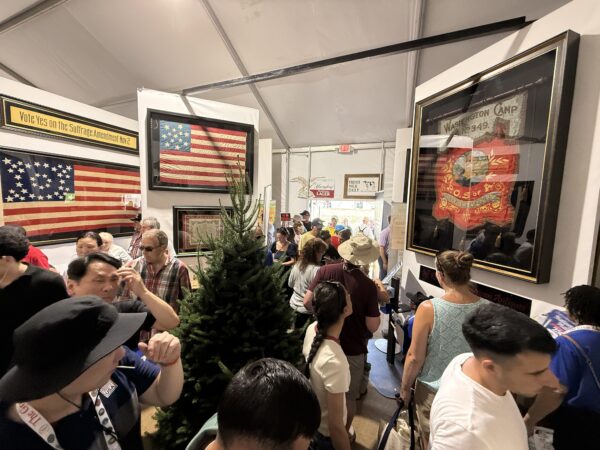
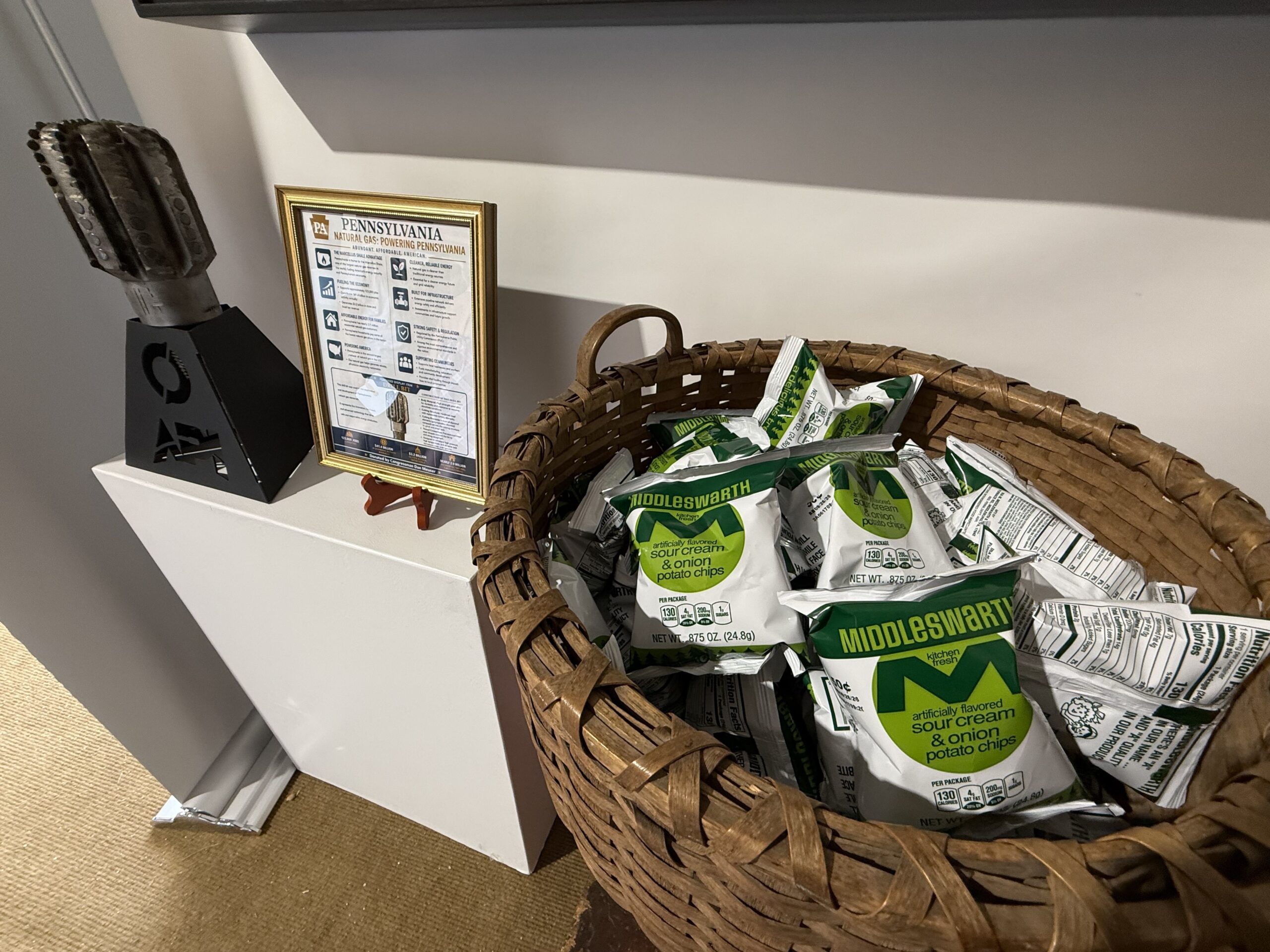
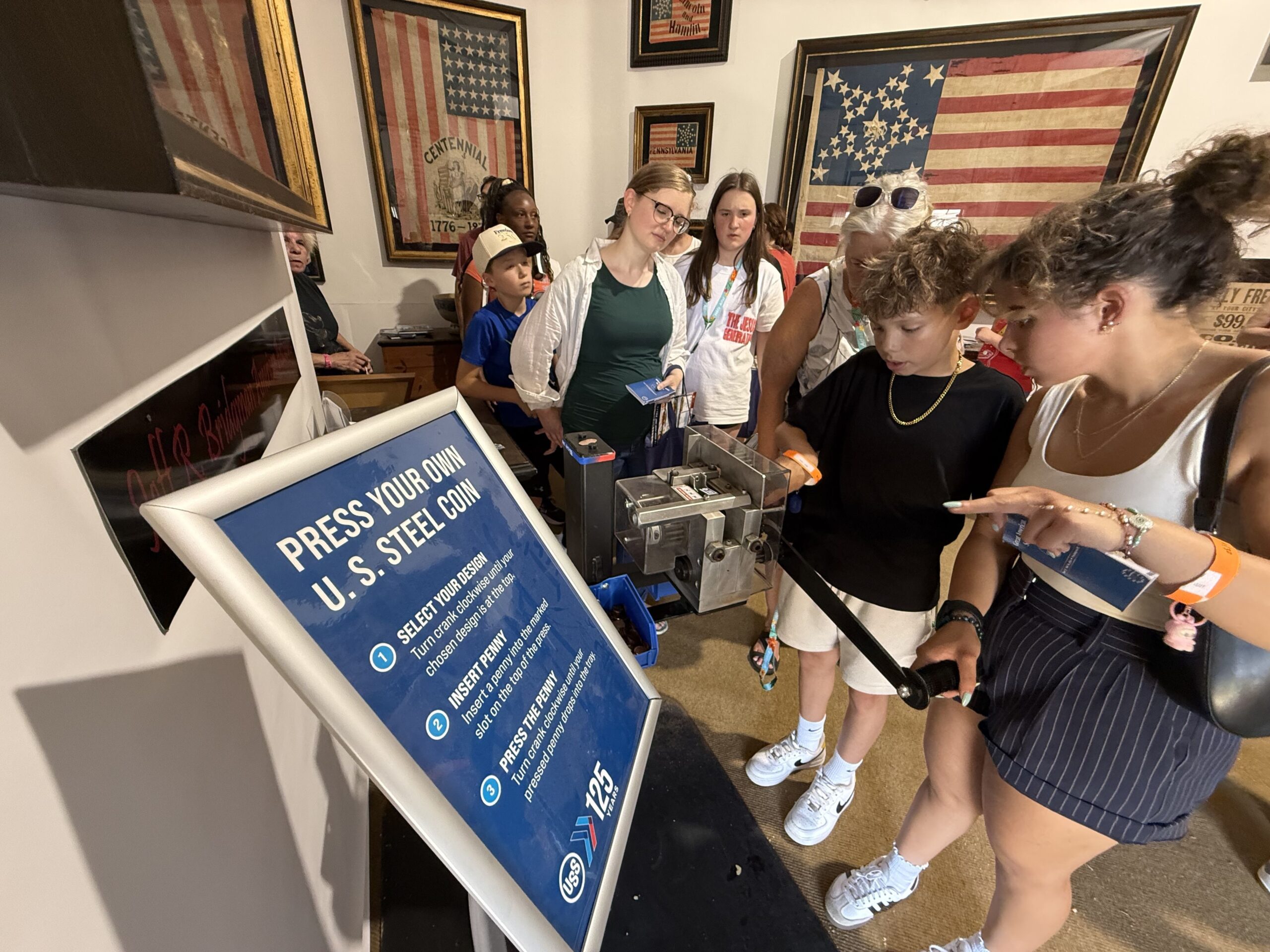
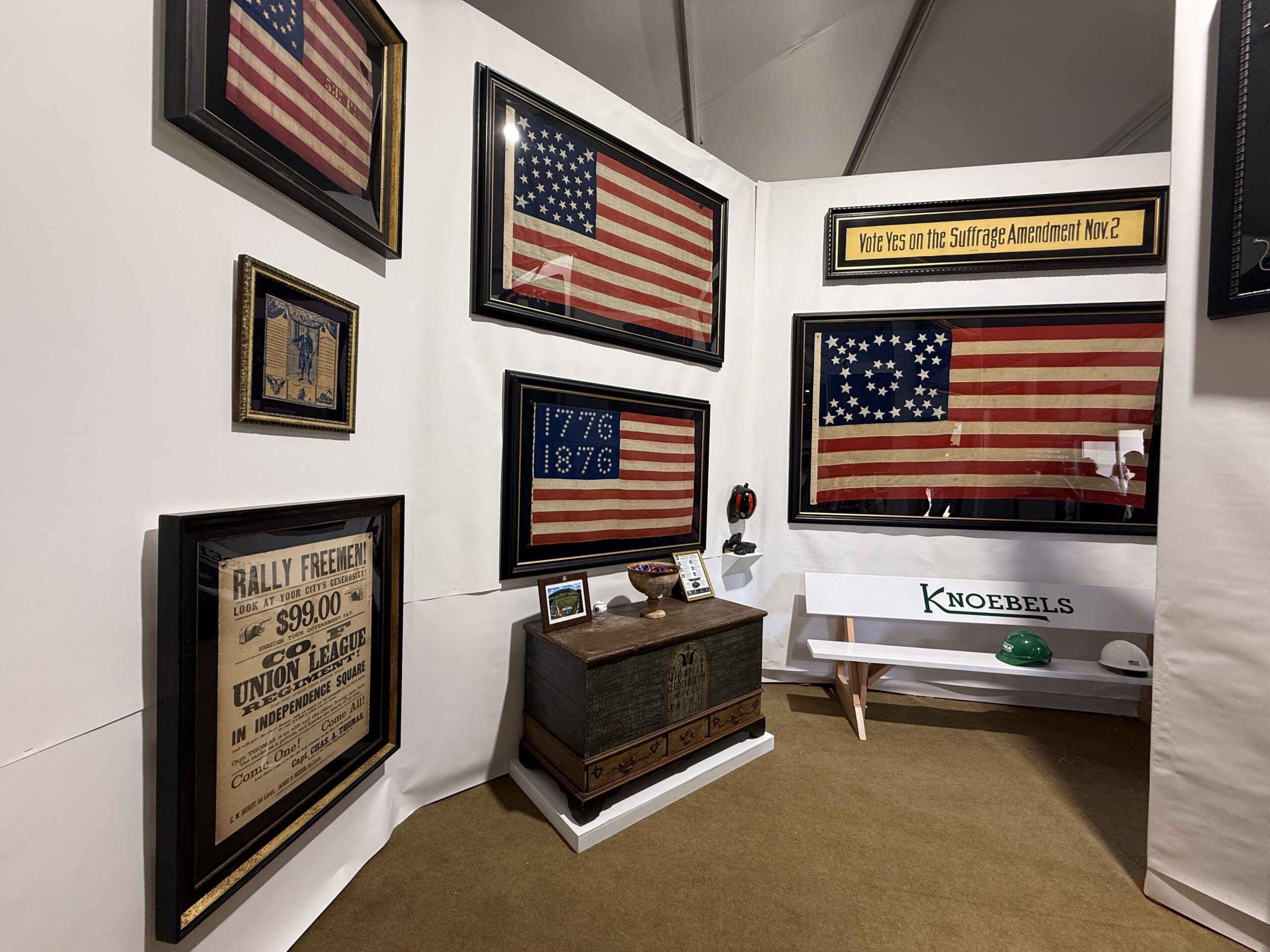
    The walls were covered by antique flags and signs lent by York County’s Jeff R. Bridgman Antiques. Children stood in line for a U.S. Steel penny-press machine, grabbed bags of Middleswarth chips made in Snyder County, and Crayola crayons from Easton. (Additional chip donations from Utz and Martin’s will be arriving soon.)

    Tourists collected pamphlets about Gettysburg and the Pennsylvania Farm Bureau. They took pictures of anthracite coal and a drill bit used for fracking, both of which were on loan from U.S. Rep. Dan Meuser (R., Luzerne).

    Pennsylvania’s pavilion showcases a natural gas drill bit and Middleswarth chips at the Great American State Fair on June 30, 2026, in Washington, D.C.

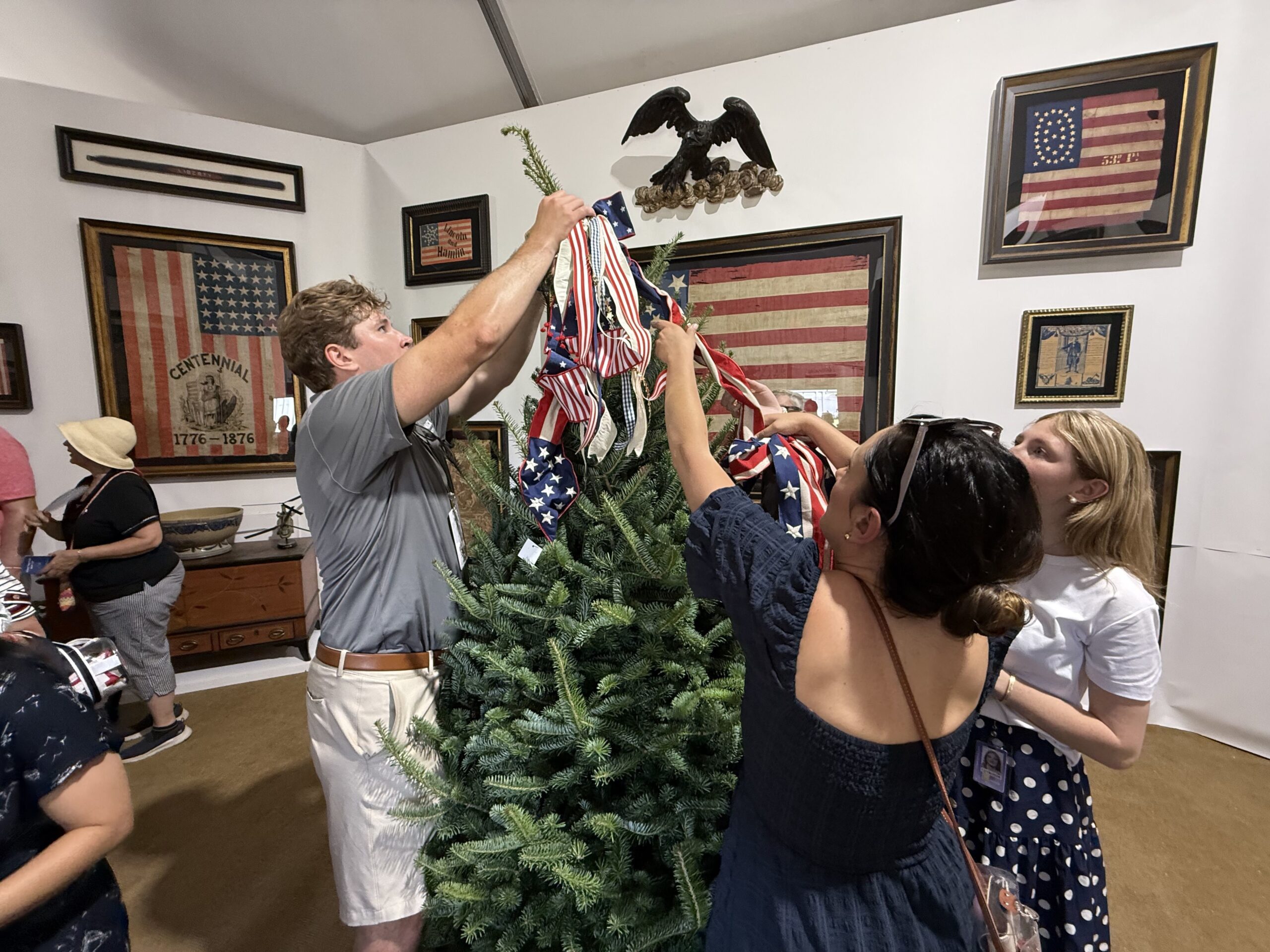
    “I always look for an opportunity to highlight our industry,” Beth Ann Bossio, a Christmas tree farmer from Fayette County, said after driving three and a half hours to drop off a tree to display in the center of the space.

    Pennsylvania is one of the largest producers of Christmas trees, and Bossio said it was important to her that both the state and its farmers were represented at the fair.

    Beth Ann Bossio (front center), a Christmas tree farmer from Fayette County, helps staff from U.S. Sen. Dave McCormick’s office set up a tree she brought for Pennsylvania’s pavilion at the Great American State Fair on June 30, 2026, in Washington, D.C.

    “That was my vision to come here, to make sure that Pa. is being reflected of what we are, and what we represent,” she said before tying an American flag-themed bow on the tree. “Farmers are very proud of that. We’re patriotic. We take pride in our land and how we steward it.”

    The packed room on the National Mall came together in a rush in recent days, after Shapiro joined Democratic governors from other states in declining to use state resources to create and staff a pavilion, which his office said would have run a tab of “hundreds of thousands of taxpayer dollars.”

    He also said his administration’s search for another Pennsylvania host came up short. No companies or other kinds of groups were interested, he said, even as businesses and local governments stepped up to fill the spaces in other states.

    While Shapiro last week blamed the lack of interest on the president’s polarizing impact on the 250th celebrations, he said in an interview Tuesday with The Inquirer that it “was never a political exercise. This was an exercise in practicality.”

    Shapiro said Pennsylvania’s pavilion would have cost the state $700,000, all of which was money he saw better spent on the major events happening in Pennsylvania this year, including the NFL Draft, PGA Championship, MLB All-Star Game, the ongoing World Cup games, and a number of events across the state for the nation’s 250th birthday.

    “My focus is on spending the taxpayer dollars here,” he said.

    His administration spent two or three weeks reaching out to businesses and to the Pennsylvania Chamber asking them if they wanted to participate. None of them did, Shapiro said.

    “They obviously had a change of heart at the last minute. That’s fine,” Shapiro said about the revived Pennsylvania pavilion.

    Organizing the booth in Shapiro’s place were the state’s two senators, a bipartisan duo who have often worked together.

    McCormick and Fetterman withheld any direct criticisms of Shapiro while talking about their effort, though Fetterman has clashed with the governor in the past and has also repeatedly broken Democratic ranks to support Republican-led efforts.

    McCormick said he understood Shapiro’s desire not to spend taxpayer money, but when he found out there would be nothing to represent the state that is “the center of America’s history,” he sprang into action.

    The freshman Republican said he and Fetterman spoke Saturday morning and quickly made calls to the Pennsylvania Chamber of Business and Industry, the Pennsylvania Farm Bureau, and individual businesses to donate time and resources.

    “It’s just inconceivable that we wouldn’t have a booth that would represent all that Pennsylvania had to offer,” said McCormick, whose staff greeted guests at the pavilion all day Tuesday.

    Fetterman, who has said Pennsylvania’s role as a purple state means he should consistently work across the aisle, said he was proud to work with McCormick on the effort.

    “America’s turning 250 years old,” Fetterman said alongside McCormick during an appearance in Philadelphia on Monday. “Can’t we all just celebrate that and not just find new ways to fight about the politics and the dynamic right now?”

    McCormick’s office listed 23 companies or groups that signed up to help, though only a few corporate sponsors were front and center in the space.

    Two large signs showcase the Marcellus Shale Coalition, a natural gas advocacy group that has a significant lobbying presence in Harrisburg. And U.S. Steel, the Pittsburgh-based company that benefited from a Trump-approved takeover by a Japanese-owned company last year, offered the penny press and colorful wristbands reading “forging the future.” Hats and signage commemorating Yuengling and Mack Trucks were lent from the Pennsylvania Manufacturers’ Association.

    Tourists use a U.S. Steel penny-press machine on display at Pennsylvania’s pavilion at the Great American State Fair on June 30, 2026, in Washington, D.C.
    Pennsylvania’s pavilion showcases state history and memorabilia at the Great American State Fair on June 30, 2026, in Washington, D.C.

    Some organizations have acknowledged earlier conversations with Shapiro’s office to participate that didn’t go anywhere.

    A report from The New Republic that Pennsylvania would not be participating in the affair “caught us off guard because that was not our experience at all, nor was it what we had communicated to the [the governor’s] office,” said Jon Anzur, the senior vice president of public affairs for the Pennsylvania Chamber of Business and Industry. “It’s unfortunate that it occurred that way.”

    He said the governor’s office approached the chamber less than two weeks out from the start of the fair to help get companies involved.

    “It just seems odd that we were approached at the eleventh hour and now it sounds like the governor’s office is trying to point fingers when there was ample time to get ducks in a row,” he said.

    The Hershey Co. is among the Pennsylvania-based companies that declined to participate.

    “We were asked by Gov. Shapiro’s office in mid June and then again over the weekend by Sen. McCormick’s office,” said Todd Scott, a spokesperson for the chocolate business.

    Both were told that the size of the ask and the limited amount of time to make it happen was not possible.

    “We were asked so late in the game that logistically we couldn’t make that happen. We just cannot provide on a moment’s notice that amount of product that they would have been asking for,” he said.

    But the summer weather was also a factor.

    “There’s no refrigeration on the mall, and with extreme heat, chocolate doesn’t do well in 100-degree temperatures,” he said. “We always want to make sure that people have the best experience with our products that they can.”

    But another candy company, Asher’s Chocolate Co. in Souderton, decided to join.

    “Asher’s was asked to participate by the Chamber of Commerce [Monday] and agreed to donate prepackaged bite-size pieces of fudge, which were on hand,” said David Neff, who represents Asher’s. “Asher’s is deeply committed to America and celebrating America’s 250.”

    Bob Asher, a longtime influential GOP leader in Southeastern Pennsylvania from Montgomery County, was previously involved with the company but he has no remaining financial interests, Neff said. Asher donated thousands of dollars to Treasurer Stacy Garrity, Shapiro’s Republican opponent for governor, and is her honorary campaign chair.

    Other Philadelphia-area companies are also financially supporting Trump’s effort.

    SAP, the German business-software giant whose U.S. headquarters and 2,000 staff are in Newtown Square, Delaware County, donated $5.6 million to Trump’s Freedom 250 initiative.

    “SAP is committed to the communities where our customers, employees, and partners live and work. SAP’s support of America’s 250th anniversary celebrations reflects our long‑standing commitment to supporting innovation, economic strength, and workforce development,“ SAP spokesperson Bridget Carroll said in a statement.

    SAP software is used by the U.S. military and its NATO allies to track troop deployments, military supply chains, and equipment maintenance.

    The military aircraft producer Lockheed Martin, which has engineering centers in King of Prussia and in Moorestown, N.J., is the top donor to Trump’s initiative, giving nearly $20 million.

    This story has been updated to clarify Bob Asher’s role in Asher’s Chocolate Co.

    Staff writer Joseph N. DiStefano contributed to this article.

    This story was updated to clarify that Bob Asher is no longer involved in Asher’s Chocolate Co.

  • House GOP defections block move to attach Trump-backed elections measure to defense bill

    House GOP defections block move to attach Trump-backed elections measure to defense bill

    The latest attempt by House Speaker Mike Johnson (R., La.) to fulfill President Donald Trump’s demand to advance an elections overhaul bill failed Tuesday and delayed consideration of an annual defense policy bill.

    Due to GOP defections, a procedural vote failed 224-198 on the House floor. The vote would have merged the Save America Act and the National Defense Authorization Act upon passage of the latter and sent both bills together to Senate.

    Thirteen Republicans joined with Democrats to defeat a measure that would set rules for debate. GOP hard-liners, led by Rep. Anna Paulina Luna (Fla.), rebelled against the tactic, arguing it would make it too easy for the Senate to remove provisions of the Save America Act. Senate leaders have said repeatedly that they lack the votes to pass the Save America Act as a stand-alone measure.

    House Majority Leader Steve Scalise (R., La.) voted “no” on the rule Tuesday alongside the 13 GOP lawmakers, a move that preserves a chance for the House to reconsider the vote later.

    Johnson said Republicans will spend the next day and a half working on getting everyone in the party to a yes.

    He said the Republicans who voted against the rule are making “irrational decisions.”

    “It makes no sense to punish the House and stop the great progress of the House because of what Senate Democrats are doing or not doing,” he told reporters. “We’ve got to move forward.”

    When asked if Trump should talk to the House GOP holdouts, Johnson said he believes the president is “going to be very frustrated” with them.

    House Republicans have scrambled to find a way to get another vote on the Save America Act that would impose new voting restrictions, including a requirement to provide documented proof of citizenship and a photo ID at the time of voting, as Trump has demanded.

    After Tuesday’s failed vote, Luna said she will vote for the rule if House leaders let her add an amendment to the NDAA that would call for voter ID plus proof of citizenship to be placed into the text of the NDAA — two crucial portions of the Save Act.

    Another option House Republicans are considering would use a fast-track process to bypass the filibuster and pass Trump’s sought-after voting restrictions.

    Johnson said Monday that Republicans are moving forward with a plan to establish a grant program that would incentivize states to adopt stricter election rules outlined in the Save America Act.

    The move would use the reconciliation process, designed to overcome the filibuster, because it can be passed with a simple majority in both chambers, bypassing Democrats.

    “If you put it into a grant program or something similar, then it does make it part of reconciling the budget,” Johnson told reporters Monday, after meeting with Trump at the White House. “It does ultimately work that way.”

    “The only way to get that to the president’s desk, we’ve been shown many times, is to put it on reconciliation,” Johnson said.

    However it’s not clear whether Trump would be on board with voting restrictions administered through a grant program. And many Senate Republicans have expressed doubt about passing more legislation through the fast-track process this year.

    On Tuesday, Scalise said Trump is “really excited” about House Republicans’ plans to put components of the Save America Act into a reconciliation bill, but Scalise did not indicate whether the president supports the idea of getting the act done through a grants program.

    “He wants to get Save America signed into law, so do I. So you’ve seen us pass it multiple times in different ways, and we’re going to keep trying,” Scalise said. “The Senate is going to have to figure out a way to get it to the president’s desk.”

    Trump has been trying to pressure Republicans to pass the act, including refusing to sign a bipartisan bill aimed at helping Americans with housing, which was sent to his desk Monday.

    Speaking at the White House on Monday, Trump said it is “even more important” that Congress passes the Save America Act.

    Senate Republican leaders have repeatedly told Trump that the votes are not there to pass his election bill, which would require proof of citizenship to vote in federal elections and restrict mail-in voting, among other provisions. The House passed a version of the bill earlier this year that did not include all the provisions Trump has demanded.

    Johnson said he believes that establishing a grant program that incentivizes states to implement the new election restrictions — rather than establishing them outright — should comply with Senate rules and allow them to pass the legislation with Republican votes only.

    However, Senate rules would likely prevent much of the Save America Act as written from being included as provisions passed through the process must be budgetary.

    At least four Republicans in the Senate have expressed opposition to the Save America Act and previously voted against adding the language to another must-pass measure. It is unclear whether these senators would support the new grant provision.

  • New Jersey’s Tom Kean ends his months-long absence from Congress, saying he was being treated for depression

    New Jersey’s Tom Kean ends his months-long absence from Congress, saying he was being treated for depression

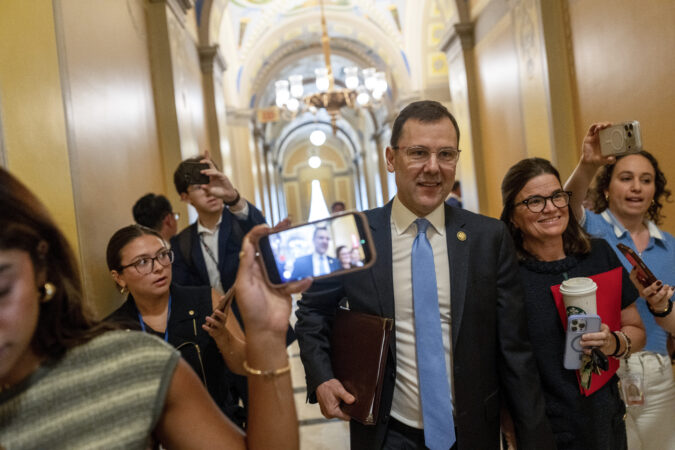
    U.S. Rep. Tom Kean Jr., who had not been seen since March in Congress or in his competitive New Jersey district, said Tuesday that he had been hospitalized to treat depression.

    “I believe I owe an explanation to the people of New Jersey’s 7th District,” Kean, a Union County Republican, said in a five-minute speech in the House chamber on his first appearance on Capitol Hill in more than 100 days.

    “I was given the diagnosis of depression. … It is physical, it is emotional, and until you experience it yourself, it’s difficult to fully understand how powerful this illness can be.”

    Kean’s district could determine control of the U.S. House next year. The two-term Republican and son of a former governor is widely seen as New Jersey’s most vulnerable incumbent as he faces Democratic nominee Rebecca Bennett.

    Addressing his nearly four-month absence from public life, Kean said he hadn’t believed treatment would result in a long-term hospital stay. But, he added, “there is no timeline for recovery, only the work of getting better one day at a time.”

    He said that during his treatment, he began to understand how long “depression had been affecting my life.” Kean added that when he initially told people, he had hoped to return in a matter of weeks, “I believed it.”

    Kean, 57, has not voted on a bill since March 5. Throughout that time, his office cited vague health issues without any specificity, even though Kean was facing a tough election in a swing district that includes parts of North and Central Jersey.

    Kean flipped his district in 2022, ousting then-Democratic Rep. Tom Malinowski by roughly 3 points after redistricting pushed the seat toward the GOP. Kean won reelection by roughly 5 points in 2024 in a strong year for Republicans.

    But now, with President Donald Trump polling poorly in the wake of high gas prices and an unpopular war, Republicans realize that keeping their majority in the midterm elections will be a challenging fight and that Kean’s absence had become a campaign trail issue.

    In attacks during Kean’s long absence, his Democratic challenger, Bennett, called him a “coward” for missing votes while accepting his House salary. “You are failing us, and you do not deserve to represent us in Washington,” she said.

    Bennett said in a statement she was “relieved” that Kean is well and wished him good health. But, she added, Kean was “failing our community long before this absence,” citing his support for Trump’s One Big Beautiful Bill Act, which made cuts to Medicaid.

    In a statement congratulating Kean for his “courage” while excoriating Bennett for her “reprehensible” remarks during Kean’s absence, New Jersey GOP state committee chair Christine Giordano Hanlon said Tuesday that Kean’s “strength is measured by the willingness to face adversity.”

    Kean, who previously served 19 years in the state Senate, including 14 as the Republican Party’s leader, returned home last week.

    Kean is not the first lawmaker to seek treatment for depression. In a very similar personal battle, Sen. John Fetterman (D., Pa.) was absent from the Capitol after a six-week hospitalization for clinical depression in 2023 — though unlike Kean, Fetterman’s office at the time disclosed the reason for his hospitalization.

    Fetterman, whose treatment for depression followed a 2022 stroke, details the experience in his memoir, Unfettered, which was released last year. In the book, Fetterman says he should have quit the Senate race he won that year.

    “Because of the way the brain works in depression — you are always searching for a way to hate yourself — I began to wonder if some of my opponents’ insults were true,” Fetterman wrote in the memoir.

    Staff writer Aliya Schneider contributed to this article

  • Supreme Court lifts spending limits on political parties and candidates

    Supreme Court lifts spending limits on political parties and candidates

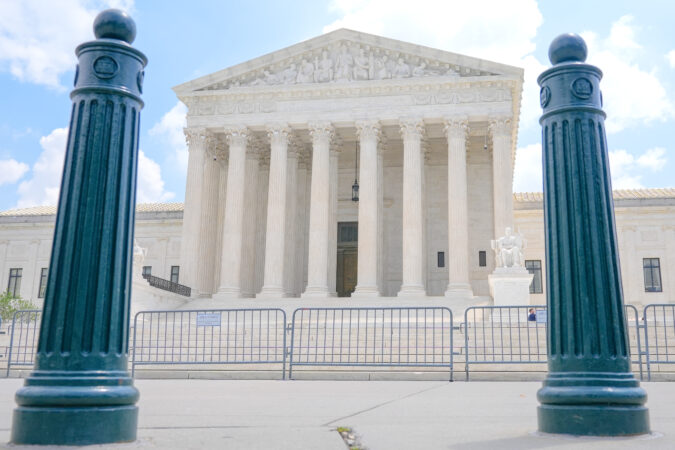
    WASHINGTON — The Supreme Court lifted limits Tuesday on how much political parties can spend on advertising and other expenses in coordination with candidates.

    The 6-3 decision, divided along ideological lines, is a major victory for Republicans and could undercut one of the Democrats’ financial advantages going into the midterms.

    The question before the justices was whether current federal limits on such spending — called coordinated party expenditures — violate the First Amendment. During oral arguments, Noel J. Francisco, a lawyer for the National Republican Senatorial Committee, which brought the legal challenge, told the justices that such limits were “at war” with previous decisions by the court that have found that restricting how money can be spent in politics amounts to limiting speech.

    The Republican groups had argued that such spending is necessary to allow political parties to spread their message.

    The Trump administration had supported the Republican groups, asserting in court filings that the federal law “abridges the freedom of speech” under the court’s “recent First Amendment and campaign finance precedents.”

    The coordinated spending case is the latest in a series of efforts to chip away at campaign finance regulations that were enacted after Watergate to lessen the influence of money in elections. In 2010, the Supreme Court struck down limits on independent spending by corporations and unions in Citizens United v. Federal Election Commission. That decision cleared the way for a flood of new money to enter politics and set the stage for further challenges to spending limits.

    The coordinated spending case had been closely watched as the midterm elections approached.

    Experts said the decision would immediately cut into one of the Democratic Party’s critical financial advantages in television advertising. That’s because federal law requires that television broadcasters give political candidates low advertising rates, but extends no such requirement to super political action committees, which are often charged double, triple, and even four times as much for the same television time.

    Republicans in recent election cycles have been more reliant on super PACs and national party committees than Democrats, whose candidates have tended to outraise Republicans and who therefore often have been able to take advantage of the lower television ad rates.

    Allowing unlimited coordinated spending between candidates and parties would essentially permit both to take advantage of the lower rates.

    The case began in 2022, when JD Vance, then a candidate for the Senate in Ohio, sued to challenge the campaign coordination limits. He was joined by several Republican groups. The Biden administration defended the limits, and a panel of federal judges agreed they were legal.

    After President Donald Trump returned to office, the federal government flipped sides in the case and backed the Republicans challenging the spending caps.

    With the government no longer defending the spending limits, the justices appointed veteran Supreme Court litigator Roman Martinez to argue on their behalf. He argued the justices should dismiss the case as moot because Vance is no longer running for office.

    Democratic groups intervened in the case, urging the court to uphold the spending limits. They warned that overturning the law would create a system in which political parties would pay candidates’ expenses for everything from flower arrangements to electric bills.

    This article originally appeared in the New York Times.

  • ‘You just feel proud’: Ecuadorians in Philadelphia find respite during World Cup celebrations

    ‘You just feel proud’: Ecuadorians in Philadelphia find respite during World Cup celebrations

    For Ecuadorians in Philadelphia, seeing their country in the World Cup is not just a chance to watch good soccer but also a way to embrace their culture and community in the face of heightened scrutiny under the Trump administration.

    As Ecuador went head-to-head with Germany last week, some Ecuadorian Philadelphians gathered in bars across the city, donning yellow and cheering on their team.

    “It’s been nice to be able to see how all the community has come together,” Yvonne Cedeno said at a watch party at Tradesman’s in Center City. “Whether you’re Mexican, Colombian, Ecuadorian, just seeing people in our community getting together, especially within this political environment, is just so great. It makes me happy to be Ecuadorian.”

    Though Philadelphia is a sanctuary city with some of the nation’s toughest restrictions on ICE, immigration arrests have still surged in the city and state. In January 2026 alone 802 arrests were made in Pennsylvania, more than tripling the amount just a year prior. Raids have often targeted predominantly Latino communities in both the city and suburbs.

    Cathryn Miller-Wilson, executive Director of HIAS Pennsylvania, said these raids have created intense anxiety in the community, with some clients telling staff they have opted to stay home during World Cup celebrations, fearing running into ICE agents at games or events.

    “They’re absolutely only watching from home because it’s too scary otherwise,” Miller-Wilson said. “It’s definitely a problem, really since 2025, but especially now, where there’s this confluence of joyful celebration, but also of the threat of increased ICE presence.”

    Still, many Latinos, who make up 16% of the city’s residents, have embraced the chance to celebrate their community during the World Cup, which has featured nine Latin American countries. Tuesday evening, Ecuador will face Mexico in a knockout match after last week’s 2-1 win over Germany secured the nation’s spot in the elimination round.

    Cedeno, 37, said the World Cup has always given her family a way to express their love for their culture by making traditional Ecuadorian dishes and coming together to cheer for their country.

    “Last game we woke up at 6 a.m. just to make a traditional Ecuadorian dish called encebollado, which takes hours to make,” Cedeno said, referring to the traditional stew often made with tuna and yuca. “And we all got together and we watched the game and rooted for Ecuador, so it definitely brings the World Cup definitely brings our family closer”

    Ahead of Ecuador’s math against Côte d’Ivoire at Lincoln Financial Field on June 14, a sea of yellow jerseys flooded around the Rocky statue in front of the Philadelphia Museum of Art.

    Rowan Teran, 24, said the scene filled him with pride — even if the team fell short that game.

    “I grew up Latino in a very Jewish-dominated community. I kind of wasn’t proud of who I was,” said Teran, who grew up Lower Merion after his father immigrated from Ecuador. “And then growing up, I became much more proud. And then one day you see thousands of Ecuadorians wearing your jersey, singing the national anthem that you wanted to sing when you were younger, and you just feel proud to be who you are.”

    Teran, who also attended the watch party at Tradesman’s, highlighted that the joy surrounding the World Cup feels like an act of resistance against the Trump administration.

    ”See what we are,“ Teran said. ”You don’t want any of us here, and now there are hundreds of thousands of us here, and the city’s even better.”

    Soccer fans watch Ecuador take on the Ivory Coast during a World Cup soccer watch party at Brauhaus Schmitz on Sunday, June 14, 2026.

    Christina Barradas, 44, is Mexican but came out to Tradesman’s to cheer on Ecuador alongside her Ecuadorian husband. She said while the World Cup has been great for the community, it’s a temporary respite from the struggles they’re facing.

    “It’s an opportunity to put on your jersey, to put on the colors, but we still don’t feel 100 percent free and safe,” Barradas said.

    On South Street, Nina Cueva-Castillo, 41, sat with the only other two yellow jerseys among a sea of Germany fans at Brauhaus Schmitz.

    Cueva-Castillo said the games give Philly’s Ecuadorian community visibility it usually does not have.

    “I love how people now know us,” Cueva-Castillo said. “They know our jersey, they know our colors, they know our flag. It’s a breath of fresh air to be ourselves, to be accepted, to be welcome, and for people to be like, ‘You know what, they are just like us’.”

  • Supreme Court upholds state laws banning transgender girls and women from school athletic teams

    Supreme Court upholds state laws banning transgender girls and women from school athletic teams

    The Supreme Court on Tuesday upheld bans in Idaho and West Virginia on transgender athletes playing on girls’ and women’s sports teams, the latest in a string of legal setbacks for the LGBTQ+ community before the high court.

    In a decision led by the court’s six conservatives — but joined in parts by its three liberals — the justices found that states can separate teams based on “biological sex” without offending the Constitution’s guarantee of equal protection and Title IX, a landmark 1972 antidiscrimination law involving education.

    “Separate sports teams for biological males and biological females are reasonable: Given the inherent physical differences between the sexes, allowing only biological females to play on women’s and girls’ teams can reduce the risk of physical injury and ensure fair competition,” Justice Brett M. Kavanaugh, who coached his daughter’s youth basketball team, wrote for the majority.

    The court’s three liberals, led by Justice Sonia Sotomayor, agreed that West Virginia’s ban did not violate Title IX. But they disagreed with the majority on several fronts, especially the conclusion that the West Virginia law withstands scrutiny under the Constitution’s guarantee of equal protection for all.

    Sotomayor wrote that a lower court should have the chance to sort out a question central to the case of the teenage plaintiff from West Virginia, Becky Pepper-Jackson: whether trans girls who have not undergone male puberty have physical advantages in sports.

    “Because of the Court’s decision today, West Virginia, and any other state actor, can deny B.P.J. and others like her these experiences simply because it thinks they have an inherent athletic advantage, even if the facts show that they do not,” Sotomayor wrote.

    The court did not address what is arguably the flip side of its ruling — whether schools and states can adopt policies allowing transgender athletes to compete on girls’ and women’s teams, as some liberal states and communities do.

    “That question is currently the subject of litigation in some lower courts,” Kavanaugh wrote in a footnote. “Nothing in this opinion is intended to decide that question.”

    The ruling is among several in recent terms that are consequential for the LGBTQ+ movement. The Supreme Court in March ruled a Colorado law banning “conversion therapy” for gay and transgender youths probably violated the free-speech rights of a religious counselor who wants to counsel such young people according to biblical teachings.

    Earlier that month, the court sided with Christian parents in blocking, for now, California policies that discourage schools from informing parents of a student’s sexual orientation or gender identity without the student’s consent. Last year, the court upheld bans on gender transition treatment for minors.

    Questions over whether transgender girls and women should play on girls’ and women’s sports teams has been a particular flash point in a broader conversation about transgender rights. Dozens of states have bans amid intense public debate about fairness at all levels of competition.

    The debate over the allowance of transgender women in collegiate athletics gained national attention in 2022 after Penn swimmer Lia Thomas won the national title in the women’s 500-yard freestyle. Thomas, who is a transgender woman, competed for the Quakers men’s team during the 2018-19 season before medically transitioning.

    In July 2025, Penn struck a deal with the Trump administration regarding Thomas’ participation. According to the deal, Penn agreed to ban transgender athletes, vacate Thomas’ records, release a statement in support of Title IX “as interpreted by the Department of Education,” and send personalized letters of apology to Thomas’ former women’s teammates. The deal came after the White House had paused $175 million in federal funding to Penn because of Thomas’ participation on the Quakers’ women’s team in 2021-22. The federal funding was restored following the agreement.

    The issue came to the high court in a pair of cases, brought separately by Pepper-Jackson, a teen from West Virginia, and Lindsay Hecox, a Boise State University student in Idaho. Both argued that the bans in their states discriminated on basis of sex and violated the Constitution’s equal protection clause. In January, the justices appeared sympathetic to arguments for keeping the bans in place as the cases were argued back-to-back.

    LGBTQ+ activists said the decision would be devastating for some young people.

    “This is a heartbreaking ruling for our clients and transgender girls like them who’ve asked for nothing more than the same opportunities afforded to their peers,” said Joshua Block, senior counsel for the American Civil Liberties Union’s LGBTQ & HIV Rights Project, who argued the case for Pepper-Jackson.

    Sasha Buchert, director of nonbinary and transgender rights at Lambda Legal, said the decision was upsetting but also narrow.

    The ruling is “a serious loss — we’re not minimizing that,” she said. But noting that the court did not impose a national ban on transgender athletes in female sports, Buchert added, “This ruling says, sure, a state may discriminate, not that they must discriminate.”

    Twenty-seven states have passed laws banning transgender student-athletes from competing on women’s or girls’ sports teams. Supporters of the bans say they are necessary to ensure fairness and safety because of inherent physical differences between males and females. Opponents say the laws discriminate against trans people and should be struck down.

    President Donald Trump early last year signed an executive order aimed at keeping transgender women out of women’s sports. The administration has argued that there are only two sexes — male and female — and that they “are not changeable.”

    Soon after the executive order on sports, the NCAA and the U.S. Olympic and Paralympic Committee updated their policies to bar trans women from playing on women’s sports teams. Since then, the administration has aggressively investigated schools that allow trans girls to participate in girls’ and women’s sports.

    Education Secretary Linda McMahon welcomed the court’s decision Tuesday.

    “For years, ideologues distorted Title IX to advance a radical transgender agenda, subjecting women to immeasurable harm,” she said in a statement.

    Nicole Neily, founder and president of Defending Education, a conservative advocacy group, called the decision an “exercise in judicial humility” and noted that it may be disappointing to conservatives in liberal states that allow transgender athletes to participate.

    “Although it’s certainly not as sweeping as parent activists would have liked, it means that the action shifts to the states and is now a persuasion game,” she said in a statement.

    Views among Americans on transgender issues are nuanced. A Pew Research Center survey published in February 2025 showed 56% of adults support policies aimed at protecting transgender people from discrimination in jobs, housing, and public spaces.

    But over the past few years, Americans also have become more supportive of restrictions for transgender people, according to the Pew survey. Fifty-six percent of Americans supported bans on providing gender transition care for minors, up 10 percentage points from 2022, the study found.

    But athletics have always stood out.

    The Pew survey found that 66% favored laws that require trans athletes to compete on teams that match their sex assigned at birth, up eight points from 2022. Even before the general shift in public opinion, a majority of Americans opposed allowing trans women to compete against other women at all levels of sports, according to a Washington Post-University of Maryland poll.

    The science concerning biological advantages of transgender girls and women in sports is evolving and remains hotly debated. The case featured competing evidence about whether transgender girls are inherently better at sports. The transgender plaintiffs presented evidence that transitioning before puberty prevents them from building enough body mass to have an advantage in high school and college sports.

    Lawyers for the states countered with studies that showed that nontransgender boys and men perform better at all ages. The study found that boys between the ages of 7 and 12 ran about 4% faster and jumped about 7% farther than girls in the same age group.

    “The legislatures and the schools are better equipped — and under the Constitution, are the more appropriate entities — to assess the competing medical and scientific considerations and draw appropriate lines,” Kavanaugh wrote in the majority opinion. “Of course, no line that the States draw will satisfy everyone.”

    While there’s no comprehensive tally of trans athletes nationally, an estimated 300,100 transgender youths between the ages of 13 and 17 live in the United States, according to the Williams Institute at the UCLA School of Law. The Human Rights Campaign, an LGBTQ+ advocacy group, has estimated that 14% of trans boys and 12% of trans girls play on a sports team.

    Inquirer Staff Writer Conor Smith contributed to this article.

  • Kean set to speak at the Capitol after mysterious absence

    Kean set to speak at the Capitol after mysterious absence

    WASHINGTON — Rep. Tom Kean Jr., the New Jersey Republican who disappeared from Congress and the campaign trail in March with almost no explanation, is set to return to the Capitol on Tuesday and address the mysterious health condition he says has kept him away.

    Kean, a 57-year-old seeking a third term in a competitive district, has missed more than 100 votes since he was last seen in public more than 100 days ago. His reemergence will be closely watched after months during which he and his staff refused to disclose anything about where he was or what was keeping him away.

    Their silence has built Tuesday’s return into a major reveal after a prolonged cliffhanger. Even last week, when a reporter for The New York Times found Kean at his home in Westfield dressed in a suit and tie around 8:45 p.m., he declined to offer any explanation, saying: “I’ll talk to you next week.”

    In the absence of official information, his own colleagues have speculated wildly about Kean’s condition, privately raising an array of possibilities for his long and unexplained absence.

    Could it be rehab for a stroke, heart condition or addiction issue? Was it a case of plastic surgery gone awry? Might he reappear on Capitol Hill as a woman? (His brief appearance at home last week put at least some of that speculation to rest.)

    Kean has said only that he is dealing with a “personal medical issue,” and until recently offered no timeline on his return, only vague assurances that when he did come back, he would be fully recovered and transparent about what he had been through.

    Kean’s office also did not provide any detail Monday about his return, though CNN reported that he planned to give a speech on the House floor. He also was scheduled to participate in a fundraising reception Tuesday evening in Washington, according to an email obtained by the Times that confirmed an earlier report by Politico.

    His chief of staff, Dan Scharfenberger, did not respond to calls and emails about the congressman’s planned schedule for Tuesday. A spokesperson for Speaker Mike Johnson said they were leaving the details of Kean’s return to him.

    Kean has invited some Republican officials to participate in a 2 p.m. conference call Tuesday, according to multiple people who were invited. The people said they expected he would have to address the health issue in some way.

    With an election in five months, Kean’s months of mysterious silence have tested the limits of what the public will tolerate in terms of privacy for its leaders.

    Presidents traditionally release the results of their annual physicals and disclose what medications they are taking, although they are not legally required to do so. But members of Congress typically provide no information to the public about the state of their health or their fitness to fulfill their duties.

    Voters tend to be forgiving about the health ailments of their leaders. And some lawmakers in the past have tried to turn their own medical challenges or experiences with mental health, alcohol or addiction into a way to relate to voters who may be struggling themselves.

    So Kean’s decision to keep his constituents and his colleagues in the dark for so long has largely been viewed as inexplicable.

    This article originally appeared in The New York Times.