Category: Politics

Political news and coverage

  • As Congress comes to Philadelphia, Josh Shapiro takes center stage in America 250 celebrations

    As Congress comes to Philadelphia, Josh Shapiro takes center stage in America 250 celebrations

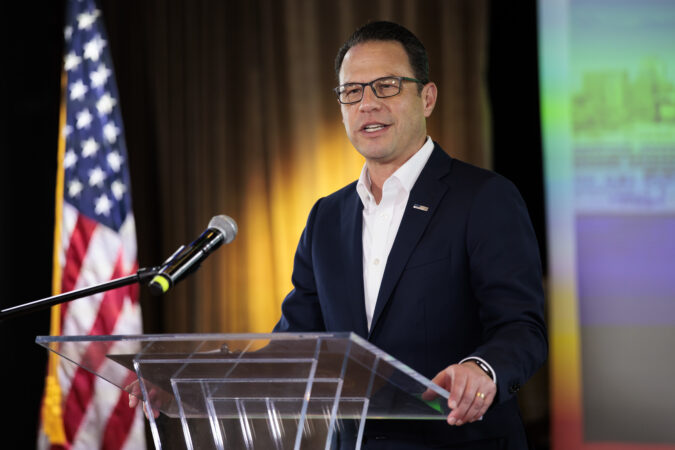
    Pennsylvania Gov. Josh Shapiro has a message for members of Congress when they convene at Independence Hall in Philadelphia on Thursday:

    This is the birthplace of democracy, and with it, comes the responsibilities that America’s founders left behind.

    “The founders made clear that we have a real responsibility to do the work to constantly perfect our union,” Shapiro said in an interview this week, ahead of his speech before the ceremonial meeting of Congress, marking 250 years since the Declaration of Independence was signed in that same building. “And that the Congress of the United States has a unique responsibility in that to be a check on the executive branch.”

    Those words come at a critical inflection point in America’s history, amid a tumultuous presidency, and as Shapiro is rumored to have aspirations of a White House bid in 2028. The first-term Democratic governor will appear before approximately 40 bipartisan members of Congress in Old City at the event convened by U.S. Rep. Brendan Boyle (D., Pa.), speaking to the lawmakers from across the country about their collective duty to the public. Shapiro will attend numerous other 250th celebrations across Philadelphia in the coming days, during which he said he plans to share his optimism for America’s future and deep concerns that President Donald Trump has led the nation astray from its founders’ design.

    “I don’t think patriotism belongs to one party. I don’t think it should ever be partisan,” Shapiro said. “Unfortunately, Donald Trump routinely divides us, routinely injects partisanship into his definition of patriotism, and his actions, in many ways, are the opposite of patriotism.”

    Assembly Room in Independence Hall (Pennsylvania State House) Monday, June 15, 2026. This is the exact space where the Second Continental Congress met and the Declaration of Independence was adopted.

    As Trump plans to spend America’s 250th birthday hosting a political rally on the National Mall — with no plans to visit Philadelphia, the city where the nation was founded — Shapiro sees his own role as a unifier, and in direct contrast to Trump. As attention shifts to Philadelphia this weekend, he’ll appear on the national stage from sunup to sundown at events and on frequent TV hits — all with a home-turf advantage for his 2028 presidential prospects, as the governor of the nation’s quintessential swing state and also most important to the country’s founding.

    “[Celebrating the 250th] allow the spotlight to shine on Shapiro, even though it’s not entirely about him,” said Alison Dagnes, a political-science professor at Shippensburg University. “Do I think that helps his ambitions? Sure.”

    ‘Direct contrast’

    Sitting with Shapiro in his Harrisburg office earlier this week, it’s undeniable that he’s a history nerd — another reason why he was built for the moment.

    He casually quotes segments of The Federalist Papers, and references his favorite story about Benjamin Franklin‘s fixation on a half-sun on the back of George Washington’s chair during the 1787 Constitutional Convention, which Franklin remarked during the U.S. Constitution signing that “it is a rising and not setting sun.” Without having to look for its location, he points to his right to a portrait of Franklin, one of his predecessors as governor of Pennsylvania, hanging on his office wall. He notes lesser-known Pennsylvanians who played an important role in the nation’s founding whom he plans to highlight over the coming days.

    “You know, I hate to quote a guy not from Pennsylvania,” Shapiro said, returning to The Federalist Papers to recite James Madison’s concerns about giving an executive too much power.
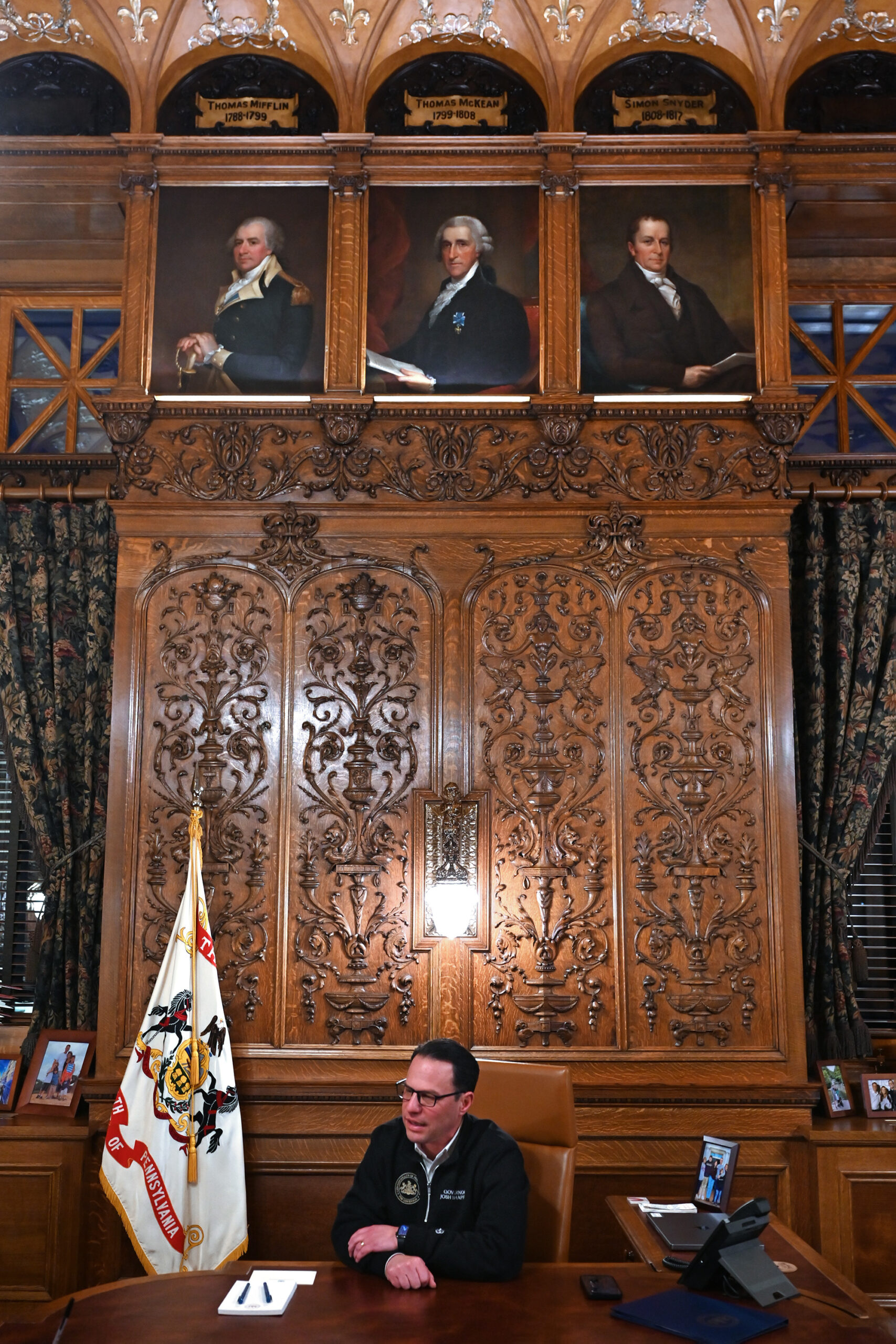
    Gov. Josh Shapiro in the Capitol in Harrisburg Feb. 21, 2023.

    “If Madison were here today, he’d be really concerned about how one man has accumulated so much power and is wielding it in really dangerous ways, and I hope that at this 250-year mark we find our way back to that balance and back to the constraints on the people who lead our government,” he said.

    Shapiro sees his leadership style as a “direct contrast” to Trump’s, especially at this moment.

    “[Trump] restricts peoples’ freedom and liberties,” the governor added. “He whitewashes our history. That doesn’t further a sense of community, that doesn’t further patriotism. All that does is divide us, and I refuse to participate in that.”

    But for the next few days, Shapiro said his approach to the 250th celebrations is to: “Celebrate America, find ways to bring people together, and to have some fun in the process.”

    Fair games

    Despite his overtures of political unity, Shapiro has faced accusations from Republicans in recent days for playing partisan games over Pennsylvania’s participation in Trump’s 16-day Great American State Fair. Shapiro, in addition to several other Democratic governors last week, announced that Pennsylvania would not take part in the fair due to his administration being unable to secure any state businesses to sponsor the exhibit. Staffing and sponsoring the exhibit on the state’s dime would have cost $700,000 that would be better spent on in-state 250th events, he said this week.

    In the weekend that followed, Pennsylvania’s U.S. senators, Republican Dave McCormick and Democrat John Fetterman, made a push to fill the state’s empty exhibit. By Tuesday, it was filled with antique flags lent by a York County man, bags of potato chips from Snyder County, and a Christmas tree display from Fayette County, among other Pennsylvania-centric items.
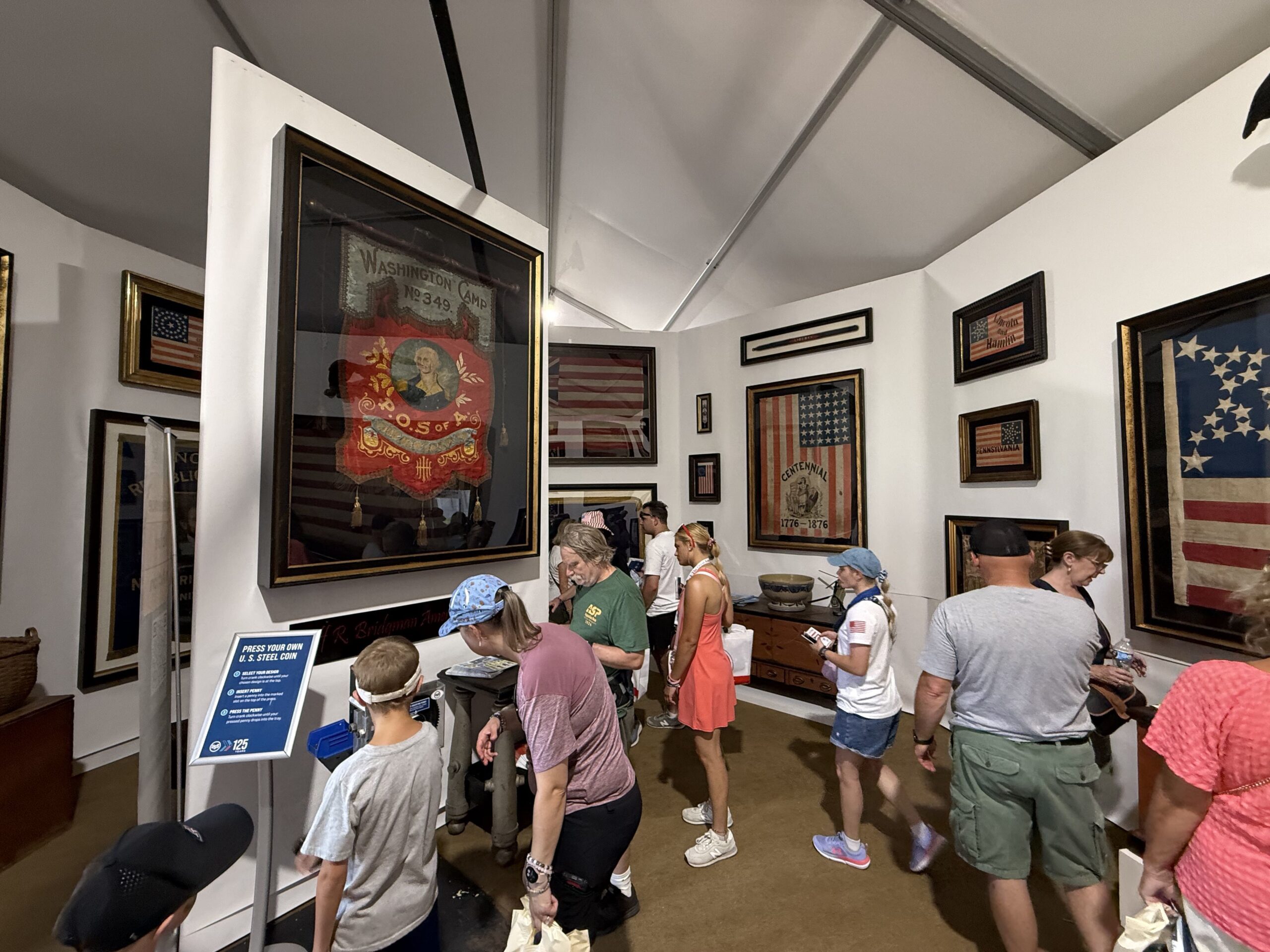
    Pennsylvania’s pavilion showcases state history and memorabilia at the Great American State Fair on June 30, 2026, in Washington, D.C.

    Some of the businesses originally told Shapiro’s office they didn’t have enough time to participate. But when McCormick and Fetterman approached them with the idea to fill the empty pavilion, they joined in.

    “They obviously had a change of heart at the last minute. That’s fine,” Shapiro said about the revived Pennsylvania pavilion.

    State Treasurer Stacy Garrity — Shapiro’s Republican challenger for governor, who has aligned herself with Trump — in a statement called Shapiro the “only career politician who has politicized America 250.”

    “Josh Shapiro put his political ambitions above his commonwealth and his nation when he pulled Pennsylvania out of the national celebration of our 250th birthday in a pitiful attempt to score cheap political points with the liberal wing of his party,” Garrity said.

    Beyond the 250th

    Shapiro’s strength as a politician has always been his ability to appear “harmonizing” and bringing people together, dating back to his days as a Montgomery County commissioner, Dagnes said.

    A careful politician, Shapiro is known to stick to his message and has faced criticism from some fellow Democrats for his well-rehearsed statements.

    When Shapiro delivers his messages of unity and freedom to a broader audience in the coming days, voters are likely to view them as authentic — one of the most important qualities to any presidential hopeful, she added.

    “If [California Gov.] Gavin Newsom is the guy who’s gonna punch Trump in the face, then Shapiro is going to be the guy who’s like, ‘No, let me offer you an alternative,’” Dagnes said.

    “It’s what he should be doing right now, because this is what America is about,” she added.

  • Philadelphia’s historic sites draw tourists from around the world. They’re getting an incomplete version of the President’s House.

    Philadelphia’s historic sites draw tourists from around the world. They’re getting an incomplete version of the President’s House.

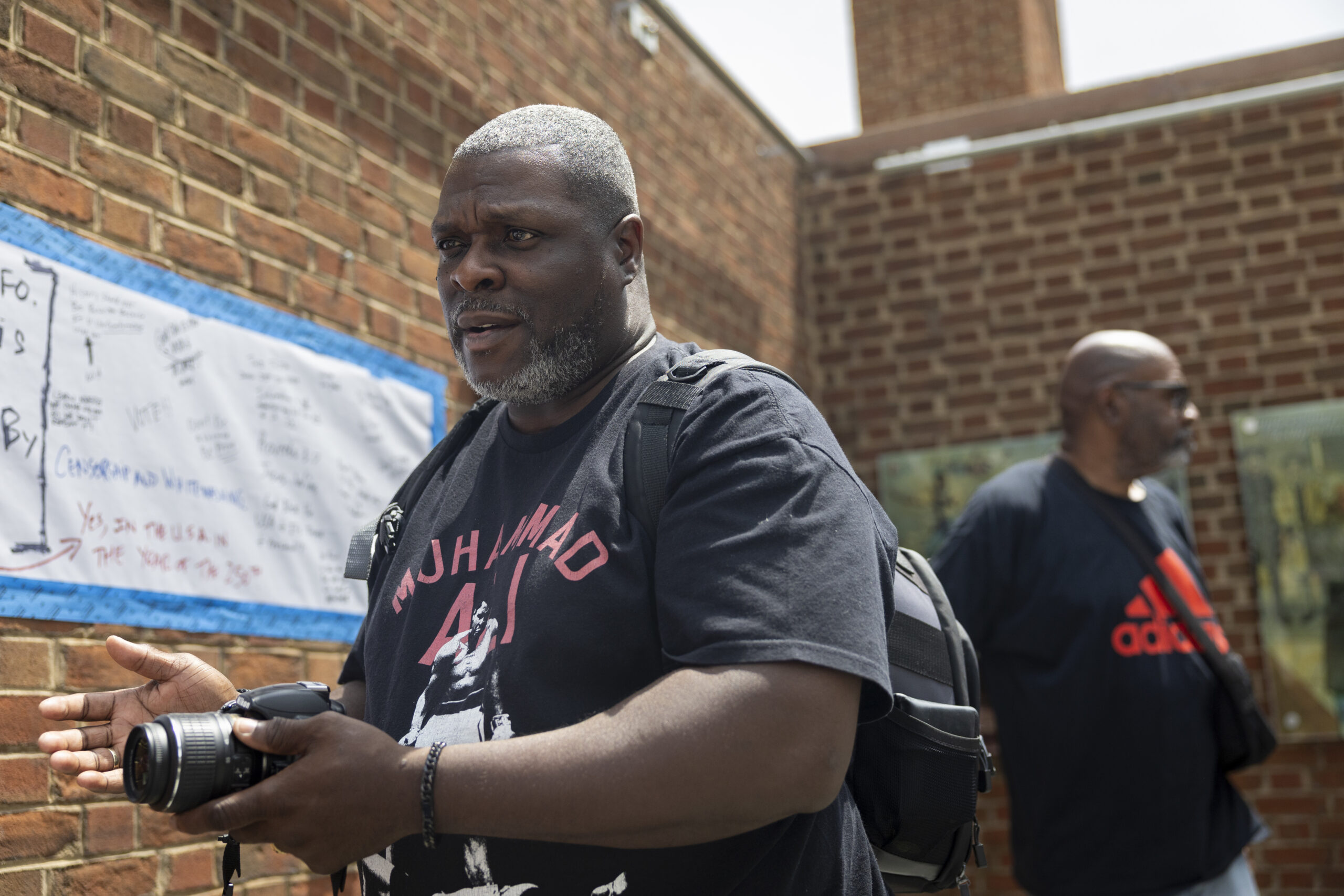
    On a sweltering and humid summer afternoon — as tourists and historical reenactors milled about Old City ahead of 250th anniversary celebrations — Cristian Marín guided his family through the President’s House.

    Loyal soccer fans, Marín’s family had traveled from Colombia to visit their son in Philadelphia, attend the World Cup matches, and see the Revolutionary Era sites.

    But it was up to Marín, 37, to play tour guide last Friday and explain to his family why large gaps of brick wall were covered by paper adorned with handwritten messages expressing their indignation with President Donald Trump after his administration removed exhibits about slavery at George Washington’s former home in Independence National Historical Park.

    Marín’s family started laughing from pure disbelief about the “craziness of the situation,” he said.

    Marín’s relatives are among an influx of tourists visiting Philadelphia in the lead up to the city’s Semiquincentennial festivities only to find themselves confronted with evidence of the largely partisan battle playing out over how to tell the complicated story of America’s founding.

    “For me, it’s shocking to see a country trying to erase that history,” said Marín, a freelance journalist. “I think it’s important to remember our past in order to just not repeat those kinds of things.”

    Cristian Marín, 37, tours the President’s House in Independence National Historical Park last week.

    Ahead of the 250th, both Philadelphians who have been engaged in the fight to protect historical exhibits and tourists who have wandered through the President’s House for the first time, have lamented the Trump administration’s changes to the exhibit, which was largely dismantled by the administration earlier this year.

    They told The Inquirer that the missing panels, such as those that discuss the brutality of slavery, do a significant disservice to understanding the full picture — even the ugly parts — of U.S. history.

    “History is going to be out there, and the more we share history, the better for everybody,” said Hector Vargas, 40, from New York. “For the new generation, and even ourselves, because this is something from the past and we need to understand better — what happened and how this great country basically became the great country it is.”

    The Philadelphia Convention and Visitors Bureau estimates that from 250th-related events alone the city will welcome over 1.5 million overnight visitors in 2026.

    But the turmoil facing the President’s House is hanging over the celebrations, as the site’s stakeholders and the Trump administration battle over which version of history residents and visitors will see as they celebrate on Independence Mall.

    Judges presiding over lawsuits related to the President’s House or other threats by the Trump administration to change historical content at national parks have viewed the Fourth of July as a deadline to set the record straight as to whether the federal government has the authority to rewrite history.

    Some advocates believe the Trump administration saw it that way, too.

    Visitors read unofficial signage put up to protest the Trump administration’s changes to the President’s House site, which memorializes the nine people enslaved by George Washington in Philadelphia.

    The Inquirer reported that the federal government also quietly removed mentions of slavery from Independence Hall and a panel under Thomas Jefferson’s portrait at the Second Bank — sending a new wave of outrage among historians and advocates ahead of this weekend.

    “In the 250th anniversary of the founding of the Declaration of Independence, there’s probably increased impetus and motivation to get these changes installed before the dawn of the Fourth,” said Paul Steinke, executive director of the Preservation Alliance for Greater Philadelphia.

    ‘They want to make us believe that slavery did not happen’

    Perched on folding chairs bordered by patriotic banners that flapped in the wind, dozens of Philadelphians spent their Friday night at the People’s Plaza, a concrete gathering space just steps away from the President’s House eight days before the 250th anniversary.

    A truck displaying a digital screen with the name of the event, “Trump Fascism: Historical Erasure and the Battle Over the Truth,” parked across the street.

    With Independence Hall towering behind them, state Rep. Chris Rabb, attorney and advocate Michael Coard, civil rights organizer Masaru Edmund Nakawatase, and visual artist Dread Scott railed against the federal government’s changes to history at an event hosted by Refuse Fascism, an anti-Trump organization.

    The gathering is one of many events opponents to the Trump administration’s actions are holding in the days surrounding the 250th. Coard’s group, Avenging the Ancestors Coalition, is hosting its annual Black Independence Day on July Fourth at the President’s House.

    “We have so much power and it scares these people. If it didn’t scare them, why would they be worried about this exhibit right here?” Rabb (D., Philadelphia) declared, pointing at the President’s House.

    Rabb, who will represent parts of Philadelphia in Congress after winning the Democratic primary for the Third District in May, has often spoken of how he is a descendant of both a signer of the Declaration of Independence who enslaved people and of Black abolitionists.

    The Trump administration had spent a year eyeing the President’s House and other exhibits before they abruptly dismantled the site in January, just weeks into the nation’s 250th year. Last year, the president had issued an executive order directing parks to conduct a content review of materials that could “inappropriately disparage Americans past or living.”

    Subsequent legal battles have allowed some — but not all — of original panels to be reinstalled, though the administration can now install its own spin on history at the President’s House, the Third Circuit Court of Appeals in Philadelphia has ruled.

    But the struggle to confront the full scope of U.S. history is baffling to some visitors, like Camila Ordenana, 24, from Ecuador. Ordenana, who ventured from Guayaquil to Philadelphia to attend a World Cup game, said she has never seen this kind of censorship in her other travels.

    “It is weird, because we have been to several places, several historical cities, like, I can remember going to the U.K. or going to Germany, and you can learn about the experience in a very neutral and respectful way,” Ordenana said.

    Katrie White, 53, from Illinois, traveled to Philadelphia specifically for sightseeing to learn more about African American history. She said she was disturbed by the removal of the signs.

    “They want to make us believe that slavery did not happen,” White said. “And that’s how it affected African Americans, that it wasn’t a big deal, that it made us better. But of course, we all know that it didn’t, and it really did affect us. It was a trauma that is still carried on to this day.”

    Many Philadelphians appear to agree.

    A recent Suffolk University / Inquirer poll found that a quarter of city residents see preserving historic sites as Philadelphia’s top responsibility to the nation ahead of the 250th.

    Richard Porter (left), 52, of Michigan, at the President’s House last week.

    Gathered by the Market Street entrance of the President’s House last Friday, looking at the colorful illustration panels that remained, Richard Porter grappled with the impact of the removals, saying that without the educational information, “We’ll repeat it over and over again.”

    The Michigan resident said that the country is at a point where it needs to move forward but that the changes to the President’s House are sowing further divisions.

    “This is an everyday battle. It’s not just today or for the 250; this is all the time,” Porter said.

  • Mayor Parker defends decision to host July 4th Parkway concert despite dangerous heat and high price tag

    Mayor Parker defends decision to host July 4th Parkway concert despite dangerous heat and high price tag

    Mayor Cherelle L. Parker on Wednesday defended the city’s upcoming July Fourth concert, a seven-hour outdoor spectacle featuring performances from Christina Aguilera, Jill Scott, The Roots, and more, amid concerns over the nearly 100-degree forecast and revelations that the event will cost taxpayers millions more than in years past.

    The city has dealt with high temperatures before and has battle-tested personnel and protocols prepared for the evening, Parker told reporters at a news conference in front of the stage at the foot of the Philadelphia Museum of Art steps.

    She also addressed the detractors head on.

    “I do not apologize to anyone about making sure that the city of Philadelphia, as the sixth-largest city in the nation, the birthplace of democracy, we were going to have a celebration that is fitting to and for our historical significance and prominence,” Parker said. “One that could be seen, respected, and honored, not just in our city and commonwealth and nation but in the world.”

    Parker described the concert as the largest July Fourth concert in the city’s history. For an occasion as momentous as the nation’s 250th anniversary in the city that bills itself the birthplace of America, Parker said Philadelphia must rise to the occasion and prove it can achieve ambitious undertakings.

    Parker said her administration scaled up the experience, including moving the stage back to accommodate an estimated 300,000 concertgoers, and made the stage larger.

    “We won’t get a second chance to do this over again, Philadelphia,” Parker said. “We only turn 250 years old once in a lifetime.”

    Ground crews set up speakers on the stage on Wednesday in preparation for the July 4 concert expected to draw thousands to the Benjamin Franklin Parkway.

    Parker recalled feeling the mounting pressure to prove Philadelphia could rise to the occasion of honoring the nation’s 250th anniversary shortly after the start of her tenure as mayor.

    “‘Philadelphia lacks ambition. They’re thinking too small. We need a leader. Where is the legacy project?’” Parker recalled from the discourse of the time. “The critics were right. Philadelphia, as the birthplace, we couldn’t do what every other city was doing. We couldn’t just do something that was average, something that was mediocre. What we did had to be a reflection of this moment and our history.”

    Parker’s news conference came hours after The Inquirer reported online that this year’s July Fourth concert will cost taxpayers millions more than in years past because the mayor’s administration hired ESM Productions, a for-profit company, to put on the annual show. For years, the concert has been produced by Welcome America, a nonprofit established by the city.

    The Inquirer reported that the city is set to pay ESM $15.5 million to put on the show, and that last year’s iteration of the Welcome America concert cost the organization about $3 million.

    Parker defended ESM and its founder, Scott Mirkin, as “the gold standard in planning large-scale global events, not just in America but across the world.” And she vowed that the city would produce a “fiscal impact report” after the event to account for how much money the city spent on this year’s festivities.

    Mayor of Philadelphia Cherelle L. Parker speaks during a news conference under a tent Wednesday, July 1, 2026, in Philadelphia, outlining public safety and transportation plans ahead of a July 4 concert expected to draw thousands to the Benjamin Franklin Parkway.

    She also noted that former Mayor Jim Kenney put his own stamp on the annual July Fourth concert when he took office in 2016 — and took some heat for it. The Roots had headlined the concert since 2009, but Kenney’s administration went a different direction and The Roots were sidelined.

    Roots drummer Ahmir “Questlove” Thompson didn’t mince words at the time, writing on Facebook that the decision was “arrogance in the HIGHEST order courtesy of your new leader.”

    When Parker took office, she knew she wanted the spotlight back on the beloved local hip-hop group.

    “I’m proud to have The Roots back home,” Parker said.

    In terms of weather and safety, the city has proven this summer that it can host large-scale events in the heat seamlessly, said Philadelphia Police Commissioner Kevin J. Bethel.

    The city has already hosted five World Cup games, which have gone off without a hitch, Bethel said. For the July Fourth event, the department will be executing one of its largest deployments since the papal visit in 2015. That will include hundreds of officers across Center City and many more at the stadium and along the Parkway.

    “I want everybody to come and have a good time. Don’t mess up the party,” Bethel said.

    In order to keep people cool, the city will run 40 air-conditioned cooling centers, 150 pools and spray grounds, enhanced homeless service outreach, and extra fire department medics, said Dominick Mireles, Philadelphia’s deputy managing director for community safety. Along the Parkway, there will be misting fans and shade structures, he added.

    Parker said she’s confident every Philadelphian interested in participating will be able to do so safely and will look back on the day fondly.

    “I want people to remember where they were when America turned 250 years old and what we did here in the place when it all happened,” Parker said.

  • Bucks County Commissioners approve first paid parental leave policy for county employees

    Bucks County Commissioners approve first paid parental leave policy for county employees

    Bucks County government’s first-ever paid parental leave policy is now on the books.

    The county commissioners unanimously approved a human resources policy during their public meeting Wednesday that allows full-time county employees with at least one year of service to take up to eight weeks of parental leave.

    The eight weeks must be taken consecutively within 12 months of the birth of a child, the adoption of a child, or a child’s foster care placement with the employee, according to a policy document.

    The new guidelines signify a win for county employees and the local unions that represent them after they’ve spent years vying for a policy shift on parental leave in local government. The change could also aid in attracting more people to work for the county, which is Bucks’ third largest employer.

    “Eight weeks is better than zero,” said Steve Catanese, president of SEIU Local 668, which represents about 500 county government employees in Bucks.

    “We’re glad for whatever reason that the county is ready to move for it,” Catanese added. “We would hope our advocacy was part of it, but we’re glad that they’ve actually made movement on this ground.”

    Parents who work for local governments have had to navigate inconsistencies on paid leave throughout the Philadelphia suburbs. For instance, Montgomery County expanded from six to 12 weeks of paid parental leave in 2024. Delaware County has six weeks of parental leave.

    Chester County didn’t immediately comment on its parental leave policy.

    In Pennsylvania, state employees are offered eight weeks of parental leave, which Bucks modeled its policy on.

    County Commissioner Bob Harvie said during the meeting Wednesday that the policy was “certainly overdue.”

    “When you’re an employer, anything you can do to benefit your employees, especially at a time like now, when things are so expensive, and the cost of living is where it is, and things are difficult enough, this is something I’m proud that we’ve done,” said Harvie, a Democrat who is running for Congress, in an interview.

    Harvie said Bucks’ delay in implementing the policy came down to taking the time to develop provisions that did not interfere with any laws or collective bargaining agreements.

    Harvie said he’s hopeful that, at some point, Bucks could also increase its policy to 12 weeks.

    “Bucks has never done anything like this before, and so it’s something we don’t know the impact,” Harvie said. “We think we know how it’s going to work in terms of staffing and how our offices are going to work with this, but we have to make sure first. We still have to deliver services to the people of the county.”

    Parental leave has become a key issue across the state, with lawmakers in Harrisburg recently mulling paid leave legislation for anyone employed in the state of Pennsylvania.

    Fourteen states and Washington D.C. have implemented mandatory systems for paid family leave, according to the Bipartisan Policy Center.

    On the federal level, government employees are eligible for paid parental leave, but a bill — reintroduced last month by U.S. Reps. Don Breyer (D., Va.), Chrissy Houlahan (D., Chester), and Brian Fitzpatrick (R., Bucks) — would expand that leave to 12 weeks for family and medical reasons.

    Harvie and Fitzpatrick will face off in the November election to represent the 1st Congressional District, which covers all of Bucks County and a sliver of Montgomery County.

    Other provisions in Bucks County’s policy include providing 30-days notice (or as soon as possible due to unforeseen circumstances) to the employer and employees being compensated at their base pay rate. And if both parents are employed by Bucks County, they are each entitled to their own eight weeks of leave.

    Harvie said the impact of paid parental leave in Bucks became apparent to him as soon as the new policy was passed Wednesday.

    An employee at Parks and Rec, the department head said, was having her baby today.

    “They have the chance to sort of take these eight weeks and just focus on being a parent,” Harvie said.

  • Camden is a winner in New Jersey’s $60.7B budget. Who are the losers?

    Camden is a winner in New Jersey’s $60.7B budget. Who are the losers?

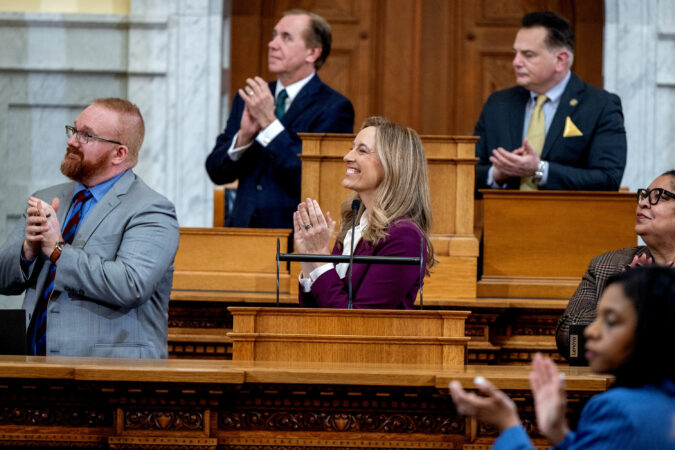
    Gov. Mikie Sherrill signed the New Jersey budget for fiscal year 2027 Tuesday night, shortly before the clock ran out on the constitutionally mandated deadline.

    The budget ranks as the largest in state history, but Sherrill also contends it is the most “fiscally responsible” in decades in part because it fully funds the state pension program and doesn’t come with widespread tax increases for residents.

    Lawmakers approved the budget on Tuesday after adding millions in legislative add-ons Sunday night, a move that countered Sherrill’s earlier vows to change the culture in Trenton. But she softened her stance as the deadline neared and she conceded that lawmakers know their districts best.

    South Jersey Democrats defended the spending, which Republican lawmakers criticized as “pork.”

    “I know sometimes it gets disparaging names, but I think one of our responsibilities as elected officials is to be responsive to the needs of our communities,” said Sen. Troy Singleton, a Burlington County Democrat.

    But the last-minute shuffle didn’t result in the transparency Sherrill originally promised, with some legislators saying they weren’t sure of the details they were voting on. The budget passed mostly along party lines in the Democratic-dominated legislature. Sherrill and legislative leaders touted record funding for schools and property tax relief programs.

    “I know the process needs work,” Sherrill said at a Tuesday night news conference. “It takes too long. It could be much more transparent, but we took steps in the right direction this year.”

    Here are some of the winners and losers in the budget.

    Camden County Commissioner Director Louis Cappelli, Jr., left, with Gov. Mikie Sherrill and Camden Mayor Victor Carstarphen, right, at SoccerFest26, the World Cup fan fest at Wiggins Waterfront Park in Camden on Friday.

    Winner: Camden City and County

    South Jersey obtained funding for projects across the region with Camden scoring one especially big-ticket item: $9 million for property acquisition and demolition. The funding is for a county-run program focused on removing vacant, unusable, or otherwise deemed dangerous properties in the city.

    Louis Cappelli Jr., the director of the Camden County Commissioners, said in an interview that the county has demolished more than 1,200 residential and commercial buildings over the past decade as part of this effort, mostly with state money. He said the program’s mission is to encourage the city’s redevelopment.

    “The city is in desperate need of new housing, especially market-rate housing, and by creating opportunities for development on these properties, we believe we will draw the interest of residential developers to build in Camden City,” he said.

    The city of Camden was also allocated $250,000 for a statue of Martin Luther King Jr., which Sherrill promised the city ahead of her inauguration. This project was a priority for the governor, who systematically struck a pen through legislative projects but dedicated funding to the statue in her proposal earlier this year.

    Several organizations that serve Camden city and county received hundreds of thousands of dollars in the budget.

    The Camden Coalition of Healthcare Providers received $500,000 for a program that connects emergency department patients to outpatient behavioral care and $750,000 for a program that helps people experiencing homelessness obtain housing. Joseph’s House, a homeless shelter in the city of Camden, received $600,000, and a separate spending bill also sends $650,000 to a new construction homeownership project.

    The budget also allocates $300,000 for job training for youth and young adults, $75,000 for a program dedicated to improving school attendance in the city of Camden, and $25,000 for a new county program that supports formerly incarcerated people reentering their community.

    It also includes $3.2 million for structural improvements for a bridge at Route 30 and Somerdale Road and $12.1 million for the Camden County LINK Trail, a planned 34-mile multiuse trail.

    Loser: High-income seniors

    Senior homeowners who earn between $200,000 and $500,000 a year will no longer qualify for the nascent Stay NJ property tax credit program under the new income cap. They just began receiving checks for the program this year.

    Sherrill proposed scaling back the expensive program in her budget proposal earlier this year, which caused some tension because the new program was championed by Assembly Speaker Craig Coughlin, a Middlesex County Democrat and a key budget negotiator.

    But Sherrill and legislative leaders found a compromise by giving higher payments than she proposed for those who make less money, and an even lower income limit than she proposed for the program.

    Qualifying taxpayers will get refunded up to half their property tax bill up with maximum refunds ranging from $4,000 to $6,500, depending on their income, with those earning more getting less.

    Rowan University’s Shreiber School of Veterinary Medicine Tuesday, April 14, 2026.

    You win some, you lose some: Rowan University

    Rowan University is receiving less money than it did this year, but significantly more money than Sherrill initially proposed. At the end of the day it’s a win for the university, which saw significant cuts reversed.

    Sherrill’s initial proposal included about $125 million, but legislators brought the total up to nearly $135 million — a drop from the $155 million the state gave the school this year.

    Sherrill zeroed out funding for Rowan’s new veterinary school but legislators successfully got $6.2 million for the program — still less than the $8 million it received this year and a far cry from the $20 million the school requested.

    State Sen. John Burzichelli, a Gloucester County Democrat, said the money is enough for the school to at least “keep the lights on,” for the veterinary school and the medical school funding is “sound.”

    Sherrill also proposed cutting all state funding for Virtua Health College of Medicine and Life Sciences. Legislators restored $2 million to the program — half of what it received this year and much less than the requested $12 million.

    The Rowan-Virtua Child Abuse Research Education and Service Institute (CARES) program, which provides medical and mental healthcare to children who have experienced abuse, had all its $1.85 million funding restored after Sherrill initially zeroed it out.

    In anticipation of the governor’s proposed cuts, Rowan sent employees layoff notices and announced the closure of its Vineland office. A union representing CARES employees has called on Rowan to reverse these changes.

    But Rowan spokesperson Jose Cardona said the university “will evaluate next steps and very soon determine the most responsible path for operations, staffing, and long‑term sustainability.”

    The bill that passed alongside the budget with funding from this fiscal year sent nearly $15 million going to Cooper Medical School of Rowan University and support to Cooper University Hospital. That bill also sends $5 million to Cooper University Healthcare’s South Jersey cancer program, which got an additional $27.4 million in the new budget.

    Winner: Parents

    Legislative leaders secured a 25% increase in the state’s child tax credit program, which is claimed by 217,000 tax filers with children, according to the governor’s office.

    The expansion, which will be in place over the next three tax years, bumps each tax credit tier by 25%. So, for example, a household that previously got the highest tier of $1,000 will receive $1,250 and households that got $800 will get $1,000.

    Sherrill, a former member of Congress and mother of four, said she saw positive impacts of the national tax credit, “giving parents more money for childcare and summer camps, so their kids can thrive while they’re at work.”

    Gov. Mikie Sherrill talks with state Sen. Troy Singleton (D., Burlington) as she arrives to meet with the South Jersey business community for a fireside chat event hosted by the Chamber of Commerce of Southern New Jersey in Mt. Laurel Monday, March 16, 2026.

    Loser: Businesses

    What Sherrill touted Tuesday night as closing “corporate loopholes” and asking employers “to pay their fair share in healthcare,” the business community saw as an attack.

    The budget includes Sherrill’s proposals to introduce new fees for businesses with at least 50 employees on Medicaid, an effort that was led in part by Assembly member Carol Murphy, a Burlington County Democrat, in the legislature. It also imposes limits on two methods businesses use to deduct losses from their taxes.

    Hilary Chebra, the director of governmental affairs for Chamber of Commerce Southern New Jersey, criticized these policies, as well as a bill passed by the legislature that bans food surveillance pricing as it’s written.

    “Employers aren’t reacting to a single tax increase or one new regulation,” she said. “They’re responding to all of it at once.”

    She said these measures will have more severe consequences in South Jersey for small and family-owned businesses that compete with businesses in Pennsylvania and Delaware.

    Tom Bracken, the president & CEO of the New Jersey Chamber of Commerce, said businesses were given “minimal support” and that the budget did not focus on supporting economic growth. He said the policies Sherrill championed in the budget “send the wrong message” to employers that New Jersey should be working to attract.

    “The negative financial and reputational consequences of these policies will make it more difficult for New Jersey to be competitive — and competitiveness is essential if the state economy is going to grow,” he said.

  • House GOP deadlocks over Trump’s demands, sending lawmakers home early

    House GOP deadlocks over Trump’s demands, sending lawmakers home early

    WASHINGTON — Whither the U.S. House?

    As the nation celebrates its 250th birthday this weekend, the legislative branch has momentarily called it quits.

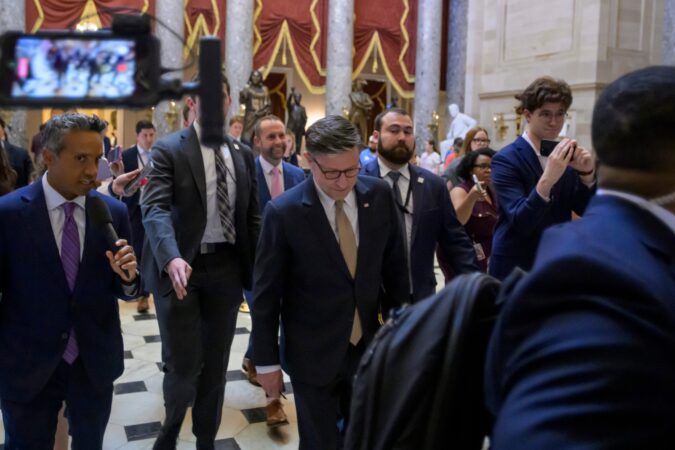
    The House leadership on Tuesday abruptly canceled votes and sent lawmakers home early for the holiday recess, Speaker Mike Johnson ‘s majority once again ground to a standstill by a Republican revolt over their own party’s agenda.

    In this case, it’s a standoff blocking the annual defense bill — with pay raises for the troops and other matters at a time of war — as the renegade Republicans push to include President Donald Trump’s own priority, the SAVE America Act, a strict voter ID bill. Last week, the Senate similarly shuttered after Trump’s demands.

    The emptying Capitol provides another snapshot of the imbalance of power in Washington as a headstrong executive confronts a weakened Congress.

    For the second time in as many weeks, the House has simply given up.

    “It’s a relatively bad time in Congress,” Republican Rep. Dusty Johnson of South Dakota said recently. “A lot of my colleagues have forgotten how to govern.”

    The scene is far different than last year’s Fourth of July

    A year ago this weekend brought a wholly different scene in Washington, as Trump gathered Republican lawmakers outside the White House for an ebullient July Fourth ceremony to sign what they called the “One, Big, Beautiful Bill” of tax breaks and spending cuts.

    It was a celebratory moment for Trump and the slim Republican majority — and for Johnson, who many doubted could pass the bill over the objections of Democrats who viewed it as tax giveaway at the expense of billions of dollars in cuts to health care and food stamps for Americans in need.

    Johnson was so reliant on Trump’s power to help push the bill to approval that he gifted the president a speaker’s gavel, which Democrats and others saw as a worrisome symbol of the transference of power from one branch of government to the other.

    “We’re not dealing with Speaker Mike Johnson,” Democratic Rep. Pete Aguilar of California, the caucus chairman, said in a recent interview. “Unfortunately, Speaker Donald Trump does not want us in this week.”

    Trump makes conflicting demands on his party in Congress

    As Johnson works to keep Trump close, the president’s demands seem to grow in ways the Republican speaker can’t always deliver.

    The president’s insistence on the SAVE America Act, which doesn’t have enough support in the Senate to pass, has interrupted almost all other business in Congress. Trump has refused to sign a popular bipartisan housing bill that cleared both chambers until the voting bill is also approved. He calls the housing bill a “yawn.”

    Johnson spent four hours last week at the White House and said he spent another two hours with the president this week on a path forward.

    “I told him, ‘Mr. President, I don’t have any tattoos, but if I did, it’d say SAVE America on my shoulder,’ OK?” Johnson said over the weekend on Fox News.

    “We passed it three times in the House already. We’re going to pass it again.”

    But by Tuesday, a House vote to advance the legislation collapsed. Republicans led by Rep. Anna Paulina Luna of Florida argued that Johnson’s plan to attach the voting bill to the defense bill was essentially a doomed strategy that would be rejected in the Senate.

    “That’s disappointing,” acknowledged Republican Majority Leader Steve Scalise of Louisiana, who insisted the GOP would try again.

    “We’re going to keep trying because we have to,” he said. “We’re not done doing big things.”

    As America celebrates its 250th birthday, Congress is adrift

    The founders of the new democracy clearly had aspirations for the Congress, putting it first in the Constitution as the Article One branch of government, ahead of the executive and judicial branches.

    But as lawmakers face voters this fall, they will have to answer for these dwindling days on their calendar.

    House Democratic Leader Hakeem Jeffries said the problem is not the Congress, it’s the GOP.

    “Donald Trump is fighting with Senate Republicans, Senate Republicans are fighting with House Republicans, and House Republicans are fighting with each other,” said Jeffries, who is in line to become House speaker if Democrats win control in fall.

    “It’s not the Congress that’s struggling. It’s House Republicans who are struggling,” he said.

    Jeffries said Democrats are fighting “to make life more affordable for the American people.”

    As they left the Capitol for an extended recess, lawmakers voiced frustration with the House’s dysfunction.

    Rep. Kevin Kiley, who left the Republican Party to become an independent earlier this year, said the situation in the House is “frustrating.”

    “It’s just like déjà vu where many times now we run into some sort of obstacle,” he said, “then the solution is just to go home.”

  • Judges strike down Trump administration’s overhaul of student loan forgiveness program

    Judges strike down Trump administration’s overhaul of student loan forgiveness program

    WASHINGTON — A pair of federal judges struck down a Trump administration overhaul to a public service forgiveness program for student loans, ruling Tuesday in separate cases in favor of advocates who said the program risked becoming a tool for political retribution.

    U.S. District Judge Myong Joun in Massachusetts vacated the U.S. Education Department’s changes, saying they overstepped the agency’s power and threatened to violate First Amendment protections for free speech. The ruling came in response to a pair of lawsuits filed by more than 20 states along with a coalition of nonprofit groups and cities.

    In Washington, D.C., District Judge Amir Ali in Washington issued a similar ruling in a case brought by nonprofit organizations. The rulings came a day before the new rules were set to take effect.

    Under Secretary of Education Nicholas Kent said the department was evaluating next steps.

    “The Department stands behind this commonsense policy to ensure that taxpayer dollars are never used to subsidize illegal activities,” Kent said in a written statement.

    Congress created Public Service Loan Forgiveness in 2007 to encourage college graduates to work in government and nonprofit jobs. It promised to forgive their federal student loans after they worked in public service jobs for 10 years.

    Last year, the Trump administration moved to add new eligibility rules that would strip the benefit from workers whose employers are deemed to have a “substantial illegal purpose.”

    The overhaul targeted nonprofits and government organizations that support causes at odds with the Trump administration’s priorities.

    It gave the education secretary power to exclude groups from the program if they engage in the trafficking or “chemical castration” of children, illegal immigration or supporting terrorist organizations. Its definition of “chemical castration” included using hormone therapy or drugs that delay puberty.

    The overhaul amounted to a major reworking of a program that has canceled loans for more than 1 million Americans. Nonprofits and government groups said it undercut an important benefit that helped attract college graduates to jobs that traditionally pay less than the private sector.

    “This decision is a win for the communities that depend on local nonprofits and for the workers who serve them,” said Diane Yentel, president and CEO of the National Council of Nonprofits, one of the plaintiffs in the Massachusetts case.

    One of the plaintiffs in the Washington case, Student Defense, said the judge’s ruling is a victory for student loan borrowers.

    “Public servants should not have to worry that the federal government will punish them because of their employer’s mission or perceived political views,” said Aaron Ament, Student Defense’s president.

    Joun said the new rules threatened to impose the administration’s policy views on employers. The judge also faulted the department for failing to connect its definitions of illegal activity to criminal statutes.

    “The Department cannot create new criminal prohibitions through rulemaking,” he wrote.

    The judge also questioned the department’s stated rationale for proposing the new rules, drawing on its own estimates that fewer than 10 employers would be barred from the program per year.

    “The Department offers no explanation for why a Final Rule with such sweeping consequences is necessary to address the possibility that, at most, ten employers each year may be engaging in illegal activity,” Joun wrote.

    In his ruling, Joun noted that more than 100 supporting briefs were filed on behalf of the groups challenging the rules, while none were filed in support of the Trump administration’s change.

  • Conservative education warriors have reshaped GOP politics — even if their crusades often fail

    Conservative education warriors have reshaped GOP politics — even if their crusades often fail

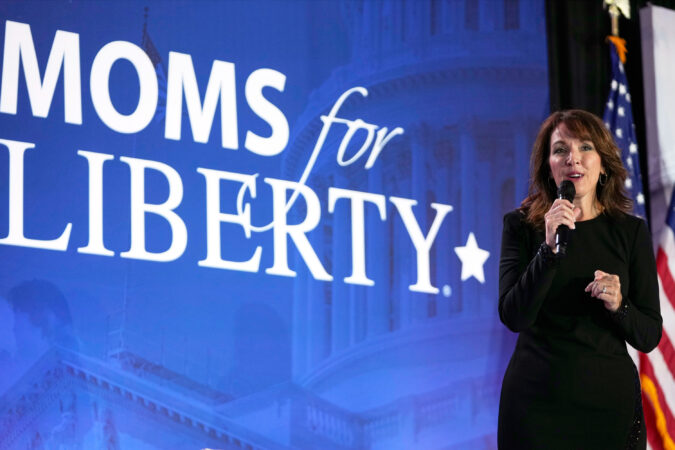
    Since its founding in 2021, the educational advocacy group Moms for Liberty has been mobilizing conservative mothers across the country against school curriculum they deem indoctrinating, un-American, anti-Christian and antithetical to their understanding of family values.

    They’ve targeted books that explore LGBTQ themes, transgender athletes and curriculum they deride as critical race theory or as too focused on diversity, equity and inclusion. More broadly, they claim to be fighting to protect their parental rights to control what their children learn.

    Members of Moms for Liberty have earned seats on school boards, garnered national media attention and infiltrated the highest levels of conservative policymaking. According to cofounder and CEO Tina Descovich, she has visited President Donald Trump’s White House more than a dozen times.

    Moms for Liberty has also made waves in the Philadelphia suburbs, especially in Bucks County, which boasted the largest leadership team of any chapter in the country by April 2025. At a Harrisburg-area event last October, Descovich said, “I am very familiar with Bucks County. Before I knew it existed, I knew the [Bucks County] Beacon existed because they were writing trash pieces about us.”

    Groups like Moms for Liberty have proved effective at making political noise — and even notching some policy wins, at least temporarily. Yet, the group is really just a continuation of a decades-long crusade by conservative white women to weaponize public education in the service of a right wing agenda. While it has largely failed to transform American curriculum, this push has turned these women into key figures in Republican politics who have made fighting the culture wars a GOP priority.

    The modern conservative movement since World War II owes much of its success to the work of grassroots education warriors.

    These women proudly embraced traditional gender roles. They saw them as a marker of success because many women in their mothers’ generation had to work outside of the home to make ends meet in the Great Depression and wartime years.

    Even as some of these conservative women became full-time political activists, they claimed the mantle of traditional homemakers and mothers — which aroused charges of hypocrisy from critics. Yet, they argued that their advocacy work in the traditionally male world of politics and education policy was wholly consistent with traditional gender roles because protecting innocent children from worldly dangers was a natural role for women and mothers.

    At their kitchen tables and in PTA meetings across the country, these “suburban warriors” launched far-reaching campaigns against sex education, multicultural curriculum and other aspects of schooling they deemed antithetical to traditional American values.

    In the 1970s and 1980s, as the political parties realigned, these conservative education warriors emerged as a crucial Republican constituency and a core part of the New Right coalition. These white women were galvanized by the recent gains of the civil rights movement, the Supreme Court’s Roe v. Wade decision — which provided a right for women to have legal abortions under certain circumstances — and debates over the proposed Equal Rights Amendment to the U.S. Constitution, which they claimed (without evidence) would decimate the female homemaking role.

    These recent changes threatened to disrupt what the conservative women argued were divinely inspired gender roles, which were embodied by the “traditional” nuclear family of a working male breadwinner, a female homemaker and kids. They feared that big government-backed forces might take away this ideal life, which many had only recently achieved.

    Increasingly, these women looked to public schools as the place to fight their crusade. Taxpayers funded the schools and they were responsible for shaping the next generation of Americans outside of parental control.

    In 1974, the education wars burst onto the national stage in Kanawha County, W.Va., thanks to an ugly and violent struggle over school textbooks. The controversy began after Alice Moore, a 29-year-old mother and the lone woman on the county school board, objected to a newly adopted language arts curriculum she deemed indoctrinating, racially divisive and steeped in “secular humanism.”

    This latter concept wasn’t new. It dated to the late 19th century, and argued that people could gain knowledge through reason, intellect and logic rather than relying upon religious teaching.

    Yet in the 1970s conservatives thrust it into the spotlight, because they needed a fresh villain. Tried-and-true messaging on anticommunism had grown stale. But pushing secular humanism as the latest liberal conspiracy aligned with the New Right’s renewed focus on faith, family and traditional gender roles, while energizing Christian conservatives.

    Moore and her allies saw secular humanism as increasingly influential in education — and as incredibly hostile to Christianity and their narrow definition of divinely inspired traditional family values. It further alarmed them because they saw secular humanism as teaching students to challenge their parents’ authority. Within a few years, the once obscure concept would become the New Right’s star bogeyman.

    Made By History sponsors. FOR USE ON MADE BY HISTORY STORIES ONLY.

    Throughout the fall of 1974, Moore read excerpts from the textbooks before the school board. She singled out Black nationalist Eldridge Cleaver, whose writings allegedly produced “racial hatred” toward white people. She also took issue with “dialectology,” a study of dialects that included lessons on African American vernacular — what she called “ghetto dialect” — that she believed to be antithetical to American speech.

    By October, the controversy had produced two shootings, dozens of arrests and multiple rounds of bombings, boycotts and school bus blockades.

    Moore’s crusade against secular humanism in West Virginia quickly caught the attention of national conservative organizations. The Heritage Foundation featured Kanawha County in its 1976 study, “Secular Humanism and the Schools: The Issue Whose Time Has Come.” Phyllis Schlafly — the country’s most famous antifeminist at the time — jumped into the fray, claiming that public education promoted “a tolerance of violence, theft, adultery, obscenity, profanity, and blasphemy.”

    In part because organizations like the Heritage Foundation and Schlafly’s Eagle Forum highlighted Moore’s activism for like-minded conservative women, it inspired conservative mothers across the country to wage their own crusades against dirty textbooks. In the ensuing years, they launched repeated battles against seemingly subversive curriculum.

    In 1983, in rural East Tennessee, fundamentalist mother Vicki Frost waged her own legal battle against the Hawkins County school board after discovering objectionable material in her daughter’s reading textbook, including alleged depictions of telepathy, witchcraft and black magic that violated her religious beliefs.

    In Mozert v. Hawkins County Board of Education — a case that became known as “Scopes II” because of Hawkins County’s proximity to the original Scopes Trial — Frost and her fellow plaintiffs alleged that the school board’s policies violated the First Amendment’s Free Exercise Clause. Their legal counsel came courtesy of Concerned Women for America, whose founder Beverly LaHaye took Frost on a national speaking tour to publicize the alleged dangers of modern textbooks. Although the plaintiffs lost their case on appeal, LaHaye deemed the case a “PR success” that “identified us as a friend of the family.”

    The result epitomized the outcome of the broader education wars. Fighting against offensive school curricula turned many conservative women into key figures in the culture wars, with substantial reach and political impact. They quickly become politically astute grassroots organizers who leveraged their identities as white Christian homemakers and mothers to argue for an educational system rooted in Christianity, the traditional nuclear family and American exceptionalism.

    The impact of these organizers, however, hasn’t necessarily come in the classroom. Most of Moore’s “dirty books” found their way into the Kanawha County curriculum. Frost and the plaintiffs in Hawkins County ultimately lost their case on appeal. In recent years, the majority of school board candidates backed by Moms for Liberty have similarly suffered defeat.

    Yet, these organizers have been able to mobilize thousands of culturally conservative women — particularly other white Christian mothers — and bring them into the Republican Party. Their involvement has driven the GOP to make the culture wars a key component of the party’s identity.

    These earlier crusaders also created a language that remains a staple of conservative critiques of public education to the present day. More than five decades after Moore’s war, conservative organizations continue to emphasize “parental rights,” “family values” and “school choice” in their efforts to influence American education.

    When groups like Moms for Liberty claim that public schools are indoctrinating children with “woke” ideologies such as critical race theory, they rely upon a well-established playbook that conservative women have drawn upon for more than half a century. Despite mixed results in America’s actual classrooms, their political activism has proved a tried-and-true means for both enflaming public opinion and solidifying the role of self-proclaimed traditional mothers and homemakers within modern conservatism.

    Allen Fletcher is a public historian and journal editor with research interests in Appalachia, gender and the history of American education. His current book, Building Schools, Building Communities: Appalachian Women and the Struggle for Educational Change, is under contract with LSU Press.

    Made by History takes readers beyond the headlines with articles written and edited by professional historians. Opinions expressed do not necessarily reflect the views of The Inquirer.

  • Trump filing shows he took in about $1.2 billion from crypto businesses last year

    Trump filing shows he took in about $1.2 billion from crypto businesses last year

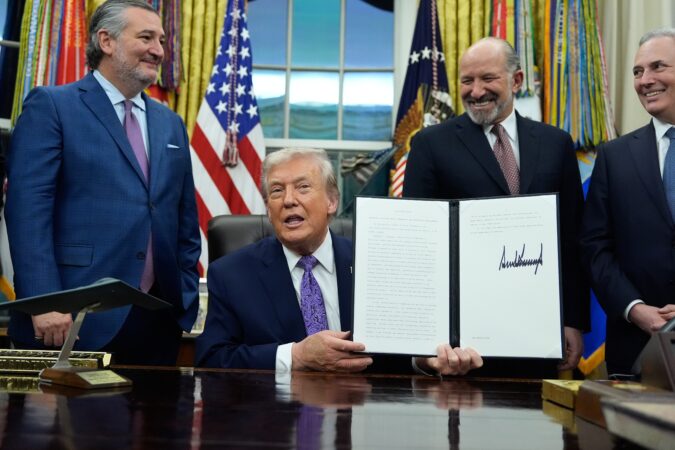
    NEW YORK — President Donald Trump took in nearly $1.2 billion from his crypto businesses last year, a federal filing released Tuesday shows, locking in profits while his investors were socked with losses.

    Mere startups when he took the oath of office, the new ventures have now eclipsed in revenue much of his vast property portfolio that took him decades to accumulate. Fueling their rise were billionaire investors and Trump’s own move to quash a federal crackdown on the industry.

    Trump got more than $500 million from his World Liberty Financial business selling new crypto products, including “governance tokens,” according to the required annual disclosure report with the Office of Government Ethics. It also showed another crypto business, CIC Digital LLC, took in more than $600 million from sales of souvenir-type “meme” coins stamped with his face.

    Both the tokens and the coins have plunged in value since the sales.

    Trump also took in millions last year from selling Trump-branded Bibles, sneakers and other small items in another unprecedented move for the presidency. The sale of Trump-branded watches alone brought in $4.7 million.

    The 927-page disclosure form paints a stark, if incomplete picture of the massive growth of the president’s wealth since taking office last January through a web of business interests — many of which have benefited from the policy moves of Trump’s own government. Trump has insisted that his sons direct his finances but the arrangement rejects the conflict of interest protections that his recent predecessors in office had instituted.

    Forbes estimates Trump’s net worth at $6 billion, up from $2.3 billion in 2024.

    The Trump business is growing abroad

    The rise of crypto relative to Trump’s property is especially noteworthy because he first rode to office boasting of his property wins. It’s also remarkable because that mainstay business also boomed last year. Trump took in tens of millions in fees from a flurry of new hotel, resort and condo deals overseas that amounts to the biggest property expansion ever in the century since the family business was founded.

    Many of those countries were negotiating with the U.S. over tariffs, military aid and other important matters while the family business was striking the deals.

    A property in the United Arab Emirates generated $10.4 million for the Trump business last year. One in Saudi Arabia being built by a real estate developer close to the ruling family sent the president’s company $9 million. And one in Bucharest, Romania, and another in Qatar sent him $5 million each.

    One of his prominent domestic properties, Mar-a-Lago in Florida, notched big growth last year, too.

    Trump took in $77 million from the property, a 50% jump from the year earlier when he was just another citizen, as heads of state and business people flocked to it in his new term.

    The disclosure report doesn’t give profit figures, just revenue, so it’s impossible to know how much he is earning.

    Trump is now the billion-dollar crypto man

    After taking office last year, Trump reversed the Biden administration’s tough stance on the crypto industry and pushed policies friendly to the industry.

    But regulators still had some concerns. Before Trump’s World Liberty began selling “governance tokens,” they issued warnings about this new kind of crypto asset, saying that unlike stocks, the tokens offer no ownership stake in the issuing company, just voting power on certain corporate policies, and are difficult to value.

    Buyers pounced anyway, including a Chinese billionaire who spent $75 million on the tokens and $200 million on the souvenir coins. In February last year, a federal lawsuit charging him with duping investors was paused before being settled for a $10 million fine.

    The billionaire, Justin Sun, has repeatedly denied his spending on Trump businesses had anything to do with his federal case, while World Liberty has dismissed the notion of a conflict of interest.

    Meanwhile, investors have seen the value of their Trump-tied holdings drop significantly.

    The price of World Liberty tokens has fallen 80% since they started trading in September. And the Trump souvenir coins that spiked to more than $74 in the days after launching in January 2025 now sell for $1.68.

    The White House says Trump only acts in the public interest

    The White House has repeatedly said Trump put his business in a trust managed by his sons and is not involved in its decisions and that there are no ethics issues to discuss.

    “Neither the President nor his family has ever engaged — or will ever engage — in conflicts of interest,” spokeswoman Anna Kelly said. “All actions by President Trump and his administration are taken in the best interest of the American people.”

    The Trump umbrella company, the Trump Organization, has said its deals overseas were with private companies, not with governments.

    Still, it is difficult to know what is truly private in countries ruled by authoritarians, royal families and one-party governments.

    For a new Trump resort in Vietnam, the report shows Trump took in $5 million last year after the ruling Communist Party sent its deputy prime minister to sign off on the deal and, according to The New York Times, pushed farmers off the land to make way for the construction.

    Whether the deals played any role in changing U.S. policies in ways these countries sought is nearly impossible to know, but the countries did get what they wanted.

    Vietnam got tariff relief. Qatar got access to advanced U.S. technology previously off limits, and Saudi Arabia got U.S. fighter jets it had coveted for years.

  • Democratic outsiders keep rolling: 5 takeaways from Colorado’s primaries

    Democratic outsiders keep rolling: 5 takeaways from Colorado’s primaries

    The insurgent progressive movement jolting the Democratic Party rolled through Colorado on Tuesday evening in the latest test of the left’s ability to oust establishment politicians and usher in generational change.

    In two primary battles between mainstream figures and candidates running to their left as Washington outsiders, the more liberal candidates prevailed. Melat Kiros, a 29-year-old lawyer and democratic socialist, toppled a veteran congresswoman in Denver, while Phil Weiser, the state attorney general, stopped Sen. Michael Bennet’s bid to move from Congress to the governor’s mansion.

    But in a third key primary race, Sen. John Hickenlooper staved off a progressive challenger.

    Here are five takeaways from the night in Colorado, where Democrats will be favored in all three races in November.

    Even older progressives are falling to young left-wing challengers

    Rep. Diana DeGette, who lost to Kiros, sported legitimate progressive credentials. She was a strong backer of “Medicare for All,” and she ran a television advertisement featuring prior praise from Rep. Alexandria Ocasio-Cortez, D-N.Y., who did not pick a side in Tuesday’s primary.

    Nevertheless, she met her match in Kiros, who centered her campaign on calls for generational change — DeGette, 68, was first elected to Congress the year before Kiros, 29, was born — and on opposition to Israel over the war in the Gaza Strip.

    DeGette said last year that she opposed the sale of “offensive weapons” to Israel, but in the past she had called herself a “strong supporter of Israel.” Kiros was far more outspoken in her opposition to the war and her calls to end U.S. military aid to Israel.

    Socialists are racking up victories around the country

    Kiros adds to a growing number of socialist candidates expected to enter Congress next year, including Claire Valdez and Darializa Avila Chevalier of New York and Chris Rabb of Pennsylvania.

    Running in a deep-blue Denver district, Kiros did not shy away from her socialist label. She welcomed support from the Democratic Socialists of America and Hasan Piker, a provocative left-wing livestreamer who is popular with young progressives but controversial with the party establishment.

    Her victory is likely to further embolden the ascendant movement, which has aspirations beyond deep-blue cities.

    In Wisconsin, a candidate for governor, Francesca Hong, will test whether socialism can appeal to voters in a swing state. And two battleground Senate candidates who do not identify as socialists but also have left-wing, populist politics — Abdul El-Sayed in Michigan and Graham Platner in Maine — are on similar missions.

    One establishment veteran wasn’t caught flat-footed

    On the surface, Colorado’s Democratic primary for Senate mirrored the kinds of races that have been ripe for upset victories this year: A 74-year-old moderate incumbent who had spent 20 years in state politics faced a younger progressive who was once a DSA member.

    But toppling a U.S. senator in a statewide race remains considerably more difficult than ousting a House member, at least on the Democratic side. And Hickenlooper turned back his challenge from Julie Gonzales, a state senator, by nimbly moving to the left and drastically outspending her.

    Hickenlooper focused his campaign pitch on liberal priorities like overhauling the Immigration and Customs Enforcement agency. He also earned some support from labor and activist groups, preventing Gonzales from consolidating progressives.

    Perhaps most significantly, he raised nearly $8 million, while she had less than $1 million at her disposal.

    Trump loomed large in an upset in the governor’s race

    Colorado’s other senator was not so fortunate.

    Bennet lost his bid to become the state’s next governor to Weiser, who had trailed by 30 percentage points in polls last year but managed to make the race a referendum on how forcefully the two candidates were opposing President Donald Trump.

    Pointing to his lawsuits against the administration, and to Bennet’s votes to confirm a few of Trump’s Cabinet members, Weiser won that metric.

    And although Weiser does not profile as a typical insurgent progressive — he is a former federal lawyer who served in the Obama administration and as dean of a law school — he successfully portrayed himself as an outsider running to Bennet’s left.

    Democrats keep picking progressives in key House races

    In swing districts from California to Pennsylvania this year, Democratic voters have bucked the conventional wisdom of running centrist candidates who can peel off independent voters against Republicans. Instead, they have backed left-wing candidates.

    Coloradans took a similar approach Tuesday, choosing Manny Rutinel, a progressive state lawmaker, over Shannon Bird, a more moderate legislator, in the Democratic primary race to face Rep. Gabe Evans, a vulnerable Republican in a district north of Denver.

    The general election will also be a test of whether Democrats can regain support from Latino voters. Rutinel, who is Dominican American, will need a sizable chunk of them in a district that is nearly 40% Latino to beat Evans, who is Mexican American.

    This article originally appeared in The New York Times.