WASHINGTON — Republican House Speaker Mike Johnson said Thursday that he did not think it was appropriate for the Justice Department to be tracking the search histories of lawmakers who are reviewing files from the Jeffrey Epstein investigation.
The rare rebuke to the Trump administration came as photographs emerged revealing an apparent index of records reviewed by a Democratic member of Congress who was among the lawmakers given an opportunity to read less-redacted versions of the Epstein files at a department annex and on department-owned computers.
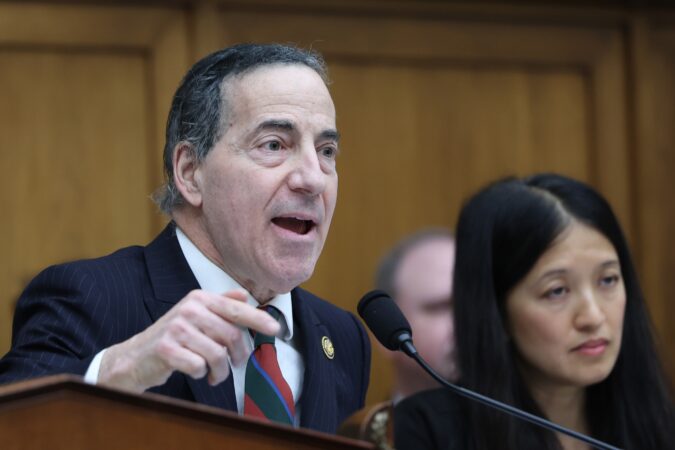
Rep. Jamie Raskin, the top Democrat on the House Judiciary Committee, asked the Justice Department’s inspector general to investigate what he characterized as “spying,” and Johnson, a close ally of President Donald Trump, offered his own scolding when asked about the issue Thursday.
“I think members should obviously have the right to peruse those at their own speed and with their own discretion. I don’t think it’s appropriate for anybody to be tracking that,” Johnson told reporters. “I will echo that to anybody involved with the DOJ — and I’m sure it was an oversight.”
The Justice Department said in a statement that, as part of the process of permitting lawmakers to review the Epstein files, it “logs all searches made on its systems to protect against the release of victim information.”
Photographs taken during Attorney General Pam Bondi’s hearing before the House Judiciary Committee on Wednesday showed her with a printout that said “Jayapal Pramila Search History” and that listed a series of documents that were apparently reviewed. Pramila Jayapal, a Democratic congresswoman from Washington state, was among the Judiciary Committee members who pressed Bondi during the hearing about the department’s handling of the Epstein files.
Jayapal called it “totally unacceptable” and said lawmakers will be “demanding a full accounting” of how the department is using the search history.
“Bondi has enough time to spy on Members of Congress, but can’t find it in herself to apologize to the survivors of Epstein’s horrific abuse,” Jayapal said in a post on X.
The Justice Department statement did not explain why Bondi came to the House hearing with information on lawmaker searches.
A bipartisan contingent of lawmakers has traveled in recent days to a Justice Department outpost to review less-redacted records from the files, but some who have seen the documents have complained that too much information about Epstein associates remains withheld from view. The Trump administration Justice Department said last month that it was releasing more than 3 million pages along with more than 2,000 videos and 180,000 images related to Epstein investigations.
In a statement, Raskin said that not only had the Justice Department withheld records from lawmakers “but now Bondi and her team are spying on members of Congress conducting oversight in yet another blatant attempt to intrude into Congress’s oversight processes.”
He added: “DOJ must immediately cease tracking any Members’ searches, open up the Epstein review to senior congressional staff, and publicly release all files — with all the survivors’ information, and only the survivors’ information, properly redacted — as required by federal law.”
The continued rise in the tally of the dead from the demonstrations adds to the overall tensions facing Iran both inside the country and abroad as it tries to negotiate with the United States over its nuclear program. A second round of talks remains up in the air as Israeli Prime Minister Benjamin Netanyahu pressed his case directly with President Donald Trump to intensify his demands on Tehran in the negotiations.
“There was nothing definitive reached other than I insisted that negotiations with Iran continue to see whether or not a Deal can be consummated. If it can, I let the Prime Minister know that will be a preference,” Trump wrote afterward on his Truth Social website.
“Last time Iran decided that they were better off not making a Deal, and they were hit. … That did not work well for them. Hopefully this time they will be more reasonable and responsible.”
Trump told reporters at the White House Thursday that Iran should come to an agreement with US “very quickly.” Asked about his timeline for striking a deal with Iran over its nuclear program, Trump said, “I guess over the next month, something like that.”
Trump, who is seeking a deal to constrain Iran’s nuclear program and who also has suggested the U.S. might take military action in response to Iran’s crackdown on protesters, warned Iran that failure to reach a deal with his administration would be “very traumatic.”
Meanwhile, Netanyahu told reporters before boarding a plane to return to Israel that Trump believes that his terms and Iran’s “understanding that they made a mistake the last time when they did not reach an agreement, may lead them to agree to conditions that will enable a good agreement to be reached.”
Netanyahu said he “did not hide” his own “general skepticism” about any deal, and stressed that any agreement must include concessions about Iran’s ballistic missiles program and support for militant proxies, not just the Islamic Republic’s nuclear program. He described talks with the U.S. president as “excellent.”
Meanwhile, Iran at home faces still-simmering anger over its wide-ranging suppression of all dissent in the Islamic Republic. That rage may intensify in the coming days as families of the dead begin marking the traditional 40-day mourning for the loved ones.
Activists’ death toll slowly rises
The U.S.-based Human Rights Activists News Agency — which offered the latest figure of 7,003 people killed, including 214 government forces — has been accurate in counting deaths during previous rounds of unrest in Iran and relies on a network of activists in Iran to verify deaths. The continuing rise in the death toll has come as the agency slowly is able to crosscheck information as communication remains difficult with those inside of the Islamic Republic.
Iran’s government offered its only death toll on Jan. 21, saying 3,117 people were killed. Iran’s theocracy in the past has undercounted or not reported fatalities from past unrest.
The Associated Press has been unable to independently assess the death toll, given authorities have disrupted internet access and international calls in Iran.
Diplomacy over Iran continues
Senior Iranian security official Ali Larijani met Wednesday in Qatar with Foreign Minister Sheikh Mohammed bin Abdulrahman Al Thani. Qatar hosts a major U.S. military installation that Iran attacked in June, after the U.S. bombed Iranian nuclear sites during the 12-day Iran-Israel war in June. Larijani also met with officials of the Palestinian Hamas militant group, and in Oman with Tehran-backed Houthi rebels from Yemen on Tuesday.
Larijani told Qatar’s Al Jazeera satellite news network that Iran did not receive any specific proposal from the U.S. in Oman, but acknowledged that there was an “exchange of messages.”
Qatar has been a key negotiator in the past with Iran, with which it shares a massive offshore natural gas field in the Persian Gulf. Its state-run Qatar News Agency reported that ruling emir Sheikh Tamim bin Hamad Al Thani spoke with Trump about “the current situation in the region and international efforts aimed at de-escalation and strengthening regional security and peace,” without elaborating.
The U.S. has moved the aircraft carrier USS Abraham Lincoln, ships and warplanes to the Middle East to pressure Iran into an agreement and have the firepower necessary to strike the Islamic Republic should Trump choose to do so.
Already, U.S. forces have shot down a drone they said got too close to the Lincoln and came to the aid of a U.S.-flagged ship that Iranian forces tried to stop in the Strait of Hormuz, the narrow mouth of the Persian Gulf.
Trump told the news website Axios that he was considering sending a second carrier to the region. “We have an armada that is heading there and another one might be going,” he said.
Concern over Nobel Peace laureate
Meanwhile, the Norwegian Nobel Committee said it was “deeply appalled by credible reports detailing the brutal arrest, physical abuse and ongoing life‑threatening mistreatment” of 2023 Peace Prize laureate Narges Mohammadi.
The committee that awards the prize said it had information Mohammadi had been beaten during her arrest in December and continued to be mistreated. It called for her immediate and unconditional release.
“She continues to be denied adequate, sustained medical follow‑up while being subjected to heavy interrogation and intimidation,” the committee said. “She has fainted several times, suffers from dangerously high blood pressure and has been prevented from accessing necessary follow‑up for suspected breast tumors.”
Iran just sentenced Mohammadi, 53, to seven more years in prison. Supporters had warned for months before her arrest that she was at risk of being put back into prison after she received a furlough in December 2024 over medical concerns.
MILAN — A Ukrainian skeleton athlete was barred from competing at the Winter Olympics just hours before his race Thursday after he refused to remove a helmet honoring compatriots killed in Russia’s invasion of Ukraine. It is the latest twist in a controversy that has cast a shadow over the opening days of these Games.
Vladyslav Heraskevych was removed from the starting list for the men’s skeleton event after the jury of the International Bobsleigh and Skeleton Federation ruled that the helmet he intended to wear violated the Olympic Charter and the International Olympic Committee’s Guidelines on Athlete Expression.
His removal came after an early morning meeting with IOC President Kirsty Coventry that an IOC spokesman described as “respectful,” in which Coventry tried to find a way for Heraskevych to compete wearing a different helmet, but he refused.
Heraskevych has appealed his disqualification to the Court of Arbitration for Sport, arguing that he violated no Olympic rules and was denied the same treatment afforded to other athletes.
The men’s skeleton event began Thursday morning in Cortina d’Ampezzo without Heraskevych. Two qualifying heats were run Thursday in the men’s skeleton event. Heraskevych is arguing he should either be allowed back into the semifinal Friday or be allowed to do a run by himself, supervised by race officials. CAS, which has an ad hoc division at the Games, has 24 hours to rule, but Heraskevych would need a quick ruling.
Later Thursday, Ukrainian President Volodymyr Zelensky awarded the Order of Freedom to Heraskevych. The decree said the award is for “selfless service to the Ukrainian people, civic courage, and patriotism in defending the ideals of freedom and democratic values.”
“I never wanted a scandal with the IOC, and I did not create one,” Heraskevych said in Ukrainian in a social media video. “The IOC created it through its interpretation of the rules, which many consider discriminatory. While the IOC’s actions made it possible to speak loudly about Ukrainian athletes who were killed, the very existence of the scandal diverts a huge amount of attention away from the competition itself and from the athletes taking part in it. That is why I, once again, propose bringing this scandal to an end.”
Ukraine’s Vladyslav Heraskevych takes part in the skeleton men’s training session at Cortina Sliding Centre during the Milano Cortina 2026 Winter Olympic Games in Cortina d’Ampezzo on February 11, 2026.
The IOC had been wrestling with the matter for several days. The Olympic governing body said under long-standing Olympic rules, athletes are prohibited from making political demonstrations on the field of play or during medal ceremonies. In recent days, IOC officials worked repeatedly with Heraskevych and Ukrainian team officials to come up with a compromise. He was allowed to wear the helmet during training runs and the IOC first suggested he wear a black armband, eventually offering him a chance to wear the helmet after he finished his competition run as well as carry it through the post-event interview area known as the mixed zone.
“We dearly wanted him to compete,” IOC spokesman Mark Adams said in a Thursday morning news conference in Milan. “It would have sent a very powerful message. We were happy to provide him with a number of occasions to express his grief.”
The IOC originally said Heraskevych would be stripped of his accreditation, meaning he would likely be forced to leave the Games, but after Coventry appealed to the IOC’s disciplinary commission, she announced he will be allowed to remain at the Olympics.
Athlete protests have long been a thorny issue for the IOC, whose officials have wrestled for years with trying to balance the right for athletes to speak about controversial causes while also maintaining the neutrality the organization feels it must have to be fair to all countries. It tries to stamp out any indication of protest in actual competition.
“Sport without rules cannot function,” Adams said. “If we have no rules, we have no sport.”
Russia’s 2022 full-scale invasion of Ukraine has been particularly challenging for the IOC. The organization moved quickly to push global sports federations to suspend Russian teams from competitions, then barred the Russian Olympic Committee over Russia’s attempts to claim athletes in seized Ukrainian territories as Russian. In the Paris 2024 Games and in Milan Cortina, the IOC is allowing a handful of Russian athletes to compete as what it calls individual neutral athletes, forbidding them to show support for Russia’s aggression in Ukraine and prohibiting them from wearing Russian colors or displaying Russian flags.
The IOC’s hard line against Russia has appeared to soften in recent months, and many in the Olympic world expect the IOC to find a way to bring Russia back before the 2028 Los Angeles Olympics. The IOC’s slight warming toward Russia has alarmed Ukrainians, however.
Heraskevych said he plans to appeal his disqualification to the Court of Arbitration for Sport, arguing that he violated no Olympic rules and was denied the same treatment afforded to other athletes. CAS, which has an ad hoc division at the Games, had not registered a complaint before Thursday’s qualifying runs.
“I still believe we did not break any rules and had every right to compete wearing that helmet, on equal terms with other athletes who did similar things earlier at these Olympic Games,” Heraskevych said Thursday in comments to Ukrainian public broadcaster Suspilne Sport.
Heraskevych challenged IOC claims that the helmet with the faces of the deceased athletes is a political statement.
“The helmet itself carries no political message,” Heraskevych said. “I believe I had the full right to compete in it.”
He expressed “serious doubts” about Coventry’s commitment to Ukraine and balked at the idea of wearing the helmet before and after the race.
“I believe I deserve the same rights as athletes in other sports from other countries,” Heraskevych said. “For some reason, I was not granted those rights.”
His father and coach, Mykhailo Heraskevych, said Coventry argued during their meeting that displaying images of athletes killed by Russia could “create chaos” within the Olympic movement and interfere with celebration of the Games.
“It felt like bargaining,” Mykhailo Heraskevych said. “That is unacceptable, because the memory of Ukrainian heroes is not for sale, and never will be.”
He added that the origins of the Olympic Games lie in honoring fallen warriors. “Our helmet emphasized the very foundation of the Olympic tradition,” he said. “It is painful that the IOC — and its president, herself an Olympic champion — appear to have forgotten that history.”
“Vlad was in peak condition. Based on recent training results, he would have been competing in the medal zone,” he said. “That opportunity was taken away. But more importantly, the IOC attempted to erase the memory of Ukrainian heroes.”
He argued that the disqualification extended beyond the athlete.
“The IOC did not disqualify Vladyslav — it disqualified Ukraine,” he said, citing support from Ukraine’s president, parliament, sports ministry, national Olympic committee and frontline soldiers. “This is the disqualification of democracy in favor of private interests,” he added, alleging there was pressure from Russia.
“Sport shouldn’t mean amnesia, and the Olympic movement should help stop wars, not play into the hands of aggressors,” Zelensky said in a message on X. “Unfortunately, the decision of the International Olympic Committee to disqualify Ukrainian skeleton racer Vladyslav Heraskevych says otherwise. This is certainly not about the principles of Olympism, which are founded on fairness and the support of peace.”
Late Thursday morning, Coventry spoke to reporters near the competition venue and repeated what other IOC officials had said — pulling Heraskevych from the event was not about protecting Russia or silencing Ukrainian athletes.
“No one — especially me — is disagreeing with the messaging,” she said. “The messaging is a powerful message. It’s a message of remembrance. It’s a message of memory.”
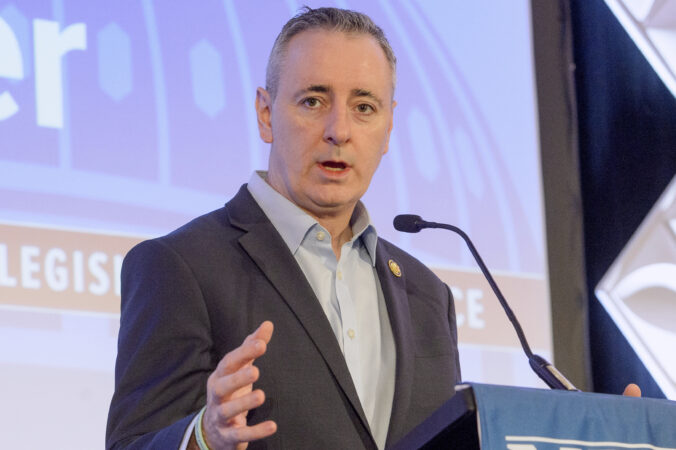
As the Department of Homeland Security approaches an increasingly likely shutdown this weekend, U.S. Rep. Brian Fitzpatrick (R., Bucks) said reforms to ICE, including banning masks for federal immigration agents, should be a part of any funding extensions for DHS.
“I’m the only federal agent in Congress,” Fitzpatrick, who served in the FBI for 14 years, said in an interview Thursday. “I spent my whole professional career as an FBI agent. Never once did I wear a mask, never. Executing a search warrant, arrest warrant, you name it, because you need to be transparent. You need to identify yourself. The whole function of policing requires the trust of the public.”
U.S. Immigration and Customs Enforcement and the U.S. Border Patrol, the agencies involved in the fatal shootings of two American citizens last month in Minnesota, both fall under DHS, which will enter a shutdown if lawmakers do not reach a funding deal by Friday.
The Border Patrol and ICE would continue to operate after receiving funding from President Donald Trump’s One Big Beautiful Bill Act, but a lapse in funding to DHS would affect other agencies under the department, including the Transportation Security Administration, the Coast Guard, and the Federal Emergency Management Agency, of which many employees would be working without pay.
Democrats have demanded that restrictions on masking and other changes to immigration enforcement be part of any funding deal.
Fitzpatrick, who represents a purple district, is rare among Republicans in accepting Democrats’ proposal as Congress grapples with a national reckoning over Trump’s immigration crackdown after federal agents killed Renee Good and Alex Pretti in shootings caught on video.
“There is broken trust between the public and ICE, and we have to restore that trust,” Fitzpatrick said.
“And the only way you restore that trust is by enacting reforms that are going to rebuild that social contract,” he continued. “Because policing is a social contract, whether it be local law enforcement or federal law enforcement.”
In the aftermath of the shootings in Minnesota, the House ended a four-day government shutdown earlier this month by passing a five-bill funding package that excluded DHS. Fitzpatrick, who voted for the House bill, said he would aim to work with Democrats to come up with a solution.
Negotiations on DHS’s allocation appeared to be at a standstill Thursday ahead of lawmakers going on a 10-day break, making a partial shutdown appear likely. In the U.S. Senate, a vote to advance a funding bill was rejected in a 52-47 tally Thursday, falling short of the necessary 60-vote threshold, the Associated Press reported.
“The agents wearing masks, I think primarily that’s driven by people are going to dox those people. That’s a serious concern, too, absolutely,” Fetterman said in a Fox News interview with correspondent Jacqui Heinrich (who is engaged to Fitzpatrick).
Whether ICE agents should be allowed to wear masks has become a point of contention since the escalation of Trump’s immigration policies, with legislative bodies across the U.S., including in Philadelphia City Council, introducing legislation to prohibit them.
Fitzpatrick, cochair of the bipartisan Problem Solvers Caucus, said Thursday that he believes there is “unanimity” among lawmakers in Washington for reforms, like requiring ICE agents to wear body cameras and prohibiting them from wearing masks.
The Bucks County lawmaker, one of nine Republicans representing districts that went for Democratic presidential nominee Kamala Harris in 2024, has frequently touted his willingness to break withTrump on issues, such as voting to extend Affordable Care Act subsidies and opposing the final passage of the One Big Beautiful Bill. (Democratic opponents note that he cast a key vote to advance an earlier version of Trump’s legislation.)
As for next steps, Fitzpatrick said he and U.S. Rep. Tom Suozzi (D., N.Y.), cochair of the Problem Solvers Caucus with Fitzpatrick, are continuing to communicate with House Speaker Mike Johnson (R., La.) and House Minority Leader Hakeem Jeffries (D., N.Y.) as discussions over DHS funding and changes continue.
“I would hope that we can all agree that everybody needs to be treated humanely and with respect and with dignity, that everybody believes in upholding the rule of law, everybody believes in the constitutional rights of everybody in this country,” Fitzpatrick said.
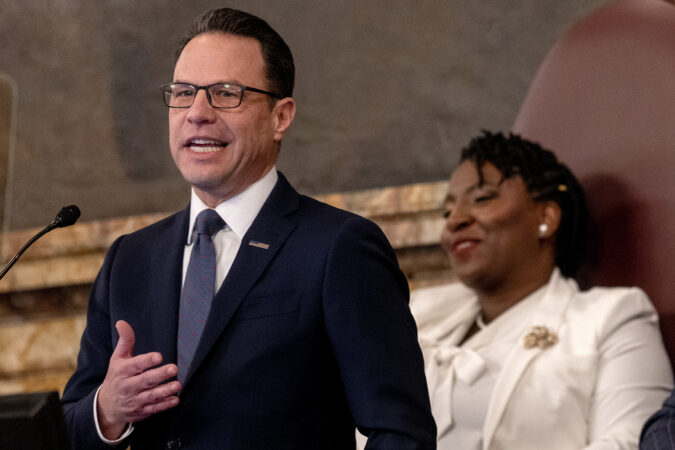
Gov. Josh Shapiro unveiled a broad plan Thursday meant to grow and preserve Pennsylvania’s housing supply as the state faces a shortage of homes residents can afford.
The plan aims to expand residents’ access to homes, connect Pennsylvanians to resources to keep them housed, make homebuilding faster and less costly, and improve coordination of housing efforts across agencies and levels of government.
Recommendations and reforms in the state’s Housing Action Plan, which is meant to guide Pennsylvania into 2035, are embedded in the governor’s proposed budget, Shapiro said.
“And now, the ball is in the court of the legislature to carry this forward and to get it done,” he said at a news conference in Philadelphia.
The plan is the culmination of a process that started in September 2024, when Shapiro signed an executive order directing state officials to create it.
Inthe plan, Shapiro highlights that more than a million Pennsylvania households are spending more than 30% of their income on housing. These households are “cost burdened,” according to the U.S. Department of Housing and Urban Development’s definition. Building more can lower housing costs.
Shapiro called the plan a long-term housing strategy that “brings together all different groups who are doing this work, builds on their expertise, and tackles housing access and affordability from every single angle.”
Here are key takeaways from Shapiro’s proposed housing action plan, the first of its kind in Pennsylvania.
Enacting the plan
Much of the plan relies on action from lawmakers in the state’s split legislature and other stakeholders rather than Shapiro’s administration exclusively. It does not assign dollar amounts to proposals, but calls on local governments to allow more housing and housing types, on builders to build more, and on both to work together to remove barriers to housing construction.
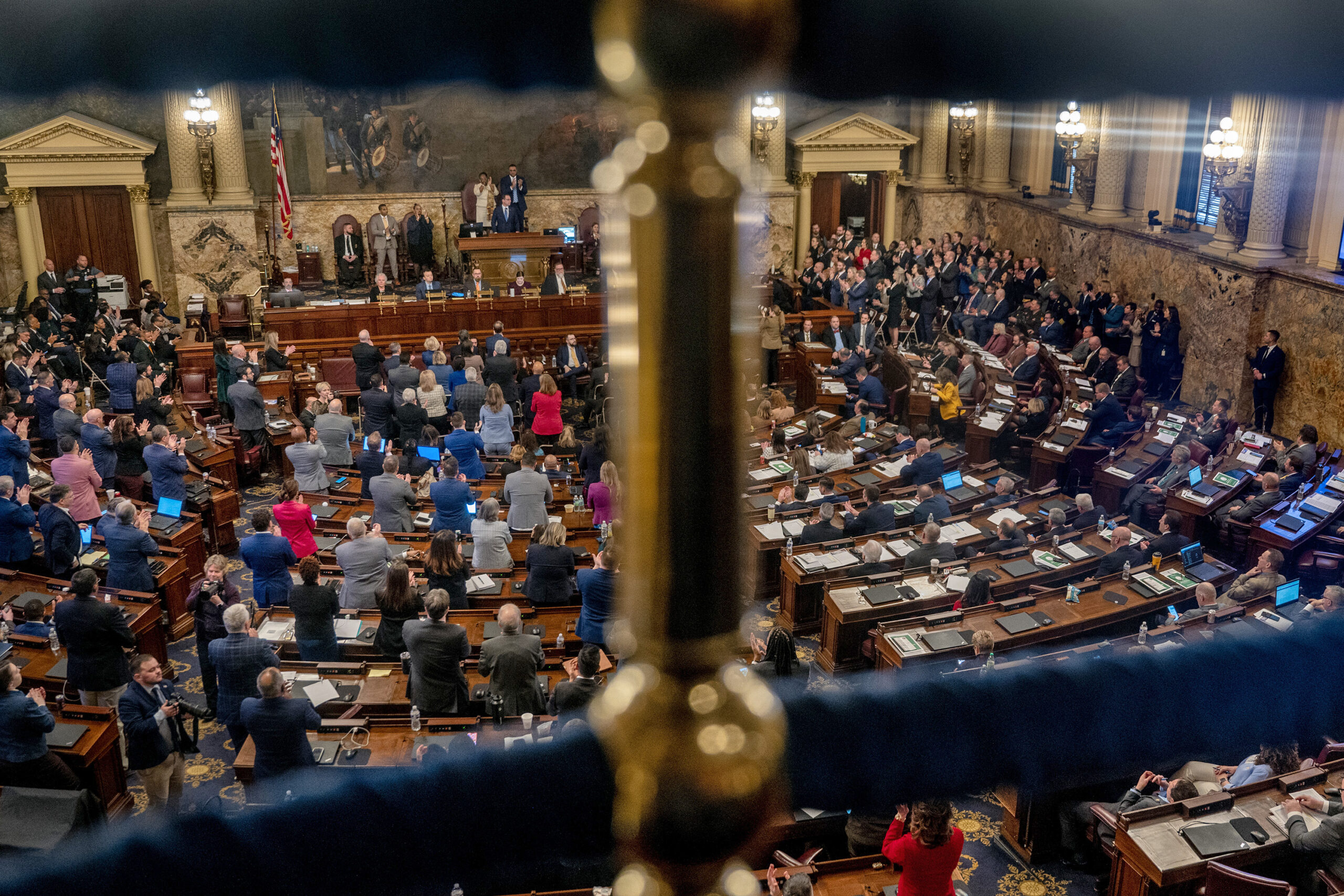
Democrats (left) stand to applaud a tax cut proposal while Republicans (right) remain seated as Gov. Josh Shapiro delivers his third budget address to a joint session in the House chambers at the State Capitol Tuesday, Feb. 4, 2025.
When Shapiro was asked how he intends to make sure the housing plan is implemented, he said he can take some actions through executive orders but “a lot does require the legislature to act and to work in concert with local government.”
“I hear in rural, urban, suburban communities, districts led by Democrats and Republicans, the need for more housing,” Shapiro said. “… And I would say to any lawmaker that doesn’t like my idea, ‘What’s yours?’ Because we can no longer wait. We have got to get this done. We’ve got to build more housing.”
$1 billion fund
In his budget address last week, Shapiro previewed his housing priorities, calling for a $1 billion fund, supported by the issuing of bonds, to pay for infrastructure projects that include housing.
Shapiro’s budget proposal includes no requirements on the proportion of funding that goes to each infrastructure need, leaving the possibility that the majority of funds could be spent on projects other than housing.
While Shapiro said Thursday that divvying up the $1 billion will be subject to negotiation with lawmakers, he said he hoped “the lion’s share of it would go to housing.”
Pennsylvania needs more housing
If Pennsylvania takes no action to build and preserve more housing, it will be short about 185,000 homes by 2035, according to the plan. To keep up with anticipated demand, the state needs to add 450,000 homes to its supply by then.
The housing plan has a stated goal of turning Pennsylvania into a leader in home construction.
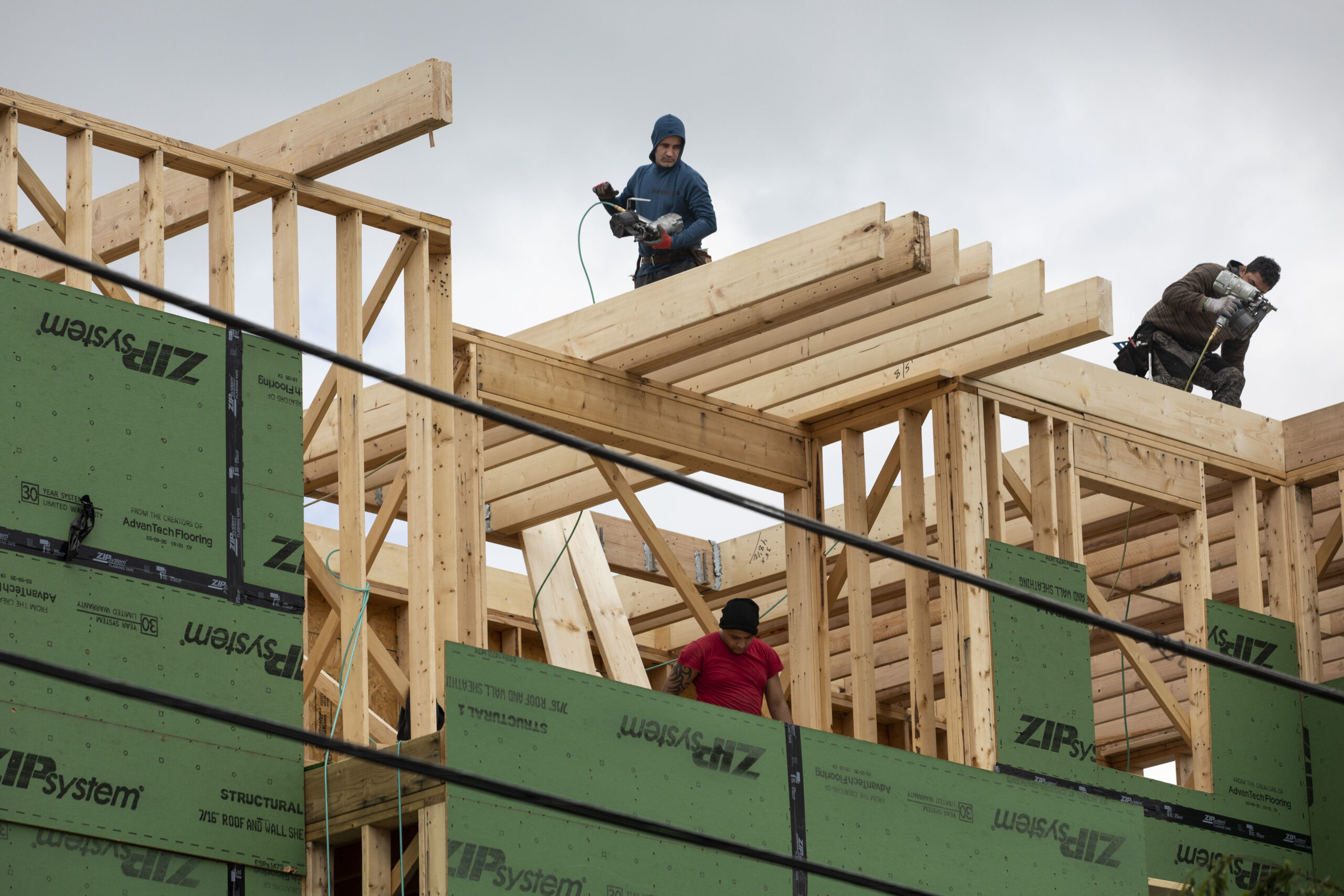
Construction work on a home at Bancroft and Reed Streets in South Philadelphia, Pa. on Friday, May 1, 2020.
As it stands now, Pennsylvania is one of the states that have allowed the least new housing. It ranked 44th for the share of homes approved to be built from 2017 to 2023, the Pew Charitable Trusts said in a report released last year. Pew said Pennsylvania’s lack of housing supply is hiking prices for homeowners and renters.
Shapiro’s housing plan recommends that Pennsylvania:
Expand programs to repair and preserve existing homes.
Create a tax credit to incentivize home building in underinvested areas.
Invest in small residential developers who can help boost housing production.
Eliminate outdated or unnecessarystate development regulations.
Direct funding to help homebuilders pay land development costs, developers convert former commercial buildings into homes, and property owners create mixed-use developments that include housing.
Appoint a deputy secretary of housing and create a “housing one-stop shop” to help residents and builders access the state’s existing housing resources.
Protection for renters
The housing plan calls for Pennsylvania to bolster protections for households that either rent their homes or rent the land their homes sit on, including protections Shapiro called for in his budget address.
Suggestions include:
More eviction protections.
Restrictions on how much landlords can collect as a security deposit.
Explicitly banning landlords from denying housing to people because they use public assistance or any other lawful source of income. (New Jersey enacted a law last month that does this.)
Security for manufactured-home owners
Manufactured homes are single-family dwellings often built off-site and placed on a lot. These households own their homes, but many of them rent the land.
Manufactured homes represent one of the most affordable forms of homeownership. But homeowners are often left vulnerable because they have no other option than to pay increased rent costs if they want to keep the homes they own. Manufactured-home communities are increasingly being bought by private equity companies and other institutional investors, and rent hikes tend to follow.
The housing plan says Pennsylvania should:
Limit the rent increases that landowners can charge.
Make financing easier for buyers of manufactured homes.
Giveresidents of manufactured-home communities the right of first refusal when a landowner decides to sell.
Recent laws in New Jersey limit annual rent increases for manufactured-home lots and make it easier for residents to buy their communities.
Across Pennsylvania, 56,000 households live in manufactured-home communities, Shapiro said in his budget address last week.
Homebuyer help
The plan calls for Pennsylvania to pursue new ways to help residents become homeowners, including creating programs to reduce home-buying costs and allowing local governments to exempt first-time homebuyers from local realty transfer taxes.
It also calls for the state to impose a transfer tax when corporate investors buy single-family and certain other types of homes to help households compete for properties.
Untangling titles
To protect Pennsylvanians’ generational wealth, the plan calls for the state to allow transfer-on-death deeds to provide a streamlined process for passing down homes. This would help prevent cases of tangled title — or unclear legal ownership of property. This mostly occurs when a homeowner dies and the deed is not transferred to a new owner.
Tangled titles keep people from qualifying for help to repair their homes and can prevent them from being able to sell properties.
The plan also calls for funding for legal services to help low-income Pennsylvanians resolve tangled titles. In 2022, Philadelphia officials pledged to give $7.6 million over four years to legal-aid groups that are tackling this problem.
Rachel Gallegos, a divisional supervising attorney for the homeownership and consumer rights unit at Community Legal Services of Philadelphia, called Shapiro’s plan “ambitious.”
“And I like that,” she said. “I think it has to be in order to keep progress moving forward.”
The legal-aid nonprofit routinely helps low-income clients with tangled titles, and Gallegos said she was glad to see the plan call for additional support for the work.
“We want to preserve homeownership for our clients,” she said.
CLAIRTON, Pa. — For Don Furko, Aug. 11, 2025, was a normal shift. Until it became the shift he would never forget.
At 10:47 a.m., U.S. Steel’s Clairton Coke Works outside Pittsburgh — a sprawling riverside industrial facility and the largest of its kind in the Western Hemisphere — erupted in an ear-piercing boom.
A steelworker for 25 years and former Clairton local union president, Furko pulled on flame-retardant jacket and pants, a hard hat and safety glasses, left his post and rushed to the black plume of smoke rising from the facility’s batteries — the massive arrangements of industrial ovens that heat coal to some 2,000 degrees, turning it into carbon-rich coke.
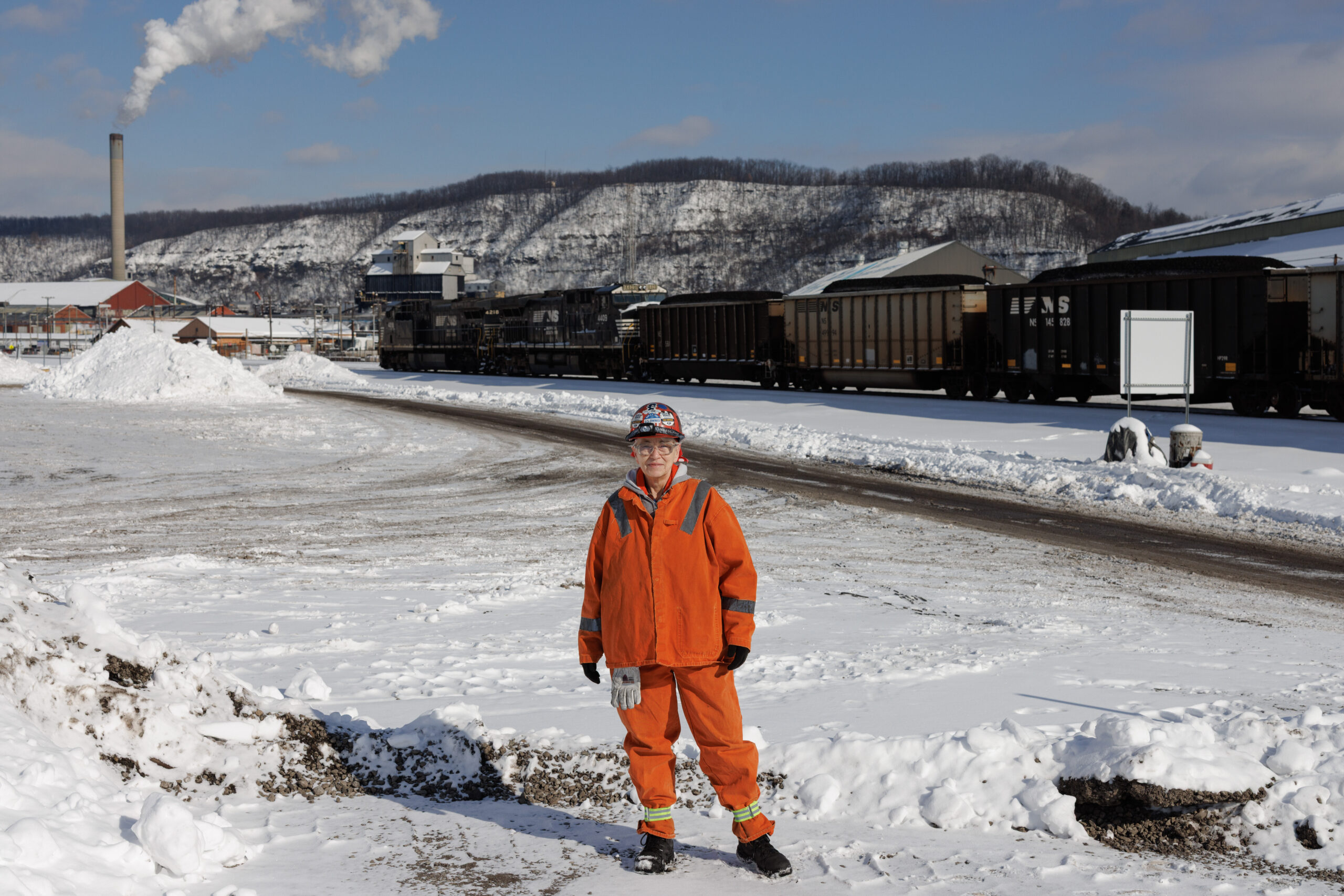
Steelworker Renee Hough stands at U.S. Steel’s Clairton Coke Works in Clairton, Pa., on Jan. 29. (Quinn Glabicki/Pittsburgh’s Public Source via AP)
Near the wharf, Renee Hough, a utility technician in charge of loading coke, sat in the cab of the plant’s screening station when the explosion ripped through the air, blinding her in black dust. “My first thought was I was dead,” Hough recalls. Flames emerged as the dust settled, and a voice crackled through the radio: Battery 13 had just exploded.
“I can’t even explain how mangled everything was,” Furko recalls. “There were flames everywhere.” Workers shuttled the injured to the helipad for evacuation. Through the chaos, Furko heard a fellow steelworker screaming, buried beneath the rubble.
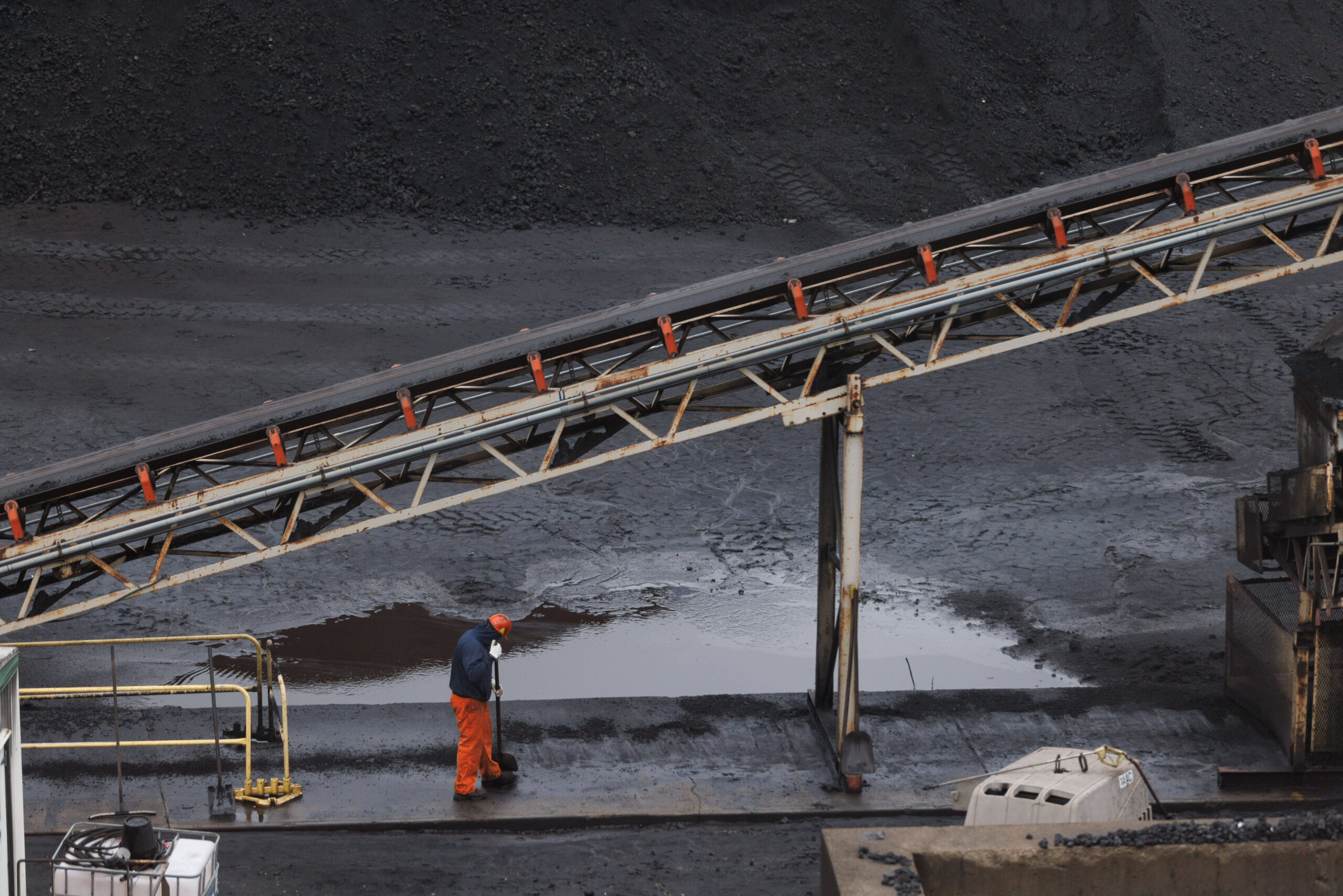
A worker in the coal fields at U.S. Steel’s Clairton Coke Works in Clairton, Pa., on Nov. 19, 2025. (Quinn Glabicki/Pittsburgh’s Public Source via AP)
The blast killed two U.S. Steel workers and injured 11 others, including contractors, according to the Chemical Safety Board, a federal agency investigating the incident.
Six months later, workers remain rattled and community concerns about air pollution from the plant are heightened.
The blast comes on top of a string of other accidents at the Clairton plant over time as well as a long history of legal battles between U.S. Steel and Allegheny County regulators, who regularly accuse the company of flouting environmental rules at the facility. As recently as Jan. 27, pollution control equipment at the Clairton plant temporarily broke down and nearby air monitors recorded elevated air pollution, according to the Allegheny County Health Department.
To U.S. Steel’s critics, the August blast highlighted chronic problems at the facility. And some current and former workers at Clairton Coke Works say poor management and underinvestment have exacerbated air pollution and undermined workplace safety at the plant where operators already have little margin for error, Pittsburgh’s Public Source and the Associated Press have found.
The August explosion also came after Nippon Steel’s $15 billion acquisition of U.S. Steel in June 2025. It’s an open question whether the Japanese steel company will invest significantly in Clairton Coke Works and address issues raised by workers, government officials and environmental watchdogs.
The Chemical Safety Board has said that the August explosion occurred while workers were preparing to replace a damaged valve that was detected in July, as well as other valves. The agency’s investigation continues; it said in December that it has identified “potentially unmitigated hazards for workers at Clairton Coke Works that warrant immediate attention.”
“They try to say ‘safety first, safety first,’” said Brian Pavlack, a current worker at Clairton Coke Works. “Safety is not the first priority for them.”
Nippon Steel did not provide a response to written questions. In a written statement responding to detailed questions, U.S. Steel stressed its commitment to safety.
“Safety is our core value and shapes our culture, influences how we lead, and anchors our responsibility to ensure that every employee returns home safely, every single day,” the company said.
Dangerous work
The 392-acre Clairton Coke Works opened more than a century ago, 20 miles south of Pittsburgh along the west bank of the Monongahela River. The ovens at the plant heat coal at high temperatures for hours to make coke, a key component in steelmaking. Its ovens produce 3.6 million tons of coke annually, which is shipped to the company’s operations farther up the river at the Edgar Thomson Works in Braddock, and to U.S. Steel’s Gary Works in Indiana.
But making coke isn’t a clean process or without risk. The heat removes impurities, producing a flammable byproduct called coke oven gas. Coke oven gas includes hydrogen, methane, nitrogen and carbon monoxide, and some of it is used as fuel to heat the coke ovens. Coke oven gas is explosive due to high hydrogen content, said Fred Rorick, a former operations manager at Bethlehem Steel and steel industry consultant.
“At a coke works, when you have that, you have to be very, very, very careful,” Rorick said.
According to the Chemical Safety Board, the August explosion happened while workers were closing and opening a gas isolation valve in a basement after pumping water into the valve. U.S. Steel’s written procedure did not mention the use of water and a U.S. Steel supervisor directed workers to pump the water, the agency said. Kurt Barshick, U.S. Steel’s vice president of the Mon Valley Works, said during an October presentation to residents in the wake of the August explosion that workers trapped “3,000 PSI water inside of a valve that’s rated for 50 PSI.” The valve cracked and gas filled the area, Barshick added.
Drew Sahli, the Chemical Safety Board’s investigator in charge, said there was a “release of coke oven gas” and that the gas “contacted an ignition source” and exploded. The agency is still investigating how the gas was released, Sahli said.
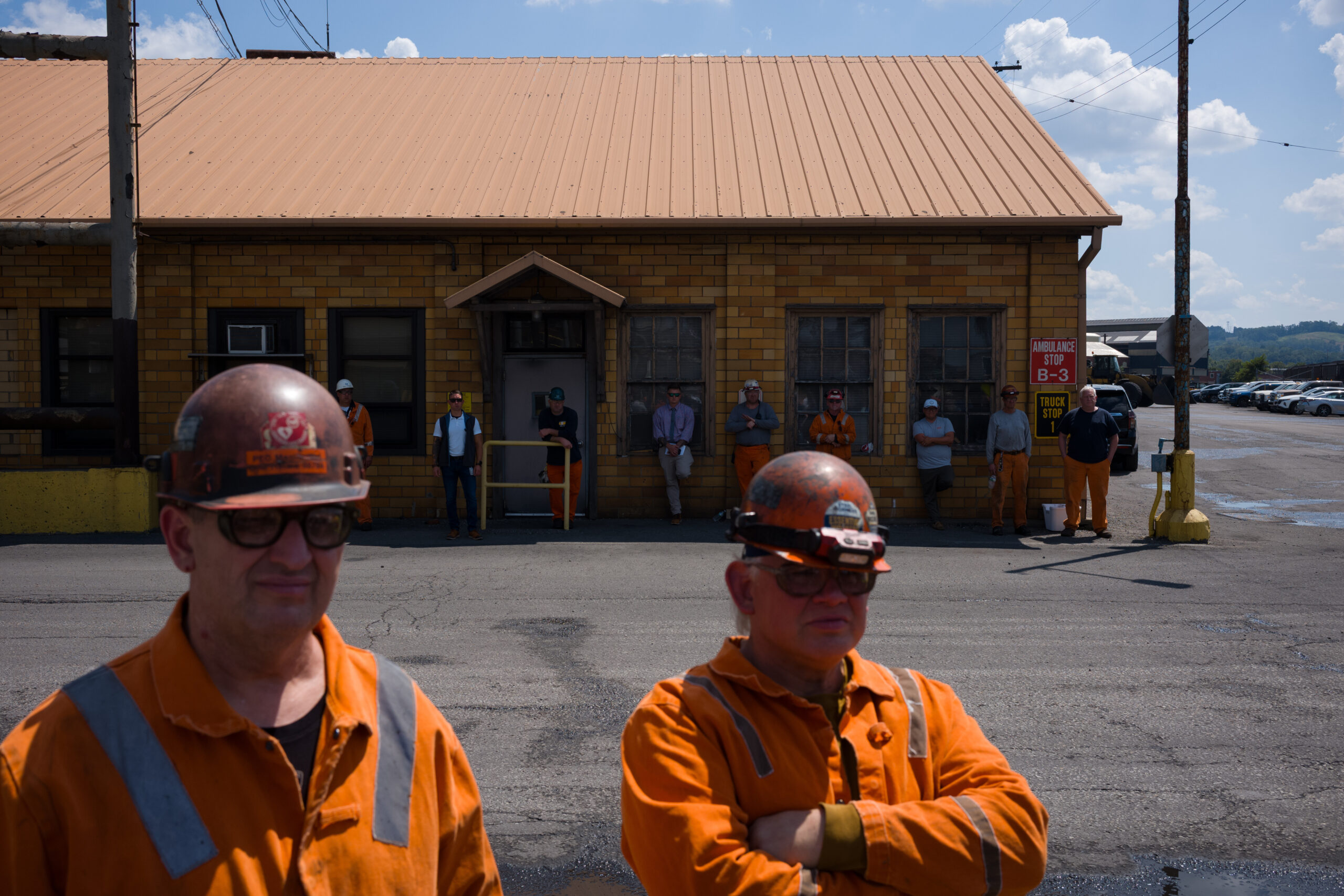
Steelworkers stand at U.S. Steel’s Clairton Coke Works in Clairton, Pa., on Aug. 12, 2025, a day after an explosion at the facility killed two workers. (Quinn Glabicki/Pittsburgh’s Public Source via AP)
U.S. Steel said it has “strengthened several safety protocols” based on its own ongoing investigation, including prohibiting the use of high-pressure water for valve cleaning and reviewing their “Management of Change program, which assesses proposed changes in procedures and evaluates risk.”
Before the August blast, Clairton Coke Works already had a history of accidents and explosions.
In 2009, a maintenance worker was killed in a blast.
In 2010, an explosion injured 14 employees and six contractors.
In 2014, a worker was burned and died after falling into a trench.
In February 2025, a problem at a battery led to a “buildup of combustible material” that ignited, injuring two people, according to the Allegheny County Health Department.
After the 2010 explosion, the Occupational Safety and Health Administration fined U.S. Steel and a subcontractor $175,000 for safety violations. U.S. Steel appealed its citations and fines, which were later reduced to $78,500 under a settlement agreement. U.S. Steel admitted no wrongdoing as part of the settlement.
While there’s “a lot of ways that you can get yourself hurt or killed” at Clairton Coke Works, explosions are the biggest hazard, said Calvin Croftcheck, who previously worked at the plant and served as the United Steelworkers safety coordinator for U.S. Steel.
“Since 2009, there have been three accidents that have resulted in fatalities and that is just not common in today’s age of safety,” said Phillip Kondrot, a workers’ compensation attorney who represents workers injured at Clairton Coke Works. “That is a dangerous place to work.”
“We have intensive procedures that are currently in place at Clairton and our other facilities, and our employees are charged with following them,” U.S. Steel said. “We will not respond to comments from for-profit lawyers and stand behind the safety professionals who tirelessly work at U. S. Steel.”
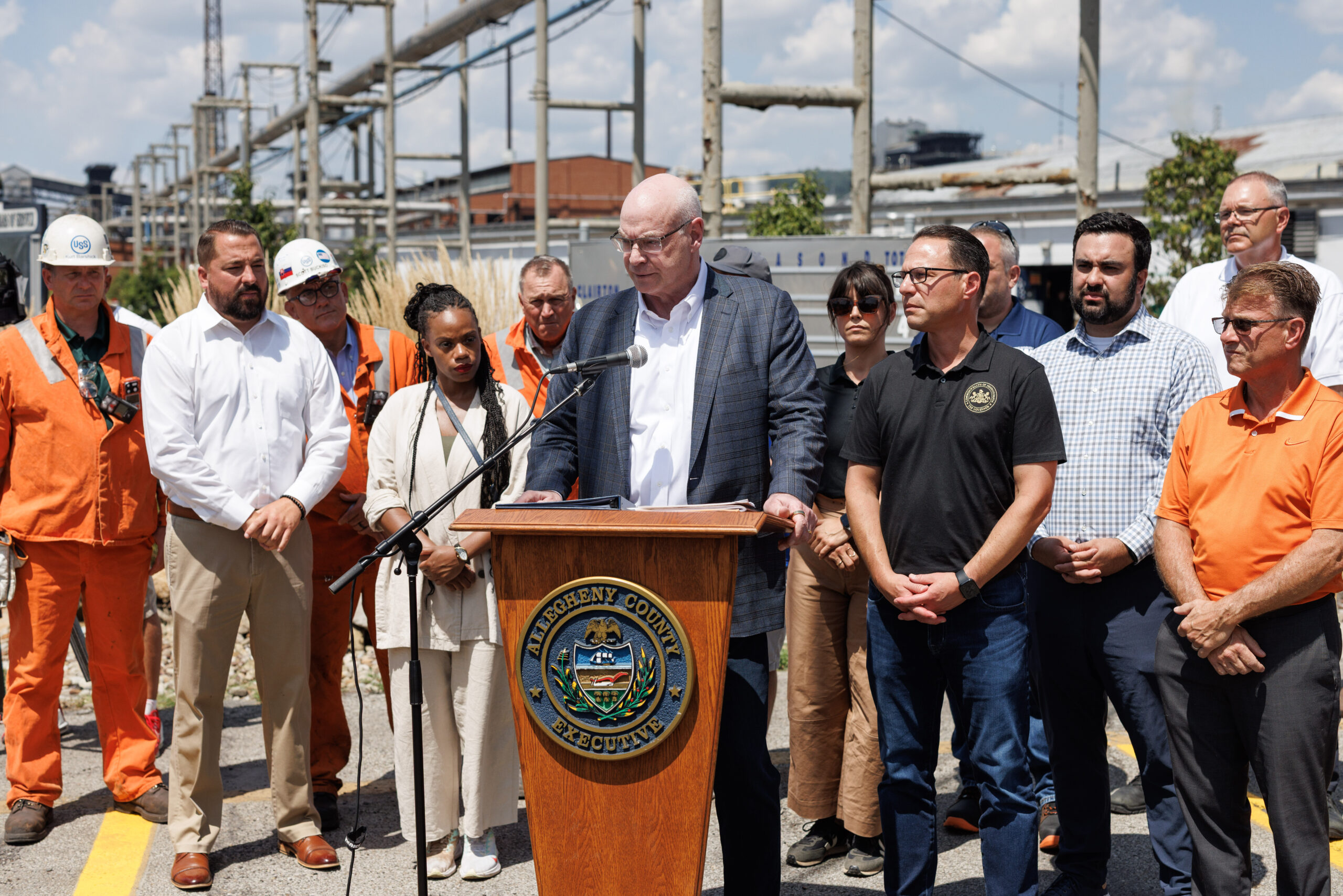
U.S. Steel president and CEO David B. Burritt, accompanied by Pennsylvania Gov. Josh Shapiro (center right) and other officials, speaks during a news conference at U.S. Steel’s Clairton Coke Works in Clairton, Pa., on Aug. 12, 2025, a day after an explosion at the facility killed two workers. (Quinn Glabicki/Pittsburgh’s Public Source via AP)
Management questioned
Some current and former workers at the Clairton plant fault U.S. Steel’s management of the aging facility, saying that it has caused a range of operational problems.
“A lot of things that have happened there, where they needed something fixed and something went wrong, it was because corporate wouldn’t approve them ordering the parts,” said Jonathan Ledwich, who worked at Clairton Coke Works between 2011 and 2022 trying to prevent emission leaks from the coke ovens. “We did the best we could with what we had.”
Ledwich points to a fire at the Clairton plant on Christmas Eve 2018. It shut down pollution control equipment and led to repeated releases of sulfur dioxide and hydrogen sulfide, according to a lawsuit filed by environmental groups after the incident. In the wake of the fire, Allegheny County warned residents to limit outdoor activities, with residents saying for weeks afterward that the air smelled like rotten eggs and was hard to breathe.
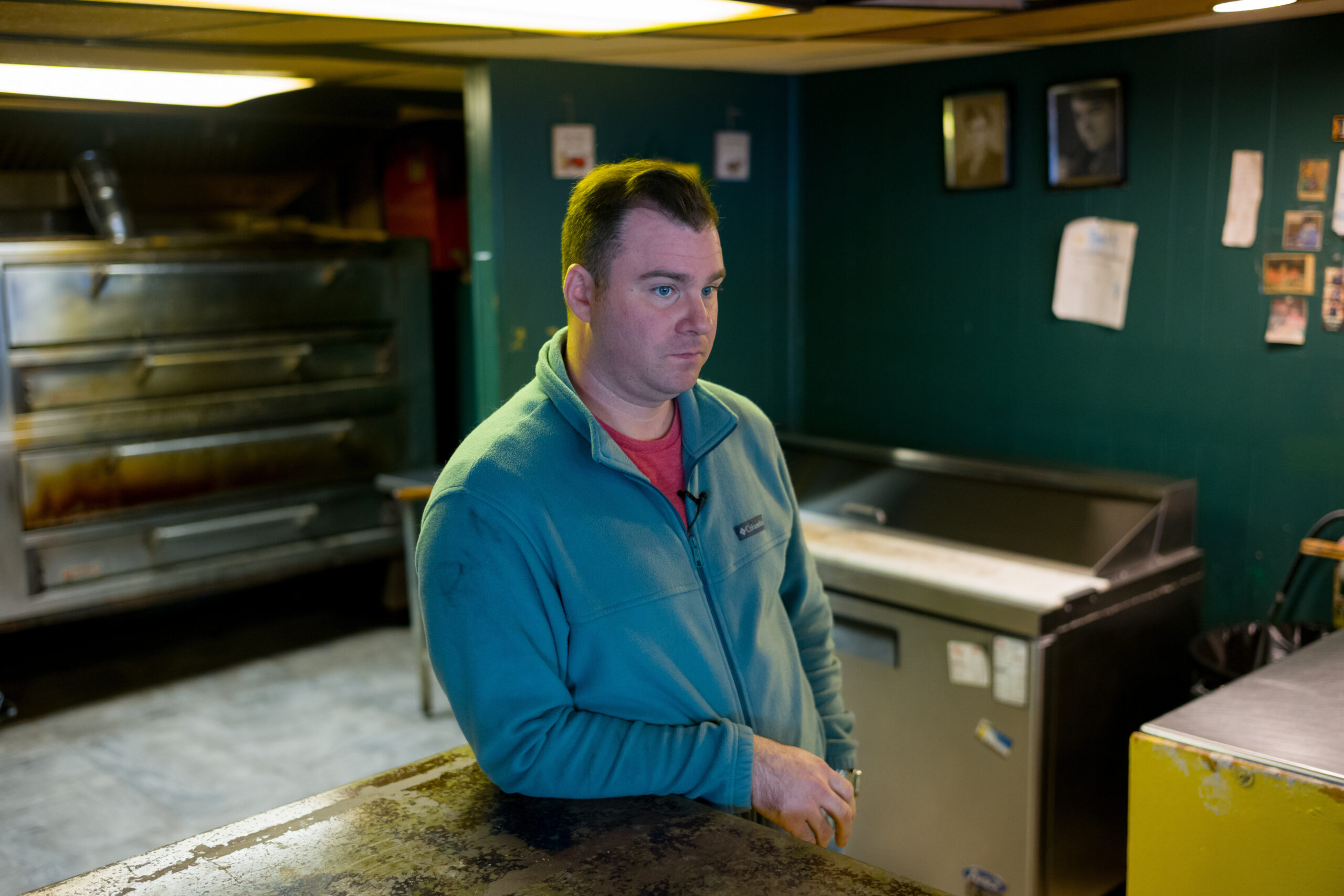
Former U.S. Steel worker Jonathan Ledwich stands at the pizza shop he now owns in Trafford, Pa., on Dec. 15, 2025. (Quinn Glabicki/Pittsburgh’s Public Source via AP)
Ranajit Sahu, an engineer hired by the plaintiffs, wrote in a report filed in the case that he found “no indication” that U.S. Steel “has an effective, comprehensive maintenance program for the Clairton plant.” Sahu also wrote that the 2018 accident, which was precipitated by piping falling due to corrosion, was “preventable by a robust inspection and preventive maintenance program and by better plant design.”
In a 2024 consent decree settling the lawsuit, U.S. Steel agreed to measures including investing close to $20 million in facility upgrades and permanently idling a battery of coke ovens at the plant. As part of the consent decree, U.S. Steel admitted no liability.
Hough, the utility technician in charge of loading coke, said that the lack of proactive maintenance at Clairton Coke Works makes her feel unsafe at times.
“There’s a lot of things that need to be repaired that they’re not prioritizing because you can’t stop production,” Hough said of U.S. Steel.
Some current and former plant workers also describe difficulty getting coke oven doors replaced. Ledwich, the former Clairton steel worker, said some doors that needed to be replaced would leak emissions.
In a 2020 deposition for the lawsuit related to the 2018 Christmas Eve fire, James Kelly, former deputy director of the environmental health bureau at the Allegheny County Health Department — the agency that oversees emissions at the plant — said the facility is “one of the most decrepit facilities” that he’d ever seen.
The litigation surrounding the Christmas Eve fire wasn’t the first time U.S. Steel was accused in court of skimping on maintenance. In a 2017 amended federal class action lawsuit alleging violations of federal securities laws, U.S. Steel shareholders said that the company CEO hired the consulting firm McKinsey & Company in 2014 after multiple unprofitable years and “implemented extreme cost-cutting measures” in 2015 involving layoffs and deferrals of “desperately-needed maintenance and repairs.” The lawsuit was eventually settled and the U.S. Steel defendants admitted no wrongdoing.
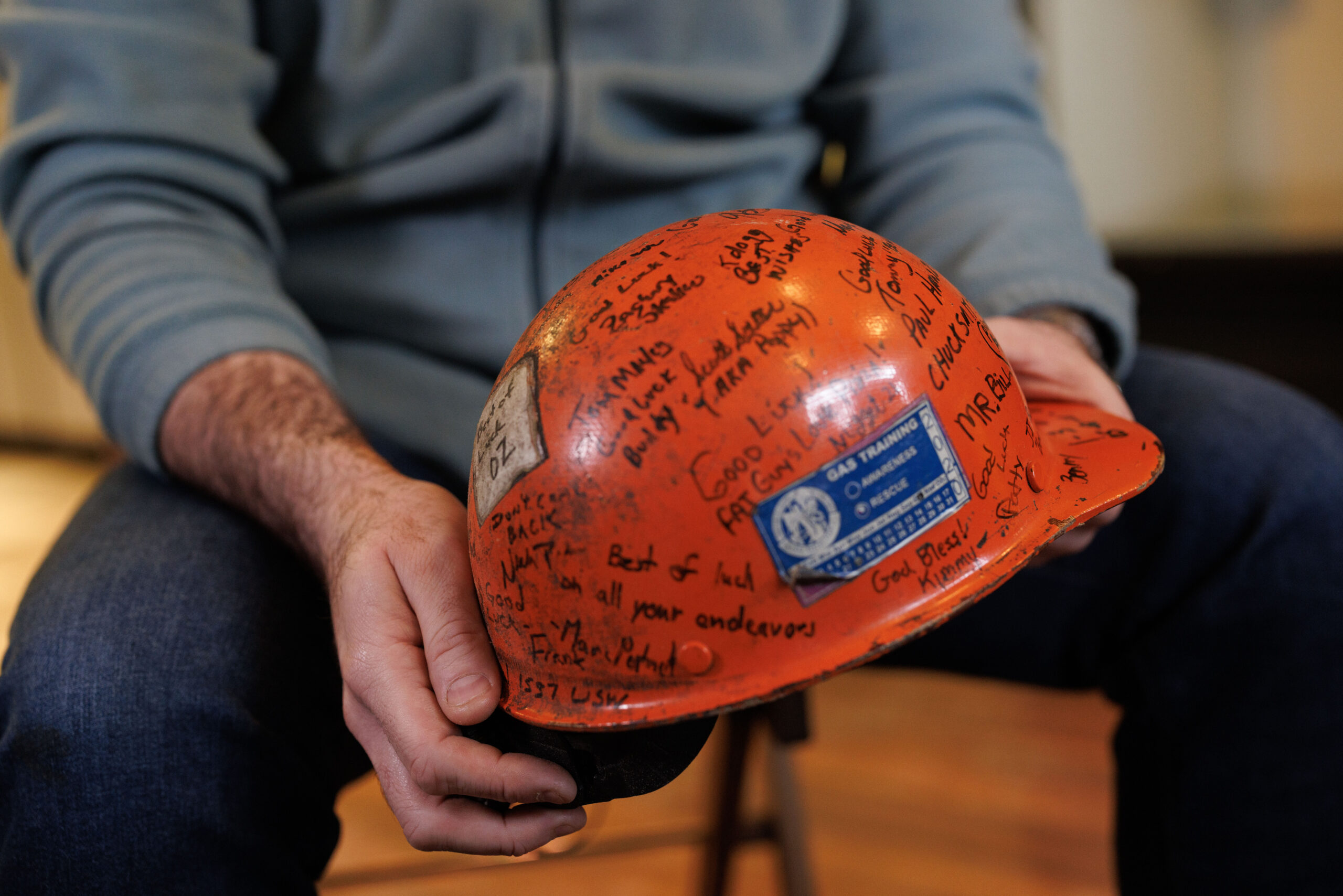
Former U.S. Steel worker Jonathan Ledwich holds his old hard hat at the pizza shop he now owns in Trafford, Pa., on Dec. 15, 2025. (Quinn Glabicki/Pittsburgh’s Public Source via AP)
U.S. Steel had “one of the best safety staffs in the country,” said Mike Wright, former director of the health, safety, and environment department at the United Steelworkers. But key safety department leaders were fired, according to Wright and Croftcheck, the former union safety coordinator. Wright said the dismissals occurred in 2016.
Ed Mazurkiewicz, former director of safety and industrial hygiene at U.S. Steel, said that he was let go by the company in 2016. While he knew at the time that McKinsey had been “evaluating all of U.S. Steel” and that there would be downsizing, it was still a shock when his job was eliminated, Mazurkiewicz said.
U.S. Steel said it has “worked with many advisers and partners” over the years and that the company’s “overall transformation efforts have improved our company’s performance, created a robust maintenance program, and improved employee safety over time.” In response to questions about U.S. Steel’s safety department and the firing of department leaders, the company said: “We cannot comment on personnel matters.”
“They brought in McKinsey to tell them really how to run things,” Wright said of U.S. Steel. “We were a little outraged by that.”
McKinsey said in a statement that the company is one of “many advisers that have served U.S. Steel in support of its efforts to keep manufacturing jobs in the United States, improve operational resiliency, and invest in and support the communities in which it operates.”
“As with all our work for the company — and with all our clients — safety is always a top priority,” the company added.
Maintenance practices have changed over time, some current and former workers say.
“I used to see a lot more maintenance and taking care of things and fixing things before they broke, or replacing things that were worn out,” said Hough, who has worked at the plant for 29 years. “That used to happen back when I was first hired there, and that hasn’t happened in the last 10 or so years.”
Battles over air pollution
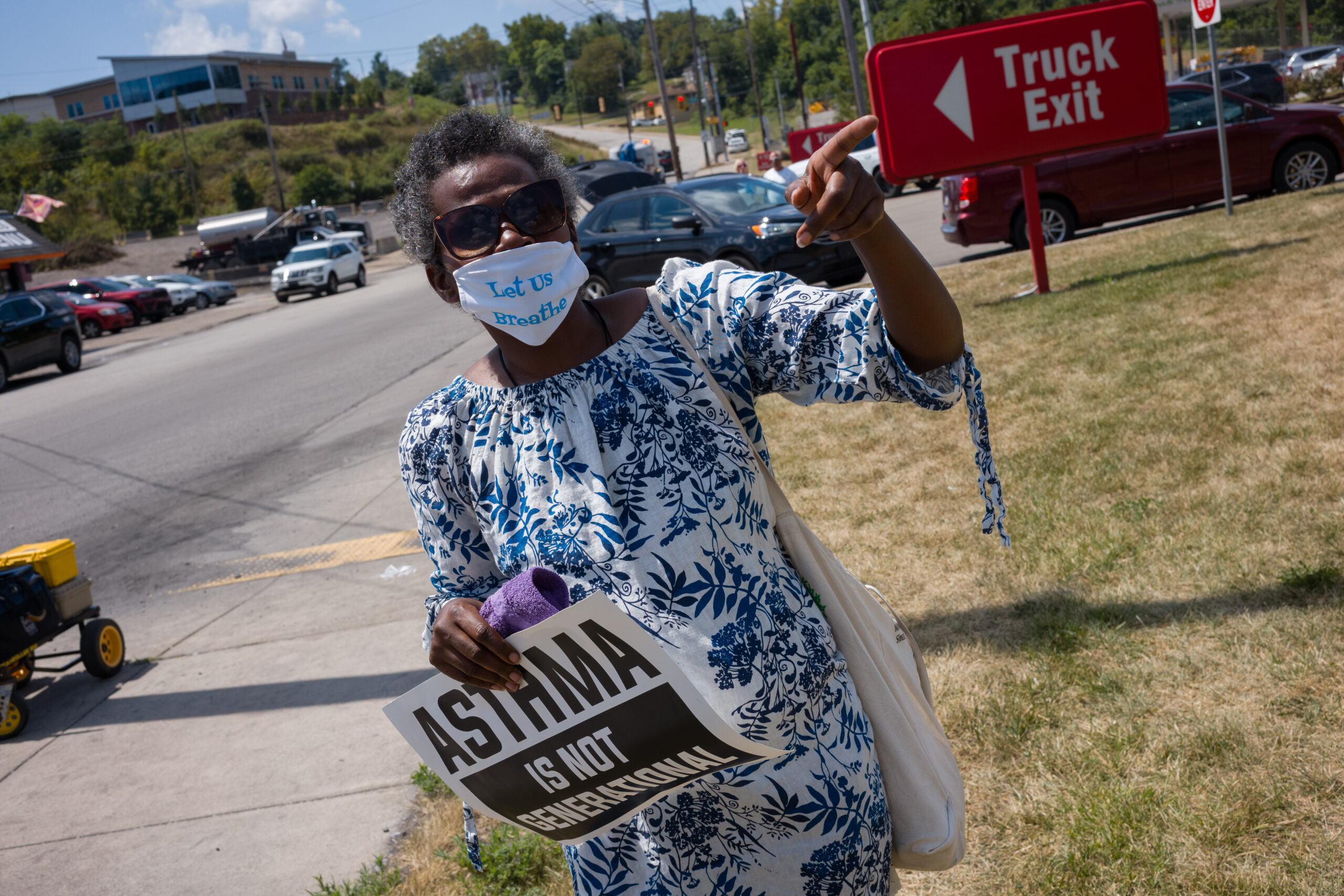
For years, Clairton Coke Works has drawn the ire of government regulators, environmental advocates and community members concerned about air pollution originating from the plant. Air quality in the region has improved over time, but the Clairton plant has been the largest local source of air pollution — such as sulfur oxides and particulate matter — in recent years, according to the Allegheny County Health Department. Particulate matter, for instance, is linked to various health issues, including heart attacks and aggravated asthma. The plant also emits carcinogenic benzene.
While the Clairton plant is allowed to emit some air pollution, county Health Department regulators routinely clash with U.S. Steel over alleged violations of the plant’s operating permit, such as excessive emissions or failing to use pollution control equipment. In 2023, for instance, the Allegheny County Health Department fined U.S. Steel more than $2 million for violations at Clairton Coke Works.
“You’re sort of in this cycle of patching, monitoring, fining, patching, monitoring, fining, and it’s never really good enough,” said Karen Hacker, director of the Allegheny County Health Department between 2013 and 2019. “You can’t say it hasn’t improved. Just look at the sky in Pittsburgh, right? But it hasn’t removed a source of pollution.”
In response to questions from Public Source and AP, the Allegheny County Health Department said in a written statement that the agency “inspects coking operations daily” and “addresses violations as discovered during inspections” with a full compliance evaluation every two years.
The department also said that air monitoring stations near the Clairton plant “have measured a 15-25% reduction in annual average particle pollution concentrations compared to ten years ago.” The department declined to comment on “open investigations, enforcement orders, or pending litigation.”
Nationally, Clairton Coke Works’ environmental compliance track record is an outlier, according to a Public Source and AP analysis of federal Clean Air Act data from about 14,000 facilities. The analysis found that Clairton Coke Works is classified by the EPA as a “high-priority violator” — only about 11% of major emitters fall into that category. It’s even rarer for facilities to garner financial penalties on the magnitude that Clairton Coke Works has faced in the last five years, the analysis shows. Just 11 facilities, including Clairton Coke Works, have faced $10 million in penalties or more in the last five years.
“It’s a massive facility. It’s a complex facility and it’s an underfunded facility,” said Adam Ortiz, former EPA regional administrator of the Mid-Atlantic region during the Biden administration. “All those things make it tough.”
Clairton resident and environmental advocate Melanie Meade stands at the entrance of the Clairton Coke Works in Clairton, Pa., on Aug. 12, 2025, a day after an explosion at the facility killed two workers. (Quinn Glabicki/Pittsburgh’s Public Source via AP)
U.S. Steel said in its statement that the company spends “$100 million annually on environmental compliance at Clairton alone and has consistently achieved an environmental compliance rate exceeding 99% for regulated activities per year at our Clairton Plant, the largest coke-making facility in North America.”
The company said that it has “invested more than $750 million in environmental improvement projects in the Mon Valley” and that preliminary data shows that a county air monitor located downwind of the Clairton plant has met the Environmental Protection Agency’s national ambient air quality standard for particulate matter since 2024.
“Our steadfast pursuit of environmental excellence will continue,” the company said. “We maintain a productive relationship with the ACHD and other regulators, with a commitment to regulation grounded in science and law.”
Some environmental advocates have argued that the Allegheny County Health Department is outgunned against U.S. Steel. The department’s air quality program, which handles oversight of Clairton Coke Works, is funded by fees paid by industrial polluters. But the program has struggled financially in recent years. In a 2018 report, the EPA asserted that revenue from emissions-based fees was “diminishing as a result of emissions reductions” and that the existing fee structure could potentially “undermine long-term program sustainability.” The Allegheny County Council approved raising the fees in 2021 and again in November.
Meanwhile, the Trump administration has signaled that it is taking a more hands-off approach with polluters. In November, President Donald Trump temporarily exempted Clairton Coke Works and other coking plants from provisions of a Biden-era rule that, for instance, required fence line monitoring for benzene emissions. U.S. Steel previously requested an exemption.
U.S. Steel said that the rule “imposed significant compliance costs while setting technically unachievable standards and providing little or no environmental benefit.” Its Mon Valley facilities have “never been fined” for exceeding benzene emission standards, the company said.
New ownership arrives
Before the August explosion, workers and outside observers were already watching Nippon Steel closely for clues about their plans for Clairton Coke Works and the Mon Valley. Now, questions about Nippon’s intentions have become even more pressing.
In the nearly $15 billion deal to buy U.S. Steel, Nippon Steel pledged to invest $14 billion in domestic steelmaking operations, including building a new electric arc furnace somewhere in the U.S. Much of that money remains publicly uncommitted, and U.S. Steel has been firm that it wants to keep the Clairton plant operating.
“The Clairton Coke Plant is an important part of our North American Flat-Rolled integrated operations,” the company said in November. The company added that a “steady coke supply remains critical” and that the “Clairton Coke Plant will be maintained for the next generation of steelmaking.”
Since Nippon Steel acquired the company, things have started to change, according to Hough. The company has invested more in repairs and preventive maintenance, she said.
“Nippon is putting the money into the plant, and let me tell you, they’ve got a long way to go,” Hough said. “U.S. Steel let it go so bad for so long.”
However, U.S. Steel has not publicly committed to spending money at the Clairton plant to expand production, extend its life, improve efficiency, upgrade safety or reduce its polluting air emissions.
In response to questions about its investment plans for Clairton Coke Works, U.S. Steel said the company plans to invest “more than $2 billion at Mon Valley Works.”
Furko served as Clairton local union president in 2021 when U.S. Steel canceled a pledged $1 billion investment in the Mon Valley Works. He remains wary of Nippon’s promises.
“Until I see shovels start to hit dirt,” Furko said, “then I don’t believe it until I see it.”
Of the $14 billion, U.S. Steel has said $2.4 billion will go toward its Pittsburgh-area plants. A portion of that money will be spent on building a new hot strip mill to replace the one at its Irvin plant, just down the Monongahela River from Clairton, that processes steel into massive sheet rolls, primarily for the automotive, appliance and construction industries.
It’s unclear how Nippon and U.S. Steel will address recent findings from federal investigators. In December, the Chemical Safety Board recommended that U.S. Steel conduct a siting evaluation of all buildings at the Clairton plant that are occupied or could be occupied to identify and assess potential hazards for workers. The agency said that the company has not conducted a facility siting evaluation as part of efforts to rebuild and relocate its “personnel facilities” after the blast.
U.S. Steel continues to cooperate with the Chemical Safety Board and the Occupational Safety and Health Administration and “evaluate their recommendations,” the company said.
Even with Nippon’s promise of revitalizing U.S. Steel with billions of dollars of investment, the August explosion is still darkening the minds of workers. Furko said he struggles to motivate himself to go to work on some days.
“I’ve been there 25 years. There’s been guys who have lost legs from rail equipment running over them. Bad falls and stuff like that,” Furko said. “Nothing has affected me like this has.”
This story is a collaboration between Pittsburgh’s Public Source and the Associated Press.
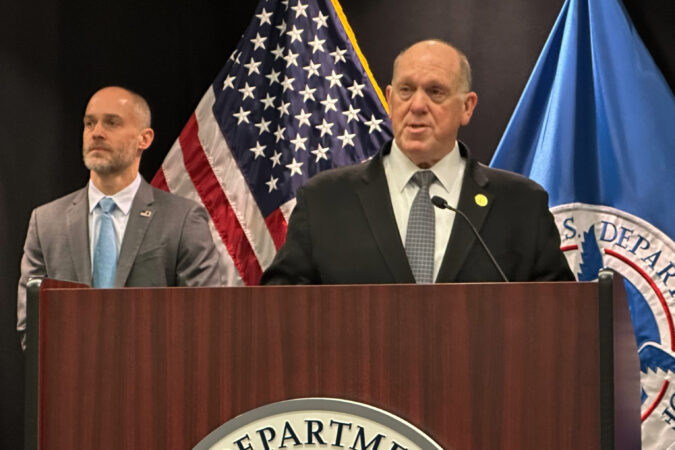
MINNEAPOLIS — The Trump administration is ending the immigration crackdown in Minnesota that led to thousands of arrests, violent protests and the fatal shootings of two U.S. citizens over the past two months, border czar Tom Homan said Thursday.
The U.S. Immigration and Customs Enforcement operation focused on the Minneapolis-St. Paul area resulted in more than 4,000 arrests, Homan said, touting it a success.
“The surge is leaving Minnesota safer,” he said. “I’ll say it again, it’s less of a sanctuary state for criminals.”
The announcement marks a significant retreat from an operation that has become a major distraction for the Trump administration and has been more volatile than prior crackdowns in Chicago and Los Angeles. It comes as a new AP-NORC poll found that most U.S. adults say Trump’s immigration policies have gone too far.
State and local officials, who have frequently clashed with federal authorities since Operation Metro Surge started in December, insisted the swarm of immigration officials inflicted long-term damage to the state’s economy and its immigrant community.
Democratic Gov. Tim Walz urged residents Thursday to remain vigilant in the coming days as immigration officers prepare to leave. He called the crackdown an “unnecessary, unwarranted and in many cases unconstitutional assault on our state.”
“It’s going to be a long road,” Walz told a news conference. “Minnesotans are decent, caring loving neighbors and they’re also some of the toughest people you’ll find. And we’re in this as long as it takes.”
Trump’s border czar pledged that immigration enforcement won’t end when the Minnesota operation is over.
“President Trump made a promise of mass deportation and that’s what this country is going to get,” Homan said.
Some activists expressed relief at Homan’s announcement, but warned that the fight isn’t over. Lisa Erbes, a leader of the progressive protest group Indivisible Twin Cities said officials, must be held accountable for the chaos of the crackdown.
“People have died. Families have been torn apart,” Erbes said. “We can’t just say this is over and forget the pain and suffering that has been put on the people of Minnesota.”
While the Trump administration has called those arrested in Minnesota “dangerous criminal illegal aliens,” many people with no criminal records, including children and U.S. citizens, have also been detained.
Homan announced last week that 700 federal officers would leave Minnesota immediately, but that still left more than 2,000 on Minnesota’s streets. At the time, he cited an “increase in unprecedented collaboration” resulting in the need for fewer federal officers in Minnesota, including help from jails that hold deportable inmates.
Homan took over the Minnesota operation in late January after the second fatal shooting by federal immigration agents and amid growing political backlash and questions about how the operation was being run. He said Thursday that he intends to stay in Minnesota to oversee the drawdown that began this week and will continue next week.
“We’ve seen a big change here in the last couple of weeks,” he said, crediting cooperation from local leaders.
During the height of the surge, heavily armed officers were met by resistance from residents upset with their aggressive tactics.
“They thought they could break us, but a love for our neighbors and a resolve to endure can outlast an occupation,” Minneapolis Mayor Jacob Frey said on social media after Homan’s news conference. “These patriots of Minneapolis are showing that it’s not just about resistance — standing with our neighbors is deeply American.”
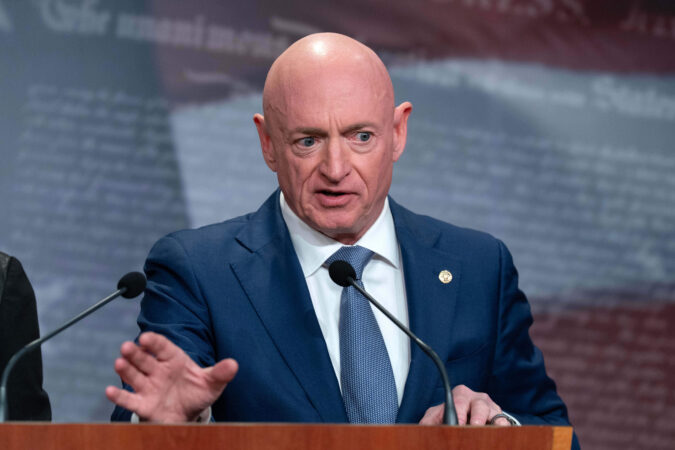
WASHINGTON — A federal judge agreed Thursday to block the Pentagon from punishing Democratic Sen. Mark Kelly, a former Navy pilot, for participating in a video that called on troops to resist unlawful orders.
U.S. District Judge Richard Leon ruled that Pentagon officials violated Kelly’s First Amendment free speech rights and “threatened the constitutional liberties of millions of military retirees.”
“To say the least, our retired veterans deserve more respect from their Government, and our Constitution demands they receive it!” wrote Leon, who was nominated to the bench by Republican President George W. Bush.
Kelly, who represents Arizona, sued in federal court to block his Jan. 5 censure from Defense Secretary Pete Hegseth. Leon’s order prohibits the Pentagon from implementing or enforcing Kelly’s punishment while his lawsuit is pending. The judge instructed the parties to provide him with an update in 30 days.
In November, Kelly and five other Democratic lawmakers appeared on a video in which they urged troops to uphold the Constitution and not to follow unlawful military directives from the Trump administration. Republican President Donald Trump accused the lawmakers of sedition “punishable by DEATH” in a social media post days later.
The court case is just one front in a broader dispute that has spiraled between the group of Democratic lawmakers and the Trump administration since they posted the video. Earlier this week, a Washington grand jury declined to indict the lawmakers over the video.
Michigan Sen. Elissa Slotkin has said she has been told the Justice Department could seek a new indictment as soon as Friday. Kelly and Slotkin said at a news conference Wednesday that they are keeping all legal options on the table regarding potentially suing the administration.
Leon said that Kelly “is likely to succeed on the merits” of his free speech claim. “He has also shown irreparable harm, and the balance of the equities fall decidedly in his favor.”
Hegseth said Kelly’s censure was “a necessary process step” to proceedings that could result in a demotion from the senator’s retired rank of captain and subsequent reduction in retirement pay.
The judge concluded that Kelly’s speech is entitled to full First Amendment protection. Leon wrote, “Horsefeathers!” in response to the government’s argument that Kelly is trying to exempt himself from the rules of military justice.
“Rather than trying to shrink the First Amendment liberties of retired servicemembers, Secretary Hegseth and his fellow Defendants might reflect and be grateful for the wisdom and expertise that retired servicemembers have brought to public discussions and debate on military matters in our Nation over the past 250 years,” Leon wrote.
“If so,” he added, “they will more fully appreciate why the Founding Fathers made free speech the First Amendment in the Bill of Rights!”
The Pentagon did not immediately respond to an email seeking comment on the judge’s ruling.
Kelly said in a video statement posted after the ruling that the case was about more than just him and that the administration “was sending a message to millions of retired veterans that they too can be censured or demoted just for speaking out.”
He added that the ruling was unlikely the end: “This might not be over yet, because this president and this administration do not know how to admit when they’re wrong.”
The 90-second video was first posted on a social media account belonging to Slotkin. Reps. Jason Crow of Colorado, Chris Deluzio of Pennsylvania, Maggie Goodlander of New Hampshire and Chrissy Houlahan of Pennsylvania also appeared in the video. All of the participants are veterans of the armed services or intelligence agencies.
The Pentagon began investigating Kelly in late November, citing a federal law that allows retired service members to be recalled to active duty on orders of the defense secretary for possible court-martial or other punishment. Hegseth has said Kelly was the only one of the six lawmakers to be investigated because he is the only one who formally retired from the military and still falls under the Pentagon’s jurisdiction.
Kelly’s lawyers said the Pentagon’s censure of Kelly — and its efforts to reduce his retirement grade and pay — are an unprecedented attack on the rights of veterans to publicly debate national security issues.
“Defendants assert an absolute and unreviewable authority to impose military punishment on a retired veteran and sitting United States Senator for engaging in speech a civilian political appointee dislikes. That position is as alarming as it is unprecedented,” they wrote.
Government lawyers said the case “is not about legislative independence or freedom of speech in civilian society.”
“Instead, this case involves a retired military officer who seeks to use his military status as a sword and his legislative position as a shield against the consequences of his actions in military personnel matters,” they wrote.
Hegseth, the Defense Department, Navy Secretary John Phelan and the Navy are named as defendants in the lawsuit.
Gov. Josh Shapiro said Thursday that he will not attend any White House event that excludes another governor ahead of next week’s gathering of the nation’s governors in Washington.
The Pennsylvania Democrat’s comments come after President Donald Trump said he would exclude the Democratic governors of Colorado and Maryland from a White House dinner with members of the National Governors Association during its annual conference in Washington, which will take place from Feb. 19 to 21.
“I want to be very clear: I’m not attending any meeting or any dinner where any governor has been disinvited, where any governor is being excluded,” Shapiro said Thursday. “It’s my hope that all governors will be included and that we can continue the tradition of working together across our state lines to be able to do important work for the people that we represent.”
Trump had initially excluded Democrats from a business meeting at the White House, but as of Thursday all governors were invited to the meeting with the president and other officials, the Washington Post reported.
But the dinner remains a thorny issue. Shapiro and other Democratic governors signed a statement Tuesday promising to boycott the event if all governors were not included.
In a social media post Wednesday, Trump attacked Oklahoma Republican Gov. Kevin Stitt, who chairs the bipartisan NGA, and the two Democrats he is planning to exclude from the dinner, Maryland Gov. Wes Moore and Colorado Gov. Jared Polis.
“The invitations were sent to ALL Governors, other than two, who I feel are not worthy of being there,” Trump said in a post on Truth Social.
Trump criticized Moore over crime in Baltimore and accused him of “doing a terrible job on the rebuilding of the Francis Scott Key Bridge” following its collapse in 2024.
Shapiro referred to Moore on Thursday as a “dear friend.”
The Pennsylvania governor said the NGA’s meetings at the White House are typically productive, as are the governors’ other meetings throughout the conference.
“Governors work really well together across party lines,” he said.
New Jersey Gov. Mikie Sherrill, a Democrat who took office last month, said Monday on CNN that “worse decisions” would be made if some governors were excluded from the week’s events.
“For the president to pick and choose who he is going to have to sort of undermine the very focus of this of coming together to get stuff done for the country just seeds more … chaos,” she said.
Democratic Gov. Josh Shapiro is racking up contributions from out-of-state billionaires as well as thousands of individual donors across the country.
His likely Republican challenger, State Treasurer Stacy Garrity, meanwhile, is capturing small-donor donations from Pennsylvanians.
That’s according to an analysis of the latest campaign finance filings in the Pennsylvania governor’s contest, as a clearer picture of the race emerges nine months out from Election Day. Shapiro entered 2026 with $30 million on hand — money raised over several years as he has built a national profile — while Garrity raised $1.5 million in her first five months on the campaign trail as she tries to unseat the popular Democratic incumbent. Last year, Shapiro brought in $23.3 million.
Here are three takeaways from the first campaign finance filings in the race, tracking fundraising heading into 2026.
Almost all of Stacy Garrity’s contributors are from Pennsylvania, while 62% of Shapiro’s are in state
Nearly all of Garrity’s individual 1,155 contributors — more than 97% — live in Pennsylvania, and on average gave $889 each.
Shapiro — who has amassed a national following and is a rumored 2028 Democratic presidential contender — had a much further reach and attracted many more donors from around the country. He received contributions from 4,981 individual donors, 62% of whom are from Pennsylvania. The average individual donor to Shapiro contributed $3,461, a number buoyed by multiple six- and seven-figure contributions.
Shapiro received most of his remaining individual donations from California (7.1%), New York (6.3%), New Jersey (2.5%), Florida (2.5%), and Massachusetts (2.4%), according to an Inquirer analysis.
(The analysis includes only donors who contributed more than $50 in 2025. Campaigns are required to list only individual donors who contribute above that threshold.)
(function() { var l = function() { new pym.Parent( ‘shapiro-garrity3__graphic’, ‘https://media.inquirer.com/storage/inquirer/ai2html/shapiro-garrity3/index.html’); }; if(typeof(pym) === ‘undefined’) { var h = document.getElementsByTagName(‘head’)[0], s = document.createElement(‘script’); s.type = ‘text/javascript’; s.src = ‘https://pym.nprapps.org/pym.v1.min.js’; s.onload = l; h.appendChild(s); } else { l(); } })();
Shapiro’s broad donor base is a result of his status as a popular incumbent governor who is liked among people of both political parties, saidRobin Kolodny, a Temple University political science professor who focuses on campaign finance.
“These amounts that you’re seeing is a very strong signal that ‘This is our guy,’” Kolodny said. “That underscores he is a popular incumbent.”
Kolodny also noted that Shapiro’s state-level fundraising cannot be transferred to a federal political action committee should he decide to run in 2028.But his war chest shows his ability to raise money nationally and his popularity as the leader of the state, she added.
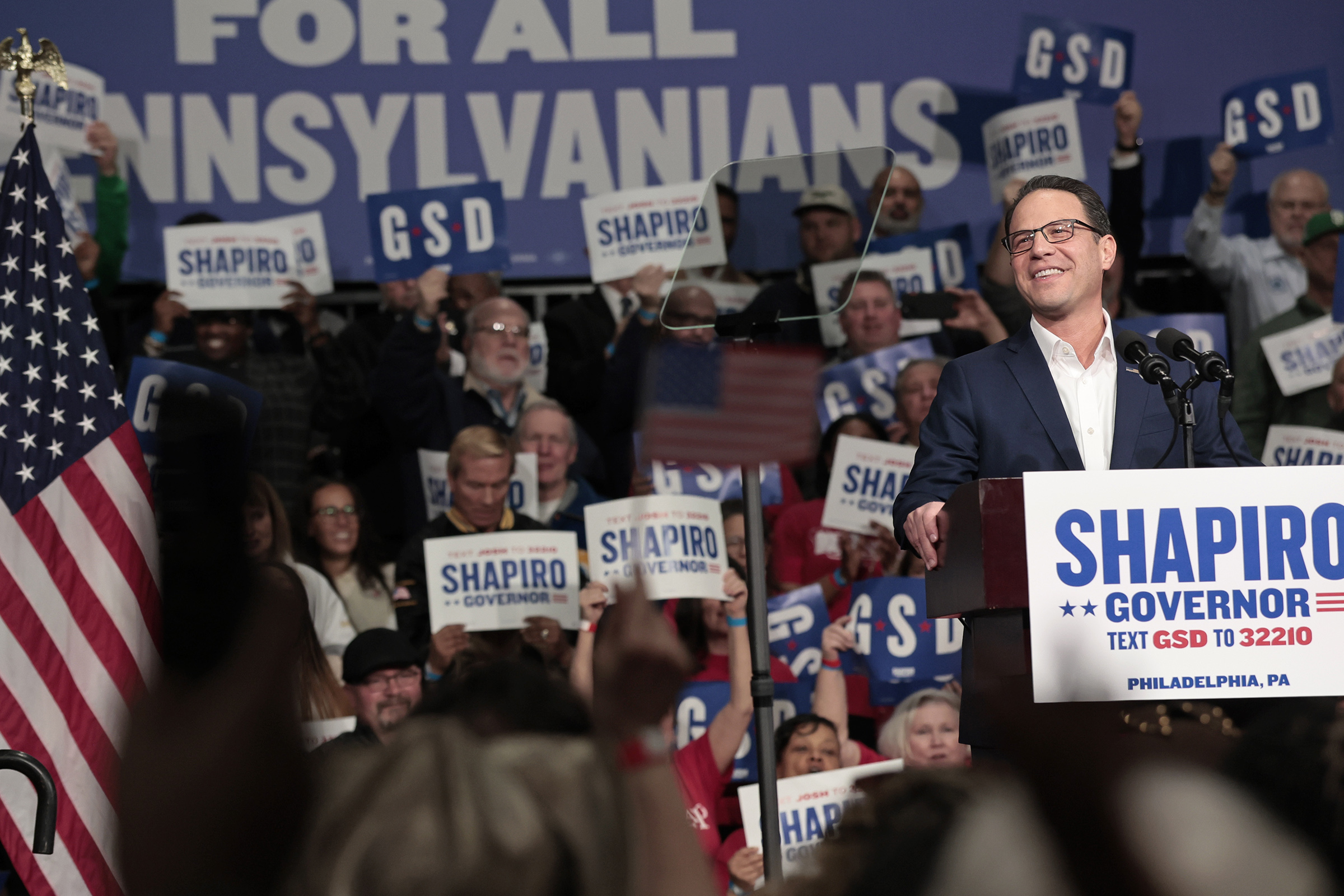
Governor Josh Shapiro during a reelection announcement event at the Alan Horwitz “Sixth Man” Center in Philadelphia on Thursday, Jan. 8, 2026.
Only a small percentage of the population contributes to political campaigns, Kolodny said. And sometimes, it’s the smallest contributions that pay off the most, she said. Small-dollar donations suggest grassroots support that can translate into a person assisting the campaign in additional ways to get out the vote, she said.
Both Shapiro and Garrity have received a significant number of small-dollar donations that illustrate some level of excitement in the race — though Shapiro’s more than 3,000 in-state donors outnumber Garrity’s total by nearly 3-1.
“Think of fundraising as not just a money grab, but also as a campaign strategy,” Kolodny said.
Since announcing his reelection campaign in January, Shapiro has run targeted social media ads and sent fundraising texts, asking for supporters to “chip in” $1 or $5. The strategy worked, bringing in $400,000 in the first two days after his announcement, with an average contribution of $41, according to Shapiro’s campaign. This funding is not reflected in his 2025 campaign finance report.
Most of Shapiro’s money came from out-of-state donors, including billionaire Mike Bloomberg and a George Soros PAC
While Shapiro garnered thousands of individual contributions from Pennsylvania in all 67 counties, according to his campaign, the latest filings show it was the big-money checks from out-of-state billionaires that ran up his total.
Approximately 64% of the $23.3 million Shapiro raised last year came from out-of-state donors.
And more than half — 57% — of Shapiro’s total raised came from six- or seven-figure contributions by powerful PACs or billionaire donors.
By contrast, only 31% of Garrity’s total fundraising came from six-figure contributions.
The biggest single contribution in the governor’s race came from billionaire and former New York City Mayor Michael Bloomberg, who gave Shapiro $2.5 million last year.
Shapiro also received $1 million from a political action committee led by billionaire Democratic supporter George Soros; and $500,000 from Kathryn and James Murdoch, from the powerful family of media mogul Rupert Murdoch.
Kolodny noted that big contributions from people like Bloomberg are a drop in the bucket of his total political or philanthropic spending.
window.addEventListener(“message”,function(a){if(void 0!==a.data[“datawrapper-height”]){var e=document.querySelectorAll(“iframe”);for(var t in a.data[“datawrapper-height”])for(var r,i=0;r=e[i];i++)if(r.contentWindow===a.source){var d=a.data[“datawrapper-height”][t]+”px”;r.style.height=d}}});
“This is not something extraordinary,” Kolodny said. “He’s got nothing but money.”
In Pennsylvania, Shapiro received notably high contributions from Philadelphia Phillies owner John Middleton, who gave $125,000, and Nemacolin Resort owner MaggieHardy, who gave $250,000, among others. He also received a number of five-figure contributions from private equity officials, venture capitalists, and industry executives in life sciences, construction, and more.
Garrity’ssingle biggest donation was $250,000 from University City Housing Co., a real estate firm providing housing near Drexel University and the University of Pennsylvania. Her largest contributions from individuals included $50,000 from her finance chair, Bob Asher of Asher Chocolates, and another $50,000 from Alfred Barbour, a retired executive from Concast Metal Products.
Garrity has served as Pennsylvania’s state treasurer since 2020 and has led the low-profile statewide office with little controversy. She did not join the race for governor until August and raised only a fraction of the funds Shapiro did in that same time. Meanwhile, Shapiro spent 2025 at the political forefront as a moderate Democrat trying to challenge President Donald Trump in a state that helped elect him. Shapiro also benefited from his national name recognition after he was considered for Vice President Kamala Harris’ running mate in 2024.
Shapiro has so far outraised Garrity 30-1, and top Pennsylvania Republicans have said they want to see Garrity fundraising more aggressively nationally.
Kolodny said Garrity’s low fundraising is a reflection of the state of the race: Republicans put up a weak candidate in 2022 against Shapiro during his first run for governor, and now many powerful donors want to keep the relationship they have formed with Shapiro over the last three years.
“That will reflect as a lack of enthusiasm for her,” Kolodny said. “Now she could turn that around, but from what I see, I don’t see her that much, only recently. She had the last six months; she could have done a lot more.”
Controversy over donations tied to associates of Jeffrey Epstein
Shapiro’s top contributions from individual donors also included a $500,000 check from Reid Hoffman, the Silicon Valley-based billionaire cofounder of LinkedIn. His name showed up thousands of times in the trove of documents recently released by the U.S. Department of Justice related to the investigation into financier and convicted sex offender Jeffrey Epstein.
Garrity has highlighted the donations Shapiro received from Hoffman, and has publicly called on Shapiro to return the tech billionaire’s campaign contributions from last year and prior years, totaling more than $2 million since 2021.
Hoffman has claimed he had only a fundraising relationship with Epstein, but publiclyadmitted he had visited his island. He has not been charged with wrongdoing.
A spokesperson for Shapiro said Garrity should “stop playing politics with the Epstein files.”
“Donald Trump is mentioned in the files over 5,000 times. Is she going to ask him to rescind his endorsement?” asked Manuel Bonder, Shapiro’s spokesperson.
Garrity has previously downplayed Trump’s appearance in the Epstein files, and argued that Democrats would have released them much sooner if there was clear evidence of Trump partaking in any inappropriate behavior.
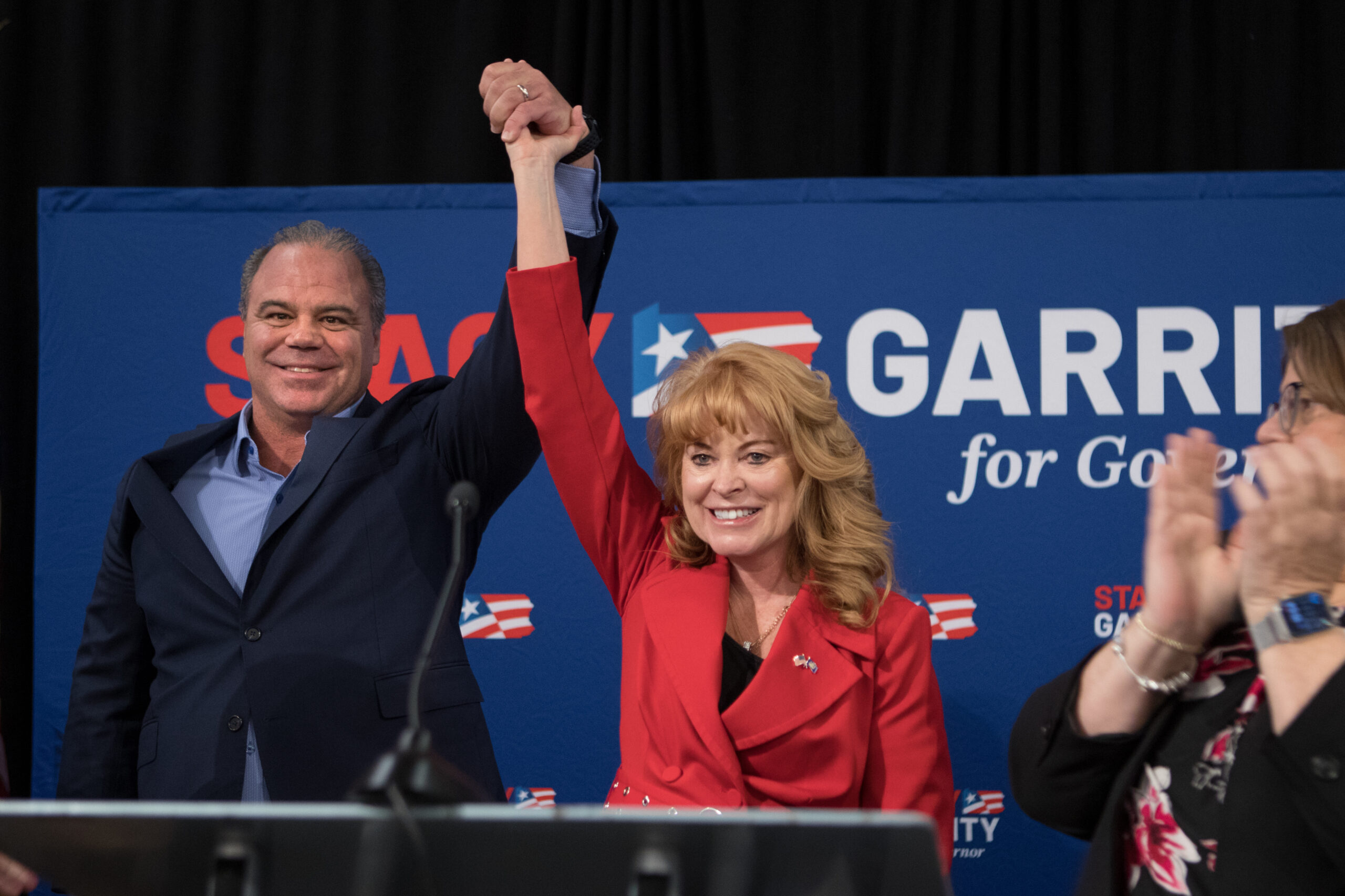
GOP candidate for Pennsylania Governor, Stacy Garrity and Jason Richey hold up their arms in Harrisburg, Pa., Saturday, February 7, 2026. The PA State Republican Committee endorsed the two in their quest for the governor’s mansion. (For the Inquirer/Kalim A. Bhatti)
If Shapiro were to return the funds from Hoffman, it would be bad for Garrity, Kolodny said, because she has made very few other political attacks against him.