Category: Pennsylvania Politics

  • Joanna McClinton has carefully wielded her power as Pa. House speaker. Now she’s speaking out for home care workers.

    Joanna McClinton has carefully wielded her power as Pa. House speaker. Now she’s speaking out for home care workers.

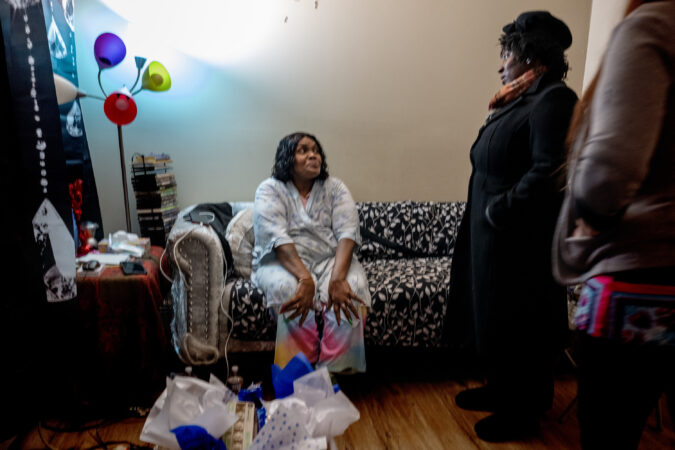
    On a below-freezing day in January, Pennsylvania House Speaker Joanna McClinton delivered food to a West Philly home just minutes from her district office and listened as Sheila Alexander discussed the patchwork of care she has created for herself.

    Alexander, 67, who struggles to get around on her own, explained that she depends on family often but uses a Medicaid-funded home health aide who helps her in the evening — especially when she needs to get up the steep stairs in her home.

    McClinton is advocating for the aides who care for Alexander — and the rest of the roughly 270,000 Pennsylvania workers who make up the home care industry — to earn a higher wage.

    Pennsylvania’s home healthcare workers are among the lowest-paid in the region at an average $16.50 per hour, resulting in what the Pennsylvania Homecare Association has called a crisis point for home care, as more and more workers leave the field and seniors struggle to find help. And it’s a crisis that may only deepen in future years, as one in three Pennsylvanians are projected to be 60 or older by 2030.

    It’s an issue that McClinton, a Philadelphia Democrat who became House speaker in 2023 when her party took a one-seat majority, has had to contend with in her own life.

    McClinton’s 78-year-old mother lost one of her favorite aides because of low pay, she said. The aide had cared for McClinton’s mother for a year, until the aide’s daughter got a job at McDonald’s that paid $3 more an hour. At that point, McClinton said, her mother’s aide realized just how low her pay was.
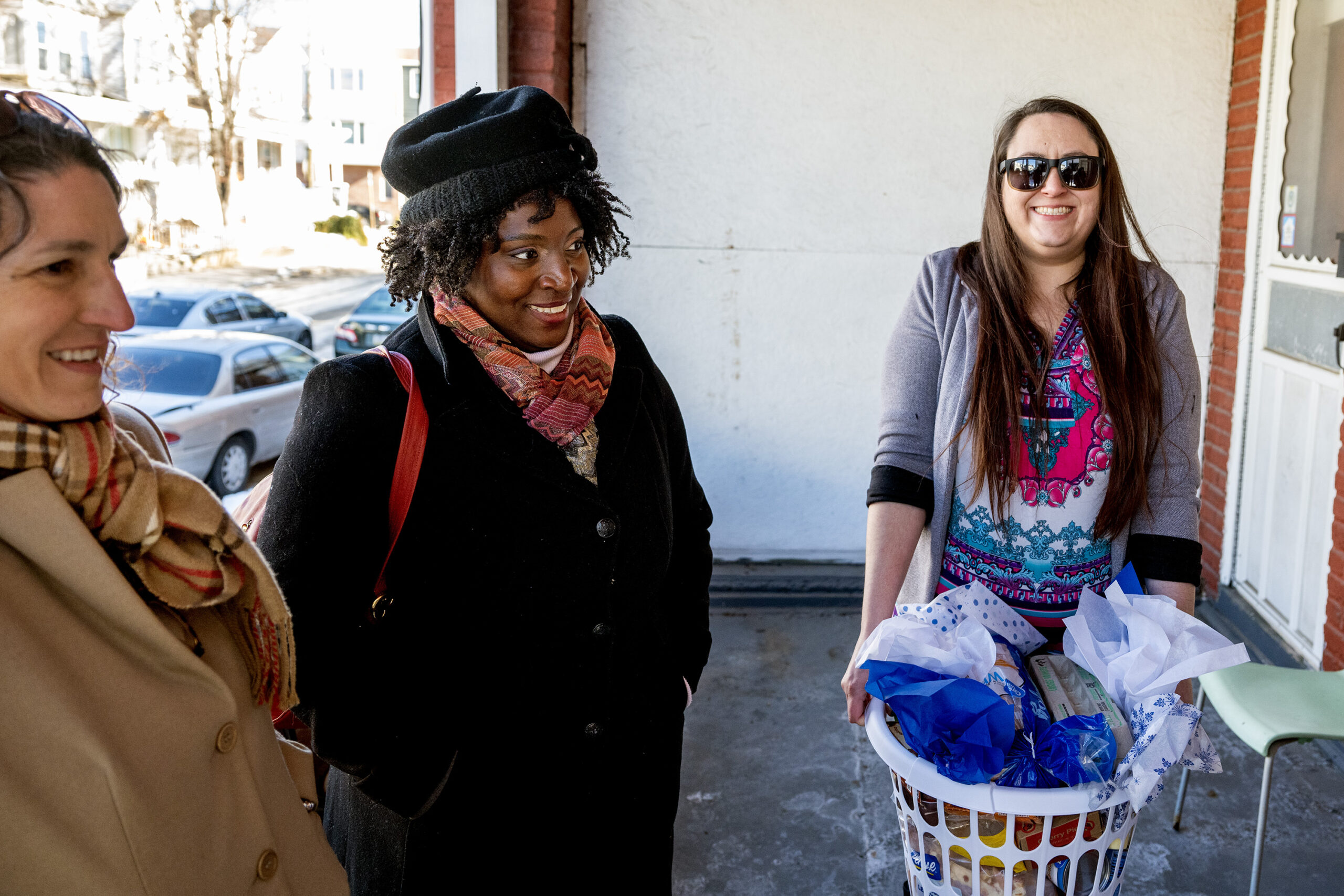
    House Speaker Joanna McClinton (center) with her staff member Nicole Reigelman (left) and home care worker Kate McNaughton (right) wait to meet with home care recipient Ronda Gay on Jan. 20 in her West Philadelphia home. McNaughton was bringing a basket of milk, eggs, canned foods, and other necessities.

    McClinton said she helps her mother when she can, but she only has so many hours in the day and needs assistance when she’s at the Capitol.

    “Many of my colleagues are just like myself, supporting parents who are aging and trying to make sure that they have all the necessities so that when I’m in Harrisburg I’m not thinking, ‘Oh, my God, how’s my mom going to eat or how’s she going to have a bath,’” McClinton said. “It’s because of home health aides and the folks assigned to her that she’s able to thrive. But she’s not unique.”

    Until recently, McClinton had taken a more hands-off approach compared with some previous House speakers who would use their position as the top official to push through their personal agendas. Now, she is taking a more active role in pushing for the issues she cares about most, with special attention to the home care wage crisis.

    Home care workers are often paid through Medicaid, which provides health services to low-income and disabled Americans and is administered at the state level. Pennsylvania has not increased how much it reimburses home care agencies, resulting in all of the surrounding states paying higher wages to home care workers, including GOP-controlled West Virginia and Ohio.

    Describing her leadership approach with a slim majority as “pragmatic,” McClinton says her goal is to find common ground to raise the wages for home healthcare workers between Republicans and Democrats, on an issue that impacts residents across all corners of the state.

    “We just have to really coalesce and build a movement so that we see things get better and that there’s more care,” she said. “Because when there’s more care, there’s less hospitalization, there’s less ER trips, there’s more nutrition.”

    Better pay at Sheetz

    Stakeholders recount dozens of similar stories of aides leaving to work at amusement parks, Sheetz stores, or fast-food restaurants because the pay is better. What’s more: Some home health aides will choose to work in a nearby state where wages are all higher than those paid in Pennsylvania.

    Cathy Creevey, a home health aide who works for Bayada in Philly, made $6.25 when she started working in the field nearly 25 years ago. Now, she makes just $13.50. She has watched countless colleagues quit to take higher-paying jobs elsewhere, resulting in missed shifts and seniors that go without the care they need.

    “We have patients that are 103, 105, and when that aide doesn’t show up their whole world is turned upside down because sometimes we’re the only people that they see to come in, to feed them, to bathe them,” Creevey said.

    While Creevey said she stays in the work because she cares about her patients, she said the long hours and low pay are difficult.

    Fewer and fewer people being willing to take on the jobs means seniors going without care or being forced into already understaffed nursing homes throughout the state.

    “Participants are waiting for care that isn’t coming,” said Mia Haney, the CEO of the Pennsylvania Homecare Association.

    Haney said she hoped McClinton’s advocacy will help drive the issue heading into the next budget season.

    “She has a wonderful opportunity to really influence her peers, but also raise awareness and education about how meaningful and critical these services are,” Haney said.

    In addition to McClinton’s advocacy, 69 House Democrats sent a letter to Gov. Josh Shapiro earlier this month, calling for more funding for the struggling industry just as Shapiro is set to make his 2026-27 budget proposal next month.

    Older Pennsylvanians prefer to “age in place,” or stay in their homes where they remain connected to their communities, said Kevin Hancock, who led the creation of a statewide 10-year strategic plan to improve care for the state’s rapidly aging population.

    “Nursing facilities and hospital services get a lot of attention in the space of older adult services, but it’s home care that really is the most significant service in Pennsylvania,” Hancock said. “The fact that it doesn’t seem to warrant the same type of attention and same type of focus is pretty problematic.”
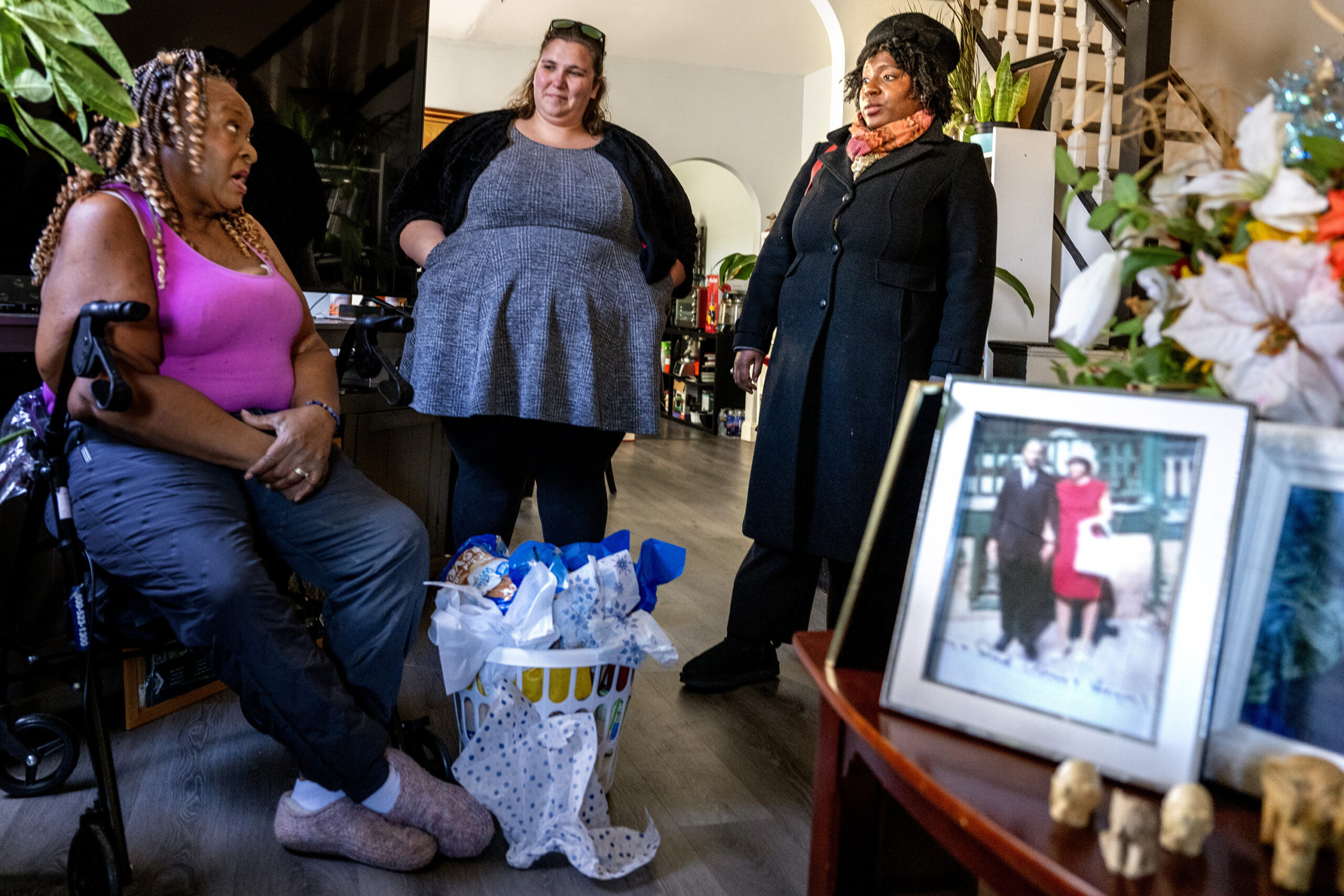
    House Speaker Joanna McClinton (right) meets with home care worker Rachael Gleisner (center) and home care recipient Sheila Alexander in her West Philadelphia home on Jan. 20.

    Home care remains popular in Pa.

    The fight to increase dollars for home care workers has been an uphill battle in Harrisburg even with the speaker’s support.

    More Medicaid dollars go to home care services than any other program in Pennsylvania due to its popularity among Medicaid recipients, Hancock said. Meanwhile, its critical care workers — a majority of whom are women or women of color — still make low wages for often physically and emotionally demanding work.

    A study by the Pennsylvania Department of Human Services last year determined that a 23% increase would be necessary for agencies to offer competitive wages, but the state’s final budget deal did not include it. (The final budget deal did provide increases to direct aides hired by patients, which represent about 6% of all home care workers in the state.)

    Home care agencies are asking Shapiro to include a 13% reimbursement rate increase in the 2026-27 budget, which equates to a $512 million increase for the year. The 13% ask, Haney said, was a “reasonable and fair” first step in what would need to be a phased approach to reaching competitive wages.

    But neither Shapiro nor Senate GOP leadership has committed to any increases in the forthcoming budget.
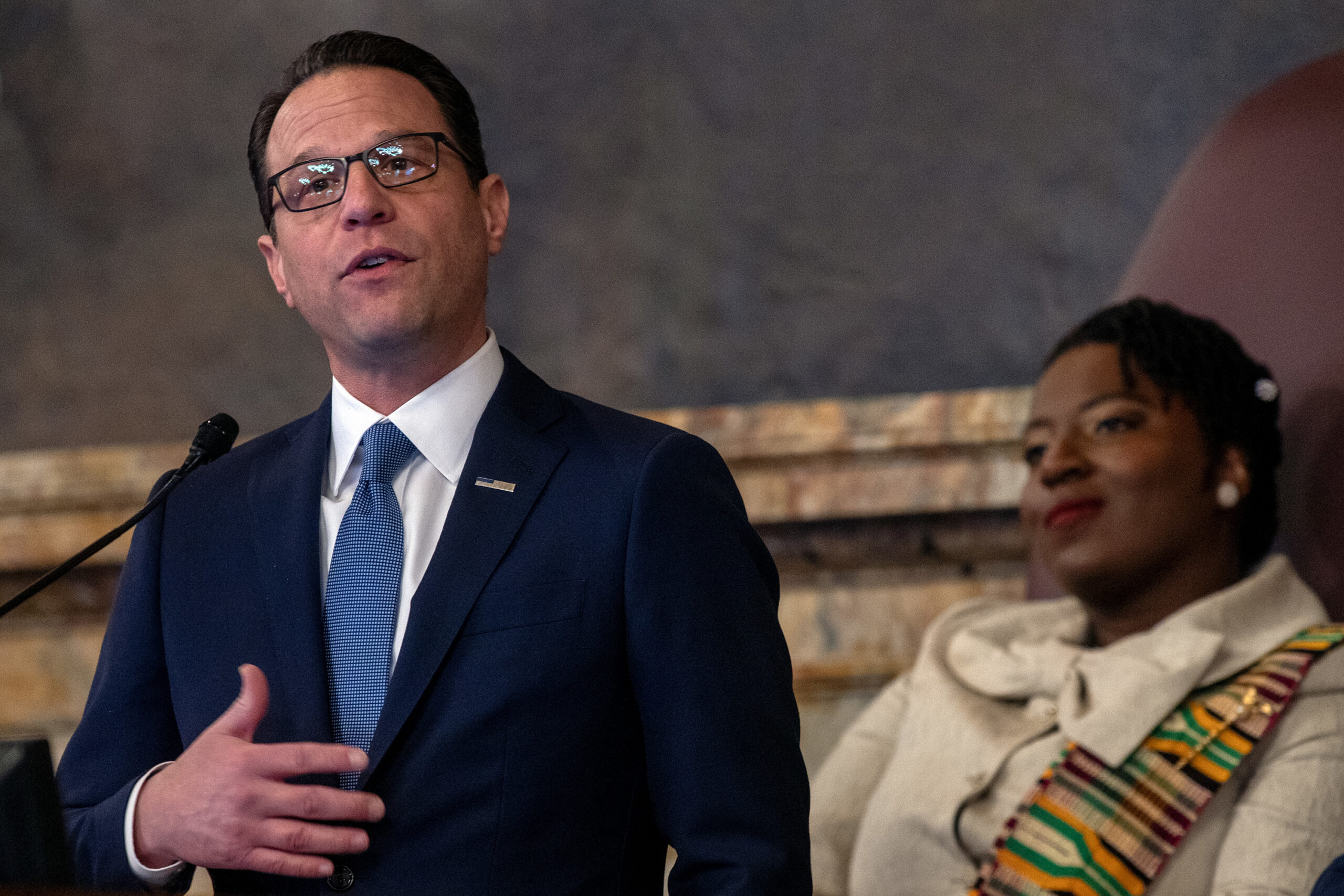
    Pennsylvania House Speaker Joanna McClinton listens as Gov. Josh Shapiro delivers his budget address to a joint session of the state House and Senate at the State Capitol on Feb. 4, 2025.

    In a statement, a spokesperson for Shapiro said the governor understood the need and cited his support for limited increases in last year’s budget and for a proposed statewide minimum wage increase to $15 per hour. (Previous efforts by the Democratic House to increase the state’s minimum wage have stalled in the GOP-controlled Senate.)

    Senate Majority Leader Joe Pittman (R., Indiana) said his caucus will put the state’s “future financial stability” before all else. Pennsylvania is expected to spend more than it brings in in revenue this year, setting the stage for yet another tense budget fight.

    “While we’ve seen Democrats continually push for more spending within the state budget year after year, any increases require thoughtful consideration as to the impact on hardworking taxpayers of Pennsylvania,” Pittman added.

    Senate Majority Leader Joe Pittman, a Republican from Indiana County, is joined by other GOP Senate leaders criticizing Gov. Josh Shapiro’s proposed budget last year.

    McClinton, however, was cautiously optimistic that something could be done this year, even as she placed the onus on Senate Republicans, rather than Shapiro.

    “We’ve seen Republicans refusing to work, refusing to resolve issues, that’s not acceptable,” McClinton said. “I’ve seen an unwillingness from Republicans to resolve these issues.”

    Republicans, she said, should come to the table because staffing shortages harmed their constituents in rural Pennsylvania even more than it harmed hers in Philly.

    “We have to get our heads around the fact that we have the lowest reimbursement rates in our area,” McClinton said in an interview after visiting two patients in her district. “We have to make the investment now. We have lots of needs. We have lots of priorities, but we can balance them.”
  • Facing an uphill battle against Gov. Josh Shapiro’s $30 million war chest, Stacy Garrity still has to convince top Republicans she’s worth investing in

    Facing an uphill battle against Gov. Josh Shapiro’s $30 million war chest, Stacy Garrity still has to convince top Republicans she’s worth investing in

    HARRISBURG — In the race for Pennsylvania governor, State Treasurer Stacy Garrity still has a lot of work to do.

    With a little more than nine months until Election Day, the state Republican Party-endorsed candidate must convince top GOP donors that her campaign is worth investing in, making the case that she can motivate voters — and beat popular incumbent Gov. Josh Shapiro.

    And so far, she has significant ground to make up against the Democratic machine Shapiro now effectively controls, as he continues to build his name recognition nationwide.

    Garrity announced earlier this month that from August through December, her campaign raised nearly $1.5 million — almost as much as the 2022 Republican gubernatorial candidate, Doug Mastriano, raised in the entirety of his campaign. But the amount is only a fraction of the $30 million war chest Shapiro has built up over the last few years.

    Republican insiders for months have said privately they see the race against Shapiro, a Democratic governor with consistently high approval ratings and a rising national star, as one they have slim chances at winning in November.

    Pennsylvania Gov. Josh Shapiro (right) listens to Stacy Garrity, the 78th state treasurer, at the Forum Auditorium in Harrisburg, Pa., on Jan. 21, 2025. It was the day she was sworn in.

    Still, they’re hoping that Garrity, a retired U.S. Army colonel who in 2024 broke the record for receiving the most votes in a state-level race — a record previously held by Shapiro — will be able to deliver a high enough level of excitement among Republican voters in Pennsylvania to drive them to the polls, where down-ballot races for control of the U.S. House and state Senate are also on the line.

    Some GOP insiders have pointed to Garrity’s limited early fundraising haul as make-or-break for the state’s whole Republican ticket — and the political future of Pennsylvania.

    “This is the Democrats’ first real opportunity to gain a trifecta in Pennsylvania that could lock up Pennsylvania from being a ‘purple’ state to a solid blue state every election here onward,” said Matt Brouillette, who leads Commonwealth Partners and its political action committees, which often contribute to Republican candidates and are largely funded by Pennsylvania’s richest man, Jeffrey Yass.

    Brouillette leads the Commonwealth Leaders Fund, a powerful PAC that sat out the 2022 gubernatorial race that the PAC saw Mastriano as unable to win. Brouillette said in an interview earlier this month that the fund still had yet to decide whether it will invest in Garrity’s campaign.

    There isn’t a specific number Brouillette said he wants to see her raise before he chooses to get involved in the governor’s race, but he is overall “encouraged to see Stacy solidifying support for her candidacy.”

    “Stacy is going to have to attract national investment the way Josh has,” Brouillette said. “Our donors won’t be sufficient. Stacy is going to have to be competitive nationally to make this a race.” (After publication of this story, Brouillette said the PAC would invest in Garrity’s race, but did not disclose a dollar amount.)

    As 2028 inches closer, Shapiro’s national reach continues to grow — and with that, he has been able to flex his fundraising skills across the country. He will publish his first book on Tuesday, a memoir called Where We Keep the Light, in what is largely seen as a telltale sign that a candidate is considering a presidential run. He has promised to use his influence in Pennsylvania to support Democrats down the ballot, including in four congressional districts the party hopes to flip in the midterms — and deliver Democrats a majority in the U.S. House.

    Campaign finance filings detailing who contributed to both Shapiro and Garrity’s campaigns won’t be available until next week. Shapiro broke fundraising records in the 2022 race, and is on track to do the same again this year.

    What’s more: Garrity is also contending with strong headwinds favoring Democrats in November, as support for President Donald Trump wanes.

    Still, Garrity has been rolling out a number of endorsements from top Pennsylvania Republicans, including on Friday from U.S. Rep. Ryan Mackenzie (R., Pa.), who is running for reelection in one of the districts Democrats hope to flip. But she has yet to receive Trump’s support or endorsement, and was not mentioned by Trump when she attended his most recent Pennsylvania rally.

    The hesitancy appears to have extended to the lieutenant governor’s contest. Garrity still has yet to announce who she would like to be her running mate. Only a few candidates have announced their candidacy for lieutenant governor so far, and the state GOP is expected to endorse Garrity’s pick at its February meeting.

    A spokesperson for Garrity’s campaign said she is “humbled by the outpouring of support she’s received from supporters all across the commonwealth, including from members of the Commonwealth Partners’ leadership,” who share her vision for the state and frustrations with Shapiro.

    “No moment crystalized this support more than when the PAGOP took the unusual step of endorsing Treasurer Garrity’s campaign so early, which served as the catalyst for the momentum she’s building to defeat Josh Shapiro this November,” said Garrity’s spokesperson, Matt Benyon, in a statement.

    A spokesperson for the Pennsylvania Republican Party declined to comment.

    Garrity will host a kickoff fundraiser in Philadelphia on Wednesday, said Bob Asher, Garrity’s finance chair.

    As for her fundraising numbers since December, Asher said, with a smile: “Stay tuned.”

    Grassroots support vs. Shapiro’s war chest

    In announcing her first haul, Garrity’s campaign said 97% of her contributions came from Pennsylvania residents, and 75% of the contributions were under $100. Shapiro, for his part, boasted that the $30 million in his campaign coffers came from all of Pennsylvania’s 67 counties, as well as financial support from all 50 states.

    A large number of small-dollar campaign contributions can suggest grassroots support — translating to an energized voter base on Election Day — for a candidate that big-dollar or corporate political action committee funds can’t capture. But the bigger the war chest, the more a candidate can spend to get their name on the airwaves.

    Other GOP insiders are pointing their fingers at the state Republican Party, using Garrity’s early fundraising numbers as proof they are not doing enough to back her up in the race against Shapiro and that they’re setting themselves up for failure in November.

    For Jim Worthington, the owner of the Newtown Athletic Club and a Bucks County GOP power player, Garrity’s early struggles are a result of failings by the state GOP to plan ahead and invest in mail voting.

    “It’s an indictment of the party,” Worthington said. “I understand why some people are hesitant to give money. They’re looking at the tea leaves and saying, ‘Look, we lost the year.’”

    “It’s going to be difficult for Stacy, and I feel bad because she is a hell of a candidate,” he added.

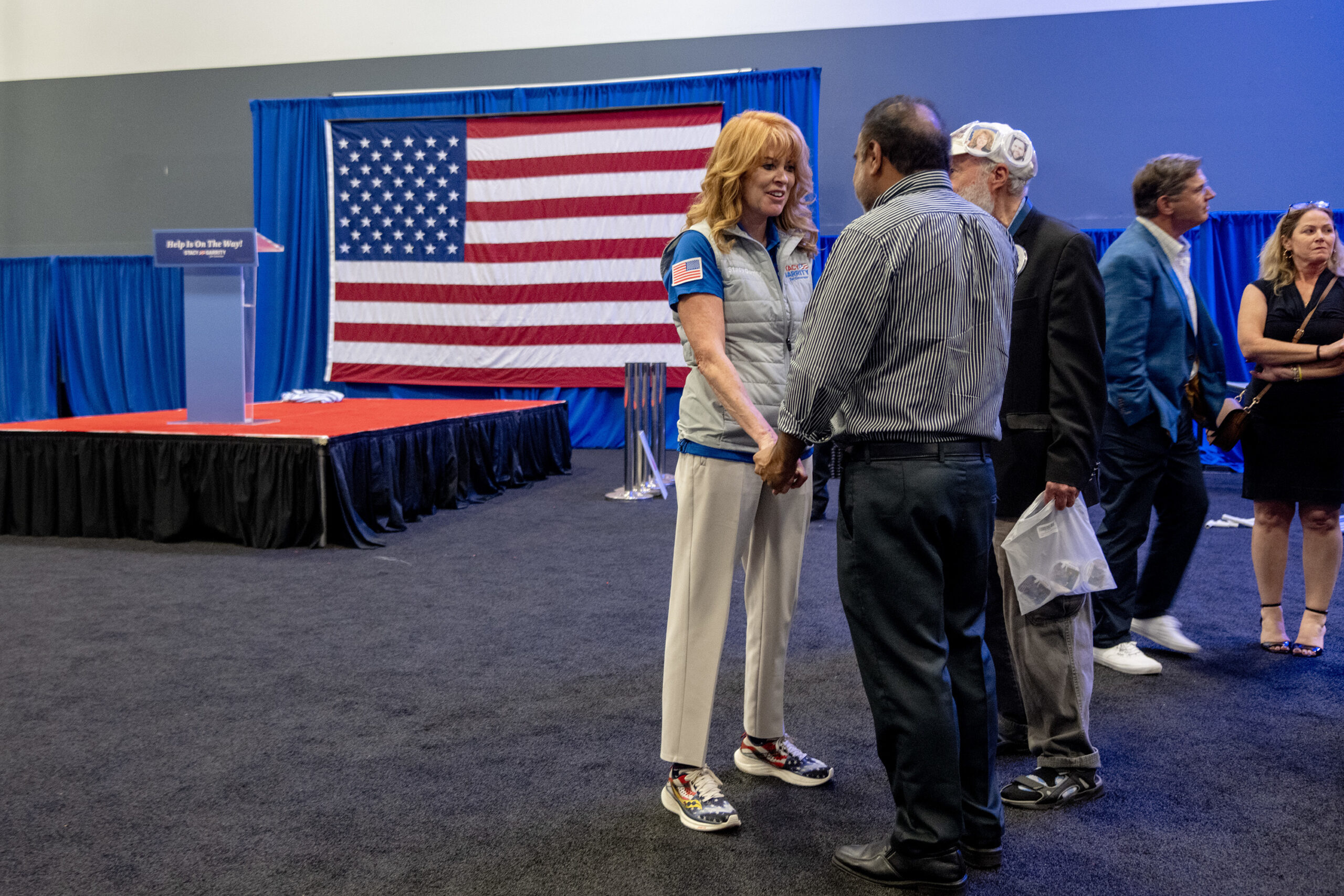
    State Treasurer Stacy Garrity greets supporters after a campaign rally in Bucks County on Sept. 25, 2025. The GOP gubernatorial candidate visited the Newtown Sports & Events Center, in one of Pennsylvania’s top swing counties.

    Worthington said anytime he talks to national Republicans in Washington or Trump’s Mar-a-Lago club, where he’s a member, he mentions Garrity’s race as one in which they should invest.

    At the very least, he argues, top Republicans should help Garrity in an effort to ensure Shapiro doesn’t “have a cakewalk right into 2028,” as speculation continues to surround Shapiro about his political aspirations. Worthington said he even brought this up directly to Vice President JD Vance, the GOP’s expected 2028 successor to Trump, at Vance’s holiday party.

    As for Garrity, Worthington said he believes she can win, calling her “an excellent candidate” with a hard work ethic.

    “Make no mistake, it’s gonna be a tough go,” Worthington added. “But I’m 100% sure she can win.”

  • Chester County poll book problems on Election Day were due to human error, insufficient oversight, report finds

    Chester County poll book problems on Election Day were due to human error, insufficient oversight, report finds

    Independent and unaffiliated voters were left off Chester County’s poll books in November’s election due to human error exacerbated by insufficient training, poor oversight and staffing challenges in the county office, an independent firm has concluded.

    In November, more than 12,000 Chester County voters were forced to vote by provisional ballot after the county included just registered Democrats and Republicans in the poll books for the general election. Every voter who wanted to was able to cast a ballot, county officials said, but it resulted in a chaotic scene and the county had to issue an unusually high number of provisional ballots — which require more steps to cast and count.

    On Thursday, the county released a 24-page report from a West Chester law firm detailing how the county failed to include more than 75,000 registered voters in its general election poll books, and evaluating the state and county’s response as it scrambled to ensure those voters could cast ballots.

    “Importantly, our investigation found no evidence of intentional wrongdoing, misconduct, or bad faith on the part of any of the employees who generated the Poll Books. The error was inadvertent and occurred in the course of performing assigned duties under significant time constraints,” the report, prepared by Fleck, Eckert, Klein and McGarry LLC, said.

    “Though the initial selection constituted a human error, the investigation found that the error occurred within a system lacking in: (i) sufficient safeguards, (ii) training, (iii) sufficient supervision, and; (iv) verification controls,” investigators added.

    What’s next in Chester County?

    The firm’s report detailed more than a dozen recommended steps for the county and Department of State to take to prevent future errors.

    In an action plan released Thursday, Chester County officials said they intend to abide by the vast majority of those recommendations, as well as additional steps identified by the county’s Chief Experience Officer.

    Chester County Chief Executive Officer David Byerman said in a statement that the recommendations would be completed within a year, with the most critical steps coming ahead of May’s primary election.

    The action plan included improved training and more strenuous review processes, reevaluation of Voter Services staff levels and pay, and a review of human resources policies in the department. It did not include personnel changes within its Voter Services Department.

    The 25-person department has faced unusually high turnover among staff in recent years, losing 29 employees to resignations, firings and transfers since the current director, Karen Barsoum, took over in 2021.

    Barsoum has faced allegations of fostering a toxic work environment, which Thursday’s report acknowledged. However, the firm concluded that those complaints were not connected to the poll book error and said in its report that employees directly connected to the poll book blunder spoke positively about department management.

    “Moreover, the various causes of the Poll Book issue that we have identified do not appear to have any causal nexus with the types of concerns raised,” the report said.

    How did the error happen?

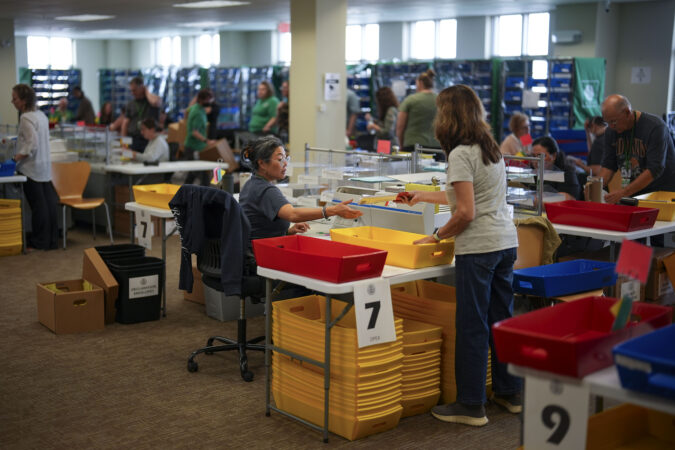
    According to the report, two employees inadvertently chose the wrong selection of Chester County voters when they used the statewide voter roll software to create November’s poll books. Those employees, the report said, were inexperienced and had never been formally trained on the system they were using. While the employees had a copy of written training materials from the Department of State, the report noted that they worked with “little direct supervision” for their level of experience.

    After the wrong set of voters were chosen — leaving off third party and unaffiliated voters — the report said no one in the department checked the books until a poll worker noticed the problem shortly before polls opened on Election Day.

    The report noted the department’s high turnover, which it said could be the result of the high-pressure environment of election-related work and Chester County’s low pay compared to surrounding counties. That turnover, the report said, created “increased operational risk” which contributed to the error.

    Following the incident, the county said it will review staffing and pay levels for the office as well as its human resources policies.

    “We know that working in elections is an extremely difficult job – one that involves long hours and many personal sacrifices,” Byerman said. “We are truly grateful for the commitment and dedication of the staff in Voter Services, and want to ensure that we are doing everything we can to provide the resources, tools, and support they need to be successful in their roles.”

    The department, the county’s action plan said, will also establish additional approval checks for poll books and other procedures that impact all Chester County voters.

    County officials also said they intend to improve training for the department, including working with the Pennsylvania Department of State to implement formal training on the state’s voter roll system.

    “The Department always stands ready to assist counties with training of employees on the [Statewide Uniform Registry of Electors] system and other aspects of election administration and is happy to engage Chester further to improve its training process,” the Pennsylvania Department of State said in a statement.

    The agency added that its ongoing effort to modernize the statewide voter roll system will include checks and alerts for unusual poll book configurations once completed.

    Chester County is scheduled to hold a public meeting Tuesday evening to present its plan to the public. If the forecasted winter storm closes county offices that day, the meeting will be postponed to Feb. 3.

  • Joseph R. Syrnick, retired chief engineer for the Streets Department and CEO of the Schuylkill River Development Corp., has died at 79

    Joseph R. Syrnick, retired chief engineer for the Streets Department and CEO of the Schuylkill River Development Corp., has died at 79

    Joseph R. Syrnick, 79, of Philadelphia, retired chief engineer and surveyor for the Philadelphia Streets Department, president and chief executive officer of the Schuylkill River Development Corp., vice chair of the Philadelphia City Planning Commission, former adjunct professor, college baseball star at Drexel University, mentor, and “the ultimate girl dad,” died Saturday, Jan. 17, of cancer at his home in Roxborough.

    Reared on Dupont Street in Manayunk and a Roxborough resident for five decades, Mr. Syrnick joined the Streets Department in 1971 after college and spent 34 years, until his retirement in 2005, supervising hundreds of development projects in the city. He became the city’s chief engineer and surveyor in 1986 and oversaw the reconstruction of the Schuylkill Expressway and West River Drive (now Martin Luther King Jr. Drive) in the 1980s, and the addition of new streetlights and trees on South Broad Street and the upgrade of six city golf courses in the 1990s.

    He was an optimist and master negotiator, colleagues said, and he worked well with people and the system. “You have concepts that seem simple,” he told The Inquirer in 1998. “But when you commit them to writing, they raise all kinds of other questions.”

    In 2000, as Republicans gathered in Philadelphia for their national convention, Mr. Syrnick juggled transit improvements on Chestnut Street and problems with the flags on JFK Boulevard. He also helped lower speed limits in Fairmount Park and added pedestrian safety features on Kelly Drive.

    He beautified Penrose Avenue and built a bikeway in Schuylkill River Park. He even moderated impassioned negotiations about where the Rocky statue should be placed.

    Since 2005, as head of the Schuylkill River Development Corp., he deftly partnered with public and private agencies, institutions, and corporations, and oversaw multimillion-dollar projects that built the celebrated Schuylkill River Trail, renovated a dozen bridges, and generally improved the lower eight-mile stretch of the Schuylkill, from the Fairmount Dam to the Delaware River, known as Schuylkill Banks.

    In an online tribute, colleagues at the Schuylkill River Development Corp. praised his “perseverance and commitment to revitalizing the tidal Schuylkill.” They noted his “legacy of ingenuity, optimism, and service.” They said: “Joe was more than an extraordinary leader. He was a great Philadelphian.”

    Dennis Markatos-Soriano, executive director of the East Coast Greenway Alliance, said on Facebook: “He exuded confidence, humility, and unwavering commitment.”

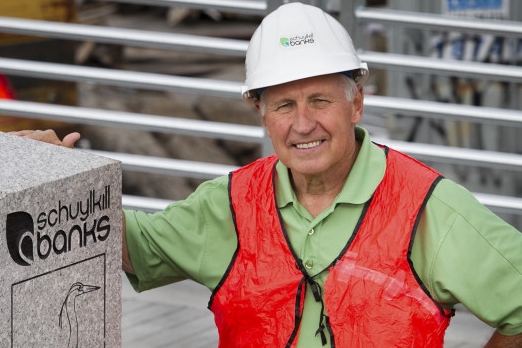
    Mr. Syrnick reviews plans to extend a riverside trail in 2009.

    Mr. Syrnick was a constant presence on riverside trails, other hikers said. He organized regattas and movie nights, hosted riverboat and kayak tours, cleaned up after floods, and repurposed unused piers into prime fishing platforms.

    “Great cities have great rivers,” Mr. Syrnick told The Inquirer in 2005. “Here in Philadelphia, we have Schuylkill Banks.”

    He was a Fairmount Park commissioner for 18 years, was named to the Philadelphia City Planning Commission in 2008, and served as vice chair. He lectured about the Schuylkill often and taught engineering classes and led advisory panels at Drexel. In 2015, he testified before the state Senate in support of a waterfront development tax credit.

    Friends called him “a visionary,” “a true hero,” and “a Philly jewel.” One friend said: “He should be honored by a street naming or something.”

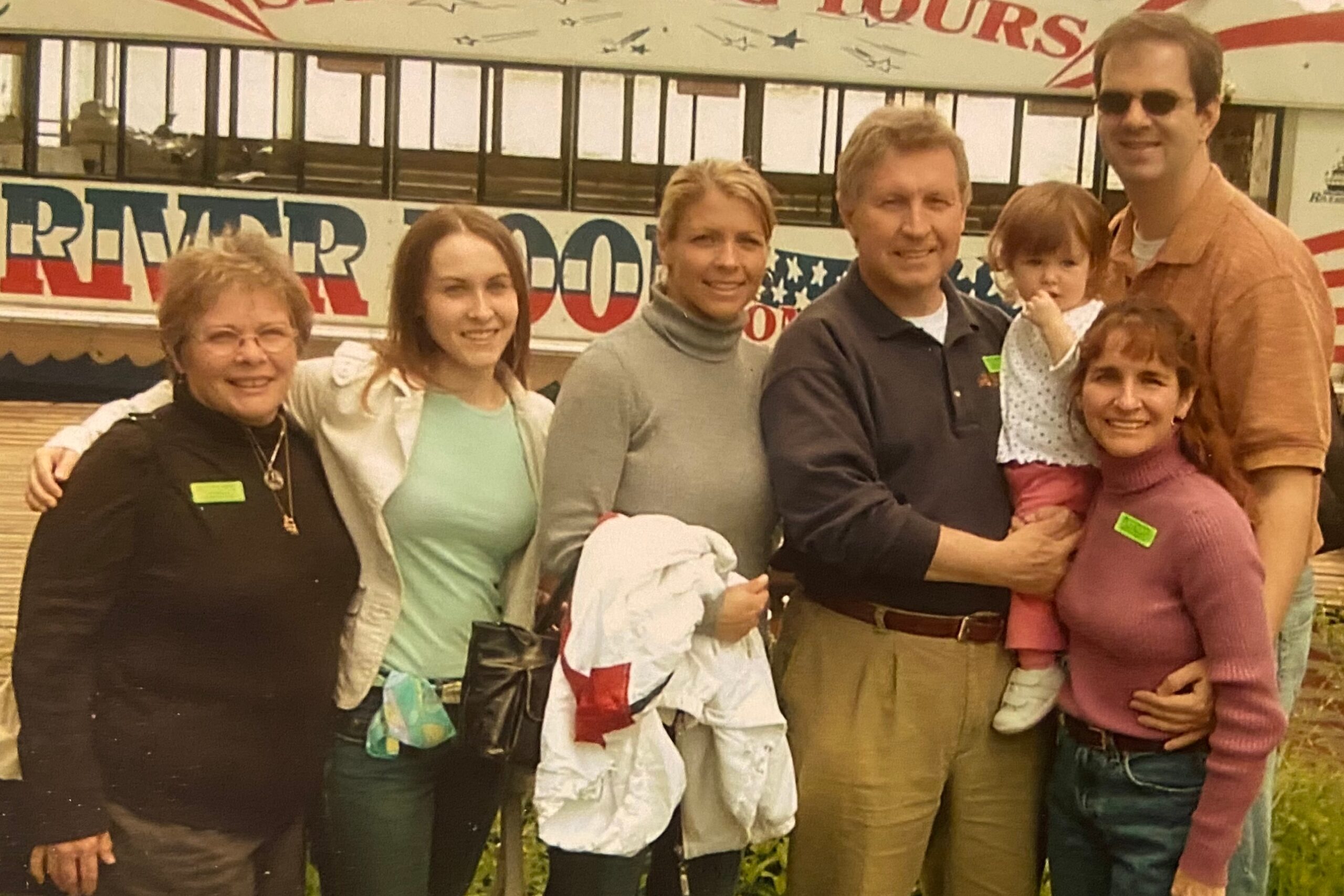
    Mr. Syrnick (fourth from left) and his family pose near a riverboat.

    Paul Steinke, executive director of the Preservation Alliance for Greater Philadelphia, said on Facebook: “He left his native Philadelphia a much better place.”

    Mr. Syrnick was president of the Philadelphia Board of Surveyors and active with the American Society of Civil Engineers, the Engineers’ Club of Philadelphia, and other organizations. At Drexel, he earned a bachelor’s degree in civil engineering in 1969 and a master’s degree in 1971.

    In 2024, Drexel officials awarded him an honorary doctorate for “his visionary leadership in engaging diverse civic partners to revive the promise of a waterfront jewel in Philadelphia.”

    He played second base on the Roman Catholic High School baseball team. He was captain of the 1968 Drexel team and later played against other local standouts in the old Pen-Del semipro league.

    Mr. Syrnick (center in white shirt) had all kinds of way to publicize fun on the Schuylkill. This photo appeared in The Inquirer in 2007.

    Most of all, everyone said, Mr. Syrnick liked building sandcastles on the beach and hosting tea parties with his young daughters and, later, his grandchildren. He grew up with three brothers. Of living with three daughters, his wife, Mary Beth, said: “It was a shock.”

    His daughter Megan said: “It was a learning experience. Whether it was sports or tea parties, he became the ultimate girl dad.”

    Joseph Richard Syrnick was born Dec. 19, 1946, in Philadelphia. He spent many summer days riding bikes with pals on Dupont Street and playing pickup games at the North Light Community Center.

    He knew Mary Beth Stenn from the neighborhood, and their first date came when she was 14 and he was 15. They married in 1970, moved up the hill from Manayunk to Roxborough, and had daughters Genevieve, Amy, and Megan.

    Mr. Syrnick received his honorary doctorate from Drexel in 2024.

    Mr. Syrnick enjoyed baseball, football, and golf. He was active at St. Mary of the Assumption and Holy Family Churches, and he and his wife traveled together across Europe, Africa, the Middle East, and Asia.

    “He was humble,” his daughter Megan said. “He was quiet in leadership. He always said: ‘It’s the team.’”

    In addition to his wife and daughters, Mr. Syrnick is survived by seven grandchildren, his brother Blaise, and other relatives. Two brothers died earlier.

    Visitation with the family is to be from 6 to 8 p.m. Friday, Jan. 23, at Koller Funeral Home, 6835 Ridge Ave., Philadelphia, Pa. 19128, and 9:30 a.m. Saturday, Jan. 24, at Holy Family Church, 234 Hermitage St., Philadelphia, Pa. 19127. A Mass celebrating his life is to follow at 11 a.m.

    Donations in his name may be made to the Basilica Shrine of Our Lady of the Miraculous Medal, 475 E. Chelten Ave., Philadelphia, Pa. 19144; and Holy Family Parish, 234 Hermitage St., Philadelphia, Pa. 19127.

    Mr. Syrnick (left) and his brother, Blaise, enjoyed being around water.
  • Meet Conlen Booth, Swarthmore’s fire chief who just stepped into the mayor’s office

    Meet Conlen Booth, Swarthmore’s fire chief who just stepped into the mayor’s office

    Conlen Booth doesn’t typically like to be in the spotlight.

    Booth considers himself a “behind-the-scenes” guy who typically shies away from the limelight. Yet on Jan. 6, surrounded by friends, family, and colleagues, Booth was sworn in as Swarthmore’s mayor.

    Booth, 42, brings more than two decades of emergency management experience to the job, including overseeing emergency services for major hospitals and governments. He’s also spent the past 25 years with Swarthmore’s fire department, most recently as chief. Booth is Delco-bred — a Nether Providence kid, a graduate of Strath Haven High School, and a cheerleader for his home borough of Swarthmore.

    As the borough contends with the fallout of last year’s shuttering of Crozer-Chester Medical Center and Taylor Hospital, budget shortfalls, and potential fire department consolidation, Booth believes his background in emergency services and deep ties to Swarthmore make him the right guy for the job.

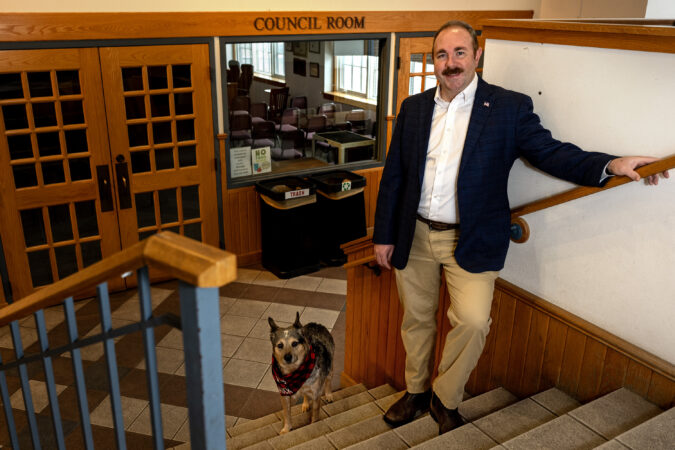
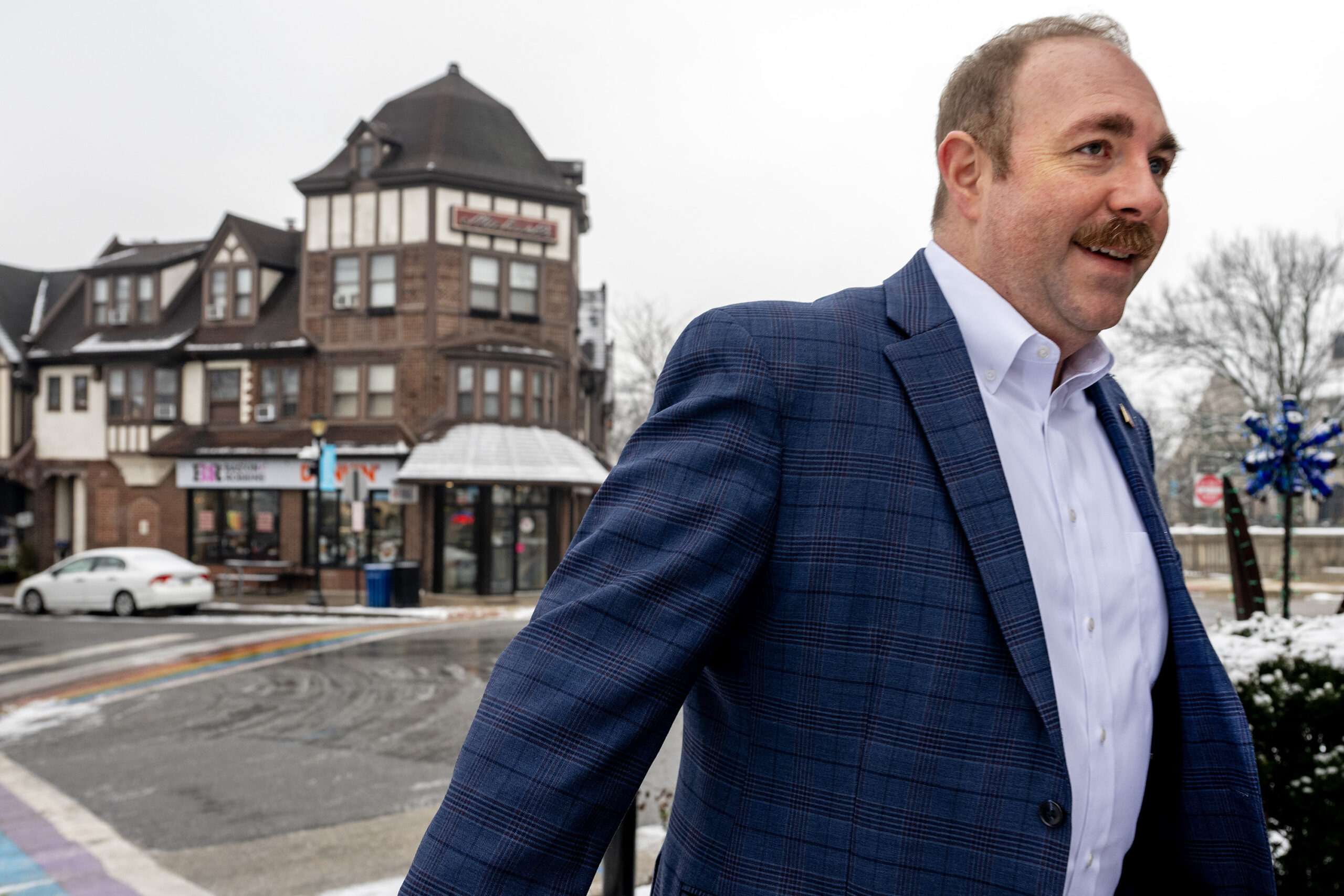
    Mayor Conlen Booth in downtown Swarthmore on Sunday, Jan. 18, 2026.

    ‘If not me, then who?’

    Booth got into local politics the way many do — reluctantly.

    It took nudging from friends and family to step into the mayoral race. But the COVID-19 pandemic revealed a need for municipal leaders who understand emergency management and can govern in a crisis, Booth says.

    An age-old phrase kept circulating in his mind: “If not me, then who?”

    Booth competed against borough council members Kristen Seymore and David Boonin in the Democratic primary. Boonin dropped out of the race in January 2025. In February, the borough’s Democratic committee voted to endorse Booth’s candidacy 15-4, and Seymore dropped out.

    The committee’s endorsement is powerful in Swarthmore. Democratic candidates who do not receive an endorsement are discouraged from running, and in the liberal-leaning town, there are seldom competitive general elections. Booth replaced Marty Spiegel, who had led the borough since 2019.

    Who is Mayor Booth?

    Booth was born in Harrisburg and moved to Delaware County at age 2. He grew up down the street from Nether Providence Elementary School and spent summers down the Shore with his close-knit extended family and collection of family dogs.

    His maternal grandfather, Joseph Labrum, was a longtime judge and attorney in Media. Booth remembers visiting him in his chambers and watching him in the courtroom.

    “I think seeing him in his role as a judge was always something that fascinated me,” he said.

    Booth and his partner, Tracy, met working in healthcare and have been together for around 15 years. They live with Huckleberry, their Australian cattle dog.

    Booth became interested in emergency services in high school. He set his sights on becoming a doctor and spent his teenage years working on an ambulance.

    Four days before he moved into his freshman dorm at the University of Pittsburgh, he watched a good friend die in front of him. The goal changed from enrolling in medical school to just making it through college.

    “It just sort of rattled things,” he said.

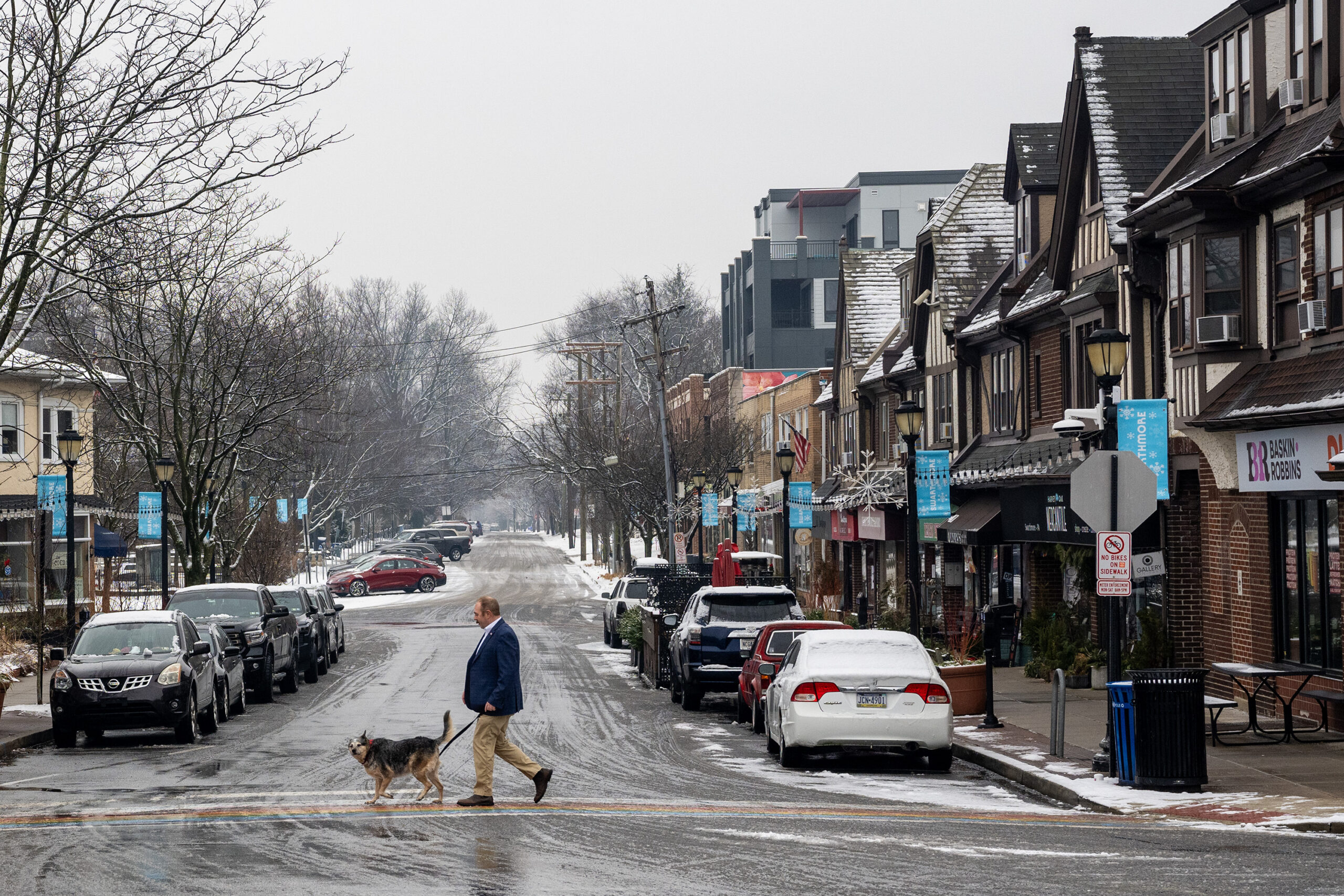
    Mayor Conlen Booth with his dog, Huckleberry, in downtown Swarthmore on Sunday, Jan. 18, 2026.

    Booth graduated from Pitt in 2005 with a bachelor’s degree in emergency medicine, an emerging field at the time. He earned his paramedic certification and learned the business-side of managing emergency medical teams.

    He returned home and took a job with the now-shuttered Delaware County Memorial Hospital, his first role in what would become a long career in emergency medicine. In 2019, he was an emergency response shift supervisor at the Philadelphia Energy Solutions refinery during the massive explosion that left five people hurt and ended up shuttering the facility (Booth describes it as a “pretty insane period” in his life). Booth later spent four years as the senior director of emergency preparedness and emergency medical services at Crozer. He most recently worked as a consultant helping get supplies and meals to recently arrived refugees and asylum-seekers in New York City.

    In tandem with his career in emergency management, Booth has served as a volunteer in Swarthmore’s fire department since 2000, working his way up from rookie firefighter to chief. Last year, he helped develop the Advanced Life Support ambulance partnership with neighboring communities that has filled gaps for residents after the Crozer closures.

    Pat Francher, a longtime Swarthmore resident and community organizer, said Booth has the “awareness and perspective” that comes from a “real in-depth involvement in community welfare.”

    “I’m terrible about saying no to people when they ask me to do something,” Booth joked.

    This summer, Booth suffered a serious, non-work-related injury. He’s been in recovery since, and has come a long way.

    “It could have been so much worse,” Booth said. “I have a lot to be thankful for.”

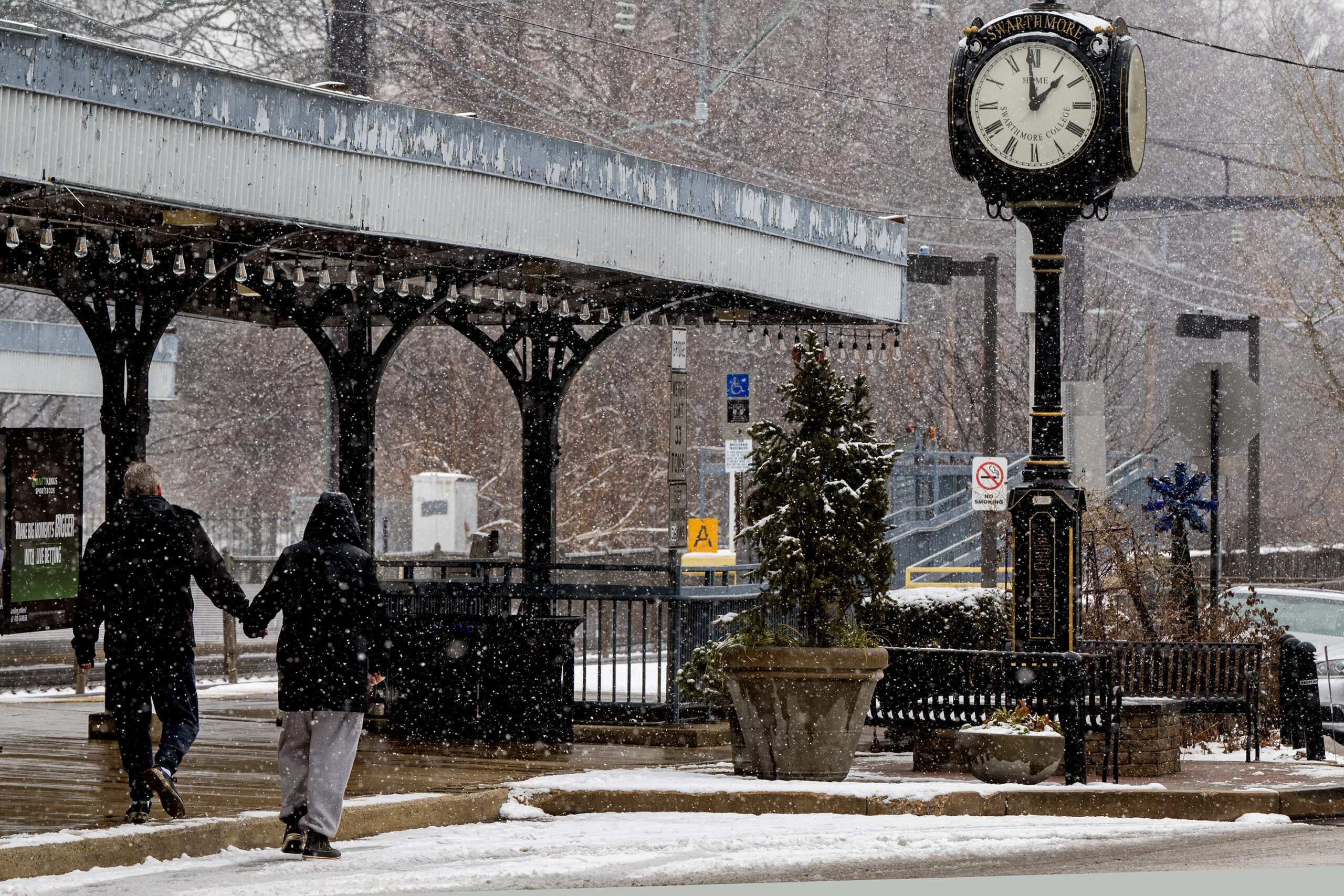
    The SEPTA Regional Rail station in Swarthmore on Sunday, Jan. 18, 2026, during the second snowfall of the weekend. The station is between downtown Swarthmore and Swarthmore College and serves the Media/Wawa Line.

    What’s next for Swarthmore?

    Booth sees educating borough council about the community’s emergency medical needs as a large part of his job as mayor.

    Jill Gaeski, borough council president, called Booth “the perfect guy” to help the 6,200-person borough navigate the challenges that lie ahead.

    The shuttering of Crozer’s hospitals continues to impact access to medical care. At the same time, the Garden City (Nether Providence and Rose Valley), South Media, and Swarthmore fire companies are in discussions about a possible merger.

    “[Booth] can really help us understand the pain points and where the sweet spots are,” Gaeski said.

    Booth says he wants to be a cheerleader for the borough, bringing in tourism and economic growth in a way that maintains Swarthmore’s small-town feel.

    He also hopes to reengage Swarthmore College’s student body, which he says has become less civically involved as the years have passed.

    “I already feel sentimental about this town,” Booth said, citing the people, restaurants, traditions, and community events that make his hometown special.

    “How do we bolster all of these things and how do we engage more people?”

    This suburban content is produced with support from the Leslie Miller and Richard Worley Foundation and The Lenfest Institute for Journalism. Editorial content is created independently of the project donors. Gifts to support The Inquirer’s high-impact journalism can be made at inquirer.com/donate. A list of Lenfest Institute donors can be found at lenfestinstitute.org/supporters.

  • Trump’s strong support in the Lehigh Valley and Northeast Pa. is splintering: ‘He left nothing for the working man’

    Trump’s strong support in the Lehigh Valley and Northeast Pa. is splintering: ‘He left nothing for the working man’

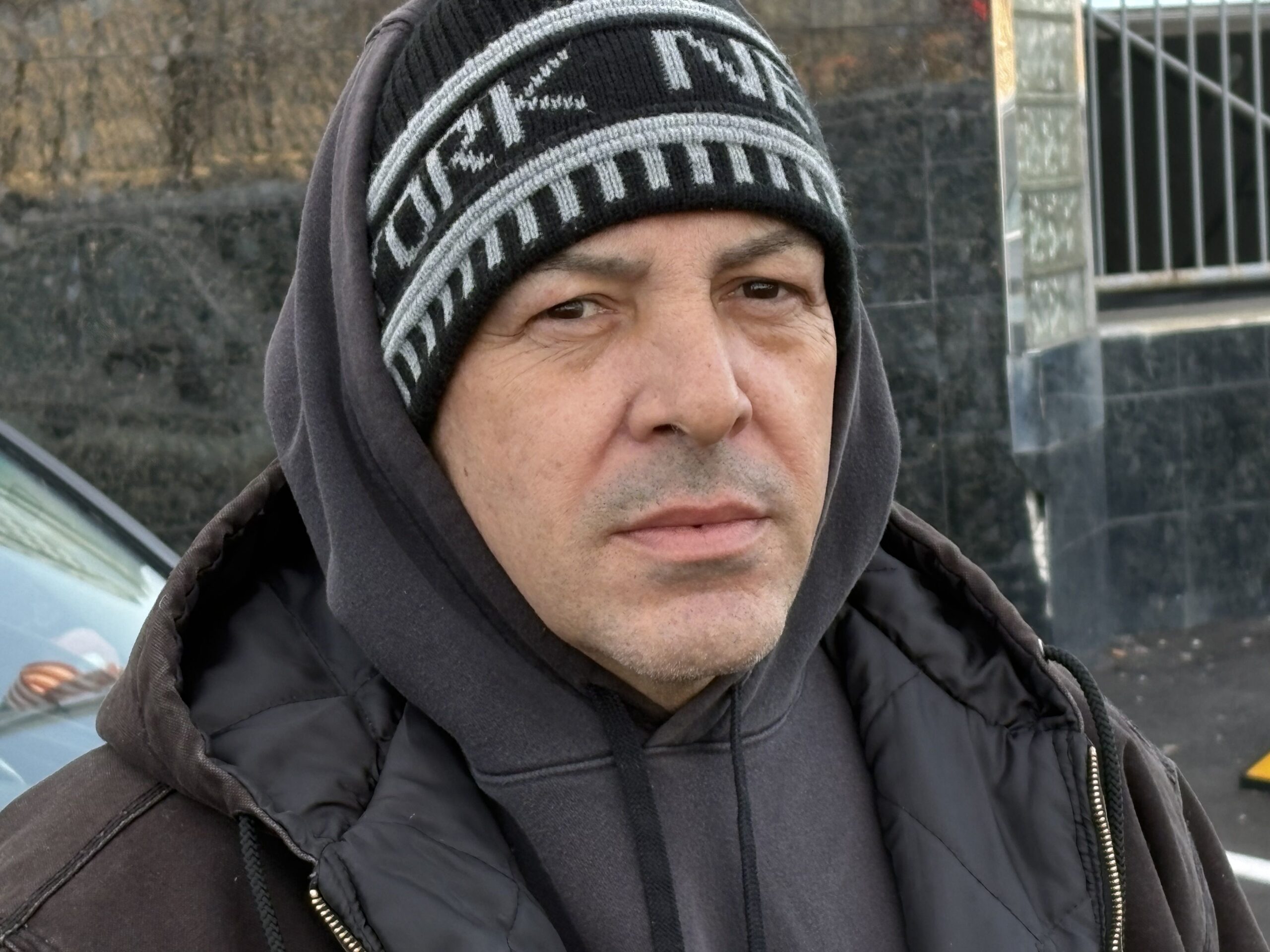
    Scowling under a wool cap and a hood, Robert DeJesus stood in the bitter wind outside the Sunrise Diner in Allentown last week and confessed his “big mistake”: voting for President Donald Trump in 2024.

    “The guy makes ‘cookie promises,’” said DeJesus, 57, a retired construction worker and independent voter from Allentown in Lehigh County. “They’re easy made and easy broken.”

    Trump’s biggest gains in the state in 2024 were concentrated in the Lehigh Valley and in Northeastern Pennsylvania. But a year into his second presidency, there are signs that his winning coalition is splintering. In interviews across five counties in the region, some voters shared their disappointment with rising grocery prices and what they see as Trump’s failure to keep his commitments.

    Even while hailing some of Trump’s policies, several Republicans interviewed said they were put off by his manner as well as his stance on key issues. That disillusionment could spell trouble for Pennsylvania Republicans as they look to hold onto two key swing congressional seats in this region in November.

    Robert DeJesus of Allentown voted for President Donald Trump in 2024, but he now regrets that decision.

    Explaining his problems with Trump, DeJesus said the president pledged “but didn’t deliver” lower grocery prices. And at the same time DeJesus and his family are contending with “insane” supermarket costs, he said, Trump cut taxes for billionaires with the sweeping domestic policy package he signed last year. It has made DeJesus feel overlooked and overwhelmed.

    “He left nothing for the working man,” DeJesus said. “People say it’s good the price of gas went down under Trump. But how we have to live, with high food and high rent, makes no sense.”

    Diana Kird, 58, a Republican who also pulled the lever for Trump, is experiencing buyer’s remorse much like DeJesus.

    “I don’t know what we’re doing in Venezuela,” said the nurse from Lehighton in Carbon County as she stood outside a Giant supermarket in town.

    “We need to stop getting into foreign wars,” a promise Trump made and “ignored,” Kird added.

    Kird said she has not seen Trump come through on his commitments. “He’s wash-rinse-repeat for me,” she said, “saying the same things over again,” such as promising cheaper groceries, “yet doing nothing.”

    Trump’s “refusal to release all the Epstein files” after saying he would was another disappointment that makes her wish she had not supported the president, she added.

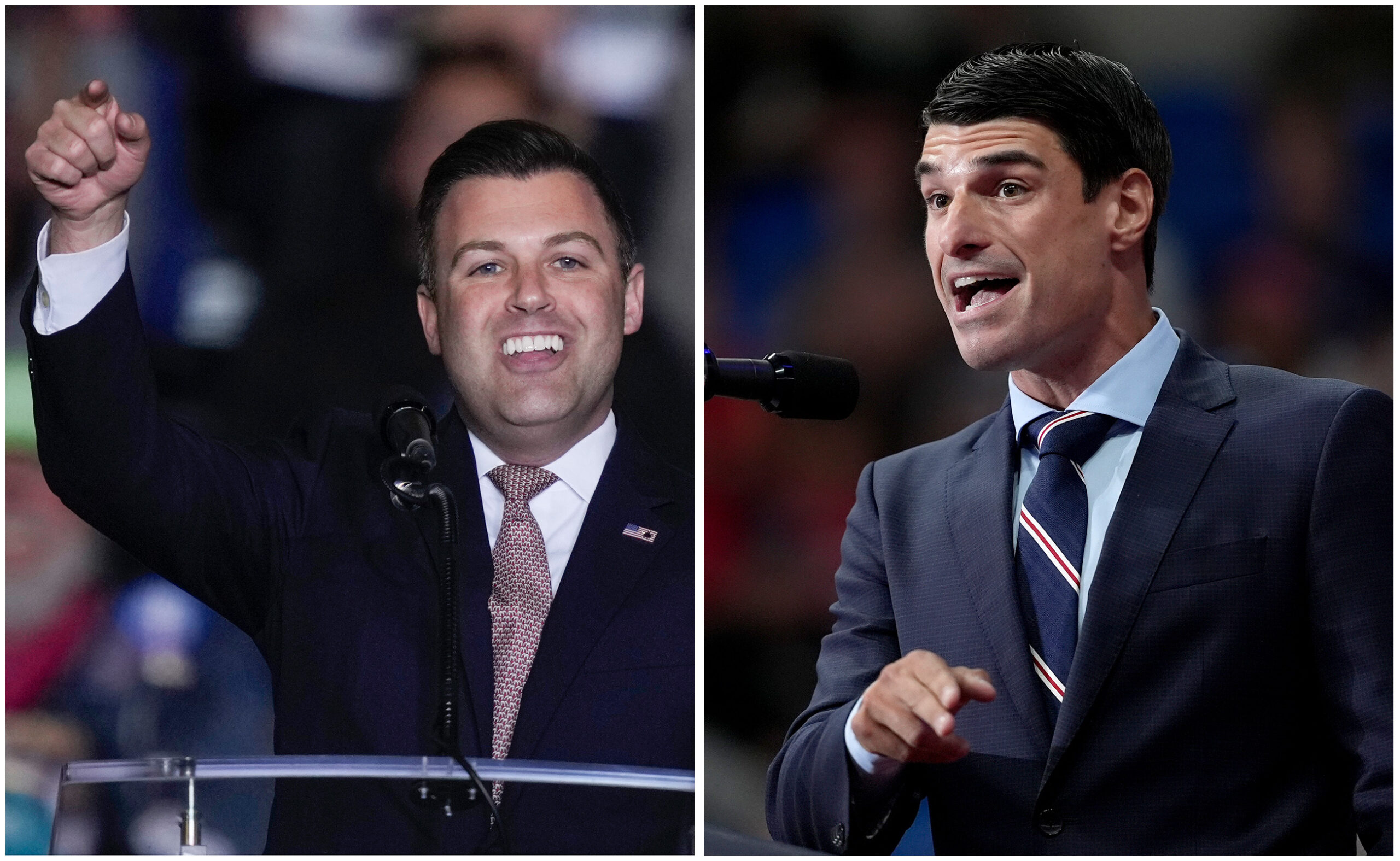
    Republican U.S. Reps. Ryan Mackenzie (left) and Rob Bresnahan (right)

    Trump won’t be on the ballot this year, but Kird plans to take her frustration out on U.S. Rep. Ryan Mackenzie, the freshman Republican who won the Lehigh Valley seat by a single percentage point.

    Mackenzie and fellow freshman U.S. Rep. Rob Bresnahan, a Republican who won his neighboring Northeastern Pennsylvania district by less than a point, are among the top targets for Democrats in November as the party hopes it can win back the House with a focus on affordability.

    In a statement Wednesday, Mackenzie blamed the Biden administration for high prices and described Trump as “a vital partner” in efforts to improve the cost of living.

    “We have made real progress,” he said, “reducing gas prices to their lowest level since COVID, keeping inflation below 3%, and delivering real tax relief for every American.”

    Bresnahan’s office did not respond to a request for comment.

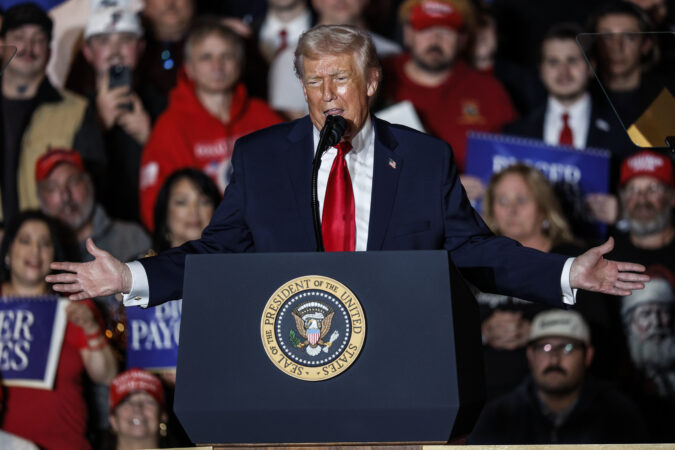
    Both Trump and Vice President JD Vance barnstormed through the region last month, seeking to counteract Democrats’ affordability message, which Trump has bemoaned as a “hoax.”

    But recent moves by Mackenzie and Bresnahan show the two Republicans are giving the issue more weight and seeking to distance themselves from Trump on the high cost of living ahead of tough contests in November.

    Both were among the 17 Republicans who crossed the aisle this month to support a Democratic bill to restore recently expired healthcare subsidies in the wake of a national spike in insurance premiums.

    “The break with the president on healthcare wasn’t surprising. Both men are feeling the heat from constituents,” said Chris Borick, director of the Muhlenberg College Institute of Public Opinion.

    Borick noted that Trump’s 2024 win in the state was due in large part to his gains with voters of color, younger voters, and independents. Those same voters could be crucial to determining how Pennsylvania votes in the next election.

    “But now they’re disappointed.”

    Trump is ‘fearless’ and ‘honest’

    There were warm feelings for Trump at the Coop, a popular diner in Coopersburg, a town just outside Allentown in Lehigh County.

    “Trump’s a confident and honest man who knows business, and made a lot of money. I so admire him. And we need him,” said Tiffany Osmun, 27, who works as a host at the restaurant.

    “He’s fearless, and not afraid of what he has to do,” Osmun said.

    She plans to vote for Mackenzie in November, she said, adding, “I won’t be voting for any Democrat in the midterms.”

    And if Trump ever popped up in another election, Osmun said, “I’d vote for him again.” In his Pennsylvania speech last month, Trump referenced running for a third term, despite constitutional barriers.

    (function() {
    var l2 = function() {
    new pym.Parent(‘TRUMP_NE_PA.html’,
    ‘https://media.inquirer.com/storage/inquirer/projects/innovation/arcgis_iframe/TRUMP_NE_PA.html’);
    };
    if (typeof(pym) === ‘undefined’) {
    var h = document.getElementsByTagName(‘head’)[0],
    s = document.createElement(‘script’);
    s.type = ‘text/javascript’;
    s.src = ‘https://pym.nprapps.org/pym.v1.min.js’;
    s.onload = l2;
    h.appendChild(s);
    } else {
    l2();
    }
    })();

    Other Trump voters, however, acknowledged frustrations with the first year of his second presidency — even if they are pleased with most of Trump’s policies.

    “I don’t like his personality,” said Bud Hackett, 72, a semiretired construction business owner who lives in Bethlehem.

    Hackett praised Trump’s moves to curtail immigration and shrink the size of the federal workforce, but he bristled at other actions.

    “I’d say over the last year, he’s done maybe 100 things, 70 of which will result in people’s lives being better off. The other 30 have to do with stuff like building a huge ballroom [after tearing down the East Wing of the White House] for his giant, weird ego that I can’t buy into.”

    Trump may have generated a few problems on the home front, conceded soft-drink merchandiser Bobby Remer, a 31-year-old resident of Palmerton in Carbon County. But the president more than compensates by reminding the world just how powerful the United States can be, he said.

    Remer supports the president’s attacks on boats allegedly carrying drugs from Venezuela, as well as Trump’s capture of Venezuelan President Nicolás Maduro and his wife.

    “He’s done great militarily, throwing our swag around,” Remer said. “It’ll show China, which floods America with fentanyl to wipe out our military-aged men with addiction, that we have a hammer that we’ll use against any nation trying to destroy us.”

    But pocketbook issues could matter more in November to other voters — especially after Trump made attacking Democrats on inflation a major theme of his 2024 campaign.

    An October poll from Franklin and Marshall College asked voters in the Lehigh Valley and Northeastern Pennsylvania how they would compare their financial status with a year ago. Around 29% of Republicans said they were better off, while 34% said they were worse off, with 37% saying they were in the same position.

    Among voters listed as independents “or something else” (such as a third party), 14% said they were better off, 32% said they were worse off, and 55% said they remained the same. Nearly half of Democrats said they were worse off, with 9% saying things were better and 43% saying they were the same.

    “Things definitely got bad under Trump. He’s heading us toward dictatorship,” said Malinda Brodt, 65, a Democrat who lives in Saylorsburg in Monroe County, which had the biggest shift to Trump in the state in 2024.

    Several Trump voters who were interviewed heaped praise on the president for lowering prices — despite mixed results — and a few quoted Trump’s speech in Mount Pocono that referred to affordability as a hoax.

    “He’s gotten down the cost of living, that’s for sure,” said Carol Solt, 80, retired from working in a bait-and-tackle shop in Lehighton. “He keeps his promises.”

    While gas and egg prices have decreased in the last year, the cost of food overall rose 3.1% last month compared with December 2024. Increased prices for beef (1%), coffee (1.9%), and fruits and vegetables (0.5%) led the way, according to consumer price index data released earlier this month.

    Ultimately, Kird, the Lehighton voter, concluded before she entered her Giant supermarket that the good times the president assured Americans they would see have yet to materialize.

    “Life is just more expensive under Trump,” she said.

  • Dana Edwards fell in love with Narberth 5 years ago. Now, he’s the mayor.

    Dana Edwards fell in love with Narberth 5 years ago. Now, he’s the mayor.

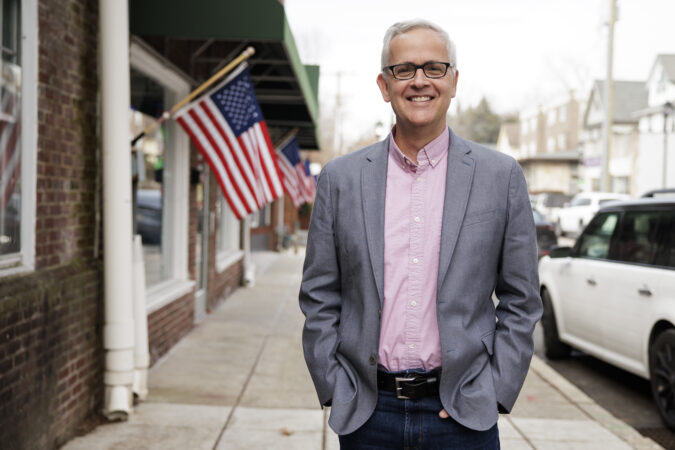
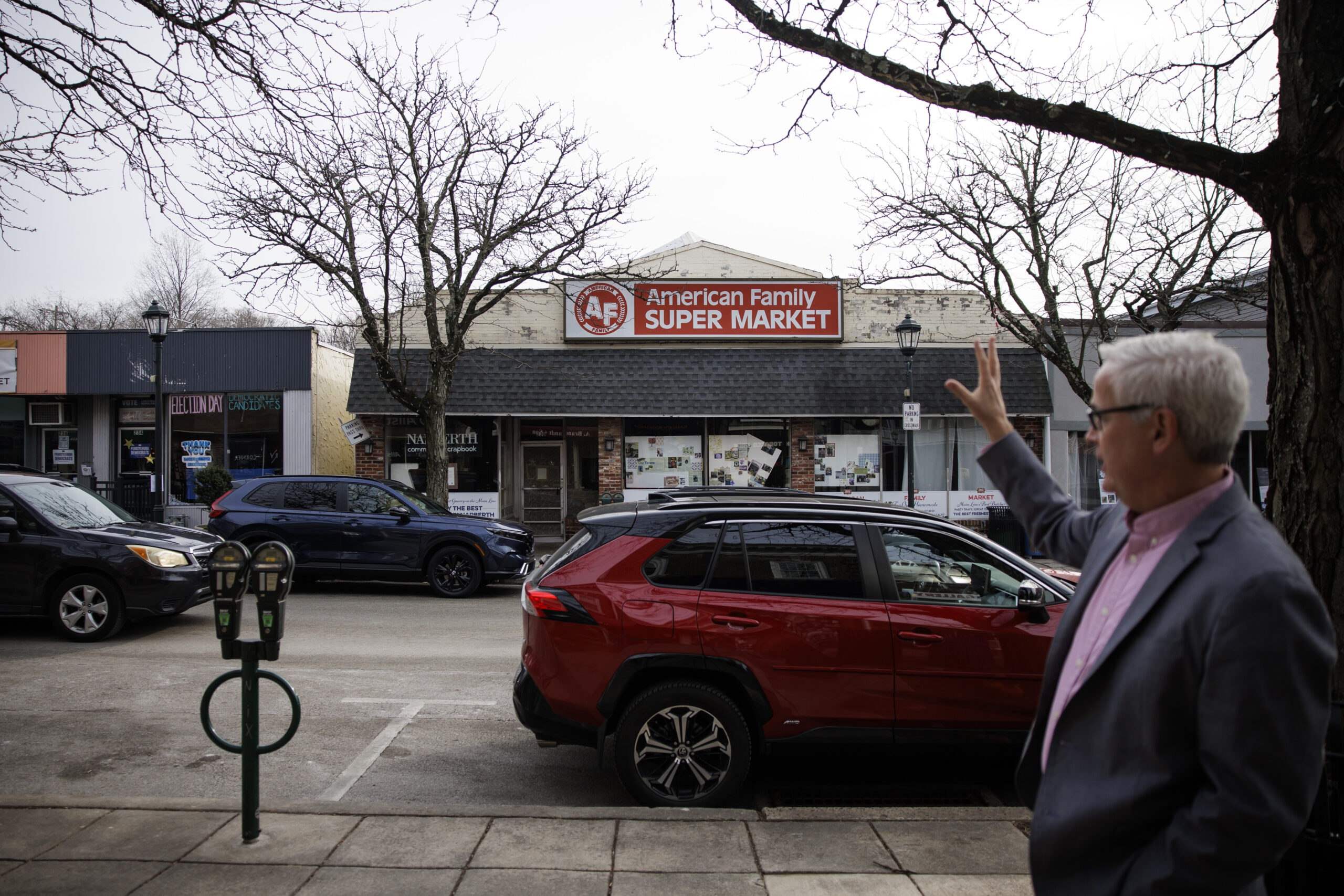
    As he stands outside the Narberth Bookshop on a frigid January afternoon, it’s clear Dana Edwards has a vision.

    Imagine, he says, as he sweeps his hands toward the borough’s downtown corridor, getting off the train and stopping into a small grocery for a bite to eat before heading home on foot. Maybe you buy a gift, or an ice cream cone, or a bottle of wine.

    Like anywhere, Narberth “could use a little bit of revitalization here and there,” Edwards said. But you can “see the potential.”

    Edwards, 53, was sworn in as Narberth’s mayor earlier this month. The longtime financial technology officer moved there from Pittsburgh five years ago with his wife, Miranda. They have a 2-year-old son, and Edwards has two older children, 19 and 22, from his first marriage. Edwards had never run for office before, but after falling in love with the borough (and being encouraged by neighbors), he stepped into the public eye last year. He won the local Democratic Party’s endorsement, then ran unopposed in the primary and general election. This month, Edwards replaced Andrea Deutsch, who had served as Narberth’s mayor since 2017.

    As the 0.5-square-mile, 4,500-person borough faces infrastructure challenges and debates over development, Edwards says he is ready to steer Narberth in the right direction through communication, thoughtful growth, and a social media presence he calls “purposely cringey and fun.”

    Narberth Mayor Dana Edwards talks about the empty storefronts on Haverford Avenue on Tuesday, Jan. 6, 2026 in Narberth, Pa.

    From San Juan to Narberth, with stops in between

    Edwards grew up in San Juan, Puerto Rico. There, Edwards says, he saw power outages, infrastructure issues, and food shortages. It was a formative experience that taught him about the collective — what it means to come together in the face of persistent challenges.

    He earned a degree in chemistry in 1994 from the College of Charleston in South Carolina. Though the goal was to become a doctor, Edwards was drawn to technology. He went back to school, and in 1997 earned a degree in computer science, also from the College of Charleston. Edwards has a master’s in business administration from Queens University of Charlotte in North Carolina.

    Edwards has spent three decades in the world of information technology, working mostly for major banks. He was the chief technology officer of the Mitsubishi UFJ Financial Group, then for PNC Bank. He is now the group chief technology officer for Simply Business, a London-based online insurance broker. He has lived in Puerto Rico, South Carolina, Los Angeles, Pittsburgh, and now Narberth. He has over 18,000 followers on LinkedIn.

    By his own admission, Edwards’ civic background is “a little bit light.” He has given to various causes over the years, and said he was involved in the ACLU in the early 2000s. He helped organize Narberth’s first Pride in the Park event in 2022 and said he has joined the Main Line NAACP chapter.

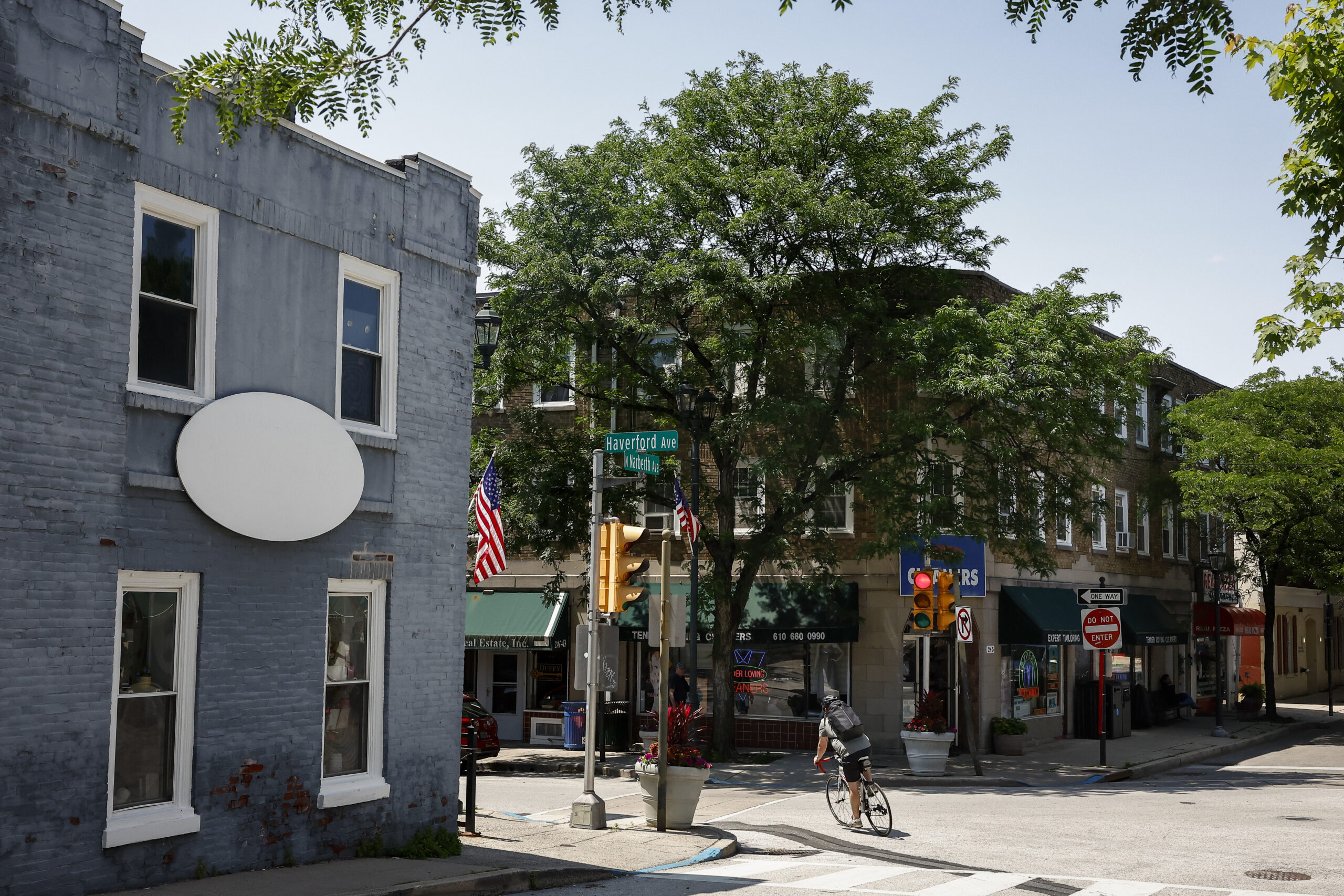
    The corner of Haverford and North Narberth Avenues on Monday, June 2, 2025 in downtown Narberth, Pa.

    Polarization happening ‘in our little town’

    Edwards started thinking about running for office “when the national scene changed dramatically.”

    He described beginning to sense a deep polarization both between and within America’s political parties.

    “I felt like I saw it happening locally. I saw it happening in our little town,” he said.

    As the mayoral race approached, neighbors began telling Edwards he had the right “thing” to run. He could build a strategic plan, lead an organization, and understand financials. At a candidate forum last year, Edwards said he originally planned to run for mayor in 2029, but decided to move his campaign up to 2025.

    Edwards earned the backing of Narberth’s Democratic committee people last April, beating out attorney Rebecca Starr in a heated endorsement process.

    During a March 2025 meeting, local Democrats squabbled over whether or not to endorse a candidate, citing “animosity” in the race (candidates are discouraged from running as Democrats if they do not receive the endorsement of the local committee). The committee ultimately voted to make an endorsement, which went to Edwards.

    After the meeting, Starr withdrew from the race, citing “vitriol” in the campaign.

    “I think [in] any good race, at some point, you have to have more than one candidate. Because otherwise, people are just getting selected, not elected,” Edwards said, referencing the endorsement process. “I do think that she would be a great candidate also, and I hope she runs again.”

    Edwards believes the community has largely moved on from any division that colored the primary. Really, he added, it’s more important to get people talking about the issues the mayor can solve — streets, garbage pickup, infrastructure.

    “I’m just really focused on Narberth,” he said.

    The SEPTA train station on the Paoli/Thorndale Line on Monday, June 2, 2025 in Narberth, Pa.

    Building a ‘community-oriented’ future

    Edwards says he is committed to sustainable growth in a borough whose residents have diverse, and sometimes competing, visions for its future.

    There are two extremes, Edwards says. On one end, the borough could leave everything as it is. The buildings might fall apart, but they would be the same buildings that everyone knows and loves. On the other end, there is rapid growth, like bringing a Walmart Supercenter to Haverford Avenue.

    “It’s that thing in the middle that we’re looking for,” he said — a “hometown feel” with “community-oriented” businesses.

    Edwards is eager to get the 230 Haverford Ave. development across the finish line. The long-awaited project plans to bring 25 new apartment units and ground-floor retail to Narberth’s commercial core. The project, helmed by local real estate developer Tim Rubin, has been in the works for over five years, but faced pandemic-era setbacks that have left a number of vacant storefronts downtown.

    The mayor is also focused on the Narberth Avenue Bridge, a century-old span and main artery that has been closed for several years due to safety concerns and subsequent construction. Road-Con, the contractor updating the bridge, anticipates it will be completed by summer 2029.

    Edwards plans to write a regular newsletter, hold town halls, and host coffee chats. He hopes to put together an unofficial advisory group to bring together people, and opinions, from across the small borough.

    Edwards believes “the DNA of Narberth is alive and kicking,” from the Dickens Festival to the Narberth Outsiders baseball team. To keep it alive, though, the borough needs to bring business in and remind people why they love to live, shop, and work in Narberth.

    “It’s all about relationships and commerce,” he said. “[That] is going to be what brings us together.”

    This suburban content is produced with support from the Leslie Miller and Richard Worley Foundation and The Lenfest Institute for Journalism. Editorial content is created independently of the project donors. Gifts to support The Inquirer’s high-impact journalism can be made at inquirer.com/donate. A list of Lenfest Institute donors can be found at lenfestinstitute.org/supporters.

  • Josh Shapiro’s new book: Why Trump told him he shouldn’t be president, disagreements over COVID-19 closures, and more

    Josh Shapiro’s new book: Why Trump told him he shouldn’t be president, disagreements over COVID-19 closures, and more

    “Hey, Josh, it’s Donald Trump.”

    It was the start of a voicemail from the president to Pennsylvania Gov. Josh Shapiro, received one week after a man firebombed the governor’s residence in Harrisburg in an attempt to kill Shapiro while his family slept inside on the first night of Passover.

    Shapiro hadn’t recognized the number Trump was calling from, and at first didn’t answer.

    When Shapiro called back, Trump offered well wishes to the governor’s family, his usual braggadocio, and some advice: he shouldn’t want to be president, Shapiro recalls in his new memoir, set to be released later this month.

    The book, Where We Keep the Light, which comes out on Jan. 27, has attracted a flood of attention as it signals Shapiro’s potential presidential aspirations and also serves as a retort to the unflattering portrayal of the governor in former Vice President Kamala Harris’ recent memoir.

    In the 257-page book, Shapiro details his early life in Montgomery County, his two decades in elected office, his connection to his faith, and his pragmatic leadership approach.

    And for the political observers who have watched Shapiro’s rise: He delves into his brief consideration of whether he should run for president after Joe Biden dropped out of the race in 2024, the whirlwind experience of being vetted to be Harris’ running mate, and the unfair scrutiny he felt he faced during that process.

    Here are six takeaways from Shapiro’s forthcoming memoir, obtained by The Inquirer.

    Trump to Shapiro: ‘He cautioned that I shouldn’t want to be president’

    When Shapiro, 52, returned Trump’s call in April 2025, he received the president’s support and some unprompted compliments from Trump, he writes.

    “[Trump] said he liked the way I talked to people and approached problems,” Shapiro retells, as Trump went through the list of potential 2028 Democratic Party presidential candidates. “He cautioned that I shouldn’t want to be president, given how dangerous it had become to hold the office now.”

    Gov. Josh Shapiro speaks during a news conference, in Butler, Pa., Sunday, July 14, 2024, following an assassination attempt on President Donald Trump.

    (It is unclear whether Shapiro tried to call Trump after he experienced his own assassination attempt in Butler, Pa., the previous summer, though Shapiro publicly vehemently denounced the violence.)

    Throughout the book, Shapiro details his approach to Trump. He picks his battles to be ones he is sure he will win, he writes, and is sympathetic to the struggles that led some voters to support Trump.

    He’s proud of his disagreements with fellow Dems

    Shapiro sells himself as a pragmatist and writes proudly of the times in which he has disagreed with his party or changed his positions.

    For example, he recalls being asked by Harris’ vetting team about his past comments criticizing Democrats in federal, state, and local offices for how they handled COVID-19 closures. He stood by his criticism of former Gov. Tom Wolf at the time over business and school closures, and of the mask and vaccine mandates implemented by the Biden administration, he writes.

    “I respectfully pushed back, asking if they believed that we had gotten everything right, to which they generally agreed that we had not,” Shapiro writes about his conversation with Harris’ vetting team. “I just had been willing to say the quiet part out loud, even if it wasn’t easy or popular or toeing the line to do so.”

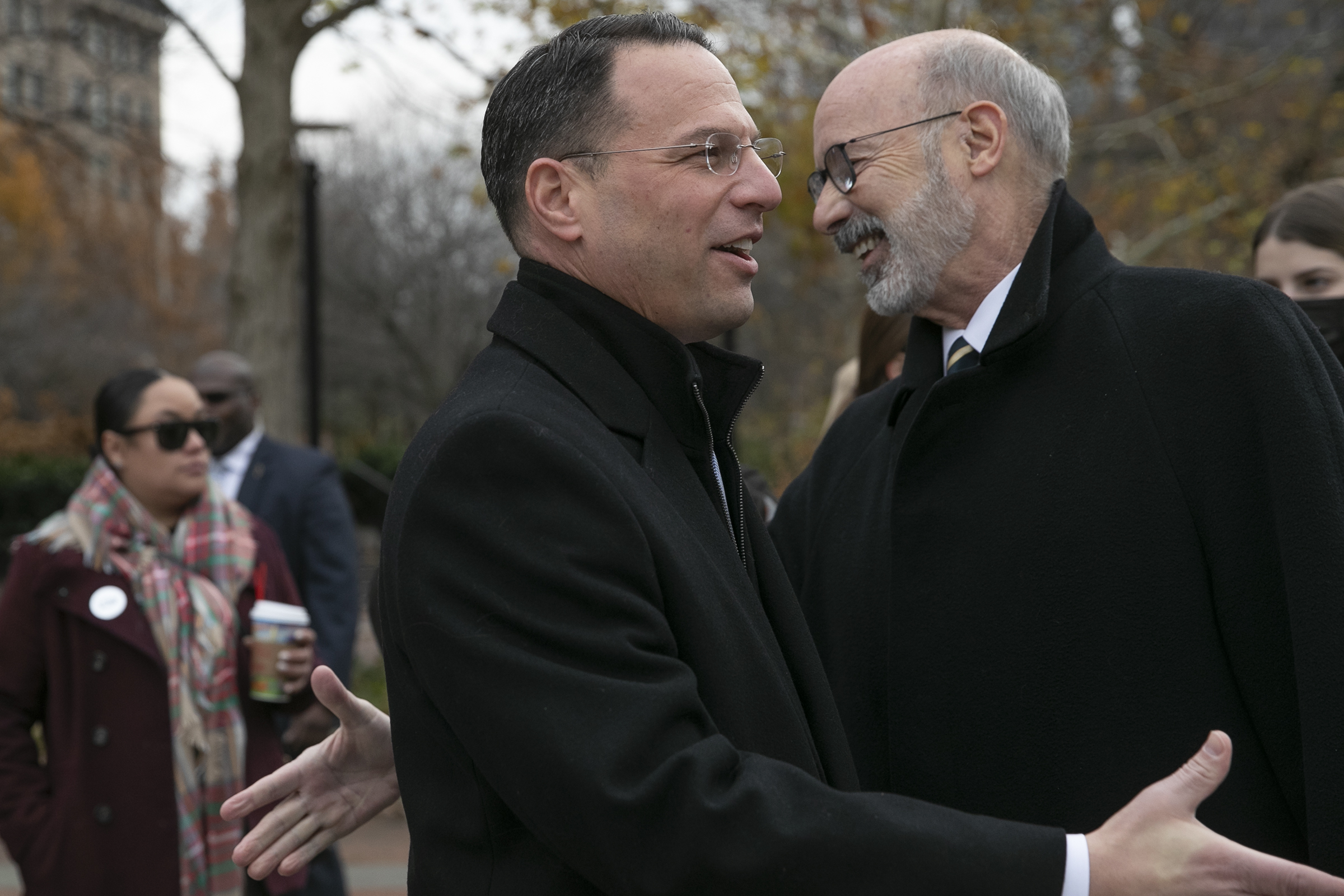
    Then-Attorney General Josh Shapiro and Then-Gov. Tom Wolf both go in for handshakes before the start of a press conference on the harmful effects of anti-abortion policies at 5th and Market in Philadelphia on Thursday, Dec. 9, 2021.

    He also writes about his journey to change his position on the death penalty over the years. In the days after the Tree of Life synagogue massacre in Pittsburgh, in which 11 Jewish people were killed while worshipping, he had initially supported the death penalty for the suspect. Since then, his views have evolved and he no longer supports capital punishment and called on the legislature to end the practice.

    Lori Shapiro is behind most of her husband’s good ideas

    Lori Shapiro, 53, mostly avoids her husband’s frequent appearances in the limelight.

    The former Clinton administration official works mostly behind the scenes, except on a few issues important to her, including those relating to people with intellectual disabilities and ensuring girls have access to menstrual products in schools.

    But in his book, Shapiro writes that his wife has challenged him as she has supported his political rise, pushing him to question what he really wants, do the right thing, or even help him shape his messaging to voters. She discouraged him from running for U.S. Senate in 2016 after top Democrats approached him, which led him to run for attorney general instead. She was also his first call when Biden dropped out and he briefly considered whether he should run for president, and his voice of reason during the veepstakes.

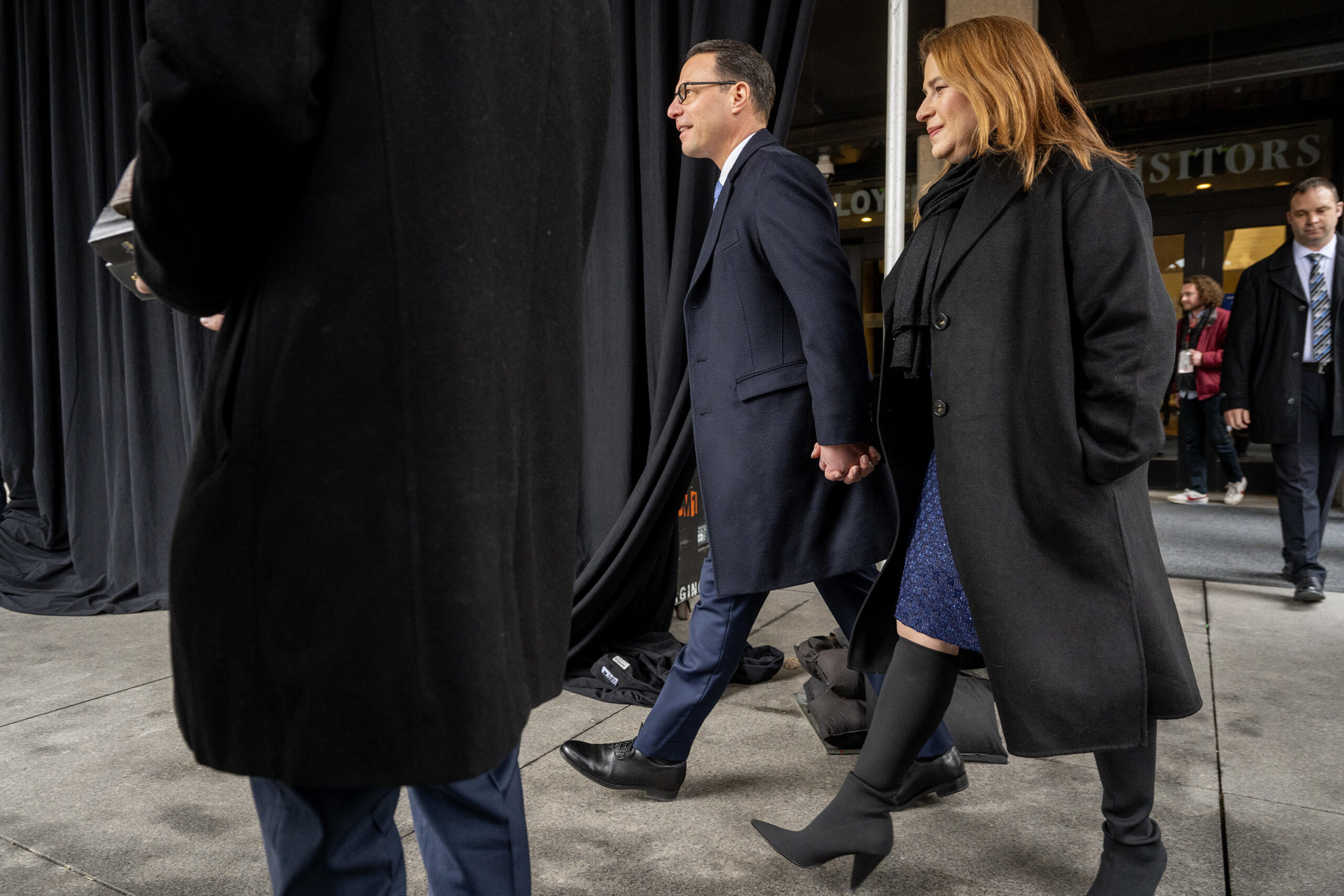
    Josh Shapiro and his wife Lori leave the state Capitol in Harrisburg Tuesday, Jan. 17 2023, on his way to the stage to be sworn in as the 48th Governor of Pennsylvania.

    The couple started dating in high school, before breaking up during college when they went to different universities in New York — he attended the University of Rochester, while she went to Colgate University. Shapiro writes that he quickly realized he missed her, and wrote her a letter in an effort to win her back.

    “So I cracked my knuckles, and wrote my heart out. I was Shakespeare composing a sonnet. I was Taylor Swift before Taylor Swift. I was Lloyd Dobler in Say Anything, in a trench coat with the boom box over my head,” Shapiro writes. “I was getting the girl back.”

    This earned Shapiro the title of “Mr. Lori” from her hall mates at Colgate. He did not win her back until years later, when the two reconnected in Washington after college, and quickly became engaged. The two married and had four children together, who each make frequent appearances throughout the book.

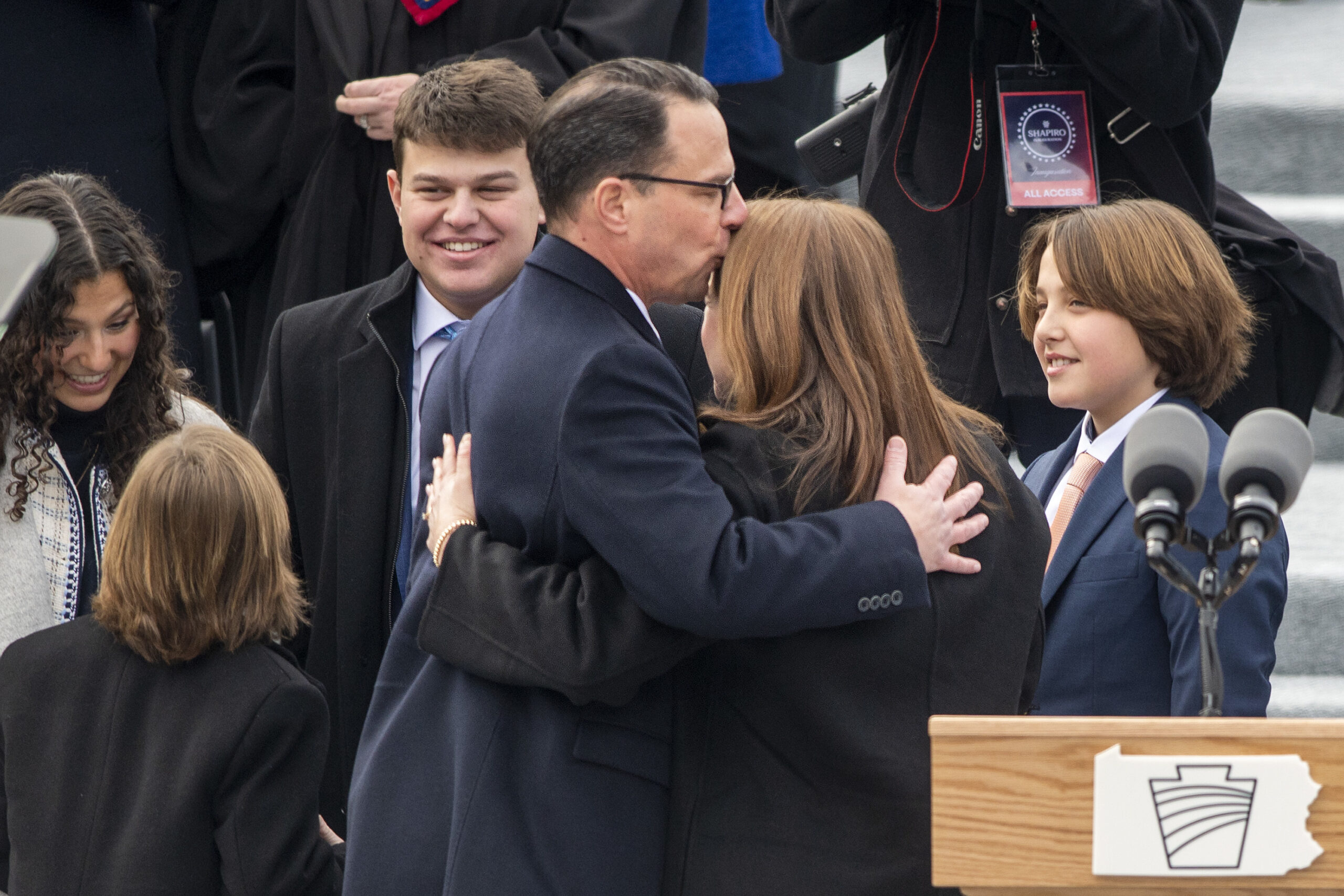
    Surrounded by his four children, Gov. Josh Shapiro kisses his wife Lori after his is sworn in as the 48th Governor of Pennsylvania during inauguration ceremonies at the state Capitol in Harrisburg Tuesday, Jan. 17 2023.

    Shapiro grapples with an early career move that kicked off his reputation as disloyal

    Shapiro is not without regret for how some of his career moves and ambitions affected the people who helped him get where he is today, he writes.

    Shapiro got his start in politics on the Hill under then-U.S. Rep. Joe Hoeffel, a Montgomery County Democrat. He quickly worked his way up to be Hoeffel’s chief of staff before returning to Abington Township to run for state representative.

    But when Shapiro was done with frequent trips to Harrisburg and ready for his next rung on the ladder, Hoeffel was in the way. Shapiro had a plan to run for county commissioner and flip the board for the first time in more than 150 years — making Montco the first Philadelphia collar county to swing into Democratic control. Now all of the Philly suburban counties are controlled by Democrats, and Shapiro is credited for starting the trend. But Hoeffel was not a part of that calculation.

    Shapiro writes that Hoeffel was “struggling politically.” He says he told him he would not run against him, but he also would not run with him.

    “I knew that I couldn’t win with him, and I knew that it wasn’t the right thing for the party or the county, even if we could somehow eke out the victory,” Shapiro writes.

    Hoeffel eventually decided not to run, and was quoted in The Inquirer in 2017 as saying that loyalty is not Shapiro’s “strong suit,” comments he has since stood by, in addition to praising Shapiro for his successes ever since.

    “I’d hear about [Hoeffel] talking to the press or to people behind my back about how he thought I lacked loyalty, that I was someone who needed to be watched,” Shapiro writes. “It felt terrible, and of course, I never intended to hurt him in any way and I would never have run against him. I wanted the Democrats to have a shot, and I knew that I could get it done.”

    Shapiro initially said antisemitism didn’t play into Kamala Harris’ running mate decision. Now he has more to say

    In the days after Harris passed over Shapiro to be her running mate in favor of Minnesota Gov. Tim Walz, Shapiro said “antisemitism had no impact” on her decision.

    Now, Shapiro questions whether he was unfairly scrutinized by Harris’ vetting team as the only Jewish person being considered as a finalist, including a moment when a top member of Harris’ camp asked him if he had “ever been an agent of the Israeli government.”

    “I wondered whether these questions were being posed to just me — the only Jewish guy in the running — or if everyone who had not held a federal office was being grilled about Israel in the same way,” he writes.

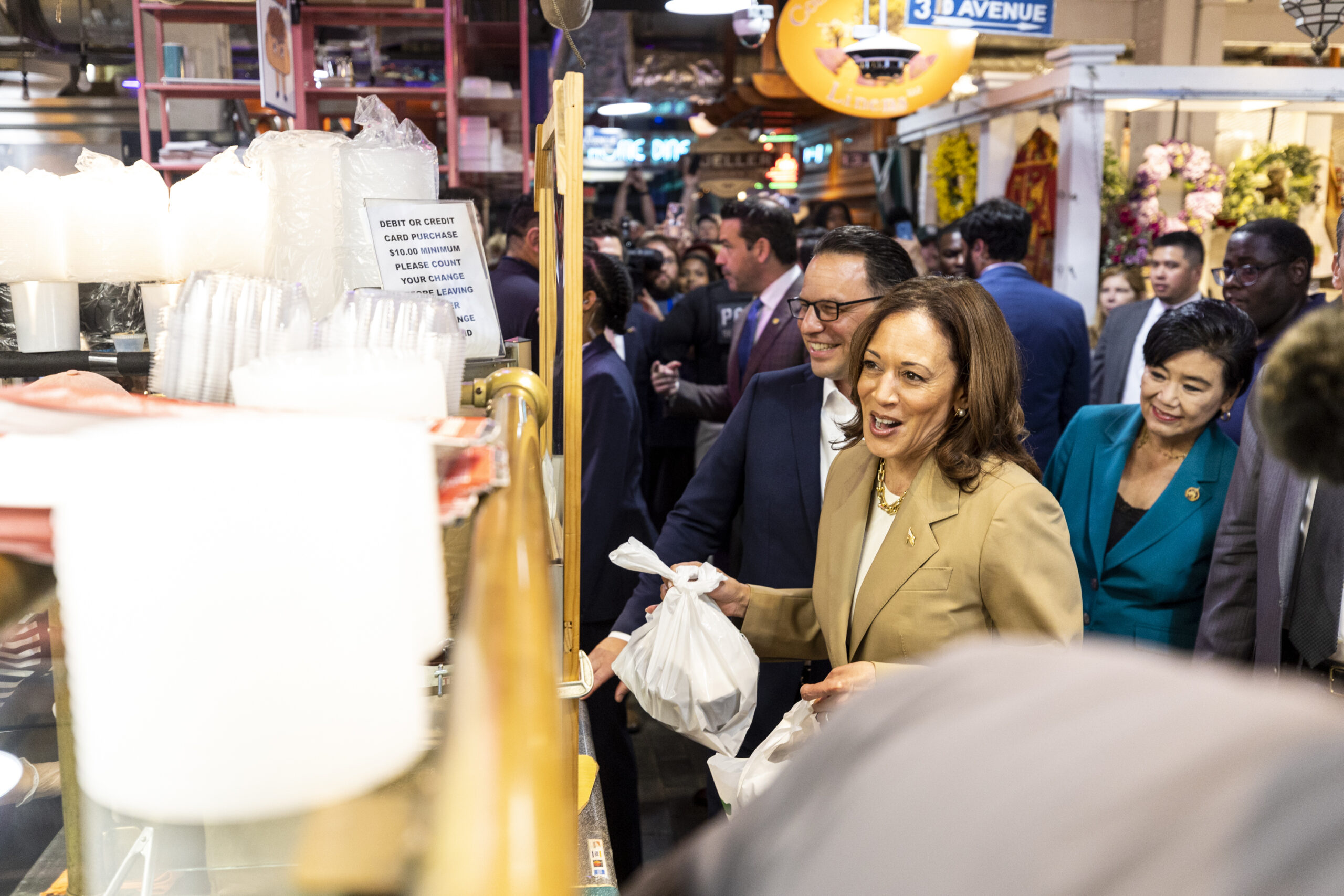
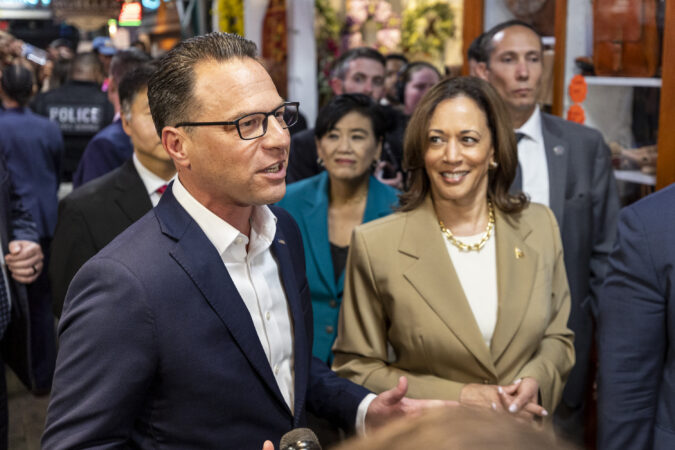
    Vice President Kamala Harris visits Little Thai Market at Reading Terminal Market with Gov. Josh Shapiro after she spoke at the APIA Vote Presidential Town Hall at the Pennsylvania Convention Center in Philadelphia, Pa., on Saturday, July 13, 2024. The photo was taken eight days before President Joe Biden’s decision to exit the race.

    He details his broader concerns with how he was treated during the process, including some perceived insults about his family’s lack of wealth or Lori Shapiro’s appearance.

    Since Shapiro’s book was leaked to the media over the weekend, sources close to Walz confirmed to ABC News that the Minnesota governor was also asked whether he was an agent of a foreign government, due to his multiple trips to China.

    Shapiro, for his part, has written about his time in Israel, including a high school program in which he completed service projects on a farm, on a fishery at a kibbutz, and at an Israeli army base. He once described himself in his college student newspaper as a “past volunteer in the Israeli army” — a characterization that circulated widely after it was reported by The Inquirer during the veepstakes.

    The missing character: Mike Vereb

    There is one person who had been influential during Shapiro’s many years of public service who is not mentioned once in the book: Mike Vereb.

    Vereb, a former top aide to Shapiro, left the governor’s office shortly into his term after he was accused of sexual harassment of a female employee. The state paid the female employee $295,000 in a settlement over the claim.

    Vereb had been along for the ride for Shapiro’s time in the state House as a fellow state representative from Montgomery County (though he was a Republican), as a top liaison to him in the attorney general’s office, and eventually a member of his cabinet in the governor’s office until his resignation in 2023.

  • Sharif Street could become Pa.’s first Muslim member of Congress. But don’t make assumptions about his politics.

    Sharif Street could become Pa.’s first Muslim member of Congress. But don’t make assumptions about his politics.

    When State Sen. Sharif Tahir Street converted to Islam 30 years ago, he already had a Muslim name.

    His father, John F. Street, who would go on to become Philadelphia’s mayor, gave his son a Muslim name when he was born in 1974 despite raising him in the Seventh-day Adventist Church, an evangelical Christian sect in which members of the Street family hold leadership roles to this day.

    As the senator tells it, his father initially considered adopting the name Sharif himself — not because he was considering converting to Islam but because he wanted to embrace the movement of Black Americans reclaiming pre-slavery identities.

    Instead, the elder Street, who had already built a reputation as a rabble-rousing activist, kept his name and dubbed his son Sharif, which in Arabic means noble or exalted one.

    The story would be surprising if it weren’t from the idiosyncratic Street family, which has played a unique outsider-turned-insider role in Philly politics for decades. The late State Sen. Milton Street was the senator’s uncle, and Common Pleas Court Judge Sierra Thomas Street is his ex-wife.

    This year, with Sharif Street a frontrunner in the crowded Democratic primary to replace retiring U.S. Rep. Dwight Evans, the family could make more history: If elected, Sharif Street would become the first Muslim member of Congress from Pennsylvania.

    A Street win would mark another milestone in political representation for Philadelphia’s large Muslim community, an influential constituency that already includes numerous elected officials and power players.

    But in characteristic Street fashion, that potential comes with a twist. Street has relatively moderate views on the conflict in Gaza and would likely stand out from Muslim colleagues in Congress like U.S. Reps. Ilhan Omar (D., Minn.) and Rashida Tlaib (D. Mich.), progressives who regularly denounce Israeli aggression.

    To be sure, Sharif Street, 51, is highly critical of Israeli Prime Minister Benjamin Netanyahu and the war in Gaza. But he is also quick to defend Israel’s right to exist as a Jewish state, favors the two-state solution, and counts many prominent Philadelphia-area Jews among his friends and political supporters.

    “Guess what? Benjamin Netanyahu is not the only leader of a major country in the world that’s committed war crimes, because Donald Trump has done the same thing,” Street said last week at a Muslim League of Voters event. ”But none of us would talk about getting rid of the United States of America as a country.”

    For Muslim voters who view the Middle East crisis as a top political concern, this year’s 3rd Congressional District race sets up a choice between one of their own and a candidate whose politics may more closely align with their views on Gaza: State Rep. Chris Rabb, a progressive who has been endorsed to succeed Evans by the national Muslims United PAC.

    “F— AIPAC,” Rabb said at a recent forum, referring to the American Israeli Public Affairs Committee, which has spent large sums and wielded aggressive tactics to unseat lawmakers it views as antagonistic to Israel. “They are destroying candidates’ lives because they don’t like that we’re standing up to them, that we are actively and consistently acknowledging that there is a genocide in Gaza.”

    Rabb, who is not religious and said he respects all faiths, is hoping that Muslim voters will embrace his stance on the issues.

    “Making history is not the same as being on the right side of history,” Rabb said in a statement.

    ‘Embrace all of the texts’

    Street said his Adventist upbringing immersed him in an Old Testament-rooted Christianity that led to a growing curiosity about all the Abrahamic faiths. As he got older and read more, he realized that he didn’t view Judaism, Christianity, and Islam “as separately as other people do.”

    “I do believe that the Abrahamic religions were all correct. In no way were they all supposed to be separate religions,” he said. “Islam allowed me to embrace all of the texts, which I had already decided to do.”

    Before converting, Street said he was embraced by the Muslim community in Atlanta when he was a student at Morehouse College. He officially converted after returning to Philly to earn his law degree at the University of Pennsylvania.

    Street’s Shahada, the creed Muslims take when joining the faith, was administered by Imam Shamsud-din Ali, his father’s friend. (Years later, Ali was one the elder Street’s associates being targeted by federal investigators when an FBI listening device was discovered in the mayor’s office in 2003. The episode created a firestorm around John Street’s ultimately successful reelection campaign that year, and Ali was later convicted on fraud and racketeering charges.)

    For many Muslim converts, the religion’s dietary strictures, such as abstaining from pork and eating Halal food, take some getting used to, Sharif Street said. That wasn’t a problem for him.

    “Islam has a lot of rules — unless you were Seventh-day Adventist,” he said, referring to the denomination discouraging followers from eating pork, shellfish, and numerous other foods.

    Street said his faith has guided him as an individual and public servant.

    “Islam, for me, focuses on my personal responsibility,” he said, and “the idea that man’s relationship with God is and always was.”

    His views on the unity of the Abrahamic religions also guide his perspective on the Middle East, he said.

    “I recognize that there won’t be peace for the state of Israel without peace for the Palestinian people, but there won’t be peace for the Palestinian people unless there’s peace for the state of Israel at some point,” he said.

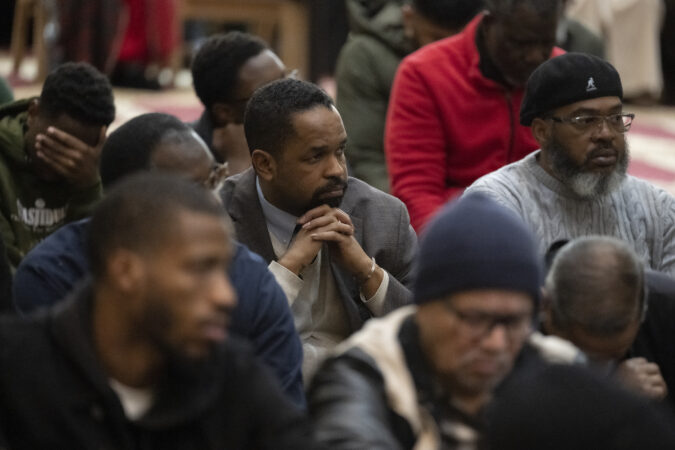
    Sharif Street participates in Friday prayer at Masjidullah mosque recently.

    Like elected officials of other religions, Street’s politics do not perfectly align with the teachers of Muslim leaders.

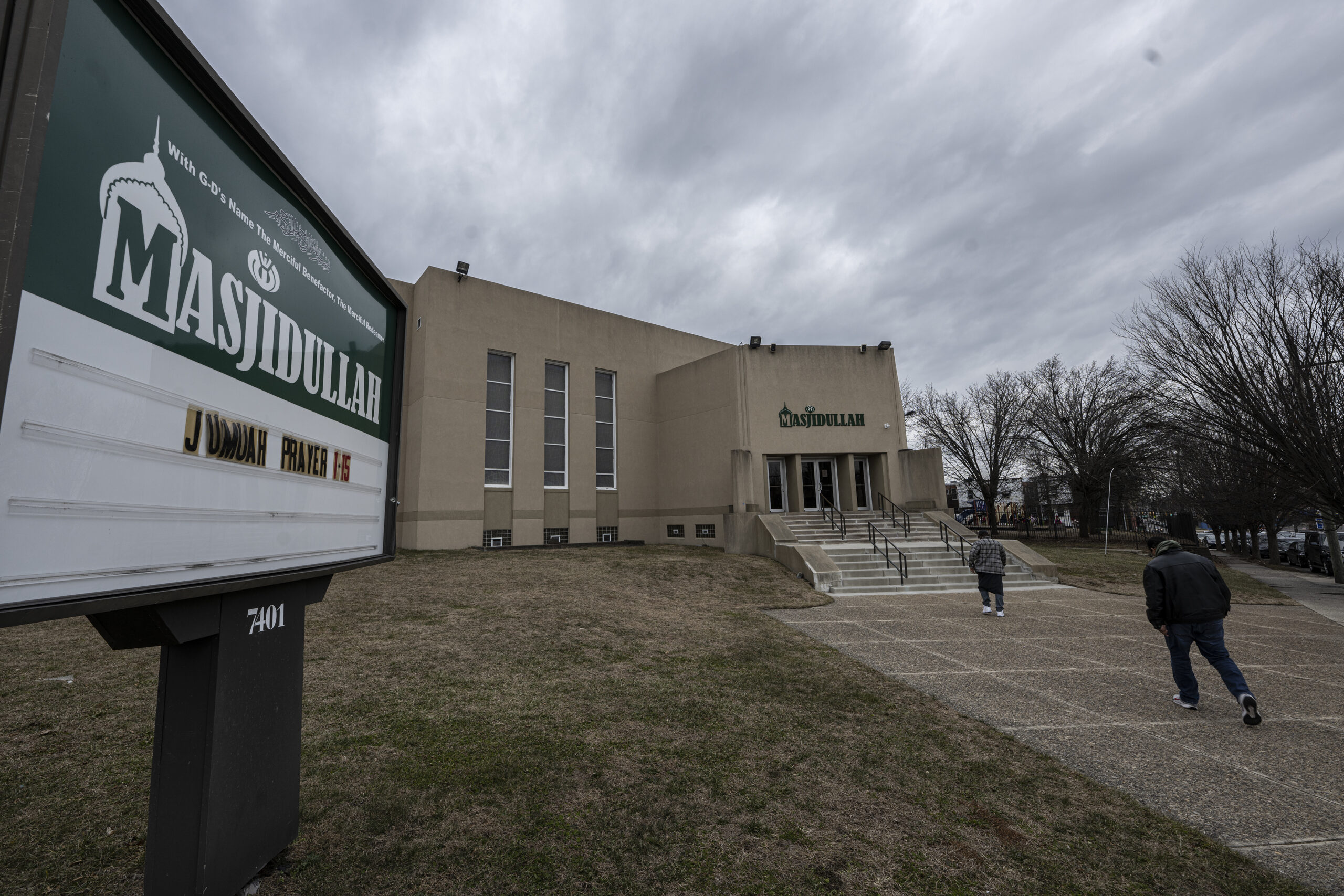
    On a recent Friday, Street attended Jumu’ah, the weekly afternoon prayer service, at Masjidullah in Northwest Philadelphia. A sign at the entrance reminded Muslims that abortion and homosexuality are against Islam’s teachings.

    “Almost every one of Philadelphia’s Muslim political leaders … are all pro-civil rights, including LGBTQ [rights] and pro-choice,” he said. The sign, he said, represented “some members of the faith leadership who are reminding us … that is not the stance of the official religious community.”

    For Street, that type of dissidence hits close to home.

    His father, he said, became Baptist after being “kicked out” of the Seventh-day Adventist Church for officiating a same-sex marriage in 2007 between Micah Mahjoubian, a staffer for Sharif Street, and his husband, Ryan Bunch.

    The Seventh-day Adventist Church in North Philadelphia did not respond to a request for comment.

    ’One of the most Muslim urban spaces’

    Ryan Boyer, who heads the Philadelphia Building and Construction Trades Council and is Muslim, likes to say he’s proud that members of his faith are so integrated into local politics that their religious identities are often overlooked.

    “We’re a part of the fabric,” said Boyer, whose politically powerful coalition of unions has endorsed Street. ”To me, it’s not that big of a deal. We’re here.”

    For Boyer, that means Muslim candidates like Street are judged based on their merits, not their identities.

    “He’s Muslim,” Boyer said of Street. “Well, is he smart? Does he present the requisite skills and abilities to do the job? … The answer is yes.”

    Other Muslim leaders in the city include: Sheriff Rochelle Bilal; City Councilmembers Curtis Jones Jr. and Nina Ahmad; former Police Commissioner Sylvester Johnson; and City Commissioner Omar Sabir, who is Boyer’s brother.

    Philly has also sent several Muslim lawmakers to Harrisburg, including current State Reps. Keith Harris, Jason Dawkins, and Tarik Khan.

    Although the community is less well-known nationally than those in Michigan or Minnesota, Philadelphia has one of the nation’s oldest and largest Muslim populations, with about 250,000 faithful in a city of 1.6 million, according to Ahmet Tekelioglu, executive director of the Council on American-Islamic Relations’ Philadelphia branch.

    By some estimates, Philly’s Muslim community has the highest percentage of U.S.-born followers of any major American city, thanks to the conversion of thousands of Black Philadelphians in recent decades. While many came to the faith through the Nation of Islam movement, a vast majority of Black Muslims in Philadelphia now practice mainstream Sunni Islam, Tekelioglu said.

    Add in thriving immigrant communities from West Africa and the Middle East, and Philadelphia is “one of the most Muslim urban spaces” in the country, he said.

    “Within a few minutes of walking in the city, you come across a visibly Muslim individual,” said Tekelioglu, whose nonprofit group does not make political endorsements. “Halal cheesesteak, ‘the Philly beard,’ and such — these also have overlap with the Muslim community and [the city’s] popular culture.”

    The Middle East and the 3rd Congressional District

    As a lawmaker, Street has been instrumental in forcing the Pennsylvania Interscholastic Athletic Association to allow Muslim girls competing in sports to wear hijabs and in leading the School District of Philadelphia to recognize Eid al-Adha and Eid al-Fitr as official holidays.

    That record is part of why he bristles at the Muslims United PAC’s endorsement of Rabb.

    “We cannot allow other people to hijack our community and hijack our issue because it’s Black people, it’s Muslims dying in Philadelphia right now, and some of these candidates don’t have anything to say about that,” Street said at the Muslim League of Voters event. “Some of them even got some fugazi Muslim organizations to endorse them.”
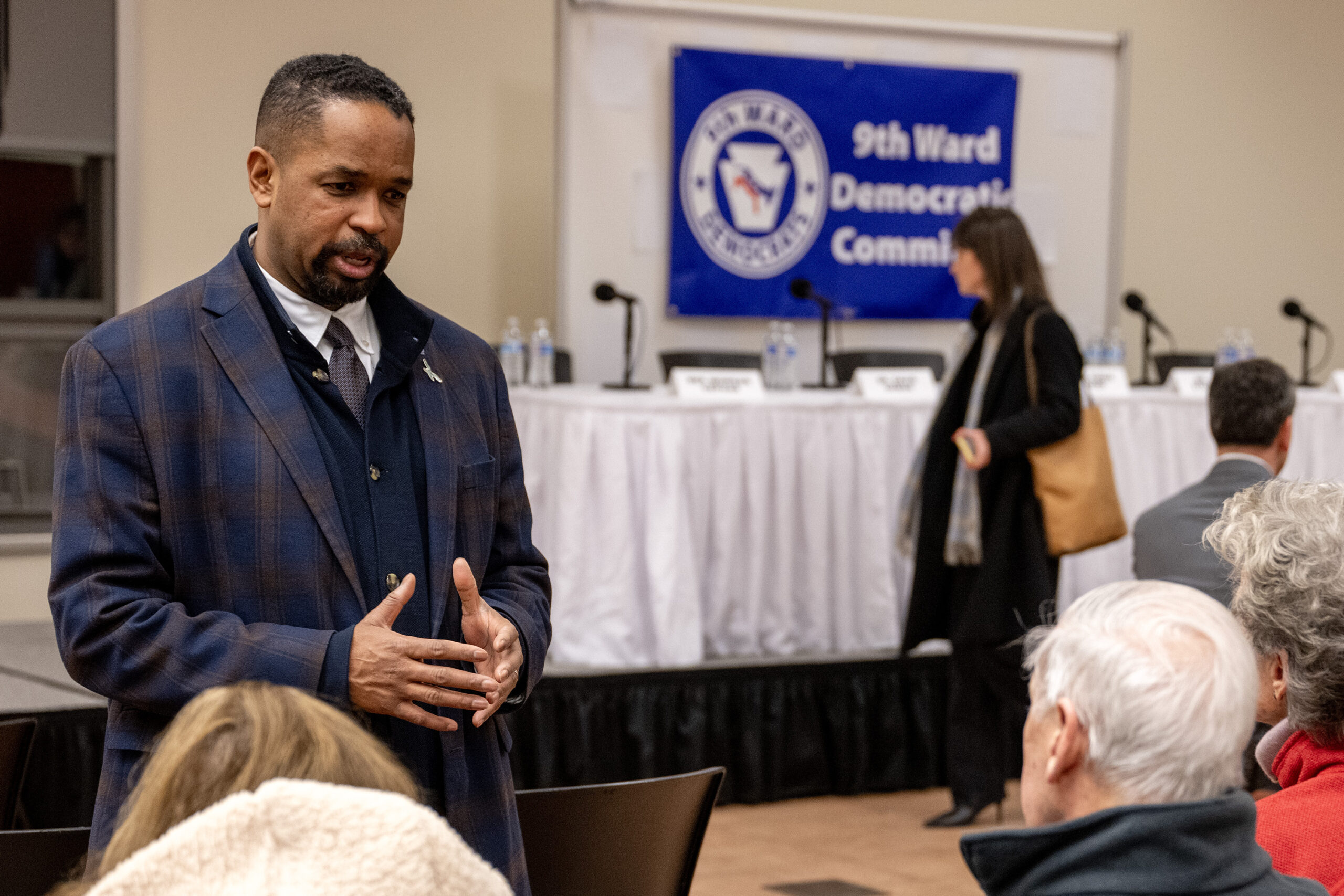
    State Sen. Sharif Street appearing at a forum hosted by the 9th Ward Democratic Committee in December.

    At another recent forum, the 3rd District Democratic candidates were asked whether they support legislation stopping U.S. weapons shipments to Israel after more than two years of conflict that has seen an estimated 70,000 Palestinians die in Gaza.

    Street, who traveled to Israel and Palestine in 2017, said the one-minute response time wasn’t enough to unpack the complicated issues, and none of the other candidates gave straightforward answers — except Rabb, who said he supported the proposal.

    “There are no two sides in this when we see the devastation,” Rabb said.

    In an interview, Street said his comparatively moderate views on the crisis and his relationships with Jewish supporters will allow him to “play a really constructive role” in Congress.

    “We need more people who can talk to both the Jewish and Muslim communities,” he said. “We need people who can have a nuanced conversation and do it with some real credibility.”

    Tekelioglu said he has observed Muslim voters moving away from “identity politics” and toward “accountability-based political stance.” That evolution has accelerated during Israel’s war in Gaza following the Hamas attacks on Oct. 7, 2023, he said.

    “Oct. 7 and everything that’s going on has made everything a bit more clear,” he said. “This doesn’t make it such that the Palestine issue is the main dealbreaker, but overall I see a trend of moving away from the identity politics.”

    The real question, he said, is, “Are they going to represent our interests?”

    Staff writer Anna Orso contributed this article.

  • In his new book, Gov. Josh Shapiro recalls an ‘offensive’ vetting process to be Kamala Harris’ running mate

    In his new book, Gov. Josh Shapiro recalls an ‘offensive’ vetting process to be Kamala Harris’ running mate

    Pennsylvania Gov. Josh Shapiro questioned whether he was being unfairly scrutinized as the only Jewish person being considered as a finalist to be Vice President Kamala Harris’ running mate — and briefly entertained his own run for the presidency — according to a copy of his upcoming book obtained by The Inquirer.

    In his memoir, Where We Keep the Light, set to debut on Jan. 27, Shapiro wrote that he underwent significant questioning by Harris’ vetting team ahead of the 2024 presidential election about his views on Israel, and his actions supporting the end of pro-Palestinian protests at the University of Pennsylvania — leading him to wonder whether the other contenders for the post had faced the same interrogation.

    Shapiro, a popular Democratic governor long rumored to have future presidential ambitions, even briefly entertained a run shortly after then-President Joe Biden unexpectedly dropped out of the race in July 2024, according to his book. The Abington Township resident is now seen as a top contender for the 2028 Democratic nomination as he seeks reelection in Pennsylvania this year.

    But before Shapiro ended up in the veepstakes for Harris’ running mate, he wrote in his book that there was a moment right after Biden dropped out of the race where he considered whether he should run for president.

    “Well, now what?” Shapiro wrote. “Maybe there would be a process the party would engage in to replace him? Did I want to be part of that?”

    He called his wife, Lori, who at the time was out of the country with their two younger kids. “I don’t think we are ready to do this,” Shapiro recalled his wife saying from a Walmart in Vancouver. “It’s not the right time for our family. And it’s not on our terms.”

    After that call, Shapiro wrote that he quickly decided he didn’t want to run and would back Harris, as Biden also endorsed her for the top of the ticket.

    Once the field cleared for Harris, Shapiro recalled seeing his face on TV as her potential running mate, before he was asked by her campaign manager to be formally vetted.

    In the days that followed, Shapiro contended with increasing national scrutiny as he emerged as a front-runner. Some pro-Palestinian protesters began calling Shapiro “Genocide Josh” online, he wrote. And top Democrats questioned whether a Jewish running mate would deter voters from supporting Harris, as Shapiro had been outspoken against some pro-Palestinian campus protests that year.

    What was unknown: Whether those same questions — and some even more extreme — were circulating within Harris’ camp, Shapiro wrote in his most detailed retelling of his experience vying for the vice presidency to date.

    Gov. Josh Shapiro at a rally for Vice President Kamala Harris at Wissahickon High School in Ambler on July 29, 2024.

    Just before he went to meet with Harris at the vice president’s residence in the summer of 2024, Shapiro received a call from Dana Remus, former White House counsel for Biden who was coleading the vetting process for Harris.

    “Have you ever been an agent of the Israeli government?” Remus asked, according to Shapiro’s memoir.

    “Had I been a double agent for Israel? Was she kidding?” Shapiro wrote in his 257-page book. “I told her how offensive the question was.”

    According to the memoir, Remus then asked if Shapiro had ever communicated with an undercover Israeli agent, which he shot back: “If they were undercover… how the hell would I know?”

    “Remus was just doing her job. I get it. But the fact that she asked, or was told to ask that question by someone else, said a lot about some of the people around the VP,” Shapiro wrote.

    In high school, Shapiro completed a program in Israel that included service projects on a farm, and at a fishery in a kibbutz, as well as at an Israeli army base, which he once described in his college student newspaper as “a past volunteer in the Israeli army.”

    Harris’ office could not be reached for comment Sunday evening. Remus also could not immediately be reached for comment Sunday.

    Shapiro, more broadly, recalled getting the feeling from Harris’ vetting team that she should pick Shapiro — a popular Democratic governor in a critical swing state — but that they had reservations about whether Shapiro’s views would mesh with Harris’.

    In one vetting session with U.S. Sen. Catherine Cortez Masto (D., Nev.), former Labor Secretary Marty Walsh, former associate Attorney General Tony West, and former senior Biden adviser Cedric Richmond, Shapiro wrote that he had been questioned “a lot” about Israel, including why he had been outspoken against the protests at Penn.

    “I wondered whether these questions were being posed to just me — the only Jewish guy in the running — or if everyone who had not held a federal office was being grilled about Israel in the same way,” he wrote. (Illinois Gov. JB Pritzker, who is Jewish, was also vetted to be Harris’ running mate. Harris’ husband, Doug Emhoff, is also Jewish.)

    In his book, Shapiro recalled the whirlwind two weeks as an awe-inspiring window into an opportunity — but ultimately it was one he knew he didn’t want.

    When Shapiro finally sat down with Harris in the dining room at the Naval Observatory, he said it became clear that she had a different vision for the vice presidency than what he wanted. He would work primarily with her staff and couldn’t say whether he would have access to her. In her own experience as vice president, she saw the job as mostly to make sure that you aren’t making any problems for the president, he wrote.

    Shapiro noted his own relationship with his No. 2, Lt. Gov. Austin Davis. The role in itself has few powers, but Shapiro views Davis as a governing partner and is one of few people who can walk into his office unannounced at any time, he wrote. He wanted the same relationship with Harris, he said, noting that he knew he would not be the decision-maker.

    “If we had door A and door B as options, and she was for door A and I was for door B, I just wanted to makes sure that I could make the case for door B,” Shapiro wrote.

    But Harris was “crystal clear” that that wasn’t the kind of president-vice president dynamic she envisioned, he said.

    In her own book released last year, 107 Days, Harris recalled the meeting differently. There, she wrote that Shapiro had “peppered” her with questions and “mused that he would want to be in the room for every decision.” His ambitions, she said, didn’t align with her view that a vice president should be a No. 2 and not a “copresident.”

    Former Vice President Kamala Harris speaks with Dawn Staley (left), while promoting her new book “107 Days,” at the Met on Sept. 25 in Philadelphia. The event was held in partnership with Uncle Bobbie’s Coffee & Books.

    As Shapiro tells it, the friction with Harris’ team didn’t stop there.

    Shortly after meeting with Harris, Shapiro in his book recalled another unpleasant conversation with Remus, in which he wrote that she said she “could sense that I didn’t want to do this.”

    According to the book, Remus said it would be hard for Shapiro to move to Washington, it would be a strain financially for his family who “didn’t have a lot of money” by D.C. standards, and that Lori would need to get a whole new wardrobe and pay people to do her hair and makeup.

    It was then that he decided to leave the apartment where he had been asked to wait until Harris could come and talk to him again, he recalled.

    “These comments were unkind to me. They were nasty to Lori,” Shapiro wrote. “I hold no grudge against Remus, who I know was doing the job she had to do, but I needed to leave.”

    Shapiro went home, he said, and went over the day’s events with Lori at the edge of their bed.

    “On one hand, I was still tugged by the prestige of it all. It’s an honor. It’s a big title. But that’s never been enough for me,” he wrote. Still, he struggled with what it would mean to withdraw, concerned about not playing his part in a high-stakes election and letting his supporters down. Ultimately, he decided that it was not his race to win or lose, he wrote.

    “People were going to cast their votes for her, or they weren’t,” he added.

    Vice President Kamala Harris, Democratic nominee for president, and her running mate Minnesota Gov. Tim Walz, address a rally to kick off their campaign at the Liacouras Center in Philadelphia, Pa., on Tuesday, August 6, 2024.

    He decided that day he did not want the job, and toyed with the idea about publicly releasing a statement withdrawing himself from the running. He said he also tried to tell Harris he did not think it would be a good fit, but wasn’t able to reach her.

    Shortly thereafter, Harris announced that she had chosen Minnesota Gov. Tim Walz to be her running mate in an ultimately unsuccessful campaign against President Donald Trump. The two would debut their presidential ticket at a rally at the Liacouras Center in North Philadelphia. Shapiro wrote that he didn’t want to go.

    “I was wrung out. I just wanted to be home with my family, to take a walk with Lori, and just be,” he wrote.

    Gov. Josh Shapiro takes the stage ahead of Vice President Kamala Harris and Gov. Tim Walz at a rally in Philadelphia’s Liacouras Center on August 6, 2024.

    But when it was time for him to take the stage ahead of Walz and Harris, he was long-applauded by his home city and gave a speech “from my heart” about how he took pride in his faith and his support for Walz and Harris.

    Shapiro’s memoir will be released Jan. 27 and is a reflection on his decades as an elected official, including as Pennsylvania attorney general, as well as the firebombing of his home last year. He will tout the book in Philadelphia on Saturday at 3 p.m. at Parkway Central Library. He will also discuss the book at upcoming book tour stops in New York and Washington.