Category: Real Estate

  • Meet the Philly native and St. Joe’s Prep grad running Philly’s largest outdoor shopping center operator

    Meet the Philly native and St. Joe’s Prep grad running Philly’s largest outdoor shopping center operator

    Brian Finnegan, Brixmor Property Group’s new CEO, is a true Philadelphian.

    He was born in Southwest Philly, spent his formative years in Roxborough, and graduated from St. Joe’s Prep. He met his wife, Katie, at a Halloween party in his mother’s Packer Park backyard in 2009, while just down the road the Phillies played the Yankees in the World Series and Pearl Jam closed the Spectrum.

    Finnegan, now 45, can’t give up his Eagles season tickets, despite living outside New York and traveling the world as a real estate executive, When he can’t make games, he can usually count on his 73-year-old mother, Geraldine, to take the seats.

    Finnegan said he got his work ethic from his mom, who’s worked for the legal services company MCS Group for nearly 50 years, and his late father, Thomas, a 30-year employee and manager of city parks. He also points to his early jobs, which included a summer gig as “head grill guy” at Circle Pizza in Avalon.

    These experiences paid off: Last month, Finnegan was named Brixmor’s CEO, a role he’d previously held on an interim basis.

    Brian Finnegan, who was named CEO of Brixmor Property Group last month, said he’s especially proud of the company’s commitment to its more than 20 shopping centers in and around Philadelphia, where he grew up.

    Finnegan lives in Rye, N.Y., with Katie and their three young daughters, Magnolia, Daisy, and Poppy.

    In a recent interview, Finnegan talked about Brixmor’s dedication to its more than 20 Philly-area shopping centers, including Roosevelt Mall, Pilgrim Gardens, and the Village at Newtown.

    The company has invested about $180 million in its Philly portfolio over the past nine years, Finnegan said, and calls itself the largest operator of open-air shopping centers in the region.

    The following interview has been edited and condensed for clarity.

    How would you say Brixmor is doing overall?

    The company is in the best position it’s ever been. We’re signing rents at the highest level that we ever have. We have occupancy levels that are close to the highest we’ve had.

    Consumers today are demanding much more of the suburbs in terms of the types of services that they’re looking for, the types of restaurant options that they’re looking for. And that’s allowed us to really improve the merchandising mix at our shopping centers with better food and beverage options and better service options in terms of health and wellness.

    Why do you think Brixmor shopping centers are thriving while many brick-and-mortar stores falter?

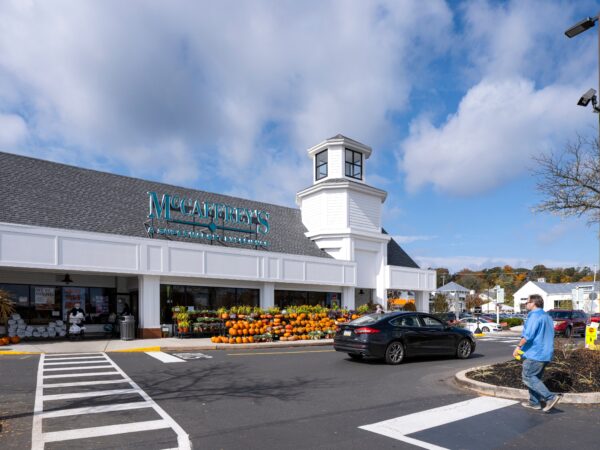
    Grocers, especially [tenants like Sprouts, Whole Foods, and McCaffrey’s], have really invested in their stores, and they’re drawing a lot of traffic.
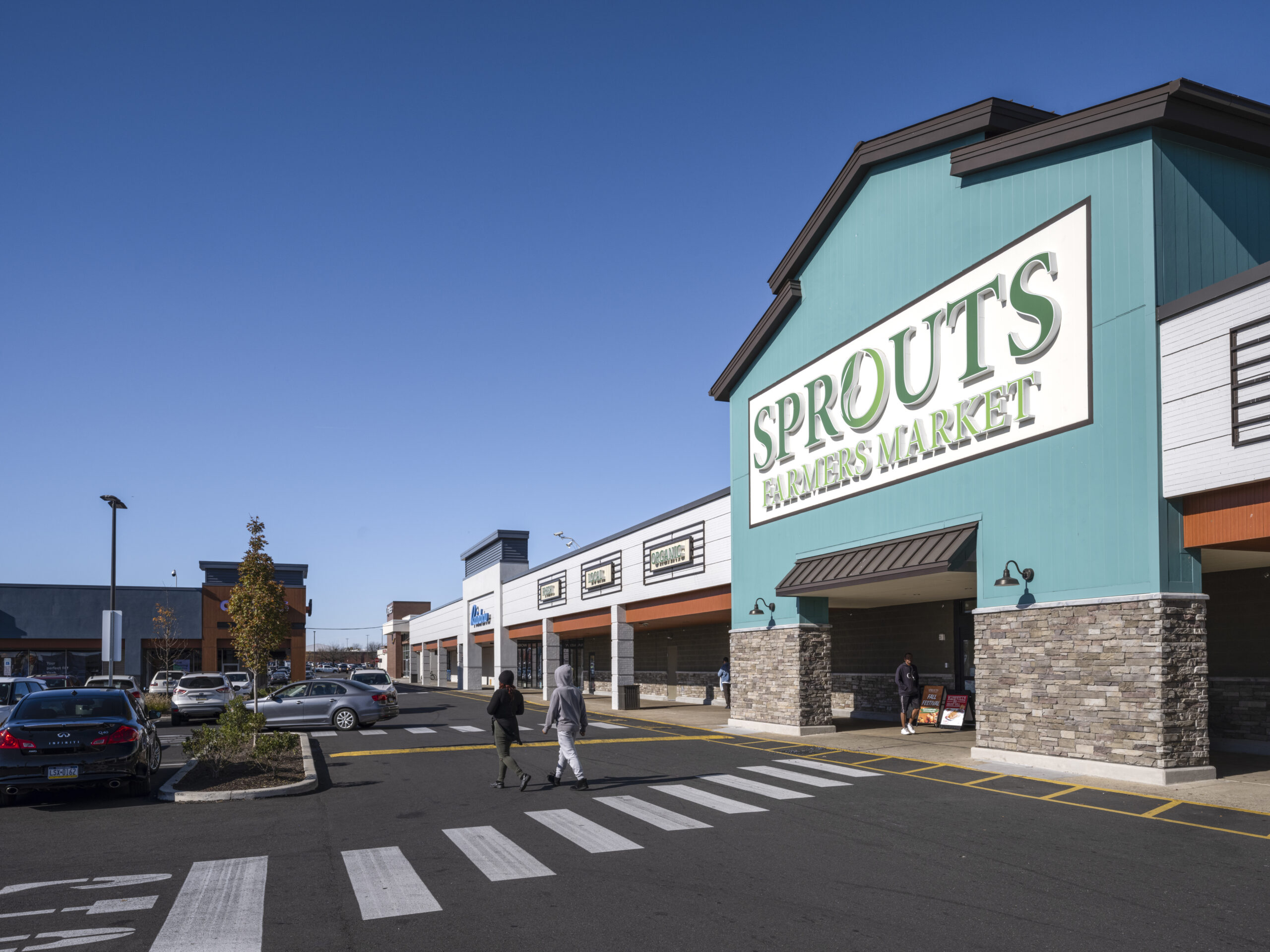
    Sprouts is among the retailers located at Roosevelt Mall in Northeast Philadelphia, one of Brixmor Property Group’s complexes in the region.

    As it relates to fitness and wellness, and higher quality food and beverage options, I think consumers today care more about what they’re putting in their bodies and how they look than they ever have.

    Across the income spectrum, consumers are looking for value. And as department stores have closed, off-price operators [such as Burlington and Five Below] have taken a significant amount of share.

    You have to create an environment at specific shopping centers where if one tenant draws traffic, another tenant can complement them.

    It really matters who your neighbor is, so if you’re able to put a strong merchandising mix together, which we’ve been able to do at our centers in Philadelphia, you’re really going to see traffic.

    The Ross Dress for Less at Roosevelt Mall is one of several off-price retailers that have found success in Brixmor Property Group centers, according to CEO Brian Finnegan.
    What would you like to accomplish as CEO?

    We’d love to find some new opportunities to grow our footprint in Philadelphia.

    The deals that we’ve done in Philadelphia, many of them are [with retailers new to Brixmor’s national portfolio], like with Lululemon, like with Free People, like with Warby Parker, like with Pottery Barn and Williams-Sonoma.

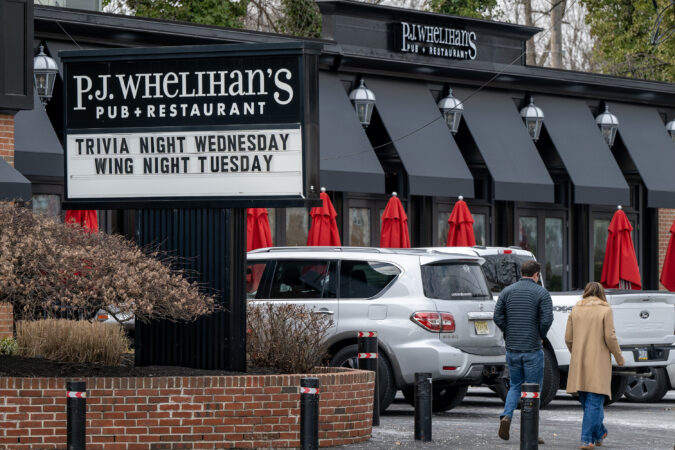
    We think about how our centers connect with the communities that we’re in. We’re part of those communities. We’re actually landlords to Philadelphia institutions like Chickie’s & Pete’s and P.J. Whelihan’s.

    The more that we can tie our assets with retailers that are relevant to those communities, the better.

    What makes you optimistic about shopping centers amid all the e-commerce competition?

    What [the pandemic] showed was that people like connectivity. They don’t like to just have things delivered to their door. They want to go out and experience things. They want to touch and feel things.

    Our traffic since the pandemic across the entire portfolio is up 7%.
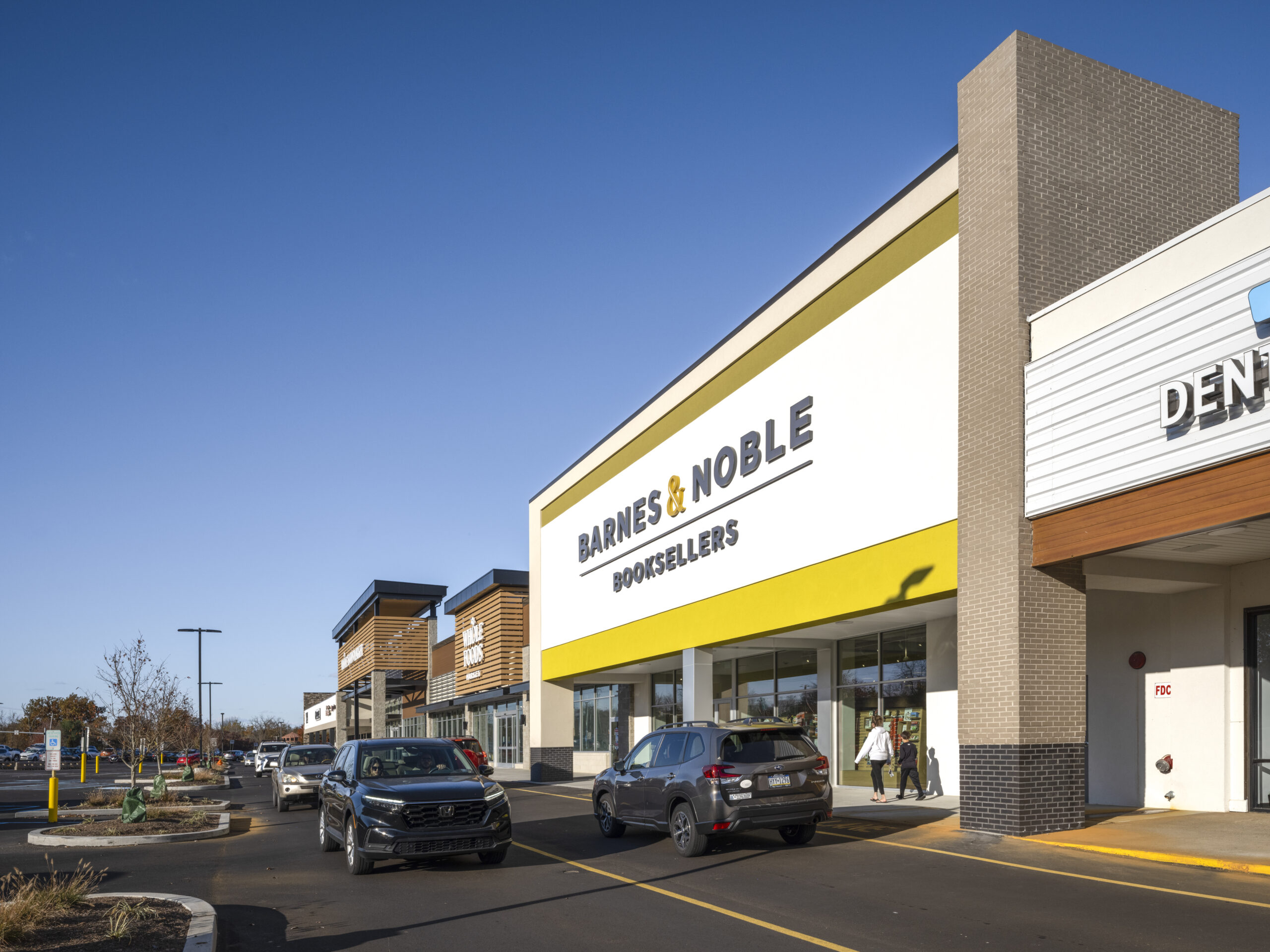
    Barnes & Noble is shown at Barn Plaza shopping center in Doylestown, which is one of more than 20 complexes in the region owned by Brixmor Property Group.

    If you talk to a lot of these major retailers, what they’ll say is the store is the center of everything that they do. They’re utilizing that store to be able to connect with the consumer in store, at delivery, as part of pickup.

    I’m pretty bullish. There are a lot of retailers that continue to thrive despite the fact that consumers have options to be able to get something online if they wanted to.
  • They put $300,000 down to move up in Passyunk Square | How I Bought This House

    They put $300,000 down to move up in Passyunk Square | How I Bought This House

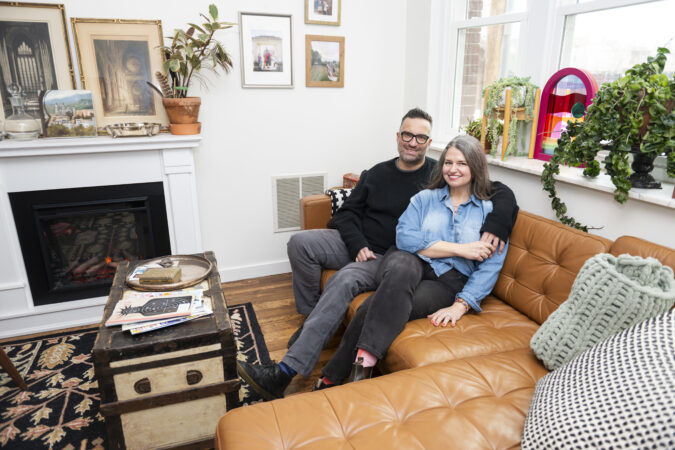
    The buyers: Catherine Wargo Roberts, 45, content designer; Karsten Roberts, 46, respiratory therapist

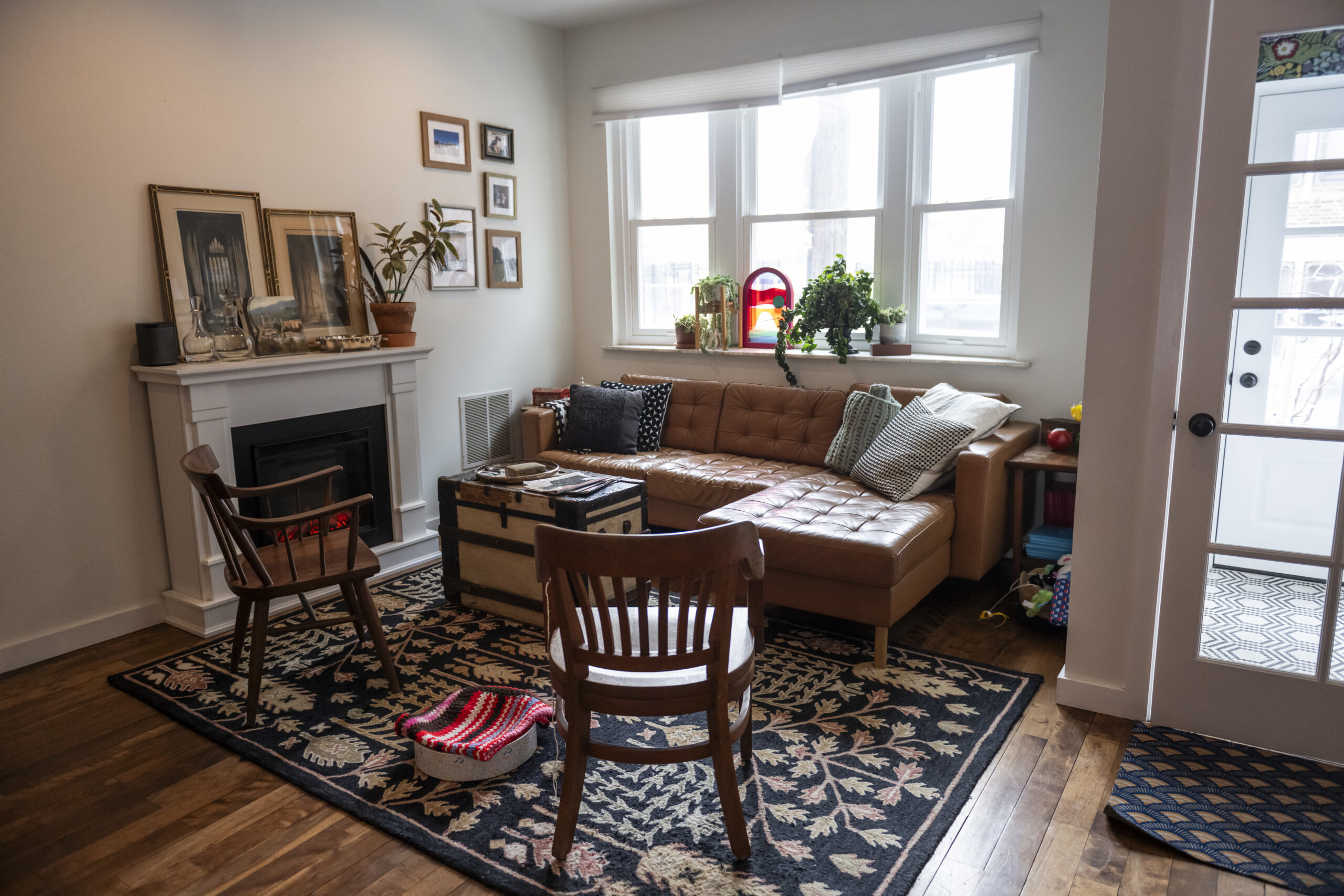
    The house: A 1,700-square-foot townhouse in Passyunk Square with three bedrooms and two bathrooms built in 1915.

    The price: listed for $725,000; purchased for $725,000.

    The agent: Ashley Miele, Compass

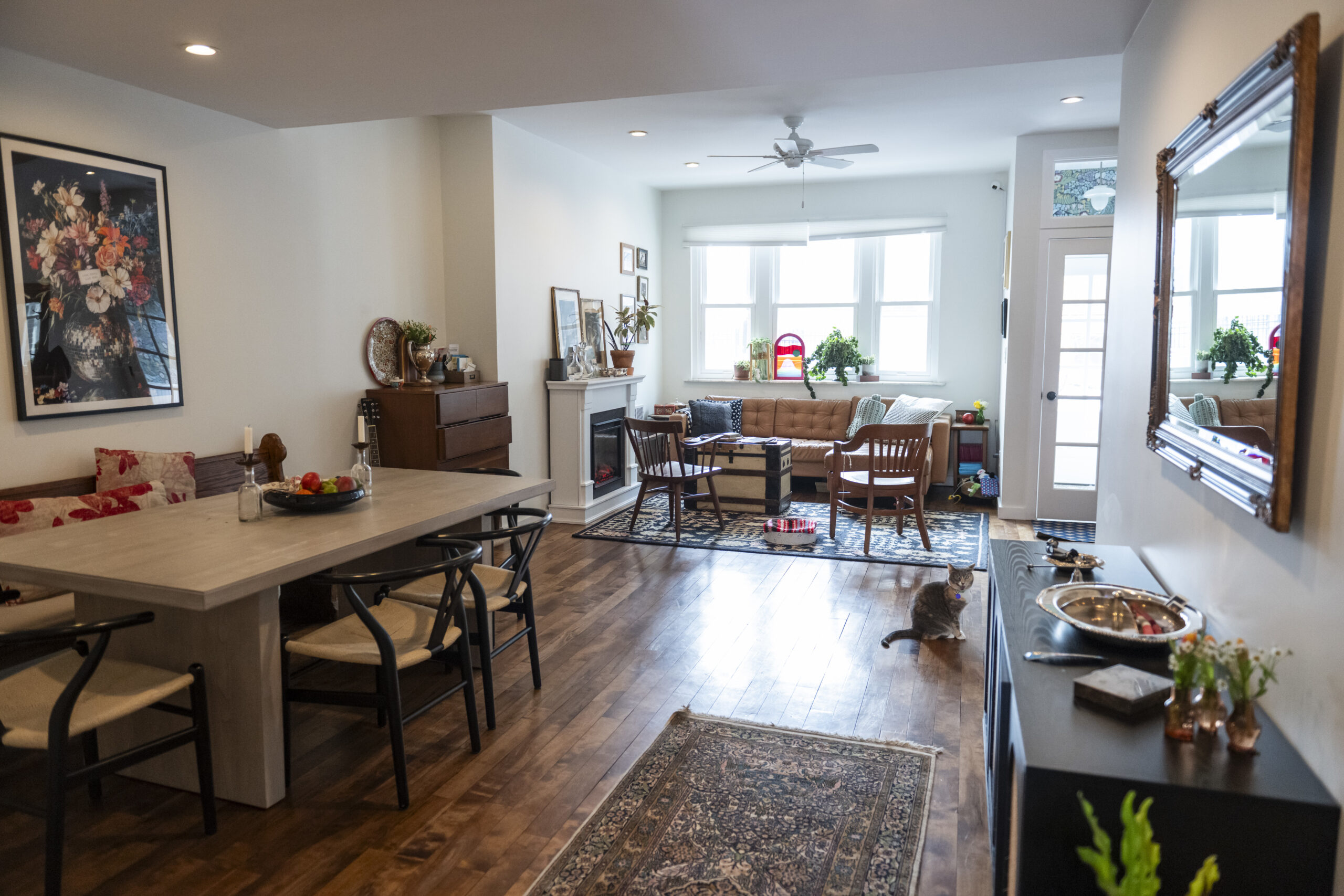
    The living area in the home in South Philadelphia.

    The ask: Catherine Wargo Roberts and her husband, Karsten Roberts, had no desire to leave Passyunk Square. They were already deeply rooted in the neighborhood, with two kids enrolled at the local school and a daily life that revolved around a few familiar streets. But they had grown tired of their mixed commercial and residential block. “We were very happy for new businesses to come into the neighborhood and thrive,” she said. The block had become “just a little bit busier … than we wanted.”

    The search: In fall 2024, the family set off in search of a new house. They wanted more square footage, lots of outdoor space, and an unfinished basement. “Everybody in Philadelphia wants a finished basement, but everybody’s basement floods,” Wargo Roberts said. “I want an unfinished basement so that if it fills with water, I’m not freaking out.” They also needed to stay in their kids’ school catchment.

    The couple only looked at two homes. The second home was listed as a private sale.

    Their list narrowed the search to just two houses. One was north of Washington Avenue, which Wargo Roberts said “felt like a whole different ballgame,” even though it was close to the kids’ school. It also didn’t have any outdoor space.

    The other house they had to wait for. An agent friend had given them a heads-up that it would be on the market in a few months. The couple grabbed the first viewing available on the first day it was open for a private sale.

    The appeal: Inside, Wargo Roberts was immediately drawn to the home’s size and layout. It was 250 square feet larger than their previous home, and most of the extra space was in the first-floor living area, which Wargo Roberts appreciated. “I didn’t care about a big bedroom,” she said. “That’s not something I need.”

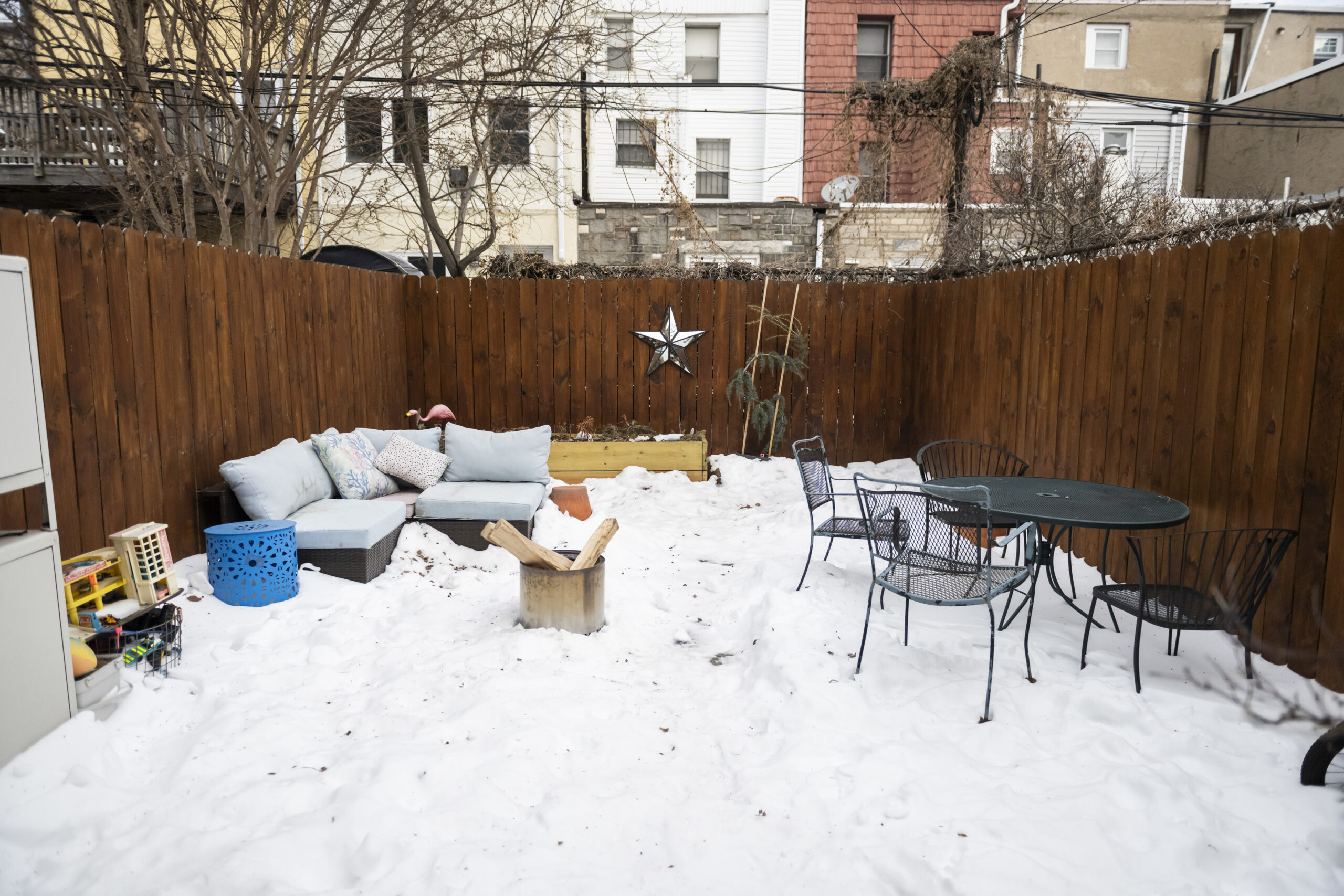
    Outside, the house offered outdoor space that felt special: a large backyard, plus a deck that connects to the master suite on the top floor and a second deck above it. “Most people walk in our backyard and are like ‘holy s—,” Wargo Roberts said.

    Wargo Roberts’ favorite thing about their new house? The giant backyard.

    The deal: The house was listed for $725,000. The couple submitted a full-price offer the same day they saw it. It was within their budget, and “the comps supported it,” Wargo Roberts said. The next night, they learned their offer had been accepted.

    The inspection revealed a failing sewer line and a bowing brick facade. The sellers agreed to a $7,000 credit for the sewer repair but declined to cover the estimated $8,000 cost of stabilizing the front wall. “They played hardball,” Wargo Roberts said. “They knew we wanted the house.

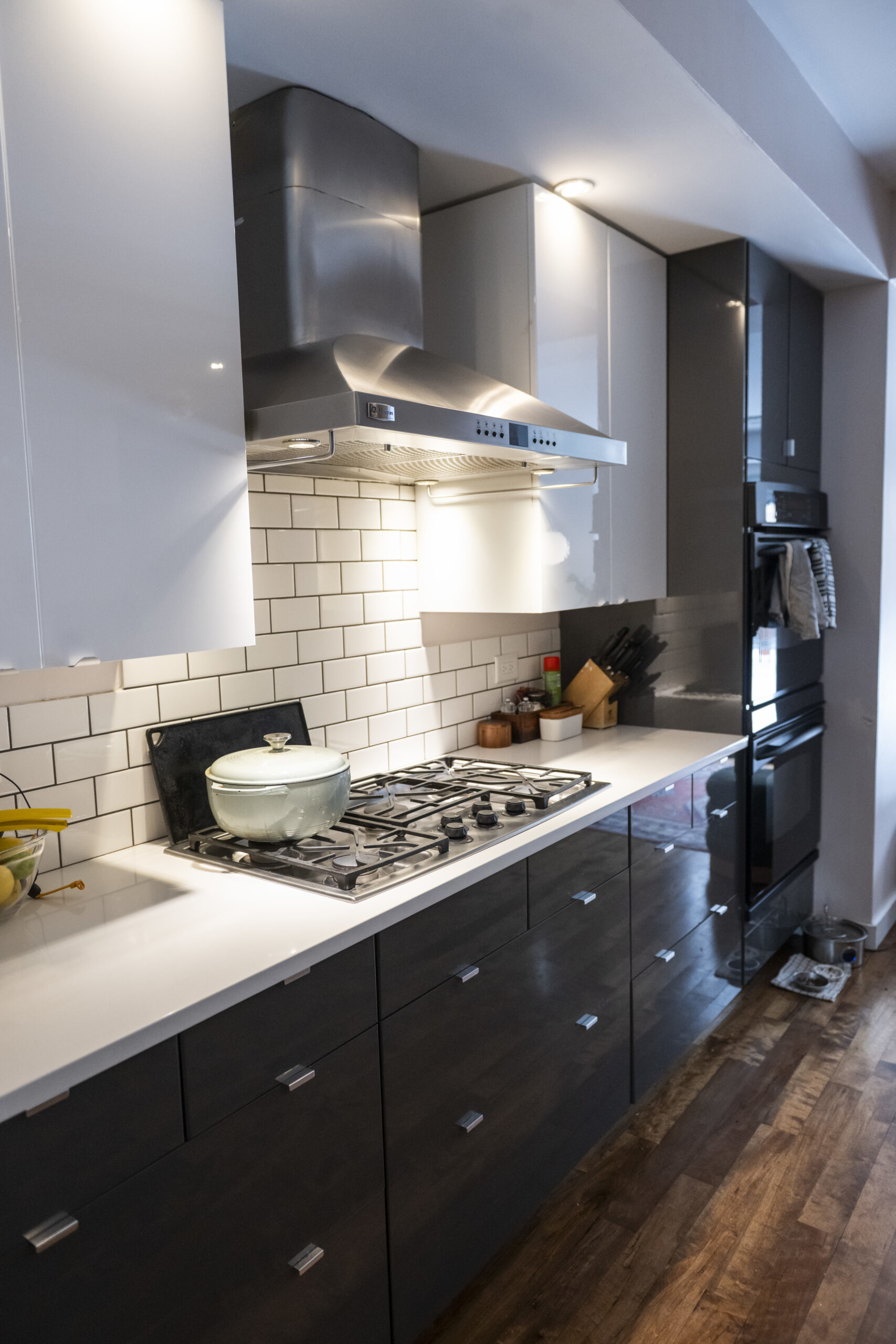
    The kitchen in Catherine Wargo Roberts and Karsten Roberts home in South Philadelphia.

    The money: The couple’s path to a $725,000 home began more than a decade ago in San Francisco. In 2012, they bought a condo for $562,000 with help from Wargo Roberts’ parents. “We never would have been able to do that without help,” she said. They sold the condo in 2017 and walked away with $330,000. They used $235,000 for a down payment on their first Philadelphia home, which cost $470,000.

    To purchase their current house, they used an interest-free bridge loan to cover the down payment while they waited for their old house to sell. “It kept me up at night every single night for 30 days,” Wargo Roberts said. “Because if the house you’re selling doesn’t sell in a certain amount of time, the interest ramps up.” Nine days after it went on the market, their house sold for $612,000, netting them $360,000. They put $300,000 toward the down payment on the new house — roughly 41% of the purchase price. Their monthly mortgage payment is $3,600. “That’s only possible because we had a giant down payment,” Wargo Roberts said.

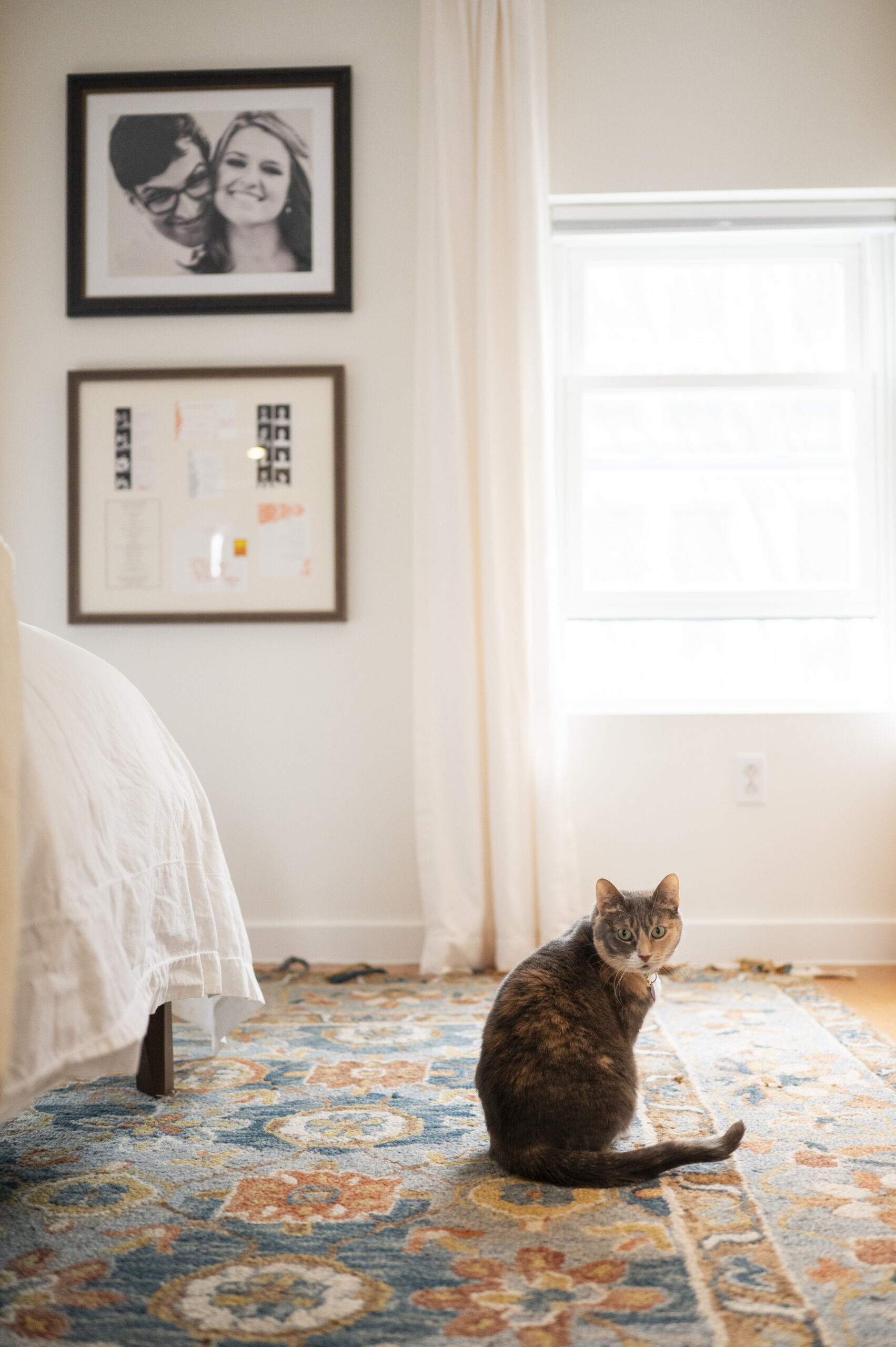
    Marzipan the cat sits in the master bedroom in the home of Catherine Wargo Roberts and Karsten Roberts.

    The move: The family closed on their new house in April, but the sellers continued to live there for free until June, when they moved to Florida. Becoming a landlord for six weeks wasn’t worth the hassle, Wargo Roberts said. The sellers, she added, “got a sweet deal.”

    She did, however, request a security deposit. “What if they decided to chainsaw the fridge in half?” she said, laughing. “You have to protect yourself to some degree.”

    Because of the delayed closing, the family had time to prepare. They put seasonal items, books, and decor into storage to reduce moving costs and packed everything else themselves. The kitchen was the only thing they outsourced. “It’s a huge pain,” Wargo Roberts said.

    A friend with a pickup truck moved the family’s plants over, and Broad Street Movers took care of the boxes and furniture. “It’s always the skinniest dudes that you’re just like, ‘I can’t understand how you walk, much less carry my couch up three floors,’ but they did it,” Wargo Roberts said.

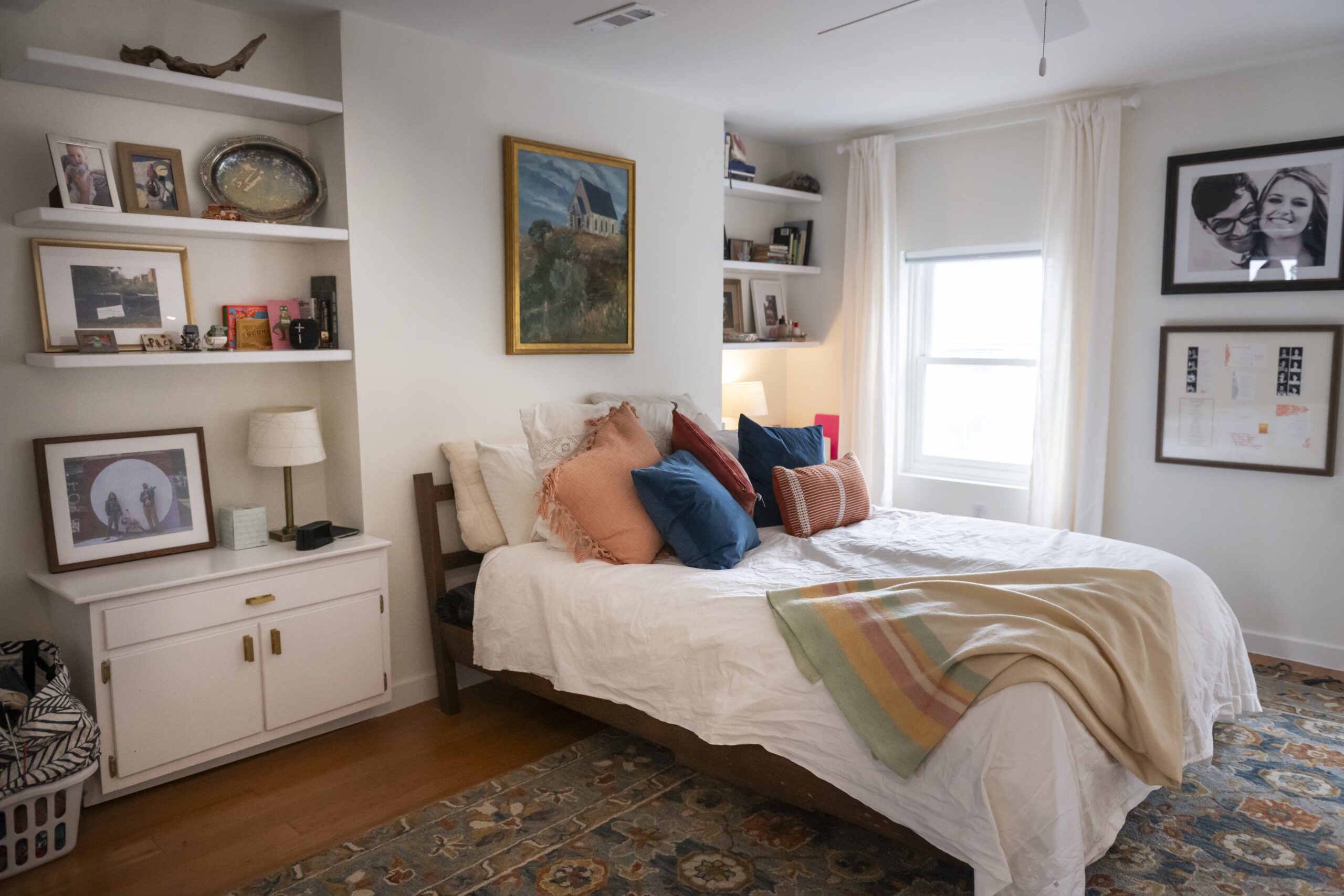
    The couple installed custom built-ins to cover up a neon wall in the master bedroom.

    Any reservations? “We probably overpaid a little bit,” Wargo Roberts said. “I would’ve loved to get it for $700,000 instead of $725,000.” Still, she is happy with the outcome. “We’re in a house that I feel pretty certain we’ll live in until our kids are out of high school,” she said.

    Life after close: Wargo Roberts wasted no time making changes. She painted multiple rooms and tackled one feature she couldn’t live with: a neon-lit wall in the master bedroom. “I called it the portal to another dimension,” she said. “It was so weird.” They used money they had set aside from the sale of their previous home to install custom built-ins on either side of the bed, covering it completely.

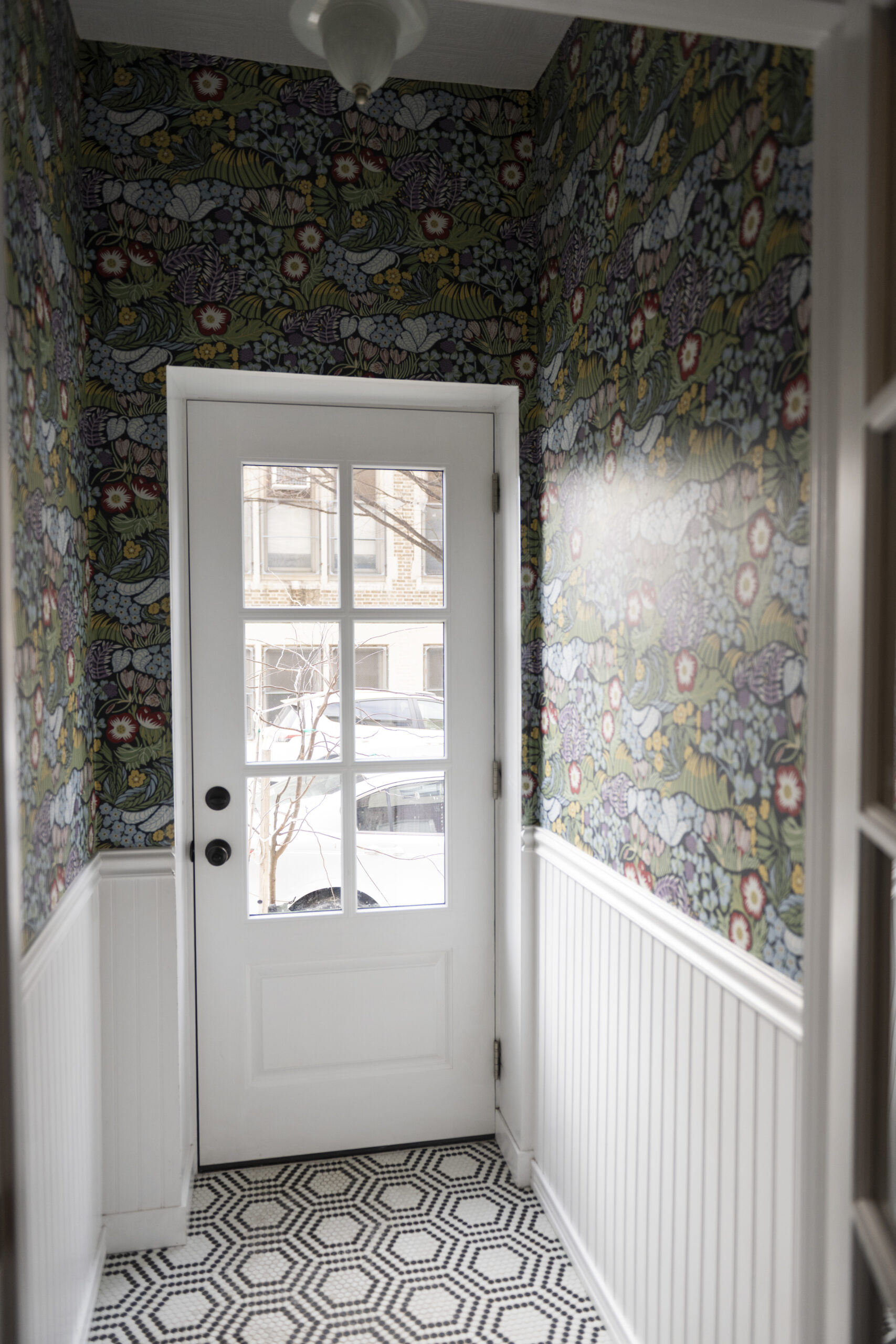
    The traditional South Philly vestibule that the couple rebuilt after moving in.

    They also rebuilt a traditional South Philly vestibule in the front of the home. “It was a vanity project for sure,” Wargo Roberts said, “But I just really wanted one.” She doesn’t regret it. “Best money I ever spent.”

    Did you recently buy a home? We want to hear about it. Email acovington@inquirer.com.

  • Under new leadership, Women’s Community Revitalization Project is developing apartments on public land in Kensington

    Under new leadership, Women’s Community Revitalization Project is developing apartments on public land in Kensington

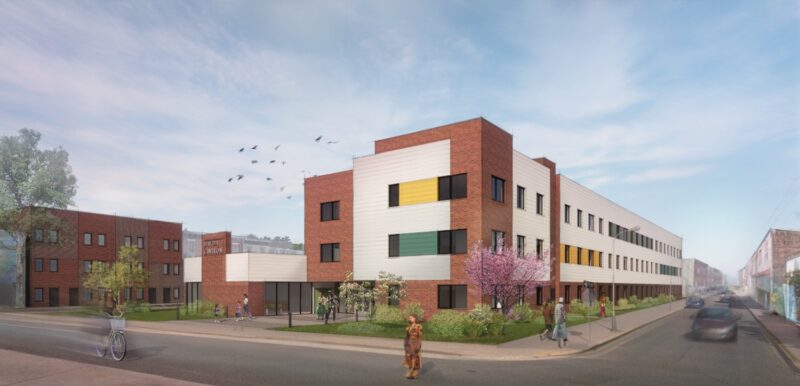
    The Women’s Community Revitalization Project is planning a 34-unit apartment building, flanked by two triplexes, on city-owned land in Kensington.

    All of the units will be available to those below 60% of area median income, or almost $72,000 for a family of four.

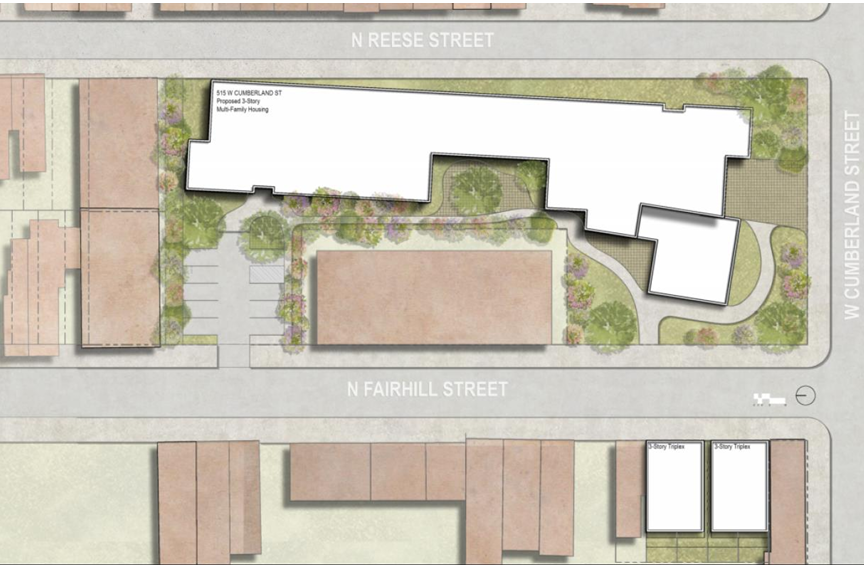
    The apartment building at Cumberland and Reese Streets is designed at an angle slashing across the lot, using only a portion of the city-owned land.

    “Having a solid wall of building directly across [from rowhouses], we just felt wasn’t really contextual to the neighborhood,” said Lorissa Luciani, who has been the executive director of Women’s Community Revitalization Project (WCRP) for the last nine months. “Then there’s height limitations so we couldn’t go any higher.”

    The project is funded through federal Low Income Housing Tax Credits (LIHTC), which the nonprofit group obtained in 2025. The land will be obtained for a nominal cost from the city.

    WCRP has been meeting with local community groups since 2024. Luciani said organizations such as Xiente, APM, and the 19th Ward RCO have been supportive of this project.

    The development, designed by Philadelphia-based CICADA Architecture & Planning, will cost over $26 million and is slated for completion 18 months after the group settles on the land. It will include 10 parking spaces.

    On Tuesday, the Philadelphia Land Bank’s board voted to approve the sale of the property to WCRP. The plan also has the backing of Councilmember Quetcy Lozada, which is essential because she will need to introduce legislation to move the property out of the Land Bank.

    “It’s an amazing project,” Lozada said. “We are in need of partners like the Women’s Community Revitalization Project who understand the need for not just affordable housing, but deeply affordable housing.”

    Without Lozada’s support, the project would be impossible. Final passage of the legislation could come as soon as later this month.

    The three buildings being developed by WCRP can be seen from above, highlighted in white, with the apartment project’s slanted angle readily seen from above.

    Luciani said WCRP would close on the project in the fall.

    This will be Luciani’s first ground-up development with the organization. She joined the nonprofit in 2025 after WCRP’s longstanding executive director and founder Nora Lichtash retired from her leadership role with the group after 35 years. She still works for the group as a consultant.

    WCRP was founded in 1986 to serve Fishtown, Kensington, and other neighborhoods in North Philadelphia east of Broad Street. Since then, it has developed projects in other corners of the city, such as Germantown and Point Breeze.

    “My predecessor has a substantial amount of experience and relationships with many of these organizations” in Kensington, Luciani said.

    “I’m trying to work to have my own relationships with them,” Luciani said. “They’re a really organized, sophisticated community that really understands their needs, and they’ll fight for it as hard as they need to.”

    Luciani previously worked in New Jersey local and state government and planning for decades and has a deep familiarity with subsidized housing policy.

    “I grew up in public housing in North Jersey,” Luciani said. “So it’s been a personal and professional lens that I utilize to try and continue the good work that helped my family in the hopes of helping others.”

  • What’s in Gov. Josh Shapiro’s new housing plan: Protections for Pa. renters, $1 billion for infrastructure, homebuyer support, and more

    What’s in Gov. Josh Shapiro’s new housing plan: Protections for Pa. renters, $1 billion for infrastructure, homebuyer support, and more

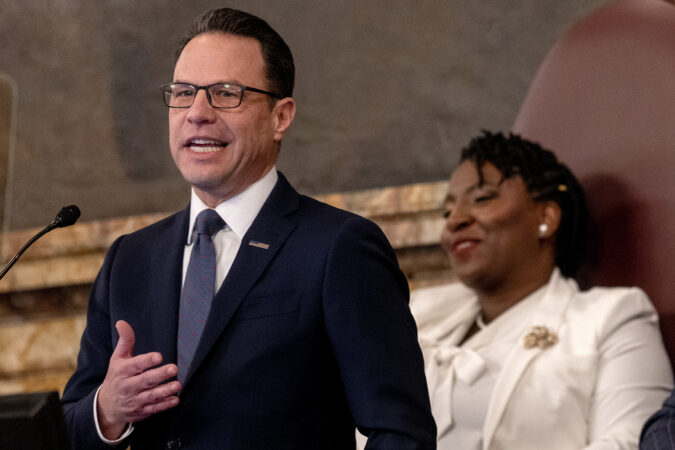
    Gov. Josh Shapiro unveiled a broad plan Thursday meant to grow and preserve Pennsylvania’s housing supply as the state faces a shortage of homes residents can afford.

    The plan aims to expand residents’ access to homes, connect Pennsylvanians to resources to keep them housed, make homebuilding faster and less costly, and improve coordination of housing efforts across agencies and levels of government.

    Recommendations and reforms in the state’s Housing Action Plan, which is meant to guide Pennsylvania into 2035, are embedded in the governor’s proposed budget, Shapiro said.

    “And now, the ball is in the court of the legislature to carry this forward and to get it done,” he said at a news conference in Philadelphia.

    The plan is the culmination of a process that started in September 2024, when Shapiro signed an executive order directing state officials to create it.

    In the plan, Shapiro highlights that more than a million Pennsylvania households are spending more than 30% of their income on housing. These households are “cost burdened,” according to the U.S. Department of Housing and Urban Development’s definition. Building more can lower housing costs.

    Shapiro called the plan a long-term housing strategy that “brings together all different groups who are doing this work, builds on their expertise, and tackles housing access and affordability from every single angle.”

    Here are key takeaways from Shapiro’s proposed housing action plan, the first of its kind in Pennsylvania.

    Enacting the plan

    Much of the plan relies on action from lawmakers in the state’s split legislature and other stakeholders rather than Shapiro’s administration exclusively. It does not assign dollar amounts to proposals, but calls on local governments to allow more housing and housing types, on builders to build more, and on both to work together to remove barriers to housing construction.

    Democrats (left) stand to applaud a tax cut proposal while Republicans (right) remain seated as Gov. Josh Shapiro delivers his third budget address to a joint session in the House chambers at the State Capitol Tuesday, Feb. 4, 2025.

    When Shapiro was asked how he intends to make sure the housing plan is implemented, he said he can take some actions through executive orders but “a lot does require the legislature to act and to work in concert with local government.”

    “I hear in rural, urban, suburban communities, districts led by Democrats and Republicans, the need for more housing,” Shapiro said. “… And I would say to any lawmaker that doesn’t like my idea, ‘What’s yours?’ Because we can no longer wait. We have got to get this done. We’ve got to build more housing.”

    $1 billion fund

    In his budget address last week, Shapiro previewed his housing priorities, calling for a $1 billion fund, supported by the issuing of bonds, to pay for infrastructure projects that include housing.

    Shapiro’s budget proposal includes no requirements on the proportion of funding that goes to each infrastructure need, leaving the possibility that the majority of funds could be spent on projects other than housing.

    While Shapiro said Thursday that divvying up the $1 billion will be subject to negotiation with lawmakers, he said he hoped “the lion’s share of it would go to housing.”

    Pennsylvania needs more housing

    If Pennsylvania takes no action to build and preserve more housing, it will be short about 185,000 homes by 2035, according to the plan. To keep up with anticipated demand, the state needs to add 450,000 homes to its supply by then.

    The housing plan has a stated goal of turning Pennsylvania into a leader in home construction.

    Construction work on a home at Bancroft and Reed Streets in South Philadelphia, Pa. on Friday, May 1, 2020.

    As it stands now, Pennsylvania is one of the states that have allowed the least new housing. It ranked 44th for the share of homes approved to be built from 2017 to 2023, the Pew Charitable Trusts said in a report released last year. Pew said Pennsylvania’s lack of housing supply is hiking prices for homeowners and renters.

    Shapiro’s housing plan recommends that Pennsylvania:

    • Expand programs to repair and preserve existing homes.
    • Create a tax credit to incentivize home building in underinvested areas.
    • Invest in small residential developers who can help boost housing production.
    • Eliminate outdated or unnecessary state development regulations.
    • Direct funding to help homebuilders pay land development costs, developers convert former commercial buildings into homes, and property owners create mixed-use developments that include housing.
    • Appoint a deputy secretary of housing and create a “housing one-stop shop” to help residents and builders access the state’s existing housing resources.

    Protection for renters

    The housing plan calls for Pennsylvania to bolster protections for households that either rent their homes or rent the land their homes sit on, including protections Shapiro called for in his budget address.

    Suggestions include:

    • More eviction protections.
    • Restrictions on how much landlords can collect as a security deposit.
    • A statewide cap on rental application fees. (Philadelphia City Council members passed their own cap on application fees last year.)
    • Explicitly banning landlords from denying housing to people because they use public assistance or any other lawful source of income. (New Jersey enacted a law last month that does this.)

    Security for manufactured-home owners

    Manufactured homes are single-family dwellings often built off-site and placed on a lot. These households own their homes, but many of them rent the land.

    Manufactured homes represent one of the most affordable forms of homeownership. But homeowners are often left vulnerable because they have no other option than to pay increased rent costs if they want to keep the homes they own. Manufactured-home communities are increasingly being bought by private equity companies and other institutional investors, and rent hikes tend to follow.

    The housing plan says Pennsylvania should:

    • Limit the rent increases that landowners can charge.
    • Make financing easier for buyers of manufactured homes.
    • Give residents of manufactured-home communities the right of first refusal when a landowner decides to sell.

    Recent laws in New Jersey limit annual rent increases for manufactured-home lots and make it easier for residents to buy their communities.

    Across Pennsylvania, 56,000 households live in manufactured-home communities, Shapiro said in his budget address last week.

    Homebuyer help

    The plan calls for Pennsylvania to pursue new ways to help residents become homeowners, including creating programs to reduce home-buying costs and allowing local governments to exempt first-time homebuyers from local realty transfer taxes.

    It also calls for the state to impose a transfer tax when corporate investors buy single-family and certain other types of homes to help households compete for properties.

    Untangling titles

    To protect Pennsylvanians’ generational wealth, the plan calls for the state to allow transfer-on-death deeds to provide a streamlined process for passing down homes. This would help prevent cases of tangled title — or unclear legal ownership of property. This mostly occurs when a homeowner dies and the deed is not transferred to a new owner.

    Tangled titles keep people from qualifying for help to repair their homes and can prevent them from being able to sell properties.

    In Philadelphia alone, tangled titles threaten more than $1 billion in generational wealth, according to a 2021 report from the Pew Charitable Trusts.

    The plan also calls for funding for legal services to help low-income Pennsylvanians resolve tangled titles. In 2022, Philadelphia officials pledged to give $7.6 million over four years to legal-aid groups that are tackling this problem.

    Rachel Gallegos, a divisional supervising attorney for the homeownership and consumer rights unit at Community Legal Services of Philadelphia, called Shapiro’s plan “ambitious.”

    “And I like that,” she said. “I think it has to be in order to keep progress moving forward.”

    The legal-aid nonprofit routinely helps low-income clients with tangled titles, and Gallegos said she was glad to see the plan call for additional support for the work.

    “We want to preserve homeownership for our clients,” she said.

  • Gov. Josh Shapiro’s property battle | Real Estate Newsletter

    Gov. Josh Shapiro’s property battle | Real Estate Newsletter

    Not even governors are immune to neighbor wars.

    In fact, Gov. Josh Shapiro’s job has fueled a legal dispute between his family and the folks living next to his private residence.

    The Shapiros and their neighbors have sued each other over a security fence and a fight over property boundaries.

    Keep scrolling for that story and more in this week’s edition:

    — Michaelle Bond

    If someone forwarded you this email, sign up for free here.

    The governor’s property dispute

    Last spring, a man firebombed the Pennsylvania governor’s mansion in Harrisburg while Gov. Josh Shapiro and his family slept inside.

    Following the arson attack, Shapiro made security upgrades at his personal home in Abington Township.

    This week, Shapiro’s neighbors filed a lawsuit in federal court against Pennsylvania’s first couple, accusing the Shapiros of illegally occupying part of their yard to build a security fence. They say the planned location for the structure is on their property, and they’ve asked a judge to get the couple off their lawn.

    The Shapiros quickly filed a countersuit. They say they thought the roughly 2,900 square feet of land under dispute was theirs when they bought their home in 2003, and both they and their neighbors believed that to be true until last year.

    Over the summer, a land surveyor discovered that the Shapiros’ neighbors actually owned the land, according to the countersuit. But the governor and his wife are asking a judge to rule that they are the legal owners.

    Keep reading to learn about a legal mechanism called adverse possession and details of the fight between Pennsylvania’s governor and his neighbors. (It involves drones, tree planting, and the scaring off of contractors.)

    A chat with a big local builder

    Mike Lloyd is a Harvard Law School graduate, a former Wall Street trader, and a former lawyer for Uber.

    For the last few years, he’s been president and controlling owner of one of the mid-Atlantic’s largest general construction contractors, Malvern-based IMC. In that time, both the company’s revenue and its presence in New Jersey and Delaware have grown.

    IMC’s work includes offices, hospitals, warehouses, and apartments. It’s currently building apartments in Ardmore and East Whiteland Township.

    Lloyd said he’s seeing a lot of demand in Philly’s suburbs. I’ve written about how they frequently rank among the most competitive rental markets in the country.

    My colleague Joseph N. DiStefano toured an IMC apartment construction site and talked to Lloyd about growing his business.

    The latest news to pay attention to

    Home tour: An 18th-century Colonial

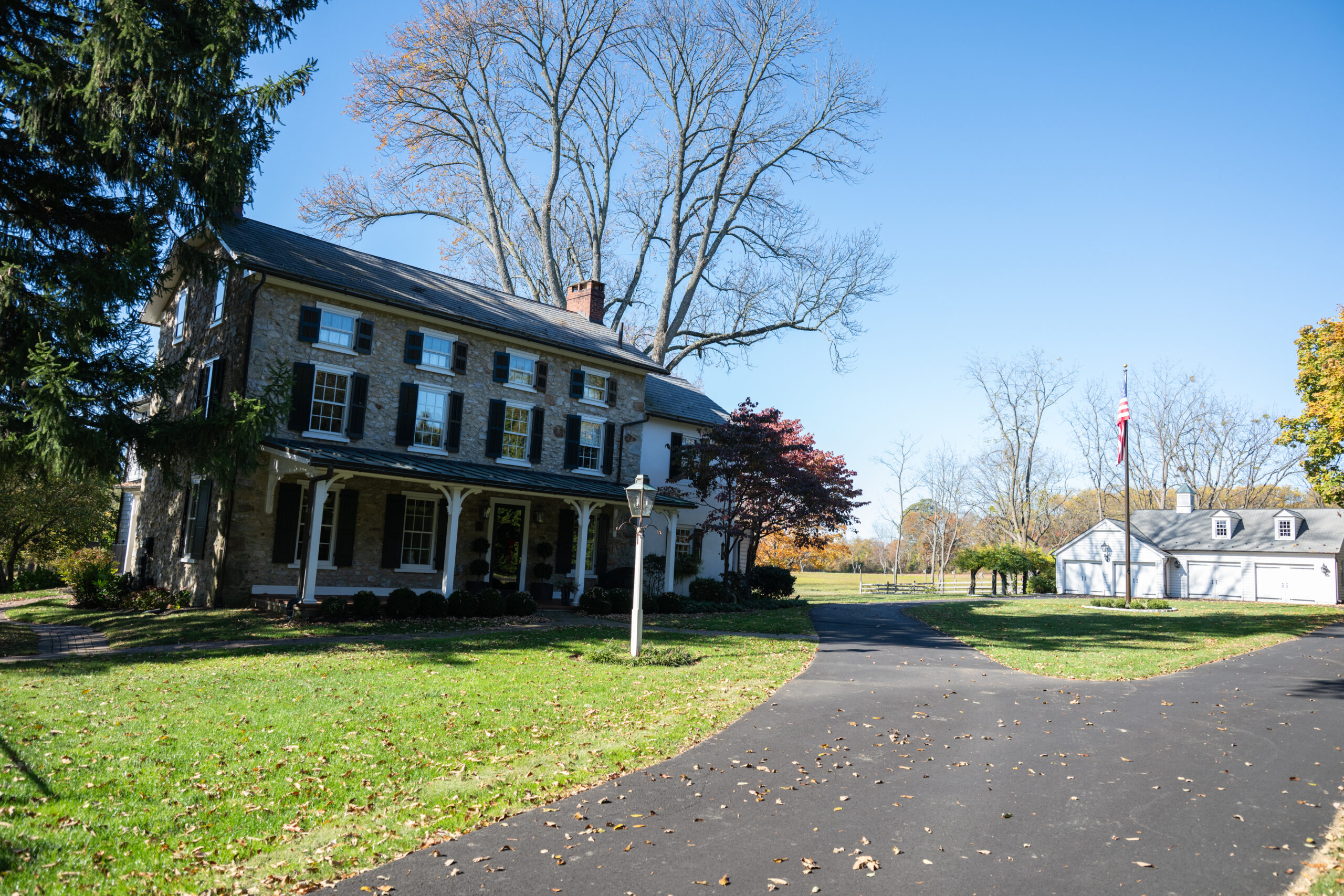
    Cynthia and Chris Swayze bought their home on 32 acres of Bucks County farmland in 1985. At the time, the 18th-century house was falling apart, and the couple had never farmed before.

    But the Swayzes thought the property was “a diamond in the rough,” Chris said. And they set out to make it their home.

    An expanded kitchen and addition increased the size of their home from about 3,000 square feet to about 6,500 square feet.

    A partial list of their renovations:

    • They moved a staircase and removed a wall to make the kitchen bigger.
    • An addition on the back of the house includes the primary bedroom suite.
    • They removed plaster that had been covering fieldstones on the exterior of the home.

    Their daughter co-owns an interior design firm and designed their home.

    Peek inside the Swayzes’ home and see the structural feature they call the “party hat.”

    📊 The market

    In the first month of the year, Philly-area households whose new year’s resolution was to buy a home had a few reasons to feel hopeful. But local housing markets were generally still on sellers’ side.

    Homes stayed on the market for a median of 26 days before selling in January, according to the multiple listing service Bright MLS. That’s up from 21 days at the same time last year. So buyers had a little more time and room to negotiate.

    “Buyers have a bit more leverage on terms and concessions than they have had in recent years,” Lisa Sturtevant, chief economist at Bright MLS, said in a statement, “but in many local markets, limited supply means well‑priced homes in desirable neighborhoods will still attract strong interest this spring.”

    That’s the case here. Our limited home supply means prices are continuing to climb.

    In the Philadelphia metro area last month, according to Bright MLS:

    🔺The number of active home listings was up 8.4% from last January. But the supply of homes for sale is still only about half of what it was before the pandemic.

    🔺The median sale price of $380,000 was up 6.4% from the same time last year.

    🔻The number of closed sales was down 8.6% from last January, reflecting softer demand, even though mortgage rates have dropped. The number of new pending sales was also down — by 5.7%.

    📷 Photo quiz

    Do you know the location this photo shows?

    📮 If you think you do, email me back. You and your memories of visiting this spot might be featured in the newsletter.

    Last week’s quiz featured a photo of the Stenton mansion.

    Shout-out to Paul S. and John S. for getting that right.

    Enjoy the rest of your week.

    By submitting your written, visual, and/or audio contributions, you agree to The Inquirer’s Terms of Use, including the grant of rights in Section 10.

  • Brandywine Realty Trust is opening a $60 million hotel in Radnor

    Brandywine Realty Trust is opening a $60 million hotel in Radnor

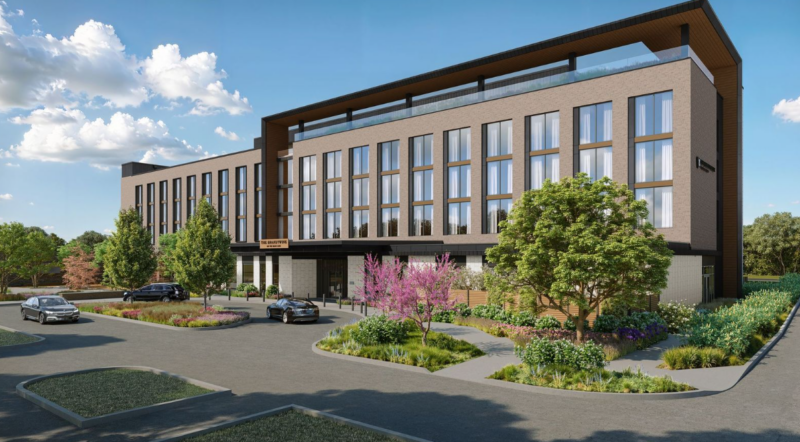
    Brandywine Realty Trust plans to open a 121-room Marriott Tribute Portfolio hotel this spring in Radnor.

    The company is the region’s largest office building owner, and the five-story project at 165 King of Prussia Rd. is meant to cater to their tenants in the suburbs.

    Dubbed The Brandywine, it cost $60 million to develop and will include an expansive roof deck and two restaurants with almost 260 seats between them.

    The 80,000-square-foot hotel will be in the midst of the company’s 2.1 million square feet of holdings in Radnor, its largest suburban cluster.

    “We were constantly hearing from our tenant base that as they were bringing people in from out of town, there was no real high-end, luxury hotel for them to spend time in,” said Jerry Sweeney, Brandywine’s CEO.

    Brandywine’s other large suburban office holdings are in King of Prussia and Conshohocken.

    “We saw a real window of opportunity to really upscale the hospitality experience available on the Main Line,” Sweeney said. “That’s very important to us because we have 3 million plus square feet of office space in the Pennsylvania suburbs, and over 2 million is concentrated within walking distance of this hotel.”

    Sweeney estimates that over a quarter of the hotel’s business will come from Brandywine’s tenants in their Radnor office buildings, which include Lincoln Financial Group, Arkema, and Penn Medicine among many others.

    In Brandywine’s second-quarter earnings call last year, Sweeney said he anticipates additional demand will be drawn from the seven colleges, including Villanova University, that are within a five-mile radius and from nearby healthcare facilities.

    The Brandywine is expected to be open in time for graduation this year, and the company anticipates a boost from sporting events and celebrations this summer, which include World Cup games, a PGA tournament, the MLB All-Star Game, and the 250th anniversary of the United States.

    The hotel’s ground floor will include the 114-seat Merrick’s Tavern, serving regional American dishes, a cocktail list anchored by bourbon and rye, local beer, and what is billed as a wine program. It’s intended for everyday dining and groups.

    The 145-seat Pomelo Rooftop Terrace will operate year-round, serving botanical-forward cocktails and a locally sourced menu.

    Merrick’s Tavern is named after Samuel Vaughan Merrick, the first president of the Pennsylvania Railroad and a founder of the Franklin Institute.

    “With this hotel we really used the historical evolution of the Main Line as a theme, which is tied to the history of the Pennsylvania Railroad,” Sweeney said. “Even some of the motif and interior space designs we have are very reminiscent of the great age of American railroads, where travel was upscale.”

    A rendering of Merrick’s Tavern within Brandywine Realty Trust’s new hotel, opening this spring in Radnor.

    The hotel is next to the Radnor stop on SEPTA’s Norristown High Speed Line and close to two Regional Rail stations.

    The building’s architect is the DLR Group, while interior design is by Restoration Hardware and Bergmeyer. The Brandywine will be operated by Aimbridge Hospitality.

    As part of the Marriott Bonvoy Tribute portfolio, the brand is a boutique hotel within the larger chain, which allows more flexibility for decor and furnishings.

    Brandywine Realty Trust has developed hotels before, notably the AKA University City in the FMC Tower, in partnership with Korman Communities.

    “For us, it was really brand building, expanding our tenant service program to our tenants and creating more connective tissue between us and our customers,” Sweeney said.

    “We saw a great window of economic opportunity to build a high-end hotel that was positioned along two interstates, two train lines that would appeal to a much broader base of customers beyond just the Brandywine universe,” he said.

    The Brandywine will be just the latest hotel added to the Main Line.

    New venues have been opening in recent years in municipalities like Newtown Square and Conshohocken.

    “It wasn’t all that long ago when you just had the [65-year-old] Radnor hotel, but wherever there’s a big business presence, you’re going to need hotel rooms,” said Ed Grose, CEO of the Greater Philadelphia Hotel Association. “These aren’t your typical limited-service hotels. They’re nice. They’re hotels that cater to businesses that are also growing in that area.”

  • Philadelphians deserve safe and healthy homes

    Philadelphians deserve safe and healthy homes

    The Department of Licenses and Inspections didn’t mince words when it declared the 144-unit Upsal Gardens complex an “unsafe structure.”

    Foundation separation. Cracked masonry. Failing floor joists. A building so compromised that city officials said it posed “immediate danger” to human life.

    That violation is just the tip of the iceberg. I know this because I have lived it. On Aug. 23, my wife noticed a large crack forming in our living room ceiling. We alerted management through their portal, and I went to their on-site office to report it. Less than 24 hours later, at 12:06 a.m., the entire ceiling collapsed.

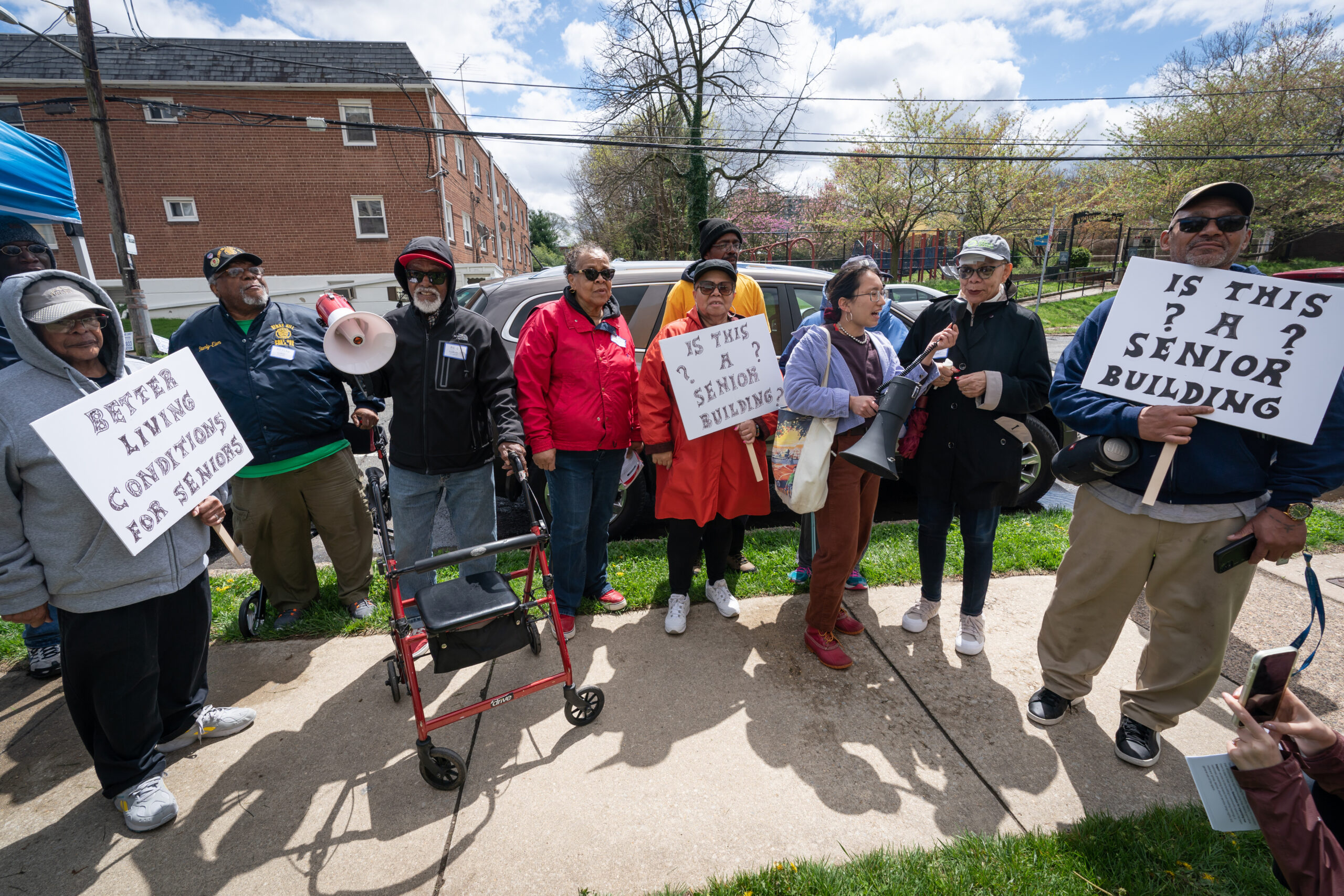
    Residents speak during a demonstration organized to protest against the living conditions at Brith Sholom House apartments in Philadelphia in April 2024.

    Fortunately, we had renters’ insurance. While management took their time deciding what to do, we stayed in the apartment under the exposed ceiling until our insurance finally booked us a hotel. After two days of waiting, we were moved temporarily so repairs could be made. But that displacement came with costs: For eight days, we paid out of pocket for meals and essentials while living in the hotel.

    Nevertheless, when we returned home, a notice was taped to our door: “Overdue rent.”

    Management knew we were displaced because of conditions they failed to address. And still, they badgered us for late rent — as though the collapse was an inconvenience to them, rather than a danger to us.

    A citywide crisis

    Unfortunately, my story isn’t unusual. My neighbors have filed a class-action lawsuit against the owners and managers of the property due to the complex-wide dangerous conditions described in an “unsafe structure” L&I violation. This lawsuit reflects a mounting rental safety crisis across Philadelphia.

    In West Oak Lane, tenants at Bentley Manor filed a similar lawsuit after their building was deemed unsafe while rent was still being collected. Upsal Gardens, Bentley Manor, Brith Sholom, Phillip Pulley and SBG Management, 8500 Lindbergh Blvd., ABC Capital. These are different buildings with different owners, managers, and business models, but nonetheless an all too similar story: Tenants forced to live in deplorable conditions while predatory landlords keep turning a profit.

    Philadelphians deserve safe and healthy homes, tenants deserve roofs and ceilings that are secure, floors that don’t buckle, and air that doesn’t make their children sick. We have laws on the books intended to address these issues.

    But a combination of loopholes, insufficient funding, and lack of enforcement leaves renters without a clear means to enforce those laws, placing many renters between a rock and a hard place: pay for unsafe housing, risk retaliation for withholding rent, or absorb the costs of displacement.

    Renters aren’t completely powerless, though. This year, we’ve seen that when renters come together, they win. This spring, City Council took the first steps toward addressing the city’s rental safety crisis by creating a fund for tenants displaced because of unsafe conditions. But that fund sat empty for months, until a coalition of housing justice advocates successfully lobbied for Mayor Cherelle L. Parker’s H.O.M.E. Plan to fund it.

    Dangerous, uninhabitable

    Still, there is much more work to be done. The vast majority of renters continue to live in units that have never been inspected. Landlords continue to demand rent for rental units with dangerous, uninhabitable conditions. Renters continue to acquiesce to those conditions out of fear of retaliation.

    The Safe Healthy Homes (SHH) campaign, led by OnePA, Renters United Philadelphia, Philly Thrive, and the office of Councilmember Nicolas O’Rourke, provides commonsense answers to these issues: protecting renters who speak up about unsafe conditions from landlord retaliation, authorizing proactive L&I inspections, and requiring proof of code compliance to evict or collect rent. These are all things we would assume are happening already, but this package adds the critical enforcement provisions that have been missing.

    Safe housing is not a perk — it is the bare minimum, and City Council’s Housing Committee had a long-overdue hearing for the SHH package tentatively scheduled for Tuesday.

    I encourage you to let the members of the committee know how you feel about having safe and healthy homes for tenants across our city.

    B. Cincere Wilson is the chief operations officer of Myra’s Kids Inc., a nonprofit serving justice-impacted and high-risk youth. He lives in Philadelphia and works in New York City.

  • Closed Iron Hill Brewery in Newtown is officially becoming a P.J. Whelihan’s franchise

    Closed Iron Hill Brewery in Newtown is officially becoming a P.J. Whelihan’s franchise

    The company behind P.J. Whelihan’s is officially moving into a shuttered Iron Hill Brewery.

    The Haddon Township-based PJW Restaurant Group has signed a lease for Iron Hill’s former location at the Village at Newtown, according to Brian Finnegan, the CEO of Brixmor Property Group, which owns the Bucks County shopping center.

    PJW marketing director Kristen Foord confirmed the lease signing, saying in an email that the company was “not in a position to share additional specifics” at this time.

    The move was approved by a federal judge last month as part of Iron Hill’s bankruptcy proceedings.

    Like more than a dozen other former Iron Hills throughout the region, the nearly 8,000-square-foot space in Newtown has sat empty since the Exton-based brewpub chain closed all locations and filed for liquidation bankruptcy last fall.

    Iron Hill opened in the affluent suburb in 2020. The restaurant moved in after Brixmor refurbished the more than 200,000-square-foot complex on South Eagle Road.

    As part of the revamp, the developer added new buildings, allowing it to bring in shops and restaurants like Iron Hill, Harvest Seasonal Grill, and Turning Point. The 30-acre complex is anchored by the high-end grocer McCaffrey’s Food Markets.

    In Newtown, “we’ve got Free People and Lululemon and Ulta that we added to the shopping center,” Finnegan said Wednesday in an interview. “We’ve got a lot of strong service tenants. We also have Capital Grill and Harvest, so some great food and beverage options.”

    And soon, he said, that list will also include P.J. Whelihan’s.

    PJW’s most well-known restaurant is P.J. Whelihan’s, which started in the Poconos in 1983 and has expanded to include 25 P.J. locations, the majority of which are in the Philly region.

    PJW also owns the Pour House in Exton, North Wales, and Westmont, Haddon Township; the ChopHouse in Gibbsboro; the ChopHouse Grille in Exton; Central Taco & Tequila in Westmont; and Treno, also in Westmont.

    While the Newtown restaurant will get new life soon, many other former Iron Hills still sit vacant.

    Some landlords are actively looking for tenants, with West Chester’s John Barry saying he hopes to have a lease signed by the end of this month.

    “We have a number of groups interested in the space and a few [letters of intent] have been submitted,” Barry said in an email last month.

    In other places, such as Voorhees, township officials and community members remain in the dark about whether another tenant will move in soon, and landlords can’t be reached.

    A few of the closed breweries may be revived under new owners, though details are slim.

    A federal judge last month approved the acquisition of Iron Hill’s trademark and intellectual property in conjunction with the transfer of restaurant leases in Center City, Huntingdon Valley, Hershey, Lancaster, and Wilmington.

    Representatives of the potential new owner, Rightlane LLC, have been unable to be reached. Contacted through the owner of Iron Hill’s building in Center City, Rightlane declined to comment to the Philadelphia Business Journal earlier this month.

  • You can be Cooper DeJean’s neighbor for $13,000 a month

    You can be Cooper DeJean’s neighbor for $13,000 a month

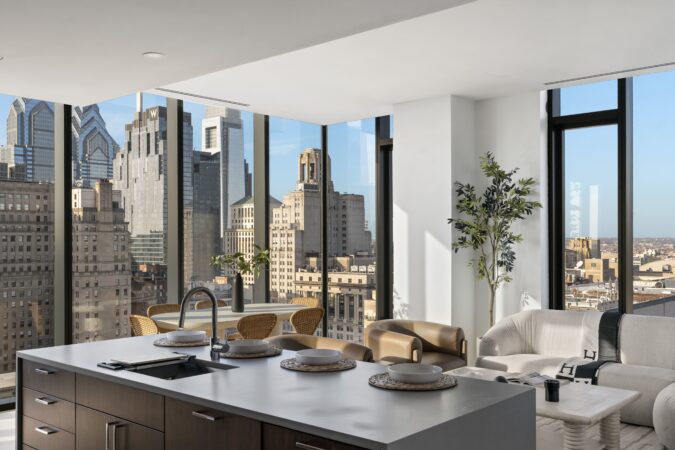
    For about $13,000 a month, you can rent a three-bedroom Center City penthouse in the same building as Eagles star defensive back Cooper DeJean.

    The high-end, 31-story apartment tower at 210 S. 12th St. has nine penthouses on the top two floors. They have a variety of layouts, including three-bedroom, three-bathroom apartments that range from roughly 1,650 to 1,835 square feet and cost from $12,600 per month to $13,250 per month.

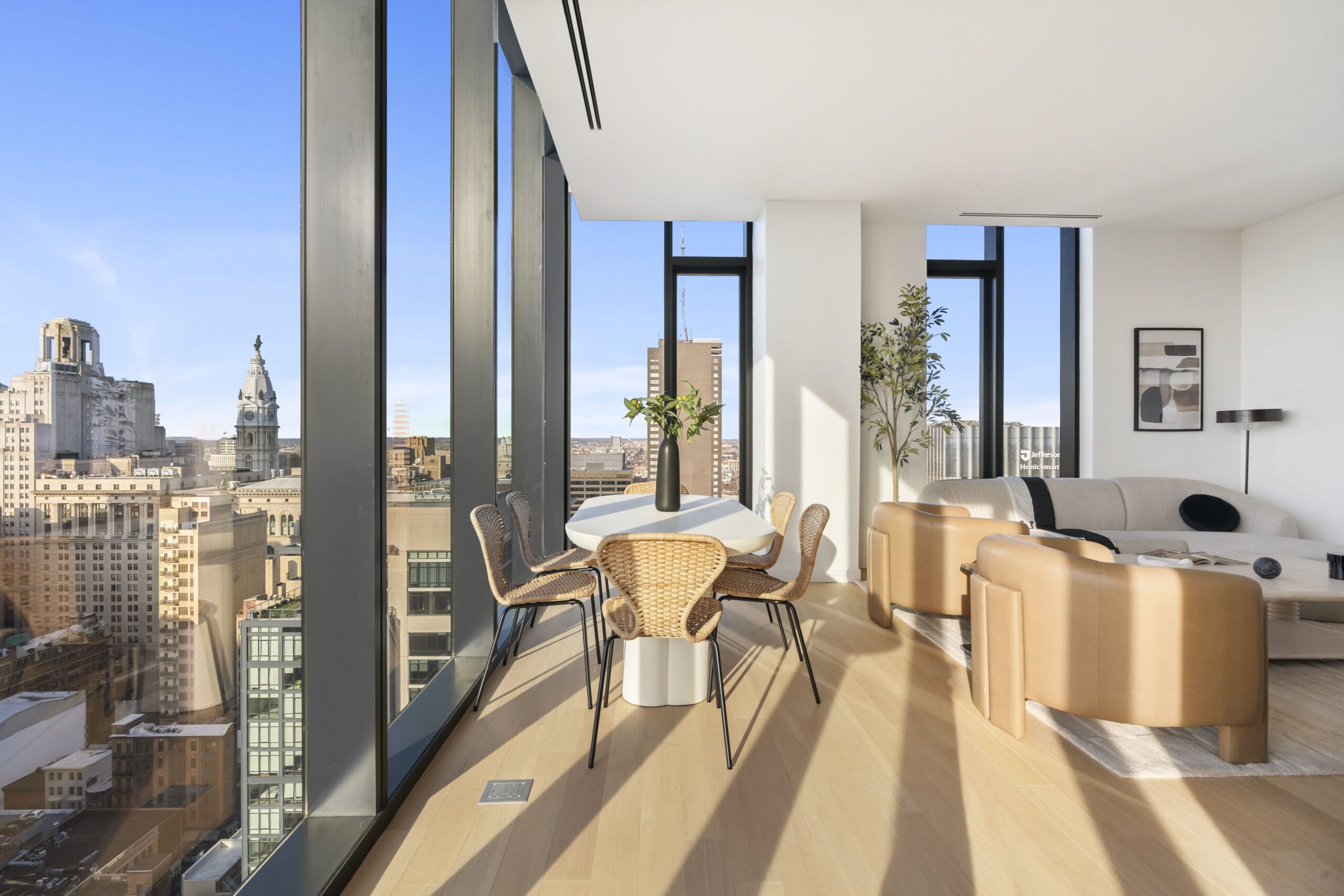
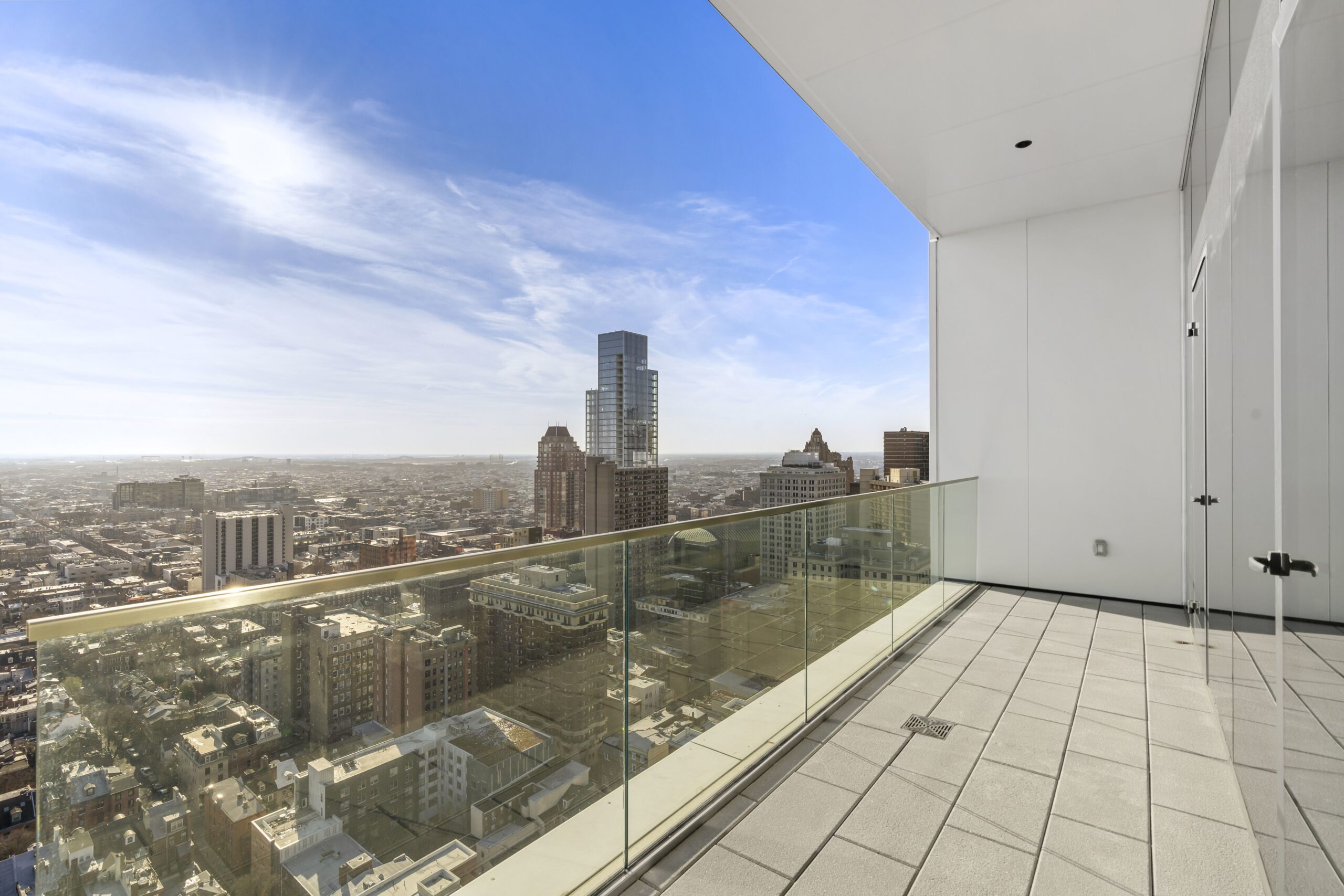
    Penthouses for rent have at least one balcony and floor-to-ceiling windows that offer lots of natural light and panoramic views.

    “You are literally looking at the Philadelphia skyline from the best view possible,” said listing agent Justyna Goldman with SERHANT.

    Tenants can see the City Hall tower from this penthouse at the Center City apartment building.

    The Philadelphia metropolitan area has had a growing number of very wealthy renters in recent years. For people who like the renting lifestyle or “if someone wants to live their best life but is only staying for a short time” in Philadelphia, the penthouses at 210 S. 12th could be for them, Goldman said.

    “We offer an incredible space and incredible square footage for the price,” she said. “We are looking to make someone a very happy renter.”

    Goldman said the building could be attractive to athletes, entrepreneurs, and people working in the medical field, since hospitals are nearby. The building’s Center City location means “you’re surrounded by everything you could possibly need,” she said.

    The nine penthouses at 210 S. 12th are on the 30th and 31st floors and all have at least one balcony.

    The penthouses include walk-in closets and spacious living areas and kitchens.

    Parking spaces are available in an automated underground parking garage with electric vehicle chargers.

    The 376-unit apartment building began leasing in the summer of 2024 and is at the former site of the 12th Street Gym, which was a landmark in the Gayborhood.

    The building’s exterior was designed by the architecture firm RSHP for New York-based developer Midwood Investment & Development.

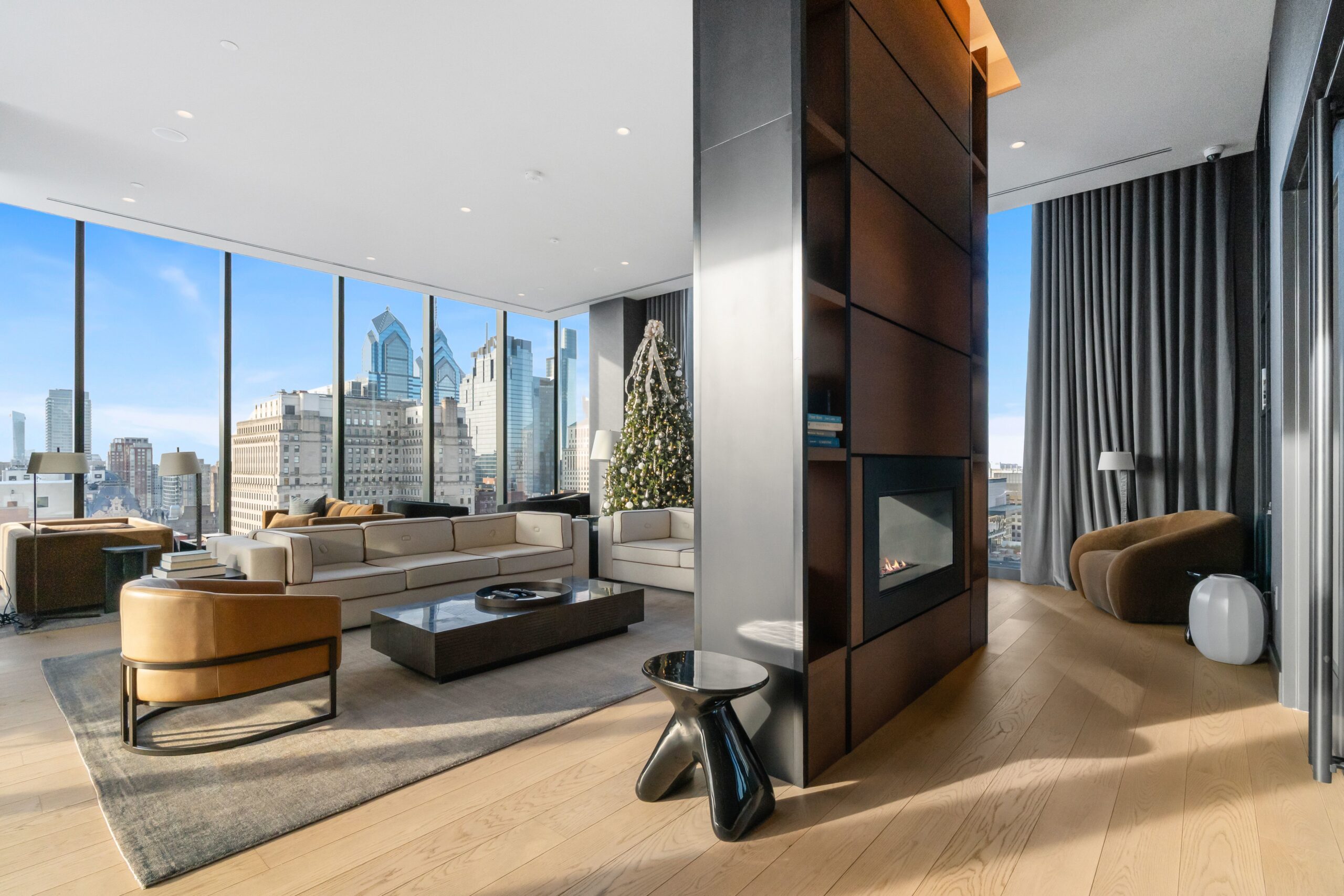
    An amenity lounge on the 30th floor of 210 South 12th includes a fireplace and floor-to-ceiling windows with Philadelphia skyline views.

    Tenants have access to amenities such as an outdoor pool, a fitness center, yoga and wellness studios, a game room, lounges and co-working spaces, outdoor terraces, a pet spa, and a dog park.

    The tower includes studios and one- and two-bedroom apartments. Studios start at $1,968, one-bedroom dens start at $2,300, one-bedroom units start at $2,411, and two-bedroom units start at $3,809.

    The building’s website is currently advertising rent deals. The property is offering 2½ to 3 months free for leases longer than a year.

    Salon Republic, which offers salon suites for rent, is operating in one of the tower’s retail spaces and more retailers are expected to be announced soon.

    The views make the penthouses at 210 S. 12th special, said listing agent Justyna Goldman with SERHANT.
  • They added modern amenities to their 18th-century home on a Bucks County farm

    They added modern amenities to their 18th-century home on a Bucks County farm

    In 1985, when Chris and Cynthia Swayze found a three-story colonial on 32 acres of farmland in Central Bucks County, they knew they were facing a challenge. The house, built in the late 1700s, was in disrepair. They also had no farming experience.

    But they saw the home’s potential.

    “We felt it was a diamond in the rough,” said Chris, a retired engineer.

    The home’s prior owner, who had lived there for 40 years, had died. The Swayzes bought the house from her nephew, who shared her history.

    The front of the Swayze home and the garage. The house was built in the late 1700s.

    “She had one of the original Sylvan pools, and the neighborhood kids learned how to swim in it,” Chris said.

    She raised miniature collies on the property and the yard was littered with the remains of chain-link kennels. The collies also left their mark on the floors.

    The windows, original to the house, had no screens, and the basement had a pile of coal left over from before the furnace was converted from coal to oil.

    The Swayzes immediately got to work cleaning the overgrown property. They removed plaster that had been set over the home’s exterior fieldstones — in vogue in the 1700s. They refinished all the floors, painted, installed air-conditioning, and fixed the pool.

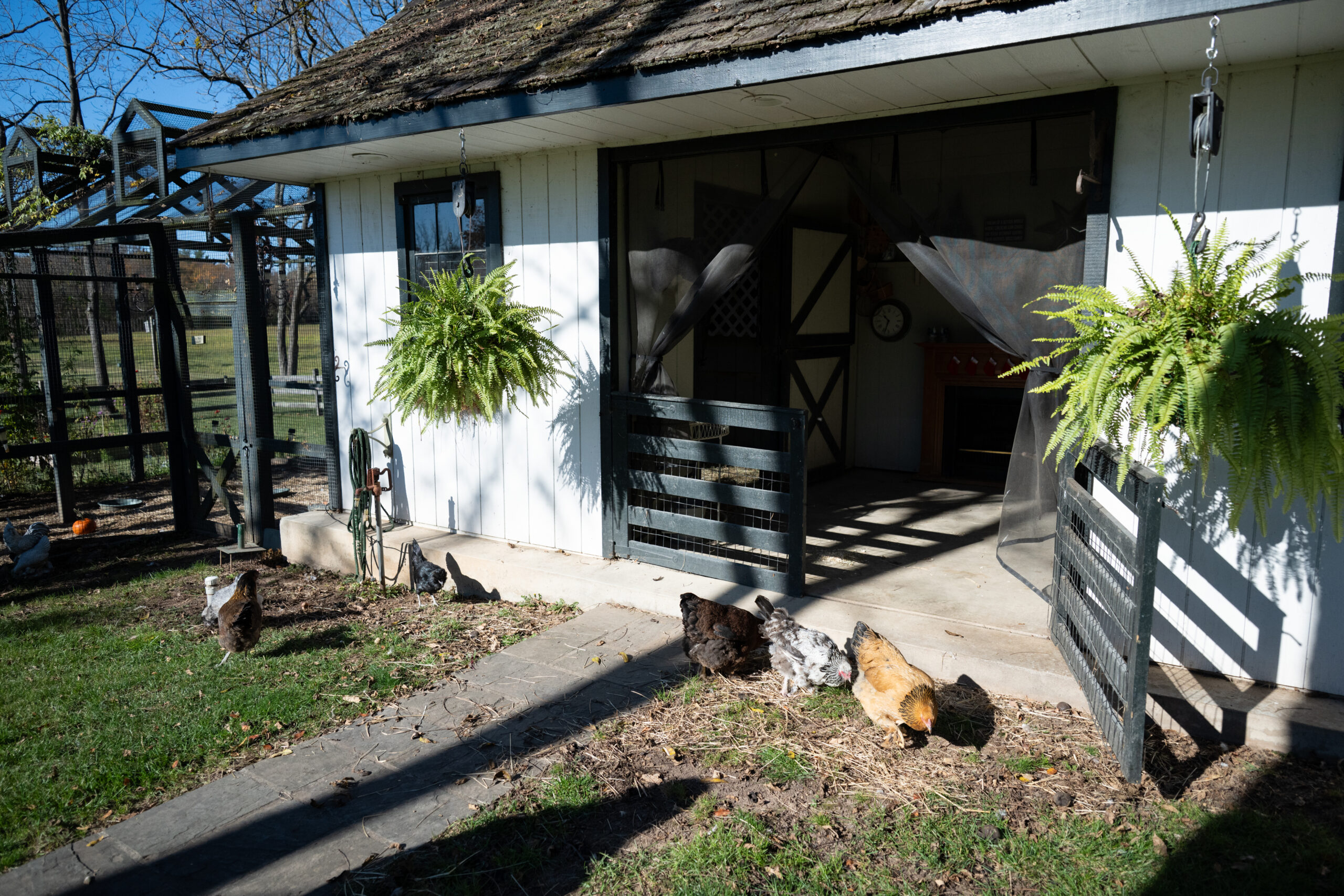
    The chicken coop in the backyard.
    The house is surrounded by 32 acres of land.
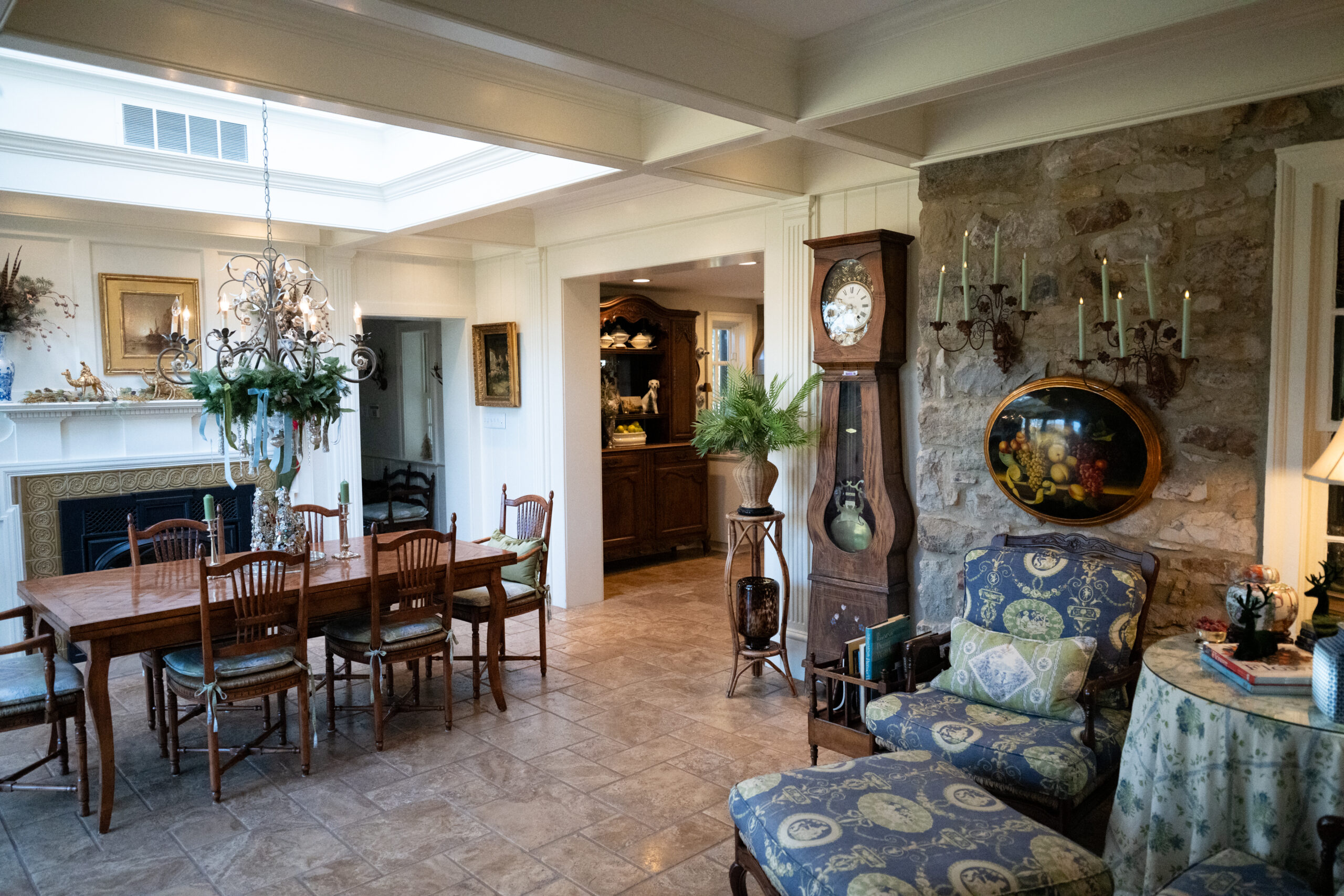
    The dining room and sitting area, with details and decor that evoke the home’s history.
    A framed map of Philadelphia the Swayzes found when making a home repair.

    With no experience in farming, they partnered with a local farmer. Initially he planted corn and soybeans in two back fields. Today they grow hay in those fields. Seven chickens keep them supplied with fresh eggs.

    Over the decades, the couple made structural changes, including an addition to the back of the house and a kitchen expansion. Those projects increased the home’s size from roughly 3,000 square feet to about 6,500 square feet, including five bedrooms and four bathrooms. Two of the bedrooms are en suite and include sitting rooms.

    The kitchen, which had been a tiny room with a freestanding stove, free-standing refrigerator, and a couple of cabinets with a sink base, saw the greatest transformation. During two separate renovations, they moved a staircase that connected the kitchen to the basement, took down a wall, and broke through an existing kennel to expand the space.

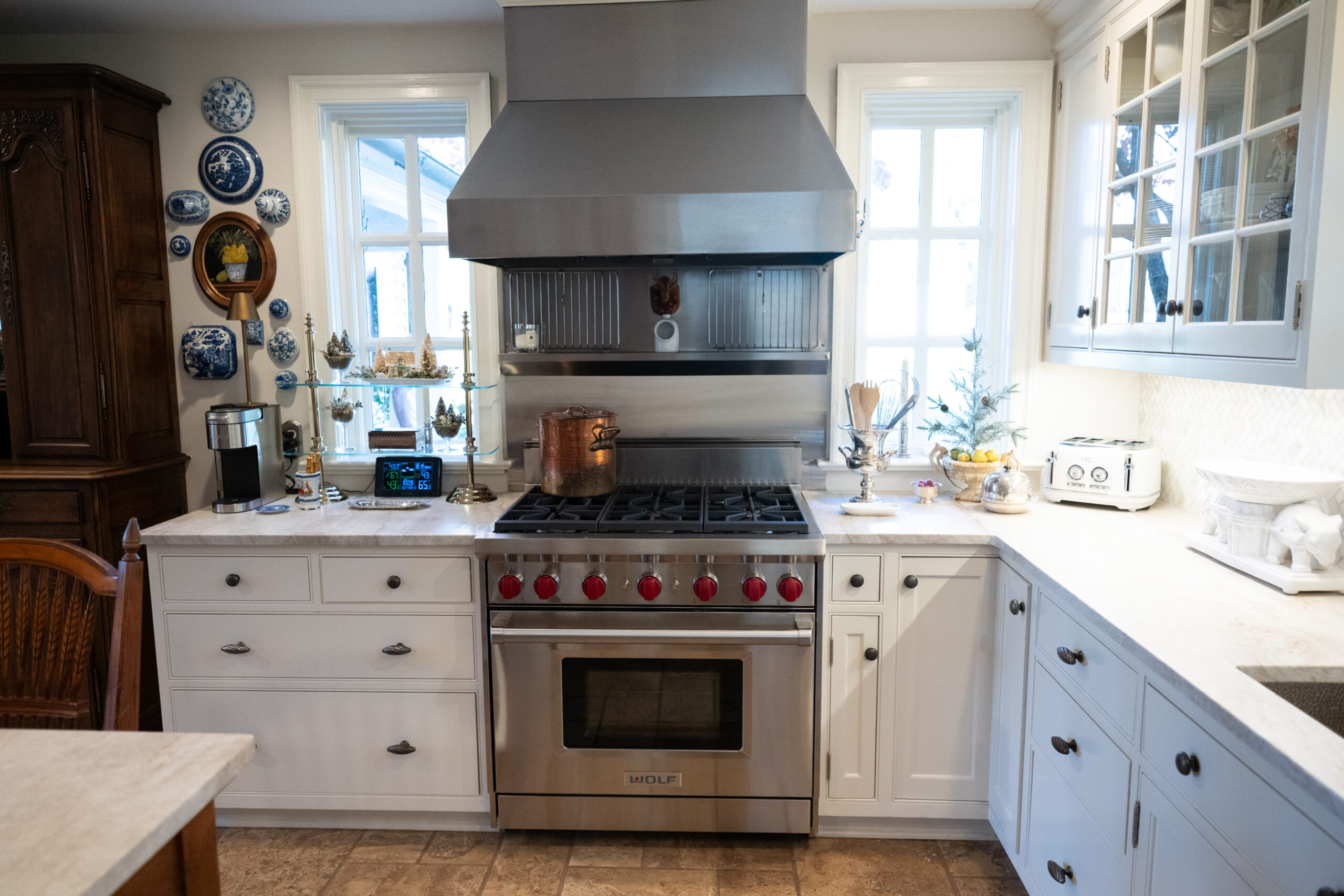
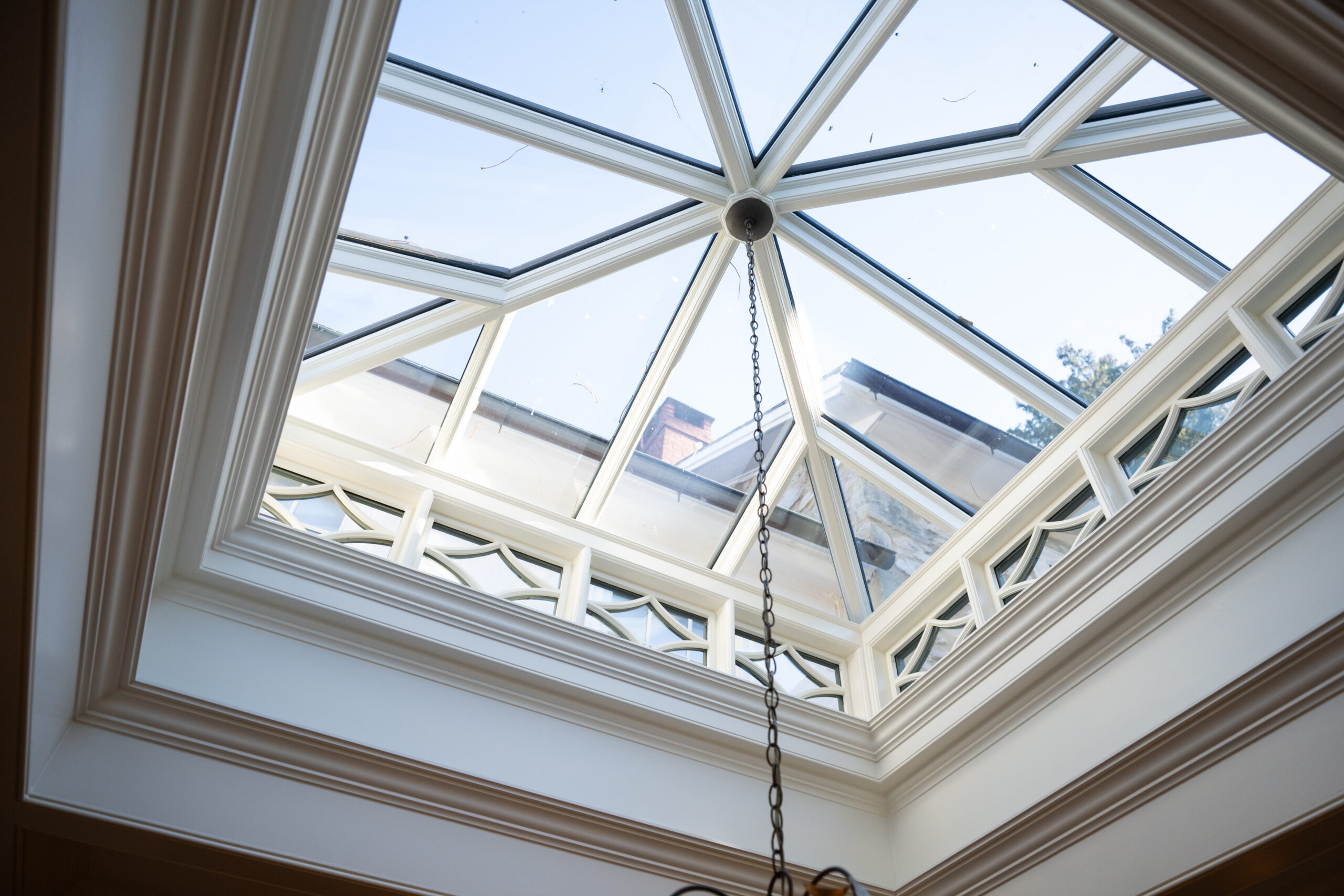
    They added cabinets and counters, a peninsula, built-in appliances including a Sub-Zero refrigerator, and a professional range hood. Beyond the kitchen they created a new entrance, vestibule, and pantry. The expansive kitchen also includes a fireplace and a conservatory-style glass roof that they call the “party hat.”

    Chris and Cynthia Swayze made significant changes to their kitchen, enlarging it and adding modern appliances.
    The conservatory-style glass roof above the dining area.

    “We have heat lights under the range hood that keeps food warm,” said Cynthia. “It’s the one thing I can’t live without.”

    During a separate renovation, an addition was put on the back of the house with a primary bedroom suite, family room, and finished basement.

    Their daughter, Rebecca Nolan, co-owner of Home Tonic in Newtown, designed the interior in a traditional style. The home is filled with ornate chandeliers, intricate woodwork, and walls awash in rich colors as well as bold, colorful, patterned wallpapers.

    The puzzle room, where grandson Luke also enjoys playing chess.
    Assorted porcelain jars on top of a cabinet in the family room.

    One of Cynthia’s favorite rooms is the guest room, painted in a deep chocolate brown, with a custom canopy over the bed.

    “I wanted it to feel really cozy, like when you got into that bed you were surrounded by a big hug,” she said.

    The puzzle room is where Cynthia and her grandson Luke, 8, hang out. In addition to working puzzles, he’s teaching her how to play chess.

    A framed map of Philadelphia on linen, dated 1809, hangs in the basement. They found it in the garage attic when repairing a leak, and were amazed that it had survived.

    A pond and many tall trees are on the property.

    The home’s expansive grounds offer a breathtaking view from the patio, accessible from the kitchen’s French doors. The peaceful vista includes sights of the swimming pool, pond, chicken coop, fields, and lots of open space. Chris especially appreciates the gigantic ash tree they’ve been treating for ash bore.

    “From the circumference we’ve determined it’s over 200 years old,” said Chris. “We appreciate the history that Central Bucks County has to offer.”

    Is your house a Haven? Nominate your home by email (and send some digital photographs) at properties@inquirer.com.